In a new YouTube video sent exclusively to content creators, MrBeast (a.k.a. Jimmy Donaldson) is joined on screen by YouTuber and engineer Mark Rober.
Their message is simple: “We’re back.”
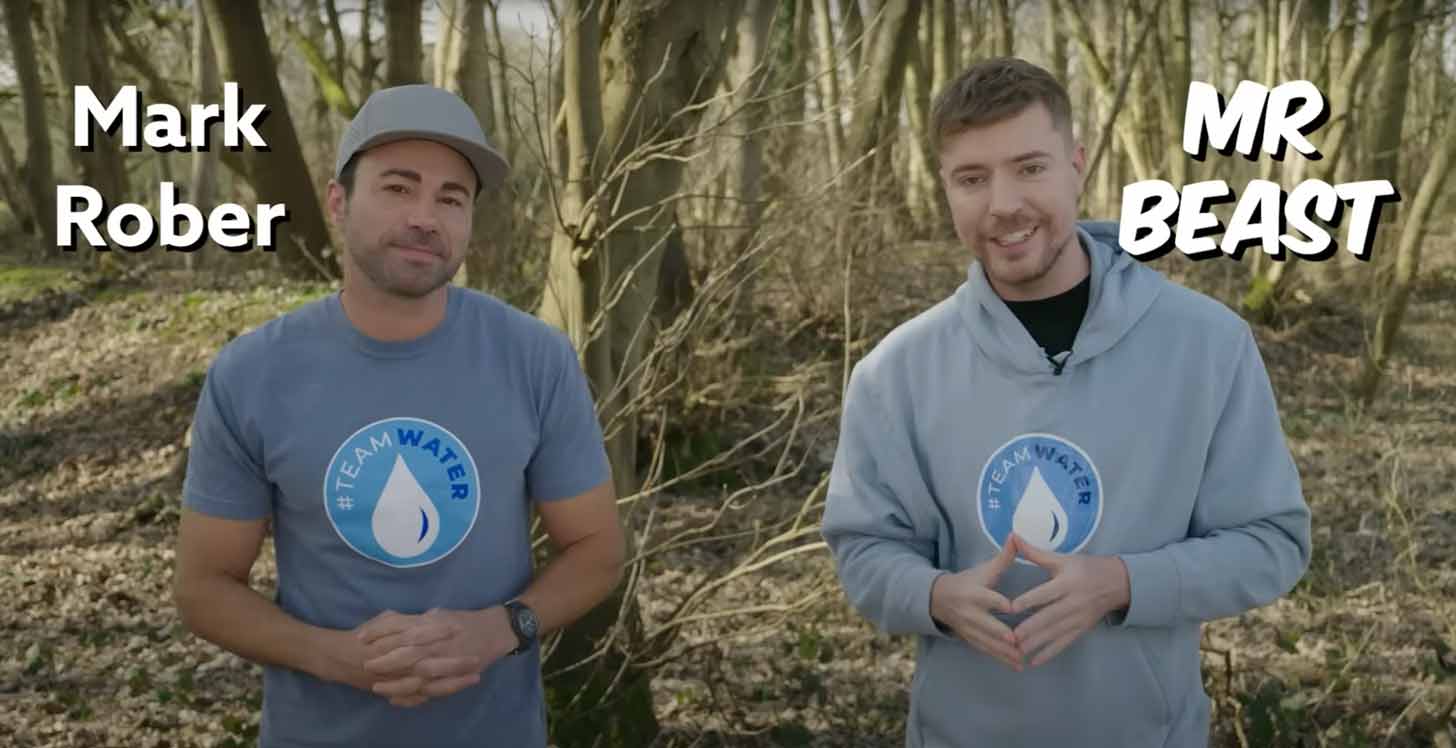
On the heels of two successful crowdfunding campaigns with other content creators — #TeamTrees, which raised $20 million to plant 20 million trees in 2019; and #TeamSeas, which raised $30 million to remove 30 million pounds of plastic waste from oceans in 2021 — Donaldson and Rober have taken on a new cause: access to clean water.
“This time we want to raise $40 million to give 2 million people in need access to clean water for decades,” MrBeast enthusiastically announces in the video.
The duo — and their colleagues, including (but not limited to) Hank Green, Kai Cenat, Michelle Khare, Zach King, Nick Digiovanni, FaZe Rug, Pierson Wodzynski, JerryRigEverything, Cleo Abram, Dude Perfect, Alan’s Universe, Stokes Twins, Chunkz, Ryan Trahan, Doctor Mike, Colin and Samir, Fede Vigevani, and even Gordon Ramsay — will be supporting the nonprofit, WaterAid.

WaterAid provides clean water, hygiene systems, and dignified toilets to people in need across the globe, with programs in 22 countries.
“Clean water is the most fundamental thing that people need to survive and thrive,” Rober said in the video, which is currently unlisted but public on YouTube.
“We want to create the biggest water campaign to ever exist in history,” MrBeast added.
With the aforementioned creators already on board, combined with Rober and Donaldson’s subscriber bases, they’ll reach an estimated over one billion people.
The goal is to get these creators — and any others who see this video and join #TeamWater — to promote the fundraiser throughout the month of August.
The campaign will officially kick off on August 1, 2025.
“Starting August 1st throughout the entire month, we need you to upload a video to your channel where you promote and educate your audience on #TeamWater,” MrBeast instructs, “and then drive them to go to teamwater.org to donate and help us reach our goal of raising $40 million so we can change the lives of millions of people.”
Rober then rattled off suggestions for ways content creators can get involved: Sharing a video about cool water tech, or using water shields to flood an opposing team in Fortnite.
Or, he added, it can just be a normal addition to an already planned video, just talking more about the importance of clean water and this fundraiser.
The main takeaway: The duo wants other content creators to send their loyal viewers to the donation page.
It’s an admittedly heavy lift and would require the whole community to raise over $1 million per day every day in August.
“It's a sprint — 31 days — which is why we need everyone,” Rober said.
In the video, they also offer resources for creators to organically incorporate the fundraiser into their content, encouraging others to participate from the get-go.
And a webpage for #TeamWater stresses the urgency of the issue.
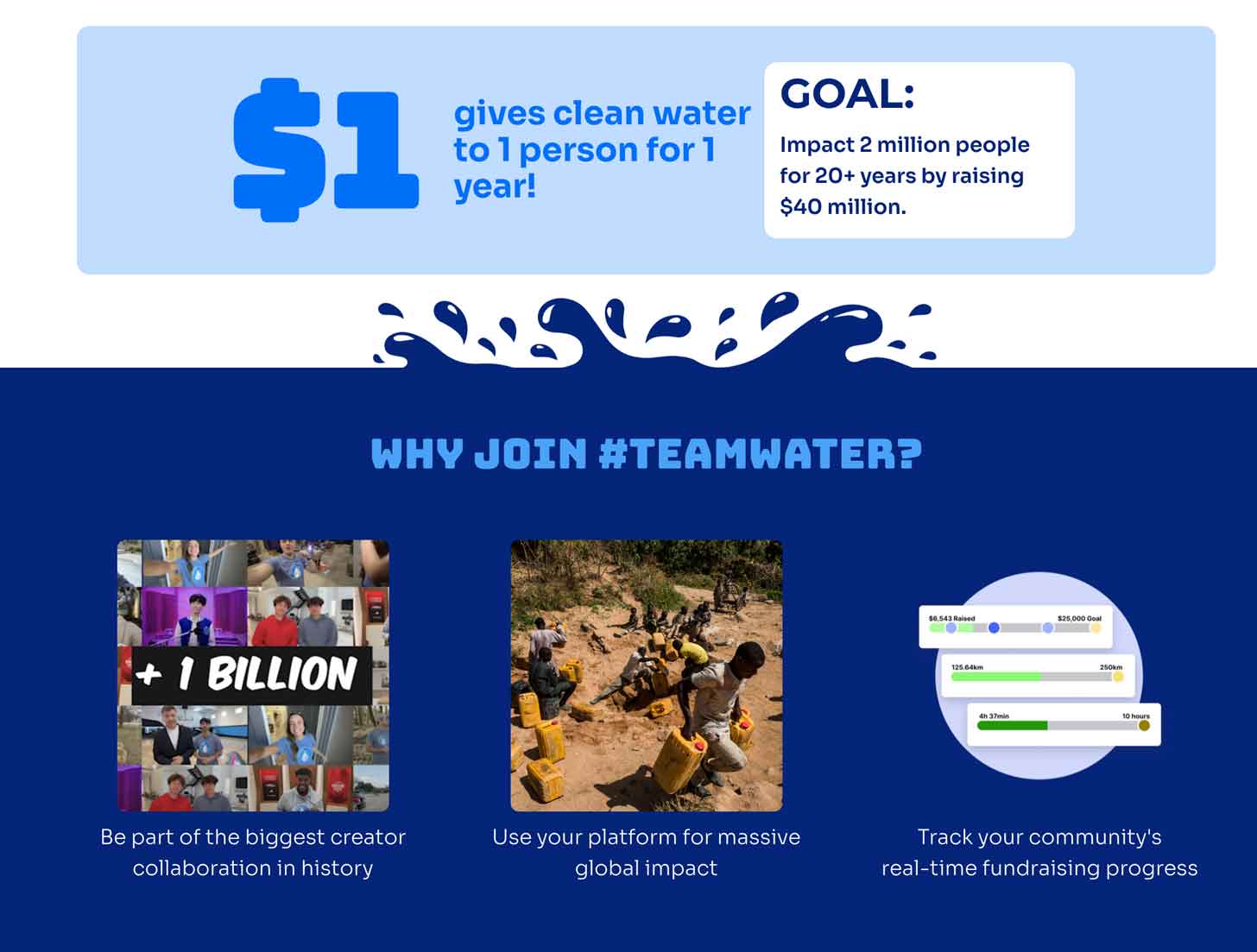
“Climate change is making clean water harder to access. Droughts are drying up water sources. Floods are contaminating pipes and wells,” an FAQ section shares.
“But here’s the good news: with smart systems and real support, we can get ahead of this.”
It’s something MrBeast has been planning for a while. According to Business Insider, a trademark for #TeamWater was filed on August 29, 2024 by his company, Beast Holdings, LLC.
In the article, which teased this upcoming campaign, Business Insider shared that the application for the trademark states the company’s “intent is to promote access to clean water.”
Since he grew a following online through a myriad of philanthropic stunts, like giving large sums of money to strangers, it is not surprising that MrBeast is trying to up the ante with his over 415 million subscribers.
Following the #TeamSeas campaign — which resulted in 34 million pounds of trash removed from beaches, oceans, and rivers — MrBeast has shown a growing interest in clean water initiatives.
In 2023, his organization, Beast Philanthropy, launched a “Water Is Life” campaign, which funded 109 freshwater wells across Kenya, Uganda, Cameroon, Somalia, and Zimbabwe.
“Today, we are proud to report that these wells are not only completed but are actively providing clean, life-changing water to over 250,000 people,” a June 2025 statement from Beast Philanthropy shared.
“The impact is real, and it’s profound — reducing illness, improving access to education (especially for girls), and empowering communities to build healthier, more sustainable futures.”
According to the same statement, the Water Is Life project raised over $1.4 million in donations from over 28,000 individual donors.
“Beyond the delivery of critical freshwater infrastructure projects, MrBeast is able to raise awareness on key social issues like freshwater scarcity to a large audience,” the statement continued.
“MrBeast promotes making charitable giving more accessible and engaging for demographics that traditional philanthropy often struggles to reach — particularly younger viewers.”
Although MrBeast has faced backlash — and a lawsuit — over conditions during the filming of his “Beast Games” competition show on Amazon, it seems he has not been deterred from new projects.
Rober, too, seems eager to make a difference.
“We’ve already changed oceans and forests,” he said in a recent interview with Curly Tales. “Now we’re focusing on water, the source of all life.”
For content creators interested in joining the #TeamWater campaign, there is still time to officially sign up.
And for viewers eager to support the #TeamWater fundraiser, prepare to watch countless YouTube videos on August 1 to learn more about how to donate, support the campaign, buy merch, and make your voice heard.
Header image courtesy of Mark Rober/YouTube
According to a report from the Major Cities Chiefs Association, 69 city agencies across the country recorded decreased rates of violent crime and homicide between January and March 2025, compared to the same period in 2024.
Nationwide, violent crime — including robberies, rapes, and aggravated assaults — decreased by an average of 14% in the first quarter of 2025, according to 68 of the 69 police departments.

Some standout cities include Denver and Aurora, Colorado. According to the report, homicides in Denver fell by 58%, while they fell by 36% in Aurora.
During his campaign, President Trump singled out Aurora, claiming it was “overrun by Venezuelan gangs,” but based on the preliminary reports from the MCCA, the aforementioned 36% drop in homicides in the first three months of the year follows a 5% drop from all of 2024, as well.
And it’s not because of the Trump administration's indiscriminate deportation strategy, with recent reports showing that most people who have been arrested by Immigration and Customs Enforcement in Colorado so far in 2025 have no criminal history.
In Denver, Mayor Mike Johnston said last month that “the data is heading in the right direction,” crediting “thoughtful” engagement with the community for decreases in crime.
“What I’m most proud of is the fact that we’ve been able to make these significant strides in public safety without having to over-police communities,” Denver’s police chief, Ron Thomas, added, according to Axios Denver.
Other major cities in the report show decreased rates of violent crime, as well, including Honolulu (down 82%), Minneapolis (54%), Dallas (44%), and Philadelphia (28%).
Baltimore is also seeing a trend in decreased homicides. According to WYPR, Baltimore hit a new “record low” for monthly homicides in April, with five reported killings. While still devastating, that is the lowest number of homicides recorded in a single month since the city began keeping such records in 1970.
The total number of homicides recorded in Baltimore so far in 2025 — 39 reported killings — is the lowest it has been at the start of any recorded year so far.
“The tireless dedication of so many across our city is making a real difference and truly saving lives,” said Baltimore Police Department Commissioner Richard Worley in a statement to WYPR, adding that April is the second month in 2025 where Baltimore’s homicides were in the single digits.
“While there is still much work to be done, these numbers show that we’re moving in the right direction, together,” Worley added.

Another major city — Seattle — has reported that homicide rates have plummeted by 41% in the first half of this year, compared to the same time in 2024, the fewest murders recorded since 2019.
According to the Seattle Police Department’s crime dashboard, shootings are down by 29%, car thefts by 25%, and violent crime overall by 12%.
All of these examples speak to a broader trend of decreases in violent crime, with most data falling back to pre-pandemic levels across most parts of the country.
In the first full year of the pandemic, the FBI counted a roughly 34% increase in violent crime nationwide, which, according to Vox, was the sharpest one-year rise in the modern era of record-keeping following a major drop in the 1990s and 2000s.
Vox also reported that the COVID-19 pandemic was likely to blame for a large increase in violent crime, with young men more vulnerable out of school; the closure of a number of social services; increased stress across the general public; and a rapidly eroding trust of policing following the murder of George Floyd in the spring of 2020.
But, as recent data shows, things have begun to settle.
The Real-Time Crime Index has homicides down nearly 22% nationwide, with violent crime down 11%.
Vox points to both federal and local governments taking action as a potential explanation for the decrease in violence. When President Joe Biden took office, he funnelled millions of dollars into community violence interruption programs.

In Detroit, a city where homicide numbers are at their lowest since 1965, according to NPR, the city invested $10 million in six community organizations designed to reduce violence through community interventions.
“You have outreach workers who have lived, shared experiences that are the ones who establish these relationships,” Negus Vu, the executive director of The People’s Action in Detroit, told NPR.
“And because these relationships are genuine and sincere, they're able to refer them to get wraparound services such as substance abuse, job referrals, therapy.”
Essentially, he said, if people’s needs are met, they will be less likely to turn to violence.
Baltimore’s Group Violence Reduction Strategy has also taken on a similar approach, bringing together community groups and law enforcement to deter people from gun violence.
Although 47% of Americans say they worry “a great deal” about crime and violence, and the president himself continues to claim that immigrants are driving increased crime rates across the country, the numbers tell a different story.
“The numbers are there,” Vu told NPR. “We’ve shown collectively that what we're doing is impactful, effective, and is saving lives.”
The number of homicides across the United States declined by 16% in 2024, continuing a recent downward trajectory, according to the latest crime trends report from the Council on Criminal Justice, a nonpartisan think tank.
Homicides spiked during the early years of the COVID-19 pandemic, and crime became a central focus of President Donald Trump’s 2024 reelection campaign. Trump insisted that FBI crime data showing declines was “fake” and claimed that crime was “through the roof.” The second Trump administration is expected to adopt a tough-on-crime approach.
State legislatures nationwide also are expected to prioritize a variety of criminal justice measures this year, including prison oversight, illegal immigration, retail theft and policing standards and procedures. Polls show most Americans see crime as a significant problem, though fewer than in recent years.
The Council on Criminal Justice, known as CCJ, gathers data from individual law enforcement agencies for its biannual crime trends reports, meaning the data is more recent than the FBI’s annual report. Both the think tank’s and the FBI’s reports, however, show a similar turnaround in violent crime.
In 2023, criminal homicide — which the FBI defines as murder or non-negligent manslaughter — was down by 11.6% from the previous year. It was the largest single-year decline in two decades, according to the FBI’s annual crime report published last year.
The CCJ report shows that the downward trend appears to be continuing, with homicides in 2024 dropping by 16% compared with 2023. That drop equates to 631 fewer homicides in the 29 cities that provided data for the category, according to the council’s report.
If this decrease holds as more jurisdictions report their data to the FBI later this year, 2024 would rank among the largest single-year homicide drops since at least 1960, the start of modern record-keeping, according to the report.
A political issue
Despite the recent decline in homicides, crime remains a politically salient issue. A majority of Americans — 56% — believe that national crime has increased or consider it an “extremely” or “very” serious problem. But public concern about crime has lessened over the past year, according to Gallup’s annual crime survey.
Perceptions of crime are heavily influenced by political affiliation. The survey found that 60% of Democrats believe crime has decreased over the past year, whereas 90% of Republicans think it has increased.
Some crime experts say that media reports, political messaging and viral social media posts may exaggerate Americans’ worries about disorder, making crimes such as shoplifting and public drug use appear more prevalent than they actually are. Still, some individual cities and neighborhoods may be experiencing higher crime rates, which could further explain these concerns.
“We still have problems with crime, still have problems in the criminal justice system, and even though the crime rates are improving, we should not take our focus off crime and criminal justice,” said Ernesto Lopez, the report’s co-author and a senior research specialist with the council, in an interview with Stateline.
The council analyzed crime trends in 40 U.S. cities, although not all cities had data available for every type of offense.
Among the cities studied, 22 saw a decline in homicides last year, with Chandler, Arizona, and Little Rock, Arkansas, recording the largest decreases at 50% and 43%, respectively. Six cities experienced increases, with Colorado Springs, Colorado, leading the way with a 56% jump.
"Even though the crime rates are improving, we should not take our focus off crime and criminal justice." – Ernesto Lopez, senior research specialist with the Council on Criminal Justice
When comparing homicide rates between 2019 and 2024, the council’s study sample saw a 6% decline, largely driven by cities with traditionally high homicide rates, including Baltimore and St. Louis.
Homicides are still above pre-pandemic levels in some cities, including New York City and Washington, D.C. In New York City, for example, there were 382 homicides in 2024 compared with 319 in 2019. In Washington, D.C., there were 187 homicides in 2024 and 166 in 2019.
Other crimes
The CCJ report also examined trends in other violent and property crimes, including gun assault, carjacking, motor vehicle theft and drug offenses. Most of these offenses were lower in 2024 than in 2023, with shoplifting being the only exception, showing a 14% increase. Shoplifting also was 1% higher in 2024 compared with 2019.
Researchers were surprised that shoplifting rates increased last year despite retailers taking more measures to combat it, such as locking up merchandise behind glass. Some experts say that the rise may reflect improved reporting efforts rather than an actual spike in theft.
Last year, state legislatures placed a strong emphasis on tackling retail theft, and this momentum is likely to continue into this year, with Maryland lawmakers already considering a bill aimed at addressing large-scale organized retail theft.
From 2023 to 2024, incidents of robbery dropped by 10%, carjackings fell by 32%, and motor vehicle theft decreased by 24%.
Violent crimes such as sexual assault, domestic violence and robbery are now below pre-pandemic levels, but aggravated assaults, gun assaults and carjackings remain higher than in 2019, according to the report.
Property crime trends over the past five years varied. Residential burglaries and larcenies decreased, while nonresidential burglaries increased. Motor vehicle thefts rose by 53%, and drug offenses fell by 28%.
This article was written by Amanda Hernández, and originally published by Stateline.
Header Image by Daniel von Appen on Unsplash
Twenty years ago, Root the turtle was brought to the Oaklawn Farm Zoo in Nova Scotia, Canada, after being scooped up by the Natural Resources Department.
Root’s species, the wood turtle, is protected under the Nova Scotia Endangered Species Act, with a classification of “threatened.”
In an ideal world, Root would have remained in the wilds of Nova Scotia for his whole life. But the small amphibian was missing his right front foot, an injury that put him at risk from predators.
So, for nearly two decades, Root lived on the Oaklawn Farm Zoo before moving to Shubenacadie Wildlife Park in 2023 when the zoo closed down.
At the park, he regularly made a big show of standing in the communal food dish and gained a reputation for being a little too assertive with the other turtles.
“[He’s] very bold, brave, I don't want to say overbearing,” Heather McKinnon Ramshaw, an animal care specialist at the Museum of Natural History in Halifax, told the CBC.
That reputation earned him a quieter spot in the nearby museum, joining a handful of resident turtles that includes a 102-year-old Gopher Tortoise named Gus.
Most of the time, Root enjoys resting in his woodchip-filled enclosure and swimming in his tank, but three times a week, the turtle takes walks through the hallowed halls of the 157-year-old science museum.
It was during these excursions that the museum staff noticed that Root’s injury caused him to scrape the underside of his shell as he walked.
“Because one leg is essentially shorter than the other one, we found that he was kind of clunking his shell down,” McKinnon said. “There was some wear on the shell, and we didn't want it to get worse, so he needed something to lift him up.”
As the staff put their heads together to help out their semiaquatic coworker, their first draft came in the form of medical adhesive tape and bandages — but it proved unwieldy to put on and take off.
Then, when a LEGO exhibit popped up in the museum last December, a lightbulb went off for Tessa Biesterfeld, a naturalist interpreter at the museum: Why not make Root a personalized ramp out of the plastic bricks?
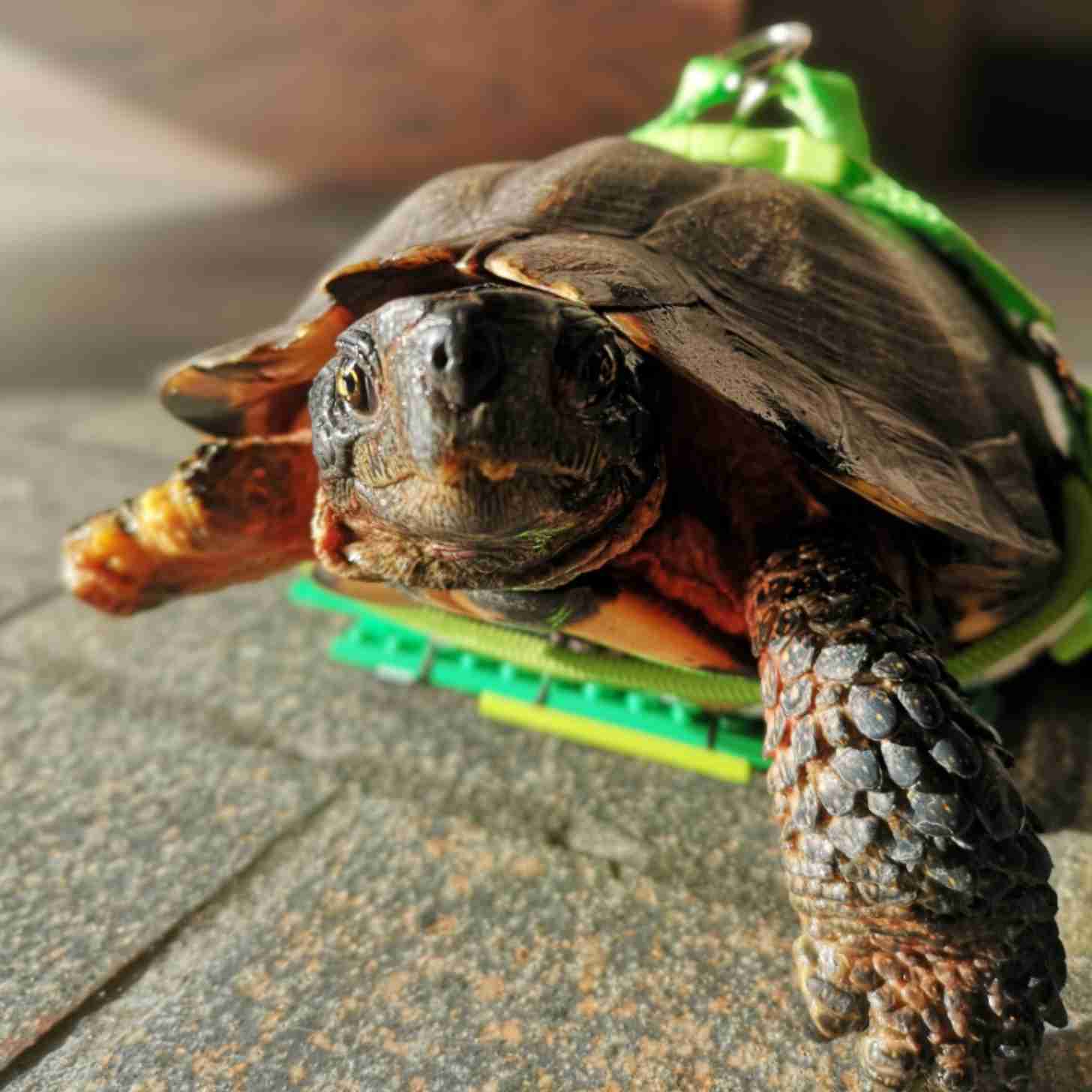
After piecing together a green-checkered platform — with accompanying wheels — Biesterfeld used a small dog harness to loop the contraption around Root’s midsection.
“We thought that'd be so great because we know it's non-toxic, we know that we can replace the parts as we need, and should his shell change or grow, we can change the shape and size of that. It's very modular,” Biesterfeld said.
According to the staff, Root only needed one day to master the LEGO aid.
“We didn't want to make a skateboard or make anything that would just have him zooming too unnaturally fast, but he's clearly going a little faster than the average wood turtle, but he seems happy to do so,” Biesterfeld noted. “He's getting lots of great exercise.”
“Now when I snap his harness on, it's like when he hears that snap, he's ready to go,” Biesterfeld added.
Although Root’s exact age is unknown, wood turtles can live between 50 to 80 years, which means he’s settling in for a long tenure at the museum.
“We may have him for a while, so we want to make sure he's comfortable," McKinnon said.
You may also like: After being struck by a boat, this paralyzed sea turtle can now swim with an innovative 3D-printed harness
Header image via Pixabay (Creative Commons CC0 1.0 Universal Public Domain) / Colin Osborn/USFWS (PDM 1.0)
In August 2024, rough sleepers across England were randomly selected to take part in a unique cash program.
Although they had recently gained temporary housing, they were all people who had experienced homelessness without shelter for prolonged periods of time.
To avoid compromising the results of the trial, the researchers at the Centre for Homelessness Impact and the Ministry of Housing, Communities and Local Government did not disclose the money given out, but it was one of eight CFHI projects backed by £15 million ($20.37 million in USD) of government funding.
After participants were allocated a “significant” amount of money, support providers at regional charities helped them purchase items on their behalf.
“We were encouraging our partners to be quite flexible and creative in how they spent that money,” Ella Whelan, the trial’s program lead at CFHI, told Big Issue.
“So obviously there were buckets of spending that we had very commonly around clearing like rent…or other debts, which maybe is to be expected, but is still super helpful and really impactful for people.”
Then came the surprising purchases.
“We also had other things around, like getting back into work or starting college courses or things like that, also things like laptops or other tools that were needed,” Whelan explained.
“We also had things like driving lessons, enabling people to reconnect and take on work. They were some of the things that people were spending that money on.”
According to Big Issue, a total of 10 frontline charities across England took part in the study to help facilitate purchases. Porchlight helped trial participants based locally in Kent, located in South East England.
The charity, which was founded in 1974, has been reducing homelessness for over 50 years through temporary housing solutions, mental health services, and essential care.
“Everybody deserves to have someone on their side when life gets tough,” reads a mission statement on the organization’s landing page.
“We draw on decades of experience to help people facing poverty and inequality in health and housing.”
Tom Neumark, the chief executive of Porchlight, said that he and his colleagues were astounded by how successful the trial proved to be.
“The feedback that people were giving us about it was that it was life-changing, basically,” Neumark said.
Neumark said that one person in the trial used part of their sum to fund their small wedding.

“There’s no way in hell, traditionally, you’d be able to write to a local charitable foundation and say, 'Can I have three grand to get married?’” he said.
“But what is it that makes a house a home? It’s sharing with someone you love, that’s a great part of it, and so I think it’s fantastic.”
Neumark said that the trial has long-term potential within other nonprofits, homeless charities, and government programs.
“It really expanded our minds as a charity about what gives people a sense of purpose,” Neumark said.
One participant, Colin, used the money to clear longstanding debts and unpaid train tickets. Now, less than a year later, he has a job and his debts are up to date.
Another participant, Kim, used the money to sign up for a civil law course.
“When I was awarded this money, it was overwhelming,” Kim said. “It is a lot of money to people like us – I felt like I’d won the lottery. I bought a phone, laptop, and printer so I can do a college course. I want to do civil law so I can advocate for people who are homeless. Getting this money gives you hope.”
For Sarah, a recovering addict, the trial money meant the difference between “an empty shell” and a loving home.
“Porchlight helped me get a place of my own, and when I was awarded this money, I was able to kit it out,” Sarah said, noting household necessities like a sofa, bed, fridge, freezer, and cooker.
“It’s my safe space. It’s my sanctuary. I can shut the door, I can shut the world away. There’s a lot to be said for that…I could choose what I wanted, I could make it feel like home,” she said.
“Getting the money has allowed me to do the final bits to my new home that mean I get to see them and my grandkids more. My kids haven’t had me for a long time. They have me now and you can’t ask for anything more than that.”
“Nothing would ever make me lose this again,” she emphasized. “I will never not pay my bills. I will make sure I’ve got food and the things I need at home. I will never go without those things again. I will never risk losing what I’ve got now.”
Sarah hopes that more people experiencing chronic homelessness will have a chance to take part in similar trials.
“I would love to see other people have this opportunity that I’ve been given,” Sarah said. “If I hadn’t had that grant and the things in my flat that I needed, then I can’t honestly say that I would still be clean and I wouldn’t have struggled.”
“Not having the things you need puts a lot of pressure on people and this took that away from me. So for people to have that opportunity to be given that grant, that would just be amazing.”
Neumark invited people to look into the study and keep an open mind.
“I think some people’s resistance to the idea of giving money to people who are experiencing homelessness, it can come from stigma,” he said.
“It can come from the idea that people experiencing homelessness are so different to me: the person who’s going to give the money. From what I’ve heard of the stories of what people spend the money on and how they felt once they spent the money, I felt nothing but empathy for what people were saying.”
You may also like: Involuntary sweeps of homeless camps do not increase public safety, study finds
Header image via Unsplash (CC BY-NC 4.0)
Every three minutes, someone in the United States is diagnosed with blood cancer. Fortunately, stem cell transplants can help replace damaged blood-forming stem cells with healthy ones following treatments like chemotherapy and radiation.
An estimated 20,000 Americans need a stem cell or marrow transplant every year, but only 30% of patients find a match within their families.
The remaining 70% rely on strangers through donor registries, like Gift of Life Marrow Registry, a nonprofit that sends cheek swab kits to willing donors across the country, in hopes of finding a match for cancer patients in need.
While the cheek swab method has worked for the organization for over two decades, a new technology aims to recruit even more donor sign-ups across younger and more diverse populations.
Introducing: Hero Gum.

Partnering up with Wrigley’s, Gift of Life is now able to collect cheek cells through a wad of chewed-up DoubleMint gum, which determines if a person is a match for a stem cell transplant, also known as a bone marrow transplant.
“By chewing a piece of gum for just five minutes, individuals can provide a viable sample for Human Leukocyte Antigen (HLA) typing and join the marrow registry — the first step toward potentially saving a life,” a press release stated.
And this new campaign hopes to make it easier — and more fun — than ever.
People interested in joining the donor registry can simply request a Hero Gum kit online to be mailed to their door. From there, they just have to chew the gum for five minutes, place it back in an envelope, and mail it out to be analyzed.

“You just chew, spit, and boom — you could be someone’s hero,” Jay A. Feinberg, the founder and CEO of Gift of Life said in a video. “No needles, no swabs, no stress.”
Labcorp has performed testing for the registry and confirmed that DNA-rich cheek cells left on chewed gum can be analyzed to reliably identify HLA tissue markers, the genetic “fingerprint” used to match donors with patients. These donors can then help save the lives of individuals with leukemia, lymphoma, and other blood cancers and disorders.
“It’s a fantastic way to be able to test quickly, painlessly, non-invasively,” Dr. Brian Caveney, Labcorp's chief medical and scientific officer, said in a video.
The non-invasive DNA collection method aims to encourage more people to join the registry, which improves the odds of a successful match for patients. The closer the HLA match, the greater the likelihood of a successful transplant and full recovery.
By potentially reaching a larger and more diverse audience, the campaign could also help address racial disparities in finding donor matches.
According to the Cleveland Clinic, a person who is white and in need of a bone marrow transplant has a 79% chance of finding a donor through a registry, whereas a person who is Black has a 29% chance.
Increasing the number of donors is crucial to saving more people and closing that gap. And for the people behind these databases, innovation is key.
“Labcorp is proud to power the science behind this innovative and potentially life-saving initiative,” Caveney said in a statement.
“By teaming up with Gift of Life, we’re helping turn a simple act into an opportunity to become a much-needed donor — and advancing our mission to improve health and improve lives.”

The tests are available online now and are also designed to be distributed at high-traffic events, college campuses, and community centers across the country.
But on August 1, the campaign will really kick off with a grand slam, debuting at Citi Field during the New York Mets vs. San Francisco Giants game.
At the game, the Gift of Life team will distribute kits to an estimated 30,000 fans, in what they’re hoping will be the largest single-day bone marrow registry drive in U.S. history.
“For decades, we’ve worked to make joining the registry more accessible — and Hero Gum is one of our most creative approaches yet,” Marti Freund, COO at Gift of Life, said in a statement.
“By turning something as familiar as chewing gum into a potential life-saving act, we’re introducing a fresh, engaging way to connect with younger communities and expand the diversity of our donor base. At its core, this campaign is about broadening awareness and saving more lives.”
Header image courtesy of Gift of Life Marrow Registry
Amid potent political divides and efforts by the Trump administration to eliminate diversity, equity, and inclusion programs across the federal government, education system, and private sector, a new study offers a different perspective.
According to researchers at the University of Copenhagen, Yale University, and the University of Chicago, most Americans actually want a more ethnically and religiously diverse society than the one they live in today.

“We wanted to investigate whether the idea of a multicultural United States still has popular support — and it does, to a large extent,’ Séamus Power, lead author and associate professor in the Department of Psychology at the University of Copenhagen, said in a statement.
The study, which was published in the journal “Ethos,” conducted a representative questionnaire survey of 986 American citizens. The participants were asked to assess both the actual and their ideal composition of ethnic and religious groups in the U.S.
“Two-thirds of participants wanted a more ethnically diverse United States than the current one,” Power summarized, “and more than half wanted greater religious diversity.”
Perhaps among the most surprising findings was that these sentiments persisted among white Christian Americans. This group of people is often connected to fears of demographic change, and although more extreme anti-diversity views do exist, the majority of those surveyed were in favor of increased diversity in the U.S.
“Our data shows that only 1.1% want an ethnically homogeneous United States, and only 3.2% want a religiously homogeneous society,” Power said.
“Although we should not underestimate the significance of these extreme views when they are scaled up to the entire population of the United States.”
Other findings in the study indicated that Americans generally overestimate the proportion of minority groups in the country and underestimate the size of the white and Protestant populations. Despite this perspective, the desire for diversity applied across political and religious divides.
“The multicultural ideal is not just something that exists in academic circles or among minorities,” Power added. “It is a fundamental part of how many Americans understand their country.”
Powers and his fellow researchers hope the findings of this study can contribute to a greater understanding among Americans and reduce polarization when it comes to identity and belonging across the country.
“It is crucial to the debate to know that it is not the desire for uniformity, but the acceptance of diversity that characterises Americans' ideal image of their nation,” Power concludes.
“Multiculturalism is perhaps more American than apple pie.”
Header image by Amy Elting on Unsplash
What if public art could also power an entire residential building?
The SunRise Building, an apartment complex in Alberta, Canada, has answered that question — and is now the title holder of the Guinness World Record for the largest solar panel mural on Earth.

The installation is a retrofit on an existing building, constructed in the 1970s. With a great location, it required significant renovation to be a viable option on the market. Rather than demolishing it, the building’s owner, Avenue Living, upgraded it entirely.
Now, it’s covered in a colorful mural made of building-integrated photovoltaic panels (BIPV) provided by Mitrex. The panels span 34,500 square feet across the exterior of the structure, a 12-story residential building.
On the northern wall of the building is the main mural, called “The Land We Share,” which stands 85 feet tall, by the Edmonton-based Indigenous artist Lance Cardinal. The photovoltaic panels are strategically placed to depict a tribute to the First Nations and Chinese cultures that are integral to the history of the area.

The rest of the building is covered in accenting colored panels, a mosaic of dark gray, purple, orange, yellow, blue, green, and red panels.
Altogether, it provides 267 kW of solar capacity and powers the building’s common areas, which in turn, will save building owners and residents an estimated $80,000 per year in energy costs, beginning in year five.
This saving is roughly equivalent to the building’s monthly revenue from seven additional residential units. Mitrex also shared that using this BIPV facade instead of replacing the building with cement siding yields a four-year return on investment.

“This landmark project showcases Mitrex’s innovative BIPV solar panels, blending cutting-edge solar technology with vibrant cultural artistry to redefine sustainable architecture,” a press release from Mitrex stated.
“This fusion of BIPV technology and art transforms an aging high-rise into a beacon of sustainability, cultural pride, and urban revitalization.”
At first, the project leaders were planning a 60 kW system for the retrofit, but it wouldn't have been enough to power the entire building or secure funding from Canada’s Deep Retrofit Accelerator Initiative, which requires at least 50% decarbonization from projects of this nature.

So, they incorporated solar cells in Cardinal’s artwork to meet the criteria. The mural features an aluminum honeycomb core and the full system has a rain screen with an air and moisture barrier and continuous insulation to keep it safe from the elements.
Now, the project is able to reduce 150 tons of carbon emissions annually.
“This project is a bold vision for the future of sustainable architecture,” said Danial Hadizadeh, CEO of Mitrex, in a statement. “SunRise proves that BIPV solar solutions can produce clean energy, cut emissions, and inspire communities with culturally resonant designs. We're honored to lead this revolution.”
Echoing Hadizadeh’s words, Mitrex’s press release concludes that the company hopes to drive global adaptation of this technology in similar ways.

Although the SunRise might be the biggest project of its kind right now, hopefully, architects say, it won’t be the last.
“By empowering architects and developers to create self-sustaining buildings, Mitrex is redefining urban landscapes with solar-integrated facades that combine clean energy, bold design, and cultural significance,” the press release states.
“The SunRise project proves that BIPV systems are both functional and inspiring, offering energy savings and aesthetic value for sustainable cities.”
Header image courtesy of Mitrex
In January, Gerard Donaghy from County Down, Northern Ireland, sent out an “SOS” on social media.
“We need your help!” Donaghy wrote on Facebook. “We’re looking for a building that serves the community and truly deserves this support — this could be a special needs school or support service, a community centre, a homeless charity, a mental health organization, or perhaps someone who is making a real difference in people’s lives.”
Donaghy runs Paintworks NI with his wife Danielle. The contractors originally started the business as an academy for rising painters and a way to network with other interior decorators across the country.
Now, they’re using their platform to find buildings in the community in need of renovation and help them out — for free.
The latest nominee? Helping Hands Autism Resource Centre in Dundonald.
So Donaghy put out a call again, this time for volunteers to help with their “Paint It Forward” event to help renovate the family center.
“What's it all about? It's about bringing together as many awesome decorators as I can to show support for a local charity that gets no support,” the father of two said in a Facebook video two weeks before the renovation.
“It's about having fun. It's about letting them see that we see them. As a dad of a disabled child, when you see the good that these people do day in and day out, it's just inspiring.”

“I have several nieces and nephews with autism, and everybody, I’m sure, knows somebody with autism,” Donaghy added. “It's nearly forgotten about. There's not enough help out there. But anyway, it's going to hopefully help that awesome group of people up there who are supporting young kids and families.”
Donaghy said that several local businesses had already donated a bevy of supplies to the cause.
“Check that out,” he said, gesturing to piles and piles of equipment. “We've got scuttles. We've got the wee magnetic brush holders, we have brushes, wee arms, sandpapers, plat … it's just unreal.”
All they needed was volunteers.

“Whenever everybody comes together, that's when the change happens,” Donaghy said. “Cheesy, maybe as that might sound, but it's genuine. I can't do it by myself.”
On June 28, the day of the event, a total of 50 professional painters heeded the call and showed up to help.
Marco Santos, who owns a painting and decorating business in County Tyrone, told BBC News Northern Ireland that he was blown away by the turnout.
“It shows what we can do when we get together; we can all give back to the community,” he said.
“I never told Gerard,” he confided, “but I only expected about 10 to 15 people to show up. But to see this amount of people from all over Northern Ireland turn out to do something good is class.”
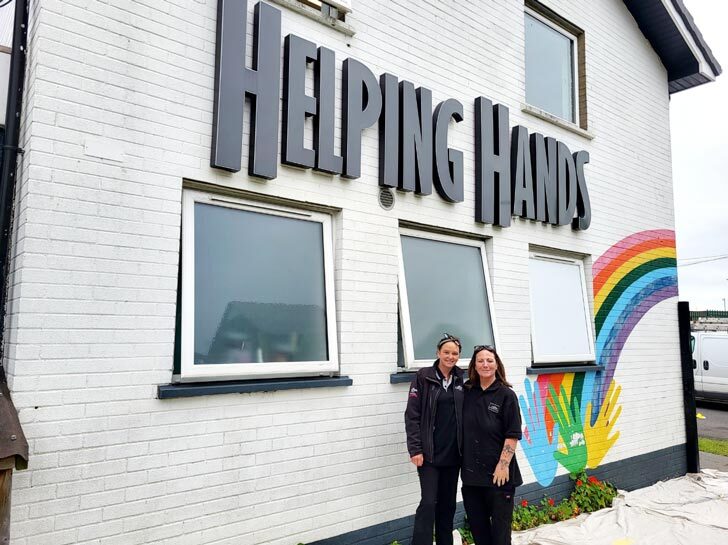
Donaghy agreed: “You don't have to look far to find bad news these days — it can weigh you down — but something like this reminds you that there's still plenty of good out there.”
Together, the team gave the exterior a fresh coat of paint — as well as an inviting rainbow. The inside walls, which had been left blank, were given big splashes of color.
“I walked into their space and saw what they were trying to do, and I just knew we could help make it better,” Gerard said.
“A coat of paint might not seem like much to some, but when it's done with care and pride, it changes how a place feels — and that's what these families deserve.”
Caroline Birch, the chairperson of Helping Hands, couldn’t agree more.
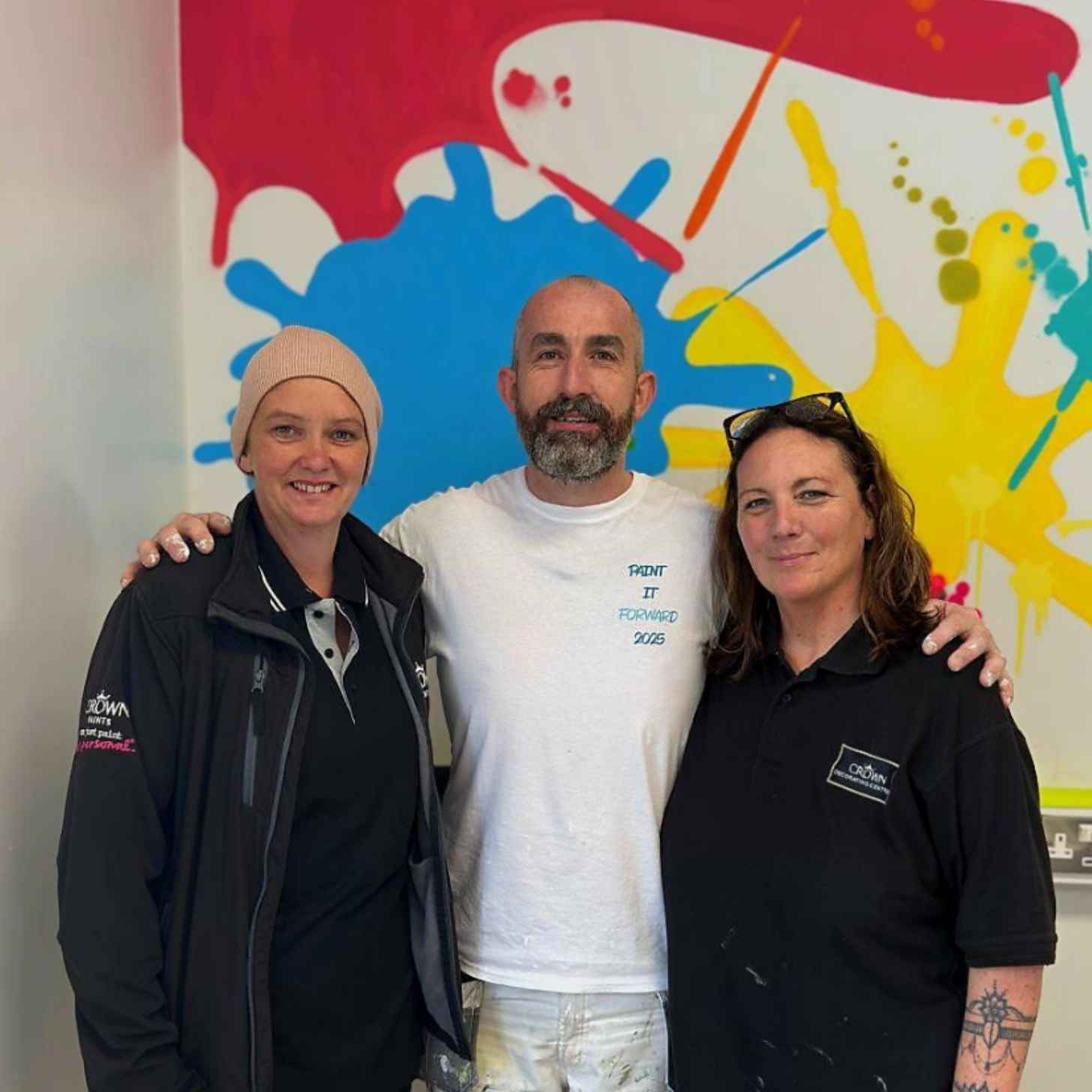
“It means the world to our family members and the local community as well,” Birch said. “We are absolutely delighted that Gerard and all the other guys have generously volunteered their time, equipment, and expertise to support our charity by redecorating our premises.”
“The makeover will create a brighter, more welcoming space for the children and families that Helping Hands supports every day.”
On July 2, Paintworks Northern Ireland shared photos of the Helping Hands transformation.
“One more big, massive THANK YOU to the amazing people who made Saturday possible!” Donaghy wrote, tagging the many sponsors and volunteer decorators for their time and donations.

“What a day!” replied a volunteer painter at Whites Decoraters. “Keep up the good work.”
“Great day, good people, and for a great cause,” another volunteer from TopCoat Painting Contractors Limited responded.
“Exceptional day was had by all,” added a third volunteer, Trevor Gill. “Great to be a small part of a super team…a special thanks to Gerard for making me [feel] so welcome. Good luck to all the staff and families at Helping Hands.”
Since the last “Paint It Forward” event, Gerard said his inbox has been filled with painters who are eager to help with whatever comes next.
“I'd love to see this spark something across the board,” Gerard told BBC News Northern Ireland. “Whether you're a roofer, a joiner, a landscaper, a plumber — we all have skills. If every trade gave one day a year to a cause in their community, imagine what we could do?”

Header image via Paintworks NI / RE Quinn Architects
Fifteen years ago, solar power was nearly four times the cost of fossil fuel alternatives.
For context, 2010 was back when the iPad was first released, Instagram was launched, and “TiK ToK” by Kesha was the number one song on the Billboard Hot 100 chart.
Needless to say, a lot can change in 15 years — including the affordability of solar power.
According to two new United Nations reports, renewable energy has passed a “positive tipping point,” and solar power is now 41% cheaper than fossil fuels.
“The fossil fuel age is flailing and failing,” UN Secretary-General Antonio Guterres said in a speech on July 22, as the reports were released. “We are in the dawn of a new energy era. An era where cheap, clean, abundant energy powers a world rich in economic opportunity.”
“The sun is rising on a clean energy age. Just follow the money,” Guterres said frankly, pointing to the figures in the reports which found that green energy outpaced fossil fuel investments by $800 billion in 2024 alone.
Last year is evidence of a decade-long trend towards renewable energy — despite federal attempts to slash it under Trump’s second presidency.
“The year 2015 marked a turning point in global climate governance, with the adoption of the landmark Paris Agreement at COP21,” One report, titled “Seizing the moment of opportunity” said, in reference to the promise 195 countries pledged to hold the global average temperature to well below 2 degrees Celsius.
“The cost of utility-scale solar PV has fallen by 80–90% each decade since 1960, whereas the costs of fossil fuels are highly volatile and show no long-term decrease,” it continued.
“New solar PV has been undercutting new coal- and gas-fired power plants in most of the world for six years, and the gap in their average lifetime electricity generation costs continues to widen in favour of solar. Meanwhile, global manufacturing capacity of renewable energy technologies is outstripping demand: Announced solar PV and battery projects can already cover the global deployment needs of the tripling renewable capacity by 2030 goal.”

For example, the report noted, electric vehicles are up from 500,000 to 17 million since 2015.
Other astounding figures from the UN reports stated a 74% growth in electricity generated globally from wind, solar, and other green sources — just in the last year.
And 92.5% of all new electricity capacity added to the grid worldwide came from renewables in the same time frame.
“Countries that cling to fossil fuels are not protecting their economies, they are sabotaging them,” Guterres said in his speech, pointing to countries like China, India, and the United States, which still rely heavily on coal, oil, and natural gas.
“[They’re] driving up costs, undermining competitiveness, locking in stranded assets.”
Guterres’ impassioned speech came to a head as he said that there is security in renewable energy.
“There are no price spikes for sunlight,” he said. “No embargoes on wind.”
“This is not inevitable. We have the tools, the instruments, the capacity to change course,” Guterres said. “There are reasons to be hopeful.”
Header image via TIPPING (CC BY-NC 4.0)
Every day the Good Good Good team collects the best good news in the world and shares it with our community. Here are the highlights for this week!
If you want to get good news in your inbox every day, join the Goodnewsletter — the free daily newsletter designed to leave you feeling hopeful.
The Best Positive News We’re Celebrating This Week —
Students in a Maine school district are choosing to go on a hike instead of to traditional detention
Alternatives to traditional detention — sitting in a room monitored by a teacher — exist, including some restorative task or community service. But one school counselor at a high school in Maine is piloting a program that gets kids in nature, instead.
Leslie Trundy started the program after attending an outdoor education conference, where she wondered whether spending time outdoors might encourage the kids to open up about the problems they might be experiencing.
While she doesn’t have enough data yet to determine if it’s a “success” as some may define it — though students report fewer detentions and the hikes helping give them the time space to reflect that they couldn’t “just sitting in a classroom” — Trundy said it has led to some students joining her outdoor outing club for fun.
Why is this good news? Spending time in nature has been shown to improve human health and well-being. And while consequences for mistakes or wrongdoing are also a natural part of life, ones like this can actually help address the problem better than simply sitting in a quiet classroom.
→ Read more
1,000 dogs volunteer for first-ever ‘canine-citizen science’ study, sniffing out invasive species
→ Read more
An LA County program is successfully reducing the number of people living on the streets and in shelters
Launched in 2021, LA County’s Homelessness Prevention Unit uses artificial intelligence to analyze government data for signs someone is at high risk of falling into homelessness, like frequent hospitalizations, psychiatric holds, and more.
Outreach workers contact them to provide assistance with staying housed, like paying overdue rent, signing up for mental health treatment, or fixing their car to get to work.
Now, a study has shown that the pilot phase of the county’s program found that people enrolled in the prevention program were 71% less likely to end up in a shelter or on the streets compared to those who were not enrolled.
Despite the national extension shutting down, Illinois is keeping its dedicated 988 lifeline for LGBTQ+ youth
The 988 suicide and crisis lifeline was launched nationwide in 2022, along with a network of trained crisis counselors to specifically offer support for LGBTQ+ people 25 and under, a group of people disproportionately at risk for suicide and mental heath struggles.
While the U.S. government cut its funding, shutting down the service nationally, but Illinois has promised to keep its line open and continue providing mental health support services for LGBTQ+ young people. Currently it gets more than 1,600 calls and 600 chats every month.
The state is also working to expand its LGBTQ+ youth-specific counselor training, make sure call centers are well resourced, and continuing to advertise the lifeline.
Why is this good news? Suicide is the second leading cause of death for young people between ages 10-14, and the third leading cause among 15- to 24-year-olds. Among LGBTQ+ youth, the likelihood of suicide attempts is quadruple that of their peers — if they have support, it can be life-saving.
New study shows dogs help people regulate stress even more than expected: ‘Profound implications for human health’
→ Read more
Tree planting in England is now at its highest recorded rate in over 20 years
In the past year, 5,765 hectares of new woodland were established across England, a 27% higher rate than in 2023-2024, and 156% higher than in 2022-2022.
Another 880,000 trees were planted outside of woodland areas, bringing the total area of new tree canopy to 7,164 hectares and 10.4 million trees — an area equivalent to 10,000 soccer fields.
This milestone is part of larger nationwide goal to increase woodland cover to 16.5% of England’s total land area by 2050 — and the government says progress is thanks to a myriad of partners, communities, and individuals.
→ Read more
Volunteers came from all over the state to help a Texas summer camp for disabled people reopen to welcome campers
Located just 30 miles downstream from Camp Mystic, where the Texas floods killed 27 campers and counselors, is Camp Camp, which offers sleep-away camps every summer for children and adults from five to 55 years old with mild to severe disabilities.
Offering similar camp activities like horseback riding, swimming, archery, and more, Camp Camp’s 55-acre property was also devastated by the floods.
One day after an Austin real estate agent made a plea on Facebook for “money, manpower, and machines” to help rehabilitate the camp, 250 volunteers arrived to help — and 500 came just two days later. Some reported there being as many as 1,500 people there to help.
Why is this good news? Camp Camp welcomes more than 800 campers each summer and has a 1:1 counselor ratio to accommodate each person’s needs. While the area is still devastated and recovering from the deadly floods, these hundreds of volunteers knew how important it was to get this camp back into shape to welcome guests to experience some normalcy and joy.
→ Read more
Homicide rates hit ‘record lows’ in these major cities, following broader trend in the US
→ Read more
A Kentucky ‘River Cowboy’ has spent decades pulling thousands of improperly discarded tires from waterways
Every year, the U.S. discards nearly 300 million tires, and while most are reused or recycled, millions are unaccounted for — 1 million in Kentucky alone — and they end up in waterways like the Red River.
That’s where Russ Miller and his wife have lived for decades, both enjoying kayaking in the scenic waterways — and cleaning them up. After seeing a tire speared to a tree “like an olive on a toothpick,” he realized it would be there forever (or at least thousands of years) unless someone did something.
So that’s what he did. And for the past several decades, Miller has cleared an estimated 3,000 to 4,000 tires from Kentucky’s waterways. He’s also a founding member of the grassroots cleanup group Friends of Red River, formed in 1996.
→ Read more
When a heat wave hit New England, solar panels and batteries prevented a blackout and saved people millions of dollars
At the end of June, a heat wave sent temperatures soaring above 100 degrees Fahrenheit in New England — but a network of solar panels and batteries kept power on, reduced fossil fuel consumption, and saved consumers an estimated $20 million.
High temperatures led to grid demand reaching maximum capacity, and while traditional methods to resolve that — like importing energy from nearby areas, were implemented, new clean energy solutions were, too.
Rooftop and other “behind-the-meter” solar panel installations — which don’t pull from the grid — and a network of batteries provided several gigawatts of power, helping reduce grid pressure and saving customers millions of dollars total.
Why is this good news? Solar power and battery storage are proving themselves over and over again in their ability to make energy grids not only less carbon-intensive, but more resilient, adaptable, and affordable amidst extreme weather like heat waves — which are only growing more intense and frequent due to the climate crisis.
Three-footed turtle given ‘new wheels’ after museum staff gifts him a handmade LEGO harness
→ Read more
A first-of-its-kind study found that emergency vaccine rollouts have cut deaths by 60%
The first comprehensive study assessing the impact of emergency vaccination programs found that they reduced deaths by around 60% over a 23-year period, and prevented a similar number of infections.
The researchers believe that the rollouts stopped much bigger outbreaks of Ebola, measles, cholera, yellow fever, and meningitis.
Not only did they prevent loss of life, but they also resulted in significant economic benefits to the tune of $32 billion in averting deaths and years of life lost to disability. This could also be a significant underestimation, as it doesn’t count the cost of dealing with larger outbreaks.
For example, the 2014 Ebola outbreak — which happened before an approved vaccine — is estimated to have cost West African countries alone more than $53 billion.
Missouri became the latest state to end its ‘luxury tax’ on diapers and menstrual products
Missouri’s governor signed a bill eliminating the state’s “tampon tax” on menstrual products and diapers, reducing the state’s tax rate on the items from 4.225% on “luxury” goods to 1.225% on necessities, like groceries.
For diapers, there are health risks associated with having an inadequate number of diapers or diapers being worn too long.
And period poverty is still widespread in the U.S., with one in five teens unable to afford menstrual products, and 84% of teens have themselves or know someone who has missed school due to insufficient menstrual supplies.
Why does this matter? Diapers and menstrual products are necessities, not luxuries, and people shouldn’t pay more for them as a result of that improper designation. A 4.225% tax rate might not seem like a lot — but for families and people who are already struggling to afford basic necessities, it is. While Missouri should join other states that have repealed their tax entirely, this is important progress.
Homeless people given free cash with no strings attached in new study: ‘I will never not pay my bills’
There are now more than half a billion ‘mobile money’ accounts in the world, reducing a hurdle to escaping poverty
For more than a billion people in the world, cash is their only way to exchange money — and the absence of banking services hinders their ability to escape poverty.
Recently, “mobile money” has transformed how people can access financial services, differing from traditional bank accounts in that you don’t need a physical bank branch or even internet access. Instead, deposits, transfers, and payments happen via text message.
This gateway to the more formal, global banking system unlocks life-changing opportunities many of us take for granted, like the freedom to study or work where you want, borrow from friends or family in emergencies, and more.
More good news of the week —
Atlanta became the latest city to adopt a “cool roofs” program to combat urban heat. Experts say cool roofs are a simple, relatively cheap, and effective way to save people from extreme heat by significantly reducing temperatures not just in a building, but in the surrounding urban environment.
A shelter dog made history as the first-ever “morale dog” stationed on a US Navy ship. Adopted from Labs and More Rescue, Raider has been training to go to the bathroom on a “potty patch,” to wear booties to protect his feet from hot surfaces, to wear eye protection, and to get used to all the noises on the ship.
Various bird species are thriving and breeding in “astonishing” numbers in Germany's solar parks. Larks in particular are benefiting from the park’s features, like minimal visitors and vegetation kept short by sheep, whose droppings and varying flowering herbs provide food.
Addressing two major environmental problems, researchers turned food waste into biodegradable plastic. According to the U.S. Department of Agriculture, 30% to 40% of the nation’s food supply ends up being wasted, adding up to billions of pounds every year rotting in landfills and emitting greenhouse gases like methane and carbon dioxide.
Vendors at London’s iconic O2 arena went completely plant-based for Billie Eilish’s six-night concert run. The Grammy award-winning musician and activist headlined the 20,000-capacity arena adopted an entirely plant-based menu at Eilish’s request, just like it did back in 2022 for another tour.
Related: Billie Eilish pushes music labels to ‘upcycle’ 400,000 unsold T-shirts into new merch
Joining the “food as medicine” movement, New York City’s public hospitals are prescribing free boxes of fresh produce to patients. Since it started in August, more than 500 patients have enrolled in the Lifestyle Medicine Program’s produce box initiative, which delivers fresh produce to patients’ homes every month for six months.
California unveiled a new extreme heat ranking system to help people prepare and protect themselves from high temperatures. Similar to hurricane categories, the CalHeatScore system relies on a 0-to-4 ranking system, with zero indicating “no elevated community risk of heat-related illness” and four’s “severe” classification means extreme heat and significant risks of illness.
After a 150-year absence, a bandicoot “baby boom” in Australia is renewing hope for the endangered species. A reintroduction plan implemented by conservationists in 2023 is proving successful, with adult females in “breeding condition,” and 44 bandicoot younglings observed just a year later.
Portugal is now providing monthly paid menstrual leave for people with endometriosis or adenomyosis. Employees who experience severe and disabling pain caused by endometriosis or adenomyosis during their menstrual period are now entitled to employer-paid leave for up to three consecutive days per month of work.
Scientists invented a “living” concrete that heals its own cracks with sunlight. Despite being the most widely used building material on Earth, cracks in concrete — big or small — can lead to catastrophic structural issues, even leading to the collapse of a building, bridge, or highway.
Reducing AC use and carbon emissions, a new AI-designed roof paint can cool buildings by up to 36 degrees. The team of engineers leading the research estimates that the level of cooling could save the equivalent of 15,800 kilowatts per year in an apartment building in a hot climate, in addition to many other uses and applications.
Senegal joined a growing list of countries that have eliminated trachoma as a public health concern. A “sign of the remarkable progress being made against neglected tropical diseases globally,” trachoma has been known in Senegal since the early 1900s and was confirmed as a major cause of blindness through surveys in the 1980s and 1990s.
A K-pop boy band whose members are deaf or hard of hearing is incorporating sign language into their music. Big Ocean uses the latest audio technology to help make their music, coordinate their choreography with flashing metronomes and vibrating watches, and incorporate Korean Sign Language into videos and performances.
The largest independent bookshop in England is opening in a historic building. The company behind the bookshop, Topping & Company Booksellers, runs four other shops in the UK and has a track record of creating beautifully designed bookshops in historic settings.
Metal, concrete, and other materials from buildings burned in the LA fires are being recycled and given new life. The Army Corps of Engineers set up operations to compact metal and crush concrete, then take it in trucks to recycling facilities before re-entering the supply chain for future uses — it’s even repurposing trees and shrubs that made it through the fires.
A group of University of Connecticut students created a tool that simulates finding a tumor during a breast self-exam. The group was led by engineer Leslie Holton, who, 20 years prior, was a graduate student studying virtual reality in medicine when her mother died of metastatic breast cancer, leading her to want to develop this kind of detection tool.
New “Hero Gum” is making it easier than ever to find a match for people in need of a stem cell transplant. Every year, 20,000 Americans need a stem cell transplant, but only 30% find a match within their family — the other 70% rely on donor registries, one of which could dramatically expand its donor pool through this new, easy, accessible method that relies on a wad of chewed gum.
An anonymous donor gave $52,500 to help clear Colorado’s rape kit backlog. Sexual assault victims in Colorado wait 570 days on average for the state to process their evidence kits, leaving victims often unable to pursue criminal charges, restraining orders, or any semblance of justice.
The world’s largest solar mural turned an Alberta, Canada building into a massive power generator. The 34,500 square-foot mural was designed by an Indigenous artist, combining art with building-integrated photovoltaics that provide 267 kilowatts of solar capacity to power the residential building’s common areas.
A major health insurance company reduced around one-third of prior authorization requirements for certain health care services. Humana became the latest insurer to address the tedious paperwork process that has been a pain point for patients and providers, which can lead to delays in care and essential treatments.
- In an unprecedented project in the municipality of São Simão, blue-and-yellow macaws born in captivity were trained in free-flight techniques before being introduced into the wild.
- Traditionally, in psittacine reintroduction projects, captive chicks are only released into the wild at 2 or 3 years of age; with no experience in finding food or defending themselves against predators, many end up dying.
- According to the project’s coordinators, the initiative could signal a new method to be used in parrot and macaw reintroduction programs, offering lower costs and higher chances of success.
“I remember my grandfather telling me about the macaws in this region. So, it’s impossible not to smile seeing them back. We know where they sleep and feed, so every time we want to find them, we know where they are,” says biologist Humberto Mendes, a professor at the Federal University of Alfenas in Brazil’s Minas Gerais state.
Alongside Donald Brightsmith, a professor at Texas A&M University and one of the world’s leading experts on Psittaciformes (parrots), and Chris Biro, considered an international reference in free-flight training for pet birds, the Brazilian led a project to reintroduce blue-and-yellow macaw (Ara ararauna) in São Simão, in northwestern São Paulo state, Brazil, an area where the blue-and-yellow plumaged species used to exist in the past but became locally extinct more than 50 years ago.
What is so pioneering about this release is the technique used: free flight with psittacines, never before employed in conservation programs. And, more than that, the excellent result obtained: a 100% success rate.
“This result is absolutely wonderful! And I’m not exaggerating. I say that even though I’m a grumpy old scientist,” Brightsmith jokes as he celebrates the project’s success.
Just over two years after the initial release of the six blue-and-yellow macaws in 2022, all of them are still alive and showing great adaptation. And in that time, they have also been put through their paces, literally. They survived a fire that hit the region in the second half of 2024, when much of Brazil suffered from wildfires.
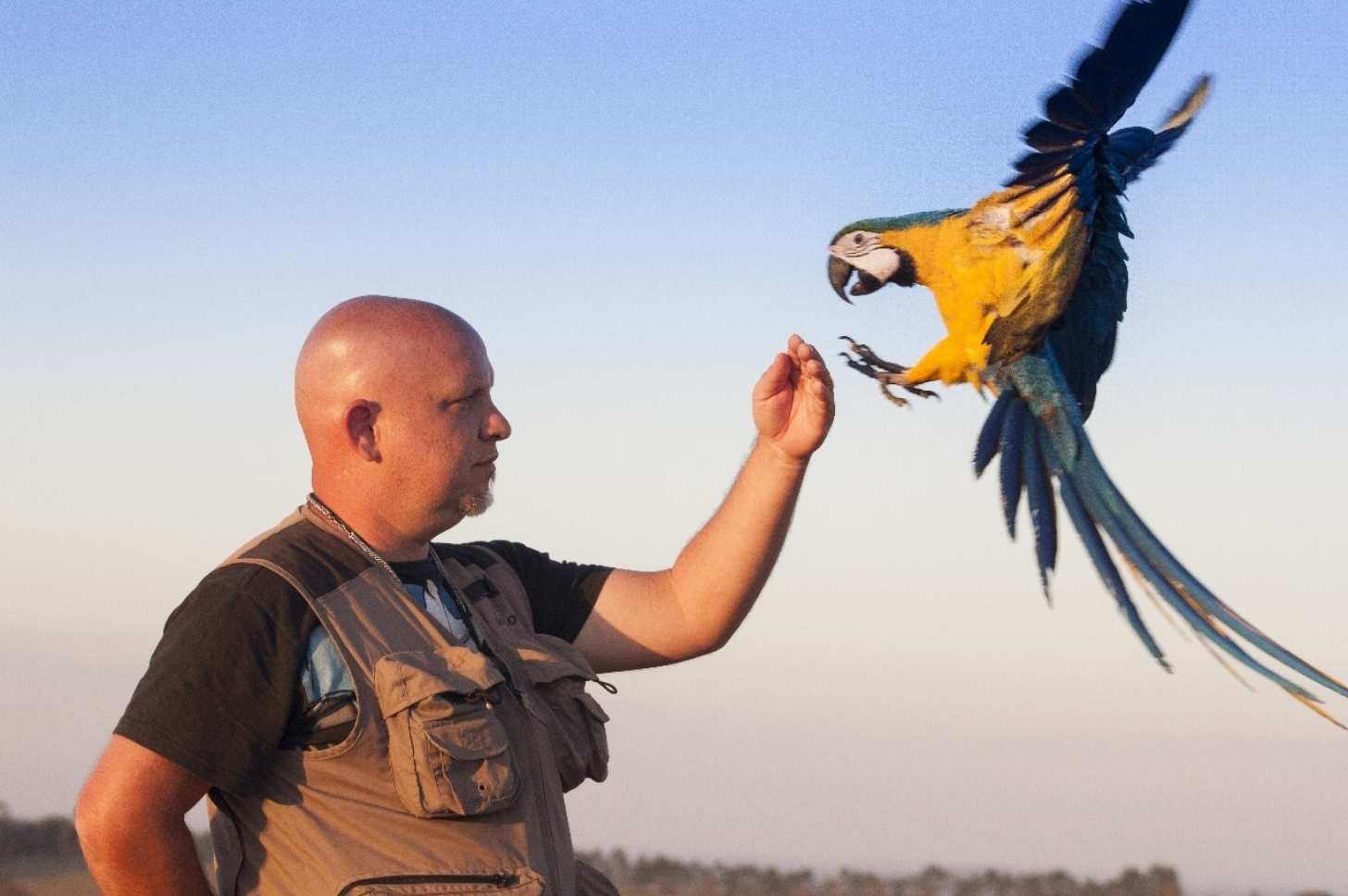
For the project in São Simão, two males and four females were selected, all chicks, bought from breeders authorized by Brazil’s federal environmental agency, Ibama. During their training, they were accompanied by three other adult birds of the same species, familiar with the free-flight technique, so they could learn to fly and behave in flocks.
Traditionally, in psittacine reintroduction projects, chicks born in captivity are released into the wild when they reach a certain age, around 2 or 3 years old.
“If you raise an animal in a cage until it’s 2 or 3 years old, it will hardly know how to defend itself from predators or look for food because it’s being provided. It won’t have any navigational skills. And then you open the door to the enclosure and they have to find their way around in an environment they don’t know. And that’s the biggest problem conservation programs face when releasing birds into the wild,” Biro says.
“It’s as if you raised a teenager all his life in a closed room and then suddenly released him into a crowded shopping mall,” he compares.
“When they are raised in captivity, in a closed environment, these animals are even afraid of the sun," Mendes adds.
"They’re afraid of the wind, of butterflies flying, of falling leaves. There are lots of things we can’t imagine, but they can cause a phobia and these animals can fly off in desperation."
And that’s where the big difference lies with free flight. Not that the technique is new; on the contrary. It is very similar to falconry, which has been used for millennia to train birds of prey through what is known as “operant conditioning,” a process that involves offering a reward (food) for each task performed.
In recent decades, however, it has become popular among domestic psittacine breeders.

For the method to be successful, however, the birds need to be trained at a very young age, between 90 days and 120 days old.
“We use a mobile cage, and as soon as the chicks have the slightest ability to fly, we encourage them to jump between two points to be fed. Little by little, we increase the distance. Then we fly them out of the aviary and back again,” Biro explains.
As well as encouraging longer flights, the training gradually includes an increasingly scarce food supply and a change in the time of day, forcing the macaws to look for food in the wild. And also, the breaking of ties with humans.
“Within two weeks, the macaws were already flying normally, like free-living individuals. Their instincts were being developed for the natural environment and not that of a cage,” the trainer says.
A new reintroduction alternative
Brightsmith, Mendes, and Biro say they believe the success of the study carried out with the blue-and-yellow macaw in Brazil could signal a new method to be used in parrot and macaw reintroduction programs. They report the results of the experiment in a scientific article in the journal Birds.
By comparison, for example, a reintroduction project for blue macaws (Cyanopsitta spixii) being carried out in Curaçá, Bahia, Brazil, in which 20 birds were released in 2022, only 10 remained in the wild. Among the others, some disappeared, others were killed by predators, and one had to return to the aviary because of its behavior. This represents a 50% success rate.
“We’re looking at a couple of decades of scientific parrot release projects where, in most cases, when you open the cage, the release is final,” Brightsmith says.
“Often they fly for miles and end up getting lost, there are problems with predators or a whole host of other issues with traditional methods. With this technique, you’re putting them in the right environment, socially and physically, at the right time in their development. And by doing this, the natural tendency to develop appropriate behaviors works.”
He explains that, at 3 months old, blue-and-yellow macaw chicks are already beginning to explore the world beyond the nest, making their first flights, still accompanied and under the protection of their parents. However, in the traditional release method, they will only be released much later.
For him, the way psittacines are usually released has a problem at its core: They are taught to be caged birds, and then there is an expectation that they will become wild animals.
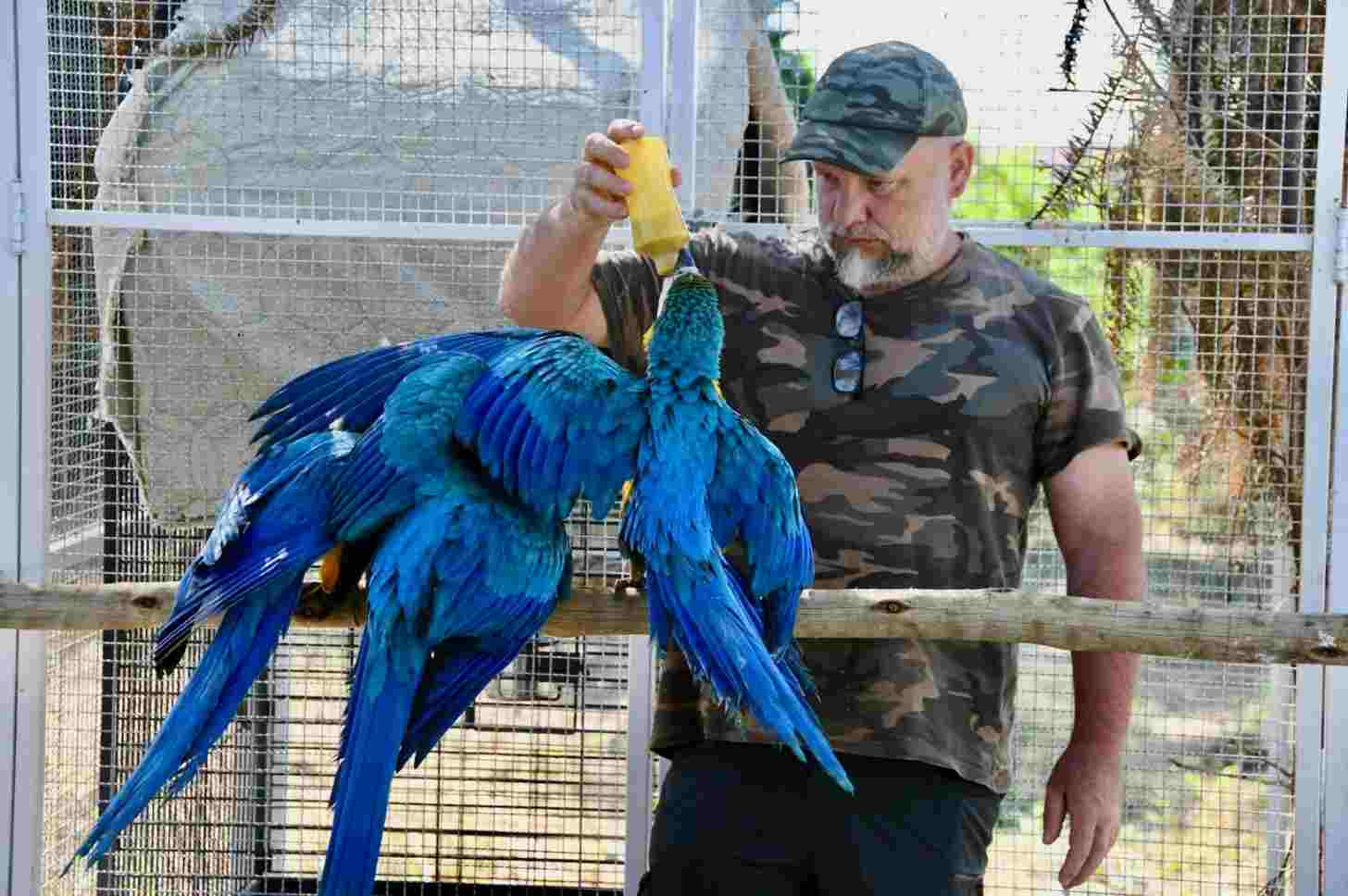
Another advantage of the free-flight technique is the much lower cost, the study’s authors argue.
“Some programs spend thousands, even millions, of dollars raising parrots in captivity, only to discover that these birds can’t survive in the wild because they don’t have enough experience in the real world,” the Texas A&M professor says.
The same method was also used in Colombia in 2023. Around 20 blue-fronted amazon (Amazona aestiva) were confiscated by the police and handed over to a local organization, Fundación Loros. Biro went there, trained them, and after two weeks, they were released into the wild.
Those involved in the Brazilian project say they believe that free flight could be a new conservation option for the reintroduction of birds in cases such as the one above, for seized chicks or for those born in captivity, whether in zoos, research institutions, or breeding grounds.
Mendes reveals that there are now plans for a new study with smaller birds that are more vulnerable to predation, such as the red-shouldered macaw (Diopsittaca nobilis).
“Our aim is to prove the efficiency of the technique with different sizes and species of psittaciformes.”
The researchers’ hope is that the use of the technique and its wider dissemination among conservation specialists will enable more birds to fly freely in the skies, especially in places where certain species have become extinct, as is currently the case in São Paulo’s countryside, with the return of the blue-and-yellow macaw.
This article was originally published on Mongabay and was first published here in Portuguese on February 3, 2025.
Header Image by Chris Biro
While the dangerous effects of climate change continue to worsen, legal efforts to address a range of environmental issues are also on the rise.
Headlines across the globe tout many of these legal actions: South Korea’s Climate Law Violates Rights of Future Generations; Ukraine is Ground Zero in Battle for Ecocide Law; Paris Wants to Grant the River Seine Legal Personhood; and Montana Court Rules Children Have the Right to a Healthy Environment, to name a few recent examples.
As an environmental lawyer, I see that most of these suits use one of five legal strategies that have been developed over the past couple of decades.
These approaches vary in terms of who is filing the lawsuit, against whom, and whether the underlying legal perspective is based on protecting human rights or the rights of the environment itself. But they all share an innovative approach to protect all life on this planet.
1. Right to a healthy environment
In 2022, the United Nations declared that humans have “the right to a clean, healthy and sustainable environment … essential to protecting human life, well-being and dignity.” More than 150 countries have similar declarations in their constitutions or laws, often alongside protections for other human rights, such as those to education and medical care.
These rights are held by humans, so people can sue for alleged violations. Typically, they sue one or more government agencies, whose responsibility it is to protect human rights.
One recent case using this approach was Held v. Montana, in which a group of young people in 2024 won a lawsuit against the state of Montana for violating the state constitution’s right to a “clean and healthful environment.” The state Supreme Court agreed with the plaintiffs and struck down a law barring the consideration of climate effects when evaluating proposals for fossil fuel extraction.
Similar cases have been heard in the U.S. and other countries around the world.
The International Court of Justice, the primary judicial body of the United Nations, ruled on July 23, 2025, that a “clean, healthy and sustainable environment” is a human right and said in a non-binding decision that governments that do not protect people and the planet from climate change could be legally liable for the resulting harms.
2. The rights of future generations
A legal concept called “intergenerational equity” is the idea that present generations must “responsibly use and conserve natural resources for the benefit of future generations.”
First codified in international law in the 1972 Stockholm Declaration, the principle has been gaining popularity in recent decades. International organizations and national governments have enshrined this principle in law.
Focused on humans’ rights, these laws allow people and groups to bring claims, usually against governments, for allowing activities that are altering the environment in ways that will harm future generations.
One well-known case that relied on this legal principle is Future Generations v. Ministry of the Environment and Others, in which a Colombian court in 2018 agreed with young people who had sued, finding that the Colombian government’s allowance of “rampant deforestation in the Amazon” violated the pact of intergenerational equity.
3. Government responsibility
Another human-centered approach is the public trust doctrine, which establishes “that certain natural and cultural resources are preserved for public use” and that governments have a responsibility to protect them for everyone’s benefit.
While the concept of “public trust” has long existed in the law, recently it has been used to bring suit against governments for their failure to address climate change and other environmental degradation.
In Urgenda Foundation v. the State of the Netherlands, a Dutch court held in 2019 that the government has a responsibility to mitigate the effects of climate change due to the “severity of the consequences of climate change and the great risk of climate change occurring.”
Since the decision, the Dutch government has sought to reduce emissions by phasing out the use of coal, increasing reliance on renewable energy, and aiming to achieve carbon neutrality by 2050.
Government responsibility for the public trust was also a basis of the Juliana v. U.S. case, where a group of young people sued the U.S. government for breaching the public trust by not doing enough to curb greenhouse gas emissions.
The U.S. Supreme Court ultimately declined to hear an appeal of a lower court’s ruling, but the lack of a specific ruling by the nation’s highest court has given continued hope to new cases, which continue to be filed based on the same principle.
4. Rights of nature
The rights of nature is one of the fastest-growing environmental legal strategies of the past decade. Since Ecuador recognized the rights of Pachamama, the Quechua name for Mother Earth, in its Constitution in 2008, more than 500 laws on the rights of nature have been enacted around the world.
The principle recognizes the legal rights of natural entities, such as rivers, mountains, ecosystems, or even something as specific as wild rice. The laws that grant these rights don’t focus on humans but rather nature itself, often including language that the natural entity has the right to “exist and persist.”
The laws then provide a mechanism for the natural entity — whether through a specific group assigned legal guardianship or other community efforts — to protect itself by filing lawsuits in court. In the 2018 Colombian case, the court found that the Amazon ecosystem has rights, which must be respected and protected.
Similarly, in Bangladesh in 2019, the courts recognized the rights of all the country’s rivers, requiring, among other things, a halt on damaging development along the rivers that block their natural flow. The court also created a commission to serve as legal guardians of the country’s rivers.
5. Defining a new crime: Ecocide
In 2024, the governments of Vanuatu, Fiji and Samoa formally proposed that the international community recognize a new crime under international law. Called “ecocide,” the principle takes a nature-focused approach and includes any unlawful act committed with “the knowledge that there is a substantial likelihood of severe and either widespread or long-term damage to the environment.”
Put another way, what genocide is to humans, ecocide is to nature.
It is being proposed as an addition to the 2002 Rome Statute, which created the International Criminal Court to prosecute war crimes, genocide and crimes against humanity.
While the idea is relatively new, in addition to the international efforts, several countries have incorporated ecocide into their laws — including Vietnam, France, Chile, and Ukraine.
A Ukrainian prosecutor is currently investigating the June 2023 destruction of a dam in a Russian-occupied area of the country as a potential crime of ecocide, because of the widespread flooding and habitat destruction that resulted.
The European Union has also incorporated ecocide into its Environmental Crime Directive, which applies to all EU member countries, providing them with a mechanism to hear ecocide claims in their national courts.
Using these ideas
Each of these legal concepts has the potential to increase protection for the environment — and the people who live in it.
But determining which strategy has the greatest chance of success depends on the details of the existing law and legal system in each community.
All of these legal strategies have a role in the fight to protect and preserve the environment as an integral, interdependent living thing that is vitally important to us as humans, but also in its own right.
This article was written by Dana Zartner from the University of San Francisco was originally published by The Conversation on July 23, 2025, and was updated later that day to reflect the ruling from the International Court of Justice.
Header Image by Jason Pratt, CC BY-SA

Ask any dog owner and they’ll tell you: Nearly every dog can sniff out the miniscule crumbs of lunch left behind on a pair of jeans or the betrayal of their human petting another pup.
But in recent years, scientists and dog behaviorists have leveraged dogs’ superior sniffers for good: Protecting endangered species.
At Victoria, Australia’s Healesville Sanctuary, a crew of detection dogs has a very important job to save the country’s endangered platypuses.
Wild platypuses are listed as a vulnerable species in Victoria and endangered in South Australia and have long been elusive to scientists. Habitat loss and illegal fishing practices definitely don’t help.

Despite platypuses being an iconic species down under, very little is actually known about the duck-billed mammal, Healesville Sanctuary platypus specialist Jessica Thomas, said.
“It sounds quite basic but it’s still a gap in our knowledge bank and I think one of the reasons that we don't know this stuff is that they have that reputation of being very cryptic,” Thomas told ABC News Australia, adding that in over 100 years of study, no researcher has seen a platypus lay an egg.
“They spend their time underwater and underground and they're also nocturnal, so they're quite challenging just to observe, let alone study,” she added.
While humans remain at odds with the creature, dogs are surprisingly more tactile in the field.

After working with detection dogs to find Baw Baw frogs on a previous mission, a crew of pups — namely, Moss the yellow Labrador, and Pip, a Kelpie mix — are headed out to help researchers better understand the wild platypus.
“Because of our dogs’ incredible sense of smell, we’re able to have a better understanding of how these platypus are living and using their environment,” Healesville wildlife detection dog officer Dr. La Toya Jamieson told ABC News.
“And the dogs are able to do it safely, effectively and rather quickly without us ever needing to see a platypus or handle a platypus,” she added, “so it’s a lot less stressful for the platypus in those moments.”
Given the fact that platypuses are mostly nocturnal creatures, Jamieson said, the dogs make it exceedingly less disruptive to study and count the creatures during the day when they are asleep.

“Our dogs provide an incredible asset for helping our human biologists look for platypus,” Jamieson added in a video shared by Zoos Victoria. “They provide a way for us to have an understanding of how platypus are using their environment through the dogs locating their natural burrow systems.”
To do this, the dogs don safety vests and hop aboard a floating paddleboard in the the creeks of Victoria.
Although human handlers struggled to stay afloat, Jamieson said the dogs excelled, though Thomas added, the only hard part was “keeping them calm and not wanting to do zoomies on the paddleboard.”
Once the dogs were trained to stay still and alert on the boards, they were able to sniff in the direction of their targets without swimming bombastically through the water, maintaining a safe distance, while directing researchers to their area of study.
“This paddleboard has been a game changer for us because we’ve been working with our detection dogs on platypus for several years now and, particularly in the high rainfall years, we’ll have a lot of burrows that we simply can’t access, which means that our teams haven't been able to survey stretches of the creek system,” Jamieson explained.
“What’s been really helpful is they’ve been able to pinpoint the entrance to their burrows,” another detection dog officer, Dr. Nick Rutter, explained on TODAY Australia, “so we can better understand how they’re using that environment and how we can better conserve them in that space.”

Before the dogs can hop on the SUP, however, they must train extensively. In addition to strengthening their core muscles to be able to balance and sniff from the boards, they have to learn how to locate their targets in the wild.
“We pair the smell of the platypus with a reward, be that a ball or some food, and we associate it with that game,” Rutter said. “When they find the platypus, they get a reward.”
The Australian Platypus Conservation Center will soon be opening at the Healesville Sanctuary, designed to rehabilitate and return sick or injured platypuses back to the wild.
In order to do this well, the facility must be designed to replicate the natural environment of the animals. The dog sidekicks support the researchers’ quest to learn more about the endangered species and provide them with the best and most helpful information to save their lives and give them a safe place to recover.

“Platypus is such a unique species, and it’s so critical that we protect not only them, but also their environment,” Jamieson said. “Our detection dogs provide us an opportunity to do that.”
Along with Moss and Kip, other detection dogs are part of a myriad of conservation efforts from the Healesville Sanctuary, including Daisy and Sugar, who sniff out Victorian Grassland Earless Dragons, and Finn, a whiz at finding endangered frog species.
“[Finn] might be one of the new recruits onto our Platypus Detection Project in the future, but at the moment he works with our team to survey for the critically endangered grassland earless dragon and the baw baw frog,” Rutter shared on TODAY Australia. “Watch this space; Finn might be on a paddleboard in the not too distant future.”

While the detection program continues to grow and make an impact for a number of endangered species, Jamieson added that it’s also just a blast.
“It is a lot of fun getting the dogs out on the paddleboards,” she admitted in the sanctuary’s video. “And it’s beautiful to see that they enjoy it just as much as we do.”
Header image courtesy of Rick Hammond/Zoos Victoria
Florida native Neill Holland became a charter captain at age 18. In 2015, after traveling internationally for a decade, he returned to St. Petersburg, Florida, to resume his fishing charter operation with his partner Danielle Dawley.
Time and again on their charters, Dawley and Holland came across derelict traps, also known as ghost traps.
Ghost traps are fishing traps that have been swept away in storms and currents or simply abandoned over time.
Once lost, these rusted traps often pose risks to coral reefs below and passing boats above — all while trapping and killing marine life that die long before they are pulled to the surface.
Those decaying fish, in turn, attract more sea animals into the trap, starting the cycle anew.
After ghost traps continued cropping up in their day-to-day, Dawley and Holland founded Ocean Aid 360: a conservation organization that works with fishing industry professionals, community volunteers, and government agencies to find, retrieve, and recycle marine debris — including ghost traps.
Their most popular program? Ghost trap rodeos: fishing tournaments that reward entrants for salvaging abandoned fishing gear.
“We started in October of 2018 through a grant from NOAA, which enabled us to hold seven tournament-style marine debris events around Tampa Bay,” Holland told the Port Charlotte Sun in mid-July.
“In that first year, our target was 15,000 pounds of marine debris. We ended up collecting 27,000 pounds, and had fabulous numbers of community members coming out to participate,” he said.
“Since then, we’ve worked all over Florida and the Bahamas, with more than 60 event days and about 60,000 pounds of marine debris collected — including more than 8,200 derelict traps.”
The latest ghost trap rodeo — hosted on July 19 — pulled in 4,000 pounds of trash, including 128 ‘ghost traps,’ from the Tampa Bay.
Two minutes into the event, Holland was already reeling in a ghost trap.
“This is a textbook example of a derelict crab trap,” Holland told the Tampa Bay Times. “It’s been left out, and as you can see it’s pretty darn crusty and rusted.”
Holland estimates that 10% of all traps placed in the water become ghost traps.
“It’s a recurring problem here, and we really have to stay on top of it,” said Peter Clark, the president and founder of Tampa Bay Watch — one of many local organizations that helped host the ghost trap rodeo competition.
“We’re helping to protect fish and wildlife, we’re taking marine debris out of the bay, and it’s a great project to get the community involved to help restore and protect Tampa Bay.”
As debris was dredged up during the four-hour tournament, various critters were freed from traps. Rescued animals included baby gag groupers, stone crabs, scorpionfish, mangrove snappers, and a small fish on the verge of death.
“Making sure we’re not harming innocent sea creatures is very important to me,” said Joe Gross, a volunteer who helped pull in thousands of feet of fishing line.
Ocean Aid 360 doesn’t just limit its ocean clean-ups to ghost trap rodeos.
In May — as local temperatures hovered around 100 degrees Fahrenheit — a team of commercial fishermen and Reef Relief data collectors boarded the Ocean Aid 360 fleet for a three-week conservation project.
In the end, the crew removed 3,478 abandoned traps — over 165,000 pounds of litter — from the lower Florida Keys.
“Not only did we clear marine debris, but we also catalogued and freed thousands of bycatch specimens (lobster, crabs, sharks, groupers, etc.),” the nonprofit posted to their official website on July 1.
“[We’re] giving marine life a second chance — and helping local fishermen start the next season strong.”
When asked what the biggest misconception about his nonprofit was, Holland told Catalyst: “That being environmentally impact-conscious is somehow at odds with my work as a fishing captain.”
“When in fact,” he said, “it’s the basis.”
Header image via Ocean Aid 360
Studies show that approximately a third of people experiencing homelessness — 38% — also have alcohol abuse disorders.
But at The Oaks, a homeless shelter owned by Shepherds of Good Hope in Ottawa, Ontario, quitting cold turkey isn’t always the way to bring that number down.
“Generally speaking, people who live here have experienced chronic homelessness and have struggled with alcoholism most of their lives,” Adrienne Sesiakin, the senior manager at the shelter, said in a video for Invisible People, a nonprofit newsroom that reports stories about homelessness.
“When they live here, they’re prescribed a pour.”

It’s part of the Managed Alcohol Program, or MAP, at The Oaks. MAP is a harm-reduction program operated in partnership with Ottawa Inner City Health Inc., in which residents stabilize their alcoholism through “a medically regulated administration of alcohol,” a webpage for the shelter reads.
“An average pour at The Oaks would be seven ounces first thing in the morning and five ounces thereafter every hour, on the half hour,” Christal Brownlee, the shelter’s program manager, said in the Invisible People video.
“But those pours can change, depending on the individual we’re servicing.”
Most of the time, the pours consist of white wine. If that’s not available, residents get an equivalent serving of beer.
“Everybody has a different prescription,” Madison Burke, the assistant manager of community development, added. “We don't do a one-size-fits-all model.”
Every morning, residents bring their respective mugs to a distribution point where they check in with staff, who assess them to ensure that they are stable and served within their limits.
“At The Oaks, participants receive a medically prescribed dosage of wine, every hour, for fifteen hours a day,” the organization’s website explains.
“These structured servings significantly reduce the amount of alcohol consumed at any one time, enabling the participant to remain stable and address their addiction. As a result, many residents also drastically reduce their overall consumption of alcohol, or refrain from consuming alcohol completely.”
By giving participants a structured program where they can stabilize and gain a sense of dignity and community, The Oaks is saving lives.

“It took me a few years to balance my drinking here,” one resident, Sim, told Invisible People. “I didn’t know I could drink and not get drunk. That was a new revelation for me.”
After bouncing from homeless shelter to homeless shelter for about 17 years, Sim said this harm reduction model actually works for him.
“Many shelter and housing programs exist under an abstinence-based model, and that's just not a realistic model for many people experiencing chronic homelessness,” senior manager Sesiakin said.
“We believe that people can and should receive housing no matter what their life circumstances or their substance use health problems,” she added. “They're more likely to become stabilized and have a healthier relationship with alcohol if they're at home and they're being supported.”

At the shelter, The Oaks has about 55 beds. Once individuals meet a threshold for their recovery, they graduate into a permanent supportive housing facility, where they have access to ongoing support, like medical and mental health services, tailored case management, life-skills training, and everything else to meet their personal needs.
The program has been offered at The Oaks for years now, after the shelter first opened in 2010. People of all ages come to the shelter for help, both men and women, though many of the residents are older individuals or from Indigenous backgrounds. Nearly all of them have failed out of any other abstinence-based program.
“Harm reduction is imperative,” Brownlee said. “Not everybody needs managed alcohol. Some individuals … will use an abstinence-based program. Some people will go to 12 Step, and they'll be very successful, and that's wonderful.
“But there are a percentage of people who require additional support,” she continued. “Some individuals, they want to stop drinking, but you have to meet them where they're at when they're ready to stop so they can be successful.”
Those who have found success and graduated to the permanent housing program tend to stay there until they die.
“The fact that they would choose to die here, rather than anywhere else, that says a lot,” Ray Macquatt, The Oaks’ former program manager, told Nunatsiaq News in 2019. “This is their home.”
For younger folks, The Oaks gives them a future. And for those who choose to live out their days in the permanent housing facility — which they do pay a little over $50 a day to reside in — The Oaks gives them a happier, healthier present.
“I know that it can be very controversial that we’re giving alcoholics alcohol, but … the alternative for some of these individuals is quite literally death alone on the streets,” Sesiakin said.
“Without a managed alcohol program, they would be feeding their addiction their own way. At least here, they're followed by a doctor. Their vitals are monitored, they have a sense of community, they have people who care for them. It's a much, much more beautiful life than the alternative.”
And for many, it is this hope — without shame or blame — that finally leads to success.
“I actually have been to 27 rehab centers in the last 10 years … and this has been the only program where I felt stable, and safe, and committed to the result,” one resident, Matthew, said in the Invisible People video.
When asked how much alcohol he was consuming right now, another resident, John, said: “Zero.”
“Sobriety was my goal, so I'm lucky to be here,” he said. “If I hadn't got into managed alcohol program, I would've been in a very bad way. The managed alcohol program saved my life.”
Header image courtesy of Pavel Danilyuk/Pexels
On June 26, researchers from the University of Western Australia solved a giant mystery surrounding a very tiny creature.
In a study, published in Ecology and Evolution, the research team released findings on two new species of kultarr (“cool-tar”), a carnivorous marsupial.
“Prior to this study, Antechinomys was considered to contain two species: A. laniger and A. longicaudatus,” wrote Cameron Dodd, lead author and a PhD student from UWA’s School of Biological sciences.
“With the description of A. auritus and resurrection of A. spenceri, A. laniger is now recognized as a species complex comprising three distinct taxa.”
In the study, Dodd and his colleagues identified the three unique species by examining the genetic makeup of museum specimens.
Now, the gibber kultarr (A. spenceri) of central Australia and the long-eared kultarr (A. auritus) of the Western Australia outback join the eastern kultarr (A. laniger) in taxonomic record.
All three of the specimens share similar characteristics, from their rounded ears and mouse-like faces to their long tails that taper off like paintbrush tops.

“At a glance, kultarr look very similar to hopping mice or jerboas, with very long legs for hopping and a long tail with a brush on the end,” Dodd told the University of Western Australia.
“However, they are ferocious predators — if you are an invertebrate — and bound with all four legs rather [than] the two-legged hop seen in hopping mice or kangaroos.”
Kultarrs, which are also known as the wuhl-wuhl and pitchi-pitchi, typically grow to 20cm in length (with their tail accounting for more than half of their body length).
The nocturnal marsupials, which eat cockroaches, mealworms, and crickets, are vital to helping regulate local insect populations in arid regions across Australia.
When it comes to conserving these pint-sized creatures, Dodd and his colleagues requested that local agencies revisit the kultarr’s endangered status.

“Antechinomys laniger [the eastern kultarr] is currently listed as endangered in New South Wales, but it is not listed federally,” Dodd told the UWA.
“Following the taxonomic revision presented here, the conservation status of A. laniger will need to be reassessed to consider its updated and much reduced distribution,” he said, adding that the two new species should also be evaluated for their conservation status.
Although contemporary data is needed, it has been estimated that 40% of Australia is untouched wilderness, an area comparable in size to the Amazon rainforest and Antarctica.
To date, roughly 100,000 animal species have been discovered in Australia and classified in taxonomic records.
Experts believe that over 200,000 species have yet to be identified.
“A lot of people don’t realise that Australia still has many new mammal species that still haven’t been formally discovered and described,” Dodd said.
“Taxonomic research is essential if we are to correctly inform conservation — if we don’t know all of the species that exist, we can’t know which need the most help.”
Dodd asked: “Who knows what other mammalian wonders await discovery in Australia’s remote regions?”
Header image via Boudewijn Huijgens / GetArchive (CC0 1.0)
The Protect Brain Health Through Lifestyle Intervention to Reduce Risk, or the U.S. POINTER study, has made history as the largest randomized clinical trial in the country to study whether lifestyle interventions can bolster cognitive function as people age.
Findings from the two-year study, led by The Alzheimer’s Association and U.C. Davis Health, have just been published, and researchers have a few suggestions to share.
In a representative population of 2,100 older adults at risk for cognitive decline and dementia, researchers discovered three main lifestyle interventions that improved brain function: Improved diet, exercise, and socialization.

“These are cognitively healthy people between the ages of 60 and 79 who, to be in the study, had to be completely sedentary and at risk for dementia due to health issues such as prediabetes and borderline high blood pressure,” the study’s principal investigator Laura Baker, a professor of gerontology, geriatrics and internal medicine at Wake Forest University School of Medicine, told CNN.
About half of the study participants attended 38 structured team meetings over the course of two years in five different cities across the country. During these meetings, a trained facilitator shared guidance on how to exercise and eat in support of brain health, as well as how to use brain-training games and socialization to improve cognition.
Participants also regularly logged blood pressure and other vitals, and physical and cognitive exams were conducted every six months.
The other half of the study’s participants only attended six team meetings and were self-guided in choosing lifestyle changes that best fit their respective schedules.
In the end, the people in the structured program appeared to “delay normal cognitive aging” by one to two years beyond the self-guided group, though those participants also improved their cognitive scores over time, as well, Baker explained.
“The potential to improve cognition with fewer resources and lower participant burden is compelling,” Baker said in a statement.
“It highlights that while not everyone has the same access or ability to adhere to more intensive behavior interventions, even modest changes may protect the brain.”
Improving diet
Four weeks into the program, teams on the heavily-guided track began the MIND diet — Mediterranean-DASH Intervention for Neurodegenerative Delay, scientists call it.
The diet consists of a Mediterranean diet, but with salt restrictions usually prescribed by the DASH, or Dietary Approaches to Stop Hypertension, diet.
Participants were primarily encouraged to limit fried food, processed meats, dairy, cheese, and butter. Sugary sweets were also more restricted, but participants were still able to have dessert four times a week.
“They gave us a refrigerator chart with foods to limit and foods to enjoy,” 62-year-old participant Phyllis Jones told CNN. “We had to eat berries and vegetables most days, including green leafy veggies, which was a separate item. We had to have 2 tablespoons of extra-virgin olive oil once every day.”
Integrating exercise
Another significant part of the program was to build measurable goals around aerobic, resistance, and stretching exercises. The participants were given YMCA memberships and taught how to use the gym equipment.
The goal was to raise the participants’ heart rates for 30 minutes a day and incorporate strength training and stretching several times a week. Participants wore fitness trackers to monitor their activity.
“After that first 10 minutes, I was sweating and exhausted,” Jones told CNN. “But we went slow, adding 10 minutes at a time, and we kept each other honest. Now I just love to work out.”
Socializing for science
That social component was integral for many of the participants. While cognitive challenges through the BrainHQ app were part of the study, along with other intellectual and social activities, the relationships that grew from these challenges provided their own benefits to participants.
Jones even found her best friend during the program, Patty Kelly.
“At 81, she’s older than me, but we do all sorts of things together,” Jones said, adding, “Isolation is horrible for your brain. But once you get to a point where you are moving and eating healthy, your energy level changes, and I think you automatically become more social.”
The results
Ultimately, the study found significant ties to improved cognitive functioning when these lifestyle changes were in place — even for the team with less professional guidance.
As The New York Times reports, the biggest improvement among both groups was in their executive functioning. Skills like planning and organizing improved, while memory scores did not show much marked improvement, suggesting that vascular changes in the brain could have more of an impact on everyday functioning.
“U.S. POINTER is important because it was designed as a rigorous, randomized controlled clinical trial to demonstrate whether an accessible and sustainable lifestyle intervention protects cognitive function in diverse populations in communities across the United States,” Rachel Whitmer, co-director of the UC Davis Alzheimer’s Disease Research Center and an author on the study, said.
“These positive results underscore the message that healthy behavior has a powerful impact on brain health. Positive actions can make a difference in brain health, and when combined into a program that targets multiple factors like diet, exercise, heart health, and cognitive engagement, we now know it can have an even more powerful impact.”
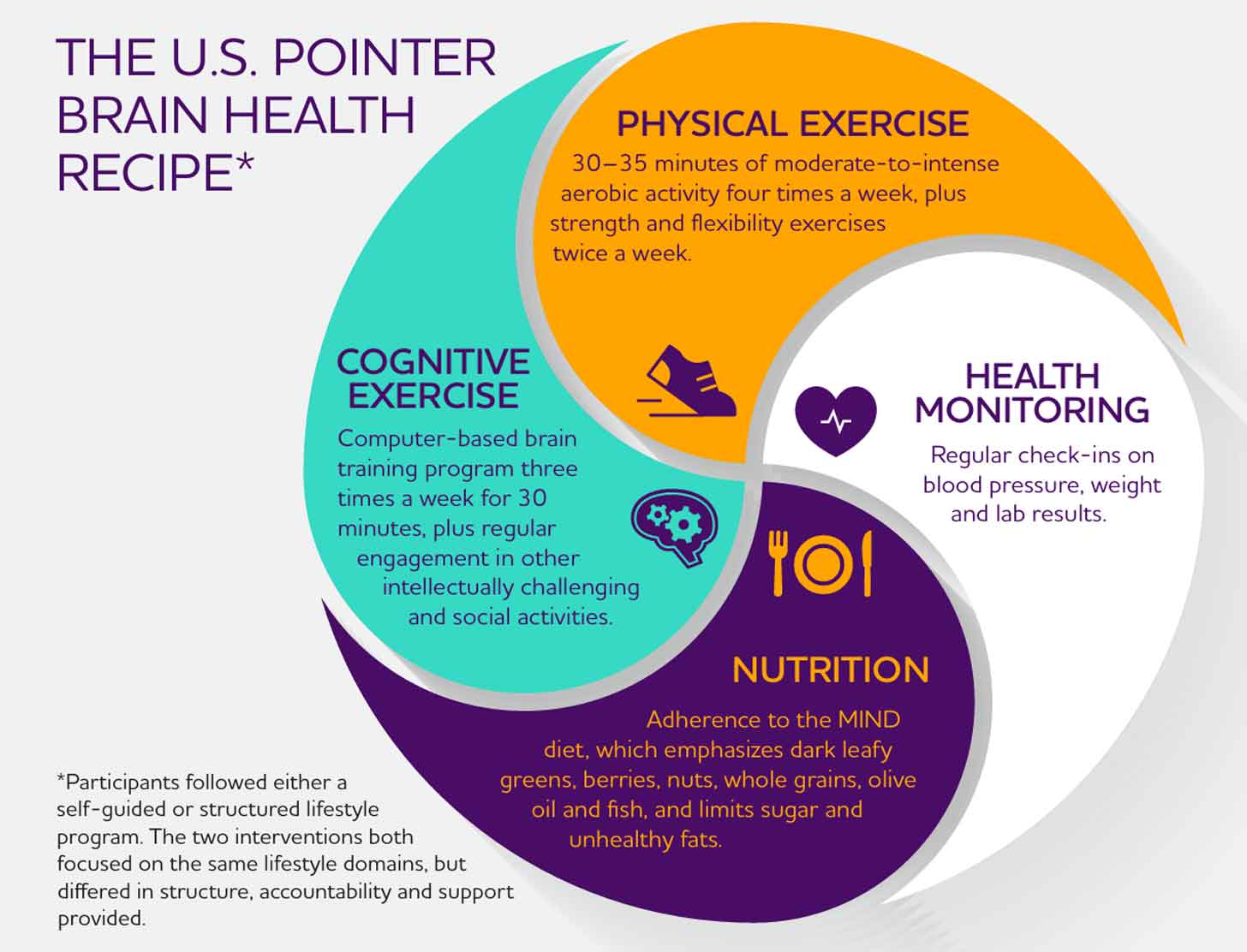
Now, researchers say, it’s about implementing these interventions in a way that is accessible to the people who need them most.
“Doctors should be treating lifestyle interventions as they would a drug,” Jessica Langbaum of the Banner Alzheimer’s Institute in Phoenix, who was not involved in the research, told NPR.
The findings of this study suggest that prescribing regimens like the one used in POINTER would be a tactful approach to slowing cognitive decline that insurance companies could cover.
More results are still to come from the study, including analyses of brain scans and blood tests that could indicate measurable changes in the brain and body due to these interventions.
“These are the initial results,” Baker said in a statement. “Over the coming weeks and months, study leadership will be exploring all of the data collected in the trial to paint an even more comprehensive picture of the U.S. POINTER intervention effects on brain health.”
In the meantime, Langbaum said that taking on more thoughtful lifestyle changes is never a bad idea.
“If you already do the Sunday crossword puzzle and it's not challenging, pick up something new, find that exercise regimen that you'll adhere to,” she told NPR, “and if you can do it around people, that's even better.”
Header image courtesy of Vlada Karpovich/Pexels
Last week, President Trump signed an executive order that makes it easier for states to remove homeless encampments from public places, as well as force people experiencing homelessness into mental health or addiction treatment programs.
Titled “Ending Crime and Disorder On America’s Streets,” the executive order lays the groundwork for further criminalization of unhoused individuals “through the appropriate use of civil commitment … to restore public order.”
Although homelessness is increasing across the country, this practice — which has already been adopted in a handful of cities in the United States — is not effective, public servants are saying.

“It doesn't create housing, it doesn't treat illness, it doesn't make streets safer, and it doesn't get at the root of the problem, which is the need for more housing,” Alexandria, Virginia Mayor Alyia Gaskins, told NPR. “I wish we were focused on solutions instead.”
For local government leaders and experts in housing and homelessness, the way to decrease the number of people living on the streets is to adopt a “housing first” approach.
Housing First is an approach guided by the belief that people need basic necessities like a safe place to live, food, and urgent medical care before they are able to transition into getting a job or improving their finances, the National Alliance to End Homelessness explains.
The National Homelessness Law Center has shared that it will “use every tool at our disposal to fight back against the growing movement to make it a crime to be homeless and poor in America,” in a statement following the signing of the new executive order.
Although the executive order may incentivize local governments to implement involuntary commitment programs and encampment sweeps, plenty of leaders — like Mayor Gaskins — don’t seem to be taking the bait.
In Albuquerque, New Mexico, Mayor Tim Keller actually wants to expand the city’s homelessness services.
In April of this year, the City of Albuquerque opened its first “safe outdoor space,” or SOS, where a location in the city provides dedicated spaces for tents, RVs, or other vehicles for temporary occupancy.
Essentially, instead of clearing encampments, they move homeless folks to a safe location, where they can more easily access social services and support facilities.
“We know not everyone is ready to immediately go to a shelter and receive services, but everyone deserves a safe place to rest their head at night. That’s why there is a need for safe outdoor spaces,” said the city’s health, housing and homelessness director Gilbert Ramirez.
“Safe outdoor spaces create a touchpoint where people can receive on-site services and connections to other supports.”
The new SOS is located on the property of New Creation Church, where church leaders provide 10 tents with sleeping bags and storage boxes for unhoused New Mexicans who need a safe place to spend the night.
There is also a restroom and hand-washing station outside, as well as access to showers and laundry services inside a 24-hour facility in the church.
“We have to continue to work on the systemic causes. And while we work on the systemic causes, we have to provide humane and immediate response to people who are living on the street, fellow human beings and neighbors,” New Creation Church Pastor Jesse Harden told KOB4 in April.
“And so this safe outdoor space attempts to be just that.”
Unfortunately, the city says, it’s been hard to implement the program in other locations due to “red tape.”
For instance, a local used bookstore let folks set up encampments on its property, but the owner was fined for an ordinance violation because he was unable to hire a full-time service provider.
So now, the City Council has introduced a new amendment to help reduce some cost barriers and increase safe spaces across the city.
The law, as it stands, requires a permitted safe space to maintain 24/7 staff, offer food, mental and physical health services. Under the proposed amendment, permitted safe spaces will be required to offer a minimum of three social services, which can include peer support or recovery groups, connecting residents with housing resources, or offering GED assistance, or adult education, the Albuquerque Journal reports.
Staffing requirements would be lessened to 24/7 hours to weekday business hours, though one person must remain on-call at all times in case of complaints or emergencies.
Mayor Keller is in support of the new requirements.
“The current law makes you basically have a shower 24/7 on the site. If you only have ten people at a site, the showers aren't going 24/7. There are different ways to problem-solve around and to have a temporary trailer that comes on different days a week,” Keller told KOAT 7.
“If you're, like living outside, you can typically find a shelter area, other than a day like today, where you can have those consultations and provide services. You don't necessarily need dedicated space that's then empty the rest of the time.”

The hope is that more people can access the immediate help they need, like Michael Maldonado, and his wife, who started living at the SOS at New Creation Church in May.
“It's been a blessing,” Maldonado told KOAT 7. “In addition to these places that, you know, people make the transition in a safe environment, we all go out and get food for each other and stuff like that. Whatever is needed. It's a pretty tight community. We help each other out.”
The vision for the SOS initiative is based on a failed experiment the city tried in the past. By scaling down the number of people allowed in one location, and ideally making it easier to develop more of these sites, Keller said, the city hopes to see real success.
“In the past, we envisioned a few larger safe outdoor spaces across Albuquerque, but after learning what’s worked in other cities, we’re shifting toward a network of smaller sites,” Keller said in a statement.
“Sites serving 20 people or less at a time are easier to manage, help prevent narcotics use and limit the impact on surrounding neighborhoods.”
Safe, designated campsites are also taking hold in other cities, like San Diego, Portland, Denver, and more, especially in the face of precarious funding and uncertainty at the federal level.
State lawmakers in New Mexico have allocated $80 million towards homelessness in this year’s state budget proposal, KOB4 reported, with $40 million going to the city of Albuquerque, and another $40 million to Bernalillo County.
“This is the restart, the rebirth, the regeneration of an older idea. But now in a way that we think can work for Albuquerque,” Keller said earlier this year.
“[It can] actually be a place people can go, besides the street, for a huge group of folks who … just want to be on their own, to recover on their own safely.”
Header image courtesy of the City of Albuquerque
On January 12, 1995, a truck passed under the stone gateway of the Roosevelt Arch in Yellowstone National Park with precious cargo in tow: eight gray wolves from Alberta, Canada.
As they were released into the park’s 2.2 million acres of wilderness, they became the first wolves to set foot in Wyoming since they had been hunted to the brink of extinction in the 1930s.
In the wolves’ 60-year absence, the Rocky Mountain elk population grew wildly out of control, grazing on trees and undergrowth and obliterating the natural landscape in the process.
In fact, by the 1990s, not a single quaking aspen tree sapling could be found.
Although the reintroduction of gray wolves to the region was — and is — controversial in the eyes of local ranchers, ecologists predicted that their return would bring balance back to Yellowstone.
And now, 30 years later, researchers from Oregon State University’s College of Agricultural Sciences have found just how crucial gray wolves have been in bringing aspens back.
“The reintroduction of large carnivores has initiated a recovery process that had been shut down for decades,” Luke Painter, the study’s lead author, told Oregon State University.
“About a third of the 87 aspen stands we examined had large numbers of tall saplings throughout, a remarkable change from the 1990s when surveys found none at all.”
“This is a remarkable case of ecological restoration,” Painter added. “Wolf reintroduction is yielding long-term ecological changes contributing to increased biodiversity and habitat diversity.”
The report, which was published in Forest Ecology and Management, records evidence of the first new generation of overstory (or mature) aspen trees in Yellowstone’s northern range in 80 years.

“In 2020–21, we examined 87 randomly selected, previously sampled aspen stands across northern Yellowstone, combining random plots with stand-wide observations,” Painter and his colleague wrote in their paper.
“Forty-three percent of stands contained a new cohort of small trees, the first documented recruitment of overstory aspen trees in northern Yellowstone since the 1940s.”
That’s not to say that the saplings are immune to grazing herbivores. As elk have declined in numbers, the park’s local population of bison has continued grazing on the trees in the decades since.

Still, Painter, who teaches ecology and conservation in the OSU College of Agricultural Sciences, told Live Science that this research holds a lot of promise for the future of aspens.
“It doesn’t mean that they’re not going to get killed or die from something, but it’s a pretty good indication that we’re getting some new trees,” Painter explained. “As they get bigger, they get more resilient.”
And as the aspens continue to flourish, Painter said, the rest of the park will benefit too.
“Aspen are a key species for biodiversity,” he explained. “The canopy is more open than it is with conifers and you get filtering light that creates a habitat that supports a lot of diversity of plants.”
You may also like: Ethiopian wolf becomes first large predator to feed on nectar, shedding light on one of 'world’s most-threatened carnivores'
Header images via Gunnar Ries (CC BY-SA 3.0) / John Fowler (CC BY 2.0)