A new type of cooling cube could revolutionize how food is kept cold and shipped fresh without relying on ice or traditional cooling packs.
The plastic-free, “jelly ice cubes” don’t melt, are compostable and anti-microbial, and prevent cross-contamination.
“When ice melts, it’s not reusable,” says Gang Sun, a professor in the biological and agricultural engineering department at the University of California, Davis. “We thought we could make a so-called solid ice to serve as a cooling medium and be reusable.”
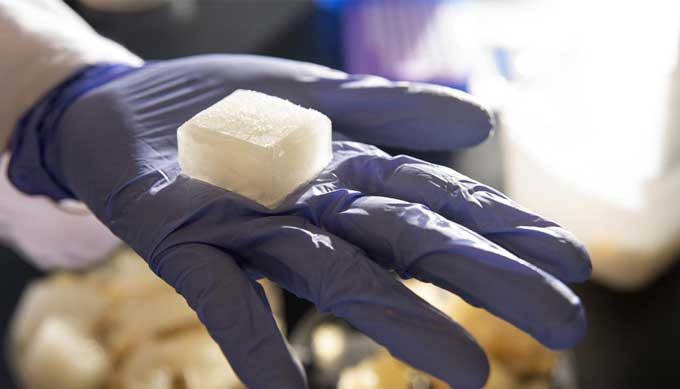
The cooling cubes contain more than 90% water and other components to retain and stabilize the structure. They are soft to the touch like a gelatin dessert and change color depending on temperature.
The reusable cubes can be designed or cut to any shape and size needed, says Jiahan Zou, a PhD graduate student who has been working on the project the past two years.
“You can use it for 13 hours for cooling, collect it, rinse it with water, and put it in the freezer to freeze again for the next use,” Sun adds.
Watch UC Davis' video about sustainable jelly ice cubes (1:36)
The researchers hope to eventually use recycled agriculture waste or byproduct as the coolant material.
“We want to make sure this is sustainable,” says Luxin Wang, an associate professor in the food science and technology department.
The researchers began working on the coolant cubes after Wang saw the amount of ice used at fish-processing plants and the cross-contamination that meltwater could spread among products or down the drain.
“The amount of ice used by these fish-processing sites is massive,” Wang says. “We need to control the pathogens,” he says.
Sun also lamented mold found in the plastic ice packs used with school lunches for kids and frequently found in shipping packages.
Early tests have shown the cubes can withstand up to 22 pounds without losing form. They can be reused a dozen times—just a quick wash with water or diluted bleach—and then disposed of in the trash or with yard waste.
The jelly ice cubes offer an alternative to traditional ice and could potentially reduce water consumption and environmental impact.
They also offer stable temperatures to reduce food spoilage and could be ideal for meal prep companies, shipping businesses, and food producers who need to keep items cold.
The application could potentially control microbial contaminations to reduce water consumption in the food supply chain and food waste.
The research appears in the journal Sustainable Chemistry & Engineering.
Researchers filed a patent for the design and concept in July. The USDA National Institute of Food and Agriculture funded the work.
This was originally published by Futurity and was made available via a CC BY 4.0 license.
Seeing someone do something good for someone else motivates people to perform their own helpful acts, researchers report.
The finding could help drive cooperative behavior in communities navigating through the health crisis.
In their new study, researchers confirmed that people can be heavily influenced by others, especially when it comes to taking on prosocial behavior—actions designed to benefit society as a whole.
Understanding this is important now, when large-scale cooperation and adoption of protective behaviors—wearing face masks and avoiding gatherings—have important implications for the well-being of entire communities, the researchers say.
“Just like the deadly virus, cooperative behavior can also be transmitted across people,” says Haesung (Annie) Jung, who led the study while earning a PhD at the University of Texas at Austin.
“These findings remind the public that their behavior can impact what others around do; and the more individuals cooperate to stop the spread of the disease, the more likely others nearby will do the same.”
Reviewing the evidence from decades of studies, the researchers found that exposing people to “prosocial models”—watching someone perform an act of kindness—elicited some subsequent helpful acts.
This response was partly driven by “goal contagion,” the researchers say, whereby witnessing prosocial actions lead people to adopt the underlying goal associated with the observed behavior, such as caring for others’ well-being.
“We found that people can readily improvise new forms of prosocial actions. They engaged in behaviors that were different from what they witnessed and extended help to different targets in need than those helped by the prosocial model,” says Jung, who is now a postdoctoral researcher at the University of Illinois at Urbana-Champaign.
The magnitude of this type of influence varied across societies, with modeling most likely to influence people in Asian countries, followed by European countries, then North American.
They also found that people were more motivated to help after witnessing other people benefit from the prosocial model than when they benefitted from the prosocial act.
This shows that the effect triggered by adopting others’ prosocial goals outweighed other potential motives triggered by self-benefit, such as doing it because they felt grateful.
The researchers suggest that adopting this type of framework could go a long way in influencing new prosocial behaviors amid the coronavirus pandemic.
“Many people may choose to avoid social distancing practices because they don’t think they’re likely to contract the virus or experience serious symptoms.
So, one of the best things we can do is frame recommended practices as prosocial actions,” says Marlone Henderson, associate professor of psychology.
“By thinking of recommended practices as prosocial behavior, modeling then becomes a powerful tool for encouraging others to engage in such practices.”
The research appears in Psychological Bulletin. and this article was originally published in Futurity under an Attribution 4.0 International license.
Throughout the pandemic, local neighborhoods have played a critical and well-documented role providing the health and social services necessary for American communities and businesses to survive and recover from the COVID-19 pandemic.
Gay neighborhoods were particularly well equipped to meet this challenge, according to our latest research on these communities.
We find that the lessons learned and trauma experienced early in the HIV/AIDS pandemic helped urban gay areas respond to COVID-19 quickly and effectively – especially in the face of early federal government paralysis.
How gay neighborhoods fought HIV/AIDS
Gay neighborhoods are those that welcome lesbian, gay, bisexual, transsexual, queer and other sexual minorities – a population generally referred to by the shorthand LGBTQ+.
Well-known examples include the Castro district in San Francisco, Dupont Circle in Washington and Greenwich Village, and Chelsea in New York City.
“Gayborhoods” grew during the sexual liberation movements of the 1960s and 1970s, offering LGTBQ people and their allies an escape from pervasive discrimination and prejudice.
In these areas, sexual minorities could rent apartments, socialize in bars and express themselves freely in a like-minded, compassionate community.
Even as LGBTQ people in the U.S. began to live more openly, gay neighborhoods really coalesced around the HIV/AIDS pandemic.
When that mysterious new disease began ravaging the LGBTQ community in the 1980s, the U.S. government turned away from, not toward, those communities.
Support critical for fighting HIV – including health care subsidies for uninsured people and funding for research on treatments and cures – was initially not provided. Information given by governments about disease transmission and treatment was inconsistent and sometimes inaccurate.
Government neglect ended up stigmatizing people with HIV and leading to many avoidable deaths. So, as we uncovered in our most recent book, gay neighborhoods filled the void where government and mainstream organizations failed. They became the battlefields where the AIDS pandemic was fought and eventually won.
People in gay neighborhoods developed community organizations and systems to deliver health care and mental health services, provide social support for LGBTQ+ people, and support LGBTQ-friendly businesses.
Public health organizations like New York City’s Gay Men’s Health Crisis also stepped in to do what many doctors would not.
They shared information about slowing and stopping the spread of HIV and also distributed condoms, conducted free HIV testing, and connected people who tested positive to help.
Building community through crisis
The COVID-19 pandemic shares many similarities reminiscent of early days of the HIV/AIDS pandemic.
With both HIV/AIDS and COVID-19, there was a disjointed and bungled government response that endangered lives and produced both fear and stigma.
Even some of the same government-appointed leaders were in place: Both Dr. Anthony Fauci and Dr. Deborah Birx worked on marshaling government resources to spearhead the medical response to HIV in the 1990s.
With COVID-19, as with HIV/AIDS, city and state governments were unprepared to fight a disease outbreak. They lacked both planning and infrastructure to effectively fight a rapidly accelerating public health threat.
Several U.S. states, as a result, looked to organizations within gay neighborhoods for help, relying on neighborhood-based LGBTQ+ health care organizations to help support their COVID-19 pandemic response.
For example, in New York, the Erie County Department of Health requested that Evergreen Health – an LGBTQ community group originally established in the 1980s as a volunteer effort to fight HIV – assume responsibility for HIV testing during the COVID-19 pandemic so that the county government could focus on COVID-19 testing.
Evergreen also opened a drive-though COVID-19 testing center in the spring of 2020 – four decades after it had introduced HIV testing to the Buffalo region.
Throughout the COVID-19 pandemic, Evergreen Health not only continued to provide health care and other supportive services to Buffalo’s LGBTQ community but expanded offerings to better serve underserved and minority neighborhoods across the city. At that time, New York state was the global epicenter of the COVID-19 pandemic.
In Chicago and other cities, activists used LGBTQ+ urban social and professional networks established during the HIV/AIDS pandemic to tackle this latest disease.
Queer communities disseminated information about COVID-19 to neighbors and distributed face masks and other protective gear, just as they had once shared information about HIV transmission and given out condoms.
Lessons learned
States with major grassroots activism in the HIV crisis also applied lessons from that era about overcoming misinformation and fear of contagious diseases.
For instance, New York state used a network of small laboratories to process its COVID-19 tests and administer vaccines – a model pioneered during the emergence of the HIV/AIDS pandemic when large, centralized laboratories were initially nervous about working with HIV-positive blood samples.
Early on in the COVID-19 pandemic, this allowed New York to react effectively and process COVID-19 tests relatively quickly.
New York, followed by California, was among states in which COVID-19 infection first showed up in the U.S.
As these state governments set up testing procedures, they drew upon methods for testing established during the HIV/AIDS pandemic. The experience in both New York and California with HIV/AIDS helped, at least in part, to establish robust testing networks during the COVID-19 pandemic.
The United Kingdom government, on the other hand, chose centralized laboratories to process tests, rejecting an offer to create a complementary network of smaller local providers. That decision may have complicated testing and slowed results and contact tracing, according to reporting by SkyNews.
Our research also finds gay neighborhoods banded together to meet the needs of the broader community.
Activist mutual aid networks formed decades ago within “gayborhoods” deployed peer-to-peer mobile technologies to help feed locked down and sick people – not only within the LGBTQ community.
Many of these efforts to combat COVID-19, like actions taken to fight HIV/AIDS, were done quietly, without fanfare. This neighbor-helping-neighbor approach is a hallmark of the leadership that can be found in gay neighborhoods – experienced rescuers in times of crisis.
This article was originally published by The Conversation and was made available to Good Good Good.
The fashion industry has a body inclusivity problem, namely that there’s not enough of it. As a multi-trillion dollar industry, fashion makes up a core part of our cultural experiences. From the clothes we wear to the advertisements we’re subjected to, the people in fashion have a ton of influence on how we view ourselves and our bodies.
Meet fashion veterans Shammara Lawrence and Gianluca Russo. They were frustrated by the lack of body inclusivity in all areas of fashion, but rather than quitting the industry, they were determined to make a difference.
They created a community of body advocates and showed the industry why it’s important for plus-sized folks to be represented.
From there, The Power of Plus was born. A year later, the digital community has grown to be a force of power and has led many workshops, online discourse, and panel discussions around body inclusivity.
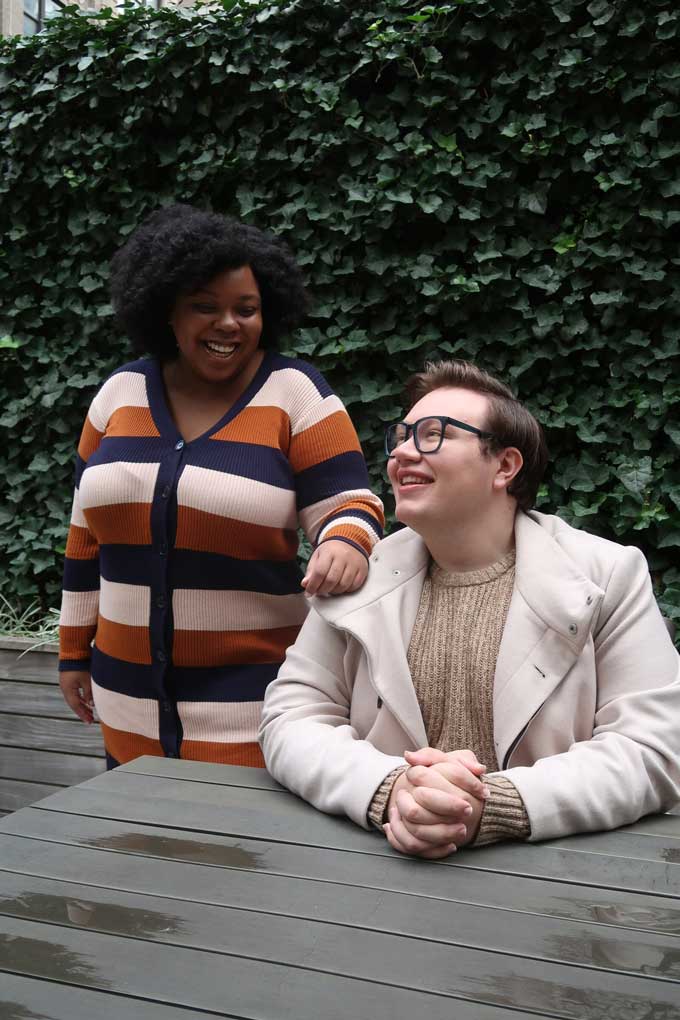
Gianluca also has a new book releasing in fall 2022. The Power of Plus: Inside Fashion's Size-Inclusivity Revolution covers the history of body inclusivity, the progress we’ve made, and the problems that are still persistent.
We talked with the founders of The Power of Plus to see what inspired them to build an online community, what their long-term goals are, and how they see the future of fashion evolving as the conversation around diversity and inclusivity continues to heighten.
A Conversation with Shammara Lawrence and Gianluca Russo of The Power of Plus
You're both fashion industry veterans. What issues were you noticing across the industry?
Shammara: I got my start in the industry freelance writing for indie and mainstream magazines before I became an editorial assistant at Condé Nast working across the Allure and Teen Vogue digital teams.
While covering fashion and beauty, one recurring trend I noticed across numerous publications and the fashion industry at large is the lack of racial and body diversity when it came to news coverage, editorial shoots, brand campaigns, and advertisements displayed online and in glossies.
While terms like inclusivity and diversity have become major buzzwords in media and the fashion industry at large, that wasn’t always the case.
When it comes to plus-size representation, specifically, it was rare to see someone above a sample size on a fashion runway in New York or Europe, and you barely saw curve models grace the pages of popular fashion and beauty magazines. If you did, it was usually just one token plus-size model amongst a bevy of straight-size talent.
Frustrated by that lack of representation of plus-size folks in media and fashion, I decided to use my voice and platform as a writer to speak about the importance of size inclusivity in fashion by writing countless op-eds and features covering plus-size trailblazers making a difference in plus-size fashion, beauty, and Hollywood.
Gianluca: In my years as a journalist, I’ve seen how inclusivity has become such a buzzword, really losing its meaning. But at its core, true inclusivity is such a beautiful and important thing, and it’s disheartening to see so many designers, brands, and influencers capitalize off a phrase they don’t understand the true meaning of.
For fashion to become truly inclusive means centering and elevating the marginalized voices that this industry has rejected and silenced for decades. That’s the biggest issue I’ve seen, and what I’ve dedicated my work to fixing.
You have both been outspoken about the discrimination against plus-sized folks in fashion; what has your personal experiences in the industry been like?
Shammara: Honestly, when I got my start in the industry, there were only a couple of other successful plus-size writers and editors I could look up to like Lauren Chan who used to head up features at Glamour.
Most times, I felt like a fish out of water working in the editorial world, because nine times out of ten, in meetings and at major fashion events, I was the only curvy person in attendance or was one of the few. In the beginning, that took a toll on my self-esteem but thankfully, I found a tribe of people like Gianluca, who looked like me and cared deeply about size inclusivity.
Fortunately, things have progressed slightly since I entered this industry. There is now a slew of incredible folks in the editorial world and fashion industry at large working to make sure it’s more inclusive and welcoming of every body.
Gianluca: Publicists not taking me seriously, my seat being given up at fashion week, being told that there isn’t a reader for the kind of pieces I want to write — fatphobia is so ingrained into society and this industry, that it really affects our every move.
It often feels the term “plus-size” is used against you as a way to demean and lessen the work you’re doing. But really, this work is so important. While I’ve definitely experienced so much of the hatred this industry has towards bigger bodies, I’ve also found the brightest, most uplifting community of people and influencers and models, and editors who value our experiences in a profound way. They are what make all of this work worth it.
There's a lot of discourse around the language of "fat people" versus "plus size" — what are your thoughts on this?
Shammara: Personally, I think until we destigmatize the word fat, a lot of people will be apprehensive about using it to describe themselves.
While I don’t think fat should be viewed as a negative descriptor — it’s just a neutral adjective like slim in my eyes — I can’t deny that it is still used to demean people in our society so I understand why people feel more comfortable labeling themselves and other bigger folks as plus-size versus fat.
Gianluca: This is certainly a difficult conversation because there are so many emotions attached to it. Some people prefer fat, others plus-size, others curvy, and some like no descriptor at all.
It’s important to remember that these words are not only tied to identity, but are tied to years of discrimination.
So ultimately, I believe that everyone should be able to choose the term that best fits them and makes them feel confident, and we should allow space for people to choose freely.
What inspired you to create The Power of Plus?
Shammara: Gianluca and I were frustrated by how stagnant plus-size fashion and the fashion industry at large seemed to be when it came to size inclusivity. We also felt like there weren’t really any safe spaces online where we could convene with fellow fat folks and talk candidly about important conversations concerning our community without being policed or ridiculed for thoughts and opinions. So, we decided to create that space ourselves by launching The Power of Plus in July 2020.
Gianluca: What I found in my time as a journalist was that there were countless stories left in the shadows that needed to be told; stories that inspired me on such a deep, emotional level, and gave me the voice to fight for change.
Seeing the lack of space for those stories to be shared, Shammara and I knew that we needed to create it ourselves.
And the goal wasn’t just to launch an Instagram page; it was to launch a movement, one that could change and save lives in the ways this community has done for Shammara and I. It’s been so rewarding to see that come to life.
What did you imagine the Power of Plus to be at its inception?
Shammara: A soft landing place where plus-size folks from all backgrounds feel welcomed and celebrated for who they are. When we first created The Power of Plus, we knew from day one, it would be a safe space where we could have all sorts of discussions — no matter how taboo — that weren’t being had in mainstream media when it came to plus bodies.
What impact has the Power of Plus had since its inception?
Shammara: It’s hard to truly describe the impact The Power of Plus has had on people’s lives and the plus community because our events and social media content have had a tremendous emotional impact on the people in our community.
There have been countless Instagram posts about diet culture and body shaming that have elicited some incredibly raw and honest responses from our supporters, which has moved both Gianluca and me.
The same can be said for our virtual panels. Whether we’re talking about colorism within plus-size fashion and the influencer world or the role of thin allies to the plus community, attendees always really engaged in the comment section and numerous people will thank Gianluca and me for putting on the event so they could hear thought leaders they respect have a candid conversation about pertinent subjects.
Gianluca: The most beautiful part of building The Power of Plus has been helping others heal and feel seen while also benefiting from it in the same way personally. I don’t think our community quite understands just how big of an impact they have on us, helping us to be more fearless and confident, and outspoken. It’s a two-way street, and I think our community feels that energy, which is ultimately what keeps them engaged.
What good news are you seeing around body inclusivity and diversity in the fashion industry since the Power of Plus?
Shammara: The first thing that comes to mind is Old Navy’s BODEQUALITY initiative that launched in August 2021. Finally, people from sizes XS to 28 can shop in person at all Old Navy stores.
While I wish they also carried sizes 30 in store as well (it’s still online only), having a mass retailer like Old Navy with over 1,000 stores worldwide carry such an expansive size range in all of their styles is truly groundbreaking. Even better, they also started carrying mannequins in an array of body types.
The initiative is cause for celebration because it’s a feat we haven’t seen done before and I hope other fashion companies are taking notice and decide to follow suit. It’s about time plus-size folks were given the same clothing options and shipping experience as our smaller counterparts.
Beyond Old Navy, though, the plus community is still incredibly active online, if not more when it comes to speaking out about body diversity in fashion and beyond. People are tired of settling for scraps from fashion brands; we want the same kind of fashion slim people have had for centuries, and we won’t stop speaking up about it until our needs are truly met.
Gianluca: My favorite thing to witness in the past year has been the rise of Precious Lee. She has dominated runways and the high fashion world, and it is just refreshing and powerful to see. We need infinitely more women, men, and folk like her.
What does the Power of Plus mean to you, personally?
Shammara: The Power of Plus has been so important to me this past year and a half. The conversations we’ve had have been eye-opening, healing, and necessary in a time when so many people, including myself, have been feeling alone because of the pandemic and straight-up frustrated by the fashion industry.
I’m beyond grateful that Gianluca and I have been able to cultivate such a kind, welcoming community filled with changemakers and outspoken size inclusivity advocates of all shapes, races, gender, and abilities. Every single person within our community is powerful and when we come together as a collective, The Power of Plus is a force to be reckoned with.
Gianluca: Plus-size fashion is about infinitely more than clothing. It is transformative, and anyone who lives in a bigger body can instantly tell you why: Because when the industry and society reject you for decades, telling you to hide and cover yourself, finally getting the chance to express your true personality through clothing is life-changing. That is The Power of Plus.
Revolutionary stem cell treatment offers hope of 'functional cure' for people living with HIV.
Andrew Caldwell laughs at the idea he is brave.
But taking part in groundbreaking clinical trials of regenerative medicine, the 35-year-old American underwent a bone marrow transplant and a punishing course of chemotherapy - all part of a novel process that might yet provide a cure for HIV.
"My goal was just being able to contribute towards the advancement of research for a cure in whatever capacity," said Caldwell, a San Francisco-based operations manager who was diagnosed with HIV eight years ago.
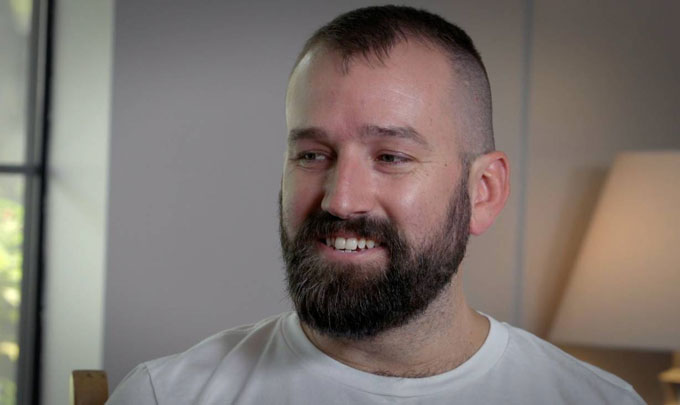
Regenerative medicine makes use of human cells or tissues that are engineered in the lab or taken from donors.
It is the first time such trials have won state sanction in the United States, with the Food and Drug Administration (FDA) hoping transformative treatments might later emerge.
The first generation of FDA-approved trials at clinics across the United States are examining the impact of stem cell, CAR-T cell, and antibody therapies on patients with a host of conditions, ranging from HIV to brain cancer and lymphoma.
"I knew that this particular study wasn't going to be the silver bullet…(but) I think it absolutely offers a lot of hope for a functional cure," Caldwell told the Thomson Reuters Foundation in a phone interview.
The wait has already been long; this Wednesday's World AIDS day marks 40 years since the virus was first identified.
Yet the speed with which science created vaccines for COVID-19 offers hope that a curative treatment for people living with HIV, along with preventative measures, might now emerge.
"The HIV community... really paid attention to how rapidly all things related to COVID, not just vaccinations, but treatments, clinical trials and other kinds of financial incentives, quickly came to be," said Anthony Santella, professor of health administration and policy at the University of New Haven.
Such speed and skill in the face of COVID-19 are not free from controversy, Santella noted, given the relative inaction of governments in the early days of the AIDS pandemic in the 1980s.
"One could argue that if we put our money where our mouth is with HIV (in terms of) truly ending the epidemic worldwide, we wouldn't be having the conversations about cure or vaccines… this would be a thing of the past," he said.
Ending Disease?
Caldwell's story forms part of a 138-minute documentary - "Ending Disease" by Emmy Award-winning director Joe Gantz - released last month on streaming platforms.
The documentary follows the progress of patients at 10 U.S. clinic trials of regenerative medicine between 2016 and 2019.
For Caldwell and others living with HIV, the trials have real-life precedents, but more by accident than design.
In 2019, an HIV-positive man in Britain became the second known adult worldwide to be cleared of the virus after he received a bone marrow transplant from an HIV-resistant donor.
At the time, AIDS experts said the case was proof of the concept that scientists will one day be able to end the virus and marked a critical moment in the search for an HIV cure.
Research into stem cell treatment has further fanned hope.
"What we can definitely aspire for is what's called a functional cure, which means you've got HIV in your body, but it has no consequences," said Paula Cannon, professor of microbiology at the Keck School of Medicine of USC, where she specialises in viruses, stem cells and gene therapy.
"The virus that is in your body is totally controlled.
"But instead of being controlled by antiretroviral drugs as it is as present, it's controlled because your immune system is better able to attack the virus, and the cells that HIV would normally infect… have been given a superpower – they've been made resistant."
Stem cells are produced by bone marrow, a spongy substance found in bones that can transform into three types of blood cells: white (to combat infection), red (to circulate oxygen) and platelets (to stem bleeding).
HIV targets a type of white blood cell. The new treatment tweaks the make-up of these cells so they can better resist and fight HIV.
The same approach can be used for other diseases as well.
"If somebody has a genetic disease that causes, for example, very weak muscles, can we look at the stem cells that are responsible for that?" Cannon said.
"And can we figure out what might be wrong with those stem cells and fix it or augment it so that the stem cells now start to do their job properly?"
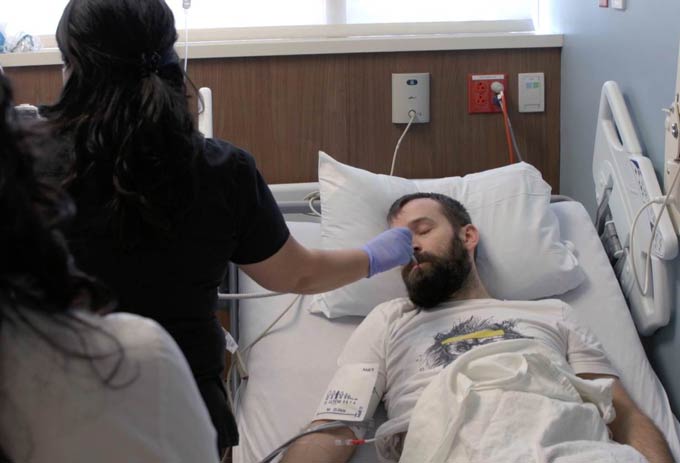
"Ending Disease" looks at the impact that 'editing' stem cells has on various patients, including a quadriplegic former basketball player who could move his arms months into treatment.
Caldwell's results were more mixed as his trial was stymied by the advent of the pandemic.
He had come off his antiretroviral medication so doctors could gauge the true impact of regenerative treatment, but it was unsafe to stay off his meds given the danger COVID-19 then posed to his HIV-compromised immune system.
"With the timing of being on the doorstep of a global pandemic, we had to just make a call to pull the plug," he said.
Millions Lost
An estimated 36.3 million people have died from complications related to AIDS. By comparison, COVID has claimed the lives of 5.2 million, according to Johns Hopkins University.
Any elusive cure, if and when it does come, must also be affordable given the spread and scale of AIDS, said Gus Cairns, editor of Britain's HIV/AIDS charity NAM aidsmap.
"It will be very difficult," he said, citing the example of one drug for babies and children with spinal muscular atrophy that costs £1.79 million ($2.38 million) per dose.
With 37.6 million people currently living with HIV, many below the poverty line and without access to antiretroviral medicines, cost is key.
"It's a long way down the road before we can produce something at scale," Cairns added.
And as the world marks World AIDS Day, New Haven's Santella said the race for a future cure should not overshadow the toll of the ongoing crisis.
"HIV is not a thing of the past," he said. "It's very much alive and prevalent and deserves our attention."
($1 = 0.7522 pounds)
Reporting by Hugo Greenhalgh; Editing by Lyndsay Griffiths. This article was originally published by the Thomson Reuters Foundation, the charitable arm of Thomson Reuters, that covers the lives of people around the world who struggle to live freely or fairly. Visit news.trust.org.
— Scientists have come up with a sustainable glitter alternative derived from fruit.
— Conventional glitter contains harmful microplastics that pollute the environment.
— The new biodegradable glitter is vegan, so everyone can sparkle again guilt-free.
It is the season to be sparkly, but at what cost to the environment? It’s a well-known fact that traditional glitter is often made from harmful microplastics that pollute the seas and our homes.
Now, as Christmas celebrations get underway, parents, kids, and craft lovers can opt to use a safer alternative.
Scientists at Cambridge University in the UK have developed a new type of glitter made from fruit pulp.
It’s just as sparkly, but it’s vegan, biodegradable, and far less harmful to the environment than conventional glitter.

The new glitter is made from nanocrystals of cellulose - the natural material that builds the cell walls of plants, fruit, and vegetables.
It can be used in all the same ways as the old harmful type, from cosmetics to Christmas cards, and it’s safe for children to use in craft projects.
“Conventional pigments, like your everyday glitter, are not produced sustainably,” said Professor Silvia Vignolini of Cambridge’s Department of Chemistry who led the team that developed the new glitter.
“They get into the soil, the ocean and contribute to an overall level of pollution. Consumers are starting to realize that while glitters are fun, they also have real environmental harms,” she added.
Her team has already succeeded in producing colorful materials from wood pulp that can be used to replace toxic pigments in products, ranging from paint to cosmetics.

Creating safer, sustainable products
When it comes to making glitter, the new process, which uses far less energy than making traditional glitter, involves making large cellulose sheets that are then ground into tiny biodegradable particles.
It’s a horrible irony that conventionally produced glitter has been traditionally applied to snow scenes on Christmas cards, given the microplastics it’s made from have been found polluting snow and ice from the Arctic to the Alps.
Microplastics are tiny plastic particles less than five millimeters across and they have been identified in homes as well as the wider environment.
Experts say these tiny particles, which can cause cancer in humans, have even been found in the deepest parts of the ocean.
It’s been estimated that 2% of the microplastics in the sea come from personal care products such as cosmetics.
By 2040, scientists say there will be 10 million tonnes of microplastics in the global environment.

Back to the future
The World Economic Forum has long warned about the rising level of microplastics in the sea and its impact on the environment and our health.
In its 2016 report The New Plastics Economy: Rethinking the Future of Plastics, the Forum called for innovation to create new materials that could replace the use of plastic.
Biodegradable cellulose materials, like those used in the new vegan glitter, have existed for some time.
Invented in 1908, Cellophane was a widely used, clear cellulose wrapping for food and other products before being largely replaced by petrochemical-based PVC later in the 20th century.
Experts say Cellophane’s environmentally-friendly qualities - it will biodegrade naturally within 30 days and even if coated with plastic chemicals still breaks down within four months - mean it’s making a comeback.
One thing that will likely remain the same, however, is the messy business of having glittery fun.
Asked if the vegan glitter would be less hassle for parents cleaning up after crafting with their children, Professor Vignoli said: “It will be just as annoying - but it won’t harm the planet and is safe for your little ones.”
This article was originally published by the World Economic Forum on December 3rd, 2021 — and was made available to Good Good Good.
In villages and townships, Africans are building their own internet infrastructure to connect — and protect — the unconnected
As a child growing up in war-torn northern Uganda, Daniel Komakech's education was interrupted every time he had to flee rebels and hide in the bush for days to avoid being abducted.
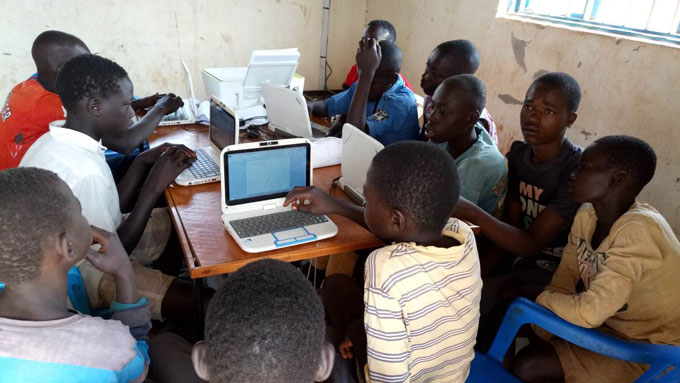
Today, Komakech, 34, helps run a locally owned internet network that ensures villagers in the former conflict zone can study and stay in touch with each other - without unwanted interruptions.
"Accessing the internet was a turning point in my life," said Komakech, program coordinator for the non-profit Battery Operated System for Community Outreach (BOSCO), one of a growing number of community-led internet and phone networks in Africa.
"I study courses online, found jobs online ... I even learned how to bake cakes for my children. That is the power of the internet, it is my teacher," he told the Thomson Reuters Foundation by phone.
Decentralized networks - where internet or communication services are localized rather than monopolized by government or corporate giants - give users more control over their data and privacy, researchers say.
Such networks could play a significant role in Africa where internet access is scant and censorship and internet shutdowns pose an increasing risk of "digital authoritarianism", they say.
About 80% of Europe's population is connected to the internet, but in many parts of Africa access remains the preserve of a minority, according to the International Finance Corporation.
In Uganda, only 26% of people have online access - one of the lowest rates in sub-Saharan Africa, according to research site DataReportal.
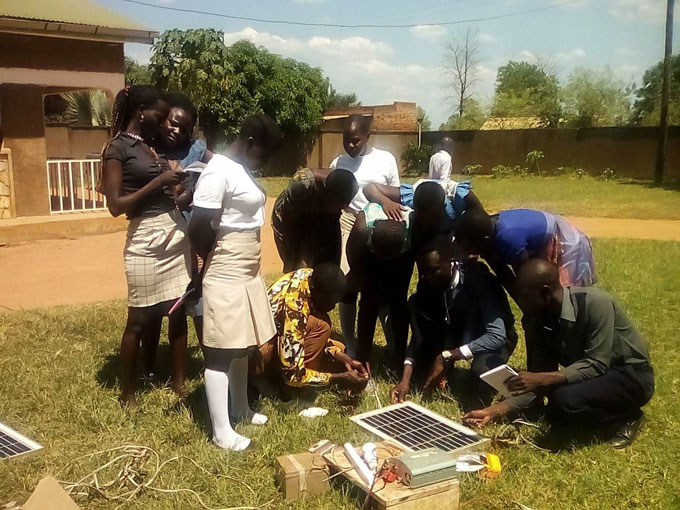
BOSCO, which has grown using a solar-powered system linking satellites to portable computers and internet phones, is funded by donors, but hopes to start selling internet access in the future and becoming a revenue source for communities.
"Decentralized networks are helpful in allowing people to communicate at a local level and they are less prone to surveillance," said Hanna Kreitem, a senior advisor at the Internet Society, a U.S.-based digital rights nonprofit.
In a report by the Internet Society, 37 community networks initiatives were identified in 12 African countries, from South Africa to Somalia.
Digital Divide
Digital rights campaigners say there is space for many more local networks - from rural Africa to internet surveillance hotspots in Australia.
But local groups wanting to launch one face many challenges including cost, policy, and regulatory barriers as well as a general lack of awareness about them, according to the Internet Society report.
Getting a commercial license can be costly and time-consuming, said Sol Luca de Tena, acting chief executive of Zenzeleni Networks NPC, a South African organization supporting community-owned wireless internet service providers.
"We have shown that community networks can bridge the digital divide but it is difficult to navigate the current regulatory framework," said Luca de Tena.
"A license is not easily accessible to rural, lower-income communities," she added, citing the rural Eastern Cape province where her organization is based.
Despite the challenges, Zenzeleni has grown each year, serving tens of thousands of devices with each device likely used by multiple family members, she said.
It is also supporting several communities to design and strengthen their networks in different provinces across the country.
'A Human Right'
Another benefit of community networks is that users can be more confident that their data is not being sold or used by big tech companies without their consent or knowledge, said Komakech.
"We have no intention of monetizing our users' data ... we don't want to lose the trust we have built over 14 years or take advantage of them," he said.
Growing concern about how tech firms use personal data partly explains the growth of community networks in more developed cities around the world including Barcelona or New York City, digital rights groups say.
Local networks are also less likely to be targeted by surveillance operations, and mesh Wi-Fi messaging apps could allow users to keep talking even if there is a total internet shutdown.
Understanding the legal risks of attempting to bypass shutdowns through tools like VPNs is important in ensuring the safety of citizens, Kreitem told the Thomson Reuters Foundation's annual Trust Conference on Thursday.
"In Sudan, within the latest shutdown, people who were active online were targeted offline and imprisoned for being able to bypass restrictions," he said on a panel about the human impact of internet shutdowns.
In Cape Town's Ocean View township, the iNethi platform uses mesh routers, open-cellular base stations, and open-source software to allow residents free access to study material, file sharing, and chat rooms.
Local servers in community networks allow people to access and share content even when they have no internet connection - a valuable resource when the cost of data and a fiber connection is prohibitive for many, said Luca de Tena.
Accessing offline content could become more relevant across the continent as internet blackouts increase, researchers say.
There were 25 internet shutdowns in Africa last year, up from 21 a year earlier, according to the African Digital Rights Network (ADRN) think-tank.
In one of the most recent, in the landlocked Kingdom of eSwatini, a government-ordered internet slowdown took hold following pro-democracy protests in July.
Melusi Simelane, a consultant working with the Southern Africa Litigation Centre (SALC), recently took the government to court for shutting down the internet.
He said lifting regulatory barriers was key to fostering more community internet initiatives.
"We need governments to ease up regulation so people can create local, independent network lines, then no one can infringe of people's rights to express themselves or access information," Simelane said.
"Access to the internet is a human right."
This story is one in a series supported by Mozilla and Omidyar Network's Powering Local Innovation initiative, which aims to deepen the conversation around technology innovation in different regions in the Global South.
Header image: Students gather around a computer during ICT training for South Sudanese refugees in the West Nile region in Northern Uganda. Thomson Reuters Foundation/Handout courtesy of BOSCO
Reporting by Kim Harrisberg; Editing by Helen Popper and Zoe Tabary. This article was originally published by the Thomson Reuters Foundation, the charitable arm of Thomson Reuters, that covers the lives of people around the world who struggle to live freely or fairly. Visit news.trust.org.
— More than 60% believe national divisions have worsened since the pandemic began.
— The Human Library brings disparate people together with the aim of breaking down prejudices.
— Originating in Denmark, the not-for-profit now has over 1,000 human ‘books’ available for loan.
We all love a good story. Narratives are a powerful communication tool and, used in the right way, can bridge divides.
But instead of interpreting someone’s tale from the printed word, what if you could hear it from them in person? What if you could ask a Holocaust survivor about their experience or challenge your own perceptions of eating disorders by speaking to someone who has one?
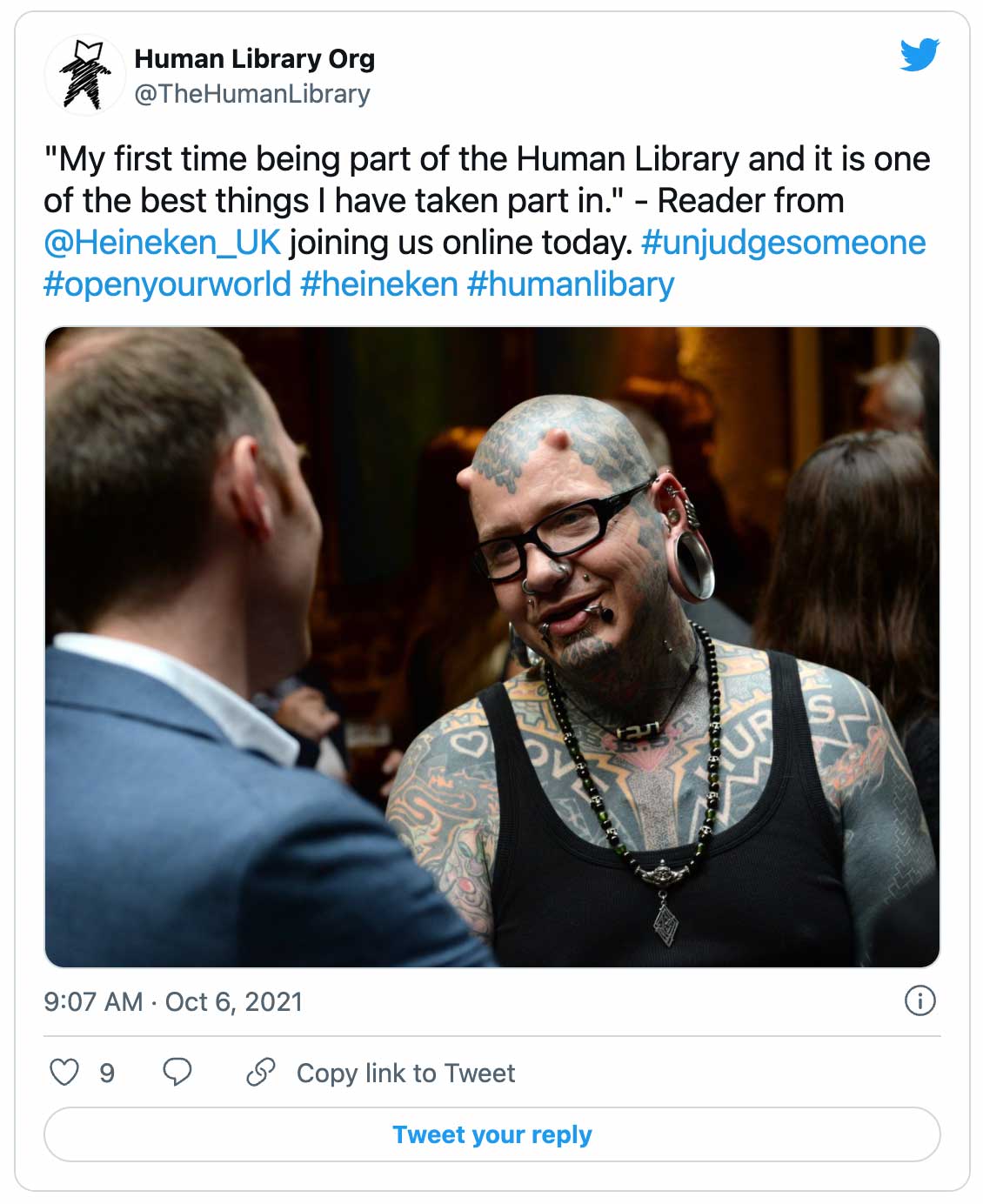
Now you can, using the Human Library, which invites readers to “borrow human beings serving as open books”.
Each ‘book’ represents a group that struggles with prejudice or stigma based on their lifestyle, beliefs, disability, or ethnicity.
Tackling prejudice with science
Societal divides have reportedly widened during the COVID-19 pandemic.
More than 60% of people believe that national divisions have worsened since the pandemic began, according to a survey from Pew Research Center.
That shows how there has never been a better time to bring people together, a theme that’s echoed in the World Economic Forum’s Annual Meeting 2022, which will be about ‘Working Together, Restoring Trust’.
It takes just three seconds for a person to decide whether or not they like you, or want to work with you, according to Jean Baur, a career coach and author of The Essential Job Interview Handbook.
So how can we unpack our prejudices, biases, and stereotypical judgments?
A longstanding line of research that aims to combat bias is called the “contact hypothesis”.
According to this theory, contact between groups can help promote tolerance and acceptance when they are brought together under the right conditions.
Previous research has also indicated that getting people to engage with another's perspective for just 10 minutes can have long-lasting effects.
For example, one study found that transphobia could be reduced through door-to-door canvassing, which encouraged people to imagine the world from a transgender person’s point of view.
The Human Library operates on the same principles.
How does the Human Library work?
The Human Library was created 21 years ago by Ronni Abergel, a Danish human rights activist and journalist, after he became interested in non-violent activism.
It now hosts events in over 80 countries and has more than 1,000 human books in circulation in more than 50 languages.
Each ‘book’ has a title, such as ‘Chronic Depression’, ‘Survivor of Trafficking’, ‘Muslim’, ‘Transgender’, ‘Black Activist’, to describe the experiences of the people they represent.
“I had a theory that it could work because the library is one of the few places in our community where everyone is welcome, whether you’re rich or poor, homeless or living in a castle, professor or illiterate,” Abergel said in an interview with CNN. “It’s truly the most inclusive institution in our time.”
The Human Library creates a safe space for people to engage, whether this is one-on-one or in small groups, to encourage people to “unjudge” a book by its cover. The library tailors its approach to each person’s biases and prejudices, instead of approaching diversity and inclusion with a one-size-fits-all solution.
“People want to have safe spaces to connect and maybe diffuse some of the tension in the air,” Abergel told CNN.

Diversity and inclusion strategies
Last year, The World Economic Forum released its Diversity, Equity, and Inclusion 4.0 Toolkit, which aims to help companies utilize technology for the creation of workplaces that are fair, equitable, and diverse.
“Successful organizations are powered by the diverse opinions, skill sets, and life experiences of their employees,” Saadia Zahidi, Managing Director, World Economic Forum, said in a press release at the time of the launch.
“Ensuring racial justice, gender parity, disability inclusion, LGBTI equality and inclusion of all forms of human diversity needs to be the ‘new normal’ in the workplace set to emerge from the COVID-19 crisis and it is clear that technology can be leveraged to help rapidly make this a reality.”


This article was originally published by the World Economic Forum on December 3rd, 2021.
— A new plan called the Amazon Sacred Headwaters initiative proposes the protection of 80% of the Amazon in Peru and Ecuador by 2025, consisting of 35 million hectares (86 million acres) of rainforest.
— The Amazonian Indigenous organizations leading the plan aim to center Indigenous-led forest management and land tenure to protect endemic species and prevent approximately 2 billion metric tons of greenhouse gas emissions into the atmosphere.
— The proposal has received positive responses from Ecuadoran and Peruvian government officials, but faces a stumbling block in the fact that both countries rely heavily on extractive industries operating within the Amazon to help pay off foreign debt.
Pledges and solutions proposed by world leaders to address the climate and biodiversity crisis at the United Nations climate summit, COP26, and biodiversity conference, COP15, are not going to be enough, according to some Indigenous leaders in Peru and Ecuador.
A particular proposal that has been a target of criticism by Indigenous peoples and local communities (IPLCs) is a goal within the U.N.’s draft post-2020 global biodiversity framework, the 30 by 30 initiative.
The initiative aims to conserve 30% of Earth’s land and ocean by 2030 through protected areas in the hopes of providing a lifeline to struggling endangered species and conserving forest coverage to meet climate goals. Forests are thought to absorb one-third of global CO2 emissions per year.
Some leaders and academics have criticized the proposal to create more protected areas, as these have traditionally resulted in the displacement of IPLCs from their ancestral territories located within biodiversity hotspots.
According to one analysis, 250,000 individuals were displaced in 15 countries from 1990 to 2014 for the creation of protected areas.
But for Indigenous organizations in Peru and Ecuador, the main criticism of the goal to protect 30% of land and ocean is that it’s simply not enough to effectively avert the climate crisis. For these groups, most of the Amazon within these two countries is worth protecting.
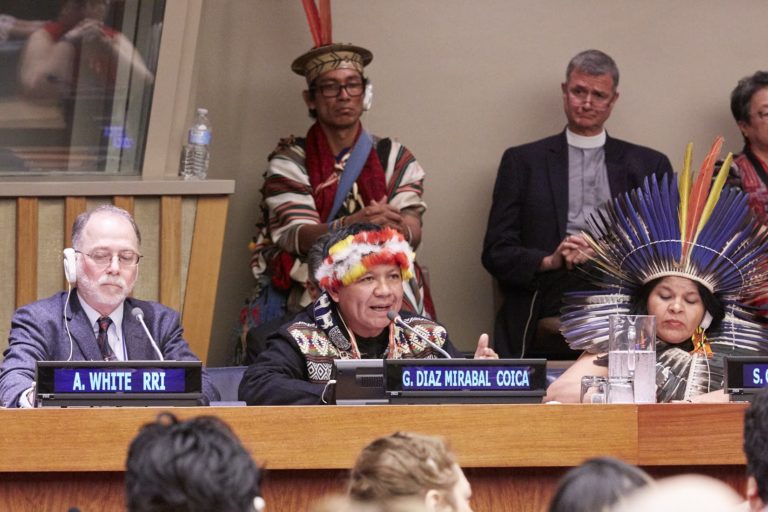
“One of the key points that we must underline is that governments are considering protecting only 30% of the area that includes 35 million hectares [86 million acres] of land by 2030,” a spokesperson for Amazonian Indigenous leaders at COP26 told Mongabay in an email. “What [we] want to achieve is the protection of at least 80% by 2025.”
An alliance of Indigenous and nongovernmental organizations is proposing a bioregional plan, referred to as the Amazon Sacred Headwaters, to act as a model for future conservation efforts.
Consisting of the Amazonian Indigenous federations COICA, AIDESEP, and ORPIO, and a partnership with the Pachamama Alliance and Rainforest Foundation US, the initiative aims to permanently protect 80% of 35 million hectares of land.
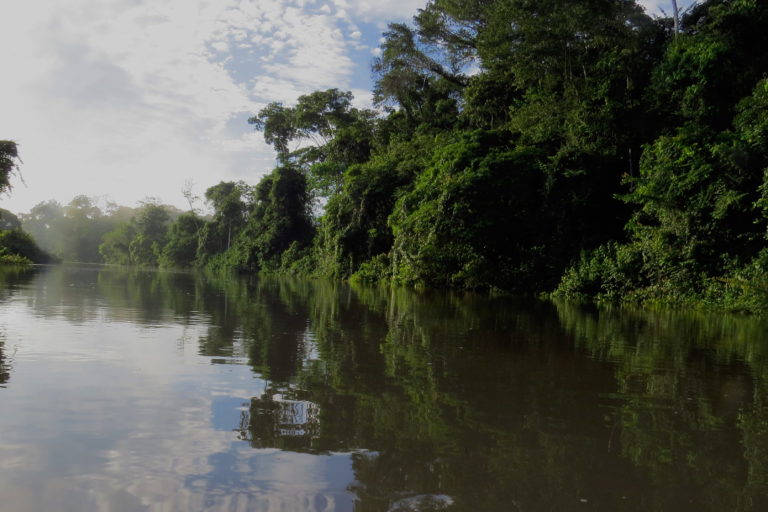
This includes some 33 million hectares (82 million acres) of tropical rainforests near the Napo, Pastaza, and Marañon river basins of Ecuador and Peru that contain 3.8 billion metric tons of carbon. The goal is to declare the zone off-limits to extractive industries.
The logistics of the plan
Presented at COP26 last month, the alliance expects to prevent some 2 billion metric tons of greenhouse gas emissions into the atmosphere by halting deforestation, mining, and oil and gas extraction.
The plan aims at centering Indigenous land and resource rights, on the basis that Indigenous forest stewardship is among the most effective strategies in preventing deforestation and avoiding significant GHG emissions.
To protect the Sacred Headwaters, Indigenous leaders say they hope to finalize negotiations for land titles consisting of more than 8.9 million hectares (22 million acres) of Indigenous territories, while strengthening local autonomy over those areas.
The region is home to more than 30 Indigenous nationalities consisting of more than 600,000 people. To secure these land and resource rights, the organization also plans to attract global funding and interest in the initiative.
The restoration of more than 8.7 million hectares (21.4 million acres) of forest needed to protect endangered species and maintain the connectivity of the Andean-Amazonian ecosystem will also contribute to the overall goals.
The Sacred Headwaters region contains the most biologically diverse ecosystem on the planet and plays a critical role in generating rainfall and maintaining the hydrological cycle for the Americas.
Several critically endangered species can be found in the region, including the Rio Mayo titi (Callicebus oenanthe) and the Ecuadoran white-fronted capuchin (Cebus aequatorialis), both monkeys found nowhere else on Earth.
The bioregional plan is not limited to the forest protection but also proposes a potential transition from the current extractive economic model based on oil exploitation, logging, and mining, to an ecological one centered on sustainable entrepreneurship, community tourism, and Indigenous concepts of well-being (Buen Vivir).
The alliance aims to achieve this by forming agreements between states, companies, and Indigenous and civil society organizations to ensure that no activity relating to the extractive industries occurs in the area.
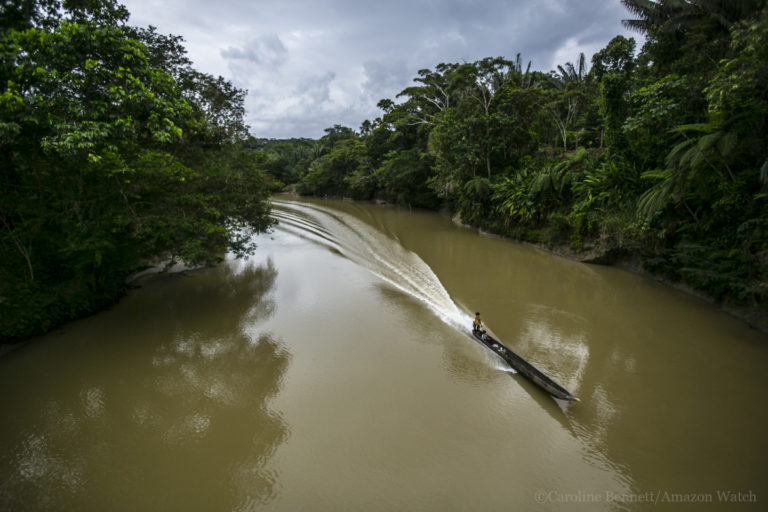
The plan’s success, however, is dependent on support from the Ecuadoran and Peruvian governments.
“We want a collaborative relationship with the government,” Uyunkar Domingo Peas Nampichkai, coordinator of the Amazon Scared Headwaters initiative, told Mongabay in an email. “But, one with autonomy.”
When presented with the bioregional plan in August and October, representatives of both governments expressed support for the initiative and promised to highlight the plan at the international level.
Peru’s economy and finance minister, Pedro Francke, told the alliance that he was committed to assist in searching for funding.
“I think it is very significant that we are returning to the idea of Buen Vivir [and] of the autonomy of Indigenous Peoples,” Francke said. “The Ministry of Economy and Finance can support and look for the means [and] processes.”
Ecuador’s minister of environment, water, and ecological transition, Gustavo Manrique, said “the initiative will be the focal point” of his ministry’s work when presented with details of the Sacred Headwaters plan.
Extractive industries and foreign debt pose a challenge
Despite the Ecuadoran and Peruvian government officials’ positive responses to the initiative at COP26, they have told the alliance that the issue of repaying foreign debt poses a challenge.
Currently, both countries rely heavily on revenues from their respective extractive industries, which also operate within the Amazon, to help pay off their debts.
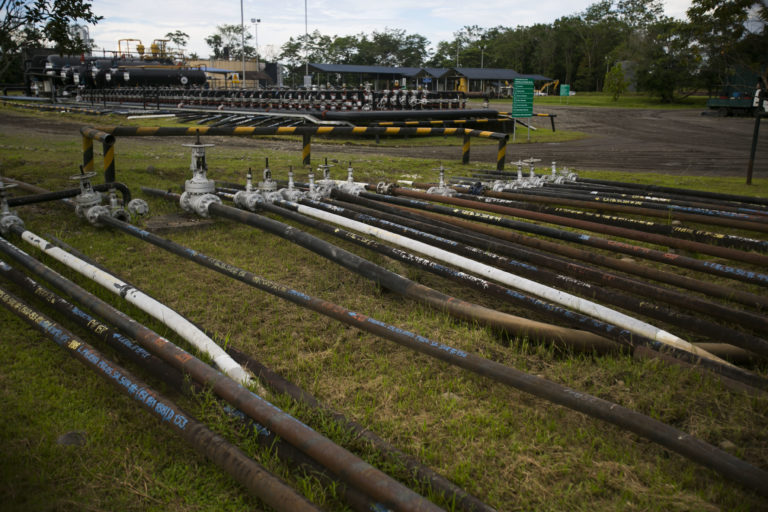
“[Government representatives] have publicly stated that they are going to work hand in hand with Indigenous communities. So, the answer has been positive,” Nampichkai said. “But international debt is an issue — it’s pure destruction. They are trapped in that way.”
In Ecuador, oil extraction is one of the country’s main sources of revenue for foreign debt repayments.
According to a report by the World Bank, as of 2020 Ecuador’s foreign debt stands at $58.5 billion, or more than half the size of its economy.
Oil activity in both Ecuador and Peru began decades ago, causing a series of environmental damages and impacts on IPLC territories.
U.S. oil giant Chevron and its subsidiary, Texaco, are associated with the biggest oil spill in Ecuador’s history.
Dubbed the “Amazon’s Chernobyl,” more than 16 billion gallons (73 billion liters) of toxic waste was discharged and some 1,000 toxic waste pits abandoned, with evidence of high pollution levels in soils and water in the Ecuadoran Amazon.
According to health evaluations, IPLC individuals have died of cancer and oil-related diseases in the affected areas.
“Food crops won’t grow here,” Servio Curipoma, a farmer in Ecuador’s Orellana province, said in an independent report on Chevron’s global environmental impact. “Plants die, animals get sick, and people get sick.”
Most of the region’s oil fields are located in the northeastern part of the Sacred Headwaters, with pipelines located within the Siona, Cuyabeno-Imuya and Kichwa communities. These areas have been cleared to facilitate development.
However, in Peru, oil production has been declining since 2007, with occasional spills associated with the Northern Peruvian Amazon pipeline.
One of the country’s main sources of revenue to repay $37.6 billion of foreign debt is mining, including for copper and gold.
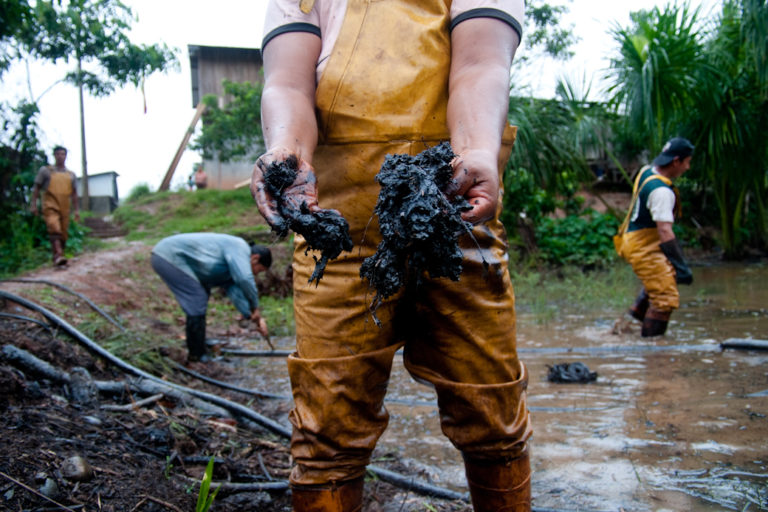
The alliance of Indigenous organizations said a potential solution to the challenge of protecting 80% of both nations’ Amazon rainforest is in the form of debt relief by international financial institutions and industrialized nations.
This aims to make space for conservation efforts in the region. To address climate change, the Indigenous leaders said, it’s imperative that stakeholders around the world work together in a synchronized manner.
“If we don’t have global unity we will fail,” Nampichkai said. “We all win or lose.”
According to the bioregional plan, the transition will not lead to a major loss in revenue for either countries.
A report by the High Ambition Coalition (HAC) says that if the 30 by 30 initiative is implemented, the economic outputs of ecotourism would be greater than if it wasn’t. This is based on a broad-sense economic analysis focusing on forests and mangroves.
“For those biomes alone, the 30% target had an avoided-loss value of $170-$534 billion per year by 2050,” the report says, “largely reflecting the benefit of avoiding the flooding, climate change, soil loss and coastal storm-surge damage that occur when natural vegetation is removed.”
However, funding is still an issue. Indigenous leaders are now planning on completing a regional ecological economic plan, developing conservation funding solutions, and forming a strong regional alliance of key stakeholders to ensure the success of the Sacred Headwaters initiative.
“We want this to be a model at the international level,” Nampichkai said. “Start in Ecuador and Peru, and then replicate it internationally. If the funds do arrive, we want to take action. With our plan we already have the road map.”
→ Read more stories about Indigenous leaders and activists
→ Indigenous Activists to Know & Follow
This article was originally published by Mongabay on December 3rd, 2021 — and was made available to Good Good Good.
This fall, at the intersection of Saint Bernard Avenue and North Claiborne in New Orleans’ 7th Ward, construction began on a new stormwater drainage system.
This wasn’t a “gray infrastructure” project planned by the city. It’s green infrastructure that 7th Ward community members had envisioned, a large bioswale with native plants that will absorb the water that frequently floods the neighborhood.
This is one of three large-scale, anti-flooding developments underway in the 7th and Upper 9th Wards as well as Tremé.
All are community-driven green infrastructure facilitated by Water Wise Gulf South, an environmental outreach collaborative prioritizing the needs of New Orleans residents who have been, and continue to be, most impacted by regular urban flooding caused by heavy rainfall.
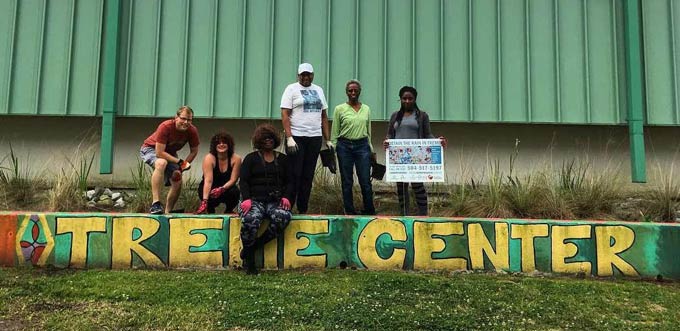
Since 2016, Water Wise has supported the planting of over 500 trees and the implementation of over 150 other green infrastructure projects that have added over 50,000 gallons of stormwater retention capacity across the three neighborhoods.
What makes Water Wise different from other green nonprofits?
All of its projects are actually designed and built by local community members.
“We are making sure that those of us who are disproportionately affected, Black and brown communities, have the opportunity to take charge and lead our destiny in mitigation,” says Angela Chalk, a 7th Ward resident who founded the organization Healthy Community Services and has been the key point of contact for Water Wise activities in her neighborhood. “We live and work in the communities that we serve.”
Water Wise Gulf South was founded by the water professionals Jeff Supak, Hilairie Schackai, and Dana Brown to strengthen public awareness and use of green infrastructure across the region.
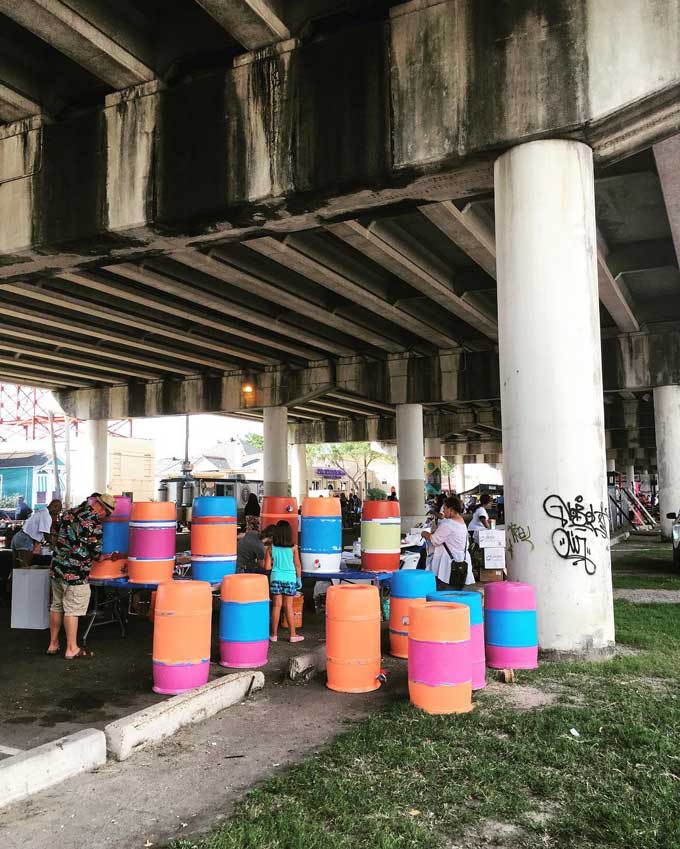
(Green infrastructure encompasses a variety of nature-based installations that capture rain where it falls to mitigate flooding. Gray infrastructure relies on drains, concrete, and pipes to collect and channel stormwater into waterways without reducing the amount of water, so it often exacerbates flooding.)
Water Wise knew that localized urban flooding — not captured in FEMA’s flood risk maps — had become a persistent problem in many communities. In 2014 and 2015, they conducted flood mapping surveys across New Orleans and identified the neighborhoods most at risk.
After identifying the 7th Ward and Tremé, Water Wise partnered with the Greater Treme Consortium and Chalk’s Healthy Community Services to brainstorm around green infrastructure.
“There was a lot of feedback around actually demonstrating green infrastructure in the community,” says Supak.
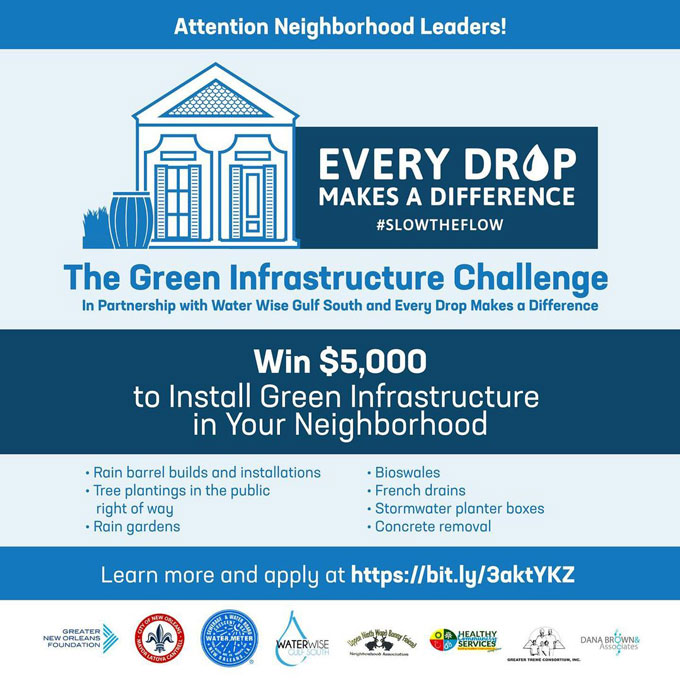
Since 2016, grants have helped Water Wise develop the “Water Wise Neighborhood Champions” program that would not only provide education to community leaders, but help communities identify priority projects for installation.
In the three-pronged program, participants begin with a Water Wise Neighborhood Workshop to learn about green infrastructure and do-it-yourself green infrastructure projects that people can install in their own yards or gardens.
Over 500 people have taken one of these workshops. That’s followed by a Green Infrastructure Tour, where participants visit green infrastructure projects across New Orleans (it went virtual during COVID-19).
Finally, Water Wise holds Green Infrastructure “Visioning Workshops” to identify priority projects within neighborhoods.
135 people have completed the full program.
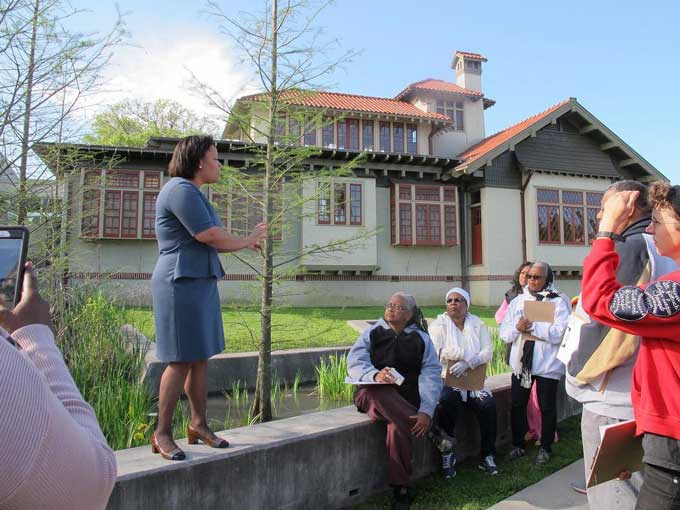
Community members in Tremé, the 7th Ward, and Upper 9th Ward all developed community look-books that propose projects that could collectively store 6.5 million gallons of water and increase green space by 45 acres.
Following the program, Water Wise holds pitching challenges to provide seed funding for the implementation of projects in the look-book.
Brenda Lomax-Brown, the president of the Hollygrove Dixon Neighborhood Association, proposed green infrastructure for the Hollygrove-Dixon Life Transformation Community Center, where rain would pool at the entrance stairs and community members needed rain boots to get inside.
With Water Wise funding the community installed a permeable parking pad and rain garden. “When the first rain came, to see the water get sucked up and no more water pooling at the stairs — it was just an awesome experience,” Lomax-Brown says.
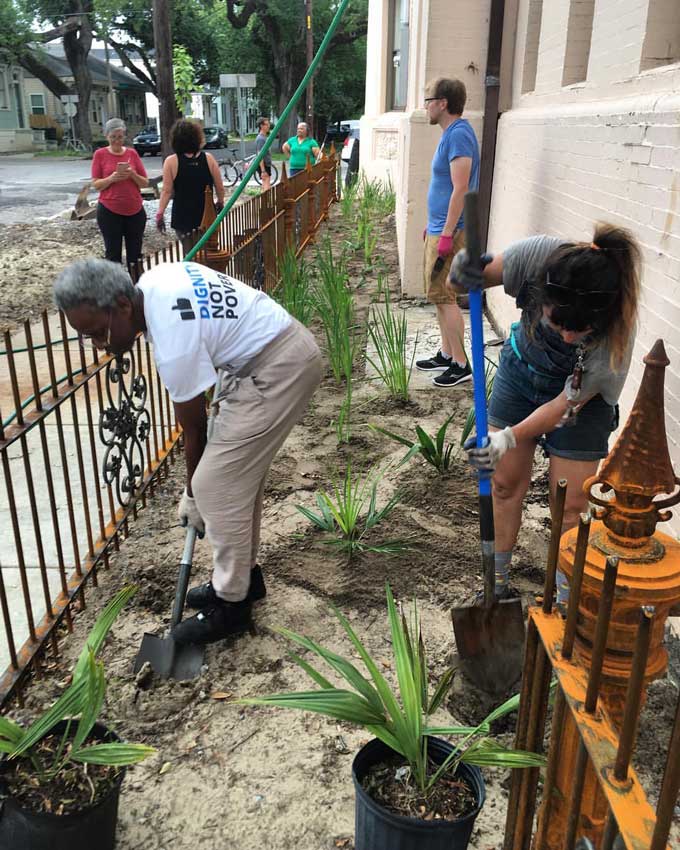
Installation has been key to bringing more community members into the work. “Inside the community I live in, people might not catch on at first — but once they see it, it becomes infectious and everyone wants to understand it,” says Katherine Prevost, president of the Bunny Friend Neighborhood Association in the Upper 9th Ward.
In the 7th Ward, 100 community members helped install the community’s first bioswale. “Finally the rain came and I had this ah-hah moment that this works and that we can begin to do this along with everyone else in the neighborhood,” says Chalk.
Since then, Water Wise 7th Ward has held or participated in 37 community outreach, education, and social events that engaged over 800 people around green infrastructure.
In addition to the bioswale, the community installed 25 rain barrels, one stormwater planter box, seven rain gardens, eight french drains, and two permeable parking pads. They’ve planted over 400 trees and removed 250 square feet of concrete.
The 7th Ward projects are managing 48,000 gallons of stormwater for each rainstorm event, a number that includes the 35,000 gallons that will be managed with the newest stormwater drainage system.
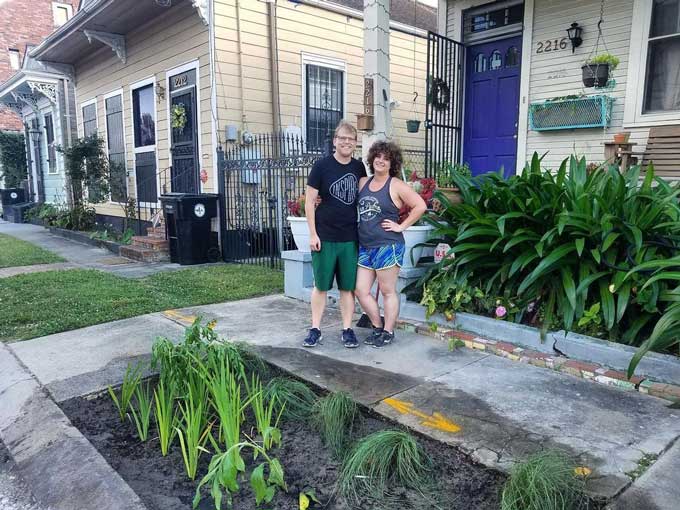
Beyond Water Wise seed funding, the community organizations independently work to fund projects from their look-books. “This is a grassroots movement, in my opinion, we’re doing everything without government help or funding,” says Supak.
“Government is slow and we can’t wait for government to catch up to us,” Chalk says. “All of us in these communities realize we have to get this right and that climate change is not waiting. We can’t wait.”
Water Wise community leaders hope not just to normalize green infrastructure, but pave the way for a Black-led environmental justice movement prioritizing the needs of communities hit hardest by climate change.
“When history is written,” Chalk says, “There will be Black and Brown faces all over the beginnings of the green infrastructure sector, at least in New Orleans and Southeast Louisiana.”
This story is part of the SoJo Exchange from the Solutions Journalism Network, a nonprofit organization dedicated to rigorous reporting about responses to social problems. It was originally published by Next City on November 22nd, 2021.
Related
How a College Student Founded NOLA’s First Glass Recycling Plant
Why The Environmental Movement Must Be Intersectional
Hurricane Ida Relief: Good News Out of Louisiana & How You Can Help
This incredible progress is worth celebrating — but we must also take action to ensure this good news is experienced equitably around the world.
The world has experienced a 59% decline in the deaths of children younger than five years since 1990.
New mortality estimates indicate that the largest drop was in 2019, when global under-five deaths were reduced to 5.2 million from 12.5 million in 1990.
The substantial progress in reducing child deaths occurred four years after the Sustainable Development Goals were launched. These goals include eliminating preventable child mortality; reducing neonatal death to less than 12 per 1,000 live births; and reducing deaths of children younger than five to less than 25 per 1,000 live births. The date for reaching these targets is 2030.
It may be too early to attribute any success to the Sustainable Development Goals. But the progress may be the result of related efforts like improved nutrition, housing, water, sanitation, education, and financial security. The availability of health services to prevent or treat common causes of child death may have played a role too.
Despite this progress, sub-Saharan Africa recorded the highest neonatal mortality rate at 27 deaths for every 1,000 children born alive in 2019. A child born in sub-Saharan Africa or Southern Asia is 10 times more likely to die in the first month than a child born in a rich country.
Similarly, sub-Saharan Africa remains the region with the highest under-five mortality rate in the world. In 2019, one in 13 children in the region died before reaching their fifth birthday. This is 15 times higher than the risk for children born in high-income countries. Clearly, there is still a lot of work to be done.
We recently published a study that aims to show where countries should focus public health efforts to meet targets by 2030. Our paper is part of the Global Burden of Disease study. It presents the rates and trends in under-five deaths between 2000 and 2019, and makes projections to 2030.
These projections are based on multiple health scenarios. We hope they will help to identify the countries and regions that are on course to achieve the Sustainable Development Goals goals and those that are not – and what to do about it.
Findings from the study into global child death rates
In this study, we analyzed secondary data, spanning two decades from 204 countries and territories. The results show that every country has experienced some decrease in child deaths between 2000 and 2019.
Worldwide, child deaths decreased from 71.2 per 1,000 births in 2000 to 37.1 in 2019.
Our research also identified countries with the highest number of deaths in 2019. Among them were the Central African Republic, Mali, and Chad. At a regional level, sub-Saharan Africa and South Asia recorded the highest number of deaths.
By 2015, 128 of the 204 countries in our study already reached the Sustainable Development Goals threshold of under-five deaths lower than 25 per 1,000 births.
Egypt and Libya were the only African countries among these 128. By 2019, there were 136 countries under this threshold. Other than Morocco, no country in Africa met the threshold in 2019.
Regarding causes of death, neonatal disorders remained the leading cause of death in 2019, followed by lower respiratory infections, diarrheal diseases, congenital birth defects and malaria. More male children died than female children.
Our projections show that 154 countries are likely to meet the targets for reducing child deaths by 2030. This means that 50 (25%) countries are not on course.
Most are located in the low- and middle-income countries, particularly in Africa, where Algeria is the only country on track. Thus, a lot more work is needed to put African countries on the path to the target.
The progress outlined above may be hampered by the widespread effect of COVID-19. Child mortality is not affected directly by COVID-19, but the effect on child health delivery services, in general, cannot be underestimated. It will take considerable effort to maintain and accelerate progress.
How to increase global child survival rates:
Our analysis suggests the need for well-designed strategies to optimize child survival. They should include community-based strategies and efforts to address social determinants of health, such as education, family planning, social support, food security, and financial security.
Investments should strive for balance in all critical areas and overall system strengthening, focusing particularly on reducing inequality.
Specifically:
- Balance early newborn care with continuing prenatal and older child health initiatives.
- Invest in stronger health systems to scale up interventions.
- Reduce disparities within countries and integrate other determinants of health.
- Expand community and facility-based strategies for pregnancy, labor, delivery, and the postnatal period.
- Counter shortages and retain skilled healthcare workers, reinforce facility infrastructure, develop and strengthen referral networks, and expand integrated services needed to achieve access and quality of care.
- Scale up community-based initiatives such as vaccination campaigns, insecticide-treated bed nets for malaria, prevention of mother-to-child transmission of HIV, and nutrition as well as integrated management of childhood illness.
- Treatment campaigns for diarrhea such as oral rehydration solution, zinc, and rotavirus vaccines have been successful. They still need improvements in clean water, sanitation, and nutrition.
- Improve perinatal and newborn care, and expand interventions such as vaccination and infection prevention.
More focus on equity, poverty reduction and education, and investment in strengthening health systems across the development spectrum, can substantially reduce deaths among children younger than five years.
This article was originally published by The Conversation on December 7th, 2021 — and was republished with permission.
The result could solve two problems at once - the increasing demand for fish protein, and the emission of a harmful greenhouse gas
A promising alternative way to feed fish, and to offset methane emissions, has made progress towards being implemented, thanks to researchers from Stanford University.
The study, published in Nature Sustainability, examines the potentially cheaper way of feeding fish with bacteria, that is fed by methane, as an alternative to regular fishmeal, which could also offset methane emissions produced as a byproduct of other processes.
The research looks at how this could be feasibly implemented on a wider scale, with evidence that it could significantly reduce fishmeal costs.
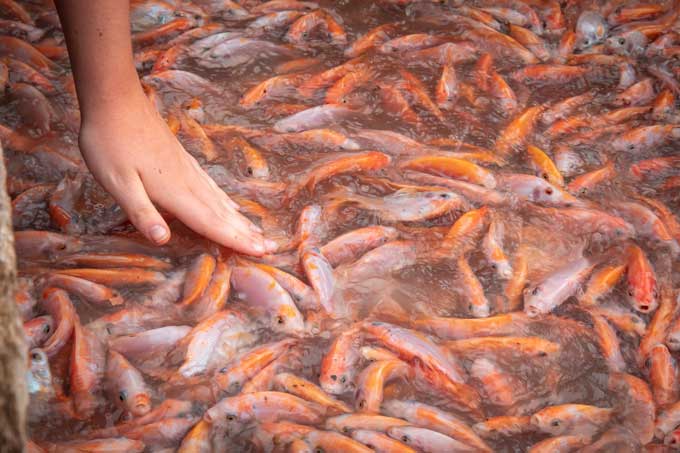
This method uses bacteria that are methanotrophic, meaning they eat methane as a source of carbon, which they can then use to extract nutrients in order to grow.
These methanotrophic bacteria are placed in a pressurized tank, or bioreactor, and fed nutrients including methane. The bacteria are then harvested and dried to create a biomass that serves as an alternative to fishmeal, which is usually made out of cooked and dried fish.
Global demand is increasing for fish protein, which makes it a challenge for farmers to keep up with supply.
With the global population set to hit 11 billion by 2100, and 800 million alive currently undernourished, there is a need for the agricultural sector to adapt and pursue this issue from a sustainable perspective.
In many countries which suffer from undernourishment, fish counts for one-third of the total animal protein supply.
Using methane suggests a solution that is cheaper and potentially more sustainable, as it would not require fishmeal to be made from actual fish.
The most recent research, including this study, indicates that where methane is extracted from oil and gas plants, the production of methanotrophic fishmeal is cheaper than the market price of typical fishmeal, being $1,531 per ton compared to $1,600.
Research also suggests that the use of microbial protein, which includes methanotrophic bacteria, could avoid the use of over 100 million hectares of cropland – which has its own impact on the environment.
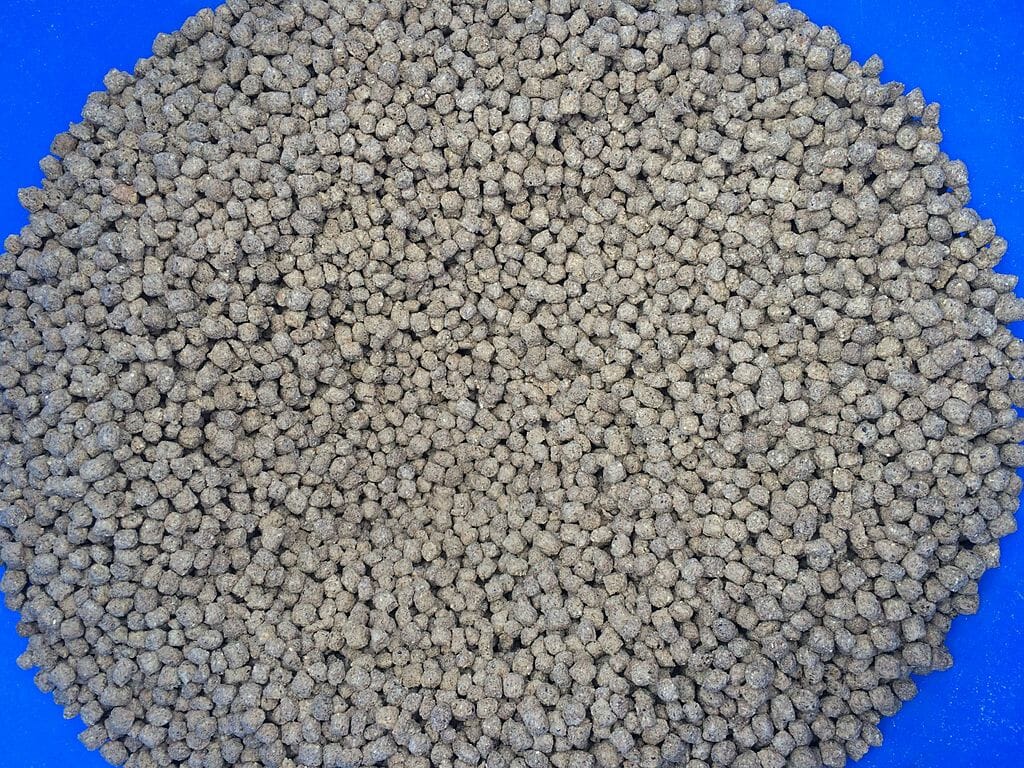
It should be noted that fishmeal makes up a part of a fish’s diet, but not all of it.
Sahar El Abbadi is the lead author of this study, and a lecturer in Civic, Liberal, and Global Education at Stanford. She hopes that with more research it could replace more.
“I think there’s approval within the EU to replace about 20% of fishmeal and the diets of farmed animals… as technology develops and we understand this bacteria more, there’s a lot of promise that it could replace more, as you tailor the diet to the nutritional needs of the fish and what life stage they’re in.”
What’s more, methane is a natural byproduct of many industrial processes, as well as being produced at landfill sites and wastewater treatment plants.
Because the greenhouse gas is more potent than CO2, it drives around 25% of today’s warming, despite the fact that it is less prevalent in the atmosphere.
Researchers calculate that based on the stranded methane available to be extracted in the US, and how the technology could scale in a way that would be cost-effective, it could offset 14% of the global fishmeal market’s emissions.
However, they are looking beyond offsetting oil and gas, the most common way of feeding these methanotrophs – in part because, hopefully, these will be phasing out of production in the coming decades.
“There are a couple of companies right now that are in the process of commercializing the use of methanotrophs… using natural gas from the grid,” El Abbadi says.
Her post-doctoral research focuses on how landfills can be used instead. Wastewater treatment plants are also a promising option.
The advantages of using wastewater treatment or landfills are that neither perpetuate fossil fuel extraction, and both tend to be much closer to populated areas.
Moreover, El Abbadi explains, “the potential for nutrient capture from wastewater treatment plants,” which includes other minerals the bacteria feed on, such as nitrogen and phosphorus, “is one promising potential option down the line.”
In the aftermath of COP26, pleas for climate action are more urgent than ever, and with ensuring pledges to cut methane emissions by 30% by 2030, technology like this has real relevance when it comes to innovating our way out of both a changing climate and increasing consumption.
And of course, this process is in the fairly early stages of development, and some way away from widespread implementation, but with companies already trying to commercialize its use, it is a question of now figuring out how to make sure it can be widespread and even more financially viable.
“Cooling the bio-reactor itself is also a main source of electricity consumption for this system,” says Saher, with it amounting to about 45% of total costs. “One potential is selecting for bacteria that can grow at a higher temperature.”
This is because of the heat created by the bacteria in the process. Other possibilities include using on-site solar power and using some of the stranded methane to power gas-powered equipment.
The potential here is clear, and not only for this, but for other avenues of sustainable development in the animal feed industry.
“If we can advance this technology now and make it cost-effective with methane, there are researchers who are also looking into using bacteria that eat hydrogen as animal feeds as well, so I think that this could open the door in that direction for renewably-produced hydrogen.”
The results are promising so far – with the potential to have really significant impacts on the global food industry as a whole.
To what extent this will change the animal feed industry, and how it might affect carbon capture methods, remains to be seen – but we know the technology works, and is cheap.
But now comes the difficult part of applying it on a larger scale.
Undoubtedly, however, this is a promising glimpse into the future.
This article was originally published by Impakter — and was shared with Good Good Good for republishing.
— Women in a rural part of El Salvador are leading an effort to stop urban development that could result in deforestation and loss of access to water.
— The Ciudad Valle El Ángel project involves the construction of stores, hotels, and houses in Apopa municipality, an hour north of the capital, San Salvador.
— It calls for clearing 351 hectares (867 acres) of forest and diverting 17 million liters (4.5 million gallons) of water a day from the Chacalapa River watershed.
— The community has started working with other local organizations to stage protests, sit-ins, and letter-writing campaigns, and has also filed numerous lawsuits.
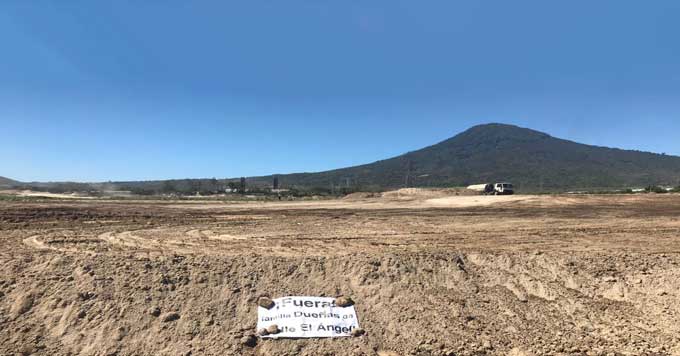
A group of women in rural El Salvador is standing up against a major infrastructure project that threatens to clear hundreds of hectares of forest and cut off access to rivers that provide the community with clean drinking water.
The project, known as Ciudad Valle El Ángel, involves the construction of thousands of stores, hotels, and houses in Apopa municipality, an hour north of the capital, San Salvador, where much of the land is still rural and many residents rely on subsistence farming.
Completing the project requires clearing 351 hectares (867 acres) of forest and installing eight industrial wells that will divert 17 million liters (4.5 million gallons) of water a day from the Chacalapa River watershed.
Around 2,000 people rely directly on the watershed for cooking, drinking, cleaning, and crop cultivation, according to local environmental advocacy groups. The river also indirectly benefits another 60,000 people in 21 neighboring communities.
“Nothing about the project benefits the poorer classes. They’re building this for the upper classes, for the people who can pay,” said Sara García, coordinator of the Kawoq Women’s Collective, the eco-feminist organization protesting Ciudad Valle El Ángel.
The collective is made up of around 50 local women of all ages, who recognize that the destruction of Apopa’s ecology will have a direct impact on residents’ quality of life — especially the lives of women.
“We are the ones that spend the most time at home,” García said, “taking care of the water, preparing food. If there is no water, there is no food. There is more work for us and more fatigue and the deterioration of our bodies.”
She added, “I’m not saying that men aren’t also affected. But because of the burden imposed on us by a patriarchal system, we suffer the most.”
The Kawoq Women’s Collective has spent the last decade trying to stave off development projects that threaten local ecosystems.
In that time, it has witnessed the arrival of some stores and gas stations as well as a highway that now connects the area to San Salvador.
García said she viewed the highway as a precursor to the construction taking place today, an attempt to attract people looking for quick trips out of the city.
When the Ciudad Valle El Ángel project was announced in 2018, the collective started working with other local organizations to stage protests, sit-ins, and letter-writing campaigns.
Public pressure helped move plans to drill the wells along the skirts of the San Salvador volcano to other parts of the watershed farther away from vulnerable residents of Apopa. But they said the new plans would still divert most of their drinking water, and possibly contaminate what remains.
In addition to direct diversion of water from the Chacalapa River, deforestation of nearby forests has the potential to decrease access to potable water because the cleared land won’t be able to stop runoff and filter harmful chemicals.
“We are beneficiaries of the Chacalapa River system,” said Johana Mejía, the president of Apopa’s community water board, “and because of that, we have to act.”
Sociedad Dueñas Hermanos Limitada, the company carrying out the project, did not respond to a request for comment.
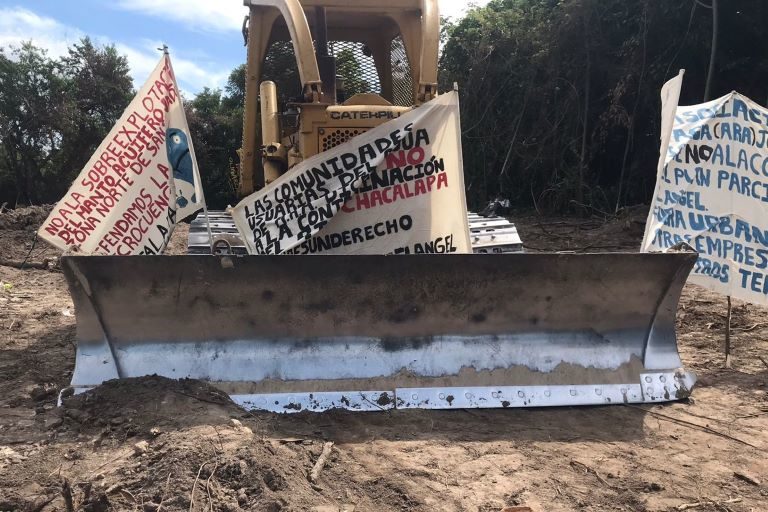
In 2019, legal representatives for the community filed a complaint in the country’s environmental court that highlighted the irreversible ecological damage of the project, but it was denied.
In other lawsuits, the community has claimed the government failed to adequately carry out environmental studies and the consultation process, in which residents are given an opportunity to air their concerns with officials and developers.
In a statement to Mongabay, El Salvador’s Ministry of Environment and Natural Resources said it had carried out all required technical studies, identified all environmental impacts, and established the proper measures to “prevent, mitigate and correct said impacts on soil, water, air and flora, and fauna.”
Another lawsuit claims there were irregularities in the permit process between the project developer and the local water service, which didn’t respond to Mongabay’s request for comment.
So far, the lawsuits haven’t managed to stop construction, only delay the start date. In the meantime, other small-scale development projects have arrived in hopes of taking advantage of the area’s potential economic boom. The community is fighting scattered instances of deforestation and the drilling of wells, Mejía said.
In May, the country’s newly elected congress voted to remove five members of the Supreme Court, creating international concern that President Nayib Bukele, whose party now has a majority in congress, had threatened the country’s democracy and overstepped his power.
For Apopa residents, it was a sign that their cases might never receive fair consideration.
“In the community, there is always the hopeless outlook that we can’t stop what’s coming,” Mejía said, “that we can’t demand our rights to water because there is too much corruption. But there is another percentage that says no, we have to do something.”
This article was originally published by Mongabay on December 6th, 2021 — and was made available to Good Good Good for republishing.
A Chicago effort to plant 75,000 new trees aims to identify areas in greatest need of additional tree cover and prioritize restoring a green canopy in these under-resourced neighborhoods disproportionately affected by climate change.
Planting trees in urban areas is a relatively cheap and effective way to mitigate the impacts of climate change and help save energy. In Chicago, city officials are planning to plant 75,000 new trees as part of a $188 million climate package passed last month.
But while the concept is straightforward, implementation can be complicated.
Many of the trees will be located in neighborhoods populated by people of color — neighborhoods that because of racist policies and practices have typically suffered from disinvestment of all types, including in green spaces and park services, and which have reduced tree canopies.
A tool developed by the Chicago Department of Public Health and the University of Chicago combines existing tree canopy data with assorted health-related metrics such as air quality and traffic volume to help identify areas in greatest need of additional tree cover.
However, plans to increase tree canopies have also sometimes run into resistance from neighbors who fear that new amenities could spark interest from real estate developers and displace lower-income residents from their homes.
The city plans to respond to and overcome this resistance by employing significant community input and a racial equity-focused lens in implementing the tree planting initiative.
This approach is designed to ensure the benefit of the enhanced tree canopy is enjoyed by residents already living in targeted neighborhoods — one aspect of an “all in” approach to increasing resilience in neighborhoods disproportionately impacted by both disinvestment and climate change.
“We expect this historic investment to reap historic outcomes,” said Angela Tovar, chief sustainability officer for the city of Chicago, in a press release.
“Taking an equity-centered and data-driven approach, we can identify where trees can have the greatest impact and work directly with residents and community groups in those areas to plant and maintain trees. We are committed to building a safer, stronger, and more just Chicago for all.”
Increasing tree canopies and incorporating green infrastructure not only reduces the adverse effects of urban heat islands, but also presents an excellent opportunity for reversing disinvestment in BIPOC communities, said Trinity Pierce, stewardship coordinator for the Chicago Region Trees Initiative at the Morton Arboretum in Lisle, Illinois.
“So much of this conservation stewardship is making sure that it’s not just about planting trees and moving on to the next site, but it’s also about green infrastructure,” Pierce said. “And now more and more it’s about green jobs. So, it’s helping expose the youth in these communities [and] helping expose folks who might be interested in a career change to these green careers.”
Enhancing tree canopies
Enhancing tree canopies can significantly mitigate the harmful aspects of a heat island by providing direct shade and by indirect cooling through evapotranspiration. However, too often, insufficient consideration is given when planting urban trees, Pierce said.
“Sometimes trees can be an afterthought. … There’s no diversity [in tree species] whatsoever,” she said. “So even just planning for diversity, and that can be local — that can be a community garden in an under-resourced area. That alone is actually a really important big step.
“Diversity is so key as we lose a lot of species to certain pests and diseases, or if a lot of trees were planted at the same time, they’re going to age out at the same time. So, the more trees we can plant properly in the right spot, the better.”
The existing built environment must also be taken into account in the placement of urban trees, Pierce added.
“In an urban environment, it’s not as if everything was bulldozed and we started from scratch,” she said. “We still have gradation changes. Again, water has that memory. There’s still a rich heritage and natural rich heritage there.
“There’s often not a lot of space in the soil. If you think of parkway trees, that’s a pretty small area for a tree that in normal circumstances could get 40, 60 feet tall. But those roots need to be at least as far out as the tips of its branches, if not farther. And we know the roots are going to be in the top 18 inches of soil. We have smaller trees that will stay small.”
Finally, it is also essential to accommodate previously existing geological factors and the application of road salt when considering tree placement, Pierce said.
“What’s their natural habitat? So that means if you’ve got a water issue, what’s going to be pretty happy there? Whereas some other species are actually found in Upland forests, just meaning they want to be away from the water. So, we’re looking at the wetness of the soil,” she said.
“We’re also looking at tolerances in terms of salt. Now there’s actually soil salt. In our built environment, we gleefully apply road salt in winter. Some trees can handle it. Others, that’s going to be a stressor.”
Green infrastructure and future urban development
Along with planting trees, Chicago’s climate action initiatives include $25.75 million for 20 resilient schoolyards at public schools located in the most flood-prone areas of the city and $41 million for retrofitting 500 low-income homes, installing solar arrays at five public libraries, and installing community solar on existing roofs at industrial factories.
An additional $75 million is targeted toward a package of community-level climate projects designed to remediate contaminated land parcels, provide funding for neighborhood climate resilience projects, decarbonize city fleets and invest in a trail network across the city.
This type of holistic suite of initiatives represents precisely the right approach to dealing with climate change and the built environment, according to Timon McPhearson, director of the Urban Systems Lab at The New School in New York City.
“Our climate has been relatively stable for 10,000 years, and now it’s shaking up like a boiling pot of water on the stove. We can’t design the way we used to. We have to design for uncertainty, and we have to be much more aggressive about it than we have been so far,” McPhearson said.
“So, I think when we think about what a resilient city looks like, we also have to think about it systematically. We have to think about how neighborhoods have resilient, social relationships that can last … and help each other through times of crisis.”
This article was originally published by Energy News Network on December 7th, 2021 — and was made available to Good Good Good.
If you celebrate Christmas, chances are you are planning to decorate a tree (or have already). But how do you make an informed and environment-friendly choice?
Environmental impact is a complex question for any product, and as a tree ecologist, I know that Christmas trees are no exception.

Environmental impact of plastic Christmas trees
Lifecycle analyses, which look at how much carbon is used in every step of a product’s life, have estimated that plastic trees have a carbon footprint between ten and 20 times greater than that of a real tree. This isn’t surprising since plastic is derived from fossil fuels, and takes a lot of energy to manufacture.
"Plastic trees have a carbon footprint between ten and 20 times greater than that of a real tree."
Environmental impact of real Christmas trees
Real trees, on the other hand, take carbon out of the atmosphere to grow. But once you add in chemical fertilizers, also fossil-fuel hungry, fuel for machinery and transportation, it’s clear that both types of tree will have a solid carbon footprint, albeit lower for a real tree than a plastic one.
"Real trees, on the other hand, take carbon out of the atmosphere to grow."
Unless you invest in a beautiful plastic tree that you or someone else reuse for at least a decade, it might be better to buy a real, grown tree.
What should you consider then?
Environmental considerations to make when Christmas tree shopping
Location of the Christmas tree
The carbon footprint will grow tremendously with transportation, so a tree grown on the other side of the world isn’t at all a sustainable choice.
Fertilizers and pesticides on Christmas trees
Similarly, we have seen that chemical fertilizers have a large carbon footprint. They are also a big source of pollution, potentially affecting rivers, lakes, and whole ecosystems.
Pesticides are used because Christmas tree farms are monocultures, in which a single species is grown at high density, which puts them at risk of parasitism and diseases. Pesticides are also a problem for the environment, particularly for invertebrates.
Growing trees organically can reduce that impact, although this might result in “wonky” trees that are less formatted in shape.
Type of land the Christmas tree was grown on
The type of land where a tree is grown will also play a big role in its environmental impact.
Is a Christmas tree plantation replacing something else, possibly more useful (food, for instance) or better for the environment (old-growth forests or peatland)?
Luckily, in countries where most consumers live, a lot of land that is used to grow Christmas trees used to be low-productivity farmland.
But this doesn’t mean that growing millions of trees every year (8m in the UK, 20-30m in the US) is the best choice of land allocation.
Growing Christmas trees means harvesting them after six to ten years, which means less time for wildlife and bugs to establish thriving populations.
Compare them with timber production (cut every 20 to 100 years) or a nature reserve (never) and you will understand why Christmas tree plantations are not considered in the EU tree planting pledge.
Which species of Christmas tree is most sustainable?
The species of tree might also matter. Christmas tree species are coniferous and include Nordmann fir, Douglas fir, Norway spruce, and more rarely Scots pine.
They will likely have different rates of carbon capture, and different interactions with surrounding plants and animals, depending on their physiology and how it matches the soil and climatic environment. (I did say it was complicated.)
Unfortunately, I am not aware of any study comparing tree species in the context of Christmas tree plantations (monoculture, early harvest).
It might be expected that a native tree (like Scots pine in the UK) will be better at hosting local biodiversity, for instance, but that needs testing.
Considering the intensive management involved, the differences between species are likely to be small.
Considering the intensive management involved, the differences between species are likely to be small.
How to sustainably dispose of your Christmas tree
Finally, what should you do when the tree is no longer fit for purpose?
Chipping a tree to use as mulch or compost will effectively mean carbon contained in the wood is stored in the soil, which is more stable.
Burning the tree releases that carbon into the atmosphere.
Dropping it in a landfill is the worst as it releases both carbon and methane through slow degradation.
The best option is to keep the tree alive so that it grows, captures more carbon, and dies after several decades.
How does all this translate in practice? Here are a few tips:
Practical tips for sustainable Christmas trees:
- If you like being able to have the same tree that you can store and reuse for years, then a plastic tree might be an option. But check where and how it is produced.
(Sustainability isn’t only about the environment, it is also about people.)
- Buy locally-grown trees, with Forest Stewardship Council certification. If possible, check for additional characteristics such as whether it’s organically grown, native, and not grown on peatland.
And don’t have it wrapped in a plastic net.
- Ask your [city] council about recycling options. If you can do it yourself, chip the wood and use it as mulch, or use the branches to build nests for native bees.
- Consider buying pot-grown trees, which you can keep for several years. But note that this is different from potted trees, which are grown in the soil and then dug up – the root system of potted trees won’t really support them.
- If you are not too attached to the traditional look of a tree, why not consider timber-made alternatives that you buy or make yourself, or even just decorate your house plants?
After all, in a world of overconsumption, the most sustainable option is to avoid getting a new tree at all.
This article was originally published by The Conversation and was made available to Good Good Good for republication.
Chile joins more than 20 nations to legalize same-sex marriage
Lesbian and gay couples celebrated in Chile after winning a decades-long fight for the right to wed, joining more than 20 other nations that have legalized same-sex marriage.
"I feel so happy. I feel proud. Finally our country, Chile, recognizes the dignity of our family," said Claudia Aravena, a 42-year-old teacher from the Chilean capital of Santiago.
She spoke to the Thomson Reuters Foundation on Tuesday after Chile's Congress passed a law to legalize same-sex marriage, a milestone for the conservative South American nation.
The government said the "historic" vote set Chile on a path towards greater equality, recognizing younger voters' growing support for equal rights.
Minister of Social Development Karla Rubilar applauded Congress for taking "one more step forward in terms of justice, in terms of equality, recognizing that love is love."
Aravena agreed, saying that life with her long-term partner Lorena Grez and their toddler now had a new legitimacy.
"As a couple and parents of our daughter we weren't recognized. We were invisible. We did not exist."
"It's like not existing. We have all the same obligations in society but not the same rights. Our rights were denied," she said by phone from the Chilean capital.
Tuesday's vote came after a decades-long fight pitting new voices against old in the largely Catholic nation of 19 million.
Aravena said the breakthrough would give her family the same status as any other in Chile, with a wedding now to plan.
"The law recognizes our right to equality and dignity - that we're not an invisible family. It means a lot.
"We'll get married in a ceremony with friends and family."
New Rights for LGBTQ+ families in Chile
Under the measure, gay couples can marry and adopt children.
Outgoing center-right President Sebastian Pinera, who leaves office in March, is expected to sign the bill into law, which would then come into effect within 90 days.
Civil unions have existed in Chile since 2015, which affords same-sex couples many but not all the benefits of married life.
But support for extending same-sex rights has been growing, particularly among young voters, with opinion polls showing three in five Chileans support same-sex marriage.
Chile is now poised to join more than 20 countries that allow same-sex marriage, including eight in the Americas - Canada, the United States, Argentina, Ecuador, Brazil, Colombia, Costa Rica, and Uruguay, and certain states in Mexico.
Legalizing same-sex marriage gives Chilean couples additional welfare and state life insurance rights, among other benefits, and clarifies adoption rules.
Javier Silva and Jaime Nazar, both 38, were taken aback at how rapidly the landmark bill had passed, offering new protections for the couple as well as their two young children.
"We were optimistic the law would change but we didn't know how quickly or when exactly," said Silva.
"This means I can legally adopt my son, Clemente, and my partner can adopt Lola," said Silva by phone from Santiago.
"This is a tremendous gift for Chile. We can now be recognized as a family. It's very exciting.
"Now we are visible."
Reporting by Anastasia Moloney; Editing by Lyndsay Griffiths. This article was originally published by the Thomson Reuters Foundation, the charitable arm of Thomson Reuters, that covers the lives of people around the world who struggle to live freely or fairly. Visit news.trust.org.
Header image: LGBTQ+ Pride parade in front of La Moneda, Santiago de Chile in 2009 / Photo courtesy of CiudadanoGay via CC BY 3.0
Congolese nurse Guilaine Masika Mulindwa is unfazed when crying babies drown out the voices of the Ebola survivors in her support group.
For Mulindwa - herself a survivor, they are a powerful symbol of new life after the tragedy her community has lived through, and a way to challenge the stigma surrounding the deadly disease in the Democratic Republic of Congo.
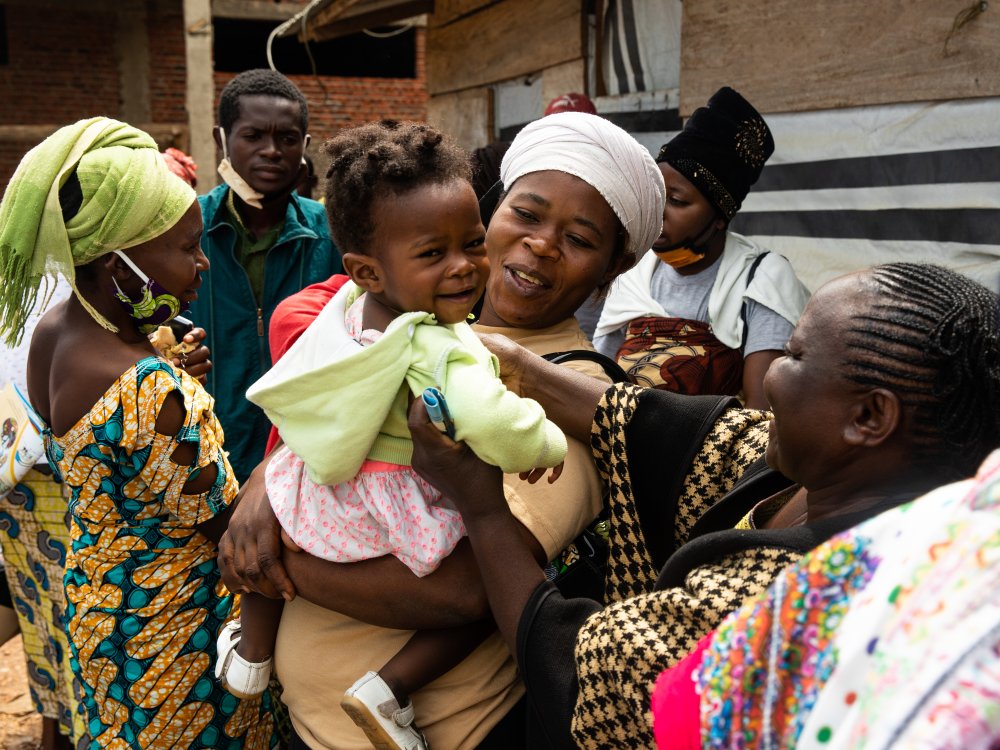
"Never miss any opportunity to go out with your babies in public, it will shake the community members out of their ignorance," Mulindwa told the meeting in her home city of Butembo in eastern Congo.
"Many still believe that we survivors can't have any more children, or that if we do, they'll be deformed. So the good health of your babies will speak for itself."
The 46-year-old head of the Butembo group thinks survivors have a key role to play in combating the disease and the misinformation that surrounds it.
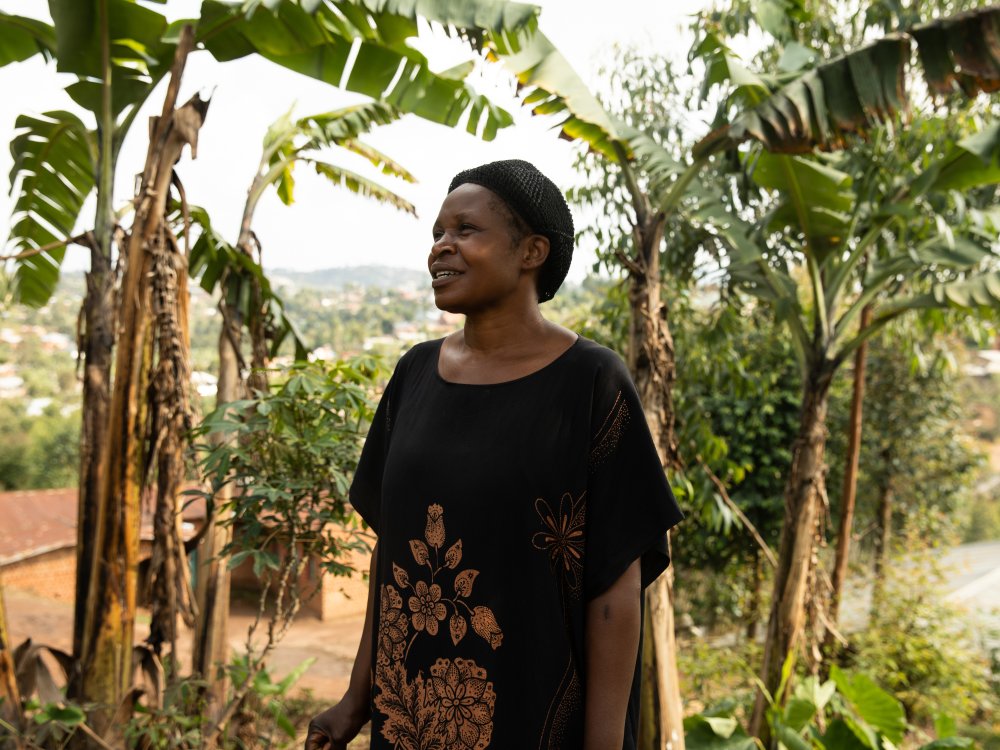
Butembo was one of the epicenters of the last major Ebola outbreak, which killed more than 2,200 people and infected over 1,100 others between 2018 and 2020.
The Ebola virus is spread through contact with body fluids and is highly contagious. It causes sudden fever, intense weakness, muscle pain, and a sore throat that can progress to vomiting, diarrhea, and both internal and external bleeding.
It was the deadliest outbreak the country had seen, its duration lengthened by the difficulty of accessing virus hotspots in a region that has suffered decades of violence and instability.
Yet survival rates were higher than in previous outbreaks thanks to a new vaccine - health workers inoculated more than 400,000 people in Congo between 2018 and 2020 - and more effective treatments.
Now, many of those who survived are seeking ways to ensure others in their community do not have to go through what they suffered.
Ebola survivors call themselves 'the victors'
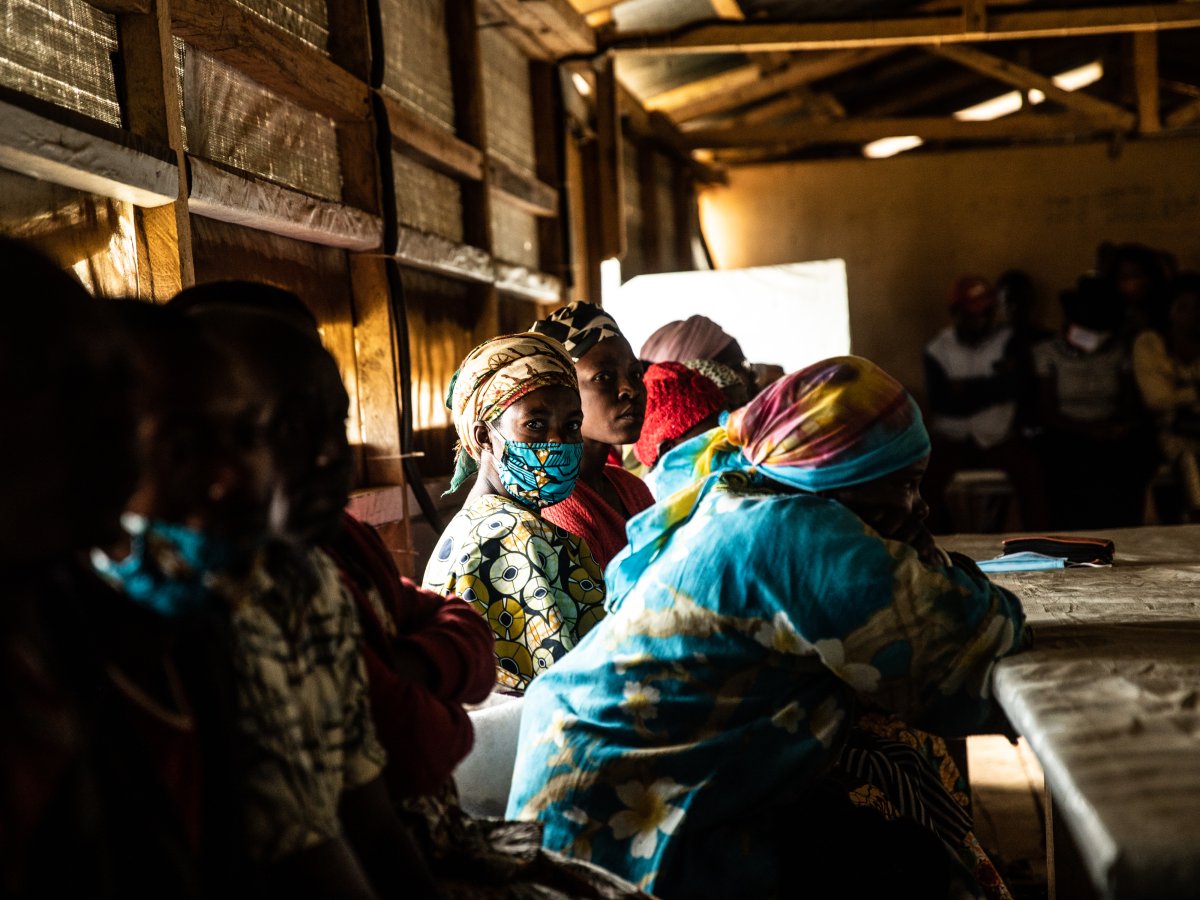
They call themselves "les vainqueurs" - French for "the victors" - and have formed groups across the region affected by the outbreak, aiming to support each other and spread awareness of the disease.
Dozens turned out to attend the group meeting in Butembo, many carrying young children. Some wore face masks made from brightly printed fabric.
Many of the Ebola survivors have struggled to return to their former lives as they deal with the fear of relapse, long-term health issues, and stigmatization by families and neighbors.
Some have even been accused of faking their illness as part of a money-making scheme in collusion with local officials - a suspicion linked to the foreign aid money that Ebola brought.
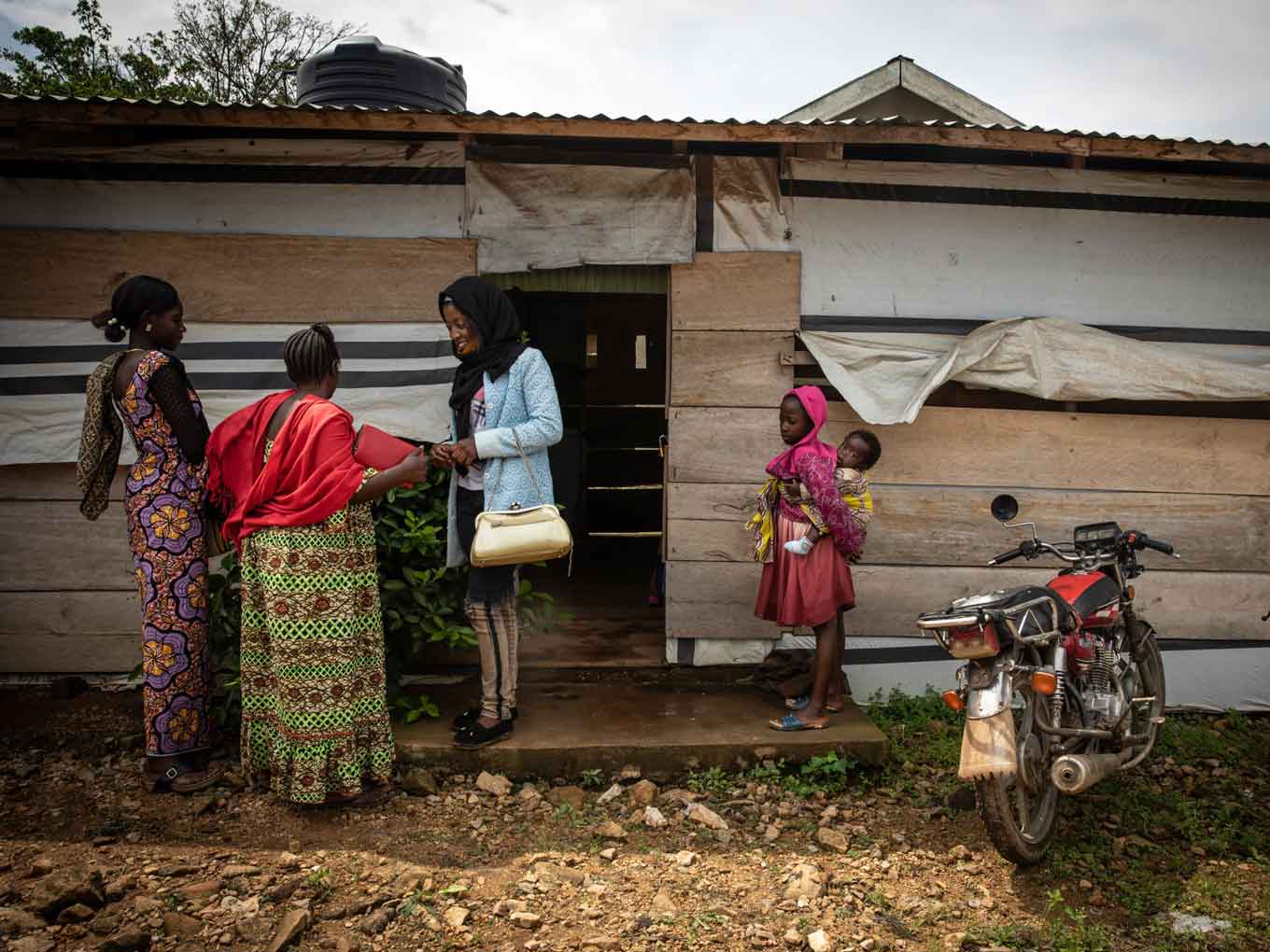
But they are living proof that Ebola can be overcome, and have a key role to play in preventing future outbreaks, said Abdoulaye Yam, Ebola incident manager for the World Health Organization (WHO) in the eastern Congolese city of Beni.
"Survivors are best-placed to explain to their communities what they experienced, what care they received, and they can help explain the different interventions needed to control an Ebola epidemic," Yam said in emailed comments.
Ebola survivors are committed to saving lives by sharing their experience of recovering
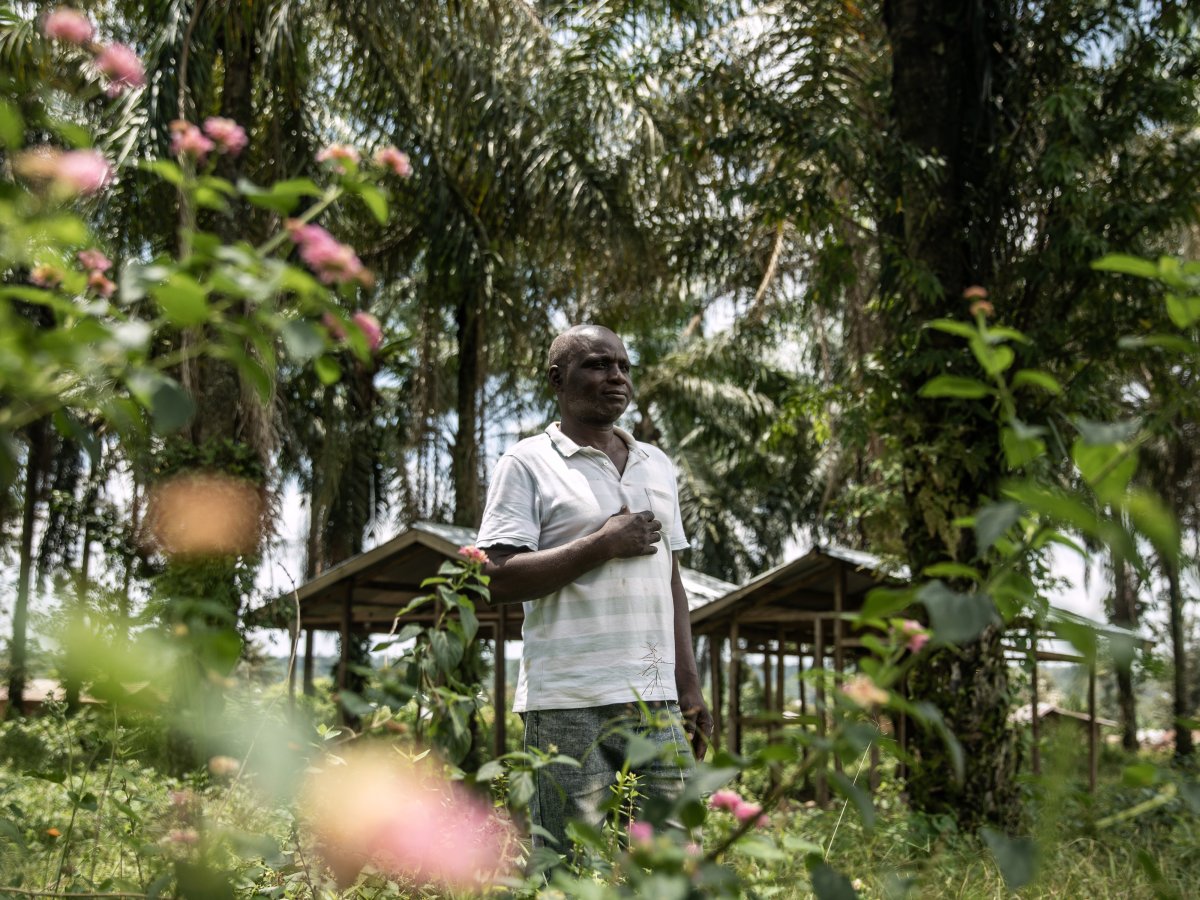
Nurse Muhiwa Maheshe Mululu, 56, runs a survivors' association, that covers the eastern Congolese towns of Biakato and Mangina, where the 2018 outbreak started.
As a survivor himself, he now conducts outreach work in his community, raising awareness of the dangers and encouraging people to seek medical attention if they have symptoms.
But he said he was initially skeptical about Ebola.
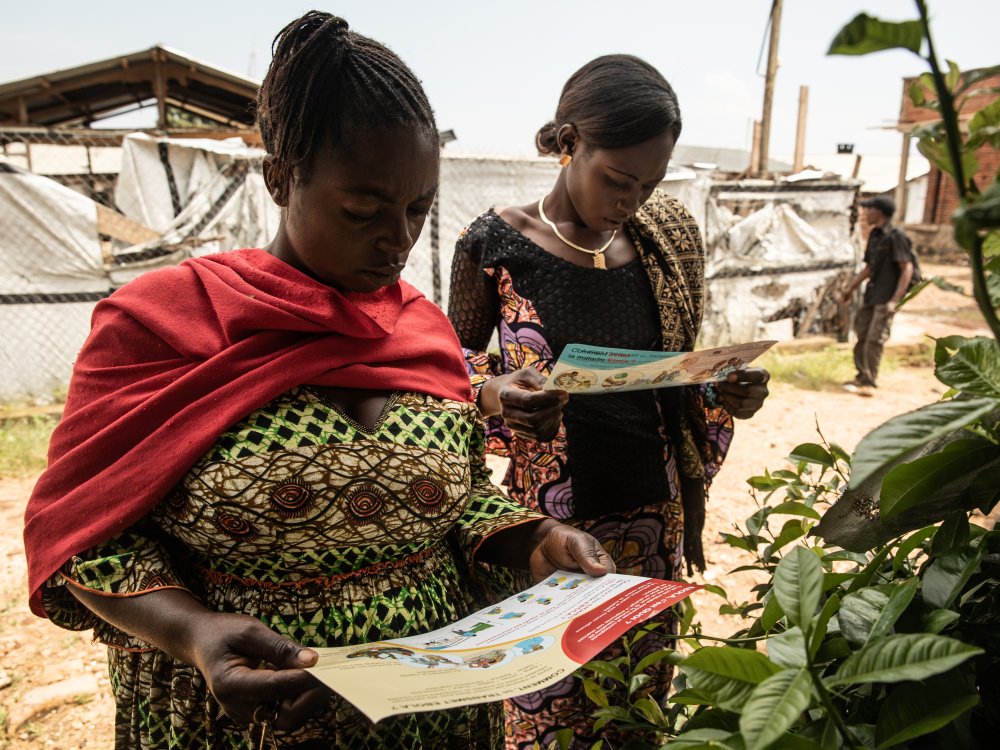
In the early days of the outbreak, Mululu hid people who had symptoms but who feared going into treatment centers because they saw them as places people went to die. Then he fell sick.
When he was taken to the treatment center, his friends and neighbors burned tires in protest, demanding his release.
"When I started to get better, I thanked one of the doctors in the centre. He smiled and told me that I should spread the message about what I had witnessed here to all those people who had burned tires," he recalled.
"He told me, 'People have protested. It shows that you are a leader in your neighbourhood. When you get out of the Ebola treatment centre, you have to go and testify about the realities of what you have experienced here, this may save lives'."
Now Mululu works with the government to spread information around Ebola, giving talks to community groups about his experience of recovering.
But it took time to make an impact.
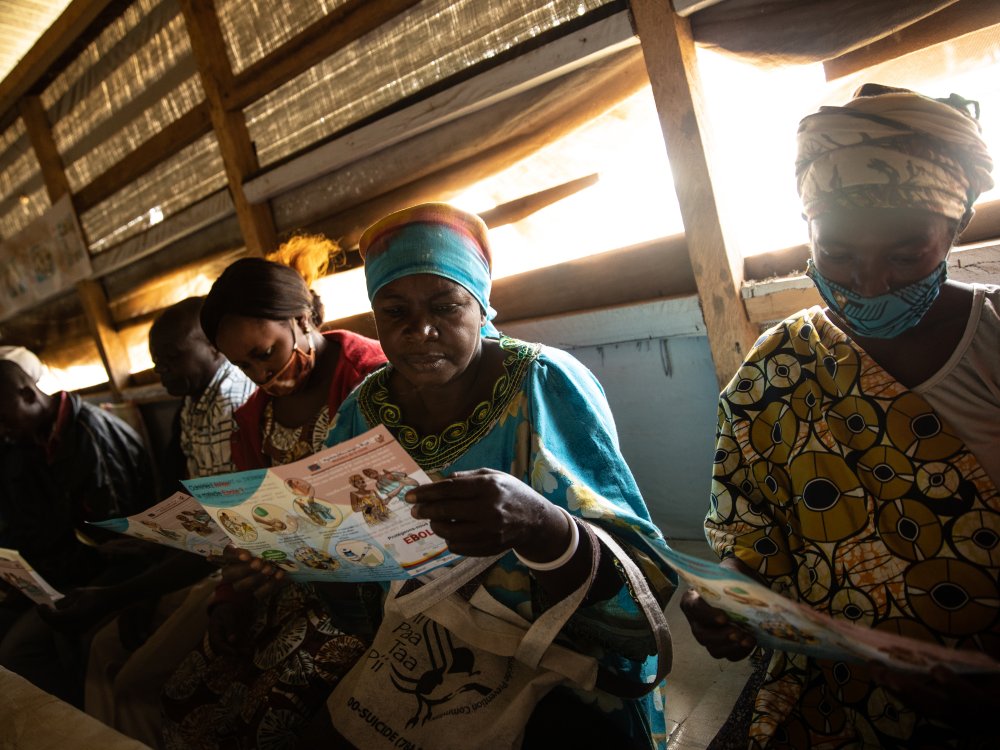
People were skeptical at first, accusing him of going over to the other side - that of the emergency responders.
"When I saw that speaking to people collectively wasn't working, I targeted the main resisters, seeing them one-on-one at their homes or places of work.
"I managed to convince some of them and the result was less violence against the emergency teams."
Fighting mistrust is key to protecting communities from Ebola
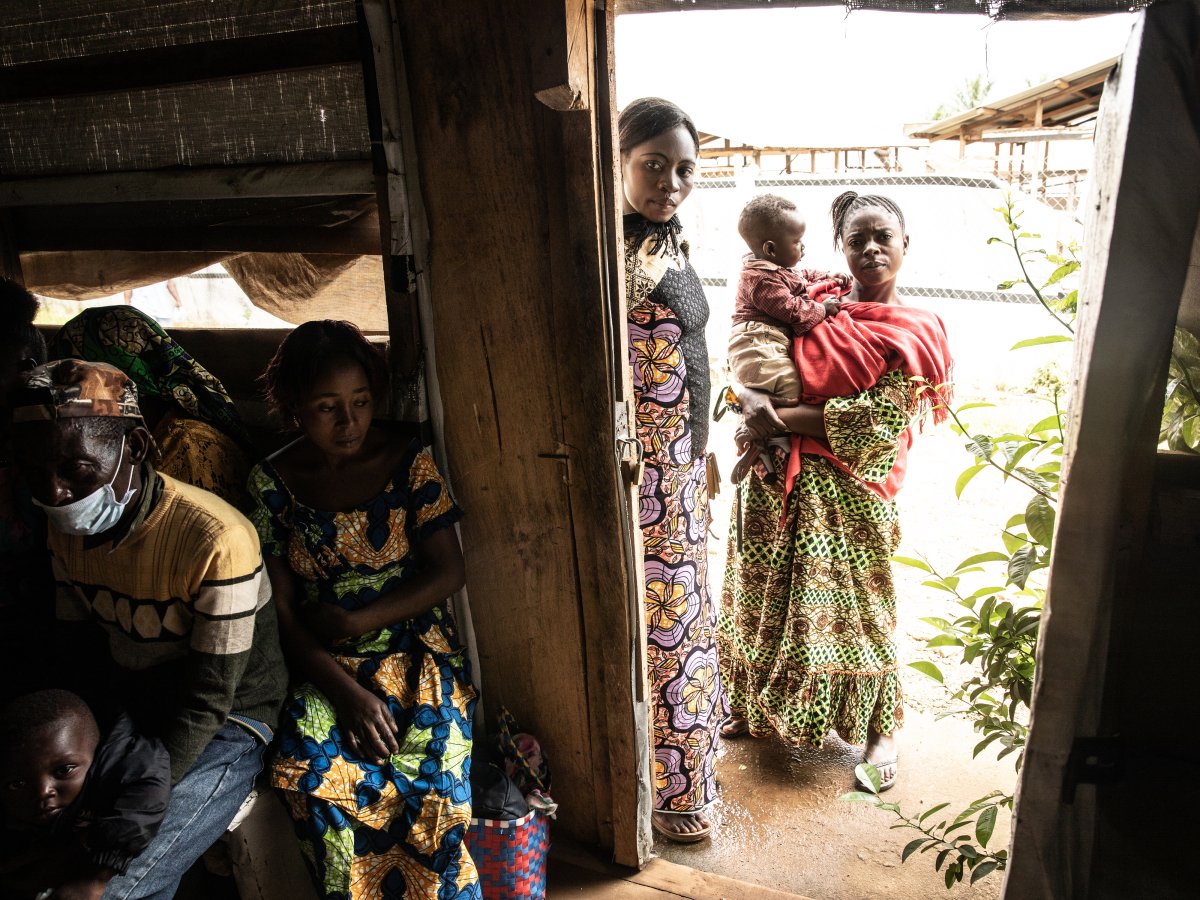
Clusters of Ebola cases have occurred in eastern Congo since the last outbreak was declared over, most recently in October.
Suspicion and fear of outsiders have made monitoring for such cases more challenging.
During the last major outbreak, clinics and vehicles operated by foreign aid groups were attacked and many people who fell ill spurned dedicated treatment centers, turning instead to traditional healers like Roger Mumbere Katsuva, 42.
When Ebola broke out in his community in Butembo in 2018, Katsuva thought it was witchcraft.
He treated patients without protection and prepared bodies for burial - a known means of transmission. When he fell ill, he hid from the authorities and tried to cure himself with ginger powder mixed with eucalyptus and other plants.
His experience changed his life - and his mind.
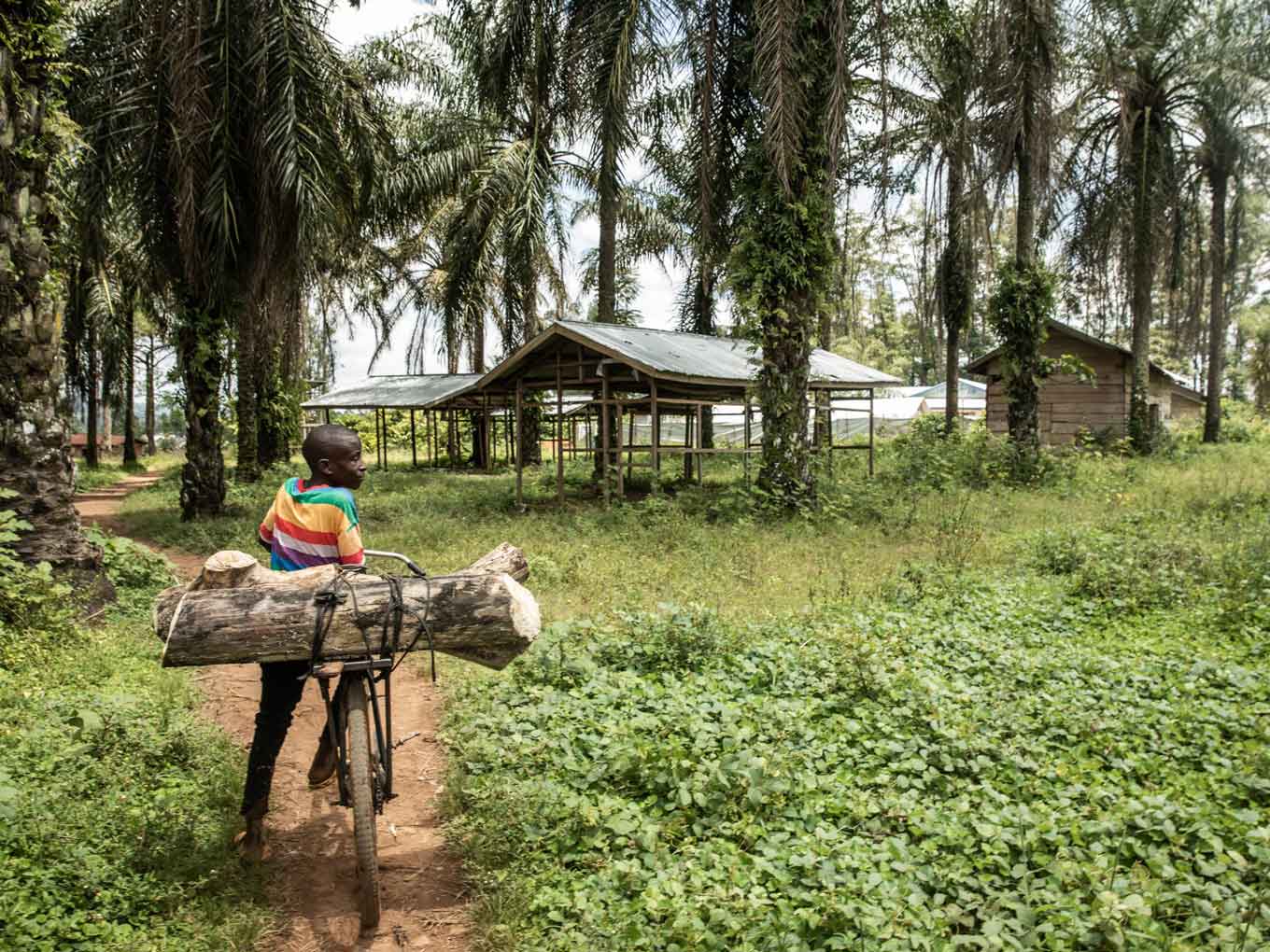
Eventually, Katsuva overcame his fear of the Ebola treatment centre and was cured.
Today, he works with health authorities, referring potential patients to them rather than trying to treat them himself.
"Many of my patients lost their lives, and I nearly did too," he said. "Ebola has shown the limits of traditional practitioners, and that's something I say often to others in my field."
But his change of heart has come at a cost. It angered some people in his community so much that he received death threats and was forced into hiding.
Many Ebola survivors have been ostracized by their families or communities, showing why it's important to combat stigma
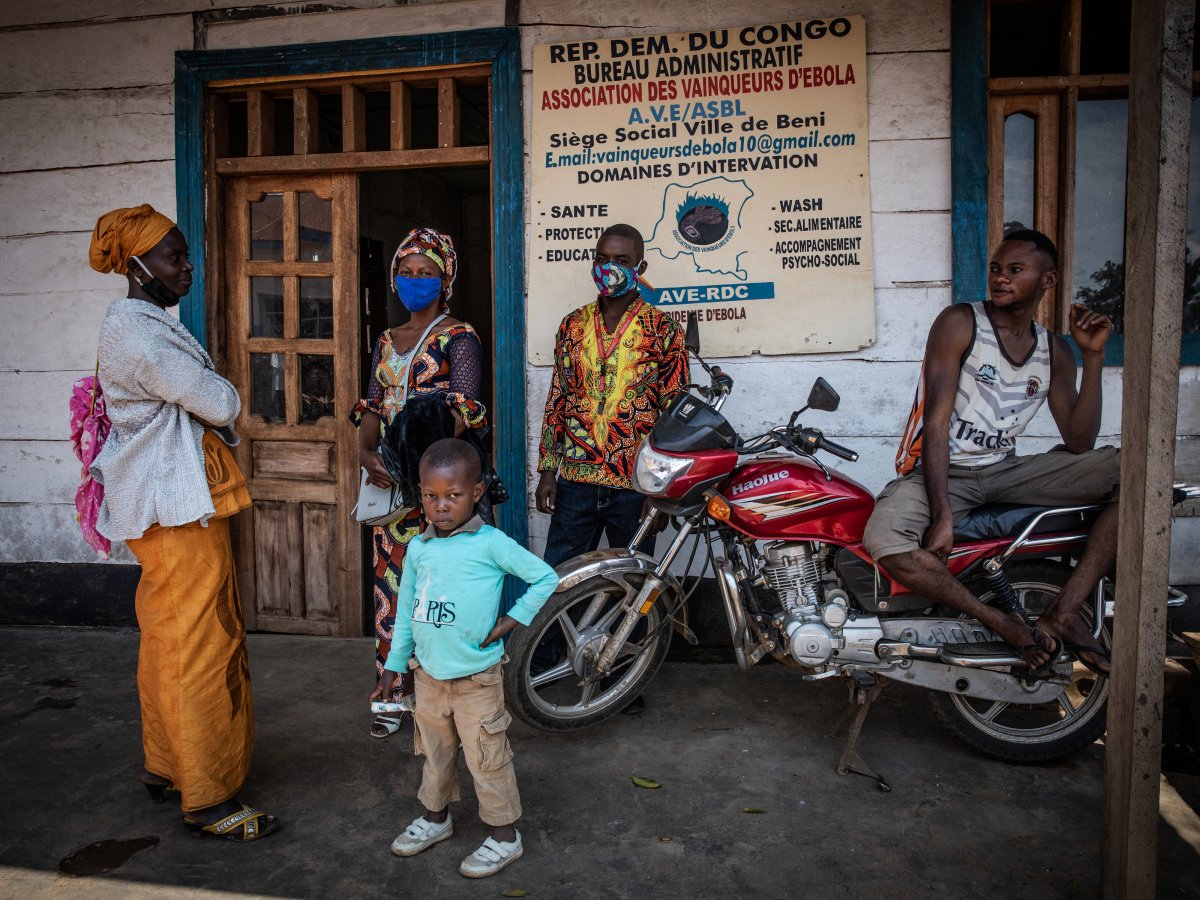
Many of the survivors said they had faced isolation and been ostracized by their families and communities.
As a result, they have mobilized to support each other and groups like the one run by Mulindwa, the Butembo nurse, have sprung up in the towns and cities worst-hit by successive outbreaks of Ebola.
Mulindwa had to move house after her home was attacked and her children bullied because she had fallen sick.
"Psychologically, it greatly affected me ... without my family I would be really lonely," she said.
Merveille Agasa, 25, also had to move away from his home after he finally recovered.
When he was discharged from the treatment centre, his mother made him spend the night in an outbuilding.
"My mother (told me) I was no longer her son, that I was just coming from the dead. It hurt me a lot," said Agasa, who now lives in a basic wooden house by a river in Beni.
At one point, he grew so desperate he thought of joining the Congolese army or one of the armed groups that operate in the area, hoping for an early death.
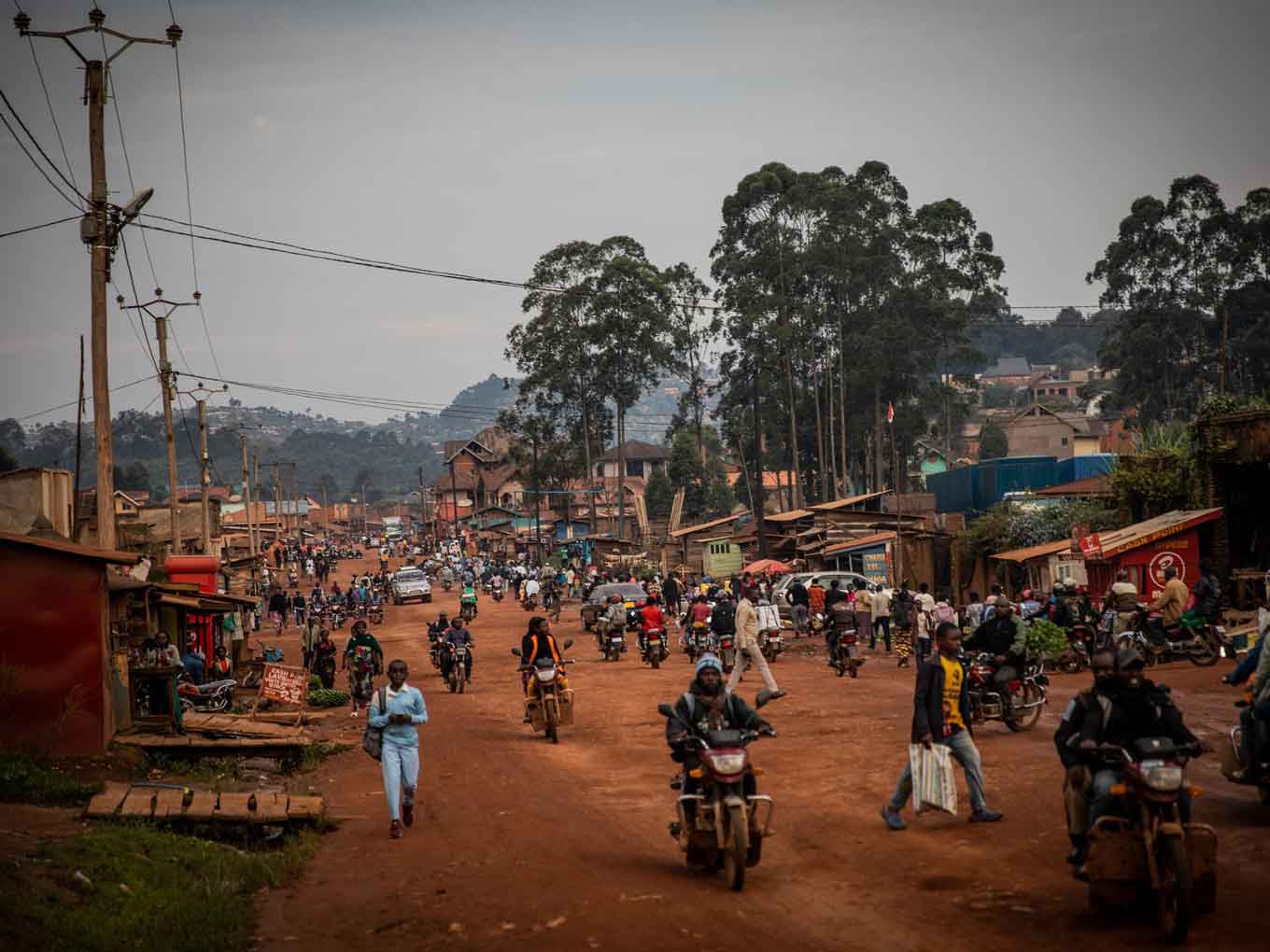
But after he recovered he got work taking care of other survivors - something that brought him comfort.
"It was not an easy job," he said, recalling how he had feared being reinfected. "Despite the fear, I did this work with love and, above all, determination to save lives."
When new Ebola cases were reported in October, Agasa and other survivors went door-to-door to tell people about the disease, collecting data about deaths and checking for possible sufferers who needed hospitalization.
Diligent aftercare can keep communities Ebola-free
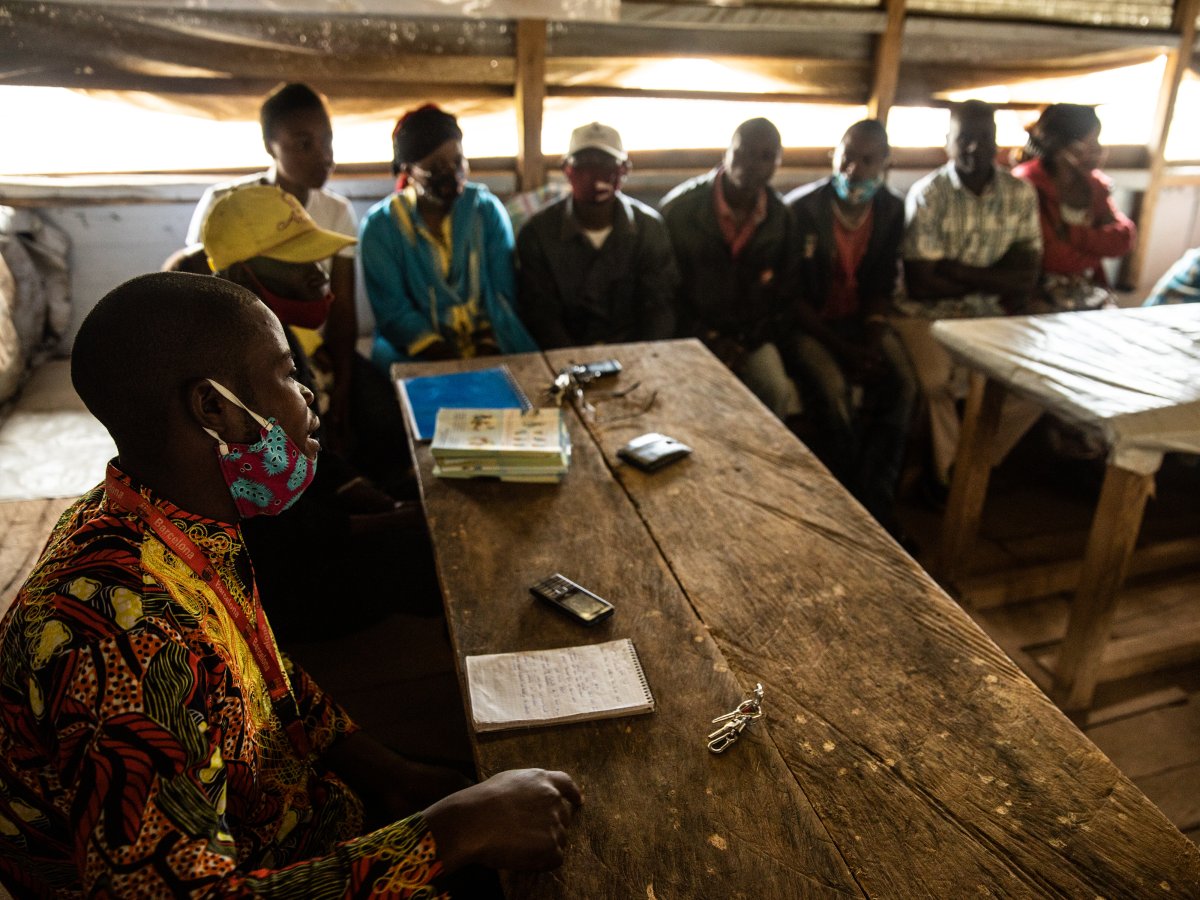
Flare-ups after a major Ebola outbreak can be caused by latent infections that linger in the semen or breast milk of survivors, said Yam from the WHO.
One study based on an outbreak in Guinea and published in science journal Nature this year showed survivors could transmit the disease nearly five years after the original infection.
Yet they also have a degree of immunity, according to the U.S. Centers for Disease Control and Prevention (CDC).
Mbong Eta Ngole, deputy country director for programs at International Medical Corps, a humanitarian aid organization, said that had allowed survivors to be on the frontlines of both the 2018-20 outbreak and a smaller one in February.
Survivors cared for the sick, delivered blood samples and educated the community on Ebola, sometimes hosting radio or television programs, and took care of orphaned children whose parents had died from the disease.
"(Working with survivors) is a way to say yes, there is a risk, but this is an asset in your community," Ngole said.
"We're trying to change the narrative (and show) them that, in a community where you have survivors, it's an extra resource."
Congo's government set up a program during the 2018-20 outbreak to provide aftercare for survivors, including psychological support and help with community reintegration.
But they could only access that help for 18 months and more than 1,000 of the survivors no longer receive any assistance.
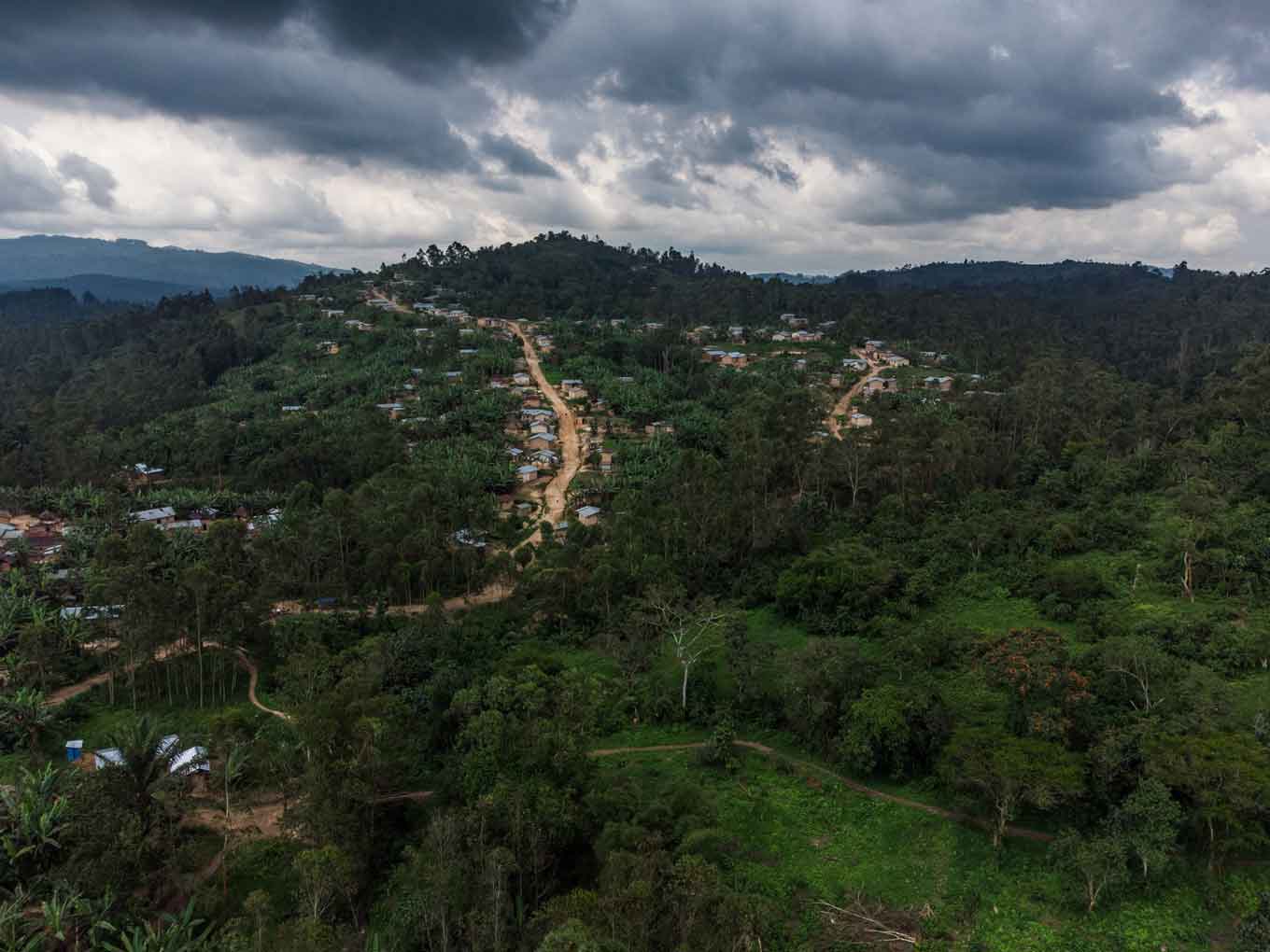
Mumbere Muyisa Scoda, regional coordinator of the initiative, said health authorities were facing a "very serious problem" keeping tabs on survivors after they were discharged and was looking to reactivate the system.
Researchers point to a need for Ebola survivors to be more closely monitored to prevent reactivation and transmission of the virus and future outbreaks.
Given the limitations of the local authorities in a region beset by violence, instability and crushing poverty, the WHO's Yam said survivors' associations had increasingly stepped up.
He praised their work in persuading people to cooperate with decontamination, monitoring and vaccination programs.
But the survivors' groups cannot do everything.
Protecting people can positively impacts health, communities, and economies
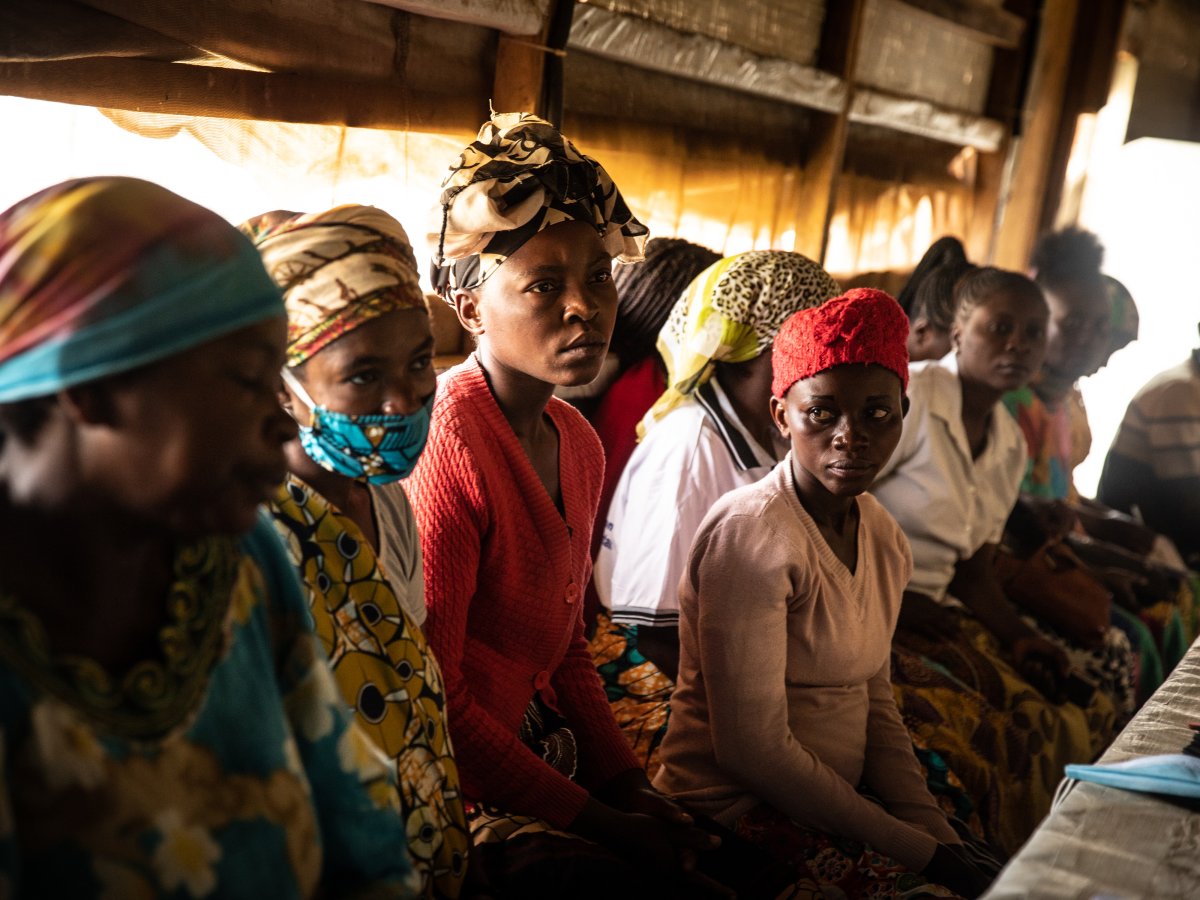
Mululu said he hoped the Congolese government and the WHO would bring back free healthcare for Ebola survivors, many of whom suffer lasting physical and psychological effects.
"Ebola has made us weak, our members fall sick every day," he said. "Most of the survivors are unable to resume farming, even though it is the main source of income here, and that makes us vulnerable."
Complications can include headaches, muscle and joint pain, loss of vision and memory loss.
Among those who attended the recent meeting in Beni was Kavugho Kitambala, who was determined to attend even though she now needs a stick to walk.
After she recovered from Ebola, she trained as a seamstress. But she tires easily and is in constant pain, making it difficult to work.
"Because of my fragile health I cannot sew my clients' clothes on time, which often results in arguments and they do not come back to me," said Kitambala, who now has to rely on her four school-age children to work.
"They decided to stop studying when they saw I could no longer pay the school fees. My eldest daughter, who is 17, makes doughnuts and her younger brothers sell them in the market."
Facing opposition from within their own communities, many survivors have found comfort in solidarity with each other.
The groups raise funds to help train struggling survivors in new occupations, from hairdressing to tailoring, and provide help with weddings, funerals, births and sickness.
On the day of a recent meeting in Beni, the community had been roiled by reports of fresh cases of Ebola, ensuring a higher than usual turn-out.
As participants gathered outside the meeting room, health workers wearing biohazard suits, goggles and gloves filed past. The body of the latest victim was being moved to a nearby cremation spot.
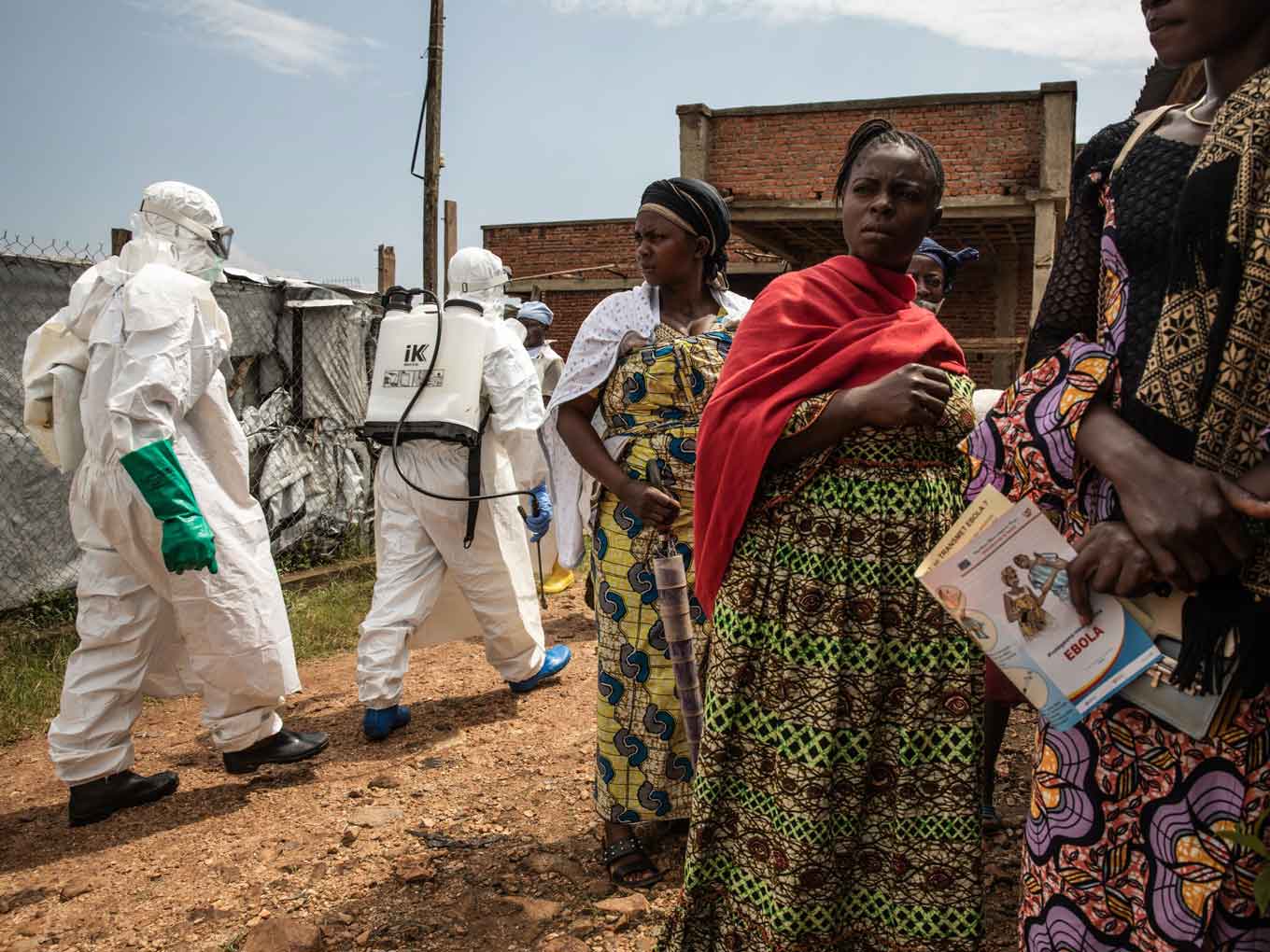
Fearing they would be treated with renewed suspicion, survivors called for the government to send a doctor to explain to the community why the disease had returned.
"They don't help us when they declare an epidemic and they don't want to explain to the community why it has come back," one young woman told the meeting, to applause from others.
"Everyone is pointing the finger at us and saying it's us."
This article was originally published by The Thomson Reuters Foundation —and was republished by Good Good Good with permission.
It is one in a series supported by UNICEF in the Democratic Republic of Congo.
Reporting: Kahindo Sifa Bahati
Writing: Emeline Wuilbercq
Text editing: Claire Cozens
Photography: Hugh Kinsella Cunningham
Producer: Amber Milne
We all share a similar story, but the difference in the details makes us believe we’re not the same.
In 2012 my eyes were opened to a collective story unfolding in my city. As the pastor of an amazing church in the great city of Baltimore, I was asked to convene a meeting with local faith leaders to better connect with some of our local schools.
At that meeting, our host, the Maryland Campaign for Achievement Now (MarylandCAN), shared data that stunned me.
Examining the National Assessment of Educational Progress (NAEP) scores that broke down the demographics of our city schools, I learned that out of approximately eighty-six thousand students, 46 percent were African American males. Of that group, only 9 percent were proficient in reading.
Nine percent.
That meant 91 percent of Black males were not reading at their proper grade level. At first, I couldn’t believe it. It was inconceivable to me.
The report did not focus solely on deficiencies; it also focused on hope and community. And the data informed us of schools that were defying the odds. The report called these Opportunity Schools because they afforded students from both low-income households and higher-income households the opportunity to succeed.
“Seven public elementary school programs and one public middle school program . . . repeatedly [led] children from low-income families to outperform overall state proficiency rates.”
I left the meeting shocked and a little jaded. I was frustrated about how the opportunity gap for kids in certain locations is so massive, and I wondered how we were trying — if at all — to close that gap.
But what was clear was that we can’t close the gap in achievement without closing the gap in opportunity. If kids don’t have opportunity, what difference does achievement make?
That was the day I altered course and began advocating for change in education. I wish it was the same day that the change countless children and families were hoping for became a reality, but systemic modification takes time. It also takes policy transformation.
While serving on the Maryland State Board of Education, I made another course correction toward reimagining education. At a teacher appreciation dinner, I was seated at the same table as the chief executive officer of Baltimore City Public Schools. So during dinner I leaned over to ask her a question burning in my mind.
“What would it look like,” I asked, “if somebody intentionally took on some of your lowest-performing schools with the intention of turning them around? What if they created a network among those schools? What would that look like in partnership with the district — would you even be interested in something like that?”
Without a blink, she simply asked, “When do you want to get started?”
“I’ll get started right away,” I replied.
And with that invitation, a journey began. I began to visit local schools. I wanted to know how they worked — and how we could replicate successes across our city without replicating what wasn’t working. I then began to tour schools that were doing well at giving kids from low-income households an opportunity to succeed.
Not just tours in Baltimore, by the way, but tours all over the United States. I went just about everywhere to see what was working and how other districts were addressing the challenges we faced. As I saw the odds against the project, it made me only more determined. It’s gonna have to work, I decided. We have to figure it out.
You see, I knew that this was not just an education issue. For many kids, it was a survival issue. Schools are never just schools. Statistics never tell the full story, but seeing the raw data on those educational reports was not just a rallying cry for me to act. It was a reminder of how very different my life nearly was.
I realized I was staring into my own story — the story of a young soul turned around, but just barely, because of a second chance at education. I had almost been just another statistic. My feverish work in trying to solve a problem that was putting young men and women at chaotic intersections was a result of once being at one myself.
I knew I was part of another story, another group of young men that seemed predestined to have a location set for them: on the street corners or behind prison bars. I had accepted that world and the familiar narrative it often brings.
But one day in 1993, as I was speeding south toward Richmond and closing in on that chaotic intersection between I-95 and I-64, I received a phone call from my mother that changed my story. She asked me to come back home, and even though I knew this was putting me right in harm’s way, I knew it was the right thing to do.
At that intersection I chose to make the right turn.
My book, Wrong Lanes Have Right Turns: A Pardoned Man’s Escape from the School-to-Prison Pipeline and What We Can Do to Dismantle It, is the story of how one life turned around. I believe we’re all at our own intersections of what is possible and what is purposeful.
But if we don’t make the right turns, we might not reach our destinations.
My story, in more than one way, is about school — the ways it doesn’t work for everyone and the ways I dream it can.
And it’s a testament that any of us can change the world of a child or a classroom for the better, right where we are.
Just look at the headlines. Or the statistics. Or the eyes of kids in classrooms all over America. Maybe we’re all headed in the wrong direction right now. But I have good news.
You see, I’m living proof that even wrong lanes have right turns.
Adapted from Wrong Lanes Have Right Turns: A Pardoned Man’s Escape from the School-to-Prison Pipeline and What We Can Do to Dismantle It © 2022 by Michael Phillips. Published by WaterBrook, an imprint of Random House, a division of Penguin Random House LLC, on January 25, 2022.
Michael Phillips is passionate about helping people live a better life. His determination to drive social change with lasting transformational benefits to society has led him to become an innovator and thought leader in social entrepreneurship and education. He is the founder of LifePrep and currently serves as the chief engagement and fulfillment officer for the T.D. Jakes Foundation.
As an author and inspirational speaker, Phillips has become a champion for children and families around the world. He is the chairman of 50CAN and serves as a board member of KuriosEd. His powerful story and message of collateral hope has transformed many lives and helped to revitalize communities. Michael Phillips and his wife, Dr. Anita Phillips, reside in Dallas, Texas.
When I tell people I work for a nonprofit organization that helps veterans, I usually get looks of sympathy. People respond that it’s a shame veterans who have done so much for our country are now homeless and wounded and suffer from PTSD.
I thank them for caring, and sometimes, if I can, I kindly tell them that I don’t want their sympathy.
While in the military, these veterans felt like heroes, but when they get out all too many people see them as broken even though an overwhelming portion of those leaving the military don’t struggle with homelessness or post-traumatic stress.
In fact, they are stronger, more resilient, and better leaders than when they went in.
You might also like: The best good news stories about veterans
How to greet a veteran — on Veterans Day and all year long
If we remind veterans that they are heroes who are fundamentally oriented to service and are better for what they went through in the military, we have a chance at healing the divide in our country.
I get it though. Sad stories attract viewers, readers, and funding dollars.
But it’s frustrating as a veteran to only hear stories about veteran homelessness and wounded warriors — the first things people think of when they think about veterans.
When we as a society look at veterans as help cases, we end up perpetuating the problem.
I don’t know anyone who signed up for the military so that they could get healthcare benefits, pity, or handouts.
We signed up to serve our country. Service is in our blood. And it doesn’t disappear when we leave the military.
Following World War II, almost half of the veterans went on to own or operate a business.
Fred Smith started FedEx, Phil Knight started Nike, and Bob McDonald led Procter & Gamble. These veterans were responsible for one of the greatest economic booms in history.
Fast forward, and the reality today is less than 6 percent of veterans are becoming entrepreneurs, even though 25 percent say they want to start a business.
We as a country need our veterans and military spouses to start businesses because when they do, they are more likely to be successful, hire other veterans, donate more money to their communities, and engage in civic activities including running for office.
We’re working on this at Bunker Labs and each of us have a role to play in encouraging this.

The day our society starts looking to veterans for leadership after they leave the military — not just during their service — will be the day that our nation starts to work together again.
The reality is veterans are uniquely qualified to lead our nation economically and politically.
Ask veterans to lead in business and politics, and not only will the economy get stronger and foreign policy be more thoughtful, but veterans will be better for it as well.
Instead of thanking a veteran for their service, start asking them what world-changing thing they’re doing now.
Remind them that our country needs their leadership now more than ever, and I guarantee we’ll start to see veteran homelessness, suicide, and drug use all decline.
Nate Carden attended the United States Air Force Academy and went on to receive a master’s degree from Sciences Po in Paris, France.
He served as a Captain in the Medical Service Corps at Langley Air Force Base and deployed to Afghanistan as a mentor of medical logistics to the Afghan National Army.
When Nate wrote this article, he was the national director of programs and partnerships for Bunker Labs, a national network of veteran entrepreneurs dedicated to helping new veteran entrepreneurs start their own businesses.
As of November 2023, more than 1,000 startups have completed a Bunker Labs program and have created more than 6,302 jobs and generated more than $1.79 billion in revenue.
Today, Nate is the founder of CEO Amplifier.
Five ways to support veterans in the United States
- Just as Nate Carden said, instead of simply thanking a veteran for their service, go a step further and genuinely ask a veteran what world-changing thing they’re doing right now.
- Read and share good news about veterans that go beyond the clichés. (Explore our collection of veteran good news)
- Go beyond the clichés on Veterans Day. Celebrate with these unique Veterans Day ideas.
- Donate to With Honor Action — a cross-partisan movement dedicated to promoting principled veteran leadership in elected public service for the purpose of a less polarized government working for and trusted by Americans.
- Support those who are working to serve their country after service. Buy from veteran small business owners. Campaign for veterans running for office. Vote for veterans whose platforms you align with. Donate to veterans doing good. Learn from veterans sharing their wisdom. Support veterans.
A version of this article was originally published in The Veterans Edition of the Goodnewspaper in 2019.
→ You can subscribe to become a Goodnewspaper subscriber today.
According to the Department of Defense, one in five veterans of the Iraq and Afghanistan wars are diagnosed with post-traumatic stress disorder.
The social and economic costs of PTSD are immense, and the Department of Veteran Affairs reported in a 2016 study that the veteran suicide rate in the United States is 20 suicides per day. Veterans now account for 20 percent of suicides in the United States.
Richard Casper is one of those soldiers who returned home reliving the helplessness, fear, and horror associated with the trauma he experienced.
Coming from a family history of military service and moved by the events of 9/11, he joined the Marine Corps as a senior in high school.
Within his first four months in Afghanistan, his Humvee was struck by improvised explosive devices. His friend was killed by a sniper during the ambush, and Casper suffered a traumatic brain injury.
Coming home, he struggled with depression and suicidal ideation, but he found the healing power of art and music.
His art has caught the attention of TIME Magazine, the iconic School of the Art Institute of Chicago, and numerous prominent country music artists who have been paying attention and supporting the work he does.
He’s even spent time with President George W. Bush to discuss the impact music and art have had on his recovery.
Richard co-founded an organization called CreatiVets to help other veterans who are suffering.
Before we get into this story, we want to say — if you're struggling with suicide, or you need support, please reach out and get support. Check out our mental health resources for hotlines to call or text today.
Goodnewspaper editor-in-chief Branden Harvey interviewed Casper for Good Good Good’s podcast, Sounds Good with Branden Harvey.
This interview has been edited for brevity and clarity. It was originally published in 2019. You can listen to the interview in full wherever you listen to podcasts or at soundsgoodpodcast.com/creativets.
Branden Harvey: Your story is the story of somebody who encounters something difficult and chooses not to turn to apathy or cynicism but ultimately to turn toward creating a solution so that other people don’t have to struggle in the same way that you struggled.
What was it like coming home from war?
Richard Casper: The moment we touched down, I was excited about living my life. I was super pumped. They asked whether I needed any medical attention, and I said no. They didn’t check me out in Iraq like they’re supposed to.
At that point I was ready to be done. I went back home. I didn’t know I had the brain injury yet, and a month after I was out I hit a deer on my Harley while riding in Maryland.
We rode bikes with no helmets, and I was going about 50 mph, and I’m rolling and thinking how I don’t want to die. But I had this speaker on the front of my bike, a plastic piece that you put on there, and I think actually that’s what saved my life.
I survived the crash and just lived my life for six months having fun before I decided it was time to pursue my next career.
I decided to go to college and study business. So I went to Bloomington, Illinois to go to a community college for two years to get my associate's before transferring to a state college.
I enrolled in college, but college requires your brain. And that’s when I found out about my injury the hard way. I failed my first class. I was having all these problems.
I decided to go to the VA hospital and see what’s wrong. I knew there was something wrong. They diagnosed me with a traumatic brain injury and PTSD.
They told me I couldn’t learn new technical skills and my short-term memory would suffer. And at the time I was
22 years old facing my new reality, that I would have all these problems for the rest of my life. I was sitting there thinking my faith in God is the only thing that really kept me above water.
I knew I would have to find a new route. I had clearance and experience, so all I needed was a degree to be an FBI or CIA agent. But I had all these new anxieties and depression. I couldn’t function. I was so bad.
My anxieties and everything crept on me so bad that I had to do one-on-one speeches with my speech teacher in college because I couldn’t get up in front of class in front of these the 18- and 19-year-old kids. I was getting sick every single morning.
I went from prom king and class clown in high school to Marine Corps, could do anything — speak in front of everybody, a leader — to at this community college unable to get in front of class.
I thought I really couldn’t do anything. What am I going to do? I was never an artist, and I was never a songwriter, never anything like that, but I was pretty good at drawing. I decided to take an art class. Then I decided to get a degree in fine arts.
B: What was community college like?
R: I had anxiety still and was very off. I tend to be open to everybody about everything, but at that time I wasn’t open about what I was going through. I didn’t know how to talk about it.
I needed to do something about Luke, who was my buddy who was shot and killed beside me. I visit his grave on his death anniversary every year in Houston, and I had this photo that my uncle took of me with my arm up on his headstone. I just love the photo.
I wanted to try to draw it. I positioned myself away from most other students and started on this mission.
I got to the point to where I had me colored in, I had his headstone colored in, and I had these roses colored in. The only thing left was the background which was all grass, so it would be green.
My teacher came up and asked if I had thought about doing the background a color that doesn’t make sense to the image but it makes sense to the way I felt inside. I took a shot with it and colored everything red in the background.
I wasn’t in the realm of doing art before so I didn’t know that you had to do critiques. You put your piece up on a wall, and other people talk about it. And so I was dreading that day, but I put my stuff up on the wall.
I pinned it up, and the students take turns giving their thoughts.
“You put red on there because you loved him.”
“You’ve got red on there because you watched him die, and you saw the blood.”
“You put red there because you’re angry that he died.”
I’m sitting here thinking, “How do they know all like this?”
These feelings made sense. It all made sense to me. I didn’t have to tell anybody how I felt. I didn’t have to verbally speak — that was my problem at the time.
My anxiety came from the anticipation of telling someone my story. It made me so anxious I would throw up. But here I had just told my story without speaking a word.
Is there something to this? I dove into this idea of conceptual art — how to hide things in these paintings, in these sculptures, and how to tell my story in a different way.
A representative from the School of the Art Institute of Chicago came down to the college. And I’m like, this school sounds cool, I’ve never heard of it.
I decided to apply. It turns out their alumnis are Georgia O’Keeffe and Walt Disney.
I brought up my portfolio of about seven pieces. They require 15 to 20. Almost all of mine were still life besides that one that I did of Luke. They’re looking at it, and they tell me I can draw well but they’re about concepts, big ideas, thinking outside the box.
And I knew I had to sell myself. I said I was limited by where I was — that I was in a community college learning from Drawing 1 and Drawing 2 instructors, that I had to do this still life stuff for classes.
But I told them art could save me. I told them I want you to know what it feels like to be blown up — not physically but mentally. I want you to know what that loss of innocence in war feels like. I have all these ideas. I just need a place to do that.
They gave me a shot that changed my life forever. So I went there and ended up getting my bachelor's from the School of the Art Institute of Chicago.
B: What was your time at the School of the Art Institute of Chicago like?
R: I used to think about war and anxiety and depression and Luke’s death constantly.
But when I created art, I could become engrossed for hours, and I wouldn’t think about war for like four hours. I didn’t think about anything.
When I went to that school I still had anxiety and depression, but when I graduated I felt almost back to my normal self. I learned there that I could use art to tell my story.
I had a job at this bar as a bouncer, where I was interacting with people. I felt so alive.
I still had some anxieties and depression, but I felt alive. At the time they had 22 suicides a day in the veteran community, and I was close to being one of those.
And I saw that nobody was trying art. There were small art therapies, but there wasn’t a big push for it.
B: And this was the beginning of your organization, CreatiVets?
R: I felt there was a problem I had just solved. I told my buddy I didn’t have a nonprofit in mind. I didn’t have anything in mind. I just said we need to capture whatever this moment is.
I was able to learn how to play some chords on a guitar and ended up going to Nashville to meet with a songwriter to get some help writing a song about Luke.
My buddy Jesse, who was also in Iraq and lost a leg and has burns all over his body, doesn’t like telling his story either and doesn’t like people looking at him either, and I asked him if he would come to Nashville and write with this number-one songwriter.
And he said yes. He loved music. I raised a few hundred bucks to get him there, and we shared a room in a hotel by the airport for $45 a night.
And when he sat down with the writer, they finished a song about his story in three hours.
When he went home, his family was reaching out to me. “I never knew he thought like this. I finally understand him.” He was finally opening up to his family just by showing them this song.
It changed his life. He said that three-hour writing session did more for him than the six years spent at the VA hospital.
I thought other veterans could come and get a crash course in songwriting or art if I could design a program well enough.
I met a woman from Chicago who sits on the board for nonprofits, and she said she could pull some people together.
She told me to do what I wanted and she would govern it. She really believed in it. So that’s how it started.
CreatiVets, the nonprofit that Linda and I co-founded, helped about eight veterans in our first year.
We paid for their flights, food, hotel, and we set them up with songwriters to tell their story. I would take them out, and we’d listen to music and tell war stories and they would get so comfortable with me that they could tell me anything. I would go into the writing session with them the next day.
I understood in that moment that what I needed when I was almost suicidal was a battle buddy like this.
My buddy Jeremy was there for me when I would just drive out to a cornfield crying, not knowing what was going on with me.
When I called Jeremy because I didn’t know what else to do, he’d talk me off the ledge.
I knew that’s what other veterans needed. I don’t want any veteran to not have this option.
At that point I wanted to start incorporating art. I went back to the School of Art Institute of Chicago and told them they need to enroll veterans who have no art background.
I met with the vice provost and told him my dream and said I wanted to create a program to allow veterans to be in the school for just a summer semester, and I would be there to help facilitate.
But he told me I would be the teacher. He gave me freedom to run with it.
So now CreatiVets offers these three-week fully accredited programs. We pay for their flights, tuition, housing, and food. They get to live in the dorms and go to school like normal students, but they’re with other combat vets who’ve been through what they’ve been through, taught by a veteran.
Four of the veterans ended up enrolling in the school, and one is now in the grad program and took over the class I taught.
Now we have programs at Virginia Commonwealth University and the University of Southern California, and we’re going to advance into film and other arts aside from drawing and songwriting.
Art and music and storytelling legitimately save lives. And in the veteran community we just don’t know that because we’re so used to not telling our story and carrying our own pack and not needing help from anybody else that we never get retrained how to let that go and be vulnerable.
B: How closely have the experiences of other veterans mirrored your own experience? I imagine it’s harder for some people to really get into this and easier for others. What’s that like?
R: There are no rules. I’m not a clinical therapist. We’re not doing art therapy or music therapy, but I understand that art and music can be therapy to somebody.
I do one-on-ones with every veteran where I say, “Here’s what happened to me. What happened to you?”
I’m not trying to make them artists. I’m trying to teach them how to transition from war brain to artist brain.
B: You’ve been working with President George W. Bush. Can you tell me about that?
R: He started a program called the Veteran Leadership Program. He selected 33 leaders — doesn’t matter if they’re civilians or veterans as long as they’re doing something in the veterans space.
You could apply for this program, and I got in. It’s like a cohort with the president’s resources and all his people.
We have the CEO of Easterseals, people from Prudential, from CBS, from Wounded Warrior Project. It’s just been a great experience. It’s one of the coolest things I’ve ever been a part of.
B: And President Bush has been doing all this artwork, too. He started painting post-presidency. What do you see that to mean?
R: I thought from the beginning that he was processing things. A conceptual art piece, like a subconscious thing. I knew he was painting, and I thought that was cool.
I went from protecting George Bush at Camp David to going to war, being injured, learning how to use art to heal, and now helping other veterans.
And now he’s using art to paint veterans. Some of the veterans I’ve helped actually were painted by him.
Time Magazine made a documentary about me, and they reached out to President Bush to see if he would meet with me.
My wife and I got to sit for 20 minutes and talk to George W. Bush about art. I told him I love what he’s doing.
B: You’ve been through a lot of hell. But you’ve also done so much good. Would you turn back the clock and do things differently if you could?
R: There’s a famous quote by an admiral that says “War makes a bad man worse. And a good man great.”
If I was never injured I would still be a good person, but I wouldn’t be doing the stuff I’m doing now, and I would do it again 100 percent every time.