Holiday shopping doesn’t always have to cost an arm and a leg.
The best gifts that we can give to our loved ones come from a genuine, meaningful place — and we can do that while supporting brands that uphold our values.
If you’re shopping on a budget, here are some good items that you can gift this holiday season all under the price of $35.
Each product listed was independently curated by the Good Good Good team. Some of the links we include may be affiliate links, which means that Good Good Good may earn a commission at no cost to you. Thanks for your support!
9 Affordable Gifts That Also Make a Difference:
Plantable Coloring Pencils with Seeds
$16.49 for an 8-pack

These plantable coloring pencils are eco-friendly pencils with seeds to add to your eco-friendly stationery collection. These pencils can be planted into soil and you can watch them grow.
When you order this box, you’ll receive eight eco-friendly and biodegradable pencils along with plant seed capsules for herbs, flowers, or vegetables.
Shop: Amazon
Tony’s Chocolonely Chocolate Bar
$5.87 per bar

Bars of ethically produced chocolate are a perfect gift. Whether your loved one starts snacking right after they open their gift, or save it for a special occasion — you can rest assured that no crumb will go to waste.
Plus, Tony’s Chocolonely was named the most sustainable brand in the Netherlands (four times!). The brand has a mission to bring awareness to modern slavery, producing only slave-free chocolate and pushing the entire chocolate industry to follow its example.
Shop: Amazon | Tony’s Chocolonely
Glass Straw Set
$19.99
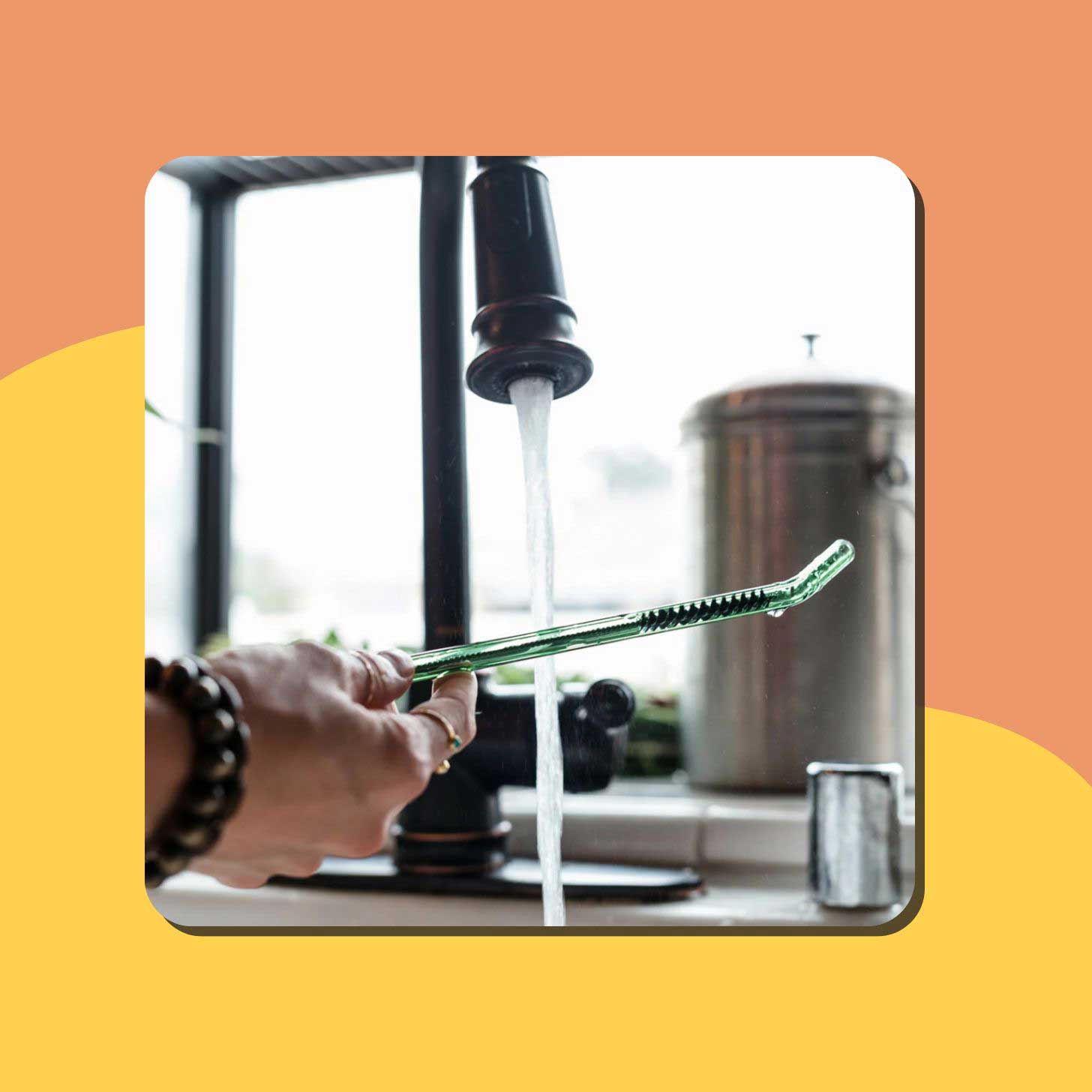
Simply Straws makes eco-friendly and BPA-free glass straws that can replace your plastic ones.
This seamless design can help you decrease your carbon footprint just a bit more.
Shop: Earth Hero
Goodnewspaper Subscription
Starts at $5/month

We’ll admit our bias on this one: Every month Good Good Good creates a beautiful print newspaper filled with good news.
You can join thousands of subscribers who receive positivity on their doorstep — with themed issues like The Animals Edition, The Environment Edition, and The National Parks Edition.
The Goodnewspaper is printed on recycled paper using soy-based inks and is 100% certified carbon neutral.
→ Subscribe to the Goodnewspaper
→ Gift the Goodnewspaper
We Are the Change: Words of Inspiration from Civil Rights Leaders
$12.99 - $17.99
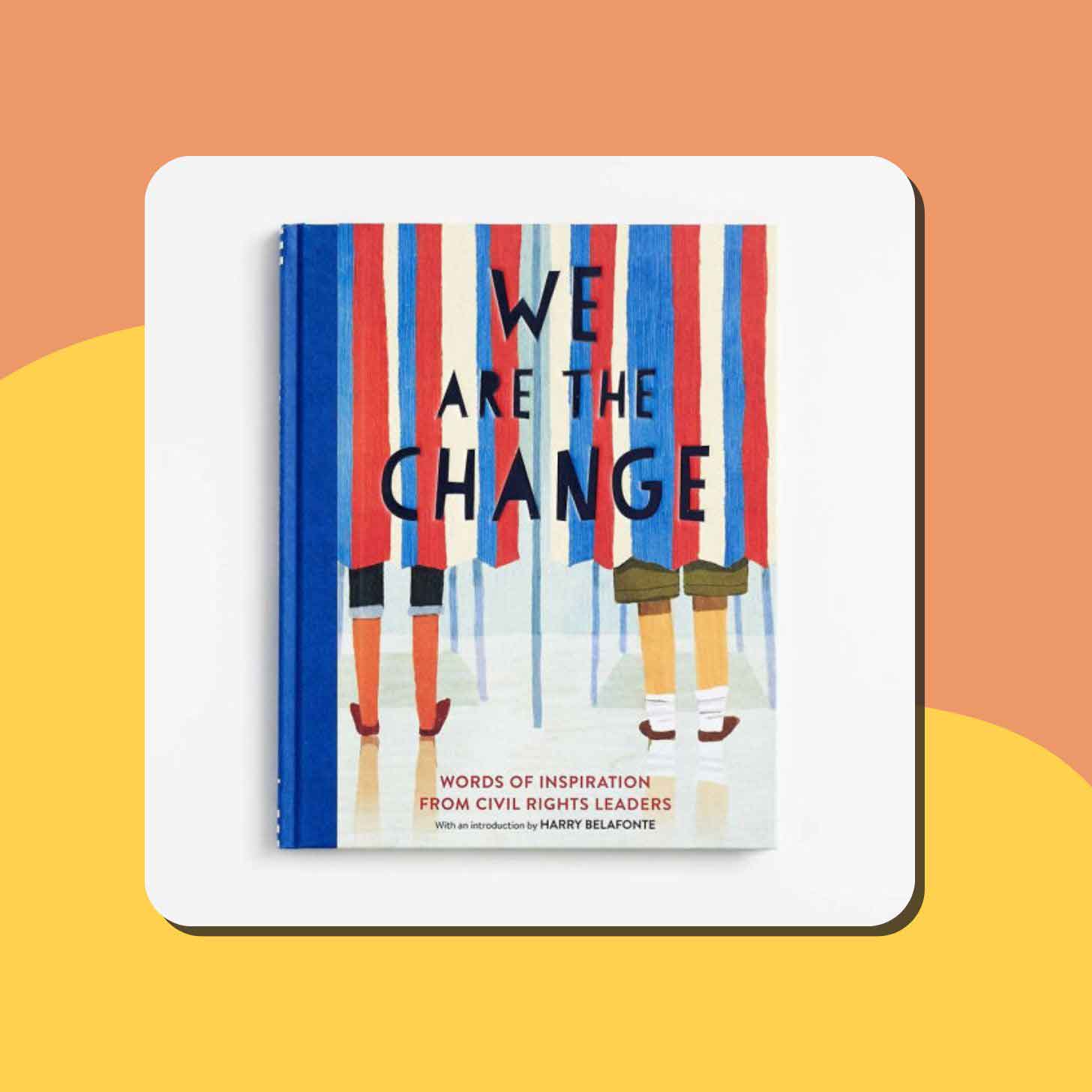
We Are the Change: Words of Inspiration from Civil Rights Leaders is technically a book for children, but is perfect for adults who want to feel inspired.
This award-winning book illustrates the faces and quotes of civil rights leaders across the U.S. If you’re looking to feel inspired, or to encourage your kids to do good, this book is perfect.
Trashie Take Back Bag
$20

The Take Back Bag can be filled with old clothes your gift recipient no longer wears, and Trashie will do the work of recycling their pre-loved items and turning them into something useful.
Plus, purchasing a bag will give you credits to use toward a new sustainable clothing item or other reward. Plus, it’s foldable and easy to fit in anyone’s stocking!
Shop: Trashie
Kishu's Charcoal Water Filter Stick
$12.99
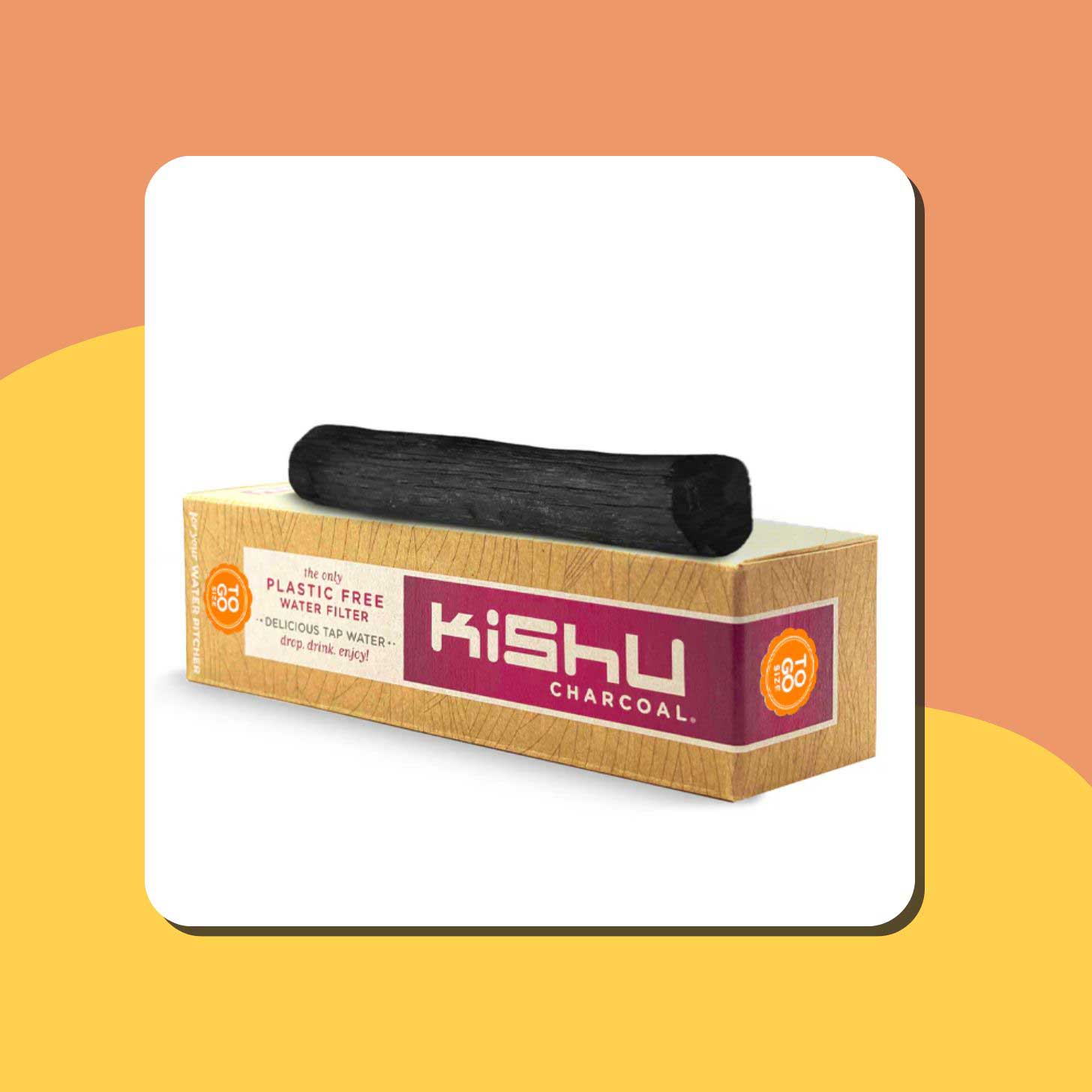
This charcoal water filter stick can turn any water bottle into a vessel for purification. Instead of purchasing expensive plastic purifiers, this charcoal filter can save you money and give you the same purified result.
The filter is also BPA and plastic-free, meaning it’s sustainable, inexpensive, and effective.
Shop: EarthHero
Paper Culture’s DIY Cards
Starts at $0.74/ each

Paper Culture’s DIY Cards are not only extremely inexpensive, but sustainable, too. These customizable greeting cards are made from 100% recycled paper. With every order, Paper Culture will plant a tree. If you’re sending letters out this holiday season, look no further.
Shop: Paper Culture
Public Goods Bamboo Toothbrush
$9.95

Public Goods’ bamboo toothbrush uses an alternative material to the plastic toothbrushes we’re so used to. These toothbrushes are made from bamboo, making them 100% biodegradable and designed to be environmentally friendly.
If you’re interested in making your personal care more sustainable — or giving an easy little gift (everyone needs a new toothbrush every 3 months!) — here’s a low-price toothbrush that can help you out.
Shop: Public Goods
Check out more of our gift guides → Good Good Good Gift Guides
Petroleum fuels a lot of our lives — it helps our cars run, keeps our homes warm, and builds the roads we walk on. However, petroleum also causes great harm to our planet: its compounds can be cancerous or otherwise toxic, negatively impacting our planet and human health.
Additionally, before petroleum materializes and helps us do any of the essential things we do, it starts as crude oil. And that’s where crude oil pipelines are introduced, specifically the Line 3 pipeline: an oil pipe that stretches from Canada to the United States
Line 3 is a 330-mile pipeline. It starts in Alberta, Canada and runs through states like North Dakota, Minnesota, and ends in Wisconsin.
But pipelines like Line 3 are vessels for pollution and poisoning. The intention behind pipelines is to create an easier mode of transportation for liquids and gases, but they ultimately cause more harm than good. They kill the wildlife that ingests the oil, poison the ground that it covers, and pollute the local water systems it has access to.
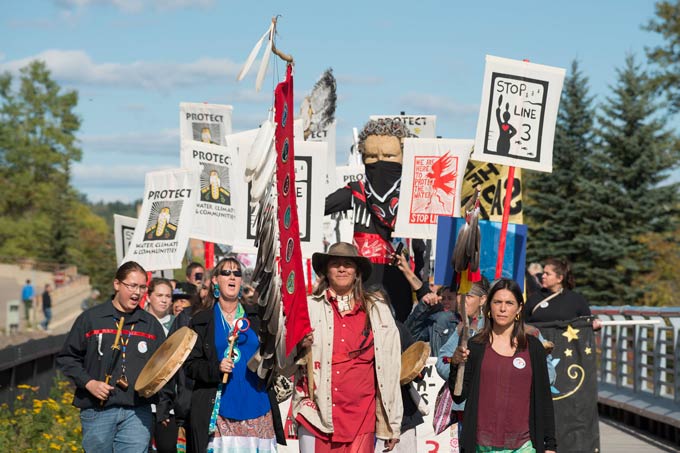
That’s why people are fighting against the Line 3 pipeline — the most prominent of which are Indigenous activists and water protectors.
Indigenous activists have fought time and time again for the sacred nature of both land and water: we’ve seen them fight against the implementation of The Dakota Access Pipeline, the Trans Mountain pipeline, and at the forefront of the anti-Line 3 movement. We have Indigenous activists to thank for saving us from a billion tons of carbon each year.
The fight against the Line 3 pipeline is yet another example of this preservation of land and water. In an interview with NPR, Tara Houska, a tribal attorney and Indigenous activist at the frontlines of the Line 3 protests, said, “When I see a project like this that is billing itself as a replacement to an old leaking line, my initial question is, ‘why are you leaving your old mess in the ground and building a new pipeline through a new ecosystem in new river sheds in new waters so it can leak somewhere else?’”
It’s one of many arguments which Indigenous environmentalists have against the Line 3 pipeline. The pipeline would end up being installed in areas where Indigenous reservations are, affecting the farmland which these communities have worked tirelessly to preserve.
The ‘Stop Line 3’ campaign is made up of Indigenous activists and communities who are trying to preserve these sacred facets of nature.
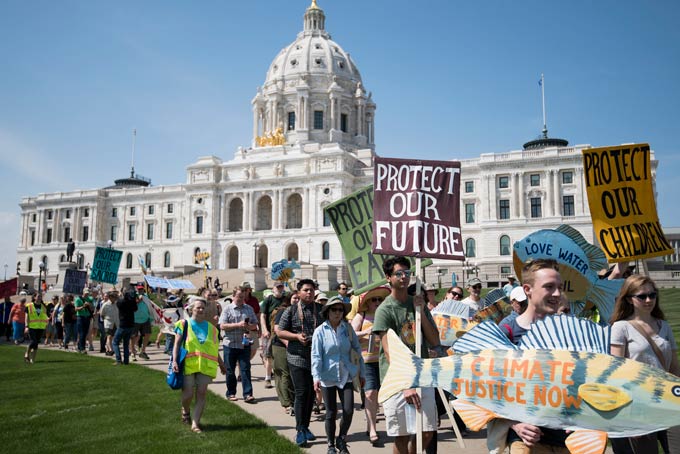
According to Vox, “Line 3 will deliver oil from Alberta’s tar sands — a thick, dense substance called bitumen — which is more expensive, more difficult, and even worse for the environment to extract than other forms of oil.”
That means not only is this crude oil pipeline inherently harmful, it’s made with the separate material of sand tar that is even more dangerous for the land and water it covers.
Additionally, sand tar is the hardest material to clean up, which makes its impact almost entirely permanent.
A recent report said that the environmental impact of the Line 3 pipeline would be the equivalent of 50 coal-powered plants and 38 million additional gasoline-powered vehicles on our roads.
According to Stop Line 3’s website, “Line 3 would violate the treaty rights of Anishinaabe peoples and nations in its path — wild rice is a centerpiece of Anishinaabe culture, it grows in numerous watersheds Line 3 seeks to cross.”
The invasion and ultimate destruction of Indigenous land is what North America was built on. Since the beginning of time, lack of care for Indigenous people and land has been perpetuated over and over.
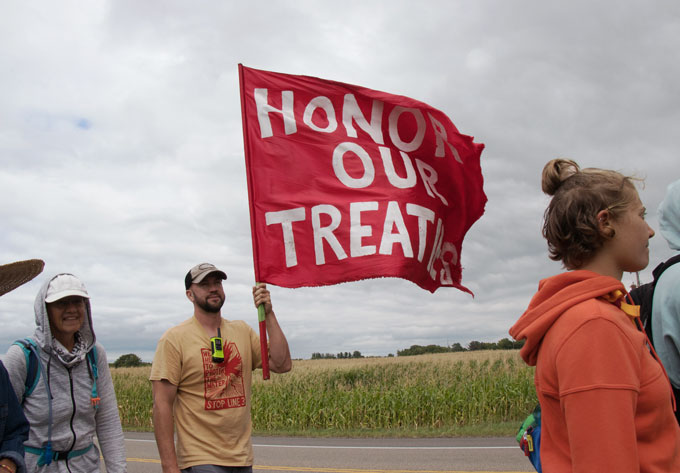
Listening to and amplifying the voices of Indigenous activists is important because we are settlers on Indigenous land. That means doing the work of reading, listening, and amplifying the voices of Indigenous activists who are fighting to preserve their land.
The Stop Line 3 website tells its audience that “wherever you are and whatever your skillset, there is a place for you in the movement to stop Line 3.”
The Stop Line 3 campaign is hosting events in homes, community centers, churches, schools, and online.
You can get involved with events or take action in other helpful ways like signing petitions, writing to representatives, and organizing workshops for communities in your area.
With your help, Indigenous communities can preserve the land that is so rightfully theirs.
Coral Catch Gili Air's all-women coral restoration team. Photo courtesy of Coral Catch, used with permission.
There has been no shortage of alarming articles and videos in recent years about the imminent and inevitable destruction of the world's coral reefs — one of the key components to a healthy ocean and marine ecosystem. Heartbreaking images of bleached, broken corals have been the bellwether of the climate crisis for many coastal communities.
These images paired with messages of hopelessness have made many apathetic and fatalist about the plight of our coral reefs. Luckily, some grassroots environmental groups have looked past the despair to find solutions.
In Indonesia, the world's largest archipelago, one such group, Coral Catch Gili Air, is working to regrow the island's coral reefs and launch a training program to teach other citizens to do the same.
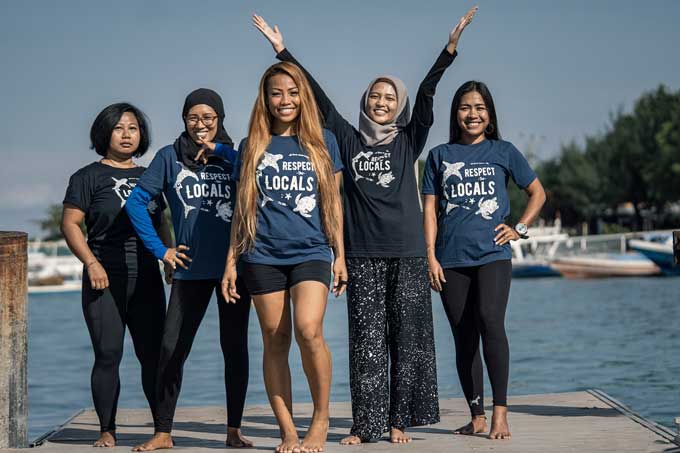
The organization is based on Gili Air, part of the Gili island chain in central Indonesia. The group recently received a grant to fund an all-women conservation team to train women from all over Indonesia how to plant, breed, graft, and garden corals.
Though Gili still has a flourishing reef, some parts have been negatively affected by dynamite fishing, coral bleaching, coastal development, inefficient waste management, anchoring, boat traffic, and earthquakes.
For the group's founder Rose Huizenga, a long-time Indonesia resident from the Netherlands, the group offers an opportunity for both sustainable development and women's empowerment. She shared her vision in an interview with Global Voices.
"I believe that empowering women and promoting gender equality is crucial to accelerating sustainable development. To truly learn to live in harmony with our environment, women need to be as much a part of shaping our collective destiny as men. For me, female empowerment is not about excluding men, but about raising the voices of women."
Rose noted that, like many scientific fields, the ocean research and conservation fields have historically been dominated by men, with gender imbalances that continue to this day. A recent study by Women in Ocean Science showed that 78 percent of the women respondents had experienced sexual harassment in marine science.
“Although we've made great strides in the gender representation in ocean research and conservation, we still have work to do,” said Rose.
For the eight participants, the program offers an opportunity to bring coral conservation methods from Gili Air to their hometowns. One of the program participants, Aulia Zeintrinanda, told Global Voices that the program “[teaches] us to plan the restoration project from zero, so we could do our own coral restoration.” After the program, she plans to move to Nusa Lembongan, Bali, so she can partner with some NGOs to start her own coral restoration project.
Likewise, participant, Delya Pamela Anggridani, hopes to use her newfound skills to revive tourism on her home island of Lombok, a major diving tourism hotspot in Indonesia. “I like the sea and want to preserve the sea around where I live, because my area is quite famous for the beauty of the sea and I want to inspire other women to love the sea.” She hopes to “create a program that invite local women, especially those in Lombok to preserve or restore coral reefs, because we are in a promising tourism area which have many dive sites.”
Cynthia Fildza Radiputri, another member of the program, agrees, arguing that environmentalism should extend past identity and divisions:
"After completing this training I want to share all my knowledge, my experience, my story to all my friends, my colleagues, my social media friends, influence them to do the same thing to [promote] sustainable marine life and environmentalism. Empowering and inspiring more women from various backgrounds: job, statuses, skill, ability, competency, religion, etc. No matter [who] they are, they can collaborate and contribute to the protecting ocean project."
Coral reefs are vital for coastal communities as they protect coastlines from erosion, provide jobs, food, medicines, and resources, and are a significant tourism driver worldwide. The Coral Reef Alliance explains:
"Coral reefs support over 500 million people around the world by providing food, income, coastal protection, and more. They provide over $375 billion per year in goods and services. And despite only covering 0.1% of the earth's surface, they contain the highest number of species of any ecosystem besides rainforests."
How Coral Conservation Works

Corals can be planted and gardened just like land-based plants, though, according to Pacific Standard Magazine, it can be slow and quite challenging.
The process begins by trimming a fragment of healthy coral from a living polyp and growing it until it is mature.
There are two methods to grow corals: lab- and ocean-based nurseries.
The first involves growing corals in a lab until they reach maturity and then transplanting them into the ocean reefs.
The second process, similar to grafting plants, involves directly planting the coral fragments into the sea by attaching them to underwater metal structures. They are maintained and grown here for about 6–12 months and then transplanted to existing reefs.
Corals can grow anywhere from 1–20 centimeters per year.
Lab-based nurseries allow scientists to grow corals faster and avoid the unknown variables of the ocean, but they are also more space- and resource-intensive, not to mention expensive.
Underwater gardening has its own risks as corals can be picky and fickle plants — they are very sensitive to water temperature, pH levels, and water current, so coral gardening may involve a lot of trial and error to find a location where the corals can thrive.
Some researchers believe that coral gardening could be essential to preserving coral ecosystems long-term as it would allow scientists to prioritize resilient corals that would be able to withstand rising ocean temperatures due to the climate crisis.
Currently, there are local coral restoration efforts all over the world, from Fiji and Tahiti to Miami and Hawaii.
As thousands of scientists, oceanographers, environmentalists, and politicians meet for the annual UN Climate Change Conference (COP26) this November, the plight of our coral reefs will be a major discussion point.
Can local initiatives like these solve one of the most alarming effects of the climate crisis? Only time will tell.
This article was originally published by Global Voices on November 11th, 2021 — and was made available to Good Good Good via a CC BY 3.0 license.
— Uninhabited Poilão Island in Guinea-Bissau is Africa’s most important nesting ground for green sea turtles (Chelonia mydas).
— Local people have long regarded the island as sacred and have limited access to it, which has kept its environment in a near-pristine state.
— The island is now protected as part of a marine national park, a compromise in which local people granted researchers and some other outsiders access to the island in an exchange that included employment monitoring turtles.
— Researchers and local people now work together to study the turtles with the aim of better protecting them.
POILÃO ISLAND, Guinea-Bissau — As night falls, the only lights visible on uninhabited Poilão Island are the nearly full moon and the eerie red glow beaming from a few headlamps.
The soft spotlight of a headlamp occasionally falls on a sea turtle and gives the beach scene an other-worldly feel befitting the island’s sacred status. It’s one of a handful of sacred islands dotting the 88-island Bijagós Archipelago off the coast of Guinea-Bissau in West Africa.
The turtles dig their nests, shoveling the beach with the same fore flippers they use to maneuver the ocean. The swoosh of flying sand harmonizes with the soft crash of waves to form the soundtrack to hundreds of sea turtles laying their eggs.
Besides bridging the aquatic and terrestrial worlds, the turtles’ ancient physiology seems to bridge a time chasm between past and present. They have, after all, been around for 120 million years.
“I like the turtles,” says Carlito Sedja, his headlamp lighting a rosy path on the beach. “Its very nature fascinates me — how it lives in water and at the same time on land.”


Yet another gap is being bridged on the island between the sacred and science. Here on Poilão, workers from the Institute of National Biodiversity and Protected Areas (IBAP), residents of another Bijagós island, and a handful of outside researchers say tradition and technology can work together to reveal the habits of endangered green sea turtles (Chelonia mydas).
As part of a project to better protect the turtles by identifying where they forage outside of nesting season, IBAP employs local young men with GPS trackers to monitor the number of nests on the island as well as the movements of adult turtles once they leave Poilão.
Sedja and two other men in their late teens or early twenties step gingerly around a turtle the size of a coffee table as she lays her eggs. Two teams split monitoring of Poilão’s 2-kilometer (1.2-mile) beach tonight; Sedja and his team count more than 150 nesting turtles in less than half an hour on their 1-kilometer (0.6-mile) stretch. The turtles nest on Poilão year-round, but most come between June and December, with a peak in August and September.
Project researchers estimate that Poilão hosts around 20,000 nesting females, each of which lays three to five clutches of eggs every two to three years, making the island the most important green sea turtle nesting ground in Africa.
Although the species’ population as a whole is decreasing, largely because humans overharvest eggs and turtles and accidentally catch them in fishing nets, IBAP’s research shows the Poilão population is generally holding steady.
Females have laid far fewer nests so far in 2021 compared to a record-breaking 60,000 nests in 2020; however, the number of nests has varied widely since IBAP began counting methodically in 2007, as is typical for the species.

Along with the green sea turtles, critically endangered hawksbill (Eretmochelys imbricata) and leatherback sea turtles (Dermochelys coriacea) also nest on Poilão and other Bijagós islands, albeit in lesser numbers. The vulnerable olive ridley (Lepidochelys olivacea) nests on Orango Island in the archipelago.
Sedja bends over and clicks his handheld GPS device to mark the location where the big turtle is laying her eggs.
He and the other turtle monitors are all from four villages on Canhabaque Island, about a two-hour speedboat ride away from Poilão.
For centuries, residents of the four villages have considered Poilão and a few neighboring islands as sacred spaces. On these islands, the communities hold elaborate and secretive coming-of-age ceremonies that are essential to each community’s identity, hierarchy, and social order. Until recently, only initiated men could visit Poilão, and even they could not stay long.
These rules preserved the island’s pristine environment. Today, conservationists and scientists recognize Poilão as one of the world’s top five nesting sites for green sea turtles and the most important site in Africa. Around 5% of the global population nests on this tiny 43-hectare (106-acre) island, the southernmost in the archipelago.
“Bijagós [residents] have a special relationship with turtles,” says Castro Barbosa, head of sea turtle monitoring at IBAP. Some of the important cultural events held on the island traditionally called for the killing of a sea turtle — the way cultures around the world eat certain meats to celebrate certain occasions.

In the 1990s, IBAP officials and the Canhabaque communities began negotiations toward establishing the João Vieira-Poilão Marine National Park, which now encompasses Poilão and three other islands, all of which hold sacred spaces for ceremonies, plus three islets.
The parties discussed both the killing of turtles and access to the sacred areas. IBAP officials and conservationists hoped the communities could compromise on these points, so they could launch efforts to learn more about and protect the sea turtle population.
The negotiations lasted years, says Barbosa, who assisted at the beginning, and they were often difficult because the communities were reluctant to allow outsiders to enter the sacred spaces.
Eventually, the communities agreed to increase access, permitting a small number of workers from the Canhabaque communities that traditionally took care of the islands, as well as park officials, researchers, and a limited number of tourists onto the islands. They also agreed to reduce the number of sea turtles used in ceremonies.
In exchange, IBAP officials agreed to hire young men from these communities to monitor the turtles on a part-time basis, an element that was crucial to reaching a deal in an area where paid employment is scarce.
Young women from Canhabaque are traditionally barred from the sacred islands where male coming-of-age ceremonies take place; they have their own sacred areas for performing female rites of passage.
This rule still holds. Barbosa jokes that not allowing women on Poilão for centuries kept the ecosystem from being spoiled by would-be settlers from Canhabaque, because no men would have wanted to live there without women.
The negotiations were beneficial to both parties, Barbosa says, and the park opened in 2000. “Our intention was to protect, and that is in the interest of the community, but we must make the people understand [our work] so that they can help us protect what is theirs,” he says.

Barbosa, along with researchers from other institutions, completed the first nest survey that same year, and GPS-tagged 10 female turtles after they nested in 2001.
Between 2018 and 2020, researchers from IBAP and Portugal’s ISPA University Institute satellite-tagged a total of 45 female turtles.
Since the park’s founding, researchers and park officials have worked in tandem with local residents. This began with food subsidies to compensate residents for work identifying and outlining local sacred spaces and ceremonies. Then, in 2010, IBAP began regularly employing Canhabaque youth to count nests and monitor the sites.
The tracking studies showed that the females forage in three main areas: some stayed in the Bijagós, while others went north to the Banc d’Arguin in Mauritania and the Saloum Delta in Senegal.
For the first time this year, the team tagged males as well.
The females are often easier to tag, because they come up on land to nest, whereas the males tend to stay in the water. This year, the researchers relied on fishermen from Canhabaque to gently catch the male turtles so they could place the GPS tags, says Rita Patrício, a sea turtle researcher with ISPA and the University of Exeter in the U.K. who has been working with IBAP for more than a decade. The team managed to tag 12 male turtles, and the fishermen gave them each a name.
One they called Minté, which means “Where are you from?” in the Bijagós language.
Another was Mennei, or “Where are you going?”
And another they named Poor Thing because its shell was slightly wounded.

Data from the tags will help identify where the male turtles are traveling to feed. “We know where the breeding females are going, but we didn’t know where the males were going,” Patrício says. “This part of the population is particularly important because in the future with climate change there will be less males being born.”
Sea turtle gender is determined by the temperature of the sand in which the eggs are incubated; rising temperatures mean warmer beaches, and hence fewer males.
One of the most surprising recent findings from the tagging studies was that a third of the females are nearly resident, venturing only as far as 90 km (56 mi) from Poilão and remaining within the Bijagós.
“That makes the Bijagós even more important. We already knew Bijagós was really important as a breeding space for this species, but now we know it is important year-round as foraging, as well,” Patrício says.
Information about where the turtles travel after breeding and nesting allows researchers and activists to asses threats to the turtles in their foraging grounds, and to determine where protection is needed. The point is to provide the scientific basis for defining the limits of marine protected areas and supporting regulations if needed in the future.
Barbosa says the new data are helping not only scientists but also local residents understand the behavior of the sea turtles. Traditions have often provided the “how” when it comes to conservation methods in the Bijagós, by protecting the spaces from development and the destruction of plants and animals and by teaching the natural value of plants for traditional medicines. Now technology is helping answer the question of “why” conservation is important.

Seeing maps showing how some of the turtles travel to other countries to forage when they are not nesting on Poilão gives people a broader understanding of the connectedness of sea life beyond the islands’ borders, Barbosa says. “Now … the people can understand the importance of their island and the turtles even more,” he says. “In the village they talk about that.”
The maps are especially helpful for the residents back on Canhabaque who may not get the chance to work with the turtles, Sedja points out. “There is an evolution,” he says.
Sedja, who says he hopes someday to undergo his initiation ceremony, is confident that tradition and technology can co-exist.
Back on Canhabaque, Sana Mané, the head of the village that traditionally protects Poilão, says he agrees that the opportunity for both increased knowledge and employment for local youths is worth the price of opening access to the sacred island.
“Really I am OK with changing the attitude and the tradition a little bit in search of good things,” he says.
On Poilão, researchers and monitoring teams are limited to the beach. Their camp is a few meters inland, but no one ventures beyond into the sacred forest, where the ceremonies still take place to initiate some young men.
The people of Canhabaque have made compromises, but some secrets remain worth keeping.
This article was originally published by Mongabay on November 19th, 2021.
Banner image: A team of green sea turtle monitors from Canhabaque Island rides out to the islands where they will complete 12-day shifts. One group will go to the island of Meio and the other to Poilão. Image by Ricci Shryock for Mongabay.
Citations:
Catry, P., Barbosa, C., Indjai, B., Almeida, A., Godley, B. J., & Vié, J. (2002). First census of the green turtle at Poilão, Bijagós archipelago, Guinea-Bissau: The most important nesting colony on the Atlantic coast of Africa. Oryx, 36(04). doi:10.1017/s0030605302000765
Godley, B. J., Barbosa, C., Bruford, M., Broderick, A. C., Catry, P., Coyne, M. S., … Witt, M. J. (2010). Unravelling migratory connectivity in marine turtles using multiple methods. Journal of Applied Ecology, 47(4), 769-778. doi:10.1111/j.1365-2664.2010.01817.x
Patrício, A. R., Varela, M. R., Barbosa, C., Broderick, A. C., Catry, P., Hawkes, L. A., … Godley, B. J. (2018). Climate change resilience of a globally important sea turtle nesting population. Global Change Biology, 25(2), 522-535. doi:10.1111/gcb.14520
Patrício, A. R., Barbosa, C., Catry, P., & Regalla, A. (2021). Ecology and conservation of green turtles in Guinea-Bissau. Testudo, 9(3), 102-114. Retrieved from researchgate.net
With homemade rafts and plastic-bottle life jackets, teams of young villagers save stranded locals when the Brahmaputra River bursts its banks.
MAJDOLOPA, India — Giridhar Pegu shuddered as he remembered the day in July last year when raging flood-waters trapped him, alone, in his home in northeast India.
More than a day of heavy, non-stop rain had caused the Brahmaputra River in Assam state to burst its banks, sending water rushing through Pegu's home village of Majdolopa.
"I kept shouting for help as the water started flooding my stilted home. I was ready for the worst that day, had it not been for a couple of youths who rescued me," the septuagenarian told the Thomson Reuters Foundation.
Those youths were volunteers from the Majdolopa Village Disaster Management Committee, one of hundreds of local groups that have formed across flood-prone Upper Assam to help their communities through increasingly frequent storms and floods.
With the effects of climate change making flooding more sudden and destructive, even Majdolopa's indigenous residents, who have lived along the Brahmaputra for generations, can be caught off guard, said committee leader Paramananda Daw.
"Even (for us) it is hard to predict the mood swings of the river. So the least we can do is help our fellow villagers, especially the elderly and children who get caught in its unpredictable floods," he said.
Daw formed the Majdolopa committee in 2015 and today its 23 young men and women volunteers help with flood warnings, evacuations, and rescues at least three or four times a year.
"The biggest challenge for us is to first protect the lives of villagers by getting them to the nearest high-rise platform or embankments where they can be safe, and then we save the livestock," said Daw.
Feni Doley, of the committee's early warning crew, explained how his team tap into a mix of traditional knowledge, radio news, and weather apps to anticipate when floods might occur.
They then use drums, megaphones, and mobile phones to advise other villagers to evacuate.
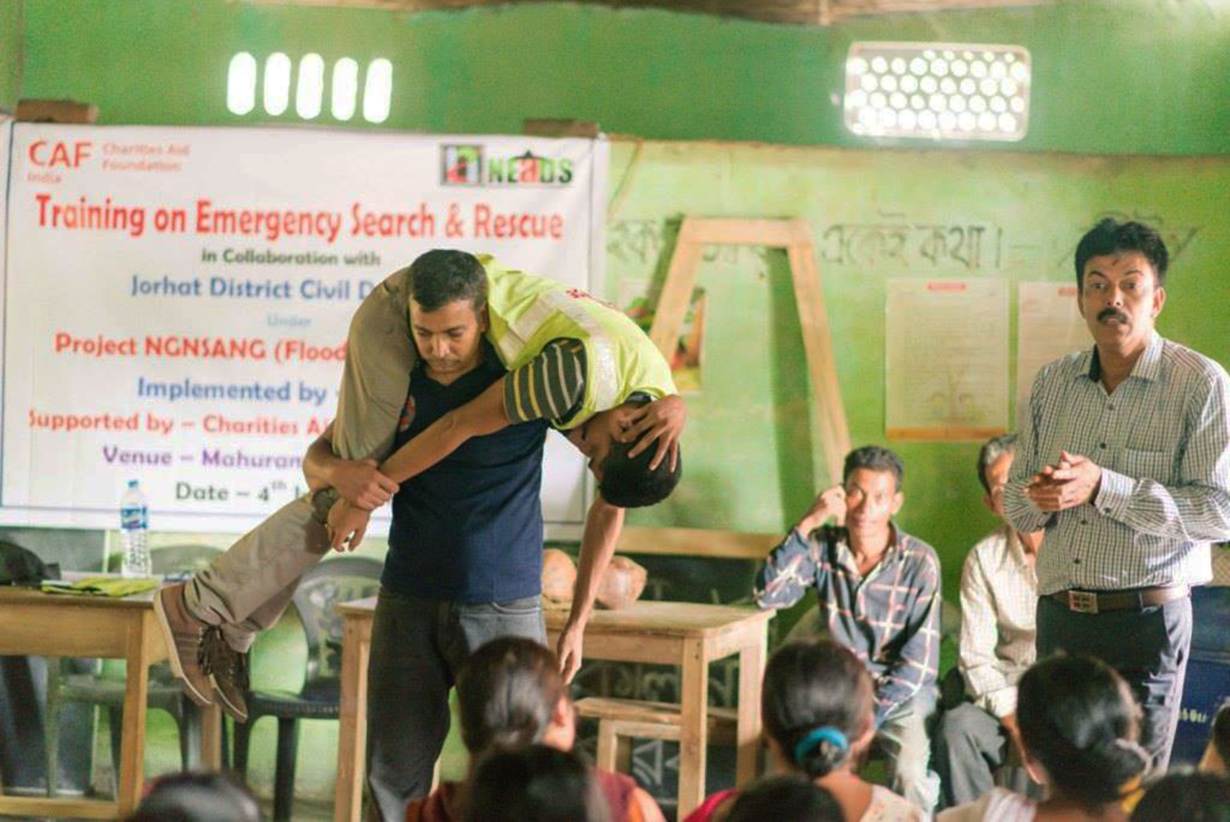
When Doley and other volunteers saw dark, thunderous clouds gathering over the distant mountains in July 2020, "we knew the flood waters would soon tumble over our village," he said.
The team quickly spread the word to the rest of the committee, who started getting villagers to safety.
"As the water inundated the village during the next few hours, there was absolute chaos... The flood-water seemed to be chasing us from behind," said Dilip Paw from the search and rescue team.
On boats and makeshift rafts, Paw and his team of six picked up a stranded woman, a few small children and several elderly people, along with some calves, pigs and goats that day.
"Soon (the boat) resembled Noah's Ark," said Paw.
Training & Supplies
Flooding is a recurring problem in the tea-rich state of Assam, with persistent rains during the monsoon season causing the Brahmaputra to overflow with disastrous regularity.
The exceptionally heavy rains that started in May 2020 triggered months of flooding in the state that displaced or affected 8 million people, like Pegu in Majdolopa, and killed more than 110, authorities said at the time.
While flooding this year was less extreme, it still impacted more than 647,000 people, according to the Assam State Disaster Management Authority.
To prepare for when the river rises, the Majdolopa committee and others around the state get supplies - including first aid kits, boats, and megaphones - as well as training from the North-East Affected Area Development Society (NEADS), a grassroots nonprofit.
NEADS holds mock drills and practical sessions with experts from the district authority's civil defense department and the local unit of the national disaster response force, said its joint director Tirtha Prasad Saikia.
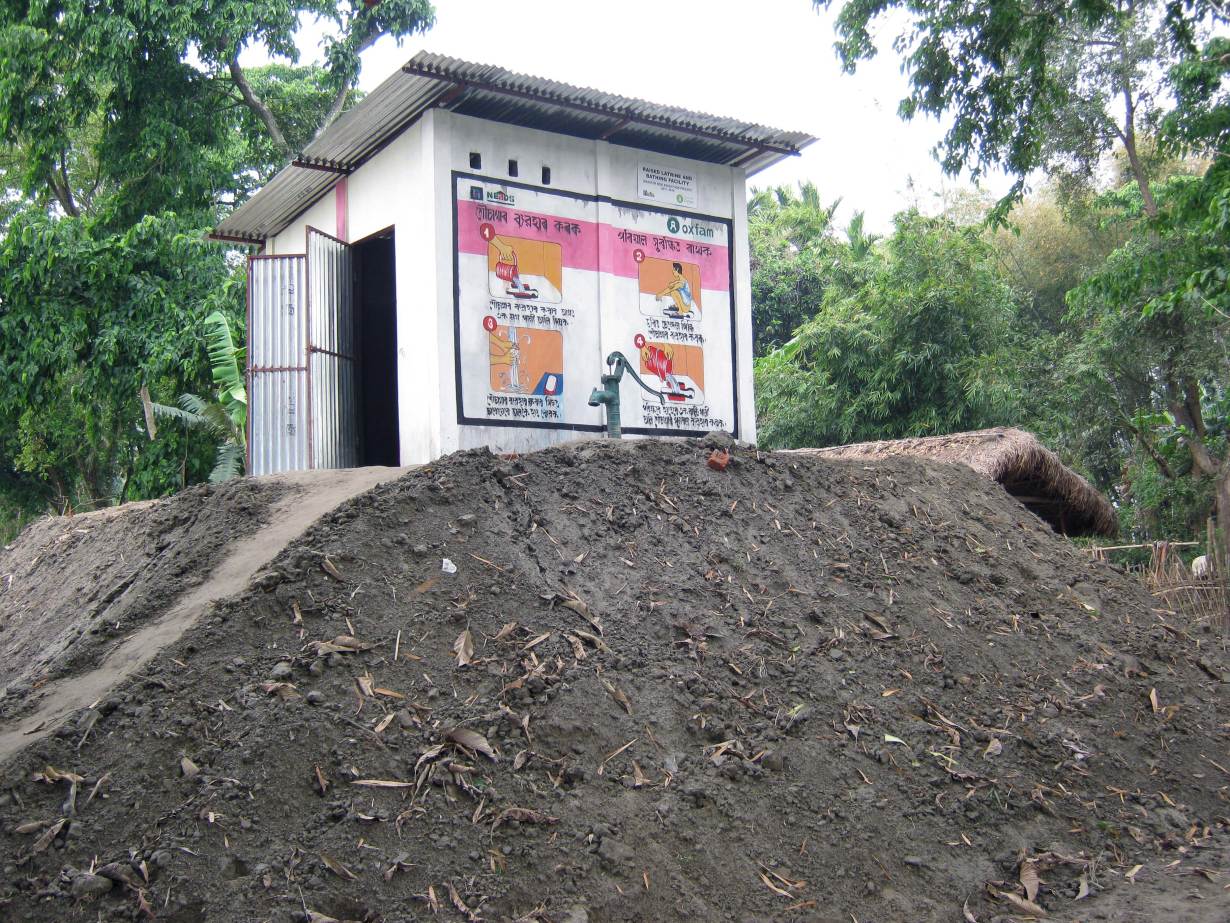
The organization also supports local committees to provide clean drinking water and sanitation after floods, helping volunteers put together water filtration systems using sand, pebbles, and bamboo charcoal, and build hand pumps and toilets on higher ground to protect them from future flooding.
Simanta Sharma, deputy controller of the Jorhat district civil defense unit, said the committees are enthusiastic and quick to act, but their effectiveness is undermined by a lack of funding and time for training.
"More frequent training and updates on the latest first aid (techniques), skills on capacity-building, and leadership exercises could further add to their capabilities," he said.
'Bottle Belts'
Even with basic skills, community-based approaches to emergency and rescue operations make evacuations much faster than help sent in by government agencies or international charities, according to disaster management expert N.M. Prusty.
That is something villages and towns around the world could learn from, as the impacts of climate change hit communities in different ways, said Prusty, who is president of Humanitarian Aid International, an Indian nonprofit.
"Such basic units of disaster management, providing localized interventions, can prove to be the foundation for other climate-affected regions too. So, more lives can be saved and losses minimized," he said.
The disaster management volunteers in Assam agree their work relies on local knowledge and indigenous techniques.
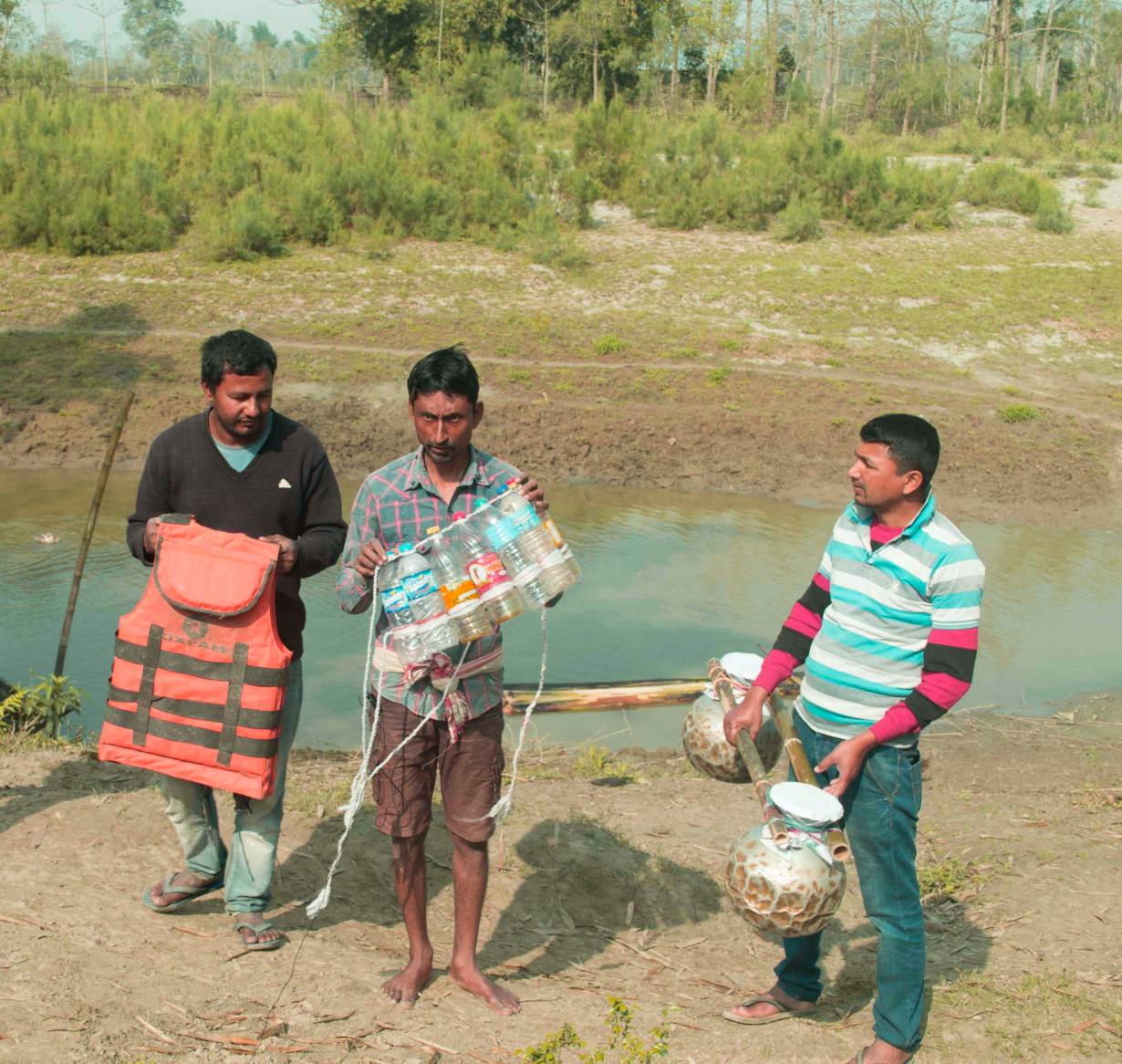
"We can swim across the rough torrents of the flood-waters with the help of traditionally made, inexpensive life jackets," said Bhupen Borah, leader of the committee in Sumoni Chapori village, about 56 miles east of Majdolopa.
Volunteers secure at least eight 2.6-gallon plastic bottles side by side with cord to create "bottle belts" they tie around their chests to stay afloat, Borah explained.
And in two hours, they can nail together several sturdy banana plant stalks to make a raft as an alternative to expensive boats, said Mintu Neog of the village's rescue team.
In Majdolopa, Pegu is grateful that a group of young volunteers had the right mix of modern training and traditional solutions to make sure his memory of that day last July was one of relief, not disaster.
"We cannot control the climate, and today it's hard for us to predict its sudden changes. But at least our villages have our own climate warriors, who can readily step in to protect us from its immediate dangers," he said.
Header image: Rescue teams from the local disaster management committee in Majdolopa village use rafts made of banana stalks to help stranded villagers during flooding in northeast India, July 14, 2020. HANDOUT/NEADS
Reporting by Moushumi Basu, Editing by Jumana Farouky and Megan Rowling. This article was originally published by the Thomson Reuters Foundation, the charitable arm of Thomson Reuters, that covers the lives of people around the world who struggle to live freely or fairly. Visit news.trust.org.
The city’s groundbreaking “zero waste” strategy aims to leave no meal behind.
With its packets of tagliatelle pasta, tins of tomato sauce and large bottles of extra virgin olive oil, the Gallaratese Hub just off Via Appennini in Milan’s northwest seems like any other supermarket in the Italian city.
But the produce on the shelves of the 400-square-meter space, owned by the municipality of Milan and opened in July, has been donated by supermarket chains and private businesses just around the block. And the customers, who show up to get their groceries five days a week, don’t pay a thing — it’s all covered by a prepaid card.
“It’s about making our food systems more sustainable and less wasteful,” says Federica Giannotta, head of advocacy and Italian programs at Terre des Hommes Italy, the NGO running the solidarity supermarket as well as outreach distribution. “And of course helping those families that are really in need of support.”

The Gallaratese Hub, one of three currently in Milan, is part of the city’s pioneering efforts to cut down food waste. Milan is the first major city to enforce a citywide food waste policy, relying on the wide-ranging cooperation of public agencies, food banks, charities, NGOs, universities, and private businesses.
In 2015, Milan launched a new Food Policy aimed at creating a more sustainable food system, involving local players such as the city’s research centers, institutions, private sector, and NGOs as much as possible. The next year a memorandum of understanding, entitled “Zero Waste,” was drawn up to halve food waste by 2030 and implement a new method for recovering and redistributing surplus food.
Launched in January 2019, these Food Waste Hubs collect produce from supermarkets and companies, as well as purchased food aid, and give it to hundreds of Milanese families in need. The Gallaratese Hub also provides social services such as legal aid, psychological counseling, language classes, and childcare support. Two other hubs will launch in other Milan neighborhoods in the next few months.

The School of Management of the Politecnico di Milano, which conducted a feasibility study of the model and has been monitoring operations, found that the first hub saved 77 metric tons of food in the first year, and that today the city’s three Food Waste Hubs each recover about 130 metric tons of food per year, or 350 kilograms per day — equivalent to 260,000 meals. Through them, according to the Politecnico, 497 metric tons of CO2 are avoided in the production and then disposal of food losses per year. The hubs are also using 30 percent of food that would have otherwise gone to waste, compared with the national average of nine percent.
Shrewd data analysis and sophisticated coordination across multiple organizations has been key to the success, according to Anna Scavuzzo, the vice mayor of Milan and lead for the city’s food policy.
In some neighborhoods, for example, there might be a lot of food waste for fruit and vegetables, but in other areas there might be more meat. During specific times of the year, such as Christmas, there could be more food losses, or in August, when lots of charities go on holiday, there could be less support available. Or it could be that the quantity of food waste changes at a supplier supermarket.

“It’s important for cities to use data to understand these points,” says Scavuzzo, who holds a meeting with stakeholders for knowledge and data-sharing at least every six months. “Coordination is very important.”
The hyperlocal focus has also been a significant factor in Milan’s food policy — excess food, they argue, should be distributed within the same neighborhood, reducing carbon emissions and maximizing the freshness of the food.
“The model of food banks was not efficient enough to collect the food waste from all the retailers,” says Scavuzzo. “The idea was to localize the network, to make it work in a fast way.”
Andrea Segrè, a professor of agricultural policy at the University of Bologna and scientific director of the Waste Watcher International Observatory, believes the local aspect, which he calls a “Zero Kilometer” approach, is crucial.

“The principle of recovering food and distributing it in the same area is a good model,” he says. “If you recover food in one place, and you have charity some 30 kilometers away, you need to transport, store and refrigerate it, which will cost more than the food is even worth. To be sustainable, you need to act at a local level. It’s a model of proximity.”
Huge gains, societally as well as environmentally, could be made if progress continues. The global food system generates a third of greenhouse gas emissions, yet a third of all food produced for human consumption goes to waste — about 1.3 billion metric tons per year. At the same time, 800 million people, around a tenth of the world’s population, were undernourished last year.
However, Segrè warns that such food hubs cannot be the only solution to tackling food waste. Around 70 percent of food waste comes from households, he says, and half a kilogram of domestic food waste is created by the average person in Italy each week. “We need prevention in our households,” he adds.
But there is belief that Milan has found a recipe for reducing food waste that could be used the world over. In October, the City of Milan’s Food Waste Hubs won the Earthshot Prize, an initiative founded by Britain’s Prince William. The municipality has received £1 million (US$1.37 million) in prize money and a global network of support to scale their pioneering environmental solution.
“Each city around the world could apply this model,” says Professor Segrè. “You need some competence, some knowledge, and willing actors. But you can copy it easily.”
Vice mayor Scavuzzo, who is also helping to oversee the Milan Urban Food Policy Pact — a global agreement on urban food policies signed by more than 200 cities — says that it is already consulting cities including Ghent, São Paulo, Seoul and Melbourne on how to implement similar hubs.
“There’s not a unique model,” she says. “It must be adjusted depending on the local situation of a city. But we believe [these hubs] can help save as much food as possible.
This story is part of the SoJo Exchange from the Solutions Journalism Network, a nonprofit organization dedicated to rigorous reporting about responses to social problems. It was originally published by Reasons To Be Cheerful on November 5th, 2021.
Reading is one of the oldest and most beloved pastimes in the world (and for good reason). It’s a great way to learn from others and as studies have shown, reading is actually a great tool for expanding empathy.
We put together our favorite reads about hope and action in the hopes that you’ll share some of these with the people you love. All of our chosen books were picked because we believe they bring a sense of community, goodwill, and hope to our readers.
Each product listed was independently curated by the Good Good Good team. Some of the links we include may be affiliate links, which means that Good Good Good may earn a commission at no cost to you. Thanks for your support!
P.S. We’ve linked Amazon for convenience, but we’re also linking to Bookshop and Libro.fm, which are both great ways to support small, independent bookstores when you buy physical books and audiobooks.
(Learn more about Amazon alternatives in our ultimate guide — and dive into non-Audible audiobook alternatives and ethical online bookstores that aren't Amazon.)
8 Meaningful Books To Inspire Hope, Action, and Empathy
“Hope in the Dark: Untold Histories, Wild Possibilities” by Rebecca Solnit

Historian, activist, and author of “Men Explain Things to Me,” Rebecca Solnit offers an alternative, counter piece of work to combat the despair many feel fighting for progress.
Drawing on her decades of environmental, cultural, and political activism, Solnit makes a radical case for hope in the midst of widespread uncertainty. A perfect read for anyone feeling particularly disheartened by current events, “Hope in the Dark” is a balm to soothe the discomfort of difficult times.
“Simply More: A Book for Anyone Who Has Been Told They’re Too Much” by Cynthia Erivo

From beloved “Wicked” star Cynthia Erivo is a newly released memoir full of life lessons that will help anyone believe in the fullest iteration of themselves.
Through a series of personal stories, Erivo reflects on her work as a performer and her life as a human, teaching readers how the parts of us that might seem like “too much” are actually what make us shine.
“The Book of Hope: A Survival Guide for Trying Times” by Douglas Abrams and Jane Goodall

Following the loss of iconic primatologist and conservationist Jane Goodall earlier this year, “The Book of Hope” provides an especially heartwarming look into the heart and mind of a woman who dedicated her life to fighting for our future.
“The Serviceberry: Abundance and Reciprocity in the Natural World” by Robin Wall Kimmerer

From the acclaimed author of “Braiding Sweetgrass,” Indigenous scientist Robin Wall Kimmerer details narratives of both relationships and systems — and how nature can teach us to approach them in a kinder, more interconnected way.
“The Serviceberry” invites readers to learn from Indigenous wisdom to create an economy and a world that relies on reciprocity and community — not individualism.
Kimmerer also donated her advance payments for the book to land restoration and climate justice.
You may also like: 38 Best Books About Climate Change
“Everything is Tuberculosis: The History and Persistence of Our Deadliest Infection” by John Green

You might not think a book about the world’s deadliest infectious disease would be one full of hope and optimism, but John Green has a way of making even the greatest challenges to humanity seem surmountable.
In “Everything Is Tuberculosis,” Green tells the story of a young man with tuberculosis, woven through with the scientific and social histories of how the disease has shaped our world — and how our choices will shape the future of public health.
“Hope: The Autobiography” by Pope Francis

In the wake of Pope Francis’s death, his book — the first autobiography in history to ever be published by a Pope — is a beautiful gift to close out 2025.
This book was written over the course of six years and explores Pope Francis's early life, his vocation, adult life, and the whole of his papacy.
Known for his illuminating thoughts on the environment, LGBTQ+ Catholics, gender, war, and even technological developments, "Hope" touches on all of these concepts, while still reading a very human — and sometimes funny — narrative.
You may also like: 23 Must-Read Books About Hope That Inspire Change & Action
“Saving Us: A Climate Scientist’s Case for Hope and Healing in a Divided World” by Katharine Hayhoe
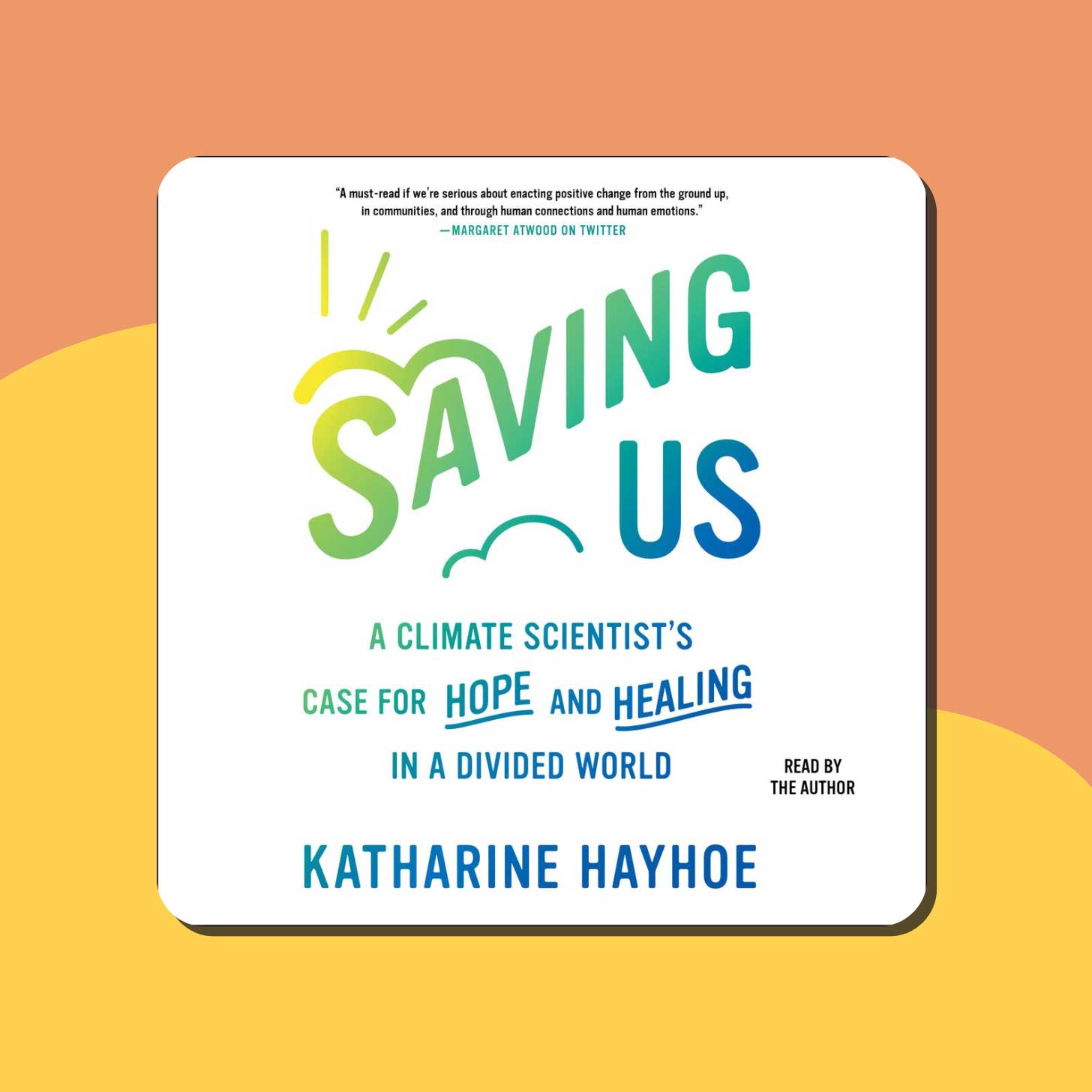
Called “one of the nation’s most effective communicators on climate change” by The New York Times, Katharine Hayhoe offers a compelling argument for why we must act now to protect our planet — and how we can do so with a renewed sense of hope and purpose.
Through hard data, personal stories, and her own faith-based perspective, Hayhoe demonstrates that by understanding and engaging with each other, we can work together to create a sustainable future.
If your gift recipient is feeling the impacts of climate anxiety, this one’s for them.
“Life’s Journeys According to Mister Rogers: Things to Remember Along the Way” by Fred Rogers

Through his collection of anecdotes, quotes, and reflections, Mister Rogers provides guidance and encouragement to readers as they navigate life's inevitable challenges and transitions.
The book also features a foreword by his wife, Joanne Rogers, who shares personal stories of her life with Mister Rogers — including insights into the joys and struggles they faced together.
The perfect read for anyone who is always looking for the helpers.
You may also like: More books by and about Mister Rogers
What’s better than a singular gift? A gift that keeps on giving.
If you’re wondering how to make the most of your holiday giving, consider giving a subscription to one of the many options Good Good Good has sourced below.
We’ve rounded up some of the most ethical and sustainable subscriptions on the Internet. In addition to being a great gift, you’re also supporting companies that do good.
Each product listed was independently curated by the Good Good Good team. Some of the links we include may be affiliate links, which means that Good Good Good may earn a commission at no cost to you. Thanks for your support!
The Best Ethical, Sustainable, and Do-Good Subscriptions and Subscription Boxes
Earthlove Box
$25 - $230

Earthlove Box offers a variety of curated boxes for its customers. Each box has items such as a customizable wellness book, mindful lifestyle challenges, and other sustainable, eco-friendly products to incorporate into your daily routine.
The Sustainable Life Gift Box is perfect for people starting their own zero-waste journey and are looking to stock up on the essentials.
According to their website, “Earthlove aims to bring more nature into our lives by not only curating botanicals, wildcrafted & organic, and nature-inspired goods for the wild at heart, but also providing tips for enriching your connection to the natural world.”
Subscribe: Earthlove
Libro.fm Audiobook Subscription
$14.95/month

Libro.fm is the best way to listen to audiobooks and make a difference. When you subscribe to Libro.fm, every audiobook you download actively supports a small bookstore of your choosing.
All you have to do is sign up, choose your preferred bookstore, and start downloading audiobooks. You can listen to these books anywhere and at any time.
By the way, we have a special deal for you! Get two audiobooks for the price of one with the code GOOD at Libro.fm.
Subscribe: Libro.fm
Goodnewspaper
3 month: $24 | 6 month: $48 | 12 month: $84

In our fast-paced world, bad news sticks to our brains easier than good news. (It’s called an internal negativity bias.) But our Goodnewspaper slows you down so the good can actually sink in.
Plus, each issue includes art you can hang on your wall and it feels really good to be able to tangibly gift good news to a friend who needs some.
Each issue is filled with dozens of good news stories. And at the bottom of each good news story you’ll also find action steps on how you can make the biggest difference with the issues you care about.
Love Goodly
$42 - $60

Love Goodly is a company started by two women who want to empower others to live a healthy lifestyle. The brand offers wellness boxes that include cruelty-free, eco-friendly, vegan products that range from beauty and skincare to healthy foods.
These boxes start at the price of $39.95, and you can purchase them as a subscriber or non-subscriber!
Subscribe: Love Goodly
Purple Carrot
$80 - $132/week

Purple Carrot offers boxes full of plant-based, globally-inspired recipes. The packages are filled with the ingredients and directions to create different delicious meals.
You can also choose recipes based on goals like having more energy, improving your gut health, or cutting back on sodium.
This is a great pick for someone who has been wanting to go vegan but needs a little help figuring out what to cook!
Subscribe: Purple Carrot
All True Subscription
$45- $160

All True provides its subscribers with a ‘beautifully illustrated’ and customizable box, packed with full-size household and self-care products.
The subscription runs at a quarterly rate of $44.95, or you can pay $159.80 for four boxes (with a slightly discounted rate per box)
These products are also ethically sourced and sustainably made if you’re looking to shop more eco-friendly.
Subscribe: All True
Substack Subscriptions
Various prices

Substacks are a great way to support a writer directly. You can find various Substacks that cater to your interests as a reader and if you’ve been meaning to subscribe for a while, this is your sign to sign up.
The Good Good Good team recommends “Ask Polly” and Ayana Elizabeth Johnson’s “What If We Get It Right?” — both are Substack newsletters that offer informative and entertaining reads for their audience.
“Ask Polly” runs as an advice column, where readers can send in problems and have the chance to be featured on an Ask Polly blog. “What If We Get It Right?” is a newsletter that helps dispel climate myths and bring a dose of optimism back to your climate anxiety.
While these blogs are completely different in their content, a Substack subscription can help you feel informed and heard all at once.
Book of the Month Club Subscription
3 Months: $59.99 | 6 Months: $99.99 | 12 Months $199.99

A Book of the Month Club subscription helps you read the best books possible — without needing to overthink what to read next.
All you have to do is select one (or more) of the five ‘wow-worthy reads’ that Book of the Month picks out. You can also cancel anytime or skip any months you’d like, free of charge, and every book you are sent is yours to keep!
The brand says it “celebrates and champions emerging authors” and aims “to inspire and shape a more curious and thoughtful culture.”
Subscribe: Book of the Month Club
Headspace Subscription
$0 - $69.99/yr

Headspace helps you create a better mindset for your day.
For $69.99 a year, you’ll receive all of Andy Puddicombe's iconic guided meditations — plus workouts, mindfulness exercises, mantras, affirmations, white noises, focus music, and more to help you live a more positive and hopeful life.
And if you’re a student, it’s just $9.99 a year! Plus, you can always use start with a free trial.
Subscribe: Headspace
Grove Collaborative
$29.99/yr

Grove Collaborative is a go-to for cleaning supplies, home goods, gifts, and more.
If you’re looking to take care of yourself or your home, Grove Collaborative lets you customize a box full of home and personal care items, all of which will be perfectly curated by the people at Grove Collaborative and then delivered to your front door.
The company also has a ‘price matching’ system, so you’ll never be paying more than what you can afford.
You can shop without becoming a VIP member, but at just $29.99 a year, the membership gives you free shipping on orders over $29, provides exclusive access to discounts, and sends you seven free gifts a year.
Subscribe: Grove Collaborative
Check out more of our gift guides to find ethical products that give back and make a difference → Good Good Good Gift Guides
As the saying goes: the way to the heart is through the stomach. At Good Good Good, we love to explore and play in the kitchen as much as our community — that’s why we have a whole guide dedicated to those who love spending their time in the kitchen.
We’ve selected a range of sustainable, do-gooding brands to help you whip up anything you’d like for you and your loved ones.
Each product listed was independently curated by the Good Good Good team. Some of the links we include may be affiliate links, which means that Good Good Good may earn a commission at no cost to you. Thanks for your support!
9 Food & Kitchen Themed Gifts That Are Eco-Friendly, Give Back, and Make a Difference
Finex Cast Iron Skillet
8in. $150 | 12in. $230

This cast iron skillet from Finex is a sustainable, quality-made skillet for you. Finex is one of the many brands that prioritize their mission for sustainability over mass production, fair wages over profit made, and quality crafting over mindless consumption.
If you’re looking to fill up your kitchen with the perfect utensils, look no further than a cast iron skillet that does good and can make a good dish at the same time.
Bar 5 Milk + White from JCoco Chocolate
$22.50

Technically, you don’t have to eat this in the kitchen but… Bar 5 Milk + White is a bookcase full of milky chocolate bars. The bars come in flavors like mango plantain, sea salt, toffee, sesame, and milk chocolate.
Additionally, these chocolate bars are directly sourced from Peruvian farms so that their profits are going to the people who make them.
New York Times Cooking Subscription
$5/month | $50/year

The New York Times Cooking subscription is a must-have for anyone looking to expand their culinary palate.
The customizable subscription also includes easy-to-follow videos, recipes, and techniques so that you’re spending less time in the kitchen and more time enjoying your delicious meals.
The New York Times provides one of the most affordable cooking subscriptions at just $4.99 per month or $49.99 per year.
SodaStream
$104.94

SodaStream turns plain water into sparkling water in just a few seconds. Buying one is a fantastic way to cut down on the need to purchase cans or bottles of sparkling water or soda.
SodaStream also has a mission of sustainable production, focusing on making the world more eco-friendly through their ‘Don’t Just Share. Care.’ program. Buy a SodaStream and you can reduce your can waste for years to come.
We recommend their Aqua Fizz model because it's affordable, works great, and doesn't require any power — though any of their models are honestly solid.
You can also sign up for SodaSense for easy and affordable C02 canister refills in the mail.
The reBoard
$35.00

The Material reBoard is a BPA-free cutting board is made entirely from upcycled and renewable materials (75% repurposed kitchenware plastic scraps, 25% renewable sugarcane) and donates to food justice organizations like Heart of Dinner, Apex for Youth, City Harvest, and more.
World Central Kitchen Donation
Any amount

A donation to World Central Kitchen lets you help nourish communities. World Central Kitchen is a nonprofit that works to feed disaster-stricken, hungry communities by helping them cook and providing them with meals.
The company also offers culinary training and helps create jobs for food and economic security. You can make a one-time donation or make recurring monthly donations.
Brooklyn Brew Shop Hot Sauce Kit
$40.00

This hot sauce kit from Brooklyn Brew offers fermented hot sauces that come in a range of flavors and spice levels.
The company’s mission is to create more sustainable and accessible fermented-based foods and condiments for customers to enjoy.
They also offer different kits for making your own beer, hard cider, sparkling wine, and more — all for an affordable price.
Lettuce Grow Farmstand Counterstand Set
$99-$149

Lettuce Grow Farmstand is a self-watering plant. It requires 95% less water than traditional gardening requires, meaning you only have to help maintain it once a week. In just three weeks, your plant will be ready to harvest for your meals.
Additionally, with every ten purchases made, one farmstand is donated.
Takeya Reusable Water Bottle
$29.99

If you need the perfect water bottle, look no further than Takeya’s insulated water bottles. They're the top-rated water bottle on Wirecutter for their affordable price, perfect size, and spout top.
These Takeya water bottles also have an insulation-lined lid, a range of cool, monochromatic colors, and a protective (removable) silicone bumper to keep your bottle from getting scratched or otherwise damaged.
They're available in a range of colors and sizes, but we recommend the 22oz.
This is the kind of water bottle you can buy once so you never have to buy another again.
Have a friend on your gift list who is really eco-conscious? Or who is always telling you about that great new thing they just learned on their favorite podcast? Or who has an Instagram for their pet?
These niche-gift guides are for them!
We found the best niche items that do good and are perfect for the niche loved one in your life.
Inside This Guide You'll Find Gift Recommendations For:
Your Workout Friends
Your Pet-Loving Friends
Your Friend Who's Always Learning
Your Environmentalist Friend
Your Friend With Kids
Each product listed was independently curated by the Good Good Good team. Some of the links we include may be affiliate links, which means that Good Good Good may earn a commission at no cost to you. Thanks for your support!
Gifts For Your Friend Into Health & Wellness
From mindfulness to movement — your friend loves taking care of their mind and body!
Since they likely appreciate all their body does for them, they’d love a thoughtful gift that encourages them in their ongoing health and wellness journey.
Bala One-Pound Weighted Bangle Set
$49.00

Bala’s weighted bangle set adds resistance to any of your daily workouts. The bangle set is made to be placed on your wrists or ankles, all to provide a healthy challenge to your fitness routine.
The bangle is also made intentionally for every body type.
Oko’s Herbal Yoga Mat
$174.00

Oko’s Herbal Yoga Mat is hand-loomed with 100% GOTS certified organic cotton, and it’s 100% biodegradable — perfect for your eco-friendly friends who love yoga.
These unique mats also offer a new level of comfort for your morning or evening stretches — with an all-natural production and wellness-promoting mission.
Product (RED) Apple Watch
$379.99

Product (RED) Apple Watch & Band are great options for your Apple-product-loving friends who also want to do good.
(RED) partners with iconic brands to raise awareness and funds to fight one of the world’s biggest health emergencies: HIV/AIDS. Most recently, it also helped fight the COVID-19 pandemic. Every (RED) product purchased goes to support these causes.
And if your friend already has an Apple Watch, but you still want to support (RED) — get them the Product (RED) Sport Loop Band to accessorize and do good.
Gifts For Your Friend Who Loves Their Pet
For your friend that has a photo of their pet as their phone’s lock screen, brings them up in conversation at least 3 times, and treats them like a member of the family.
Give a gift that shows you think of their pet like family, too.
PS: We just created an updated version of this article: The Best Gifts for Animal Lovers
Tuft & Paw Frond Cat Tree
$399.00

Tuft & Paw Frond Cat Tree is a modern take on cat trees. This product is customizable and adjustable, so that your cat is enjoying it as much as you are watching them.
These cat trees are also ethically made, meaning they’re approved by cat behaviorists. Not only are these trees loved deeply by their customers, they’re also loved by cats.
Wild One Dog Toy Kit
$39.00

Wild One Dog Toy Kit is a perfect gift for dogs to chew, tug, toss, and play with. Wild One makes this toy kit with 100% natural rubber and cotton so that it’s sustainably made without sacrificing its durability.
These kits include three different types of toys to keep your dogs entertained and wanting to keep playing. In fact, all of their dog products are really thoughtfully made, so your purchase is good news for dogs and good news for the planet.
Hemp Ball Dog Toy
$5.99

Hemp Ball Dog Toy is made from recycled cotton and harvested hemp, making it sustainable and great for playtime with your dog.
The tough fibers used to make this ball makes it durable enough to last a long time — check out this affordable gift!
Gifts For Your Friend Who is Always Learning
They have an audiobook subscription, are your go-to for podcast recommendations, probably started a new hobby this winter, and live by Maya Angelou’s quote, “When you know better, you do better.”
For your friend who is always learning something new, they’ll love a gift that helps fuel their desire to learn.
MasterClass
$15.00/month

MasterClass offers classes from "the world's best". Learn politics from former U.S. presidents and secretaries of state. Learn cooking from Gordon Ramsay. Learn business leadership from Starbucks' Howard Shultz.
Masterclass lets you access courses in food, arts and entertainment, music, writing, and so much more. If you have a knowledge-seeking friend, this is the perfect gift for them.
Plus, right now (holiday season of 2021) MasterClass is offering 2 memberships for the price of 1. This means you can get your friend a membership – and then keep a free one for yourself.
Skillshare
$32/month

Skillshare offers a library full of award-winning classes on a range of topics — especially in creative fields. For a monthly subscription, you can access an unlimited amount of classes.
You can purchase a gift card or sign up your friend (or yourself) for a class as a gift! (You can get started exploring and watching classes by signing up for a free trial.)
Goodnewspaper
$8/month
Oh hey, it’s us! We’ve found that when it comes to learning new things — often, it’s hard to find information and stories about progress.
So, your friend who is always learning might not learn about all the good going on around the world — and all the Helpers making a real difference.
The Goodnewspaper is filled with stories about hope and progress they might have missed, and includes action steps for ways they can get involved and make a difference.
Ramona and Ruth Daily Overview Notepad
$16.00

This daily overview notepad from Ramona and Ruth helps you conquer each day as it comes. Each page lets you break down your daily tasks into an organized list.
If you’re feeling overwhelmed by your daily routine and to-do list, here’s one way to start feeling a little more at peace.
Gifts For Your Earth Lover Friend
Your go-to for the best eco-friendly product recommendations, the latest on what’s happening with climate policy, and help with living more sustainably, give your friend a gift that deepens their love for planet earth.
Go Lightly: How To Travel Without Hurting The Planet by Nina Karnikowski

The book includes eco-friendly activities and substitutes for harmful ones. If you want to travel without increasing your carbon footprint, check out this guide to environmentally-conscious living.
Parks Projects' National Parks of The USA Checklist Poster
$25.00
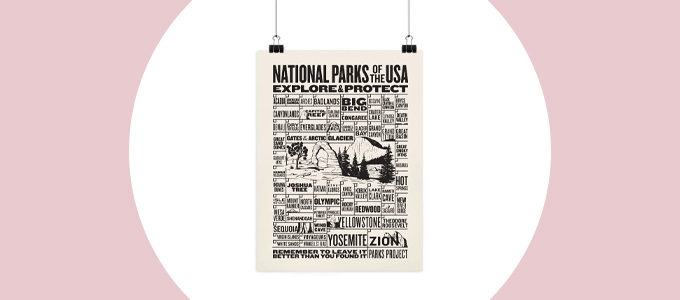
The Parks Projects' National Parks of The USA Checklist Poster offers a list of all U.S. national parks and supports them with every purchase.
With every dollar spent, Park Projects donates their proceeds to the National Parks Conservation Association, which works to preserve and protect public land.
You can explore more national parks gifts in our gift guide.
Braiding Sweetgrass by Robin Wall Kimmerer
(Amazon) (Bookshop) (Libro.fm)

This is the perfect guide to the teachings of Indigenous communities. The author, Robin Wall Kimmerer, uses her knowledge as an Indigenous scientist to make us more ecologically conscious of our actions.
This is a great gift for those who want to live a more environmentally-friendly life, driven by BIPOC communities.
The Sill Plant Parent Set
$48.00

If someone you know is (or if you are!) growing into a plant-parent-to-be, The Sill Plant Parent Set is a collection of low-maintenance plants to get you started.
The Sill is POC-owned and aims to make plants more accessible for public use, while helping you nurture what is Earth’s most precious facet — nature.
Uncommon Goods' Living Composter
$199.00

Uncommon Goods' Living Composter turns food scraps into fertilizer. That means whatever foods you don’t finish, you can repurpose into nature.
The composter, made from recycled plastic, processes over two pounds of food a week and can be spread around your plants or gardens to help them grow.
Gifts For Your Friend With Kids
Gifts that do a lot of good, for your friend with a little one!
A Kids Book About
$19.95

A Kids Book About is the perfect way to introduce your kids to the world. These topics for kids include antiracism, anxiety, safety, and empathy.
If you know someone who wants to help their kids learn more about themselves and the world they live in, consider gifting A Kids Book About.
Black Futures Matter Lined Notebook
$20.00

Black Futures Matter Lined Notebook is designed by a BIPOC-owned business and a staple for community empowerment. The notebook has “your future is brighter than you’ll ever know” written across it, sending a message of encouragement to Black youth.
In addition, 100% of the profit made is split between the artist of this design and the Black Emotional and Mental Health Collective.
Violet the Fawn Hand-Knit Doll
Regular: $79.00 | Little: $59.00

Violet the Fawn Hand-Knit Doll helps feed kids all across the world. For every purchase made of these smiling fawn dolls, 10 meals will be provided to children in North America and across the world.
Made with fair trade and handmade care, this is the perfect doll to gift.
Loom Parent-Child Journal
$35.99

Loom Parent-Child Journal helps create a healthy dialogue between parents and children. The journal is filled with thoughtful prompts that improve reading, writing, and communication skills in adults and their kids.
If you know a parent who’s looking to hear more from their child, this journal can do the job.
Check out more of our gift guides to find ethical products that give back and make a difference → Good Good Good Gift Guides
Deb Haaland, an enrolled member of the Laguna Pueblo, said she is 'proud to be in a position' to start with a term offensive to Indigenous women on 650 different places on federal land.

This article was originally published by The 19th.
Interior Secretary Deb Haaland announced Friday that the agency is establishing a task force to identify and remove derogatory terms used in the names of public land features such as valleys and lakes, beginning with the word “squaw.”
Haaland signed an order that identifies the word — an ethnic slur to describe Indigenous women — as derogatory and establishes a Derogatory Geographic Names Task Force to rename the 650 places on federal land that contain it.
A separate order creates an Advisory Committee on Reconciliation in Place Names, made up of history experts, members of the general public, and representatives from Indigenous communities, that will review and recommend changes to other derogatory words used as names on federal land.
“Our nation’s public lands and waters should be places to celebrate the outdoors and our shared cultural heritage, not to perpetuate the legacies of oppression. Indigenous people, and in particular women, know how offensive this word is, and I’m proud to be in a position to rid federal places of it,” Haaland said over the weekend in a visit to Alcatraz Island to mark the 52nd anniversary of its occupation by Indigenous activists.
Haaland is an enrolled member of the Laguna Pueblo and the first Native American to be a Cabinet secretary of an executive branch agency.
The Interior Department employs about 70,000 people who oversee more than 500 million acres of public land, including hundreds of national parks.
It contains the Bureau of Indian Affairs, which administers most programs related to more than 550 federally recognized tribes.
In 2018, before President Joe Biden tapped Haaland to lead Interior, she was one of the first two Native American women elected to Congress.
When Haaland was sworn in to represent New Mexico’s 1st Congressional District, she said that “Congress has never heard a voice like mine.”
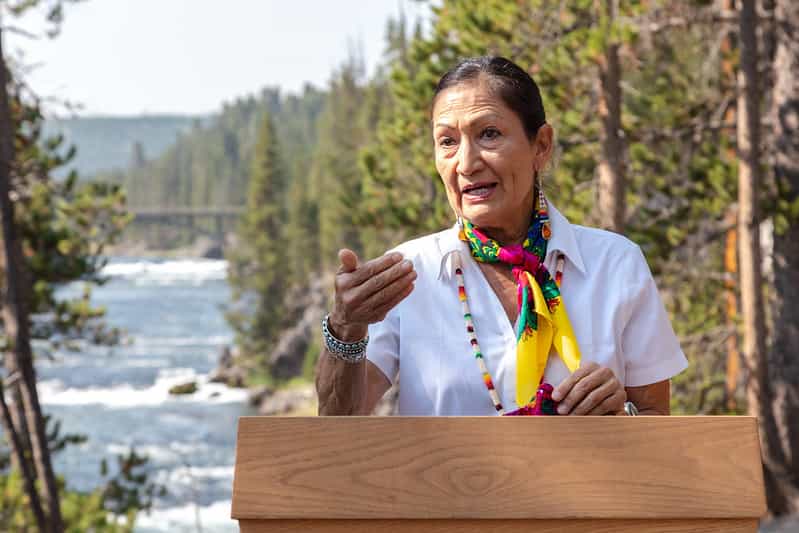
In both roles, the Democrat has been outspoken about addressing human-caused climate change and what she has called an “epidemic” of missing and murdered Indigenous women.
The word “squaw” is believed to be a derivation of the Algonquian word for “woman,” but “the term has historically been used as an offensive ethnic, racial, and sexist slur, particularly for Indigenous women,” the Interior Department said.
The Interior Department has, in the past, identified other derogatory terms related to Black people and Japanese Americans that it no longer uses in naming places on public land.
Several states had already passed legislation prohibiting the use of the word “squaw” in names of public places, and federal legislation is pending in Congress that would prohibit the use of derogatory terms in public land names.
Brooklyn-based Fabscrap hopes to sign up 20 to 25 brands to recycle textile waste in the Philadelphia, Baltimore, Washington, DC, and southern New Jersey areas over the next year.
In fashion, the design room is the laboratory where each new season begins — and where the waste stream starts, too.
Designers, seamstresses, pattern-makers, and cutters hover around the dress form, cutting, pinning, and draping a style that can eventually end up on a clothing line.
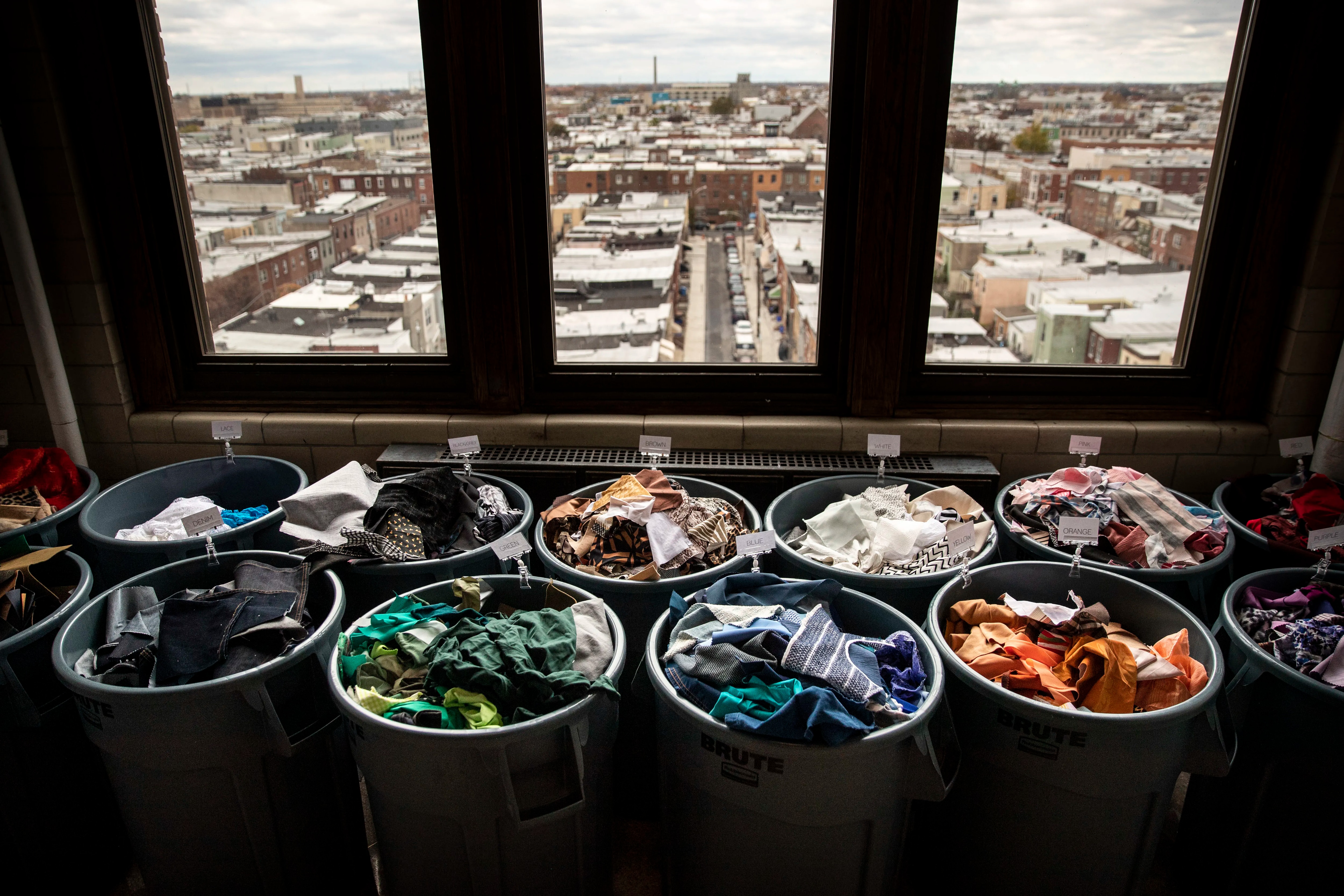
But once that sampling process is done, all around that mannequin are piles of cutting waste, leftover sample yardage, swatches of various colors, and mutilated samples that are of no use to the design house.
This waste is generated every season and the responsible disposal of it is an enormous problem for the industry, one that has a multitude of environmental repercussions.
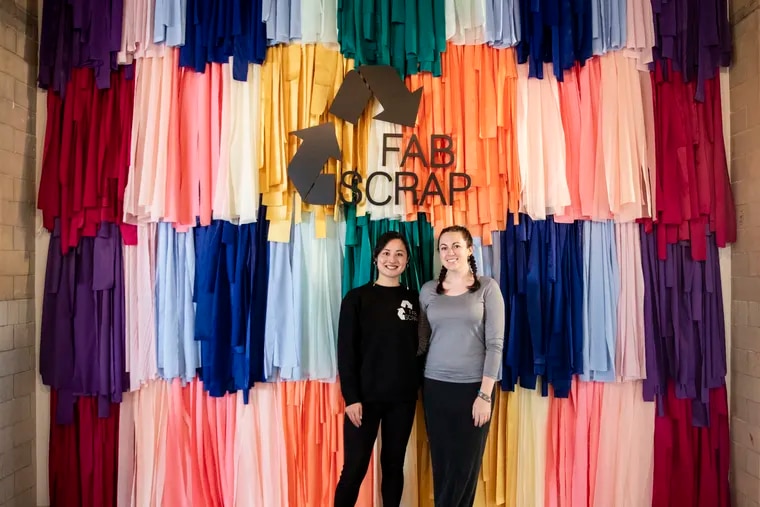
Fabscrap, a Brooklyn-based nonprofit, is addressing it by opening a Mid-Atlantic hub in Philadelphia in the artist-and-designer-filled Bok building on Nov. 15, World Recycling Day.
Fabscrap hopes to sign up 20 to 25 brands for service in the Philadelphia, Baltimore, Washington, and South Jersey areas in the next year.
Companies send the group more each year “because they are happy to find a responsible good outlet for all their design materials,” said Jessica Schreiber, Fabscrap’s CEO. “They start with fabric, but then we’ll receive buttons, leathers, yarn, ribbon, etc.”
Related: How To Recycle Shoes
Related: How To Ethically Get Rid Of Things That Don't Spark Joy
Fabscrap’s Fashion Roots
In 2016, Fabscrap, opened in Brooklyn to work with fashion, interior design, and entertainment companies, collecting their unwanted fabrics to recycle and save from landfills.
It has worked with 550 brands and, for a small fee, picks up an average of 6,000 pounds of textiles a week from customers. It sorts and decides what can be reused, recycled, or sold.
The group will soon reach its one millionth pound spared from a landfill.
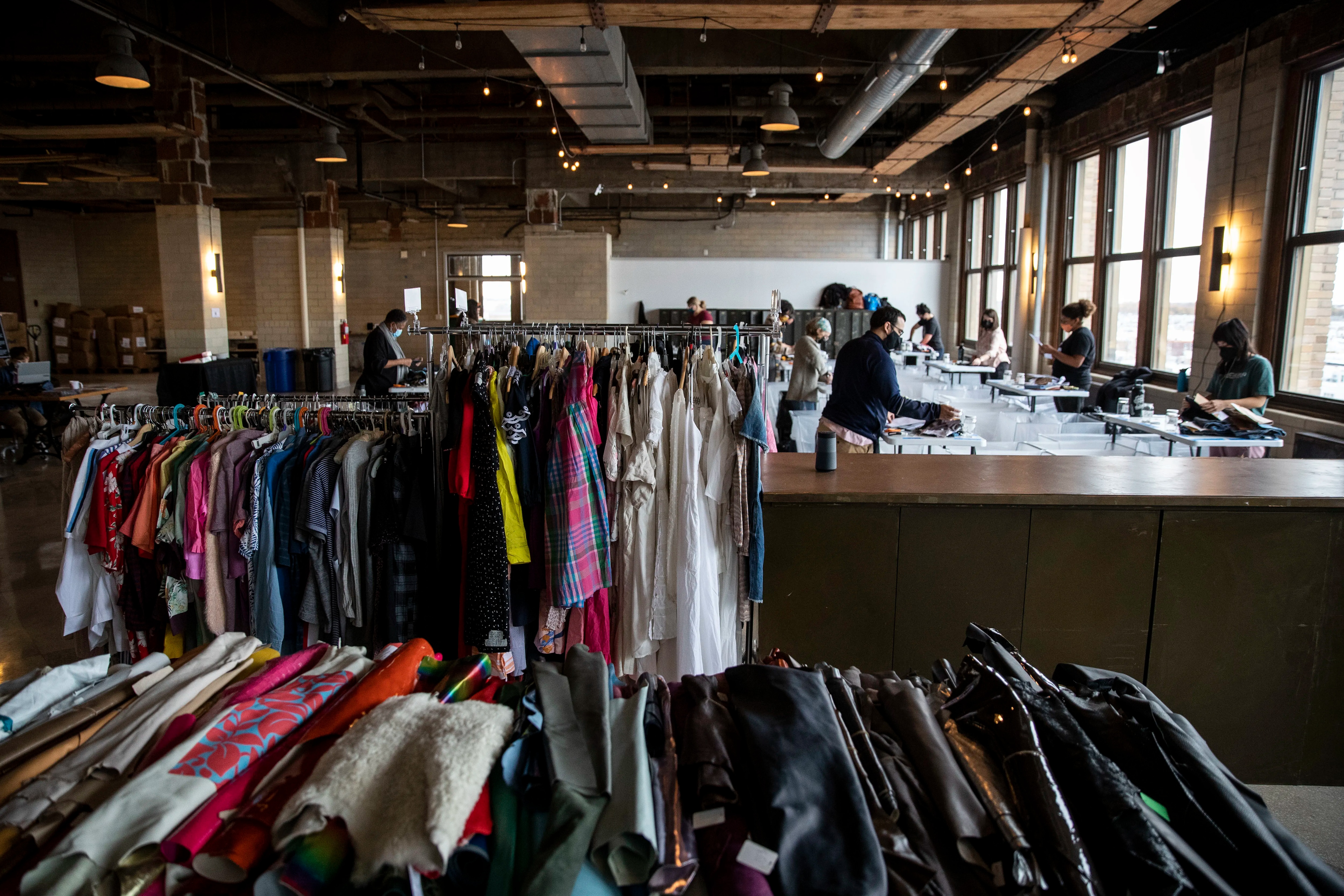
This facility will work with local recycling company Retrievr, a residential textile collection company, to collect waste here. The former Bok school’s 6,800-square-foot cafeteria now will house 16 fabric-sorting stations, a fabric resale shop, and an area to showcase the work of one designer a month who uses recycled materials in clothes.
This month’s designer is the sustainable clothing store Grant Blvd.
Volunteers, totaling 7,000 so far in New York, are compensated with five pounds of free fabric per three-hour session and will sort the fabric by fiber for resale. Some smaller scraps are sold to companies that shred it for use as insulation or fabric stuffing.
Urban Outfitters eager to recycle
Fabscrap received a working capital grant from Philly-based fashion company Urban Outfitters Inc. to secure the new facility and provide general operating funds for the first two years here.
Fabscrap first began working with Urban in 2019 as Allie Noll, the firm’s manager of global sustainability and sourcing operations, searched for a company to recycle its waste from the sampling process.
In 2019, she was connected with Fabscrap and shipped 246 pounds of cutting waste to the New York facility. In 2020, Fabscrap recycled more than 1,100 pounds for the Philly-based company. That’s when the partnership talks began.
“It happened pretty mutually,“ said Fabscrap’s Schreiber. “We were looking to grow and needed support,” while Urban wanted to explore a deeper commitment to sustainability.
“Urban suggested Philadelphia and we already had great connections with organizations, institutions, and programs in Philadelphia so it seemed like the right next step,” she said.
To date, the company has signed on Urban and its brands; Wolhide, Lillies and Loaves, and Cupid Intimates, and just finished service agreements with eight other companies in the area.
“We’re expecting about 3,000 to 5,000 pounds per month, and then growing after that as we meet more of the industry here, as well as companies in Baltimore, DC, and southern New Jersey,” she said.
Globally, 53 million tons of textiles are used to create clothing each year and about 12% of that is wasted during design and production, according to the Ellen MacArthur Foundation, which aims to create a circular economy that eliminates waste and pollution.
The scale of the problem in Philadelphia is harder to quantify. While the Office of Sustainability has figures for residential textile waste (linens, clothing and towels tossed by households), it has none for commercial waste because businesses contract with their own private haulers, which aren’t required to report those figures to the city.
Nordstrom helps assemble the data
“The main thing that we are hearing is that it’s precisely because commercial textile waste is not measured or tracked that Fabscrap services are so needed,” Schreiber said.
At its offices, each bag collected is weighed, sorted by company and fiber, and kept in a database. Each company can see how much it has recycled in a year, a useful metric for sustainability reports.
Nordstrom has also partnered with Fabscrap with a grant to fund the Fabscrap Partner Portal, which allows every customer access to its diversion and environmental impact data, increasing supply chain visibility, and improving decisions throughout the supply chain.
Residential textile waste is 6% to 6.5% of the total waste stream here. To calculate those figures, the city does a waste characterization study by picking through samplings of trash over several months and weighing it by category.
Helena Rudoff, waste reduction lead in the city’s Office of Sustainability, estimates that residential and commercial textiles together could be 10% to 15% of the total waste stream.
“Right now, if you are a design house or another business and only being serviced by the Streets Department, your textiles aren’t being recycled.”
Philadelphia trash goes to landfills, such as the 250-acre Waste Management facility in Fairless Hills, Bucks County or to be burned at the Covanta facility in Chester. The Waste Management site, opened in 2016, is already close to 50% full and it is hard to know how long it will take to become filled.
“Their work not only conserves landfill space but also gives new value to the energy and raw materials that went into producing these textiles,” said Waste Management’s John Hambrose, referring to Fabscrap’s work.
The number of stakeholders interested in re-thinking waste in Philadelphia is growing each month. “The issue with waste is, we eventually run out of places to put it, " said the city’s Rudoff. “Textiles are high-value waste, meaning the value of the material if you recycle it is higher than if it goes to a landfill.”
She works with such groups as Circular Philadelphia, which opened in June, and hopes eventually to work on the policy side of the problem. In New York, by law, if a fashion house generates more than 10% of its waste in textiles, it has to be recycled.
Samantha Wittchen, director of programs and operations at Circular Philadelphia, is working on a Textile Recycling Task force, along with Rachel Mednick of All Together Now PA.
Wittchen would like to attract a large-scale textile recycling facility to open in the Philadelphia region. Right now, the closest ones are in North Carolina. Better data can help them effect policy changes locally similar to what New York City has in place and would be even more powerful if statewide data could be captured.
“Are there opportunities at the state level to ban putting textiles in a landfill?” said Wittchen.
Kabira Stokes, CEO of Retrievr, said her broader vision for her group and for the city, is also to set up a full circular textile recycling plant somewhere in Pennsylvania. “It’s the only way we will be able to certify that the responsible outcomes are happening with what people are giving us.”
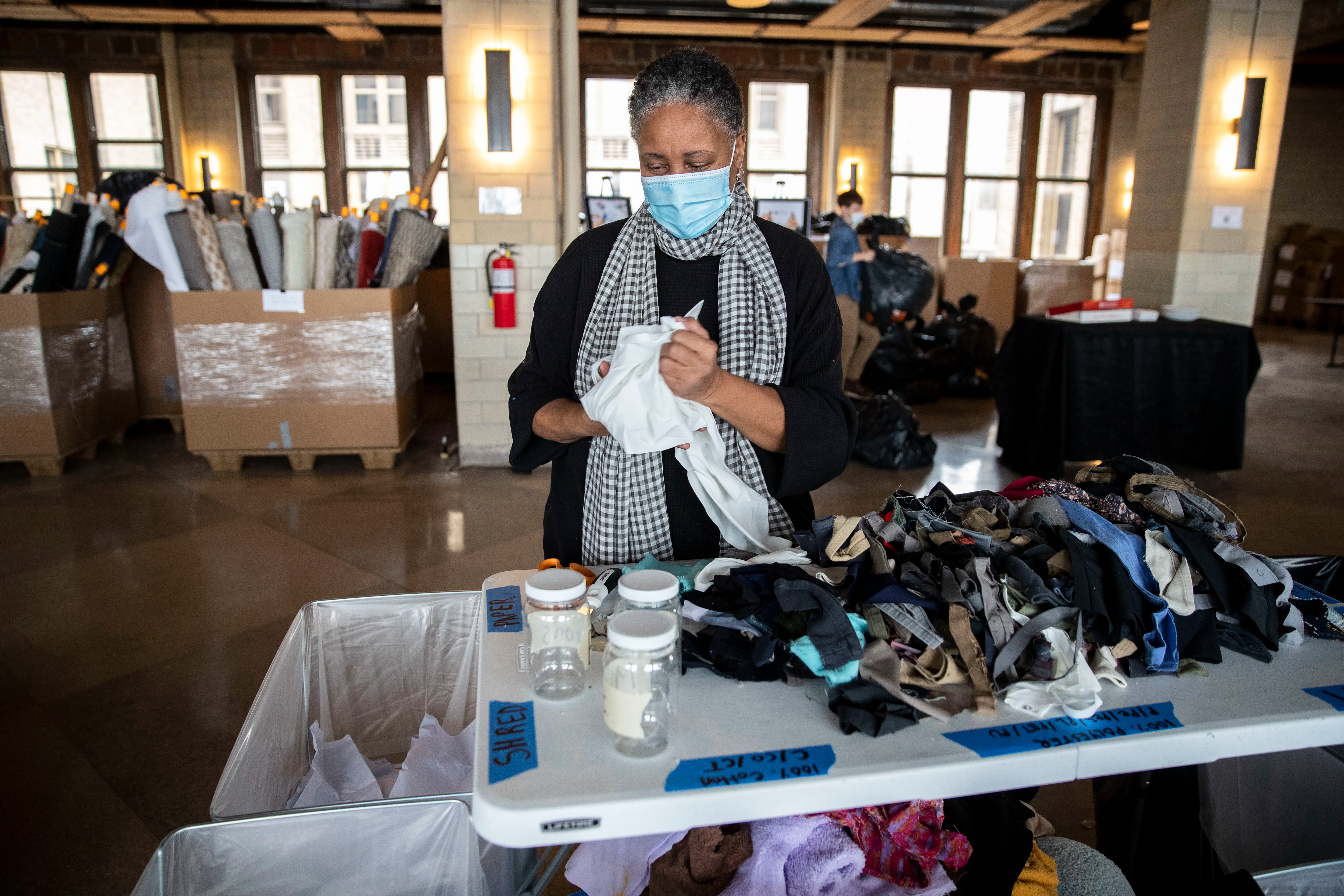
For Schreiber and her co-founder and creative director, Camille Tagle, the mission for Fabscrap has always included education, especially at the university level.
For five years, Tagle has worked with Drexel University senior fashion design majors in a capstone project that has her selecting and donating fabric for them to create a design using zero waste design practices.
“Those students have gone on and worked in the industry and they get their companies to work with Fabscrap or to focus on more sustainable practices,” Tagle said.
This story is part of the SoJo Exchange from the Solutions Journalism Network, a nonprofit organization dedicated to rigorous reporting about responses to social problems. It was originally published by The Philadelphia Inquirer on November 15th, 2021.
For 17 years, there were no federal executions in the U.S.
For the first time in history, more people support abolishing the death penalty than support using it.
And yet, the Trump Administration executed 13 people in 2020 alone.
While human rights activists have been protesting the death penalty for decades, this unprecedented number of federal executions ignited a resurgence of activism and awareness around the topic of the death penalty.
We created this guide to give context to the death penalty, why people are advocating for an end to capital punishment, and how to realistically enact change:
The Death Penalty Around the World
According to Amnesty International, there were at least 657 executions in 20 countries in 2019, down by 5% from 2018 (at least 690 executions).
It’s the lowest number of executions that Amnesty International has recorded in at least a decade.
In 2019, there were at least 2,307 new death sentences in 56 countries, and 2,531 were reported in 2018. At least 26,604 total people had been sentenced to death globally at the end of 2019.
The countries with the most executions in 2019: China, Iran, Saudi Arabia, Iraq, Egypt, and the United States.
As of January 2021, 107 countries had abolished the death penalty around the world. In 1975, only 16 countries had.
The Death Penalty in the United States
Under the Trump Administration, for the first time ever, the federal government executed more people than all states combined in a year.
In 2020, the federal government executed 10 people, and states executed 7 people.
Since 1950, the federal government has executed 26 people — meaning more than a third of federal executions in the last 50 years occurred in a single year: 2020.
Meanwhile, there is a larger trend of declining execution rates in the U.S. 22 states have already abolished the death penalty, 3 have issued a statewide moratorium on executions, and 2 haven’t executed anyone in 10 years.
Reasons Why the U.S. Should Abolish the Death Penalty:
1. The death penalty is irreversible, and the margin of error is unacceptably high.
According to the Equal Justice Initiative, for every 9 people executed, 1 person on death row has been exonerated.
172 total people have been exonerated and released from death row since 1973.
Perjury and official misconduct are the leading causes of wrongful convictions in death penalty cases.
In 2018, a record 111 exonerations involved witnesses who lied on the stand or falsely accused the defendant.
In that same year, misconduct by police, prosecutors, or both was involved in 79% of homicide exonerations.
2. Rather than deterring crime, the death penalty exacerbates a cycle of violence.
After decades of research, there is no evidence that the death penalty is more effective than life imprisonment in reducing crime.
Studies have shown that murder rates, including murders of police officers, are consistently higher in states that have the death penalty, while states that abolished the death penalty have the lowest rates of police officers killed in the line of duty.
And law enforcement officials agree. In a 2009 survey, police chiefs around the country prioritized the death penalty last for reducing violent crime, below increasing the number of police officers, reducing drug abuse, and creating a better economy.
They said it was one of the most inefficient uses of taxpayer dollars to fight crime.
And rather than a means of justice for victims, the death penalty extends trauma, creates even more victims, and introduces another wave of violence.
"The death penalty is a symptom of a culture of violence, not a solution to it."
— Amnesty International
3. The death penalty is discriminatory and disproportionately impacts people of color, people with mental illnesses, and low-income individuals.
People of color are more likely to be prosecuted for capital murder, sentenced to death, and executed — especially if the victim in the case is white.
African Americans make up 42% of people on death row and 34% of those executed, but only 13% of the population is Black.
75% of executions for murder were in cases with white victims. In Georgia, people convicted of killing white victims are 17 times more likely to be executed than those convicted of killing Black victims.
Mental health experts estimate at least 20% of people on death row have a serious mental illness.
The death penalty is mostly imposed on poor people who cannot afford to hire an effective lawyer, and are often appointed one who is underpaid, overworked, and inexperienced in death penalty cases.
4. The death penalty is expensive, and both the use of and public support for it are declining.
The death penalty costs taxpayers more than life imprisonment without parole. It’s an expensive government program that is no more effective at deterring violent crime.
In 2016, public support for the use of the death penalty dropped below 50% for the first time in 45 years — more people now support abolishing the death penalty than ever before.
In 2020, Colorado became the 22nd state in the U.S. to abolish the death penalty. There were the fewest new death sentences since 1973, and the fewest total executions since 1991. State executions were the lowest in 37 years.
How To Get Involved in the Fight to Abolish the Death Penalty
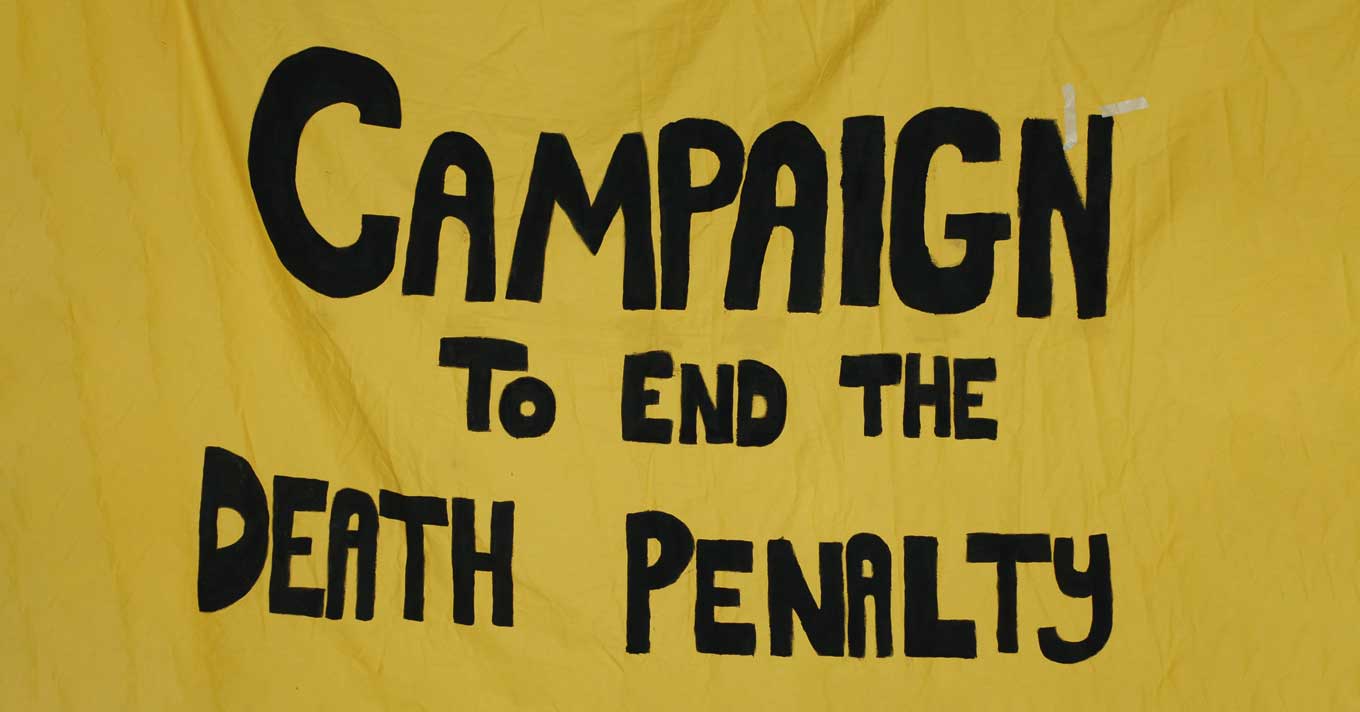
Sign this petition to end the death penalty:
On January 17th, Martin Luther King Jr. Day, Shane Claiborne and other activists at Death Penalty Action will be visiting the Supreme Court, the U.S. Congress, and the White House. They will be "asking each of them to take concrete steps to abolish the death penalty" and to "demolish the federal death chamber" in Terre Haute, Indiana.
These activists are asking people to sign their petition to communicate the number of people who "oppose executions based on moral, faith, economic, and other pragmatic reasons" and believe "the death penalty is a failed public policy."
They will hand-deliver the petition to President Biden, Attorney General Garland, the U.S. Congress, and U.S. Supreme Court & Federal Judiciary, in the hopes of bringing an end to capital punishment in the United States.
Sign the petition ahead of their January 17th visit.
Help abolish the death penalty at the federal level:
Call 1-844-USA-0234 and enter your zip code to be connected with your representatives to tell them you want to see the death penalty abolished.
Ask President Joe Biden and Vice President Kamala Harris to call a moratorium on executions, and an end to the federal death penalty.
Help get rid of the death penalty at the state level:
Look up your state’s specific laws regarding the death penalty at deathpenaltyinfo.org
Call your governor and state officials and tell them you want your state to be the next to abolish the death penalty.
Support organizations working to abolish the death penalty:
Death Penalty Action is leading the campaign to end the death penalty in the U.S. They provide resources, support, and help create educational and direct action events.
The Equal Justice Initiative provides effective legal counsel to people on death row, and is committed to ending mass incarceration and excessive punishment in the United States.
"The question about the death penalty in America is not whether people deserve to die for crimes they commit. The real question is: Do we deserve to kill?"
— Bryan Stevenson, founder of the Equal Justice Initiative
→ Read more quotes about abolishing the death penalty
In 1983, Canada’s Anne Murray released another hit song. This one, though, was different than what her fans were accustomed to. A Little Good News is a sombre ballad summarizing the mood of the day:
“One more sad story’s one more than I can stand; Just once how I’d like to see the headline say; ‘Not much to print today, can’t find nothin’ bad to say’ […] We sure could use a little good news today.”
Nearly 40 years later, the lyrics strike a chord. Except, these days, the news coverage of those sad stories is non-stop. There’s a “fire hose” of information in the palm of our hands, day and night.
As we grapple with grim headlines about the pandemic, political upheaval, racial injustice, and climate change, we could all use a little good news.
In the meantime, many people — of all ages and backgrounds — news avoiders.” Some are limiting how much they consume. Others are shunning it altogether. They don’t watch, listen or read.
News avoidance is the subject of my research paper “No News is Not Good News,” soon to be published in the Athens Journal of Mass Media and Communications.
As a journalist for more than 30 years, I experienced massive changes to the news industry first hand.
Now, as a journalism professor, I have the opportunity to explore what’s behind the avoidance trend.

Worn out & needing breaks
The weight of the world’s news can be too much. Even before the arrival of COVID-19, a 2019 survey of 12,000 American adults found 66 percent admitted they were “worn out” by the sheer amount of news available.
In 2020, 71 percent of American adults said they need to “take breaks from COVID-19 news” while 43 percent said the news “leaves them feeling worse emotionally.”
In 2021, a survey in Canada found more than two-thirds (69 percent) of 1,002 Canadians surveyed admitted to being “burned out when it comes to consuming news about the pandemic.”
The World Health Organization even addressed this in their mental health tips saying: “Try to reduce how much you watch, read or listen to news that makes you feel anxious or distressed.” And growing numbers of people are taking this to heart.
In 2020, the Reuters Institute for the Study of Journalism at Oxford University examined the “infodemically vulnerable” in Britain — people who chose to cut back on pandemic news. More than one-fifth said “they often or always actively try to avoid the news” with the majority citing the impact on their moods.
Distrust in media
While mental health preservation appears to be the primary reason behind the increase in avoidance, trust is also cited.
Distrust in mainstream media isn’t new, but the skepticism surrounding journalism intensified during the pandemic as anti-vaccination advocates and conspiracy theorists questioned the validity and accuracy of COVID-19 facts shared by news organizations and governments.
In its 2021 annual worldwide Trust Barometer, Edelman (a communications firm) found trust in media, both traditional and social, at all-time lows.
One factor is a strong perception of bias among journalists. Of the 33,000 people surveyed 59 percent agreed with this: “Journalists and reporters are purposely trying to mislead people by saying things they know are false or gross exaggerations.”
Given these findings and opinions, it’s not surprising that fewer people are consuming news, at least in the traditional sense.
The question for journalism is whether news avoidance is a short-term, pandemic-related phenomenon or a steady trend attributed to distrust and a decline in the overall quality of journalism?

What can news organizations do?
It’s time for news organizations to do more to convince the public of their relevance and reliability.
Based on my experience as a journalist, I believe that many news organizations have fallen short by refusing to invest time and money to conduct audience research to confirm what consumers want, as opposed to assuming to know what they want based solely on what has worked in the past.
Greater transparency is another potential solution. Educating consumers on how journalists do their jobs and why certain stories and issues are covered over others is more important than ever.
One method — publishing or posting entire interviews or transcripts — would enable consumers to determine for themselves if the interviewee’s quotes are accurate or taken out of context.
Improved trust and increased relevance can also be attained when news organizations address the lack of diversity and alternative perspectives in newsrooms and strive for improved understanding of marginalized communities.
The world has changed dramatically in the past 20 years but, apart from technology, little has changed in how newsrooms are structured and how journalists inform the public.
So, if bad or irrelevant news has you considering avoidance, a suggestion: just as we’ve been taught that moderation is the key to so many habits, it’s the same for news.
You don’t need to stay glued to the TV or Twitter or Facebook hour after hour and you don’t need your phone to be the last thing you see each night.
Rather than shutting off the fire hose of news completely, reduce the flow to a steady, manageable trickle.
Stay informed without being overwhelmed. I’m confident you’ll find at least a little good news.
This article was originally published by The Conversation on November 16th, 2021 — and was republished with permission.
We are constantly being bombarded with dire warnings about the environmental and climate emergency. Act now, we are told, or face an unprecedented global catastrophe.
But while the solutions proposed – solar panels, heat pumps, eating less meat – are no doubt necessary, they are for the most part unimaginative and uninspiring – and isolated from a wider system of beliefs whereby they might acquire genuine meaning.
The following five books offer an alternative perspective. In contrast to the simplistic idea that all we need to do is implement a set of technological and lifestyle changes, they offer a new way of understanding and relating to nature.
Related: Get inspired by alternatives to Amazon for books and alternatives to Audible for audiobooks
Gaia by James Lovelock (1979)

In his 1979 book, James Lovelock offers an entirely new understanding of the earth as not just a planet on which life has evolved, but a self-regulating system capable of correcting any significant fluctuations that tend towards making it uninhabitable, such as increases or decreases in global temperatures or ocean salinity.
Lovelock shows, for example, how the environment has contributed to driving down atmospheric carbon dioxide levels to compensate for a steadily warming sun. This has kept global temperatures in a habitable range.
Ultimately though, the importance of Gaia lies not just in its bold scientific claims, but in the way it opens up the possibility of bringing together science and spirituality, the true and the meaningful. What does being a part of Gaia mean for us?
Should Trees Have Standing? by Christopher D. Stone (1972)

No law, Christopher Stone claims, can be created until we begin to challenge its non-existence.
And just as it was once “unthinkable” for corporations to be given the same rights as people, the same is true today of living beings and ecosystems.
Nature itself has no rights, only the people that own it or use it.
Against this, Stone argues that certain natural entities – trees, forests, rivers – should be treated as people and granted “rights”.
This radical idea is increasingly being implemented. In 2008 and 2009, Ecuador and Bolivia became the first countries in the world to recognise nature as a legal person in their constitutions. And in 2017, New Zealand recognized the legal personhood of the Whanganui River.
Developing these insights in the 2010 edition of the book, Stone asks if the climate should also be granted legal standing. He sees this as problematic but not impossible, though it would require a legal system that goes beyond the current nation-state structure.
Biomimicry by Janine Benyus (1997)
Few would deny that technology will play a major role in achieving sustainability.
But for the most part, we concentrate on individual technologies – such as electric vehicles or biodegradable packaging – without pausing to rethink technology as a whole.
A significant exception to this is Janine Benyus, who argues that sustainability calls for an entirely different approach: innovation inspired by nature, or “biomimicry”.
The book explores the practice of imitating nature to solve human design challenges and offers many case studies showing how biomimicry can apply to almost every field of innovation – from solar energy generation based on natural photosynthesis to cereal farming modeled on the native Kansas prairie.
But perhaps the deepest significance of the book is the way it calls on us to view nature not just as something we learn about, but also as something we learn from.
And in that case, we must cease to think of ourselves as the sole possessors of intelligence and knowledge and instead also come to recognize the genius of nature.
Braiding Sweetgrass by Robin Wall Kimmerer (2013)

Like Benyus, Robin Wall Kimmerer thinks nature has a lot to teach us. But whereas Benyus focuses on technological innovation, Kimmerer is interested in broader lessons.
The overarching theme of the book is how to “braid” together indigenous wisdom and scientific knowledge, a project that the author, as a citizen of the Potawatomi nation and a professional biologist, has devoted much of her life to.
Kimmerer’s most brilliant example is sweetgrass itself – an aromatic plant used in indigenous medicine and basketry.
Whereas Kimmerer’s biologist colleagues presumed that harvesting sweetgrass always harms it, a biology student of hers designed a careful experiment proving something the Potawatomi had long since known: harvesting sweetgrass actually stimulates vigorous growth.
What these plants teach us, then, is that humans are not outside nature, but a part of nature – and with the right approaches we can enable other species to flourish alongside our own.
The Climate of History in a Planetary Age by Dipesh Chakrabarty (2021)

Addressing the meaning of climate change through the lens of history, Dipesh Chakrabarty proposes a fundamental shift from thinking about “global” to “planetary” climate change.
Chakrabarty argues that while the world is busy solving a “global” problem, we forget to ask what the “global” means for us today.
The “global”, he explains, is essentially a human-centric idea, intrinsically linked to postwar globalization and modernization.
The “planet”, by contrast, decenters this human-centric idea, allowing nonhuman perspectives and interests to be taken into account. Most importantly, it raises the possibility of discovering new universal values.
Chakrabarty also emphasizes that the acceleration of global warming is tightly linked to the anti-colonialist modernizing movements of the mid-20th century, such as Chairman Mao’s Great Leap Forward.
This was an economic and social program aimed to bring China up to speed with the Western world through intensive industrialization and technological advancement.
Chakrabarty argues that it is only by overcoming our obsession with constant growth and development that we can rise to the challenge of ensuring planetary sustainability.
This article was originally published by The Conversation and was made available to Good Good Good.
- Rewilding projects are multiplying in the U.K. in response to a growing awareness of the country’s serious loss of biodiversity. Britain ranked 189th out of 218 countries in the 2016 “State of Nature” report for the quality of its biodiversity and its natural condition.
- One of the most innovative projects now underway may be WildEast, which ambitiously hopes to rewild an area more than three times the size of New York City, creating interconnecting wild corridors across East Anglia, the country’s most intensely farmed region.
- The plan originated with three large estate owners, who, in addition to the commitment of their own lands, have already registered 1,000 “pledgees” for the project. However, some local residents, especially farmers, have complained that there is not enough consultation by WildEast.
- Even so, many East Anglia residents welcome the explosion in wildlife happening on the newly rewilded areas. WildEast’s long-term goal is to rewild 250,000 hectares (618,000 acres) by 2070.
“Folklore has it that the last great bustard in the U.K. was shot here, where we are standing, in 1832,” says Olly Birkbeck, as he surveys Massingham Heath, a large tract of open land in eastern England.
“They’re almost like a small ostrich — crested and rather peculiar looking.… They make an extraordinary clucking noise and they’re just the most gorgeous things you’ve ever seen. They’re rather cumbersome-looking creatures and they used to stalk around here in the hundreds in the old days. I think they were used to decorate ladies’ hats quite a lot as well.”
“The next project, potentially, is to bring them back.”
This may not be wishful thinking. It was clear to the reporting team standing with Birkbeck on the heath in mid-September that far-reaching change is underway. As afternoon sunlight penetrated billowing clouds, tall grasses swayed in a gentle breeze.
Birkbeck was taken aback by what happened on the heath last spring, change that he attributes to his rewilding project. “Whoosh! It all came to life … this extraordinary sort of alchemy happened,” he recalls. Flowers bloomed in an explosion of color. “Skylarks, stone curlews, and turtle doves, all desperately endangered, are proliferating!”

Nature: An unforeseen victim of the War
Massingham Heath is part of the 2,500-acre Little Massingham Estate, bought by the Birkbeck family in the 1800s and somewhat unexpectedly passed down to Olly Birkbeck by his aunt in 2016.
Taking on the estate, Birkbeck also inherited a broken model of farming established during the Second World War, when, amid a harsh regime of food rationing, the Ministry of Agriculture’s “Dig for Victory” campaign encouraged people to turn open English land into vegetable patches.
About half of the heath, “once a lovely wilderness,” was dug up to plant arable crops and sugar beets to help feed the nation. Following the war, matters only deteriorated.
“Then, of course, along comes the double-headed monster of the horrible proliferation of agricultural chemicals, and then [government agricultural] subsidies, which incentivized farmers not to look after nature, but … to sweep it aside,” Birkbeck says.
Farmers were paid for every acre farmed, which drove them to bring marginal lands once left to nature into production.

“So, not only did we not return [Massingham] to heathland, but we also continued to intensively farm it by committing ‘nuclear Armageddon’ on it. And of course, in those days, it was considered a triumph to subjugate the wild land rather than to protect it.”
As the new owner and land manager, Birkbeck realized that up to three-quarters of crops grown on his estate were going to feed not people but livestock, especially beef cattle, “because we think that it’s our God-given right to eat 34 cent burgers three times a day.”
Time for a rethink, Birkbeck concluded. In partnership with Natural England, the agency that advises the government on England’s natural environment, he decided to try to restore the heath.
In 2019, he fenced it off, called on friends to collect native seeds from other heaths, and sowed them on his land.
He also began reintroducing animals that had traditionally lived there over the centuries, including wild ponies, cows, goats, and pigs.

WildEast: A plan to remake the countryside
In 2020, Birkbeck joined with fellow farming aristocrats Hugh Crossley (the fourth Baron Somerleyton, commonly referred to as Lord Somerleyton), and Argus Hardy (son of the fifth Earl of Cranbrook), to create the WildEast rewilding project.
Unlike the U.K.’s best-known rewilding experiment on the self-contained 3,500-acre Knepp Estate in southern England, the WildEast initiative hopes to link up hundreds of smaller private and publicly owned land parcels to create contiguous wild corridors.
The hope is that they will ultimately cover 618,000 acres of East Anglia — an area three times the size of New York City — by 2070.
On its website, WildEast invites everyone “across farming estates, industrial estates, housing estates, and schools, gardens, allotments and churchyards to be contributories to a great river of nature,” and set aside 20% “of whatever [they] have” to give back to nature.
That 20% figure, WildEast says, has been identified by scientists as the “nature need” if the region’s biodiversity is to stage a comeback.
The task is an urgent one.
“Nature in Britain is in a really bad way,” says Richard Bunting of Rewilding Britain, an independent charity set up in 2014 to support the burgeoning number of Britons turning to rewilding in response to the climate and biodiversity crises. That includes the founders of WildEast.

Britain ranked 189th out of 218 countries in the 2016 “State of Nature” report for the quality of its biodiversity and its natural condition, Bunting points out.
“Over half of our species are in decline and huge numbers are moving towards extinction … Things have been going seriously downhill over the past 80-100 years.”
Rewilding could be one solution to the problem.
“Rewilding is large-scale nature restoration — or rather, large-scale restoration of ecosystems until the point when nature can look after itself again,” Bunting explains.
“Nature’s got into such a bad place that often [human] interventions are needed,” at least in the early stages, when native and traditional species of flora and fauna need to be reintroduced, which on Birkbeck’s lands includes heathland grasses and grazing animals.
Bunting says rewilding not only brings benefits in terms of habitat restoration to counter species loss, but that “rich, natural, healthy ecosystems help soak up CO2 from the atmosphere, which is needed alongside reducing fossil fuel use” to help curb global warming.
Rewilding can also mitigate the consequences of climate change by, for example, reducing flooding brought on by extreme rainfall.
Rewilding Britain wants to see 5% of the English landmass fully rewilded by 2030 (an increase from less than 1% today), with a further 25% “restored to nature” by that year as well.
Nature restoration, Bunting explains, does not mean returning land to some idealized past state, but to a condition where biodiverse, resilient ecosystems are fostered to mitigate harmful human impacts.
Rewilding of this sort includes the implementation of more nature-friendly agricultural methods such as regenerative farming, a form of agroecology.

A visit to the Somerleyton estate
Hugh Somerleyton, dressed in jeans, a WildEast baseball cap and T-shirt, cut a somewhat incongruous casual figure as he spoke to us before the imposing, centuries-old Somerleyton Hall, which he inherited along with his title when his father died in 2012.
Regarded as one of the finest Victorian stately homes in the U.K., Somerleyton Hall boasts antique furnishings, fine paintings and — jarringly, given the nature of the baron’s project — enormous stuffed polar bears.
Barely a year on from WildEast’s founding, Somerleyton admits it’s early days for the project, but notes that it has already registered 1,000 “pledgees” — individuals who have committed to eventually set aside 20% of their land for nature.
On that September day, we were sniffed by curious Exmoor ponies introduced by Somerleyton, along with other animals. “Horses nip the grass, cows tear it, and pigs rootle,” all required to support the locale’s traditional ecosystem, Somerleyton explains.
“Where we’re particularly pleased is that there are lots of [public and private] sectors [getting involved in WildEast] that we hadn’t thought of,” he says
“A good example is Greater Anglia, the railway network, which has quite a lot of land. We’re also working with EDF [the French state-owned power utility] at Sizewell [a nuclear powerplant], who have a 2,000-acre [809-hectare] estate … and others like the National Grid and National Trust.”
But it’s proving more difficult to win over the most important players: farmers. Only about 100 of the region’s approximately 2,000 farmers have so far pledged.
Given that 71% of the U.K.’s land is farmed, getting them on board is critical.
“We absolutely understand that 20% is a lot. Most farmers probably are [already] giving up around 3% to an environment scheme, and maybe they’ve got somewhere between 0.5% and 1% of their farm as hedgerows,” says Somerleyton. “So, it’s another 15%, 16% or 17%. But [this takes place] over 50 years. We’re not asking for it today.”
Somerleyton says the type of incremental change needed on farms is in evidence on his own estate: “Instead of farming closer and closer to the bottom of the hedge, we’re just quietly doing exactly the reverse and allowing these hedges to grow out,” he explains.


Rob Wise, East Anglia environment adviser for the National Farmers’ Union (NFU), the U.K.’s largest farmers’ organization, is cautious. He told the Eastern Daily Press: “We will be keen to learn more about the WildEast initiative and how this can mesh with other farmer and landowner goals and capabilities.”
Much will depend on incentives available to farmers, which will become known when the government announces the details of its Environmental Land Management Scheme (ELMS), which will replace the EU’s climate change subsidy scheme and is intended to help the U.K. achieve its goal of net-zero carbon emissions by 2050. “The evolution of ELMS will be a great opportunity to support these ambitions,” Wise said.
But not everything should be left to the farmers; society needs to change too, says Somerleyton. “Fifty percent of what we grow goes to animals to feed our addiction to cheap meat which is low welfare, and actually not good for us … Sure, farmers can change, but actually society needs to change with us, changing its diet.”
Embracing smart agricultural practices
There’s yet another challenge to be confronted: how farmers will use the rest of their land that’s not rewilded.
Somerleyton and his farm manager, Robert Raven, acknowledge the potential contradiction between the ambition to set aside 20% of land to nature, while in some cases continuing to farm conventionally on the remaining 80%.
Raven took us to his farm where he practices “regenerative farming,” including direct drilling, a low-till technique that uses lighter machinery to place the seed directly in the residues of the previous crop, minimizing soil disturbance and compaction — a method that also reduces loss of soil carbon to the atmosphere.
In addition, he sows companion plants alongside the main crop to maximize soil health and biodiversity, and minimize the need for chemical inputs.
Proponents of regenerative farming believe it may help curb the impacts of climate change by rebuilding soil organic matter and restoring degraded soil biodiversity, resulting in both carbon drawdown and an improved water cycle.
Insects, birds and butterflies abound in Raven’s fields, which are edged by a broad ribbon of millet, buckwheat and tall grasses that provide seeds for birds over winter. He says the same technique is now being implemented on the huge Somerleyton estate.

Local discontent
But, as often happens with rewilding projects, WildEast is facing growing pains, particularly criticism from local residents.
Some tenant farmers, none of whom wanted us to publish their names, are skeptical of Somerleyton’s commitment to nature restoration.
One told us that that the estate was “being sprayed within an inch of its life,” though he didn’t say what was being sprayed.
Another, a beekeeper, said he “dreaded to see the sprayer out” on Somerleyton’s farm. “If that’s put on in the heat of the day, that mist, no matter what they’re spraying, it is in the air and, if my bees fly through it, that’s it for them,” he told Mongabay.
“You see, [the bees] just can’t tolerate any chemical whatsoever, and you’ll find a heap of [dead] bees at the front of the hive. In fact, the last two months I lost four hives.”
Raven denies these claims, saying the Somerleyton estate is working to minimize chemical inputs, and that “we don’t use any sprays that are likely to affect bees on any crops that are likely to have bees in them, or at a time of year when bees are likely to be there.” He dismissed the complaints as “village gossip.”
Another tenant farmer told Mongabay that Somerleyton had tried to raise water levels in Somerleyton Marshes as part of a plan supported by the Royal Society for the Protection of Birds (RSPB).
But the tenant grazes cattle there and had been offered no equivalent land, resulting in a farcical tussle, he said, as he pulled out the dams to prevent the flooding, while Somerleyton’s employees repeatedly reinstated them.
These complaints may reflect deep-seated reluctance to accept change from tenant farmers who have worked the land in the same way for many decades. The concerns may also tap into decades-old tensions between the estate owner and his tenants.
But their criticisms hit a nerve with Somerleyton.

When we put the question to him, he dismissed the complaints angrily as “fag ends picked up in the gutter” and “the uneducated words of someone who doesn’t like me and the estate.” Of the dispute over flooding the marshes, he said “Somerleyton marshes are mine to flood or not flood.”
This response may reflect a deeper divide. WildEast claims to be a “people-powered” project that aims to “democratize nature by supporting people in East Anglia to take action within their own communities,” and we did find an enthusiastic reception for it at the school, community and railway line we visited where rewilding is being implemented.
But there seem to be few formal mechanisms for ensuring that local people, especially farmers, are given the right for their concerns to be heard and addressed.
In fact, most locals we spoke with said they knew nothing about the rewilding of Somerleyton Estate. Others said they resented the decision, taken without consultation, to ban public access to Fritton Lake, a large water body next to the rewilding project on Somerleyton Estate, used for decades by the public for leisure activities, but now only accessible to a wealthy elite willing to pay top prices for membership or to rent luxury houses.
These tensions, which seem to be affecting Somerleyton Estate more than the rest of WildEast, may say something about the U.K.’s deeply entrenched class system; Hugh Somerleyton comes from an aristocratic family that has held undisputed authority over the land for centuries and is not used to having its decisions challenged.
Yet, say rewilding advocates, the involvement of the local community is key. “It is a huge problem if you don’t take people with you,” Rewilding Britain’s Richard Bunting says. “Communities are a major stakeholder, and you want to see them in the driving seat.”

Unequal ownership
The U.K. has one of the most unequal rates of land ownership in the world: in England, about 25,000 landowners, who comprise less than 1% of the population and who are typically members of the aristocracy or corporations, control half the nation’s land, according to Guy Shrubsole in his 2019 book Who Owns England?
That’s a big problem, says George Monbiot, environmental campaigner and journalist. While he celebrates England’s recent surge of interest in rewilding, he adds: “The rewilding projects I favor are community schemes, like the Langholm Moor initiative, or crowdsourced, like the purchase of the Dundreggan Estate by Trees for Life.
“Obviously, I would prefer large landowners to use their power to restore nature than to trash it. But it would be better still to see the democratization of decision-making over land, with far greater community control and community ownership,” Monbiot told Mongabay.
“The intense concentration of land ownership in the U.K. has historically been a major cause of environmental destruction. It remains a serious cause of social exclusion, undemocratic power and inequality.”
Carrying out a rewilding project in such circumstances is not easy. One project that caused significant conflict was the Glen Feshie estate in the Scottish Highlands.
Most of the local population had been driven off rural lands, many migrating to the U.S., during the “Clearances,” the tenant evictions of the 18th and 19th centuries.
The emptier landscapes that these expulsions created attracted groups of wealthy aristocrats who hunted the burgeoning population of red deer.
“It was the picture of unsustainability,” Thomas Macdonell, who became the Glen Feshie estate’s director of conservation in 2000, told Mongabay.
He worked out a plan for restoring the landscape, which involved culling some deer to allow natural regeneration of trees on the bare moorland.
But big estate owners and animal rights activists opposed his plan, and Macdonell even received death threats. It was hard going, but after three years things started to shift.
“All of a sudden, I spied something green nearby and I found all these new trees were coming up! That was the eureka moment,” said Macdonell. The initiative gradually gained popular support and flourished.
By contrast, the opposition to WildEast seems limited. Olly Birkbeck allows the public to visit Massingham Heath, and many early critics, he says, came on board this spring when wildlife saw a resurgence.
“Suddenly, everyone from the village — the very people who’d been saying, ‘What are you doing, you lunatic? I can’t bear this mess’ — they suddenly became zealots in favor of it. And now they feel a sense of ownership of it. And you see them looking for wild ponies and wild pigs and goats and all the things we’ve got,” says Birkbeck.
“Gray partridges have thrived and are coming back,” he concludes. If all goes well, the great bustard will join them in a few years’ time. As for the fate of England’s great rewilding experiments, time will tell.

This article was written by Rebecca Branford and Sue Branford for Mongabay, and was originally published on November 15, 2021.
Banner image: Exmoor ponies on Somerleyton Estate. Image by Rebecca Branford for Mongabay.
Small Business Saturday is upon us — and as a small business ourselves, we know how important small businesses are and how hard they work to do good.
We celebrated small businesses in a recent issue of the Goodnewspaper — and we're sharing a few favorite good news stories from this issue online today.
Running a small business isn't easy. Our culture rewards big, winner-take-all businesses.
But small businesses are valuable. By their nature, they have a focus deeper than just profit. And, as you'll read in these stories — and the many more stories like it in The Small Business Edition of the Goodnewspaper — small businesses have been proven to be more generous than large businesses.
You might also like: The best quotes about small businesses
Before we get into this issue's good news stories, we think it might be valuable to share some context on just how many small businesses there are in the United States.
According to an October 2020 report from the U.S. Small Business Administration Office of Advocacy, there are 31.7 million small businesses in the U.S. (compare that to just 20,139 large businesses).
Between 2000 and 2019, new jobs at small businesses accounted for 10.5 million total new jobs in the U.S. — 65.1% of net new jobs — while new jobs for large businesses only accounted for 5.6 million.
Small businesses do good. They're providing more new jobs for people. They're also mission-driven and community-powered. And they're growing, spreading the good they do.
We each have the ability to pay attention to small businesses, find ways to support them, and maybe even share their good news stories.

Here are some hope-inducing good news stories about small businesses:
The Pandemic Became The Catalyst For Diverse Small Business Growth
Whether motivated by a combination of forced furloughs or layoffs, lockdowns, or an abundance of free time to dive into new side hustles, the COVID-19 pandemic became the unintentional catalyst for American entrepreneurs to start new small businesses in record numbers.
According to the United States Census Bureau, more than 4.4 million new businesses were created during 2020 — the highest total on record.
For reference, that’s a 24.3% increase from 2019 and 51% higher than the 2010-19 average. In January 2021 alone, half a million new businesses were welcomed into the market.
“We almost never see this sort of boom in a recession,” Luke Pardue, an economist at Gusto, a payroll and benefits platform for small businesses, told CNBC
Interestingly, a 2021 survey conducted by Gusto, showed that the majority of these new businesses were overwhelmingly created by women and people of color.; citing that in 2020, 11% of new business owners were Black or African American (that’s compared to 3% in previous years) and 49% were women (compared to 27% pre-COVID).
“This is not a coincidence,” said Pardue. “Women and people of color were those who bore the brunt of the recession last year.”
With so many of these new small business owners starting out of necessity, the data paints a clear picture: droves of hopeful and resilient entrepreneurs have transformed their pandemic-induced hurdles into creative opportunities.
Their work is far from over, though. Young, small businesses have long been considered the backbones of economic growth and rely on loyal consumer support. So whether you’re in the market for something as small as a mug or something as large as a custom furniture piece, we can actively choose to shop local and small to keep these businesses alive and thriving.
This Restaurant Run Out Of A Bedroom Is Taking Brooklyn By Storm
La Tropikitchen first began as a passion project for Stephanie Bonnin, a Colombian woman based in Bushwick, who would host traditional Caribbean dinners for friends in her living room.
When the COVID-19 pandemic hit New York City, Bonnin knew she would have to get creative if she wanted her labor of love to continue.
And so La Tropikitchen was born: operated out of her apartment and served through her bedroom window, Bonnin transports everyone to her native Barranquilla with just a bite.
It didn’t take long for the neighborhood to respond —Bonnin told the VICE's cooking channel Munchies that the first week alone, they had 40 customers. Then 50.
By the time they sat down for conversation with Munchies, they had as many as 80 or 90 people stopping by her bedroom window for take-out.
“She is the epitome of a bold and enterprising Barranquilla woman,” said a local patron to Munchies about Bonnin. To Bonnin, it was simply a reflex.
“If you ask me, being in a tough spot kind of triggers something in our brains,” she said. “We have the very basic and primitive instinct of survival.” But it wasn’t simply about making ends meet either.
For Bonnin, it was also about educating others on the culinary traditions of Colombia. Food, she says, is political. It’s cultural.
“My food tastes like tradition,” she told Munchies, “I cook like a grandma, to tell you the truth.”
She makes it a point to pay her respects to the indigenous women who mentor her culinary skills nearly every chance she gets, happy to give credit where credit is due.
Bonnin’s journey is one of success in the face of relentless tenacity. A cultural project born out of her bedroom window led to her acceptance at the Basque Culinary Center, a lifelong dream of her’s.
Nowadays Bonnin splits her time between Brooklyn and the Catskills, where she has taken to sharing traditional Colombian cuisine out of her very own food truck.
Small Businesses Are Finding An Unlikely Ally In Local Street Fairs

There has always seemed to be a “conventional” way to starting up your own business; you find a location for a brick and mortar store, you take out a business loan, you wait to see whether the business survives its first year.
Yet this route is notorious for shutting out minority small business owners and women for a number of reasons, such as lower net worth and assets.
These obstacles have led small business owners to be more innovative in their start-up measures — the most surprising of which is utilizing local flea markets as incubators.
In the midst of the ongoing COVID-19 pandemic, flea markets (which are traditionally held in outdoor open spaces) are the perfect environment to launch and/or sustain a business.
A report by Insider claims that “80% of global retail companies that have opened a pop-up store said ‘it was successful’,” showing that non-traditional shopping spaces, like flea markets or bazaars, can be expected to stay.
Another advantage to using flea markets is their ability to closely gauge community trends.
“Our philosophy has always been that the market will always tell us what works,” Amy Abrams, founder of Artists & Fleas in Brooklyn, New York, said to Inc.
For example, vintage clothing was commonly sold at flea markets long before it became a mainstream practice to go thrifting.
“A flea market is one of the best places in the world to see how people respond to your stuff. We've seen hundreds of people go on to use this as a platform to do what they really want to do,” Abrams said.
All that to say, flea markets and local street fairs are a great opportunity to support small businesses.
This Business Had A Day Of Kindness For Employees’ Mental Health
“Come as Strangers, Leave as Friends” reads Apt Cape Cod’s website — a farm-to-table restaurant in Brewster, Massachusetts that garnered national attention when they decided to close for an afternoon in order to give their employees a paid “day of kindness.”
In the midst of an ongoing pandemic, this was not a decision made easily. Yet, after a summer of abuse by local patrons drove their young staff to tears, it felt inevitable.
Co-owner Brandi Felt Castellano told the New York Times, “I never thought it would become this” in light of the support they received at the beginning of the pandemic.
These challenges should have been met with empathy. Unfortunately, some choose to answer with aggression — this is often the case when we’re encountered with a world that is different to when we last left it (after all, aggression is just a fear response).
But so many others decided to choose kindness.
Felt Castellano told the New York Times that the restaurant received a lot of support and encouragement, noting that one of their regulars dropped off a gift card for the staff to use at a local ice cream shop. A parasail and jet ski business the next town over also offered them a day on the lake for free.
This “day of kindness” is just a symptom of a larger movement; the Rhode Island Hospitality Association launched a “Please Be Kind” campaign meant to promote patron empathy and provide mental health resources for service industry employees.
In the United Kingdom a restaurant curator, in partnership with several other businesses and endorsed by celebrity chefs, launched a #BeKindtoHospitality campaign similar to RIHA’s.
Despite all the ways this pandemic has kept us apart, there are so many among us who insist on coming together and supporting their community through these unnavigable times.
A small act of kindness paid forward can lead to a revolution in an industry — and it could start on your own main street.
Meet The Woman Helping Small Businesses Come Out On Top
Natalie Madeira Cofield made history on March 1, 2021 when she became the first Black woman to be appointed Assistant Administrator for the Office of Women’s Business Ownership (OWBO) at the U.S. Small Business Administration (SBA).
In this position, Cofield oversees 136 centers which make up the Women’s Business Center (WBC) national network, according to the SBA’s press release.
It’s no surprise Cofield was chosen; the Howard University alum’s resume includes serving as the Founder and Chief Visionary Officer of Urban Co-Lab, as well as the founding of Walker's Legacy (a “global platform for the professional and entrepreneurial multicultural woman”).
Cofield’s appointment to this position marks a step in the right direction for the Biden administration, who have vowed to rebuild American businesses in a more equitable manner.
“Black women comprise nearly 60 percent of all Black-owned firms and 40 percent of all women-of-color led firms. Because of this, I believe that any national conversation or effort designed to support women business owners must include Black women,” Cofield said in a conversation with Forbes.
“In my role, I aim to be a voice for all women entrepreneurs, by ensuring that the voices of those often overlooked communities are raised.”
Cofield has certainly hit the ground running. Currently, she is managing and distributing a $70 million funding portfolio that includes funds to run the centers and provide additional resources during the pandemic.
$600,000 of those funds were released in September for the expansion of support centers in Puerto Rico, Tulsa, OK, and Rochester, NY.
Cofield is an inspiration to all those she encounters. “To know Natalie is to understand her focus and vision, as well as her brilliant combination of business and economic expertise,” said former colleague Ron Busby Sr., President & CEO, US Black Chambers, Inc.
We can’t wait to see the good work the SBA will do under her leadership.
This Former Lawyer Is Now Working To Bring Chocolate And Care To Communities Across The World
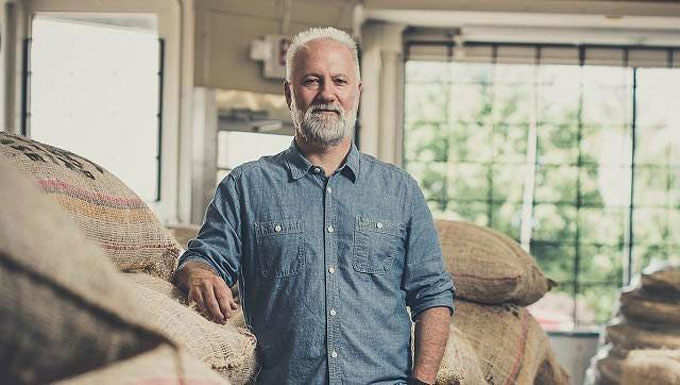
After Shawn Askinosie quit his successful law practice, he fell in love with chocolate.
Shawn decided to try cooking and baking after his leave. He used his savings and a loan to buy a building and purchased different chocolate-making equipment — and so Askinosie Chocolate (a bean-to-bar chocolate company) was born.
Shawn then traveled to places like Ecuador, Tanzania, the Philippines, and the Amazon to build relationships with farmers.
He made a deal with them that — as he started making profit from his business — these farmers would receive a share.
Shawn has continued to keep his promise and has afforded these farmers 48% more revenue, according to Forbes.
On Askinosie Chocolate’s website, it states that ‘Askinosie Chocolate was born committed to fairness, sustainability, minimal environmental impact, and community enhancement.’
He has teamed up with a collection of teachers, the principal, and parents, to create a sustainable lunch program which addresses malnutrition in students.
“I believe that we can really have a deeper appreciation and gratitude for those deep moments of joy that are made possible from the bottom of the valley,” Shawn told the Sounds Good podcast. “Or as I like to say, from our sorrow; from our broken heart.”
This Black-Owned Small Business Is Feeding Their Community
Niquenya Collins, the executive chef and owner of Cocoa Chili in Chicago, is putting soul back in soul food, one mouthful
at a time.
Collins told the Chicago Tribune that her menu boasts a full range of cuisine from the African diaspora. “That means jerk chicken, Senegalese poulet yassa, and macaroni and cheese. I wanted to do a big arc from the United States around to Africa on the first go.”
Growing up, as the eldest of thirty cousins, Collins often found herself in the kitchen with her mother, grandmother, and great-grandmother learning tricks of the trade.
“In terms of what the normal African American family would eat, we’ve always been very experimental,” she told the Chicago Tribune.
“I have early memories of my grandmother making things like chop suey, which is not something that typically you’d have outside of a restaurant, especially back then, and not in a Black family.”
Mindful of the help she’s received from the community, Collins has given away more than 1,500 free meals to community members in need through their #FeedTheCommunity initiative, which garnered them attention and support from the Chicago Bears.
This is especially important during COVID-19, which has devastated many communities and left many folks in need of a hot meal and support.
Collins’ initiative is a fantastic way to show empathy to those struggling and turn her business from a labor of love into something that supports the people who supported her.
Collins is an inspiration both within and outside of her local community, raising a business from the ground up in the midst of a pandemic. We can’t wait to see what she’ll do next.
How Two Female Chemists Are Working To Change The World Of Skincare
Victoria Fu & Gloria Lu met while working at an international beauty company.
But rather than climbing the corporate ladder, they decided to take their respective experience in the beauty and chemistry world to start a small business that actually fills the gaps in the industry they both love.
Now, they’re the founders of Chemist Confessions — a women of color-owned skincare company.
Chemist Confessions first began as a skincare blog where Gloria and Victoria shared their science-focused opinions on skincare and their frustrations with the beauty industry.
As chemists by profession, Gloria and Victoria quickly developed a following for their blog and decided to put their opinions into practice.
Chemist Confessions now aims to operate as both an educational platform and a skincare line, where customers can learn about the ingredients which work best for their skin and make purchases in accordance.
As explained on their website, Gloria and Victoria aim to ‘empower the consumers with approachable science education to help create order in the skincare space by making skin science fun and approachable for all.’
Using their education in chemistry as a mechanism to create the most effective skincare, Gloria and Victoria have curated a skincare line where all skin types can find products that work for them.
While they now run a successful skincare line, their blog is still a large facet of their uniqueness as a team of chemists.
They’ve also written a book titled Skincare Decoded, where readers can understand the fundamentals of products like cleaners, moisturizers, and sunscreens.
Gloria and Victoria are setting examples as female founders who broke away from their traditional careers to make the change they want to see in the world — and that’s good for all of us.
These stories were published in The Small Business Edition of the Goodnewspaper in November 2021. (This issue was supported by PLANOLY. Thank you PLANOLY!)
The Goodnewspaper is our monthly print newspaper filled with good news. Each issue is beautifully designed, includes a free centerfold poster, and makes a great gift.
Get good news delivered to your mailbox by becoming a subscriber today.
Tab for a Cause is the free browser extension that raises money for nonprofits every time you open a new tab
The average person opens dozens of new tabs per day. In fact, as I'm writing this article, I have 37 tabs open in my browser. You probably have a handful open right now too.
There was a time when browsers only supported the ability to view one page at a time. And then everything changed in 2002 when Mozilla released the first mainstream browser that allowed for multiple tabs.
Since then, internet users have largely lost control of the number of tabs we have open at any given time.
While there are people working on a solution to the problem of our collective over-tabbing — some entrepreneurs have figured out how to use our out-of-control tabbing habits for good.
Tab for a Cause was founded by Alex Groth and Kevin Jennison in 2011 with the mission to make giving to charity easy.
What is Tab for a Cause?
Tab for a Cause is a free browser extension that raises money for nonprofits every time you open a new tab. Since 2011, users have raised more than $1.5 million for charities. The revenue for donations come from advertisers.
When you think about how many tabs you open in a month — it's clear that this simple app can make a huge difference
→ You can install the extension with two clicks.
How does Tab for a Cause work?

The app, which is available for free on Google Chrome (and Chrome-based browsers like Brave and Epic.), can be installed "in two clicks" on desktop.
And as of December 2021, Tab for a Cause is available for Safari and Microsoft Edge. (It's no longer available for Firefox and Opera.)
Once installed, every time you open a new browser tab, you'll see the 'new tab page'. This page is customizable and includes a beautiful background picture and the ability to add bookmarks, a notes tool, a to-do list, and a search bar of your choosing.
And most notably, this page will feature 2-3 banner ads. On a traditional website, when you view (or click on) an ad, the publisher of the website gets paid by the advertiser. Tab for a Cause is flipping this classic model on its head by donating that ad revenue to charity.

Every time you open up a new tab and an ad is displayed, you're bringing in money for nonprofits.
For each new tab you open, you earn one "heart". And at any time you can designate which featured charities you want to donate to.
Tab for a Cause allows you to pick which cause your hearts go to — with several options for nonprofits fighting childhood hunger, poverty, mass incarceration, human rights violations, and more.
On November 19th, 2020, Tab for a Cause reached the milestone of raising more than $1,000,000 for nonprofits.
And on October 6th, 2022, Tab for a Cause reached the milestone of raising more than $1,500,000 for nonprofits.
How much is a heart worth in Tab for a Cause?
According to support documents, each new tab raises between 1/10th of a cent and 1 cent for nonprofits.
This number fluctuates because advertising rates vary during different times of the year and for certain locations and demographic groups.
While a penny per tab may feel like a small number, it truly adds up. It's estimated that Tab for a Cause users open 10-20 million tabs per month.
Since its founding, Tab for a Cause has raised more than $1.5 million for charity.
Which charities can you donate to with Tab for a Cause?
The parent company, Gladly, vets the nonprofits they donate to before including them in their app — and currently allows donations to roughly a dozen charities.
Currently, Tab for a Cause gives you the option to support:
- Action Against Hunger
- Save the Children
- Give Directly
- Water.org
- Educate!
- The Foundation to Decrease Worldsuck
- Room to Read
- Human Rights Watch
- Conservation International
- The Bail Project
Tab for a Cause also regularly features "Monthly Charity Spotlights", where a nonprofit is chosen by users.
These are usually topical nonprofits that are responding to topical world events such as relief for Australian wildfires, meals, medical supplies, and sanitation supplies in response to the ongoing COVID-19 pandemic, and funding to support racial justice.
You can request nonprofits to be featured by emailing them here.
What other versions of Tab for a Cause are there?

They've also expanded their offerings to include Tab for Cats (which raises money to help shelter cats get adopted), Tab for Team Seas (which raises money for the #TeamSeas campaign, created by popular YouTubers), Tab for Trees (which fights climate change), and Tab for Global Health (which supports global health care).
In 2022, in honor of Black History Month, Tab for a Cause launched Tab for Black Equity — which allows you to support nonprofits working toward Black empowerment and systemic reform every time you open a new tab. This will be a permanent extension — and will continue to be accessible year-round.
Later that year, ahead of Pride Month, Tab for a Cause launched Tab for LGBTQ+ — which supports LGBTQ+ nonprofits.
And in response to Russia's invasion of Ukraine, Tab for a Cause launched Tab for Ukraine, which supports Save the Children.
In 2023, Tab for a Cause launched Shop for a Cause — a new tool that allows you to raise money for charity with every purchase you make online.
Is Tab for a Cause legit?
Yes, Tab for a Cause is legit. It is verified that Tab for a Cause and its users have raised more than $1.5 million — and 30% of the app's total revenue actually makes it to nonprofits. Their parent company, Gladly, releases quarterly financial reports for transparency.
The App's Financial Breakdown:
Tab for a Cause is genuinely raising money for nonprofits — and not only that, but they're donating a lot of money to charity.
The app's parent company, Gladly, releases quarterly reports of all of their revenue and donations, in an effort to maintain user trust.
We compiled their quarterly charity donations over the course of more than a decade and plotted continual growth in total donations.

Over the last 12 months, Tab for a Cause has donated roughly 30% of its total revenue to charity. The remaining money goes to cover the cost of servers and software, salaries for their staff, taxes, and marketing expenses.
Due to instability in the advertising market (most clearly seen at the beginning of the ongoing COVID-19 pandemic, when advertisers stopped spending as much money), the company also maintains reserves of revenue for future months so they're always able to ensure they fully support their nonprofit partners.
One Reddit user has compiled the ultimate review of Tab for a Cause's average expenses, most notably charting out how much money is spent on salaries and employment costs each quarter.
They concluded their review with, "We can conclude that no individual seems to be profiting from TFAC's income. Additionally, a good amount is given to charity and the other spendings are either necessary or justifiable. Nice!"
Additionally, nonprofits like Water.org, Heifer International, and Action Against Hunger have publicly shared their support for Tab for a Cause.
When something sounds too good to be true, it often is. The thought of raising money for charity without spending any of your own money or doing any work sounds like it shouldn't be possible.
But, in this situation, Tab for a Cause is a simple way to raise money for charity.
What are some Tab for a Cause alternatives?
If you need to use your New Tab page for something else — or you're simply interested in other ways to make a difference without spending any of your own money — here are the best apps and tools to use in addition to or instead of Tab for a Cause:
Ecosia
Ecosia is a carbon-positive search engine that uses its ad revenue to plant trees. They have over 15 million active users and have planted 138,685,865 trees at more than 9,000 planting sites.
Just like Tab for a Cause, they make their financial reports public.
All you have to do is install their browser extension or change your default search engine.
We did a whole deep-dive on Ecosia — learn more about them, how they work, and how they're taking tree planting to the next level.
Ultimately, if you're going to be opening new tabs anyway, you might as well be supporting nonprofits while you do. Tab for a Cause makes it easy to make a positive difference without additional effort.
We're grateful for the ways they make a difference in a unique way — and hope they inspire many more similar creative businesses that help people do good with ease.
All recommendations are made and verified independently by Good Good Good's team. Some of the links in this article may be affiliate links, which means that we may earn revenue when you make a transaction, at no cost to you. Thank you for your support!
- Nepal is the only one of 13 tiger range countries that’s on track to meet a 2022 pledge to double its wild tiger population from a 2010 baseline.
- Key to the growing tiger population is the combination of a tough anti-poaching approach and close engagement with communities living near tiger habitats.
- Those measures have had a knock-on effect in also boosting the populations of other iconic species, including rhinos and elephants, but have at the same time fueled human-wildlife conflicts.
- Programs at the community level aim to mitigate these conflicts by fencing off national parks from adjacent villages and compensating villagers for the loss of animals or crops; reducing communities’ reliance on firewood collected from inside parks; and promoting tiger tourism to drive community development.
Chitwan National Park, Nepal — The rhino sniffs the morning air and grunts. Our wooden canoe slowly passes the grove where the 2-ton prehistoric animal is grazing.
Here, in Chitwan, in southern Nepal, about 600 greater one-horned rhinos (Rhinoceros unicornis) roam the forests and wetlands.
Strong protections have allowed the rhino population to grow. They’ve also benefited another, much more elusive, mammal in Chitwan.
We leave the canoe and go ashore with local guide Hem Subedi. He points to the muddy riverbank: fresh pawprints. One of Chitwan’s approximately 100 Bengal tigers (Panthera tigris tigris) has recently passed through.
There were only a handful of the big cats in the 750 square kilometers (290 square miles) that constituted Chitwan National Park when it was founded in 1973. Since then, Chitwan has grown to 932 square kilometers (360 square miles), and its tiger population has increased with it.

In 2010, Nepal and the 12 other countries with wild tiger populations came up with an ambitious plan: Double the population of tigers in the wild by 2022, the next Year of the Tiger in the Chinese zodiac.
In the decade since then, however, Nepal is the only country that has even come close to achieving that goal.
From 121 tigers in 2010, there are now about 240 in Nepal’s various national parks and adjacent protected areas, with the government aiming for 250 by 2022.
“Nepal is a leading country which other countries, like India, want to replicate,” Ram Aryal, from the environmental NGO the National Trust for Nature Conservation (NTNC), says at his office on the outskirts of Chitwan.
Tiger conservation here involves people at various levels, from government officials to local farmers. Communities living in and around tiger habitats benefit from the revenue that tiger-seeking tourists bring, with the money filtering down to schools and farmers.
“To only impose laws will not be enough. Now people actually feel that this is my tiger, my rhino, that we need to protect [the wildlife],” Aryal says.
His organization has for the past three decades worked on conservation in the Terai Arc, a vast swath of lowland terrain that sweeps across Nepal and India, and which includes Chitwan.
In the national park, the NTNC has worked on various sustainability projects that bring together thousands of local community members.
To sustain a healthy population of wild tigers, two key factors are space and prey. Aryal estimates Nepal could hold up to 700 tigers if the buffer zones adjacent to the national parks are expanded, and more wildlife corridors between protected areas are created. Best case, the tiger population could double in just five years, he says.
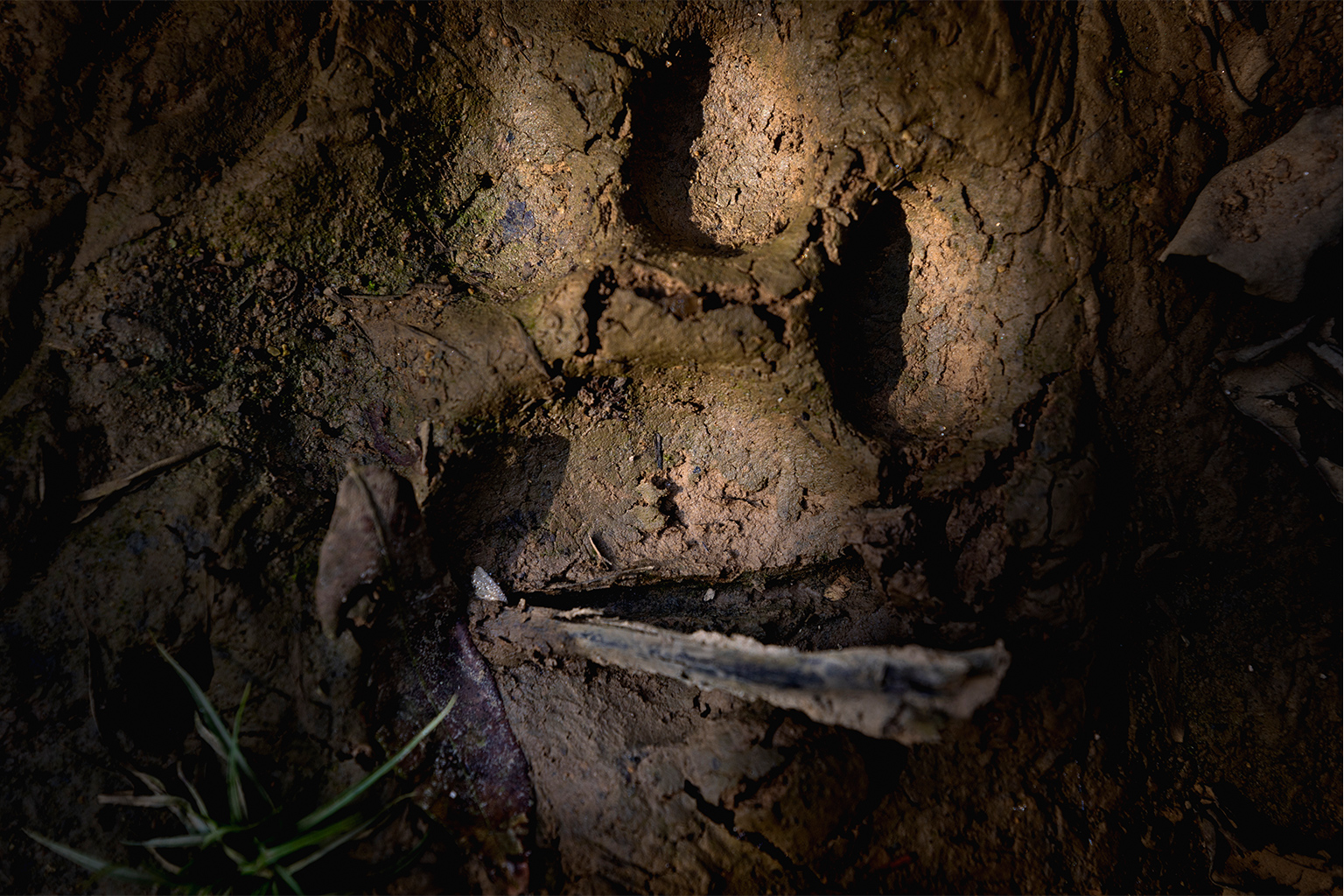
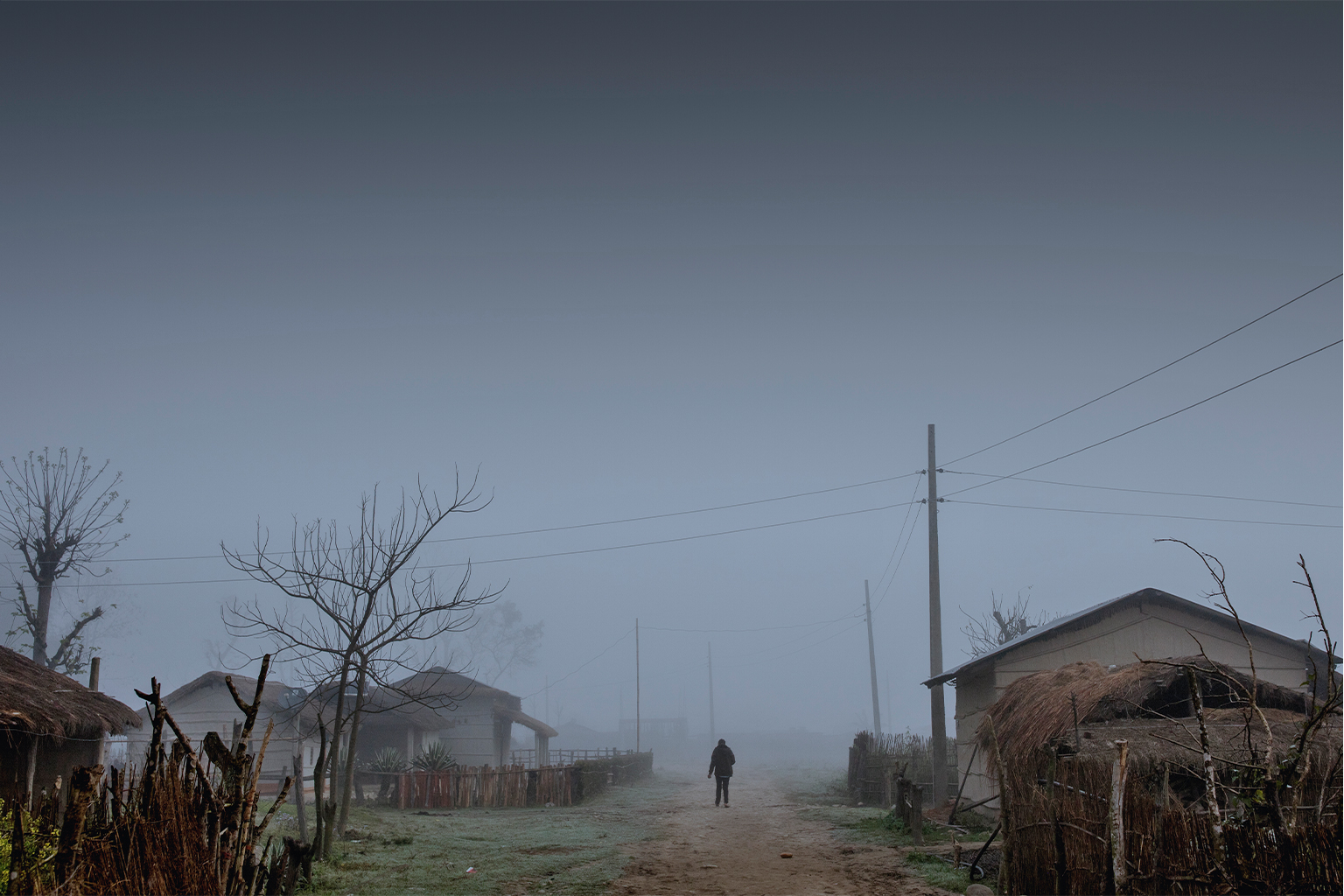
Doubling the numbers
The recent history of tigers is a bleak one. A century ago there were about 100,000 wild tigers spread across Asia’s various landscapes. By the early 2000s, that number had plummeted by 95%, due largely to poaching and loss of habitat.
What used to be nine subspecies have been whittled down to six, with the Javan, Bali, and Caspian tigers going extinct.
Vietnam, Laos, and Cambodia lost their tigers, and the big cats are now restricted to just 13 countries: Nepal, India, Bangladesh, Bhutan, China, Indonesia, Myanmar, Malaysia, Thailand, and Russia.
By 2010, when the range countries decided to double the population, there were an estimated 3,200 tigers left in the wild.
Today that number is about 4,000, but this is dwarfed by the estimated 5,000 to 10,000 tigers held in captivity in the U.S. alone, and the unknown number kept on Chinese tiger farms.
Those latter populations suggest tigers as a species aren’t going extinct any time soon. So why the urgency to double the wild population?
“As an umbrella species the tiger represents a living environment, and protecting it we also protect all other species living in that environment,” Aryal says.

Poaching on the decrease
A key factor in Nepal’s success is something that other range countries are missing: strong enforcement against poaching. Nepal’s zero-poaching approach means no tigers have been shot in a decade.
The knock-on effect has been a reduction in poaching of elephants and rhinos — but only within its borders. Nepal’s geographical position, wedged between India and China, makes it an important transit country for the smuggling of animal products.
Conservation efforts have therefore also involved the military, with heavily armed soldiers patrolling parks like Chitwan. They use drones and surveillance cameras, along with sniffer dogs, elephants, jeeps, motorbikes, boats, and bicycles.
Nepalese law prohibits all hunting, apart from trophy hunting of a few species. Poaching, even of common species such as wild boar and deer, can result in long prison sentences; killing a tiger carries a life sentence.
These militarized tactics have also led to allegations of human rights abuses by park guards against Indigenous communities including the use of torture and the destruction of homes.

Increased territories
An individual tiger requires territory of about 50 square kilometers (19 square miles) and prey density of 150 animals/square kilometer (about 390 animals/square mile).
The problem is that there’s currently not enough of either to support a growing tiger population. The big cats are extremely territorial, and there have been several recent incidents in Chitwan where tigers have killed each other in fights over the limited space.
Nepal’s protected areas already cover about a quarter of the country’s total area, among the highest rates in Asia, and the government is considering expanding the buffer zones that ring the national parks.
The target figure of 250 tigers would need 12,500 square kilometers (4,800 square miles) of territory, but the current five protected tiger zones only cover about 5,200 square kilometers (2,000 square miles), with prey density of about 56 animals/square kilometer (145 animals/square mile).
Surrounding these parks, however, are another 40,000 square kilometers (15,400 square miles) of forests, grasslands, and agricultural lands, all of which were historically tiger domain.
A feasible solution, conservationists say, would therefore be to expand the tiger zones into these areas and include local communities already living there.

Living close to tigers
The Baghmara community forest is part of the buffer zone next to Chitwan National Park. It’s home to 5,600 people who rely on the forest for firewood and other resources.
Tigers and other wildlife used to roam the area, but in the 1990s trees were planted here, making it less suitable as tiger habitat.
Today, tourists come here to spot the park’s tigers and rhinos while riding on the backs of elephants or paddling in canoes. They brought in about $500,000 in revenue annually before the COVID-19 pandemic hit. One-third of that revenue goes to the community, including for maintaining roads and building schools, where students are taught the importance of conserving tigers.
Around Chitwan, electric fences and concrete walls have been erected to reduce conflicts between humans and wildlife. Farmers are compensated for crops ruined by rhinos and elephants, or livestock killed by tigers and leopards.
Kul Tamang is one of many rangers patrolling the forest in Baghmara. Armed with just a wooden cane, he follows a narrow path that winds through the forest. He’s been doing this for the past 15 years, and says he knows every rock and tree — something he evidently takes great pride in.
“Everyone here respects the tiger. It’s the jewel of the forest — symbolizing power,” he says. “The tigers also give us work since they attract tourists.”

For many in the community, positive perceptions of the tigers are a matter of economics: the 180,000 visitors to the park annually (or at least before the pandemic) come to see live tigers, not dead ones.
And while many locals have lost water buffaloes, cows, goats — even family members when they stray into the park to cut grass or collect firewood — to the tigers and leopards and rhinos, there’s a growing acceptance of the wildlife on their doorstep.
Mani Raut lives near Sauraha, the eastern gateway for tourists entering Chitwan. In 2019, a tiger killed her water buffalo, which was worth about $1,000. Since the buffalo was inside the park when it was attacked, Mani wasn’t eligible for compensation under the community payout scheme. Still, she says she understands the importance of the park to the community’s development.
“The tourism creates opportunities for us,” she says. “Both my son and daughter want to work as tourist guides in the park.”
The Living with Tigers program, supported by the Darwin Initiative, a U.K. government grants scheme, started in 2015 to raise awareness among local communities in Chitwan and Royal Bardia National Park, in western Nepal.
The program includes livestock management, with predator-safe corals built of wire and rope. It also involves generating biogas from cow and buffalo dung, thereby reducing the need for locals to venture into the park to collect firewood. The program covers 1,200 households and 5,000 people, and campaigns through social media and local radio. Social surveys conducted as part of the program show that local attitudes toward the tigers are changing.
“The attitude is usually more positive and people are ready to change their behaviors,” says Prakash Chapagain, field coordinator of Living with Tigers.
He adds the tiger population in places like Chitwan can grow substantially if the right measures are taken. That means managing and increasing the area of wetlands and grasslands — “animal-friendly areas” — so that deer and other prey species can thrive.
Budwa Bote arrived in Chitwan with his family 20 years ago, settling into a small clay house on a plot of land on the outskirts of Sauraha. Like many here, he has lost water buffaloes to tigers.
Budwa himself has also been attacked by a tiger. He also tells of elephants raiding his crops, and shows the severe leg injuries he suffered during an encounter with a sloth bear in the forest, as well as deep scars on his buttocks when he was gored by a rhino.
Even if he wanted to move, he says, he can’t; his livelihood depends on his being here in the midst of the tigers and rhinos.


“I need to enter the forest to fish so that I can feed my family,” he says. The Bote are an Indigenous community that relies on fishing the Chitwan River using traditional throw nets.
While the park officially allows 250 permit holders to fish on the periphery of the protected area, no new permits are being issued or lapsed permits renewed, according to a report by The Third Pole.
Budwa says he hopes the government will expand the number of fences and walls that keep the animals out of the villages. Living next to tigers is something he says he has come to accept; his family is opening a homestay to tap into the tourism revenue.
“This area is also home to the animals,” Budwa says. “If we can’t accept that, we will have to move elsewhere.”
Banner image: A boatman steers his canoe down a mist-shrouded river in Chitwan National Park. Image by Jonas Gratzer for Mongabay.
This article was originally published by Mongabay on November 11th, 2021.
Today’s Gay Liberation Movement can trace its roots directly to the Stonewall riots on June 28, 1969.
The impromptu demonstrations, which occurred after a nighttime police raid at the Stonewall Inn in Greenwich Village, New York City, lasted several days.
Soon after, the Gay Liberation Front (GLF) was formed, joining the many gay activist organizations that had been springing up in previous decades. From there, the movement caught fire and spread rapidly.
Stacker put together a timeline of LGBTQ+ history leading up to Stonewall, beginning with prehistoric events and ending in the late 1960s.
As you read, keep in mind that LGBTQ+ is a relatively new term and, while queer people have always existed, the terminology has changed frequently over the years.
In an effort to avoid being anachronistic and to accurately describe the experiences of these historical figures, they have chosen in some instances to use the terminology of the time.
Keep reading to learn about some significant moments in LGBTQ+ history.

2900–2500 B.C.: First record of a transgender person
Although rock art dating as far back as 9600 B.C. depicts what some scholars have interpreted as homosexual love scenes, one of the first sets of skeletal remains of an LGBTQ+ person was a body thought to be a transgender woman discovered in 2011.
The archaeological remains, which were found outside Prague, were that of a skeleton that was assigned male at birth but arranged in a burial ritual that was reserved strictly for women.
“We believe this is one of the earliest cases of what could be described as a transsexual or third gender grave in the Czech Republic,” archaeologist Katerina Semradova said at a press conference.
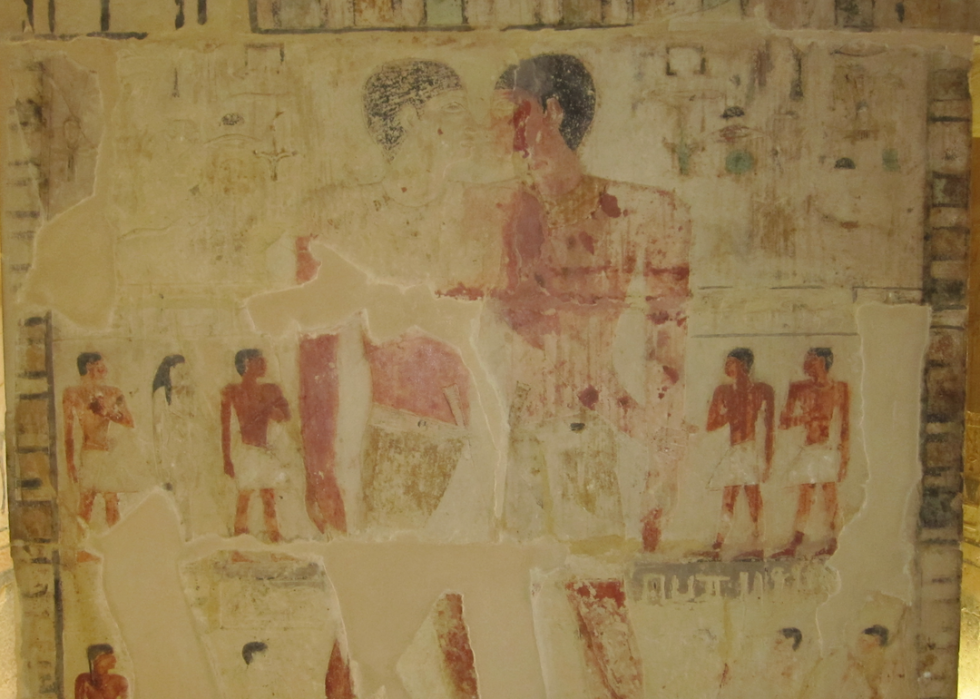
2400 B.C.: Niankhkhnum and Khnumhotep are buried together
Niankhkhnum and Khnumhotep were ancient manicurists who worked for the royal court in a city called Saqqara, Egypt, around 2400 B.C.
In 1964, archaeologists unearthed a joint tomb in which the men were buried face to face in the same fashion many married couples were buried at the time.
Although the site is called the Tomb of the Brothers, and there is debate as to its significance, many historians have interpreted it as evidence of early gay relationships.
“Same-sex desire existed just behind the ideal facade constructed by the ancients,” said Egyptologist Greg Reeder in a 1998 speech in Dallas.
630–612 B.C.: Sappho the poet is born
The lesbian poet Sappho, who hailed from the island of Lesbos (the root of the word lesbian), was born sometime between 630 and 621 B.C.
Though her sexuality has been an ongoing subject of debate, she wrote commonly about seemingly lesbian desires, and her only complete surviving poem, “Ode to Aphrodite,” features the female speaker begging the goddess of love to help her get over her unrequited love for a woman.

27 B.C.: First recorded same-sex marriage under Roman Empire
In 27 B.C., Augustus established the Roman Empire under which the first recorded same-sex marriage ceremony reportedly took place. At this time, laws around homosexuality were also formed—among them that gay prostitution would be legal, but taxed.
When Nero became emperor a couple of decades later, he married two men—one of whom Nero allegedly dressed in the clothing of one of Caesar’s wives and even castrated to make the man seem more “womanlike.”

1478: The Spanish Inquisition stones ‘sodomites’
In 1478, the Spanish Inquisition was established, which resulted in the stoning and castration of many gays and lesbians, dubbed “sodomites” at the time.
Decades later, it is estimated there were nearly 1,000 sodomy trials before the Aragonese Inquisition.
1532: Holy Roman Empire makes ‘buggery’ punishable by death
The Holy Roman Empire in 1532 made intercourse between two women a crime punishable by death.
In 1533, the “abominable vice of buggery” for both sexes was made a capital crime, a law that remained mostly unchanged until 1861, when it was changed to life in prison.
The last people executed for the crime were Londoners James Pratt and John Smith, who were executed by hanging after the landlord claimed to have seen them through a keyhole having sex.
1623: King James appoints his lover as Duke of Buckingham
It is well-documented that King James I had a lover named George Villiers whom he called his husband and the one he loved “more than anyone else.”
In 1623, he went to the length of appointing his “sweetheart,” as he also called him, to the nobility as the Duke of Buckingham, a move that made him the highest-ranking subject outside the royal family.
1791: France becomes the first Western European nation to decriminalize homosexuality
During the French Revolution, the penal code outlined new crimes and their respective punishments in an effort to take sweeping power away from judges.
Along with the new code came the legalization of sodomy, which was the first lift on the ban in Western Europe and one that paved the way for others to follow.
1800s: Decriminalizing homosexuality spreads through Europe and Latin America
In 1811, the Netherlands was the first major European country of the 19th century to decriminalize homosexuality. The Dominican Republic followed suit in 1822.
Over the next decade, El Salvador, Brazil, Bolivia, Portugal, Argentina, Turkey (then the Ottoman Empire), Honduras, Italy, and even the Vatican did the same—all before the turn of the next century. By contrast, Russia, Poland, and Germany enacted new laws against gay and lesbian activity.
1884: Eleanor Roosevelt is born
Amelia Earhart and openly gay reporter Lorena Hickok are just two of the women with whom former First Lady Eleanor Roosevelt was rumored to have had closeted affairs, the latter of whom she exchanged more than 3,300 letters with over a 30-year period.
There has been extensive speculation about the First Lady’s sexuality over the years, though some have argued it’s irrelevant when discussing her contribution to the gay rights movement, particularly given her position of power.
“[Roosevelt] did more than almost anyone in the pre-Stonewall era to model acceptance of gay relationships—and she did it in the White House,” wrote Marc Peyser for the Huffington Post.
1886: We’wha takes part in a delegation to Washington, D.C.
In 1886, a mixed-gender Zuni Native American named We’wha took part in a delegation to Washington, D.C., where they were introduced to then-President Grover Cleveland.
We’wha was a famous Lhamana, a person in Zuni culture who is assigned a male gender at birth but takes on ceremonial roles and attire typically reserved for women. Today, the Lhamana gender identity is referred to as “two-spirit” or “third-gender.”

1892: Magnus Hirschfeld earns his doctoral degree
Magnus Hirschfeld was a German physician who spent most of his career studying sexuality with a focus on homosexuality. He became a champion for gay rights and co-founded the Scientific-Humanitarian Committee—the world’s first gay rights organization.
Being both Jewish and gay, he was frequently targeted in his home country, yet he continued his work. He said he became interested in activism after observing many of his gay patients who died by suicide.
1910: Emma Goldman begins speaking publicly
A contemporary of Magnus Hirschfeld’s, Emma Goldman was an American feminist and anarchist who served as an early ally to gay rights activism.
The Russian-born Jew, who emigrated to America as a teenager, was heterosexual but spent much of her life championing various minority causes.
In a letter to Hirschfeld, she said: “It is a tragedy, I feel, that people of a different sexual type are caught in a world which shows so little understanding for homosexuals and is so crassly indifferent to the various gradations and variations of gender and their great significance in life.”
1931: Dora Richter becomes the first transgender woman to get vaginoplasty
Dora Richter was a transgender woman under the care of Magnus Hirschfeld who received the first known vaginoplasty procedure in 1931 (though Hirschfeld did not perform the surgery).
Along with a number of other transgender women, Richter worked at the Institute for Sexual Research where she was given special permission by police to wear women’s clothing.
Two years after her affirmation surgery, the Nazis burned the library of the Institute and began sending homosexuals to concentration camps.
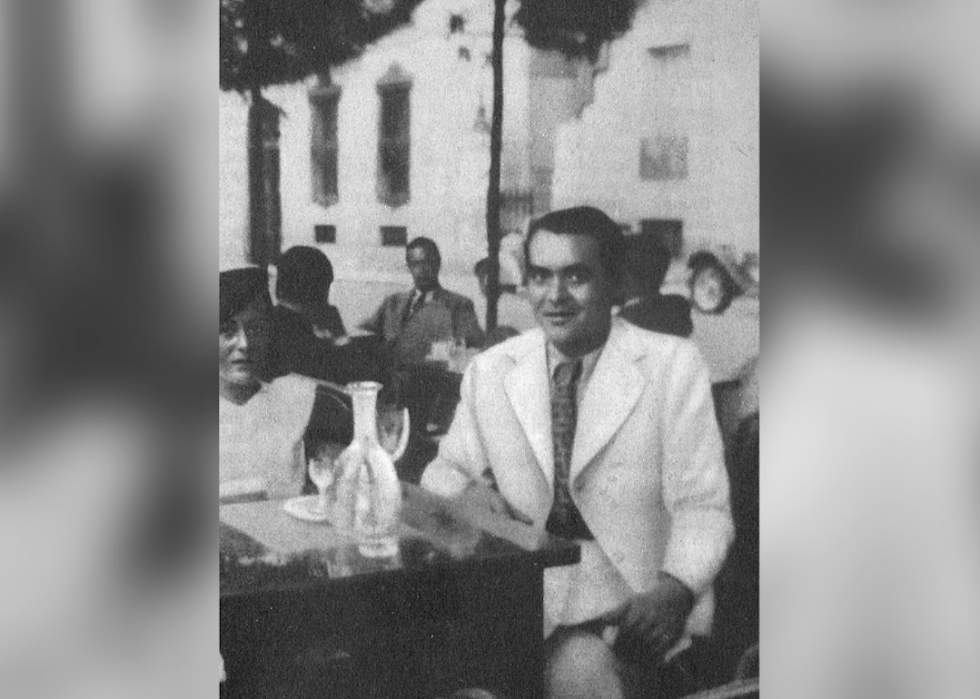
1936: Federico García Lorca is executed
In 1936, Spanish police raided the Granada home of Federico García Lorca, a famous poet they described as a socialist prone to “homosexual and abnormal practices.”
He fled to a friend’s house but they caught up with him and surrounded the home, arrested him, and took him to an interrogation spot called the Fuente Grande.
According to documents published in 2015, they executed him after he gave unspecified confessions, burying him on site in a “very shallow grave, in a ravine.”
1948: Alfred Kinsey publishes ‘Sexual Behavior in the Human Male’
When biologist Alfred Kinsey published “Sexual Behavior in the Human Male” in 1948, he asserted that approximately 37% of men at the time had engaged in homosexual activities at least once.
That, along with other findings in his book, acted as the “opening salvos of the sexual revolution,” according to some, and brought the conversation about sex of all types to the mainstream.
“During the Twentieth Century, no one individual did more to bring homosexuality into the public forum than Alfred Charles Kinsey,” wrote James Alan Branch, professor of Christian Ethics at Midwestern Baptist Theological Seminary. “... Prior to Kinsey, people were generally considered to be either heterosexual or homosexual. Instead of this binary approach, Kinsey saw sexual behavior as existing on a continuum, which rarely described individuals as either strictly homosexual or heterosexual.”
1951–52: Christine Jorgensen has sex reassignment surgery
Gender confirmation surgeries (then called “sex reassignment”) had been performed prior to Christine Jorgensen.
However, the transgender woman from the Bronx was the first person to become famous for it, bringing awareness and resources to the trans community that previously had very little access to information.
After completing two operations in Denmark, she returned to New York to instant fame and began touring, writing, and speaking to advocate for transgender rights.

1955: The Daughters of Bilitis is formed
In 1955, there weren’t any lesbian political rights groups in the United States until the Daughters of Bilitis formed in San Francisco, making history as the first group of its kind.
What began as a safe space for women to meet without the risk of police raids at gay bars quickly morphed into a full-blown political organization that created other political offshoots including The Ladder—the first nationally distributed lesbian publication—which encouraged women to “take off their masks.”
For 14 years, DOB, as they were known, helped women come out of the closest and offered resources to anyone who needed it.
1956: ‘Go Tell It on the Mountain’ is first published by James Baldwin
James Baldwin published “Go Tell It on the Mountain” in 1956, offering the world a novel that was “pivotal in American gay literature,” according to many critics. Although the theme of homosexuality is never outrightly expressed, the subtext is hard to miss.

1958: US Supreme Court rules in favor of gay free speech
One, Inc. v. Olesen was the first U.S. Supreme Court case that involved gay rights—and it won, marking a triumphant moment for the emerging liberation movement.
The ruling occurred in 1958 when the high court overturned a federal district court’s decision to label gay magazine ONE: The Homosexual Magazine as “obscene” and ban it from being distributed through the United States Postal Service.
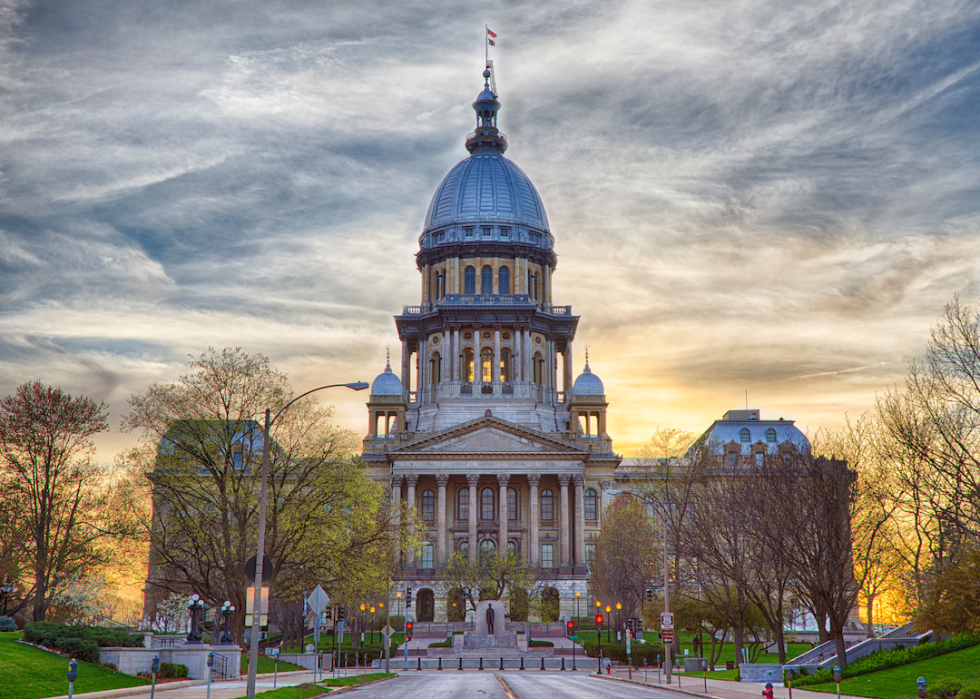
1962: Illinois removes sodomy law from criminal code
In 1962, Illinois became the first state in the nation to remove sodomy laws from its criminal code. The historic legislation occurred after the American Law Institute put together a list of recommendations called the Model Penal Code in an effort to create more legal uniformity across states.
Illinois was the first state to adopt the full set of recommendations that omitted sodomy from the criminal code.
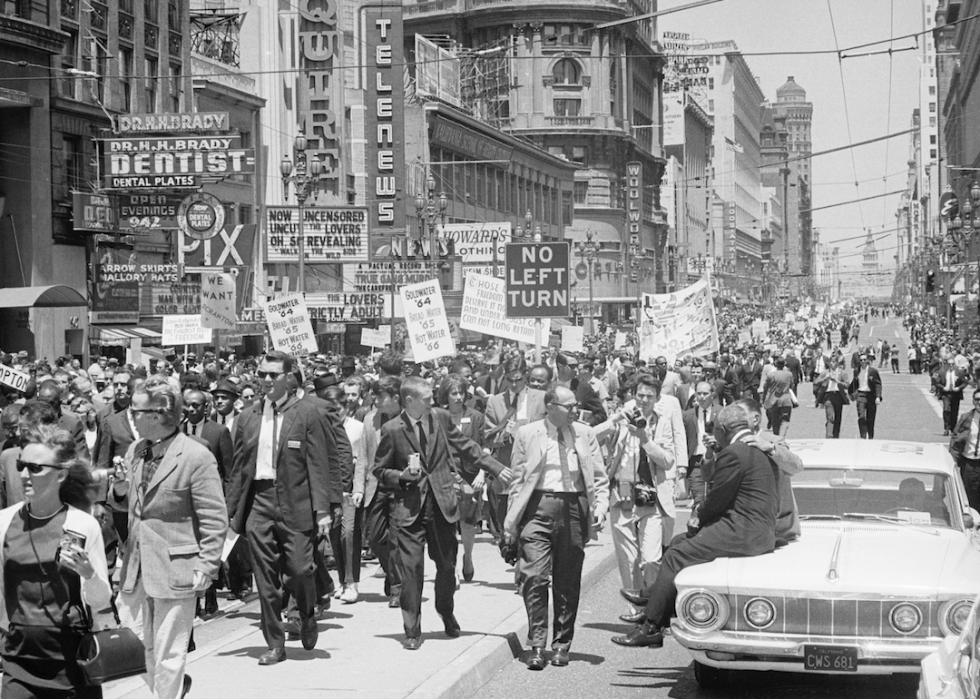
1964: First gay rights protests at Whitehall
Although it’s hard to say for sure given the burgeoning nature of the gay rights movement at the time, the protests outside the U.S. Army’s Whitehall Street induction center in 1964 are generally considered to be the first public demonstrations for gay rights.
The demonstrations occurred after the confidentiality of a gay man’s draft record was broached, prompting an activist named Randy Wicker to organize the protest to speak out against the military’s anti-gay policies.
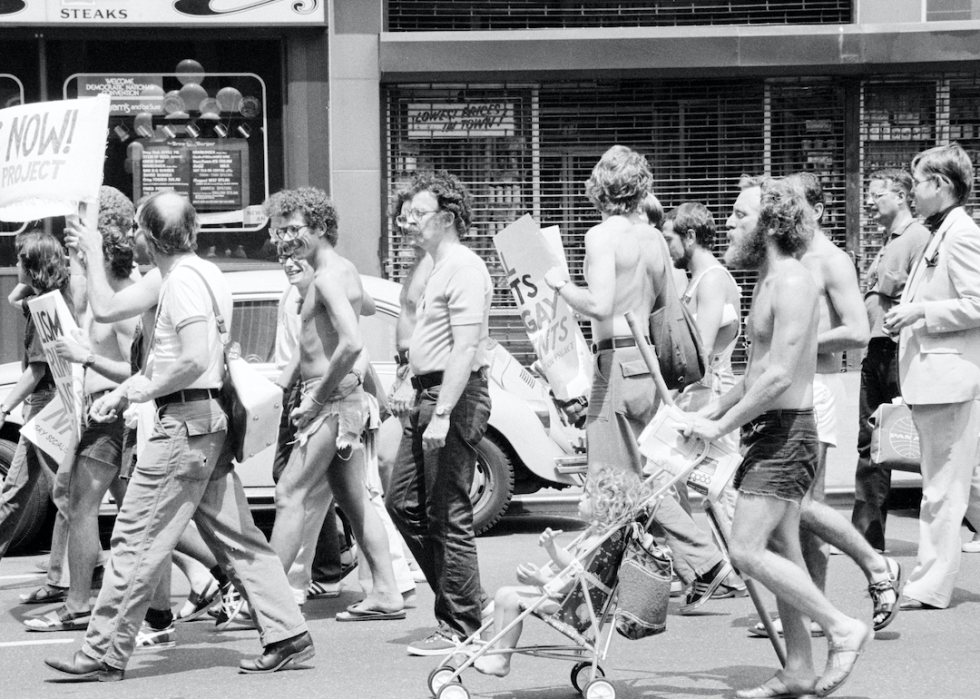
1965: Vanguard is created
In 1965, a group of young people in San Francisco got together to create the Vanguard, the country’s first gay liberation organization.
The group, co-founded by Adrian Ravarour and Billy Garrison, also produced an accompanying news publication, the Vanguard Magazine, which was created by Jean-Paul Marat and Keith Oliver St.Clair.
1966: The Mattachine Society organizes a ‘Sip-In’
When the New York State Liquor Authority banned bartenders from serving alcohol to gay people, an activist group called the Mattachine Society responded in 1966.
Large groups turned out at the bar Julius’ in New York City to host a “Sip-In,” as they called it, promoting the issue to land in court.
“The importance of this, I think, was that until this time gay people had never really fought back,” said Dick Leitsch, head of the New York Mattachine Society at the time. “We just sort of took in everything passively, didn’t do anything about it. And this time we did it, and we won.”
1967: Police raid Black Cat Tavern
After plain-clothed police officers raided the Black Cat Tavern in Los Angeles on New Year’s Day in 1967, beating up staff and patrons alike, a group of gay rights protestors began demonstrating out front.
Organized by the Personal Rights in Defense and Education (PRIDE) group, the crowd was considered the biggest civil rights demonstration the LGBTQ+ community had produced at the time, leading some historians to call it the “birthplace of a worldwide movement.”
This article was originally published by Stacker. (CC BY-NC 4.0)