This is the first article in an ongoing series where we’ll be diving deep into pressing injustices our world is facing.
For each article, we’ll begin by unpacking the history of the problem (in this case, garment worker exploitation) so that we can learn from the past as we look towards solutions, then we’ll explore current policies connected to the issue, practical steps for individuals to get involved with, places to shop that shift our dollars in a better direction, and people to learn from. And we'll always end with positivity.
Problem | Policies | Practical Action Steps | Places to Shop | People & Orgs | Positivity
What’s the problem with human rights in the fashion industry and how did it start?
In recent years, the idea of “sustainable fashion” has become far more prevalent — to the point that it’s now common to see the phrase pop up within marketing materials and brand mission statements alike.
In its purest definition, sustainable fashion embodies care for the environment through materials, circular design, and production techniques, as well as care for the people throughout the entire supply chain. Unfortunately, the human rights element is frequently overlooked.
Though respect for garment workers should be included under the “sustainable” umbrella, the term “ethical fashion” is often employed to refer specifically to the treatment of people within the industry.
A quick google search for ethical fashion will reveal countless conversations around workplace safety, wage theft, working hours, and fair pay. In a globalized industry, there is much to explore within each facet of the topic, but for the average shopper, a simple way to think of it is boiling the questions down to compensation and safety.
Are people being paid fairly, and is their working environment safe and voluntary? Perhaps surprisingly, many companies can’t answer that question.
Late 1800s — Early 1900s
Exploitation in the fashion industry is nothing new. On the heels of the Industrial Revolution, sweatshops with unsafe and unfair working conditions surfaced in the late 1800s.
Though workers unionized and held strikes that sometimes resulted in individual factory improvements, it took a tragedy to prompt widespread change in the U.S.
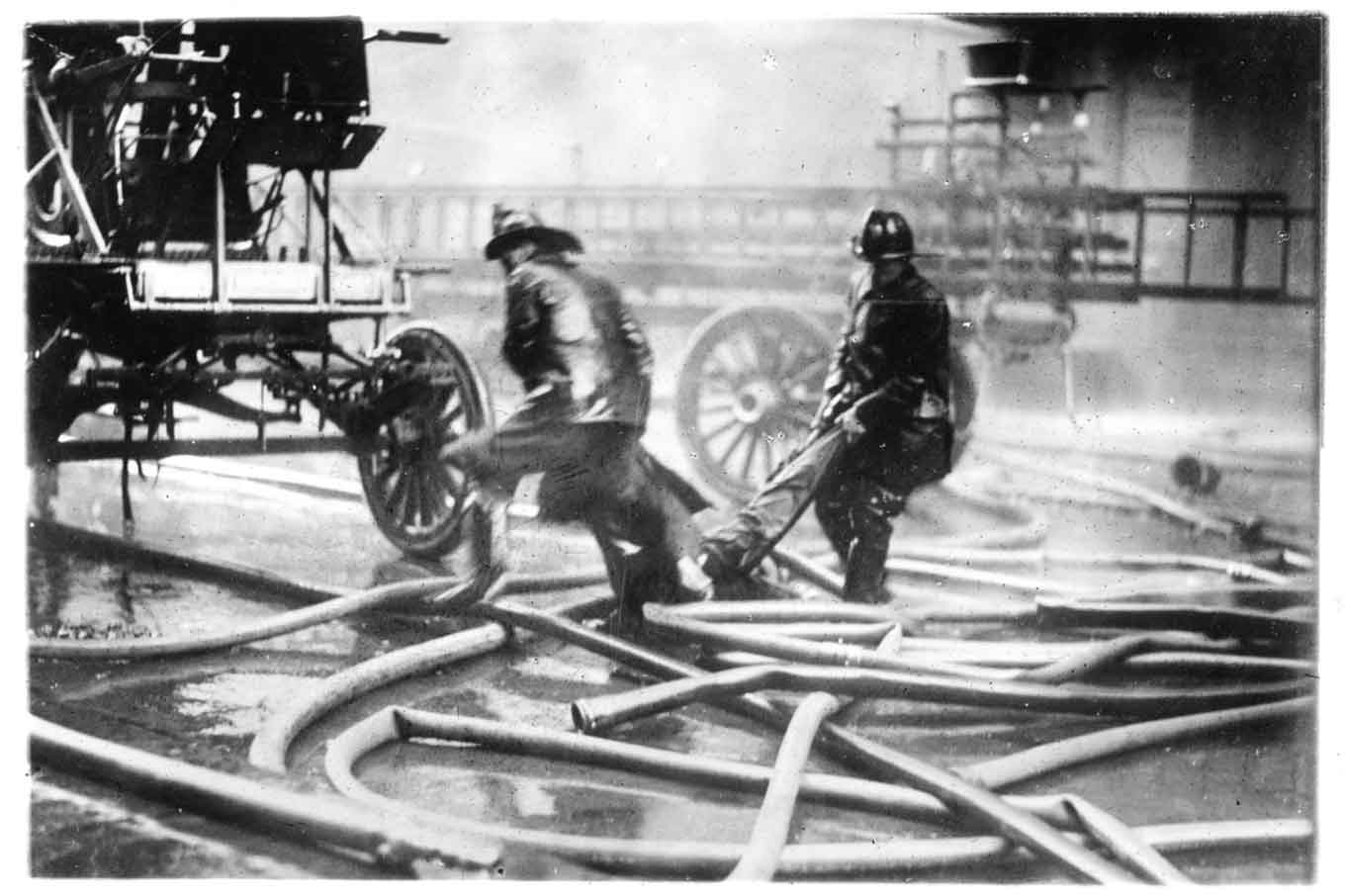
In 1911, the infamous Triangle Shirtwaist Factory Fire in New York City’s Greenwich Village claimed the lives of 146 garment workers, mostly young women from immigrant families.
Bulky equipment and blocked exits prevented most workers from escaping the flames.
Paul Cole, Director of the American Labor Studies Center, explains that this event “awakened a nation to the dangerous and deplorable conditions that many workers faced on a daily basis.”
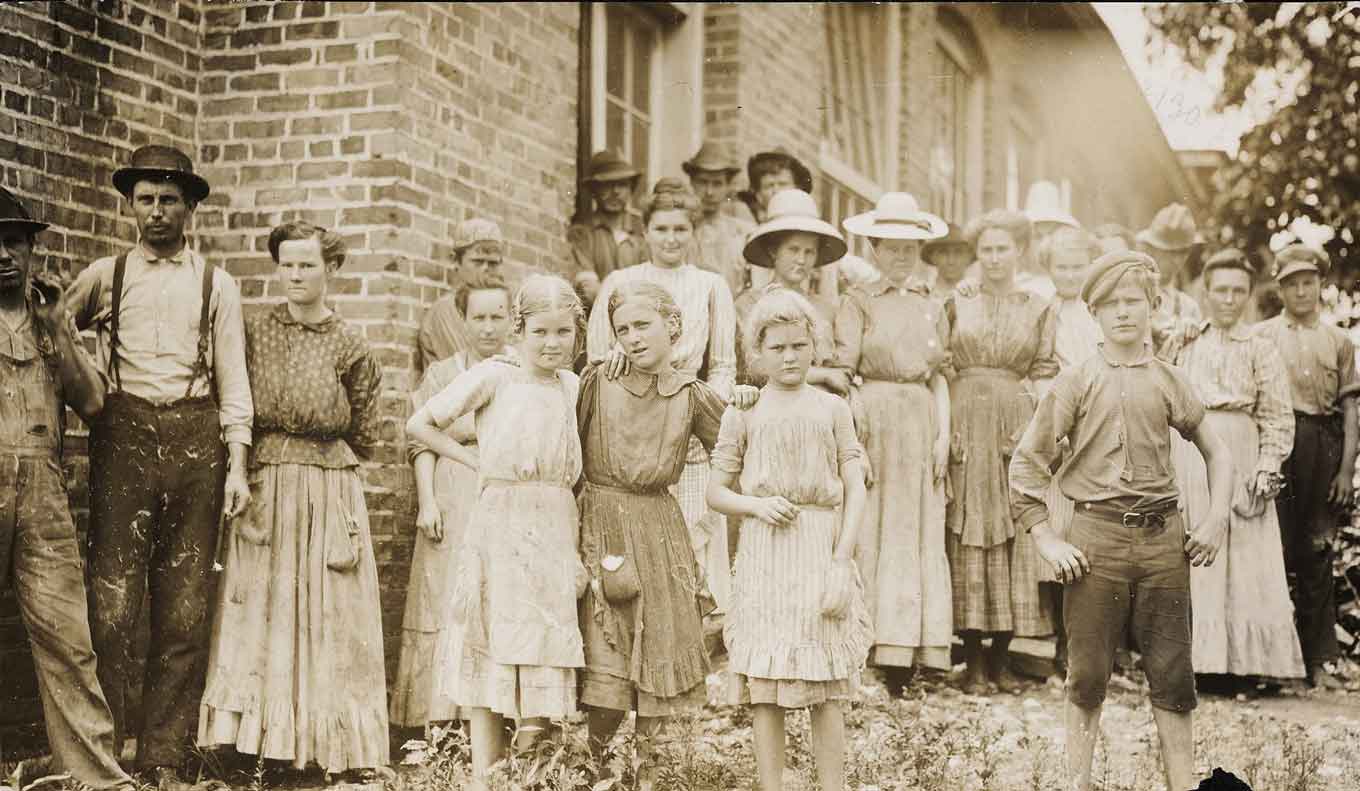
The tragedy shed light on both safety hazards and unethical practices in the day-to-day operations of sweatshops where teenage seamstresses often worked thirteen hours a day, seven days a week, bringing home just $6 weekly.
In two years following the fire, factory committees were empowered and over thirty laws focused on safety, factory inspection, and sanitation were passed in New York along with employment rules for women and children.
This movement transformed New York into the most progressive state protector of laborers in the nation. Many of these reforms were then swept into federal law during the 1930s New Deal, making “Made in America” a far more trustworthy stamp.

Make no mistake though; there are still sweatshops in the U.S. to this day despite the laws put in place to protect people.
Late 1900s — Present Day
In the 1970s, many U.S. companies began outsourcing production to Latin America and Asia, where they saw an opportunity for cheap labor, access to plentiful raw materials, and the ability to mass-produce orders quickly.
Over the next few decades, companies began two dangerous races fueled by unbridled access to these resources and virtually zero accountability. The first, a race of speed—churning out new style trends as fast as possible. The second, a race to the bottom in pricing.
Combined, this competition created what’s now known as fast fashion.
While fast fashion entices shoppers with its astonishingly low prices — a shirt cheaper than a cup of coffee, who could resist? — the situation that it has created for thousands of workers around the globe is nothing short of horrific.
Clothing is the third-largest manufacturing industry, and it’s estimated that only two percent of garment workers worldwide earn a liveable wage; the other 98% are often paid meager wages and sometimes not paid at all for their labor.

Long hours in dangerously crowded and often toxic spaces is the daily reality for those who make the majority of the world’s clothing.
One disturbing 2018 report found that the fashion supply chain funnels more money toward modern slavery than any other industry besides tech.
Sometimes companies even start producing with a safe, vetted factory overseas but then grow to the point of participating in exploitative practices without realizing it. How does this happen? The companies request their suppliers to manufacture large orders with tight deadlines to keep up with the hectic pace of trends. Manufacturers are then forced to outsource production to subcontractors, which are often unregulated and have no agreement with the original company.
Exploitive practices and sweatshop conditions are commonplace in this scenario, yet the company itself is removed from any blame since they aren’t directly employing the garment workers.
It’s important to remember that the vast majority of companies don’t produce their goods themselves, and this makes accountability very difficult.
Similar to the Triangle Shirtwaist Factory, it took another massive tragedy to precipitate a modern movement towards a more ethical industry.
In 2013, Rana Plaza, an eight-story garment factory in Bangladesh, collapsed in under two minutes. Over a thousand people were killed and more than 2,500 were severely injured. The accident has been dubbed “industrial homicide” as it could have been avoided if safety precautions had been upheld for workers.

In the aftermath of the Rana Plaza collapse, brands and unions joined together to sign a landmark legally binding agreement called the Accord on Fire and Building Safety in Bangladesh. The agreement has made buildings safer for at least 2.5 million garment workers across 1,600 factories.
Still, with fast fashion brands putting the pressure on for more and more cheap clothing, most garment workers are not being paid a fair living wage.
Consumers in the last decade have become increasingly curious about how their clothing is made and how the people making it are being treated.
This curiosity and concern is largely thanks to the work of activists, the helpful spread of information on social media, and the distribution of documentaries such as The True Cost which exposes the dark side of fashion.
Those who begin to learn about the atrocities of the industry are often left asking, “How can we help?”

Are there any current policies to support that will uphold garment worker rights?
We spoke with Elizabeth Cline, Director of Advocacy and Policy at Remake, about the complex world of policy in an industry of multinational supply chains.
Though there are many voluntary certifications that companies can pursue, Cline sees policy as the most effective avenue to focus on.
She explains, “When it comes to creating real change for garment workers, we’ve seen that voluntary initiatives simply don’t work, especially when you compare them to the impact of something legally binding like the Bangladesh Accord.”
From a global perspective, there’s definitely momentum. “All across Europe we’ve seen this proliferation of due diligence laws in country after country.
Now, the European Union is looking at passing a law to obligate all companies based in the EU to ensure they’re not creating human rights harms by driving down prices or asking suppliers to make things too fast.”
Cline notes that the U.S. is far behind in holding fashion brands accountable for their impact on people and environments where their products are produced. “We strongly urged President Biden to appoint an official ‘Fashion Czar’ to coordinate both domestic and foreign policy around ethical and sustainable fashion, but so far we haven’t seen any movement in that direction.”
Nevertheless, there is good news. Governor Newsom of California signed Senate Bill 62, also known as the Garment Worker Protection Act, into law on September 27, 2021.

This makes California the first state to require an hourly minimum wage for garment workers. It prohibits piece rate pay which typically only pays 2-6 cents per garment and leads to inhumane working hours in order for workers to earn enough money to survive.
Additionally, SB62 will penalize both manufacturers and brands for wage theft. This level of accountability is a game-changer for the industry. Activists hope to see this legislation used as a blueprint for other states to follow and, ultimately, implemented at the federal level.
“One particularly exciting aspect about SB62 is how hands-on garment workers were with its creation,” Cline remarks. “Garment Worker Center really led the charge on this landmark bill, and these are exactly the people we should be organizing with. They understand the issues within the industry at a deeply personal level.”
Practical steps anyone can take to support garment workers:
Cline recognizes the role social media plays for politicians and encourages consumers to use their voice accordingly. “Now that the bill has passed, it’s important to show continued support and ensure that it’s enforced.
We know that politicians are paying more attention than ever to social media, so it’s worthwhile to take a moment to comment, post, or tweet and thank Governor Newsom for signing the bill while expressing interest in seeing it actively implemented.”
Cline also encourages people outside California to contact their own elected officials and let them know that they want to see SB62 in their state or at a federal level. (Here’s where you can easily find your elected officials’ contact information.)
While Cline and her colleagues continue to push for state and federal policy, she points out that there are other ways people can lend their digital voices to the movement.
For example, anyone can quickly sign the #PayUp campaign, which petitions fashion brands to be accountable for seven specific actions that will create a fair future for garment workers.
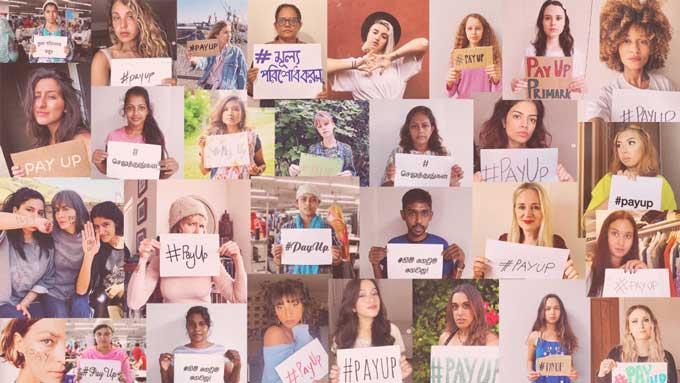
With awareness of ethical fashion rising, there’s often a conversation around individual consumers choosing to “shop ethically” and only supporting brands that are treating people well.
This concept is something that Elizabeth Cline has shifted her perspective on in recent years. “We need to get away from the mindset that when we shop ethically or sustainably we’ve done our civic duty. If you really want to make a difference, get involved with a community organization or mutual aid group — it doesn’t even have to be about fashion specifically. All of these issues in the social sphere are so connected. Organize and collaborate with others instead of obsessing over each personal purchase.”
"We need to get away from the mindset that when we shop ethically or sustainably we’ve done our civic duty."
Another leader in this movement is Brittany Sierra, founder of The Sustainable Fashion Forum. When asked about her perspective on the role of consumer purchases, Sierra agrees, “There’s absolutely value in supporting ethical companies if you have the means to do so and it aligns with your values, but I would caution anyone to rethink spending all their time trying to shop perfectly and then abstaining from the conversation around how to make things better in the mainstream fashion industry.”
"I would caution anyone to rethink spending all their time trying to shop perfectly and then abstaining from the conversation around how to make things better in the mainstream fashion industry."
With that said, Cline does make sure to mention that there are clear benefits to supporting small and sustainable businesses. “Giving money to companies with ethical practices demonstrates that there is a demand for these business models. As they grow, these businesses are also getting involved with larger movements. It was incredible to work with so many businesses who put their support behind the Garment Worker Protection Act last year. These businesses are using their influence in the industry to shift it for the better.”
In addition to championing policies, some companies have taken initiative to encourage transparency and ethical practices beyond their own supply chains.
For instance, competitors Nisolo and ABLE teamed up to launch the #LowestWageChallenge which asks other brands to publicly share their lowest wages and have them 3rd party verified.
The companies use a sophisticated reporting tool that not only verifies wages but also measures a supply chain’s impact and implements solutions to improve operations and ensure the expectations of conscious consumers are met.

Places to shop that champion ethical and fair treatment of garment workers:
A growing number of companies are designing their supply chains with both people and the planet in mind.
Remake offers a helpful brand directory, and Good On You rates companies on ethics and sustainability.
The specific companies below have supported Good Good Good to bring this article to life and are excellent examples of truly ethical fashion:
ABLE
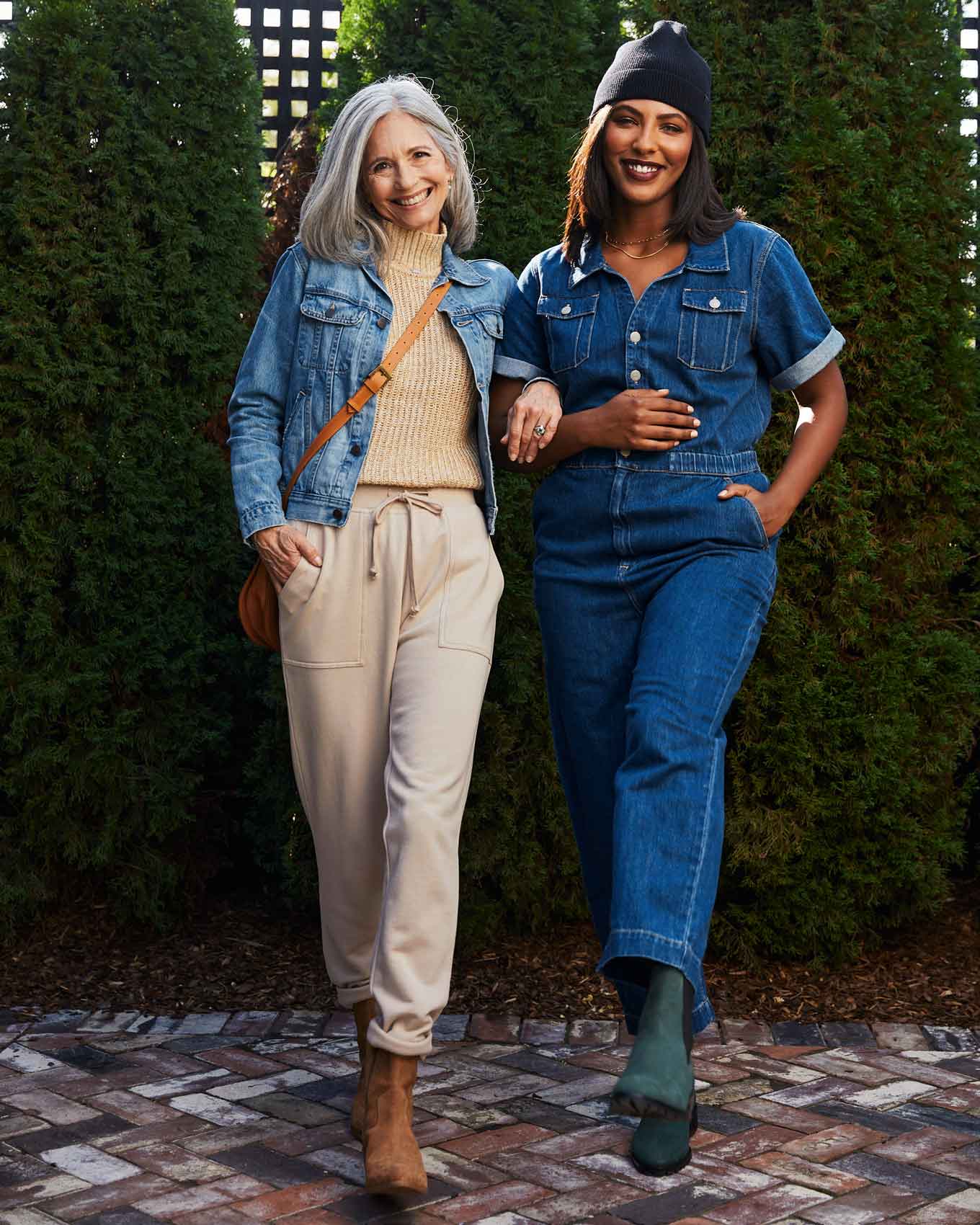
ABLE offers high-quality leather, denim, apparel, shoes, jewelry and accessories, designed for you to feel confident in everyday life.
As a women-run fashion brand, ABLE is dedicated to being as transparent as possible in their mission to be ethical, sustainable, and empowering to the women who make up 75% of the fashion manufacturing workforce.
They’ve also grown to see their opportunity to impact not just the people in their own supply chain, but to be something much bigger than that: To be a brand that moves fashion forward and breaks the cycle of generational poverty.
Nisolo
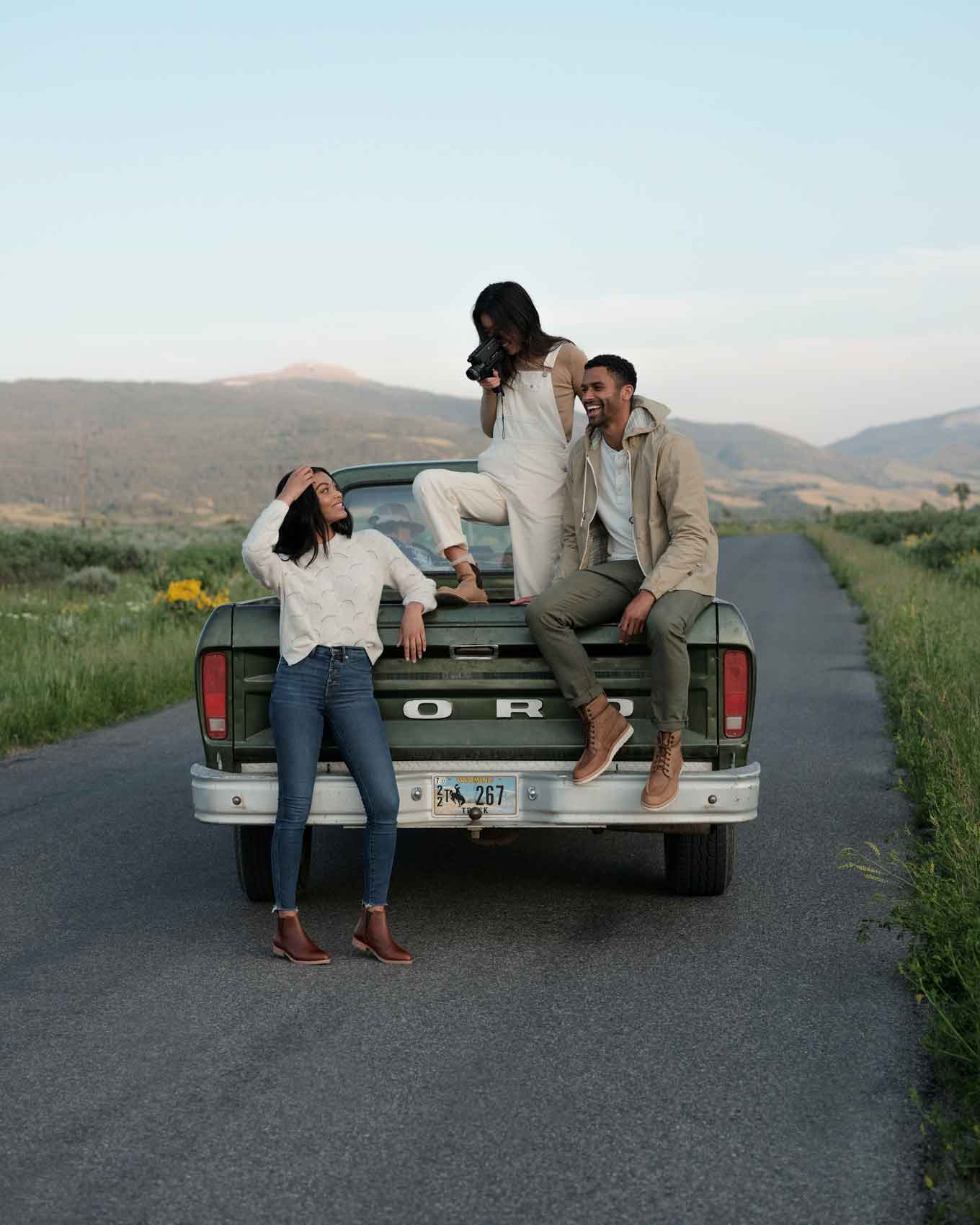
Best known for their high-quality footwear, Nisolo offers a variety of stylish accessories for both men and women. Nisolo understands that a fair wage is a living wage sufficient to cover housing, food, water, education, healthcare, transportation, clothing, and other essential needs.
They ensure a fair wage is paid by frequently monitoring living wages in all of the countries they operate in and working with our suppliers to ensure their even the lowest wage is a living wage.
They visit suppliers regularly and evaluate their practices in partnership with their HR teams as well as employing 3rd party auditing to guarantee socially and environmentally responsible practices.
Miakoda
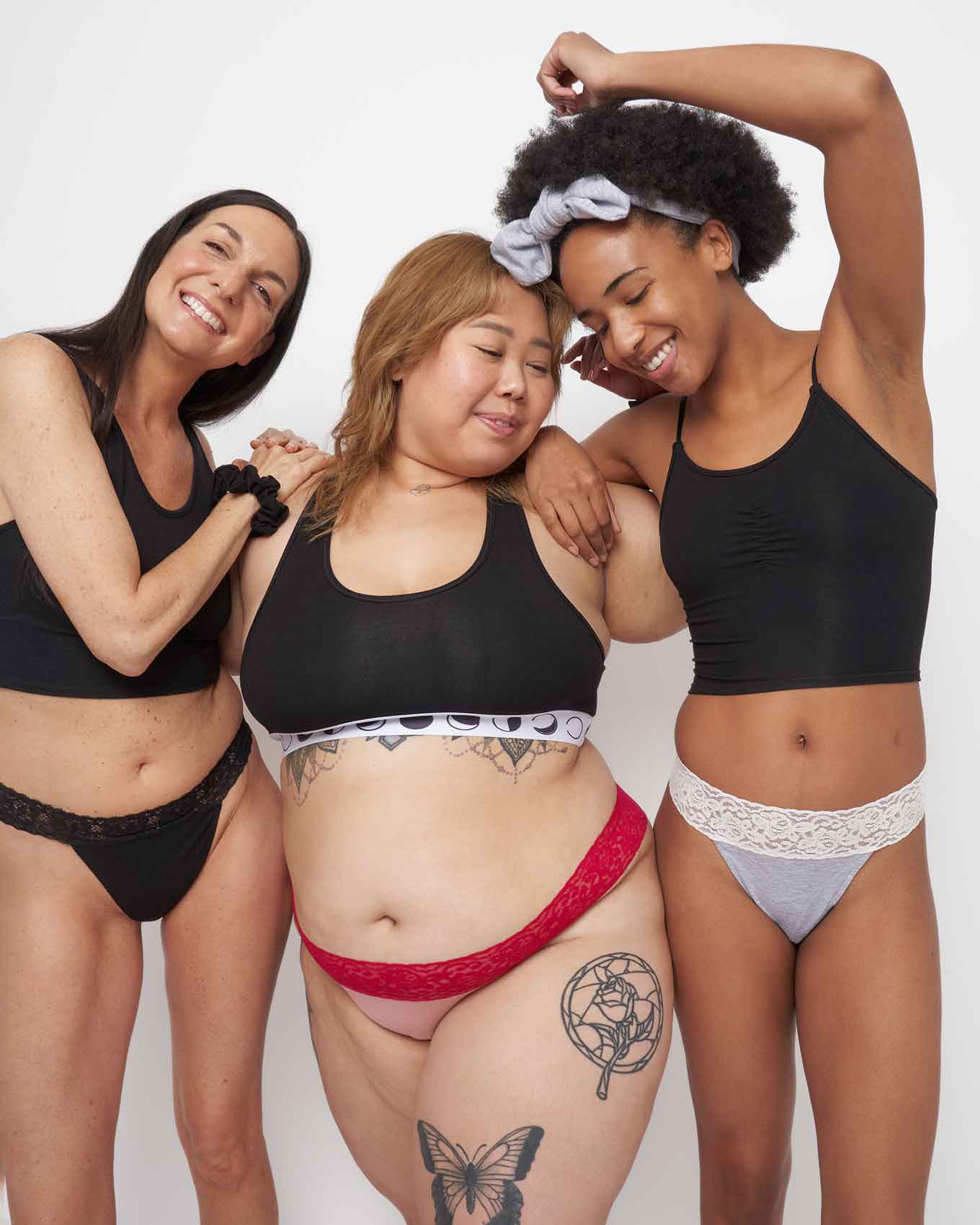
Miakoda is an eco-friendly, sustainable, and ethically made comfy clothing company that uses exclusively plant-based materials. Julia, the owner and designer, regularly visits the factory they work with in the Bronx, NY.
She has a relationship with the workers and the owner of the factory. All of the workers are paid an hourly wage — as opposed to a "per piece sewn" wage which is an easy way for workers to be underpaid and treated unfairly.
The factory owner ensures that the garment workers hold fair hours and are paid overtime if they work extra hours.
Visiting the factory frequently ensures the conditions are safe and clean, and that the workers are happy and well taken care of.
Tradlands
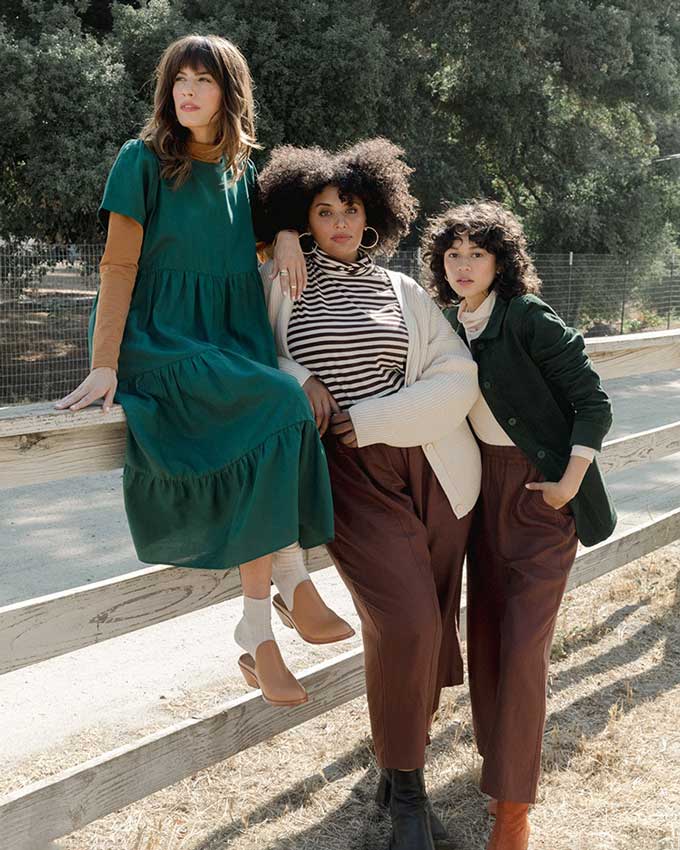
Tradlands creates timeless, well-made essentials from sweaters to sets that redefine the meaning of effortless style for women. They work with different partners specializing in the garments they’re constructing.
Production partners of Tradlands hold social welfare and production quality to the highest standards. They employ adults who are paid a living wage, work in bright, clean, and airy environments, and choose to come to work.
Employees are given U.S.-based standards of working hours, paid overtime, and never allowed triple shifts.
Tradlands performs compliance audits yearly to evaluate employee satisfaction and environmental conditions.
Some of the links included in this article are affiliate links — which means that Good Good Good may earn a commission if you choose to make a purchase — at no cost to you. Thank you for your support!

People and organizations making a difference for garment workers and ethical fashion:
We’ve just scratched the surface in this article, and if your interest is piqued, there are some fantastic people to learn more from and get inspired by.
There are so many different ways to become a Helper.
People making a difference in the ethical fashion movement
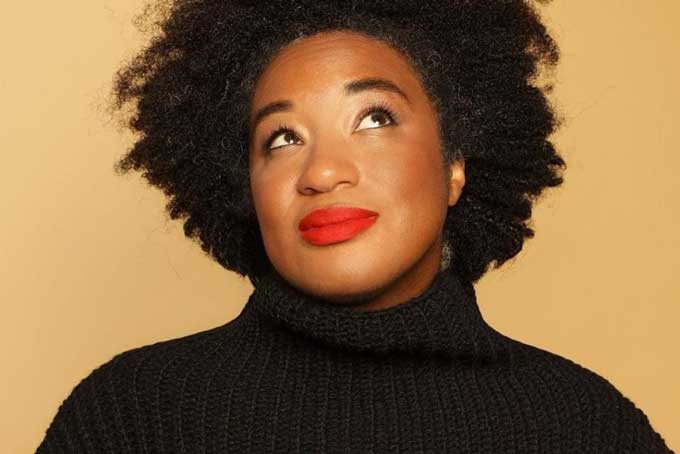
- Aja Barber is a writer (Consumed: The Need for Collective Change: Colonialism, Climate Change, and Consumerism), stylist, and consultant whose work deals with the intersections of sustainability and the fashion landscape. Her work builds heavily on ideas behind privilege, wealth inequality, racism, feminism, colonialism, and how to fix the fashion industry with all these things in mind.
- Betty Yu is a socially engaged multimedia artist, photographer, filmmaker, educator, and activist. Her documentary "Resilience" is about her garment worker mother fighting sweatshop conditions, and her multi-media installation, "The Garment Worker" was featured at Tribeca Film Institute's Interactive Showcase.
- Brittany Sierra was fascinated by the ethical/sustainable fashion industry but unsure where she fit in the conversation. She noticed a disconnect between sustainable fashion enthusiasts and industry leaders. In 2017, Brittany responded with the Sustainable Fashion Forum, which has grown into a wildly popular and industry-recognized digital platform, and a growing global conference.
- Céline Semaan is a Designer, Advocate, Writer and Founder of Slow Factory Foundation, a nonprofit that advances collective liberation for people and nature by preparing historically marginalized people to become climate leaders through regenerative design, open education, and narrative change.
- Dominique Drakeford is a non-traditional environmental educator with a BA in Business Environmental Management and a Master’s Degree from NYU in Sustainable Entrepreneurship and Fashion. She works at the intersections of sustainability and style to spark equitable change for economic well being.
- Elizabeth Cline is a New York-based author, journalist, and expert on consumer culture, fast fashion, sustainability and labor rights in the apparel industry. Critically acclaimed author of Overdressed and The Conscious Closet, Cline has turned her expertise towards strategic organizing and campaigning for labor rights in fashion.
- Kalpona Akter is a former child worker who is now the Executive Director of the Bangladesh Center for Worker Solidarity (BCWS). She is on the front lines fighting for jobs with dignity for all.
- Livia Firth was the executive producer of the 2015 documentary “The True Cost” and founder of Green Carpet Challenge. This project aims to raise the profile of sustainability and social welfare by encouraging celebrities to wear ethical designs at high profile events. Firth also established Eco Age, a consultancy firm that provides bespoke solutions for brands looking to improve their supply chain.
Organizations making a difference in the ethical fashion movement

- Fashion Revolution was founded in the wake of the Rana Plaza disaster in 2013. Since then, they have grown to become the world’s largest fashion activism movement, mobilizing citizens, brands and policymakers through research, education and advocacy.
- Garment Worker Center is a worker rights organization leading an anti-sweatshop movement to improve conditions for tens of thousands of garment workers. GWC develops leaders who demand enforcement of strong labor laws and accountability from factory owners, manufacturers, and fashion brands. They center immigrant workers, women of color, and their families who are impacted by exploitation in the fashion industry.
- Remake is a community of fashion lovers, women rights advocates, and environmentalists on a mission to change the industry’s harmful practices on people and planet. They make sustainability accessible and inclusive across three pillars of work: education, advocacy, and transparency.
- Slow Factory Foundation is a non-profit organization focused on generating climate change solutions and systemic change for regenerative social and environmental justice through fashion. Since 2013, it has partnered with other nonprofits, academics, and global brands to facilitate education, design, and community programs in the fashion industry.
- Sustainable Fashion Forum is a global online and offline community for conscious fashion enthusiasts and sustainability advocates (of all industry levels) looking to make a tangible impact in their community and beyond.
Pausing for positivity before we go on our way…
It can be overwhelming and downright heartbreaking to learn about human rights abuses throughout the fashion industry, but progress is being made towards a better future.
A 2021 study revealed that shoppers are genuinely concerned about the ethics behind the products they purchase, and the ethical fashion industry is anticipated to grow by over 25% in the coming year.
With the recent passing of Senate Bill 62 in California, there’s good reason to believe further policies will be introduced in the interest of protecting the rights of garment workers.
The list of people above is just a sampling of the many Helpers who are organizing, innovating, and speaking up.
Whether it’s through simply changing your own purchasing habits, using social media to support new policies, or getting more deeply involved with an organization championing garment worker rights — you can be a Helper too!
Six ways to make a difference for garment workers
To recap, here’s how to get involved in making a difference for garment workers:
1. Change Policy
While individual action is important, systemic change requires people to rally behind effective policies to effect widespread results. Call your elected official and tell them you’d like to see The Garment Worker Protection Act (SB62) implemented in your state, and most importantly, at a federal level.
2. Sign Petitions
Check out #PayUp campaign and add your name to the list of individuals demanding that brands treat the people in their supply chains with dignity.
3. Shop Ethically
Vote with your dollar by supporting brands like ABLE, Nisolo, Miakoda, Tradlands, and others who pay a living wage to those who make their products.
4. Follow and Learn From Leaders
While this article offers a holistic overview about ethical fashion, it’s important to learn from industry leaders and activists as the conversation continues to evolve. Check out at least a few of the people in the list above and stay informed!
5. Get Involved with Nonprofits
Peruse the organizations linked in this article — and look for ways to get involved, some of them even have local cohorts for in-person connections and collaboration.
6. Share About the Problems and Solutions
Share this article and other resources. Help more people get educated and take action — and leave people feeling hopeful with steps to be part of a better future for garment workers all across the globe.
In the United States in 2021 there were at least 149 incidents of gunfire on school grounds, resulting in 32 deaths and 94 injuries.
Between 2009 and 2018, the U.S. had 57 times more school shootings than the rest of the G7 countries combined.
There are bipartisan, publicly-supported, and data-backed solutions to reduce and prevent school shootings — and we can all help make them a reality.
(Plus, some good news on the progress we've already made)
The most recent school shooting is a devastating reminder of the near-constant threat of gun violence in U.S. schools
In 2023 alone, according to Everytown for Gun Safety, there were at least 158 incidents of gunfire on school grounds in the U.S .
Those incidents resulted in 45 deaths and 106 injuries. According to Education Week, there have been 129 people killed and 346 people injured from school shootings since 2018.

Gunfire on School Grounds in the United States: In 2023, there were at least 158 incidents of gunfire on school grounds in the U.S., resulting in 45 deaths (indicated by red circles) and 106 injuries (indicated by blue circles). (Grey circles indicate no injuries or deaths.) / Courtesy of Everytown
In 2021, Everytown reported there were 32 incidents of gunfire on school grounds in September, and 32 more in October alone — the most in a single month since they started tracking in 2013.
On November 30, 2021, a 15-year-old in Oxford, Michigan opened fire at his high school, Oxford High School, killing 4 students between the ages of 14 and 17 years old, and injuring 6 more students and one teacher.
Four days prior, the shooter’s father purchased a gun, which was then not stored securely, and the shooter posted a photo with the gun on social media. Earlier on the day of the shooting, the shooter and his parents were brought into a meeting by school officials who were concerned by both ongoing behaviors, and behaviors exhibited earlier in the day. He was not sent home from school, and his belongings were not searched — and he carried out the attack later that day.
Prosecuting attorney Karen McDonald said the shooting was premeditated, based on a "mountain of digital evidence."
In the days following this devastating shooting, there were “copycat” threats at schools in Michigan and around the country.

In May 24,2022, an 18-year-old shooter opened fire at an elementary school in Uvalde, Texas, killing 19 students, two teachers, and injuring 7 more people.
On March 27, 2023, a 28-year-old shooter killed three 9-year-old students and three adults at The Covenant School in Nashville, Tennessee. It was the deadliest school shooting in the state's history.
Why gun violence — and school shootings in particular — are a problem
According to an estimate from Everytown based on the 2021 National Firearms Survey, an estimated 5.4 million school-aged children now live in a home with at least one loaded and unlocked firearm.
Over the last 20 years as many as 80% of school shooters obtained their gun(s) from their home or the home of a friend or relative.
The number of guns and gun owners in the U.S. is on the rise — according to an Everytown analysis of Gun Violence Archive data on the number of background checks run, gun sales in the U.S. increased by 64% in 2020. (And that’s just on purchases made with a background check, which is not always required.)
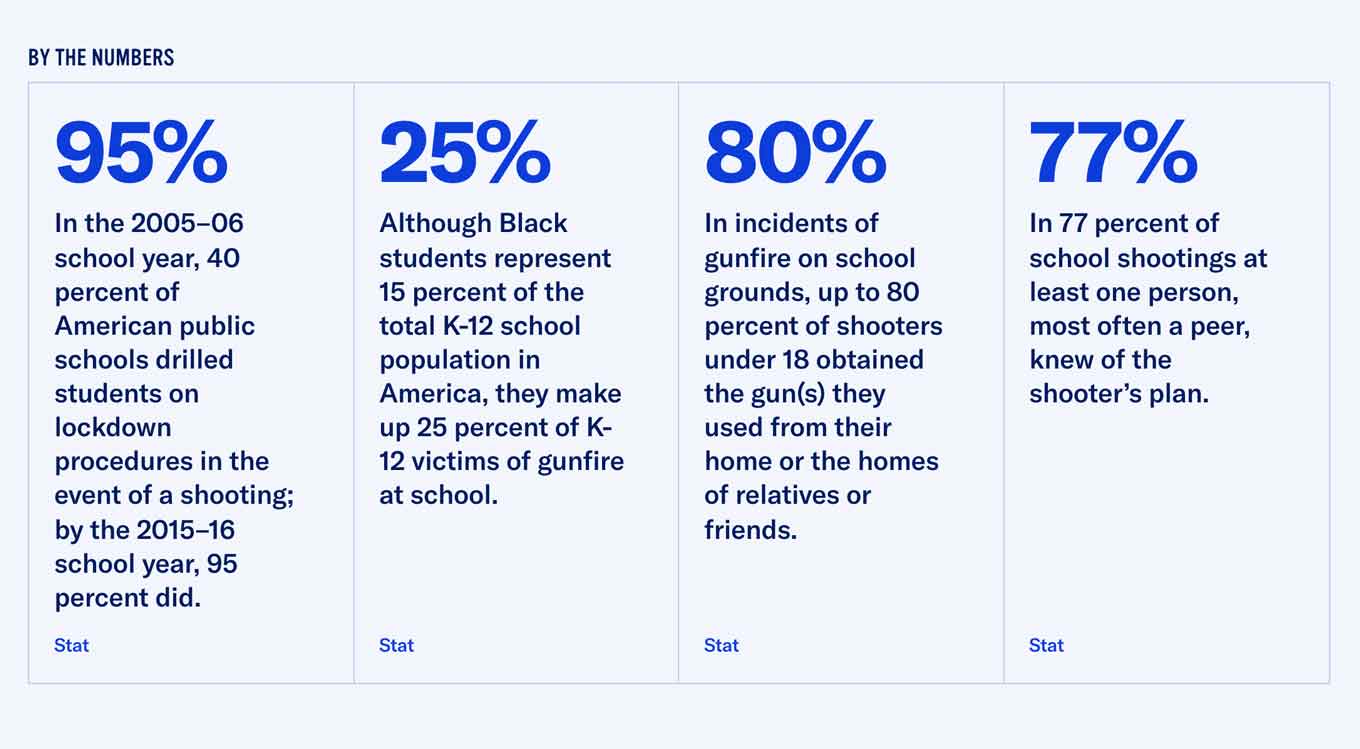
Between 2013 and 2019, Everytown identified 549 incidents of gunfire on school grounds. Of these, 347 — just over 63% — occurred on the grounds of an elementary, middle, or high school. In total, they resulted in 129 deaths and 270 people injured. At least 208 of the victims were students.
Adding another element of nuance to it, among those K-12 school shootings, 64% of them occurred at majority-minority schools.

And while other countries devastatingly also experience school shootings — the quantity and frequency is a uniquely American problem.
According to a different analysis by CNN, between January 1, 2009 and May 21, 2018, the U.S. had at least 288 school shootings — 57 times more than the other six G7 countries (Canada, Japan, Germany, Italy, France, and the U.K.) combined.
Beyond school shootings, gun violence in general is also a problem unique to America. Each year in the U.S. almost 350 children ages 17 years and under access a firearm and unintentionally shoot themselves or someone else. Nearly 700 children 17 and under die by suicide with a gun every year.
The data is staggering, heartbreaking, and overwhelming.
We’ve made progress in passing common sense gun laws around the country — and it should inspire us to keep working.
One of the organizations leading the charge in passing policies around gun safety is Moms Demand Action. Their network of volunteers and advocates have helped pass background check laws in 21 states, laws that disarm domestic abusers in 29 states, laws that close the “Charleston loophole” (which allows gun dealers to sell guns without a background check, in cases where the FBI doesn’t complete a buyer’s background check within three days) in 19 states, and red flag laws in 19 states.
However, the reality, as Moms Demand Action founder Shannon Watts said on the Sounds Good Podcast, is that “we're all only as safe as the closest state with the weakest gun laws.” So action is needed on the national level, as well.
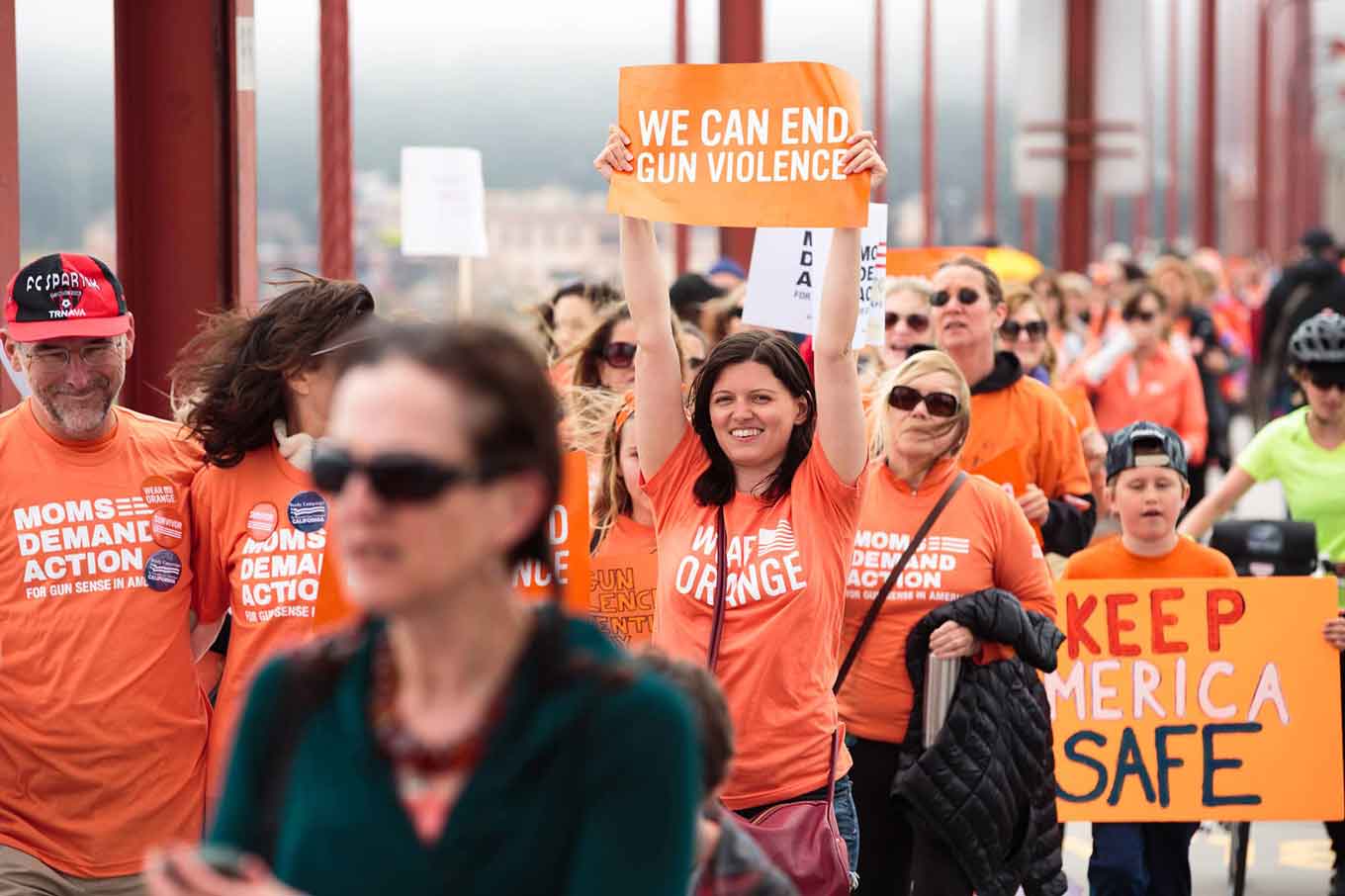
And progress is being made there, too. Within the first 100 days of his presidency, Joe Biden not only encouraged Congress to pass universal background checks and other laws that have already passed through the House, but put in place several executive actions that will save lives immediately.
Those actions included regulating the market for ghost guns, appointing an Alcohol, Tobacco, and Firearms Director, and giving over a billion dollars to city gun violence intervention programs.
If you’d like to be even more encouraged by the progress we’ve made, look through Moms Demand Action’s timeline of victories.
Gun safety is popular, bipartisan, and should be inherently non-political because of its wide public support. Around 90% of Americans support common-sense gun laws like universal background checks.
It’s encouraging to know that most of your neighbors likely support evidence-based solutions to prevent and stop school shootings (and gun violence in general), too.
Here are some of those data-backed solutions:
Three Data-Backed Ways to Prevent School Shootings
In addition to being traumatizing for teachers, school staffs, students, and students’ families, active shooter drills, school resources officers, and other measures taken by states and school districts only prepare schools to respond to school shootings and threats — they do little (if anything) to actually prevent them from happening in the first place.
Students should be focusing on their academics, emotional growth, and social growth at school. Teachers should be facilitating that learning and growth. Neither should be worrying about their safety and security, much less losing their life, while doing so.
And as Shannon Watts said on the Sounds Good Podcast, gun safety and passing stronger gun laws “is not about undoing the Second Amendment or taking away people's weapons. This is simply about restoring the responsibilities that should go along with gun rights and do in other countries with high rates of gun ownership.”
Here are 3 data-backed, effective, proven preventative measures to stop shootings in our schools:
1. Pass Secure Firearm Storage laws, enforce them, and improve secure storage education
As mentioned earlier, based on the 2021 National Firearms Survey, Everytown estimates that 5.4 million American children live in a home with at least one gun that is unlocked and loaded — and as many as 80% of school shooters got their guns from their own home, or the home of a family member or friend.
To encourage your friends, family, colleagues, and neighbors to securely store their firearms at home, share resources from Be SMART for Kids, like this guide on SMART firearm storage.
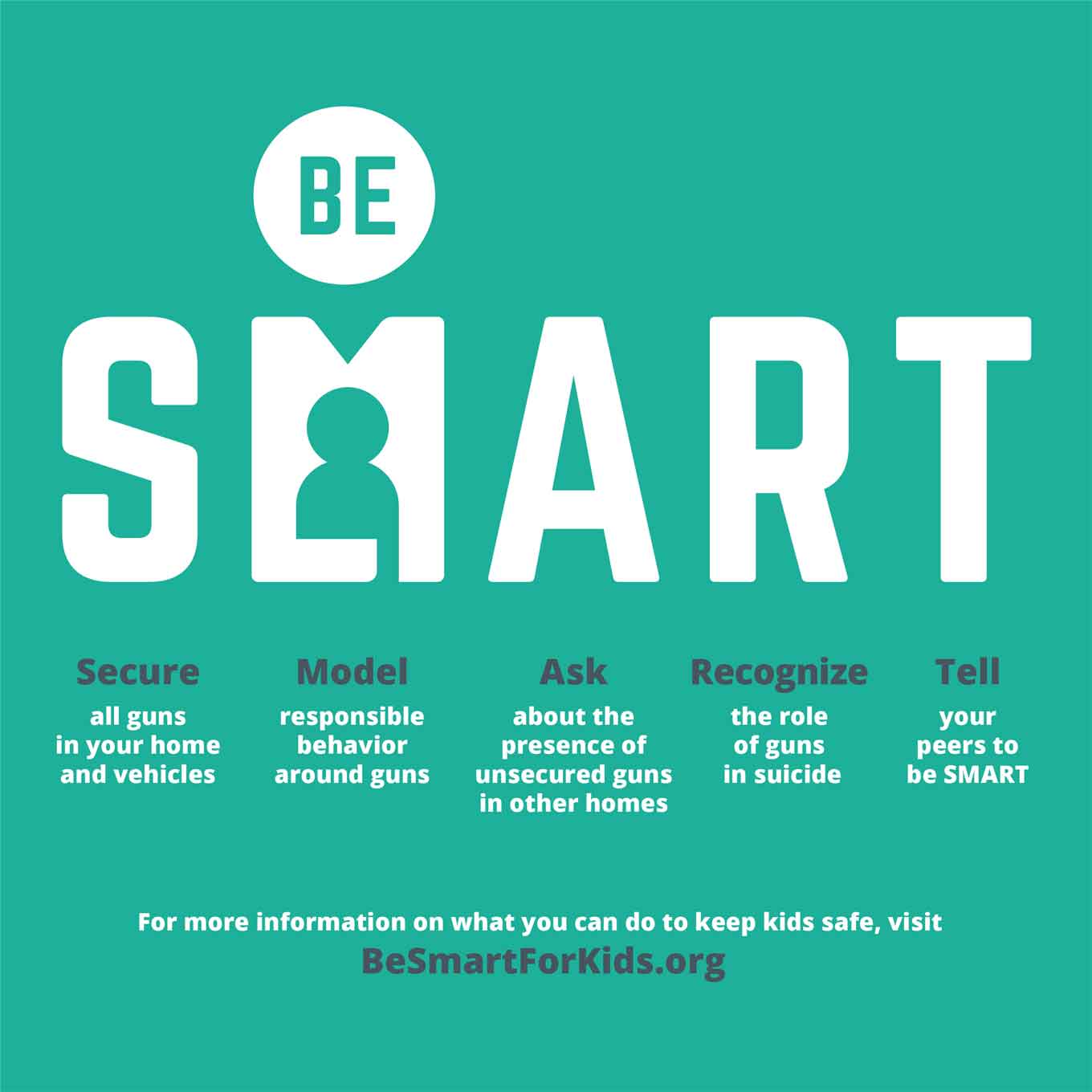
If you’re a parent: If your child asks to visit a friend’s house, before they go, ask the friend’s parents and/or guardians if 1) there are guns in the home and 2) if they’re stored securely. If they aren’t, share the resources above with them — and talk to them about why it’s so important.
Schools, school districts, and even the Department of Education can help secure storage education by publishing and proactively distributing materials and resources about both the importance of and how to securely store guns at home.
Additionally, cities and/or states must pass laws requiring that people store firearms securely when they are not in their possession to prevent unauthorized access. Under these laws, Everytown says, “when a person accesses a firearm and does harm with it, the person who failed to securely store the firearm is liable.”
Currently, only 23 states and Washington, D.C. have some form of secure storage law: California, Colorado, Connecticut, Delaware, Florida, Illinois, Iowa, Hawaii, Maine, Maryland, Massachusetts, Minnesota, Nevada, New Hampshire, New Jersey, New York, North Carolina, Oregon, Rhode Island, Texas, Virginia, Washington, and Wisconsin. Several cities, including New York City, San Francisco, Seattle, and Edmonds, Washington, have passed secure storage laws.
2. Pass Extreme Risk laws to prevent an at-risk person from accessing guns
Extreme Risk laws — sometimes called “Red Flag” laws — allow law enforcement, family members, and/or educators to ask a court “to prevent a person from having access to firearms when there is evidence that they are at serious risk of harming themselves or others,” as Everytown describes.
A 2019 study from the Department of Homeland Security on violence in K-12 schools between 2008 and 2017 found that every shooter displayed prior warning signs, and in all but 2 cases those signs were displayed at school.
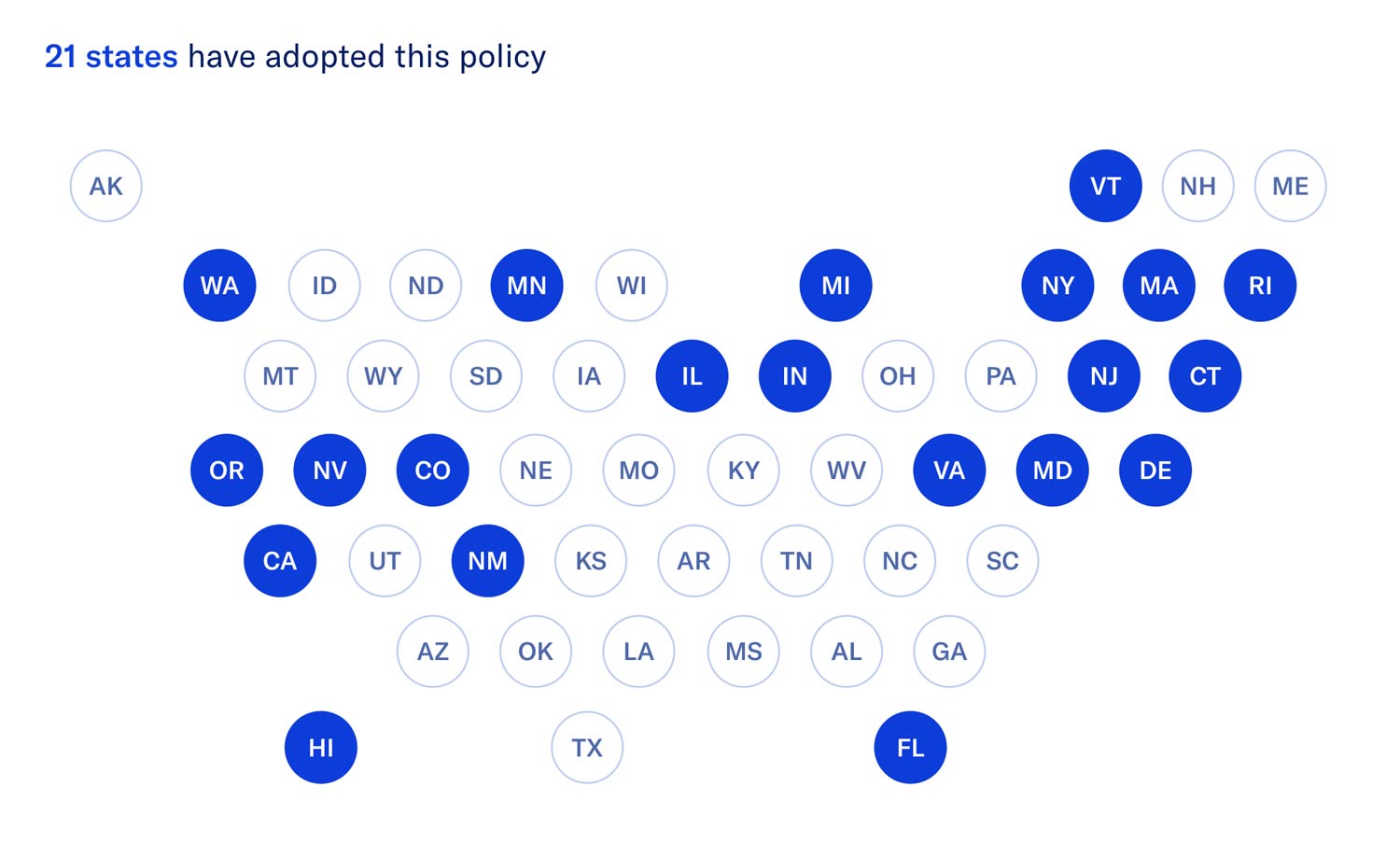
Extreme Risk laws are a critical intervention tool that can be used to prevent gun violence, like school shootings. According to Everytown, only 21 states and Washington, D.C. currently have a law like this in place: California, Colorado, Connecticut, Delaware, Florida, Hawaii, Illinois, Indiana, Maryland, Massachusetts, Michigan, Minnesota, Nevada, New Jersey, New Mexico, New York, Oregon, Rhode Island, Vermont, Virginia, and Washington.
3. Require Background Checks on all gun sales
Nationally, current laws require licensed gun dealers to perform a background check prior to all gun sales to ensure the buyer is not legally prohibited from buying a gun. In some states, laws allow even licensed gun dealers to move forward with a sale if a background check is not completed within 3 days — this is sometimes referred to as the “Charleston loophole.”
Current federal gun laws do not, however, require background checks on gun sales by unlicensed dealers — like sales made at gun shows or online. This allows those who are underage or would not pass a background check to easily possess a firearm.
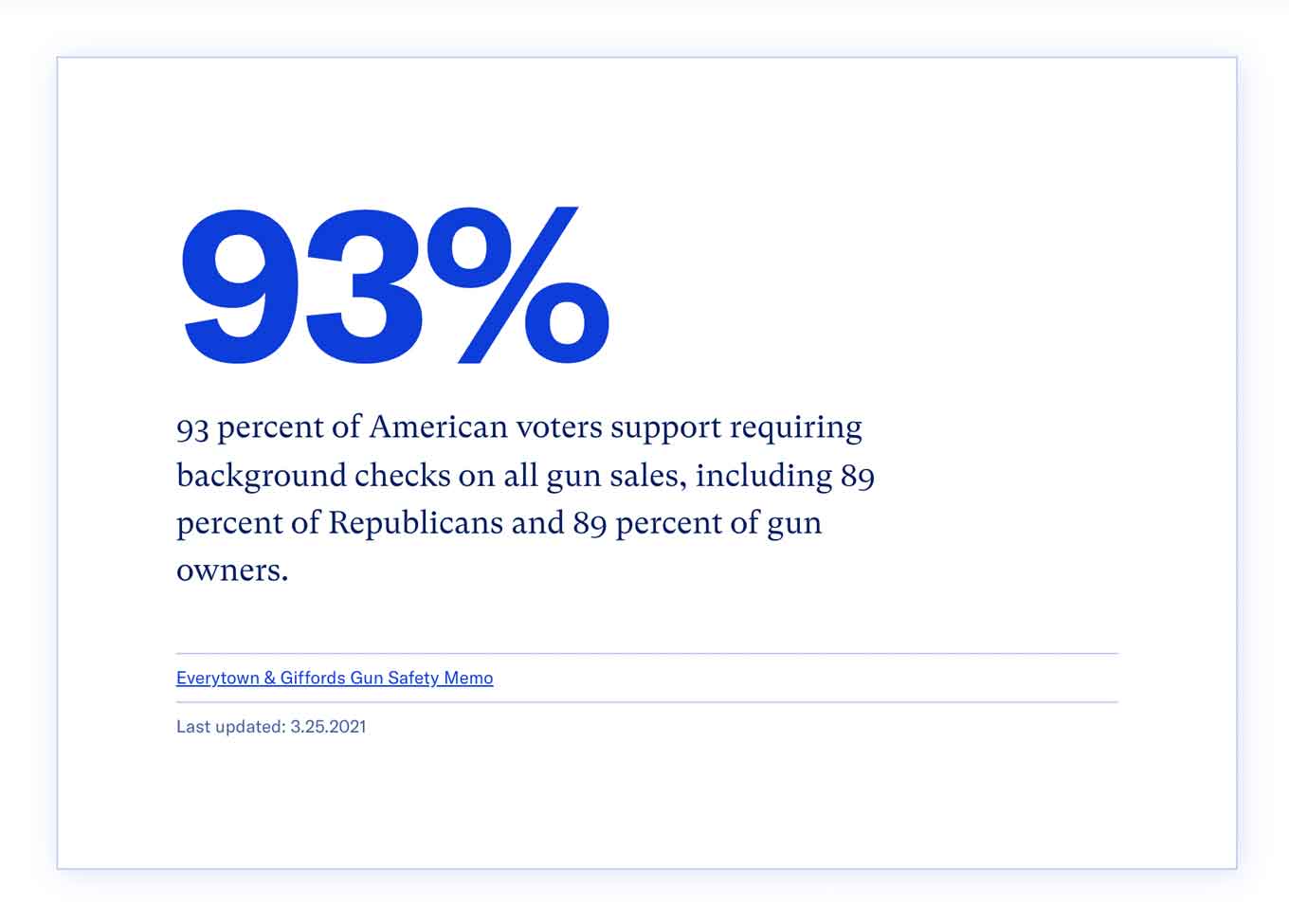
This is a huge problem. An Everytown investigation found that as many as 1 in 9 people looking to purchase a gun on Armslist.com (the largest online gun marketplace in the U.S.) are people who cannot legally have them, including because they are under 18 years old. It also found that in 2018, there were 1.2 million ads for gun sales that would not require a background check.
Both states and the federal government need to pass laws requiring background checks on all gun sales so that firearms can not be easily purchased by people who should not have them, including people with dangerous histories, deemed “extreme risks,” or underage.
Background checks have been proven to reduce gun violence — they are associated with lower firearm homicide rates, firearm suicide rates, and firearm trafficking. Twenty-one states and Washington, D.C. require a background check on all handgun sales: California, Connecticut, Colorado, Delaware, Hawaii, Iowa, Illinois, Maryland, Massachusetts, Michigan, Nebraska, Nevada, New Jersey, New Mexico, New York, North Carolina, Oregon, Pennsylvania, Rhode Island, Vermont, and Washington.
We can all help stop more school shootings by contacting our elected officials and demanding they act on these solutions
Gun safety and common sense gun laws don’t “belong” to a political party. In fact, because they’re so effective, they have strong bipartisan support.
The Federal Commission on School Safety, started by President Trump, endorsed extreme risk laws specifically.
Since the shooting at Marjory Stoneman Douglas High School in 2018, twelve states have passed extreme risk laws — five signed by Republican governors.
Contact your local, state, and federal elected officials, share your concerns, and ask them to enact proven, popular solutions to prevent school shootings: secure storage and extreme risk laws, and universal background checks.
Call 1-844-USA-0234 and enter your zip code to be connected with your representatives, text RESIST to 50409 to contact them via Resistbot, or use this complete guide to contacting your representatives.
Remember that the more personal your message, the better — unfortunately, sometimes mass-written emails get filtered out by spam.
Use this sample letter/script to get you started:
Gun Safety Script for Calling Elected Officials in Congress
[Senator / Representative / Congressman / Congresswoman] [Name],
My name is _______, and I am your constituent living in ________. I am writing to express my concerns, as well as action steps I’d like you to take, in the aftermath of the recent school shooting in ________ — and the at least 158 other incidents of gunfire on school grounds in the U.S. that all happened in 2023 alone.
I understand the desire and legal protection people have to purchase guns, but what I don’t understand is how that legal protection can outweigh the protection of students at school. And while you may argue that it doesn’t outweigh it — the statistics prove otherwise.
Our [state/city/country’s] current laws around gun ownership aren’t strong enough if they’re allowing gun violence to occur at our schools as often and as frequently as it does right now. It needs to stop.
There are several proven, data-backed solutions you can help enact right away to prevent school shootings.
1. Secure storage: Based on the 2021 National Firearms Survey, Everytown estimates that 5.4 million children now live in a home with at least one firearm. And 80% of school shooters got their gun from their home, or the home a friend or relative. Require gun owners to secure their firearms securely at home, so they are not easily accessed by children, or anyone who isn’t the lawful owner.
2. Extreme risk laws: A 2019 study from the Department of Homeland Security on violence in K-12 schools between 2008 and 2017 found that every shooter displayed prior warning signs (in all but 2 cases those signs were displayed at school). Extreme risk laws, or “red flag” laws give a legal pathway for concerned officials to prevent a person from accessing a firearm when evidence suggests they could harm themselves or others.
Because they’re so effective, extreme risk laws also have strong bipartisan support. The Federal Commission on School Safety, started by President Trump, endorsed them; and 16 states have passed extreme risk laws since the shooting at Marjory Stoneman Douglas High School in 2018 — including by Republican governors.
3. Background checks on all gun sales: There is no reasonable circumstance where a person should not have to undergo a background check to purchase a gun of any kind. I believe you care about the lives of your constituents — adults, young people, students — and universal background checks on ALL gun sales would save countless lives.
You have the power to implement real, meaningful change. Please do your part to ensure this problem — that is devastatingly unique to our country — is not only addressed, but is made right.
Thank you,
[Your Name]

And if you want to take further, direct action to end gun violence and school shootings — get involved with Moms Demand Action.
Moms Demand Action is a nonpartisan grassroots movement of Americans (not just moms!) fighting for public safety measures that can protect people from gun violence.
It has more than 6 million supporters and chapters in every U.S. state. Their work has been monumental in getting helpful, life-saving resources into the hands of gun owners, and common sense gun laws on the books in cities and states.
Be a part of the solution to end gun violence: Find a chapter near you, and/or text the word READY to 64433 to get involved with gun reform work where you live.
You might also like:
— The Best Gun Violence Quotes To Inspire Change
— How the Hope Created By the Parkland Shooting Activists Lives On
Each sustainable craft brewer can capture as much as 1,500 trees worth of C02
After a decade of beer brewing in the beach town of Westerly, Rhode Island, Grey Sail Brewing has grown from a small operation brewing up batches of its signature Flagship Ale to a regional purveyor of more than half a dozen different beers.
Located across the street from the Pawcatuck River, the company’s original home in a former pasta factory has expanded to more than 8,000 square feet. Next door is a new distillery for spirits, and beyond that, a bright yellow colonial houses a taproom and beer garden.

But with all that growth comes a larger carbon footprint. So a few months ago, even as the pandemic had slowed their business, owners Alan and Jennifer Brinton made a new investment in sustainability.
Grey Sail is the first craft brewery in Rhode Island, and the second in New England, to install carbon-capturing technology specially designed for microbreweries.
How does capturing carbon dioxide in beer work?
Developed by Earthly Labs, based in Austin, Texas, the system captures the waste carbon dioxide, produced during fermentation, enabling it to be used to carbonate and package the beer.
“Brewing is unique in that you generate carbon as a byproduct, but you also consume it too,” Alan Brinton said. “This investment allows us to reap environmental benefits from brewing great beer.”
Standing next to massive stainless steel fermentation tanks, Brinton explains that the yeast used to ferment the beer breaks down the malt sugar and converts it to alcohol and carbon dioxide, or CO2.

Whereas before that CO2 would have simply been released into the atmosphere, now it is captured through a piping system, converted to liquid in a refrigerator-sized box, and stored.
Brinton estimates that he’s currently capturing about 2,000 pounds of CO2 monthly; that level will rise when beer production revs up during the warmer months.
That may not sound like much, but as more craft brewers adopt this technology, it will add up, said Amy George, the founder and chief executive of Earthly Labs.
“When you bundle a marketplace together, it makes a difference,” she said.
How long have breweries been using this to make sustainable beer?
Carbon capture technology is not new to the beer industry as a whole, but it hasn’t been affordable or efficient enough for smaller-scale brewers before now, said Chuck Skypeck, technical brewing projects manager for the Brewers Association, a national organization.
He noted that it’s only been in the last decade that the craft brewing industry has exploded. The Brewers Association has some 5,500 members, all of which are licensed operating breweries.
The Earthly Labs system, called CiCi — short for carbon capture — is currently operating in about three dozen craft breweries.
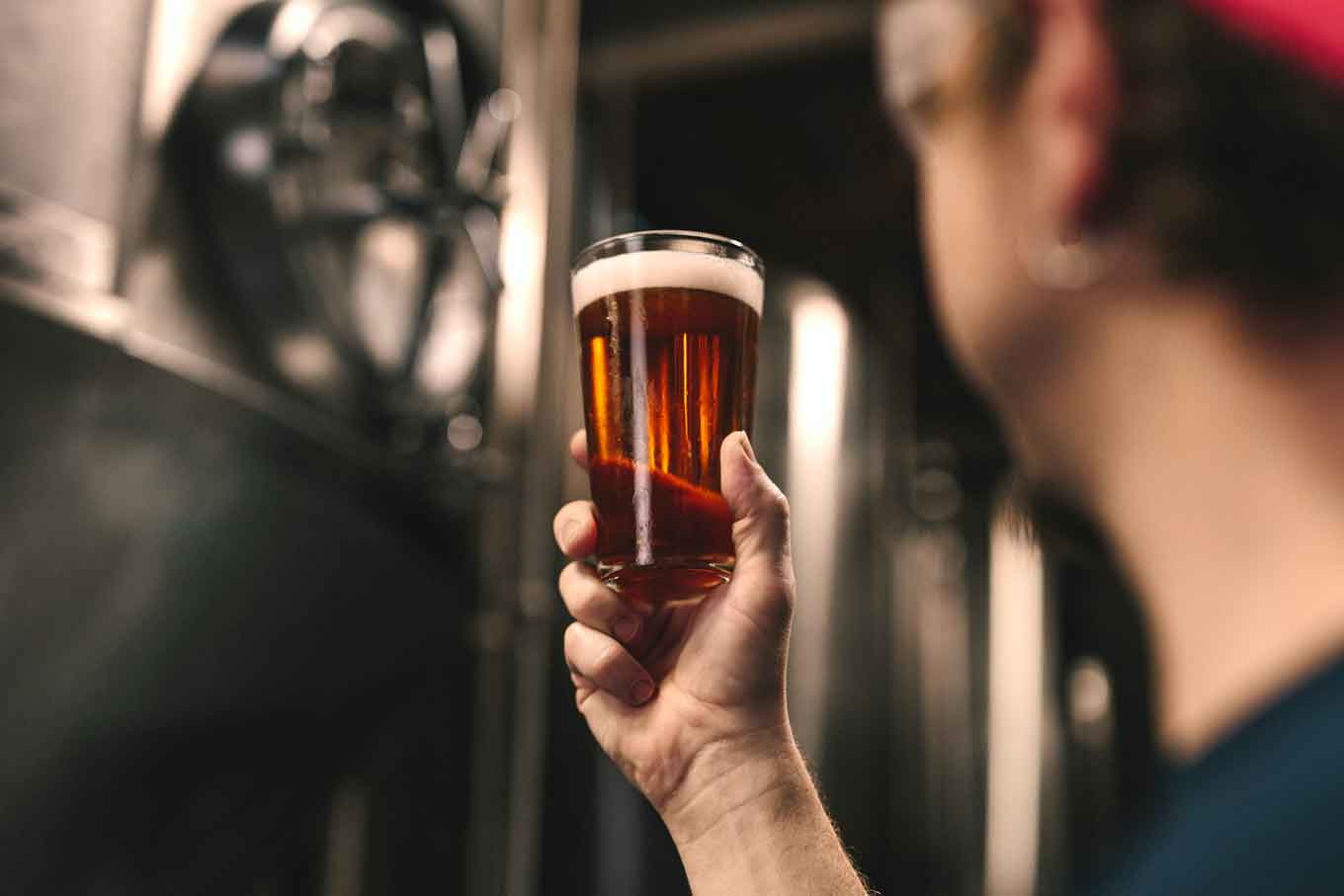
It’s designed to be affordable, easy to use, and deliver economic value to brewers who produce between 5,000 and 20,000 barrels annually. (Grey Sail makes about 10,000 barrels.)
“Annually, each of these brewers can capture the equivalent of the absorption work of 1,500 trees if they use the technology every week,” George said.
Using waste CO2 to carbonate makes economic sense, since it reduces the amount brewers have to purchase from commercial suppliers. And those costs have risen over the past year due to dwindling supply.
Where does C02 for soda, beer, and sparkling water come from?
Much of the carbon dioxide supplied to brewers and the soft-drink industry comes from ethanol production. But as the pandemic drove down demand for gasoline, ethanol production fell, and so too did the supply of CO2.
“The chances of CO2 prices going down are relatively small and I think people are realizing that,” Skypeck said.
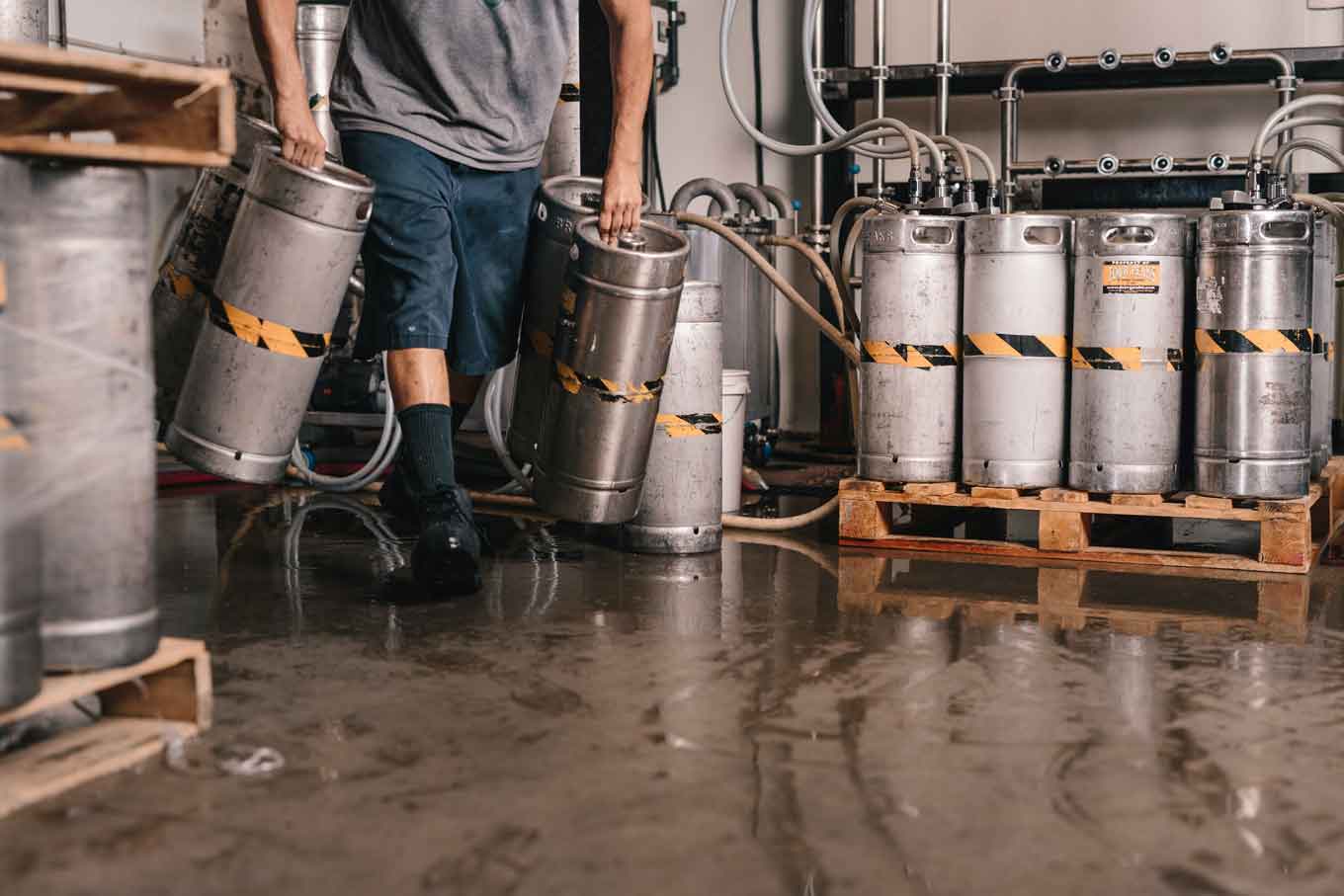
“Obviously the deterrent for a brewery to purchase [C02 capturing] technology is their scale. The average brewery in the U.S. produces about 600 barrels a year, which is less than 20,000 gallons. So they’re not going to produce a whole lot of CO2 that’s worth capturing from a monetary point of view.”
The cost for CiCi is just under $100,000, with the estimated payback on that investment typically one to three years for brewers within the target range, George said.
Consumers are willing to pay more for sustainable beer
A 2016 study out of Indiana University suggests that most beer consumers look favorably upon such investments — and are willing to pay for it.
In a survey of 1,095 self-reported beer drinkers and purchasers, 59% said they would pay more for sustainably produced beer. On average, they were willing to pay a premium of up to $1.30 per six-pack, or 22 cents per 12-ounce bottle.
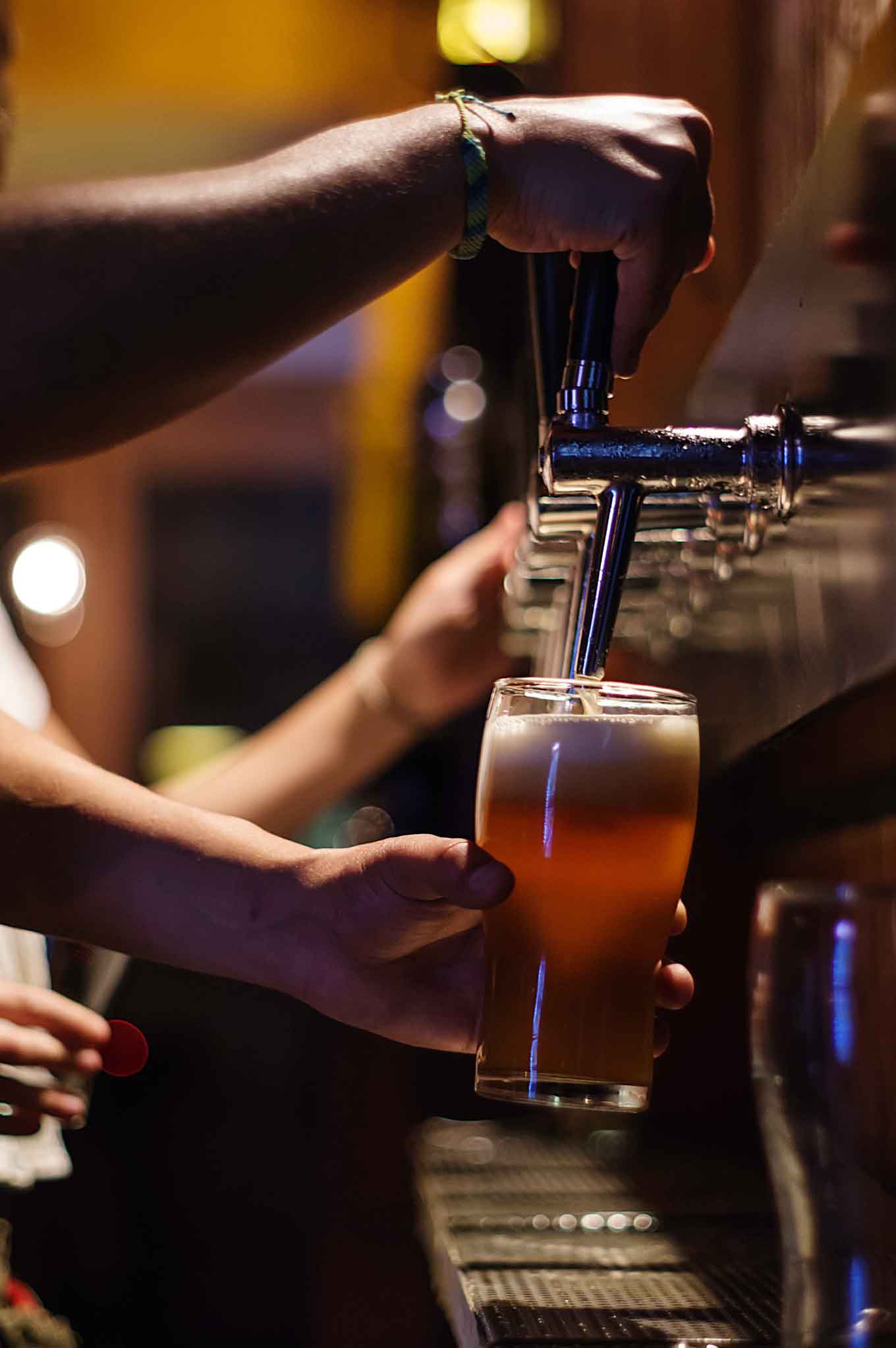
George has plans for a CiCi aimed at larger brewers and, with the help of brewer friends in Austin, is currently working to develop a system suitable for brewers making less than 5,000 barrels a year.
“We’re basically her lab,” said Brian “Swifty” Peters, a brewer and co-owner of the Austin Beer Garden Brewing Company, which makes about 1,600 barrels per year. “We still are experimenting with downsizing the original system for our size.”
The system’s ability to monitor the drop in oxygen levels in the fermentation tank is critical so that when you begin collecting the waste gas, it’s 100% CO2, he said. And that CO2 produces a better tasting and smelling beer than that made with commercially supplied product, he said.
“We did a blind taste test with beer made with captured CO2 versus purchased,” Peters said. “In a pale ale, the hop aroma was much more noticeable.”
Brinton said he’s still experimenting with his system to maximize CO2 capture.
“I don’t know that I’ll ever be able to go away 100% from a commercial supply,” he said, “but my goal is to get it down to 10%.”
This article was originally published by Energy News Network, and was made available to Good Good Good via a Creative Commons license.
The city of Las Cruces will soon have women representing all six of its city council district seats. It joins a short list of all-women or nearly all-women governing bodies.
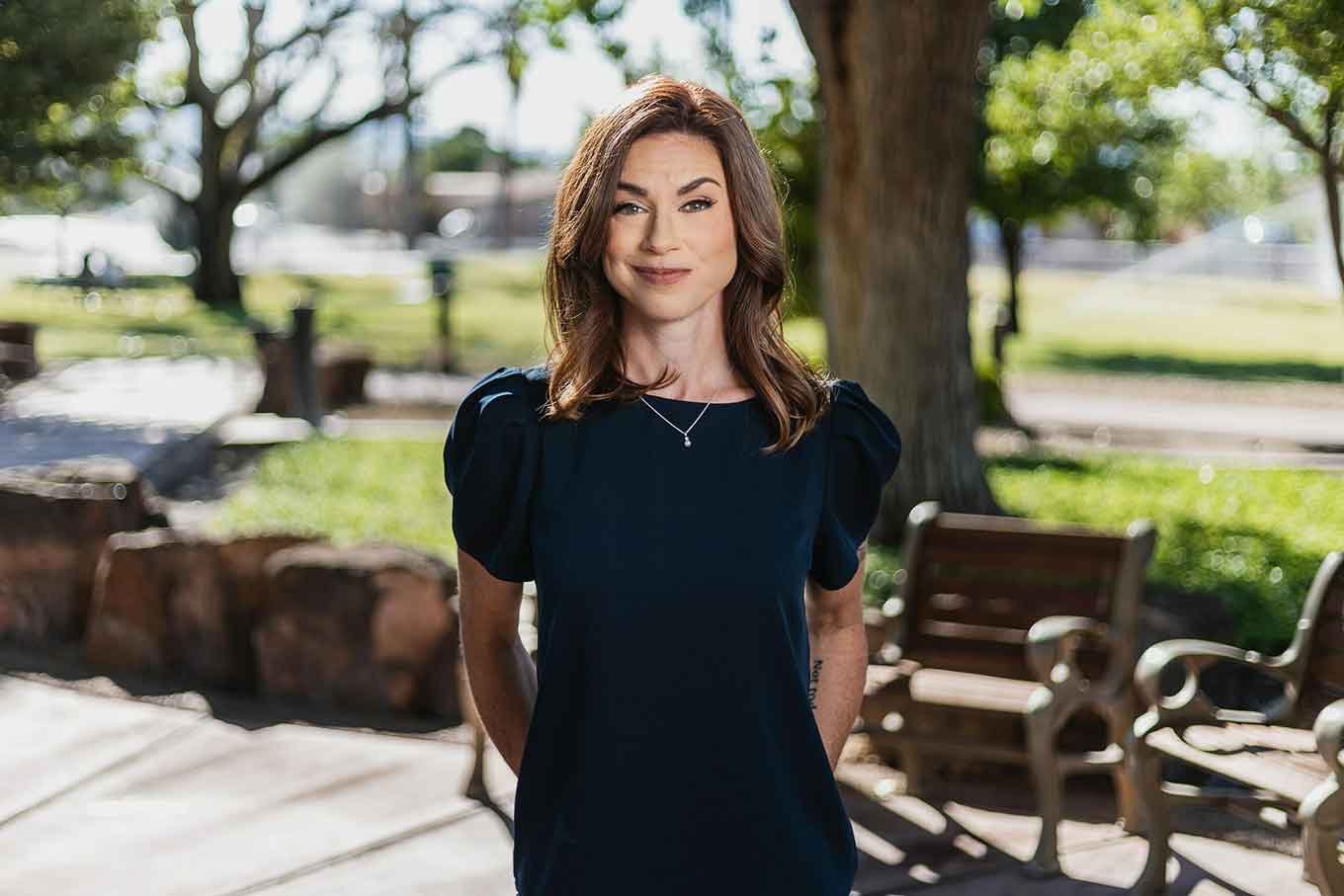
This article was originally published by The 19th, and was republished with permission.
At city hall in Las Cruces, New Mexico, a wall of photographs displays the faces of elected city council members. Come January, the photos will all be of women.
Becky Corran’s face will be new on the wall, as will that of Becki Graham. They’ll join Yvonne Flores, who won reelection in November, and three other women who were not up for election this year. The Las Cruces City Council, for the first time ever, will be all women.
Technically the chair of the council is the mayor, and opposite the wall of city council members is another wall of photographs revealing that only men have served as mayors in Las Cruces.
“It makes me think about how representation matters, and if there were one woman on that wall, what would it mean,” said Corran, who will be sworn in Monday along with the members starting new four-year terms. “That there will be all women on the wall on the other side — it’s going to be really exciting.”
Las Cruces, a city of roughly 100,000 people in the southern part of the state, has a long to-do list of policy issues around the pandemic, the economy and general equity.
How an all-women city council might address them is yet to be determined. But the fact that it joins a short list of all-women or nearly all-women governing bodies is a sign of how underrepresented women remain at all levels of government.
“I think that I’m coming into it with this idea that, as cliche as it may sound, maybe this is going to be a space where leaders are more willing to listen to one another,” said Becki Graham, the other newly elected councilor.
“To take the time to consider things outside of the traditional power hierarchy, if that makes sense.”Councilor Johana Bencomo agreed that they will have the power to do things in new and distinct ways.
“I just think that our approach to some of the things that really matter to Las Cruces will be inherently different, and honestly, I think more compassionate,” she said.
The Las Cruces council seats are nonpartisan, but councilors lean Democrat. The new councilors will replace people from similar ideological backgrounds. Before the November election, women and people of color already made up the majority of the council.
Research on women-led governments shows that party affiliation instead of gender is a greater indicator of policy action. But on the local level, it’s more of a mixed bag.
Mirya Holman, an associate professor of political science at Tulane University who has written extensively about women in municipal government, said a “critical mass” of women’s representation on a council is among the key indicators for policy change that centers on what she described as “urban women’s issues” — children, education, affordable housing, social welfare and domestic violence.
She said early women’s community activism can be traced back to these policy areas, and many of these issues are still intertwined with local government intervention.
The presence of more women on a council can also be motivating to the public.
“You have the potential for members of the community to perceive the council as different, and thus be more willing to approach council members about their problems,” she said. “So there’s tons of ways where you might have the potential for some changes to occur.”
But Holman cautioned that existing power structures in local governments, which vary depending on the city or county, can impact what local officials are able to get done. She noted that cities tend to give preference to economic development issues, which can then affect other policy priorities.
Women hold 30.5 percent of municipal offices nationwide, including mayoral offices, city councils and other similar bodies, according to data released earlier this year that shows similar representation limitations in state and federal offices. It makes all-women or nearly all-women governing bodies — and the sexism they face — all the more noteworthy.
In 2015, after women won a majority on city council in Austin, Texas, officials at the time approved training for city staff on how to respond to a more gender-diverse council.
The training warned city staff that women do not like math and ask a lot of questions. Women council members later held a news conference to call out the sexist training.
Holman said Austin’s training fiasco, which led to apologies from city officials, was flawed from the beginning because it implied that such training to address more women on a council was even needed.
“There’s never, ‘Oh, how do we deal with all of these men?’” she said. “Instead, it’s always like, ‘Oh, this strange set of women, we don’t know what to do with this.’”
The earliest known example of an all-women governing body in America was recorded in 1887 in the city of Syracuse, Kansas, when an all-woman city council was elected to serve with a man mayor. One year later, residents in the city of Oskaloosa, Kansas, elected an all-woman city council who served with a woman mayor.
In 1920, the city of Yoncalla on the western side of Oregon voted in an all-woman city council, including a woman leading it. The mayor-elect reportedly promised: “We intend to study conditions and do all in our power to give Yoncalla a good, efficient government. At the worst, we can’t do much worse than the men.”
A handful of other all-women governing bodies have popped up from time to time since then. One of the latest examples is in Asheville, North Carolina, where six women and a woman mayor have served on the city council since late 2020.
Esther Manheimer, the mayor of Asheville, told The 19th that it’s hard to definitively measure how the gender makeup of the council has impacted their work.
The council this year approved a budget that included eight weeks of paid parental leave and six weeks of paid family leave for city employees, but Manheimer noted that North Carolina gives its city councils limited jurisdiction on policy decisions about health, education, and child care.
Manheimer said while she’s not close to everyone serving on the council, some members share personal details about their lives in the course of their work. She thinks that brings them closer together, and in turn has an effect on their policymaking.
“When you have those closer relationships, it’s easier to talk to one another,” she said. “It’s easier to work through challenging situations and tough decisions.”
Organizers in New Mexico politics said that the state has been gradually investing in women candidates and that it has had a direct impact on representation on the local level.
Women make up the state’s entire congressional delegation, and they have majority representation in the House chamber of the state legislature. Democratic Gov. Michelle Lujan Grisham is one of only nine women governors in the country.
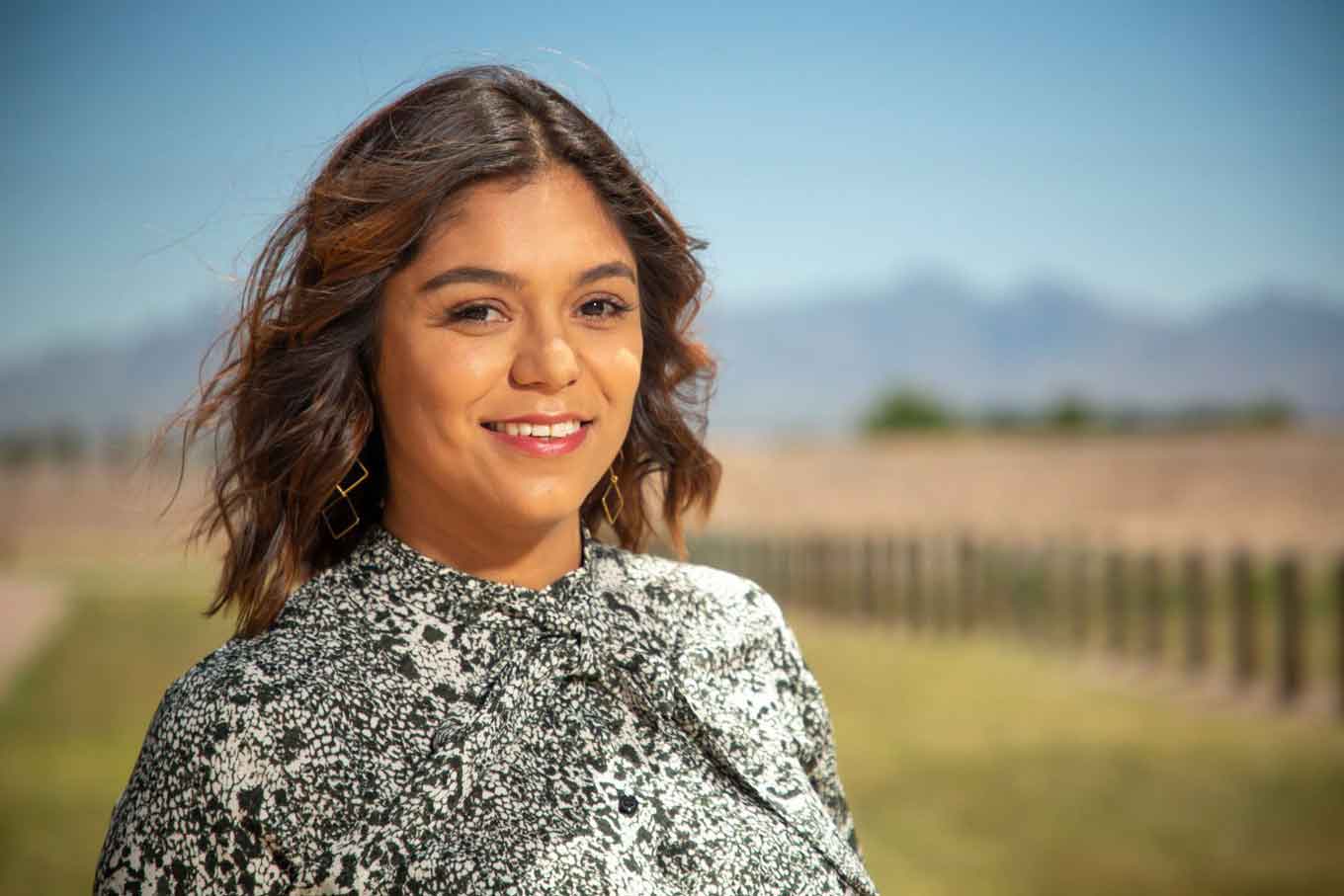
Jessica Velasquez, chairwoman of the Democratic Party of New Mexico, said local government, including city councils and county commissions, have a very immediate impact on people’s day-to-day lives and serve as a pipeline for higher office. She watched November election returns alongside her 12-year-old.
“Watching my daughter’s face light up when she heard that Las Cruces had elected an all-woman city council for the first time in history … the look of inspiration and happiness on her face said it all for me,” she said.
Las Cruces has used ranked-choice voting since the city council approved an ordinance in 2018.
The system — which allows residents to pick multiple candidates by preference — has been credited with helping women and people of color candidates because it’s less likely to create false choices amongst diverse candidates.
Preliminary research shows women and people of color candidates win in higher numbers under a ranked-choice voting system.
At least three women on the Las Cruces city council are alums of the New Mexico chapter of Emerge, a national organization that recruits Democratic women to run for office and has been attributed with pipeline candidates building in communities including Boston. Sondra Roeuny, executive director of Emerge New Mexico, said she doesn’t think these things happen by accident.
“The work that we do to help recruit, train and continue to support women and nonbinary individuals run for office — and when — really matters for what comes down the pipeline,” she said. “It matters for the policies. It matters for what gets discussed.”
Corran, the first out queer person to be elected to the council, said it was incredibly important that Emerge encouraged her to run for public office.
“I never really pictured myself as someone in politics. I think being a queer woman, being a woman, that meant a lot of barriers that I had constructed. Like, ‘Oh, people are going to look at me and see me and it will hurt,’ basically,” she said. “I think I had constructed a lot of those things in my mind.”
That fact that all-women governing bodies aren’t more common is a result of the realities of running for office, Holman said.
“Networks of power are self-reproducing, and generally exclude anybody that’s not a White man. That applies at the national level, that applies in state politics, and that applies at the local level,” she said.
“It’s not that nobody can get into those networks of power — women frequently do, people of color do, women of color do — but we haven’t seen this sort of whole-scale transformation of what those networks of power might look like.”
Still, Bencomo is hopeful about what Las Cruces’ nearly all-women city council signifies. She said women, particularly women of color, have been key political organizers in the state, and she attributes it to more public support for issues like increasing the minimum wage.
“I really do feel like it’s been a lot of grassroots power-building that has allowed for people who never traditionally saw themselves in leadership positions to take ownership of it and represent their communities,” she said.
How Has Car Safety Improved Over 60 Years?
Did you know that in 2019, there were 6.7 million car accidents in the U.S. alone?
This resulted in 36,096 deaths over the year—an awful statistic to say the least—but one that would be much worse if it weren’t for seatbelts, airbags, and other modern safety devices.
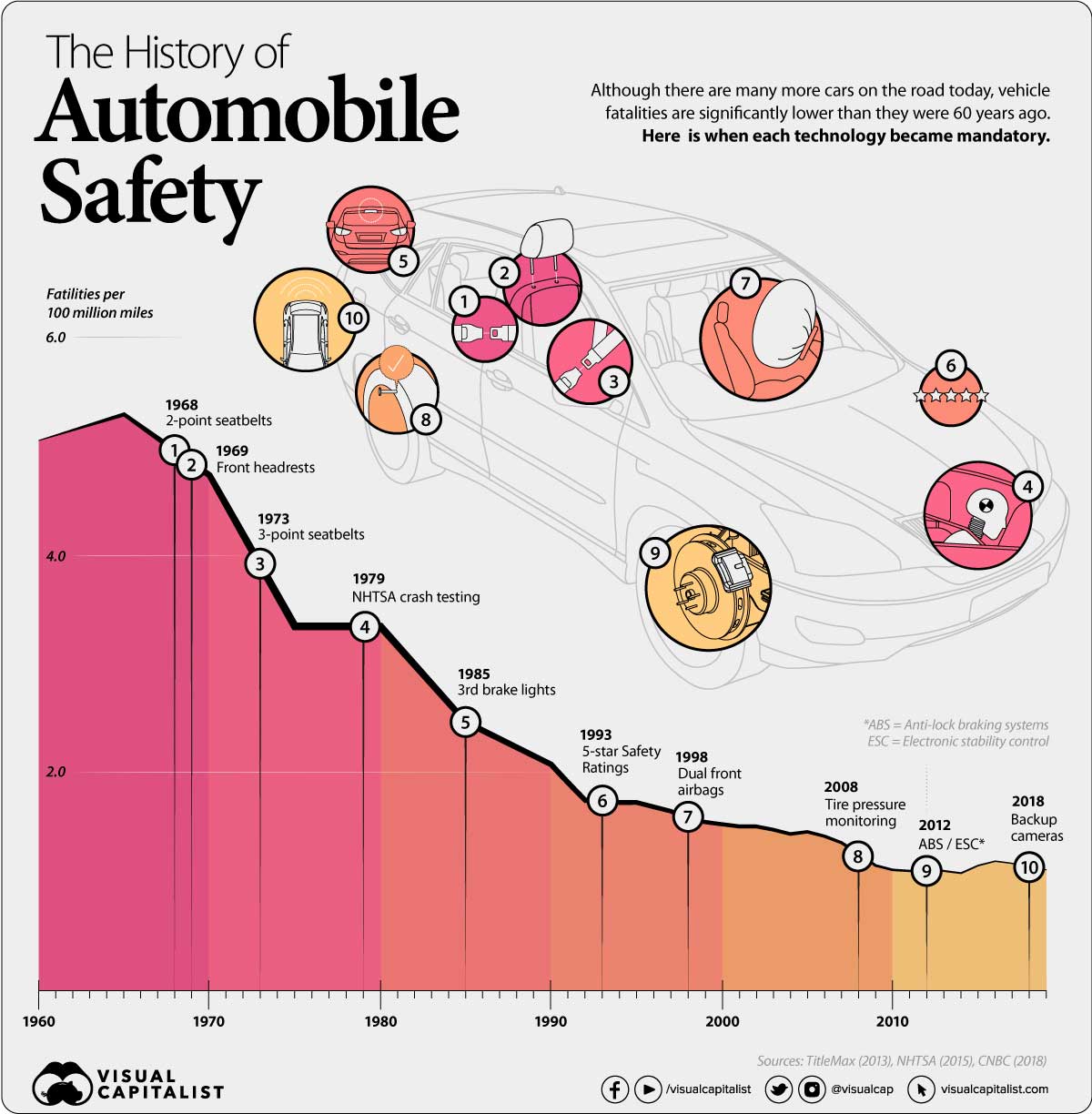
In this infographic, Visual Capitalist has visualized data from the U.S. Bureau of Transportation to show how breakthroughs in car safety have drastically reduced the number of motor vehicle fatalities.
Measuring Vehicle Safety Improvements
The data shows the number of fatalities for every 100 million miles driven. From a high of 5.1 in 1960 (the first year data is available), we can see that this metric has fallen by 78% to just 1.1.
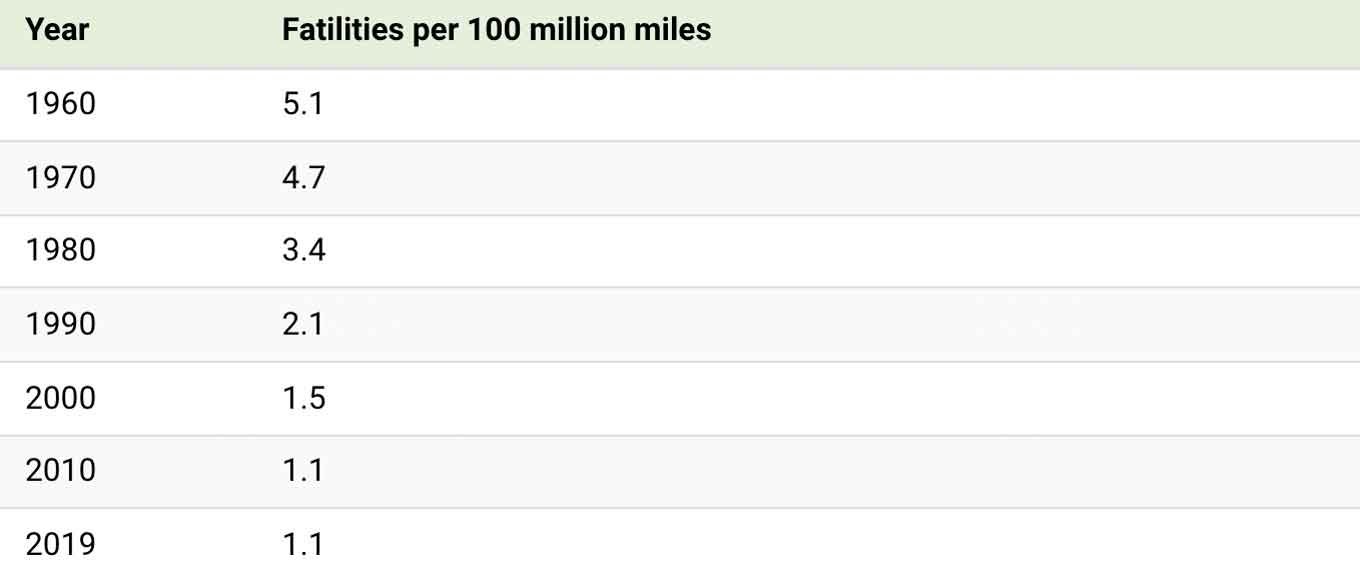
What makes this even more impressive is the fact that there are more cars on the road today than in 1960. This can be measured by the total number of miles driven each year.
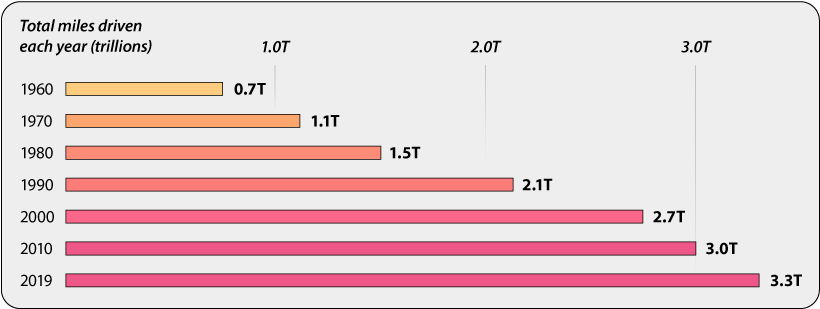
So, while the total number of miles driven has increased by 371%, the rate of fatalities has decreased by 78%.
Below, we’ll take a closer look at some important car safety innovations:
1. The Seatbelt
The introduction of seatbelts was a major stepping stone for improving car safety, especially as vehicles became capable of higher speeds.
The first iteration of seatbelts were a 2-point design because they only looped across a person’s waist (and thus had 2 points of mounting). This design is flawed because it doesn’t hold our upper body in place during a collision.
Today’s seatbelts use a 3-point design which was developed in 1959 by Nils Bohlin, an engineer at Volvo. This design adds a shoulder belt that holds our torso in place during a collision.
It took many years for Volvo to not only develop the device, but also to convince the public to use it. The U.S., for instance, did not mandate 3-point seatbelts until 1973.
2. The Airbag
The concept of an airbag is relatively simple—rather than smacking our face against the steering wheel, we cushion the blow with an inflatable pillow.
In practice, however, airbags need to be very precise because it takes just 50 milliseconds for our heads to collide with the wheel in a frontal crash. To inflate in such a short period of time, airbags rely on a chemical reaction using sodium azide.
The design of an airbag’s internal mechanism can also cause issues, as was discovered during the Takata airbag recall. As these airbags inflated, there was a chance for them to also send metal shards flying through the cabin at high speeds.
Dual front airbags (one for each side) were mandated by the U.S. government in 1998. Today, many cars offer side curtain airbags as an option, but these are not required by law.
3. The Backup Camera
Backup cameras became a legal requirement in May 2018, making them one of the newest pieces of standard safety equipment in the U.S. These cameras are designed to reduce the number of backover crashes involving objects, pedestrians, or other cars.
Measuring the safety benefits of backup cameras can be tricky, but a 2014 study did conclude that cameras were useful for preventing collisions. A common criticism of backup cameras is that they limit our field of vision, as opposed to simply turning our heads to face the rear.
Taking Car Safety to the Next Level
According to the National Highway Traffic Safety Administration (NHTSA), having both seatbelts and airbags can reduce the chance of death from a head-on collision by 61%. That’s a big reduction, but there’s still plenty of room left on the table for further improvements.
As a result, automakers have been equipping their cars with many technology-enabled safety measures. This includes pre-collision assist systems which use sensors and cameras to help prevent an accident.
These systems can prevent you from drifting into another lane (by actually adjusting the steering wheel), or apply the brakes to mitigate an imminent frontal collision.
Whether these systems have any meaningful benefit remains to be seen. Referring to the table above shows that fatalities per 100 million miles have not fallen any further since 2010.
This article and each visualization in this article were originally published by Visual Capitalist and were republished with permission.
Through our years of reporting the best good news stories in the world, we've always been able to find people, organizations, and movement shaping the world for the better. And this month has been no exception.
You can check up our complete roundup of all (and we mean all) the best good news from 2021 — and we'll be updating this December article as more good news happens in the next week.
Thank you for celebrating good news with us — and cheers to more good news in 2022!
AIDS-related deaths have declined by 60% since their peak in 2003
December 1st was World AIDS Day — the annual event that raises awareness for the fight against HIV/AIDS. And every year, we continue to have more good news about the progress we’ve made.
Human immunodeficiency virus (HIV) and acquired immune deficiency syndrome (AIDS) interfere with the body’s immune system, increasing the risk of developing common infections.
HIV/AIDS is a pandemic that, as of 2018, affects nearly 40 million people worldwide, leading to hundreds of thousands of deaths.
Between the early 1980s — the time that AIDS was identified — and 2018, the disease caused an estimated 32 million deaths worldwide.
Not only does HIV/AIDS have major health consequences, but it’s also closely associated with discrimination, including violence against HIV-infected individuals.
There is no cure or vaccine (yet), but thanks to medical advances, treatment can slow the course of the disease and may lead to a near-normal life expectancy. And organizations like The Global Fund and (RED) have led the way in advocacy and fundraising that have led to a dramatic decrease in deaths worldwide.
After ranking among the lowest countries in quality of biodiversity, rewilding projects are multiplying in the U.K.
Rewilding projects are multiplying in the U.K. in response to a growing awareness of the country’s serious loss of biodiversity. Britain as a whole ranked 189th out of 218 countries in the 2016 “State of Nature” report for the quality of its biodiversity and its natural condition.
One of the most innovative projects now underway may be WildEast, which ambitiously hopes to rewild an area more than three times the size of New York City, creating interconnecting wild corridors across East Anglia, England's most intensely farmed region.
The plan originated with three large estate owners, who, in addition to the commitment of their own lands, have already registered 1,000 “pledgees” for the project. However, some local residents, especially farmers, have complained that there is not enough consultation from the project.
Even so, many East Anglia residents welcome the explosion in wildlife happening on the newly rewilded areas.
This year, Giving Tuesday donations totaled a record $2.7 billion – and volunteering increased by 11%
This year, millions of people around the world participated in the biggest day of generosity of the year.
In the U.S. alone, Giving Tuesday Data Commons announced that an estimated 35 million people (!!) participated by giving, volunteering, or donating in some other way — a 6% increase over 2020.
And people donated a record $2.7 billion — a 9% increase over Giving Tuesday in 2020, and a 37% increase over 2019.
In the announcement posted to their website, GivingTuesday said, "A celebration of all types of generosity, GivingTuesday inspired people around the world to give gifts of time, skills, goods, advocacy, and more, showing that everyone has something to give and every act of generosity counts."
Speaking of all acts of generosity, volunteering on Giving Tuesday also increased by 11% and donated goods (clothes, food, supplies, etc.) increased by 8% over 2020.
These figures should be so inspiring and encouraging to all of us: People are more generous than ever, of their time, money, gifts, skills, and more.
Eliminating harmful microplastics, scientists invented sustainable glitter made from fruit
It is the season for all things sparkly, but at what cost to the environment? It’s a well-known fact that traditional glitter is often made from harmful microplastics that pollute the environment — specifically waterways.
Now, as Christmas celebrations get underway, parents, kids, and craft lovers can opt to use a safer, more sustainable glitter alternative.
Scientists at Cambridge University in the U.K. have developed a new type of glitter made from fruit pulp.
It’s just as sparkly, but it’s vegan, biodegradable, and far less harmful to the environment than conventional glitter.
The BRIT Awards announced that the 2022 award show will feature all gender-neutral categories
At the 2022 BRIT Awards, four traditionally gendered categories —male solo artist, female solo artist, international male solo artist, and international female solo artist — will be replaced with two awards with no gender classification: artist of the year and international artist of the year.
"It is important that The BRITs continue to evolve and aim to be as inclusive as possible," BRITs chair and Polydor Records Co-President Tom March said in a statement. "It feels completely the right time to celebrate the achievements of artists for the music that they create, and the work that they do, irrespective of gender."
The BRITs also announced nominations will be extended to featured artist in the song of the year category — previously, only lead artists or named collaborators were given nominations. And they're adding four new genre awards to include more music styles: alternative/rock, hip-hop/grime/rap, dance, and pop/R&B.
Separating award categories into genders leaves out artists that don't identify within the male-female binary. Plus, we love that a single award will recognize and honor the music and achievements of a single artist — however they identify.
Other awards shows have removed gender classifications, and we hope this is a sign of even more to come!
A new plan created by Indigenous groups will protect 80% of the Amazon rainforest in Peru and Ecuador
The Amazonian Indigenous organizations leading the plan aim to center Indigenous-led forest management and land tenure to protect endemic species and prevent approximately 2 billion metric tons of greenhouse gas emissions into the atmosphere.
According to reporting from Mongabay, the proposal has received positive responses from Ecuadoran and Peruvian government officials, but faces a stumbling block in the fact that both countries rely heavily on extractive industries operating within the Amazon to help pay off foreign debt.
Chile just became the 31st country in the world to pass marriage equality
Good news for equality: Chile just became the 31st country in the world to pass marriage equality — and by an overwhelming margin in both the Chilean Chamber of Deputies and the Senate.
According to reporting from Human Rights Watch, Chile's new law undoes existing legal discrimination against same-sex couples in several areas: parentage, joint adoption, and assisted reproductive technology, and more.
The law also removes the requirement that married transgender people must divorce if they want to have their gender legally recognized.
It's also the result of progress over time: in 2015, Chile took a step towards equal rights when it passed a civil union law, allowing same-sex couples to enter into civil unions — but no rights for parents or adoption.
This latest law rights that wrong — and moves the world a step closer towards equal rights for all!
The site of a former coal plant near Toronto is being transformed into a bikeable, walkable lakefront community
The site of an old coal plant outside Toronto in Canada will soon be transformed into a bikeable, walkable lakefront community thanks to the advocacy if and protests from local community members.
According to reporting from Fast Company, the Canadian government shut down the coal plant to reduce emissions, but still originally had planned to replace it with a gas-fired power plant. The surrounding community protested the idea, in favor of something more meaningful.
"There were a lot of grassroots community efforts that really resisted and had a more ambitious vision for what the waterfront could be here, toward a mixed-use, sustainable waterfront community," Brian Sutherland, vice president of development at Argo Development Corporation, told Fast Company.
Residents of the future community, to be called Lakewood Village, will be able to either bike or walk to everything in 15 minutes or less. It will take back once-obstructed views of and access to the lake, and new bike paths will connect the suburb to Toronto for bike commuters.
The village will create 8,000 homes for an estimated 20,000 people — and 9,000 jobs. The first residents are expected to move in by 2026.
Lewis Hamilton, Formula 1’s most successful driver of all time, is using his platform to support LGBTQ+ rights and quality
Seven-time world champion Formula 1 driver Lewis Hamilton wore his "Progress Pride" helmet for the first time for a race in Qatar last month in support of LGBTQ+ rights. He raced in it again in Saudi Arabia, and he felt "duty-bound" to speak out.
Both countries hosted Formula 1 for the first time in 2021. Hamilton said Saudi Arabian law related to the LGBTQ+ community was "pretty terrifying."
According to reporting from the Thomson Reuters Foundation, Saudi Arabia has no laws regarding sexual orientation or gender identity, and judges have convicted people for "immorality", having sexual relations outside of marriage, and homosexual sex.
"Visibility and representation isn't everything, and it doesn't change things necessarily overnight, but it does begin conversations that I think are important," Racing Pride’s co-founder Richard Morris, one of few openly-gay professional racers, told the foundation.
Last month, Human Rights Watch said Saudi Arabia had "a history of using celebrities and major international events to deflect scrutiny from its pervasive abuses."
And while Formula 1 launched a "We Race As One" campaign last year, they've been criticized for racing in countries with poor human rights records.
Morris said that while Lewis was undoubtedly sending a message to his global fanbase and supporters, he's also "showing a support that perhaps otherwise wouldn't be there within the region. He's raising this issue of human rights and starting those conversations. And I think once you start those conversations, there's then a need for responses."
We're celebrating this growing movement of progress within Formula 1, racing in general, and applauding Hamilton for using is platform to advocate for equality.
Combating both climate change and environmental racism, Chicago is planting 75,000 new trees in parts of the city that need it most
Planting trees in urban areas is a relatively cheap and effective way to mitigate the impacts of climate change and help save energy. In Chicago, city officials are currently in the planning process for planting 75,000 new trees as part of a $188 million climate package passed last month.
And many of the trees will be located in neighborhoods populated by people of color — neighborhoods that because of racist policies and practices have typically suffered from disinvestment of all types, including in green spaces and park services, and which have reduced tree canopies.
As reported by Energy News Network, a tool developed by the Chicago Department of Public Health and the University of Chicago combines existing tree canopy data with assorted health-related metrics such as air quality and traffic volume to help identify areas in greatest need of additional tree cover.
“We expect this historic investment to reap historic outcomes,” said Angela Tovar, chief sustainability officer for the city of Chicago, in a press release.
TIME announced its 2021 ‘Heroes of the Year’ are the vaccine scientists
In an announcement article, TIME profiled four of the scientists, Kizzmekia Corbett, Barney Graham, Katalin Kariko and Drew Weissman and recognized the rapid, combined, global efforts of scientists around the globe to create the vaccines.
While some were created — still in record time — using more established methods, the breakthrough of the mRNA vaccine platform not only changed the course of the pandemic, but will continue to change the health for the foreseeable future.
“We have turned a disease that has been a once-in-a-generation fatal pandemic, that has claimed more than 780,000 lives in America, into what is for the most part a vaccine-preventable disease,” says Dr. Leana Wen, professor of health policy and management at George Washington University. “That is the difference that the vaccine has made.”
In the announcement, TIME said named "the miracle workers" behind the vaccines the heroes of the year "not only because they gave the world a defense against a pathogen, but also because the manner of that astonishing achievement guards more than our health: they channeled their ambitions to the common good, talked to one another and trusted in facts."
Hopefully, those with the power to do so will model their ambition and continue the work toward global vaccine equity.
🏅 It's also important to note that TIME named Simone Biles the "Athlete of the Year" — in part for her brave contributions to not only the sporting world, but to the conversation around mental health.
A report found that rapped Logic's song featuring the National Suicide Prevention Hotline may have saved hundreds of lives
A new report found that hip hop artist Logic’s song "1-800-273-8255" — the phone number of the U.S. National Suicide Prevention Lifeline — may have saved hundreds of lives.
The song released in 2017, but the findings from the study were recently published in the BMJ research journal.
It found that the lifeline saw nearly 10,000 more calls, and there was a 5.5% reduction in suicides among 10- to 19-year-olds during three time periods: the first 34 days after the song's release, Logic's performance at the 2017 MTV Music Awards, and a performance at the 2018 Grammy Awards.
That reduction equates to 245 fewer suicides than what was expected during those periods.
"To know that my music was actually affecting people's lives, truly, that's what inspired me to make the song," Logic told CNN, "We did it from a really warm place in our hearts to try to help people. And the fact that it actually did, that blows my mind."
We're thankful for voices like Logic, and everyone who uses their platform to advocate for things like suicide prevention, mental health, and more. It makes a difference.
And we hope it serves as a reminder that YOUR voice makes a difference, too! You don't need a song on the music charts to make a difference — you just have to care, and then take a step to use your voice, too.
The world's largest freshwater wind farm is now operating in The Netherlands
Windpark Fryslân, the world’s largest freshwater wind farm sitting in the Netherlands’ Lake IJssel, is now online and fully operational.
The 382.7 megawatt wind farm is around 3.7 miles (6 kilometers) off the Frisian coast, which is located in the north of the Netherlands and parts of northwestern Germany. According to reporting from Electrek, it's made up of 83 turbines, and is expected to produce around 1.5 TWh of electricity per year.
While that's only around 1.2% of the country's electricity consumption, or enough to power around 500,000 households, this is really a really good point of progress to celebrate in the transition towards renewable energy solutions.
500,000 fewer households consuming energy produced by fossil fuels = good news.
Las Cruces, New Mexico just became the latest to join a small group of cities with all-women governing bodies
The city of Las Cruces, New Mexico will soon have women in all six of its city council seats — it joins a short list of all-women or nearly all-women governing bodies in the U.S.
Women hold 30.5% of municipal offices nationwide, including mayoral offices, city councils and other similar bodies, according to data released earlier this year that shows similar representation limitations in state and federal offices. It makes all-women or nearly all-women governing bodies all the more noteworthy.
Las Cruces has used ranked-choice voting since the city council approved an ordinance in 2018.
The system — which allows residents to pick multiple candidates by preference — has been credited with helping women and people of color candidates because it’s less likely to create false choices amongst diverse candidates.
As reported by The 19th, the earliest known example of an all-women governing body in America was recorded in 1887 in the city of Syracuse, Kansas, when an all-woman city council was elected.
A New Soccer League Is Helping Gaza Amputees Cope With War Traumas
Palestine’s first national soccer team made up entirely of amputees is here. The players are war refugees from the ongoing Palestine-Israel conflict along the Gaza strip. According to AP News, the players say the game helps them cope with the trauma of their injuries and the hardships of living in a crowded territory that has endured four wars and a blockade.
“We feel we have something, we can give something,” said Ziad Abu Halib, 41, who lost his right leg in 2008, during the first Israel-Hamas war. Per AP, he hasn’t missed a single practice or match since joining the local league after it was founded in 2019.
The team is now officially a national team thanks to the collaboration between the International Committee of the Red Cross working with Palestinian Amputee Football Association. The team is now qualified for the World Cup for amputees in Turkey in 2022.
By giving a positive and physical outlet to those who have suffered extensive wartime injuries, the soccer team is bringing folks together and giving them a common goal in addition to healing. Coach Simon Baker told AP News, “The goal is to create an environment whereby the players come to the field and they leave the trauma behind.”
A New Study Found Depression Stigma Dropped Significantly For The First Time In the U.S.
Stigma toward people with depression has dropped significantly for the first time since national data have been tracked in the United States, a new study shows.
The findings can help shape treatment of those with mental illness and have an impact on anti-stigma programs and policies to help people find support, the researchers say.
“Stigma translates into so many issues, including people’s reluctance to seek care, our shortage of mental health professionals, and the US’ unwillingness to invest resources into the mental health sector. The good news from this study is stigma can change, and the change we document crosses all sectors of society and individuals," says coauthor Bernice Pescosolido, professor of sociology at the Indiana University-Bloomington told Futurity.
Data from 2006 to 2018 revealed a statistically significant drop in social rejection for people described as having major depression
As we rounded out the year 2021, we're looking back on the best good news stories from December. While this year or this month have been filled with heartbreak, pain, and injustice — there have still been so many stories worth celebrating.
An award-winning nonprofit is monitoring housing rights violations across Lebanon, from evictions to abandoned properties
BEIRUT, December 16, 2021— What could bring Syrian refugees, Sudanese migrants, and marginalized Lebanese around the same table in Beirut? The threat of eviction – and the housing rights project trying to prevent it.
For decades, Lebanon's housing policies - or lack thereof - have left the door open to illegal evictions, rent hikes, and real estate speculation, which disproportionately affect low-income tenants, activists warn.
Those risks were compounded in recent years as the Beirut port explosion destroyed thousands of flats, COVID-19 left many jobless and Lebanon's economic meltdown prompted property owners to demand rent in US dollars instead of the collapsing local currency.
That's where Housing Monitor comes in.
The nonprofit, run by research and design practice Public Works Studio, offers support to tenants facing eviction through a hotline, legal representation, and community organizing that brings together refugees, migrants, and vulnerable Lebanese.
"By supporting tenants, we are shifting the balance of power. We are telling property owners: you can't just do whatever you want," said Nadine Bekdache, a manager at Housing Monitor.
On Thursday the project was named one of two gold prize winners at the World Habitat Awards that are organized with the United Nations housing agency (UN-Habitat).
"Low-income people in Beirut are subjected to countless examples of spatial injustice," said David Ireland, head of World Habitat.
"Housing Monitor shines a light on the injustices and empowers people to be able to report violations - evictions, abandoned properties, properties built without permission – and it holds government, companies and property owners to account."
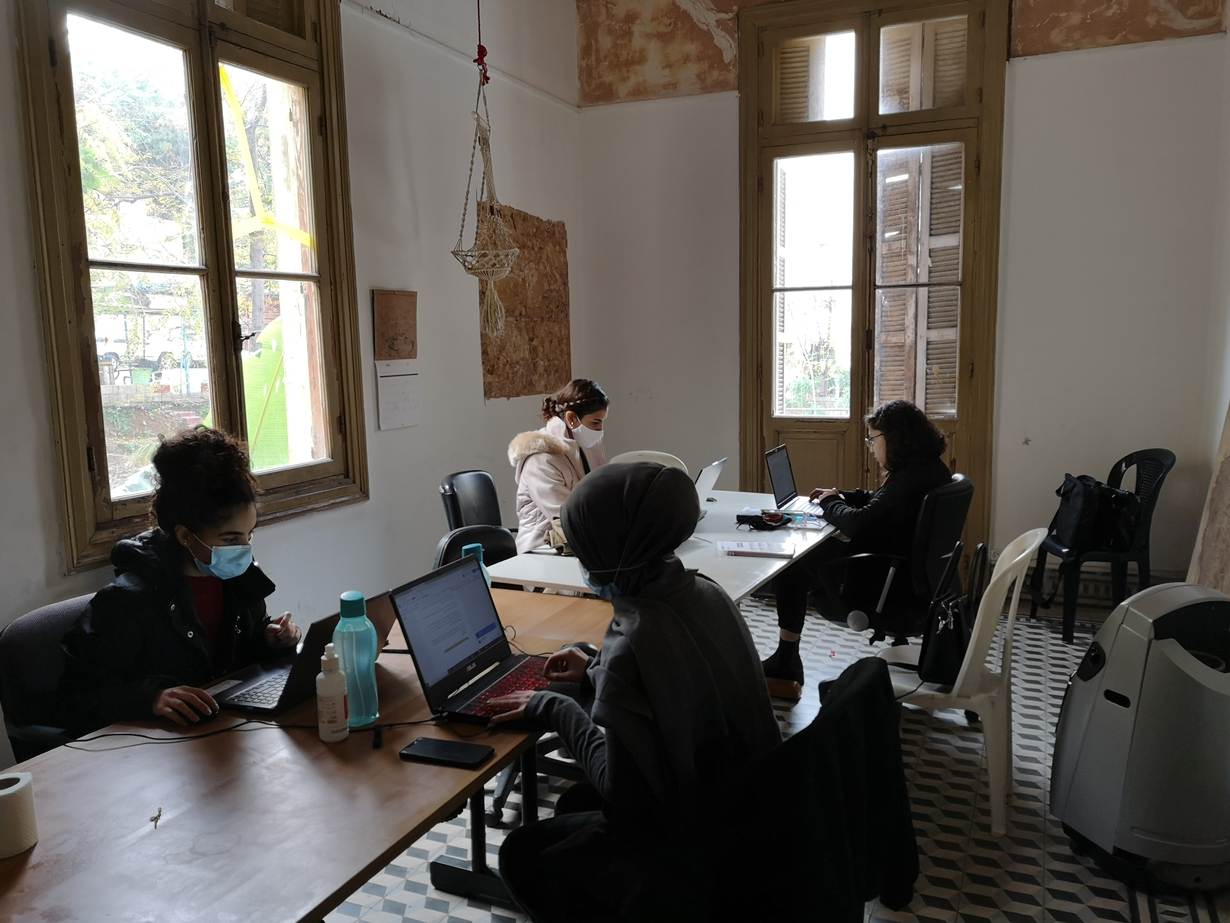
Reporting Housing Rights Violations in Lebanon
Lebanon had rent control policies in place until the end of its 15-year civil war in 1990.
Old agreements continued at low rates – disincentivizing landlords from keeping buildings in a good condition– as new ones were signed in a free-market economy with no caps, causing mass gentrification, according to housing analysts.
A 2017 law allowed property owners mostly in Beirut and its suburbs to gradually hike up rent, prompting many low-income families to move out of the city.
Over the last two years, Housing Monitor has fielded more than 600 housing injustice reports such as evictions, most of which required targeted interventions by their staff and volunteers.
The group said it has prevented the evictions of more than 90 households and helped hundreds of other tenants negotiate improved housing security.
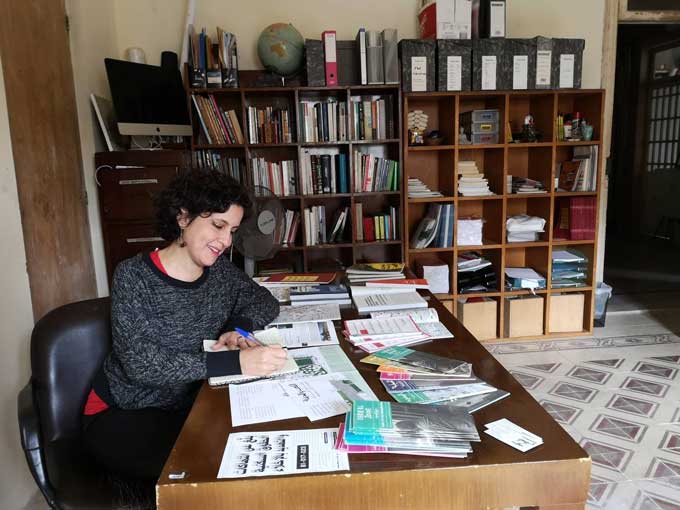
Building Bonds in Beirut
The first step is the hotline service, set up in an old Lebanese home-turned-coworking space.
Bekdache said Housing Monitor receives about 50 calls a month, some of which are clarification questions on rent agreements and others which require proper follow-up.
"You need to be served a court order to be evicted. And if you're evicted before your three-year rental contract is up, your landlord is violating the law. Most people don't know these things," she said.
For cases requiring legal intervention, Housing Monitor's volunteer lawyers exploit gaps in Lebanese legislation and set out cases built on international protocols to defend tenants' rights.
The Beirut port explosion brought a new flood of cases, damaging more than 70,000 apartments housing over 290,000 people, according to UN Habitat.
Many of the worst-affected neighborhoods had been occupied by low-income families or through informal rental agreements.
After NGOs refurbished those homes, landlords in many cases tried to bump up rent – claiming the apartment was now worth more, Housing Monitor says.
By connecting at-risk tenants, the project says it has forged solidarity among refugees, migrants, and Lebanese - three communities typically siloed off from one another.
"It's very lonely to be threatened with eviction – so it's obviously very empowering when these tenants get together and share their stories," said Bekdache.
Public institutions are fraying due to rolling worker strikes and power outages, and Bekdache said limited courthouse hours were slowing down Housing Monitor's legal advocacy efforts.
Still, the group is thinking ahead.
It has already begun gathering data in Lebanon's poorest city Tripoli, the southern port city of Saida, and Baalbak further east.
This article was written by Maya Gebeily, originally published by the Thomson Reuters Foundation, and republished by Good Good Good with permission.
A lot can and has happened in the history of humanity. While it may be easier to pinpoint all the bad that’s happened over the last few centuries, the numbers don’t lie: we’ve also made a lot of progress.
In all areas of life — ranging from healthcare to innovation to arts and culture to education — we’re seeing significant changes for the better.
The data tells us that there have always been helpers in the world and it's thanks to their labor, empathy, and generosity that we’re seeing huge advancements for society as a whole.
1. Life Expectancy Has Gone Up
It's clear and simple: people are living longer today — and in better health — than they were decades ago.
What does this mean? It means that advancements in society (whether it be in medicine or infrastructure) have made it so that human beings can extend their lifespan.
Historical data from Our World In Data have shown that global life expectancy has increased drastically, with substantial long-run improvements in all countries around the world.

It means that we're not seeing just increased life expectancy in just one country; we're seeing it in every country.
According to Our World In Data, there have been huge changes in the numbers from even a century ago.
For example, life expectancy in India and South Korea was as low as 23-years-old one hundred years ago: and now, it's tripled in India and quadrupled in South Korea.

In 1800, life expectancy around the world was as low as 32 years. In 1950, the global average was 48. But in 2012, the number rose to 78 years.
The living conditions around the world have made it possible for people to live longer and that’s always good news to celebrate.
2. Diseases Are Going Away
What used to plague us is now on the decline.
Over the course of the last few centuries, there have been incredible advancements in science that have allowed us to fight even the worst of diseases.
Smallpox, which was officially eradicated in 1980, is a great example. But we've continued to make progress against other diseases since then.

From malaria to AIDS — and even cancer — the numbers show that every year, there are fewer and fewer people affected by infectious diseases.
Between 1996 and 2001, more than 3 million people were infected with HIV. But in 2017 and every year before then, the number of new infections began to decline until it reached its lowest number (below 2 million) since 1990.
The number of AIDS-related deaths swept through the 90s, but the annual number of AIDS-related deaths has been halved since then. In 2017, fewer than 1 million people died from AIDS.

Between 1996 and 2001 more than 3 million people were infected with HIV every year. Since then the number of new infections began to decline and in 2017 it was reduced to below 2 million. The lowest number of new infections since 1990.
The number of AIDS-related deaths increased throughout the 1990s and reached a peak in 2005, 2006 when in both years close to 2 million people died. Since then the annual number of deaths from AIDS declined as well and was since halved. 2017 was the first year since the peak in which fewer than 1 million people died from AIDS.
The chart also shows the continuing increase in the number of people living with HIV. The rate of increase has slowed down compared to the 1990s, but the absolute number is at the highest ever with more than 36 million people globally living with HIV. / Courtesy of Our World in Data
Malaria, a disease transmitted through infected mosquitoes, is also on the decrease.
Since the beginning of the 21st century, the number of people who die from malaria has been halved.
The death toll went from 839,000 in 2000 to 438,000 in 2015.

Since the beginning of the 21st century, the WHO has published global estimates of the number of people that die from malaria.
In these 15 years the global death toll has been cut in half: from 839,000 deaths in 2000 to 438,000 in 2015. / Courtesy of Our World in Data
3. More People Are Getting An Education
The right to education — particularly for women — has been an ongoing effort since the dawn of time.
But thankfully, more and more people are going and staying in school.
The value of education itself has only increased with time, with global literacy rates going up over the last two centuries.

According to Our World in Data, secondary and tertiary education have also seen drastic growth, with global average years of schooling being much higher now than a hundred years ago.
The growth of world literacy really took off after 1800, when governments around the world saw an expansion of basic education as a global priority.
Since the 1950s, there's been a 20 percent decrease in illiteracy around the world. Data also shows that younger generations are progressively getting better educated than older generations and the number of people who have zero formal education is on the decline around the world.

In 1998, Our World in Data estimates that 381 million children were out of school, but that number dropped to 263 million worldwide despite an increase in the global youth population.
All in all, more people are getting their education and it continues to be a basic right worth fighting for.
4. Fewer People Are Living In Poverty
There are a number of factors that contribute to poverty and groups like women, religious minorities, and racial minorities are the most vulnerable.
According to Our World In Data, 85 percent of the world live on less than $30 per day, two-thirds live on less than $10 per day, and every tenth person lives on less than $1.90 per day.
But what history also tells us is that the number of people living in absolute poverty has fallen with every decade.

According to Our World in Data, there were 1.9 billion people living in extreme poverty in 1990.
With a reduction to 735 million in 2015, this means that on average, every day in the 25 years between 1990 and 2015, 128,00 fewer people were living in extreme poverty.
In 1960, 45 percent of the world population were living in absolute poverty, with the number dropping to 24 percent in 1993.
Since then, the share of extremely poor people in the world has declined quickly. This has also had a positive effect on world hunger rates — and inspired all of us to work to ensure everyone has enough to eat.
In 32 years, the share of people living in extreme poverty was divided by 4, reaching levels below 10% in 2015.
You might also like: The best quotes about reducing poverty & world hunger
A version of this article was originally published in The Change Edition of the Goodnewspaper — our monthly print newspaper filled with good news.
You can get your own Goodnewspaper in the mail every month by becoming a subscriber.
Approximately 70 million people around the world stutter. Stuttering, or stammering, is defined as a disorder that interrupts the ‘normal’ fluency and flow of speech.
While a majority of this population is made up of children, stuttering affects around one percent of adults in the world.
The stigma of stuttering often causes insecurity for those it affects, especially the adult population — that’s what STAMMA is working to change.
Scientists believe that stuttering is caused by a combination of factors, including genetics, language development, environment, as well as brain structure and function.
It’s commonly seen as a communication barrier, one that’s led people who stutter to be stigmatized by society.
Representation of stuttering has largely been done in offensive and mocking tones, making targets out of those who stutter.
According to their website, STAMMA’s mission is to “tackle the underlying stereotypes and misunderstandings held by the public about stammering,” to create a world in which people with stutters can be treated with the same respect and consideration as those without. spearheaded by the CEO of the organization, Jane Powell.
Jane explained that STAMMA will be implemented into society through four steps:
- Supporting more people who stammer
- Building community support and facilitating stammering networks
- Educating the public on stammering
- Managing STAMMA efficiently and effectively.
The organization also endorses a list of five values that are the driving force of its mission: collaboration, community, individual, diversity, and openness. Their mission and values are then used to take action.
STAMMA has created campaigns such as No Diversity Without Disfluency, which aims to fight for the representation of people who stutter.
They imagine a world where people who stutter can hear voices like theirs on television, radio, and other media platforms, while non-stutterers are used to hearing the voices of those who stutter.
The No Diversity Without Disfluency campaign aims to create a world where stuttering is normalized in every capacity.
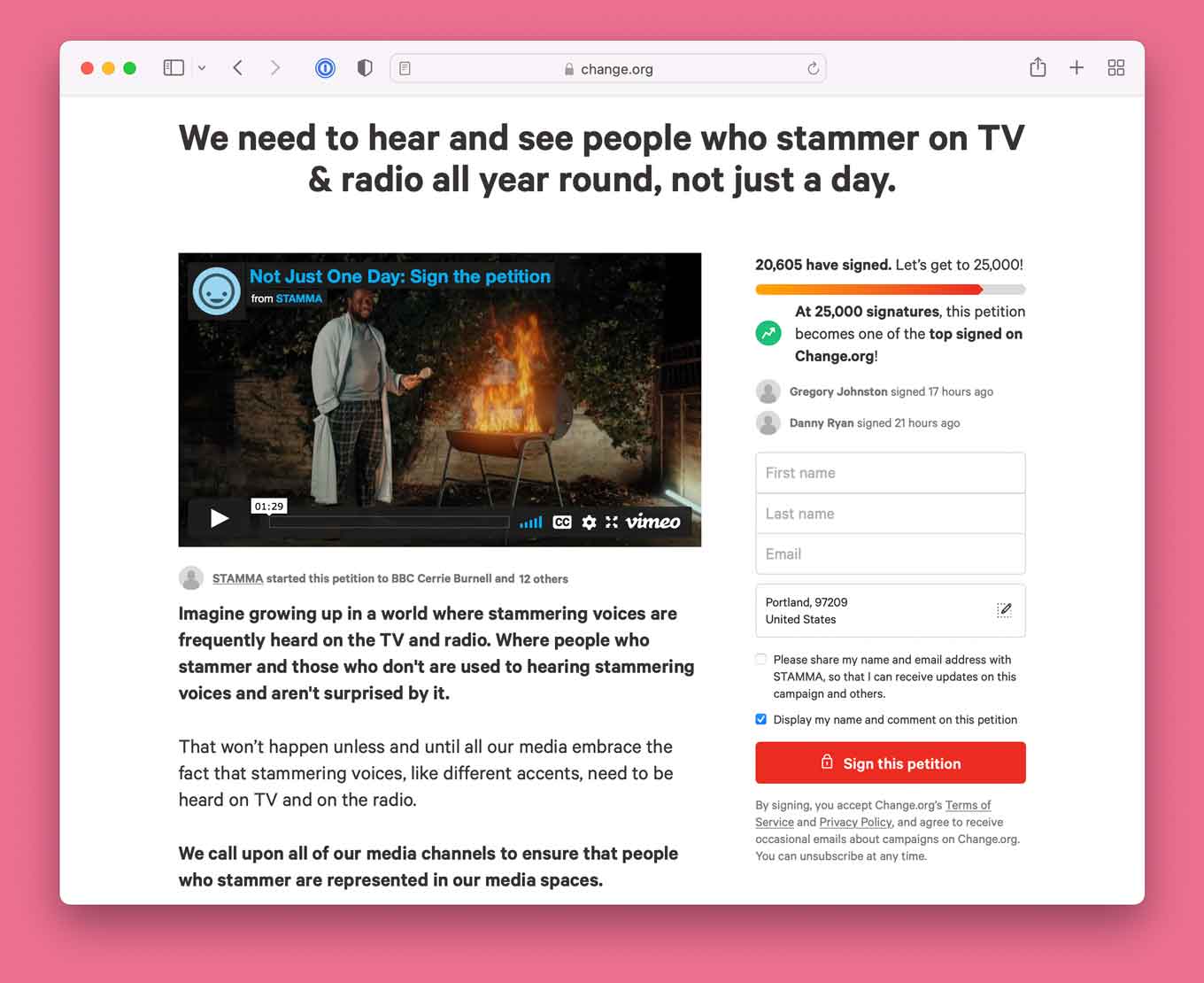
You can sign their petition to help ensure representation in media.
How To Get Involved With STAMMA
There are also ways to get involved and work with STAMMA to help end the stigma of stuttering.
You can fill out a volunteer form to join the team and work closely on their campaigns and programs, or become a member to hear about news within the stammering community, meet other folks who stutter, and help shape the future STAMMA.
If you don’t live in the UK, you can still get involved with STAMMA by donating to their organization or sharing your story.
The experiences of those who stutter deserve to be heard and seen, especially by those who don’t. When we can learn to empathize with our community members, we can do better at meeting their needs.
This article was originally published in The Goodnewspaper.
Nearly five years ago, Kendall Jenner’s Pepsi peace offering made us collectively cringe. If you haven’t seen it (and you probably saw it), it was the brand misfire heard around the world. A shiny celebrity. A community in pain. A brand signaling its virtue by positioning itself as the solution.
In the years since, we’ve seen lots of anxiety among brands over fears that they could be the next on the chopping block, but few meaningfully do better.
Some have gone ahead and followed in Pepsi’s cringe-y footsteps, with flat or stereotypical messages that don’t just not help, they do real damage.
For most, general language and non-specific commitments have felt safest. The stakes for getting wrong loom large. So: “We stand with you;” “Let’s come together” it is.
In the midst of all this though, as is so often the case, a few lead the way – with campaigns that inspire, investments that matter, and commitments that mean something. And in their model, we see the glimmer of what brand “purpose” could actually be.
The Power of Brands Getting It Right
Consider Sephora, for example, who answered 2020’s racial reckoning call with a stark look in the mirror, and a determination to make beauty and retail a safer, juster, more inclusive space. Early this year, they released a major study on the problem of bias in retail stores.
In August, they became the first major retailer to adopt the 15% pledge — a commitment to devoting 15% of their total shelf space to Black-owned brands.
Along the way, they’ve created moving testimonials that elevate the roots of beauty in this country. If you haven’t seen the Black Beauty is Beauty campaign, give it a watch.
Efforts at P&G trace even further back and follow a similar playbook: one that begins with a brand identifying its locus of control, and leveraging its unique influence to make change.
In March of 2021, P&G launched its Widen the Screen campaign: an effort to call attention to bias and inequality in advertising and media. As one of the world’s biggest advertisers, the company recognized its potential to change the landscape, and is now setting about doing so.
Unsurprisingly, the starting point for campaigns like this is meaningful commitment – a genuine desire to do what’s right. Notably though, that commitment is also just the starting point.
The last year and a half is littered with well-intended ideas or would-be-efforts that yielded, well, not much.
To move into the realm of impact requires investment, and it often begins with listening. The same way brands make extraordinary investments in understanding what flavors, packages, and features consumers want, they need tools to understand what communities want: how to affirm, invest and leverage influence to address long-standing gaps in representation, consideration, and inclusion.
When commitment collides with this kind of curiosity and exploration, the potential for impact unlocks.
Gauge is a platform for leading cultural voices to share perspectives to help brands shape campaigns that matter. And, as Gauge’s co-founder and CEO, I have seen this first-hand.
The approach centers on advanced technology and a simple idea: Ask people who know communities and issues best how best to support those communities and issues. Listen well.
Voices Changing the Narrative
Every day, in a culture that traffics in misunderstanding, we’re seeing meaningful connections get made. Voices like April Reign, founder of #OscarsSoWhite, helping Pinterest shape more inclusive search tools.
David Johns, Executive Director of the National Black Justice Coalition, and Cecilia Chung of the Transgender Law Center, giving direct input on how some of the country’s biggest brands should think about engaging the LGBTQ+ community – not just during Pride, but all year long.
And Kelsey Lindell, a disability DEI strategist who is helping ensure people with disabilities are represented in a fair and honest way.
And as these connections spark, “we stand with yous” gets bumped for meaningful action: the kind that can make a person feel downright optimistic.
There's no denying that a lot of heartbreak, pain, and injustice was packed into the last year. It's also true that there were so many moments of hope and stories of Helpers to inspire and remind us that progress is possible — and it's happening all the time.
In the face of devastating news from the UN's IPCC report that many of the impacts of human-caused climate change will be unavoidable — countries, governments, activists, scientists, businesses, and more came together to meet the moment and work quickly toward positive environmental change.
Renewable energy sources keep getting cheaper, President Biden revoked the Keystone XL oil pipeline permits for good, scientists are working to solve two major obstacles to wider adoption of renewables: storage and recycling materials. Conservation efforts led to coral reefs coming back to life, people are working to solve our plastic waste problem, and major universities and whole countries stopped investing in fossil fuels.
There was so much good to celebrate in 2021 and into 2022 — scroll through to get inspired and ready to tackle the biggest challenges facing our planet in the new year. And if you want more, check out our entire collection of good news about climate change. Progress is possible.
Good Environmental News Worth Celebrating —
The price of solar electricity has dropped 89% in 10 years

In 2009, it was 223% more expensive to build a new solar farm than a new coal plant. Now, it's flipped: Based on new 2019 data gathered by Our World In Data, electricity from a new coal plant is 177% more expensive than electricity from new solar panels.
From 2009 to 2019, the price of electricity from solar dropped 89% in 10 years, and the price of onshore wind dropped 70%!
Much of the decline in cost is due to more affordable technology. The first iterations of solar energy capture were extremely expensive, and not scalable. However, in "learning by doing", it created a cycle of progress that lead to the decline in price: solar tech was installed, leading to more research and development, leading to more/better tech and more installations, and so on.
Another benefit of added solar capacity: it gets even cheaper the more capacity there is!
This good data is really good news for the future.
In a historic victory for climate change, a court ordered Shell to cut its carbon emissions by 45% by the year 2030
In a historic, landmark victory for the planet and for climate change, a Dutch court ordered Royal Dutch Shell to cut its net carbon emissions by 45% by the year 2030.
“The climate won today,” said Roger Cox, a lawyer for the Dutch arm of Friends of the Earth, which was one of the organizations behind the case. “This ruling will change the world. Worldwide, people are in the starting blocks to take legal action against oil companies following our example."
This ruling has been a long time coming. A group of seven environmental and human rights organizations, along with around 1,700 Dutch citizens filed the case back in 2018. And while this case is one in a string of lawsuits filed around the world by climate activists, it's believed to be the first against a multinational corporation.
And the court ruling is really, really good news for the planet!
The court didn't give Shell any specific directions for how to achieve this, giving it “complete freedom in how it meets its reduction obligation and in shaping the Shell group’s corporate policy.”
Time to get to work, Shell.
A woman in Kenya opened a factory that turns plastic waste into bricks that are even stronger than concrete

Materials engineer Nzambi Matee was "tired of being on the sidelines of seeing plastic." In her home city, she said Nairobi generates around 500 metric tons (about 1.1 million pounds) of plastic waste per day — and only a fraction of it is actually recycled.
Plastic waste is also a worldwide problem. Globally, 1 million plastic drinking bottles are purchased every minute, and up to 5 trillion single-use plastic bags are used every year.
“Plastic is a material that is misused and misunderstood. The potential is enormous, but its after life can be disastrous," Matee told the UN Environmental Program.
So, Nzambi Matee got to work creating a solution. She founded Gjenge Makers, which turns plastic waste into building products. They take plastic waste that can no longer be recycled by other factories, mix it with sand, and create bricks that are 5-7 times stronger than concrete. They're also really lightweight, which reduces both transportation and installation costs, too.
Currently, they make about 1,000-1,500 paver bricks per day, and are hoping to expand their operation into building bricks, too. So far, they've recycled 20 metric tons (about 44,000 pounds) of plastic waste. She also wants to start making building blocks — and scale their operation throughout Africa (just to start)!
“The negative impact we are having on the environment is huge. It’s up to us to make this reality better. Start with whatever local solution you can find and be consistent with it. The results will be amazing," Matee said.
Because of their durability and affordability, the paver bricks are used primarily at schools, on playgrounds and pathways between classrooms — where students would normally walk on dirt paths.
Five years after they were destroyed by a tropical cyclone, coral reefs off of Fiji are alive again, filled with vibrant colors and fish
In February 2016, one of the worst tropical cyclones to ever hit the southern hemisphere devastated coral reefs across the Namena reserve and Vatu-i-Ra conservation park off of Fiji.
The reefs are once again vibrant with colors and filled will fish and marine life.
In a recent dive expedition led by the Wildlife Conservation Society, scientists found the coral had recovered beyond their expectations.
“I was surprised at how quick the recovery has been, especially at the Namena reserve,” Sangeeta Mangubhai, director of WCS Fiji, told the Guardian.
Mangubhai credited the quick recovery of the reef to their health before the cyclone hit — they were well managed, healthier, and can then recover much faster.
Coral reefs are critical and essential to healthy oceans (and by extension, a healthy planet).
“Healthy reefs are important given how dependent coastal communities are on coral reefs for food, livelihoods and cultural practice,” Mangubhai said. “They are also critical for coastal protection against future storms.”
This is really good news for our oceans, and our planet — we need to keep advocating for protection of our coral reefs. So when natural disasters do strike, they can recover much quicker.
Greenland has officially stopped all new oil and gas exploration to fight climate change
Greenland announced it would suspend all new oil and gas exploration to fight climate change and focus on sustainable energy development.
Greenland's government, Naalakkersuisut, said it will no longer issue new licenses for oil and gas exploration. This is hugely significant because Greenland is thought to have a large amount of undiscovered oil deposits. Estimates from the U.S. Geological Survey say it could hold more than 17 billion barrels of oil.
Despite this, the government said that the country has stopped future exploration because the “price of oil extraction is too high.”
“Naalakkersuisut takes climate change seriously. We can see the consequences in our country every day, and we are ready to contribute to global solutions to counter climate change,” said Kalistat Lund, Minister for Agriculture, Self-sufficiency, Energy, and Environment, in the announcement.
“The decision to stop new exploration for oil will contribute to place Greenland as the country where sustainable investments are taken seriously,” Lund added.
Greenland also has a lot at stake from the negative impacts of climate change. Warming temperatures are accelerating the melting of the Greenland Ice Sheet, the second-largest ice sheet in the world (the first is the Antarctic ice sheet) which covers about 80% of the country’s surface.
In 2019 alone, the ice sheet lost around 600 billion tons of ice, more than double Greenland's 2002-2019 yearly average. The ice loss also caused global sea levels to rise by 2.2 millimeters, according to NASA’s Jet Propulsion Laboratory.
Scientists know, governments know, climate refugees know, and each of us know what's at stake. It gives us hope to see countries like Greenland making decisions that will forever (and for better) alter the course of climate change.
Harvard University announced it will completely stop investing in fossil fuels
Last week, Harvard University President Lawrence Bacow announced that as of June, Harvard Management Company (HMC) no longer had direct investments in fossil fuels, and that they would not make future investments in fossil fuels.
Currently, he said HMC has indirect investments through private equity funds making up less than 2% of the endowment that "are in runoff mode and will end as these partnerships are liquidated."
Harvard has the country's largest academic endowment, most recently totaling $41.9 billion, according to reporting from NPR.
"Given the need to decarbonize the economy and our responsibility as fiduciaries to make long-term investment decisions that support our teaching and research mission, we do not believe such investments are prudent," Bacow wrote in an announcement posted to the university's website. He also called climate change "the most consequential threat facing humanity."
This is good news in and of itself — but even better news are the helpers and activists who have been fighting for it behind the scenes for years.
One activist group, Divest Harvard wrote on Twitter that the move was "a massive victory for our community, the climate movement, and the world — and a strike against the power of the fossil fuel industry."
When it comes to climate change and decarbonizing the world and our economies, we know that change needs to happen swiftly. We also know that the best, most meaningful change usually doesn't happen as swiftly as we'd like — or in this case, *need* — it to. But that can't mean we stop fighting.
We're celebrating this moment of progress with Harvard, and all the activists that have long been fighting for this necessary change!
New reflective streets in Los Angeles are helping cool down neighborhoods, reduce emissions, and keep people healthy

When the scientists aboard the International Space Station direct their thermal camera at Los Angeles, standing out from the sweltering red and orange blob is a crescent of cool, blueish white deep in the San Fernando Valley.
Greg Spotts, Chief Sustainability Officer of the City’s Bureau of Street Services (Streets LA), is proud of these wintry-looking pixels — not many people can say their work is visible from space. In this area, the center of the Valley’s Winnetka neighborhood, the pavement has been painted with a special reflective coating.
The satellite thermal camera is significant because it shows that the special cooling pavement not only lowers the temperature on the road, but “produces a cooler neighborhood” in general, Spotts says.
For the first time, electric and hybrid vehicles outsold diesel vehicles in Europe
For the first time in Europe's history, people bought more electric and hybrid vehicles than diesel vehicles in September 2021.
According to data from JATO Dynamics, demand for gas and diesel cars saw a double-digit drop over September 2019, while demand for electrified vehicles increased by 139%. September also marked the second time that electric vehicles accounted for more than 20% of new vehicle registrations in Europe.
The top-seller is still petrol-powered vehicles, but sales of those are trending down as well. Up until about 2016-2017, diesel-powered vehicles were the most-purchased in Europe, when they were overtaken by petrol-powered cars.
This is really encouraging news as the world makes the transition away from fossil fuels in our transportation!
YouTubers are raising $30 million to remove 30 million pounds of trash from the ocean
YouTubers all across the digital realm are banding together for a good cause: saving our oceans. #TeamSeas — an initiative by the popular YouTube account Mr. Beast asks content creators to use their influence to raise awareness about the current state of our oceans.
Their ambitious goal is to raise $30 million dollars by the end of the year to take 30 million pounds of trash out of the waters and partnering with popular YouTubers to spread the word.
According to their research, even $1 will take out 1 pound of trash in the ocean. To reach their 30 million pound goal, they're partnering with with the Ocean Conservancy to organize beach and in-ocean cleanups, and with The Ocean Cleanup, to focus on the rivers that contribute the 80% of trash that reach the oceans.
Over 325 million people worldwide pledged to go plastic-free for the month of July
#PlasticFreeJuly began on July 1st. In 177 countries around the world, more than 325 million people took Plastic Free July’s pledge to go plastic-free for the month of July.
From refusing all single-use plastics, to refusing the top 4 plastic items (bags, bottles, straws, and coffee cups), to going completely plastic-free for the entire month, Plastic Free July is a great way to raise awareness about our daily plastic consumption, practice making sustainable swaps, and form new, better, long-term habits that are healthier for the planet!
Because it's such a durable, cheap (except for the environmental cost) material to make, plastic has found its way into so many areas of our daily lives. It's extremely difficult to recycle, lasts forever, are made with chemicals that come from fossil fuels, microplastics are extremely harmful to waterways and marine life, and much more. There are rare cases where plastic can be a useful material, but our daily use of it has far exceeded its value.
The good news: there are so many other options. Many coffee shops are accepting reusable containers again, you can bring your own bags to the grocery store, opt for non-plastic-packaged food items, choose soda in a can instead of a bottle, and much more.
The Empire State Building and 13 others are now exclusively powered by wind
As of January 1, all 13 buildings owned by the Empire State Realty Trust — including the iconic Empire State Building — are officially being completely powered by wind.
Their 14 buildings have more than 10 million square feet total, and with the purchase of the 3-year contract, the trust is now the largest real estate user of entirely renewable energy in the U.S.
The Empire State Building itself has run on renewables since 2011, and the trust had already cut the skyscraper's emissions by about 40%. By adding all its buildings, they'll avoid producing around 450 million pounds of carbon dioxide. According to reporting from The Washington Post, that's the equivalent of removing all New York City taxis from the road for a year.
Operating buildings is one of the largest sources of greenhouse gas emissions in the U.S. — and in New York alone, buildings generate over two-thirds of the city's entire carbon emissions.
We still have a long way to go in cutting emissions in New York City and all over the country, but this is a really big, incredible step in the right direction. We're celebrating the Empire State Realty Trust leading the way for more of the same!
After years of work by activists, the Keystone XL oil pipeline permits were revoked
Indigenous and environmental activists have been working to stop construction on an extension to the existing Keystone oil pipeline that runs from Canada to the U.S. Gulf coast.
And it's not just activists — a 2017 Pew Research study found that a majority of Americans oppose the pipeline. It would transport "tar sands" to U.S. oil refineries.
Not only the dirtiest kind of oil, it contains a substance called bitumen, which sinks when spilled in water.
Spills have occurred in Arkansas and Michigan, and according to the National Academy of Sciences is extremely difficult, if not impossible to completely clean up.
Construction on the pipeline has been delayed for years, but yesterday, President Biden signed an executive order revoking the permit needed to continue construction.
This is really good news for a number of reasons: it's proof that the activism of individuals really does make a difference. That when we all learn better, we can do better.
Not to mention, we need to decrease our dependence on oil and fossil fuels if we're to slow, stop, and reverse the adverse impact of climate change on our planet.
The more we spend time and money investing in infrastructure for fossil fuels, the less time and money we have to invest in the long-term, sustainable solutions we need to pursue more immediately.
If these stories left you feeling inspired to join in and take action — here are three resources we've created to help you get involved in climate action:
Get to know these inspirational young people who are changing the world
There are a lot of things that fill us with hope for the future: Technology, science, ethical and accountable leaders, nonprofits, and even mission-driven corporations committed to doing good. But there are few things that give us more hope for the future than young people.
In the age of information and technology, young people come face-to-face daily with problems not of their own making: climate change, injustices, student loan debt, mental health stigma, corrupt leaders and corporations, and more.
And yet, in the face of those problems — perhaps more than any other generation — they've committed to working towards solutions. They're fighting for action on climate change, equitable access to technology in schools, environmental justice, creating medical technologies, companies, and nonprofit organizations to meet needs in their own communities. They're fighting polarization and misinformation, and advocating for equal rights for all.
We're inspired every day by them — and we hope these stories leave you feeling invited into the good work they're doing, too.
A 12-year-old in New York City is making sure students in need have laptops for remote learning through the pandemic

12-year-old Daisy Hampton founded an organization in New York City called Including You which aims to be "as inclusive as possible" by creating a space where students from all backgrounds could laugh and learn together.
And when the pandemic hit, and especially when New York City schools returned to remote learning, inclusion looked like closing the digital divide so many students (all over the country!) experience.
She got to work collecting donations for laptops and hot spots for students in need. According to her GoFundMe page, so far she's donated 250 devices and raised more than $16,000. She also has a waiting list of teachers who have reached out to her for help with their own students — and Daisy wants to help as many of them as possible.
Helpers like Daisy inspire us to #BeTheGood — right where we are, with whatever the need around us is. And we're hopeful for the day when all students, regardless of background or income, can have all the tools they need to participate in school.
A group of high school students started a dog rescue club to collect supplies for rescue centers and advocate for adoption

Four high school students in the Baldwin, New York area launched a dog rescue club to help support local nonprofit dog rescue centers — and create good news for dogs. They collect supplies like linens and cleaning supplies to donate to the rescue centers, and advocate for fostering and adopting rescue dogs.
The club specifically focuses on supporting rescue centers, as they're often run by volunteers, and funded by donations only. They also keep dogs until they're adopted, and sometimes even rescue dogs from shelters.
So far, they've held 2 donation drives: at the first, they collected more than $2,500 worth of cleaning supplies; and at the second, 60 bags of linens and blankets, which were then donated to five local rescue centers.
Once it's safe, the girls plan to host donation drives and fundraisers monthly at school, too!
A new study found that most young people would support a friend who came out as transgender
A new study found that almost all young people would support a friend if they came out as transgender.
Just Like Us, an LGBTQ+ youth charity based in the United Kingdom, surveyed youth from the ages of 11 to 18 in 375 schools and colleges.
Of the 2,934 pre-teens and teens surveyed, 39% identified as LGBTQ+ and:
— 84% of all respondents reported they would support their close friends if they came out to them as transgender
— 96% of LGBTQ+ respondents said they would be supportive, and 76% of those not identifying as LGBTQ said the same.
More than half of the respondents, 57% added that they already have a friend or peer who is trans.
And when asked if they believed their teachers would be supportive of a trans student when they came out, about 76% said they do.
“We are really glad that, with this independent research, we are able to shine a light on the opinions of young people themselves and how supportive they are of their trans peers,” Dominic Arnall, chief executive of Just Like Us, said in a statement.
We originally wrote this on International Day Against Homophobia, Transphobia, and Biphobia, and we acknowledge that these statistics aren't true everywhere. We wanted to share them to celebrate that change is possible, and that while the fight against homophobia, transphobia, and biphobia isn't over, we have a lot of progress and hope to celebrate, too.
When we can imagine a better, more inclusive and accepting future, we can then work to keep building it.
Learn how to support LGBTQ+ youth in our ultimate guide.
Concerned by the rise in reports of domestic violence during the pandemic, a Polish teenager made a fake online cosmetics shop for victims to secretly ask for help
Krystyna Paszko, a high school student in Poland, heard about the rising reports of domestic violence during the pandemic. She also heard about a French initiative where people can go to the pharmacist and ask for a special mask, which alerts them that they are a victim of domestic violence.
And after hearing about the rise in reports of domestic violence during the pandemic, she wanted to do something to help victims, too.
She set up a fake online cosmetics shop that victims can use at home to request help while appearing to be shopping online. When they open a chat, they're connected with a psychologist rather than a salesperson. And if they place an order with their address, it's really requesting authorities come to their home.
When she shared her idea on Facebook, the response and interest was huge, and it lead her to reach out to a Polish organization, the Women's Rights Centre, which offered psychologists and lawyers to help respond to requests on the website. Her idea also won a €10,000 (about $12,000) grant from the European Union.
Since it launched, more than 350 people have contacted the website. Most of the victims are under 40 years old.
An Iowa high school student invented suture thread that changes color when it detects an infection
Dasia Taylor, a 17-year-old high school student in Iowa City, Iowa invented suture thread that changes color when it detects infection in a would.
She's already won numerous science fair awards for her invention, and in January was named one of 40 finalists in the Regeneron Science Talent Search, the oldest science and math competition in the U.S. for high school seniors.
Sutures coated with a conductive material that can sense changes in a wound and send signals to a doctor or patient's smartphone exist, but Taylor knew this expensive tech wouldn't be an accessible option for developing countries where internet and technology is more lacking.
And those countries need a solution, too. According to the WHO, 11% of surgical wounds develop an infection in low- and middle-incoming countries (in the U.S., it's between 2-4%).
Taylor was specifically intrigued by the statistics around infection after Cesarean sections. In some African nations, up to 20% of women who give birth by C-section develop a surgical site infection (in the U.S., it's 8-10%).
She also has a history of doing racial equity work in her community. So, seeing that problem, and with a perspective working toward equity — she got to work on her invention.
Healthy human skin is naturally acidic, with a pH around 5 — but when a wound is infected, its pH goes up to around 9. Changes in pH don't need to be detected with electronics — many fruits and vegetables will do the trick.
And that's exactly what Taylor used — beets, specifically.
“I found that beets changed color at the perfect pH point,” says Taylor. Bright red beet juice turns dark purple at a pH of nine. “That's perfect for an infected wound. And so, I was like, ‘Oh, okay. So beets is where it's at.’”
When she's not creating life-saving tech, and before the pandemic shut down many meetings, Taylor also attended weekly school board and district meetings to advocate for anti-racist curriculum.
She hopes the sutures will help patients and doctors detect infections as early as possible, so they can get medical attention when it has the most impact.
A 9-year-old girl’s simple act of kindness to help a neighbor during the pandemic turned into a grocery delivery network made up of 6,000 volunteers
Hana Fatima's small pandemic gesture snowballed into a volunteer delivery network called the Good Neighbour Project.
While shopping with her father at an Ontario grocery store in the early days of the COVID-19 pandemic, Fatima noticed an elderly woman in the check-out line struggling with her groceries. She and her father offered to help carry her purchases to her car, and she had an idea to help others.
Fatima and her father shared their number with a few elderly neighbors. The idea was that those who needed help could provide them with a list of items that they would purchase so those most at risk didn't have to be exposed to the virus in crowded stores.
They shared the idea with a few friends, and her father started a Facebook group to coordinate with others who wanted to help. Word spread, and within hours there were hundreds of people volunteering to do the same thing in their communities.
More than a year later, the project — called the Good Neighbour Project — has 6,000 volunteers who speak more than 30 languages with chapters in Toronto, London, and Ottawa.
Those who need assistance accessing groceries, essential supplies, and medication are connected via the Good Neighbour Hotline with a person who is able to purchase and deliver the items. The person making the request pays only for the cost of the groceries — delivery is free.
Since launching, the group has made more than 9,000 deliveries for vulnerable people including seniors, people with special needs, people who are pregnant, single parents, and others.
"When I saw the elderly person, I thought that was my opportunity to go and help somebody," Fatima said. "Because whenever you get a chance to be helpful and kind, just go and do it without thinking about it. Everybody should do that. You see an opportunity? Somebody needs help? Just go and do it."
Frustrated that her city didn’t have one, a college student founded New Orleans’ first glass recycling plant
Franziska Trautmann was at the end of her college career when her frustration at her city’s (New Orleans, Louisiana) lack of a recycling program for glass boiled over.
Rather than just stewing on it, she jumped into action and created the solution that she wanted to see — with the help of her friends, Franziska set out to change her city for the better with her company, Glass Half Full.
Today, Glass Half Full is a company that collects glass in New Orleans and converts it to beach-like sand and glass cullet which is then used for disaster relief, eco-construction, new glass products, and so many other things.
Glass Half Full reimagines recycling — and they collect all this glass for free with the help of volunteers too.
To combat polarization, this high school student created an organization that helps young people get politically engaged

Approximately 70% of high school seniors say that they don’t align with a political party. For Shreya Joshi, this meant an opportunity to get her peers involved in civic engagement.
As a rising high school sophomore, Shreya — who is now a high school senior — created a series of five workshops to begin teaching students about local politics.
Now, Shreya is the founder and executive director of Project Teal, a “student-led movement to revitalize democracy.”
Project TEAL — which stands for Tolerance, Engagement, Action, and Learning — was first motivated by the political polarization Shreya noticed around her.
“Twitter feuds, name-calling, just a general unwillingness to listen to the other side of the political aisle has become an everyday normality,” she told Good Good Good. “We rarely take time to have a conversation with someone on the other side of the aisle or someone who might not have the same opinion as them.”
→ Read more "best of" good news stories.
- LGBTQ+ Good News Stories
- Coronavirus Good News
- Good News Stories About Climate Change
- 4 Ways the World Is Changing for the Better
- The Best Pieces of Positive Political News
- Best Good News in Global Health
- Good Animal News Stories
- The Best Good News in Sports
- Positive Mental Health News Stories
- Best Refugee & Immigration Good News Stories
Despite omicron, there are still plenty of reasons to stay positive
We've all officially lived in the midst of a global pandemic for two years — and we're heading into our third.
It's changed life as we knew it — we've lost loved ones, experienced division like never before in politics and public health, and perhaps faced loneliness, anxiety, or other mental health issues.
In the midst of the unique heartbreak, pain, and injustice caused by the pandemic — we've also seen people coming together in ways we may never have otherwise.
The entire, global scientific community put projects on hold to work on and develop vaccines whose mRNA technology not only changed the course of the pandemic — but will change how we fight other deadly diseases forever.
We saw (already exhausted) medical professionals working hard to combat vaccine misinformation and going to great lengths to ensure vaccine access. We saw poverty decline overall in the U.S. thanks to pandemic relief measures, people stepping up to provide financial relief and meals. We celebrated the global vaccine rollout program (and Dolly Parton's role in it), COVAX get a start on ensuring vaccine equity around the world. All around, we've seen COVID good news all around.
It's important to note that even with COVAX, vaccine rollout has been nowhere near close to equitable, and this needs to change in 2022. There's progress still to be made in so many facets of the pandemic.
We hope these headlines remind you of the moments of hope we saw throughout the last year of the pandemic, and inspire you to keep being the good as we face the pandemic together in 2022.
An all-women medical team made sure COVID-19 vaccines get delivered to the most remote parts of Alaska

A team of women — a doctor, pharmacist, and 2 nurses — in Alaska made sure COVID-19 vaccines make it to the most isolated, remote parts of northern Alaska.
Pharmacist Meredith Dean, Dr. Katrine Bengaard and two nurses, Heather Kenison and James Austin V take planes, snowmobiles, and/or sleds to make sure everyone in Alaska has access to the vaccine.
The chief medical officer of Alaska, Dr. Anne Zink wrote on Facebook, “Dr. Bengaard and team went out to Ambler, Shungnak and Kobuk offering the Pfizer vaccine to all essential workers and seniors 65 and older. Recipients expressed how grateful they were that even though they are so remote, they are getting this vaccine. They are not forgotten."
400+ people in 32 states pledged to donate over $259,000 from their stimulus checks
When many Americans have been receiving their $600 stimulus payments — hundreds of people with the means to do so, pledged to donate a portion of, or their entire stimulus check through PledgeMyCheck. Donations ranged from a local organization or small businesses in their community, to individuals needing help with rent payments, to nationwide organizations like Feeding America.
We love this simple way to make a big difference.
Steph and Ayesha Curry have served over 15 million meals (and counting) during the pandemic

At the start of the pandemic last year, Steph and Ayesha Curry's Eat Learn Play foundation announced they'd be teaming up with Chef Jose Andres and World Central Kitchen to distribute 300,000 meals a week to people in need in the Oakland, California community. And they kept on doing it.
Now, almost a year later, they've distributed "well over 15 million meals" to people in the community. According to their 2020 year-end update, the program put around $20 million back into the community, and led to the rehiring of more than 900 restaurant workers in the area.
In perhaps the best team-up in history, the foundation also gave a grant to purchase and distribute meals from Oakland restaurants.
During the pandemic, a record number of people applied to study nursing in the UK
ensureAccording to new data from the UK university admissions service (Ucas), applications for nursing courses increased by 32% in the UK.
There were a total 60,130 applicants for nursing by the main application deadline, and for the first time, over 10,000 people 35 or older applied.
One applicant, 25-year-old Florence Reeve told Radio 1 Newsbeat that seeing the experience of friends working in hospitals during the pandemic gave her the motivation to apply to study children's nursing.
The UK government has committed to adding 50,000 more nurses to the National Health Service (NHS) by 2025, and is also looking to address the need for long-term support for burnout and post-traumatic stress among nurses.
Care Minister Helen Whately told BBC News, "These figures are a testament to the work of Health Education England and Ucas in highlighting nursing as a rewarding and accessible career path, as well as the remarkable achievements of all health and care professionals over the past year. We're another step closer to delivering 50,000 more nurses for our NHS and providing better healthcare for everyone."
Addressing both access and common fears, a woman in San Francisco helped more than 1,270 people in her community get vaccinated
Felisia Thibodeaux has personally helped 1,270 people (and counting) in her San Francisco community get vaccinated — either by ensuring access for people who didn't have it, or by answering questions or talking about fears people had related to the vaccine.
Prior to the pandemic, Thibodeaux worked in operations for a community center that primarily served seniors — and when COVID-19 hit, her role shifted to ensure they were protected against the virus.
The number one problem she ran into getting people vaccinated: access. Using a donation, she purchased a 15-passenger van and drove 1-2 people at a time to a nearby vaccination site.
The other issue she saw was hesitancy due to fear. She told SFGATE that most vaccinations are by word-of-mouth — and would personally have conversations with people to help alleviate their fears. Thibodeaux has lupus and a kidney transplant, and found that sharing her own health conditions helped others overcome their fears.
In one instance, a young man who was vaccinated after talking to Thibodeaux, then organized a focus group with a UCSF physician for others feeling hesitant. Eight men left the group that day to get their shots.
We're so inspired by Thibodeaux's dedication to her community — staying in conversation and relationship with others is one of the most important ways we can help increase vaccinations in our own communities — and then around the world.
A Virginia family’s nonprofit has donated over 32,400 pounds of food and 55,400 sandwiches during the pandemic
In June 2020, Amber and Sterling Marchand saw something devastating on the news: the spike in food insecurity and increased need at food pantries around the country, including right in their own Northern Virginia community.
"Food is a basic necessity, it shouldn't be a source of stress for a family," Sterling told People.
They wanted to do something to help. So, along with their four kids, they hosted a food drive right outside their home.
"The box kept filling and filling," Amber said. They knew they were on to something, and a month after that initial food drive, they turned the operation into a nonprofit: Be The Good Project. They also began partnering with local organizations like D.C.-based Martha's Table.
One service Martha's Table provides is delivering hundreds of sandwiches to people experiencing homelessness in the city. When the Marchands learned they needed more sandwiches to meet the community's need, they started making those, too.
Now, hundreds of local volunteers make, pack, and deliver sandwiches (as well as food!) to the Marchands' home. Amber said when their 3-year-old sees boxes stacked in the house, he asks, "'Is this food for us or food for neighbors?' It's taught them how to think and care about other people."
Since that first food drive, Be The Good has donated over 32,400 pounds of food, 55,400 sandwiches, and this year started on their latest project: Little Free Pantries.
After learning some families face challenges actually getting food pantries due to transportation issues, they wanted to bring the pantry to them. They've installed 6 around their community so far, with more on the way.
"I hope they see that their community cares about them, that even in hard times like this, we're not forgetting about one another," Sterling said. "It's a good reminder that there are always people out there who genuinely want to help their neighbor."
A study found that vaccines prevented up to 140,000 COVID-19 deaths in the U.S. Alone
Good vaccine news! A study from the National Institutes of Health found that vaccines prevented up to 140,000 COVID-19 deaths in the U.S.
The researchers analyzed vaccination data between December 21 and May 9 and found that COVID-19 vaccines have prevented up to 140,000 deaths during the first five months they were made available.
Through May 9, 570,000 people in the U.S. lost their lives due to COVID-19, and the researchers projected it would have been 709,000 deaths without the vaccines.
Not that you can put a dollar amount on a single life saved, but the researchers also estimated the economic value of saving these lives was between $625 billion and $1.4 trillion.
We're celebrating this incredible news, and the hundreds of thousands of loved ones attached to those 140,000 lives saved.
We're also celebrating it in the midst of a continued increase in vaccinations in the U.S.
While it's true that the LGBTQ+ community still faces injustice, discrimination, and inequality both in the U.S. and around the world — 2021 was filled with moments of hope and progress, too.
Countries like Angola, Switzerland, and Chile passed marriage equality laws. In the U.S., health care protections were restored for gay and transgender individuals, and there was better representation in positions of power. And there were people helping with intersectional issues like homelessness and refugees within the LGBTQ+ community.
We still have a long way to go to achieve true equality, equity, and justice in the LGBTQ+ community — and we made progress toward that goal in 2021.
The nation of Angola officially decriminalized same-sex relationships
Good news for the LGBTQ+ community in Africa and around the world! Angola, on the west coast of Central Africa, is the latest country to update its laws to decriminalize same-sex relationships and prohibit discrimination based on sexual orientation.
According to Human Rights Watch, in January 2019, Angola's parliament voted to update its outdated law to "no longer criminalize consensual same-sex conduct." The president signed it into law in November 2020, and it went into effect in February 2021.
In addition to decriminalizing same-sex relationships, the government also added a provision against discrimination on the basis of sexual orientation.
There are still too many countries around the world, including African countries like Tanzania and Nigeria that criminalize same-sex relationships, and we're celebrating with the nation of Angola for making their country a safer, more equal, just, and inclusive place for their LGBTQ+ citizens.
A Tennessee organization is working to solve homelessness among transgender women by building tiny homes
Over 40% of Black transgender women reported having experienced homelessness in their lifetimes, compared to one-third of the overall transgender population in the U.S., according to a 2017 report by the National Center for Trans Equality.
Memphis, Tennessee-based grassroots organization My Sistah’s House is working to solve homelessness among the transgender community by building tiny homes.
The group helps transgender people find doctors, social groups, and safe spaces. They also provide emergency shelter, access to sexual health services, social services, survival kits, and hot meals to people experiencing homelessness.
Their tiny home project broke ground in January and includes plans for building 20 homes.
"Transitional housing is a Band-Aid, emergency housing is a bandaid, but homeownership is a permanent solution," Kayla Gore, a public health counselor and founder of My Sistah’s House, told USA Today. Gore has been homeless herself in the past and has turned her own home into a shelter that has housed over 60 transgender women in the last three years.
Transphobic violence makes safe housing especially vital for transgender women. At least 44 transgender people were killed in 2020, according to a report by Human Rights Campaign, and more than 75% of the victims were trans women of color.
Housing insecurity plays a substantial role in making transgender people a target of violence, so securing home ownership is sure to change and even save lives.
A record number of LGBTQ+ athletes competed in the Summer Olympic Games in Tokyo
According to Outsports, at least 163 openly LGBTQ athletes were set to compete in the Tokyo 2020 Summer Olympic Games — more than double the number at the 2016 Rio Games (56). It's also more than all the previous Summer Olympics combined.
“Being able to compete with the best in the world as my most authentic self at the biggest international multi-sport games shows how far we’ve come on inclusion in sport. I’m hoping that by competing at these Games I can show the LGBTQ community that we do belong and we can achieve anything we put our minds to," Canadian swimmer Markus Thormeyer told Outsports.
In Tokyo, at least 27 different countries are represented by at least one publicly out athlete — in 30 events. New Zealand weightlifter Laurel Hubbard is the first transgender athlete to compete in the Games.
This is such good news for representation — and we're celebrating this news with the athletes, their fellow competitors, and the Olympics!
A court ruled that Japan’s failure to recognize same-sex marriage is unconstitutional
The Japanese court ruled in the first of five similar cases that the government's failure to recognize same-sex marriages is unconstitutional.
“I was in tears hearing [the judge] clearly say it was unconstitutional,” one of the anonymous plaintiffs told local news outlet Hokkaido Cultural Broadcasting.
Another plaintiff said she hoped this would be “the first step for Japan to change.”
Taiwan is the only country in Asia to legalize same-sex marriages, which it did in 2019. The ruling doesn't change any laws around same-sex marriage in Japan, but it's really good news, and could mean lawmakers will soon act to make changes that align with both the ruling, and public opinion.
“This ruling is a big step forward,” Kanae Doi, Japan director at Human Rights Watch told The Washington Post. “While the Supreme Court would eventually decide whether the Diet [parliament] needs to act or not, which will be several years away, today’s ruling will affect the already supportive Japanese public opinion on marriage equality, which would make it harder for the Supreme Court to neglect.”
Same-sex couples in Japan face discrimination in many areas of life, and while some cities issue certificates to help overcome these obstacles, these basic rights need to be secured at a national level.
Especially as public support of it continues to grow. A 2018 survey in Japan found more than 78% of people between ages 20 and 59 approve of same-sex marriage. And 147 businesses and organizations in Japan signed up to a campaign to legalize same-sex marriage.
We're hopeful this court ruling could mean Japan is the next country to begin the process of legalizing same-sex marriage.
Dr. Rachel Levine became the first openly transgender federal official to be confirmed by the Senate
Dr. Rachel Levine made history this week as she became the first openly transgender person to be confirmed to a federal office by the Senate. In her role as assistant secretary of health for the Health and Human Services Department, she also will be the highest-ranking transgender openly transgender official in U.S. history.
Levine had been serving as Pennsylvania's secretary of health, the highest-ranking health official in the state. Before that, she served as the state's physician general, and is a trained pediatrician with degrees from Harvard and Tulane University.
During her confirmation hearing last month, Levine promised to fight for improved health care access for all.
During her confirmation hearings, Senate Health, Education, Labor and Pensions committee chair, Senator Patty Murray, highlighted Levine's experience, specifically her work with Pennsylvania's COVID-19 response.
"Dr. Levine has been on the front lines of this pandemic, which is why she knows firsthand what our states and communities need from the Department of Health and Human Services," Murray said.
Murray also noted the historic nature of the confirmation, "I've always said the people in our government should reflect the people it serves, and today we will take a new historic step toward making that a reality."
And as the said in a tweet, we're celebrating the vital "vision and visibility" that Levine will bring to her role. Trans people belong, and they especially belong where important, health-related decisions are being made.
Since 2006, Canada-based Rainbow Railroad has helped more than 800 persecuted LGBTQ+ people from 38 countries travel to safety.
It's still illegal to be LGBTQ+ in 70 countries. In these countries, LGBTQ+ people have zero basic human rights protections, face violence and discrimination from their families, communities, and even the government, and being outed means you could lose employment or housing. And in 11 countries, queer people face the death penalty.
Rainbow Railroad works to solve a multi-layered problem that goes beyond LGBTQ+ persecution — they’re also responding to a global refugee crisis. Refugees already face mounting challenges, but anti-LGTBQ+ legislation only adds to the obstacles. The organization is addressing both challenges together.
Notably, the organization has been praised for helping 70 Chechen men resettle in response to anti-gay purges in Chechnya beginning in 2017. And since 2006, Rainbow Railroad has helped more than 800 persecuted LGBTQ+ people from 38 countries travel to safety.
The U.S. restored health care protection for gay and transgender people
The U.S. Department of Health and Human Services (HHS) announced that gay and transgender people would once again be protected from discrimination in health care.
Under the Trump administration, federal laws banning discrimination on the basis of sex defined "sex" as the gender assigned at birth, which excluded transgender people from protections.
“Fear of discrimination can lead individuals to forgo care, which can have serious negative health consequences,” said HHS Secretary Xavier Becerra in announcing the change. “Everyone — including LGBTQ people — should be able to access health care, free from discrimination or interference, period.”
And the American Medical Association said in a statement that they “did the right thing” by ending “a dismal chapter which a federal agency sought to remove civil rights protections.”
Becerra also said that restoring the health care protections for gay and transgender people aligns the department with a Supreme Court case in 2020 that determined that laws against to sex discrimination in the workplace and employment also protect gay and transgender people.
This is incredibly good news for ensuring all people, including LGBTQ+ people receive the same protections from discrimination — in employment, housing, and health care.
Israel lifted 'denigrating' restrictions on blood donations by gay men
Israel just announced it would be lifting restrictions on blood donations by gay men, saying the saying the limitation was discriminatory and denigrating.
Israel's health minister Nitzan Horowitz, who is openly gay, announced on Twitter and Facebook that the Health Ministry had “removed the degrading and irrelevant questions” in blood donor questionnaires, that everyone would be treated equally regardless of sexual orientation, and that it was "a remnant of a stereotype that belongs to history.”
“There’s no difference between one blood and the other,” he said in the post.
Instead of asking if the prospective donor has had "same-sex relations," the new questionnaire now asks if a prospective donor has had “high risk sexual relations with a new partner or partners” in the past three months — using gender neutral wording.
LGBTQ rights groups in Israel celebrated the important step for equality in Israel. Gal Wagner Kolasko, head of the Israeli LGBT Medical Associations, thanked Horowitz for the “historical correction" on Twitter.
A new study found that suicide rates fell by 46% after gay marriage was legalized in Sweden and Denmark
Suicide rates among those in same-sex relationships have fallen significantly in both Denmark and Sweden since the legalization of gay marriage, according to a joint study by the Danish Research Institute for Suicide Prevention and Stockholm University.
For the study, researchers compared suicide rates for people in same-sex and heterosexual relationships in the periods 1989–2002 and 2003–2016.
The researchers found that between the two periods, the number of suicides among people in same-sex unions fell by a staggering 46%, compared to a decline of about 28% in the number of suicides by people in heterosexual relationships.
“Although suicide rates in the general populations of Denmark and Sweden have been decreasing in recent decades, the rate for those living in same-sex marriage declined at a steeper pace, which has not been noted previously,” the study, which followed 28,000 people in same-sex partnerships for an average of 11 years, concludes.
Annette Erlangsen, the lead author, told the Reuters Foundation that, along with other gay rights legislation, same-sex marriage may have reduced feelings of social stigmatization among some LGBTQ+ people.
“Being married is protective against suicide,” she told Reuters. “Legalizing same-sex marriage and other supportive legislative measures — they might actually reduce stigma around sexual minorities.”
Denmark and Sweden were both early adopters of same-sex marriage. In 1989, Denmark became the first country in the world to allow same-sex civil unions. Sweden followed suit in 1995. Gay marriage was legalized in Sweden in 2009 and Denmark in 2012, with both nations seen as global leaders for LGBTQ+ rights.
Making NFL history, Carl Nassib announced he’s gay and made a $100,000 donation to The Trevor Project for LGBTQ+ youth suicide prevention
Las Vegas Raiders defensive lineman Carl Nassib became the first active NFL player to announce he's gay. Nassib made the announcement on Instagram, saying "representation and visibility are so important."
Nassib added that he was hopeful for a day when "videos like this and the whole coming out process" wouldn't even be necessary, but until then he planned to do his part to "cultivate a culture that's accepting, that's compassionate."
To that end, Nassib also announced a donation of $100,000 to The Trevor Project to support their work in providing crisis intervention and suicide prevention services for LGBTQ+ youth. (We're *huge* fans of all the good they bring into the world, too!)
In the Instagram post, Nassib wrote, "Studies have shown all it takes is one accepting adult to decrease the risk of an LGBTQ kid attempting suicide by 40%. Whether you're a friend, a parent, a coach, or a teammate — you can be that person."
We're thrilled that Nassib felt comfortable to make this public announcement, and are celebrating both this history-making moment for the NFL (and sports in general), and all the good his donation will go on to do for LGBTQ+ youth in need of support through The Trevor Project!
A new Alabama law will remove all anti-LGBTQ language from the state’s education curriculum
Effective July 1, a new law in Alabama will remove all anti-LGBTQ language from the state's education curriculum.
The law removes the requirement for teachers to tell students that homosexuality is “not a lifestyle acceptable to the general public” and that “homosexual conduct is a criminal offense under the laws of the state.” Officially, the latter statement had been illegal under federal law since 2003 — after the U.S. Supreme Court decision in Lawrence vs. Texas — but now it makes it official under Alabama state law, too.
The law also requires teachers to notify parents when the school plans to teach students sexual education and human reproduction, and provide copies of the educational materials, if requested by parents.
“Ending state-mandated homophobia in sex ed is a hard-won fight by advocates who’ve been working toward this for years,” Courtney Roark, Alabama policy and movement building director for URGE, said in a statement. “We are proud that young queer and trans folks, in particular, made their voices heard in ending this harmful requirement. This win is just one step in the direction of the sex ed we’d like to see in Alabama, which is sex ed that is comprehensive and LGBTQ+ affirming.”
The Southern Poverty Law Center (SPLC) also commended Ivey for signing the measure into law, saying it “ends the accepted culture of discrimination endured by Alabama’s youth solely because of their sexual orientation.”
“With these changes, we’re encouraged that all youth, regardless of their sexual orientation, will receive an education that empowers them to make healthy, informed decisions about their relationships and their bodies,” the SPLC added.
British veterans who were dismissed for being LGBTQ+ can now reclaim their medals
In February of this year, the British government admitted that their pre-2000 policy to only allow heterosexual people to serve in the military was a “historic wrong,” CNN reported.
Only heterosexual people were allowed to serve in the British Armed Forces until the turn of the century, and service members whose sexuality was discovered often had their honors removed before they were discharged.
Now gay and bisexual British veterans who were stripped of their medals because of their sexuality will be able to reclaim them.
The change comes after a legal campaign by Falklands War veteran Joe Ousalice, who was forced from the Royal Navy after 18 years of service in 1993 for being bisexual. He told the BBC that when his superiors discovered his sexuality, "they cut [the medal] off [his] chest with a big pair of scissors."
"It was a very great injustice that this was denied to some members simply because of their sexuality,” U.K. Prime Minister Boris Johnson tweeted. “I hugely welcome the fact we can now address this historic wrong."
Activists have also urged the government to address claims for compensation, lost pension rights, the mental health of veterans, and other issues facing people who fell victim to the pre-2000 legislation.
Read more LGBTQ+ good news at http://goodnews.gay.
The stigma surrounding mental health is still heartbreakingly present in our day-to-day lives — but over the past year we've made more progress than ever before in breaking down that stigma.
At the beginning of the year, Meghan Markle bravely shared with Oprah that she'd struggled with suicidal ideation. In the summer, Simone Biles pulled out of the Tokyo Olympic games to focus on her mental health. Later, Naomi Osaka pulled out of the French Open citing mental health, and bravely sharing her struggle with depression. These instances all put the importance of mental health on a global stage — and the world came together to acknowledge the importance of caring for our mental health just like we would physical health.
And it wasn't just celebrity moments that moved the needle of progress in breaking down mental health stigma — states ad school districts recognized the need among students in lockdown, North Carolina became the latest state to open a respite center as an alternative to hospitalization for people struggling with their mental health.
We still have a long way to go in reaching a better, more empathetic understanding of mental health — but we made a lot of progress in over the past year:
Helping to break the stigma around mental health, Meghan Markle bravely shared her struggle with suicidal ideation in her interview with Oprah
In an interview, Meghan bravely opened up to Oprah about her struggle with mental health, and that she contemplated suicide.
“I knew that if I didn’t say it, I would do it. I just didn’t want to be alive anymore. And that was a very clear and real and frightening constant thought,” she told Oprah. “There’s so many people who are afraid to voice that they need help.”
Helping further break the stigma surrounding mental health, Meghan stressed the importance of and courage it takes to ask for help. She also encouraged compassion and empathy for others — no matter what things may look like on the outside.
“[It’s] so important for people to remember… you have no idea what’s going on for someone behind closed doors. No idea. Even the people that smile and shine the brightest lights. You need to have compassion for what it actually potentially going on. That takes so much courage to admit that you need help.”
Japan appointed a “Minister of Loneliness” to help the country address social isolation and loneliness
This story includes statistics about suicide in Japan. If that's a challenging topic for you, please feel free to scroll past! 💜
In an effort to reduce loneliness and social isolation, in February Japan appointed a “Minister of Loneliness.”
Japan has a history of high suicide rates, and suicide is the leading cause of death in men aged 20–44 in the country. Rates have been declining steadily since 2003, but in 2020 rates began to rise again. Last October, more people died from suicide than had died from COVID-19 in Japan in all of 2020.
Prime Minister Yoshihide Suga appointed Tetsushi Sakamoto to oversee government policies to deal with loneliness and isolation. The minister will primarily oversee the coordination of efforts between different ministries that hope to address the issue alongside a task force.
“Women are suffering from isolation more [than men are], and the number of suicides is on a rising trend," Suga told Sakamoto at a news conference announcing the new role, according to the Japan Times. "I hope you will identify problems and promote policy measures comprehensively."
Loneliness and isolation impact not only mental health, but physical health, too: According to reporting from Insider in 2018, loneliness can lead to depression, inflammation in the body, increased risk of heart disease, and early risk of death.
The U.K. was the first country to appoint a loneliness minister in 2018, after a 2017 report from the Jo Cox Foundation found that more than nine million people in the U.K. said they often or always felt lonely.
While it’s too soon to know if these initiatives will be effective, we feel hopeful about governments innovating as they create new solutions to problems that have long been ignored.
Defying fears about lockdowns, suicides in the U.S. saw the largest annual drop in decades in 2020
This story includes statistics around suicide in the U.S. If that's a difficult topic for you, please feel free to scroll past! 💜
Last year, the number of U.S. suicides fell nearly 6% — the largest annual decline in at least four decades, according to early government data.
Dr. Christine Moutier, chief medical officer of the American Foundation for Suicide Prevention, told the Associated Press that while it's hard to determine exactly what caused the drop, it could have been a combination of factors like an increase in the availability of telehealth services, initiatives already in place aimed at reducing the U.S. suicide rate... and a phenomenon often seen early on during wars and other natural disasters.
“There’s a heroism phase in every disaster period, where we’re banding together and expressing lots of messages of support that we’re in this together,” Dr. Moutier said.
The U.S. has a devastating recent history with suicide rates, often making it to the top-ten leading causes of death. The number of suicides in the U.S. increased steadily from 2000 to 2018, when it hit the highest rate since 1941. It declined slightly in 2019, and then further last year. In 2020, CDC reported the number fell to below 45,000, the lowest number of U.S. suicide deaths since 2015.
It fills us with so much hope that the efforts of organizations around the country, plus all our individual efforts to come together amidst the undeniable impact of lockdowns on mental health has resulted in a decrease in suicides.
We need each other.
This woman staked encouraging signs in yards around her community and started a global movement
All over the world, mysterious signs have been popping up in people's yards. They say things like: “Don’t give up.” “You are worthy of love.” “Your mistakes don’t define you.” This week on the Sounds Good podcast, we’re introducing you to the woman behind these messages and the now-global movement: Amy Wolff.
One weekend in 2017, Amy Wolff and her family anonymously staked signs in yards around their small town of Newberg, Oregon. They had just learned of suicide rates in their town and wanted to find a way to encourage community members. Little did they know, their project would turn into a global movement featured on Good Morning America, Yahoo, the Washington Post, NowThis, and on countless other media.
Within days, Amy incorporated Don’t Give Up Signs as a nonprofit, and products (which the organization sells at-cost) have now shipped to all 50 U.S. states and 26 countries, including the Philippines, Rwanda, Costa Rica, and Zambia.
Now the movement is serving as more than as a response to suicide — it’s also comforting cancer patients, those enduring the loss of a loved one, and those recovering from sexual assault and inspiring people to have the courage to leave abusive relationships or overcome addiction. (PS: You might like these other mental health podcasts and ADHD podcasts)
Lawmakers in at least 8 states are spending millions more on mental health services
Now Colorado policymakers are gearing up to spend big on mental health and substance use disorder services, thanks to the March federal COVID-19 relief package, the mammoth American Rescue Plan Act.
Lawmakers this spring voted to spend $550 million that Colorado received under the law on behavioral health services. That’s on top of grants for such services that the law earmarked for the state, as well as emergency funds allocated to Colorado schools that can be spent on efforts to improve students’ mental health.
The extra money authorized by the legislature and block grants alone add up to more than a third of what the state typically spends on behavioral health each year, said Robert Werthwein, director of the state’s Office of Behavioral Health.
Colorado committed to giving all kids and teens 3 free therapy sessions to help cope with the pandemic
A new, bipartisan bill in the Colorado House will give anyone in the state 18 years old and under a free mental health screening, and up to 3 subsequent sessions with a mental health professional. The goal of the bill is to help kids deal with the impact of coronavirus.
“We know that kids who are getting the support that they need are healthier and more successful at school,” state Rep. Dafna Michaelson Jenet, a sponsor of the bill, told the Colorado Sun.
Michaelson Jenet started proposing the legislation earlier this year, and when Governor Jared Polis' administration announced a similar proposal — lawmakers came together to form the latest bill. It includes a one-time allocation of $9 million, to reimburse providers for their time, and is funded by a pending state coronavirus stimulus bill.
Children’s Hospital Colorado said it's seen a spike in mental health-related visits, and parents across Colorado have reported mental health issues among their children as they’ve been isolated from friends during the pandemic.
The bill appears to be on a fast-track for passage, and Michaelson Jenet said she hopes screenings could start as soon as before the end of the current school year.
Getting mental health support is so important, and the pandemic has only exacerbated that need. We're celebrating Colorado lawmakers for removing barriers to make access mental health resources a priority for its young people!
Meditation app Calm offered to pay fines for tennis players who skipped Grand Slam press events
Naomi Osaka withdrew from the French Open to prioritize her mental health. Earlier in the week, she was fined $15,000 for skipping a post-match press conference, saying she has suffered from depression and decided to skip the press event "to exercise self-care."
Following her withdrawal from the Grand Slam event, the meditation app Calm announced it would pay fines for tennis players who skip Grand Slam press events.
To support Osaka's decision, the company said they would be donating $15,000 to French youth sports charity Laureus, "an organization doing incredible work in the mental health space to transform the lives of young people through the power of sport."
Calm added that it was "bigger than any one player," and announced it would also pay the fine of any Grand Slam tennis player who decides to opt-out of a media appearance because of their mental health.
"Mental health is health," Calm tweeted.
While it was heartbreaking to watch many of the responses to Osaka's announcement, we stand with her for prioritizing her mental health — and hope it's only the beginning for more athletes and organizations (sports, business, and all others!) doing the same. We're thrilled to see that Calm is stepping up to make it an option for tennis players.
North Carolina just opened its first peer-run ‘respite center’ as an alternative to hospitalization for people in mental health distress
A mental health agency in Charlotte run by people with lived experience just opened North Carolina’s first peer-run "respite center" as an alternative to landing in the emergency room for people experiencing mental health issues.
“Retreat @ the Plaza” opened in Charlotte in early August and is run by Promise Resource Network. It’s the first peer-run respite house in North Carolina, meaning it’s completely staffed by people who have experienced mental illness, psychiatric hospitalizations, homelessness, incarceration, substance use, or a combination of these.
The peer-run respite facility is free to participants and is designed to be a completely voluntary alternative for people who would otherwise seek mental health crisis care through the emergency room and possibly be involuntarily committed to a hospital.
Students in Illinois can now take up to 5 'mental health days' each school year
In a new law, which passed unanimously in the Illinois Senate and House before being signed into law by the governor, all students in Illinois can now take up to 5 excused mental health days each school year.
The bill amended the current school code to include mental and behavioral health as a valid reason to miss school.
"It's critical that schools are offering support to students who struggle with their mental health," one of the bill's sponsors, Representative Barbara Hernandez said in a statement. "Just as we would allow a student with a cold or fever to stay home from school, students should be able to have the same treatment for days where they need a break for their mental health."
The law also encourages schools to connect students with mental health resources.
Especially following multiple school years where more and more students (and people in general) have noted struggling with their mental health, we're celebrating this news coming out of Illinois. We're hopeful this step will only continue to help break down the stigma surrounding mental health, and treat it with care, just as we would physical health.
If you or someone you know is in crisis, call the National Suicide Prevention Lifeline at 800-273-8255, text HOME to 741741 to text with a trained Crisis Text Line counselor, or explore our mental health resources.
You may also like:
Needless to say, 2021 did not start out great on the democracy front — with the insurrection at the U.S. Capitol on January 6. While it was a low point as far as politics go — it was the first time in U.S. history that a peaceful transfer of power, a cornerstone of democracy, was threatened — the U.S. and countries around the world went on to make history in areas of politics and policy.
Kazakhstan and Sierra Leonne became the latest countries in the world to abolish the death penalty. Virginia became the 23rd U.S. state to abolish the death penalty. Hundreds of young, diverse, and non-traditional candidates signed up to run for office. The U.S. got its first Native American serving in a Cabinet position — one that appropriately oversees U.S. lands, seas, and natural resources. Washington state banned for-profit jails, New Mexico ended qualified immunity, and community colleges used pandemic relief dollars to forgive student loan debt.
These are just a handful of ways the U.S. and the world made progress in politics and policy in 2021 — and it's all worth celebrating as we look forward to advocating (and voting!) for even more progress in 2022:
Good Political News In the United States:
Deb Haaland is the first Native American to serve in a Cabinet position as Secretary of the Interior, overseeing U.S. lands, seas, and natural resources
Deb Haaland made history this week — for both being the first Native American to serve as secretary of the Department of the Interior, and the first Native American in history to serve in a Cabinet position in general.
Haaland is a 35th-generation New Mexican from the Pueblo of Laguna, and was in her second term serving New Mexico in the House.
Her appointment to not only a Cabinet position, but specifically as the Secretary of the Interior is especially significant and gives us so much hope. As an Indigenous woman, she'll bring a unique, much-needed, and long-overdue perspective to the protection and conservation of public lands, waters, and natural resources. Her representation in the Cabinet, in this way, is invaluable.
"This historic nature of my confirmation is not lost on me, but I will say it's not about me. Rather, I hope this nomination would be an inspiration for Americans moving forward together as one nation and creating opportunities for all of us," Haaland said during her confirmation hearings. "This is all of our country. This is our mother. You've heard the earth referred to [as] 'Mother Earth.' It's difficult to not feel obligated to protect this land and I feel that every Indigenous person in this country understands that."
More than 7,500 young, diverse and non-traditional candidates have signed up to run for office through Run For Something since Election Day 2020
Government is not something distinct from those who are a part of it. It's not a robot, machine, or an algorithm. Government is people sitting in rooms making decisions that impact policy outcomes — for your community, state, and the country.
It *really* matters who's in those rooms.
After working on Barack Obama and Hillary Clinton's presidential campaigns, Amanda Litman founded Run for Something, an organization dedicated to helping young and non-traditional candidates successfully run for office.
Run for Something removes barriers to entry in elections — local, state, and even federal! — by providing assistance with behind-the-scenes mechanics, tactical and strategic support, advice, mentorship, training, and everything in between.
Between 2017 and 2020, they’ve helped elect nearly 500 candidates in 46 states.
Virginia became the 23rd state to outlaw the death penalty
Governor Ralph Northam signed legislation to repeal the death penalty in Virginia — making it the 23rd state to officially outlaw the death penalty.
This is incredibly good news for progress toward abolishing capital punishment everywhere — and it's especially good news for Virginia.
The state has a devastating history with the death penalty, executing more people in history than any other state (nearly 1,400 people) according to the Death Penalty Information Center. Since the U.S. Supreme Court reinstated the death penalty in 1976, 113 people have been executed in Virginia, second only to Texas.
We need to abolish it everywhere:
— It's irreversible, and the margin of error is unacceptably high.
— It exacerbates a cycle of violence, rather than deterring crime.
— It's discriminatory, disproportionately impacting people of color, people with mental illnesses, and low-income individuals.
— It's expensive and both the use of and public support for it is declining everywhere.
We're celebrating Virginia taking this step to outlaw the death penalty, and are hopeful more states — and the whole country! — will soon follow.
You might also like: Death Penalty Quotes
New Mexico is now the third U.S. state to end qualified immunity
Last week, New Mexico became the third U.S. state to abolish qualified immunity, following Colorado and Connecticut, who did last year.
Qualified immunity protects the actions of police officers and other public servants from civil rights lawsuits, unless they violated "clearly established statutory or constitutional rights of which a reasonable person would have known."
The original intent of qualified immunity was to protect public officials from "frivolous lawsuits," but its impact has been broader and more far-reaching, enabling officials to act with impunity, without consequences or accountability for misconduct that doesn't fall in the "clearly established" category.
New Mexico is now the latest state to rein that impunity in.
"This is not an anti-police bill,” New Mexico Governor Michelle Lujan Grisham said in a news release. “This bill does not endanger any first responder or public servant — so long as they conduct themselves professionally within the bounds of our constitution and with a deep and active respect for the sacred rights it guarantees all of us.”
We're celebrating this news with the state of New Mexico, and are hopeful it's a sign of more challenges to qualified immunity to come.
Washington state passed a bill banning all for-profit jails
Washington Governor Jay Inslee signed a bill into law banning private, for-profit detention centers. The new law will shut down one of the U.S.'s largest for-profit, privately run immigration jails by 2025 — the Northwest Detention Center in Tacoma.
“Washington has not supported use of private prisons, and this bill continues that policy by prohibiting private detention facilities from operating in the state,” Inslee said before signing the bill.
Washington joins states like California, Nevada, New York and Illinois in passing legislation to reduce, limit, or ban the operation of private prison companies in the state. Washington is now only the third — following Illinois and California — to include immigration facilities as part of that ban.
“Widespread civil immigration detention is one of the greatest miscarriages of justice that currently exists in our political system,” Matt Adams, legal director at the Northwest Immigrant Rights Project, told the Associated Press in an email. “The enactment of this bill is an important step towards rejecting the privatization and profiteering model of immigration detention centers that has pushed the massive expansion of immigration detention."
U.S community colleges are using coronavirus relief dollars to forgive millions in student loan debt
The money, available through both the Coronavirus Aid, Relief, and Economic Security (CARES) Act and the more recent American Rescue Plan Act, allows eligible colleges to wipe out student debt and provides grants directly to students in need.
At El Paso Community College in Texas, for example, administrators last week cleared more than $3 million in debt for roughly 4,700 students using CARES Act funding, then encouraged eligible students to apply for additional financial aid via allocations from ARPA.
“Students have been adversely affected by the pandemic and we want them to be able to stay on their path to completing their degree," Keri Moe, the college’s associate vice president of external relations, communication and development, said in a statement. “We want to help students find the resources to emerge from the pandemic, regain financial stability and to be able to continue to pursue their dreams."
Other two-year colleges have announced similar measures. Connecticut State Colleges and Universities, a 17-campus system with a mix of two- and four-year colleges, said it would forgive $17 million in debt that community college students “took on or could not repay because of the pandemic.” The policy will impact more than 18,000 students, with no strings attached and no requirement that recipients enroll in classes in the future.
Good News in Politics Around the World:
A record 58 women were just elected to Scottish parliament – now making up 45% of its members
A record number of women were elected to Scottish Parliament in the country's latest elections, with 58 women winning seats.
This is up from 45 total women in the previous Scottish Parliament. Women now make up 45% of all Members of Scottish Parliament (MSPs).
According to reporting from the BBC, among the group of newly-elected MSPs are the first two women of color, Kaukab Stewart and Pam Gosal, as well as the first person to use a wheelchair, Pam Duncan-Glancy.
“I promise to do everything in my power to make sure that the path for the next disabled and permanent wheelchair-using MSP is nowhere near as hard as it has been for the first,” Duncan-Clancy told reporters. “It really has been an incredibly special day for equalities."
Good news for representation among elected officials!
Kazakhstan abolished the death penalty
This good news from Kazakhstan comes as President Trump’s administration is finishing its time in office on an execution spree — executing more Americans than all U.S. states combined.
According to The Guardian: “In the course of 2020, in an unprecedented glut of judicial killing, the Trump administration rushed to put 10 prisoners to death. The execution spree ran roughshod over historical norms and stood entirely contrary to the decline in the practice of the death penalty that has been the trend in the US for several years.”
In an article for The Intercept, prisons and harsh sentencing reporter Liliana Segura said, "If there is any silver lining to Trump’s execution spree, it is that it has reinvigorated momentum against the death penalty."
Switzerland just voted by a near two-thirds majority to make same-sex marriage legal
Switzerland just became the latest country to legalize same-sex marriage! In a national referendum over the weekend, 61.4% of voters voted in favor of same-sex marriage.
The new law, which is expected to go into effect in July 2022, will make it possible for same-sex couples both to get married, and to adopt children. Additionally, married lesbian couples will be allowed to have children through sperm donation, which is currently only legal for married heterosexual couples.
In response to the results of the vote, Amnesty International said in a statement that opening civil marriage to same-sex couples was a "milestone for equality".
Ted Lasso may tell us to have the memory of a goldfish when it comes to the bad things that happen — but these moments of progress and hope in the sports world in 2021 we never want to forget!
There were at least a few historic "firsts" for women in sports: from the first woman NFL referee to officiate the Super Bowl, to an all-women team of broadcast reporters covering an MLB game, and the Red Sox hiring the first Black woman to coach in the history of professional baseball.
A record number of openly LGBTQ+ athletes competed in the 2020 Summer Olympic Games (held in 2021), and a Canadian soccer player became the first openly transgender athlete to win a medal.
And we became fast Forest Green Rovers and New England Free Jacks fans for their work to save the planet, too — the Forest Green Rovers are the world's first certified carbon-neutral soccer club, and the Free Jacks became the first pro sports organization to join 1% for the Planet..
And like Lasso, we BELIEVE these stories of sports doing good are a sign of even more good to come next year.
NFL referee Sarah Thomas became the first woman to officiate the SuperBowl
This year, NFL referee Sarah Thomas made history as the first woman to officiate the Super Bowl.
Thomas became the NFL’s first (and still only) woman referee in 2015. When she was hired, former NFL official Gerry Austin said, “I've always [stressed] understanding the spirit of rules and don't be technical. If there's a call to be made, have the courage to make the call, and she fit within that framework. And she has great communication skills. She has the ability to calm the coach down and to explain whatever the coach is questioning.”
Thomas was joined on-field with two women NFL coaches as well, both for the Buccaneers: defensive line assistant coach Lori Locust is a defensive line assistant coach, and assistant strength and conditioning coach Maral Javadifar.
Commenting on what she’d say to other women wanting to pursue a career in officiating football, Thomas had two words: “Do it.”
Representation at any level of sports is so important, and we’re especially excited for all the young girls watching today to see themselves represented in a way they never have before — at the highest level of football!
After two Black surfers were the target of racism in the water, the Los Angeles-area surf community came together in solidarity against racism
One morning at the Manhattan Beach Pier, two Black surfers were the target of racist comments and actions from another surfer out in the water with them. Gage (@gagemcrismond) and Brick (@____brick) Crismond, co-founders of @blacksand.surf said in a post on Instagram that they were subject to racial slurs and repeatedly splashed in the face.
The Manhattan Beach surf community (and surf community around the country) got wind of what happened, and quickly came together in solidarity against racism.
Photographer Pete Halvorsen recognized the two surfers targeted in photos of the incident, from photos he'd taken himself a couple months earlier. In a post with sentiments of solidarity echoed by so many others (including organizations like the @wsl and @surfrider), Pete shared the photos he'd taken of Gage and Brick, and said, "That surfer does not represent us, who we are and where we are going."
A few days later, @blacksand.surf and hundreds from the Los Angeles and Manhattan Beach surf community participated in a Peace Paddle, as an opportunity to address the reality of human rights issues that still exist in surf culture.
The event description said it best: "It's imperative for ALL surfers and humans to contribute to creating a comfortable space for black, Indigenous, and people of color. We must agree to hold our fellow surfers accountable and condemn ALL racist, homophobic, sexist, or hateful speech, and/or behaviors."
And in Brick’s words following the event, “We took the hatred thrown at us and turned it into comm(unity). Watching US come together in this way, for this thing that we all love (surf)... it was so beautiful. It felt like history was being made.”
Peace, respect, and accountability: In and out of the water.
Making NFL history, Carl Nassib announced he’s gay and made a $100,000 donation to The Trevor Project for LGBTQ+ youth suicide prevention
Las Vegas Raiders defensive lineman Carl Nassib became the first active NFL player to announce he's gay. Nassib made the announcement on Instagram, saying "representation and visibility are so important."
Nassib added that he was hopeful for a day when "videos like this and the whole coming out process" wouldn't even be necessary, but until then he planned to do his part to "cultivate a culture that's accepting, that's compassionate."
To that end, Nassib also announced a donation of $100,000 to The Trevor Project to support their work in providing crisis intervention and suicide prevention services for LGBTQ+ youth. (We're *huge* fans of all the good they bring into the world, too!)
In the Instagram post, Nassib wrote, "Studies have shown all it takes is one accepting adult to decrease the risk of an LGBTQ kid attempting suicide by 40%. Whether you're a friend, a parent, a coach, or a teammate — you can be that person."
We're thrilled that Nassib felt comfortable to make this public announcement, and are celebrating both this history-making moment for the NFL (and sports in general), and all the good his donation will go on to do for LGBTQ+ youth in need of support through The Trevor Project!
For the first time in MLB history, a game featured an all-women broadcast team
History was made in Major League Baseball this year! For the first time in league history, a game featured an all-women broadcast team.
Five women were the on-air crew for the Baltimore Orioles game against the Tampa Bay Rays in St. Petersburg, Florida.
Orioles' play-by-play announcer Melanie Newman did play-by-play calling for the game, baseball analyst and MLB.com writer Sarah Langs was the analyst in the booth, Alanna Rizzo did the on-field reporting, and Heidi Watney and Lauren Gardner anchored the pregame and post-game shows.
“It can’t help but feel different,” Rizzo told The New York Times. “I’ve always had a male play-by-play voice in my ear during every game I’ve ever done. So, to do a game where those voices are Melanie and Sarah, that will be a unique feeling and a unique perspective of the game. It’s exciting to be a part of something like this.”
In a tweet, Gardner said it was a "pinch me moment" and acknowledged the work she and her colleagues have put in to reach this history-making moment.
This year, the NHL also made history when two of its games shown in the United States and Canada featured all women broadcast and production crews — from the announcers to the camera operators, and even technicians inside the production trucks.
Women serving in broadcast and production roles in sports is nothing new, but this is an incredible moment in history to celebrate for representation. We're celebrating with all the women who've worked hard to get to this moment — and go broadcast team!
After they were fined for wearing shorts instead of bikini bottoms, the world came together in support of Norway’s women’s beach handball team
Recently, the Norwegian women's beach handball team was fined by the European Handball Federation for "improper clothing" when they wore shorts instead of bikini bottoms for a game
International Handball Federation rules require men to wear shorts that fall no longer than 10 centimeters (about 4 inches) above their knees. For women, the rules state: "Female athletes must wear bikini bottoms ... with a close fit and cut on an upward angle toward the top of the leg. The side width must be of a maximum of 10 centimeters."
The team said the requirements are not only impractical for a sport where players regularly dive into the sand, but some players say they're degrading, too.
And the world is rallying behind them. After the news broke about the fine, people around the world took to social media to commend the team for bringing attention to the sexist rule, and working towards making a change. Pink even tweeted in support, offering to pay their fine. (The Norwegian Handball Federation had already covered them.)
"This is an important battle, and I'm very proud to be a part of this," Norway's Martine Welfler told NPR. "This positive feedback is insane and I can't believe it to be honest."
This good news comes as a similar statement was made on the Olympic stage: Germany's women's gymnastic team competed in unitards that covered their legs.
The point isn't necessarily about modesty: but about women having a *choice* in what they wear to compete.
"We decided this is the most comfortable leotard for today," said Elisabeth Seitz, a member of the German team. "It is a decision day by day, based on how we feel and what we want. On competition day, we will decide what to wear."
We're celebrating what's surely only the beginning of this important conversation surrounding gender equality!
Making Olympics history, Canadian soccer player Quinn became the first openly transgender athlete to win a medal
There were so many history-making moments to celebrate at this year's Games.
Including the first-ever openly transgender athlete to win a medal! Quinn, a midfielder for the Canadian women's soccer team, won gold with their team teammates after beating Sweden 3-2 in a penalty shootout.
Quinn came out on social media last year, with they/them pronouns and going only by "Quinn." Ever since, they've helped advocate for trans athletes and inclusivity in sports.
“I feel proud seeing ‘Quinn’ up on the lineup and on my accreditation,” Quinn posted on Instagram at the start of the Games. “I feel sad knowing there were Olympians before me unable to live their truth because of the world.”
And they added, "I feel optimistic for change. Change in legislature. Changes in rules, structures, and mindsets."
Quinn played for and won bronze with the Canadian Olympic team in 2016 during the Rio Games, but wasn't out at the time.
Quinn came out last year because they were “tired of being misgendered” they told the CBC, and wanted to be “visible” for younger trans and nonbinary people who may be “questioning their gender, exploring their gender.”
This is certainly a phenomenal start, and Quinn's story gives us so much hope, too, for representation and the future of nonbinary and transgender athletes — in the Olympics, and in sports in general.
The world’s first certified carbon-neutral soccer club has a vegan stadium menu and is powered by 100% renewable energy
FIFA, soccer’s international governing body, recently recognized the Forest Green Rovers as the greenest soccer club in the world. The United Nations has certified Forest Green Rovers Football Club as the world’s first carbon-neutral football club. It is also the first and only vegan pro soccer club on the planet.
“Every day we all make decisions about how we power our homes, how we travel, what we eat, and how we choose to spend our money,” says club chairman Dale Vince. “If we go in a different direction, we can get a different outcome.”
In addition to an all-vegan menu for fans and players, FGR’s stadium, “The New Lawn,” is powered with 100% renewable energy from the solar panels on its roof and windmills on a nearby hill. A solar-powered robot mows the lawn.
The field itself is managed entirely without artificial fertilizer — the groundskeeper sprinkles Scottish sea algae and rips out weeds by hand, making it far greener than your typical pesticide-soaked soccer pitch.
“People told me I’d be killing the club, and nobody would come. I thought to myself, that means we’d be taking our message, our work in sustainability, to a new audience, one that’s relatively untouched by this kind of stuff, the world of soccer fans. Soccer gives us a fantastic platform to promote sustainability.”
A California organization is fighting racism in surfing by offering free surf lessons to Black, Indigenous, people of color
A California based organization, Color the Water, is fighting racism by offering free surf lessons to Black, Indigenous, people of color. While surfing is a great way to move the body, it hasn’t always been accessible to everyone.
Historically, there aren’t a lot of Black, Indigenous, people of color who surf due to deliberate exclusion and hostile environments in surfing, as reported in Color the Water’s documentary on racism in surfing. The nonprofit is hoping to encourage change both in and out of the water.
Color the Water began in the aftermath of the murder of George Floyd. The organization started just by offering free surfing lessons to Black, Indigenous, people of color in the Los Angeles area, and now works as a diverse, anti-racist, inclusive and safe space year round for hundreds of BIPOC surfers.
“We are here to create equity, so that we can have a safe space to enjoy the ocean,” Color the Water co-founder David Malana told ABC7. “The ocean belongs to no one, and is a gift we should all be able to enjoy.”
Color the Water’s founders are passionate about what they do and have firsthand experience with discrimination in the sport. David Malana is a first generation Filipino American educator and creator and Lizelle Jackson is a former professional volleyball Their free surfing lessons for Black, Indigenous, people of color are just the start of their impact — and they’re funded entirely by donations which help keep their lessons completely free for those who want to participate.
A New England rugby team just became the first professional sports organization to join 1% for the Planet
The New England Free Jacks just became the first professional sports organization in the world to pledge 1% of all revenues to sustainability initiatives as a business member of 1% for the Planet.
Through 1% for the Planet, the 1% of revenue pledged will go to support nonprofit organizations focused on sustainability initiatives like food accessibility, clean water, waste reduction, and effective land management.
“At the Free Jacks we are committed to building a global community rooted in making the world a better place through the great sport of rugby,” Free Jacks CEO and Co-Founder, Alex Magleby said in a statement. “The values of our organization extend beyond the rugby field, and we are delighted to be a part of more sustainable solutions at home by supporting New England based groups actively making a better world for future generations. We look forward to sharing our time as volunteers as well as our resources to better learn about and share the ways we can work together towards a healthier world.”
Needless to say... go Free Jacks! We're celebrating with the team for making history for the sport of rugby... and sports in general! We're hopeful they'll be the first of MANY sports organizations (and other businesses!) recognizing their role in protecting the planet — no sports on a dead planet!
The advent of gay marriage has cut suicide rates among lesbians and gay men in Sweden and Denmark - but, divorced, widowed or married, homosexuals are still more prone to suicide than their straight peers, according to a study released at the beginning of 2021.
The researchers said reduced stigma for sexual minorities was likely driving the drop in deaths, culled from official data on thousands of same-sex couples in the two countries, both early adopters of gay marriage.
“Being married is protective against suicide,” said Annette Erlangsen of the Danish Research Institute for Suicide Prevention.
“Legalizing same-sex marriage and other supportive legislative measures - they might actually reduce stigma around sexual minorities,” said Erlangsen, the lead author of the study.
Suicides of people in same-sex unions fell 46% when researchers compared two periods - 2003 to 2016 and 1989 to 2002 - versus 28% among heterosexual couples, according to the paper published in the Journal of Epidemiology and Community Health.
Same-sex married people still killed themselves at more than twice the rate of those in opposite-sex marriages in both periods, reinforcing research from other countries that points to a higher incidence of suicide attempts among LGBTQ+ people.
In 1989, Denmark became the first country in the world to allow same-sex civil unions; Sweden followed suit in 1995.
Gay marriage was legalized in Sweden in 2009 and Denmark in 2012, with both nations seen as global leaders for LGBTQ+ rights.
Same-sex marriage is legal in 27 countries, 16 of them in Europe. Ecuador became the latest nation to introduce it in June.
Young LGBTQ+ people are at least three times more likely to attempt suicide than their straight peers, according to 35 studies from 10 countries collated by researchers in 2018.
Legislation that promotes LGBTQ+ rights may reduce the risk of suicide - even for those who are not yet old enough to wed.
Suicide attempts by U.S. high school students dropped 7% in states with legal same-sex marriage, a 2017 study by Harvard University found, and 14% among students who identified as lesbian, gay or bisexual.
Erlangsen’s study, which tracked more than 28,000 people in same-sex unions for an average of 11 years, found married lesbians were 2.8 times as likely to die by suicide as women in heterosexual unions and slightly more likely than straight, married men.
Men in gay partnerships were most likely to kill themselves.
“There still remains a considerable degree of homophobia, particularly against male homosexuals,” said Morten Frisch, of Denmark’s Statens Serum Institut, a research body.
“Just under one in three men still consider it morally unacceptable that two men have sex with each other,” he said, citing a survey of more than 62,000 Danes released in October.
Reporting by Rachel Savage, Editing by Lyndsay Griffiths. This article was originally published by the Thomson Reuters Foundation, the charitable arm of Thomson Reuters, that covers that covers humanitarian news, women's and LGBTQ+ rights, human trafficking, property rights, and climate change. It was republished with permission. Visit news.trust.org
The last year may have been the year we saw the first inclination that longtime wildlife conservation and protection efforts were really paying off: for turtles, rhinos, tigers, pandas, bald eagles, and more.
Our history of deforestation, overproduction, overconsumption, and overdevelopment has been catching up to us — and it's had a devastating impact on critical biodiversity and wildlife populations.
Listening more to the voices of Indigenous populations globally, seeing the impact on the planet, and more has led to some incredible large- and small-scale changes that are helping animals.
Rewilding projects re-introduced species of animals, like bison to their native habitats. Volunteers are cutting down fences so wildlife can move freely in the plains of Wyoming. Millions of square miles of land and sea were added to protected areas, and forests were given the chance to regrow around the world.
And in science, the first drug developed without animal testing was recently submitted for FDA approval — a long time coming, and a promising milestone for a future without animal testing.
We still have so, so far to go in healing the planet, ecosystems, and habitats — and we're hopeful that as we celebrate these stories of progress, it will only inspire us all to keep that good work going, and keep animals in mind as we go about our lives.
The Best Animal News Stories
In an animal welfare breakthrough, Spain is giving pets the same legal status as humans
In a sign of growing support for animal rights in the global capital for bullfighting, domestic animals in Spain will now be considered “living beings” under law, instead of mere objects.
One practical outcome of the change in the law is that dogs or cats must be considered in the same way as children in divorce hearings or when inheritance or debt cases have to be settled by the courts.
In divorce hearings where judges decide who should have the family dog, they also must consider the welfare of the animal as they would do if they were dealing with children. Shared custody of the pet will also be an option open to judges, who must also decide who pays for vet bills and the animal's food.
Under the new law, mistreatment of pets will also be regarded as a crime as if the owner had abused another person. Additionally, if someone finds an abandoned pet, they have a public duty to try to locate the owner or inform the authorities as they would do if they came across a lost child.
France, Germany, Austria, and Portugal are other European countries that have already given pets the same legal status.
“We are changing our mentality and see animals as living beings with the capacity to feel pain, happiness, sadness and are nothing to do with a piece of furniture or a show,” Lola García, a lawyer who specializes in civil rights, told La Vanguardia newspaper.
Sandra Guaita, a member of Spanish Congress who presented the law to the parliament, said anyone who opposed the change would “deny the pain and suffering of animals."
“We should accept that animals are not objects [but that] they are living beings which feel and suffer,” she said.
36 endangered giant tortoises were released into the wild on one of the Galapagos Islands
The Galapagos National Park announced that 36 endangered giant tortoises, born and raised in captivity, were released into the wild on San Cristobal Island in the Galapagos islands.
Each of the tortoises is 6 to 8 years old, and weigh between 6 and 11 pounds. They can live to the age of about 100 to 150 years old, be up to 4 feed long and weigh up to 700 pounds. They were monitored and tested for disease before being released.
Though giant tortoises are still considered endangered (they're listed as a "vulnerable" extinction risk), thanks to conservation efforts, their numbers have been on the rise.
According to the International Union for Conservation of Nature, San Cristobal Giant Tortoise population experienced "catastrophic decline" — from about 24,000 historically to about 500-700 in the early 1970s.
The decline was due to the introduction of predators, competitors, and vegetation change.
By 2016, the numbers were showing signs of recovery to about 6,700. In the past 8 years, 75 total giant tortoises have been re-introduced to the wild on the island.
Nepal’s rhino population is at its highest in over 20 years, due in part to a pause on tourism allowing habitats to regenerate
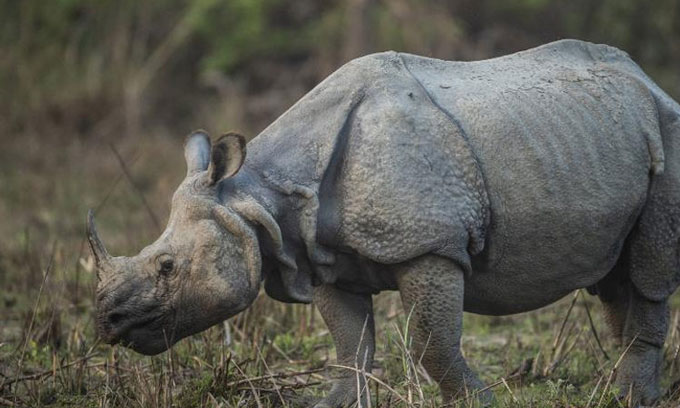
Good news for wildlife conservation! Thanks in part to the pandemic pausing tourism and allowing their habitats to regenerate, Nepal's one-horned rhino population has grown to its highest number in more than 20 years.
According to Nepal's Department of National Parks and Wildlife Conservation (DNPWC), since the year 2000, no official count has found more than 650 rhinos.
In their latest count, the population of rhinos across four national parks in Nepal increased to 752 total, up by more than 100 from 645 animals in 2015.
DNPWC Information Officer Haribhadra Acharya told CNN that in addition to a drop in tourism not disturbing their habitats, the rise in population as also due to investment in habitat management, controlling poaching, and translocation of rhinos between habitats.
With fewer than 2,200 remaining, the greater one-horned rhino is listed as a vulnerable species in the International Union for Conservation of Nature's (IUCN) Red List. They are still found in India and Nepal, but are extinct in Bangladesh and Bhutan.
While the pandemic's impact on tourism has aided wildlife conservation efforts, it's also negatively impacted funding for those same efforts. Nepal's rhino population going up in the midst of those circumstances is really good news!
Related Good News
- YouTubers raised more than $30,000,000 to remove plastic from the ocean
- This browser extension allows you to raise money for charity... just by opening new tabs
- The 'Great Blue Wall' will help save the oceans
- The best gifts for animal lovers
- Happy news stories about dogs
In Chicago, a former dumping ground for industrial and metal refining waste is now a 154-acre wildlife habitat
A former dumping ground in the Chicago area is now a 154-acre wildlife habitat.
The area at Indian River Marsh used to be used for dumping industrial waste and "slag" — the waste matter that is separated during the metal refining process, and contains toxic heavy metals such as lead, manganese, cyanide, and arsenic.
In the last decade, 480 tons of garbage were removed, the area was reestablished as a wetland, and native plants and animals are beginning to thrive. The marsh also absorbs rainwater, mitigating the spread of contaminants into people’s homes and water systems.
The combination is especially good news, as the surrounding area has a complex history of environmental racism.
The communities in the area are predominantly Black and Latino, and see some of the worst pollution in the entire state, according to reporting from BELT Magazine. (Learn about combatting environmental racism.)
Wetlands can help reduce these communities' exposure to flooding, poor air quality, higher temperatures, and more.
Denver gave 14 bison to Indigenous communities to reintroduce the animals to their historical habitats
Denver Parks and Recreation gave 14 bison to Indigenous communities in April 2021 to help reintroduce the animals to their native habitat.
Thirteen are headed to the Cheyenne and Arapaho tribes in Oklahoma, and one to Tall Bull Memorial Council in Colorado.
The donation is part of the City and County’s efforts to return the animals to their native homes and support conservation efforts on native land.
When Europeans arrived in North America, colonizers forcefully removed Indigenous communities from their land with deadly force. This move is one small act in conserving remaining Indigenous land and animals.
Cheyenne and Arapaho Tribes governor, Reggie Wassana, said this donation is the result of a long history and relationship with the state.
“The tribes plan to use the donated bison as a cultural, conservation, and educational resource, with the goal of locating the bison on our own tribal natural plains habitat,” Wassana told the Denver Channel.
Instead of hosting its annual bison auction, Denver Parks and Recreation will work with its Indigenous partners to “select tribes across the country that will accept the bison to build and enhance conservation herds on tribal lands,” the city told the Denver Channel.
Herds of bison — which numbered more than 30 million individual animals on the continent at one point — were almost completely wiped out by European colonizers.
By the turn of the 20th century, fewer than 1,000 bison existed on the continent, according to the city. Today, about 31,000 free-range wild bison live in North America.
After decades of conservation efforts, China announced giant pandas are no longer endangered
Good news for wildlife conservation! After decades of conservation efforts, China announced it was removing giant pandas from its endangered species list.
Since the 1970s, China has ramped up its efforts to expand the panda's natural habitat, and it resulted in the giant panda population growing to 1,800 in the wild.
This lead the country to re-classify the species as "vulnerable," according to the Department of Natural Ecological Protection of the Ministry of Ecology and Environment.
China's announcement comes 5 years after the International Union for Conservation of Nature took giant pandas off the endangered species list.
According to reporting from The Guardian, experts in China were nervous to do the same at the time, worrying it would cause complacency.
China plans to keep its conservation efforts going — both for giant pandas and other species that have seen population growth in recent years, like Siberian tigers and Asian elephants.
The first drug developed without animal testing was submitted for FDA approval
Life-saving drugs continue to be developed every year, but to reach the market they are subjected to rigorous safety testing to ensure they pose no risk to humans. Currently, it's most common to test drugs on animals, such as mice, rabbits, or primates.
Researchers from Hebrew University of Jerusalem believe it’s possible to test drugs without animals — and they’ve already demonstrated it by producing a promising cancer therapy without testing on a single animal.
Using a chip with human tissue on it, the researchers believe they can demonstrate safety and efficacy while bypassing the traditional animal testing stage and have now submitted their new drug to the U.S. Food and Drug Administration for approval. Their results were published in the journal Science Translational Medicine in February 2021.
As the first drug to go through to approval without animal testing, if successful, this study could be a breakthrough in reducing the number of animals used in labs.
With various technologies that simulate drug interactions available recently — including organoids, computer simulations, and more — the future of animal-free drug testing could be closer than we think.
“Getting a drug to the point of clinical trials normally takes four to six years, hundreds of animals, and costs millions of dollars,” lead author Yaakov Nahmias told The Times of Israel. “We’ve done it in eight months, without a single animal, and at a fraction of the cost.”
Life-saving medicines are extremely important for the health and well-being of so many people — we're thrilled about this news that we're a step closer to the health and well-being of animals being protected, too!
For the first time in history, an entire herd of elephants from a zoo will be released into the wild

An entire herd of elephants currently living in a British zoo will be released into the wild, and according to conservationists, it's the first time history that's happened.
According to a press release from the animal conservation group Aspinall Foundation, the 13 elephants (including 3 calves!) live at Howletts Wild Animal Park in Kent, southern England, and will be flown to be "rewilded" in Kenya.
Twelve of the elephants were born and raised in Kent, and one was born in Israel — none have ever lived in the wild.
"As with any conservation project of this magnitude, there are obviously big risks, but we consider them well worth it to get these magnificent elephants back into the wild where they belong," Damian Aspinall, chairman of the Aspinall Foundation, said in the press release.
While rewilding elephants is "uncharted territory," the group plans to apply what they've learned doing the same for other species, working with organizations like the Sheldrick Wildlife Trust, who have decades of experience working with elephants.
"Since the 1970s, we have been helping elephants, providing a wild future to more than 260 rescued orphans and operating extensive protection projects to ensure they, their wildborn babies and their wild kin are best protected throughout their lives," Angela Sheldrick, CEO of the Trust, said in the press release.
We're celebrating the work of these conservationists to help this herd of elephants live in their, natural, wild habitats.
In a positive move for both climate and biodiversity, full protections were just restored for Alaska’s Tongass National Forest
The U.S. Department of Agriculture announced it would restore full protections for the Tongass National Forest in Alaska. Previously, about half of the forest had been reopened to logging and mining.
The forest significant because of its biodiversity and because of its climate protections. It's home to more than 400 species of wildlife — like fish and shellfish, nesting bald eagles, moose, and the world's largest concentration of black bears. And according to Audubon, over 40% of North American birds.
It also has incredible plant diversity, including red and yellow cedar, Western hemlock, and Sitka spruce trees that are at least 800 years old.
It also plays a significant role in protecting the climate. According to Audubon’s Natural Climate Solutions Report, the Tongass National Forest holds 44% of all the carbon stored in the U.S. National Forest system.
In the announcement, the USDA said it would restore the full protections to return “stability and certainty” to the forest.
This is really good news for protecting not only the plants and animals that call the Tongass home, but also of our greatest, natural assets in the fight against climate change: forests.
Volunteers in Wyoming have started taking down miles of fencing to help wildlife migrate or move around safely
Scientists conservatively estimate that more than 600,000 miles of fences crisscross the American West, and that’s without counting property fencing in cities and suburbs.
In just one Wyoming county, researchers mapped roughly 4,500 miles of fences — longer than the U.S. border with Mexico.
In some cases, the fences are simply remnants, erected decades ago and no longer serving any purpose. In others, they were constructed with little thought about their impact on other species.
But land managers and conservation groups in the United States are increasingly aware of how fences can harm wild animals, and they are beginning to push for fence removal or replacement as a solution that many otherwise-at-odds constituents can get behind.
“From a human perspective, fences are for managing land and livestock, and they are barely visible from afar,” graduate student Wenjing Xu told National Geographic. “For animals that need to roam, however, every ‘invisible’ fence line could be an actual barrier that they have to figure out how to overcome.”
The urban bee population in The Netherlands is steady thanks to a pollinator strategy
The native wild bee population in the Netherlands has been declining since the 1940s, but recognizing the crucial role played by wild bees in the pollination of food crops, the government announced a national pollinator strategy in 2018, the Guardian reported.
The strategy included 70 initiatives aimed at creating more nesting sites for bees and strengthening their food supply, which enables nature and agriculture to coexist.
Amsterdam has been working on various bee-friendly initiatives that include putting up “bee hotels," which are a collection of hollow plant stems or thin bamboo that provides space for bees to nest.
And an entrepreneur launched Honey Highway, which collaborates with municipalities to plant wildflowers in the space available on the sides of highways, railways, and waterways, ensuring food and shelter for bees.
In mid-April, more than 11,000 people from across the Netherlands participated in a bee-counting exercise as part of the fourth edition of the national bee census, the Guardian reported.
The results showed that urban bee populations are steady.
Bees and other pollinators are responsible for the pollination of nearly three-quarters of the plants that produce 90 percent of the world’s food, so conserving bee populations is essential not only to the species' survival but our survival, too.
(You can learn more about bees and how to protect them in our conversation with Bee Girl Sarah.)
Follow along for more positive news — we'll be sharing more good news stories about animals here on goodgoodgood.news and more good news about happiness — in our weekly Goodnewsletter, and on Instagram @goodgoodgoodco. Join us!
The pandemic wasn't the only area we saw progress as it relates to global health — but it was the catalyst for a number of the good news stories we're celebrating here!
While mRNA vaccine technology had been in the works for years, COVID-19 presented a unique opportunity for scientists to put their years of research to work on a global scale. And the success of the vaccines in preventing severe infections led to progress on the development of mRNA vaccines for other deadly diseases — including cancer and Lyme disease.
And while we don't like to pick favorite good news stories, one of our team's favorite pieces of global health good news was when the WHO approved the world's first-ever malaria vaccine! Global health inequalities are heartbreaking, frustrating, and preventable — we were thrilled to celebrate the news that a vaccine for a disease that mostly impacts lower-income individuals in Africa was finally approved! It will save so many lives.
Amputations have dramatically decreased in Yukon thanks to a new frostbite treatment
Doctors in Canada grade frostbite conditions from one to four — with four being the worst, where they expect 100% of cases to result in amputations.
Thanks to a new treatment approach pioneered by a pair of doctors including Dr. Alex Poole, who told the CBC: "We've got that down to 50 [percent]. And we've not had to have any amputations on our grade twos and threes."
They started using a drug called Iloprost, which Poole and his colleague, pharmacist Josianne Gauthier found can prevent tissue from dying and help it heal. They've also used it on occasion in with thrombolytics, which are used for blood clots.
"[Iloprost] opens up the blood vessels and restores the blood flow to the extremities. So it helps prevent amputation," Gauthier said.
They published an article in the Canadian Medical Association Journal outlining their new approach — and to their surprise, the entire country was in need of innovations to treat extreme frostbite.
"So that's been very satisfying with our work so far, is that we sort of had an influence across the entire country for frostbite care, hopefully saving some fingers and toes along the way," Poole said.
Initial results of a groundbreaking new HIV prevention vaccine showed a 97% success rate
A new, groundbreaking vaccine approach for the prevention of HIV was 97% successful in the first phase of human trials, reported IAVI and Scripps Research.
According to the research organizations, the vaccine "successfully stimulated the production of the rare immune cells needed to generate antibodies against HIV in 97% of participants."
HIV affects more than 38 million people around the world and is among the most difficult viruses to target with a vaccine, largely because of its unusually fast mutation rate, allowing it to constantly evolve and evade the immune system.
“This is a tremendous achievement for vaccine science as a whole,” said Dr Dennis Burton, professor and chair of the Department of Immunology and Microbiology at Scripps Research. “This clinical trial has shown that we can drive immune responses in predictable ways to make new and better vaccines, and not just for HIV. We believe this type of vaccine engineering can be applied more broadly, bringing about a new day in vaccinology.”
The results of this study make way for more clinical trials to refine and extend the approach — with the long-term goal of creating a safe and effective HIV vaccine.
This is incredible news and great progress to celebrate in the fight against HIV! Additionally, the scientists working on the vaccine say it could help with other challenging pathogens like Zika and malaria.
→ Read the best Paul Farmer quotes on global health, equity, and making a difference
A groundbreaking new mosquito trial has resulted in 77% fewer cases of dengue fever
In a groundbreaking new trial, scientists used mosquitos infected with "Wolbachia" bacteria, which doesn't harm the mosquito itself, but does stop the dengue virus from going where it needs to replicate and infect someone.
One of the researchers, Dr. Katie Anders, describes the bacteria as "naturally miraculous."
The trial used five million mosquito eggs infected with Wolbachia. Eggs were placed in buckets of water in the city every two weeks, and building up a bacteria-infected population of mosquitoes took nine months.
The results: 77% fewer cases of dengue fever, and an 86% reduction in people needing to visit the hospital.
Dr. Anders, who is also the director of impact assessment at the World Mosquito Programme, told the BBC, "This result is groundbreaking. We think it can have an even greater impact when it is deployed at scale in large cities around the world, where dengue is a huge public health problem."
Dengue is also known as "break-bone fever" — it causes severe pain in muscles and bones, and outbreaks can overwhelm hospitals. In 1970, nine countries had faced severe dengue outbreaks — today, there are up to 400 million infections annually.
This is really good news in addressing this problem that impacts millions of people around the world!
BioNTech just gave the first dose in Phase II of its mRNA cancer vaccine trial
BioNTech, the company that helped develop one of the COVID-19 vaccines, just announced they gave the first dose in Phase II of their mRNA cancer vaccine trial targeting late-stage melanoma cancers.
The mRNA vaccine targets the four most common antigens found in more than 90% of melanoma patients.
“Our vision is to harness the power of the immune system against cancer and infectious diseases. We were able to demonstrate the potential of mRNA vaccines in addressing Covid-19. We must not forget, that cancer is also a global health threat, even worse than the current pandemic,” said BioNTech’s co-founder and CMO, Dr. Özlem Türeci with the announcement.
As you may remember, BioNTech had been working with mRNA vaccine technology for years, and put their research on hold to help use it to develop a vaccine for COVID-19.
They're hoping to use the advancements in the technology made during the COVID-19 development to make a cancer vaccine.
England is rolling out a new blood test that can detect 50 types of early-stage cancers
A new blood test will soon be rolled out by NHS England — it can detect 50 different types of cancer before any clinical signs or symptoms of the disease emerge in someone.
Scientists developed the test using a type of artificial intelligence that looks for DNA shed by tumors circulating in the blood stream. The results of the study, published in the journal Annals of Oncology, showed a high level of accuracy and low levels of false positives.
The test correctly identified when cancer was present in 51.5% of cases, across all stages of the disease, and incorrectly detected cancer in just 0.5% of cases. It also correctly detected which tissue in the body the cancer was located in 88.7% of cases.
“Finding cancer early, when treatment is more likely to be successful, is one of the most significant opportunities we have to reduce the burden of cancer. These data suggest that, if used alongside existing screening tests, the multi-cancer detection test could have a profound impact on how cancer is detected and, ultimately, on public health," Dr. Eric Klein, one of the authors on the research told The Guardian.
Detecting cancer in its earliest stages offers the best chance for successful treatment — and this blood test could help make that possible in even more cases!
NHS England will start rolling out the test this fall.
The WHO just approved the world’s first malaria vaccine
The World Health Organization just approved the world's first-ever vaccine to prevent malaria. Malaria kills about 500,000 people each year — almost all of them in sub-Saharan Arica, and more than half of them children under 5 years old.
In clinical trials, the vaccine had about a 50% efficacy against severe malaria in the first year. While the trials didn't measure the vaccine's impact on preventing death, severe malaria makes up about half of malaria deaths, so experts expect that preventing severe malaria will lead to fewer deaths.
A study, published in the journal PLOS Medicine, estimated that if the vaccine rolled out to countries with the most malaria cases, it could prevent 5.4 million cases and 23,000 deaths in children under 5 every year.
Scientists have been working on a vaccine for malaria — a parasite, more complex to treat than viruses or bacteria — for 100 years. It can infect people over and over, and even in parts of sub-Saharan Africa where most people sleep under insecticide-treated mosquito nets, children get malaria 6 times a year on average, according to a study published by the National Library of Medicine. And even if the case isn't fatal, it leaves them weak and vulnerable to other diseases.
“This is a historic moment. The long-awaited malaria vaccine for children is a breakthrough for science, child health and malaria control,” said WHO Director-General Dr. Tedros Adhanom Ghebreyesus. “Using this vaccine on top of existing tools to prevent malaria could save tens of thousands of young lives each year.”
A new study in England found the HPV vaccine has lowered cervical cancer cases by 87%
A new study — and the first based on real-world data! — in England found that the human papillomavirus, or HPV, vaccine is cutting cases of cervical cancer by 87%.
Cervical cancer is the fourth most common cancer in women around the world, and kills more than 300,000 women every year, according to reporting by the BBC.
Additionally, around 9 out of every 10 deaths are in low- and middle-income countries cervical cancer screenings are scarcely accessible.
Since nearly all cervical cancers are caused by viruses, experts hope that vaccination could nearly eliminate the disease — and that vaccination would have an even bigger impact in low- and middle-income countries.
Cancer Research UK called the findings "historic", and that it showed the vaccine was saving lives. More than 100 countries have started using the vaccine.
We're celebrating this incredible news — and yet another good medical breakthrough that will save so many lives.
A new mRNA vaccine targeting ticks could protect people against Lyme and other tick-borne diseases
A new laboratory-stage mRNA vaccine that teaches the immune system to recognize the saliva from tick bites could prevent these bugs from feeding on and transmitting Lyme and other tick-borne diseases to people, according to a recent study conducted in the Fikrig Lab at the Yale School of Medicine.
After observing that some animals who aren't typically hosts for ticks (like guinea pigs and cows) were able to develop tick immunity, the scientists conducting the study were curious if they could induce tick immunity without tick bites.
As one of the study's team members wrote in The Conversation, the scientists developed an mRNA vaccine called 19ISP that teaches cells to recognize 19 selected proteins present in the spit that Ixodes scapularis, also known as the deer or black-legged tick, leaves on the skin during a bite.
AIDS-related deaths have declined by 60% since their peak in 2003
Today is World AIDS Day! Human immunodeficiency virus (HIV) and acquired immune deficiency syndrome (AIDS) interfere with the body’s immune system, increasing the risk of developing common infections.
HIV/AIDS is a pandemic that, as of 2018, affects nearly 40 million people worldwide, leading to hundreds of thousands of deaths.
Between the early 1980s — the time that AIDS was identified — and 2018, the disease caused an estimated 32 million deaths worldwide.
Not only does HIV/AIDS have major health consequences, but it’s also closely associated with discrimination, including violence against HIV-infected individuals.
There is no cure or vaccine (yet), but thanks to medical advances, treatment can slow the course of the disease and may lead to a near-normal life expectancy. And organizations like The Global Fund and (RED) have led the way in advocacy and fundraising that have led to a dramatic decrease in deaths worldwide.
Header illustration by Giovanni Maki, Public Library of Science / (CC BY 2.5)