Going for walkies: the best bonding mechanism — and physical activity — you and your dog can embark on together.
Andrew Knapp, a dog photographer and canine caretaker himself, has just made them even better.
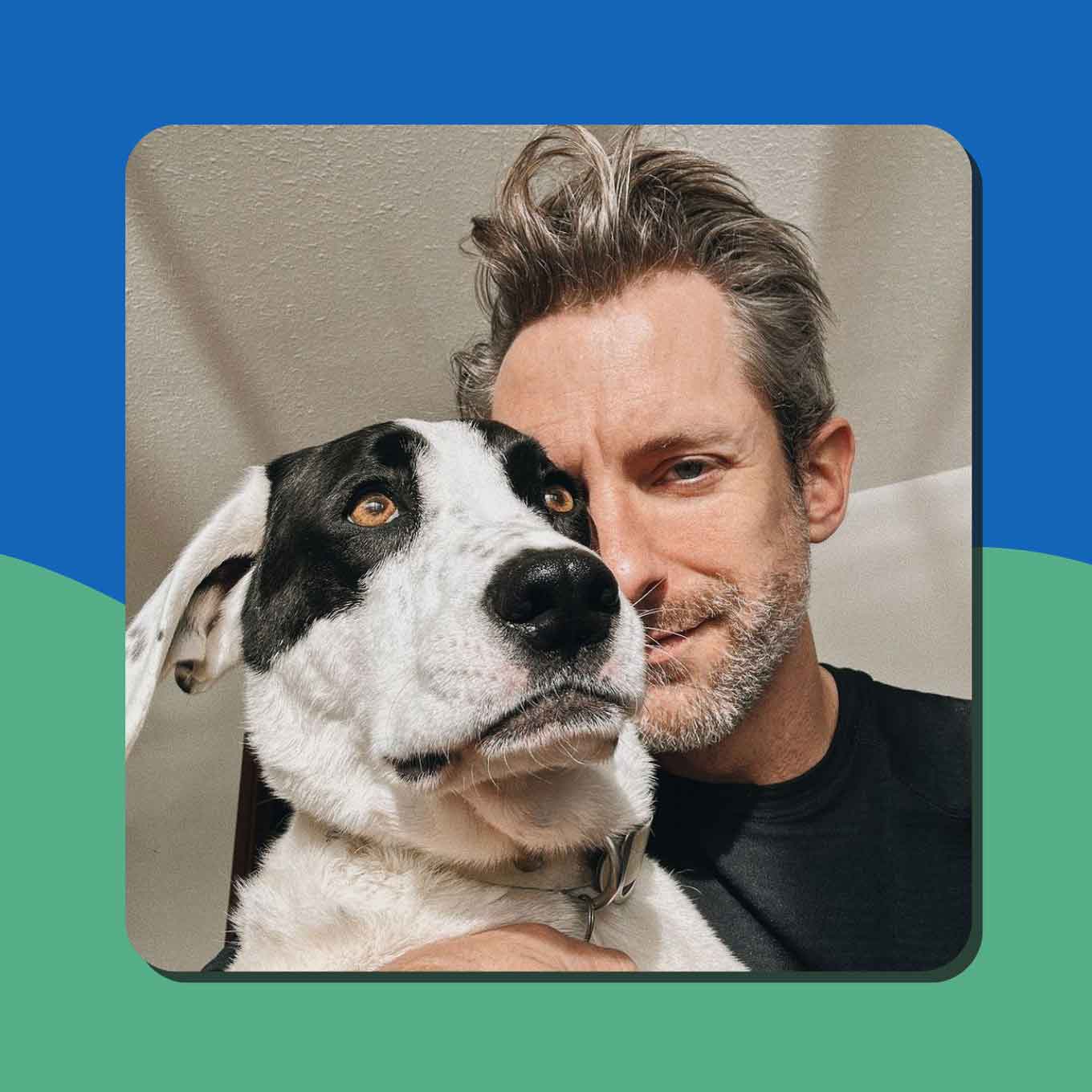
Knapp, who is the owner of the Instagram account @momosface, started his online platform taking photos of his border collie, Momo, who would stick her nose directly toward the camera in every shot, with various beautiful backgrounds out of focus.
Momo passed away in 2021, but Knapp keeps her memory alive with adventures and images of his two other dogs: Yaya and Boo.
And to start 2024, he’s doing something even more special: Dollar Dog Walks.
What are Dollar Dog Walks?
The premise is simple: Knapp has opened up the subscription option on his Instagram page, where any of his over 600,000 followers can pay one dollar a month. (Well, $0.99 plus tax.) Those dollars will then be donated to mental health organizations.
“You give me a dollar, and all of that dollar goes towards a new mental health organization every month,” Knapp explained in a video.
He pledged to spend time outside with his pups every day in 2024, and encouraged his audience to do the same.
“The reason this all wraps together neatly is because it’s really dogs that have saved me in a very big and real way,” he continued. “They’re the reason that I’m here today, possibly. They’re the reason that I get outside.”

Knapp has long posted outdoorsy content with his adventuring pups, his Instagram profile an archive of beach days, hugging 400-year-old trees, and even lying in the dirt and forest bathing beside his pups.
“Getting outside has been so healing to me,” Knapp added in his video announcing the Dollar Dog Walks.
This isn’t the first time he has shared mental health-related content. Last year, Knapp posted a “guided meditation for dogs” and a heartfelt video about moving through the grief of pet loss.
He’s not the only person who has found solace in dogs — or nature. Of course, we know that both of these things are helpful for mental health.
The American Psychological Association shares: “Spending time in nature is linked to both cognitive benefits and improvements in mood, mental health and emotional well-being.”
Meanwhile, a survey from the American Heart Association concluded that 95% of pet parents rely on their pet for stress relief.
But finding access to natural spaces, mental health support, and even pet care can still be a challenge. While Knapp has not yet announced the mental health nonprofits he will be supporting through Dollar Dog Walks, he is eager to make a difference.
In an Instagram broadcast channel for the dog walking challenge, Knapp shared that he gained nearly 50 subscribers in just one day.
“Mental illness and addiction and mental health struggles are so prevalent,” Knapp said in his announcement video. “I hope we can make at least a tiny, little dent with this project.”
Header images courtesy of Andrew Knapp/Instagram
Every day the Good Good Good team collects the best good news in the world and shares it with our community. Here are the highlights for this week!
If you want to get good news in your inbox every day, join the Goodnewsletter — the free daily newsletter designed to leave you feeling hopeful.
The Best Positive News We’re Celebrating This Week —
A social justice-focused apparel company stands out by exclusively hiring individuals impacted by incarceration, aiming to provide healing and resources
For Everyone Collective, a social justice-focused apparel company, is making an impact by specifically hiring individuals who have been impacted by incarceration and their families.
Started by Skyler Rich, the company aims to provide healing, community, and resources to those affected by incarceration. In the U.S., nearly 2 million people are incarcerated, and upon release, they often struggle to access essential needs such as employment, health care, nutritious food, and housing.
For Everyone Collective not only employs formerly incarcerated individuals but also creates products that reflect their experiences. Best-selling items include a hoodie featuring an Angela Davis quote and a T-shirt with a message emphasizing safety, healing, accountability, housing, health care, education, food, water, and abolition for everyone.
The company also recently opened its first brick-and-mortar store in Grand Rapids, Michigan, offering signature designs, custom screen-printing, and a gathering space for customers and supporters.
The business operates on a worker-owned model, with its 11-member team co-owning the brand. The values and actions outlined on the brand's website include paying above living wages, providing free health and life insurance, using sustainable materials, offering unlimited paid time off, featuring art from incarcerated artists, rejecting systems of policing and incarceration, and hosting community events and teach-ins.
Why is this good news? For Everyone Collective actively addresses the challenges faced by individuals impacted by incarceration by providing them with meaningful employment opportunities. The company's commitment to promoting healing, community, and resources for this group, along with its worker-owned model and emphasis on ethical practices, contributes positively to social impact and transformative justice.
Activists and scientists in Hong Kong are collecting discarded oyster shells to restore damaged oyster ecosystems, promote biodiversity, and reduce pollution
In an effort to address the degradation of Hong Kong's oyster habitats caused by urban development, water pollution, and over-harvesting, a group of activists and scientists have launched a unique initiative.
They’re collecting and recycling discarded oyster shells from restaurants and hotels to restore damaged oyster ecosystems, promote biodiversity, and reduce pollution in the city's bays.
The shells undergo a meticulous process — including sun-drying for a year to eliminate any remaining bacteria — before being reintroduced into selected areas of the bay to create a surface for oyster larvae and other marine organisms to settle.
The project, led by the Nature Conservancy (TNC) in Hong Kong, collaborates with oyster farmers and businesses to collect approximately 870 kg weekly from various establishments.
The depletion of Hong Kong's natural oyster reefs has not only impacted local biodiversity but has also affected the ability of oyster farmers to sustainably cultivate their products. The initiative aims to revive the city's 700-year oyster farming tradition, recognized by Unesco as an "intangible cultural heritage."
By strategically placing recycled oyster shells in areas identified as having the potential for ecosystem restoration, the project seeks to encourage the repopulation of oysters and contribute to overall biodiversity in the region.
Why is this good news? Despite challenges in convincing smaller enterprises to participate in the recycling initiative, this project holds promise for both environmental conservation and the sustainability of Hong Kong's long-standing oyster farming tradition. The success of the initiative could serve as a model for similar projects globally, emphasizing the importance of nature-based solutions and community collaboration in restoring and preserving coastal ecosystems.
The U.S. experienced a record-breaking year in solar power in 2023
The year 2023 proved to be a record-breaking period for solar power in the U.S., as nearly 33 gigawatts of solar capacity were projected to be installed by the year’s end.
This substantial increase from the 21 gigawatts installed in 2022 marks the largest annual addition of solar power in the nation's history, according to the Solar Market Insights report from the Solar Energy Industries Association and Wood Mackenzie.
The solar industry, representing the fastest-growing source of electricity in the U.S., has accounted for nearly half of all new power capacity during the initial three quarters of 2023, contributing to a total installed solar capacity of approximately 161 gigawatts – enough to generate around 5 percent of the country's electricity.
The growth has been particularly driven by utility-scale installations, which are expected to have expanded by 86 percent compared to the previous year.
While the solar industry is expected to face hurdles — such as grid congestion — Wood Mackenzie remains optimistic about its continued expansion, predicting that the total solar capacity installed in the U.S. will nearly double by 2027.
Why is this good news? The significant increase in solar capacity reflects a commitment to clean and renewable energy sources, contributing to a reduction in carbon emissions and addressing climate change. Additionally, solar power is now the fastest-growing source of electricity in the U.S. — making up almost half of all new power capacity! — signaling a shift toward sustainable energy solutions.
A conservation foundation in Ecuador protects 10% of the world's bird species
The Jocotoco Foundation, established in 1998, has emerged as a formidable force in biodiversity conservation, particularly with a focus on avian species.
Originating from the critical need to safeguard the Jocotoco Antpitta, a bird species discovered in 1997, the foundation has grown to manage 15 reserves across Ecuador. These reserves are strategically positioned to protect areas of global significance for bird conservation, spanning from the Amazon rainforest to ecosystems in the Galapagos Islands.
Each reserve managed by Jocotoco plays a crucial role in preserving regionally and globally threatened plants and animals, contributing to the protection of an astounding 10% of the world's bird species. The organization adopts a dynamic and adaptive approach, analyzing specific threats faced by each species and assessing its capacity to make a positive impact.
Martin Schaefer, the head of Jocotoco, emphasizes the importance of tailoring strategies based on the unique circumstances and threats present in each locality, which can range from collaborating with local communities to prevent habitat loss to acquiring land to impede the progress of logging activities by industrial timber companies.
The foundation actively engages in ecotourism initiatives, fostering community involvement and education, and conducts scientific research and monitoring. By working closely with local communities, Jocotoco not only raises awareness about conservation but also promotes sustainable practices. The ecotourism programs implemented by Jocotoco not only generate employment opportunities but also contribute to the revenue of local communities surrounding the reserves.
Why is this good news? The Jocotoco Foundation stands as a beacon of hope and action in the conservation landscape, showcasing the power of collective efforts, adaptive strategies, and a holistic approach to preserving the rich biodiversity of Ecuador and contributing significantly to global bird conservation.
A nonprofit in Chicago is making biking more accessible, affordable, and safe for Black and Brown communities
The Equiticity Racial Equity Movement, led by Olatunji Oboi Reed in Chicago, is dedicated to breaking down systemic barriers hindering cycling adoption within Black and Brown communities.
Recognizing complex associations tied to biking, such as safety concerns, police harassment, and infrastructure disparities, Reed and Equiticity focus on a holistic, systemic approach to foster a shift in transportation dynamics.
Reed's advocacy began with the launch of Slow Roll Chicago in 2014. Aimed at encouraging Black, Brown, and Indigenous individuals to embrace cycling for both recreational and transportation purposes, Slow Roll Chicago, under Reed's leadership, continues to strengthen community connections.
In 2017, Reed expanded his vision by establishing Equiticity in Chicago's River North neighborhood, focusing on creating bike libraries in the city's predominantly Black and Brown South and West Sides.
Equiticity has since evolved and expanded its programming, encompassing advocacy, social enterprises, and community mobility rituals that involve biking, walking tours, public transit excursions, group scooter rides, and open streets festivals.
Notably, Equiticity launched the Mobility Opportunities Fund in November 2022, supported by a grant from ComEd. The fund provides financial assistance for purchasing conventional bicycles, electric bicycles, electric cargo bicycles, and even electric vehicles, with the aim of making biking more accessible and affordable for Black and Brown riders.
Equiticity's ongoing advocacy includes the Free 2 Move Coalition, addressing police harassment and pushing for biking infrastructure improvements. Improving biking infrastructure is integral to Equiticity's mission of making biking a safe and viable option for Black and Brown communities.
The FDA's new approach for blood donation marks a significant step toward LGBTQ+ inclusivity and addresses previous discriminatory restrictions
The FDA has recently approved a groundbreaking change in blood donation policies, ending restrictions for gay and bisexual men and making the process more inclusive.
Previously, these individuals faced restrictions stemming from the early days of the HIV/AIDS epidemic — including extended periods of sexual abstinence — preventing them from donating blood.
Despite advancements in HIV testing for blood donations, a lifetime ban imposed on gay and bisexual men persisted until 2015 when it was replaced with a requirement for one year of sexual abstinence for men who have sex with men. In 2020, this period was reduced to 90 days. Critics argued that these policies were discriminatory and failed to align with scientific advancements.
In response to these concerns, the FDA announced a shift in policy, moving away from blanket bans based on sexual orientation to a more individualized risk assessment approach. This change, implemented in August, screens donors based on their risk of contracting and transmitting HIV, utilizing gender-inclusive and individual risk-based questions, with deferrals for those deemed at higher risk.
The updated policy, widely praised by public health experts and LGBTQ+ activists, acknowledges the importance of assessing individual risk factors rather than imposing restrictions based on identity.
Similar changes have been observed in other countries like the United Kingdom, France, Greece, and the Netherlands. The hope is that this new approach will encourage more donors to address the ongoing blood supply shortage, a concern highlighted by the American Red Cross declaring a national blood shortage in September.
What’s the nuance? While the response from the LGBTQ+ community has been positive, there is a call for further inclusivity, with discussions around expanding eligibility to individuals on pre-exposure prophylaxis (PrEP), a medication that prevents HIV infection. The overall sentiment is one of progress, with the new risk assessment approach not only addressing stigma and discrimination but also emphasizing the importance of education and participation in a scientifically sound risk assessment.
→ Read more
A collaborative effort in Japan between a town, researchers, and a local agricultural cooperative aims to revive an endangered butterfly species
A collaborative effort between the small agrarian town of Iijima, researchers from the University of Tokyo, and the local Kamiina Agricultural Cooperative Association has been underway to revive the Reverdin’s blue butterfly (referred to as miyamashijimi in Japanese) and, in doing so, preserve the traditional Japanese landscapes known as satoyama.
The butterfly is currently facing the threat of endangerment in Japan. This decline is attributed to changing landscapes resulting from urban migration, an aging population, and increased reliance on food imports.
The partnership's focus involves creating sanctuaries for the miyamashijimi in abandoned grasslands within Iijima. These grasslands, designed to mimic the satoyama landscape, are situated near rice fields and woodlands, following a moderate maintenance schedule, aiming to provide an optimal environment for the butterfly's host plant.
The success of this conservation initiative is not only significant for the butterfly but also for the broader ecosystem. Maintaining a moderate level of landscape use in Iijima has the potential to support diversity and abundance of various insects and plants. This, in turn, can have positive effects on the pollination of crops such as buckwheat, contributing to the overall well-being of the community.
A crucial aspect of the partnership's approach is community-based governance. To foster local leadership, the collaboration prioritizes education by organizing courses and workshops on wildlife conservation in local schools.
The effort also aims to instill a sense of identity and pride within the community regarding the butterfly's presence. By disseminating updates on conservation efforts through various channels, including social networking services, town hall websites, and permanent displays, the collaboration seeks to engage the community in the ongoing conservation initiatives.
Why is this good news? The conservation initiatives in Iijima represent a multifaceted approach involving scientific research, community engagement, and education to protect the miyamashijimi and maintain biodiversity. As part of a global effort, these initiatives showcase the potential for communities to reintegrate with the environment and contribute to wildlife conservation. Early indications suggest success, with the discovery of new colonies near release sites, hinting at the potential for establishing new populations.
More good news of the week —
AI tools are being used in Indian public schools to address learning gaps in subjects like English. These tools, developed by edtech firms, nonprofits, and tech giants, aim to assist teachers, create lesson plans, and identify students at risk of dropping out.
“Shark dust” will help identify threatened and protected shark species in Indonesia's fish trade. Researchers’ findings could help improve trade monitoring by providing insight into the variety of shark and ray species processed in specific locations, addressing the challenges of regulating and monitoring the country's shark and ray trade, which is poorly monitored and susceptible to illegal activity.
Researchers at the University of Wisconsin-Madison have developed an efficient process for extracting ammonia from livestock manure, potentially reducing the environmental impact of manure application on farm fields. The captured nutrients can then be released through an electrical charge and dried for use as fertilizer, with additional benefits including the creation of hydrogen for fuel or hydrogen peroxide as a disinfectant.
Researchers at North Carolina State University have developed a biodegradable film that resembles plastic but is more environmentally friendly, made from reinforced seaweed-derived polymers. The researchers believe that this innovation could be a sustainable alternative to petroleum-based plastics commonly used in items such as food packaging, contributing to efforts to reduce plastic waste and its environmental impact.
California is set to adopt regulations allowing sewage to be extensively treated and transformed into pure drinking water delivered directly to taps. This move represents a milestone in the state's efforts to address water scarcity by recycling more water, with the regulations permitting "direct potable reuse" to incorporate highly treated water into the drinking-water system.
The New York City Council has voted to ban most instances of solitary confinement in city jails, passing a measure with enough votes to override a potential veto from Mayor Eric Adams. The move comes amid scrutiny over deaths at the Rikers Island jail complex and is part of a broader national trend to restrict or eliminate the use of solitary confinement in correctional facilities.
California is set to implement two new laws this month to combat the fentanyl crisis by making drugs like naloxone, which reverse opioid overdoses, more accessible and providing liability protection to those administering them. The bill updates the state's good Samaritan law to shield anyone administering Narcan (naloxone) from liability in most cases during opiate overdoses.
The "fairy lantern," a bioluminescent plant species called Thismia kobensis, has been rediscovered after being presumed extinct for 30 years. The fairy lantern, which relies on parasitizing underground organisms rather than photosynthesis, is characterized by its cryptic nature, with most of the plant remaining underground and colorful flowers barely rising above the forest floor.
The Utah State Legislature has unanimously passed a bill enshrining into law a ban on LGBTQ+ conversion therapy. The bill, which received support from Equality Utah after modifications, now awaits Governor Spencer Cox's approval, signaling a permanent ban on conversion therapy for minors in the state.
President Joe Biden has issued a federal pardon for all Americans who have used marijuana in the past, including those who were never arrested or prosecuted, covering both personal use and convictions for similar federal crimes. The move aims to address the impact of criminal records on employment, housing, and education opportunities, with thousands eligible for pardons.
Major insulin manufacturers have implemented measures to lower insulin costs to $35 for many patients, reducing list prices significantly. The moves, which went into effect January 1, include monthly caps on out-of-pocket costs and reductions in list prices, providing relief to the approximately 8.4 million Americans who rely on insulin, while also benefiting the companies by potentially saving them hundreds of millions in Medicaid rebates.
Illinois has introduced 320 new state laws for 2024, including a ban on semi-automatic weapons with features like restricted gun capacities and mandatory registration for previously purchased guns. Other notable changes include a prohibition on state funding for libraries that indiscriminately ban books, mandated paid time off for workers, and regulations on issues such as videoconferencing while driving, indoor vaping, deepfake pornography, and restroom accommodations.
An aviation company has developed jet fuel entirely from human sewage, with chemists turning waste into kerosene. Independent tests show the sewage-based fuel has a nearly identical chemical composition to standard fossil jet fuel — with a 90% lower carbon footprint.
A study suggests that people over 50 living alone may counter cognitive decline by having a pet. Pet ownership, particularly of dogs and cats, is linked to higher trust levels, a tighter bond with humans, and increased levels of oxytocin and dopamine, which are feel-good hormones.
Cities across the U.S. are discarding off-street parking minimums in an effort to promote affordable housing, improve transit, and create walkable neighborhoods. Over 50 other cities and towns, such as Anchorage, Alaska, and San Jose, California, have eliminated their minimum parking requirements, citing their arbitrary nature and negative consequences like increased housing costs and congestion.
Few things feel more quintessentially American than the sitcom. Its features can be recognized anywhere — the laugh track, the unchanging living room or kitchen set that becomes as familiar as one's own.
The traditions that grew out of sitcoms are almost as deeply ingrained: a whole family gathering around the television at a specific time every week, excited to watch a family that looked like theirs finding humor in the mundane.
Sitcoms have long reflected the cultural norms of the time to their viewers, as they were specifically designed to appeal to mass audiences. But occasionally, sitcoms subtly pushed against what was deemed socially acceptable, asking viewers to interrogate their beliefs and preconceptions.
By including characters that did not conform to the ideal of a white, heterosexual, middle-class nuclear family, sitcoms started to reshape the very cultural norms they often reinforced.
While sitcoms can be used as a historical record of the cultural values of their time, they also offer insight into what — and who — was not valued.
For the first several decades of television history, LGBTQ+ characters did not generally appear. If they did, they were often portrayed as deviant or performative in stereotypical ways and were rarely developed into more than a walking trope.
These depictions reinforced the stigma surrounding the LGBTQ+ community and did little to dispel prejudice. But as the gay liberation movement burst forward in the 1970s, catalyzed by events like Stonewall, LGBTQ+ representation on TV began to shift.
Some showrunners made it their mission to push the envelope of what kinds of characters were seen as acceptable on TV, like the often-provocative Norman Lear, who died on Dec. 5, 2023 at the age of 101.
Though not without his critics, Lear used his popular sitcoms, including "All in the Family" and "The Jeffersons," to challenge both studios' and audiences' beliefs about race, gender, and sexuality, including some of the earliest representations of LGBTQ+ characters on TV. These portrayals often prompted nationwide conversations about the narratives that could and should be represented on the small screen.
GLAAD, an organization that works to combat prejudicial depictions of the LGBTQ+ community in the media, has been tracking queer representation on television for decades. According to Raina Deerwater, GLAAD's entertainment research and analysis manager, that's because LGBTQ+ representation on television holds a specific kind of weight.
"Television in America is very much a cultural institution," Deerwater told Stacker. "You go to a living room, and nine times out of 10 there will be a TV. It's a communal activity with your family. [TV] remains to be one of the major ways the LGBTQ+ community is seen in the media."
Through the decades, sitcoms have shied away from and led the way on various social and cultural issues. From representations of the AIDS crisis in the '80s to the legalization of same-gender marriage in 2015, queer characters being shown on television — and how they are depicted — has evolved to become more diverse and characteristic of the wide spectrum of LGBTQ+ identities.
LGBTQ+ viewers seeing themselves reflected on the screen is powerful. "It's important to know that there are other people in the world like you," Deerwater said. "There's something so special and validating about feeling isolated your whole life, feeling out of the norm, and then seeing that there is a world in which you are living and thriving and have a community."
But seeing LGBTQ+ characters on TV is also vital for viewers outside of the community.
Television can be a way for people not exposed to the LGBTQ+ community in real life to feel connected to a character. According to Deerwater, TV shows can also offer a starting point for conversations about LGBTQ+ people and issues.
To investigate the history of LGBTQ+ representation in American sitcoms, Stacker scoured news coverage, critical reviews, and historical documents.
We also analyzed data from a decade of GLAAD's "Where We Are on TV" reports — which keep tabs on how many LGBTQ+ characters appear on streaming services, primetime cable, and broadcast networks, among other insights — to track the recent rise in queer characters on TV.
LGBTQ+ representation on television has jumped dramatically over the last 10 years
There were nearly eight times more LGBTQ+ characters on television in 2021 than in 2010, according to GLAAD data. Despite the production challenges posed by the COVID-19 pandemic in 2020, the number of queer characters more than recovered the following year, surpassing 2019.
The jump in representation is even more significant when considering counts from the early days of GLAAD's reporting. "There were 12 characters, period, in that first report," Deerwater said. "It was obviously an immensely different landscape back then."
Even though 2021 was a record-breaking year regarding the number of queer characters on TV, Deerwater has observed a trend that isn't so optimistic: shows featuring queer characters and storylines getting greenlit, only to be canceled after one or two seasons. In 2022 alone, queer-led shows including "First Kill," "Saved by the Bell," "Queer as Folk," and "Tom Swift" were canceled after their first or second seasons.
"A lot of really inclusive shows are getting canceled as a byproduct of different platforms not putting their weight behind the show, and not giving it a chance to get more views," Deerwater explained.
Landmark Portrayals of Gay and LGBTQ+ Characters in U.S. Sitcom History
1971: A gay male character appears on 'All in the Family,' a first in sitcom history
Two years after Stonewall, the first gay male character to appear on a sitcom — and likely the first gay man many Americans saw represented on television—appeared in an episode of "All in the Family."
The show, created by Norman Lear, was about to explode in popularity, becoming the most-watched television program of its time. But the 1971 episode, "Judging Books by Covers," came early in the first season.
The episode centers on the star of "All in the Family" — the inflammatory Archie Bunker, termed a "lovable bigot" by some critics — whose racist, sexist, and homophobic views were meant to bring attention to social issues through satire.
A scene in the episode finds Archie at lunch with his friends and an acquaintance — a well-dressed, well-traveled man named Roger, who Archie openly demeans for appearing to be gay.
Later in the episode, Archie goes to the bar and hangs out with his friend Steve, a muscular former football player and bachelor who is clearly set up to be Roger's visual opposite.
Archie demeans Roger to Steve and challenges Steve to an arm-wrestling match. By the end of the episode, however, the tables have fully turned on Archie — easily beating Archie in the arm wrestle, Steve tells Archie that he, in fact, is gay.
When Archie reacts with disbelief and shock, Steve again slams Archie's arm to the table and triumphantly exits, leaving Archie to adjust to his new reality: that the stereotype of the effeminate, flamboyant gay man is just that — a stereotype.
Despite only being the show's fifth episode, "All in the Family" was already making its mark on American culture. People on all sides of the cultural debate on homosexuality had opinions about the appearance of masculine, all-American, gay Steve on television — including President Nixon.
Caught on secretly recorded tape, Nixon specifically called out the "All in the Family" episode, bitterly complaining that it was "glorifying homosexuality."
After the groundbreaking "All in the Family" episode, similar representations of gay men on sitcoms in the decade would follow. Programs like "The Mary Tyler Moore Show," "Maude," and "Cheers" all featured one-off episodes that dealt with the polarizing issue of homosexuality by introducing a character — usually a friend of a friend or a distant relative — who, by the end of the episode, is revealed to be gay.
These characters were usually white, conventionally attractive men who passed for straight.
This type of representation had its advantages and some serious limitations: they allowed television shows to probe the topic of homosexuality cautiously while avoiding the messiness of needing to develop complex, recurring gay characters.
These characters conveniently disappeared by the end of the episode, never to be seen — or further explored — again. At the same time, these appearances did the important work of disrupting audience expectations around homosexuality, demonstrating that gay men could not be reduced to a simplistic trope.
An exception to this rule was the recurring gay character Peter Panama on the 1972 sitcom "The Corner Bar." But though Panama appeared several times throughout the series, rather than disappearing after a single episode, he broke barriers in name only — the president of the Gay Activists Alliance at the time, Rich Wandel, called the portrayal "the worst stereotype of a gay person I've ever seen."
1977: A year of firsts on 'Soap,' 'The Jeffersons,' and 'Sanford Arms'
1977 was a big year for American culture. Fleetwood Mac released their hit album "Rumours," Jimmy Carter was sworn in as president after the debacle of the Nixon years and the stumbles of the truncated Ford administration, and "Star Wars Episode IV: A New Hope" was screened in theaters across the country.
Big cultural shifts were also taking place around LGBTQ+ issues. In 1977, Harvey Milk was voted onto the San Francisco Board of Supervisors, making him the first out gay man to hold elected office.
Four years earlier, homosexuality was finally declassified as a mental illness and removed from the American Psychiatric Association's Diagnostic and Statistical Manual.
At the same time, only 43% of Americans believed gay or lesbian relations between consenting adults should be legal (compared with 83% in 2019), according to Gallup's first poll on gay issues.
Changing attitudes about gay rights began trickling into small-screen representation by the late '70s. On "Soap," a sitcom that parodied daytime soap operas with melodramatic stories and over-the-top characters, the first gay character to have a main role in a television series was introduced.
Jodie Dallas, played by a young Billy Crystal, was a director of television commercials who dated a closeted football player at the start of the series but ended up having several relationships with women. However, he continued to identify as gay throughout the series.
Although Jodie's character does not hold up by today's standards — particularly his short-lived desire to have sex reassignment surgery to marry his then-boyfriend legally — he nonetheless won audiences over with character development and depth that had never been afforded to gay characters on television before.
One of the first trans characters also appeared on a sitcom in 1977. "The Jeffersons," a long-running, Lear-developed sitcom with a predominantly Black cast, featured an episode in which George, the patriarch of the Jefferson family, goes to meet his old Navy buddy Eddie, only to find that she has transitioned and goes by the name Edie.
While George's initial reaction to her transition is disgust and disbelief, they eventually reconcile when he accepts her. Although she only appears in one episode, Edie, depicted by Veronica Redd, is surprisingly sympathetic, considering the rampant transphobia of the time.
She describes herself as happy and corrects George on her new name while telling him she's always been a woman — "even in the Navy."
Another gender-nonconforming character appeared on "All in the Family" in 1975. Beverly LaSalle was a recurring drag queen character played by out gay drag queen Lori Shannon.
Though drag was rare on television at the time, depictions that did exist were often derogatory and presented gender-nonconforming characters as psychotic. In contrast, Beverly's character got a more fleshed-out character arc and was portrayed as a human with dignity.
When Beverly is murdered on the street by transphobic perpetrators, Archie and his family are devastated. While trans and gender-nonconforming characters being victims of hate crimes has a long history in television and film, often to the detriment of trans representation, Beverly's sympathetic portrayal and the Bunker family's reaction to her death were unique for the time.
Beverly's death shed light on the systemic violence and bigotry faced by gender-nonconforming people across the country.
One of the first Black gay characters on a sitcom also appeared in 1977, on an episode of "Sanford Arms," a short-lived spinoff of Lear's "All in the Family"-esque "Sanford and Son."
The character Travis appeared in only one episode and was portrayed as a civil rights lawyer engaged in the gay rights struggle.
While he was not given any real character development, and in some ways, his gayness was treated as something comical, Travis' portrayal also defied certain racial and sexuality-based stereotypes.
1986: The first lesbian character appears on a sitcom in 'The Golden Girls'
In the second season of "The Golden Girls," Dorothy's old friend Jean visits in an episode called "Isn't It Romantic?" Before she arrives, Dorothy describes her to her mother, Sophia, as a lesbian whose longtime partner recently passed away.
She does not tell the rest of her friends, however, for fear that they won't be accepting of her friend. Throughout the episode, Jean falls for Rose. Lois Nettleton, who played Jean, was nominated for an Emmy for her performance, and Terry Hughes won an Emmy for directing the episode.
This landmark portrayal of a lesbian character was important for more reasons than merely being one of the first of its kind on television. Jean's character is remarkably well-developed for the time. She is comfortable with her sexuality and is uninterested in hiding it.
When she develops feelings for Rose and confesses these feelings, Rose and the other friends treat her with respect, despite not reciprocating the feelings.
She is never depicted as predatory or treated as a joke, avoiding common tropes that queer characters of the time frequently fell back on.
The timing of this episode and the type of representation it promoted were significant. Just one year before "Isn't It Romantic?" aired, Hollywood golden boy Rock Hudson announced that he had AIDS and died shortly after.
The AIDS crisis, which began in 1981, produced yet another stigma towards LGBTQ+ Americans and (often negatively) impacted how they were depicted on television and in other media.
LGBTQ+ people were dealt another blow in 1986, when the Supreme Court ruled in Bowers v. Hardwick that the Constitution did not allow the right to engage in consensual homosexual sex acts. This decision upheld the legality of anti-sodomy laws that already existed in many states across the country, endangering many LGBTQ+ people and creating further stigma.
Besides winning critical acclaim and introducing a destigmatized lesbian character, "Isn't It Romantic?" became an enduring touchstone of lesbian humor, even spawning the endearing "Lebanese joke."
The wisecrack would carry on for decades, with Ellen DeGeneres referencing the quip in her coming-out appearance on "The Rosie O'Donnell Show" in 1996 and the "Glee" character Santana Lopez employing it over 10 years later.
1991: Sandra Bernhard plays one of the first recurring bisexual characters on television in 'Roseanne'
Before Roseanne Barr was known for her support for the conspiracy theory "QAnon" and for tweeting a racist attack on former President Barack Obama's former adviser Valerie Jarrett, her sitcom "Roseanne" was famous for its groundbreaking portrayals of LGBTQ+ characters and topics, as well as its working-class perspective.
In the show's fourth season, openly bisexual actress Sandra Bernhard played Nancy, a friend of Roseanne's who came out as a lesbian on the show and later identified as bisexual.
As one of the first recurring bisexual characters on television, Bernard's Nancy broke barriers, dating several women and men throughout the series. Like the rest of the cast, Nancy was small-town and working-class, representing a departure from the urban gay stereotype.
"Roseanne" offered other landmark moments of queer representation as well. Several years before "Will & Grace" paved the way for a gay lead character, "Roseanne" introduced the recurring gay character Leon.
In 1995, Leon and his boyfriend, Scott, got married, marking the first same-gender wedding to be shown on television. And in one of the show's most famous episodes, Nancy brings Roseanne to a gay bar, where one of the first kisses between two women on a sitcom caused so much controversy among network heads at ABC that the 1994 episode almost didn't air.
That "Roseanne" episode and other earlier kisses between women on television were part of an emerging '90s trend of "lesbian kiss episodes": one-off episodes that, while groundbreaking in certain ways, ultimately functioned as stunts to draw more viewers from all political backgrounds.

1994: Lesbian parents raise a child and get married for the first time in TV history on 'Friends'
The quintessentially '90s sitcom "Friends" introduced the lesbian character Carol and her partner, Susan, early on in the show. The beginning of the series finds Ross recovering from his divorce from Carol, who had come out and left Ross for Susan.
Soon after, Carol gives birth to her and Ross' baby, Ben, whom she co-parents with Susan. Carol and Susan frequently appear throughout the series and eventually get married in the show's second season.
Carol and Susan's arc on "Friends" broke barriers in queer television representation in several ways. For one, it was one of the first TV portrayals of same-gender parents raising a child.
This was particularly groundbreaking considering, in 1994, only 28% of Americans believed gay and lesbian couples should be legally allowed to adopt children, according to Gallup. Carol and Susan's wedding, which aired in 1996, was the first lesbian wedding to be shown on television.
Though "Friends" was subversive for depicting queer parenthood and marriage at all, critics have noted in the decades since the show went off the air that these depictions — and the main characters' attitudes toward queerness — leave a lot to be desired.
Carol and Susan's relationship, and Carol's lesbian identity, are frequently played for laughs by the straight central cast. Homophobic stereotypes about lesbians are often at the heart of jokes and are frequently used to embarrass or emasculate Ross.
Carol and Susan's parenting is similarly positioned as humorous at both their's and Ross' expense, and peddles the idea that children not having a "strong male role model" — or having two moms — will cause them damage.
At the same time, Susan and Carol are never shown kissing — not even at their wedding. Meanwhile, the show did go on to show a kiss between women: Rachel, a straight woman, and her old sorority sister, who later declares her love for Rachel in a moment widely dismissed by critics as a ratings stunt.
1994 was also a landmark for TV representation of AIDS and HIV-positive people. Throughout the 1980s, television representations of people living with AIDS were limited. They were mostly confined to hospital dramas where HIV-positive patients were used as teachable moments or depicted as villains.
In 1994, however, MTV's "The Real World: San Francisco" televised an actual commitment ceremony between two HIV-positive men, Pedro Zamora and Sean Sasser. This was the first actual same-gender commitment ceremony to be aired on TV and the first between two men living with HIV. Zamora died later that same year, while Sasser passed in 2013.
Gay male characters still account for most LGBTQ+ characters seen on TV
LGBTQ+ characters of most sexual orientations and gender identities have seen an almost consistent increase in representation on television over the last decade. Apart from a dip in 2020 due to COVID-19-related shutdowns, the number of gay, lesbian, bisexual, and trans and nonbinary characters has seen an upward trend.
Some groups have seen faster and greater growth than others, however.
Gay male characters still dominate LGBTQ+ representation overall, while transgender and nonbinary characters lag. And some members of the LGBTQ+ community continue to be underrepresented or not represented at all, according to GLAAD's Deerwater.
"There's still so many gaps that need to be filled," she said. "Characters living with HIV, characters with disabilities, people with different body types, and queer Indigenous characters," as well as queer ensemble casts and multi-season arcs, are all areas where Deerwater says networks and streamers need to push for more.
1997: Ellen comes out on her sitcom 'Ellen' — and in real life
In 1997, Ellen DeGeneres made sitcom and television history when her character, Ellen Morgan, came out as a lesbian on her sitcom "Ellen," making her one of the first main characters on a TV show to do so.
Titled "The Puppy Episode" to keep the plot under wraps, the episode featured Ellen falling for another woman, played by Laura Dern, and eventually coming out to her — and an entire airport terminal — when she accidentally says, "I'm gay," into a hot microphone at the gate.
The same week the episode aired, DeGeneres came out in real life in a Time magazine cover story and on Oprah Winfrey's talk show (Oprah also made an appearance on "The Puppy Episode" as Ellen's therapist).
The joint coming-out moment became a national sensation: about 44 million viewers tuned into the sitcom episode, triple its regular viewership.
Ellen, a mainstream celebrity with a girl-next-door reputation, shattered much of the public's preconceptions about what a lesbian would look or act like.
There were consequences for DeGeneres' subversive actions, however. Right-wing public figures like Jerry Falwell and Pat Robertson decried her identity, nicknaming her "Ellen Degenerate."
The "Ellen" production team received hate mail and bomb threats.
The show was canceled the season after "The Puppy Episode" aired, following widespread backlash, and both DeGeneres and Dern were blacklisted from working for several years after.
The legacy of "The Puppy Episode" and DeGeneres' publicly coming out far surpassed the backlash. A 2015 poll found that she influenced Americans' views about LGBTQ+ rights more than any other public figure.
DeGeneres won a Peabody Award for her performance in the episode and was awarded the Presidential Medal of Freedom by President Obama in 2016. And her role as an out gay lead on a sitcom would usher in a new era of queer representation on TV.
1998: The first gay male main character in sitcom history breaks into the mainstream with 'Will & Grace'
The impact of the popular sitcom "Will & Grace" on LGBTQ+ visibility in mainstream American culture has been well documented.
In 2012, then-Vice President Joe Biden famously said he thought the show "probably did more to educate the American public than almost anything anybody's ever done so far" while voicing his support for gay marriage on NBC's "Meet the Press."
And in 2014, the Smithsonian National Museum of American History acquired props and scripts from the production of "Will & Grace" for its collection on LGBTQ+ history.
The show centered on two best friends living in New York City: Will, a gay lawyer, and Grace, a straight interior designer. Will's friend Jack, another gay man, also features as a prominent character. The friends each find love throughout the series and start families of their own.
While the show has been widely credited with endearing the American public to gay characters and shifting mindsets about LGBTQ+ people, many critics have noted the limitations of "Will & Grace."
For one, Will is a white, upper-class, attractive man who rarely discusses his sexuality and exists in a mostly straight world.
His character was not representative of many members of the LGBTQ+ community and, to some, seemed specifically designed to be palatable and nonthreatening to straight audiences.
Jack, on the other hand, was flamboyant and theater-obsessed. His stereotypical gayness served as the butt of jokes throughout the show, and he was often juxtaposed with Will for comedic effect.
When "Will & Grace" was revived in 2017, many questioned whether the show still had a place on TV, considering how queer representation on TV had ballooned and diversified in the years since it originally aired. By 2017, more series than ever were showcasing an array of LGBTQ+ characters.
While "Will & Grace" undoubtedly revolutionized LGBTQ+ representation in its time, its exclusive focus on the white, wealthy, cisgender, gay male experience has raised questions about its continued relevance.
1999-present: LGBTQ+ representation on TV thrives — but not on sitcoms
In 1999, Entertainment Weekly declared the "death of the sitcom" amid the rise of sharper, less predictable dramedies and the diversification of TV formats, which coincided with the introduction of streaming services.
While the sitcom did not disappear, the way Americans watched TV, and the kind of TV that became possible, fundamentally shifted during this time, drawing attention away from the traditional sitcom form.
1999 was also the year that began what critics call "The Golden Age of Television." Starting with "The Sopranos," television became more cinematic, longer in form, and more serious in tone.
Alongside these shifts, and on the heels of shows like "Will & Grace" and "Ellen," LGBTQ+ characters began appearing more frequently and differently than ever before. "Queer as Folk" premiered in 2000, becoming the first TV show with a gay ensemble cast.
In 2003 — the same year that the Supreme Court case Lawrence v. Texas finally declared anti-sodomy laws unconstitutional — "Buffy the Vampire Slayer" aired TV's first lesbian sex scene. "The L Word" premiered a year later, becoming the first television show with a lesbian ensemble cast.
LGBTQ+ characters of color also started appearing on television — after decades of almost entirely white queer representation.
"The Wire," which debuted in 2002, featured what may be the first Black lesbian character on TV: Kima Greggs, a queer Black woman on the Baltimore police force.
"The Wire" also introduced other complex queer Black characters, like Omar, a feared and respected openly gay stickup man, and Snoop, a butch lesbian involved in a formidable drug-dealing organization.
In the years following "The Wire," shows like "Orange Is the New Black," "Glee," "Transparent," and "Pose" continued to expand the types of LGBTQ+ characters represented on TV.
These days, it's not so much Norman Lear-style sitcoms that are spurring important cultural conversations about representation, bigotry, and inclusion.
Instead, everything from dramas to adult animations offers new ways of looking at the world and expansive, diverse characters with stories to tell. There are still many "firsts" in queer representation to come, as well as seconds, thirds, and more.
The project of good representation, according to Deerwater, is to offer many stories, not just the "first." She was reminded of an anecdote told by Lear, the king of sitcoms himself, about throwing pebbles into a lake.
The water rises little by little as more pebbles get thrown in, but the only immediate change comes from small ripples produced when the stones hit the water.
"I think that's such a beautiful way of thinking about how television representation specifically can change the culture," Deerwater said. "It can't just be one pebble; it's got to be many pebbles, and it might seem very slow, but the water will rise."
This story was originally published by Stacker and republished via a CC BY-NC 4.0 License.
The De Winton’s golden mole was last seen in 1937 on the north-western coast of South Africa, and later declared officially lost. This iridescent blind mole with hearing superpowers evades contact with humans and “swims” through sand dunes, making it very difficult to locate. But in November 2023, a team of conservationists and geneticists from the Endangered Wildlife Trust, Stellenbosch University and the University of Pretoria found the mole after tracking its environmental DNA through the sand dunes. Molecular biologist Samantha Mynhardt was part of the team that found the mole. We asked her about it.
How did this mole species stay ‘lost’ for so long?
Golden moles are elusive little animals that spend nearly their entire lives underground. They are very seldom seen by humans. Some species will occasionally come to the surface to forage on insects, typically only at night. In most cases, the only sign of golden mole activity is a raised ridge on the surface of the ground, indicating a shallow tunnel underneath. For the sand-dwelling species, such as De Winton’s golden mole (Cryptochloris wintoni), even these ridges are hard to find, since the subsurface tunnels collapse in the soft sand.

De Winton’s golden mole has been severely affected by diamond and mineral mining activities on the South African west coast and we suspect that the population has declined substantially over the past century. The species was last detected in 1937 at the small harbor town of Port Nolloth on the north-western coast of South Africa. For the next 86 years, it eluded scientists, probably because of difficulties in locating and trapping it and because a similar looking mole, Grant’s golden mole (Eremitalpa granti), was still present in the area.
How long does a species have to be missing before it’s said to be extinct?
Lost species are those that have been lost to science for at least 10 years, and often much longer. Extinct species are different: a species is presumed extinct when it has not been detected for more than a generation of its lifetime, despite exhaustive surveys of its habitat. Although De Winton’s golden mole had not been seen in over 80 years and was presumed extinct, no comprehensive searches had taken place and therefore it was still considered “lost”.
How did you rediscover the mole?
In 2020 we conducted a pilot study in Lambert’s Bay, where De Winton’s sister species, the endangered Van Zyl’s golden mole (Cryptochloris zyli), lives. This study showed that our techniques for detecting golden moles would work.

In July 2021, we began our expedition along the west coast to Port Nolloth, the only site where De Winton’s golden mole had ever been found. We surveyed sites along a 300km stretch of coastline, from the Groen River mouth northwards to Alexandra Bay. Our team of five, including border collie Jessie and I, conducted surveys on foot for a week, exploring 18km of dune habitat every day. Jessie had obviously never encountered a De Winton’s golden mole before, and was not trained to sniff out the species. However, she had been trained on other golden moles and we knew she would indicate to us if she picked up the scent of these more common species. When the team found golden mole tunnels, and Jessie wasn’t interested, we had a good idea that we had found something “new”.
How did you collect the mole’s environmental DNA?
We collected over 100 soil samples from the insides of their underground tunnels. Animals shed their DNA into their environment, typically in the form of skin cells, hair, excretions and secretions. This environmental DNA (eDNA) is so tiny it is invisible to the human eye. We later extracted the eDNA from the soil in the lab, and barcode-sequenced it. The DNA sequence matched a De Winton’s reference sequence, which had been generated in 2010 from a museum specimen housed at the Ditsong National Museum of Natural History.
What made you go looking for this mole?
I had been looking into alternative non-invasive means of studying golden moles, having faced the immense challenge of trapping them in nature to collect genetic samples. The Endangered Wildlife Trusts’s Drylands Conservation Program received funding from Re:wild, a non-profit organization founded by a group of renowned conservation scientists together with Leonardo DiCaprio, who had listed De Winton’s golden mole as one of the world’s Most Wanted Lost Species. So we teamed up to search for this mole.
Though many people doubted that De Winton’s golden mole was still out there, we had good faith that the species had not yet gone extinct. We were convinced it would just take the right detection method, the proper timing, and a team passionate about finding it. We have now tapped into a way of finding other lost or imperiled species through eDNA tracking.
How many De Winton’s golden moles still exist, do you think?
Golden mole activity was particularly abundant on the beach at McDougal’s Bay in Port Nolloth, so it is likely there is a healthy population there. We also detected De Winton’s golden mole presence at additional sites, indicating that the species may be more widespread. Unfortunately we are not able to estimate the population size at this stage, but future research should aim to do so.
Although we were hopeful of finding eDNA evidence of De Winton’s golden mole, we did not expect to see a live animal. But we did capture one golden mole at Port Nolloth, and confirmed that this was a De Winton’s golden mole after taking swabs and sequencing the DNA. We’ve since found a second De Winton’s golden mole in the same area.
We are incredibly excited about this discovery. The rediscovery of De Winton’s golden mole offers us the chance to learn more about this fascinating and poorly understood small mammal. It also offers an opportunity to reinvigorate conservation efforts for threatened golden moles, and gives us hope of finding other species presumed to be extinct.
This article was republished with permission from the original publisher.
Barack Obama is not only known for his historic presidency — but also for his eloquence, wisdom, and deep understanding of the complexities of contemporary society.
Obama’s speeches and writings often touch on themes of hope, change, unity, and the ongoing struggle for equality and justice.
His perspective — shaped by a unique personal history and a deep commitment to public service — reflects a belief in the power of democracy and the potential for positive change within each individual.
We’ve curated a selection of Barack Obama’s most impactful quotes. These words capture the essence of his vision for America and the world, offering insights into leadership, perseverance, and the importance of maintaining hope in the face of adversity.
Whether you’re seeking inspiration, guidance, or a deeper understanding of Obama’s views on various issues, these quotes serve as a testament to his enduring influence and legacy.
You might also like: The Best Michelle Obama Quotes
The Best Quotes from Barack Obama
Famous Quotes
“Nothing in life that’s worth anything is easy.”
— Barack Obama
“We need to internalize this idea of excellence. Not many folks spend a lot of time trying to be excellent.”
— Barack Obama
“You can’t let your failures define you. You have to let your failures teach you. You have to let them show you what to do differently the next time.”
— Barack Obama, in a speech
“It’s important to make sure that we’re talking with each other in a way that heals, not in a way that wounds.”
— Barack Obama
“Where you are right now doesn’t have to determine where you’ll end up.”
— Barack Obama, in a speech
“Issues are never simple. One thing I’m proud of is that very rarely will you hear me simplify the issues.”
— Barack Obama
“Keep exploring. Keep dreaming. Keep asking why. Don’t settle for what you already know. Never stop believing in the power of your ideas, your imagination, your hard work to change the world.”
— Barack Obama, in a speech
“The best way to not feel hopeless is to get up and do something. Don’t wait for good things to happen to you. If you go out and make some good things happen, you will fill the world with hope, you will fill yourself with hope.”
— Barack Obama
“The strongest weapon against hateful speech is not repression; it is more speech — the voices of tolerance that rally against bigotry and blasphemy, and lift up the values of understanding and mutual respect.”
— Barack Obama
On Hope
“What we have already achieved gives us hope for what we can and must achieve tomorrow.”
— Barack Obama, in a speech
“Hope is that thing inside us that insists, despite all the evidence to the contrary, that something better awaits us if we have the courage to reach for it and to work for it and to fight for it.”
— Barack Obama, in a speech
“Hope is the belief that destiny will not be written for us, but by us, by the men and women who are not content to settle for the world as it is.”
— Barack Obama, in a speech
“Hope — Hope in the face of difficulty. Hope in the face of uncertainty. The audacity of hope! In the end, that is God’s greatest gift to us… A belief in things not seen. A belief that there are better days ahead.”
— Barack Obama, The Audacity of Hope: Thoughts on Reclaiming the American Dream
“The absence of hope can rot a society from within.”
— Barack Obama, in a speech
“I’m not talking about blind optimism, the kind of hope that just ignores the enormity of the tasks ahead or the road blocks that stand in our path. I’m not talking about the wishful idealism that allows us to just sit on the sidelines or shirk from a fight. I have always believed that hope is that stubborn thing inside us that insists, despite all the evidence to the contrary, that something better awaits us so long as we have the courage to keep reaching, to keep working, to keep fighting.”
— Barack Obama, in a speech
“We choose hope over fear. We see the future not as something out of our control, but as something we can shape for the better through concerted and collective effort. We reject fatalism or cynicism when it comes to human affairs; we choose to work for the world as it should be, as our children deserve it to be.”
— Barack Obama, in a speech
“While we breathe, we will hope.”
— Barack Obama, in a speech
→ Read more quotes about hope
On Change
“We are the ones we’ve been waiting for. We are the change that we seek.”
— Barack Obama, in a speech
“Change doesn’t come from Washington; change comes to Washington.”
— Barack Obama
“Change will not come if we wait for some other person or some other time. We are the ones we’ve been waiting for. We are the change that we seek.”
— Barack Obama, in a speech
“For the sake of our security, our economy and our planet, we must have the courage and commitment to change.”
— Barack Obama
“One voice can change a room, and if one voice can change a room, then it can change a city, and if it can change a city, it can change a state, and if it change a state, it can change a nation, and if it can change a nation, it can change the world. Your voice can change the world.”
— Barack Obama
“Change is building an economy that rewards not just wealth, but the work and workers who created it.”
— Barack Obama, in a speech
“What a vindication of the belief that ordinary people can do extraordinary things, what a reminder of what Bobby Kennedy once said, about how small actions can be like pebbles being thrown into a still lake, and ripples of hope cascade outwards and change the world.”
— Barack Obama
“So don’t let anyone tell you that change is not possible. Don’t let them tell you that standing out and speaking up about injustice is too risky. What’s too risky is keeping quiet. What’s too risky is looking the other way.”
— Barack Obama
“Change won’t come from the top, Change will come from mobilized grassroots.”
— Barack Obama, Dreams from My Father: A Story of Race and Inheritance
“Change is never easy, but always possible.”
— Barack Obama
→ Read more quotes about change
On Action
“We proved that we are still a people capable of doing big things and tackling our biggest challenges.”
— Barack Obama, in a speech
“The value of social movements and activism is to get you at the table, get you in the room, and then to start trying to figure out how is this problem going to be solved.”
— Barack Obama, in a speech
“Making your mark on the world is hard. If it were easy, everybody would do it. But it’s not. It takes patience, it takes commitment, and it comes with plenty of failure along the way. The real test is not whether you avoid this failure, because you won’t. It’s whether you let it harden or shame you into inaction, or whether you learn from it; whether you choose to persevere.”
— Barack Obama
“Either you seize what may turn out to be the only chance you have, or you decide you’re willing to live with the knowledge that the chance has passed you by.”
— Barack Obama, A Promised Land
“You can’t give up your passion if things don’t work right away. You can’t lose heart, or grow cynical if there are twists and turns on your journey. The cynics may be the loudest voices — but I promise you, they will accomplish the least. It’s those folks who stay at it, those who do the long, hard, committed work of change that gradually push this country in the right direction, and make the most lasting difference.”
— Barack Obama
“But once people who have the power, or the ability to do something about [the issue], are listening to you, then do your homework, be prepared, present a plausible set of actions and negotiate. Be prepared to move the ball down the field, even if it doesn’t get all the way to the end.”
— Barack Obama
“Take off your bedroom slippers. Put on your marching shoes. Shake it off. Stop complainin’. Stop grumblin’. Stop cryin’. We are going to press on. We have work to do.”
— Barack Obama
“We see the future not as something out of our control, but as something we can shape for the better through concerted and collective effort.”
— Barack Obama
→ Read more quotes about action
On Education
“Every single one of you has something you’re good at. Every single one of you has something to offer. And you have a responsibility to yourself to discover what that is. That’s the opportunity an education can provide.”
— Barack Obama
“I think perhaps education doesn’t do us much good unless it is mixed with sweat.”
— Barack Obama, Dreams from My Father
“Reading is important. If you know how to read then the whole world opens up to you.”
— Barack Obama
“Don’t be afraid to ask questions. Don’t be afraid to ask for help when you need it. I do that every day. Asking for help isn’t a sign of weakness, it’s a sign of strength. It shows you have the courage to admit when you don’t know something, and to learn something new.”
— Barack Obama, in a speech
“At the moment that we persuade a child, any child, to cross that threshold, that magic threshold into a library, we change their lives forever, for the better.”
— Barack Obama
“In a global economy where the most valuable skill you can sell is your knowledge, a good education is no longer just a pathway to opportunity — it is a prerequisite.”
— Barack Obama, in a speech
“But these young scientists and engineers teach us something beyond the specific topics that they’re exploring. They teach us how to question assumptions; to wonder why something is the way it is, and how we can make it better. And they remind us that there’s always something more to learn, and to try, and to discover, and to imagine — and that it’s never too early, or too late to create or discover something new.”
— Barack Obama, in a speech
“And when it comes to developing the high standards we need, it’s time to stop working against our teachers and start working with them. Teachers don’t go in to education to get rich. They don’t go in to education because they don’t believe in their children. They want their children to succeed, but we’ve got to give them the tools. Invest in early childhood education. Invest in our teachers and our children will succeed.”
— Barack Obama, in a speech
“The best anti-poverty program is a world-class education.”
— Barack Obama
On Success
“The future rewards those who press on. I don’t have time to feel sorry for myself. I don’t have time to complain. I’m going to press on.”
— Barack Obama
“If you’re walking down the right path and you’re willing to keep walking, eventually you’ll make progress.”
— Barack Obama
“If you’ve been successful, you didn’t get there on your own… I’m always struck by people who think, ‘well, it must be because I was just so smart.’ There are a lot of smart people out there. ‘It must be because I worked harder than everybody else.’ Let me tell you something — there are a whole bunch of hardworking people out there. If you were successful, somebody along the line gave you some help.”
— Barack Obama, in a speech
“The success of our economy has always depended not just on the size of our gross domestic product, but on the reach of our prosperity; on the ability to extend opportunity to every willing heart — not out of charity, but because it is the surest route to our common good.”
— Barack Obama
“Progress will come in fits and starts. It’s not always a straight line. It’s not always smooth path.”
— Barack Obama
On Leadership
“That’s what the leadership was teaching me, day by day: that the self-interest I was supposed to be looking for extended well beyond the immediacy of issues, that beneath the small talk and sketchy biographies and received opinions, people carried with them some central explanation of themselves. Stories full of terror and wonder, studded with events that still haunted or inspired them. Sacred stories.”
— Barack Obama, Dreams from My Father
“Participation in public life doesn’t mean that you all have to run for public office — though we could certainly use some fresh faces in Washington. But it does mean that you should pay attention and contribute in any way that you can. Stay informed. Write letters, or make phone calls on behalf of an issue you care about.”
— Barack Obama, in a speech
“It’s very useful as a leader to sit around a table and hear a lot of different points of views and get to the heart of the problem. What is the essential conflict that we’re trying to resolve? Get everyone to see what the problem is. But it’s easy to get distracted from the essential issue.”
— Barack Obama
“Anyone who wants to be a leader, ask yourself, ‘How am I helping other people do great things?’ I can’t be an expert on everything and I can’t be everywhere, but I can assemble a team of people who are really good, really smart, and really committed, who care about their mission and have integrity. Give them the tools and get rid of their barriers, and help coach them so that they can do a great job. If they do, then by definition I will too, because that’s my job. Leaders who think that their primary job is to make everyone just do what they want, as opposed to really organize people to collectively go where we need to go, typically stumble.”
— Barack Obama
“I recalled a sermon by Dr. Martin Luther King, Jr., called ‘The Drum Major Instinct.’ In it, he talks about how, deep down, we all want to be first, celebrated for our greatness; we all want ‘to lead the parade.’ He goes on to point out that such selfish impulses can be reconciled by aligning that quest for greatness with more selfless aims. You can strive to be first in service, first in love.”
— Barack Obama, A Promised Land
“You need to set a general direction, and then hopefully unify that team around that general direction. Often I have to rely on other people to implement and execute in order to get there. Setting a direction requires listening to what is important to people.”
— Barack Obama
“Compromise does not mean surrendering what you believe. It just means that you are recognising the fact that these people who disagree with you have dignity and worth too. You have to hear them and see them.”
— Barack Obama
On Life
“Focusing your life solely on making a buck shows a certain poverty of ambition. It asks too little of yourself. Because it’s only when you hitch your wagon to something larger than yourself that you realize your true potential.”
— Barack Obama
“All of us share this world for but a brief moment in time. The question is whether we spend that time focused on what pushes us apart, or whether we commit ourselves to an effort — a sustained effort — to find common ground, to focus on the future we seek for our children, and to respect the dignity of all human beings.”
— Barack Obama, in a speech
“You can’t give up your passion if things don’t work right away. You can’t lose heart, or grow cynical if there are twists and turns on your journey. The cynics may be the loudest voices — but I promise you, they will accomplish the least. It’s those folks who stay at it, those who do the long, hard, committed work of change that gradually push this country in the right direction, and make the most lasting difference.”
— Barack Obama, in a speech
“We cannot know for certain how long we have here. We cannot foresee the trials or misfortunes that will test us along the way. We cannot know God’s plan for us. What we can do is to live out our lives as best we can with purpose, and love, and joy. We can use each day to show those who are closest to us how much we care about them, and treat others with the kindness and respect that we wish for ourselves. We can learn from our mistakes and grow from our failures. And we can strive at all costs to make a better world, so that someday, if we are blessed with the chance to look back on our time here, we can know that we spent it well; that we made a difference; that our fleeting presence had a lasting impact on the lives of other human beings.”
— Barack Obama, in a speech
“If you work hard and meet your responsibilities, you can get ahead, no matter where you come from, what you look like or who you love.”
— Barack Obama
“At the end of the day, the circumstances of your life — what you look like, where you come from, how much money you have, what you’ve got going on at home — none of that is an excuse… where you are right now doesn’t have to determine where you’ll end up. No ones written your destiny for you, because here in America, you write you own destiny. You make your own future.”
— Barack Obama
→ Read more quotes about life
On Love
“There’s only one thing we can be sure of, and that is the love that we have for our children, for our families, for each other. The warmth of a small child’s embrace, that is true.”
— Barack Obama, in a speech
“[Michelle Obama] has been more relaxed and more joyful since we left office. That allowed us to just enjoy the deep love that comes with a marriage this long. But also to be friends again.”
— Barack Obama, in an interview
“I realized that in some unspoken, still tentative way, she and I were already becoming a family.”
— Barack Obama, The Audacity of Hope
“My children have an impact on me. People who I love sometimes explain to me what I should have understood earlier. They can often show you what you should have already been able to see.”
— Barack Obama
“Having said all those things, the quality I love most about her is, she’s honest and genuine. I think that comes across to people. They get a sense that they can trust her. You know, the word ‘authenticity’ is overused these days. But I do think it captures what folks are looking for - not just in leaders, but also in friends and in coworkers - and that is, folks who are on the level. People like that tell you what they think and don’t have a bunch of hidden motives. That’s who Michelle is.”
— Barack Obama, in an interview
“What I’ve realized is that life doesn’t count for much unless you’re willing to do your small part to leave our children — all of our children — a better world. Any fool can have a child. That doesn’t make you a father. It’s the courage to raise a child that makes you a father.”
— Barack Obama, in a speech
“Sometimes, when we’re lying together, I look at her and I feel dizzy with the realization that here is another distinct person from me, who has memories, origins, thoughts, feelings that are different from my own. That tension between familiarity and mystery meshes something strong between us. Even if one builds a life together based on trust, attentiveness and mutual support, I think that it’s important that a partner continues to surprise.”
— Barack Obama, Dreams from My Father
“The great thing about the girls is they’ve got a wonderful role model in their mom. They’ve seen how Michelle and I interact - not only the love but also the respect that I show to their mom. So I think they have pretty high expectations about how relationships should be, and that gives me some confidence about the future.”
— Barack Obama, in an interview
“Obviously I couldn’t have done anything that I’ve done without Michelle. Not only has she been a great first lady, she is just my rock. I count on her in so many ways every single day.”
— Barack Obama, in an interview
On America
“That’s the promise of America — the idea that we are responsible for ourselves, but that we also rise or fall as one nation; the fundamental belief that I am my brother’s keeper; I am my sister’s keeper.”
— Barack Obama, in a speech
“Because for all our differences, we are one people, stronger together than we could ever be alone. That’s always been our story. We are big and vast and diverse; a nation of people with different backgrounds and beliefs, different experiences and stories, but bound by our shared ideal that no matter who you are or what you look like, how you started off, or how and who you love, America is a place where you can write your own destiny.”
— Barack Obama, remarks
“America can do whatever we set our mind to. That is the story of our history, whether it’s the pursuit of prosperity for our people, or the struggle for equality for all our citizens; our commitment to stand up for our values abroad, and our sacrifices to make the world a safer place. Let us remember that we can do these things not just because of wealth or power, but because of who we are: one nation, under God, indivisible, with liberty and justice for all.”
— Barack Obama
“That’s what Americans do when others are in need — we help. We give. We inspire.”
— Barack Obama, in a speech
“In reaffirming the greatness of our nation, we understand that greatness is never a given. It must be earned. Our journey has never been one of shortcuts or settling for less. It has not been the path for the faint-hearted, for those who prefer leisure over work, or seek only the pleasures of riches and fame. Rather, it has been the risk-takers, the doers, the makers of things — some celebrated, but more often men and women obscure in their labor — who have carried us up the long, rugged path towards prosperity and freedom.”
— Barack Obama, in a speech
“America is a land of big dreamers and big hopes. It is this hope that has sustained us through revolution and civil war, depression and world war, a struggle for civil and social rights and the brink of nuclear crisis. And it is because our dreamers dreamed that we have emerged from each challenge more united, more prosperous, and more admired than before.”
— Barack Obama
“We may come from different places and have different stories, but we share common hopes, and one very American dream.”
— Barack Obama, in a speech
“There’s something about the American spirit — inherent in the American spirit — we don’t hang on to the past. We always move forward… We are going to leave something better for our children — not just here in the United States, but all around the world.”
— Barack Obama
Funny Quotes
“If I had to name my greatest strength, I guess it would be my humility. Greatest weakness, it’s possible that I’m a little too awesome.’’
— Barack Obama
“I will say, though, the robots I see keep getting smarter every year. We are keeping an eye on that, by the way. You’re on notice, Skynet.”
— Barack Obama, in a speech
“You know, sometimes I’ll go to an 8th-grade graduation and there’s all that pomp and circumstance and gowns and flowers. And I think to myself, it’s just 8th grade… An 8th-grade education doesn’t cut it today. Let’s give them a handshake and tell them to get their butts back in the library!”
— Barack Obama
“Let me tell you something. I’m from Chicago. I don’t break.”
— Barack Obama
“There a few things in life harder to find and more important to keep than love. Well, love and a birth certificate.’’
— Barack Obama, in a speech
Short Quotes
“A thick skin is very helpful.”
— Barack Obama
“I think when you spread the wealth around it’s good for everybody.”
— Barack Obama
“The worst thing that colonialism did was to cloud our view of our past.”
— Barack Obama, Dreams from My Father
“The role of citizen in a democracy does not end with your vote.”
— Barack Obama, in a speech
“My heart is filled with love for this country.”
— Barack Obama, The Audacity of Hope
“We will outstretch the hand if you unclench your fist.”
— Barack Obama, in a speech
→ Read more short quotes
More Quotes & Captions
“When ignorant folks want to advertise their ignorance you don’t really have to do anything — you just let them talk.”
— Barack Obama, remarks
“I believe in evolution, scientific inquiry, and global warming; I believe in free speech, whether politically correct or politically incorrect, and I am suspicious of using government to impose anybody’s religious beliefs — including my own — on nonbelievers.”
— Barack Obama, The Audacity of Hope
“It’s important for us to also understand that the phrase ‘Black Lives Matter’ simply refers to the notion that there’s a specific vulnerability for African Americans that needs to be addressed. It’s not meant to suggest that other lives don’t matter. It’s to suggest that other folks aren’t experiencing this particular vulnerability.”
— Barack Obama
“Our journey is not complete until our gay brothers and sisters are treated like anyone else under the law, for if we are truly created equal, then surely the love we commit to one another must be equal, as well.”
— Barack Obama
“I wonder, sometimes, whether men and women in fact are capable of learning from history — whether we progress from one stage to the next in an upward course or whether we just ride the cycles of boom and bust, war and peace, ascent and decline.”
— Barack Obama, The Audacity of Hope
“If the people cannot trust their government to do the job for which it exists — to protect them and to promote their common welfare — all else is lost.”
— Barack Obama, in a speech
“This is not some distant problem of the future. This is a problem that is affecting Americans right now. Whether it means increased flooding, greater vulnerability to drought, more severe wildfires — all these things are having an impact on Americans as we speak.”
— Barack Obama, in an interview
“Those of us who have the privilege to serve this country have an obligation to do our job as best we can. We come from different parties, but we are Americans first. And that’s why disagreement cannot mean dysfunction. It can’t degenerate into hatred. The American people’s hopes and dreams are what matters, not ours.”
— Barack Obama
“To be known. To be heard. To have one’s unique identity recognized and seen as worthy. It was a universal human desire, I thought, as true for nations and people.” — Barack Obama, A Promised Land
With clothing waste on the rise, more and more people are looking for sustainable tips on taking care of their wardrobe.
That’s why TikTok creator Aleisa Mora (@wtfaleisa) was overjoyed when a friend told her about a new iPhone feature that breaks down the nuances of washing, drying, and tending to your clothes.
“You can take a picture of the tags on your clothes, and if you have an iPhone, your phone will just tell you exactly how to take care of those clothes,” Mora said in a TikTok video. “And it’s not an app, it’s just built into the camera app. I’ll show you how it works!”
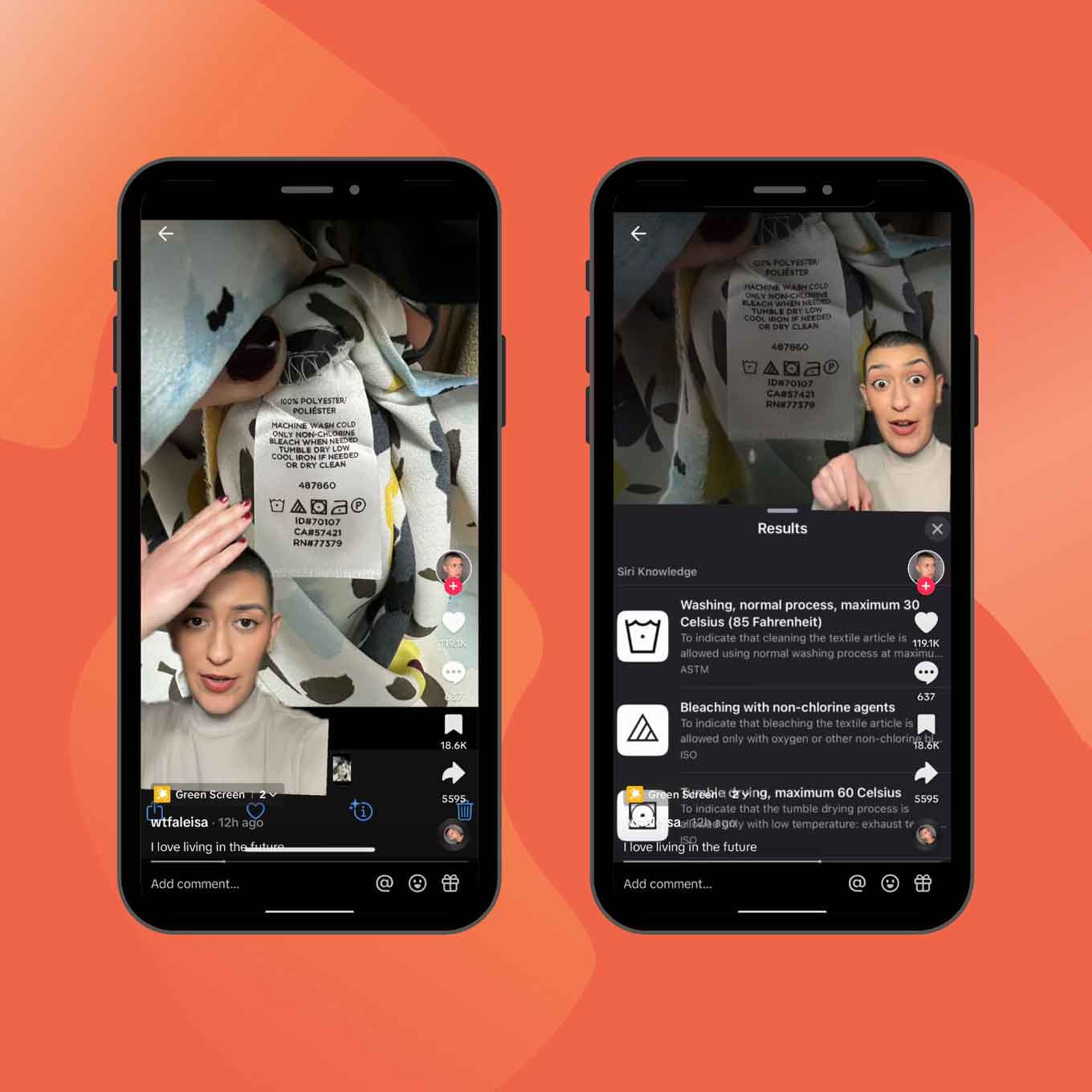
Mora went on to explain the step-by-step process, first by taking a picture of one of her clothing tags. Although many tags include warnings like “delicate” or “machine-wash only,” tags vary in the information they provide consumers, which can make laundry days difficult.
“As you can see, it tells you the material, how to wash it, and also, all of the icons that no one knows what they mean,” Mora said.
Mora pointed out Apple’s Visual Look-Up feature — a lowercase “I” icon with “sparkles” beside it — which can identify certain symbols, pets, art, and landmarks and provide users with more insight about the subject of the image.
@wtfaleisa I love living in the future
♬ original sound - wtfaleisa
“It’s going to bring up ‘Look Up Laundry Care’ so you’re going to click that and when you click it, it’s going to bring you to this really cool menu where it just tells you exactly what all the icons mean and exactly how to take care of your garment,” Mora explained.
Mora wrapped up her tutorial by saying she was “definitely born in the right generation.”
“What do you mean a little rectangle in my pocket can take a picture of the tags of my clothes and tell me exactly how to take care of my clothes, without downloading an app? It’s just built into the little rectangle?” Mora asked. “That’s insane to me.”
If you don’t have an iPhone and want help translating the symbols on your clothing tags, there are charts online that break down each icon for washing, drying, dry cleaning and more so you can love your clothes for the long haul.
Header images courtesy of Alesia Mora/TikTok
Michelle Obama — thrust into the global spotlight when she became First Lady of the United States — is celebrated for far more than her contributions during her time in the White House.
A lawyer, writer, and advocate — her influence extends well beyond the conventional expectations of a First Lady.
In her memoir, “Becoming,” Michelle Obama opened up about her life story, including deeply personal experiences like her journey with fertility, marriage, parenting, and life growing up — all of which resonated with countless individuals worldwide.
Her reflections on navigating the complexities of life in the public eye, balancing her professional ambitions with her family life, and her continuous journey of self-discovery, have connected with people from all walks of life.
In this article, we’ve curated a selection of Michelle Obama’s most impactful quotes.
Whether you’re seeking inspiration, encouragement, or a deeper connection with the experiences and insights of one of the most influential figures of our time — these quotes from Michelle Obama are a profound source of guidance.
You might also like: The Best Barack Obama Quotes
The Best Michelle Obama Quotes
Famous Quotes
“We were planting seeds of change, the fruit of which we might never see. We had to be patient.”
— Michelle Obama, Becoming
“Just do what works for you because there will always be someone who thinks differently.”
— Michelle Obama
“For me, becoming isn’t about arriving somewhere or achieving a certain aim. I see it instead as forward motion, a means of evolving, a way to reach continuously toward a better self. The journey doesn’t end.”
— Michelle Obama, Becoming
“Focus on what you can control. Be a good person every day. Vote. Read. Treat one another kindly. Follow the law. Don’t tweet nasty stuff.”
— Michelle Obama, in an interview
“If you don’t get out there and define yourself, you’ll be quickly and inaccurately defined by others.”
— Michelle Obama, Becoming
“Failure is an important part of your growth and developing resilience. Don’t be afraid to fail.”
— Michelle Obama, in a panel
“We have to find a way to continue to lift other women up in our worlds and in our lives as much as possible.”
— Michelle Obama, Becoming
“Do we settle for the world as it is, or do we work for the world as it should be?”
— Michelle Obama, Becoming
“If we want maturity, we have to be mature. If we want a nation that feels hopeful, then we have to speak in hopeful terms…We have to model what we want.”
— Michelle Obama, in an interview
“No matter what, you give everybody a fair shake, and when somebody needs a hand, you offer yours.”
— Michelle Obama, in a speech
“Your story is what you have, what you will always have. It is something to own.”
— Michelle Obama, Becoming
“I have learned that as long as I hold fast to my beliefs and values. and follow my own moral compass, then the only expectations I need to live up to are my own.”
— Michelle Obama, in a speech
“Becoming requires equal parts patience and rigor. Becoming is never giving up on the idea that there’s more growing to be done.”
— Michelle Obama, Becoming
On Hope
“I began to understand that his version of hope reached far beyond mine: It was one thing to get yourself out of a stick place, I realized. It was another thing entirely to try and get the place itself unstuck.”
— Michelle Obama, Becoming
“Everything was not lost. This was the message we needed to carry forward. It’s what I truly believed. It wasn’t ideal, but it was our reality — the world as it is. We needed now to be resolute, to keep our feet pointed in the direction of progress.”
— Michelle Obama, Becoming
“Kids wake up each day believing in the goodness of things, in the magic of what might be. They’re uncynical, believers at their core. We owe it to them to stay strong and keep working to create a more fair and humane world. For them, we need to remain both tough and hopeful, to acknowledge that there’s more growing to be done.”
— Michelle Obama, Becoming
“Grief and resilience live together.”
— Michelle Obama, Becoming
“You may not always have a comfortable life and you will not always be able to solve all of the world’s problems at once. But don’t ever underestimate the importance you can have, because history has shown us that courage can be contagious, and hope can take on a life of its own.”
— Michelle Obama, Becoming
“We have bumps in the road. We have ups and downs but I want our kids to move forward — I don’t care where they come from — with strength and with hope.”
— Michelle Obama, in an interview
→ Read more quotes about hope
On Strength
“If there’s one thing I’ve learned in life, it’s the power of using your voice.”
— Michelle Obama, Becoming
“When someone chooses to lift the curtain on a perceived imperfection in her story, on a circumstance or condition that traditionally might be considered to be a weakness, what she’s often actually revealing is the source code for her steadiness and strength.”
— Michelle Obama, The Light We Carry: Overcoming in Uncertain Times
“Strong men, strong men, men who are truly role models, don’t need to put down women to make themselves feel powerful.”
— Michelle Obama, in a speech
“I believe that each of us carries a bit of inner brightness, something entirely unique and individual. A flame that’s worth protecting. When we are able to recognize our own light, we become empowered to use it. When we learn to foster what’s unique in the people around us, we become better able to build compassionate communities and make meaningful change.”
— Michelle Obama, The Light We Carry
“It’s time to tell everyone who’s dealing with a mental-health issue that they’re not alone, and that getting support and treatment isn’t a sign of weakness — it’s a sign of strength.”
— Michelle Obama, in a speech
“You should never view your challenges as a disadvantage. Instead, it’s important for you to understand that your experience facing and overcoming adversity is actually one of your biggest advantages.”
— Michelle Obama, in a speech
“Going high is about learning to keep the poison out and the power in. It means that you have to be judicious with your energy and clear in your convictions. You push ahead in some instances and pull back in others, giving yourself opportunities to rest and restore. It helps to recognize that you are operating on a budget, as all of us are. When it comes to our attention, our time, our credibility, our goodwill toward and from others, we work with a limited but renewable set of resources.”
— Michelle Obama, The Light We Carry
“I am coming down from the mountaintop to tell every young person that is poor and working class, and has been told regardless of the color of your skin that you don’t belong, don’t listen to them. They don’t even know how they got at those seats.”
— Michelle Obama, in Netflix documentary, Becoming
“People who are truly strong lift others up. People who are truly powerful bring others together.”
— Michelle Obama
→ Read more quotes about staying strong
On Education
“Plenty of folks — including me and my husband — started out with very little. But with a good education and a lot of hard work, anything is possible.”
— Michelle Obama, in a speech
“If my future were determined just by my performance on a standardized test, I wouldn’t be here. I guarantee you that.”
— Michelle Obama, in a speech
“I knew from my own life experience that when someone shows genuine interest in your learning and development, even if only for ten minutes in a busy day, it matters. It matters especially for women, for minorities, for anyone society is quick to overlook.”
— Michelle Obama, Becoming
“That’s why it is so important for more of our young people to live and study in each other’s countries. That’s how, student by student, we develop that habit of cooperation, by immersing yourself in someone else’s culture, by sharing your stories and letting them share theirs, by taking the time to get past the stereotypes and misperceptions that too often divide us.”
— Michelle Obama, in a speech
“We want to lift up the grassroots leaders in communities all over the world who are clearing away the hurdles that too many girls face, because the evidence is clear: educating girls isn’t just good for the girls, it’s good for all of us.”
— Michelle Obama, in an interview
“When girls are educated, their countries become stronger and more prosperous.”
— Michelle Obama, remarks
“I want our young people to know that they matter, that they belong. So don’t be afraid — you hear me, young people? Don’t be afraid. Be focused. Be determined. Be hopeful. Be empowered. Empower yourselves with a good education, then get out there and use that education to build a country worthy of your boundless promise. Lead by example with hope, never fear.”
— Michelle Obama, in a speech
“You have to stay in school. You have to. You have to go to college. You have to get your degree. Because that’s the one thing people can’t take away from you is your education. And it is worth the investment.”
— Michelle Obama, in a speech
“I was too worried about the grades and I should have been more worried about learning.”
— Michelle Obama
On Relationships
“For me, marriage was more like a full-on merger, a reconfiguring of two lives into one, with the well-being of a family taking precedence over any one agenda or goal.”
— Michelle Obama, Becoming
“Reach for partners that make you better. Do not bring people into your life who weigh you down. Good relationships feel good. They feel right. They don’t hurt. They’re not painful. That’s not just with somebody you want to marry, but it’s with the friends that you choose. It’s with the people you surround yourselves with.”
— Michelle Obama, in a panel
“Let’s just be clear, you don’t want to be with a boy who’s too stupid to know and appreciate a smart young lady.”
— Michelle Obama, in a panel
“If you choose to try to make a life with another person, you will live by that choice. You’d find yourself having to choose again and again to remain rather than run. It helps if you enter into a committed relationship prepared to work, ready to be humbled and willing to accept and even enjoy living in that in-between space, bouncing between the poles of beautiful and horrible, sometimes in the span of a single conversation, sometimes over the course of years. And inside of that choice and those years you’ll almost certainly come to see that there is no such thing as a 50-50 balance, instead it will be like beads on an abacus, sliding back and forth, the maths rarely tidy, the equation never quite solved…”
— Michelle Obama, The Light We Carry
“A successful partnership is like a winning basketball team made up of two deaf individuals with fully developed and interchangeable sets of skills. Each player has to know not just how to shoot but also how to dribble, pass and defend. That doesn’t mean there aren’t weaknesses or differences you will compensate for in each other. It’s just that together you’ll have to cover the full court keeping yourselves versatile over time.”
— Michelle Obama, The Light We Carry
“A partnership doesn’t actually change who you are even as it challenges you to be accommodating of another person’s needs… The change is in what is between us, the million small adjustments, compromises and sacrifices, we’ve each made in order to accommodate the close presence of the other.”
— Michelle Obama, The Light We Carry
“You have to fill your bucket with positive energy — and if you have people hanging around you that are bringing you down and not lifting you up, whether that’s your ‘boo’ or your best friend — you have to learn how to push these people to the side.”
— Michelle Obama, in a panel
On Family, Parenting, & Motherhood
“With every word we utter, with every action we take, we know our kids are watching us. We as parents, are their most important role models.”
— Michelle Obama, in a speech

“I grew up with a disabled dad in a too-small house with not much money in a starting-to-fail neighborhood, and I also grew up surrounded by love and music in a diverse city in a country where an education can take you far. I had nothing or I had everything. It depends on which way you want to tell it.”
— Michelle Obama, Becoming
“My most important title is mom-in-chief. My daughters are still the heart of my heart and the center of my world.”
— Michelle Obama, in a speech
“Being a mother has been a master class in letting go. Try as we might, there’s only so much we can control. And, boy, have I tried — especially at first. As mothers, we just don’t want anything or anyone to hurt our babies. But life has other plans. Bruised knees, bumpy roads and broken hearts are part of the deal. What’s both humbled and heartened me is seeing the resiliency of my daughters.”
— Michelle Obama, in a speech
“Barack and I were both raised by families who didn’t have much in the way of money or material possessions but who had given us something far more valuable — their unconditional love, their unflinching sacrifice, and the chance to go places they had never imagined for themselves.”
— Michelle Obama, in a speech

“My mother maintained the sort of parental mindset that I now recognize as brilliant and nearly impossible to emulate — kind of unflappable Zen neutrality… She wasn’t quick to judge and she wasn’t quick to meddle. Instead, she monitored our moods and bore benevolent witness to whatever travails or triumphs a day might bring… When we’d done something great, we received just enough praise to know she was happy with us, but never so much that it became the reason we did what we did.”
— Michelle Obama, Becoming
“When I get up and work out, I’m working out just as much for my girls as I am for me, because I want them to see a mother who loves them dearly, who invests in them, but who also invests in herself. It’s just as much about letting them know as young women that it is okay to put yourself a little higher on your priority list.”
— Michelle Obama, in an interview
“When it came to the home-for-dinner dilemma, I installed new boundaries, ones that worked better for me and the girls. We made our schedule and stuck to it… It went back to my wishes for them to grow up strong and centered and also unaccommodating to any form of old-school patriarchy: I didn’t want them ever to believe that life began when the man of the house arrived home. We didn’t wait for Dad. It was his job now to catch up with us.”
— Michelle Obama, Becoming
“It’s about leaving something better for our kids. That’s how we’ve always moved this country forward, by all of us coming together on behalf of our children, folks who volunteer to coach that team, to teach that Sunday school class, because they know it takes a village.”
— Michelle Obama, in a speech
“So the next time we battle with our kids over those vegetables, or they refuse to join us for a walk to the park, the next time we struggle to change our schools or communities, we need to remind ourselves that parents everywhere are going through exactly the same thing. We have to remember that we’re all in this together.”
— Michelle Obama, in a speech
“One light feeds another. One strong family lends strength to more. One engaged community can ignite those around it. This is the power of the light we carry.”
— Michelle Obama, The Light We Carry

On Friendships
“Choose people who lift you up. Find people who will make you better.”
— Michelle Obama, in an interview

“Friendships between women, as any woman will tell you, are built of a thousand small kindnesses… swapped back and forth and over again.”
— Michelle Obama, Becoming
“Life has shown me that strong friendships are most often the result of strong intentions. Your table needs to be deliberately built, deliberately populated, and deliberately tended to. Not only do you have to say I am curious about you to someone who might be a friend, but you should also invest in that curiosity — setting aside time and energy for your friendship to grow and deepen, privileging it ahead of the things that will pile up and demand your attention in ways that friendship seldom does.”
— Michelle Obama, The Light We Carry
“The fact is, with every friendship you make, and every bond of trust you establish, you are shaping the image of America projected to the rest of the world. That is so important. So when you study abroad, you’re actually helping to make America stronger.”
— Michelle Obama, in a speech
“I lean on each individual at different times and in different ways. Which is another thing worth recognizing about friendship. No one person, no one relationship will fulfill your every need. Not every friend can offer you safety or support on every day. Not every one can or will show up precisely when or how you need them to. And this is why it’s good to continue always making room at your table, to keep yourself open to gathering more friends. You will never not need them, and you will never stop learning from them.”
— Michelle Obama, The Light We Carry
“We should always have three friends in our lives-one who walks ahead who we look up to and follow; one who walks beside us, who is with us every step of our journey; and then, one who we reach back for and bring along after we’ve cleared the way.”
— Michelle Obama
“Friends will come and go, taking on more or less importance as you move through different phases of life.”
— Michelle Obama, The Light We Carry
On Confidence
“Am I good enough? Yes, I am.”
— Michelle Obama, Becoming
“Whether you come from a council estate or a country estate, your success will be determined by your own confidence and fortitude.”
— Michelle Obama, in a summit
“You know, having your feelings hurt, having people say things about you that aren’t true… Life hits you, so over the course of living, you learn how to protect yourself in it. You learn to take in what you need and get rid of the stuff that’s clearly not true.”
— Michelle Obama, in an interview
“Don’t ever make decisions based on fear. Make decisions based on hope and possibility. Make decisions based on what should happen, not what shouldn’t.”
— Michelle Obama, Becoming
“I think as women and young girls, we have to invest that time in getting to understand who we are and liking who we are. Because I like me. I’ve liked me for a very long time… But you’ve got to work to get to that place. And if you’re going out into the world as a professional and you don’t know who you are, you don’t know what you want, you don’t know how much you’re worth, then you have to be brave. And then you have to count on the kindness and goodness of others to bestow that goodness on you when you should be working to get it on your own. Because you deserve it.”
— Michelle Obama, in an interview
“When I hear about negative and false attacks, I really don’t invest any energy in them, because I know who I am.”
— Michelle Obama, in an interview
“Do not ever let anyone make you feel like you don’t matter, or like you don’t have a place in our American story — because you do. And you have a right to be exactly who you are.”
— Michelle Obama, in a speech
“When someone is cruel or acts like a bully, you don’t stoop to their level. No, our motto is, when they go low, we go high.”
— Michelle Obama, in a speech
On Success
“Success isn’t about how much money you make; it’s about the difference you make in people’s lives.”
— Michelle Obama, in a speech
“No country can ever truly flourish if it stifles the potential of its women and deprives itself of the contributions of half its citizens.”
— Michelle Obama, in a speech
“When you’ve worked hard, and done well, and walked through that doorway of opportunity, you do not slam it shut behind you, you reach back and you give other folks the same chances that helped you succeed.”
— Michelle Obama, Becoming
“Instead of letting your hardships and failures discourage or exhaust you, let them inspire you. Let them make you even hungrier to succeed.”
— Michelle Obama, in a speech

“We realized that being successful isn’t about being impressive — it’s about being inspired. And that’s what it means to be your true self. It means looking inside yourself and being honest about what you truly enjoy doing. Because, graduates, I can promise you that you will never be happy plodding through someone else’s idea of success. Success is only meaningfu — and enjoyable — if it feels like your own.”
— Michelle Obama, in a speech
“I’ve been lucky enough now in my life to meet all sorts of extraordinary and accomplished people... Some (though not enough) of them are women. Some (though not enough) are black or of color. Some were born poor or have lives that to many of us would appear to have been unfairly heaped with adversity, and yet still they seem to operate as if they’ve had every advantage in the world. What I’ve learned is this: All of them have had doubters. Some continue to have roaring, stadium-sized collection of critics and naysayers who will shout I told you so at every little misstep or mistake. The noise doesn’t go away, but the most successful people I know have figured out how to live with it, to lean on the people who believe in them, and to push onward with their goals.”
— Michelle Obama, Becoming
“Success isn’t about how your life looks to others. It’s about how it feels to you. We realized that being successful isn’t about being impressive; it’s about being inspired.”
— Michelle Obama, Becoming
On Leadership
“I’ve seen firsthand that being president doesn’t change who you are. It reveals who you are.”
— Michelle Obama
“When somebody walks up to me, don’t look around, don’t look beyond them. Look them in the eye, take in the story.”
— Michelle Obama, in Netflix documentary, Becoming
“At the end of the day, when it comes time to make that decision, as president, all you have to guide you are your values, and your vision, and the life experiences that make you who you are.”
— Michelle Obama
“I was determined to be someone who told the truth, using my voice to lift up the voiceless when I could, and to not disappear on people in need.”
— Michelle Obama, Becoming
“We learned about dignity and decency — that how hard you work matters more than how much you make… that helping others means more than just getting ahead yourself.”
— Michelle Obama, in a speech
On Love
“I am an example of what is possible when girls from the very beginning of their lives are loved and nurtured by people around them.”
— Michelle Obama
“A happy marriage can be a vexation, that it’s a contract best renewed and renewed again, even quietly and privately — even alone.”
— Michelle Obama, Becoming
“The only love story I know, is the one I happen to live inside everyday. Your path towards certainty, if that’s even what you’re after, will look different from mine. Just as your conception of home and who belongs there with you, will always be unique to you. Only slowly do most of us figure out what we need in intimate relationships and what we’re able to give to them. We practice, we learn, we mess up. We sometimes acquire tools that don’t actually serve us… we obsess, overthink and misplace our energy… we retreat when hurt, we armor up when scared, we might attack when provoked, or yield when ashamed.”
— Michelle Obama, The Light We Carry
“Real and lasting love, I think, happens mostly in the realm of in-between. Together, you are answering the question: Who are we and who do we want to be?”
— Michelle Obama, Becoming
“Barack intrigued me. He was not like anyone I’d dated before, mainly because he seemed so secure. He was openly affectionate. He told me I was beautiful. He made me feel good. To me, he was sort of like a unicorn — unusual to the point of seeming almost unreal. He never talked about material things, like buying a house or a car or even new shoes. His money went largely toward books, which to him were like sacred objects, providing ballast for his mind.”
— Michelle Obama, Becoming
“When it does work, it can feel like an actual, honest-to-god miracle, which is what love is, after all. That’s the whole point. Any long-term partnership, really, is an act of stubborn faith.”
— Michelle Obama, The Light We Carry
Short Quotes
“The one way to get me to work my hardest was to doubt me.”
— Michelle Obama
“No one, I realized, was going to look out for me unless I pushed for it.”
— Michelle Obama, Becoming
“I’m not done. I’m too young to stop.”
— Michelle Obama, in an interview
“At fifty-four, I am still in progress, and I hope that I always will be.”
— Michelle Obama, Becoming
“In life, you control what you can.”
— Michelle Obama
“Bullies were scared people hiding inside scary people.”
— Michelle Obama, Becoming
“There’s grace in being willing to know and hear others.”
— Michelle Obama, Becoming
“It’s okay to pace yourself, get a little rest, and speak of your struggles out loud. It’s okay to prioritize your wellness.”
— Michelle Obama, The Light We Carry
“Time, as far as my father was concerned, was a gift you gave to other people.”
— Michelle Obama, Becoming
“Most people were good people if you just treated them well.”
— Michelle Obama, Becoming
“I’ve always felt very alive using my gifts and talents to help other people. I sleep better at night. I’m happier.”
— Michelle Obama, in an interview
“I’ve learned that it’s harder to hate up close.”
— Michelle Obama, Becoming
“There are still many causes worth sacrificing for, so much history yet to be made.”
— Michelle Obama
→ Read more short quotes
More Quotes
“You cannot take your freedoms for granted. Just like generations who have come before you, you have to do your part to preserve and protect those freedoms… you need to be preparing yourself to add your voice to our national conversation.”
— Michelle Obama, in a speech
“Women in particular need to keep an eye on their physical and mental health, because if we’re scurrying to and from appointments and errands, we don’t have a lot of time to take care of ourselves. We need to do a better job of putting ourselves higher on our own ‘to-do’ list.”
— Michelle Obama, in an interview
“Our hurts become our fears. Our fears become our limits. For many of us, this can be a heavy inheritance, carried by generations. It’s a lot to try to push back against, to try to unlearn.”
— Michelle Obama, The Light We Carry
“The arts are not just a nice thing to have or to do if there is free time or if one can afford it. Rather, paintings and poetry, music and fashion, design and dialogue, they all define who we are as a people and provide an account of our history for the next generation.”
— Michelle Obama, in a speech
“Now I think it’s one of the most useless questions an adult can ask a child — What do you want to be when you grow up? As if growing up is finite. As if at some point you become something and that’s the end.”
— Michelle Obama, Becoming
“When we allow ourselves to celebrate tiny victories as important and meaningful, we start to understand the incremental nature of change — how one vote can help change our democracy; how raising a child who is whole and loved can help change a nation; how educating one girl can change a whole village for the better.”
— Michelle Obama, The Light We Carry
“It’s remarkable how a stereotype functions as an actual trap. How many ‘angry black women’ have been caught in the circular logic of that phrase? When you aren’t being listened to, why wouldn’t you get louder? If you’re written off as angry or emotional, doesn’t that just cause more of the same?”
— Michelle Obama, Becoming
“I’ve been practicing stepping back and addressing my fear with familiarity, offering no more than a half-friendly shrug and a few easy words: Oh, hello. It’s you again. Thanks for showing up. For making me so alert. But I see you. You’re no monster to me.”
— Michelle Obama, The Light We Carry
“What truly makes our country great is its diversity. I’ve seen that beauty in so many ways over the years. Whether we are born here or seek refuge here, there’s a place for us all. We must remember it’s not my America or your America. It’s our America.”
— Michelle Obama, in a tweet
“You don’t really know how attached you are until you move away, until you’ve experienced what it means to be dislodged, a cork floating on the ocean of another place.”
— Michelle Obama, Becoming
“We’re so afraid of each other… Color, wealth, these things that don’t really matter still play too much of a role in how we see one another. And it’s sad, because the thing that least defines us is the color of our skin.”
— Michelle Obama, in an interview
“For every door that’s been opened to me, I’ve tried to open my door to others. And here is what I have to say, finally: Let’s invite one another in. Maybe then we can begin to fear less, to make fewer wrong assumptions, to let go of the biases and stereotypes that unnecessarily divide us. Maybe we can better embrace the ways we are the same. It’s not about being perfect. It’s not about where you get yourself in the end. There’s power in allowing yourself to be known and heard, in owning your unique story, in using your authentic voice. And there’s grace in being willing to know and hear others. This, for me, is how we become.”
— Michelle Obama, Becoming
“Tell the truth, do your best by others, keep perspective, understand history and context. Stay prudent, stay tough, and stay outraged. But more than anything, don’t forget to do the work.”
— Michelle Obama, The Light We Carry
These days, it’s not uncommon for indie musicians to leverage TikTok as a way to spread the word about their new music.
In fact, it has already been meme-ified, with creators filming parody videos with the now-cliche phrase: “You guys… I think I just made the song of the summer.”
But indie band Melt is a lot more direct and earnest: The five-member New York City-based band has taken to the internet with a different message.
“Hey, we’re Melt,” a recent TikTok says, text overlain on a clip of the band performing, “An indie band making danceable protest songs.”

Melt has been in action since 2017, labeling themselves an “indie-soul” quintet. Members include lead vocalist Veronica Stewart-Frommer, vocalist and keyboardist Eric Gabriel, guitarist Marlo Shankweiler, bassist Lucas Saur, and trombonist Nick Sare.
While their previous tunes lean more in the direction of “sappy love songs,” a new album is incoming, according to the recent video.
“We’re making a whooooole album about love and friendship and heartbreak and power and the planet,” the TikTok continued.
In the background, Stewart-Frommer sings an upbeat song called “Walk to Midnight,” calling out people in power who have been complicit — or directly involved in — the destruction of the planet.
“Do you know what you did? / Did you have a good time while you threw it away? / You wanted to own it / own it / honey, it ain’t yours to take”
Another TikTok video sharing the song describes it in more detail.
“We just put out a new song,” it reads. “It’s about nuclear war and climate change (something light). But also relationships and losing precious people and moments in time as we grow up.”
Stewart-Frommer also wrote briefly about the writing process for “Walk To Midnight.”
“Wrote these lyrics because I was fed up with ignoring my anger at the CEOs and politicians who profit off the destruction of planet,” she shared in a TikTok. “Being angry and letting ourselves feel this moment is so important.”

Songs have a long history of defining resistance movements around the globe. In the U.S., this kind of social and political art is especially prominent in Black communities. In fact, much of America’s modern music and entertainment stems from the resistance art of enslaved people.
However, more recent examples include songs like “This Is America” by Childish Gambino, or Kendrick Lamar’s “Alright.” Although many Black Americans and enslaved Africans paved the way for resistance music in the U.S., the torch continues to be carried by people of many diverse backgrounds.
(Think: Lady Gaga’s “Born This Way” in support of the LGBTQ+ community, The Chicks’ anti-war sentiments in the early oughts, as well as famous folk tunes from Bob Dylan or Woody Guthrie.)
Melt signifies a shift in this genre, as emerging artists contend with many issues of the day, especially the mounting impact of climate change.
In 2019, English band The 1975 used the voice of leading climate activist Greta Thunberg on a self-titled song called “The 1975,” with proceeds of the song going to the climate activism nonprofit Extinction Rebellion.
In the song, Thunberg’s voice is loud and clear: “We need a system change rather than individual change, but you cannot have one without the other.”
But Melt’s emphasis on “danceable protest songs” aims to bring these heavy-handed, intentional tunes to the mainstream, to play in everyday contexts and initiate important conversations.
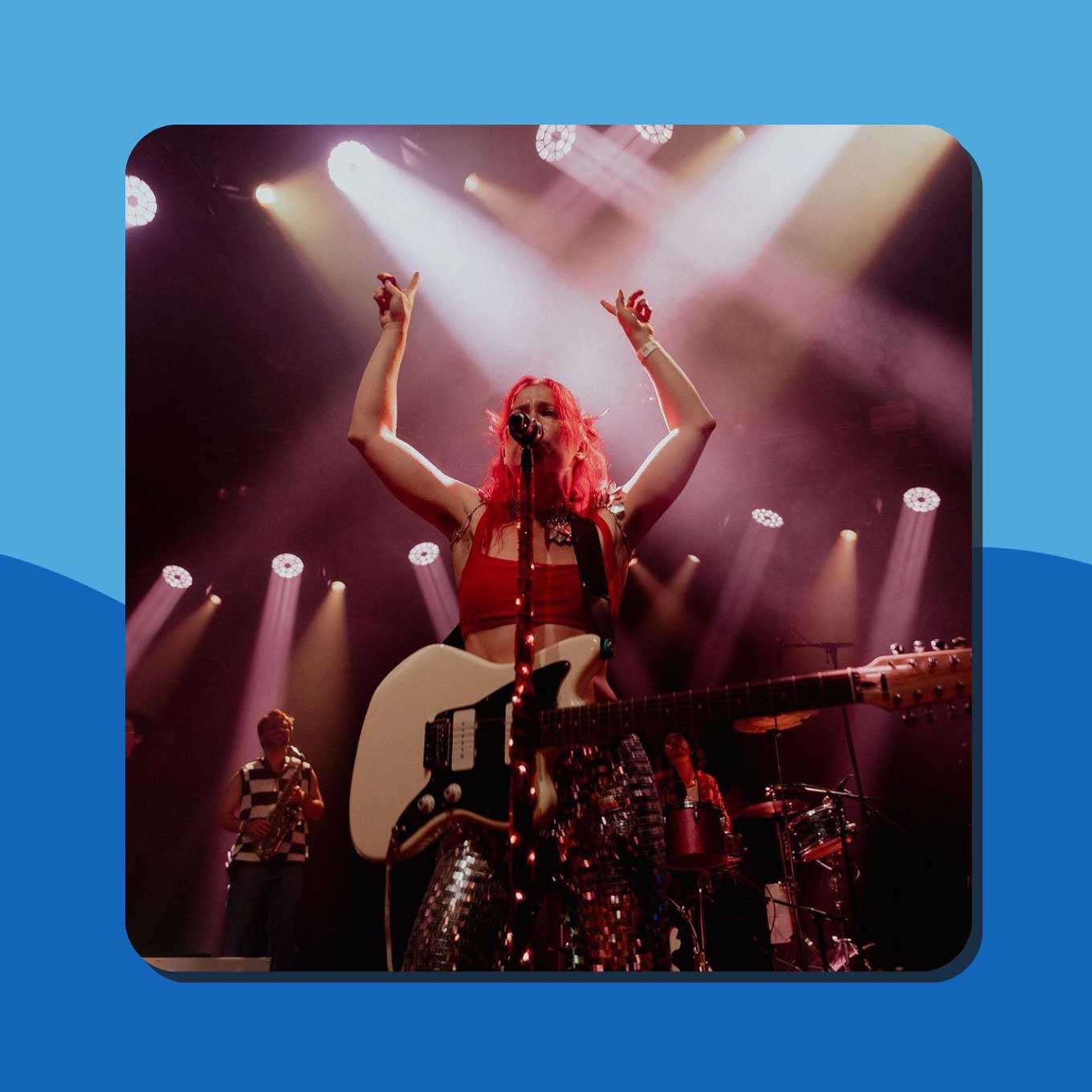
“To be a musician you’re exercising empathetic pathways,” Stewart-Frommer said in an interview with The Tufts Daily in 2022, calling on a piece of wisdom bassist Saur had said to her.
“You’re envisioning a future, or you’re putting words to an emotion… and those pathways are the same ones we exercise when we imagine a collective future for society, for community, and engage in activism and advocacy.”
In the interview, Stewart-Frommer shared that touring plays a big role in how she sees music through a communal lens, welcoming a couple of hundred new people into a space “that has rules and norms where we’re all looking out for one another.”
In addition to community building at events, the band has also worked with Headcount to register voters.
“Musicians have always been activists and advocates,” she continued. “To be a musician is to operate in this language of love.”
Header images courtesy of Melt and Miranda Nicusanti
After someone gives birth, they have a lot on their mind: how to be a parent to this new human being, how much their body needs to rest and recover, how their life has just drastically changed — it runs the gamut.
In America, these new parents are also probably thinking about how they’re going to pay their hospital bill, what kind of childcare support they’re going to need, and how quickly they may have to return to work without any universal paid family leave programs.
While you, as someone who loves and cares about them, can’t remove those challenges all on your own, you certainly can show them you care, offer them some small tokens of support, and generously share your resources with them.
And if you’ve made it here, you already have a care package in mind. Good on you! If you’re new to this “my best friend/sister/cousin is a new mom, and I have no idea how to support her” thing, welcome aboard.
We’ve compiled some ideas of things to include in a new mom care package for the parent in your life who could really use some help caring for their new bundle of joy.
Some of our links are affiliate links, which means that we may earn a commission if you buy something via this list. We’ve linked to Amazon for convenience and accessibility, but be sure to check out our favorite Amazon alternatives, too. Thanks for supporting Good Good Good’s mission at no extra cost to you!
Ideas To Include in a New Mom Care Package
Food
Frozen Meals

A casserole dish or a crock pot plug-and-go meal is always a thoughtful route for new parents, but what happens when the meal train ends — or your friends get tired of having lasagna for the third night in a row?
Meals that can be pre-portioned and frozen are an amazing help to make your support last — and diversify the home menu option during maternity leave.
We recommend:
One-Handed Snacks
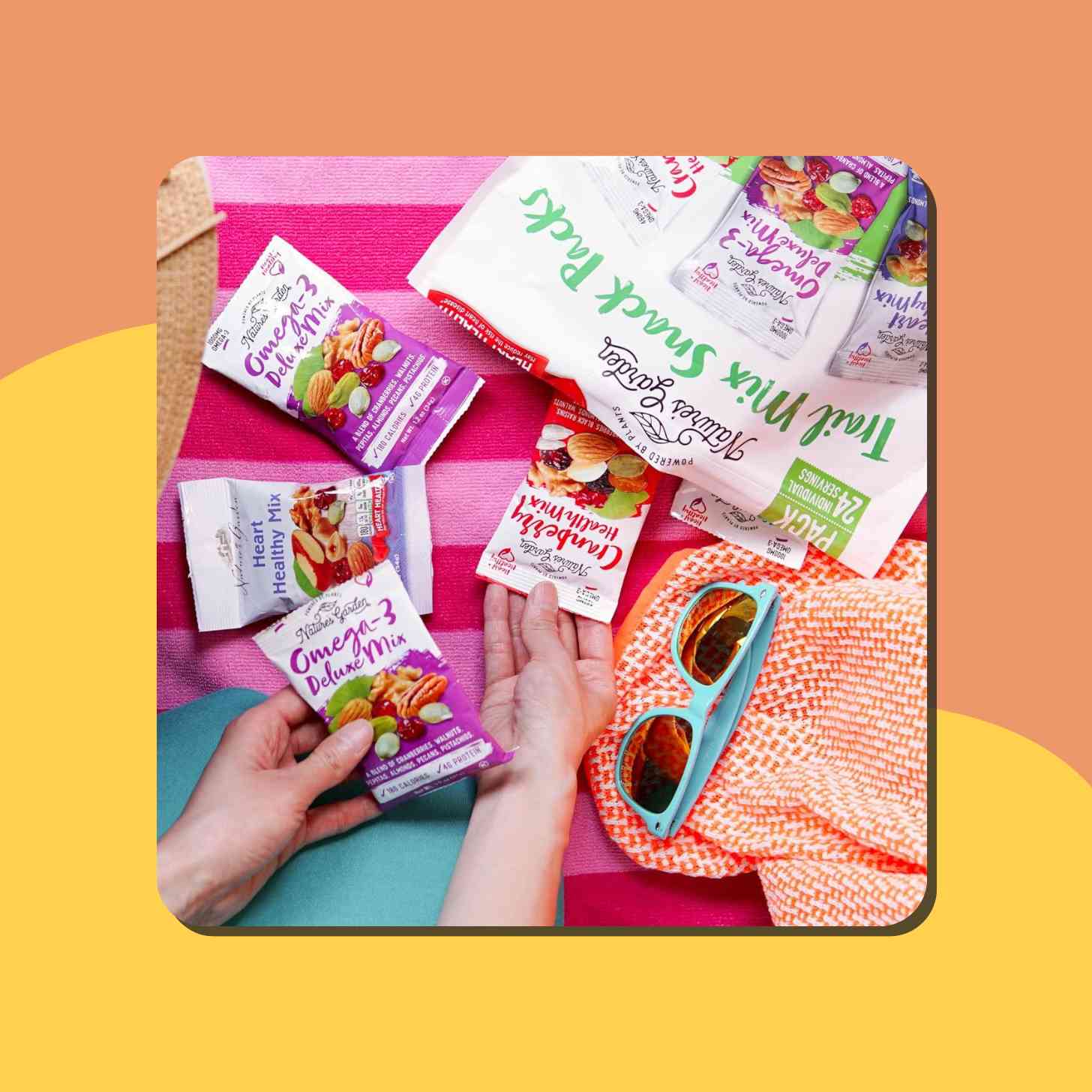
Motherhood is all about multi-tasking. Get some snacks that are both nutritious and delicious and can be easily opened or eaten with one hand.
We recommend:
Food Delivery Gift Cards

At the end of the day, nothing compares to the exact thing you’re craving. Set her up for success by supplying her with funds to get any meal she wants delivered right to her door.
We recommend:
Pre-Portioned Smoothies
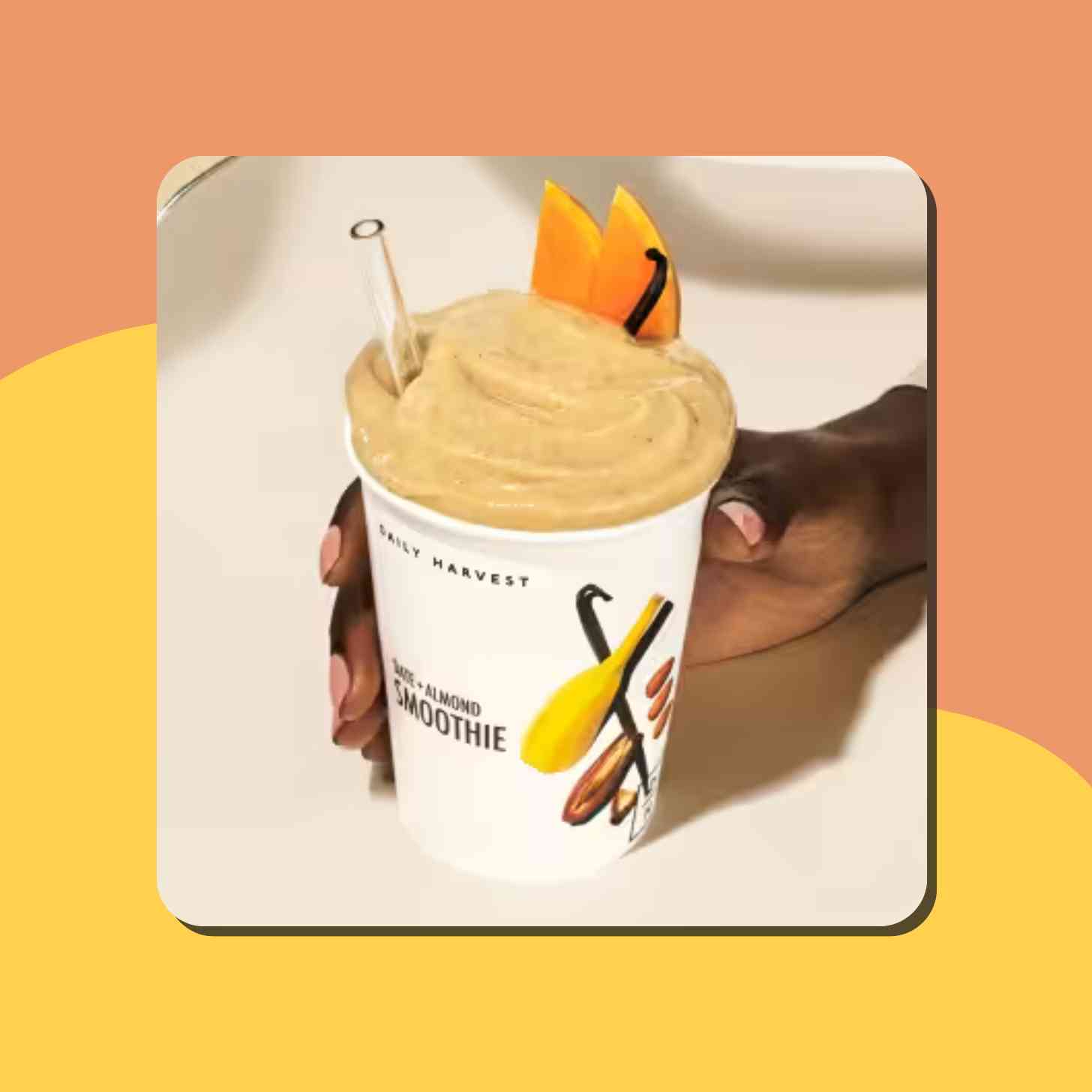
Smoothies are another great way to get your helping of nutrients and fresh produce without spending too much time in the kitchen — but it can be a pain to portion out your ingredients. Make it easier with some pre-portioned smoothie cups made for a queen.
We recommend:
Instant Coffee Pods
Wake the Nespresso machine up! Whether you supply your loved one with some Nespresso pods, K-cups, or some good old fashioned microwavable instant coffee, you’ll be giving them a magic elixir in a world of little-to-no sleep.
We recommend:
- Nespresso Variety Pack
- Keurig Flavored Coffee Sampler
- Explorer Cold Brew Concentrate
- 356 By Whole Foods Instant Coffee
Self-Care Items
Breastfeeding-Friendly Loungewear
Nursing pajamas are a must-have. Not only does it make middle-of-the-night feeding times more comfortable, but cute and comfortable loungewear can make a new mom feel fresh and confident when she goes a few days without feeling like a human.
We recommend:
- Tank Top Nursing Pajama Set
- Long-Sleeve Button-Down Postpartum Pajamas
- Postpartum Zip Robe
- 24/7 Feeding Jumpsuit
Oversized T-Shirts
There’s a good chance the new mom you know has already stolen every oversized T-shirt from every man in her life, but it’s time she gets her own. Supply her with a pack of comfy tees that can take a little spit-up and provide mom with endless comfort when her jammies are in the wash.
We recommend:
Dry Shampoo
There are going to be days where a shower feels like too much work, let alone hair-washing. Let the dry shampoo take a shift and help her feel at least a little refreshed, amid dirty diapers and drool.
We recommend:
Warm Socks
Sitting on the couch or in the nursery glider isn’t exactly the best way to get your circulation pumping. Keep her toes warm with a pair (or two… or five) of comfy socks.
We recommend:
Extra Long Phone Charging Cord

Is there anything more frustrating than not being able to reach your phone from your cozy spot in bed or on the couch? Okay, now add a newborn baby to that equation.
Every new mom deserves unlimited screen time, we just decided.
We recommend:
Postpartum Recovery Items
A Large Water Bottle (With A Straw)

While some new moms receive a big ole water bottle from the hospital or have likely already been using one throughout pregnancy, it’s important to make sure your gift recipient is staying hydrated.
Bottles with a straw are often the best choice, so they’re easy to drink out of while she’s holding or feeding her babe.
We recommend:
Chapstick
One common but not often talked about side effect of pregnancy and delivery is dehydrated skin (and hair!). Dry, scaly, and peeling lips are part of the gig. Make it a little more bearable.
We recommend:
Soothing Wipes
Your loved one likely already has a care plan and plenty of resources from their doctor, but soothing wipes and cooling pads are always well appreciated during recovery.
We recommend:
Ice Packs
You know when you have a headache and you use an ice pack, but then the ice pack stops being cold, but you don’t have another ice pack to replace the original ice pack... and your head still hurts?
That’s what we’re trying to avoid here. Help support the new mom in your life by making sure she always has an ice pack to turn to while she recovers from birth.
We recommend:
Postpartum Pads & Underwear

Make sure she has her fair share of pads and underwear easily accessible! Bonus points if you can make it fun with some cute wrapping, or stash them intentionally in an aesthetic basket that blends into her bathroom.
We recommend:
Postnatal Vitamins
Your new mom in question likely already has a wellness plan, including supplements, set up with her doctor. But vitamins like biotin and collagen are great options to add into her repertoire for hair and nail growth, too.
We recommend:
- Mommy’s Bliss Postnatal Support Gummies
- Pink Stork Postnatal Mood Support Vitamins
- Mary Ruth’s Postnatal Probiotics
Nipple Balm
If she’s breastfeeding, the best thing you can possibly do is hook her up with some nipple balm. She’ll thank us — and you — later.
We recommend:
Perineal Balm/Spray
There is no shortage of soothing solutions for soreness all over the body! Despite her existing collection of peri bottles, she’ll also probably appreciate some balms or sprays to keep her on the road to recovery.
We recommend:
Laxatives & Stool Softeners

If you weren’t already thrilled by how glamorous this care package is, you’ll certainly be wowed by the next idea: laxatives.
Constipation is common in postpartum women, so as much as you might not want to add these to your cart, the new mom in your life will be so relieved, it’ll be well worth it.
We recommend:
Epsom Salts

Forget the rainbow bath bombs and bubble soaks of your adolescence; the joy of a postpartum sitz bath cannot be compared.
Help provide a little relief by supplying her with some epsom salts for the tub.
We recommend:
Experiences
Audiobooks
Listen, we can all enjoy the soothing white noise machine for so long. If the new mom in your life needs some entertainment for those middle-of-the-night wakeup calls, an audiobook is the way to go.
We recommend:
Home Cleaning Services
What most new moms are truly looking for is help. Gift baskets are thoughtful and appreciated, but at the end of the day, most new parents simply need someone to lighten the load.
We recommend:
- Volunteering to clean yourself
- Hiring a local small business to help
Newborn Photography Session
If you’re going in on a group gift for a new mom, or you want to give something especially meaningful, pay for a newborn photo session with a local photographer!
Many photographers will offer gift certificates, or you can reach out directly to your friend to cover the cost of any photography session she schedules.
A Massage or Facial
Postpartum massages and facials are the height of luxury. Book your loved one an appointment at a local spa or get a gift card that she can use when she’s ready.
As much as you may not want to believe it, COVID-19 is still very real and very present.
While we are now knocking on the door of four years with COVID, there’s still a lot we don’t know about the virus, and it can still be very scary and unsettling to test positive — even and especially if it’s not someone’s first time coming down with the ’vid.
In America, where social safety nets built for COVID are beginning to disappear, and the threat of illness is especially intimidating for those who are immunocompromised or continuing to live with Long COVID, community support is one of the most precious resources we have.
If someone you love has tested positive for COVID or could especially use some help during their recovery and quarantine time, a care package can mean the world — and help them feel supported during a time of uncertainty and isolation.
We’ve compiled some ideas of things to include in a COVID package for the loved one in your life who could really use some support as they ride out the virus.
Some of our links are affiliate links, which means that we may earn a commission if you buy something via this list. We’ve linked to Amazon for convenience and accessibility, but be sure to check out our favorite Amazon alternatives, too. Thanks for supporting Good Good Good’s mission at no extra cost to you!
COVID-19 Care Package Ideas
Cough Drops
The long-term cough that often comes with COVID is a mighty beast to conquer. While cough drops don’t eliminate this symptom, they can provide some soothing and relief.
We recommend:
- Halls Honey Lemon Cough Drops With Menthol
- Cepacol Extra Strength Numbing Cough Drops
- Ricola Natural Honey Herb Cough Suppressant Drops
Tea

Need another sore throat and cough soother? Some herbal tea is the way to go. Bonus points if you throw some organic raw honey in there, too.
We recommend:
- Celestial Seasonings Throat Cooler Herbal Tea
- Traditional Medicinals Organic Throat Coat Tea
- Yogi Echinacea Immune Support Tea
Soup

Making your own soup from scratch is, of course, the best approach, but if you’re short on time, energy, or ingredients, sending along some instant soup will make your sick pal feel better, too.
We recommend:
Cold Medicine
Everyone’s body is a little different when it comes to cold medicines. Most doctors agree that using over-the-counter medications that make you feel better with a cold should also help relieve symptoms of COVID-19, so check in with your loved one to find out what they might need.
It’s also important to ask if they have any conditions that make it unsafe to take some over-the-counter medicines. At the end of the day, it’s safest to make sure folks consult with their doctors about what medications to take, but if you have the all-clear, feel free to help out!
We recommend:
Sports Drinks
Staying hydrated is always very important no matter what someone is sick with, and COVID is no exception!
Fresh juices or sports drinks like Gatorade are a great addition to water intake because salt and sugar can help folks retain water and electrolytes to stay hydrated. Fluids also help regulate body temperature, so these items can also help out with fever reduction.
We recommend:
Hydration Packets
If you want to up the ante, hydration packets are an even easier fix for boosting those electrolytes. (Pro tip: They’re also great to have on hand for high-energy days or period cramps. You’re welcome.)
We recommend:
Comfort Food

We all have those special dishes that make us feel all warm and cozy inside. Whether you order contactless delivery to your loved one’s home, or you put on your own Dasher hat for the day, this is probably the gesture they’ll cherish most.
If that’s a little out of reach, a gift card will do the trick, too!
We recommend:
Books
Once someone is over the hump of the worst of their symptoms, the most difficult part of having COVID is the boredom of quarantine. Sometimes the movie and TV recommendations run out, or they just want a little variety. Enter: books!
Whether you give them a physical book, a Bookshop gift card, or perhaps a few Libro.fm credits, this is a great way to give your person something to do while they are on the mend.
We have dozens of book recommendations, but here are a few that might make them feel a little more hopeful during this time.
We recommend:
- “Hope Is a Verb: Six Steps to Radical Optimism When the World Seems Broken” by Emily Ehlers (Amazon) (Bookshop)
- “Reasons to Stay Alive” by Matt Haig (Amazon) (Bookshop) (Libro.fm)
- “Hope in the Dark: Untold Histories, Wild Possibilities” by Rebecca Solnit (Amazon) (Bookshop) (Libro.fm)
Games

Guess what? You don’t need to have a whole team of people to play a board game! In fact, single-player board games make for a very fun way to pass the time.
We recommend:
Coloring & Activity Books
If the New York Times daily word games aren’t cutting it anymore, activity and coloring books make a great substitution — especially if your loved one is trying to avoid screen time while they’re sick.
We recommend:
Heating Pad or Hot Water Bottle

Muscle soreness and body aches can be a big part of the COVID experience. If your family member or friend is experiencing these symptoms, a heating pad can bring immense relief.
We recommend:
A Blanket
Nothing compares to a real-life bear hug, but if you’re keeping your distance, a cozy blanket is the next best thing.
We recommend:
Cozy Socks
Keeping your feet up on the couch all day isn’t exactly conducive to good circulation. Your loved one’s toes are probably freezing! Set them up with a pair (or two… or five) of comfy socks.
We recommend:
Get Well Soon Card
Break out the stationery! A heartfelt note is always a great item to include in a care package. Even a small message of care, concern, and encouragement can make a huge difference.
We recommend:
Candle
If your care package recipient is fortunate enough to still have a good sense of smell, a comforting candle will surely make their quarantine feel a bit more enjoyable.
We recommend:
Loungewear
Even though being sick is a great excuse to wear pajamas all day, it can also make you feel like less of a person to drown in the same pair of sweats for days on end.
A fresh pair of loungewear is a very thoughtful gift!
We recommend:
- Fruit of the Loom Sweatpants
- Cozy Earth Lounge Pants (Men’s) (Women’s)
- Comfort Colors Crewneck
An Air Purifier
Cleaner air is another layer of protection against COVID-19, and plenty of other airborne particles. In a perfect world, everyone would be able to access air purification tools for their homes, but getting sick with COVID can be a stark, yet helpful reminder, of how important it is to breathe clean air.
If your loved one already has an air purifier, this is a great opportunity to buy them a replacement filter, too!
We recommend:
Extra Masks
One of the best ways to tell someone “get better” is to say “I want to help you make sure this doesn’t happen again.” And the best way to do that is to stock them up on masks!
Experts recommend N95 or KN95 masks for the best protection against COVID.
We recommend:
Extra Tests
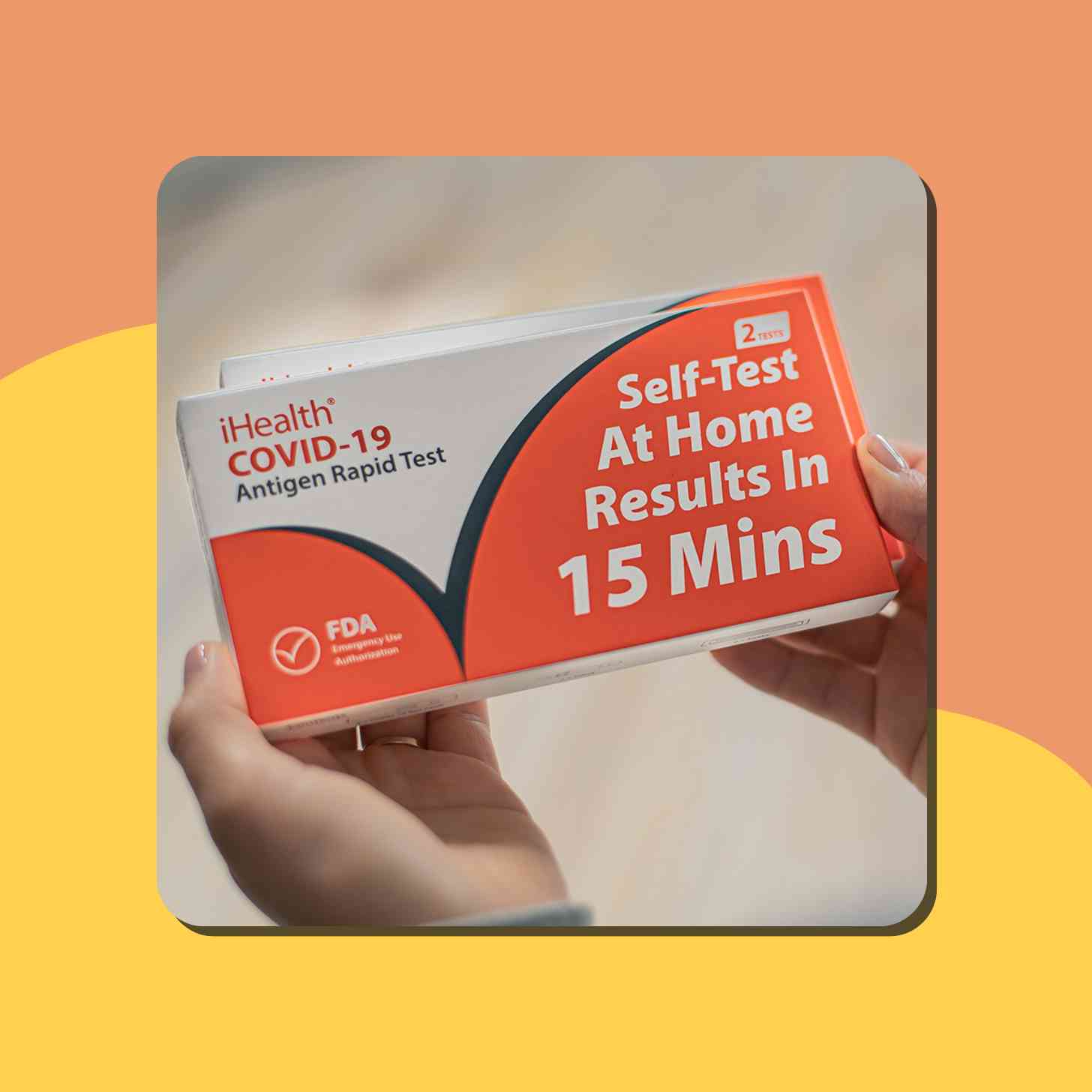
As your loved one recovers from COVID, they’ll surely be taking a number of tests to ensure that they are finally free of the virus.
If they’ve already accessed their free tests from the federal government, through their insurance provider, or programs like Test2Treat, you can help them replenish their stock.
We recommend:
For most of us, it doesn’t take much for a cute dog photo to stop us in our tracks. But there’s a difference between seeing a photo of a cute animal and thinking “awww” and thinking “I need to adopt that dog.”
This phenomenon is something that a lot of shelters grapple with: making sure the adoptable pets on their websites and social media pages are depicted with clear, beautiful photos that show off their personalities and make future pet parents want to give them a forever home.
With overworked shelter teams working day in and day out to keep overcrowding at a minimum, it can be hard to prioritize a photo shoot.
That’s where professional pet photographers like Adam and Mary Goldberg of AGoldPhoto come in.
The couple and Tampa Bay, Florida residents started their journey when Adam worked at the Humane Society of Broward County, managing the shelter’s social media and website.
He had to teach himself how to become a photographer and quickly discovered that it was his true passion.

“Adam quickly became an expert at putting pets at ease and capturing their unique and loveable personalities in every picture,” the photography company’s website reads.
“His pet photos were helping the shelter animals get adopted faster, and he began to train other volunteers in the art of animal photography.”
Adam was scooped up by other area shelters for pet photo shoot fundraisers, and he and Mary even quit their jobs and began traveling around the country for similar events.
“The lightbulb moment for me was when I was able to put a sign-up sheet online for our pet photo shoot fundraisers, and they would sell out in a matter of hours,” Adam said in a video for Chewy. “It blows my mind when I think about it.”
Over the course of about three years, these fundraisers raised over $250,000 for over 50 different animal shelters, rescues, and charities.

Once the COVID-19 pandemic changed the duo’s travel schedule, they shifted their focus to opening a pet photo studio in Tampa. While most of their time these days is spent photographing pets who already have loving families, a key element of their work will always be these stunning adoption photos.
They call it the “Second Shot” program, and once a month, the duo (and their other team members) pack up their gear and head to the Tampa Bay Humane Society for some glamor shots.
“When a pet comes to the shelter, they go through an intake process, and the staff at the shelter will grab a tablet and take a quick photo, and then they move onto the next one. They look scared. It’s not doing that dog, cat, animal any justice,” Adam explained in the Chewy video.
“And that’s the first representation people see. … They can’t visualize that dog in their home.”
By spending more time with each dog, the Goldbergs enable the animal to relax, making their photos a lot more genuine and compelling.

“He can come in, and take an animal, especially those who are a little bit more difficult to place or have been in our shelter for a while. It can be the difference of getting an animal home or not,” Sherry Silk, the CEO of the Tampa Bay Humane Society, said.
With treats, backdrops, supplies, shooting and editing time, and the help of animal behaviorists, outside support makes these Second Shot photo sessions possible.
Recently, AGoldPhoto introduced a sponsorship package, allowing businesses and companies to sponsor these shelter pet photo shoots.
“With our new sponsorship initiative, instead of going to the shelter once a month to take adoption photos, we can go more,” a TikTok video posted by the photographer shares. “Instead of photographing roughly 10 shelter pets a month, we can now photograph almost 50!”
In addition to sponsorships, money earned from the Goldbergs’ scheduled pet photo shoots at the studio also contribute to this charitable arm of the business.
Individuals can also donate through Patreon to fund these special photo shoots.
“At the end of the day, it’s not about the photos, it’s not about the shares on social media,” Adam told Chewy. “It’s about connecting pets and people.”
Header images courtesy of AGoldPhoto
As one of the most influential figures in the American civil rights movement, Martin Luther King Jr. is celebrated for his unwavering commitment to nonviolence in the pursuit of justice and equality.
His philosophy of nonviolence was deeply rooted in the belief that love and peaceful protest could bring about meaningful change — a belief that was instrumental in shaping the civil rights movement of the 1950s and 1960s.
King’s eloquent speeches and writings on nonviolence remain a powerful testament to his vision for a more just and peaceful world.
His words continue to inspire activists and peacemakers around the world — offering timeless wisdom on the power of love, the importance of nonviolent resistance, and the courage it takes to stand against injustice without resorting to aggression.
In this collection, we’ve curated all of the best of King’s most impactful quotes about nonviolence. (If you want even more quotes, check out our complete collection of MLK quotes.)
May these quotes inspire you to carry on King’s legacy of peaceful resistance in your pursuit of justice and equality.
The Best Nonviolence Quotes from Dr. King
“The choice is not between violence and nonviolence but between nonviolence and nonexistence.”
— Martin Luther King Jr.

“Violence brings only temporary victories; violence, by creating many more social problems than it solves, never brings permanent peace.”
— Martin Luther King Jr., A Testament of Hope
“We adopt the means of nonviolence because our end is a community at peace with itself. We will try to persuade with our words, but if our words fail, we will try to persuade with our acts.”
— Martin Luther King Jr.
“The only weapon that we have in our hands this evening is the weapon of protest. That’s all.”
— Martin Luther King Jr., A Testament of Hope
“Here is the true meaning and value of compassion and nonviolence, when it helps us to see the enemy’s point of view, to hear his questions, to know his assessment of ourselves. For from his view we may indeed see the basic weaknesses of our own condition, and if we are mature, we may learn and grow and profit from the wisdom of the brothers who are called the opposition.”
— Martin Luther King Jr.
“Nonviolence is the answer to the crucial political and moral questions of our time: the need for man to overcome oppression and violence without resorting to oppression and violence. Man must evolve for all human conflict a method which rejects revenge, aggression and retaliation. The foundation of such a method is love.”
— Martin Luther King Jr.
“The phrase ‘passive resistance’ often gives the false impression that this is a sort of ‘do-nothing method’ in which the resister quietly and passively accepts evil. But nothing is further from the truth. For while the nonviolent resister is passive in the sense that he is not physically aggressive toward his opponent, his mind and emotions are always active, constantly seeking to persuade his opponent that he is wrong.”
— Martin Luther King Jr.
“Please be peaceful. We believe in law and order. We are not advocating violence, I want you to love your enemies… for what we are doing is right, what we are doing is just — and God is with us.”
— Martin Luther King Jr.
“We must forever conduct our struggle on the high plane of dignity and discipline. We must not allow our creative protest to degenerate into physical violence.”
— Martin Luther King Jr.

“Nonviolence is absolute commitment to the way of love. Love is not emotional bash; it is not empty sentimentalism. It is the active outpouring of one’s whole being into the being of another.”
— Martin Luther King Jr.
“We who in engage in nonviolent direct action are not the creators of tension. We merely bring to the surface the hidden tension that is already alive.”
— Martin Luther King Jr.
“World peace through nonviolent means is neither absurd nor unattainable. All other methods have failed. Thus we must begin anew. Nonviolence is a good starting point.”
— Martin Luther King Jr.

“Nonviolence means avoiding not only external physical violence but also internal violence of spirit. You not only refuse to shoot a man, but you refuse to hate him.”
— Martin Luther King Jr.
“I refuse to accept the view that mankind is so tragically bound to the starless midnight of racism and war that the bright daybreak of peace and brotherhood can never become a reality… I believe that unarmed truth and unconditional love will have the final word.”
— Martin Luther King Jr.
“Through violence you may murder the hater, but you do not murder hate. In fact, violence merely increases hate. So it goes. Returning violence for violence multiplies violence, adding deeper darkness to a night already devoid of stars. Darkness cannot drive out darkness: only light can do that. Hate cannot drive out hate: only love can do that.”
— Martin Luther King Jr.
“Hate cannot drive out hate; only love can do that. Hate multiplies hate, violence multiplies violence, and toughness multiplies toughness in a descending spiral of destruction.”
— Martin Luther King Jr.

“I have tried to offer them my deepest compassion while maintaining my conviction that social change comes most meaningfully through nonviolent action.”
— Martin Luther King Jr.
“We must concentrate not merely on the negative expulsion of war but the positive affirmation of peace.”
— Martin Luther King Jr.
“I am convinced that even violent temperaments can be channeled through nonviolent discipline, if they can act constructively and express through an effective channel their very legitimate anger.”
— Martin Luther King Jr.
“I feel that non-violence is really the only way that we can follow because violence is just so self-defeating. A riot ends up creating many more problems for the negro community than it solved. We can through violence burn down a building, but you can’t establish justice. You can murder a murderer, but you can’t murder murder through violence. You can murder a hater, but you can’t murder hate. And what we’re trying to get rid of is hate, injustice, and all of these other things that continue the long night of man’s inhumanity to man.”
— Martin Luther King Jr.
“A second basic fact that characterizes nonviolence is that it does not seek to defeat or humiliate the opponent, but to win his friendship and understanding.”
— Martin Luther King Jr.
“Violence is impractical because it is a descending spiral ending in destruction for all. It is immoral because it seeks to humiliate the opponent rather than to seek his understanding. It seeks to annihilate rather than convert. Violence is immoral because it thrives on hatred rather than love.”
— Martin Luther King Jr.
“In the nonviolent army, there is room for everyone who wants to join up. There is no color distinction. There is no examination, no pledge, except that, as a soldier in the armies of violence is expected to inspect his carbine and keep it clean, nonviolent soldiers are called upon to examine their greatest weapons: their heart, their conscience, their courage and sense of justice.”
— Martin Luther King Jr.
“Nonviolence is not sterile passivity, but a powerful moral force which makes for social transformation.”
— Martin Luther King Jr.

“Nonviolence is a powerful and just weapon. It is a weapon unique in history, which cuts without wounding and ennobles the man who wields it. It is a sword that heals.”
— Martin Luther King Jr., Why We Can’t Wait

“At the center of non-violence stands the principle of love.”
— Martin Luther King Jr.
→ Explore more Martin Luther King Jr. quotes
Beloved mother, wife, and book publisher Casey McIntyre’s dying wish was to help erase others’ medical debt.
Two months after her passing, approximately $150 million in medical debt has been forgiven.
McIntyre was 38 years old when she died from stage four ovarian cancer in November 2023. In her final days, she wrote her own eulogy and final wishes, creating a fundraiser with nonprofit RIP Medical Debt, to which loved ones could donate and honor her legacy.
“To celebrate my life, I’ve arranged to buy up others’ medical debt and then destroy the debt,” a final farewell letter stated. “I am so lucky to have access to the best medical care at [Memorial Sloan Kettering Cancer Center] and am keenly aware that so many in our country don’t have access to good care.”
The fundraiser started with a $20,000 goal, which McIntyre — and her husband, Andrew Rose Gregory — never imagined would be considered humble.
McIntyre’s final wishes went viral, and the fundraiser began seeing donations come in at a near-constant pace. As of January 10, 2024, just shy of two months since McIntyre’s death, the campaign has raised over $1 million.
A major benefit of working with RIP Medical Debt is that the organization purchases medical debt at cost. This means that for every $100 donated, RIP Medical Debt is able to relieve $10,000 in debt.
Gregory has been sharing regular updates about the fundraiser on his social media, and on January 8, celebrated the latest milestone.
“Oh btw Casey’s debt jubilee has now raised almost 1.1 million dollars which may lead to more than $150,000,000 (!!!!) of medical debt being forgiven depending on fluctuating debt prices,” he tweeted.
This also came on the heels of his invitation to be a special guest of New Jersey Governor Phil Murphy at the annual State of the State address.
“[Gov. Murphy] is going to be talking about Casey’s debt jubilee, which is incredibly moving to Casey’s family and me,” Gregory tweeted.
The governor also spoke about the issue of medical debt for those in the state of New Jersey.
“Nobody should have to worry about being able to afford critical health care services or a life-saving medical procedure, but sadly that is a reality for too many in New Jersey,” Gov. Murphy said in the address.
“More than one in 10 of our neighbors has medical debt in collections. That number is even higher in communities of color, and we know that when someone is saddled with medical debt, they are less likely to seek medical care because they worry about being harassed by predatory debt collectors… Lives are needlessly put at risk. That is dangerous and it is wrong,” he continued.
Last year, New Jersey invested $10 million into a medical debt relief program, which could relieve up to $100 (or more) in debt for every $1 spent.
Still, fundraisers and campaigns like McIntyre’s make a huge difference for people in the state and beyond.
“We thank you, Andrew, and we pray for your blessed wife’s memory,” Gov. Murphy said in his address. “Your efforts are a lesson in empathy, and it is a lesson those of us in power must take to heart... Let us work together to ensure our neighbors don’t have to start a GoFundMe campaign just to afford potentially life-saving health care.”
While systemic progress is incrementally made, from state houses in New Jersey, to the halls of Congress, it’s people like McIntyre — and now Gregory, who carries the torch — to help others facing extreme medical costs in the meantime.
Earlier in December, Gregory shared the words that define the ongoing campaign.
“We feel that our life is empty without Casey,” he wrote. “But it gives those that loved her some measure of comfort that so many are being freed from their medical debt because of her.”
Header images courtesy of Andrew Rose Gregory
It doesn’t take much on the internet to ruin your outlook on life. Politics in 2024 look … bleak, to say the least, and everywhere you turn, there is a new issue to be angry about.
The news constantly bombards us with unsettling realities across the globe, making us feel intimately connected to international conflict, health crises, world hunger, climate change — you name it.
Our abilities to feel empathy for others, to be outraged about injustice, and to pay attention to the painful realities of the moment are beautiful and deserve our energy.
But these things also make us vulnerable to doom-scrolling, declining mental health, and even misinformation.
Not to resort to the oft-overused Internet phrase “touch grass,” but it’s important to remember that there’s a lot of amazing progress happening beyond our screens — and beyond our own bubbles.
The truth is: There’s a lot to be upset about in 2024. But there’s also a lot to be hopeful about.
Here are just a few good news stories that we’ll be paying attention to this year:
Good News in 2024
Wage growth is actually beating inflation.
While the cost of living is still a major challenge for the majority of Americans, hope is on the horizon.
According to the Center for American Progress, economists have concluded that wages for a typical American worker today are higher than they were before the pandemic and are growing at about a pre-pandemic rate.
CAP also provided an analysis that showed that 57% of workers are making more money now, after adjusting for inflation, than they were a year ago. And 41% of workers have seen a real wage increase of more than 5%.
In fact, CAP shares, wage growth for a typical worker has seen the second-fastest recovery from 2022 to 2023 than in all recession recoveries since 1980.
That being said, more progress needs to be made to account for other high costs of living outside of decreased inflation, such as the affordability of child and health care.
In fact, 22 states raised their minimum wages this year.
On the first of this year, the minimum wage increased in 22 states, including New York, California, South Dakota, and more.
This raises pay for nearly 10 million Americans.
It’s an automatic increase for Americans already making minimum wage, but it also helps bump up the pay for those who make just a little more than the minimum, since employers will be adjusting their pay scales accordingly.
Axios reports that three other states and Washington DC are set to raise the minimum wage later in 2024, as well.
And jobs are on the rise.
Despite ongoing economic issues in the U.S., jobs are indeed on the rise. In December 2023 alone, 216,000 jobs were added across the nation, higher than November's rate of 173,000, according to the Associated Press.
Most notably, however, is how many green jobs are becoming available to workers in the U.S.
A new report from environmental advocacy group E2 (Environmental Entrepreneurs) has estimated the expected job growth that will come from clean energy projects created by the Inflation Reduction Act.
With the growth of electric vehicle and battery factories plus wind and solar manufacturing, E2 estimates a total of 303,500 jobs each year over a typical five-year construction phase, as well as another 99,600 jobs each year following.
“This report basically reinforces the fact that we’re in the biggest economic revolution in generations, thanks to the IRA and its policies,” E2’s executive director, Bob Keefe, told Canary Media.
“The economic boom extends well beyond solar panels and wind turbines, to everything from local construction companies, to restaurants, to real estate, and many other sectors of the economy.”
The American Climate Corps will kick off this summer.
In September of 2023, the Biden administration announced the creation of the American Climate Corps, a new climate jobs training program for young people.
The program officially kicks off in the summer of 2024, sending 20,000 young people, ages 18 to 26, across the country on jobs that will boost the nation’s economy — and climate resilience.
This includes projects like installing solar energy, mitigating wildfire risk, and making homes more energy-efficient.
The Climate Corps was a long time coming, according to youth climate activists, who began the fight for such a program in 2020.
Renewable energy is dominating.
In 2023, the world saw record-breaking transitions to clean energy, through rapidly declining costs for solar power installation, accelerated wind energy projects, speedy electric battery production, and more.
The International Energy Agency reports that one in five cars sold globally in 2023 was an electric vehicle, and with more than $43.4 billion being spent on battery manufacturing in the U.S., we’re optimistic this trend will continue.
Additionally, solar installations grew globally by 58%, and this exponential growth is only getting started. Solar power is now the cheapest form of electricity in a number of countries, according to EuroNews, and some analysts predict that the cost of solar will drop to 10 cents for every watt of capacity in 2024.
Africa is finding its place in the global economy.
According to the International Monetary Fund, six of the top-10 performing economies in the world are forecasted to come from Sub-Saharan Africa this year.
While there are still plenty of hurdles in the region, these countries, which include the Ivory Coast, Ethiopia, Tanzania, Uganda, Kenya, and the DRC, are collectively helping to make a difference in a region that continues to be impacted by poverty and inequality.
Many of these countries are leading in climate innovation, creating resilient infrastructure, agricultural innovations, and clean energy solutions that the rest of the world will need.
Ghana is entering a ‘malaria elimination’ phase this year.
2024 marks a milestone year for Ghana, which is moving into the “elimination phase” in its long-time battle with malaria, according to Semafor.
Following years of trials with groundbreaking vaccines, the country has seen a massive reduction in its malaria case loads — and malaria fatality has also decreased.
This plan will be rolled out this year, moving from the current “control phase,” meaning health officials and programs will set their sights on stopping the local transmission of malaria, rather than reducing the number of cases.
St. Paul, Minnesota swore in an all-women city council.
History was made on election day in St. Paul, Minnesota in 2023, when the city elected a groundbreaking number of women to its city council.
In January, these seven members were sworn into office as the city’s first-ever all-female council. They also make up the youngest and most racially diverse council in the city’s history; all seven members are under 40 years old, and six are women of color.
They include former teachers, nonprofit executives, community organizers, congressional aids, and a civil engineer.
“While this is historic, it should also simply be the way it is,” Minnesota’s Lieutenant Governor Peggy Flanagan said at the swearing-in ceremony. “[Young people] are going to dream big and achieve their dreams because of the risk you were willing to take.”
We may see more plastic bans in Europe.
In recent years, we’ve seen a number of bans on plastic products, as governments across the globe attempt to reduce the immense toll of plastic waste on the planet.
In 2023, the EU banned the export of plastic waste, and in 2024 will decide on what is shaping up to be the world’s biggest attempt to confront the plastic problem.
The proposed regulation includes strict rules. For instance, it outlines that all packaging must be “recyclable” by 2030 and recycled “at scale” by 2035; that recycled material must be used in new plastic packaging by 2030; and that packaging waste should be reduced by 15% per capita by 2040.
Deforestation will continue to decrease in the Amazon Rainforest.
Under the leadership of Brazil’s notoriously eco-conscious President Luiz Inácio Lula da Silva, deforestation in the Amazon is the lowest it’s been in five years.
Lula recently announced a $204 million reforestation fund and has goals to eliminate all illegal burns by 2030. Also in Lula’s presidency, environmental fines in the Amazon have more than doubled, according to the New York Times.
Additionally, it was announced in September 2023 that Brazil will provide financial support to municipalities that have reduced deforestation rates the most, angling for more action on a local scale.
This summer may also make way for more progress, as Brazil’s space agency will release a full report on the conditions of the Amazon based on satellite data.
New gun laws are going into effect across the country.
At the start of the year, new gun laws went into effect in Minnesota, Michigan, Washington, Illinois, and Colorado.
Minnesota became the 20th state to give family members and law enforcement the right to ask a court to take away guns in certain situations.
Meanwhile, the state of Washington expanded its 10-day waiting period to purchase any gun — not just semiautomatic weapons — and will also require gun buyers to show proof of a successful safety training program.
Additionally, Illinois has banned high-powered semiautomatic rifles and high-capacity magazines, and Colorado’s newest gun law aims to end the sale of unregistered firearms, or “ghost guns.”
Finally, in February, a new Michigan law will require more expansive background checks and a safe gun storage law in homes where a child is present.
Artificial intelligence is saving lives.
Despite many objections, AI is seeping its way into the mainstream, and while there are valid concerns about the emerging technology, AI has already proven itself to be incredibly helpful in a number of ways.
The medical field is especially making strides, from discovering new drugs and helping screen for diseases, to even helping doctors with mountains of paperwork.
AI is also being used to improve everyday functions like traffic lights, bolster equality and fight racial injustice, and even protect and restore mangrove ecosystems.
While there’s no telling how AI might grow in 2024, here’s to hoping it stays more helpful than harmful.
Reproductive rights are winning in states across America.
Access to abortion remains a major issue in America — especially on a federal level after the overturning of Roe v. Wade in 2022.
However, reproductive rights are winning in elections across the country. In fact, abortion is now protected or expanded in 17 states, and petitions for further ballot measures are circulating in 11 states, showing that communities are organizing and voting for safe, legal, and accessible care.
Extreme poverty is once again decreasing.
When COVID-19 rocked the world in 2022, decades of progress on extreme progress were halted.
While the global community is not on track to reach the UN’s goals of eradicating extreme poverty by 2030, there is still hope.
In 2023, India and many other countries in Southeast Asia began to see an upward trend in their economies, now bringing the total number of people in extreme poverty down about 80 million less than its lowest in 2020.
The World Bank defines “extreme poverty” as living on less than $2.15 per day — and as of January 2024, this number clocks in at about 629.5 million people worldwide.
As terrible as this is, it is still a turn in the right direction after the shock of the pandemic.
Wild mammals are making a comeback in Europe.
Thanks to the efforts of a number of conservation organizations, many mammal populations are bouncing back in Europe.
In the first half of the 20th century, many of Europe’s mammals had been reduced to a fraction of their populations as a result of hunting, exploitation, and habitat loss.
But in the past 50 years, many of these wild mammal populations have made a significant comeback.
According to Our World In Data, the Eurasian beaver and Eurasian buffalo populations have increased by 16% over this time, and the beaver’s recovery is especially exciting. In the first half of the 20th century, there were only a few thousand beavers left in Europe — and today, they total more than 1.2 million.
Many other wild mammals, including grey wolves, red deer, wild boars, and humpback whales have seen exceptional growth, as well.
This progress has made it possible for more rewilding projects to accelerate across the continent, as experts aim for continuous recovery of Europe’s diverse species.
The popularity of secondhand shopping is predicted to increase.
The age of fast fashion is coming to an end. An analysis by major online thrift shop ThredUp provided an in-depth look into the 2023 resale market, making some major predictions for the future.
According to the analysis, the global clothes resale market is set to double by 2027, raking in about $350 billion. But money isn’t all that matters; it’s the positive change in shopping habits on a large scale.
There is a whole new wave of secondhand shoppers entering the economy, as 64% of Gen-Z shoppers look for used items before buying something new. ThredUP also predicts that, by 2024, 10% of the global apparel market is expected to be made up of secondhand apparel.
Header image by Johnathan Huang for Good Good Good
There are few things in the world more precious than a handmade gift or heirloom passed down through generations of loved ones.
Whether it’s a quilt made by a beloved grandparent, or a baby blanket crocheted for a new niece or nephew, these fibers connect us to lineages of love.
But sometimes, our loved ones become sick or pass away before they can complete their projects.
This is something longtime knitters Jennifer Simonic and Masey Kaplan ran into regularly: Friends would often ask them to finish blankets, sweaters, or other projects left undone by deceased loved ones.
So they started the Loose Ends Project, a nonprofit that connects volunteer “finishers” to uncompleted projects, hoping to bring closure to grieving families.
The Loose Ends Project came to be in 2022, but the organization already has a network of over 19,000 volunteers, from every state in the U.S. — and in 63 other countries.
The process is simple: Surviving families and friends can submit a project on the Loose Ends website to be paired with knitters, crocheters, quilters, rug hookers, and crafters of nearly any textile medium.
These skilled volunteers provide their services for free and return the completed project back to the recipient. Some volunteers will also teach how-to lessons, so folks can work on their loved one’s projects on their own.
“Handmade items are gestures of love. The time, expense, and skill that go into making them are impossible to quantify. When you wear something made especially for you, it feels good — the recipient of a handmade gift is thoughtfully considered with each stitch,” co-founder Kaplan said in a press release.
“When a maker dies mid-project, this tangible, handmade expression of love could get lost, donated, or thrown out. Loose Ends volunteers’ goals are to finish these projects as intended and give them back to be used and cherished.”
While these projects become meaningful mementos of a loved one’s memory, they are equally satisfying for volunteers.
“Some of my most satisfying work has been legacy knitting for others,” one volunteer shared in a testimonial.
“I can’t think of a better way to love people,” another said.
To make these projects even easier, Loose Ends has recently kicked off a partnership with JOANN. The craft and fabric store will offer exclusive discounts to volunteer finishers, as well as in-kind product donations.
All JOANN locations across the country will also serve as designated “meet-up” spots for loved ones and finishers to swap projects.
This partnership comes after years of unofficial support, according to Kaplan.
“From the very beginning, JOANN generously provided needed materials to complete unfinished projects,” Kaplan said in a statement. “Now, as a formal sponsor, they are providing critical resources that will allow our organization to grow and further our mission.”
Since its inception, the Loose Ends Project has helped complete over 2,000 projects — and hopefully, this new project will be grounds to continue easing grief, creating community, and inspiring generosity.
“Crafters tend to be a generous lot, often creating items for hospitals, shelters, and schools,” co-founder Simonic said in a statement. “Loose Ends is simply another place for crafters to demonstrate selfless kindness to a stranger.”
To submit a project or become a volunteer, visit the Loose Ends Project website.
Header images courtesy of Loose Ends Project/Facebook
Scientists encountered ocean royalty when they discovered a new, rare coral species off the coast of the Arabian peninsula.
The sea creature (Ofwegenum coronalucis) has been dubbed Ofwegen’s “crown of light soft coral,” due to the white rings on its petal-like tentacles that reflect a wreath of sunlight underwater. Each coral polyp has eight tentacles that blossom outward, like a flower.

The team of national scientists included Catherine McFadden, Yehuda Benayahu, and Kaveh Samimi-Namin. All have them have dedicated their careers to studying and preserving phylum Cnidaria like jellyfish, hydra, sea anemones, and — of course — corals.
“These are very beautiful animals that are almost completely unknown,” McFadden told the Miami Herald after their discovery was published in the ZooKeys scientific journal this week.
According to the scientists, the unique species is incredibly rare and has only been spotted in three reefs near Mirbat, a coastal town in southwestern Oman.

New discoveries like these give hope to scientists that there may be countless coral and other primitive sea creatures waiting to be found. Coral is crucial for sheltering organisms and regulating carbon dioxide levels in marine ecosystems.
Although climate change and pollution has had a definitive impact on coral reefs, the world has responded with numerous conservation efforts, through electronic currents and underwater gardening efforts.
McFadden’s team are not the only ones on the lookout for new creatures below the watery depths. Nonprofit organizations like Oceana are dedicated to ocean exploration and conservation.
“We only have good information on less than 5% of the world’s oceans, and maybe sparse information on another 10%,” deep sea explorer Ricardo Aguilar told Oceana.
As scientists uncover new findings in oceans and seas around the world, they can also learn new ways to protect them.
“We know so little about the biodiversity in our oceans,” McFadden said. “There are undoubtedly hundreds of thousands to millions of species living in the oceans that are still unknown to us.”
Header image courtesy of C.S. McFadden via McFadden, Benayahu and Samimi-Namin (2024)
Every day the Good Good Good team collects the best good news in the world and shares it with our community. Here are the highlights for this week!
If you want to get good news in your inbox every day, join the Goodnewsletter — the free daily newsletter designed to leave you feeling hopeful.
The Best Positive News We’re Celebrating This Week —
A women-founded cacao business in the Brazilian Amazon promotes sustainable development and environmental conservation
The Cacao Guardians, a transformative initiative in the Brazilian Amazon, has emerged as a beacon of sustainable development, empowerment, and environmental stewardship.
Founded by women from the riverside community of Acará-Açu, the cooperative was born out of a chocolate-making workshop organized by a renowned Amazonian chocolatier. But what began as an experiment in someone's kitchen has evolved into a registered business with an artisanal factory producing 130kg of chocolate monthly.
The cooperative, situated on the banks of the River Acará, extends beyond chocolate, encapsulating various local projects that emphasize the interconnectedness of the community, territory, and their potential.
And the impact of Cacao Guardians goes beyond the realm of chocolate production. The initiative has prompted a reevaluation of the community's way of life, inspiring the creation of grassroots endeavors aimed at preserving the forest.
One such initiative is an agroforestry project led by a daughter of a Cacao Guardian, which involves nine families reforesting their smallholdings without pesticides.
The agroforestry approach integrates native trees and shrubs with crops, fostering biodiversity and moving away from the over-reliance on açaí berries that has led to the phenomenon termed "açaífication." The goal is to achieve food sovereignty, promoting a more sustainable and diverse agricultural model.
Why is this good news? The women involved in the cooperative not only achieve financial independence — reducing their reliance on their husbands for money — but also find companionship, empowerment, and a sense of purpose.
The cooperative envisions strengthening other communities, fostering empowerment, and contributing to broader environmental conservation goals. The women aspire to build similar spaces in other communities, continuing to empower women and communities in the pursuit of sustainable development and a harmonious coexistence with the Amazon rainforest.
Conservation efforts in Europe have led to a significant resurgence of mammal populations
Conservation efforts in Europe are yielding positive results as mammal populations — once threatened by hunting and habitat loss — are experiencing significant comebacks.
The European bison, brown bear, elk, Eurasian badger, Eurasian otter, red deer, and Eurasian beaver are among the species that have seen substantial increases in their numbers over the past 50 years.
A decline in agricultural land use, coupled with effective protection measures (such as hunting bans, designated protected areas, anti-poaching patrols, and compensation for species reproduction) has contributed to the resurgence of these mammals.
Conservationists have played a pivotal role in these successes, advocating for wildlife protection policies, hunting quotas, and reintroduction programs. Long-term monitoring, though challenging, has provided valuable insights into population trends, with methods evolving over time.
The dedication of conservationists, from fighting for wildlife protection policies to spearheading reintroduction programs, underscores the importance of individual efforts in safeguarding and revitalizing mammal populations.
A popular dog photographer launched a mental health fundraiser: Walk your dog, make a difference
Andrew Knapp, who is a popular dog photographer and devoted canine caretaker, has introduced a unique initiative called "Dollar Dog Walks" on his Instagram account, which boasts over 600,000 followers.
The premise is simple yet impactful: Followers can subscribe for $1 a month, and all the proceeds go toward supporting various mental health organizations.
Known for his captivating dog photography, Knapp has committed to embracing the outdoors daily alongside his canine companions throughout 2024. Following the loss of his border collie, Momo, in 2021, Knapp keeps her memory alive through shared adventures and images featuring his other furry friends, Yaya and Boo.
In a video announcement, Knapp passionately expressed the profound role dogs have played in his life, crediting them with potential life-saving impacts (“[dogs are] the reason that I’m here today, possibly,” he says) and being a key reason he actively engages with the outdoors.
The Dollar Dog Walks initiative aligns with Knapp's belief in the healing power of nature and the positive influence of dogs on mental well-being. Knapp has consistently shared content that touches on mental health, including a "guided meditation for dogs" and a heartfelt video addressing the challenges of coping with pet loss.
Why is this good news? The initiative has already gained traction, with Knapp sharing on his Instagram broadcast channel that he garnered nearly 50 subscribers within a single day. In his announcement video, Knapp expressed the hope that this project could make a meaningful contribution to addressing prevalent issues related to mental health struggles, addiction, and mental illness.
An indie-soul band is making "danceable protest songs" about climate change to bring impactful messages to a mainstream audience
In the current landscape of indie music, TikTok has become a powerful platform for artists to showcase their new releases and gain exposure. New York City-based indie-soul quintet Melt has taken a distinctive and earnest approach on TikTok, using the platform to convey a powerful message.
The five-member band, composed of lead vocalist Veronica Stewart-Frommer, vocalist and keyboardist Eric Gabriel, guitarist Marlo Shankweiler, bassist Lucas Saur, and trombonist Nick Sare, has positioned itself as a unique force in the indie scene since its formation in 2017.
One of Melt's standout tracks, "Walk to Midnight," featured in their TikTok content, is more than just an upbeat and catchy tune. The song carries a poignant message, calling out individuals in positions of power who have played a role, either directly or indirectly, in the degradation of the planet.
The lyrics, sung energetically by Stewart-Frommer, confront those complicit in environmental destruction: "Do you know what you did? / Did you have a good time while you threw it away? / You wanted to own it / own it / honey, it ain’t yours to take."
In another TikTok video, the band provides additional context for the song, describing it as touching on themes of nuclear war, climate change, relationships, and the inevitable loss of precious moments as individuals grow older.
In addition to their music, Melt has also engaged in community-building initiatives by partnering with organizations like Headcount to register voters. Stewart-Frommer firmly believes that musicians have always been activists and advocates, operating in a language of love that extends beyond the notes and lyrics to inspire social change.
As Melt continues to create what they call “danceable protest songs,” they contribute to a growing movement of artists using their platform to drive meaningful conversations and promote positive change.
Why is this good news? Melt's decision to create "danceable protest songs" reflects a broader trend of musicians using their art to address pressing social and environmental issues. While Melt isn't the first to incorporate environmental activism into music, their emphasis on making these protest songs "danceable" underscores a desire to bring intentional and impactful tunes to a mainstream audience.
Drawing inspiration from past examples like English band The 1975, which featured leading climate activist Greta Thunberg in a song, Melt aims to infuse everyday contexts with heavy-handed yet accessible messages about climate change and related issues.
A photography company is capturing adoption photos for shelter animals, resulting in increased adoptions and fundraising for over 50 shelters
AGoldPhoto, a pet photography venture founded by Adam and Mary Goldberg in Tampa Bay, Florida, has emerged as a beacon of hope for shelter animals seeking forever homes.
Their innovative "Second Shot" program focuses on capturing professional adoption photos, showcasing the unique personalities of these animals to potential adopters.
The journey began when Adam, managing the social media and website for the Humane Society of Broward County, realized the transformative power of quality pet photography. After teaching himself the art of photography, Adam excelled in putting pets at ease and highlighting their lovable traits, significantly accelerating the adoption process. His success led to training other volunteers in the art of animal photography.
The Goldbergs' commitment to the cause led them to quit their jobs and embark on a nationwide tour, conducting pet photo shoot fundraisers for various shelters. Over three years, they raised an impressive $250,000 for over 50 animal shelters, rescues, and charities, marking a tangible impact on the lives of countless animals.
The onset of the COVID-19 pandemic prompted a shift in their strategy. Unable to continue their travel schedule, Adam and Mary decided to establish a pet photo studio in Tampa. While their days are now primarily spent capturing the joy of pets in loving homes, a crucial aspect of their work remains the "Second Shot" program.
The impact of the program goes beyond the lens. Sherry Silk, CEO of the Tampa Bay Humane Society, attests to the difference it makes, especially for animals that are challenging to place or have spent an extended time in the shelter. By investing time in each animal, the Goldbergs create a connection that can be the decisive factor in finding them a loving home.
Why is this good news? As Adam aptly puts it, "At the end of the day, it's not about the photos, it's not about the shares on social media. It's about connecting pets and people." AGoldPhoto continues to exemplify the transformative power of photography, turning moments captured through their lens into opportunities for animals to find their forever homes.
The St. Paul City Council made history by inaugurating its first all-female council, marking a turning point for the city's political landscape
In a groundbreaking moment for St. Paul, Minnesota, the City Council has achieved a milestone by swearing in its first all-female council. This historic event materialized after a group of seven women, including incumbents Mitra Jalali, Rebecca Noecker, and Nelsie Yang, campaigned together and secured their victories in the mid-November elections.
Not only is this council exclusively composed of women, but it also stands out as the youngest and most racially diverse in the city's history, with all seven members being under 40 years old, and six representing diverse ethnic backgrounds.
The momentous achievement reflects a significant shift in St. Paul's political landscape, tracing its roots to demographic changes over the past few decades. The city, once a stronghold of Irish-Catholic political influence, experienced a transformation in the 1980s with the influx of immigrant communities. Additionally, the shift from at-large elections to representation by ward in 1980 paved the way for a more representative political leadership.
This groundbreaking council is not only a testament to changing demographics but also an outcome of a coalition formed by newcomers Anika Bowie, Cheniqua Johnson, Hwa Jeong Kim, and Saura Jost, who, along with the three incumbents, joined forces to campaign collectively. Their shared vision and diverse backgrounds, ranging from former teachers and nonprofit executives to community organizers and a civil engineer, promise a fresh and multifaceted perspective on addressing the city's challenges.
Why is this good news? The inauguration of the first all-female St. Paul City Council, with members under 40 and representing diverse ethnic backgrounds, reflects a step toward more inclusive and diverse political representation, breaking historical gender and age barriers and fostering a broader range of perspectives to address the city's challenges.
A "radical street librarian" is bringing reading to book deserts by organizing free pop-up book fairs
Araba Maze, a self-proclaimed "radical street librarian," is actively combating book deserts in Baltimore, Maryland, through her organization, Storybook Maze.
Recognizing the limitations of traditional libraries in reaching underserved communities, Maze has adopted a unique approach by hosting free pop-up book fairs and curating a diverse selection of culturally significant books to provide children with engaging and relatable reading material.
Araba Maze's journey began when she noticed a lack of books in her community during impromptu "Stoop Storytimes." As a librarian, she realized that the children who needed her assistance the most were not always the ones accessing library services. To bridge this gap, Maze decided to bring the library to the children by organizing pop-up events and offering free books.
Recognizing the impact of positive reading experiences, Maze aims to create enjoyable encounters with books for children who may find reading intimidating or stressful. She believes in finding the right book for every reader and ensures that her curated selection includes diverse characters and formats such as graphic novels, picture books, and audiobooks.
Through successful grant applications, Maze installed a book vending machine at a local YMCA, allowing children to select free books using tokens. Additionally, she received funding for her upcoming project, The Book Trolley, inspired by Mister Rogers, which will provide a mobile and sensory-rich reading experience for kids, including visits to literary landmarks in the area.
More good news of the week —
The UK's use of gas and coal for electricity hit its lowest point since 1957, with a 20% decline in electricity generated by gas and coal power plants in 2023. Fossil fuels contributed about one-third of the electricity supplies, while renewables reached a record 42%, marking the third time this decade that renewables surpassed fossil fuels.
The long-awaited suicide prevention barrier at the Golden Gate Bridge has been completed, marking the end of a decade-long project. The completion comes after years of advocacy by families who lost loved ones at the iconic structure.
Two large offshore wind projects in the U.S., the Vineyard Wind off Massachusetts and the South Fork Wind off New York, have started sending electricity to the grid for the first time. The Vineyard Wind project, with 62 turbines, and the South Fork Wind project, with 12 turbines, mark a significant milestone in the development of the American offshore wind industry.
Architects are addressing the issue of building collisions that kill up to a billion birds annually in the U.S. Innovations include patterned or coated glass, green roofs, and structures serving as bird perches, offering both aesthetic appeal and bird safety in city skylines.
Scientists have discovered a way to get Alzheimer’s drugs into the brain faster with a new ultrasound tool, potentially improving the efficacy of Alzheimer's drugs. An experiment resulted in a 32% greater reduction in Alzheimer's plaque levels in treated areas compared to the opposite side of the brain, according to PET scans.
A dog rescue in Ohio collaborated with a local tattoo shop for an annual fundraiser, where customers could choose pet-related tattoo designs, with all proceeds directly supporting the rescue's efforts to cover shelter, housing, food, and vet costs. The nonprofit shelter has been creatively raising funds for its operations, including an upcoming "Emo Prom,” aiming to raise funds for dogs in need through an emo-themed formal wear event.
A study of African elephant populations shows stabilization in southern heartlands after significant losses over the past century. The researchers advocate for conservation efforts that not only protect elephants but also focus on reconnecting fragmented habitats to ensure long-term stability.
California has enacted a law that facilitates out-of-state doctors — especially those affected by abortion restrictions — to obtain up to 90 days of in-person abortion training in the state, aiming to become a sanctuary for individuals from states where abortion is limited. With 18 states restricting or banning abortion and affecting the training of 20% of OB-GYN medical residents, California's initiative is seen as vital in addressing the impact of abortion bans on medical education.
A telecommunications company plans to convert old street cabinets used for broadband and phone cabling into electric vehicle (EV) charging points, with the first installation expected in Scotland within weeks under a pilot program. The initiative aims to address the shortage of EV chargers in the UK, with the company hoping to convert up to 60,000 cabinets nationwide.
The capital of Slovakia is pioneering a novel approach to recycling cigarette butts by collecting them in specially designed containers and using the discarded material to create asphalt for roads. The initiative aims to contribute to cleaner streets, promote recycling, and address the environmental impact of discarded cigarettes.
Juneau, Alaska, is addressing its carbon footprint from tourism by encouraging visitors to pay a few dollars to the Alaska Carbon Reduction Fund, which installs heat pumps for local residents relying on oil heating systems. The fund has installed 41 heat pumps since 2019, estimating they will prevent 3,125 metric tons of carbon emissions over their 15-year lifespans, with contributions from nearby businesses and tour operators.
In 2023, the world witnessed a surge in renewable energy, with record-breaking solar output and a significant increase in battery production. China, Europe, and the U.S. set solar installation records, with China leading the way with additions between 180 and 230 gigawatts.
The use of portable X-ray machines is on the rise, with the devices proving valuable in remote locations, battlefields, roadsides, and disaster zones. These devices are capable of producing images of a similar standard to larger, fixed machines in hospitals, enabling screenings and diagnostic procedures to be carried out more efficiently in various settings.
Poland's new climate minister, Paulina Hennig-Kloska, has announced a half-year moratorium on logging in 10 of the country's most valuable forests. The move is the first step in limiting logging and fulfills a promise made in the government's coalition agreement to protect 20% of the country's forests.
Attorney General Merrick Garland announced that over 500 gun purchases have been blocked since the implementation of a bipartisan gun law in June 2022, which mandates stricter background checks for individuals under the age of 21. The law, enacted after several mass shootings, includes additional checks for young buyers, involving state and local officials along with FBI databases.
As one of the most influential figures in the American civil rights movement, Martin Luther King Jr. is celebrated for his resolute pursuit of justice.
His philosophy was deeply rooted in the belief that through nonviolent means and a steadfast commitment to justice, significant strides could be made toward racial equality and human rights — a belief that was instrumental in shaping the civil rights movement of the 1950s and 1960s.
King’s eloquent speeches and writings on justice and injustice remain a powerful testament to his vision for a more equitable and humane world.
His words continue to inspire activists and advocates for justice around the world — offering timeless wisdom on the power of nonviolent action, the importance of fighting for what is right, and the courage it takes to stand against injustice with integrity and compassion.
In this collection, we’ve curated some of King’s most impactful quotes about justice. (If you want even more of his quotes, check out our complete collection of MLK quotes.)
May these quotes inspire you to carry on King’s legacy in your pursuit of justice and equality.
The Best MLK Quotes About Justice (and Injustice)
“Injustice anywhere is a threat to justice everywhere. We are caught in an inescapable network of mutuality, tied in a single garment of destiny. Whatever affects one directly, affects all indirectly.”
— Martin Luther King Jr., Letter from Birmingham Jail
“There comes a time when one must take a position that is neither safe, nor politic, nor popular, but he must take it because conscience tells him it is right.”
— Martin Luther King Jr., A Testament of Hope
“The problems of racial injustice and economic injustice cannot be solved without a radical redistribution of political and economic power.”
— Martin Luther King Jr.
“As my sufferings mounted I soon realized that there were two ways in which I could respond to my situation -- either to react with bitterness or seek to transform the suffering into a creative force. I decided to follow the latter course.”
— Martin Luther King Jr.
“We know through painful experience that freedom is never voluntarily given by the oppressor; it must be demanded by the oppressed.”
― Martin Luther King Jr.on
“I have almost reached the regrettable conclusion that the Negro’s great stumbling block in his stride toward freedom is not the White Citizen’s Counciler or the Ku Klux Klanner, but the white moderate, who is more devoted to ‘order’ than to justice; who prefers a negative peace which is the absence of tension to a positive peace which is the presence of justice.”
— Martin Luther King Jr.
“One has a moral responsibility to disobey unjust laws.”
— Martin Luther King Jr.
“Until justice rolls down like water and righteousness like a mighty stream.”
— Martin Luther King Jr.
“True peace is not merely the absence of tension: it is the presence of justice.”
— Martin Luther King Jr.

“We must learn that passively to accept an unjust system is to cooperate with that system, and thereby to become a participant in its evil.”
— Martin Luther King Jr.
“Philanthropy is commendable, but it must not cause the philanthropist to overlook the circumstances of economic injustice which make philanthropy necessary.”
— Martin Luther King, Jr.
“Power at its best is love implementing the demands of justice. Justice at its best is love correcting everything that stands against love.”
— Martin Luther King Jr., Where Do We Go from Here, 1967
“One has not only a legal, but a moral responsibility to obey just laws. Conversely, one has a moral responsibility to disobey unjust laws.”
— Martin Luther King Jr., Letter from Birmingham Jail
“Morality cannot be legislated, but behavior can be regulated. Judicial decrees may not change the heart, but they can restrain the heartless.”
— Martin Luther King Jr.
“So I have tried to make it clear that it is wrong to use immoral means to attain moral ends. But now I must affirm that it is just as wrong, or even more so, to use moral means to preserve immoral ends. ”
— Martin Luther King Jr., Letter from Birmingham Jail
“And one day we must ask the question, “Why are there forty million poor people in America?” And when you begin to ask that question, you are raising questions about the economic system, about a broader distribution of wealth. When you ask that question, you begin to question the capitalistic economy.”
— Martin Luther King Jr.
“A society that has done something special against the Negro for hundreds of years must now do something special for him, in order to equip him to compete on a just and equal basis.”
— Martin Luther King Jr.
“I have a dream that one day even the state of Mississippi, a desert state sweltering in the heat of injustice and oppression, will one day be transformed into an oasis of freedom and justice.”
— Martin Luther King Jr., I Have a Dream
“The saving of our world from pending doom will come, not through the complacent adjustment of the conforming majority, but through the creative maladjustment of a nonconforming minority.”
— Martin Luther King Jr.
“Right, temporarily defeated, is stronger than evil triumphant.”
— Martin Luther King Jr.
“Let us realize the arc of the moral universe is long but it bends toward justice.”
— Martin Luther King Jr.
“Philanthropy is commendable, but it must not cause the philanthropist to overlook the circumstances of economic injustice which make philanthropy necessary.”
— Martin Luther King Jr.
“It is not enough for me to stand before you tonight and condemn riots. It would be morally irresponsible for me to do that without, at the same time, condemning the contingent, intolerable conditions that exist in our society. These conditions are the things that cause individuals to feel that they have no other alternative than to engage in violent rebellions to get attention. And I must say tonight that a riot is the language of the unheard. And what is it America has failed to hear?… It has failed to hear that the promises of freedom and justice have not been met. And it has failed to hear that large segments of white society are more concerned about tranquility and the status quo than about justice and humanity.”
— Martin Luther King Jr., The Other America, 1968
“White Americans must recognize that justice for black people cannot be achieved without radical changes in the structure of our society.”
— Martin Luther King Jr., Where Do We Go from Here: Chaos or Community?, 1967
“The Universe is on the side of Justice.”
— Martin Luther King Jr.
“We must speak with all the humility that is appropriate to our limited vision, but we must speak.”
— Martin Luther King Jr.
“Power without love is reckless and abusive, and love without power is sentimental and anemic. Power at its best is love implementing the demands of justice, and justice at its best is power correcting everything that stands against love.”
— Martin Luther King Jr.
“Of all the forms of inequality, injustice in health care is the most shocking and inhumane.”
— Martin Luther King Jr.
“One has not only a legal but a moral responsibility to obey just laws. Conversely, one has a moral responsibility to disobey unjust laws. I would agree with St. Augustine that ‘ an unjust law is no law at all.”
— Martin Luther King Jr.
“Justice too long delayed is justice denied.”
— Martin Luther King Jr.

“I contend that the cry of “Black Power” is, at bottom, a reaction to the reluctance of white power to make the kind of changes necessary to make justice a reality for the Negro. I think that we’ve got to see that a riot is the language of the unheard. And, what is it that America has failed to hear? It has failed to hear that the economic plight of the Negro poor has worsened over the last few years.”
— Martin Luther King Jr., in an interview with Mike Wallace, 1966
“Law and order exist for the purpose of establishing justice.”
— Martin Luther King Jr.
“I had seen police brutality with my own eyes and watched Negroes receive the most tragic injustice in the court. All of these things had done something to my growing personality.”
— Martin Luther King Jr.
“In the midst of a mighty struggle to rid our nation of racial and economic injustice, I have heard so many ministers say, ‘those are social issues with which the gospel has no real concern.’, and I have watched so many churches commit themselves to a completely other-worldly religion which made a strange distinction between body and soul, the sacred and the secular.”
— Martin Luther King Jr., Letter from Birmingham Jail
“Always be sure that you struggle with Christian methods and Christian weapons. Never succumb to the temptation of becoming bitter. As you press on for justice, be sure to move with dignity and discipline, using only the weapon of love.”
— Martin Luther King Jr.
“A man dies when he refuses to stand up for that which is right. A man dies when he refuses to stand up for justice. A man dies when he refuses to take a stand for that which is true.”
— Martin Luther King Jr., in a speech in Selma, Alabama on March 8, 1965
“Now is the time to make real the promises of democracy.
Now is the time to rise from the dark and desolate valley of segregation to the sunlit path of racial justice.
Now is the time to open the doors of opportunity to all of God’s children. Now is the time to lift our nation from the quicksands of racial injustice to the solid rock of brotherhood.”
— Martin Luther King Jr., I Have a Dream
“The whirlwinds of revolt will continue to shake the foundations of our nation until the bright day of justice emerges.”
— Martin Luther King Jr., I Have a Dream
“Why is equality so assiduously avoided? Why does white America delude itself, and how does it rationalize the evil it retains?
The majority of white Americans consider themselves sincerely committed to justice for the Negro. They believe that American society is essentially hospitable to fair play and to steady growth toward a middle-class Utopia embodying racial harmony. But unfortunately this is a fantasy of self-deception and comfortable vanity.”
— Martin Luther King Jr., Where Do We Go From Here, 1967
“Freedom is not won by a passive acceptance of suffering. Freedom is won by a struggle against suffering. By this measure, Negroes have not yet paid the full price for freedom. And whites have not yet faced the full cost of justice.”
— Martin Luther King Jr., Where Do We Go from Here, 1967
“If you want to say that I was a drum major, say that I was a drum major for justice, say that I was a drum major for peace, I was a drum major for righteousness.”
— Martin Luther King Jr.
“The hope of a secure and livable world lies with disciplined nonconformists who are dedicated to justice, peace, and brotherhood.”
— Martin Luther King Jr., A Gift of Love: Sermons from Strength to Love and Other Preachings
“Human progress is neither automatic nor inevitable... Every step toward the goal of justice requires sacrifice, suffering, and struggle; the tireless exertions and passionate concern of dedicated individuals.”
— Martin Luther King Jr.
→ You might also like our curated guides to the best quotes about justice and the best quotes about social justice
“She / Her / Hers’’ is a set of gender-specific pronouns that are typically used by individuals with a feminine identity. Often shortened to “she/her,” this set of pronouns is commonly used by women and girls, as well as some people who are nonbinary, intersex, and genderfluid.
Pronouns reflect a person’s present gender identity and may shift with time. Other pronoun sets — such as “he/him,” “they/them,” “she/they,” and “he/they” — express a varied range of masculine, feminine, and non-gendered identities and are personal to the individual who uses them.
It’s important to never assume someone’s pronouns based on their appearance, and if you aren’t sure, you can always ask!
Learn more about gender pronouns: she/her | he/him | they/them | he/they | she/they
Why do people use pronouns?
Pronouns are part of everyday life, and they serve as a conversational shortcut. For example, instead of saying “Emily forgot Emily’s briefcase,” it feels much more natural to say, “She forgot her briefcase.”
In addition to making conversations flow more smoothly, pronouns can also be a source of validation, comfort, and gender euphoria, especially when an individual is transitioning or exploring their gender expression. Even if pronouns do not seem personally important to you, they may mean a lot to someone else.
Can anyone use pronouns?
Contrary to what some people may believe, pronouns do not reflect a person’s sexuality and are not limited to those who identify as a member of the LGBTQ+ community. Everyone has pronouns. Straight and cisgender people are encouraged to share their pronouns too!
If you have a gender neutral name like “Alex,” “Noah,” or “Logan,” you may know the discomfort of having people misgender you by email or over the phone. Openly sharing pronouns can make everyone feel more comfortable.
Have pronouns become more popular lately?
You may have noticed more people sharing pronouns in email signatures, dating profiles, and mid-conversation — as it has become more normalized in the last few decades. But pronouns themselves are nothing new. “She” and “her” have been used as early as the 12th century.
As sharing pronouns becomes more intentional and thoughtful, it becomes easier for everyone to safely express themselves online and in person.
How do I share my pronouns?
Many websites and social media platforms have made it easier for users to display their pronouns in their bios, but they can also be shared casually in conversation.
In fact, it has become common practice for individuals to introduce themselves with their name and pronouns in professional settings (i.e. “I’m Stevie and I use she/her pronouns” or simply “Stevie, she/her.”)
What should I do if I call someone by the wrong pronoun?
Upon meeting someone new — or reconnecting with someone you know who has recently changed their pronouns — you might make the mistake of misgendering them by using the wrong pronouns. That’s ok! Everyone makes mistakes.
Instead of feeling terrible and beating yourself up about it, it’s best to quickly apologize and correct yourself before moving the conversation along. Dragging it out with a big apology will only bring more attention to the mistake — just acknowledge the slip up and dive back into the conversation!
“He / Him / His’’ is a set of gender-specific pronouns that are typically used by individuals with a masculine identity. Often shortened to “he/him,” this set of pronouns is commonly used by boys and men, as well as some people who are nonbinary, intersex, and genderfluid.
Pronouns reflect a person’s present gender identity and may shift with time. Other pronoun sets — such as “she/her,” “they/them,” “she/they,” and “he/they” — express a varied range of masculine, feminine, and non-gendered identities and are personal to the individual who uses them.
It’s important to never assume someone’s pronouns based on their appearance, and if you aren’t sure, you can always ask!
Learn more about gender pronouns: she/her | he/him | they/them | he/they | she/they
Why do people use pronouns?
Pronouns are part of everyday life, and they serve as a conversational shortcut. For example, instead of saying “Richard forgot Richard’s briefcase,” it feels much more natural to say, “He forgot his briefcase.”
In addition to making conversations flow more smoothly, pronouns can also be a source of validation, comfort, and gender euphoria, especially when an individual is transitioning or exploring their gender expression. Even if pronouns do not seem personally important to you, they may mean a lot to someone else.
Can anyone use pronouns?
Contrary to what some people may believe, pronouns do not reflect a person’s sexuality and are not limited to those who identify as a member of the LGBTQ+ community. Everyone has pronouns. Straight and cisgender people are encouraged to share their pronouns too!
If you have a gender neutral name like “Alex,” “Noah,” or “Logan,” you may know the discomfort of having people misgender you by email or over the phone. Openly sharing pronouns can make everyone feel more comfortable.
Have pronouns become more popular lately?
You may have noticed more people sharing pronouns in email signatures, dating profiles, and mid-conversation — as it has become more normalized in the last few decades. But pronouns themselves are nothing new. “He” and “him” have been used as early as the 12th century.
As sharing pronouns becomes more intentional and thoughtful, it becomes easier for everyone to safely express themselves online and in person.
How do I share my pronouns?
Many websites and social media platforms have made it easier for users to display their pronouns in their bios, but they can also be shared casually in conversation.
In fact, it has become common practice for individuals to introduce themselves with their name and pronouns in professional settings (i.e. “I’m Courtney and I use he/him pronouns” or simply “Courtney, he/him.”)
What should I do if I call someone by the wrong pronoun?
Upon meeting someone new — or reconnecting with someone you know who has recently changed their pronouns — you might make the mistake of misgendering them by using the wrong pronouns. That’s ok! Everyone makes mistakes.
Instead of feeling terrible and beating yourself up about it, it’s best to quickly apologize and correct yourself before moving the conversation along. Dragging it out with a big apology will only bring more attention to the mistake — just acknowledge the slip up and dive back into the conversation!