“They / Them / Theirs’’ is a set of non-gendered pronouns that are typically used by individuals who are nonbinary (someone who does not identify with the societal concepts of being female or male).
However, this pronoun set — often shortened to “they/them” — is not explicitly synonymous with being nonbinary. “They/them” may also be used by someone who is genderfluid, intersex, gender questioning, undergoing a transition, or an individual who does not identify with any of those descriptions.
Pronouns reflect a person’s present gender identity and may shift with time. Other pronoun sets — such as “he/him,” “she/her,” “she/they,” and “he/they” — express a varied range of masculine, feminine, and non-gendered identities and are personal to the individual who uses them.
It’s important to never assume someone’s pronouns based on their appearance, and if you aren’t sure, you can always ask!
Learn more about gender pronouns: she/her | he/him | they/them | he/they | she/they
Why do people use pronouns?
Pronouns are part of everyday life, and they serve as a conversational shortcut. For example, instead of saying “Riley forgot Riley’s briefcase,” it feels much more natural to say, “They forgot their briefcase.”
In addition to making conversations flow more smoothly, pronouns can also be a source of validation, comfort, and gender euphoria, especially when an individual is transitioning or exploring their gender expression. Even if pronouns do not seem personally important to you, they may mean a lot to someone else.
Can anyone use pronouns?
Contrary to what some people may believe, pronouns do not reflect a person’s sexuality and are not limited to those who identify as a member of the LGBTQ+ community. Everyone has pronouns. Straight and cisgender people are encouraged to share their pronouns too!
If you have a gender neutral name like “Alex,” “Noah,” or “Logan,” you may know the discomfort of having people misgender you by email or over the phone. Openly sharing pronouns can make everyone feel more comfortable.
Have pronouns become more popular lately?
You may have noticed more people sharing pronouns in email signatures, dating profiles, and mid-conversation — as it has become more normalized in the last few decades. But pronouns themselves are nothing new. Singular pronouns like “they” and “them” have been used to refer to a singular individual as early as 1375.
As sharing pronouns becomes more intentional and thoughtful, it becomes easier for everyone to safely express themselves online and in person.
How do I share my pronouns?
Many websites and social media platforms have made it easier for users to display their pronouns in their bios, but they can also be shared casually in conversation.
In fact, it has become common practice for individuals to introduce themselves with their name and pronouns in professional settings (i.e. “I’m Max and I use they/them pronouns” or simply “Max, they/them.”)
What should I do if I call someone by the wrong pronoun?
Upon meeting someone new — or reconnecting with someone you know who has recently changed their pronouns — you might make the mistake of misgendering them by using the wrong pronouns. That’s ok! Everyone makes mistakes.
Instead of feeling terrible and beating yourself up about it, it’s best to quickly apologize and correct yourself before moving the conversation along. Dragging it out with a big apology will only bring more attention to the mistake — just acknowledge the slip up and dive back into the conversation!
“She / They’’ is a set of gender pronouns that might be used by someone who is nonbinary (someone who does not identify with the societal concepts of being female or male), intersex, genderfluid, gender questioning, undergoing a transition, or someone who identifies with the dual concepts of being a woman and being nonbinary.
Some people who use “she/they” pronouns may prefer “they/them” but accept “she/her.” Due to safety and comfortability in certain settings (i.e. school or work), individuals might use “she” and “they” in different contexts.
Others may appreciate it if you use “she/her” and “they/them” interchangeably in conversations. If you are not sure which one to primarily use, you can politely ask if they have a preference.
Pronouns reflect a person’s present gender identity and may shift with time. Other pronoun sets — such as “he/him,” “she/her,” “they/them,” and “he/they” — express a varied range of masculine, feminine, and non-gendered identities and are personal to the individual who uses them.
It’s important to never assume someone’s pronouns based on their appearance, and if you aren’t sure, you can always ask!
Learn more about gender pronouns: she/her | he/him | they/them | he/they | she/they
Why do people use pronouns?
Pronouns are part of everyday life, and they serve as a conversational shortcut. For example, instead of saying “Riley forgot Riley’s briefcase,” it feels much more natural to say, “They forgot their briefcase.”
In addition to making conversations flow more smoothly, pronouns can also be a source of validation, comfort, and gender euphoria, especially when an individual is transitioning or exploring their gender expression. Even if pronouns do not seem personally important to you, they may mean a lot to someone else.
Can anyone use pronouns?
Contrary to what some people may believe, pronouns do not reflect a person’s sexuality and are not limited to those who identify as a member of the LGBTQ+ community. Everyone has pronouns. Straight and cisgender people are encouraged to share their pronouns too!
If you have a gender neutral name like “Alex,” “Noah,” or “Logan,” you may know the discomfort of having people misgender you by email or over the phone. Openly sharing pronouns can make everyone feel more comfortable.
Have pronouns become more popular lately?
You may have noticed more people sharing pronouns in email signatures, dating profiles, and mid-conversation — as it has become more normalized in the last few decades. But pronouns themselves are nothing new. “She” and “her” have been used as early as the 12th century, and “they” and “them” have been used to refer to a singular individual as early as 1375.
As sharing pronouns becomes more intentional and thoughtful, it becomes easier for everyone to safely express themselves online and in person.
How do I share my pronouns?
Many websites and social media platforms have made it easier for users to display their pronouns in their bios, but they can also be shared casually in conversation.
In fact, it has become common practice for individuals to introduce themselves with their name and pronouns in professional settings (i.e. “I’m Avery and I use she/they pronouns” or simply “Avery, she/they.”)
What should I do if I call someone by the wrong pronoun?
Upon meeting someone new — or reconnecting with someone you know who has recently changed their pronouns — you might make the mistake of misgendering them by using the wrong pronouns. That’s ok! Everyone makes mistakes.
Instead of feeling terrible and beating yourself up about it, it’s best to quickly apologize and correct yourself before moving the conversation along. Dragging it out with a big apology will only bring more attention to the mistake — just acknowledge the slip up and dive back into the conversation!
“He / They’’ is a set of gender pronouns that might be used by someone who is nonbinary (someone who does not identify with the societal concepts of being female or male), intersex, genderfluid, gender questioning, undergoing a transition, or someone who identifies with the dual concepts of being a man and being nonbinary.
Some people who use “he/they” pronouns may prefer “they/them” but accept “he/him.” Due to safety and comfortability in certain settings (i.e. school or work), individuals might use “he” and “they” in different contexts.
Others may appreciate it if you use “he/him” and “they/them” interchangeably in conversations.If you are not sure which one to primarily use, you can politely ask if they have a preference.
Pronouns reflect a person’s present gender identity and may shift with time. Other pronoun sets — such as “he/him,” “she/her,” “they/them,” and “he/they” — express a varied range of masculine, feminine, and non-gendered identities and are personal to the individual who uses them.
It’s important to never assume someone’s pronouns based on their appearance, and if you aren’t sure, you can always ask!
Learn more about gender pronouns: she/her | he/him | they/them | he/they | she/they
Why do people use pronouns?
Pronouns are part of everyday life, and they serve as a conversational shortcut. For example, instead of saying “Riley forgot Riley’s briefcase,” it feels much more natural to say, “They forgot their briefcase.”
In addition to making conversations flow more smoothly, pronouns can also be a source of validation, comfort, and gender euphoria, especially when an individual is transitioning or exploring their gender expression. Even if pronouns do not seem personally important to you, they may mean a lot to someone else.
Can anyone use pronouns?
Contrary to what some people may believe, pronouns do not reflect a person’s sexuality and are not limited to those who identify as a member of the LGBTQ+ community. Everyone has pronouns. Straight and cisgender people are encouraged to share their pronouns too!
If you have a gender neutral name like “Alex,” “Noah,” or “Logan,” you may know the discomfort of having people misgender you by email or over the phone. Openly sharing pronouns can make everyone feel more comfortable.
Have pronouns become more popular lately?
You may have noticed more people sharing pronouns in email signatures, dating profiles, and mid-conversation — as it has become more normalized in the last few decades. But pronouns themselves are nothing new. “He” and “him” have been used as early as the 12th century, and “they” and “them” have been used to refer to a singular individual as early as 1375.
As sharing pronouns becomes more intentional and thoughtful, it becomes easier for everyone to safely express themselves online and in person.
How do I share my pronouns?
Many websites and social media platforms have made it easier for users to display their pronouns in their bios, but they can also be shared casually in conversation.
In fact, it has become common practice for individuals to introduce themselves with their name and pronouns in professional settings (i.e. “I’m Ash and I use he/they pronouns” or simply “Ash, he/they.”)
What should I do if I call someone by the wrong pronoun?
Upon meeting someone new — or reconnecting with someone you know who has recently changed their pronouns — you might make the mistake of misgendering them by using the wrong pronouns. That’s ok! Everyone makes mistakes.
Instead of feeling terrible and beating yourself up about it, it’s best to quickly apologize and correct yourself before moving the conversation along. Dragging it out with a big apology will only bring more attention to the mistake — just acknowledge the slip up and dive back into the conversation!
March is here — signaling the awakening of spring and bringing a revitalizing energy that inspires us to appreciate every blooming flower and lengthening day! It’s a time for renewal, growth, and the anticipation of vibrant days ahead.
To help you savor the beauty of March, we’ve curated a selection of uplifting and inspiring quotes (and poems) about the third month of the year.
And because we’re Good Good Good — we’ve also highlighted the best quotes around March’s awareness themes and significant days — like Women’s History Month, World Water Day, and World Wildlife Day.
Plus, quotes from trailblazing celebrities and leaders who celebrate their birthdays in March.
Whether you’re embracing the arrival of spring, celebrating a March birthday, or just looking to inject a dose of positivity and inspiration into your month, these quotes are for you. Scroll all the way through to find some hidden treasures.
Here’s to making the most of March!
Explore more monthly quotes: January | February | March | April | May | June | July | August | September | October | November | December
The Best March Quotes
Famous Quotes About March
“It was one of those March days when the sun shines hot and the wind blows cold: when it is summer in the light, and winter in the shade.”
— Charles Dickens, Great Expectations
“In March winter is holding back and spring is pulling forward. Something holds and something pulls inside of us too.”
— Jean Hersey
“Daffodils,
That come before the swallow dares, and take
The winds of March with beauty.”
— William Shakespeare, The Winter’s Tale
“March was an unpredictable month, when it was never clear what might happen. Warm days raised hopes until ice and grey skies shut over the town again.”
— Tracy Chevalier
“In March the soft rains continued, and each storm waited courteously until its predecessor sunk beneath the ground.”
— John Steinbeck
“To welcome her the Spring breath’s forth Elysian sweets; March strews the Earth With violets and posies.”
— Edmund Waller
“March, when days are getting long, Let thy growing hours be strong to set right some wintry wrong.”
— Caroline May
“One swallow does not make a summer, but one skein of geese, cleaving the murk of March thaw, is the Spring.”
— Aldo Leopold
Quotes for Awareness Holidays in March
A collection of quotes to celebrate March’s awareness months and national days.
→ Explore more of this month’s awareness days in our March calendar
Women’s History Month
March 1 - March 31
“For most of history, Anonymous was a woman.”
— Virginia Woolf
“Women’s History Month pays homage to the trailblazers before us, builds hope and inspiration to us and offers an example of pride and excellence for younger generations.”
— Kron Moore, in an interview
“I want all the girls without an exception to have that space for themselves where they have opportunities to be the women they wish to be.”
— Priyanka Chopra
→ Read about how to celebrate Women’s History Month
→ Explore more Women’s History Month quotes
World Wildlife Day
March 3
“One man practicing kindness in the wilderness is worth all the temples this world pulls.”
— Jack Kerouac, The Dharma Bums
An estimated one million of the nearly eight million species on our planet face extinction due to what we do, our human activity. As we step up action to tackle the biodiversity crisis, partnerships for wildlife conservation — indeed the theme of World Wildlife Day — will be critical.”
— Inger Andersen, in a message
“If we can teach people about wildlife, they will be touched. Share my wildlife with me. Because humans want to save things that they love.”
— Steve Irwin
→ Read about how to celebrate World Wildlife Day
→ Explore more quotes about animal rights
World Water Day
March 22
“Water connects us all, and with all that lives. It brings us together, inspires us and helps us to work together for a better future.”
— Alexander Otte, in an article
“The theme of World Water Day 2023, ‘Accelerating change’ is a wake-up call to do even more to solve water and sanitation crises. We need collective and urgent action by governments, regional associations, and global development partners. We must also consider the complex interplay between water and energy supply and demand, food ecosystems and the impacts of climate change to address the diverse needs and use of water, develop innovative ideas, and optimize finance in the water sector.”
— Beth Dunford, in a statement
“Water is the driving force of all nature. Preserve water.”
— Leonardo da Vinci
→ Read good news about World Water Day
Quotes from Inspiring People with March Birthdays
Albert Einstein
March 14
“Our task must be to free ourselves by widening our circle of compassion to embrace all living creatures and the whole of nature and its beauty.”
— Albert Einstein
“The important thing is not to stop questioning. Curiosity has its own reason for existence. One cannot help but be in awe when he contemplates the mysteries of eternity, of life, of the marvelous structure of reality. It is enough if one tries merely to comprehend a little of this mystery each day.”
— Albert Einstein
“The measure of intelligence is the ability to change.”
— Albert Einstein
→ Explore more Albert Einstein quotes
Ruth Bader Ginsburg
March 15
“Real change, enduring change, happens one step at a time.”
— Ruth Bader Ginsburg
“Whatever you choose to do, leave tracks. That means don’t do it just for yourself. You will want to leave the world a little better for your having lived.”
— Ruth Bader Ginsburg
“So often in life, things that you regard as an impediment turn out to be great, good fortune.”
— Ruth Bader Ginsburg
→ Explore more Ruth Bader Ginsburg quotes
Fred Rogers
March 20
“Love is at the root of everything. All learning. All parenting. All relationships. Love, or the lack of it.”
— Fred Rogers
“You make each day a special day. You know how, by just your being you. There’s only one person in this whole world like you. And people can like you exactly as you are.”
— Fred Rogers
“Being kind means responding to the needs of others — and people can be kind, no matter how old or young we are.”
— Fred Rogers
→ Explore more Fred Rogers quotes
Aretha Franklin
March 25
“I think it would be a far greater world if people were kinder and more respectful to each other.”
— Aretha Franklin
“You cannot define a person on just one thing. You can't just forget all these wonderful and good things that a person has done because one thing didn't come off the way you thought it should come off.”
— Aretha Franklin
“People really don’t have to give you anything, so appreciate what people give you.”
— Aretha Franklin
Gloria Steinem
March 25
“Empathy is the most radical of human emotions.”
— Gloria Steinem
“Any woman who chooses to behave like a full human being should be warned that the armies of the status quo will treat her as something of a dirty joke. That’s their natural and first weapon. She will need her sisterhood.”
— Gloria Steinem
“Also, one of the simplest paths to deep change is for the less powerful to speak as much as they listen, and for the more powerful to listen as much as they speak.”
— Gloria Steinem, My Life on the Road
→ Explore more Gloria Steinem quotes
→ Explore more feminist quotes
Elton John
March 25
“There’s really no point in asking what if? The only question worth asking is: what’s next?”
— Elton John, Me
“Music has healing power. It has the ability to take people out of themselves for a few hours.”
— Elton John
“You should never take more than you give.”
— Elton John
Bernice King
March 28
“Love is not passive.
It is active, transformative, and just.”
— Bernice King
“Nonviolence pursues heart change, cultural change, AND systemic change. It is not a ‘Why can’t we all just get along?’ ideology. It is a philosophy and strategy for true peace, which includes justice.”
— Bernice King
“Continue to speak out against all forms of injustice to yourselves and others, and you will set a mighty example for your children and for future generations.”
— Bernice King
→ Explore more Bernice King quotes
Cesar Chavez
March 31
“We draw our strength from the very despair in which we have been forced to live. We shall endure.”
— Cesar Chavez
“If you’re not frightened that you might fail, you’ll never do the job. If you’re frightened, you’ll work like crazy.”
— Cesar Chavez
“The people united will never be defeated.”
— Cesar Chavez
Funny March Quotes
“Boredom is when the same naïve flowers blossom again in the month of March.”
— Iwan Goll
“March is a tomboy with tousled hair, a mischievous smile, mud on her shoes, and a laugh in her voice.”
— Hal Borland
“March bustles in on windy feet, and sweeps my doorstep and my street.”
—Susan Reiner
“March comes in with an adder’s head, and goes out with a peacock’s tail.”
— Richard Lawson Gales
“March 4th, the only day that’s also a sentence.”
— John Green
“Indoors or out, no one relaxes in March, that month of wind and taxes, the wind will presently disappear, the taxes last us all the year.”
— Ogden Nash
March Poems
“Dear March, how are you?
And the rest?
Did you leave Nature well?
Oh, March, come right upstairs with me,
I have so much to tell!”
— Emily Dickinson
“March, master of winds, bright minstrel and marshal of storms that enkindle the season they smite.”
— Algernon C Swinburne
“Where flowers bloom so does hope.
Up from the sea, the wild north wind is blowing
Under the sky’s gray arch;
Smiling, I watch the shaken elm-boughs
knowing It is the wind of March.”
— John Greenleaf Whittier
“Now when the primrose makes a splendid show, And lilies face the March-winds in full blow, And humbler growths as moved with one desire; Put on, to welcome spring, their best attire…”
— William Wordsworth
“Poets, writing your odes to spring —
Your poems of stanzas ten —
Haste to finish, for moods of March
Are changeful as moods of men.
I tried it once, but the wind veered north,
And the ink froze on my pen.”
— Ellen P. Allerton
“Where flowers bloom so does hope.
Up from the sea, the wild north wind is blowing
Under the sky’s gray arch;
Smiling, I watch the shaken elm-boughs
knowing It is the wind of March.”
— John Greenleaf Whittier
“March is the month of expectation,
the things we do not know —
The persons of prognostication
Are coming now —
We try to sham becoming firmness —
But pompous joy
betrays us, as his first betrothal
betrays a boy.”
— Emily Dickinson
“March, March, all the day,
Winds of March, please march away;
March away with noisy drum
For the flowers want to come;
March away through every street,
Noisy tramp of noisy feet,
Noisy music all the way —
March, March, March away!”
— Annette Wynne
“The stormy March has come at last,
With winds and clouds and changing skies;
I hear the rushing of the blast
That through the snowy valley flies.”
— William C. Bryant
“So comes unlovely March, with wind and storm,
To break the spell of winter, and set free
The poisoned brooks and crocus beds oppressed.”
— Ella Wheeler Wilcox
Short March Quotes
“March: Its motto, ‘courage and strength in times of danger.’”
— William Morris
“It was March. The days of March creeping gustily on like something that man couldn’t hinder and God wouldn’t hurry.”
— Enid Bagnold
“March with grief doth howl and rave…”
— Percy Bysshe Shelley
“This is the perfume of March: rain, loam, feathers, mint.”
— Lisa Kleypas
“A cloud comes over the sunlit arch, a wind comes off a frozen peak, and you’re two months back in the middle of March.”
— Robert Frost
“A windy March is lucky. Every pint of March dust brings a peck of September corn, and a pound of October cotton.”
— Julia Peterkin
“March brings breezes loud and shrill, stirs the dancing daffodil.”
― Sara Coleridge
→ Explore more short quotes
More March Quotes
“By March, the worst of the winter would be over. The snow would thaw, the rivers begin to run, and the world would wake into itself again.”
— Neil Gaiman
“March came in that winter like the meekest and mildest of lambs, bringing days that were crisp and golden and tingling, each followed by a frosty pink twilight which gradually lost itself in an elfland of moonshine.”
— L.M. Montgomery
“Our life is March weather, savage and serene in one hour. We go forth austere, dedicated, believing in the iron links of Destiny, and will not turn on our heel to save our life: but a book, or a bust, or only the sound of a name, shoots a spark through the nerves, and we suddenly believe in will…”
— Ralph Waldo Emerson
“That’s the trouble with March — the warmth never lasts. There’s that narrow stretch when it parades as spring, just enough for you to thaw if you’re sitting in the sun, but then it’s gone.”
— V. E. Schwab
“I have said that there was great pleasure in watching the ways in which different plants come through the ground, and February and March are the months in which that can best be seen.”
— Henry N. Ellacombe
“How terrible a time is the beginning of March. In a month there will be daffodils and the sudden blossoming of orchards, but you wouldn’t know it now. You have to take spring on blind faith.”
— Beatriz Williams
— Climate action in Africa is gaining momentum, with a focus on climate finance, carbon markets and policy changes.
— Kenya's president called for increased climate finance and debt relief for African countries.
— South Africa's stock exchange opened a voluntary carbon market, paving the way for increased carbon trading activity.
2023 was one of the hottest year ever recorded. And climate change is to blame for one-quarter of the global population being exposed to dangerous levels of extreme heat.
We need signs that countries are taking steps to address this. Specifically, we need climate action that helps us adapt and that cuts greenhouse gas emissions, if we want to minimize the escalating losses and damages from climate change.
Over the last year, there were three developments across Africa which highlight a mix of progress, priorities and potential pitfalls. As an expert on climate-resilient development for Africa, I’ve chosen these specific moments as I believe they reflect the role Africa can take on climate action over the coming decade.
African Climate Good News
Kenya pushed for a new climate finance strategy
At the Africa Climate Summit, Kenya’s president William Ruto made a big announcement that could boost global investment in Africa’s renewable energy.
Ruto highlighted the need for more favorable climate finance which would enable African countries to transition to a green industrialization that accelerates uptake of solar and wind power and development of mineral resources that support this transition.
This included a call to increase finance from multilateral development banks for climate action to at least US$500 billion per year.
Global climate finance need is estimated to be at least US$6 trillion every year. But disbursements fall way short at US$1.3 trillion in 2021/2022.
Ruto also called for a global debt relief deal that will give a 10-year grace period to heavily indebted African nations. These countries would not be able to invest in climate action while under severe debt distress, particularly since climate change has already negatively affected economic growth in African countries.
An important dimension of this change is the call for increased representation of African and other countries in the governance of multilateral banks.
We saw more carbon offsets and the introduction of Africa’s new carbon markets
This year, there’s been a lot of new interest in Africa’s carbon markets and a growing sentiment that Africa cannot be “nature-rich but cash-poor”.
A carbon market is a system designed to reduce greenhouse gas emissions by allowing companies and countries to compensate for their carbon emissions by financing projects that reduce emissions or remove CO₂ from the atmosphere somewhere else.
Africa has a potentially enormous and untapped carbon market due to its size, biodiversity and range of ecosystems. If used well, funds could help countries to adapt to climate change and protect their biodiversity.
This year, the United Arab Emirates (UAE) — the host of this year’s UN climate change conference, COP28 — allocated US$1.5 billion for investment in Zimbabwe to fund forest protection and rehabilitation projects.
This was part of a broader commitment of US$4.5 billion in investments across multiple African countries including Kenya, Liberia, Tanzania, and Zambia.
It could make the UAE the single largest investor in African carbon markets.

In addition, the Johannesburg Stock Exchange — Africa’s largest stock exchange — opened trading on its new voluntary carbon market in mid-November.
The South African voluntary carbon market intends to accelerate the creation of carbon offset projects for anyone seeking to offset their greenhouse gas emissions.
For example, for every ton of carbon emitted, you can now buy an equivalent to a ton of carbon captured by a forest restoration project.
Carbon markets, however, are not a silver bullet.
Carbon market investments can be abused by high-emitting countries or companies, particularly when implemented in contexts with poor governance. Countries with high emissions can use carbon markets as a “green-washing mechanism” to avoid deep and rapid reductions.
Carbon markets have also been criticized for violation of human rights. For instance, the projects they fund may lead to the forced displacement of indigenous communities from their ancestral lands.
Carbon markets therefore need to be carefully scrutinized. Specifically, they need to be checked for elite capture, outcomes for affected communities and their inclusion in carbon markets.
South Africa’s climate change bill passed
Five years in the making, South Africa has finally passed its landmark Climate Change Bill. The bill aims to enable the development of an effective climate change response and a long-term transition to a low-carbon and climate-resilient economy. This is an important step for Africa’s highest emitter of greenhouse gas as it joins 19 other African countries with dedicated climate change laws.
Notably, the bill treats climate change adaptation and mitigation as equally important. It provides for substantially scaled up support for adaptation to climate change across all levels. It also gives support to a just energy transition away from coal and towards renewable energy sources.
It shows a substantial advance in how the government is addressing climate change.
Importantly, it takes into account the risks and opportunities that are expected to arise as a consequence of inadequate, slow or inequitable national climate change response.
Who will benefit?
Across these three developments, the range of emphases between climate change adaptation and greenhouse gas mitigation reflects contrasting priorities and strategies.
They also reflect a diversity of interests — from global actors looking to use African investment opportunities to offset their carbon emissions, to African governments looking to boost investment in key adaptation and mitigation sectors.
What’s critical is that African countries are able to access finance so that they can adapt to climate change.
The UN recently reported that adaptation costs for developing countries are estimated at up to US$387 billion annually this decade. F
urther, the needs of developing countries are 10 to 18 times higher than the current flow of public financing. This dwarfs current climate finance commitments and highlights the need for a focus on finance for adaptation as well as mitigation.
African countries must have enough to address their funding gap, not just finance for offsetting the emissions of high-polluting countries.
This article was originally published by the World Economic Forum on December 5th, 2023 — and was republished with permission.
— Launched in 2014, the Bird-Friendly Maple Project furnishes a logo to qualifying farms for use on their products, if they can demonstrate that the forests where they tap sugar maple trees contain a diversity of trees and shrubs, which improves the woodlands’ structure and foraging and nesting opportunities for birds.
— Creating a biologically diverse farm is a major tenet of the sustainable agriculture technique of agroecology, because it leads to greater resilience and health of the farm, its farmers and its wildlife.
— Maple syrup operations included in the program cover 7,284 hectares (18,000 acres) of forests via 90 participating farms as the program is now being replicated in New York, Massachusetts and Maine.
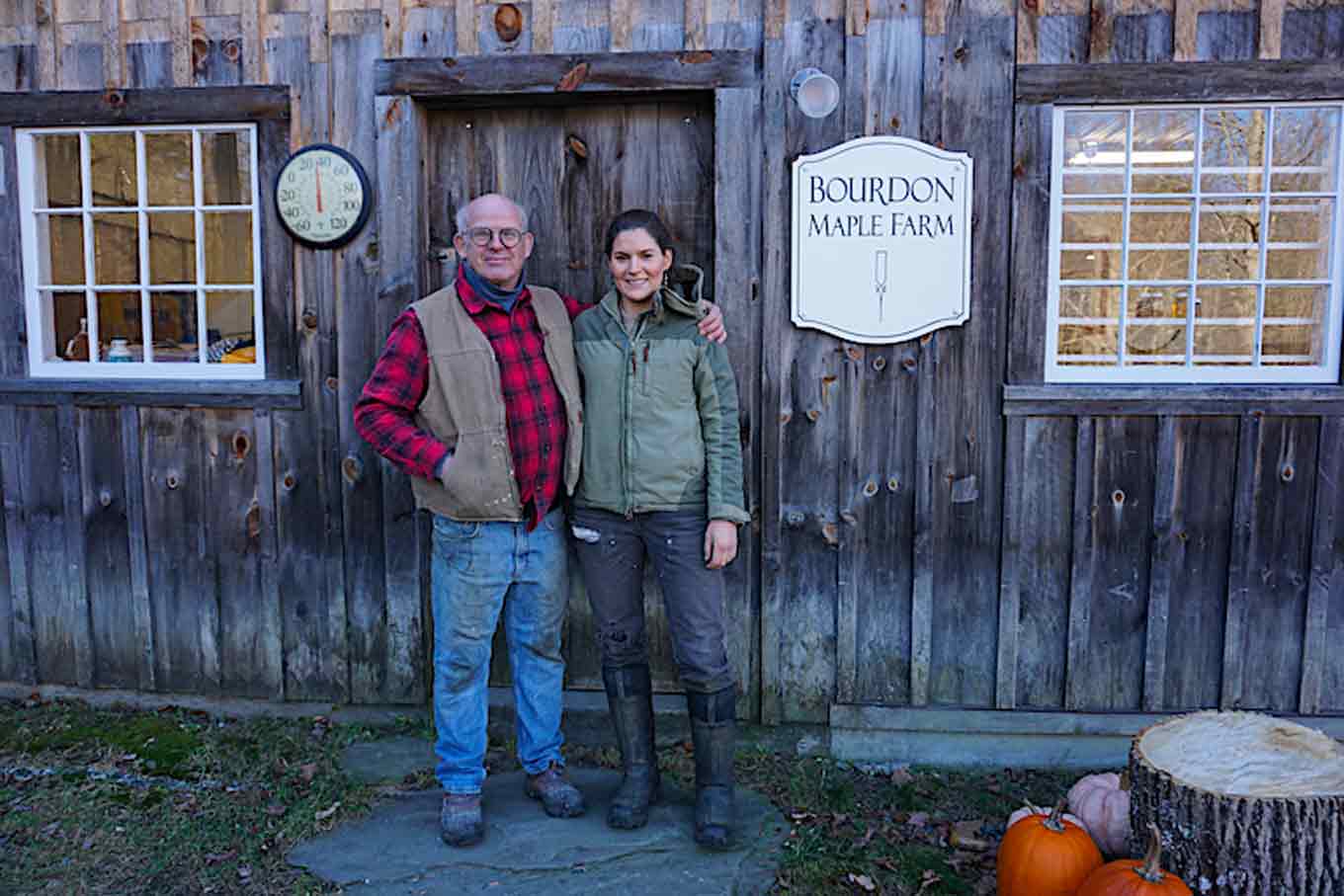
As the sun rises, the ethereal song of a wood thrush echoes through Bourdon Maple Farm’s 55-hectare (135-acre) forest in Woodstock. A bright scarlet tanager wings about the canopy as hungry yellow-bellied sapsuckers drill into tree bark.
At the height of maple sugaring season, birds provide a comforting soundtrack for the farm’s head of operations, sales and marketing, Meg Emmons.
“A lot of times, the birds are my only company out here in the woods,” she said, smiling at a nearby black-capped chickadee. But the forest’s most vocal residents are also some of its most vulnerable.

Forest birds thrive in diverse habitats that consist of young, middle-aged and old growth trees. Most trees in New England, however, are uniformly middle-aged after regrowth following widespread clearing for agriculture in the 1800s.
Modern development pressure continues to convert woodlands into residential areas, parking lots and other unforested landscapes, further reducing the amount of habitat available.
As a result, many forest bird populations have plummeted. Wood thrush populations, for instance, more than halved in 50 years due to forest loss that increased nest exposure to predators and parasites. Vermont’s Wildlife Action Plan identifies it as a high priority “species of greatest conservation need.”
Responding to change
Recent technological advances have resulted in an explosion of the maple syrup industry over the past 15 years in the United States and Canada. But with the growth of production comes the temptation to favor sugar maple (Acer saccharum) trees at the expense of other tree species in the “sugarbush,” as a stand of tapped sugar maples is called.
Some maple producers operate with an “I tend to the trees I tap” mentality, prioritizing maples and minimizing competition among maple trees and other vegetation. But removing too many non-maple trees puts the health of the entire forest, and hence the sugar maples themselves, at risk. In extreme cases, producers remove all non-maples growing beneath the forest canopy.
The eponymous owner of Bourdon Maple Farm, Don Bourdon, once met a producer who regularly cleared his woods with a lawn mower, cutting any species seemingly getting in the way of his maples’ success. But when maples surpass 90% of the sugarbush composition, producers have effectively created a monoculture, experts say.
Calling a sugarbush a monoculture may sound strange, as the term is usually reserved for industrial agriculture, such as giant fields of corn, soy or wheat that now occupy what used to be diversified forests or prairies.
By comparison, monocultures in the maple industry are less common and less harmful — sugarbushes tend to keep the forest intact, which is far better than clearing it to plant annual crops — but growing trees in a monoculture still limits the forest’s ability to support wildlife and withstand ecological disturbances.
Encouraging a diversity of species in tended fields or forests is a major tenet of agroecology, which treats agriculture more like a functioning ecosystem than a food factory.
Encompassing an array of techniques from organic farming to integrated pest management and agroforestry, agroecology is also a top climate solution since it sequesters carbon from the atmosphere, as the Intergovernmental Panel on Climate Change stated in 2022.
Along with a decline in crop or tree diversity, the diversity and abundance of birds decrease when, as in the case of maple monocultures, sugar maple trees exceed 75% of a forest.
So, the conservation nonprofit Audubon Vermont focused on developing a solution and worked with the Vermont Maple Sugar Makers’ Association and the Vermont Department of Forests, Parks and Recreation to launch the Bird-Friendly Maple Project in 2014.
The program celebrates producers who safeguard and enhance forest bird habitats and provides a label that customers can look for when buying syrup.

For a maple producer to earn the bird-friendly label, they must commit to a management plan that ensures a future sugarbush composition of no more than 75% sugar maples. In addition to enriching tree species diversity, bird-friendly producers must improve the structural complexity of their sugarbush with management objectives that aim to have vegetation covering at least 25% of the forest’s understory (the zone comprising the first 5 feet above the forest floor, where flowers, ferns and shrubs are likely to grow) and its midstory (trees and shrubs standing between 5 and 30 feet in height).
Eventually, participating farms’ sugarbushes should look like a wall of green in summer, with vegetation providing optimal nesting and foraging opportunities from the ground to the forest canopy.
“A messy forest is a little harder to work in. As a sugar maker, it can be difficult to walk out and tap your trees if you’re working through brambles and snags — but it’s good for the wildlife,” said Aaron Wightman, lifelong maple producer and co-director of the Cornell Maple Program, where researchers also explore additional sugarbush diversification efforts such as growing nutrient-rich forest products like berries and nuts under the forest canopy, and the harvesting of alternative tree syrups.
“Retaining at least 25% non-maple species and creating structural diversity in a sugarbush are powerful strategies for bolstering the populations of birds and other forest species,” Wightman told Mongabay.

Investing in diversity
With diversity comes resilience. In addition to better supporting wildlife, a bird-friendly forest is less susceptible to threats including pests, disease and extreme weather events, owing to a diverse community of trees and because birds are voracious predators that eat many bugs that may damage trees or spread tree diseases.
Audubon Vermont conservation biologist Steve Hagenbuch compares diversifying a sugarbush to navigating the stock market. “If you put all of your funds in one account, and something bad happens to that account, you’re in trouble. But if you diversify your portfolio and you have it spread out, then you can handle something negative hitting one part of your investment,” he said.
In August, Audubon Vermont, along with the Vermont Center for Ecostudies and the University of Vermont (UVM), wrapped up a study launched in 2020 to quantify how forest bird communities respond to different habitat characteristics in actively managed sugarbushes.
The data will be used to update and refine the Bird-Friendly Maple Project’s sugarbush management guidelines.

Preliminary results gathered in 2020 and 2021 from field surveys of breeding birds, foliage- and litter-dwelling arthropods and vegetation across 14 active sugarbushes in Vermont — nine of which were enrolled in the Bird-Friendly Maple Project — suggest that the program’s current management guidelines need little modification.
Cultivating diverse vegetation and structure in a sugarbush allows the landscape to better meet the needs of a wider range of forest birds, supporting bird diversity and abundance. For example, increases in low woody vegetation and sapling richness were linked to a significant increase in the abundance of three species that prefer to nest in saplings and shrubs: mourning warblers (Geothlypis philadelphia), chestnut-sided warblers (Setophaga pensylvanica) and black-throated blue warblers (Setophaga caerulescens).
Leaf litter depth proved to be one of a few especially important habitat features that benefit all forest birds. Many bird species rely on this rich carpet of organic material, whether for searching out insects and seeds, snagging twigs and leaves to build nests or camouflaging themselves among the debris to avoid nearby predators. Nonnative earthworms, however, can deplete this valuable leaf litter layer.
Audubon Vermont will likely incorporate additional requirements into their bird-friendly management guidelines based on the study’s findings, such as paying attention to the presence and distribution of earthworms in the sugarbush.
UVM researchers gathered additional field data in 2022 and 2023 and continue to build upon the study’s evaluation of bird-friendly management practices. Liza Morse, a UVM Ph.D. candidate whose dissertation investigates the link between maple sugaring and sugarbush biodiversity and resilience, assisted with all four years of data collection and plans to interview participating sugar makers about their specific management approaches.
“Current bird-friendly targets are based on best practices for forest management in general, but the hope is that we can drill down on the drivers of change in a sugarbush and what they mean for birds,” Morse said. “Programs like the Bird-Friendly Maple Project are only going to improve as they are evaluated by research and continue to self-reflect.”

Getting with the program
Bourdon Maple Farm’s Meg Emmons first reached out to Hagenbuch in late 2021 when she noticed the Bird-Friendly Maple Project logo on other producers’ websites. After conducting a thorough analysis of their 10,000-tap operation the following spring, Hagenbuch concluded that to be recognized by the program, they simply needed to add a bird-friendly focus to the forest management plan they had already been following for four decades.
Their forest is a work in progress — sugar maples still account for about 90% of the larger trees in the sugarbush — but their commitment to diversification earned their bird-friendly title. After all, maple producers work in “forest time,” meaning it takes years, even decades, to achieve change.
Emmons and Bourdon support birds and the rest of their forest ecosystem by thinning sugar maple density in their woods, fighting invasive plants like honeysuckle to encourage growth of native species, and leaving dead trees on the ground or standing upright for hole-nesting birds like woodpeckers to use.
Between May and mid-July, they avoid thinning trees and other practices that could disturb birds during their nesting season.
While walking through the sugarbush, Emmons spotted a long, thick tree branch that had fallen on some tapping equipment. “We’ll leave that for the birds,” she said as she tossed it aside.
Mr. Bourdon is just one of 90 Vermont maple producers who enthusiastically joined the Bird-Friendly Maple Project, which is now being replicated in New York, Massachusetts and Maine. Across all participating sugarbushes, there are now approximately 7,284 hectares (18,000 acres) of forest managed with birds in mind, thanks to the program.

And birds aren’t the only winners. Bird-friendly producers can brand their products with the program’s label showcasing the scarlet tanager (Piranga olivacea), a species that’s one of the effort’s big beneficiaries. This attractive logo is a visual recognition of their sustainable maple operations and attracts new customers and business opportunities.
For Bourdon and Emmons, the label presents an exciting opportunity to keep up with the resurgence of interest in local, sustainable food products and to educate their customers about conservation efforts in maple production. On sugarbush tours, they distribute a maple bingo game with a prompt that encourages kids (and adults) to look and listen for birds.
Emmons has met birders who are thrilled to learn that maple syrup producers like them are playing an active role in supporting wild bird populations.
“People really value it,” said Emmons. “They’re supporting environmentally friendly products and causes through socially conscious shopping.”
Bourdon summed up the value and necessity of harvesting products from healthy forest ecosystems in one simple phrase.
“Although boiling happens in the sugarhouse, maple syrup is really made in the woods.”
To understand the amount of time, effort, and skill that goes into a single piece of clothing in our closets, many of us must mindfully sit down and think about the lifespan of, say, a shirt — from production and distribution to everyday use.
And sometimes, thinking about those things might come with shame, as we feel guilt for purchasing from fast fashion retailers or fear about the massive amounts of waste the planet harbors because of the fashion industry.
Juliet Seger and Christina Albrecht, the innovators behind HUMAN TOUCH, want to make this thought process easier — and the feelings it inspires less taboo.
HUMAN TOUCH uses the art of “paint-sewing,” in which the person sewing the garment has copious amounts of paint on their hands, leaving marks behind on both their sewing machine and the garment itself.

“Today and for the foreseeable future, the making of every piece of clothing worldwide will involve sewing by human hands,” the HUMAN TOUCH website states. “With the technique of paint-sewing, the human labor essential to clothing manufacturing becomes visible on the garment.”
Every item is then unique, capturing the human essence behind every piece. Creators use textile paint, which stays on the fiber for regular wear and care.
“Try to envision the invisible,” the website continues, “The fingerprints of tailors, garment workers, machinists covering every piece of clothing you wear.”
The process is messy — and almost off-putting — especially to those who understand the labor required to create a piece of clothing.
@human.touch.clothing HUMAN TOUCH — The essence is in the name: Today and for the foreseeable future, the making of every piece of clothing worldwide will involve sewing by human hands. With the technique of paint-sewing the human labour that is essential to clothing manufacturing becomes visible on the garment. Visit www.humantouchclothing.com for more thoughts and designs 🐾
♬ Kiss Them For Me - Siouxsie And The Banshees
“Very cool … but as a seamstress this makes me want to die,” a TikTok commenter wrote beneath a video of the HUMAN TOUCH sewing process. “The ickiness while sewing would drive me insane.”
But for consumers, the message is clear, and HUMAN TOUCH becomes a conceptual marvel with a thought-provoking final product.
“Being able to [visualize] the handmade aspect of garments REALLY puts things into further perspective,” another TikTok commenter wrote under the same video.
It’s all a part of a larger mission.
Seger founded HUMAN TOUCH as a project within her own fashion label, Paid Vacation, and it was also the focal point of her 2020 dissertation at the University of Edinburgh.

Her research examined the role of technology throughout the history of fashion and how the necessary “human participation” in clothing manufacturing requires us to reexamine the ethics of fashion as a whole.
“To support the development towards a socially sustainable fashion industry and to expand its positive features, we suggest a creative approach to enhancing informed consumerism,” Seger writes in her dissertation.
That creative approach is the heart of HUMAN TOUCH, giving consumers a viscerally visual experience that ties people, labor, and style together at the same time.
HUMAN TOUCH is now a standalone project Seger has embarked upon with business partner Albrecht, who is a fashion designer and art director.

In addition to a line of clothing pieces, all of which are made-to-order in Berlin, HUMAN TOUCH partakes in live sewing performances. The company’s international line will debut in an online store in February of this year, accompanied by a live sewing event during Berlin Fashion Week.
A press release about their work at Berlin Fashion Week posits HUMAN TOUCH not just as a fashion brand, but as “a basis for fashion activism,” redirecting attention to the artistry and humanity of garment workers while creating a meaningful piece of clothing.
“We want to show that sewing is not a ‘low-skilled’ task; it is so much more,” Albrecht and Seger said in the release. “With its dependency on human labor and dexterity, and with the incredible large amount of people sewing globally, sewing technology should be recognized as a social technology, one that is vital to be examined and valued as a lever in creating a better fashion system.”
Header images courtesy of Yukka Podolskaya/HUMAN TOUCH
One of the best parts about living in the 21st century is the unprecedented access we have to goods of all kinds. In many cases, all it takes to acquire, say, a new T-shirt is to drive to the closest Target or Walmart or, even easier, to order one directly to your home through Amazon.
With it requiring so little effort to purchase just about anything these days, it’s easy to forget how much work and, in turn, waste goes into transporting that new T-shirt (along with basically every other product you can think of) from one place to another.
Many retail corporations, including the three listed above, rely heavily on cargo ships to carry their products around the world. These ships, which are almost exclusively powered by fossil fuels, emit pollutants into our air and oceans that have disastrous effects on the environment and public health.
Fossil fuels have been the standard for cargo shipping since the 1800s, so it’s safe to say there hasn’t been much change in the industry — until now.
What is Ship It Zero?
Ship It Zero, a coalition dedicated to ensuring the world’s top retail corporations commit to zero-emission maritime shipping by 2030, is a first-of-its-kind change-maker in ocean shipping.
90% of the world’s trade occurs on water, and cargo ships emit a climbing one billion metric tons of carbon dioxide every single year.
The pollution created by cargo ships has also become a public health crisis, especially in port communities. Ship It Zero explains that cargo ships often idle their engines while unloading products at ports, meaning literal tons of air pollutants are emitted into nearby communities.
In the United States specifically, the Ports of Los Angeles and Long Beach receive 40% of the nation’s imports. The neighborhoods surrounding these ports are majorly home to BIPOC who, in turn, are the most impacted by health issues — like childhood asthma, lung cancer, and cardiovascular disease — tied to port pollution.
“Air pollution from the heavily-polluting cargo ships that your favorite brands use to ship products has been linked to 6.4 million childhood asthma cases annually and contributes to over 250,000 premature deaths in primarily low-income Black and Latinx communities,” the Ship It Zero website reads.
While California has already started enforcing statewide policies to minimize port pollution, most of the retail corporations funding the maritime shipping industry have not taken enough (if any) action to reduce their impacts on the environment and the communities suffering as a direct result of port pollution.
This is where Ship It Zero comes in.
Led by the environmental organizations Pacific Environment and Stand.Earth, Ship It Zero’s campaign encourages retailers to use their influence over the ocean shipping industry for good.
“As the key clientele of shipping liners, these corporations have an opportunity to send a market signal and set the new standard for healthier, cleaner maritime shipping that is truly zero emissions,” the coalition’s website reads.

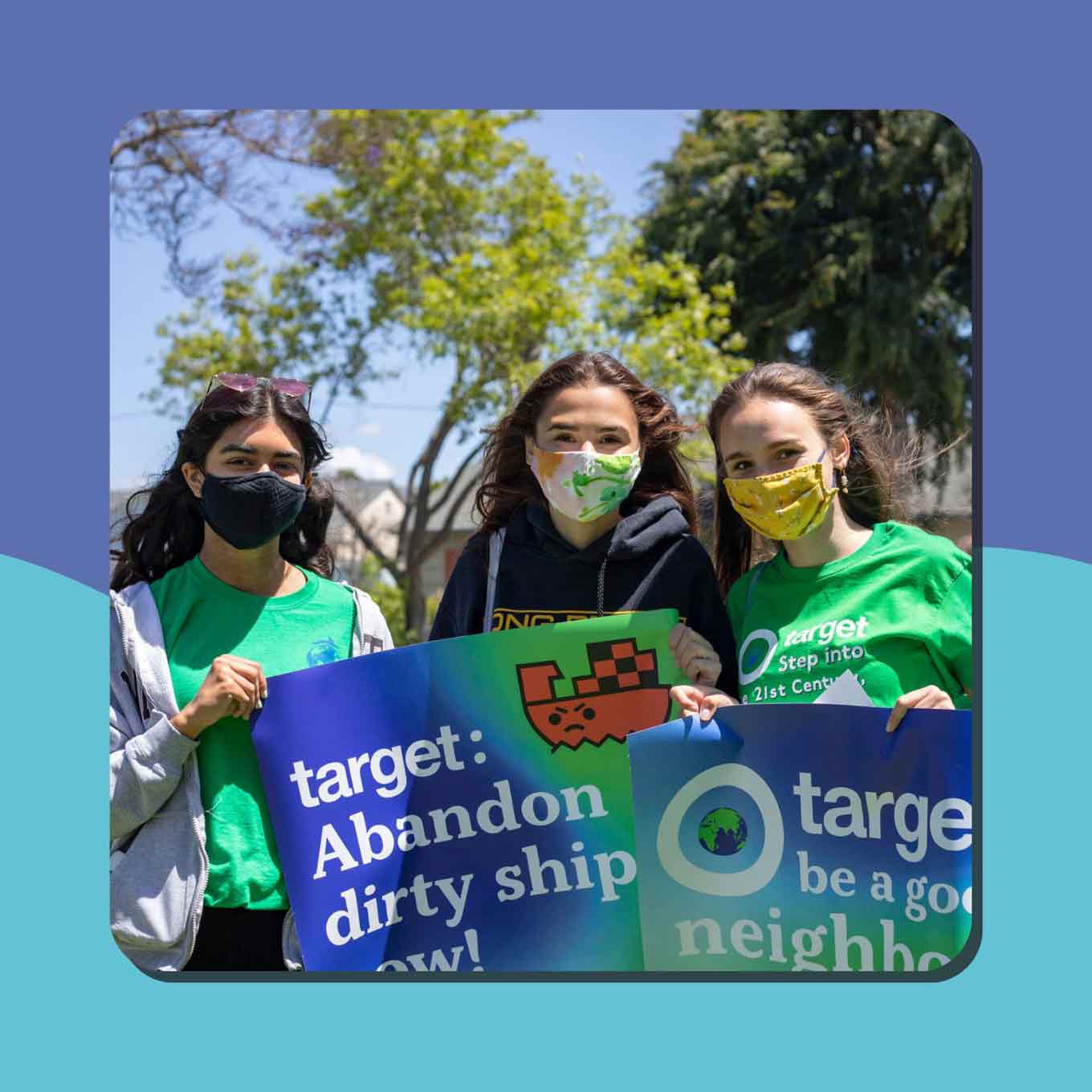
Ship It Zero specifically focuses on Walmart, Target, The Home Depot, Lowe’s, Amazon, and IKEA, all of which they’ve found to be top polluters when it comes to maritime shipping.
In the coalition’s yearly “Report Cards,” Ship It Zero breaks down each of these corporations’ efforts to accurately report their emissions and take effective, immediate action to lower them.
Each report card is analyzed through the three central demands that Ship It Zero urges companies to adopt.
What are Ship It Zero’s demands?
The first demand posed by Ship It Zero asks major retailers to help eliminate port pollution by immediately mandating their carriers rely only on clean energy and electricity while in major ports.
Their second demand pushes retailers to phase out carriers that rely on fossil fuels in favor of those actively working to cut emissions by using clean energy sources. Also, they encourage these companies to publicly denounce short-term “solutions” like liquefied natural gas, carbon credits, and biofuels.
The final demand encourages these retailers to commit to zero-emission maritime shipping by 2030.
Why 2030? According to the Paris Agreement, a temperature increase of 1.5°C can catalyze climate change’s most severe effects, and greenhouse gas emissions need to peak before 2025 for us to avoid that limit.
These demands may seem lofty, but they’re actually quite realistic — especially for six companies that are each worth billions of dollars. Wind-powered cargo ships have already started making trips across the world, and boats that use solar, hydrogen, and electricity as fuel are continuously being introduced into maritime shipping.
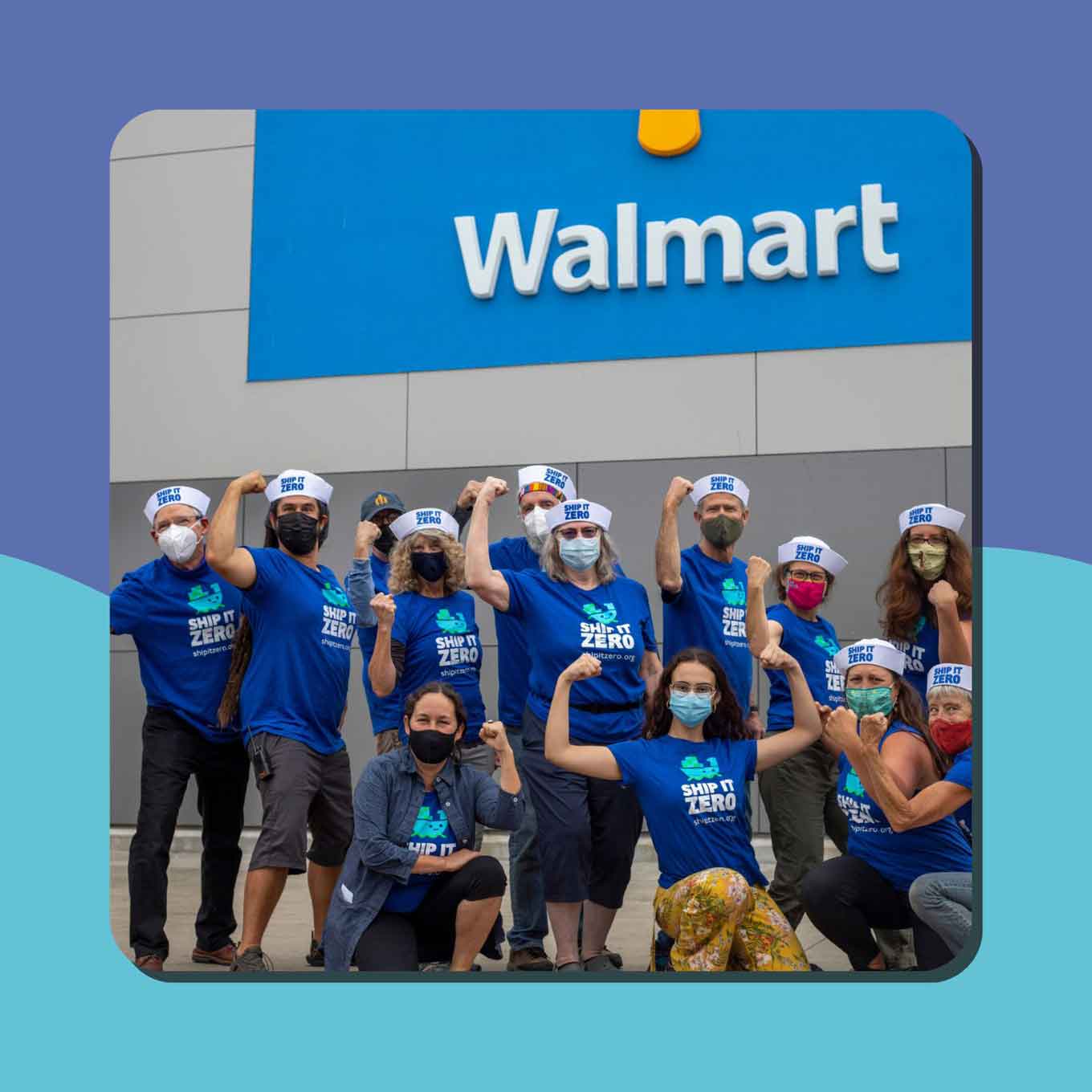
If major corporations — like those Ship It Zero targets — invest in these technologies, zero-emission maritime shipping could become the standard by 2030.
Since Ship It Zero has started applying pressure to these retailers, Amazon, Ikea, and Target have committed to zero-emission shipping by 2040.
While Ship It Zero encourages these companies to strengthen their “level of ambition for eliminating ocean transportation pollution by 2030,” the 2040 goal is a start.
Along with this, IKEA is now facing the issue of port pollution head-on by enforcing policy that prioritizes clean, sustainable ports. What does this look like, exactly?
Clean ports regulate the speeds at which ships enter them, and they utilize shore power that allows ships to keep their engines off while harbored.
There is, of course, still work to be done. But by rallying consumers, public health advocates, environmental activists, and a plethora of other people to protest, sign petitions, and send letters to these corporations, Ship It Zero has already altered the current and future climate of maritime shipping for the better.
How can I help?
You, too, can help influence major retailers to lower their maritime shipping emissions by visiting the Ship It Zero website. There, you can access pre-formatted tweets and emails to send to decision-makers at these six companies, and you can sign up to receive email updates and action alerts.
As Dawny’all Heydari, a campaign leader at Ship It Zero, told Spectrum News, “These companies are reliant on our purchases. If enough of us come together and say enough is enough, the climate emergency is upon us, people are dying near ports, we need change, these companies will act.”
Header images courtesy of Ship It Zero and william william on Unsplash
Sharon McMahon, an Instagram creator and educator, lovingly dubbed “America’s Government Teacher,” spends most of her time online speaking about current events to her over 1 million followers.
But along with her daily social media work, podcast, and “Government for Grownups” workshops, McMahon has a sweet spot for fundraising.
Or — her audience, called “the Governerds,” do.
As part of McMahon’s annual fundraiser with RIP Medical Debt in December of 2023, followers donated a total of $1,079,369.10 to the organization, which purchases medical debt at cost.
This means that RIP Medical Debt uses a highly efficient model in which the generosity of donors (like the Governerds) combined with debt industry expertise allows the nonprofit to relieve about $100 in medical debt for every $1 donated — or $10,000 for every $100 donated.
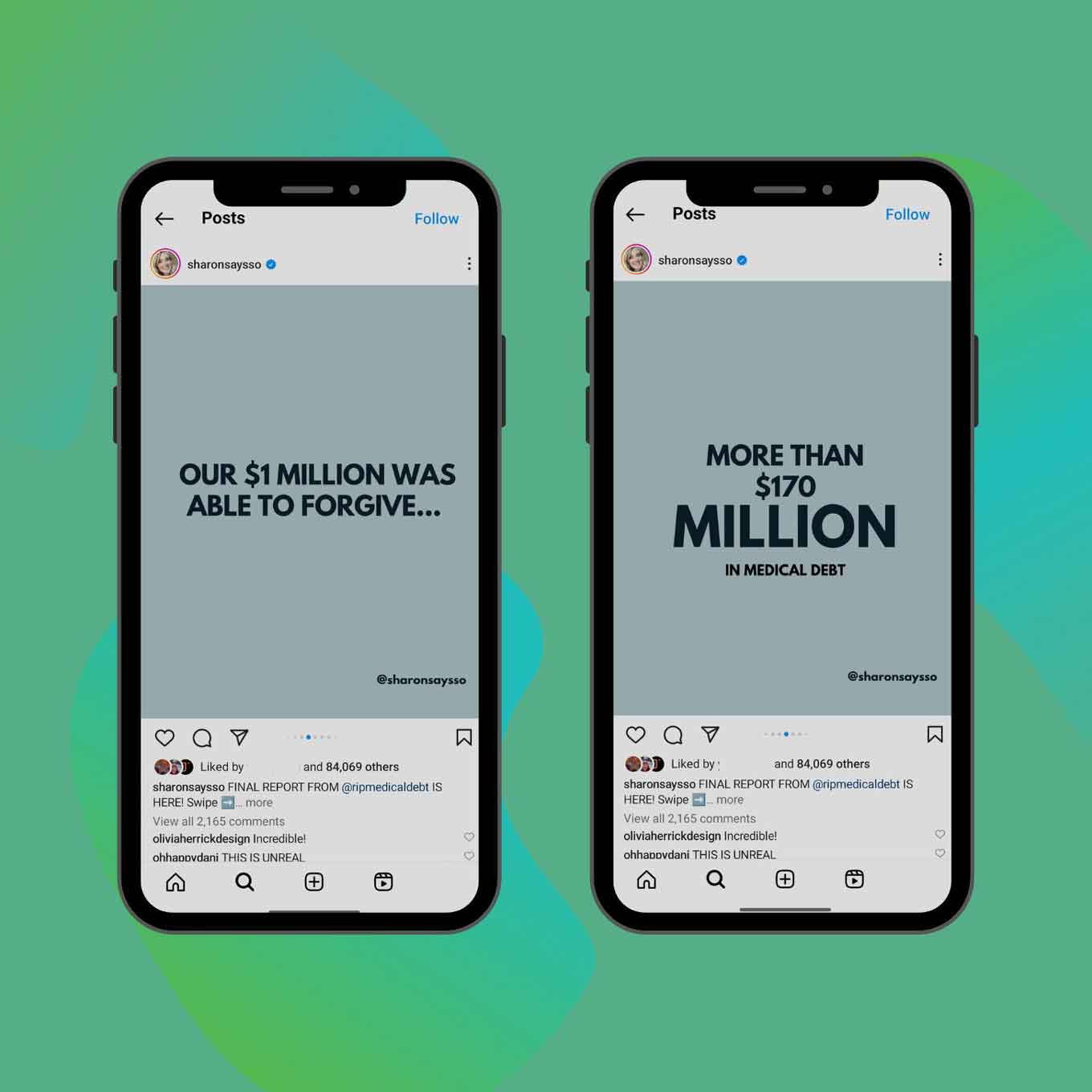
Don’t worry; you don’t have to do the calculations. That figure collected by Governerds in December 2023 turned into over $170 million in forgiven debt.
“RIP Medical Debt buys medical debt on the debt market, and instead of collecting on it like a bill collector, they simply forgive it,” McMahon explained in an Instagram post.
“We just received the final report from RIP Medical Debt,” she continued. “142,830 families received a letter in the mail saying that their debt had been paid.”
The organization also specifically supports individuals who earn less than four times the federal poverty level, and whose debts total 5% or more than their annual income.
Governerds were encouraged to share their funds directly on a custom donation page — or they could send funds to McMahon on Venmo, which were shared transparently in her Instagram stories. The initial goal of the campaign was $100,000, which was toppled within about a week.

This is not the first time McMahon’s community has mobilized for a cause. Her first RIP Medical Debt fundraiser three years ago raised $560,000 in grassroots donations to forgive $65 million of medical debt — within five days.
McMahon also leads fundraising efforts for regular “teacher grants,” raising over a million dollars to help teachers in need with whatever expenses they may have.
Although she may be increasingly savvy in her fundraising efforts, it seems the achievement is never shy of awe-inspiring to McMahon.
“Given that medical debt is involved in over two-thirds of bankruptcies in the United States, our gift was life-changing news for hundreds of thousands of people,” she wrote in her Instagram announcement.
“It is truly the small who are the mighty. All of us doing something has made far more difference than a few of us trying to do it all. Well done. And thank you.”
Supporters of the project were also excited to celebrate the final totals.
“Thank you for jumpstarting this opportunity and letting us participate,” an Instagram user commented on a Reel McMahon posted once the fundraiser reached $1 million. “It’s a holiday gift to each and every one of [us] who donated, as well as the recipients. What a force for good this group is.”
“Thank you for being a difference-maker,” another user commented. “This is leadership. This is compassion. This is goodness. It’s so powerful!”
Header images courtesy of Sharon McMahon/Instagram
As Barbie reclaims her seat as the queen of dolls — in 2024, with more diverse models than ever — and American Girl dolls reenter the cultural zeitgeist, children with disabilities are still looking for the perfect representation to play with.
While Barbie now makes dolls with down syndrome, or even Barbies that come with mobility devices like wheelchairs, The Doll For All is interested in a doll that can be customized to any child’s disability.
For over five years, company president Marsha Roberts and her scrappy team of expert designers have been working to create The Doll For All — a prototype of a doll that, ultimately, can be made to fully embody any disabled child.
The idea for the company is based on the experience of a young woman, Aysha, who, following brain surgery at age seven, met a myriad of disabled children during her visits to hospitals and health care facilities.
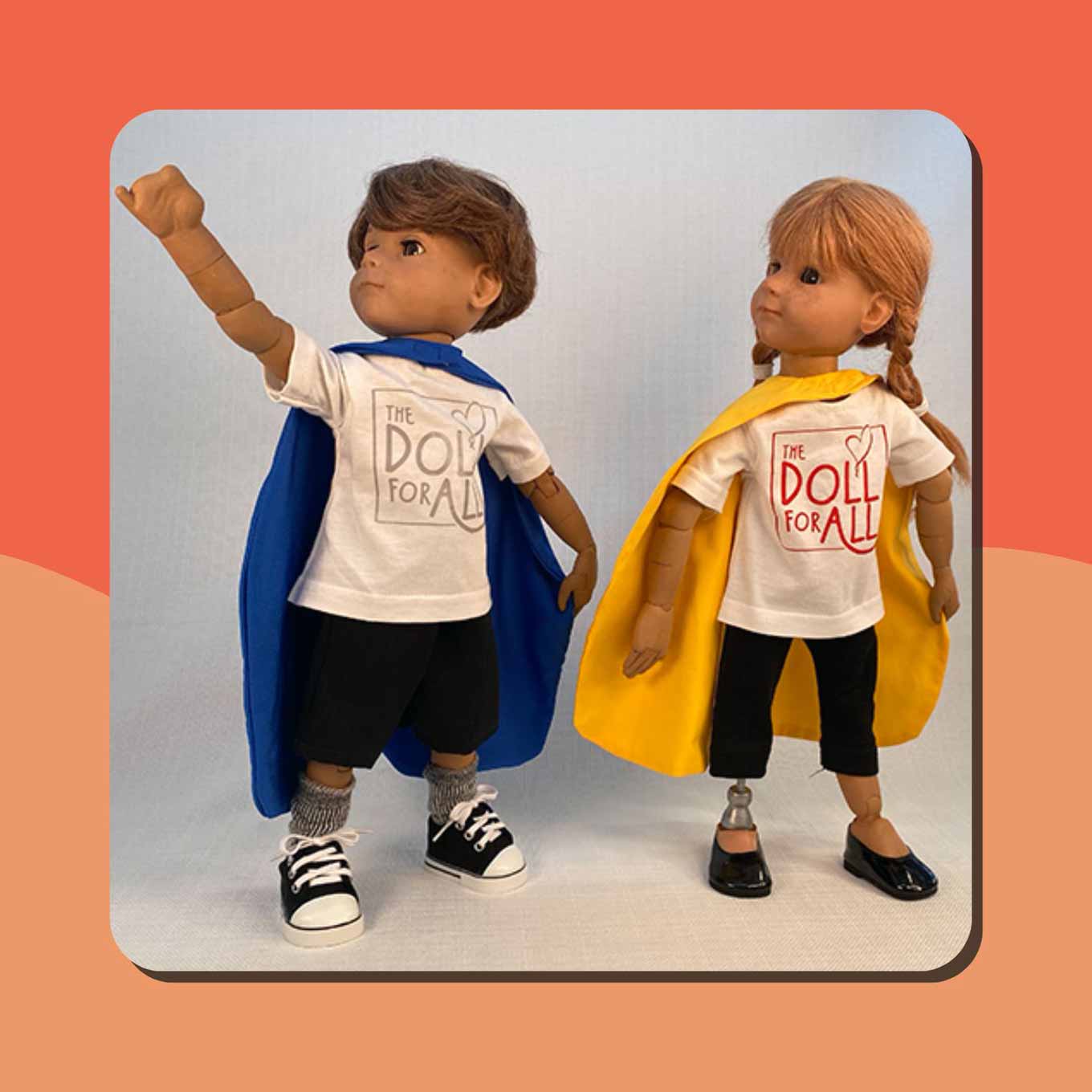
“She realized these kids didn’t have a doll that looked like them, and she dreamed of making a doll that could be altered for whatever disability or medical needs a child may have,” the company’s website reads. “After many years, her dream is finally coming true.”
The first dolls, Evie and Max, are designed with limb differences in mind. The company’s inventor, Rick Harrison, started making his first arm prototypes with vinyl pieces from other dolls, wood, and even refrigerator tubing.
Since this initial creation, The Doll For All has worked with skilled craftsmen to refine and 3D print the design, now culminating in an 18-inch vinyl doll made of a total of 71 parts, with over 30 joints and specifications.
This is in contrast to other similarly-sized dolls, which can usually only move at the hips and shoulders.
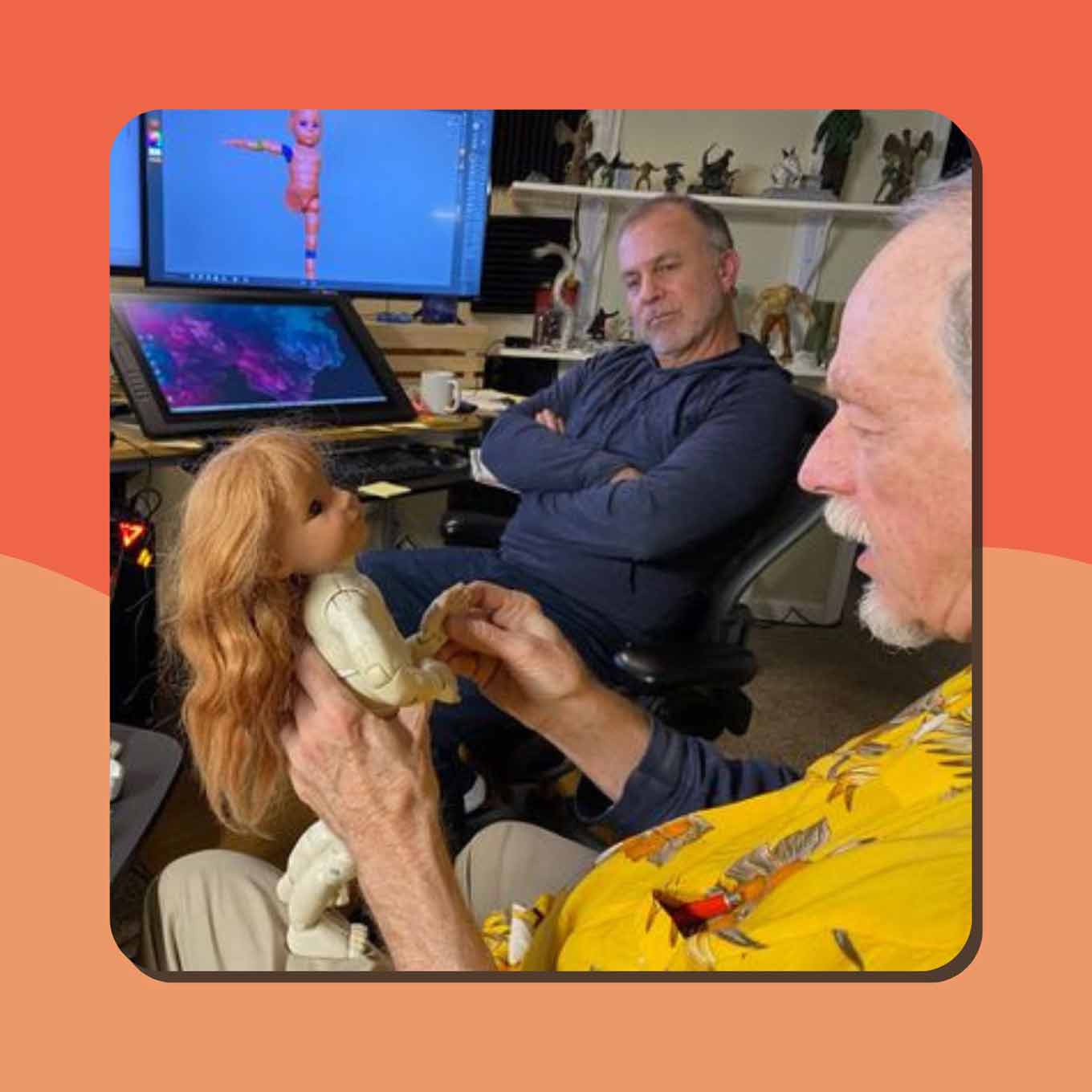
“Evie and Max move more like kids do,” Roberts says in a video for a fundraising campaign. “The point is, our dolls are as wonderfully made as the kids they represent.”
Another important value for the company, Roberts says, is manufacturing in the United States. To allow for customizations, the dolls are hand-crafted and individually assembled in Chattanooga, Tennessee.
“Since they’re individually assembled to look so much like the child that cherishes them, they’re intended to be passed down from generation to generation — a legacy doll,” Roberts continues in the video.
The venture is still small, but through Kickstarter and Indiegogo campaigns, The Doll For All is eager to finally send out its first iterations to real kids who will benefit from seeing a doll that looks just like them.
Starting with a goal of $4,500, the funds raised through Indiegogo will contribute to more 3D printing equipment, materials like vinyl-like resin, and final design elements for prosthetic legs and “lucky fins,” or hands that include limb differences.
At the start of the new year, the campaign exceeded its goal and will now use any additional funds to scale production and get dolls in the hands of kids who need them most.
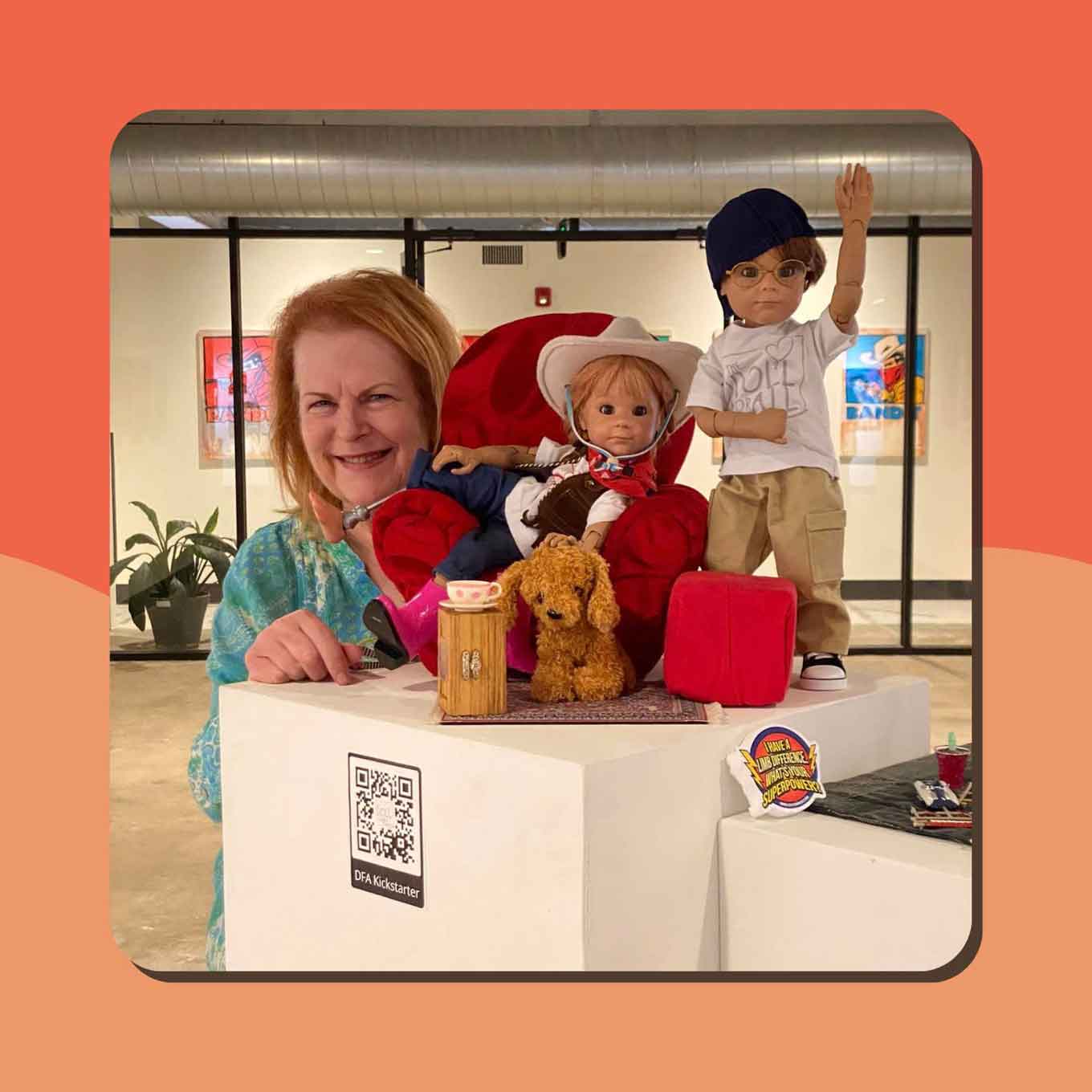
“Now’s your chance to make an impact on so many children’s lives,” the startup’s Indiegogo campaign says. “Kids need to see toys and dolls like themselves. Celebrating uniqueness builds awareness and increases self-esteem.”
From here, the company hopes to begin designs on other versions of disabled and non-disabled dolls, offering even more options for representation.
“On the drawing board right now are more dolls that look like kids,” the website shares. “In our initial release, we plan to have boys and girls who are Caucasian, Black, Asian, Hispanic, and Latino.”
While the dream is for children to send in a photo of themselves and get a custom-made doll in return, this start is promising.
Roberts says: “Together we can do what the big toy companies have not been able to accomplish: provide a doll that can be customized to all kids.”
Header images courtesy of The Doll For All
Think about the last ten things you bought that arrived wrapped in plastic film, packaged into a plastic bag and shipped in another plastic bag.
It adds up to a lot of plastic — especially that thin, protective film-like plastic — which is the hardest to replace with an eco-friendly alternative.
Difficult doesn’t mean impossible, though. And that’s where Sway comes in.
The California-based startup, founded in 2020 by Julia Marsh, Matt Mayes, and Leland Maschmeyer, is using polymers found in seaweed to make a compostable alternative to thin-film plastic packaging.
The company is already getting quite a bit of attention in the sustainability world. Sway was named as a winner of the Beyond the Bay Challenge in 2021, and earlier this year won first prize from the Tom Ford Plastic Plastic Innovation Prize.
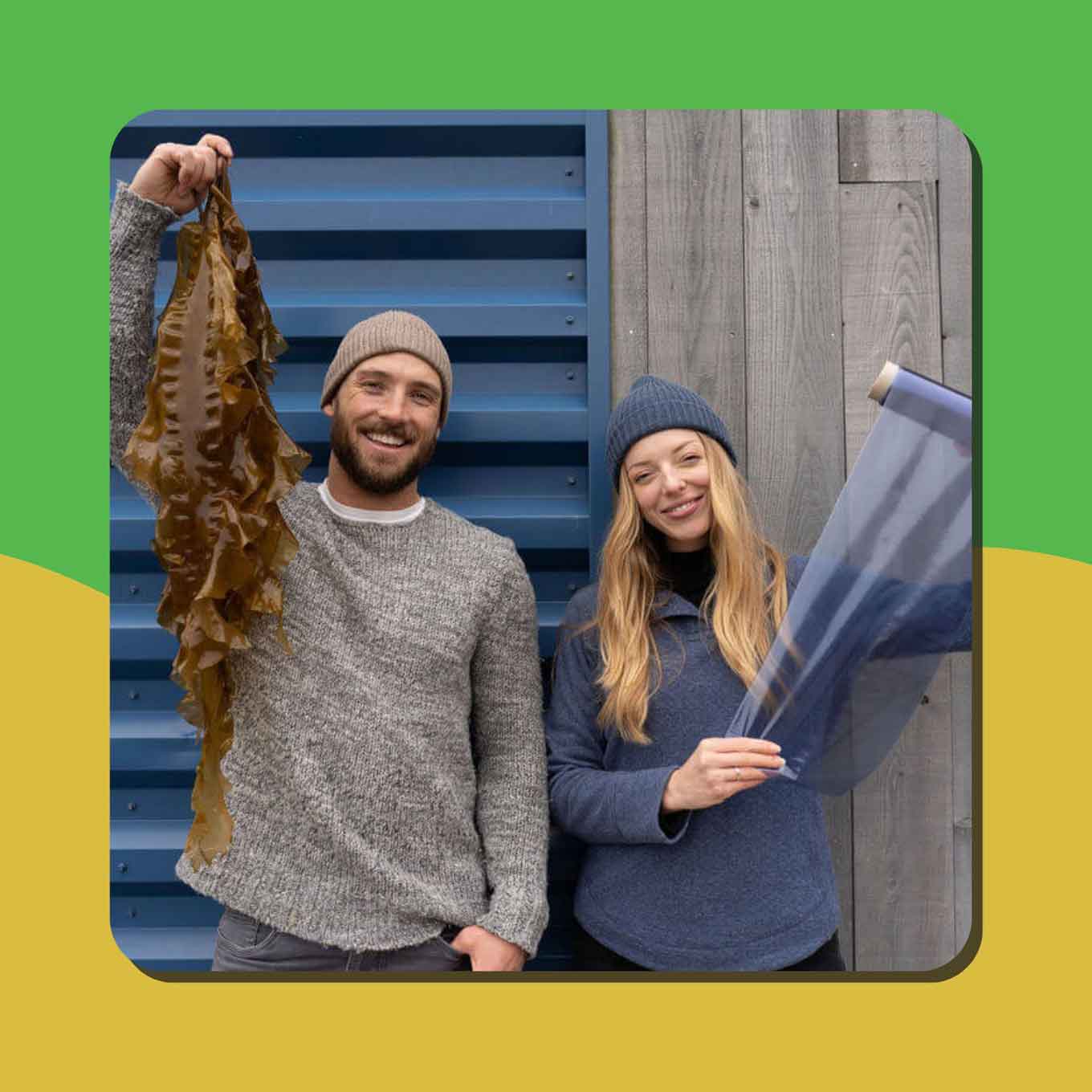
“At Sway, we are building the next stage in the evolution of plastic. We often talk about the ‘plastic problem,’ but it is only a symptom of a much deeper dependency on petroleum,” CEO Julia Marsh said in a press release.
“We are building a material as functional and accessible as traditional plastic, but derived from a benevolent source instead. With the regenerative power of seaweed, we plan to replace petroplastic — for good.”
According to Plastic Oceans, about 500 billion plastic bags are used worldwide, and about 180 billion plastic bags are produced every year to store and protect clothing, shoes and accessories — all of which could take up to 1,000 years to decompose.
Sway bags, however, biodegrade in just four to six weeks — faster than a corn cob, but slower than a banana peel. The product has a 12-month shelf life, and the seaweed used to make Sway products can sequester up to 20 times more carbon per acre than trees, according to a Harvard University study.
Marsh is not new to the packaging world. Before founding Sway, she spent about 10 years as a brand and packaging systems designer, which she said she found to be “really at odds with my identity as an environmentalist and naturalist,” in an interview with Fast Company.
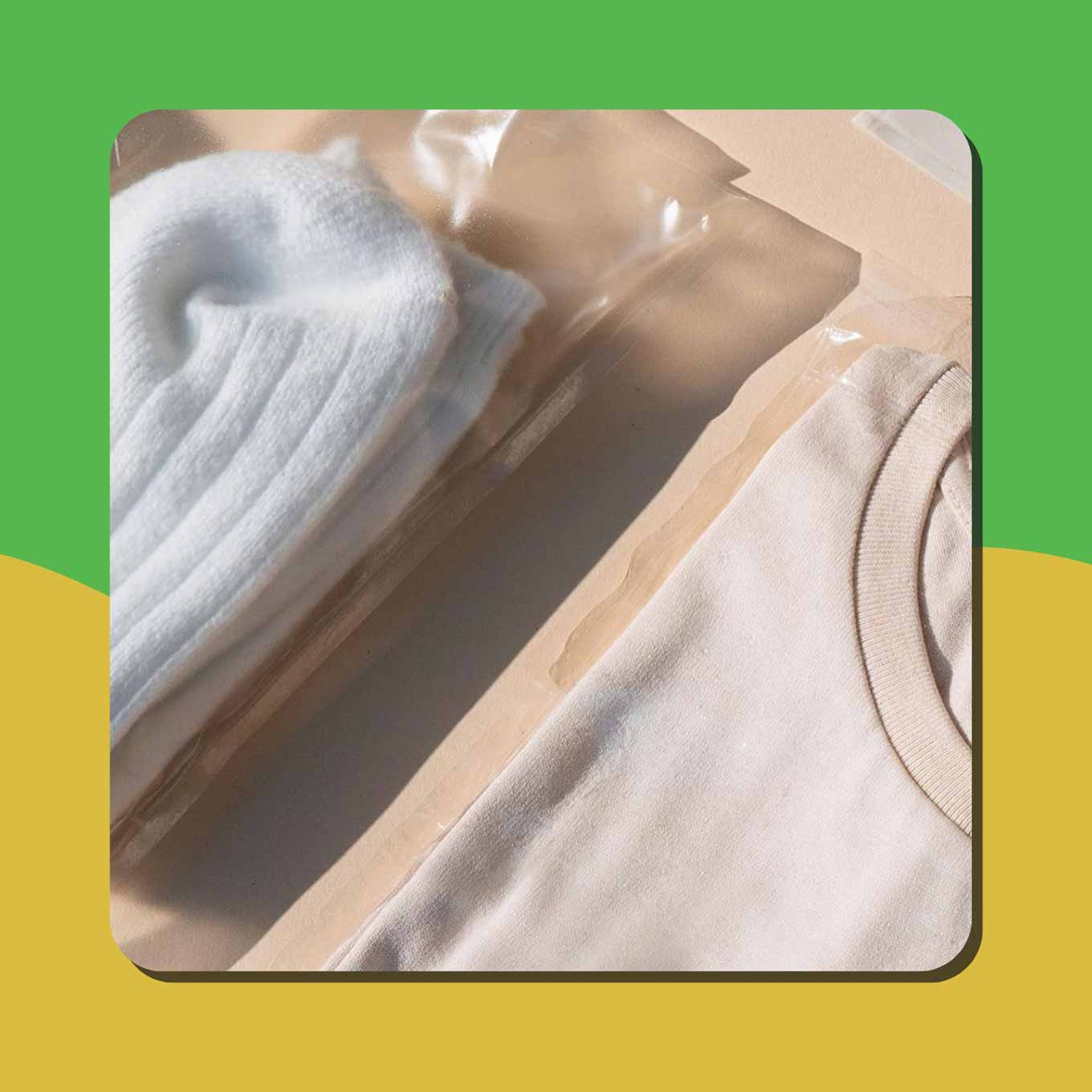
She found seaweed to be an incredibly sustainable alternative. The company works with ocean farms that grow seaweed in spots of the ocean, so harvesting the seaweed is “like giving the plants a haircut, not pulling them out by the roots,” Marsh explained to Forbes.
Seaweed grows fast and can be tweaked to form clear sheets for Sway’s plastic alternatives.
Marsh told Forbes that Sway materials fit into existing supply chains and machines, so there’s no need for new infrastructure.
“We’re not asking individuals to make those choices, we’re asking the corporations and brands that are most responsible for producing waste to switch to our material,” she told Business Insider. “Retail bags and poly bags are some of the most pervasive polluters of marine systems.”
Sway’s flagship film comes in three colors and is printable and heat-sealable. It can be used for polybags, pouches, product windows, fashion and accessories, personal care, and dry goods.
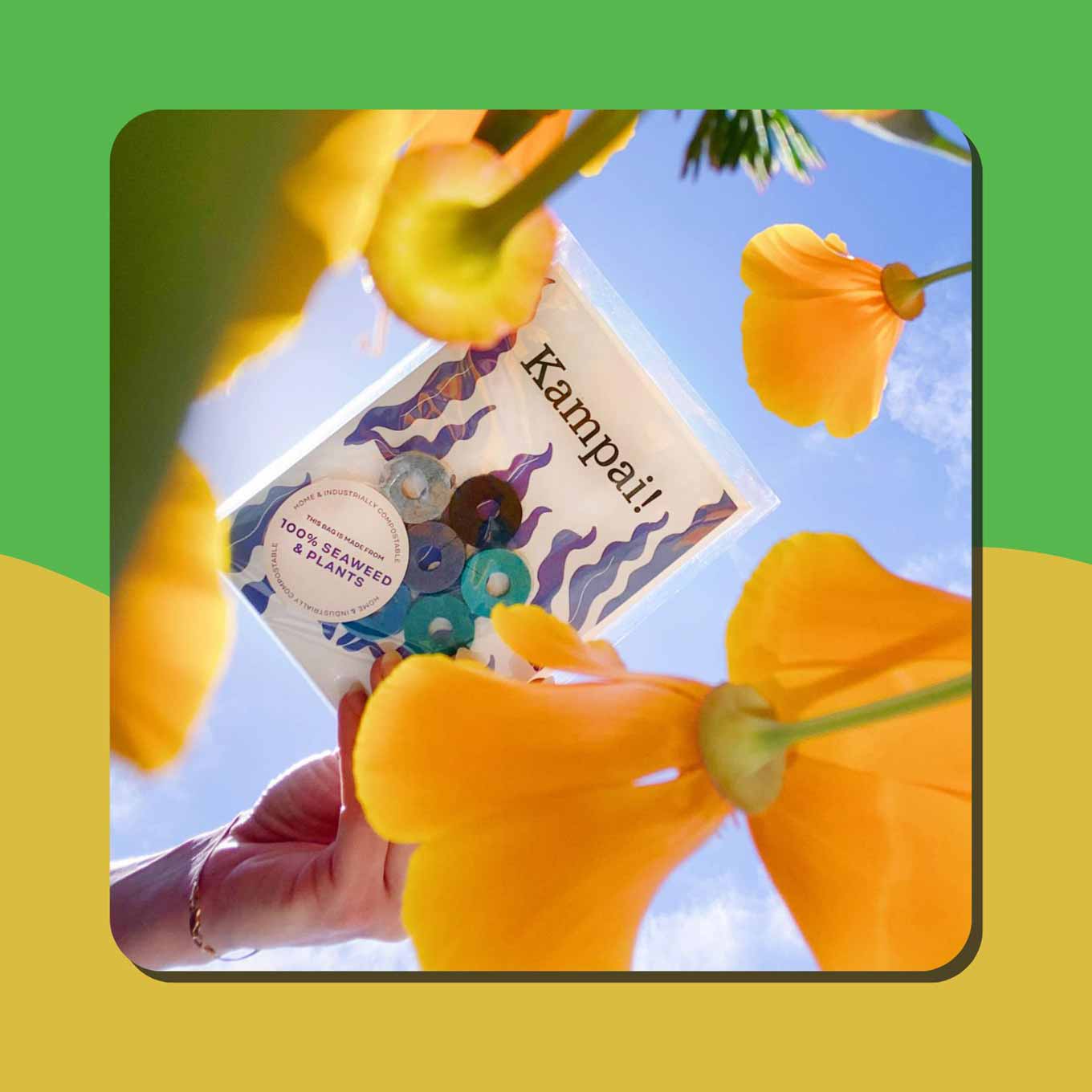
Graf Lantz greeting cards and woolen goods are sent in Sway packaging now, as are shoes from designer Alex Gray. While the product isn’t available direct-to-consumer yet, companies can submit a pilot form to partner with Sway for packaging needs.
“The Sway team is building a material that stands out from the rest,” fund manager Jon Shulkin said in a press release. “While current offerings require brands to make painful compromises in cost, performance or true sustainability, Sway is designing products to make the plastic-free transition seamless and affordable to their customers.”
Sway isn’t the only company looking at seaweed as a plastic replacement. Investments in startups working with seaweed doubled in 2021.
Five of the eight finalists for the Tom Ford prize were using seaweed as a base. Some of the other existing alternatives for plastic have extra challenges. Forks made from corn-based plastic are difficult to compost, for example, and require large amounts of land to grow. Seaweed farms offer coastline jobs and require no land or fertilizer to grow.
“We believe the next generation of packaging can replenish life, from sea to soil,” Sway’s website reads. “Together, we can usher in a new age of materials — one which creates reciprocity between business and our shared planet.”
Header images courtesy of Sway/Instagram
More than ever, it seems, clothing brands are making strides to provide consumers with sustainable fashion options.
That being said, it’s unfortunately common for companies that claim to be “green” to not be as ethical as they seem, a practice known as greenwashing.
Collective Fashion Justice, a nonprofit that advocates for a new approach to fashion, is on a mission to challenge those greenwashing companies to take a holistic approach to sustainable fashion.
If you’re thinking that this sounds like a complex problem to solve, you’d be right.
According to the organization’s website, there’s nothing simple about the fashion industry — or the steps that need to be taken in order to see radical, positive changes.
That’s why founder Emma Håkansson coined the term “total ethics fashion system.” This term encapsulates the efforts to take a holistic approach to the problems posed by harmful practices.

By doing so, major fashion brands can put “people, animals, and the planet before profit,” as Håkansson said in an interview with Green Matters.
“There were people that were addressing animal rights issues in fashion, or people really focusing on labor issues, or on deforestation… but generally, there was a lack of collectivity in the thinking,” Håkansson said in the interview.
“And I felt like that was really important, because I do believe we can’t effectively address problems in fashion if we’re not looking at how they’re all interconnected.”
What is total ethics fashion?
To get a better idea of what total ethics fashion looks like in practice, and to understand why it’s so needed, the company put together a diagram that shows what happens when companies only focus on one area of sustainable fashion.
The three main areas of focus include fair fashion (caring for humans), sustainable fashion (caring for the planet), and vegan fashion (caring for animals).
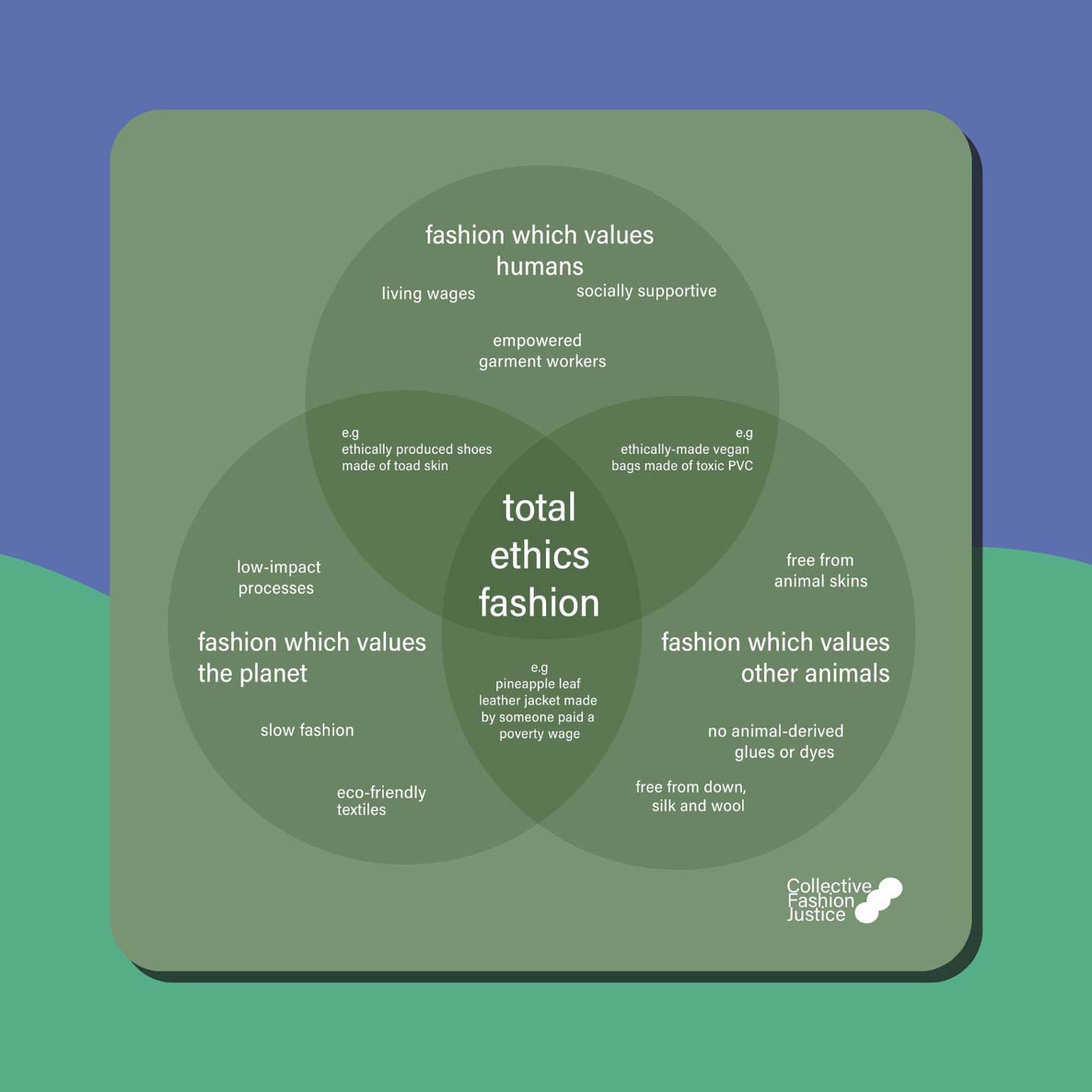
Here’s an example of what can happen if a company doesn’t take a total ethics approach: They choose to follow a slow fashion business model to create jackets free from animal skin, but they still put their employees in harmful working conditions.
Alternatively, a brand that’s known for refusing to create fabrics from fossil fuels, a process Collective Fashion Justice says is a part of the leading cause of the climate crisis, could still choose to slaughter animals for material while paying their workers poverty wages.
Essentially, the concept of total ethics fashion examines the intersectionality at play in the industry.
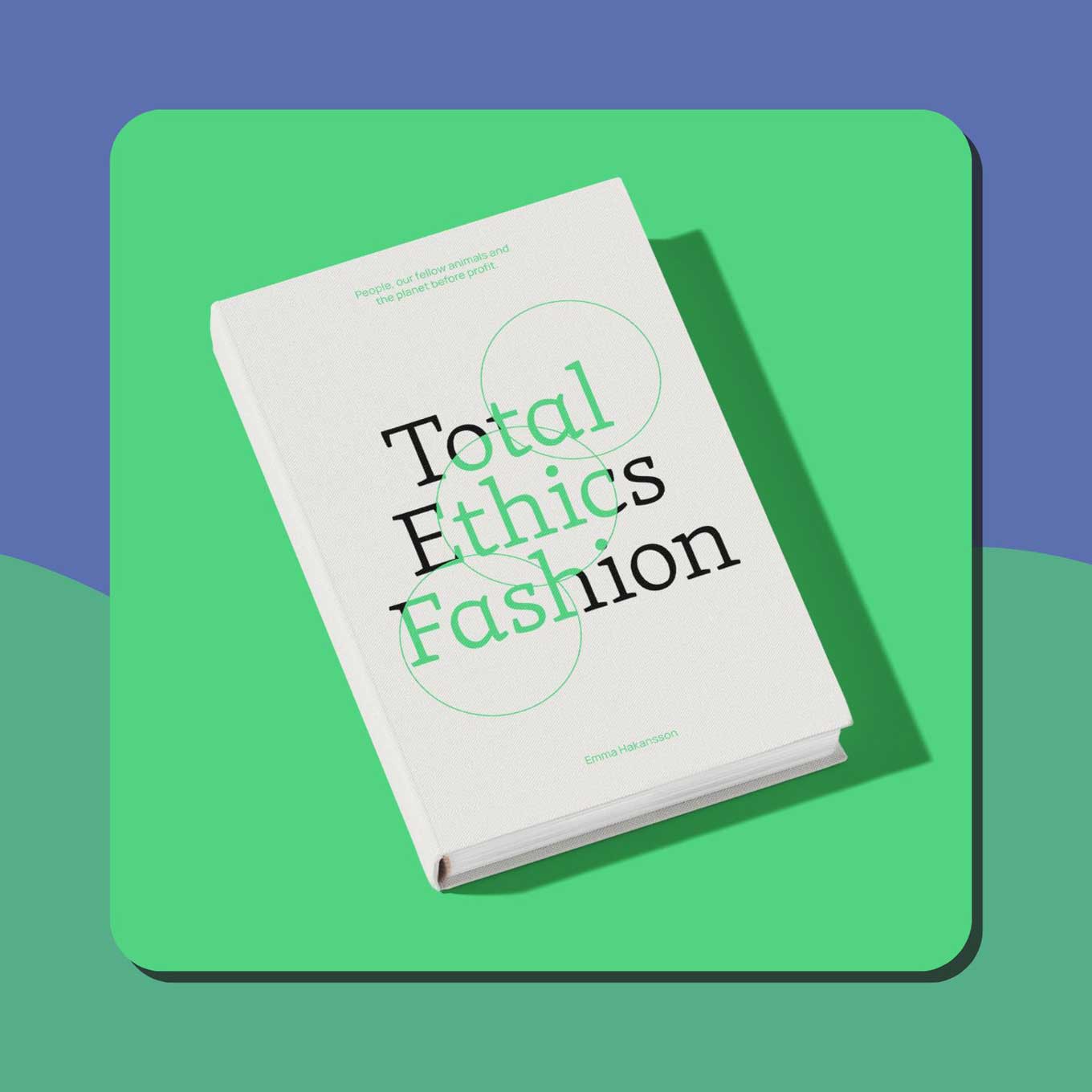
To better educate others on this approach, Collective Fashion Justice has created a book called “Total Ethics Fashion” which is currently available for pre-order in the UK and Australia.
“What if old clothes were symbols of pride, adored more with each wear rather than tainted with boredom in a newness obsessed culture?” an excerpt from the book reads, as shared on Instagram. “What if we connected again with quality, craft, and how exceptionally brilliant the work of people who make clothes really is?”
A free booklet, “Total ethics fashion: a primer” is also on the organization’s website in digital and print formats.
While some companies intentionally cut corners when it comes to being ethical, there are those who simply aren’t aware of what they could be doing to be better.
Either way, though, the end result is the same: Consumers falsely believe they’re supporting a company that’s making the world a better place while the planet, people, and animals continue to suffer.
At its core, this is what Collective Fashion Justice aims to stop.
“It is really an exploitation of people’s willingness to do the right thing,” Håkansson explained in an Instagram video when speaking with nonprofit Greenwash.com.
According to Håkansson, in order to see substantial change in the fashion industry, action must be taken on a governmental level.
That’s why the nonprofit has partnered with the United Nations Environment Programme. Along with other organizations and companies, Collective Fashion Justice assisted in the creation of a guide called “The Sustainable Fashion Communication Playbook.”
This guide, according to the UN’s website, is for “marketers, brand managers, imagemakers, storytellers, media, influencers and beyond.”
“[This guide] presents the need to redirect fashion communication toward sustainable and circular solutions as a creative opportunity, and provides a much needed framework when policies around how to communicate environmental claims increasingly come into force,” the website continues.
How can I make a difference through total ethics fashion?
Waiting for massive fashion companies to take action can leave us feeling defeated. If the bulk of the negative impact comes from them, what could we possibly do that will make a difference?
This is an issue that Collective Fashion Justice has taken steps to address. While it’s certainly fair and natural to feel defeated, there are steps we can take, too.
First, we can educate ourselves on total ethics fashion through paid and free resources provided by places like Collective Fashion Justice. In addition to books and free booklets, the organization posts articles on its website that are full of the latest news from the fashion industry, as well as advice each of us can take.

An article about questions to ask brands before supporting them is a great starting point.
“We have an enormous amount of power as citizens,” Håkansson wrote in the article. “The fashion industry exists to clothe us, and so we influence the fashion industry not only by voting with our dollar, but by telling the fashion industry what we think is important, and what we want to see from it.”
As usual, it’s also important that we consumers use their voices so more people are aware of the issues posed by the fashion industry. This means connecting with those in your social circle as well as making your demands known on a political level.
“I think it’s so important that we remember the most effective way that we can positively impact the world around us is not by buying things,” Håkansson explained to Greenwash.com.
“It’s by using our voices. It’s by getting involved politically. It’s by supporting organizations that are pushing for change.”
Header images courtesy of Collective Fashion Justice and Very Good Looking
Sundance Film Festival is celebrating its 40th year in Park City, Utah with a line-up that includes stand-outs like Saoirse Ronan’s “Outrun,” Pedro Pascal’s “Freaky Tales,” the Kristen Stewart double feature “Love Me” and “Love Lies Bleeding.”
In addition to its much-anticipated dramas, comedies, and animated films, Sundance also hosts a slate of documentaries that take viewers around the world, exploring themes of racial justice, environmental impact, grassroots activism, and so much more.
I'm on the scene for Sundance 2024, watching many of these films. Fingers crossed that these nine must-see documentaries will be scooped up by theater distributors and streaming services in the coming months.
Documentaries Premiering at Sundance 2024
Daughters
(United States, 102 min.)
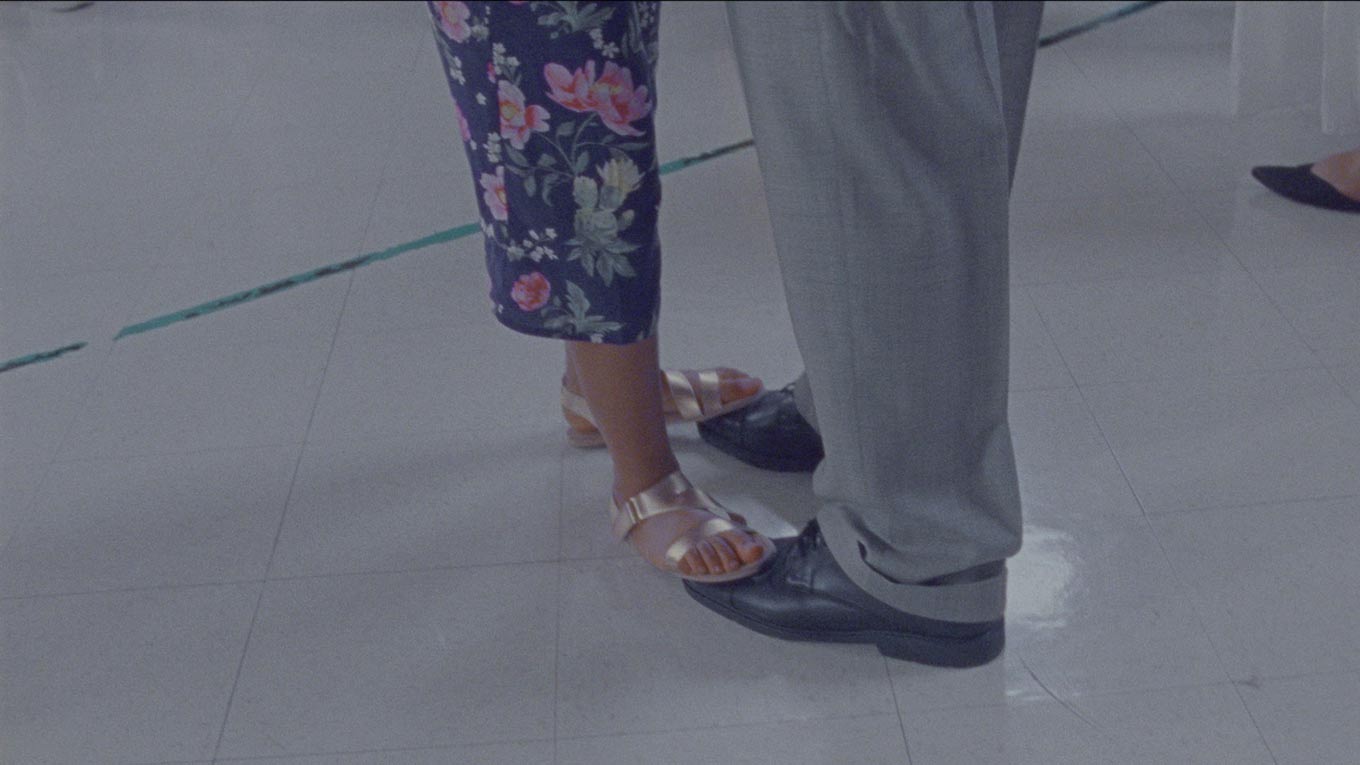
Directors Natalie Rae and Angela Patton — CEO of the nonprofit Girls For A Change — follow four young girls as they count down the days until a Daddy Daughter Dance with their fathers, who are incarcerated in a Washington, D.C. jail.
“‘Daughters’ meaningfully challenges many stereotypes around incarceration and serves as a poignant reminder that maintaining family bonds can be both healing and empowering,” noted Sundance programmer Ania Trzebiatowska.
IGUALADA
(Colombia/United States/Mexico, 114 min.)
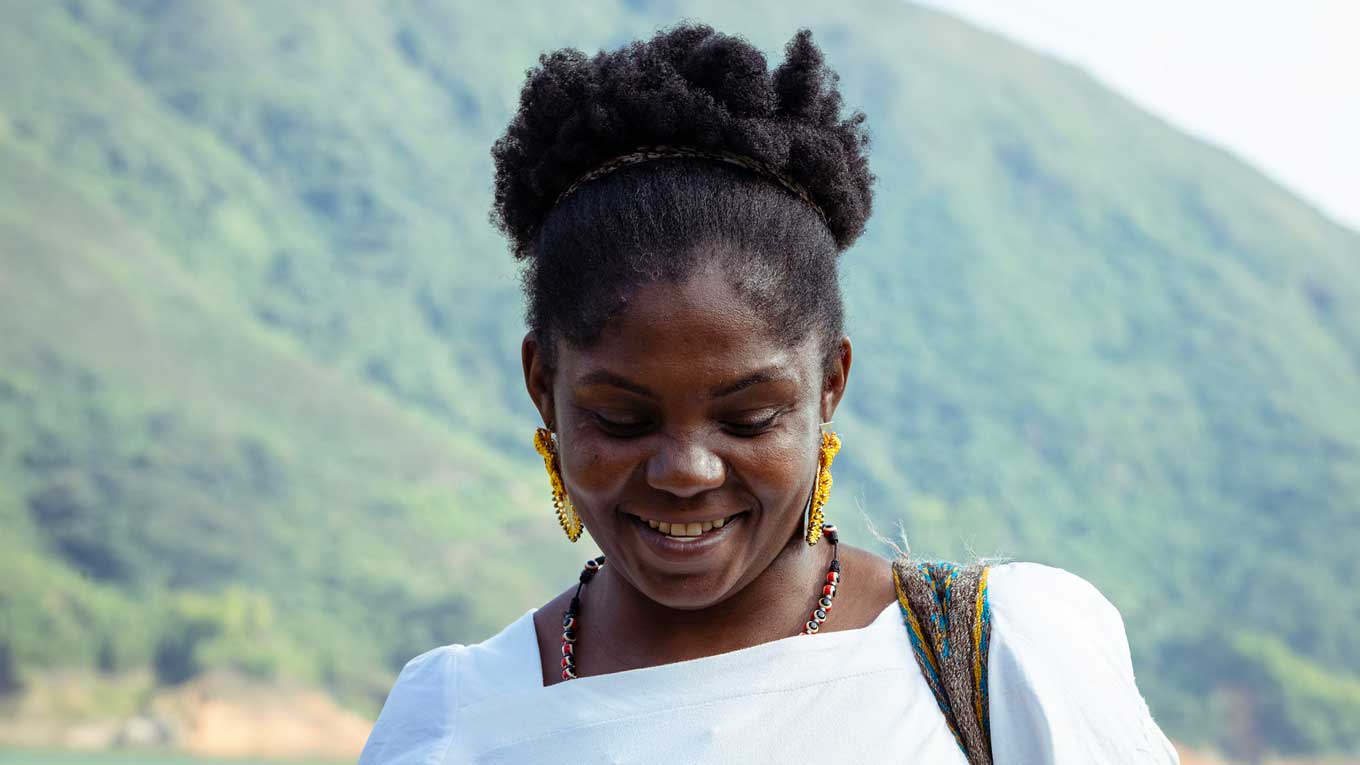
On the streets of La Toma, Colombia and beyond, filmmaker Juan Mejía Botero shines a spotlight on the historic presidential campaign of Francia Márquez, a beacon of social and environmental justice and fearless reclaimer of the derogatory label “Igualada:” someone who dares to act as though they have equal rights to those who have systematically oppressed them.
“Márquez’s resonant slogan, ‘I am because we are,’ rings through gatherings, galvanizing the rural and Afro-Colombian communities Márquez is fighting for, and echoing through the growing number of younger Colombians inspired by her message,” wrote programmer Stephanie Owens.
Will & Harper
(United States, 114 min.)
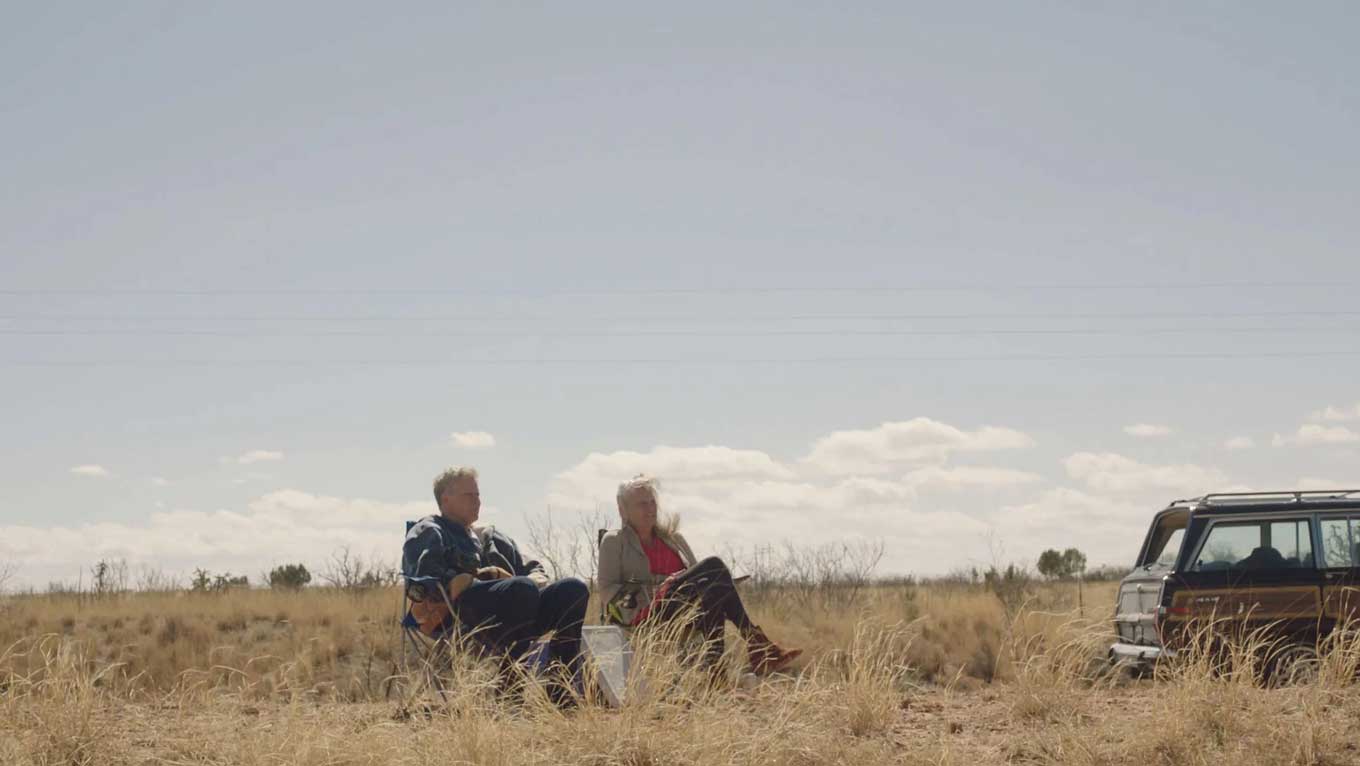
In Josh Greenbaum’s earnest doc, best friends Will Ferrell and Harper Steele enter a new chapter in their 30-year friendship after Steele comes out as a trans woman. The two laugh and talk their way across middle America as Ferrell is reintroduced to his best friend.
Program contributor Cameron Asharian hailed the documentary as “an exploration of both silliness and strife, a sincere facet of the trans experience audiences rarely witness, and an affirmation of the unbreakable bonds of friendship.”
Black Box Diaries
(Japan/United States/United Kingdom, 95 min.)
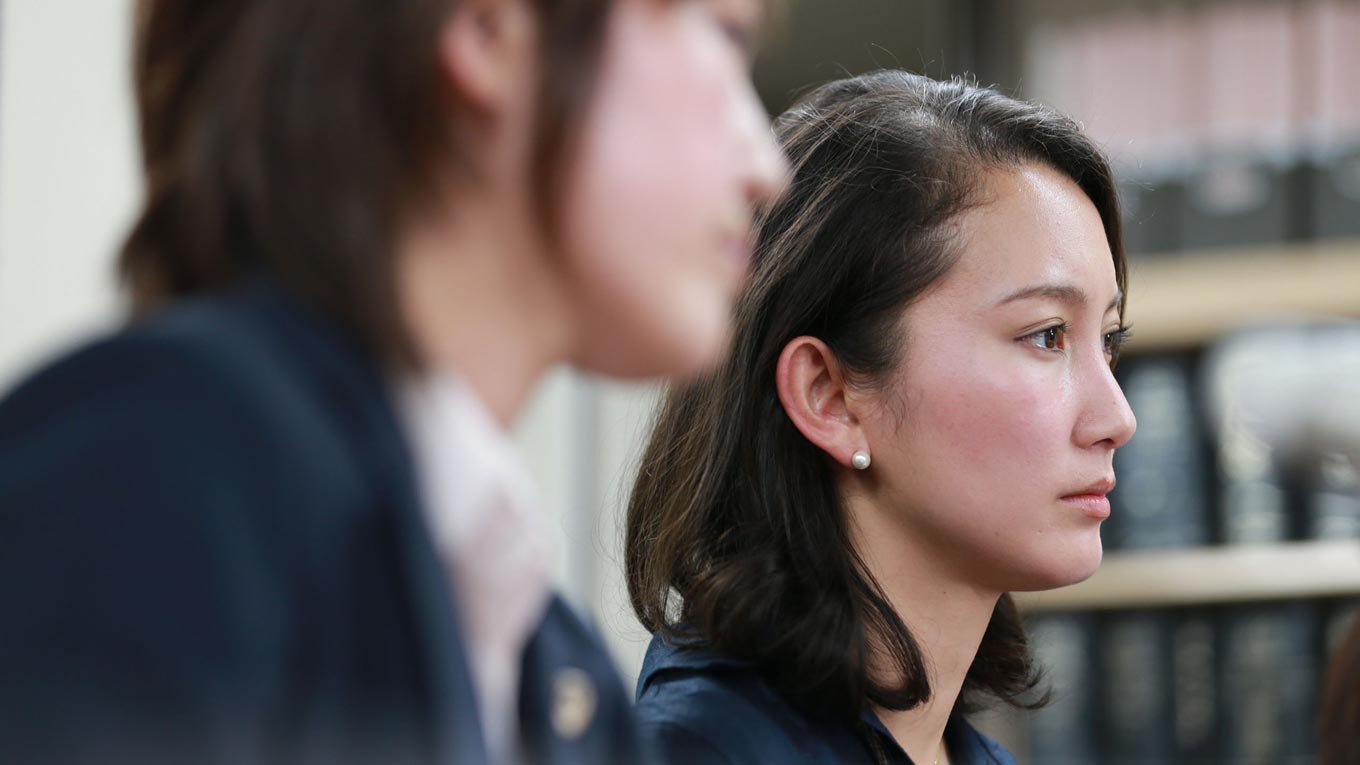
After being sexually assaulted by a prominent offender, director and journalist Shiori Ito documents the arduous journey of trying to hold them accountable as she navigates the outdated misogynies of Japan’s judicial system.
“Shiori Ito came forward to challenge her high-profile abuser despite knowing the risks,” commended Trzebiatowska. “Her bravery meant hope for others and the prospect of real change to a broken system.
As We Speak
(United States, 95 min.)

In his feature debut as a director, J.M. Harper follows Bronx rapper Kemba down a rabbit hole, exploring and condemning the way the US criminal justice system has wrongfully used artistic lyrics as a means of criminal evidence for decades.
“J.M. Harper’s self-assured directorial debut unfolds like an original odyssey, shedding light on the intersection between the weaponization of rap lyrics and threats to freedom of speech,” observed Owens.
The Battle for Laikipia
(Kenya/United States, 90 min.)

Co-directors Daphne Matziaraki and Peter Murimi team up to tackle and catalog the ongoing injustices against Indigenous ranchers at the hands of landowners on the wildlife conservancy of Laikipia.
“Weaving together themes of environmentalism, colonialism, and conservatism, the film delicately showcases the impact of these crucial topics on the Indigenous farming community of Kenya’s Laikipia region,” praised program contributor Bobbi Broome.
Ibelin
(Norway, 95 min.)
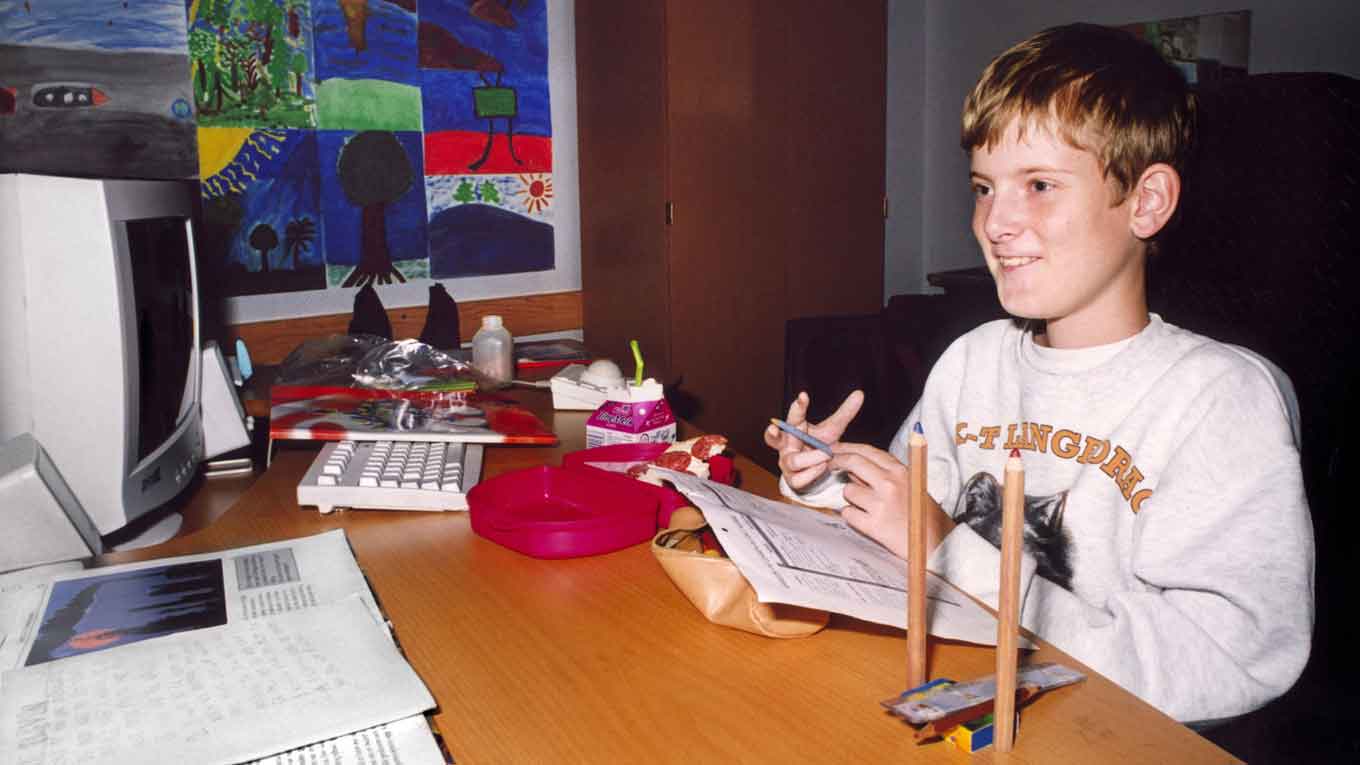
Norwegian filmmaker Benjamin Ree memorializes the life of Mats Steen, a gamer who passed away at 25 from a degenerative muscular disease. Ree peels the layers back on a surface-level story about an isolated gamer and finds an outpouring of love from people around the world who befriended Steen online.
“Mats’ parents' deepest remorse was the thought of their son never experiencing love and friendships,” wrote Owens. “But Ree offers an endearing and innovative portrait of Mats’ abundant life through World of Warcraft, underscoring how community and soulful relationships can transcend the boundaries of the physical world.”
Agent of Happiness
(Bhutan/Hungary, 94 min.)

Director-cinematographer team Arun Bhatterai and Dorottya Zurbó tell the story of Amber, a Bhutanese government agent who is sent to measure the happiness levels of people living in the Himalayan mountains. Along the way, Amber looks inward for his own happiness.
Trzebiatowska said that the film “resonates as a heartfelt exploration of happiness in the face of adversity” and becomes “a beautifully realized reminder to count our blessings.”
Union
(United States, 94 min.)
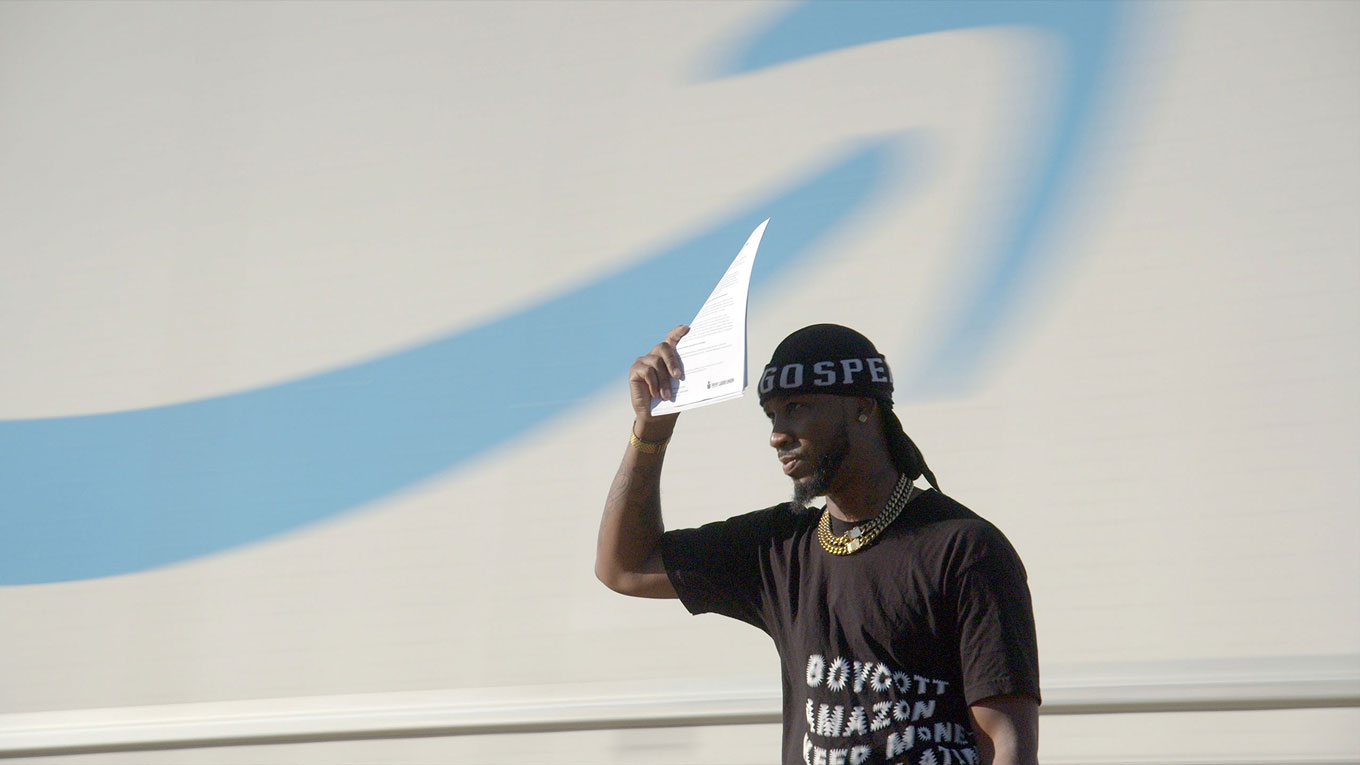
Co-directors Stephanie Maing and Brett Story chronicle the efforts of current and former Amazon employees in the Amazon Labor Union as they try to build momentum for their cause and unionize against one of the biggest corporations in the world.
“[The directors] track exhilarating victories and demoralizing setbacks along the way, but foremost spotlight the far-reaching ability of collective action to inspire hope and bring self-determination to workers who’ve long felt disenfranchised and powerless,” noted senior programmer Basil Tsiokos.
Header images courtesy of Sundance Institute
As thousands waited on federal government assistance after Hurricane Katrina in 2005, New Orleans residents came up with their own nickname for the Federal Emergency Management Agency, or FEMA.
The four letters of the agency’s acronym, they said, stood for “Fix Everything, My Ass.”
As climate-related disasters have intensified in the ensuing decades, the agency has been similarly tarred by politicians and disaster survivors from Hawai’i to Vermont.
There are many points of criticism: FEMA seldom provides immediate cash aid to people who lose their homes, instead requiring them to complete onerous housing applications that can take weeks to process. It requires many survivors to apply for and be denied a loan from the Small Business Administration, a separate government agency, before they can get housing aid.
It denies them aid if they already have home insurance or if their homes had been damaged before a disaster, and it imposes a mountain of paperwork on people who need to appeal aid decisions or who miss application deadlines.
Now, after decades of inaction, FEMA is addressing those criticisms all at once. The agency announced on Friday that it will fundamentally overhaul the way it delivers aid to survivors, launching new programs to provide quick cash payments to those in need and eliminating much of the bureaucracy that hampers aid access.
“This is really a transformational, deeply impactful, meaningful, and historic change in our provision of individual assistance to survivors of natural disasters,” said Alejandro Mayorkas, the secretary of the Department of Homeland Security, which oversees FEMA.
“For too long, in the face of too many natural disasters and extreme weather events, survivors have had to overcome many barriers to access to federal assistance.”
The new rules, which FEMA said are the most significant changes to its aid process in 20 years, will take effect in late March. They don’t require approval from Congress, and will have a minimal impact on federal taxpayers, according to a FEMA official: The reforms will cost about $679 million a year, less than 5 percent of what the agency spent on disasters last year.
The centerpieces of the reform are two new programs that target the chaotic first few days after a disaster strikes. Until now, most agency assistance has come down to victims in the weeks and months following a disaster, after states submit a request for specific types of aid.
Once they evacuate the danger zone, victims must apply for assistance with specific costs such as hotel lodging and home repairs.
The first new policy will provide a rapid cash payment of $750 to all victims of federally declared disasters, by direct deposit or check, without states needing to request the money first.
The second will give victims flexible upfront funding to cover about two weeks of housing, indexed to housing costs in the region, rather than making them submit long-term housing plans before FEMA will cover their expenses.
A FEMA official said the information in those previously required housing plans was “not particularly informative,” suggesting that the upshot of the reform will be a faster deployment of funds.
The reform package will also eliminate some of FEMA’s most notorious red tape.
For instance, the agency is doing away with the Small Business Administration loan application requirement, which forced victims who wanted help replacing destroyed personal property to fill out an application they knew would be denied and then present that denial to FEMA.
It is also relaxing a rule that prevented residents who had home insurance from getting aid, even if their insurance didn’t cover the full cost of a rebuild.
And finally, the agency is eliminating a “pre-existing conditions” provision that prevented residents from receiving aid for housing defects that existed before a disaster, such as leaky pipes or sagging walls.
It will take years for local officials and experts to gauge how these reforms affect the way the United States recovers from disasters, but experts hailed the rule changes, saying they would ease financial and emotional pain for many flood and fire victims.
“These changes put into effect long-standing recommendations to cut red tape and help disaster survivors by implementing quick payments to homeowners,” said Shana Udvardy, a policy analyst at the Union of Concerned Scientists, adding that the reforms “will offer disaster survivors a smoother road to recovery.”
In a press call with reporters, FEMA administrator Deanne Criswell said her administration had been developing the changes for multiple years, and that they are a direct response to previous criticism from survivors, government officials, and the media.
“This has been the result of just listening — listening to all of the concerns that survivors have had, our state and local emergency managers have had, and, frankly, all of you,” she said.
Header photo by Jeffrey Greenberg / Universal Images Group via Getty Images, courtesy of Grist
Between record-high sales of electric vehicles in the United States and emerging laws and incentives encouraging the use of EVs across the country, it makes sense that the rideshare market is going electric, too.
New York’s Revel is celebrating a big milestone in this transition to cleaner transportation.
The Brooklyn-based electric mobility and infrastructure company, which emerged in 2018, just celebrated its two-millionth ride.
The milestone comes less then six months after the company’s millionth ride — which was taken by Brooklyn native and Senate Majority Leader Chuck Schumer.

“It took two years to get to 1,000,000 rides, [and] it only took a quarter of that time to double it,” Revel’s CEO and co-founder Frank Reig said in a press release. “Every ride Revel provides to New Yorkers directly displaces an emission-producing trip — that’s cleaner air and a better city today.”
The press release estimates that two million Revel rides offset over 9,000,0000 pounds of carbon emissions.
Aside from the eco-benefits of riding with Revel, the company also boasts meaningful business practices — a contrast to other rideshare companies like Lyft and Uber.
Revel employs about 1,500 drivers as W2 employees who have guaranteed hourly wages and access to benefits like health care, paid time off, and 401(k) retirement planning. The company also covers vehicle costs like leasing, maintenance, and charging.
Those vehicles are part of a fleet of over 500 EVs, including Tesla Model Ys and Model 3s, as well as Kia Niro EVs.

Revel is only operational in the New York metropolitan area, but drivers deliver rides in all five boroughs in NYC, as well as parts of northern New Jersey, and to-and-from three major airports.
Aside from ridesharing, the company has ventured into building the city’s public fast charging infrastructure — especially as Mayor Eric Adams mandated New York’s rideshare industry to electrify by 2030.
“EVs make a lot of sense for the rideshare industry, but there needs to be much more public fast charging infrastructure so drivers, especially those in big cities, can make the switch,” Revel spokesperson Bobby Familiar told Good Good Good.
“Rideshare drivers see cost savings from lower fueling and maintenance costs with EVs,” he continued. “And in terms of environmental impact, electrifying one rideshare vehicle has the same emissions reduction impact as more than three private cars because they do so many more miles.”
Adam’s mandate — called the Green Rides Initiative — will require upwards of 100,000 rideshare vehicles to go electric by 2030. According to Familiar, that will eliminate more than 600,000 tons of carbon emissions every year.
The initiative is the first of its kind in the country.

“If more cities made the same commitment, it would be a huge victory for urban public health and the climate,” Familiar said.
Revel has three fast charging “Superhubs” open to the public, in Bedford-Stuyvesant, South Williamsburg, and Long Island City. The Bedford location has 25 fast charging plugs and is touted as the largest charging station of its kind in North America.
“Growing our publicly available fast charging network in New York is a top priority. We are building this infrastructure in communities nobody else has,” Familiar said. “Areas historically last to get new investments and improvements are often the same that stand to benefit most from zero-emission EVs.”
One example is the South Bronx, where Revel is building a fast charging station this year — an area that has been called “Asthma Alley” due to its high rate of respiratory issues.
Familiar continued: “EVs can only make a difference if they’re accessible to everyone.”
Header images courtesy of Revel
Every day the Good Good Good team collects the best good news in the world and shares it with our community. Here are the highlights for this week!
If you want to get good news in your inbox every day, join the Goodnewsletter — the free daily newsletter designed to leave you feeling hopeful.
The Best Positive News We’re Celebrating This Week —
The U.S. experienced a significant decline in homicides in 2023, with some cities on track to record the fewest murders in decades
There was a significant decline in homicides across the United States in 2023 (following a surge in murders after the start of the pandemic). Cities like Detroit, Philadelphia, and Los Angeles are on track to record the fewest murders in decades.
The decline in crime extends beyond homicides, covering various violent and property crime categories. Contrary to perceptions fueled by social media, crime overall is falling nationwide, including in cities previously labeled as “dangerous.”
In Detroit, a dedicated effort to revitalize the criminal justice system is credited for the remarkable decline in homicides. Los Angeles saw a reduction in murders of people experiencing homelessness, contributing to the overall decline.
What’s the nuance? The decrease in gun violence is a positive trend, but the numbers are still higher than pre-pandemic levels. Despite the positive trend, some cities, like Washington, D.C. continue to experience rising crime rates. Community activists in Philadelphia point to the lack of civic resources at the pandemic's onset as a factor contributing to violence, emphasizing the importance of programs and resources. While encouraged by the decline in violent crime, law enforcement officials acknowledge the need for continued efforts to address remaining issues.
Volunteer knitters are completing unfinished projects left behind by deceased loved ones
Dedicated knitters Jennifer Simonic and Masey Kaplan have founded a heartwarming nonprofit initiative called the Loose Ends Project. Recognizing the sentimental value of handmade gifts and heirlooms, the organization aims to complete unfinished projects left behind by late loved ones.
Established in 2022, the Loose Ends Project has rapidly grown, boasting a network of over 19,000 volunteers from every state in the U.S. and 63 other countries.
Simonic and Kaplan noticed a recurring need among friends who often asked for assistance in finishing blankets, sweaters, and various other projects initiated by deceased loved ones. To address this poignant demand, they established the project in the hopes of bringing closure and comfort to grieving families.
The process is simple yet profoundly impactful: Surviving families and friends can submit incomplete projects on the Loose Ends website, where they are matched with volunteers possessing knitting, crocheting, quilting, rug hooking, and crafting skills in various textile mediums. These skilled volunteers offer their services free of charge, completing the projects and returning them to the recipients.
Some volunteers generously offer to provide how-to lessons, empowering recipients to continue working on their loved ones' projects independently. The ethos of the Loose Ends Project is rooted in the belief that handmade items are gestures of love, embodying time, expense, and skill that are immeasurable.
In an effort to make these projects more accessible, Loose Ends has recently initiated a partnership with JOANN, a renowned craft and fabric store. This collaboration provides exclusive discounts to volunteer finishers and in-kind product donations. JOANN locations across the country will serve as designated "meet-up" spots, facilitating the exchange of projects between loved ones and finishers.
Since its inception, the Loose Ends Project has successfully completed over 2,000 projects. The recent partnership with JOANN is expected to catalyze further growth, allowing the organization to continue easing grief, fostering community, and inspiring generosity.
Why is this good news? The nonprofit provides a heartwarming and compassionate solution by connecting volunteers globally to complete unfinished projects left behind by deceased loved ones, offering closure to grieving families and preserving the sentimental value of handmade items as meaningful mementos. The completion of these projects by dedicated volunteers ensures that the tangible, handmade expressions of love are not lost, donated, or discarded but instead finished as intended and returned to be used and cherished.
An innovative clothing line makes human labor visible on every garment
An innovative clothing line called HUMAN TOUCH aims to make human labor visible on every garment. The creators, Juliet Seger and Christina Albrecht, use a technique called "paint-sewing," where the person sewing the garment has paint on their hands, leaving visible marks on both the sewing machine and the clothing.
This process makes the human labor involved in clothing manufacturing evident and unique for each item. For consumers, it serves as a conceptual marvel with a thought-provoking final product. The uniqueness of each item captures the human essence behind the creation of clothing.
Seger founded HUMAN TOUCH as a project within her fashion label, Paid Vacation, and it was the focus of her 2020 dissertation at the University of Edinburgh. Her research examined the role of technology in the history of fashion and emphasized the need to reexamine the ethics of fashion by recognizing the essential human participation in clothing manufacturing.
HUMAN TOUCH is now a standalone project, and in addition to a line of clothing made-to-order in Berlin, the company engages in live sewing performances. The international line is set to debut in an online store in February, accompanied by a live sewing event during Berlin Fashion Week.
The creators position HUMAN TOUCH not just as a fashion brand but as a basis for fashion activism, redirecting attention to the artistry and humanity of garment workers while creating meaningful clothing. They aim to challenge the perception of sewing as a 'low-skilled' task and emphasize its importance in creating a better fashion system.
Why is this good news? The innovative approach of HUMAN TOUCH in making human labor visible on every garment through the paint-sewing technique not only provides consumers with a unique and visually impactful experience, but also aims to challenge stereotypes about sewing being a 'low-skilled' task and advocates for a more ethical and sustainable fashion industry by emphasizing the artistry and humanity of garment workers. Additionally, the project's focus on fashion activism during Berlin Fashion Week suggests a commitment to bringing positive change to the fashion industry.
A chef in Turkey showcases the transformative power of food in promoting cultural exchange and positive change in the community
Chef Ebru Baybara Demir, based in Mardin, southeast Turkey, embodies the essence of a culinary entrepreneur whose impact extends far beyond the kitchen. Beyond managing her renowned restaurant, Cercis Murat Konaği, Demir engages in endeavors that intertwine gastronomy, cultural exchange, and humanitarian relief.
Demir's impact transcends the culinary world as she actively engages in humanitarian initiatives. She plays a crucial role in building bridges between locals and Syrian refugees, who make up approximately a tenth of Mardin's population. In a region marred by ongoing conflicts and instability, Demir's efforts foster community cohesion and cross-cultural understanding.
As the war in Syria led to an influx of refugees and increased instability in Mardin, Demir's commitment to social gastronomy became more pronounced. In 2016, she secured funding from the UN's refugee agency to empower women under her employment to teach culinary techniques to both locals and refugees.
Two years later, she founded an agricultural development co-op, offering employment opportunities in food production to both locals and refugees. This co-op not only cultivates crops but also produces olive oil soap, showcasing the diverse skills within the community.
Demir's dedication to humanitarian causes reached new heights when earthquakes struck southern Turkey. Promptly responding to the crisis, she operated "soul kitchens" in the affected area, preparing tens of thousands of hot meals every day for survivors.
Her commitment to quality ensured that the dishes sent to the survivors included both national favorites and local delicacies, reflecting her passion for preserving regional culinary traditions even in times of crisis.
In recognition of her impactful work, Demir received the 2023 Basque Culinary World prize. She will use the €100,000 prize money to open a cafe in Mardin run by Turkish and Syrian chefs, contributing to community development. Profits from the cafe will support operations for the soul kitchens, emphasizing the sustainable and cyclical nature of her initiatives.
An Instagram community helped forgive the medical debt of over 140,000 families
In a heartwarming initiative, Sharon McMahon, widely recognized as "America’s Government Teacher" on Instagram, recently spearheaded a successful fundraiser with her dedicated followers, affectionately known as "the Governerds." The objective of the campaign, conducted in December 2023, was to support RIP Medical Debt, a nonprofit organization focused on alleviating medical debt burdens.
McMahon, who boasts a substantial following of over 1 million on social media, engages with her audience on current events. In addition to her primary focus on education, including podcasts and "Government for Grownups" workshops, McMahon has a passion for philanthropy.
During the annual fundraiser, the Governerds generously contributed a remarkable sum of $1,079,369.10 to RIP Medical Debt. What makes this effort even more impactful is the organization's unique approach to purchasing medical debt at cost.
Leveraging the expertise of the debt industry, RIP Medical Debt efficiently transforms every $1 donated into relieving approximately $100 in medical debt. The organization specifically supports individuals earning less than four times the federal poverty level, with debts totaling 5% or more than their annual income.
McMahon shared screenshots revealing the astounding result of this collective effort — the Governerds' initial contribution of $1 million translated into an astonishing $170 million in forgiven medical debt. This transformative outcome significantly impacted the lives of 142,830 families who received notifications that their medical debts had been fully paid.
This isn't the first time McMahon's community has rallied for a cause. Three years ago, their inaugural RIP Medical Debt fundraiser raised $560,000, demonstrating the enduring commitment to making a positive impact.
What’s the nuance? Medical debt is involved in over two-thirds of bankruptcies in the United States, and McMahon’s fundraiser brings attention to the need for collective efforts in addressing the systemic nature of medical debt. The good news, though, is this example of community-driven philanthropy demonstrates the transformative impact that collective action can have on the lives of individuals and families facing financial hardships due to medical debt.
→ Read more
Hawaii replaced its last coal plant with a huge battery
Hawaii has achieved a significant milestone in its commitment to cease burning fossil fuels for electricity by 2045 by replacing its last coal plant with the innovative Kapolei Energy Storage system.
The battery comprises 158 Tesla Megapacks that began commercial operations on the industrial west side of Oahu before the end of December. The battery has a remarkable 185-megawatt instantaneous discharge capacity — equivalent to the coal plant's output — but with a much quicker 250-millisecond response time, contributing to a more responsive grid.
This pioneering project is not just a replacement for the coal plant — it represents a novel approach to maintaining grid reliability during the transition from fossil plants to renewable energy sources.
The old coal plant played a crucial role in providing energy, capacity, and grid services. The Kapolei battery effectively replaces the latter two, matching the coal plant's maximum power output and delivering essential grid services to keep the grid operating within optimal parameters.
And the battery works collaboratively with the island's vibrant solar sector, enabling the grid to integrate more clean renewable energy. The battery also offers "black-start capability," serving as a power source to restart the grid in the event of a disaster, such as a cyclone or earthquake.
The system's capabilities, including capacity, grid services, and black-start functionality, make it one of the most advanced battery energy storage facilities globally. Its central role in Oahu's grid, constituting about 17% of the island's peak capacity, demonstrates the necessity for advanced technologies to maintain grid stability amid the increasing integration of renewables.
Why is this good news? Hawaii's transition to clean energy has positioned the state at the forefront of the energy transition, marked by its early adoption of mass rooftop solar and utility-scale solar-battery projects. The Kapolei battery exemplifies a model for a reliable clean-energy grid, showcasing how critical grid functions can be effectively shifted from fossil-fueled plants to clean energy sources.
As the energy landscape continues to evolve, the success of projects like Kapolei provides valuable insights and practical examples for scaling similar initiatives nationwide.
“Mama Octopus” leads a group of women in octopus fishing, contributing to economic well-being and marine conservation
Amina Ahmed, affectionately known as "Mama Pweza" (Mama Octopus), is spearheading a transformative initiative in the Lamu archipelago of Kenya. Leading a group of women from the Shanga-Ishakani village, Ahmed is challenging traditional gender roles by engaging in octopus fishing, a practice typically reserved for men. This endeavor not only aims to enhance the economic well-being of the participating families but also plays a crucial role in the conservation and preservation of ocean ecosystems.
The women's foray into octopus fishing is particularly significant in the context of local customs that have long dictated that men are the primary fishers while women stay at home to care for children. These pioneering women have successfully demonstrated the economic benefits of their octopus fishing activities, leading to greater acceptance from the male members of their community.
The success of the initiative is evident in the numbers, as exemplified by the experimental fishing closures in the Pate conservancy. After a four-month closure between January and April 2019, the women caught 186kg of relatively small octopuses over five days. Subsequent openings between May and September 2019 yielded an impressive 868kg of octopuses over five days, showcasing the effectiveness of their conservation-oriented approach.
Beyond their contributions to marine conservation, the women's association is saving funds for community development. For every octopus sold, 30 shillings are set aside, leading to the construction of a nursery school and the acquisition of two fishing boats to access offshore fishing grounds. Ahmed envisions breaking gender stereotypes further by having women assume leadership roles as boat captains, a move that challenges established norms in the male-dominated fishing industry.
Why is this good news? Mama Pweza and her team exemplify the transformative power of community-led conservation initiatives that not only empower women economically but also contribute to the sustainable management of marine resources, creating a harmonious balance between human activities and the delicate ecosystems they rely on.
→ Read more
More good news of the week —
The UK's use of gas and coal for electricity hit its lowest point since 1957, with a 20% decline in electricity generated by gas and coal power plants in 2023. Fossil fuels contributed about one-third of the electricity supplies, while renewables reached a record 42%, marking the third time this decade that renewables surpassed fossil fuels.
The long-awaited suicide prevention barrier at the Golden Gate Bridge has been completed, marking the end of a decade-long project. The completion comes after years of advocacy by families who lost loved ones at the iconic structure.
Two large offshore wind projects in the U.S., the Vineyard Wind off Massachusetts and the South Fork Wind off New York, have started sending electricity to the grid for the first time. The Vineyard Wind project, with 62 turbines, and the South Fork Wind project, with 12 turbines, mark a significant milestone in the development of the American offshore wind industry.
Architects are addressing the issue of building collisions that kill up to a billion birds annually in the U.S. Innovations include patterned or coated glass, green roofs, and structures serving as bird perches, offering both aesthetic appeal and bird safety in city skylines.
Scientists have discovered a way to get Alzheimer’s drugs into the brain faster with a new ultrasound tool, potentially improving the efficacy of Alzheimer's drugs. An experiment resulted in a 32% greater reduction in Alzheimer's plaque levels in treated areas compared to the opposite side of the brain, according to PET scans.
A dog rescue in Ohio collaborated with a local tattoo shop for an annual fundraiser, where customers could choose pet-related tattoo designs, with all proceeds directly supporting the rescue's efforts to cover shelter, housing, food, and vet costs. The nonprofit shelter has been creatively raising funds for its operations, including an upcoming "Emo Prom,” aiming to raise funds for dogs in need through an emo-themed formal wear event.
A study of African elephant populations shows stabilization in southern heartlands after significant losses over the past century. The researchers advocate for conservation efforts that not only protect elephants but also focus on reconnecting fragmented habitats to ensure long-term stability.
California has enacted a law that facilitates out-of-state doctors — especially those affected by abortion restrictions — to obtain up to 90 days of in-person abortion training in the state, aiming to become a sanctuary for individuals from states where abortion is limited. With 18 states restricting or banning abortion and affecting the training of 20% of OB-GYN medical residents, California's initiative is seen as vital in addressing the impact of abortion bans on medical education.
A telecommunications company plans to convert old street cabinets used for broadband and phone cabling into electric vehicle (EV) charging points, with the first installation expected in Scotland within weeks under a pilot program. The initiative aims to address the shortage of EV chargers in the UK, with the company hoping to convert up to 60,000 cabinets nationwide.
The capital of Slovakia is pioneering a novel approach to recycling cigarette butts by collecting them in specially designed containers and using the discarded material to create asphalt for roads. The initiative aims to contribute to cleaner streets, promote recycling, and address the environmental impact of discarded cigarettes.
Juneau, Alaska, is addressing its carbon footprint from tourism by encouraging visitors to pay a few dollars to the Alaska Carbon Reduction Fund, which installs heat pumps for local residents relying on oil heating systems. The fund has installed 41 heat pumps since 2019, estimating they will prevent 3,125 metric tons of carbon emissions over their 15-year lifespans, with contributions from nearby businesses and tour operators.
In 2023, the world witnessed a surge in renewable energy, with record-breaking solar output and a significant increase in battery production. China, Europe, and the U.S. set solar installation records, with China leading the way with additions between 180 and 230 gigawatts.
The use of portable X-ray machines is on the rise, with the devices proving valuable in remote locations, battlefields, roadsides, and disaster zones. These devices are capable of producing images of a similar standard to larger, fixed machines in hospitals, enabling screenings and diagnostic procedures to be carried out more efficiently in various settings.
Poland's new climate minister, Paulina Hennig-Kloska, has announced a half-year moratorium on logging in 10 of the country's most valuable forests. The move is the first step in limiting logging and fulfills a promise made in the government's coalition agreement to protect 20% of the country's forests.
Attorney General Merrick Garland announced that over 500 gun purchases have been blocked since the implementation of a bipartisan gun law in June 2022, which mandates stricter background checks for individuals under the age of 21. The law, enacted after several mass shootings, includes additional checks for young buyers, involving state and local officials along with FBI databases.
The only thing better than getting sucked into a good book? Knowing that book has done a bit of good.
With Libro.fm, the audiobook platform for independent bookshops, authors Ann Patchett, Jason Reynolds, and Eric La Salle are making that possible.
Between January 23 and 25, 100% of what customers pay for a selection of these authors’ titles will be donated to the Book Industry Charitable Foundation, or Binc.
Binc is the only nonprofit in the country dedicated to assisting booksellers and comic retailers in need.
The titles that are part of this fundraising campaign are:
- “Tom Lake” by Ann Patchett
- “Stamped: Racism, Antiracism, and You” by Jason Reynolds
- “Laws of Annihilation” by Eriq La Salle
The entire percentage of each of these title’s audiobook list price, which is what shoppers pay for an audiobook, will be donated to Binc.
This fundraiser, which is aptly called “Audiobooks for Binc” is made possible by Libro.fm, bookshops, the books’ authors, and publishers foregoing royalties and profits.
“I really value the important roles that book and comic stores play in every community; they’re essential,” La Salle said in a video for the campaign. “And so are the people who work [in] and own these stores.”
As major corporations like Amazon reinvent the bookselling landscape, especially through digital formats like Audible, Libro.fm uplifts small, independent booksellers and provides readers with an ethical Amazon alternative.
Libro.fm is also a Social Purpose Corporation, meaning the company is operated with the “long-term interest of booksellers in mind.”
This partnership with Binc is just one piece of that puzzle.
“We are grateful to Libro.fm for their continued generosity and commitment to Binc and booksellers over the last 10 years,” Pam French, Binc’s executive director, said in a press release.
“This new promotion with authors and publishers that they’ve launched in support of Binc is a win for everyone involved, and we’re excited for listeners to be introduced to the work of these talented authors.”
The work that will be supported through this initiative are Binc’s charitable programs, which provide assistance to employees and shop owners who have a financial need from severe hardship or emergency circumstances.
“Binc supports the bookstores, which means that Binc supports safe havens in our community,” Reynolds said in a video. “Binc supports hot spots for resources and information for our neighborhoods. Binc supports cabinets of imagination for our young people.”
According to Binc’s website, the organization has provided over $11 million in assistance and scholarships to more than 10,000 families since its inception.
“It’s a new year, and I bet everything is going to be perfect. Every single day for every single one of us,” Patchett said in a video. “But if it’s not, and you work in a bookstore or comic book store, you might need to rely on the help of Binc. And Binc is going to be there for you.”
Header image courtesy of Libro.fm
What happens when you combine passion for a cause with a keenly honed skill?
Well, for one, the Vegan Hacktivists, a global volunteer-based group of software engineers, designers, data scientists, writers, and strategists who all care deeply about animal protection.
Hacktvisim, or digital activism that utilizes “hacking” or digital tools to protest or take action, is just one type of activism that calls on creative and strategic skill to benefit a larger movement.
The Vegan Hacktvists emerged in 2019 with the hope of inspiring people to become advocates for animals, using digital skills as the fuel for their activism. The community works together to build projects and advise organizations in the animal protection movement.
Some projects include Vegan Bootcamp, a website with free challenges and courses that take users on a step-by-step guide toward a plant-based lifestyle; an interactive Animal Rights Map locating 2,500 local animal rights activist groups around the world; and even Vegan Linguists, a website that allows vegan content creators to easily translate their content to make their message more accessible to all.
These are only some of the wide array of volunteer-run projects the Vegan Hacktivists have created. The collaborative also facilitates online communities, like the Vegans of Reddit subreddit — with over 1.4 million members.
The Hacktivists also created a first-of-its-kind Tech & Data Study to understand how the vegan movement leverages technology. The 50-page report explores challenges and opportunities across different areas, as well as recommendations for community members to use technology to their advantage.
These days, the organization mostly focuses on consulting services for advocates and organizations to better build support for the movement. The best part? All services provided by the Vegan Hacktivists are free.
“We want everyone in the movement to thrive,” an introductory video for the group shares.
All of these projects coalesce under the same mission: “to build data-driven, disruptive, and innovative projects to help see an end to animal exploitation.”
While many of the motivations of the Vegan Hacktivists come from a desire to provide more meaningful data and technology to veganism, there is also a fundamental need to build active communities within the vegan world.
“Only a tiny percentage of the world is vegan, and a fraction within are active. Many organizations encourage non-vegans to adopt veganism through health, environmental, or ethical reasons,” the Hacktivists’ website reads. “We believe that we can also be effective by creating tools to help, inspire, and motivate more vegans to become advocates for the animals.”
And their work seems to, well, work.
In 2022, the organization had over 2,600 volunteer applicants, granted over $56,000 in grant money to individuals and developing organizations, and saved partner organizations over $620,000 with free tech, design, and support services.
And while larger population surveys can’t all be tied back to this work, veganism — or at least the embrace of plant-based food — is on the rise.
According to Statista, the market for plant-based “meats” has expanded steadily over the years, and the global market value of meat substitutes is expected to grow to over $35 billion by 2027.
Although it’s hard to measure the exact number of vegans in the world, spending habits and market changes indicate a much more mainstream embrace of the movement, as well as trends like “Meatless Mondays” or “Veganuary.”
The Vegan Hacktivists not only want to empower a growing community of people who care about animals and the environment — they want to make it easier to take action.
“Over the past few years, we have worked on numerous projects that have not only helped transition people to a vegan lifestyle but have also empowered them to become activists,” the organization shares in a video. “This is only the beginning for us.”
Those interested in volunteering or learning more can visit the Vegan Hacktivists website.
Header image courtesy of Vegan Hacktivists
Over the past several years, U.S. cities and states have passed hundreds of policies restricting the sale and distribution of single-use plastic bags.
A new report says these laws have largely succeeded in their goal of reducing plastic bag use.
The report — copublished by three nonprofits, Environment America, U.S. Public Interest Research Group Education Fund, and Frontier Group — draws on industry and government data to suggest that plastic bag bans can eliminate nearly 300 single-use plastic bags per person per year.
“The bottom line is that plastic bag bans work,” said Faye Park, president of the U.S. PIRG Education Fund, in a statement. “People realize quickly it’s easy to live without plastic bags and get used to bringing a bag from home or skipping a bag when they can.”
The report looked at plastic bag bans nationwide but focused on five representative policies in New Jersey; Vermont; Philadelphia; Portland, Oregon; and Santa Barbara, California. New Jersey’s, enacted in 2022, has had the greatest impact, eliminating more than 5.5 billion plastic bags annually.
Policies in the other jurisdictions eliminated between about 45 million and 200 million plastic bags per year, depending on population size.
The researchers arrived at their estimates using data collected by municipal agencies, academics, and plastics and grocery industry groups.
In total, there are more than 500 citywide ordinances banning plastic bags in the U.S., as well as 12 statewide bans — in California, Colorado, Connecticut, Delaware, Hawai‘i, Maine, New Jersey, New York, Oregon, Rhode Island, Vermont, and Washington. New bills could soon add Georgia and Massachusetts to that list.
The case against plastic bags is simple. They cause pollution at every stage of their lifespan, starting with the extraction of the oil and gas that’s used to make them. They cannot be recycled; after being used just once — for an average of about 12 minutes, according to one estimate — they are either incinerated or sent to a landfill, where they can last for hundreds of years.
Notoriously, bags can also become litter that pollutes the natural environment and kills wildlife. Plastic bags, alongside plastic films, cause more deaths of sea turtles, whales, dolphins, and porpoises than any other kind of plastic.
They can also shed tiny fragments called microplastics, exposure to which may be linked to metabolic disorder, neurotoxicity, and reproductive damage in humans, among other health problems.
“It feels like there’s a study a week showing that plastics are not just littering and polluting the environment, but digging into our bloodstream,” said Janet Domenitz, executive director of the nonprofit MassPIRG, the Massachusetts branch of the Public Interest Research Group. Plus, microplastics release greenhouse gases that contribute to climate change.
Plastic bag bans have their skeptics, however, including those who believe it’s “narcissistic” to support them while still engaging in other environmentally destructive practices, like driving a gasoline-powered car.
Others have argued that plastic bag bans are bad for businesses, or that they violate consumers’ freedom to choose plastic. As of 2021, 18 states had passed so-called preemption laws, preventing local governments from adopting their own bag bans.
Some researchers have counterintuitively concluded that plastic bags are good for the environment, compared to paper or canvas alternatives.
One viral study from 2018 claimed that a cotton bag would have to be reused 20,000 times to offset the environmental impact of producing it, while other studies have criticized plastic bag bans for leading to a spike in the use of paper bags — which also use up resources.
Research shows that paper bags take more energy and water to produce than plastic bags.
Other experts, however, say the cotton bag study makes a “false comparison” between reusable and plastic bags, failing to account for the full life cycle impacts of plastic once it is disposed of or littered into the environment.
As for the plastic or paper debate, environmental groups agree that the point of a “well-designed” plastic bag ban should be to reduce disposable bag use of any kind.
“The intent of these laws isn’t to shift from a single-use bag to another single-use bag,” Celeste Meiffren-Swango, Environment America Research and Policy Center’s Beyond Plastic campaign director and a coauthor of the new report, told Grist.
“Paper has its own environmental impact.” She recommended that all plastic bag bans include a 10-cent charge for paper bags to encourage customers to bring reusable alternatives.
The report also urged policymakers to ban plastic bags of any kind — not just thin ones. In some jurisdictions, it identified a “loophole” that has allowed grocery stores and other retailers to replace thin single-use plastic bags with thicker ones that are nominally reusable — even though research suggests that consumers don’t reuse the thicker bags in practice. In California, this loophole led to a net increase in the weight of plastic bags used per person between 2004 and 2021.
Header photo courtesy of Alex Bramwell / Getty Images via Grist
As violence persists and the death toll rises in Gaza after over 100 days of conflict, Palestinians are not only desperate for safety — but for food.
According to the United Nations Relief and Works Agency, over half a million people in Gaza currently face “catastrophic hunger,” which is equivalent to “famine levels of starvation,” per the Integrated Food Security Phase Classification.
Between intense fighting and the difficulty of getting aid to the people who need it most, food remains out of reach for hundreds of thousands displaced in the area.
But Chef José Andrés and his organization World Central Kitchen always seem to find a way.
WCK just announced that it has served over 22 million meals in Gaza.
“Over 100 days the lives of families have been unthinkable in Gaza,” Andres wrote on Instagram. “WCK right now doing everything we can, bringing food to people who need our help! More than 22 million meals so far with hot food, kits for cooking, building kitchens… everything we can.”
The organization has been able to dispatch over 800 trucks to the area and set up 27 kitchens and over 750 clean cooking stoves, according to the announcement.
The organization’s work in Gaza is centered around its Field Kitchen in the city of Rafah, where many Palestinians have fled as refugees.
While getting aid into Gaza has been challenging, the organization’s Egypt team created a system that strategically dispatches supplies every day.
“We have dedicated trucks that are designed and compiled in a way to set up a fully operational kitchen and start cooking for 1,845 people per day,” a WCK logistics staffer named Nelly said in a blog post.
Another part of WCK’s success in the face of numerous aid barriers has been thanks to innovative approaches, like newly designed stoves.
As Palestinians lack access to cooking fuel, so d0 humanitarians like the WCK team, who face restrictions to transporting fuel across the border. So they had to get scrappy; the WCK team designed stoves that use wood pellets as fuel and fans to stoke the flames.

Working with local manufacturers in Egypt to produce the stoves, they not only solve the problem of fuel for cooking, but do so in a way that uses clean, efficient energy.
“These stoves are now being used by Palestinian volunteers and chefs in our Rafah Field Kitchen to cook thousands of hot meals each day,” a WCK blog post reads.
WCK has also designed ready-to-eat meal kits with ingredients and food that can feed a family for four days at a time, providing shelf-stable proteins that can last for weeks.
“Though we hope there will be a humanitarian solution before then, our culinary team has finalized the ingredients for special boxes that will be ready for the start of Ramadan in March,” WCK shared.
As the organization stays committed to its work in Gaza, volunteers are also operating in areas of need around the globe, reaching a worldwide milestone of 350 million meals served earlier this month.
No matter where in the world WCK finds itself, its mission stays the same: to reach as many people as they can with nourishment.
“The determination is renewed every day in serving the displaced with the help of the WCK team,” a Gaza volunteer, Ramadan, shared with the organization. “Our goal is to alleviate the burden of the displaced & lift them toward better days.”
Header images courtesy of World Central Kitchen