Pet lovers in Salem, Ohio wrapped up 2023 with a good deed: raising money for rescue dogs while getting fresh ink and piercings.
On December 30th, 2023, Ohio dog rescue All About The Pawz worked with Salem’s State Street Tattoo to organize their yearly flash tattoo and piercing fundraiser.
All proceeds from the flash tattoo event went directly to the rescue. Many customers requested pet-related artwork and arrived early with dog food bags in tow.
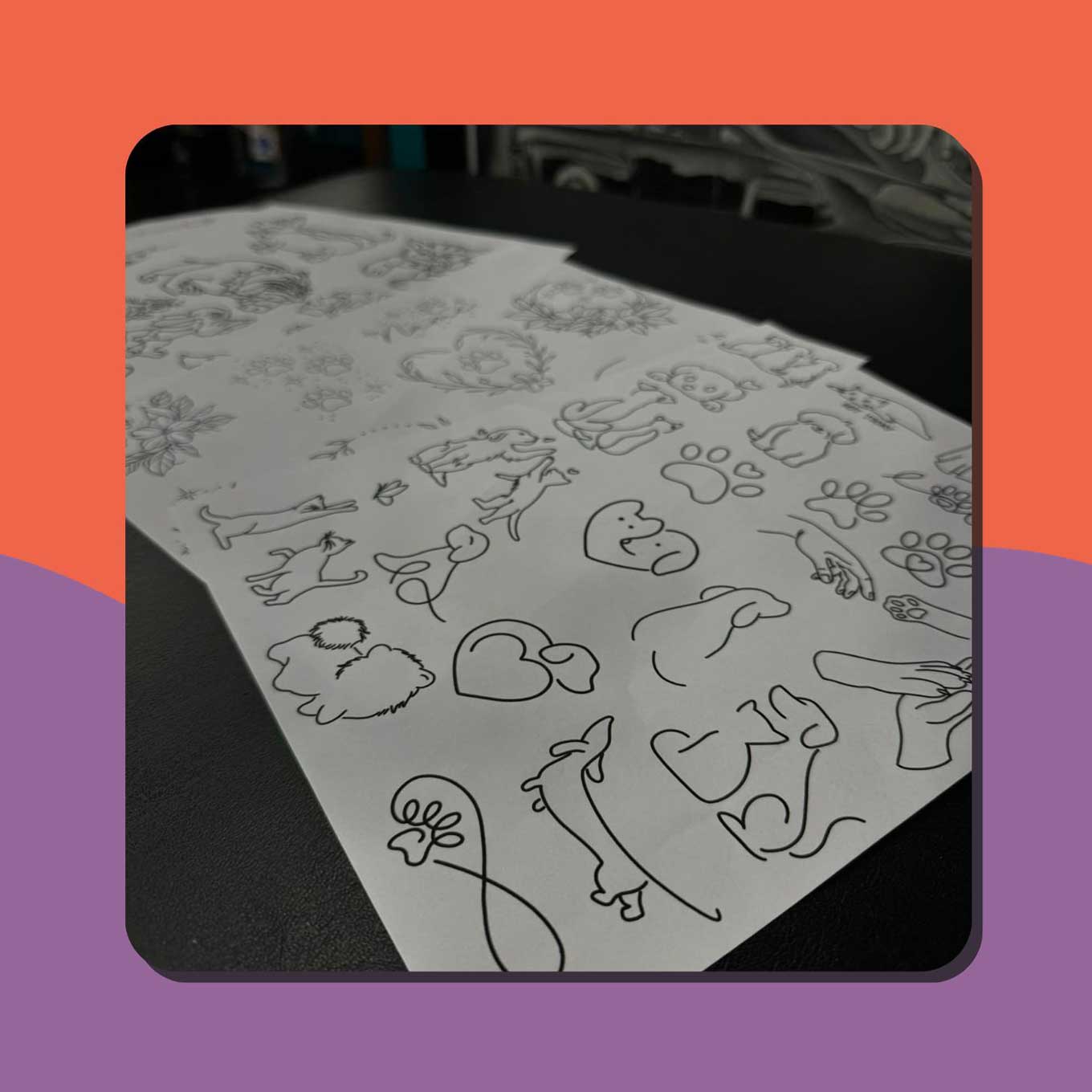
“We are trying to raise funds to maintain shelter, housing, food costs, vetting costs, just the basic needs for dogs that we are trying to get adopted,” AATP volunteer Angi Westhead told 21 News.
AATP is a nonprofit dog rescue — that also frequently has cats available for adoption — entirely run by volunteers. The animals come to the rescue as strays, owner surrenders, and transfers from county pounds.
“This year has been very rough for dog rescue,” said Westhead. “We are overwhelmed with the amount of dogs we are trying to save [and] trying to get adopted.”
AATP has been finding new ways to fund donations for years. In addition to hosting holiday pop-ups at their local Goodwill, the rescue also hosts bake sales, basket raffles, and karaoke nights in downtown Youngstown. A recent pop-up market and fundraiser hosted by Vegan Bazaar even included paintings made by adoptable dogs.
“The AATP pet artwork by shelter pups was a huge success. … Each piece came with a photo of the pup who made the art and they are all frame-worthy,” said event organizer Kate Lewis.
On Saturday, April 13th, the rescue will host their third annual “Emo Prom,” with all proceeds going directly to AATP’s furry friends.
Their event caption reads: “Raise funds for dogs in need AND ruin your eyeliner while crying to your favorite emo songs in your best emo formal wear. No brainer.”
Header images courtesy of State Street Tattoo, All About The Pawz, and Kate Lewis
The iconic rainbow flag has become a well-known symbol for LGBTQ+ pride, but did you know that there is a whole catalog of LGBTQ+ Pride flags that represent the diverse identities in this community?
Just like someone from a different state or country — or sports fan — might want to fly a specific flag to represent their identity, the same goes for people in the LGBTQ+ community! And it certainly doesn’t need to be Pride Month to embrace these banners.
One of these flags is the Lesbian Pride Flag, which is filled with a variety of warm colors that represent various aspects of the lesbian identity.
Here’s what you need to know about the Lesbian Pride Flag.
→ Explore the full list of all LGBTQ+ Pride flags
By the way, we’ve included some links to be able to buy this flag — and some of the links may include affiliate links, which means we may earn a commission at no extra cost to you.
About the Lesbian Pride Flag
History
While lesbians surely have existed throughout history, it wasn’t until 1999 that the first flag symbolizing lesbians came into the world.
This original Labrys Lesbian Flag was created that year but doesn’t actually look much like its modern descendants.
According to Them, the Labrys flag was designed by a gay graphic designer named Sean Campbell. It has a purple background — which has long been a color symbolizing the lesbian community — and features a white, double-headed ax (called a labrys) on top of an inverted black triangle.
A little over a decade later, around 2010, a new Lesbian Pride Flag emerged, as more community members sought a design that was made by someone who was actually a lesbian.
Designed by blogger Natalie McCray, the “Lipstick Lesbian Pride Flag” looks a lot more like the modern iteration of the flag, with seven stripes of various pinks and reds. However, this flag also features a lipstick mark in the top left corner.
This flag was not very inclusive to the full spectrum of community members who identify as lesbians, focusing on specifically “feminine” themes.
That’s when Emily Gwen’s design — the sunset Lesbian Flag — became the mainstream choice to represent lesbians (Target even made a dress to match it for a recent Pride collection).
With its striking array of warm colors, the modern Lesbian Flag, designed by Gwen in 2018, beautifully captures the spirit of the lesbian community.
From shades of orange to pink, the flag conveys the diversity of lesbian experiences, while pointing to values of love, visibility, and advocacy within the community.
Colors
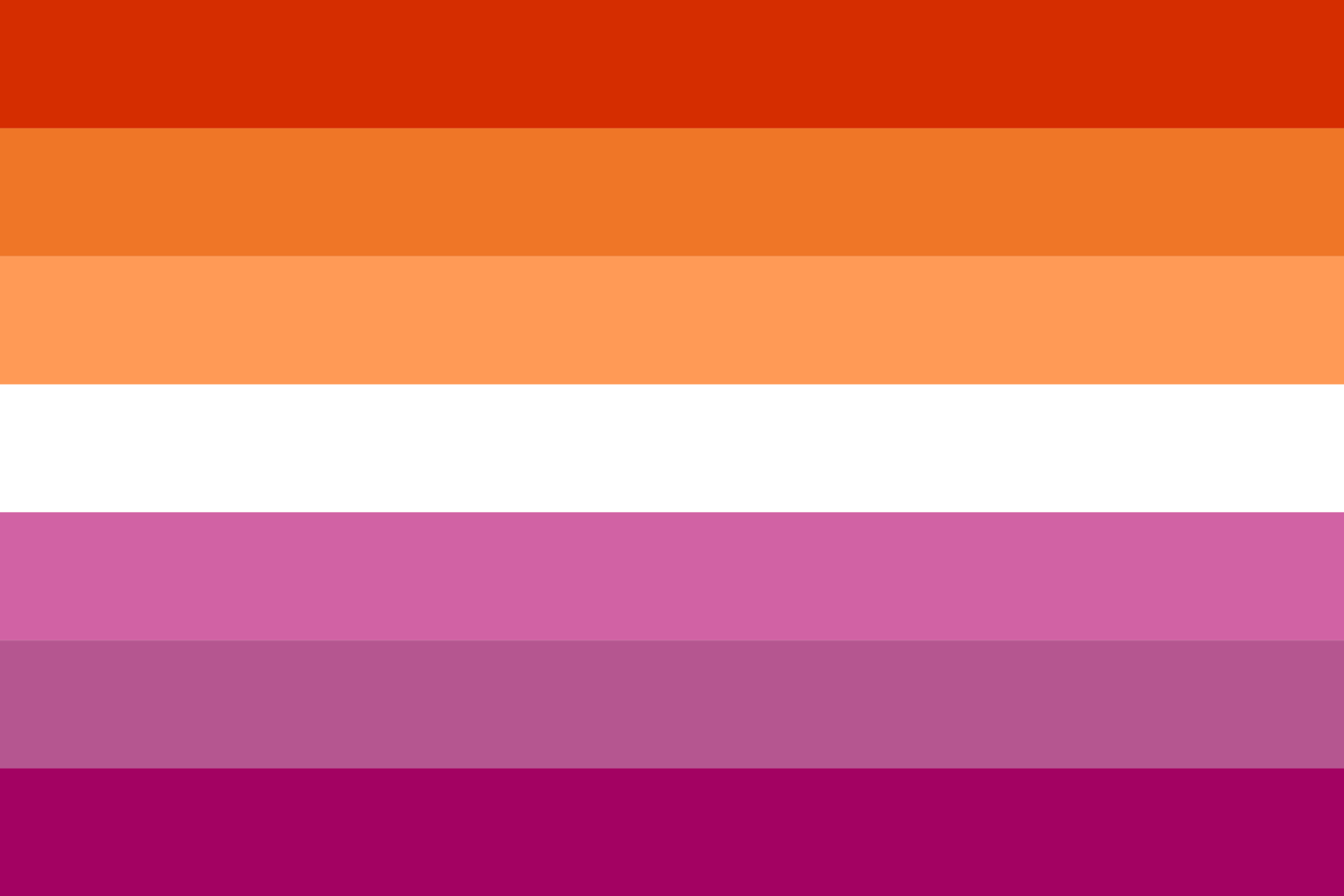
Gwen’s 2018 flag design features seven colors (though, you might see it simplified as five stripes in some places). They include:
- Dark Orange: Gender-nonconformity
- Orange: Independence
- Light Orange: Community
- Pink: Unique relationship to womanhood
- Dusty Pink: Serenity and peace
- White: Solidarity with other marginalized LGBTQ+ communities
What Does It Mean To Be a Lesbian?
A lesbian is someone who identifies as a woman or nonbinary person whose physical, romantic and/or emotional attraction is to other women.
While most people likely have preconceived ideas about who lesbians are or what they look like, the community is full of diverse experiences (some nonbinary lesbians have even started brainstorming their own pride flags!)
Get a Flag: Flags For Good | Amazon
We’ve provided links to Flags For Good, which donates a portion of each Pride flag sale to LGBTQ+ nonprofits and has a fully carbon neutral production and distribution process. Use our links to save 10% off your entire order.
(We’ve also included links to Amazon for accessibility purposes.)
Plus, learn more about other Pride flags:
- All LGBTQ+ Pride Flags & Their Meanings
- Agender Pride Flag
- Androgyne Pride Flag
- Aromantic Pride Flag
- Asexual Pride Flag
- Bisexual Pride Flag
- Demigender Pride Flag
- Demisexual Pride Flag
- Drag Pride Flag
- Gay Men’s Pride Flag
- Genderfluid Pride Flag
- Genderqueer Pride Flag
- Gilbert Baker Pride Flag
- Intersex Pride Flag
- Lesbian Pride Flag
- Nonbinary Pride Flag
- Pansexual Pride Flag
- Philadelphia Pride Flag
- Polysexual Pride Flag
- Progress Pride Flag
- Queer Pride Flag
- Rainbow Pride Flag
- Transgender Pride Flag
- Two-Spirit Pride Flag
- … and read more LGBTQ+ good news
The iconic rainbow flag has become a well-known symbol for LGBTQ+ pride, but did you know that there is a whole catalog of LGBTQ+ Pride flags that represent the diverse identities in this community?
Just like someone from a different state or country — or sports fan — might want to fly a specific flag to represent their identity, the same goes for people in the LGBTQ+ community! And it certainly doesn’t need to be Pride Month to embrace these banners.
For a long time, gay men have been the face of the LGBTQ+ rights movement, and while their history and experiences are very real, recent efforts to include a more diverse and expansive understanding of gayness has led to the development of new flag designs.
One of these is the most recent iteration of the Gay Men’s Pride Flag, which aims to include trans men in the gay community in a deeper and more meaningful way.
Here’s what you need to know about the Gay Men’s Pride Flag.
→ Explore the full list of all LGBTQ+ Pride flags
By the way, we’ve included some links to be able to buy this flag — and some of the links may include affiliate links, which means we may earn a commission at no extra cost to you.
About the Gay Men’s Pride Flag
History
The newest iteration of the Gay Men’s Pride Flag — sometimes called the Men-Loving-Men Pride Flag, is assumed to have been designed in 2017 by Tumblr user @gayflagblog.
Prior to this design, the Gay Men’s Pride Flag was a flag with five stripes of varying shades of blue.
However, cisgender, white gay men have long been at the center of gay rights movements, and once the Philadelphia and Progress Pride Flags became more umbrella symbols for the community as a whole, demand grew for a more inclusive flag for men who love men.
It started off as a five-colored flag and later became designed with seven colors to include a broader spectrum of LGBTQ+ men.
Colors

The colors of the Gay Men’s Pride Flag each represent a different concept:
- Dark Green: Community
- Teal: Healing
- Light Green: Joy
- White: Gender-nonconforming, nonbinary, and transgender men
- Blue: Pure love
- Purple: Fortitude
- Indigo: Diversity
Get a Flag: Flags For Good | Amazon
We’ve provided links to Flags For Good, which donates a portion of each Pride flag sale to LGBTQ+ nonprofits and has a fully carbon neutral production and distribution process. Use our links to save 10% off your entire order.
(We’ve also included links to Amazon for accessibility purposes.)
Plus, learn more about other Pride flags:
- All LGBTQ+ Pride Flags & Their Meanings
- Agender Pride Flag
- Androgyne Pride Flag
- Aromantic Pride Flag
- Asexual Pride Flag
- Bisexual Pride Flag
- Demigender Pride Flag
- Demisexual Pride Flag
- Drag Pride Flag
- Gay Men’s Pride Flag
- Genderfluid Pride Flag
- Genderqueer Pride Flag
- Gilbert Baker Pride Flag
- Intersex Pride Flag
- Lesbian Pride Flag
- Nonbinary Pride Flag
- Pansexual Pride Flag
- Philadelphia Pride Flag
- Polysexual Pride Flag
- Progress Pride Flag
- Queer Pride Flag
- Rainbow Pride Flag
- Transgender Pride Flag
- Two-Spirit Pride Flag
- … and read more LGBTQ+ good news
The iconic rainbow flag has become a well-known symbol for LGBTQ+ pride, but did you know that there is a whole catalog of LGBTQ+ Pride flags that represent the diverse identities in this community?
Just like someone from a different state or country — or sports fan — might want to fly a specific flag to represent their identity, the same goes for people in the LGBTQ+ community! And it certainly doesn’t need to be Pride Month to embrace these banners.
One of these is the Bisexual Pride Flag, which provides bisexual community members a meaningful symbol of pride, love, and community.
Here’s what you need to know about the Bisexual Pride Flag.
→ Explore the full list of all LGBTQ+ Pride flags
By the way, we’ve included some links to be able to buy this flag — and some of the links may include affiliate links, which means we may earn a commission at no extra cost to you.
About the Bisexual Pride Flag
History
The Bisexual Pride Flag was designed in 1998 by Michael Page to celebrate the bisexual community within the LGBTQ+ spectrum.
The flag was designed as part of an effort to start an annual Bisexuality Visibility Day — which did begin in 1999, and has continued on September 23 every year since.
Bi Visibility Day was central to a group of activists who were working to bring the bi community together online through chat rooms (it was the late ’90s after all!).
Wendy Curry was one of those activists. As the former president of BiNet USA, a website promoting bisexuality awareness, she was central to popularizing the flag in the ’90s.
“I feel like it’s all shades of my sexuality; like I am attracted to women; I am attracted to men; and I am attracted to people without thinking about what their gender is,” she told TIME in 2022.
“I think the idea that there’s more than one color to our sexuality is reflected in the flag, and I love that.”
The flag’s three stripes signify the diverse range of attractions experienced by bisexual individuals, with the outer colors representing attraction to the same and different genders, and the middle color representing attraction across the gender spectrum.
Colors
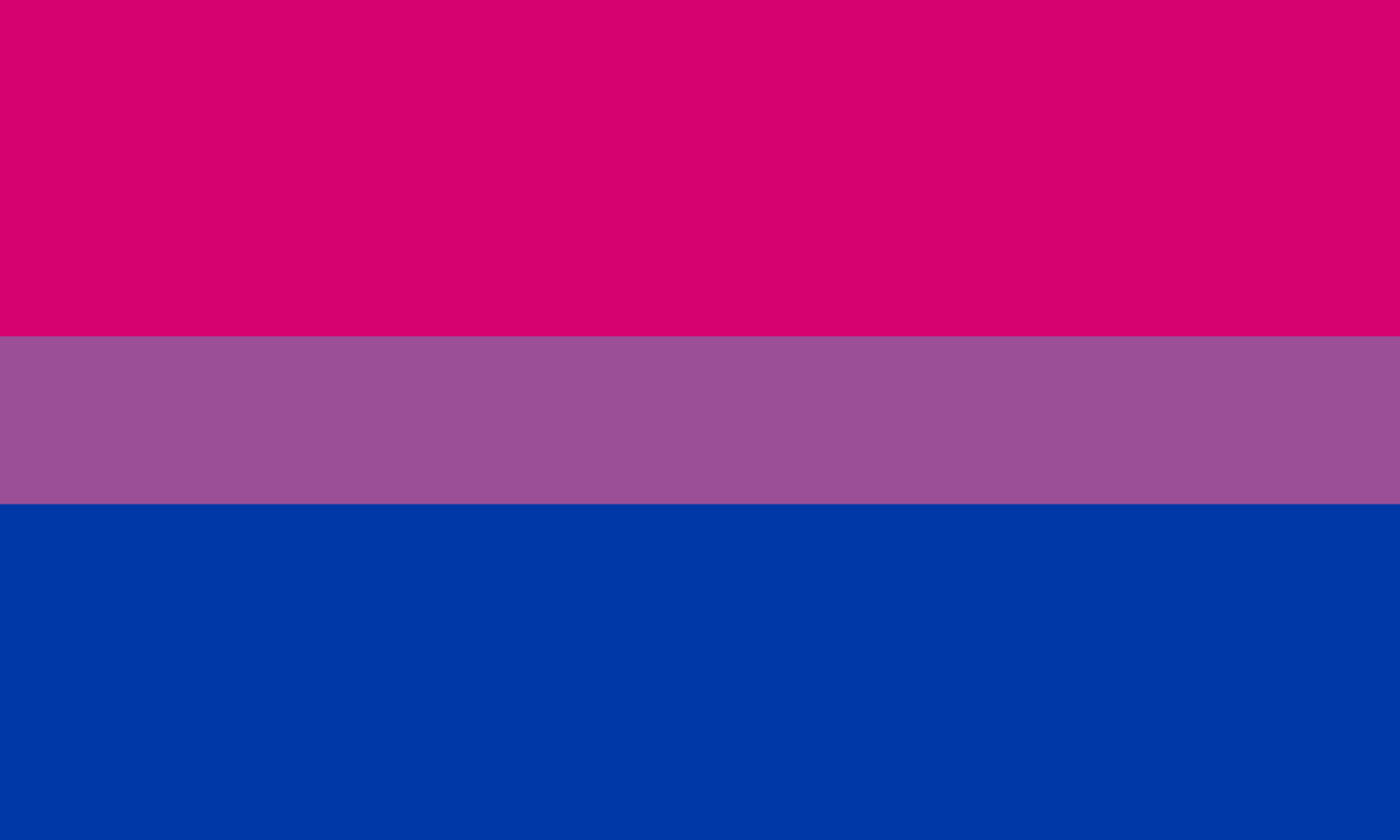
The colors of the Bisexual Pride Flag each represent a different concept:
- Magenta: Represents attraction to the same gender
- Lavender: Represents attraction across the gender spectrum, as a mix of magenta and royal blue
- Royal Blue: Represents attraction to a different gender
What Does It Mean To Be Bisexual?
A person who is bisexual is attracted to more than one gender, including their own.
Similarly, someone who is pansexual is attracted to someone regardless of gender. (The pansexual community also has their own flag!)
Sometimes, folks will use the term “bi+” to encompass both bisexual and pansexual labels. While some individuals might use these terms interchangeably, some may also prefer to stick to one or the other to best describe their experience.
Bisexuality is also a very popular identity among the community. According to a 2021 Gallup poll, more than half of American LGBTQ+ adults — 54.6% — identify as bisexual.
Get a Flag: Flags For Good | Amazon
We’ve provided links to Flags For Good, which donates a portion of each Pride flag sale to LGBTQ+ nonprofits and has a fully carbon neutral production and distribution process. Use our links to save 10% off your entire order.
(We’ve also included links to Amazon for accessibility purposes.)
Plus, learn more about other Pride flags:
- All LGBTQ+ Pride Flags & Their Meanings
- Agender Pride Flag
- Androgyne Pride Flag
- Aromantic Pride Flag
- Asexual Pride Flag
- Bisexual Pride Flag
- Demigender Pride Flag
- Demisexual Pride Flag
- Drag Pride Flag
- Gay Men’s Pride Flag
- Genderfluid Pride Flag
- Genderqueer Pride Flag
- Gilbert Baker Pride Flag
- Intersex Pride Flag
- Lesbian Pride Flag
- Nonbinary Pride Flag
- Pansexual Pride Flag
- Philadelphia Pride Flag
- Polysexual Pride Flag
- Progress Pride Flag
- Queer Pride Flag
- Rainbow Pride Flag
- Transgender Pride Flag
- Two-Spirit Pride Flag
- … and read more LGBTQ+ good news
The iconic rainbow flag has become a well-known symbol for LGBTQ+ pride, but did you know that there is a whole catalog of LGBTQ+ Pride flags that represent the diverse identities in this community?
Just like someone from a different state or country — or sports fan — might want to fly a specific flag to represent their identity, the same goes for people in the LGBTQ+ community! And it certainly doesn’t need to be Pride Month to embrace these banners.
Flags are a recognizable symbol that projects a message to the world about who you are or what you stand for — and they are especially important to marginalized communities during times of injustice.
One of these is the Transgender Pride Flag, which provides trans folks a meaningful symbol of pride, love, and community — especially as the fight for their freedom continues.
Here’s what you need to know about the Transgender Pride Flag.
→ Explore the full list of all LGBTQ+ Pride flags
By the way, we’ve included some links to be able to buy this flag — and some of the links may include affiliate links, which means we may earn a commission at no extra cost to you.
About the Transgender Pride Flag
History
Created by trans woman Monica Helms in 1999, the Transgender Pride Flag was designed to provide the transgender community with a distinct symbol to represent and celebrate their unique identities within the LGBTQ+ community.
Helms is a trans activist and U.S. Navy veteran who grew up in Arizona. She’s also the co-founder of the Transgender American Veterans Association.
She debuted the flag at a Pride Month event in Phoenix in 2000 and in 2014, donated the original to the Smithsonian National Museum to memorialize the flag as a piece of LGBTQ+ — and American — history.
However, Helms didn’t realize it would become such a meaningful pillar to the community.
“This was for me and if nobody had embraced it, it still would have been OK for me,” she told the Daily Beast in 2017. “But then, people started seeing it and they thought the pattern was great, and they liked the reason for the colors, and it just took off.”
The flag’s five stripes include the traditional colors for baby boys and girls, while the central white stripe acknowledges those who are transitioning, nonbinary, or identify outside the gender binary.
Colors
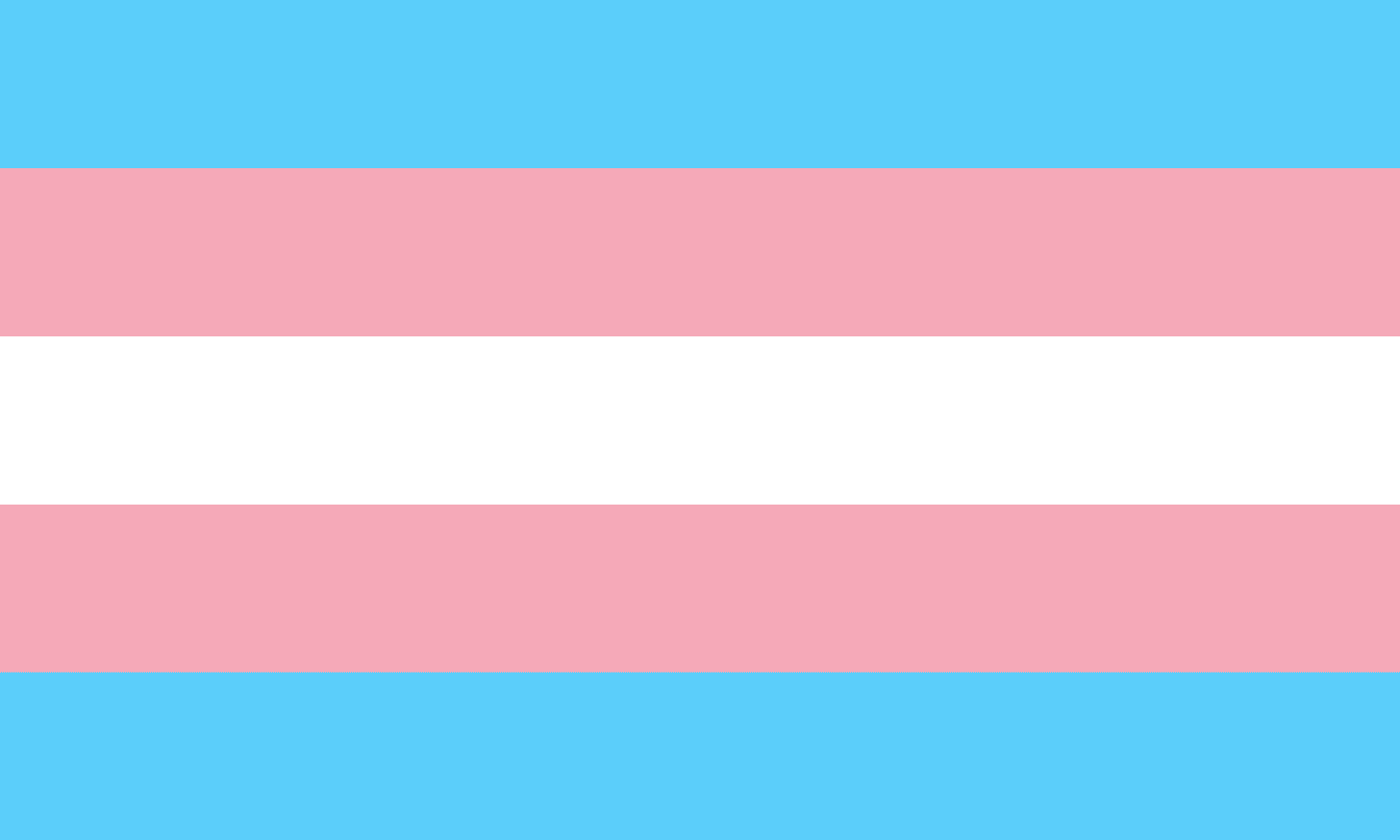
The colors of the Transgender Pride Flag each represent a different concept:
- Light Blue: Represents the traditional color for baby boys, symbolizing trans men and boys
- Light Pink: Represents the traditional color for baby girls, symbolizing trans women and girls
- White: Represents those who are transitioning, nonbinary, or identify outside the gender binary
What Does It Mean To Be Transgender?
“Transgender” is an umbrella term for people whose gender identity or gender expression differs from the gender they were assigned at birth.
There are lots of terms that might be used under this umbrella, including “nonbinary,” “gender-nonconforming,” or others.
According to a 2022 Pew Research Center study, 1.6% of adults in the U.S. identify as transgender or nonbinary, and 5% of young adults in the U.S. say their gender is different from their sex assigned at birth.
It’s important to note that trans people have a wide array of different experiences. Some trans folks may physically transition with the help of gender-affirming care like hormones or procedures to bring their body to better alignment with their gender identity. However, not all trans people can or will pursue those options, and they’re still trans!
A transgender identity is not defined by physical appearance or medical procedures, and folks are valid in whichever ways they choose to express their identities.
How Can I Be an Ally To Trans Folks?
While waving a Transgender Pride Flag is a great symbol to show your support and solidarity with the trans community, there are other ways to make sure trans folks feel safe, affirmed, and protected.
These include things like:
- Fighting against anti-trans legislation
- Advocating for legislation that protects trans folks
- Speaking truth to disinformation and misconceptions
- Donating your time and money to organizations that help trans folks
- And more!
Learn more about being a trans ally.
Get a Flag: Flags For Good | Amazon
We’ve provided links to Flags For Good, which donates a portion of each Pride flag sale to LGBTQ+ nonprofits and has a fully carbon neutral production and distribution process. Use our links to save 10% off your entire order.
(We’ve also included links to Amazon for accessibility purposes.)
Plus, learn more about other Pride flags:
- All LGBTQ+ Pride Flags & Their Meanings
- Agender Pride Flag
- Androgyne Pride Flag
- Aromantic Pride Flag
- Asexual Pride Flag
- Bisexual Pride Flag
- Demigender Pride Flag
- Demisexual Pride Flag
- Drag Pride Flag
- Gay Men’s Pride Flag
- Genderfluid Pride Flag
- Genderqueer Pride Flag
- Gilbert Baker Pride Flag
- Intersex Pride Flag
- Lesbian Pride Flag
- Nonbinary Pride Flag
- Pansexual Pride Flag
- Philadelphia Pride Flag
- Polysexual Pride Flag
- Progress Pride Flag
- Queer Pride Flag
- Rainbow Pride Flag
- Transgender Pride Flag
- Two-Spirit Pride Flag
- … and read more LGBTQ+ good news
The iconic rainbow flag has become a well-known symbol for LGBTQ+ pride, but did you know that there is a whole catalog of LGBTQ+ Pride flags that represent the diverse identities in this community?
Just like someone from a different state or country — or sports fan — might want to fly a specific flag to represent their identity, the same goes for people in the LGBTQ+ community! And it certainly doesn’t need to be Pride Month to embrace these banners.
Flags are a recognizable symbol that projects a message to the world about who you are or what you stand for — and they are especially important to marginalized communities during times of injustice.
One of these is the Nonbinary Pride Flag, which provides nonbinary and gender-nonconforming folks a meaningful symbol of pride, love, and community.
Here’s what you need to know about the Nonbinary Pride Flag.
→ Explore the full list of all LGBTQ+ Pride flags
By the way, we’ve included some links to be able to buy this flag — and some of the links may include affiliate links, which means we may earn a commission at no extra cost to you.
About the Nonbinary Pride Flag
History
Created and shared on Tumblr by Kye Rowan in 2014, the Nonbinary Pride Flag provides a distinct symbol for nonbinary individuals.
At the time Kye was a 17-year-old nonbinary person and created the flag to complement the Genderqueer Pride Flag as some people didn’t feel represented by the Genderqueer Flag alone. The flags are meant to be used together and not one to replace the other.
The Nonbinary Pride Flag’s four colors capture the wide range of nonbinary experiences, including gender outside the binary, a mix of multiple genders, the absence of gender, and the community’s interconnectedness.
Colors
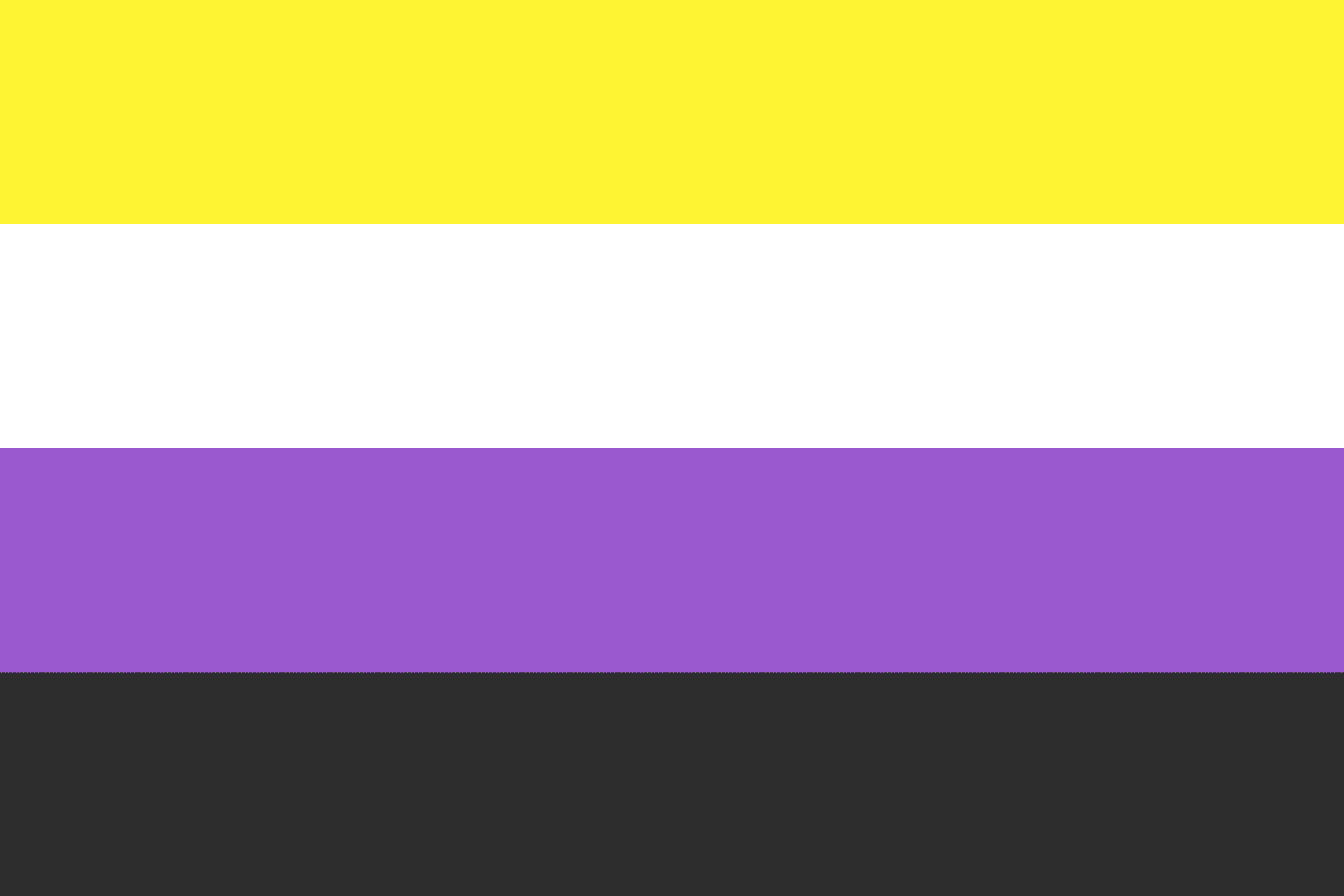
The colors of the Nonbinary Pride Flag each represent a different concept:
- Yellow: Represents those who identify outside the traditional gender binary
- White: Represents those who identify with a mix of multiple genders
- Purple: Represents those who identify without any gender (agender)
- Black: Represents the interconnectedness of all nonbinary individuals within the community
What Does It Mean To Be Nonbinary?
Someone who is nonbinary has a gender identity or gender expression that falls outside the binary of man or woman — or even masculine and feminine.
While some nonbinary people might present in ways that appear to align with a certain gender identity, their identity goes beyond a “black and white” model, allowing for more fluidity than the strict gender roles so many of us have come to know.
According to the UCLA Williams Institute, 1.2 million people in the U.S. identify as nonbinary, and nonbinary folks make up about 11% of LGBTQ+ adults in the U.S.
Some of your favorite celebrities are nonbinary, too, including Johnathan Van Ness, Halsey, Amandla Stenberg, Bella Ramsey, and more.
Get a Flag: Flags For Good | Amazon
We’ve provided links to Flags For Good, which donates a portion of each Pride flag sale to LGBTQ+ nonprofits and has a fully carbon neutral production and distribution process. Use our links to save 10% off your entire order.
(We’ve also included links to Amazon for accessibility purposes.)
Plus, learn more about other Pride flags:
- All LGBTQ+ Pride Flags & Their Meanings
- Agender Pride Flag
- Androgyne Pride Flag
- Aromantic Pride Flag
- Asexual Pride Flag
- Bisexual Pride Flag
- Demigender Pride Flag
- Demisexual Pride Flag
- Drag Pride Flag
- Gay Men’s Pride Flag
- Genderfluid Pride Flag
- Genderqueer Pride Flag
- Gilbert Baker Pride Flag
- Intersex Pride Flag
- Lesbian Pride Flag
- Nonbinary Pride Flag
- Pansexual Pride Flag
- Philadelphia Pride Flag
- Polysexual Pride Flag
- Progress Pride Flag
- Queer Pride Flag
- Rainbow Pride Flag
- Transgender Pride Flag
- Two-Spirit Pride Flag
- … and read more LGBTQ+ good news
Most of us don’t need to go too far to find a rainbow Pride flag (start with your emoji keyboard!), but did you know that there are other Pride flags that represent other identities in the LGBTQ+ community, too?
Just like someone from a different state or country — or sports fan — might want to fly a specific flag to represent their identity, the same goes for people in the LGBTQ+ community! And it certainly doesn’t need to be Pride Month to embrace these banners.
Flags are a recognizable symbol that projects a message to the world about who you are or what you stand for — and they are especially important to marginalized communities during times of injustice.
One of these is the Intersex Pride Flag, which flies as a symbol of solidarity and community for intersex folks everywhere.
Here’s what you need to know about the Intersex Pride Flag.
→ Explore the full list of all LGBTQ+ Pride flags
By the way, we’ve included some links to be able to buy this flag — and some of the links may include affiliate links, which means we may earn a commission at no extra cost to you.
About the Intersex Pride Flag
History
The Intersex Pride Flag was designed by Morgan Carpenter of Intersex Human Rights Australia in 2013. The goal was to create a unique symbol for the intersex community that was not based on traditional gender symbols (like the venus symbol or specifically gendered colors).
The flag features a purple circle on a yellow background, representing wholeness and inclusivity, as well as the unique and diverse experiences of intersex individuals.
“There is no commonly understood symbol or flag, even within intersex communities. Many attempts have seemed derivative, of a rainbow flag, of gender stereotypes, gendered pink and blue colors, of transgender symbols, or an infinity symbol used by some bisexual groups,” Carpenter wrote about the design.
“This is one attempt to create something that is not derivative, but yet is firmly grounded in meaning.”
Intersex folks around the globe are still fighting for bodily autonomy and genital integrity, which makes flag’s the symbol of wholeness and resilience that much more powerful.
The Intersex Pride Flag serves as a strong reminder of the importance of visibility, recognition, and advocacy for the intersex community, emphasizing their resilience and ongoing fight for bodily autonomy and human rights.
Colors
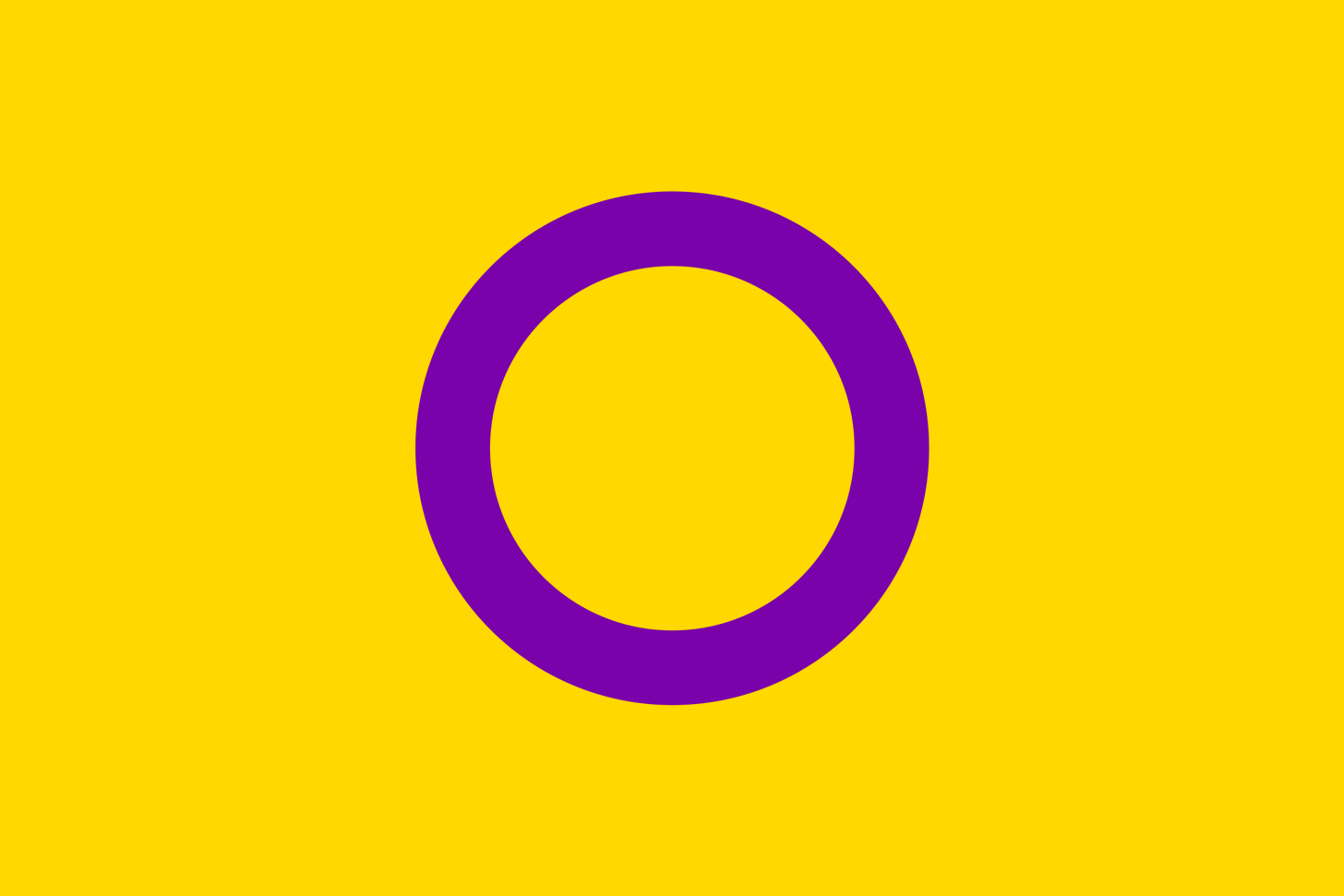
The colors of the Intersex Pride Flag each represent a different concept:
- Yellow: Represents visibility and the need for recognition of the intersex community
- Purple Circle: Symbolizes wholeness, inclusivity, and the diverse experiences of intersex individuals
What Does It Mean To Be Intersex?
People who are intersex are born with any of several sex characteristics that do not fit within the binary notions of male or female bodies.
These characteristics can include reproductive or sexual anatomy and/or a chromosome pattern that cannot be classified as “male” or “female.”
Get a Flag: Flags For Good | Amazon
We’ve provided links to Flags For Good, which donates a portion of each Pride flag sale to LGBTQ+ nonprofits and has a fully carbon neutral production and distribution process. Use our links to save 10% off your entire order.
(We’ve also included links to Amazon for accessibility purposes.)
Plus, learn more about other Pride flags:
- All LGBTQ+ Pride Flags & Their Meanings
- Agender Pride Flag
- Androgyne Pride Flag
- Aromantic Pride Flag
- Asexual Pride Flag
- Bisexual Pride Flag
- Demigender Pride Flag
- Demisexual Pride Flag
- Drag Pride Flag
- Gay Men’s Pride Flag
- Genderfluid Pride Flag
- Genderqueer Pride Flag
- Gilbert Baker Pride Flag
- Intersex Pride Flag
- Lesbian Pride Flag
- Nonbinary Pride Flag
- Pansexual Pride Flag
- Philadelphia Pride Flag
- Polysexual Pride Flag
- Progress Pride Flag
- Queer Pride Flag
- Rainbow Pride Flag
- Transgender Pride Flag
- Two-Spirit Pride Flag
- … and read more LGBTQ+ good news
The iconic rainbow flag has become a well-known symbol for LGBTQ+ pride, but did you know that there is a whole catalog of LGBTQ+ Pride flags that represent the diverse identities in this community?
Just like someone from a different state or country — or sports fan — might want to fly a specific flag to represent their identity, the same goes for people in the LGBTQ+ community! And it certainly doesn’t need to be Pride Month to embrace these banners.
One of these is the Asexual Pride Flag, which provides asexual community members a meaningful symbol of pride, community, and representation.
Here’s what you need to know about the Asexual Pride Flag.
→ Explore the full list of all LGBTQ+ Pride flags
By the way, we’ve included some links to be able to buy this flag — and some of the links may include affiliate links, which means we may earn a commission at no extra cost to you.
About the Asexual Pride Flag
History
The Asexual Pride Flag was designed in 2010 by the Asexuality Visibility and Education Network (AVEN) to represent the diverse identities within the asexual community.
Users in AVEN’s online forum first suggested a specific asexual flag in 2009, but it wasn’t until 2010 that users had begun designing flags to be decided on by the community.
The campaign to create the flag spanned a number of online threads and went through three stages of polls. The final poll was also promoted to other ace communities outside of AVEN, including non-English forums.
The final flag was designed by AVEN user standup in 2010, with a simple stripe design that mirrors many other pride flags.
The flag’s four stripes represent a range of asexual experiences, including asexuality, demisexuality, graysexuality, and their connection within the community.
While the black, white, and gray colors represent a spectrum of asexuality, while the purple actually comes from AVEN’s branding — the organization’s website has always prominently featured purple!
However, a blog post from AVEN calls upon a legend that claims a purple amethyst placed in wine can stop someone from getting drunk — which was perhaps a loose metaphor for a lack of interest in sex.
Colors
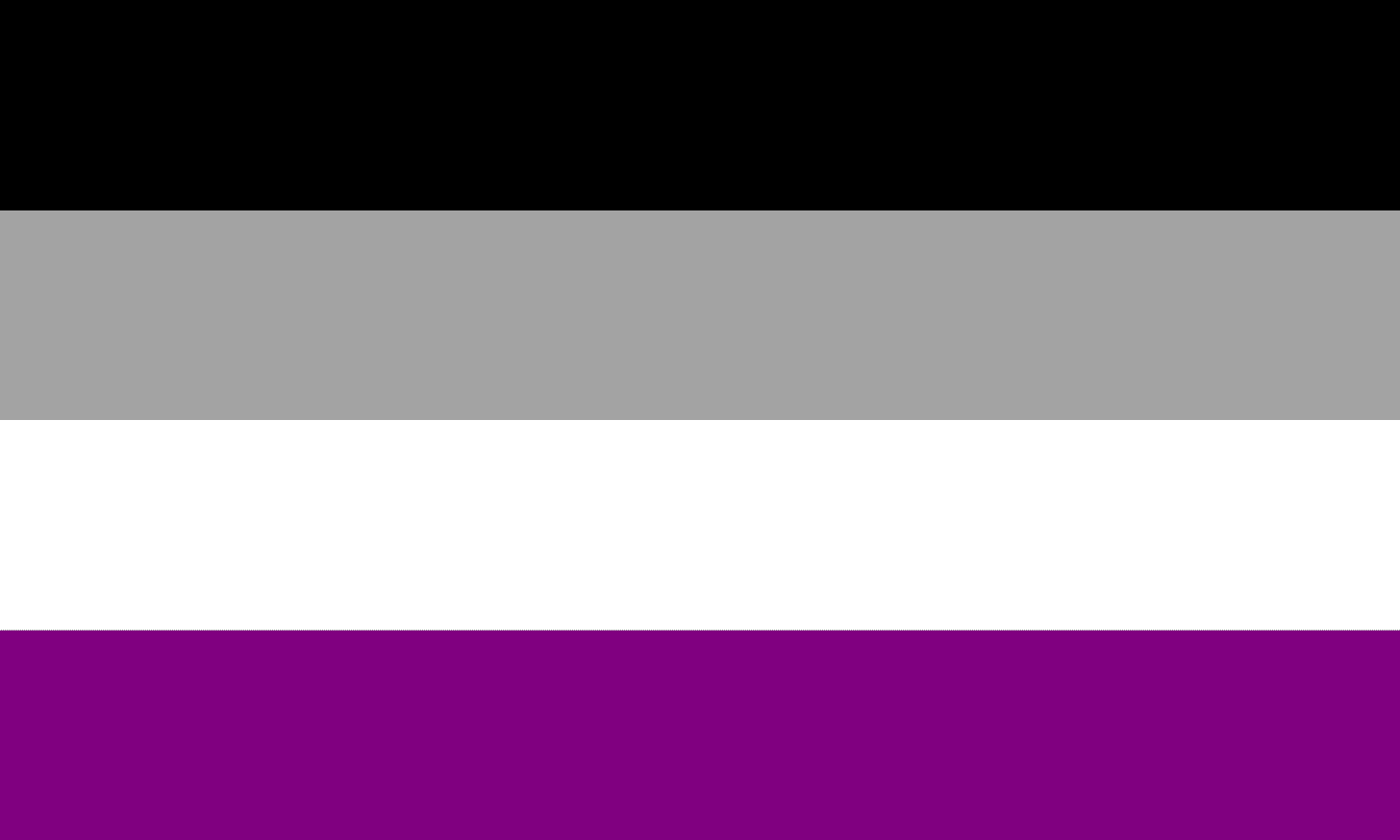
The colors of the Asexual Pride Flag each represent a different concept:
- Black: Represents asexuality
- Gray: Represents graysexuality (people who experience sexual attraction rarely or under specific circumstances)
- White: Represents demisexuality (people who only experience sexual attraction after forming a deep emotional connection)
- Purple: Represents the importance of community and solidarity among asexual individuals, as well as AVEN
What Does It Mean To Be Asexual?
Someone who identifies as asexual is someone who does not experience sexual attraction. Occasionally shortened to “ace,” this term can also include folks who are demisexual (someone who experiences some sexual attraction, but only in certain situations).
In a similar vein, aromantic folks are also often connected to ace individuals, as someone who does not experience romantic attraction.
The Williams Institute estimates that about 1.7% of LGBTQ+ American adults identify as asexual.
Get a Flag: Flags For Good | Amazon
We’ve provided links to Flags For Good, which donates a portion of each Pride flag sale to LGBTQ+ nonprofits and has a fully carbon neutral production and distribution process. Use our links to save 10% off your entire order.
(We’ve also included links to Amazon for accessibility purposes.)
Plus, learn more about other Pride flags:
- All LGBTQ+ Pride Flags & Their Meanings
- Agender Pride Flag
- Androgyne Pride Flag
- Aromantic Pride Flag
- Asexual Pride Flag
- Bisexual Pride Flag
- Demigender Pride Flag
- Demisexual Pride Flag
- Drag Pride Flag
- Gay Men’s Pride Flag
- Genderfluid Pride Flag
- Genderqueer Pride Flag
- Gilbert Baker Pride Flag
- Intersex Pride Flag
- Lesbian Pride Flag
- Nonbinary Pride Flag
- Pansexual Pride Flag
- Philadelphia Pride Flag
- Polysexual Pride Flag
- Progress Pride Flag
- Queer Pride Flag
- Rainbow Pride Flag
- Transgender Pride Flag
- Two-Spirit Pride Flag
- … and read more LGBTQ+ good news
The iconic rainbow flag has become a well-known symbol for LGBTQ+ pride, but did you know that there is a whole catalog of LGBTQ+ Pride flags that represent the diverse identities in this community?
Just like someone from a different state or country — or sports fan — might want to fly a specific flag to represent their identity, the same goes for people in the LGBTQ+ community! And it certainly doesn’t need to be Pride Month to embrace these banners.
One of these is the Pansexual Pride Flag, which provides pansexual community members a meaningful symbol of pride, community, and representation.
Here’s what you need to know about the Pansexual Pride Flag.
→ Explore the full list of all LGBTQ+ Pride flags
By the way, we’ve included some links to be able to buy this flag — and some of the links may include affiliate links, which means we may earn a commission at no extra cost to you.
About the Pansexual Pride Flag
History
The Pansexual Pride Flag is believed to have been designed by an anonymous Tumblr user and began appearing online in 2010. It has since grown in prominence around the world, providing pan people a symbol of empowerment and representation.
It is also assumed that the pansexual flag was created as a response to the Bisexual Pride Flag, aiming to differentiate between the two identities.
The flag’s three stripes represent the diverse range of attractions experienced by pansexual individuals, encompassing attraction to all genders or regardless of gender.
Colors
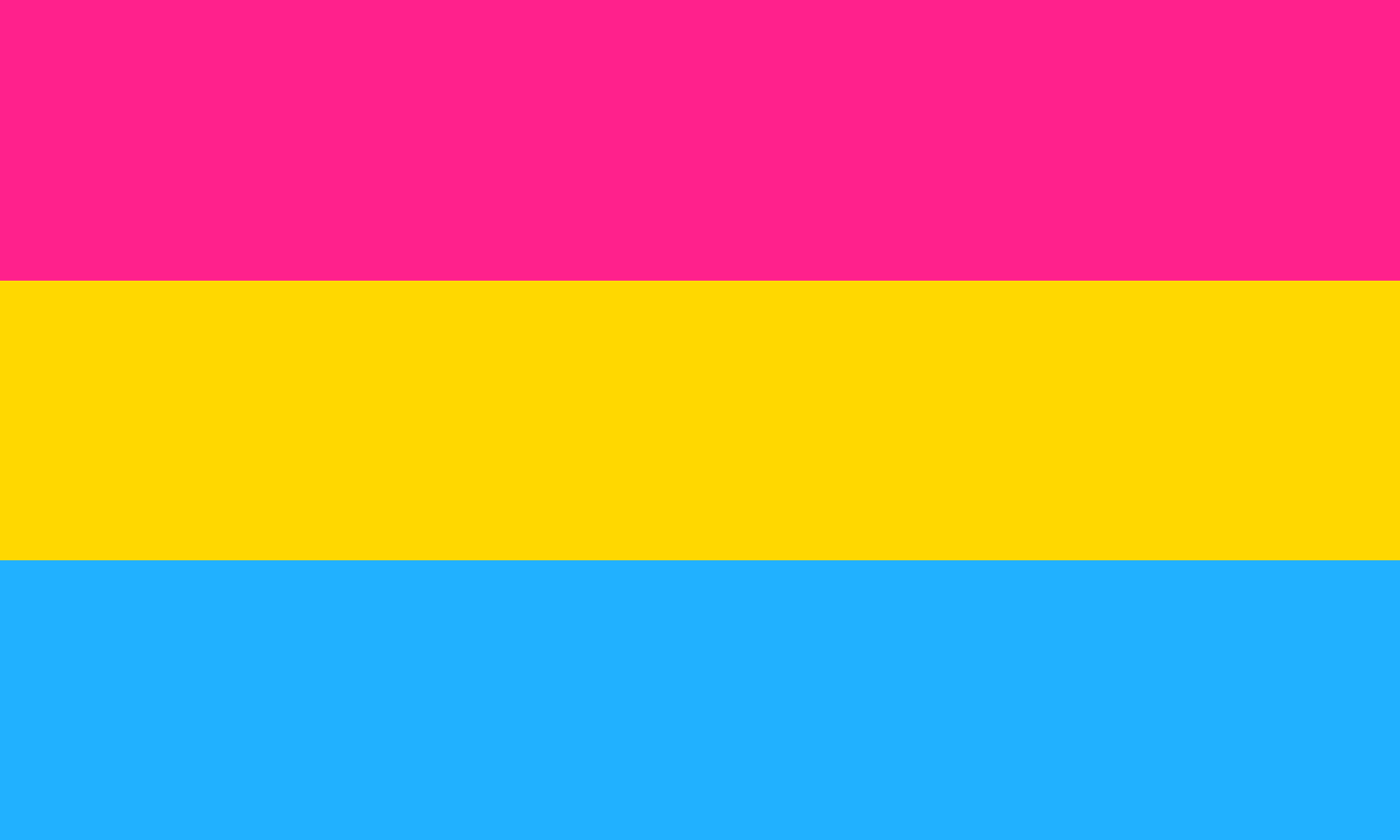
The colors of the Pansexual Pride Flag each represent a different concept:
- Magenta: Represents attraction to the same gender (or attraction to those who identify as female)
- Yellow: Represents attraction to genders outside the traditional binary
- Blue or Cyan: Represents attraction to a different gender (or attraction to those who identify as male)
What Does It Mean To Be Pansexual?
Someone who is pansexual is attracted to people regardless of their gender. Like anyone else, pansexual people may be emotionally or physically attracted to some people and not others, but the gender of the person does not matter.
Additionally, people of any gender can identify as pansexual.
Fun fact: The word ‘pansexual’ uses the Greek prefix ‘pan,’ which means ‘all.’
Get a Flag: Flags For Good | Amazon
We’ve provided links to Flags For Good, which donates a portion of each Pride flag sale to LGBTQ+ nonprofits and has a fully carbon neutral production and distribution process. Use our links to save 10% off your entire order.
(We’ve also included links to Amazon for accessibility purposes.)
Plus, learn more about other Pride flags:
- All LGBTQ+ Pride Flags & Their Meanings
- Agender Pride Flag
- Androgyne Pride Flag
- Aromantic Pride Flag
- Asexual Pride Flag
- Bisexual Pride Flag
- Demigender Pride Flag
- Demisexual Pride Flag
- Drag Pride Flag
- Gay Men’s Pride Flag
- Genderfluid Pride Flag
- Genderqueer Pride Flag
- Gilbert Baker Pride Flag
- Intersex Pride Flag
- Lesbian Pride Flag
- Nonbinary Pride Flag
- Pansexual Pride Flag
- Philadelphia Pride Flag
- Polysexual Pride Flag
- Progress Pride Flag
- Queer Pride Flag
- Rainbow Pride Flag
- Transgender Pride Flag
- Two-Spirit Pride Flag
- … and read more LGBTQ+ good news
Most of us don’t need to go too far to find a rainbow Pride flag (start with your emoji keyboard!), but did you know that there are other Pride flags that represent other elements of the LGBTQ+ community, too?
Flags are a recognizable symbol that projects a message to the world about who you are or what you stand for — and they are especially important to marginalized communities during times of injustice (not just during Pride Month).
This is especially true for those who perform drag — which is an artform that has been under attack in recent years.
While drag or enjoying the art of drag isn’t a queer identity, the drag community is built and sustained by LGBTQ+ folks of all backgrounds, making it a special part of queer identity.
Here’s what you need to know about the Drag Pride Flag.
→ Explore the full list of all LGBTQ+ Pride flags
By the way, we’ve included some links to be able to buy this flag — and some of the links may include affiliate links, which means we may earn a commission at no extra cost to you.
About the Drag Pride Flag
History
The Drag Pride Flag was designed by Veranda L’Ni for the Austin International Drag Foundation in 2016 with the goal of offering a distinct symbol for drag performers.
The flag’s colors are purple, white, and blue and includes a crown and stars in the center.
Prior to the creation of this flag, a Drag Pride Flag actually already existed. This original design, which was created by artist Sean Campbell in 1999 was called the Feather Pride Flag and included a red background with a black and white checkered pattern and an image of a gold phoenix.
The phoenix was reportedly used as a symbol of rebirth, with its accompanying fires the symbol of passion among the community.
The new iteration of the Drag Pride Flag was the work of the Austin International Drag Festival, which held a contest to create the “official flag of drag.”
Colors
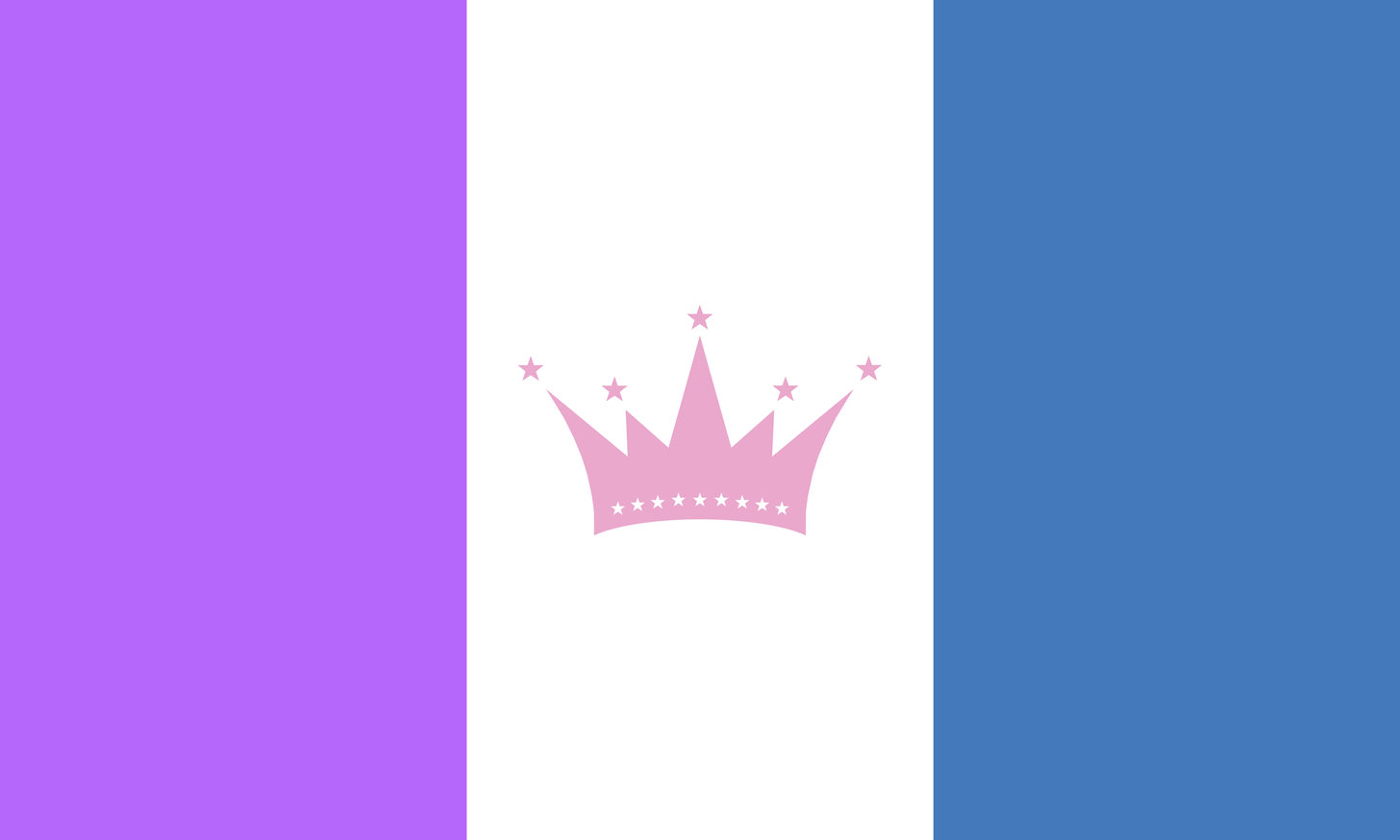
The colors and symbols of the Drag Pride Flag each represent a different concept:
- Purple: Represents the passion for drag performers all share
- White: Represents the blank slate that is a performer’s body and face to create the characters they become
- Blue: Represents self-expression and loyalty
- Crown: Represents leadership in the community
- Stars: Represent the many different forms of drag
Get a Flag: Flags For Good | Amazon
We’ve provided links to Flags For Good, which donates a portion of each Pride flag sale to LGBTQ+ nonprofits and has a fully carbon neutral production and distribution process. Use our links to save 10% off your entire order.
(We’ve also included links to Amazon for accessibility purposes.)
Plus, learn more about other Pride flags:
- All LGBTQ+ Pride Flags & Their Meanings
- Agender Pride Flag
- Androgyne Pride Flag
- Aromantic Pride Flag
- Asexual Pride Flag
- Bisexual Pride Flag
- Demigender Pride Flag
- Demisexual Pride Flag
- Drag Pride Flag
- Gay Men’s Pride Flag
- Genderfluid Pride Flag
- Genderqueer Pride Flag
- Gilbert Baker Pride Flag
- Intersex Pride Flag
- Lesbian Pride Flag
- Nonbinary Pride Flag
- Pansexual Pride Flag
- Philadelphia Pride Flag
- Polysexual Pride Flag
- Progress Pride Flag
- Queer Pride Flag
- Rainbow Pride Flag
- Transgender Pride Flag
- Two-Spirit Pride Flag
- … and read more LGBTQ+ good news
The iconic rainbow flag has become a well-known symbol for LGBTQ+ pride, but did you know that there is a whole catalog of LGBTQ+ Pride flags that represent the diverse identities in this community?
Just like someone from a different state or country — or sports fan — might want to fly a specific flag to represent their identity, the same goes for people in the LGBTQ+ community! And it certainly doesn’t need to be Pride Month to embrace these banners.
One of these is the Genderqueer Pride Flag, which provides genderqueer community members a meaningful symbol of pride, community, and representation.
Here’s what you need to know about the Genderqueer Pride Flag.
→ Explore the full list of all LGBTQ+ Pride flags
By the way, we’ve included some links to be able to buy this flag — and some of the links may include affiliate links, which means we may earn a commission at no extra cost to you.
About the Genderqueer Pride Flag
History
Designed by Marilyn Roxie in 2011, the Genderqueer Pride Flag offers a distinct symbol for the genderqueer community. The artist shares on her website that she took inspiration from Lesbian, Bisexual, and Pansexual Pride Flags, utilizing horizontal bars of color with special meanings.
The flag’s three colors — lavender, white, and green — capture the wide range of genderqueer experiences while centering concepts like androgyny, queerness, and living outside of the binary.
“The purpose of the flag is to help create visibility for the genderqueer community and related identities,” Roxie writes.
Colors
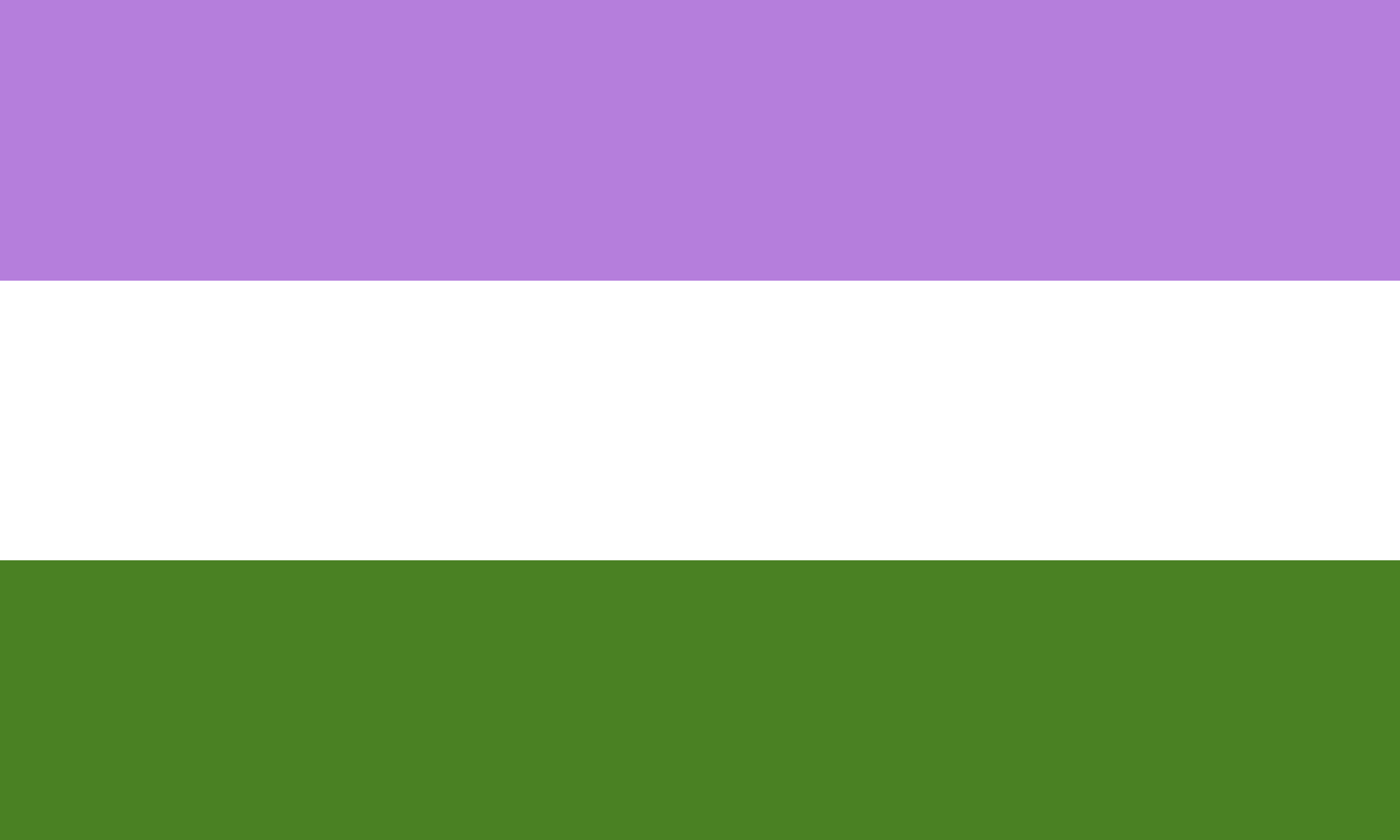
The colors of the Genderqueer Pride Flag each represent a different concept:
- Lavender: Represents androgyny, as well as the combination of both masculine and feminine characteristics
- White: Represents those who identify as agender or genderless, having no gender or a neutral gender
- Green: Represents those who identify as nonbinary or outside the traditional gender binary, symbolizing growth and renewal
What Does ‘Genderqueer’ Mean?
The term ‘genderqueer’ acts as an umbrella term for anyone within the LGBTQ+ community who feels like they have a “queer,” or non-normative experience with their gender.
This means genderqueer is similar to nonbinary, but it also can be used to describe people with any gender identities or any experience with gender identities, like moving between genders, identifying as neither man nor woman, and more.
‘Genderqueer’ also simply refers to anyone who goes against “mainstream” depictions of gender or expresses their gender in transgressive ways.
People who are genderqueer can identify with any sexual orientation.
Get a Flag: Flags For Good | Amazon
We’ve provided links to Flags For Good, which donates a portion of each Pride flag sale to LGBTQ+ nonprofits and has a fully carbon neutral production and distribution process. Use our links to save 10% off your entire order.
(We’ve also included links to Amazon for accessibility purposes.)
Plus, learn more about other Pride flags:
- All LGBTQ+ Pride Flags & Their Meanings
- Agender Pride Flag
- Androgyne Pride Flag
- Aromantic Pride Flag
- Asexual Pride Flag
- Bisexual Pride Flag
- Demigender Pride Flag
- Demisexual Pride Flag
- Drag Pride Flag
- Gay Men’s Pride Flag
- Genderfluid Pride Flag
- Genderqueer Pride Flag
- Gilbert Baker Pride Flag
- Intersex Pride Flag
- Lesbian Pride Flag
- Nonbinary Pride Flag
- Pansexual Pride Flag
- Philadelphia Pride Flag
- Polysexual Pride Flag
- Progress Pride Flag
- Queer Pride Flag
- Rainbow Pride Flag
- Transgender Pride Flag
- Two-Spirit Pride Flag
- … and read more LGBTQ+ good news
The iconic rainbow flag has become a well-known symbol for LGBTQ+ pride, but did you know that there is a whole catalog of LGBTQ+ Pride flags that represent the diverse identities in this community?
Just like someone from a different state or country — or sports fan — might want to fly a specific flag to represent their identity, the same goes for people in the LGBTQ+ community! And it certainly doesn’t need to be Pride Month to embrace these banners.
One of these is the Two-Spirit Pride Flag, which provides Two-Spirit and Indigenous community members a meaningful symbol of pride, community, and representation.
Here’s what you need to know about the Two-Spirit Pride Flag.
→ Explore the full list of all LGBTQ+ Pride flags
By the way, we’ve included some links to be able to buy this flag — and some of the links may include affiliate links, which means we may earn a commission at no extra cost to you.
About the Two-Spirit Pride Flag
History
Designed by anonymous Tumblr user 2Sanon in 2016, the Two-Spirit Pride Flag combines symbols of both Indigenous and LGBTQ+ communities.
The flag is not an official agreed-upon design, but it is the most commonly seen Two-Spirit Pride Flag.
The two feathers signify masculine and feminine energies, while the circle indicates oneness. The symbol is usually placed atop a Rainbow Pride Flag, but it can also be seen over Transgender, Nonbinary, or Progress Pride Flags.
Colors
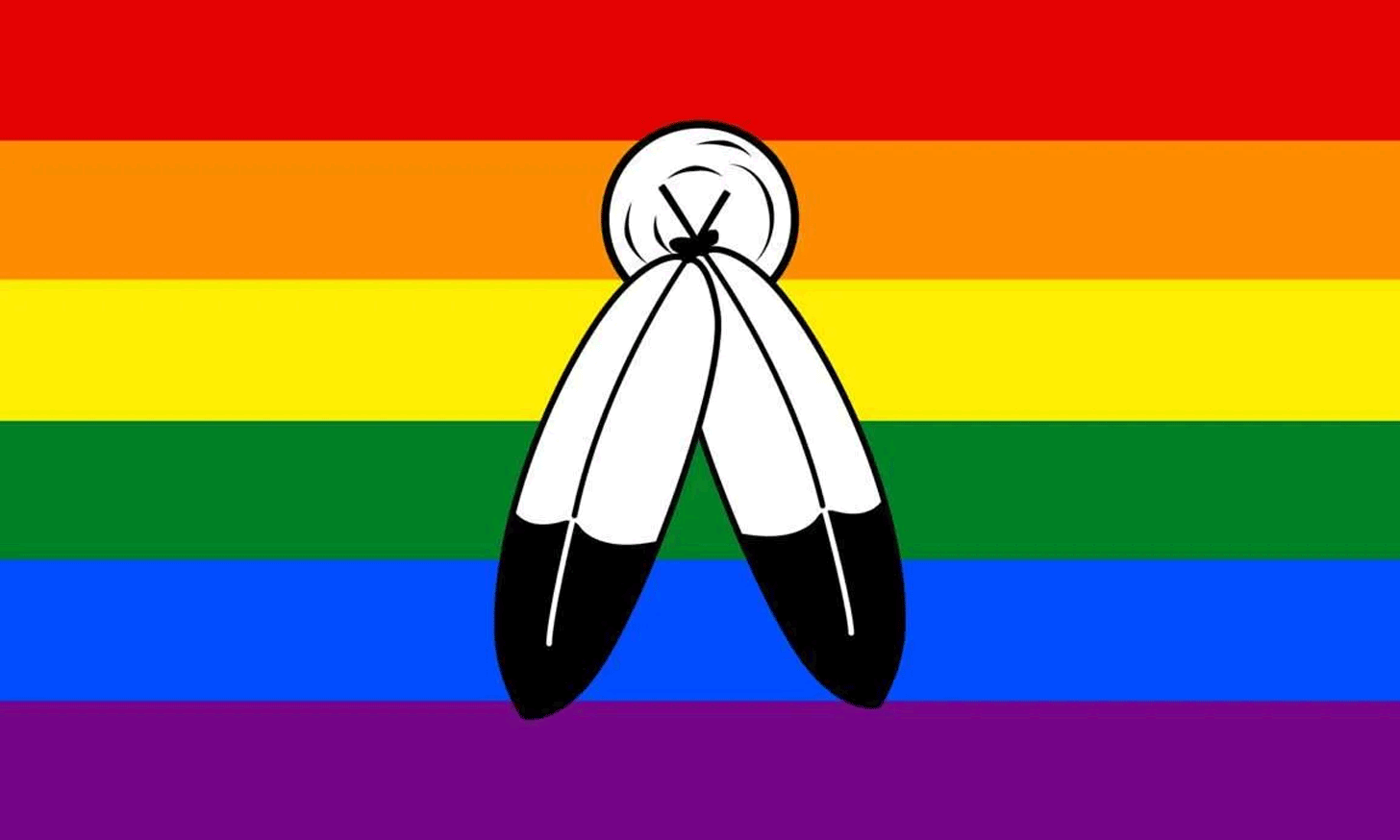
The symbols of the Two-Spirit Pride Flag each represent a different concept:
- Rainbow: Represents the connectedness of two-spirit individuals within the broader LGBTQ+ community
- Two Feathers: Symbolize the blending of masculine and feminine spirits, as well as the spiritual nature of two-spirit individuals within their Indigenous communities
What Does It Mean If Someone Is Two-Spirit?
“Two-Spirit” is a term used in the Native American and Indigenous communities, referring to someone who has both a masculine and feminine spirit. It has revered cultural significance in Native American tribes.
Two-Spirit can also be used as a broad term to describe the sexual, gender, or spiritual identity among Indigenous peoples, acknowledging the simultaneous identities of being part of both Indigenous and LGBTQ+ communities.
Get a Flag: Flags For Good | Amazon
We’ve provided links to Flags For Good, which donates a portion of each Pride flag sale to LGBTQ+ nonprofits and has a fully carbon neutral production and distribution process. Use our links to save 10% off your entire order.
(We’ve also included links to Amazon for accessibility purposes.)
Plus, learn more about other Pride flags:
- All LGBTQ+ Pride Flags & Their Meanings
- Agender Pride Flag
- Androgyne Pride Flag
- Aromantic Pride Flag
- Asexual Pride Flag
- Bisexual Pride Flag
- Demigender Pride Flag
- Demisexual Pride Flag
- Drag Pride Flag
- Gay Men’s Pride Flag
- Genderfluid Pride Flag
- Genderqueer Pride Flag
- Gilbert Baker Pride Flag
- Intersex Pride Flag
- Lesbian Pride Flag
- Nonbinary Pride Flag
- Pansexual Pride Flag
- Philadelphia Pride Flag
- Polysexual Pride Flag
- Progress Pride Flag
- Queer Pride Flag
- Rainbow Pride Flag
- Transgender Pride Flag
- Two-Spirit Pride Flag
- … and read more LGBTQ+ good news
The iconic rainbow flag has become a well-known symbol for LGBTQ+ pride, but did you know that there is a whole catalog of LGBTQ+ Pride flags that represent the diverse identities in this community?
Just like someone from a different state or country — or sports fan — might want to fly a specific flag to represent their identity, the same goes for people in the LGBTQ+ community! And it certainly doesn’t need to be Pride Month to embrace these banners.
One of these is the Genderfluid Pride Flag, which provides genderfluid members of the LGBTQ+ community a meaningful symbol of pride and representation.
Here’s what you need to know about the Genderfluid Pride Flag.
→ Explore the full list of all LGBTQ+ Pride flags
By the way, we’ve included some links to be able to buy this flag — and some of the links may include affiliate links, which means we may earn a commission at no extra cost to you.
About the Genderfluid Pride Flag
History
The Genderfluid Pride Flag was designed in 2012 by JJ Poole to create representation for those whose gender identity and/or gender expression fluctuates throughout life.
Poole posted the flag on the Tumblr blog ‘genderfludity,’ and it has since taken on a life of its own.
The flag’s five stripes represent the diversity and fluidity of genderfluid experiences, with individuals transitioning between different gender identities over time.
Colors
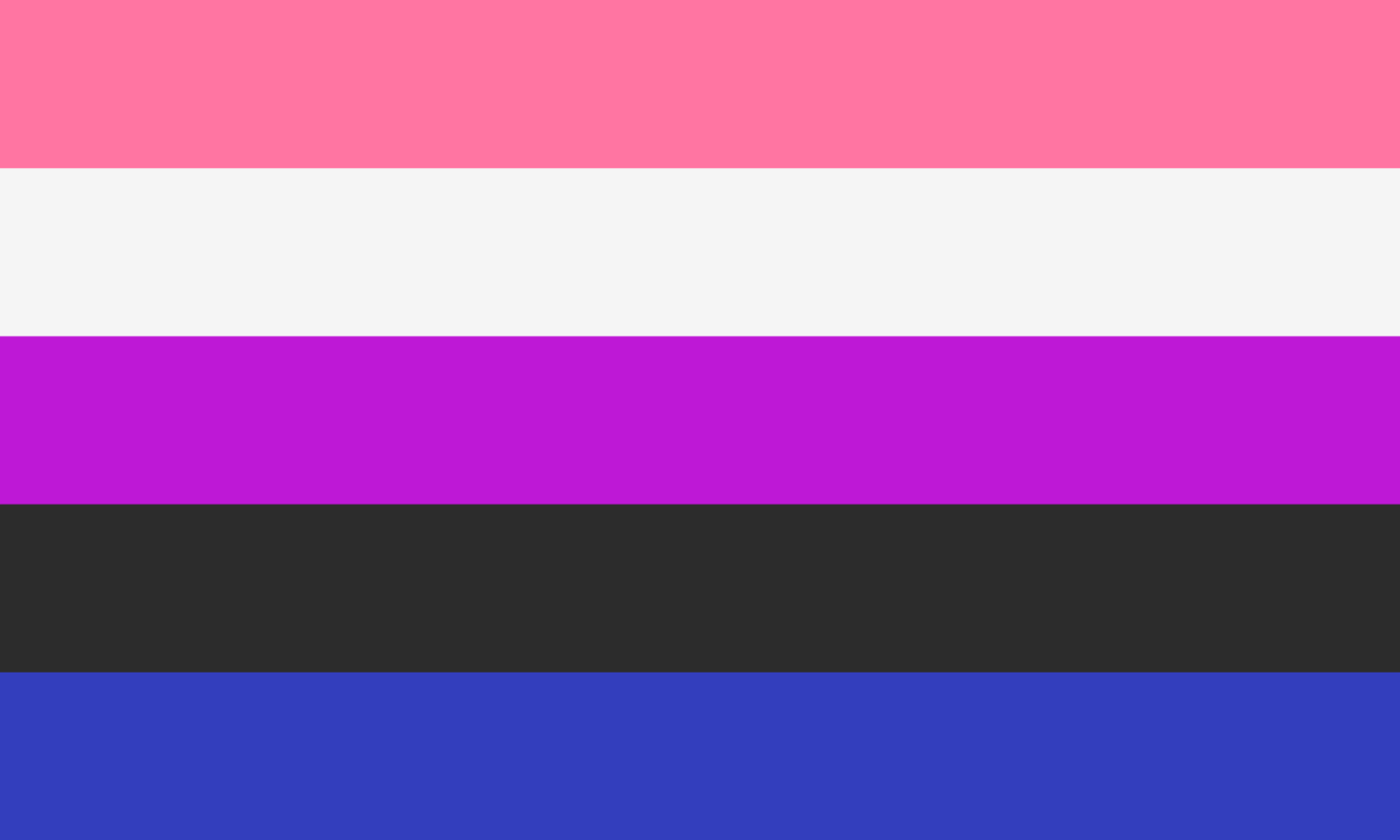
The colors of the Genderfluid Pride Flag each represent a different concept:
- Pink: Represents femininity and the fluidity experienced by those who identify as female at times
- White: Represents the lack of gender, as well as the fluidity experienced by those who identify as agender or genderless at times
- Purple: Represents both masculinity and femininity, as well as the fluidity experienced by those who identify as both or a mix of male and female at times
- Black: Represents all genders, as well as the fluidity experienced by those who identify as all or multiple genders at times
- Blue: Represents masculinity and the fluidity experienced by those who identify as male at times
What Does It Mean To Be Genderfluid?
‘Genderfluid’ is a term that alludes to someone’s gender identity changing over time.
This fluidity often begins in childhood but may evolve over time, with changes in expression, identity, or both.
Those who are genderfluid may also relate to terms like nonbinary or transgender, depending on their individual experiences.
“Not everyone who experiences changes in their gender expression or identity identifies as genderfluid,” a blog post from Harvard Medical School explains. “Nor does everyone desire gender-affirming medical treatment to change their body to better align with their gender identity.”
Get a Flag: Flags For Good | Amazon
We’ve provided links to Flags For Good, which donates a portion of each Pride flag sale to LGBTQ+ nonprofits and has a fully carbon neutral production and distribution process. Use our links to save 10% off your entire order.
(We’ve also included links to Amazon for accessibility purposes.)
Plus, learn more about other Pride flags:
- All LGBTQ+ Pride Flags & Their Meanings
- Agender Pride Flag
- Androgyne Pride Flag
- Aromantic Pride Flag
- Asexual Pride Flag
- Bisexual Pride Flag
- Demigender Pride Flag
- Demisexual Pride Flag
- Drag Pride Flag
- Gay Men’s Pride Flag
- Genderfluid Pride Flag
- Genderqueer Pride Flag
- Gilbert Baker Pride Flag
- Intersex Pride Flag
- Lesbian Pride Flag
- Nonbinary Pride Flag
- Pansexual Pride Flag
- Philadelphia Pride Flag
- Polysexual Pride Flag
- Progress Pride Flag
- Queer Pride Flag
- Rainbow Pride Flag
- Transgender Pride Flag
- Two-Spirit Pride Flag
- … and read more LGBTQ+ good news
The iconic rainbow flag has become a well-known symbol for LGBTQ+ pride, but did you know that there is a whole catalog of LGBTQ+ Pride flags that represent the diverse identities in this community?
Just like someone from a different state or country — or sports fan — might want to fly a specific flag to represent their identity, the same goes for people in the LGBTQ+ community! And it certainly doesn’t need to be Pride Month to embrace these banners.
One of these is the Agender Pride Flag, which provides those who identify as agender a meaningful symbol of pride and representation in the LGBTQ+ community.
Here’s what you need to know about the Agender Pride Flag.
→ Explore the full list of all LGBTQ+ Pride flags
By the way, we’ve included some links to be able to buy this flag — and some of the links may include affiliate links, which means we may earn a commission at no extra cost to you.
About the Agender Pride Flag
History
The Agender Pride Flag was designed by Salem X in 2014 and shared on Tumblr. The intent of the design is to encompass people’s wide range of experiences with gender — or not experiencing gender.
The flag is one way for agender folks to express their sense of self and feel more connected to a larger community.
The flag’s seven colors capture the essence of gender absence or neutrality, reflecting the experiences of individuals who do not identify within the gender binary.
Colors
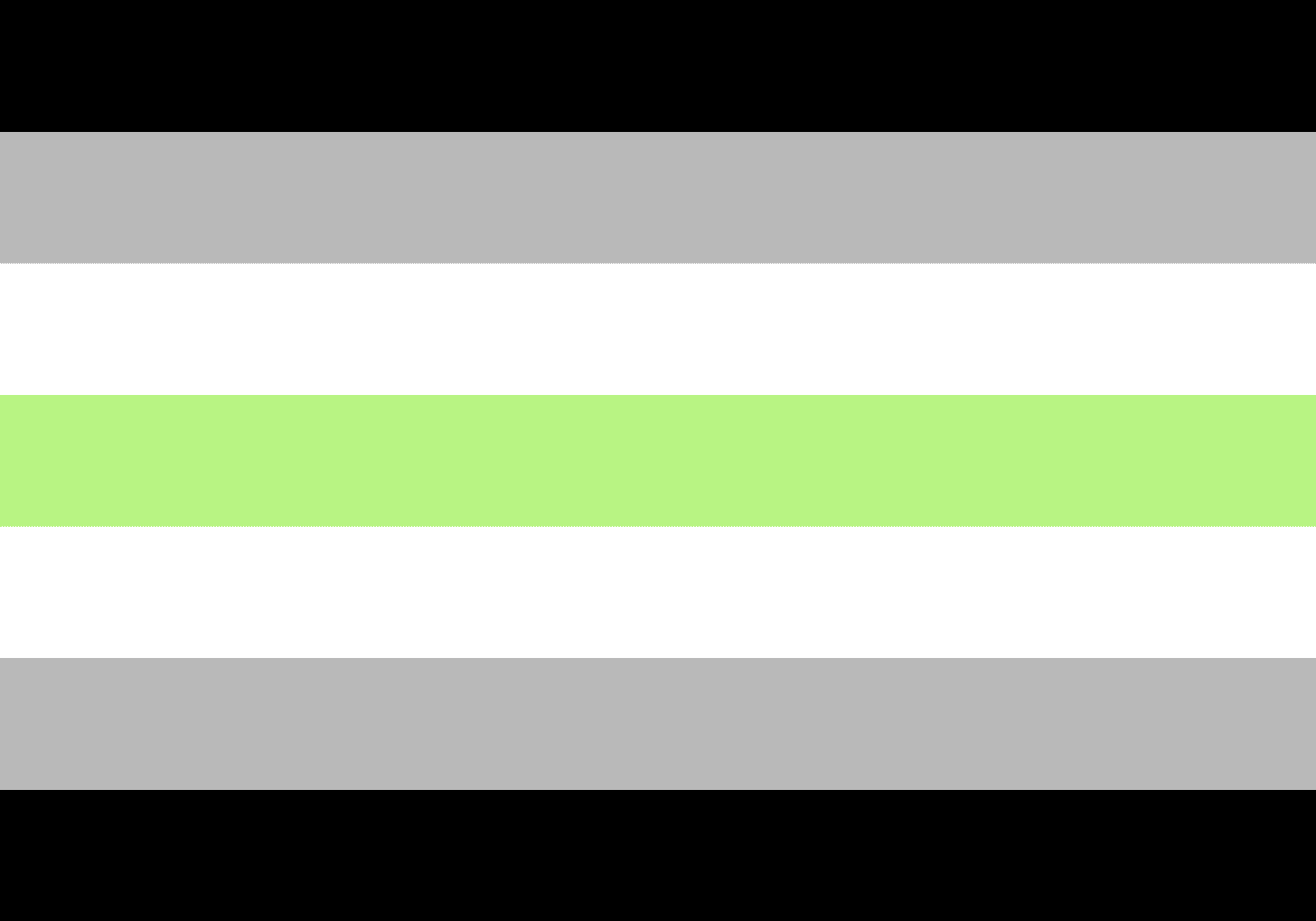
The colors of the Agender Pride Flag each represent a different concept:
- Black: Represents the absence of gender, as well as the resilience and strength of the agender community
- Gray: Symbolizes partial gender, as well as the fluidity experienced by those who identify as partially gendered or gender neutral
- White: Represents gender neutrality and the experience of identifying as neither male nor female
- Green: Symbolizes nonbinary gender identities, emphasizing the importance of inclusivity and acceptance within the LGBTQ+ community
What Does It Mean If Someone Is Agender?
Those who identify as agender typically experience a lack of gender identity, a gender that feels “neutral,” or a gender outside of the standard gender binary.
While it’s easy to mix up being agender with being nonbinary, (folks who identify with either of these terms may both use they/them pronouns, for instance), there is indeed a distinction between the two.
Nonbinary individuals identify outside of the traditional male and female binaries, while agender folks specifically identify as having no gender.
That said, these words are always evolving — and someone’s gender identity may evolve, too.
“There’s a lot of overlap in the terminology,” Meredith Chapman, a psychiatrist at the Children's Health Genecis Program in Dallas, Texas, told Teen Vogue.
“A person who is agender sees themselves as neither man nor woman, has no gender identity, or no gender to express. This is an example of someone who may also identify as genderqueer or nonbinary. Similar terms to agender include genderless, gender neutral, and neutrois.”
Get a Flag: Flags For Good | Amazon
We’ve provided links to Flags For Good, which donates a portion of each Pride flag sale to LGBTQ+ nonprofits and has a fully carbon neutral production and distribution process. Use our links to save 10% off your entire order.
(We’ve also included links to Amazon for accessibility purposes.)
Plus, learn more about other Pride flags:
- All LGBTQ+ Pride Flags & Their Meanings
- Agender Pride Flag
- Androgyne Pride Flag
- Aromantic Pride Flag
- Asexual Pride Flag
- Bisexual Pride Flag
- Demigender Pride Flag
- Demisexual Pride Flag
- Drag Pride Flag
- Gay Men’s Pride Flag
- Genderfluid Pride Flag
- Genderqueer Pride Flag
- Gilbert Baker Pride Flag
- Intersex Pride Flag
- Lesbian Pride Flag
- Nonbinary Pride Flag
- Pansexual Pride Flag
- Philadelphia Pride Flag
- Polysexual Pride Flag
- Progress Pride Flag
- Queer Pride Flag
- Rainbow Pride Flag
- Transgender Pride Flag
- Two-Spirit Pride Flag
- … and read more LGBTQ+ good news
The iconic rainbow flag has become a well-known symbol for LGBTQ+ pride, but did you know that there is a whole catalog of LGBTQ+ Pride flags that represent the diverse identities in this community?
Just like someone from a different state or country — or sports fan — might want to fly a specific flag to represent their identity, the same goes for people in the LGBTQ+ community! And it certainly doesn’t need to be Pride Month to embrace these banners.
One of these is the Polysexual Pride Flag, which provides those who identify as polysexual a meaningful symbol of pride and representation in the LGBTQ+ community.
Here’s what you need to know about the Polysexual Pride Flag.
→ Explore the full list of all LGBTQ+ Pride flags
By the way, we’ve included some links to be able to buy this flag — and some of the links may include affiliate links, which means we may earn a commission at no extra cost to you.
About the Polysexual Pride Flag
History
The Polysexual Pride Flag was designed in 2012 by an anonymous Tumblr user.
The flag depicts three stripes in three different colors, representing an attraction to multiple — but not all — genders. The colors chosen also emphasize the diverse range of gender identities that polysexual individuals may be attracted to.
Colors
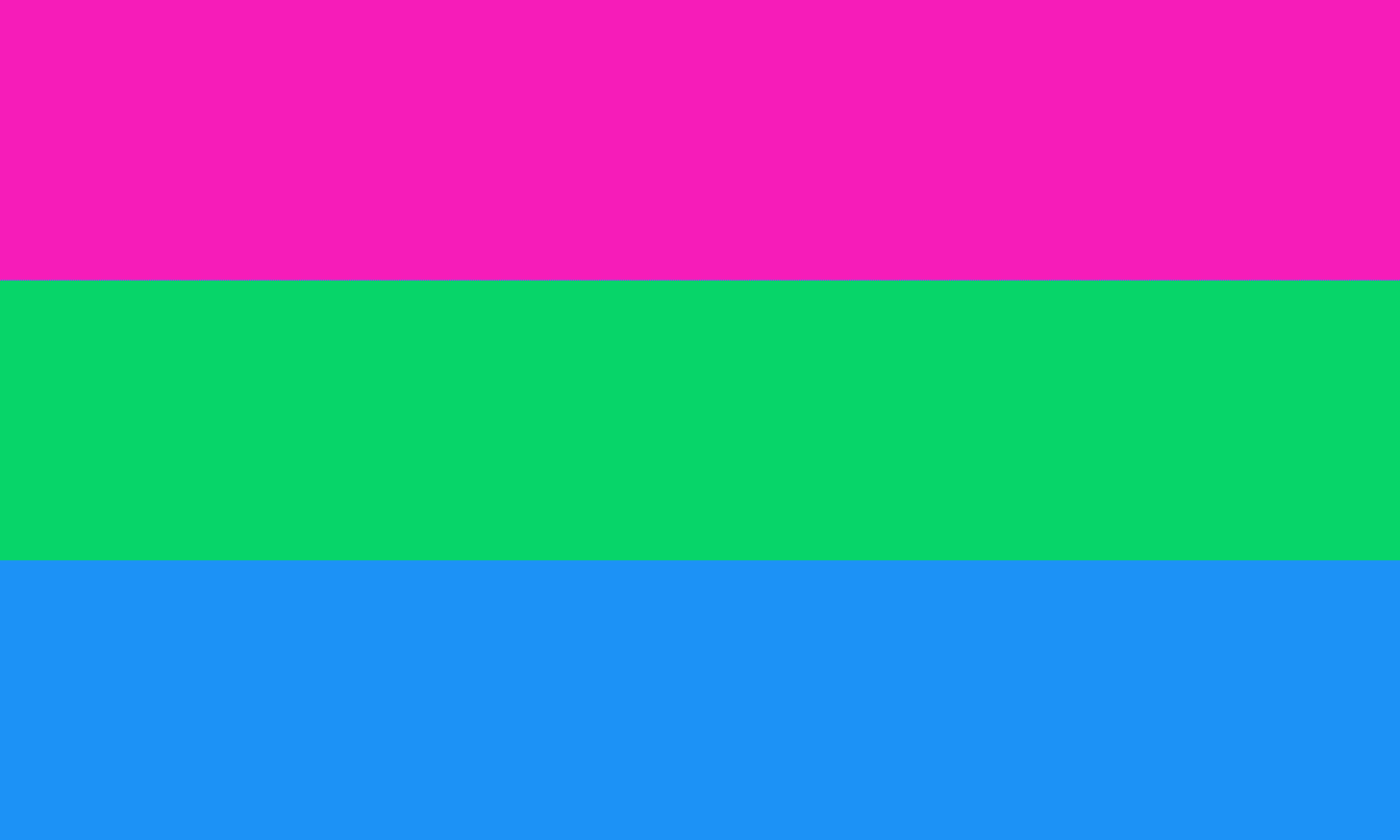
The colors of the Polysexual Pride Flag each represent a different concept:
- Pink: Represents attraction to female-identified or feminine individuals
- Green: Represents attraction to nonbinary, genderqueer, or gender-nonconforming individuals
- Blue: Represents attraction to male-identified or masculine individuals
What Does ‘Polysexual’ Mean?
Those who identify as polysexual are sexually attracted to people of multiple genders. This overlaps with other identifiers, such as bisexual and pansexual.
So… what makes it different?
It’s easy to think about when we look at the prefixes of these words. The prefix ‘bi-’ means two, and the prefix ‘pan-’ means ‘all.’ But the prefix ‘poly-’ means many.
Thus, while pansexual folks are attracted to people of all genders, and bisexual folks are attracted to people of two (or more) genders, polysexual folks are attracted to people of many genders.
Polysexuality is also different from polyamory. Polysexuality refers to who someone is attracted to, and polyamory is a word that describes how someone structures their romantic relationships.
Get a Flag: Flags For Good | Amazon
We’ve provided links to Flags For Good, which donates a portion of each Pride flag sale to LGBTQ+ nonprofits and has a fully carbon neutral production and distribution process. Use our links to save 10% off your entire order.
(We’ve also included links to Amazon for accessibility purposes.)
Plus, learn more about other Pride flags:
- All LGBTQ+ Pride Flags & Their Meanings
- Agender Pride Flag
- Androgyne Pride Flag
- Aromantic Pride Flag
- Asexual Pride Flag
- Bisexual Pride Flag
- Demigender Pride Flag
- Demisexual Pride Flag
- Drag Pride Flag
- Gay Men’s Pride Flag
- Genderfluid Pride Flag
- Genderqueer Pride Flag
- Gilbert Baker Pride Flag
- Intersex Pride Flag
- Lesbian Pride Flag
- Nonbinary Pride Flag
- Pansexual Pride Flag
- Philadelphia Pride Flag
- Polysexual Pride Flag
- Progress Pride Flag
- Queer Pride Flag
- Rainbow Pride Flag
- Transgender Pride Flag
- Two-Spirit Pride Flag
- … and read more LGBTQ+ good news
Most of us don’t need to go too far to find a rainbow Pride flag (start with your emoji keyboard!), but did you know that there are other Pride flags that represent other identities in the LGBTQ+ community, too?
Flags are a recognizable symbol that projects a message to the world about who you are or what you stand for.
And just like someone from a different state or country — or sports fan — might want to fly a specific flag to represent their identity, the same goes for people in the LGBTQ+ community! And it certainly doesn’t need to be Pride Month to embrace these banners.
One of these is the Demisexual Pride Flag, which flies as a symbol of community and representation for demisexual folks everywhere.
Here’s what you need to know about the Demisexual Pride Flag.
→ Explore the full list of all LGBTQ+ Pride flags
By the way, we’ve included some links to be able to buy this flag — and some of the links may include affiliate links, which means we may earn a commission at no extra cost to you.
About the Demisexual Pride Flag
History
The Demisexual Pride Flag was designed in 2010 by an anonymous user on the Asexuality Visibility and Education Network online network.
Demisexual individuals only develop sexual attraction after forming a deep emotional connection with another person. This means demisexual folks are considered part of the asexual spectrum, and thus find support through groups like AVEN.
The flag’s four colors represent the unique experience of demisexual individuals and take inspiration from the Asexual Pride Flag design, implementing white, purple, and gray bars with a black triangle on the left-hand side.
Colors
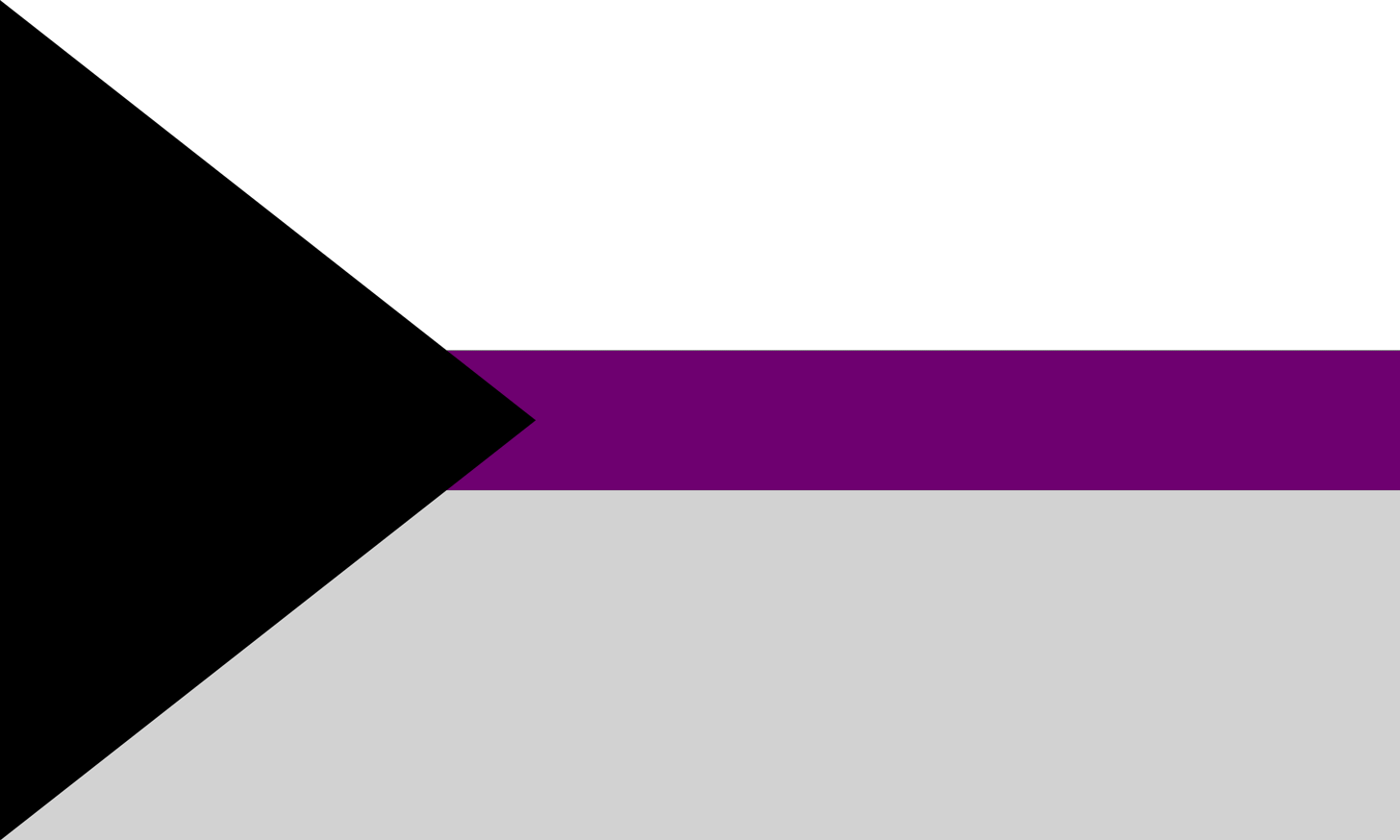
The colors of the Demisexual Pride Flag each represent a different concept:
- Black: Represents asexuality, acknowledging the spectrum of asexual identities
- White: Represents sexuality, symbolizing the spectrum of sexual identities
- Purple: Represents community, highlighting the importance of connections and support within the LGBTQ+ community, as well as the Asexuality Visibility & Education Network
- Gray: Represents the unique experiences of demisexual individuals, who only experience sexual attraction after forming a deep emotional connection
What Does ‘Demisexual’ Mean?
Someone who is demisexual only feels sexual attraction to someone after they’ve formed a strong emotional connection with them.
People who identify as demisexual are often considered a part of the asexuality spectrum because they don’t often feel sexual attraction. That said, they can feel sexual attraction and have an interest in sex after they’ve formed an emotional bond with someone.
Another similar term is ‘demiromantic,’ which defines people who need to feel an emotional connection with someone before developing romantic feelings for them.
Get a Flag: Flags For Good | Amazon
We’ve provided links to Flags For Good, which donates a portion of each Pride flag sale to LGBTQ+ nonprofits and has a fully carbon neutral production and distribution process. Use our links to save 10% off your entire order.
(We’ve also included links to Amazon for accessibility purposes.)
Plus, learn more about other Pride flags:
- All LGBTQ+ Pride Flags & Their Meanings
- Agender Pride Flag
- Androgyne Pride Flag
- Aromantic Pride Flag
- Asexual Pride Flag
- Bisexual Pride Flag
- Demigender Pride Flag
- Demisexual Pride Flag
- Drag Pride Flag
- Gay Men’s Pride Flag
- Genderfluid Pride Flag
- Genderqueer Pride Flag
- Gilbert Baker Pride Flag
- Intersex Pride Flag
- Lesbian Pride Flag
- Nonbinary Pride Flag
- Pansexual Pride Flag
- Philadelphia Pride Flag
- Polysexual Pride Flag
- Progress Pride Flag
- Queer Pride Flag
- Rainbow Pride Flag
- Transgender Pride Flag
- Two-Spirit Pride Flag
- … and read more LGBTQ+ good news
The iconic rainbow flag has become a well-known symbol for LGBTQ+ pride, but did you know that there is a whole catalog of LGBTQ+ Pride flags that represent the diverse identities in this community?
Just like someone from a different state or country — or sports fan — might want to fly a specific flag to represent their identity, the same goes for people in the LGBTQ+ community! And it certainly doesn’t need to be Pride Month to embrace these banners.
One of these is the Aromantic Pride Flag, which flies as a symbol of community and representation for aromantic folks everywhere.
Here’s what you need to know about the Aromantic Pride Flag.
→ Explore the full list of all LGBTQ+ Pride flags
By the way, we’ve included some links to be able to buy this flag — and some of the links may include affiliate links, which means we may earn a commission at no extra cost to you.
About the Aromantic Pride Flag
History
The Aromantic Pride Flag was designed in 2014 by Tumblr user @cameronwhimsy to create a unique symbol for the aromantic community within the LGBTQ+ spectrum. Before this Aromantic Pride Flag became popular, two other flag designs were proposed.
Online community members then agreed on Cameron’s five-stripe design. Those stripes represent the unique experience of aromantic individuals, who do not experience romantic attraction to others.
Colors

The colors of the Aromantic Pride Flag each represent a different concept:
- Green: Represents aromanticism
- Light Green: Represents the aromantic spectrum
- White: Represents friendship and platonic love, as well as queer platonic relationships
- Gray: Represents gray-aromantic individuals, who may experience romantic attraction in limited or specific circumstances
- Black: Represents the broader spectrum of romantic and sexual orientations, acknowledging the diversity of identities within the LGBTQ+ community
What Does It Mean If Someone Is Aromantic?
Someone who identifies as aromantic has little to no romantic feeling toward others or experiences little to no romantic desire or attraction.
Romantic attraction is often defined as the desire to have romantic contact or interaction with someone else.
Often shortened to ‘aro,’ this term is often connected with asexuality, since both identifiers refer to a spectrum of attraction, whether sexual or romantic.
People may also refer to themselves as being on the ‘aro spectrum,’ indicating that there is a wide range of experiences, like not feeling any romantic attraction at all, feeling it occasionally, or feeling varying levels of romantic attraction at different times.
A common misconception about aromantic people is that they don’t have relationships; this isn’t true!
Aro folks experience deep and meaningful relationships with people beyond romantic partners, and some even enter into “queerplatonic” partnerships, which consist of platonic relationships with a deeper level of commitment than the “average” friendship.
Get a Flag: Flags For Good | Amazon
We’ve provided links to Flags For Good, which donates a portion of each Pride flag sale to LGBTQ+ nonprofits and has a fully carbon neutral production and distribution process. Use our links to save 10% off your entire order.
(We’ve also included links to Amazon for accessibility purposes.)
Plus, learn more about other Pride flags:
- All LGBTQ+ Pride Flags & Their Meanings
- Agender Pride Flag
- Androgyne Pride Flag
- Aromantic Pride Flag
- Asexual Pride Flag
- Bisexual Pride Flag
- Demigender Pride Flag
- Demisexual Pride Flag
- Drag Pride Flag
- Gay Men’s Pride Flag
- Genderfluid Pride Flag
- Genderqueer Pride Flag
- Gilbert Baker Pride Flag
- Intersex Pride Flag
- Lesbian Pride Flag
- Nonbinary Pride Flag
- Pansexual Pride Flag
- Philadelphia Pride Flag
- Polysexual Pride Flag
- Progress Pride Flag
- Queer Pride Flag
- Rainbow Pride Flag
- Transgender Pride Flag
- Two-Spirit Pride Flag
- … and read more LGBTQ+ good news
The iconic rainbow flag has become a well-known symbol for LGBTQ+ pride, but did you know that there is a whole catalog of LGBTQ+ Pride flags that represent the diverse identities in this community?
Just like someone from a different state or country — or sports fan — might want to fly a specific flag to represent their identity, the same goes for people in the LGBTQ+ community! And it certainly doesn’t need to be Pride Month to embrace these banners.
One of these is the Demigender Pride Flag, which flies as a symbol of community and representation for demigender folks everywhere.
Here’s what you need to know about the Demigender Pride Flag.
→ Explore the full list of all LGBTQ+ Pride flags
By the way, we’ve included some links to be able to buy this flag — and some of the links may include affiliate links, which means we may earn a commission at no extra cost to you.
About the Demigender Pride Flag
History
The Demigender Pride Flag was designed by an anonymous Tumblr user in 2014. It represents those who partially identify with a specific gender or genders (these folks often refer to themselves as ‘demigirl’ or ‘demiboy’).
The flag’s three colors capture the essence of demigender experiences, reflecting the wide variety of gender identities.
With symbolism for fragmented connections to gender, identifying outside of the gender binary, or an agender or gender neutral experience altogether, the flag aims to encompass the diversity of demigender folks in the LGBTQ+ community.
Colors
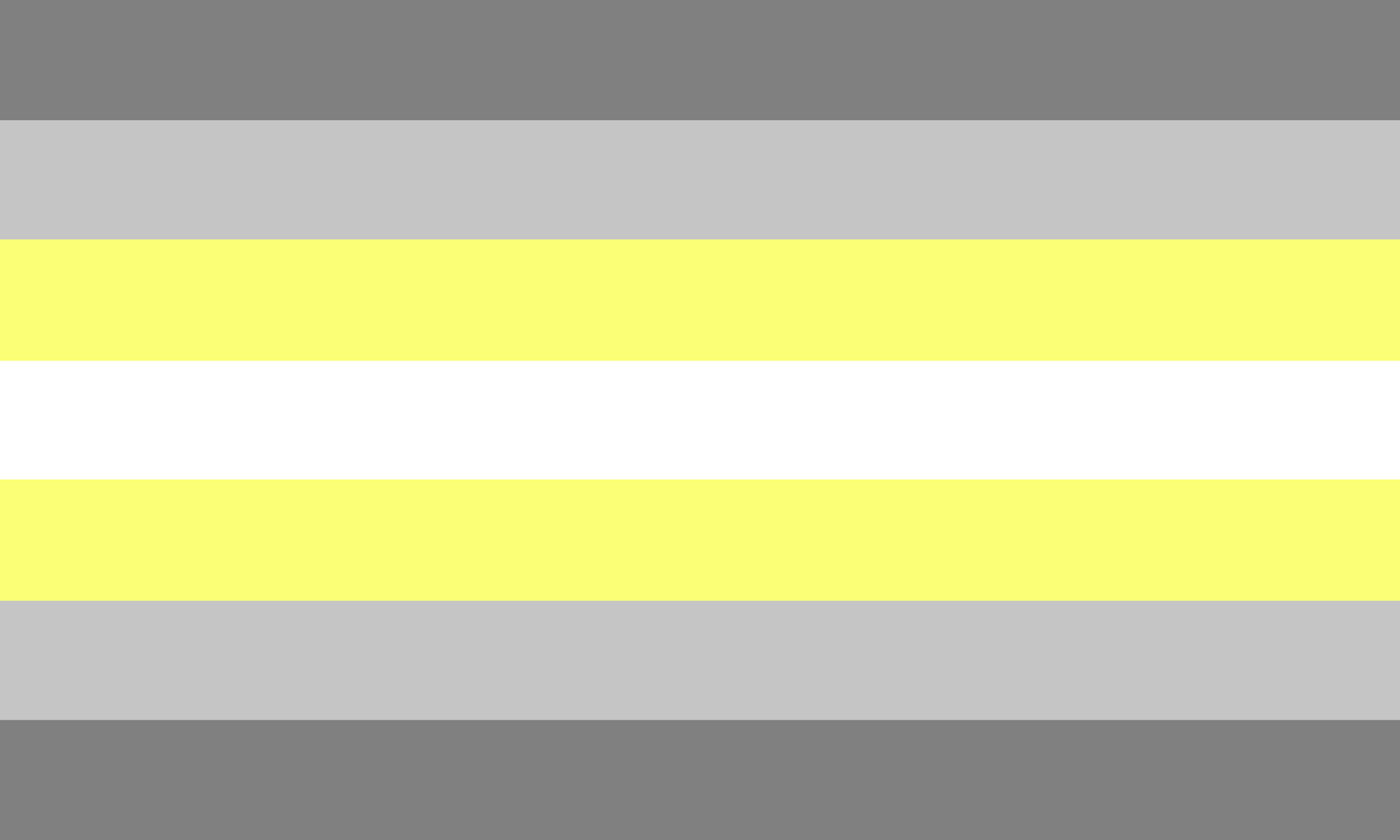
The colors of the Demigender Pride Flag each represent a different concept:
- Yellow: Represents nonbinary and genderqueer individuals, acknowledging the spectrum of nonbinary and genderqueer identities
- White: Represents the experience of partial identification with a specific gender, symbolizing the spectrum of demigender identities
- Gray: Represents the absence of gender, symbolizing the spectrum of agender identities and the diversity of demigender experiences
What Does ‘Demigender’ Mean?
The prefix ‘demi-’ means ‘half,’ therefore indicating that someone who identifies as ‘demigender’ feels a partial connection to a particular gender identity.
This term falls under the nonbinary umbrella, since it denotes someone who only feels a partial connection to a certain gender identity. It may also be considered part of the agender spectrum.
Some specific examples of demigender identities include demigirl, and demiboy, and demiandrogyne.
Get a Flag: Amazon
Plus, learn more about other Pride flags:
- All LGBTQ+ Pride Flags & Their Meanings
- Agender Pride Flag
- Androgyne Pride Flag
- Aromantic Pride Flag
- Asexual Pride Flag
- Bisexual Pride Flag
- Demigender Pride Flag
- Demisexual Pride Flag
- Drag Pride Flag
- Gay Men’s Pride Flag
- Genderfluid Pride Flag
- Genderqueer Pride Flag
- Gilbert Baker Pride Flag
- Intersex Pride Flag
- Lesbian Pride Flag
- Nonbinary Pride Flag
- Pansexual Pride Flag
- Philadelphia Pride Flag
- Polysexual Pride Flag
- Progress Pride Flag
- Queer Pride Flag
- Rainbow Pride Flag
- Transgender Pride Flag
- Two-Spirit Pride Flag
- … and read more LGBTQ+ good news
The iconic rainbow flag has become a well-known symbol for LGBTQ+ pride, but did you know that there is a whole catalog of LGBTQ+ Pride flags that represent the diverse identities in this community?
Just like someone from a different state or country — or sports fan — might want to fly a specific flag to represent their identity, the same goes for people in the LGBTQ+ community! And it certainly doesn’t need to be Pride Month to embrace these banners.
One of these is the Androgyne Pride Flag, which flies as a symbol of community and representation for androgyne folks everywhere.
Here’s what you need to know about the Androgyne Pride Flag.
→ Explore the full list of all LGBTQ+ Pride flags
By the way, we’ve included some links to be able to buy this flag — and some of the links may include affiliate links, which means we may earn a commission at no extra cost to you.
About the Androgyne Pride Flag
History
The Androgyne Pride Flag is believed to have been designed and introduced in 2014 by Tumblr user @saveferris.
The flag’s three vertical stripes represent the unique experience of androgynous individuals, who express or identify with both masculine and feminine characteristics.
Colors
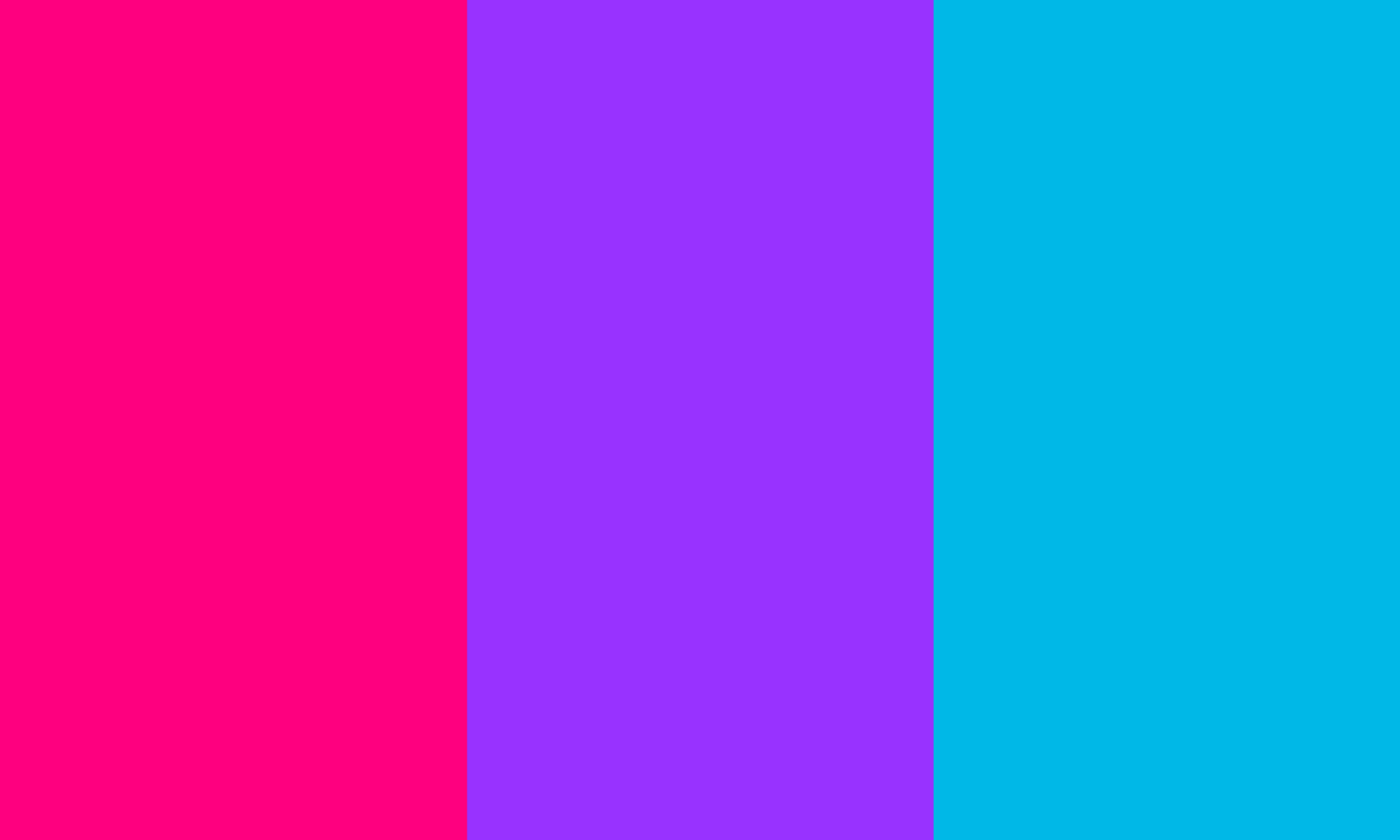
The colors of the Androgyne Pride Flag each represent a different concept:
- Pink: Represents femininity, acknowledging the spectrum of female-identified and feminine-presenting individuals
- Purple: Represents androgyny as a combination of the two colors
- Blue: Represents masculinity, acknowledging the spectrum of male-identified and masculine-presenting individuals
What Does ‘Androgyne’ Mean?
Someone who has the gender identity of ‘androgyne’ has a gender that is a mix of both ‘man’ and ‘woman’ binary genders.
However, the individual meaning of this can vary. For instance, someone who is androgyne may describe their experience as being “between” man and woman or masculine and feminine. They may also lean more toward being nonbinary, identifying as neither feminine nor masculine.
Historically, people have used terms like ‘bisexual’ to refer to androgynous people, but the androgyne identifier creates a more specific term for someone’s gender identity that goes beyond their sexual orientation or biological sex assigned at birth.
Get a Flag: Amazon
Plus, learn more about other Pride flags:
- All LGBTQ+ Pride Flags & Their Meanings
- Agender Pride Flag
- Androgyne Pride Flag
- Aromantic Pride Flag
- Asexual Pride Flag
- Bisexual Pride Flag
- Demigender Pride Flag
- Demisexual Pride Flag
- Drag Pride Flag
- Gay Men’s Pride Flag
- Genderfluid Pride Flag
- Genderqueer Pride Flag
- Gilbert Baker Pride Flag
- Intersex Pride Flag
- Lesbian Pride Flag
- Nonbinary Pride Flag
- Pansexual Pride Flag
- Philadelphia Pride Flag
- Polysexual Pride Flag
- Progress Pride Flag
- Queer Pride Flag
- Rainbow Pride Flag
- Transgender Pride Flag
- Two-Spirit Pride Flag
- … and read more LGBTQ+ good news
If you grew up a bookworm, or maybe even a social outcast, Mychal Threets, a Bay Area librarian who has become a social media star, knows what that’s like.
And his mission is to make the library — and the digital world — a better place for everyone.
The 33-year-old’s joyful approach to reading and social inclusion has made him popular on TikTok, where he posts book reviews, tips for getting the most out of the library, day-to-day anecdotes about “library friends,” and his signature “mental health checks.”
Threets is the supervising librarian at the Fairfield Civic Center Library in Solano County, California, which he frequented when he was homeschooled as a child, according to the New York Times.
Though he works in the Bay Area, Threets brings the library to the rest of the world, donning brightly colored clothes, an unmistakable Afro, and a bright smile, in his regular videos.
He even has a tattoo of a library card belonging to PBS’s famous aardvark, Arthur Reed, who popularized visiting the library for a generation of young people, crooning “having fun isn’t hard when you’ve got a library card” in the late 90s.
The lyric has become Threets’ TikTok bio.

The joyful librarian, who has amassed a following of over 500,000 recently fell victim to his virality, when a cyberbullying campaign targeting him gained traction on Twitter (Or, X).
The offending post included a video of Threets with the caption “people are getting weirder.” But the comment section is where the most painful words were spoken.
“Some of the comments in this Twitter thread are some of the cruelest things I’ve read in a long time,” Threets shared in a video confronting the hatred with empathy and kindness.
He said that many of the comments made fun of his voice and mannerisms — and that he wouldn’t repeat them because “they just don’t need to be heard by anybody.”
Some people coming to his defense in the comments even wrongfully concluded that he is autistic, and though Threets said he loves many autistic “library friends,” he reminded his audience that he himself is not autistic.
Despite the vitriol thrown his way, Threets was calm and thoughtful in his video.
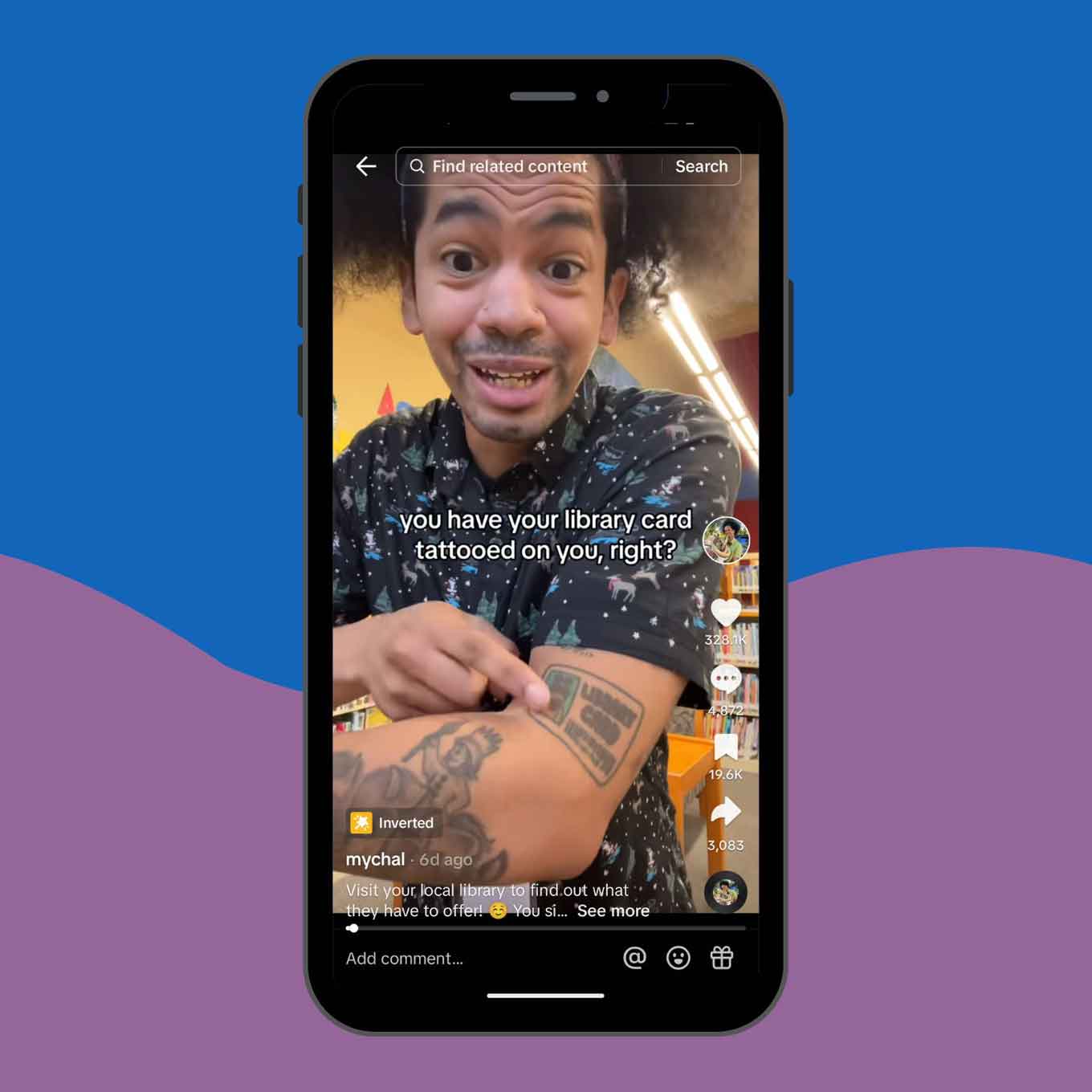
“I am talking about this because I want people to remember that sometimes people have their worst day, and they are really struggling in life. Sometimes, what that results in is they say very mean, very cruel things about other people — which is not okay,” he continued.
He ended with a reminder for himself and for others.
“I hope you remember, as I am trying to remember, that when people are really suffering, sometimes they resort to meanness, cruelty because that’s what they feel about themselves,” Threets said. “And I hope those people have a much better day tomorrow. I hope they experience kindness. I hope they experience joy. I hope they remember that they still belong at the library.”
Over 3 million viewers have been amassed since Threets posted the video on December 31. Not only has the post gained over 24,000 comments of support, but other creators have made videos about Threets’ important work.
@mychal3ts Quite a few people messaged me “mental health check” before I became aware of that Twitter thread, and I just want to say, “THANK YOU!” 💚 #BookTok #LibraryTikTok #Storytime ♬ original sound - mychal
While some folks stuck with a more playful message of “We ride at dawn,” or comparing the creator to Mister Rogers or LeVar Burton, others wanted to reaffirm why Mychal — who always shows kindness and compassion — deserves the same in return.
“Mychal makes some of the most wholesome, joyful, and informative content surrounding libraries,” Whitney of @thewokemama said in a video. “As a former library kid — now a library adult who is raising a library kid — as a person who has personally benefited from library adults, was raised by teachers, reading specialists, … I want to thank you for your work.”
Others made videos in support, having just discovered Mychal on the heels of the controversy.
“The light that oozes off this man…” one creator, Lisa Woods, posted, on the verge of tears. “Do not stop doing what you are doing because it means so much.”
Perhaps most thoughtful of all, TikTok creator Brandon Tweedy, of @regularevolutionary, explained that many young Black children — boys in particular — have experienced trauma in library and reading spaces, being bullied for their inability to read.
This trauma “told that young Black boy that they did not belong in that space and that they had nobody there that would fight for them and with them to belong in that space,” he said in a video.
@regularevolutionary @mychal thank you for your work🪴 #mychalthelibrarian #blacktiktok #blacktiktokcommunity #blackeducation #blackreader #blackreaderscollective #blackbooktok #genz ♬ Creme's Interlude - Pink Siifu & Fly Anakin
But Mychal has proven to be someone who makes sure people know they belong in the library.
“When it comes to Mychal, who we all know unquestionably is doing generational curse-breaking-level work at that library, and deserves to be commended for it, to a lot of people, Mychal also represents a certain level of tenderness and acceptance that they were not only not given, but were actively given the opposite,” Tweedy continued.
“While we are not only defending Mychal, as we should, I think it’s also important that we make the Mychals of the world less rare to the people that need a Mychal.”
It seems clear that Threets will continue to inspire the next generation of librarians. Last year, he was among 10 librarians chosen by the American Library Association to win the I Love My Librarian Award for outstanding public service.
“Thank you for supporting the library. Thank you for supporting books. Thank you for supporting joy. Thank you for supporting me,” Mychal said in a new TikTok, following the outpouring of support. “2024: We’re talking the word ‘weird’ back.”
Header images courtesy of Mychal Threets and the American Library Association