Biking within Black and Brown communities is complicated.
While non-motorized transportation is an important tactic for reducing emissions, many people still associate biking with something that kids do — or think of it as the last resort for people who can’t afford cars.
In BIPOC communities, that is compounded by external factors such as perceived or realistic safety issues, police harassment, and lack of access and infrastructure due to decades of disinvestment.
Olatunji Oboi Reed, president and CEO of the Equiticity Racial Equity Movement in Chicago, aims to change that.
“There are some systemic barriers that keep Black and Brown people driving, that keep Black and Brown people driving by themselves, that push Black and Brown people away from transit or cycling or walking. So, we’ve got to think about this holistically and at the systemic level… some of the systemic barriers that keep us from getting rid of our cars,” Reed said.
Based in North Lawndale on Chicago’s West Side, Equiticity is a multifaceted, multi-racial organization focused on eliminating racial inequality. Reed, along with his staff and an active board of directors, guides the organization in its pursuit of racial justice — largely pedal-powered by bicycle.
For Reed and for Equiticity, getting more Black and Brown people on bikes is about more than recreation or even transportation.
He sees it as a vehicle for enhanced community cohesion, economic development, and improved health outcomes for Black and Brown residents, whose life expectancy is a full decade lower than that of White residents of the city, in part due to poor air quality generated by fossil fuel combustion.
From Slow Roll to Equiticity
Reed, along with childhood friend Jamal Julien, launched Slow Roll Chicago — a local outpost of a global bicycle movement — in 2014 as a means of encouraging more Black, Brown and Indigenous people to embrace bicycling for both recreation and transportation.
While Reed has stepped away from leadership, Slow Roll Chicago continues to work to strengthen community connections and development.
In 2017, Reed expanded his vision of promoting racial equity beyond Slow Roll Chicago with a well-attended soft open of Equiticity in Chicago’s tony River North neighborhood.
A number of delegates from the National Association of City Transportation Officials conference, along with local advocates, supporters and members of the media, were in the audience. The new organization was initially tasked with a plan to establish bike libraries on the city’s predominantly Black and Brown South and West Sides.
Since then, the organization has expanded its programming reach while remaining firmly rooted within a framework of advocating for BIPOC communities. Today, Equiticity encompasses advocacy, social enterprises, and programming, along with “community mobility rituals” where Black, Brown and Indigenous people take to the road on two wheels.
Three of its major programs — the Mobility Opportunities Fund, GoHub Community Mobility Center and BikeForce Workforce Development Program — are specifically designed to make biking more accessible and affordable for Black and Brown riders by addressing inequities, disinvestment and disparities, along with promoting economic development.
The Mobility Opportunities Fund
In November 2022, Equiticity launched the Mobility Opportunities Fund, supported by a grant of $448,950 from ComEd.
The fund initially provided $350 for the purchase of a conventional bicycle, $750 for the purchase of an electric bicycle, $1,500 for the purchase of an electric cargo bicycle and $3,500 for the purchase of an electric vehicle. (Stipends were later increased to $8,750 for EVs.)
Only four EVs were purchased using resources from the fund. However, community members bought 111 bikes, 85 electric bikes and 57 electric cargo bikes with their stipends, according to an August 2023 report on the program.
“When I came on board, I was very excited, because I understand being someone who resides in North Lawndale,” said Remel Terry, director of programs at Equiticity. “I understand the benefit of having alternative modes of transportation especially if you can’t afford a bike or even the cost of, as we’ve seen, gas and things of that nature.
“And then the overall climate-friendly aspect is also a big deal, in my opinion, and helping us to understand how to be more environmentally friendly without having to harp on things in the way sometimes it gets communicated.”

The GoHub Community Mobility Center
Equiticity is developing the GoHub Community Mobility Center to help address EV charging deserts along with other mobility and transportation needs for residents of North Lawndale.
“The GoHub would have charging stations accessible to the community who may have electric vehicles,” Terry said. “So, it’s really like a one stop shop bringing all of the various programs into a physical space within the community of North Lawndale.”
But the GoHub is not limited to facilitating EV adaptation. Reed envisions multiple functions to address transportation-related inequities that Black and Brown low- and moderate-income residents experience, some of which may not be readily apparent.
That includes “hardware” — physical infrastructure — and “software,” which Reed describes as “the work we do to socialize people around the act of mobility.”
“For us, that’s our community mobility rituals. We do community bicycle rides, neighborhood walking tours, public transit excursions, group scooter rides, and open streets festivals,” Reed said.
“We also, as a part of the GoHub, want to have a hyper-local advocacy coalition. So, these are people at the neighborhood level who identify the needs to grow our mobility. And then we organize ourselves to move the stakeholders and policy makers in the city to bring the resources to bear that we need to grow our mobility in our neighborhoods,” Reed said.
North Lawndale suffers from a high crime rate, which is highly publicized in local and national media. In acknowledging the prevalence of violence in the neighborhood, Reed also envisions the “software” of the GoHub as a means to reduce the presence of violence that can discourage residents from biking.
“Violence in our neighborhood is not something that we are able to pontificate about often. It is pretty close to us. Trauma is driving our concerns around mobility. So, we want to address trauma.
“We want mental health services to be a significant part of our work in the GoHub… We want space in the GoHub where that space is dedicated to other forms of healing to help people move through their trauma and begin to consider other modes of travel that, heretofore, they weren’t focused on,” Reed said.
Workforce development
Equiticity launched BikeForce in 2022 as a workforce development program for teens between the ages of 15 and 19 living in North Lawndale and adjacent communities. The apprenticeship program focuses on the emerging electric transportation sector, through the mechanics of e-bicycle construction, along with electric vehicles, e-scooters, battery systems, and electric motors. The Cook County Justice Advisory Council awarded Equiticity a $600,000 grant earlier this year, which allowed the program to expand to serve 60 trainees over 18 months.
“BikeForce is providing these participants with comprehensive and targeted mentorship, career services and workforce training in an emerging, environmentally sustainable sector — all while increasing access to climate-friendly mobility devices in North Lawndale,” Terry said in an email.
The apprenticeship program also provides networking and opportunities for living-wage jobs to as many as 30 young people each year. Participants who complete the program also receive a cash stipend of $1,100 and a non-electric bicycle, Terry said.
“They’ll be able to leave this program and be hired as a bike mechanic somewhere with the experience of also understanding the battery aspect of the electric bike, which is a very big deal,” Terry told Streetsblog in September.
Ongoing advocacy
Equiticity launched the Free 2 Move Coalition during the summer of 2022 to advocate for improvements in biking infrastructure and policy changes, especially around the issue of police harassment of Black and Brown bike riders, including aggressive enforcement of street crossing regulations and prohibitions against riding on the sidewalk.
These types of stops increased exponentially as an alternative to stop-and-frisk, said Jose Manuel Almanza, director of movement and advocacy building at Equiticity.
“Right now, the Chicago Police Department can stop vehicles for a number of reasons, including a busted taillight, no registration or expired registration, [or] no city sticker — stuff that we think that should not be in the hands of the Chicago Police Department” Almanza said.
Equiticity’s research found that between 2014 and 2019, police disproportionately issued citations for bike riding on sidewalks on the West and South Sides, which are predominantly Black and Brown neighborhoods.
“At the same time, those areas have little to no biking infrastructure. So, it makes sense that people just feel safer riding on the sidewalk,” Almanza said. “So, we want to eliminate the CPD’s ability to ticket folks for these offenses, and at the same time invest in these neighborhoods to give them the space and the safety they need to ride their bike safely on the road.”
Like many Black and Brown communities, North Lawndale has suffered the effects of decades of disinvestment. However, dollars intended to mitigate disinvestment frequently don’t make their way to areas where they are most needed.
At the same time, initiatives to mitigate disparities are sometimes met with pushback — driven by mistrust and anxiety about displacement, and exacerbated by the failure of municipal and other entities to engage community stakeholders, Almanza said.
“We really want to expand biking infrastructure. However, a lot of people on the West Side and South Side see biking infrastructure as a sign of gentrification. A lot of people think, well, who are these bike lanes really for? It just seems that whenever the city does any kind of improvements in, for example, North Lawndale or Little Village, we get priced out. And I think just seeing that over and over and over again, it just creates suspicion in people that, well, in the past, everything they’ve done was not for me. So why is this for me now?
“Different communities in Chicago have different needs and people who live here know what’s needed, know what’s working, know what isn’t. However, we just keep seeing a lack of engagement from city agencies when it comes to creating a plan around infrastructure. A lot of our communities have been here for a very long time, so there’s a lot of history in it, and it seems like a lot of that history isn’t taken into consideration.” Almanza said.
For Reed, advocacy, education and improving biking infrastructure are all integral to Equiticity’s mission of getting Black and Brown people on bikes — and having them feel safe riding.
“How are we going to convince somebody not to drive and they should walk or bike, and there’s no sidewalk? This is not a rural community. This is the city of Chicago. People consider this the welcome center to the country,” Reed said.
“Corporations are headquartered here. And we’ve got a neighborhood in our city with no sidewalk. And it’s been like that for decades. The intersection [at] 79th and Stony [Island] is one of the most dangerous intersections in the state of Illinois. It’s been like that for generations. And we’re supposed to convince somebody in that neighborhood to ride a bike. I wouldn’t dare tell somebody to ride a bike on Stony Island. I wouldn’t ride a bike on Stony Island. So, we’ve got to improve the quality of our infrastructure. We’ve got to use infrastructure to reduce all types of violence, interpersonal, police, and vehicular. And this is taking place.”
This story was originally published by Energy News Network and republished with permission pursuant to a CC BY-NC 4.0 License.
In this great American tableau, there exists a multitude of cities, each as diverse and vibrant as the citizens who call them home.
Each city has a flavor, a soul that unfolds not just in the taste of its food or the sound of its music, but in the life that pulses through its streets. And nowhere else is that life more evident than in its public transportation.
Rent.com ranked the top 10 best cities for public transportation in the U.S. based on usage, accessibility, and cost data from ValuePenguin, Citylines.co, and the Census Bureau.
From coast to coast, we scoured the nation and found the cities that make getting from A to B easier than anywhere else.
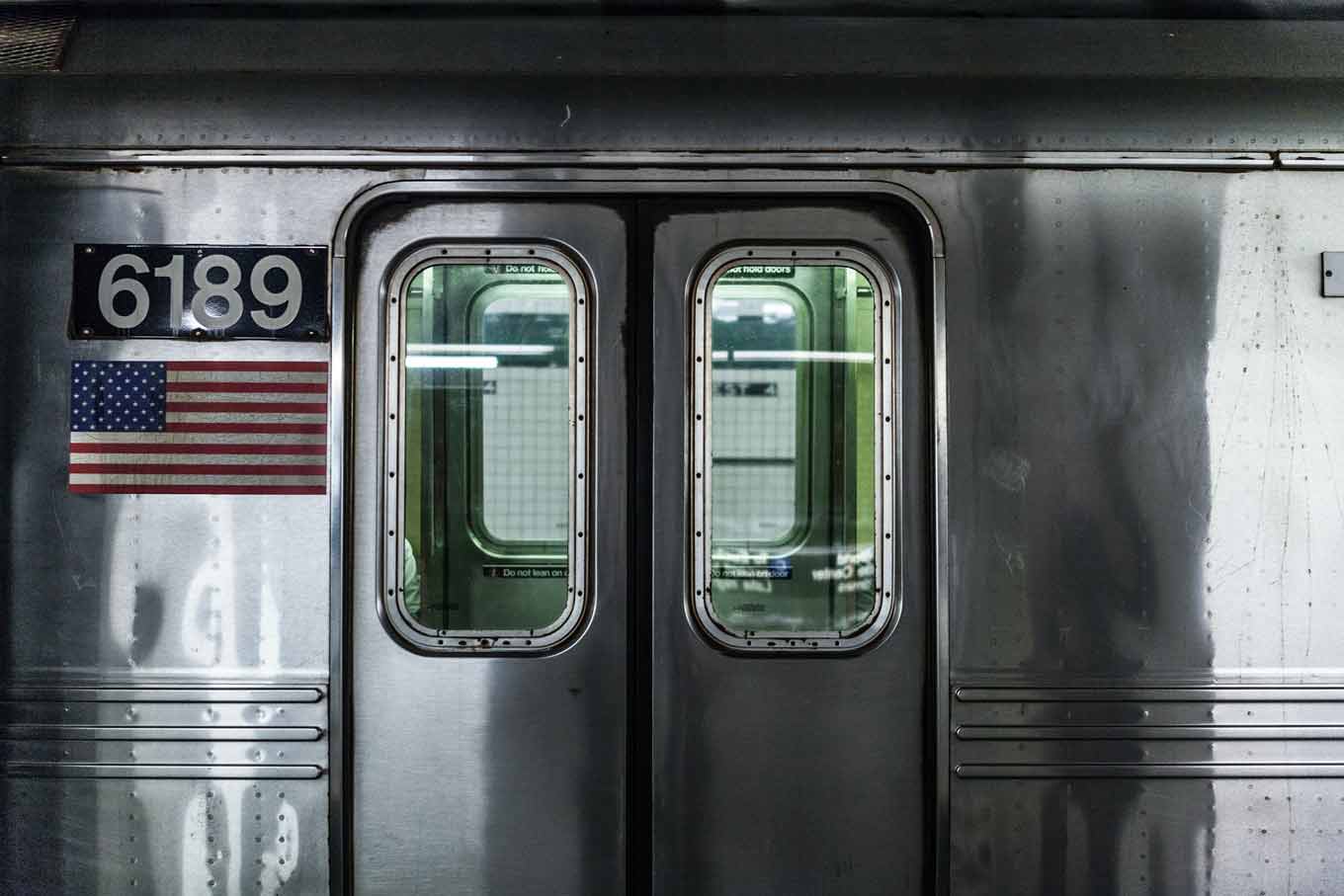
The Top US Cities for Excellent Public Transportation
10. Minneapolis
Minneapolis, ah, the city of lakes, where the icy breath of the North meets the industrial charm of the American heartland. A place that defies the expectation that public transportation in the Midwest is a bit of an afterthought.
If you've only got a day in Minneapolis and prefer to experience the city like a local, Metro Transit is your best bet. You have two lines of the Light Rail — the Blue and the Green — interweaving through the city's lifeblood. It's a smoothly efficient beast, carrying with it a certain rugged charm.
The Blue Line, a.k.a. the Hiawatha Line, connects the downtown area with the Mall of America, meandering through the city like a silver snake. That's not all, it also makes a pit stop at Minneapolis-St. Paul International Airport. Handy, right?
The Green Line will take you on a journey from downtown Minneapolis to downtown St. Paul, passing through the University of Minnesota. Students, professionals, tourists, you see them all — a slice of life with every stop.
Now, if you want something a bit more quaint, the Northstar Commuter Rail has a sense of old-world charm. It may be a more limited option, mainly serving the northwestern suburbs and ending in Big Lake, but riding it gives you a glimpse of the slower, quieter side of Minnesota.
Then there's the bus system. The regular service covers the entire city and then some. The express bus will get you where you're going faster, cutting through the city's arteries like a hot knife through butter. But if you're not in a hurry, the local bus service gives you a more leisurely pace.
Minneapolis, despite its frosty demeanor, has put its heart into creating a public transportation system that works. It's efficient, yes, but it's also a window into the soul of the city. You want to know Minneapolis? Ride the bus, take the train, watch the world go by. This city is worth more than a cursory glance: It demands to be experienced, tasted and savored.
9. Miami
Miami, the pulsating, pastel-clad paradise. A veritable mélange of cultures, cuisines, and yes, a hodgepodge of public transportation options. You've got a mix of the typical and the distinctly local. It's a city that does things its own way, and that ethos extends to the way folks move around en masse.
First up, there's the Metrorail. It's a 25-mile, elevated rapid transit system, kind of like a rail stiltwalker striding above the city. It hums and rumbles, slicing through the tropical air from Kendall to Miami International Airport through Downtown. You'll find yourself amongst a living diorama of humanity — tourists, locals, office workers, and families, each with a story as rich as the Cuban coffee brewing in the cafe on the corner. Is it perfect? Nah. Is it efficient, clean, and air-conditioned? You bet.
Next up, you've got the Metrobus. A vast fleet of these contraptions, more than 600, squirming and weaving through Miami-Dade County like shiny, multi-colored snakes. It's a more granular way to get about town. You can take a deep dive into neighborhoods the Metrorail system might not touch. It's where you'll find a front-row seat to the tapestry of cultures making up the Miami mosaic.
Then there's the Metromover, a cute, electrically powered people-mover system, free of charge, that sweeps through Downtown and Brickell. It's like something out of a sci-fi movie, only instead of being whisked off to the mothership, you're getting dropped off at your favorite sushi joint or a Heat game.
Don't forget the Tri-Rail, a commuter train connecting the dots between Miami, Fort Lauderdale, and West Palm Beach. It's the spinal cord of South Florida, keeping the metropolitan regions linked and functioning.
But here's the coolest part — the water taxis. Yes, in a city where water is as much a part of life as the sand and the sun, you can traverse Biscayne Bay by boat. These sea chariots are more than just transportation.
They're a mini-cruise through the city's lifeblood, past the sandy beaches, the skyscrapers, the docks stacked with the type of boats you'd buy if your memoirs became best-sellers.
So there you have it — Miami, a city where getting from A to B isn't just a necessity, it's an adventure. Just like its food, its people, and its music, the public transportation here is a feast for the senses.
8. Philadelphia
Philadelphia, where the ghosts of America's past walk the brick-laid streets, where the cheesesteaks are greasy, robust, and darn near perfect. It's a city whose heart beats to the rhythm of history, culture, and strength and is tied together by its public transportation.
Each bus, train, and trolley is more than just a vehicle — it's a chapter in a city-wide story, a page in a never-ending book of urban poetry.
Let's start with the SEPTA, the Southeastern Pennsylvania Transportation Authority. It's the main workhorse of the Philly public transportation system. T
o put it simply, it's a network of buses, trolleys, and trains that crisscross the city like a finely woven Turkish rug.
You've got more than a hundred bus routes, dozens of trolley lines, and a comprehensive subway system — it's like the veins in Rocky's arms, connecting every nook and cranny of this historical powerhouse of a city.
SEPTA's subway lines, the Broad Street Line and the Market-Frankford Line, are the two main pillars. SEPTA's BSL takes you from the stadiums up to Fern Rock, while the MFL stretches from Frankford all the way to 69th Street.
Then there's the Regional Rail, a collection of train lines that stretch beyond the city, reaching into the farthest corners of the Philadelphia metropolitan area. This isn't just a lifeline, it's a bunch of lifelines, a spider web that connects Philly to its suburban orbit, making the city easily accessible to commuters from the surrounding suburbs.
Next up, let's talk buses. SEPTA has more than 120 of these routes, rumbling their way through the city, the suburbs, and even across state lines into Jersey. They're the workhorses of the Philly streets, the blood cells that keep the city body oxygenated.
Philly also has trolleys and boy, do they give the city an old-world charm. These electric streetcars — some operating in their own right-of-way, some mixing with regular street traffic — are like time machines on rails, harkening back to the city's industrial past while keeping its present and always on the move.
And let's not forget the Philly PHLASH, the seasonal downtown loop that shuttles tourists and locals alike between key destinations, from Penn's Landing to the Philadelphia Museum of Art and a slew of interesting stops in between. It's quick, it's easy, it's colorfully conspicuous and a good option for a whirlwind tour of some of the city's top attractions.
7. Providence
Providence, Rhode Island, is one of the first cities one might conjure up when thinking of idyllic New England vistas, scholars strolling down leaf-strewn walkways or the architectural poetry of the classic coastal aesthetic.
It's a city that marries the old-world charm of the East Coast with the dynamism of a modern metropolis, and the unsung hero behind it all? Its robust, yet still slightly under-the-radar, public transportation system.
Let's start with the Rhode Island Public Transit Authority, or RIPTA. It's not flashy but it gets the job done, like a good clam chowder. More than 50 bus routes zigzag their way across the state, with Providence as its epicenter.
Providence's bus network isn't just functional, it's a socio-economic equalizer, a veritable cross-section of humanity. On a single trip, you could share a ride with students, workers, artists, pensioners, tourists, and more, each bringing a dash of unique flavor to this particular Rhode Island stew.
And let's not forget Amtrak and the MBTA, your railways to the rest of the Northeast. The Providence Station is a major stop on Amtrak's Northeast Corridor, connecting the city to Boston, New York, and beyond.
The MBTA, or the 'T' as it's known by locals, also provides commuter rail service to Boston, a vital connection for those who want a taste of Beantown without giving up the relaxed charm of Providence.
6. Seattle
A haven for grunge, coffee, tech, and rain, Seattle is a city that marches to the beat of its own drum. Tucked away in the Pacific Northwest, surrounded by water, mountains, and forests, this area is enchanted on more levels than one. But beneath the plaid shirts and the Pike Place Fish Market, there's a public transportation system that's as diverse and intricate as the city it serves.
First up, there's King County Metro. These buses aren't just practical; they're a microcosm of Seattle, a patchwork quilt of locals and tourists, workers and wanderers, each adding a unique character to the Seattle scene.
It might not always be glamorous — there's the occasional traffic snarl or rainy day gloom — but it's dependable. It's the pulse of the city, the rhythm that keeps Seattle ticking like a metronome in a recording studio.
Then, there's Sound Transit Link Light Rail. It's like the city's futuristic spine, connecting Seattle-Tacoma International Airport in the south to the University of Washington in the north.
It's sleek, it's efficient and it is a godsend during rush hour. It moves through the city with a hum, a mechanical melody that sings the song of Seattle's growth and progress.
But the real star of the show? That has to be the Seattle Streetcar. A nod to the city's history, these modern electric trams dance their way through the city, blending the old with the new. They're the symbol of a city that respects its past while driving headfirst into the future. And they're super convenient for a lazy jaunt through South Lake Union or First Hill.
And of course, there's the monorail, Seattle's delightful anomaly. Built for the 1962 World's Fair, this elevated train line whisks you from Westlake Center to Seattle Center, home of the iconic Space Needle, in less than two minutes.
5. Chicago
Home of deep-dish pizza, die-hard sports fans, and a take-no-crap attitude, Chicago is a city that doesn't just survive — it thrives, defiantly, standing tall against the icy gusts off Lake Michigan. It's a city of neighborhoods, each one with its own story, its own flavor, all stitched together by a vast and vibrant public network of transportation.
The star of the show, no doubt, is the Chicago Transit Authority, the CTA, the backbone that keeps the city standing upright. It's an orchestra of buses and trains that crisscross the city like a musical score, each one hitting a different note and playing a different tune.
The CTA's elevated trains, or 'the L' as locals call it, are the symphony's lead players. Eight color-coded lines rumble and screech their way through the city, above the cacophony below.
From the Red Line's journey from the North to South side, the Blue Line's trip to O'Hare or the Brown Line's loop around the city's heart, they're as much a part of Chicago's character as the skyscrapers that pierce the city's skyline.
And let's not forget the buses. Over a hundred routes sprawl out across the city, reaching the corners the L can't. They're the unsung heroes, the rhythm section that keeps the tempo and provides the baseline on which the city moves.
Then, there's Metra, the city's commuter rail system. It stretches its metallic tendrils into the far reaches of the Chicago suburbs, morning and night. It's the whisper in the dawn, the lullaby at dusk, the constant to-and-fro that keeps the Windy City spinning.
But here's the wild card — water taxis. In a city that owes its life to Lake Michigan, you'd better believe there's a place for boats. In the warmer months, these aquatic chariots skim the surface of the Chicago River, offering a scenic and often quicker alternative to bus or taxi travel. It's a dose of tranquility amidst the urban clamor, a serene interlude before you dive back into the urban fray.
Chicago is a living, breathing entity, one that moves to the rhythm of the 'L' and the hum of the buses. Its public transportation isn't just practical, it's poetic. It's a dance, a ballet of people and machines, a performance that begins anew with each rising sun. So, hop on board, tap your Ventra card, and lose yourself in the beautiful chaos that is Chicago.
4. San Francisco
San Francisco is where the tech elite brush shoulders with bohemian artists, where old-world charm coexists with futuristic ambition. It's a city defined by its hills, its bay, and most importantly, its iconic public transportation.
Let's start with Muni, or The San Francisco Municipal Transportation Agency. A collection of buses, trains, cable cars, and streetcars that hum and buzz their way through the city's diverse neighborhoods. It's as eclectic as the city it serves, a patchwork of routes and services that weave together the story of San Francisco.
The Muni Metro Light Rail is a marvel. It snakes its way beneath the city, surfacing now and again to offer glimpses of the Golden Gate Bridge, Twin Peak, and the colorful chaos of the Mission District. It's the city's pulse, a lifeline that connects San Francisco's heart to its extremities.
Now for the real star of the show, the cable cars. These beautiful, antique machines aren't just a way to get around, they're a way to travel through time. They rattle and clatter up and down the city's notorious hills, offering breathtaking views of the city, the bay, and the iconic skyline.
There's nothing like hanging off the side of a cable car as it ascends the crest of Nob Hill, revealing a panorama of the city below.
Not to be outdone, San Francisco also boasts a historic fleet of streetcars. The F Market & Wharves line, specifically, is a rolling history lesson of a collection of vintage streetcars from around the world, each with its own story, its own unique charm.
And let's not forget BART— the Bay Area Rapid Transit. This commuter subway system isn't just for the nine-to-five crowd. It's a vital artery that links San Francisco to its neighbors — Oakland, Berkeley, Daly City, and more.
3. Washington D.C.
Washington D.C. is a city that's constantly on the world's stage, where the decisions made within its borders echo around the globe. It's a city of contrasts — the lofty ideals of democracy and the gritty reality of governance, the grandeur of its monuments and the hustle of its streets. And binding it all together, a public transportation system as diverse and intricate as the city itself.
The star of the show is the Washington Metropolitan Area Transit Authority, better known as Metro. As the tendrils that connect the city and avoid unexpected motorcade shutdowns, this is a popular option for locals and weekend warriors alike.
The Metrorail, D.C.'s rapid transit system, is a marvel of modern design. Its Brutalist architecture, those waffle-patterned vaulted ceilings—they're almost as iconic as the city's neoclassical monuments.
Then, there's the Metrobus system, over three hundred routes reach every nook and cranny of the city. They're the workhorses, the unsung heroes that keep the city on the move, day in and day out.
In a city where history is etched onto every street, it's fitting that streetcars have made a comeback. The D.C. Streetcar is a nostalgic nod to the past, a link to a bygone era that's been updated for the 21st century.
It's a charming way to explore the H Street NE Corridor and Benning Road, places where D.C.'s past, present, and future intersect in an impeccably choreographed dance.
2. Boston
A city of scholars and sports fans, of clam chowder and wicked accents, Boston is a place where the past is always present, and nowhere is that more evident than in its public transportation system. The Massachusetts Bay Transportation Authority, or the 'T,' is the pulse of Boston.
It's the oldest subway system in the country, a network of trains, buses, ferries, and trolleys that link the city's many neighborhoods and suburbs.
Let's start with the subway. The T's four lines offer a kaleidoscope view of the city. They cut a path from the academic oasis of Cambridge to the vibrant culture of Roxbury, from the hustle of Downtown Crossing to the cobblestones of Beacon Hill. Each station, each line tells a story, from the bustle of South Station to the ballgame buzz of Fenway.
Over a hundred and seventy bus routes meander through the city and beyond, carrying a dizzying array of Bostonians on their daily journeys. They're the unsung heroes of the city, a fleet of blue and white that keeps Boston moving, come rain, shine, or a Nor'easter blizzard.
But let's not forget the real MVP – the Green Line Light Rail. There's something charmingly old-world about it, a touch of Europe in the heart of New England. They're a window into the soul of the city, from the quiet hum of Brookline to the bustling heart of Boston College.
The MBTA isn't just about land, either. The ferries offer a unique way to travel in the city, connecting downtown Boston to points across the harbor, like Charlestown, Hingham, and Hull. They're a breath of fresh, salty air in the urban hubbub, a chance to see the city from a different perspective – from the quiet lapping of the Charles River.
Boston's public transportation is a living, breathing testament to the city's history, its culture, and its indomitable spirit. It's a reflection of the city's character, steadfast and resilient. A little rough around the edges? Maybe. But always moving forward. So grab a CharlieCard, hop on the T and let Boston unfold before you, one station at a time.
1. New York City
New York City, where ambition and dreams collide in a dizzying dance of noise, color, and unending movement. It's a city of extremes. A city of towering skyscrapers and sprawling parks, of Wall Street tycoons and Broadway dreamers. And keeping it all together, a public transportation system as vast, complex, and captivating as the city itself.
The New York City subway is the city's lifeline, the pulsating rhythm to which this metropolis moves. Twenty-four hours a day, seven days a week, the trains rumble beneath the city's streets, connecting the far-flung corners of the five boroughs.
From the tip of the Bronx to the beaches of Coney Island, from the shores of Staten Island to the nightlife of Manhattan, the subway is always working to keep the city connected.
The bus network is so vast that it feels like a city in itself. They trundle along the city's grid, reaching the places the subway can't, from the leafy lanes of Riverdale to the scenic streets of Red Hook.
But let's not forget the iconic yellow cabs, racing through the city at all hours, a symbol as integral to New York as the Statue of Liberty or a hot dog from Gray's Papaya. They're not public transit in the traditional sense, but they're as much a part of the city's transportation landscape as any bus or train.
And then there are the ferries. From the Staten Island Ferry, offering the best free view of the Statue of Liberty, to the NYC Ferry network connecting Manhattan with Brooklyn, Queens, and the Bronx via the city's rivers and bays.
New York City's public transportation is a reflection of the city's soul — chaotic, diverse, and always on the move. It's not just a way to get from A to B, but a unique life experience in its own right.
There you have it, a flavorful sampling of America's finest in public transportation. From the sun-soaked coasts of Miami to the historic charm of Boston, from the cultural hub of Chicago to the innovation of San Francisco, it's clear that the spirit of a city lives not just in its landmarks or its cuisine, but in the subway cars, buses, trams and ferries that connect us to each other and the world.
So, whether you're a lifelong local or an eager explorer, remember, the journey can be as important as the destination, especially when it comes to public transportation. Next time you're in one of these cities, skip the rental car. Instead, hop on a bus, catch a train, or ride a ferry, and see what stories the city has to tell you.
Methodology
To find the best cities for public transportation, we looked at metrics related to public transportation usage, accessibility and cost.
Features were normalized and then weighted based on the following scale:
- Usage: 25 points
- Percentage of public transportation users: 25 points
- Accessibility: 50 points
- Bus lines per density: 10 points
- Public transit stations per density: 10 points
- Number of tracks: 10 points
- Transit lines per density: 10 points
- Number of transit systems: 10 point
- Cost: 25 points
- Price for a 30-day pass: 12.5 points
- Percentage of pass cost related to local mean income: 12.5 points
Transit system info was from citylines.co. Transit cost was from ValuePenguin. Bus lines were from a database of 8 million commercially available business listings. These listings may not reflect recent changes to bus line availability. Usage is from the U.S. Census Bureau.
The information included in this article is used for illustrative purposes only. The data contained herein do not constitute financial advice or a pricing guarantee for any apartment.
This story was originally published by Stacker and republished with permission pursuant to a CC BY-NC 4.0 License.
As Israeli military retaliation continues in the Gaza Strip, the death toll of Palestinian civilians rises.
According to Al-Jazeera the death toll in Gaza has surpassed 20,000 people during the first 10 weeks of the near-constant bombardment.
Left with feelings of heartbreak, loss, and the desire to help, Detroit-based artist Zoe Minikes began a meditative and grief-fueled practice of drawing a heart for every life lost in Gaza since the conflict began in October.
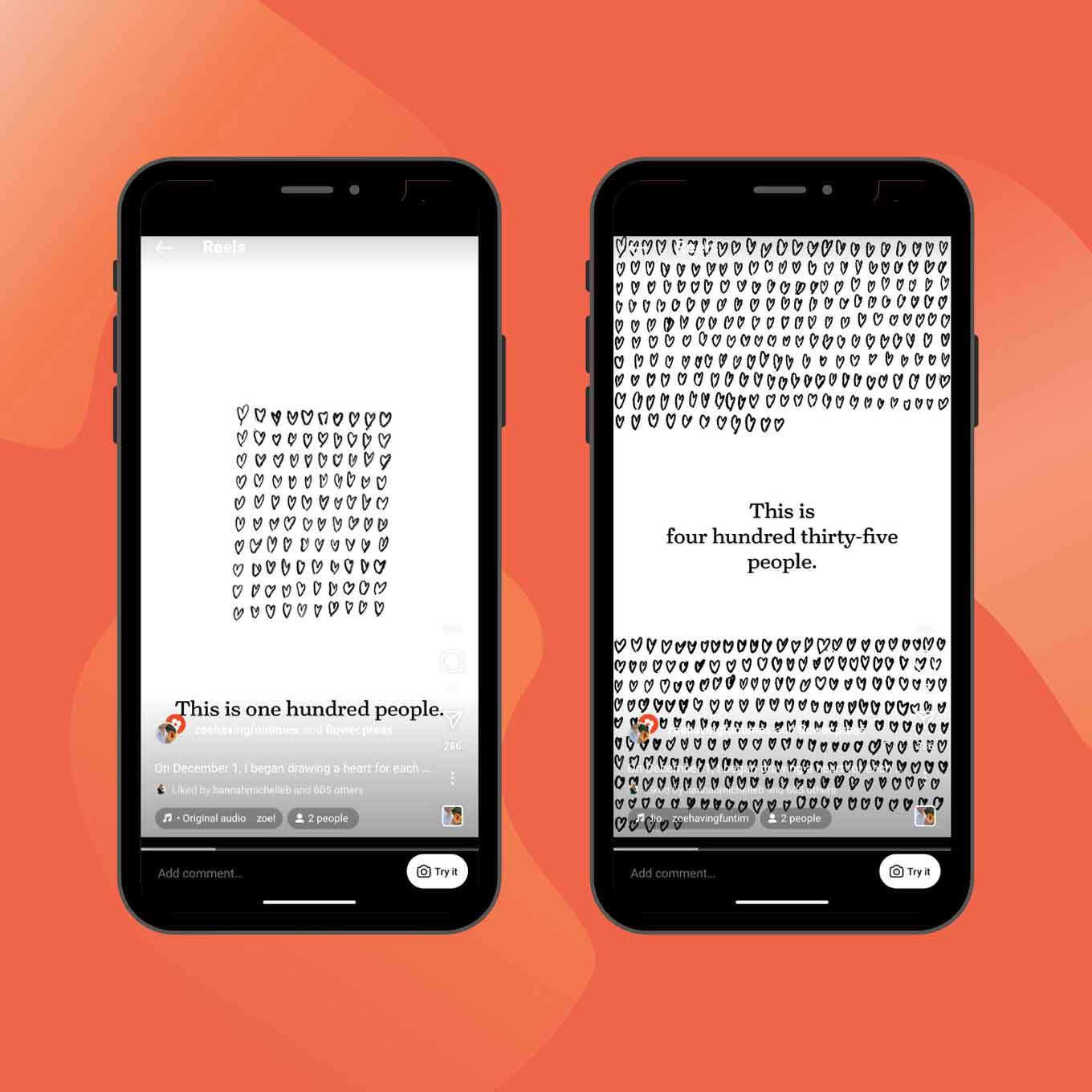
“I did this in order to help myself and others comprehend the massive scale and horrific pace of this genocide,” she wrote in an Instagram caption.
Minikes started drawing hearts on December 1 and reached a total of 20,000 about 20 days later.
“Over the course of the last few weeks, it has become a way for me to bear witness to each death individually,” she explained. “It is a way to say ‘I spent time recording you. I spent time thinking about you. You were loved.’”
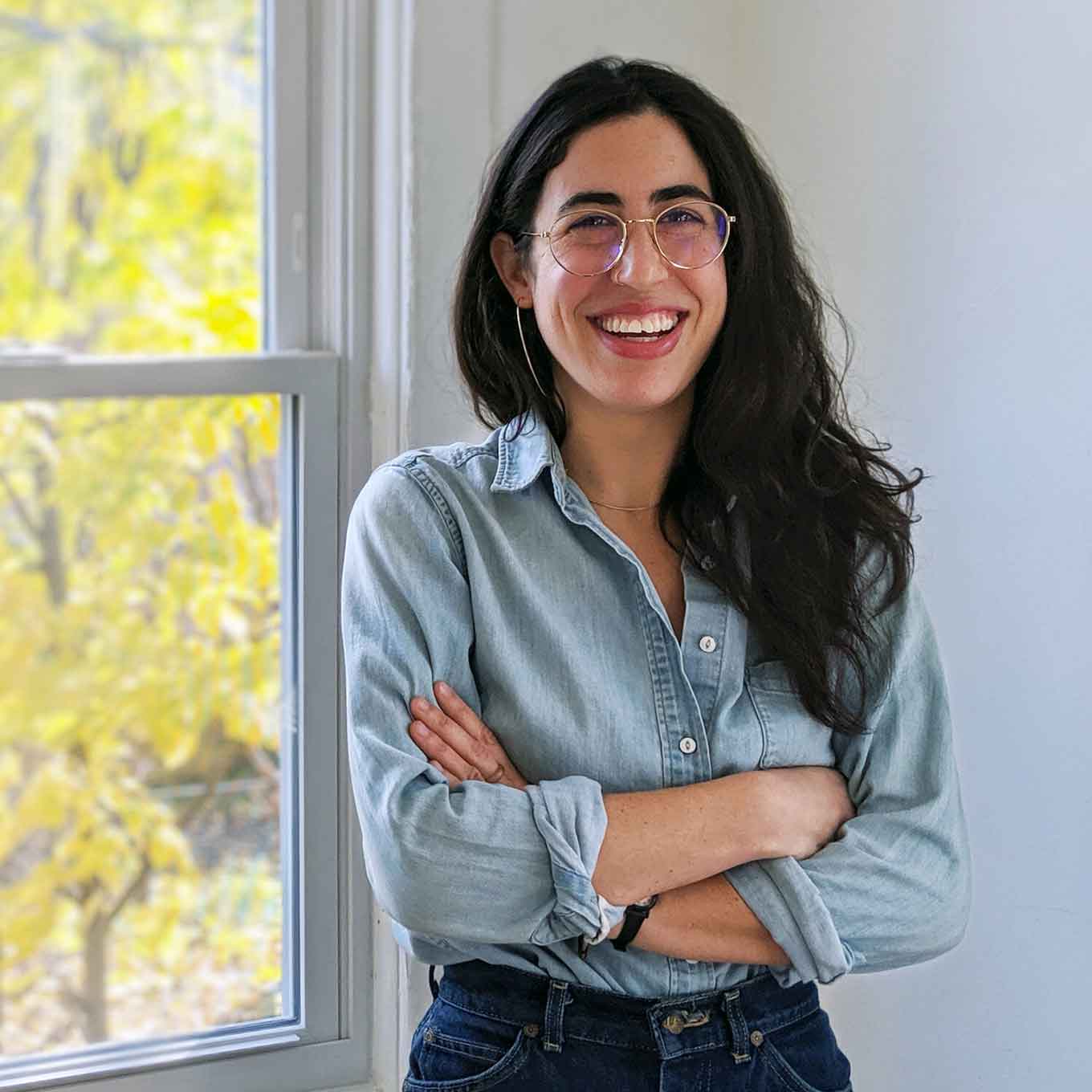
Minikes also runs Flower Press, an indie publishing company that centers the work of historically marginalized women and queer creators, publishing books, zines, resources, and more.
So, she’s created a small book for the project called “So Many Hearts.” All profits of the book will go to the Palestinian Children’s Relief Fund — which rounds out to $12.25 per order.
But the tragedy continues to unfold.
“The horrific truth is that the killing of Palestinians has outpaced my ability to record the number of deaths and to make this publication,” Minikes continued in her caption.
“Twice, I have stopped publication to add pages, each time adding 2,500 hearts. 2,500 new deaths. 2,500 lost lives. I have chosen to publish this work at this point, when the death toll sits at 20,000.”
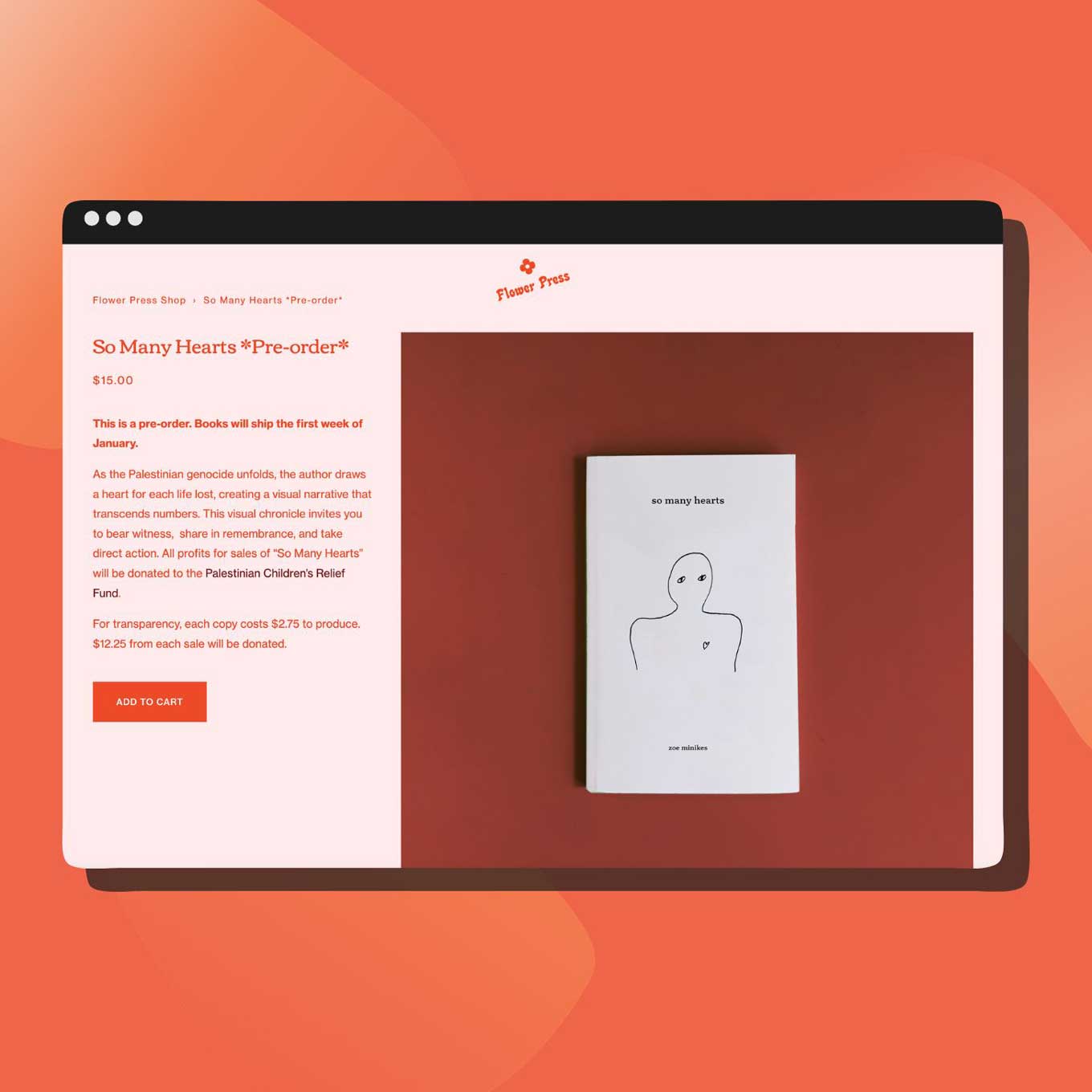
Though the book will pause in time, acting as an artifact of the tragedy up to this point, Minikes does not plan to halt her drawings.
“As the number continues to grow, I will continue to record each death,” she wrote. “I will continue to draw hearts. I will continue to bear witness. I invite you to do the same.”
“So Many Hearts” can be pre-ordered through Flower Press, with copies shipping in the first week of January.
Header images courtesy of Zoe Minikes and Flower Press
The end of the year is a poignant time for reflection and contemplation. As the final pages of the calendar turn, we often find ourselves looking back at the months gone by, pondering the lessons learned, the challenges faced, and the memories made.
It’s a period that brings a mix of emotions — gratitude for what was, nostalgia for what has passed, and anticipation for what is yet to come.
Throughout time, writers, thinkers, and various influential figures have often captured the essence of this transitional period in their words. Their quotes touch on the significance of closing one chapter and preparing to embark on another.
As the year draws to a close, these end-of-the-year quotes can serve as a source of inspiration and introspection. They encourage us to take stock of our journey, celebrate our achievements, and look forward with hope to the future.
Whether you’re in a reflective mood or gearing up for new beginnings, let these words resonate with you as you say farewell to this year and welcome the next…
You might also like: Best Quotes About the New Year | Word of the Year Ideas | New Year’s Resolution Ideas | January Awareness Holidays Calendar | Months of the Year
The Best End of the Year Quotes
Famous Quotes To Celebrate the End of the Year
“Cheers to a new year and another chance for us to get it right.”
— Oprah Winfrey

“Year’s end is neither an end nor a beginning but a going on, with all the wisdom that experience can instill in us.”
— Hal Borland

“And now we welcome the new year. Full of things that have never been.”
— Rainer Maria Rilke

“There are better things ahead than any we leave behind.”
— C.S. Lewis

“Let us embrace the coming year with a living hope for everyday life.”
— Lailah Gifty Akita

“For last year’s words belong to last year’s language and next year’s words await another voice. And to make an end is to make a beginning.”
— T.S. Eliot

“Be at war with your vices, at peace with your neighbors, and let every New Year find you a better man.”
— Benjamin Franklin

Motivational Quotes To Celebrate the End of the Year
“Write it on your heart that every day is the best day in the year.”
— Ralph Waldo Emerson

“Live as if you were to die tomorrow. Learn as if you were to live forever.”
— Mahatma Gandhi
“The best way to predict your future is to create it.”
— Abraham Lincoln
“Whatever it is you’re scared of doing, do it. Make your mistakes, next year and forever.”
— Neil Gaiman
“Wherever you go, go with all your heart.”
— Confucius
“Follow effective action with quiet reflection. From the quiet reflection will come even more effective action.”
— Peter F. Drucker
“The secret of change is to focus all of your energy, not on fighting the old, but on building the new.”
— Socrates
“What a wonderful thought it is that some of the best days of our lives haven’t even happened yet.”
— Anne Frank

Quotes About Gratitude and Good Wishes To Celebrate the End of the Year
“The year end brings no greater pleasure then the opportunity to express to you season’s greetings and good wishes. May your holidays and new year be filled with joy.”
— Charles Dickens

“Well, we have a whole new year ahead of us. And wouldn’t it be wonderful if we could all be a little more gentle with each other, a little more loving, and have a little more empathy, and maybe, next year at this time we’d like each other a little more.”
— Judy Garland
“When life is sweet, say thank you and celebrate. When life is bitter, say thank you and grow.”
— Shauna Niequist
“In our perfect ways. In the ways we are beautiful. In the ways we are human. We are here. Happy New Year’s. Let’s make it ours.”
— Beyoncé
“As the new year begins let it be a year where you try new things, learn new things and develop to the potential within you.”
— Theodore W. Higginsworth

→ Read more quotes about gratitude
New Year’s Resolutions Quotes
“Kindness, kindness, kindness. I want to make a New year’s prayer, not a resolution. I’m praying for courage.”
— Susan Sontag
“Go confidently in the direction of your dreams.”
— Henry David Thoreau
“May all your troubles last as long as your New Year’s resolutions!”
— Joey Adams
“Good resolutions are simply checks that men draw on a bank where they have no account.”
— Oscar Wilde
“Resolve to keep happy, and your joy and you shall form an invincible host against difficulties.”
— Helen Keller
“Making resolutions is a cleansing ritual of self-assessment and repentance that demands personal honesty and, ultimately, reinforces humility. Breaking them is part of the cycle.”
— Eric Zorn
“One resolution I have made, and try always to keep, is this: To rise above the little things.”
— John Burroughs
“Never make a resolution which won’t be as important on the eighth of April or the tenth of July as it is on the first of January.”
— Cary Grant
“It is not in the stars to hold our destiny but in ourselves.”
— William Shakespeare
→ Explore our list of the best New Year’s resolutions and the best ‘word of the year’ ideas
Short Quotes
“A new heart for a New Year, always!”
— Charles Dickens

“Paths are made by walking.”
— Franz Kafka
“A new year can begin only because the old year ends.”
— Madeleine L’Engle
“Maybe this year, we ought to walk through the rooms of our lives not looking for flaws, but looking for potential.”
— Ellen Goodman
“It wouldn’t be new year’s if I didn’t have regrets.”
— William Thomas
“Don’t cry because it’s over. Smile because it happened.”
— Dr. Seuss
“Year’s end, all corners of this floating world, swept.”
— Matsuo Basho
“Hope smiles from the threshold of the year to come, Whispering ‘it will be happier.’”
— Alfred Lord Tennyson
“The future belongs to those who believe in the beauty of their dreams.”
— Eleanor Roosevelt
“The scariest moment is always just before you start.”
— Stephen King
“For me the end of the year is always a time to reflect and recharge my energies.”
— Gisele Bundchen
“I like the dreams of the future better than the history of the past.”
— Thomas Jefferson
“The object of a New Year is not that we should have a new year. It is that we should have a new soul.”
— Gilbert K. Chesterton
“This is a new year. A new beginning. And things will change.”
— Taylor Swift
“Every single year, we’re a different person. I don’t think we’re the same person all of our lives.”
— Steven Spielberg
“I don’t know where I’m going from here, but I promise it won’t be boring.”
— David Bowie
→ Read more short quotes
More Quotes
“I’ve become fascinated by the idea that it’s really achievable to make two or three small improvements in a week and by the end of the year, it’s 150 improvements.”
— Darrell Hammond

“The end of the year is always a good time to reflect on our spiritual progress. Whether you set goals at the beginning of this year or not, it is certainly good to ask where you have been this year and whether you are heading in the right direction.”
— Christopher Perry
“I hope that in this year to come, you make mistakes. Because if you are making mistakes, then you are making new things, trying new things, learning, living, pushing yourself, changing yourself, changing your world. You’re doing things you’ve never done before, and more importantly, you’re doing something.”
— Neil Gaiman
“A year of ending and beginning, a year of loss and finding and all of you were with me through the storm. I drink your health, your wealth, your fortune for long years to come, and I hope for many more days in which we can gather like this.”
— C.J. Cherryh
“At the end of every day of every year, two things remain unshakable, our constancy of purpose and our continuous discontent with the immediate present.”
— Roberto Goizueta
“Take a leap of faith and begin this wondrous new year by believing.”
— Sarah Ban Breathnach
“Every time you tear a leaf off a calendar, you present a new place for new ideas.”
— Charles Kettering
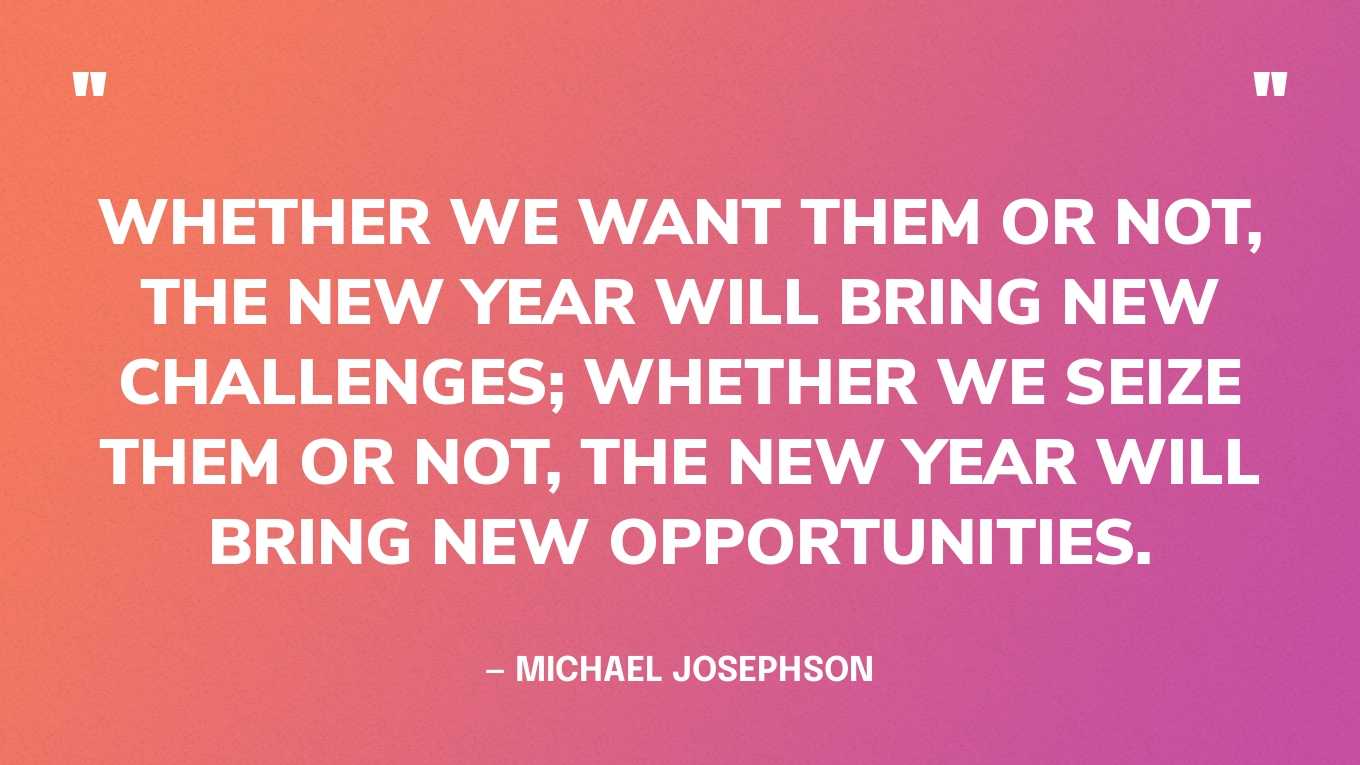
“Whether we want them or not, the New Year will bring new challenges; whether we seize them or not, the New Year will bring new opportunities.”
— Michael Josephson
More Captions
“Let this new year bring wisdom, inspiration, and joy.”
“The end of a year might seem bittersweet, but it’s a new start that brings clarity.”
“With the end of this night, new possibilities open up that you never knew existed.”
“The ending of a year is like closing a window. Even though it is shut, fresh light will still shine through.”
“Close the chapter of last year with a smile and reflection. Allow excitement and joy to bring in your new tomorrow.”
“New Year, New Feels, New Chances, Same Dreams, Fresh Starts.”
“You’ve finished the race that was strong this year — it’s time to welcome a new challenge.”
“Grateful for every day of the last year, and excited for each day ahead.”
“It’s not about this year or the next, but rather, right now. Today is all that matters.”
In Rwanda, schools — especially those located in remote areas or in difficult terrain — lack access to reliable necessities like power.
This makes tools like the internet difficult, if not impossible, to access, keeping students from vital educational tools.
In an effort to provide those educational prerequisites, a collaboration between the Rwandan Ministries of Information and Communications Technology & Education and Ignite Power may significantly close the digital divide.
This partnership will provide universal access to power and internet connectivity for students in Rwanda through solar power.

The project uses Ignite Power’s new product, LinX, which features solar-based satellite terminals that don’t require the use of the country’s national electricity grid. This means the terminals can be deployed quickly and affordably, connecting students to life-changing energy — no matter their location.
“We are pleased to launch this disruptive partnership with a leading private-sector company such as Ignite Power,” Paula Ingabire, the Minister of ICT, said in a press release.
“This collaboration signifies our commitment to ensuring that every citizen, especially students, has equal opportunity to thrive in an increasingly digital world.”
Ignite Power — and solar power in general — have already had a great impact on Rwanda.
The company has previously connected over one million people across the country to power through advanced solar systems.
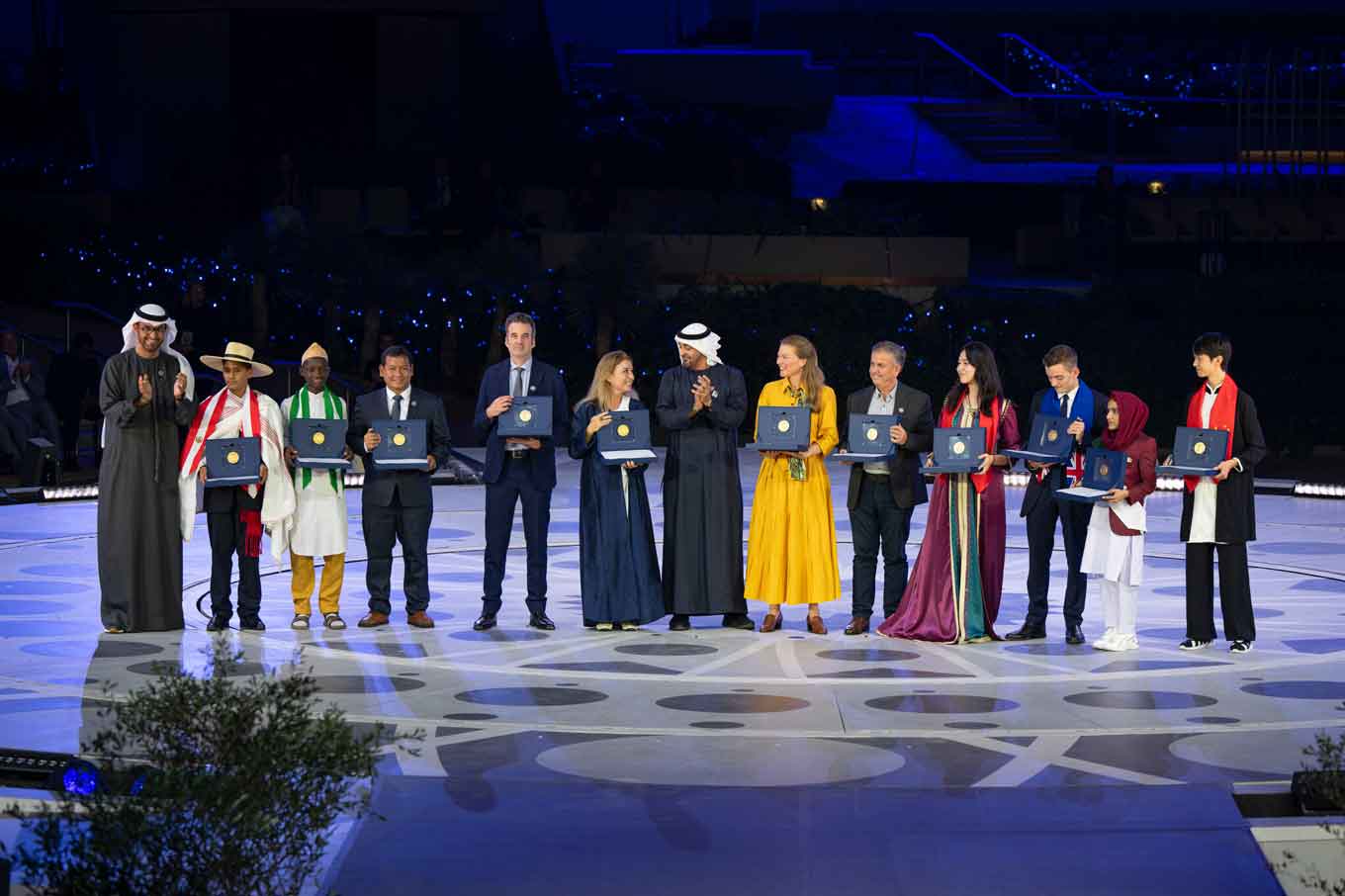
In fact, this new academic partnership comes a week after Ignite Power earned the 2023 Zayed Prize for energy, which honors small enterprises, nonprofits, and global high schools with impactful and sustainable solutions.
Similarly, solar power has been used to improve water systems in the area, through other partnerships with organizations like UNICEF, World Vision, and the private sector’s Rwanda Water and Sanitation Corporation.
It’s clear that clean energy is not only a win for the planet — but for the lives of everyday people.
“Internet connectivity has evolved into a basic infrastructure and human right in today’s world,” Yariv Cohen, the CEO of Ignite Power, said in a press release. “This initiative sets a precedent for comprehensive, equitable, and sustainable development across Rwanda and beyond.”
Header images courtesy of Ignite Power
When crises strike, humanitarian workers from all kinds of organizations and agencies are steadfast in doing the important, life-saving work they have dedicated their lives to.
But in areas of the world that are under strict, oppressive regimes, getting life-saving aid to people who need it most becomes more of a logistical nightmare than an urgent solution.
Recently, these challenges have been documented in areas like Sudan and Gaza, where oppositional forces make it nearly impossible for aid organizations to enter with much-needed supplies.
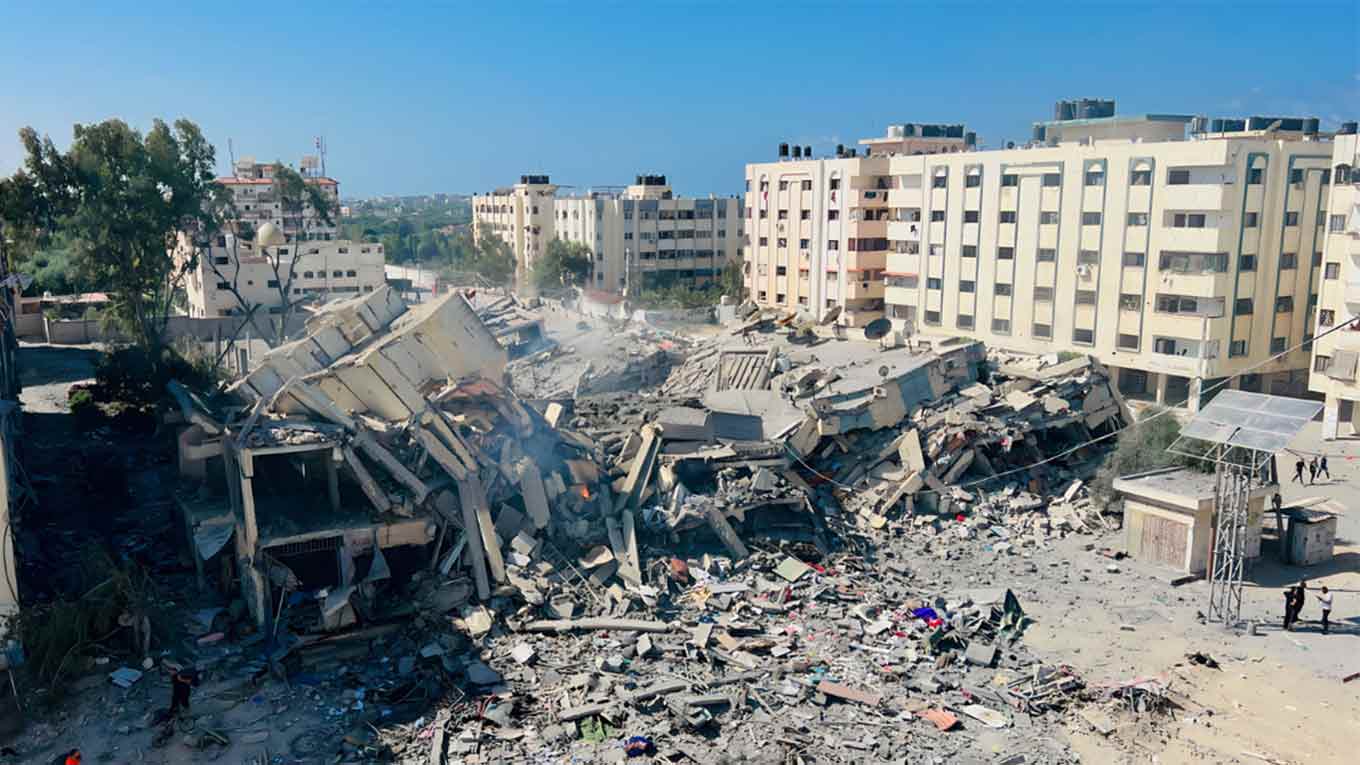
Over two months since October 7 — Palestinian civilians across the Gaza Strip continue to be bombarded with violence. And even when the shellings come to a pause, people are still left grappling with displacement, starvation, and disease.
At least 60% of housing units in the Gaza Strip have been destroyed, more than 80% of the 2.3 million population has been displaced, and food is running out.
While global citizens, NGOs, and the majority of United Nations member states advocate for a ceasefire, the Israeli government continues to limit aid entering the area.
There was a brief “humanitarian pause” in mid-November, and Israeli leaders say they are considering another.
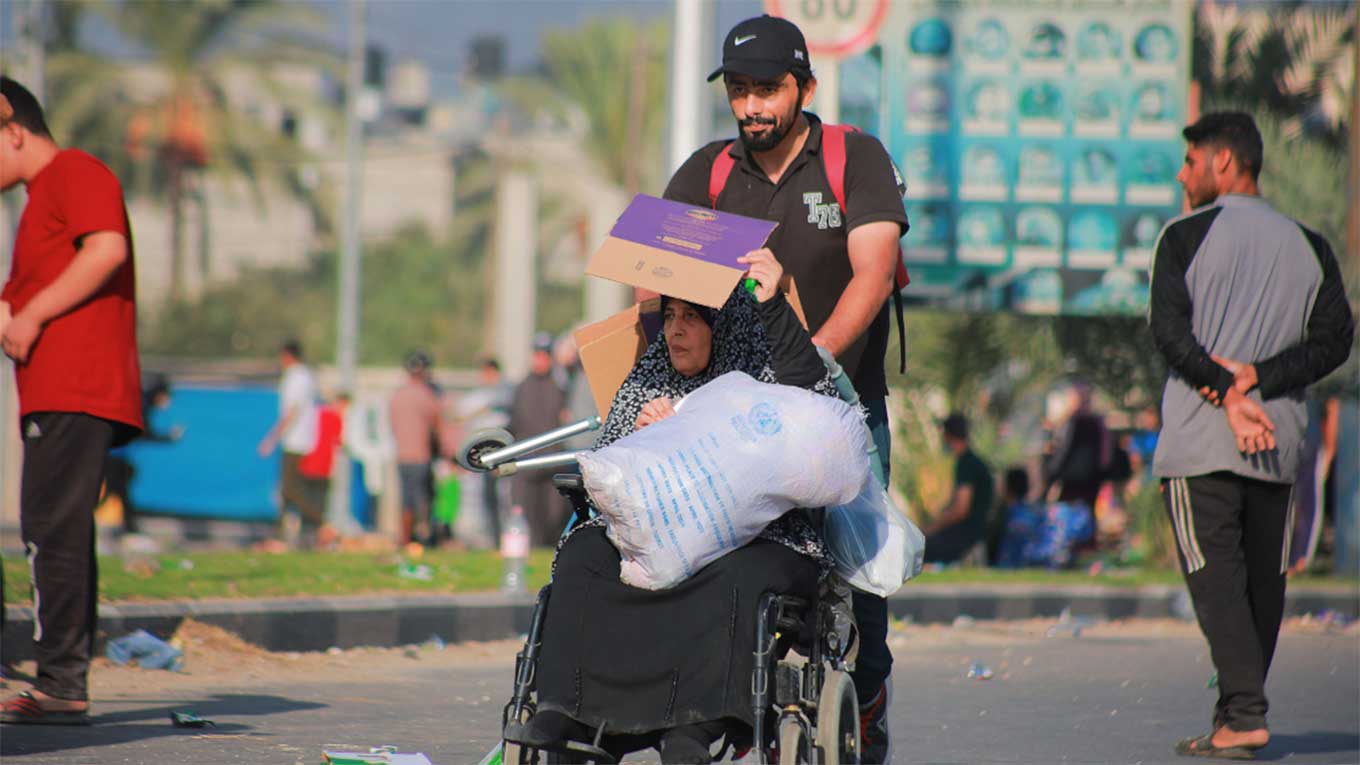
The Rafah border between southern Gaza and Egypt has been allowing aid into the area for weeks. However, workers on the ground note that the bottleneck has contributed to a significant backlog of vehicles waiting to enter Gaza.
Israel has also recently opened the Kerem Shalom crossing in Gaza for a limited amount of aid to enter the territory. But humanitarian workers insist that the need may not be satisfied with the limited scope of work they are allowed to do — especially as airstrikes persist.
“The delivery of humanitarian aid in the [Gaza] Strip continues to face nearly insurmountable challenges,” Tor Wennesland, the United Nations Special Coordinator for the Middle East Peace Process said in a recent UN Security Council meeting.
“Amid displacement at an unimaginable scale and active hostilities, the humanitarian response system is on the brink. Limited steps by Israel ... are positive, but fall far short of what is needed to address the human catastrophe on the ground.”
But humanitarian organizations persist — desperate to help innocent Palestinians get the help they need.
Similarly, everyday people are desperate to find ways to help — from posting on social media, to donating their extra funds to relief organizations.
But calls for donations seem to fall flat when the global audience sees little progress in humanitarian aid. It begs the question:
Does donating to humanitarian organizations really help when it seems impossible to get aid to the people who need it most?
How Donating Money To NGOs Helps People in Gaza — Even if Aid Delivery Is Stymied
Mary Stata, the chief development officer of humanitarian NGO Mercy Corps, is deeply aware of the concerns donors have when it comes to funding humanitarian operations.
She leads the organization’s global fundraising efforts, across the board with individual donors, foundations, and companies. All of these funds help a team of about 6,000 humanitarians respond to emerging and ongoing crises across 40 countries.
Although the violence in Palestine is like nothing many humanitarian organizations have seen before, Stata knows the impact of donations in dire moments like these.
She spoke with Good Good Good to help explain why donations still matter — and how other actions can make them even more impactful.
You can help humanitarian workers who are already there.
Stata said that Mercy Corps has been working in the West Bank and Gaza since 1986, providing humanitarian assistance in the form of access to water, financial assistance, and connecting people to economic opportunities.
The organization also works with children and young people in Palestine.
“We already had a team of 69 on the ground in Gaza when the crisis broke out. Our priority was to ensure our team’s safety and mobilize funds to support the Gazan community by connecting with our donors and partners,” Stata said.
“The vast majority of humanitarian organizations that were working in Gaza before the recent outbreak of violence are unable to deliver assistance as their staff are themselves fleeing — and some dying.”
Additionally, 95% of Mercy Corps team members are from the countries in which they work, meaning many humanitarians on the ground in Gaza are intrinsically part of the communities they serve.
While funds help work to bring humanitarians to safety, they also help people continue existing aid programs when and how they can.
“Despite the significant operational challenges, our team was able to provide some limited humanitarian support in Gaza early in the conflict. We distributed food baskets, which we sourced locally in Gaza, but those resources have since been depleted,” Stata shared.
“Our teams are working to establish the necessary supply lines and are committed to ramping up much-needed lifesaving assistance when there is consistent and safe access to do so.”
With an already-robust network of support on the ground, the Mercy Corps team is trying to work flexibly to make an impact where they already are.
Stata’s advice? If you’re looking to donate to a humanitarian organization, look for those that have already committed to a long-term response in the area — if not hyper-local aid groups led by Palestinians themselves.
“In this crisis, the massive scale of response needed will require NGOs who have familiarity and resources in Gaza and the surrounding region, once a ceasefire, end to the siege, and unrestricted humanitarian access have been achieved,” Stata said.
“We encourage donors to do their research and look for organizations they feel they can trust to respond not just in the initial moment of an emergency, but for the affected communities over the long term.”
Organizations can use your support to provide modified assistance.
While Mercy Corps, like other NGOs, attempt to source and distribute aid within Gaza, they are also resilient in their programming in the meantime.
“We have been able to continue our youth engagement programming in the West Bank, in a modified fashion, using online workshops to provide psychosocial and emotional support training for youth mentors, parents, and staff working at youth safe spaces so that they can help young people cope with the psychological impact of the conflict,” Stata said.
This youth programming is paramount to the resilience and development of children — many of whom have watched their families and friends die in recent weeks.

A local organization doing such work is the Free Gaza Circus, a nonprofit made of young circus acrobats and social activists living in Gaza who help young people develop social skills and move through the trauma of war.
A recent Instagram Reel shared by the organization depicts a large group of children dancing and jumping to boisterous music, surrounded by encampments and proof of war.
“The Free Gaza Circus band brought the children in the displaced areas of Gaza together and performed acrobatic activities in order to spread joy and happiness and reduce the children’s fear, anxiety and tension,” the caption read.
While this gathering is clearly different from the Circus’s standard programming of formal lessons and workshops, it is proof that massive NGOs and grassroots organizations alike are being as flexible as possible in doing the work they believe in most.
Donations can support neighboring areas impacted by conflict.
While destruction and loss is rampant in Gaza, neighboring countries are also impacted by the conflict and can be supported by aid organizations who await a sustained ceasefire in Palestine.
“In southern Lebanon, which is experiencing heightened violence spilling over from the conflict in Gaza that has displaced tens of thousands of people, we have distributed core relief items, food baskets, and hot meals to displaced families,” Stata said.
“The impacts of this conflict are being felt across the region, and Mercy Corps has a strong regional presence to support a response with well-established programming in Lebanon, Jordan, Syria, and Iraq, in addition to our longstanding footprint in Palestine.”
Your donations allow aid organizations to maintain systems of “unrestricted giving.”
When an NGO or nonprofit receives funding from a foundation or company, they may be required to use those funds a certain way. But many times, when individual donors provide general financial support to an organization, this is considered “unrestricted giving.”
What that means is that these funds do not have a specific use required for spending and allow the organization the freedom to use them with less “red tape.” Basically, the money you give an organization can be quickly accessed and used to do the most good.
“By giving a donation of unrestricted funds, donors are helping to level the playing field and disrupt traditional power structures in philanthropy,” the World Institute on Disability writes. “It also empowers these organizations to provide surge support to their constituents during a disaster, emergency or crisis situation or other times of particular need.”
Stata discussed unrestricted funds as they relate to emergency response at Mercy Corps.
“Unrestricted donations to Mercy Corps help us to respond early, address the most urgent needs, and make the most impact,” she said.
“This type of flexible funding allows us to pilot innovative programs, respond to changing needs, invest in adaptation and preparedness actions identified and led by local communities, and position our most promising solutions for scale.”
And for individual donors who might only be able to donate a gift of $5 a month, this is good news. It means their money can provide small and steady support that goes right to the most urgent needs in various crises.
“Over time, these gifts add up to be very meaningful and often much greater than what someone can give at any one time,” Stata explained.
Your donations build a bank of support for ongoing humanitarian needs.
The reality of the situation in Gaza, like many large-scale humanitarian crises, is that even if it ended immediately, the lasting damage would require continuous humanitarian assistance — which doesn’t receive the same kind of attention once a crisis is “over.”
“Regardless of how long this conflict lasts, there will be significant humanitarian needs that persist for a long time,” Stata said.
“Even before this, 70% of people in Gaza needed some sort of assistance to meet their basic needs. Both ongoing humanitarian assistance and any sort of economic recovery will require significant resources in the months and years to come.”
As much as aid organizations and their supporters want to provide immediate relief to Palestinians, donations are, at the very least, an investment for future humanitarian needs.
Your support amplifies the call for a ceasefire.
In a December 11 New York Times guest essay, leaders of six humanitarian organizations came together to illustrate the unfathomable scale of the crisis in Gaza.
These leaders included Michelle Nunn, president of CARE USA; Tjada D’Oyen McKenna, the chief executive of Mercy Corps; Jan Egeland, the secretary general of the Norwegian Refugee Council; Abby Maxman, the president of Oxfam America; Jeremy Konyndyk, the president of Refugees International; and Janti Soeripto, the president of Save the Children U.S.
“Most of our organizations have been operating in Gaza for decades. But we can do nothing remotely adequate to address the level of suffering there without an immediate and complete ceasefire and an end to the siege,” they wrote.
“The aerial bombardments have rendered our jobs impossible. The withholding of water, fuel, food, and other basic goods has created an enormous scale of need that aid alone cannot offset.”
Stata echoed these sentiments.
“Unfortunately, humanitarian organizations have been stymied in their efforts to aid the injured and those with no food, water, or shelter. Mercy Corps continues to advocate at the highest levels for a ceasefire and end to the siege, which has cut off water and electricity to 2.3 million people — and sustained humanitarian access,” she said.
“Every person reading this can contact their government leaders to urge for the same.”
As humanitarian leaders continue to do everything they can to accomplish their life-saving missions, supporting their work — whether financially, or by calling elected officials and demanding a ceasefire, sends a message to the world that humanitarian intervention cannot wait.
“The sooner we have access with safety guarantees and can source supplies, the sooner we can get help to those in the direst need,” Stata said. “Financial donations are the most effective and efficient way of providing support.”
Header image courtesy of Shadow Pro for Mercy Corps
The new year is a time of reflection, renewal, and hope. It’s a moment when we bid farewell to the old and usher in the new — often accompanied by resolutions, goals, and aspirations.
This transition is not just a change in the calendar, but an opportunity to start afresh, to reevaluate our paths, and to rejuvenate our hopes for the journey ahead.
Throughout history, numerous thinkers, writers, and public figures have written and spoken about the transition of the new year. Their words capture the optimism, challenges, and introspection that the new year brings. These quotes serve as reminders that each year is a chance to grow, to learn, and to embrace new possibilities.
As you step into the new year, may these quotes inspire and guide you and help you start your year right.
You might also like: Best End of the Year Quotes | Word of the Year Ideas | New Year’s Resolution Ideas | January Awareness Holidays Calendar | Months of the Year
The Best Quotes About the New Year
Famous Quotes
“Year’s end is neither an end nor a beginning but a going on.”
— Hal Borland

“Be at war with your vices, at peace with your neighbors, and let every new year find you a better man.”
— Benjamin Franklin

“Kindness, kindness, kindness. I want to make a New Year’s prayer, not a resolution. I’m praying for courage.”
— Susan Sontag

“Write it on your heart that every day is the best day in the year.”
— Ralph Waldo Emerson
“Remove ‘shoulds’ from your vocabulary this year. Start your journey of self-love now.”
— Kelly Martin

“It is never too late to be what you might have been.”
— George Eliot

“For last year’s words belong to last year’s language, and next year’s words await another voice.”
— T.S. Eliot, Little Gidding

“Go confidently in the direction of your dreams.”
— Henry David Thoreau

“Life can only be understood backwards, but it must be lived forwards.”
— Kierkegaard

“A new heart for a New Year, always!”
— Charles Dickens

Inspirational Quotes
“Approach the new year with resolve to find the opportunities hidden in each new day.”
— Michael Josephson

“I hope that in this year to come, you make mistakes. Because if you are making mistakes, then you are making new things, trying new things, learning, living, pushing yourself, changing yourself, changing your world. You’re doing things you’ve never done before, and more importantly, you’re doing something.”
— Neil Gaiman
“Keep some room in your heart for the unimaginable.”
— Mary Oliver
“What the new year brings to you will depend a great deal on what you bring to the new year.”
— Vern McLellan
“Well, we have a whole new year ahead of us. And wouldn’t it be wonderful if we could all be a little more gentle with each other, a little more loving, and have a little more empathy, and maybe, next year at this time we’d like each other a little more.”
— Judy Garland
“On New Year’s Eve, the whole world celebrates the fact that a date changes. Let us celebrate the dates on which we change the world.”
— Akilnathan Logeswaran

“Life is about change, sometimes it’s painful, sometimes it’s beautiful, but most of the time it’s both.”
— Kristin Kreuk
“What lies behind you and what lies in front of you, pales in comparison to what lies inside of you.”
— Ralph Waldo Emerson
“What a wonderful thought it is that some of the best days of our lives haven't even happened yet.”
— Anne Frank
“Whether you think you can, or think you can’t, you’re right.”
— Henry Ford
“The attraction of New Year is this: The year changes, and in that change we believe that we can change with it. It is far more difficult, however, to change yourself than turn the calendar to a new page.”
— R. Joseph Hoffmann
“If you don’t like something, change it. If you can’t change it, change your attitude.”
— Maya Angelou
“Don’t live the same year 75 times and call it a life.”
— Robin Sharma
“Begin doing what you want to do now. We are not living in eternity. We have only this moment, sparkling like a star in our hand and melting like a snowflake.”
— Francis Bacon Sr.
“Resolve to keep happy, and your joy and you shall form an invincible host against difficulties.”
— Helen Keller

New Year, New Beginnings
“Tomorrow is the first blank page of a 365-page book. Write a good one.”
— Brad Paisley

“This is a new year. A new beginning. And things will change.”
— Taylor Swift
“The secret of change is to focus all of your energy, not on fighting the old, but on building the new.”
— Socrates
“We must always change, renew, rejuvenate ourselves; otherwise we harden.”
— Johann Wolfgang von Goethe
“Every single year, we’re a different person. I don’t think we’re the same person all of our lives.”
— Steven Spielberg
“Never underestimate the power you have to take your life in a new direction.”
— Germany Kent
“I like the dreams of the future better than the history of the past.”
— Thomas Jefferson
“A New Year… a fresh, clean start. It’s like having a big white sheet of paper to draw on.”
— Bill Watterson

“It’s never too late — never too late to start over, never too late to be happy.”
— Jane Fonda
“We must be willing to get rid of the life we’ve planned, so as to have the life that is waiting for us. The old skin has to be shed before the new one can come.”
— Joseph Campbell
“New year is another opportunity of seeing life with little more caring, compassion, maturity and beauty.”
— Amit Ray
“It’s never too late to become who you want to be. I hope you live a life that you’re proud of, and if you find that you’re not, I hope you have the strength to start over.”
— F. Scott Fitzgerald
“With the new day comes new strength and new thoughts.”
— Eleanor Roosevelt
“If it doesn’t challenge you, it doesn’t change you.”
— Fred DeVito
“Wouldn’t it be nice if change took just a moment?
Wouldn’t it be nice if it were that easy?
Midnight and we’re new. Midnight and the past erased. Midnight and we’re free.”
— Jamie Tworkowski
“Change takes more than a moment, but maybe there’s also something to this celebration of a moment, something to the way it speaks to us, something to the way we fear it, and dream it to be true. Maybe it’s the most honest moment of the year.”
— Jamie Tworkowski

New Year’s Eve Quotes
“Cheers to a new year and another chance for us to get it right.”
— Oprah Winfrey

“One resolution I have made, and try always to keep, is this: To rise above the little things.”
— John Burroughs
“In our perfect ways. In the ways we are beautiful. In the ways we are human. We are here. Happy New Year’s. Let’s make it ours.”
— Beyoncé
“You are never too old to set another goal or to dream a new dream.”
— C.S. Lewis
“So this is the new year
And I don't feel any different
The clanking of crystal
Explosions off in the distance —
So this is the new year
And I have no resolutions
For self-assigned penance
For problems with easy solutions”
— Death Cab for Cutie
“To the old, long life and treasure; to the young, all health and pleasure.”
— Ben Jonson
“A year of ending and beginning, a year of loss and finding… and all of you were with me through the storm. I drink your health, your wealth, your fortune for long years to come, and I hope for many more days in which we can gather like this.”
— C.J. Cherryh
“Stir the eggnog. Lift the toddy. Happy New Year, everybody!”
— Phyllis McGinley

“Tonight’s December thirty-first,
Something is about to burst.
The clock is crouching, dark and small,
Like a time bomb in the hall.
Hark, it’s midnight, children dear.
Duck! Here comes another year!”
— Ogden Nash
“Never make a resolution which won’t be as important on the eighth of April or the tenth of July as it is on the first of January.”
— Cary Grant
“With dawn of the new year on the horizon, I resolved to exert my will on the world.”
— Holly Black
“Each age has deemed the new-born year
The fittest time for festal cheer.”
— Sir Walter Scott

New Year’s Day Quotes
“And now we welcome the new year. Full of things that have never been.”
— Rainer Maria Rilke

“Take a leap of faith and begin this wondrous new year by believing.”
— Sarah Ban Breathnach
“We spend January 1st walking through our lives, room by room, drawing up a list of work to be done, cracks to be patched. Maybe this year, to balance the list, we ought to walk through the rooms of our lives… not looking for flaws, but for potential.”
— Ellen Goodman
“This bright new year is given me
To live each day with zest
To daily grow and try to be
My highest and my best!”
— William Arthur Ward
“We will open the book. Its pages are blank. We are going to put words on them ourselves. The book is called Opportunity and its first chapter is New Year’s Day.”
— Edith Lovejoy Pierce
Funny Quotes
“An optimist stays up until midnight to see the new year in. A pessimist stays up to make sure the old year leaves.”
— William E. Vaughan

“May all your troubles last as long as your New Year’s resolutions!”
— Joey Adams
“Good resolutions are simply checks that men draw on a bank where they have no account.”
— Oscar Wilde
“Youth is when you’re allowed to stay up late on New Year’s Eve. Middle age is when you’re forced to.”
— William E. Vaughan
“Don’t make plans. Make options.”
— Jennifer Aniston
“New Year’s Day: Now is the accepted time to make your regular annual good resolutions. Next week you can begin paving hell with them as usual.”
— Mark Twain
“Too much of anything is bad, but too much Champagne is just right.”
— F. Scott Fitzgerald

More Quotes About the New Year
“Let our New Year’s resolution be this: We will be there for one another as fellow members of humanity, in the finest sense of the word.”
— Göran Persson

“Cheers to a gracious New Year. May we uphold the fullness of God’s grace, goodness and goodwill.”
— Lailah Gifty Akita
“Ring out the old, ring in the new,
Ring, happy bells, across the snow:
The year is going, let him go;
Ring out the false, ring in the true.”
— Alfred Lord Tennyson
“Life’s not about expecting, hoping and wishing, it’s about doing, being and becoming.”
— Mike Dooley
“A year of ending and beginning, a year of loss and finding… and all of you were with me through the storm. I drink your health, your wealth, your fortune for long years to come, and I hope for many more days in which we can gather like this.”
— C.J. Cherryh
“There comes a day when you realize turning the page is the best feeling in the world, because you realize there's so much more to the book than the page you were stuck on.”
— Zayn Malik
“Celebrate what you want to see more of.”
— Tom Peters
“The last hours, minutes, and seconds for disappearing old year to start a new year; it only can be beneficial and fruitful when each one of us also changes and starts a new and fair attitude and character that respects humanity and eliminates all sorts of distinctions to become an equal and peaceful planet.”
— Ehsan Sehgal
“The object of a New Year is not that we should have a new year. It is that we should have a new soul.”
— Gilbert K. Chesterton
“The best is yet to come.”
— Frank Sinatra

Yoko Ono — a multifaceted artist and peace activist — has been a significant cultural figure for decades.
Known for her avant-garde art, music, and films, as well as her marriage to Beatles member John Lennon, Ono has always been a symbol of creativity and nonconformity.
Her work often challenges conventional boundaries and encourages audiences to engage with ideas of peace, love, and understanding in new and thought-provoking ways.
Ono’s quotes frequently reflect her unique perspective on life, art, and activism. They echo her beliefs in the power of imagination, the importance of individual expression, and the potential for art to bring about social change.
We’ve curated a collection of Yoko Ono’s quotes that encapsulate her spirit as an artist and activist.
Whether you’re an admirer of her work, interested in the intersections of art and activism, or seeking inspiration from influential cultural figures, Ono’s words are sure to enlighten and inspire.
The Best Quotes from Yoko Ono
Famous Quotes
“We are all dreamers creating the next world, the next beautiful world for ourselves and for our children.”
— Yoko Ono
“Smile in the mirror. Do that every morning and you’ll start to see a big difference in your life.”
— Yoko Ono
“Every moment in our lives is a miracle we should enjoy instead of ignoring.”
— Yoko Ono
“We change, and the world changes. Have trust in what you can do. Have trust in how fast we can change our world for the better.”
— Yoko Ono, on Instagram
“Every drop in the ocean counts.”
— Yoko Ono
“I trust myself. You need that to survive.”
— Yoko Ono
“I saw that nothing was permanent. You don’t want to possess anything that is dear to you because you might lose it.”
— Yoko Ono
“Healing yourself is connected with healing others.”
— Yoko Ono
“Send small pebbles to the world. Don’t make big splashes with large stones. That will attract people and the wrong people as well.”
— Yoko Ono, in a tweet
“What we do really affects the world. Most of us think we can’t do anything, but it really isn’t true.”
— Yoko Ono
“Words are power. And a book is full of words. Be careful what power you get from it. But know that you do.”
— Yoko Ono
“You change the world by being yourself.”
— Yoko Ono
“People are afraid of shadows. People are even more afraid of being in the shadow. But without a shadow, life will be two dimensional.”
— Yoko Ono
On Art
“Art is my life and my life is art.”
— Yoko Ono
“Experiencing sadness and anger can make you feel more creative, and by being creative, you can get beyond your pain or negativity.”
— Yoko Ono
“Art is a beautiful thing but art is not just creating something. People who think that are wrong. Everything is created already in the world. Nature created everything and you don't have to create anything anymore, so art then is just re-evaluating what is already there.”
— Yoko Ono
“I thought art was a verb, rather than a noun.”
— Yoko Ono
“I really feel that artists or musicians are controversial people. Controversy is part of the nature of art and creativity. If people are not doing that, they’re not artists — they’re artisans.”
— Yoko Ono
“Art is a mind game that we do to make our lives easier. If it isn’t for that, it becomes superfluous.”
— Yoko Ono
“Nothing is written in stone. So don’t prepare yourself for a long and lucrative career. You might die tomorrow. Your gold holdings might become dust. Just make the music you want to make now and enjoy it.”
— Yoko Ono
“Piano keys are flower petals turned hard.”
— Yoko Ono, Grapefruit: A Book of Instructions and Drawings
“True artists are prophets. I don’t want to be that prophetic in that sense because it’s so lonely.”
— Yoko Ono
“Everybody’s an artist. Everybody’s God. It’s just that they’re inhibited.”
— Yoko Ono
“People don’t remember each tree in a park but all of us benefit from the trees. And in a way, artists are like trees in a park.”
— Yoko Ono
“Art, for me, is about survival for my mind — like, if I don’t do these things, then I might become insane or something. So it helps you keep your sanity just to do it. You have to release your emotion in order to keep your sanity.”
— Yoko Ono, in an interview
“People make music to get a reaction. Music is communication.”
— Yoko Ono
“Art is a way of survival.”
— Yoko Ono
→ Read more quotes about creativity
On Love
“And the more you are active about something you love, the world is going to be a better place.”
— Yoko Ono
“Love is what it takes to fly”
— Yoko Ono
“There’s a long life ahead of you and it’s going to be beautiful, as long as you keep loving and hugging each other.”
— Yoko Ono
“Life with another person is always difficult.”
— Yoko Ono
“It is very difficult for us to know we love somebody because it is an insecure position to be in. But in the end, it is important to be honest about your love because life is not that long.”
— Yoko Ono
“When you are suffering, you become more understanding about yourself, but also about other people’s sufferings too. That’s the first step to understand somebody is to understand their sufferings. So then love follows.”
— Yoko Ono
“Marriage is a gamble, let’s be honest.”
— Yoko Ono
“Remember love. Remember our hearts are one. Even when we are fighting with each other, our hearts are beating in unison. I love you.”
— Yoko Ono
“Mirror becomes a razor when it’s broken. A stick becomes a flute when it’s loved.”
— Yoko Ono, Grapefruit
“The regret of my life is that I have not said I love you often enough.”
— Yoko Ono
On Peace
“World peace is one project that we have to do together.”
— Yoko Ono
“Let it be, and love and peace will grow from you and around you.”
— Yoko Ono, in a tweet
“Remember, each one of us has the power to change the world. Power works in mysterious ways. You don’t have to do much. Visualize the domino effect. And just start thinking peace. The message will circulate faster than you think. It’s Time For Action. The Action is peace. Spread the word. Spread peace.”
— Yoko Ono
“But only art and music have the power to bring peace.”
— Yoko Ono
“I realized that an artist seeking to tell the truth in her art takes great courage. I recognize the courage required to bring children together from Israeli and Palestinian communities to find commonality in music as a very powerful and effective beginning towards Peace.”
— Yoko Ono
“Remember, each one of us has the power to change the world. Just start thinking peace, and the message will spread quicker than you think.”
— Yoko Ono
“Nobody’s life is a bed of roses. We all have crosses to bear, and we all just do our best. I would never claim to have the worst situation. There are many widows, and many people dying of AIDS, many people killed in Lebanon, people starving all over the planet. So we have to count our lucky stars.”
— Yoko Ono
“Remember, we are all family. Think PEACE, Act PEACE, Spread PEACE, Imagine PEACE. Together, we will shift the axis of the world to PEACE.”
— Yoko Ono, on Instagram
“I admire all people who are trying to be a good power in this chaotic world.”
— Yoko Ono
→ Read more quotes about inner peace
→ Read more quotes about world peace
On Feminism
“Women are very intelligent and not appreciated. We try to pretend that we are not clever, and it’s such a pity that we can’t show how clever we are.”
— Yoko Ono

“The whole world is starting to realize that it was the most unwise thing for our society to have ignored women power, to run the society with male priorities.”
— Yoko Ono
“Women are put in a position of feeling embarrassed about their bodies. It’s so ridiculous, but also astounding — we have to always be apologetic about having created the human race.”
— Yoko Ono
“Women artists are still treated differently from men.”
— Yoko Ono
“I am proposing the feminization of society; the use of feminine nature as a positive force to change the world. We can change ourselves with feminine intelligence and awareness, into a basically organic, noncompetitive society that is based on love, rather than reasoning. The result will be a society of balance, peace and contentment. We can evolve rather than revolt, come together, rather than claim independence, and feel rather than think. These are characteristics that are considered feminine; characteristics that men despise in women. But have men really done so well by avoiding the development of these characteristics within themselves?”
— Yoko Ono, in an article
“There’s many women now who think, ‘Surely we don’t need feminism anymore, we’re all liberated and society’s accepting us as we are’. Which is just hogwash. It’s not true at all.”
— Yoko Ono
“I think that all women are witches, in the sense that a witch is a magical being. And a wizard, which is a male version of a witch, is kind of revered, and people respect wizards. But a witch, my god, we have to burn them. It’s the male chauvinistic society that we’re living in for the longest time, 3,000 years or whatever. And so I just wanted to point out the fact that men and women are magical beings. We are very blessed that way, so I’m just bringing that out. Don’t be scared of witches, because we are good witches, and you should appreciate our magical power.”
— Yoko Ono
“This society is driven by neurotic speed and force accelerated by greed and frustration of not being able to live up to the image of men and woman we have created for ourselves; the image has nothing to do with the reality of people.”
— Yoko Ono
“Women have become stronger, and there's a backlash. Men have become terribly possessive. I find it much easier to get on with women.”
— Yoko Ono
“Every woman has a song to sing
Every woman has a story to tell
Make no mistake about it
We women have the power to move mountains.”
— Yoko Ono, on Instagram
→ Read more quotes about feminism
Short Quotes
“You can be very wild and still be very wise.”
— Yoko Ono
“Listen to the sound of the earth turning.”
— Yoko Ono
“I have only one life, so I want to make sure it’s a good one.”
— Yoko Ono
“You have to break the mirror, but you also have to see the mirror. You have to have that dichotomy constantly.”
— Yoko Ono, in an interview
“Each time we don’t say what we wanna say, we’re dying.”
— Yoko Ono
“John wrote with a very deep love for the human race and a concern for its future.”
— Yoko Ono
“You may think I’m small, but I have a universe inside my mind.”
— Yoko Ono
“Some people are old at 18 and some are young at 90. Time is a concept that humans created.”
— Yoko Ono
“I don’t have a goal. I don’t limit myself to a goal.”
— Yoko Ono
“Please know that being 80 is not a scary thing. When you’re 80, your life is much freer.”
— Yoko Ono
“It’s better to dance than to march through life.”
— Yoko Ono
“I think of John every day. I do try to block it, but December 8th is not the only day I think of him.”
— Yoko Ono
“Grapefruit is a hybrid of lemon and orange. Snow is a hybrid of wish and lament.”
— Yoko Ono, Grapefruit
“My religion is to trust myself.”
— Yoko Ono
→ Read more short quotes
More Quotes
“A dream you dream alone is only a dream.
A dream you dream together is reality.”
— Yoko Ono, Grapefruit
“Sometimes I am happy and sometimes not. I am, after all, a human being, you know. And I am glad that we are sometimes happy and sometimes not. You get your wisdom working by having different emotions.”
— Yoko Ono
“When you are feeling bad
Do one thing a day
To make your heart dance.
It could be a simple thing like looking up at the sky.
Do something for somebody
To make his/her heart dance.
It could be a simple thing like giving a call.
Do this for a while and your life will change.”
— Yoko Ono, in a tweet
“I realized that if my thoughts immediately affect my body, I should be careful about what I think. Now if I get angry, I ask myself why I feel that way. If I can find the source of my anger, I can turn that negative energy into something positive.”
— Yoko Ono
“We’re growing up together, the human race. And we’ve discovered a lot of things that we didn’t know. We’re finding our way. Instead of thinking about doomsday all the time, think about how beautiful the world is. We’re all together, and together we’re getting wiser.”
— Yoko Ono
“You should really be very careful what you wish for because you wish it and you think it’s never going to happen, and sometimes it takes some time but it does happen.”
— Yoko Ono, in an interview
“We’re all water from different rivers,
That’s why it’s so easy to meet,
We’re all water in this vast, vast ocean,
Someday we’ll evaporate together.”
— Yoko Ono
“The computer is my favorite invention. I feel lucky to be part of the global village. I don’t mean to brag, but I’m so fast with technology. People think it all seems too much, but we’ll get used to it. I’m sure it all seemed too much when we were learning to walk.”
— Yoko Ono
“Try to say nothing negative about anybody.
a) for three days
b) for forty-five days
c) for three months
See what happens to your life.”
― Yoko Ono
“The sky is always there for me, while my life has been going through many, many changes. When I look up the sky, it gives me a nice feeling, like looking at an old friend.”
— Yoko Ono
“Experiencing sadness and anger can make you feel more creative, and by being creative, you can get beyond your pain or negativity.”
— Yoko Ono
“Have the courage and strength to be yourself.
Because there is no other choice.
Do you have a choice of being somebody else?”
— Yoko Ono
“I don’t think you should always stay calm in a tense situation, because you might not ever confront the problem. Maybe it’s better to actually let yourself be tense — and find a solution.”
— Yoko Ono
“Come together, always together. I think that in the beginning there was a word and the word was love and love is what created the world. If love could create a world and the universe, then it could certainly heal the world. I think that this is a time that we should keep dancing with love.”
— Yoko Ono, in an interview
“I relate to happiness as an ecstatic moment — something you don’t create, you encounter.”
— Yoko Ono
→ Read more quotes about life
This page indexes essential information about each month of the year — including their number order, total days, and abbreviations.
And of course, because we’re Good Good Good, we’ve also included a breakdown of awareness days, positive quotes, and good news stories correlated with each month.

Months in Order
The names of the twelve months in order are January, February, March, April, May, June, July, August, September, October, November, and December.
Each month’s abbreviation is based on AP style — where each month is abbreviated into 3 or 4 letters — except for March, April, May, June, and July, which are still fully spelled out. AP style recommends only using abbreviations for specific dates (e.g. Sept. 21) — but not for references to the full month.
Some people simply abbreviate each month using the first three letters.
All months have 30 or 31 days — except for February, which has 28 days (or 29 days during a leap year).
| # | Month | Abbreviation | Days |
|---|---|---|---|
| 1 | January | Jan. | 31 |
| 2 | February | Feb. | 28/29 |
| 3 | March | March | 31 |
| 4 | April | April | 30 |
| 5 | May | May | 31 |
| 6 | June | June | 30 |
| 7 | July | July | 31 |
| 8 | August | Aug. | 31 |
| 9 | September | Sept. | 30 |
| 10 | October | Oct. | 31 |
| 11 | November | Nov. | 30 |
| 12 | December | Dec. | 31 |
Need these in list form so they’re easy to copy and paste?
We’ve got you covered!
- January
- February
- March
- April
- May
- June
- July
- August
- September
- October
- November
- December
Below is the same information as the table above — in a visual graphic. You can also download a printable PDF of this graphic for free.

Month-Related Resources
January
January is the first month of the year — when many people set New Year’s resolutions. The month spans 31 days.
February
February is the second month of the year. It’s notable for having fewer days — 28, or 29 in a leap year.
March
March, the third month of the year, ushers in spring in the Northern Hemisphere and autumn in the Southern Hemisphere. This month has 31 days.
April
April, the fourth month of the year, continues spring in the Northern Hemisphere, often characterized by rain and wind. It has 30 days.
May
May is the fifth month of the year, the last month of the season of spring, and has 31 days.
June
June, the sixth month of the year, brings the start of summer and warmer days to the Northern Hemisphere. It consists of 30 days.
July
July — the seventh month and the start of the year’s second half — is known for summer vacations in many regions. It lasts 31 days.
August
August is the eighth month of the year. It’s often the hottest month in the Northern Hemisphere — and is a prime time for summer activities. This month also has 31 days.
September
September is the ninth month of the year — and signals the beginning of autumn in the Northern Hemisphere. It has 30 days.
October
October has 31 days and is the tenth month of the year. It continues the autumn season in the Northern Hemisphere.
November
The eleventh month of the year, November, sees cooler weather in the Northern Hemisphere. It has 30 days.
December
December, the final and twelfth month of the year, brings winter to the Northern Hemisphere. This month has 31 days and contains the shortest day of the year.
More month-related resources: All Awareness Holidays | Heritage Months | Awareness Months | International Days | Social Media Holidays
There are a lot of great reasons to spend your money with small businesses: making a positive impact on your local economy, building support for real people in your community, finding innovative and creative products and services, and even a smaller carbon footprint.
But one of the most exciting things about small businesses is their capacity to create meaningful jobs.
For Everyone Collective, a social justice-focused apparel company, makes that meaningful job creation even more consequential: It hires formerly incarcerated people and their families.
Started by Skyler Rich, who is the only “non-impacted” employee of the company, For Everyone Collective was originally called “Forgive Everyone” in 2018 and has become the product of a dream to provide healing, community, and resources to people impacted by incarceration.
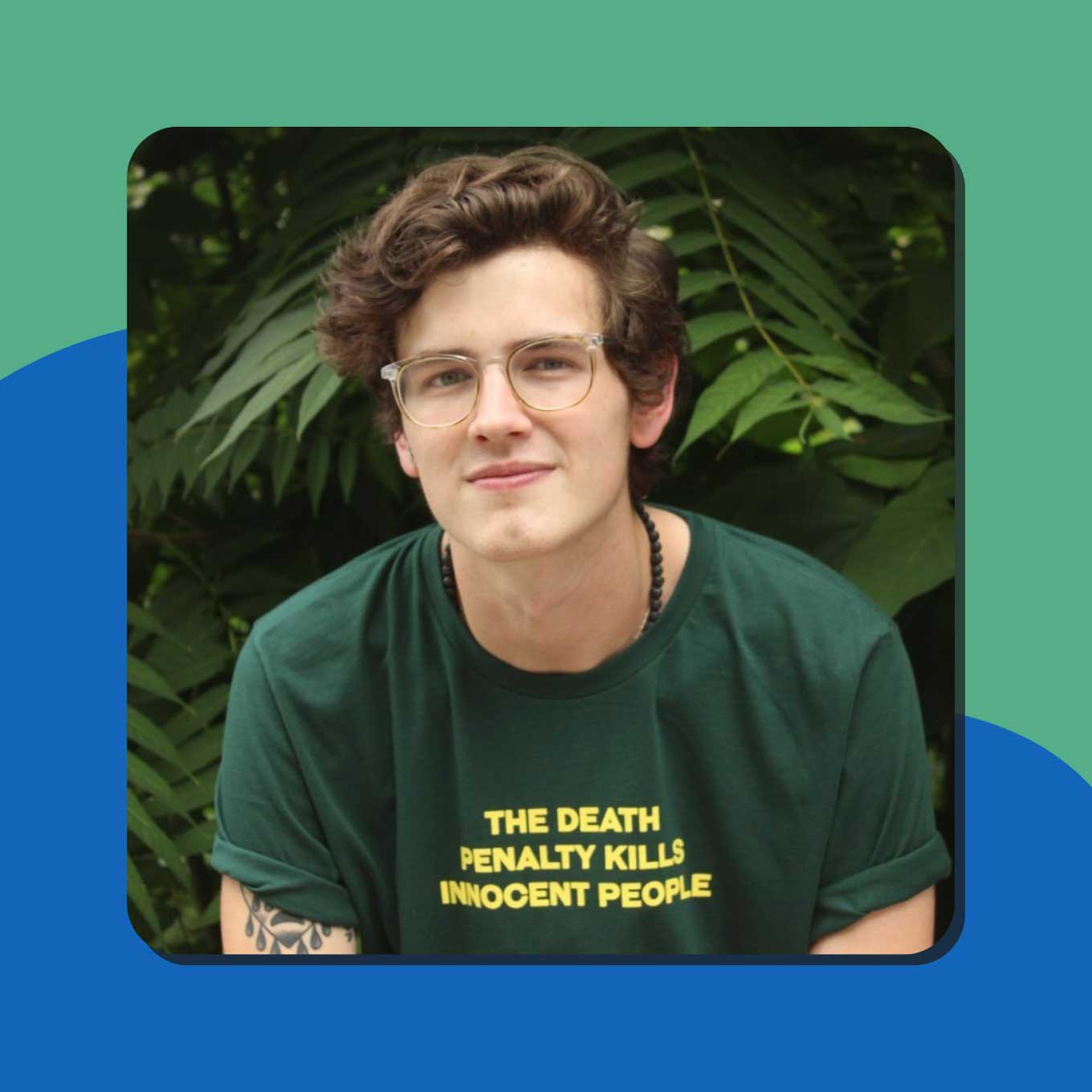
In America, nearly 2 million people are incarcerated in 2023, according to the Prison Policy Initiative, and when folks are released from prison, they face continuous harm and struggle to access essentials like employment, health care, nutritious food, and housing.
For Everyone Collective doesn’t only employ these folks; it creates products that speak to their experiences.
Best sellers include a hoodie with an Angela Davis quote: “Prisons do not disappear social problems. They disappear human beings,” and a T-shirt that reads “Safety, Healing, Accountability, Housing, Healthcare, Education, Food, Water, Abolition… For Everyone.”
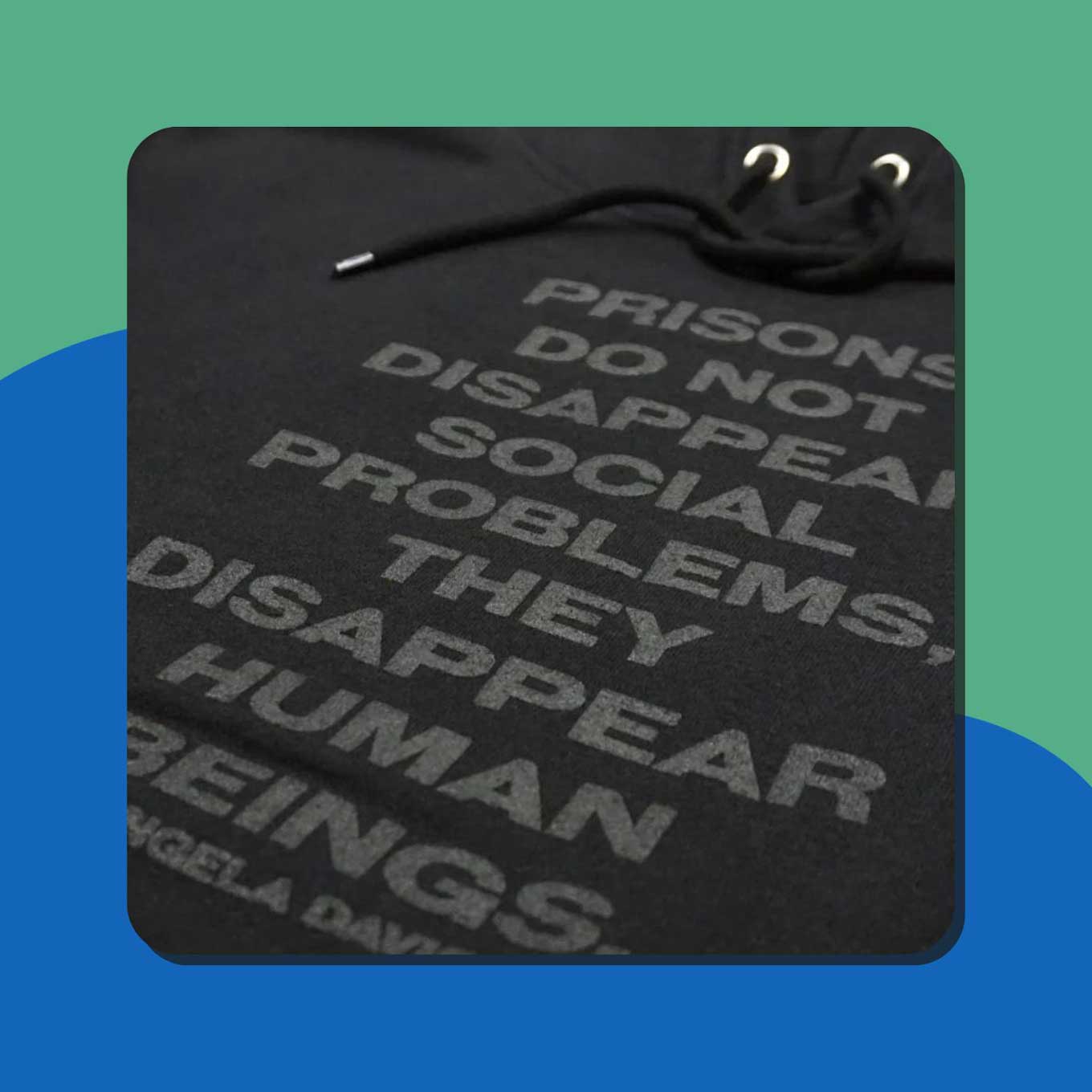
“It’s not just a clothing brand, it’s actually helping people who are impacted by the things the clothing is talking about,” Rich told Crain’s, a local Grand Rapids-based business news outlet.
The business just opened its first brick and mortar store in Grand Rapids, Michigan in November 2023, offering its signature designs, as well as custom screen-printing, and a gathering space for customers and supporters.
According to Crain’s, the brand screenprints an average of 2,000 shirts per week.
The store is staffed by a team of 11 — who also co-own the brand through a worker-owned model.
On the brand’s website, a list of values and actions explains “how we live for everyone.” It includes:
- Employing local people who have been impacted by incarceration
- Holding regular circles to maintain peace and address conflict as it comes up
- Paying above living wages and share profits equitably
- Providing free health, dental, and life insurance to all staff
- Using materials that work with cycles of the earth
- Offering unlimited paid time off to rest and spend time with family
- Featuring art from incarcerated and impacted artists in our designs
- Rejecting systems of policing and incarceration
- Hosting monthly political education teach-ins for the community
- Holding communal space for healing and transformation
Richie Reseda is the company’s creative and political director, though it took him a little while to get there. When Rich reached out to him to collaborate soon after the genesis of the brand, Reseda was just out of prison and wasn’t ready.
But in 2021, after he had launched his own creative abolition endeavor, Question Culture, a music production and creative agency focused on the voices of those impacted by incarceration, he was ready to join forces.
Reseda has led meaningful marketing campaigns; a recent one includes photos of formerly incarcerated models holding framed photos of loved ones they held close during their time in prison.
He is also thoughtful in considerations against fast fashion — which Reseda said is intrinsically connected to the exploitation of marginalized people.
“Fashion is a slave sector,” he told i-D magazine in April of 2023. “We’re exploring how to practice fashion respectfully.”
At the end of the day, Reseda — along with the rest of the For Everyone Collective team — is happy to be a part of an experiment in healing over punishment.
“[This has] become a beautiful testing ground to show the ways that abolition, transformative justice, and community integrity can be practiced within a framework where people haven’t known each other,” Reseda continued in his interview with i-D. “We’re helping expand imaginations.”
Header images courtesy of For Everyone Collective
Every day the Good Good Good team collects the best good news in the world and shares it with our community. Here are the highlights for this week!
If you want to get good news in your inbox every day, join the Goodnewsletter — the free daily newsletter designed to leave you feeling hopeful.
The Best Positive News We’re Celebrating This Week —
China is repurposing former quarantine centers into affordable housing units
In response to the economic aftermath of the COVID-19 pandemic, China has initiated a unique strategy to repurpose former state quarantine centers into affordable housing units targeted at young workers.
These centers, initially designed for medical triage and quarantine during the pandemic, have undergone significant transformation as part of a broader effort to address housing affordability issues and stimulate economic growth.
The decision to convert these facilities into housing units reflects a proactive approach by Chinese authorities to maximize the utilization of public infrastructure. The transformation is particularly notable in populous cities like Beijing, where the goal is to bridge the housing affordability gap between soaring real estate prices and the relatively low salaries of young workers.
One prominent example is the Jinzhan Colorful Community in the northeast corner of Beijing, near the airport, which was formerly a quarantine facility and now offers more than 4,900 units.
The rebranded community aims to provide affordable housing options for young graduates, offering amenities such as a canteen where residents can access inexpensive meals before or after work. Additionally, another facility in the city of Jinan has been repurposed into 650 units within an industrial park.
The affordability aspect is a central theme in this initiative, with rental prices for the repurposed units in Beijing being notably low, contributing to the overall appeal for tenants.
Local authorities view these initiatives as instrumental in restarting economic growth and supporting small businesses, particularly after nearly three years of challenging lockdowns. Authorities say they also symbolize a shift from containment to growth.
Why is this good news? The decision to repurpose these structures into housing units signifies an innovative approach to providing affordable living spaces for young workers, acknowledging the economic challenges posed by the pandemic. The efforts to repurpose these facilities extend beyond merely providing housing, as they represent a multifaceted approach to economic recovery. By converting these facilities into affordable living spaces, Chinese authorities aim to support the younger workforce, stimulate economic growth, and redefine the narrative of these spaces from symbols of containment to contributors to the nation's development.
President Joe Biden has made historic strides in judicial appointments, moving toward a more representative and inclusive judiciary
President Joe Biden has made historic strides in judicial appointments, with nearly two-thirds of his appointed federal judges being women and from racial or ethnic minority groups, according to a Pew Research Center analysis.
As of November 5, Biden had appointed 145 judges, with over 66% being women, surpassing any other president at the same point in their term. Additionally, over 66% of Biden's appointed judges are from racial or ethnic minority groups.
The combined diversity, including gender and race/ethnicity, shows that 42% of Biden's appointees are women from minority backgrounds. Notably, Justice Ketanji Brown Jackson, the first Black woman on the U.S. Supreme Court, is among Biden's appointees.
Why is this good news? The appointments reflect a commitment to increasing diversity and representation within the federal judiciary. By appointing more women and individuals from racial or ethnic minority groups, the judiciary better mirrors the diversity of the American population — and a judiciary that is more representative of the population it serves can contribute to increased public trust in the legal system. Plus, a diverse judiciary is crucial for promoting a more inclusive and fair legal system. Judges from various backgrounds bring different perspectives and experiences to the bench, enhancing the understanding of complex legal issues and ensuring a more comprehensive and just interpretation of the law.
Wisconsin's only recovery high school is saving lives and transforming students facing substance use and mental health challenges
Horizon High School, Wisconsin's only recovery school, is changing the lives of students facing substance use and mental health disorders. The school, established in 2005, has a unique focus on supporting students in recovery.
The school employs a personalized approach with small staff-to-student ratios, weekly drug testing, group therapy sessions, and immediate attention to mental health crises. And they’ve seen positive outcomes: improved attendance, reduced suspensions, and a 62 percent graduation rate for students attending from 2017 to 2021.
To address the growing need for mental health and substance abuse support, new state funding of $500,000 in grants, included in the 2023-25 state budget, could support Horizon and potentially enable the establishment of more recovery schools across the state.
The Association of Recovery Schools also provides technical support to communities aiming to build such schools, recognizing their value in preventing dropouts, legal issues, and medical costs associated with substance abuse.
Why is this good news? The school's focus on recovery and providing a supportive environment has helped students overcome substance use and mental health challenges. The support from state funding signals a step toward addressing these issues more comprehensively and signifies a commitment to providing resources to address the mental health and substance abuse issues faced by high school students.
An organization in Philadelphia is using art as a tool for connecting individuals affected by dementia and their caregivers
For the past decade, ARTZ Philadelphia, under the leadership of founder Susan Shifrin, has been at the forefront of using art as a medium to foster connection and engagement among individuals affected by dementia and their caregivers.
One of their flagship programs, ARTZ @ The Museum, brings participants to local museums and art centers, providing a unique platform for exploration and discussion of artworks. In a recent session at The Barnes Foundation, Shifrin encouraged participants, primarily people affected by dementia and their care partners, to engage with a large oil painting, sparking an organic and inclusive conversation.
The program, characterized by its emphasis on shared experiences in the realm of art, serves as a respite from the daily challenges of doctor's appointments, medications, and concerns that individuals with dementia and their caregivers often face. By leveraging creative expression, ARTZ seeks to restore a sense of community for those who may have lost it due to the progression of their illness.
ARTZ's impact extends beyond museum visits — it also encompasses online communities, mentorship programs for health care professionals, relief-focused gatherings for care partners, and art-making workshops for residents in care communities dealing with dementia. Over the years, ARTZ has reached approximately 10,000 individuals in Greater Philadelphia, providing avenues for creative expression and social interaction.
The overarching goal of ARTZ @ The Museum is not only to offer relief and engagement for individuals with dementia but also to build empathy within museums and art centers.
Shifrin emphasizes the importance of institutions valuing the individuals served by ARTZ, hoping that this commitment becomes shared. As the organization looks ahead, it aims to continue its mission of making Philadelphia a place where people with dementia and their families feel as welcome as anyone, fostering a society that embraces inclusivity and understanding.
Why is this good news? ARTZ Philadelphia's innovative use of art to connect individuals affected by dementia and their caregivers provides a meaningful experience. The programs offer a break from the daily struggles associated with dementia, creating a welcoming environment for participants in public spaces and fostering a sense of community through the transformative power of art.
→ Read more
A program in Philadelphia led to a remarkable 91% reduction in in-school arrests over less than a decade
The Philadelphia Police School Diversion Program, implemented in 2014, has successfully diverted students away from the legal system and disrupted the school-to-prison pipeline.
The program, led by then-Deputy Police Commissioner Kevin Bethel, involves pre-arrest diversion for offenses like marijuana possession, allowing students to remain in school while school personnel address their behavior through alternative means such as counseling or suspension.
The evaluation of the program over its first five years revealed an impressive 91% reduction in in-school arrests in Philadelphia, with the annual number dropping from nearly 1,600 in 2013 to 147 in 2022.
The program not only reduced arrests but also decreased serious behavioral incidents without compromising school safety. Additionally, social workers successfully engaged with 74% of diverted students' families, with 90% accepting referrals to community-based services.
Comparisons between diverted and arrested students showed that those in the program were less likely to face suspensions, expulsions, or school transfers in the year following the incident. Long-term outcomes indicated that arrested students were more likely to be re-arrested within five years, emphasizing the positive impact of the diversion program.
Furthermore, a cost-benefit analysis demonstrated that the program saved taxpayers millions of dollars. Due to its success, other cities and counties in Pennsylvania are replicating the program, contributing to a broader movement aimed at keeping students in their communities and out of the legal system.
Why is this good news? The program's emphasis on pre-arrest diversion for minor offenses demonstrates a successful alternative to dealing with school-related incidents. It keeps students in the educational system while addressing behavioral issues through counseling and support rather than resorting to arrests. Additionally, the program contributed to reducing the likelihood of re-arrests within five years, highlighting its potential in breaking the cycle of the school-to-prison pipeline.
An eco-enterprise is providing a sustainable alternative to shark fishing in a collaboration that empowers former shark fishermen with a new livelihood
In an inspiring collaboration, shark conservationist Kathy Xu has teamed up with former shark fishermen on Indonesia's Lombok Island to establish The Dorsal Effect, an innovative eco-enterprise that goes beyond traditional conservation efforts.
Launched in 2013, The Dorsal Effect engages ex-shark fishermen in an initiative that seeks to transform their lives and contribute to marine conservation simultaneously. The Dorsal Effect offers a unique educational experience by taking tourists, schoolchildren, and university students to explore off-the-grid locations, including pristine coral reefs around Lombok.
The former shark fishermen, now guides, share their intimate knowledge of the sea, fostering a deep connection between visitors and the marine environment. Beyond the tourist experience, The Dorsal Effect has developed a comprehensive five-day program for schools, providing students with a profound understanding of the shark trade and local conservation efforts.
This educational initiative allows students to interact directly with the ex-shark fishermen, gaining insights into their lives and experiences. The program also includes contributions from NGOs like the Wildlife Conservation Society, marine biologists conducting nightly lectures, and field surveys to enhance the students' understanding of marine ecosystems.
By focusing on both the realities of the fishing trade and the conservation efforts of the local community, The Dorsal Effect aims to provide a balanced perspective.
For the participating schools, such as the ISS International School in Singapore, this program offers a unique opportunity for students studying environmental systems and societies. The immersive experience includes visits to Pink Beach, snorkeling adventures, and excursions to Tanjung Luar fish market, where students witness firsthand the impact of the shark trade.
The Dorsal Effect emphasizes a blend of fun and gritty realism, encouraging students to engage in beach trash cleanups, collect data on marine life, and create research papers based on their experiences.
Why is this good news? The Dorsal Effect empowers former shark fishermen by offering them an alternative and sustainable source of income. This transformative change in career paths improves their livelihoods while preserving their connection to the sea. The organization also actively contributes to marine conservation in a shift away from shark fishing that helps protect marine ecosystems and biodiversity, particularly in Lombok, a region rich in marine diversity. The Dorsal Effect demonstrates a successful model of conservation that prioritizes community well-being, environmental sustainability, and education, offering a beacon of hope and inspiration for similar initiatives around the world.
A collaborative network in Colombia is saving manatees through community-based monitoring
In response to the challenges faced by manatees in Colombia, a collaborative network has been established, bringing together environmental agencies, NGOs, and local fishing communities, all working toward the common goal of rescuing manatees.
The initiative, known as the Red de Varamientos de Manatíes (RVM), focuses on responding to emergencies involving stranded manatees in the Magdalena Medio region. Threats such as cattle ranching, marsh draining for agriculture, and climate variability have led to reduced water levels, increasing the risk of manatees becoming stranded.
The Antillean manatee, which is classified as endangered, also faces challenges such as habitat destruction and the use of trammel nets, which restrict their movement and access to feeding areas.
A crucial aspect of the initiative is the establishment of a 24-hour emergency response contact number, allowing anyone to report a manatee in distress. Between January 2010 and July 2023, environmental organizations responded to 40 emergencies involving stranded manatees.
The RVM network incorporates a community-based monitoring program involving over 50 community monitors supported by NGOs. The monitoring initiative, conducted during fishing activities, provides valuable data on manatee presence, feeding areas, and habitat conditions. The community monitors, trained to recognize indirect traces of manatee presence, contribute to a deeper understanding of manatee population patterns in relation to water levels.
This collaborative effort not only aids in rescuing stranded manatees but also fosters community engagement and awareness. The communities involved in the RVM network demonstrate a growing sense of ownership and interest in manatee conservation, showcasing the importance of community-led initiatives in safeguarding endangered species.
More good news of the week —
The National Highway Traffic Safety Administration (NHTSA) has initiated the process of developing federal rules to make technology preventing drunk and impaired driving a standard feature in new cars, aiming to address a problem that causes thousands of deaths annually in the U.S. Mothers Against Drunk Driving (MADD) supports the move, emphasizing the importance of saving lives.
A nonprofit in Tempe, Arizona, is addressing the financial burden on teachers by offering access to a warehouse filled with low-cost or free supplies. Teachers, who often spend an average of $600-700 annually on classroom materials, can access items like pens, pencils, art supplies, and even recycled goods at a fraction of standard retail costs.
A study found that growing traditional African vegetables on living walls could enhance local household food production, help address climate change and urban challenges, and provide a more sustainable and resilient alternative to conventional soil-based agriculture in sub-Saharan Africa. These vertical growing platforms, including continuous and modular systems, were compared in terms of crop yields and health during the 2021-2022 growing season in Pretoria, South Africa.
Pope Francis has permitted priests to bless same-sex couples, signaling a more inclusive approach to LGBTQ+ Catholics. While acknowledging the move as a "real development," the Vatican emphasized that it aligns with Pope Francis's pastoral vision.
A survivor of female genital mutilation (FGM) and an activist in Senegal has won the Caine prize for African writing, along with her husband. The woman, who founded the Association for Keeping Girls in School in Senegal, has been actively working to end FGM, promote girls' education, and combat gender-based violence in the region.
Popular dog influencers embarked on a heartwarming holiday tradition by organizing a donation drive for shelter animals at the National Animal Welfare Trust Berkshire. The initiative garnered immense support, and the dogs delivered an impressive 2,000 gifts to the animal rescue organization, spreading joy to the animals in need.
A Dutch princess is leading the charge against child marriage through her nonprofit, VOW for Girls. Over the past five years, more than 8,000 couples' donations have directly impacted 260,000 girls, providing life-changing grants for education, health care, and career training.
Colorado is set to become the first state to extend automatic voter registration to Native American reservations through a new registration system. The initiative, part of a broader set of election reforms, aims to enhance voting access for Native Americans, particularly addressing historical challenges such as unequal access to voting facilities and election funding on tribal lands.
A Black-owned company aims to bring diversity to holiday celebrations with inclusive wrapping paper featuring characters like Papa Klaus and Nana Klaus. The business, born out of a shared love for Christmas and crafting, is now available in major retailers like Target, CVS, Walgreens, and Walmart.
A Detroit-based artist responded to the rising death toll in Gaza by drawing a heart for each life lost since the conflict began in October — and now she’s selling her work for charity. She compiled her drawings into a book titled "So Many Hearts," with all profits going to the Palestinian Children’s Relief Fund.
The White House has secured funding for the American Climate Corps (ACC), a federal program aimed at employing thousands of young Americans in clean energy, conservation, and climate resilience. The program, set to launch its first cohort next summer, draws inspiration from President Franklin Roosevelt's Civilian Conservation Corps and will engage young people through virtual listening sessions to discuss priorities and implementation strategies based on regional climate realities.
Cities in the United States, including Cambridge, Massachusetts, are adding Native American translations to street signs to promote language and awareness. This initiative is part of a broader nationwide effort, with at least six states, including Iowa, New York, Minnesota, and Wisconsin, adopting similar practices to raise awareness about Native American communities, revive languages, and highlight tribal sovereignty.
A study from Oregon State University reveals that certain coral species can survive marine heatwaves by "remembering" past events, a phenomenon called ecological memory. The research suggests that recognizing the role of microbes in coral adaptation may influence coral gardening and planting, and a deeper understanding of microbial processes could aid in developing probiotics or monitoring protocols to enhance coral health.
A new collaboration between the Rwandan government and a private solar company will address the lack of power and internet access in remote schools by implementing the company’s newest product, which relies on solar-based satellite terminals. The initiative aims to quickly and affordably connect students to essential educational tools without relying on the national electricity grid.
Colorado has initiated its wolf reintroduction program by releasing five gray wolves in a remote part of the Rocky Mountains. The release marks the beginning of the most ambitious wolf reintroduction effort in the U.S. in almost three decades, aiming to address gaps in the species' presence in the western U.S.
People completing sentences for felony convictions will automatically be registered to vote as they prepare to leave prison, according to Votebeat, the result of first-of-its-kind legislation signed on Nov. 30, by Gov. Gretchen Whitmer.
House Bill 4983 expands the state's automatic voter registration system — which currently registers voters when they get a driver's license — to other state agencies such as the Department of Corrections and the Department of Health and Human Services.
As part of the law, which goes into effect in June 2025, the secretary of state and the Department of Corrections must coordinate to issue a state identification or driver's license when individuals are released, which will also automatically register them to vote unless they opt out.
The new law will codify and expand a voter registration effort the Department of Corrections has had since 2020 as part of its program to provide vital documents such as birth certificates, Social Security cards, and state ID cards or driver's licenses, said Michigan Department of Corrections spokesman Kyle Kaminski.
The new law will ensure the voter registration effort is permanent, "even when those who helped develop this system are no longer in their roles," Kaminski said. "Being engaged members of their communities, including voting, is an important element of reentry for all returning citizens."
Currently, incarcerated individuals can choose to have the prison submit their personal information to the Department of State, which then uses it to finalize the person's registration once they have exited prison and officially regained the right to vote, Kaminski said.
Under the new law, the Department of State will automatically process their voter registration, and the returning citizens, like other Michigan residents, can opt out later by responding to a notice from the Michigan secretary of state or through a written request to their city or township clerk, according to Cheri Hardmon, a spokeswoman for the secretary of state.
The current opt-out rate, added Hardmon, is quite low: From March 2021 to November 2023, 6,072 formerly incarcerated individuals were eligible to be automatically registered to vote, and only 12% did not.
State Rep. Penelope Tsernoglou (D-East Lansing), chair of the House Elections Committee and author of House Bill 4983, said the new law will greatly benefit those leaving prison and trying to reintegrate back into their communities. Democrats passed the bill on Nov. 8 in the House on a party-line vote, 56-53. In the Senate, the bill passed with four votes from Republicans, 24-14.
"I think not only being able to vote but being registered and encouraged is really important," Tsernoglou said in the wake of Gov. Whitmer's signing of the bill into law.
Tsernoglou said activists and groups met with her a year ago, advocating changing the law to ensure automatic voter registration for formerly incarcerated individuals.

The automatic voter registration bill was included in a larger package of 23 election and democracy bills Whitmer, a Democrat, signed the same day, ranging from laws regulating the use of artificial intelligence in campaign ads to pre-registering 16-year-olds so they automatically become voters at 18.
3The package was part of Democratic lawmakers' ambitious agenda to expand voting access for the 2024 elections, when they will again be trying to keep the state under Democratic control and deliver the state's electoral votes to President Biden after a narrow victory in 2020.
"Today, we are expanding voting rights and strengthening our democracy," Whitmer said in a press statement.
HB 4983 goes further than a piece of legislation introduced earlier in 2023 by former Michigan Rep. Lori Stone, a Democrat who left the House after she was elected mayor of Warren. Stone introduced House Bill 4534, which would require the Michigan Department of Corrections to provide voting information to returning citizens, including details about how to find their assigned polling place in their local community and the election schedule.
That bill has stalled in the state House but could be revived, Tsernoglou said. She added that it would complement the automatic voter registration for formerly incarcerated individuals by educating them on their right to vote and the how-tos of voting.
Detroit Pastor Terrence Devezin, who heads the United Kingdom Church on the city's west side, applauds the new law, saying it will play a huge role in helping men and women re-entering their communities from prison.
"It's absolutely great," Devezin said. "It takes away the bitterness of being locked up. To have both [an ID and a voter registration] makes them feel 'I'm a citizen now. I'm considered one of you all now.'"
Vince King, who was formerly incarcerated and works with others coming out of prison to get established back into their communities, said the new law "solves two big challenges," referring to obtaining identification and the right to vote.
King said being behind bars presented many barriers to political participation, and restoring voting rights means returning citizens can support candidates that address issues that might affect their daily lives, especially for Black men, such as economics, racial equality, and justice.
Registering to vote will prompt many formerly incarcerated individuals to begin viewing voting differently, said King, and regain "a sense of normalcy" and feeling of belonging to their communities.
"They're getting involved in this system that they would not have been involved in before," said King. "I'll never forget the first time I cast that ballot."
This story was originally published by Stacker and republished with permission pursuant to a CC BY-NC 4.0 License.
— A brilliant blue butterfly species has been declining in Japan as the grassland-mimicking agricultural landscapes its host plant relies on fade, due to urban migration, the ageing of the population, and the nation importing food from abroad.
— The key lies in preserving this traditional landscape called satoyama, a mosaic of various ecosystems like grasslands, woodlands and human uses such as farms and rice fields.
— Though it seems counterintuitive, there are many successful global projects connected via the International Partnership for the Satoyama Initiative, which prevent human-dominated landscapes from reverting naturally to ecosystem types like forests that rare species aren’t adapted to.
Since the last ice age, a butterfly species called the Reverdin’s blue (Plebejus argyrognomon, known as miyamashijimi in Japanese), has survived in the nation’s grasslands maintained by human agricultural activities. But as the country’s population ages and leaves the countryside, letting the seminatural grasslands change to forests, the butterfly is now endangered.
For the past five years, a small agrarian town called Iijima in Nagano prefecture has partnered with researchers from the University of Tokyo to bring the butterfly back from the brink.
The key to their efforts lies in a traditional Japanese landscape called satoyama, a mosaic of various ecosystems such as rice paddies, grasslands, woodlands and human activities integrating communities with the natural world. Through these landscapes, humans have historically maintained a reciprocal relationship with native plants and animals over generations — the miyamashijimi among them.

“In order to conserve species adapted to human-managed landscapes like the satoyama, we need to strike a balance between overuse and underuse,” said Tadashi Miyashita, a professor at the University of Tokyo (Todai) who initiated the partnership with Iijima. “For so long, humans have been concerned with overuse of the environment, but underuse is also a problem.”
Since the fossil fuel revolution, satoyama landscapes have become increasingly abandoned and underused in Japan as imports of food and energy from abroad decreased local demand, threatening biological diversity on a national scale. Similar trends echo throughout the northern Mediterranean, particularly in Spain, Italy and France. In places that aren’t abandoned, management intensification simultaneously degrades ecosystems.
This principle of moderate land use forms the basis of Iijima’s conservation efforts. The collaboration between the town of Iijima, Todai and the local Kamiina Agricultural Cooperative Association is just one of many such initiatives across the world seeking to reconnect humans with landscapes to combat biodiversity loss.
A delicate balance
So far, the partnership has established sanctuaries for the butterfly in four previously abandoned grasslands in Iijima. Mimicking the satoyama landscape, these grasslands neighbor rice fields and woodlands and follow a moderate maintenance schedule.

According to Miyashita, landscape maintenance can generally be divided into three categories: frequency, intensity, and timing. For the miyamashijimi, this looks like mowing its grassland habitat just once or twice per year, to a height of 10 centimeters (4 inches) above ground level, and only after its host plant, false indigo (Indigofera pseudotinctoria), reaches maturation.
But it’s a delicate balance. Yen‐hua Yeh, a Todai graduate student, found that too little frequency or too much height increases the parasitism of the butterfly larvae by nematodes and flies, as the indigo plants can be covered by grasses.
When a balance is struck, however, benefits can spill over to other species in the landscape. The revived human-nature relationship in Iijima may also hold promise for the town’s buckwheat industry, a crop that Nagano prefecture is known for.
“A modest level of landscape use may help to maintain high diversity and abundance of insects and plants in Iijima,” said Yuta Nagano, another Todai graduate student researching pollinator interactions with buckwheat. “In turn, these diverse insect populations will pollinate buckwheat flowers and help ensure high buckwheat yield.

“It just goes to show how intricately connected species are across landscapes,” he added.
According to Syuji Saito, chief of agricultural administration in Iijima’s local government, Iijima has made strides in moving away from intensive land management to increase buckwheat yield. “Until recently, heavy pesticide use and grass mowing was a trend among farmers in this town,” he said. Jun Ito, farm manager of the local government, agrees: “This research is shining light on the benefits of coexisting with nature,” he said.
Yet there’s still a long way to go. Some farmers in Iijima still mow the edges of their buckwheat fields for pest control and for convenient movement between fields. Pollinators, however, prefer fields with unmown edges for the food and shelter they provide. The partnership believes it will take both community leadership and education to ensure lasting changes in land management.

‘The town must lead the way’
To ensure long-term success, Todai researchers aren’t doing this work in isolation. Central to the partnership’s approach is community-based governance.
Hisao Saito, retired chief of the Iijima agricultural administration, said the power lies in the local government rather than the national government or corporations to activate the local community.
“The town must lead the way to ensure the long-term preservation of the miyamashijimi,” Saito said. “Without local leadership and collaboration, land will slowly but surely fall to underuse.”
To foster local leadership, the partnership has prioritized education by organizing courses and workshops on wildlife conservation at local elementary and junior high schools. Hidenori Deto, another graduate researcher from Todai, who teaches multiple workshops and lectures on the issue at local schools, said, “We can see the light at the end of the tunnel.”
In 2023 alone, Deto and other researchers collaborated with the town to host 11 grassland management and nature observation events and four public lectures to educate the community.

Identity and pride attached to the butterfly’s presence is also a powerful conservation agent in the Iijima community, Saito said. Iijima is one of the few towns in Japan where the butterfly is commonly found around farmland, making it a local treasure.
The local government has worked to bolster community pride by disseminating updates on the miyamashijimi conservation efforts through social networking services, the town hall website, and a permanent display site and contact point in the town hall.
“In the short term, we researchers are doing what we can to save the miyamashijimi from extinction,” Deto said. “But the hope is that even after we are gone in 10 or 20 years, the townspeople will take the initiative to maintain a relationship with nature so the next generation of miyamashijimi will flourish.”
The threat of climate change
While Deto said he hopes the miyamashijimi will serve as a flagship species for wildlife conservation efforts in Iijima and the rest of Japan, this would have to happen despite broader social changes such as depopulation and population ageing.

And with high temperatures radiating across the globe, climate change poses an additional threat to species like the miyamashijimi. Results from a study on the effects of land abandonment on butterfly communities in rural Japan raise a conservation concern that species negatively impacted by land abandonment will decline even more due to warming because species susceptible to land abandonment tend to prefer low temperatures common in the Pleistocene.
In response, some grassland butterflies in Europe have expanded their range northward. But butterflies in Japan are too isolated from the Asian mainland to move northward in response to climate change, so range expansion beyond the Japanese archipelago isn’t expected.
Nevertheless, the study on the effects of land abandonment on butterfly communities suggests that continued, modest land management in rural areas would be an effective measure of climate change adaptation for their conservation in Japan.
“We often forget that humans are part of the ecosystem,” said Todai graduate researcher Kae Natsume. “Ecosystem services have a direct relationship to human diets and lifestyles, and they will respond to climate change in much the same way.”
For now, researchers are studying whether reintroduction can restore balance to the grasslands. Approximately 1,200 pupae were raised indoors and released at seven sites that miyamashijimi are believed to have once inhabited. In five of these sites, the butterflies were still present after four generations.
In August, researchers also discovered two new colonies a kilometer away from one of the release sites, suggesting that the reintroduction program could establish new metapopulations.

A global effort
The collaboration between Iijima, Todai and the local agricultural cooperative to conserve the miyamashijimi through reviving the satoyama landscape is just one of the local initiatives in alignment with the International Partnership for the Satoyama Initiative (IPSI).
Co-initiated by the United Nations University Institute for the Advanced Study of Sustainability and the Ministry of the Environment of Japan, IPSI is a network of hundreds of member organizations dedicated to working together to realize societies in harmony with nature.
Central to the approach is conservation and sustainable management of these socioecological production landscapes and seascapes (SEPLS) around the world.
On IPSI’s website, the global partnership defines SEPLS as “bio-cultural mosaics of habitats and land and sea uses where the interaction between people and the landscape maintains or enhances biodiversity while providing humans with the goods and services needed for their well-being.”
Global examples of such integrated landscapes include dehesa in Spain, ahupua’a in Hawai‘i, and satoyama in Japan. With 282 case studies of community SEPLS efforts spanning Oceania, Asia, Europe, the Caribbean, Africa and the Americas, IPSI seeks to realize large-scale maintenance and revival of these landscapes driven by communities at the grassroots.
The initiative takes a threefold approach: consolidating wisdom on maintaining diverse and coupled human-natural ecosystems; integrating traditional ecological knowledge and modern science to promote innovations; and exploring new forms of co-management systems or evolving frameworks of “commons” while respecting traditional communal land tenure.
In Taiwan, for instance, the town of Tainan restored its pheasant-tailed jacana (Hydrophasianus chirurgus) population by reviving pesticide-free, traditional rice agriculture, in which the species had thrived for centuries.
The town’s approach was holistic, combining traditional farming practices with livelihood considerations, scientific research, community leadership, and education.
All parties needed to ensure that the socioecological landscape would be resilient in order to succeed: today, Tainan records a population of more than 1,000 of these waterbirds annually, and the community shares a renewed pride in traditional farming practices, as does Iijima with its vibrant butterflies.
Together with similar initiatives around the world, these communities are reintegrating human societies with the environment to give wings to conservation.
This article was republished with permission from the original publisher.
— The Jocotoco Foundation, which now has 15 reserves across Ecuador that protect 10% of the planet’s bird species, works with a range of partners, including local communities.
— Martin Schaefer, Jocotoco’s head, said the group adapts its approach depending on local conditions and circumstances: “For each species, we analyse its threats, whether we, as Jocotoco, can make a difference and by how much. Then, we review what the best approach may be.
— Following Rhett Ayers Butler’s visit to Jocotoco’s Narupa Reserve in July, Schaefer spoke about the organization’s work, the global challenges facing wildlife, and the shifting tides of public perception towards the environment.

In 1997, ornithologist Robert S. Ridgely discovered a previously undocumented bird species, the Jocotoco Antpitta (Grallaria ridgelyi), in the tropical montane forests on the Amazonian slope of the Andes in southeastern Ecuador. This ground-dwelling bird was immediately recognized as critically endangered due to its very small range and the threats to its habitat, which led to the establishment of the Jocotoco Foundation in 1998 and the subsequent purchase of land for the creation of the Tapichalaca Reserve.
Since then, Jocotoco has established a network of 15 reserves across Ecuador. Each reserve has been selected to protect areas that are globally significant for bird conservation, ranging from the lowlands of the Amazon rainforest to the Galapagos Islands. These reserves safeguard a vast number of regionally endemic and globally threatened plants and animals, including 10% of the world’s bird species.

Beyond preserving habitats critical for endangered bird species and other wildlife, Jocotoco has integrated ecotourism, community engagement and education, and scientific research and monitoring into its conservation strategy. The organization works closely with local communities to promote conservation awareness and sustainable practices. Additionally, its ecotourism programs generate employment opportunities and revenue for people living around their reserves.
Martin Schaefer, Jocotoco’s head, discussed the group’s adaptive approach with Mongabay: “For each species, we analyze its threats, assessing whether Jocotoco can make a difference and to what extent. Then, we determine the best approach. Sometimes, working with communities or local authorities to save threatened forests is most effective. In other cases, acquiring land to block logging roads of industrial timber companies is the better strategy. The approach depends on the specific threats to biodiversity.”
“In continental South America, habitat loss is the most significant threat, and we counter it by collaborating with communities or protecting land, whether it is ours or that of third parties,” he explained. “On the Galapagos, invasive species pose the greatest threat to native biodiversity. Here, we work with the authorities to control or eradicate invasive species such as rats or mice, which also damage crops.”

Schaefer, who joined Jocotoco in 2010 and has over 20 years of experience in the Neotropics, says Ecuadorians tend to be very supportive of conservation efforts. This support is evident in the collective decision in a referendum in August to phase out oil drilling in Ecuador’s Yasuni National Park and ban mining in the upper Chocó, as well as an increasing willingness to listen to the country’s Indigenous peoples.
Schaefer recently spoke with Mongabay about Jocotoco’s work, the global challenges facing wildlife, and the shifting tides of public perception towards the environment.
The interview has been lightly edited for clarity.

An Interview With Martin Schaefer
Mongabay: What led you to this work?
Martin Schaefer: I had always wanted to contribute to a greater cause. Choosing to protect nature was an easy decision, as I have been inspired by nature since early childhood. Observing wild animals navigate their lives — sometimes quite literally, as in the case of the large migrations of birds or wildebeest — is a constant source of joy and wonder. The privilege of seeing many wonderful and sometimes grandiose places has fueled my desire to help future generations witness as much of nature as I have been able to.

Mongabay: You’ve overseen tremendous growth since you joined Jocotoco. What have been drivers of this expansion?
Martin Schaefer: As in each success, there are several drivers. First comes a wonderful team of dedicated people, from park guards to office workers. Without such a team, we would not have been able to protect nature, let alone expand our model. Given the rapid declines in wildlife and the health of ecosystems, the desire and vision to achieve more protection of nature was natural.
Second, we improved our model of conservation to become more quantitative. This allowed us to communicate better what we would be able to achieve.

Lastly, there was an opportunity. Two decades ago, people and civil society at large were less engaged in protecting nature. They simply did not see the need for it. The fires in Australia, the Amazon, and California changed that dramatically. Now, everybody understands our need to protect nature, even if it’s just out of self-interest to ensure our own survival. Thus, by having an excellent model of conservation, Jocotoco was able to expand its funding over recent years.
Mongabay: What is Jocotoco’s conservation model?
Martin Schaefer: We focus on highly threatened species and ecosystems. For each species, we analyze its threats, assessing whether Jocotoco can make a difference and to what extent. Then, we determine the best approach.

Sometimes, working with communities or local authorities to save threatened forests is most effective. In other cases, acquiring land to block logging roads of industrial timber companies is the better strategy. The approach depends on the specific threats to biodiversity.
In continental South America, habitat loss is the most significant threat, and we counter it by collaborating with communities or protecting land, whether it is ours or that of third parties.
On the Galapagos, invasive species pose the greatest threat to native biodiversity. Here, we work with the authorities to control or eradicate invasive species such as rats or mice, which also damage crops.

Mongabay: What is the role of ecotourism in Jocotoco’s model? And what about conservation in Ecuador generally?
Martin Schaefer: Ecotourism is and has always been one important part of our operations. For two reasons: it brings in income, even though this is often modest. More importantly, it allows us to showcase how effective we, Jocotoco, can be in protecting nature. Nature heals on its own. All we need to do it is to give it a chance to do so. By having lodges in our reserves, Jocotoco enables visitors to witness the wonderful habitats and species they otherwise rarely encounter. For many Ecuadorians, it is a rare chance to see the beauty and diversity of their surroundings. Thus, our model has always been to welcome the public, as you can only love what you know.

I would always encourage others to set up ecotourism operations but would caution them against seeing such operations as a panacea. For too long, conservationists believed the ecotourism can guarantee the long-term financial sustainability of nature reserves. This is true in some spectacular sites, but not true for the many important locations that do not sport gorilla or tigers.
Mongabay: More broadly, you’ve been working on wildlife conservation issues for a number of years. In that time, what are the biggest changes you’ve seen in the sector?

Martin Schaefer: One particularly big change is the attitude and perception of civil society towards nature. Nowadays, most people in Ecuador are acutely aware of climate change, or reductions in water availability, and of pollution. None of these were important topics 20 years ago. It is very encouraging to see how we respond to these challenges as civil society. Today, people are willing to take actions.
At the same time, I have seen a great reduction in wildlife. Take insects for example. I have worked in sites, where insects declined by 57% in just nine years. Their numbers were not impressive nine years ago, but nowadays you need to search for them. While we cannot stem the tide, we can establish refuges that allow populations to build up again.

I have also seen the globalization of wildlife trade, take shark fins or body parts of tigers, bears, and jaguars. By now, that trade has reached the most remote sites in the world. This was not the case 20 years ago. At the same time, we have also seen many success stories, such as the return of wolves and eagles in Europe after a hunting ban. Thus, all the changes testify to our ability to influence the state of our world, for the better or worse.

Mongabay: In August the people of Ecuador voted to cease oil drilling in Yasuni. Is this indicative of peoples’ attitudes towards nature? And what is the climate (political, economic, social, etc) for conservation efforts in the country?
Martin Schaefer: Yes, banning oil in the Yasuní has been a big win. It shows people’s changed attitude towards nature. In the past, we were told that there is no alternative and that drilling would bring benefits to the communities (mostly jobs) and to society at large. The many oil spills showed, however, that the environmental and financial costs (of cleaning up) were never mentioned and always outsourced to society.

Ecuadorians are very supportive of conservation efforts. This has been evident for a long time. What is changing is that indigenous people are listened to more than they were in the past. Often, they have spearheaded conservation efforts, and not just in the Yasuni. Ecuadorians also voted against mining in the upper Chocó, a fragile ecosystem close to Quito. Here, dozens to hundreds of threatened species occur. People are rightfully concerned about how mining affects the quality of their water supply.
With the recent election, the political and economic situation is changing. However, environmental issues will remain in the focus.

Mongabay: What are the main issues facing your reserves?
Martin Schaefer: Our reserves are very secure thanks to the protection afforded by our park guards. Rarely, do we talk with a neighbour who has been hunting or cutting a tree. Typically, such situations can be resolved.

Mongabay: When I visited Narupa, rangers told me their approach focuses on “the carrot” instead of “the stick.” For example, asking rather than telling community members not to poach. Is this specific to Narupa or part of Jocotoco’s philosophy in navigating conflict?
Martin Schaefer: This is part of our wider approach. People across the world dislike when someone tells them what to do. Thus, we like to enter into a conversation first. To understand the reasons for why they are acting, sometimes against their own long-term interests. More often than not, you find are people aware that their action may harm their environment and the environment of their kids, but sometimes they lack economic choices in the short-term. Once you achieved engagement, it is far easier to discuss potential solutions. Of course, we cannot solve the worlds’ problems, but sometimes Jocotoco can contribute in a meaningful way.

Mongabay: What are your ambitions for Jocotoco’s future?
Martin Schaefer: As long as there are so many problems that are not addressed, we like to expand our model. We started to work in Costa Rica and we would like to also expand our cooperation with the national and regional authorities within Ecuador. I am convinced that private-public partnerships can be a solution to increase efficiencies in both sectors. It could also alleviate some of the chronic underfunding of conservation.
We currently protect 10% of all the species of birds in the world. An ambition would be to bring this number up to 15%.

Mongabay: What gives you hope?
Martin Schaefer: Hope is not an external entity, but something we create with our own actions day in, day out. Thus, I have hope because Jocotoco achieved so much collectively, much more than I had envisioned. Take the restoration of Floreana, 17,200 ha large. In October we will try to right the mistakes of the past and eradicate the rats that the early settlers brought. This, in turn, will allow to us to re-introduce 13 extinct species. Take some of our park guards who almost single-handedly saved highly threatened species. This all gives me hope because they are all inspiring.

Learn more about Jocotoco here.
This article was republished with permission from the original publisher.
Gilbert Baker was an artist and LGBTQ+ rights activist renowned for creating the iconic Rainbow Pride Flag — a symbol of celebration and diversity for the LGBTQ+ community.
(Baker also created an earlier version of the flag, now referred to as the Gilbert Baker Pride Flag)
Beyond his most famous work, Baker was also a vocal advocate for LGBTQ+ rights, using his voice and art to push for equality and challenge societal norms.
Baker died in 2017, but his words continue to resonate — inspiring a new generation of activists and community members who see the Rainbow Flag as a symbol of their struggles, hopes, and dreams.
In this collection, we’ve gathered a selection of Gilbert Baker’s quotes that capture his spirit and the essence of his activism.
Whether you’re part of the LGBTQ+ community or an ally, Baker’s insights offer a powerful perspective on love, identity, and the fight for equality.
You might also like: All LGBTQ+ Pride Flags & Their Meanings | LGBTQ+ Pride Quotes | Transgender Quotes | Harvey Milk Quotes | Marsha P. Johnson Quotes | Sylvia Rivera Quotes
The Best Quotes from Gilbert Baker
“We needed something to express our joy, our beauty, our power. And the rainbow did that.”
— Gilbert Baker
“What the rainbow has given our people is a thing that connects us.”
— Gilbert Baker
“Our job as gay people was to come out, to be visible — to live in the truth, as I say — to get out of the lie.”
— Gilbert Baker
“I think the Rainbow Flag will survive forever, primarily because it’s the perfect flag, regardless of whatever political meaning it may have or evolve to.”
— Gilbert Baker
“Flags say something. You put a rainbow flag on your windshield, and you’re saying something.”
— Gilbert Baker
“It’s not so easy to be gay or even a woman in some places in the world, and in many countries, it’s illegal to be gay. You can be put to death. It’s a global struggle. A human rights struggle on a global scale.”
— Gilbert Baker
“They had a whole code of emblems that they used to oppress people, and we needed something to answer that.”
— Gilbert Baker
“I came out because I fell in love. It wasn’t a terrible, horrible, damn thing. I was in love with somebody, and I wanted to scream it from the rooftops.”
— Gilbert Baker
“The rainbow flag is beautiful because it’s about love. The Confederate flag is ugly because it’s about hate. It’s pretty simple from the art level: beautiful versus ugly.”
— Gilbert Baker
“A true flag is not something you can really design. A true flag is torn from the soul of the people. A flag is something that everyone owns, and that’s why they work. The Rainbow Flag is like other flags in that sense: it belongs to the people.”
— Gilbert Baker
“You don’t have to live a lie. Living a lie will mess you up. It will send you into depression. It will warp your values.”
— Gilbert Baker
“When I fell in love, all the shame and guilt I carried with me for years suddenly vanished.”
— Gilbert Baker
“Our movement is evolving. The movement to liberate our sexuality as a human right, that’s an ongoing struggle.”
— Gilbert Baker
“In 1978, when I thought of creating a flag for the gay movement, there was no other international symbol for us than the pink triangle, which the Nazis used to identify homosexuals in concentration camps. Even though the pink triangle was and still is a powerful symbol, it was very much forced upon us.”
— Gilbert Baker
“Flags are about proclaiming power… that visibility is key to our success and to our justice.”
— Gilbert Baker
“I love going to cities around the world and seeing the rainbow flag, knowing that it’s a safe place where I can be myself.”
— Gilbert Baker
“The rainbow is a part of nature, and you have to be in the right place to see it. It’s beautiful, all of the colors, even the colors you can’t see. That really fit us as a people because we are all of the colors. Our sexuality is all of the colors. We are all the genders, races, and ages.”
— Gilbert Baker
“In most of the world, it’s still not cool to be gay. You can be murdered in these places. You can be thrown in jail. Being gay in San Francisco is fun. Being gay in Saudi Arabia — that’s a whole other matter.”
— Gilbert Baker
“The rainbow flag is a symbol of freedom and liberation that we made for ourselves.”
— Gilbert Baker
If you’re interested in LGBTQ+ Pride flags, check out these guides to various flags and their meanings:
- All LGBTQ+ Pride Flags & Their Meanings
- Agender Pride Flag
- Androgyne Pride Flag
- Aromantic Pride Flag
- Asexual Pride Flag
- Bisexual Pride Flag
- Demigender Pride Flag
- Demisexual Pride Flag
- Drag Pride Flag
- Gay Men’s Pride Flag
- Genderfluid Pride Flag
- Genderqueer Pride Flag
- Gilbert Baker Pride Flag
- Intersex Pride Flag
- Lesbian Pride Flag
- Nonbinary Pride Flag
- Pansexual Pride Flag
- Philadelphia Pride Flag
- Polysexual Pride Flag
- Progress Pride Flag
- Queer Pride Flag
- Rainbow Pride Flag
- Transgender Pride Flag
- Two-Spirit Pride Flag
- … and read more LGBTQ+ good news
— Shark conservationist Kathy Xu joined with ex-shark fishermen on the Indonesian island of Lombok to launch The Dorsal Effect.
— The eco-enterprise teaches students about the marine environment through snorkeling trips, coral health checks and beach trash cleanups.
— The Dorsal Effect helps provide an alternative source of income for the former shark fishermen of Lombok and aims to stop the shark finning trade.
Suhardi, 43, glides across a technicolor coral garden. Freediving down to the seafloor, he scoops up a handful of sand that he sprinkles over the reef. The reef becomes a blur of color as reef fish scurry from all four corners to see what delicacies can be found among the falling grains.
Powering through the current, Suhardi looks more at home than he does on shore.
He points out a trumpetfish hovering over the reef below us, and a painterly Picasso triggerfish swimming by. Then Suhardi’s pace quickens as he points into the distance. He’s seen something that my untrained eyes are yet to pick up. He stays hovering above the reef knowing it’s still there. Then a blacktip reef shark (Carcharhinus melanopterus) suddenly comes into view.
Suhardi isn’t your average snorkeling guide. Born on the Indonesian island of Lombok, he’s spent his life on water. While he now seeks out sharks for the enjoyment of tourists, he once hunted sharks to help earn money to feed his family and educate his two children.

Suhardi was a fisherman for more than 20 years. He first started fishing working on his parents’ boat, but was then asked to join the crew of a shark boat where he was told he could earn a lot of money. Back on deck, he looks embarrassed to divulge what a meager wage it was, but finally confesses he earned around $50 for up to a month at sea.
Now he and 12 other former shark fishermen are part of The Dorsal Effect, an ecotourism company that helps ex-shark hunters find a new vocation. Each week, the team takes groups of tourists, schoolchildren and university students to off-the-grid locations and guides them around pristine reefs.
Each trip is designed to take guests on an exploratory journey of both the shark trade and marine conservation through the eyes of the Sasak people of Lombok.
Lombok is a hotspot for marine diversity, sitting just east of the Wallace Line, a biogeographical boundary separating Asia and Australia and their respective fauna. Pristine coral gardens and around 80 species of sharks can be found in its waters.
The island is also part of the world’s largest shark-fishing nation. Only the whale shark (Rhincondon typus) is protected in Indonesia; all other sharks can be legally caught.
The Dorsal Effect first launched in 2013, a year after Suhardi met Singaporean ecologist Kathy Xu, who had traveled to Lombok to find out more about the shark trade. The diminutive but quietly determined Xu wanted to protect sharks, but because she knew shark fishing was poorly paid and dangerous, she wanted to hear the fishermen’s stories too.
They told her how once they could fish for sharks close to shore, but now with the shark population dropping, the fishermen said they needed to travel farther out to sea, only to come home with a relatively poor catch. The reduced catch also meant reduced pay, so they often couldn’t cover their costs.

“Shark fishing is like gambling,” says snorkeling guide Agus Harianto. “Sometimes big catch, sometimes zero catch. The fishermen are always speculating.”
Shark hunters face other risks as well, he says: Traditional boats without GPS can fall foul of international boundaries. “They use the stars to navigate. The first time they know they have left Indonesia is when they see Jetstar flying overhead,” Agus says, referring to the Australian budget airline.
“Then, it’s not long before the Australian marine police take them to shore and jail.”
Yet, when Xu asked why fishers didn’t seek out another trade, she learned they didn’t want to be separated from the sea. They saw it as part of their heritage.
But as they spoke longer, the shark fishermen talked about the coral gardens that could be found under the waves, ones that only they knew about. Inspired by a whale shark diving trip she’d taken with scientists on the Great Barrier Reef, Xu had an idea.
“If such spots exist,” she recalls telling the fishers, “I could take tourists out with you and pay you more than you earned shark fishing”.

At first, Xu guided the former shark fishermen on how to become eco-friendly tour operators. They dropped anchor away from the reef, served guests plant-based dishes, and made sure all trash was taken back to shore.
But then Xu saw that something special was happening: The former fishermen had started to take the guest experience into their own hands, making sure tourists felt at home. Suhardi painted “Welcome” in large letters over the front of his boat, fitted green baize to the top deck for outdoor seating, and hung curtains in the cabin so his guests could enjoy some shade.
Suhardi has already bought a new boat with his earnings from snorkeling trips. “Every day is my best day,” laughs Suhardi, whose smile always travels from his mouth to his eyes.
While they were receiving tourists from across the globe, there was another group that Xu wanted to reach out to. “I think it was the teacher in me who felt impassioned about influencing the young,” she says. She reached out to schools and created a five-day program that would help students understand the shark trade and local conservation efforts.
During the program, paid for by the school and students, participants would not only meet the ex-shark fishermen so they could ask them about their lives, but also hear from NGOs such as the Wildlife Conservation Society about their efforts to slow the trade.
The Dorsal Effect also hired marine biologists to host nightly lectures and help the students with their field surveys.

The ISS International School, a private school based in Singapore, was one of the first to join them. Students who were studying environmental systems and societies for their International Baccalaureate (IB) diploma could leave their textbooks behind and experience a fishing community firsthand.
The Dorsal Effect team strives for a blend of fun and gritty realism. The team took the ISS International students to Pink Beach, as they’ve done with the other schools that have followed, where they could take Instagram shots, and then to quiet coral reefs where they could go snorkeling.
Here, the students would study the health of reefs for their school projects, logging the number of fish and coral in 10-meter (33-foot) sections, as well as noting down the depth of the water and distance from shore.
Students who visit The Dorsal Effect also take part beach trash cleanups by collecting fragments of fishing nets, plastic bottles and other detritus that have washed up on the shoreline and noting what type of trash is prevalent. They’re able to use the data they collect for the research papers for their coursework.
Another stop on the tour is the Tanjung Luar fish market. On the day the ISS International School visited the market, teacher Wesley Whitehead said he was told more than $100,000 worth of sharks had been hauled ashore. Seeing the bodies of the sharks lined up on the blood-soaked concrete of the market was challenging for some of the students.
Others steeled themselves and gathered data for their reports, by recording the species and measuring the lengths of the sharks.
“There were a lot of sharks that we saw. It wasn’t a pleasant sight, but it was very educational,” Whitehead says.

The students were faced with the realities of the fishing trade, but they were also encouraged to take a balanced view by The Dorsal Effect team.
The villagers weren’t just taking the fins, and throwing away the rest of the shark; they processed every piece of the animal. While they did sell the meat and fins to buyers at the market, they also sold the teeth to jewelers, and the remains for pet food.
The Dorsal Effect also takes students on an excursion to the fishermen’s village, a small island that lies off the coast of Lombok. Marine biologist Bryan Ng Sai Lin, who was hired by The Dorsal Effect team, says that on one trip with students he was surprised by how quickly the young people understood the situation.
“One of them said it’s good to think about conservation, but at the same time these people don’t really have any other choice,” Lin says.
The students who travel with The Dorsal Effect produce a report on their findings. Whitehead says his students at ISS produced a video that they shared with the rest of the school at assembly. Some participants, he says, have even more personal takeaways.
Some of the students who were from China knew that members of their families could eat shark fin soup during cultural celebrations.
“[They] said they were going to talk to their families about the possibility of not doing that anymore after being there and after experiencing it,” he says.

While The Dorsal Effect has been successful, it has still faced its challenges. When the volcano Mount Rinjani on Lombok erupted, flights to the island were cancelled and their bookings disappeared. The COVID-19 pandemic also hit hard, but the company still managed to pay the wages of the former shark fishermen. Xu worked hard to keep their profile high by giving talks for WWF and TEDx.
Conservation scientist Hollie Booth of Save Our Seas, which does not work directly with The Dorsal Effect, says the need to provide legal profitable alternatives to shark fishing is critical: “We are never going to solve biodiversity and environment issues unless we think about incentives and take local people’s needs into account. These kinds of programs are really important.”
Suhardi says he’s pleased he made the change to a new career. “I prefer to take people snorkeling rather than go fishing because fishing is exhausting, and the income is uncertain. I can earn money much faster offering snorkeling trips.”
His son taught himself to fish after watching his father, but Suhardi says this is just for dinner. Suhardi says his son has other career plans. The former shark fisherman reveals with pride that his son wants to be a policeman.
This article was republished with permission from the original publisher.
— Cattle ranching and marsh draining for agriculture, along with climate variability, have caused water levels to decrease, which in turn increases these endangered manatees’ risk of becoming stranded.
— A community-based monitoring program is providing unprecedented data on Antillean manatee habitat sites, and the goal now is to learn more about the behavior and current state of the region’s largest aquatic mammal.
“Manatees are found where the water is deep. Wherever they are found, water is plentiful. If this precious animal becomes extinct, we will run out of water,” says Eduardo Portilla, a fisher from the municipality of Barrancabermeja, Santander.
He is part of the RVM network, an initiative bringing together people with different backgrounds in the Magdalena Medio region of Colombia to achieve a common goal: saving this enormous and fascinating aquatic mammal from extinction.
Some strategic partnerships for dealing with emergencies had already been established in Santander back in 2010, but the network was formally created in September 2023 and expanded to several municipalities in Antioquia, César and Bolívar.
Regional environmental agencies, nongovernmental organizations and local communities are all involved in the network. Part of their mission involves rescuing manatees, which frequently get stuck in streams, rivers and swamps.
As well as this, the group has set up a 24-hour emergency response contact number (+57 322-983-8738) where anyone can report a manatee in distress.
Between January 2010 and July 2023, several environmental organizations were in involved in responding to 40 emergencies where Antillean manatees (Trichechus manatus manatus) had become stranded or stuck.
The Antillean manatee is classified as endangered by the IUCN’s Red List.
Stranded manatee emergencies have occurred principally in the department of Santander (52.5%), especially in Ciénaga de Paredes, located between the municipalities of Puerto Wilches and Sabana de Torres, as well as in the municipalities of Barrancabermeja, Cimitarra and Puerto Parra.
The department of Antioquia comes in second place (17.5%), particularly the municipality of Yondó. It is followed by the Bolívar department, with 17.5%, concentrated in the municipality of Simití, and the department of César (12%), especially in the municipalities of Aguachica and San Martín.
Among the most concerning data is that 12.5% of the 40 incidents reported were classified as mass strandings in which two or more manatees were found trapped. The highest number was recorded in 2020, within the El Totumo (Antioquia) Cenotage Complex, with 36 live manatees stranded. The second-highest was reported in 2010 in Ciénaga de Paredes (Santander), with 12 stranded manatees. A total of 31 manatees died in a 13-year period.
An aquatic mammal facing a slew of challenges
The manatee is the largest aquatic mammal in the marshes and rivers of the Magdalena Medio, and its presence benefits both the water quality and flora and fauna. As a purely herbivorous animal, it balances out the plant populations it consumes, and its feces contain many nutrients for fish, says biologist Katerin Arévalo, a scientist from the organization Cabildo Verde who has extensive experience of working with manatees in the region.
Even the way manatees swim is important for the integrity of the waters they inhabit. “Manatees swim up and down, and their flattened tails help keep the channels they swim through passable. This helps our wetlands maintain their structure below the water level,” Arévalo says.
Biologists are greatly concerned about the dwindling numbers of manatees and the loss of the benefits they bring to the ecosystem.
Several decades ago, the main threat to manatees was indiscriminate hunting for their meat. Although sporadic cases still occur, communities’ attitudes toward manatees have changed, and now other problems pose more of a risk.
Their greatest threat has been, and still is, the destruction and draining of marshes, their main habitat, for the purposes of introducing livestock or crops. At the same time, climate variabilities such as El Niño have led to a drastic decrease in water levels in these huge bodies of water, increasing the manatees’ risk of becoming unexpectedly beached.
Incidents can also occur when (mainly young) manatees get trapped in trammel nets — gear typically used in bottom fishing that is usually placed by the shore overnight, to be lifted out in the morning.
“These nets also keep them away from their feeding areas because they are usually located along the shoreline, generating a kind of wall between the manatees and the plants they eat. The trammel nets also cross the channels through which they pass, forcing them to look for other areas, with their habitat becoming smaller and smaller,” says Arévalo.
Incidents of manatees becoming stranded or trapped are becoming more and more frequent. For this reason, experts stress that any organization or person who comes across a manatee in danger should call their hotline or send a WhatsApp message to report it, giving details of the situation the animal is in.
“We are talking about saving individuals with a view to protecting entire populations. Having a tool to help support them, even though it is not perfect, that facilitates rescue planning and communication, is vital,” says Carlos Saavedra, species coordinator at the Wildlife Conservation Society (WCS) Colombia, which is part of the RVM.
Working together to save an endangered species
When someone reports a stranded or trapped manatee, three teams immediately spring to action: operational, technical-scientific and outreach, the latter of which is responsible for determining what actions should be taken. The groups decide among themselves, depending on the location of the manatee in difficulty, who will lead the rescue mission.
Saavedra says the first thing the reporting person or organization is asked to do is to observe the manatee and its environment, so they can provide as much information as possible about the situation. While emergency personnel travel to the scene, the team provides instructions to the person reporting the emergency in how to prepare what is needed to facilitate the arrival of the qualified personnel, the on-site care and the possible transfer of the manatee.
“Any individual animal we can rescue is a gain for the whole species,” Saavedra says.
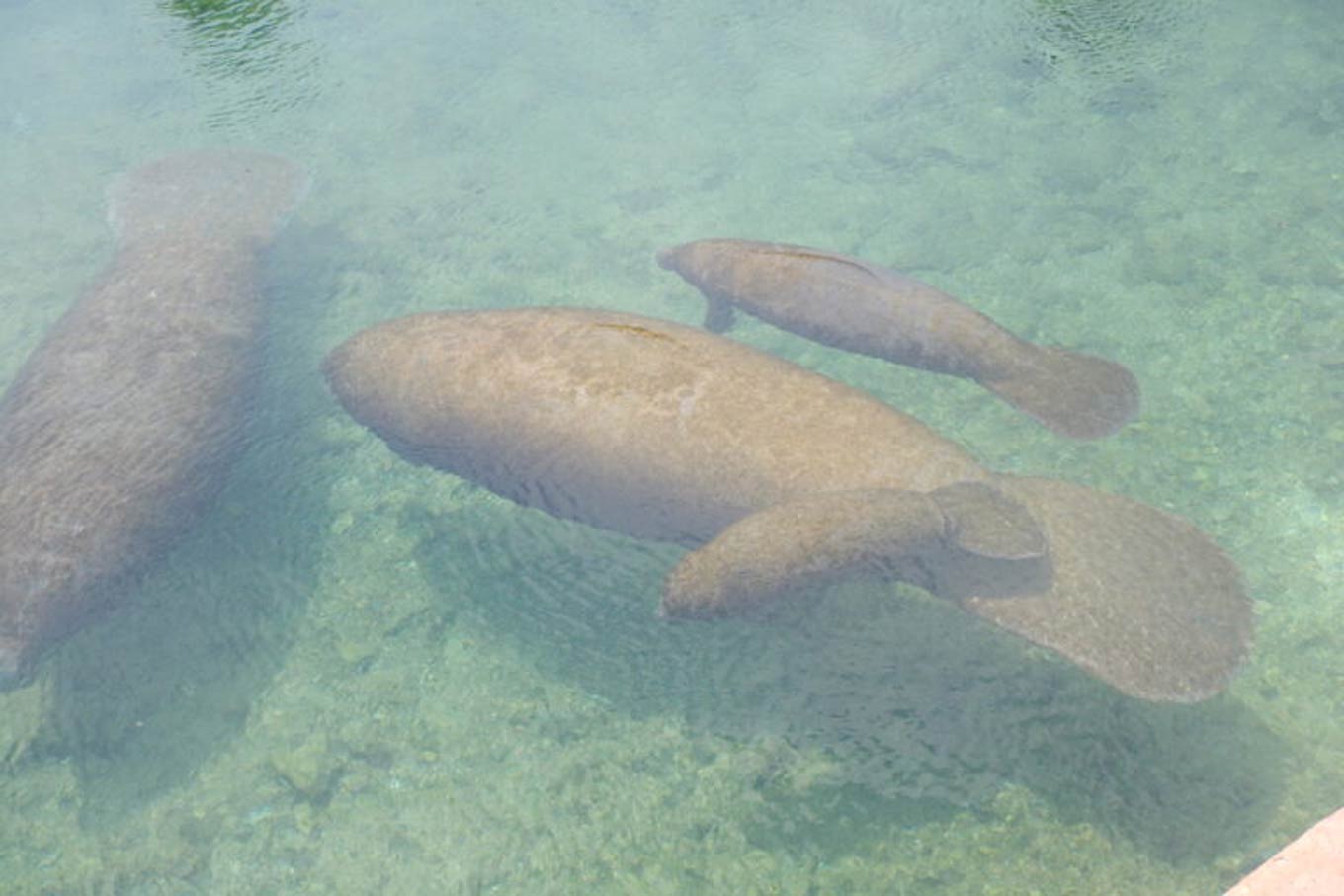
Regional environmental agencies and local communities have made available emergency kits to help provide initial assistance to injured and stranded manatees until professional care arrives.
This collaboration between biologists and communities was one of the most important factors that led to the creation of the RVM. “People have begun to love the manatee. As well as loving it, they now know more about it, and want to know more about it. The report of a sick, stuck or even dead animal is very important because we can acquire more knowledge about manatees that will help us protect them. The communities have really developed a great sense of ownership of the manatee,” Arévalo says.
This is demonstrated in the training that has been going on for several months within communities in rural areas, such as El Totumo and El Descanso (Yondó, Antioquia), Riberas del San Juan (Cimitarra, Santander), Bocas del Carare and La Sierra (Puerto Parra, Santander), Campo Amalia, (Aguachica, César), and in areas close to marshes such as Paredes (between Puerto Wilches and Sabana de Torres, Santander).
Before, when communities found a manatee entangled in a net, many would try to cut it out to help free it. But now they have learned it is better to wait for expert help, as it is sometimes necessary to give the manatee medical attention before releasing it completely; it may be injured or have physical damage that is not evident to the naked eye.
“I have seen two dead manatees, but we have also found several stranded and have been able to pull them out because we have been taught how to do it, and we have a toolkit,” says Eduardo Portilla, a member of the Barrancabermeja Fishermen’s Association.
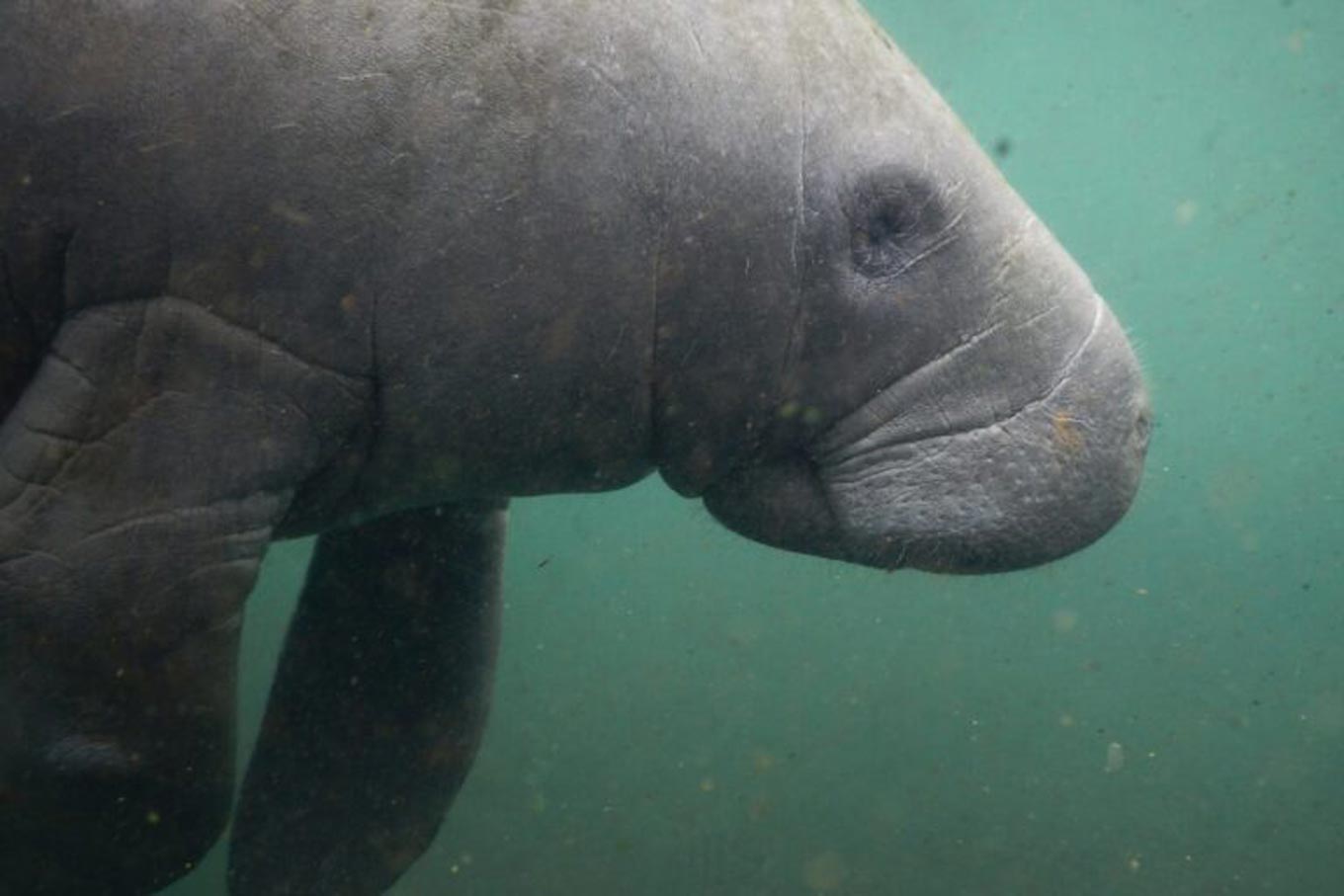
Monitoring provides unprecedented data
Portilla is part of the Magdalena Medio RVM and is one of more than 50 community monitors guided by the WCS and the environmental organization Cabildo Verde. One of the tasks they carry out, says Portilla, is the monitoring of areas where manatee strandings have previously occurred, so the animals involved in new incidents have a better chance of survival.
One of these areas, Portilla tells us, is the Sardinata swamp, in Yondó. This happens because manatees have to travel through several streams until they reach the Magdalena River, but on their return, connectivity is often lost because the streams are dry. Here, they end up beached and often die.
Monitoring is carried out during fishing activity. The fishers complete a form where they record whether they were able to directly observe the manatees, but they have also been trained to recognize indirect traces that indicate the animals’ presence, such as feces, feeding areas and the shadows made by diving manatees.
“We began monitoring in December last year with 57 people from eight communities. We put together a spreadsheet of information: where the fishing was done, what time the fishing started, what time it ended and whether the water was high, medium or low.
The form is filled out even if no manatees were seen, because their detectability is very low. Not seeing one does not mean that manatees were not in the area,” says Leonor Valenzuela, coordinator of analysis and synthesis at WCS Colombia, an organization that supports the monitoring work and the RVM.
Between December 2022 and June 2023, some 1,924 hours of monitoring were reported in 22 bodies of water — swamps, rivers and streams — and although it was originally thought that manatees had not swum through the Magdalena River, their presence has been confirmed on two occasions.
“The fishermen told us, ‘Yes, they are in the river; it is just more difficult to observe them in the river than elsewhere. They may not be there all the time, but they are moving through it,” Valenzuela says.
Valenzuela goes on to say that monitoring has confirmed the presence of manatees in 16 of the 22 bodies of water where fishing activity has taken place. “We have 80 records of manatees — 18 direct records and 62 indirect records — meaning they saw their feces, feeding areas or something else that allowed us to identify that the manatee was, or is, there.”
The sites with the highest number of records were Caño Peruetano, Ciénaga de Paredes, Ciénaga Quimbay and Río Viejito.
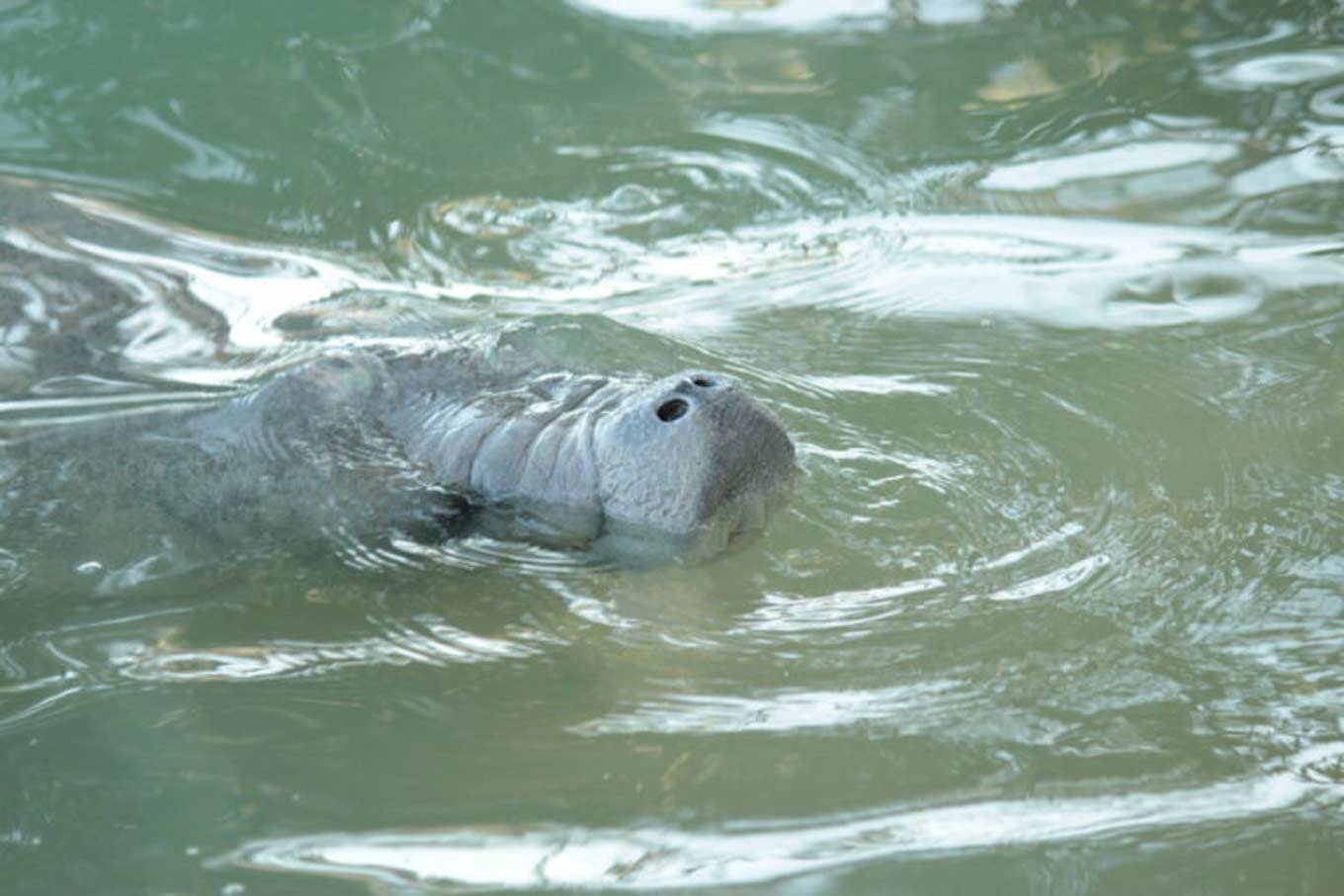
Valenzuela says one of the things that has surprised biologists the most is the communities’ interest in the monitoring.
“The villagers know that they really are part of the process, and that their work is not limited to just passing data to us. They are seen as local researchers, and that has meant a lot to them,” says Valenzuela, adding that the fishers have told them they don’t want to stop the monitoring.
In fact, the community now wants to do a deeper analysis, not only to determine where the manatees are, but to understand how the species’ population patterns change in relation to whether the water is high or low. This will provide the communities with insight into how the manatee behaves in the Magdalena Medio marsh complex.
“At the local level, we are already finding out where the Magdalena Medio manatees are. Now we need to know how they are doing, which is a huge priority,” says Arévalo.
Every day, throughout the world, people put huge quantities of food out at feeding stations for birds and other wild animals.
Although we know that connecting with nature benefits human health and wellbeing, scientists still know relatively little about the consequences of providing food for wildlife. My team’s most recent research, however, has found that feeding garden birds in wintertime seems to make them more resilient to infection.
Winter can be tough for small birds. During cold winter nights, small birds reduce their body temperature by several degrees. While this would be lethal for a human, it saves lots of energy, helping birds to survive particularly cold nights.
However, reducing body temperature is risky, and hypothermic birds are slow to wake and respond to a predator.
A reliable food supply at bird feeders can help small birds avoid starvation and survive the harsh winter. Our previous research showed that birds with access to feeders do not need to reduce their night-time body temperature as much as birds that did not have access to feeders.
The extra energy birds get from human-provided food means they don’t have to take the risk of becoming severely hypothermic.
Supplementary feeding is controversial since it can also negatively affect wildlife. Birds congregate at feeders, often in large numbers, coming into close contact with one another. Some studies suggest bird feeders have contributed to the spread of infectious diseases such as trichomonosis, which caused huge greenfinch mortalities in the UK in the mid-2000s.
Some people are also concerned that bird feeders may discourage birds from learning to forage for themselves. However, research suggests that supplementary food makes up only a small portion of birds’ diets, and that birds do not become dependent on human-provided food.
We were curious about whether the frequent use of feeders could boost birds’ immune systems, making them better equipped to fight an infection.
Vaccination readies our bodies to tackle a disease by delivering a small dose of a virus or bacterium. Similarly, regular exposure to low doses of pathogens at feeding stations – as a result of infected birds depositing pathogens on to feeders — could better prepare birds to fight an infection.
So, we investigated whether supplementary feeding could make great tits more tolerant to an infection. In a forest in southern Sweden in October 2022, we set up bird feeders that were routinely visited by large numbers of great tits along with lower numbers of blue tits, chaffinches and crested tits.
These bird feeders were refilled every few days to ensure a constant supply of peanuts and sunflower seeds throughout the winter.

In late winter, after birds had been visiting bird feeders for several months, we captured great tits at sunset and gave them a “fake infection” – injecting them with a small amount of material from the cell wall of a bacterium.
This triggered the great tits’ immune system to think it was being attacked by an invading pathogen, without introducing any of the harmful components of the bacterium.
At the same time, we simulated infection in great tits from another part of the forest, where there had been no access to feeding stations during the winter.
Supplementary-fed birds are more tolerant
One of the first responses of the body to fight off an infection is to raise body temperature and develop a fever. While the “infected” great tits slept, we measured their body temperature throughout the night.
We compared the fever responses of great tits that had visited bird feeders throughout the winter with those of great tits that had not visited feeding stations.
We found the great tits that had been using feeders did not increase their body temperature as much as the great tits that didn’t have access to feeding stations. Although fever is important in helping the body fight infection, raising the body’s temperature requires a large investment of energy.
Fever and associated inflammation also cause some damage to the body.
The best immune response is a careful balance of mounting defenses strong enough to tackle the invading pathogen while minimizing damage to the body.
So, the supplementary-fed birds seemed to adequately fight the “infection” without using up their precious winter energy supply.
The effects of bird feeding are complex
While we found that the use of feeding stations made great tits more tolerant to an infection, this could also enable infected great tits to stay active, spreading infection between birds.
On the other hand, the greater risk of disease transmission at feeders may be countered by the stronger immune systems these birds could develop due to better nutrition from the food provided by people in parks and gardens.
You can reduce the risk of disease by keeping feeding stations clean. Follow wildlife charities’ guidelines of how to set up a feeding station and what food to put out – and what food to avoid.
Great tits are a common visitor to gardens in Europe, so there’s a good chance a bird feeder could attract these colorful birds to your home.
This article was republished with permission from the original publisher.
Audre Lorde, a self-described “black, lesbian, mother, warrior, poet,” was a powerful voice in the fight against the injustices of racism, sexism, and homophobia.
Her work, which spans poetry, essays, and speeches, offers a profound critique of the social and political systems that marginalize certain groups. Lorde’s writing is celebrated for its incisive exploration of identity, power, and the complexities of intersectionality in society.
Audre Lorde’s words often encapsulate her sharp intellect and unwavering commitment to fighting oppression in all its forms. And in this article, we’ve curated her most impactful quotes.
Whether you are familiar with her work or encountering her ideas for the first time, Lorde’s quotes will challenge, inspire, and provoke thought, continuing her legacy of advocating for change and understanding.
The Best Quotes from Audre Lorde
Famous Quotes
“If you can’t change reality, change your perceptions of it.”
— Audre Lorde
“Revolution is not a one-time event.”
— Audre Lorde
“If I didn’t define myself for myself, I would be crunched into other people’s fantasies for me and eaten alive.”
— Audre Lorde
“Our future survival is predicated upon our ability to relate within equality.”
— Audre Lorde
“You are the one that you are looking for.”
— Audre Lorde
“I am not free while any woman is unfree, even when her shackles are very different from my own.”
— Audre Lorde
“Your silence will not protect you.”
— Audre Lorde, The Transformation of Silence into Language and Action
“It is not our differences that divide us. It is our inability to recognize, accept, and celebrate those differences.”
— Audre Lorde
“You become strong by doing the things you need to be strong for.”
— Audre Lorde
“In our world, divide and conquer must become define and empower.”
— Audre Lorde
“Within the war we are all waging with the forces of death, subtle and otherwise, conscious or not — I am not only a casualty, I am also a warrior.”
— Audre Lorde
“I am standing here as a Black lesbian poet, and the meaning of all that waits upon the fact that I am still alive, and might not have been.”
— Audre Lorde
“We are all more blind to what we have than to what we have not.”
— Audre Lorde
“Anger is an appropriate reaction to racist attitudes, as is fury when the actions arising from those attitudes do not change.”
— Audre Lorde
“Women are powerful and dangerous.”
— Audre Lorde
“When I dare to be powerful — to use my strength in the service of my vision, then it becomes less and less important whether I am afraid.”
— Audre Lorde, The Transformation of Silence into Language & Action
“The learning process is something you can incite, literally incite, like a riot.”
— Audre Lorde
On Power
“When I dare to be powerful, to use my strength in the service of my vision, then it becomes less and less important whether I am afraid.”
— Audre Lorde
“There are many kinds of power, used and unused, acknowledged or otherwise.”
— Audre Lorde
“I began to recognize a source of power within myself that comes from the knowledge that while it is most desirable not to be afraid, learning to put fear into a perspective gave me great strength.”
— Audre Lorde
“Whatever power we have that we don’t use will become an instrument against us, the question of differences is a perfect example. If we do not learn to use our differences constructively they will continue to be used against as causes for war. We must turn this around, not by eliminating difference or pretending it doesn’t exist, but examining how it may be used and recognized.”
— Audre Lorde
“Difference is that raw and powerful connection from which our personal power is forged.”
— Audre Lorde
“The oppressors maintain their position and evade their responsibility for their own actions. There is a constant drain of energy which might be better used in redefining ourselves and devising realistic scenarios for altering the present and constructing the future.”
— Audre Lorde
On Feminism and Activism
“When we speak we are afraid our words will not be heard or welcomed. But when we are silent, we are still afraid. So it is better to speak.”
— Audre Lorde, The Black Unicorn: Poems

“For women, the need and desire to nurture each other is not pathological but redemptive, and it is within that knowledge that our real power is rediscovered.”
— Audre Lorde
“When I speak of change, I do not mean a simple switch of positions or a temporary lessening of tensions, nor the ability to smile or feel good. I am speaking of a basic and radical alteration in those assumptions underlining our lives.”
— Audre Lorde
“Unacknowledged class differences rob women of each others’ energy and creative insight.”
— Audre Lorde
“Black and Third World people are expected to educate white people as to our humanity. Women are expected to educate men. Lesbians and gay men are expected to educate the heterosexual world. The oppressors maintain their position and evade their responsibility for their own actions. There is a constant drain of energy which might be better used in redefining ourselves and devising realistic scenarios for altering the present and constructing the future.”
— Audre Lorde
“I must battle these forces of discrimination, wherever they appear to destroy me. And when they appear to destroy me, it will not be long before they appear to destroy you.”
— Audre Lorde

“Some problems we share as women, some we do not. You fear your children will grow up to join the patriarchy and testify against you, we fear our children will be dragged from a car and shot down in the street, and you will turn your backs upon the reasons they’re dying.”
— Audre Lorde
“How much of this truth can I bear to see and still live unblinded? How much of this pain can I use?”
— Audre Lorde
“For within living structures defined by profit, by linear power, by institutional dehumanization, our feelings were not meant to survive. Kept around as unavoidable adjuncts or pleasant pastimes, our feelings were expected to kneel to thought as women were expected to kneel to men. But women have survived. As poets.”
— Audre Lorde
“If I cannot air this pain and alter it, I will surely die of it. That’s the beginning of social protest.”
— Audre Lorde
“As Black women we have the right and responsibility to define ourselves and to seek our allies in common cause: with Black men against racism, and with each other and white women against sexism. But most of all, as Black women we have the right and responsibility to recognize each other without fear and to love where we choose.”
— Audre Lorde
“Women of today are still being called upon to stretch across the gap of male ignorance and to educate men as to our existence and our needs. This is an old and primary tool of all oppressors to keep the oppressed occupied with the master’s concerns. Now we hear that is the task of women of Color to educate white women — in the face of tremendous resistance — as to our existence, our differences, our relative roles in our joint survival. This is a diversion of energies and a tragic repetition of racist patriarchal thought.”
— Audre Lorde
“Black women are programmed to define ourselves within this male attention and to compete with each other for it rather than to recognize and move upon our common interests.”
— Audre Lorde
“The true focus of revolutionary change is never merely the oppressive situations which we seek to escape, but that piece of the oppressor which is planted deep within each of us, and which knows only the oppressors’ tactics, the oppressors’ relationships.”
— Audre Lorde
“As white women ignore their built-in privilege of whiteness and define woman in terms of their own experience alone, then women of Color become ‘other,’ the outsider whose experience and tradition is too ‘alien’ to comprehend.”
— Audre Lorde
“Those of us who stand outside the circle of this society’s definition of acceptable women; those of us who have been forged in the crucibles of difference — those of us who are poor, who are lesbians, who are black, who are older — know that survival is not an academic skill… For the master’s tools will not dismantle the master’s house. They will never allow us to bring about genuine change.”
— Audre Lorde
“However, experience has taught us that action in the now is also necessary, always.”
— Audre Lorde
→ Read more quotes about feminism
→ Read more quotes about activism
On Self Care
“Caring for myself is not self-indulgence, it is self-preservation, and that is an act of political warfare.”
— Audre Lorde
“If I didn’t define myself for myself, I would be crunched into other people’s fantasies for me and eaten alive.”
— Audre Lorde
“I am still learning — how to take joy in all the people I am, how to use all my selves in the service of what I believe, how to accept when I fail and rejoice when I succeed.”
— Audre Lorde
“What are the words you do not yet have? What do you need to say? What are the tyrannies you swallow day by day and attempt to make your own, until you will sicken and die of them, still in silence?”
— Audre Lorde
“My fullest concentration of energy is available to me only when I integrate all the parts of who I am, openly, allowing power from particular sources of my living to flow back and forth freely through all my different selves, without the restriction of externally imposed definition.”
— Audre Lorde
“Only by learning to live in harmony with your contradictions can you keep it all afloat.”
— Audre Lorde, Sister Outsider: Essays and Speeches
“You cannot use someone else’s fire. You can only use your own. And in order to do that, you must first be willing to believe that you have it.”
— Audre Lorde
“We know what it is to be lied to, and we know how important it is not lie to ourselves. We are powerful because we have survived, and that is what it all about — survival and growth.”
— Audre Lorde
→ Read more quotes about self-care
On Community
“Without community there is no liberation.”
— Audre Lorde
“When a people share a common oppression, certain kinds of skills and joint defenses are developed. And if you survive you survive, because those skills and defenses have worked. When you come into conflict over other existing differences, there is a vulnerability to each other which is desperate and very deep.”
— Audre Lorde
“What we must do is commit ourselves to some future that can include each other and to work toward that future with the particular strengths of our individual identities. And in order for us to do this, we must allow each other our differences at the same time as we recognize our sameness.”
— Audre Lorde
“When we define ourselves, when I define myself, the place in which I am like you and the place in which I am not like you, I’m not excluding you from the joining — I’m broadening the joining.”
— Audre Lorde
“You do not have to be me in order for us to fight alongside each other. I do not have to be you to recognize that our wars are the same.”
— Audre Lorde
“Too often, we pour the energy needed for recognizing and exploring difference into pretending those differences are insurmountable barriers, or that they do not exist at all.”
— Audre Lorde
“We must recognize and nurture the creative parts of each other without always understanding what will be created.”
— Audre Lorde
“The sharing of joy, whether physical, emotional, psychic, or intellectual, forms a bridge between the sharers which can be the basis for understanding much of what is not shared between them, and lessens the threat of their difference.”
— Audre Lorde
“We share a common interest, survival, and it cannot be pursued in isolation from others simply because their differences make us uncomfortable.”
— Audre Lorde
On Love
“Each time you love, love as deeply as if it were forever.”
— Audre Lorde
“I want to live the rest of my life, however long or short, with as much sweetness as I can decently manage, loving all the people I love, and doing as much as I can of the work I still have to do.”
— Audre Lorde
“The speaking will get easier and easier. And you will find you have fallen in love with your own vision, which you may never have realized you had. And you will lose some friends and lovers, and realize you don’t miss them. And new ones will find you and cherish you. And at last you’ll know with surpassing certainty that only one thing is more frightening than speaking your truth. And that is not speaking.”
— Audre Lorde
“The love expressed between women is particular and powerful because we have had to love in order to live; love has been our survival.”
— Audre Lorde, Sister Outsider: Essays and Speeches
“Once we recognize what it is we are feeling, once we recognize we can feel deeply, love deeply, can feel joy, then we will demand that all parts of our lives produce that kind of joy.”
— Audre Lorde
On Identity
“Nothing I accept about myself can be used against me to diminish me.”
— Audre Lorde
“Well, I do not want to be tolerated, nor misnamed. I want to be recognized.”
— Audre Lorde
“My sexuality is part and parcel of who I am, and my poetry comes from the intersection of me and my worlds.”
— Audre Lorde
“African tradition deals with life as an experience to be lived. In many respects, it is much like the Eastern philosophies in that we see ourselves as a part of a life force; we are joined, for instance, to the air, to the earth. We are part of the whole life process. We live in accordance with, in a kind of correspondence with the rest of the world as a whole. And therefore living becomes an experience, rather than a problem, no matter how bad or how painful it may be.”
— Audre Lorde
“I learned that if I didn’t define myself for myself, I would be crunched into other people’s fantasies for me and eaten alive.”
— Audre Lorde
Short Quotes
“Life is very short and what we have to do must be done in the now.”
— Audre Lorde, The Transformation of Silence into Language and Action
“We need a movement [that] encourages you and me to define ourselves.”
— Audre Lorde
“Anger, used, does not destroy. Hatred does.”
— Audre Lorde
“I write because I am a warrior and my poetry is my primary weapon.”
— Audre Lorde
“I am deliberate and afraid of nothing.”
— Audre Lorde, The Collected Poems of Audre Lorde
“Unity implies the coming together of elements which are, to begin with, varied and diverse in their particular natures.”
— Audre Lorde
“We are all in the process of becoming.”
— Audre Lorde
“Our visions begin with our desires.”
— Audre Lorde
“There are no new ideas, just new ways of giving those ideas we cherish breath and power in our own living.”
— Audre Lorde
“Oppressed peoples are always being asked to stretch a little more, to bridge the gap between blindness and humanity.”
— Audre Lorde
→ Read more short quotes
More Audre Lorde Quotes
“We can learn to work and speak when we are afraid in the same way we have learned to work and speak when we are tired.”
— Audre Lorde
“To face the realities of our lives is not a reason for despair — despair is a tool of your enemies. Facing the realities of our lives gives us motivation for action. For you are not powerless… You know why the hard questions must be asked. It is not altruism, it is self-preservation — survival.”
— Audre Lorde
“Guilt is not a response to anger; it is a response to one’s own actions or lack of action. If it leads to change then it can be useful, since it is then no longer guilt but the beginning of knowledge.”
— Audre Lorde
“For we have been socialized to respect fear more than our own needs for language and definition, and while we wait in silence for that final luxury of fearlessness, the weight of that silence will choke us.”
— Audre Lorde
“Pain is important: how we evade it, how we succumb to it, how we deal with it, how we transcend it… pain will always either change or stop. Always. The confidence that it will change is what makes bearing it possible. So pain is fluid. It is only when you conceive of it as something static that it is unbearable.”
— Audre Lorde
“The white fathers told us: I think, therefore I am. The Black mother within each of us — the poet — whispers in our dreams: I feel, therefore I can be free.”
— Audre Lorde
“Within each one of us there is some piece of humanness that knows we are not being served by the machine which orchestrates crisis after crisis and is grinding all our futures into dust.”
— Audre Lorde
“When you reach out and touch other human beings, it doesn’t matter whether you call it therapy or teaching or poetry.”
— Audre Lorde
“Anger is useful to help clarify our differences, but in the long run, strength that is bred by anger alone is a blind force which cannot create the future. It can only demolish the past. Such strength does not focus upon what lies ahead, but upon what lies behind, upon what created it — hatred. And hatred is a death wish for the hated, not a life wish for anything else.”
— Audre Lorde
“The fear that we cannot grow beyond whatever distortions we may find within ourselves keeps us docile and loyal and obedient, externally defined, and leads us to accept many facets of our oppression as women.”
— Audre Lorde
“I have a duty to speak the truth as I see it and share not just my triumphs, not just the things that felt good, but the pain, the intense, often unmitigated pain. It is important to share how I know survival is survival and not just a walk through the rain.”
— Audre Lorde
“On the cause of silence, each of us draws the face of their own fear — fear of contempt, of censure, or some judgement, or recognition, of challenge, of annihilation. But most of all, I think, we fear the visibility without which we cannot truly live.”
— Audre Lorde
“Our persistence in examining the tensions within diversity encourages growth toward our common goal. So often we either ignore the past or romanticize it, rendering the reason for unity useless or mythic. We forget that the necessary ingredient needed to make the past work for the future is our energy in the present, metabolizing one into the other. Continuity does not happen automatically, nor is it a passive process.”
— Audre Lorde
“Hatred is the fury of those who do not share our goals, and its object is death and destruction. Anger is a grief of distortions between peers, and its object is change.”
— Audre Lorde
“Among those of us who share the goals of liberation and a workable future for our children there can be no hierarchies of oppression.”
— Audre Lorde
Araba Maze is a self-proclaimed “radical street librarian.”
Her work is simple: provide diverse books for young people in need throughout the many “book deserts” in Baltimore, Maryland.
She does this through her organization, Storybook Maze, which brings free books to areas with limited access to books.
Those book deserts are denoted by Unite for Literacy, which publishes an interactive Book Desert Map, tagging the availability of books per household in a given area.
The map of Baltimore is mostly red, meaning 10% or fewer homes have access to 100 or more books.

As a book lover who graduated with her English degree from Bowie State University in 2011, Maze quickly started brainstorming how she might bring reading and literacy to the rest of her community.
“It all started when I was reading to my nieces on my front stoop when neighborhood kids started gathering around, so I invited them to join us,” Maze shared in a YouTube video.
“After I finished reading, the kids didn’t want storytime to stop. ‘Go home and read a book,’ I said. ‘We don’t have books at home,’ was their response.”
She started by hosting regular “Stoop Storytimes,” and giving away her own collection of books. But when she became a librarian with the hopes of doing more of this important work, she realized she wasn’t reaching the children who needed her help most.
“When I was a librarian, I noticed that the kids that were coming into the library weren’t the kids, necessarily, who I was reading to out in the streets,” she told the Baltimore Sun. “Sometimes it’s not the kids who need it most.”
She learned more about library barriers and book deserts, noting that, in book deserts, up to 300 children may be required to share just a single book.
It became clear that she needed to bring the library to the kids, instead of trying to get kids to come to the library.

Maze started gathering book donations and hosting pop-up free book fairs around the community, curating options that are engaging and culturally significant. She offers a variety of books with diverse characters, or books in different languages.
Videos on her TikTok page show parents getting emotional when they discover that the free picture book their child picks up is indeed in their native language, or children jumping for joy when they discover the books they want to read are completely free.
In tandem with her work as a street librarian, Maze calls herself “an influencer for good,” using social media to leverage donations and spread awareness about low literacy rates and book access.
Plus, her expertise as a librarian makes her uniquely qualified to curate and recommend the best books for any child. In 2022, Storybook Maze put 3,000 diverse books into the hands of kids.
“We know that when kids have books that they can relate to and can see themselves in, they’re more eager to read,” Maze told Baltimore Magazine.
“For us, this means books with Black characters, who live in neighborhoods like our kids live in, celebrate the same things they do, and reflect their lives. We also talk to community leaders, teachers, and organizations in the area and see where they think kids need support the most.”
Recent grants have supported Maze’s work in new, creative ways.
She was the recipient of a $15,000 grant from the United Way of Central Maryland’s Changemaker Challenge, which funded a book vending machine at a local YMCA. Kids use a token from staffers to select a free book from the machine.
Maze was also awarded a $20,000 grant from Eventbrite, which will go toward funding her next project: The Book Trolley.
Her goal is to make reading experiences come to life, filling a Mister Rogers-inspired trolley with books, snacks, and comfortable seating, so kids can have a full-on sensory experience with their books. Plus, she wants to use the vehicle to take kids to literary landmarks in the area.
Maze is still funding to make the book trolley a reality, but in the meantime, she rents school buses and partners with local organizations to bring books and literary experiences to kids — right where they are.
But there’s still a major hurdle to finding acceptance — especially with kids who are intimidated by reading.
“As I’m battling book deserts and literacy in Baltimore, I’m not just battling book access; I’m also battling the book experience,” Maze said in a TikTok.
“For a lot of these kids, reading has been a mandatory thing. It’s been stressful and strenuous, so they have negative reading experiences. Reading has always been a performance; something they have to be good at … rarely for pleasure or enjoyment.”
Maze’s work to meet readers where they’re at is not just about physical space; it’s about providing books that are made for them.
“One of the main things we’re trying to develop is positive reading and book experiences,” she continued in her TikTok. “I’m a big believer in finding the right book for every reader.”
Diverse characters are one component, but Maze also delivers diverse formats, like graphic novels, picture books, audiobooks, and more.
And the approach? It’s working.
“We saw kids go from hating reading to hungry for books that represent them,” Maze said in a YouTube video about her previous work. “Providing holistic book access means we also provide ways for children who can’t read to hear the stories inside.”
Header images courtesy of Araba Maze/Storybook Maze