On the festival of Baisakhi, celebrated usually on April 13, Sikhs the world over will joyously wear yellow saffron colors, symbolizing spring harvest and the solar new year, when the Sun enters the constellation Aries.
In gurdwaras, or Sikh temples, they will sing hymns in congregational singing, or “kirtan,” and eat communal meals, or “langar.” They will also recall some of the tenets of their faith that revolve around “seva,” or serving fellow human beings and seeking to build a just society while living a simple life.
The Sikh religion, with its line of 10 gurus, is traced back to the time of Guru Nanak, the first guru. Born in a village in present-day Pakistan in the northern state of Punjab in 1469, Nanak believed in the oneness of God, the timeless Supreme Being, or “Akālpurukh,” and looked at the universe as steeped in divine light.
He rejected the prevalent unequal caste system, which fixed the status of people by birth. Instead, he looked upon humanity as one. He encouraged his followers not to take the path of renunciation but to work hard and perform acts of charity.
As a scholar of Punjab and Sikh studies, I want to draw attention to the importance of Baisakhi celebrations. According to Sikh tradition, the tenth Guru, Gobind Rai, the last in the line of 10 human Gurus, established the Khalsa order on this day in 1699. In a remarkable event that transformed forever the future of the Sikh community, the Guru created the elite martial group of the Khalsa, who would remain a role model for the Sikhs for ages to come.
The Khalsa ideal
The dramatic creation story of the Khalsa relates that the guru demanded sacrifice of life from his loyal followers who came to his abode in Anandpur in Punjab to celebrate Baisakhi and the beneficence of the harvest. Five brave-hearts offered their heads.
The guru took them inside a tent one by one, emerging each time with a bloodied sword in front of an awestruck audience. Finally, the guru revealed the five unharmed followers; he had beheaded goats.
His five beloved disciples, known as the “Pañj Piāre,” were in the Sikh tradition the first initiates into the new order of the Khalsa, meaning the pure. They were baptized through the “khanḍe-dī-pāhul” ceremony, an initiation in which a double-edged sword, or “khaṅḍā,” was used to stir sweetened water in an iron cauldron – the “amrit” or ambrosia. The guru then administered the “amrit” to the five, who in turn initiated the guru.
The guru is said to have pronounced that henceforth his Khalsa will be called lions, or “singh,” and they would maintain five symbols on their person that would set them apart from ordinary Sikhs and burnish their martial demeanor. These “pañjkakār,” or five K’s, were unshorn hair, or “keś;” a comb, or “kangha;” long breeches, or “kachh;” a steel bangle, or “kara;” and a dagger, or “kirpan.” Above all, the Khalsa were to fight for creating a just world.
The need for the Khalsa
To understand the need for the Khalsa, it is important to step back into history. For over 300 years, starting in 1526, large parts of India were ruled by the powerful Mughal dynasty of Central Asian origins. While the early Sikh gurus had cordial relations with the Mughals, hostilities emerged in later years with their growing popularity and following. The fifth guru, Arjan Dev, was said to have been tortured and executed for spreading “false religion” during the time of the Mughal Emperor Jahangir.
Under his son and successor, the sixth guru, Hargobind, the pacifist Sikh community began to turn militaristic. Guru Hargobind symbolically wore two swords that underscored his secular power along with spiritual authority.
The tenth, Gobind Singh, became guru at age nine. This was after the execution of his father, the ninth Guru Tegh Bahadur, in 1675 by the Mughal Emperor Aurangzeb, a sign of increased hostilities. For the Sikhs, the issue at stake was the freedom to practice one’s religion while exercising legitimate political autonomy in an overarching Mughal empire. According to the Sikhs, that would allow the flourishing of the Sikh culture and the ability to provide social and political patronage to the guru’s followers.
The martial Khalsa was considered to be a political necessity during these times, which they perceived as being tyrannical. The Khalsa also embodied self-discipline to inspire the guru’s Sikhs, the ordinary followers who did not become Khalsa.
An egalitarian stance
Though social and caste differences persisted among the Sikhs, the gurus actively worked to address them.
The life of the first guru, Nanak, is relayed in hagiographies called “Janam-sakhi.” These portray him in the company of the Muslims and Hindus preaching harmony and respecting those placed at the bottom of the caste hierarchy.
For the tenth guru, Gobind Singh, the Khalsa were the ideal for others to emulate. His beloved five, who had been willing to sacrifice their lives for him, further demonstrated the importance of social equality. Belonging to different caste groups, they represented the values of compassion, duty, firmness, honor and effort. Together, they formed the first core of the Khalsa. Not all Sikhs, however, adopted Khalsa tenets and practice.
The Khalsa under colonialism
By the late 19th century, Sikhs, Hindus and Muslims living in the north Indian state of Punjab were grappling with British colonial rule.
Social and religious reform movements among Punjab’s inhabitants, including the Sikhs, tried to overcome the humiliation of colonial rule by rethinking the relevance of social and cultural practice that the British criticized. Customs such as early marriage and practices around widowhood that oppressed women, and caste discrimination that affected all, were reassessed. The gurus’ strong censure of these practices was reemphasized. For Sikh intellectuals, rejuvenating the egalitarian spirit of the Khalsa at this time seemed urgent. Gender and caste inequities, they believed, could be combated by reviving Khalsa norms.
The spirit of Baisakhi for Sikhs is reminiscent of the ideals of the gurus. As they partake the bounties of the spring harvest, sing in congregations and eat consecrated food in gurdwaras, they will also reflect on the vision of a humane world where Khalsa Sikhs fight for justice for all in the ever-evolving world, suffused with the spirit of optimism.
This article was written by Anshu Malhotra of University of California, Santa Barbara, originally published on The Conversation.

Parkinson’s disease is a neurodegenerative movement disorder that progresses relentlessly. It gradually impairs a person’s ability to function until they ultimately become immobile and often develop dementia.
In the U.S. alone, over a million people are afflicted with Parkinson’s, and new cases and overall numbers are steadily increasing.
There is currently no treatment to slow or halt Parkinson’s disease.
Available drugs don’t slow disease progression and can treat only certain symptoms. Medications that work early in the disease, however, such as Levodopa, generally become ineffective over the years, necessitating increased doses that can lead to disabling side effects.
Without understanding the fundamental molecular cause of Parkinson’s, it’s improbable that researchers will be able to develop a medication to stop the disease from steadily worsening in patients.
Many factors may contribute to the development of Parkinson’s, both environmental and genetic. Until recently, underlying genetic causes of the disease were unknown. Most cases of Parkinson’s aren’t inherited but sporadic, and early studies suggested a genetic basis was improbable.
Nevertheless, everything in biology has a genetic foundation.
As a geneticist and molecular neuroscientist, I have devoted my career to predicting and preventing Parkinson’s disease.
In our newly published research, my team and I discovered a new genetic variant linked to Parkinson’s that sheds light on the evolutionary origin of multiple forms of familial parkinsonism, opening doors to better understand and treat the disease.

Genetic linkages and associations
In the mid-1990s, researchers started looking into whether genetic differences between people with or without Parkinson’s might identify specific genes or genetic variants that cause the disease.
In general, I and other geneticists use two approaches to map the genetic blueprint of Parkinson’s: linkage analysis and association studies.
Linkage analysis focuses on rare families where parkinsonism, or neurological conditions with similar symptoms to Parkinson’s, is passed down.
This technique looks for cases where a disease-causing version of the gene and Parkinson’s appear to be passed down in the same person.
It requires information on your family tree, clinical data and DNA samples. Relatively few families, such as those with more than two living, affected relatives willing to participate, are needed to expedite new genetic discoveries.
“Linkage” between a pathogenic genetic variant and disease development is so significant that it can inform a diagnosis. It has also become the basis of many lab models used to study the consequences of gene dysfunction and how to fix it.
Linkage studies, like the one my team and I published, have identified pathogenic mutations in over 20 genes. Notably, many patients in families with parkinsonism have symptoms that are indistinguishable from typical, late-onset Parkinson’s.
Nevertheless, what causes inherited parkinsonism, which typically affects people with earlier-onset disease, may not be the cause of Parkinson’s in the general population.
Genome-wide association studies examine genetic data across a large sample of people.
Conversely, genome-wide association studies, or GWAS, compare genetic data from patients with Parkinson’s with unrelated people of the same age, gender and ethnicity who don’t have the disease.
Typically, this involves assessing how frequently in both groups over 2 million common gene variants appear.
Because these studies require analyzing so many gene variants, researchers need to gather clinical data and DNA samples from over 100,000 people.
Although costly and time-consuming, the findings of genome-wide association studies are widely applicable. Combining the data of these studies has identified many locations in the genome that contribute to the risk of developing Parkinson’s.
Currently, there are over 92 locations in the genome that contain about 350 genes potentially involved in the disease. However, GWAS locations can be considered only in aggregate; individual results are not helpful in diagnosis nor in disease modeling, as the contribution of these individual genes to disease risk is so minimal.
Together, “linked” and “associated” discoveries imply a number of molecular pathways are involved in Parkinson’s. Each identified gene and the proteins they encode typically can have more than one effect. The functions of each gene and protein may also vary by cell type. The question is which gene variants, functions and pathways are most relevant to Parkinson’s? How do researchers meaningfully connect this data?
Parkinson’s disease genes
Using linkage analysis, my team and I identified a new genetic mutation for Parkinson’s disease called RAB32 Ser71Arg. This mutation was linked to parkinsonism in three families and found in 13 other people in several countries, including Canada, France, Germany, Italy, Poland, Turkey, Tunisia, the U.S. and the U.K.
Although the affected individuals and families originate from many parts of the world, they share an identical fragment of chromosome 6 that contains RAB32 Ser71Arg. This suggests these patients are all related to the same person; ancestrally, they are distant cousins. It also suggests there are many more cousins to identify.
With further analysis, we found RAB32 Ser71Arg interacts with several proteins previously linked to early- and late-onset parkinsonism as well as nonfamilial Parkinson’s disease. The RAB32 Ser71Arg variant also causes similar dysfunction within cells.
Together, the proteins encoded by these linked genes optimize levels of the neurotransmitter dopamine. Dopamine is lost in Parkinson’s as the cells that produce it progressively die. Together, these linked genes and the proteins they encode regulate specialized autophagy processes. In addition, these encoded proteins enable immunity within cells.
Such linked genes support the idea that these causes of inherited parkinsonism evolved to improve survival in early life because they enhance immune response to pathogens. RAB32 Ser71Arg suggest how and why many mutations have originated, despite creating a susceptible genetic background for Parkinson’s in later life.
RAB32 Ser71Arg is the first linked gene researchers have identified that directly connects the dots between prior linked discoveries. The proteins encoded bring together three important functions of the cell: autophagy, immunity and mitochondrial function.
While autophagy releases energy stored in the cell’s trash, this needs to be coordinated with another specialized component within the cell, mitochondria, that are the major supplier of energy.
Mitochondria also help to control cell immunity because they evolved from bacteria the cell’s immune system recognizes as “self” rather than as an invading pathogen to destroy.
Identifying subtle genetic differences
Finding the molecular blueprint for familial Parkinson’s is the first step to fixing the faulty mechanisms behind the disease. Like the owner’s manual to your car’s engine, it provides a practical guide of what to check when the motor fails.
Just as each make of motor is subtly different, what makes each person genetically susceptible to nonfamilial Parkinson’s disease is also subtly different. However, analyzing genetic data can now test for types of dysfunction in the cell that are hallmarks of Parkinson’s disease.
This will help researchers identify environmental factors that influence the risk of developing Parkinson’s, as well as medications that may help protect against the disease.
More patients and families participating in genetic research are needed to find additional components of the engine behind Parkinson’s. Each person’s genome has about 27 million variants of the 6 billion building blocks that make up their genes. There are many more genetic components for Parkinson’s that have yet to be found.
As our discovery illustrates, each new gene that researchers identify can profoundly improve our ability to predict and prevent Parkinson’s.
This article was written by Matthew Farrer of University of Florida, and originally published on The Conversation.

Internal medicine has advanced in leaps and bounds throughout the 19th and 20th century, as doctors implemented X-rays, endoscopes, ultrasounds, and MRIs into daily care.
But checking the human body for cysts, tumors, and other predictors for a range of diseases is not an easy undertaking — and often involves multiple referrals, appointments, and health insurance hoops.
Physician scientist Vivek Kumbhari, chairman of Gastroenterology at the Mayo Clinic, explained a common scenario that he encounters at his clinic.
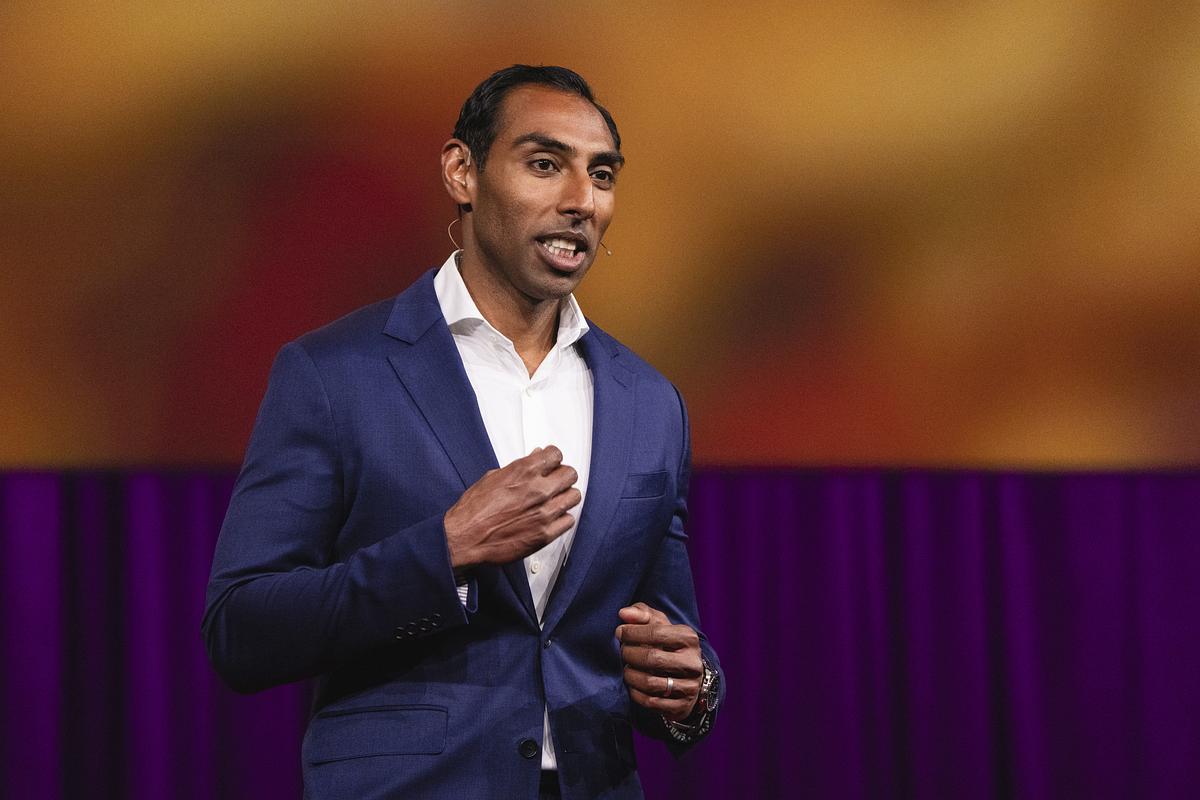
“A patient, who’s generally in good health, comes to see me because they have abdominal pain, and I suspect it’s coming from the stomach. Now, I need to precisely understand what the problem is, but I can’t just pop my head in and take a look,” Kumbhari said in a TED Talk in Vancouver earlier this week.
“Despite that patient sitting right in front of me, I have to ask them to go back home and come back to the hospital on another occasion, so I can put them to sleep with anesthesia, insert a long tube with a camera at the tip through the mouth and into the stomach,” Kumbhari continued.
“This is an endoscopy, a relatively expensive and invasive procedure — and we’re on a mission to do better.”
That same mission is one that engineer Alex Luebke has been undertaking for years. Luebke comes from a long background in astronautics and aeronautics, but in the last decade he’s turned his attention inward to the human body.

Like Kumbhari, Luebke imagines a future that forgoes anesthesia and expensive procedures, one where a patient could come in with an issue and be taken care of right then and there, and possibly be diagnosed in the same sitting. A future that’s possible with a microrobot named PillBot.
“PillBot is a small wireless robot that is remotely controlled, and it swims around in three dimensions in a water-filled human stomach,” Luebke said in the same TED Talk, where they debuted the new invention.

The PillBot is outfitted with a data transceiver, a lithium battery, a camera that can capture a live video feed, three pump-jet thrusters that allow it to move, and miniscule LED lights — because of course, Luebke explains, “the inside of the human body is quite dark.”
The first model of the PillBot was enormous, approaching a football in size.
Over the course of five years, Luebke and his team worked on getting the microrobot smaller and smaller. Today’s model is no bigger than a multivitamin, but it’s still equipped with all the necessary circuitry and tools.

Kumbhari explained that the PillBot can be remotely operated by a game controller, tablet, or smartphone. He piloted the PillBot in a small aquarium tank to show how it operates, but then he and Luebke took the presentation one step further.
“We developed PillBot to allow for direct visualization of internal organs, anywhere and any time,” Kumbhari teased. “This is our goal: be anywhere in the world, whether you’re at home sitting on your couch, visiting space, or right here on stage at TED.”
Right on cue, Luebke swallowed PillBot with a smile, and downed it with a swig of water.


Within seconds, the microrobot entered Luebke’s stomach, and a live feed was streamed on stage as Kumbhari maneuvered it with his controller.
“I’m carefully moving around, looking for changes in surface architecture that might represent an ulcer, or a cancer, or any other pathology,” Kumbhari explained. “And I’m able to get very similar views as I would if I used a conventional endoscope.”
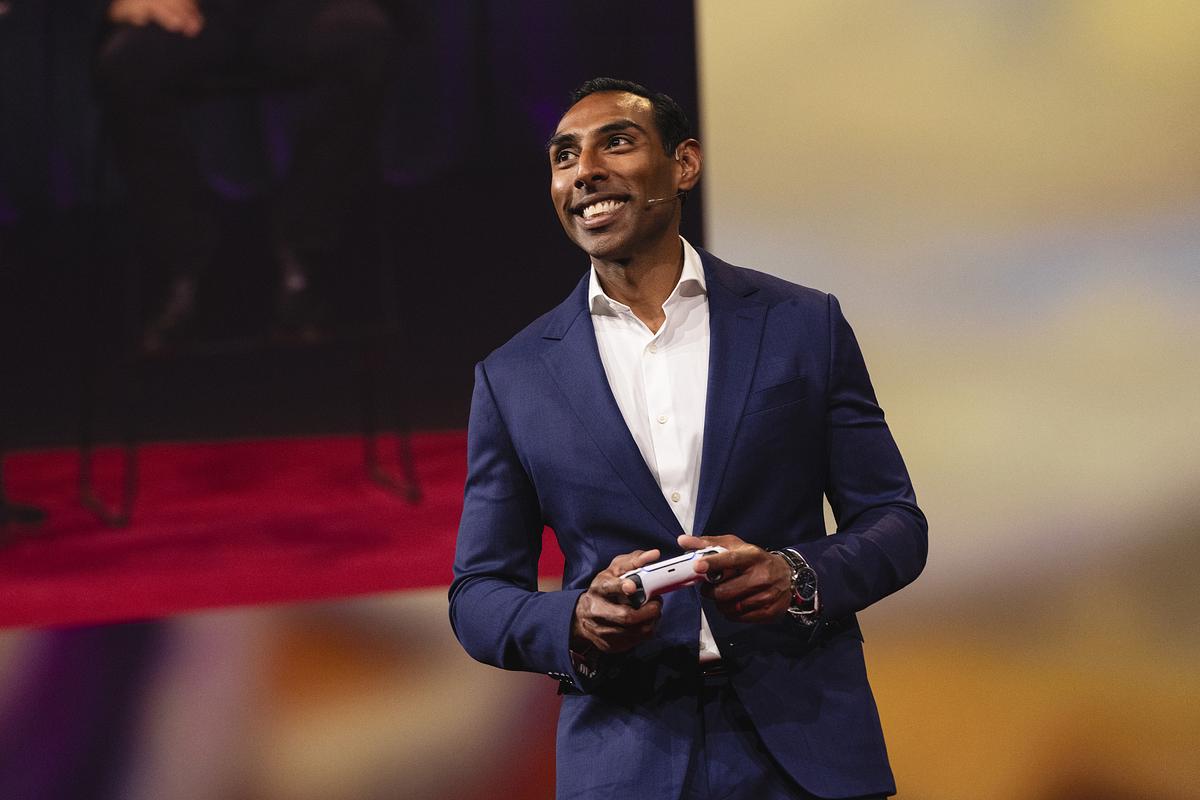
Kumbhari went on to say that the experience could be further enhanced if he were to use an augmented reality headset for 3D visualization or the assistance of artificial intelligence for early detection of abnormalities.
“Fortunately for Alex, from this brief review, everything is looking normal here,” Kumbhari said. “Though if there were a problem, being able to show and discuss this with Alex in real time, elevates his understanding of himself.”
As for extraction or retrieval after the procedure? No need. Kumbhari explained that PillBot would then take its “natural course” through and out of the body, likely without Luebke even knowing when it passes.

“This robot was designed for the stomach, but the entire body needs this capability,” Kumbhari said. “Parts of the body, such as the colon, the heart, and the brain should be made accessible through specialized robots that are just as easy to use.”
Luebke jumped in to build on Kumbhari’s statement, saying that PillBot was only the beginning.
Future and emerging adaptations for PillBot include “lab-on-chip” capabilities that would allow doctors to analyze material from within the body, sensors to monitor disease regression, and the potential to cauterize incisions and inject medicine without invasive procedures.
“I’ve dreamt of the day when I could explore the inside of the human body with robots,” Kumbhari said. “Recognizing that it would be an inflection point on my ability to help people live longer and healthier lives.”
Good Good Good has been covering TED's annual conference and spinoff events — like TED Women, TED Next, and TED Countdown — as press since 2023. Our journalists watch TED Talks live and interview speakers after they get off stage, giving Good Good Good the opportunity to share stories like this before TED Talks are released online.
Whether it’s an initiative to automatically wipe the criminal records of millions of people, putting solar panels in space, or centering data (not politics) in the reproductive freedom debate — some of the most inspiring, world-changing ideas have been shared from the TED stage.
But TED does more than give people a literal platform to talk about their ideas with a massive audience — it’s also committed to providing people doing important work around the world with the tools they need to maximize their reach and impact.
In addition to initiatives like the Audacious Project, TED does that through the TED Fellows program.
Since 2009, TED has selected “some of the brightest, most ambitious thinkers, future-shapers and culture-shakers” around the world to join the TED Fellows program and provide them with skills not often readily available to early-stage businesses and organizations.
“Whether it’s discovering new galaxies, leading social movements, or making waves in environmental conservation, with the support of TED, Fellows are dedicated to making the world a better place through their innovative work,” the TED Fellows website reads.
Providing support over the course of their careers, the TED Fellows program “nurtures innovation by nurturing the innovators” in three ways: preparation, amplification, and connection.
With workshops and one-to-one mentoring, Fellows hone the skills they’ll need to be prepared to take the global stage. TED’s expansive platforms also give Fellows a global, multi-disciplinary audience of millions. Lastly, Fellows can form unique connections both with other Fellows as well as industry leaders and potential sponsors and collaborators in the larger TED community.
The program is funded by individual donors as well as corporations and organizations like the Bezos Family Foundation.
Now a global community with over 500 members from over 100 countries, the TED Fellows program is helping equip those changing the world for the better with the skills needed to maximize their impact.
The 2024 cohort was just announced from the TED 2024 stage in Vancouver. Representing 11 countries and five continents, and spanning disciplines like health care, bioengineering, artificial intelligence, firefighting, visual art, and more, the newest TED Fellows are building a better future.
Meet the 2024 TED Fellows Cohort
Daro Sulakauri, Georgia
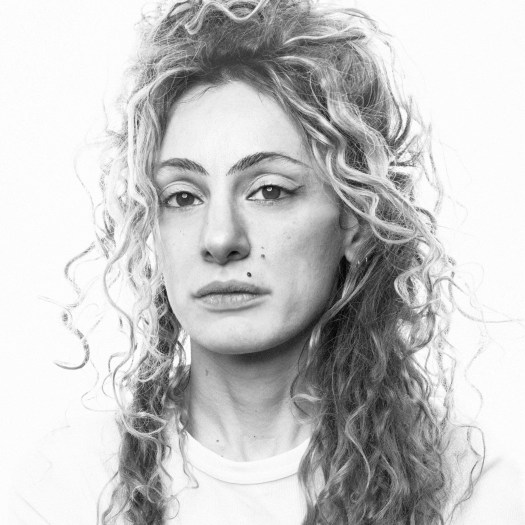
Daro Sulakauri is a photojournalist and visual artist from Georgia. Sulakauri documents the social and political issues in the Caucasus, a region between the Black Sea and the Caspian Sea, comprised of mainly Armenia, Azerbaijan, Georgia, and parts of Russia.
Sulakauri’s work features “taboo” issues like early marriages and the impact of Russian occupation, and aims to preserve her home country’s culture, history, and borders.
Erika Moore, United States

Erika Moore is a biomedical engineer researching how ancestry and sociocultural factors impact disease development. What makes her work uniquely important, though, is that it’s centered around equity.
Unlike other researchers, Moore accounts for diverse populations, building regenerative tissue models that more accurately and equitably reflect how diseases spread. By leveraging the regenerative power of the immune system, her work is helping heal more people from disease.
Huiyi Lin, Singapore & China
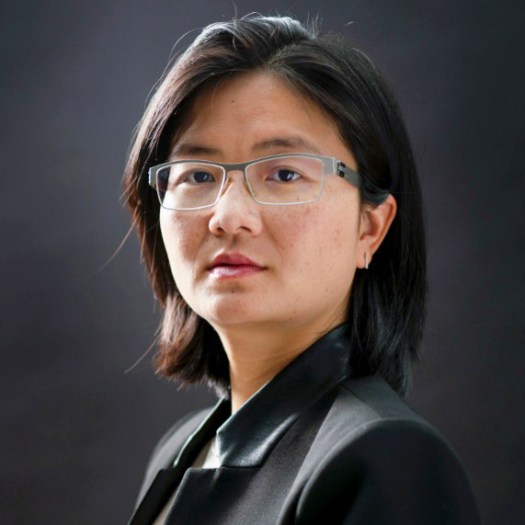
Huiyi Lin is an economic policy researcher and one-half of the visual art duo Chow and Lin. Through their work, Chow and Lin use statistical, mathematical, and computational techniques to address food insecurity and poverty.
By combining research, design, and photography, Chow and Lin are working to creatively raise awareness about global inequality.
Joel Bervell, Ghana & United States

Joel Bervell is a medical student and educator leveraging the power of social media to share engaging, viral content about health care disparities and biases.
Sharing stories and studies with an audience of more than one million, Bervell busts medical myths, highlights the neglect of marginalized groups, and advocates for change in the health care system.
Lehua Kamalu, Hawaii & United States
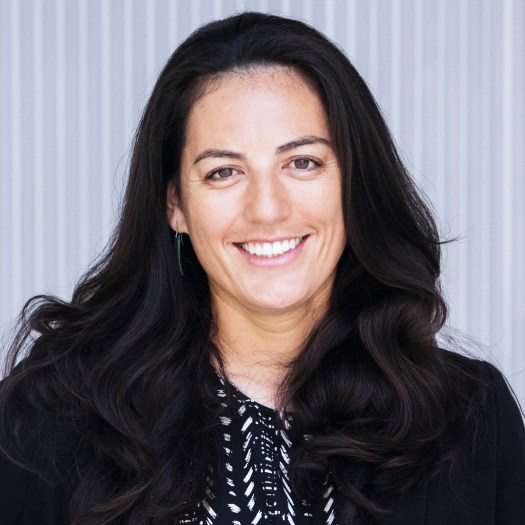
Lehua Kamalu is a captain and navigator of traditional Hawaiian ocean-voyaging canoes. After nearly 10 years of training, in 2018 Kamalu, became the first woman to captain and navigate a long-distance ocean voyage, sailing on a 2,800-mile journey from Hawaii to California.
Now, Kamalu is both preserving and teaching the ancient, sustainable navigation practice for future generations by integrating it into digital storytelling and daily life.
Mohamed Aburawi, Libya & Canada

Mohamed Aburawi is a surgeon and founder of Speetar, a digital health platform transforming health care in conflict zones in the Middle East and Africa.
Speetar takes a uniquely localized approach by working with governments, health systems, and community organizations to reduce inequality and improve health care outcomes.
Through this work, Aburawi and Speetar are not only bringing quality health care to more people — but advocating for it as a fundamental human right.
Norah Magero, Kenya
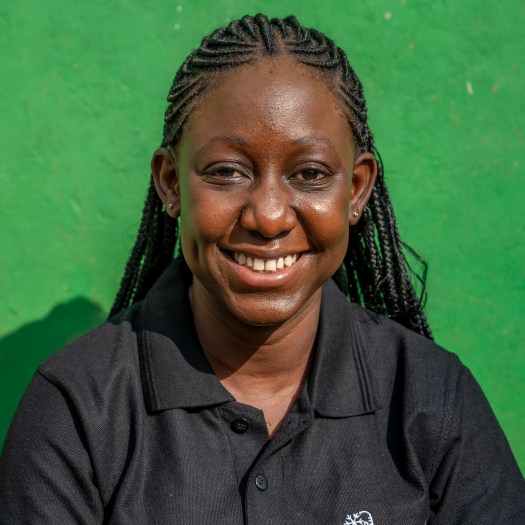
Norah Magero is a mechanical engineer and creator of the VacciBox, which is bridging gaps in “cold chain” infrastructure and saving lives in Africa’s rural communities with solar-powered vaccination delivery boxes.
Expanding that work beyond vaccination delivery, Magero is working to build resilient communities all across Africa through reliable, affordable, and sustainable cold chain solutions.
Paule Joseph, Venezuela & United States
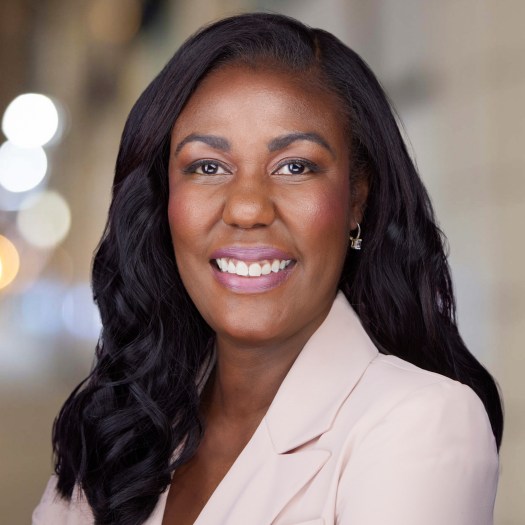
Paule Joseph is a taste and smell researcher exploring how conditions like COVID-19, obesity, neurodegenerative disorders, and substance abuse impact those senses.
By combining clinical research, behavioral neuroscience, genomics, and molecular biology, Joseph’s lab is unlocking insights into how these chemical senses impact our daily lives.
Ramin Hasani, United States, Austria, & Iran

Ramin Hasani is an AI scientist and entrepreneur who co-founded Liquid AI. At Liquid AI, Hasani helped invent liquid neural networks, which are a new kind of AI technology inspired by brains and physics.
More flexible and efficient than existing AI systems, these networks are already shaping the future of AI.
Royal Ramey, United States
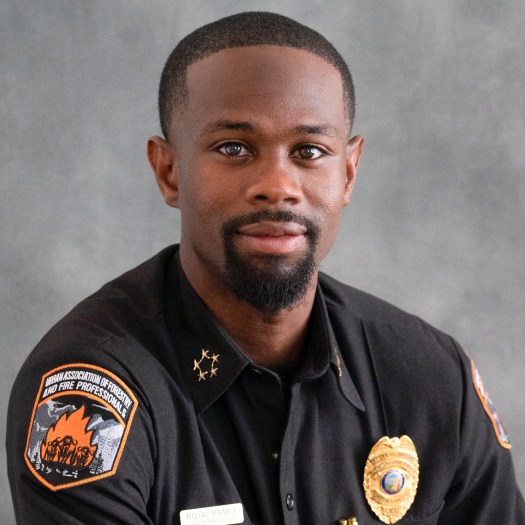
Royal Ramey is a wildland firefighter and cofounder of the Forestry and Fire Recruitment Program, a nonprofit organization recruiting and providing career opportunities to California’s formerly incarcerated firefighters.
With 12 years of professional experience as a wildland firefighter, Ramey takes a new approach to job training and addresses the unique challenges formerly incarcerated folks face as they re-enter the workforce.
Sahba Aminikia, Iran & United States
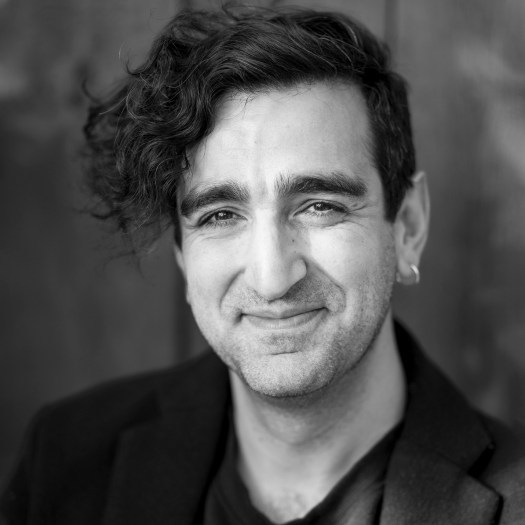
Sahba Aminikia is a composer, pianist, and educator who founded and art directs the Flying Carpet Children Festival, an annual mobile art festival and residency for refugee children fleeing conflict zones.
Born into post-revolutionary wartime in Iran, Aminikia brings a unique perspective to the art of exploring hope and creativity in the midst of darkness.
Good Good Good has been covering TED's annual conference and spinoff events — like TED Women, TED Next, and TED Countdown — as press since 2023. Our journalists watch TED Talks live and interview speakers after they get off stage, giving Good Good Good the opportunity to share stories like this before TED Talks are released online.
Young people have for generations signed their names in history’s ledger as agents of change. James Monroe and Alexander Hamilton celebrated their 25th birthdays during the Revolutionary War.
Nearly two centuries later, college-age Black men and women mobilized for the rights they had been denied since the nation’s founding. The youth of today have seized the baton passed to them by their elders.
They have raised their voices in urgent anger to demand action for the defining issue of their lives: the climate emergency.
Yet only a few governments at any level, in any country, have answered their demands for action.
In early April, to help address that, Bloomberg Philanthropies — the nonprofit funded by former New York Mayor and one-time Democratic presidential candidate Michael Bloomberg — has launched the Youth Climate Action Fund. It intends to help 100 cities worldwide better incorporate the voices and visions of young people into how they imagine and enact policies.
“We want to help bring more and more powerful voices into climate activism,” said James Anderson, who leads the philanthropy’s government innovation programs and helped design the fund. “And we also want to make sure and help local governments invite all of the people that want to make a difference in their city on climate into the effort in ways that are meaningful to them.”
The funds it has awarded to cities in 38 countries across six continents should enable just that kind of involvement.
With the announcement, each city will receive an initial disbursement of $50,000.
Should any mayor respond with adequate urgency and commit, within six months, the money to programs or projects that involve youth leadership in local climate action, their city will receive an additional $100,000 to further support youth-led efforts.
When typical funding announcements for climate efforts often reach into the millions and billions or even hundreds of billions, a five- or six-figure payout might sound paltry. Yet it can make an enormous impact — especially in cities and countries that need it most.
“I’m shocked. I’m shocked, but in a good way, because that money is a lot, especially here in Zimbabwe, and I believe that it could do a lot of great things in our city,” said Nozinhle Gumede, a 21-year-old climate activist from Bulawayo, Zimbabwe. Bulawayo, a city of 1.2 million in the country’s southwest, is among those selected for the Youth Climate Action Fund. Gumede hopes to see the money used to support youth-led organizations actively helping local communities to adapt to climate change, and to create capacity at the city level for young people to advise the mayor.
“We are the custodians of the future,” Gumede said. “So I believe that we have a right to be a part of some sort of leadership or advisory board to see how this money shapes our future.”
Several cities have already sought to establish climate councils populated by youth to ensure that they can help mold the plans and policies that will define the boundaries of their futures.
Yvonne Aki-Sawyerr, the mayor of Freetown, Sierra Leone, has made climate resilience a foundational priority for her work leading the country’s capital and largest city, which was also selected for the Youth Climate Action Fund.
She’s also made it a point to center youth in her work.
“We work with the adage, ‘nothing for me without me,'” she said, so “when, in your city, 70 percent of your population are under the age of 35, you don’t do anything without the youth.”

To further cement the essential status of youth involvement in the city’s structure, Aki-Sawyerr expects to launch a youth climate council later this year to provide a structured and ongoing forum to engage young people. This council will also help inform and shape how Freetown’s climate action strategy unfolds.
In cities like Freetown and Bulawayo, climate action is dissimilar to what cities throughout the United States and Europe concern themselves with.
When she met with Freetown’s local chapter of Fridays for Future — the organization founded by Greta Thunberg to spread her Friday school strikes to other cities and countries — it forced Aki-Sawyerr to realize “how different our situations are, and how there should be no one-size-fits-all when it comes to youth movements.”
In Freetown, “nobody cares if you go to school,” she said. “You don’t even get enough school time. You don’t get enough contact with teachers.”
Moreover, many young people in Freetown face a myriad of immediate concerns from food insecurity to forced marriages. “In the midst of all of that,” Aki-Sawyerr said, “their lives are being significantly, adversely impacted by climate change.”
Yet, they get none of the benefits those in the Global North have accrued as they polluted the planet and exposed previously colonized countries to grave dangers. “You don’t get the light. You don’t get Broadway. You don’t get the fancy cars,” Aki-Sawyerr said. “But you get the impact of the emissions that come from all of that.”
As a result, their focus is not on mitigating a problem that they did not cause, but adapting to it. Already, Freetown has faced tragedies that climate change may make more common.
In 2017, days of torrential rain triggered a landslide that killed over 1,000 people. Such rainfall is expected to become more common in places like Freetown. And in Bulawayo, Gumede said that the biggest concern is extreme heat, something residents already struggle with.
As these cities and others throughout the Global South seek to reinforce their resilience to climate change, the youth of the Global North face a daunting task: putting more pressure on polluters.
In leveraging the resources of Bloomberg Philanthropies’ Youth Climate Action Fund, cities in developed countries must learn to channel the energy and ambitions of youth to accelerate their actions to eliminate emissions.
Several young climate organizers in the United States spoke to the drive and vision that they and their peers bring to this work. Holly Swiglo, a freshman at Oberlin College in Ohio who helps lead the college’s chapter of the Sunrise Movement, said that youth who see their future defined by a worsening climate crisis stand unwilling to allow the burdens of bureaucracy to obstruct the pace and scale of change that they believe is not only possible but necessary.
For cities and mayors to harness that energy, they cannot merely offer performative actions of allyship. Kristy Drutman, a New Jersey-based climate activist and communicator who serves on the EPA’s youth advisory council, said that such empty actions leave young people frustrated and disillusioned.
But cities like Mesa, Arizona testify to how mayors and city council members can take to heart their role as public servants.
The city’s Republican mayor, John Giles, has listened to the climate concerns of his constituents since shortly after he entered office when local climate activists questioned him about his plans for the city’s climate agenda.
The climate action plan that Mesa then developed contains the typical points — goals for carbon neutrality, renewable energy, and reducing waste — but it includes a fourth pillar that Giles considers critical to achieving the others: community engagement.
Mesa residents have already shaped the city’s approach to climate action, including its proposal to the Youth Climate Action Fund, which emerged directly from its Hacktivate Mesa program that gives high schoolers the opportunity to understand the issues facing their communities and devise solutions.
Such initiatives provide an outlet for the pent up energy and anger of a generation desperate for action.
The Youth Climate Fund hopes to encourage many more like them.
Such efforts are needed, because today’s activists have in so many ways made clear that they have heeded the lessons of those who came before and will do whatever it takes to bring about the change they wish to see.
This story was originally published by Grist.
This week marks the annual flagship TED conference in Vancouver, BC, where speakers and leaders from across the globe convene for a week of meaningful talks, presentations, and conversations.
And this year, the global media company announced something that will connect even more viewers: A new AI translation and dubbing project.
TED has long translated its famous Talks and TEDx Talks with the help of a robust team of translators, who are able to thoughtfully create subtitles that are literally and culturally accurate.
But by using AI, TED can do a whole lot more.
In partnership with a company called Panjaya, TED is taking its iconic Talks and dubbing them — in the original speaker’s voice — into multiple languages. The original speaker’s lip movements will also be changed to match the dubbed language.
And it’s all thanks to lip syncing and voice cloning improvements in AI.
“We’re excited about it because we can take all the thousands of Talks we’ve done, multiply them many times over, and then reach many, many more people around the world,” Jay Herratti, CEO and executive director of TED Conferences said.
Herratti premiered a clip of the dubbing in action during the conference, impressing — and possibly scaring — some attendees.
While folks have concerns about this technology and its use to create deepfakes or unethical cloning, Andy Merryman, TED’s chief technology officer, felt that adapting this technology was one of the most values-aligned options for the company in an increasingly AI-friendly world.
“From an intent standpoint, my belief is that from the technology aspect of it, these are just tools. You can use tools in any number of ways. You can use them for evil, you can use them for utility, you can use them to try to do some good,” Merryman explained.
He went on to say that TED’s mission has always been to help reach more people with meaningful ideas, to “try to meet people where they are” with curated, well-researched content from experts from all walks of life.
Offering a scalable translation solution to folks across the world, he says, is worth a shot.
“It could be extraordinarily powerful because [TED Talks] are not just the words; it’s not just the idea,” Merryman said.
“It’s the emotion, the connection, the delivery of the speaker and their passion that is really what drives people towards TED Talks and makes them latch onto it in a way that’s deeper than other formats. I think that’s what this preserves. When it’s working well, it is magical.”
TED’s head of product Tricia Maia agrees; being able to give people a more authentic translation experience is key to having a real connection with a TED speaker.
“From a product perspective, I think the Holy Grail is meeting a real user need with an emerging technology that’s just now possible,” Maia said.
She said that 70% of TED’s audience is international. Many have provided feedback, she said, sharing how they are glad they can read subtitles but that they often wish the many English talks were available in their native languages.
“This is the anecdotes and the data we latch onto,” Maia said.
“We love that we’ll serve our existing audiences better, but there’s a whole swath of people that we’re not even reaching today because the content is inaccessible, and they don’t want to watch a Talk in another language and have to read subtitles.”
Merryman added that there is also a conversation to be had about accessibility for folks who are Blind or low-sighted, as well as people who have difficulty reading, or reading and listening at the same time.
“There’s another level of it, which is the accessibility of the impact of the ideas,” he said. “The ideas aren’t going to be nearly as important, and our mission isn’t going to be fulfilled if those ideas don’t land and the impact is not felt by the people who are consuming them. The ability to look and believe and follow, and hear the words in the speaker’s voice… is a big piece of this.”
But it’s not just machine-learning robots that will do this work.
TED’s translation team has worked together with Merryman and Maia to figure out this whole project — which, at the end of the day, aims to use AI to scale the work they already do.
“We worked in tandem with them to really build out AI first, but with human-augmented processes. Maybe the AI is taking the first pass, and then we go into a systems review process,” she explained.
The team has also fed their “human-grade” subtitles into the dubbing product.
“We’re trying to take the best of AI and human intelligence and put it together,” Maia said.
“Our TED translators community is really the substrate, the backbone, of what that end result product is,” Merryman added.
He emphasized that TED’s content has always been centered around quality, meaning its team would never “take a TED Talk transcript and feed it into Google Translate and press ‘publish.’”
“It’s antithetical to what our brand stands for and is about. Cultural differences… idiosyncrasies with regional sensitivity around language; all of those things are things we need to deliver on,” Merryman said. “We just wouldn’t be doing this if we didn’t think that we could have that control.”

So… when can you send your most-watched Brené Brown TED Talk to your friend in Japan? It’s not exactly clear.
While an example of this technology debuted at the conference, Maia said everyday TED viewers can anticipate a pilot-based approach for a handful of Talks coming this summer.
The release will focus on English to non-English translations, though the tech team hopes to make Talks that were given in non-English languages available in English in later rollouts. Thousands of new TEDx talks are given in non-English languages every year and the catalogue has gone largely unwatched by viewers who don’t speak the native language.
Timing of the release is not just about the ongoing development of the tech itself, but a number of other logistics.
“We want to make sure our speakers feel comfortable, so we really lean into our speaker curation team and ask them what’s the nexus of popular talks and speakers who would think this [tech] is really cool,” Maia explained.
Legal and technical work must also be done to get the consent of speakers and ensure that their Talks are translated and dubbed properly.
“But as far as what that looks like six months to a year from now, the goal is, of course, that we want as little intervention as possible,” Merryman said.
“We want to be able to drop a Talk in, have a translator work with the Talk, press a button, the toast comes out the other side.”
While reaching that level of ease is still on the other side of months of work, increased access to TED Talks for millions could be here before we know it.
Good Good Good has been covering TED's annual conference and spinoff events — like TED Women, TED Next, and TED Countdown — as press since 2023. Our journalists watch TED Talks live and interview speakers after they get off stage, giving Good Good Good the opportunity to share stories like this before TED Talks are released online.
Every day the Good Good Good team collects the best good news in the world and shares it with our community. Here are the highlights for this week!
If you want to get good news in your inbox every day, join the Goodnewsletter — the free daily newsletter designed to leave you feeling hopeful.
The Best Positive News We’re Celebrating This Week —
Using the world’s most powerful MRI, researchers got detailed photos of the brain — they could help with Parkinson’s and Alzheimer’s research
French researchers just unveiled images of the human brain taken by the world’s most powerful MRI. The images are almost 10 times as detailed as those of a standard hospital MRI, and could lead to future breakthroughs in treating Alzheimer’s, Parkinson’s, and more.
The scans were taken of the brains of about 20 people over the course of four minutes — using a standard MRI to take similar scans would normally take hours.
With these highly detailed images, researchers can better understand how the brain functions, look for changes, see how it interacts with various treatments for different disorders, and achieve even more medical breakthroughs.
→ Read more
More good medical news to celebrate:
- New virtual reality devices are helping alleviate pain during medical procedures, particularly benefiting children undergoing blood draws or IV insertions.
- Hospitals and physicians are becoming few and far between in rural America, but a virtual health care company is working to fill that void.
- Artificial intelligence is helping doctors diagnose cancer and heart defects in its earliest stages, enabling them to provide life-saving treatment earlier.
Global death tolls from natural disasters have actually plummeted over the last century
Since the 1960s, the world has seen a spike in the number of natural disasters, largely due to rising sea levels and an ever-gradually increasing global surface temperature.
The good news? We’re getting better at helping each other when disasters strike. According to a recent study from Our World In Data, the global toll from natural disasters has dramatically dropped in the last century.
Researchers gathered data from all geophysical, meteorological, and climate-related disasters since 1900, including earthquakes, volcanic activity, landslides, drought, wildfires, severe storms, and mass floods.
In the early-to-mid 20th century, the average annual death toll from these disasters was very high, often climbing to over a million.
But that’s shifted in recent decades, and as the researchers observe, “Even in peak years with high-impact events, the death toll has not exceeded 500,000 since the mid-1960s.”
One of the biggest reasons for this improvement: human beings are getting better at predicting and preparing for natural disasters.
Nigeria just became the first country in the world to roll out the “revolutionary” new meningitis vaccine
Last year across 26 countries in Africa, there was a 50% increase in annual cases of meningitis — and Nigeria is a hotspot. Between October 2023 and mid-March 2024, there 1,742 suspected cases in the country and 153 deaths recorded across the country’s seven states.
The World Health Organization has a goal to eliminate meningitis by 2030 — and they just took a bit step toward that goal.
Nigeria just became the first country to roll out a “revolutionary” new vaccine to protect against meningitis. Unlike the initial vaccine that only worked against one strain, this new vaccine protects against the five major strains of the disease found in Nigeria.
More good vaccine news:
- To help fight much larger outbreaks of the disease, scientists created a capsule form of the cholera vaccine.
- A new mRNA vaccine targeting ticks could offer protection against Lyme and other tick-borne diseases.
- The new malaria vaccine is poised to save millions of childrens’ lives — and it just began rolling out this year in Cameroon.
A man in Gaza is using solar panels to clean and provide water for hundreds of his neighbors
As humanitarian aid continues to struggle to reach those in need in Gaza, one man is making a difference by meeting a critical need: clean water.
Mohammed Assaila has a solar-powered well in his house, and in addition to use it to provide clean water for “at least 1,000 people” ever day, he’s also working with people in other neighborhoods to operate more wells.
Assaila has assembled a team of experts to help: an alternative energy engineer, a welder to install the solar panel bases, and a plumber that fixes wells.
And while they’re battling inflated costs due to the war, the materials they need are all available to assemble more solar panel wells to help more people get clean water.
And the need is great: back in February, the United Nations Relief and Works Agency reported that around 70% of people in Gaza were drinking salinized or contaminated drinking water, and at least half of water and sanitation facilities had been destroyed or damaged.
The work Assaila and his team of helpers are doing is more critical than ever before, and an inspiring example of people stepping up to make a difference — even in the most horrifying circumstances.
→ Read more
Setting a major clean energy benchmark, renewables exceeded 100% of energy demand in California for 30 of the past 38 days
California just set a major new benchmark for clean energy: For 30 of the past 38 days (and counting!), renewables have exceeded 100% of energy demand on its main grid.
This consistent level of clean energies meeting energy demands — not necessarily 24/7, but for an extended number of consecutive days — has never been achieved… until now.
California also has the world’s largest grid-connected battery storage facility that just came online in January. So, while renewables were exceeding energy demand during the day — that was all getting stored to be utilized later.
Why is this good news? As the world works to put itself on track to limit warming and prevent the most catastrophic impacts of climate change, these are exactly the clean energy milestones we’ve been looking forward to. This benchmark is so significant that one expert predicted the state will run entirely on renewables and battery storage by 2035 — ten years ahead of its self-imposed deadline.
New research shows a genetic breakthrough could help save a rare rhino species from extinction
The white rhino can be divided into two sub-species that are genetically similar — but while one, the southern white rhino is thriving thanks to conservation efforts, the other faces extinction.
There are only two female northern white rhino species still alive today, both of which are past the age of carrying offspring. Their numbers have dwindled so devastatingly due to poaching, poorly managed land, and other human activities.
Against that dire backdrop, and thanks to breakthroughs in genetic technology, a conservation scientist at the San Diego Zoo Wildlife Alliance found that genetic samples frozen at the zoo contain enough genetic diversity to bring back the species from extinction.
→ Read more
More good news for endangered animals:
- A recent mangrove expedition found more than 700 species of animals and emphasized the ecosystem’s crucial role in biodiversity conservation.
- In a milestone for the critically endangered species, a baby California condor just hatched at the San Diego Zoo thanks to longtime conservation efforts.
- Returning them to their natural habitat after rehabilitation, Georgia just had its largest endangered sea turtle release in state history.
- Ecologists spotted almost 40 of a critically endangered frog species were after five years in an Australian national park.
Scientists unveiled a new remote-controlled ‘pillbot’ — a microrobot that you can swallow for early disease detection
While internal medicine has advanced in leaps and bounds throughout the 19th and 20th centuries, checking the human body for cysts, tumors, and other predictors for a range of diseases is still not an easy undertaking.
At TED 2024, a physician and an engineer presented their solution: the PillBot. It’s a small, remotely controlled wireless robot that can swim around in a water-filled human stomach.
It’s small enough to swallow (which they demonstrated live on stage), inexpensive to make, there’s (thankfully!) no retrieval needed, and gives physicians an immediate view of the stomach.
Why is this good news? The current method for achieving this is an endoscopy, which is a relatively expensive and invasive procedure — and it requires a special visit to the hospital. The duo believes we can do better — for physicians and patients — and even alluded to its usefulness for another unpopular procedure: colonoscopies.
An Israeli and Palestinian activist are working together to build hope and peace in the Middle East
Aziz Abu Sarah is a Palestinian peacemaker, author, and tourism entrepreneur — his brother was killed by Israeli soldiers when he was 19 years old. Maoz Inon is an Israeli social entrepreneur and peace activist — his parents were killed by Hamas in the October 7 attacks in Israel.
Both of these men — who are so often reduced to the actions of their government or the historical conflict of their people — are friends.
Facing each other on the TED 2024 stage, the two took turns sharing their stories, including photos of beloved friends and family who have lost their own lives, or have lost dozens of family members in the months since October 2023. They talked about their efforts to build bridges in the region — and the difficulties they faced in doing so.
Most of all, they talked about their renewed commitment in the region: for a future that is not free of anger and rage, Abu Sarah clarified, but a rage that will fuel the fight for peace.
This better-world-inspiring anger, Inon agreed, is called hope. He said that this feeling — along with the legacy of his parents and everything they instilled in him — are what keep him going.
→ Read more (and watch their full conversation!)
More good news of the week —
To fight bots and inflated fees, Maggie Rogers is selling concert tickets to her fans in person at venue box offices. Rogers just dropped her third album, and is having fans buy cheaper tickets to her upcoming tour “like it’s 1965.”
A new AI model could help detect a large percentage of people at risk of developing childbirth-related PTSD. The program identified signs of CB-PTSD by evaluating short narrative statements of patients who have given birth.
After years of being ravaged by coral disease, a nonprofit successfully planted 40,000 coral reefs in the Caribbean. FUNDEMAR has been vital to Caribbean reef restoration amid threats like stony coral tissue loss disease, which is on the rise around the world.
India just announced a new alliance to fund conservation efforts for seven big cats. India is home to 75% of the world’s wild tiger population as well as the only habitat for Asiatic lions — and it’s already successfully reintroduced the cheetah and the leopard.
A Fisk University gymnast just made history as the first HBCU gymnast to be the collegiate champion. Originally from Lebanon, Morgan Price is now the first to hold the title of USAG All-Around National Champion with a score of 39.225.
Skyscrapers in Texas are “going dark” to protect migrating birds. A major flyover state, Texas sees approximately two billion birds — one in three birds migrating through the U.S. — migrate through the state in the spring.
In a breakthrough, neuroscientists identified a genetic mutation that fends off Alzheimer’s in people at high risk. The variant reduces the odds of developing Alzheimer’s disease by up to 70% and may be already protecting thousands of people in the U.S. from the disease.
For the first time since 1920, the federal government raised the price to drill on public lands. While the cost is still lower than states or private landowners charge, the increase is overdue and is an effort to better protect public lands and reduce fossil fuel emissions.
Germany’s parliament just passed a landmark law allowing transgender and non-binary people to more easily update their legal documents to reflect their gender identity. Under the new law, trans and non-binary people will no longer need “expert” opinions or medical certificates to make the change.
Doulas, midwives, and policymakers are working to make birth safer for Black people. In 2021, 1,205 people in the U.S. died from birth-related causes, up from 754 in 2019 — and Black birthing people are at disproportionate risk.
Over half a billion dollars in electric vehicle tax rebates were issued by the U.S. Treasury to car dealers in 2024. Consumers overwhelmingly took advantage of an Inflation Reduction Act rebate that allows buyers to receive a $7,500 tax credit for new electric vehicles as an immediate discount.
Greece just became the first country in the EU to ban bottom fishing in marine protected areas. This destructive method of fishing involves dragging heavy nets along the seabed, damaging ecosystems and releasing carbon trapped in the seabed.
Iconic TED Talks will now use AI to be dubbed into a dozen different languages. Connecting even more viewers with TED’s inspiring talks, the original speaker’s lip movements will also be changed to match the dubbed language.
TED announced its 2024 global cohort of “Fellows” — people working in health care, art, science, and more to make the world a better place. Now a global community with over 500 members from over 100 countries, the TED Fellows program is helping equip those changing the world for the better with the skills needed to maximize their impact.
RuPaul celebrated the importance and ‘power of drag’ from the TED stage. As the LGBTQ+ community continues to push for basic human rights, RuPaul and his drag empire have become a safe space for those who need a little extra fabulosity in their lives.
This story was originally published by Grist. Sign up for Grist’s weekly newsletter here.
When Henri Kunz was growing up in West Germany in the 1980s, he used to drink an instant coffee substitute called Caro, a blend of barley, chicory root, and rye roasted to approximate the deep color and invigorating flavor of real coffee. “We kids drank it,” Kunz remembered recently. “It had no caffeine, but it tasted like coffee.”
As an adult, Kunz loves real coffee.
But he also believes its days are numbered.
Climate change is expected to shift the areas where coffee can grow, with some researchers estimating that the most suitable land for coffee will shrink by more than half by 2050, and hotter temperatures will make the plants more vulnerable to pests, blight, and other threats.
At the same time, demand for coffee is growing, as upwardly mobile people in traditionally tea-drinking countries in Asia develop a taste for java.
“The difference between demand and supply will go like that,” Kunz put it during a Zoom interview, crossing his arms in front of his chest to form an X, like the “no good” emoji. Small farmers could face crop failures just as millions of new people develop a daily habit, potentially sending coffee prices soaring to levels that only the wealthy will be able to afford.
To stave off the looming threats, some agricultural scientists are hard at work breeding climate-resilient, high-yield varieties of coffee. Kunz, the founder and chair of a “flavor engineering” company called Stem, thinks he can solve many of these problems by growing coffee cells in a laboratory instead of on a tree.
A number of other entrepreneurs are taking a look at coffee substitutes of yore, like the barley beverage Kunz grew up drinking, with the aim of using sustainable ingredients to solve coffee’s environmental problems — and adding caffeine to reproduce its signature jolt.


A crop of startups, with names like Atomo, Northern Wonder, and Prefer, is calling this category of throwbacks “beanless coffee,” even though in some cases their products contain legumes.
Beanless coffee “gives you that legendary coffee taste and all the morning pick-me-up you crave, while also leaving you proud that you’re doing your part to help unf–k the planet,” as the San-Francisco based beanless coffee company Minus puts it.
But it’s unclear whether coffee drinkers — deeply attached to the drink’s particular, ineffable taste and aroma — will embrace beanless varieties voluntarily, or only after the coming climate-induced coffee apocalypse forces their hand.
Coffea arabica — the plant species most commonly cultivated for drinking — has been likened to Goldilocks. It thrives in shady environments with consistent, moderate rainfall and in temperatures between 64 and 70 degrees Fahrenheit, conditions often found in the highlands of tropical countries like Guatemala, Ethiopia, and Indonesia.
Although coffee plantations can be sustainably integrated into tropical forests, growing coffee leads to environmental destruction more often than not. Farmers cut down trees both to make room for coffee plants and to fuel wood-burning dryers used to process the beans, making coffee one of the top six agricultural drivers of deforestation.
When all of a coffee tree’s finicky needs are met, it can produce harvestable beans after three to five years of growth, and eventually yields 1 to 2 pounds of green coffee beans per year.

If arabica is Goldilocks, climate change is an angry bear. For some 200 years, humans have been burning fossil fuels, spewing planet-warming carbon dioxide into the air. The resulting floods, droughts, and heatwaves, as well as the climate-driven proliferation of coffee borer beetles and fungal infections, are all predicted to make many of today’s coffee-growing areas inhospitable to the crop, destroy coffee farmers’ razor-thin profit margins, and sow chaos in the world’s coffee markets.
That shift is already underway: Extreme weather in Brazil sent commodity coffee prices to an 11-year high of $2.58 per pound in 2022.
And as coffee growers venture into new regions, they’ll tear down more trees, threatening biodiversity and transforming even more forests from carbon sinks into carbon sources.
At many times in the past, coffee has been out of reach for most people, so they found cheaper, albeit caffeine-free, alternatives. Caro and other quaint instant beverage mixes, like Postum in the U.S. and caffè d’orzo in Italy, were popular during World War II and in the following years, when coffee was rationed or otherwise hard to come by.
But the practice of brewing non-caffeinated, ersatz coffee out of other plants is even older than that. In the Middle East, people have used date seeds to brew a hot, dark drink for hundreds or perhaps thousands of years. In pre-Columbian Central America, Mayans drank a similar beverage made from the seeds of ramón trees found in the rainforest. In Europe and Western Asia, drinks have been made out of chicory, chickpeas, dandelion root, figs, grains, lupin beans, and soybeans.
These ingredients have historically been more accessible than coffee, and sometimes confer purported health benefits.

Today’s beanless-coffee startups are attempting to put a modern spin on these time-honored, low-tech coffee substitutes. Northern Wonder, based in the Netherlands, makes its product primarily out of lupin beans — also known as lupini — along with chickpeas and chicory.
Atomo, headquartered in Seattle, infuses date seeds with a proprietary marinade that produces “the same 28 compounds” as coffee, Atomo boasts. Singapore-based Prefer makes its brew out of a byproduct of soymilk, surplus bread, and spent barley from beer breweries, which are then fermented with microbes.
Minus also uses fermentation to bring coffee-like flavors out of “upcycled pits, roots, and seeds.” All these brands add caffeine to at least some of their blends, aiming to offer consumers the same energizing effects they get from the real deal.
“We’ve tried all of the coffee alternatives,” said Maricel Saenz, the CEO of Minus. “And what we realize is that they give us some resemblance to coffee, but it ultimately ends up tasting like toasted grains more than it tastes like coffee.”

In trying to explain what makes today’s beanless coffees different from the oldfangled kind, David Klingen, Northern Wonder’s CEO, compared the relationship to the one between modern meat substitutes and more traditional soybean products like tofu and tempeh.
Many plant-based meats contain soybeans, but they’re highly processed and combined with other ingredients to create a convincing meat-like texture and flavor. So it is with beanless coffee, relative to Caro-style grain beverages.
Klingen emphasized that he and his colleagues mapped out the attributes of various ingredients — bitterness, sweetness, smokiness, the ability to form a foam similar to the crema that crowns a shot of espresso — and tried to combine them in a way that produced a well-rounded coffee facsimile, then added caffeine.
By contrast, traditional coffee alternatives like chicory and barley brews have nothing to offer a caffeine addict; Atomo, Minus, Northern Wonder, and Prefer are promising a reliable daily fix.
“Coffee is a ritual and it’s a result,” said Andy Kleitsch, the CEO of Atomo. “And that’s what we’re replicating.”

Each of these new beanless coffee companies has a slightly different definition of sustainability. Northern Wonder’s guiding light is non-tropical ingredients, “because we want to make a claim that our product is 100 percent deforestation free,” Klingen said.
Almost all its ingredients are annual crops from Belgium, France, Germany, Switzerland, and Turkey, countries whose forests are not at substantial risk of destruction from agriculture. Annual crops grow more efficiently than coffee trees, which require years of growth before they begin producing beans.
A life cycle analysis of Northern Wonder’s environmental impacts, paid for by the company, shows that its beanless coffee uses approximately a twentieth of the water, generates less than a quarter of the carbon emissions, and requires about a third of the land area associated with real coffee agriculture.
Michael Hoffmann, professor emeritus at Cornell University and the coauthor of Our Changing Menu: Climate Change and the Foods We Love and Need, said he was impressed with Northern Wonder’s life cycle analysis, which he described as nuanced and transparent about the limitations of its data. He praised the idea of using efficient crops, saying that some of those used by beanless coffee companies “yield far more per unit area than coffee, which is also a big plus.”

But there are trade-offs associated with higher yields. Daniel El Chami, an agricultural engineer who is the head of sustainability research and innovation for the Italian subsidiary of the fertilizer and plant nutrition company Timac Agro International, pointed out that higher-yield crops tend to use more fertilizer, which is manufactured using fossil fuels in a process that emits carbon.
Crops that use land and other resources efficiently can require several times more fertilizer than sustainably grown coffee, he said. For this reason, El Chami just didn’t see how Northern Wonder could wind up emitting less than a quarter of coffee’s emissions.
Other beanless coffee companies are staking their sustainability pitch on their repurposing of agricultural waste. Atomo’s green cred is premised on the fact that its central ingredients, date seeds, are “upcycled” from farms in California’s Coachella Valley.
Whereas date farmers typically throw seeds away after pitting, Atomo pays farmers to store the pits in food-safe tote bags that get picked up daily.
Atomo’s current recipe also includes crops from farther afield, like ramón seeds from Guatemala and caffeine derived from green tea grown in India, but Kleitsch said they’re looking to add even more upcycled ingredients.

Food waste is a major contributor to climate change, and Hoffmann, the Cornell professor, said repurposing it for beanless coffee is “a very good approach.”
Minus, which also uses upcycled date pits, claims its first product, a canned beanless cold brew (which is not yet available in stores), uses 94 percent less water and produces 86 percent less greenhouse gas emissions than the real thing.
Those numbers are based on a life cycle analysis that Saenz, Minus’ CEO, declined to share with Grist because it was being updated.
(Atomo expects to release a life cycle analysis this spring, and Prefer is planning to conduct a study sometime this year.)
Despite beanless coffee companies’ impressive sustainability claims, not everyone is convinced that building an alternative coffee industry from scratch is better than trying to make the existing coffee industry more sustainable — by, for instance, helping farmers grow coffee interspersed with native trees, or dry their beans using renewable energy.
El Chami thinks the conclusion that coffee supply will dwindle in an overheating world is uncertain: A review of the research he coauthored found that modelers have reached contradictory conclusions about how climate change will change the amount of land suitable for growing coffee.
Although rising temperatures are certainly affecting agriculture, “climate change pressures are overblown from a marketing point of view by private interests seeking to create new needs with higher profit margins,” El Chami said.
He added that the multinational companies that buy coffee from small farmers need to help their suppliers implement sustainable practices — and he hoped beanless coffee companies would do the same.
Whether demand for beanless coffee will increase depends a great deal on how much consumers like the taste.
I, for one, enjoyed the $5 Atomo latte that I tried at the Midtown Manhattan location of an Australian cafe chain called Gumption Coffee — the only place on Earth where Atomo is being sold.
The pale, frothy concoction tasted slightly sweet and very smooth.
Atomo describes its espresso blend as having notes of “dark chocolate, dried fruit, and graham cracker.”
If I hadn’t known it was made with date seeds instead of coffee beans, I would have said it was a regular latte with a dash of caramel syrup added.

The Northern Wonder filter blend that I ordered from the Netherlands (about $12 for a little more than a pound of grounds, plus about $27 for international shipping) had to overcome a tougher test: I wanted to drink it black, the way I do my regular morning coffee.
I brewed it in my pour-over Chemex carafe, and the dark liquid dripping through the filter certainly looked like coffee. But the aroma was closer to chickpeas roasting in the oven — not an unpleasant smell, just miles away from the transcendent scent of arabica beans.
The flavor was also off, though I couldn’t quite put my finger on what was wrong.
Was it a lack of acidity, or a lack of sweetness?
It wasn’t too bitter, and it left a convincing tannic aftertaste in my mouth. After a few sips, I found myself warming up to it, even though it obviously wasn’t coffee. My Grist colleague Jake Bittle had a similar experience with Northern Wonder, describing the flavor it settled into as “weird Folgers.”
If real coffee suddenly became scarce or exorbitantly priced, I could see myself drinking Northern Wonder or something like it. It would certainly be better than forgoing coffee’s flavor and caffeine entirely by drinking nothing at all in the morning, or acclimating to the entirely different ritual and taste of tea.
Klingen concedes that the aroma of beanless coffee needs work. Northern Wonder is developing a bean-like product that, when put through a coffee grinder, releases volatile compounds similar to those that give real coffee its powerful fragrance, like various aldehydes and pyrazines.
But beanless coffee could win over some fans even if it doesn’t mimic coffee’s every attribute. Klingen said drinkers often rate his product higher for how much they like it than for how similar it is to coffee.
“With Oatly, oat milks or [other] alt milks, there you see the same,” he said. When you ask consumers if oat milk tastes like milk, they say, “‘Eh, I don’t know.’ But is it tasty? ‘Yes.’”

Just as the dairy industry has tried to prevent alternative milk companies from calling their products “milk,” some people raise an eyebrow at the term “beanless coffee.” Kunz — the German entrepreneur who grew up drinking Caro and is now trying to grow coffee bean cells in a lab — takes issue with using the word coffee to describe products made out of grains, fruits, and legumes.
“What we do — taking a coffee plant part, specifically a leaf from a coffee tree — it is coffee, because it’s the cell origin of coffee,” Kunz said. Drinks made from anything else, he insists, shouldn’t use the word. Kunz’s cell-cultured coffee product hasn’t been finalized yet and, much like lab-grown meat, faces fairly steep regulatory hurdles before it can be sold in Europe or the United States.
The specter of plant-based meat and dairy looms large over the nascent beanless coffee industry.
A slew of startups like Beyond Meat and Impossible Foods hit the scene in the mid-2010s with products that they touted as convincing enough to be able to put animal agriculture out of business.
But in recent years, these companies have faced declining sales in the face of concerns about health, taste, and price.
Jake Berber, the CEO and cofounder of Prefer, fears something similar could happen to beanless coffee businesses.
“My hope for everyone in the industry is to keep pushing out really delicious products that people enjoy so that the whole industry of beanless coffee, bean-free coffee, can profit from that, and we can sort of help each other out,” he said.

Different beanless coffee companies are staking out different markets, with some positioning themselves as premium brands.
Saenz wouldn’t say how much Minus wants to charge for its canned cold brew, but she said it will be comparable to the “high-end side of coffee, because we believe we compete there in terms of quality.”
Atomo is putting the finishing touches on a factory in Seattle with plans to sell its beanless espresso to coffee shops for $20.99 per pound — comparable to a specialty roast.
“The best way to enjoy coffee is to go to a coffee shop and have a barista make you your own lovingly made product,” Kleitsch said. Atomo is aiming to give consumers a “great experience that they can’t get at home.”
In contrast, Northern Wonder and Prefer are targeting the mass market. Northern Wonder is sold in 534 grocery stores in the Netherlands and recently became available at a leading supermarket in Switzerland.
Prefer, meanwhile, is selling its blend to coffee houses, restaurants, hotels, and other clients in Singapore with a promise to beat the price of their cheapest arabica beans.
Berber predicts that proposition will get more and more appealing to buyers and consumers in the coming years as the cost of even a no-frills, mediocre espresso drink approaches, and then surpasses, $10.
A warming planet will help turn coffee beans into a luxury product, and middle-class customers will get priced out.
Then, Prefer’s bet on a climate-proof coffee replacement will pay off.
“We will, in the future, be the commodity of coffee,” Berber said.
By day, Mingwei Samuel works as a software developer. Also by day — together with urbanist and writer Darrell Owens — he builds and installs benches at bus stops around the California cities of Berkeley and Oakland that have no seating.
It's a tale as old as social media: In November, Owens tweeted a photo of his 64-year-old neighbor sitting on the curb at a bus stop to draw attention to the lack of seating for bus riders.
"Which stop?" replied Samuel. "I can put a bench there."
A month later, he had placed a wooden bench, built based on a template from the Public Bench Project, at the bus stop in downtown Berkeley. The response — from the city and from bench enthusiasts around the world — was immediate. On Dec. 17, he installed the bench; by Dec. 28, Berkeley had removed the bench and replaced it with an official metal one.
"I was expecting a positive reaction, but I wasn't expecting how big the tweet would get and how much attention that would get on local news as well," Samuel tells Next City.
More importantly, Owens' neighbor – who has chronic pain and has trouble standing for long periods of time – doesn't have to sit on the curb at the bus stop anymore. "What can I say, it blew me away," he told Berkeleyside. "Now that I can have a place to sit, that's awesome."
After that first bench, Samuel and Owens teamed up to build and place even more benches at bus stops. As of mid-January, more than six have been placed, with more in the works. "No one's really asked Darrell and I to stop," says Samuel.
In fact, the City of Berkeley is mobilizing to bring more benches to more bus stops, according to former councilmember Kate Harrison. "I think it's lovely," says Harrison, who resigned in late January while calling out the city's "broken" processes and failure to adequately address residents' concerns. "I like this as a statement of public need. People are expressing what they really need to make riding transit effective."

Why don't more bus stops have shelters or benches?
As thrilling as guerilla bus benches can be, everyone Next City spoke to agreed that this is a job for the public sector. The city or transit agency should step up and provide seating at bus stops for all riders, they say.
"I think if we treated bus riding with the same sort of essential attitude as we treat car driving, then we'd definitely see better benches, better shelters at all the bus stops," says Samuel.
Of the 512 bus stops in Berkeley, 50 of those have a bus shelter, meaning that 90% of stops have no shelter and no attached bench. It's unclear if there is a separate list for stops with only a bench.
Historically, bus riders are not prioritized in the transportation system. "Train riders tend to be higher income," explains Mary Buchanan, research and policy manager at the TransitCenter foundation. "There tend to be more white train riders than white bus riders."
Bus stops are often a snarl of bureaucratic dysfunction with multiple agencies and departments working within the public right-of-way. While the transit agency might decide where bus stops are placed, they usually have no jurisdictional authority to place a shelter or bench on the sidewalk, which is controlled by the city. Predictably, this leads to a lot of blame-shifting.
"[C]ities in our service areas maintain authority over their streets and sidewalks, including the placement of outdoor furniture," AC Transit spokesperson Robert Lyles told Next City in response to a question about the agency's role in adding bus benches. The city of Berkeley did not respond to a request for an interview.
"Transit riders — they don't know or care, nor should they, which entity is responsible for providing this resource," says Buchanan.
It is possible for a transit agency to provide better amenities for bus riders. One example is TriMet in Portland, Oregon. To streamline the process of adding bus shelters, the agency took over shelter siting and installation within its service area, leveraging its knowledge of the entire system and cutting through red tape. "Leave the bus riders out of it. Leave advocates out of it. Stop pointing fingers," Buchanan says.
While there are no signs that AC Transit intends to take over the bus stops in Berkeley or any other city, emails provided to Next City by Harrison show that the agency is collaborating with the city to determine where new bus benches should go.
The California city that's doing bus benches right
In 2022, then-mayor of Emeryville John Bauters made bus bench history when he spearheaded an effort to rapidly install seating at all bus stops in the city. Seven months and 50 quick-build "Simme-Seats" later, every bus stop without seating got a bench.
Since then, Bauters says that transit advocates across California have sought to emulate the Emeryville model.
"I just always lead with safety and accessibility," says Bauters of his messaging strategy. Now a city councilmember, he has taken an assertive and outspoken approach to improving streets and sidewalks. "If it's not safe or accessible to everybody, it's not equitable."
One difference: The city installed benches without engaging in a lengthy community engagement process. In other cities, NIMBYism has often blocked basic amenities for transit riders like bus shelters and benches. The key, Bauters says, is to prioritize the city's values — in this case, safety and equity — and to ask the right questions.
"When it comes to infrastructure, [cities] go out and they go, 'Do you like this?' And there's a lot of people who unsurprisingly, say, 'No, I don't want the bike lane. No, I don't want the bus bench in front of my house, a homeless person will sleep on it.'"
It's also important for cities to limit the number of departments and entities involved in the process, adds Buchanan. She named the city of Los Angeles, notorious for requiring eight different agencies and a 16-step approval process to install a single bus shelter.
According to Harrison, there will be no appeal process for bus benches. "We will look at need and where there's a lot of riders, and that's where the benches are gonna go."
She told Next City she planned to propose a bus bench pilot program similar to what the city of Hayward, California, is doing, as there is no process currently. (It's unclear if any such proposal will move forward since her resignation.)
Inspired by Emeryville, Hayward is piloting quick-build bus benches at ten stops to study the effects on rider behavior. A staff report puts the cost of one Simme-Seat at $2,000, estimating that it would cost an estimated $600,000 to put seats at all 300 bus stops with no bench.
"It seems kind of silly to me to waste all the time and money collecting data on something we know just needs to be done," says Bauters.
Harrison hopes to use funds from a 50-cent ride-hailing sales tax that is set to generate an estimated $1 million in 2024. AC Transit already has a list of bus stops ranked by equity criteria and seven outstanding requests for benches.
In the meantime, guerilla bus benches will continue to pop up in the East Bay. And Samuel wants people to know that the benches have improved since the first one he placed in downtown Berkeley.
"We added cross bracing. We replaced the legs with treated wood so it should last longer … a lot of thought has gone into making these benches safe and durable for the real world, even though they aren't official."
This story was produced through the Equitable Cities Fellowship for Social Impact Design, which is made possible with funding from the National Endowment for the Arts.
This article was originally published by Stacker and republished with permission under a CC BY-NC 4.0 license.
What do florists, farmers, nurses, clowns, cooks, poets, analysts, activists, and more have in common? They’re all encouraged to join in on a nationwide community project on July 27, and it might be in a city near you.
“This July, 18 cities and towns across America will simultaneously premiere their own large-scale public artwork, responding to the theme ‘No Place Like Home,’” said award-winning Broadway theater director Lear deBessonet in a TED Talk in Vancouver last week.
The Arts For EveryBody campaign is led by One Nation/One Project, a national arts and health initiative that promotes community healing through inclusion, creativity, and play.

A public arts event on this scale hasn’t occurred since October 27, 1936, when 17 states simultaneously premiered Sinclair Lewis’ work “It Can’t Happen Here” in organized protest against the rise of fascism.
deBessonet — the founder and co-director of One Nation/One Project — said the project will entail local artists partnering with their towns and local community health centers to “manifest what is possible when the arts belong to everybody.”
“The beauty of this type of art making is that people who might not encounter each other in any other aspect of life — except jury duty — gather together around life’s deepest questions,” deBessonet said.

The inspiration behind the program
For deBessonet, her love of theater began when she was growing up in Baton Rouge, Louisiana. Every Mardi Gras, her city sprung to life with singing, dancing, and colorful pageantry.
“These spectacles were more than just fun,” deBessonet said in her TEDTalk. “Something profound was happening when our community came together in the realm of the imagination.”
These Mardi Gras roots inspired deBessonet to become a theater director and chase the dream of recreating “the feeling of a whole city on stage together.”

The foundation of what would later become Arts For EveryBody first formed in California in 2011, when deBessonet staged “The Odyssey” with a 181-person cast of San Diego natives from every sector of the city.
DeBessonet was astounded by the lasting impact of the show. In the decade-plus since, deBessonet has stayed in touch with her former cast, learning how the senior actors were in better health, the teenagers were excelling in school, and one actor — who was experiencing homelessness during the play’s production — had earned and retained a job for the first time in decades.
He traced his success back to “The Odyssey” production, and the pride he felt being included in the community.
“Being part of the show reminded him that he had value,” deBessonet recalled. “And he knew that if other people were counting on him, he could show up.”
After “The Odyssey,” deBessonet went on to replicate the spirit of that show on the opposite coast, staging an annual production in New York City’s Central Park Delacorte Theater through the Public Works artistic program.

The yearly program has become a tradition in the past decade, always with the intention of introducing the cast and crew to neighbors they might never have met elsewhere. With One Nation/One Project, deBessonet hopes to amplify that feeling across the whole country with Arts For EveryBody.
Her past productions through Public Works included children, teens, senior citizens, military veterans, people rebuilding their life after prison, and even Sesame Street muppets.
The beating heart of the project is a clear message: Everybody is welcome here.
“That’s how you make a city,” deBessonet said.
What cities are participating in this event?
Want to get involved? Good news: All cities are still looking for helpers.
When it comes to big picture planning, Arts For EveryBody has already been underway for a year, as local government leaders teamed up with local health centers and artists to hone in on specific themes conjured by the prompt: “No Place Like Home.”

In Winston-Salem, North Carolina, for example, the collective of participating artists and local leaders decided to focus on “healing through the arts.” Plans for the day include Djembe and Native American drum circles, live performances, art galleries, food trucks from a rich mixture of backgrounds, and vendors offering community health resources.
Each city has its own interpretation of the event: Harlan County, Kentucky is hosting the Mountains of Appalachian Music Arts and Wellness Festival, Tucson, Arizona is holding an “Art is Vital” poster-making contest, and Oakland, California is leading an interactive data exhibition and art workshop that promotes racial equality.
The following cities are participating in Arts For EveryBody on July 27:
- Seattle, WA
- Oakland, CA
- Tucson, AZ
- Honolulu, HI
- Hawaii Island
- Edinburg, TX
- Utica, MS
- Gainesville, FL
- Phillips County, AR
- Kansas City, MO
- Harlan Country, KY
- Winston-Salem, NC
- Rhinelander, WI
- Washington, DC
- The Bronx, NY
- Providence, RI
- Chicago, IL
- Chicago, IL (Inner-City Muslim Action Network)
For more information on how to participate or attend the Arts For EveryBody events, you can visit www.artsforeverybody.org.
Header image courtesy of Arts For EveryBody
A former Member of the UK Parliament and UK Secretary of State for International Development, Rory Stewart has made a name for himself in British politics — and in many other corners of the globe.
Following his many roles in public service — and his notable walk across Afghanistan in 2002 — he now presents one of the UK’s leading podcasts “The Rest is Politics,” and is a professor at Yale University, where he teaches in the School of Global Affairs.
With a long list of published works, and his hand in founding and leading NGOs like the Turquoise Mountain Foundation, and GiveDirectly, he uses his platform to speak about the work to empower people living in extreme poverty across the planet.
Stewart, who is known for his anti-Boris Johnson stance in the UK, changed his affiliation with the country’s conservative party to ‘Independent’ in 2019.
Using his history of bridging divides and seeking solutions, he presented what he believes to be the solution to ending global poverty at TED 2024 in Vancouver, BC.
The issues with our current approach to eradicating poverty
Outside organizations use their funds poorly.
Extreme poverty is a problem that plagues many parts of the world. The World Bank and UN define the International Poverty Line as earning less than $2.15 per day — a threshold approximately 712 million people around the globe exist under.
While the percentage of those living in extreme poverty has declined in recent years, Stewart said, the absolute number of people still facing this problem is on the rise.
“We feel, often, that all we can do is hope that some new magical, technological solution will emerge, or that extreme poverty around the world is somehow disappearing by itself, or that somehow, if we just give money to the experts, to the agencies, to the governments, they’re going to be able to solve extreme poverty,” Stewart said in his TED Talk.
“I went through this. I was, in a sense, one of those experts.”
He went on to detail his nearly three decades in international development, where he saw billions of dollars allocated for projects that made virtually no improvements to the lives of people living in poverty.
“If you talk to any locals in developing countries who’ve seen their projects, their basic reaction is one of disappointment, if not horror,” Stewart said.
One example he shared was a project designed to improve sanitation and resources for young menstruating women in East Africa.
He said he had received a hundred-page document full of “all the smart stuff that we thought we were doing,” featuring “needs assessments, community consultations, engineering diagrams, logical frameworks, theories of change.”
But when he actually visited the project, he saw a devastating result: Two holes in the ground, surrounded by brick walls, and five plastic buckets. The project had cost $40,000 — and it had an estimated $2,000 maximum impact.
When he asked the organization why they didn’t just give the community money to create their own facilities, they explained they were worried that locals would “steal” the money.
“My response was: ‘We stole the money,’” Stewart said.
The mental model for ending poverty is patronizing.
Stewart went on to say that much of the reasoning behind these irresponsible financial decisions among development groups comes from a mindset problem.
He referred to the classic quote: “Give someone a fish, they eat for a day. Teach them to fish, they eat for a lifetime.”
The quote, he said, posits that ending poverty requires organizations to “teach” low-income communities some miraculous skill that will save them from poverty.
“This phrase, although incredibly appealing, is actually leading to very ineffective, very patronizing programming,” Stewart said, “Programming that often achieves exactly the opposite of what it claims to do.”
It wasn’t until he encountered a project at the Rwanda-Burundi border that Stewart completely shifted his own mindset.
Rory Stewart’s solution to ending extreme poverty
Give people lump sums of cash.
In Rwanda, Stewart said he saw an NGO handing out $900 in a lump sum of cash to people in the community — no strings attached.
“The results were absolutely staggering,” he said.
Within a few weeks, the village had completely transformed, with improved electricity, new roofing on their homes, and increases in health insurance. Stewart said 100% of people got latrines, and there were increases in the number of children in school.
“The whole place just felt better, happier. I’d never seen anything like it, honestly, in my entire life in international development.”
A decade later, random control studies found that this improvement was not a fluke.

“In hundreds of studies in many countries in the world… consistently, unconditional cash was leading to a real reduction in things like child mortality and depression, and fantastic increases consistently in education, in health, in businesses, in savings, in income, in investment,” Stewart explained.
“More than that, it was actually leading to a multiplier effect. For every dollar delivered into a community, there was $2.50 of benefit for the surrounding villages. It was a fiscal stimulus.”
While universal income programs are spreading near and far, this one-time lump-sum payment model has proven to be effective in highly impoverished communities, prompting people to use it to make meaningful investments that are unique to their needs.
Stewart rattled off examples of how this money might be used: “Jean needs to open a grocery shop. Seraphine wants to get her children into school. Esperance wants to access health care. Téléphore wants to get a cow so that he can have milk and yogurt to sell. Marie may want to set up a tailoring business. Demassine may want to get a motorbike taxi.”
And in all of these instances, people don’t need to learn how to start a business or feed their children; they need capital.
Embrace new technologies for more efficient donations.
Stewart was clear that part of the appeal of lump-sum investments in these communities is because it is efficient. Cutting out some red tape from the equation gets people what they need in their hands more quickly.
This has also been aided by technological advancements.
“We are now at a moment where I believe unconditional cash transfers could unlock the secret of addressing extreme poverty worldwide,” Stewart said.

People in extreme poverty can now access cheap cell phones, on which they can get wire transfers of funds delivered to them in minutes. AI is also an asset here, Stewart said, as it can help organizations target and collect more meaningful data about those they are serving — even in anticipation of a crisis.
“In the past, cash assistance arrived after the flood had hit. Now, AI is allowing us to predict far better than before when the extreme weather event would occur,” Stewart explained.
This would “allow us to get the cash to people to move their livestock, move their families before the flood arrives.”
Allow communities to participate in their own development.
Of course, cash is not the answer to everything. But Stewart said these efforts make it possible for people to participate in their own community’s development.
From sharing their insights about improved infrastructure to participating in democracy, having access to much-needed funds gives people a reason to want to build and strengthen their homes.

“We need to build roads, need to build bridges, need to build dams, and need to improve the quality of education in schools. These are all things that need to happen,” he said.
“But what cash does for the extreme poor is it allows the extreme poor to participate in that development story.”
In other words, it allows folks to have a reason to use a road to get to work or to find customers who can buy from their stores.
Encourage philanthropists to scale this approach.
From the TED stage, Stewart ended with a call to action: Everyone can send funds directly to someone living in extreme poverty.
And for the wealthier audience members, he encouraged them to donate millions of dollars to “demonstrate that this can be done at a national scale.”
While the cash initiatives he’s seen have led to major improvements in villages and communities, what needs to happen next is proving that this solution can be used to lift an entire country out of poverty.

“We spend almost twice as much annually on international development as it would take to lift everybody in the world out of extreme poverty [with cash],” Stewart said.
“There is a moral dimension here because it respects people’s choice. At an age that’s worried about patronizing and colonial aid, [this approach] doesn’t just consult them or listen to them. It puts them in charge. It literally lets them make the choice. It respects their equality and it respects their dignity.”
Persuade governments to change their global development efforts.
By donating, philanthropists can make a difference to help governments and foreign agencies more effectively work to end poverty.
If donation efforts are funneled into a country facing extreme poverty, Stewart said, it gives governments a reason to shift their efforts to a new model — one where cash infusions can clearly and effectively reach the people who need it most.

“If you could demonstrate that, you could then come back to someone like me, working in government as a Secretary of State for International Development, and say, ‘for your $20 billion a year budget, you could be doing 20 of these countries a year,’” Stewart explained.
“It’s about scale, and it’s about the way in which private money taking risk can show the path for governments.”
TED Talks are presented at TED’s annual week-long conference in Vancouver for an audience of approximately 2000 attendees. The Talks are later published on the TED website, YouTube, and TED podcasts — with some Talks being published within days or weeks and others being published months later. It is not clear when Rory Stewart’s Talk will become available to the public.
Good Good Good has been covering TED's annual conference and spinoff events — like TED Women, TED Next, and TED Countdown — as press since 2023. Our journalists watch TED Talks live and interview speakers after they get off stage, giving Good Good Good the opportunity to share stories like this before TED Talks are released online.
It’s Earth Day, and there is perhaps no better way to celebrate than by… getting a new job?
President Joe Biden took to the podium this afternoon to share his remarks about the holiday and deliver a very exciting announcement: Job applications for the American Climate Corps are now open.
The program is recruiting over 2,000 positions in 36 states, as well as Washington DC, and Puerto Rico — to start. But eventually, the corps will employ more than 20,000, according to the White House.
After announcing the formation of the Climate Corps last September, the Biden administration received interest from over 50,000 young Americans.

Given that the program is tailored to helping young people gain experience in the green economy, this enthusiasm is promising.
Biden spoke about the program, following an announcement of $7 billion in grant funding for solar power installation across the country.
“You’ll get paid to fight climate change,” the president said, with roles that include “learning how to install those solar panels, fight wildfires, rebuild wetlands, weatherize homes, and so much more.”
This first round of 2,000 jobs will kick off in June, with applicants placed with organizations focused on clean energy. Many of the roles are temporary — like a 14-week internship for solar panel installation, or a month-long opportunity to learn conservation skills.
Despite the short-term nature of these jobs, they are designed to lead to further advancement.
Biden announced today that members of the Climate Corps will have access to “pre-apprenticeship training” through a new partnership with the North American Building Trade Union.
With this partnership, once members of the corps are done with their service or training, they will be eligible for a streamlined path to federal climate-related jobs.
Additionally, Biden announced a strategic partnership with Bloomberg Philanthropies, which will put Climate Corps members to work in former coal mining and power plant communities, which have long been harmed by climate change.
This means these areas will be the first to benefit from the transition to clean energy solutions and green jobs.
“Today’s announcement fulfills unprecedented action we’ve already taken to tackle the climate crisis, deliver environmental justice, and build a clean energy future,” Biden said.
The announcements were made in Virginia’s Prince William Forest Park, which was built by the original Civilian Conservation Corps — a similar program that came to fruition during the FDR administration, following the Great Depression.
“When I think about climate, I think about — not only health and safety — but I think about jobs,” Biden said during his speech.
Although young climate activists seem enthusiastic about the program, they remain critical of the Biden administration’s action to approve oil projects, among other contentious political and environmental issues the president has yet to address.
Still, the Climate Corps shows potential as a way to bridge some of these gaps between young voters and the Biden administration.
“It brings out the best in young people to do what’s best for America,” Biden said of the program. “We’ll put tens of thousands of young people to work at the forefront of climate resilience and our clean energy future.”
Header image courtesy of the American Climate Corps
Pairing frogs and toads together might conjure memories of Arnold Lobel’s beloved characters — dressed to the nines in caramel coats and polyester — biking off toward adventure.
But in the animal world, frogs and toads on nearly every continent are facing a much more harrowing adventure: a decades-long fight against a mysterious fungal virus that has afflicted over 500 amphibian species.
Since the 1990s, scientists estimate that the chytridiomycosis disease caused by the fungal pathogen Bd (Batrachochytrium dendrobatidis) has led to the extinction of 90 amphibians. One of the lost species includes the Panamanian golden frog, which hasn’t been spotted in the wild since 2009.
Fortunately, a new research study has finally pinpointed the virus that has been infecting fungal genomes for decades.
“Bd is a generalist pathogen and is associated with the decline of over 500 amphibian species…here, we describe the discovery of a novel DNA mycovirus of Bd,” wrote Mark Yacoub — the lead author of the study and a microbiology doctoral student at the University of California, Riverside.
In an interview with UC Riverside News, Yacoub said that he and microbiology professor Jason Stajich observed the viral genome while studying the broader population genetics of mycovirus (viruses of fungi).
The discovery will undoubtedly have monumental impacts on future amphibian conservation efforts. This includes the possible launching of new research studies into fungal species strains, the practice of cloning and observing spores, and engineering a solution to the virus.
But Yacoub cautioned that this is only the beginning.
“We don’t know how the virus infects the fungus, how it gets into the cells,” Yacoub said. “If we’re going to engineer the virus to help amphibians, we need answers to questions like these.”
Still, as scientists strengthen conservation efforts to save frogs and toads (and salamanders too!) they also appear to be saving themselves. Yacoub pointed out several amphibian species around the world have begun exhibiting resistance to Bd.
“Like with COVID, there is a slow buildup of immunity,” Yacoub explained. “We are hoping to assist nature in taking its course.”

Why are frogs and toads so important?
From the get go, every amphibian species plays an important role in their local ecosystem. Not only are they prey for a slew of animals like lizards, snakes, otters, birds, and more, but in an eat-or-be-eaten world, frogs and toads benefit the food chain by doing both.
Even freshly hatched tadpoles — no bigger than a button — can reduce contamination in their surrounding pond water by nibbling on algae blooms.
As they grow bigger (and leggier), amphibians snack on whatever insect comes their way, greatly reducing the population of harmful pests and making a considerable dent in the transmission malaria, dengue, and Zika fever by eating mosquito larvae.
“Frogs control bad insects, crop pests, and mosquitoes,” Yacoub said. “If their populations all over the world collapse, it could be devastating.”
Yacoub also pointed out that amphibians are the “canary in the coal mine of climate change,” because they are an indicator species. Frogs and toads have permeable skin, making them sensitive to changes in their environment, and they also rely on freshwater.
When amphibians vanish from an ecosystem, it’s a symptom of greater environmental issues.
“As temperatures get warmer, UV light gets stronger, and water quality gets worse, frogs respond to that,” Yacoub explained. “If they get wiped out, we lose an important environmental signal.”
Herpetologist Maureen Donnelly echoed Yacoub’s sentiments in an interview with Phys Org, noting that when it comes to food chains, biodiversity, and environmental impact, the role of frogs and toads should not be overlooked.
“Conservation must be a global team effort,” Donnelly said. “We are the stewards of the planet and are responsible for all living creatures.”
Header image courtesy of Pixabay (Public Domain Mark 1.0 Universal)
John Green, who you may know as the author of beloved books like “Looking for Alaska” or “The Fault in Our Stars,” is no stranger to seeing his literary works adapted to the screen.
“Stars” came first — with a film adaptation in 2014, and “Alaska” got her own mini-series on Hulu in 2019. Between these two major releases (of which Green played only a small part, he often recounts), the author released his latest novel: “Turtles All the Way Down” in 2017.
The book follows 16-year-old Aza in a classic Green conundrum, as she explores an exciting mystery, while also investigating the turmoil of her inner world.

It’s an especially meaningful story to Green, one that helped the author process his own mental health struggles, particularly with anxiety and Obsessive-compulsive disorder.
And now, with a movie release — starring Isabela Merced — slated for May 2 on Max, fans are celebrating the story’s most hard-shelled layers, too.
This came to a head this weekend, as 1,400 folks attended a special screening of “Turtles” at the Los Angeles Times Festival of Books.
“Today I got to watch the Turtles All the Way Down movie with the cast, director, and 1,400 lovely people,” Green tweeted this weekend.
“It was the experience of a lifetime. If you were there, let me know what you thought. I am overwhelmed. Haven't stopped crying all evening.”

Of those audience members, a myriad of fans have already shared their thoughts on the film.
“I've always struggled with thought spirals, and for the longest time I'd think it’s in my head & I should just be able to control it,” one fan and screening viewer, Alta, tweeted on Sunday.
“This film has made me feel so much less alone and comforted in a way that I’ve never felt because of how inherently isolating [and] internal spirals are.”
If it wasn’t already clear, “Turtles” spends a lot of time taking viewers on a journey through the main character’s own “thought spirals.” These are depicted in the film’s trailer through repetitive language, imagery of microorganisms and bacteria, and even glimpses into Aza’s therapy sessions.
For the estimated one in every 50 adults in the U.S. who live with OCD — and the 31% of American adults who live with some type of anxiety disorder — the film aims to be reflective, if not restorative.
Young, female viewers especially seem to be resonating with its themes — even more so if they came into the movie-watching experience already a fan of Green’s book.
“John, ‘Turtles’ opened my eyes to OCD long before I was diagnosed myself,” one fan wrote to the author on X (formerly Twitter) this weekend. “Can’t thank you enough for putting it out into the world.”
But transferring a book filled with internal monologues to the screen is no simple task. And fans were nervous about the movie’s potential to either trigger their own anxiety, or botch the sensitive themes presented in the source material.
The film’s director, Hannah Marks, was just 23 when she pitched the adaptation to the powers that be. With a strong connection to Aza’s story, she has spent the past seven years working to make the story sing on screen.

“I had never read something that felt so honest and raw about OCD or anxiety,” Marks told Vanity Fair. “I have very similar issues to Aza, so I connected with her deeply.”
Green was taken by how Marks was able to visually portray the OCD experience.
“She found a way to capture the richness and fullness of this person’s life and their relationships, but at the same time how the illness pulls you out of that, and makes every aspect of that so challenging,” Green told Vanity Fair.
“It’s the best portrayal of OCD, as I experience it, that I’ve ever seen in a movie,” he added last week in a YouTube video.
And he isn’t the only one who is impressed.
“How wonderful to see a book that made me feel so seen translated into a movie that made me feel so seen all over again,” viewer Rachel wrote on X. “The ending made me feel such overwhelming, heart-wrenching hope.”
For some viewers, hope isn’t just a feeling following a good movie — but a lifeline.

Kimmy Reinhardt had been a fan of Green’s books for most of her life, and when she was struggling with her mental health in 2017, faced suicidal ideation. She made a deal with herself: Stay alive to read Green’s new book. It gave her a reason to keep going.
“When I picked up ‘Turtles,’ it was a story of someone like me, who lived in a brain like mine, and was scared of being able to survive as an adult… I finally felt seen,” Reinhardt told Good Good Good.
“The anxiety and OCD I felt alone in seven years ago was actually a way for me to connect and change people’s lives.”
Reading the book helped her find a therapist and medications — and embrace the uncertainty of the future.
Since then, she delved further into Green’s fan community, made friends, and even got a tattoo to represent the significance of the story in her own journey.
“This movie was always destined to be important to my life,” she said. “I think the movie did a fantastic job showing the mental health topics, while keeping the funny moments funny. For once, I saw myself represented in a movie, and the whole time I watched it, I was thinking [about] how happy I am to still be alive.”
“Turtles All the Way Down” will be available exclusively to stream on Max on May 2, 2024.
We know that when you’re struggling with your mental health, it can be hard to find the help, support, and community you need.
If you are in immediate need of safety, please contact the following:
Emergency Medical Services
911
National Suicide Prevention Lifeline
suicidepreventionlifeline.org
988
Crisis Text Line
Text CRISIS to 741-741
crisistextline.org
And if you are not in immediate crisis and would still like access to more resources, visit our list of Mental Health Resources for more information.
Header images courtesy of Max
This story is giving notes of generosity, delight, and… a bit of intrigue.
It’s all thanks to Tom Gilbey, a wine connoisseur who ran the London Marathon this weekend fueled by something a little stronger than water and sports drinks.
In fact, you may have seen him on your social media feeds, doing a blind wine taste test for every mile he ran on the course.
The 52-year-old ran the marathon with two wine glasses tucked in his running belt — the one on the left for whites, and the one on the right for reds.
For every pause in the race, he swirled his elixir, took a sip, and was required to name the vintage, grape, and producer.

He was off to a strong start in mile one.
“Could be a Pinot Noir,” he said in a TikTok video, breathless.
“Yep, it’s a Pinot Noir from Burgundy,” he added with confidence, as he dipped back into the race. “2018.”
Of course, he was correct.
Out of the 25 wines he sampled, he got seven correct. (For nine wines, he was two-thirds accurate, and for five samples, he was one-third correct, only getting four of the wines totally wrong).
Oh, and the camera stopped working when he popped champagne at the end of mile 26.

His son, Freddie, was the one who arranged the samples throughout the race. They both work at the family business, which — you guessed it — is a winemaking and event company.
While the pair entertained onlookers and went viral on TikTok, it was Gilbey’s branded jersey that made a real difference.
Dressed in a blue and adorned with the logo for Sobell House, Gilbey’s wine consumption was really a way to draw attention to a fundraiser he was conducting for the hospice that once took care of his mother.
“I’m running the London Marathon to raise money for the wonderful team at Sobell House hospice, who nursed and cared for my dear Mum in her last few days,” he wrote on a JustGiving page.
@tomgilbeywine AND WE’VE ONLY DONE A VIDEO … 26.2 miles 25 wines tasted blind 7 fully correct, 4 wrong & 14 mostly right Over £10k raised for @sobell.house Donation link still open in Bio …. BIG FAT THANK YOU ❤️ #londonmarathon #marathon #blindtasting #tomgilbey ♬ original sound - Tom Gilbey
His original goal was to raise £2,000 (nearly $2,500) — and in just days, surpassed this by more than 900%.
At the time of this article’s publication, Gilbey’s fundraiser has racked up over £19,000 — or $23,000.
“I will be blind tasting one wine every mile, aiming to guess the grape variety and country for 26 wines… and not die doing it,” he wrote playfully. “Any help, support, and donations are all very much appreciated, and I’ll be needing all of it to get me round.”
Prior to the race, he shared his story on TikTok, where he has over 100,000 followers.
“I’ve been doing lots of running training — in fact, not that much — but I have been doing a lot of blind tasting training,” he said in a video earlier in April.
“I thought, how could I make the London Marathon as silly as me?”
As goofy as Gilbey is, at the end of the day, his efforts were worth a lot more than even the fanciest bottle of wine.

“I think in life, sometimes you get a silly idea that resonates but two silly ideas rarely resonate,” he told the Guardian, “so I’d encourage everybody to have a silly idea for a good cause and see what happens.”
Four other runners took on the race in honor of Sobell House, too, according to the hospice’s Facebook page.
“The care we provide to our community is only possible through the support from people like you,” Sobell House wrote. “We think you’re all amazing and we are cheering you on all the way to that finish line.”

And they weren’t the only ones cheering Gilbey on. Once his wine sampling video went viral on TikTok (with 3 million views and counting), commenters couldn’t get enough of his antics.
“Being a marathon runner AND a sommelier are two of the most pretentious hobbies,” one person wrote, “but I absolutely love this guy.”
“This may be the best way to do a marathon,” another added.
The sheer amount of wine consumed and dollars donated is enough to give anyone a buzz, so many were impressed by the fact that Gilbey completed the marathon in under five hours.
Most of all, community members were happy to even get a small taste of his positive energy.
“If I had to run a marathon, I would whine,” an anonymous donor wrote on Gilbey’s JustGiving page. “Your way is better, by far.”
With donations ranging from £5 to hundreds, it’s clear the marathoner and wacky wine taster made his late mother proud.
“Sorry to hear of your loss,” a donor commented, “but what a lovely epilogue this has made.”
Header images courtesy of Tom Gilbey/Instagram/TikTok
On the next season of “Drag Race All Stars,” eight iconic drag queens are not just “serving looks.” They’re also serving their favorite nonprofits.
In a teaser trailer for the upcoming season, host and head judge RuPaul announced that returning drag queens will “compete for a cause that is near and dear to their hearts.”
“Because this season, sisters are doing it for who?” RuPaul teased. “Charity!”
The drag queens slated to compete in the upcoming season include Roxxxy Andrews, Gottmik, Jorgeous, Vanessa Vanjie Mateo, Plastique Tiara, Angeria Paris VanMicheals, Nina West, and Shannel.
“I’m back and I’m ready to crash this workroom, crash this whole competition, for the love of drag and charity,” said Gottmik, who shared third place on the 13th season of “Drag Race.”
In season nine, the winning contestant will give $200,000 away to a selected charity, through a donation provided by The Palette Fund, which has given over $10 million in grants to charities since its inception in 2008.
Past grantees of The Palette Fund include GLAAD, National LGBT Cancer, The Elton John Aids Foundation, and The Trevor Project.
“Dedicated to advancing social change in communities that are under-resourced and facing significant challenges, the foundation has a particular focus on strengthening the health and leadership of the LGBT community,” said a mission statement on The Palette Fund’s official website.
In addition to raising money for charity, the drag queens also celebrated the art of drag and the positive influence the “Drag Race” franchise has had on viewers in its 15-year run.
“When people watch ‘Drag Race,’ they see individuals living authentically,” Angeria Paris VanMicheals said in the season nine teaser. “‘Drag Race’ is the whole reason why my own parents are completely open-minded.”
Shannel, whose ties to “Drag Race” trace all the way back to season one, said that the impact of the show could not be understated.
“It really helps generations of people, young and old, when you hear the stories of queens, the things that they’ve dealt with in their life and how drag really helped them overcome these things,” said Shannel.
The upcoming season will premiere with two back-to-back episodes on Paramount+ on May 17.
Header images courtesy of Drag Race All Stars/Paramount+
Over the last few years, man-made displays of color and light — like lantern festivals and firework shows — have slowly begun adapting ways to become more environmentally friendly.
But one particular light show is already Mother Nature-approved: a synchronous firefly phenomenon that happens every summer across South Carolina, Tennessee, and Pennsylvania.
It’s a unique mating display that causes thousands of Photinus carolinus — one of very few synchronous firefly species — to flash in unison for five to eight seconds, and then pause in tandem before repeating the winking pattern again.
The event is so popular that all three National Parks tied to the natural marvel have begun tamping down on visitors through specialized lotteries.
The limited attendance is meant to make the experience better; not just for the humans, but to also better protect the fireflies in question from artificial light pollution emitted from flashlights and car headlights.
In just a few days, Great Smoky Mountains National Park will open up their annual lottery. With a single dollar, people can try their luck at winning entry to the annual firefly festival in early June.

Where can I go to see synchronous fireflies?
Each summer, synchronous fireflies typically appear in three major places: Great Smoky Mountains National Park in Tennessee, Congaree National Park in South Carolina, and the Allegheny National Forest in Pennsylvania.
Already missed a deadline for a park near you? Lotteries are typically held around the same general time frames every year, so you can mark your calendars early for firefly lotteries in 2025!
Great Smoky Mountains National Park, TN
- Event dates: June 3 through June 10, 2024
- Lottery: April 26 through April 29, 2024
- Price: $1 for lottery entry, $24 cost upon winning
- Event dates: Friday, June 28 through Saturday, June 29, 2024
- Lottery: January 1 through March 31, 2024.
- Price: free lottery entry, full cost TBD
- Event dates: Thursday, May 16 through Thursday, May 25, 2024.
- Lottery: April 4 through April 10, 2024.
- Price: $1 for lottery entry, $25 cost upon winning.
Why are fireflies important?
Fireflies — also known as lightning bugs — are potentially one of the most beloved bug on the planet. But the glowing beetle isn’t just pretty to look at, they’re also hugely beneficial to the environment.
They can’t sting or bite humans, they don’t carry diseases, and they play a big role in cutting down on pests.
In a 2023 TEDTalk, insect scientist and conservationist Wan Faridah Akmal Jusoh said that fireflies are “so much more than pretty lights.”
“They are an essential part of a healthy ecosystem,” Jusoh explained. “The lifecycle of fireflies keeps the ecosystem balanced. Each firefly, in each indicative life stage, has specific needs for habitat to thrive.”
In recent years, scientists have been studying fireflies more closely in the hopes of learning more about their lantern-lit communication styles — especially in regard to synchronous fireflies.
“It’s like Morse code,” computer scientist Orit Peleg told Knox News. “It’s probably the closest signal to computer language as it gets — in living things.”
In 2022, Peleg and his team spent early June in Great Smokey Mountains National Park, observing the fireflies and taking note of how they could replicate the light reception and communication in semi-autonomous robots.
“They need to solve complex problems while communicating in large groups, which is something computers need to do,” explained Orit Peleg, a computer scientist turned firefly scientist from the University of Colorado at Boulder.
“So maybe there’s something interesting we can learn about them and apply to man-made systems.”
Unfortunately, firefly populations have been on the decline in recent years, due to broader climate change effects on soil moisture and heat, rampant pesticide use, and the overabundance of artificial lights — which can disorient and even blind the blinking beetles.
Whether they’re thought of as vital indicator species, influencers on modern technology, or simply friendly insects that add a bit of magic to summer nights, fireflies are worth protecting.
“Imagine how many more remarkable firefly species are waiting to be found,” Jusoh said. “Fireflies need your help before they flash that one last time.”
Header image courtesy of xenmate / Flickr (CC BY 2.0 DEED)
To understand the global plastics treaty, it’s helpful to go back to the 2022 U.N. Environment Assembly meeting, where delegates agreed to write it. By then, plastics had long been considered an environmental scourge.
The world was — and still is — producing more than 400 million metric tons of the material every year, almost entirely from fossil fuel feedstocks.
Just five years prior, researchers had shown that 91 percent of the world’s plastics were not recycled due to high costs and technological barriers.
Agreeing to write some kind of treaty was seen as a big success, but the icing on the cake was the promise to address not only plastic litter, but “the full life cycle” of plastics.
This opened the door to discussions around limiting plastic production, which most experts consider to be a nonnegotiable part of an effective mitigation strategy for plastic pollution. They liken it to an overflowing bathtub: better to “turn off the tap” — i.e., stop making plastic — rather than try to mop up the floor while the water’s still running.
Experts see the treaty as a critical opportunity to stop the fossil fuel industry’s pivot to plastic production, as the world begins to phase out oil and gas from transportation and electricity generation.
None of the details are even close to being finalized — but observers have called the treaty the “most significant” international environmental deal since 2015, when countries agreed to limit global warming under the Paris Agreement.
And advocates hope that this agreement will ultimately have even more teeth.
Under a very optimistic scenario, it could include global, legally binding plastic production caps for all U.N. member states, plus some details on how rich countries should help poorer ones achieve their plastic reduction targets.
The treaty might ban particular types of plastic, plastic products, and chemical additives used in plastics, and set legally binding targets for recycling and recycled content used in consumer goods.
It could also chart a path for a just transition for waste pickers in the developing world who make a living from collecting and selling plastic trash.
But such a far-reaching agreement is by no means guaranteed; some countries and industry groups are working hard to water down the treaty’s ambition, and have thus far limited negotiators’ progress.
When delegates first met in Punta del Este, Uruguay, in November 2022, it became clear that a vocal minority of countries — mostly oil-producing states including Saudi Arabia and Russia, as well as the U.S., to some extent — wanted to bend the treaty away from plastic production limits by focusing instead on better recycling and cleanup efforts.
Petrochemical companies are also pushing for a focus on recycling, despite their trade groups knowing since the 1980s that plastics recycling would be unable to keep up with booming production.
This disagreement — production versus pollution — has been central to each meeting since then, stalling progress at every turn. Although delegates have held important discussions on plastic-related chemicals and the impact of the treaty on frontline communities, by the end of INC-3 last November, negotiators still hadn’t written anything beyond a so-called “zero draft,” basically a laundry list of options and suboptions for various parts of the treaty.
They also failed to agree on an agenda for “intersessional” work between INC-3 and INC-4, meaning they could not use those intervening months to continue formal discussions, although several countries arranged unofficial meetings.
In a provisional note released ahead of this week’s negotiations, INC chair Luis Vayas Valdivieso made paring down the revised zero draft a key priority for delegates at INC-4. The committee should “streamline” the document, he wrote, and set an agenda for intersessional work to be completed in the months between INC-4 and INC-5.
“INC-4 is going to be likely the most important of all the INCs,” said Ana Rocha, global plastics program director for the nonprofit Global Alliance for Incinerator Alternatives.

One of the key priorities for advocates is some kind of quantitative production limit. “If the goal is to end plastic pollution, it’ll be really hard to do without a cap on virgin plastic production,” said Douglas McCauley, an associate professor of ecosystem ecology at the University of California, Santa Barbara.
Some of the most specific recommendations are based on plastic’s contribution to climate change. To limit global warming to 1.5 degrees Celsius (2.7 degrees Fahrenheit), the nonprofit Pacific Environment calculated last year that global plastic production should be cut by 75 percent by 2050, compared to a 2019 baseline.
The Global Alliance for Incinerator Alternatives has proposed a 12 to 17 percent reduction every year starting in 2024.
A so-called “high-ambition coalition” of countries — including Norway, Rwanda, Canada, Peru, and a host of small island and developing states — say they support production limits as part of the plastics treaty, although they have not yet rallied around a particular target.
It’s also possible that the treaty will have to rely on indirect measures to restrict plastic production, like bans on single-use plastics or a tax on plastic packaging.
Public health has emerged as another major, and surprisingly popular, priority for the treaty. Even in the two short years since world leaders first agreed to broker a treaty, lots of new evidence has emerged to highlight the human and environmental health risks associated with plastics.
Last month, scientists raised the number of chemicals known to be used in plastics from 13,000 to 16,000. More than 3,000 of these substances are known to have hazardous properties, while a much larger fraction — about 10,000 — have never been assessed for toxicity.
According to one recent analysis from the nonprofit Endocrine Society, plastic-related health problems cost the U.S. $250 million per year.
As of last November, more than 130 countries supported incorporating human health into the treaty’s primary objective, and many explicitly said they wanted the agreement to somehow control problematic chemicals.
This is currently reflected in the zero draft, in proposals to prioritize “chemicals and polymers of concern,” putting them first in line for bans and restrictions.
Some substances that would likely be included on this list are polyvinyl chloride, or PVC — the plastic used to make water pipes and some toys — as well as endocrine-disrupting chemicals like phthalates, bisphenols, and PFAS.
Bjorn Beeler, general manager and international coordinator for the nonprofit International Pollutants Elimination Network, said that chemicals are the most “matured” part of the treaty.
Other sections, however — like the financial details of how countries will pay for the provisions of the agreement — have been largely unaddressed.
With so much left to negotiate and so little time, questions are swirling around whether there will have to be an additional meeting after INC-5, or perhaps an INC-4.1 during the summer.
For now, many environmental advocates say it’s important that negotiators stick to the original schedule, running INC-4 under the assumption that they can and will finish the treaty by 2025.
Should they need an extension, they can consider how best to coordinate that at a later date. Rocha, with the Global Alliance for Incinerator Alternatives, said she’d rather extend the timeline than rush through a weak agreement.
“More important than an ambitious timeline is an ambitious treaty,” she said.
This story was originally published by Grist.
Technology has rapidly advanced the speed of invention, getting cutting-edge products and treatments into peoples' hands faster. But while we consumers passively enjoy technological updates to make our lives frictionless, the many hands who touch those new innovations—the researchers, discoverers, engineers, and inventors—often go unnoticed.
Ahead of Asian American, Native Hawaiian, and Pacific Islander Heritage Month in May, we're celebrating Asian Americans whose contributions to groundbreaking medical and technological advancements have fundamentally changed how we live and work.
Our partners at Stacker have compiled a list of seven scientists and engineers whose contributions are so profound, that society may have even forgotten the problems it once had to deal with before their discoveries and inventions.
Using interviews and research from industry science publications, Stacker highlighted how their work and discoveries paved the way for society to develop new treatments in medicine and technology.
Though we have made an effort to recognize a wide range of scientists in different fields, the people acknowledged in this story are simply the tip of the iceberg in terms of the many underrepresented people who have helped create some of the most profound inventions over the course of many years of history.
These scientists often face issues of visibility.
According to a study of demographic data in biology textbooks published in 2020, about 3% of scientists featured were Asian and 0% were Native Hawaiian or Pacific Islander.
More than 9 in 10 scientists highlighted in those seven biology books were white.
For Native Hawaiians and Pacific Islanders especially, the issues can be systemic or financial.
Per the National Science Foundation, in 2021, about 66.13% of employed scientists and engineers are white, while Asians represented 14.01% and Native Hawaiians and Pacific Islanders 0.24%, respectively.
The fields of science, technology, engineering, and math could still progress regarding inclusivity and leveraging different backgrounds and experiences for the benefit of humankind. Nevertheless, these are but a few people who continue to persist, giving their valuable time and creativity to fields that have drastically improved human health and well-being.
Important Asian American inventors and famous historical figures whose discoveries changed the world
Flossie Wong-Staal
Flossie Wong-Staal, a Chinese American scientist, was born in China in 1946. Wong-Staal's family fled to Hong Kong during the Chinese Civil War between communists and nationalists and, when she was 18, she studied at the University of California, Los Angeles, eventually receiving her doctorate in molecular biology.
In the 1980s, as AIDS ravaged the U.S., Wong-Staal was the first person to clone HIV and discover how exactly its genes functioned within the human body. Her work allowed scientists to determine HIV was indeed the cause of AIDS.
That decade, she was the most-cited woman scientist for her work in detailing the molecular biology for the different variations of HIV, which led doctors to create "drug cocktails" to manage AIDS in different patients. She also started the Center for AIDS Research at the University of California, San Diego.
Katherine Luzuriaga
Katherine Luzuriaga, a Philippines-born pediatric medicine scientist, was part of a three-person team that managed to create a functional cure for HIV in a newborn baby. The baby, at the age of 2, no longer needed to take HIV medications and did not exhibit any signs of HIV.
In 2013, Luzuriaga was named one of Time magazine's annual 100 most influential people in the world for her work. The procedure Luzuriaga and her team conducted paved the way for pediatricians and scientists to learn how to manage and treat HIV in infants by giving them anti-HIV drugs hours after birth.
In 2021, Luzuriaga was considered for the top position at The Food and Drug Administration.
Barry Paw
When Barry Paw was 7 years old, his family fled Myanmar (also called Burma) during a period of civil unrest with one suitcase and $30 per person. Paw grew up in California and earned his doctorate at the University of California, Los Angeles, where he and a team of scientists detailed the molecular basis of Tay-Sachs disease.
Paw was also instrumental in discovering a new gene that assists hemoglobin production. Using zebrafish in an experiment, Paw and his team discovered the cell mutations that cause anemia. His work paved the way for scientists to understand and treat blood disorders.
Lujendra Ojha
Lujendra Ojha, a Nepalese American research scientist, led a research team at Georgia Institute of Technology that found the strongest evidence at the time of water on Mars: flowing liquid salt water on the planet.
But groundbreaking scientific discoveries were his Plan B. Before he was a graduate student and made the discovery in 2015, Ojha was a guitarist in a death metal rock band. Ojha and his family moved from Nepal to Arizona when he was a teenager, and the influence of his artistic past is still shown in his science works today. Ojha experimented with making movielike trailers to accompany his scientific papers.
Now, Ojha is an assistant professor at Rutgers University in the Department of Earth and Planetary Sciences.
Peter Tsai
In 1995, Taiwanese American inventor Peter Tsai patented technology that used positive and negative charges to trap dust and bacteria in a filter before it entered the mouth.
Today, we call that the N95 mask.
Tsai's filtering technology has recently become more crucial than ever. As wildfires spread across California and the coronavirus whipped around the globe, every country stocked up on N95 masks to safely perform essential tasks amid polluted air and harmful bacteria.
Despite facing xenophobia against Asian Americans, Tsai came out of retirement during the COVID-19 pandemic to work in the public health sector, advising everyone to mask up.
Min Chueh Chang
Min Chueh Chang (often listed as M. C. Chang in scientific literature) co-developed the first birth control pill.
The discovery and invention of "the pill" not only led the way for scientists to better understand pregnancy and reproduction, but it also gave way to the sexual liberation movement in the U.S. and beyond.
Women didn't have to worry as much as they once did about becoming pregnant, allowing them to pursue longer-term careers and family planning. Chang's research also became the foundation on which in vitro fertilization was made possible in humans.
Sumita Mitra
Sumitra Mitra, an Indian American inventor and chemist, devised a new type of dental filling that used nanoparticles. What was then an up-and-coming technology, nanoparticles would allow dentists to make fillings look smoother and more teethlike than filling material available on the market.
Most importantly, the filling stood up against all the stress teeth undertook from biting and chewing. Mitra's invention is the first use case of nanoparticles in dental filling material. The chemist was inducted into the National Inventors Hall of Fame in 2018.
This article was originally published by Stacker and and republished with permission under a CC BY-NC 4.0 license.
Aside from water, concrete is the most-used material in the world, with about 14 billion cubic meters being used every year. Of that, 40% of that is used to build places for people to live.
If you were to pour that amount of concrete to make a paving slab ten centimeters thick, it would cover all of England and about half of Wales. In the US, the same amount would cover the state of New York.
But concrete production releases carbon dioxide (CO₂), one of the greenhouse gases that drives climate change.
About 90% of emissions associated with concrete come from the production of Portland cement — this fine grey powder, the part that binds concrete ingredients together, was named after its resemblance to stone from the Isle of Portland, Dorset.
Portland cement accounts for 7%-8% of the world’s direct CO₂ emissions.
Production of a more sustainable and cost-effective low-carbon cement, often nicknamed “green” cement, is scaling up. A new plant next to an existing cement plant in Redding, California, will produce about 15,000 tons of low-carbon cement every year.
This could be used to make about 50,000 cubic meters of concrete, which is less than 0.0004% of the world’s concrete production.
At Redding, materials technology company Fortera turns CO₂ captured during conventional cement production into ready-to-use green cement, a form of calcium carbonate. This could reduce carbon emissions of cement by 70% on a ton-for-ton basis, according to Fortera.
A concrete issue
People have been using concrete for more than 2,000 years, by blending gravel, sand, cement, water and, sometimes, synthetic chemicals. It’s used to create everything from paths and bridges to buildings and pipes.
Currently, the EU uses more than two tons of concrete per person per year — 325kg of that is cement. That’s equivalent to the amount of food the average European person eats in five months.
Cement production is an energy-intensive process and the greenhouse gas emissions are hard to cut. When limestone is heated in a kiln, often fueled by coal, nearly half that limestone is lost as CO₂ emissions.
This happens because limestone (calcium carbonate) breaks down in heat to form clinker, a mix of calcium oxide and CO₂. For every ton of ordinary Portland cement made, 0.6-0.9 tons of CO₂ are released into the atmosphere.
So many industries rely on this material. The main challenge facing the cement industry is reducing CO₂ emissions at the same time as meeting global demand.
So as well as developing new technologies, low-carbon cement production must be established on a global scale to meet infrastructural needs required of economically developing nations.
Low-carbon alternatives
Other ways to reduce the carbon footprint of concrete include using fly ash (a by-product from burning coal in power plants) or slag (a by-product from steel production) to partially replace Portland cement.
However, sources of these materials will reduce as other industries decarbonize. Over time, less iron ore will be used to produce steel as more steel is produced from recycling existing steel, so there’ll be less available slag.
Current strategies for decarbonizing cement and concrete rely heavily on using carbon capture and storage technology to capture unavoidable process emissions from cement plants.
So low-carbon cement production doesn’t have to involve replacing every cement production plant in operation. Low-carbon cement facilities can be retrofitted to capture CO₂ emissions released from manufacturing conventional cement.
Plants can also use that captured CO₂ within the cement that they are producing or as a product for the food and chemical industries.
In Norway, Heidelberg Materials are building an industrial-scale carbon capture and storage plant at a cement facility that could capture and store an estimated 400,000 tons of CO₂ per year — that’s half the existing plant’s emissions.
However, this technology has a high investment cost for cement producers. Captured CO₂ can be stored underground, but this requires specific geological characteristics that aren’t guaranteed at cement production sites.
Greenhouse gas emissions in the cement sector are regulated by the EU’s emissions trading system. This was established to make polluters pay for their greenhouse gas emissions, reduce emissions and generate revenues to finance the green transition.
This legislation has not significantly reduced carbon emissions in the cement sector over the past decade, according to the International Energy Agency, mainly due to free emissions allowances being granted to cement manufacturers.
Despite sustained healthy profits in the cement industry, there hasn’t been enough investment in the widespread uptake of cleaner technologies and the sustainable use of materials.
Greater financial incentives could help whereby companies have to pay for emissions associated with the production of cement.

As a design engineer, I appreciate that material choice and good design play a major role in the sustainability credentials of construction.
Before low-carbon cement technology becomes more widespread, engineers, designers and builders can use construction materials more efficiently and choose products with lower embodied carbon — that’s carbon emissions released during the life cycle of building materials, from extraction through to disposal.
This approach could easily save 20% in embodied emissions associated with new building design.
Some governments could move towards only permitting the use of low-carbon cement. In Ireland, the Climate Action Plan 2024 requires that low-carbon construction methods and low-carbon cement are specified where possible for government-procured or government-supported construction projects.
Could all cement in the future be low-carbon or “green”? How “low-carbon” is defined will play a very important part in how this is translated into practice in the industry.
Retrofitting technology to large-scale existing cement production plants will prove that it’s technically possible to produce low-carbon cement efficiently at scale.
With the right incentives in place by governments and the construction sector, almost all cement produced around the world could be low-carbon.
This article by Jamie Goggins, from the University of Galway, was originally published by The Conversation.
