In a TikTok video, University of California, Davis student Allie O’Brien dared passing scrollers to take a second look at a photo — and challenge a commonly held assumption in the process.
“If I told you that this picture was of a homeless shelter and that it was run by college students, would you believe me?” O’Brien asked, pointing above her head to a large kitchen filled with natural sunlight.
Every piece of the picture communicates warmth: a backpack hangs off the back of a chair, books peek out from a cubby hole, and a hallway banner says: “WELCOME!”
“This is Aggie House,” O’Brien explained. “It’s a nonprofit shelter that me and my friends run at our university for students experiencing homelessness, domestic violence, any sort of unsafe living condition.”
“Our shelter tends to confuse people a lot, because when you say the words college homelessness, a lot of people think that’s an oxymoron. Like, ‘How can you be in college and homeless? Isn’t the whole point of college that you stay in the dorms and you’re covered by the school?’ That’s actually not the case.”
O’Brien is right. According to The Hechinger Report, a nonprofit newsroom, room and board has become “the fastest-growing cost of college.”
“Tuition hasn’t been growing, but housing costs are growing,” Jason Cohn, research associate at the Center on Education Data and Policy at the Urban Institute, told The Hechinger Report.
“The college affordability conversation should really be moving to living expenses.”
Cohn explained that it’s a two-pronged problem. Colleges often don’t have enough room to accommodate all of their graduates, which forces students to look for housing off-campus. And affordable housing is increasingly difficult to find.
“It can blindside a lot of people,” said Henry Taylor-Goalby, a student housing officer of the University of California Student Association.
“Students will end up in college and then realize that they’re rent burdened.”

“Colleges are increasingly pushing students off campus,” O’Brien emphasized in their video. “At my university alone, out of our 40,000 students, almost 7% are homeless at some point in any given year. That’s nearly 2,000 students who just do not have a place to stay.”
“Because our universities are offering so little assistance, it’s often up to students to rally around these issues and create the communities and nonprofits necessary to house the students who are currently going unhoused.”
Enter Aggie House. In May 2020, in the throes of the COVID-19 pandemic, O’Brien teamed up with fellow UC Davis students Ashley Lo and Katie Shen to develop a transitional housing shelter, “for students, by students.”
In their first year alone, they raised over $100,000 to operate a townhouse and provide volunteer assistance, meals, and resources for their residents.
In August 2023, the shelter relocated to A Street, where its team of student volunteers continued to grow. And last year the Davis City Council officially honored Aggie House with the Thong Hy Huynh award, which is given to organizations that “exemplify the goals of diversity, community, social justice, and equal rights.”
Virginia Moore, a student who was recently promoted to resident co-president for the organization, accepted the award on Aggie House’s behalf.
“Before my role as a case manager, I was already interested in social work and counseling, but ever since I’ve taken this greater role in Aggie House … my passion for this kind of work [has] been solidified,” Moore told The California Aggie, a newspaper staffed entirely by UC Davis students.
“We hope the recognition from Davis allows us to be recognized as an impactful resource that deserves to be permanent.”
@allie_202_ You deserve a home ❤️🏡 #homeless #homelessshelter #politics #leftist #aggiehouse ♬ original sound - Allie O’Brien
Header image via Aggie House
Every summer, Great Smoky Mountains National Park gives parkgoers a chance to see a magical phenomenon — a synchronous firefly viewing.
The “natural light show” — which can only be viewed in a handful of places throughout the United States — occurs when large populations of fireflies gather for mating season and flash their lights in perfect synchronization, creating a dazzling display of light.

To tamp down on crowds, Great Smoky Mountains National Park has implemented a lottery system so that only a select group of winners can attend the event.
The limited attendance makes the experience better, not just for the humans, but also for the blinking, benevolent beetles, which are sensitive to the artificial light pollution emitted from flashlights and car headlights.
On April 21, Great Smoky Mountains National Park announced that their lottery will open on recreation.gov on May 2 at 10 a.m. and close on May 5 at 11:59 p.m.
The cost of entering the lottery is a single dollar. If selected for the firefly viewing, recipients will be prompted to pay a $29 vehicle pass fee, the cost of which goes directly to the park.
According to the National Park Service website, all lottery applicants will be notified in an email by mid-May, whether they were successful or not.
Although the dates for the event itself have yet to be determined, they usually fall in early June. In 2024, the event occurred from June 3 through June 10.

Beneath the lottery details, past winners wrote reviews of their time at Great Smoky Mountains National Park, praising the firefly viewing as an “otherworldly” and “magical” experience.
“I was picked for the ticket lottery and went with my parents from Nashville,” wrote Carson W., a 2024 lottery winner.
“I tried not to get their expectations up too high because we see a lot in our area and just expected a cute trip … once we found a spot to watch the sun set, and we saw a few at first but did not expect what was to come. When it fully got dark, we saw thousands fully around us, flashing in a wave across the landscape.”
Carson W. went on to say that he was truly at a “loss for words at the beauty of it all.”
“[It was] as if the forest floor was covered in twinkle lights as far as we could see,” he recounted. “It was magical and became a very special moment for us. This event far exceeded our expectations, and we plan to try to go every year for the foreseeable future.”
What’s different this year?
This year, the odds of winning the Great Smoky Mountains National Park firefly lottery are lower than they were in 2024.
Last year, 1,120 passes were awarded, and this year, only 960 total passes will be given out (120 vehicles for each night of the event). In addition, the vehicle pass fee is now $29 (a price hike from last year, when it was $24).

According to Knoxville News, these changes are reflections of recent staffing cuts ordered by the Trump administration, in which at least 12 staffers were let go from the Smokies.
Good Good Good has a guide for assisting the National Parks amidst the federal budget cuts, including volunteering, signing petitions, and contacting your elected officials.
Where can I go to see synchronous fireflies?
Synchronous firefly viewing events occur annually in Great Smoky Mountains National Park (Tennessee and North Carolina), Joyce-Kilmer Memorial Forest (North Carolina), Congaree National Park (South Carolina), and Allegheny National Forest (Pennsylvania).
Already missed a deadline for a park near you? Lotteries are typically held around the same general time frames every year, so you can mark your calendars early for firefly lotteries in 2026!
Great Smoky National Park, TN*
- Event dates: TBD (2024 dates ran June 3 through June 10)
- Lottery: May 2 (10 a.m.) through May 5 (11:59 p.m.)
- Price: $1 for lottery entry, $29 cost upon winning
- *Joyce-Kilmer Memorial Forest is included in Great Smoky National Park’s larger lottery.
- Event dates: June 27 through June 29
- Lottery: January 1 through March 30, 2025
- Price: free lottery entry, $24 cost upon winning
- Event dates: TBD (2024 dates ran between mid-May and mid-June)
- Lottery: April 3 through April 9, 2025
- Price: $1 for lottery entry, $19 upon winning
Header image courtesy of Radim Schreiber/NPS
Matt Trevelyan may have found his (bird) calling.
The former puppet maker and current farming officer for Nidderdale National Landscape in Yorkshire, England, turned heads over the weekend when he ventured out into nature dressed as a giant bird.
It wasn’t just any bird, but a 10-foot-long, handmade costume of the Eurasian curlew, Europe’s largest wading bird known for its thin, lengthy beak and declining population.

Over the weekend, Trevelyan took off on a 53-mile (85-kilometer) sojourn along Nidderdale Way to raise awareness for the species’ decline.
The costume — affectionately called “Cathy the Curlew” — was made out of polystyrene and bamboo, and the unique challenge began right on time for World Curlew Day on April 21.
The holiday was created in 2017 to raise awareness about habitat loss, land-use changes, and climate change, which are all impacting the bird.
For Trevelyan, it was as much an art project as it was a conservation effort.
“Those who know me well know I was eventually going to build a giant curlew,” he told The BBC. “She’s a real beauty. I wanted to represent curlews well because they’re such a beautiful bird.”

“I’ve always made giant puppets,” Trevelyan added to The Independent. “And I’m prone to saying things like: ‘I'll walk the Nidderdale Way dressed as a curlew,’ and then you’ve got to do it.”
And that he did.
The trek took about two days, as Trevelyan started his journey at Pateley Bridge on Saturday and finished it on Sunday at Brimham Rocks. Along the way, press coverage helped elevate the call to action to protect the species, as did Trevelyan’s conversations with onlookers.

“I'm really worried [about the curlew],” he told The Independent. “Every nest, chick, and egg matters.”
The area where he hiked has previously been a “stronghold” for curlews, though they have experienced massive population decline over the years. The bird was added to the U.K. Red List of highest conservation concern in 2015.
“We need something like 10,000 more curlews a year to become a sustainable population,” Trevelyan added. “We need curlews to be fledging one chick every two years, and they lay four eggs a year that generally don’t fledge any chicks.
“One chick every other year. That’s all we need to have a sustainable population, but we’re a long way off that.”

Trevelyan said that the country’s Department for Environment, Food, and Rural Affairs needed to take more serious action to protect the species.
This comes alongside similar sentiments from the Royal Society for the Protection of Birds, which released an action plan to save U.K. curlews from extinction on World Curlew Day.
“We are calling for urgent action to halt the decline of Curlews and, in particular, government support for farmers to help protect their nests and chicks, and ensure the birds have suitable habitat, where they can find food and breed,” the organization wrote in its plan.

Trevelyan’s work at Nidderdale National Landscape — beyond donning a conversation starter of a costume — includes helping farmers and contractors manage their lands and protect nests, as well as supporting the organization’s population of breeding curlew.
He has also provided guidelines for members of the public to help protect the species.
“We all have the power to change outcomes for curlew,” Trevelyan said in a statement earlier this month. “The National Landscape team has a range of positive actions that everyone can take part in. From simple everyday actions like keeping dogs on leads to more involved efforts such as habitat management, there are many ways to support curlew conservation.”
Trevelyan’s show-stopping costume was his own special way of supporting the birds’ conservation.
Navigating the “tunnel vision” of the costume’s 4-foot-long curved bill, he managed to make it to the end of his migration, raising funds for Nidderdale National Landscape along the way.
“[The costume] is very lightweight, luckily,” he told The BBC. “I am a bit worried about getting up on the tops because it’s quite windy today.”
Although he didn’t succumb to the breeze, Trevelyan said he would have been happy to see the world from the curlew’s point of view.
“If it takes off, that's a victory,” he joked to The BBC. “If I’ve made something that can fly, that’s really good news.”
Header image courtesy of Matt Trevelyan
Earlier this year, Tennessee State Senator Bo Watson and House Majority Leader William Lamberth introduced a bill (SB836) to the state’s legislature that would give Tennessee public schools the right to refuse enrollment to undocumented children.
The bill would also allow schools to charge tuition to students without legal immigration status.
After facing heavy opposition, however, the bill was delayed to the end of the legislative session and is now dead — at least for the next year.
“We showed lawmakers that Tennessee won’t tolerate attacks on children — and they were forced to listen,” Lisa Sherman Luna, executive director of the Tennessee Coalition for Immigrant and Refugee Rights, told Tennessee Lookout.
“But let’s be clear: The bill is dead for the 2025 session, but not forever … so yes — we’re celebrating this win. And we’re staying ready for what comes next.”
Organizations like Luna’s aren’t the only ones advocating for access to public education among migrant communities.
Two first-year teachers in Chattanooga, Tennessee — Grace Miller and Kate Livesay — said they couldn’t “sit and do nothing” when they heard about SB836.
So, with a shared love for biking, they decided to take action.
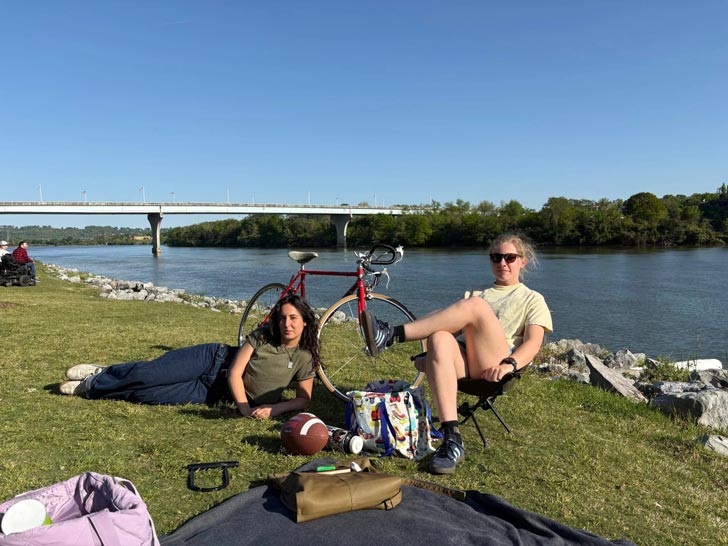
Together, they founded Pedals for Pencils. Their mission is to bike 300 miles — gaining 30,000 feet of elevation — across Vermont (Miller’s home state) while raising funds to buy essential supplies for their classrooms and advocate for migrant students.
The pair met just this year, as Livesay began her journey teaching middle school social studies, and Miller teaching high school geometry for English New Language Learners.
“[We] immediately found common ground in our students, our shared frustrations, and our stubborn hope that public education can still be a force for good,” they share on their website.
“Teaching has been everything we expected and nothing like we imagined. It’s exhausting and beautiful,” they add. “Chaotic and grounding. And no matter how prepared we thought we were, nothing quite readied us for the emotional weight of watching policy decisions made far above our heads affect the kids sitting right in front of us.”
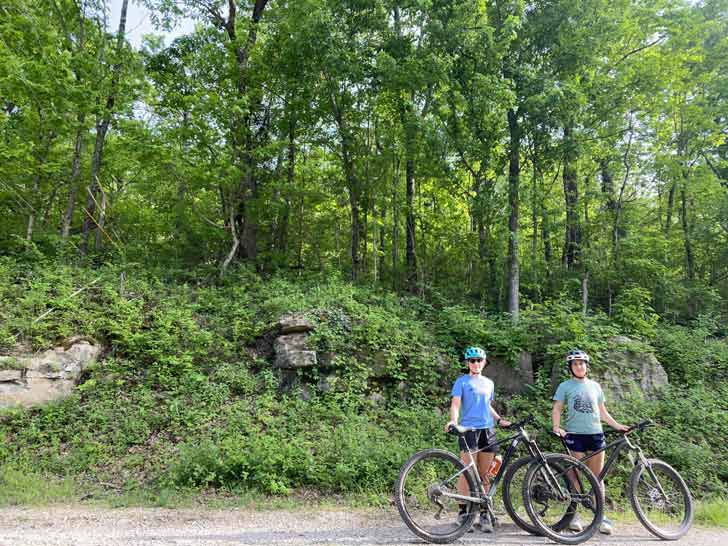
Their goal is to raise $500 each to fund their next year of classroom essentials like notebooks, pencils, snacks, hygiene items, and more. (In the United States, educators spend an average of $500-$750 out of their own pockets to pay for classroom supplies every year.)
Anything else they fundraise will go “directly to organizations in Tennessee supporting immigrant families and fighting legislation like SB836.”
“We created Pedals for Pencils because legislation like SB836 can’t pass quietly,” they write. “If politicians learn they can exclude kids from public schools without public backlash, they’ll keep going — cutting funding, limiting access, and dismantling public education piece by piece. And they won’t stop.”
Miller and Livesay announced their initiative on TikTok just one day ago and have already garnered over $1,000 in donations, according to their website.
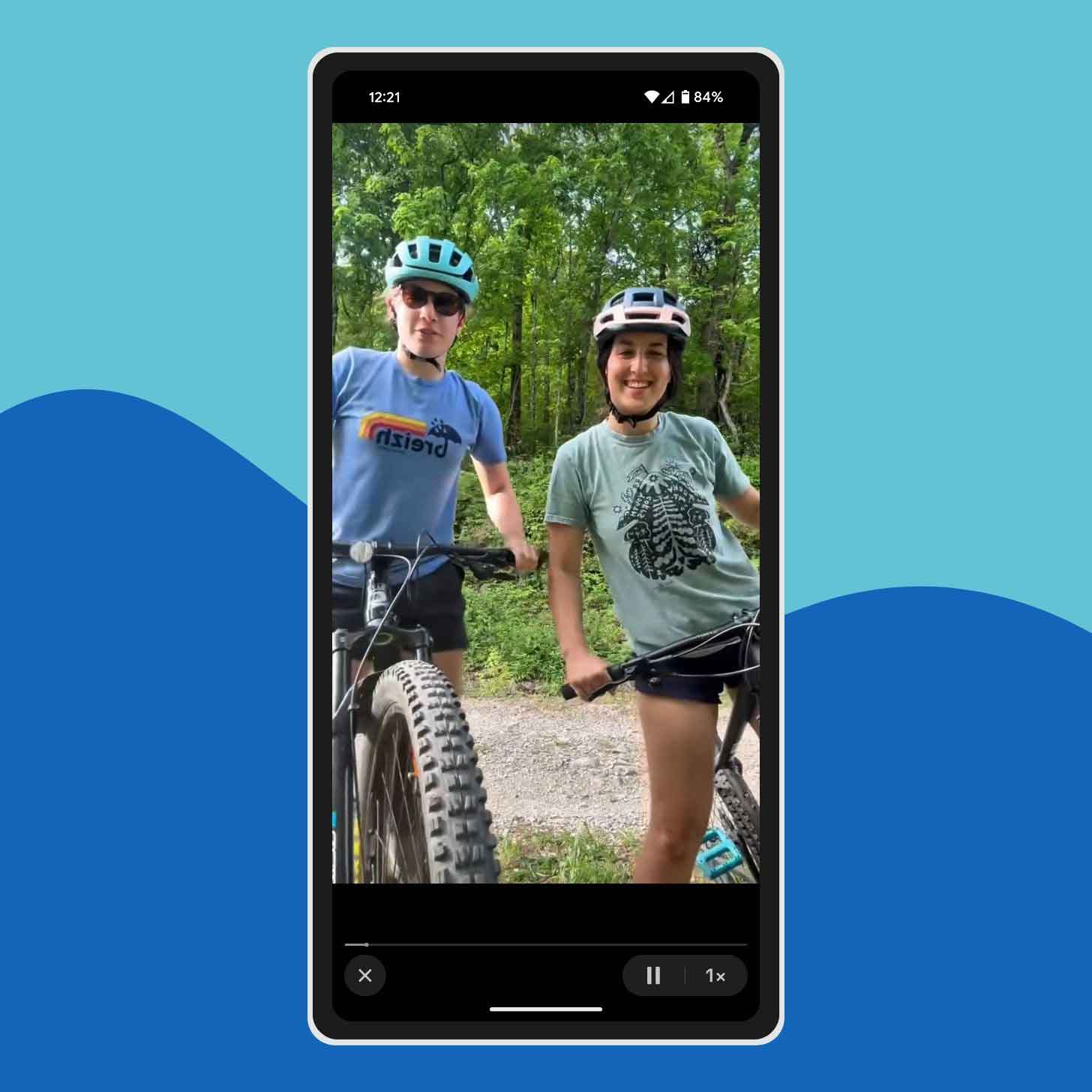
While their biking journey has not yet begun, the pair seems eager to grease up their wheels while speaking up about an issue that matters to them.
“It began as a wild idea between two exhausted teachers who also really like to bike. But it quickly became something more — a way to protest what’s happening in our state, raise awareness beyond our own classrooms, and raise money for the things our students need most,” they share on their website.
“One pedal at a time, we’re pushing back against silence, exclusion, and the steady dismantling of the public school system.”
@pedalsforpencils Two Tennessee teachers. One mission: Pedal across Vermont to fund classrooms and defend every child’s right to public education. We’re raising $500 each for essential classroom supplies—notebooks, pencils, snacks, hygiene items—and shining a light on SB836, legislation in Tennessee that excludes undocumented children from public schools. Every child deserves a seat in the classroom. Join us on this journey. 👉 follow our ride 👉 visit pedalsforpencils.org to donate 👉 share to support public education for all #pedalsforpencils #FundPublicEducation #teachersoftiktok #BikersForChange #SB836 #Education #fyp #greenscreenvideo #easter #education ♬ Focus on Success - ALEKSANDAR KIPROV
In the meantime, Miller and Livesay are urging supporters to follow along on social media as they prepare for their ride — and to donate in support of public education.
“We believe public education is the foundation of this country,” Livesay said in the TikTok announcement. “Every teacher deserves to be well-equipped for their students, and every student deserves a seat in the classroom.”
Header image courtesy of Pedals for Pencils
Morningside Park, a beloved neighborhood park in Miami with sweeping views of Biscayne Bay, will soon pilot an innovative approach to coastal resilience.
BIOCAP tiles, a 3D-printed modular system designed to support marine life and reduce wave impact along urban seawalls, will be installed on the existing seawall there in spring 2025. BIOCAP stands for Biodiversity Improvement by Optimizing Coastal Adaptation and Performance.
Developed by our team of architects and marine biologists at Florida International University, the uniquely textured prototype tiles are designed to test a new approach for helping cities such as Miami adapt to rising sea levels while simultaneously restoring ecological balance along their shorelines.
The project receives funding from the National Science Foundation and the Environmental Protection Agency.
Ecological costs of traditional seawalls
Seawalls have long served as a primary defense against coastal erosion and storm surges. Typically constructed of concrete and ranging from 6 to 10 feet in height, they are built along shorelines to block waves from eroding the land and flooding nearby urban areas.
However, they often come at an ecological cost. Seawalls disrupt natural shoreline dynamics and can wipe out the complex habitat zones that marine life relies on.
Marine organisms are crucial in maintaining coastal water quality by filtering excess nutrients, pollutants, and suspended particles.
A single adult oyster can filter 20-50 gallons of water daily, removing nitrogen, phosphorus, and solids that would otherwise fuel harmful algal blooms. These blooms deplete oxygen levels and damage marine ecosystems.
Filter-feeding organisms also reduce turbidity, which is the cloudiness of water caused by suspended sediment and particles.
Less water turbidity means more light can penetrate, which benefits seagrasses that require sunlight for photosynthesis. These seagrasses convert carbon dioxide into oxygen and energy-rich sugars while providing essential food and habitat for diverse marine species.

Swirling shapes, shaded grooves
Unlike the flat, lifeless surfaces of typical concrete seawalls, each BIOCAP tile is designed with shaded grooves, crevices, and small, water-holding pockets. These textured features mimic natural shoreline conditions and create tiny homes for barnacles, oysters, sponges, and other marine organisms that filter and improve water quality.
The tile’s swirling surface patterns increase the overall surface area, offering more space for colonization.
The shaded recesses are intended to help regulate temperature by providing cooler, more stable micro-environments. This thermal buffering can support marine life in the face of rising water temperatures and more frequent heat events driven by climate change.
Another potential benefit of the tiles is reducing the impact of waves.
When waves hit a natural shoreline, their energy is gradually absorbed by irregular surfaces, tide pools, and vegetation. In contrast, when waves strike vertical concrete seawalls, the energy is reflected back into the water rather than absorbed.
This wave reflection — the bouncing back of wave energy — can amplify wave action, increase erosion at the base of the wall, and create more hazardous conditions during storms.
The textured surfaces of the BIOCAP tiles are designed to help diffuse wave energy by mimicking the natural dissipation found on undisturbed shorelines.
The design of BIOCAP takes cues from nature. The tile shapes are based on how water interacts with different surfaces at high tide and low tide.
Concave tiles, which curve inward, and convex tiles, which curve outward, are installed at different levels along the seawall. The goal is to deflect waves away from the seawall, reduce direct impact, and help minimize erosion and turbulence around the wall’s foundation.

How we will measure success
After the BIOCAP tiles are installed, we plan to assess how the seawall redesign enhances biodiversity, improves water quality, and reduces wave energy. This two-year pilot phase will help assess the long-term value of ecologically designed infrastructure.
To evaluate biodiversity, we will use underwater cameras to capture time-lapse imagery of the marine life that colonizes the tile surfaces. These observations will aid in documenting species diversity and habitat use over time.
To assess water quality, we have developed a specialized prototype tile with sensors that can measure pH, dissolved oxygen levels, salinity, turbidity and temperature in real time. This data will provide insight into how the tiles affect local water conditions.
Finally, to measure wave attenuation and the reduction of wave force, we will mount pressure sensors on both the BIOCAP tiles and the adjacent traditional seawall sections. This comparison will allow us to quantify differences in wave energy across varying tidal conditions and storm events.
As coastal cities confront the dual challenges of increasing threats from climate change and environmental degradation, the BIOCAP project offers what we hope will be an example of a resilient, nature-based solution that benefits both humans and the environment.
In the coming year, we’ll be watching with hope as the new BIOCAP tiles begin to welcome marine life, offering a glimpse into how nature might reclaim and thrive along our urban shorelines.
This article was written by Sara Pezeshk and Shahin Vassigh from Florida International University, and was originally published by The Conversation.
Header Image by Sara Pezeshk

Born in Iran as one of nine children, architect Nader Khalili found his calling in one simple mission: Empower refugees and people experiencing poverty to build homes using the earth under their feet.
His most well-known invention — the SuperAdobe construction system — has been recognized by NASA and the United Nations and has helped shelter countless refugees and displaced people worldwide since the 1990s.

Although Khalili passed away in 2008, his work carries on through his nonprofit CalEarth, which continues to build sustainable shelters — and teach people how to do the same.
SuperAdobe structures are constructed using long sandbags, barbed wire, and on-site “earth,” like dirt, clay, and mud.
“There is a sustainable solution to human shelter, based on Timeless Materials (earth, water, air and fire) and Timeless Principles (arches, vaults, and domes),” Khalili preached.

“Every man and woman should be able to build a shelter for his or her family with these universal elements, almost anywhere on the Earth and other planets. These principles, interpreted into the simplest form of building technology, have created emergency shelters which can become permanent houses, and which have passed strict tests and building codes.”
To build a SuperAdobe, sandbags are filled with moistened earth and arranged in layers or long coils to create a dome-like structure. Strands of barbed wire are placed between each layer to reinforce the bags, and stabilizers like cement, lime, or asphalt may also be added.

They’re kind of like a giant version of a coil clay pot one might make in a pottery class.
From there, builders plaster over the sandbag structure, often using a mix of “earth and cement,” to protect it from erosion and the elements — and to give it an aesthetically pleasing exterior.
The method isn’t just eco-friendly; it was designed with safety in mind. The sandbags add flood resistance to the home, and being built with earth itself provides insulation and fireproofing.

Khalili’s method took years to refine, but now that it has been proven — and tested for inclusion in the Uniform Building Code — these structures are popping up all over the world to provide eco-friendly and affordable housing to people most in need.
In fact, the SuperAdobe blueprints are open-source, which the nonprofit offers to the world “at the service of humanity and the environment.”
With step-by-step classes, video tutorials, and blueprints, the organization offers people the education they need to build one of these shelters on their own.
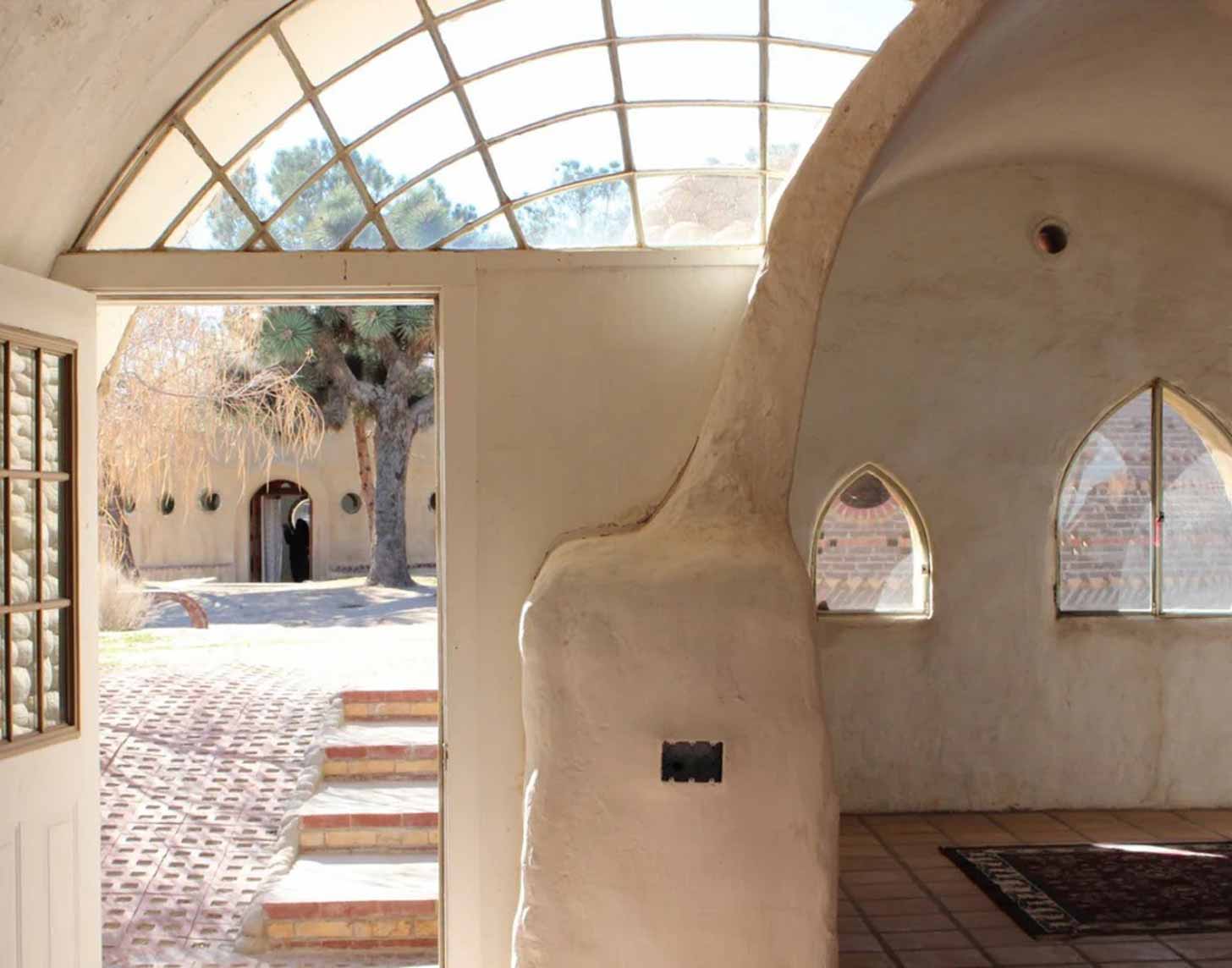
At their on-site location in Hesperia, California, the organization also offers apprenticeship programs and workshops for those hoping to learn.
On the heels of the devastating wildfires in Los Angeles earlier this year, CalEarth offered its resources to Angelenos for free.
“If you or a loved one has been affected by the wildfires and are looking into alternative ways to rebuild, we are here to help,” a release from the nonprofit reads. “Learn how to build a home, using just a few simple materials, including the earth beneath your feet.”
It almost sounds too good to be true, but after a photo went viral on social media, showing a backyard SuperAdobe that emerged from the Eaton fire intact, Californians are considering a new approach.
According to The Los Angeles Times, the organization saw a 131% increase in the number of people viewing their videos following the fires.
“If everyone comes together at this moment, it could be an incredible opportunity to build these neighborhoods back with safe, fireproof housing that also works in harmony with nature,” Dastan, Khalili’s son, who has been running CalEarth with his sister since his father’s death, told The Los Angeles Times.
“It could make Los Angeles a beacon for the country that would revolutionize housing to be safe from climate change.”

The SuperAdobe system has been utilized with resounding success in other parts of the world, especially in areas with a large population of refugees or people displaced by disaster.
CalEarth built structures for people displaced by the devastating earthquake in Haiti in 2010, as well as other disasters in Nepal and Pakistan.
Their efforts inspired them to create a Duffel Bag Dome, which weighs less than 35 pounds and includes all of the tools and materials needed to build a 6-foot emergency shelter.
Other organizations have also used the SuperAdobe system to help displaced groups.

The Gandhi Worldwide Federation built a home in India for rescued child laborers.
Palestinian architects built a stunning SuberAdobe home with the materials that already existed in their area, amid years of relying on international aid.
Emergency Architecture & Human Rights even built sandbag schools for Syrian and Jordanian refugees just outside of the Za’atari refugee camp.
Whether emergency housing, disaster-proof residences, or even playgrounds, CalEarth counts that SuperAdobe domes have been built in at least 49 countries on six continents. With climate change and increased homelessness impacting the housing industry’s next moves, SuperAdobe homes may become even more common.
“CalEarth Institute inspires ingenuity, creates opportunities, and unleashes innovation to solve one of society’s most pressing problems: housing insecurity,” the nonprofit shares.
“Using sandbags, barbed wire, and the earth beneath your feet, SuperAdobe is a truly accessible and sustainable way to build homes anywhere on the planet.”
Header image courtesy of CalEarth
After a long career of entrepreneurship in the glass, HVAC, and construction industries, Ralph Papitto died a multi-millionaire at the age of 92.
But he wasn’t just leaving behind successful companies.
His widow, Barbara Papitto, who had her own career in accounting, found herself with a fortune, and she wanted to spend it right.

“I think of those that struggle now to put food on their tables, to fix a car that broke down,” she told WJAR News recently.
Since Ralph’s death about five years ago, Barbara has donated $100 million to 350 nonprofits in the couple’s home state of Rhode Island.
It was a natural extension of the philanthropy work the pair had already been doing.
In 2008, the Papittos founded a scholarship program to help underprivileged children improve their reading skills, called Read to Succeed.
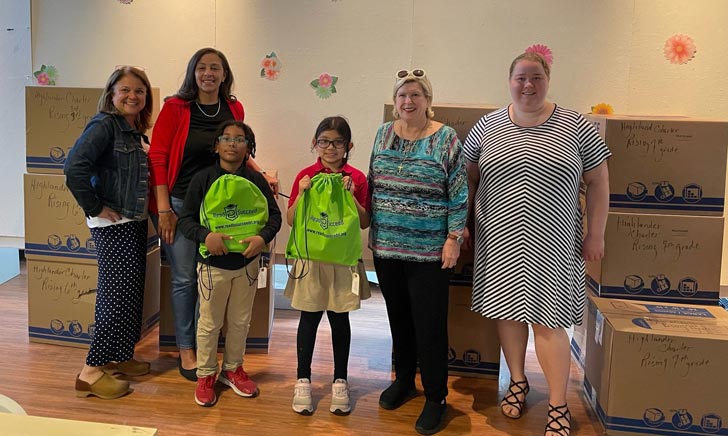
The program encouraged students to read six books over the summer, after which they’d be eligible to take a test and receive a $1,000 college scholarship awarded to students each year for five years. Since its inception, the program has funded more than $2.2 million in scholarships.
After Ralph’s death, however, Barbara wanted to make an even bigger impact.
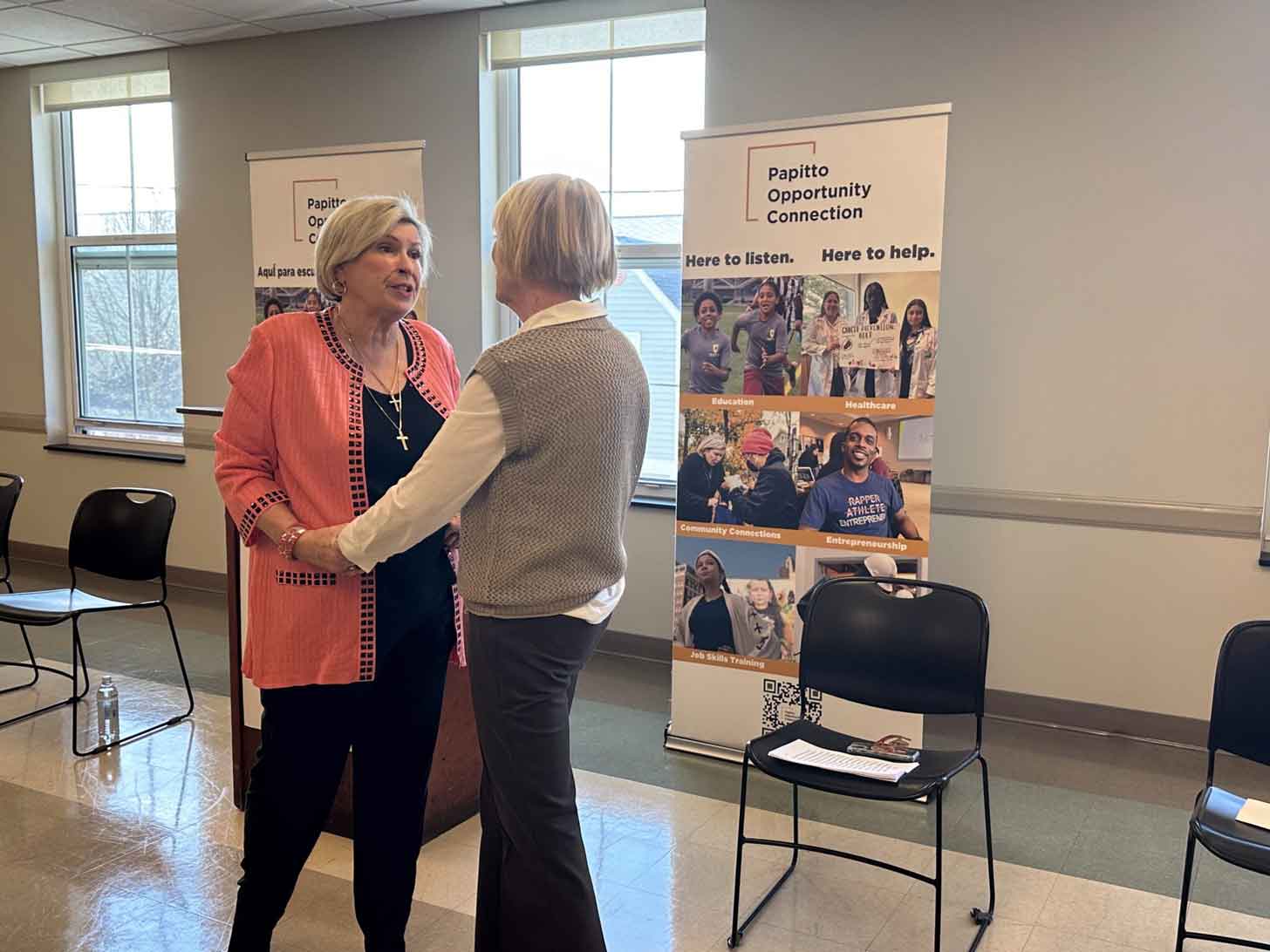
In 2020, she founded Papitto Opportunity Connection to honor Ralph’s legacy by supporting nonprofits in Rhode Island that serve communities most in need of help.
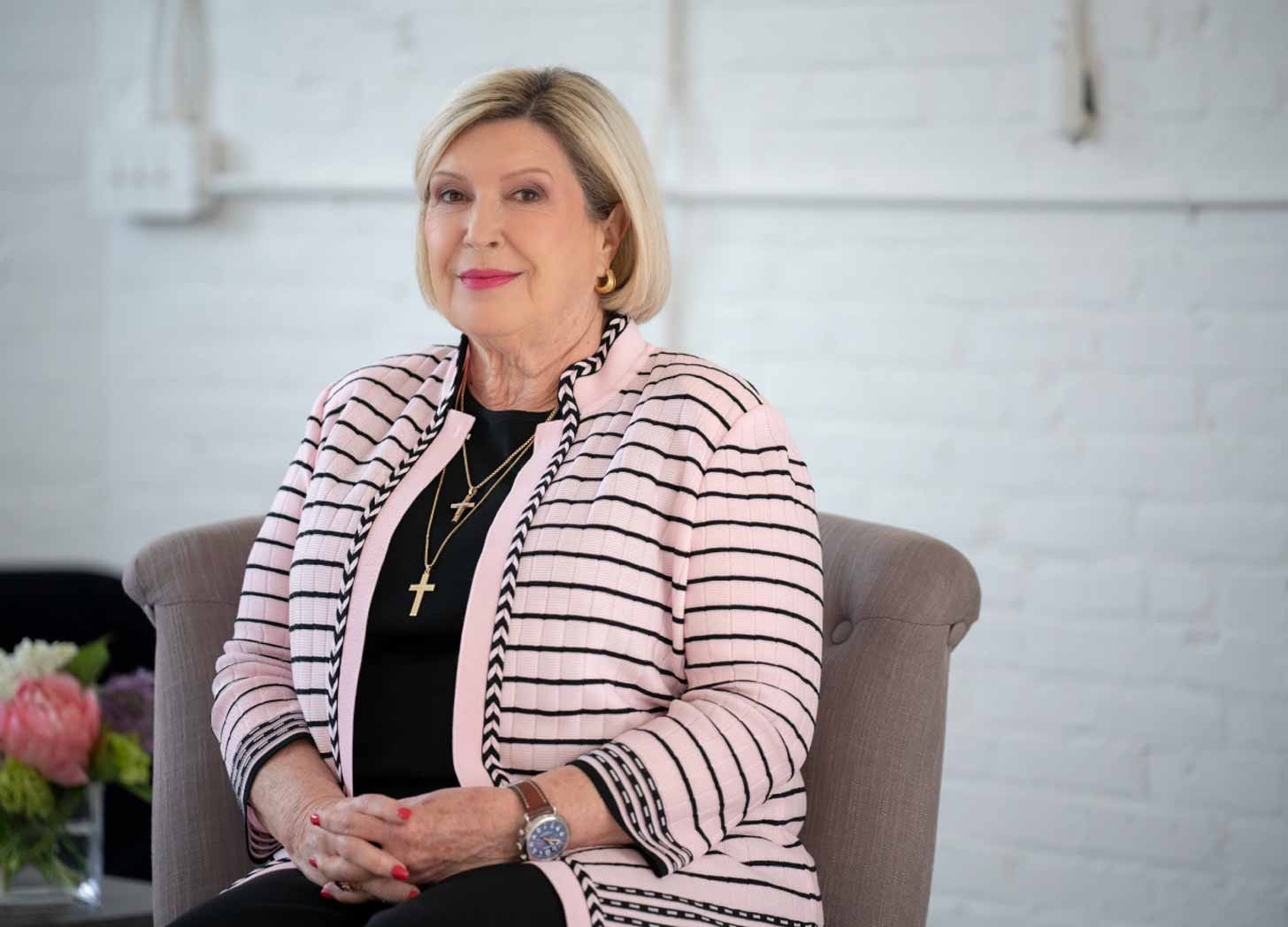
Papitto Opportunity Connection gives money to area grant seekers, focusing on three main areas of impact: education, skills training, and entrepreneurship.
Barbara still works to make sure children have access to literacy (in fact, she packages thousands of books to send out to public schools by hand in her own living room). But her offerings have also expanded; Now, students can apply to scholarships like the Transform RI program.
It asks students: “If you had $1 million to improve the lives of those who need it most in RI, how would you do it?” Then, Barbara invests that $1 million in making the winning idea a reality, and the student behind it gets a $25,000 scholarship.
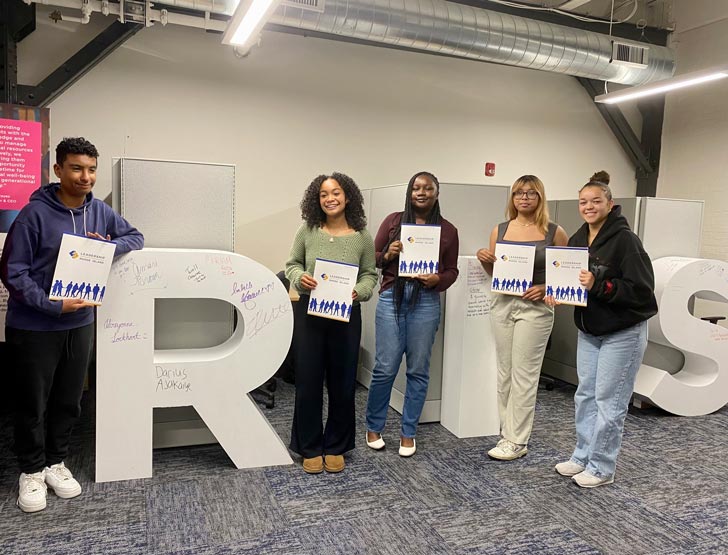
Other finalists also get thousands of dollars, too.
“Every child should have the same access to education, yet in Rhode Island that is not always the case,” Papitto Opportunity Connection shares on its website.
The foundation adds that it “supports unique educational programming, especially in Rhode Island’s urban core communities, designed to provide children in need with access to such things as music education, financial literacy, STEM programs and the ability to access healthcare services right in school.”
Barbara also funds organizations that provide job skills training and employment opportunities to formerly incarcerated individuals. Additionally, the organization funds mentorships and microloans to entrepreneurs in marginalized communities, working with the Rhode Island Black Business Association to make dreams a reality.

But not all of her work falls neatly into these categories. Papitto Opportunity Connection also funds local food rescue organizations, supports refugee services for women and children, and keeps housing assistance programs stable amid uncertainties.
“Making connections, eliminating barriers to success, and clearing pathways to learning are the guiding lights behind every investment POC makes,” the foundation’s website states.
“To truly matter, make an impact, and help create systemic change, the programs we support are those most needed and wanted.”
Most recently, the organization made headlines for donating $1 million to a local health clinic — Amos Health — which specifically provides mental, behavioral, and primary healthcare to “justice-involved individuals and people in recovery.”
For a clinic that relies on Medicaid reimbursement, leaders say the new funding provides a much-needed cushion.
“POC operates as a trust-based philanthropy, working to empower RI nonprofits that create pathways to success in communities facing the most need,” Barbara said in a statement.
“We are confident The Clinic will remove barriers to essential medical services. Since 2022, Amos House has more than doubled their program’s capacity, increasing employment placement rates and wages by over 30%. We’re proud to support these outcomes.”
According to Eileen Hayes, the executive director at Amos House, this will allow her to hire more staff and serve 300 to 400 additional clients annually.
Last year, Barbara announced that Papitto Opportunity Connection was considering pivoting to distributing innovation grants, rather than funding basic services in the community. But, facing uncertainty in nonprofit funding on a federal level, she has decided to move forward with both.
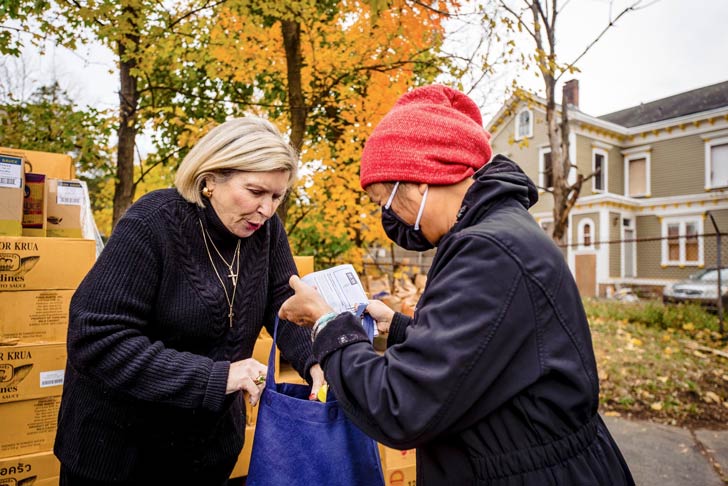
“We need to be in the community like we have been to be responsive to any kind of need that comes forward,” Barbara told The Boston Globe. “We’ve always been there all during the pandemic with the basic services. You can’t help someone get a better job if they’re not being fed.”
And no matter what comes next for her philanthropy, she will do it all while remembering Ralph fondly.
“Everything I do,” she told WJAR News, “I do it with his name.”
Header image courtesy of Papitto Opportunity Connection
After rolling back its diversity, equity, and inclusion efforts in early 2025, Target has lost a lot of fans.
The company — which also ended its Racial Equity Action and Change initiative, designed to invest over $2 million in Black-owned businesses — has seen a decrease in foot traffic for weeks, likely as a result of boycott efforts nationwide.
Whether you want to curb your Target shopping because of its elimination of DEI programs, or you want to make the leap away from big box stores, there are plenty of options out there to help you meet your everyday shopping needs.
Shopping at local stores, buying used goods, sharing with friends, or even borrowing items from your local library are great places to start. But if you’re really in need of some essentials — and you already tried Costco (which has maintained its commitment to DEI initiatives) — we’ve got you covered.
By the way, some of the links in this article are affiliate links, which means if you make a purchase after clicking a link, we may earn a commission at no extra cost to you. Thank you!
Ethical and sustainable Target alternatives
Cleaning Products
Blueland
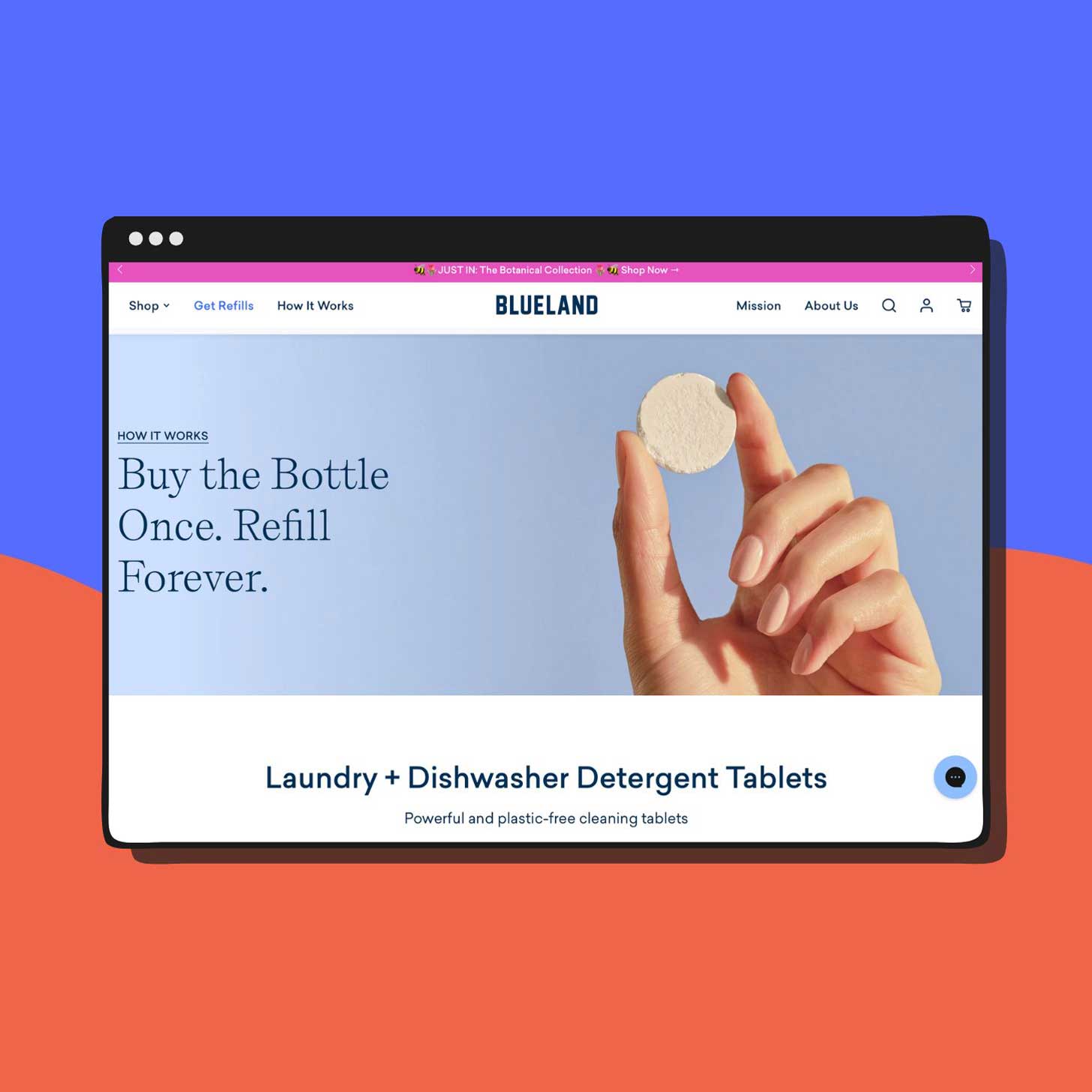
Instead of buying pre-packaged cleaning products and soaps off of big box store shelves, Blueland offers refillable hand soap, as well as dish, laundry, bath, and spray cleaners.
After purchasing a Starter Kit, shoppers can buy refill tablets and powders, which are packaged in industrially compostable packaging. (Plus, the lightweight packages minimize shipping emissions!) Its cleaners are made with safe ingredients and come in classic scents, and shoppers can get a discount when they buy their refills in bulk.
Blueland is also a B Corp and certified cruelty-free by Leaping Bunny. Additionally, the brand works with Black-owned businesses and partners, makes diversity a priority in every hiring decision, and gives all team members paid time off for political and civic engagement.
Good.Store
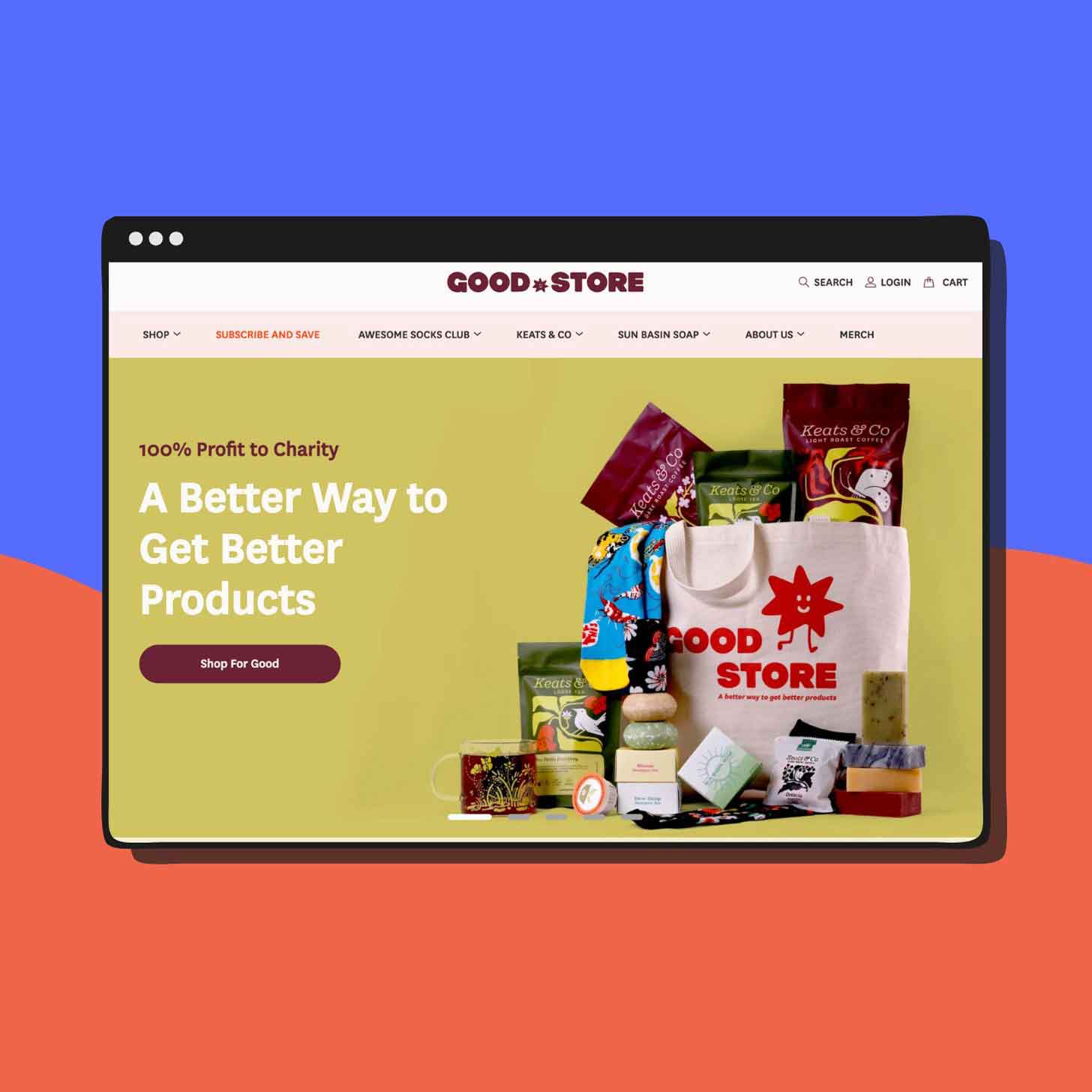
Created by internet philanthropists John and Hank Green, Good.Store sells everyday items with 100% of proceeds going to charity. With soaps, teas, coffee beans, socks, and eco-friendly cleaning products, the shop is the perfect place to find gifts or set up monthly subscriptions for everyday goods.
All purchases benefit Partners in Health, a global nonprofit that improves healthcare equity in low-income areas worldwide. As of April 2025, Good.Store purchases have led to over $10 million in donations.
Good Good Good readers can take 10% off their Good.Store purchase with code GOODGOODGOOD.
Grove Collaborative
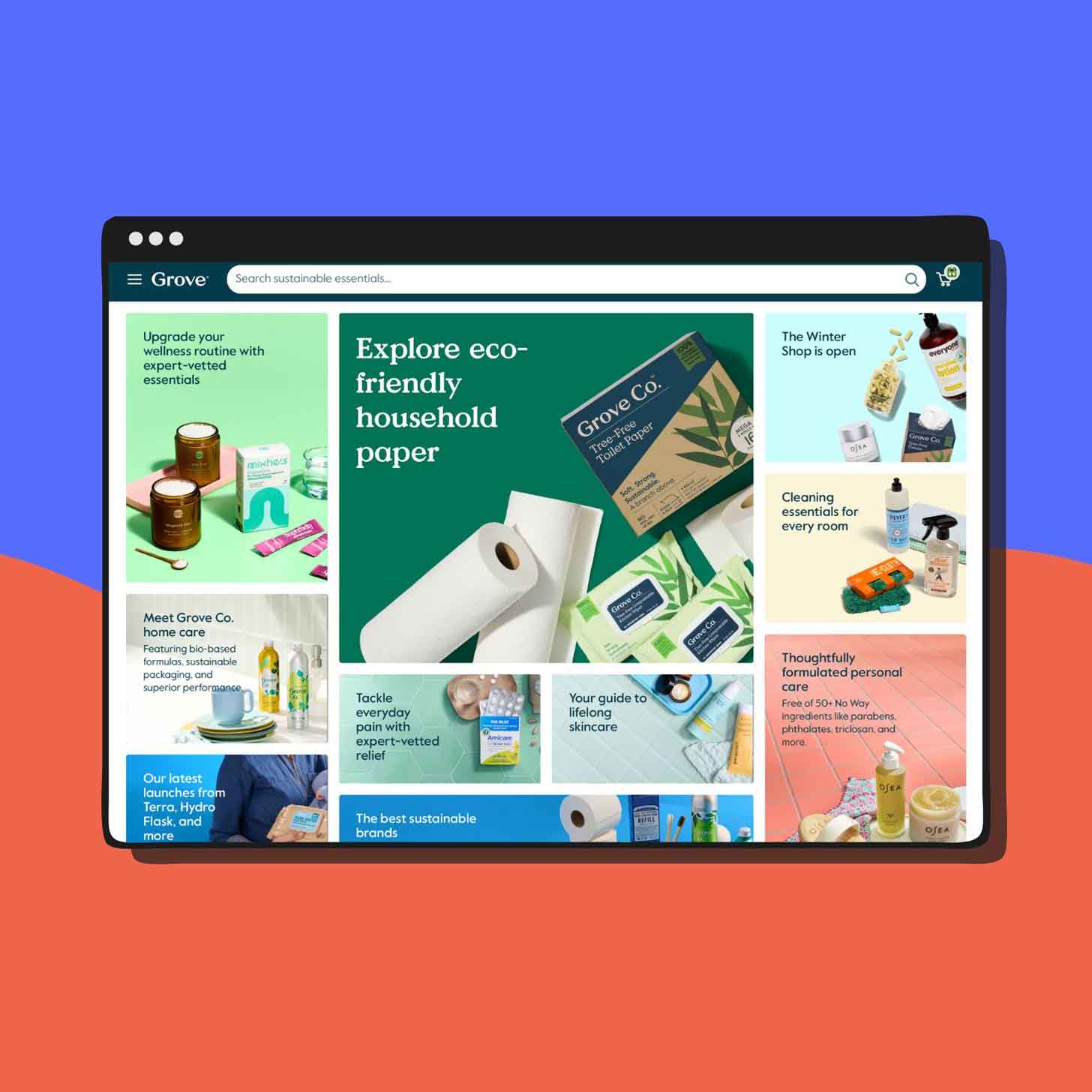
Grove Collaborative exclusively offers products that meet all four of the brand’s core values: uncompromisingly healthy, beautifully effective, ethically produced, and cruelty-free.
The Grove Collaborative site (and app) makes it easy to order products and get regular refills shipped at a cadence that works best for you. The company will never sneakily charge you for a new shipment without letting you know (three times) first.
Plus, all of Grove’s shipments are carbon neutral, and it’s also a certified B Corp. The brand also prides itself on “building a diverse and inclusive work environment.”
Public Goods

Public Goods sells body, home, and cleaning products in bottles made from 100% recycled, post-consumer plastic. Additionally, every shipment is carbon offset.
While not required, a membership of $49 a year will get you 20% off all of your purchases, and free shipping on orders $45 or more.
Public Goods also works with Eden Reforestation to restore healthy forests, planting over 363,000 trees to date. The brand also donates all of its near-expired food products to partnering nonprofits to help people facing food insecurity.
Food & Groceries
Thrive Market

On Thrive Market, you can become a Member for roughly $5-$12/month (depending on whether you pay annually or monthly) and easily do all your shopping through its site, which offers over 5,000 healthy and organic grocery selections.
It also eliminates a lot of grocery trips, with everything you need showing up in one weekly shipment!
Thrive Market works to ethically source all of its products, ensures that 90% of waste in its warehouses is recycled, composted, or reused, and offers carbon-neutral shipping in sustainable packaging. The company is also a certified B Corp.
In addition, every annual membership sponsors a free membership for a family in need, helping to ensure that everyone has access to high-quality and healthy groceries.
Hive
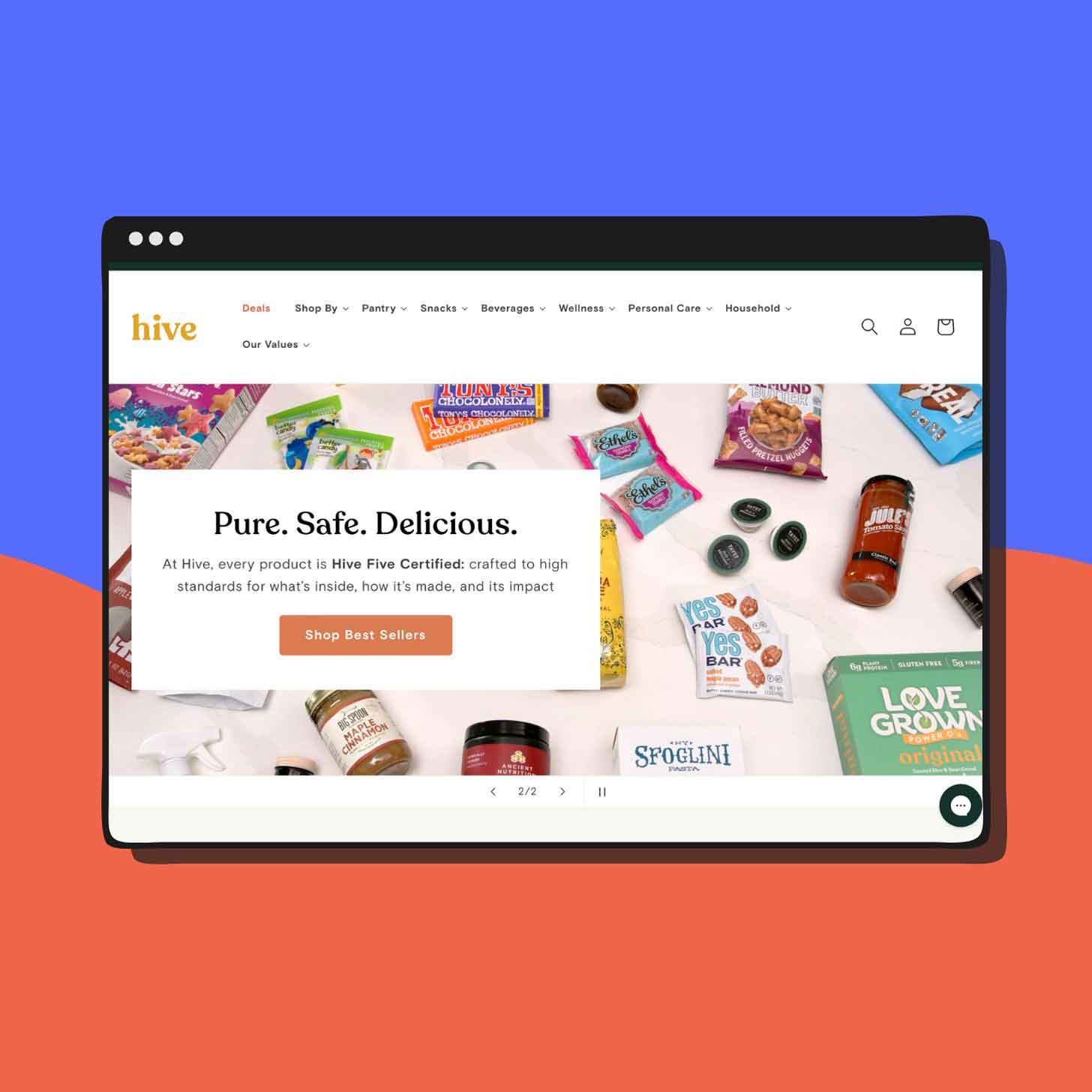
Hive is an online grocery marketplace that sticks to five core values: Ingredient integrity, responsible production, clean packaging, leading change (like social and industry impact efforts), and “raveworthy” quality. Each product page details which of these criteria are met — as well as how and why.
Hive also has a robust recycling guide for the various kinds of packaging you might encounter in your grocery products, like cans, cartons, and more. Hard-to-recycle items can be processed through TerraCycle — Hive will even send you a prepaid envelope to do so!
Misfits Market
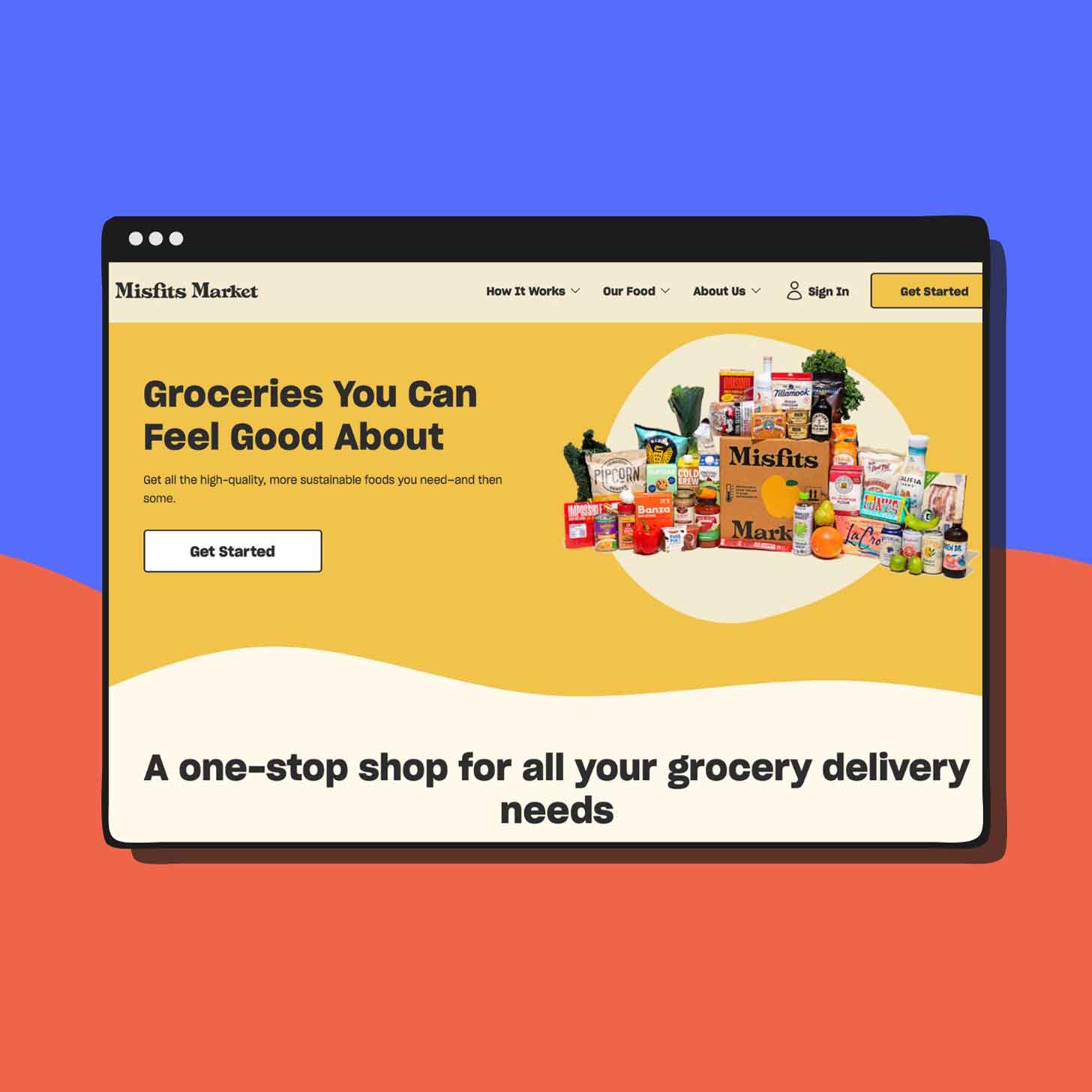
Misfits Market is an online grocer that makes high-quality food more affordable and accessible and helps break the cycle of food waste.
By working directly with farmers and food producers, the brand “rescues” food that is still perfectly good to eat, saving shoppers up to 40% compared to traditional grocery options (like Target delivery or drive-up).
Plus, there is no membership required! Once you sign up, you can access the items offered in the market and add as few (as long as you meet the $35 order minimum) or as many items as you’d like.
Check out our full review of Misfits Market!
Imperfect Foods
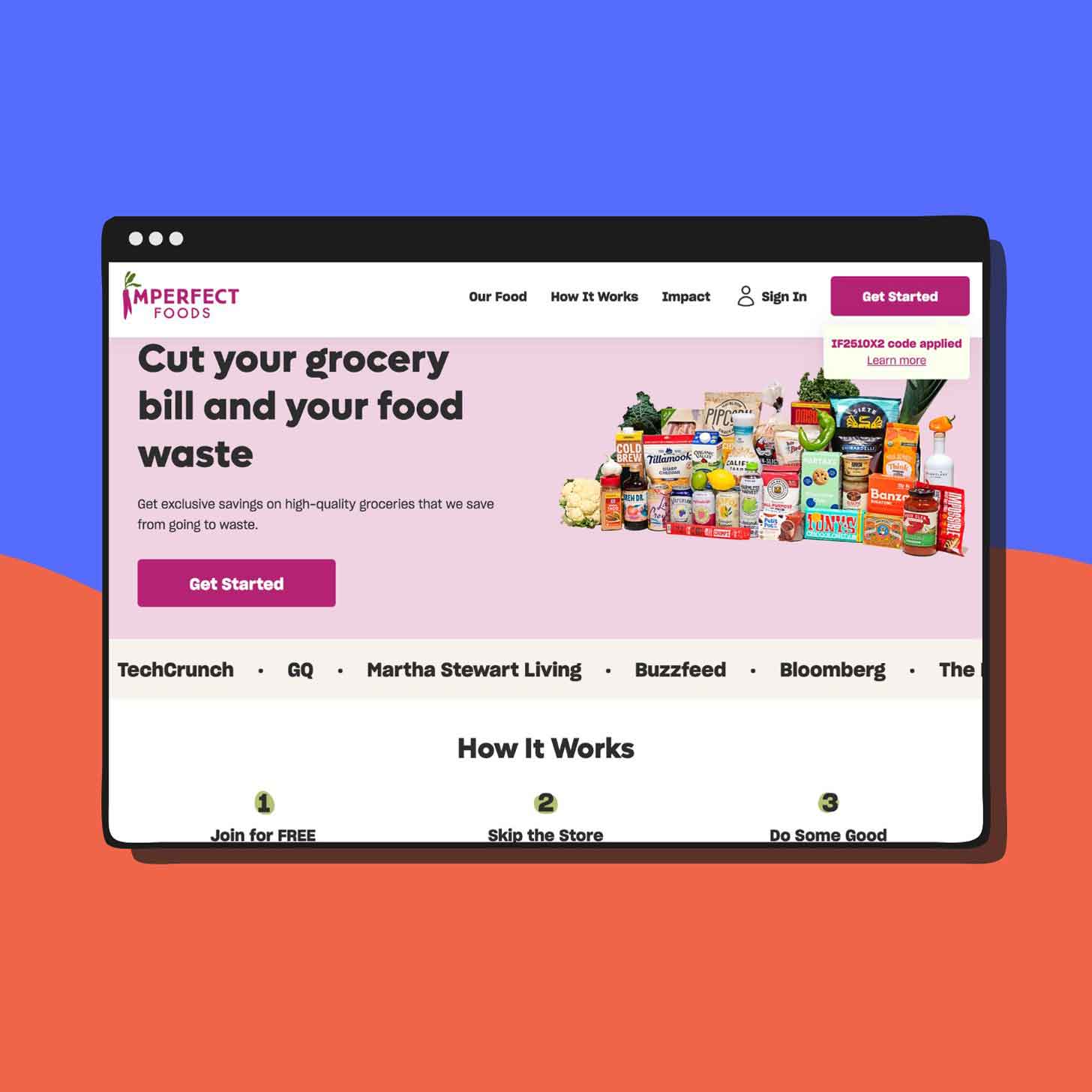
Imperfect Foods also offers delivered groceries that help reduce food waste.
Intercepting foods when they may otherwise go to waste — like items with discoloration, packaging issues, closer “best-by” dates, and more — the brand helps you save on your weekly expenses, while also diverting food from landfills.
Similarly to Misfits Market, you can just add items to your cart and only pay for what you want during each shopping window.
Plus, Imperfect Foods calls itself an “actively anti-racist company,” taking guidance from a DEI committee and prioritizing sourcing from BIPOC-owned suppliers whenever possible.
Beauty & Personal Care
Package Free Shop
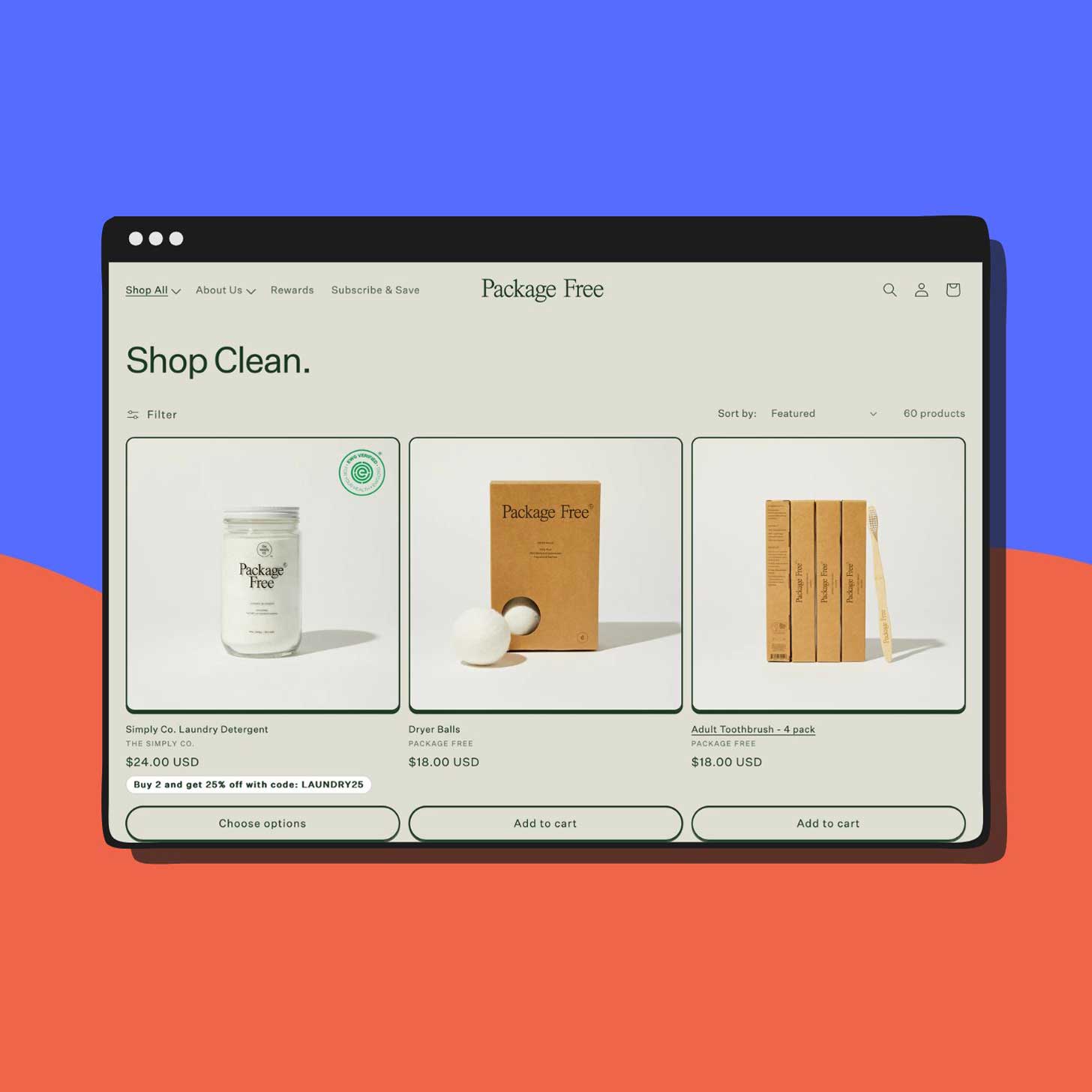
Package Free Shop is an online marketplace committed to helping shoppers find the most sustainable versions of the items they use daily, like zero-waste hair care items, stainless steel razors, or cotton facial rounds.
Additionally, Package Free’s shipping materials are 100% plastic-free (making the company’s name very fitting). The retailer also donates to like-minded organizations and touts policies and principles that are thoughtful to both people and the planet.
BLK & GRN
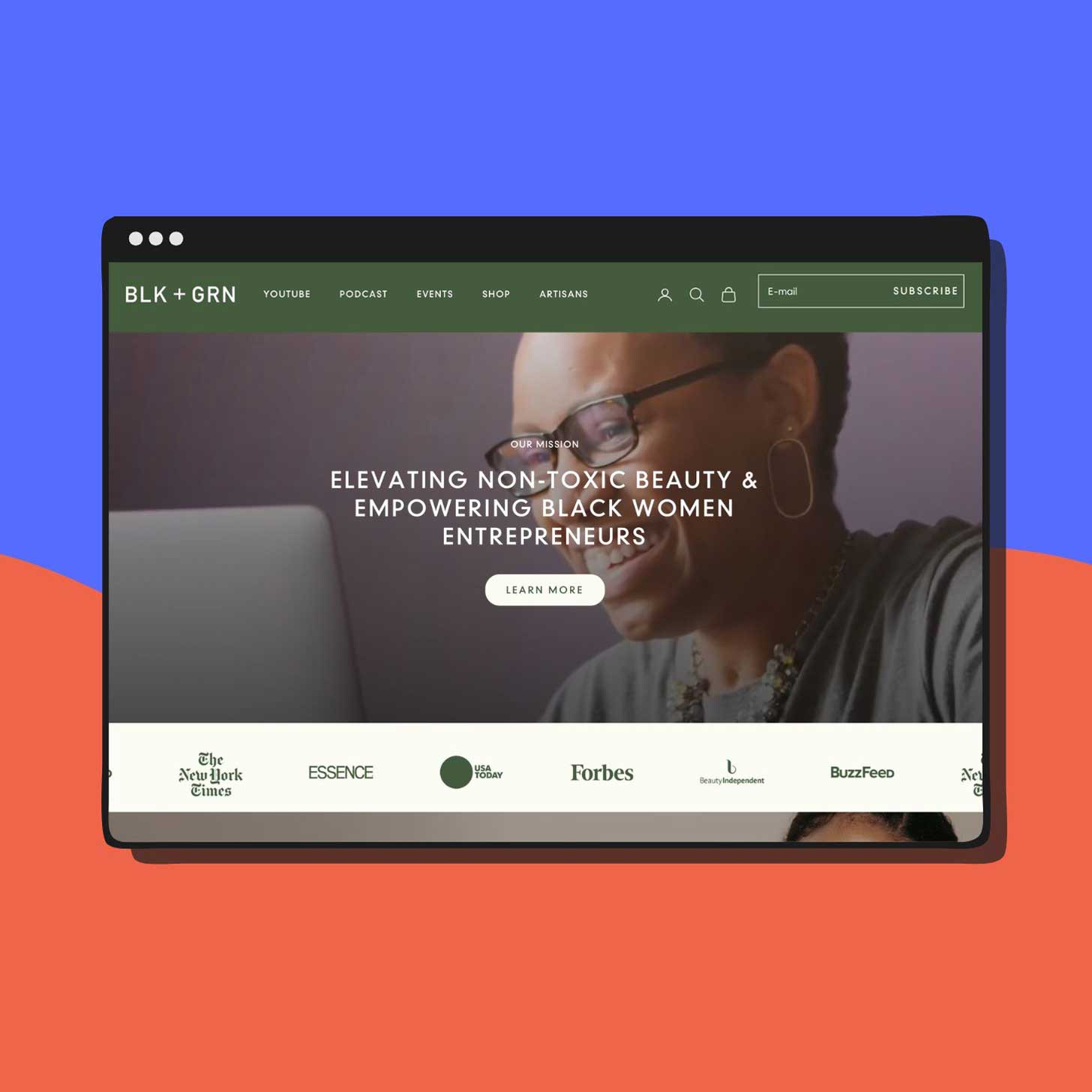
BLK + GRN is a marketplace that aims “to normalize access to non-toxic products targeted to Black women” and “to fund Black women entrepreneurs who create non-toxic personal care products.”
BLK + GRN has a rigorous vetting process to ensure that none of the products listed on its site include harmful ingredients like parabens, petroleum, coal tar, heavy metals, or any of the others on its “Toxic Twenty” list.
Plus, the company uplifts Black artisans, who are chosen by Black health experts, and makes it easy to support Black-owned businesses.
Credo

Credo created The Dirty List and The Credo Clean Standard to define products that don’t use ingredients that are linked to cancer, hormone disruption, allergies, environmental harm, and toxins. This sustainable effort accompanies its recycling program, making it easy for shoppers to drop off their hard-to-recycle beauty product packaging and “recycle your empties” in order to earn reward points and reduce waste.
Additionally, the brand’s annual accelerator program, Credo for Change, works to empower historically underrepresented individuals in the beauty industry, specifically BIPOC college students interested in pursuing a career in beauty.
Cocokind

Cocokind is a BIPOC-owned beauty brand that makes vegan and cruelty-free skincare products. On every product, you’ll find “Sustainability Facts” labels, which share carbon emissions and recycling information for every item.
Cocokind also has a nonprofit arm — the Cocokind Impact Foundation — that provides a financial grant to female entrepreneurs in health, wellness, and sustainability industries with a focus on social impact.
Saalt

It’s time to ditch the toxic period products.
SAALT, a woman-owned company, is on a mission to “bring periods out of the dark ages” by creating reusable, safe menstrual products for all. With menstrual discs and cups, as well as period underwear, the brand aims to make having a period better for the planet — and in general!
A certified B Corp, SAALT also donates 1% of its revenue to provide period care products to regions with the most need and helps fund initiatives in menstrual health, education, and sustainability.
Who Gives A Crap
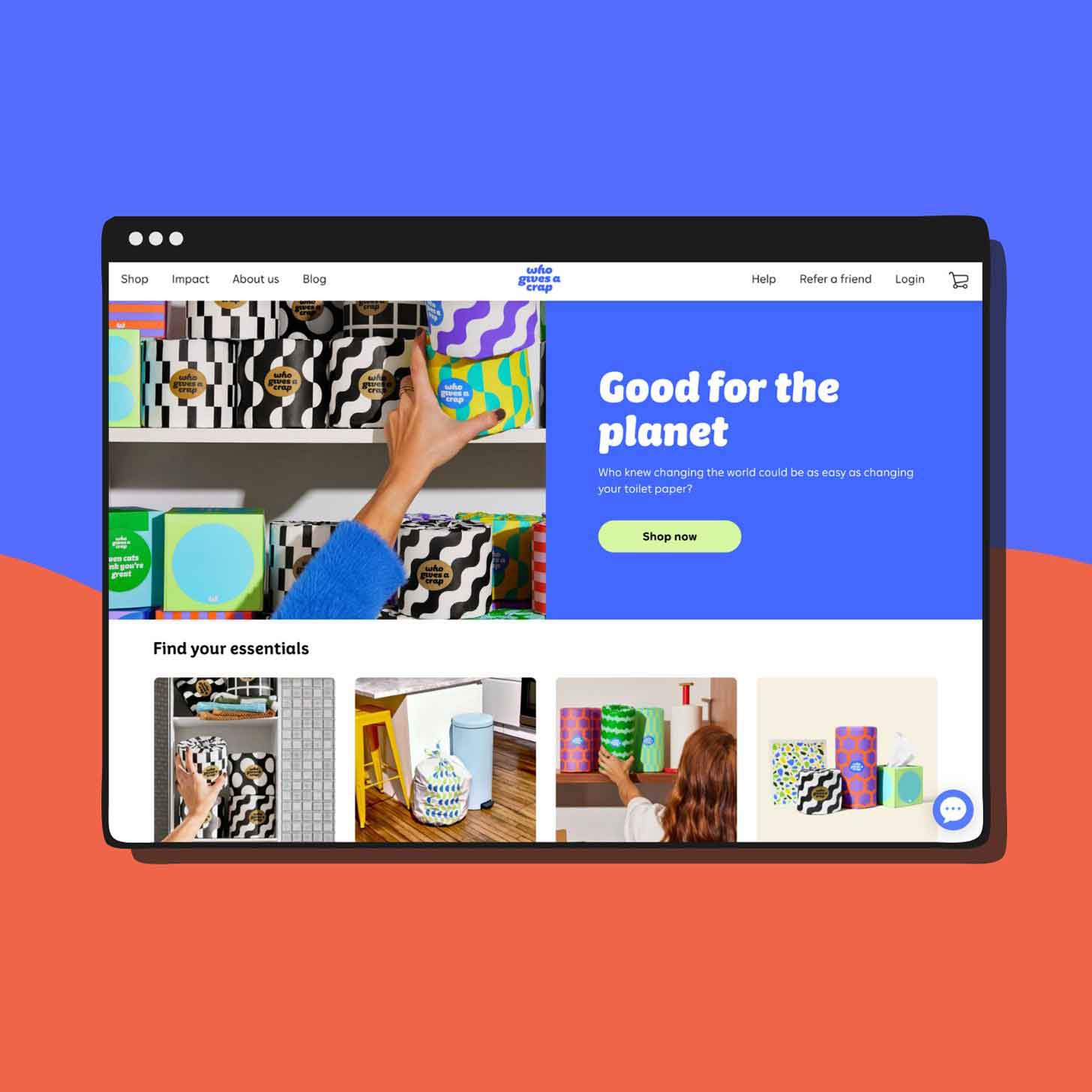
With essentials like toilet paper, paper towels, trash bags, tissues, and more, Who Gives A Crap has all of your daily cleaning goods without any ethical dilemmas. Paper products are made with bamboo or recycled paper, and waste bags are made with recycled plastics or compostable materials.
As a B Corp, Who Gives A Crap donates 50% of profits to clean water and sanitation initiatives around the globe. So far, they’ve donated over $9.5 million to help people access vital services.
Customers can also choose subscription options to save on recurring orders.
Clothing
Bombas

Instead of constantly grabbing a pair of flimsy socks from the dollar section, invest in some cozy essentials from Bombas.
As a B Corp-certified business, Bombas provides socks, underwear, and other essentials to individuals facing homelessness across the globe — they have over 3,500 Giving Partners and have donated over 150 million items to date.
You can also shop shirts, slippers, and more everyday items — all of which have a 100% happiness guarantee and are made with quality and sustainability in mind.
Check out our full review of Bombas based on 8+ years of experience.
Pact

Pact is a clothing and bedding brand that partners with Fair Trade-certified factories to make basics from organic cotton and earth-friendly materials.
The brand also has a partnership with Give Back Box, which offers its customers a zero-hassle, free way to donate gently used and forgotten items to participating charities. Items received are sorted and sold to fund community-based programs such as job training, job placement services, and transportation.
Toad&Co
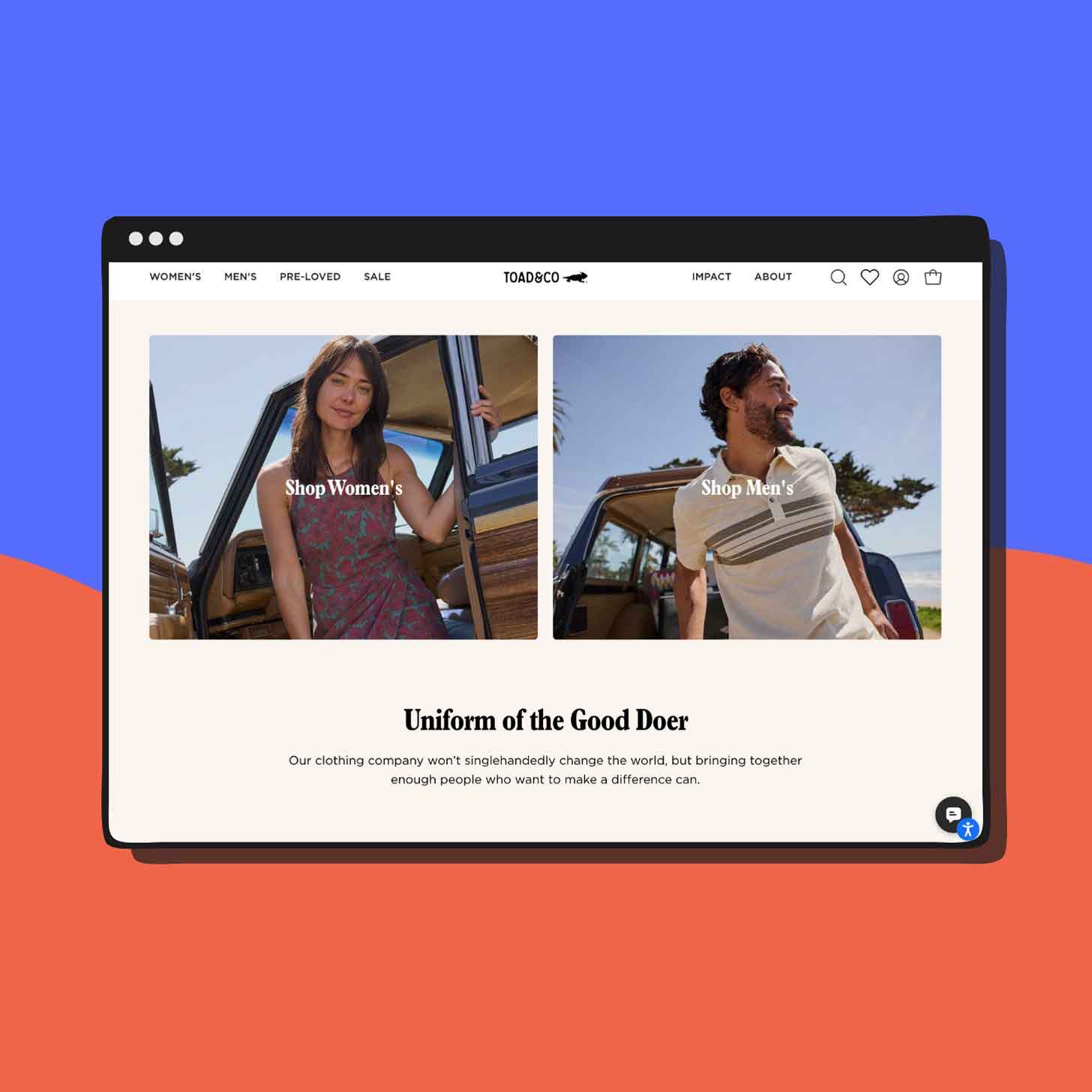
Toad&Co is a men’s and women’s clothing brand rooted in quality, comfort, and versatility. All of their clothing is made with a minimum of 80% sustainable and/or certified fabrics, and you can even shop a pre-loved section on their website to find gently loved items at a fraction of the price.
Plus, 1% of every purchase goes back to nonprofits that support people and the planet, like Brave Trails and The Conservation Alliance.
Patagonia

Following founder Yvon Chouinard’s announcement that the planet would be Patagonia’s “only shareholder,” it became abundantly clear that the company takes its social and environmental responsibility seriously.
Patagonia shares transparent updates about its labor practices and climate impact and donates a portion of its profits to climate justice organizations (about $140 million since 1985).
Additionally, the brand offers a gently used online storefront to purchase secondhand products, mail-in repair services for gear you already own, and leads activism initiatives through Patagonia Action Works.
Home Goods
EarthHero
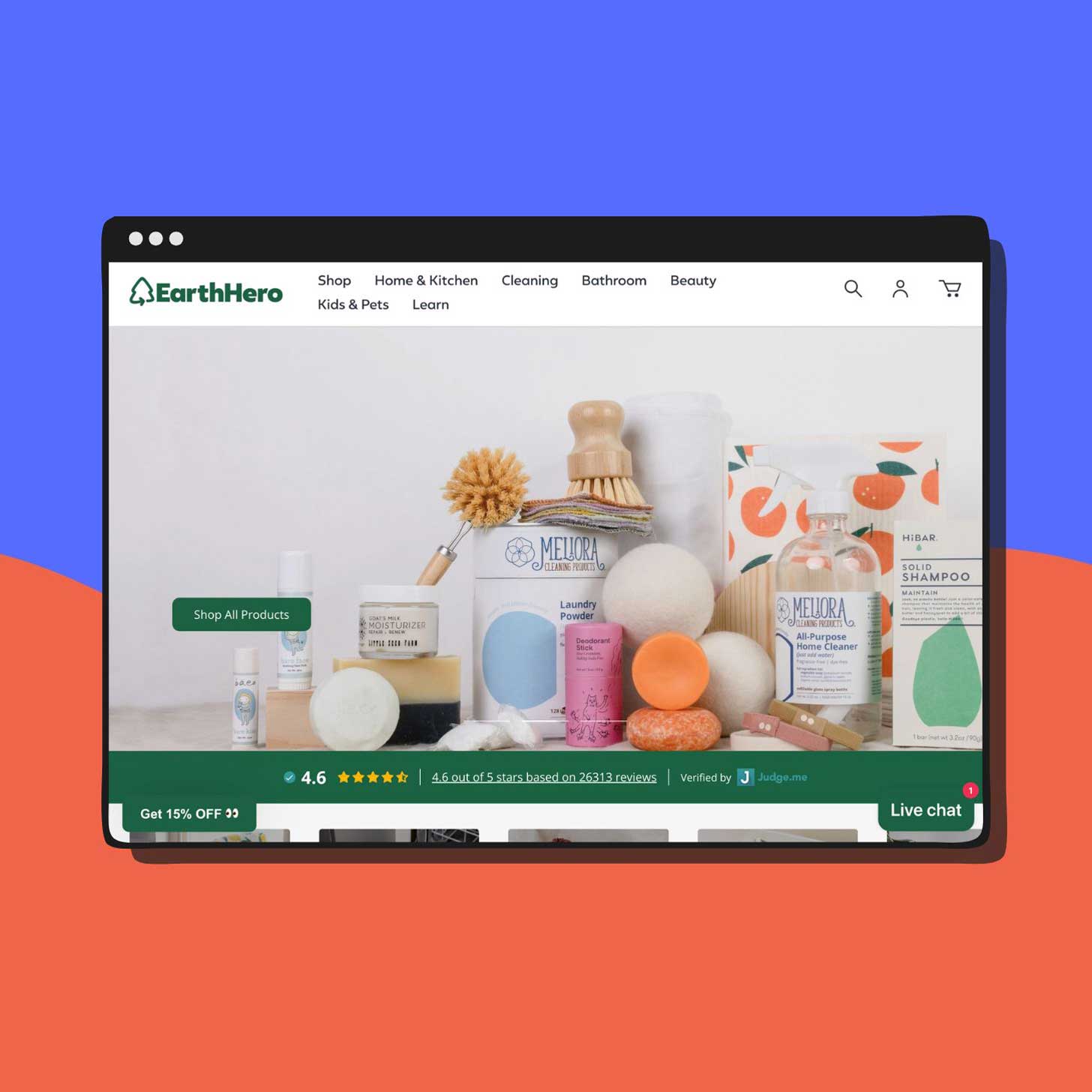
EarthHero’s goal is to make sustainable shopping simple, and it lives up to that mission. Every product — from home goods to gifts — on EarthHero’s site goes through its “proprietary 5-Step Sourcing Methodology.”
Additionally, EarthHero is a certified B Corp, a member of 1% for the Planet, and allows you to filter and shop by values like Vegan, Plastic-free, LGBTQ+ Empowering, Made in the USA, Black-owned, and more.
Uncommon Goods
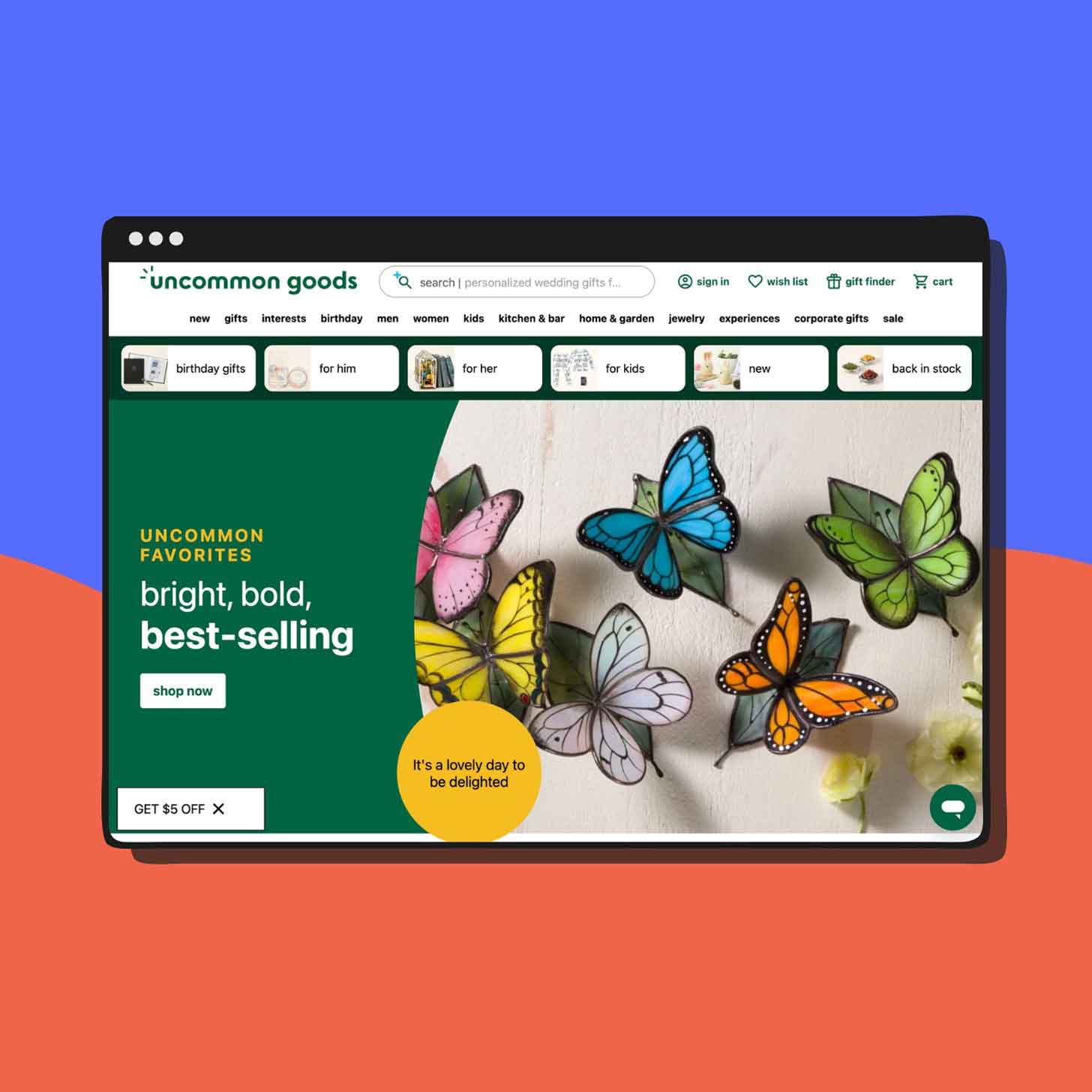
Uncommon Goods offers unique goods and gifts from all over the world that uplift independent makers and merchants.
The site divides products up to make it easy to shop for eco-friendly products, goods from Black makers, or from women-owned businesses. You can also become a Perks Member and receive free and fast shipping.
Etsy

Rather than giving your money to big corporations, every Etsy purchase is an opportunity to support an individual creator or entrepreneur. It’s also a perfect place to find the next cool thing that’s not yet available anywhere else.
Etsy’s Uplift Initiative also supports nonprofits that work to dismantle these barriers and foster equal opportunities to creative entrepreneurship.
Notably, Etsy uses 100% renewable energy for the power used by its data centers, global offices, and its remote employees — plus, the company offsets carbon emissions on all shipping and packaging.
Jungalow

Jungalow carries all kinds of unique home goods, decor items, and wallpaper that started as hand-painted designs by founder and BIPOC artist Justina Blakeney.
Aside from prioritizing sustainable materials and thoughtful manufacturing, the certified B Corp also plants two trees for every single product purchased.
(You may have actually seen this brand carried by Target in the past, too — now you can simply shop and support directly!)
Goodee
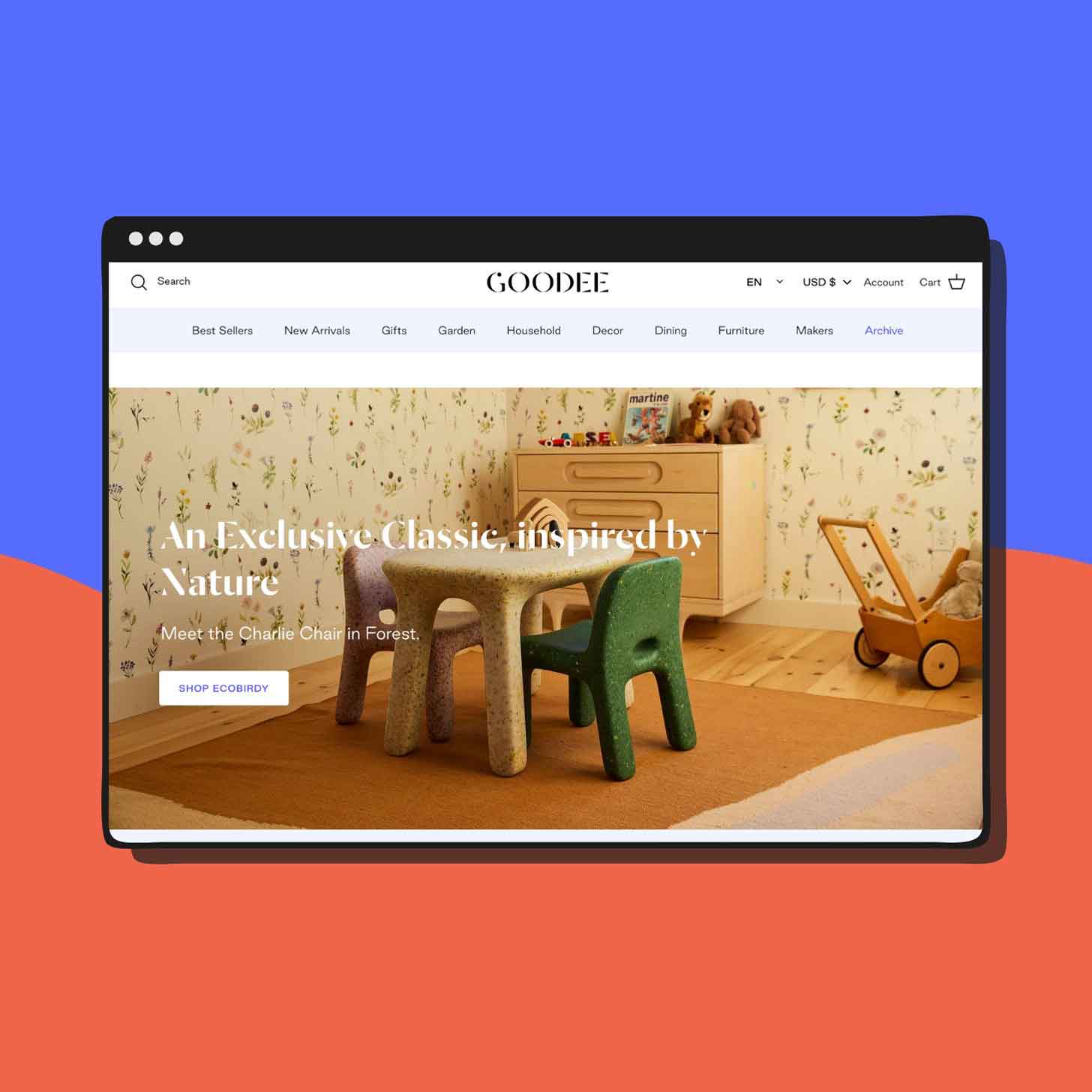
Goodee is a curated marketplace that sells sustainable home decor, furniture, and outdoor goods. As a certified B Corp and Climate Neutral company, Goodee carefully vets every item for sustainability and thoughtful design and donates a portion of its profits to climate justice organizations.
Goodee is also BIPOC-owned and shares stories from its diverse artisan base to uplift and spotlight the design, intention, and ethics that go into every product on its site.
Appliances & Tech
BackMarket

BackMarket is a global marketplace where you can purchase refurbished tech, from smartphones and laptops to gaming consoles and home appliances.
BackMarket is a certified B Corp and has a rigorous vetting program to make sure the tech you purchase has been tested and restored to perfect working condition. The company has diverted an estimated 1.3 million metric tons of carbon emissions since its inception in 2014.
The company also has a diverse Mission Committee that ensures it is meeting its social and sustainability goals, which include reducing e-waste, fighting the digital divide to make sure all communities have affordable internet access, and expanding apprenticeship programs in the tech industry. Its DEI programs also expanded in the past few years.
Pet Care
Chewy
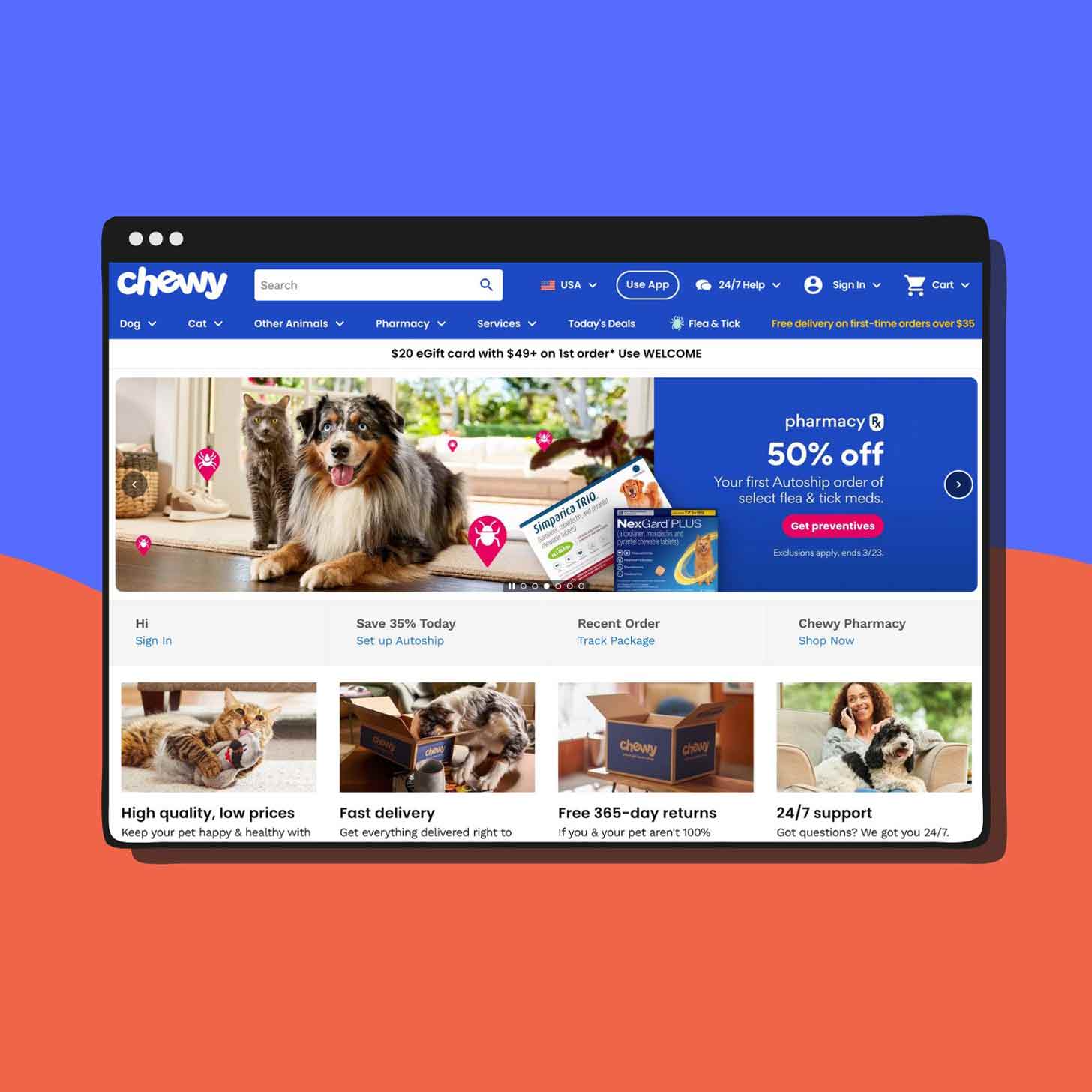
Chewy is the go-to marketplace for all of your furry friends’ needs. With easy subscription options, free and fast shipping on orders over $50, and a reputation for incredible customer service, Chewy’s 3,500+ pet care brands will beat out a boring couple of picked-over pet aisles any day.
Plus, since 2012, Chewy has donated more than $183 million in products for shelter and rescue animals. They partner with shelters and rescues in all 50 states, help facilitate pet adoptions, and make it easy to donate to shelters.
Chewy also offers a number of team member resource groups for employees, including those celebrating BIPOC and LGBTQ+ workers.
The Kind Pet
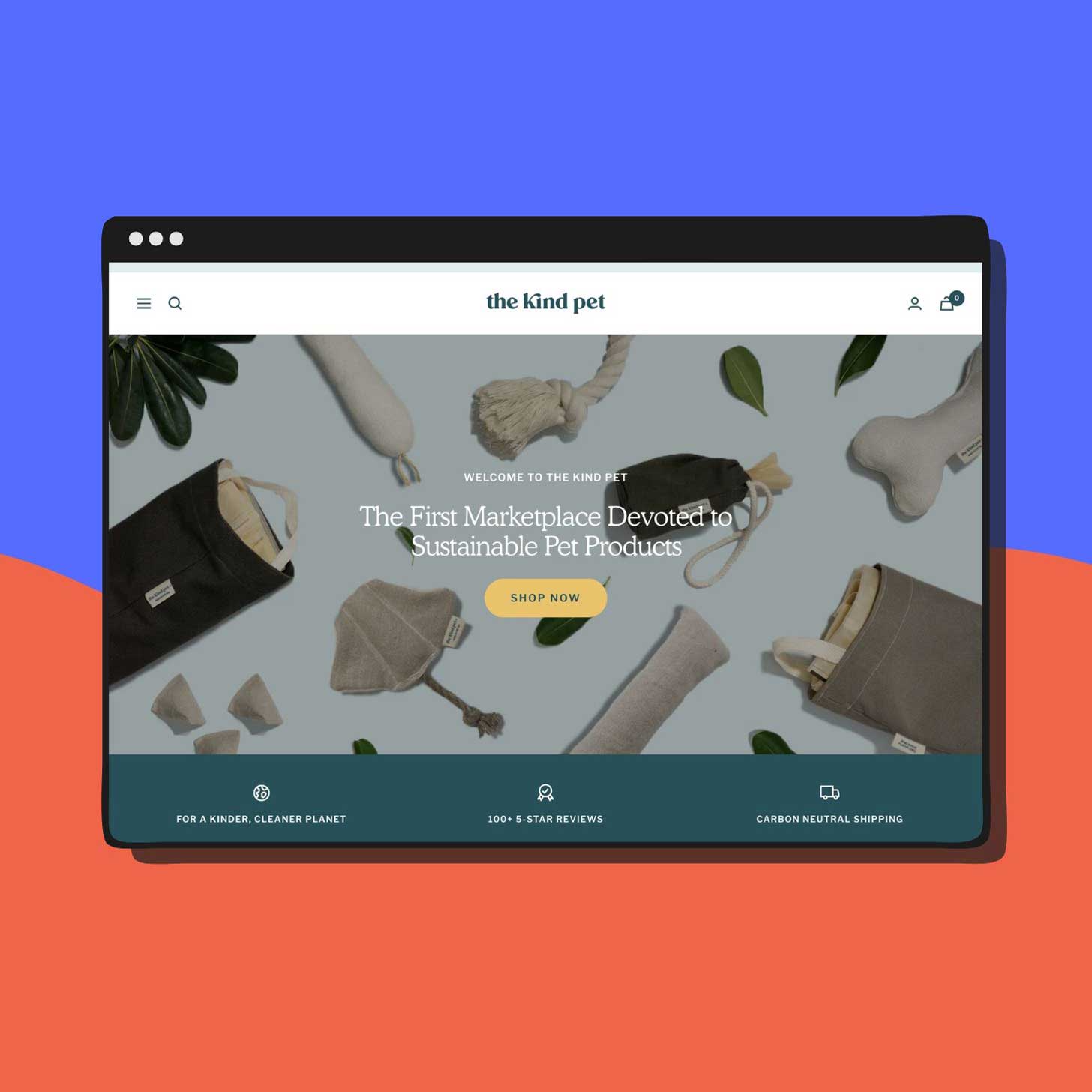
The Kind Pet is an eco-friendly pet store and resource dedicated to reducing your pets' impact on the planet. They offer natural products that are safe for furry friends and the planet, many of which are from BIPOC or LGBTQ-owned businesses.
The women-owned brand also donates a portion of its profits to nonprofit partners like Best Friends Animal Society and Reproductive Freedom For All.
Golf does not have a reputation for being particularly eco-friendly.
With water-guzzling greens, deforestation to construct courses, and the use of chemical fertilizers and pesticides, it can be hard to play a round sustainably.
Not to mention, golf balls themselves can have a major environmental impact, as well. According to reporting from CNN, an estimated 1.5 billion golf balls have been lost in the U.S. every year since 2020.
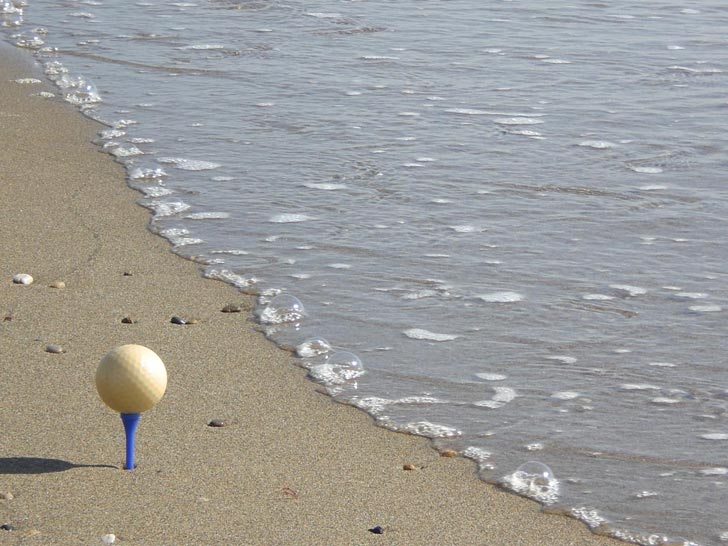
“If those balls were laid in a row, they would extend around the Earth’s circumference more than one and a half times,” CNN explained.
Plus, traditional golf balls often use synthetic materials, like rubbers, polymers, and plastics, meaning that it can take anywhere from 100 to 1,000 years for a golf ball to decompose naturally.
With golf balls mainly ending up in lakes, rivers, and other waterways, this kind of contamination certainly doesn’t help the ocean’s plastic crisis.
So — Albus Golf, a Spanish golf ball manufacturer, came up with a solution.

The company designed the Ecobioball and Ecocoralball, golf balls that dissolve upon contact with water and release fish and coral food within 48 hours.
“I thought it would be great to have a ball that not only does not pollute the waters, but also gives something back,” Albert Buscato told CNN.
The Ecobioball is made of a recyclable plastic polymer, which dissolves completely within 48 hours, revealing a dense inner ball of natural fish food.
The company says the product is “100% safe for marine flora and fauna, manufactured with non-polluting materials and with certifications according to OECD methods for a biodegradable and non-toxic product for fish or marine microorganisms.”
With that in mind, Albus Golf said that the single-use nature of the balls makes them difficult to market to regular players. Nevertheless, the design remains useful for beachfront courses, yacht and cruise decks, or other golf areas close to marine environments.

The Ecobioball weighs just slightly lighter than the average ball, meaning they do not travel as far when they are hit — about 70-80% of the usual distance of a traditional golf ball.
Ideally, they are used during driving practice or over water and aren’t exactly a replacement for competitive golfing.
In fact, Ecobioballs are not approved for use on traditional golf courses, and Albus Golf specifically recommends using them on cruise ships, beaches, piers, hotels, and resorts.
That said, the cost of the Ecobioball is similar or cheaper than the average golf ball, with boxes of 24 or 100 balls clocking in at $58 or $196 respectively.

For recreational players, those who want to be more sustainable during practice, or resorts that offer golfing at sea, these could be a solution to swing for.
“Albus Golf was created out of the wish to protect our planet without having to stop partaking in some of the activities that we enjoy,” the company shares on its website.
“[We] are continually researching and developing innovations to improve our existing products and launch new ones, always based on the principle of respect for the environment.”
Header image courtesy of Albus Golf
According to McAfee, a recent survey found that over 26% of people have been approached by an AI chatbot posing as a real person on a dating app or social media.
“I ignored my gut feeling… I sent him $1,200. Then he disappeared,” One survey respondent, Maggie K., told McAfee in February. “When I reported the scam, the police told me his images were AI-generated. He wasn’t even a real person. That was the scariest part – I had trusted someone who never even existed.”
It’s a concern that spurred the creation of Zepeel — a dating app that promotes real-time video chatting in lieu of direct messages.
When it first launched over a decade ago, it was released to little fanfare, as bigger names like Bumble, Hinge, and Tinder dominated the dating scene.
“Online daters are looking for innovative new ways to meet people without putting themselves or their personal identities at risk,” Shannon Toshack, a public relations manager at Zepeel, said in 2013.
“Zepeel essentially makes it impossible for you to claim to be someone else, ensuring there is legitimacy to whom you are talking to.”
Toshack’s words proved to be eerily prescient 12 years later.
On April 25, Zepeel tried to launch into the public consciousness again, this time with a bold new advertising campaign: “If you’re ugly, be ugly.”
The digital billboard campaign, which popped up in New York City and Toronto, tried to break through to people with a new message: practicing radical self-acceptance for the sake of authenticity in the dating world.
“Forget six-pack abs, chiseled jawlines, and perfectly stenciled brows — Zepeel wants the real you,” Anthony Macri, who spearheaded the campaign, said in a recent press release. “And by ‘real’ we mean the unapologetically imperfect versions of ourselves we’ve been hiding behind filters.”
“We’re tired of everyone sugarcoating things and pretending to be perfect on dating apps,” Macri added. “We want real people to feel celebrated, not swiped past.”

Macri explained that Zepeel uses AI-powered face recognition software to verify users’ appearances to eliminate potential bots and catfish.
If users post photos or videos with filters or Photoshopped editing, the app will flag the offense and immediately prompt them to update their profile or “start fresh.”
“Everyone’s face has unique dimensions,” Macri said. “From your forehead to your nose, your chin to your cheeks, enabling the app to guarantee user’s profile photos match their appearance IRL. Even minor facial changes are detected, preventing singles from using outdated, unrealistic photos, and ensuring a truer-to-life experience.“
“This is about bringing honesty back to online dating, especially when it comes to appearance,” Macri said. “In a world of overly edited photos, being authentic is the best filter.”
Header image via Zepeel
In the hubbub of London’s Camden Town, Oliver Chan thinks a lot about loneliness.
“Loneliness is an important topic for me because my autism can make it harder for me to form connections with other people,” he wrote for Camden Disabled Voices.
“I tend to talk about a specific range of subjects and bring up the same things repeatedly and this can make people not want to interact with me.”
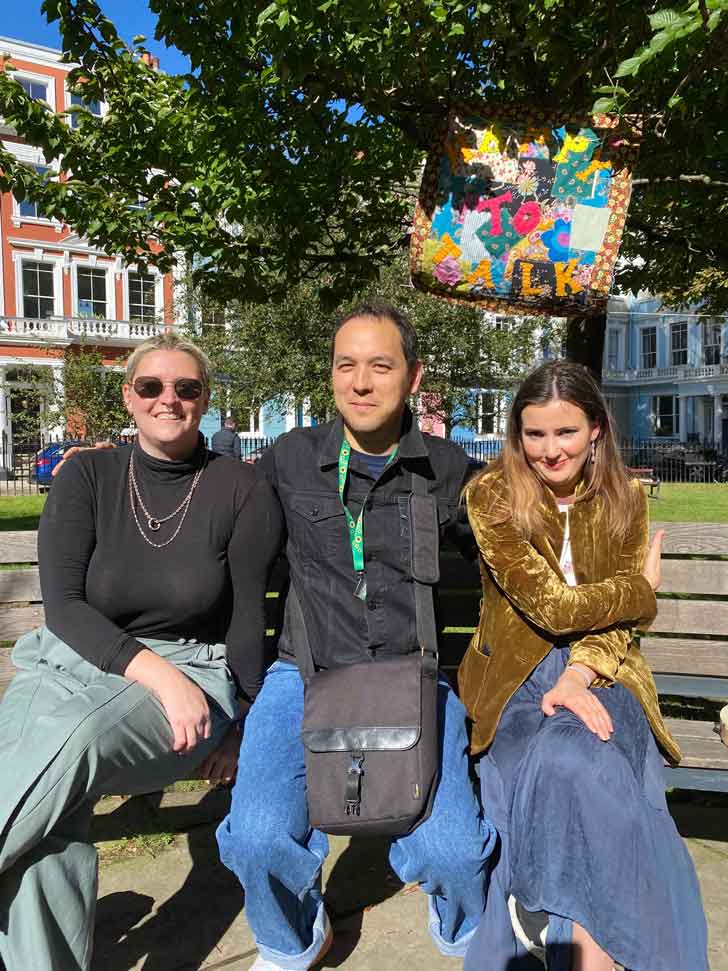
He also struggles with joining in group conversations, with busier places bringing about even more anxiety and loneliness.
“Everyone is rushing around and it seems like no one will notice I’m there,” he continued.
While Chan’s experience with autism might amplify feelings of loneliness, he knows it’s something everyone experiences.
In fact, this became abundantly clear in the wake of the COVID-19 pandemic.
With standard meeting places like pubs and restaurants shut down during the pandemic, Chan stumbled upon an article about “happy to talk” benches, or “happy to chat benches,” as they’re called by Allison Owen-Jones, who started the phenomenon.

The premise is simple: Advertise a park bench with the goal of getting strangers to sit together and talk. Simple as that.
“With all those lonely people out there,” Chan said, “I felt it was important to do something about it … I decided I would try to promote them in Camden.”
In 2022, Chan — who is also an artist — reached out to Camden Council’s park managers to bring the benches to his community.
There are now “happy to talk” benches in four locations in his English town, hopefully with more to follow.

A Camden Council spokesperson told Ham & High: “Connecting with others in the community is an important way to tackle loneliness and boost wellbeing.
“This initiative encourages people to socialize in our open spaces, and we hope to work with community groups to organize events around these bench locations where more people are encouraged to join and connect.”
Chan and his councilmember counterparts invite anyone to take a seat.
The benches have signs on them that read: “Say hi if you’re passing by or sitting down,” and Chan’s mother, Caroline, even crocheted a colorful sign for one of the benches to invite more participants in.
She thinks the benches could be taken up another level to accommodate more seats, adding to Ham & High that she’d be willing to raise funds to make the project grow.
“I just think we can all work together in collaboration,” Caroline said.
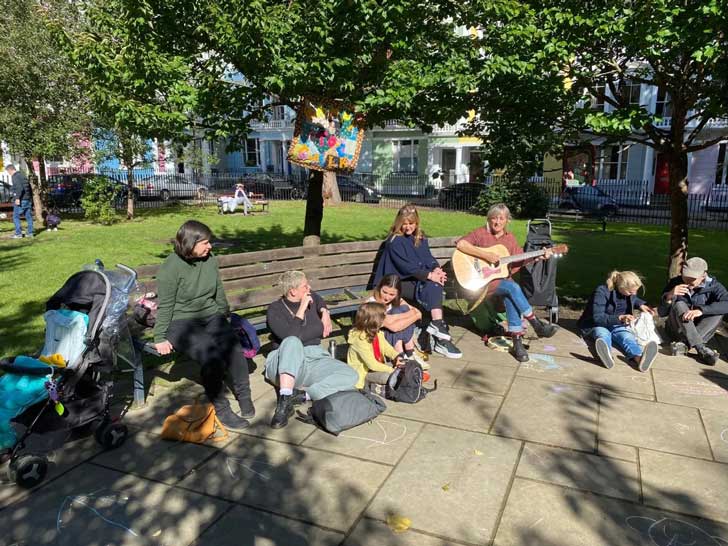
Working together is something the Chans do well. The family also owns a cafe — Oliver’s Village Cafe — where Chan hosts “Chatty Cafe” sessions and bakes cakes to invite strangers to talk in an indoor environment.
While Chan writes that the “Chatty Cafe” scheme has been popular with “the over 60s,” he hopes more of his peers are eager to join in soon, too.
“I find it challenging to make connections with other people,” he wrote in another article for Camden Disabled Voices. “It doesn’t help that in England the culture is insular and people are very reserved. It takes a bit of courage here for strangers to approach each other and become friends.”

For those who are willing to be brave, Chan will meet them when they’re ready.
“If someone was having a bad day, or can’t find a friend to talk to,” he said of his bench project, “it’s there for people.”
Header image courtesy of Caroline Chan
On April 14, 31 Kemp’s ridley sea turtles were safely released back to the Atlantic Ocean as a throng of marine biologists — and hopeful onlookers — cheered.
The release, which happened on the sunny shores of Fort Fisher, North Carolina, was thanks to a coordinated effort between the marine biologists at the New England Aquarium and the Fort Fisher Aquarium.
The 31 turtles — 25 from the New England Aquarium’s Sea Turtle Hospital and six from the New York Marine Rescue Center — were just a small part of a larger operation that had saved nearly 500 stranded sea turtles from November 2024 through January 2025.
Turtle stranding is a growing issue, caused by changing ocean temperatures and extreme wind patterns that force sea turtles up north, leaving them “cold-stunned” — or hypothermic — in the freezing waters of Cape Cod Bay.
It’s a condition that leaves Kemp’s ridley sea turtles, a critically endangered species, grappling with pneumonia and dehydration.
Sammi Chaves, a New England Aquarium rescue biologist, organized transportation from Massachusetts down to North Carolina. The release was only possible due to the aquarium’s four-to-five-month rehabilitation program.
“It is always incredible to watch these turtles become healthy again after being cold-stunned,” Chaves said in a press statement.
“The progress they make from when they first arrive at the New England Aquarium all the way to when they are released on the beach is amazing and really proves how resilient these animals are.”
According to the New England Aquarium staff, their team has a tradition of naming turtles who receive long-term care.
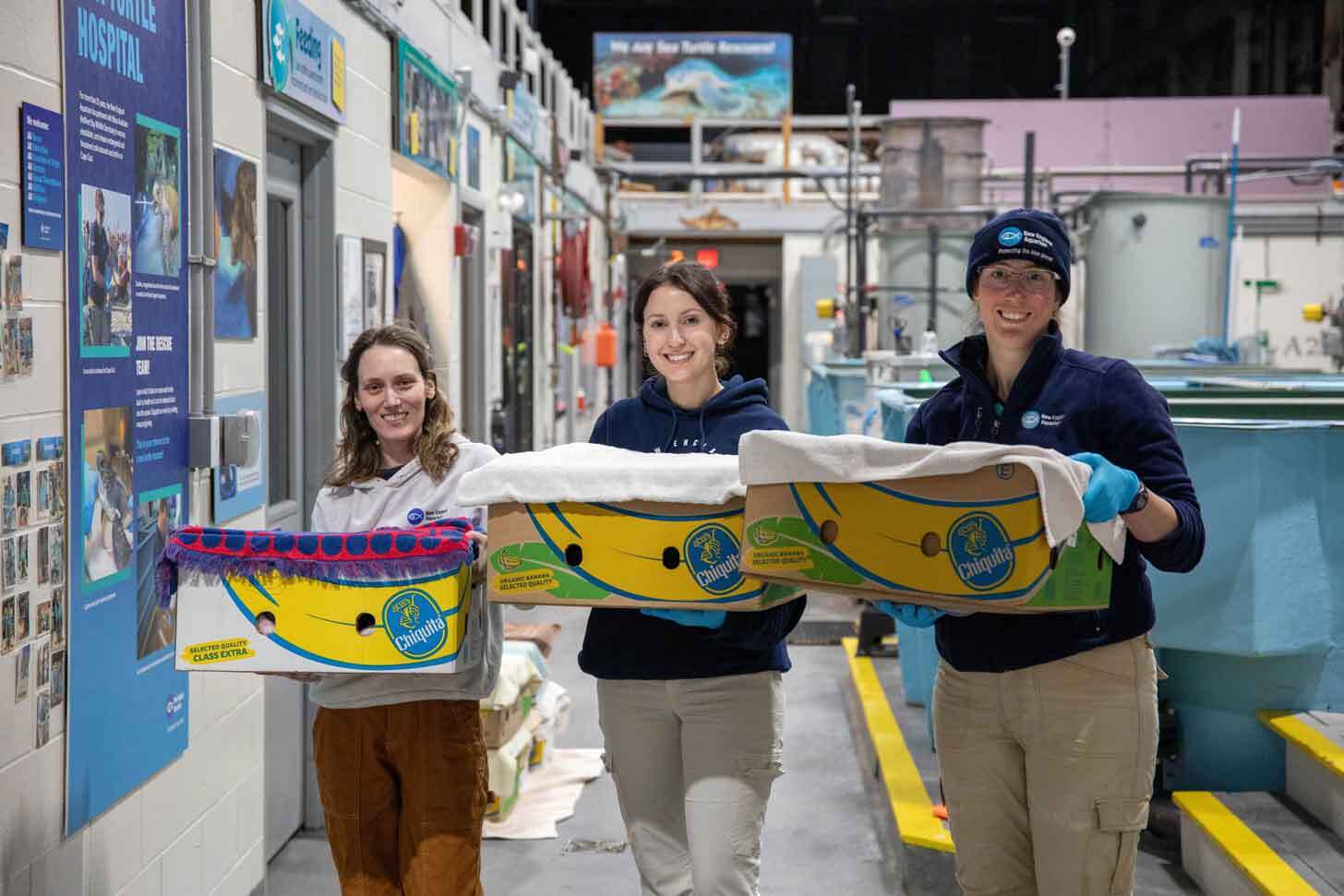
This year, all of the rescued turtles were named after figures in Greek mythology — like Pegasus, “known among staffers for its graceful swimming,” and Linus, “a small turtle with a big appetite.”
There was one turtle in the throng who stood apart from the rest, “Violet,” a turtle that was rescued in 2023 and released in August of 2024 — only to be found stranded again two months later.
When the aquarium released her for the second time on April 14, Violet had a new acoustic tag affixed to her shell so that the team of biologists could continue to track her — and learn more about the Kemp’s ridley’s greater migration patterns in the process.
Another 42 turtles await release at the New England Aquarium facility, destined for the azure waters of the Nantucket Sound later this summer.
“With sea turtle strandings on the rise over the past decade, our rescue, rehabilitation, and research efforts are more important than ever,” said Adam Kennedy, the aquarium’s director of rescue and rehabilitation.
“We have much to learn about these animals, especially the critically endangered Kemp’s ridley, if we are to ensure a viable future for them.”
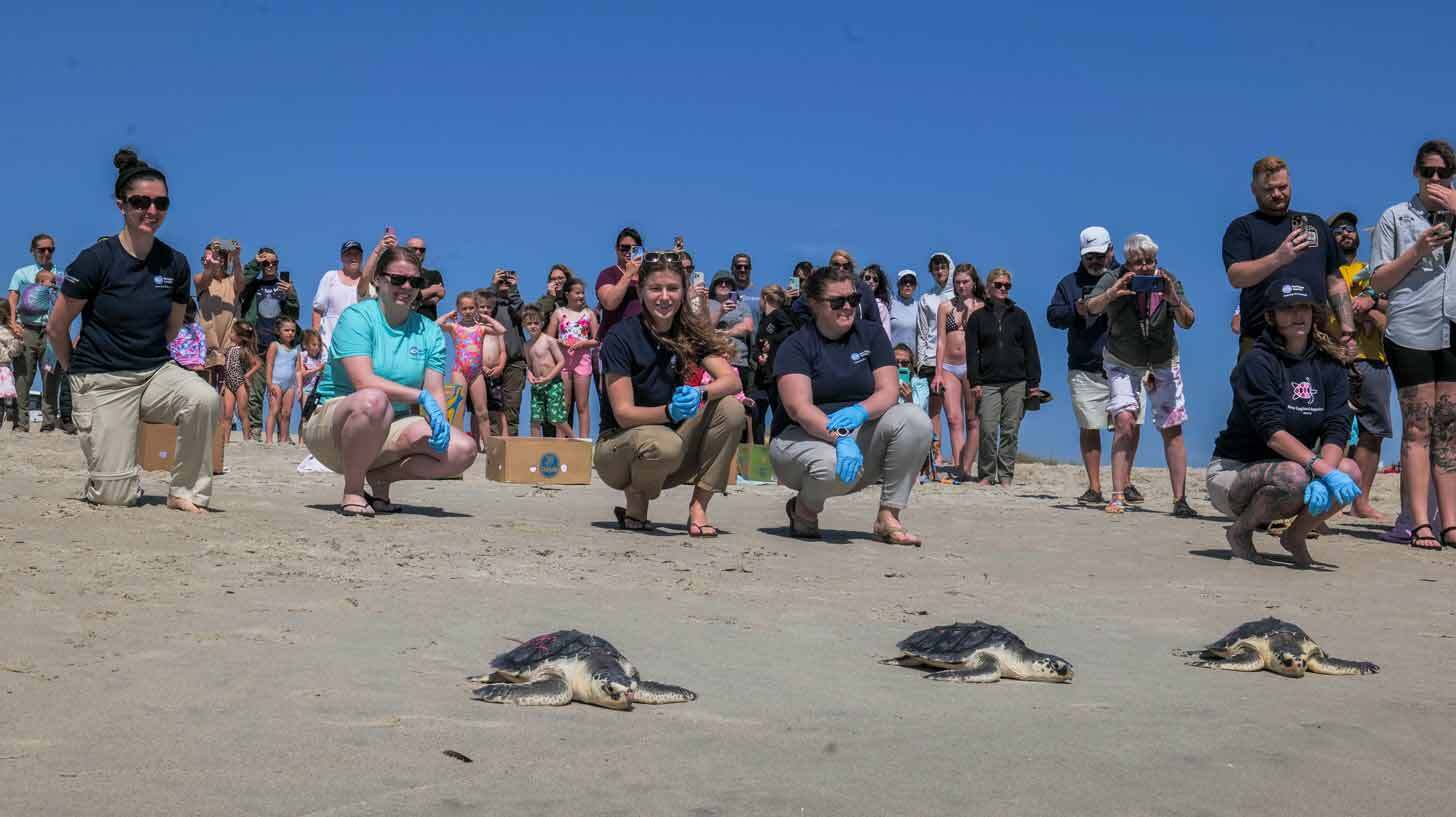
Header image via Vanessa Kahn / New England Aquarium
Every day the Good Good Good team collects the best good news in the world and shares it with our community. Here are the highlights for this week!
If you want to get good news in your inbox every day, join the Goodnewsletter — the free daily newsletter designed to leave you feeling hopeful.
The Best Positive News We’re Celebrating This Week —
Firefighters successfully managed a 60-acre fire that could protect an area of Rocky Mountain National Park for the next decade
Earlier this week, firefighters and forestry technicians set fire to some of Rocky Mountain National Park’s most visited terrain, with more than 60 acres of the park set aflame as part of a prescribed burn.
Prescribed burns are planned fires that are often utilized to manage vegetation, restore natural woodlands, or to research a given area
This particular prescribed fire is part of a larger 1,800-acre area in the park that the NPS hopes to burn within the next five years in order to protect the park and the nearby town of Estes Park from future wildfires.
Why is this good news? Because it’s worked before! When a wildfire threatened that town five years ago, it stopped at a burn line from a previous prescribed burn. Not only do they protect communities, they keep forests and parks “resistant to wildfire and help the ecosystems thrive.”
Not to mention, this is exactly the kind of good national park news we should be celebrating during National Park Week!
Locals defended Jon Bon Jovi's ‘pay it forward’ cafe after mayor tries to shut it down
→ Read more
Endangered sea turtle populations are showing signs of recovery in more than half of the world
A new global study found that endangered sea turtles are showing signs of recovery in a majority of places where they are found in the world. Experts say it’s a “real conservation success” story.
Scientists studied 48 populations of sea turtles, measuring the impact of threats like hunting, pollution, coastal development, and climate change. In more than half the areas they studied, those threats are declining overall. Still, sea turtles getting entangled in fishing nets remains a major threat globally.
The only species not recovering as well as the others was leatherback turtles, which are vulnerable to extinction globally. All seven areas where they are found in the world still face high environmental risks.
Featuring 300-year-old trees, a wildlife refuge along the Detroit River was recognized as old-growth forest
The Old Growth Forest Network has officially recognized 32 acres of old-growth forest within the Detroit River International Wildlife Refuge, which contains trees estimated to be 300 years old.
The newly designated area is part of Humbug Marsh, which is considered the last undeveloped mile of the Detroit River along the U.S. mainland.
The network now has its sights set on the rest of the state, aiming to recognize and preserve one old-growth forest per county in Michigan — as well as ancient forests across the U.S.
Why is this good news? Old-growth forests store much more carbon than young tree saplings, so finding and preserving them is a critical part of fighting climate change. Plus, the recognition raises awareness for old-growth forests, helping people appreciate and enjoy the feats of nature.
In a new Earth Day TED Talk, environmentalist Xiye Bastida shares her ‘blueprint for climate hope’
→ Read more (and watch!)
A federal judge ordered Florida to address water pollution that led to a record number of manatee deaths
In 2021 and 2022, nearly 2,000 manatees died in the state of Florida, a two-year record caused by widespread water quality problems that killed seagrass, starving the “sea cows.”
Now, a federal judge has ruled that Florida’s wastewater discharge regulations violated the Endangered Species Act by failing to control nutrient pollution in the Indian River Lagoon, one of the most biodiverse estuaries on the continent.
The ruling instructs the state to develop a plan to address the pollution that caused the unprecedented die-off of manatees and restore the ecosystem.
Why is this good news? Accountability for law-breaking matters, and this precedent helps make sure that would-be polluters know there will be consequences for it. It also puts the responsibility for cleaning up the mess where it belongs: on the original perpetrator.
Plus, protecting critical ecosystems that support threatened species like manatees is important, and letting them — or worse, causing them to — suffer, negatively impacts all of us.
→ Read more
A teen invented an app that slashes DMV wait times and increases access to ‘essential services’ — it saved people 10 years of wait time in just 3 months
Reaffirming her commitment to the rights of children, Ms. Rachel donated 2 million meals to the World Food Program
Earlier this month, the Trump administration ended millions of dollars in funding to the United Nations World Food Program, specifically targeting programs that keep millions of people fed — and alive — around the world.
Amounting to “a death sentence for millions of people facing extreme hunger and starvation,” one notable public figure is doing her part to close those funding gaps and make sure children and families have food to eat.
Children’s entertainer, educator, and activist Rachel Accurso — or as she’s more commonly known, Ms. Rachel — and her husband, Aron, donated $1 million to the UNWFP, helping it “provide 2 million lifesaving meals to those who need it most.”
→ Read more
Two first-year teachers are biking across Vermont to raise money for classroom necessities and support immigrant students
Earlier this year, Tennessee lawmakers introduced a bill (SB836) to the state’s legislature that would give the state’s public schools the right to refuse enrollment to undocumented children.
While the bill is dead (for now), two first-year teachers in Chattanooga — Grace Miller and Kate Livesay — said they couldn’t “sit and do nothing” when they heard about it.
Together, they founded Pedals for Pencils. Their mission is to bike 300 miles across Miller’s home state of Vermont while raising funds to buy essential supplies for their classrooms and support and advocate for migrant students.
Why is this good news? In the United States, educators spend an average of $500-$750 out of their own pockets to pay for classroom supplies every year. Not only does this initiative raise actual money — it helps raise awareness about that reality beyond their own classrooms.
Plus, it’s a creative way to protest harmful legislation that excludes students and dismantles the very foundations of public education.
A man trekked 53 miles in a giant handmade costume to raise awareness and funds for an endangered bird
→ Read more
A Wisconsin community rallied to support a local food truck owner after his criminal past threatened an NFL Draft opportunity
The NFL Draft starts today in Green Bay, Wisconsin, and Marc Luecke, owner and operator of the Harvest Street Food Truck for nearly three years, was thrilled to be selected to be a vendor at the annual festivities.
After purchasing thousands of dollars worth of food, equipment, and supplies, Luecke found out his application was denied after he failed a background check related to his past struggles with substance abuse.
With nine years of addiction recovery, Luecke was no longer one to give up. He reached out to community leaders for letters of recommendation — and they delivered. With letters from neighbors commending his dedication to his work, family, and community, the denial was overturned.
The outpouring of support inspired Luecke to go a step further, too: he’s donating a portion of his draft profits to Amanda’s House in Green Bay, a nonprofit that supports women in recovery.
→ Read more
Maryland has now become the first state to reach its pledge to protect 30% of the state’s land — six years ahead of schedule
Part of a global initiative to protect 30% of the Earth’s land and waters by 2030, nine U.S. states joined the “30 by 30” effort on a local level — and Maryland just met the landmark conservation goal six years early.
Maryland joined the effort in 2023 and achieved it just one year later, permanently protecting 1.9 million acres of land from development — including a one-acre fish hatchery, the Green Ridge State Forest, shorelines, farms, and wooded areas.
And it’s just getting started: The state has set a new target to conserve 40% of its land by 2040.
Why is this good news? Research shows that nature conservation really works in protecting biodiversity and ecosystems — it also has bipartisan support at the state level. Maryland was able to reach its target sooner than expected thanks to the collaboration of federal and state agencies, nonprofit groups and land trusts all sharing the same goal.
→ Read more (Gifted link)
A huge 89% majority of the world’s population want to see more being done to fight climate change — but believe they are in the minority
New data from a global survey is clearing up a major perception gap when it comes to the climate crisis. Research shows that 89% of people in the world want stronger action from their government to fight climate change — but mistakenly believe they are in a minority.
Additionally, in almost all countries, a majority of people were willing to contribute 1% of their household income monthly to fight climate change — and once again, they also mistakenly believed that a minority of their fellow citizens would do the same.
Experts say that making people aware that their view is by far the majority — could spur a positive tipping point and push leaders into taking more urgent action.
More good news of the week —
Lawmakers in Colorado unanimously approved a memorial sculpture for the 1864 Sand Creek Massacre at the State Capitol. The massacre is possibly the worst atrocity in Colorado history: About 250 Arapaho and Cheyenne civilians, mostly women, children, and the elderly, were killed by U.S. troops along Colorado’s eastern plains, near the modern-day town of Eads.
A Cleveland, Ohio housing initiative got over 150 unhoused people into housing a full year ahead of schedule. The “A Home for Every Neighbor” initiative looked to reduce homeless encampments around the city by connecting unhoused neighbors with landlords willing to accept them as residents, and the city covered rent for 12 months.
In a huge step toward protecting the endangered animals, China removed pangolin medicine from its 2025 pharmacopoeia. Pangolins are protected under the highest level of international and domestic conservation laws, and while this removal does not constitute a ban on sale or production, it makes it harder to promote and prescribe.
EU countries and lawmakers agreed to ban hazardous “forever chemicals” from children’s toys. While it still needs to be adopted by member countries, the action addresses the impacts of PFAS, which chronic exposure to has been linked to liver damage, high cholesterol, reduced immune responses, cancers, and more.
Nick Offerman is giving people the chance to go on a hike with him while raising money to protect the great outdoors. For a donation to the Natural Resources Defense Council, someone will win a hike for two in Los Angeles with Offerman, a self-described “notorious knucklehead who loves to walk out of doors” — a dream scenario for a Pawnee Ranger.
Rocky Mountain Arsenal National Wildlife Refuge is expecting around 40 new baby bison to be born this spring. Once millions strong, by 1889, free-ranging bison numbers dwindled to almost zero and ushered in a century of bison-less Great Plains and natural habitat, grassland, other animal populations, and Indigenous communities all suffered.
One week after a man went viral when no one came to his community beach clean-up, over 30 neighbors showed up to help. Instead of calling it quits when nobody showed up, Harvey stuck it out, documenting his slow-and-steady approach to cleaning up litter along the driftwood-dotted sands of Kitsilano — and it led to a huge show of support at the next one.
Despite Trump administration orders, a coal-fired power plant in Colorado is still set to shut down this year. Tri-State Generation plans to close another two coal-fired units by 2028, largely because of how much cheaper renewable and other sources have become, pushing coal production out of economic viability.
A colossal squid was captured on camera for the first time in the deep sea. Filmed in the South Atlantic Ocean, the squid was a juvenile about 1 foot in length, but full-grown adult colossal squids can reach lengths up to 23 feet — almost the size of a small fire truck.
A free, three-week “Coding for Climate” program is teaching students to develop climate solutions. Tapping into young peoples’ love for gaming and coding, students in the program have used Minecraft to design a city that runs on clean energy, learned HTML code to create websites with climate information, or programmed devices to monitor soil moisture.
The Ocean Cleanup recently announced that it can clean up the Great Pacific Garbage Patch in five years. Also focused on preventing new plastic from reaching the ocean in the first place, the organization’s new ocean cleanup technology measures about 1.5 miles in length and cleans up an area of the ocean the size of a football field every five seconds.
A community in England is trying to purchase a forest and waterfall to prevent it from being sold to a private owner. Featuring a 20-foot waterfall, Goit Stock Wood has now been designated as an Asset of Community Value by Bradford Council, giving local supporters a six-month window to raise money to buy the site themselves and protect it for future generations.
Four critically endangered Galápagos tortoises hatched at the Philadelphia Zoo for the first time in its 150-year history. The four hatchlings were born to first-time parents Abrazzo and Mommy, who has lived at the zoo for 93 years. It’s estimated there are only a few thousand of the tortoises remaining globally.
In just its second season, the Professional Women’s Hockey League is breaking records and growing the game for young girls. The league just held its first-ever “Breakthrough Cup” tournament with more than 600 girls competing, has attendance at games up almost 35%, and officially hit its one millionth fan just 14 months into its existence.
After years of homeowner advocacy, West Sacramento approved an ordinance to make “tiny homes on wheels” legal dwellings. The vote was unanimous, and the city’s mayor credited the passionate advocacy of one tiny homeowner and a group of supporters who pushed for the change, calling it a “huge win for housing choice, community, and the future of West Sac.”
Researchers discovered a “treasure chest” of thermoresistant “super-corals” that can survive extreme heat stress. The warming of seas and oceans, primarily driven by human-amplified climate change, has contributed to the death of large areas of coral reefs right across the globe, putting fragile underwater ecosystems at risk.
Playing against rival California, Stanford’s softball team just set an NCAA attendance record with more than 13,000 fans. The teams played in Stanford’s football stadium and surpassed the mark of 12,566 from the first day of the 2024 Women’s College World Series, and the previous regular-season record had been held by Oklahoma, which drew 9,259 fans earlier this month.
The waiting list for a housing voucher program in Oregon opened again for the first time in two years. Helping address skyrocketing rent prices in the state and throughout the country, Home Forward will award vouchers to qualifying tenants for more than a dozen low-income apartment complexes.
Colorado passed a bipartisan bill requiring medical research animals to be put up for adoption before they are euthanized. Helping ensure the animals are “valued for their service and given the opportunity to find a forever home,” the bill requires facilities to submit an annual report to the Department of Public Health and Environment.
Researchers created a 3D-printed seawall in Miami to protect marine life from coastal erosion. While traditionally constructed seawalls disrupt natural shoreline dynamics and can wipe out the complex habitat zones that marine life relies on, this one is specifically designed to help them continue to thrive.
The world’s largest electric vehicle battery producer unveiled a battery that go 320 miles on a 5-minute charge. The new battery beats out the previous longest-range battery which boasted 250 miles in a 5-minute charge, both way ahead of Tesla Superchargers that deliver 200 miles of range in a 15-minute charge.
A once-extinct bird species just laid the first wild eggs in 40 years. Nine Sihek, also known as Guam kingfishers, were released at the Nature Conservancy’s Palmyra Atoll Preserve in September 2024 by the Sihek Recovery Program, a collection of conservationists from around the world dedicated to the preservation of the bird species.
A tree nursery renovation will help revitalize Colorado forests devastated by wildfires and climate change. Established in 1957, the nursery is one of Colorado’s leading producers of low-cost, native seedling trees, but aging facilities have struggled to keep up with increasing demand fueled by wildfires, floods and the effects of climate change.
This story was originally published by Grist. Sign up for Grist’s weekly newsletter here.
Last year, the Boston Community Solar Cooperative announced plans for its first community solar project: 81 kilowatts of panels atop an affordable housing complex in a low-income, historically Black Boston neighborhood. The success of the project depends, in large part, on tax credits the Inflation Reduction Act established in 2022.
Because the solar panels will sit on a subsidized apartment building in a low-income community, up to 50% of the project’s cost could ultimately be recouped through tax credits. But, in all likelihood, once the project’s completed, the Boston Community Solar Cooperative won’t actually receive those credits — and that’s by design.
Instead, the cooperative intends to sell its tax credits as soon as it can, said Gregory King, the organization’s president. This will bring in more cash early on, reduce the amount of debt required, and improve the financial outlook of the project.
In the past, a scheme like this would have required whoever purchased the credits to retain an ownership stake in the project for at least five years — an unthinkable prospect for a cooperative that aims to provide its member-owners, primarily Black and brown residents of disinvested areas of Boston, with a modest passive income from the energy generated by the panels.
But the Inflation Reduction Act, or IRA, not only revamped old tax credits and introduced fresh ones, it also made these credits transferable. In other words, anyone developing a clean energy project who didn’t have enough tax liability to take full advantage of the tax credits could sell them to a company that did, without ceding ownership.
This change has enabled countless clean energy projects to get off the ground. Wind farms, geothermal plants, large-scale battery facilities, electric vehicle charging banks, manufacturing projects, and even mining operations for critical minerals have all taken advantage of the tax credits markets that emerged and matured in just a year and a half after transferability went into effect.
Crux, one of the companies that built a platform to facilitate tax credit transfers, estimates that $24 billion worth of IRA-related credits were exchanged in 2024 alone.

“Before the IRA passed, it was very difficult for a lot of renewable energy developers to take full advantage of the tax credits,” said Charles Harper, a senior policy lead with the climate advocacy nonprofit Evergreen Action.
This is because tax credits work as a form of discount on a business or individual’s annual tax bill, allowing them to cut a chunk out of what they owe the government based on the dollar value of the credit. This can save a lot of money — if you owe enough taxes in the first place. “Tax credits are only good if you have enough tax liability that you owe the government to remove,” Harper said.
The IRA made it easier for project developers without major tax liabilities, like the Boston Community Solar Cooperative, to sell their credits at a discount before breaking ground on a solar or wind project.
This allows the developers to bring in much-needed cash to pay for equipment and labor. Meanwhile, buyers — which can include banks, companies, and even some high net-worth individuals — get an additional write-off on their own hefty tax statements.
It was technically possible to shift tax credits from one entity to another before the IRA, but the process was complicated and onerous, meaning very few players had the appetite to sell or buy credits.
“The largest banks make up the overwhelming share of that market,” said Alfred Johnson, CEO of Crux. This limited how many developers could actually sell their tax credits and often made the deals inaccessible to small developers and community-based projects.
“Transferability was a godsend in many ways, because it simplified the process,” said Derek Silverman, co-founder of Basis Climate, another site for trading tax credits.
Before a clean energy developer can list a credit for sale on an exchange like Crux, they must first get their credits pre-approved by the Treasury Department.
To do so, they need to submit paperwork showing that they control the site where the project will be developed and that they have a contract with a customer who will purchase the electricity once it’s flowing.
The process isn’t frictionless, but it’s no longer as difficult as it was before the IRA.
Now, instead of navigating complex legal agreements to move tax credits from developer to investor, “it’s like going and buying a Walmart gift card for 85 cents on the dollar,” said Jon Abe, CEO of the clean energy investment firm Sunwealth, “but with a lot more paperwork.”
That 85-cents-on-the-dollar discount is what attracts buyers to these markets. On Crux’s platform, the actual per-dollar markdown shifts based on the size of the transaction, from 89 cents or less for the smallest deals to 95 cents for the largest.
But even if the developers of smaller projects sell their tax credits for a deeper discount, it can still make a pronounced impact.
Based on King’s estimates, Boston Community Solar Cooperative could bring in around $150,000 from its tax credit sales. And last year, Basis Climate helped the solar service provider Navajo Power Home sell credits for $355,000 to support a project that is bringing solar and battery systems to Navajo Nation and providing electricity to more than 100 homes that would otherwise have to rely on diesel generators.
“Solar is pretty capital-intensive. So to the degree that you could use someone else’s money and not have to take on debt to bring that capital to your project,” King said, “you’re much more likely to have projects that pencil,” or make financial sense.

In addition to making material improvements in disadvantaged communities, the transferable tax credits have spurred private investments that create jobs and expand domestic manufacturing, all while helping big businesses lighten their tax load.
Yet these tax credits are under threat as congressional Republicans work through budget reconciliation, a special legislative process that allows Congress to fast-track spending legislation and bypass the Senate filibuster. (The IRA itself was adopted through budget reconciliation.)
Right now, the main priority for Republicans in this process is extending tax cuts worth $4.5 trillion over a decade that would primarily benefit the wealthy, and reducing federal spending by at least $1.5 trillion to make up some of the difference.
It’s not yet clear what might get cut, but the IRA tax credits are being considered. In February, House Speaker Mike Johnson told reporters that his approach to repealing the IRA would “be somewhere between a scalpel and a sledgehammer.”
But an estimated 85% of IRA-related investments have flowed into Republican districts, inspiring four Senate Republicans to come out in favor of the tax credits this month.
This came after nearly two dozen House Republicans co-signed a letter in March in defense of the law’s tax provisions. “If at least a handful of those 21 House members are serious about protecting investment and jobs in their districts that the [IRA tax credits] are providing,” said Harper, “then that would be huge.”
Correction: This story originally misidentified the tax credit exchange Crux.
Header Image by Kindel Media on Pexels
While “cottagecore” trends and aesthetics circulate social media, romanticizing the rural life of yore, developer Bruno Schickel has actually brought a cottage community to life in the modern-day town of Caroline, New York.
The development is home to 140 charming, colorful tiny home cottages on a 40-acre lot. Its design, while quaint and adorable, has one specific purpose: to help neighbors get to know each other.
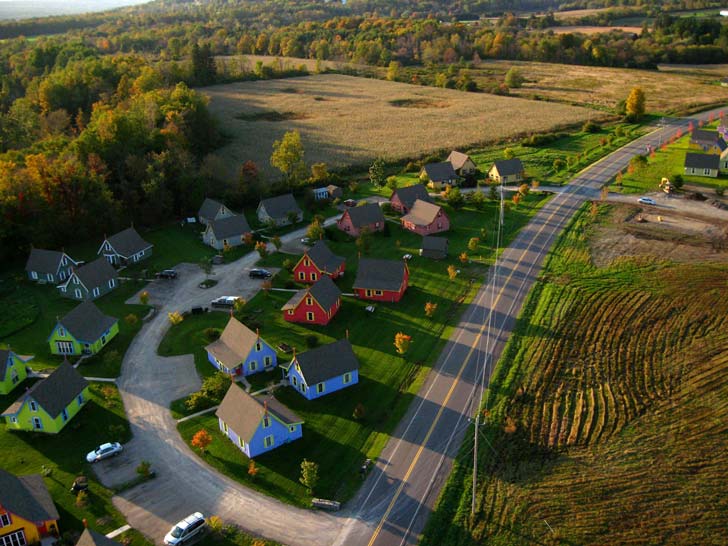
They’re called the Boiceville Cottages, and they range from 540 square feet to 1,100 square feet. Models include studio apartments, tiny homes, one-bedroom lofts, and three varying sizes of two-bedroom homes.
Rent starts at $1,545 a month, and the community is inspired by an actual storybook.

Schickel has long been a general contractor, building and renovating single-family homes. But in the late 1990s, while reading a children’s book called “Miss Rumphius” to his daughters, they were all enamored by its illustrations.
“In this book, there are beautiful illustrations of this little gothic gingerbread cottage on the coast of Maine, and the village where she would bicycle through and plant her lupines,” Schickel told The Daily Mail in 2023.
“It really was inspiration for me to design and create something that looked like that.”
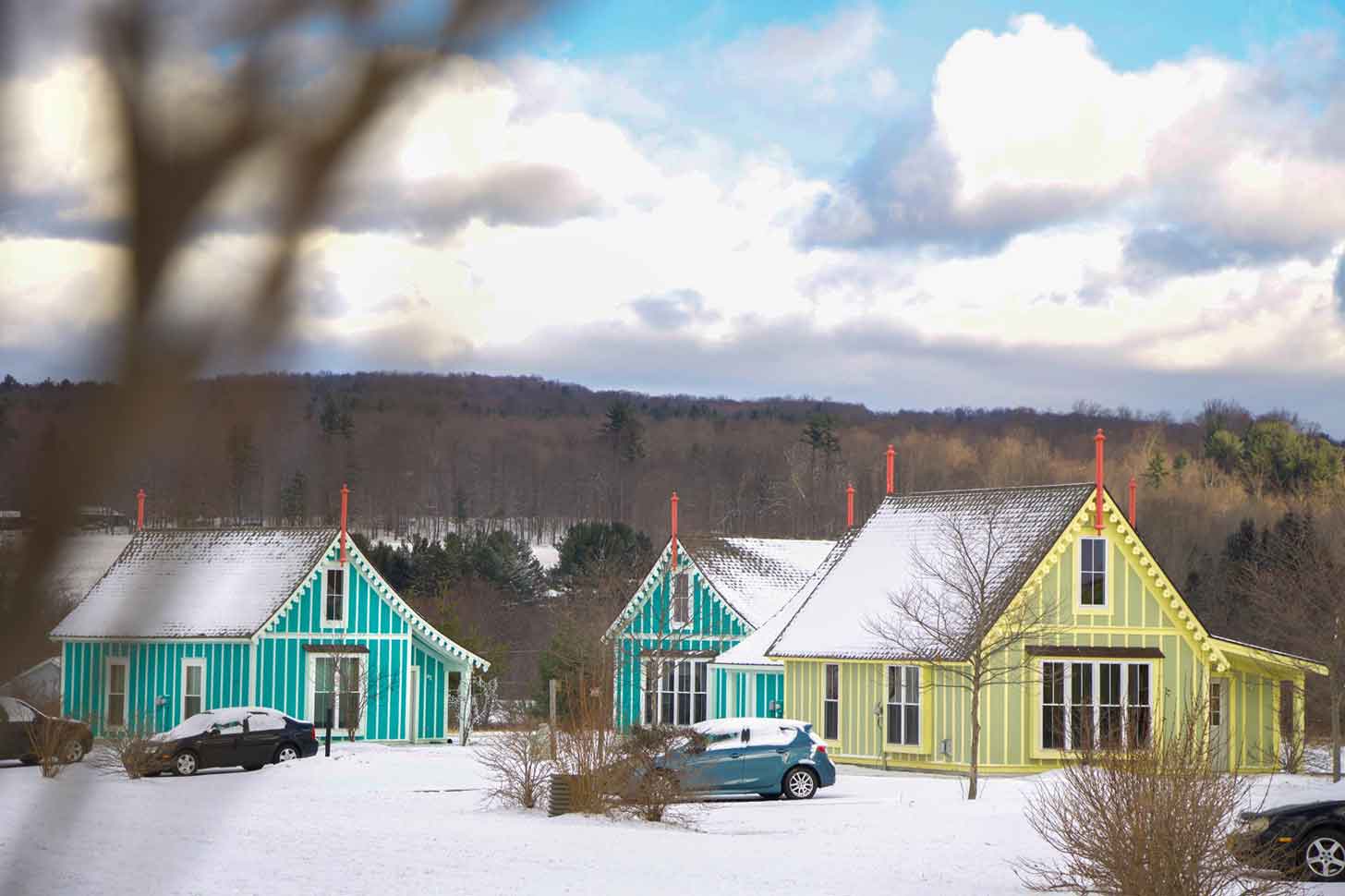
He started with a few rental cottages in the storybook style, nearly three decades ago. And now, it’s a whole little village.
“The more I built, the better people liked them,” Schickel told Fast Company this year. “It was an interesting dynamic, because originally people were drawn to the fairy-tale cottage. And then people started being drawn to the community that was created.”

Placed strategically in clusters of three, the cottages are awash with community. They aren’t excessively close together, so people have enough privacy, but every day, they’re still bound to run into each other.
There are book clubs, yoga classes, and art markets, and that’s just what’s listed on the Boiceville Cottages’ Facebook group. A flexible pet policy is enacted, and a dog park exists on the property, along with a community “meeting house” available for free communal events.

“My husband and I lived in one of the original cottages for a little over a year, and it is still my favorite place that I’ve lived,” former resident Megan D. shared in a testimonial on the property’s website.
“Our son had his first birthday there. His first head first dive out of the crib, his first steps on the sidewalk out front. Two of our best friends lived right next door and we could talk and laugh through the windows.”

Megan went on to write about how she made friends with neighbors and took care of a “sweet elderly lady” who lived on her own.
“[It was] like we had our own little utopia that I never wanted to leave,” she concluded.
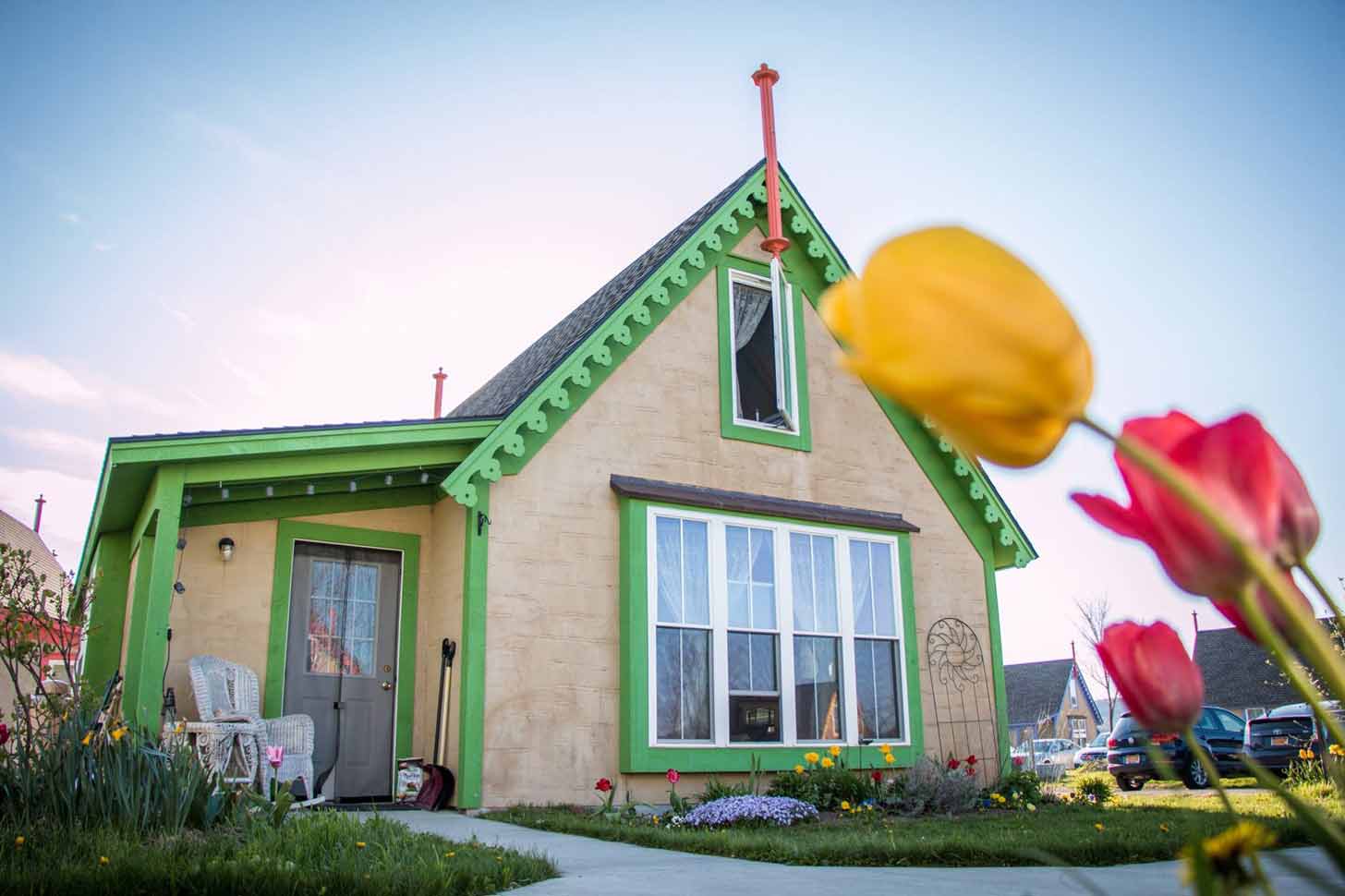
The cottages are in a relatively rural area, near Ithaca and Cornell, but there are winding roads that make both driving and walking feel safe, as well as a bus stop for car-free residents.
The idyllic community, according to Schickel, was possible because of Caroline’s zoning laws — or lack thereof.

“The one reason why I ended up building there was because there was no zoning in Caroline,” Schickel told Fast Company. “I am a guy who thinks zoning, by design, just chokes off innovation, creativity. It creates uniformity.”
Schickel has built two similar cottage communities in other small towns, which then tried to pass a zoning law after the project had been built.
“There’s a complete discrimination against rentals,” Schickel said. “And there’s a discrimination against small [houses].”
But the love people have for these cottage communities — and their good neighbors — makes a compelling case for more of them.

Small businesses built nearby boost local economies, and the size of the homes is practical in a country where rent prices and housing shortages loom large.
Plus, above all, people are looking for community. And they can find it at Boiceville Cottages.
“This tiny house community is instantly welcoming,” resident Lori W. said in a testimonial. “It’s a place where you make friends (human and animal) for life.”

Boiceville Cottages boast a 98-100% occupancy rate year-round.
“It's an incredible community,” Schickel told The Daily Mail. “And people absolutely love living there.”
Header image courtesy of Boiceville Cottages
Forget the flowers, spa appointments, and jewelry this Mother’s Day.
In eight cities across the United States, moms can get free access to rage rooms, designed to help them let off some steam.

The campaign is, ironically, led by Calm, a mental health company best known for its in-app guided meditations.
“At Calm, we know moms aren’t calm,” the company’s VP of Brand, Blake Beers, said in a statement.
“They’re light on sleep, heavy on the mental load, and always on. Real mental health support isn’t about silencing the chaos — it’s about making space for it.”
Through its Not Calm Moms initiative, the brand is sponsoring community “rage room” events in New York City, Denver, Houston, Los Angeles, Miami, Minneapolis, Nashville, and Seattle.
After filling out a simple form, moms in these cities will receive a gift certificate to cover a rage room experience for them and a few friends.
As comedic as it may seem, Calm emphasized the real science behind the initiative, and emphasized that moms don’t need “calm” — but rather, community.

“Research shows that when mothers feel seen, supported, and valued, they become the steady, resilient presence their children need,” said journalist, author, and Calm partner Jennifer Wallace.
“We all know kids need strong, dependable adults to thrive — but we rarely talk about this: sturdy adults need other sturdy adults, too. Yet, mothers are sold the myth that they must do it all alone. Not Calm Moms challenges this damaging narrative and offers something far more powerful: real community and support.”
In these sponsored rage room events, participants will have the opportunity to smash breakable items, listen to loud music, and scream in cathartic release.
“Sometimes, release looks like a sledgehammer, not a spa day,” Calm shared in a statement. “Research shows short bursts of expression can lower stress hormones and boost emotional resilience.”

Even comedian Ilana Glazer — known for her leading role in “Broad City” and the mom-com movie “Babes” — is getting in on the action. The actress led the first rage room event in New York City, joining other moms in what Calm calls “moments of honest release.”
“Motherhood cracked me open in ways I didn’t expect. Some days I’m holding it down like a boss; other days I’m just holding on! What keeps me grounded isn’t some perfect routine; it’s the people who remind me I don’t have to do it all alone,” Glazer said in a statement.
She added that through Not Calm Moms, “we’re going to build a space where moms can show up messy, in all of our different feelings, and feel supported.”
For moms — which Calm emphasized includes anyone who identifies with the term “mom” — who don’t live in these rage room-friendly cities, Calm will also be offering free in-app resources, led by social media personality Caitlin Murray (@BigTimeAdulting).

These include a Moods Menu, Moments of Calm narrated by Murray and Wallace, a new Reddit community for peer support, and more. The app will also offer playlists for DIY at-home rage sessions, and digital mantra cards especially designed for overwhelmed moms.
With an estimated 17 million millennial moms who face growing rates of postpartum anxiety and the modern, daily pressures of parenting and working, the app hopes to be a long-term resource.
“Being a mom has been the most fulfilling — and the most exhausting — experience of my life. It really does take a village,” California Surgeon General Dr. Diana E. Ramos said in a statement for the initiative.
“Every mom deserves support, love, and the reassurance that it’s okay to need help, especially when it comes to mental health. What matters most is knowing you’re not alone. Let’s break the stigma and uplift each other — because when we support moms, we help their babies and families thrive.”
Sign up for a free rage room experience by visiting Calm’s website or filling out this form.
Header image courtesy of Calm
With record-high temperatures likely to sweep the globe this summer, access to cool air will be vital. But cranking the air conditioning increases energy use and can be both environmentally and financially devastating.
Scientists from Nanyang Technological University Singapore, in partnership with biomimicry design firm bioSEA, have turned to elephants for the solution.
“Elephants are large animals that live in hot and sometimes humid tropical climates,” Dr. Anuj Jain, the founding director of bioSEA, explained in a statement.
“To withstand the heat, elephants evolved to develop a skin that is heavily wrinkled which increases water retention and cools the animal by evaporation.”
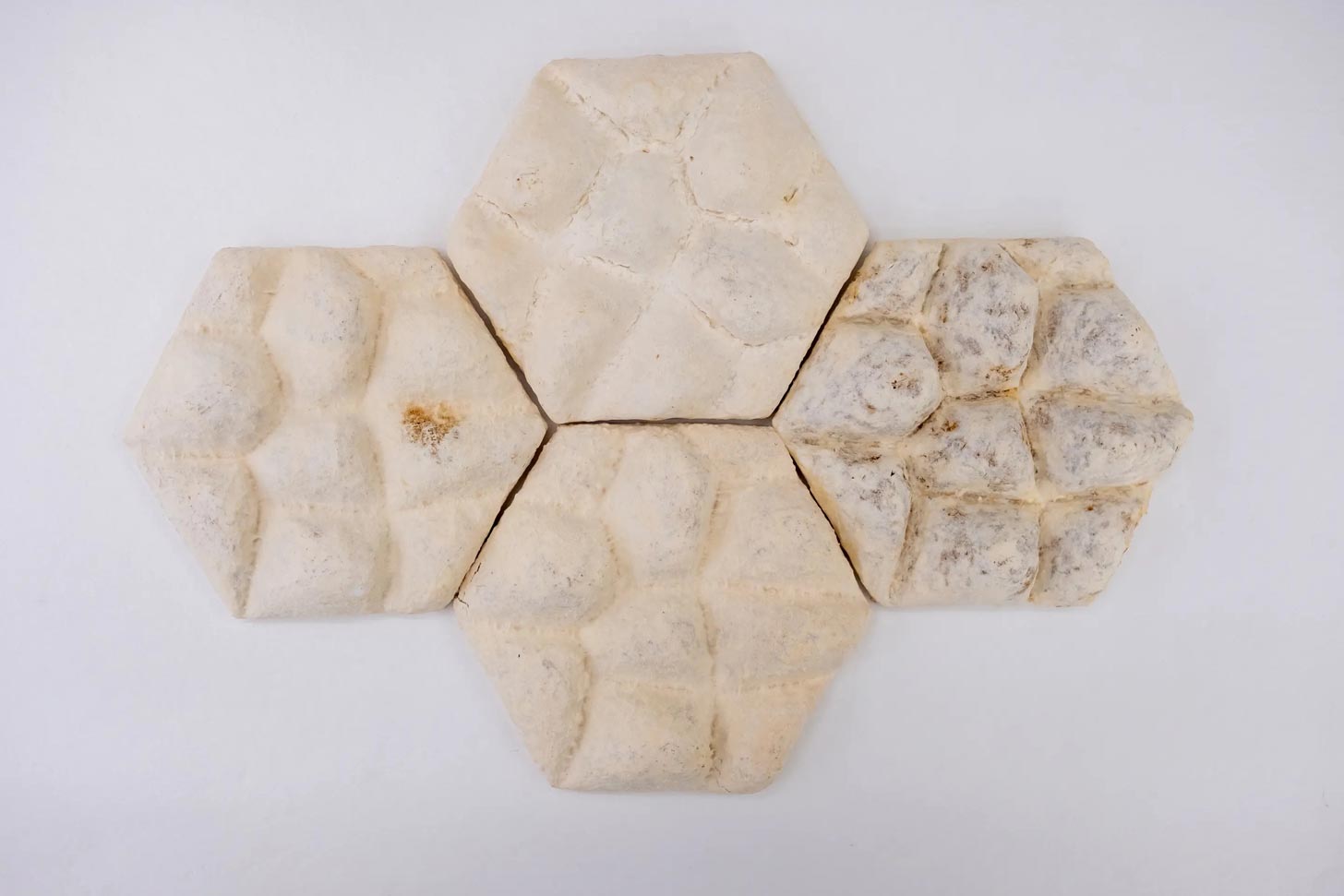
The researchers were inspired by an elephant’s ability to cool itself in hot weather without sweat glands.
“[We] tried to see how we could replicate the same cooling mechanisms of shading, trapping cool air, and increasing the surface area for water to evaporate,” Dr. Jain added.
To do this, the researchers devised hexagonal wall tiles made from a biomaterial that combines the root network of fungi — called mycelium — and organic waste.
Expanding on prior research indicating that mycelium-bound composites are more energy-efficient than traditional building materials, the NTU Singapore team and bioSEA also gave the tile a bumpy, wrinkly texture, mimicking the skin of an elephant.
“In laboratory experiments, the scientists found that the cooling rate of their elephant skin-inspired mycelium tile was 25% better than a fully flat mycelium tile,” a statement from NTU Singapore shared.
Researchers also found that the elephant-skin-inspired tile cooled fastest when heated from the flat side, losing over 4 degrees Celsius per minute.
Based on their findings, they recommend that the tiles be installed with the flat side adhered to a building’s facade, and the textured surface exposed to external heat.
As for the materials that make up the tiles, the mycelium-bound composite is created by growing fungi on organic matter, like sawdust or agricultural waste. As the fungi grow, they bind the organic matter into a solid, porous composite.

“Insulation materials are increasingly integrated into building walls to enhance energy efficiency, but these are mostly synthetic and come with environmental consequences throughout their life cycle,” Associate Professor Hortense Le Ferrand, who led the study, said in a statement.
“Mycelium-bound composite is a biodegradable material that is highly porous, which makes it a good insulator.”
For this study, which was recently published in “Energy and Buildings,” NTU scientists used the mycelium of oyster mushrooms and bamboo shavings collected from a furniture shop.
From here, the two ingredients were mixed with oats and water and packed into a hexagonal-shaped mold covered in an elephant skin-inspired texture treatment.
To complete the process, the mycelium tiles were left to grow in the dark for two weeks, removed from the mold, and left to grow for another two weeks. Then, they were dried in an oven to remove any remaining moisture, prohibiting further fungal growth.

“The result is a promising proof of concept that takes us one step closer to efficient, sustainable, and cheaper passive cooling solutions in hot and humid conditions,” Le Ferrand said.
Now, the team is exploring how to integrate these tiles into real-world use with a startup called Mykílio. They hope to scale up the size of the tiles and conduct further outdoor testing on buildings.
One major challenge in scaling up production is the time needed to grow the mycelium tiles. Despite the lengthy wait time, the process requires minimal energy resources, which Le Ferrand says could inspire adoption in the construction industry.
“We’ve developed a promising eco-friendly alternative that transforms waste into a valuable resource while rethinking conventional thermal management materials,” Le Ferrand concluded.
“This opens the pathway for more elephant skin-inspired designs and the use of different mycelium strains to overcome the challenges that come with using mycelium tiles as an alternative construction material.”
Soon, the researchers hope, their invention will help cool buildings without heating the Earth.
Header image courtesy of Nanyang Technological University Singapore
For a first-timer, New York City can be an extremely overstimulating destination. From honking cars, bright billboards, crowded streets, and screeching, sweaty subway cars, anyone is bound to need a break.
This experience is amplified for neurodivergent people, who often have heightened sensory sensitivities that make them more prone to feeling overwhelmed by sensory input.
KultureCity, a nonprofit that promotes sensory accessibility and acceptance, has long worked to make spaces inclusive to neurodivergent people.
The organization has a Sensory Inclusive Certification available to venues, organizations, or small businesses aiming to create more sensory-accessible spaces. It also works with musicians like Coldplay to make concerts less overstimulating and more accessible.
KultureCity’s latest project is a crowd-sourced map of neurodivergent-accessible spaces throughout Manhattan.

Inspired by the iconic Vignelli subway map and playfully named “Let’s Map Neu York,” the guide will soon roll out across cabs, bus stations, and LinkNYC structures across the city, as well as on screens in Times Square. It can also be found on Google Maps.
The city’s re-spelling in the map title is a nod to the project’s emphasis on neuroinclusivity.
“The spelling of ‘Neu’ York is intentional, with ‘Neu’ representing the first three letters of neurodiversity,” KultureCity’s executive director Uma Srivastava said in a statement.
“By integrating neurodiversity directly into the name, we’re emphasizing the focus on fostering an environment where all individuals, regardless of sensory needs, can feel welcome.”
With 125 “starter” locations on the map, it’s designed to help neurodivergent individuals — as well as any resident or visitors — feel more comfortable navigating the city.

Five criteria are considered for a location to be added to the map. They include lower noise levels, soft lighting and visual calmness, comfortable seating and shelter, clear signage and wayfinding, and physical accessibility.
“Given that NYC is one of the most overstimulating cities, we were inspired to lead this program to support sensitive residents and visitors alike,” Srivastava said. “Overstimulation is a major challenge for neurodivergent individuals, particularly those with autism and ADHD.”
Some of the destinations on the map include KultureCity Sensory Inclusive certified locations, which offer other accommodations. These places have partnered with the nonprofit to earn a designation that includes continuous training, sensory bags, signage, lap pads, app integration, and ongoing support.

Included in the 12 certified locations in Manhattan are places like Color Factory New York, the Jackie Robinson Museum, Central Park Zoo, Madison Square Garden, Lyric Theatre, and more.
“Color Factory is delighted to partner with KultureCity as part of our drive to improve our accessibility offering,” the interactive museum shares on its website. “1 in 4 individuals have a sensory need or an invisible disability. Public spaces can be overwhelming due to sensory overload, making inclusivity essential.”
Many places keen on embracing accessibility include arts and theater locations. For Christopher Jackson, known for his role as George Washington in the original Broadway production of “Hamilton,” and a board member at KultureCity, this new map is a beacon for N.Y.C. newcomers.
“As someone who’s spent their career on stage in New York City, [I] know how inspiring and overwhelming this city can be, especially if you're new or navigating it with sensory sensitivities,” Jackson told Good Good Good. “The Let's Map Neu York initiative is a simple but powerful way to say: you belong here.”

He went on to add that the guide isn’t just a collection of locations, but a way to find moments of calm in a city that often feels like “it’s moving a million miles an hour.”
While the map’s initial focus is on Manhattan, KultureCity encourages N.Y.C. residents and visitors to submit their own favorite places to be considered for the guide. The goal is to expand the list across the city’s five boroughs.
“What makes it powerful is that it’s community-driven,” Jackson added. “It’s built by all of us: locals, commuters, tourists, neighbors, sharing the spaces that feel comfortable and welcoming. It's about … the belief that every kind of mind deserves to feel at home here. And that’s the kind of New York City I want to be part of.”
Penguin Random House is known for its iconic status as a book publishing house and defender of the First Amendment, challenging book bans in states across the United States.
But in a new campaign, the company has made a banned book the… second coolest accessory.
Partnering with Online Ceramics, a Los Angeles-based clothing brand that makes hand-dyed apparel (most notably for A24 and the Grateful Dead), Penguin Random House has debuted a clothing collaboration, aptly titled “Reading Is A Right.”

The capsule collection features apparel items like socks, sweats, T-shirts, and hats with messaging intended to raise awareness about book bans.
Penguin Random House has committed to donating 100% of its net profits from the collection to the American Library Association.
In addition to supporting libraries and librarians nationwide, the ALA is a nonprofit that compiles data on book challenges throughout the U.S. and acts as a watchdog for censorship efforts in public institutions.
“This message is incredibly timely in this climate when censorship is rampant and federal funding for libraries has been gutted,” ALA’s president, Cindy Hohl, said in a statement.

Like Hohl mentioned, book challenges are growing in the U.S. According to ALA’s data, 2,452 unique titles were challenged in 2024, which is in contrast to the average 273 unique titles challenged annually between 2001 and 2020.
President Donald Trump also recently signed an executive order that cuts funding to the Institute of Museum and Library Services.
Penguin Random House is among publishers suing states like Idaho and Florida over challenges to books by authors like Jodi Picoult, John Green, Angie Thomas, and more.

“Censorship, in the form of book bans, is a direct threat to democracy and our constitutional rights, as well as our mission to create books for everyone,” Penguin Random House’s website states.
“That’s why we’re defending books in court.”
And this new collection helps defend books on the streets.

It includes cream and tie-dyed T-shirts featuring the publisher’s fuzzy penguin mascot, who appears to be reading an open book; Its cover says “Practice Magic: Read.”
These go for a heftier $65, though shoppers can also find more affordable items, like $35 “Reading Is a Right” socks, and a $5 “Read a Banned Book” bumper sticker.
Other higher value items include hoodies and sweatpants, priced at $135 and $85, respectively.
Another T-shirt acts more as a walking billboard for Penguin Random House’s Intellectual Freedom Task Force, which directs anyone reading it to the publisher’s hub on book bans.

Elijah Funk, a co-founder of Online Ceramics, said the publisher is “the absolute epicenter of all things books,” as reported by Fast Company.
“I’ve always wanted to partner with them, and once I found out about their work standing up for the freedom to read, I knew we needed to highlight their efforts as a positive force for good and bring more visibility to this issue,” Funk added.
“There’s a reason books are usually one of the first things to be burned or banned from communities. Books are about justice, freedom, history, and imagination: some of the most powerful tools a person or community can have. And the library makes them free and accessible for every person.”
Any purchases made from the collection between April 15 and Tuesday, July 15 of this year will contribute to the ALA’s Literacy Bridge Fund to support media literacy efforts and keep books on library shelves.
The brands have also offered a 20% discount to all educators and librarians.
Header image courtesy of Online Ceramics/Penguin Random House

Every year, when Mother’s Day rolls around, so many of us find ourselves asking: What do you get for the person who gave you life?
No matter how much thought, money, or effort you put into finding the right gift, it often feels like it comes up short for someone who means so much.
Especially for those who want to ditch the big box stores and shop ethically and in alignment with their values, it can feel even trickier to find a meaningful gift with a real impact.
Fortunately, UNICEF, a United Nations agency dedicated to helping families and children worldwide, has its very own artisan market to help you find the perfect gift for the moms in your life — and support moms around the world at the same time.

In the UNICEF Market, you’ll find beautifully hand-crafted gifts, all while supporting efforts to keep children healthy, educated, and safe across 190 countries and territories. A portion of every sale could provide safe water, enhance schools, supply essential services, or even protect infants from preventable diseases.
All items are also sourced from talented artisans — many of whom are mothers themselves — who are all paid fairly.
We’ve created this guide to help you find the perfect selection from the UNICEF Market for the mom in your life.
Editor’s Note: We partnered with UNICEF USA for this article — with the goal of helping our readers understand the organization’s efforts and marketplace products and pick the best one(s) for them.
UNICEF USA paid a fee to help us bring this article to life. However, this article was written independently by the Good Good Good team, without oversight or feedback from the brand.
The Best Mother’s Day Gifts That Give Back
For the stylish mom

No matter how she defines her style, there is a stunning piece of Fair Trade artisan jewelry for her in the UNICEF Market. Here are a few of our favorites:
- Handmade Glass Beaded Bracelets — crafted by master artisans in Guatemala
- Golden Ginko Leaf Earrings — crafted by artisan Desi Antari in an Indonesian village known for its silverwork
- Silver ‘Generations’ Pendant Necklace — crafted by artisans and Thailand and provides polio vaccines to 52 children in need
For the host with the most
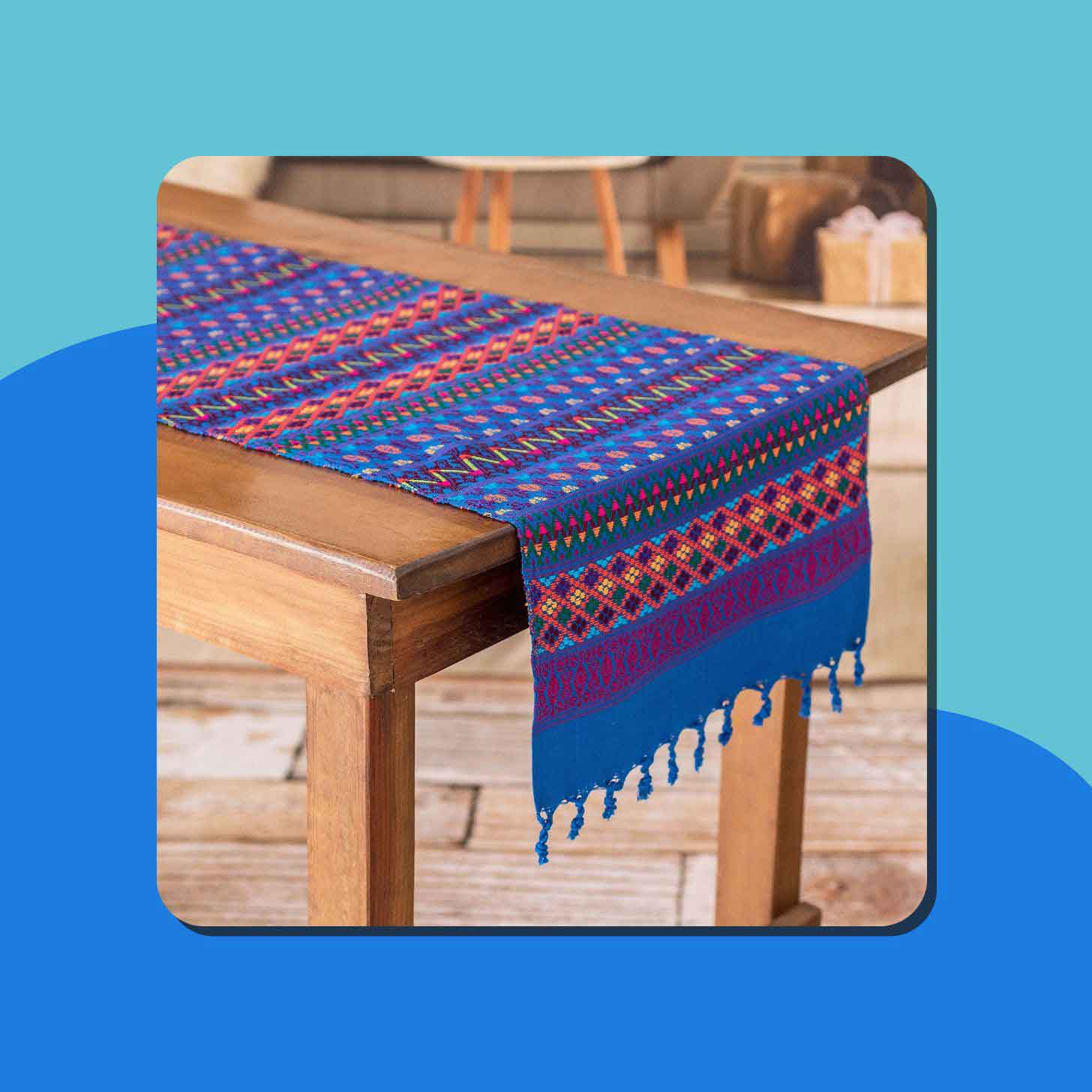
For the moms who seem to have “serving” in their DNA, any gift that makes it easier for them to host a brunch, help friends feel at home, or welcome strangers into a safe place is a win. Here are a few options:
- Glass Floral Coasters — crafted by artisan Flora Polo in the Cajamarca region in the Andes
- Hand-Blown Recycled Cocktail Glasses — crafted by Guadalajaran glass blowers and provides 88 sachets of oral rehydration salts for children in need
- Hand-Woven Table Runner — crafted by weavers from the Women United for Artisan Development in Central America
For the one who teaches you everything

Whether she’s a formal educator or someone who has spent her life dispelling casual life lessons, these gifts honor the moms whose wisdom is the most precious resource:
- 1,000 Pencils for a Whole School — a charitable gift that provides one of the most basic and essential supplies to children in need
- Leather ‘Traveling Office’ Organizer — crafted by leatherworker Sanchit in India and provides 43 doses of measles vaccines to children in need
- Hand-carved ‘Thinking Posture’ Statue — crafted by artisan Wayan Rendah in Indonesia and provides 36 packets of life-saving nutrition for malnourished children
For the playful mom

Competitive during game night, a tennis court champion, or a certified goofball, these gifts honor the moms who are always ready to play.
- Pink Marble Chess Set — crafted by the Sierra Family workshop in Mexico and provides 47 nutrition packets to children in need
- 30 Jump Ropes For Kids — a charitable gift that provides recreation equipment for children to exercise and play
- Coconut Shell Thumb Piano — crafted by artisan Trisna Dewi, who makes musical instruments in Indonesia
For the mindful mom

If you’re always catching her at yoga class, or in a seated meditation, these gifts are the perfect fit for a mom trying to find her zen.
- Rainbow Glass Windchimes — crafted by artisans in Indonesia and provides 118 sachets of oral rehydration salts to people in need
- Sterling Silver Meditation Spinner Ring — crafted by Indian jewelry maker Shivani Choudhary and provides 90 polio vaccines
- Hamsa Incense Holder — crafted by Jesus Rivas, a ceramicist in the Andes
For the creative spirit

The DIY dame. The crafty Cathy. The art class chaperone. These gifts are for the moms who appreciate the arts and have a knack for making the world more beautiful.
- Young Makers Art Supply Kits — a charitable gift that provides art supplies to youth in UNICEF’s art workshop programs
- Hand-Woven Leaf Journal — crafted by Indonesian artisan Komang Sulaksana and provides 35 polio vaccinations to children
- Rainbow Recycled Plastic Baskets — crafted by artisan Claudia Hernandez, who weaves colorful bags and baskets with upcycled materials in Central America
For the animal lover

If your mom often says she loves the dog more than you, that’s probably a hint. Tapping into a love of animals and the natural world, these gifts will honor her wild side.
- Cotton Elephant Shoulder Bag — crafted by textile artisan Jiap Rojjana in Thailand
- Ceramic Corgi Flower Pot — crafted by Thai ceramic studio Paiboon and provides 35 polio vaccines to children in need
- Cheetah-Print Wool Shawl — crafted by a collaborative of textile artists in India and provides 35 polio vaccines to children in need
For the eco-friendly mom

Made from recycled materials or generated using clean energy, these gift ideas are perfect for any maternal figure who is notorious for reminding you to reduce, reuse, and recycle.
- Upcycled Copper Cuff Bracelet — crafted by married copper artisans Rosy and Daniel in Mexico and provides 14 packets of nutrition to children suffering from acute malnutrition
- Solar Study Lamp — a charitable gift that provides off-grid light to young students where electricity is limited
- Recycled PET Sweater — crafted by artisan Cristina Villalobos in the Andes and provides 54 doses of measles vaccines to children in need
For the mom who needs a break

Let’s face it: All moms could use a lot more rest and relaxation. Give her the tools she needs to unwind and get away from it all.
- Hand-Woven Hammock — crafted by the Maya Artists of the Yucatan from Mexico and provides 217 sachets of oral rehydration salts
- Midnight Blue Batik Robe — crafted by artisan Desak Nyoman Parwati from Indonesia and provides 34 doses of measles vaccines to protect children from the deadly disease
- 100% Alpaca Throw Blanket — crafted by ethical alpaca farmers Nataly and Alberto in Mexico and helps vaccinate 231 children against polio