In 2020, director Pippa Ehrlich wowed viewers and critics alike with her Oscar-winning documentary, “My Octopus Teacher,” a film which follows free-diving filmmaker Craig Foster as he befriends an octopus living in a South African kelp forest.
On April 21, Netflix released Ehrlich’s much-anticipated follow-up, “Pangolin: Kulu’s Journey.”
The emotional documentary hinges on the rescue and rehabilitation of a baby pangolin — the most trafficked mammal in the world.
“Pangolins are some of the most ancient and unique mammals that have ever walked the Earth,” Ehrlich told People Magazine before the film’s release.
“Over millions of years of evolution, they have traded their claws and fangs for protective scales and a finely tuned intuition that makes them deeply sensitive, innocent creatures: they can't run or bite, and their only defense is to roll up in a ball.”
Ehrlich said wildlife photographer and conservationist Gareth Thomas, Kulu’s “adoptive father,” was the perfect entry point for her latest documentary.
“When I met Gareth, I was immediately fascinated by his relationship with these gentle and mysterious animals,” Ehrlich explained.
“But the reason I wanted to make the film is that I believe pangolins are a symbol of our own fragile existence on this planet, along with so many of the vulnerable beings that belong here with us.”
In the week following its release, the documentary has been met with critical acclaim. At the time of publication, the film had 100% positive ratings on Rotten Tomatoes.
“I knew zero about pangolins before watching this film, but as corny as it sounds, I fell in love with the cute little fella by the end,” David Rooney wrote for The Hollywood Reporter.
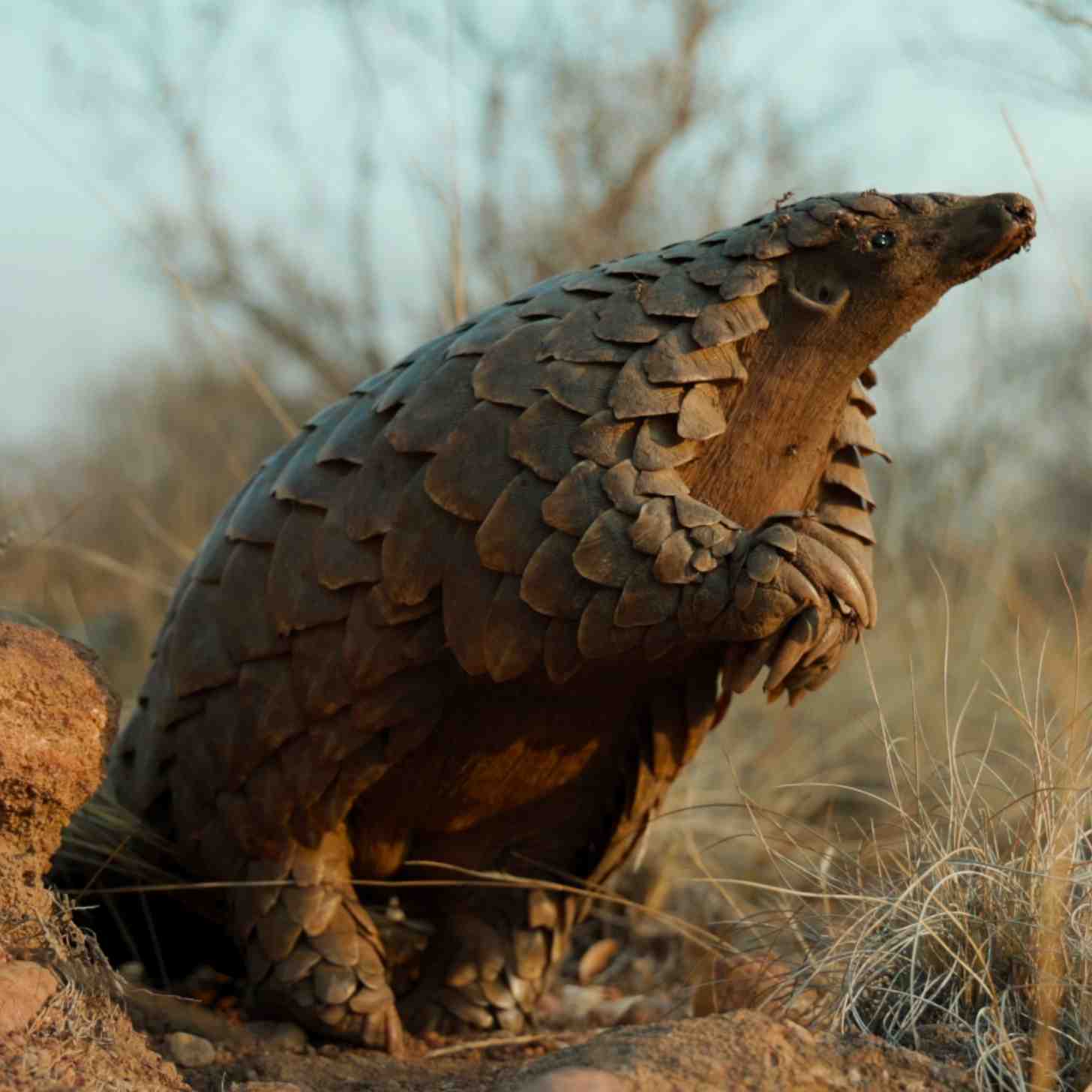
“Ehrlich again captures that inexplicable, rare and soulful union between human and beast in which there are equal stakes, souls and emotional wisdom,” Tom Meek observed for Cambridge Day.
“The healing goes both ways in the documentary ‘Pangolin: Kulu’s Journey,’ as a troubled man and an endangered mammal form a startling bond,” Jeannette Catsoulis surmised in her review for The New York Times.
“The result is a movie so sweet and soothing,” she added, “you’ll be forced to admit that sometimes the universe — or, in this case, Netflix — gives you exactly what you need.”
Today, all eight species of pangolins are listed as vulnerable or critically endangered on the International Union for Conservation of Nature’s Red List of Threatened Species.
Due to illegal poaching and trafficking, pangolins can be difficult to spot in the wild.
Last year, when wildlife experts saw a pangolin on a trail camera in Senegal’s Niokolo-Koba National Park, it was the first time the species had been spotted locally since 1999.
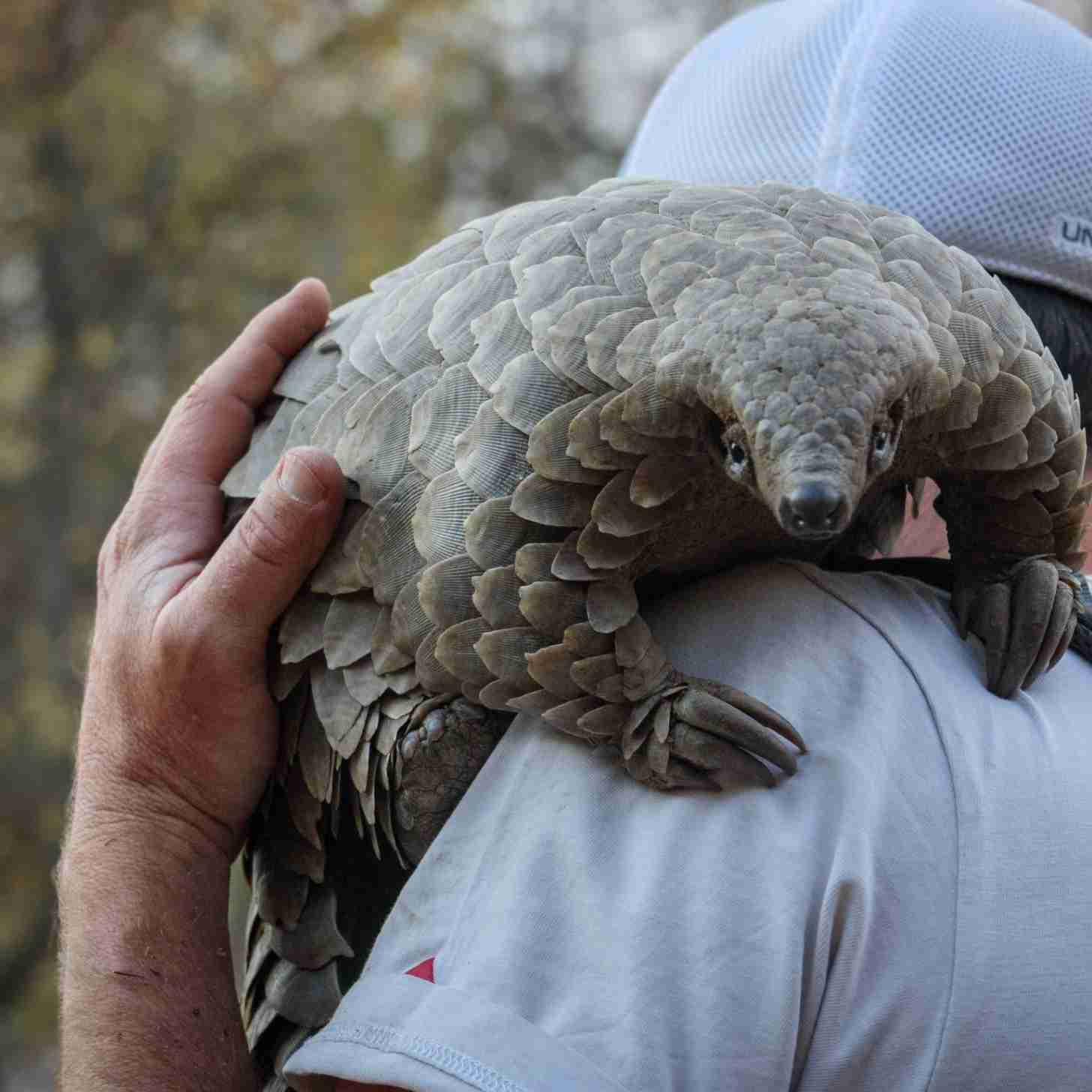
As the Netflix documentary propels pangolins into the public eye, Ehrlich hopes the newfound attention inspires conservation efforts and raises much-needed awareness for the highly endangered animal.
“They’ve got a magical quality; they are a mammal but they’re covered in scales,” Ehrlich told CNN. “You just don’t want pangolins to be seen only as the world’s most trafficked mammal. You want them to be seen as these joyful, unique, special little creatures.”
Header image and logo asset via Netflix
Months after the internet swooned over Moo Deng the pygmy hippopotamus and Pesto the penguin, a new critter has catapulted into the spotlight: an orphaned pangolin pup named Kulu.
Kulu is the subject of Pippa Erhlich’s new Netflix nature documentary, “Pangolin: Kulu’s Journey.”
In the film, which critics have hailed as “captivating,” “sweet,” and “uplifting,” Kulu is rescued by wildlife photographer Gareth Thomas. Together, they form a “parent-child” relationship as Thomas tries to set Kulu up for success in the wilds of South Africa.
The documentary has shed light on the plight of endangered pangolins, the most trafficked mammal in the world.
Last week, England’s Chester Zoo leveraged that newfound awareness by participating in Big Green Give, a campaign that protects giant pangolins in Uganda.
A day after the Netflix documentary premiered, the Chester Zoo held a weeklong fundraiser from April 22 through April 29 and matched all incoming donations. The money was funnelled directly to the Uganda Wildlife Authority to support giant pangolin conservation.
Naomi Matthews, the zoo’s Africa biomonitoring manager, said that pangolins are having “a moment” thanks to “Pangolin: Kulu’s Journey” — and it’s a moment that’s long overdue.
“I was 21 when I first discovered what a pangolin was, while watching a David Attenborough documentary,” Matthews told The Leader, a British news outlet, in reference to “Pangolins: The World's Most Wanted Animal.”

“Once I learned about the threats they face, I was passionate about making sure the zoo got involved in their conservation,” said Matthews, who spearheaded the Big Green Give campaign.
“I’ve always loved the weird and wonderful mammals — the ones that don’t really fit into other categories. Our whole team is passionate about pangolins, and it’s that passion that keeps us going.”
“Studying them is incredibly difficult and often challenging, but that’s also what makes it so rewarding.”
By the time the campaign closed on April 29, the campaign had exceeded its target goal of £16,000 with a total of £17,190 raised. That’s about $23,000.
With the collected funds, the Chester Zoo’s East African Conservation Action Plan will be able to gather data on giant pangolin “population size, movements, lifestyles and behaviours.”
“We'll also recruit three new team members on the ground who'll engage local communities and build partnerships with regional academic institutions,” the campaign stated on the Big Green Give website. “All this will help protect giant pangolins and ensure their survival.”
Although the Chester Zoo’s latest fundraiser has wrapped, Matthews hopes that the increased media attention surrounding pangolins has a lasting impact on future conservation efforts.
“We see waves of interest in particular animals,” Matthews explained. “I think a lot of it is driven by social media and pop culture. First everyone was obsessed with meerkats, then capybaras, and now pygmy hippos are having a moment.”
“I think it’s time for pangolins.”
Header images and logo asset via Netflix
Johnson Public Library in Johnson, Vermont has just started a new chapter.
Built in the early 1900s, the building has flooded more times than Johnson town administrator Thomas Galinat can count.
In the last two years alone, it has been damaged in three different flood events, with a particularly devastating moment in July 2023, when 9 feet of water filled the building.
“Everyone did everything they could to move the books throughout the night,” Galinat told Vermont Public. “And then once the water level got high enough, there was nothing more you could do.”
This kind of devastation goes back generations.
In 1927, the building flooded and the library’s entire collection was destroyed, according to reporting from Vermont Public.
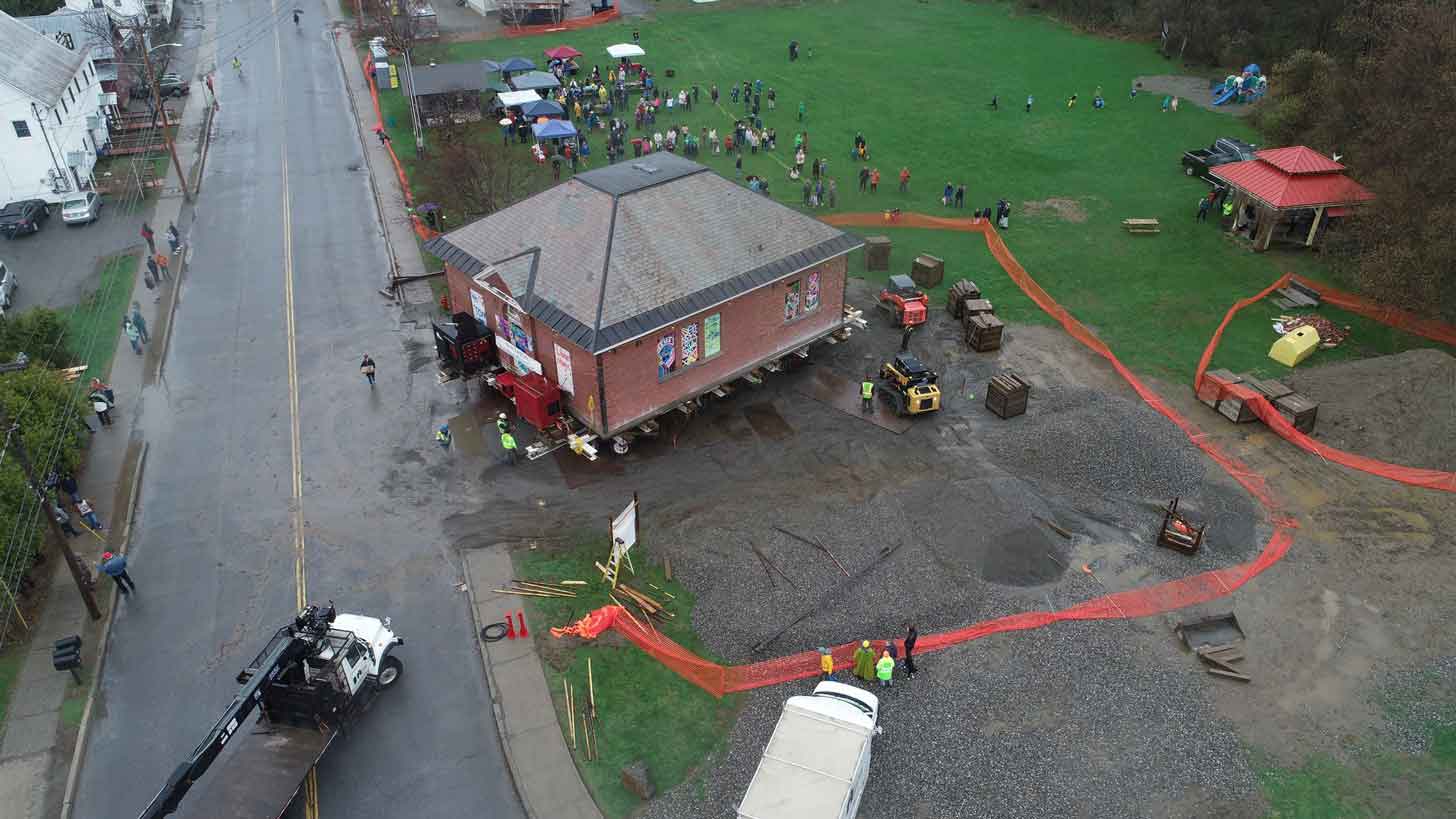
Finally, in early 2024, a long-debated but far-fetched idea started falling into place. The city would physically pick up the library and move it out of its flood zone.
As the only historic Georgian revival-style building in the city, the library’s building holds significance.
And according to a 2017 engineering study, if the building were to stay in the same place, Galinat said, the city would have to do hundreds of thousands of dollars worth of management to keep it — and its entire basement storage — from sinking.
“When the pipe dream that is so outrageous becomes the solution, it tells you how dire the situation is,” Galinat told Vermont Public.
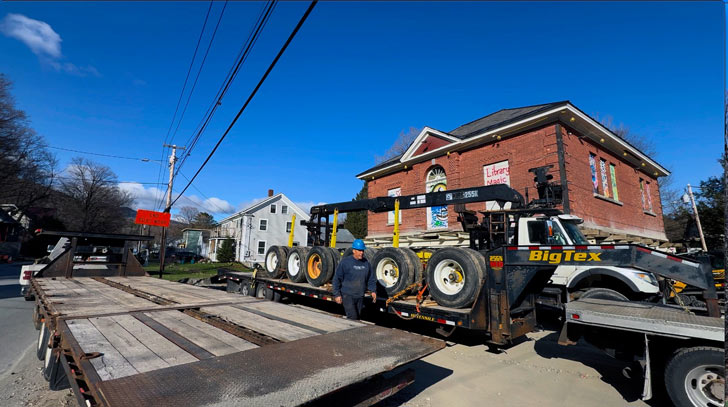
The city rallied. They were determined to pick up the historic building and move it out of the danger zone.
“We had partners and husbands and wives and friends,” Galinat told Vermont Public. “People were measuring the street, the width between poles and street lights, and contractors were called and estimates were given, and in two weeks, the most perfect application for any grant I've ever seen was put together by this really wonderful collaboration.”
Their efforts paid off. Last fall, Johnson received about $1.6 million through a grant program from the U.S. Department of the Treasury Capital Projects Fund, as well as funding from the Vermont Department of Libraries.
And last Saturday — April 26 — was moving day.
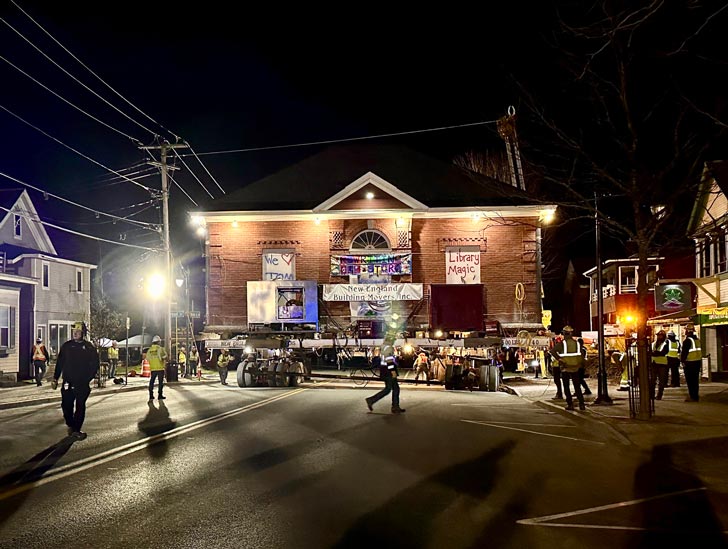
Employing 28 bucket trucks, 60 to 70 construction workers, a dozen utility workers, four police cruisers, two ambulances, and a fire truck, the community rolled the 119-ton library about a half-mile through town.
Making its way across the river, and over a bridge, the library and its stewards moved under the cover of darkness overnight.
Jessica Bickford, a former Johnson Library Trustee, told Vermont Public that after realizing the funding could be made available for this project, leaders agreed: “Let’s try this, and see where it goes.”
Donning a hard hat and traffic vest during the midnight move, Bickford smiled: “And tonight, it’s going!”
After traveling across the downtown section of a two-lane state highway, Route 15, Johnson Public Library is now re-settled between Johnson Elementary School and Legion Field.
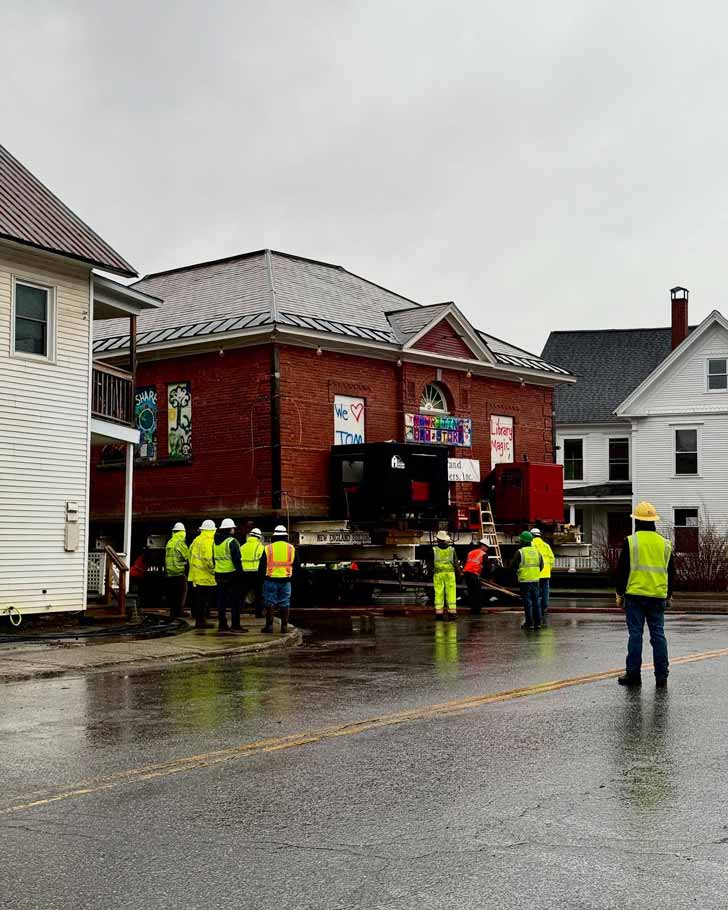
The only damage the building — or the town — took was a sawed-off corner of the roof that had trouble turning the first corner of the journey, and four trees that were removed for the big roll.
However, one beloved crabapple tree was also relocated to a nearby arboretum. And the corner of the library will remain as-is, Galinat said — a memento of the big move.
“We are not just jacking up and rolling the physical building down the street … we are creating a new heart of Johnson that is free from the risk of flooding,” Galinat wrote in a press release shared by VT Digger. “This is a message for Johnson, and all of Vermont, it is time to do something different.”
Along with the volunteers who advocated for the move, local youth also painted the boards protecting the library’s windows during the trip.
One of the signs sums it all up. “Library magic,” it reads.
@vermontpublic At midnight on April 26, the historic Johnson Public Library building started its 0.4-mile move to its new home — in an area less prone to flooding. A group of contractors, utility workers, town employees and volunteers stayed up all night to ensure the 156-ton rig cleared Vermont’s Route 15 by 6 a.m. The crew completed the complex project successfully, despite inclement weather and obstacles along the way. Video by Brian Stevenson and Kyle Ambusk. Additional footage/photos courtesy of Adrienne Parker and drone footage from Tayler Engel.
♬ original sound - Vermont Public
Header image courtesy of Vermont Public Library
Think of all the Crunchwrap Supremes, Beefy 5-Layer Burritos, and Baja Blasts you’ve ordered in the drive-thru lane of Taco Bell in the past decade.
For those of us who were in high school and college during that time, that number may be immeasurable.
But for the people working on the other side of the speaker, those orders — and their subsequent “round-up” donations — have truly changed their lives.
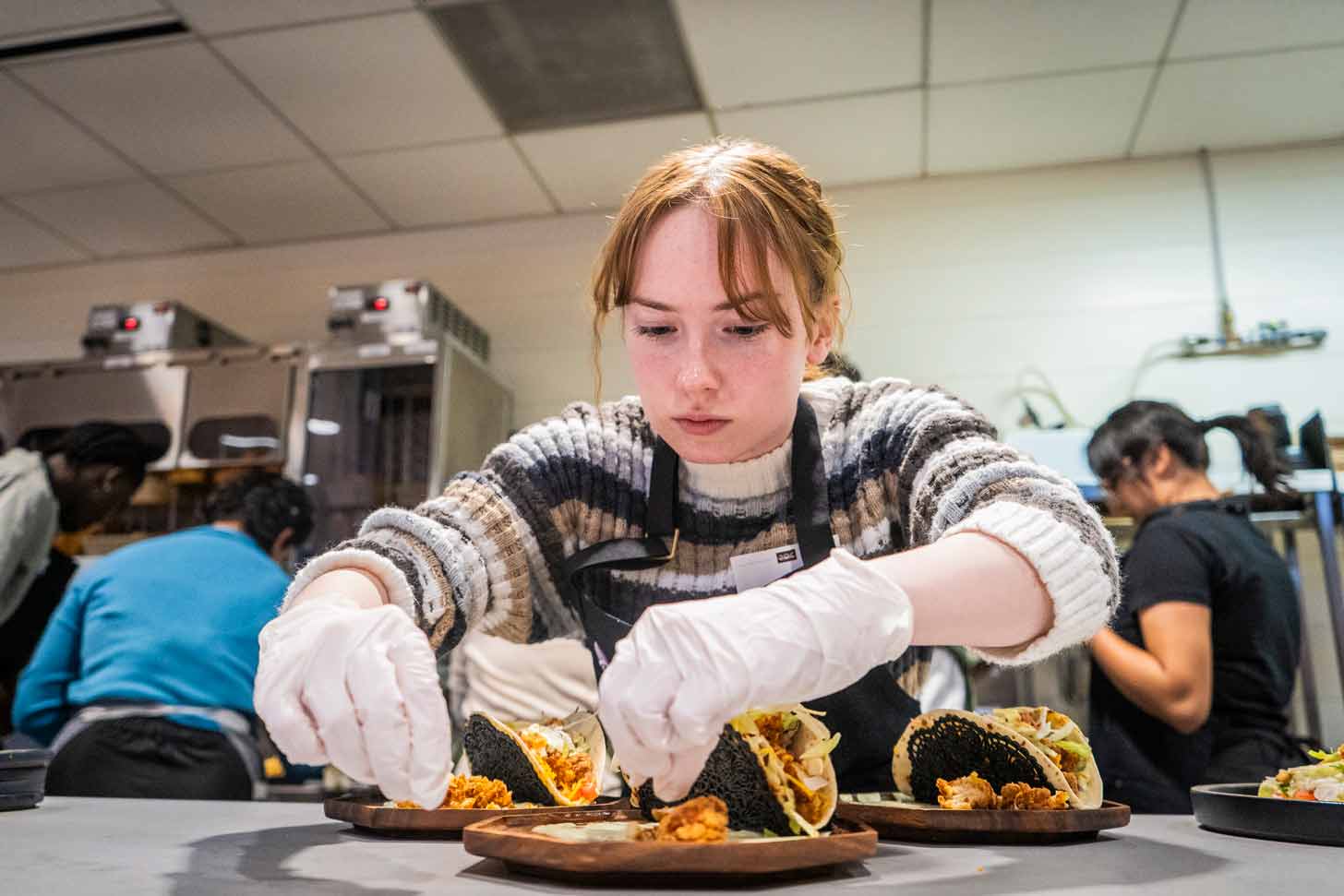
This May marks the 10-year anniversary of the Taco Bell Foundation’s Live Más scholarship program, and the chain is celebrating a grand total of $64 million in scholarship funding over the past decade.
To honor the milestone, the foundation is giving its largest scholarship distribution yet: $14 million to applicants across the country. Of that number, $4.5 million will go directly to Taco Bell employees.
Scholarship award amounts range from $5,000 to $25,000 per recipient, with the possibility to renew up to four times. This could potentially cover a student’s entire college tuition.
That’s what happened for Crimsyn, a former Taco Bell employee who recently shared her story in a now-viral TikTok that’s been viewed over 5 million times.
“I’m graduating college in less than a month, completely debt-free because of Taco Bell,” she starts her video, laughing.
She said she worked at the restaurant for about six months as a job to earn a little money in high school. Her manager suggested she apply to the scholarship program.
Off the bat, she received a $10,000 scholarship. After renewing for the allotted four times, Crimsyn said she received a total of $40,000 from Taco Bell.
According to the Taco Bell Foundation, the scholarship isn’t based on GPAs or test scores, making it more accessible for people to apply.
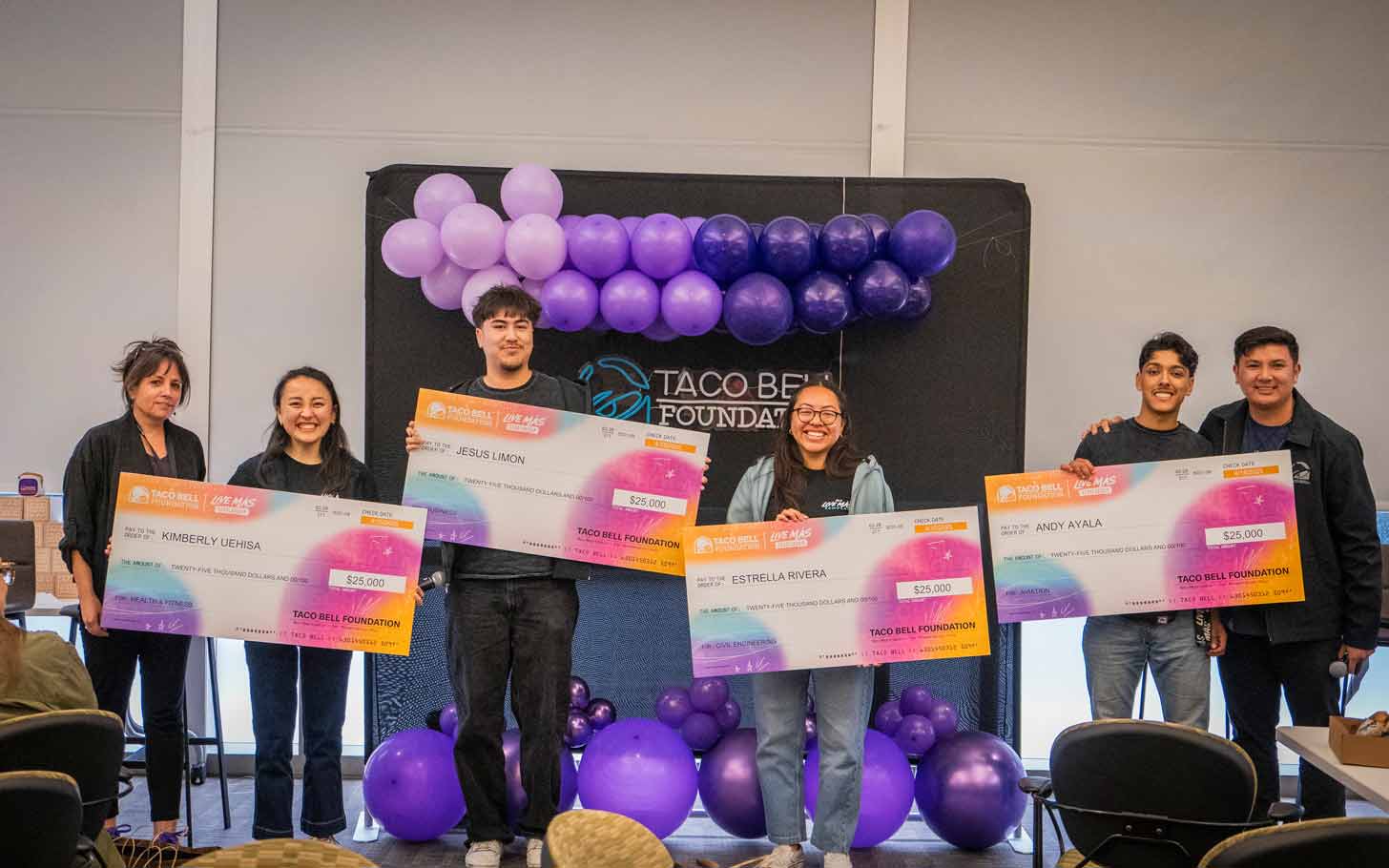
“Designed for creative thinkers, cultural rebels and bold dreamers, the program invites applicants to share their story through a two-minute video, spotlighting how they plan to make an impact,” a press release states.
“In return, if selected, they join a supportive, purpose-driven community and gain access to mentorship, career workshops, internships, and networking opportunities, making the scholarship more than just financial support, but a launchpad for what's next.”
To date, $64 million total has been awarded to over 3,000 recipients, about 1,000 of whom have been employees at Taco Bell.
Scholarships for employees are funded by contributions from Taco Bell Corp. and its franchises, but scholarships for any young Taco Bell “fan,” as the organization calls them, come from a “round-up” program at checkout.
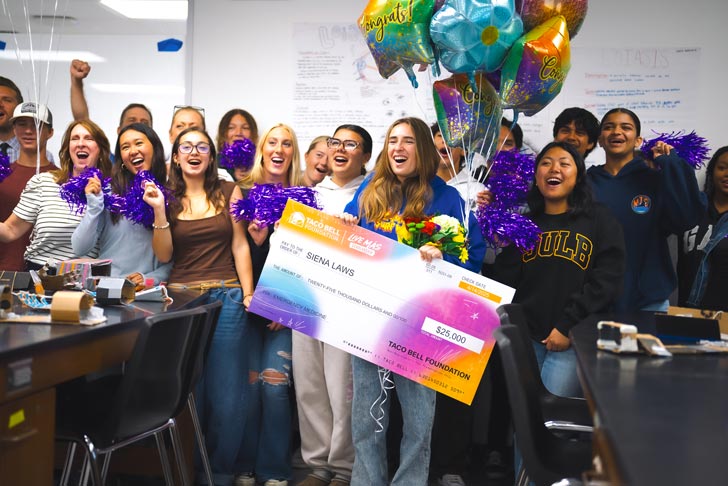
This program simply encourages customers to round up their total to the nearest dollar, with the average donation being just 44 cents.
“You better believe every time I’m in that Taco Bell drive-thru, I’m like, ‘Yes, I would like to round up my change,’” because that 50 cents, that 75 cents, every few weeks, gave me $40,000,” Crimsyn concluded.
“And I can only imagine what it’s given other people.”
@crimsyn12 I am now Taco Bell’s BIGGEST fan @tacobell I LOVE YOU #livemasscholarship #tacobell #scholarship #freedegree ♬ original sound - Crimsyn
When the scholarship program started, its annual funding was about $1 million, with around 6,000 applicants. This year, it will have $14 million to distribute to more than 15,000 applicants.
Employee applications have also increased by nearly 450%. The inaugural class included 270 scholarships, and this year’s will include 1,000.
“What’s inspired me most at the Taco Bell Foundation is the incredible ambition of our scholars, especially our Team Member recipients,” said Lisa Lane Cardin, executive director of the Taco Bell Foundation.
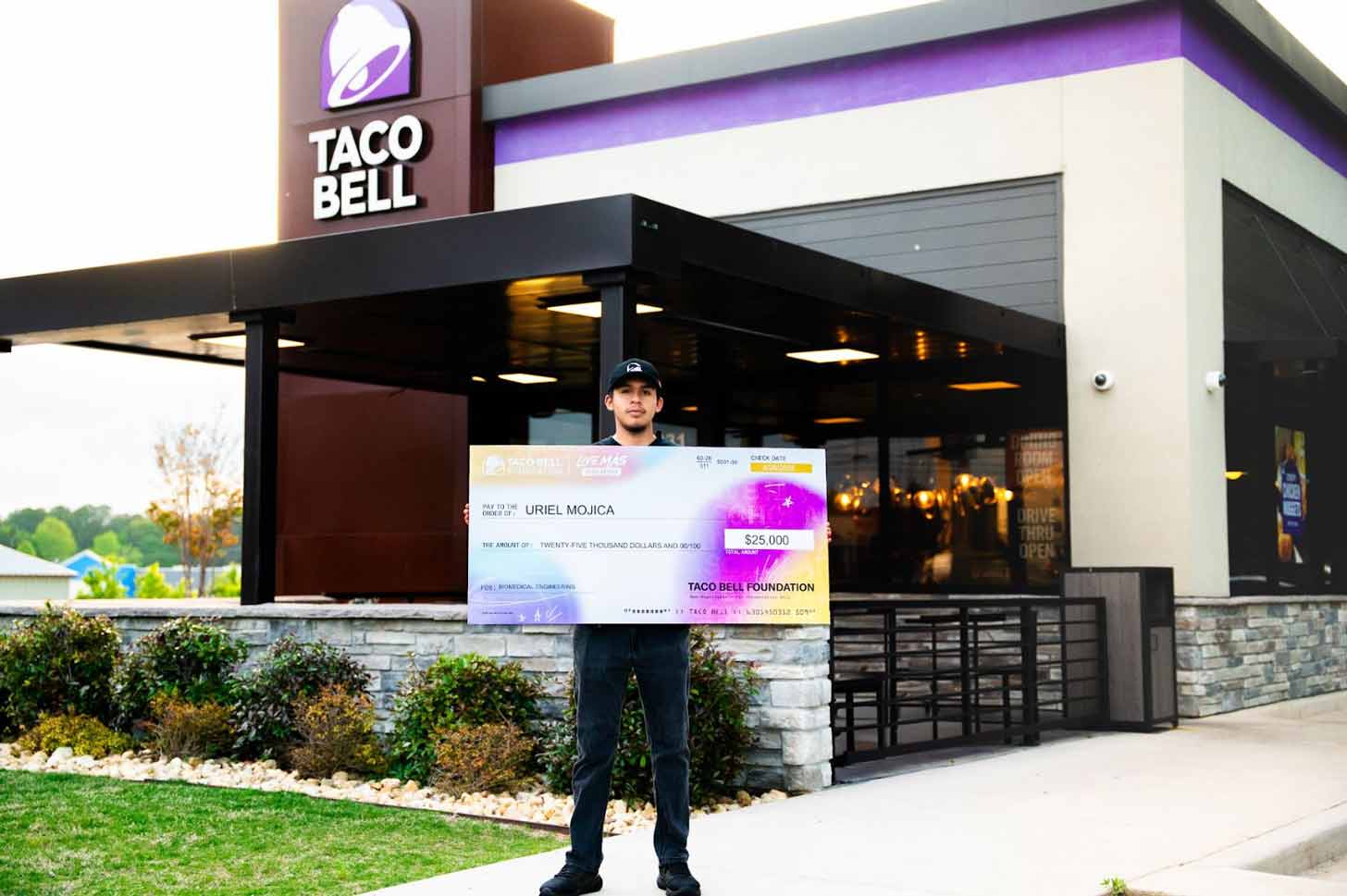
“They are true go-getters — thriving at work, pushing themselves in school, and still finding time to chase their passions with unmatched drive and heart.”
One of this year’s recipients, Uriel M. exemplifies what Cardin admires in the scholarship community.
After a tornado changed his family’s life, in which Uriel’s brother protected him in the disaster and subsequently lost his leg, he found his purpose.
Uriel dreams of creating more accessible prosthetics for people in low-income communities.
“Since my family was poor, we couldn’t afford him a good prosthetic,” Uriel said in his application video. “In college, I hope to study prosthetics using durable but inexpensive materials.”

A $25,000 scholarship from Taco Bell will help him study biomedical engineering at the University of Southern California.
Even the first class of Live Más scholars can feel the ripple effects of their scholarships to this day.
“Today, I am a Deputy Prosecuting Attorney in Hawaii, helping bring justice to victims of crimes and working to better my community,” said Diamonte Jonas, one of the first-ever recipients.
“The Live Más Scholarship propelled my educational pursuit and reminded me that great achievements take bold risks.”
Header image courtesy of Taco Bell
Derrick Downey Jr. has befriended all of the squirrels in his neighborhood.
The comical yet calming 33-year-old man has amassed over two million followers on TikTok and Instagram combined.
What are people there to see? His regular escapades with the neighborhood squirrels: Richard, Maxine, Niblet, and countless others.
It all started when the COVID-19 pandemic began.

“I was having a rough time, not because of the pandemic but because of some mental health issues,” Downey told The Washington Post in 2023.
But when he offered some peanuts to who is now known to him as Maxine, he started finding pockets of joy right in his backyard.
“Going outside and connecting with nature was my gateway to relief from depression,” he added to The Washington Post. “It brought me peace. I would see Richard walking around, and talking to him made me feel good about the world.”
After posting a video of him interacting with the squirrels that received over 26 million views, he was dubbed the “Squirrel Whisperer,” and he went on to share even more quirky videos.
Some include accessories he shares with the squirrels, like a house he calls their “dine-n-dash,” or a little green purse he calls Maxine’s “Birkin.”
It’s safe to say his platform has taken off — even inspiring a picture book published in 2024 — and Downey is more committed than ever to his local critters.
But it’s not always fun and games.
Just this past weekend, he shared a video of his efforts to protect the local wildlife when city arborists came to trim some trees in his neighborhood.
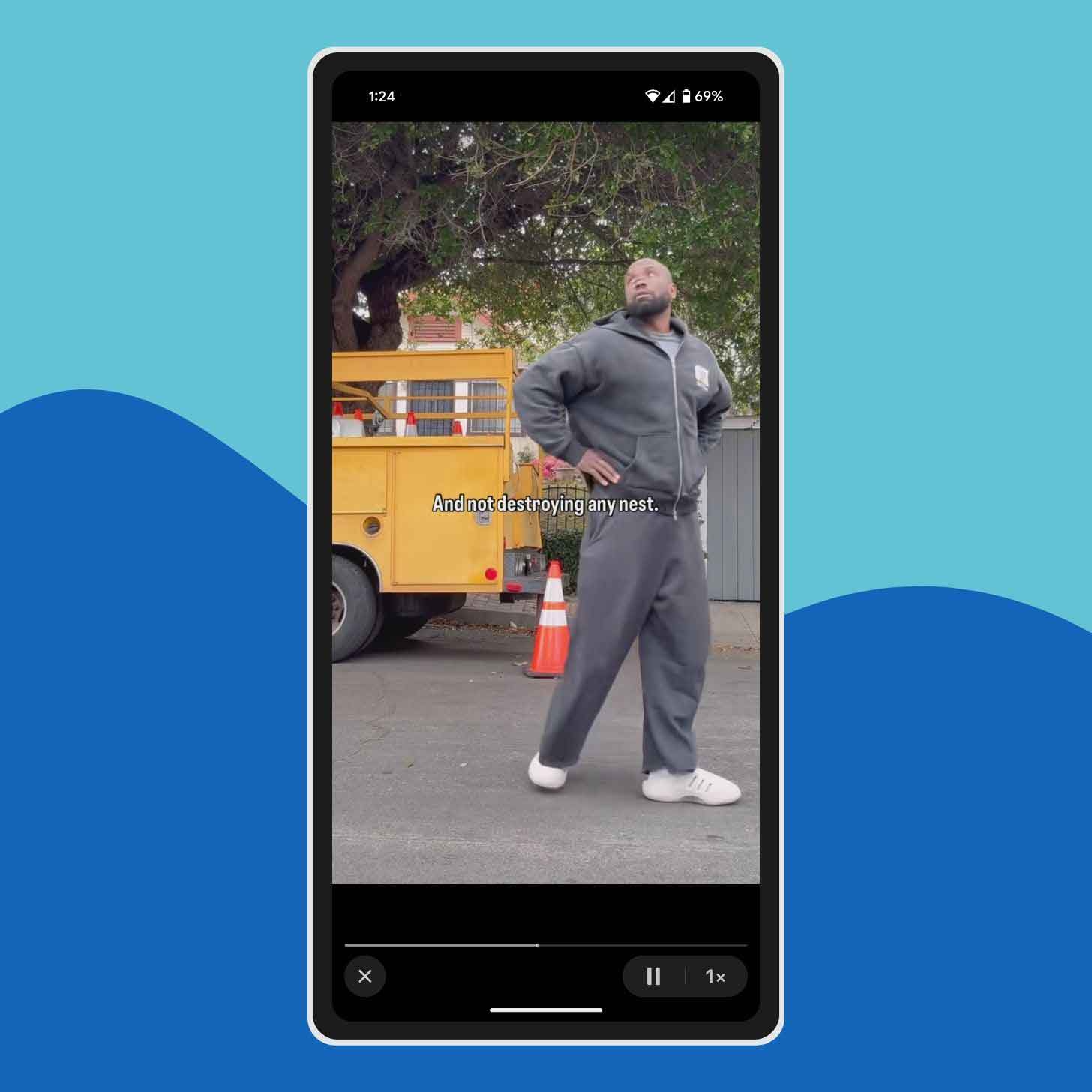
“I went and documented all the nests in the trees on my street before they came,” Downey said in a video. “I don’t care if it was a bird nest or a squirrel nest, I was documenting it all, and then I went and told the supervisor what I found.”
Per Downey’s concerns, there are local and federal laws that prohibit people from taking or disturbing any migratory birds or their nests and eggs without a permit. Squirrels and other wildlife do have some legal protections, but they appear to vary by state.
Although most squirrel species are not endangered, trimming trees can displace their nests or babies and can have fatal consequences.
WildCare, a wildlife hospital in Marin County, California, shares that it sees squirrels every day in the spring and summer admitted for injuries related to tree-trimming and gardening.
“WildCare asks you to ‘respect the nest’ this spring, which means putting off non-emergency tree and garden work,” a spokesperson wrote in an op-ed for the Marin Independent Journal. “Please wait until resident animals have raised their broods, or even better, until nesting season is over in the fall.”
Since Downey couldn’t seem to stop the arborists’ work, he stood by to ensure the safety of his beloved friends.
@derrickdowneyjr Y’all, this past weekend drained me but it was well worth every ounce of energy and every second spent making sure the birds and squirrels in my neighborhood still had their homes when the city came through for tree trimming. Protect what brings you peace. #nature #squirrels #birds #compassion ♬ original sound - Derrick Downey Jr.
“There’s active nests in this one,” Downey records himself speaking to an arborist in his neighborhood, pointing to trees. “Not just birds but squirrels; I’ll show you.”
He had done his part before the work began, to ensure the safety of his woodland friends. But his efforts didn’t stop there.
“And while they was doing their work, I was doing my work,” he shares in the video, “making sure they was doing they work properly and not destroying any nest. … I was looking out for everybody”
A clip shows Downey pacing the sidewalks like a protective parent as crews can be heard in the background. In another, he speaks directly with Maxine the squirrel, who took refuge on his fence.
“You watching too?” he asks her.
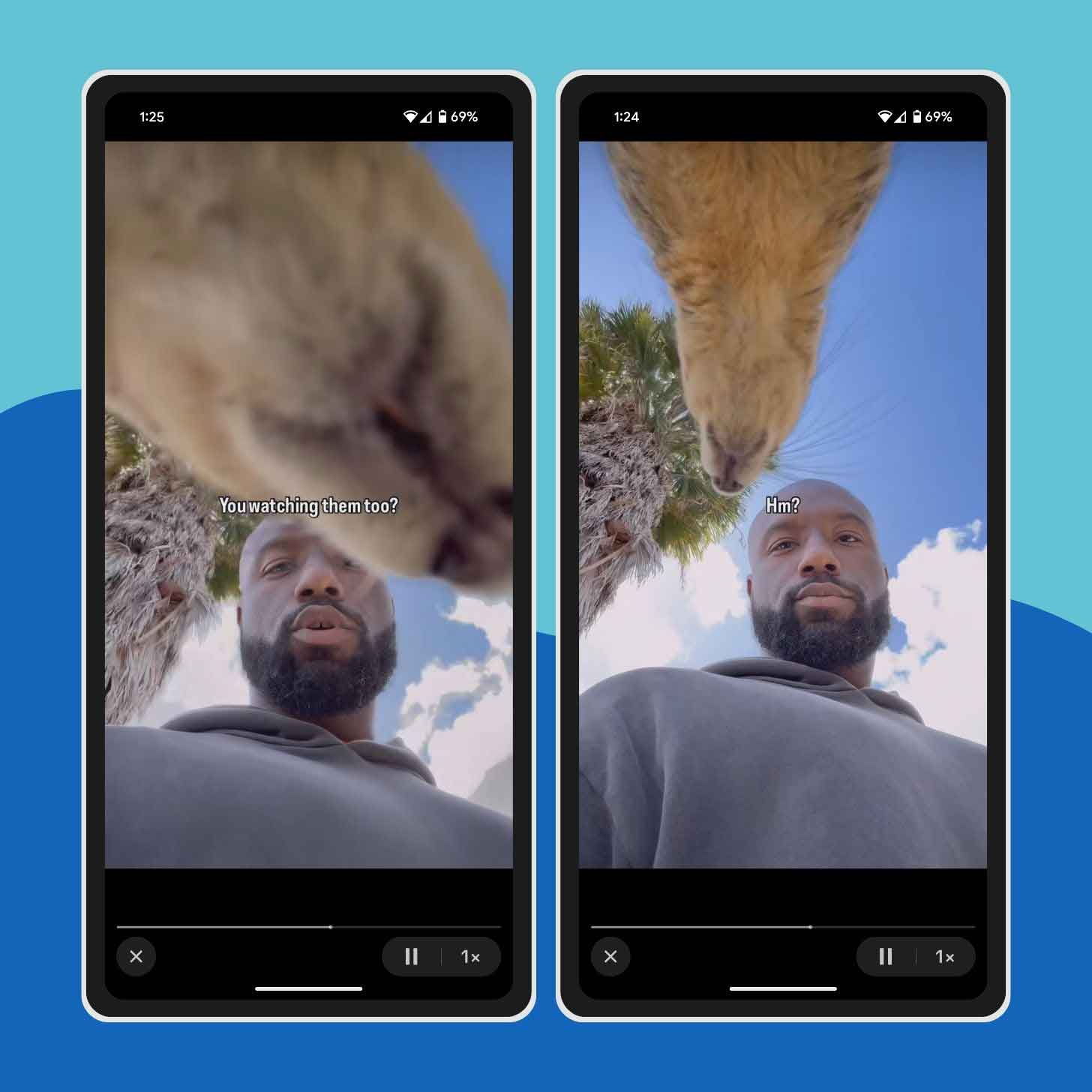
Ultimately, Downey spent the full weekend monitoring the crews, early in the morning, until they left for the day.
“This past weekend drained me, but it was well worth every ounce of energy and every second spent making sure the birds and squirrels in my neighborhood still had their homes when the city came through for tree trimming,” he wrote in the video’s caption.
Not a single squirrel or bird seemed to be harmed by the events, and Downey even connected with the contractors on the scene. The supervisor asked him why he cared so much about the neighborhood wildlife.
Downey told him about his experiences with depression.
“My way of finding peace and comfort was to walk around the neighborhood, connecting with the animals,” he explains.
“And when something brings you peace, baby, you protect it,” he adds in a voiceover.
“The squirrels may not have a lot of protections legally, but as long as I’m around, ain’t none squirrel nest going down.”
Header images courtesy of Derrick Downey Jr/Instagram
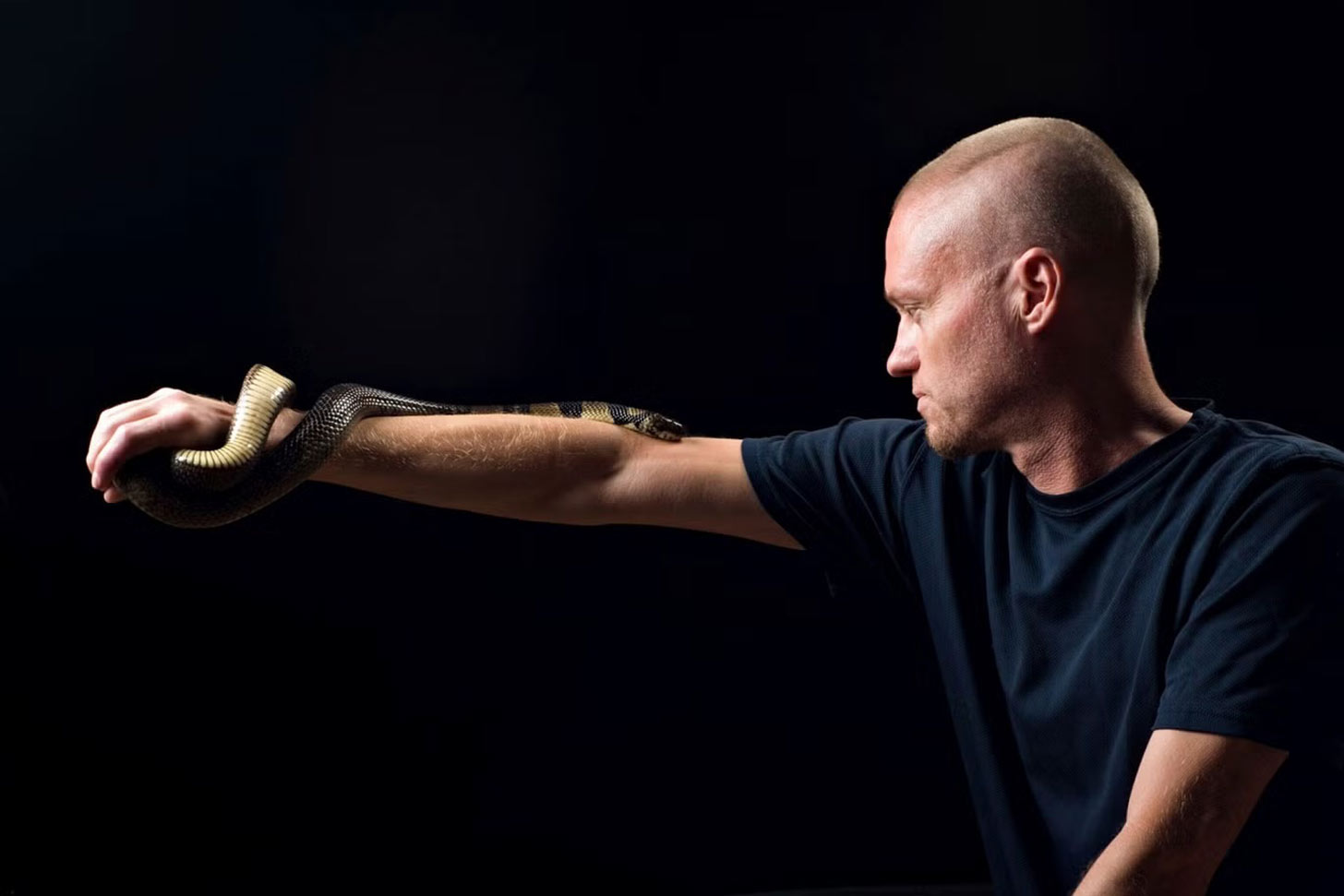
Tim Friede’s YouTube channel is home to a collection of videos depicting the Wisconsin-native truck mechanic subjecting himself to purposeful snake bites, blood slowly dripping down his arms.
For the past 20 years, Friede has been one of the most notorious “unconventional” medical researchers, undergoing over 200 bites from the world’s deadliest snakes — and more than four times as many — 850 — venomous injections.
He did it all in the name of science.
According to the World Health Organization, an estimated 100,000 people are killed by snake bites each year, with countless more being disabled by the venom of the deadly reptiles.
While life-saving anti-venom is available, very few countries actually have the capacity to produce it properly, given that most bites occur in remote and rural areas, and anti-venom requires arduous sourcing and accuracy.
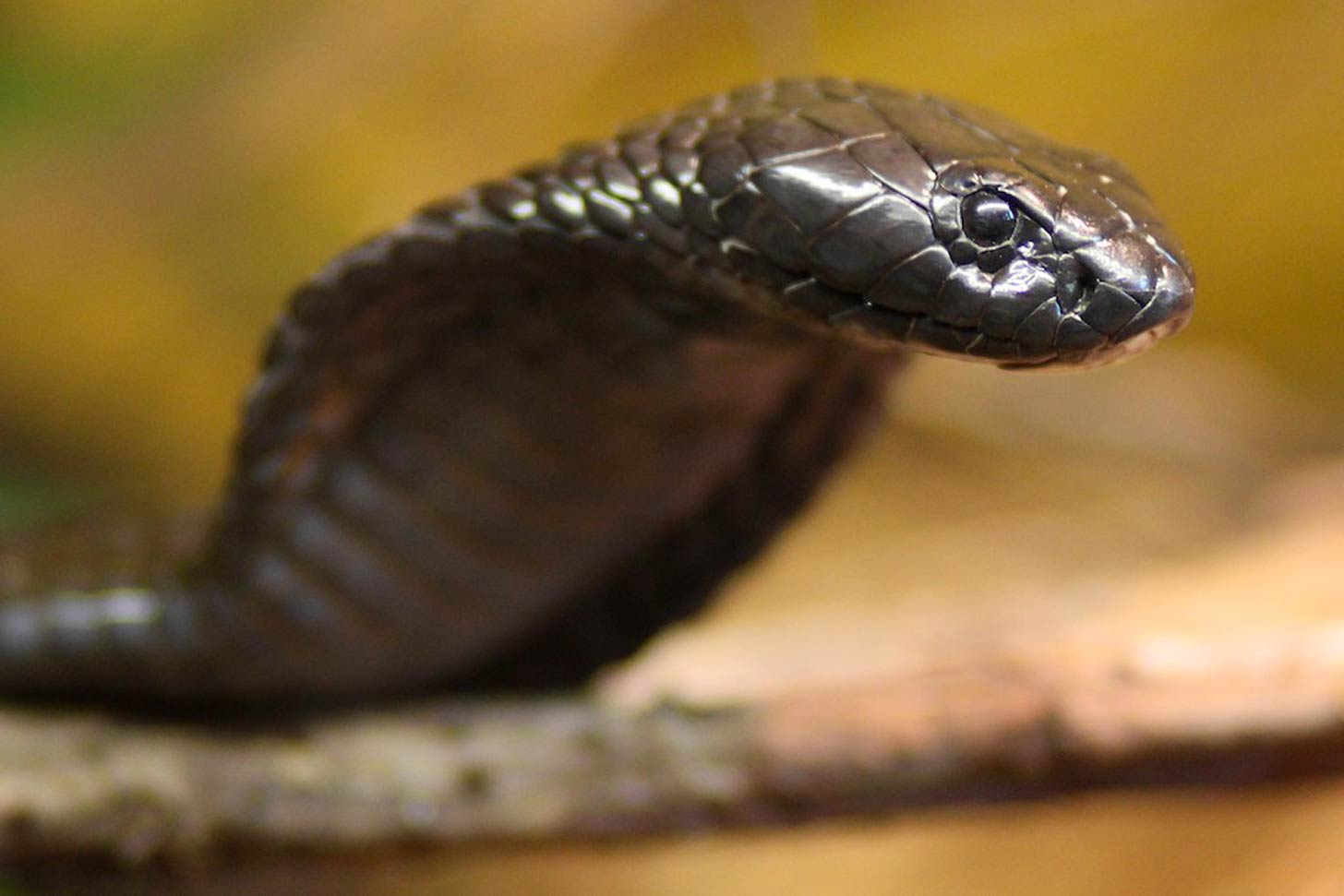
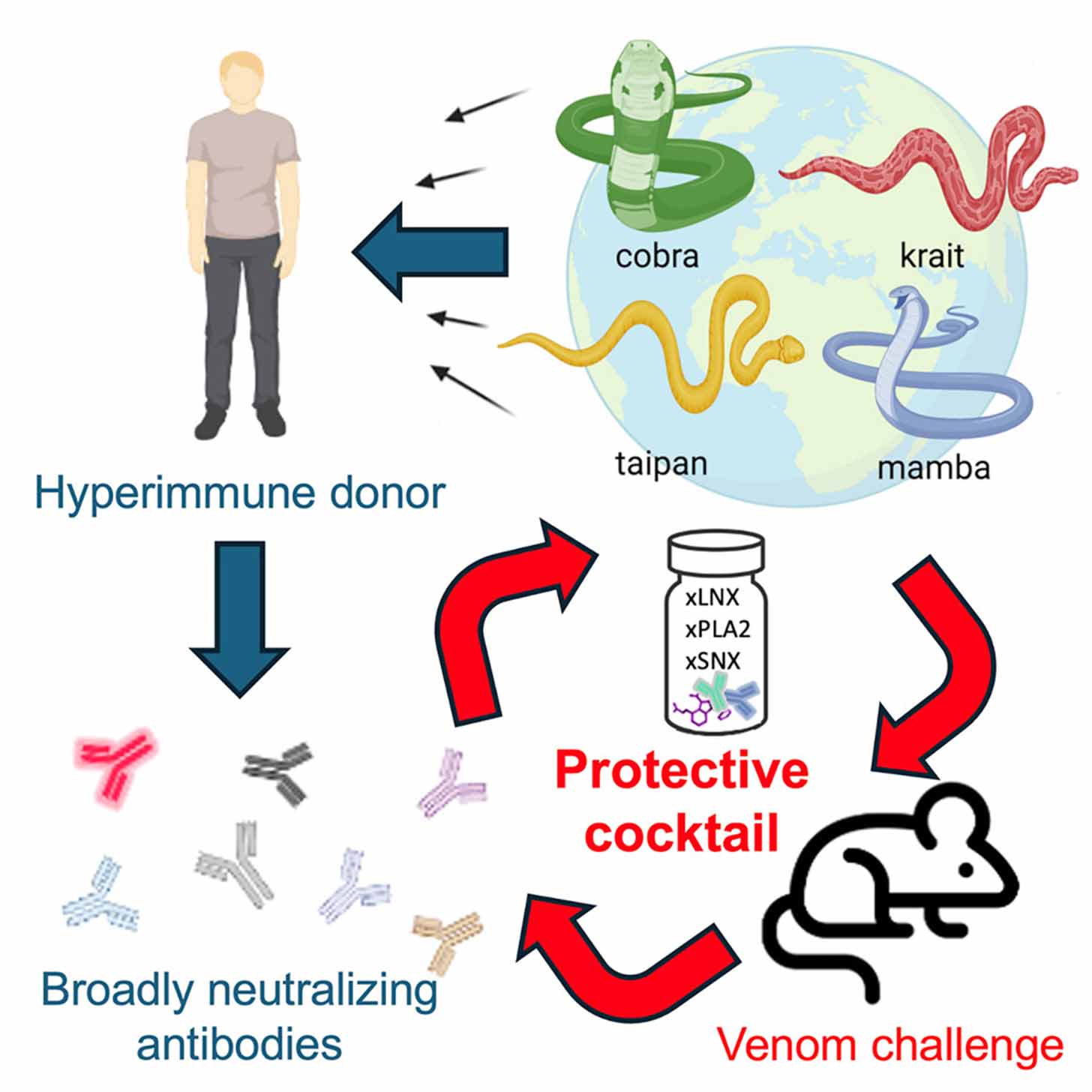
But Friede’s blood is now full of antibodies, following decades of strategic exposure to the neurotoxins of mambas, cobras, and other lethal slithering critters.
His blood is now the source material researchers are using to develop an anti-venom capable of neutralizing a broad spectrum of snake bites.
“The venom is incredibly inflammatory, but it’s the psychological part that really gets you,” Friede told The Times earlier this week. “You’re aware of how dangerous these snakes are; you have to fight your panic. After that, it’s just a matter of experience, of time in the saddle. The more you do, the better you get.”
Friede started this hobby — which he is indeed adamant no one else tries at home — out of sheer curiosity in childhood. After playing with harmless garter snakes in his youth, he began keeping more dangerous species of snakes as pets. At one point, he had 60 of them in his home basement.
In 1999, he began extracting venom from his snakes, drying it, diluting it, and injecting himself with tiny doses — keeping meticulous records as he went.
He had one major hospitalization in 2001, when he was paralyzed and in a coma for four days. But instead of giving up, he doubled down.
“In hindsight, I’m glad it happened,” Friede told The Times. “I never made another mistake.”
Jacob Glanville, an immunologist and founder of biotech company Centivax, stumbled on Friede’s videos.
Now, Friede is the director of herpetology at Centivax and serves as something of a “human lab” to Glanville.
“For a period of nearly 18 years, [Tim] had undertaken hundreds of bites and self-immunizations with escalating doses from 16 species of very lethal snakes that would normally a kill a horse,” Glanville told The Guardian.
“It blew my mind. I contacted him because I thought if anyone in the world has these properly neutralizing antibodies, it’s him.”
To develop the new anti-venom, Glanville and his fellow researchers identified 19 of the world’s deadliest snakes — in the elapid family — which kill their prey by injecting neurotoxins into their bloodstream, paralyzing muscles (including the big, important ones, like the heart and lungs).
The trouble is, each species in the elapid family has a slightly different toxin, meaning they would each require their own anti-venom.
But Friede’s blood contains certain fragments of each of these toxins; protein molecules seen across the various species. Because of his decades of service to science, his blood also contains the antibodies required to neutralize these toxins, preventing them from sticking to human cells and causing harm.
Combining the antibodies LNX-D09, SNX-B03, and a small molecule called varespladib that inhibits venom toxins, Centivax has successfully created a treatment effective against the entire range of 19 species’ toxins.
Their work, which was recently published in the journal Cell, will soon be tested outside of the lab.
Trials will start with using the serum to treat dogs admitted to Australian veterinary clinics for snake bites. Assuming that goes well, the next step will be to administer human tests.
Researchers also believe that because the serum stems from a human, this should also lower the risk of allergic reactions when being administered to other people.
“The final product would be a single, pan-anti-venom cocktail,” Professor Peter Kwong of Columbia University, a senior author of the study, told The Times.
Or, he added, they could make two: “One that is for the elapids, and another that is for the viperids, because some areas of the world only have one or the other.”
As for Friede, he maintains his affinity for snakes, though his last bite was in November 2018, when he said “enough is enough,” according to The New York Times.
By then, he had certainly done enough. His pursuit of immunity could feasibly save countless lives.
“I’m really proud that I can do something in life for humanity,” Friede told The New York Times, “to make a difference for people that are 8,000 miles away, that I’m never going to meet, never going to talk to, never going to see, probably.”
Header image courtesy of Centivax
Dogs and liquor don’t seem like they’d go hand-in-hand, but Tito’s Handmade Vodka has been helping dogs for more than 25 years.
In the last five years, the initiative Vodka For Dog People has supported over 2,500 animal-related nonprofits. In 2024 alone, they funded 75,000 spay and neuter surgeries and medical treatments — all while finding “furever” homes for over 160 stray dogs and cats that have wandered into their distillery.
“From the first distillery dogs that would eventually become family, to the many dogs that frequent our offices now, dogs have always been an important part of who we are at Tito’s Handmade Vodka,” Beth Bellanti Pander, program manager for Vodka for Dog People, told IdaHome Magazine in August.
“We think they make life better, and we try to do the same for them — from our support of yappy hours and dog-friendly events to joining forces with animal-focused nonprofits across the country.”
In their latest endeavor, VFDP gave a local Houston-based nonprofit, Three Little Pitties, a facility makeover that expanded three nurseries, improved the rescue’s grooming room, and built a “dedicated puppy cuddling area” for volunteers.

Alayna Matranga Goodson, the executive director at Three Little Pitties Rescue, said that the investment has broadened the rescue’s ability to care for “thousands of puppies” and expectant mothers in the future.
“One right after the other, we are able to move in desperate nursing or pregnant dogs that have nowhere else to turn, and give them a comfortable and safe environment to have their babies,” Goodson said in a press release.

“We are thrilled to have VFDP come in and revitalize the nurseries to make it a welcoming and joyful-looking environment — not only for the dogs — but also for the staff and volunteers who care for them.”
A stray dog named Lucy was one of the first dogs to try out the newly transformed “mutt-ernity suites.” Lucy was a stray dog that had given birth to six puppies in a nearby landfill and was living beneath a rusty dumpster.

After getting picked up by Three Little Pitties volunteers, Lucy and her litter received much-needed medical care, as well as a calm, clean place to “grow and thrive.”
“Three Little Pitties has created something truly special – a safe, welcoming place for one of the most overlooked dog populations: stray pregnant dogs,” Bellanti Pander said in a press release.
“Their work ensures that these dogs can safely bring their puppies into the world and find the loving homes they deserve. It's a one-of-a-kind mission, and we’re incredibly honored to help support it."

Header images via Tito’s Handmade Vodka & Three Little Pitties Rescue
Even in his final moments, Pope Francis maintained his heart for justice and mercy.
As Catholics around the world mourn the death of the late pope, more details are surfacing about his final days.

Monsignor Benoni “Don Ben” Ambarus, who was the official responsible for managing Francis’ charity and prison pastoral care in Rome, said that before his death, the pope donated €200,000 (or about $226,400 USD) to a juvenile prison in Rome: Casal del Marmo.
Not only was it nearly the last of his personal wealth, but it went to fund a pasta factory — Pastificio Futuro, or “Future Pasta Factory” — that operates in the prison.
“I told him that we have a big mortgage for this pasta factory and if we can reduce it we will lower the price of pasta, sell more and hire more boys,” Ambarus told La Repubblica newspaper.
“He replied, ‘Almost all my money is finished, but I still have something in my account.’ And he gave me €200,000.”
Throughout his time as pope, he was entitled to a papal salary of some €30,000 a month, but Pope Francis refused to collect it. Instead, he deferred it to various organizations, churches, and groups in need.
Casal del Marmo held a particularly special place in the history of Pope Francis. In 2013, he celebrated his first Mass of the Lord’s Supper on Holy Thursday there.
And in 2023, he returned to wash the feet of 12 young inmates.
It was a ritual that recalls the foot-washing Jesus performed on his 12 apostles at their Last Supper before his crucifixion. In this Holy Thursday moment, Pope Francis assured the youth of their dignity, adding that “any of us” can fall into sin.
Pope Francis’ commitment to people in poverty and prison was prominent throughout his papacy, demonstrating his belief that the Catholic Church should help and provide attention to people living on the margins of society.
“We have to help each other … giving one another a hand is beautiful,” Pope Francis said in his remarks at the feet-washing ritual in 2023.
“In society, we profit from each other … how many injustices [are there], how many people without work, without money to buy what they need? If that’s not me, it’s for the grace of God.”
Ambarus said that even in his tired and frail state, Pope Francis would be remembered as someone who fought for the rights of prisoners.
“He (fought for) them until his last breath,” Ambarus told La Repubblica. “That is why the prisoners saw hope in him. A father died for them.”
Ambarus also condemned the Roman legal system for failing to respond to Pope Francis’s calls for mercy toward inmates.
“[Pope Francis] called for more to be done to restore dignity to people ... But there was no direct result of his appeals. Like on the reduction of sentences,” Ambarus added.
“A great sadness enveloped the prisoners when they realised that the institutions had done nothing, not even a small gesture. Small gestures — a letter, a conversation, practical help with shoes or clothing — can reignite the human dignity that prison walls so often extinguish.”
But Pope Francis will be remembered far beyond a gesture. The pasta factory in Casal del Marmo received his blessing years ago, employing inmates to work toward reintegration in society and prevent recidivism.

“It all goes back to March 2013,” Alberto Mochi Onori told El Mundo, when the pope visited the prison for Holy Thursday for the first time.
“At the end of the visit, he delivered a brief homily, proclaiming: ‘Do not let yourselves be robbed of hope!’”
After a prison chaplain spoke with the Pontiff on this visit, Onori said Pope Francis declared: “We have to do something for these kids.” The pope later donated the initial funding to start the pasta factory.
“The profile of those who come here is usually people who don't have their head in the right place. If they don't have an alternative, they fall back,” Carmine, a 25-year-old former inmate at the facility, told El Mundo.
“But when the kids come here, they come with one mindset and leave with another. One of wanting to work and get organized. The project works very well. Working gives you hope.”
Header image by Jeffrey Bruno/ALETEIA (CC BY-SA 2.0)
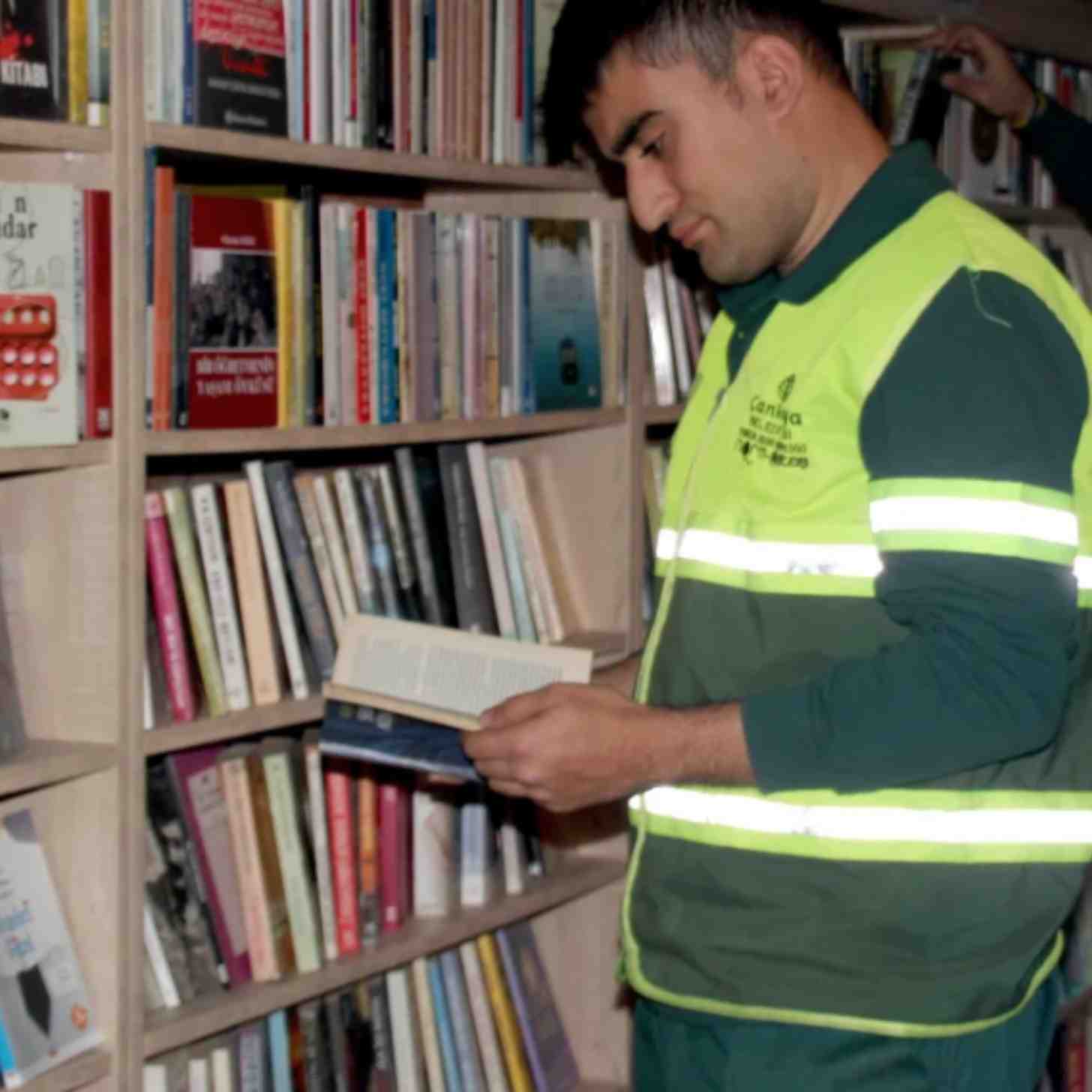
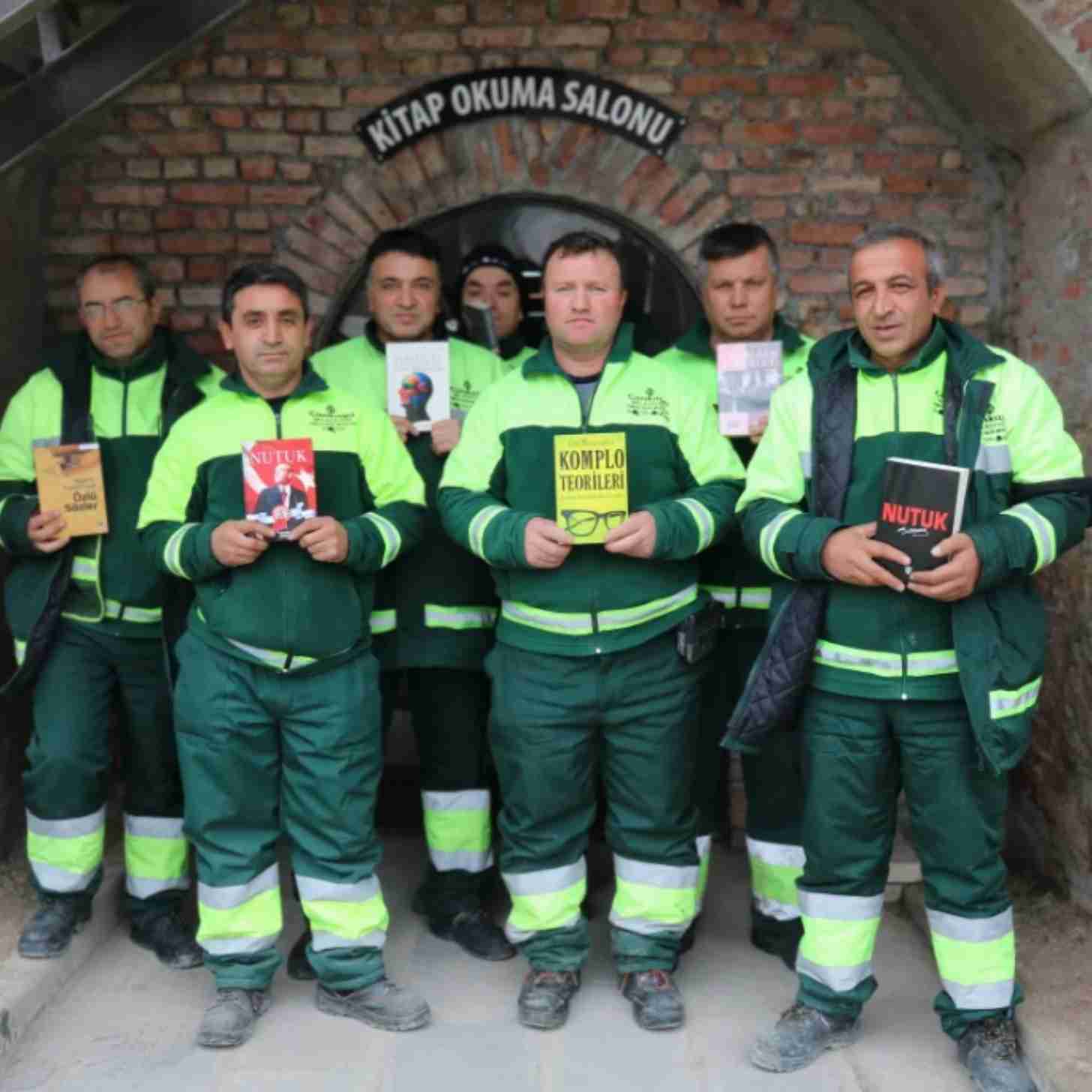
In 2018, sanitation workers in Çankaya, Turkey, began setting aside books that they pulled from trash bins on their night shifts — first for themselves, then for their family and friends.
Over time, as the collection grew, the workers began storing them in the sloping hallways of an abandoned brick factory, which also serves as the headquarters for the city’s sanitation department.
In 2018, the “Kitap Okuma Salonu,” (Workers’ Library) collection was officially designated as a public library for the people of Çankaya.
“We started to discuss the idea of creating a library from these books,” Çankaya Mayor Alper Tasdelen told CNN when the library first opened. “And when everyone supported it, this project happened.”
“On one hand, there were those who were leaving these books on the streets,” Tasdelen added. “On the other hand — others were looking for these books.”
In its first year, the library housed over 6,000 books.
Today, it’s home to more than 40,000.
When the number of books began exceeding the amount of shelf space at the library, the workers transformed one of their garbage trucks into a mobile library so that they could bring the excess books to local schools and prisons.
“Village schoolteachers from all over Turkey are requesting books,” Tasdelen said.
The collection has grown so large in recent years that the city hired a full-time librarian to help tend to the books and facilitate loans on a two-week basis.
In January, the Spouses of Head of Mission committee (a group of 12 women, who are the wives of ambassadors from 12 countries) visited the Workers’ Library and added to the collection’s foreign language section by donating recycled books “from the garbage to the library.”
The books were published in more than 13 different languages, in honor of the committee’s home countries.
According to the Turkish outlet Anka Haber Ajansi, SHOM Green Group Coordinator Kaire Jürgenson said that they “appreciated those who contributed to the establishment of the library” and emphasized that “this valuable work should be announced to more people.”
On a given day, the library is filled with municipal employees, their children, and students from local schools as they leaf through countless books and read quietly at assorted tables.
For the sanitation workers who operate out of the brick building, the library has long served as a home away from home.
“Before, I wished that I had a library in my house,” Serhat Baytemur, a garbage collector, said in a press statement. “Now we have a library here.”
Header image via Cankaya Municipality News Center
Every day the Good Good Good team collects the best good news in the world and shares it with our community. Here are the highlights for this week!
If you want to get good news in your inbox every day, join the Goodnewsletter — the free daily newsletter designed to leave you feeling hopeful.
The Best Positive News We’re Celebrating This Week —
Saguaro National Park is expanding by nearly 50 acres due to a land acquisition
The Trust for Public Land acquired two properties in the foothills of the Tucson Mountains, which will lead to the expansion of Saguaro National Park by 47 acres.
Beyond adding to the national park’s protected area, the expansion also improves connectivity between the park and nearby Sweetwater Preserve, boosts the local outdoor industry, and helps make the outdoors even more accessible while preserving the “national treasures” of these public lands for generations to come.
While Saguaro National Park already boasts tens of thousands of acres, this new addition only helps solidify its significance and conservation years into the future.
Why is this good news? Just this past week, the Trump administration was reportedly considering rolling back protections for six national monuments representing over 5 million acres of national public lands. While 50 acres of additional acreage seems like a drop in the bucket compared to that — these additions that prioritize conserving more, not less, land are so important.
→ Read more
SuperAdobe homes have popped up all around the world to provide sustainable, safe, cheap housing for people in need — one just survived the L.A. wildfires
→ Read more
Three Indian teenagers built a salt-powered fridge to help bring vaccines and medical supplies to rural areas
After hearing how challenging it was to bring COVID-19 vaccines to rural areas that did not have electricity, three teenagers in India came up with a solution: a mini refrigerator that cools itself with salt and does not require an outlet.
Dhruv Chaudhary, Mithran Ladhania, and Mridul Jain’s invention, the Thermavault, just won the 2025 Earth Prize — and they’re using the $12,500 prize winnings to build 200 refrigerators for 120 hospitals.
The trio is hopeful that their invention will help transport critical vaccines, medicines and supplies, and even transplant organs.
→ Read more
Nepal is a global leader in electric vehicle imports — and the shift is cleaning up toxic air pollution
Part of a larger, ambitious goal for electric vehicle sales, last year more than 70% of four-wheeled passenger vehicles imported into Nepal were electric — one of the highest rates in the world.
And there’s a new hope emerging as a result of the increasing popularity of EVs, both two- and four-wheeled: reducing chronic air pollution. The city is ranked among the world’s most polluted cities, with fine particulate matter regularly 10 to 20 times higher than WHO guidelines.
Air pollution accounted for nearly 19% of deaths in Nepal in 2021. The increasing use of electric vehicles could help clean up that air, bring it within safe, recommended pollution levels — and help people living in the city live for 2.6 more years.
Even better: Almost all of Nepal’s electricity is clean, generated by hydropower, and readily available — making the shift to electric vehicles even more impactful.
→ Read more
Tiny cottages modeled after a children’s storybook are bringing neighbors together in a small New York town
Wind and solar capacity have surpassed coal-powered thermal energy in China for the first time
While China is the world’s largest emitter of greenhouse gases that drive climate change — it’s also installing almost twice as much wind and solar energy capacity as every other country in the world combined.
Currently, around 60% of China’s energy comes from coal — but that won’t be the story for long. Not only is it working to achieve peak carbon emissions by 2030, it just reached a major clean energy milestone.
China brought its total installed capacity of wind and solar power to 1.482 billion kilowatts, officially surpassing the installed capacity of thermal power, which is mainly coal, at 1.451 billion kilowatts.
→ Read more
A reassuring report shows that rates of advanced cancer diagnoses have returned to pre-pandemic levels
The COVID-19 pandemic forced patients to postpone their usual cancer screenings due to overwhelmed doctors and hospitals. This resulted in an increase in the number of cancers being diagnosed at later stages, when it’s harder to treat.
That trend quickly reversed, though, already reverting to pre-pandemic levels by 2021, according to the broadest-yet analysis of the pandemic’s impact on U.S. cancer data.
The report also found that cancer death rates continue to decline, and the delay in screening isn’t making a huge impact on cancer statistics — making it unlikely that there will be higher cancer death rates tied to the pandemic.
Why is this good news? A valid concern, as certain types of health care were delayed at the start of the pandemic when hospital systems were overloaded, was the impact of those delays on diseases like cancer. It’s encouraging to see that these concerns didn’t become another heartbreaking outcome on top of the pandemic.
→ Read more
‘Fungi tiles’ inspired by elephant skin keep buildings cool without electricity: ‘Promising eco-friendly alternative’
In the last 50 years, over 90 million lives have been saved by measles vaccinations
Prior to the measles vaccine, nearly every child was infected with measles. Without the availability of vaccines, an estimated 2 to 3 million people globally would die from measles every year.
And in the last 50 years, an estimated 90 million lives total have been saved by the measles vaccine.
Amidst a fatal measles outbreak in the U.S., powerful health officials are casting doubt on the safety and efficacy of the vaccine — but these claims aren’t supported by evidence. Even when more serious reactions to the vaccine do occur, they are rare and less likely than if a child actually gets measles.
Not only does a single dose of the vaccine reduce a person’s chance of getting measles by around 95% — it also is proven to prevent measles from spreading within families and communities.
→ Read more
Despite fears a ‘millionaire’s tax’ would drive people out of the state, Massachusetts now has more wealthy residents
In 2022, Massachusetts voters approved a 4% surtax on incomes over $1 million or more, which was projected to bring in $1 billion in income for the state — but critics feared it would make wealthy people leave the state.
In fact, the opposite happened: Researchers found the number of people making $1 million or more annually has increased by nearly 40% since it the tax went into effect.
Additionally, the number of ultra-wealthy residents — making at least $50 million or more annually — has also grown, from 1,954 in 2022 to 2,642 in 2024. And the added revenue surpassed projections, generating $2.46 billion in 2023 alone.
Why is this good news? In addition to proving that a tax on extraordinarily wealthy individuals doesn’t inevitably lead to “wealth exodus,” the additional revenue from the tax is going to “fund essential programs that expand economic opportunity for all,” like free school lunches and free community college for state residents.
From the director of ‘My Octopus Teacher,’ critics are raving about ‘Pangolin: Kulu’s Journey’ on Netflix
→ Read more
A new study found that critically endangered axolotls bred in captivity can survive in the wild
A new study is providing some hope for the conservation of the widely beloved, and critically endangered, axolotls. Researchers released 18 of the amphibians who had been bred in captivity into the wild — and found the animals could survive.
Famous for their permanent smiles, axolotls were once found across several lakes in Mexico City, but their habitat has diminished as humans diverted and drained lakes to prevent flooding. Now, they are only found in canals in a single lake
This groundbreaking research will likely pave the way for more reintroduction projects.
What’s the nuance? The researchers acknowledged that the first priority for axolotl conservation is is to improve its natural habitat, which is also threatened by years of pollution and degradation, leaving only an estimated 50 to 1,000 still existing in the wild.
TikTok’s ‘squirrel whisperer’ spends weekend guarding wildlife from tree removal: ‘Protect what brings you peace’
→ Read more
India massively reduced extreme poverty to just 2.3% of the population — down from 16% a decade earlier
Lifting 171 million people above the poverty line, India reduced extreme poverty from 16% in 2011-2012 to just 2.3% in 2022-2023. Extreme poverty is measured at $2.15 per day in purchasing power parity.
And the results were widespread, with rural extreme poverty falling from 18.4% to 2.8 percent, and urban extreme poverty from 10.7 percent to 1.1 percent over the same time period.
Even applying a $3.65-per-day poverty line, poverty in the country fell from 61.8% to 28.1% — equating to lifting 378 million people out of poverty.
More good news of the week —
In honor of her late husband, a philanthropist has donated over $100 million to 350 local charities in Rhode Island. Barbara Papitto founded the Papitto Opportunity Connection to support nonprofits in Rhode Island that serve communities most in need of help, with grants focusing on three main areas of impact: education, skills training, and entrepreneurship.
An autistic artist teamed up with city council to create and install “happy to talk” benches to combat loneliness. While Oliver Chan’s experience with autism might amplify feelings of loneliness, he knows it’s something everyone experiences. — and that became abundantly clear in the wake of the COVID-19 pandemic.
After a months-long recovery, 31 critically endangered, “cold-stunned” sea turtles returned to the Atlantic Ocean. The Kemp’s ridley sea turtle — the most endangered sea turtle species in the world — is ending up “cold-stunned” in Cape Cod Bay with increasing frequency due to changing ocean temperatures and extreme wind patterns that force sea turtles up north.
Dutch engineers built a 3D-printed bridge using a decommissioned wind turbine blade. Another potential way to recycle would-be waste from wind turbines, people have also turned the decommissioned blades into surfboards, tiny homes, and more.
A homeless shelter run by students is providing housing where a college priced students out of dorms and campus housing. Colleges often don’t have enough room to accommodate all of their graduates, forcing students to look for housing off-campus — where affordable housing is increasingly difficult to find.
Engineers designed a self-repairing, “living” concrete out of fungi and bacteria to address the environmental impact of construction. Cement alone is responsible for nearly 8% of global CO₂ emissions, and the team of scientists believes their innovation could help pave the way for more sustainable and adaptive building systems.
In “a sign of hope,” four months after the Los Angeles wildfires, wildlife is returning to the burn area. A group of volunteers is monitoring the area with trail cameras in an area behind Altadena — previously slated for development into a sports complex — to showcase the biodiversity of the area and take “inventory of everything that was valuable.”
A simple tweak to tax law is helping bring solar power to the communities that need it most. The Inflation Reduction Act made it easier for project developers without major tax liabilities, like the Boston Community Solar Cooperative, to sell their clean energy credits at a discount before breaking ground on a solar or wind project.
A Korean boy band member just became the first active K-pop star to come out as gay. Bain of Just B came out from the stage during a concert in Los Angeles, saying he was “a proud member of the LGBTQ+ community,” in a rare public announcement from an active K-pop star, whose behaviors are traditionally tightly controlled by music labels.
A new tribal national park in North Dakota is opening to visitors as part of an effort to preserve the land. Three Affiliated Tribes National Park will open a little-seen area of a dramatic landscape to outdoor enthusiasts after three Native tribes purchased 2,100 acres of a former ranch.
An endangered lemur was just born at the Maryland Zoo for the first time since it was introduced in 2023. The Coquerel’s sifaka is native only to Madagascar, where it’s become endangered primarily due to habitat loss caused by deforestation, and the Maryland Zoo’s program aims to grow the species and preserve genetic diversity.
Publisher Penguin Random House dropped a “book ban” clothing line and 100% of the profits will benefit libraries. The “Reading Is A Right” line of socks, sweats, T-shirts, and hats will benefit the American Library Association, which supports libraries and librarians, compiles data on book challenges throughout the U.S., and acts as a watchdog for censorship efforts in public institutions.
Using breakthrough technology that could save countless lives, scientists are trialing fridge-free vaccines in the UK. Currently, most vaccines must be kept cold or frozen, and this “cold chain” poses a major obstacle to vaccinating people in developing nations where electricity is scarce or unreliable, resulting in around half of all vaccines being discarded each year.
The world’s first giant 15 megawatt turbine is up and running at Germany’s largest offshore wind farm. A single spin of one of the turbine’s rotors can generate enough electricity to power four households for an entire day, and when the entire wind farm project is finished, it will have 64 of them.
Previously the world’s largest landfill, a Staten Island park is getting 50k flowers to lure bees and butterflies. Over the next two years, the project will study the impacts of large-scale native violet planting and reintroduce native pollinators to assess the success of the planting project and the challenges posed by global warming and the reduction of air safety regulations.
Celebrating “10 years of impact,” Taco Bell has provided over $64 million in scholarships for college students. This May marks the 10-year anniversary of the Taco Bell Foundation’s Live Más scholarship program, and to honor the milestone, the foundation is giving its largest scholarship distribution yet. Time to go get that Crunchwrap Supreme you’ve been craving.
Thanks to a new monitoring camera, eight seals entangled in nets were rescued in Rhode Island. The state’s Department of Environmental Management installed the camera to “support conservation efforts in real time,” and the eight seals will be released back into the ocean after being rehabilitated.
Doctors just performed a pioneering surgery to reconstruct a protective cage around a “one-of-a-kind” girl’s heart. Now seven years old, Vanellope Hope Wilkins first made medical history when she was born with her heart outside of her body in 2017, and subsequently had three operations to place her heart back in her chest.
A test case for addressing homelessness, a city’s first tiny home village situated on private land is already half full. With the capacity to house up to 150 people, each of the 135 individual rooms is equipped with a bed and nightstand, eight of them are ADA compliant, and there is more land available for expansion if the project is successful.
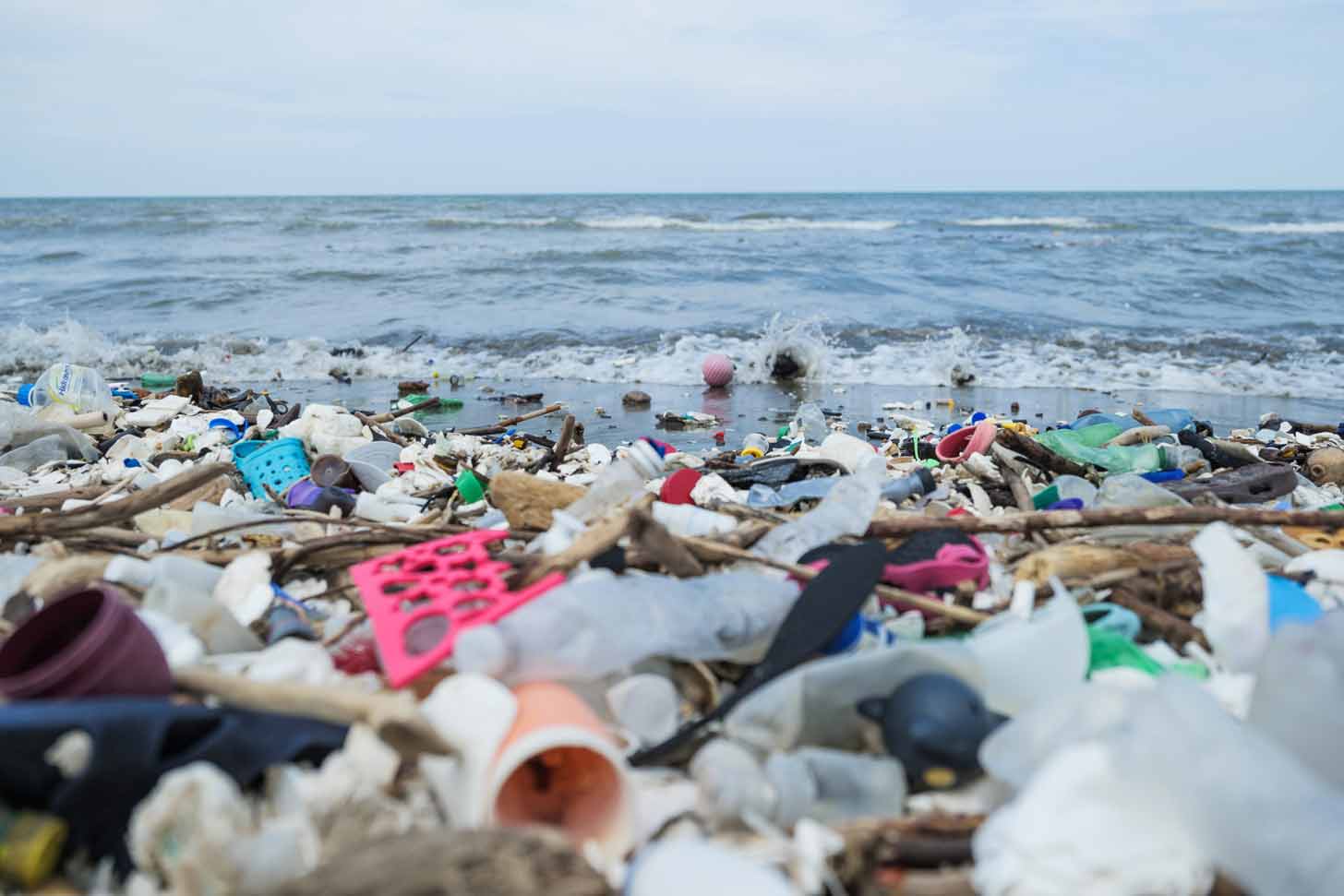
When plastic gets to the ocean, it tends to accumulate in giant, circular currents, getting caught up in the natural waves of the ocean and other collected pollution, with nowhere to escape.
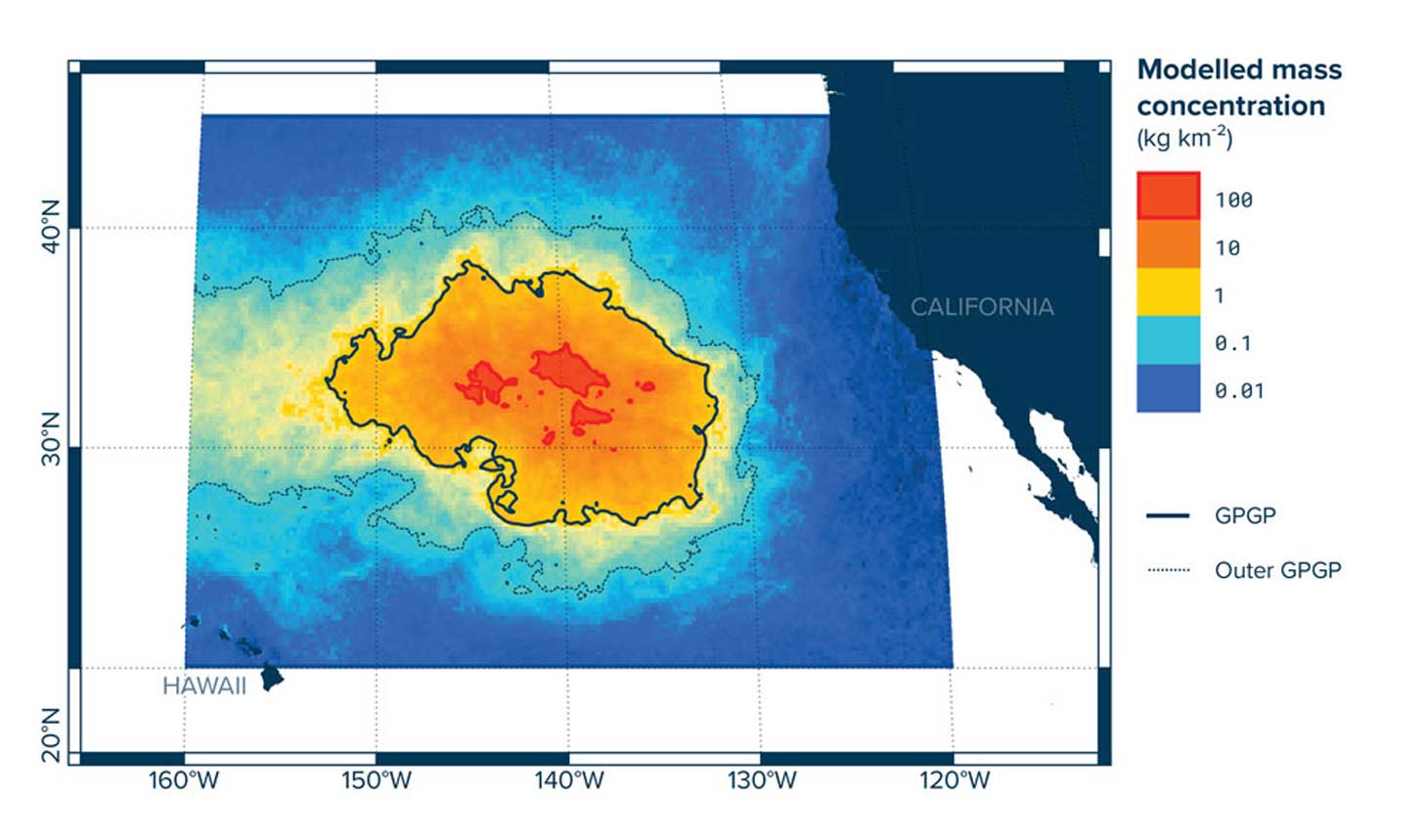
There is no example more famous than the Great Pacific Garbage Patch, a heap of trash roughly double the size of Texas that resides in the ocean between Hawaii and California.
A problem of this size requires a massive solution — so scientists turned to space to conceptualize how to clean it up.
Research scientist Rodrigo Duran from the Planetary Science Institute and Luca Kunz, a graduate student at the University of Hamburg, just authored a new paper published in the journal “Ocean Science.”
In it, Duran and Kunz used satellites to analyze the surface currents of the ocean. Then, they identified regions that, due to their circulation patterns, attract objects drifting nearby into large garbage patches.
Essentially — they watched garbage patches form from space.
Their work was heavily inspired by renowned physicist Sir Isaac Newton.
“Sir Isaac Newton was the first to solve trajectory problems while trying to understand celestial bodies orbiting within a gravity field. But, he was thinking in terms of how Earth orbits the Sun,” Duran said in a statement.
“Over the following centuries, new tools and ideas were used to solve these kinds of extremely complicated problems. However, it wasn’t until the last couple of decades that these tools were adapted to surface ocean currents and wind, which bring an additional level of complexity. It’s not like the equations of gravity, which remain predictable for a very long time. The ocean is always changing.”
The research team combined Newton’s lasting school of thought with over 20 years of ocean current satellite data collected by floating sensors, called drifters.

These drifters ride ocean currents and record their trajectories.
From this data, the scientists were able to identify and categorize 3.5 million Transient Attracting Profiles, which they call TRAPs for short.
TRAPs are regions where drifting objects, including garbage, are brought together by two or more groupings of circular currents.
Each of these circular currents — or eddies — can be anywhere from 60 to 180 miles wide and collect drifting objects into areas larger than a city. And when these collections come together, they are stable for an average of six days.
What does this mean?
“With this information, we can let the currents do the work. Instead of boats slowly trawling and burning fuel, they can hold their position and keep the nets steady at a location where currents funnel and aggregate drifting objects which will theoretically save cleanup crews time, money, and fuel,” Duran explained.
The idea is that instead of chasing down the biggest contagions of trash piling up in the ocean, teams can strategically place nets at fixed points to gather the items that need to be removed from the waters.

The currents — not engines — would collect the waste, lowering emissions and reducing costs for major efforts to curb ocean pollution.
This information is particularly vital to the work of The Ocean Cleanup, a Netherlands-based nonprofit that is developing technologies to clean the world’s oceans of plastic. The group was a collaborator on this research.
On top of supporting scientific research about ocean pollution, The Ocean Cleanup is working to streamline technology that better identifies, tracks, and cleans up ocean plastics.
Right now, The Ocean Cleanup has been measuring the flow of trash from rivers to oceans across the globe, using AI cameras attached to bridges that predict where plastic is entering the ocean.
The organization’s most well-known invention, however, is its ocean cleaning system, which sweeps the water with a mesh net to gather plastic that is brought to land and recycled. It has been utilizing ocean currents to do this ever since its inception over a decade ago.
“The circulating currents in the garbage patch move the plastic around, creating natural ever-shifting hotspots of higher concentration,” The Ocean Cleanup explains on its website. “With the help of computational modeling, we predict where these hotspots are and place the cleanup systems in these areas.”
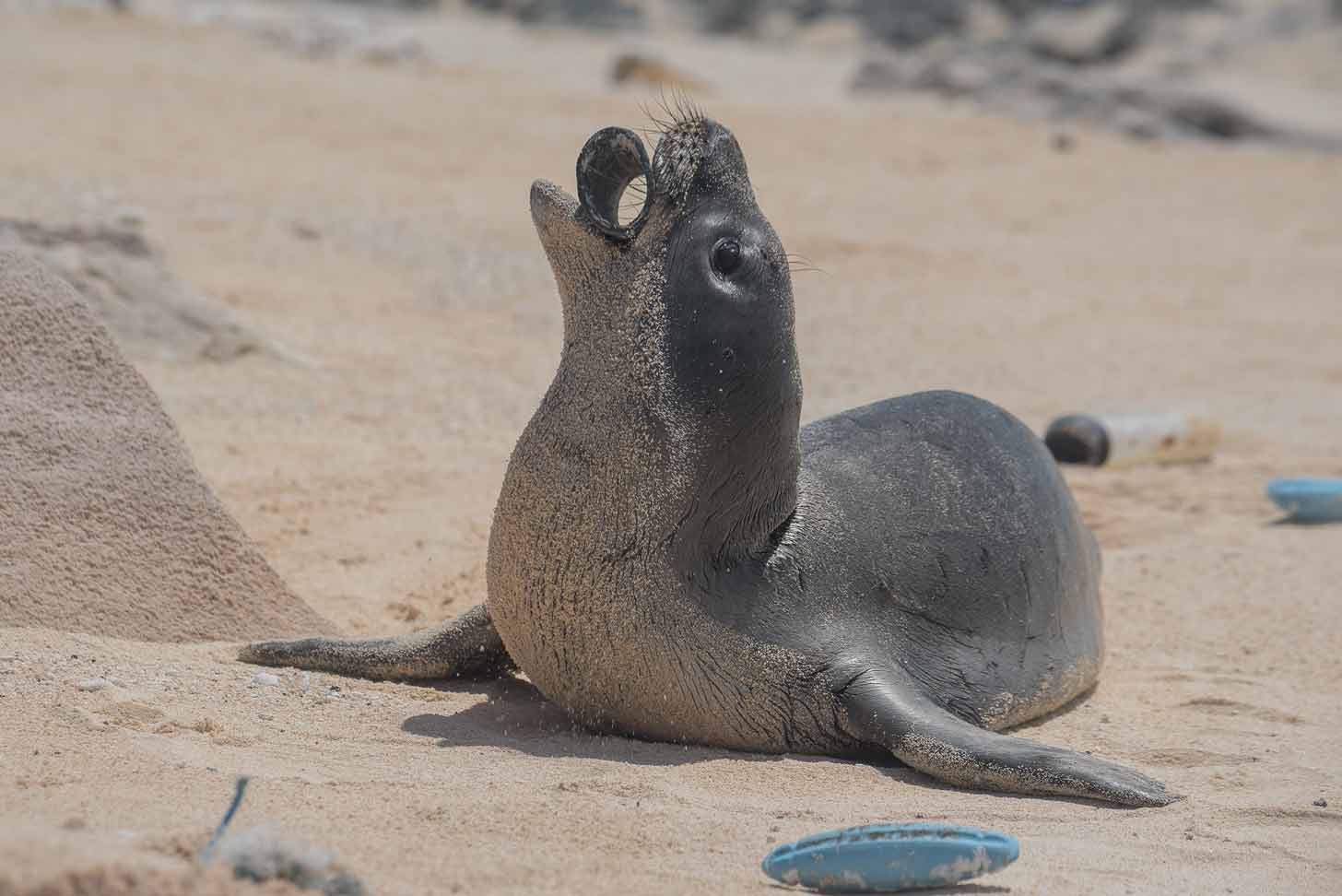
But with improvements in this approach — as evidenced by the Planetary Science Institute’s latest research — cleanup efforts could be expedited even further, leading to a more efficient and sustainable eradication of the Great Pacific Garbage Patch.
In addition, this research could have helpful applications beyond ocean cleaning efforts.
“Our analysis contributes to a better understanding of TRAPs, which can even benefit other offshore operations besides ocean cleanups, such as optimal drifter deployment, oil spill containment, and humanitarian search and rescue,” the researchers wrote in their paper.
Duran added: “It’s a very exciting time.”
Header image courtesy of The Ocean Cleanup
According to Scientific American, cement is the most energy-intensive product on the planet. Global cement and concrete production accounts for 9% of all man-made carbon dioxide emissions annually.
But it's hard to imagine a world without concrete when it’s the building block of nearly everything: homes, buildings, bridges, roads, and more.
That’s why scientists at Montana State University Bozeman decided to think outside of the box when it came to creating a concrete alternative.
“We asked ‘what if we could do it a different way using biology?’ That’s the vision,” Chelsea Heveran, an assistant professor of mechanical and industrial engineering, told CNN.
Heveran is the senior author of a study published on April 16 in Cell Reports Physical Science, which explores the viability of using dense fungi and bacteria to create recyclable building materials.
“We’re not the first ones to biomineralize something and call it a building material,” Heveran pointed out.

Where their research team differs, Heveran explained, is the introduction of calcium carbonate (a chemical compound) to mycelium (the vegetative part of a fungus).
Through a process called biomineralization, the calcium carbonate causes the mycelium to harden into bonelike structures called “scaffolds.”
“If you want to keep [the bacteria] alive for longer so that you can do more with them, there’s been some challenges involved to extend that viability,” Heveran said.
“So that’s why we gave them fungal mycelium scaffolds, because the mycelium is really robust, and in nature, sometimes it biomineralizes.”
Heveran said that biomineralized building materials are technically only “living” for a few days. But through their lab trials, Heveran and her team have been able to keep the microbes alive for at least four weeks.
In the future, they hope to extend that time to months — or even years.
“We’re really excited in our next work to ask the questions ‘could we seal a crack in the material?’ Or ‘could we sense something using these bacteria?’” Heveran posed.
“Like, imagine you had poor air quality in your building, and these bricks were your walls. Could they light up to [indicate] that?” Heveran added. “Before, we couldn’t do any of that because the microbes weren’t alive enough, but they’re very alive now.”
Avinash Manjula-Basavanna, a senior research scientist at Northeastern University, weighed in on the Montana State University Bozeman experiments, adding that living building materials are still years away from replacing cement.

“These kinds of experiments are done on a small scale,” Manjula-Basavanna said. “They are not necessarily a reflection of the bulk material properties. It’s not stiffness that people are interested in when it comes to construction materials. It is the strength, [the] load-bearing ability.”
“I think in the future, they could be useful for single-story buildings, these smaller structures — it’s very much feasible,” Manjula-Basavanna said. “It might be five to 10 years down the line.”
Even though she and her team are years away from using their fungi bricks in the “real world,” Heveran is willing to play the long game.
The team has been working hard in the lab since 2020, when they first received a $500,00 grant from the National Science Foundation to kick off their research.
Overall, Heveran is optimistic about the potential benefits of using living building materials.
“There’s a lot of ‘ifs’ that would have to come into play for the average household to have a cost benefit from this,” Heveran said.
“But for society, it might be a lot cheaper when you’re trying to build infrastructure for a community that really needs it, or if you’re trying to build infrastructure in space, this might be a lot easier than carting cement and concrete up there,” she explained.
“The possibilities are really exciting to me.”
Header image via Bernard Spragg / Flickr
The Karakamia Wildlife Sanctuary is uniquely positioned to save some of Australia’s most endangered animals.
With 662 acres of wetlands, woodlands, and granite outcrops, the Australian Wildlife Conservancy’s flagship sanctuary is a hotspot for biodiversity.
It’s also the perfect place for the AWC to test out their newest technology: the Artificial Intelligence (AI) Species Classifier Model.
Thanks to the 240,000 camera traps at its disposal, which have resulted in tens of millions of species images, the AWC is uniquely positioned to analyze and detect distinct animals.
“A dataset of, say, 1 million images can now be processed and classified in a matter of days, compared to the many months it would have taken previously,” Damien Keer, AWC’s chief information technology officer, said in a press statement.
“The model has already assisted in processing over 54 million camera trap images. We’ve now processed ~1 image every second of every day for the last year. Thirty million images in 12 months is an impressive economy of scale.”
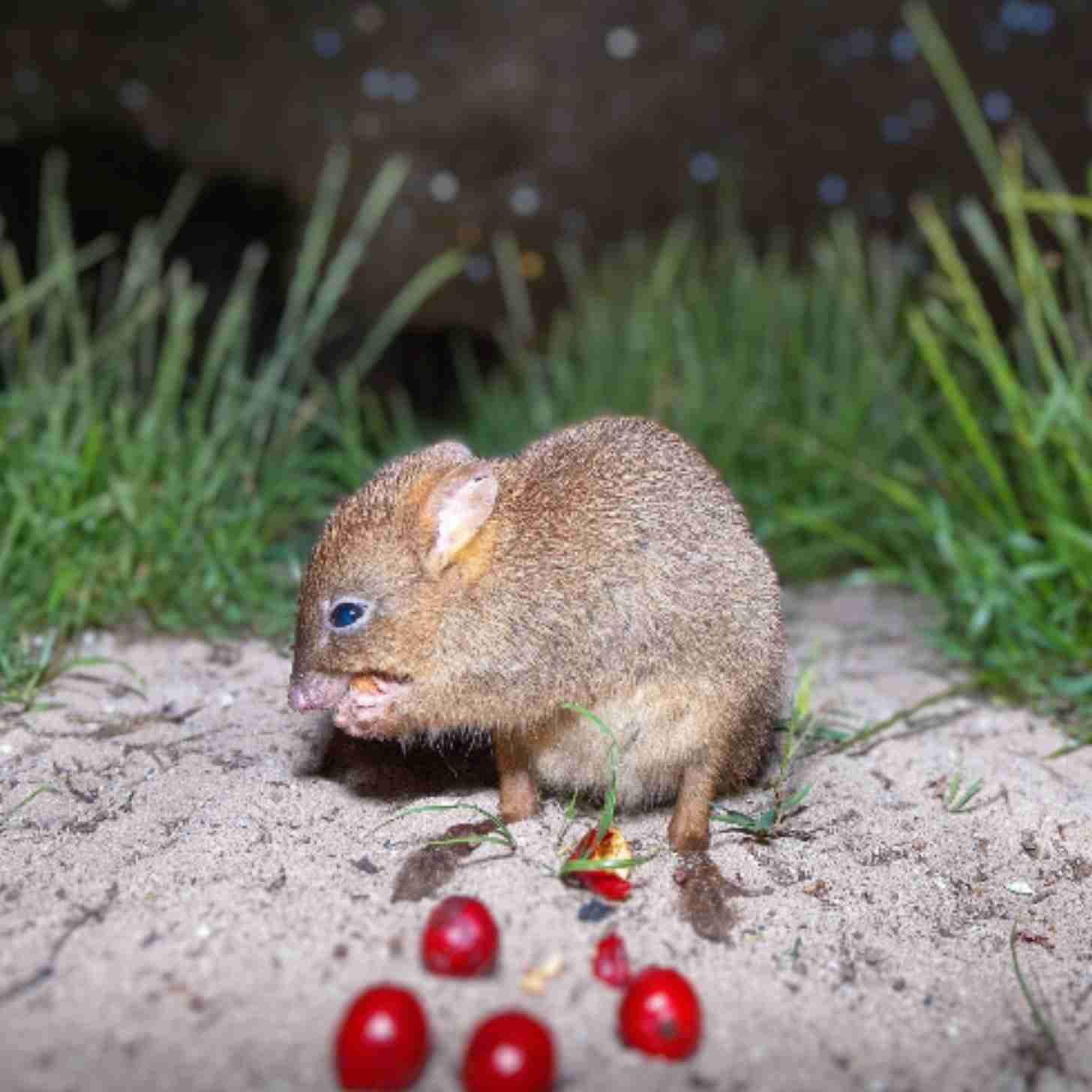
So far, the technology has proven invaluable in cataloging countless native and invasive species — a tool that is critical in animal monitoring and conservation research.
“There are so many benefits of the network being designed and built in-house,” said Yezmin Assad, AWC’s networking and telecommunications specialist
“We’re able to upload data seamlessly from a variety of sources, program alerts tailored to the unique needs and priorities of each sanctuary and reduce our reliance on expensive third-party tracking services.”
With a long-term goal of indexing 120 species, the nonprofit has successfully tallied 102, from the critically endangered northern bluetongues in the Kimberley woodlands to the critically endangered bettongs in the Wet Tropics.
And the brush-tailed bettongs, or Woylies, were handpicked to be the “guinea pig” for the AI model’s latest application: a “SmartGate.”
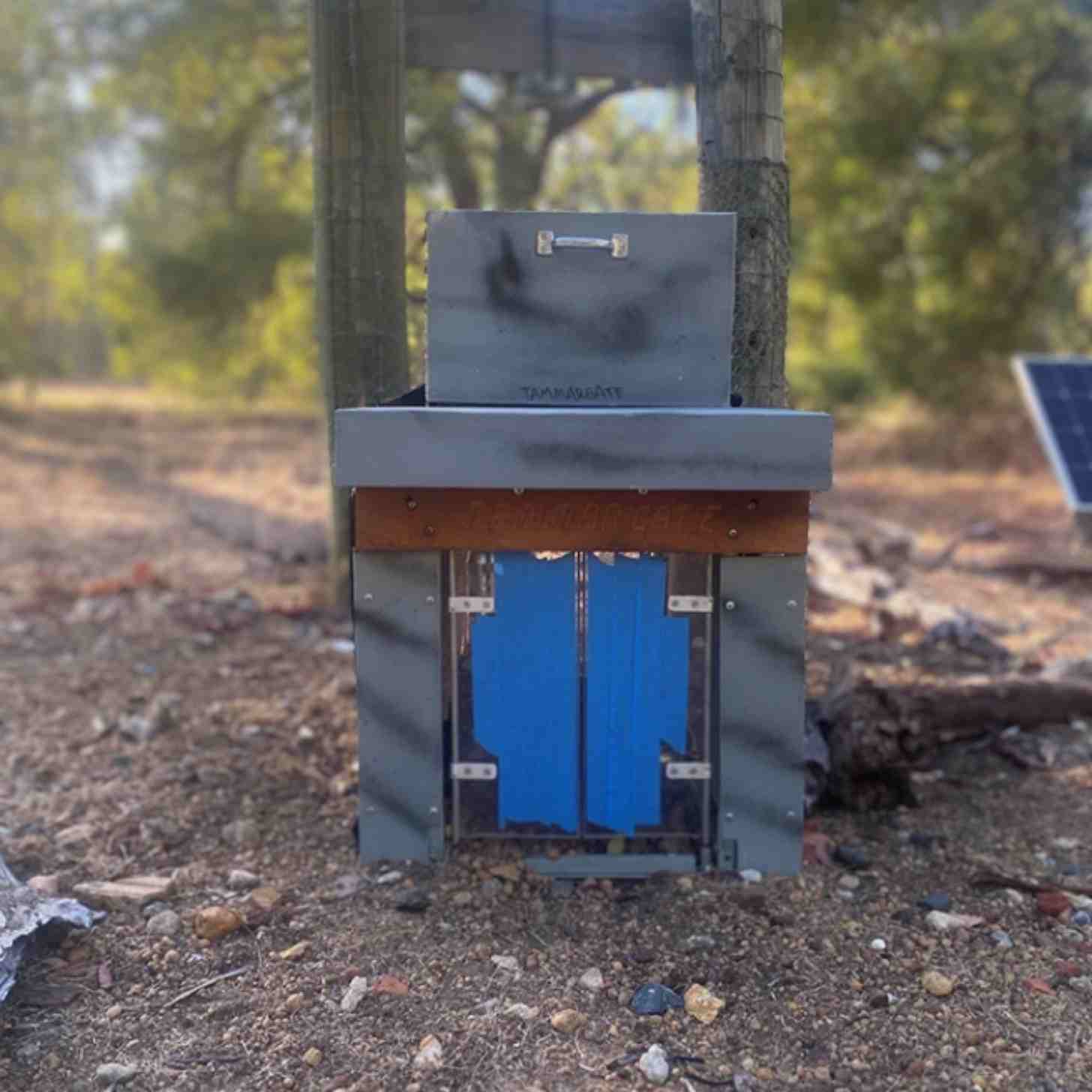
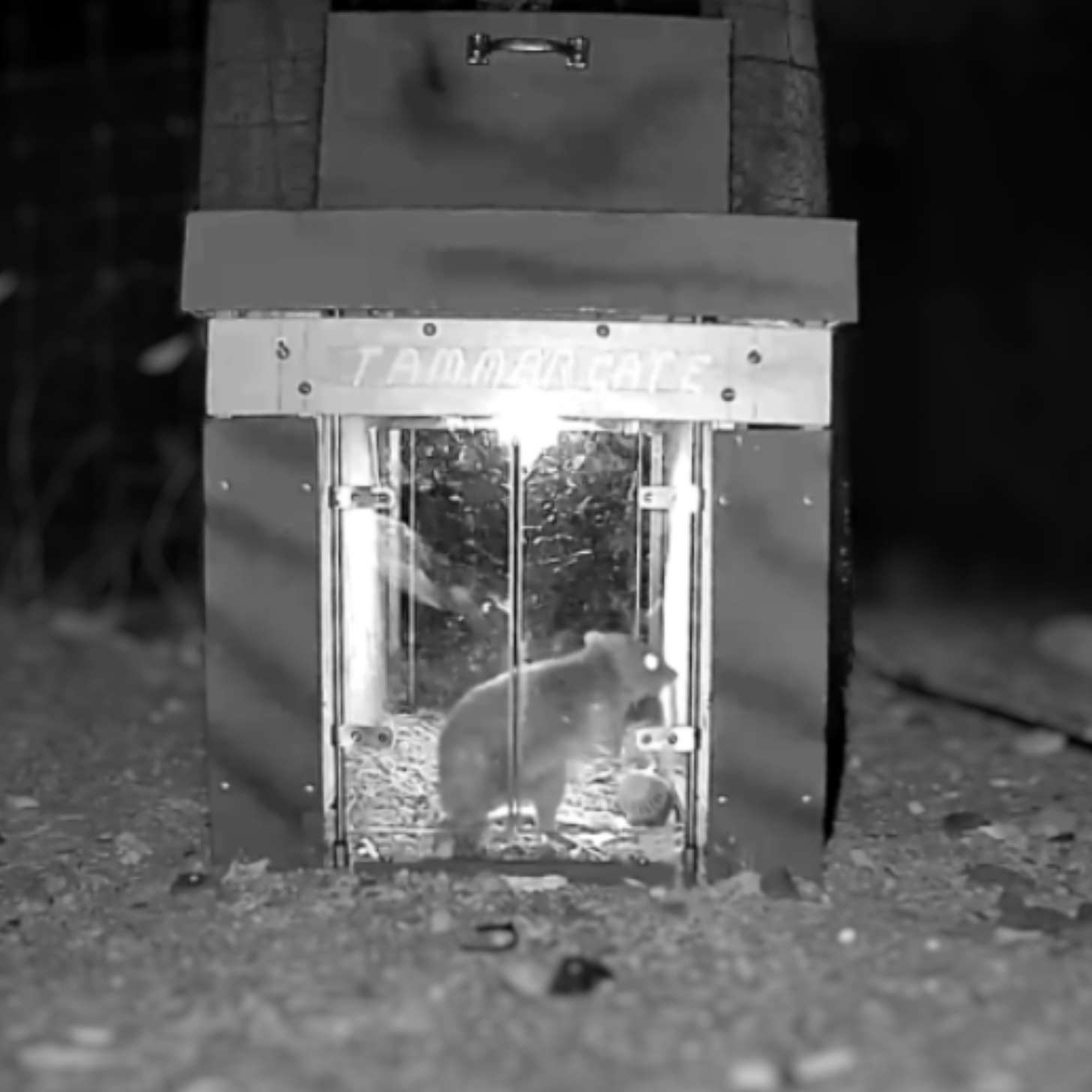
The SmartGate is a double-gated enclosure tunnel within Karakamia Wildlife Sanctuary that has been putting the Species Classifier Model to the test in real time.
Using the species recognition software, the gate only opens if it detects the small, rat-like marsupials. If an invasive species like a feral fox, cat, or pig tries to pass through, the gate will stay locked.
“Results from the trial have been very exciting, with up to 25 successful and safe Woylie transits, zero instances of non-target transits, and a range of learned lessons and improvements to be made for the planned Version 2 of the SmartGate,” Assad said.
To date, the SmartGate has only been tested with Woylies as its protected species, but local conservationists hope to implement it on a wider scale to ensure safe passage for Australia’s rarest critters.
“The SmartGate will refine the way scientists and land managers work on the front line of the extinction crisis,” Kerr said.
“It has enormous potential for integration within AWC’s network of sanctuaries, and offers an exciting glimpse into the future of conservation.”
Header image via Australian Wildlife Conservancy
Earlier this year, in accordance with the Trump administration’s efforts to “cut federal spending,” through the Elon Musk-led Department of Government Efficiency, major layoffs and budget cuts were instituted across the National Park and National Forest Services.
The initial round of layoffs resulted in the abrupt termination of about 1,000 national park workers — about 5% of the agency’s entire workforce. The administration also rescinded job offers for about 2,000 seasonal hires, just ahead of the busiest times of the year.

More recent plans announced by the Trump administration could cut the NPS budget by $1.2 billion, which advocates say would “decimate” at least 350 of the 433 national park sites nationwide.
Around 325 million people visit National Park sites each year. The NPS usually brings on about 8,000 seasonal employees to support high visitor demands with important duties like collecting entry fees, leading tours, maintaining and repairing trails, cleaning restrooms, and removing trash.
While many jobs have since been reinstated, federal funding and workforce in national parks remain in flux, with a highly uncertain summer ahead.
To protest these funding cuts, pro-labor news outlet and advocacy nonprofit More Perfect Union has launched a multimillion-dollar campaign, erecting 300 billboards in more than 40 cities across the country.

“National parks are one of our nation’s most treasured assets … They provide a public space where anyone, rich or poor, can share equally,” More Perfect Union shared on its website.
“Yet, Donald Trump has empowered Elon Musk’s Department of Government Efficiency (DOGE) to make drastic cuts to the federal workforce across all agencies.”
The billboards show the notoriously gorgeous vistas of various national park sites, designed to resemble a classic postcard. But instead of a “wish you were here” sentiment, the billboards include statements like: “Rocky Mountain National Park: Now with reduced staff,” and “Death Valley National Park: Heat deaths rise, safety staff cut.”
All of the billboards include an emblem that reads: “Made possible by DOGE.”

Spanning locations from Arizona to North Carolina, the campaign aims to demonstrate the impacts of these funding cuts and remind people of their power to protect national parks.
“The National Park Service consistently ranks as the most popular federal agency by the American public, facilitating outdoor recreation and generating tens of billions of dollars for local and regional economies each year,” More Perfect Union said in a statement, as reported by National Parks Traveler.
“Yet despite their popularity and importance, Musk and DOGE have seen fit to abruptly terminate more than 1,000 workers and rescind job offers for another 2,000 seasonal workers, right as parks gear up for the busy spring and summer seasons,” the group continued.
“These cuts are already leading to reduced services, including campsite, trail, and visitor center closures, less frequent trash pickup, and cuts to maintenance procedures necessary for public safety.”
More Perfect Union also mentioned an influx of protests at all 433 national park sites in the U.S. in recent months. It’s possible that these billboards could inspire a longer-term effort to protect public services like the NPS.
“We want to start a conversation about the role of government today in the United States, and the role of government we want,” Faiz Shakir, executive director of More Perfect Union, concluded.
“Some billionaires and elected officials would rather we privatize or eliminate our public services, but we strongly believe in the need for great public parks that all Americans can enjoy.”

More Perfect Union’s billboards can be found in the following cities:
- Albuquerque, New Mexico
- Atlanta, Georgia
- Augusta, Georgia
- Martinez, Georgia
- Jacksonville, Florida
- Miami/Ft. Lauderdale, Florida
- Orlando, Florida
- Tampa Bay, Florida
- Cincinnati, Ohio
- Dayton, Ohio
- Marion County, Ohio
- Cleveland, Ohio
- Erie Metro, Pennsylvania
- Allentown, Pennsylvania
- Philadelphia, Pennsylvania
- Pittsburgh, Pennsylvania
- Washington, Pennsylvania
- Hampton, Virginia
- Chesapeake, Virginia
- Newport, Virginia
- Portsmouth, Virginia
- Richmond, Virginia
- Petersburg, Virginia
- Detroit, Michigan
- Flint, Michigan
- Lansing, Michigan
- Grand Rapids, Michigan
- Milwaukee, Wisconsin
- Madison, Wisconsin
- Green Bay, Wisconsin
- Duluth, Minnesota
- Hermantown, Minnesota
- Des Moines, Iowa
- Cedar Rapids, Iowa
- Las Vegas, Nevada
- Reno, Nevada
- Phoenix, Arizona
- Tucson, Arizona
- Mecklenburg, North Carolina
- Guilford, North Carolina
- Wake, North Carolina
- Cumberland, North Carolina
- Franklin, North Carolina
- Denver, Colorado
Header image courtesy of More Perfect Union
Gianni Valenti is the president of French NGO Gaia First, which is an organization working to end plastic pollution in coastal communities around the world.
He’s also a dad.
And it was his daughter who inspired his biggest project — when she dropped a toy car from a balcony and broke it into countless fragments. But she didn’t see it as waste.
“I saw how she took apart every single component of the car and transformed everything — down to the smaller stickers and even rubber joints. She transformed everything into new decorative elements, robots, spaceships, and even secret agent devices,” Valenti said in a 2021 TEDx Talk.
“What I saw as waste, she saw as valuable raw elements,” he added. “That made me think.”
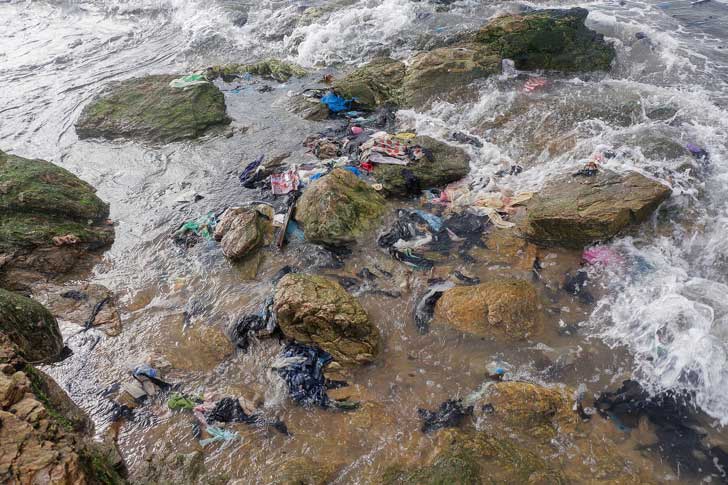
Valenti began to imagine the world’s billions of tons of plastic waste, often diverted to oceans and landfills and rarely recycled in a truly efficient way. He realized that if these items were reduced to the raw elements they’re made of — often hydrocarbons — they could be turned into energy.
“Most of you know that hydrogen and oxygen react together, releasing enormous amounts of energy and giving out pure water as the only byproduct, which means this is the greenest form of energy possible,” Valenti continued in his TEDx Talk.
“In fact, it is so powerful — hydrogen — that it releases three times more energy than petrol, diesel, or even kerosene. And the remaining carbon, well, we can make pencils for our kids or sustainable diamonds for our ladies.”
Trace elements of silicates and metals would also be extracted through the process, Valenti told Impakter, which would ideally be recovered in a solid state and sold to industries.
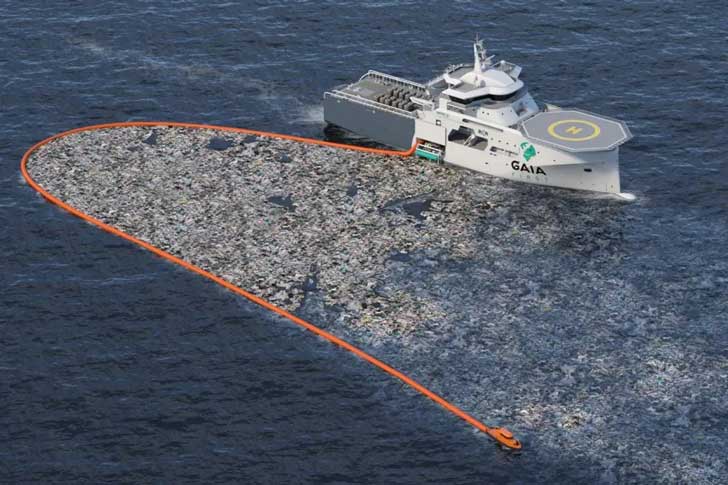
Many efforts to clean ocean trash have come to fruition in recent years — some so effective that they could clean up the Great Pacific Garbage Patch within the next five years. They often include using large vessels to gather huge mountains of plastic pollution and bring them back to land to be effectively recycled.
But Valenti pictures a world in which those efforts are even greener.
“What if we could use that plastic to power the collection, transforming any plastic continent into a huge green energy resource?” he posed.
In fact, the process of transforming plastic waste into energy has existed since the 19th century. It’s called gasification or chemical electrolysis, and it requires a system to superheat materials at high temperatures to break them down into their elemental forms, like hydrogen.
If implemented on a boat, Valenti believes it would be possible to convert 50 tons of trash per day into hydropower, essentially creating a “self-fueling ocean cleaning factory.”
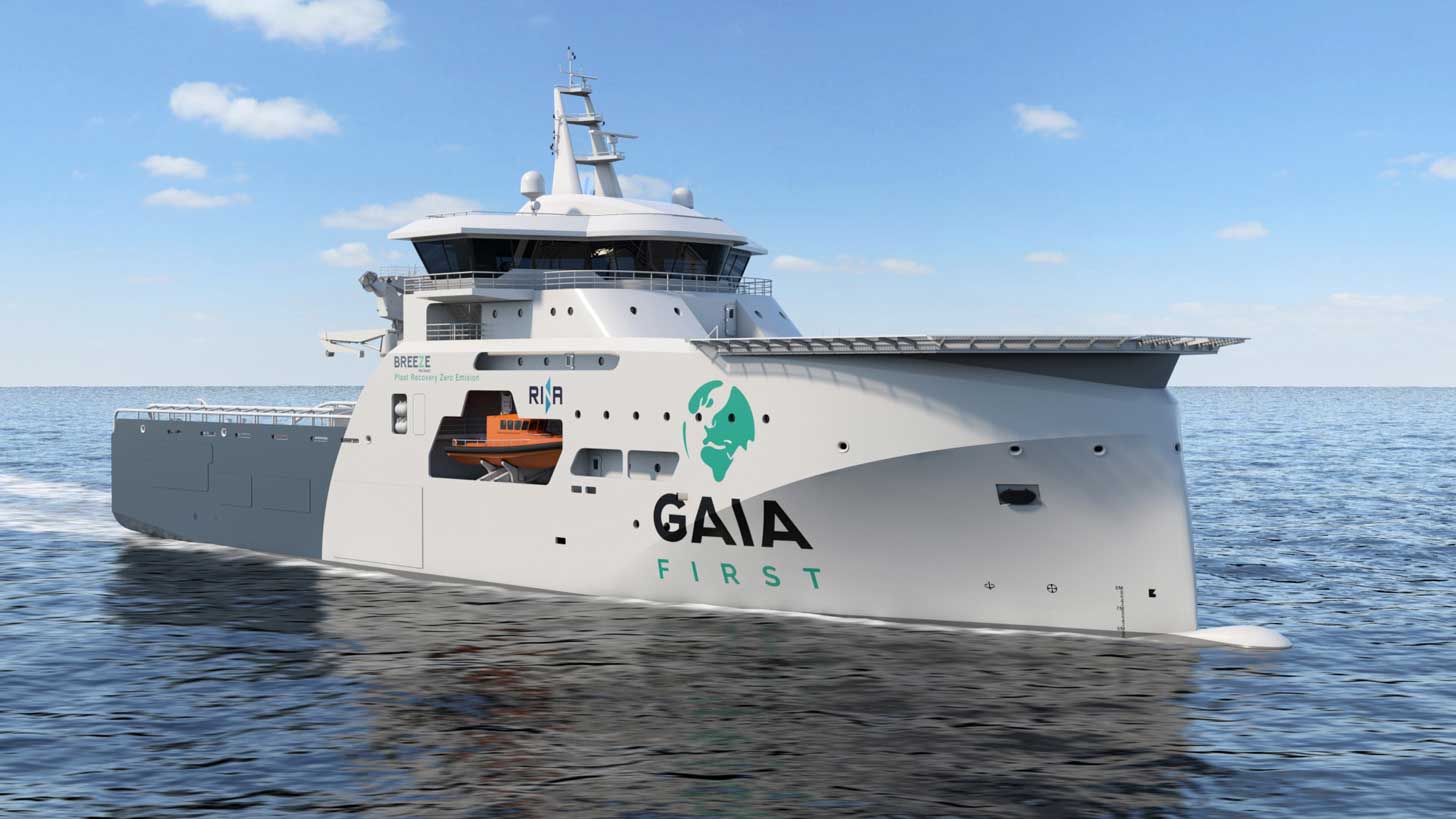
Right now, Gaia First is working with engineering firm RINA and sustainable ship design company BREEZE to bring the technology to fruition.
“In the current design, the vessel would have all the technology onboard to treat the waste, turn it into a gas and safely store it — all while at sea,” Fortune reports.
“Onboard automated processes and sophisticated sensors would sort the plastics and prepare the haul for gasification and eventual storage. In keeping with the principles of circular design, the boat would be powered by the green fuel it produces onboard.”
The tricky part is that the plastics-to-fuel process of gasification works well on land, but is still new to water.
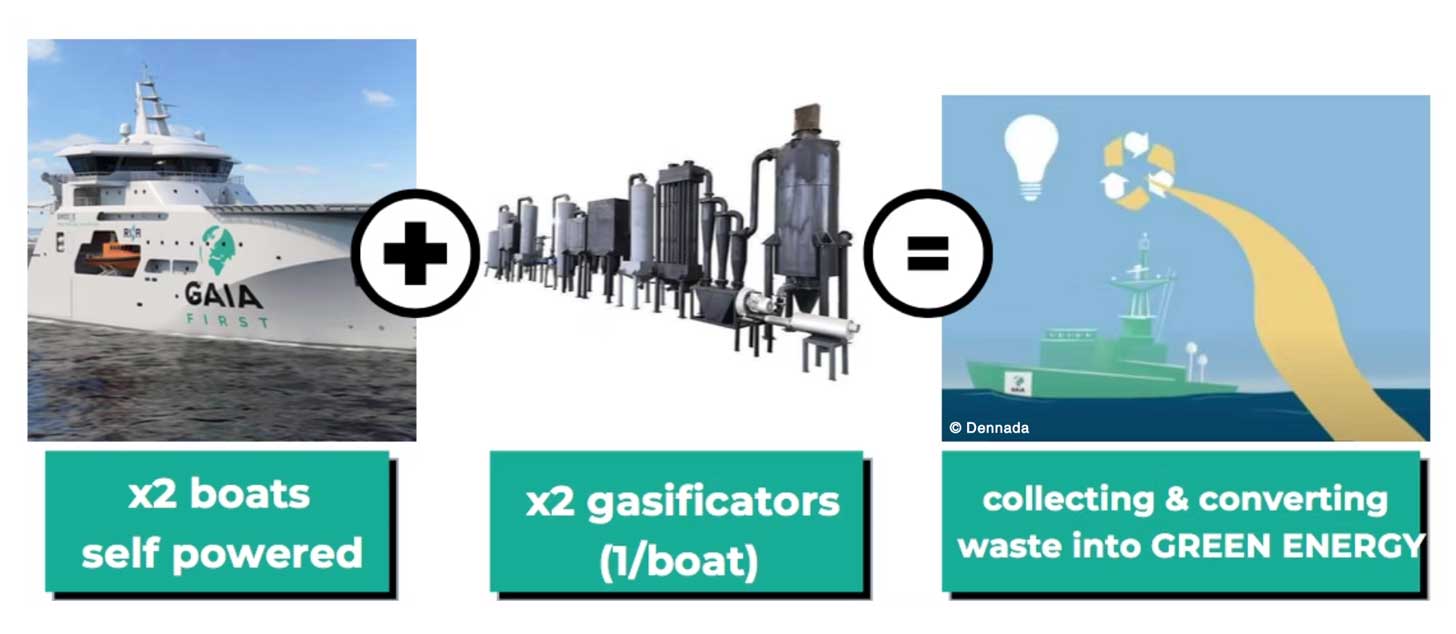
“It’s an amazing idea,” Guido Chiappa, executive vice president at RINA, told Fortune. “But to put it into practice, you have to overcome some barriers.”
“On a boat, on the sea, you have wind and waves. It’s a very aggressive environment,” Chiappa added. “The level of complexity in order to operate a [waste-to-fuel] process as good as the kind needed for Gaia First is not as simple as what you’d find onshore.”
But RINA engineers have been working on computer simulation models to meet the challenge. Chiappa said the technology exists to pull it off — it’s just expensive. A first round of funding sought €750,000 to get the project off the ground.
“We just have to build the ecosystem,” Chiappa told Fortune.
While Fortune reported that the Gaia First vessel would lock in investments with an estimated maiden voyage of 2024, it seems the NGO is still working to fully fund its big idea.
Most recently, Valenti shared that testing has been completed to validate the whole system, meaning the actual manufacturing of the vessel can finally begin.
In the meantime, the organization leads large-scale plastic waste cleanups on land, using a multi-pronged approach to clean up our oceans once and for all.
“If nothing is done to the plastic in the high seas in the next 20 years we will see a drastic rise in microplastic presence in our bodies and all living creatures, the direct consequences of which will be strong deficiencies and mortality,” Valenti told Impakter.
Again, his daughter inspires him to keep going.
“We are talking about our future generations.”
Header image courtesy of BREEZE
Early January usually falls smack in the middle of Los Angeles County’s rainy season. The moisture coaxes the browned landscape into hues of green, but that was not the case in 2024. Just 0.16 inches of rain fell downtown during the last six months of the year, nearly four inches below normal for the area. From July to October, no measurable rain fell at all.
Conditions were ripe for ignition. Parched sagebrush provided tinder for fires large enough to engulf trees, homes, and entire communities. On January 7, 2025, the Palisades fire erupted in the canyons outside of Malibu. A few hours later, the Eaton Fire ignited in the sprawling national forest lands north of Downtown Los Angeles.
Eight more fires broke out in L.A. County that month while firefighters worked to put out the largest of the blazes.
Fueled by severe Santa Ana winds and prolonged drought conditions, the wildfires collectively scorched over 40,000 acres, destroyed more than 15,000 structures, and claimed at least 28 lives. Millions were exposed to toxic smoke.
“It was smoke all around us, fires everywhere,” Kelsey Trainor, an attorney who lives in Pacific Palisades, told NBC News.
A growing health threat
The impact of wildfire smoke on people has changed rapidly over the last century. Rapid expansion of housing developments into landscapes that naturally burn, coupled with climate change, created the perfect storm. More people are exposed to dangerous air quality during wildfires that are increasingly more extreme.
Around 44 million people around the world are exposed to unhealthy air quality every year due to wildfires alone, according to a recent paper published in the peer-reviewed journal Atmospheric Environment. An additional 4 million people have at least one day of exposure to air quality considered hazardous to health.
These exposures, the researchers estimated, cause more than 670,000 premature deaths annually, more than one-third among women and young children.
Vulnerable communities, including the elderly, children, those with health comorbidities, and outdoor workers in agriculture, construction, and natural resource management, often face higher rates of smoke exposure.
So, balancing human and forest health is increasingly a dilemma for forest managers.
A history of suppression
Fire played a critical role in forest health throughout the American West, long before people moved there in droves.
At the right frequency and intensity – two factors becoming increasingly volatile – fire can clear undergrowth and make way for new plants, maintaining a healthy balance of biodiversity. With the colonization of the U.S., fire exclusion and suppression became the norm, leading to a buildup of fuels on the forest floor.
Only in recent years have forest management strategies started to shift back toward the use of fire as a tool, but there is still a long way to go.
One-third of U.S. homes are now built in the wildland-urban interface, or WUI, areas near or on land prone to wildfire. In just 20 years, WUI areas grew by more than 46 million acres, according to U.S. Forest Service data.
It’s the fastest-growing land use type in the continental U.S. and already covers an area larger than Washington State. As homes creep into forestland, people perceive necessary prescribed burns as a threat rather than a strategy to prevent larger wildfires from breaking out.
Instead of strategically burning sections of forest as is done with prescribed burning, wildland managers are forced to rely on forest thinning – removing brush and selecting trees to reduce the amount of wildfire fodder a forest harbors.
To protect homes when a wildfire does break out, firefighters are pressured to rapidly suppress fire rather than let it run its course.
Combined with climate change, this shift in forest management has caused wildfires to have more severe impacts on both the environment and humans.
In a 2024 publication in Nature Communications, researchers discuss the fallout of what they call the “fire suppression paradox” — by suppressing fires today, we make fires harder to put out in the future. Without regular cycles of fire, forests become denser and more uniform, paving the way for large-scale, high-intensity fires that are extremely difficult to suppress.
In recent years, it’s become clear that a suppression-only approach is not sustainable. More land managers are pivoting to a more mixed approach, which the authors of the 2024 study call “progressive suppression.” This includes using a few techniques together, including thinning forests, restoring ecosystems, and reinstating prescribed burns.
The study’s model showed this approach would make forests more resilient to climate change. And while a mixed approach to fire mitigation that includes prescribed burns would not stop all high-intensity, destructive fires from taking hold, it would curtail some. These findings were echoed in a 2024 Forest Ecology and Management meta-analysis and a 2024 study published in Fire Ecology.
Human health tradeoffs
It’s understood that logging and fire suppression are inferior forest management techniques compared to prescribed burning, but some public health advocates argue the hazards additional wildfire smoke poses to human health need to be part of the equation.
Wildfire smoke is linked to eye, nose, and throat irritation, as well as serious health effects, including respiratory distress, heart failure, and premature death, according to the Environmental Protection Agency.
A 2023 meta-analysis published in the journal Neurology found that just five days of exposure to high levels of pollution can raise a person’s risk of stroke by as much as 30%, depending on which toxins are in the air.
“Air pollution’s impact on human health extends beyond the lungs and eyes. It also involves the brain and cardiovascular system,” Dr. Ahmad Tubasi, a researcher with the faculty of medicine at the University of Jordan, told NBC News.
Some public health experts worry that smoke from prescribed burns adds to the number of days people are exposed to poor air quality because of fires. The reality may be more complicated.
In an analysis published in 2023 in Nature Sustainability, researchers found that compared to a strategy of thinning 16,000 hectares per year of forest alone, adding in moderate prescribed burning was the best strategy for reducing wildfire smoke exposure for people nearby when wildfire does break out, while also minimizing extra smoke exposure from prescribed burns.
Combining the methods also shrank wildfire season by about a month.
Some of the disconnect between health and forest experts can be attributed to the timelines on which they work. Smoke exposure can negatively affect human health within just a couple of days or even hours, a consideration that health experts focus on.
On the other hand, ecologists and forest managers have to think on a broader timeline, preparing wildlands for years and decades into the future.
Finding a happy medium
Striking a balance between these schools of thought is not a zero-sum game. There are many air quality regulations in place that limit the amount and scale of prescribed burning across the U.S.
Forest managers often carry out prescribed burns in areas far from communities and during weather conditions that send the smoke straight up rather than carry it into the lungs of people. Even these far away burns must be permitted and approved by air quality agencies on the day of the burn.
To protect communities from tragic wildfires, managers need to carry out more prescribed burns closer to the places people live. Being prepared for this predictable surge of smoke can help people living in fire-prone communities protect themselves against its harmful health effects.
Improving warning systems and giving people tools to create smoke-ready spaces could reduce health impacts. An important piece of this puzzle is pinning down whose responsibility this is. Federal agencies have already gotten started.
The CAIF report, which officials released based on 2020 data, set clear guidelines that tasked the EPA, Forest Service, Department of the Interior, and National Institute of Standards and Technology with their responsibilities for protecting communities from wildfire smoke while allowing forest managers to use the best forest management techniques possible.
The report also underscored the need for the agencies to conduct additional research to develop a clearer, shared understanding of the problem.
“These areas of additional research include enhanced air quality monitoring capabilities for wildfire smoke, better characterization of wildland fire smoke exposures for health studies, additional understanding of the health effects of wildfire smoke over many seasons, and a fuller accounting for the role of public health actions and interventions in reducing or mitigating wildland fire smoke exposure,” the report stated.
However, the efforts may be in peril. On March 12, EPA Administrator Lee Zeldin released the agency’s plans to strip back air quality protections that would make it easier for wildland managers to do more prescribed burns. The Trump Administration has also made huge funding and staffing cuts on both the human health and environmental research sides.
In 2023, the Biden Administration released a Memo of Understanding aimed at agencies that handle forestry – the U.S. Department of Agriculture, the EPA, and the U.S. Department of the Interior – and the Centers for Disease Control and Prevention.
Collaboration between these agencies included community engagement that helped people prepare for smoke exposure by creating “Smoke-Ready Communities” using EPA instruction.
This includes understanding who makes up the most vulnerable communities before wildfires or prescribed burns happen and preparing communities with instructions on how to create clean air rooms, knowing their risk, stocking up on medications, and preparing for a potential evacuation.
“The increasing frequency and magnitude of wildfires pose an ever-growing threat to the health of the American public,” said Dr. Mandy Cohen, former director of the Centers for Disease Control and Prevention, in the federal memo.
This article was originally published by Yale Climate Connections. (CC BY-NC-ND 4.0)
Header Image by Jollymama on Pixabay
This story was originally published by Grist. Sign up for Grist’s weekly newsletter here.
The United States has never really cared much about tackling climate change, at least at the federal level.
Up until the Biden administration’s Inflation Reduction Act, or IRA — which handed out billions of dollars for people to electrify their homes and pumped billions more into the clean energy economy — neither Congress, nor the executive branch advanced truly meaningful climate policy, given the scale of the crisis.
Yet carbon dioxide emissions in the U.S. have fallen from 6 billion tons annually in 2000 to less than 5 billion today. For that, the country can largely thank its states and cities, which have embarked on ambitious campaigns to, among other things, electrify transportation, set automobile pollution standards, and incentivize the deployment of renewable energy.
At the same time, wind and solar are now cheaper to build than new fossil fuel infrastructure, and there’s little President Trump can do to stop those market forces from driving down emissions further.
Accordingly, Trump has set his sights on states during the first 100 days of his administration.
He has tried to kill New York City’s congestion pricing, though last week the Department of Justice accidentally filed a document outlining the legal flaws with the administration’s plan.
On April 8, he signed an executive order directing Attorney General Pam Bondi to identify and halt any state climate laws that she deems illegal, including California’s pioneering cap-and-trade program. That directive, though, is probably illegal itself, because the Constitution guarantees states broad authority to enact their own laws, legal experts told Grist.
“This is the world the Trump administration wants your kids to live in,” California Governor Gavin Newsom said in a statement. “California’s efforts to cut harmful pollution won’t be derailed by a glorified press release masquerading as an executive order.”
In a counterintuitive way, the lack of federal climate ambition has made what action has occurred more resilient because states are doing their own things and collaborating with each other.
If the country had established a grand governing body years ago — something like an Environmental Protection Agency but focused exclusively on climate change — the Trump administration could easily dismantle it.
“States have been saying since the election that they retain the authority and the ability and the ambition to drive down pollution and keep America on track to meet its goals,” said Casey Katims, executive director of the U.S. Climate Alliance, a coalition of 24 governors (just one of them a Republican) focused on climate action. “This order is an indication that the president and this administration know that all of that is true.”
This is not the climate movement’s first tussle with an administration hostile to action.
The U.S. Climate Alliance and America Is All In — a coalition of thousands of political, cultural, and business leaders — both formed after Trump withdrew from the Paris Agreement in 2017.
States also now regularly share information with each other, like the best ways to encourage the construction of energy-efficient buildings and to replace gas furnaces with electric heat pumps. They’re also collaborating to modernize their grids to meet the extra demand that comes with widespread electrification.
“That relationship building and trust has not only allowed us to be truly a coalition, but it’s allowed us to move faster together on our climate action,” said Amanda Hansen, deputy secretary for climate change at California’s Natural Resources Agency.
“The coalitions that came together very quickly in response to the first Trump administration are now significantly larger, more capable, and have really solid foundations for true collaboration.”
While California and other states will have to wait and see which climate policies Bondi deems illegal, they’re already fighting on other fronts in court.
When the Trump administration froze nearly $3 trillion in federal assistance funds in January, including those provided by the IRA and the bipartisan infrastructure law, 23 attorneys general (including those in Republican-led Vermont and Nevada) sued, and a judge ordered the money released.
Disbursing these sorts of funds isn’t optional — it is required, because Congress passed legislation allocating them. To stop the flow of money, Congress would have to change the laws.
“It’s just costing the taxpayers millions of dollars to address these lawsuits for congressionally authorized funds that were critical to addressing the climate crisis,” said Jillian Blanchard, vice president of climate change and environmental justice at Lawyers for Good Government, a coalition of 125,000 attorneys, students, and activists.
Other organizations and nonprofits are joining in the litigation as well. Lawyers for Good Government worked with the Southern Environmental Law Center, for instance, which is suing the administration to release federal funds meant to invest in, among other things, energy-efficient affordable housing.
“This administration appears to be just banking on the fact that they don’t need to follow the law until and unless someone sues them,” Blanchard said. “And that’s really an unfortunate state of affairs for the United States of America.”
Even as uncertainty looms, progressive states are doubling down on climate policies.
For example, Washington state’s legislature recently passed an update to its clean fuel standard that could double emissions cuts from transportation, the state’s biggest source of carbon emissions.
“We really need to continue to lead on this front,” said Leah Missik, the acting director for Washington state at an organization called Climate Solutions. “States have always been the incubators for important climate policy work.”
The state’s voters last fall resoundingly rejected an attempt to repeal a landmark law that caps emissions and raises money from polluters to install energy-efficient heat pumps, electrify ferries, and put solar panels on public buildings.
Ultimately, climate action is increasingly popular among voters.
A spokesperson for Governor JB Pritzker of Illinois pointed to polling that shows 65% of people in the state are worried about climate change and 70% support fully transitioning to clean energy by 2050.
“Voters are smart,” the spokesperson said, “and the more the Trump administration tries to kill clean energy policies that are giving us cleaner air, good-paying jobs, and lower energy bills, the more pushback you’re going to see, because those policies are popular for a reason.”
Kate Yoder contributed reporting for this story
Header Image by David Becker via Getty Images
Boyan Slat made waves when he was just a teenager with an audacious dream to rid the world’s oceans of plastic waste.
Slat’s first TEDx Talk went viral in 2012, as the founder and CEO of The Ocean Cleanup described his detailed plan for tackling the Great Pacific Garbage Patch — and ocean pollution in general.
In his most recent TED Talk, he shared the organization’s progress and predicted that the Great Pacific Garbage Patch would be cleaned up in five years’ time.

With a proven method of cleaning huge gyres of trash in the oceans, the nonprofit has pivoted to the next step in the process: Stopping pollution from even reaching the ocean in the first place.
While robust laws and practices around waste removal and recycling are paramount to keep any trash from entering waterways, first, The Ocean Cleanup needs to take care of the garbage that’s already there.
And they’re starting with rivers.
To study the plastic pollution entering the ocean from rivers and other waterways, The Ocean Cleanup attached AI cameras to bridges. By measuring the flow of trash in dozens of rivers around the world, they created the first global model to predict where plastic is entering oceans.
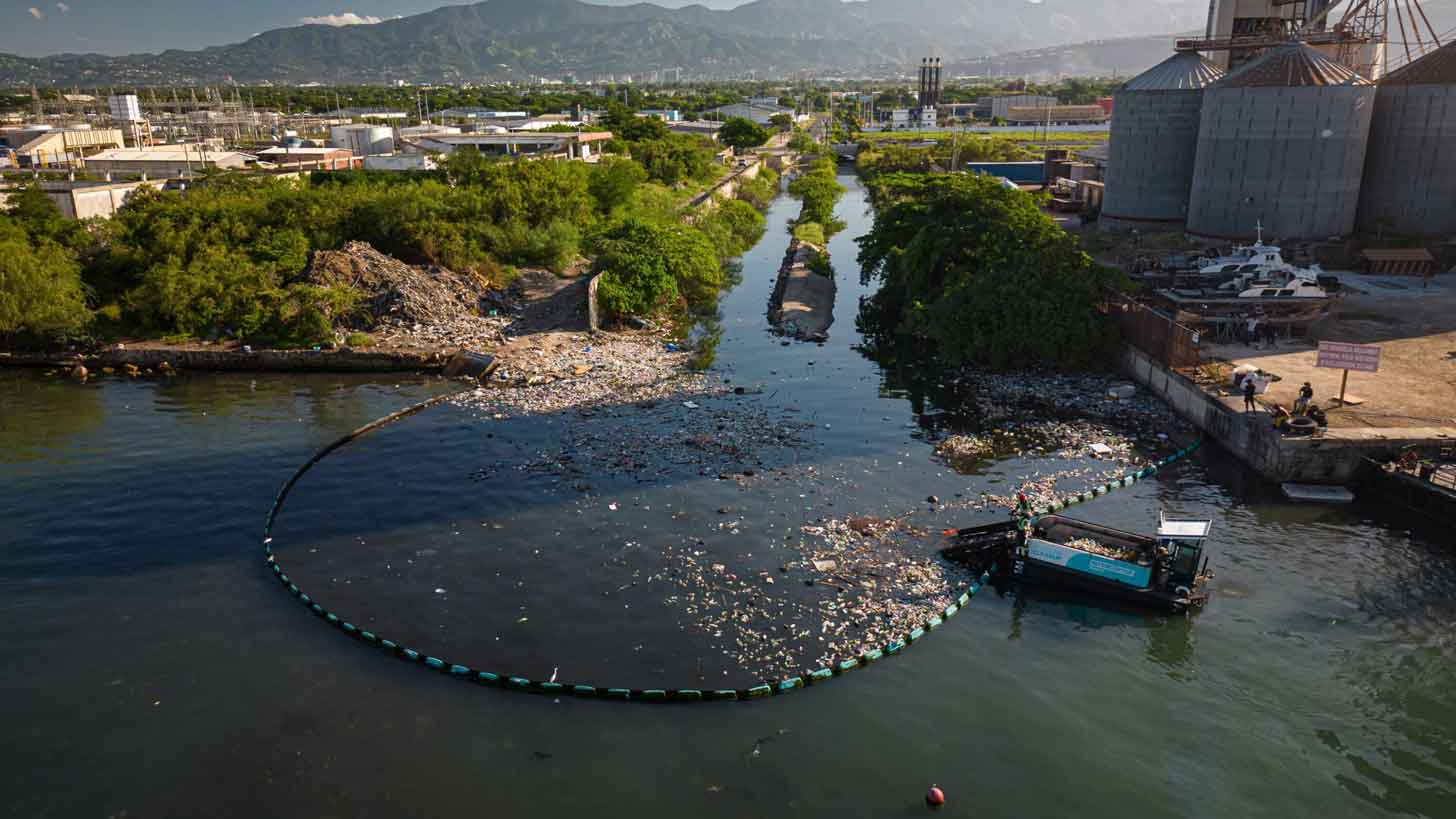
“We discovered: Just 1% of the world’s rivers are responsible for about 80% of the plastic entering our oceans,” Slat said in his 2025 TED Talk, which will be published online in the coming months.
His team found that coastal cities in middle-income countries were primarily responsible, as people living in these areas have enough wealth to buy things packaged in plastic, but governments can’t afford robust waste management infrastructure.
The Ocean Cleanup now tackles those 1% of rivers to capture the plastic before it reaches the oceans.
“It’s not a replacement for the slow but important work that’s being done to fix a broken system upstream,” Slat said. “But we believe that tackling this 1% of rivers provides us with the only way to rapidly close the gap.”
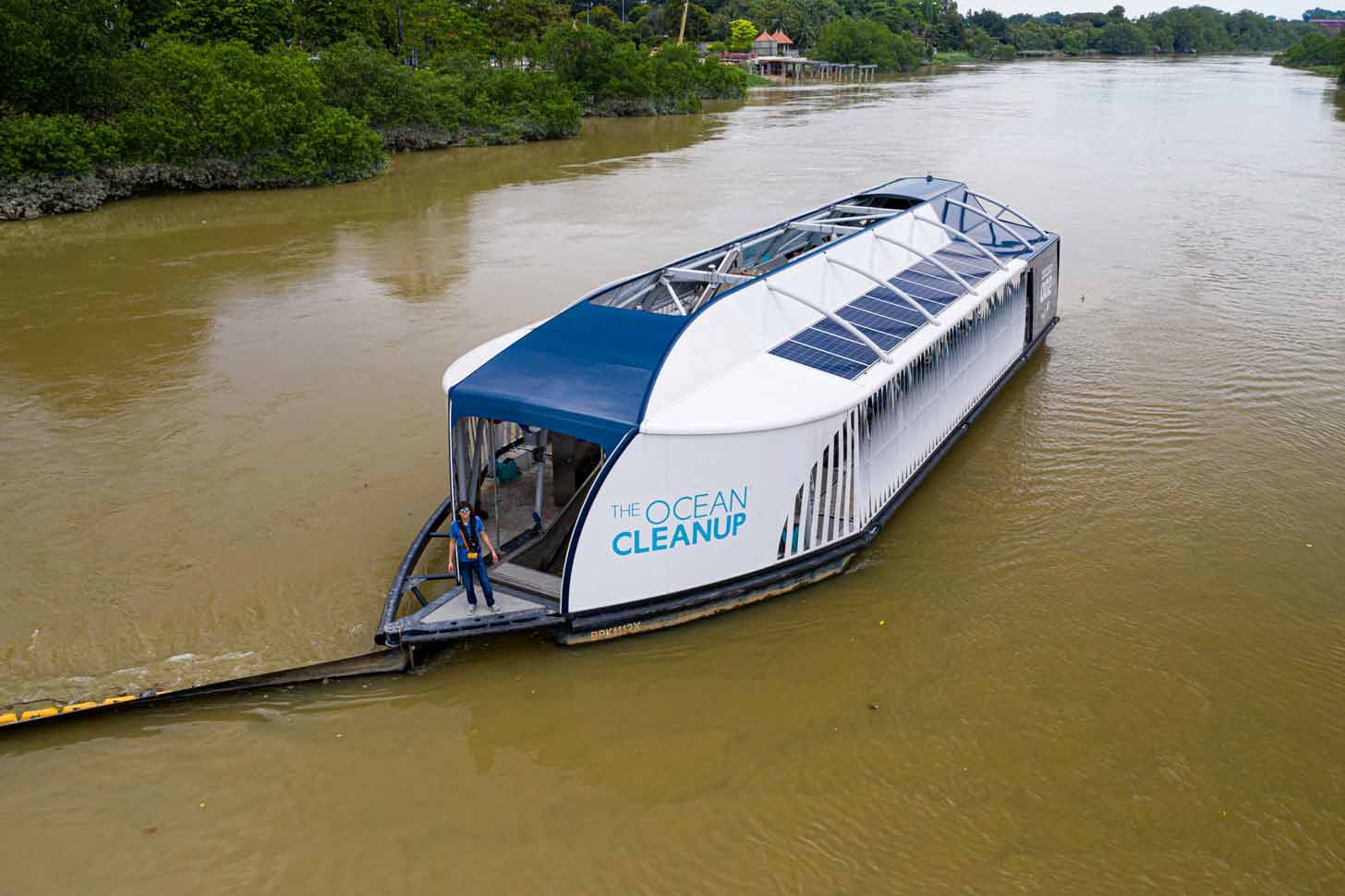
To do this, Slat and his collaborators use trash “Interceptors,” garbage-eating machines that collect trash in rivers using solar power and mobile monitoring systems.
Interceptors have already been implemented in eight countries worldwide and target the rivers that bring the most trash into our oceans, which Slat said could stop “up to one-third of all the plastic entering our oceans.”
The group recently announced its latest collaboration in Central America, stopping the flow of waste into the Bay of Panama.
Working with a local nonprofit partner, Marea Verde, the project is called the “Seven Basins Project,” or “Siete Cuencas,” and will work to significantly reduce the waste that reaches the ocean from the capital’s seven major urban rivers.

These include Rio Curundu, Canal de Panama, Rio Matasnillo, Rio Abajo, Rio Matias Hernandez, Rio Juan Diaz, Rio Tocumen, and Rio Cabra.
First, they will start by installing their first Interceptor in Rio Abajo, with future deployments planned shortly thereafter.
Marea Verde has been working in Panama since 2017 to mitigate solid waste pollution in rivers and coasts, specifically the Bay of Panama.
The Bay of Panama is a marine ecosystem recognized as a wetland of international importance under the Ramsar Convention, making these efforts paramount to fighting pollution in waters worldwide.
“We feel excited and confident that we will be able to transform the Bay of Panama with the Seven Basins Project,” Mirei de Heras, the co-founder and president of Marea Verde, said in a statement.

“Our previous experience, the support of our donors and allies, and the technology and expertise of The Ocean Cleanup will allow us to generate a real impact in the fight against plastic pollution in our rivers and seas.”
The Bay of Panama is also an area of rich biodiversity and ecological value. It is home to mangroves and critical ecosystems, as well as local communities that have been heavily impacted by waste pollution.
By combining local experience with the technical authority of The Ocean Cleanup, the Interceptors aim to “comprehensively stop the flow of waste, contributing to the recovery of coastal and marine ecosystems,” a press release states.
The effort to address waste at the source will also include environmental education programs promoting cultural changes in waste management among local authorities and communities.
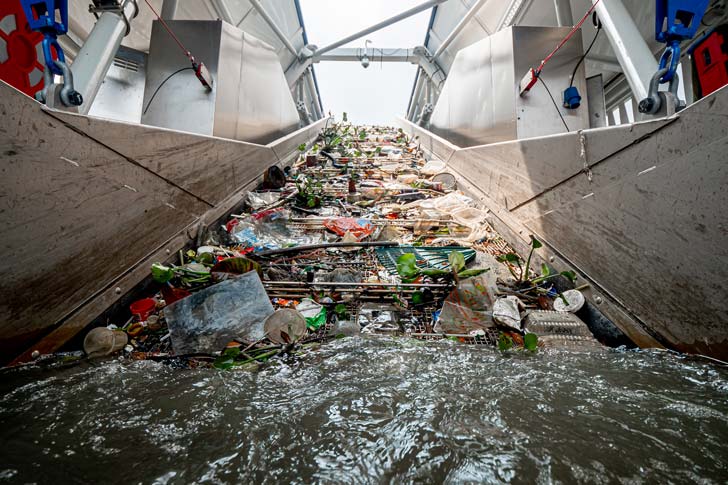
The Ocean Cleanup first launched its Interceptor program in rivers in November 2019 and has since removed over 21 million kilograms (or about 46.3 million pounds) of trash through these interventions.
Adopting a city-wide approach in an area as large as Panama aims to drastically improve waste management in the region, while also having ripple effects on all global waterways.
“Our mission is to rid the world’s oceans of plastic pollution and the key to achieving this is stopping pollution at its source: the rivers,” Slat said in a statement.
“Through strategic Interceptor technology planning, monitoring and research initiatives, and our alliance with Marea Verde, we can combine our proven technology and expertise with their local experience to deliver a lasting legacy in Panama.”
Local authorities are eager to see the impact.
“You can count on the full support of the government to clean these seven rivers,” Panama’s Minister of Environment, Juan Carlos Navarro, said in a public gathering celebrating the launch of the project.
“It’s a very ambitious project,” de Heras added. “We believe that we can collect up to 800 tons of trash in all seven rivers of the Siete Cuencas project.”
With support from local leadership, Slat is ready to get things done.
He concluded: “By implementing a more holistic approach to the problem of plastic pollution across city basins we can scale our impact and carry out our vital, collaborative work with greater efficiency to achieve our aims quicker and smarter.”
Header image courtesy of The Ocean Cleanup
Twelve years ago, a Dutch nursing home — the Woon-en Zorgcentrum Humanitas Deventer — implemented a unique program.
In exchange for 30 hours of their time and companionship each month, local college students could live in the care center rent-free.
“It started with the idea of becoming the warmest home for seniors in Deventer,” Gea Sijpkes, director of WZC Humanitas, said in a statement. “And we wanted to do that with the energy of the youth.”
For Sijpkes, it’s a win-win. Recent studies find that intergenerational friendships can mitigate stress, lower depression, and boost self-esteem in older people.
“At the same time, there was a shortage of student housing, which meant that more and more young people were staying at home. I then thought: why don’t I combine the two?”
The director went on to explain that “the students are not caregivers” but instead “good neighbors.”
Although pool days, celebrations, and community dinners regularly bring all of the residents together organically, there are no strict rules when it comes to defining “volunteer hours.”
In fact, much of the students’ time is simply spent sitting and chatting with their newfound friends.
“It doesn't all have to be grand and exciting,” explained Peter Kolb, one of the center’s residential students. “If you talk to each other and show interest in each other, that already gives so much meaning.”
“They taught me to slow down a bit more,” echoed another residential student, Dakota Donath. “That doesn't make me older, but more aware of life.”

Despite being tucked away in the small river-lined city of Deventer, WZC Humanitas’ intergenerational program has gained global fame in the last decade, serving as a model for nursing homes and college campuses around the world.
Their influence can even be traced to convents.
In January 2004, the Augustinian sisters of Utrecht adopted a version of the program in which three young women in their early twenties, all with medical degrees, moved in with the sisters to be their new housemates.
“They bring liveliness to the house and support the sisters with various tasks … providing meals, reception work, help with computers and mobile phones, and medical questions,” WZC Humanitas wrote on the website. “The initiative has proven to be a great success.”
Sijpkes said the beauty of their program is that it’s “so simple, but the impact is so big.”

“It does not require huge investments or complex care structures,” she added. “It only requires people who are prepared to share their lives with others from a different generation.”
In the future, the nursing home plans to implement “Woonstudent 2.0,” a roommate pairing program that would assign senior residents and college students to the same housing unit so that they can live side-by-side.
“We continue to innovate,” Sijpkes said. “We are exploring ways to further enrich the interaction between students and residents and [we] want to create more space for joint projects, making optimal use of the skills and experiences of both generations.”
Header images via Woon-en Zorgcentrum Humanitas Deventer
Solar power is on the rise. In the last decade alone, solar has skyrocketed from generating 0.57% of the world’s energy to 5.52%.
As it’s become increasingly used in tech, retail, and manufacturing sectors, solar adoption has also seen a huge leap in the world of agriculture.
Through dual land use, farmers can continue crop production or livestock grazing as they generate solar energy, all while shading crops and cattle, collecting rainwater, and boosting pollination.
“Climate change threatens our finite food, energy, and water resources,” Jacob Stid, a renewable energy landscape scientist at Michigan State University, wrote in a recent Nature Sustainability study.
“To address these threats by transitioning towards net-zero carbon emissions energy systems, new energy installations should be designed while considering effects on the complete food, energy, and water nexus.”
“The rapid expansion of solar photovoltaic electricity generation is a key part of the solution that will need to grow more than tenfold in the United States by 2050 to meet net-zero goal.”
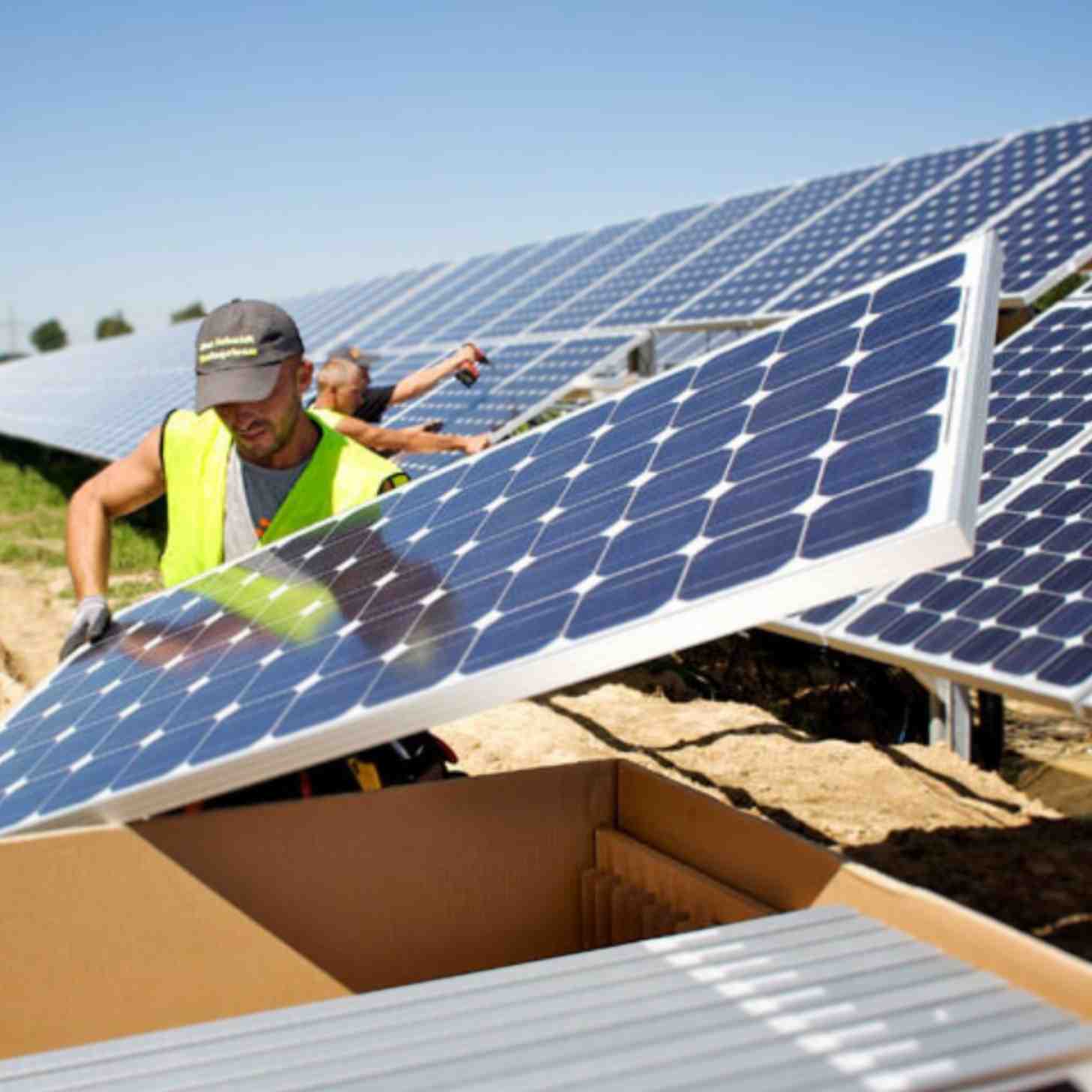
While carefully weighing the “multifaceted outcomes” of agrisolar implementation throughout the California Central Valley, Stud went on to explain how fruitful solar farming can be for farmers’ wallets.
In all, Stid and his team calculated “a net positive economic footprint” amounting to an annual total of $124,000 per hectare (roughly two and a half acres).
That amount is 25 times higher than the income generated by using the same land solely to produce food.
The study said that agrisolar’s overall profitability was “dominated by [net energy metering, or NEM],” “offset electricity costs," and lucrative “surplus energy” — which can be sold back to the grid.
“If a farmer owns 10 acres of land, and they choose to convert one or two acres to a solar array, that could produce enough income for them to feel security for their whole operation,” Stid said.
Stid estimated that the energy generated from solar panels in the Central Valley could power roughly 500,000 households per year, while also saving enough water to hydrate 27 million people.
The Michigan State University scientist invited more research into agrisolar studies, while noting that the benefits of using solar practices vary from region to region.
“Adjacent agrisolar replacement with barren or unused ground cover still falls short of the full potential of ecovoltaic and agrivoltaic multifunctionality,” Stid explained.
“However, the regional resource and economic co-benefits of replacing irrigated land in water-stressed regions with solar photovoltaic here cannot be ignored.”
Stid points out in his study that growing agrisolar practices have caused a drop in food production, but he argues that the markets can adjust as crops are produced in other regions — especially ones that aren’t riddled by ongoing drought.
And, Stid reminds readers, many farmers have opted for dual land use — installing solar panels while using the majority of their land for crops and livestock.
Colorado State University horticulturalist Jennifer Bousselot weighed in on the study, telling Grist: “This is the compromise that’s going to allow for both energy independence and food security.”
Header image via Henry Be / Unplash