The average pediatric wheelchair can cost thousands of dollars. And when children grow and their needs evolve — or a wheelchair gets damaged — those costs multiply.
So, the team at MakeGood NOLA, a New Orleans-based adaptive design lab, has made something that can transform the world for disabled children.
“Introducing the world’s first fully 3D-printed wheelchair,” MakeGood founder and president Noam Platt started a recent social media video.
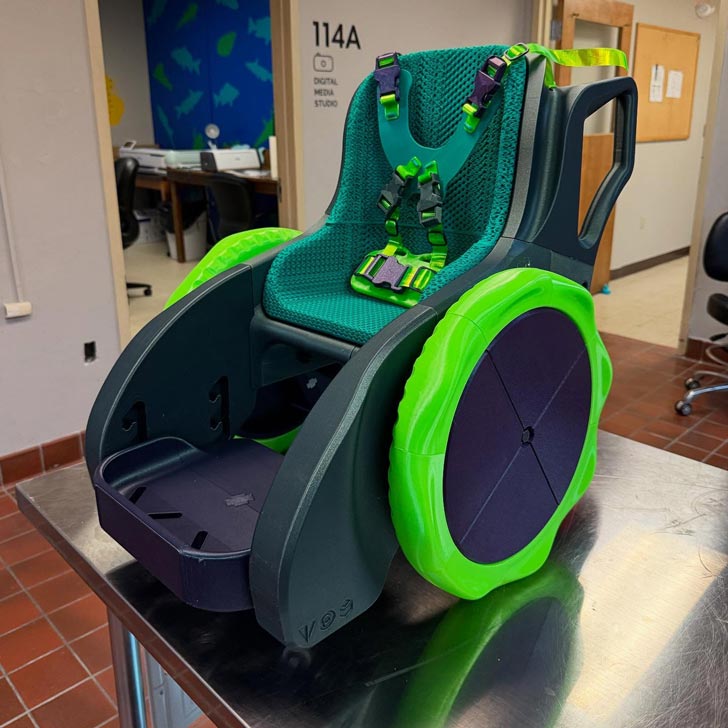
He wheels a small, almost toy-like lime-green wheelchair into the frame, complete with a matching harness, suitable for children ages 2 to 8.
“Everything from the body, to the wheels, to the tires, the seat, and even the straps, all were 3D printed on a regular Bambu Labs A1 machine,” Platt continued.
This means the design is fully compatible with a regular 3D printer anyone can have in their home.
“We designed this to be modular and easy to make,” Platt continued. “Really, anyone with a 3D printer and some filament can download the files and print it.”
Once the prototype is completely finished, it will be available as a fair-use download that anyone can use for free.
Platt said that because it has a modular design, the wheelchair can be put together without any tools or glue. And if any part of it breaks or is damaged, users can simply re-print the single piece they need.
“As a wheelchair user I love everything about this,” TikTok user @thisisharlie commented on Platt’s video debuting the wheelchair.
“Mine costs more than my car, I can’t imagine having to buy a new one every year or two as they outgrow it,” @thisisharlie continued. “You’re going to change the world.”
For Platt, that’s always been the plan.

When he created MakeGood in 2021, the nonprofit design lab was thinking of the more than 1 billion people around the globe who live with disabilities.
“Since traditional design often overlooks diverse bodies and minds, it is crucial to reshape the built environment,” MakeGood shares on its website. “The challenges our communities face — both physical and social — are solvable.”
MakeGood works with individuals to co-create their adaptive design solutions, centering the “Need Knower,” the disabled person or their primary caregivers, throughout the entire process.
Since the founding of MakeGood, 1,600 individualized adaptive devices have been delivered to families for free. Platt’s team found a niche with this wheelchair, which they call the Toddler Mobility Trainer, or TMT.
On its website, the organization says the wheelchairs were “designed with therapists from all over the world” and offer “unmatched mobility and independence to young kids.”
Children and parents agree.

“It’s an A+,” one parent said of an earlier prototype of the TMT in a report by CBS News. “It’s helped [my son] become more mobile and be able to adapt into the other things that he’s going to be offered. It’s helped his development.”
At the start of the design process, Platt reached out to area hospitals to see if he could fill a need.
“Part of it is empowering clinicians that we can go beyond what is commercially available,” Platt told CBS News. “We can really create almost anything.”
Now in the final stages of tweaking the TMT design to be ready for release, Platt is eager to get the wheelchair rolled out and into the homes of the children who need them most.
“We think this sort of 3D printing and design is going to be huge for accessibility, and for wheelchairs specifically,” Platt said in his social media video.
In the meantime, people can request a free chair from MakeGood.

“We have a growing list of people who’ve requested these, and once we finish the design, we’ll start filling those requests with custom-printed chairs, including things that you might need for your particular chair,” Platt said in a follow-up video.
Because the chairs are easily 3D printed, they can come in any color and can be modified to include other accommodations, like a section to hold a breathing device or other aid. With years of customization and design experience under his belt, this new innovation is simply an extension of Platt’s dedication to inclusive design.
In 2023, Platt told New Mobility: “I feel like every time I deliver one of these [assistive] devices, I get a hopeful feeling that the world has been changed a little bit for the better for the next generation.”
Header image courtesy of MakeGood NOLA
Every day the Good Good Good team collects the best good news in the world and shares it with our community. Here are the highlights for this week!
If you want to get good news in your inbox every day, join the Goodnewsletter — the free daily newsletter designed to leave you feeling hopeful.
The Best Positive News We’re Celebrating This Week —
In a final act of kindness, Pope Francis donated his entire personal bank account to prisoners right before he died
As Catholics around the world mourn the death of the late Pope Francis, more details are surfacing about his final days. One thing is more clear than ever: he will be remembered as someone who fought for the rights of prisoners.
The official responsible for managing Francis’ charity and prison pastoral care in Rome said that before his death, the pope donated €200,000 (about $226,400 USD) to a juvenile prison in Rome.
That last bit of his personal wealth specifically went to fund a pasta factory he’d maintained a close connection to throughout his papacy, which employs inmates to work toward reintegration in society and prevent recidivism.
Even better: Throughout his time as pope, he was entitled to a papal salary of some €30,000 a month, but Pope Francis refused to collect it. Instead, he deferred it to various organizations, churches, and groups in need.
→ Read more
Thousands of books were destined for the landfill — these Turkish garbage collectors rescued them and built a public library instead
An islandwide network of volunteers is growing native trees to restore what the Maui wildfires destroyed
For the past year and a half, volunteers, local farmers, nurseries, and hotels have come together to nurture thousands of young saplings growing in pots to be replanted in Lahaina, which was devastated by wildfires nearly two years ago.
Since launching months after the fires cleared, the Treecovery Hawaii project has grown 6,200 trees across 25 grow hubs. Around 160 trees have already been planted at homes that have since been rebuilt.
Ensuring that homeowners can focus on returning to their homes, this network of volunteers is caring for the all-native trees to eventually surround them with.
→ Read more
Under new rules, solar panels will be mandatory on all new-build homes in England by 2027
Within two years, nearly all new-build homes in England must be constructed with solar panels under new planned regulations.
While the policy is expected to add between £3,000 and £4,000 ($3,984 to $5,312 in USD) to building costs, homeowners would also save over £1,000 on annual energy bills — helping them recoup the added cost within around 4 years.
The government is also planning to offer government-funded loans and grants to help install solar panels on existing homes.
Why is this good news? While commercial-sized clean energy installations are essential, rooftop solar has enormous potential, too. One study estimated that it alone could provide nearly two-thirds of the world’s electricity.
→ Read more
Scientists use an Isaac Newton-inspired method to clean up trash from the Great Pacific Garbage Patch
A man survived hundreds of deadly snake bites to help pioneer a universal anti-venom
For the past 20 years, Tim Friede has been one of the most notorious “unconventional” medical researchers, undergoing over 200 bites from the world’s deadliest snakes — and more than four times as many — 850 — venomous injections.
And he did it all in the name of science. Now full of antibodies, his blood is now the source material researchers are using to develop an anti-venom capable of neutralizing a broad spectrum of snake bites.
According to the World Health Organization, an estimated 100,000 people are killed by snake bites each year, with countless more being disabled by the venom of the deadly reptiles.
National park advocates erected hundreds of billboards in cities across the U.S. to protest ‘DOGE’s dangerous cuts’
To protest the Trump administration’s funding and staffing cuts at national parks, pro-labor news outlet and advocacy nonprofit More Perfect Union launched a multimillion-dollar campaign, erecting 300 billboards in more than 40 cities across the country.
The billboards show the notoriously gorgeous vistas of various national park sites, designed to resemble a classic postcard. But instead of a “wish you were here” message, the billboards say things like: “Rocky Mountain National Park: Now with reduced staff,” and “Death Valley National Park: Heat deaths rise, safety staff cut.”
Spanning locations from Arizona to North Carolina, the campaign aims to demonstrate the impacts of these funding cuts and remind people of their power to protect national parks.
Why is this good news? There’s been an influx of in-person protests at all 433 national park sites in the U.S. in recent months, and it’s entirely possible that these billboards could inspire a longer-term effort to protect public services like the NPS.
This unique ‘wildlife gate’ uses AI recognition to let tiny marsupials in and keep invasive species out
→ Read more
A 90-year-old woman has rescued 10,000 animals from neglect and mistreatment — and she’s not stopping
Barby Keel has spent the last 54 years running her animal sanctuary located in the United Kingdom. It all started when a soldier asked her to care for his dog, and the two formed a bond so deep that the dog never left.
While some of the thousands of animals she’s taken into her sanctuary in the decades since have been rehomed, today Keel cares for over 600 animals, including 160 cats, 8 dogs, 16 pigs, 80 rabbits, and 100 chickens.
And while she managed the sanctuary on her own for two decades, Keel now has a team of loyal volunteers who help care for the animals.
Two major scientific societies are reviving a cornerstone federal report on the impact of climate change in the U.S.
The American Meteorological Society and the American Geophysical Union announced they would work together to provide peer-reviewed research that assesses the current and future impacts of climate change on the U.S.
The announcement comes after the Trump administration dismissed about 400 scientists working to produce the National Climate Assessment, required by law every four to five years by a 1990 federal law, putting the publishing of the next report in jeopardy.
One climate scientist said that the two groups stepping in to fill these scientific research gaps “is a testament to how important it is that the latest science be summarized and available.”
Why is this good news? This comprehensive report forecasts 25 to 100 years into the future, which helps people, communities, governments, and more understand how climate change is impacting decisions made today — from the size of sewer pipes to install or preparing for extreme heat.
A ‘self-fueling ocean cleaning factory’ turns ocean garbage into hydropower
→ Read more
Charitable foundations that support U.S. national parks have seen an increase in donations and volunteers
Shenandoah National Park Trust, which raises money for Virginia’s Shenandoah National Park, has received “more than 150 inquiries about volunteering in just the past two months” — more than triple the number it received in all of 2024.
And it’s a similar story at national parks across the country, from Acadia to the Grand Canyon, with people looking to offer in-person or monetary support for their favorite outdoor spaces in the face of funding and staffing cuts threatening the stability, conservation, and protection of the parks.
While the NPS is funded by the federal government, nonprofits pay for a wide array of programs, from trail maintenance and educational classes for kids to seasonal staff inside the park.
To get around a statewide ban, Salt Lake City and Boise designated the Pride, transgender, and Juneteenth flags as official city flags
Earlier this year, both the Utah and Idaho state governments passed bans on flying the rainbow Pride flags and other “unofficial flags” on government property.
In Utah’s capital city, the mayor of Salt Lake City proposed adopting three new official city flags, which were unanimously approved by the city council. The three flags feature the city’s traditional sego lily design over a Pride, trans, and Juneteenth commemoration flag.
And in Idaho, the capital city of Boise’s mayor issued a proclamation to retroactively make the Pride flag an official city flag.
Why is this good news? As Salt Lake City’s mayor said, flags are “powerful symbols” of the state’s values. And in Idaho, the state capital building has flown the Pride flag for years, and its mayor said that removing it at this point “would not be a neutral act” and “signal a retreat from values we’ve long upheld.”
→ Read more
Study finds that one sustainable farming fix produces ‘enough income for farmers to feel security for their whole operation’
→ Read more
Litter on the EU coastline declined by nearly one-third in five years
A new report found that the amount of “marine macro litter” — or items larger than 2.5 centimeters — on the EU coastline declined by 29% between 2015-2016 and 2020-2021.
Notably, single-use plastic was reduced by 40%, fishing-related items by 20%, and plastic bags by 20%. The largest regional reduction, 45%, was seen along Baltic Sea coastlines.
It’s the result of a multilateral, national, regional, and citizen effort as part of the Marine Strategy Framework Directive. And while the progress is significant, the amount of litter is still above the agreed-upon threshold — so more work is needed.
More good news of the week —
New York City is changing longstanding rules to help fill affordable housing units faster. The new rules will apply to tens of thousands of apartments with capped rents for low- and middle-income tenants, but they would sit empty for months after tenants move out due to requirements to go through a lottery system.
For the fourth year in a row, New England’s grid saw a new record low for electricity demand. At more than 1,200 MW lower than the previous record of 6,596 MW set in April 2024, it was the most significant year-over-year difference during that period.
A record number of endangered ocelots have been recorded at a wildlife refuge in Texas. For the first time in decades, researchers have confirmed at least 22 individual cats roaming the Laguna Atascosa National Wildlife Refuge at least 22 individual cats, a hopeful milestone for one of the continent’s most endangered felines.
An immunotherapy breakthrough could change the way certain cancers are treated. Cancers with certain mutations can put the brakes on our immune system, allowing a mismatch repair-deficient solid tumor to grow, and this new treatment is an antibody that releases those brakes so the immune cells can attack the cancer.
Republican lawmakers in several U.S. states are sponsoring legislation to spur community solar to help more people access cheap, clean power. Community solar installations, allow households to reap the benefits of cheaper, clean power without putting panels on their own roofs — and customers who subscribe to these projects can save money on their electricity bills.
A Wisconsin nonprofit rescued over 7,000 pounds of food from the NFL Draft to give it to local families in need. Distributing it to 13 area pantries and shelters, Rooted In collected a majority of the food — like salads, meat, fresh produce, and, of course, cheese — from catered draft events, along with vendors with unsold leftovers.
In a “historic ruling,” a Dutch court upheld a ban on fossil fuel advertisements in The Hague. The law has technically been effective since January 1 of this year, pending a lawsuit by the travel industry, and supporters are hopeful that the court’s backing will encourage other cities to take similar action, too.
A longtime Washington Post editorial cartoonist who quit in protest after editors cut her sketch criticizing the paper’s owner just won a Pulitzer Prize. Ann Telnaes won for “delivering piercing commentary on powerful people and institutions” for her cartoon depicting a group of media executives bowing before then President-elect Trump, offering him bags of money, including Post owner and Amazon founder Jeff Bezos.
Twenty-two Canadian WWII veterans were greeted by thousands in Netherlands to celebrate the 80th anniversary of the country’s liberation from Nazi Germany. The city of Apeldoorn was liberated by Canadian troops on April 17, 1945, and thousands lined the streets and draped Canadian flags from their balconies to welcome and celebrate their heroism with a parade.
More than 30 calves were born into a bison herd at Rocky Mountain Arsenal — with more on the way. The national wildlife refuge is located about 10 miles from downtown Denver, and with the new calves, the herd will grow to around 220 total bison.
A pilot project in the UK is capturing carbon from seawater to help combat climate change. Some scientists believe that a better alternative to capturing carbon from the air would be to capture carbon from seawater, because the ocean is the planet’s largest carbon sink, absorbing 25% of all carbon dioxide emissions.
A major tuberculosis vaccine trial completed its enrollment faster than expected. For what could be the world’s first new tuberculosis vaccine in a century, the Phase 3 study is taking place at 54 sites across four countries, and it’s already recruited the 20,000 participants needed.
After three years of war in Ukraine, Europe announced its plan to ban all gas imports from Russia within two years. The European Union has been slowly reducing its reliance on Russian gas, which some argue has long compromised EU sovereignty and funded the Kremlin’s war in Ukraine.
A new tech startup is looking to modernize and streamline the way people donate to charities. On the platform, users set a monthly giving amount, and then funds are automatically distributed across vetted charities for a cause they care about, such as the climate crisis, LGBTQ+ rights, ending animal suffering, and more.
Thanks to medical advancements, stomach cancer is increasingly being diagnosed earlier. One of the deadliest types of cancer, stomach cancer is typically difficult to catch early and tends to be discovered at an advanced stage when cancer cells have spread — earlier diagnoses are offering hope for improving survival rates, too.
Bill Gates announced he’s pledging the rest of his fortune to the Gates Foundation, accelerating his giving for the next 20 years. Amounting to more than $200 billion in additional giving targeting health and human development, and shutting down the foundation earlier than planned, Gates and his team believe that their central goals can be achieved in a much shorter time. (Gifted link)
A nursing home in the Netherlands offers free rent to college students in exchange for their time and companionship. The solution addresses two problems at once: a shortage of student housing and loneliness among seniors, since recent studies have found that intergenerational friendships can mitigate stress, lower depression, and boost self-esteem in older people.
Pittsburgh International Airport is turning an old landfill into a massive field of solar panels. PIT is already the first airport in the US to be fully powered by a microgrid, and its new solar project will generate an additional 4.7 megawatts of renewable energy, enough to cut around 5 million pounds of carbon emissions annually.
Morocco announced a new high-speed rail project that will connect its capital with coastal cities. With a goal of providing “sustainable, inclusive, and competitive mobility,” the new route would shorten travel times significantly on Africa’s only high-speed rail network.
Fiberglass casts were first developed in the 1970s with the use of plaster of Paris casting material and cotton dressing. They were clunky, heavy, and susceptible to breaking.
50 years later, traditional fiberglass casts have evolved to be lighter and stronger. But age-old problems remain: they sweat, itch, smell, and they can’t get wet.
Now, engineers from the University of Singapore have stepped forward with a more comfortable, breathable alternative: the Castomize self-moulding cast.
In an interview with VentureBlick, engineer Abel Tao said he and his research team first met while attending the university together.
Their student project “pivoted towards orthopaedic casts” after their co-founder, Peng Mao Yu, fractured his arm while mountaineering.
“[He] complained so much about his cast and how inconvenient it was,” Tao laughed.
“It was clear to us then that there [was] room for improvement in this space,” he added, “and the founding team believed that it had the necessary expertise to develop something better.”
Through careful tinkering, Tao, Mao, and their team created a lightweight, waterproof fracture cast that self-moulds to the patient’s arm for a precise fit.
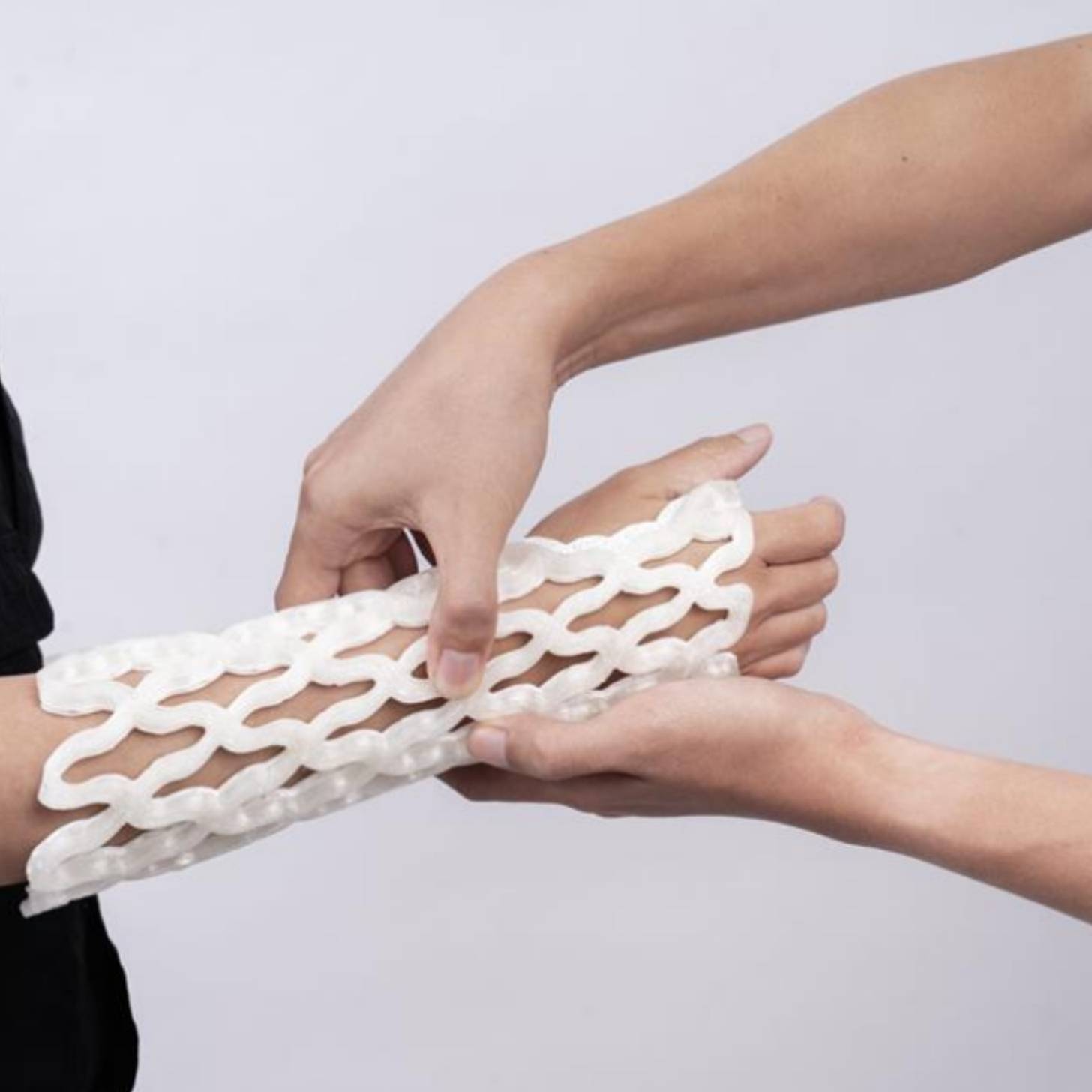
Their secret ingredient? 4D printing technology: a process that allows 3D-printed materials to change through the application of time and an energy source like water, air, electricity, or heat.
“Our cast can be taken apart and reshaped with heat [131°F] according to the patient’s needs,” Castomize co-founder Johannes Sunarko told Singapore Magazine in 2023. “Reusing our cast once is pretty much equivalent to the cost of two conventional casts.”
After Singapore’s National Research Foundation awarded them with research grants, Castomize was finally able to cross the threshold from “idea to startup.”
“That was when we connected with National Healthcare Group, which led to the co-development project for our cast,” Tao said. “This gave us crucial access to orthopaedic surgeons and nurses, who provided the necessary feedback to iterate on our product.”
Since it began rolling out its casts in regional hospitals across Asia, Castomize has won a flurry of awards: Forbes’ 30 under 30, the ASEAN Outstanding Engineering Achievement Award, and the 2025 MUSE Design Award for Medical Devices.
Up next, Tao and his team have their eyes set on winning the 2025 James Dyson Award — all while they work on scaling up their designs to include splints, prosthetics, and more.
“We are exploring modular designs that can immobilise different parts of the body selectively,” Tao explained. “Beyond just using 4D-printing for orthopaedic casts, we see potential applications elsewhere as well. Within the medical space, drug delivery systems and blood vessel stents are of interest to us.”
“Outside of [that],” Tao said, “anything is possible.”

Header image via Rawpixel (CC0 1.0)
In HBO’s dystopian drama “The Last of Us,” a star-studded cast — led by Pedro Pascal and Bella Ramsey — navigate a future marred by a fungal pandemic.
In the series, which is based on the award-winning video game of the same name, most human beings have been mutated beyond recognition by a strain of Cordyceps that warps them into zombies.
When it first premiered in January 2023, the global hit became HBO's most-watched debut season to date. The second season, which premiered in April, beat that record viewership by 10%.
It’s safe to say that the success of “The Last of Us” has given mushrooms — and the scientists who work with them — a bad name.

Since the show premiered, environmental toxicologist Danielle Stevenson said she’s grilled constantly about her work with mycoremediation: a technique that uses fungi to rehabilitate polluted soil by collecting and breaking down contaminants through natural processes.
“A common question in the public space is, ‘But if you use fungi to eat pollution, will they eat our house and our building and our faces and the whole world?’” Stevenson told Smithsonian Magazine.
“They will not,” she said firmly. “They’re a nature-based approach to handling our waste.”
Mycologist Paul Stamets first coined the term mycoremediation in 2005 in his book “Mycelium Running: How Mushrooms Can Help Save the World.” But scientists have been studying the benefits of mushroom cultivation for over six decades.
In 1963, plant-disease expert Horst Lyr used enzymes in wood decay fungi to break down harmful man-made chemicals called chlorophenols.
Since then, mycologists — like Stevenson — have been following in his footsteps to harness the power of fungi to improve land destroyed by wildfires, contaminated by hazardous substances, and riddled with water pollution.
One of Stevenson’s biggest wins traces back to her college years at the University of California, when she reseeded three brownfields in Los Angeles with combinations of plants and fungi. Within three months, her team saw a 50% reduction in diesel, gasoline, and solvents.
A year later, the continents were virtually untraceable.
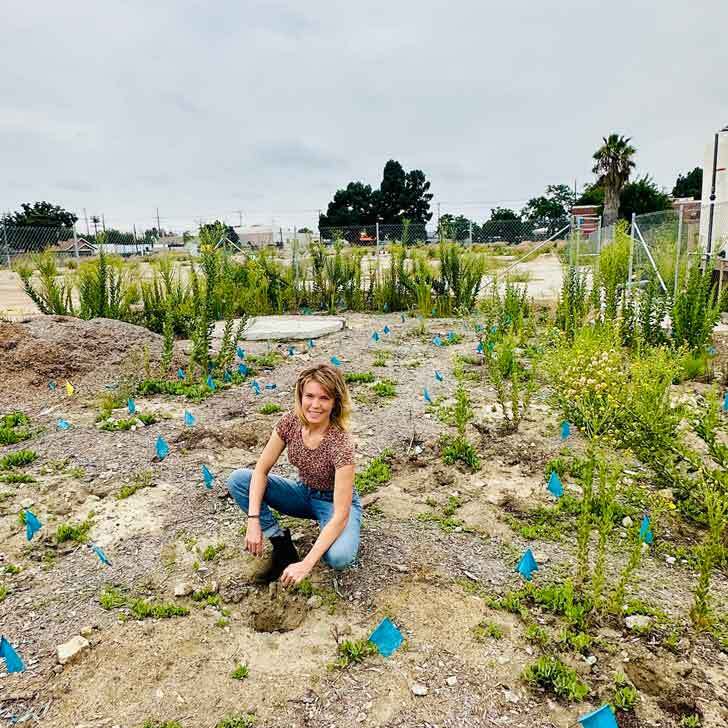
Since 2023, University of Connecticut soil microbial ecologist Mia Maltz has been exploring how fungi and other microbes can help improve degraded ecosystems — and she says the mycology world regards Stevenson’s research as groundbreaking.
“Having field trials like [Stevenson’s] helps to build the knowledge base of which plants are able to accumulate metals in which conditions promote their uptake,” said Maltz.
Times Colonist reporter and urban food advocate Bill Metcalfe echoed Matlz’s praise for Stevenson’s work with a call to action: “To grow food in the city, heal the soil first.”
“Until now, there has been no organized local response to the huge obstacle of heavy-metal contaminants in our urban soil,” Metcalfe wrote. “Kudos to Danielle Stevenson for organizing a neighborhood approach to soil testing…mushrooms specific to the contaminant can remove toxins much more effectively than plants can, but making it happen is much trickier.
For Stevenson, she thinks we’ve barely skimmed the surface when it comes to using mushrooms to improve the world around us.
“We can transform contaminated sites into parks, green spaces, and affordable housing,” she said. “There’s just so much potential for this type of approach to work on a lot of different problems at the same time.”
Header image via Liane Hentscher/HBO
Every year, artists, architects, and designers flock to Venice, Italy for an international cultural exhibition called the Venice Biennale.
Leaders in their fields show off innovative designs and artworks, but this year, visitors have received a show-stopping invitation: Drink a shot of espresso made from the city’s canal water.
Canal Café, a creation of United States-based engineering firm Diller Scofidio + Renfro, is labeled “part espresso bar, part laboratory.”
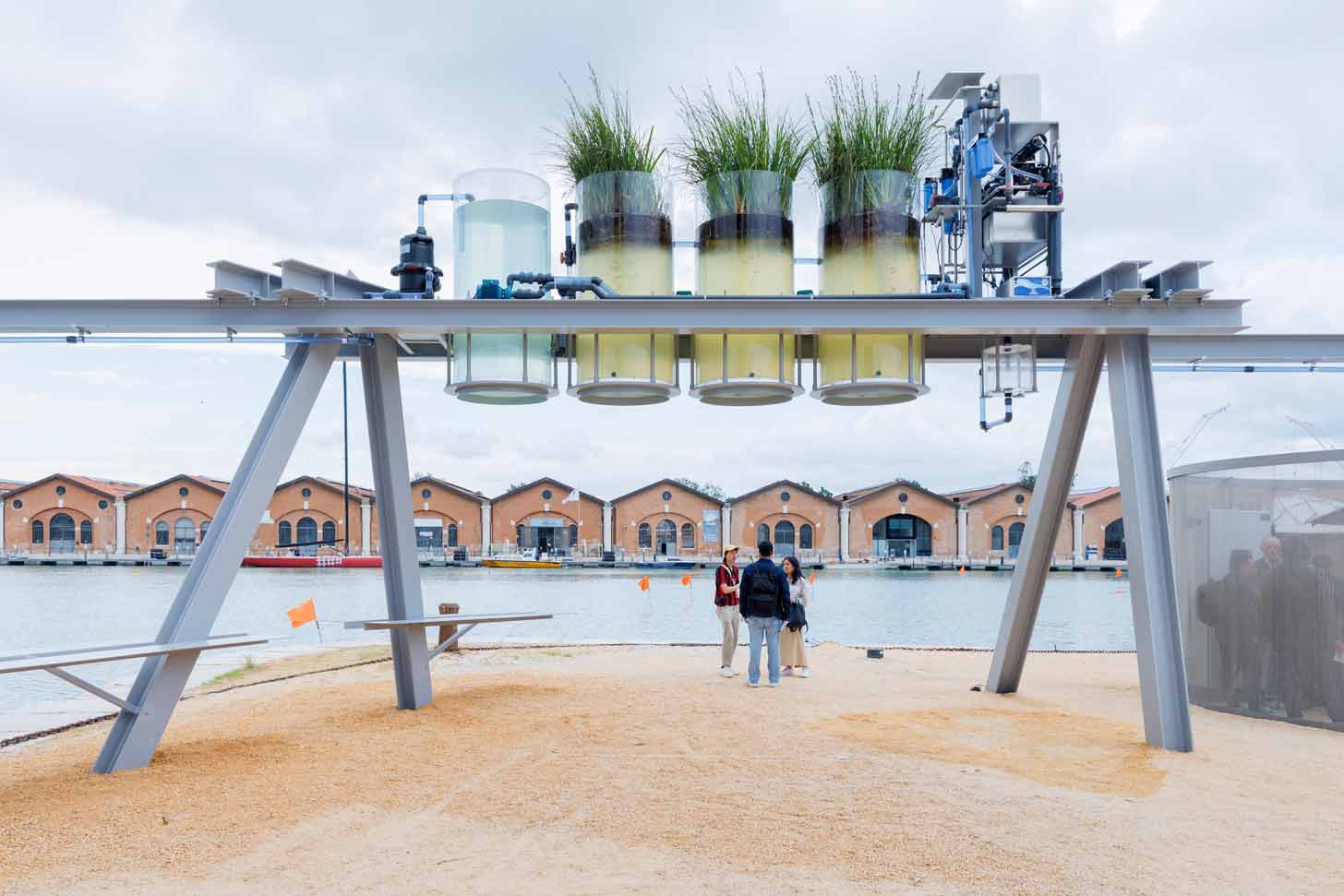
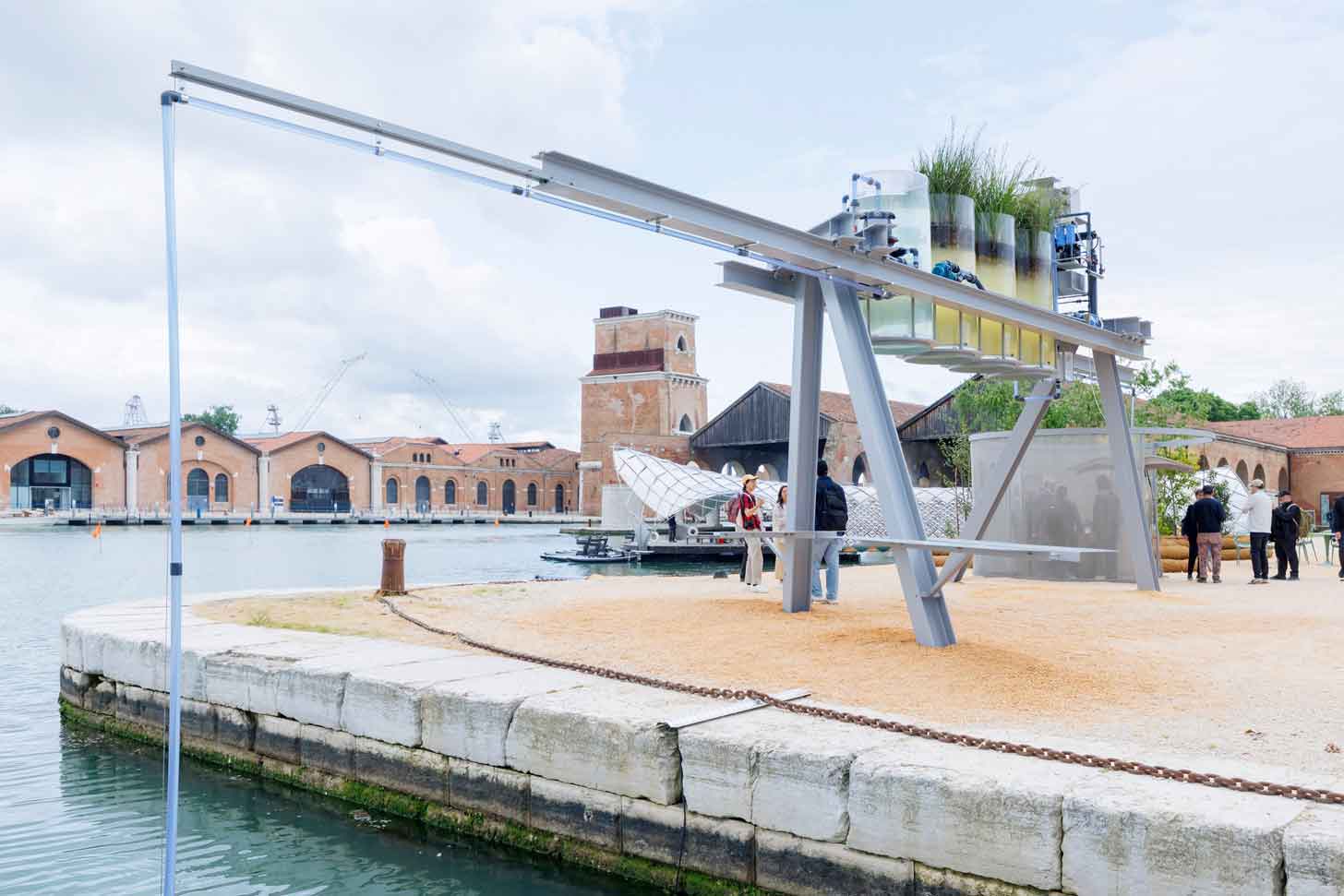
Using an innovative “hybrid natural-artificial” purification system, the group’s system draws water from the Arsenale Lagoon to create potable water, and therefore, drinkable coffee.
“While the canals and lagoon are the source of the city’s historical wealth and beauty, they also elicit fears of contamination and flooding — concerns that are heightened in an era of mass tourism and climate change,” the project’s creators shared in a statement.
“Canal Café reaches beneath the photogenic surface of the city by converting these brackish waters into the comforting scent and taste of espresso — the irreducible Italian pleasure. The public will drink Venice.”
This is a pretty bold assertion, considering the canal waters are not normally safe to swim in — let alone drink.
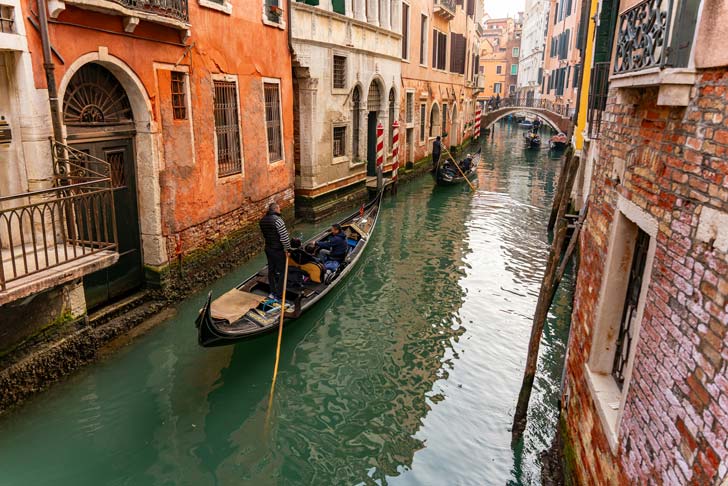
But the filtration system, which includes transparent pipes to show people the full process in full, draws water from the canal system and sends it through a bio-filtration system that removes sludge and toxins. From there, the water is split into two interdependent streams.
The first stream flows through a natural bioreactor, which designers call a “micro-wetland,” which includes plants and bacteria that purify the water while still retaining the water’s mineral composition.
The second stream flows through an artificial filtration system that uses ultrafiltration and reverse osmosis membranes to create distilled water stripped of salts and brings out the flavor of coffee grinds.
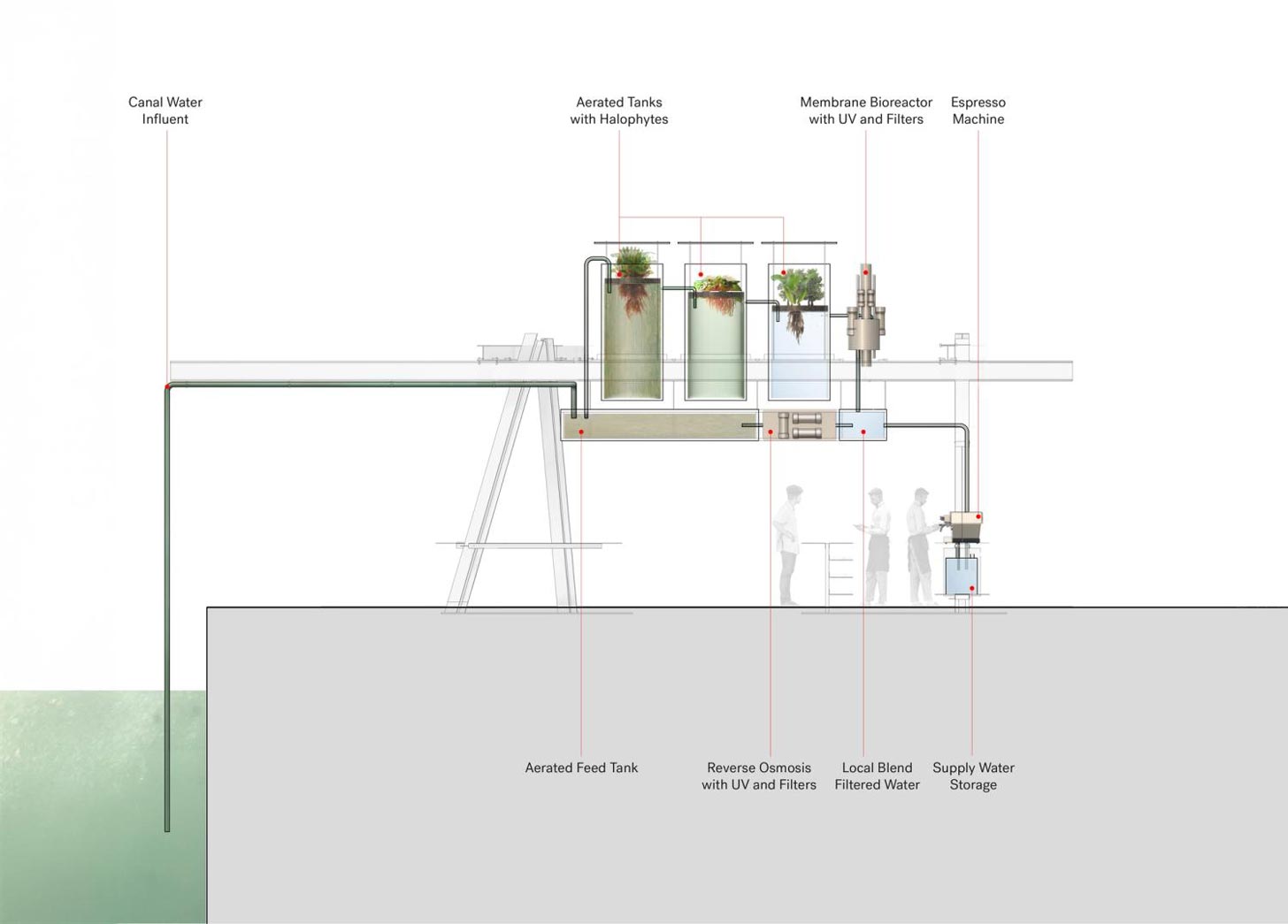
Lastly, the two streams are blended, steamed, and forced through coffee grounds, bringing in mineral-rich, naturally filtered water to produce espresso. Unused purified water will irrigate an attached landscape installation.
According to Diller Scofidio + Renfro co-founder Elizabeth Diller, the process makes the coffee not only drinkable, but desirable.
“What we’re doing is we’re reaching into the canal there with that pipe,” Diller said at the launch of the project.
“We’re bringing that water, we’re pumping it up, and we’re purifying it in front of your eyes,” she told Dezeen. “And then we’re going to steam it and we’re going to force it through coffee grinds to make the best espresso, at least in Venice.”
These espressos will be sold for 1.20 euros, or $1.36, the same as all other coffee bars inside the annual event.
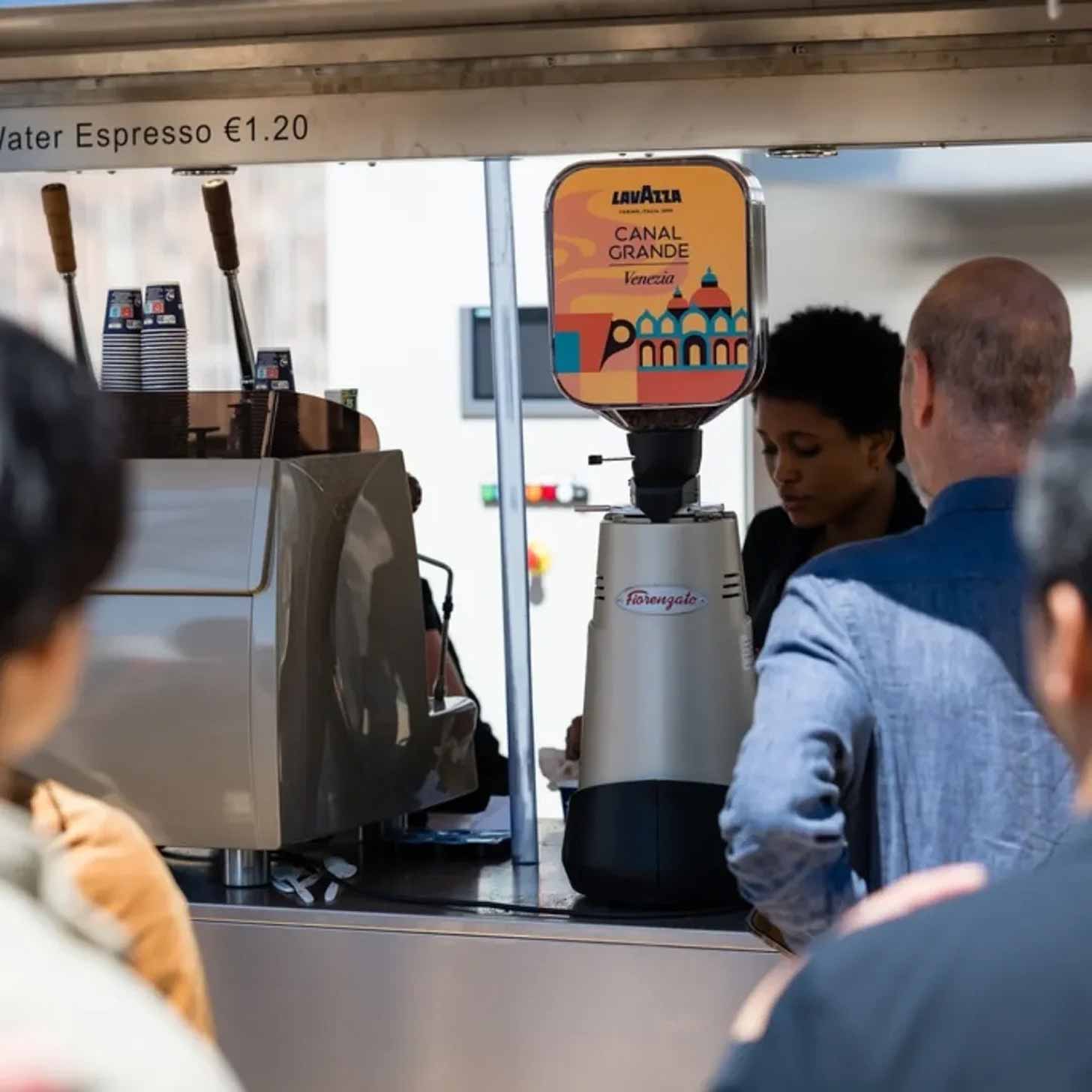
Aside from creating a uniquely delicious cup of espresso, designers hope the project encourages the public to rethink water usage and embrace circular design.
“We wanted to bring a sort of shock and disgust at the same time as deep pleasure — the pleasure of drinking beautiful coffee in a beautiful place,” Diller added to Dezeen. “That juxtaposition is very, very important to us.”
The company worked with U.S. company Natural Systems Utilities and Italian environmental and water engineering company Sodai to bring this project to life. They are also collaborating with Michelin-starred chef Davide Oldani.
Oldani will sample the combination and alter it to produce a distinct local flavour, as well as selecting the coffee blend to “deliver the most authentically Venetian taste,” according to Time Out.
While the canal water coffee project offers a fair dose of absurdity and novelty, the designers of this project have serious motivations, especially as rising sea levels threaten Venice’s very existence. Some scientists predict that the city itself could be entirely underwater by 2150.
“We’re in an era of mass tourism and climate change,” Diller told Dezeen. “It’s bound to get worse, so we have to think about infrastructure, about distributed infrastructure, and about the potential to do this and also use natural systems to do this.”
Carlo Ratti, the director of 2025 Biennale, echoed this sentiment to The New York Times.
“We could say that the project is a prototype of the global dilemmas we face in a time of increased climate change when our infrastructures must adapt,” Ratti said.
“It’s a challenge we take seriously,” he said. “The idea is to bring a complex environmental issue — water quality — into the simplest acts of our everyday life.”
Diller, who said she would drink the first cup of espresso as the project’s “guinea pig,” said the whole system boils down to combining the pleasure of a beautiful cup of coffee with the complexity involved in actually having potable water available to drink it.
“It’s visceral — to drink or not to drink — and will provoke people to confront the issue that is literally right in front of them,” Ratti added.
“You’re not just hearing about polluted water and infrastructure failure — you’re drinking a cup of coffee that started as lagoon sludge.”
Header image by Vladimir Srajber / Pexels
New research from the University of Edinburgh has found that one activity keeps senior adults sharp in their twilight years, regardless of income, education, and overall health: gardening.
In the study, published in the Journal of Environmental Psychology, the researchers observed that “gardening in later life” is linked to higher cognitive functioning for those over the age of 79.
“Identifying lifestyle behaviours that facilitate healthy cognitive aging is of major public interest for the prevention of cognitive decline and dementia,” said Janie Corley, a post-doctoral psychology researcher at the University of Edinburgh, and lead author of the study.
Corley went on to write that gardening was a “key leisure activity in late adulthood,” due to its accessibility as a “low-to-moderate intensity physical activity.”
“Engaging in gardening projects, learning about plants, and general garden upkeep, involves complex cognitive processes such as memory and executive function,” Corley explained.
“Consistent with the ‘use it or lose it’ framework of cognitive function, more engagement in gardening may be directly associated with a lower risk of cognitive decline.”
For Corley, gardening is not just a “productive” physical activity. It also requires creative thinking and strategic planning, both of which promote mental stimulation.
And according to a study from the Journals of Gerontology, those with higher cognitive function have a longer life expectancy.
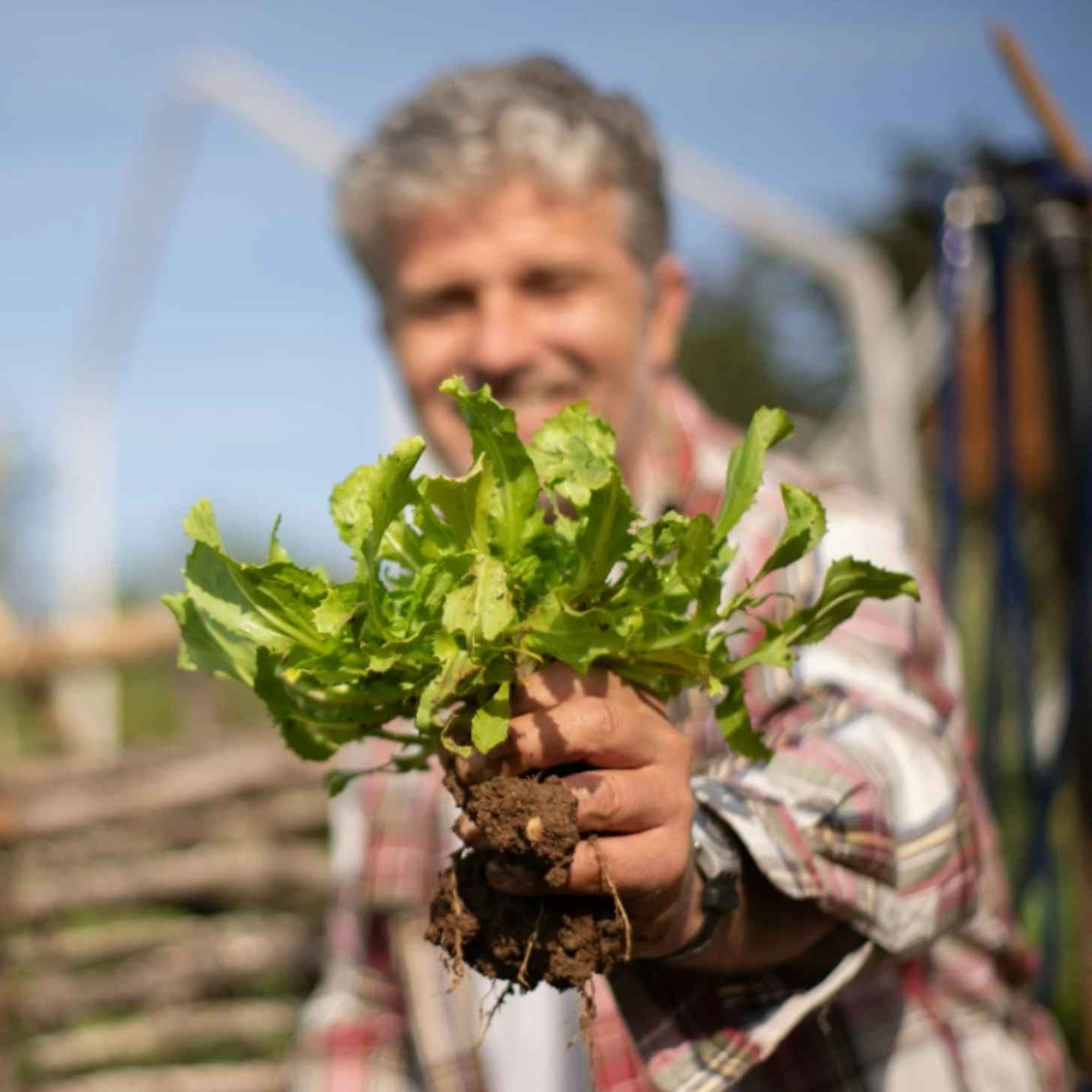
The methodology behind the University of Edinburgh’s latest research is remarkable in and of itself.
The results are from the Lothian Birth Cohort 1921, a group of 550 Scottish men and women who were born over a century ago.
In 1931, at age 11, the children took part in an intelligence exam: the Scottish Mental Survey.
Between 1999 and 2001, the same participants, now aged around 79 years, participated in cognitive exams, physical tests, and lifestyle questionnaires. That last exam asked the cohort about their health, occupation, and physical activities — which included gardening.
Based on the results of the Lothian Birth Cohort’s childhood testing, and secondary testing at the turn of the millennium, researchers were able to draw their conclusions.
“Strengths of the present study include an extended longitudinal design and repeated cognitive assessments from childhood to later life, providing a unique opportunity for a direct comparison of cognitive performance over nearly seven decades,” Corley and her team explained.
Corley welcomed more research into the specific links between gardening and healthy cognitive aging, but there’s emerging evidence that gardening is good for you at any age.
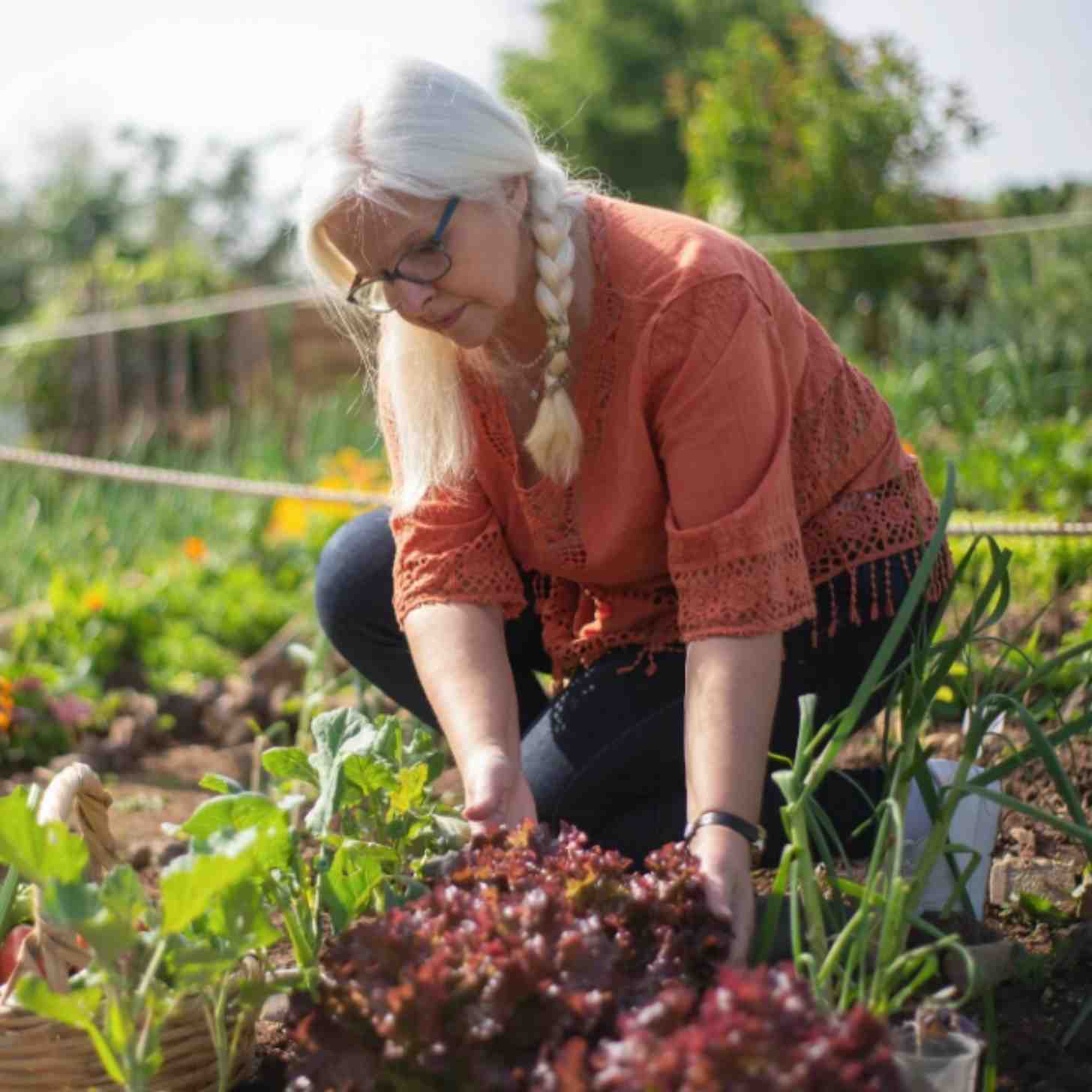
A 2022 study from the National Institutes of Health found that spending “substantial time in a green space” reduces mental health challenges and acts as a “therapeutic intervention.”
Groups like Black Men With Gardens lean into the social health of gardening, as they provide advice to each other, build an online community, and “highlight the magic in the mundane.”
And some doctors have even begun offering their patients “nature prescriptions” to lower their blood pressure and reduce the risk of diseases that can lead to dementia.
“Nature provides soft fascination that reduces fatigue and irritability,” Melissa Lem, a Canadian-based physician who swears by nature prescriptions, told the BBC.
“We all know that more physical activity improves mental and physical health, but gardening supercharges those benefits.”
Header image via Bigstock (CC BY-NC 4.0)
When leadership at Harrison School District 2 in Colorado Springs, Colorado toured a tiny home village for young people in poverty created by local nonprofit We Fortify, they left feeling inspired.
“About a week after the tour, they called and asked if we would build two villages for them on school property,” We Fortify founder and CEO Shelley Jensen told Good Good Good.
We Fortify offers two kinds of social housing structures: Elevate Villages, which offer affordable housing and life skills, therapy, and job training programming for young people ages 18-25; and Noble Villages, which offer dignified and affordable housing for service professionals like teachers, nurses, firefighters, and more.

So, earlier this month, Harrison School District 2 and We Fortify announced the building of two tiny home communities on the Mountain Vista Community School campus.
The first is “Wendy’s Village,” a community of 40 units specifically reserved for educators. Rent is $800 a month, homes are 352 square feet in size, and the whole neighborhood will sit on the school’s soccer field, which takes up just less than an acre.
Each home is powered by electric energy and includes a full kitchen and bathroom, a living room, and a bedroom. A central community center will also include a galley kitchen, event space, and raised garden beds.

The other development is “Prospect Village,” and will be reserved for young adults ages 18-25. Rent here is $600 a month and is a smaller community of 18 units, placed on the school’s basketball courts.
The idea behind Prospect Village is to serve as a long-term transitional housing option, offering educational programming and job opportunities to young people emerging from poverty.
“With every development we build, we learn and get better — we add to our tool belt of best practices,” Jensen said. “If we can do that and help house the employees who provide our infrastructure services, it's a win-win.”
While We Fortify has specialized in youth housing before, the teacher housing community is a new development to explore.

“It's the first of its kind in Colorado Springs, and I believe the first ‘cottage court’ design in Colorado,” Jensen said. “We believe in smaller developments that really lean into the neighborhoods they are in, using homes that complement the current development.”
Other similar initiatives have been in the works in other parts of the country. In Charlotte, North Carolina, Charlotte-Mecklenburg Schools offers apartments at below-market rent, homeownership opportunities for teachers, and plans to build its own housing development.
With stagnant wages, rising housing costs, and a decline in educators nationwide, this kind of offering aims to keep teachers where they actually want to be.
“There is absolutely a systemic crisis, so let’s get going,” Jensen said. “[Teacher housing] is one solution to a very big problem that we cannot control, nor wish to. That is not in our lane. What is in our lane is our ability to provide beautiful, dignified housing in a human-focused way that allows the teachers to teach and live in a state that they want to live in.”

On top of this, she added, it “allows the school district to recruit and retain highly qualified teachers to this state so that they can provide the quality of education they desire to their constituents.”
According to Jensen, 75% of teachers surveyed in Harrison District 2 said they wanted to stay in the district and “wanted to live in this village.”
Dr. Wendy Birhanzel, the superintendent of the district, said the idea is a “bold vision” that will be turned “into reality” with the help of the school’s partnership with We Fortify and other donors.
“This project reflects our shared commitment to supporting educators and strengthening the future of our schools and neighborhoods,” Dr. Birhanzel said in a statement, reported by KKTV 11 News.
Right now, the district is working with We Fortify to collect funding for both complexes. Wendy’s Village will be entirely funded through private, public, corporate, and foundation donations, including a recent donation from ENT Credit Union.
Jensen told Good Good Good that nearly $1 million has been raised thus far, though another $5 million is needed to fully realize the project. A model home will also soon be prepped for visitors.
“We have an NGU — never give up — attitude,” Jensen said. “They can expect that we will get these communities built.”
Once they are completed, Jensen added, she hopes Wendy’s Village can serve as a blueprint for other communities looking to build teacher housing.
“There isn't a lot of evidence out there right now with regard to teacher housing. It would be great if Wendy’s Village could be a case study,” Jensen said. “I know and understand [that’s] how Dr. Birhanzel, the superintendent, intends to use it. I believe in her and her vision.”
Header image courtesy of We Fortify
Kat Abughazaleh, a 26-year-old running for Congress in Illinois’ 9th congressional district, isn’t shy about her belief that politicians need to do things differently.
“We have a representation problem,” the first line of the “About” page on her website reads.
“As in, about half of Congress are millionaires and people born before the Moon landing. And that's part of the reason we're in this mess: Our leaders are out of touch.”
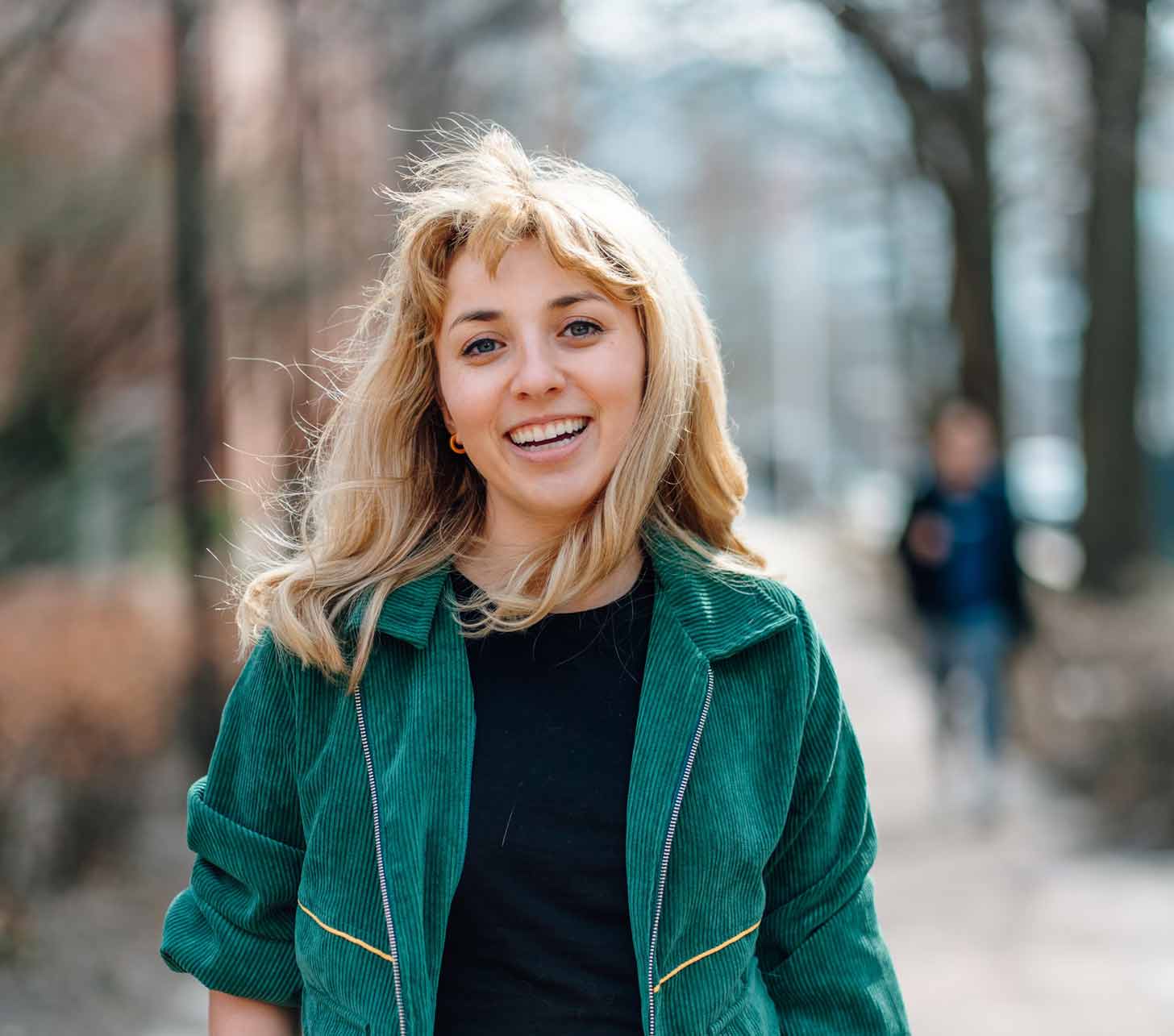
A journalist, social media influencer, and political commentator that GQ called “a lefty,” with a mission to revitalize the Democratic party, Abughazaleh built a following online before she launched her campaign in March of 2025.
But now, she’s leveraging her platform — and campaign dollars — to help people in her community before ballots are even filled in.
“My congressional campaign is feeding people right now,” she starts in a recent TikTok video.
“Part of the reason I decided to run was because I saw how much money gets wasted in politics, and I thought, ‘What if we spent it differently?’”
She adds that the campaign is focused on “direct action and mutual aid,” emphasizing that she wanted her run for office to be “dual-purpose,” in which she can get her message out and help people in the process.
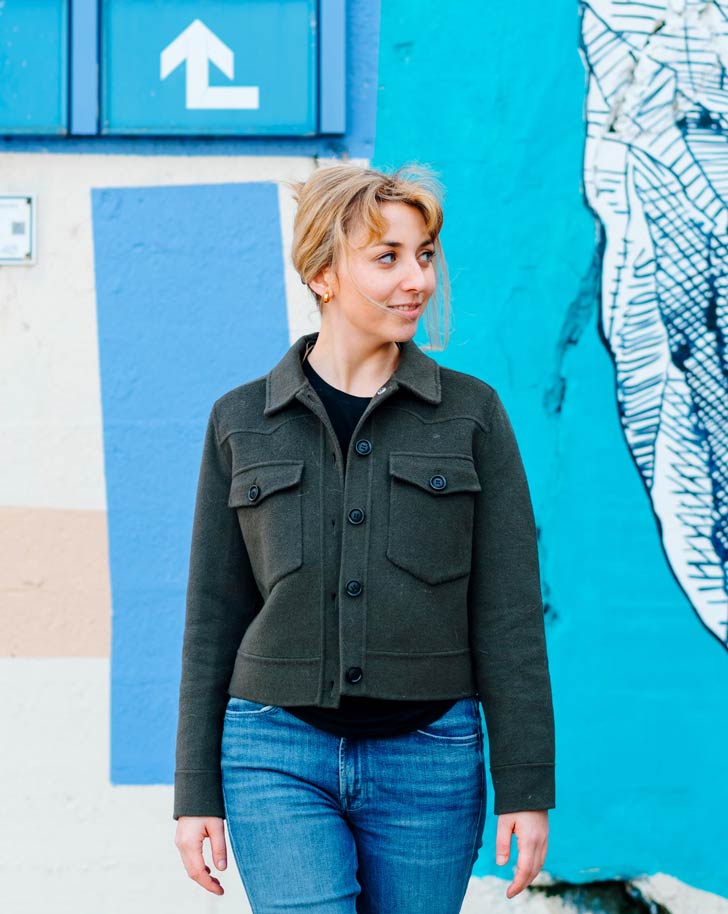
It’s a stark pivot from the traditional way of campaigning in the United States, which often includes pricey fundraising galas, attack ads, big billboards, and perhaps the most criticized and unpopular feature: massive donations from private businesses and interest groups.
Abughazaleh has publicly congratulated the former incumbent of this seat — 80-year-old Rep. Jan Schakowsky, who has held the title since 1999, the year Abughazaleh was born — for her “decades of service.”
Rep. Schakowsky will not seek reelection, but Abughazaleh called for others to run, hoping to participate in the “first competitive Democratic primary in the District since 1998.”
Abughazaleh has also shared that the average donation her campaign receives is $31. And according to GQ, 1,000 people signed up to volunteer for her campaign within a week of her initial announcement.
And while that volunteering does include marketing, canvassing, and getting the word out, it mostly adds up to actual on-the-ground volunteer work to help people in the local community.
“Our kick-off event, for instance, didn’t charge $500 a plate,” Abughazaleh shared in her TikTok. “People just had to bring a box of pads or tampons, which were donated to Chicago’s period collective. By the end of the night, we had gathered over 5,600 period products, which went to people who can’t afford them.”
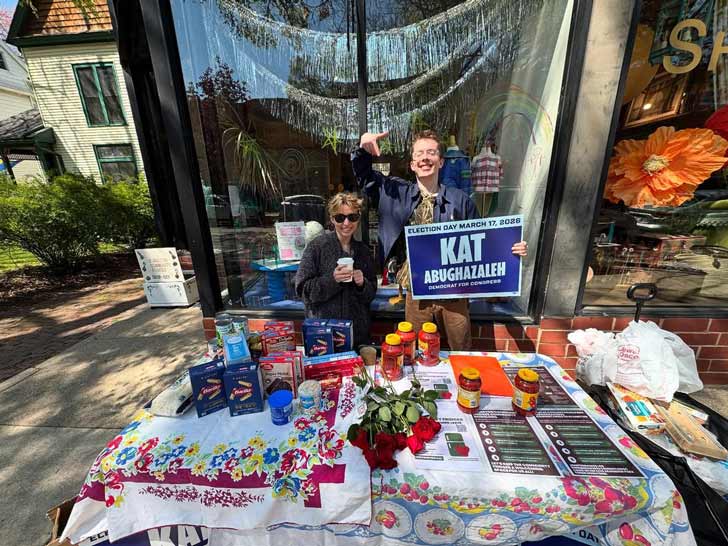
Most recently, the campaign hosted a food drive for a local community fridge program.
“We asked folks to come out and donate food in exchange for a campaign yard or window sign,” Abughazaleh said. “And by the end of the day, we were able to fully stock the empty pantry and fill the fridge with frozen meals, produce, and eggs. That’s feeding people right now.”
“Don’t worry, we checked to make sure this is legal," she added. "And it is."
The campaign has also launched a High School Public Serve Grant program that encourages local youth to submit ideas for how to make the community better, and Abughazaleh’s campaign will support it with money, materials, volunteers, and her online platform.
“Every single year, political campaigns spend billions on American elections, and only one candidate wins each race. So where does that money go?” Abughazaleh continued.
For many campaigns, she said, people will hire expensive consultants, pay for dozens of ads that are all very similar, and rack up “frivolous expenditures.”
“Something you’ll rarely see is concrete help in their communities during the campaign,” she said. “And frankly, to me, that just seems stupid. Not only do you get to help people — supposedly what you’re running to do — but it also shows what you’re about, instead of just providing lip service.”
@katmabu Remember: Politicians *choose* to spend their campaign money courting rich donors, but they never had to in the first place. #fyp #foryoupage #news #politics #congress #mutualaid #chicago #evanston #illinois #community #directaction #woketok ♬ original sound - Kat Abughazaleh
Abughazaleh emphasized that most politicians choose not to spend their money to actively help people through outreach before the election, but that she would love it if others followed in her footsteps.
“If every campaign adopted this model, then we wouldn’t be wasting money every single cycle. Every city, town, and village across America would be improved by their election process, and I think it would also get people more involved,” she said.
“We have local folks who have never voted in an election, but they joined our volunteer Discord server because they want to help, they feel like they have something to vote for.”
For those who might be inspired enough to run for office with this model, she says: Full steam ahead.
“Frankly, I would love it if other campaigns took our model. Use it, pretend it’s yours, I don’t care!” she wrapped up her TikTok.
“Pair with organizations in your community that have been doing the work, talk with local experts, and try to spearhead any initiatives you can to show your values and help your constituents. It’s really that easy.”
Header images courtesy of Kat for Illinois
While Hozier’s music might already make listeners feel like they are basking in a plush Irish meadow, a new remix from the folk-soul singer is actually a collaboration with Mother Earth herself.
A new, 10-year anniversary version of Hozier’s 2014 tune “Like Real People Do” will be released on Friday, May 16.
Hozier’s soulful, balmy pipes sound the same as the original song, but in the background, the song features “the bird song, cricket song, rain fall, and thunder” of his “beloved home of Wicklow.”

It’s all a part of an initiative from the Museum for the United Nations: UN Live called Sounds Right, which made “NATURE” an official artist on Spotify and other streaming platforms. Since 2024, the project has used this tactic to collaborate with musicians and bring in royalty dollars that support conservation efforts.
Over the past year, the project has generated more than $200,000 for conservation efforts between streaming royalties and donations from individuals and institutions, according to reporting from NPR.
Both NATURE’s royalties and donations to Sounds Right are collected by the nonprofit EarthPercent, which sends them to biodiversity conservation and restoration projects in threatened ecosystems around the world.
At least 50% of recording royalties from tracks by artists that feature NATURE will go towards the cause, including this new Hozier release.
In a social media post previewing the track, Hozier said, “50% of the royalties from this version of the track will flow through to conservation efforts around the world. I hope you enjoy and explore their other good works.”

“In addition to fans generating funds by listening to the amazing artists from around the world who are releasing new or remixed tracks that are enhanced by sounds of the natural world, there’s an additional opportunity within this initiative,” the Sounds Right project website said. “To spark conversations about how Nature can — and should — be valued in our society and economic model.”
“More often than not we have a purely extractive relationship with the environment, either treating it as a resource to be optimally exploited or a ‘waste sink’ to dump our rubbish and pollutants,” the website continued. “Sounds Right partners have created a simple mechanism that goes some way to properly valuing nature for its creative contributions to music.”
Other Sounds Right collaborators so far include artists like Raveena, SYML, Armaan Malik, Steve Angello of Swedish House Mafia, Yann Tiersen, Brian Eno, Ellie Goulding, and Lykke Li.
A playlist of 30 new songs was released through the program for Earth Day last month, but Hozier’s special track has its own moment.
It will also be part of a 10-year anniversary record for his self-titled debut album, which will include new vinyl pressings and the release of other bonus tracks.
The artist himself — whose full name is Andrew Hozier Byrne — is no stranger to advocacy and protest. Hailing from Ireland, many of his songs touch on social change and issues like climate and refugee crises, reproductive rights, and homelessness. He also often speaks up in support of LGBTQ+ people and Palestinians in interviews and at his live shows.
In fact, the song that is part of this project — “Like Real People Do” — exemplifies the singer’s desire to love people no matter their background.
“I will not ask you where you came from / I will not ask you and neither would you,” he sings in the song’s refrain. “Honey just put your sweet lips on my lips / We should just kiss like real people do.”
“Like Real People Do (featuring NATURE)” will be available to stream on Spotify and Apple Music starting May 16, 2025.
Header image courtesy of Kayla Johnson (CC BY 2.0)
Due to supply chain disruptions, new tariffs, and the ongoing consequences of the avian influenza outbreak, grocery prices have skyrocketed.
And a recent analysis from the Yale Budget Lab estimates that overall food prices will continue to rise by 2.6% over the next three years.
Needless to say, picking out affordable food items has become a daunting task, especially for families shopping on a tighter budget.
Fortunately, Rebecca Chobat — a home chef who runs the TikTok account @dollartreedinners — has a wealth of recipes and cooking tips for households trying to get the most bang for their buck during tough times.
“My mission is to make home-cooked meals feel accessible, realistic, and empowering…especially for those working with tight budgets or limited resources,” Chobat wrote in the intro of her latest recipe guide.
“I create meal plans that prioritize affordability, without sacrificing comfort, creativity, or dignity.”

In Chobat’s latest series, she stretched $20 into “four full family dinners.”
Staying under budget at $19.75, Chobat picked up:
- 2 lbs of all-purpose flour
- 2 packages of Mexican-style rice
- 1 bag of refried beans
- 1 package of four cheese instant mashed potatoes
- 1 bag of frozen steak-cut french fries
- 1 package of smoked sausage
- 1 can of green beans
- 1 box of spaghetti
- 1 can of garlic & herb pasta sauce
- 1 jar of parmesan cheese seasoning
- 1 carton of whole milk
- 2 boxes of Hungry Jack cheeseburger mac
- 1 can of chili
- 1 can of diced tomatoes and green chiles
In a four-part series, Chobat whipped those ingredients up into four dinners: one pot chili mac, pan-fried bean and rice chimichangas, spaghetti in a creamy rosatella sauce, and a skillet meal of sautéed smoked sausages, pierogies, and green beans.

In addition to walking her viewers through the recipes in her TikTok videos, Chobat also created written cooking instructions on her Facebook account and via printable PDFs.
After trying Chobat’s meals for themselves, people were quick to write in and express their gratitude.
“My husband got unexpectedly laid off last week, and you have no idea how much your videos are a blessing to my family right now,” one viewer wrote.
“There’s not enough kind words to say about you and your content,” one follower said. “You really are the best.”
“She’s giving Mister Rogers vibes!” another person commented.
Chobat’s TikTok account, which stretches back to 2022, is packed with hundreds of affordable recipes — many of which tie into Dollar Tree or other affordable grocery store chains.
Throughout her videos, Chobat continues to challenge herself again and again by making $20 Christmas dinners, recreating restaurant-style recipes on a budget, and stretching $100 of groceries into 30 days of meals.
“Whether it’s a low grocery budget series or a pantry-based dinner series, I focus on intentional planning, smart ingredient use, and approaching cooking methods that anyone can follow,” Chobat wrote in her recipe guide.
“My goal isn’t just to feed people, but to show that good food is possible, no matter where you shop or how much you have to spend.”
@dollartreedinners This week I made 4 full family dinners using just $20 from Dollar Tree—and every meal was planned with intention. I reused ingredients across recipes, balanced high-effort cooking with quick shortcuts, and ended up with a meal plan that felt way more comforting and complete than the price tag suggests. I know a lot of you have asked for a Dollar Tree cookbook, and while that’s not in the works just yet, I did put together a free printable with the shopping list, detailed recipes, and a QR code linking back to all the videos. I hope it helps you cook with confidence—no matter your budget. #DollarTreeMeals #BudgetCooking #GroceryChallenge #FrugalEats #FamilyDinnerIdeas #mealplan #StretchYourBudget #CheapMealsThatHit #KitchenConfidence #LowBudgetHighFlavor ♬ original sound - Dollar Tree Dinners
Header image via Rebecca Chobat / TikTok
The dusky langur is a species of monkey native to Malaysia, Myanmar, and Thailand. Categorized as endangered on the International Union for Conservation of Nature’s Red List, these 15-pound, wide-eyed creatures face grave population loss due to human development.
As their native rainforest habitats have been taken over by development, the langurs have been pushed out into urban areas, where they are often killed in traffic collisions, by electrocution from wires, and by being fed unsafe foods.
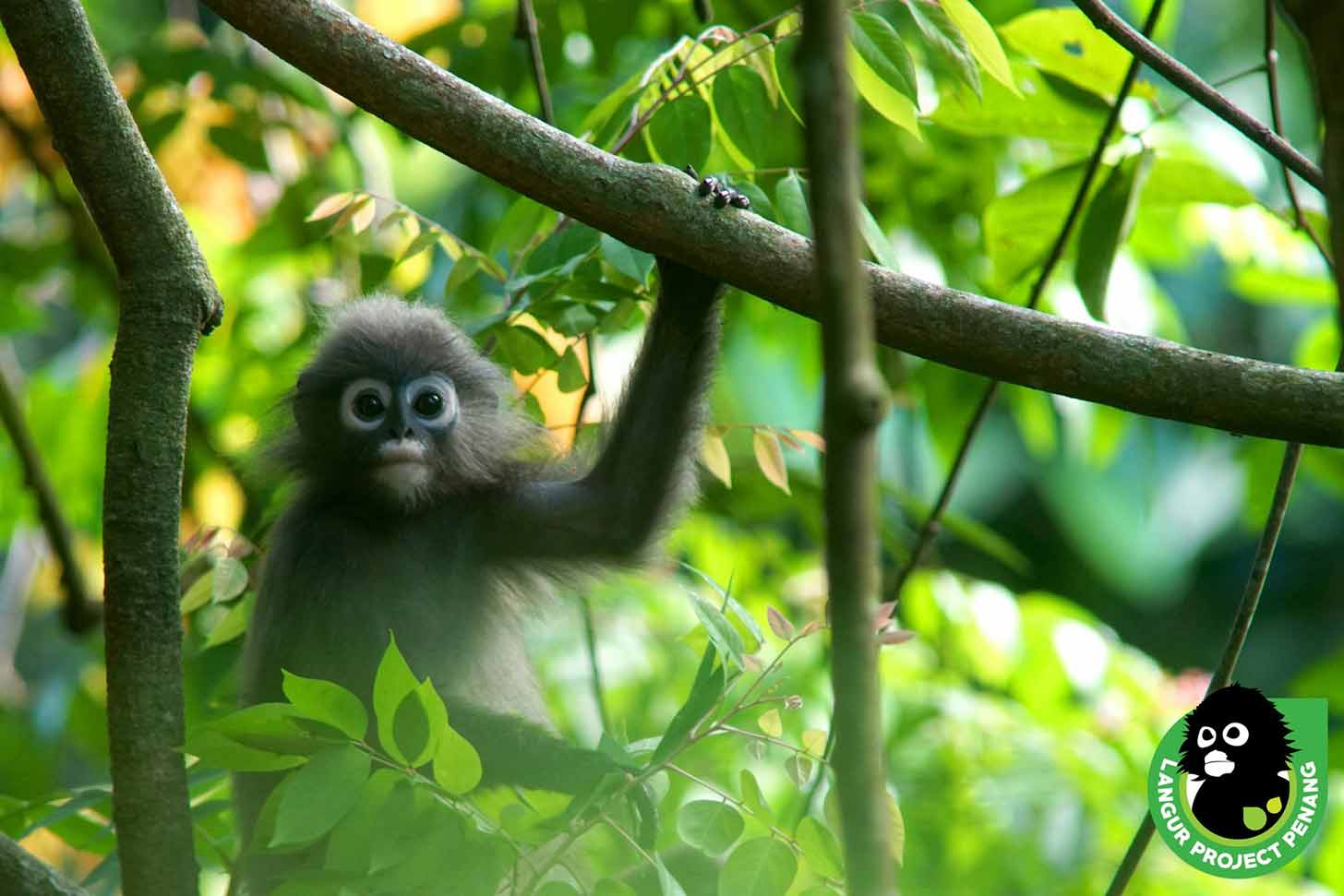
On Malaysia’s Penang Island — one of the most densely populated areas in the world — researcher Jo Leen Yap knew she had to do something to save the langurs.
Yap is the project executive for Langur Project Penang, but her journey started nearly a decade ago, when, as a student, she noticed many langurs were attempting to cross busy roads by balancing on electrical wires.
Her heart broke as she watched them die by electrocution and collisions with vehicles, specifically the mothers carrying especially vulnerable babies.
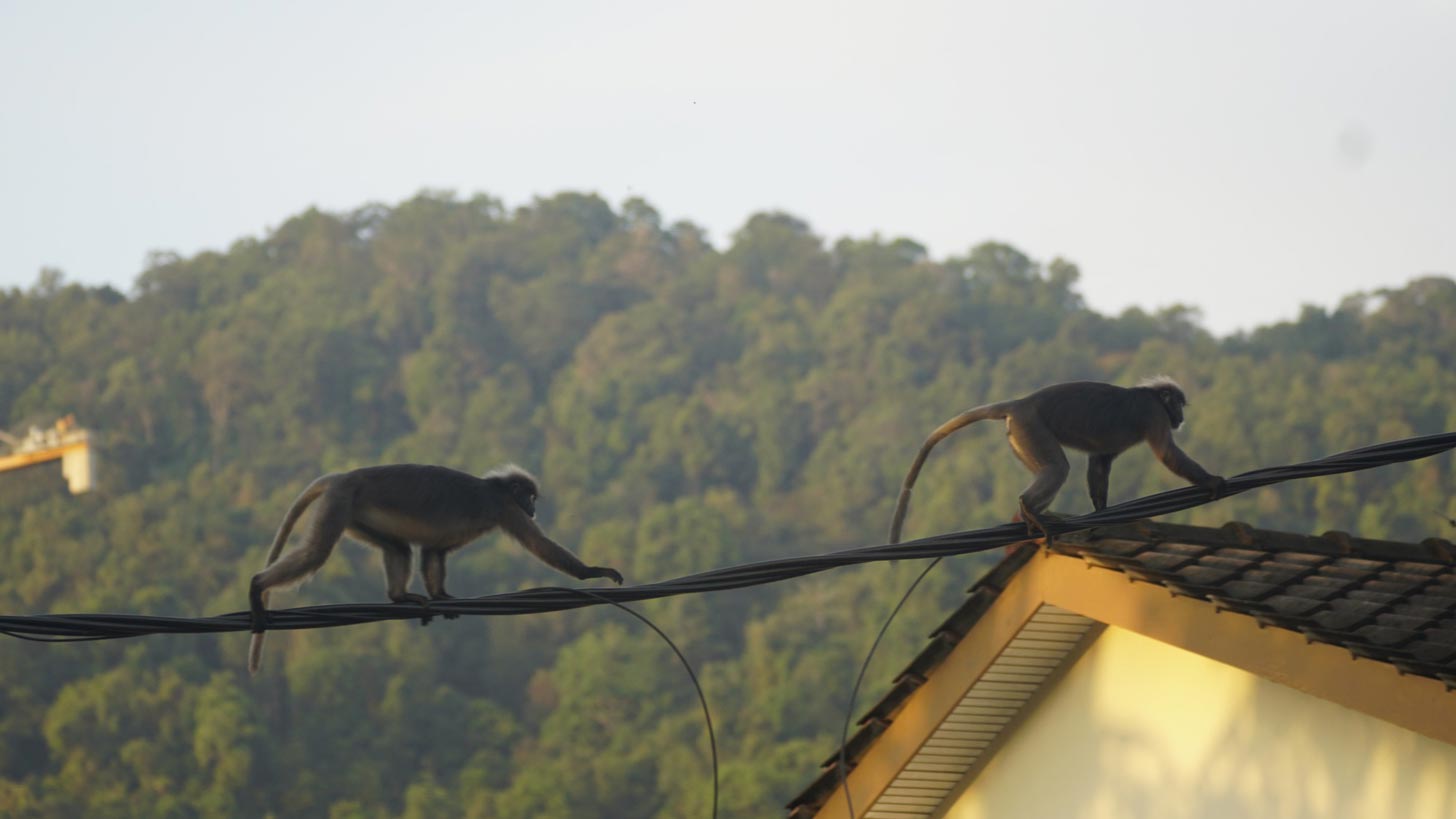
Roads like these exist all around the world, killing wildlife of all kinds. Adam Ford, an assistant professor of wildlife restoration and ecology at the University of British Columbia, compares the busy road in Penang to one in Banff National Park.
“They called it the meat grinder,” he told Mother Jones in 2021. “It was bad for people, bad for animals.”
Banff now features a series of overpasses and underpasses that have dramatically helped protect wildlife and people, drastically reducing collisions in the park.
You might also like: Construction underway for world's largest wildlife crossing, 30 years in the making
Yap began her conservation work by devising a plan for a similar innovative wildlife crossing to save langurs from the life-threatening road on Penang, too.

LPP started as a citizen science group on Facebook, and as word spread and Yap began her PhD studies at the Universiti Sains Malaysia, the idea for a canopy bridge became a reality.
In 2019, they erected their first bridge above one of the busiest roads in the area, fashioned from recycled fire hoses donated by the Fire and Rescue Department of Malaysia.
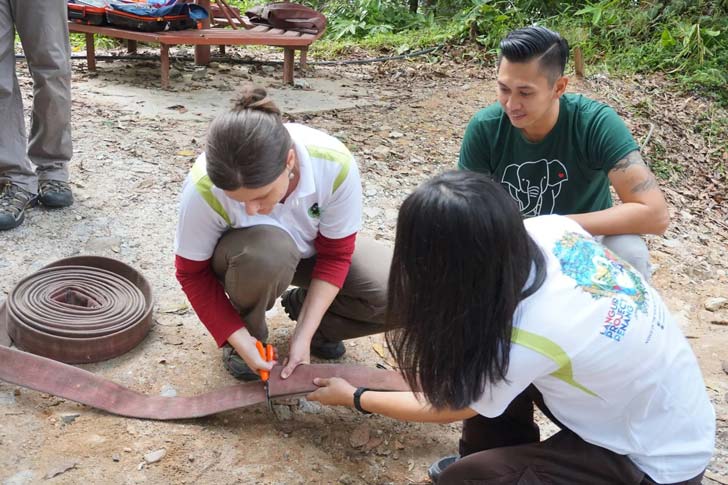
While Yap and other researchers considered using other materials like bamboo and nylon, they found that the fire houses would be most practical, as they would hold up in rain and monsoons. They tested them for strength and reliability, and once it was approved, the bridge was lofted 40 feet up in the tree canopy, spanning a 40-foot-wide road.
“We really hope that the canopy bridge is not just to connect the fragments in a large area or even for the roads and highways, but also a conservation tool [to] reduce human-primate conflict,” Yap told Mother Jones. “The ultimate goal is to bridge the gap between humans and urban wildlife.”
A camera on the pole holding up the bridge helps researchers watch over the wildlife of the area, conducting tests and monitoring their behaviors and safety. At first, the langurs were hesitant to use the bridge, and researchers only caught footage of plantain squirrels and long-tailed macaques using the crossing.

So, LPP reinforced the bridge, adding two parallel ropes of twisted firehose. Now, the bridge resembles a horizontal ladder, and the langurs are more keen on using it to cross the road.
Since the bridge was installed, zero mammal deaths have been reported, and more than 7,000 wildlife crossings have been captured on camera.
Now, they’re scaling the solution.
Following the success of the first bridge, LPP is expanding its project around the UNESCO Man & Biosphere Reserve on Penang Island. They’re calling it “Bridge To Coexist,” and plan to install three new canopy bridges by 2026 to reduce roadkill incidents in the area.

So far, one of the three bridges has been installed. Dubbed “Numi’s Crossing,” it was installed in 2024.
“Numi’s Crossing symbolizes hope and peace [and] aims to assist dusky langurs and treetop animals in the area to cross roads safely and to act as an identity of empathy, compassion, and, most importantly, coexistence among humans and urban wildlife in Penang,” LPP’s website shares.
“In less than a week after the bridge installation, the dusky langurs made their first move on the bridge. This is great news to all of us and we’re very inspired by the courage and resilience of urban dusky langurs.”
Now, the LPP team is in the fieldwork stage of planning their next canopy bridge, which will be installed along the Batu Ferringhi Road, ideally by the end of 2025.
In the meantime, Yap and colleagues are also working to raise awareness about human-wildlife coexistence in urban areas and improve outcomes for langurs and all other wild animals like them.
“Dusky langurs live around us, just like other urban wildlife. We are more similar to each other than we think, and we share much more space than you imagine,” Yap shared in a blog post on LPP’s website.
“Facilitating safe spaces for humans and wildlife in urban areas starts with us. Everyone can help make a positive difference in our society by promoting peaceful coexistence among humans and wildlife.”
You might also like: Scientists invent 'smelling gel' that seduces coral to repopulate dying reefs
Header image courtesy of Langur Project Penang
As ocean temperatures rise as a result of climate change, coral reef ecosystems face a high risk of extinction, according to the Convention on Biological Diversity.
Over 50% of corals have been lost in the last 30 years, with a 14% decline in live coral cover in just the last decade. The loss is astronomical, but fortunately, corals are very resilient and adaptive creatures — and biologists are, too.

“I’m over hearing that corals are dying — I’m more interested in what we can do about it,” said Daniel Wangpraseurt, a marine biologist at UC San Diego’s Scripps Institution of Oceanography.
“My lab’s approach is to combine marine biology with physics and bioengineering to come up with new solutions.”
So, they did. Scripps, in collaboration with the university’s Jacobs School of Engineering, just released a study on a breakthrough invention to help repopulate coral reefs: a gel called SNAP-X.
According to the researchers, coral larvae are particularly picky about where they attach and settle down. One of the ways they find their home is by “smelling” chemicals in the water that are associated with healthy reefs.
Wangpraseurt’s team developed a gel that contains nano-particles that slowly release some of the coral larvae’s favorite “smells.”

“Coral are animals, and their larvae are selective about where they are going to attach because once they do, they’re stuck there,” Wangpraseurt said in a statement. “With SNAP-X, we created a material that releases chemical cues that tell coral larvae this is a good place to live.”
The gel is an antidote to a major problem conservationists face when working in reef restoration: Getting coral larvae to settle on degraded reefs (or human-made structures that don’t “smell” like home).
For coral to reproduce, adults spawn gamete cells that form larvae, which drift in the currents and settle on a suitable layer of the reef if environmental conditions are favorable. These adrift larvae also signal to other corals that they have found a good place to reside.
Degraded reefs often lack suitable conditions, which deters coral from repopulating, thus continuing a cycle of habitat loss.
The gel application is a breakthrough in redirecting this process. Scientists have already known that certain types of crusty algae can release chemicals that encourage corals to attach to surfaces, but it’s been hard to translate that knowledge into a practical solution.
“If you just throw these chemical cues in the ocean they dissipate very quickly, making it hard for coral larvae to find their source,” said Samapti Kundu, a postdoctoral researcher at Scripps who worked on the research as the study’s first author.
“We needed to develop something like an extended release drug delivery system that would slowly release these settlement cues in the ocean.”

The research team incubated algae samples collected from Hawaii’s Kaneohe Bay in seawater for 12 hours at a time, later extracting the algae molecules as a concentrated powder.
From there, the algae molecules were placed inside nanoparticles made of silica, the main mineral in sand. From there, the researchers suspended the nanoparticles in a liquid gel that solidifies like Jell-O when exposed to ultraviolet light.
All of these characteristics combined, the team could paint or spray the substance onto a surface and cure it with UV light to allow it to stay.
“Imagine you are able to bottle healthy reef scent,” Wangpraseurt told Science News, “and then you could spray it onto any kind of substrate.”
When the researchers applied the gel in these lab experiments, it increased coral larvae settlement by up to 20 times, compared to untreated surfaces. Once applied, the gel releases coral-attracting chemicals for up to a month.
Their research, published in Trends in Biotechnology, found that SNAP-X released the chemicals long enough to give coral restoration experts the ability to time its application with a coral spawning event.
“I think this material is a breakthrough that can hopefully make a big contribution to coral restoration,” Wangpraseurt said.
“Biomedical scientists have spent a lot of time developing nanomaterials as drug carriers, and here we were able to apply some of that knowledge to marine restoration. This paper highlights that if you bring together ideas from different scientific fields, you can create innovative solutions to tough problems like restoring coral reefs.”

All of the corals included in the study were a single species, the Hawaiian stony coral species Montipora capitata. In future studies, the SNAP-X researchers will see how the gel can work with coral from other regions.
With that in mind, Wangpraseurt believes the material could be easily adapted by loading the gel with chemicals collected from suitable algae sources present in local areas.
They are also curious to see how the gel may support efforts to infuse genetic diversity into reefs, giving them a better shot at coping with heat stress.
To continue these efforts, Kundu and Wangpraseurt are also working with a startup called Hybrid Reef Solutions.
“We want these materials to be used and have a big impact. To me, this means we can’t spend all our time on research — the business side needs development as well,” said Wangpraseurt.
“We are really excited to take this as far as it can go.”
Header image by Francesco Ungaro via Pexels
After three years of teaching at South East High School in Los Angeles, Henry Zahid, an openly transgender teacher who uses they/he pronouns, suddenly had to fight to keep their job.
Zahid, who supported students as an adviser for the school’s Gay Straight Alliance, came out as trans in their second year of teaching.
“I knew that if I could be my authentic self, it would help my students to see trans adults are out there,” Zahid told LA Public Press.
Despite resounding support from students and colleagues, he received a notice in February of this year that he was fired from his teaching position.
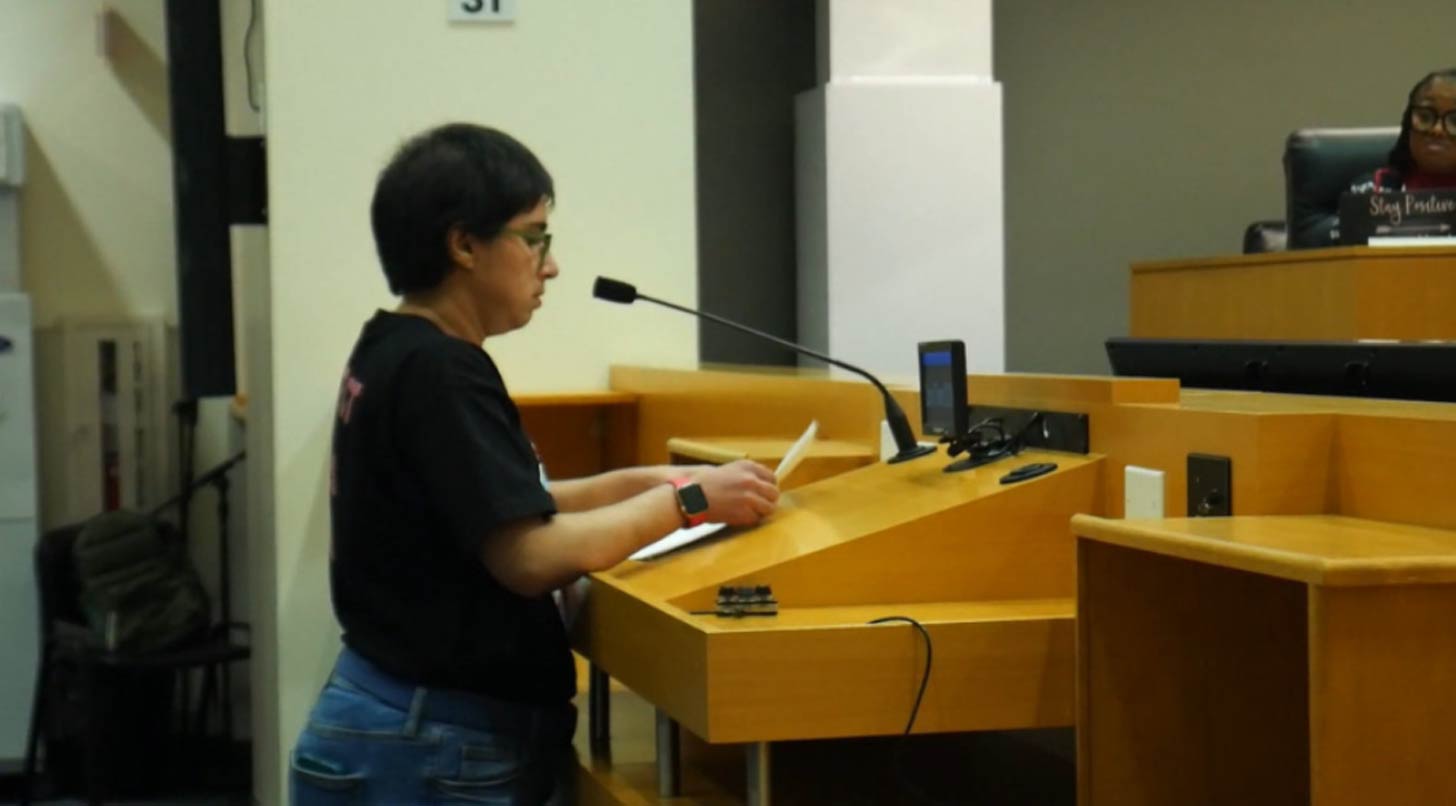
As part of the school district’s iCAAP (Intern and Credential Assistance and Advancement) program, Zahid was teaching as a “teacher candidate” in a probationary period.
During this time, the school principal can legally terminate an iCAAP teacher’s contract through a process called non-reelection.
According to LA Public Press, what this means is that administrators can choose not to renew a teacher’s contract for the next year, with no appeal process. Some reasons that can warrant non-reelection include “immoral or unprofessional conduct, conviction of a felony, or substance abuse issues,” per the California Education Code.
Zahid stressed that none of these reasons applied to them.
Still, they lost their job, and the circumstances under which they were terminated made it even more difficult to secure another teaching job at a different school.
Zahid concluded to LA Public Press: “I do personally feel that my principal did use the non-reelection to hide behind discrimination and bias.”
Despite the painful job loss, Zahid prevailed. After two emotional addresses to the school district board, an investigation by the Equal Opportunity Section, and over 2,000 letters of support from community members, Zahid has been reinstated.
But the fight required support from a host of different community organizations.

United Teachers of Los Angeles, for instance, is the labor union that represents public school teachers in L.A. The group has been active in ongoing protests and demonstrations across the city this year, calling for support of marginalized teachers and students who face threats under the Trump administration.
As part of their efforts to support LGBTQ+ educators, UTLA provided Zahid a platform to speak at their monthly board meetings, advocated on his behalf on social media, and helped mobilize other group efforts to reinstate Zahid.
“Last month, I spoke at the school board meeting about the biased non-reelection that I received from my principal,” Zahid said in a video shared by UTLA. “Today, I spoke again about being misgendered and the blatant disregard for my identity and how our district policies for protecting LGBTQ educators are being ignored.”
Amplifying Zahid’s call to action, UTLA offered pre-written email templates for supporters to send to school board members, calling for Zahid’s reinstatement.
The Educator Defense Network, an organization that supports activist teachers, also launched a letter-writing campaign on social media, culminating in over 2,000 community members advocating for Zahid.
“We are grateful to have met Henry Zahid, a trans immigrant educator who shows why diverse representation in schools matters. As a role model, Henry helps students see themselves as powerful and successful,” Educator Defense Network wrote in a social media post.
“It’s devastating to learn that Henry's principal used the non-reelect process to cut off not just his future, but the future of his students who rely on him as an advocate and mentor,” the group continued. “We are fighting for Henry and his students, urging the LAUSD board to rescind his non-reelect notice and hold the principal accountable for transphobia in our schools.”
Even a group of students and teachers under the 13,000-member umbrella of #StudentsDeserve called for community members to support Zahid’s reinstatement.
“Our demands are very clear,” #StudentsDeserve wrote in a recent social media post. “LA Schools superintendent and school board members, the time is now to be bold and take action to protect Black, undocumented, and LGBTQ students.”
While an internal investigation found that Zahid’s non-reelection was “based on legitimate professional conduct concerns and was not retaliation,” according to LA Public Press, the non-reelection was recently rescinded by the school board.
Although he has yet to receive an explanation for how this decision was made, Zahid’s future employment as a teacher has been secured.
“This literally would not have been possible without the community,” Zahid told LA Public Media. “I do really wanna thank every single person who has shown their support for me, who has come out to the board meetings, who has spoken up.”
In a video for UTLA, he added: “The truth is, this fight cannot be one alone. It shouldn't have to be. Each and every single one of us needs to speak up when we see people and systems discriminate against our fellow educators.”
Header image courtesy of UTLA
Campuses and college towns are hotspots for sexual violence.
According to the Rape Abuse & Incest National Network, college women aged-18-24 are three times more likely to experience sexual assault than women of the general population.
And when odorless, tasteless “date rape drugs,” like rohypnol, ketamine, and gamma-hydroxybutyrate (GHB), are slipped into victim’s drinks, it can make young women even more vulnerable to attack.
It’s an experience that Providence College sophomore Neve Palmeri desperately wants to prevent.
Recently, her cousin’s drink was spiked while she was on vacation in Aruba, and it led to a “terrifying experience.”
“She wasn’t looking at her drink for a second and then the next second she was passed out in the bathroom for hours,” Palmeri told NBC Boston. “When she woke up, she literally had no clue what had happened.”
Alarmed by her cousin’s experience, Palmeri — a marketing and management double major — decided to step up and do something.
Her “lightbulb moment” became SmartSip: a reusable straw that changes color when it detects the presence of date rape drugs.

“If a drug is placed in your drink, the straw will change a different color,” Palmeri said. “So it’ll be fluorescent, and then if there's a drug dropped in your drink, it’ll turn clear. ”
In November, Palmeri won the Donald Ryan Incubator Elevator Pitch Challenge at her college, which fast-tracked her access to resources and networks in the local business community.
Emboldened by newfound support, Palmeri went on to present SmartSip at the 2025 BIG EAST Startup Challenge. She beat out ten other college entrepreneurs and won $1,500 to further develop her design.
Palmeri said the next steps include testing the “feasibility” of their chemistry and finding the right manufacturer.

“Our plan is to facilitate these straws directly to colleges,” Palmeri said in a video for the Hun School of Princeton. “Even selling them to bars, and also having schools directly distribute these straws as a safety measure for students, is also a big goal.”
“I wanted to make something for college students,” Palmeri added, “because I’m a college student and I know this is a real threat out there.”
So far, Palmeri said, the response has been “amazing.”
“People are like, ‘yeah, we need this,’” she told NBC Boston. “They’re aware of the danger out there. They’re just not aware of a solution that can seamlessly integrate within social settings for them.”
Header image via Markus Spiske / Pexels
Every day the Good Good Good team collects the best good news in the world and shares it with our community. Here are the highlights for this week!
If you want to get good news in your inbox every day, join the Goodnewsletter — the free daily newsletter designed to leave you feeling hopeful.
The Best Positive News We’re Celebrating This Week —
A design lab invented a first-of-its-kind 3D-printed wheelchair for kids — and is giving them away for free
The team at MakeGood NOLA, a New Orleans-based adaptive design lab, has made something that can transform the world for disabled children: the world’s first fully 3D-printed wheelchair.
The lab’s design is “modular and easy to make,” and fully compatible with a regular 3D printer anyone can have in their home. And once the prototype is completely finished, it will be available as a fair-use download that anyone can use for free.
Because of its modular design, the wheelchair can be put together without any tools or glue. And if any part of it breaks or is damaged, users can simply re-print the single piece they need.
Why is this good news? The average pediatric wheelchair can cost thousands of dollars. And when children grow and their needs evolve — or a wheelchair gets damaged — those costs multiply.
→ Read more
After fracturing his arm, this engineer hated his fiberglass cast — so he ‘4D-printed’ a better one
→ Read more
Cycling in the city of London has increased by more than 50% — the shift is improving air quality
Over the past two years, cycling in the City of London has grown by more than 50% — with a record 139,000 people cycling every day in October 2024, up from 89,000 in 2022.
That also represents the largest increase since the city started recording cycling data in 1999.
People cycling now make up 56% of all traffic during peak community hours in the city, and the shift has also helped massively improve air quality, reducing toxic nitrogen dioxide emissions. Where 15 locations exceeded air quality standards for nitrogen dioxide in 2019, now only two do.
→ Read more
The US FDA approved the country’s first at-home cervical cancer test as an alternative to the Pap smears
One year after it received “breakthrough status,” the Teal Wand has officially been approved by the Food and Drug Administration, making it the first at-home alternative to the Pap smear in the U.S.
In addition to offering a “much preferred experience” to the dreaded and often painful traditional cervical cancer test, the Teal Want also aims to increase screening rates by making it more convenient. Tests like this already exist in countries like Australia and Sweden.
The approval follows a U.S.-based study that found the at-home screening was just as effective as the one done in a doctor’s office. It also found that women overwhelmingly preferred to self-screen at home, and said they’d be more likely to stay up-to-date.
Why is this good news? Every year, about 13,000 cervical cancer cases are diagnosed, with more than 4,000 dying from the disease — a figure that also has a large racial gap, with Black and Native American women more likely to die from cervical cancer than white women.
And while rates have dropped dramatically since the Pap smear became more common, about a quarter of women in the country are still behind on their screenings — the Teal Wand is likely to help lower that even further.
→ Read more
Mushroom scientist puts ‘The Last of Us’ fears to bed: We’re using fungi ‘to eat pollution,’ not ‘our faces’
→ Read more
Grandmothers are knitting sweaters for penguins on an Australian island impacted by oil spills
The Knitting Nannas is a group of grandmothers at a care home in Australia, and their latest project is helping protect penguins on Phillip Island south of Melbourne.
The grandmothers knit small sweaters that are used to prevent penguins caught in oil spills from getting sick while they try to clean their feathers.
The island is home to 40,000 penguins, and the sweaters are stocked in the event of an oil spill, so they can be placed on a penguin until its feathers can be cleaned by rescue workers.
The Knitting Nannas have inspired knitters around the world to join their efforts, too.
→ Read more
Illinois returned 1,500 acres of stolen land to the Prairie Land Potawatomi Nation
A law signed by the governor of Illinois transferred the 1,500-acre Shabbona Lake State Recreation Area to the Prairie Land Potawatomi Nation, keeping a long-overdue promise to the tribe’s leaders.
The land was promised to the tribe’s leader in 1829, but was then sold to white settlers by the federal government 20 years later, when then-Chief Shab-eh-nay and his people left for several years to visit family in Kansas.
While it’s not the original soil that was stolen, the boundaries of the original 1,280-acre now comprise hundreds of acres of privately owned land, including a golf course. Returning the land would result in an unending legal battle.
Why is this good news? The theft of Native lands, stolen to create the U.S. and generate private wealth for white people, is at the root of countless systemic injustices. Beyond being legally and morally the “right” thing to do, returning stolen land is critical to the health and survival of Native people, the planet, and really, all of us.
‘Shock, disgust, and deep pleasure’: Engineers created espresso using water from the canals of Venice
→ Read more
After struggling for decades with her own mental health, a Wisconsin woman’s ‘little hearts’ are helping others
Kathleen Jensen battled severe depression, anxiety, PTSD, and thoughts of suicide throughout her 40s and 50s. With support from her husband and therapy, she survived and eventually got to a place to help others.
She’d picked up crocheting 15 years ago to help keep her hands and mind busy, and it led to her creating The Little Heart Project in 2022.
Jensen crochets little hearts, attaches encouraging notes, and leaves them around her town. Now, people around the world have followed her example, making and leaving hearts around their towns, too to reach someone in need.
→ Read more
After farmers sued the administration, the USDA is putting climate change information back on its website
When President Trump took office, the administration deleted web pages that contained information that farmers say helped them make time-sensitive decisions about business risks related to climate change, like heat waves, droughts, floods, and wildfires.
The purge included resources like the U.S. Forest Service’s “Climate Risk Viewer,” which included maps showing how climate change could impact national forests and grasslands.
A group of farmers sued the administration over the deletion, and now the Agriculture Department is restoring the information, including pages on federal funding and loans, forest conservation, and rural clean energy projects.
Why is this good news? Climate change is impacting all of our lives, and farmers feel this perhaps most intensely. They need accurate, up-to-date information on how climate change-fueled extreme weather events are impacting their livelihoods — and ultimately, we *all* need them to have that in order to literally have food to eat.
→ Read more (Gifted link)
While this country slows down climate action, its capital city is stepping up — and is taking its job as a role model seriously
Instead of attack ads, a Gen-Z congressional candidate is using campaign money to feed people
Kat Abughazaleh is a 26-year-old running for Congress in Illinois — and she believes politicians need to do things differently.
A journalist, social media influencer, and political commentator, Abughazaleh is leveraging her established online platform and campaign dollars to help people in her community long before their ballots are cast.
Seeing “how much money gets wasted in politics,” she wanted her run for office to be “dual-purpose,” in which she can get her message out and help people in the process.
For example, her kick-off event’s entry “fee” was a box of period products — it collected over 5,000 — and she hosted a food drive that’s actively “feeding people right now” in the community.
→ Read more
Less than one year after dams and reservoirs were removed, wildflowers are blooming along the Klamath River
Four dams and three reservoirs were removed from the Klamath River as part of the world’s largest dam removal project that wrapped up last year.
Already, the surrounding environment is showing remarkable signs of recovery with wildflowers blooming along the now free-flowing 420-mile river near the border of Oregon and California.
The return of local flora is thanks to a crew of primarily Yurok tribe members who began collecting seeds from native flowers and trees in 2019, growing them in nurseries, and producing more flowers and seeds to prepare for the “over 2,000 acres that needed revegetation.”
Why is this good news? After the dams were built between 1918 and 1962, the surrounding ecosystem started to collapse, and by 1997, coho salmon in the river — once the third-largest salmon fishery in the country — were listed as endangered.
Local tribes like the Yurok have been fighting for decades for their removal, and to see the surrounding ecosystems already recovering thanks to their efforts is inspiring.
→ Read more
A former USAID worker is connecting big donors with overseas programs that have lost their funding
Beginning in 2023, economist Caitlin Tulloch worked for USAID using data to achieve the biggest “bang for your buck” when it comes to humanitarian aid: saving as many lives, educating as many children, and lifting as many people out of poverty as affordably and effectively as possible.
When her work was “just wiped off the map” by DOGE this year, including Tulloch being let go and reinstated multiple times before she ultimately resigned, she and some colleagues started Project Resource Optimization.
With donors wanting to continue supporting global aid initiatives, PRO connects these big givers to former USAID projects and humanitarian needs like basic sanitation programs in Ghana, tuberculosis control initiatives in Malawi, STD control projects in Nepal, and more.
And PRO offers advice on where to invest their money to have the biggest impact.
More good news of the week —
Chemists identified a new molecular label that could lead to simpler, faster tuberculosis tests. The scientists overcame a major obstacle in testing for tuberculosis, identifying complex sugar molecules found in the bacteria’s thick cell wall, which helps make tuberculosis the world’s deadliest infectious disease.
Forest managers and public health experts are joining forces to protect people from the health impacts of intensifying wildfires. Around 44 million people around the world are exposed to unhealthy air quality every year due to wildfires alone, and these exposures cause more than 670,000 premature deaths annually, more than one-third among women and young children.
The Missouri state legislature voted to ban child marriage by raising the minimum age for marriage to 18 in all instances. Supporters of a full ban on child marriage say that allowing teenagers to marry leaves them vulnerable to abuse and human trafficking, and since married teenagers still lack the legal rights of adults, they cannot initiate divorce or access resources for victims of abuse.
Fiji introduced ‘Loloma Hour’ to encourage tourists to spend an hour making a positive impact during their stay. Visitors can choose to give back to wildlife, the community, the reef, or the coastline with activities like guided nature walks, manta ray or iguana conservation, cooking classes, storytelling sessions or village visits, coral or mangrove planting, and more.
A new study has likely confirmed that a single HPV vaccine dose prevents infection just as well as two doses. The human papillomavirus prevents many types of cancer, the most common of which is cervical cancer, and the results of this study could transform efforts to reach the three-quarters of children globally who should receive the vaccine, but do not.
Visitors to Yellowstone and Grand Teton National Parks say they support an added fee for wildlife conservation. Along with establishing support for paying conservation fees, a new study concluded that species population declines could have a greater effect on park visitation than imposing such fees.
A new app is helping support caregivers with neurodivergent children while they wait for a diagnosis. ADHD and autism diagnoses can take years, and in the meantime, the Hazel app uses AI to provide personalized strategies for supporting neurodivergent children because parents “shouldn’t have to wait years to understand their child’s needs and get practical support.”
New York is giving inflation refund checks to more than 8 million residents in the state. The governor’s office said that with inflation driving prices higher, it has also resulted in sharp increases in sales tax collections, and “that money belongs to hardworking New York families and should be returned to their pockets as an inflation refund.”
Students at the University of Texas hosted a ‘Day of Drag’ to protest the university system’s newly implemented drag performance ban. The event featured line dancing, a speech by Austin-based drag performer Brigitte Bandit, and a variety of stations where drag performers applied makeup for students to wear in solidarity on their last day of classes.
Broadening eligibility, Poland launched a free preventative healthcare program for people 20 years and older. With a goal of boosting earlier detection of health problems and promoting preventative health care, the expanded program is now available to be utilized once every five years for people aged 20-49, and every three years for those 50 years and older.
With rent and teacher shortages on the rise, a Colorado school district built an affordable on-campus tiny home village for teachers. Of the teachers surveyed in Harrison District 2, 75% said they wanted to stay in the district and “wanted to live in this village.” The creators hope it will serve as a blueprint for other school districts facing similar challenges.
The University of Oxford awarded a posthumous degree to its first female student from an indigenous community. Born in New Zealand in 1873, Mākereti Papakura is believed to be the first Māori woman to enroll at the university, where she explored the customs of her tribe from a female perspective before she died in 1930, weeks before she was due to present her thesis.
Oregon State University purchased over 3,000 acres of private forestland to be part of its new research forest. OSU leaders say this landscape will become more ecologically diverse under the university’s ownership, as it plans to research what effects different types of logging practices have on tree diseases, pests, and fire resilience.
After its population was decimated by brushfires and drought, Australia’s mountain pygmy possum is making a comeback. There are now estimated to be as many as 950 of the tiny mammal adults in the wild, up from 700 in 2020, as efforts to protect the endangered species from the threats of climate change continue.
Small-scale community energy programs are helping bring clean energy to remote villages in Latin America. More than 16 million people do not have access to electricity in Latin America and the Caribbean, despite often living in the shadow of fossil-fuel extraction projects, and these systems are tackling energy poverty while contributing to a just energy transition.
Hundreds of participants from more than 55 countries joined Italy’s first-ever “Dyke March.” The march was part of a four-day conference in Rome and served as a powerful moment of solidarity and visibility amidst a nation grappling with intensifying political conservatism and regular assaults on civil liberties.
With grocery prices on the rise, a home chef is showing people how to turn a $20 Dollar Tree trip into four full family meals. Throughout her videos, Rebecca Chobat continues to challenge herself again and again by making $20 Christmas dinners, recreating restaurant-style recipes on a budget, and stretching $100 of groceries into 30 days of meals.
Locals built a bridge made out of recycled fire hoses to help endangered monkeys cross a busy road in Malaysia. Since the bridge was installed on Penang Island, zero mammal deaths have been reported, and more than 7,000 wildlife crossings have been captured on camera — and it’s being replicated in more locations.
In an effort to reduce stigma around menstruation, three secondary schools in Malta are providing free period products for students. The Menstruation Pilot Project will impact around 900 secondary school students, who even helped choose the products that would be offered in the free vending machines.
A congressman from New York introduced a bill that would allow volunteer firefighters and EMTs to get student loan forgiveness. He says the dwindling number of volunteer first responders could be boosted if those offering their time could be eligible for student loan forgiveness, too.
Transgender actress, internet personality, and author Dylan Mulvaney has had her share of not-so-great brand partnerships. But in a new collaboration with U.K.-based bath and body brand Lush, the tides are turning.
Earlier this year, Lush announced a new bath bomb in conjunction with the release of Mulvaney’s debut memoir: “Paper Doll: Notes from a Late Bloomer.”
Aptly named “Late Bloomer,” the bath bomb is a pink rose-shaped accessory that reportedly has notes of “feel-good florals, gorgeous pink luster” and features a “crisp rose and subtle citrus perfume.”
But even more enticing than the soothing scents is the fact that 75% of the purchase price of every bath bomb sold supports trans-led organizations “working to ensure that trans people thrive,” per the product page.
With the product available online and in stores for the past couple of months, Mulvaney announced this weekend — while hosting Lush’s “Resist Ball,” that it has brought in over $30,000 for trans-led organizations.
She made the perfect candidate, as a spokesperson for the brand through this collaboration, and as a former Lush sales associate from her teenage years.
The Resist Ball was an event that brought together advocates and change-makers across various issues and celebrated Lush’s milestone of donating $100 million to charities across the globe.
“Hosting the Lush Cosmetics Resist Ball was the most full circle moment, and my 16-year-old sales associate heart can’t take it,” Mulvaney wrote on Instagram this weekend.
“Celebrating 100 million dollars raised for charities worldwide, plus knowing that the Late Bloomer had a tiny little part in that, is heaven. Thank you to all who have purchased, and it’s still for sale! This company talks the talk AND walks the walk, I love them.”
This isn’t Lush’s only campaign supporting trans rights this season.
Earlier this spring, the brand partnered with U.K.-based trans-led groups TransActual and My Genderation for a public campaign across all U.K. storefronts.
It featured a whimsical and joyful window display in all 101 stores that read: “Imagine a world where these are the headlines,” accompanied by illustrations of newspapers sharing good news, headlines spanning “The UK: A Safe Haven for LGBTQ+ Asylum Seekers” and “Hate Crimes At Historic Lows.”
The campaign also offered free informative booklets in all stores, affirming signage in stores, and another line of “Liberation” bath bombs that raise funds for partner nonprofits.
Most notably, however, was a Gender Affirming Care policy Lush rolled out alongside this campaign, which offers support to Lush employees at any stage in their transition journey, including dedicated transitioning leave “to ensure that trans employees have the time and support they need to access gender-affirming care.”

“This campaign comes from the heart of the business,” Lush said in a statement.
“Requested by our staff and led by our incredible campaign partners, it comes at a time where positive trans representation is needed to counterpoint some of the toxic narratives that have been shaping public discourse. We hope that the vision presented in this campaign becomes reality and helps to shape a world we can all be proud of.”
It’s unclear where exactly funds from Mulvaney’s bath bomb line will go, but Lush’s long-time commitment to uplifting and supporting LGBTQ+ employees, shoppers, and brand partners is what inspired her to take the opportunity in the first place.
“I’ve been a little less likely to jump on any campaign these days,” Mulvaney told Campaign, a public relations news outlet. “But it feels like the universe, or God or whatever, is orchestrating all of this and really wanted me to have this full-circle moment.”
When she was younger, Mulvaney said Lush played a vital role in helping her feel affirmed in her identity, even if she wasn’t sure of it herself quite yet.
“Lush was one of the only places I felt safe as a queer kid — all the women and queer people who worked there made me feel like I could be myself,” she told Campaign.
Her bath bomb is still available for purchase, with funds continuing to support trans-led organizations.
“It’s always been about trying to find the right people,” Mulvaney told People Magazine earlier this year.
“And I think my fanbase is very similar to the Lush fanbase, and that's what makes me so optimistic about the idea of queer and trans people still being able to find brand deals and exist in this industry because there are good companies like Lush and good people that are still proud to work with us.”
Header images courtesy of David Brandon Geeting and Lush
On social media, environmentalist Emma Dendler (@thesimpleenvironmentalist) offers colorful advice on living a “zero waste” lifestyle — all while leaning into community activism.
In a recent video, the digital creator called on her followers (57,000 on Instagram and 38,000 on TikTok) to “take action with trash” and join her in a unique letter-writing campaign: turning trash into postcards for politicians.
“Thin cardboard is perfect for upcycling into trash postcards,” Dendler said, taking pasta cartons and breakfast bar boxes out of the recycling bin and cutting them into 4-inch by 6-inch rectangles.
She explained that upcycling trash from your recycling bin keeps it “out of the landfill” and the “recycling system,” all while sending a strong message to the current administration.
“Yes it’s great to call, yes it’s great to email, but it’s also great to clog up the system with physical mail and support the USPS in the process,” Dendler said, adding that people could also support their local post office — and save money — by purchasing postcard stamps.
Dendler showed a time-lapse of her craft before fanning out a huge stack of handmade postcards to the camera.
“We got a good chunk going to the White House,” Dendler said.
Her cardboard missives included messages like: “Hands off our public lands,” “Protect our parks,” and simply, “LAND BACK.”
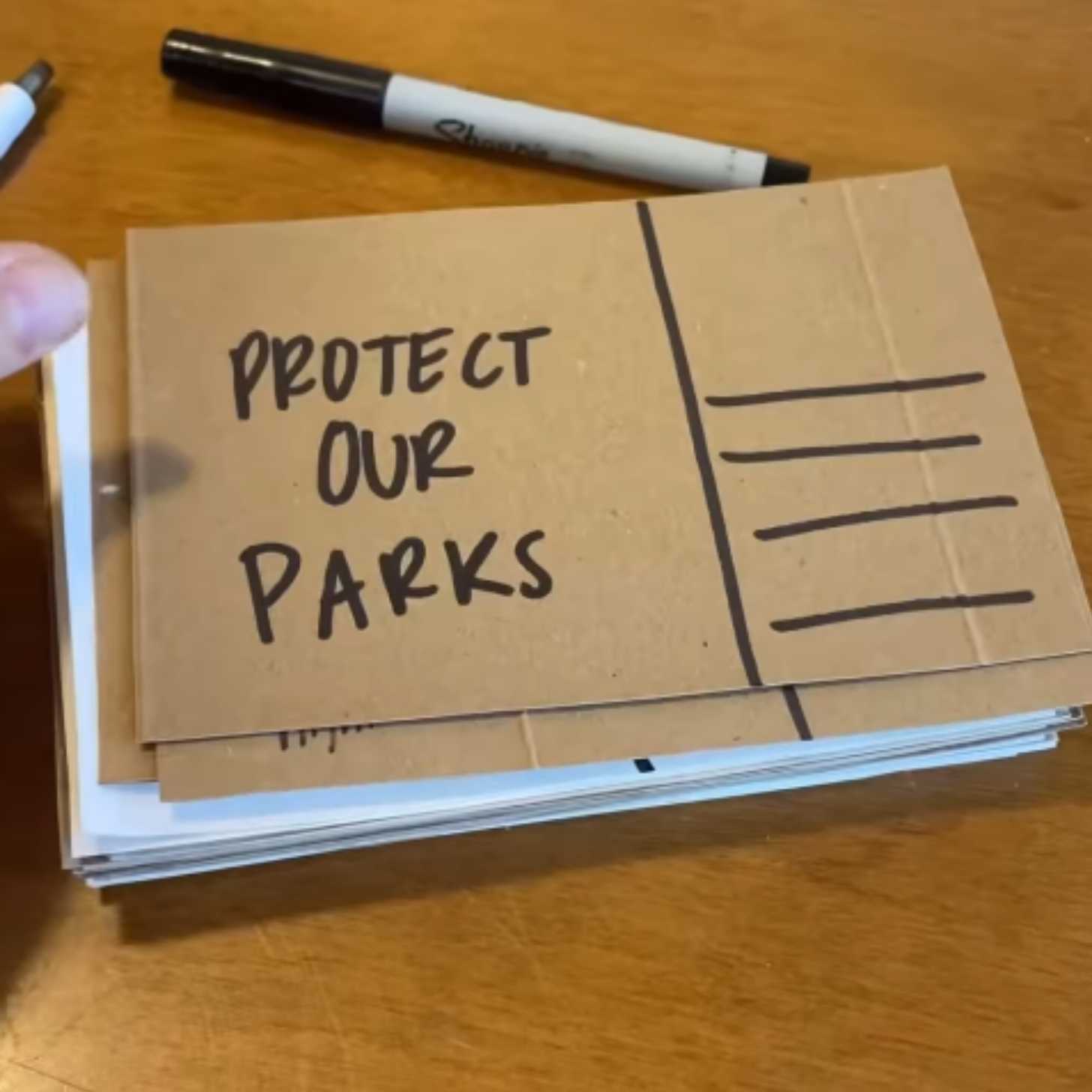
“If I can do all of this in less than an hour, you can take the time to cut up one pasta box and send two postcards today,” Dendler encouraged.
After her video was posted on May 8, people rushed to her comment section to voice their support for the project.
“I can’t even express all the ways in which I love this,” one Instagram user commented.
“Thank you for the inspiration!” wrote another. “My friend and I spent the whole afternoon making and addressing a stack of trash postcards!”
One person added: “Don't forget to make some of them thank you cards for judges and elected officials who are doing the right thing!”
In her video, Dendler acknowledged that this simple act alone is “not going to save the world.”
“It’s not going to save democracy,” she noted. “But I would rather try than do nothing at all. I also do more than this, and I encourage you all to do more as well. Don’t let this be the end of your activism.”
Dendler called on viewers to call and email their representatives, sign petitions, attend town halls, and donate their money and time to campaigns they believed in.
“There’s a whole movement behind this,” Dendler said before she signed off. “Keep doing this. Keep writing, keep calling, keep emailing. Every little action matters — keep going.”
You might also like: Calling for Change: The Ultimate Guide on How To Contact Your Elected Representatives
Header image via Emma Dendler (@thesimpleenvironmentalist)
November 14, 1917 was known as the “Night of Terror” for suffragists called the Silent Sentinels. The nickname came from the way the activists were jailed and mistreated in the Lorton Reformatory, a prison located in Lorton, Virginia that long housed inmates from Washington, D.C.
The Silent Sentinels were a branch of the National Woman’s Party who picketed the White House from January 1917 to June 1919, demanding that President Woodrow Wilson support women’s right to vote.
They did not scream or chant, but rather held banners with bold messages, like “Mr. President, what will you do for women’s suffrage?”

These protests led to arrests, jail time, and hunger strikes, but ultimately culminated in the passage of the 19th Amendment.
The prison where so many of them were held — Lorton Reformatory — was open from 1910 to 2001, but was ultimately purchased by the county for $4.2 million.
After a brief stint as a community and arts center, it was transformed into an affordable apartment complex, where many live today.

Working with developers from the Alexander Company, the 2,342-acre property (including a farm) has been converted into 165 apartments.
Now identified as the Liberty Crest Apartments, the buildings underwent a $64 million renovation that took about two years to complete. Developed by the Alexander Company, the 2,342-acre property has been converted into 165 new apartments.

They opened in June 2017 — almost exactly a century from the “Night of Terror.”

According to David Vos, a development project manager with the Alexander Company, the establishment was actually ideal for the transformation because it had many windows with an “abundance of light,” he told CNBC.
Although there were some dark chapters in the prison’s history, it was first commissioned by President Theodore Roosevelt, who believed in rehabilitation and trade skills as opposed to traditional incarceration. The campus was designed to offer natural light and open green space instead of the standard cell blocks.

“The reaction from the community varied quite a bit. A lot of people really felt it was important to preserve that history. However, there were people that really focused on the later years of the prison when prisoners were mistreated,” Vos told CNBC.
“But from our standpoint, we really felt that it’s important to preserve history so you can learn from the past so that you don’t make those mistakes again in the future.”

Details of the renovation include old signage, exposed brick, and even a field that includes the original grandstand made by prisoners from bricks.

But the renovation also includes modern amenities, including a yoga studio, gym, community pool, and two playgrounds. The old cafeteria was also converted into a community space for residents, and there is also a preschool, dental office, and retail shops on-site.


Although reminders of the past remain, the property seems to appeal to new renters.
“I checked it out and fell in love — the brick, the concrete floors — it was so beautiful,” a 32-year-old renter shared in an article by Secret DC. “It wasn’t until [I] was signing the lease agreement that someone said ‘Did you know this is an old prison?’”

The property’s owners don’t hide its history, though. Old photos on the Liberty Crest website show stark before-and-afters of the new apartments, and signs on the property even tell readers “how to behave.”
“There’s a number of reminders as you walk around the campus that remind you of the fact that this used to be a reformatory or prison,” Vos said.
“The reason we chose Liberty for the name was we really felt that we were liberating these buildings from its more recent dark past,” he added.

In addition to a fresh start for the site itself, Liberty Crest also designates a portion of its apartments for affordable, low-income housing.
Out of the 165 total units, 44 are set aside for low-income renters. They are split about evenly between one-bedroom and two-bedroom units, with rent averaging from $1,372 to $2,700. Each unit also includes an in-unit washer and dryer.
After nearly nine years in operation, the Alexander Company is looking ahead to the future. Right now, the company is planning to convert a power plant on-site into 10 additional apartments, with similar plans on deck for former guard quarters, as well.
“The community has very warmly embraced the Liberty project,” Vos said. “Everyone’s very proud of what we did here and were very pleased with the results.”

Header image courtesy of Liberty Crest Apartments
As the world’s largest tropical rainforest, the Amazon is home to a staggering 3 million species.
And a team of researchers just published their discovery of one more.
In 2023, Evan Koch — a postdoctoral researcher at the National Museum of the Czech Republic — led a team through the Juruá River basin forests of Brazil on an expedition.
In their travels, they stumbled across a new species of Ranitomeya (a genus of poison dart frogs) that they dubbed “an Amazonian hidden gem.”
The color of the amphibian was so striking that the researchers decided to name it Ranitomeya aquamarina.
“The specific epithet ‘aquamarina’ is a Latin adjective that means ‘pale blue-green’, referring to the coloration of the dorsal-lateral stripes of the new species,” Koch explained in the research, which was published in the scientific journal PLOS One.
“Another aspect that led us to use this epithet was the metallic blue and greenish tones of the stripes, which resemble seawater,” Koch added in the study’s etymological breakdown.
“Additionally, aquamarine is a gemstone, which philosophically conveys the value of this discovery.”
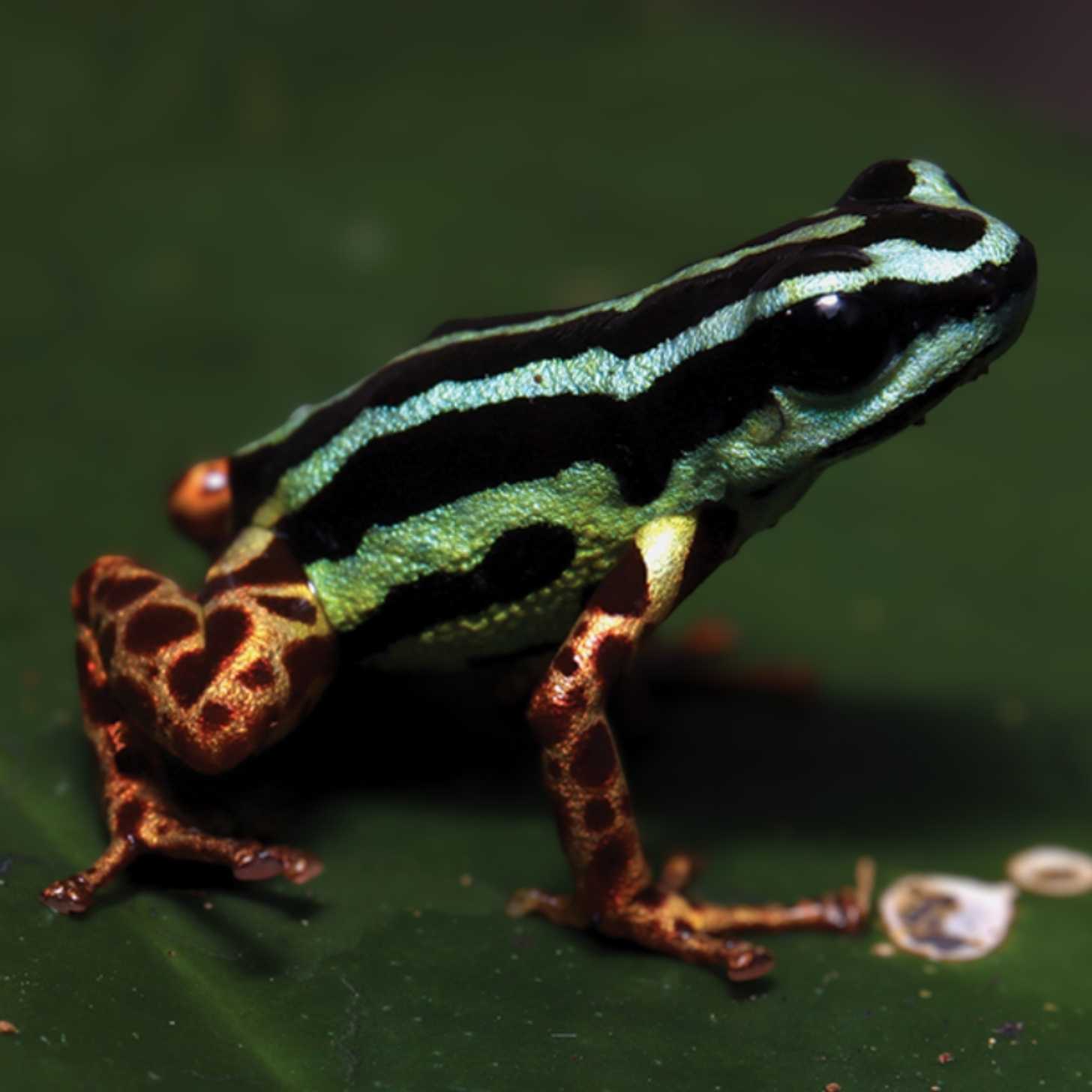
Poison dart frogs are small but hugely significant in the greater food web of the Amazon. By eating ants, mites, and beetles, they help control local insect populations.
Poison dart frogs are also an indicator species. When they begin to disappear from their natural environment, it’s an indication that the ecosystem’s health is on the decline.
Most poison dart frogs only have one predator: the fire-bellied snake (Leimadophis epinephelus), which has built up a natural resistance to the frogs’ poison through evolution.
However, their biggest threats remain habitat loss, pollution, and a widespread chytrid fungus that has had a deadly impact on most amphibians.
Thankfully, after scientists pinpointed the source of the disease last year, newfound conservation efforts have been launched to save the most vulnerable frogs on the planet.
Koch and his team welcomed more research into the “under-sampled” Juruá River basin, emphasizing that there was much more to unearth.

“Finally, it is generally accepted that the true diversity of frogs is still very poorly known in Amazonia. This fact is doubly true for the region of lower and middle Juruá River,” Koch noted.
“Although we are only taking the first steps to uncover the biodiversity of this area, we already have evidence of the extraordinary richness of the local fauna, and we [have] already identified many new candidate species.”
Koch concluded by expressing that new discoveries like the aquamarine poison dart frog add to the Amazon rainforest’s reputation as one of the most biologically diverse spots on the planet.
In a call to action, Koch wrote: “We hope that our research will stimulate more interest in this region, shed more light on its enormous biological wealth and, last but not least, provide important information for its protection.”
Header image via Neil Palmer/CIAT (CC BY-NC-ND 2.0)
Transgender folk artist Bells Larsen’s newest album, “Blurring Time,” features two distinct voices throughout, but they are both his.
It all started as a preservation project, as the singer — who has been writing heartfelt folk tunes since age 15 — began to take physical steps toward gender transition.
He was worried about how hormone therapy might change his voice, and therefore, his music.
“When we think of the way transition looks for transmasc people who want to pursue a physical transition, one of the first things we think about is that their voice gets deeper,” Larsen told The Guardian earlier this year.
“The thought of that was very euphoric for me, but also scary, because I didn’t know how it would impact my main instrument.”
Larsen was eager to finally get the gender-affirming treatment they needed, but didn’t want to lose the main mode of expression they had long relied on.
So, he recorded all of the songs that would be featured on “Blurring Time,” first with a higher voice, then to be revisited after starting hormone replacement therapy.
When his voice began to deepen, he worked with a vocal coach and re-recorded each song, layering his voices together. The result is a duet across time, gender identity, and space.
“I shaped my transition around my new album by recording my vocals before and after starting hormones. It sounds like a duet, but it’s all me,” Larsen shared in a recent TikTok post.
“The result is a collection of songs that marry the past and present. My hope is that this music will illustrate the fact that we’re all in a constant state of flux.”
Larsen has given credit to several social media creators who have duetted themselves in similar ways, but he believes it is the first actual album to be recorded and commercially available to listeners using this vocal approach.
Along with being an ambitious creative endeavor, it also serves as a time capsule for Larsen, documenting their journey into a more true sense of self.
“It was really important for me to document the before and after together, holding hands in the same song, because I have a lot of love for my past self,” he told The Line of Best Fit. “I couldn’t be here without that version of myself.”
Despite the gentle foray into transition — and the warm reception his album has received — the singer still faces social hurdles.
At first, he planned to tour the United States with the album, but as a Canadian, he was told that he would no longer be able to obtain a visa to tour in the U.S. because of new immigration laws under the Trump administration that only recognize forms of identification that correspond with a person’s assigned sex at birth.
“To put it super plainly, because I'm trans (and have an M on my passport), I can't tour the States,” he wrote to his audience.
The timing is especially painful, since the material he would be touring is completely centered around his gender transition.
“Even prior to this administration, trans people faced more hurdles with traveling, because you’re always at the behest of basically whatever border agent you get,” Larsen told The Guardian. “That creates an opportunity to be targeted, singled out, and harassed. Now there’s a top-down, concerted effort to create barriers for travel for trans people.”
While he doesn’t want to let down U.S. fans, he told The Guardian that he has no interest in crossing the border, “in the same way that you probably don’t want to date someone who doesn’t want to date you.”
Mostly, though, he is sad for the loss of connection that queer and trans people in the U.S. desperately need right now.

“I am more and more gutted with every day that passes by the (seeming) dissonance between the world in which I created this project and the world into which I am releasing it,” Larsen wrote in their announcement cancelling the U.S. tour.
“I was hoping that the album would help me break into the U.S. music market and connect with cool, like-minded American musicians. More than anything, though, I just really wanted to perform my album for queer and trans people in the U.S. who saw their stories reflected in my own.”
He will still tour the new music in Canada and Europe. And the existence of Larsen’s album is proof that policy is not the only stepping stone to progress.
“I'm so thankful for the work my queer and trans community members have done that has allowed me to exist more truthfully,” he concluded on Instagram.
“There is no policy that can undo your existence,” he added to The Guardian. “There is no politician who gets to decide that you exist or don’t exist. You are who you say you are, and that’s enough.”
And for anyone who has access to streaming platforms, “Blurring Time” is available night and day, anywhere in the world.
“I've moved through time / But somehow I'm exactly the same,” Larsen sings on his new tune “Might.”
“Maybe it's time / That moves through me inviting change.”
Header image courtesy of Bells Larsen/TikTok