Officials celebrated on May 12 when their trail cameras at Si Phang Nga National Park — on the southern peninsula of Thailand — captured rare footage of Asiatic bears roaming the land.
Asiatic black bears, also known as “buffalo bears” or “moon bears,” are slightly smaller than American black bears, with a mane-like ruff on both sides of their faces and a light, crescent-shaped patch on their chests.
Asiatic black bears are found in forests throughout Eastern Asia, everywhere from Afghanistan to Vietnam, but they are classified as “vulnerable” on the International Union for Conservation of Nature’s Red List of Threatened Species.
According to the IUCN, the Asiatic black bear has declined by 60% in the past 30 years, largely due to the devastating impacts of the bear bile farming industry.
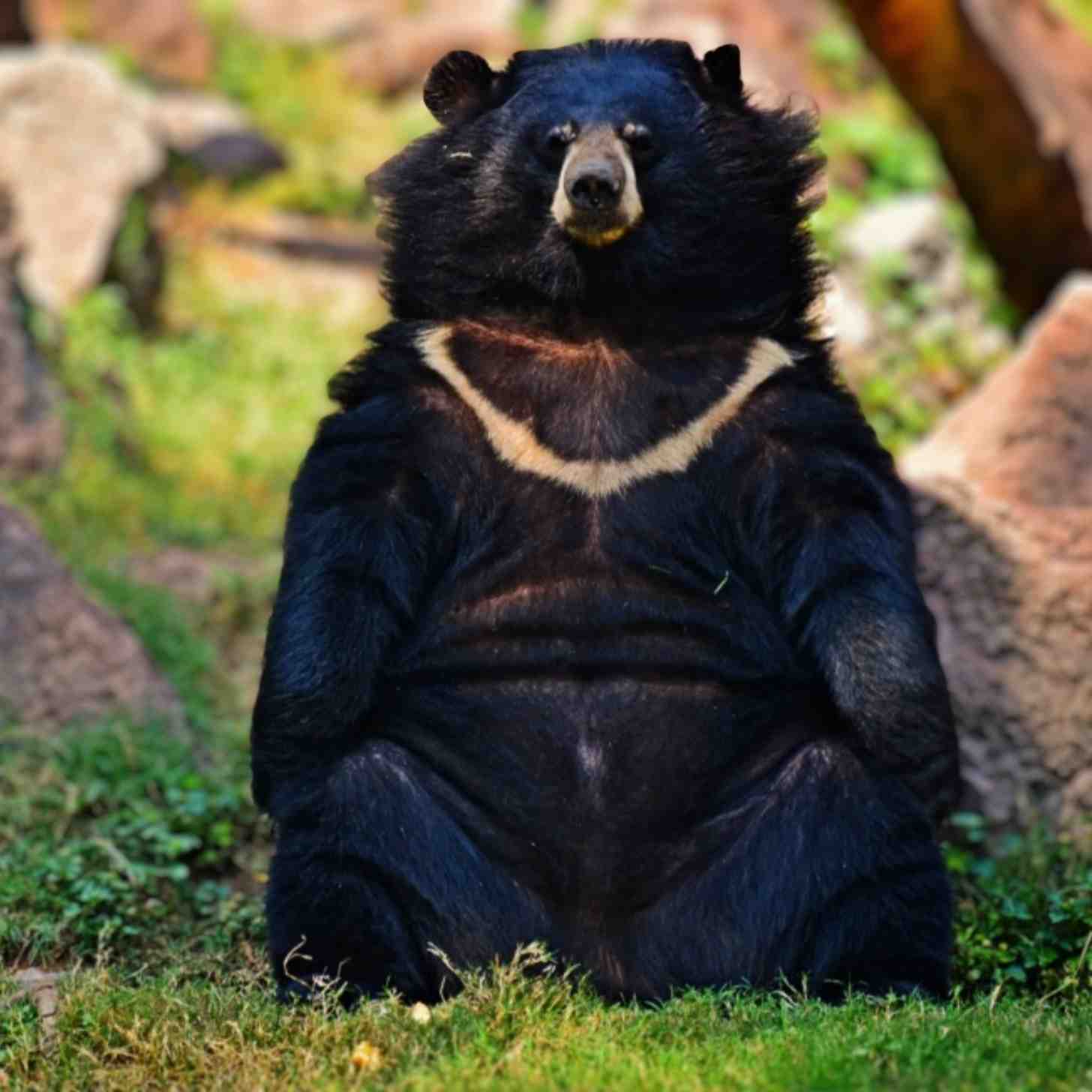
The harmful practice of bear bile farming has caused thousands of bears to be ripped from the wild and placed in small cages for the sake of extracting their bile, which contains ursodeoxycholic acid, to regionally treat inflammatory and liver-related conditions.
For years, Animals Asia has been working to end bear bile farming by building bear rehabilitation sanctuaries, running public awareness campaigns, and lobbying to strengthen existing laws banning the sale of bear bile.
“To date, 700 bears have been received into our care,” Animals Asia said in a statement on their website. “In 2023, we opened our second sanctuary in Vietnam. This came after we signed a historic agreement with the Vietnamese government to end bear bile farming for good.”
“This new sanctuary will be home to around 250 bears, the last survivors of the country's bile industry.”
Thanks to widespread conservation efforts like these, Asiatic black bears have been slowly making a comeback in the wild.
Which is why officials at Si Phang Nga National Park cheered at the sight of the Asiatic black bears rummaging for food near their trail camera sites in early May.
In addition to capturing rare footage of two “buffaloes,” the trail cameras also recorded a variety of deer, kestrel falcons, and a pack of wild monkeys in the space of a single month.
Thirapol Chatthai, the head of the Sri Phang Nga National Park, said that the footage was cause for celebration.
“The buffalo found in the area is a good sign because [the] buffalo is an animal that forages in fertile areas and requires a large area to forage,” Chatthai shared on the park’s Facebook page.
“Its presence is therefore an indicator of the completeness of the ecosystem in the park.”
Header image via Setaphong Tantanawat / Wikimedia Commons (CC BY-SA 4.0)

Over the weekend, thousands of Los Angeles residents flooded the city’s streets in response to large-scale Immigration and Customs Enforcement operations in the L.A., Paramount, and Compton areas.
According to a social media post by ICE, the agency arrested 118 immigrants during its time in the city last week.
On-the-ground reports share that many of these immigration sweeps were conducted at immigration offices where people were arriving for scheduled hearings, and at places of business like The Home Depot.
In response to these arrests — many of which have been reportedly carried out without due process — L.A. residents have organized protests throughout the city and attempted to block the transport of detainees.
These protesters have been met with force from federal authorities and the LAPD, including the use of “less lethal munitions,” such as flash bangs, pepper spray, tear gas, and rubber bullets.
Calling the events a “riot,” President Donald Trump deployed 300 National Guard troops to the area and warned that more could be sent.
“Everybody here wants to be peaceful,” protester Anna Benedict told reporters from LAist. “We’ve been standing here for quite a while, and no one is menacing the National Guard. Everybody is just standing up for their own freedom.”
California Governor Gavin Newsom and L.A. Mayor Karen Bass have pushed back against the Trump administration, with Newsom formally asking the president to withdraw the National Guard, and announcing that the state would be filing a lawsuit for the subsequent “unlawful” deployment of the National Guard.
“We didn’t have a problem until Trump got involved,” Newsom wrote on social media on Sunday. “This is a serious breach of state sovereignty — inflaming tensions while pulling resources from where they’re actually needed.”
As California leaders attempt to scale down ICE and National Guard presence in the area, protesters have maintained their efforts.
“We have to stand united against the attacks on the immigrant community because an attack on one of us is an attack on all of us,” a protester, Eli Lockwood, told LAist.
In the wake of a tense weekend and uncertain future, here are four ways you can support the immigrant community, in and out of L.A.
Here's how you can help immigrants amid protests in Los Angeles
Donate to local organizations helping immigrants in L.A.
Supporting local immigration organizations helps migrant communities access legal support, Know Your Rights trainings, and vital resources to help them thrive in their communities.
Here are a handful of L.A.-based nonprofits and funds you can support during this time:
- Inland Coalition For Immigrant Justice: A collective of over 35 organizations that serve the immigrant community in California through policy advocacy, community organizing and education, and rapid response to ICE and border patrol operations
- Immigrant Defenders Law Center: A nonprofit social justice law firm that defends California’s immigrant communities against systemic injustice
- California Immigrant Policy Center: A statewide immigrant rights organization that works to advance pro-immigrant policies across California
- San Bernardino Community Service Center: A local organization that provides immigrant communities with free and low-cost legal services, educational resources, new citizen support, and more
- Central American Resource Center: A group founded by Central American refugees in 1983 that provides free legal services, advocacy support, and a Day Labor Center for California’s immigrant community
- CLUE Immigrant Bond Fund: The nonprofit Clergy and Laity United for Economic Justice is a group of interfaith leaders and community members that support local workers. They have created a bond fund for detained immigrants and their families.
Donate to national organizations helping immigrants.
Nationwide efforts to support the rights of immigrants also help fund the fight for justice in California. Here are some other organizations that could use your support:
- Immigrant Legal Resource Center: Nationwide nonprofit that offers legal listservs, Know Your Rights resources, and educational materials for immigrants, while also advancing policy to protect migrants
- American Civil Liberties Union: The ACLU takes on strategic litigation, advocacy, and organizing to challenge ICE and Border Patrol abuses and violations, while helping pave a path to citizenship for thousands
- United We Dream: An immigrant youth-led organization that helps undocumented youth navigate citizenship, education, and the legal system in the U.S.
Know how to be an effective bystander.
If you are a U.S. citizen who witnesses an ICE raid, here are a few key things that are within your rights to do:
- If you see a raid possibly happening, unmarked cars, or ICE agents in your area, call a hotline to report the sighting. This helps mobilize area organizations to help provide immediate assistance.
- Text JOIN to 877-322-2299, and reply with your zip code to get alerts for ICE activity in your area from the Stop ICE Raids Alert Network. (You can also text REPORT to 877-322-2299 to report ICE activity.)
- Record any and all information you can in a video or by writing things down. Get information from the person being detained (name, phone number, a phone number of a loved one, their address, etc.), as well as badge numbers of ICE agents, license plate numbers, and car details like color, make, model, and any distinguishing features.
- If you can physically act as a translator or interpreter between immigrant communities and authorities, use that privilege to help!
For people who are not comfortable with protesting on the front lines, there is still plenty that you can do.
The Immigrant Legal Resources Center provides a myriad of resources for immigrant communities and supporters alike. These include:
- Legal listservs to find trusted immigration legal support in your area or direct community members to
- Print-at-home Know Your Rights cards — in nine different languages — that can be easily downloaded, printed, and distributed in any community
- A Know Your Rights toolkit, full of helpful video and written tutorials to know and share
- Contact information for California Rapid Response Networks, where people can report an ICE raid or other enforcement sightings
Mobilize in your own community.
While L.A. is currently the area facing the most strife, immigrant communities across the country need support right now. You don’t need to be on the front lines to assist.
First, join a Rapid Response Network in your area. These groups provide trainings to help you respond first in the event of an arrest, so you can offer legal resources, community support, and information to detainees and/or their families.
The National Network for Immigrant and Refugee Rights has a whole list of state-by-state groups, resources, and hotlines for you to get started.
If you are more equipped to volunteer in a non-emergency environment, local immigrant resource centers across the country would be thrilled to have your time and talents.
From English tutoring and community building events to peaceful demonstrations and educational outreach, volunteering your time at a local level is one of the best ways to build relationships and support within immigrant communities.
Search for volunteer opportunities through the Immigrant Legal Resources Center’s nationwide directory.
Call your elected officials.
Call your local leaders, including your governor and mayor, and tell them you expect them to act swiftly to protect your community and your rights, if something like this happens in your state or city.
You can also call your elected officials in Congress and the Senate and demand they take action against unlawful deportations across the country.
Find all of your elected officials and reach out via phone or email.
On June 8, Highland Brewing in Asheville, North Carolina, was humming with excitement as locals gathered in “pollinator-themed costumes” for the Fourth Annual Honey Festival.
As people sampled honey, danced to live music by “Queen Bee and the Honey Lovers,” and entered the globally renowned Black Jar Honey Contest, the Center for Honeybee Research raked in donation after donation.
The sunny sight was in stark contrast to nine months prior, when the same brewery had “closed indefinitely” after Hurricane Helene wreaked havoc on the city.
The disaster, which displaced thousands, also hit local bees hard, too.
Jaik Smith, an Asheville Honey Fest organizer, told Spectrum News 13 that they lost “a significant amount” of bee populations in the storm. Especially honeybees.
“It's important to ensure that we are able to replenish the bees and make sure they're happy with pollinator gardens, and essentially just making sure we can buy more bees and get them back into our hives,” Smith said.
“We want people to know what they can do to take care of the honey bees, what everyone can do,” Drew Walls, another Asheville Honey Fest organizer, chimed in.
According to North Carolina State University, over 500 hives were lost across Western North Carolina in the aftermath of Hurricane Helene.
“Anecdotally, some beekeepers and their hives were left unscathed, others have been completely wiped out, with who knows how many in between,” NCSU apiculturist Dr. David Tarpy wrote in November 2024.
“There are some immediate efforts currently underway, such as the Greater Good Charities honey bee project to provide sugar syrup for starving bees (since much of the forage in the region has been stripped away).”
Although immediate attention was turned towards humanitarian aid and large-scale efforts to restore agriculture and livestock, Tarpy wanted to make sure that beekeepers and their colonies didn’t “fall through the cracks.”
“It is also clear that this recovery is going to take a protracted period to fully restore the environment and infrastructure in the region,” Tarpy said. “With that in mind, we propose an initiative to provide nucleus colonies and hive equipment to affected beekeepers starting next spring when new colonies are typically established.”
Tarpy and his colleagues at NCSU stayed true to their word. In the fall, they connected a dozen beekeeping groups across the state to counties affected by Helene.
Wake County Beekeepers Association, based in Raleigh, teamed up with the Harnett County, Johnston County, Lee County, and Moore County beekeepers associations to form the Ashe County Honeybee Recovery Project.
In a single weekend, 20 volunteers from the Ashe County Honeybee Recovery Project built 300 beehives, complete with 4,000 frames.
Stephen Ross of the Wake County Beekeepers Association said that bee conservation had widespread benefits.
“Why these beehives are so important is mostly because a lot of our food requires pollination, and to get them and allow them to produce fruit and vegetables ... even on a macro level scale, pollinators, such as honeybees, are very critical to the agriculture industry,” Ross told WRAL News.
“So even the bees in my backyard. They’re pollinating blueberries, blackberries, strawberries, squash, and other things that might be around in the area, and they're very critical to that.”
Beyond state lines, a family from West Virginia also stepped in to help with recovery, driving over 350 miles to the Toe Cane Beekeepers Association to help beekeepers post-Helene.
From a humble woodshop, they raised and donated a dozen “nucleus hives” — small, self-contained colonies containing a queen bee, worker bees, brood, honey, and pollen.
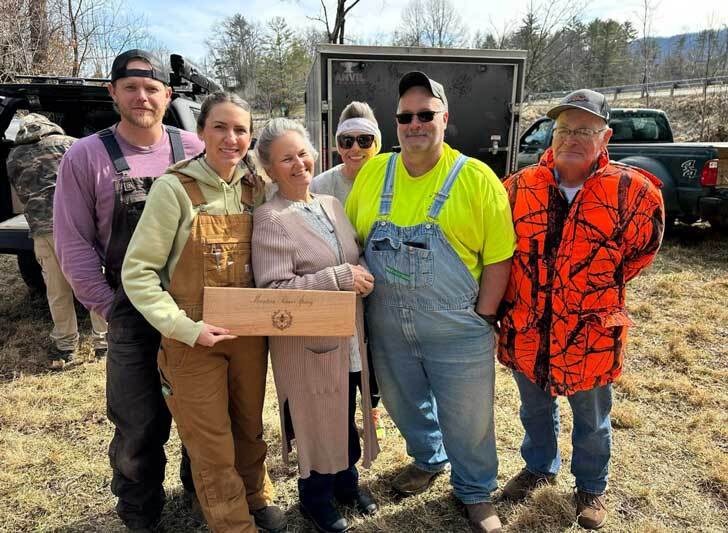
“My heart just broke for you guys,” said Charles Siers. “Dad is a beekeeper and runs a little woodshop, and I knew we could help out, so we talked to the club and found out what was needed right away and started building boxes.”
On May 19, the Toe Cane Beekeepers Association helped distribute another 45 nucleus hives to beekeepers hit the hardest.
During the Siers’ family’s donation, TCBA President Debbie Griffith said: “The storm took so much from us all, but it made us stronger with all the good that came afterward. Isn’t it amazing [that] there are people left in the world who help perfect strangers?”
[Editor’s note: the below section was updated on June 9, at 3:40pm]
What’s the nuance?
Honey bees, while important pollinators — and indispensable sources of income for countless beekeepers, farmers, and small business owners — are controversial figures in the world of environmental health.
As a non-native species that only arrived in the seventeenth century by way of European settlers, emerging data has shown that honey bees may be harmful to 4,000 native bee species across the U.S.
On the Xerces' Bug Banter podcast, Rich Hatfield — a senior endangered species conservation biologist and bumble bee conservation lead at The Xerces Society for Invertebrate Conservation — spoke at length about honey bee pollination, disease transmission, and competition with native bee species.
Hatfield clarified that while honey bees, in high densities, can have negative impacts on the environment and other bee species, they are also critical to the country’s current agricultural climate.
“A lot of farmers depend on renting or buying or having their own honey bees such that their crops can get pollinated,” Hatfield explained.
“Which happens throughout much of California, in a fairly early part of the year, when most of our native bees aren't even flying yet. There's no real way to get that crop pollinated unless we bring honey bees into the state of California.”
“But,” Hatfield cautioned. “I think it's important to just step back if I may just say, while our current agricultural system is dependent on honey bees, I don't think it needs to be that way, right? I think we could create a system that was different if we thought about our farming from a true sustainable perspective.”
“I think we just need to have those open conversations with each other and I don’t think beekeepers need to be shamed because they're beekeepers. It’s fine to be a beekeeper…I think we just need to have open conversations about it and find best practices together,” Hatfield added.
The bee expert concluded by saying that the best way listeners could help native bee species was to plant native flowers in backyards across America.
“If you own land or you rent property that has land, that has space that you can interact with, create messy, flowery landscapes as much as you possibly can, is what I would say,” Hatfield said.
“Have fun growing a bunch of native plants and grow the weirdest ones you can and just have fun with it.”
Header images via the Toe Cane Beekeepers Association
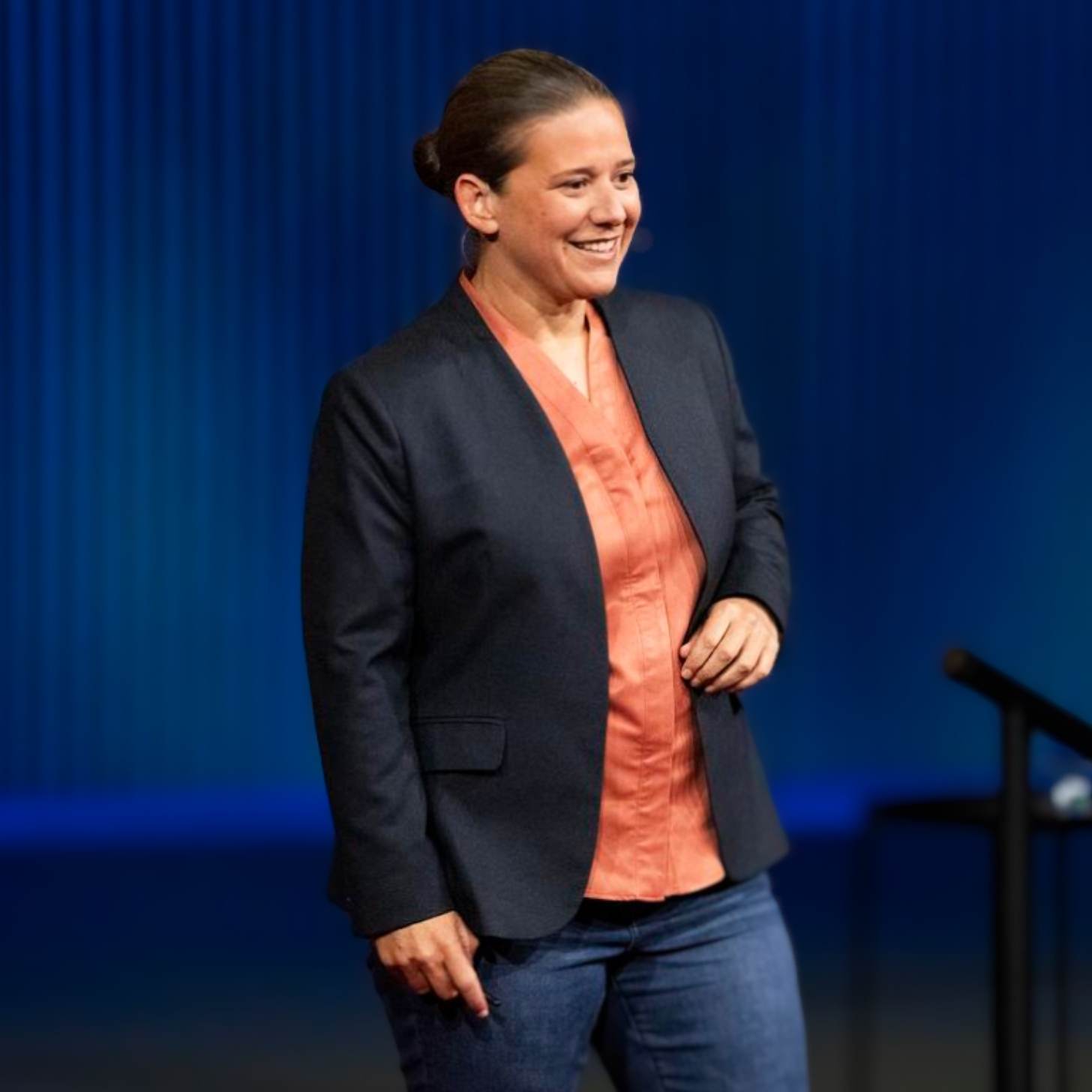
On April 9, social entrepreneur Julienne Oyler took to the stage at TED 2025 in Vancouver, Canada, and dropped a sobering statistic on the crowd.
“One in 10 of us will be displaced in 25 years. One in 10. Each of us is more likely to be displaced than ever before,” Oyler said in her TED Talk, which will be published at a later date.
“The time for incremental change is over. We must do things differently.”
Oyler’s intent was not to frighten the audience, but to alert them to the fact that no one — no matter how privileged they appeared — was immune to displacement and disaster.
“We're witnessing accelerated crises with wars in Europe and the Middle East, forcing even more people to flee,” she stressed. “And climate change is triggering floods in Brazil, fires in California, unlivable conditions across continents.”
“And yes,” Oyler noted, “humanitarian aid remains essential in emergencies and for the most vulnerable. But the widespread system, as it is today, was never designed with dignity or to be a long-term solution.”
After immediate aid and shelter, the lives of refugees continue on; They seek work opportunities, provide for their families, and — if possible — attempt to rebuild networks back home.
“Bold action requires us to change our perspectives, partners, and policies,” Oyler said. “For too long, displaced people have been framed as burdens. And that thinking, that narrative, has led to missed opportunities.”
As the CEO of Inkomoko, Oyler has spent the last decade working alongside 100,000 businesses in five African countries: Rwanda, Kenya, Ethiopia, Chad, and South Sudan.
As a consulting firm, Inkomoko offers classes and skill sessions to local entrepreneurs and business owners and uses their investment capital to directly fund businesses in “displacement-affected communities.”
Oyler said that the very people overlooked by traditional finance giants are brimming with dedication, ingenuity, and troves of untapped potential.
“These entrepreneurs, they have the traits that case studies and business schools celebrate,” Oyler explained. “They are resilient and resourceful. They innovate and adapt. They deeply understand their markets. They're the very leaders and problem-solvers investors around the world seek, but are rarely seen as investment-worthy.”
Halfway through her TED Talk, Oyler paused to note that capitalism and markets are, of course, often flawed systems — but “they can be forces for change” when they’re designed with inclusion in mind.
And she had the receipts to prove it.
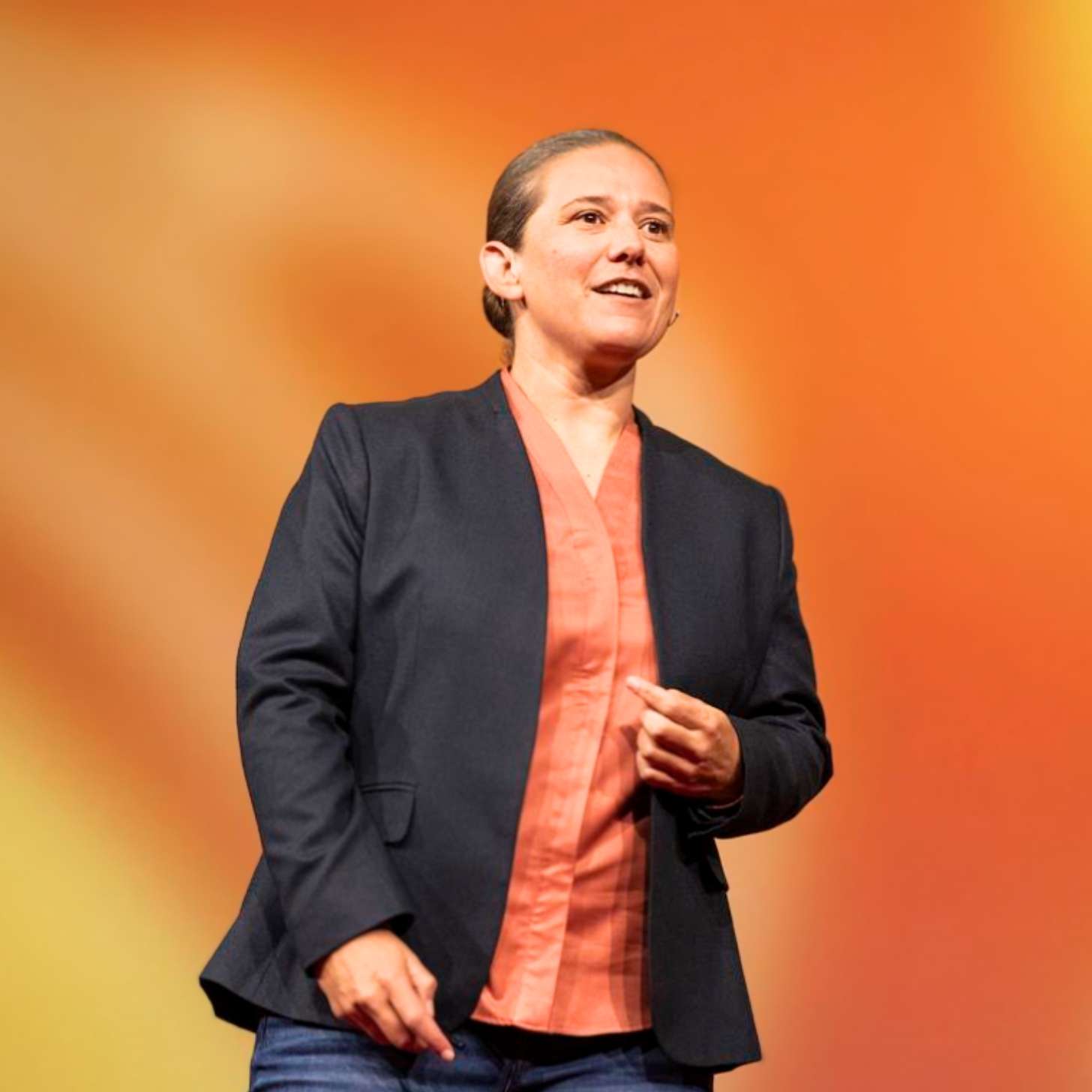
“When Uganda allowed refugees to work, the country's GDP increased by nearly a billion dollars,” Oyler said. “Ethiopia reformed its policies, and now thousands of refugees contribute in key sectors like agriculture and manufacturing.”
“When Rwanda, the country where I live, included refugees in its national ID program, they gained access to health care, financial services, and are growing an economy.”
“Here's the truth,” Oyler added. “These examples, these African solutions, are what the rest of the world needs to learn from. These solutions are rooted in a shared experience in hospitality, in humanity.”
So, how exactly does the world at large begin investing in displaced entrepreneurs?
Oyler broke it down by field: investors should open their portfolios to refugee-owned businesses, philanthropists should prioritise economic inclusion (especially with a climate focus!), fellow entrepreneurs should recognize displaced people as viable customers and partners, and journalists should shift the narrative of those communities to focus on stories of resilience.
“And policymakers?” Oyler said, inviting them to do their part, too. “Economic integration isn't charity. It drives regional peace and shared prosperity.”
Oyler again reminded everyone in the crowd that displacement could happen to any of them — and invited the attendees to place themselves in the shoes of those who have already fled crisis and disaster.
“From Kakuma to California, Syria to South Sudan, one truth remains: Humanity flourishes when people have the tools to succeed and the belief that they can,” Oyler expressed.
“The future isn't just about preventing displacement. It's about seeing that the solution to one of the world's greatest challenges lies within the people most affected, displaced people themselves. It's on the rest of us to recognize this and invest in them.”

Header image via Inkomoko
Good Good Good has been covering TED's annual conference and spinoff events — like TED Women, TED Next, and TED Countdown — as press since 2023. Our journalists watch TED Talks live and interview speakers after they get off stage, giving Good Good Good the opportunity to share stories like this before TED Talks are released online.
What started as a grassroots movement in the United States over a decade ago, park prescriptions have become an evidence-based treatment regimen that helps people confront both mental and physical ailments by spending more time outdoors.
In fact, at least nine countries now have nature prescription programs in some form.
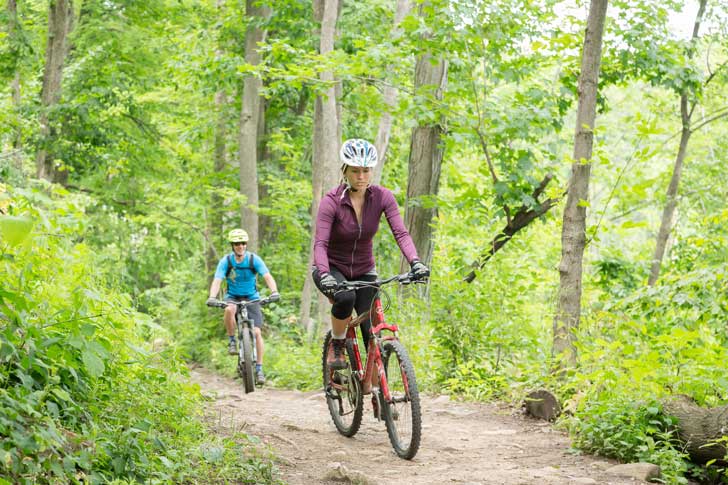
Park prescriptions fall under an area of medicine called “social prescribing,” which encourages doctors to consider non-clinical treatments in primary mental and physical healthcare.
“Social prescribing is a model of care delivery that enables health professionals to formally prescribe non-clinical community activities — including the arts, movement, nature, and service (volunteering) — to improve patient health, and at minimal patient cost,” Social Prescribing USA’s website reads.
“Social prescribing is designed to address social determinants of health, including social connection. Built on a foundation of health equity and collaboration across sectors, social prescribing is intended to broaden health professional toolkits, rather than to replace pharmacological measures.”
In Canada, the BC Parks Foundation has created the PaRx program, an aptly named initiative that helps healthcare professionals improve patients’ health by connecting them with nature.
It offers practical resources to any clinician who registers with the program, as well as tools to physically prescribe and track a patient’s outdoor experiences as part of their care.
The program also helps reduce barriers to nature by giving patients and providers special offers and partnerships with nature organizations across Canada.
PaRx leaders already have the research to back up nature prescriptions.

“Backed by hundreds of studies over several decades, research suggests that connecting to nature is one of the best things you can do to improve your health,” the PaRx website explains.
Studies show that stress hormone levels drop after just 15 minutes outside; spending time in forests reduces inflammation and risks of lung infections; increasing nature time reduces risks of heart disease, high blood pressure, and diabetes; and seniors who live near walkable green spaces live longer.
Nature prescribing is also good for the planet, as it requires the creation of sustainable green corridors in urban areas, boosts forest protection, and even plants the seed for children to be inspired to protect their planet.
But little research exists about the successful adoption of these programs.
In a recent peer-reviewed study published in Wellbeing, Space, and Society, scientists, including PaRx director Dr. Melissa Lem, aimed to quantify the impact of Canada’s nature prescription programming.

Researchers surveyed over 3,500 people and found that there is little public awareness of these programs, with more than 92% of respondents unaware that PaRx exists.
At the same time, 75% of participants said they would be more likely to visit natural areas if recommended by a healthcare professional.
“Respondents indicated that they would ‘likely’ or ‘extremely likely’ visit green and/or blue spaces more often if their trusted healthcare professional suggested it would be good for their health,” the study shares.
However, the study also revealed a number of barriers to accessing nature and, therefore, interest in participating in these programs. The barriers were present among respondents who identified as “newcomers, BIPOC, young adults, and individuals with children,” the study shared.
With that in mind, the researchers also found that free passes, free transportation, an educational app, and reducing the risk of prejudice among marginalized communities were all enablers that respondents suggested would increase their interest in these programs.
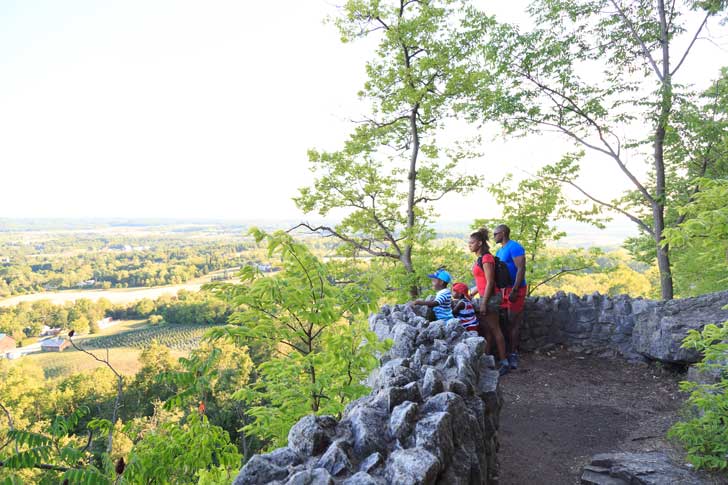
By identifying this information, PaRx organizers can better design programs that reach the people who need them most.
“The apparent desire amongst the Canadian public for nature prescription programming also speaks to the unique value of PaRx as a program that spans conservation and health boundaries,” the researchers shared in their conclusion.
And the best news? They have doctors on their side.
“Research has consistently found that healthcare practitioners are the world's most trustworthy professionals,” researchers continued. “Our results illustrate the immense value of this high level of trust as both a health and conservation asset.”
The results of the study suggest that healthcare practitioners are the right community to empower people to strengthen their bonds with nature, meaning the potential for nature prescriptions to grow, improve, and expand is real — especially in Canada.
The study concludes: “By helping people become aware of the benefits of nature contact or overcome the lack of motivation to spend time in natural settings, PaRx practitioners are stewarding the reciprocal maintenance of both human health and nature.”
Header image by Hennadii Hryshyn on Unsplash
This weekend, over 1,800 “No Kings” protests are planned across the country in “defiance” of a military parade the Trump administration has planned on June 14.
Both the protests and the president’s parade coincide with Flag Day, the U.S. Army’s 250th birthday, and Donald Trump’s 79th birthday.
The protests, which are not affiliated with any political party, and are organized by the organization 50501, will span across all 50 states.
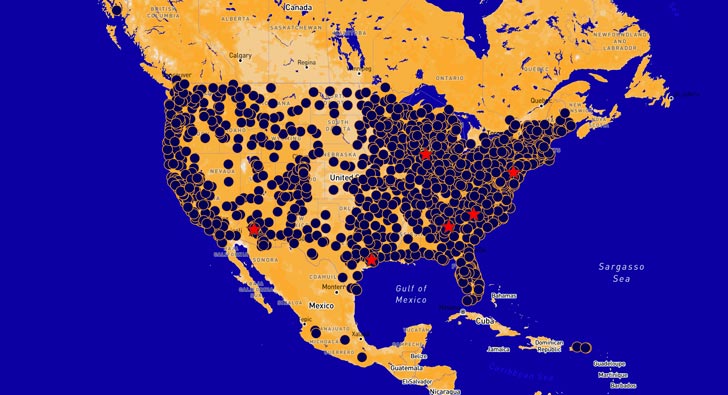
Various cities have their own partnerships with nonprofits and political groups, but 50501 is hosting the movement with the help of Indivisible, the ACLU, Human Rights Campaign, and Sunrise Movement.
“They’ve defied our courts, deported Americans, disappeared people off the streets, attacked our civil rights, and slashed our services,” the event’s website reads. “The corruption has gone too. far. No thrones. No crowns. No kings.”
The 1,800 projected protests will range from large rallies in major cities to small town courthouses and parks.
But many of the protest organizers are also planning events alongside the peaceful rallies, including art installations, food drives, and “activist fairs,” with the intention of including newcomers in social justice movements.
In Denver, Colorado, organizers are advertising a “People’s Fair” in tandem with the city’s No Kings protest, which will include an interactive choir, arts exhibits, a community mural, live music, demonstrations, and a food drive. Organizers say they expect 8,000 people to participate.
“The Colorado Community Care Coalition will be set up … providing free food and resources, and also accepting donations and spreading the word about local mutual aid organizations,” a group of mutual aid organizations in Denver shared on social media.
“If you’re attending the fairgrounds, or the march, feel free to stop by to grab some free water, snacks, or chat with us about mutual aid in Colorado.”
Organizers are asking participants to bring essential food and personal items, including socks, underwear, personal hygiene supplies, tents, first aid kits, non-perishable foods, spices and seasonings, and fresh produce.
“[We’re] bringing power to the people with protest and intentional community,” Denver organizers added in another social media post.
Other cities have similar ideas, including Beaufort, South Carolina, and Maple Valley, Washington, which will hold their own respective food drives along with their protests.
“We’re showing up and demonstrating our commitment to stopping the crimes against America and the Constitution being committed by Trump and his regime,” organizers in Maple Valley shared in a Facebook event.
“We will also be holding a food and hygiene drive to benefit the local food banks and support our neighbors that have been affected by the cuts made by Musk and his oligarch cronies.”
The group is referring to federal employee firings and cuts to essential services like food banks, as carried out by the Department of Government Efficiency, previously led by billionaire Elon Musk.
While an interactive map shows all of the activations planned under the No Kings umbrella this weekend, it is unclear how many will include similar food drives or activities.
But it is clear that organizers are hoping to prevent violence and escalation.

The No Kings protests were planned far in advance of recent unrest in Los Angeles, where protesters have been demonstrating against ICE raids and arrests without due process in California.
In response, the president has ordered National Guard troops to the area, despite California Governor Gavin Newsom’s dissent.
While some may be worried about the potential for agitation at the No Kings events, 50501 has shared that its nationwide protests have generated new “overwhelming interest,” in the wake of Trump’s response to L.A.
“President Trump wants you to believe that the people of Los Angeles are destroying their own communities. That’s false,” 50501 said in a statement about the L.A. protests.
“Here’s the truth: people are peacefully and lawfully protesting the Administration’s abuses of power and the abduction of their neighbors by ICE.”
The organization is hosting protest marshal trainings, organizing calls, and sharing resources for de-escalation ahead of the weekend’s events.
“A core principle behind all No Kings events is a commitment to nonviolent action. We expect all participants to seek to de-escalate any potential confrontation with those who disagree with our values, and to act lawfully at these events,” 50501 shared in a toolkit for the movement.
“Weapons of any kind, including those legally permitted, should not be brought to events. All events should be held in public spaces or on public property.”

Above all, they urge attendees to focus on the task at hand and stay committed to the cause.
“1,800 cities and towns in 50 states decided: we the people will not put up with this. We will not just stand by and allow our rights, freedoms and what it means to be American be stripped away from us. We will not stand by as our neighbors are abducted from our communities,” 50501 shared in a social media post on Wednesday morning.
“You are not alone in this fight,” they added. “We will win, we just have to pace ourselves, and show up for what we believe in: Justice, freedom, and liberty for all.”
Header image by Joseph Chan on Unsplash
In the lush highlands of Bali, a towering treetop resort peaks out over the Balinese jungle and surrounding mountaintops. Guest villas, called bales, are dotted throughout the river valley and perched atop waterfalls.
At the “no walls, no doors” resort, breezes pass through open bales as guests drift to sleep under the stars and wake up to sun-dappled morning mists.
This is Buahan, a Banyan Tree Escape, the world’s first resort that doubles as a firefly conservatory.
Lina Suryati, the resort’s assistant director of marketing communications, told T Australia that years ago, the Balinese rainforest was teeming with fireflies.

But in the past decade, warming weather, deforestation, artificial light pollution, and rampant pesticide use have taken their toll on the beloved beetle species.
“If you see one firefly, you are very lucky — to see 10 is amazing, but that rarely happens now,” Suryati said.
Suryati added that fireflies are much more than the soft, magical glow they emit. In Indonesia, they are considered sacred.
“Balinese people believe they guide the souls of the ancestors,” she explained.

Firefly conservation is a natural extension of the Banyan Tree Group’s larger sustainability efforts.
At Buahan, every bale is made out of ironwood timbers, salvaged from old boats and defunct jetties.
The resort operates an organic “botanist bar” and plant-friendly, zero-waste kitchen with a menu filled with local ingredients sourced directly by the resort through organic farming techniques to minimize its carbon footprint.
In addition to reinvesting resort profits into community initiatives that support farmers, Banyan also hosts a Stay for Good program, which invites guests to learn and care for the environment through coral reef cleaning in the Maldives, sea turtle releases in Thailand, and mangrove planting in Indonesia.
“We believe that travel should be about more than just a vacation,” Adhiyanto Goen, Banyan Tree Group’s head of communications, said in a press release.
“It should be an opportunity to explore new perspectives, gain fresh inspiration, and immerse oneself in the culture and heritage of the places we visit.”
“Our Stay For Good program offers just that – an opportunity to connect with local communities and contribute to the sustenance of their precious heritage.”
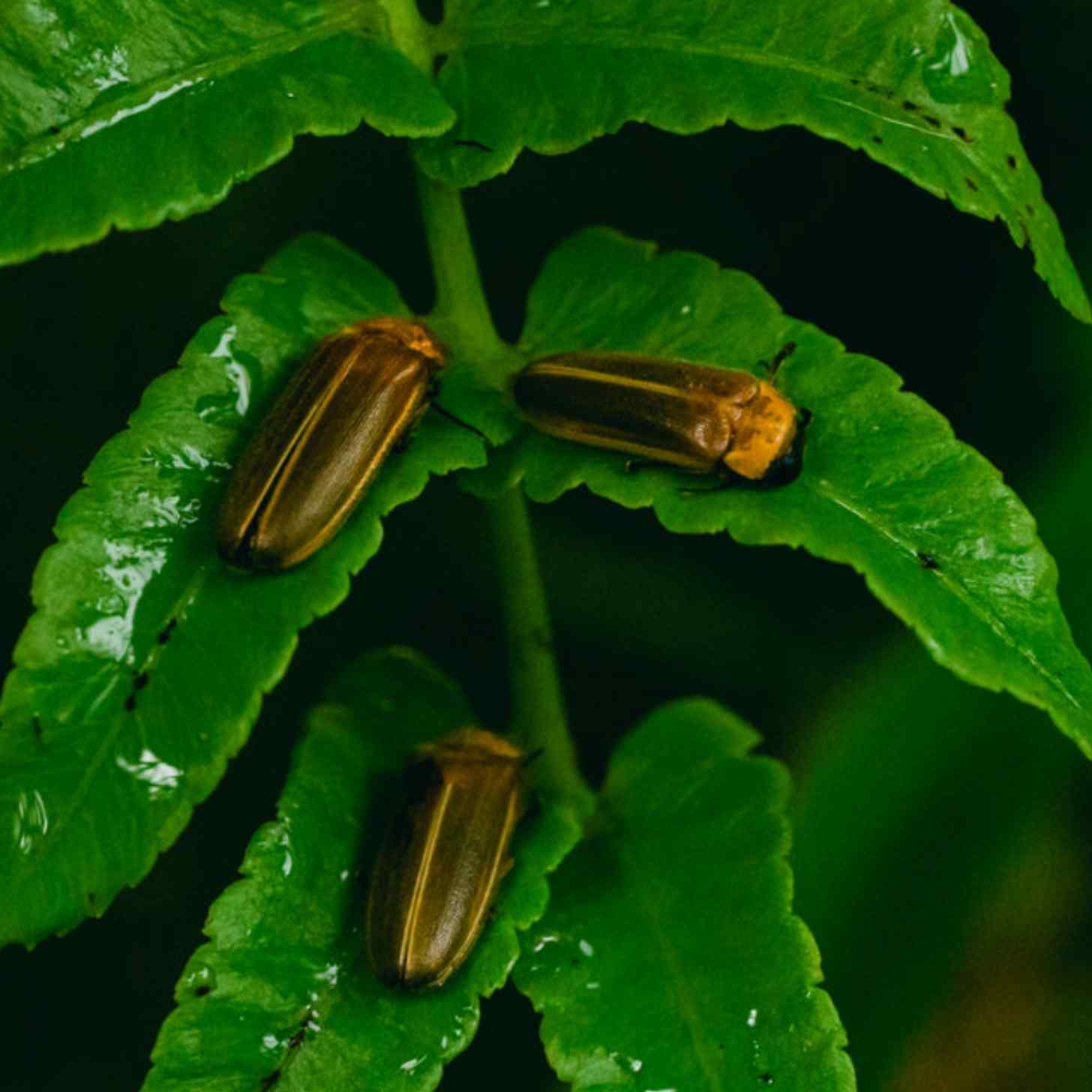
The resort first launched its firefly conservatory program, titled Lentera Bumi (“lantern of the earth”), in March 2023 to coincide with Nyepi — a unique Hindu holiday during which the Balinese Caka New Year is observed with 24 hours of silence.
That night, guests were invited to watch the conservatory’s first firefly release, as the newly bred fireflies were released at twilight under the winking stars.
“Our work at Lentera Bumi is a beginning to what we hope will be a new cycle of life and to inspire people,” said Puspa Anggareni, a resort manager at Buahan, a Banyan Tree Escape.
“It is a continuous process to work in harmony with nature, while orchestrating collective efforts from the surrounding community to align with our own operations. And now, we are excited to have our guests be part of this regenerative initiative.”
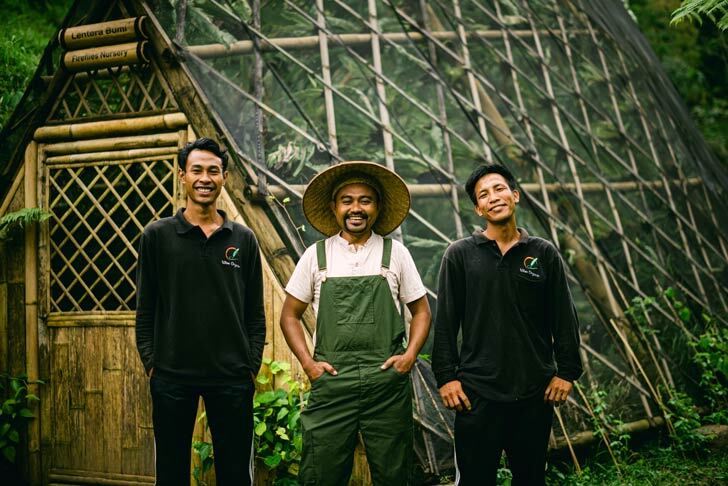
The years since have been a lesson in patience for the employees working on the Lentera Bumi conservatory and nursery.
Fireflies have an incubation period of up to 18 months, so it may take a decade — or several — to bring the local populations back in full force.
That said, when T Australia visited the resort-conservatory in January, they noted that its sustainable approaches appeared to be working.
“Still in their infancy, both projects are in the ‘trial and error’ phase, but observations after the first release of nursery-bred fireflies last year have been promising, showing an increase in the population,” the magazine reported.
You may also like: Climate Change is Killing Fireflies; Here’s Why (and How) We Should Protect Them
Header images via Buahan, a Banyan Tree Escape
In October, Monash University master’s student Tan Wei Jack was doing a routine specimen examination of a firefly sample discovered in the dense forests of Bukit Kiara, Malaysia.
Then he did a double-take.
“I was examining some previously collected specimens under the microscope and noticed something strange, a feature that didn’t match what I’d just learned about Colophotia fireflies the day before,” Tan told Monash University in early June. “This was the moment I knew that something was different.”
Tan soon realized that he was looking at a Pteroptyx gombakia, or a Gombak bent-winged firefly. The discovery marked the first time that the species had been identified in 90 years — and the first live sighting of the species, ever.
“Everyone was so supportive. I’m really grateful for that,” said Tan, who studies under the tutelage of Dr. Wan Faridah Akmal Jusoh — a leading firefly expert and conservationist.
“There’s still so much to learn, especially about Pteroptyx gombakia,” Tan continued. “The next step is to study its ecology and figure out what it’s doing in a place like Bukit Kiara.”
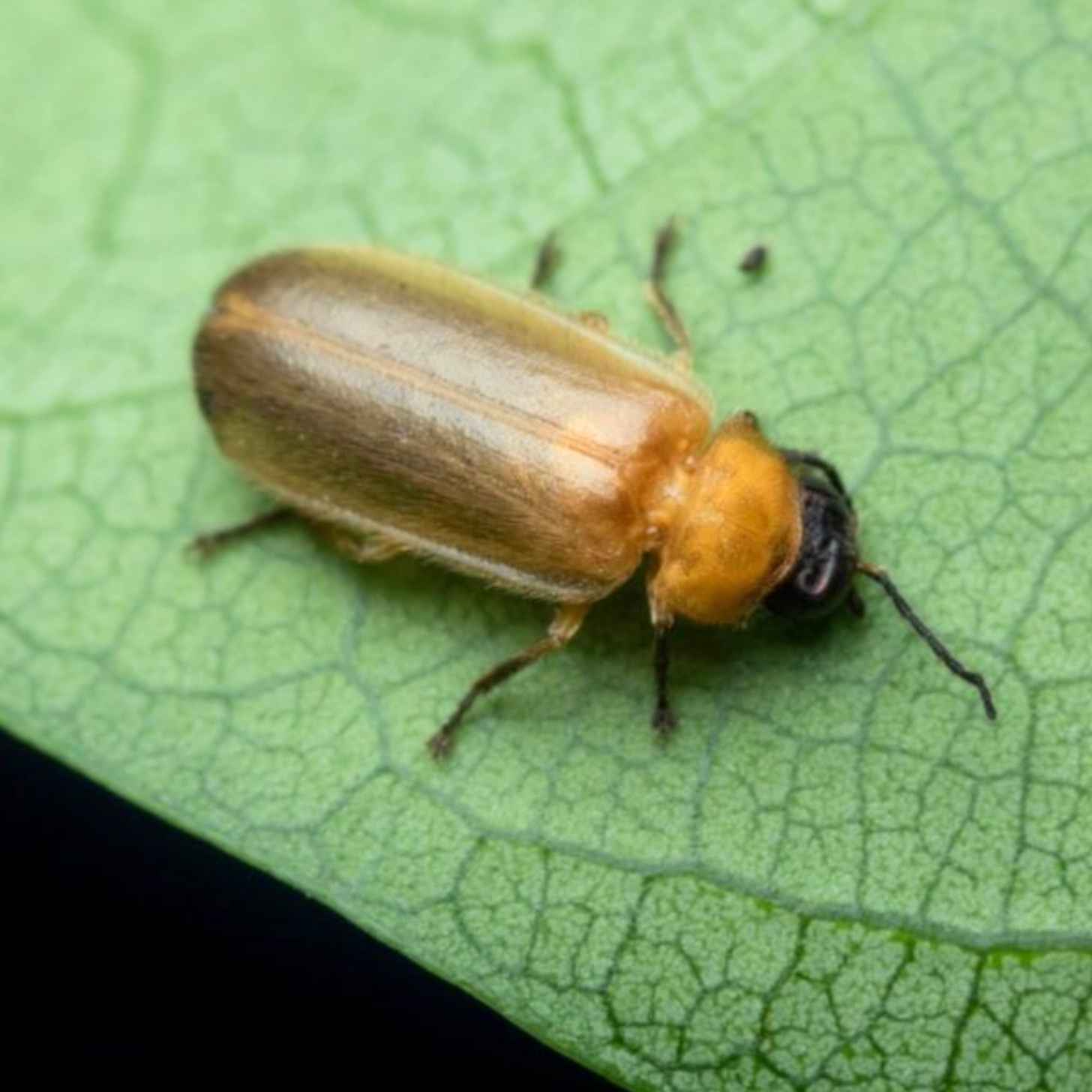
Jusoh verified her student’s discovery, saying that the characteristic difference was small but remarkably distinct.
“The difference was spotted in the firefly’s light-producing organ called the ‘lantern,’ which is located in the insect’s abdomen,” Jusoh said.
“Indeed, it is truly magical we have this rare group of fireflies living in the heart of our city.”
Tan said that the fieldwork that his honors degree requires has been fully immersive — and incredibly arduous.
“The physical fatigue from hiking and the mental fatigue from constantly being on the lookout for a flash of light, all while being in near total darkness, gradually took its toll,” Tan explained.
“I have come to learn that recognizing your body’s limits and taking appropriate breaks is essential for the long run.”
But his studies have also provided a valuable lesson — one that mirrors the Gombak bent-winged firefly’s return.
“It’s a reminder that even when things seem lost, they can still find their way back,” Tan said.
In October 2023 — a year before Tan’s once-in-a-century discovery — his mentor gave a TED Talk at TED Women in Atlanta, Georgia, on the importance of fireflies — also known as “kelip-kelip.”
“[They’re] so much more than pretty lights … they are an essential part of a healthy ecosystem,” said Jusoh, who spent her summers surrounded by fireflies on the coast of Peninsular Malaysia.
“The lifecycle of fireflies keeps the ecosystem balanced. Each firefly, in each indicative life stage, has specific needs for habitat to thrive.”
She also pointed out that fireflies are an “indicator species.”
“In a mangrove forest, when you see a population of fireflies decreasing, that could be due to water quality degradation, which can be a sign of a collapsing food chain,” Jusoh said. “Why? Because firefly larvae eat snails, and snails need good water quality to thrive.”
Jusoh said that climate change, habitat loss, and pesticide use have ushered in the global decline of fireflies.

Fortunately, there are several eco-friendly measures anyone can take, no matter where they are in the world.
Steps include opting for non-chemical pest management, planting native trees and grasses, and reducing excessive use of artificial lights, which disorient fireflies and actively lessen reproduction rates.
Even in regions where fireflies do not live, these three measures can help countless “backyard” wildlife species, including frogs, bees, owls, bats, and more.
Today, Tan and Jusoh continue their firefly studies and conservation through Friends of Bukit Kiara, a nonprofit that leads environmental efforts throughout the forested region.
“Wildlife and conservation are fields which require a lot of passion,” Tan said, offering encouragement to aspiring scientists. “If you have enough passion, that passion will light the path ahead of you towards the future.”
You may also like: This 'no-walls, no-doors' rainforest resort in Bali doubles as a firefly conservatory and nursery
Header image via Nicholas HL Tan / Monash University Malaysia
When Chappell Roan won the Grammy for Best New Artist earlier this year, she made a bold appeal to the powers that be in the room.
“I told myself if I ever ever won a Grammy and I got to stand up here in front of the most powerful people in music, I would demand that labels in the industry — profiting millions of dollars off of artists — would offer a livable wage and health care, especially to developing artists,” she said.
Roan went on to tell her own story of being dropped by a record label and how she had a difficult time finding a job during the COVID-19 pandemic, adding that she could not afford health insurance.
“It was so devastating to feel so committed to my art and feel so betrayed by the system … so dehumanized to have to not have health,” she added. “Labels need to treat their artists as valuable employees with a livable wage and health insurance and protection. Labels: We got you, but do you got us?”
While individual record labels have not yet heeded her call to action, others have.
In a first-of-its-kind partnership, major streaming platform Spotify has partnered with Backline, a nonprofit that connects music industry professionals and their families with mental health resources.
Backline has also worked with Roan to develop a “WE GOT YOU!” initiative that raises funds to help pay for the mental health resources Backline offers touring musicians and industry professionals.
In this new partnership with Spotify, called Heart & Soul: Mental Health for Creators, Backline has expanded its resources and created a hub for mental health support. In a multilingual database, the nonprofit offers trusted music industry and mental health support resources from all around the world.
The investment has also allowed Backline to create a global concierge service. When users email global@backline.care, they can reach one-on-one support to help individuals navigate their local care options anywhere in the world.
In alignment with Roan’s larger vision, the partnership will also cover the cost of therapy for Spotify’s EQUAL, GLOW, and RADAR ambassadors. Artists in these programs are part of initiatives to improve gender equality, LGBTQ+ equality, and opportunities for emerging artists and podcasters, respectively.
Their mental health care will be covered in the United States through the Music’s Mental Health Fund, a joint program from Backline and Sweet Relief Musicians’ Fund.
“Backline is honored to serve as a steward of Spotify’s investment into the creative community,” Backline co-founder and executive director Hilary Gleason, said in a statement.
“Bringing our work to scale is a meaningful way to uplift the well-being of artists all around the world. This collaboration is taking these invaluable mental health and wellness resources beyond borders.”

The partnership will also work with Noah Kahan’s foundation, The Busyhead Project, which helps distribute vital mental health funding in rural areas and the music industry.
It includes grants to Kahan’s nonprofit, as well as organizations like MusiCares, Music Minds Matter, Music Health Alliance, and a donation to Roan’s WE GOT YOU! fundraiser.
The Busyhead Project will also be included in future programming, offering backstage support, on-site wellness activities, self-care kits, and guided workshops at major festivals, like All Things Go in New York City.
“Music knows no bounds, and now people who make music happen have access to care and a compassionate community,” Gleason continued. “Our work together will help ensure that artists have the resources, support, and stability they need to thrive both personally and professionally.”
Finally, the partnership will also center stories, resources, and content across Spotify’s platforms, as well as a robust digital guide called “Mind The Music: A Mental Health Guide for the Music Industry,” which offers tools and strategies to be used in tandem with therapeutic support.
“It’s clear that the mental health challenges artists face are real, and that the current support systems often fall short. It’s on all of us in the industry to respond with action,” Spotify’s head of artist and label partnerships, Monica Herrera Damashek, said in a statement.
“We know this is only one step but we look forward to building on this for a more supported, sustainable environment for the artists who shape culture every day.”
According to a 2019 study, 73% of independent musicians struggle with mental illness, and only 19% felt that the music industry was providing enough support.
Although it has taken time — and the unapologetic advocacy of artists themselves — things may finally be changing for good.
“Artists and songwriters face immense pressure, and their mental health can’t be an afterthought,” said Lauren Siegal Wurgaft, Spotify’s head of social impact.
“Supporting creators’ well-being is essential to sustaining a vibrant music ecosystem. By working closely with trusted partners like Backline, we’re not just offering resources, we’re helping drive lasting change in how the industry approaches mental health.”
Header images courtesy of Lucienne Nghiem, Spotify, and Pooneh Ghana
The death of a pet leaves behind a devastating emptiness in the lives of the people who love them. Often, aggrieved pet owners are only left with the comfort that “all dogs go to heaven,” or a collection of abandoned chew toys that sit beside an urn.
United Kingdom-based startup Resting Reef wondered: What if our pets could live on in a whole new way?

The company, founded by Aura Murillo Pérez and Louise Skajem, provides a sustainable and meaningful alternative to conventional burial methods, which they call “a new tradition around death that truly honors life.”
Their pitch is to take the ashes of a beloved pet — or soon, human — and to turn them into an artificial reef that improves marine biodiversity.
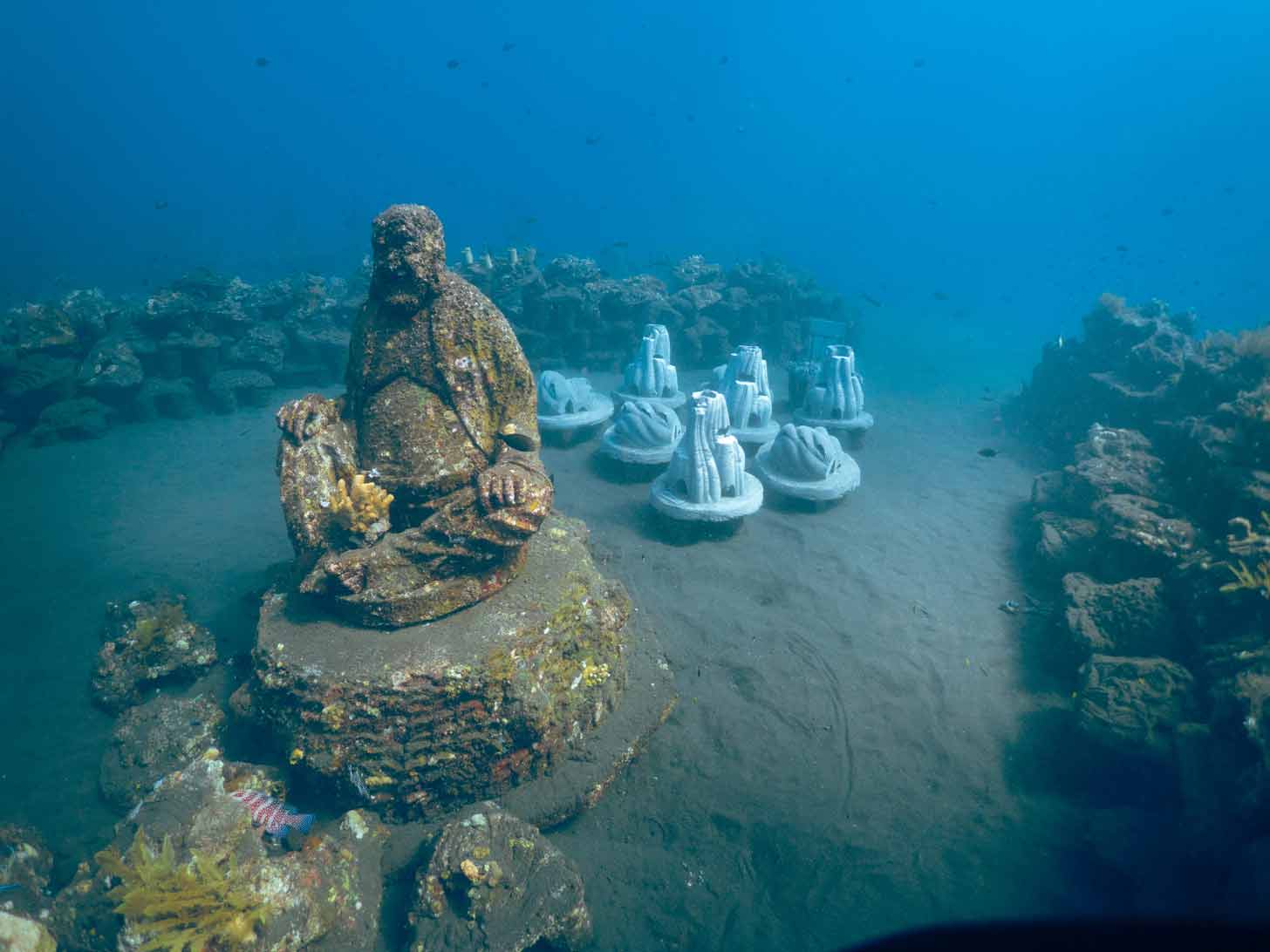
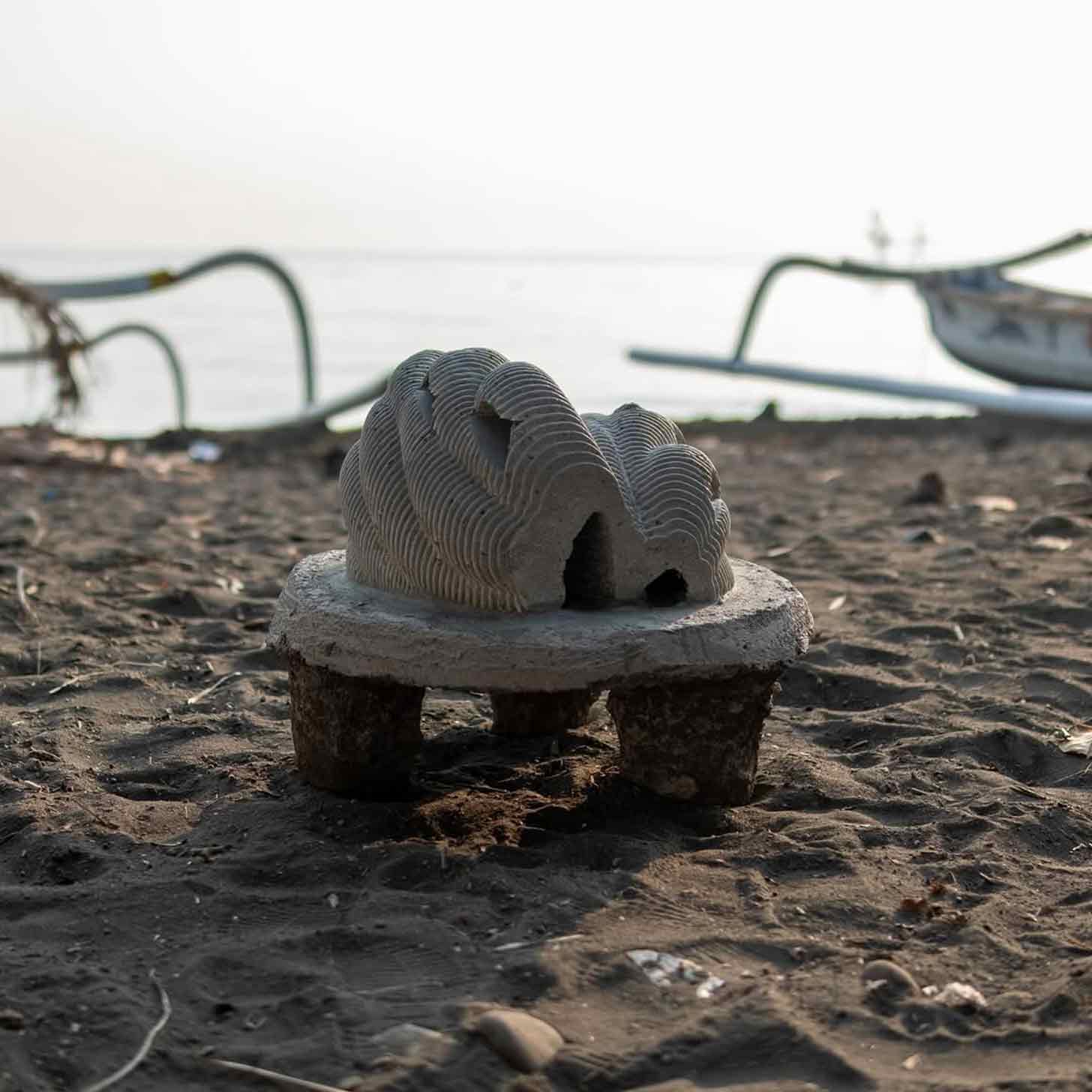
They use aquamation, an alkaline process for cremation, and combine a pet’s remains with crushed oyster shells and concrete, which is then molded into reef structures in which fish species can thrive.
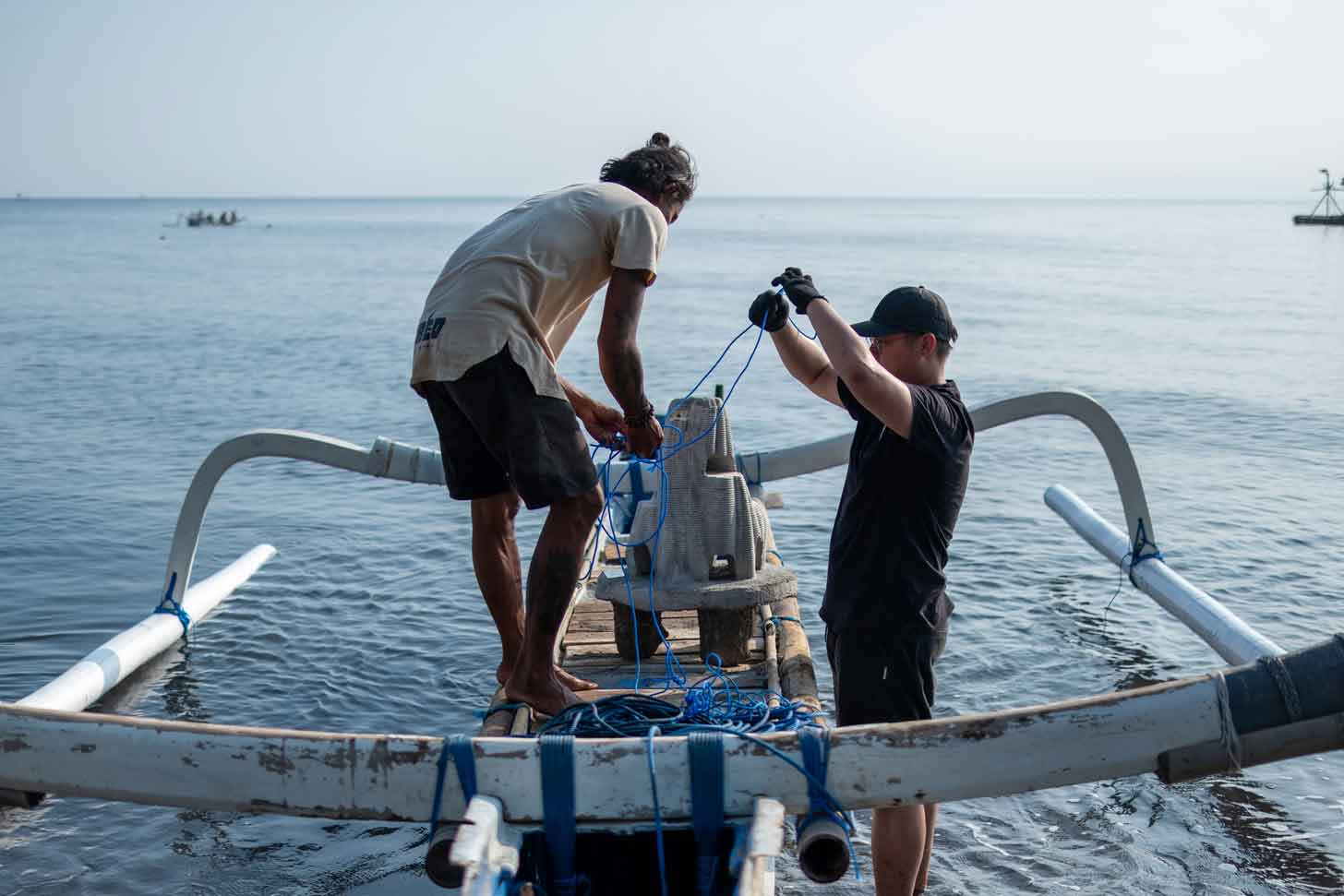
Once a reef is ready, it’s anchored about 10 meters down into a seabed, where it will improve marine biodiversity, filter water, and prevent coastal erosion.
“Cemeteries should be places that reconnect us with nature and remind us that we’re part of a larger ecosystem,” Murillo Pérez told The Guardian. “It’s time for the death industry to change: we want to shift the industry from focusing on death to life and regenerate growth.”
Meaningful in its desire to reconnect earthly beings with the earth itself, the process also has a real impact on marine environments.
The startup began placing the pilot reefs in Bali, Indonesia last year. In their first project, they placed 24 memorial reefs for pet owners in the United States and U.K.
After tracking its progress, they found that it attracted 84 fish species and achieved fish diversity “14 times greater than nearby degraded areas.”
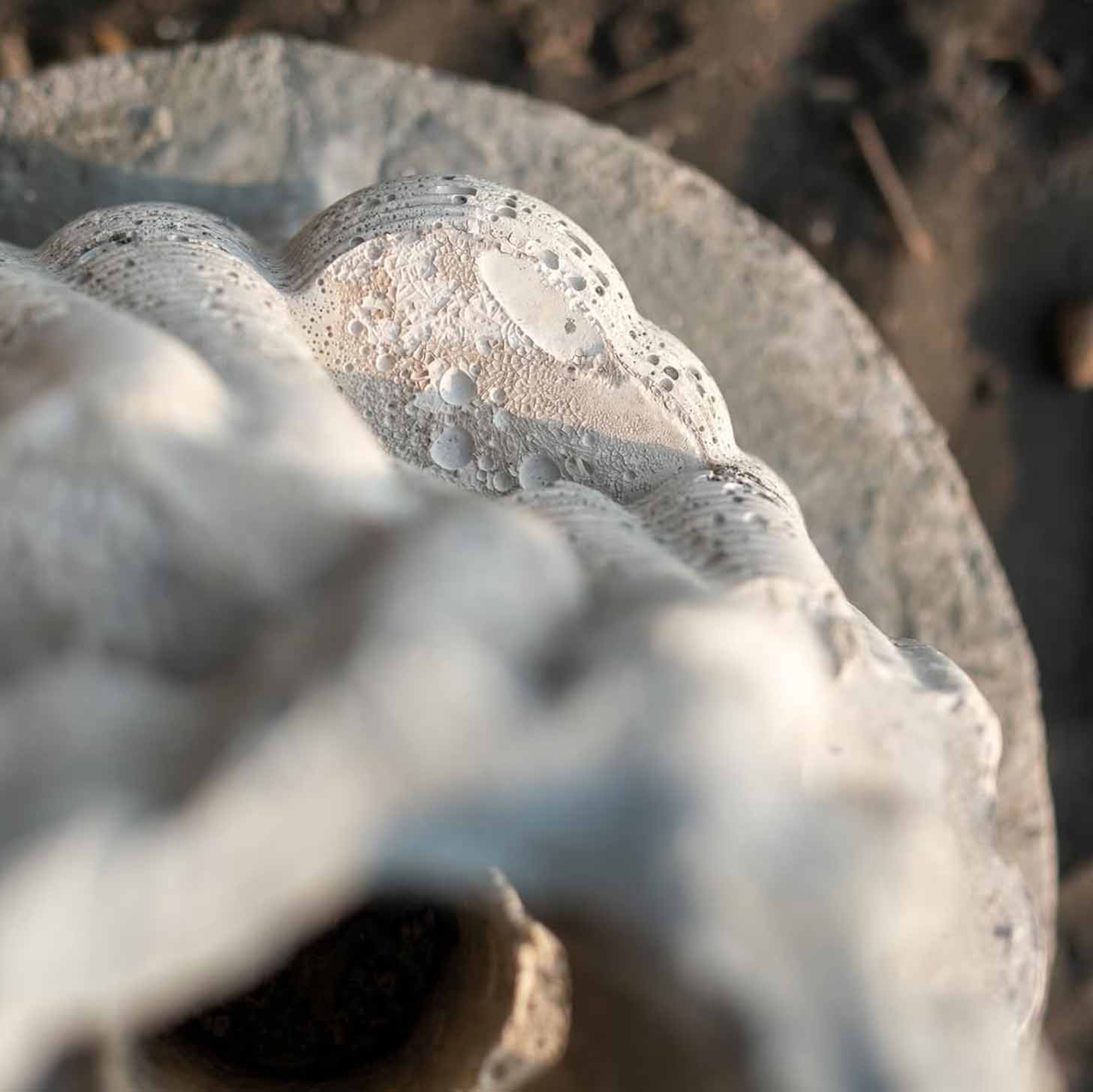
“In just six months, the reefs are already covered with coralline and turf algae, laying the groundwork for future coral growth,” Resting Reef added in a social media post.
Part of the success comes from the materials mixed with the ashes: Oyster shells.
“Oyster reefs can help regenerate marine growth but 85% have been lost due to human activities,” Murillo Pérez explained. “We are using animal and human ashes to mimic those natural reefs.”
While all human ashes vary, most will primarily be made up of calcium phosphate, which Skajem said is “one of nature’s main fertilizers.”
When used as part of the Resting Reef materials, this calcium phosphate helps various species attach to the surface of the artificial reef and grow.
With this pilot under their belt, the founders say demand has been so great that Resting Reef is now opening up their process to human remains. Right now, they are working to secure licenses to restore degraded seabeds on the southern coast of England.
“Just as we have a cemetery around the corner, in the future we’ll have memorial sites — marine sites — opening around the world,” Murillo Pérez told Fast Company.
It’s part of a growing trend toward “green burials,” with innovations like mushroom coffins and tree burial pods aiming to reduce the carbon footprint of traditional burials. The green burial industry is expected to surpass $1 billion by the end of 2030.
Traditional cremation releases an average of 500 pounds of carbon dioxide per person. In this case, however, Resting Reef’s aquamation process has a far smaller carbon footprint, with its end result going right back into the ocean, which has been shown to store carbon even better than trees.
Resting Reef currently offers two separate designs: A ribbed-textured reef structure ideal for species like oysters, and one full of crevices and tunnels similar to coral reefs for fish species.
Prices start at £350 (or about $475 USD), and can go up to £2,250 (about $3,050 USD), depending on how private and customizable customers would like to get. The company’s website also notes that these are “early-bird” prices.
According to The Guardian, human memorials have an initial cost of £3,900 ($5,300 USD).
For many, it’s hard to put a price on the comfort of knowing a loved one — furry or otherwise — has been sent off in peace and with purpose.
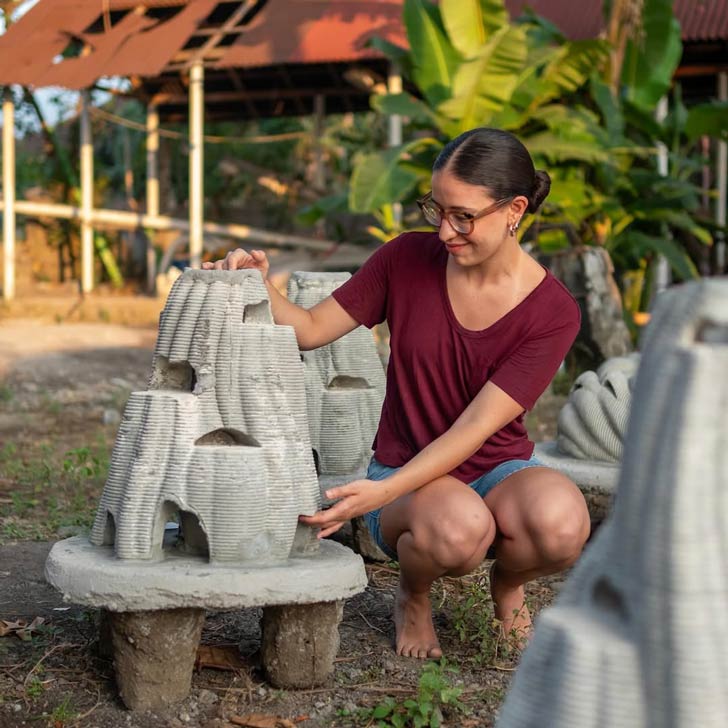
“It makes it easier for me knowing that his ashes will be doing a really good thing,” Lisa C., a horse owner who utilized the service, said in a testimonial.
Resting Reef also offers a private ceremony either before or after the memorial reef is placed underwater, allowing loved ones to process grief, find closure, and connect with loved ones. Their team leads a guided meditation and nature-related rituals and invites participants to share memories, if they feel compelled to do so.
“I’ve learned that grief and renewal are deeply connected — not just emotionally, but in a tangible, environmental way,” an anonymous testimonial states.
“I’ve seen how loss can transform into something life-giving, how traditions and rituals provide comfort and meaning, and how true impact happens when a project is built with heart, respect, and community.”
Header image courtesy of Resting Reef
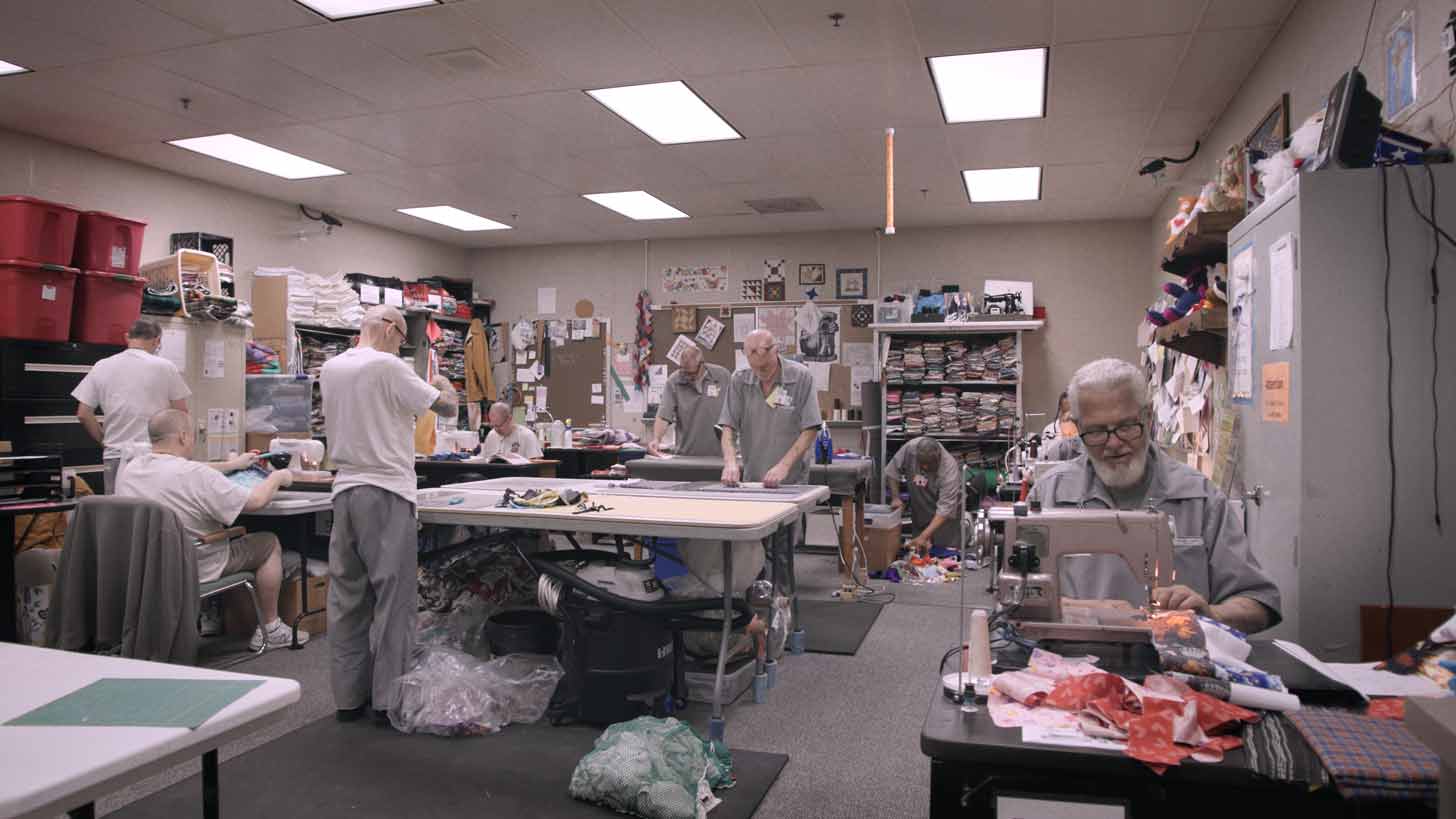
In May, Netflix released a new title: “The Quilters.” The 33-minute documentary, directed by Jenifer McShane and released in 2024, tells the story of a group of men in a maximum security prison in Missouri who sew beautiful, personalized quilts for foster children.

It’s part of a restorative justice program under the Missouri Department of Corrections, which combines give-back programs with the opportunity for “offender-volunteers” to strengthen social bonds through serving fellow citizens.
In the quilt program, participants sew and donate handmade quilts, including weighted and fidget quilts for people with autism or Alzheimer’s disease.
The documentary focuses specifically on a group of quilters who sew blankets for foster children awaiting adoption.
They show up to the workshop from 7:30 a.m. to 3:30 p.m. five days a week, and they are required to have no violations or write-ups during their incarceration to participate in the program.

Since the program’s inception, the group has donated over 2,000 quilts.
Throughout the film, subjects are seen piecing together the quilts, interspersed with clips of them explaining why they make the quilts, and moments of reflection on their past.
“From design to completion, the men reveal their struggles, triumphs and sense of pride in creating something beautiful in this windowless, sacred space deep within the prison walls,” Netflix's description of the film reads.
The documentary has resonated with viewers in such a profound way that the Missouri Department of Corrections had to issue a statement to ask the community to stop sending donations of fabric and yarn to the prison.
“We, too, are moved by the film and are, every day, awestruck by the generous and beautiful work done by Missourians in our Restorative Justice Organization programs,” the statement reads.
“In addition to South Central Correctional Center, the department supports quilting programs at multiple other sites. Donations of quilting supplies and equipment are needed and appreciated. However, we currently are overwhelmed by donations and are running out of storage space for fabric and yarn.”
Instead, the department requested that supporters consider a monetary donation to help fund all restorative justice programs in the organization.
These other programs include cultivating gardens to donate fresh produce to food banks, training rescue dogs, completing woodworking projects for donation, creating educational materials for local students, and producing audio and braille publications for Missourians with visual impairments.
“With the goal of giving back to the people of the state, Missourians in state correctional centers perform volunteer work and complete projects to support nonprofit agencies,” the department's web page about restorative justice explains.
“Through restorative justice initiatives, offenders serve fellow citizens and strengthen social bonds that serve as the foundation of communities.”
And it seems to be working. As the men in the documentary share, the quilting projects give them a renewed sense of purpose and identity.
“It’s a little community inside a big community,” one offender-volunteer said in the documentary’s trailer.
“We’re just trying to do better,” another added. “We all ain't perfect, but we trying. This is what puts me on the outside. When I do this, I don't even be in here.”
Director McShane saw this spark quickly, and it’s clear viewers do, too.

“I was really taken with what was happening there,” McShane told cinema blog The Moveable Fest last summer.
“It was like those posters you see of a little flower growing out of cement. That’s how I felt. [The quilters] were just so passionate about what they were doing. They felt [quilting] was really healing, and it was this imaginary bridge to the outside world, in terms of doing something positive and feeling pride, which you don’t often experience … in other prisons.”
Header images courtesy of Netflix
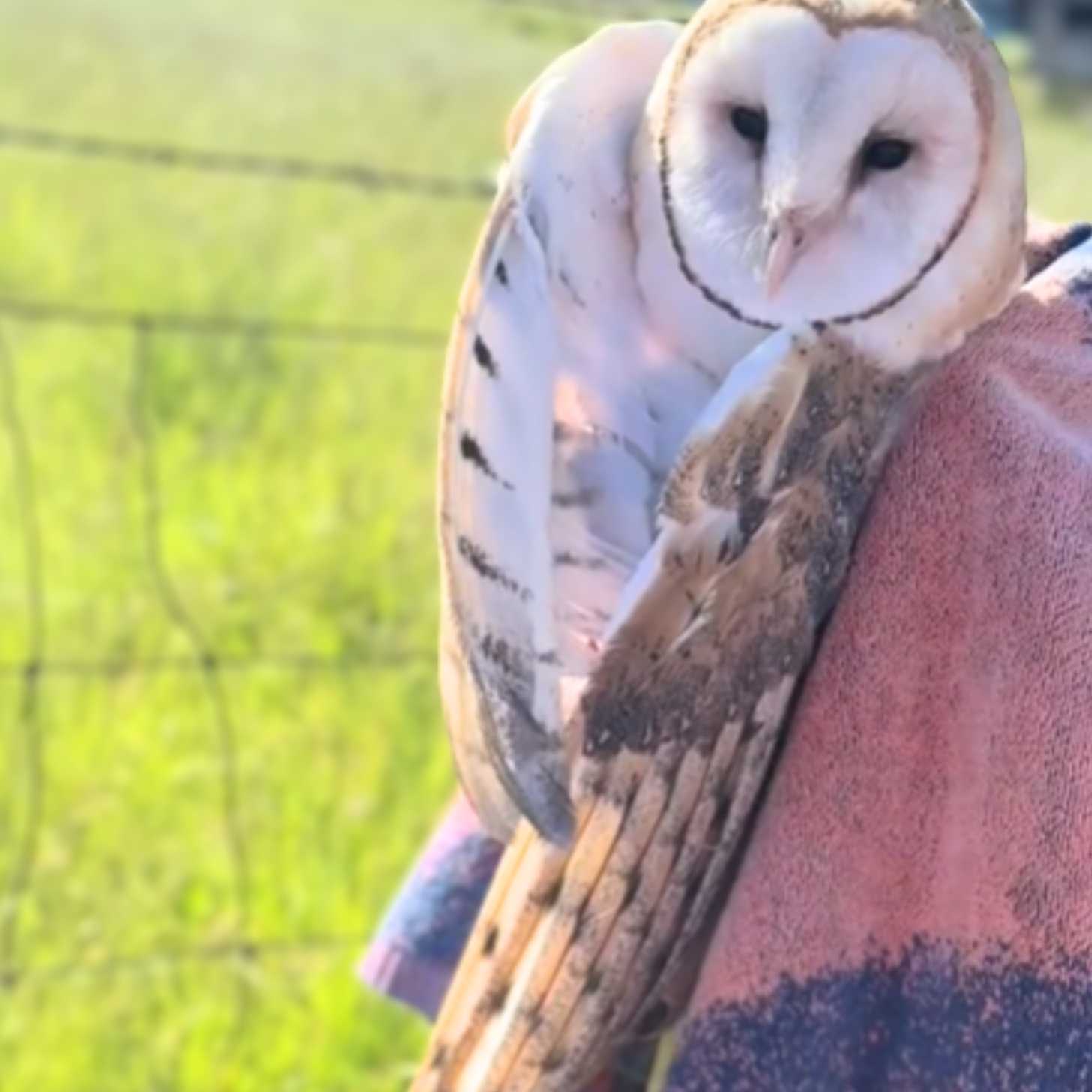
On May 28, an Oregon farmer, Lexie, received an urgent message from her sister-in-law: There was an injured barn owl down the road from her house, deeply entangled in a barbed wire fence.
Without hesitation, Lexie found the owl, carefully dislodged him from the fence with gloved hands, and drove him to the Chintimini Wildlife Center.
“What a day! I'm so thankful my sister in law stopped when she saw something was wrong and called for help so we could save this beautiful owl! He seemed so grateful,” Lexie posted on TikTok, under the account @uncstan.
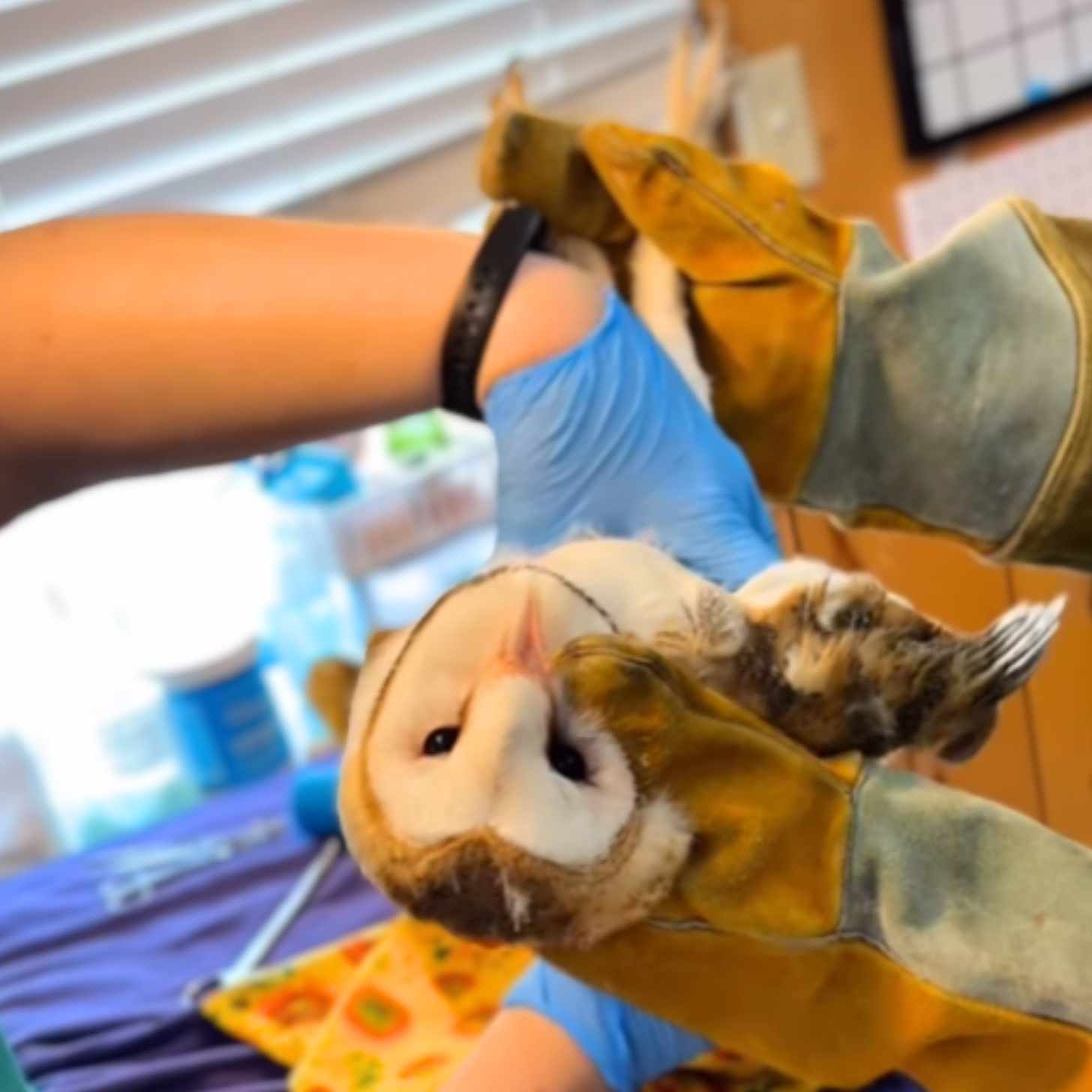
From there, the staff at Chintimini Wildlife Center took over, cataloging the owl’s day-to-day milestones as he took slow strides towards recovery.
“So far, holding steady,” the rescue posted on June 1. “He has progressed through the first stages of emaciation protocol, and the next step will be to see if he can handle eating solid food on his own — without the tube! This transition is a big one, so we’re keeping our fingers crossed!”
“We’re still discovering the damage that the barbed wire did to the wing tissue, as injuries of these type[s] can take up to a week to become fully apparent, even with initial comprehensive evaluations.”
“We’ve added a wing wrap to hopefully assist in healing the largest wound,” they explained, beneath footage of veterinary staff delicately wrapping his injured wing
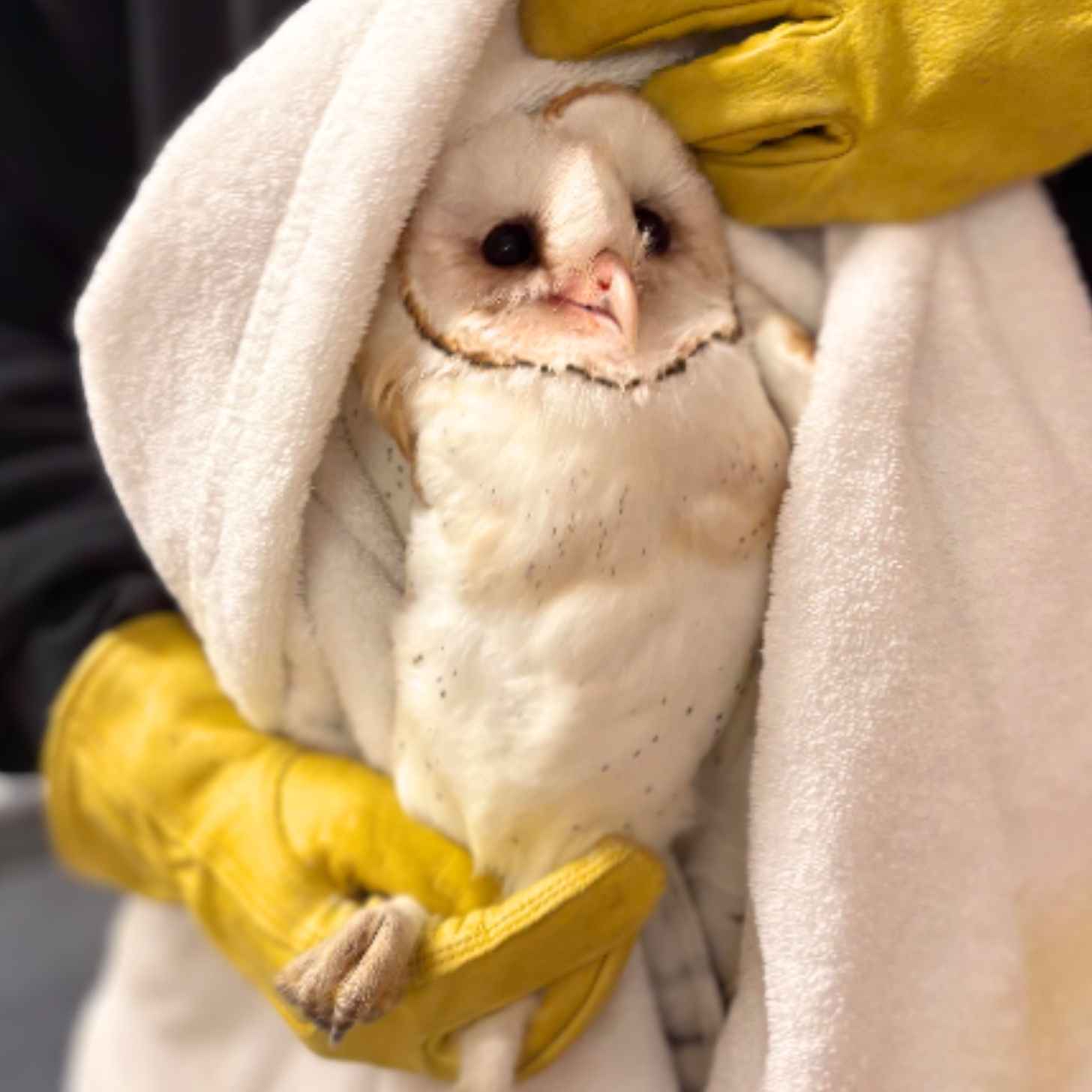
Two days later, the rescue staff cheered as the owl finally started accepting solid food.
“This one is a spicy fighter!” The rescue wrote in a caption, under screech-filled footage. “So far, they are handling solids well, gaining weight, all good signs! We will do another exam tomorrow to re-check how healing of the wounds are progressing!”
On June 6, the rescue celebrated another huge milestone.
“We are so happy to let everyone know that, while still very underweight, barn owl #25-580 (AKA TikTok Barn Owl) has moved past the emaciation classification, which is truly fantastic news,” The rescue said.
“All credit to the incredibly hard-working rehabilitation team at CWC, who always provide the best care possible, whether the patient is internet famous or not!”
As the owl continued to recover from his largest “barbed wire wound” on his back wing, the staff moved him near four other barn owls to meet “his social needs.”
“They all seem to enjoy screaming in symphony!” The CWC TikTok account shared. “Or, to our Rehab staff, cacophony!”
In the same caption, they also announced that they had created t-shirts to help raise funds for the barn owl, as well as “the other 90 patients” under their care.
The shirt features the TikTok-famous bird with his wings spread wide, flying above the slogan: “No Hoots, Only Screams.”
The rescue staff said they borrowed the quote from Instagram user @bodhi_panda, who used the phrase to describe the owl’s “melodious voice.”
Although the rescue staff gets a hoot out of the many names that followers offer up for the owl, they explained that they have a strict policy against naming patients.
“Not naming patients helps protect our staff getting attached to animals that may not survive, and remind us that these are wild animals who need to stay wild so they can be released! Also why you won’t see us cuddling any patients,” the rescue wrote when the owl first came under their care.
“Fortunately we have several non-releasable ambassador animals (like Barn Owl, Bo!) who we do oooh and ahhh over frequently.”
At the time of publication, Chintimini Wildlife Center had raised over $20,000 — largely from concerned TikTok users. They had also raked in $9,538 towards their seasonal $10,000 fundraising goal.
“You are all amazing!” The rescue wrote on June 9 after their latest round of fundraising, in partnership with Birdfy. “Thank you to everyone for commenting in support and thanks Birdfy for supporting this cause and helping our wildlife!”
“This little owl's story has shed light on the fact that there are people who devote themselves to wildlife and nature,” one follower replied.
To continue learning about the barn owl’s recovery — and support the wildlife rescue at large — bird lovers can visit their official website or donate directly to the Chintimini Wildlife Center Fundraiser.
See the whole story from the beginning in Lexie's video:
@uncstan What a day! I'm so thankful my sister in law stopped when she saw something was wrong and called for help so we could save this beautiful owl! He seemed so grateful 🥹 🥲 Thanks Chintimini Wildlife Center for caring for all of our precious wildlife. @Chintimini Wildlife Center, OR ♬ original sound - KC
Header image via Chintimini Wildlife Center and Steven Ward / Wikimedia Commons (CC BY 2.0)
In 2019, a beloved African forest elephant named Ousmane was thought to be only one of five to 10 elephants left living in Senegal’s Niokolo-Koba National Park.
Ousmane, who was named after one of the park rangers, disappeared without a trace soon after that survey, earning his species the nickname: “Ghost elephant.”
That is, until recent trail camera footage caught a rare glimpse of Ousmane walking the fields at night.
After the footage was captured, it was a cause of celebration for officials at both Senegal’s National Parks Directorate and Panthera, a local wild cat conservation organization.
“Elephants are under immense pressure in West Africa,” Philipp Henschel, Panthera’s regional director of West and Central Africa, told Newsweek.
“Only a few populations of the pachyderms survive in this region. Niokolo-Koba National Park, where this individual was filmed, is the last area in Senegal where this endangered species survives.”
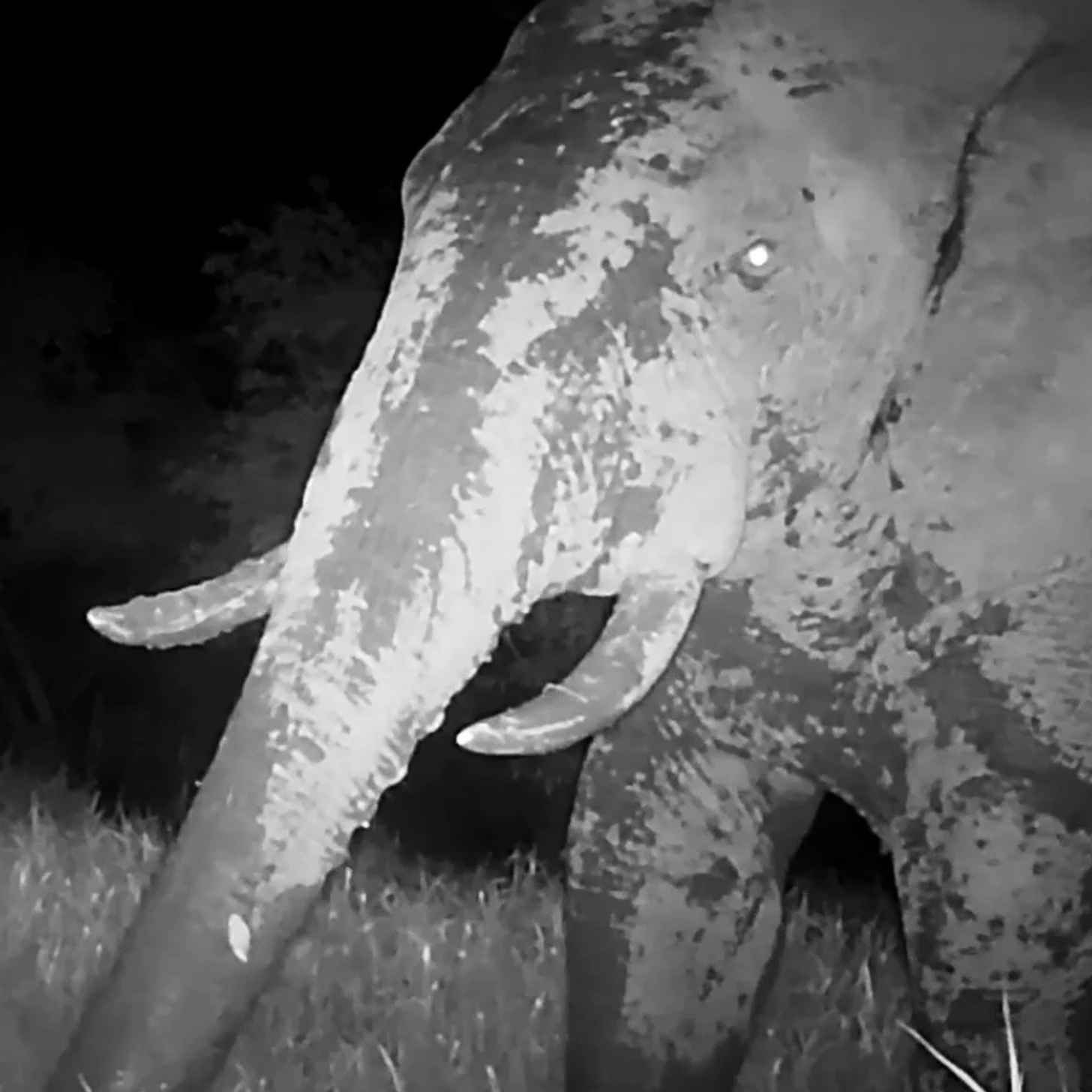
Henschel added that Panthera and the DPN have been upping their protection efforts in Niokolo-Koba National Park since the launch of their “joint park support program in 2017.”
“Detailed surveys are currently underway to assess if the elephant we recently filmed, Ousmane, is the sole survivor in the park and therefore Senegal,” Henschel assured.
“If this was found to be the case, we will assess the feasibility of translocating a herd of females into the park, so as to found a new breeding elephant population in Senegal.”
In the same park where Ousmane was spotted, hundreds of elephants used to roam. Today, African forest elephants are critically endangered under the International Union for Conservation of Nature’s Red List, due to ivory poaching and mass deforestation.
In 2023, a study published in the Proceedings of the National Academy of Sciences found that large herbivores like African forest elephants have an unexpected superpower: They graze on thin trees with low wood density, which paves the way for massive, carbon-rich trees to grow in their place.
“We talk a lot about trees and soil, but a functioning ecosystem and its services also depend on animals,” said Fabio Berzaghi, lead author of the study.
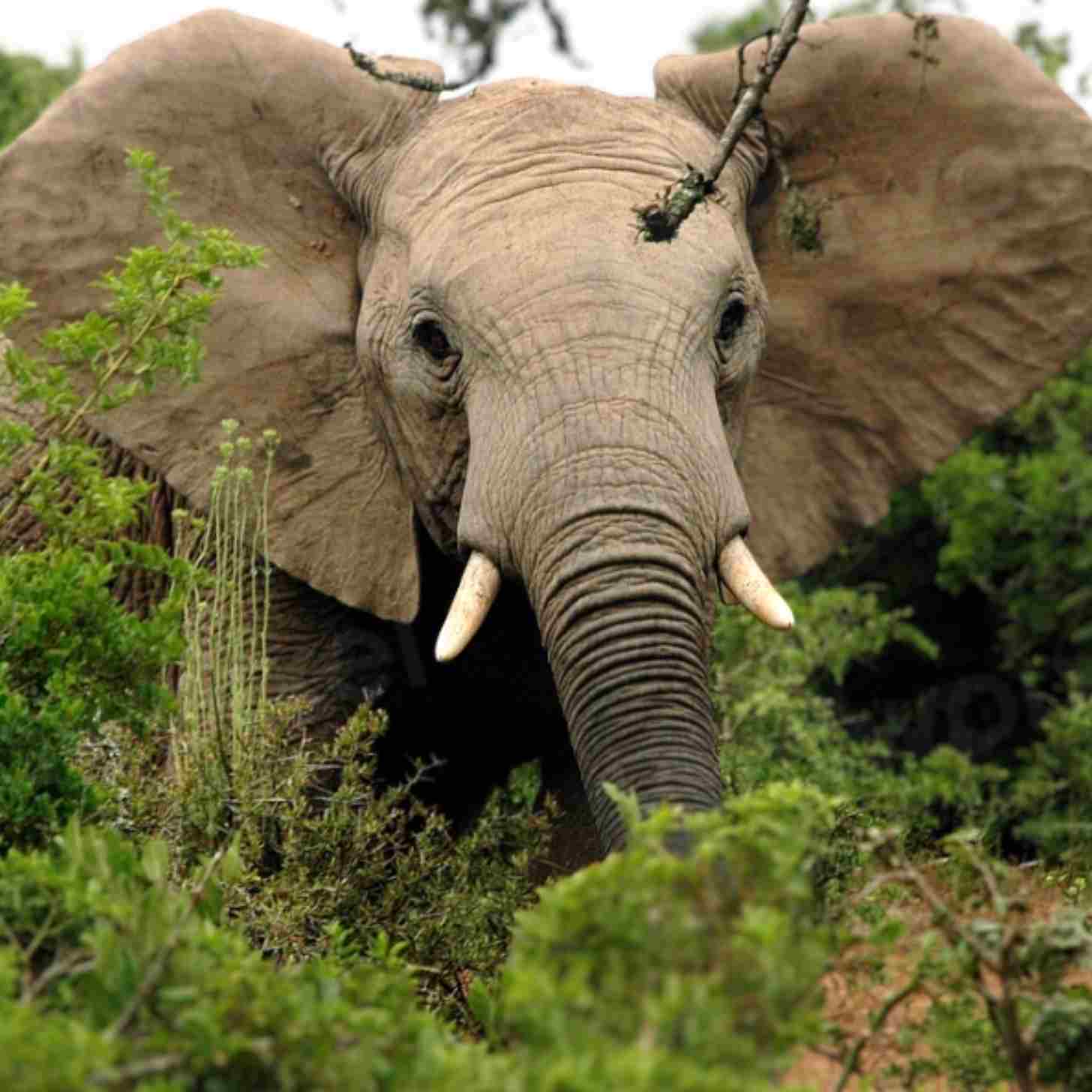
Together with lowland bongos (antelopes) and forest buffalos, African forest elephants play a crucial role in aiding carbon capture and keeping forests in West and Central Africa thick and thriving.
In their study, Berzaghi and his co-authors called for greater compassion and conservation for African forest elephants.
“Protection of forest elephants, including in logging concessions and other exploited forests, is a critically important wildlife-driven mitigation response to climate change.”
You may also like: This state finally banned circus performances for elephants, tigers, giraffes, and primates
Header image via UNESCO Niokolo-Koba National Park Senegal (CC BY 2.0)
Every day the Good Good Good team collects the best good news in the world and shares it with our community. Here are the highlights for this week!
If you want to get good news in your inbox every day, join the Goodnewsletter — the free daily newsletter designed to leave you feeling hopeful.
The Best Positive News We’re Celebrating This Week —
In a medical breakthrough, researchers just got closer to a cure for HIV by finding a way to force the virus out of hiding inside cells
HIV’s ability to conceal itself inside certain white blood cells has been a key challenge in finding a cure. Now, researchers in Australia have found a way to make that “hidden” virus visible, so it can be fully cleared from the body.
The method is based on mRNA technology, which they found can be delivered into cells where HIV is hiding, and then tell the cells to reveal the virus.
“Previously thought impossible,” the results “overwhelmed” researchers, who initially thought they were too good to be true.
Why is this good news? There are nearly 40 million people living with HIV globally, who currently have to take medication for the rest of their lives to suppress the virus and ensure they don’t develop symptoms or transmit it to others. And the virus is still deadly; UNAIDS estimated that one person died of HIV every minute in 2023.
→ Read more
Rare ‘buffalo bear’ species captured on trail cameras in national park, renewing conservation hopes
→ Read more
A blind skateboarder created the world’s first adaptive skatepark
Dan Mancina has been a skateboarder since the age of seven, but when he was 13, he was diagnosed with rhinitis pigmentosa, a degenerative eye disease that rendered him almost completely blind by 22.
After giving up skateboarding for a couple of years, he returned to the sport with a white cane to shred more confidently, learning to find his way with tactile markers like cracks in the asphalt and pre-mapped courses.
Wanting a better experience for fellow visually impaired skateboarders — and those wanting to try out the sport — he created the world’s first adaptive skatepark in his hometown of Detroit, Michigan.
The 5,000-square-foot skatepark is completely accessible and welcoming for both seasoned skateboarding enthusiasts and newcomers alike.
A trio of teen scientists just won a $50k prize for the brain-controlled prosthetic leg they designed for their friend
When Texan high schoolers Samuel Skotnikov, Changyoung Kim, and Eeshaan Prashanth found out that their friend Aiden’s prosthetic leg was uncomfortable and difficult to use, they decided to make him a better one.
Their version of a prosthetic leg, NeuroFlex, is powered by the wearer’s brain, not limbs. And it works by translating the wearer’s brain signals through an EEG headband, telling NeuroFlex how the wearer wants to move, and the prosthetic uses its motors to support that movement.
And it’s gone on to both improve Aiden’s life and win them over $50,000 in scholarships.
Even better: Beyond its greater comfort and more precise joint control features, the NeuroFlex is also much more cost-effective compared to other bionic prosthetics on the market.
→ Read more
CEO invites the world to invest in refugees: ‘Humanity flourishes when people have the tools to succeed’
→ Read more
French Polynesia created the world’s largest marine protected area
At the U.N. Ocean Conference this week, French Polynesia announced the creation of the world’s largest marine protected area, covering nearly 5 million square kilometers, or over 1.9 million square miles. It also plans to add another 500,000 square kilometers by next World Ocean Day.
Of that area, 1.1 million square kilometers (424,712 square miles) will be designated as highly or fully protected, meaning only traditional coastal fishing, ecotourism, and scientific research are allowed.
Extractive practices like deep-sea mining and bottom trawling — a destructive type of fishing that drags large nets align the sea floor — will be restricted across the entire MPA.
Why is this good news? The ocean is critical to sustaining all life on Earth, and it’s extremely under-protected. Marine protected areas restrict these practices to keep marine ecosystems thriving — supporting all Earth’s ecosystems as a result.
New study finds 75% of people more likely to visit nature if under ‘park prescription’ orders from doctor
→ Read more
Survival rates from the most common type of childhood cancer have risen dramatically
Before the 1970s, fewer than 10% of children who were diagnosed with leukemia survived for five years after diagnosis — now, in North America and Europe, around 85% survive that long.
In the 1960s, only around 14% of children diagnosed with a specific kind of leukemia, acute lymphoblastic leukemia, survived at least five years. The survival rate increased dramatically by the 2010s, with 94% of children surviving at least five years — and longer.
Progress in survival has come from many advances and improvements in treating the disease, with tailored chemotherapy treatments for each patient, targeted radiation, and more.
Eliminating a 200-year-old law, England and Wales are decriminalizing ‘rough sleeping’
Starting next year, rough sleeping — sleeping outside or in places that aren't designed for people to live in, including cars, doorways, and abandoned buildings — will be decriminalized as England and Wales scrap the Vagrancy Act.
The law was first introduced in 1824 to deal with rising homelessness. Calling it “cruel and outdated,” the government’s new plan is to target crimes like organized begging by gangs and trespassing.
Deputy Prime Minister Angela Rayner said the move would end “nearly two centuries of injustice towards some of the most vulnerable in society.”
Why is this good news? Nobody should be deemed a criminal for sleeping on the street. The only role the government should play in addressing homelessness is improving systems to ensure everyone who wants to be housed can access it.
A ‘no-walls, no-doors’ resort in Bali doubles as a firefly conservatory
Jamaica had its lowest poverty rate on record in 2023
In 2023, Jamaica’s poverty rate fell to a record low of 8.2%, the lowest level since at least 1989, when the data started being recorded. That’s a 50.8% decrease from 2021’s 16.7% poverty rate.
A strong post-pandemic economic rebound is credited with the turnaround, due to factors like increased employment, an 85.7% rise in the national minimum wage, stronger social programs, and more.
Notably, there was also a reduction in “food poverty,” also called extreme poverty, which fell to 2.8% in 2023, down from 5.8% in 2021. Food poverty “refers to the inability of a household to afford the minimum daily caloric intake required for good health.”
A UK startup recycles pet ashes into artificial reefs to save marine life — and human remains are next
United Kingdom-based startup Resting Reef calls its alternative to traditional burial methods “a new tradition around death that truly honors life.”
It takes the ashes of a beloved pet — or soon, human — and combines them with crushed oyster shells and concrete, which is then molded into reef structures in which fish species can thrive.
Their first project placed 24 memorial reefs for pet owners in the United States and U.K. It was a huge success, attracting 84 fish species and achieving fish diversity “14 times greater than nearby degraded areas.”
Why is this good news? Human activity has led to the loss of 85% of oyster reefs, which help regenerate marine ecosystems, prevent coastal erosion, and more. Now, humans (and their beloved pets) can be a part of the solution: their ashes are primarily made up of calcium phosphate, “one of nature’s main fertilizers.”
A middle school student in Miami made it her mission to support teen moms
Mina Boomer overheard some of her classmates speaking judgmentally about teen mothers — and decided to do something about it.
Wanting teen moms “to know they are supported,” she started a donation drive for moms at the C.O.P.E. Center South, a public school in Miami-Dade County that was established in 1968 to help pregnant and parenting teenagers stay in school.
Rather than assuming what they needed, Boomer sent a survey to the students to ask them. Now, her donation drives collect items like diapers and bottles, as well as essentials any teenager would need, like toiletries and makeup.
More good news of the week —
Vatican City is now the eighth country in the world to be powered entirely by solar power. An effort spearheaded by Pope Francis, the world’s smallest country joins Albania, Bhutan, Nepal, Paraguay, Iceland, Ethiopia, and the Democratic Republic of Congo to generate 100% of its electricity from renewable sources.
The city of Tulsa announced a $105 million reparations plan for descendants of the 1921 Tulsa race massacre. Tulsa Mayor Monroe Nichols, the city’s first Black mayor, announced the Greenwood Trust as part of the city’s multi-step “The Road to Repair” plan aimed at healing generational wounds.
In a conservation “success story,” he number of lynx in the Iberian Peninsula increased by 19% last year to over 2,400 total. Iberian lynx conservation projects have been running for over 20 years, helping increase the total number of animals from less than 100 in 2002 to more than 2,000 in 2023 and leading the species to no longer be classified as “at risk” but as “vulnerable” in 2024.
Gardeners in California are planting native species to help restore biodiversity and prevent wildfires. Native flora tends to tolerate drought, making it more resistant to wildfire, whereas many invasive species tend to dry up, becoming kindling during wildfires, which have become more frequent and severe as a result of the climate crisis.
The state of Washington just became the latest to pass a “right to repair” law for cell phones and other electronics. After a years-long effort, the newly signed House Bill 1483 will allow consumers to fix their devices instead of throwing them away and buying new ones.
Volunteers are helping save U.S. climate data that teachers rely on for lesson plans before it’s gone for good. Since President Trump took office in January, some essential climate-related data has been scrubbed from federal agency websites, which not only impacts scientists and farmers, it also disrupts teachers’ lesson planning.
Billionaire Mackenzie Scott has quietly given $181.7 million in grants to help people across the state of Louisiana. Since 2020, Scott has given 50 grants totaling $181.7 million to charities in Louisiana, where half of the state’s households fall above the federal poverty level but still can't afford basic expenses, such as health care and groceries — the highest rate of any state.
Countries in Europe dismantled a record 542 river barriers in 2024 alone, up 11% from the year before. A total of 23 countries removed a river barrier last year, some for the first time as part of a larger effort to honor Europe’s commitment to restoring degrading ecosystems across the continent.
Arizona State University is leading a new sustainable shade program to combat extreme heat. It’s part of a larger, $5 million statewide effort to provide the shade needed to take the edge off the Phoenix metropolitan area’s increasingly hot summers — which saw the hottest temperatures on record last year — while creating new jobs for residents.
🏳️🌈 Gina Ortiz Jones just made history as San Antonio, Texas’s first openly LGBTQ mayor. The Air Force veteran also made history as the first Asian-American female mayor of a major city in Texas and the first female mayor in Texas to have served in a war.
The UK government expanded its free school meals to 500k more of the country’s poorest children. The expansion to the former threshold for qualifying, which hadn’t changed since 2018, will lift 100,000 students out of poverty and give them “the nutrition they need to thrive”.
Maine just passed a bill allowing doctors to remove their names from abortion medication labels. In the state, some doctors were hesitant to prescribe medication in support of reproductive health care due to threats, harassment, and fears of out-of-state lawsuits.
The Philadelphia Eagles’ owner donated $50 million to support a new autism research initiative. The Lurie Autism Institute will work to improve understanding of the genetics and other processes underlying autism, study how behaviors on the spectrum grow and evolve across the lifespan, use AI to analyze data to identify new treatment targets and existing drugs that could be repurposed for autism, and more.
TikTok blocked the viral “skinnytok” hashtag and redirected searches to mental health support resources. The app acknowledged that the viral hashtag had become linked to “unhealthy weight loss content” and advocates celebrated the move, but acknowledged there was still more to do to protect vulnerable people.
Twenty-two young people filed a lawsuit against the Trump administration over its anti-environment executive orders. They allege that by intentionally boosting oil and gas production and stymying carbon-free energy, federal officials are violating their constitutional rights to life and liberty.
Canadian scientists developed a portable, rapid bedside test that can predict sepsis with over 90% accuracy. Sepsis is the body’s extreme reaction to an infection, causing the immune system to start attacking one’s own organs and tissues, which can lead to organ failure and death if not treated quickly. Current tests can take up to 18 hours and require specialized labs.
Spotify is working with Noah Kahan and Chappell Roan to provide free therapy to small artists. In a first-of-its-kind partnership, major streaming platform Spotify has partnered with Backline, a nonprofit that connects music industry professionals and their families with mental health resources.
In a naturalization ceremony at the Clinton Presidential Library, former President Bill Clinton welcomed 39 new American citizens. The former president told the group, who hailed from 18 different countries, “As a country, we welcome the heritage you bring. Together, we continue to form a more perfect union.”
Scientists discovered a firefly species that hadn’t been seen for 90 years. Making huge waves in the insect community, it was also the first-ever live sighting of the Gombak bent-winged firefly. Overall, climate change, habitat loss, and pesticide use have ushered in the global decline of fireflies, a critical “indicator species.”
The Samoan government established a marine spatial plan to sustainably manage 100% of its ocean by 2030. It also created nine new marine protected areas covering 30% of its ocean, prohibiting fishing and protecting a migration route for humpback whales.
In total, approximately 43 million Americans owe $1.77 trillion in student loan debt. The Department of Education has not collected on defaulted loans since March 2020, a policy of the COVID-19 lockdown era, which was continually extended by the Biden administration.
That prolonged pause was lifted in early May, when the Department of Education resumed collections at the behest of the Trump administration. The shift sent borrowers scrambling to find ways to fulfill their repayments or risk wage garnishment or tax refund seizures.
Other repayment plans are up for discussion in Congress right now, with most Republicans backing the Trump administration’s plans to phase out Biden-era payment options. In turn, they are proposing a Refund Assistance Plan, under which borrowers’ monthly payments would range from 1% to 10% of their income.
While student debt repayment changes loom, other stakeholders are wondering: What if there was a different way?

For students at the University of Hawai’i Mānoa’s College of Engineering, a “renewable learning fund” has offered a new path.
Launched by Social Finance, the Hawai’i Renewable Learning Fund is a $2.5 million “revolving loan fund” that provides zero-interest loans to low-income college students to cover their remaining costs of education after grants and scholarships.
It was created with the intent to expand the engineering talent pool in Hawaii and pair graduates with local firms.
After graduation, if a student borrower earns above $50,000, they pay back their loan through fixed monthly repayments for up to five years. The Fund also partners with local employers, who help new employees with repayment assistance as a retention practice.
If borrowers earn less than that minimum salary, they can apply for an income-based deferment and have a $0 monthly obligation.
The best part? All of those repayment dollars are recycled right back into the fund to support future students through a “fixed supply” of financial aid.
“Many talented students in Hawaii face barriers to degree completion, including limited affordable student financing options and high costs of living,” Hydie Kim Hudson, the vice president of impact investments at Social Finance, said in a statement for the University of Hawai’i.
“The Hawaiʻi Renewable Learning Fund aims to address these barriers while also helping local employers hire talent for in-demand roles. We’re excited to leverage our experience designing recycling funds across the country to meet the needs of Hawaii’s students and employers.”

Similar approaches have been proposed and considered in a number of state legislatures, but high startup costs have kept them from becoming commonplace.
Charitable foundations like Social Finance are hoping to expand similar funds in other pilot programs to provide a proof of concept, especially in sectors with a high need for new talent.
The pilot program in Hawaii focused on engineering majors because the state found itself with a shortage of engineers in defense, construction, and tourism industries.
“Many of our students have to work part time jobs to make ends meet, so they take one less class each semester, which delays graduation and the start of a career,” said University of Hawai’i Mānoa’s College of Engineering Dean Brennon Morioka.
“The longer they take, the more expensive it is and the less likely it is that they will earn a degree, and meanwhile, our college is graduating about 300 engineers a year when the state needs around 500 new engineers a year.”
This makes it an easy case for local engineering firms to support the fund financially, as it provides them with a renewable well of talent from a credible educational institution.
“We are proud to be part of this transformative endeavor that lowers barriers to education and empowers our future engineers,” Michael P. Matsumoto, the president and CEO of engineering firm SSFM International, said in a statement for the university.
“This isn’t merely an investment in individual students — it’s a strategic investment in Hawaii‘s sustainable future.”

More of Social Finance’s pay-it-forward loan programs have already started or will launch in the fall in Colorado, Massachusetts, New Jersey, New York, and Florida, each focused on a field with high demand and short talent supply, like health care, cybersecurity, or climate.
Although statewide legislation on pay-it-forward loans has stalled in California, another program by Social Finance will begin in San Diego this fall, with an emphasis on behavioral health professionals.
“I think of this as a really important proof of concept,” Alex Harris, vice president of Harold KL Castle Foundation, a lead funder in the HRLF, told The Hechinger Report.
“It’s a new way of thinking about scholarship support that lets you extend your dollars.”
Already, funders are excited by their success in Hawaii and are eager to see where the approach can blossom next.
“By recycling every dollar repaid back into the Fund, we’re able to continuously support more students than we could using traditional loan or scholarship models,” Harris said in a statement for Social Finance. “With this Fund, we are supporting public education while investing in the sustainable economic development of Hawaii.”
And for the students — who are surprisingly skeptical about the concept, according to Social Finance leaders — once they opt in, they realize the potential for a renewable fund like this.
“There’s something that feels very different in saying, ‘I’m repaying a loan and it’s not going off to some abstract place but it’s going to create this opportunity for someone else,’” Kirstin Hill, the president and chief operating officer at Social Finance, told The Hechinger Report.
“And I think that matters, at least to some people.”
Melanie, a civil engineering student at the University of Hawai’i Mānoa, was one of 17 students who applied to the fund. She received the assistance she needed to finish her college career.
“Just having the boost in finances allowed me to work less hours, just so I can focus on school,” she said in a testimonial. “And once you begin your career … you don’t have to worry about the high interest rates … and it allows you to invest into the future engineers of Hawaii.”
Another student in New Jersey, Colton, said this approach has been “a real source of pride.”
“No one’s getting rich off this,” he told The Hechinger Report. “The money is going back to someone just like you. There’s really a sense of gratitude. And that’s a wonderful thing.”
Header image courtesy of University of Hawai’i Mānoa
In Malaysia, five islands form Tunku Abdul Rahman Marine Park, a glittery turquoise oasis filled with coral reefs, parrotfish, seahorses, and green sea turtles.
Gaya, the largest of the five islands, is also home to the Gaya Island Resort: a luxury 5-star retreat nestled in an ancient rainforest that boasts stunning sea views, swim-up pools, and a spa village hidden amongst the mangroves.
But when guests have free time — between relaxing on massage tables and eating teppanyaki, shabu-shabu, and nabe — the resort challenges visitors to partake in local marine conservation efforts.
At the Gaya Island Marine Resort center, Scott Mayback — the resort’s resident marine biologist — leads education sessions and shows guests how to plant their own propagated coral.
“We also educate our guests on what we are doing and why,” Mayback told ECT Travel.
“We don't simply take people into the reef without teaching them how to preserve it, or into the mangrove without teaching them the importance of the habitat,” he explained. “Instead, we offer a variety of conservation-based activities such as coral planting and mangrove planting.”

“Hopefully, in the future, we can start a conversation fund for guests who wish to stay involved from home.”
When he’s not leading coral reef plantings and teaching education sessions, Mayback is rescuing and rehabilitating green sea turtles, which are listed as endangered on the International Union for Conservation of Nature Red List of Threatened Species.
“In my time here, the conversation team has rescued 29 turtles, conducted experimental coral planting, mangrove planting, and sea grass planting,” Mayback said.
“Without tourism it is not as economically viable to conduct conservation works,” he added. “As without tourism money [bringing in] people of all walks of life, they may not have the incentive to protect the environment.”
Their 28th green sea turtle — Gaya — was in dire straits when she was brought in by a local fisherman.
“Our team immediately started Gaya's treatment plan, which included a series of antibiotics and saline drips over a period of 30 days, together with multivitamins and a dietary program,” Mayback said.
“There was a major improvement in Gaya's digestive tract, and its appetite slowly improved over time, with a steady increase in body mass from 4.4kg to 5kg after one month.”

When Gaya earned a clean bill of health, the resort hosted a sea turtle release for her big return to the sea.
“It's an honor to be able to, yet once again, nurture a compromised Green Turtle back to health, which is Gaya Island Resort's small but impactful contribution back to the local environment,” Mayback said at the release, addressing the crowd of 50 guests who had come to watch.
“We hope that sharing this experience will broaden everyone's appreciation and understanding of the need for conservation efforts for a sustainable future.”
When resident naturalist Justin Juhun first launched the resort’s wildlife center in 2016, he said it wasn’t just designed for visiting tourists.
Juhun’s “7 Wonders” program — which includes mangrove expeditions and encounters with local proboscis monkeys, red giant flying squirrels, twilight fireflies, elephant foot yams, bearded pigs, and boobook owls — was also built to serve local schoolchildren.
“Basically, we want to bring back the spirit of ‘Pencinta Alam’ in schools,” Juhun said, referring to the Malaysian phrase for “nature lovers.”
The spirit of “pencinta alam” appeared alive and well when photographer Cheryl Miller-Yell and social scientist Tan Beng Hui — both bird enthusiasts — were recently invited to the island to capture the island’s rich avian biodiversity.
“As a researcher studying the relationship between humans and birds, this project was a great opportunity,” Tan told The Star, a Malaysian news outlet. “Initially, I set out to document the birds, but I ended up learning even more about them.”
“For us, it is fascinating to see a resort involved in this kind of conservation,” Tan added. “We have not seen anything like it elsewhere.”

You may also like: See the Bali resort that doubles as a firefly conservatory and nursery
Header image via Gaya Island Resort
On Saturday, June 14, Minnesota state representative Melissa Hortman and her husband, Mark, were fatally shot when a gunman showed up at their home posing as a police officer.
The assailant, now in custody, also shot and injured another state lawmaker, Senator John Hoffman, and his wife. Officials say the gunman had plans to shoot a number of Democratic politicians and that the attack was “politically motivated.”
While the loss of the Hortmans is devastating, the heartbreak has been amplified by the news that the family’s beloved rescue dog, Gilbert, was also killed in the shooting.
Rep. Erin Koegel, a member of the Minnesota House, shared on the social media site X on Sunday that the Hortman children had to make the difficult decision to put down the family’s golden retriever after the shooting.
“Gilbert wasn’t going to survive. Melissa loved that dog,” Koegel said. “She trained him as a service dog. He flunked out of school and she was so happy he failed so he could stay! She needed him in heaven with her.”
Gilbert was a trainee of Helping Paws, Inc., a Minnesota-based nonprofit that trains assistance and service dogs to improve the lives of veterans and first responders, as well as people with physical disabilities and PTSD.
In the past few days — the organization’s executive director, Alyssa Golob, told Good Good Good — people have shared an outpouring of support through donations in Gilbert’s name.
“Our donations have gone up over the past few days; we’re being flooded with generosity,” Golob said in a phone interview.
“People are looking for an outlet for pain, and I think the story of Gilbert and the Hortmans has just resonated with people. When you have no control, you do something to make you feel like you have some control.”
While the goal is to establish a fund in the Hortmans’ name to continue training service animals for veterans and first responders, Golob said the organization is not in a rush.
“We want to be able to talk to the kids and do right by them,” she added.
According to Golob, the Hortman family has about a 10-year history of supporting the organization, first training a service dog, Minnie, who graduated and was placed with a veteran handler.
Melissa came forward with the intent to train her own dog, Gilbert.
Golob said Gilbert was what they call “a career change.”
“He didn’t want to be a service dog; he wanted to be the Hortman’s dog,” she said. “That was his purpose, and that’s what he chose.”
On Monday, the organization shared the news of Gilbert’s passing.
“This is a profound loss for the entire Helping Paws community,” the nonprofit shared on social media. “We are mourning the loss of two dedicated volunteers and one of our beloved dogs who once trained in our program.”
Commenters poured in to grieve the loss, and Gilbert even got a memorial shout-out from popular social media account We Rate Dogs, encouraging followers to donate to Helping Paws in Gilbert’s memory.
“My humans donated in honor of Gilbert and his humans,” reads a comment from a dog’s Instagram account. “Thank you for your service to the community.”
For Golob, who has long known the Hortman family and their canine companions, she is grateful to share her grief with the community and finds peace in Gilbert’s memory.
“Knowing that he was by their side in the trauma of it all gives us a little peace that he was doing his job,” Golob said. “He was trying to take care of his people.”
Golob also extended her best wishes to the Hoffmans, as well as the Hortmans’ children, Sophie and Colin.
The children issued a statement about their parents’ passing yesterday, encouraging people to honor the memory of Melissa and Mark:
“Please consider the following,” they wrote.
“Plant a tree. Visit a local park and make use of their amenities, especially a bike trail. Pet a dog. A golden retriever is ideal, but any will do. Tell your loved ones a cheesy dad joke and laugh about it. Bake something — bread for Mark or a cake for Melissa, and share it with someone. Try a new hobby and enjoy learning something. Stand up for what you believe in, especially if that thing is justice and peace.”
Header image courtesy of Helping Paws, Inc.
The Los Angeles immigrant community has faced widespread raids by Immigration and Customs Enforcement officers this month, leading to protests against the Trump administration’s immigration policies.
In response to the arrests and detainment of alleged undocumented immigrants in L.A., many of which have been reportedly carried out without due process, advocates have organized protests in major cities — and on Roblox.
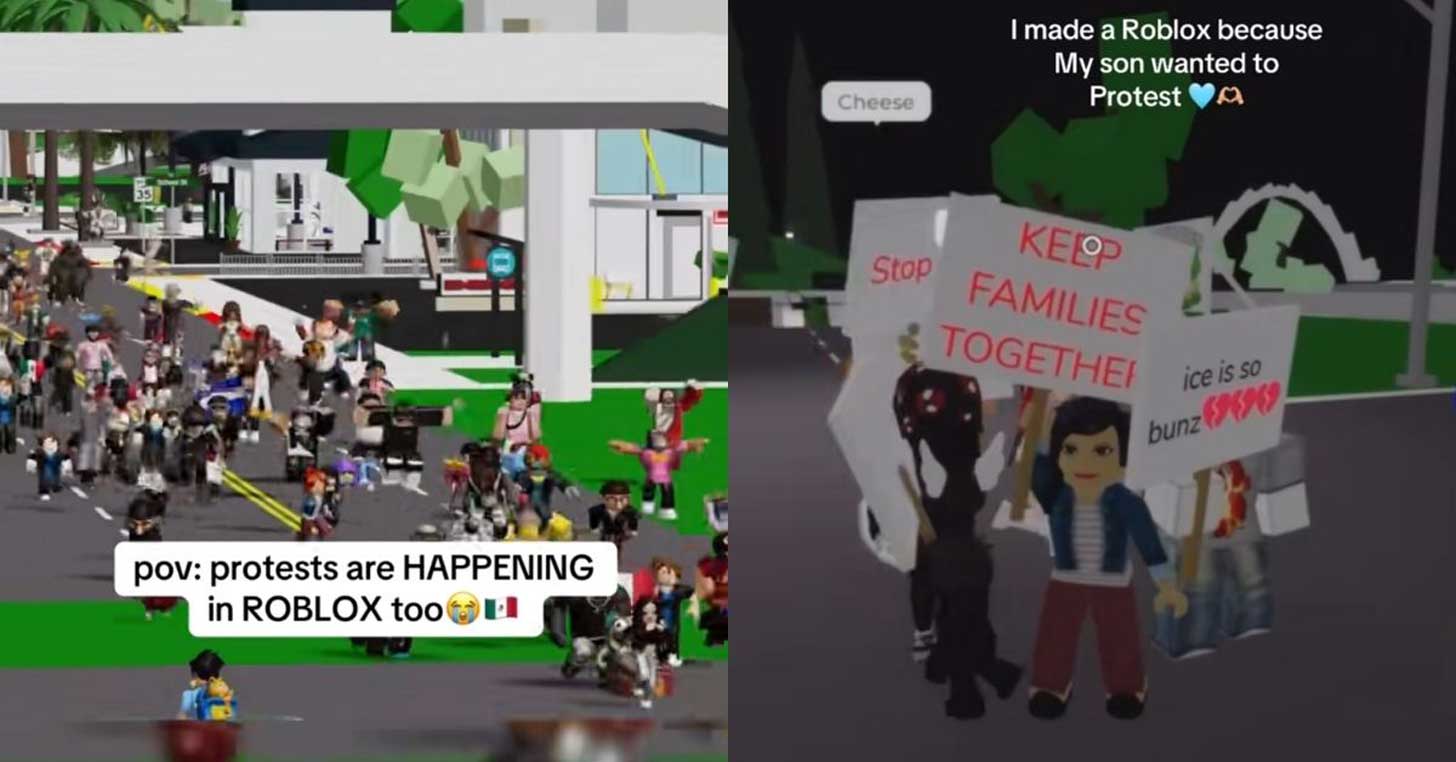
Roblox is a popular MMORPG — or, Massively Multiplayer Online Role-Playing Game — with a wide demographic of children and teens. Last week, kids started creating their own protests in the Roblox world, sharing screen recordings of the online events on TikTok.
In the videos, players are seen holding up signs with anti-ICE sentiments, such as “frick ICE,” “keep families together,” or “ICE out of California,” behind structures that look like police barricades.
On one such video, tech journalist and commentator Taylor Lorenz commented to seek out a statement from the Roblox protest organizers.
They responded publicly, saying, “We can’t really reach out because we are minors.”
The “co-owners” of the protest, named Addy and Aria, did give Lorenz a statement in the comment section, however.
@def_not_addyy28 With @🎸‼️🎶~ARIA~🎶‼️🎸 #fyp #brookhaven #roblox #xyzbca #protest #ice #fdt ♬ Inmigrantes Unidos - Jesus Mendez & Los De La Norte
“We did this because we want to help people know their rights,” the youth replied. “And we wanted to spread awareness about the ICE raids happening in the USA. We wanted people to know that [there] is no such thing as ‘illegal aliens’ in the country.”
While these players seem to be eager to exercise their First Amendment rights, others are also cosplaying as police officers or ICE agents themselves, walking along a protest line or creating in-game vehicles similar to those used by agents in real life, according to Latin Times.
One TikTok comment, which was liked by organizer Addy, speaks to this phenomenon.
“A thing people don’t seem to understand about platforms like Roblox is that this is the next generation’s digital dollhouse. They’re simulating what they see in real life, normally in places like Brookhaven, which is incredibly popular on Roblox,” the comment reads.
“This is how kids play pretend nowadays, instead of playing with dolls and action figures,” the comment concludes. “It’s important they see what’s happening.”
Under the same TikTok video, other Roblox players commented, asking when the next protest would be and if they could join in. They even left some of their usernames in the comment section, pleading “please add me,” and “I want to protest.”
Other videos featuring protest “footage” show characters wearing high-visibility outfits, carrying picket signs, and playing soundtracks like “FDT” by YG and classic Mexican ballads.
Similarly to how things played out in the real world, it seems the protest movements are growing on Roblox, with “No Kings”-inspired demonstrations “shutting down” streets in the game.
Comments include a mixed bag of reactions, with some laughing at “iPad kids” protesting, and others finding the gesture represents the expression of free speech for young people — even from behind a screen.
“I'm crying watching these Roblox ICE protests,” one person wrote on a video. “Kids are so precious.”
“This is amazing to see,” another added. “You all have a voice that matters.”
Header images courtesy of @clips4closet and @mangomoonbae/TikTok
The United States’ newest federal holiday, celebrated annually on June 19, has quickly become its most puzzling one. Four years after President Joe Biden signed the Juneteenth National Independence Day Act, Americans have wrestled with what to make of the holiday.
What is Juneteenth? What is the proper way to celebrate it? Should holiday observers attend barbecues and cookouts? Should Juneteenth’s observance be a day of learning? Is there a way to acknowledge the holiday without misappropriating it?
This confusion likely emerged because many Americans did not even learn about Juneteenth until around when it became a federal holiday in 2021. Moreover, the Trump administration and state legislatures across the country have further complicated matters with their increased efforts to ban the type of education that led to the national recognition of the holiday in the first place.
‘All slaves are free’
Juneteenth – short for June Nineteenth – recognizes the day in 1865 when Maj. Gen. Gordon Granger arrived in Galveston, Texas, with roughly 2,000 federal troops from the 13th Army Corps. Upon arriving, Granger issued General Order No. 3. The order read:
“The people of Texas are informed that, in accordance with a proclamation from the Executive of the United States, all slaves are free. This involves an absolute equality of personal rights and rights of property between former masters and slaves, and the connection heretofore existing between them becomes that between employer and hired labor. The freedmen are advised to remain quietly at their present homes and work for wages. They are informed that they will not be allowed to collect at military posts and that they will not be supported in idleness either there or elsewhere.”

Granger’s order effectively freed 250,000 enslaved people in the region.
Though President Abraham Lincoln issued the Emancipation Proclamation, which freed the enslaved in all the states that had seceded from the U.S., nearly 2½ years earlier, Texas, a Confederate state, rebelled against it.
At the time, Texas had a minimal number of Union soldiers to enforce the proclamation’s emancipation of enslaved people residing within Confederate territory. Consequently, many of those enslaved in Texas remained ignorant of the proclamation’s potential impact on their lives, or of the fact the Civil War had functionally ended two months earlier.
In an interview published in 1941, for example, Laura Smalley of Hempstead, Texas, remembered how her enslaver fought for the Confederacy in the Civil War. He returned without informing those whom he enslaved of their freedom. In her interview, she recounted, “Old master didn’t tell, you know, they was free … I think now they say they worked them, six months after that.”
‘Second Independence Day’
June 19, 1865, a Monday, changed that.
The news of emancipation culminated a generations-long struggle for Black people to obtain a modicum of freedom in the U.S.
For this reason, some refer to Juneteenth as the nation’s second Independence Day. The end of bondage was ostensibly codified in the 13th Amendment ratified later that year.
Spontaneous Juneteenth celebrations emerged almost immediately. Celebrants referred to the day as “Emancipation Day,” “Freedom Day,” “Juneteenth” and “Jubilee Day.” The latter title alluded to the biblical period following seven sabbatical cycles that resulted in canceling debts and freeing the enslaved.
Flake’s Bulletin, a weekly, Galveston-based publication, reported on an Emancipation Celebration occurring on Jan. 2, 1866, that included upward of 800 people. A similar gathering occurred in Galveston on June 19, 1866, in what is now the church known as Reedy Chapel AME. Annual celebrations continued, beginning in southeastern Texas, with events such as historical reenactments, parades, picnics, music and speeches.

Legacies of slavery
While the holiday marked a joyous occasion for some, Juneteenth met early and persistent opposition, particularly in the time following Reconstruction.
For years, local reporting spoke of Juneteenth, as the Galveston Historical Foundation put it, in a “flagrantly racist nature.” Additionally, the racist stereotyping – “idleness” – in the final sentence of Granger’s order simultaneously illustrated its complicated nature while also “[foreshadowing] that the fight for freedom would continue,” National Archives staffer Michael Davis wrote in 2020.
Historian Keisha Blain explains, “The enslavement of Black people in the U.S. may have ended but the legacies of slavery still shape every aspect of Black life.”
Advocates such as Opal Lee, commonly referred to as the “grandmother of Juneteenth,” pressed for Juneteenth celebration to continue and, ultimately, for it to be made a national holiday.
Lee began her advocacy in earnest during the mid-1970s in the Fort Worth, Texas, area. The oldest member of the National Juneteenth Observance Foundation, Lee spearheaded several campaigns to draw attention to Juneteenth. These campaigns included initiatives such as an online petition promoting the holiday’s observance launched in 2019 that amassed 1.6 million signatures.
In speaking on the significance of Juneteenth, Lee said, “Freedom is for everyone. I think freedom should be celebrated from the 19th of June to the Fourth of July; however, none of us are free until we are all free. We are not free yet, and Juneteenth is a symbol of that.”
National recognition
Because of this advocacy, Juneteenth has grown from relatively obscure regional celebrations to, starting in 2021, a federal holiday.
The establishment of the holiday was the capstone of initiatives during the racial reckoning. Historians refer to the racial reckoning as the time period beginning in the summer of 2020 until the spring of the following year that witnessed heightened attention to America’s nagging history of racism.
This reckoning included the historic protests prompted by the murders of George Floyd, Breonna Taylor and Ahmaud Arbery.
During this time, numerous institutions, ranging from colleges and universities to major companies, made commitments to racial equity. The recognition of Juneteenth represented a symbolic means to honor those commitments.
In remarks marking his signing of the Juneteenth National Independence Day Act, Biden said, “Juneteenth marks both the long, hard night of slavery and subjugation, and a promise of a brighter morning to come.”
Backtracking on gains
But within a year, some had already begun to argue the nation had, as community organizer Braxton Brewington wrote, “betrayed the spirit of Jubilee Day.”
Many of the racial equity commitments made during the racial reckoning quickly vanished within a year or two. Economist William Michael Cunningham revealed American companies pledged $50 billion to racial equity efforts in 2020, yet had only spent $250 million by 2021.
By the spring of 2025, companies such as Walmart and McDonald’s announced they will discontinue their diversity, equity and inclusion work. Moreover, Walmart will stop using the term altogether. Amazon, Meta and dozens of other large corporations made similar announcements.
And members of the Trump administration have mounted continual attacks on diversity, equity and inclusion policies and used the term as a politically expedient slur to deride Black people. This is also exacerbated by the Trump administration’s challenges to birthright citizenship, a key right that gave citizenship to the formerly enslaved and later guaranteed important rights to the entire populace.
This major shift has fueled arguments that the U.S. has regressed from efforts toward racial equity and thus undermined the meaning of Juneteenth. And such backtracking arguably makes some Juneteenth celebrations performative exercises rather than celebrations of true racial equity.
As one critic asked, has the holiday devolved “into an exploitative and profit-driven enterprise for companies that disregard the true significance of this day to the Black community?”
All of this has led to increasing confusion over how to commemorate Juneteenth, if at all. Juneteenth is not the first federal holiday with a complicated history. Nevertheless, with other complex holidays, Americans had years to process their misgivings. In short, the nation is still deciding what it means to be free.
This article was written by Timothy Welbeck from Temple University, and was originally published on The Conversation.
Header image courtesy of the African American Library at The Gregory School, Houston Public Library

Every summer, an average of 37 children die in hot cars in the United States. According to the National Highway Traffic Safety Administration, that’s about two lives lost every week during the summer months.
Over half of these deaths occur because a caregiver forgets their child is still in the car. And over half of these deaths are among children under the age of 2.
“1016 children have died in hot cars due to Pediatric Vehicular Heatstroke since 1998,” the website noheatstroke.org shares. “All of these deaths could have been prevented.”
When Louisiana State University engineering students Victoria Irondi, Nnamdi Dike, and Trevor Perrault learned about these statistics, they were moved to take action.

“After learning about the families affected by these incidents, we felt a deep responsibility to develop a solution that could help prevent such tragedies and protect vulnerable lives,” Perrault, an electrical engineering major, said in a statement for the university.
What began as their capstone project, a requirement for graduation, has become a real-life application designed to prevent these tragic deaths.
The trio has designed a smart alert system that uses weight and proximity sensors to detect when a child is left unattended in a car.
“If the caregiver moves too far away while the child is still present, the system sounds an alarm and sends a Bluetooth alert to a separate fob device, with the option to expand into additional notifications,” Irondi, an electrical engineering major, explained.
The project had a personal element to it: Their sponsor, David Jenks’ close family friends tragically lost their baby last summer.
“This project was not just an academic project or challenge; it was a personal and emotional journey,” Dike said in a statement.
Once they had decided to take on the project, with Jenks’ support, the team held regular meetings, shared code, built prototypes together, and consistently built new iterations based on testing results.
Their hard work paid off, and the students were honored earlier this month by the Louisiana Highway Safety Commission and the Louisiana Passenger Safety Task Force, receiving awards at the annual Child Passenger Safety Conference, where they were celebrated by an audience of leaders in the field.

“We’re proud to have created something that honors the families affected by this issue,” Perrault said, “and we are excited about the potential impact this device can have in making vehicles safer for children.”
All three students have received their diplomas this May and now have plans to perfect their prototype. Their goals include improving sensor reliability, minimizing power consumption, and making the design smaller for easier adoption into commercial car seats.
Irondi said the group is eager to explore mass production partnerships or pitch the design to companies that make child safety products.
“Our device is a practical, affordable tool that can make a difference in every lives,” Irondi said.
“The capstone initiative demonstrates how student innovation can translate into real-world solutions, giving future engineers hands-on experience while addressing important societal needs.”
In the meantime, and as temperatures continue to rise this summer, the National Highway Traffic Safety Administration advises the following:
- If you see a child alone in a vehicle, make sure the child is okay and responsive.
- If they are not, call 911 immediately.
- If the child is not responsive and appears to be in distress, attempt to get into the car to assist them, even if that means breaking a window.
- Many states have “Good Samaritan” laws that protect people from lawsuits when they get involved to help a person in an emergency.
Header image by Eddy Perez/LSU