The Satyrium semiluna, or half-moon hairstreak, is a small gray butterfly that looks like a moth at first glance. The wildflower lovers are widespread across North America, from the Sagebrush steppe to the montane meadows of the Rocky Mountains.
But tucked away in the southeastern corner of Alberta, Canada, another colony of butterflies flaps across the Blakiston Fan landform of Waterton Lakes National Park.
Until now, they were thought to be a subpopulation of half-moon hairstreaks — until scientists made a phenomenal discovery: They were a new species of butterfly that had hidden in plain sight for centuries.
The researchers, who recently published their findings in the scientific journal ZooKeys, defined the new species as Satyrium curiosolus.
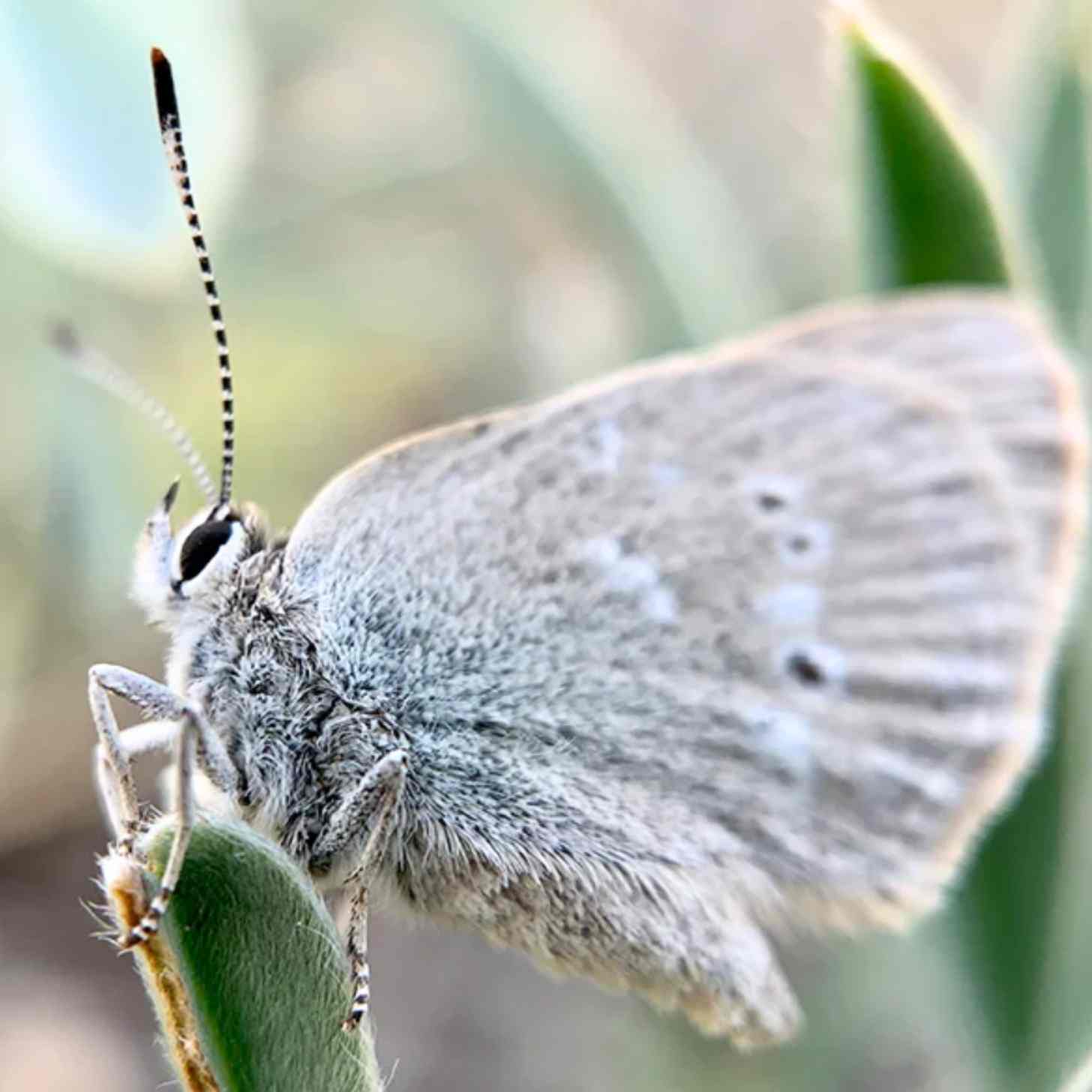
“We propose ‘curiously isolated hairstreak’ as the common name due to its disjunct and unusual distribution,” Zachary G. MacDonald, lead author and postdoctoral fellow at the University of California, wrote in the study.
MacDonald said that there was “no evidence of contemporary or recent gene flow” between the half-moon hairstreak and the curiously isolated hairstreak.
Absence of gene flow, which is the transfer of genetic material from one population to another, indicated that the latter had evolved in isolation.
“Satyrium curiosolus is completely isolated today, and coalescent-based analyses suggest this isolation may extend up to 40,000 years,” MacDonald concluded.
In a press release for Association of Zoos & Aquariums, the Wilder Institute emphasized the importance of the discovery: “Far more than a taxonomic update, this discovery reveals a lineage shaped by 40,000 years of evolutionary solitude — an ancient survivor tucked away in one of Canada’s most iconic and ecologically rich landscapes.”
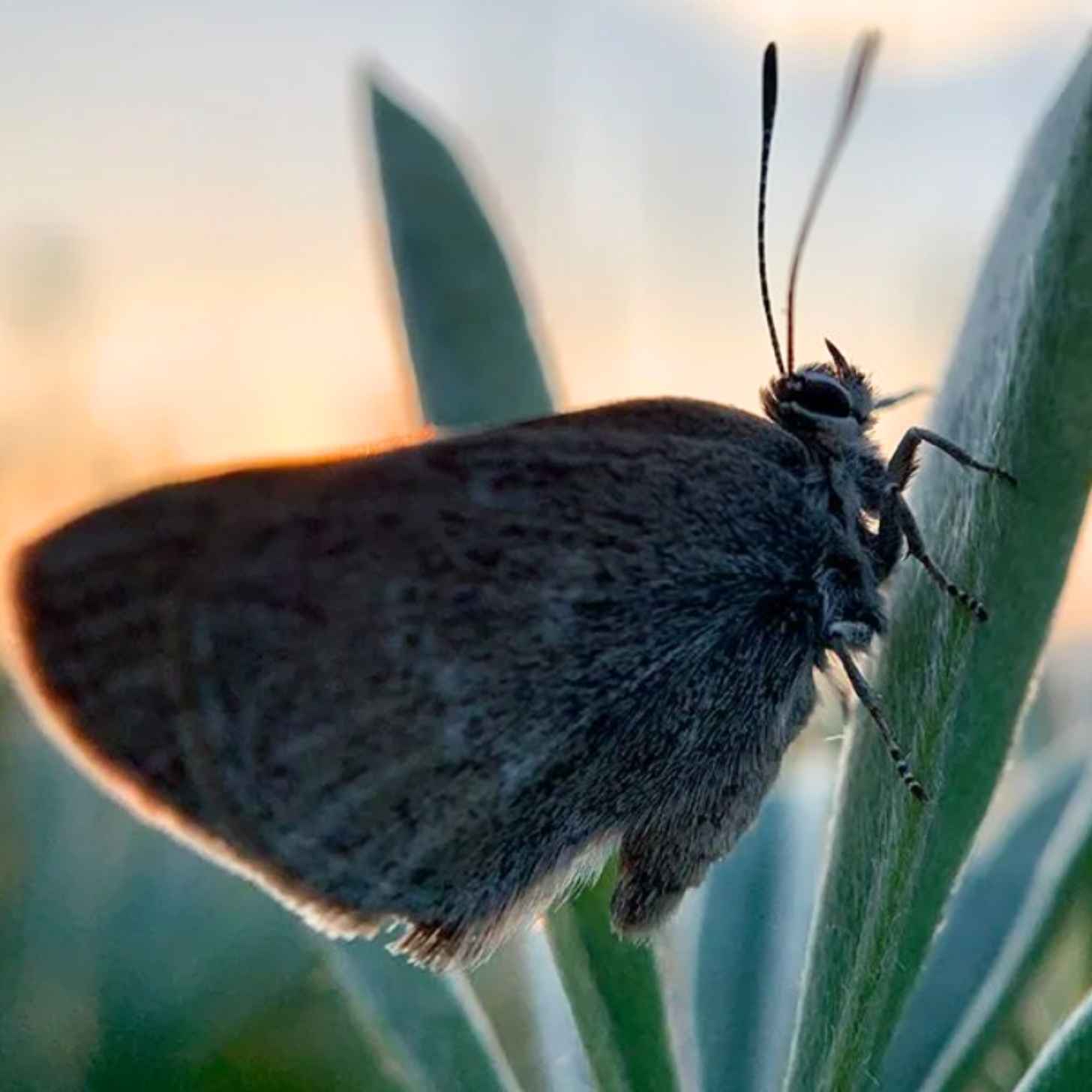
The research, which was funded in part by the Calgary Zoo Foundation and Parks Canada, was applauded by Dr. James Glasier, a conservation population ecologist at the Wilder Institute and Calgary Zoo.
Glasier noted that butterfly species had been uniquely shaped by 40,000 years of isolation in Alberta.
“With its official recognition as a distinct species, the curiously isolated hairstreak is a powerful example of how long-term isolation shapes biodiversity,” Glasier said on behalf of the Calgary Zoo.
“But its rarity and extreme specialization also make it incredibly vulnerable — there’s no fallback population to sustain its survival.”
Due to its isolated habitat, on the grasslands of Blakiston Fan, MacDonald cautioned that the new species’ “low genetic diversity” may hinder its ability to adapt to “accelerating climate change.”
So, he proposed a solution: Genetic rescue — a conservation strategy that involves increasing the genetic variation of a population via breeding.

“Genetic rescue can introduce beneficial genomic variation that is integral to rapid adaptation, and hybrid vigor has long been recognized as a possible benefit of hybridization, even between distinct species,” MacDonald explained.
“Hybridization is common between species, and should not always be viewed as undermining species-level recognition,” he added. “The possibility of genetic rescue should be regularly revisited as local climatic and habitat conditions at Blakiston Fan continue to change.”
In an interview with CBC News, MacDonald said that this discovery was “just the tip of the iceberg.”
“I think what's most interesting to us is: What do we do about the conservation of this highly endangered species now?”
You may also like: 'Rare and unusual' deep-sea 'pancake' creature discovered by scientists in Australia
Header image via Jan Mosimann (CC BY-ND 2.0)
As residents of Itamaracá, an island in the Brazilian state of Pernambuco, mother and daughter duo Edna and Maria Gabrielly Dantas saw the first-hand impacts of tourism on the coastal area.
Home to stunning beaches and biodiversity, Itamaracá hosts visitors from all over the world — who often leave waste in their wake.
But then the pair had a eureka moment: What if they took this trash and turned it into an economic opportunity?

During the COVID-19 pandemic, Edna and Maria started gathering glass bottles along the coast, along with recycled wood and other reusable objects found in their beach cleanups.
It took them two years to gather all of the materials, and then they began construction on Casa De Sal — The Salt House.
“These bottles aren’t going to disappear. Without policies to regulate their production or penalize abandonment, the least we can do is find ways to reuse them,” Edna told Black Enterprise. “If you throw a bottle away and it doesn’t break, it’ll still be there in a year.”

Since the start of the journey, the Dantas women have collected over 13,000 bottles, though an estimated 8,000 were what they used to build their home.
The house has seven rooms, with walls made of glass bottles cemented into place, partitions built from recycled wood palettes, and even roofing made with upcycled toothpaste tubes.

“The first year and a half was pure ingenuity: no conventional bathroom, washing dishes in a basin. But we never lost sight of our vision,” Maria told Diario AS.
Now, the Salt House is listed as a destination on Airbnb, and the duo hosts workshops to teach others in their community what they learned about this sustainable building method. They also now have an upcycled accessory brand, hand-sewing tote bags with other found materials.

Although successful and savvy, Edna and Maria have faced discrimination as two women in the building industry.
“People think that one day we found a magic bottle with a genie inside,” Maria told Black Enterprise. “They don’t realize this requires skill, management, vision. And being a woman in this environment is doubly hard.”
But ultimately, it all comes very naturally. Edna grew up in a family that reused materials out of necessity and passed her innate creativity on to her daughter.
“My childhood was marked by creativity,” she told Globo. “I made my own bamboo toys, recycled whatever I could. We didn’t know it was environmental activism, it was just how we survived.”
Indigenous to the Quilombola, an Afro-Brazilian people who are descendants of Africans who escaped slavery and started their own settlements in Brazil, the Dantas women see it as their responsibility to respect nature, with roots both in African and Indigenous cultures.
“Black women reviving themselves … we are the largest population, social, familial, and economic base in Brazil. Also, the largest neglected and exterminated base,” the Dantases shared in a social media caption, translated from Portuguese.

“When you deny the right to housing, food, health, education, care for the Earth and good living, you are also denying the right to life. And we have a social duty with our legacy to claim them all.”
In another social media post, Edna shared an alarming statistic that claims it can take up to seven generations — 184 years — for Black women in Brazil to buy a house of their own. Edna cites “environmental racism” as the catalyst for this project, one she hopes can provide repair and healing for everyone in her community.
She concludes: “We … [are] committed to being part of the practical actions within a time that demands more awareness, responsibility, harmony, and reconnection with nature.”
Header images courtesy of Casa de Sal/Instagram
During a routine research dive off the coasts of Southern California and Alaska in 2021, Occidental College professor Shana Goffredi scoured the ocean floor looking for methane seeps — deep-sea spots where methane gas bubbles up from the Earth’s crust.
After scooping up samples 3,000 feet below the surface, Goffredi and her team took them back to the lab “just to see if there was anything unusual about them.”
That’s when they discovered three new species of deep-sea spiders.
In addition to living exclusively in methane seeps and hydrothermal vents on the ocean floor, the Sericosura sea spiders displayed a curious behavior: They consumed methane gas.
“Sea spiders at hydrothermal vents and methane seeps are understudied,” Goffredi and her colleagues explained in the new study, which was published in the Proceedings of the National Academy of Sciences.
“Sericosura sea spiders now join the likes of other overlooked, yet abundant, small marine animals that take advantage of methane.”
Goffredi, who specializes in the symbiosis between bacteria and invertebrates on the seafloor, was hungry to know more.
In 2023, the professor and her team of undergraduates returned to the ocean habitat with an underwater submersible. But at a centimeter long, the sea spiders were hard to spot.
Especially because they were translucent.
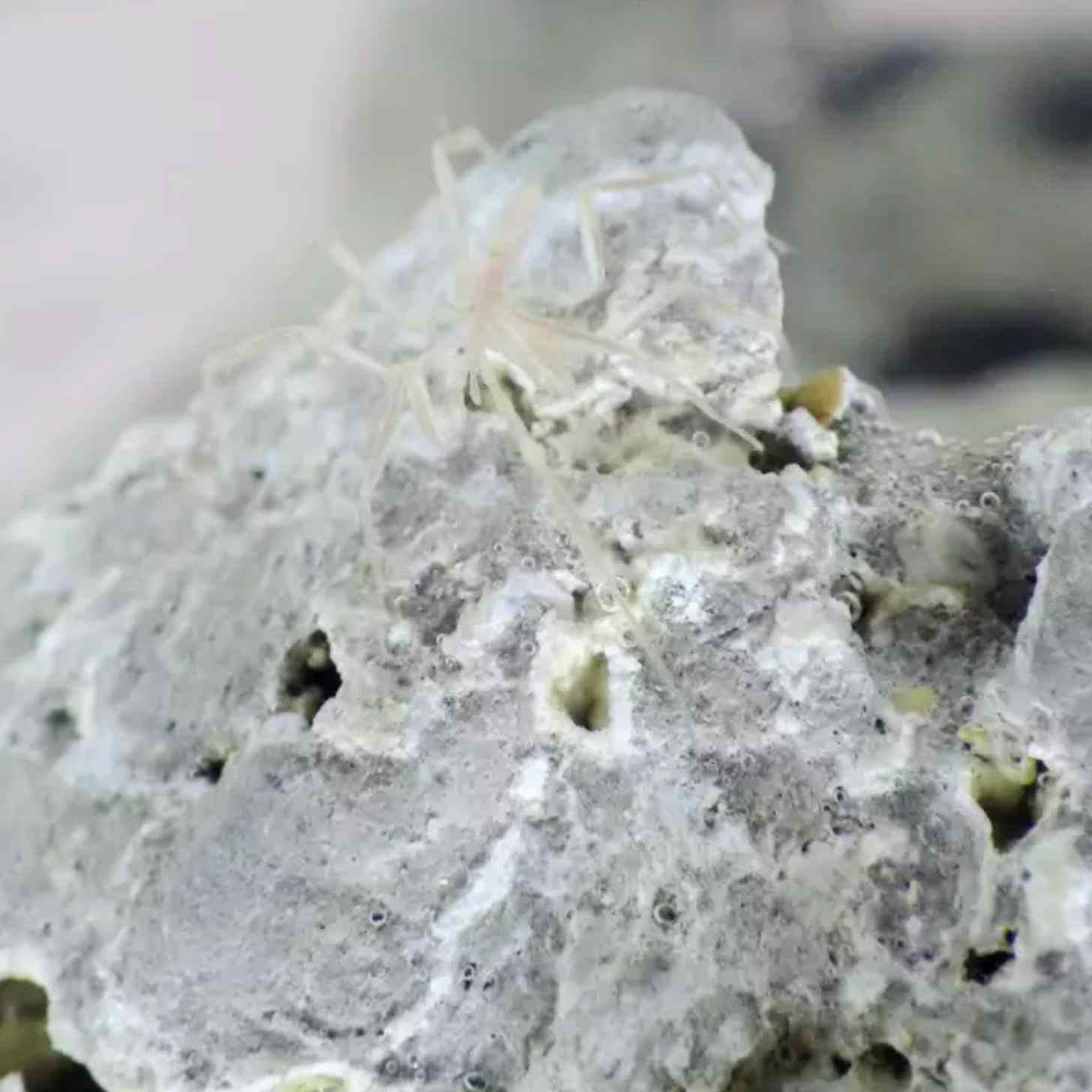
“I came up out of the submersible all dejected because I thought we didn’t collect any,” Goffredi told SFGate. “And it turned out we’d collected over 30 of them.”
After securing more samples, the team confirmed a long-held hypothesis. Unlike other spiders — both deep sea and on land — these new species of Sericosura were physiologically unique.
They had “a coat of methane-oxidizing bacteria on their surface” which allowed them to collect methane on their exoskeletons.
“Methane has been recognized as a potentially important source of carbon and energy for lake food webs,” Goffredi and her colleagues wrote.
“In the case of sea spiders, however, they appear to cultivate and consume the methane-oxidizing bacterial community from their bodies directly, rather than from abiotic surfaces.”
Close-up pictures of the spiders, which have a set of “lips” fringed with fleshy bumps and three miniscule teeth, may serve as nightmare fuel for any unsuspecting arachnophobes who scroll past this latest ocean discovery.
Goffredi, however, finds them “extremely adorable.”

“While the deep sea feels far away, all organisms are interconnected, and the processes in one ecosystem affect the other,” Goffredi told SFGate.
Goffredi suspects that 11 other recently discovered deep-sea spiders may have “methane-sucking” tendencies, too.
As she looks forward to future expeditions, Goffredi concluded that the groundbreaking discovery “reveals a new biological conduit for methane input into ecosystems” and “expands our understanding of C1 compound cycling in the ocean.”
“The deep sea is so important. It’s involved in climate regulation, production of oxygen, and supply of fisheries,” Goffredi said.
“So it’s really important to understand the biodiversity of these unique places.”
Header image via Shana Goffredi
You may also like: A new animal with 200 legs was just discovered, and it's sucking up deep-sea trash
As homelessness continues to rise — and housing solutions risk losing federal funding — major cities are working to figure out how to best develop affordable housing units for people facing housing insecurity.
Tiny home units, both for permanent and temporary housing, have become a popular fix, but a new development in the North Bay Area has residents doing double takes.

With sleek white exteriors that look akin to something you'd see in a sci-fi film, the pods — by Nessel Housing — are popping up for tours in Santa Rosa, California.
They’re what Homes 4 the Homeless CEO Steve Schneider calls “Space Capsule Housing.”
In reality, these pods are simply accessory dwelling units (or ADUs) that were originally designed by Vessel Homes in China as luxury “glamping” units, priced between $69,000 to $109,000.

But when Schneider found himself homeless after a devastating fire in 2017, he realized they could also be a solution for disaster relief and homelessness. That’s when he created Nessel Housing, a subsidiary of the nonprofit.
“After I lost my home in the Tubbs fires, we created the nonprofit for people like myself who [have] been through disasters,” Schneider told ABC7 News.
“I want to show affordable housing can exist in California and Sonoma County,” he added, saying that he wants to repurpose these vessels into 100% affordable housing.

“There are 6,000 voucher holders in Sonoma County alone,” he said. “Those people are forever renting.”
Schneider envisions a community of 130 space capsules on a six-acre parcel of land he has discovered in north Santa Rosa. According to ABC7, several Sonoma County supervisors support the space capsule housing initiative.
Weize Crediford and Angel Escobar from the organization West County Community Services Housing stopped by for a tour of one of the capsules.
“Anybody who’s been unhoused or had to struggle deserves something this special,” Crediford said.
“[It’s] honestly great,” Escobar added. “I hope to see more around the county to help with [the] housing crisis, to be honest.”

Though small, sitting at approximately 400-square-feet, the Nessel pods are made with recycled aircraft aluminum and a galvanized frame, reportedly engineered to “withstand Category 5 storm conditions.”
Durable for about 40 years of service, the homes are also equipped with eco-friendly characteristics, like solar power, battery backup, incinerator toilets, and water purification systems. They also have plenty of windows, which Schneider thinks makes the area appear much more spacious.
If privacy is an important matter, the drapes close over the windows with the touch of a button, and residents can have comfortable access to a galley kitchen and full bathroom, along with the living and sleeping areas.
With California recently passing legislation to allow the development of more residential ADUs, reduced taxes for affordable housing, and streamlined zoning and permitting for interim housing, these pods could be much closer than a galaxy far, far away.
“We want to create an ideal community using these so we can showcase to the world,” Schneider told ABC7.
“With vessel homes, the future of housing is not just a dream; it’s here,” a video about the invention states. “It’s sustainable, it’s affordable, it’s innovative. It’s a solution for the housing crisis and a beacon of hope for millions.”
Header image courtesy of Nessel Housing/Facebook
Every day the Good Good Good team collects the best good news in the world and shares it with our community. Here are the highlights for this week!
If you want to get good news in your inbox every day, join the Goodnewsletter — the free daily newsletter designed to leave you feeling hopeful.
The Best Positive News We’re Celebrating This Week —
The NWSL’s Los Angeles-based team, Angel City, distributed 10,000 shirts to fans that said “Immigrant City Football Club”
At its Saturday night home game, Angel City — the National Women’s Soccer League’s team based in Los Angeles — distributed t-shirts to fans that said “Immigrant City Football Club.”
The shirts were distributed in solidarity with immigrants in the city who have been the target of immigration raids by the Trump administration, which have also resulted in protests breaking out throughout the city.
Members of the team and coaching staff also wore the shirts before the game. The back of the shirts said “Los Angeles is for Everyone” in English and Spanish.
Why is this good news? Using its influence for good, Angel took a powerful, important stance to help their neighbors who feel fear and uncertainty know that they belong. The club said, “We know that our city is stronger because of its diversity and the people and families who shape it, love it and call it home.”
Netflix released a documentary about a prison’s quilting club. Now, they’re ‘overwhelmed’ with donations
→ Read more
Deforestation is already down 33% so far this year in Colombia
In the first quarter of 2025, Colombia saw a 33% drop in deforestation compared to the same period last year. The drop was thanks to stronger community coordination and a crackdown on environmental crime.
Deforestation fell from 40,219 hectares in early 2024, to 27,000 hectares this year. In the country’s Amazon national parks specifically, deforestation dropped by 54%.
Despite this good progress, the Amazon is still the country’s most impacted region, making up 69% of the country’s deforestation.
→ Read more
Seattle is preserving tree cover while meeting demand for more housing
Cities around the U.S. balance both the need for more housing with the need to preserve and grow trees to combat climate change — and Seattle is finding the sweet spot.
While a new state law requires more housing density but not more trees, developments are still aiming to do both. Architects at one project placed 86 housing units where there were once only four, while preserving more than 30 trees.
One tree is more than 100 feet tall, now standing at the center of a group of apartment buildings and cooling the nearby buildings with its shade — not to mention filtering cleaner air for residents.
Why is this good news? Trees provide cooling shade, absorb carbon pollution, reduce stormwater runoff, reduce flood risk, and so much more. Architects and developers are proving that even in urban areas, we can address the need for more housing and for accessible green space — no tradeoffs needed.
→ Read more
Park rangers in a Senegalese national park celebrate as beloved ‘Ghost elephant’ makes rare appearance
→ Read more
Drug deaths among young people in the U.S. are dropping rapidly
In 2021, fentanyl and other drugs killed more than 31,000 people under the age of 35 — in 2024, that number dropped to around 16,690 fatal overdoses.
While the exact cause of the decline is unknown, it’s likely a number of factors. One, for example, could be advocacy from the thousands of grieving families impacted by the overdose crisis, who worked to educate people about the unique dangers of fentanyl.
Researchers also point to factors like the wider distribution of Narcan, or naloxone, more accessible addiction healthcare, and less risky drug and alcohol use among young people — the number of teens abstaining from substances was at its highest level in 2024.
The Minnesota shooting also took the life of the lawmaker’s dog — now, donations are pouring in to a local service dog training program
Minnesota state lawmaker Melissa Hortman, her husband, and their family dog, Gilbert, were fatally shot Saturday morning in a “politically motivated” attack. Now, a nonprofit has become an outlet for people to share their grief.
Gilbert was a trainee of Helping Paws, Inc., a Minnesota-based nonprofit that trains assistance and service dogs to improve the lives of veterans, first responders, people with physical disabilities, and more. The Hortman family has about a 10-year history of supporting the organization.
And now, people looking for a way to process their grief have been flooding the organization with donations.
Why is this good news? When we’re heartbroken and things feel out of our control, giving back and doing something to help others … helps. While these acts of generosity can’t bring the Hortman family, or Gilbert, back — they can make sure their lives continue making an impact.
→ Read more
As student loan payments resume, these schools try a new ‘pay-it-forward’ option instead: ‘No interest, no fees’
→ Read more
The city of Denver broke national records in reducing unsheltered homelessness
Denver Mayor Mike Johnston’s administration says, based on the federal Point in Time count, the city “recorded the largest multi-year reduction in unsheltered homelessness in American history.”
Unsheltered homelessness refers to people living outside, including in tents, cars, and other spaces not meant for human habitation. This year’s count showed there were 785 people living without shelter in the city, compared to 1,423 in 2023 — a 45% reduction.
It’s important to note that the PIT count is a one-night tally of every person experiencing homelessness in the country. Experts urge caution when using the data, as it’s highly variable and doesn’t factor in things like weather.
While not a year-round picture, the PIT data is still important in helping cities make decisions about addressing homelessness — because there’s still a lot of work to do.
We can celebrate Juneteenth the ‘right’ way by learning more about its history — and its present
Confusion around how to celebrate Juneteenth — should observers attend cookouts? Or is it a day of learning? — likely emerged because many Americans didn’t even learn about the significance of June 19, 1865 until it became the newest federal holiday in 2021.
Some refer to Juneteenth as the nation’s second Independence Day, or “Emancipation Day,” “Freedom Day,” and “Jubilee Day.” Today, celebrants will look to the earliest Juneteenth celebrations, with events such as historical reenactments, parades, picnics, music and speeches.
At the same time, it’s important to acknowledge that the holiday met early and persistent opposition, particularly in the time following Reconstruction. And it still does today, with the Trump administration and state legislatures across the country cutting funds and attempting to ban the type of education that led to the national recognition of the holiday in the first place.
→ Read more
One Black Texas family’s fight for freedom on Juneteenth offers lessons for lawmakers erasing history today
Samuel Walker Houston — son of a man who was freed on Juneteenth — founded one of the “leading schools” in East Texas with the belief that young Texans of all races needed to learn an account of history that differed from the white supremacist narrative that dominated Southern history.
He joined forces with two white professors to fight against racism and racist representation of Black people in the state’s schools.
They faced plenty of pushback — with the same justification provided by Texas lawmakers still today, as many try to restrict the teaching of systemic racism in public schools and ignore the lessons and realities represented by the Houstons’ lives.
→ Read more
China is building the world’s largest national park system, with a network of wilderness bigger than Texas
China created its first national park ever just four years ago — almost 150 years after the U.S. established its first national park. In the years since, China has opened four more, totaling 57 million acres so far.
It’s part of a larger national plan to create 49 parks covering 272 million acres by 2035 — triple the size of the iconic U.S. National Park System.
The parks it’s already established comprise alpine peaks, tropical rainforests, glaciers, deserts, and wetlands, and protect rare animals like the Giant Panda, Siberian Tiger, and Asian Elephant. They’re also preserving cultural heritage, boosting local economies, and encouraging tourism.
Why is this good news? As more and more parts of the world face development, it’s a hopeful shift to see a large country like China also urgently prioritizing the preservation of natural spaces — protecting critical wildlife, ecosystems, and ultimately, human life.
More good news of the week —
The British government plans to extend a ban on bottom trawling to around 30,000 square kilometers across 41 marine protected areas. The announcement followed calls from acclaimed naturalist David Attenborough and Prince William for urgent measures to protect the world's oceans.
Oregon passed a bill to protect school libraries from book bans. The bill is expected to be signed into law and will ensure books can no longer be banned solely because they discuss sexuality, religion, or other topics, nor can they be removed because they are written by someone from a protected class.
In a conservation success story, an endangered flower is blooming in “astonishing numbers” in California. Scientists were stunned this spring to find 16,000 Camatta Canyon amoles in San Luis Obispo County, since the flower was previously thought to have a worldwide population of 10,000 plants.
In a historic first, a Southern Ute Tribe member was elected to chair the Colorado water policy board. Lorelai Cloud became the first Indigenous person to hold the position since the board was founded in 1937 to set water policy within the state, fund water projects statewide, and work on issues related to watershed protection, stream restoration, flood mitigation, and drought planning.
For the first time in a decade, new standards will improve animal safety, welfare, and conservation at British zoos. Under the changes, elephants must be given larger habitats, and practices like the long-term tethering of birds of prey and letting visitors touch fish and cephalopods such as rays and octopuses will be discontinued.
One of Germany’s largest asset managers divested from ExxonMobil, accusing it of “insufficient commitment” to climate targets. While Exxon says it is pursuing up to $30 billion in lower-emission investments from 2025 through 2030, those investment opportunities are conditioned on “the right policy and regulation as well as continued technology and market development.” (Paywall)
Six endangered wolf pups born in Missouri will be fostered into two wild packs in New Mexico. The pup foster is part of a conservation effort to restore genetic diversity and the overall population of the Mexican wolf, a keystone species whose numbers have dwindled to fewer than 300 in the wild.
In a “landmark shift” for disability rights, India’s Supreme Court ruled that digital access is an essential facet of the right to life. Legal experts hail the decision as a constitutional milestone that mandates inclusive digital ecosystems and reaffirms the dignity and autonomy of people with disabilities.
🏳️🌈 Bucharest Pride celebrated its 20th year by setting a new record turnout. Organizers said about 30,000 people took to the streets of Bucharest on Saturday in a march to celebrate the diversity and visibility of the LGBTQ community in Romania — it was the event’s largest turnout in history.
The U.S. is looking to give endangered species protections to the ‘world’s most trafficked mammal.’ Despite it already being illegal to trade them, tons of scales representing thousands of pangolins have been found around the world in recent years — these new protections would impact seven species in danger of extinction.
Fifteen years in the making, Whoopi Goldberg co-founded the first-ever global sports network exclusively dedicated to female sports. Goldberg said that everybody she approached with the idea “patted me on the head and said no one wants to watch women's sports — but they do, I do.”
Faith leaders in the U.S. are joining protests against ICE raids, sharing messages of nonviolence and leading by example. One reverend in Los Angeles positioned himself between law enforcement and his fellow protesters, saying he was upholding his moral duty to stand against injustice in a nonviolent manner because “silence in the face of injustice is complicity.
A new California bill would prohibit ICE officers from wearing masks in the state. If passed, the legislation would prevent police at all levels from covering their faces with masks or balaclavas while working, and would require them to be identifiable via uniform.
College students in Louisiana invented a “smart car seat” to prevent hot car deaths in infants. The project started as a graduation requirement for three LSU seniors and grew into something much more meaningful — a means to help bring the average number of children who die in hot cars every summer in the U.S. from 37 to zero.
🏳️🌈 Circumventing a law that allows police to ban LGBTQ marches, the mayor of Budapest is organizing Hungary’s Pride march anyway. Hungary’s parliament passed legislation in March that creates a legal basis to ban LGBTQ marches, and lets police use facial recognition cameras to identify people who attend. (Paywall)
The U.K. parliament passed a law banning women from being prosecuted for terminating their own pregnancy. The new law makes it illegal to investigate, arrest, prosecute, or imprison any woman in England or Wales for terminating her own pregnancy — no matter what term or trimester she’s in.
On July 4, 2026, the United States of America will celebrate its 250th birthday. To prepare for the big celebration, museums across the country are inviting the public to answer the question: “What’s your wish for America’s future?”
In a project designed by 26-year-old artist Katie Costa and developed by Made By Us, a nonprofit that promotes civic engagement among Gen-Z, thousands are responding.

The initiative has two components: One online, hosted by The New York Historical, where anyone across the nation can contribute to a virtual “wish wall,” sharing their hopes for the future of American democracy; and real-life “wish wall” installations in 30 cities.
Costa’s flagship mural is on display at the Smithsonian National Museum of American History through Independence Day of this year. The project is part of Civic Season, an annual ritual that has been held between Juneteenth and the Fourth of July since 2021 to "spark a deeper connection with the United States," according to Made By Us.
The mural is a colorful, 28-foot piece with “portals” to the next 10, 50, and 100 years in the U.S., with prompts in both English and Spanish. Organizers say they anticipate at least 10,000 responses by the end of the installation.

“The portals invite visitors to step into the future and visualize themes and values they hold dear to them,” Costa said in an interview about the piece.
“Participants don’t need perfect answers, just a quick moment of curiosity and hope. Change begins with mindful intention. I hope this will be a memory that visitors can hold on to as a spark of hope that positive change is possible and is consistently in the works.”
The responses visible online are already indicative of that positive change, with ideas and dreams shaped by the founding of the country, along with the current political moment.

“My birthday wish for America is more empathy, more tolerance, more open-mindedness, more compromise, more sharing,” Karen from Virginia writes.
Brad from Utah chimes in, sharing his wish that “we rediscover what makes us all self-identified American citizens: A nation of immigrants seeking in common a commitment to the rule of law.”
“My wish is that we think deeply about who is and who has been included in the ‘we’ of ‘We The People,’” Anna from New York adds. “My wish is that we can honestly reckon with historical inequalities to build a more inclusive and true democracy moving forward.”
“No more mass shootings,” Alexandra from New Hampshire shares.
“My wish is for people to stand up and support the representative democracy we still have,” Barbara from Pennsylvania posits. “There is nothing so precious as the Constitution … vote wisely.”
“My wish is for clean air, clean water, vaccines, rule of law, safe lives, respect, equality, and peace,” Carol from New York writes. “For ALL, not a select few.”
“I wish for the U.S. to start thinking a lot more about the outcomes we want to see,” Connor of Washington adds. “Higher graduation rates, lower poverty rates, abundant housing options, good union jobs, etc. If we start with what we want to see, that’ll help us make it a reality.”
Connor’s point is aligned with the ultimate mission of the project: To help unite Americans in their pursuit of a better country.

“I hope people can take away the comfort of a shared vision,” Costa said about the wish walls. “You are not alone in imagining something better for our country and communities. I hope people feel a sense of connection to their imagination that can be fuel for change, no matter how big or small.”
Due to the interactive nature of the wish walls, Costa added that her design will never fully be “finished.” Instead, it will act as a living artwork built by the people who encounter it.
She said she envisioned it as a “live feed of dreams,” with each wish floating into a “big, collective cloud.”
“As you read through this shared collection of hope, you’ll notice more similarities than differences,” Costa added. “Our wishes aren’t isolated, they’re a part of a living network that can be uplifted and embraced to spark positive change.”

The wish walls won’t just disappear after the 250th birthday celebrations. The wishes at the Smithsonian will all be archived in a time capsule to be opened in 50 years, on America’s 300th birthday in 2075.
“The Wish Wall is an invitation for visitors to dream with unrestrained possibility, and to wish for something greater than each of us can accomplish alone,” Costa concluded.
“Your wishes are a testament to a future we are brave enough to imagine and a glimpse into our collective and hopeful perseverance. This piece is a reminder that our future is not fixed. It’s ours to reimagine together.”
Header image courtesy of Made By Us
A standard pack of cheese singles contains 24 slices, all individually wrapped in 24 pieces of plastic and packaged again in a larger sleeve.
According to a Simmons National Consumer Survey, 30.45 million people eat a pound or more of cheese singles per week — and that’s just in the United States.
All of that cheese packaging ends up in landfills and incinerators, adding to the global heap of plastic waste.
As an alternative to single-use plastic wrapping, Ogilvy Colombia and Nestlé Central America have created “Self-Packing Cheese.”
The new biodegradable film is designed to decompose within 300 days of disposal — in stark contrast to the estimated 1,000 years it takes for standard plastic to break down.
And it’s entirely made from cheese waste and whey.
Whey is the byproduct created when liquid separates from milk during the cheesemaking process.
In the industry, billions of liters of whey are produced annually, and — when improperly disposed of — whey waste leads to water pollution and oxygen depletion in waterways around the world.
In fact, a study published in Body & Society found that dumping whey is 175 times more damaging to the environment than dumping raw, untreated human sewage.
“The new packaging has a double-edged impact, reducing plastic waste and giving discarded whey a second life,” Ogilvy Colombia and Nestlé Central America said in a joint press release.
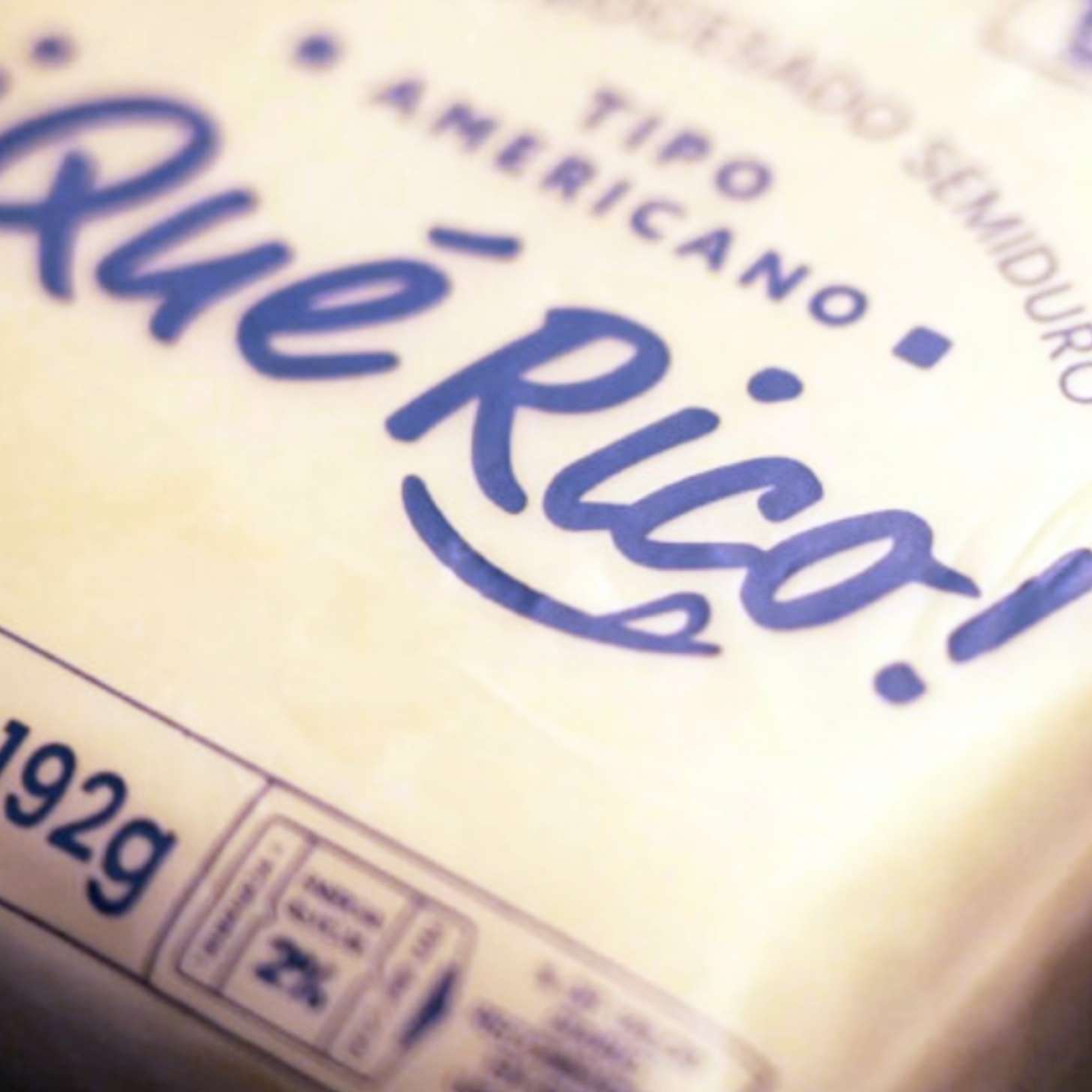
“Nestlé is testing Self-Packing Cheese as a primary and secondary packaging of Nestlé ¡Qué Rico! cheeses distributed in Panama, and aiming to produce 5.500 tons of the product with 100% biodegradable whey-based packaging.”
To create the Self-Packing Cheese, the design teams blended microorganisms in a controlled lab with byproducts from the cheesemaking process
“We discovered that the solution was in the cheese itself,” said chemical engineer Adrianna Sarmiento. “That’s why we created bioplastic from whey.”
The resulting compound resembles a collection of small pellets, which are then processed with injected air and transformed into thin, plastic-like sheets. The cheese waste plastic, which has a slight waxy tinge from the whey, meets FDA standards and can still be printed over for branding purposes.
It should be noted that Nestlé is not immune to criticism. Since the 1970s, the company has been widely criticized for using child labor in its cocoa supply chain, particularly in West Africa, spreading misinformation about infant nutrition, and siphoning gallons of water from federal land.
Despite Nestlé’s clouded history, wider adoption of biodegradable designs portends more sustainable and circular practices within the food industry at large.
“This could revolutionize food packaging,” a promotional video promises. “The future of Nestlé packaging isn’t limited to cheese.”
Header image via Ogilvy
Sometimes, hope can have a reputation for being a symptom of wishful thinking, or an unserious pursuit of positivity.
But according to a new study from the University of Missouri, hope is a powerful emotional force that may even be more essential to our well-being than happiness or gratitude.
A team of researchers, led by Megan Edwards and Laura King from the university’s Department of Psychological Sciences, decided to pursue a study outside of the field’s existing belief that hope is tied only to goal-setting and motivation.

“Our research shifts the perspective on hope from merely a cognitive process related to goal attainment to recognizing it as a vital emotional experience that enriches life’s meaning,” said Edwards, who earned a doctorate at Mizzou and is now a postdoctoral researcher at Duke University.
“This insight opens new avenues for enhancing psychological well-being.”
The research, recently published in the American Psychological Association’s “Emotion,” compiled six separate studies with more than 2,300 participants from diverse backgrounds.
Through these studies, the researchers analyzed a range of emotions, such as amusement, contentment, excitement, and happiness. Findings consistently demonstrated that only hope was a consistent predictor of a stronger sense of meaning in life.
“Experiencing life as meaningful is crucial for just about every good thing you can imagine in a person's life,” King said in a statement for the university.
King added that experiencing meaning is a central part of psychological functioning and predicts other important health outcomes, like happiness, high-quality relationships, higher income, and improved physical health.
With their findings in mind, the researchers encourage anyone to do what they can to build hope each day as a way to enhance their quality of life.
One suggestion is to pay attention to and appreciate even the smallest of positive moments, getting people in the habit of noticing when things are going well.

Another suggestion from the researchers is to “seize opportunities,” even in chaotic and uncertain times. Particularly applicable to this moment in time, this practice can help instill a sense of forward momentum and encourage people to appreciate growth in themselves and others.
“Recognizing ongoing progress can inspire thoughts of a positive future,” King and Edwards posit.
The researchers also point to caring and nurturing activities as inherent hope-builders, like tending to children, planting a garden, or taking on a long-term project that requires individuals to invest time and patience for a possible outcome.
And when things are at their bleakest, while it might sound trite, the researchers remind people that nothing lasts forever.
“Situations can change,” a statement from Mizzou concludes. “And hope begins with the belief that they will.”
A groundbreaking study that illuminates the deeper impact of hope, the researchers are eager that it will pave the way for other studies of this nature.
According to the university’s press release, future research aims to explore the power of hope in especially difficult times, with the goal of developing strategies that help people stay hopeful and find meaning in life, especially amid adversity.
“This cornerstone of psychological functioning is not a rare experience,” King said of finding meaning in life. “It is available to people in their everyday lives, and hope is one of the things that make life feel meaningful.”
You might also like: 48 best hope quotes to encourage and inspire you
Header image courtesy of Elina Fairytale/Pexels
This story was originally published by Grist. Sign up for Grist’s weekly newsletter here.
People in affluent countries around the world are willing to tax themselves to address climate change and ease poverty.
That idea defies conventional political wisdom, which typically holds that people hate taxes. It emerged in a survey of 40,680 people in 20 nations that found strong support for a carbon tax that would transfer wealth from the worst polluters to people in developing nations. Most of them support such policies even if it takes money out of their own pocket.

Adrian Fabre, lead author of the study published in Nature, wasn’t surprised by the results. He studies public attitudes toward climate policy at the International Center for Research on Environment and Development in Paris, and said this is the latest in a long line of studies showing that climate-related economic policies enjoy greater support, on the whole, than people assume.
This study asked people how they’d feel about a global carbon tax: The larger an individual’s contribution to climate change, the more they’d pay. In exchange, everyone in the world would receive about $30 per month.
“People with a carbon footprint larger than the world average would financially lose, and those with a carbon footprint lower than the world average would win,” Fabre said.
The survey included 12 high-income countries and eight “middle-income” countries like Mexico, India, and Ukraine. The researchers surveyed at least 1,465 people in each nation over several weeks in May 2024. Japan showed the highest support, with 94% of respondents backing the idea of linking policies that combat inequality and climate change.
That said, the policy was least popular in the United States, where the average person is responsible for about 18 tons of CO2 a year. About half of Americans surveyed supported the tax. Three in four Biden voters favored the idea. Among Trump voters, just 26% did. In contrast, support ran as high as 75% across the European Union, where per-capita emissions are 10 tons.
“We found that people in high-income countries are willing to let go of some purchasing power, if they can be sure that it solves climate change and global poverty,” Fabre said.
Americans would end up foregoing about $85 a month, according to the study.
That’s not to say such policies would remain popular once enacted. Canada learned this lesson with its tax-and-dividend scheme, which levied a tax on fossil fuels and returned nearly all of that money to households — most of which ended up receiving more money in dividends than they lost to the tax.
People supported the plan when the government adopted it in 2019. But support slid as fuel prices rose, and the government scrapped it earlier this year amid pressure from voters and the fossil fuel industry.
“What matters ultimately is not the actual objective benefits that people receive,” said Matto Mildenberger, “but the perceived benefits that they think they are receiving.”
Mildenberger studies the political drivers of policy inaction at the University of California Santa Barbara. In Canada’s case, the higher prices people paid at the gas pump weighed more heavily in their mind than the rebate they received later — especially when opponents of such a tax told them they were losing money.
“One of the most critical factors in my mind that generates friction for these policies is interest group mobilization against them,” Mildenberger said.
Regardless of whether carbon pricing is the answer to the world’s climate woes, the fact that people are more supportive of climate policies that also fight poverty is telling, he said.
“Inequality-reducing policies are a political winner, and integrating economic policy with climate policy will make climate policies more popular,” he said. “The public rewards policies that are like chewing gum and walking at the same time.”
The question now is whether governments are listening.
Header image by Mark Kerrison/Getty Images via Grist
- Conservationists in Argentina’s Patagonia region have helped save the country’s most threatened amphibian, the El Rincon stream frog, a species whose entire existence centers on a single warm stream in the Somuncurá Plateau.
- To restore the frog population, researchers removed invasive trout from the stream, bred hundreds of frogs in captivity and released them in the wild, and worked with ranchers to keep cattle out of the frogs’ habitat.
- Researcher Federico Kacoliris, who mobilized the conservation movement around the species, recently received a Whitley Award, known as the “Green Oscars,” which will help his foundation expand protections in the area.
A first look at Argentina’s Somuncurá Plateau reveals features somewhat predictable for a Patagonian steppe: shrubs, grass, plains, and rocky outcrops. Only the occasional volcanic peak breaks the monotony of the landscape spanning an area larger than Switzerland across the provinces of Rio Negro and Chubut.
But in this apparent monotony, life abounds as the plateau’s conditions make it one of Patagonia’s key biodiversity areas and home to several endemic species.
Among those, one critically endangered species has caught the attention of researchers and, more recently, of the wider conservation world.
Measuring less than 5 centimeters (2 inches) in length, the El Rincon stream frog (Pleurodema somuncurense) relies on the warm headwaters of the Valcheta stream, fed by the Somuncurá’s hot springs.
Here, the microendemic amphibian, whose habitat measures no more than 10 square kilometers (3.7 square miles), finds refuge from the plateau’s large temperature variations.
The species was described by scientists in the late 1960s, but went on to be largely ignored by science until the early 2000s, when it became increasingly exposed to habitat loss, invasive species and cattle ranching. That earned it the status of critically endangered on the IUCN Red List, making it one of the world’s most threatened amphibians.

Federico Kacoliris has long studied the El Rincon stream frog.
Aside from adding knowledge about the species and its habitats, Kacoliris, who leads the Somuncurá Foundation, has mobilized a conservation movement around this tiny amphibian. So far, the effort coordinated by several NGOs with ranchers and local communities has boosted the frog population by about 15% to date from an initial count of just over 4,500 adult individuals in 2018.
These restoration efforts have also benefited the critically endangered naked characin fish (Gymnocharacinus bergii), Patagonia’s only endemic fish species, found only in the Valcheta stream.
For his work, Kacoliris was recently named a winner of the Whitley Award, a prestigious prize known as the “Green Oscars” that supports grassroots conservation across the Global South.
“As a conservation symbol, the El Rincon frogs are very important because … they are the most threatened amphibian species in the country,” Kacoliris says.

A key action to conserve the frogs has been tackling the predatory species that have invaded their habitat. Predatory rainbow trout (Oncorhynchus mykiss) were introduced in the Valcheta stream, and across Argentina, during the 1920s; a highly aggressive species, it quickly became the top predator, pushing the El Rincon frogs into the headwaters and a few isolated tributaries.
But even in these small patches away from the trout, the frogs saw their habitats threatened by cattle, which trampled on vital vegetation and polluted the waters, causing eutrophication, or low-oxygen dead spots, Kacoliris says.
Removing the trout was “the only way to guarantee the long-term survival of the frogs,” he adds.
Using a system of natural features such as waterfalls, alongside artificial barriers, the team from the Somuncurá Foundation has cleared the stream one section at a time, increasing the frog’s natural habitat by more than 15%, Kacoliris says. They then released thousands of tadpoles into the trout-free, restored areas.
To address cattle invasions, the Somuncurá Foundation works with local ranchers. Traditionally, they raised sheep here, but about 10 years ago, as increasing numbers of sheep fell prey to pumas and Andean foxes, they switched to cattle, Kacoliris says. This despite the land and climate being too hostile for ranching.

In many places, the Valcheta stream runs through private properties, and Kacoliris has worked with individual ranchers, striking deals to fence off key areas of the stream, where the thermal waters bubble to the surface, and where both the frogs and fish go to breed.
Water troughs are provided so the cattle still have easy access to water. Kacoliris also encourages ranchers to return to sheep farming, showing them it can be much more lucrative, and providing them with guardian dogs to protect the livestock from predator attacks. At the same time, the program is working to discourage the shooting of pumas and Andean foxes.
“The frogs are like [a] flagship species,” Kacoliris says. “[The ranchers] are really proud about being neighbors of these incredible animals, it’s a kind of local symbol.”
Marta and Benedicto Ortiz are siblings who have been farming sheep and goats across about 2,000 hectares (5,000 acres) on the plateau for more than 50 years. Speaking through Kacoliris, they say that when they were children, the stream was full of frogs, but that over the years these disappeared.
They’ve allowed the foundation to fence off some of the stream that runs across their family’s land, and say they’re proud to help protect the frogs and naked characins living there.

The siblings also have three guard dogs that they say have reduced the loss of sheep to predators.
Over the last four years, the Somuncurá Foundation, in partnership with the U.K. charity World Land Trust and partner NGO the Habitat and Development Foundation (Fundación Hábitat y Desarrollo), have acquired 20,000 hectares (nearly 50,000 acres) across the plateau, which now forms the region’s first nature reserve.
The ultimate aim, Kacoliris says, is to donate the land to Argentina’s National Parks Service, which will give it a higher level of protection.
This marks a rare success for conservationists working to save the world’s amphibians. According to research published in February, amphibians worldwide receive just 2.8% of all conservation funding, despite the fact that 41% of the entire class are threatened with extinction.
“Amphibians are the most threatened animals on the planet,” says Jeanne Tarrant, director at Anura Africa, an NGO supporting amphibian conservation across Africa.
Yet conservation efforts are “massively underfunded compared to other groups [such as] charismatic mega-fauna,” she says.
Amphibians, along with reptiles and insects, have an image problem, she adds; they lack the perceived charisma of iconic species such as pandas and tigers. It’s an issue that goes back to the earliest days of zoological study, Tarrant says, when Carl Linneaus, the 18th-century father of modern taxonomy, described reptiles and amphibians as “foul and loathsome.” The label has stuck in the mind of the public and potential donors.

But Tarrant says perceptions are starting to change, and there’s now greater recognition of the important role that frogs, lizards, and beetles play in maintaining healthy ecosystems.
“There really does seem to be a genuine increase in interest in the smaller, less charismatic things,” she says.
Typically, she says, biologists have shunned the limelight, preferring to work alone out in the field. But that has had to change, and they now play a crucial role as storytellers, as well as working with other academics, such as social scientists, to understand the fears and concerns of local communities.
“[People] want to know why something is useful,” Tarrant says, and it’s important to explain the significance of a species and the role it performs.
The big sell with frogs, she says, is that they’re great natural pest controllers, eating insects that could otherwise destroy crops. They even play a role in human health; one study linked an increase in malaria cases in Central America to the decline of amphibian populations, which allowed disease-carrying mosquitoes to flourish.
To help breed El Rincon stream frogs, in 2016 the researchers set up an initial facility at La Plata Museum in the Argentine capital, Buenos Aires, the country’s first facility for threatened amphibians.
After two successful reintroductions of 200 juvenile frogs born at the facility, in 2022 the ex-situ program moved to Buenos Aires Eco-Park, a conservation center based at the former city zoo.
Borja Baguette Pereiro is a conservation coordinator at the eco-park and worked with Kacoliris to nurture the eggs into tadpoles and eventually juvenile El Rincon stream frogs for release back into the wild. He agrees that biologists need to be good storytellers, too.
“The priority is that people become familiar with the species: for them to know where it lives, what it looks like, what it eats and what threats it faces.”


While the eco-park also runs conservation programs for more iconic species such as the Andean condor (Vultur gryphus) and the South American tapir (Tapirus terrestris), Pereiro’s team is also focused on saving less captivating species such as the minute Apipé water snail (Aylacostoma chloroticum), the scorpion mud turtle (Kinosternon scorpiodes), and endemic species living in remote environments, such as the Pehuenche spiny-chest frog (Alsodes pehuenche), which only inhabits the meltwater streams high in the central Andes.
“Species such as frogs or small reptiles are frequently endemic, highlighting the importance of the local community recognizing them as their own,” Pereiro says. “Without their involvement in conservation, no one else will step in.”
Kacoliris agrees that creating a narrative is an important part of conservation, especially when dealing with amphibians.
“The way we share our enthusiasm about conserving these small animals is by telling the story,” he says.
Schoolchildren from the village of Chipauquil, on the Somuncurá Plateau, for instance, have taken part in the project, adopting the frogs and monitoring them after their release.
“It is key to engage the local people in the conservation actions,” Kacoliris says, “because they are the final guardians of the whole biodiversity of the region.”
This article was originally published on Mongabay.
Header Image by Hernan Povedano, courtesy of Federico Kacoliris
In a new study, University of British Columbia researchers set out to answer the following question: Would you rather have 10 cents in your pocket or a 1-in-10,000 shot at $1,000?
Their findings indicate that they may have figured out a way to get people to recycle more.
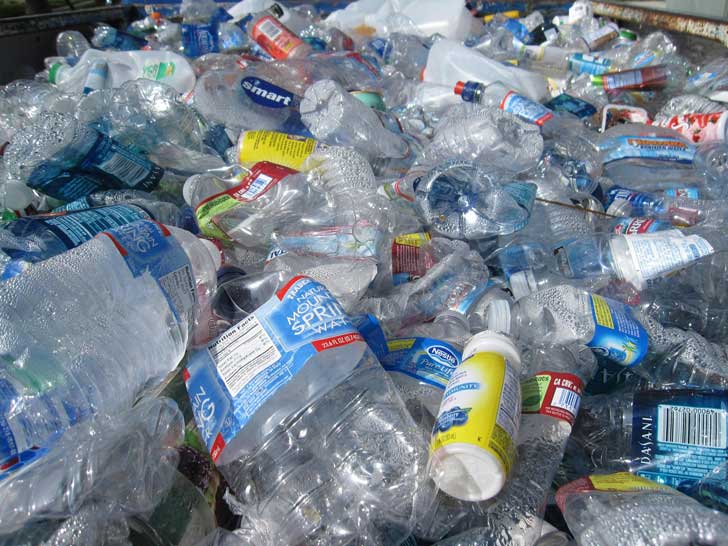
The researchers, whose work was just published in the journal “Waste Management,” tested the idea of offering people who return used bottles a small chance to win a big cash prize, instead of the standard 5- or 10-cent deposit earnings.
The result? Participants recycled 47% more bottles for the chance at a $1,000 prize.
“This small change in how we reward recycling made a big difference. People were more excited, more engaged, and they brought in more bottles,” Dr. Jiaying Zhao, associate professor in the department of psychology and senior author of the study, said in a statement for the university.
“It turns out that the thrill of possibly winning a big prize is more motivating than a small guaranteed reward. It’s the same reason people buy lottery tickets; That tiny chance of a big win is exciting.”
The researchers ran three experiments in British Columbia and Alberta, where bottle deposit systems already exist. Despite the fact that these deposit stations give people a small refund when they return their recyclables, many bottles still end up in the trash.
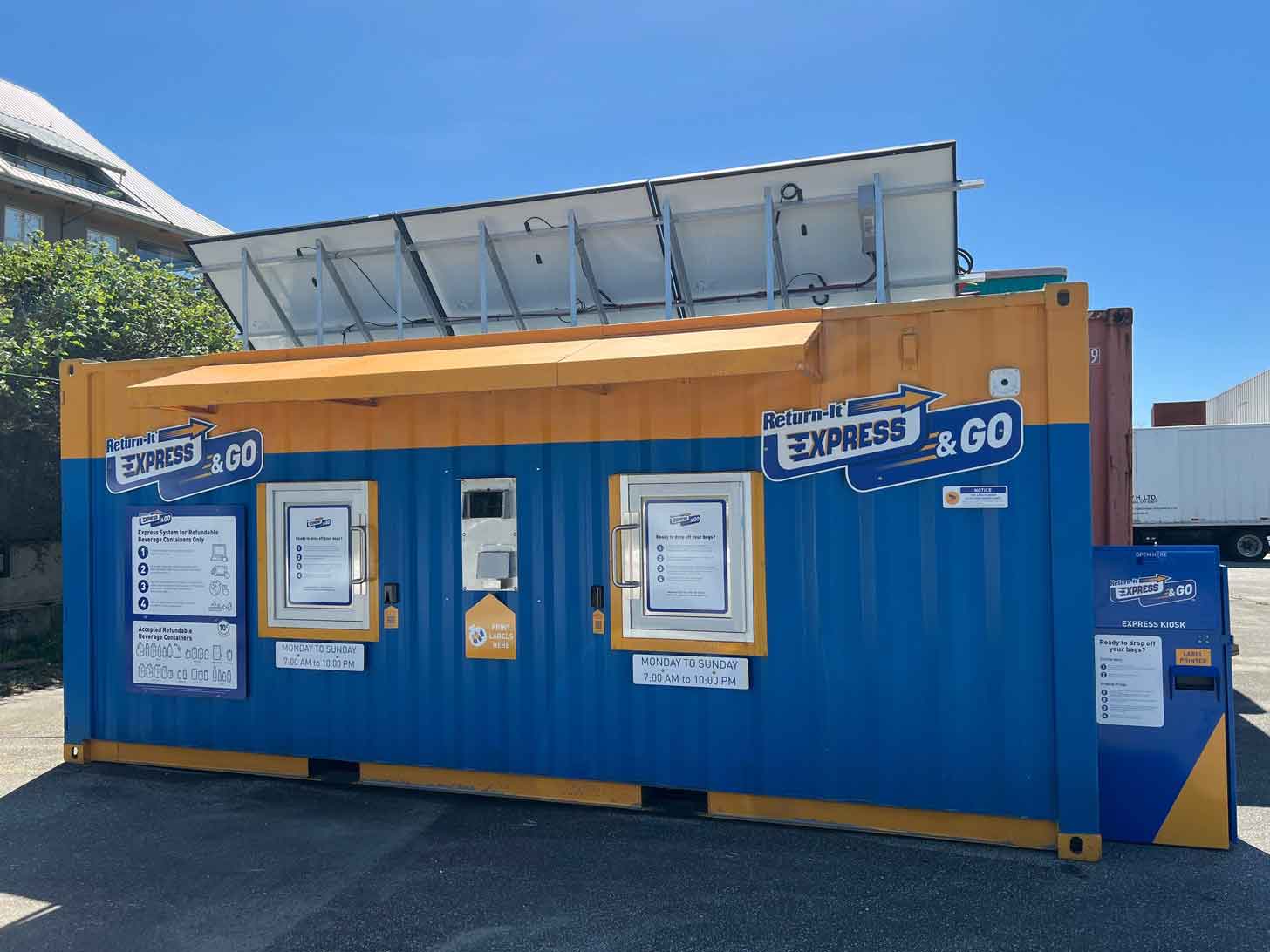
In the first two experiments, people could choose between a guaranteed 10-cent refund or a chance to win a larger amount, ranging from $1 to $1,000. Even though the odds of winning were low, many people chose the lottery-style offer.
In the third experiment, participants were randomly assigned to either the guaranteed refund or the lottery-style refund. Those given the lottery-style option brought in almost three bottles for every two returned by the control group.
The researchers found that people even felt happier when they had a shot at the big prize, even if they didn’t actually win — a feeling called “anticipatory happiness” — that made the act of recycling more enjoyable.
All of this is modeled after an existing scheme in Norway.
“Norway is the only country in the world that has a similar recycling lottery, and their bottle return rate is close to 100%,” Dr. Zhao said. “The probabilistic refund could be their secret sauce. We hope Canada can adopt this innovative idea as well.”
In Norway, the bottle recycling lottery was implemented over a decade ago, and now, approximately 97% of all plastic beverage containers are returned across the country.
Here, the model is choice-driven, giving people the option to choose between the guaranteed refund or the chance to win anywhere from 5 to 100,000 euros.
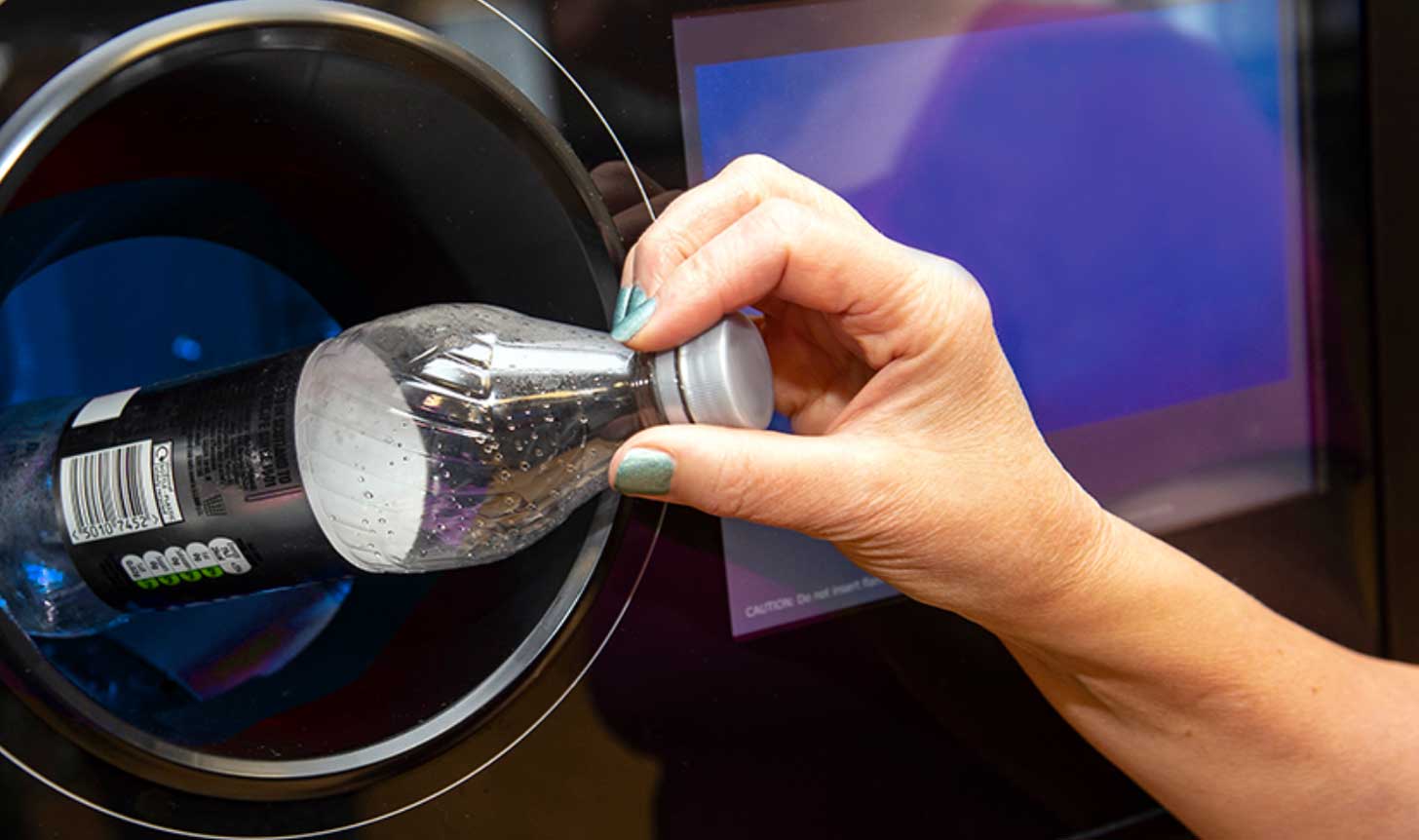
“The system also doesn’t encourage gambling,” Fast Company reported, “because there’s no way to enter with cash, and there are no ‘near misses’ like with other kinds of gambling.”
Norway has also implemented a program where some of the lottery’s proceeds go to the Norwegian Red Cross.
“Instead of 10 cents back to you, what if the proceeds go to a food bank or charity?” Dr. Zhao asked Fast Company. This is also part of her team’s research, with results soon to be published.
It’s important to note that the lottery-style refund wouldn’t cost more than the traditional system, with both options sharing the same average payout. Cities could adopt this approach without spending an extra dime.
Additionally, Dr. Zhao mentioned that it’s important for cities to consider the choice-based model, giving people the option to get the regular 5- or 10-cent returns, alongside the new lottery initiative, to help canners and binners who rely on this kind of income.
“We don’t want to take the short gain option away,” she told Fast Company. “Instead, we want to give people the option to choose.”
Aside from the valuable psychological insights of the study, Dr. Zhao and her colleagues are optimistic about a future in which more people are engaged in recycling.
“Creating new bottles comes with a lot of carbon emissions, and not recycling bottles also comes with a lot of pollution,” Jade Radke, a lead author on the study, said. “So it can be a meaningful way to decrease all of those things.”
According to the UBC press release, if this approach is widely adopted, it could help recycle millions more bottles and reduce greenhouse gas emissions equal to taking one million cars off the road each year.
Header image courtesy of Tomra/Recyling Lottery International
Every year, Yosemite National Park brings aboard a herd of “unsung heroes” to their team: mules.
Since the 1890s, Yosemite has had mounted patrol rangers who navigate the park’s tumultuous terrain with the help of some equine companions.
Yosemite rangers rely on horses and mules to conduct search and rescue operations, traverse rough backcountry terrain for deliveries, and educate visitors.

“Back from a restful winter at pasture, Yosemite’s unsung heroes have returned to work for the summer season,” said a social media post from Yosemite. “Mules do a variety of different jobs behind the scenes here in Yosemite.”
This summer, the mules will also carry supplies for trail crews across the park’s 800 miles of trails. They will also work through a vast wilderness to help clear downed trees that block the trails.
A small pack of mules, named Josh and Jake, also haul injured hikers to safety and do country patrols to alleviate traffic problems.
“It’s crucial to have mules respond to sprained ankles and lower extremity injuries … ” a video narrated by a Yosemite park ranger explained back in 2024, “because it allows for other search and rescue staff to be available for other big emergencies in the park.”
Another key job of the mules is hauling compost from the park’s backcountry outhouses.
“If you’ve used the bathrooms in the Vernal/Nevada fall corridor or just like clean water in the Merced, thank a mule,” this year’s Yosemite social media post continued.
The mules have been in action since the early 1900s, and Yosemite maintains about 90 horses and mules, who “honorably serve the National Parks Service an average of 12 to 15 years.” But this year, their jobs are especially important.

As massive layoffs and federal funding uncertainties loom for national parks and public lands, many popular parks like Yosemite are feeling the strain of a reduced labor force.
Prior to the start of the busiest season, California Senator Alex Padilla spoke up about the importance of national park rangers.
“Now is the time to be investing in the recruitment, the training of that personnel that we rely on for public safety in our national parks, for sanitation,” Padilla told ABC10 News.
In the same interview, Padilla said he was concerned about long lines, trash and wastewater treatment.
“The spring and summer and fall will be upon us before we know it,” Padilla concluded in March, “and a lot of visitors that visit Yosemite and other national parks throughout California.”
While the mules don’t make up for the loss in human workers (and seem to get most of their funding from the park’s nonprofit arm), they maintain a strong presence in the park — and typically boost morale.
“During the course of their service, they directly impact hundreds of thousands of visitors as mounted rangers and packers cover innumerable miles,” the National Park Service said of Yosemite’s mules.

This year, a group of Junior Rangers made a motivational poster for the mules, with hand-drawn depictions of the hoofed heroes accompanied by a hearty “welcome back.”
And for Mule Appreciation Day a couple of years back, young visitors also wrote thank you cards for the mules.
“Dear Mule,” a ranger reads aloud to the animals in their pasture. “You are strong. I hope your trails are flat.”
“Dear Mule,” another begins. “You are very helpful. I appreciate all your hard work keeping Yosemite beautiful.”
Once the beloved animals have concluded their years at the park, they are transitioned to an adoption program to rest in a loving home during a “well-earned” retirement.
Park officials advise that if visitors come upon a Yosemite Mule on a trail, they are asked to give the animals the right of way by carefully stepping to the inside of the trail and following directions from the park ranger working with the mule.
You might also like: A 'sled dog puppy cam' from Denali National Park is now streaming, with 5 new recruits
Header image courtesy of NPS Photo/Yosemite National Park
When summer starts with a stifling heat wave, as many places are seeing in 2025, it can pose risks for just about anyone who spends time outside, whether they’re runners, people who walk or cycle to work, outdoor workers or kids playing sports.
Susan Yeargin, an expert on heat-related illnesses, explains what everyone should think about before spending time outside in a heat wave and how to keep yourself and vulnerable family members and friends safe.
What risks do people facing running, walking or working outside when it’s hot out?
The time of day matters if you’re going for a run, or if you’re walking or cycling to work during a heat wave. Early risers or evening runners face less of a risk — the sun isn’t as hot and the air temperature is lower.
But if your normal routine is to go for a run midmorning or over lunch, you probably want to rethink exercising in the heat.
Pretty much everywhere in the U.S., the hottest part of the day is between 10 a.m. and 6 p.m. The body will gain heat from both the air temperature and solar radiation. The ground also heats up, so you’ll feel more heat rising up from the asphalt or grass.
Add humidity to the mix and that will also affect your body’s ability to dissipate heat through sweat.

Don’t forget that the body also generates internal heat when you’re active, whether you’re running or even mowing your lawn. When it’s warm to hot outside, you’re further increasing your heat gain through that exertion. The harder someone runs or cycles, the more heat they’re generating.
Outdoor workers on farms, construction sites or even walking dogs are often in the heat longer, with less flexibility for breaks.
Do our bodies eventually adapt to summer heat?
It takes about two weeks for the typical person to acclimatize to higher temperatures. Over that time, your body makes amazing adaptations to handle the heat.
Your sweat rate improves, dissipating heat more effectively. Your plasma volume expands so you have more blood pumping through your body, so the heart doesn’t have to work as hard. Because your cardiovascular system is more efficient, your body doesn’t heat up as much. You also retain salt a bit better, which helps you keep water in your body.
That doesn’t mean you’re ready for even higher temperatures or extreme heat, though. Even if you’re acclimatized to 80 degrees Fahrenheit (27 Celsius), you might not be ready for a 95 F (35 C) heat wave.
When we get early-season heat waves and high humidity, that can reach a level people aren’t adapted to handle yet. And some combinations of heat and humidity are too much for anyone to safely spend much time in.
Are young children and older people at higher risk in the heat?
In older adults, the cardiovascular system isn’t as flexible and powerful as it used to be, so it doesn’t operate as efficiently, and sweating mechanisms decrease. That leaves older adults at greater risk for illnesses such as heat exhaustion or heat stroke.
Their thirst mechanism may also not function as well, leaving them more likely to become dehydrated. Some older adults are also less willing or able than younger people to seek out cooling centers.

Children might take a few more days to acclimatize than adults. They’re also more dependent on skin heat loss than sweating, which is why their skin can get red and flushed-looking.
Children are probably better about complaining about feeling too hot or not feeling well, though, so listen to them and help them seek out cooler areas. They might not realize that they can take a break during soccer practice, or that they should come in from the beach.
What are your top heat safety tips?
Be smart about the time of day you’re being active: People love their routines, but you need to get the workout and yard work and other outdoor activities done early in the day or late in the evening. Avoiding the hottest parts of the day is the smartest way to prevent heat illnesses. When outside and the Sun is up, seek places with shade.
Have good hydration habits: Don’t ignore thirst – it’s your body telling you something. Hydration keeps your plasma volume higher to help your heart work less and decreases your overall risk for heat illnesses. Your brain and muscles are also composed of water, so if your body senses that you don’t have enough water, it will start to sacrifice other things, including how much you’re sweating.
Listen to your body: When you do need to be outside to work or play, your body will give you cues regarding how it’s handling the heat. If you don’t feel well, feel hot or can’t seem to push harder, your body is telling you to slow down, add extra breaks or get out of the situation.
Make smart clothing choices: Wear light-colored clothing, which absorbs less heat than dark clothes. Short-sleeved shirts and shorts can also avoid helping heat build up or impairing sweat evaporation.
Remember that helmets and sports equipment hold in heat: Construction workers often have to wear hard hats, but athletes don’t always need to practice with shoulder pads and helmets, especially in high heat. To help workers, there is a push for companies to follow health safety guidelines, such as providing cooling stations and hydration breaks.
Get a good night’s sleep: Heat exposure one day can affect your risk the following day. If you can sleep in air conditioning and get a good night’s sleep, that may help decrease the risk of heat illness.
This article, originally published June 20, 2024, has been updated with 2025’s heat wave.
This article was written by Susan Yeargin from University of South Carolina, and was originally published on The Conversation.
Header Image by Shengpengpeng Cai on Unsplash

U.S. charitable giving increased 3.3% to US$593 billion in 2024, lifted by the strength of the economy.
The annual report from the Giving USA Foundation, produced in partnership with the Indiana University Lilly Family School of Philanthropy, found that this was the second-highest level on record after adjusting for inflation.
Giving grew at the fastest pace since 2021, when the COVID-19 pandemic led many Americans to make larger-than-usual donations. It was also the first time since then that growth in giving outpaced inflation.
As two of the report’s lead researchers, we see many signs of healthy growth in charitable giving in 2024. Our data shows that the strong economy, which grew 2.8% in 2024, bolstered individual and corporate giving and allowed foundations to maintain the historically high level of giving seen from them in recent years.
It also helped that stock markets performed well in 2024, consumer sentiment was generally positive, personal income rose and inflation continued to ease.
Donations to nearly every charitable category we track grew.

Individuals and corporations led overall growth
Individual donors continued to provide the bulk of the nation’s charitable gifts. The $392 billion they gave to charity accounted for two-thirds of the year’s total. Giving by individuals grew 5.1% from 2023 − a swifter pace than for all donations.
Corporate giving rose even faster. It was up 6% to a record $44 billion.
This growth reflects the high pretax profits earned by corporations in 2024 and the trend toward corporations donating a higher share of pretax profits in recent years.
For example, corporations generally donated less than 1% of pretax profits from 2004-2018. But our research team started to see corporate giving rise to 1% or more in the 2019 data. This was also the case in 2024, when corporate giving stood at 1.1% of pretax profits.
Corporate philanthropy has grown by more than 50% since 2019, a trend that has coincided with rising in-kind donations of insulin products and other pharmaceuticals. Drugmakers made an estimated $24 billion in these donations in 2024 − up 41% since 2019.
To be sure, corporations’ donations amounted to just 7% of overall giving in 2024.
Meanwhile, grants made by foundations exceeded $100 billion for the third straight year. Almost $1 out of every $5 contributed to charity was from a foundation in each of those years.
Giving by foundations in the five years ending in 2024 was higher than any other period since Giving USA has tracked this data. Foundation giving, however, remained fairly flat from 2023 to 2024, at about $110 billion.
Around 8% of all gifts made in 2024 were from bequests included in people’s wills, the same as in 2023. Bequests totaled $44 billion, down 4.4% when adjusted for inflation. But the total given through bequests varies quite a bit from year to year.

Most kinds of donations increased
Donations to most of the nine charitable categories Giving USA tracks increased. The one exception: Gifts to churches and other religious institutions fell 1%. But religious giving remained by far the top category, followed by human services and education.
Religious causes received 23% of all donations, a total of $147 billion. Giving to human services nonprofits, such as food banks and homeless shelters, increased considerably during the pandemic. It now accounts for about 14% of all donations. In 2024, these gifts totaled $91 billion.

Giving to education, which primarily consists of donations to colleges and universities has tended to grow more slowly than overall giving in recent years.
Giving for education rebounded to a record high in 2024, however, rising nearly 10% from a year earlier. And these gifts have grown at a quick pace over the past decade, increasing by more than 22% from 2015 to 2024. The $88 billion in gifts received for education in 2024 was the third-largest of the nine categories we follow.
Several other categories also reached all-time highs of giving in 2024: health, at $61 billion; arts, culture and humanities, at $25 billion; and environment and animals, at $22 billion.
The increases in giving for most kinds of nonprofits, supported by strong growth in giving by individuals and corporations, indicate that the charitable sector ended 2024 in a relatively solid position.
This article was written by Jon Bergdoll and Christina Daniken from Indiana University, and was originally published on The Conversation.
Header Image by Igal Ness/Unsplash

The United States Food and Drug Administration has approved lenacapavir, an injectable drug that offers long-lasting protection against HIV infection. Administered once every six months, this new treatment marks a major advancement in expanding prevention options for people at risk of HIV infection.
Most HIV prevention drugs are daily pills (known as PrEP), which many people struggle to take regularly for various reasons, including inconvenience, price, stigma and side-effects. Lenacapavir works differently. It’s a new type of drug that attacks HIV’s protective shell, stopping the virus from copying itself at multiple stages.
In recent years, two other long-acting medicines have been developed for HIV, but neither of them offers protection for a full six months like lenacapavir.
People using the long-acting lenacapavir injection take pills for a short time – either two weeks before the shot or for the first days after – to ensure they are protected while the injection starts working.
After that, just one injection under the skin keeps the drug working and protects people for six months.
This makes a big difference for those who find it hard to take a pill every day because of a busy life, forgetting, or because of the stigma they face. Discretion can sometimes be an important factor, and people receiving long-acting medicines don’t need to carry pills or explain them to others.
Even though lenacapavir is highly effective at preventing HIV, it doesn’t offer protection from other sexually transmitted infections, so using condoms and getting regular screening for sexually transmitted diseases remains important.
Two breakthrough HIV cases in the second pivotal study of lenacapavir were linked to a virus mutation that made it resistant to the drug. That is rare, but it demonstrates why regular check-ups remain important to ensure the drug continues working effectively.
Most people don’t experience serious side effects when using long-acting lenacapavir for prevention. The most common side effect is mild discomfort at the injection site — things like redness, swelling or soreness – which usually resolves quickly on its own.
A few people have reported feeling nauseous, but this is uncommon. The drug can interact with some other medicines, so it must only be used under medical supervision.
Global rollout? Price will be a big factor
Regulatory agencies in different regions work independently to scrutinize medicines, and so approval by one is not a guarantee of approval by another. However, it could be approved for use in the U.K. later in 2025, and the U.K. National Institute for Health and Care Excellence is already evaluating lenacapavir.
The price of lenacapavir will be a big factor in how widely it is used globally. In the U.S., it’s currently priced at around $28,000 per year (£22,000), but the cost of medicines often differs in different countries.
Since the overwhelming majority of people affected by HIV live in low- and middle-income countries, a twice-yearly prevention could have a profound effect, and it is contingent on everyone working in global health to help ensure that happens quickly.
Some researchers have estimated that generic manufacturers supplying low- and middle-income countries could make lenacapavir for as little as $25 a year if it were made in large enough quantities. But achieving this will require major investment and coordination to ensure the drug reaches the regions where HIV is still a major public health challenge.
Earlier this year, Gilead, the pharmaceutical company behind lenacapavir, also presented data on a once-yearly version of the drug, so even longer protection may become available in the future.
Lenacapavir is a major step forward in HIV prevention. With just two injections a year, it is a simple and highly effective option for people who need protection but find daily pills difficult. It’s not a replacement for other forms of protection — condoms and regular testing are still important — but it could be life-changing for many people.
If it becomes widely available around the globe, it could help make HIV prevention more accessible, more adaptable and easier to deliver for a wide range of people.
This article was written by Andrew Owen from University of Liverpool, and was originally published on The Conversation.
Header Image by Anna Keibalo on Unsplash

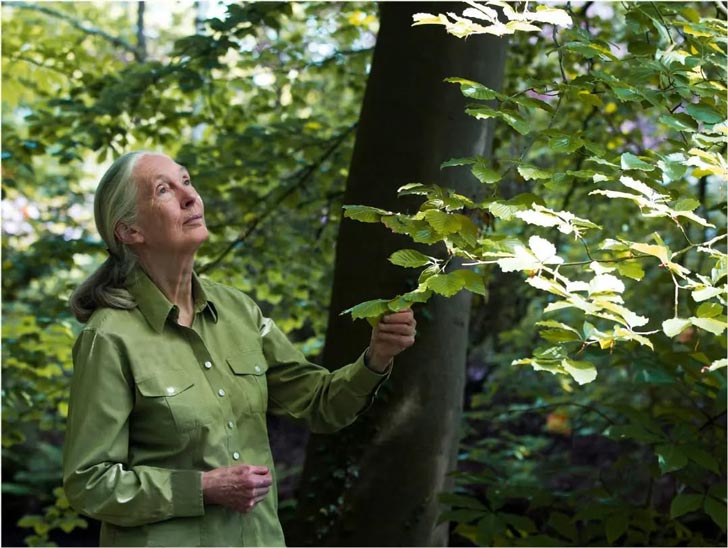
Jane Goodall has long been famous for her work in conservation and biodiversity. In fact, it’s been 65 years since she first embarked on her groundbreaking research on wild chimpanzees in Tanzania.
Since then, her nonprofit, the Jane Goodall Institute, has protected over millions of acres of ecosystems, saved more than 5,000 chimpanzees and gorillas, and has supported 130 communities worldwide.
In 2019, the organization announced that it received a boost from the United States Agency of International Development, or as it’s better known, USAID. With support from the agency, JGI created the Landscape Conservation in Western Tanzania initiative, a five-year, $29.5 million program.
It expanded the work of JGI Tanzania to mitigate threats to chimpanzees and their ecosystems, right in the very region where a young Goodall once lived alongside the apes.
The funding also allowed the organization to work with local governments to improve sustainable land use planning, expand sustainable livelihoods, and provide access to reproductive health and family planning resources for village communities.
The program was officially launched in 2023, but now, in the wake of sprawling cuts to USAID by the Trump administration, JGI has lost its federal dollars.

It is believed that the cuts have defunded 98% of USAID’s work in conservation, biodiversity, and climate-related programs. With Goodall’s Tanzania program on the line, the impacts of losing those dollars would be devastating.
One area of major concern was a reforestation effort in Tanzania’s Gombe Masito Ugalla biosphere reserve. Over the years, JGI’s work in this area has led to the designation of 1.75 million acres of forest reserves and a 50% reduction in deforestation rates.
This has been a key factor in protecting local wildlife populations, including chimpanzees, elephants, buffalo, and lions.
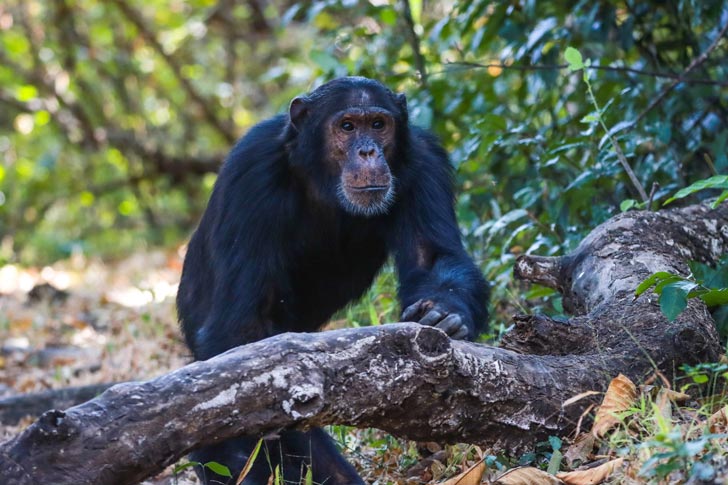
Without USAID dollars, this progress could unravel.
So, Ecosia stepped in. The Berlin-based search engine donates 100% of its profits to climate action and has planted over 200 million trees across the globe since its inception in 2009.
In partnership with JGI Austria, Ecosia has offered $100,000 in support over the next three years to help save the Gombe reforestation project.
“We’ve worked closely with the Jane Goodall Institute over the past five years, planting nearly two million trees to restore chimpanzee habitats and safeguard biodiversity in Uganda,” a statement from Ecosia reads. “So when our friends at the Institute got in touch about the at-risk seedlings in Tanzania, we acted fast.”
Although the donation does not cover the original $29.5 million in funding, it is earmarked to pay for the planting of 360,000 seedlings, the protection of the 20 existing nurseries, and the preservation of local jobs overseeing the care of these trees.
“Our pledge … will ensure 20 tree nurseries can continue growing endemic, native species, including valuable food sources such as avocado, lemon and mango,” Ecosia continued. “Once planted, the trees will restore large areas of cleared forest and provide migration corridors and essential habitats for endangered species, including chimpanzees.”
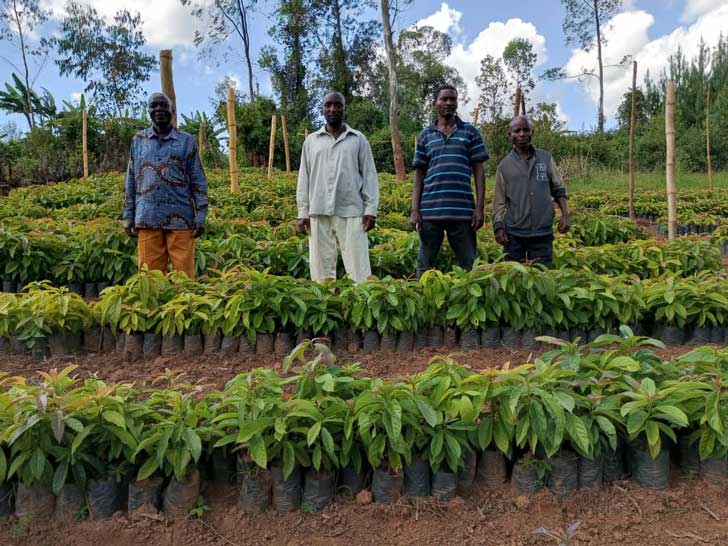
Ecosia also shared that it will provide additional operational support, including satellite imagery and local monitoring of the trees, as well as support for farmers by promoting sustainable agroforestry practices that enhance soil health and boost crop yields.
This endeavor wouldn’t be possible without the support of Ecosia’s 20 million users, the company shared.
“This partnership shows that even when hope feels lost, people and partnerships can still drive climate action,” the Ecosia statement concluded. “We’re standing with the Jane Goodall Institute to protect habitats, support local communities, and defend biodiversity, one tree at a time.”
Similarly, Diana Leizinger, the director of JGI Austria recognizes Ecosia’s significant role in continuing this important work.
“We refuse to abandon people and nature,” she told The Guardian. “Where hope could have been destroyed, we are helping it grow again.”
You may also like: Jane Goodall talks hope, aging, and great apes in new 'Call Her Daddy' interview
Header image courtesy of Roy Borghouts/Jane Goodall Institute
Two young entrepreneurs — Aris Isaac and Kaydyn Mack — have taken New Tampa, Florida’s beaches by storm. And it all started with some cardboard boxes, an RC car, and a dream.
In 2024, Mack, then a fourth grader, entered his school’s K-5 STEM contest with a cardboard box attached to a remote-control car. He called it “Trash Robots Incorporated” and went home with a trophy about the size of him.
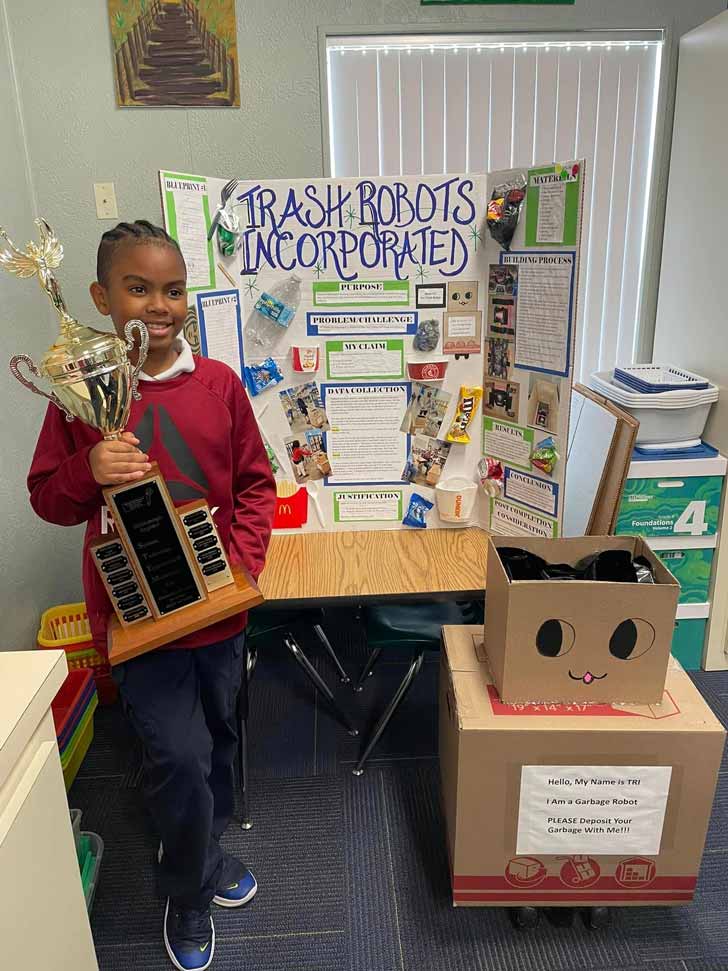
In fifth grade, it was a whole new ball game.
Teaming up with his “best friend since Pre-K,” Mack and Isaac took the original design up a notch.
“Last year, I created a trash robot and entered it into the Hillsborough STEM fair,” Mack told WFLA News. “This year, me and Aris wanted to improve the design and make it more compatible for beaches.”
Together, they created the ORCA: Ocean Robots Collection Administration. Their device, similar to Mack’s original prototype, is made of household objects: Cardboard, wood, and an RC car. This new iteration is decorated to resemble an orca whale, playing on its namesake and acting as a nod to what inspired the boys in the first place.
When they learned that, according to the United Nations, over 800 species of wildlife are affected by beach pollution across the globe, they wanted to take action.
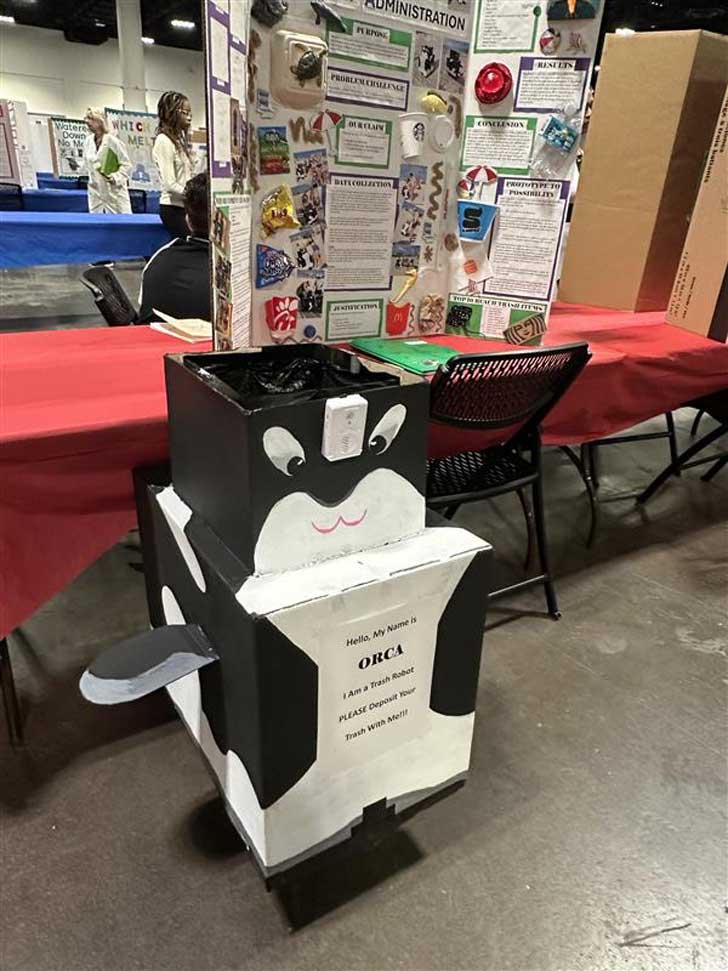
“So basically, we created this project because we like helping people and animals because of all the trash we see on the beaches,” Isaac said. “And we wanted to make a difference because it’s been hurting our environment and the economy in many ways.”
The pair did not win the science fair this year but were still part of the festivities. And as they finish out elementary school, they’ve got their sights set on bigger horizons.
“The main goal is to get investors interested in ORCA so we can take him from a prototype to a real-life product,” Mack said.
To get their invention in front of potential leads, they’ve started taking ORCA out for test runs, driving it around Clearwater Beach.

The whale-shaped receptacle (which contains a heavy-duty trash bag) wears a sign that instructs beach-goers to drop off their trash.
“Hello, I am ORCA,” the robot communicates. “I am a trash robot. Please deposit your trash with me.”
The boys direct ORCA around the area to collect items that visitors may otherwise leave behind. Atop the orca’s box-shaped noggin is a small speaker, with one of the boy’s cheerful voices, summing up their mission clearly and confidently.
When someone approaches, the speaker announces: “I’d be happy to take your trash for you.”
You may also like: Environmentalists want to turn ocean garbage into hydropower. They're building a ship that does
Header image courtesy of Hillsborough Schools/Facebook and Michel Rathwell (CC BY 2.0)
On the heels of a highly anticipated mayoral primary election in New York City, in which former Governor Andrew Cuomo conceded the Democratic nomination to State Assembly Member Zohran Mamdani, political commentators on all sides are dissecting the outcome.
Mamdani, who identifies as a democratic socialist, won the most votes in the first round of the Democratic primary, per the Associated Press.

Mamdani is now officially the nominee for the Democratic party leading up to the city’s general election in November of this year.
From polarizing remarks from President Donald Trump to supportive celebrations from Bernie Sanders, reactions to Mamdani’s potential leadership run the gamut.
But Amanda Litman, co-founder and president of Run For Something, has pointed out something that goes beyond this one election.
“Since Zohran Mamdani won on Tuesday, more than 1,100 people have reached out to Run For Something to express interest in running for office,” she posted on LinkedIn in the days following the primary.
Run For Something is a political organization founded on Trump’s first Inauguration Day in 2017 that “recruits and supports young, diverse progressives to run for down-ballot races.”
Since its founding, the organization has recruited nearly 100,000 people to run for local office in all 50 states, according to its website.
“Our candidates come from all walks of life — teachers, doctors, activists, environmentalists, stay-at-home dads, librarians, college students — and they represent communities that have been historically excluded or discouraged from running for office,” the organization adds.
Run For Something provides tools to people looking to run for office, including mentors, volunteers, funding, training, and a community of candidates who share similar experiences and support.
According to the organization’s website, once someone expresses interest in running for office, they will be invited to join a conference call with members of the team and other prospective candidates.
From the looks of it, the group has a busy schedule ahead.
“Generational change is coming,” Litman continued. “New leaders ready to fight like hell to make life meaningfully better for *everyone* are raising their hands to run for office.”
In a comment on LinkedIn, someone responded saying that the 1,100 number was “incredible,” to which Litman replied: “500 more since I posted this!”
The next day, she took to Instagram to announce that over 2,200 people have now expressed interest in running for office.
“Since Tuesday — it is now Friday morning — more than 2,200 people have raised their hands and told Run For Something they want to run for office,” she said in a video. “That number doubled in a day. New leaders are here. They’re ready.”
And a week following the primary election, Run For Something shared that it had seen a total of 5,000 new prospective candidates, what Litman called "our biggest candidate recruitment surge ever."
Why is this good news?
While Run For Something does specifically promote progressive values, reduced civic engagement and participation is an issue that impacts nearly all Americans.
Public trust in government has been on the decline since the early 2000s, according to Pew Research Center, and young people are especially uncertain about their elected officials.
A 2023 report from the Institute of Citizens & Scholars found that 57% of young adults were dissatisfied with the American political system, and 52% had no or little trust in government institutions.
The survey also found that the two primary political parties seem to be failing to attract young Americans. Of those surveyed, 61% did not identify with either major party; 29% identified as independent, nonpartisan, or other party; and 33% were unsure or did not identify politically in any way. Only 22% identified as Democrat and 17% as Republican.
Although there is no available data on who has expressed interest in running for office through Run For Something this week, the organization says that it specifically works with Gen-Z and millennial candidates, potentially pointing to a renewed sense of hope and faith in the electoral process among young Americans.

The N.Y.C. primary did still see relatively low turnout rates, with Gothamist reporting that less than 30% of eligible voters cast their ballots in the Democratic primary.
On the other hand, CBS News shared that more than 384,000 ballots were cast during early voting — more than double the total from the last mayoral election cycle four years ago.
“I think there is also just so much energy coming out of wanting to rebel against the Trump administration and wanting to be more politically active,” one voter, David Demoya, told CBS News at the polls.
As for Mamdani, the mayoral hopeful communicates that he is prepared to work with this influx of engagement.
“We’ve shown that by focusing on the issues of working and middle class New Yorkers across this city, that by listening instead of lecturing, that by creating a politics of no translation, New Yorkers will join you in your fight for a new city,” Mamdani said on primary election day during a speech in Queens.
“We are well positioned to finally turn the page on the politics of the past.”
Header image courtesy of Zohran for New York City
As heat waves sweep the country, most of us are desperate to do anything for a little reprieve from the high temperatures.
Although cranking the air conditioning is potentially life-saving, it also increases energy use (and raises your electricity bill, too), making access to cool air a privilege not all can afford.
So, architects and engineers are looking back to ancient civilizations to cool buildings without the use of electricity or chemicals.

Researchers at Virginia Tech have developed a 3D-printed evaporative cooling system made of hollow clay columns that can cool the surrounding air by up to 10 degrees Fahrenheit.
The columns are filled with water and sand, and when warm air passes through the porous clay exterior, water stored in the sand columns evaporates, which in turn, cools the air that passes through.
And now, the design has been formatted into a futuristic wall partition.

Although the concept seems sleek and innovative, it’s an iteration of what the researchers call “ancient cooling techniques.” Specifically, the team has used a method called “evaporative cooling” that has been harnessed for at least 4,500 years.
“We’re trying to get the best of those types of ancient techniques but put them in a modern context and see how we could optimize it further,” associate professor of architecture at VT, Stefan Al, told Dezeen.
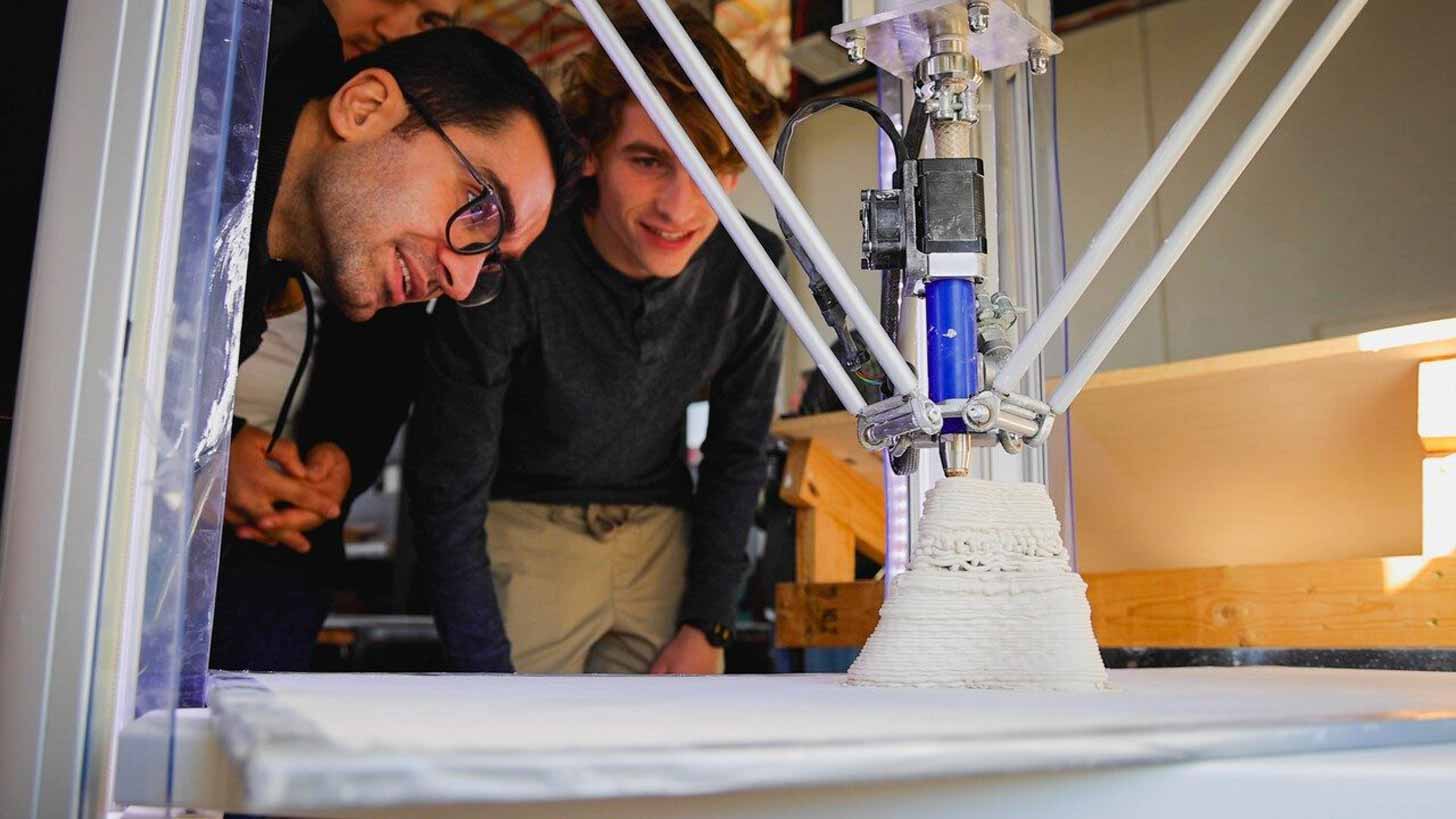
Since the invention of electricity made way for mechanical air conditioning, these ancient cooling technologies have not gained popularity in the Western world. But in sustainable architecture circles, they’re making a comeback.
“Ancient Persia and Egypt used this. We saw that the ancient Chinese used this technology,” Ilhan Farahi, an undergraduate student and member of the Evaporative Cooling Partitions Project, told Virginia Tech Magazine.
“Having this come back is kind of enchanting because it’s something people developed thousands of years ago, but using it now could lower carbon dioxide emissions.”
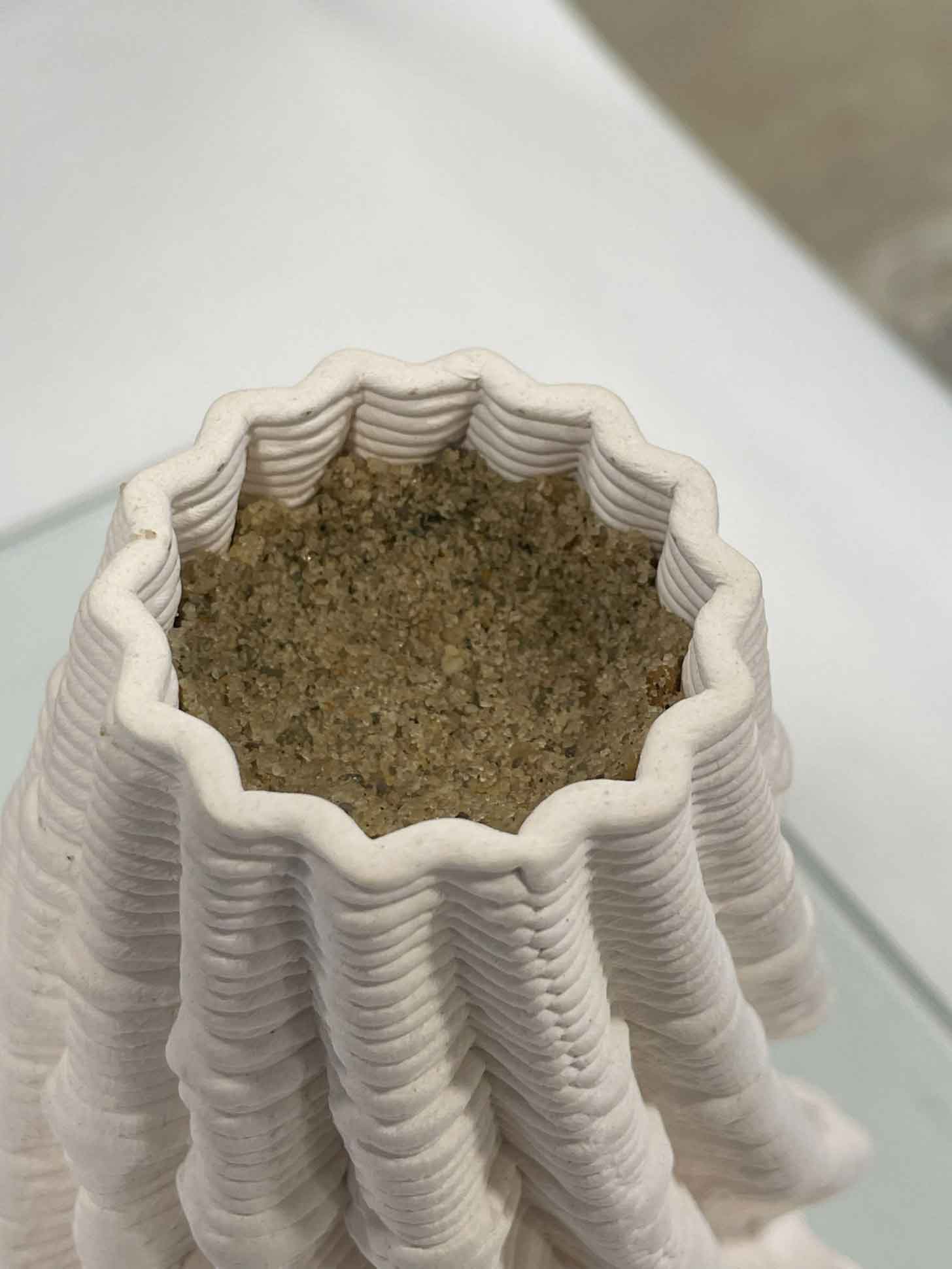
Plus, as Al said, it’s free cooling. All that’s needed is to put water through the structure.
In addition to a room partition design, the columns also have potential to be formatted into different interior objects, like a “cooling chair,” or a hollow clay block that could function as both a building material and a cooling apparatus.
“The program uses code that translates into 3D, so that’s how we are able to get more complicated shapes with more complex surface textures that contribute further to the evaporative cooling processes,” Brook Kennedy, associate professor in VT’s School of Design, told the university’s magazine.
So far, the research team has printed three different prototypes, all in cylindrical shapes, then measured their thermal performance using infrared imaging. While they were pleased to see various cooling effects, to fully test the system’s performance, they will need to build an entire room.

The researchers also hope they can garner some more external funding and support to develop their prototype to scale.
“We’ve gotten to a point in time and history where we are realizing the impacts human beings are having on the planet, and we’re really using all the tools available to try to see how to address certain critical global problems, whether that’s rising temperatures, questions of pollution, sustainability, or energy use and carbon emissions,” Kennedy added to the magazine.
“We’re researching forgotten technologies that have been effective years in the past before we had so much energy to use, and we’re asking, ‘Can we build using these technologies again for everybody’s benefit?’”
In future research, the team hopes to continue testing how the system would best work around people.

According to Al, the cooling effect is most noticeable when the system is paired with a fan or situated near a source of strong natural airflow. Because the evaporative cooling partition is a localized structure, it is not as effective as conventional air conditioning.
Still, Al told Dezeen, the system is still useful and could be integrated into thoughtful design, such as placing it near a seating area to create a cooler spot within a larger room.
Plus, it has one other benefit: its beauty.
“In contrast to [air conditioning], which is always hidden,” Al told Dezeen, “this could be beautiful, and could be seen, and raise people's understanding and appreciation of these old techniques that are much more sustainable in making us feel comfortable.”
You may also like: Engineers discover how to cool buildings without electricity — inspired by beehive architecture
Header image courtesy of Virginia Tech
Every day the Good Good Good team collects the best good news in the world and shares it with our community. Here are the highlights for this week!
If you want to get good news in your inbox every day, join the Goodnewsletter — the free daily newsletter designed to leave you feeling hopeful.
The Best Positive News We’re Celebrating This Week —
A ‘breakthrough’ HIV prevention drug just got FDA approval
The U.S. Food and Drug Administration approved lenacapavir. This twice-a-year injection provides near-complete protection against HIV infection, with the potential to dramatically rein in the HIV epidemic.
Scientists behind the drug say it’s the “best tool yet in helping end the HIV epidemic for everyone, everywhere.” And experts agree, hailing lenacapavir as a “breakthrough.”
It’s a significantly more convenient alternative to the current standard of care for HIV prevention, which is a daily pill that’s 99% effective at preventing HIV infection — but only if the daily dose regimen is strictly adhered to.
Why is this good news? The twice-annual treatment has the potential to reach many more people who need it, especially those who face stigma for daily medication. Some single women in South Africa, for example, reported that taking a daily pill raised suspicion among their partners.
And cost wouldn’t even be a barrier, as it can be manufactured for just $25 per patient per year — the manufacturer just needs to keep the price tag low.
→ Read more
‘Space capsules’ offer new approach to confront homelessness in the Bay Area that’s straight out of ‘Star Wars’
→ Read more
Wildlife experts in Michigan removed a plastic lid that had been stuck around a 110-pound bear’s neck for years
While they aren’t sure how it happened — or how it ate, drank, or hibernated — wildlife experts were finally able to trap and remove a large lid that had been stuck around a black bear’s neck for two years.
The bear was first seen with the lid around its neck when it was a cub in 2023, and the state’s DNR had been on the lookout for it ever since. It turned up again in May of this year, and they were able to safely trap the bear, give it anesthesia, and cut the lid off.
They also said it “was in much better condition” than they expected it to be, with some scarring on its neck and missing hair.
A student-led group in LA is delivering groceries to people sheltering at home amidst ongoing immigration raids
With federal agents continuing immigration raids in the L.A. community, targeting schools, workplaces, churches, immigration court, and more, people have been paralyzed by fear and avoiding public spaces.
But a network of volunteers has rallied together to collect and drop off groceries, toiletries, and other items to families who are too afraid to leave their homes.
Organized under the student-led collective Raíces con Voz: Latinos In Public Health, what started with about 10 volunteers gathering and sorting donations has grown to more than 500 people reaching out to join in and volunteer. They’ve made deliveries to over 200 families so far.
Why is this good news? All people deserve to have their basic needs met, and these volunteers are making sure that food, toiletries, and other essentials are one less thing that people afraid of being arrested, detained, and potentially deported have to worry about.
See the stunning 7-room home built by a mother-daughter duo using 8,000 glass bottles collected from Brazilian beaches
A majority of people around the world support a ‘carbon tax’ — even if they’re the ones paying it
Defying conventional political wisdom, people surveyed in wealthier countries around the world said they would support taxes on themselves to address climate change and combat poverty.
A survey of 40,680 people across 20 nations — 12 high-income and eight “middle-income” — found strong support for a carbon tax that would transfer wealth from the worst polluters to people in developing nations — even if it took money out of their own pocket.
Japan showed the highest support, with 94% of respondents supporting a carbon tax. The policy was least popular in the U.S., but still half of those surveyed said they’d support it.
A world-first agreement created a visa related to the climate crisis — its first round of applications just opened
In 2023, Tuvalu and Australia signed the Falepili Union treaty, which would allow up to 280 Tuvaluans a year to migrate to Australia, obtain permanent residency, and move freely between the countries.
Tuvalu is one of the smallest countries in the world, and is predicted to be one of the first to become uninhabitable due to rising sea levels caused by the climate crisis. Projections estimate that by 2050, half of the nation’s capital city could be submerged during high tides, and up to 95% regularly flooded by the end of the century.
Tuvalu’s prime minister called the agreement creating a migration pathway “groundbreaking, unprecedented, and landmark” since it means people aren’t forced to reside in Australia, but “can go in and come out as you wish.”
Why is this good news? While some worry about the impacts of the agreement on labor and cultural knowledge loss, migration due to climate change is still expected to be a massive global issue. These countries are proactively working on solutions because all migrants, regardless of how they come to be displaced, deserve choice, safety, protection, and autonomy.
→ Read more
Americans are sharing their hopes for the country on ‘wish walls’ nationwide — the responses are surprisingly unifying
→ Read more
A coordinated global effort eradicated smallpox within decades — after it initially declined only gradually
The world’s first vaccine against smallpox was developed in 1796. While many countries in Europe and North America, the Soviet Union, and island nations eliminated the disease through vaccination programs — it remained widespread across Africa and Asia in the mid-20th century, with tens of millions infected every year.
That is, until the World Health Organization committed to global eradication in 1959 and intensified its campaign with a “ring vaccination” strategy in 1967.
The approach worked almost immediately, and within a decade, the number of countries where smallpox was endemic fell to zero. The disease was officially declared eradicated in 1980.
→ Read more
Scientists used E. coli bacteria to convert a widely used plastic into a common painkiller
Scientists from the University of Edinburgh used Escherichia coli bacteria to convert molecules from a widely used type of plastic — polyethylene terephthalate, or PET — into the common painkiller acetaminophen.
Acetaminophen, like most drugs, is made from fossil fuels, as is plastic. While this solution is not currently scalable at an industrial or commercial level, it has a lot of potential.
As one scientist said, it “demonstrates that PET plastic isn’t just waste or a material destined to become more plastic” — it can be made into “valuable new products, including those with potential for treating disease.”
Why is this good news? Plastic pollution and the use of fossil fuels to manufacture drugs are two of the largest problems facing the planet today, and this solution addresses both, turning something we’d normally consider waste into something really useful.
In a major milestone for the clean energy transition, China just surpassed 1 TW of solar capacity
By the end of May 2025, cumulative solar capacity in China officially reached 1.08 TW, a 56.9% increase year over year. This milestone was driven by a record number of solar installations in the first five months of the year.
Between January and May, new installations totaled 197.85 GW, up 388.03% from the same period in 2024. The country added 92.92 GW in May alone.
Analysts credit the surge in capacity to favorable government policies, which triggered a rush to complete installations before policy changes that are expected in the second half of the year. They also expect this pace to slow as a result.
A massive conservation deal saved nearly 8,000 acres of forest in Alabama from becoming a wood pellet mill
Nearly 8,000 acres of forest in Alabama’s Mobile-Tensaw Delta, one of the most biodiverse places in North America, is now protected as the E.O. Wilson Land Between the Rivers Preserve — named after a pioneering biologist from the state.
The land was at risk of becoming the site of a wood pellet mill, and large swaths of the forest were at risk of being cut down, chipped, and shipped overseas to be used as biomass energy — which has competing claims about the risks and benefits as an alternative to fossil fuels.
The land was purchased for $15 million with funds from Patagonia’s Holdfast Collective alongside an anonymous donor.
Why is this good news? Sometimes called “America’s Amazon,” the Delta is not only incredibly biodiverse, the hardwood trees and surrounding ecosystem stores an incredible amount of carbon — and that needs to be protected.
→ Read more
Norway offered residents a chance to win a $1,000 prize for recycling; now 97% of all plastic bottles are returned
In one of its strongest quarters ever, the U.S. just added 8.6 GW of new solar module manufacturing capacity
In the first quarter of this year, the U.S. solar industry added 8.6 gigawatts of new solar module manufacturing capacity — the third-largest on record.
The record-setting capacity comes from eight new or expanded factories located in Texas, Ohio, and Arizona. Additionally, solar cell production capacity doubled in the first quarter to 2 GW thanks to a new factory in South Carolina.
Also in that time period, the solar industry installed 10.8 GW of new electricity generating capacity, with solar and storage accounting for 82% of all new generating capacity added to the grid.
More good news of the week —
Youth in Oregon between the ages of 1 and 18 are getting free meals this summer at nearly 700 sites across the state. The Summer Food Service Program serves a mix of breakfast, lunch, dinner, and snacks, and roughly 1.43 million meals were served in the state last summer.
🏳️🌈 The first and only in the city, a queer-owned women’s sports bar just opened in San Francisco. Rikki’s is one of the few establishments in the Castro neighborhood that’s owned and operated by queer women — and it’s located in a city where women’s sports are absolutely thriving.
During a routine research dive, scientists discovered a new methane-eating deep sea spider species. In addition to living exclusively in methane seeps and hydrothermal vents on the ocean floor, the Sericosura sea spiders displayed a curious behavior: They consumed methane gas.
A pilot program in Denver is providing portable A/C units and air purifiers to low-income families facing extreme heat. With temperatures expected to set records across the country this summer, the city is installing 165 air conditioning units and 570 air purifiers in its most heat-vulnerable and polluted neighborhoods using money from a voter-approved Climate Protection Fund.
A new law in Colorado establishes Black history education standards for public schools. The law requires the Colorado State Board of Education to adopt standards on Black American history and creates an advisory committee to help develop those standards in an effort to teach “a full, honest history — one that recognizes the achievements, contributions, and experiences of Black Americans.”
Adidas launched the first-ever soccer “boot” built by and exclusively for the unique needs of women players. The brand said it was responding to reports that the majority of women players have at some point experienced discomfort wearing a unisex shoe, and was tested by its athletes and partner team members, including the USWNT’s Trinity Rodman.
🏳️🌈 Australia became the first country in the world to lift a ban on blood and plasma donation for gay and bisexual men. While the U.S. and U.K. made similar moves, Australia is the first to remove all sexual-activity-based restrictions on plasma donation, which will have no impact on safety but will expand the donation pool by an estimated 625,000 people.
🏳️🌈 A vacant, “creepy” school building in Boston was transformed into thriving housing for LGBTQ+ seniors. After a year of operation, residents and representatives alike believe The Pryde stands as a powerful blueprint for LGBTQ+ senior living communities everywhere, demonstrating how inclusive spaces can transform lives.
Two companies collaborated to create a plastic-free cheese packaging that biodegrades in 300 days, not 1,000 years. As an alternative to single-use plastic wrapping, Ogilvy Colombia and Nestlé Central America created “Self-Packing Cheese” that’s entirely made from cheese waste and whey.
🏳️🌈 “Drag Race” star Miss Peppermint is co-leading an unconventional LGBTQ+ virtual book club. Alongside a queer historian and author, Queer History 101 is a monthly book club that’s taking a more expansive approach to history than simply reciting dates or names, at a time when their mission couldn’t be more important.
Mobile doctors are bringing health care to older patients facing homelessness. Nearly 140,000 Americans who are 55 or older are experiencing homelessness on any given day, and that number is estimated to nearly triple by 2030. (Video)
Old smartphones are being transformed into “tiny data centers” to help save marine life. Despite the expense to consumers and the environmental toll of producing more than 1.2 million smartphones globally every year, our devices have an increasingly short lifespan as people tend to replace them every two to three years.
A new “hotel” for families and veterans experiencing homelessness just opened in Denver. Expanding on the site’s previous capacity, The Theodora Family Hotel has 60 individual family suites and can house up to 240 people per night — each person or family will have their own private space.
Ireland just closed its final coal power plant, making it the 15th coal-free country in Europe. Industry observers say the country’s increased renewable energy generation in recent years, particularly in wind, has contributed to this milestone.
MIT researchers developed new particles that can carry multiple vaccine doses at once. New polymer microparticles can be used to deliver vaccines at different times, which could lead to childhood vaccines being given just once, eliminating the need for booster doses.
Yosemite mules are returning to help patrol and take care of the national park this summer. Part of the country’s third-oldest national park since 1917, the mules help rangers patrol the park, carrying supplies for trail crews as they oversee 800 miles of trail and helping workers who are clearing trails of downed trees.
Zion National Park’s shuttle service has officially helped 100 million people enjoy the park. This milestone marks 25 years of accommodating millions of visitors while safeguarding park resources with sustainable transportation.
Congaree National Park is using a “Skeeter Meter” to help visitors prepare for mosquitoes. To protect wildlife and biodiversity in the park, Congaree doesn’t spray pesticides to control the mosquito population, which thrives for the same reasons the park’s record-setting old-growth hardwood forest does.
A study found that plastic bag bans and fees are helping stop them from ending up on U.S. shorelines. While more plastic bags are being found across the U.S., it’s happening less in the places trying to tackle the issue, which saw them fall by at least 25% as a percentage of total litter collected compared to places that didn’t try.
Researchers are making progress on bladeless wind turbines that are are quieter, occupy less room, and safer for birds. The BWTs also typically require less maintenance due to their simple design, and the researchers have found a “sweet spot” for maximizing power generation without sacrificing strength.
Pacific Island nations launched a plan for the world’s first Indigenous-led ocean reserve — it would cover an area the size of the Amazon rainforest. The Melanesian Ocean Reserve would be located within the region known as Melanesia, which is one of the world’s most biodiverse regions, home to an estimated 75% of known coral species, and more than 3,000 species of reef-associated fish.
Canada just broke ground on its largest off-grid solar project to provide a First Nations government with renewable energy. The project will help reduce the remote Ulkatcho First Nation community’s use of diesel for electricity generation, which it is currently entirely reliant on, by 64%.
The world’s largest sand battery is now storing wind and solar energy in Finland. Capable of storing 100 MWh of thermal energy from solar and wind sources, it will enable residents to eliminate oil from their district heating network, cutting emissions by nearly 70%.
Volunteers in Guatemala are fighting deforestation by planting thousands of trees to regenerate their community’s landscape. The Chico Mendes Reforestation Project in Pachaj started its work in 1999 after the region had suffered extensive deforestation over several decades.