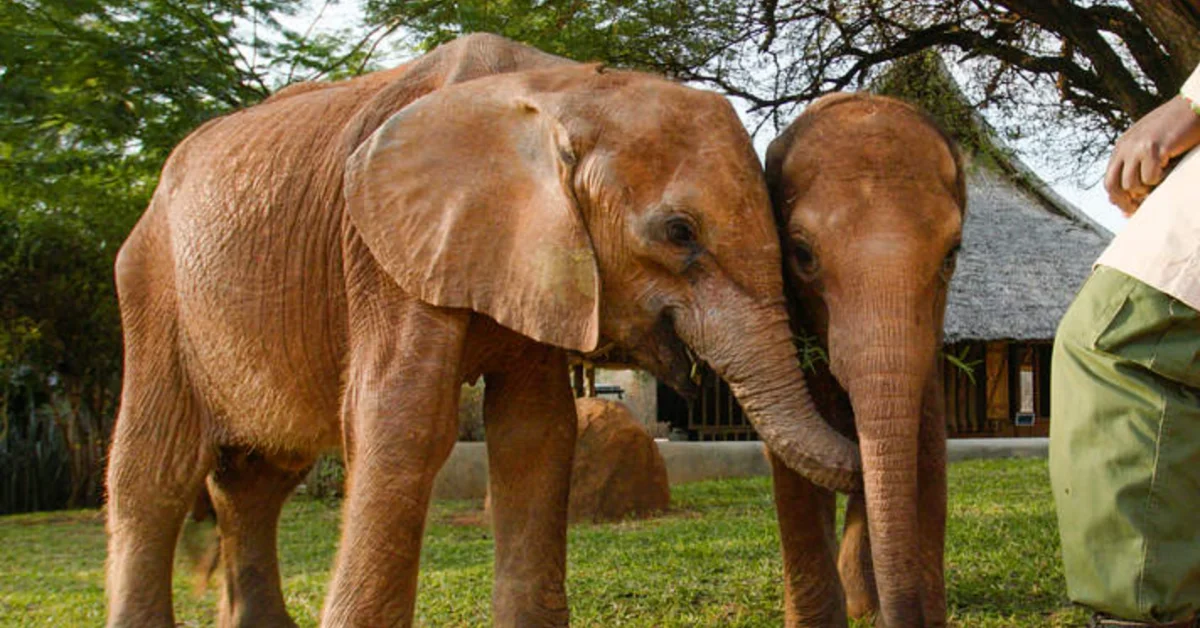
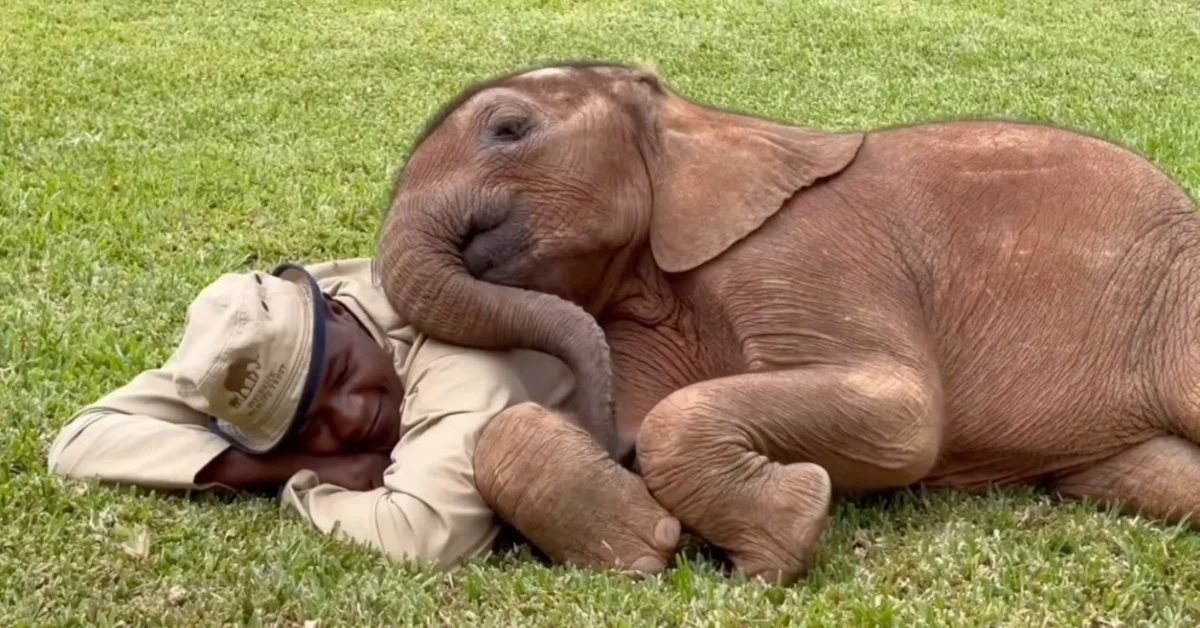
In 2019, a beloved African forest elephant named Ousmane was thought to be only one of five to 10 elephants left living in Senegal’s Niokolo-Koba National Park.
Ousmane, who was named after one of the park rangers, disappeared without a trace soon after that survey, earning his species the nickname: “Ghost elephant.”
That is, until recent trail camera footage caught a rare glimpse of Ousmane walking the fields at night.
After the footage was captured, it was a cause of celebration for officials at both Senegal’s National Parks Directorate and Panthera, a local wild cat conservation organization.
“Elephants are under immense pressure in West Africa,” Philipp Henschel, Panthera’s regional director of West and Central Africa, told Newsweek.
“Only a few populations of the pachyderms survive in this region. Niokolo-Koba National Park, where this individual was filmed, is the last area in Senegal where this endangered species survives.”

Henschel added that Panthera and the DPN have been upping their protection efforts in Niokolo-Koba National Park since the launch of their “joint park support program in 2017.”
“Detailed surveys are currently underway to assess if the elephant we recently filmed, Ousmane, is the sole survivor in the park and therefore Senegal,” Henschel assured.
“If this was found to be the case, we will assess the feasibility of translocating a herd of females into the park, so as to found a new breeding elephant population in Senegal.”
In the same park where Ousmane was spotted, hundreds of elephants used to roam. Today, African forest elephants are critically endangered under the International Union for Conservation of Nature’s Red List, due to ivory poaching and mass deforestation.
In 2023, a study published in the Proceedings of the National Academy of Sciences found that large herbivores like African forest elephants have an unexpected superpower: They graze on thin trees with low wood density, which paves the way for massive, carbon-rich trees to grow in their place.
“We talk a lot about trees and soil, but a functioning ecosystem and its services also depend on animals,” said Fabio Berzaghi, lead author of the study.

Together with lowland bongos (antelopes) and forest buffalos, African forest elephants play a crucial role in aiding carbon capture and keeping forests in West and Central Africa thick and thriving.
In their study, Berzaghi and his co-authors called for greater compassion and conservation for African forest elephants.
“Protection of forest elephants, including in logging concessions and other exploited forests, is a critically important wildlife-driven mitigation response to climate change.”
You may also like: This state finally banned circus performances for elephants, tigers, giraffes, and primates
Header image via UNESCO Niokolo-Koba National Park Senegal (CC BY 2.0)