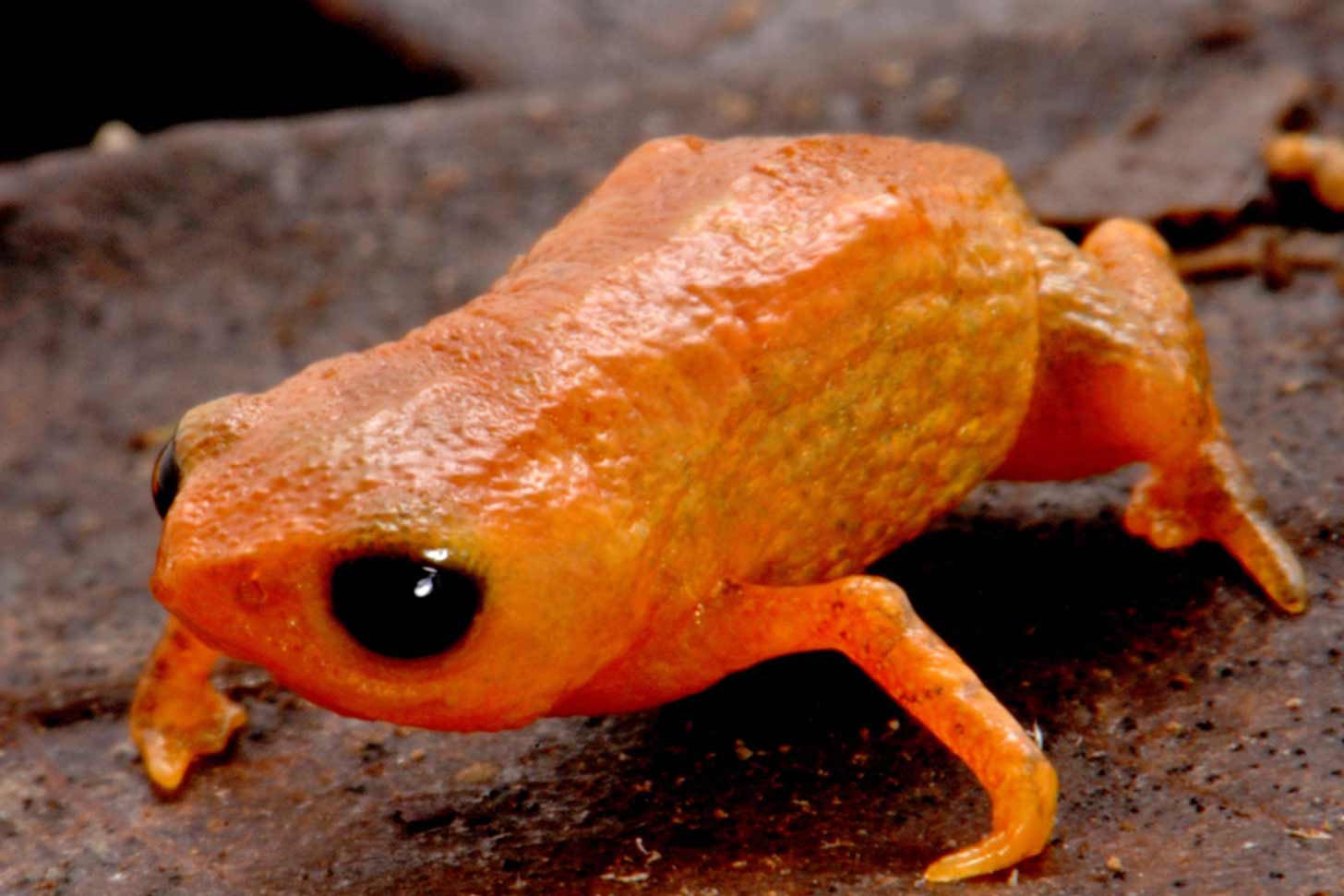
A mini pumpkin toadlet sounds like a confection from the magical world of “Harry Potter,” but it’s actually a miniaturized frog with a bright orange hue that’s roughly the size of a Skittle.
In total, the pumpkin toadlet — formally known as the Brachycephalus — includes 42 recognized species in its genus, 35 of which have only been discovered since 2000.
It’s a type of frog that scientists Marcio R. Pie and Luiz Fernando Ribeiro have become very familiar with in the last several years, as they — and other teams of herpetologists across Brazil — seek to catalog all the Bracycephalus populations in the region.
In 2021, Pie, Ribeiro, and their colleagues discovered a pumpkin toadlet (Brachycephalus rotenbergae) that shines green under UV light.
More recently, on December 10, the researchers published a study in PLOS on a new pumpkin toadlet (Brachycephalus lulai) in the Brazilian cloud forests.
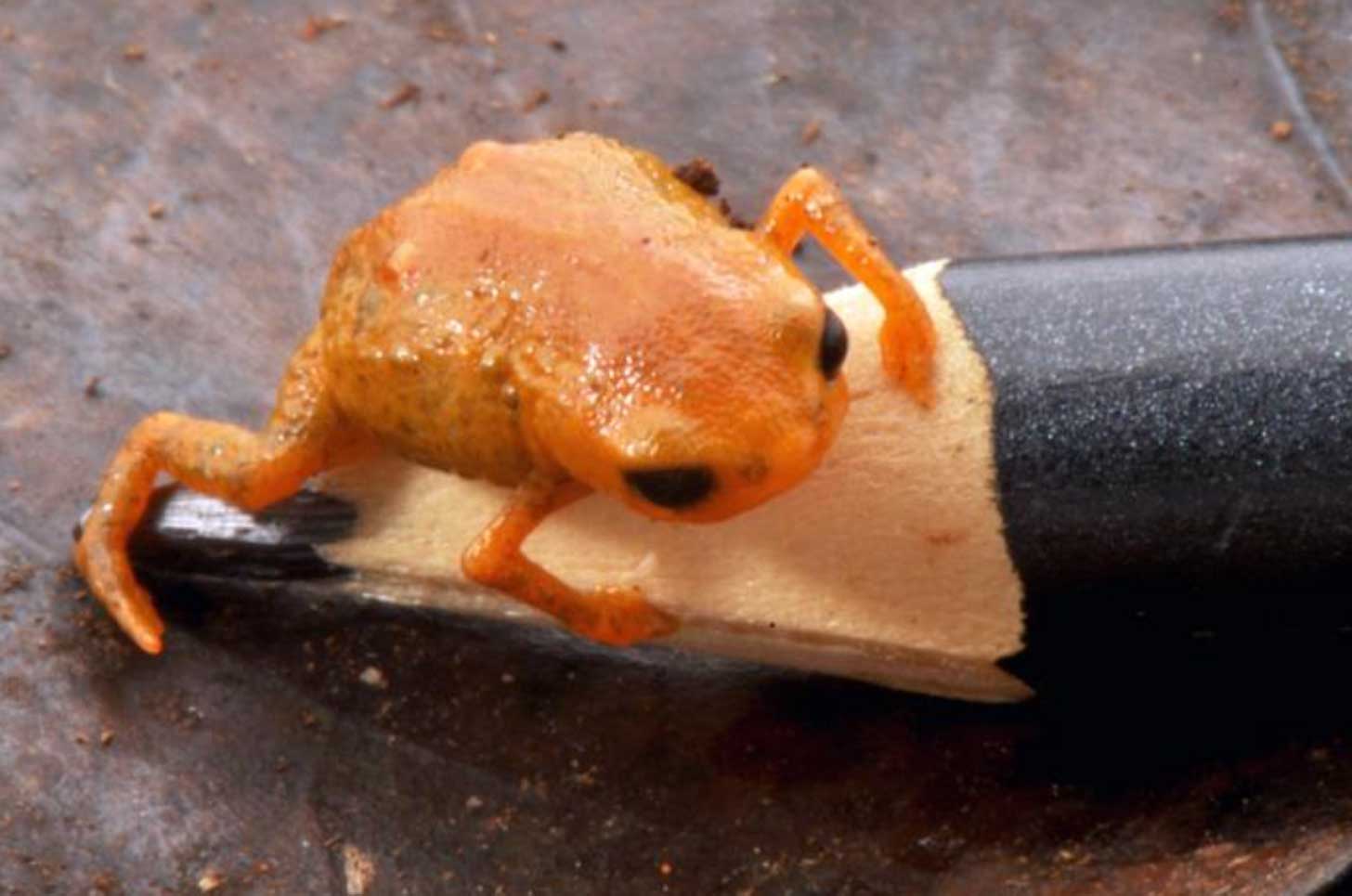
Like other pumpkin toadlets, the B. lulai is so tiny that it can sit on the tip of a pencil (one, in fact, climbed onto Ribeiro’s pencil during their expedition).
Their size makes them hard to spot, but they have a distinctcall that led scientists straight to their hiding spot among the leaf litter in the Serra do Quiriri mountain range.
Typically, pumpkin toadlets are so small that they are exceptionally bad at something most frogs are known for: jumping.
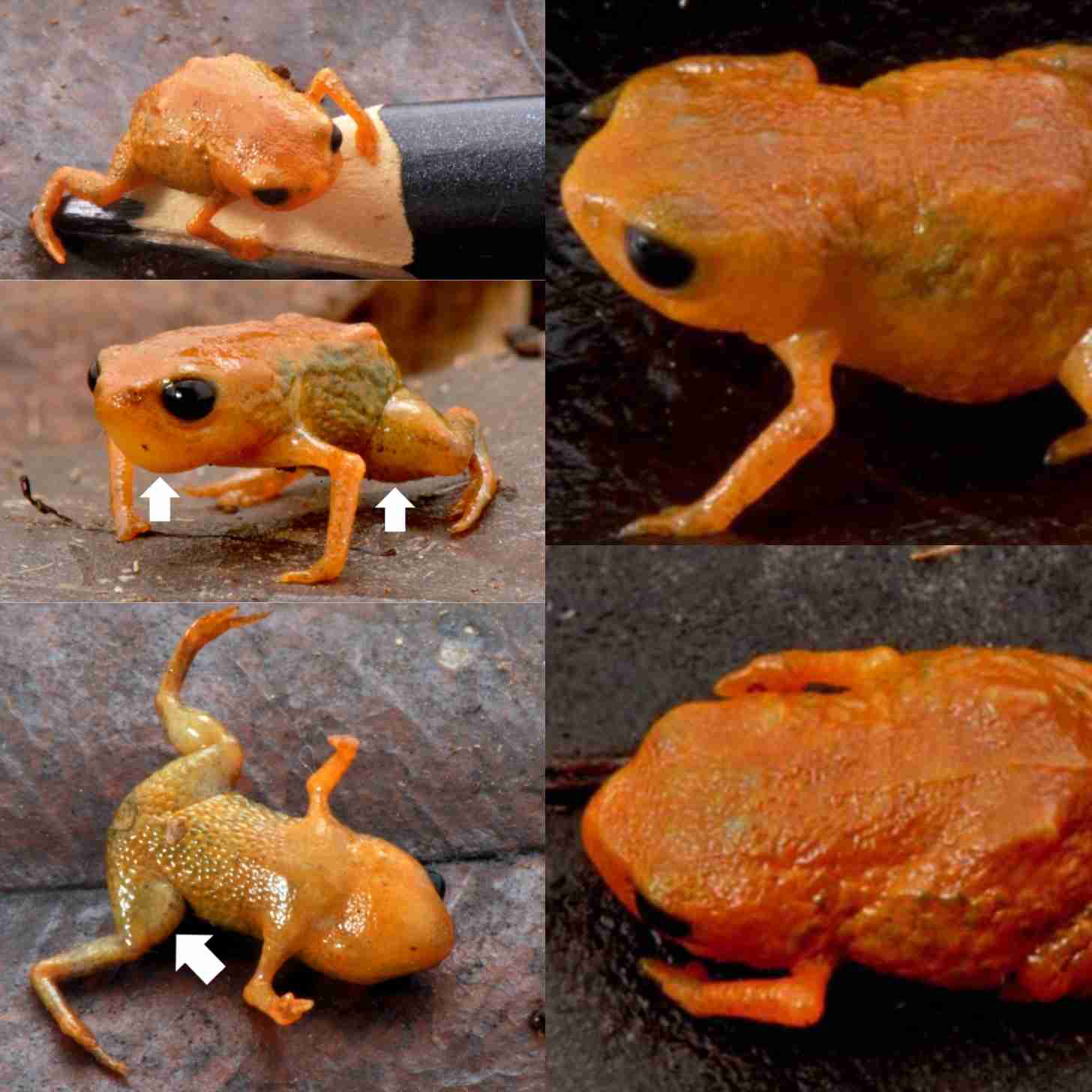
“Without the ability to control [their] posture, these frogs end up flopping backwards and doing backflips quite often,” said Richard L. Essner, a biologist at Southern Illinois University Edwardsville and co-author of the 2021 discovery.
He told CBC that their attempts to jump — and their subsequent tumbles — amount to little more than “uncontrolled landings.”
“They’re actually the worst [at jumping] I’ve ever seen,” he said. “I’ve looked at a lot of frogs jumping and, yeah, they take the prize.”
Despite their uncoordinated way of hopping through the world, pumpkin toadlets are highly poisonous. It’s a strength that allows them to hold a favorable spot in the animal kingdom, with a species designation of Least Concern on the IUCN Red List of Threatened Species.
Essner called it an “evolutionary trade-off.”
“So maybe the cost is you can’t control your landings very well. But on the other side .... because they’re so small, they probably have access to tiny invertebrates as a food source that other frogs may miss or not be interested in because it’s not worth their effort,” Essner said.
“For a tiny frog like this, even an ant is a really large meal.”
Despite the miniaturized frog’s resilience, Pie, Ribeiro, and their colleagues called for conservation measures to protect all frogs in the region from human disturbance, mining, and deforestation — especially for ones that are critically endangered.
“Possible management actions in the Refúgio de Vida Silvestre Serra do Quiriri could include a diagnosis of the impact of fire, management of grasslands with plots for controlled and rotational burning, establishment of a low-impact cattle stocking rate, reassessment of the impact and mitigation actions for kaolin mining, the cutting of Pinus, and the establishment of a plan to regulate tourism activities,” the researchers wrote.
You may also like: Scientists discover three new species of toad that give birth to tiny 'toadlets,' skipping the tadpole phase altogether
Header image via Luiz F. Ribeiro (CC-BY 4.0) / Chrisporto (CC BY-SA 3.0)