It’s summer, and it’s been hot, even in northern cities such as Boston. But not everyone is hit with the heat in the same way, even within the same neighborhood.
Take two streets in Boston at 4:30 p.m. on a recent day, as an example. Standing in the sun on Lewis Place, the temperature was 94 degrees Fahrenheit (34.6 degrees Celsius). On Dudley Common, it was 103 F (39.2 C).
Both streets were hot, but the temperature on one was much more dangerous for people’s health and well-being.
The kicker is that those two streets are only a few blocks apart. The difference epitomizes the urban heat island effect, created as pavement and buildings absorb and trap heat, making some parts of the city hotter.

A closer look at the two streets shows some key differences:
- Dudley Common is public open space sandwiched between two thoroughfares that create a wide expanse of pavement lined with storefronts. There aren’t many trees to be found.
- Lewis Place is a residential cul-de-sac with two-story homes accompanied by lots of trees.
This comparison of two places within a few minutes’ walk of each other puts the urban heat island effect under a microscope. It also shows the limits of today’s strategies for managing and responding to heat and its effects on public health, which are generally attuned to neighborhood or citywide conditions.

Even within the same neighborhood, some places are much hotter than others owing to their design and infrastructure. You could think of these as urban heat islets in the broader landscape of a community.
Sensing urban heat islets
Emerging technologies are making it easier to find urban heat islets, opening the door to new strategies for improving health in our communities.
While the idea of reducing heat across an entire city or neighborhood is daunting, targeting specific blocks that need assistance the most can be faster and a much more efficient use of resources.
Doing that starts with making urban heat islets visible.
In Boston, I’m part of a team that has installed more than three dozen sensors across the Roxbury neighborhood to measure temperature every minute for a better picture of the community’s heat risks, and we’re in the process of installing 25 more.
The Common SENSES project is a collaboration of community-based organizations, including the Dudley Street Neighborhood Initiative and Project Right Inc.; university researchers like me who are affiliated with Northeastern University’s Boston Area Research Initiative; and Boston city officials. It was created to pursue data-driven, community-led solutions for improving the local environment.
Data from those sensors generate a real-time map of the conditions in the neighborhood, from urban heat islets like Dudley Common to cooler urban oases, such as Lewis Place.
These technologies are becoming increasingly affordable and are being deployed in communities around the world to pinpoint heat risks, including Miami, Baltimore, Singapore, and Barcelona.
There are also alternatives when long-term installations prove too expensive, such as the U.S.’s National Oceanic and Atmospheric Administration volunteer science campaign, which has used mobile sensors to generate one-time heat maps for more than 50 cities.
Making cooler communities, block by block
Although detailed knowledge of urban heat islets is becoming more available, we have barely scratched the surface of how they can be used to enhance people’s health and well-being.
The sources of urban heat islets are rooted in development — more buildings, more pavement, and fewer trees result in hotter spaces.
Many projects using community-based sensors aspire to use the data to counteract these effects by identifying places where it would be most helpful to plant trees for shade or install cool roofs or cool pavement that reflect the heat.
However, these current efforts do not fully capitalize on the precision of sensors.
For example, Los Angeles’ massive investment in cool pavement has focused on the city broadly rather than overheated neighborhoods. New York City’s tree planting efforts in some areas failed to anticipate where trees could be successfully planted.
Most other efforts compare neighborhood to neighborhood, as if every street within a neighborhood experiences the same temperature. London, for example, uses satellite data to locate heat islands, but the resolution isn’t precise enough to see differences block by block.
In contrast, data pinpointing the highest-risk areas enables urban planners to strategically place small pocket parks, cool roofs, and street trees to help cool the hottest spaces.
Cities could incentivize or require developers to incorporate greenery into their plans to mitigate existing urban heat islets or prevent new ones. These targeted interventions are cost-effective and have the greatest potential to help the most people.

But this could go further by using the data to create more sophisticated alert systems. For example, the National Weather Service’s Boston office released a heat advisory for July 25, the day I measured the heat in Dudley Common and Lewis Place, but the advisory showed nearly the entirety of the state of Massachusetts at the same warning level.
What if warnings were more locally precise?
On certain days, some streets cross a crucial threshold – say, 90 F (32.2 C) – whereas others do not. Sensor data capturing these hyperlocal variations could be communicated directly to residents or through local organizations. Advisories could share maps of the hottest streets or suggest cool paths through neighborhoods.

There is increasing evidence of urban heat islets in many urban communities and even suburban ones. With data showing these hyperlocal risks, policymakers and project coordinators can collaborate with communities to help address areas that many community members know from experience tend to be much hotter than surrounding areas in summer.
As one of my colleagues, Nicole Flynt of Project Right Inc., likes to say, “Data + Stories = Truth.” If communities act upon both the temperature data and the stories their residents share, they can help their residents keep cool — because it’s hot out there.
This article was written by Dan O'Brien from Northeastern University, and was originally published on The Conversation.
Header Image by Maria Maximova on Unsplash

Seattle astounded housing advocates around the country in February 2025, when roughly two-thirds of voters approved a ballot initiative proposing a new 5% payroll tax on salaries in excess of $1 million.
The expected revenue — estimated to amount to $52 million dollars annually — would go toward funding a public development authority named Seattle Social Housing, which would then build and maintain permanently affordable homes.
The city has experienced record-high rents and home prices over the past two decades, attributed in part to the high incomes and relatively low taxes paid by tech firms like Amazon.
Prior attempts to make these companies do their part to keep the city affordable have had mixed results.
So, despite nationwide, bipartisan skepticism of government and tax increases, Seattle’s voters showed that in light of a severe affordability crisis, a new role for the public sector and a new, dedicated fiscal revenue stream for housing were not only necessary, but possible.
As a trained architect and urban historian, I study how capitalist societies have embraced — or rejected — housing that’s permanently shielded from market forces and what that means for architecture and urban design.
To me, Seattle’s social housing initiative shows that the country’s traditional, “either-or” housing model — of unregulated, market-rate housing versus tightly regulated, income-restricted affordable housing — has reached its limits.
Social housing promises a different path forward.
The rise of the ‘two-tiered’ system
After World War I, amid a similarly dire housing crisis, journalist Catherine Bauer traveled to Europe and learned about the continent’s social housing programs.
She publicized her findings in the 1934 book “Modern Housing,” in which she advocated for housing that would be permanently shielded from the private real estate market. High-quality design was central to her argument. (The book was reissued in 2020, reflecting a renewed hunger for her ideas.)
Early New Deal programs supported “limited-dividend,” or nonprofit, housing sponsored by civic organizations such as labor unions.
The Carl Mackley Houses in Philadelphia exemplified this approach: The government provided low-interest loans to the American Federation of Full-Fashioned Hosiery Workers, which then constructed housing for its workers with rents set at affordable rates. The complex was built with community rooms and a swimming pool for its residents.

However, the 1937 U.S. Housing Act omitted this form of middle-income housing. Instead, the federal government chose to support public rental housing for low-income Americans and private homeownership, with little in between.
Historian Gail Radford has aptly termed this a “two-tiered system,” and it was problematic from the start.
Funding for public housing in the U.S. — as well as for its successor, private-sector-built affordable housing — has always been capped in ways that fall far short of demand, with access to the homes largely restricted to households with the lowest incomes.
Private-sector-built affordable housing depends on dangling tax credits for private investors, and rent restrictions can expire.
While the U.S. promoted this two-tiered system, cities like Vienna pursued a different path.
In Austria’s culturally vibrant capital, today half of all dwellings are permanently removed from the private market. Roughly 80% of households qualify to live in them.
The buildings take a range of forms, are located in all neighborhoods, and are built and operated as rental or cooperative housing either by the city or by nonprofit developers.
Rents do not rise and fall according to household income, but are instead set to cover capital and operational expenses. These are kept low thanks to long-term, low-interest loans.
These loans are funded through a nationwide 1% payroll tax, split evenly between employers and employees. Renters also make a down payment, priced in relation to the size and age of the apartment, which keeps monthly rents down. To guarantee access to low-cost land, the municipality has pursued an active land acquisition policy since the 1980s.
Housing shielded from the private market
The inequities created by the two-tiered system — along with the absence of viable options for moderate- and middle-income households — are what social housing advocates in the U.S. are trying to address today.
In 2018, the think tank People’s Policy Project published what was likely the first 21st-century report advocating for social housing in the U.S., citing Vienna as a model.
Across the U.S., social housing is being used to describe a range of programs, from limited equity cooperatives and community land trusts to public housing.
They all share a few underlying principles, however.
First and foremost, social housing calls for permanently shielding homes from the private real estate market, often referred to as “permanent affordability.” This usually means public investment in housing and public ownership of it.
Second, unlike the ways in which public housing has traditionally operated in the U.S., most social housing programs aim to serve households across a broader range of incomes. The goal is to create housing that is both financially sustainable and appealing to broad swaths of the electorate.
Third, social housing aspires to give residents more control over the governance of their homes.
Social housing doesn’t all look the same. But thoughtful design is key to its success. It’s built to be owned and operated in the long-term, not for short-term financial gain. Construction quality matters, and developers realize it needs to be appealing to a range of tenants with different needs.
Early successes
In recent years, there have been significant wins for the social housing movement at the state and local levels.
In 2023, Atlanta created a new quasi-public entity to co-develop mixed-income housing on city-owned land.
In 2024, Rhode Island voters and the Massachusetts legislature funded pilot projects to test public investment in social housing.
And 2025 has seen the passage of Chicago’s Green Social Housing ordinance.
Many of these programs were directly inspired by affordable housing initiatives in Montgomery County, Maryland. Since 2021, the county’s housing authority has used a $100 million housing fund to invest in new mixed-income developments.
Through these investments, the county retains co-ownership and has been able to bring down the cost of development enough to offer 30% of homes at significantly below market rents, in perpetuity. If Vienna is the global paragon for social housing, Montgomery County has become its domestic counterpart.
In Seattle, social housing will mean homes delivered and permanently owned by Seattle Social Housing, which is funded through the payroll tax on high incomes. The initiative envisions developments featuring a range of apartment sizes to meet the needs of different family sizes, built to high energy-efficiency standards.
Homes will be available to households earning up to 120% of area median income, with residents paying no more than 30% of their income on rent. In Seattle, that means that a single-person household making up to $120,000 will qualify.

Ongoing debates
Despite these successes, many Americans remain skeptical of social housing.
Sign up for a webinar on the topic, and you’ll hear participants question the term itself. Isn’t it far too “socialist” to be broadly adopted in the U.S.? And isn’t this just “old wine in new bottles”?
Join a housing task force, and established nonprofits will be the ones to push back, arguing that they already know how to build and manage housing, and that all they need is money.
Some housing activists also question whether using scarce public dollars to pay for mixed-income housing will yet again shortchange those who most need governmental assistance — namely, the poor. Others point to the need to provide more ways to build intergenerational wealth, especially for racial minorities, who have historically faced barriers to homeownership.
Urban planner Jonathan Tarleton has highlighted another important issue: the danger of social housing reverting over time to private ownership, as has been the case with some cooperatives in New York City.
Tarleton stresses the need for “social maintenance” — the importance of telling and retelling the story of whom social housing is meant to serve.
These debates raise important questions. Social housing may be a confusing term and an aspirational concept. But it is here to stay: It has galvanized organizers and policymakers around a new approach to the design, development, and maintenance of housing.
Social housing keeps prices down through long-term public investment, ensuring that future generations will still benefit.
Developers can design and provide homes that respond to how people want to live.
And in an increasingly polarized country, social housing will allow people of various backgrounds, incomes and ideological persuasions to live together again, rather than apart.
Whether it’s the kind found in Seattle, in Maryland, or somewhere in between, I believe social housing is needed more than ever before to address the country’s twin problems of affordability and a lack of political imagination.
This article is part of a series centered on envisioning ways to deal with the housing crisis.
This article was written by Susanne Schindler from the Harvard Kennedy School, and was originally published on The Conversation.
Header Image by House Our Neighbors, CC BY-SA

In 2024, researchers from the Chinese Academy of Sciences’ Kunming Institute of Zoology explored the Tongbiguan Provincial Nature Reserve of Yunnan, a tropical haven teeming with animals like Great hornbills, Frogmouth owls, gibbons, giant squirrels, and more.
During their nature survey, the researchers discovered that the rainforest was also home to a new species: The Xenophrys tongbiguanensis, or Tongbiguanen horned toad.
“This frog inhabits flowing [mountain] streams and the nearby forest floor in subtropical evergreen broad-leaved forests,” lead author Yun-He Wu wrote for Zoosystematics and Evolution on August 8.
“The frog usually perches on cardamom leaves at night, but it can be found among piles of dead leaves by the roadside on rainy days.”
Although it closely resembles the Xenophrys ancrae, a frog found in Arunachal Pradesh, India, the Tongbiguanen horned toad’s distinct diamond-shaped pupils are vertical, not horizontal.
The color of the toad’s iris — copper-brown with a ring of gold — also set it apart from other amphibians in the broader Asia-Pacific region, like the orange-eyed Giant Himalayan Horned Frog.

Although frogs and toads are often mischaracterized as separate, distinct species, toads are a classification of frogs. Similar to the popular syllogism “all squares are rectangles, but not all rectangles are squares,” all toads are frogs — but not all frogs are toads.
Like all frogs, toads are known pest controllers. They provide an “ecosystem service” by eating pests like slugs, snails, beetles, and flies.
And as a keystone species, they also serve as prey for a variety of valuable predators, including snakes, mammals, and large birds (including the aforementioned Great hornbill, which has been listed as a vulnerable species on the IUCN Red List since 2018).

Which means that the Tongbiguanen horned toad plays a small, but vital role, in the winding mountain streams of Yunnan.
Currently, the Tongbiguanen horned toad is only known to live in the Tongbiguan Provincial Nature Reserve. But Wu and their peers invited further research into the region at large.
“The Tongbiguan Provincial Nature Reserve may harbor more hidden herpetological diversity than previously postulated. It is one of the richest regions in Yunnan for amphibians and reptiles,” Wu and their colleagues noted.

“In recent years, a series of new species, new record genera, new national record species, and new regional record species have been discovered in the Tongbiguan Provincial Nature Reserve.”
They wrote: “Our new finding of X. tongbiguanensis further confirms that the herpetological biodiversity of Tongbiguan Provincial Nature Reserve is yet to be fully documented.”
You may also like: Conservationists restore endangered frog population in Patagonia: 'Most threatened animals on the planet'
Header image via ChiralJon (CC BY 2.0) / Zhong-Bin Yu
Every day the Good Good Good team collects the best good news in the world and shares it with our community. Here are the highlights for this week!
If you want to get good news in your inbox every day, join the Goodnewsletter — the free daily newsletter designed to leave you feeling hopeful.
The Best Positive News We’re Celebrating This Week —
A science museum in Vermont is using its 100-acre forest to support visitors’ mental health
Over the summer, a “wind phone” was installed on the grounds of the Montshire Museum of Science in Vermont as a part of a larger effort to put its 110-acre forest to good use: promoting mental health.
Inspired by an idea out of Japan, there are hundreds of wind phones set up around the world to help people cope with grief, giving them a way to “talk” with loved ones who’ve passed away.
It’s just one of many installations aimed at helping people spend time outdoors, in nature, and be more present. The museum is also planning to expand a wheelchair accessible trail to the nearby Connecticut River, add yoga platforms, and more.
Why is this good news? Research supports the idea that spending time in nature is good for mental health. Furthermore, the museum initiated this installation in response to public feedback — people sharing that they needed mental health support, and that the museum could help address that need.
These futuristic 3D-printed homes start at just $200K. One major U.S. city is building 80 of them.
→ Read more
New U.S. data shows teen suicide is on the decline
While there are still a devastatingly high number of teens impacted, a new federal report found that between 2021 and 2024, depression and suicidal thoughts and behaviors in teens declined.
The National Survey on Drug Use and Health shared that the prevalence of suicidal thoughts among 12-to-17-year-olds fell to 10% in 2024 — down from nearly 13% in 2021. Additionally, the prevalence of suicide attempts in the same age group also fell slightly, to 2.7% in 2024 from 3.6% in 2021.
While the report did not elaborate on the potential causes for these declines, one reason could be that more teens are opening up, being vulnerable, and talking about their suicidal thoughts. The common assumption has long been that asking about suicidality can increase suicidal tendencies, but the data says that’s not true at all.
Affordable and simple to install, solar panels that fit on your deck or balcony are growing in popularity in the U.S.
Smaller-scale solar panel systems that can plug into a standard wall outlet have been popular in Europe for years — and they’re gaining traction in the U.S. now, too.
Even before the Big Beautiful Bill passed, which scrapped residential rooftop solar tax credits that helped make systems more accessible for homeowners, manufacturers of smaller systems — known as plug-in or balcony solar — were seeing a rise in demand. Utah also passed a law to streamline regulations and make it easier to buy and install them.
One homeowner who installed a $2,000 plug-in solar systems reported saving around $35 per month on his power bill — recouping the cost of the system in just 5 years. His primary motivation, though, was reducing his carbon footprint.
What’s the nuance? Wider adoption of these smaller-scale systems has been hindered in the U.S. by varying policies that make it unclear and confusing about what individual utility companies allow locally, as well as a lack of awareness and availability of the systems.
However, that could change with the removal of the tax credits, as folks look for more financially accessible options for going solar.
Hank Green launched a new ADHD-friendly app where a bean that lives in your phone will only knit if you focus
→ Read more
A 16-year-old upcycles toxic rubber waste into emergency sleeping mats for people experiencing homelessness
Growing up in Biratnagar, Nepal’s industrial hub, 16-year-old Priyanshi Poddar has first-hand experience with the overwhelming piles of rubber waste that accumulate from local factories, polluting local waterways. She started Project Saathi to help.
The project upcycles the rubber remnants from the footwear industry into durable mats, “improving the living conditions of homeless individuals and reducing environmental pollution caused by rubber waste.”
The mats are essential to people experiencing homelessness, people displaced by disaster, and families living in poverty. They provide a clean, insulated surface for sleeping, studying, and even playing, giving people a dignified place to land instead of a cold floor.
Tulum, Mexico is now home to one of the Yucatán Peninsula’s most ambitious conservation projects
Late last year, on a stretch of once loosely regulated beachfront, Jaguar National Park opened along the coastline of Tulum, Mexico. Across more than 2,400 acres, the area has been transformed into a protected zone of forest trails, Maya ruins, and quiet beachfront.
In contrast to the noise and congestion Tulum’s rapid growth has brought, the reserve limits cars and the number of daily visitors, and prohibits beach vendors and plastic. A small handful of hotels were grandfathered into the park, but no new ones are permitted.
The goal of one of the Yucatán Peninsula’s most ambitious conservation projects is both to restore and conserve the land, and shift the way travelers experience one of the country’s most-visited regions.
Why is this good news? Traveling and experiencing new cultures and environments is a beautiful part of the human experience. But when destinations become too popular, it can lead to unsustainable travel habits. More destinations are taking action to preserve very reasons these places became sought-after in the first place.
These innovative, solar-powered shipping containers house 280 homeless people amid scorching summer heat
A German grandma builds wheelchair ramps from Lego to make her town more accessible and colorful
Thirty years ago, Rita Ebel was in a car accident that left her with incomplete paralysis. As an ambulatory wheelchair user, she can walk short distances, but largely relies on her wheelchair to get around.
But in her hometown of Hanau, Germany, Ebel found that most businesses were inaccessible to her after her accident. So she took matters into her own hands, building wheelchair ramps of her own design out of something more colorful than wood or concrete: Lego bricks.
Quickly priced out of her building material of choice, Ebel took to social media to ask for help — and the donations came pouring in. Her landlord even offered up some extra space to fuel her efforts to make the community more accessible.
A summer camp in Vermont is providing a fun, safe space for kids with parents who are or have been incarcerated
Every summer, a weeklong sleepaway camp in Plymouth, Vermont hosts kids between the ages of eight and 12 who currently have, or have had, a parent incarcerated. The campers do all the traditional summer camp activities: songs around the campfire, secret handshakes, arts and crafts, and more.
Knowing all the kids around them share the experience of a parent being incarcerated, the campers feel a freedom to be themselves, let go of the usual worry or stress they’d have at home, and just be kids.
As one camper said, “When you’re here, you can just be yourself. You don’t have to hide like you have to do at school sometimes.”
Why is this good news? Around 4,700 kids in Vermont, or one in 25, have a parent who has gone to jail. On top of everything else kids go through, parental incarceration can be destabilizing, stressful, and isolating. Kids deserve to be kids — and this summer camp is giving them the space to have a core childhood experience, despite what’s going on around them.
In this all-women tiny home neighborhood, rent starts at $450. Residents want it to be a nationwide blueprint
Despite slow growth in the U.S., global EV sales are already up 27% this year
In the first seven months of 2025, a new report found that more than 10.7 million electric vehicles were sold — a “robust” 27% increase over the same time period last year.
China led the way with 6.5 million EVs sold, an increase of 29%, but Europe also saw a large uptick: with 2.3 million EVs sold, a 30% increase over the same period last year. Notably in Europe, fully electric vehicle sales were up 30%, while plug-in hybrids were up 32%.
While North America saw 1 million EVs sold, an increase of 2%, the report also came out around the same time Ford announced its new $5 billion investment in manufacturing affordable EV options in the U.S., calling it its next “Model T Moment.”
→ Read more
A blind man was able to return to work thanks to RayBan and Meta’s “life-changing” AI glasses
Sight loss forced 57-year-old Andy Evans to leave his job working nights at a supermarket. After a year of unemployment due to registered blindness, RayBan and Meta’s AI glasses have been “life-changing,” allowing him to return to work.
The glasses have a tiny camera in their frame and speakers in the arms, and are voice-activated by the wearer. Evans also uses a white cane, but says the glasses have given him a “much better quality of life.” He’s been able to order food in a restaurant and have the glasses tell him what obstacles are in front of him.
Evans now works helping people adjust to sight loss at the Sight Support West of England charity.
What’s the nuance? The real issues surrounding AI cannot simply be ignored, but this is one example of the potential the technology holds to build a better, more inclusive world. And these people-centered use-cases that make a life-changing impact for disabled people ought to be prioritized — that means making them financially accessible, too.
Chicago-wide search for beloved service dog ends as 'Bam Bam' reunites with owner after 72 days
The global suicide rate has fallen by nearly 30% since 1990
According to a large international study, suicide rates have declined by 29.9% worldwide since 1990. Data from 102 countries found that the average rate dropped from 10.33 suicides per 100,000 people in 1990 to 7.24 in 2021.
The decline was greater in higher-income countries, falling 32.1% compared to lower- and middle-income countries, where it fell 27.3%.
Researchers noted that, in Europe, responsible media reporting and efforts to build social and emotional skills could have contributed to the decline, as well as improved access to care, reduced stigma, and suicide prevention programs.
If the current rate of decline continues, the global suicide rate could reach 6.49 per 100,000 by 2050.
→ Read more
More good news of the week —
A 12-year-old was named ‘girl of the year’ for designing solar-powered sleeping bags for her homeless neighbors. Designed similarly to a traditional sleeping bag to allow heat retention, her invention also features a control circuit that automatically alternates the blanket between on/off states based on temperature readings to conserve battery life.
A University of Colorado Boulder alumna donated a 476-acre wildlife reserve and endowment to the university. The Spruce Gulch Wildlife and Research Reserve land had been in Linda Holubar Sanabria’s family for nearly a century, and along with endowment funds, her donation was valued at $10.4 million.
Scientists say they have solved the mystery of what killed more than 5 billion sea stars in a decade-long epidemic. Starting in 2013 and continuing today, a mysterious sea star wasting disease sparked a mass die-off from Mexico to Alaska and devastated more than 20 species, including the sunflower sea star, which lost around 90% of its population in the outbreak’s first five years.
New smart glasses use AI to help blind and low-vision users read, translate text, describe surroundings, and more. The glasses can also search the web and recognize people, objects, and signs, feeding information to the user via open-ear speakers built into the ear stems.
More than 500 Catholic sisters embarked on a “pilgrimage of hope” to support immigrants, the environment. Gathering in Atlanta, Georgia from 18 countries, pilgrimage leaders guided readings, music, and periods of intentional silence, pausing at three locations, each dedicated to one of the three issues they were in the streets to confront: Forced migration, climate change, and racism.
A Jamaican university student invented a self-disinfecting door handle for hospitals. With the potential to help control the spread of disease, particularly during pandemics, the pioneering ultra-violet self-sanitising door handle model, called Xermosol, can kill 99.9% of pathogens but is safe for people and animals.
A new trail development in North Carolina will both boost ecotourism and protect rare species. Adding 22 acres onto an existing 170-mile public trail system will add potential habitat for the four-toed salamander, bog turtle, and mole salamander, which are uncommon species that are jeopardized by loss of natural habitat.
A pandemic-era program to facilitate hotel- and office-to-affordable housing conversions is opening its first project in New York City. The development, called Baisley Pond Park, is the first project to open using the Housing Our Neighbors with Dignity Act, which financed the conversion of underutilized office and hotel space for affordable and supportive housing.
Nadeen Ayoub will become the first woman to represent Palestine at the Miss Universe pageant. Ayoub will make history, joining competitors from more than 130 other countries and territories at the 74th Miss Universe final, which will be held on November 21 in Bangkok, Thailand.
Scientists are celebrating 40 potential new sea creatures uncovered on an Argentinian expedition. Notably, the expedition also livestreamed from its Remotely Operated Vehicle, SuBastian, going viral and inspiring curiosity about the deep sea in millions of viewers online — in Argentina and around the world.
A British bookstore chain is opening 10 new stores every year to keep up with young customers’ demand for books. Waterstones’ sales revenues are up 5%, about half of which is down to higher prices — the rest is a result of selling “lots and lots of books” as younger adults are being inspired to pick up a paperback by BookTok, and real-life book clubs.
Pope Leo will welcome a pro-LGBTQ+ Catholic group to the Vatican for the first time in history. In addition to advocating for LGBTQ+ reforms, We Are Church has been a longtime critic of the Vatican from within the Catholic Church, particularly its history of sexual abuse and exclusion of women from leadership.
A new, non-invasive test can quickly spot meningitis in babies with “great accuracy.” The current screening method for meningitis uses a spinal tap in newborns and infants, but a new study showed that a new high-resolution ultrasound device can detect the potentially deadly infection with 94% accuracy.
Kenya officially eliminated “sleeping sickness” as a public health concern. The country joins nine others that have eliminated human African trypanosomiasis. It’s also the second neglected tropical disease the country has eliminated; it was also certified free of Guinea worm disease in 2018.
An Australian couple bought a former student boarding house to create housing for older women at risk of homelessness. They decided to step in to help after learning about the housing affordability crisis, and wanted to make a difference in their community by offering a low-cost solution for people in need.
Scientists developed a new compound that could offer a breakthrough in the global fight against tuberculosis. TB is the world’s deadliest infectious disease, and this compound even proved effective against drug-resistant infections, which are common globally and pose a significant challenge for controlling the disease's spread and progression.
Nike co-founder Phil Knight is donating $2 billion to Oregon Health and Science University’s Knight Cancer Institute. The Knight Foundation says it’s the single largest donation ever to a U.S. university, college, or health institution and will be used to shift the scientific approach to cancer treatment, research, and patient care outcomes.
A traveling music group in Sudan is helping keep people connected amid the ongoing civil war. Sudan’s army and a paramilitary group have been at war for control of the country’s government since April 2023, so the musical salon is trying to give people a sense of normalcy, encouragement, and inspiration.
Polestar’s electric SUV set a new Guinness World Record after traveling over 580 miles on a single charge. The new Polestar 3 drove 581.3 miles on public roads in the U.K., setting a new record for the longest journey traveled by an electric SUV and smashing its range estimates by almost 143 miles.
Missouri is making it easier for sexual assault survivors to get a forensic exam, no matter which hospital they go to. The first state to require this kind of support, its new Sexual Assault Forensic Exams via Telehealth Network has been in the works for five years after the passing of the Justice for Survivors Act, which requires all hospitals have access to SAFEvT.
Every year, the Construction Industry Education Foundation hosts tiny home building competitions throughout Texas, Indiana, California, and Oregon.
The challenge? Task high schoolers with designing and building a 96+ square foot structure that meets industry standards — in just 2 days.
In March, more than 185 students, on 13 teams, traveled from across Texas to attend the Design Build Competition in Houston.
“High school students arrived ready to build, problem-solve, and work as a team in a real-world jobsite environment at Lone Star College — North Harris — and they delivered,” The CIE Foundation wrote on Instagram this past April.
“These students didn’t just learn about careers in construction — they experienced them.”
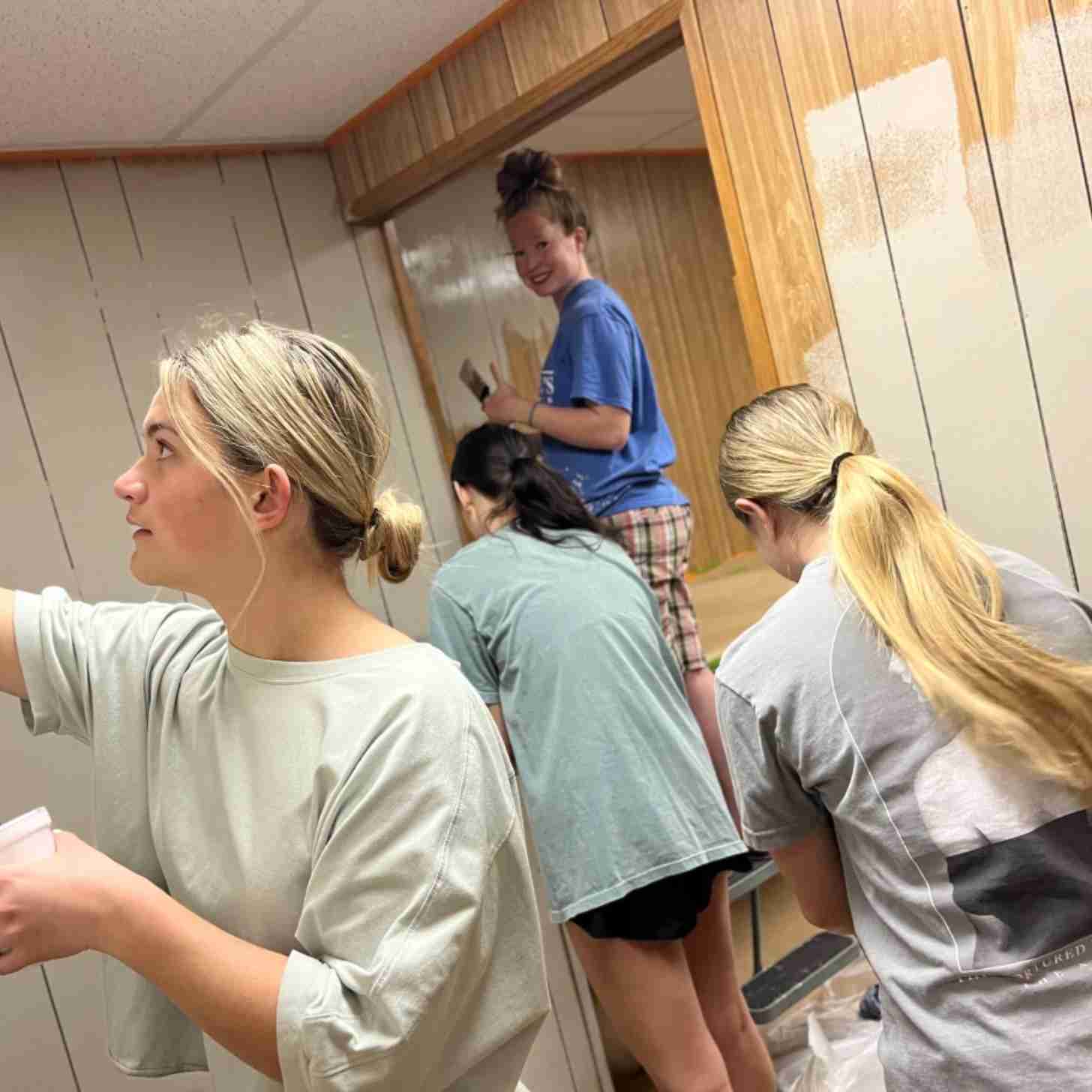
Of the 13 teams, students from Nacogdoches High School’s Career Technical Education program stood out in the competition.
Although they placed second in the contest, falling short of the top prize, they elected to do something remarkable: turn their entry into a home in real life.
“The students and the teachers decided to take it a step further and move it forward for a better purpose,” Shawn Lucena, the director of Nacogdoches ISD’s CTE program, told local news outlet KTRE.

And Lucena knew exactly where to turn: The Village Nac.
The mental health rehabilitation center, which is based in Nacogdoches, Texas, serves people experiencing homelessness and chronic mental health issues through temporary housing initiatives and mentorship programs.
The center itself is faith-based, but the nonprofit doesn’t require prospective residents to be religious themselves. Instead, they simply ask them “to be a cooperative member of the Village Nac community” by participating in at least one program with their neighbors.
Their extensive catalogue of “micro-enterprises” includes gardening, pottery-making, sheepfarming, beekeeping, piano playing, and more.
The co-founders of The Village Nac, Laura Culpepper and Constance Engelking, said that the students’ donation would have a long-lasting impact on the community members they served.
“When they leave or move on or even step up to a larger home, there’s a room for the next person to come in,” Engelking said. “So it’s just a perpetual gift.”
“There will be many, many, many people over the years to live in that house,” she added.
Lucena said that the ultimate goal of the program was to help teach students to give back. By donating their hand-crafted tiny home, his students were able to see their work as more than just “something to turn in for a grade.”
“[They] realize that, ‘Wow, I am doing something that’s going to be left behind for someone else to use,’ and you can see it in their eyes that it’s very satisfying once they realize that,” Lucena said.
You may also like: High school students build tiny house village for homeless veterans states away: 'A great civics lesson'
Header image via CIE Foundation
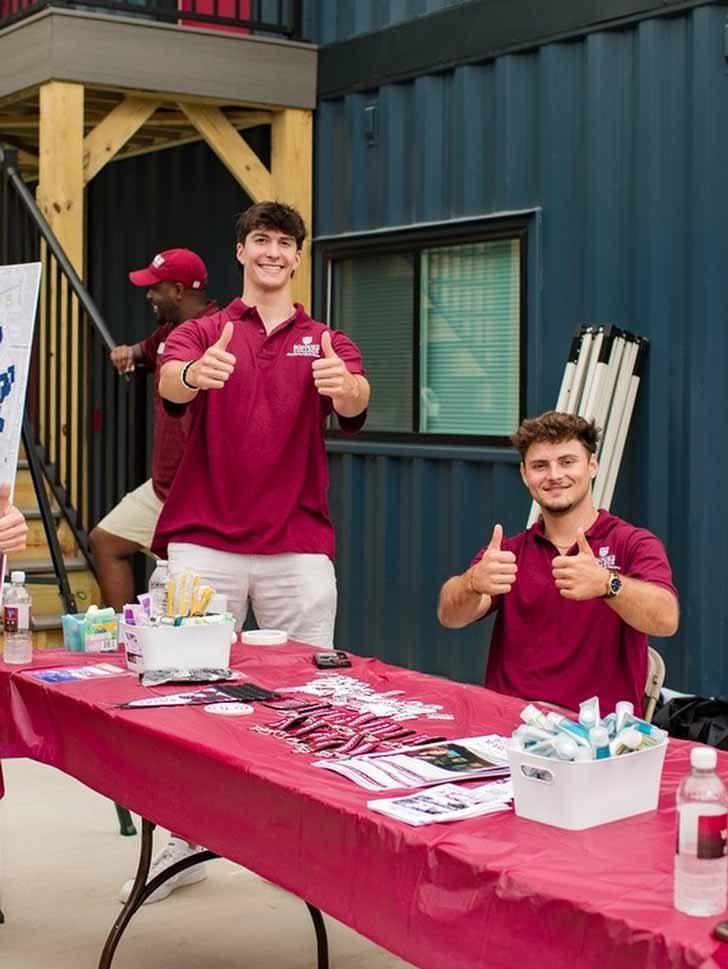
Incoming students at Roanoke College in Salem, Virginia have a new option for housing this year: Repurposed shipping containers.
Named Maroon Village, a new neighborhood of student housing opens up 157 beds in suite units, with rooms spanning 16.5 feet by 7 feet, with 8-foot-high ceilings.
The university calls it a “comfortable, modern living environment,” adding that it will be the first facility on campus fully equipped with solar panels.
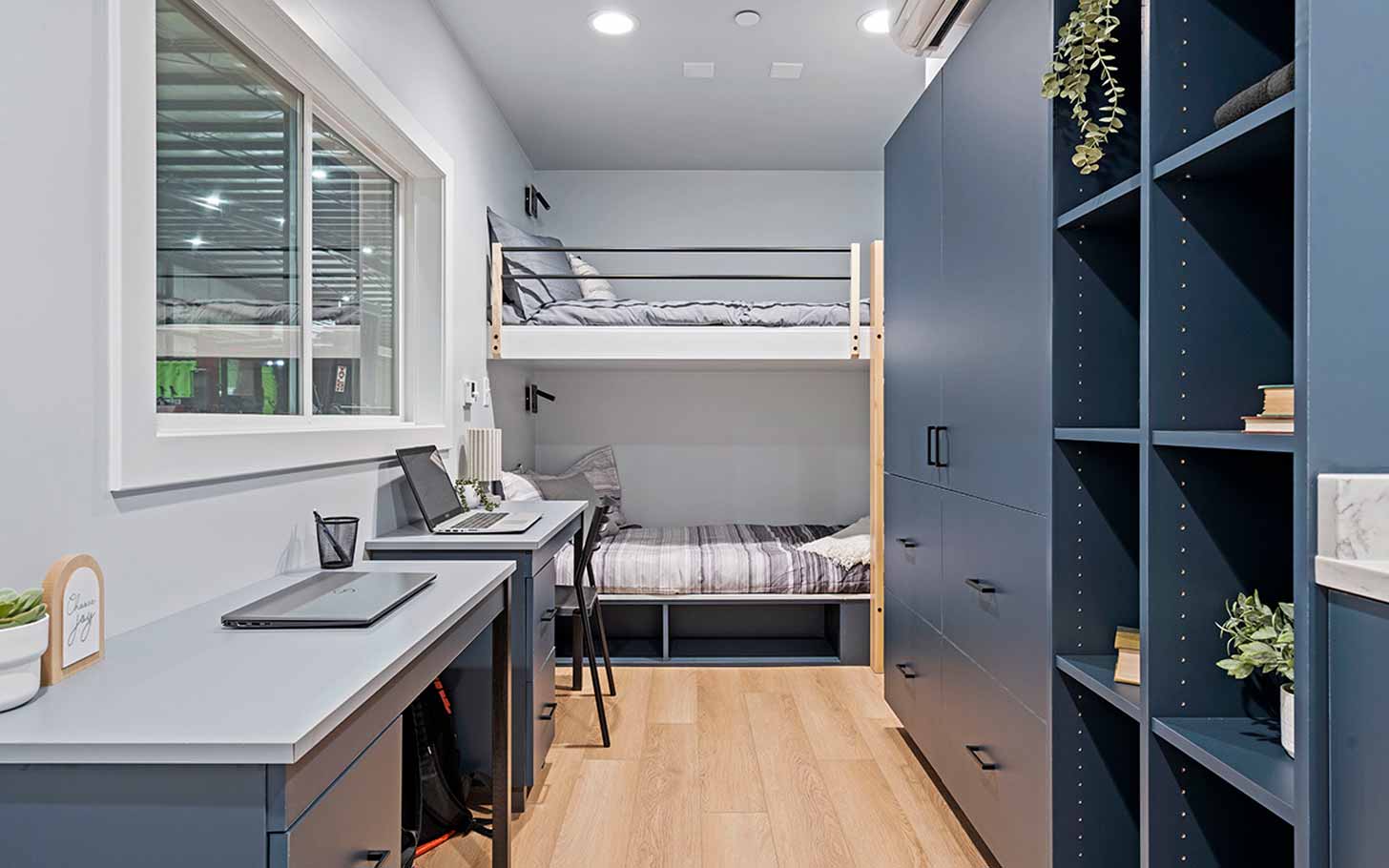
“Constructed from repurposed shipping containers, Maroon Village is an innovative example of how to live greener without forgoing daily comforts,” an informational webpage from the college explains.
“On the outside, clean and minimalist architecture paired with an open courtyard will create a unique sense of place.”
The units were constructed by Custom Container Living, which has also made similar structures for Fisk University in Nashville, Tennessee.
“One of the things that really drove me to get into this business was to be able to provide affordable, sustainable, durable housing for people,” Robert Wagoner, founder of Custom Container Living, said in a blog post for the company. “Providing housing for students makes my heart happy and proud we could achieve this.”

On the inside of the dorms at Roanoke College, bright interiors open to suite-style rooms, where students have standard bunk beds, two desks, storage space, a vanity with a sink, private bathrooms, and individual, in-room thermostat controls.
The village also offers a common room with a TV, seating, and kitchenette, as well as three on-site laundry rooms.
“Units will be arranged around a central courtyard that offers open green space for a true village environment encouraging community and connection,” the college adds.

“Each unit will be renovated and modern with an energy-efficient design that meets the highest Energy Star standards. The result is a comfortable, conscientious approach to campus living.”
Already used to smaller living quarters, students are eager to try out the new campus living experience.
“It’s pretty spacious from what I thought it would be,” Cole Mendoza, a senior at Roanoke College, told WFXR News. “I mean, I can lie back and kick my feet. I can sit up, so it’s pretty good for me.”
“I expected it to be a lot like a tuna can,” junior Star-Angel Oppong added. “I came in here, I realized I could twirl and spin and all that fun stuff.”
Maroon Village dorms are a bit smaller than other residence halls, but right now, they will be a temporary place for students to stay as other dorms undergo renovations.
“While we renovate those spaces, we were looking for an option to house students in a sustainable way that made sense for campus in the ever-evolving culture of Roanoke College,” interim director of residence life and housing Ellasen Elroumy, told 10 News.
“That’s really where the idea came to be.”
Time will tell if the structures become a more permanent option for Roanoke’s campus housing.
At Fisk University, where Custom Container Living built similar dorms a couple of years ago to quickly provide housing for a rapidly growing student body, residents liked them enough to reconsider their temporary nature.
“They turned out great,” one student at Fisk said in a blog post for Custom Container Living. “You get just enough kitchen, just enough living room, a workspace and a bathroom. It's all I need as a student.”
For Roanoke College, it’s also a test case for students to embrace sustainability in a whole new way.
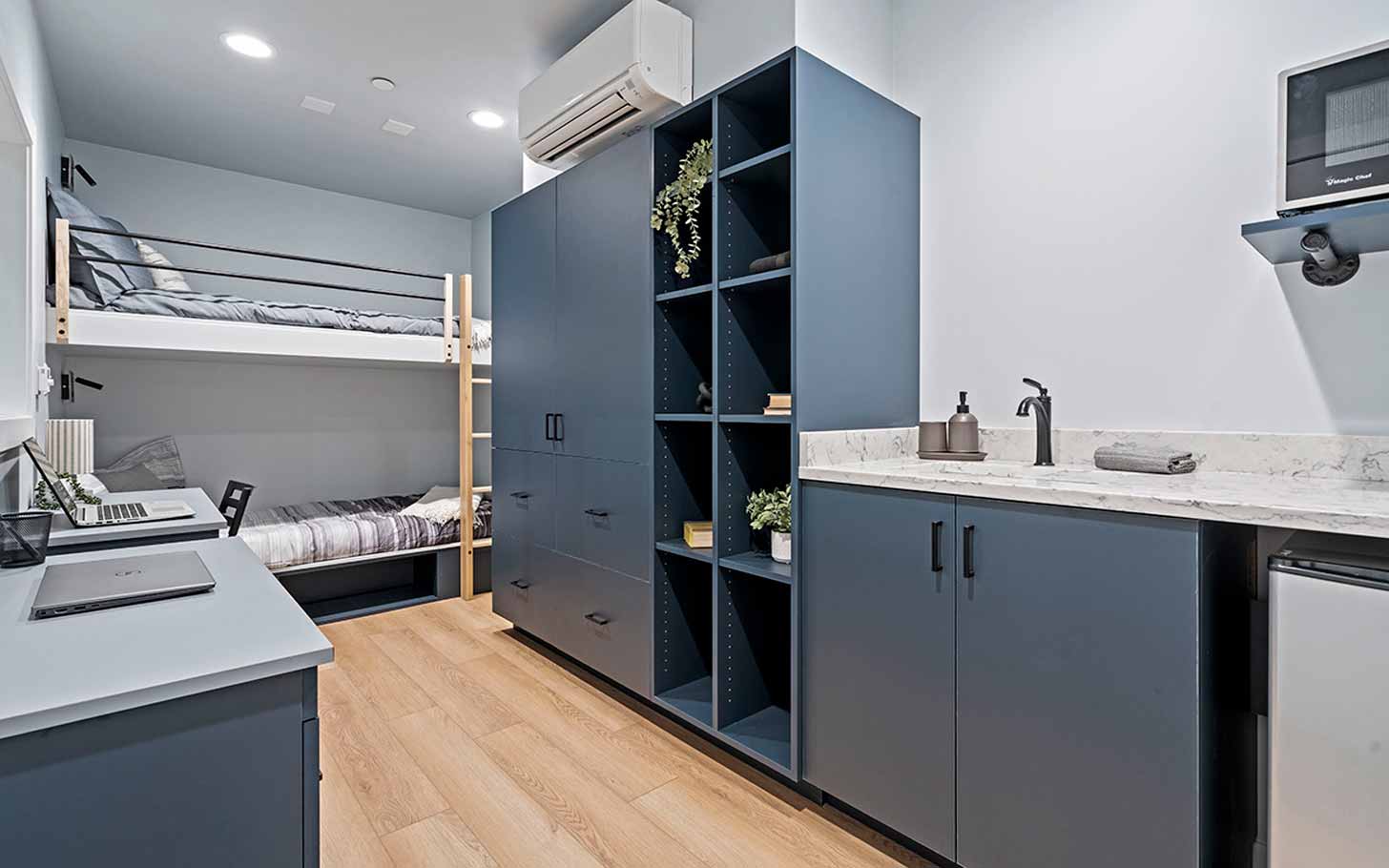
“This is an opportunity for students to engage in sustainable living in a way never before offered on campus,” the college’s webpage shares.
“It’s also a chance to experience a modern, creative style of housing that is gaining popularity around the country. Repurposed shipping containers are popping up in art galleries, hotels, tiny homes, cafés — and soon at Roanoke College.”
You might also like: Instead of a new jail, LA built a shipping container housing complex for homeless residents
Header image courtesy of G&H Contracting/Facebook
AI-generated headlines are increasingly common — but in a sea of misinformation, deepfakes, and entire articles written by ChatGPT, a particular brand of AI content has emerged: fake “feel good” news.
In June, a rumor about Kendrick Lamar and his partner, Whitney Alford, “quietly” paying off school lunch debt for 103 public schools went viral across Instagram, Facebook, and X.
Although the Grammy award-winning musician has a long history of donating to LA communities, the details of this latest story were not corroborated by any professional news sources.
Ultimately, it all traced back to a single AI-generated YouTube video, which had spurned a frenzied game of telephone across the internet.
Just a few months earlier, a story about Kansas City Chiefs football player Travis Kelce spread like wildfire, claiming that Kelce had donated a $3.3 mansion to Foster Love, a nonprofit that helps young adults navigating the foster care system find permanent housing.
When the news initially broke, the nonprofit that was at the center of the story believed it, too.
On March 2, Foster Love shared the news on their official Facebook page, writing: “It’s inspiring to see Travis Kelce use his platform to make a real difference for vulnerable youth.”
After the nonprofit had seemingly corroborated the story, many outlets — including our team at Good Good Good — fell for it.
As soon as the truth emerged, the article was updated with a retraction notice, as well as a direct statement from Kelce himself.
“I gotta make a little statement in the ‘don’t believe everything you read kids’ category or nice realm that you see online,” Kelce said in an episode of New Heights, the sports commentary podcast he co-hosts with brother and NFL star Jason Kelce.
“Some false claims were thrown out there that I was doing something in the community that I was not. And I’m not even going to talk about it specifically. I don’t want to bring any more attention to that whole nonsense and article and all that stuff.”
Kelce also took the opportunity to spread the word about his own nonprofit: Eighty-Seven & Running.
“We’re always trying to get out there and get in the Kansas City community and the Cleveland community, but this time I wasn’t doing what was falsely claimed by the social channels or the outlets posting all this AI stuff,” he explained. “Just want to set the record straight.”
As fake stories gain traction and flood the internet, they overshadow the real, factual good news that’s unfolding every day.
Stories like former NFL player Jordan Jenkins donating not one, but two houses to support homeless veterans in Columbus, Georgia.
Jenkins, a Georgia native, played college football for the Georgia Bulldogs. He went on to play for the New York Jets, Houston Texans, and Las Vegas Raiders before retiring from the NFL in 2022.

On August 22, Jenkins sang the praises of the Plummer Home, a nonprofit that combats veteran homelessness and offers transitional housing to local vets.
“Over the last 15 years, they’ve helped impact the lives of 708 veterans — and the number will continue to rise moving forward,” Jenkins said in a video that was shared across Instagram and TikTok.
“But for that, we need more people to come out and sort of put their money where their mouth is and really get involved and really just help these veterans out.”
That’s when Jenkins became acquainted with Greg Jordan, the CEO and Founder of the Plummer Home, in typical Georgia fashion: over a crawfish boil.
Hoping to see more, Jordan offered Jenkins a tour of their house, talking through new renovations like a laundry room full of washers and dryers donated by a local family.
“It’s through tasks like that they’re able to change the lives of veterans, and after hearing some of those stories, I was like, okay. Well, I know I always wanted to get involved and I know I always say I love veterans and I wanna give back.”
So, heeding his own advice, Jenkins “put his money where his mouth was” and looked for ways to help. He soon learned that the house next door to the Plummer Home was for sale.
“I was talking to Greg about, ‘What’s next? Where do they go after this?’” Jenkins said. He was told that the Plummer Home hoped to expand to a bigger facility someday, but they were operating on a limited budget.
“I said, well, let me get started, let me get involved,” he said. “And I bought the house next door.”
Then he learned that a second house on the same street was up for sale, and he purchased that residence as well.
“Now, in total, we’ve got four units that I’ll be dedicating towards the Plummer Home, just to help give veterans a sense of self again and really give them a little more privacy,” Jenkins said.
“And [also] help them get the rental history they might need to get the dream home that they really want.”
Jenkins said that cycles of homelessness continue because people don’t have access to the resources they deserve.
He wrapped the video by saying: “[I want to] give them a second chance and a helping hand.”
See Jenkins' full story:
You may also like: Inside the tiny home villages built to end veteran homelessness: 'Each resident receives tailored assistance'
Header image via Erik Drost (CC BY 2.0) / Leah Applewhite
The morning of June 25, 2025 — the day after the New York City Democratic mayoral primary — social media was abuzz.
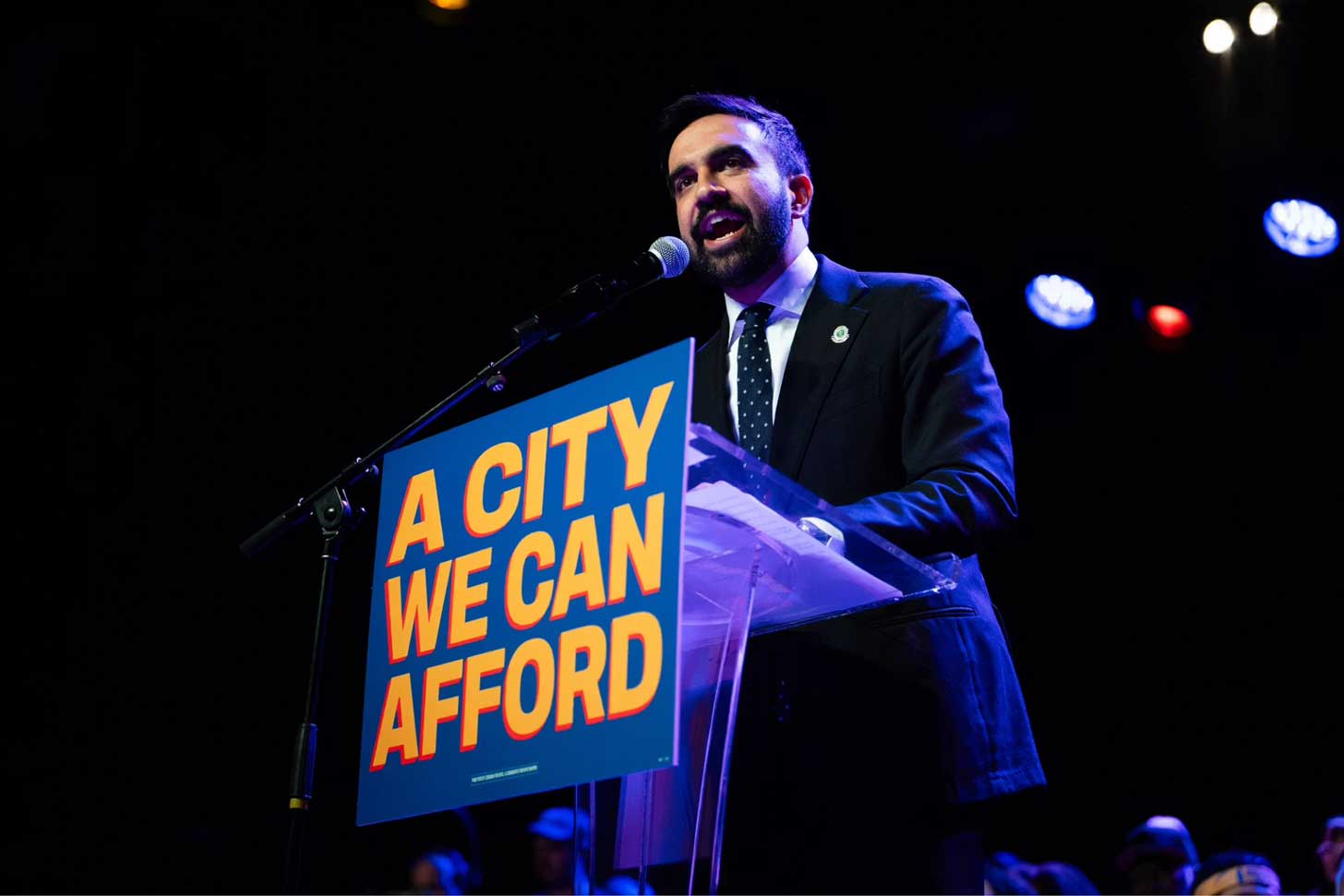
Half of the people online, including President Donald Trump, were pointing fingers at now-Democratic mayoral nominee Zohran Mamdani and calling him a “Communist Lunatic.”
The other half had a different take.
“Congratulations to Zohran Mamdani on an historic victory … ” Representative Alexandria Ocasio-Cortez posted on Instagram.
“It’s time we acknowledge that not all Democrats are the same. We’ve got people, they’ve got money.”
In another post, she shared a video in which she is embracing Mamdani on the streets of New York in a tight hug. It’s captioned: “A better world is possible.”
Mamdani is notably a candidate who targeted voters outside of his political party. He identifies as a democratic socialist, but in the months leading up to the primary, he visited Republican strongholds across N.Y.C., like Staten Island and Queens, where locals swung further right in the presidential race.
And he asked people why they voted the way they did.
“After the presidential election, we saw that New York was actually the state with the largest swing in the country toward Donald Trump, and that swing took place far from the caricature of Trump voters and instead taking place in the hearts of immigrant New York City,” Mamdani said in an interview the day after the primary election.
“I went to those neighborhoods. … Again and again, what I heard from them was cost of living, an inability to afford the very things they recalled being able to purchase four years ago. Again and again, they asked for a relentless focus on an economic agenda. Ultimately, in listening to them, we built a campaign that was explicitly about making this city affordable.”
He says he discovered that the people who voted for Trump were desperate for a more affordable life. So, he took an uncommon approach, which he calls “listening instead of lecturing.”
“Too often in politics there’s a desire to impose what you think the debate is on the people you seek to represent,” he continued, “as opposed to listening to the very issues that are making it difficult for them to keep calling the city that they love the city that they live in.”
The Mamdani Effect
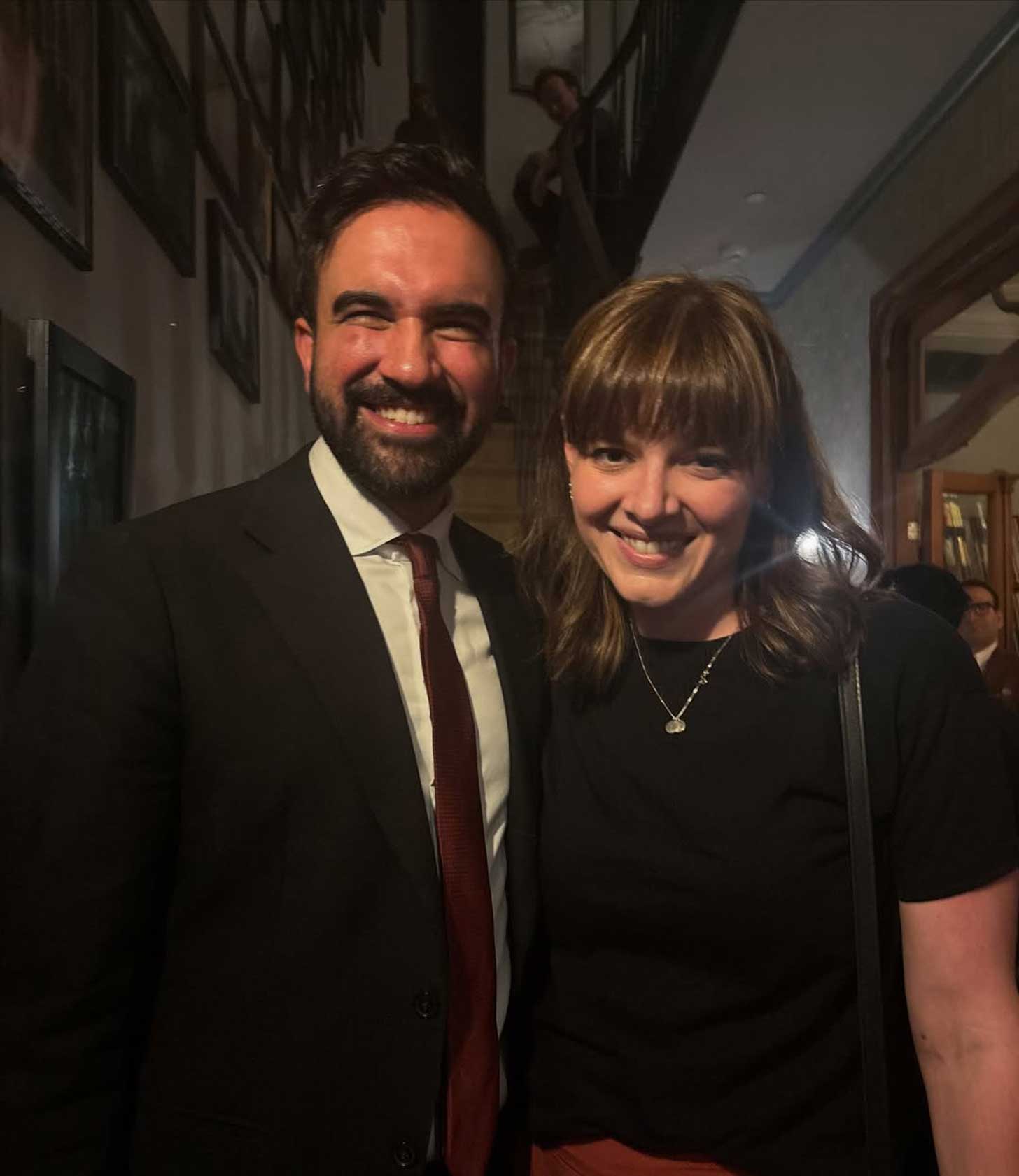
This approach is something Amanda Litman, the CEO and founder of Run For Something, is seeing across the country.
Run For Something is a political organization founded on Trump’s first Inauguration Day in 2017 that “recruits and supports young, diverse progressives to run for down-ballot races.”

In her new book, “When We’re in Charge: The Next Generation’s Guide to Leadership,” Litman posits: People are looking for the leaders of the future, and they won’t look or act like the ones we have now.
People are looking for the leaders of the future, and they won’t look or act like the ones we have now.
“I think the things that made Mamdani so effective here were that he ran values first, voters first, showed up where people are, [and] understood that social media is not an afterthought,” Litman told Good Good Good.
“Like, yes, Zohran Mamdani could only win in New York City. But a values-driven, voter-first candidate who knows how to communicate where his, her, or their neighbors are, can win anywhere.”
Leading up to and after the presidential race between Kamala Harris and Trump, Americans were disillusioned by electoral politics.
Or, at least, the politics of the past.
As early as 2023, Gallup polling showed that younger voters are rejecting political parties, with 52% of millennials and Gen Z registered as independents, compared with only one-third of Baby Boomers.
The same age group — millennials and Gen Z — also polled as the least likely age groups to vote in the 2024 general election.
“Respondents who do not think they will vote said it was because they feel like their vote doesn’t matter, they don’t like any of the candidates, and the candidates do not represent their political beliefs and ideas,” a summary of the poll explained.
A more recent June 2025 Pew Research Center survey found that 62% of Americans say they are dissatisfied with how democracy is working in the country, compared to just 37% who are satisfied.
But Litman says a new generation of candidates is alchemizing this disappointment and disillusionment into a real opportunity to lead.
"As much as people were inspired by grief and fury, they can be inspired by hope and opportunity. That this is the beginning of a change that we desperately need.”
In fact, in the week following Mamdani’s primary win, Run For Something saw a total of 10,000 people reach out and express interest in running for local office.
“One of the things I was really inspired by was that in the two weeks after the 2024 [presidential] election, we had about 10,000 people sign up to run. The only moment that has matched that is the 10,000 people who signed up to run in the two weeks after Mamdani won the mayoral race,” Litman told Good Good Good.
“For me, what that says is that as much as people were inspired by grief and fury, they can be inspired by hope and opportunity. That this is the beginning of a change that we desperately need.”
She elaborated: “We need new leaders top to bottom. Trump is the last of an old generation — both literally and figuratively — of people who are clinging to power. He is the end of the line. And we get a chance to actually make that true.”
While Run For Something does specifically promote progressive values, reduced civic engagement and participation impacts nearly all Americans, especially on a local level, with turnout hovering under 40% in most local elections nationwide.

Since its founding in 2017, Run For Something has recruited over 100,000 people to run for state and local office in all 50 states, with over 1,500 winning their elections.
The organization provides tools for those looking to run, including mentors, volunteers, funding, training, and a community of candidates who share similar experiences and support.
Litman’s goal is to get young, diverse people over the hurdles that have traditionally been impassable in politics.
“Most of the folks signing up to run with us are 40 or younger. About half identify as women, about half as people of color, a large rate of whom actually get on the ballot. They are running for things like school board, state house, state senate, city council, mayor, library board, water commissioner — the building blocks of democracy,” she explained.
This year, she said, many of the organization’s candidates are running on issues like affordable housing, childcare, transportation, and healthcare.
She believes that, with an approach similar to Mamdani’s, change is on its way.
“Run For Something has helped elect more than 1,500 people, including in Nebraska, and Kansas, and Iowa, and Alaska, who have brought their own lived experience and reflecting the values of the community they’re in,” she said.
“I’m not saying we need 10,000 superstar, charismatic, once-in-a-generation political talents. What we do need is 10,000 more people who really understand what their neighbors care about and give very specific ideas for how to solve things for them. That’s replicable anywhere.”
A New Generation of Political Talent
Kat Abughazaleh is trying to make a similar splash in the Ninth Congressional District of Illinois. Abughazaleh isn’t affiliated with Run For Something, but she is among the next generation of leaders trying something new.
The researcher and journalist — who has been the subject of Elon Musk’s ire in the past — is running to fill the seat of 80-year-old Rep. Jan Schakowsky, who has held the title since 1999, the year Abughazaleh was born.
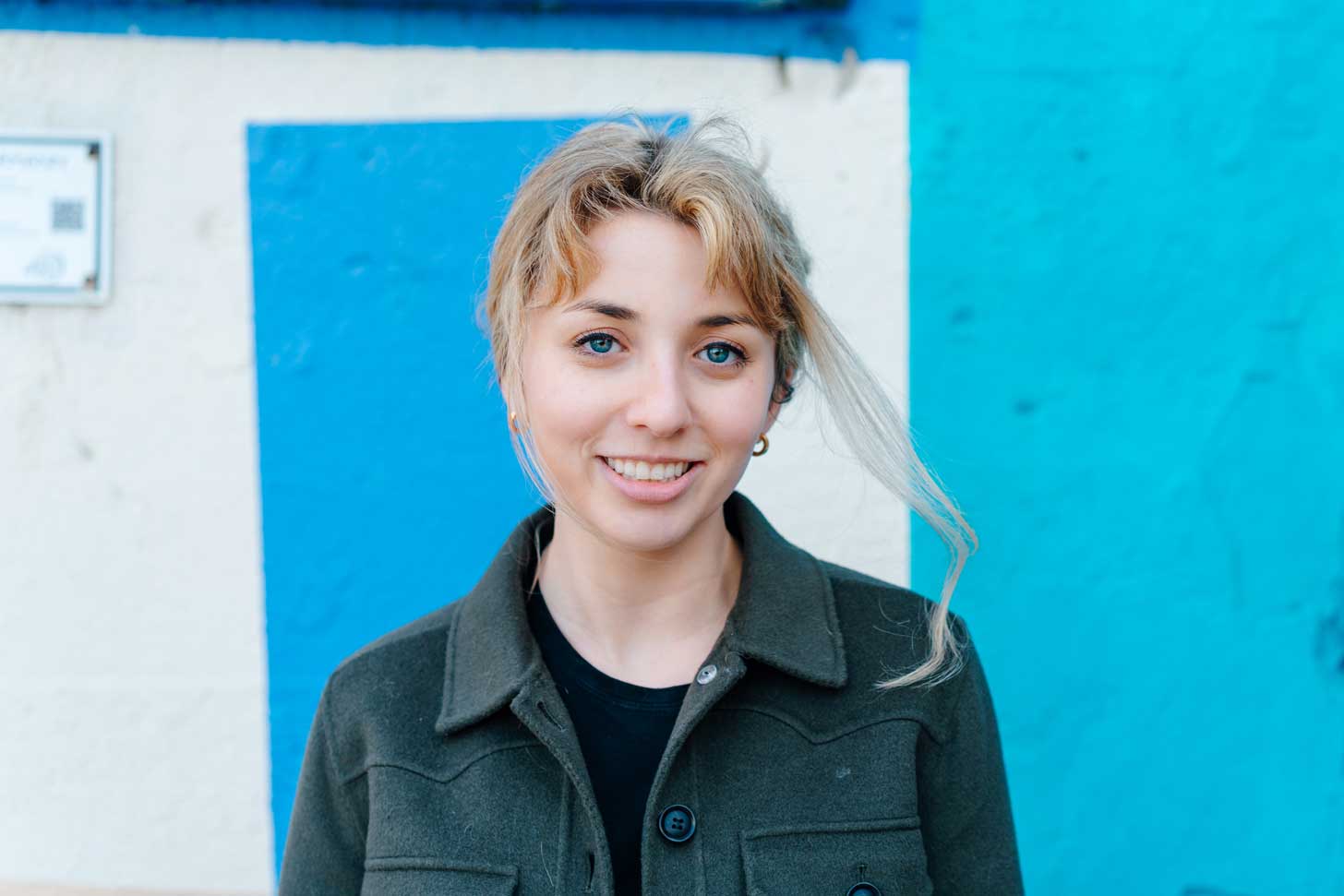
Rep. Schakowsky will not seek reelection, but Abughazaleh called for others to run, hoping to participate in the “first competitive Democratic primary in the District since 1998.”
“I have a vision of how I think politics should be, and it’s not predatory,” Abughazaleh told Good Good Good.
“It’s pragmatic but positive. It’s person-to-person communication and collaboration, not stuff hidden behind paywalls or access hidden behind high income. I said, ‘Screw it. I believe in competitive primaries. Let’s run.’”
“I have a vision of how I think politics should be, and it’s not predatory."
A big part of her campaign efforts are, yes, to speak up on the issues — on her website she lists “anti-authoritarianism,” climate change, reproductive healthcare, corporate consolidation, and “basic existence” as some of her key values — but it’s also to use the funds she’s raising to help her would-be constituents right now.
“In 2024, I was genuinely sickened at how much money went into that race just to lose. I thought about how many clinics could be funded, how many food banks could be stocked, how many people’s tuition could be paid for — and it just wasn’t,” she said. “So I thought, ‘Hey, what if we did actions?’ and I’m trying to lead by example on that.”
She has hosted food drives, menstrual product drives, craft events, and community cleanups out of her campaign headquarters. People are invited to stop by and grab anything they might need, from clothes and school supplies to food, condoms, or Narcan.
“All of our events are packed. I’d say half of them are people that have never even been politically involved besides voting before,” Abughazaleh said. “I think everyone cares. It’s just a matter of if they feel like they have any power in their vote or in their actions.”
She said making it fun and enticing — hosting punk bands and embroidery workshops from her offices, for example — is one way to show people you care. The other is to meet their material needs and prove that you’re willing to show up for them.
She’s not banking on that being enough to earn her a vote, but so far, things have been looking good.
As of the publication of this story, Abughazaleh’s campaign has onboarded over 5,000 volunteers and brought in 22,000 individual donations, totaling $1 million. The average donation is just under $32.
“You don’t have to vote for me. I’m going to help you either way. I am not going to yell at you. I’m just going to say you deserve housing, groceries, and health care with money left over to save and spend,” she said.
“Every single person deserves that. And when people’s material needs are met, they’re able to enjoy more of life, be more politically involved, pursue their passions, education — so many things that our system is inherently built to discourage.”
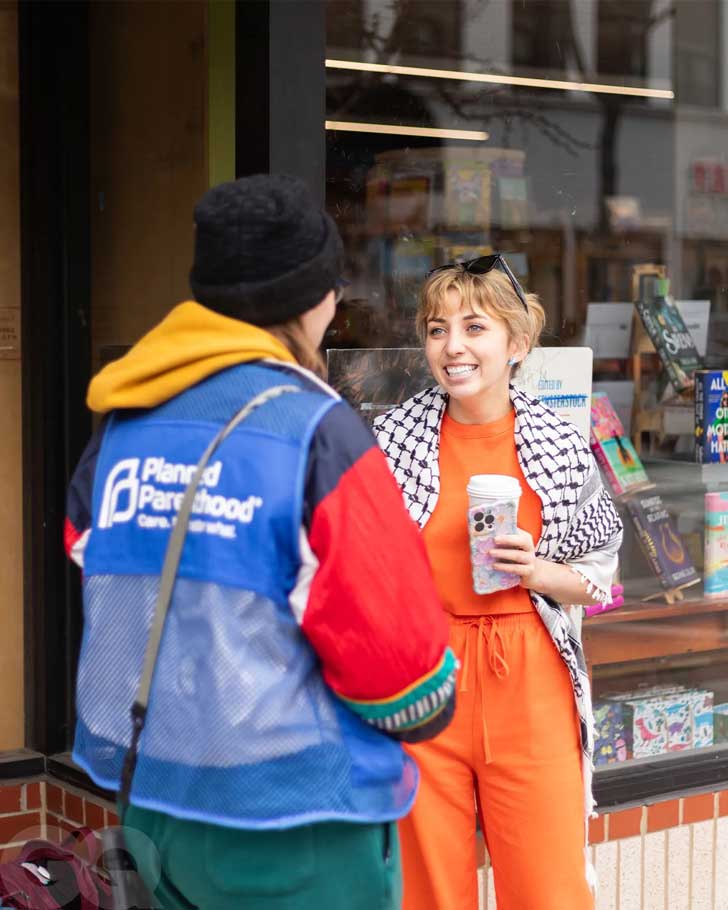
Underneath it all, Abughazaleh is very transparent about how difficult it’s been to run, as someone with little financial backing or lobbying interests.
“I’m just functioning on savings. We’ll probably go into debt. My only income is a Patreon where people send me a dollar to look at pictures of my cat,” she said.
But in addition to winning, her motives are clear: “I want to raise the bar for what public service should be, specifically in elected positions.”
Other candidates who are involved with Run for Something have taken similarly fun, more personal approaches to community engagement during their campaigns.
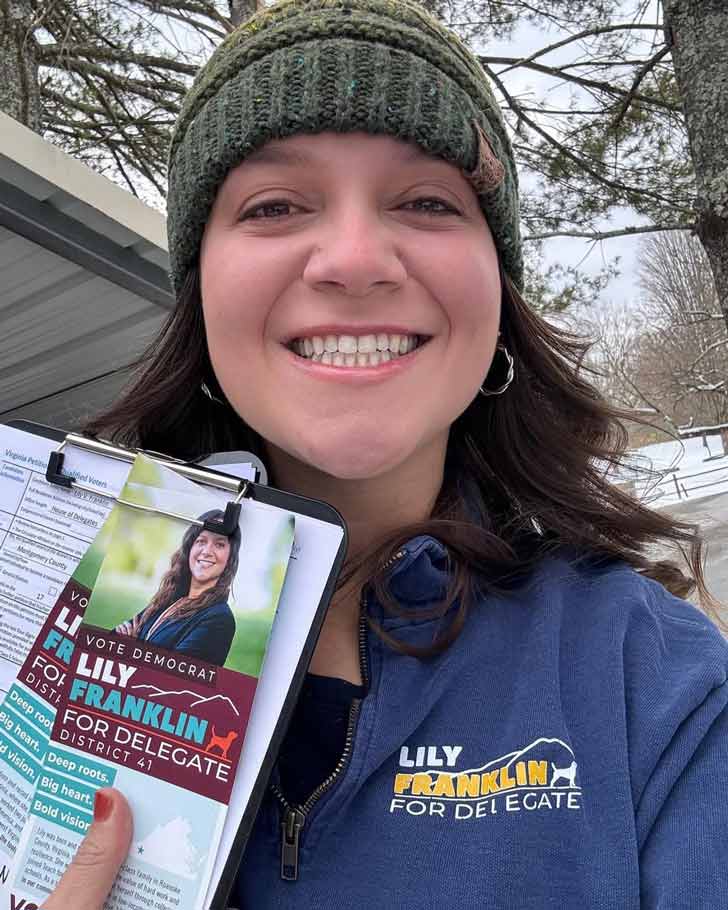
Lily Franklin, who is running for a seat on Virginia’s House of Delegates, is a teacher and dog mom. She has a specific sect of supporters who are students at Virginia Tech — Students Vote For Lily.
Franklin’s dog, Poppy, is also incorporated in her logo and serves as the face of a social media series called Poppy’s Policies, in which a silly voiceover breaks down policy ideas to reduce housing costs, support underfunded schools, and more.
Selina Barajas, a candidate for Tucson, Arizona’s city council, has downloadable coloring sheets for her supporters to enjoy and display. She just won her primary.

Jayden Williams, who is running to be mayor of Stockbridge, Georgia, gleefully hosted a line dancing party to fundraise for his campaign and earn votes this summer.
And Kelsea Bond, a non-binary community organizer running for Atlanta City Council, has an Instagram page full of activities any 20-something would be eager to attend.
Supporters can join a flash tattoo fundraiser, “sipping tea with Kelsea” socials, and even cash in on an idea straight out of the Mamdani playbook: Campaign canvassing punch cards for volunteers to trade in for a prize after they have volunteered 10 times.

Power in Community
At the end of the day, what these candidates have in common is not necessarily their political aspirations or organizing tactics, but a deep and unwavering commitment to building communities and movements that last — and not just until the 2026 midterms.
“We can’t just win a majority. We have to make sure a majority of that majority wants to make actual change,” Abughazaleh said. “That means making running for office more accessible. It means encouraging competitive primaries. It means … ensuring that campaigns aren’t just about money.”
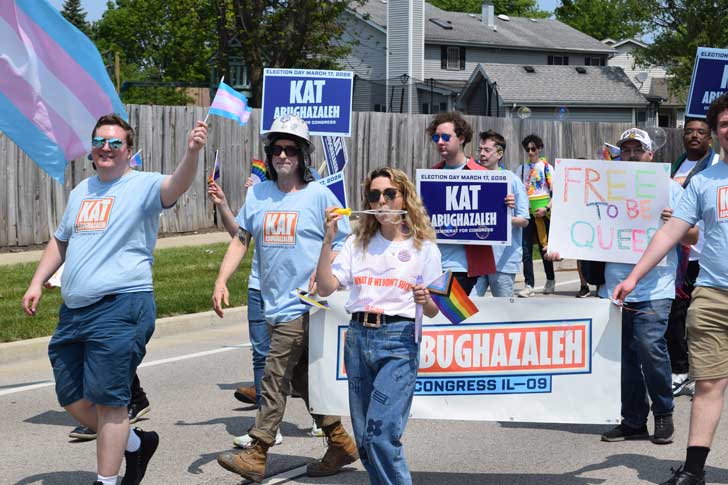
For Litman, the inspiration isn’t just the potential of these candidates winning, but that they decided to step up and run in the first place.
“Everyday, hundreds — if not thousands — of people are saying, ‘Yeah, maybe I’m going to run for office.' The bravery, both emotionally, but also in some cases, physically … I am just so in awe of these folks, and I think they’re doing something so meaningful,” Litman said.
“You don’t run for office because you hate where you live. You run for office because you love it, and you want to make it better. I think that is so powerful, and I find that really inspiring. I’m really grateful that Run For Something gets to be part of that.”
And you don’t have to be a decades-long political strategist to be inspired by that, either.
“I think what gives me hope is all the people I talk to every day are volunteers who chip in because they want to help out because they want to help others,” Abughazaleh continued.
“It’s the two unhoused ladies that come to our office and get what they need and then grab some literature to disperse among their friends. It’s the dad that brought his kids in, and then they took a sticker and the son put it on his tricycle. It’s the couple that comes in with their cat in a backpack because they know I want to see their cat. It’s all of these things. You know, as Mister Rogers said, look for the helpers.”
For Mamdani, the helpers in his eyes are the coalition of volunteers and supporters that will carry him to the general election this fall.
“This volunteer team that we’ve built, of now more than 50,000 people, they are the New Yorkers for whom democracy had started to lose meaning, had started to lose its relevance to the struggle of everyday New Yorkers,” he told Jen Psaki in an interview.
“They are the ones who, for so long, had not seen themselves in our local politics. But they are also the ones who brought us to this point.”

While the 2026 midterms are the hot topic of the day, Litman said the fight for the future is already well underway.
“Everyday, hundreds — if not thousands — of people are saying, ‘Yeah, maybe I’m going to run for office.'"
“2026 is going to be a really big opportunity. There are going to be very high odds against us in many of these places,” Litman said. “We know the other side does everything they can to make it feel impossible for us to win. It is not.”
Her advice is simple: Find your role and fill it.
“If you’re not the right person to run, ask a friend to run. Find the best person. Be the recruiter you wish to see in the world. Get involved in these local elections,” Litman said.
“The mantra I keep coming back to is: the way that we did things yesterday does not dictate the way we do things tomorrow. We have agency, and we can decide what we do with it.”
Header image by Good Good Good, with photos courtesy of Lily Franklin, Kat Abughazaleh, Zohran Mamdani, Jayden Williams, and Kelsea Bond
This summer marks 75 years of Lynchburg Covenant Fellowship serving neighbors in need in Lynchburg, Virginia.
This year, they decided to try out a new fundraising method: Hosting a community-wide LEGO contest.
“It is the first annual event,” Connie Snavely, the executive director of Lynchburg Covenant Fellowship, told local news outlet WSET. “We are celebrating our 75th anniversary of Lynchburg Covenant Fellowship, our nonprofit.”
“We provide affordable housing, so it seemed like the perfect fit to do a LEGO build contest,” she continued. “We were very pleased with all of the [responses]. All but one of our 14 entries are from youth and children. It became a family affair in some cases.”
Snavely invited people both in and out of Lynchburg, Virginia to take part in the competition by voting for their favorite designs online.
Each vote directly donates $1 to support LCF, which provides affordable housing to low-income families and individuals in need.
“We are ‘housing with a heart,’” Snavely said. “We serve all populations, from the physically and intellectually disabled, elderly, those with mental health conditions.”

“Some of our housing is HUD subsidized and people pay a portion of their rent based on their income,” she explained. “For people who are still low-income, but maybe above the income guidelines for a HUD property, they’re not able to go out and spend $1,000 or $1,200 for a nice, safe, decent apartment.”
“So, these funds help us to maintain our property, as well as keep them affordable for people who need that assistance.”
At the Lynchburg community market, contestant Patrick Marchant showed off the Fantastic Summer Treehouse he built with his younger sister Kathleen.
“We do a lot with LEGO in our houses and we are fortunate that my husband held on to tubs full of [bricks], so we had a lot to work with,” their mother, Brady Marchant said with a smile. “So we worked on the design together, worked on different trial and error. … It was definitely a family effort as far as trying to make sure it expressed all of us.”
The top three winners, who will be picked on September 1, will win LEGO gift certificates in $250, $100, or $50 amounts.
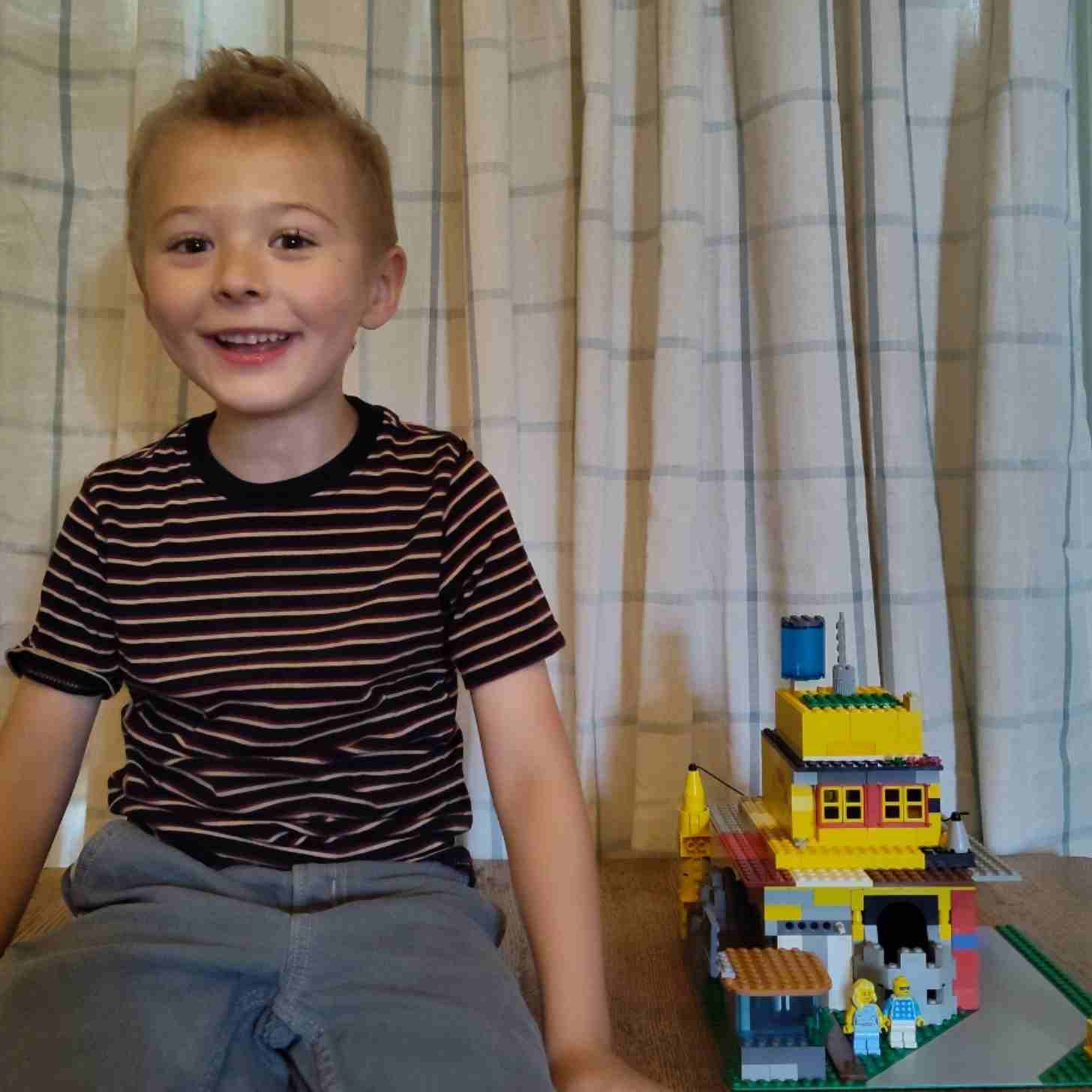
“They were really driven to try to do their very best [and] try to win one of the prizes,” Marchant said of her two children. “And I think it was also fun that we were able to keep that motivation that it was not only the prize, but the good cause combined together, that helped us feel even more excited about promoting it.”
Snavely invited people to vote as many times as they wanted until the contest closes on August 31.
“[People] can vote on our website for each one,” she said. “They can vote as many times as they want, and for as many as they would like to. We’ve got very creative designs, with a high level of detail inside them.”
“In addition to supporting the [LEGO creators], you’re also helping people who need some help with keeping their rent so they can afford and so they can live in a safe, good home,” she said.
“Having a home means everything.”
You may also like: German grandma builds wheelchair ramps from Legos to make her town more accessible
Header image via Lynchburg Covenant Fellowship
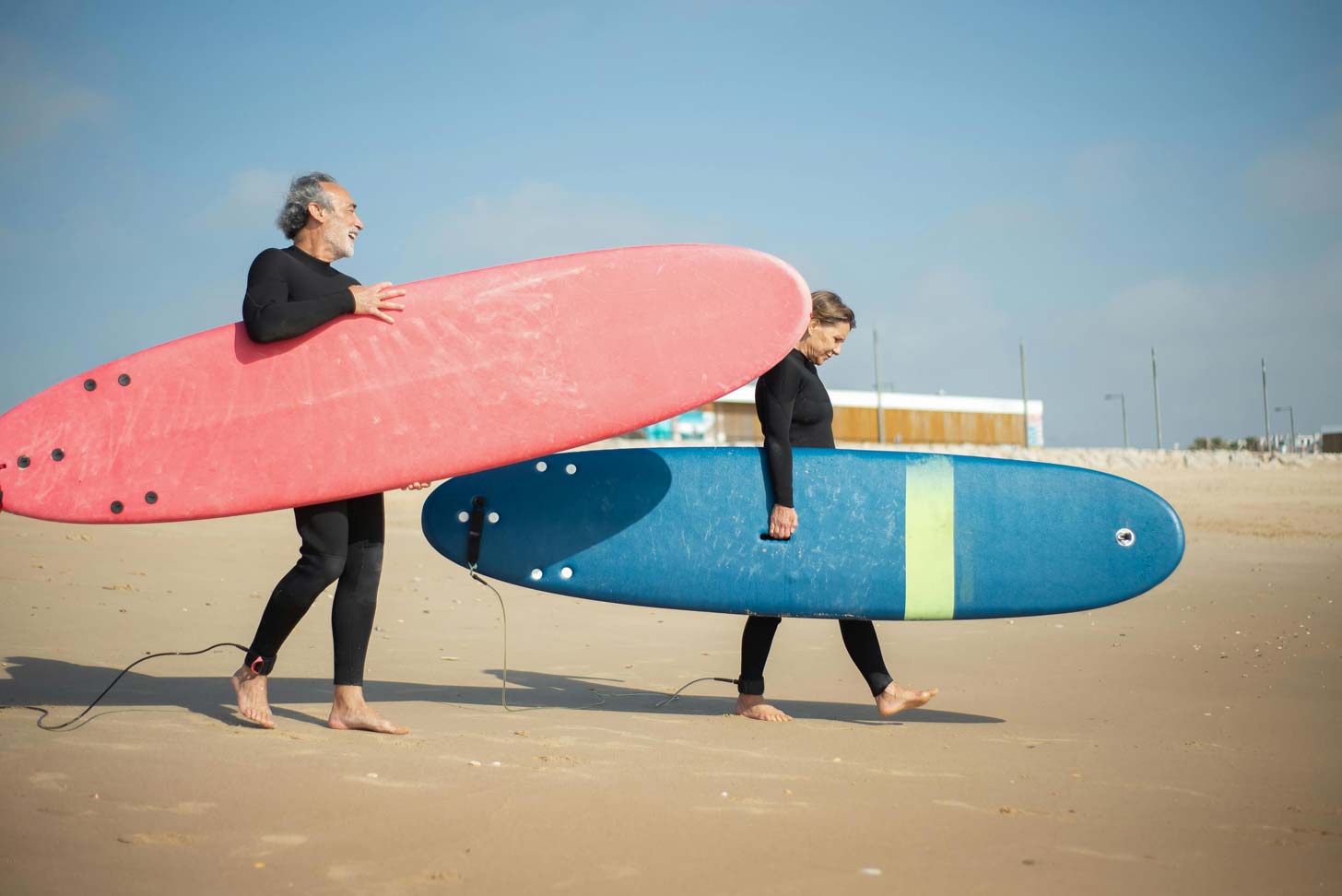
Those fortunate enough to take a beach vacation or live in a coastal city already know the calming effect of the ocean surf, or the sensorial joys of digging your toes into the sand.
But according to new reports from researchers at Ohio State University, living near the ocean might really help you live longer.

The researchers analyzed population data, including life expectancy, of more than 66,000 census tracts throughout the United States, comparing numbers baked on proximity to waterways.
They found that living within miles of the ocean breeze may be linked to a longer life, but that the same benefits don’t apply for living in a riverside city (Sorry, Chicago).
Basically, the researchers saw a correlation between longer life expectancy and water for those who live within about 30 miles of an ocean or gulf. Those who dwell in rural settings and live near water may see some extended lifespans, too. But for people in urban settings near an inland body of water, the opposite was actually true.
“Overall, the coastal residents were expected to live a year or more longer than the 79-year average, and those who lived in more urban areas near inland rivers and lakes were likely to die by about 78 or so,” lead researcher Jianyong “Jamie” Wu said in a statement.
“The coastal residents probably live longer due to a variety of intertwined factors.”
Those factors, researchers say, include milder temperatures, better air quality, opportunities for recreation, improved transportation, decreased susceptibility to drought, and higher incomes.
The most critical difference, according to the study — which was published in the journal “Environmental Research” — is that coastal areas experience fewer hot days and lower maximum temperatures compared to inland water areas.
A myriad of existing studies have found that both high and low temperatures are associated with mortality and reduced life expectancy, since high temperatures have been linked to cardiovascular conditions, hypertension, elderly mortality, and even increased suicide rates, the researchers said. The mild temperatures of coastal living play a key role in improved health outcomes.
“On the other side, pollution, poverty, lack of safe opportunities to be physically active, and an increased risk of flooding are likely drivers of these differences,” added Yanni Cao, a postdoctoral researcher who worked on the study.
Wu embarked on the study after analyzing previous research that has found a connection between living near water and better health outcomes, like higher physical activity levels, lower obesity rates, and improved heart health.
From there, he hypothesized that there could be a link between “blue space” and longer lifespans.
“We thought it was possible that any type of 'blue space' would offer some beneficial effects,” Wu said, “and we were surprised to find such a significant and clear difference between those who live near coastal waters and those who live near inland waters.”
He said that the study is the first to comprehensively examine the relationships between various types of water, or “blue space,” and longevity in the U.S.
Cao is curious to see how this data could provide insights into life expectancy trends in the U.S. compared to other wealthy nations, especially as the U.S. has experienced a sharper decline in life expectancy than other peer countries.
“It's likely that various social determinants of health, including complex environmental factors, that contribute to health inequities are playing a key role in the differences we saw,” Cao said.
While further analysis may be done in the future to examine these factors, for now, the researchers are eager that they have more evidence to back up their theory.
“We found a clear difference,” Wu said. “In coastal areas, people are living longer.”
You might also like: Researchers find gardening to be the secret to living a longer, better life
Header image courtesy of Kampus Production/Pexels
On July 31, the Wisconsin-based housing nonprofit Pillars received the largest property donation they had ever been given. It came in the name of Richard “Dick” Reetz, a landlord who died in June at the age of 97.
He donated his entire rental estate, including 20 units across 10 properties, which increased the organization’s property portfolio by 26%.

Pillars is an organization that works to relieve bottlenecks in the housing crisis by keeping people out of shelters and in stable housing. Right now, the organization manages a number of affordable housing properties near Appleton, Wisconsin, and operates two crisis housing centers that serve approximately 140 people at any given time.
With Reetz’s donation, the organization will be able to provide even more affordable housing to people who need it most.
“This transformative gift expands Pillars’ reach in a meaningful way, helping to serve more individuals and families working toward stability and a place to call home,” said Steve Williams, Board President of Pillars.

Reetz was a resident of Appleton his entire life and was a landlord for over 50 years.
According to his obituary, “he operated his rentals on handshakes and goodwill, sometimes at his own cost.” A statement from Pillars added that his goal as a landlord was to invest in tenants who were often trying to find a place to land on their feet.
“Dick gave people a chance when others would not,” said Reetz’ stepson Joe Frank. “He cared about his tenants’ stories and wanted to help get them on their feet. He had a genuine interest in people.”
Along with his work as a landlord, Reetz was the owner of Reetz Engineering and had an illustrious career selling engineering materials and building business relationships.
Because of this, he was also a financial supporter of a variety of local charities. In his death, he has also established various charitable funds with the Community Foundation of the Fox Valley Region, Inc.

The donation of his properties is especially important, as Williams told FOX 11 News that “there is no end to the need for housing here.”
For the current tenants of Reetz’s properties, they will work with Pillars to find the next best place for them, which may be right within the same community. According to a statement from the organization, “Pillars will integrate the properties with a mindful approach to current tenants’ unique situations.”
Frank added that toward the end of his life, Reetz was approached by developers looking to purchase his properties, but that isn’t the legacy he wanted to leave behind.
“Donating these units to Pillars was the only solution he had in his heart,” Frank said. “The last thing he wanted was to displace people.”
Representatives from Pillars say the new properties will help them house an estimated 40 people.
Pillars’ executive director Lisa Strandberg said, “Pillars is very proud to carry on Richard’s legacy of providing housing to those who need it at an affordable level.”
“It really aligns with our mission to tackle the main cause of homelessness, which is housing,” Williams added to FOX 11.
Reetz’s family requested that loved ones and friends donate to one of his favorite charitable organizations in lieu of flowers, hoping to make a ripple effect of Reetz’s final generous acts.
“By expanding access to stable, affordable housing, Pillars is helping more individuals and families build a foundation for long-term success and wellbeing,” Appleton Community Development Director Kara Homan told FOX 11.
“This is the kind of partnership and generosity that truly moves our community forward.”
You might also like: Tech millionaire builds village of 99 tiny houses for homeless neighbors in Canada
Header image courtesy of Pillars
Anyone who has seen a loved one diagnosed with Alzheimer’s or dementia knows how harrowing it can be to watch their memories fade.
But it’s hard to accurately understand the lived experiences of those facing memory loss from their point of view, relying only on our love for them to paint a picture of their fractured reality.
So, Rachel Arthur, founder of nonprofit Scottish publisher Boom Saloon, embarked on a journey to make memory loss feel more real.

Alongside her “adopted gran,” Maggie Watson, who was diagnosed with Alzheimer’s and Vascular Dementia in 2021, Arthur created “4,4,4&2,” a first-of-its-kind cookbook printed with disappearing ink.
The book is named after a shorthand Watson created to remember a sponge cake recipe: Four ounces of butter, four ounces of sugar, four ounces of flour, and two eggs. Resembling a cookbook, “4,4,4&2” contains handwritten recipes, scribbled notes, and a lifetime of clippings and childhood photos, bound by two rings and a folder of artifacts.
What makes it different from a keepsake scrapbook is that all of the contents are printed in a disappearing ink that fades from exposure to the light and air.

The book is printed in monochrome purple on uncoated paper. The disappearing ink was developed in-house by Boom Saloon, in a process Arthur said involved multiple broken printers.
“The disappearing ink is more than a design choice — it’s a visceral, visual representation of how dementia affects memory and identity over time,” Arthur said in a statement. “Each book is a living, evolving piece that challenges how we understand and empathize with the dementia journey.”
Dementia is a form of cognitive decline, most often caused by Alzheimer’s disease, but it can be brought on by many medical conditions and is typically associated with aging. The condition affects memory, thinking, language, mood, behavior, and motor control, which made it difficult for Watson to fully participate in the creation of the book.

“Developing the work together was highly personal,” Arthur told Dezeen. “Her inability to create the scrap cookbook we’d always planned to was one of the first signs that something was wrong.”
“It was through the learnings we uncovered during our research that we became tooled with the knowledge to push for a diagnosis for Maggie, after multiple doctors and medical experts passed her off as nothing more than a forgetful old woman.”

Arthur hopes that “4,4,4&2,” can “reshape public perceptions of the condition.” Along with a pre-order run of the book, launch events in the United Kingdom will aim to “engage communities, policymakers and care providers in conversations around dementia care and the importance of preserving lived experience.”
“Dementia is the leading cause of death in the UK, yet public understanding remains woefully limited,” Arthur said. “Our work aims to bridge that gap, using art, storytelling and innovative design to elevate the voices of those living with dementia and foster a more compassionate, informed society.”
In addition to the chronicling of Watson’s experiences, the publication is also a culmination of years of research and development, alongside others with dementia. The idea is to create a format in which their experiences with the disease are relayed as similarly as they really unfold.

“As public perception remains clouded by fear, stigma, and sensationalized headlines, those diagnosed — and those who care for them — are often left feeling voiceless and without agency to affect change,” a statement from Boom Saloon shared.
The book is designed to be about the same size as the average human brain (though rectangular), and with no marks distinguishing one copy from another.
To delay the fading process, each copy of the book remains sealed until its owner unwraps it.

“This slows down the change but does not stop it fully. Many of our advance copies remain unopened in hopes they will not disappear,” Arthur explained to Dezeen.
“Sadly, much like dementia itself, the process cannot be entirely halted. Instead, ‘4,4,4&2’ commands us to better understand it and, vitally, the role we can play to support the dementia journey.”
The disappearing ink also deteriorates differently in every printing of the book, depending on the various levels of exposure and use it receives, mirroring the unique and individual experience of every single person with dementia.
“The publication mimics the complex and highly personal degeneration of the brain, which can take place during the dementia journey,” Arthur told Dezeen. “Each copy warps, fades and jumbles in a wholly unique manner, reflecting the individualized degeneration of the brain throughout the dementia journey.”

Readers are also encouraged to photograph the pages, write over them, or share them to preserve what is inside, similar to the role of caregivers and loved ones.
“A copy which is closed and nestled between other books on a shelf will fade wholly differently to one which is left splayed open, mirroring the effects that human interaction and care can have on a person with dementia themselves,” Arthur told Design Week.
“Some of the pages within the book can fade in less than a day; others could last for many months. You will not be able to tell by looking what to expect, just as there are no visual markers for what lies ahead in any person’s own dementia journey.”

Ultimately, Arthur and her co-creators hope the publication acts as more of a “call to action” than a traditional book, urging readers to see beyond what they know about dementia and connect with the people behind the condition.
“This publication is as much an act of design as it is of care,” Arthur told Design Week.
“It forces us to reframe our understanding of books as static objects, and instead positions them as temporal, evolving vessels for experience and increasing empathy and understanding of others.”
You might also like: New study discovers blood test can predict dementia more than a decade before official diagnosis
Header image courtesy of Boom Saloon
A homeless encampment set up on the street across from an art gallery in Jacksonville, Illinois had been growing, facing harassment and threats from passersby.
The city was at a loss: How do we clear this space without forcing unhoused people to vacate the place they call home?
Together with the group’s leader, Jeffrey ‘Grandpa’ Grable, they formed an idea.
“We [asked], would you like to camp out where there is, showers, restrooms, water and electricity? And people said, ‘Yeah, that sounds good,’” Alan Bradish, the Jacksonville Police Department volunteer Chaplain, told KHQA News. “I said, ‘well, let me, let me look into it.’”

The group is now staying for a two-week camping trip at an official campsite at Lake Jacksonville.
The city had no financial involvement in the campsite, with anonymous organizations and churches footing the time, money, food, and transportation required to keep the group at the site.
A pastor lent his church’s van to help move the group to the lake, and an anonymous sponsor is paying the $12 nightly fee for the group to stay on the campground.
Here, they have access to electricity and showers. Plus, on the streets, the encampment faced harassment at night, especially towards the women of the group. Grable said that led the men to stay up at night to keep watch.
At Lake Jacksonville, they’ve been able to rest.
“It’s wonderful,” Grable told KHQA. “Really loving it, the showers are wonderful. Yes. Everybody’s clean and we’re working along getting clothes and getting laundry done and stuff like that.”
Contrary to chatter online, both the Jacksonville police and Grable said no one was forced to leave the encampment for the campgrounds.
“They were looking for a more peaceful alternative to what they had,” Bradish told My Journal Courier.
“No one’s been forced to leave, they have every right they want,” Jacksonville Chief of Police Doug Thompson added to KHQA.
“They just were given the option of going out there versus sitting in here and they all wanted to go out there. The only complaint I’ve heard so far was one of the individuals said, ‘the fish aren’t biting.’ Otherwise, it’s been pretty decent out there.”

Grable, an Army veteran who has been homeless since January — and joined the group in June — said they are “happy to get away from the madness.”
And despite other rumors that the group of unhoused individuals is causing trouble at the campsite, the Lake Jacksonville superintendent Brett Gilbreth told KHQA they have been “nothing but good people … kind and peaceful and nice.”
While the stay is temporary — Lake Jacksonville policy states someone can only rent out the space for two weeks at a time, and then they have to vacate for at least one week — local officials are working with Grable to figure out their next steps.
Bradish has been meeting individually with unhoused people at the campsite to create a personalized plan for their needs. Grable is using his social security money to save up to rent a house for the group.
“I’ve been doing this kind of thing all my life, taking care of people,” Grable told KHQA.
“I mean, I’ll go without to make sure you don’t. I’ll go without a meal to make sure somebody else gets fed. I say, if I can help you, I will. If you need a meal or new shoes or whatever, I’ll get ‘em for you somehow. That’s a promise.”
You might also like: When this landlord died, he donated all of his rental properties to homeless people in need of housing
Header image courtesy of Quang Nguyen Vinh/Pexels
Before he passed away in 2015, Bill Stanley served as the collections manager at the Field Museum of Natural History in Chicago.
“Bill exuded energy, boundless curiosity, and deep joy of living,” the Field Museum wrote in a memorial post.
“He was a master storyteller, capable of engaging everyone in his love of collections. Bill started at the Museum in 1989 as collection manager of mammals and spent the next quarter century caring for that collection, building it into one of the best and most visited mammal collections in the world.”
Though he was based in Chicago, Stanley rarely stayed in one place for long. According to the museum, he devoted the majority of his career to field expeditions, which took him everywhere from “the mountains of Tanzania” to Uganda, Malawi, the Democratic Republic of Congo, and beyond.
In late September 2015, while on one of his “field trips” to Ethiopia’s Great Rift Valley, Stanley passed away at 58, reportedly of a heart attack.
But just nine days earlier, he caught something and held it in his hands: a tiny shrew, weighing in at just three grams.
A decade later, a team of researchers looked to fill in the evolutionary gaps of shrews.
Of the 106 specimens they studied, 52 were provided by museums from around the world: the Natural History Museum, London, the Zoological Museum of Moscow State University, the World Museum, Liverpool, and the Institute of Vertebrate Biology of the Czech Academy of Sciences.
But it was at the Field Museum of Natural History in Chicago that they struck gold.

By revisiting the last specimen Stanley had ever studied, they made a remarkable discovery: The dwarf shrew was a species previously unknown to science.
“The identification of species is pivotal in understanding biodiversity, particularly in regions with high levels of endemism and unique evolutionary histories,” lead author Evan Craig wrote on August 20, in a study published in the Journal of Vertebrate Biology.
“The Ethiopian Highlands, divided by the Great Rift Valley, is part of the Eastern Afromontane biodiversity hotspot, exemplified by the highest continental mammalian endemism.”
Despite their unassuming size, shrews possess a number of talents.
Although shrews have low vision, they have remarkable hearing. They even emit a low-amplitude, ultrasonic “twittering” that helps them navigate their surroundings as the sounds reverberate back.
And when some shrews — like the Northern water shrew — venture out onto the surface of ponds to look for bugs, the stiff hairs on their feet trap air bubbles, giving them the appearance of walking on water.
They’re also good for the environment.
As insectivores, shrews help keep bug populations from ballooning by keeping plant-destroying pests in check. They also aerate the soil as they dig and scurry, and help rainwater penetrate the earth through their burrowing.
The researchers topped off their study with a fitting tribute to Stanley — the man who made it all possible.

“The species name, stanleyi, is chosen in honour of William (Bill) T. Stanley…whose passion for African mammals was unparalleled,” Craig and his peers wrote in their conclusion. “His unexpected and untimely passing in the very mountains where this new species was discovered casts a solemn light on this designation.”
“The name Crocidura stanleyi not only commemorates his last fieldwork but also celebrates his enduring legacy and the indelible mark he left on mammalogy, conservation, and the many lives he touched with his mentorship and collaborative spirit.”
In his lifetime, Stanley lived to see two animals, a mouse (Lophuromys stanleyi) and a frog (Callulina stanleyi), named in his honor, with C. stanleyi marking a posthumous third.
In addition to applauding his extensive field research, the authors noted Stanley’s creation of the “Tanzania Mammal Key,” an English-Kiswahili identification tool that has catalogued many diverse mammals found throughout Tanzania — and continues to grow today.
“His foresight and enthusiasm for the biodiversity of the Ethiopian Highlands live on through this tiny shrew that thrives in the high, cold mountains: A fitting tribute to a man who held a deep respect for the intricacies of nature and the wonders it holds.”
You may also like: Scientists confirm two new species of pika in the Himalayas after 20 years of research
Header image via A. Davey (CC BY 2.0)
Every day the Good Good Good team collects the best good news in the world and shares it with our community. Here are the highlights for this week!
If you want to get good news in your inbox every day, join the Goodnewsletter — the free daily newsletter designed to leave you feeling hopeful.
The Best Positive News We’re Celebrating This Week —
Once “at risk of extinction” from HIV, Botswana is now a world leader in eliminating the virus in children
In the 2000s, HIV was rampant in Botswana, with one in eight infants reported to be infected at birth, and rates of mother-to-child transmission between 20 and 40%. Mortality among children under five nearly doubled between 1990 and 200 because of the virus.
Now, Botswana has one of the world’s most successful HIV-elimination programs, with interventions that slashed the mother-to-child transmission rate to under 1% over the course of just two decades. Fewer than 100 HIV-positive infants are born annually, an event so rare that each case is evaluated to determine how it happened.
The remarkable turnaround was thanks to political will, investment in scientific infrastructure, and sustained public health education that brought the latest, most effective tools to those at highest risk.
Even better: Initially, even the World Health Organization was skeptical the country was seeing such low infection numbers. Then, earlier this year, Botswana became the first country in the world with a high HIV burnden to achieve WHO Gold Tier status for eliminating mother-to-child HIV transmission as a public health threat.
‘Controlled infections’ may be corals’ secret weapon against climate change, new study reveals
→ Read more
The amount of oil spilled from tankers has declined dramatically — especially recently
Despite global oil production and trade increasing dramatically, the amount of oil spilled from tankers has declined since the 1970s, most dramatically since the turn of the century.
In the 1970s, over 300,000 tonnes of oil were spilled from tankers pretty much annually. That dropped to over 100,000 tonnes by the 1980s and 1990s. In 2024, there were 10,000 tonnes spilled, less than one-thirtieth of the amount spilled in the 1970s.
While that’s still far too much and still leads to extensive environmental damage and expensive clean-up efforts, there is far less damage being done today — and that’s something to celebrate.
Illinois launched the first legal help line in the U.S. for LGBTQ+ residents
Illinois became the first state to launch a legal advice line for LGBTQ+ residents, providing free and confidential legal advice on discrimination, harassment, safety, and more.
The helpline, called Illinois Pride Connect, will also provide access to housing, health care, government benefits, and more, and is available in both English and Spanish.
Developed in partnership with LGBTQ+ organizations in the state, a Chicago nonprofit, Legal Council for Health, will lead the helpline with support from a $250,000 investment from the state and $100,000 in philanthropic support.
Why is this good news? Last month, the Trump administration shut down the National Suicide and Crisis Lifeline’s specialized service for LGBTQ+ youth, who are already at an enormously high risk of mental health conditions, suicide, homelessness, and poverty. LGBTQ+ folks need more support — not less — and Illinois is helping make that happen.
These teens had just 2 days to design and build a tiny home — then they gifted it to the homeless
→ Read more
A community leader is restoring the Solomon Islands’ vital mangrove forests
Mangroves are crucial ecosystems for coastal communities around the world, providing fish, timber, and building materials, while their winding root systems protect shorelines and provide habitat for marine life. They’re also threatened by land clearing, development, and rising sea levels.
In Oibola village in the Solomon Islands, Ben Waleilia saw the rapid disappearance and growing threats to the mangrove forests and took action. He leads a grassroots campaign to restore and protect the plants, collecting and replanting mangrove seedlings.
Over the past eight years, he’s planted more 16,000 seedlings, restoring approximately 40,000 square metres of degraded coastal habitat around Oibola.
→ Read more
Two local businesses in Orlando honor the painted-over Pulse crosswalk with new memorials
Last week, the Florida Department of Transportation painted over the rainbow crosswalk near Pulse, a gay nightclub that was the site of a 2016 mass shooting that took the lives of 49 people.
In the days since, community members have shown up with sidewalk chalk to fill it back in, but with the rain continuing to wash it away, two small businesses in the community are making a more permanent solution, ensuring the symbol of love and resilience lives on.
Trina Gregory owns the popular brunch spot Se7en Bites and is hosting an event to transform her restaurant’s private parking lot into a community art space. And at MojoMan Swimwear, owner Lane Blackwell painted a large Progress Pride flag over the pavement in its parking lot.
Why is this good news? A rainbow-painted crosswalk might seem like a small gesture, but for the Orlando community, it was a cornerstone, preserving the memory of those it lost in the Pulse shooting. The state of Florida’s efforts to, quite literally, erase this memory is heartbreaking — but helpers in the community stepping up to keep that memory alive brings some hope, too.
Conservationists ‘moving on turtle time’ might not know the impact of their work for decades. Still, they press on
The first openly gay men’s tennis player is advocating for a more welcoming sport
With the U.S. Open underway, United States Tennis Association President Brian Vahaly is opening up about his own coming out journey — while working to make the sport more welcoming. Tennis has a reputation of being largely white, straight, and conservative, so Vahaly spent most of his career hesitant to come out.
In 2017, Vahaly became the first current or former ATP Tour player to come out as gay. He received some support … and a lot of hate. While there is now greater cultural acceptance of the LGBTQ+ community in tennis, Vahaly knows that many factors are still preventing players from wanting to come out.
Especially since President Trump’s return to office, Vahaly has been using his power and position to use the U.S. Open to amplify the work of LGBTQ organizations such as The Trevor Project, Athlete Ally, You Can Play, and the Gay and Lesbian Tennis Alliance.
Why is this good news? Representation in sports is important — and that includes men’s sports. Traditionally rewarding a single, narrow view of masculinity, when queer athletes are visible, welcomed, and supported in men’s sports, it allows both current and future athletes to feel safe to be who they are, and to know that there’s a place for them, too.
A superintendent 3D prints violins in her office so every student has the opportunity to join the orchestra
Dr. Laura Jacob, superintendent of the California Area School District in Coal Center, Pennsylvania, has 30 3D printers in her office that she uses to print violins for low-income students.
More than 70% of students in Jacobs’ district are low-income, meaning “100% of our kids receive a free breakfast and free lunch every single day.” It also means rental fees for orchestra instruments, like violins, are out of the question.
Each violin costs just $50 to make, and they are now offered free to any student who wants one, thanks to grant funding. They sound a little different than traditional wood violins, but are perfect for beginners to learn on. She’s also working on more instrument designs, like the cello.
Why is this good news? No student should be held back from participating in the arts because they can’t afford it. For schools, violins can cost $500 to $2,000 each, often representing hundreds of dollars in rental fees per family each school year, which is prohibitively expensive for many families.
These schools are trying a new ‘pay-it-forward’ student loan plan: ‘No interest, no fees’
A med student in California launched a “little free podiatry practice” to help homeless people get back on their feet — literally
On TikTok, Steffi Casimir details her life in medical school, as well as one very unique extracurricular: Taking care of homeless people’s feet.
Studying to be a foot and ankle surgeon, it’s not far off from the work she will be doing once she graduates — and it’s an often overlooked, critical part of helping people experiencing homelessness.
In fact, she shared in a video, “Foot problems are one of the most common reasons homeless people end up in the ER. Providing free care … gives them relief, dignity, and a chance to walk forward with less suffering.”
Volunteering with a local church’s “mobile response unit,” Casimir sets up a makeshift “office” under a tent in a parking lot, with folding chairs and a table full of supplies to provide a variety of care services for folks in need.
Florida labor unions are celebrating Labor Day by collecting donations to support families experiencing homelessness
Representing various labor unions in Florida’s “Big Bend” region, which includes Tallahassee, the Big Bend Central Labor Council is hosting a fundraiser on Labor Day to help families experiencing homelessness in the community.
In partnership with a local nonprofit that supports youth and families in crisis, the council will be collecting hygiene products, nonperishable food, water, new clothes, toys, monetary donations, and more.
The fundraiser will be preceded by a protest at the Florida State Capitol building against political corruption and advocating for working people.
Why is this good news? There may, perhaps, be no better way to commemorate the significance of Labor Day than by helping your neighbors and protesting on behalf of working people — it’s what the organizers of the very first Labor Day did, bringing different types of workers together to advocate for their common interests.
→ Read more
Aiming to bring transparency to the industry, an innovative clothing line makes ‘human labor visible’ on every garment
→ Read more
A new study found that stronger labor rights could help reduce economic inequality
According to a new study, when workers gain collective labor rights — like the right to form and join a union, bargain for higher pay and better benefits, and more — it benefits society as a whole by reducing economic inequality.
Researchers looked at human rights data to score countries on their collective labor rights on a scale from zero to four. They found that even a one-point increase in collective labor rights reduces vertical inequality by 10 times the average change in inequality.
In the U.S., a one-point increase in collective labor rights would be about enough to undo the increase in inequality that occurred between 2008 and 2010 due to the Great Recession and its aftermath. It would also likely help stem the growing wealth gap between Black and white Americans, the result of income disparities compounding over time.
Some context: The gap between rich and poor Americans is increasing. The wealthiest 1% of Americans have more than five times as much wealth as the bottom 50%, up from four times as much in the year 2000. In 2024 alone, the wealthiest 19 families got a total of $1 trillion richer — the largest one-year increase on record. Meanwhile, 59% of Americans don’t have enough money saved up to cover an unexpected $1,000 expense.
More good news of the week —
In an early trial, a one-size-fits-all vaccine showed promise in preventing hard-to-treat pancreatic cancers from coming back. This is especially exciting and potentially life-saving, since the five-year survival rate of pancreatic cancer is about 13%, and up to 80% of pancreatic cancers may come back.
Denmark is eliminating it’s world-highest 25% VAT on books to tackle the country’s growing literacy crisis. The move follows the release of alarming literacy statistics from the OECD which warned that one in four Danish 15-year-olds cannot understand a simple text, and surveys showing falling reading levels among teenagers, linked to shorter attention spans.
‘Deaf President Now!’ filmmaker Nyle DiMarco became the first deaf director to be nominated for an Emmy. The documentary, which also had more than 40 deaf people hired across departments behind the scenes, follows the DPN4, a group of four Gallaudet University students who organized a protest of the university’s appointment of yet another hearing president.
Scientists developed a honeybee “superfood” that could protect the animals against climate change and habitat loss. Honeybees are a vital part of food production and contribute to pollinating 70% of leading global crops, but are facing severe declines globally due to nutrient deficiencies, viral diseases, climate change, and more.
Welfare policies in Mexico helped lift 13.4 million people out of poverty in six years. The dramatic decline in the number of people living in poverty — 2 million out of extreme poverty — were achieved under former Mexican president Andrés Manuel López Obrador, who, among other things, tripled of the minimum wage from 88.40 pesos ($4.75) per day when he took office to the current rate of 278.80 pesos ($15) a day.
Experts say solar panels in space could provide 80% of Europe’s electricity by 2050 and cut battery use by two-thirds. Putting solar panels in space would also help get around the drawbacks of land-based renewable energy, which can be irregular and weather dependent, complicate a reliable supply of electricity, and come at varying costs.
A “pollinator pathways” project in the U.K. is transforming boring alleyways into insect havens. The project was started by a trail runner and fitness influencer whose chronic illness left her unable to spend as much time running in the countryside — so she looked to bring more nature into her local community.
After years of being banned by the former regime, dozens of long-sought-after books are flooding stores across Syria. An epicenter of the country’s post-revolution literary freedom is the so-called “bookshop alley” in the Halbouni neighborhood of Damascus, a leafy street lined by two dozen bookshops and printers, big and small.
Adaptation efforts like early warning and preparedness plans have reduced flood deaths in Europe by more than 50% since 1950. Non-structural adaptation measures have also cut economic losses from flooding by 63%, despite the number of people affected by flooding in Europe increasing by 8% due to climate change over the same period.
Only the second of its kind in the world, Japan just opened the country's first osmotic power plant. It is expected to generate about 880,000 kilowatt hours of electricity each year, enough to help power a desalination plant that supplies fresh water to the city and neighbouring areas.
Shops and chefs in Los Angeles have come together to provide meals for people forced to stay home amid immigration raids. Immigrants make up a sizable share of the workforce in the restaurant industry: 20% nationwide, and in California, restaurants are staffed overwhelmingly by Latinos and immigrants – 79% and 66% respectively.
Researchers found that no-strings-attached cash payments cut infant mortality rates in Kenya by nearly half. Infants born to people who received $1,000, no-strings-attached, were nearly half as likely to die as infants born to people who got no cash. Cash also cut mortality in children under 5 by about 45%, the study researchers found, on par with interventions like vaccines and anti-malarials.
Habitat for Humanity is building homes for public school employees in a Colorado school district. A recent report found that fewer than 20% of homes on the market are affordable for the average teacher in Colorado, and other school districts in the state have implemented similar plans featuring tiny homes and affordable rental homes.
Elementary schoolers in Florida built a remote control trash-collecting robot for their science fair. The two young entrepreneurs were inspired to take action after learning that over 800 species of wildlife are impacted by beach pollution across the globe.
A UN-backed “school for husbands” is helping shift gender roles and reduce infant and maternal mortality in Senegal. In the program, respected male community members learn about “positive masculinity” in health and social issues — from reproductive health care and women’s rights, to the harms of practices like female genital mutilation — and promote them in their communities.
This summer, two teachers biked across Vermont to raise money for classroom supplies and to advocate for immigrant students. Their goal was to raise $500 each to fund their next year of classroom essentials like notebooks, pencils, snacks, hygiene items, and more — anything else they fundraise will go “directly to organizations in Tennessee supporting immigrant families and fighting legislation like SB836.”
Update: Their bike ride may be over, but Pedals for Pencils is just getting started. (TikTok)
A special education teacher in Utah has raised thousands to pay off student lunch debt by dancing on TikTok. Knowing kids can’t learn on an empty stomach — or while worrying about their parents paying for food — Katie Jo Christensen turns her classroom into a stage for just 60 seconds to raise funds through the TikTok Creator Fund, even inspiring direct donations from viewers.
Exploring “Minecraft in real life,” students at a primary school in the U.K. are learning to connect with nature. (Video) Students had seen “a dip in communication,” partly due to excessive screen time, and teachers in the district found that spending time outside together boosted their teamwork skills.
Cities like Houston are joining a nationwide movement of protests on Labor Day to fight a “billionaire takeover” of the U.S. government. There are now more than 500 “Workers Over Billionaires” events planned across all 50 states as part of a national day of action to “demand a country that puts workers over billionaires.”
About 450 immigrant workers hired to clean the NYC subway during the height of the pandemic won over $3 million in back pay. Working in already dangerous conditions, the cleaners often received substandard cleaning equipment, worked with harsh chemicals that would cause skin irritation, were given regular masks instead of respirators, and more.
Thousands of workers in California ratified a new, three-year contract with a local supermarket chain. The new contract for workers at 172 Stater Bros. stores secures higher wages, pension contributions, healthcare improvements, staffing and safety practices.
Union workers secured a breakthrough contract that will deliver cleaner air and better working conditions. The first-ever contract includes at least a 12% raise for every Blue Bird worker — the lowest paid workers will see a raise of 40% — and perhaps most notably, a trigger in which net company profits of over $30 million entitle workers to a 4% share of those profits.
The country’s first women-led workers’ hub is helping immigrants know their rights and fight for better working conditions. About 50 women make up the quickly-growing Liberty Cleaners, a group under the New York City-based Worker’s Justice Project that started in 2018 with just a few women.
At the St. Regis Bali Resort in Indonesia, 124 suites and villas look out upon Nusa Dua beach, where golden sands meet glittering, emerald waves.
For the guests who travel to this 5-star destination spot, the resort asks one thing: Leave the reef better than you found it.
To rebuild damaged coral reefs off its shores, the resort has long partnered with the Nusa Dua Reef Foundation, a nonprofit committed to conserving coral reefs and reducing the impacts of climate change.
Under the guidance of the foundation, St. Regis Bali Resort uses the MARRS method (Mars Assisted Reef Restoration System): A coral reef restoration technique spearheaded by an international group of marine scientists in 2006 and perfected over the last two decades.
The method hinges on attaching coral fragments to artificial reef systems called “Reef Stars,” which are anchored together in a web-like structure on the ocean floor.
“Guests can ‘adopt’ and plant their own coral-bearing ‘Reef Stars’ on the seabed – creating a tangible, personal link to ocean conservation,” the resort said in a statement.

“Rooted in the Balinese philosophy of Nyegara Gunung, the program is deeply embedded in local tradition and supported by science. Efforts are monitored for real impact, and tied to broader initiatives like coastal cleanups, school outreach, and reef-safe guest education.”
The resort’s efforts to reduce its carbon footprint go beyond the reef.
In a write-up for The West Australian, travel writer Sue Yeap noted that St. Regis Bali Resort had been stocking guest rooms with water from its own bottling facility since 2018.
“Located within the grounds of the St. Regis, it uses Japanese advanced Sea Water Reverse Osmosis (SWRO) technology, transforming seawater into pure, pH-balanced drinking water,” Yeap said, adding that the facility can process and refill up to 10,000 glass bottles per day.
According to St. Regis, the resort transformed 175 metric tons of food waste and 191,590 kilograms of landscape waste into nutrient-rich compost last year.
“Local agricultural students help determine the types of fruit, herbs and vegetables best suited to the St. Regis’ chef’s garden, which also houses hives of stingless bees for harvesting trigona honey,” Yeap observed.

As resorts around the world transform into firefly conservatories and sea turtle havens, St. Regis Bali joins a growing number of tourist sites that are looking for ways to give back to the world around them: The protected habitats that are much more than just beautiful “backdrops” on their guests’ vacations.
“At a time when travelers are demanding more from luxury – and greenwashing is under the microscope – The St. Regis Bali offers a powerful example of purpose-driven hospitality,” the resort said.
You may also like: This 5-star island paradise doubles as a sea turtle rescue
Header image via the St. Regis Bali Resort
Despite the ever-present conversation about NIMBYism (a word that describes “Not in My Back Yard” homeowners who oppose new housing developments near their homes), a new survey suggests that a majority of Americans are actually in support of affordable housing developments.
While NIMBYs might express concerns about crime, congestion, schools, property values, and “quality of life” changes that might come from affordable housing developments, most Americans have been affected by the housing crisis, and, therefore, hold evolving beliefs about what it means to solve the problem at hand.
In a survey commissioned by Built and conducted by Talker Research, a poll of 1,000 American adults, split equally by political alignment, found that more than half believe what they pay monthly for their home is more than it should be.
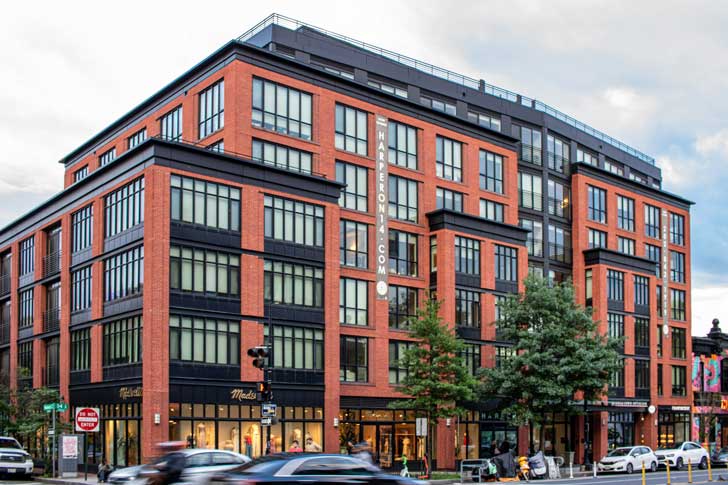
The average respondent shared that they spend 42% of their annual income on housing-related costs. Among this group, 45% attributed these costs to living in a neighborhood with “higher than average costs of living.”
With this in mind, the survey takers were asked their thoughts on affordable housing.
Of those polled, 63% said they view the term “affordable housing” positively.
Two-thirds said they’d be willing to live in or next to a home labeled “affordable housing,” and another 53% would react positively if the house or building next to them was converted to affordable housing.
“Affordability challenges have gone mainstream,” said Chase Gilbert, CEO of Built. “More people are realizing affordable housing isn’t about charity — it’s about keeping the American dream within reach. Homeownership has always been a cornerstone of that dream, and for too many, that path is getting harder to find.”
In fact, 83% of people viewed affordable housing more positively than other forms of multi-family housing, compared to townhomes (76%), apartments, (70%), and mobile or pre-fabricated homes (64%).
The respondents also shared what kind of affordable housing policies they would be supportive of, with 65% of people saying they’d likely support new housing being built in their neighborhoods.
Many — about 45% — were in favor of converting surplus buildings (like offices and warehouses) into housing, while 42% were also in support of politics that would require a certain amount of affordable units to be included in new developments.
An additional 34% supported the idea of tax incentives for neighborhoods that add more housing.
All of these numbers connect to the finding that 41% of people polled believe their local municipalities don’t have enough housing to meet people’s needs.
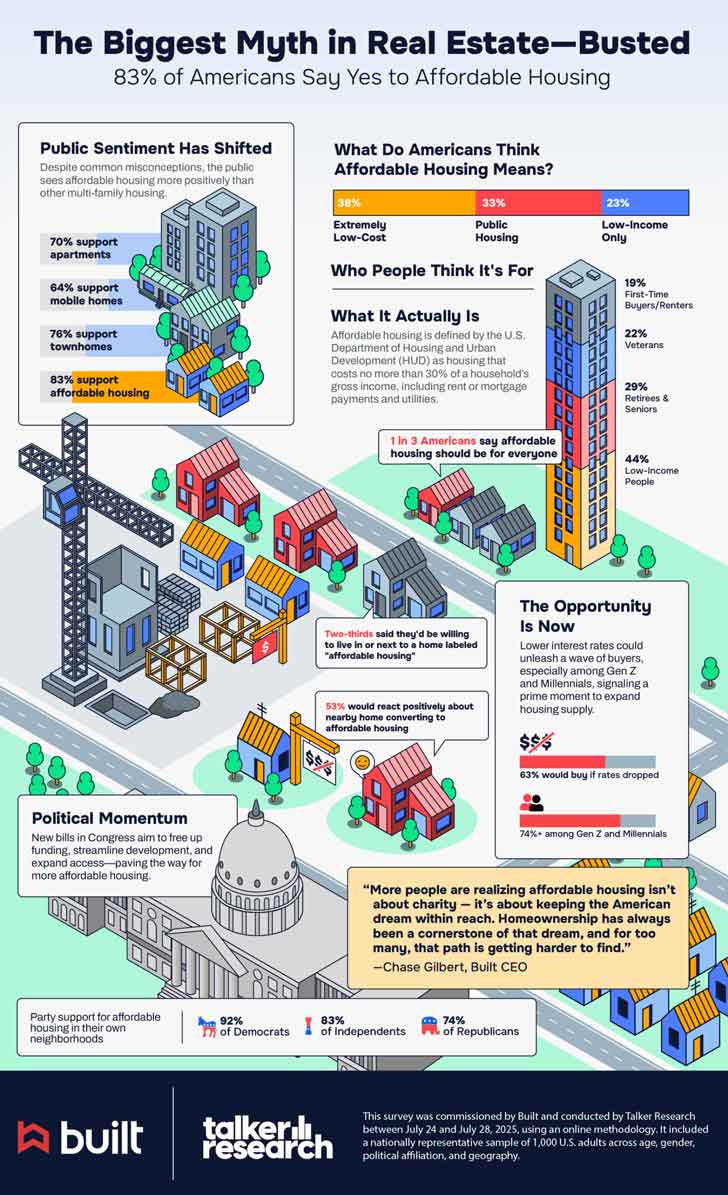
Still, the issue is complicated.
“Policy decisions are definitely a part of the equation, but there’s more to it than that,” Gilbert added. “Even if funding for new buildings is unlocked, it must flow into real projects for construction to begin. Capital that doesn’t move is no different than capital that was never there.”
And while survey respondents have a positive view of affordable housing, clarity is still needed on what it even is.
About 38% of people believed affordable housing is defined as being extremely low-cost, 33% believed it was synonymous with “public housing,” and 23% understood it as exclusively for people living under the poverty line.
In addition to this, many respondents thought affordable housing is only intended for low-income demographics like retirees and seniors, veterans, and first-time buyers.
Still, one in three surveyed believe affordable housing is meant for anyone and everyone.
A similar survey conducted last year by Data for Progress on behalf of the Center for American Progress found similar results: Across the political spectrum, and among both buyers and renters, people believe housing in the United States is in trouble, and affordable housing may be the solution.
“No matter what your neighborhood looks like or where it’s located, the goal of homeownership is drifting further out of reach for too many Americans,” a conclusion from the Center for American Progress stated.
“Americans of all backgrounds want to see action and expect policymakers to outline new steps to bring down the cost of housing and build a stronger America.”
You may also like: Family transforms shipping containers into affordable housing: 'Can't think of a place in America that doesn't need something like this'
In August, famous YouTuber MrBeast (a.k.a. Jimmy Donaldson) joined his fellow YouTuber and engineer Mark Rober to announce a major fundraising campaign: #TeamWater.
On the heels of two successful crowdfunding campaigns with other content creators — #TeamTrees, which raised $20 million to plant 20 million trees in 2019; and #TeamSeas, which raised $30 million to remove 30 million pounds of plastic waste from oceans in 2021 — Donaldson and Rober announced their new cause: access to clean water.
“Over 3,000 of your favorite creators are all coming together with over 3 billion followers combined,” MrBeast said in a video launching the campaign. “This could be one of the largest philanthropy projects in history: #TeamWater.”
Their goal was to raise $40 million over the course of August. They surpassed it.
As of the writing of this article, the campaign has raised over $41.5 million for the nonprofit WaterAid, which will supply an estimated 2 million people with access to clean water for decades.
“Reaching our $40 million goal means that millions of people will experience the life-changing impact of clean water for years to come,” said Donaldson and Rober in a joint statement.
“Mark and I are blown away by what the creator community has accomplished — we could never have achieved this on our own. So thank you to the thousands of creators who helped make this possible. From $1 to $1 million, every donation made a difference in reaching this goal, and we couldn’t be more grateful.”
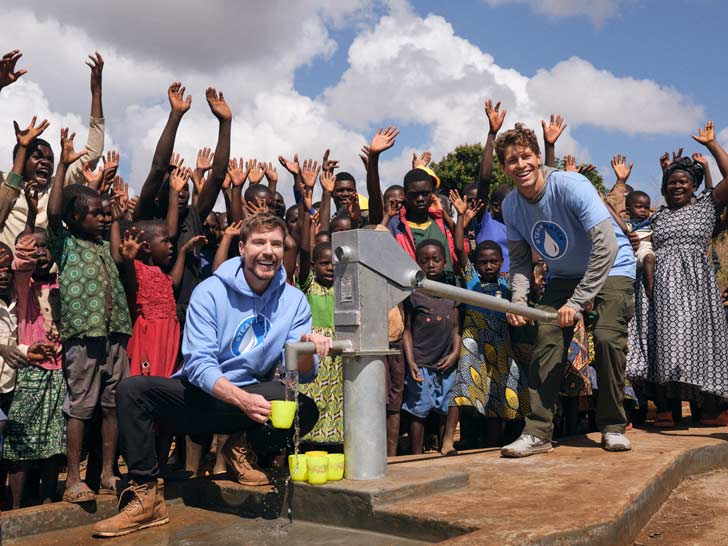
Following the campaign’s launch on August 1, content creators from 144 countries reached billions of subscribers through videos, livestreams, and social media content, including a 17-hour livestream that raised $12 million toward the total goal.
“#TeamWater, #TeamSeas, and #TeamTrees have mobilized a generation of creators and their global audiences toward collective, measurable impact,” Matt Fitzgerald, the co-founder and campaign director of these large-scale movements, said in a statement.
“#TeamWater’s work won’t stop here — every additional dollar donated means more families benefit, more futures are transformed, and even greater momentum for long-term, durable progress that empowers communities around the world.”
Kelly Parsons, the CEO of WaterAid America, told Good Good Good that the #TeamWater funds will be transformative to the organization’s goal of ensuring everyone on earth has access to clean water.
“Together with our partners around the world, we will reach 2 million people with access to clean water,” she said.
“This will have ripple effects for decades to come. Girls and women who spend hours collecting dirty water can go to school or earn a living. Healthcare facilities can provide the care people need. It will change lives. We know the path and outcomes of a child born with access to clean water differ dramatically from those of a child who is born without.”
Now that the $40 million goal has been reached, the organization will shift its focus to implementation.
“Every community has different needs, so we work hand-in-hand to find solutions that address their specific challenges and deliver clean water sustainably for years to come,” Parsons told Good Good Good.
TEAMWATER HIT ITS $40,000,000 GOAL AND NOW 2,000,000 PEOPLE ARE GOING TO GET CLEAN WATER FOR DECADES!! THANK YOU THANK YOU THANK YOU :D pic.twitter.com/KnwCkhLs9G
— MrBeast (@MrBeast) September 1, 2025
She said this will include installing solar-powered wells, gravity-fed pipelines, and rainwater harvesting systems that are tailored to meet the needs of each community.
Additionally, those communities are not just left with a new piece of technology, but are empowered through its development.
“We work to train local water technicians who will keep the water flowing and make sure it’s safe. We help establish local boards that understand the competing interests of different groups in accessing water and manage it sustainably. Where they exist, we work with small utilities to strengthen their business practices and ensure everyone receives good service,” Parsons added.
“Turning on the tap is just the first step — keeping the water flowing is our long-term goal and commitment.”
According to a press release, WaterAid will work with implementation partners like DigDeep, GivePower, and Instituto Alok in various communities across the globe.
It is yet to be seen which areas will be impacted most by these funds, but Parsons said that “transparency is a priority,” so #TeamWater community members will be updated regularly on the progress and impact of these efforts.
“We want to keep the stories coming and this amazing community engaged because we know this is just the beginning of what we can achieve together,” Parsons said.
And for those who have been moved by the mission to provide clean water to people in need, Parsons said it’s not too late to get involved.
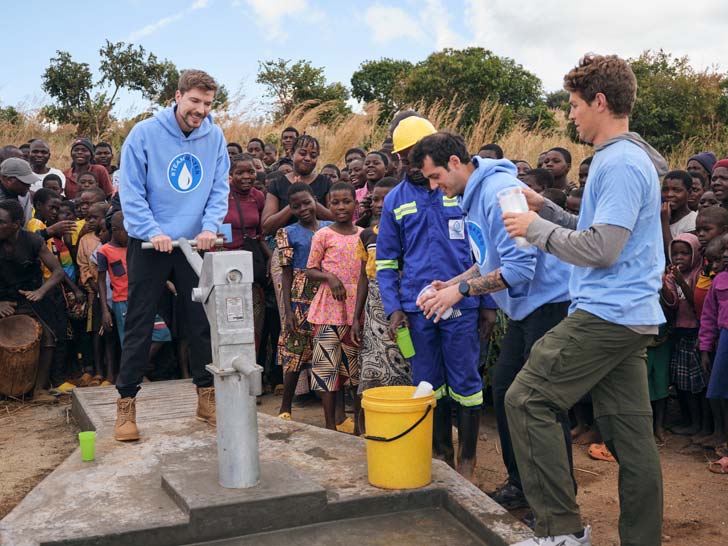
“Advocacy doesn’t end with a single campaign,” she said. “There are many ways people can continue to support clean water initiatives.”
The first step is easy: Stay engaged with WaterAid and #TeamWater for updates.
From there, support policies that prioritize clean water for everyone — at home and abroad. Sharing facts about clean water access can also help build awareness and make people aware of the issue at hand.
“Finally,” she said, “consider becoming a long-term supporter. Monthly donations, volunteering, or even hosting your own fundraising events can help sustain our work. Every action, no matter how small, contributes to the larger goal of ensuring clean water for everyone, everywhere.”
While the voices of some of the world’s most popular YouTubers have played a significant role in this cause, Parsons said, it’s only the beginning.
“It will take all of us uniting around clean water to make it happen,” she said. “The success of #TeamWater has been tremendous, and we’re so thankful to the creators who helped make it happen. We invite everyone to join us as we continue our mission, because we’re just getting started.”
You may also like: These solar-powered generators create water 'from thin air,' provide safe drinking water to communities in need
Header image by WaterAid/ Lee-Ann Olwage
In Buena Vista, Colorado, residents face moderate to high risks of wildfires due to critically dry conditions and drought, as well as a lack of affordable housing.
So, in the rural mountain town, Colorado is investing in a new solution: 3D-printed homes.
Two homes were just completed in Buena Vista by VeroTouch, a construction technology company that “believes housing is a fundamental human right, and that solutions to the housing crisis will come from private sector invention and investment.”
Each home spans about 1,100 square feet and is built using a concrete material made by 3D printing company COBOD.

In a statement about the new homes, COBOD said that these 3D- printed concrete walls “offer the highest level of fire resistance and do not fuel combustion at any stage.”
“This provides a critical safety advantage in Colorado, where nearly half of the population lives in regions at risk of wildfires,” the statement continued.
The two homes are called VeroVistas and each has a unique design, which demonstrates the original nature of 3D printing construction. One home features a layered concrete look found in most 3D-printed buildings. The other blends with a more traditional finish of stucco walls.
One of the homes’ exterior structures was completed in just 16 days, far faster than conventional construction methods. By automating this building approach, COBOD can develop more homes more quickly — and build them in a way that will keep inhabitants safe from accelerating wildfire risk.
VeroTouch has also made a point of keeping jobs in the region by introducing this new construction technology to Colorado. The company has received funding from the state’s Innovative Housing Incentive Program, which will financially support the construction of 7,500 homes over the next three years across the state.
Thanks to the success of the VeroVista project, the company will soon begin on an even larger project: A 32-home neighborhood in Salida, Colorado, a region also prone to wildfires.
In fact, surveys show that 100% of properties in Salida have some risk of being affected by wildfire over the next 30 years. This makes the VeroTouch technology that much more vital in meeting the demand for safe, 3D-printed homes.
“We are proud to accelerate innovation in housing to better address Colorado’s housing needs,” Colorado Governor Jared Polis said at the unveiling in Buena Vista.
“The unveiling of these 3D-printed homes is a great example of how we can support new building methods to create more housing now.”
“We commend VeroTouch for helping increase the supply of housing, which will allow more Coloradans to live in the communities they love,” Eve Liebmann, the executive director of the Colorado office of economic development and international trade, added.

While the 32-home neighborhood is already in the construction phase, Buena Vista is now home to two innovative houses for prospective buyers.
Coming in at a price of $625,000 each, the homes are not necessarily affordable but are a near-average price for homes in Colorado’s mountain communities, according to COBOD. But instead of traditional wood frame houses often built in these regions, the VeroVistas offer greater stability and protection in an uncertain climate.
“In an era of fast housing, VeroTouch is creating legacy homes that can be passed down, rather than torn down,” Grant Hamel, VeroTouch’s CEO, said.
“Beyond merely great design, we’re proud that VeroVistas homes offer a level of resilience to natural disasters like wildfires unmatched by any other product in this region. Because of that, we expect these homes to be standing strong 100 years from now.”
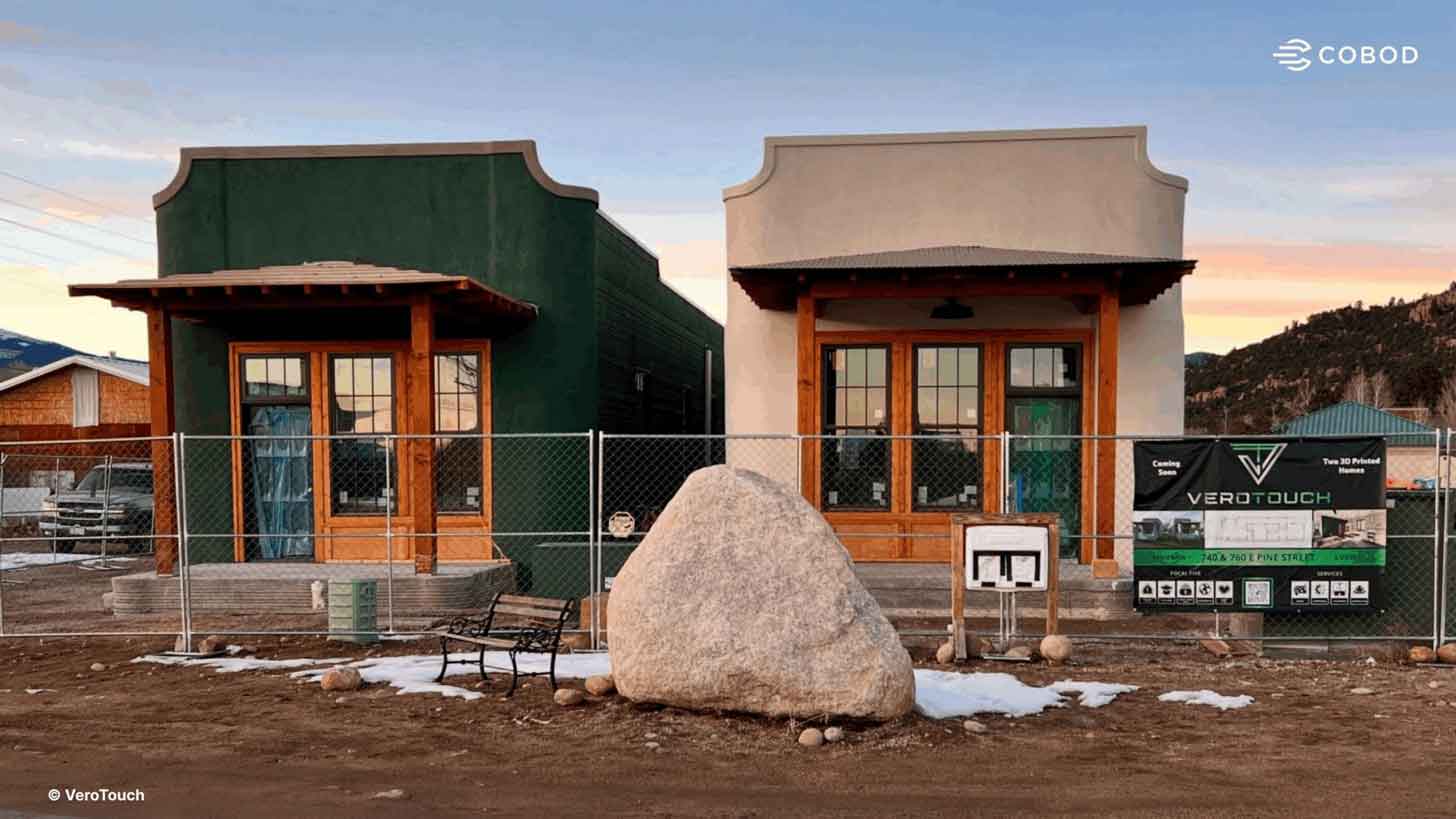
As future projects, like the one in Salida, take shape, stakeholders are curious to see how 3D construction can play a role in building faster, more sustainable, and more affordable homes.
“3D construction printing provides a safer, more efficient, and sustainable way to build,” Philip Lund-Nielsen, co-founder and head of Americas at COBOD International, said.
“Colorado investing in broader application of 3D construction printing shows that this scalable method can help address the housing crisis, not only in Colorado, but across the U.S.”
You may also like: Construction company pledges to build 3D-printed homes for families displaced by LA wildfires
Header image courtesy of VeroTouch/COBOD
Along the African coast lies the world’s only coastal desert: the Namib Sand Sea. The ecological marvel, which spans 7,605,162 acres, encompasses shifting, mountainous dunes bathed in low-hanging fog.
And every evening, a chorus of distinct, plopping sounds ring out from burrows across the landscape.
Recently, the calls led a team of scientists to a new gecko species: the P. sceletus.
“The call strongly resembles the sound of bouncing marbles and, on a warm evening on the interdunes, thousands can be heard calling in chorus,” lead author François S. Becker observed in the study, which was published in Vertebrate Zoology on August 28.
According to researchers, the P. sceletus, or Skeleton Coast barking gecko, is named both due to its location — the Skeleton Coast between the Swakop River and the Kunene River — and its haunting appearance.

“The white or grey dorsal surfaces of the head and feet give the gecko a ghostly or skeletal appearance,” Becker noted, adding that it had “light orange speckles along the spine and dark purple-brown speckles … all over.”
In addition to discovering the Skeleton Coast barking gecko, Becker and his colleagues used DNA testing and mating call comparisons to revisit the taxonomy of the P. g. maculatus, a barking gecko thought to populate the wide expanse of the Namib Desert.
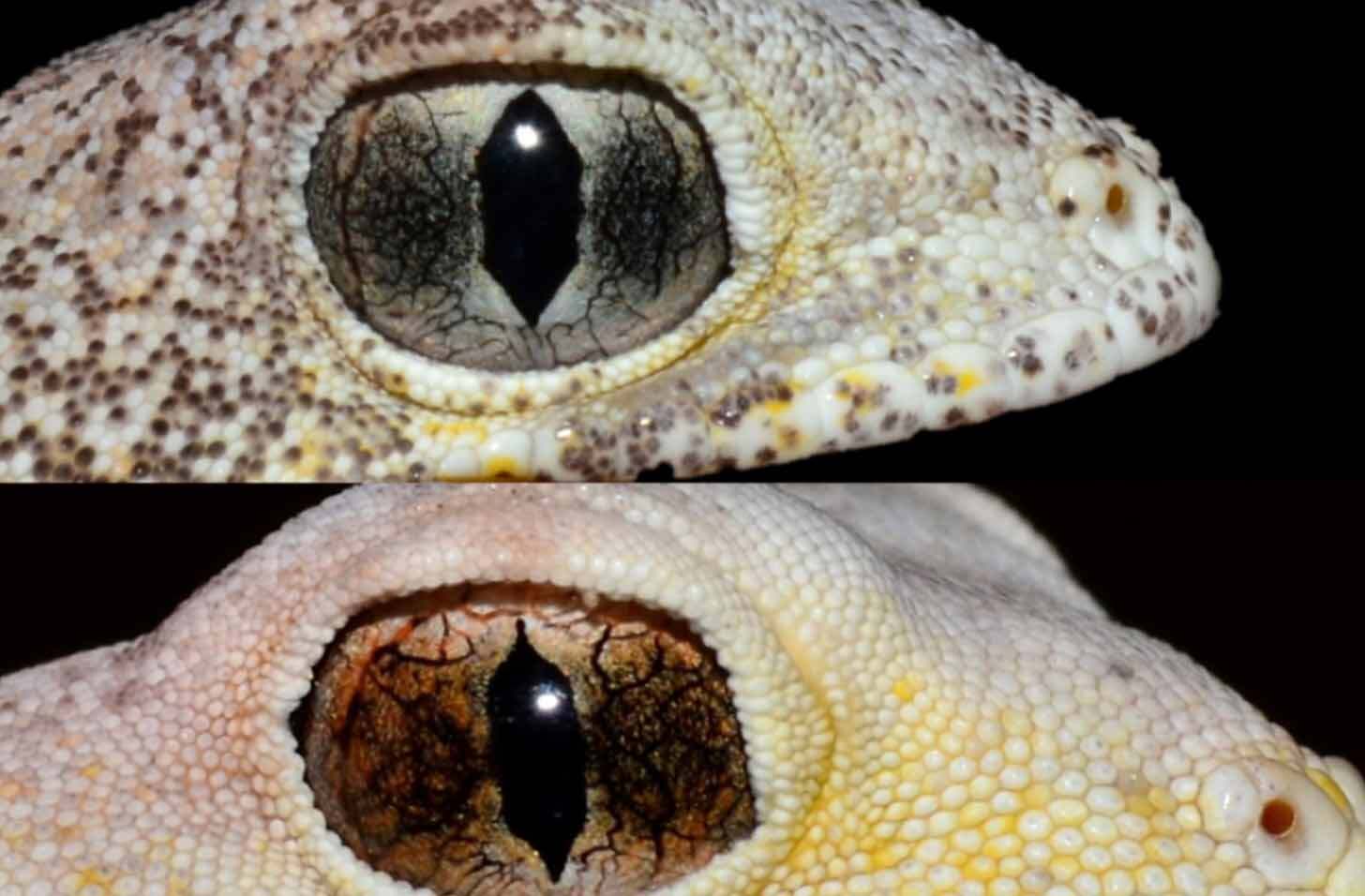
But upon the discovery that the P. g. maculatus was limited just to the central northern Namib Desert, the researchers realized that what was long assumed to be one species was actually four.
“Four new species are named, which were previously included in ‘P. g. maculatus’,” Becker said.
“Southern barking gecko (Ptenopus adamanteus) from the southern Namib Desert, P. circumsyrticus from the central Namib Desert, P. kenkenses from the northern Nama Karoo, and P. australis from southern Nama Karoo.”

In Africa, barking geckos build complex burrows beneath the sandy dunes, which aerates the earth — allowing plants to thrive in drought-heavy conditions — and creating microhabits along the way.
By feasting upon crickets, dubia roaches, and black soldier fly larvae, barking geckos keep pest populations from spiralling out of control.
They also serve as prey for various snakes, mammals, and the White Lady Spider, a huntsman spider native to the Namib Desert.

In total, the researchers discovered five new species of barking gecko, a family of geckos oft-identified as the “most vociferous” of lizards.
In 1849, herpetologist Andrew Smith noted the reptile’s distinctive barking calls in an early species description, which called the noise “so disagreeable, as to cause the traveller to change his quarters.”
“Males [produce] loud advertisement calls at the entrance of their burrows to attract females and maintain territories,” Becker noted.
“These calls can be heard from hundreds of meters [away], and substantial choruses consisting of thousands of calling males have been recorded.”
Watch the video below to hear the African barking gecko’s distinctive call:
You may also like: New 'striking blue' species discovered in the Amazon
Header image via Dr. Rüdiger Wenzel (CC BY-SA 3.0 DE)