For 57 years, the New York State Fair butter sculpture has represented a beloved tradition, as fairgoers line up to catch a glimpse of the 800-pound masterpiece.
This year’s sculpture honored the 125th anniversary of “The Wonderful Wizard of Oz” book and was titled “Dairy For Good: Nourish. Grow. Thrive.” It depicted the nourishment dairy provides at every stage of life, and the butter was supplied by O-AT-KA Milk Products in Batavia, New York.
But after 13 days in the spotlight, the sculpture’s journey wasn’t over. In fact, it was transformed into something even more magical: Power.

After the fair rides are torn down and the last food stall is wheeled away, the butter sculpture was sent to a working dairy farm in Western New York, Noblehurst Farms.
There, the sculpture was recycled into energy.
“It goes into [an] anaerobic digester, and it sits in there for about 28 days,” Noblehurst Farms' co-owner Jack Klapper, told CNY Central. “Over that period of time it releases methane and the methane gets converted into electricity.”
It’s been this way for 10 years.

And this year was no different. On September 2, Klapper and his fellow co-owner, Chris Noble, disassembled the sculpture, breaking it down into pieces to be transported in trash bags less than 15 miles from its origin.
Once on the Noblehurst Farms property, farmers combine the butter with other food waste from local grocery stores, cafeterias, and manufacturers, along with cow manure, and process it in the farm’s digester.
As it breaks down, the material creates enough electricity to power the farm, its on-site creamery, and more than 600 homes for an entire year.

“We are extremely honored to be the 'official' recycler of the New York State Fair's butter sculpture,” Klapper said in a statement.
“At Noblehurst Farms we take pride in being good stewards of the land. Recycling 800 pounds of butter is just another opportunity to showcase how we are sustainable by diverting food waste from landfills and creating renewable energy.”
Powering the farm is one thing, but the fact that the electricity generated on the farm also feeds into the local power grid is when Noblehurst knew they were onto something.
The butter sculpture alone can power a home for roughly three days, but it’s part of a bigger ecosystem of food waste recycling.

“When we first started, we were recycling about 500 tons of food waste per month,” Noble said. “Now we’re recycling more than 100 tons a day. What used to power about 300 homes, now powers more than double that.”
While the butter sculpture gets people talking, it is also the catalyst for an even greater mission. Over the last decade, Noblehurst Farms has recycled four tons of butter from the State Fair and has been recognized nationally for its achievements in sustainability, especially following the inception of the food recycling program in 2015.
Not only does this growth offer renewable energy to the local community, but for Noblehurst, it represents what the future of farming could look like.
“It’s really important to focus on the whole life cycle of the cow and the products it’s making,” Noble said. “We’re not just producing milk. We’re also managing manure, recycling food waste from our communities, and generating renewable energy that’s used to power the farm and surrounding homes.”
Klapper added that this kind of food waste diversion and energy production helps “push the farm forward into the next generation of farming.”
“What we’re able to do on farms today is incredible. You know, over the last 20 years, there’s been a lot of technology introduced to the agricultural sector, and this is just one highlight of it. And we’re proud to be recyclers,” Klapper said.
“When the 57th Annual Butter Sculpture comes down after the Fair, the real transformation begins. And 10 years in, Noblehurst Farms is just getting started.”
You may also like: Shipping container transformed into indoor farm that feeds immigrants for free
Header image courtesy of Pixabay
St. John’s Lutheran Church has sat on a downtown corner of Madison, Wisconsin — just three blocks from the state Capitol — for nearly 170 years.
But its leaders are now working to demolish it.
“St. John’s has always been a place focused on refuge, serving the poor, and meeting people where they are,” the church’s pastor, Rev. Peter Beeson, said in a fundraising video.
“Today, we're looking at adapting our building in the most audacious way yet: by tearing it down to build 110 units of affordable housing, plus worship and community space.”

In the place of the old building will be a brand-new 10-story redevelopment, as Beeson described, home to a new worship space, offices, community spaces, and over 100 mostly low-income apartments, with a parking garage underneath.
The idea came about from conversations around how the congregation could best give back to the community, and now the $58 million project is about to break ground, with the goal to be completed in the next two years.
“We were realizing more and more people were struggling with finding housing,” Beeson recently told Wisconsin Public Radio. “And if they were able to find housing, were paying 50, 60, 70% of their income for housing costs.”
“We really came together and realized … that we could use our land and our building for good and flourishing of our community,” Beeson added.

The church will continue to own the property but will partner with a management company to oversee the affordable apartments.
The plans include a total of 130 housing units, some of which would be rented out at market rates. But the vast majority, about 110 units, would have capped rents in tiered pricing, available to people making 30, 50, or 60% of the area’s median income.
“We’re really targeting people who work in restaurant, retail, and service sector jobs, because our neighborhood has historically been sort of that blue-collar workforce housing,” Beeson explained to WPR.

The redevelopment was announced in 2023, but there has been some slowdown with funding, attributed to higher interest rates and price hikes on materials post-pandemic.
That said, the project will be supported by about $11 million in affordable housing funds from the city and county. And Beeson said leaders are hoping to acquire some more low-income housing tax credits from both state and federal authorities, according to WPR.
Community members are also pitching in. St. John’s is accepting donations and has a $3 million private fundraising goal. At the writing of this article, just shy of $1.4 million has been raised.
“It needs to cover its own cost in terms of running the building, utilities, maintenance, wear and tear, all those things,” Beeson told WPR, clarifying that the mission of the project is to eventually “break even.”
“It’s not going to ever be a significant revenue generator.”

As stakeholders said in a fundraising video for the development, the project is simply an extension of the services the church has provided to community members for decades.
“As the first affordable housing development downtown in almost 20 years, St. John’s has really taken great steps to maintain the supportive services that they have already been providing … to some of our most vulnerable in our community,” Julie Spears, a development specialist for the City of Madison, said.
“And that’s going to continue on into the future.”
In fact, one community member, Alan Carroll, shared that he had sought shelter at St. John’s many times when he was experiencing homelessness.
“They don't look at your color or your gender or whatever,” Carroll said. “They look at your heart; they see that you're a person. They see that you’re in need, you know? And they reach out.”
Beeson added that he hopes this space will be a “game-changer” for the community.
“Here at St. John’s, we have a long history of being open to the community, open to people of less fortune. They don’t have to come to our services; they don’t have to ascribe to our faith,” he said.
“We want people to feel included. We want to give to them, not because they need it, because we need it. To me this is a once-in-a-lifetime opportunity to do something really significant for the city.”
Based on architect renderings by Potter Lawson, the new development will have a much more modern, colorful aesthetic than the existing neo-Gothic church.
“We’re still creating and designing a space that’ll be beautiful and lift people’s spirits,” Beeson told WPR.
“Because access to beauty and joy is one of those rare but pretty essential human needs.”
You may also like: 'Sacred settlements' give homeless neighbors a house on church property
Header image courtesy of Potter Lawson
In 2023, Boston, Massachusetts Mayor Michelle Wu launched a city-first Office-to-Residential Conversion Program. The initiative offers a tax deduction of up to 75% for up to 29 years for downtown office buildings that convert to residential use.
It’s an incentive that converts underutilized office spaces into something that serves the city’s residents, especially those who can’t afford skyrocketing rent prices.
To be eligible for the program, projects must comply with the state’s “stretch energy code” and affordability requirements, ensuring that the building conversions are both sustainable and accessible to a variety of incomes.
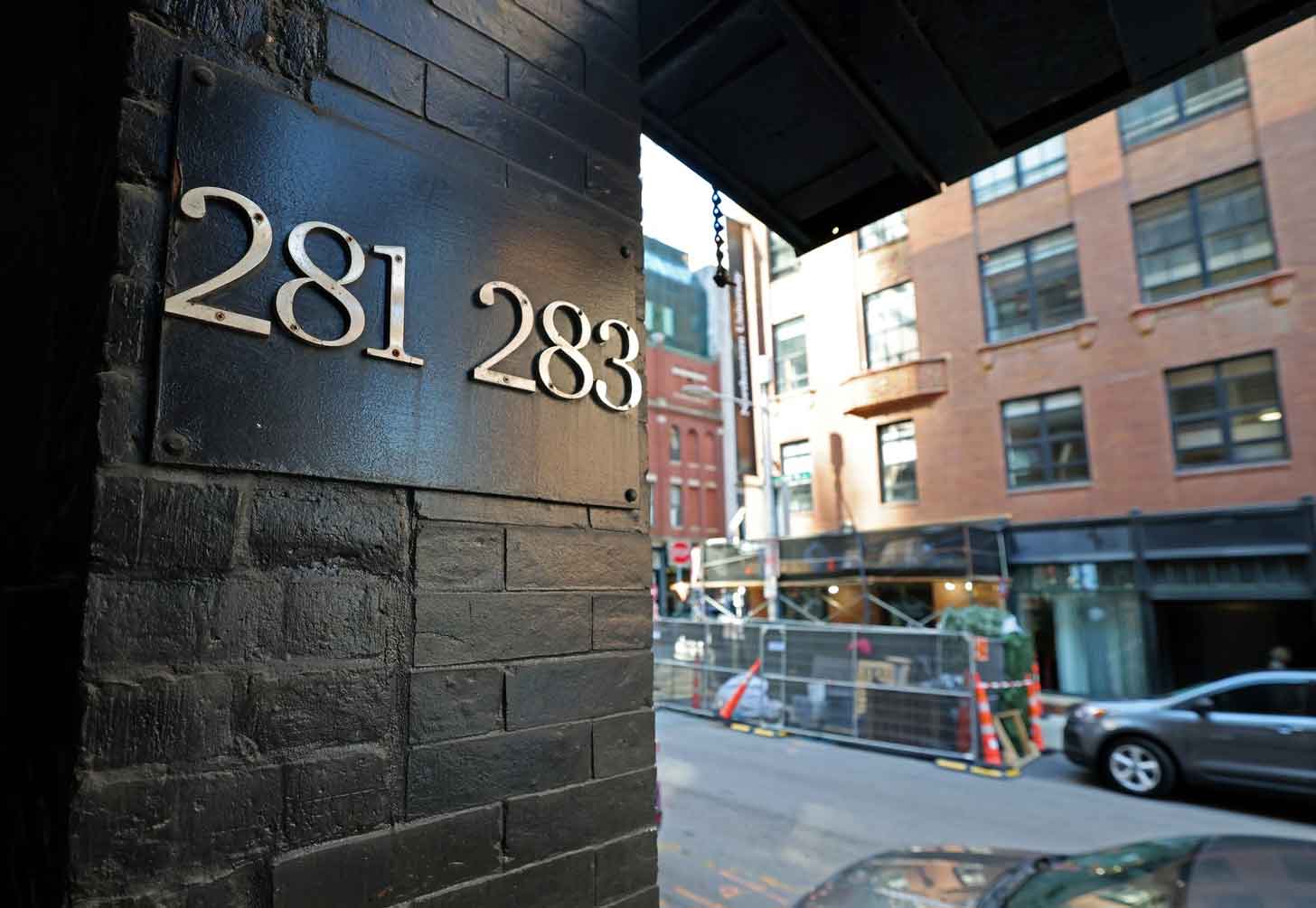
Fast forward about two years, and the first residents to benefit from the program are now moving into their new homes.
“This morning, we celebrated a huge milestone and welcomed the inaugural tenants of 281 Franklin Street — the first building to go through the City’s Office to Residential Conversion Program — to their new homes,” Wu shared in a Facebook post in early September.
She went on to say that once all units are transformed, these office spaces will provide homes to over a thousand new residents.
“In addition to this morning’s 15 units completed, there are 126 more under construction, and another 683 in the pipeline — nearly 825 total units,” she continued.
According to a recent city presentation, Boston has received 15 applications to create 762 housing units across 20 buildings and convert over 600,000 square feet of office space. Once they’re complete, the projects will bring an estimated 1,500 new people living downtown by the end of 2026.
Applications are due in December of this year, so this projected impact could grow even further in the coming months. The city’s goal is to convert a total of one million square feet.
“Boston is building the foundation for a stronger, more vibrant downtown through our dedication to housing, public safety, and economic growth,” Wu said in a press release this past July.
“As cities across the country look to revitalize and reenergize their downtown neighborhoods, in Boston, downtown foot traffic is up and commercial vacancies have been nearly cut in half with a focus on safety, business recruitment, and activation.”

According to The Boston Globe, the city’s downtown office vacancy sits around 20%, and is expected to grow to 30%, especially in the wake of the COVID-19 pandemic. Building owners are eager to finally get some use out of underutilized property.
Mark Callahan, the head of development for Copper Mill, another project in the program, told The Boston Globe it is “a great key to unlock the potential in this building because it’s been empty for a long time.”
Callahan is behind another project, which will create 45 new rental units — seven of which will be affordable — in a five-story building. About 500 square feet of restaurant or retail use will remain on the ground level.
In the newly opened Franklin Street development, a post office remains situated on the ground floor.
The goal is to revitalize the downtown area into a “vibrant, 18-hour mixed-use neighborhood,” which is typically described as a walkable area with diverse amenities and activities that are open to the public outside of standard business hours.
“We are thrilled to see the progress the Wu Administration has made on the Office-to-Residential conversion program in downtown and its surrounding neighborhoods,” Michael J. Nichols, president of the Downtown Boston Alliance, said in a statement earlier this year.
“The proximity our workforce lives to their downtown jobs is the single strongest correlating factor in catalyzing higher rates of office visitation, while adding residences near downtown offers improved local foot traffic to support downtown restaurants and retailers.
“This program is making a meaningful difference in providing workers and families with new opportunities to live in the heart of our city and continues to have our full support.”
Of the approved projects, 142 units will be income-restricted, and more construction is expected to begin this fall. In addition to the affordability perks, the city also expanded the program to include student and workforce-specific housing options.
Developers and business authorities seem pleased by the change.
As for Ernestine and George Tiongson, a couple who are one of the first to move into one of these developments? They seem happy, too.

“It allows you access to live in places where you couldn’t before. The downtown area is a super cool place; a lot of our favorite restaurants and cafes and bars are here,” Ernestine told CBS Boston. “So we’re just happy to be in the thick of it and be close to everything that we love.”
Wu even welcomed the couple to their new home with a houseplant.
“Every new home matters,” the mayor said. “Every new family moving into Boston and getting involved in our community makes a huge difference.”
You may also like: Church to demolish existing worship space, creating 110 units of affordable housing
Header image courtesy of Mayor Michelle Wu/Facebook
Every day the Good Good Good team collects the best good news in the world and shares it with our community. Here are the highlights for this week!
If you want to get good news in your inbox every day, join the Goodnewsletter — the free daily newsletter designed to leave you feeling hopeful.
The Best Positive News We’re Celebrating This Week —
Portland is expanding its first responder team dedicated solely to serving those having mental health crises
The Portland Street Response has worked as an alternative first responder agency to serve people having mental health issues. Unarmed staff members are dispatched to provide services to those with suspected substance use issues, who have unmet basic needs, like housing, and more.
PSR has fielded nearly 40,000 calls since 2021, and calls are up 19% compared to last year. To grow with the rising demand, the agency is adding 14 more staff members and working to strategically place staff around the city to provide faster response times.
Denver has implemented a similar program since 2020, also expanding after seeing enormous success in patient outcomes.
Why is this good news? Police officers are trained to respond to crimes — and a mental health crisis is not a crime. Even paramedics are sounding the alarm on their own lack of training here. Having dedicated teams who are specially trained to provide adequate care for someone struggling with their mental health is a better solution than relying on police or other first responders to handle these incidents.
A nonprofit is helping teens find mental health support where they already are — on social media
Providing reliable, cheap electricity, solar power is growing in Pakistan at an “unprecedented” rate
Driven by demand from citizens frustrated by skyrocketing electricity prices and unreliable supply from an aging power grid, Pakistan is seeing a solar boom that’s making it one of the largest adopters of the renewable energy source in the world.
And with an overabundance of solar panels available thanks to its neighbor, China, steadily ramping up production, the number of homes and buildings installing solar power systems has happened at an “unprecedented” rate.
In 2024 alone, solar imports to Pakistan tripled in just one year, to nearly $2.1 billion. That’s expected to continue this year, with the country already importing 80% of last year’s milestone in the first nine months of 2025.
Why is this good news? Pakistan is proving that abundant, renewable, inexpensive solar energy is a great investment — for individuals and communities. Community members are even coming together to pool their resources to install solar panels on buildings like mosques, which struggle to afford rising electricity prices from the country’s grid.
Belize, Guatemala, and Mexico are working together to create the second-largest nature reserve in the Americas
After Vermont banned plastic bags, usage went down 91%
In 2020, Vermont enacted a law that prohibited businesses from offering plastic bags to customers and only made paper bags available in exchange for a $0.10 fee. A new analysis from the University of Vermont has found that the law appears to have worked, with plastic bag use dropping 91% across the state.
The survey also found that 70% of respondents viewed the legislation positively, and a number have changed the way they carry their goods. Some who previously used paper bags decided to stop once a price tag was introduced, and others had already been using reusable bags and continued to do so.
Overall, the researchers found that the policy’s success was due to a “bottom-up” effort from citizens who pushed state legislators to enact a ban due to environmental concerns surrounding single-use plastic.
What’s the nuance? Researchers found that while the law led to a near elimination of plastic bag use, paper bag use increased by more than 6% during the same time. They suggested that other states pursuing similar laws might consider including paper bags in their initial legislation to curb the use of disposable bags altogether.
→ Read more
MrBeast, Mark Rober, and other YouTubers raised over $40 million for #TeamWater to fund clean water projects
Last month, famous YouTuber MrBeast (a.k.a. Jimmy Donaldson) joined his fellow YouTuber and engineer Mark Rober to announce a major fundraising campaign: #TeamWater. Taking place throughout August, the project aimed to raise $40 million to fund clean water projects around the world.
The campaign brought together content creators from 144 countries, reaching billions of subscribers through videos, livestreams, and social media content, including a 17-hour livestream that raised $12 million toward the total goal.
And they officially surpassed their goal, raising over $41.5 million for the nonprofit WaterAid, which will supply an estimated 2 million people with access to clean water for decades.
Why is this good news? WaterAid CEO summarized it perfectly for us: “This will have ripple effects for decades to come. Girls and women who spend hours collecting dirty water can go to school or earn a living. Healthcare facilities can provide the care people need. It will change lives. We know the path and outcomes of a child born with access to clean water differ dramatically from those of a child who is born without.”
→ Read more
A story about Travis Kelce donating a house to the homeless was AI-generated — another NFL player just did it for real
A new poll found that a majority of Americans view affordable housing positively and want to see more in their neighborhoods
While NIMBYs might express concerns about crime, congestion, schools, property values, and “quality of life” changes that might come from affordable housing developments, most Americans have been affected by the housing crisis and, therefore, hold evolving beliefs about what it means to solve the problem.
A new poll found that 63% of respondents viewed the term “affordable housing” positively. In fact, 83% of people viewed affordable housing more positively than other forms of multi-family housing, compared to townhomes (76%), apartments (70%), and mobile or pre-fabricated homes (64%).
The respondents also shared what kind of affordable housing policies they would be supportive of, with 65% of people saying they’d likely support new housing being built in their neighborhoods.
→ Read more
A church in Wisconsin is demolishing its current worship space to build 110 units of affordable housing
St. John’s Lutheran Church has been situated in the same spot, just a few blocks from the state Capitol building in Madison, Wisconsin, for nearly 170 years. Always a place “focused on refuge, serving the poor, and meeting people where they are,” its leaders want to live up to that in a new way.
The church is planning to demolish its existing worship space to build a 10-story, multi-functional building that will not only have a worship space, but also a community center and more than 100 units of affordable housing.
The idea came about from conversations around how the congregation could best give back to the community, and now the $58 million project is about to break ground, with the goal to be completed in the next two years.
Why is this good news? City officials say the building will be the first new affordable housing project in almost 20 years. For people who have been able to find housing in the area, they’re burdened with paying as much as 70% of their income on housing costs — this new building would have capped rents in tiered pricing based on income.
After the loss of 2024, these progressive candidates are making politics fun again: ‘We can win anywhere’
→ Read more
Former poachers are now employed as rangers to patrol beaches and protect endangered sea turtles
On Cabo Verde’s islands, local residents are being employed by conservation organizations as rangers to monitor, patrol, and protect endangered and threatened sea turtles on the same beaches where they used to poach them.
Along with legislation and tourism, these conservation efforts have led to a dramatic reduction in turtle harvesting, which locals traditionally consume, use in traditional medicine, or sell on the black market.
Between 2007 and 2024, illegal catches of female turtles on one island alone fell from 1,253 to just 20, and loggerhead turtle nesting sites increased seven times.
More good news of the week —
A recent study found that the global suicide rate has fallen by nearly 30% since 1990. Researchers noted that, in Europe, responsible media reporting and efforts to build social and emotional skills could have contributed to the decline, as well as improved access to care, reduced stigma, and suicide prevention programs.
To Write Love On Her Arms launched its annual Suicide Prevention Campaign to raise $250k by the end of September. The “I Hope You Stay” campaign will fund 2,800 hours of therapy for people who can’t otherwise afford care and fund thousands of searches in its FIND HELP tool to make it easier for individuals to connect with local, affordable mental health services.
Despite the national line shutting down, Illinois is keeping its dedicated 988 suicide crisis lifeline for LGBTQ+ youth. The 988 lifeline was launched in 2022, going on to develop a subnetwork of trained crisis counselors to help LGBTQ+ youth and adults under 25 who are disproportionately at risk for suicide and other mental health struggles.
A Chicago coffee shop gives 100% of its profits to mental health outreach and proactive suicide prevention. Now with two locations in the Chicago area, when Sip of Hope first launched in 2018, it became the first coffee shop in the world to put all of its proceeds toward proactive suicide prevention and mental health education.
A first-of-its-kind mental health hotline is supporting farmers and ranchers. The AgriStress Helpline for Farmers and Ranchers is staffed 24 hours a day, seven days a week by professionals trained to work with members of agricultural communities and is available in Wyoming, Pennsylvania, Texas, Missouri, and Virginia.
A shelter dog made his debut as the first-ever “morale dog” to be stationed on a U.S. Navy ship. Raider will offer support through “structured interaction, presence, and engagement,” and support trauma recovery therapy, participate in group sessions, visit service members’ families, and offer moments of connection and care “when it’s needed most.”
Reaching over 100,000 workers, 41 countries have implemented mental health and resiliency training for healthcare workers. Difficult working conditions coupled with high rates of anxiety and depression — over one in three health workers have suffered from these conditions since the start of the COVID-19 pandemic — not only impact worker retention, but also the well-being of people who deserve health and safety, too.
The Conservation Fund purchased North America’s largest blackwater swamp, saving it from a mining company. Spanning from southern Georgia into northern Florida, the Fund’s purchase is critical to protect the entire Okefenokee National Wildlife Refuge, including more than 350,000 acres of designated wilderness.
A women’s group in northern Ghana is proactively reviving the region’s forests through natural regeneration. Reforestation efforts like large tree plantings with nursery-grown seedlings fail under harsh conditions, so the women have been pruning shoots from living trees dispersed by animal droppings to encourage stronger regrowth.
A new joint effort by California and Nevada is protecting Lake Tahoe from a record amount of polluted runoff. By restoring wetlands and streams, limiting dust from roads and construction sites, and improving stormwater systems, the states dramatically reduced pollutants that fuel algae growth and are known to reduce Lake Tahoe’s world-famous clarity and water quality.
Scientists discovered that kelp forests provide powerful protection against storms in coastal communities. Much like mangroves, researchers found that dense kelp beds could knock down as much as 70% of a wave’s energy before it reached the shore, giving vulnerable coastlines a natural shield against erosion and storm damage, an especially helpful discovery as storms grow in intensity and frequency.
South Australia secured enough federal funding to become the first grid in the world to reach 100% net wind and solar energy. Reaching the milestone will be a landmark both for the state and for advocates of the renewable energy transition, particularly as conservative and legacy fossil fuel interests continue to push back on the idea that a modern economy can be powered by renewables.
Incoming students at a college in Virginia are moving into solar-powered shipping container dorms. Providing a “modern, comfortable living environment,” the dorms at Roanoke College feature suite-style rooms, where students have standard bunk beds, two desks, storage space, a vanity with a sink, private bathrooms, and individual, in-room thermostat controls.
New sensor technology is making it easier to cool communities and tackle urban heat islands one block at a time. While the idea of reducing heat across an entire city or neighborhood is daunting, targeting specific blocks that need assistance the most can be faster and a much more efficient use of resources.
A company in Nigeria developed a bionic arm to make prosthetics more accessible. While Nigeria has no precise data on how many citizens use prosthetics, the devices have long been inaccessible or unaffordable to a significant number of amputees and other Nigerians who lack a hand.
Thanks to good weather and rapid growth, solar power generation in Britain this year has already surpassed 2024’s total. As of mid-August, some 14.08 terawatt hours of electricity were produced from solar in Great Britain, about one-third higher than at this time last year, and enough to power 5.2 million homes for a year, or the London Underground for more than a decade.
Fire-resistant homes were 3D-printed in just 16 days in fire country and “will stand strong 100 years from now.” Two homes were just completed in Buena Vista, Colorado by VeroTouch, a construction technology company that “believes housing is a fundamental human right, and that solutions to the housing crisis will come from private sector invention and investment.”
Three Scottish brothers set a new record for the fastest unsupported row across the Pacific Ocean while raising money for clean water projects. Rowing over 9,000 miles non-stop from Peru, they endured storms, seasickness, injuries, and violent storms, including one that swept Lachlan overboard, while raising over $945,690 toward a £1 million($1,350,450 target for clean water projects.
A new stethoscope powered by AI could detect three heart conditions in seconds. Researchers say the tool could be a "real game-changer," resulting in patients being treated sooner. It takes an ECG, recording electrical signals from the heart, and sends the information to the cloud to be analysed by AI trained on data from tens of thousands of patients.
Egypt became the first African nation to win the Homeless World Cup in the tournament’s 20-year history. Staged for the second time since FIFA lent its official support last year, the Homeless World Cup brought 63 teams from 48 nations to compete in Oslo, Norway. On the women’s side, Uganda’s team won the title.
As a fashion sustainability researcher, finding the ReTuna shopping mall in Eskilstuna was a delightful surprise. Stepping into this Swedish shopping center felt refreshingly different — it is the first in the world to sell only secondhand and repurposed items.
During numerous visits to the shopping mall over the last 18 months, I have spoken to customers, managers, and employees — all of whom seemed excited by ReTuna’s innovative business model.
The mall instantly feels very different to the cluttered charity shops or vintage boutiques most of us associate with pre-owned retail.
There is a wide range of products on sale — fashion, sports equipment, household items, children’s toys, antiques — and even an Ikea secondhand store selling previously used and repaired furniture.
This is not just a retail space. It is a municipality-led experiment in circular consumption, where everything sold has been donated by the public.
ReTuna was established in 2015 as part of Eskilstuna’s climate and waste reduction strategy. Built alongside the city’s recycling center, it includes a dedicated drop-off point called The Return, where residents donate unwanted items. These are sorted and redistributed to the retailers in the mall, creating a low-cost, low-waste circular system.
The model is only possible because of public funding and local government support — a reminder that circular innovation often requires structural investment, not just consumer goodwill.
However, what makes ReTuna so distinctive is not just its inventory but its atmosphere.
Consumers describe it as “accessible”, “curated,” and “convenient." The mall’s layout and product displays mirror conventional retail spaces, making secondhand shopping feel stylish and enjoyable.

One shop manager told me customers often mistake the secondhand items for new, a testament to how fashionability and design are used to make reuse attractive without increasing cost. At ReTuna, the clean, calm environment helps make ethical consumption feel desirable and emotionally rewarding.
As one shopper put it: “It’s not just ethical, it’s beautiful.”
Retailers use low-cost stock and infrastructure to create visually appealing stores. The result is a pleasurable shopping experience that challenges the stigma of secondhand. While affordability and environmental values remain central, ReTuna also reimagines what sustainable retail can look and feel like.
Demand for pre-loved
Consumer interest in “pre-loved” fashion is accelerating, with the secondhand market growing 2.7 times faster than the broader apparel market, according to one recent industry report. Globally, it is projected to reach US$367 billion (£272 billion) by 2029.
And it is not only pre-owned fashion that is growing. Another market research report forecasts the wider secondhand products market will reach US$1.04 trillion by 2035, growing at a compound annual rate of 17.2%.
In a YouGov survey spanning 17 markets, 43% of secondhand buyers favored in-store purchases, compared with 39% who preferred online (19% were undecided). ReTuna is part of this shift — not as an outlier, but a glimpse of what mainstream retail could become.
This pioneering Swedish mall turned ten this year.
It has grown from a local government initiative to an internationally recognized model of circular retail. The mall’s success shows that secondhand shopping does not have to feel like a compromise — it can be stylish, convenient, and socially meaningful.
Circular retail is not just about what we buy, but how and where we buy it. ReTuna demonstrates that with the right infrastructure, design, and public support, sustainable consumption can be embedded into everyday life — not as a chore but a rewarding experience.
This article was written by Mary-Ann Ball from Nottingham Trent University, and was originally published on The Conversation.
Header Image by Mary-Ann Ball

Screens — and technology more generally — are often seen to be at odds with engagement and connection with nature. Teenagers are implored to put down their phones and go outside instead.
This is a key premise in recently announced measures by the U.K. government to “to reconnect young people with the world around them”. Funding for youth clubs and after-school activities is intended to remedy a situation in which young people are “stuck in their bedrooms or behind a screen."
Certainly, investment in youth activities, especially those which support young people to build their relationships with nature, is necessary and welcome. But viewing these as merely an antidote to chronic screen use is missing the point entirely.
Screens can be an important part of how young people interact with and understand the natural world.
Those screens might be the very key to getting teenagers out of their bedrooms and into the outdoors.
Placing blame
At first glance, it is tempting to place the blame on screens when considering the reasons behind why many people have spent less time outside over the last few decades.
Author and journalist Richard Louv, in his popular book "Last Child in the Woods," does just this.
He points to time spent watching television and using computers as contributing to a rise in what he calls nature deficit disorder — an ailment related to human separation from nature.
Nature deficit disorder supposedly affects physical health and attention spans, among other negative outcomes (though many criticisms exist about this concept).
Alongside suggestions that people of all ages have spent less time outdoors over past decades, mental health difficulties in teenagers have increased in recent years. Technology is often pointed to as one potential driving force. It is important to note that the current evidence appears mixed about whether this is the case.
Given the benefits to wellbeing associated with spending time in nature, it is easy to see how a certain narrative emerges: that teens are suffering from poor mental health because they spend too much time indoors on screens, and this problem could be solved if only they would put their phones away and spend time looking at trees.
Connection to nature — the relationship that a person has with the natural world — is also known to dip in early adolescence (around age 12) and remain low until early adulthood. Encouraging young people to spend more time outside could address this issue, too.
However, when approached with the mentality of “screens versus time outdoors”, this risks being a pointless effort. Technology is central to nearly everything we do, for better or worse.
It is not realistic to suggest that the answer to any of these modern difficulties — poor wellbeing, increased screentime, or decreased connection to nature — lies in restricting technology or framing time outdoors as a replacement.
Nature with tech
Instead, technology should be seen to have a role in supporting outdoor experiences. At a basic level, technology helps make the outdoors more accessible for many. Maps, location apps such as what3words and location tracking can ensure people stay safe.
Technology can be used to enable communication for people who communicate differently, such as through the use of iPad apps or speech-generating devices. It can help those with sensory needs feel more comfortable going outside; for instance, using a phone and headphones to listen to music can help block out unwanted sensory stimuli outdoors.

Placing higher value on tech-free outdoor experiences only serves to distance people and gatekeep experiences for those who can easily disconnect. People with caring responsibilities or health conditions, for instance, might find it impossible or dangerous to put their phones away completely when spending time outdoors.
In many ways, it is a privileged position to be able to go tech-free outdoors.
Rather than taking an approach that views engagement with screens as the opposite to nature experiences, we should encourage young people to use their technology responsibly to support their experiences with nature.
For instance, phones can be used to identify bird song, plants, and animal tracks or to report wildlife sightings through citizen science projects. Even indoors, looking at photos of natural things, watching nature documentaries, or listening to nature sounds can help support relationships with nature.
Despite the drawbacks of social media, nature content can be an effective way in to experiencing the outdoors for many people.
See, for instance, the extreme popularity of Outdoor Boys — a recently retired YouTube channel with 16.5 million subscribers, which featured videos of an American man partaking in a range of outdoor activities with his children in Alaska and elsewhere.
With the potential to translate online interests into real-life experiences, embracing the power of nature-based social media content is one way of meeting teenagers where they already are.
People who have stronger relationships with nature are more likely to act in service of the environment. Building upon young people’s interest in the environment can provide opportunities to have frank discussions about the environmental effects of the technology we use every day. This could include, for instance, the rare earth minerals in our phones or the huge amount of energy used by generative AI.
Taking this more balanced approach will help young people see technology as a potential enabler of their experiences with nature.
This article was written by Samantha Friedman and was originally published on The Conversation.
Header Image by Julio Lopez on Unsplash

This story was originally published by Grist. Sign up for Grist’s weekly newsletter here.
Earlier this summer, the Banana Lake Fire erupted near Plains, Montana, engulfing over 850 acres in flames within a day. The “total suppression” response from firefighting officials included deploying at least 17 engines, two helicopters, and three bulldozers, as well as highly trained fire crews.
But another newer piece of technology was also at play as firefighters worked to contain the blaze: drones.
Banana Lake was one of several early-season fires in the state this year. As of this writing, there are over 20,000 acres burning across seven key wildfires in Montana, at varying levels of containment. And increasingly hot and dry conditions throughout the American West are making fire an ever more fickle foe.
As a new era with the natural disaster commences, both fire practitioners and researchers across the West are bolstering their arsenal with cutting-edge tools.
Drones now fly above firefighters, private satellite companies monitor fire and smoke from above, and AI machine-learning models are helping to advance fire research. While these new innovations are not panaceas, ground operations crews and scientists are optimistic about the ways modern technology can help fight fire smarter, not harder.
Since 2018, drones — sometimes referred to as unmanned aerial systems, or UAS — have been flying under the radar as a new instrument for the United States Forest Service in the fight against wildfire.
Thanks in large part to Dirk Giles, who launched and leads the agency’s UAS program, the number of drones deployed each year by the Forest Service has jumped from 734 flights in 2019 to over 17,000 in 2024.
“The program has really hit a new stride in the past three years,” said Giles. “We are seeing UAS supplementing fire crews across all phases of response.”
“This UAS program is now being recognized as prolific,” said Ry Phipps, a division supervisor in Region 1 of the Forest Service, which includes Montana. “There was a time we wouldn’t have even thought to try and order a drone for operations. They have become a fantastic tool that is changing the game.”
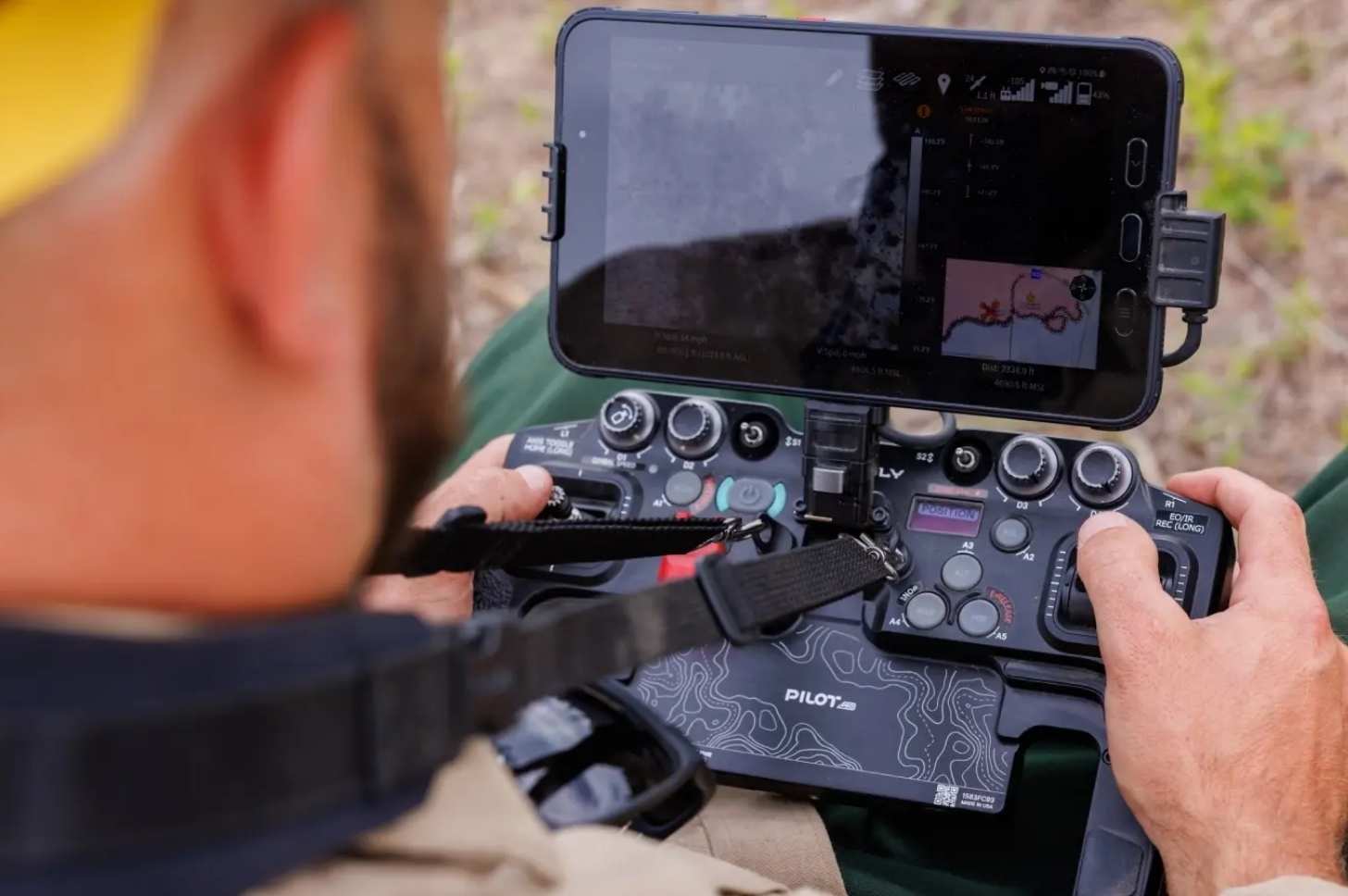
According to Phipps, drones are increasingly seen as a force multiplier by Forest Service employees. Drones equipped with infrared sensors can help detect lingering hot spots, pinpointing areas at risk for reigniting.
Previously, firefighters had to meticulously hand-check burn scars, which could take days at a time and a ton of manpower, depending on the size of the area. With supervisors like Phipps reading a thermal map on a screen fed by drone data, firefighters with boots on the ground can be dispatched more safely and efficiently, only going to spots that have high heat signatures.
“It saves a lot of time and risk for crews,” said Phipps.
For helicopter pilots, who help control wildfires by dropping water or fire retardant to suppress flames and creating fire lines for ground crews to control blazes, drones can also assist.
Preprogrammed flight trajectories, in combination with infrared sensors, allow UAS to fly through heavy smoke or at night. This mitigates the need for “low and slow” reconnaissance missions, which require pilots to fly close to the ground in tricky terrain and low visibility.
According to Giles, these missions are some of the most dangerous for wildland fire pilots. As their name would suggest, unmanned aerial systems offer a way to do surveillance without putting pilots in danger — which means that UAS can unlock new abilities for fire crews in extreme conditions.
“Basically, you can fly drones so that nobody gets hurt,” said Phipps. “You can replace a drone. You can’t replace a person.”
Although Giles, Phipps, and others believe that drones show great promise — especially in shifting risk from firefighters to a machine the size of a small cooler — they’re far from being a silver bullet.
The machines have limited battery life and can only complete flights of about 15 minutes on average, meaning that deployments must be carefully planned. And since drones are still being studied in various fire management applications, manpower is still needed to check the “ground truth” of information that UAS provide.
Another limitation is simply availability. According to Phipps, there aren’t as many drones as there is demand for them.
Ironically, there’s also an emerging risk from privately-owned drones getting in the way of official operations. If hobby drones are in the airspace near a wildfire, it’s also a no-go for land management agencies to fly.
During a wildfire in Montana in 2022, aerial crew operations came to a standstill as an unapproved drone buzzed right into an area with a temporary flight restriction. Officials were able to locate the drone’s owner in just about 15 minutes — but that’s precious time when a fire is raging.
And just two weeks ago during a wildfire near Provo, Utah, fire operations were shut down by multiple drone incursions, impeding fire management on a high-profile fire near a densely populated community. While UAS are becoming more critical in fire operations, officials must also work on educating civilians to ensure unauthorized drones don’t prevent them from flying their own.

Another area of fire management that drones have shown some promise in is lighting and managing controlled burns — intentional blazes set to clear dry brush and other fuels.
Fire management’s history of suppression disrupted the natural fire cycles that Indigenous communities once stewarded — cycles that many ecologists now champion. As colonization spread across the West and settlers sought to control land and resources, racist assimilation programs criminalized all manner of Indigenous customs. Prescribed burning was one of them.
But as the consequences of this more aggressive, reactive approach to fire management have become apparent, Western science has increasingly caught on to the effectiveness of routine controlled burning.
One recent Stanford-led study revealed that prescribed burns can reduce the severity of subsequent wildfires by an average of 16% and net smoke pollution by 14%. Fire professionals have also recognized their potential, with applications growing year over year.
Enter another new breed of drones: UAS that can be equipped to carry “dragon eggs,” pingpong ball-sized clusters of a flammable potassium concoction that ignite on impact. This innovation helped the Forest Service burn around 189,000 acres in 2024 to reduce built-up fuels.
While the use of prescribed burns is on the rise, in Montana and elsewhere, concerns remain about public safety risks, both from air pollution and the possibility of blazes getting out of control. Technology is helping to address those kinds of questions, too.
Researchers in Montana are looking to clear some of the lingering haze of safety concerns around prescribed burns through a National Science Foundation-funded project titled SMART FIRES. (The project’s title is an acronym for Sensors, Machine Learning, and Artificial Intelligence in Real Time Fire Science.)
The group, specializing in fields from atmospheric chemistry to public health, will use the grant to conduct five years of study and fieldwork aimed at unpacking the environmental and social dynamics needed to scale prescribed burns as a preventative measure for wildfire. The suite of custom gadgets that the project is utilizing includes some proprietary UAS.
“Drones are just a tool,” said John Sheppard, who leads SMART FIRES’ AI computer science team. He added that his role in the project is a supportive one — to see how these technological tools can further the various research aims.
Using smart sensors and high-resolution cameras fastened on drones and ground sites, the researchers are training AI models to analyze prescribed burns on the fly. The different smart sensors will efficiently process real-time data, and in combination with weather and historical fire information, they will look to model a burn’s movement on the landscape.
Before conducting a prescribed burn, practitioners usually carefully examine environmental factors like wind, humidity, and temperature. These AI models will theoretically offer an enhanced version of that, also incorporating factors like ground fuels and topography to provide supervisors with the best possible data to burn accurately and safely.
SMART FIRES also touts a “science lab on wheels” — a tricked-out Ford Transit van that looks right off a Ghostbusters movie set. The van collects smoke directly from active fires, which environmental chemists then analyze to determine things like the level of PM2.5 — particulate matter smaller than 2.5 microns, a concern for public health — and other pollutants present in the smoke.
The social science arm of the project will also engage community members, surveying rural and Indigenous communities in particular about their concerns and priorities related to prescribed burns and ensuring these considerations are put into risk assessments.
The consortium ultimately hopes to provide interpretable, map-based forecasts to land managers to help them decide when, where, and how prescribed burns can be used for wildfire prevention.
“The goal of the project is to refine the AI models so that they can give better recommendations to experts on the ground who know best,” said Sheppard.
While drones and AI are opening up a new era for fire science and management, some of the most tenured experts on the ground have yet to gain access to these types of cutting-edge tools.
The Confederated Salish and Kootenai Tribes of Montana, sometimes known by the acronym CSKT, have practiced prescribed burns as a tool for land stewardship since time immemorial. According to Ron Swaney, the fire management officer of the CSKT Division of Fire, the role of fire has long been guided by a deep cultural responsibility.
“I think a lot of people underestimate the role of Indigenous burning on the landscape,” he said. “There was purpose and intent for that use of fire.”
Justin Underwood, the CSKT prescribed fire and fuel specialist, has been in fire management for 19 years and was the first UAS pilot to be certified under the Bureau of Indian Affairs in the Pacific Northwest region.
For three years, he has been trying to get a drone for the tribes’ prescribed burn operations. But because he isn’t employed by the Department of the Interior, he has yet to cut through the red tape.
The Office of Aviation Services, which lives within the U.S. Department of the Interior, is responsible for all aircraft services and facilities — including the certification card needed for flying a UAS. According to Swaney, the tribe has a helicopter, two single-engine air tankers, and an air attack platform for firefighting.
But because drones are a newer implementation in fire management, nonfederal fire divisions may run up against a convoluted process to get clearance to use a UAS.
“I wouldn’t be so frustrated if my qualifications didn’t mirror other pilots,” said Underwood. “I’ve done every training offered by the Department of the Interior, but I am still unsure what it will take to get officially carded for a UAS.”
While the CSKT coordinates with public land agencies on prescribed burns, the tribal nation sets its own fire management plan — one part of a larger plan focused on climate change adaptation. The tribe’s approach to fire weaves together ancestral knowledge and contemporary science.
But being unable to utilize the latest technological tools has hampered these efforts, Swaney said, underscoring just how important the role of technology is in present and future fire management.
“It’s like living in the dark ages,” said Swaney.
Header Image by John Stember
When the Memphis Islamic Center secured a parcel of land next door to Heartsong Church in Cordova, Tennessee in 2010, Heartsong’s then-pastor Steve Stone said his “stomach kind of tightened up.”
“I felt that ignorance and that fear,” Stone said in a video produced by Starbucks about eight years ago. “So I prayed.”
On the other hand, Dr. Bashar A. Shala of the Memphis Islamic Center, wanted to build a place for Muslims in America to find community and safety in their faith. He assumed building that space in what is colloquially known as “The Bible Belt” would be a challenge.
“We did not expect to be welcomed,” Shala said in the same video. “We thought we’d have to work hard.”

But Stone’s prayers turned into action, and the church displayed a large banner that read: “Heartsong Church Welcomes Memphis Islamic Center to the neighborhood.”
From there, an interfaith friendship was built.
Over the years, the two faith centers have worked together on countless endeavors, the church even opening its worship spaces to Muslims for prayer when their building was under construction.
“I would have never thought that I would be friends with Muslims, and I love it,” Mark Sharpe, a Heartsong congregation member said in the 2016 video. “It’s kind of like my world got bigger.”
Together, they’ve also co-sponsored coat drives, food drives, and more. And every year, close to the anniversary of September 11, the two houses of worship hold a blood drive, with each alternating as hosts.
For 2025, Heartsong hosted the blood drive on Sunday, September 7.

“As we reflect on September 11th, we pause to remember those we have lost and the countless lives forever changed by acts of tragedy and adversity,” Heartsong’s current pastor Lindsey Byard told Good Good Good.
Instead of “merely dwelling” in sorrow, she added, it is essential for people to “seek comfort and inspiration in our faith.”
Since the first blood drive in 2011, that faith has spurred action in the Heartsong and MIC communities.
Over the past 14 years, more than 600 pints of blood have been donated.
“Our faith teaches us that even in the darkest of times, there is light to be found in unity, compassion, and collective action,” Byard said.
“In this spirit, the wonderful communities of Heartsong and the Memphis Islamic Center came together in a remarkable demonstration of solidarity and love. On Sunday, these two communities joined forces to donate 24 pints of blood — a selfless and life-giving act that transcends religious and cultural boundaries.”
“Because of you, life doesn’t stop,” a social media post marketing the event from MIC added.
Anyone who donated was also given a snow cone to celebrate and replenish after the fact.
“Good things come to good people,” Sno Me Something, the group distributing treats, shared on Facebook.
More than a cheeky sentiment from the dessert vendor, the message of unity and offering echoes for the leaders of the two faith communities.
“Meeting a new neighbor, embracing a stranger, exploring the beauty of cultural diversity, and helping one another,” Shala of MIC told Memphis news outlet Commercial Appeal a few years back. “Isn’t that what being American is all about?”
“This act of giving stands as a powerful testament to our resilience. It proclaims that we will not allow the actions of a few to define our day or our destiny. Instead, we choose life over death, unity over division, and hope over despair,” Byard told Good Good Good after Sunday’s most recent blood drive.
“The joining of hands and hearts by Heartsong and the Memphis Islamic Center is more than a charitable act; it is a living symbol of love, resilience, and the belief that we are always stronger together.”
You may also like: This man has donated a total of 100 gallons of platelets to the Red Cross every two weeks for 30 years: 'Because I can'
Header images courtesy of Logan Clark/Unsplash and Don Sniegowski (CC BY-NC-SA 2.0)
As tiny homes gain popularity for their climate resilience and assistance in building temporary and affordable housing, designers are eager to play with the medium in the most effective and sustainable ways.
Take Inspiral Architects, for example, an architecture firm that has developed the Drop Pod.

“Drop Pod is a home that can be placed on a variety of topography and scenes,” the firm’s website shares. “Whether it’s an urban area in a wealthy country or a developing country battling climate change, the Drop Pod provides the solution.”
A modular housing solution, Drop Pod is as stylish as it is tiny, bringing the firm’s signature modern flair to projects designed to be deployed rapidly.
And in West Nusa Tenggara, Indonesia, the first Drop Pod prototype has been installed.
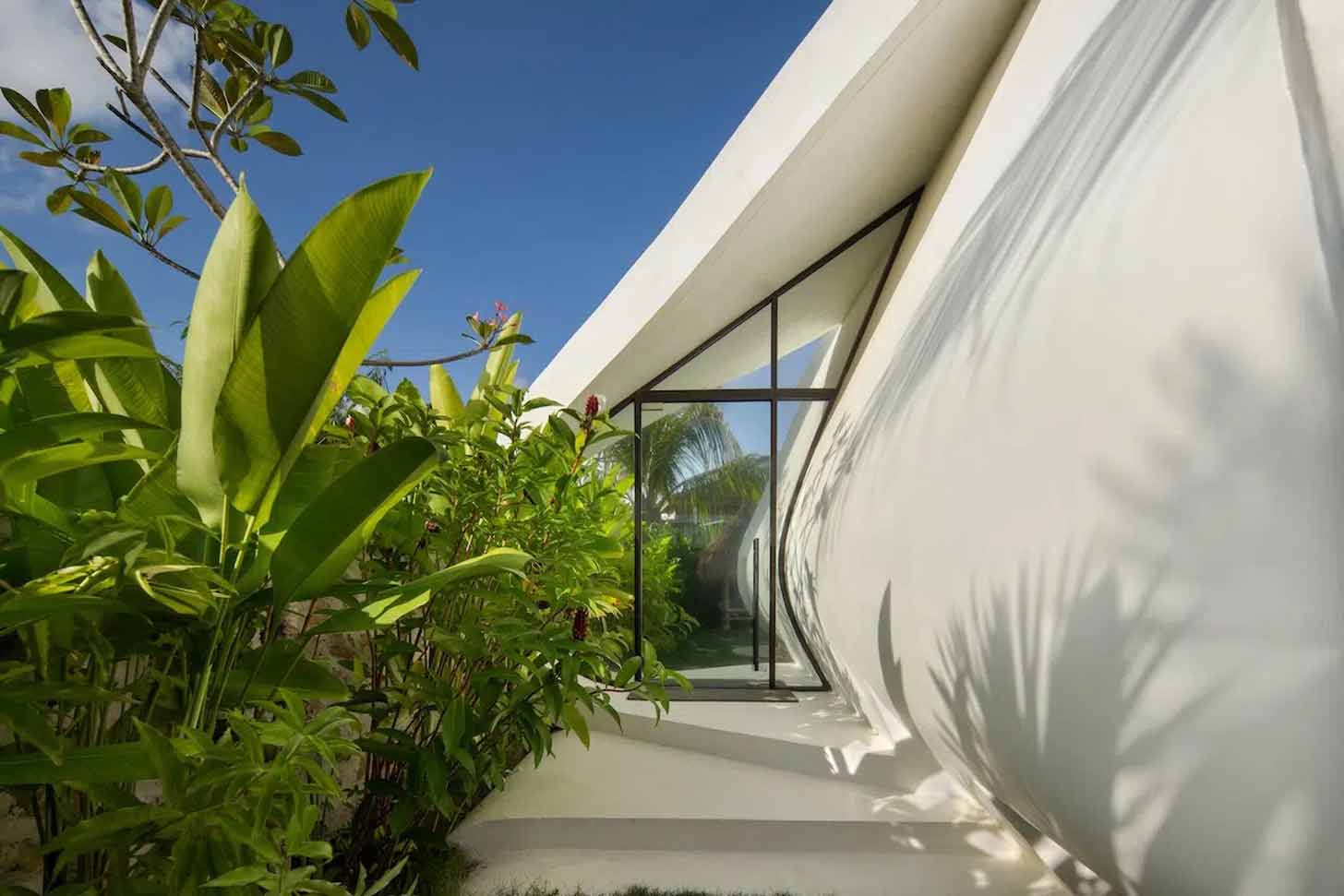
The prefabricated house looks like it was indeed dropped into place from some far-away world in outer space. With a futuristic pod-like exterior, the Lombok design takes a curved form and uses natural materials to allow integration with local landscapes.
The modular frame also provides structural stability, with the home capable of being elevated up to 1.2 meters (or about four feet), allowing the home to withstand flooding and unstable ground, concerns often held in regions vulnerable to climate disasters. It also appears to be powered by solar panels.
“Nowadays, we see ourselves more and more confronted with issues of constant growth of population and major changes in our climate,” Inspiral Architects shares. “Due to climate changes, for example, the sea water levels are constantly rising, causing major floods that [can take] away many people’s homes.”
In addition to housing shortages caused by population growth and market challenges, the firm added, “the need for a house that is quick to distribute and easy to install — while also able to face today’s challenges in a multifunctional way — is more important than ever.”
The Lombok in Indonesia sits 60 centimeters off the ground atop a river stone foundation, which elevates the home above potential floodwaters and allows the structure to be placed on sloped terrain with ease.
Additionally, the firm claims, the shell of the structure can be built in just one week. It’s also customizable and designed to be modified to the needs of its residents, accounting for local weather patterns, cultural preferences, or family sizes.
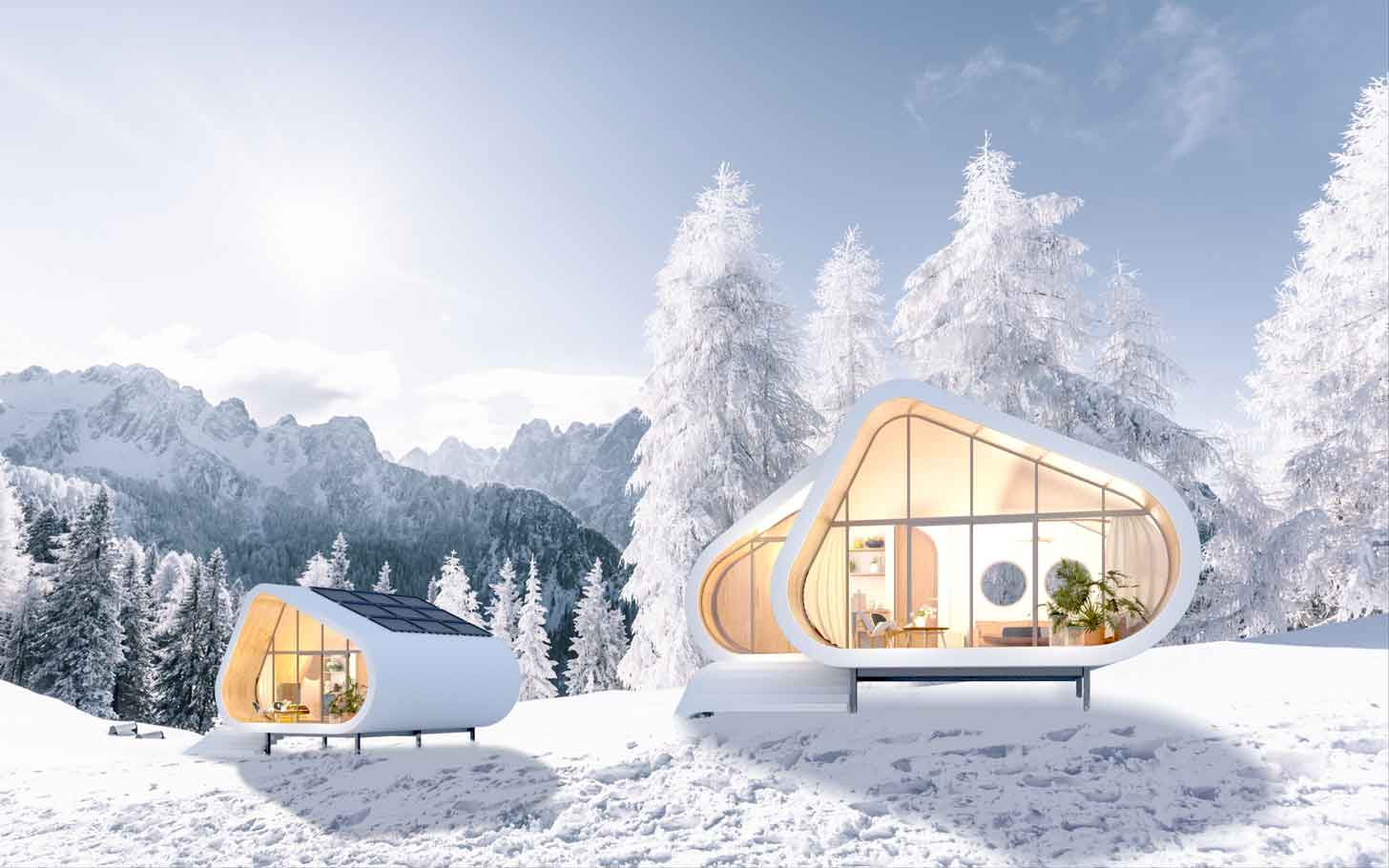
Due to their modular nature, the Drop Pods can be established as solo homes, or they can be easily connected as home extensions or clustered together in entire neighborhoods.
“The goal,” Inspiral Architects shares, “is to provide a house that gives not only the comfort of privacy within limited space but is also user- and environmentally- friendly.”
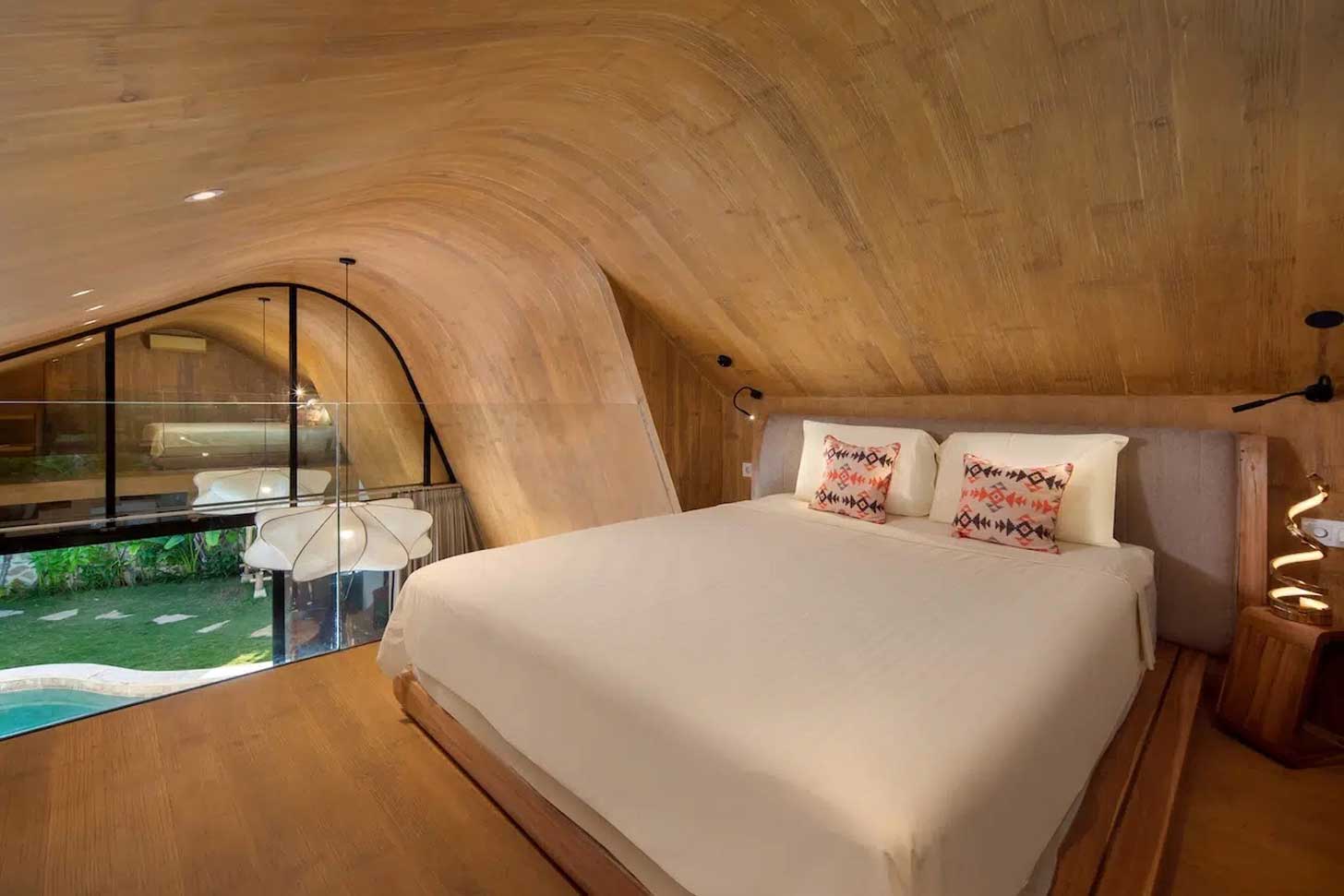
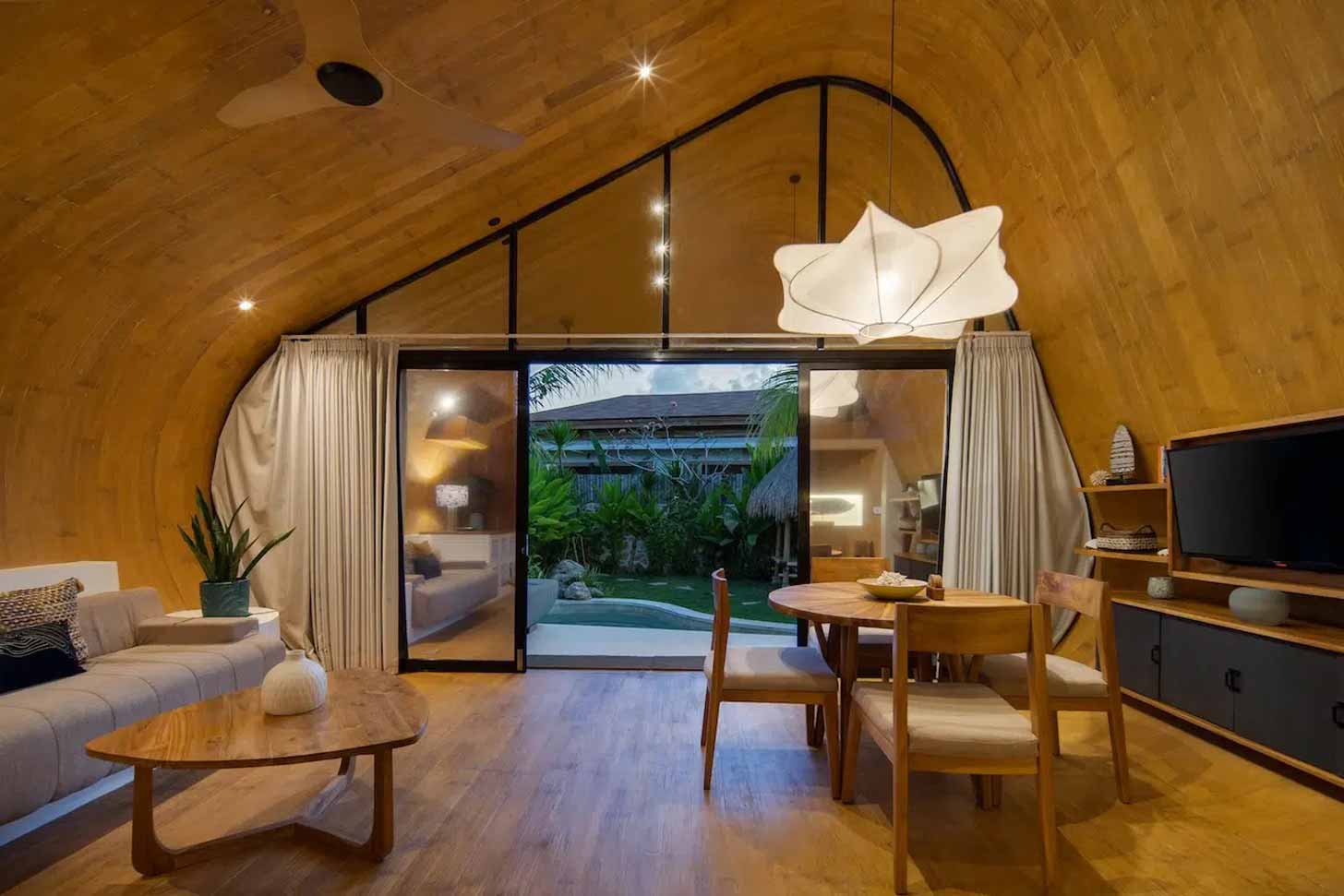
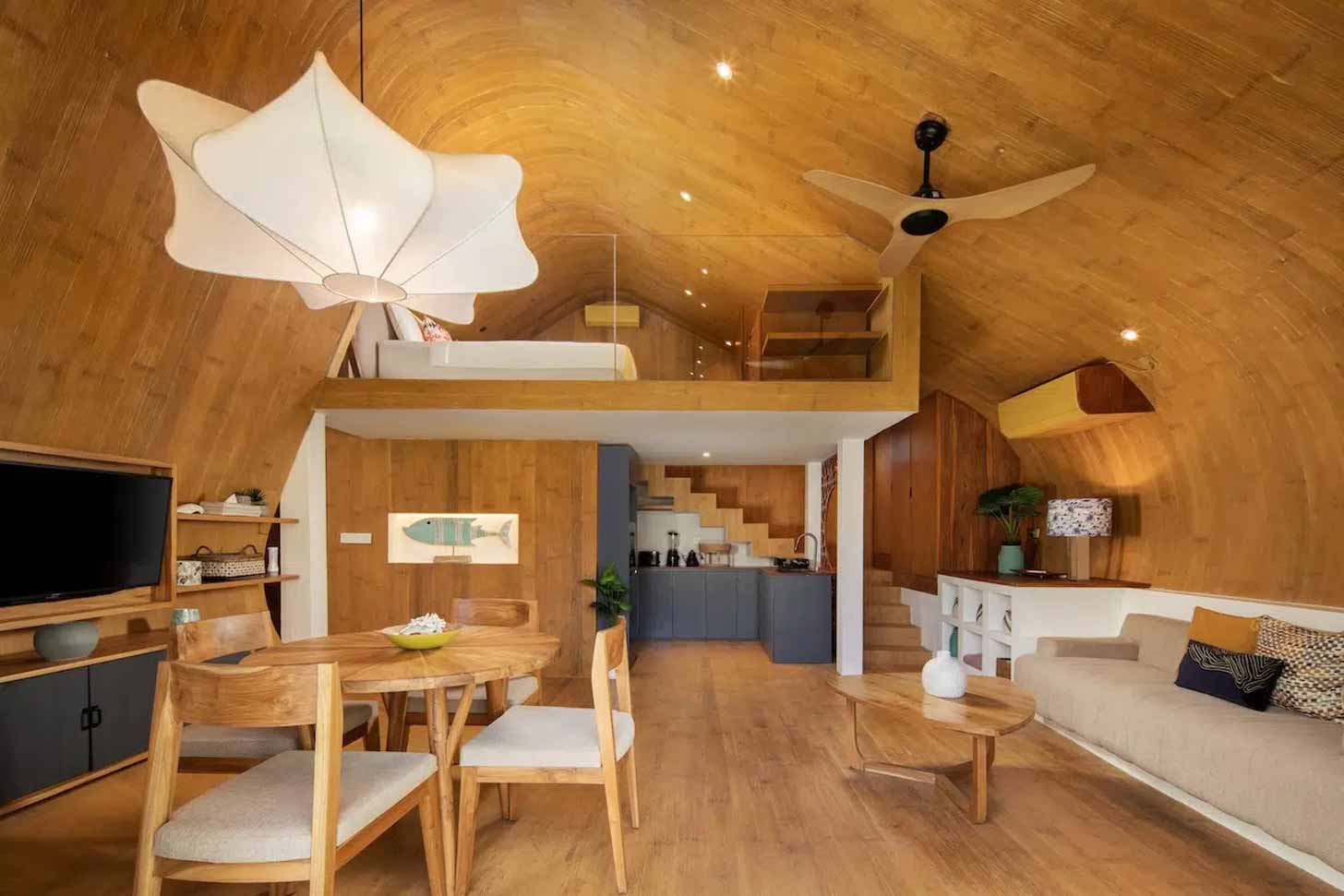
Inside the home, the Drop Pod has an open-design plan but with cozier nooks like a mezzanine sleeping area and concealed storage options. Expansive living and dining areas, however, let in plenty of natural light, and make the snug space feel roomy.
With potential use-cases for emergency shelter or social housing programs, the Drop Pod offers more than just beauty in a small package.
“The easy-to-adapt design provides a solution for problems caused by today’s urbanization and environmental problems,” Inspiral Architects concludes.

And as housing solutions and climate-resilient architecture continue to be top of mind across the globe, prototypes like these could lead to even more Drop Pods popping up worldwide.
“This Indonesian prototype might be sitting in a tropical paradise, but its lessons could work anywhere people need homes that adapt, survive, and inspire,” Yanko Design reviews.
“It shows us that prefab doesn’t have to mean boring, and modular doesn’t have to mean one-size-fits-none.”
You may also like: Decommissioned wind turbine redesigned as eco-friendly tiny home, scalable to build '2,000 houses a year'
Header image courtesy of Inspiral Architects
A former Denny’s diner has swapped its late-night pancakes and hashbrowns for building blocks and phonics.
In Los Angeles, a space that was formerly home to the diner chain is now a community center and preschool for families experiencing homelessness.
The Betty Bazar Community Center sits adjacent to a 100-family transitional housing facility, The Woodlands. It is a first-of-its-kind approach, offering on-site childcare to homeless parents, which allows them to look for work and access vital resources without worrying about finding safe or affordable care for their children.

Ken Craft, CEO of Hope The Mission, which operates the space, said that families at The Woodlands are often made up of single moms and their children, with roughly half of the community’s residents under the age of 18.
As residents of the space were struggling to both work and find childcare, Craft noticed the dilapidated Denny’s and had a eureka moment.

“In order to go to work, they need child care,” Craft told Spectrum News. “And not just babysitting, but real child care and child learning in their development.”
He reached out to the Childcare Resource Center and the Mary E. Bazar-Robin Foundation, which funded the project and now staffs the space.

“Studies have shown that kids that become homeless are four times more likely to have developmental problems as they go through school, and that’s because of the instability of their living situation and poor nutrition,” Craft told Fast Company.
Although traditional homeless shelters often have volunteers who can watch children, they typically do not also have the means to develop and manage a real preschool program.

Now, the Betty Bazar Community Center will help fill the gap.
Inside the 4,500-square-foot space — which recently underwent a $3 million renovation — is a soon-to-be state-licensed childcare facility and early learning center.
The interior includes meeting rooms and preschool classrooms, with spacious and naturally lit spaces as well as indoor and outdoor play areas.

Situated next to The Woodlands, the grounds act as a pedestrian space where children and families can play safely without fear of cars.
Kadre Architects, the firm that worked on the project, has an extensive relationship with Hope The Mission and has built a menagerie of colorful, creative housing solutions in the Los Angeles area.

According to Fast Company, founder and lead architect Nerin Kadribegovic envisioned an establishment that would serve as both a beautiful landmark in the neighborhood and a welcoming place for children.
“Alongside the transformation, we’ve introduced a new screen structure that wraps around the building, presenting a new face to the city and to the neighborhood asserting itself as a bold boulevard building,” a design statement from Kadre explains.

Additionally, the project is a net-zero facility, relying on a rooftop solar array for power.
But inside is where the real magic happens.
As Craft said, the children at the center are not just being babysat. Programming includes educational support, social integration, and elementary preparedness from CCRC staff.
At its full capacity, the space will serve an estimated 24 children at a time, aged 18 months to 5 years old.

“We’re excited to be on the tip of the spear and help make this happen,” Craft told Fast Company.
“What we’re trying to do is to build really a complete, cohesive center that really addresses all the needs of a mom, of a child, of a teenager.”
You may also like: 'Blighted' LA motel gets new life as colorful housing for mothers and children facing homelessness
Header image courtesy of Kadre Architects
For high school students in the Boulder Valley School District in Boulder, Colorado, shop class just got an upgrade.
As part of the Boulder MOD project, these students spend part of their school day across the street from the school district’s Technical Education Center in a newly-opened factory.
In 2024, the city of Boulder, the Boulder Valley School District, and Habitat for Humanity Flatirons unveiled a 31,375-square-foot solar-powered factory where students earn class credit while confronting the ever-growing affordable housing crisis.
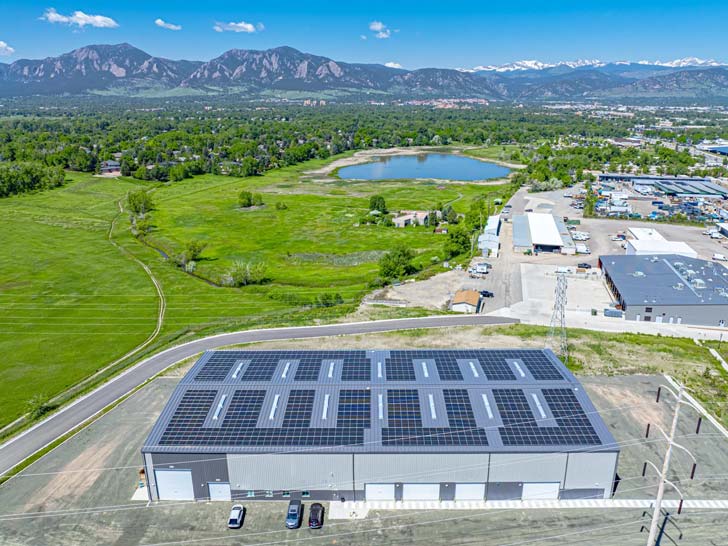
Together, they construct all-electric, solar-powered, modular townhomes that can house two families apiece.
“The factory produces high-performance, permanently affordable homes on a predictable schedule, creating a local supply chain for modular units that enables cost control, efficiency and reliability,” a statement from the city of Boulder shared.
“Homes produced at Boulder MOD will contribute to the city’s goal of ensuring that 15% of all homes in Boulder are permanently affordable by 2035.”

Plus, it teaches young professionals valuable skills with a real-world impact.
“I think it's absolutely amazing that we've come together and built this," Elan Castillo-Veltman, a senior at Centaurus High School and a second-year student at the Boulder MOD, told Denver7 News.
Castillo-Veltman has already been able to connect with a solar energy company, which will be his future employer, thanks to his work in the factory.
“Now I can literally leave the school and go right into a job,” he added.
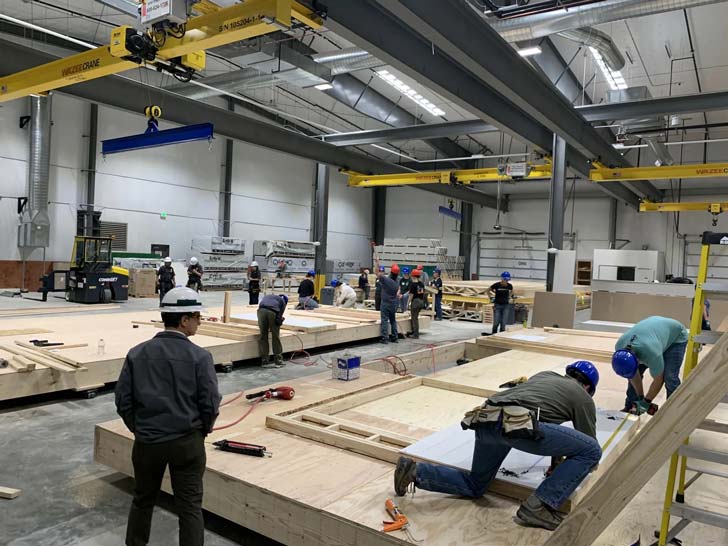
The factory, which opened last fall, has been in the works since 2022. Students began working at the center’s construction class in February of this year, and the goal is for operations to scale up so that students are producing a house every two weeks.
“Our mission is simple but bold,” Habitat for Humanity Flatirons shared on its website, “Build high-quality, affordable homes — while building the next generation of skilled tradespeople.”
One of the 25 students at Boulder MOD is Sophia McPhee, who told Boulder Daily Camera that she wasn’t initially interested in construction trades but took a chance on this program.
“I’m really enjoying it,” she said. “I’m learning important life skills. It’s more real-world work experience in the factory than working in our shop.”
This partnership has led to statewide recognition for Boulder MOD, which was honored with the Eagle Award by Housing Colorado this year. The award is given to outstanding programs that advance affordable housing across the state.
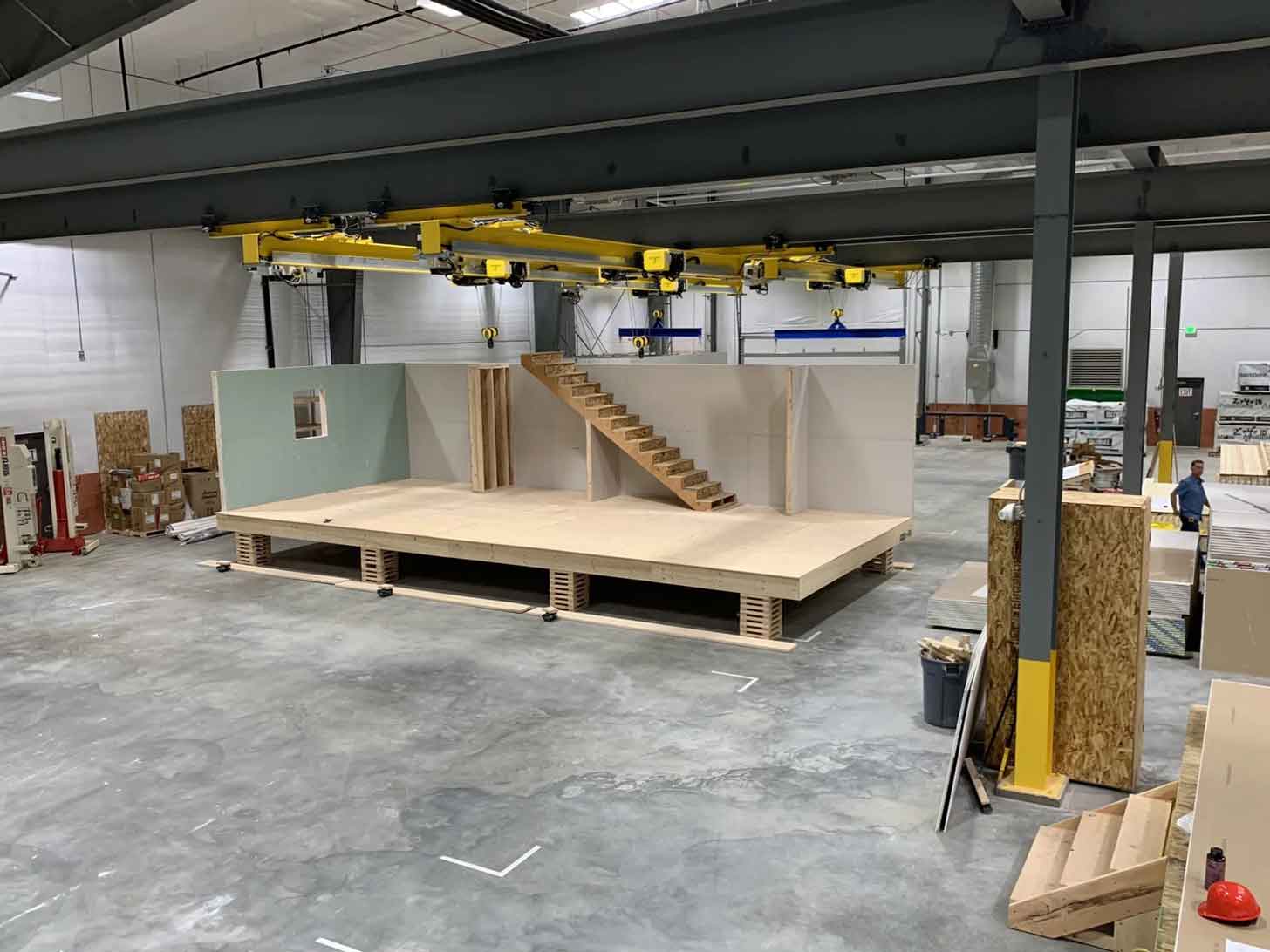
“This award recognizes more than a building method — it celebrates a bold collaboration that is transforming what affordable housing can look like,” Dan McColley, executive director of Habitat for Humanity Flatirons, said in a statement.
“Boulder MOD isn’t just building homes; it’s building futures, empowering students, and creating pathways to homeownership for local families.”
The first homes produced at the factory are scheduled to be set on their foundations soon, providing affordable housing to families who would otherwise not have the opportunity to become homeowners.
Boulder MOD is the first Habitat-run modular factory, but other Habitat chapters are building or considering building more, the Boulder Daily Camera reported.
With an award under their (tool) belts, and an emerging blueprint for success, those behind the program say: The more the merrier.
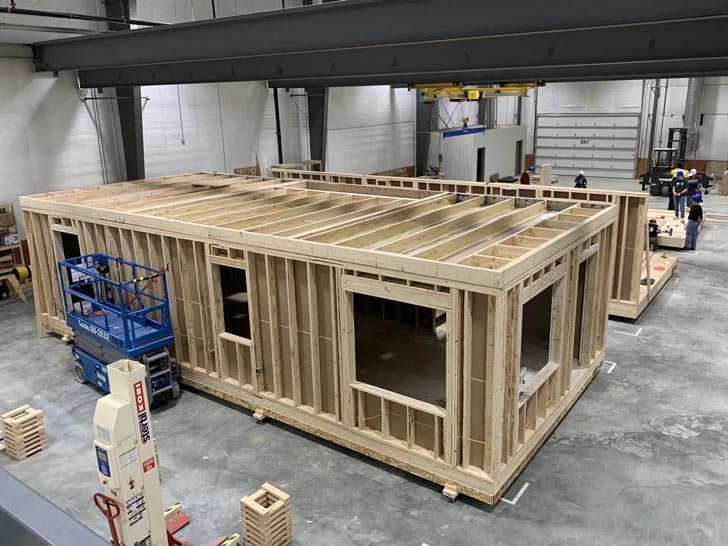
“The students are doing great,” Habitat factory manager Daniel Sisso told Boulder Daily Camera. “I wish I had twice as many.”
And for Boulder Valley School District Superintendent Dr. Rob Anderson, the pride is palpable.
“Boulder Mod is at the apex of what we want for our students,” he said in a statement.
“They are learning the construction trade, giving them a leg up in their career, while directly making a difference for members of our community.”
You may also like: High school students build tiny house village for homeless veterans states away: 'A great civics lesson'
Header image courtesy of the city of Boulder
On the afternoon of Wednesday, September 10, a 16-year-old male student opened fire at Evergreen High School in Evergreen, Colorado, a mountain town near Denver.
The individual shot two other students, as well as himself, and he later died from a self-inflicted gunshot wound. One student remains in critical condition, while another was discharged from the hospital overnight and will recover from injuries at home, according to Colorado Public Media.
But, of course, these were not the only students affected by the shooting.
Amid the chaos, a group of students fled the school, arriving on the doorstep of a nearby neighbor.
Don Cygan, who lives about 300 yards from Evergreen High School, said he was just finishing up lunch when he heard pounding at his door.
“All of a sudden there was this pounding on our front door. And I mean, I could tell by the pounding that something bad had happened,” Cygan said in an interview with 9News.
Upon opening the door, about seven young men began shouting, he recalled, “‘There’s a shooter up at the school. There’s a shooter up in the school. Let us in. Let us in, please.’”
Cygan, a retired teacher who taught public school for 25 years, welcomed them in.
A second group quickly followed, eventually totaling 18 kids and one adult.
“And I just told them to stay here, where they’re safe, you know, until we figured out what was going on,” he said.
Shortly after, he said, they heard sirens up the road.
In addition to Cygan’s history as a teacher, his wife is a retired nurse. Although he tried to talk to the students, they were struggling to get much information out.
“My wife has been a nurse of over 30 years,” he told 9News. “We’re both retired, living up here in Evergreen, so her skills came in handy. You know, she was able to calm these kids down, treat them for shock, we gave them some glasses of water. We comforted them.”
“I hope they feel like they ran to the right house,” Cygan added.
Eventually, one young man told Cygan he had heard gunshots. The student was in the cafeteria at the time and bolted out of the doors, running toward any house that was available.
Cygan and his wife encouraged the students to call home and let their parents know they were safe. According to 9News, some students were later picked up at the library, while others were picked up right from his house. He and his wife wrote down the names of the students, as well as the loved ones who picked them up.
Although they were organized, fear was still certainly palpable.
“We didn’t know if this shooter had followed them out, you know, and was going through the woods or down the street here and shooting,” Cygan said.
“But I think lots of my neighbors around here also did a wonderful job of giving shelter to any of these young men and young women.”
Cygan said the event was certainly a shock, especially considering the area of Colorado in which he lives.
“I just feel so sorry for them, and obviously I'm praying for those three families and for their three kids.” Cygan said. “We live up here in Evergreen. Evergreen’s supposed to be this beautiful, kind of secluded area and peaceful and calm. And, yeah, not today.”
Once all of the parents and loved ones had collected their students, Cygan said they were all extremely grateful for his help.
“Of course, I said,” he told 9News. “That’s what we do.”
You may also like: This nonprofit is turning guns into garden tools
Header image courtesy of Jefferson County Sheriff's Department
Most of us gravitate toward hot glue guns in the midst of an intense crafting session, but researchers at Sungkyunkwan University wondered: What if we brought this into the operating room?
Their hypothesis led them to a major discovery; The scientists have developed a modified glue gun that can 3D print bone grafts directly onto fractures during surgery.

Tested on rabbits, the device was able to quickly create complex bone implants using 3D printing technology, without prefabricating a metal or donor-bone graft in advance.
Placed directly on the area of impact, the 3D-printed grafts offer flexibility while also releasing anti-inflammatory antibiotics and promoting natural bone regrowth at the site, according to the research, published in the journal “Device.”
“Our proposed technology offers a distinct approach by developing an in situ printing system that enables a real-time fabrication and application of a scaffold directly at the surgical site,” Jung Seung Lee, co-author and associate professor of biomedical engineering at Sungkyunkwan University, said in a statement.
“This allows for highly accurate anatomical matching even in irregular or complex defects without the need for preoperative preparation such as imaging, modeling, and trimming processes.”
In other words, even in cases involving irregular bone breaks, the implants from the glue gun can easily fit into place without laborious pre-surgery design and production to ensure a proper fit.
The 3D-printed bone grafts are made from a filament comprised of hydroxyapatite — a feature of the natural bone known to promote healing — as well as polycaprolactone, a “biocompatible thermoplastic” that can liquify in temperatures as low as 60 degrees Celsius (or 140 degrees Fahrenheit).
When applied with the heat-modified gun, this temperature is cool enough to prevent tissue damage during surgery while still being able to conform to the needs of the most complex fractures.
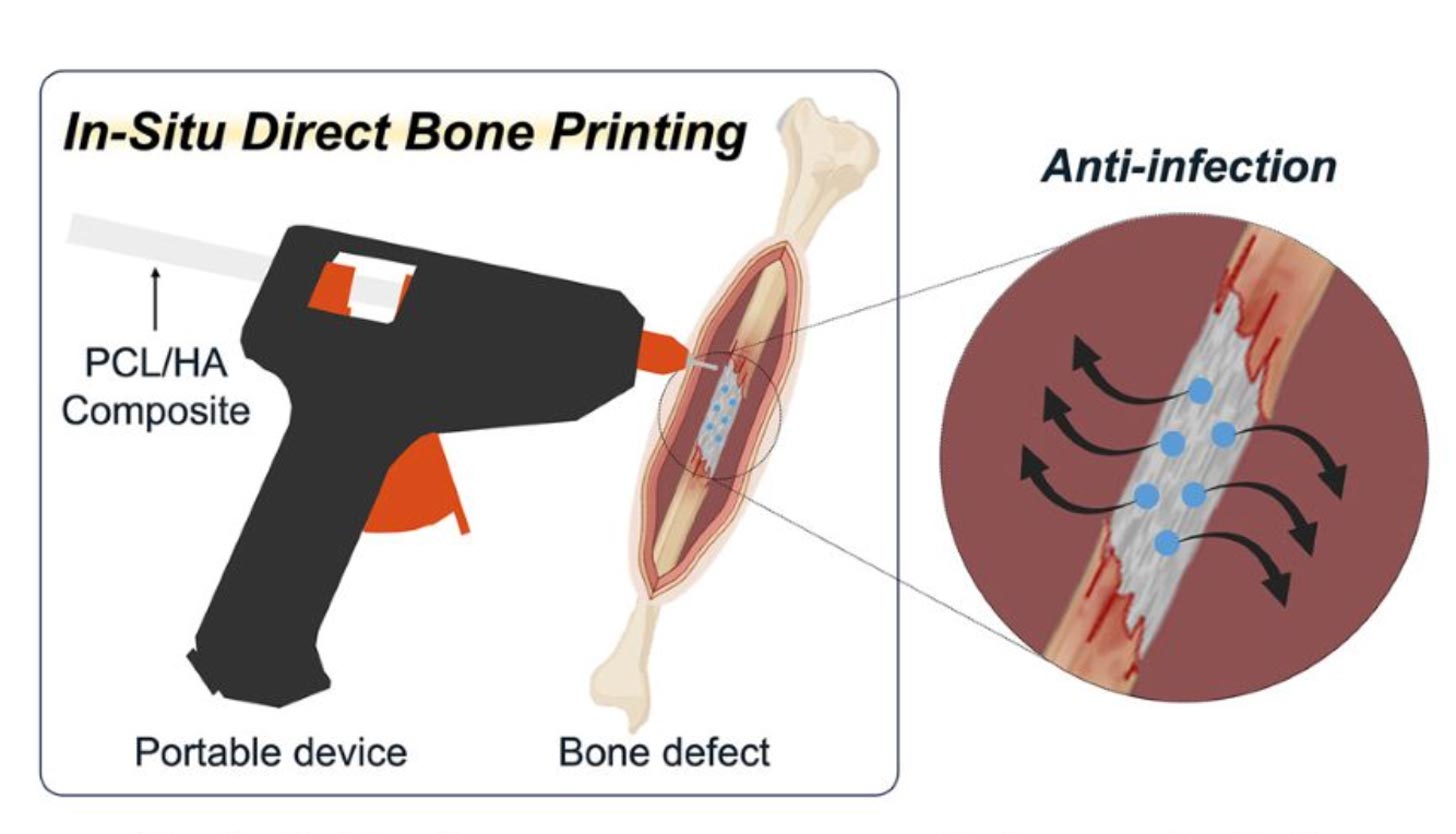
The researchers found the sweet spot. And it speeds up healing and surgical processes, as well.
“Because the device is compact and manually operated, the surgeon can adjust the printing direction, angle, and depth during the procedure in real time,” Lee explained.
“Also, we demonstrated that this process could be completed in a matter of minutes. This highlights a significant advantage in terms of reducing operative time and improving procedural efficiency under real surgical conditions.”
Additionally, using different ratios of the filaments, scientists can customize the hardness and strength of the grafts, meeting different anatomical needs.
Another concern in these kinds of procedures is infection. Therefore, the scientists thought to include two anti-bacterial compounds in the filament: vancomycin and gentamicin.
In their studies, they found that this successfully prevented the growth of E. coli and S. aureus, with the drugs released slowly, allowing them to diffuse into the surgical site over several weeks. That’s right, there were no staph infections reported.
“This localized delivery approach offers meaningful clinical advantages over systemic antibiotic administration by potentially reducing side effects and limiting the development of antibiotic resistance, while still effectively protecting against postoperative infection,” Lee said.
The device was tested on rabbits with severe femoral bone fractures. Over the course of 12 weeks following surgery, the researchers saw no signs of infection and greater bone regeneration than traditional methods.
Of course, for this technology to be adopted clinically for humans, it will require further testing, human trials, and a standardized manufacturing process.
“If these steps are successfully achieved,” Lee said, “we [en]vision this approach becoming a practical and immediate solution for bone repair directly in the operating room.”
You may also like: This student's life-changing injury made him realize how 'outdated' traditional casts are. So he 3D-printed a better one
Header image courtesy of Tima Miroshnichenko/Pexels
Every day the Good Good Good team collects the best good news in the world and shares it with our community. Here are the highlights for this week!
If you want to get good news in your inbox every day, join the Goodnewsletter — the free daily newsletter designed to leave you feeling hopeful.
The Best Positive News We’re Celebrating This Week —
Ireland expanded its free public transit program for children 8 years old and under
Transport For Ireland, or TFI, services have been offered to kids five years old and younger — and now, Ireland is expanding that free offering to cover ages five through eight, too.
The new Child Leap Card will make 263,000 children between the ages of five and eight eligible for free travel services in the country, which include buses and rail lines.
The initiative is part of a larger government commitment to making public transit more affordable and accessible for families.
Why is this good news? We all need to visit the doctor, get groceries, and more, and people deserve equitable access to public transit to do that. For families, the cost of using public transportation can add up, putting financial strain on people looking to navigate their communities. With this initiative, Ireland removes that barrier for thousands of families.
→ Read more
This LEGO contest tasked contestants with building their dream houses. The proceeds will go to real homes for low-income families
After a landlord in Wisconsin passed away, he donated all of his rental properties to homeless people in need of housing
On July 31, the Wisconsin-based housing nonprofit Pillars received its largest property donation ever. It came in the name of Richard “Dick” Reetz, a landlord of over 50 years who died in June at the age of 97.
He donated his entire rental estate, including 20 units across 10 properties, which increased the organization’s property portfolio by 26%.
Pillars is an organization that works to relieve bottlenecks in the housing crisis by keeping people out of shelters and in stable housing. Right now, the organization manages a number of affordable housing properties near Appleton — where Reetz was a lifelong resident — and operates two crisis housing centers that serve approximately 140 people at any given time. Now, it will serve even more.
→ Read more
Boston is transforming abandoned office space into affordable homes for 1,000+ residents
In 2023, Boston launched a city-first Office-to-Residential Conversion Program. The initiative offers a tax deduction of up to 75% for up to 29 years for downtown office buildings that convert to residential use.
Fast forward about two years, and the first residents to benefit from the program are now moving into their new homes.
The city has received 15 applications to create 762 housing units across 20 buildings and convert over 600,000 square feet of office space. Once they’re complete, the projects will bring an estimated 1,500 new people living downtown by the end of 2026. With project proposals due in December, it could be even more.
Why is this good news? People deserve housing that’s affordable in their community. Instead of office spaces sitting vacant or underutilized, the program helps convert them into something that serves the city’s residents — especially those who can’t afford skyrocketing rent prices.
Can smartphones actually enable teens to get outside? How tech is empowering youth to ‘touch grass’
Solar power has overtaken gas to become Hungary’s second-largest energy source
Just a decade ago in Hungary, solar power generated a mere 0.2% of the country’s electricity — it was essentially non-existent.
In 2024, after years of skyrocketing growth, it officially overtook gas to become the country’s second-largest source of electricity, behind nuclear.
Over the same time period, coal fell to just 6% of the country’s energy generation, which helped lead to the country’s carbon emissions dropping by 45% since 1990.
Eliminating income requirements, New Mexico will officially become the first U.S. state to guarantee free, universal child care
New Mexico’s governor just announced that the state is eliminating income eligibility requirements of its current child care assistance program — making it available to everyone.
The current program waives copayments for families with incomes at or below 400% of the federal poverty line, allowing them to pay little-to-no costs. Starting in November, that will apply to all families, regardless of income, making it the first universal free child care program in the United States.
The state estimates it will save families an average of $12,000 per child.
Even better: The state is already anticipating the rise in demand that will follow, and is investing millions of dollars to construct, expand, and renovate child care facilities to meet it. It’s also increasing reimbursement rates for facilities, and committing to pay entry-level staff a minimum of $18 per hour.
→ Read more
This former Denny’s was transformed into a vibrant childcare center for LA’s homeless families
→ Read more
Scientists throughout history have saved billions of lives with their inventions
After first learning about the COVID-19 outbreak in January 2020, researcher and career vaccine developer Sarah Gilbert started working on a vaccine. By the end of the year, it was approved and went on to save an estimated 6.3 million lives in just the next year.
While it can be difficult to estimate the exact number of lives that were not lost to a disease or health condition, there is no doubt that these inventions — and the team of scientists and helpers behind them — have saved so many, and prevented unquestionable suffering, overwhelmed health systems, and more.
Beyond vaccines, even inventions like synthetic fertilizer have helped prevent billions of people from dying from hunger, helping food production keep up with the population.
New South Wales is creating one of its largest national parks to protect thousands of koalas and ban logging
In the state of New South Wales, Australia, the current government confirmed its creation of a great koala national park, adding 176,000 hectares of forest to existing reserves and creating one of the state’s largest national parks.
Not only will the park protect more than 12,000 koalas, it will also put an immediate moratorium on logging within its boundaries.
The decision comes after months of pressure from local environment advocates who had been frustrated with ongoing logging and long-time government promises to establish the national park.
Why is this good news? The protected area includes old-growth forests that are critical biodiversity hotspots for the entire world. They’re home to 100 threatened species, including koalas and greater gliders. When critical ecosystems thrive thanks to protection and conservation, it helps the planet, wildlife, and humans, too.
→ Read more
This futuristic, flood-resistant tiny home can be ‘dropped’ anywhere housing is needed
→ Read more
With some of the safest roads in the world, the UK’s death rate per mile driven has declined 22-fold since 1950
In the 1920s and ‘30s in the United Kingdom, between 5,000 and 7,000 people died in road accidents each year. Today, that’s dropped to around 1,700 people dying in road incidents every year — about a quarter of what it used to be, despite there being 16 times more vehicles on the roads and 33 times as many miles driven.
That’s a 22-fold decrease in the death rate per mile driven. If the death per mile driven were as high as in 1950, the country would see 37,000 road deaths per year instead of 1,700.
Speed limits, the introduction of highways, well-designed roundabouts, cracking down on drunk driving, and other policies had the biggest impact in helping the country reach this point.
→ Read more
For the first time, scientists traced heat waves back to individual fossil fuel companies
In new research that pushes the boundaries of extreme weather event research in multiple ways, scientists have quantified causal links between worsening heat waves and pollution from individual fossil fuel and cement companies.
Looking at 213 heat waves from around the world between 2000 to 2023, it found that they became more frequent, likely, and severe, in large part due to burning fossil fuels. Between the first and second decades, climate change made heatwaves jump from being 20 times more likely to 200 times.
The researchers said as many as a quarter of the extreme heat events would have been “virtually impossible” without the pollution from any of the 14 largest fossil fuel and cement producers, including ExxonMobil and Chevron.
Why is this good news? While individual studies have explored links between climate change and extreme weather events, this latest study connects them in a new, important way. The conclusions could help those looking to make oil and gas companies pay for climate change-related damages, which has historically been difficult to prove.
AI technologies are changing the way we address wildfires: ‘You can replace a drone. You can’t replace a person’
→ Read more
A Michigan man is walking nearly 1,500 miles to Miami to raise funds and awareness about mental health
On a nearly 1,500-mile journey from West Michigan to South Florida, Lee Johns is carrying a 60-pound pack with essential supplies and a simple message: “Nobody should have to face their mental health battles alone.”
Johns himself has faced mental health struggles, as have several of his family members, and was frustrated that “it just never really gets addressed.” So he wanted to do something.
In addition to sparking conversations and raising awareness for mental health along the way — both in-person and on social media — Johns is raising money for the National Alliance on Mental Illness, which provides education, support, advocacy, and resources for individuals, families, and communities.
→ Read more
More good news of the week —
Despite a lack of federal support, scientists in the U.S. are continuing to develop critical global climate reports. The 46 scientists are joining an international effort through the IPCC, which announced a total of 664 authors for the current climate assessment cycle. Notably, for the first time, there are more authors, 51%, from developing and emerging-economy countries than from developed countries.
A writer created a first-of-its-kind cookbook printed in disappearing ink to highlight the impacts of dementia. The authors hope it can “reshape public perceptions of the condition,” and book launch events will aim to “engage communities, policymakers and care providers in conversations around dementia care and the importance of preserving lived experience.”
Thanks to a conservation push, Mexico’s jaguar population has increased by 30% in the last 14 years. In 2024, there were 5,326 jaguars in Mexico, a 30% increase compared with 2010, and conservationists hope that in 15 years species will no longer be at risk of extinction.
Members of the music community are rallying to support a Utah violinist arrested by ICE. Musicians have been staging ongoing performances in protest at the Utah State Capitol and sharing their anger and concern on social media regarding ICE’s arrest of Donggin Shin, who goes by John, and a GoFundMe has raised over $70,000 to help cover the musician’s legal fees.
Chemists introduced a new plastic upcycling process that could make mixed-plastics recycling a reality. The process harnesses a new, inexpensive nickel-based catalyst that selectively breaks down polyolefin plastics consisting of polyethylenes and polypropylenes—the single-use kind that dominates nearly two-thirds of global plastic consumption.
James Patterson is giving up to $50,000 to new, emerging authors to help them finish their books. After years of giving millions of dollars to literacy programs, bookstore employees, and librarians, Patterson announced the first 12 recipients of grants from his “Go Finish Your Book” campaign.
A German biotech startup just launched the world’s first vegan pregnancy test, developed entirely without animal-derived antibodies. The “Hey Mela” test is over 99% reliable, which matches the accuracy of conventional pregnancy tests while eliminating animal involvement entirely, reaching people looking for a cruelty-free, sustainable alternative.
Argentina’s last captive elephant was relocated to an elephant sanctuary in Brazil. Kenya’s release was made possible by a 2016 Argentine law that mandated the closure of the nation’s zoos, their transformation into ecoparks, and the relocation of exotic animals to sanctuaries or rescue centers.
A nonprofit in Texas is paying young people to receive civic engagement training. A youth advocacy group created the new Leaders of Tomorrow program for young people between the ages of 16 and 24 who are paid $2,500 stipends to support their advocacy efforts. Their goal is to “elevate youth voices, specifically around policy work.”
A soldier plans to give away more than $50,000 donated for his cancer treatment to other patients in need. After Sgt. 1st Class David Hong’s insurance provider changed its position and paid for his cancer treatment, Hong decided to give away all the money donors gave him to help other veterans and soldiers with cancer.
Scientists can now use a glue gun-style tool to repair broken bones. The new tool can create customized bone grafts in a matter of minutes, which could help reduce operative times and improve the efficiency of procedures.
A DC literacy center partnered with a nonprofit to help people who struggle to read navigate the health care system. Doctor’s reports or prescription instructions can already be difficult to understand, and for those who struggle to read — it’s even more challenging, which can further complicate health outcomes.
Melinda Gates announced a $100 million investment in accelerating women’s health research. The investment will focus on areas of women’s health with the highest rates of mortality, including autoimmune disease, mental health, and cardiovascular health, looking at underresearched areas like chronic disease and menopause.
Brazil has seen a 65% drop in the area of the Amazon rainforest burned by fire, thanks to more careful communities and heavy rain. It’s the lowest recorded amount of area burns, and the data also shows that across Brazil, both in the Amazon basin and beyond it, 54% fewer acres of landscape have been burned by fires.
In a landmark case, a judge in Hong Kong ruled in favor of lesbian couples seeking parental recognition. The couple’s son was born through reciprocal in vitro fertilization, and the ruling is a step forward for the LGBTQ movement in a city that does not endorse same-sex marriages but is working toward a framework to recognize same-sex partnerships.
As part of a long-term restoration project, 1,600 new seedlings were planted to boost a monarch butterfly pollinator habitat. As the monarch “super generation” is already beginning to migrate south to Mexico, many will make their way through Michigan’s Peninsula Point, which is the state’s most well-known migratory monarch waystation, with clusters of the butterflies roosting on cedar trees.
At a new “Habitat for Humanity factory,” high school students are building tiny homes for their neighbors in need. The Boulder MOD program also teaches young professionals valuable skills with a real-world impact, and at least one student has already been able to connect with a solar energy company, which will be his future employer, thanks to his work in the factory.
Scientists created solar cells that generate electricity from indoor light with record efficiency. The breakthrough helps capture artificial light more effectively, and could reduce reliance on disposable batteries and open the door to powering everyday devices in homes and offices.
An Iowa company puts discarded wind turbine blades in concrete blocks — they’ve already been used in construction. It’s another solution that could help alleviate the issue of recycling retired wind turbine blades, which one study estimated would be more than 2 million tons by 2050 in the U.S. alone.
Illinois became the first Midwest state to require public university health centers to offer medication abortion and contraception. California, Massachusetts, and New York already have the same requirement in place, which will remove barriers for students to access essential reproductive healthcare.
This story was originally published by Grist. Sign up for Grist’s weekly newsletter here.
Some of the littlest organisms in the ocean wield incredible influence, both on their ecosystems and on the planet.
Like plants do on land, phytoplankton absorb sunlight and carbon dioxide and expel oxygen. They process so much of those two gases, in fact, that they’re responsible for half of the carbon sequestered by photosynthesis worldwide and half of the oxygen in the atmosphere.
Phytoplankton also sit at the base of the food web as essential cuisine for their animal counterparts, the zooplankton, which in turn feed many other creatures, from fishes to crustaceans.
As humanity lags far behind where it should be in reducing its greenhouse gas emissions, researchers are turning to phytoplankton for help. They’re exploring how to fertilize the oceans like farmers fertilize crops, helping more of these microscopic organisms grow and eventually sink into the depths, taking carbon with them.
But scientists are still exploring the many unknowns swirling around this sort of ocean fertilization, like where best to apply nutrients and in what forms, amounts, and proportions. And then they have to consider what unintended side effects might ripple through ecosystems.
“You can generate a lot of biomass with relatively small amounts of micronutrient introductions, predominantly iron, and therefore the cost effectiveness is potentially pretty promising as well,” said Eric Schwaab, senior fellow at Ocean Visions, which is exploring research directions for phytoplankton fertilization. “But obviously the big ‘but’ is the huge questions.”
To answer such questions, last month scientists published a study in the journal One Earth, in which they modeled the interaction between phytoplankton and nutrients in the Southern Ocean, which encircles Antarctica.
Researchers have long known that adding iron to the sea leads to blooms of phytoplankton (back in the 1980s, one scientist declared: “Give me a half tanker of iron, and I will give you an ice age”), and they’ve done so on a small scale. But this modeling included other elements the organisms crave, like cobalt, zinc, and silicon.
That’s a critical consideration, the researchers say, because different species of phytoplankton use nutrients in different proportions. While all species need iron, a group known as diatoms rapidly consume zinc and silicon, the latter of which they use to build shells. But another group, the flagellates, more rapidly consume cobalt.
So if researchers want to experiment with fertilizing the Southern Ocean, they might use this modeling to target diatoms, because they’re bigger than flagellates and can store more carbon. They also sink faster, due to their shells.
“You can guide the development of one of the species more than the other by selecting the elements that they need, so that they will preferentially proliferate compared to the other ones,” said Willy Baeyens, an environmental scientist at the Free University of Brussels and lead author of the paper.
This is where the ecological considerations come in, as ecologists will have to study the implications of tinkering with nature.
“Could we stimulate the wrong kinds of diatoms, like toxic Pseudo-nitzschia, that then produce a lot of domoic acid, and that’s damaging to the ecosystem?” asked Katherine Barbeau, an ocean biogeochemist at the Scripps Institution of Oceanography, who studies the interaction of metals and plankton but wasn’t involved in the research.
(Domoic acid is a potent neurotoxin that sickens marine mammals like sea lions, and can reach humans through tainted seafood.)
“Certainly, people have raised these types of concerns.”
And because these organisms are food for zooplankton, researchers must ensure a change in the population of a certain phytoplankton doesn’t cause further problems up the food web. Indeed, these zooplankton are essential for storing CO2: They gobble up the phytoplankton and excrete the carbon as fecal pellets, which sink to the seafloor.
Phytoplankton fertilization could also change ocean chemistry. When the tiny organisms die, bacteria feast on them and soak up oxygen from the water. When phytoplankton blooms get especially big they create “dead zones,” where fishes and other organisms perish en masse.
“Of course, you would have to fertilize on a really large scale to cause those kinds of perturbations,” Barbeau said. “But I guess if you’re trying to also fertilize on a scale large enough to make a dent in atmospheric CO2, that’s what you’re aiming to do.”
Exactly how much carbon dioxide the technique can capture remains an open question. Scientists need to confirm, for instance, the amount of carbon that ends up in diatoms and gets packaged in zooplankton fecal pellets, how much of that sinks, and how long it stays on the seafloor. Models can predict these things, but researchers must do longer-term experiments in the ocean to confirm.
“We believe in the potential of this as a technology to help stabilize the climate, but are very interested in addressing concerns about if it works, how it works, and what kinds of consequences there might be,” said Sarah Smith, an oceanographer and assistant professor at Moss Landing Marine Laboratories, who’s on the steering committee for the research group Exploring Ocean Iron Solutions.
“We’re really interested in ensuring that the cure isn’t worse than the disease.”
Scientists have been able to observe what happens when the planet itself fertilizes the oceans. In 2019 and 2020, wildfires in Australia spewed iron-rich smoke that fell onto the Southern Ocean, creating massive phytoplankton blooms. And in 2019, Hawaiʻi’s Kīlauea released a five-mile-high plume of ash that created perhaps the largest bloom recorded in the North Pacific Ocean.
Humans, too, have been unknowingly running a vast phytoplankton-fertilizing experiment. When industries in East Asia smelt metals or burn coal, they release iron in air pollution, which rains down into the North Pacific Ocean: A recent study found that 39% of iron in seawater sampled there came from human activity, supercharging phytoplankton growth.
These natural and accidental experiments, though, were free. The Southern Ocean is far from just about everything, and deploying phytoplankton-fertilizing ships will come at a cost.
Yet this body of water is an enticing target exactly because of its isolation: In other oceans bordered by plenty of land, like the Atlantic, rivers and winds gather metals from the landscape and dump them into the sea, providing nutrients for phytoplankton. With so little land around the Southern Ocean — Antarctica is locked in ice — there’s more potential to supplement the nutrients and encourage more growth.
“You cannot go with a small rowing boat in the middle of the Southern Ocean,” Baeyens said. “That’s now the very big challenge, where to find sponsors that are interested in doing some pilot experiments.”
The experts exploring all of this are quick to note that humans can’t fertilize their way out of the climate crisis. Yes, the U.N.’s Intergovernmental Panel on Climate Change has said that countries will have to deploy these sorts of negative-emissions techniques, but they must first and foremost stop burning fossil fuels.
“None of these things are useful at all if we don’t first get control over our climate pollution,” Schwaab said. “Never would any responsible person see this as a substitute for decarbonizing our economy to appropriate levels.”
Header Image by the Universal History Archive / Universal Images Group via Getty Images
At Pondville Correctional Center in Norfolk, Massachusetts, some incarcerated individuals are adding a beekeeper’s veil to their standard-issue uniforms.
It’s part of a new pilot program, in which a select number of individuals participate in a hands-on curriculum that teaches them the science of beekeeping.
Volunteer Susan Goldwitz, a 75-year-old retired English teacher, made a donation to the state’s Department of Corrections to make the program possible. Now, she’s taking what was once a personal hobby and turning it into a life-changing opportunity for community members who are incarcerated.
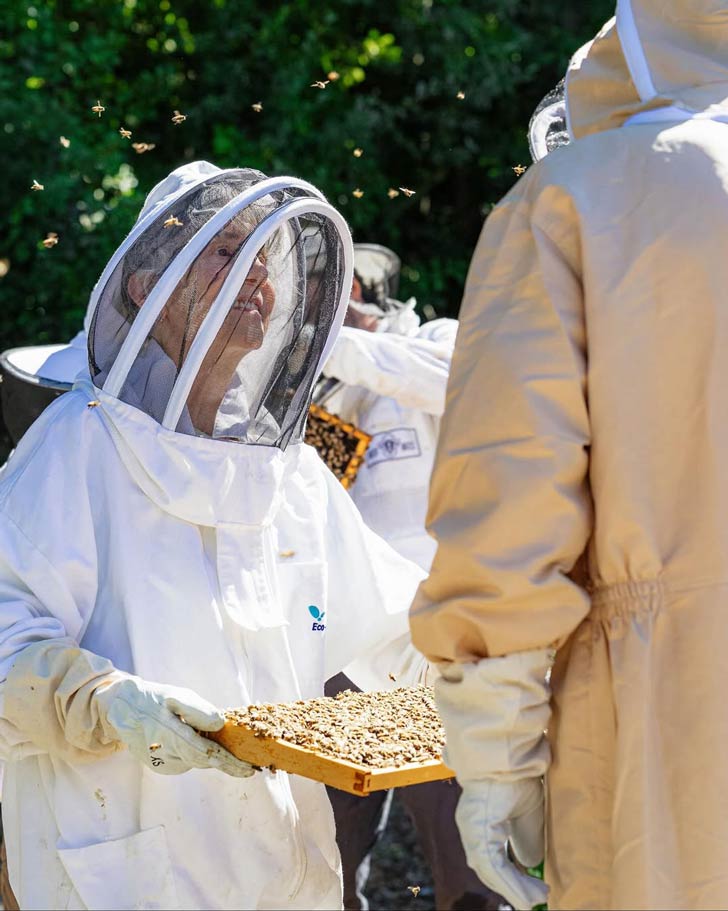
“What makes a good beekeeper is someone who can plan and have impulse control, who can focus, be mindful, calm and curious. They need to be involved in nature, be interested in themself and others, and have empathy,” Goldwitz told Mass Live.
“These were qualities that I realized that people I was teaching at the correctional facilities would benefit from — it’s exactly what I want my students who are incarcerated to be learning about.”
Earlier this year, the program’s partner company, Best Bees, delivered two hives containing 40,000 bees to the facility. Since then, Goldwitz and other correctional staff have monitored the hives and surveyed interest from the incarcerated individuals.
“They’ve been asking tens and tens — hundreds — of questions about how they can get into the program,” Joseph Salvucci, director of treatment and classification at the facility, told MassLive.
“It’s generating a lot of interest, and that’s the main goal: to generate interest and curiosity and, hopefully, turn this into a skill that they can utilize when they get out.”
Those wanting to join the program only have to meet a few prerequisites: They must pass a screening for bee allergies, and should be within 18 months of their release or parole. The goal is to have them all onboarded to the program by February 2026.
The ultimate vision is to allow about a dozen individuals to take part in the program each year, learning in both a classroom setting and in the outdoor environment.
In the program, individuals will receive training in caring for beehives, collecting honey, and learning about the environment. They’ll also learn about insects and ecosystems, gaining both useful skills and scientific knowledge that can help them access opportunities once they’ve completed their sentences.
It’s not the only program like this offered to the inmates; Pondville Correctional Center also has other pre-release programs for incarcerated individuals, like assistance-dog training, English-language workshops, training for automotive work, and more.
“This particular program is unique because it gets folks outside and engaging with nature, giving them an opportunity to develop skills that help when they re-enter back into the communities,” Department of Corrections Commissioner Shawn Jenkins said.
“As a leader in recidivism reduction, the DOC continually evaluates new programs and the possible ways we can grow. We know beekeeping programs have been successful in other correctional agencies across the country,” Jenkins added.
In addition to helping with re-entry, the beehives are also an interconnected part of the facility’s fruit and vegetable garden, which is also tended to by volunteers and incarcerated individuals.
The bees help pollinate the plants, allowing even more produce to be grown and harvested. Since August of this year, more than 400 pounds of produce have been donated to a local food bank in the area.
Hives are also thriving and producing honey early into the program, with experts from Best Bees harvesting and providing it to the facility for use in its culinary programming.
“Having a hive at the Pondville facility allows us to share the inspiration of honeybees with people who might not otherwise have that opportunity,” Paige Mulhern, director of brand at Best Bees, said in a statement.
“This hive has become a unique point of connection — linking our beekeepers, the incarcerated individuals, and the bees in a shared experience of resilience and interconnectedness.”
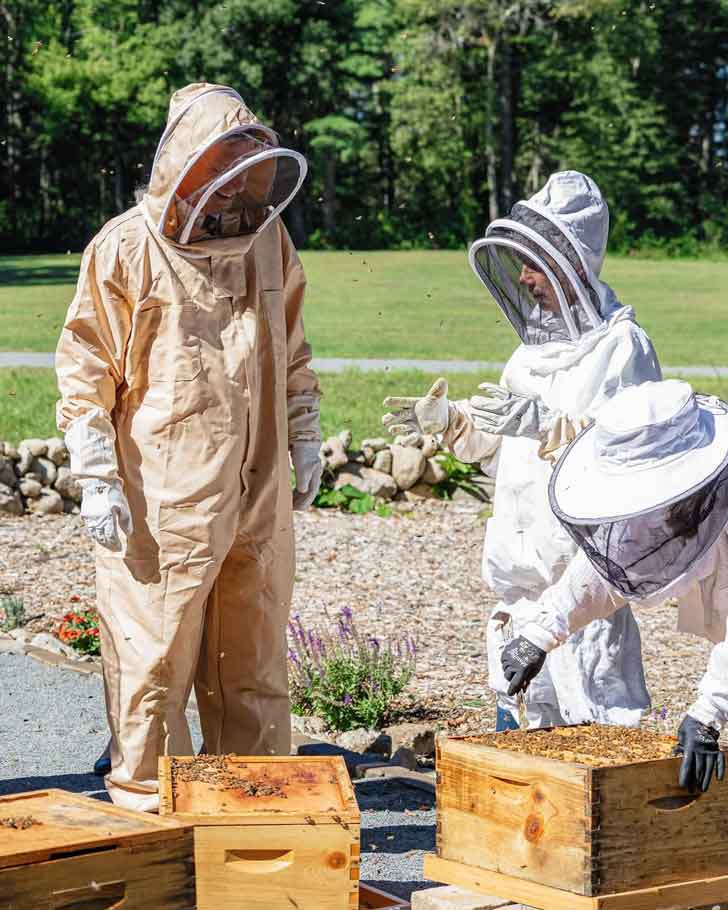
For Goldwitz, that’s the real lesson: Nature as a vehicle for healing.
“It is not just learning entomology, it is not just learning about insects and science. Bees are a catalyst and a metaphor for the way people can work together and individually toward the benefit of the whole community,” Goldwitz said.
“This program is a step toward healing and incorporating nature into the process.”
You may also like: The world's largest women's prison is now home to an independent newspaper — written by and for inmates
Header image courtesy of Massachusetts Department of Corrections
Reforestation is gaining global momentum as a climate solution, but scientists warn that planting trees indiscriminately isn’t effective. Its success depends on how and, crucially, where it’s done.
A new study in Nature Communications, co-authored by scientists from The Nature Conservancy (TNC) and other institutions, seeks to advance global reforestation efforts by mapping the locations where tree planting and forest regrowth are most likely to deliver climate, biodiversity, and community benefits.
The authors compiled their findings into a web-based tool called the Reforestation Hub.
“Reforestation is a readily-available, scalable, cost-effective carbon removal solution, but we have neither time nor resources to restore trees everywhere,” said study co-author Susan Cook-Patton, lead reforestation scientist at TNC.
“Our goal with this research was to help accelerate action by highlighting the places where reforestation holds the greatest promise for people, nature, and climate,” she added in an email interview that Mongabay conducted with the TNC team.

Their research builds on previous maps of tree cover restoration potential, refining them by excluding areas where planting trees could do more harm than good, such as non-forested and fire-prone grasslands and savannas.
Kurt Fesenmyer, the study lead author and TNC’s forest spatial data scientist, said earlier maps have been critiqued for three main reasons: how they defined “forest”; the data quality; and the lack of safeguards to ensure positive outcomes for people and the environment.
“In developing our new map, we sought to address those critiques while building off the strengths of previous maps,” he said.
They concluded that 195 million hectares (482 million acres) of land worldwide — an area the size of Mexico — is available for tree restoration, a figure 71-92% smaller than previous estimates.
Still, it holds the potential to remove more than 2.2 billion metric tons of carbon dioxide equivalent (CO2e) per year, or roughly 5% of total global fossil fuel and land-use change emissions in 2022, if the “right” areas are prioritized.
Mapping the right places
To create their new map, Fesenmyer and his team reviewed 89 reforestation maps of varying scales published since 2011.
Deploying high-resolution 2020 land cover data, they included only areas naturally suited for closed-canopy forests. To avoid negative trade-offs, they excluded croplands, fire-prone grasslands, snow-covered terrain, and areas with high ecological or social risks.
“There is opportunity for reforestation in all countries with forest ecosystems, including in tropical, temperate, and boreal forest biomes,” Fesenmyer said, noting the importance of the tropics due to the capacity of trees there to absorb carbon dioxide at the highest rates.
Of the 195 million hectares identified as reforestation hotspots, 83% lie close to existing forests, where natural regeneration and biodiversity can be enhanced, Fesenmyer added.
However, only 90 million hectares (222 million acres) meet all social safeguard criteria, such as political stability, secure land tenure, and minimal dependence on the land for food or fuel.
Such areas include large swaths of land in Brazil, Colombia, the U.S., Canada, and Western Europe, according to Fesenmyer.
The new tool, Reforestation Hub, allows decision-makers to explore hotspots worldwide, down to the country or province level, and see how much carbon can be captured annually by tree planting or natural regrowth in these areas. The tool also presents various scenarios based on different restoration goals.

A debate over forest definitions and restoration goals
The paper’s findings differ sharply from a 2019 study led by Jean-François Bastin, at the time a postdoctoral researcher at the Crowther Lab at ETH Zürich. That earlier study estimated 900 million hectares (2.22 billion acres) of global tree restoration opportunity — an area larger than Brazil — with the potential to store 205 billion metric tons of CO2e in total.
According to Bastin’s paper, reaching this maximum restoration potential could reduce a considerable portion of the excess carbon in the atmosphere to date, estimated at approximately 300 billion metric tons by the U.N.’s Intergovernmental Panel on Climate Change (IPCC).
However, studies like Bastin’s have faced criticism for using broad definitions of forest that include grassy ecosystems, where planting trees may actually harm biodiversity and compromise ecosystem services, especially water availability.
“We addressed [such] definition critiques by focusing on ecosystems that support closed-canopy forests,” Fesenmyer said. “We do not identify reforestation opportunities in savannas and other ecosystems with naturally sparse tree cover, or in places with frequent wildfire.”
Bastin, currently a professor of ecology and remote sensing at Gembloux Agro-Bio Tech at the University of Liège, Belgium, praised Fesenmyer’s study as a “very valuable contribution.” But he added he still supports a broader view of restoration potential.
“I believe it’s important to look beyond a forest/non-forest dichotomy and to embrace a more inclusive understanding of ecosystems,” Bastin told Mongabay in an email. “That was our intention in 2019, by focusing on trees and not on forest [restoration potential], and it remains our direction.”

According to Bastin, their team mapped all land that could support any tree cover, based on climate and soil parameters, across a range of ecosystems, including grasslands. He said restrictive forest definitions risk excluding drylands and other important ecosystems from restoration agendas — such as Africa’s Great Green Wall, where tree planting is promoted to combat desertification and poverty.
“In some regions, shifting climate and socio-economic conditions may mean past ecosystems are no longer viable, making afforestation a potential practical option,” Bastin said. Climate mitigation shouldn’t be the only goal of nature restoration, he added.
Bastin’s latest research, recently also published in Nature Communications, estimates that 43% of the planet’s land could naturally support trees, 39% shrubs and grasses, and 18% bare ground. The study also models how vegetation might shift under varying fire and grazing pressures.
Rather than pinpointing reforestation or afforestation hotspots, Bastin said his latest maps are meant to inform land-use planning by offering insights into the ecological dynamics of each region.
“Ultimately, the best approach varies by landscape, and should reflect the needs and goals of local stakeholders,” he said.
Similarly, Susan Cook-Patton with TNC said their maps don’t dictate where reforestation should occur, but rather where it “can maximize benefits and minimize trade-offs.” She added that “it’s critically important that reforestation is done well.”
From maps to reality
While mapping tools provide valuable guidance, on-the-ground projects offer critical insights into effective tree-planting methods.
A notable example is the Sardinilla experiment in Panama, the oldest in the International Network of Tree Diversity Experiments (TreeDivNet), which explores carbon sequestration, biodiversity, and ecosystem functioning in planted forests.
Established in 2001 on former pastureland, with the consent of landowners, the experiment’s design includes plots planted with one, two, three, or five native tree species. The most diverse plots combine fast-, intermediate-, and slow-growing species, mimicking the structure of natural forests.
Florian Schnabel, forest scientist and lecturer at the University of Freiburg, Germany, led one of the most recent studies in Sardinilla, concluding that the planted forests with five tree species captured and stored significantly more aboveground carbon than monocultures. The findings were published earlier this year in the journal Global Change Biology.

“The species-rich forests captured 57% more carbon in aboveground tree biomass than monospecific forests,” Schnabel said via email, noting that these more biodiverse plantings yielded an average annual net uptake of 5.7 metric tons of CO2e per hectare.
“Mixed-species planted forests can be an effective climate mitigation strategy,” Schnabel said.
Location likely played a role in these results. Sardinilla is situated within a tropical ecoregion in eastern Panama and lies close to remaining natural forests, providing highly favorable conditions for tree growth and carbon sequestration.
For example, on the Reforestation Hub map, the area is classified as having high climate mitigation potential.

Beyond boosting carbon capture, Schnabel’s study indicates that planting a diversity of native tree species enhances biodiversity and ecological stability, fostering greater resilience to disturbances.
Some of the co-authors have also explored how to design reforestation strategies that deliver environmental and livelihood benefits to Indigenous peoples and local communities, particularly the Ipetí Emberá, an Indigenous community living on collectively owned land near Sardinilla.
The Sardinilla experiment offers a key reforestation lesson: how a forest is planted matters as much as where. Still, the research team cautions that tree planting alone won’t solve climate change.
“It would need one-year tree growth on 11 ha [27 acres] of the Sardinilla planted forest to compensate for the emissions of a single one-way flight between Frankfurt and Panama City,” Schnabel said. “Planting trees does … not release us from the urgent need to reduce our carbon emissions.”

Along the same lines, Fesenmyer said planting new forests is no replacement for protecting existing ones.
“Reforestation can be an important restoration strategy,” he said, “but the biggest climate benefits come from protecting the carbon [stored] within existing forests, including both young and old.”
This article was originally published on Mongabay.
Header Image by Matthias Kunz
What if something as mundane and universal as a bus shelter could add major green space to an urban environment?
First popularized in the Netherlands and now popping up across Europe, green bus stops have finally made their way to North America.
Last August, Boston, Massachusetts installed its first 30 green bus shelters along Route 28, a corridor with some of the highest bus ridership in the city that also lands in neighborhoods disproportionately affected by extreme heat.

It’s a simple concept: Use the roof of a no-frills bus station to offset the heat-island effect in urban areas devoid of trees, provide direct shade at bus shelters, help reduce flooding, improve biodiversity of native pollinators, and see something a little more beautiful on the daily commute.
Boston made history as the first city in the United States to adopt the green roof last year, sometimes called “living roofs,” and have already made waves in other locations.
This year, according to the Washington Post, green shelters are planned in two Maryland towns, with proposals to install green roofs in Arlington, Virginia and New York.
While it seems like a small gesture to the bees of any given city, the initiative is no small feat.
In fact, if Boston installed living roofs on all 8,000 of its bus stops, the city estimates it would amount to 17 acres of green space, or about 13 football fields.

“These green roofs on bus shelters are not just a representation of Boston’s progress on sustainability,” Mayor Michelle Wu said in a statement last year.
“They are a practical, scalable solution to some of the most pressing challenges we face as a city.”
Boston’s installation was a team effort, as the city partnered with Social Impact Collective, a Boston-based, minority-owned architecture and design firm, to imagine the rooftop gardens.
Weston Nurseries, a local plant nursery, provided the plants, and YouthBuild Boston provided some elbow grease. The nonprofit supports underserved young people as they enter the construction and design industry.
“The number of public and private partners involved in this project demonstrates the all-of-government approach this administration has taken to enhancing sustainability, livability, and justice,” Oliver Sellers-Garcia, Boston’s Green New Deal director, said.
“We’re committed to putting all our resources towards work that improves daily life and directly involves residents, youth, and local entrepreneurs. Boston’s climate investments are quality of life and economic development investments, too.”

Boston’s living roofs are composed of panels of structural roof decking, under layers of drainage. On top is a thin layer of soil where plants like Sedum and native pollinator plants will grow, species that are both drought-tolerant and able to adapt to Boston’s winters.
While it’s too early to tell exactly what benefits Boston will see from the living roofs, Utrecht, a city in the Netherlands, could provide some key insights.
Across the Netherlands, green bus shelters were installed to address a declining bee population. (They were even nicknamed “bee lines.”) With steady sources of food for the pollinators, it seems the population has begun to steady, according to a “national bee census” published earlier this year.

Studies in Montreal, Canada have also used thermal-imaging cameras to prove that a bus shelter with a green roof is significantly cooler than one without, leading to similar installations in Quebec.
As Boston’s 30-location pilot project will continue to be maintained and monitored for its impact on heat, air quality, stormwater management, and biodiversity, city stakeholders are hopeful.
A precedent study for a living shelter in Boston showed a reduction in surface temperatures by as much as 30 degrees Fahrenheit, as a starting point.
Zoe Davis, the senior climate resilience project manager on the Climate Ready Boston team, gave a TEDxTalk about the project, adding that each living roof can absorb up to 1,500 gallons of rainwater in a 1-inch rainfall, which significantly reduces runoff to prevent flooding.
“What if solutions to climate change didn’t have to be massive to make a difference? In the face of rising temperatures and greater extreme heat risk, what if the key to a cooler, more livable future can be found in the places we pass by every day?” Davis asked in her TEDxTalk.
“It’s small steps like growing living roofs on bus shelters that can compound and ripple into big impacts for our cities, our communities, and the environment.”
You may also like: Mayor of Boston commutes with residents to learn how to improve public transit
Header image courtesy of Wallbarn
Most shoppers know Vera Bradley for the brand’s colorful quilted duffle bags and accessories, but there is something more deeply woven into the fabric of the company: Breast cancer research.
Vera Bradley co-founders Barbara Bradley Baekgaard and Patricia Miller established the Vera Bradley Foundation for Breast Cancer in 1998, a few years after their dear friend and sales representative Mary Sloan lost her life to the disease.
From that day forward, they vowed to fund breast cancer research through a portion of the company’s profits, as well as major annual events and fundraisers.
Over nearly 30 years, the foundation has contributed $43 million to the cause.

A major factor of this philanthropic success is the nonprofit’s annual Breast Cancer Classic, in which donors and supporters play golf or pickleball and raise funds for the Vera Bradley Foundation Center for Breast Cancer Research at the Indiana University School of Medicine.
Held every year in Fort Wayne, Indiana, in the company’s hometown, the Classic brings in swaths of supporters and volunteers. This past weekend, it raised over $1 million in contributions.

“Gratitude and appreciation are the first two words that come to mind,” Stephanie Scheele, the foundation’s executive director, told The Journal Gazette.
“We’re so grateful for all of our amazing sponsors and friends at the foundation that have been so generous and willing to give again to breast cancer research.”
The organization’s initial pledge was to donate $50 million to the cause, but Scheele said their work won’t end once that milestone is reached.
“We won’t stop — even when we get to 50 — until we find a cure,” Scheele said.

In 2018, the foundation established the Vera Bradley Foundation Center for Breast Cancer Research at the IU School of Medicine, and in 2022, made an additional $12.5 million commitment to the school’s research efforts. Their investments have already begun to pay off.
“Support from the Vera Bradley Foundation has aided the IU School of Medicine in amassing talent, technology, and resources to become a national leader in targeted breast cancer therapies, specifically for triple negative breast cancer,” a press release shared.
Since 2004, more than 1,300 discoveries have been published in peer-reviewed journals by IU breast cancer researchers.
These discoveries include work in genetics, immunotherapies, vaccines, testing, targeted therapies, and new technologies that aim to improve the outcomes of breast cancer diagnoses, and, of course, eradicate the disease altogether.

“The Foundation has become a globally recognized not-for-profit organization, funding some of the most gifted and accomplished breast cancer researchers in the world,” Scheele said in a statement last year.
“We have not wavered from our mission to passionately pursue a cure, and our partnership with the IU Cancer Center has resulted in amazing discoveries and improved outcomes for those affected by this disease.”
In addition to golf and pickleball games, the annual Classic also celebrates the strides made in cancer research, sharing updates from the IU research team — all with a side of cocktails, silent auctions, and friendly competition.

“Through this hope-filled weekend guests are investing in a team of the best, the brightest, and the most passionate researchers in the world,” the foundation shared on its website.
On the heels of the success of the 2025 Classic, foundation organizers are gearing up for their next annual fundraiser: Turn the Town Pink, in which donors are encouraged to buy pink ribbons to hang around their neighborhoods and public spaces during National Breast Cancer Awareness Month in October.

“One in 8 women get breast cancer, and that affects them throughout the year — not just in the month of October,” Scheele told The Journal Gazette.
“It takes a village to do this, and we invite everyone to be a part of that village.”
You may also like: These teen siblings raised $620K for cancer research in just 7 weeks, while one was battling leukemia himself
Header image courtesy of the Vera Bradley Foundation for Breast Cancer
After years of conflict, Baghdad, Iraq is slowly but surely working toward stability across its entire infrastructure.
And now, the city has planned the largest ecological development in the country: Baghdad Sustainable Forests.

The space was once home to the Al-Rasheed military campsite, which was later neglected and held over 45 million metric tons of waste. It will now become a miles-long urban forest.
Encompassing a 10-million-square-meter site (about 3.8 square miles), the sustainable forest project will also include civic towers and residential and commercial spaces, all enveloped by parks and green corridors. Developer Emkanat and architecture firm Gensler say the forest will include one million mature-growth trees.

“Baghdad Sustainable Forests reimagines over 10 million square meters of neglected land as a new ecological and urban district, with forests, parks, and green corridors forming the backbone of the design,” Gensler’s global director of cities Ian Mulcahey told Dezeen.
“The vision is to restore the land, create thriving mixed-use villages, and position Baghdad as both a catalyst for local regeneration and a global model for urban resilience.”
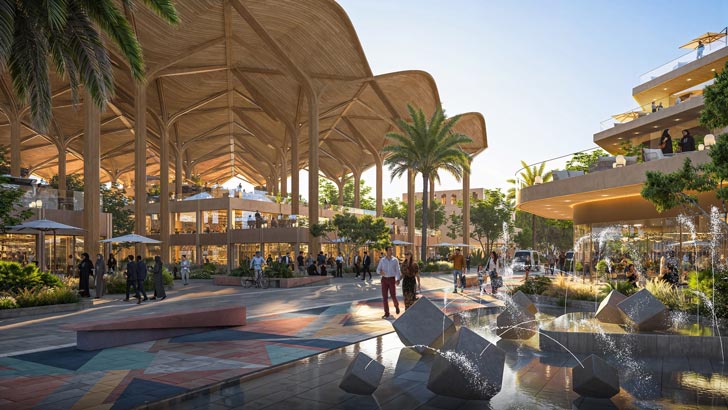
A series of “thematic forests” will give shape to the site, Gensler explained, with each offering “tailored spaces for creativity, well-being, play, and community.”
According to Dezeen, these themed forests include the Arts and Culture Forest, Health and Wellness Forest, Kids and Entertainment Forest, and the Sports and Fitness Forest. There will be 28 in total.

There will also be over 1.5 million square meters of retail, commercial, education, and living spaces, ideal for walkable mixed-use development. As a whole, the development is expected to generate 80,000 jobs.
The idea is to create a sustainable place for the country’s urban core to live, work, learn, and play in harmony.

“The project will become a beacon for the rebirth of one of the most ancient cities in the world,” Gensler senior associate Glenn Wilson added.
In addition to the large number of trees providing shade and carbon sequestration from the development, the plan is also to include trails that accommodate walking, cycling, and e-scooters to make it easy to navigate between villages.
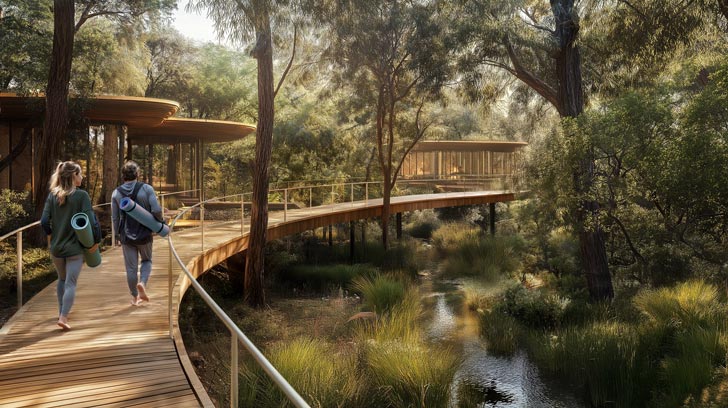
Gensler estimates that the one million on-site trees will capture 22,000 metric tons of carbon dioxide annually.
“Forests and green corridors make up the majority of the site,” Mulcahey said. “Some areas will remain wild to foster biodiversity, while others will provide trails, plazas, and gardens for daily community use.”

The area will also stretch out to the river Tigris, with a 260-meter-tall skyscraper marking the area, named the Al Rasheed Gateway tower.
A National Pavillion will also be placed in the development, a 110-meter building that developers call “a civic symbol of renewal.”

Baghdad Sustainable Forests falls at the center of a city on the precipice of the future, rebuilding at a time rich with environmental opportunity.
“Rooted in the land’s history and ecological potential, the development positions the city for its next chapter — attracting investment, fostering inclusive growth, rebuilding community ties, and celebrating Baghdad’s rich heritage as a center of creativity and exchange,” Gensler summarized.

It is not yet clear when this project is expected to be completed, or how much it will cost, but eye-catching, tree-filled renderings from the architecture firm depict a sustainable and ambitious city core.
Mulcahey summed it up best: “Transforming this neglected land into a living forest district turns a symbol of environmental damage into one of renewal.”

You may also like: Boston is the first US city to plant green roofs on bus stops: 'Would amount to 17 acres of green space'
Header image courtesy of Gensler