Last spring, Lancaster, California, a city on the edge of the Mojave Desert, opened a vibrant — almost Barbie-style — housing campus for residents experiencing homelessness.
The new community, named The Sierras, was designed by architecture firm Kadre Architects, and it wasn’t always so pink.

Purchased by homeless nonprofit Hope the Mission, the site was once occupied by the Sands Motel and the Tropic Motel, which designers say were “crime-ridden” and “completely dilapidated.”
Now, the 14,733-square-foot complex is home to 38 units with 152 beds, filled to capacity with families experiencing homelessness.
The campus includes housing, support services, a commercial kitchen that serves three meals a day to residents, exercise amenities, laundry facilities, a dog park, playground, basketball court, amphitheater, and essentials like air conditioning and heating, microwaves, and fully-furnished bathrooms.

Most shelters cater to individuals, but The Sierras are dedicated specifically to families.
“The four-acre parcel in the desert is now a place of safety, dignity, and revitalization,” the Kadre team wrote on their website.
“As a new housing prototype, The Sierra explores rapid conversion of existing hotel stock into transitional housing in a rural setting.”
The design of the campus is especially attractive, with vibrant pinks, greens, and blues utilized throughout. Play areas and patios are placed strategically throughout the micro-neighborhood, providing community gathering spaces and extending living quarters, which are only about 250 to 300 square feet each.

“They’re cramped rooms, and so one thing we thought was how do we expand the living space,” Kadre founder and architect Nerin Kadribegovic told Fast Company. “The biggest transformation is these solar porches in front of the building that create private, semi-private outdoor areas that essentially act as an extension of your room.”
Colorful pathways help maintain a sense of cohesion in the neon-hued housing units, as well.
“These meandering pathways are there to tie the place together,” Kadribegovic added. “Paint goes so far. We try to use these bright colors because you get a lot of bang for the buck visually.”
The bright colors are not just to maintain a sense of joy for families but also work to reflect solar heat gain, making desert living conditions cooler and more comfortable for residents.

Solar panels were also part of the original design but had to be deferred to replace collapsed septic tanks instead.
Still, designers and housing teams alike agree that the project has been a success.
“When your budgets are tight and you’re really driven to make an impact, it forces you to be more creative,” Kadribegovic said.
“This is one of the biggest things, being able to secure their own property, their own space, no one just barges in,” Hope the Mission area director Billy Nettles told Antelope Valley Press. “They don’t have to pay for anything.”

After opening to residents in March of 2024, The Sierras were at full capacity within two weeks, signifying the need for family-oriented transitional housing, allowing people to get on their feet and find a more permanent place to live.
“The opening of The Sierra’s shelter is a beacon of progress for Lancaster,” the city’s Mayor, R. Rex Parris, said in 2024.
“It’s more than a building; it’s a promise of home and hope.”
Hope the Mission is now looking to acquire more hotel and motel properties to expand its interim housing.
Header image courtesy of Kadre Architects
As the founder of U.K. nonprofit The Esther Project, Lianne Kirkman’s work to provide refuge, recovery, and rehabilitation to women experiencing homelessness has been at the forefront of her career for over a decade.
But this year, in an effort to truly learn more about the lived experiences of the people her organization serves, Kirkman set off on a 10-stop tour across the country, meeting with other shelters and nonprofits — and sleeping on the street for 10 nights in a row.

She started at her home base of Royal Leamington Spa on February 1 of this year and then traveled to Coventry, Birmingham, Bristol, Plymouth, Southampton, London, Doncaster, Hull, and Blackpool.
She finally arrived back home earlier this week.
“I am so grateful for the fact that I can go home,” she said in a video posted on Facebook. “It’s been awful every morning thinking I can’t go home and I can’t get in a bed. This has been one experience I will never, ever forget.”

Along her stops, Kirkman met with other nonprofits working to specifically support women facing abuse, addiction, and homelessness.
“I want to see what's working for them in the areas of counseling, employability, homelessness, and women in and out of the criminal justice system,” she told The BBC. “There are some great projects out there.”
Some of her hosts included Blackpool & Flyde Street Angels, Lancashire Women, Together Women Project, and Trevi Women.

“These amazing women’s centers we are visiting are clearly showing us what works and how to get it right,” Kirkman wrote on Facebook. “For the last 10 years of running a mixed-gender charity, I know, even more so now, that we need to do so much more for women.”
Women experiencing homelessness face unique hurdles that often go overlooked. According to The Esther Project, 65% of Londoners in temporary accommodation are women.
But many do not feel safe with those accommodations and those who cannot access them also avoid the dangers of street-sleeping, as well, leaving them without any place to go.
“I’m visiting some mixed-gender centers to see how many women are coming, and it’s the same story: Women don’t come,” Kirkman said in a video on her ninth night in the cold.

“They don’t come because it’s not always safe for them to come. If you’ve left domestic abuse, you’re not going to come to a male-dominated space.”
Kirkman’s journey was meant to truly understand these realities.
Some nights, she didn’t know where she’d reside.
“Women tend not to bed down because it’s not safe. They walk around all night,” Kirkman said in another video.
“When the council do their homeless count … in order to be included in the count, you have to be seen bedded down. You have to actually be seen. Because women don’t bed down, that’s why people think they’re not there. But they are there. And that’s what we’re trying to show.”

To “bed down” simply means to lie down somewhere to sleep.
On another night, Kirkman did stay inside a shelter when a Severe Weather Emergency Protocol was enacted in Winchester, which helped her think about what women might need to feel safe indoors.
“It’s not about homelessness. It’s all about trauma,” Kirkman said. “It’s about how we’re responding through a gender lens, through a trauma lens, for women. And we’ve not been getting it right.”
In addition to raising awareness, the 10-night sleepout has raised over £14,000 (or about $17,400 USD) for The Esther Project. It will go towards opening a new “one stop shop women’s center” in Warwickshire.
Kirkman said she originally thought she’d raise £5,000, but the support on her journey was greater than expected.
“We are really amazed by the support we’re getting,” she said in her final video update. “This was mainly a research project for me. This was about working out best practices for women, and I’ve been amazed by some of the fantastic organizations I’ve been to.”
“You’ve taught me a lot,” Kirkman continued. “I know what we need to do.”
Header images courtesy of Lianne Kirkman/The Esther Project
San Francisco’s sprawling Golden Gate Park is about 3.5 miles long and claims the title of the third-most-visited park in the United States.
It’s also a bit of a microcosm for the city’s homelessness crisis.

In 2024, an estimated 8,323 people were experiencing homelessness in San Francisco, up more than 7% from 2022. While only a tiny fraction of that population set up encampments in Golden Gate Park, its rangers field complaints related to homelessness every day, according to reporting by Susan Freinkel for San Francisco Standard.
One such case was Kaine, a man who has called the park’s Hellman Hollow home since the late 1990s, per San Francisco Standard.
After years of receiving citations, having his campsite cleared, and his possessions taken away, he still kept coming back.
This is how rangers historically dealt with unhoused people sheltering in encampments: making them leave and issuing citations.
Most unhoused people followed Kaine’s footsteps: Packing up their belongings and setting up camp in a different area in the park.
Members of the Homeless Outreach Team, the city’s program that helps unhoused folks access shelter beds, repeatedly asked Kaine if he wanted to find shelter somewhere else. Repeatedly, he said no.

But then he met Amanda Barrows, a park ranger who works on a special detail to help unhoused people. Barrows connected with Kaine and learned that the park was a special refuge for him that had carried him through a rough childhood and into his 60s.
“I was like, clearly this is not working. He rebuilds, he comes back. What we’re doing is harming this person who’s obviously just stuck,” Barrows told San Francisco Standard. “So let’s try something else.”
In 2015, the city’s Parks and Recreation Department decided to onboard a specific homeless outreach detail.
“This approach aims to balance enforcement with compassionate outreach,” department spokesperson Tamara Aparton told San Francisco Standard.
Barrows and one other outreach ranger do what the department calls “arduous and achingly bureaucratic tasks” to help set people up for success across the city’s 220 parks.
This can be anything from helping them acquire a new ID and bus ticket home, to getting them a shelter bed, permanent housing, or much-needed medical care.
Even still, it’s hard work. Barrows eventually got Kaine to move to a room at the Civic Center Hotel Navigation Center until he was assigned permanent housing. He disappeared before morning, and Barrows found him “barely conscious and near frozen” the next morning back at the park.
“This can still be your home, but just in a different way,” Barrows would tell him. “It can be like a choice, something you come and go from, versus something you’re stuck in.”
Finally, he was convinced to make a change.
Barrows said she is sympathetic to the complaints she fields from parkgoers but also doesn’t believe in “treating homelessness as a criminal activity.”
The ranger detail is similar to a pilot program in San Francisco’s Castro neighborhood that began a few years ago in which caseworkers and employees worked intensively with 34 people facing chronic homelessness. Within five months, all had accepted the services offered by the city.
With just two rangers focused on this work, it can be especially challenging for Barrows, and her colleague ranger Robert Ramey, to do as much good as they’d like.
According to the San Francisco Chronicle, the number of encampments in Golden Gate Park has “decreased 10-fold since 2017,” though it’s not clear exactly how much the rangers are responsible for this improvement.
Barrows said that since 2021, she estimates that she has helped 50 to 60 people accept services to help them leave the park. In 2024, she said that her work with Ramey helped eight park residents find housing.
Ultimately, outreach work like this is a long-term strategy that, ideally, centers the humanity and nuance of homelessness — not the policing of it.
“It’s important to understand that people experiencing homelessness are individuals with unique and complex circumstances,” Kevin Ruby, a homelessness outreach specialist in Tacoma, Washington, told The News Tribune.
“Declining offers of help, while it might seem counterintuitive, often has underlying reasons rooted in personal experiences and challenges.”
Whether abuse, addiction, violence, or grief, any form of significant trauma can make it exceedingly difficult for a person to feel safe in a shelter environment. Mental health challenges can also make it difficult for people to navigate the major transition required to live in a shelter or transitional living environment.
“It’s crucial to remember that an individual declining services is not a sign of their unwillingness to change,” Ruby added. “It’s often a complex response to difficult circumstances and past experiences.”
The same is true for folks living in San Francisco’s parks.
“You have to actually dig in and build relationships with these people and understand their needs,” Barrows said.
Barrows’s dedication to her city’s parks is not only evident in her work with unhoused communities, but also in a project she debuted in 2023. She created a “poetry nightstand” for parkgoers to take and leave poems after she enrolled in a free poetry class at City College of San Francisco during the pandemic.
“I’m in the parks all the time, and I see the many different ways people utilize them,” Barrows told The Washington Post in 2023.
Hundreds of hand-written poems were exchanged as she moved the nightstand to various sites in San Francisco.
The project became another way for Barrows to engage with her city — and looking back on the brief project in relation to the work she has done to help her homeless neighbors — is a kind of poetry itself.
As her class instructor, Tanea Lunsford Lynx, told The Washington Post: “It’s an invitation to slow down and participate and connect in a way that we don’t often have the opportunity to do.”
Header image courtesy of San Francisco Department of Emergency Management
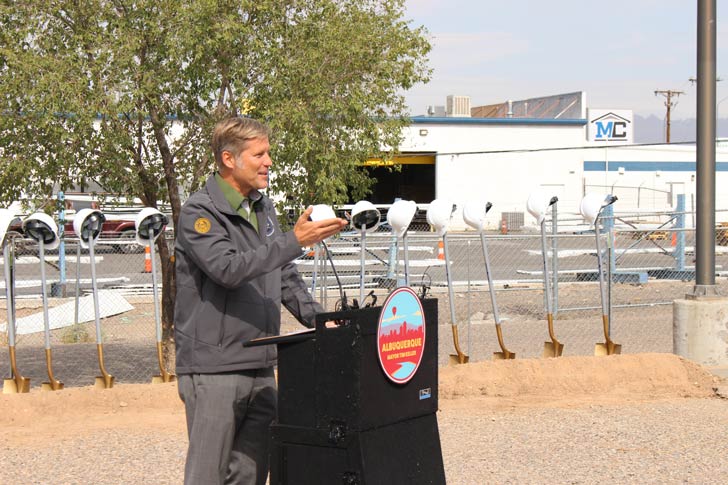
The city of Albuquerque, New Mexico recently broke ground on a new tiny home neighborhood, or “micro-community,” in Bernalillo County.
Named Recovery Gateway, the 46-mini-home community is designed to provide shelter to those facing homelessness and experiencing substance use disorder.

“We know that we need more housing options in our city, especially for those in recovery, and the micro-community will better support folks on their journey to stable housing,” said Mayor Tim Keller at the groundbreaking ceremony last October.
“Recovery Gateway will bring much-needed low-barrier beds and treatment services to Albuquerque.”
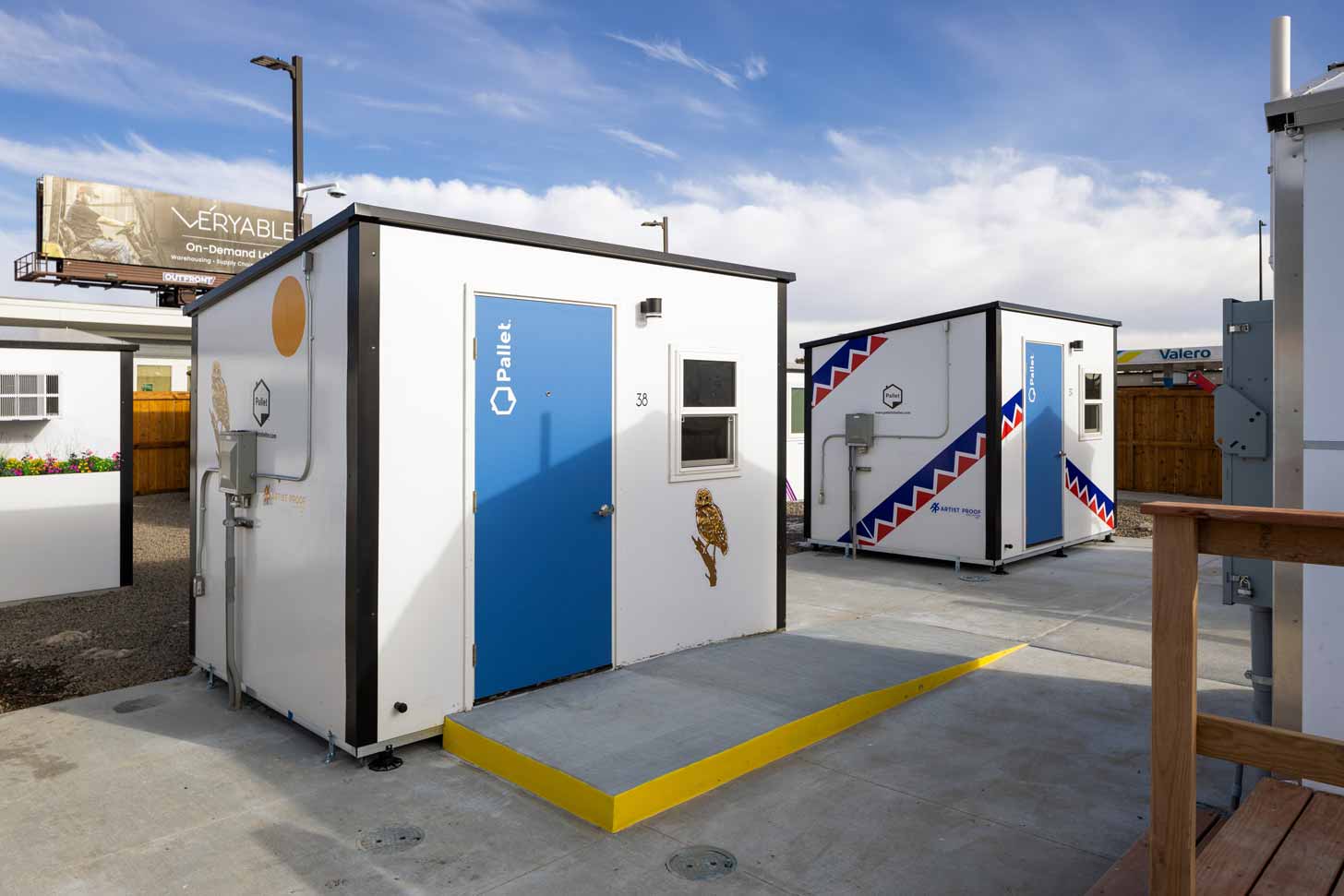
The micro-community consists of 42 single-occupancy homes and four double-occupancy homes for couples, for a total of 46 available units for 50 people. Residents will be welcome to stay up to 24 months, or until they are connected to longer-term recovery housing.
Sobriety in homeless shelters and transitional housing is a hot topic, as it is often a barrier to entry in much-need facilities.
While some “low barrier” shelters exist — meaning they do not require background or credit checks, income verification, sobriety, or an ID to access services — they often struggle to maintain sustainable funding.
Additionally, according to American Addiction Centers, it can often be more challenging for people who are homeless to stop using substances, because they “may not have easy access to treatment, often have smaller social support networks, may have decreased motivation to quit drugs or alcohol, and may have other, higher priorities, such as finding housing or food.”
In a report commissioned by Albuquerque’s Department of Health, Housing, and Homelessness, studies showed that the city had a shortage of low-barrier recovery housing.

With only 800 recovery beds available throughout the city, the data revealed a need to expand housing options for people living with substance use disorders.
“We know when people have 18 to 24 months of sobriety, they are more likely to stay in recovery,” said Health, Housing and Homelessness Director Gilbert Ramirez.
“This new community will be the first step in achieving long-term sobriety and will offer a pathway to opportunity and a new life.”
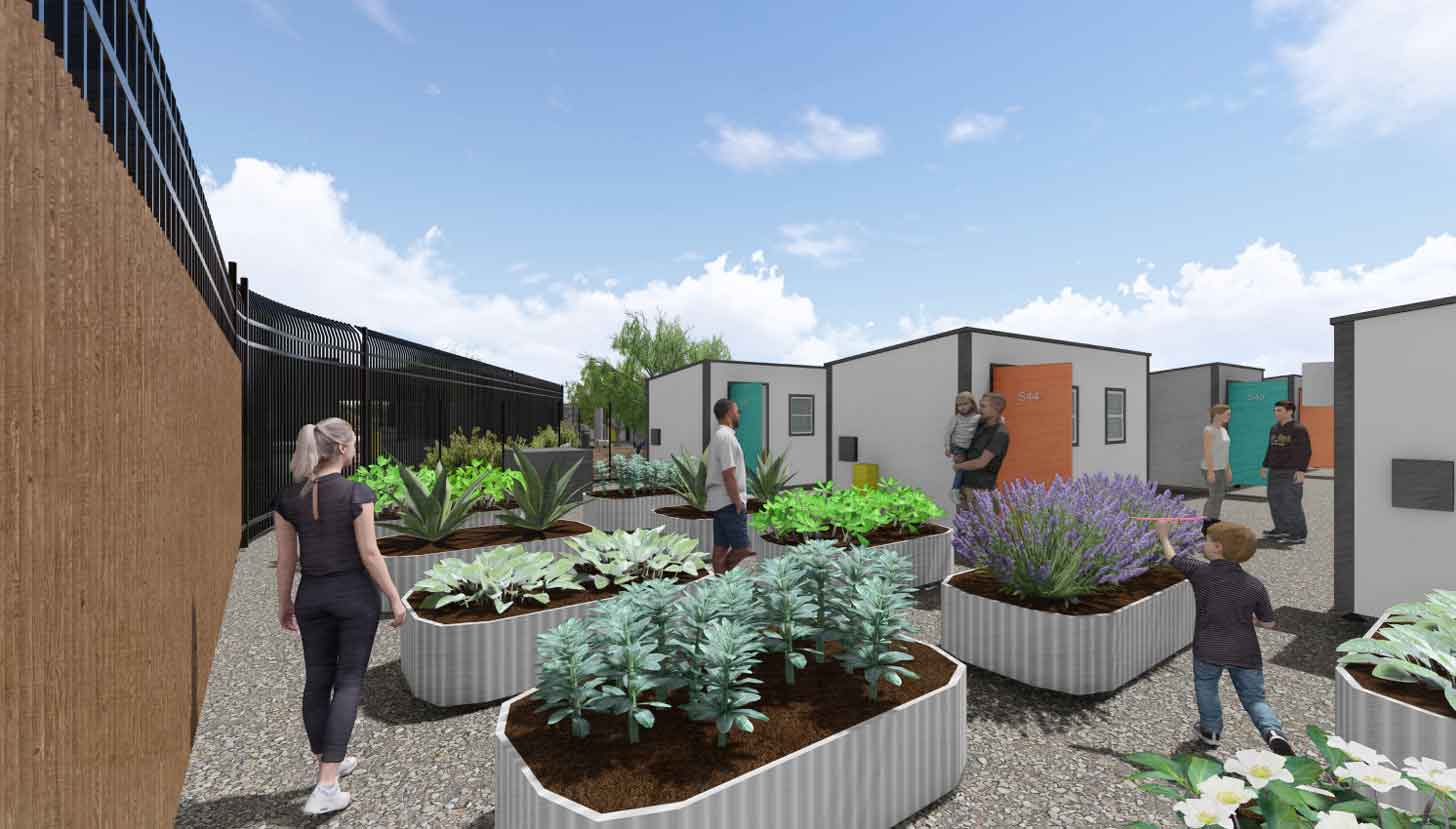
Aside from the 46 tiny homes, the facility will include two on-site community rooms for things like behavioral health treatment, case management, and longer-term housing navigation. While essentials like bathrooms are not in each unit, they will be available as communal amenities for all residents.
Albuquerque officials also said they are working with a behavioral health contractor to help provide services like meal distribution, laundry, and transportation to medical appointments.
Workforce training and educational opportunities will also be offered to residents on-site, as well as security measures like regular welfare checks, and amenities like a dog park and community garden.
“We are now covering a huge gap area that we haven’t had covered before,” said Ramirez.
The project is mostly funded with $5 million from an opioid settlement, as well as $800,000 from Bernalillo County, according to KRQE13 News.
“Transitional housing is vital for addressing homelessness and substance use and BernCo is proud to support shelter and recovery services at the Recovery Gateway,” Commissioner Barbara Baca, said in a statement.
While construction is still underway, officials say Recovery Gateway should be fully operational early this year.
“Recovery Gateway will create a space for long-term addiction treatment and is an important step in supporting our unhoused neighbors,” said District 2 City Councilor Joaquín Baca, in October of 2024.
“This community will change countless lives by adding more recovery housing options for our city.”
Header image courtesy of the City of Albuquerque
What was once a crumbling abandoned prison along the coast of Tarragona, Spain is now the El Roser Social Center, a supportive shelter that houses and employs people facing homelessness.
The center, which includes shelters, a soup kitchen, and gathering spaces, is the first of its kind in Spain to combine all of these social services under one roof. It opened in 2022, about a century after the prison was first built.

The prison closed in the mid-20th century and later reopened as a preschool before once again shutting its doors. Now, its third life has provided help to thousands in the small coastal city.
Listed as a Cultural Asset of Local Interest and included as an architectural heritage site of Catalonia, the site gave Barcelona architect Josep Ferrando and Reus architecture firm Gellego Arquitectura a challenging renovation.
Ferrando wanted to maintain much of the existing structure of the facility, “to recover its constructive essence and discover the memory of the place,” per Dezeen.

He added that peeling back “the various time strata” of the building was important to him, revealing hidden layers and structures for a nuanced experience in the space.
What was once a prison yard is now a public outdoor patio, for example. Designers also kept the prison’s original doorway and integrated new windows and fixtures that are similar to the originals.

The Rues City Council selected this site for redevelopment as part of the city’s efforts for renewal and carbon efficiency, while still maintaining its hundred-year-old history.

“The argument for not demolishing a building was primarily a question of heritage conservation,” Ferrando told Dezeen.
“The inestimable loss of heritage and memory is associated with the equally important loss of incorporated energy that a new building replacing the existing one cannot compensate for.”
While the exterior design is clean and minimalistic, with stylish exposed brick, warm furnishings, and additions make it an inviting space to all who visit and reside there.
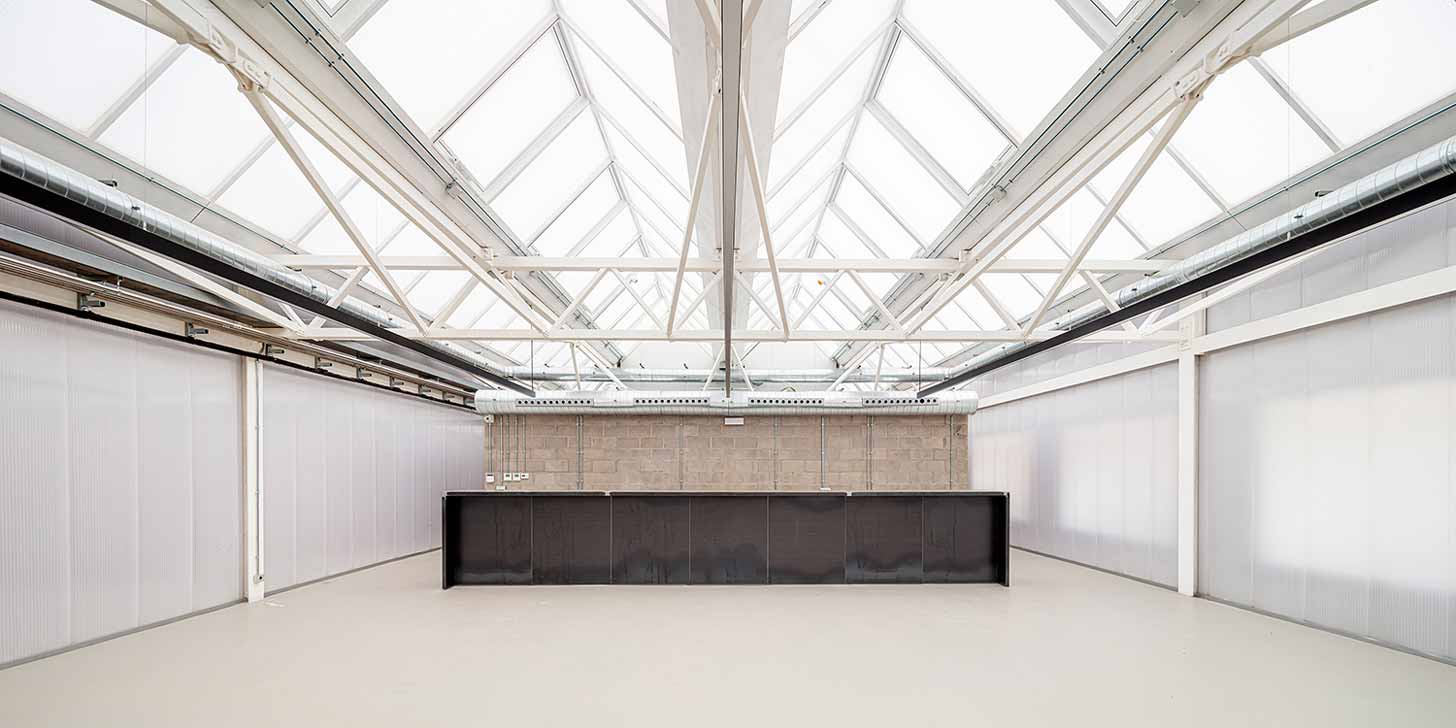
The soup kitchen is located in a steel and glass addition to the building, which also adds a sense of freshness to the original structure.
It also adds real jobs for people in need.
According to a press release from the Reus City Council, the facilities had reached a year of full capacity in late 2023. In that time, the Roser Social Center employed 26 people “with difficulties entering the ordinary labor market” and hosted 54 people through its Limited Stay Residential Service.
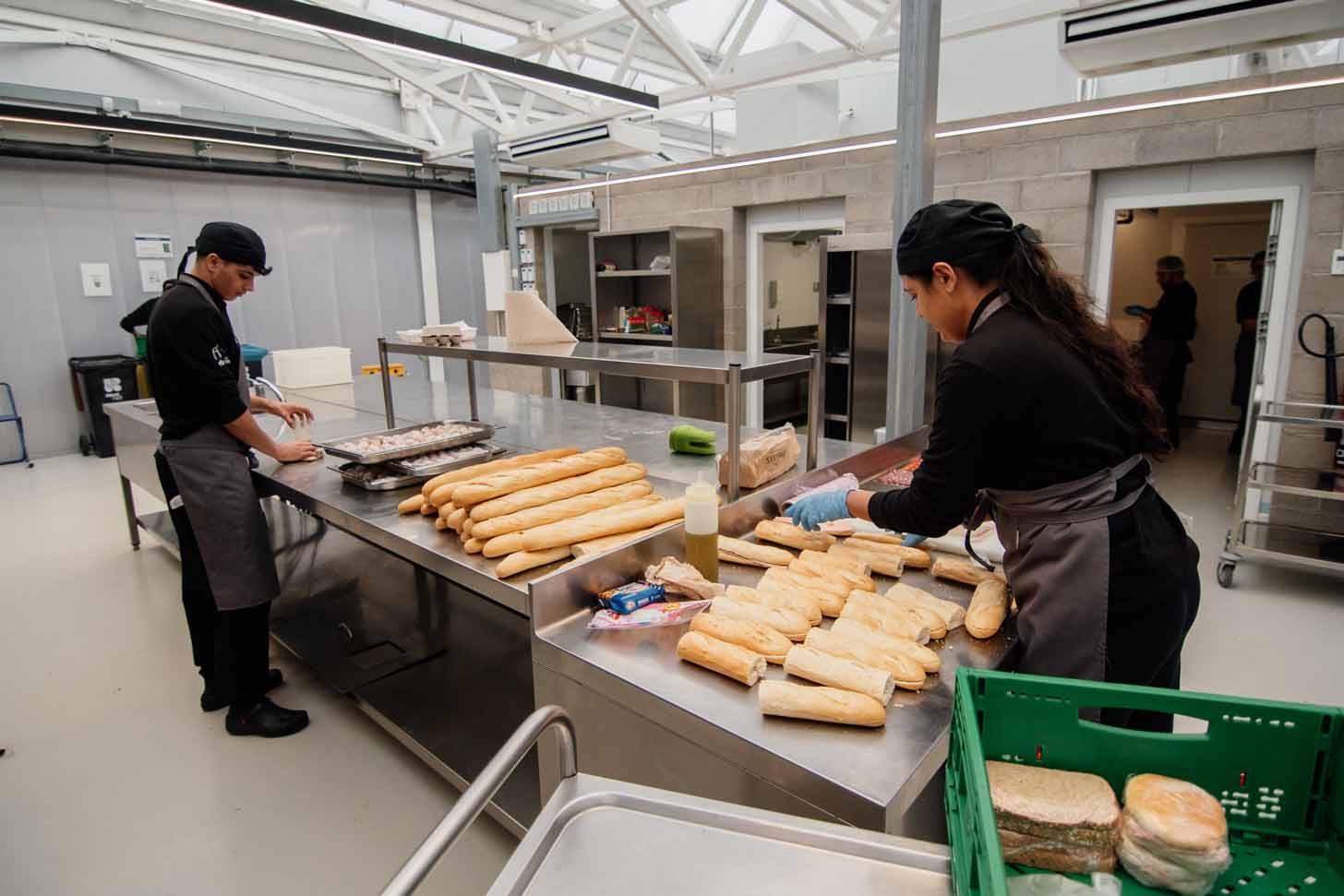
The soup kitchen also fed 2,450 people in its first year of operation. In addition to sit-down meals, the facilities include a pantry that quickly “established itself as one of the largest food distribution centers in the city.”
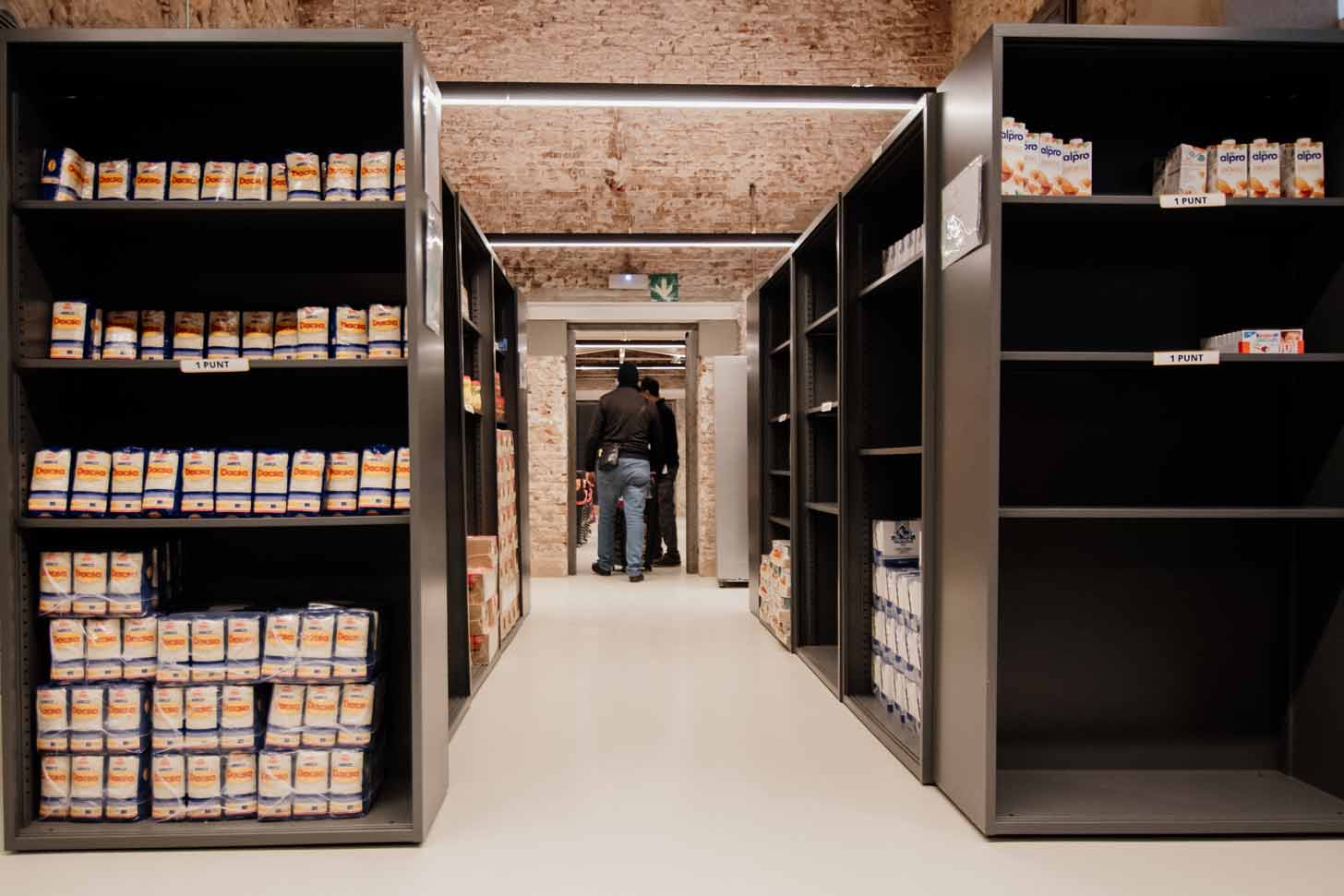
“It is a very social resource [that is] important for our city,” said councilor of the Area of Services to People and Social Rights of the Reus City Council, Anabel Martínez.
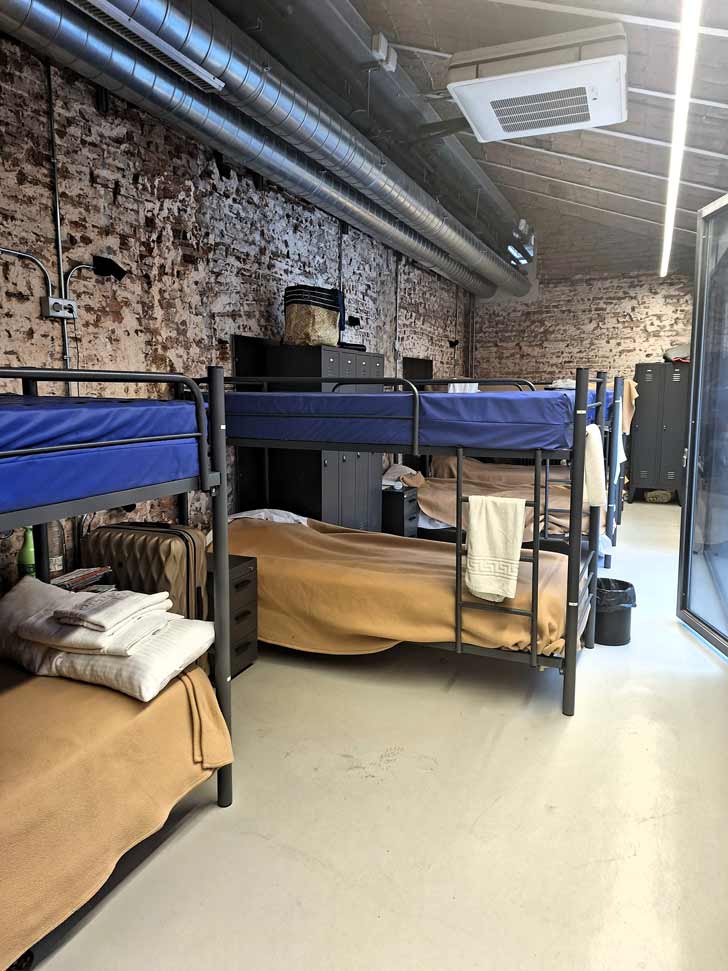
“Both the food service, which offers healthy and fresh food to people in a situation of vulnerability, and the Limited Stay Residential service, which is a solution to the temporary accommodation needs of adults in a situation of social exclusion … It offers a quality reception space and a stability that allows the development of work plans with greater guarantees of support, efficiency and social care.”
As one example of a growing body of “social architecture” marvels, El Roser Social Center has been a success in Tarragona, with plans to expand its support even further.

“We are exploring the possibility of implementing a project based on the housing first model, that is, shared homes,” Martínez added. “A new model that consists of accompanying people in a homeless situation so that they can recover their autonomy, as well as their personal, social and work skills.”
Header image by Adrià Goula
On January 8, Evangeline Iglesias — a single mother of three — lost her family home of 25 years in the Eaton Fire.
When she returned to the Altadena neighborhood to survey the damage, only her chimney was left standing.
“You just don't believe it…You can't believe that it's all gone,” Iglesias told ABC 10, a California-based news outlet. “I'm sad about my house, but I'm more sad about the total annihilation of the whole neighborhood.”
In the aftermath, a friend told her to look into 3D-printed homes, which are designed to be resilient in the face of earthquakes and wildfires.
“I Googled ‘3D printing fireproof house,’ because obviously I don't want this to happen again,” Iglesias said.
In her internet search, Iglesias came across a video from Emergent Construction CEO Don Ajamian.
“We use an on-site 3D printer and extrude concrete to build homes. We are the first in California to do so,” Ajamian said in a social media post. “If you find yourself lost, confused, not sure what to do next – please call me.”
After reaching out, the Iglesias family became the first LA wildfire victims to sign a contract with the 3D printing construction company, which is based out of Northern California.
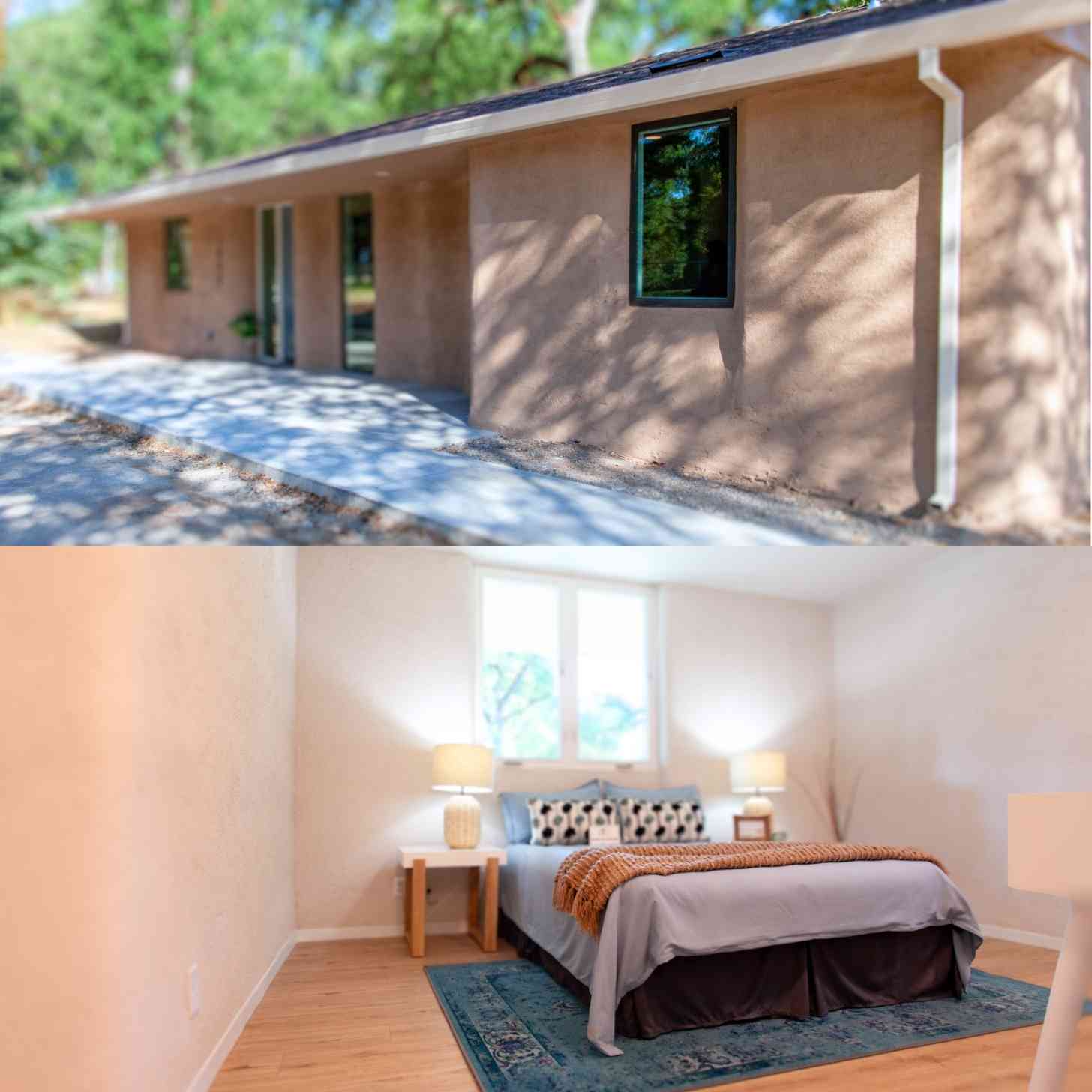
The 1,200-square-foot 3D-printed home will include three bedrooms and two bathrooms — and it’s all built to be fireproof.
“There will literally be no flammable materials as a part of the structure of the house,” Ajamian said.
Using an on-site 3D printer, Emergent crews mix the concrete on-location and feed it through the machine to build concrete walls layer by layer.
It’s faster than conventional construction methods, and it’s sturdier.
“It's going to be amazing,” Iglesias said. “I just can't wait.”
Iglesias’ story hits close to home for Ajamian. In 2018, he and his family evacuated their Redding home during the Carr Fire, which consumed 229,651 acres and displaced 38,000 people.
“Thankfully, we didn’t lose our home, but I know many people who did,” Ajamian said.
Soon after the wildfire, Ajamian recalls sitting in his office with neighbors who had lost everything.
“They had nothing but the clothes on their backs...they were lost. I remember the look of desperation in their eyes,” Ajamian wrote on the company’s website.
“They were hanging on my every word as I was reassuring them that I could help them and that even though they felt lost, I would walk them through it every step of the way.”
It was out of the Carr Fire that Ajamian founded Emergent — a construction company that hoped to act as “second responders” after a disaster strikes.
“It is now Emergent's mission to provide attractive, dignified, long-term solutions for local housing; ensuring families of all socio-economic backgrounds have a place to call home,” reads a statement on the company’s website.
“To do so, we work in conjunction with contractors and developers, municipalities, and non-profits & organizations to rebuild what’s been lost.”
Since its founding, Emergent has 3D-printed seven homes, six of which are in Redding, California.
Now in the wake of the seven destructive wildfires that tore through Los Angeles (namely, the Eaton Fire in Altadena and the Palisades Fire in Pacific Palisades) Ajamian sets his sights on the company’s next wave of homes.
“My fingers are crossed that we can get properties cleaned up down there, that we can mobilize and we could at least get started before the end of 2025,” he told ABC10.
“If we can do that, I think we are way ahead of the game.”
Header images via Emergent / Emergent Instagram
As homelessness rises across the United States, shelters have been stretched thin by increasing need.
In Orlando, Florida, for example, officials estimate a shortage of about 1,000 shelter beds to provide safe places to sleep for unhoused folks who would otherwise be unsheltered outside.
With the region also implementing a law that can charge “transient” neighbors with camping violations, emergency shelter beds are needed more than ever to keep people safe and out of trouble.
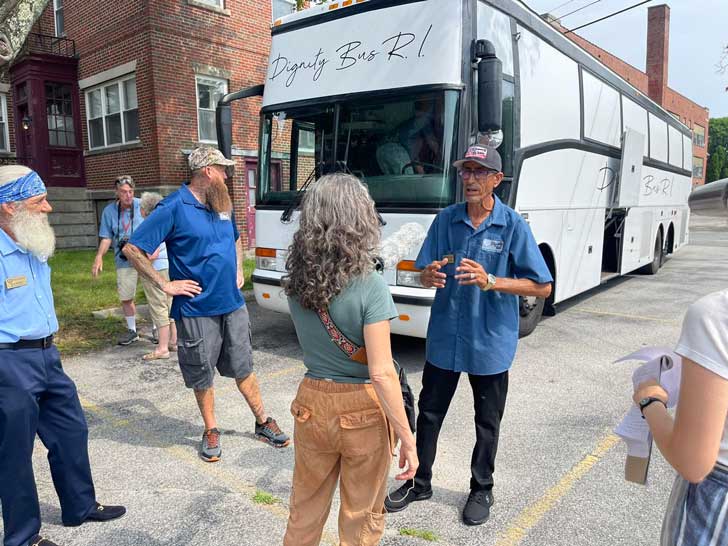
So, local officials are considering a new option: The purchase of two former Greyhound buses dubbed “Dignity Buses.”

The buses, which would be retrofitted by a homeless nonprofit called The Source, replace seats with bunk beds for up to 20 people to sleep each night.
The Source operates three of its own dignity buses in Vero Beach and has also created similar models for cities in Rhode Island and Illinois.
Anthony Zorbaugh, the executive director of The Source, said the organization provides more than 13,000 nights of shelter annually on buses in Vero Beach.
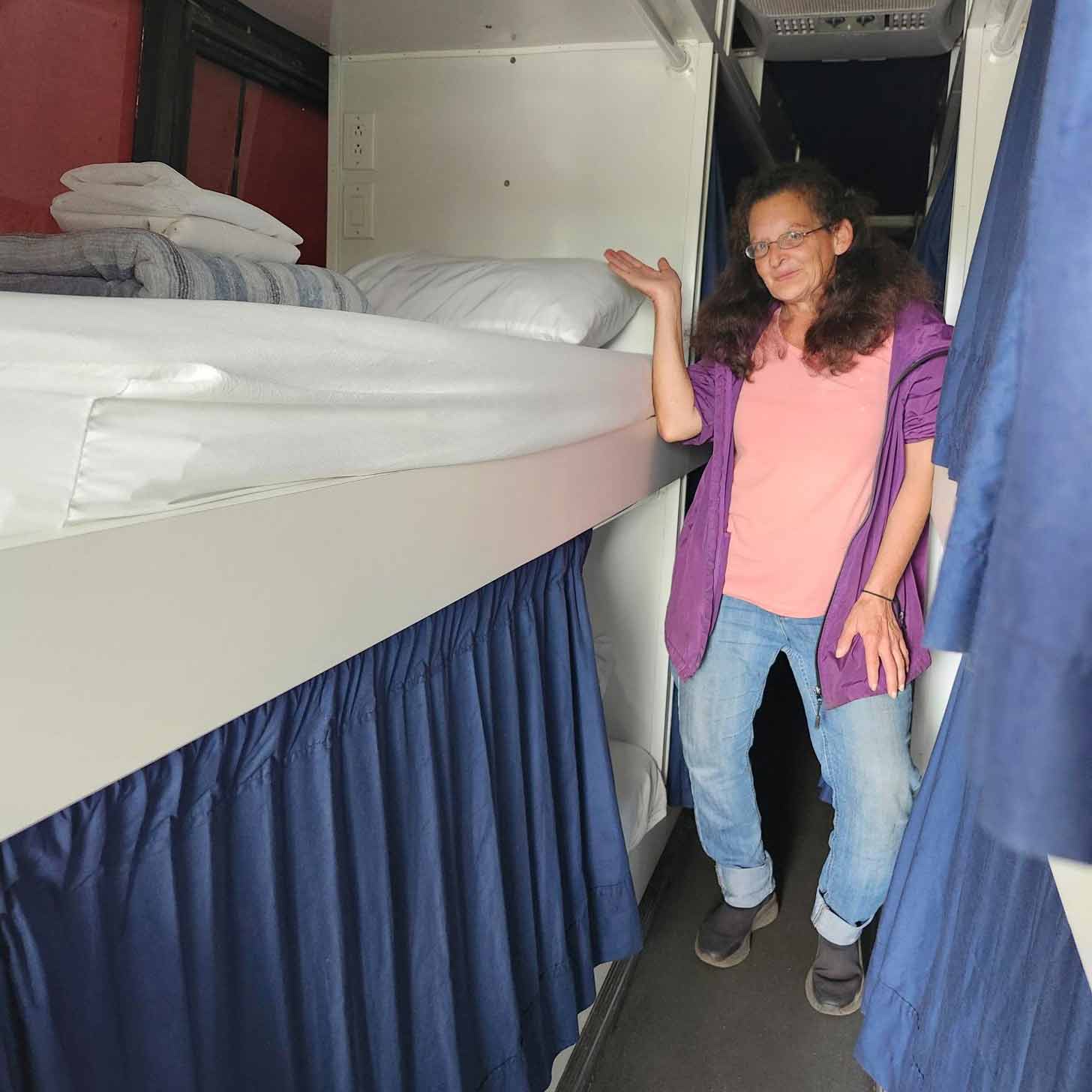
“People who are on the street are exhausted,” Zorbaugh told the Orlando Sentinel. “By the time they get their bed, they want to sleep. If you had to provide 13,000 hotel rooms at $150 a night, the social return on this bus is astronomical.”
The buses themselves have a price tag of about $175,000 each, with operations expected to cost about $1 million every year. Under a program in Orlando, each night of shelter would cost about $78.60 per person.
It’s a cost most officials are willing to pay.
“The day these buses get here, we can potentially have 40 people who had been previously sleeping on the streets, the sidewalks … a safe place,” Samantha Levine, who oversees homelessness initiatives for the city, told the Sentinel.
“That not only has a positive impact on the community but also could be life-changing for those individuals.”
The buses would be parked each night at the Christian Service Center, a facility that currently provides food and services to homeless Floridians, but not shelter.
Case managers would select and vet 40 people per night to use the bunks. Each sleeping area also has a power outlet and light, and each bus includes one large restroom. One of Orlando’s buses would also have a wheelchair lift.
Like The Source’s other buses, bedding is washed each day, and the vehicle can be parked and powered by an electrical plug-in. Additionally, they would be staffed by a security attendant, who can also drive the buses in the event that they need to be moved.
“It’s brilliant in its simplicity,” Eric Gray, the CEO of the Christian Service Center, told the Sentinel.

The Source brought a dignity bus to Orlando earlier this month to give city officials, nonprofits, and community leaders a tour of the “shelter on wheels.”
“I think it actually exceeded my expectations,” Rev. Robert Spooney, a local pastor, said. “It’s a lot better than the sleeping cars in my era when we used to travel on trains.”
But the luxury of the bunks is not the top concern for area health and service providers. The main objective is simply to help people sleep.
“Many of them come in, particularly when it’s extremely cold, extremely hot. They’re not sleeping,” Dr. Pia Valvassori, who has provided healthcare to homeless people for more than 20 years, told Spectrum News.
“And that’s another trigger for disease, chronic disease … and mental illness.”
Zorbough — and the officials working with him — hope these buses can fill an urgent need.
“Our aim is to get people off the street and keep them safe and healthy until they can get back on their feet,” The Source’s website reads. “Our accommodation is not a long term solution, but what we do provide is a safe, temporary, and comfortable place to sleep for the night.”
The dignity bus proposal will soon be presented to local advisory boards, with the Orlando City Council later considering it this spring. If the plan is approved, the buses could be ready to roll by this summer.
“It’s been a long ride getting here,” Zorbaugh shared on The Source’s website, “but our hearts and hard work led us to this point, and now we are sharing this finished product with those that need it the most.”
Header image courtesy of The Source
At the very end of 2024, the first six residents of Salt Lake City’s Other Side Village moved into their new houses.
“I feel awesome,” one resident, Paul Eric Fairburn, told the Salt Lake Tribune. “It’s been a lot of time, two years in the making…I’m glad I took the time to do this.”
In the coming years, the tiny home community plans to eventually house 430 people — all of whom were previously homeless.
The tiny home village is an extension of The Other Side Academy: a nonprofit where people who are homeless, living with substance use disorder, or have been incarcerated can “change their lives, free of charge” through transitional housing, counseling, and classes.
Born out of a need to give their clients permanent affordable and supportive housing, The Other Side Village broke ground over two years ago.
But the developers hit snags along the way, as they struggled to source materials and adapt to labor shortages.
“It’s been kind of grinding at times,” Fairburn said of the long-promised community. “It’s been a good experience overall.”
The first phase of construction includes 60 tiny homes — about 350 square feet each — with plans to build another 200 in 2026.
In a press release for the official unveiling, Salt Lake City mayor Erin Mendenhall said that the village would serve as a “beacon of hope and healing” for the community.
“I want to express my sincere gratitude to The Other Side staff, who are exceptional because of the community and collaboration they foster,” Mendenhall said.
The Other Side Village offers affordable housing (between $250 and $500 in rent each month) for residents who have experienced homelessness for more than 12 months and have one or more disabilities.

They also must make less than 30% of the area’s median income, live in Utah for at least a year, and be sober.
Prior to moving into their approved home, prospective residents have to enroll in a six-month prep school program — a school that 15 people are currently enrolled in.
These extra steps ensure that every neighbor in the Other Side Village is set up for success. And that includes long-term employment at a local business right around the corner — Other Side Donuts.
The Other Side Donuts funnels 100% of its profits directly to the Other Side Village to support its ongoing operations. And that generosity is baked into the very tagline of the store: “You deserve a donut.”
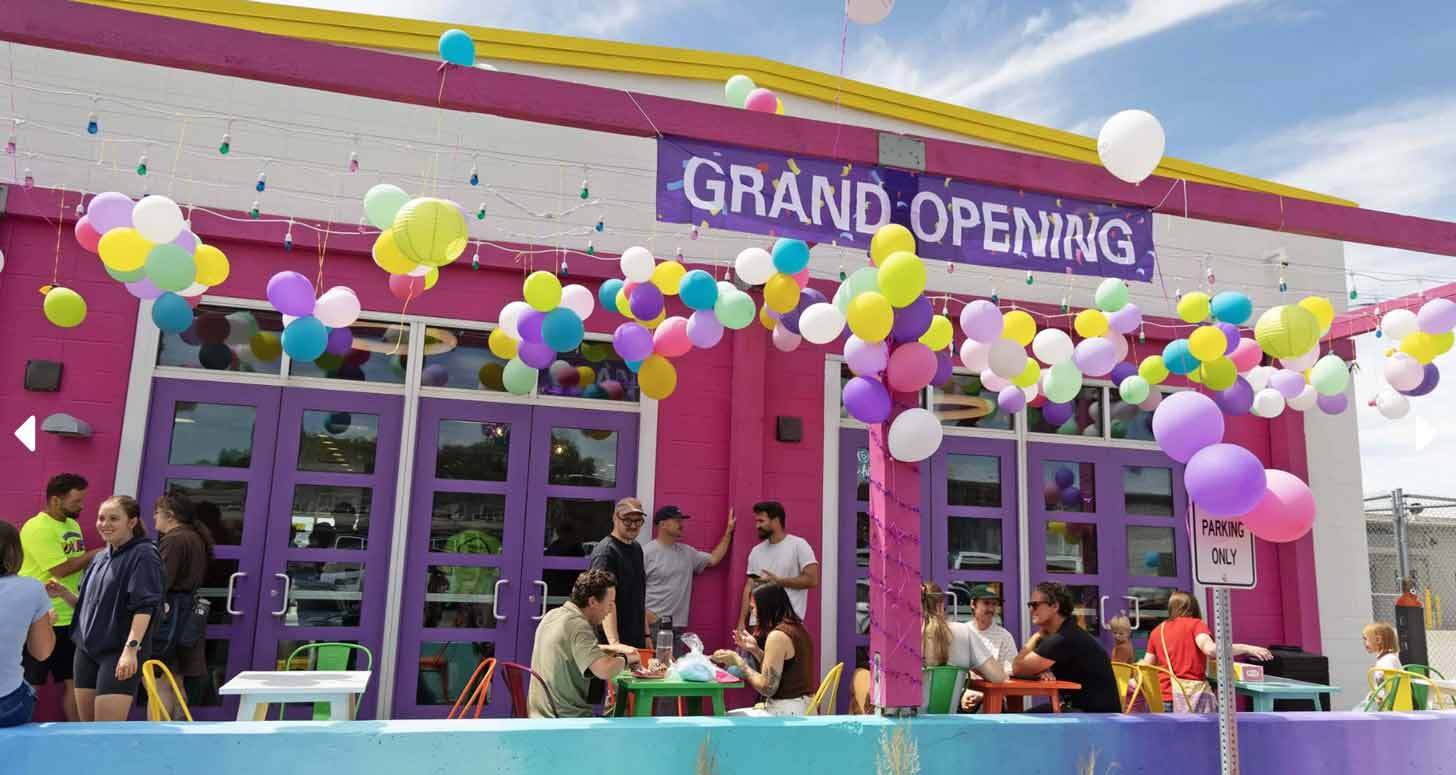
The donut shop provides “meaningful work for residents” and helps build “a positive relationship” between them and their neighbors, according to their website, but it also offers a tasty range of delicious pastries.
“Everything from a strawberry cheesecake, all the way up to pina colada key lime,” Gideon Nieman, a resident at the Other Side Village who works at the shop, told FOX 13 Salt Lake City.
His personal favorite? A blue and pink concoction called “The Troll.”
“It's got cotton candy on it and I love those,” Nieman shared.
The past year has been life-altering for residents like Nieman. Before he moved into the Other Side Village and began working behind the donut shop counter, Nieman had been homeless for two years.
“The Other Side Village is all about: you have to want to change,” Nieman said. “It's not a force thing, so I decided to make that change, and today we reap the rewards of the change.”
Header image via The Other Side Village / The Other Side Donuts
Every day the Good Good Good team collects the best good news in the world and shares it with our community. Here are the highlights for this week!
If you want to get good news in your inbox every day, join the Goodnewsletter — the free daily newsletter designed to leave you feeling hopeful.
The Best Positive News We’re Celebrating This Week —
A Michelin-star chef opened the world’s first restaurant staffed entirely by people who have experienced homelessness
Michelin-starred chef Adam Simmonds’ London restaurant, Home Kitchen features some mouthwatering dishes — but it’s the staff that makes the restaurant really special.
In a world first, everyone in the fine-dining establishment — whether they are seating tables or chopping vegetables in the kitchen — has experienced homelessness. The restaurant aims to combat the “very flawed public perceptions of what it is to be homeless.”
And to set their employees up for success, every Home Kitchen staff member is given a living wage, a pre-paid travel card for transportation, and funds for a catering qualification.
Even more good: In addition to employing people who are chronically homeless, the restaurant itself is a nonprofit organization, which supports Soup Kitchen London’s mission to feed 150 people every day.
→ Read more
Experts in small-space living, IKEA built a tiny home for homeless seniors in Texas — specifically with ‘trauma-informed design’ in mind
The entire globe has likely already passed ‘peak air pollution’
Global emissions of pollutants like sulpher dioxide, which causes acid rain, nitrogen oxides, and black and organic carbon have likely already passed their peak.
Not only do these pollutants damage ecosystems, they’re also harmful to human health. But data shows emissions have peaked for almost all of them, and global air pollution is falling — that equates to lives and ecosystems saved all around the world.
While the trend varies by country, there is one notable exception: ammonia, which is primarily produced by agriculture.
Thanks to an influx of aid during the ceasefire, famine has been “largely averted” in Gaza
Thanks to more than 12,600 aid trucks that have entered Gaza since the ceasefire began on January 19, the United Nations humanitarian chief has confirmed that famine has been “largely averted.”
Part of the ceasefire agreement had Israel agreeing to allow 600 aid trucks into Gaza every day, which was a massive improvement compared to pre-ceasefire when aid was struggling to reach Gaza at all.
What’s the nuance? The first phase of the already unstable six-week ceasefire is halfway over, and the humanitarian chief also warned that the threat of famine could quickly be back if the ceasefire collapses or isn’t extended.
→ Read more
Volunteers knit a giant quilt of 1,000 blankets in memory of homeless people who died in the cold — and to advocate for a future without homelessness
Phone calls to congressional phone lines in the U.S. have increased by 4,000%
On a typical day in the U.S. Senate, senators receive around 40 calls a minute from constituents. Right now, they’re receiving around 1,600 a minute — a four thousand percent increase.
The calls were coming in so frequently, phone lines have been jammed and some offices are sending constituents right to voicemail to avoid them shutting down completely.
One senator reported that a majority of the calls were coming in response to Elon Musk’s Department of Government Efficiency gaining access to personal financial information through the Treasury Department’s federal payment system.
Members of Congress are even reassigning staff members to help answer phones to manage the influx of calls. One aide reported the volume was overwhelming — but also an encouraging sign that people were engaged enough and cared to make their voices heard.
→ Read more (Gifted link)
📱 Be the good: You can (literally) join the call and make your voice heard too, check out our ultimate guide to contacting your elected officials.
Two professional women’s sports organizations are building the world’s first-ever dual-sport training facility
With the goal of being “the global epicenter of women’s sport,” the NWSL’s Portland Thorns FC and the new Portland WNBA franchise just announced a groundbreaking training facility — the first in the world to serve two professional women’s sports.
Situated on 12 acres, it will feature a 63,000-square-foot training facility, two full-sized soccer pitches, a strength training facility, a dining room with a full-time chef and nutritionist, private player parking and entry for security, and more.
Notably, the facility will also limit its environmental impact by repurposing an existing complex previously occupied by Nike.
Why is this good news? Investment of this caliber in women’s sports and athletics has been severely lacking. Women athletes are competing at the highest level — and should see the same investment in their skills, health, and safety as men. We’ve seen encouraging momentum — and it’s continuing.
→ Read more
An ‘eyesore’ motel transformed into colorful apartments for homeless families in Southern California — that vibrant design is both fun and purposeful
Detroit is on track to see the fewest homicides since 1965 and the fewest carjackings ever recorded
On crime rate lists, Detroit sits at the top for homicides — but that’s not the whole story. Making remarkable progress, in 2024, Detroit’s homicide rate plunged to its lowest level since 1966.
Through December 30, 2024, there were 202 homicides in the city — a 19.5% decrease from the 256 in 2023. That’s the lowest number since there were 188 in 1965.
Non-fatal shootings and overall violent crime in Detroit also dropped to the lowest levels in decades in 2024 — notably, non-fatal shootings dropped for the fifth consecutive year — though that encouraging downward trend was overshadowed by high-profile incidents.
Additionally, the city saw the fewest carjackings since the police department began tracking them in the 1990s. Officials credit years-long efforts to build bridges between law enforcement and the community, agency partnerships, and more.
The Trump administration killed a first-of-its-kind report on nature in the US — now 150 scientists are working to publish it independently
For the first time, more than 150 scientists came together to voluntarily spend thousands of hours compiling an assessment of nature in the U.S. — how lands, water, and wildlife are currently faring, are expected to change, and what that means for human beings.
After an executive order discontinued supporting that work, the scientists agreed they needed to continue to create the National Nature Assessment independently, adhering to the same rigorous standards required of any scientific study.
The authors, researching topics like “the dependence of the economy on nature” believe the assessment can help solve one of humanity’s most pressing issues: the loss of nature and biodiversity.
Why is this good news? A landmark global scientific assessment found that biodiversity (or the variety of life on Earth) is declining faster than at any time in human history. This assessment, once completed and published, will help provide a more complete picture of where the U.S. stands — and where we have important work to do.
→ Read more (Gifted link)
“Joy is what will get people out of bed every day to take more action”: Drag queen and environmentalist PattieGonia’s inspiring TED Talk is now live
→ Watch now (or listen on Spotify or Apple Podcasts)
For the first time in recent history, female protagonists reached parity with men in 2024’s top-grossing films
According to two annual studies, the percentage of top-grossing films that featured female leading characters equaled the percentage of those with male leads for the first time in recent history.
Driven by films like “Wicked,” “Inside Out 2,” and “The Substance,” 42% of the top 100 domestic-grossing films last year had women protagonists, and 42% had men protagonists, a milestone in gender parity.
A third study found that 54% of the top 100 films at the box office last year featured girls and women as protagonists. That’s a significant jump from 2023, when just 30% of films featured women leads — and even more from when this study began in 2007, with just 20%
→ Read more
A nonprofit in New York is delivering flowers and gift baskets to widows and widowers on Valentine’s Day
This time last year, Hearts in Bloom Buffalo was delivering flower arrangements to 41 widows and widowers in the community to brighten their Valentine’s Day — this year, it’s more than doubling its impact.
The nonprofit’s founder Catherine Szabad saw the idea on social media, and wanted to bring it to her community, too. She assembles the arrangements and gift packages with the help of donations and volunteers.
This year, according to an update on the nonprofit’s GoFundMe, Szabad plans to deliver to more than 130 widows and widowers in the surrounding area.
Why is this good news? While it might seem like a small thing, the impact of Hearts in Bloom’s work really makes a difference. Szabad’s efforts celebrate love amidst loss, when others may have returned to “normal life” — but someone who experienced the loss hasn’t.
More good news of the week —
Vandalized in 2020 by the Proud Boys, a Black church in D.C. just gained the group’s trademark rights. The ruling, which came after the Proud Boys did not pay a $2.8 million judgment, allows the church to seize any money the group makes through “any sale, transfer, disposition, or license of the Proud Boys Trademark.”
Scheduled to become the site of a new prison, activists bought a former coal mine to rewild the land instead. The Appalachian Rekindling Project wants to rewild the site with bison and native flora and fauna, open it to intertribal gatherings, and, it hopes, stop the prison.
A new law in Brazil restricting students’ access to smartphones in school goes into effect this week. Most of Brazil’s 26 states and roughly two-thirds of all schools in the country had already applied some restrictions to phone use, but authorities struggled to enforce them due to the different rules between states and schools.
In lieu of cash, an app allows homeless people to request food, tools, clothes, and other helpful resources from passing neighbors. Instead of staying strangers, the Samaritan app shows you the backstories and “lore” of your local neighbors who are unhoused and informs you of their biggest needs.
On the “forefront of innovative agriculture,” a shipping container was transformed into an indoor farm that feeds immigrants for free. Village Hydroponics came out of the success of the founder’s other project, a mutual aid food distribution collective that supplies fresh, culturally relevant food to underserved communities in the area.
Unplugging from Russia, three Baltic states just joined the European Union’s electricity grid. In the works since 2007, plans for the move were seen as essential for European security and had been brought forward after Russia's full-scale invasion of Ukraine in 2022.
The largest solar cell factory in the U.S. is now open and operating in South Carolina. Reaching a capacity of 3 gigawatts later this year, the factory will be the largest producer of crystalline silicon solar cells in the country and employ around 500 local workers.
Amazon will pay nearly $4 million in a lawsuit accusing them of stealing tips from drivers. The settlement impacts Amazon Flex drivers, after the company allegedly used algorithmic data to determine a workers’ base pay on average tip amounts in the area.
For the first time in 185 years, the world’s smallest otter made a comeback in Nepal. Both Eurasian and smooth-coated otters are protected under the country’s Aquatic Animal Protection Act — so conservationists’ first step is to get this newly discovered otter on the list, too.
The earliest known opera created by a Black composer just officially debuted nearly 140 years later. Edmond Dédé composed Morgiane 138 years ago, but his racial identity prevented the opera from receiving proper staging — until this week, when it was debuted after the original manuscript was discovered in 2020.
When asked to draw a scientist, children in school are drawing women more than ever. Paralleling the growth in the actual number of women scientists, in the 1960s and 1970s, less than 1% of students drew scientists who looked like women — it reached an estimated 36% by 2016 (more than half when it’s girls doing the drawing).
The world’s first dog treats made from lab-grown meat are now on sale in the UK. The company behind the treats says it’s a step “toward a significant market for meat which is healthy, sustainable and kind to our planet and other animals.”
After a doctor was indicted in Louisiana, New York passed a law to shield the identities of doctors who prescribe abortion medications. The new law took effect immediately and allows doctors to request for their names to be left off abortion pill bottles and instead list the name of their healthcare practice.
A new AI method is improving early breast cancer detection, a key to improving treatment and survival rates. Published in a new study, the new method of blood screening, combined with AI, was able to detect stage 1A breast cancers with an accuracy of 90-100%.
A group of U.S. cities and counties are challenging the Trump administration’s executive order to crack down on so-called “sanctuary cities.” The executive order would force cities that have promised to take in migrants to cooperate with the administration’s immigration crackdown and mass deportations or have their federal funding revoked.
Sparking hope for marsupial conservation, scientists produce the world’s first kangaroo embryo through IVF. The “groundbreaking achievement” could be pivotal for Australia’s conservation efforts, given the country’s urgent need to protect its endemic species after having one of the world’s worst extinction records.
Brazil’s president vowed to fight illegal mining in the Amazon, and it brought an Indigenous tribe back from the brink of destruction. Two years after the president’s emergency operation began, the Yanomami tribe’s hunger and infant mortality rates are falling.
At animal shelters across the U.S., you can have a “Valentine's sleepover” with an adoptable dog or cat. Best Friends Animal Society shelters in select cities is coordinate snuggly slumber parties for potential foster parents and adopters to help them meet their perfect match.
Nearly 50 shelters across 27 states are planning Valentine’s Day “dog dates” to pair adoptable pups with potential adoptees. Participants receive a Chewy Date Kit with toys, treats, and even poop bags and shelters hope this playful “rent-a-dog” approach will help people fall in love with their ideal companion, or even inspire folks to foster.
For those feeling less of the love, wildlife refuges, zoos, and shelters are providing opportunities for cathartic revenge — and raising money for a good cause. A bird sanctuary in Alaska raised $18,000 which will help pay for salaries and care for the birds — the nonprofit rehabilitated 580 of them last year.
Before Pete Adler enlisted in the Army, he majored in architecture. Now, after spending 25 years in equipment maintenance and supply, and another 17 years as a civilian employee, Adler is back to his architectural roots.
And it’s for a good cause: Building free ramps for his senior and disabled neighbors.
Adler began helping his neighbors after the nonprofit project:HOMES gave a presentation at his local Rotary Club.
In an interview with Woman’s World, Adler recalls the representative saying: “Too many seniors and disabled individuals need ramps, but they can’t afford them.”
That’s when Adler reached out to his clergy so that they could start building ramps for neighbors in need.
“I feel this is my calling, and I’d like to start a crew,” he told fellow church member Karen Scott, who was eager to jump in and help.
Adler’s group of volunteers has only grown with time. Now when he pulls up to a house for an installation, he has about a dozen people by his side to haul lumber, work the saws, and assemble the deck.
“It’s turned into an amazing ministry of service,” Adler said. “I really enjoy the process and the teamwork, and figuring out the best solution for people in need.”
When a recipient can afford it, they are only charged with the cost of the materials. If they need help covering the cost, project:HOMES steps in to pay the full price (around $2,000).

In their 2024 impact report, project:HOMES devoted a full-page spread to “Pete the Ramp Champ” and his achievements.
“Adler and his team of volunteers from Grace Lutheran Church have transformed lives by building over 500 accessibility ramps for households in need,” the nonprofit wrote.
“Lieutenant Colonel Adler has gone from building one ramp per weekend to completing three, sometimes four ramps each week across the Tri-Cities area.”
71-year-old Jaunita Barnes is one of the 500 neighbors that Adler has helped through project:HOMES.
After a stroke and heart attack, Barnes found it difficult to navigate the stairs with her walker.
She was confined to her home for months — getting groceries delivered and calling doctors to her door — until Adler and his team swooped in to help.
“Now I can go where I need to go,” Barnes said. “Pete and the others were a true blessing.”
Header images via project:HOMES
This article was originally published on 2/15/2025
Los Angeles, California’s “Project Homekey” initiative uses government funding to convert hotels and motels into housing for people experiencing homelessness.
The project — which is a collaboration between L.A. County and nonprofit Hope the Mission — boasts a number of success stories, including The Alvarado, a facility that transformed a “dilapidated” motel into shelter for single mothers and children.

The Alvarado opened to the public in March of 2023 and was designed by Kadre Architects, a firm that is known for using bright colors to strategically create safe, inviting spaces for homeless people.
With a speedy design-to-completion timeline of just eight months, the 20,000-square-foot facility is now tactfully home to 43 units with a total of 172 beds, with support spaces and offices.
“Thanks to everyone who helped transform The Alvarado – a once blighted hotel – into this safe haven for families,” Homeless Initiative director Cheri Todoroff said in a press release for L.A. County.
“As many as 43 families, including dozens of children experiencing homelessness, can stay at this newest Homekey site at any given time, getting the help they need to thrive while we work on finding them a permanent place to live.”

The Alvarado’s floors are each themed in bright, rainbow colors, with monochrome purple and yellow floors for residents. The three upper levels of the facility house the living units, which each have bunk beds, a bathroom, microwave, and small refrigerator. The units average about 280 square feet each.
The ground level of the building offers gathering areas and support spaces, as well as an outdoor area with a dining deck for residents to enjoy three meals a day.
L.A. County also shared that The Alvarado provides programs like job training and placement, after-school tutoring, and life skill classes.

“Alvarado Family Shelter will help get families off the streets and on a path of healing,” Hope the Mission CEO and founder Ken Craft said in a statement.
“It will take a village to solve homelessness in Los Angeles, and partnerships like the one we had with the county and the state to build this shelter, is a fantastic example of what’s possible when we work together.”
Architects from Kadre brought their wisdom to the table to craft a space that is not only vibrant and optimistic but also sustainable.
“[We] used the palette to enliven spaces and bring about a sense of ownership, with each floor having its own graphic identity throughout each of the rooms, floors, walls and furnishings – like one's own neighborhood,” Kadre designers shared.

The project’s details also include drought-tolerant landscaping and a white-painted roof to help reduce the impact of heat on the building. A photovoltaic array — or solar grid — meets about half of the building’s energy needs.
“Collaborating closely with the contractors and specialty consultants, the architects were able to eliminate fossil fuels completely and switch the entire building to electric power, in-step with the goals of the California Energy Commission,” the Kadre team added.

Nerin Kadribegovic, the founder of Kadre Architects, is a third-generation architect and refugee of wars in Yugoslavia and Bosnia.
His experience with “chaotic social and environmental disruption” has inspired him to take the lead on projects like this, that provide a dignified and joyful environment for those who have faced similar displacement.
“This awareness evokes deep empathic connection to critical issues facing metropolitan urban centers around the world,” Kadre’s website explains.
This project is one of two others Kadre Architects has collaborated on with Hope the Mission. Additionally, the county has acquired 32 properties with Homekey grants, all aiming to reduce homelessness and provide a landing place for people to get back on their feet.
L.A. County Supervisor Hilda Solis has been a champion of housing, even becoming the namesake of a shipping container housing community that was once set to be a jail in downtown L.A. The Alvarado represents one more project under her leadership that will change countless lives.

“It is so encouraging that the state is providing cities and local jurisdictions with the funds needed to provide supportive housing for those experiencing homelessness,” Supervisor Solis said.
“Opening Alvarado Family Shelter is not just about providing a roof over someone’s head. It is about offering hope, dignity, and a chance for these families to rebuild their lives.”
Header image courtesy of Nerin Kadribegovic/Kadre Architects
On January 16, “Inside the NBA” analyst Charles Barkley interrupted a segment to launch into a rant against the city of San Francisco, California.
The comments arose while discussing Detroit Pistons’ Cade Cunningham’s chances of playing in the 2025 NBA All-Star Game.
“Listen, he’s gonna make the All-Star Game,” Barkley said during the TNT sports segment. “I’m not going. I’m not going to that rat-infested place out in San Francisco.”
Barkley’s words came at the heels of similar remarks he made in December on the same show, in which he dismissed the city as the “armpit of America.”
According to the San Francisco Chronicle, Barkley’s comments are nothing new.
During the 2024 NBA All-Star festivities in Indianapolis, the Hall of Famer said that the city was teeming with “homeless crooks” and said that anyone walking down the streets of San Francisco should use a “bulletproof vest” for safety.
Following a wave of backlash — and boos from Golden Warriors fans — Barkley ended up attending the NBA All-Star Weekend after all.
What’s more, he spent his Saturday in San Francisco volunteering at GLIDE Memorial Church, serving hot meals to the homeless and singing the praises of the organization.

“They work so hard over there. I want to give them a lot of love and sunshine,” Barkley said in a recent “Inside the NBA” segment.
In San Francisco, an estimated 8,323 people experienced homelessness in 2024. Last year alone, GLIDE served 515,845 meals to those in need.
In addition to volunteering at GLIDE, Barkley put his money where his mouth was and donated $250,000 to the nondenominational church, which is a vital source of housing, healthcare, and social services to vulnerable people across the city.
“When the Warriors connected GLIDE with TNT for a special visit from basketball legend Charles Barkley we couldn’t have imagined he would shout us out on national television and make such a big donation!” The nonprofit wrote in a statement to FOX Local.
“GLIDE is so grateful for Charles Barkely’s gift and showing us love.”
The organization also shared photos of Barkley’s visit on X, formerly known as Twitter.
“Barkley is known for calling the shots on TV, but he served meals at GLIDE and shared time with the community today,” the organization added.
“It's not about fame; it's about showing up. If you can, find a way to do the same.”
Charles Barkley is known for calling the shots on TV, but he served meals at GLIDE and shared time with the community today. It's not about fame; it's about showing up. If you can, find a way to do the same. #GlideUnconditionally pic.twitter.com/lJnmax5VI8
— GLIDE (@GLIDEsf) February 14, 2025
Header image via the NBA
The United States National Park Service and Forest Service are in trouble.
Last week, the U.S. Forest Service announced it would be firing around 3,400 recent hires, and the National Park Service would terminate about 1,000 employees under President Donald Trump’s push to cut federal spending, according to Reuters.

These cuts represent about 10% of the U.S. Forest Service workforce and about 5% of national park employees.
The federal budget cuts also exempt 5,000 seasonal positions under a hiring freeze, just before the country’s national parks experience peak visitor seasons. Around 325 million people visit National Park sites each year, and 159 million use national forests annually.
This decision comes from the U.S. House of Representatives fiscal year 2025 spending bill for the Department of the Interior, Environment, and Related Agencies, which cuts $210 million — or 6% — from the annual budget of the NPS.
These cuts also slash funding the Park Service’s maintenance budget, as well as historic preservation funding. The bill also rolls back protections for national parks and public lands from damaging oil and gas activities.
According to the National Parks Conservation Association — a nonprofit organization that has helped fund park stewardship and conservation since 1919 — these cuts would “devastate” the country’s park system when a number of sites are already understaffed and underfunded.
According to NPCA, even prior to these budget cuts, the National Park Service receives one-fifteenth of one percent of the federal budget, a “tiny slice” that “delivers significant economic benefits,” with $15 in economic activity generated for each dollar invested.
“National parks are part of our American identity. They mean so much to so many people, yet this is clearly not reflected in the House’s bill,” Kristen Brengel, senior vice president of government affairs for the National Parks Conservation Association, said in a statement.
“Something must change, and these funding cuts couldn’t be further from the answer.”
Here are five simple ways everyday Americans can help national parks during this time.
How to help national parks right now
Sign a petition.
The NPCA has collected a handful of petitions that would send a message directly to elected officials calling for action to protect the country’s parks.
With a simple input of one’s name, address, and contact information, the nonprofit will do the hard work to tally supporters in the fight for the country’s parks.
- Tell Congress to Protect National Park Service Staff
- Tell Interior Secretary Doug Burgum to protect national monuments from oil, gas, and mining
- Tell Congress national parks are worth fighting for
- Tell Congress to fund historic and cultural sites nationwide
- Tell Congress to protect wildlife in national parks
Call your elected officials.
One way to level up your civic engagement? Call your elected officials directly about the issues that matter to you.
Start by finding your elected officials in the U.S. Senate and House of Representatives. Once you have found your senators and representatives, you can call them and read the following script, inspired by NPCA’s advocacy efforts:
Hello!
My name is [insert name here], and I am a constituent in [insert zip code here]. I am calling today as a national park lover and constituent of [insert name of elected official here] because I have some concerns about the future of our parks.
New budget cuts introduced by Congress would slash funding for the National Park Service and lay off thousands of staff.
Our communities and economies rely on our parks – and parks rely on National Park Service rangers and staff. As your constituent, I want you to do everything in your power to protect National Park Service staff from these egregious staffing cuts.
Please call on Secretary Burgum to stop slashing the National Park Service staff and ask him to waive the hiring freeze for the agency.
Improperly funding the budget for national parks undermines the very places our lawmakers like you have promised to protect.
Thank you.
Volunteer.
Staffing cuts across park sites will affect us all. Visitors can expect to see decreased park maintenance, longer wait times, fewer educational programs, reduced safety support, and more.
One way to help mitigate some of these impacts is to volunteer to help take care of these beloved public lands. Many parks rely on regular volunteers to maintain trails and public areas, as well as support conservation efforts.
Find a volunteer opportunity near you!
Donate to national parks and the U.S. Forest Service.
Organizations like the NCPA, National Park Foundation, and National Forest Foundation are vital in preserving and protecting the country’s parks and public lands.
Even a few dollars can go a long way in helping to maintain core park and forest functions amid budget cuts.
- Donate to the National Park Conservation Association
- Donate to the National Park Foundation
- Donate to the National Forest Foundation
Leave no trace.
If you are able to visit national parks in the coming weeks and months, be extra sure to be a responsible and gracious guest. This means following Leave No Trace principles to best protect parks and reduce your impact on both the environment and short-staffed ranger teams.
Hank and John Green’s annual charity livestream, Project for Awesome, is a beacon of hope and engagement for the duo’s dedicated online community: The Nerdfighters.
This year, the event raised over $3,740,594.69 for charity in a single weekend — its largest sum of all time.

Hank and John — who are known for projects ranging from authoring best-selling books and creating educational YouTube videos to launching VidCon and selling socks, soap, and coffee for charity — have been leading Project For Awesome since 2007.
During the annual 48-hour livestream, the pair collaborates with influencers, scientists, philanthropists, and more to entertain viewers, and most importantly, raise money for a wide range of charitable organizations.
How Project For Awesome Works
Before the livestream begins, community members can submit videos nominating a nonprofit of their choice to receive a portion of the proceeds from the fundraiser.
Viewers can watch and vote for videos and nonprofits that resonate with them. Then, the organizations that receive the most votes will receive a portion of the funds raised throughout the livestream.
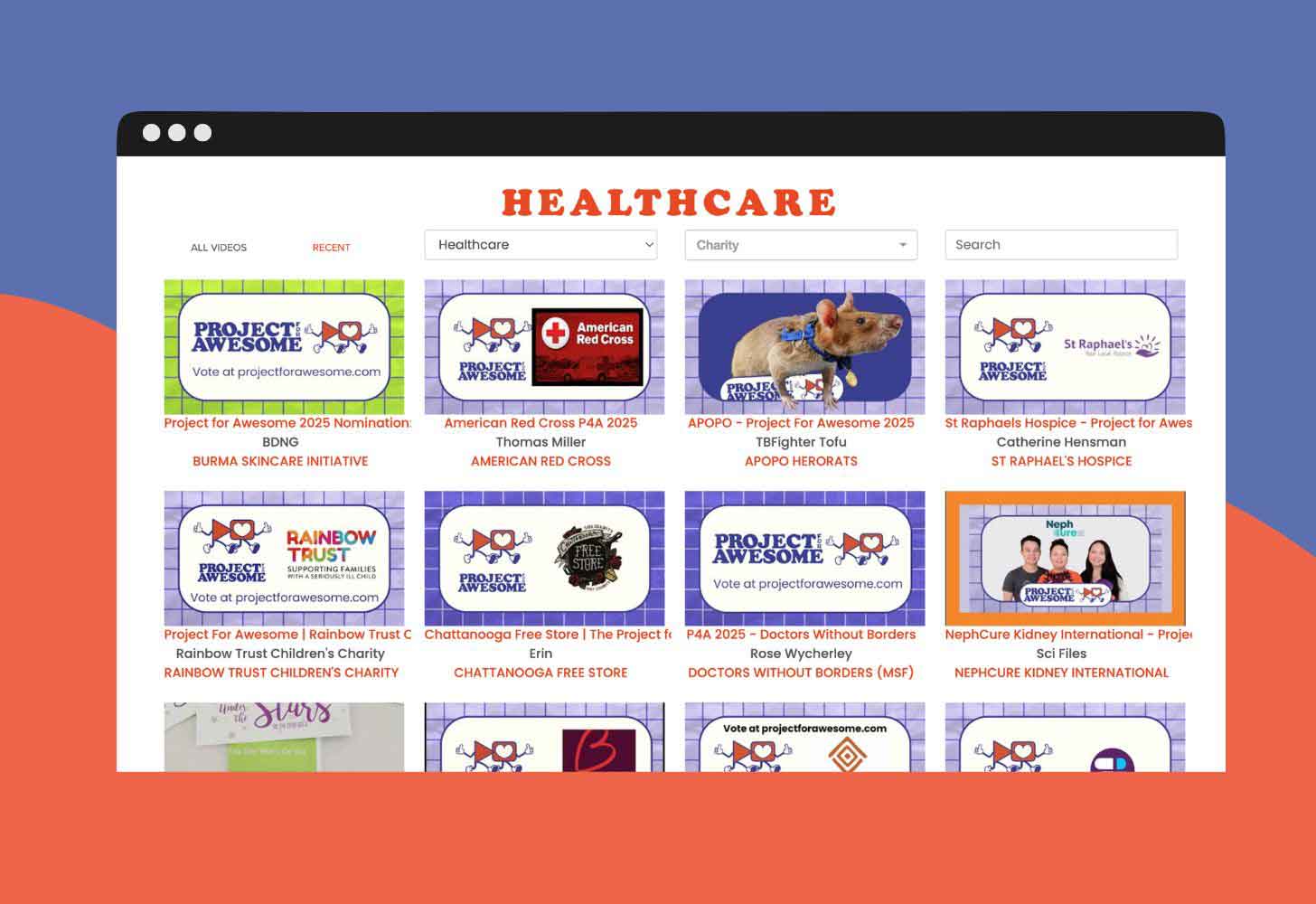
Donations are gathered from supporters who can select from a range of “perks” in exchange for donations. These perks include physical keepsakes, like T-shirts and limited edition art, as well as digital downloads like exclusive podcast episodes or sneak peeks of projects discussed by creators involved with Project For Awesome.
2025 perks were hosted by fundraising platform Tiltify and included items like the first two chapters of Hank Green’s next book, signed art prints from John Green, and even a downloadable knitting pattern.
Project For Awesome’s 2025 Impact
By the end of the fundraising window, the 2025 Project for Awesome, which took place from Feb. 14-16, has raised $3,740,594.69.
Half of all of the money raised will be split among charities voted on by Nerdfighters through the video voting process. The other 50% of the funds will be split between Save the Children and Partners in Health, two long-term charitable partners of the Green brothers.
P4A 2025 is officially the biggest P4A of all time!! #P4A2025
— Project for Awesome (@projectforawesome.bsky.social) February 16, 2025 at 9:46 AM
Both organizations focus on bringing health solutions to areas where it is needed most. This year, all of the Project For Awesome funds contributed to Partners in Health will benefit their ongoing efforts to end tuberculosis worldwide.
Save the Children, which has been in partnership with Hank and John for 18 years, seeks to provide humanitarian aid in areas of crisis.
Project For Awesome is a project of the Foundation to Decrease World Suck, a nonprofit that fundraises for the benefit of other nonprofits and awards grants to classified charities.
This year, over $1.8 million in direct donations were made through Tiltify, while a number of matching funds through FTDWS, Partners in Health, and Save the Children added up to reach the grand total of over $3.7 million.
In 2024, the livestream raised $3,530,889.25, which was similarly split among 30 viewer-selected charities, as well as Partners in Health and Save the Children.
Highlights from the 2025 Project For Awesome
While the underlying work of the Project For Awesome is to make a tangible difference in the face of real problems, both John and Hank are known to bring a hefty dose of humor to the livestream.
Joined by guests like Brennan Lee Mulligan, Destin Sandlin, Travis McElroy, Animal Wonders, Danielle Bainbridge, and more, the livestream featured a wide array of shenanigans.

Some highlights included raccoon finger paintings, a classic game of “Banana Loca,” appearances by alter egos like “Silly Nelson,” and “Silly Ray Cyrus,” and even astronomy lessons.
In between the silliness, the livestream also featured conversations with Ettore Rossetti from Save the Children and Dr. Joia Mukherjee from Partners In Health, to help spread the word about the important work the livestream supports.
“There are so many good reasons to give right now. There isn’t anything these organizations do that isn’t vitally important; treating children for malnutrition, providing HIV treatment, supporting kids in war zones, decreasing maternal and infant mortality, responding to disease outbreaks,” Hank said in a video leading up to the livestream last week.
“I am so proud that our community supports these people and the work they do.”
Header image courtesy of vlogbrothers/YouTube
Every year in the United States, it’s estimated that nearly 700 people living on the streets die from hypothermia. In fact, hypothermia is the leading cause of death for people experiencing homelessness.
To meet the needs of unsheltered neighbors, churches and libraries turn into warming shelters during the coldest months of the year — and many have recently expanded their capacity as overflowing homeless shelters are forced to turn people away.
One solution to emergency housing includes Wheelly — a giant, one-wheeled cart that pops open to make a foldable, slinky-shaped shelter.
Although permanent and supportive housing — and recovery-centered transitional housing — are the ideal solutions to chronic homelessness, there are unhoused people who need emergency shelter today — and need to live long enough to get the long-term help they deserve.
“Wheelly [is] not meant to be the final solution to the problem, but to focus attention to the issue,” the product description for Wheelly reads.
Other emergency shelter provisions have popped up in recent years, including igloo-shaped shelters from the Czech Republic, and foldable origami-inspired shelters from the University of Maine.
However, unlike the rigid materials employed by other inventors, Wheelly is unique in that it can be converted into a moving storage cart, a sun-protected seat, or a working stall that can be used to sell crafts, wares, or food.
The creators said that its flexible design was informed by “a city language.”
“Its thickness of 40 cm allows the cart even to pass every door,” the product description reads. “When needed — thanks to two folding tents — the cart becomes a protected and intimate shelter with an insulated sleeping space.”
Each Wheelly also boasts a corporate logo on the side, with the founders reasoning that the advertising space makes the cart “less expensive” or even completely “free” to manufacture.

When the ZO_loft creative team was interviewed by Best Design Projects and asked to choose a “favorite project” from their repertoire, they said that “Wheelly” outranked the rest.
Recognizing that it was the team’s first design work, the founders said it was the best representation of the way they continue to approach projects.
“In architecture, as in the design, it doesn’t matter the scale you are working but the approach you have, the way you choose to solve the problems or requests,” they said.
“Nowadays, when most of the time it’s economically difficult to live with your work and it is not easy not to compromise, we think it is important to keep recognizing oneself in a thought, in a trajectory and never miss [the] joy of what you do.”
Header images by ZO_loft / Paolo Emilio Bellisario
In Tampa, Florida, those needing healthcare might be able to ditch the crinkly paper on an exam table and opt for something a bit more futuristic.
OnMed, a “hybrid” healthcare company, is rolling out its CareStations in cities across the country — including Tampa.

These indoor structures are referred to as a “clinic-in-a-box” and can be installed anywhere there is a power outlet.
Each station — which resembles a large phone booth or covered bus station — is an 8-by-11-foot pod that includes thermal imaging, medical devices, and a camera to speak with a telehealth provider.
The idea is to allow people to have real-time consultations with licensed healthcare providers via video chat, while still including the comprehensive vital exams of a traditional in-person doctor’s visit.

Tampa General Hospital partnered with the city and Catholic Charities Diocese of St. Petersburg to bring an OnMed CareStation to Tampa Hope, the first homeless shelter in the country to offer this kind of care to its 235 residents.
“Between the high cost of services and struggles to find transportation, getting to the doctor can be a real problem for our homeless community,” Tampa Mayor Jane Castor said in a statement. “These CareStations allow Tampa Hope residents to achieve quality care without having to travel.”
The interior of each station resembles a small doctor’s office, but instead of a nurse in scrubs, visitors are greeted with a screen. Once they hit “start,” they will be instantly connected to an OnMed-certified nursing assistant who walks patients through a quick intake process, followed by a live, virtual visit.

Each station includes medical-grade diagnostic tools for the clinician to review real-time vital signs, as well as high-definition thermal imaging cameras, to examine the patient’s skin, eyes, ears, and throat, to diagnose infections and other conditions as needed.
“I do like … the machine because you can go in at any time you want to and take your vitals,” 65-year-old Sam Harris, a resident at Tampa Hope, told Health News Florida.
“There’s a blood pressure machine. There’s a camera so you can see the practitioner. And they will call the ambulance for you if your vitals are way out of whack.”
Providers can offer a diagnosis and treatment plan for every patient, including recommended medications, referrals, and e-prescriptions. Electronic medical records are stored securely to share with the patient and other providers, too.
The station is soundproof and private, locking to keep others out until a patient’s visit has ended. Once each patient leaves, the station automatically runs a sanitization cycle to prepare for the next visitor.

Beyond Tampa, OnMed has seen success with this model.
In Connecticut, one location sits outside a Stop & Shop in Killingly, and another is located next to a traditional healthcare clinic.
Medical insurance policies for each CareStation location differ based on “each community’s needs,” according to Hartford HealthCare’s chief integration officer Debra Hayes. One of Connecticut’s locations requires insurance, while the other is insurance-optional.
The company also has live locations in Texas, Alabama, Georgia, and South Carolina, and more than 20 other states have planned locations in the works.
In Georgia, OnMed has supplemented the efforts of Auburn University’s Rural Health Initiative, which has implemented CareStations in a number of counties, providing free care to visitors.

Tuskegee University also opened an OnMed CareStation for free to students, faculty, and staff. The school’s Center for Rural Health and Economic Equity, however, has also allowed the station to be utilized for free by residents of Macon County.
While the cost of these stations varies in their respective communities, leaders agree that their benefits are well worth the investment for communities in need.
In Tampa, officials report that there has been a 50% reduction in emergency calls from Tampa Hope since the CareStation has been available.
“If you think about how much it costs to take someone to the emergency room, taking up the time of the paramedics, the transportation, not to mention the medical care, this OnMed will pay for itself in short order,” Mayor Castor said.
For OnMed, the success among Tampa’s homeless population could pave the way for expanded healthcare access to people facing homelessness and medical disparities in cities nationwide.
“This partnership is an exemplary model for cities across America to observe and emulate as our country continues to struggle with the issue of homelessness,” OnMed CEO, Karthik Ganesh said.
“Our focus is to find the bright spots where healthcare innovation, kindness, and compassion collide. We commend the City of Tampa for stepping up to acknowledge the importance of the preventative and ongoing healthcare needs of its homeless population.”
Header image courtesy of OnMed
Over the past year, under a freeway overpass in Salt Lake City, Utah, a 50-unit tiny home neighborhood has popped up on what was once a barren plot of land.
The microshelter community — which is a joint effort between Foldum, RPM Team, and homeless provider Switchpoint — was built in two phases, including the construction and eventual relocation of 25 units in December 2023 and the addition of another 25 in September 2024.
“We are deeply thankful for the Utah legislature’s support, which has made this project possible,” Wayne Niederhauser, Utah’s homeless coordinator, said in a press release when the second phase launched in the fall.
“The successful microshelter pilot, with its notable exits to housing and low calls for enforcement, demonstrates that this model works. This second phase represents a crucial step toward greater stabilization and long-term solutions for those in need.”
Part of what makes the microshelter neighborhood remarkable is its innovative design. The customizable houses, which were manufactured by Foldum, ship flat and fold upward upon installation.
“With a flat-pack design, transportation and storage are effortlessly streamlined, ensuring hassle-free logistics wherever you go,” the company promises on their website.
“Built to last and climate-controlled for comfort, our durable structures provide a reliable sanctuary in any environment.”
The foldable tiny homes, which are suitable for on-grid and off-grid living, have been used for student housing and disaster management in addition to temporary housing for those experiencing homelessness.
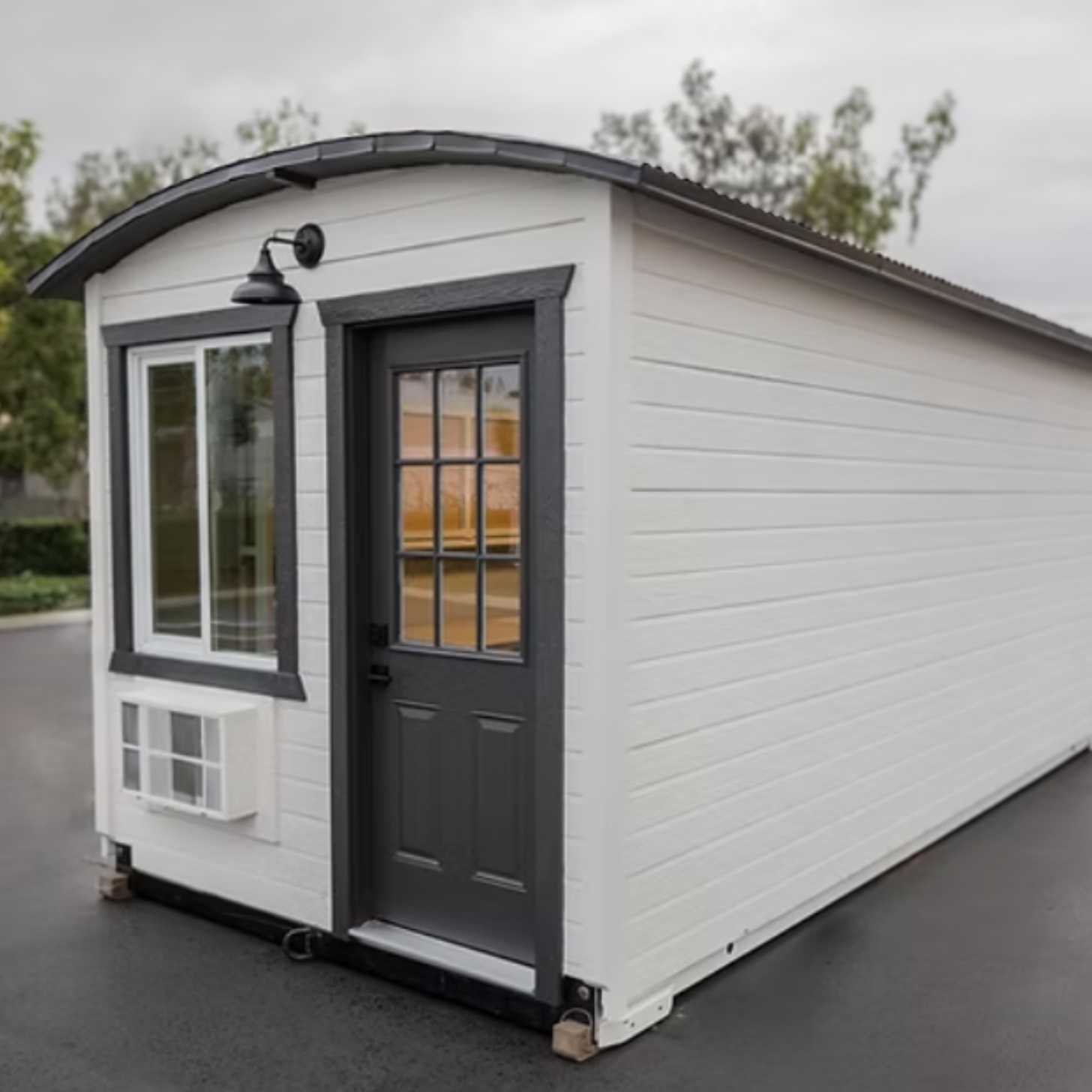
For residents like 48-year-old LaDonna Sidney, the tiny home neighborhood has proven to be a safe haven.
In the walls of her small pod, she can hear the ever-present sound of the cars whooshing past on the freeway overhead. But she doesn’t mind.
After moving from Illinois to Utah in early 2024, Sidney spent the majority of the year moving from shelter to shelter.
“There’s nothing more perfect,” Sidney told the Utah News Dispatch. “I’m very grateful for this opportunity.”

Residents must fall into one of three categories in order to qualify for the microshelter community: those who are actively working but can’t afford housing, disabled individuals that would be put at risk living on the streets, and people experiencing homelessness who do not thrive in congregate shelter settings.
“We want it to be as effective as it can, and try to reach those that it will help the most,” said Switchpoint’s Salt Lake regional director Cody Sanders.
Like many of her neighbors, Sidney falls under the first category.
Although she can’t yet afford permanent housing, she currently holds two jobs as a part-time manager at Claire’s and a full-time package handler at FedEx.
“My hopes are I can just continue working and continue saving money and I can end up being able to live in society,” she said.
Watch the video below to see the neighborhood:
Foldum CEO Ryan Rossi displays the folding design in action:
Header image via RPM Team
Before the beloved “Jeopardy!” host Alex Trebek died in 2020, he and his family had made a sizable donation to the Los Angeles, California homeless nonprofit Hope the Mission.
The Trebeks donated $500,000 to the nonprofit, which was earmarked for a new housing facility that would offer residents a number of services to help them acquire more permanent housing.

The initial donation helped the organization raise millions of additional dollars through private donations and city funds to bring what is now the Trebek Center to life.
Hope the Mission used the money to purchase the 23,000-square-foot Skateland, a former roller rink that had been a family recreation center in the San Fernando Valley for 60 years.
Skateland’s owners struggled to maintain operations during the COVID-19 pandemic, and when the opportunity arose, Hope the Mission founder and CEO Ken Craft jumped on it.
And then Trebek called.

“I remember it like it was yesterday. I was sitting in my office, my phone rang and I picked it up. ‘Hello, is this Ken Craft, this is Alex Trebek. I hear you’re building a shelter in North Hollywood and I’d like to come see it,’” Craft reflects on the organization’s website.
“Little did I know that that brief introduction and conversation would lead to a friendship with Alex Trebek, the host of “Jeopardy!”… a friendship that unfortunately ended way too soon.”
Trebek and his wife Jean had been longtime supporters of Hope the Mission, and Alex was even the keynote speaker at another area shelter just months before his passing.
The 107-bed shelter now named after him is both a tribute to his legacy and a refuge for those in need.

“His legacy lives on in the life of each person that finds hope and refuge in our doors,” Craft continued.
The Trebek Center — which includes a library of the host’s books and furniture — has been operational since 2022, and provides over 100 transitional beds to people experiencing homelessness.
Amenities include a dining hall, lounge areas, and outdoor spaces, alongside support services like substance-use counseling, job training and placement, and mental health care.
“We all know that homelessness is complicated,” Jean Trebek said after her husband’s death. “There is no single pathway to the streets. There’s no single intervention that ends homelessness. But there is a single remedy and it’s called love. Supporting another is loving another and the transformational power of support will surely be known at this site.”

The Trebek Center was designed and renovated by DNA Architecture & Design, incorporating elements of the original roller skating rink while making the shelter more comfortable for residents.
An acoustic ceiling was removed to expose “a series of bowstring trusses,” and skylights were added to bring natural light to the shelter’s sleep areas, according to the firm.
“He would have loved walking the halls of the Trebek Center noting the bright colors, natural lighting and cutting-edge architecture,” Craft said of Trebek.
“The site will include most of Alex’s books from his home library. Much of his memorabilia will be displaced onsite and his spirit of generosity and compassion will permeate the facility.”

A “Trebek Tribute Wall” is also a key fixture in the facility, where donors are honored in the style of the beloved game show’s game board.
Additionally, those who were fans of Skateland can preserve a piece of the landmark, with sponsored floor planks made from the roller rink etched with their names and displayed in the facility.
With a rich history, the facility has been infused with new life — and new hope — for all who use it.
And Trebek’s legacy lives on, inspiring others to use their power for good.
“I’m not one of those people who thinks that we can’t deal with the homeless near my house because that’s bad. I don’t feel that way,” the game show host said prior to his death.
“I wish more people would react in a positive way to reaching out and trying to help their fellow member of the community.”
Header images courtesy of Sony Pictures and DNA Architecture & Design
In mid-February, internet searches for “books about kindness” skyrocketed, outranking topics like “friendship,” “depression,” and — perhaps most surprisingly — “Greek mythology.”
At a time when it appears that social media feeds are constantly flooded with world-ending headlines, it’s no wonder that people are seeking out more optimistic reading material.
Whether you’re a fan of memoirs, self-help books, or page-turning bestsellers, this reading guide has a little bit of something for everyone looking for gentle reminders that kindness is alive and well.
Some of our links are affiliate links, which means that we may earn a commission if you buy something via this list. Thanks for supporting Good Good Good’s mission at no extra cost to you!
P.S. We’ve linked Amazon for convenience and accessibility, but we’re also linking to our favorite Amazon alternatives: Bookshop and Libro.fm, which are both great ways to support small, independent bookstores when you buy physical books and audiobooks.
(Learn more about Amazon alternatives for books and audiobooks)
The best books about kindness
“The Kindness Method: Change Your Habits for Good Using Self-Compassion and Understanding” by Shahroo Izadi
Genre: Self-Help
Behavioral Change Specialist Shahroo Izadi has dedicated her life to working in support groups and recovery houses for young women. Here, Izadi uses her therapeutic style to create daily habits that encourage readers to practice radical self-compassion.
“Be Kind: A 52-Week Journal for Practicing Kindness” by Houston Kraft
Genre: Activity Journal
From creating a shared playlist with an old friend to leaving thoughtful voicemails to family members, “Be Kind: A 52-Week Journal For Practicing Kindness” is a yearlong journal that encourages readers to incorporate random acts of kindness into their day-to-day lives.
“The Good Neighbor: The Life and Work of Fred Rogers” by Maxwell King

Genre: Biography
As the creator and host of “Mister Rogers’ Neighborhood,” Fred Rogers inspired generations of children to move through the world with curiosity and empathy. Across 416 pages, Maxwell King takes on the mighty task of capturing a beloved figure’s life in words — and painting an inspiring tale for readers.
“The Language of Kindness: A Nurse’s Story” by Christie Watson

Genre: Memoir
After spending twenty years as a nurse in a neonatal care unit, Christie Watson stitches together heart-rending anecdotes that show compassion in action as she pens a moving memoir on her days providing vital care to families in their most vulnerable moments.
“Every Little Kindness” by Marta Batolj

Genre: Children’s Book
This wordless children’s book from Slovenian illustrator and author Marta Bartolj follows a trail of good deeds throughout a small town as tiny moments of generosity reunite lost dogs, spread smiles, and spark joy.
As tiny home villages become an increasingly popular — and effective — approach to housing those experiencing homelessness, thoughtful design is key in getting these projects off the ground.
In Los Angeles, the nonprofit Hope the Mission built its first (of many) tiny home neighborhoods in 2020 and opened it in 2021.

The Chandler Tiny Home Village was an experimental and timely template for the city’s homelessness crisis on the heels of the COVID-19 pandemic and created a blueprint for many others to follow.
“This project … transforms a forgotten, oddly-shaped infill lot into a 39 one-or-two-person/unit facility for unhoused Angelenos using prefabricated ‘pallet shelters,’” architecture firm Kadre Architects writes about the build.
“In projects like these, design matters, both to uplift residents and to respectfully complete and enhance the neighborhood serving to inspire pride for these projects in a local community.”

The village is made of 40 homes and 75 beds, with units that measure 64 square feet. The units are pallet shelter structures, which are made by a Seattle-based company that offers standalone and private structures, each placed six feet apart.
While the homes are certainly not a permanent solution, they include heating and air conditioning, two beds, outlets, smoke and carbon monoxide detectors, windows, a small desk, and a locking front door. This allows people to store their personal possessions and gain a sense of privacy and independence as they get back on their feet.

“I believe in a housing-first model, where we would move everybody into a home and apartment, permanent housing,” Hope the Mission CEO Ken Craft told LAist when the village first opened.
“The problem is that it's not available. And so in an area like Los Angeles, if we're going to sit and wait until affordable housing is built, the homeless problem is going to keep growing. We have to be able to get people off the streets and get them into interim housing, while we're addressing the issue of affordable and permanent housing.”
Although the living quarters are modest for residents, they have access to onsite meals, WiFi, showers, mental health support, job training, case management, and a small dog park.

The aesthetic design of the village is also bright, colorful, and welcoming, with each unit painted a bright monochrome color.
“The idea behind the bright colors is to give the village a less institutional feel,” the U.S. Office of Policy Development and Research writes in a case study of the community.
Kadre Architects said the design was one of “spatial character, colorful details, and logistical efficiency,” which created a “model community space with a level of design sensitivity and beauty not often seen in these types of projects.”

To qualify to live in the village, individuals must be unsheltered and reside within a three-mile radius of the site. Hope the Mission’s outreach and engagement team often conducts interviews to determine vulnerability in need in the community, placing residents in respective shelters.
Chandler Tiny Home Village residents do not pay rent but are expected to work toward a goal of permanent housing during a 90-day stay. Staff may also grant extensions to tenants who are making progress toward this goal.
Since this particular community was built, Hope the Mission has opened six other tiny home villages, and Los Angeles constructed 6,700 units of transitional housing and 11 total tiny home villages.

“As a prototype for future similar developments, the Chandler Boulevard Tiny Homes Village demonstrated that transitional housing could be developed quickly on city owned property and co-exist with adjoining residential neighborhoods,” the Office of Policy Development and Research added.
“The creative, non-institutional design features … also set a standard for the other villages that were to follow.”
Header image courtesy of Kadre Architects