It is a truth universally acknowledged that trends come and go faster than Ken’s Mojo Dojo Casa House.
Time after time, we’re invited to one-off events and expected to avoid a “Lizzie McGuire, you are an outfit repeater” moment! I don’t know about you but that’s unrealistic, wasteful, and (not to mention) harmful to our planet.
That’s not the journey we want for ourselves, especially if we have better, more economical, and environmentally friendly options to choose from!
As someone who owns a secondhand thrift shop, I always try to opt for secondhand, however, there are really specific times when that’s not the most accessible option. While some of us have luck thrifting the perfect cocktail dress in our size, that might not always be the case for everyone.
Enter: rental clothing services.
Clothing rental services have emerged as a popular and more-sustainable alternative to traditional shopping. By providing a cost-effective solution, a diverse range of styles, and the benefits of reducing fashion waste, these services have attracted style-seeking folks (like yourself!) striving for a more eco-conscious way to enjoy trendy and high-quality pieces — without the long-term commitment.
We’re breaking down the best places to rent dresses for your next special occasion! From formal galas to outdoor weddings to cottagecore pieces, there’s something for everyone.
Let’s raid some online closets!
By the way, some of the links in this article are affiliate links, which means if you make a purchase after clicking a link, we may earn a commission at no extra cost to you. Thank you!
Where To Rent a Dress Online
Rent the Runway

What’s good: One of the OG online rental platforms, Rent the Runway — a woman-owned-and-operated company — offers everything from elegant gowns to everyday dresses. It’s a go-to for many (including myself!) looking for special occasion dresses and accessories.
The process is pretty straightforward: Reserve an outfit in advance for a specific date, wear it, and return it using the prepaid shipping label. No need to worry about dry cleaning — they’ve got it handled!
As someone notoriously prone to indecision, one of my favorite features is the ability to view uploaded photos from previous renters within a specific size, height, and body type range.
Even better, Rent the Runway also offers a free back-up size with every order (which is incredibly unique to the company and so helpful for those in a bit of a tight crunch).
We also love the company’s commitment to caring for our planet. Starting in 2022, Rent the Runway committed to offsetting 100% of its carbon emissions from shipments to and from customers.
Prices: Explore current plans
Sizing: 00 to 22, in addition to maternity sizes
Dress options:
Nuuly
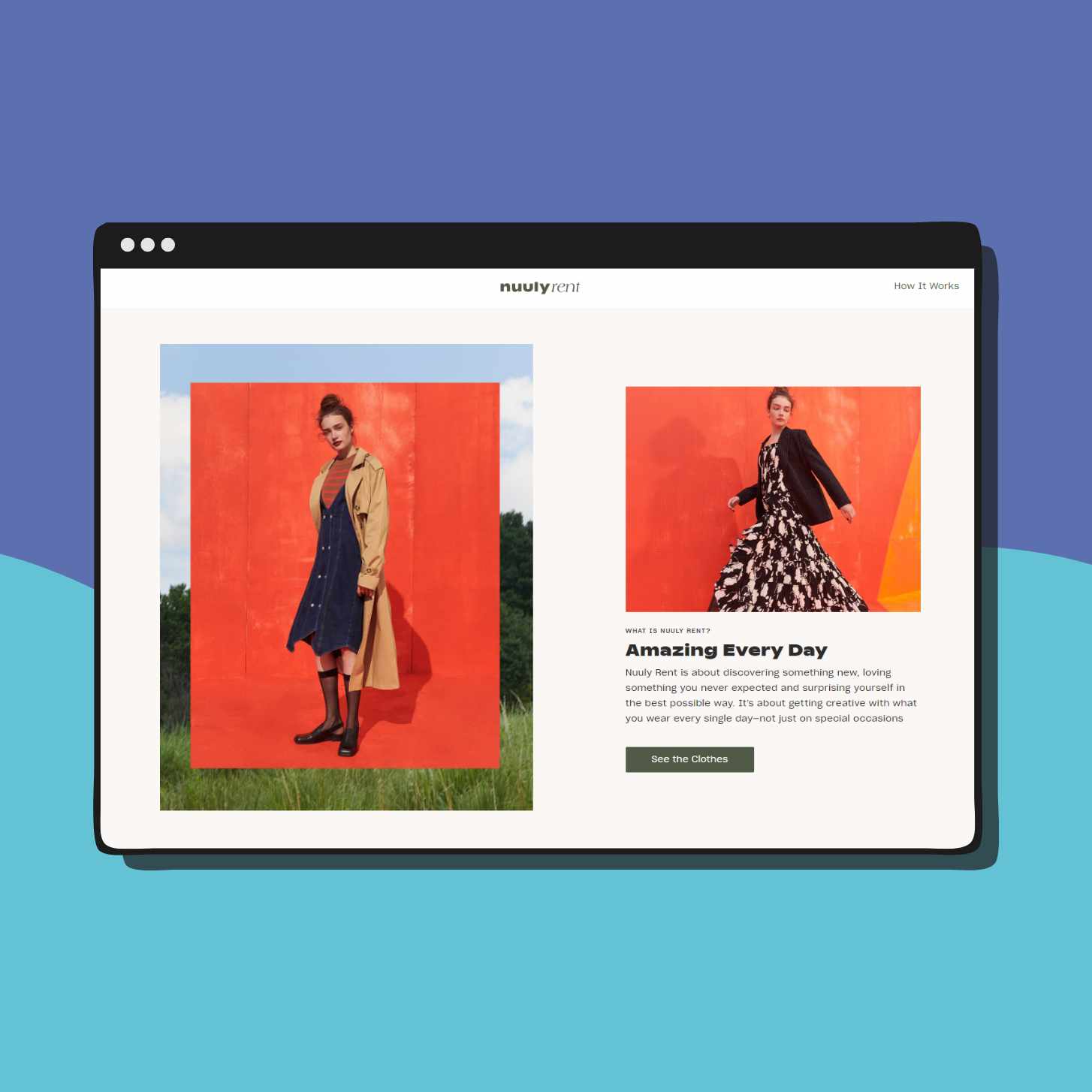
What’s good: Another one of our team’s go-to rental platforms is Nuuly. It features a mix of URBN brands (like Urban Outfitters, Anthropologie, and Free People), trendy, up-and-coming designers, premium denim labels, and exclusive vintage pieces. I’ve turned to this subscription service for my honeymoon, weekend getaways, and stylish happy-hour outings!
With its monthly subscription, renters can choose up to six items they like, and Nuuly takes care of everything else (including laundry and dry cleaning). One of my favorite features? They don’t implement late fees.
On the sustainability front, Nuuly mends any damaged rental items and repurposes them through its Re_Nuuly line. Out-of-circulation pieces are not thrown out either; instead, they are resold through Nuuly Thrift.
Oh, and don’t get us started on its rental tote, which also contributes to its sustainability efforts. Each tote replaces about 40 cardboard boxes, poly bags, and plastic hangers.
Prices: Explore current plans
Sizing: XXS to 5X, including petite and maternity options
Dress options:
Le Tote
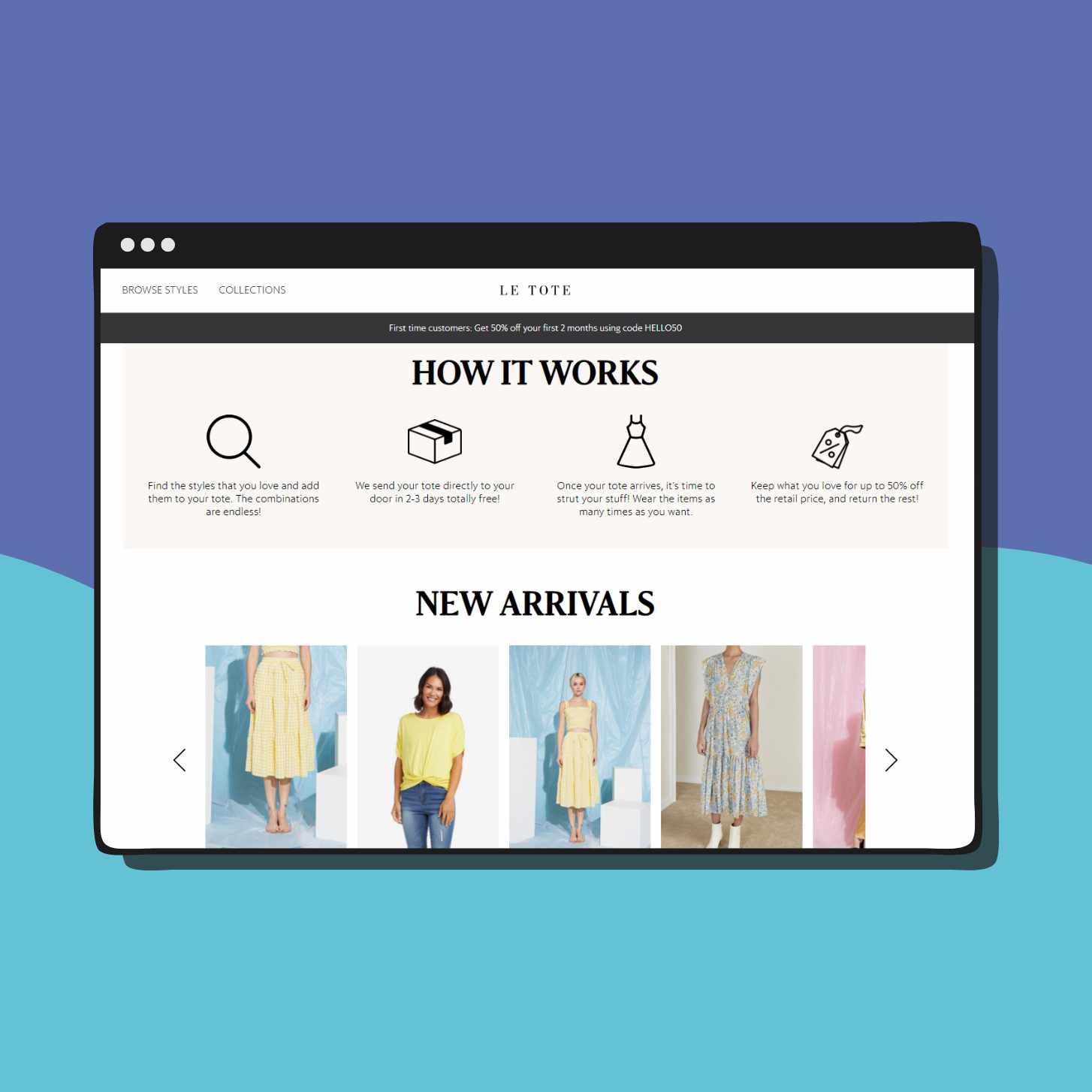
What’s good: Moms-to-be, Le Tote might be the perfect fit for you! While this company does offer a wide range of styles and brands for every woman, we think this company shines in the way it caters to women during every stage of pregnancy (including nursing).
The process to rent is pretty straightforward: You wear the clothes you’ve chosen, send them back, and within days, you receive your next batch of options — making it ideal for those who regularly purchase new clothing for work events or those who are pregnant and seeking a rotating range of maternity dresses.
Like other rental service platforms, Le Tote also shares customer photos and reviews to make it easier for renters to feel confident about their decisions.
Le Tote provides free 2–3 day shipping and takes care of the dry cleaning. Those who fall in love with their pieces can keep them at a discounted rate.
Prices: Explore current plans
Sizing: 0 to 16, including maternity
Dress options:
Gwynnie Bee
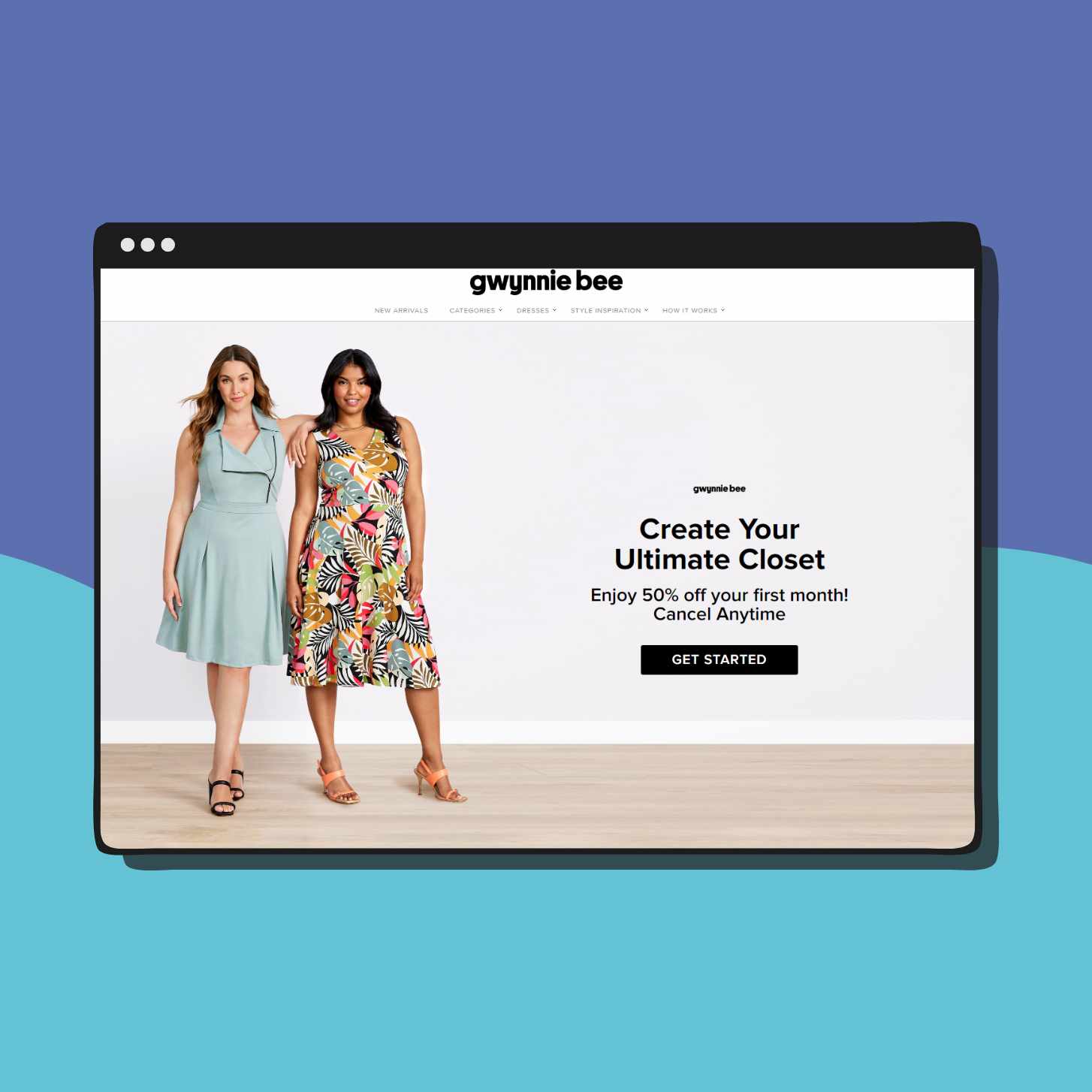
What’s good: Of all the rental platforms on this list, Gwynnie Bee is by far the most inclusive — offering sizes from 0 to 32. The team behind this service ensures that all body types can access the most stylish dresses to add to their closet rotation.
Its straightforward monthly membership offers anything from workwear to casual and formal dresses. Similar to the other rental sites mentioned in this article, shipping and dry cleaning are included in the membership.
Its flat monthly fee provides great value for those looking to experiment with different styles and looks, allowing you to explore the vast collection of up to 10 items at once, making it perfect for fashion enthusiasts seeking variety and versatility.
Prices: Explore current plans
Sizing: 0 to 32
Dress options:
Armoire
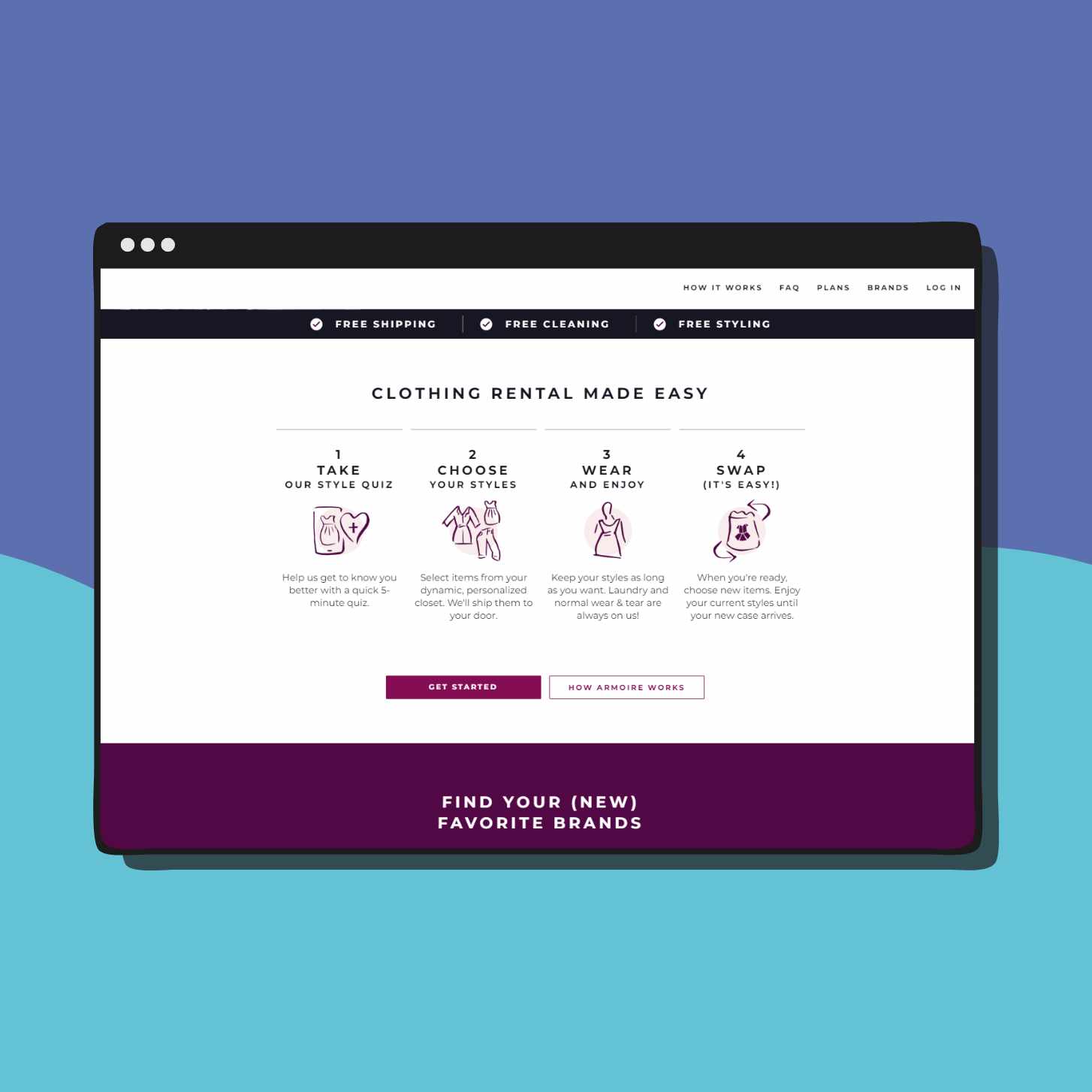
What’s good: If you love a good style quiz, this rental service will be a fun stop for you. Armoire is a personalized clothing rental membership that gives users access to thousands of high-end styles at a flat monthly fee.
What sets Armoire apart is its focus on personalization. Through its style quiz algorithm and personal stylists, it offers a highly curated monthly box of clothing aligned to your taste. (No need to scroll through endless pages of dress options.)
Armoire also does a good job of elevating rising women- and POC-owned brands — introducing shoppers to up-and-coming labels they might not know about.
Prices: Explore current plans
Sizing: 0-3X, including maternity
Dress options:
- Maternity
- Casual
- Cocktail
- Night Out
- Work Casual
- Work Formal
Vince Unfold

What’s good: Where are my minimalist girlies? Vince Unfold, the rental platform from the brand Vince, has quickly become a favorite among fashion enthusiasts seeking timeless and sophisticated wardrobe staples.
Known for its high-quality pieces that ooze luxury (without the hefty price tags), Vince Unfold offers a wide selection of rentable items, ranging from elegant silk dresses to cotton summer mini dresses.
By saving at least 10 styles to your Edit folder, you’ll receive a set of four items each month, with unlimited shipping and exchanges for a flat monthly fee.
The convenience of unlimited shipping and exchanges, combined with the option to keep your favorite pieces at a discounted rate, makes Vince Unfold a go-to platform for those who value versatility and sustainability.
Prices: Explore current plans
Sizing: 0-24
Dress options:
Fashion to Figure Closet
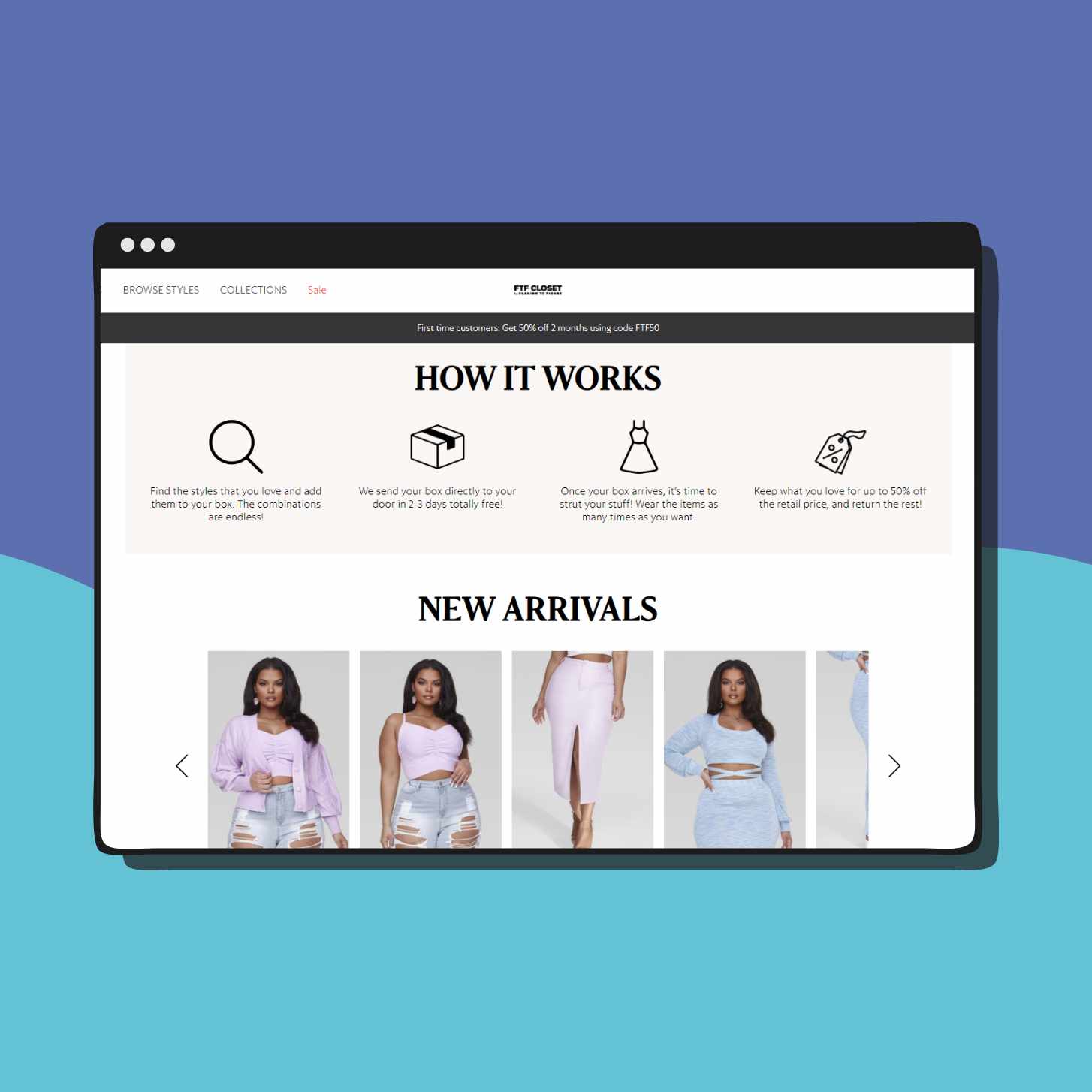
What’s good: Fashion to Figure Closet is fashion for all curves. The company offers a treasure trove of stylish, trendy pieces to choose from. Getting ready to go on vacation? Planning a fun night out? You’re bound to find the perfect something for your one-off event!
The convenience of renting through Fashion to Figure makes it easy to return and repeat as much as you like, allowing endless experimentation with different styles and looks.
If you fall in love with one of your rental pieces, Fashion to Figure Closet offers up to 50% off the retail price.
Prices: Explore current plans
Sizing: 12-28
Dress options:
→ Rent from Fashion to Figure Closet
Tulerie
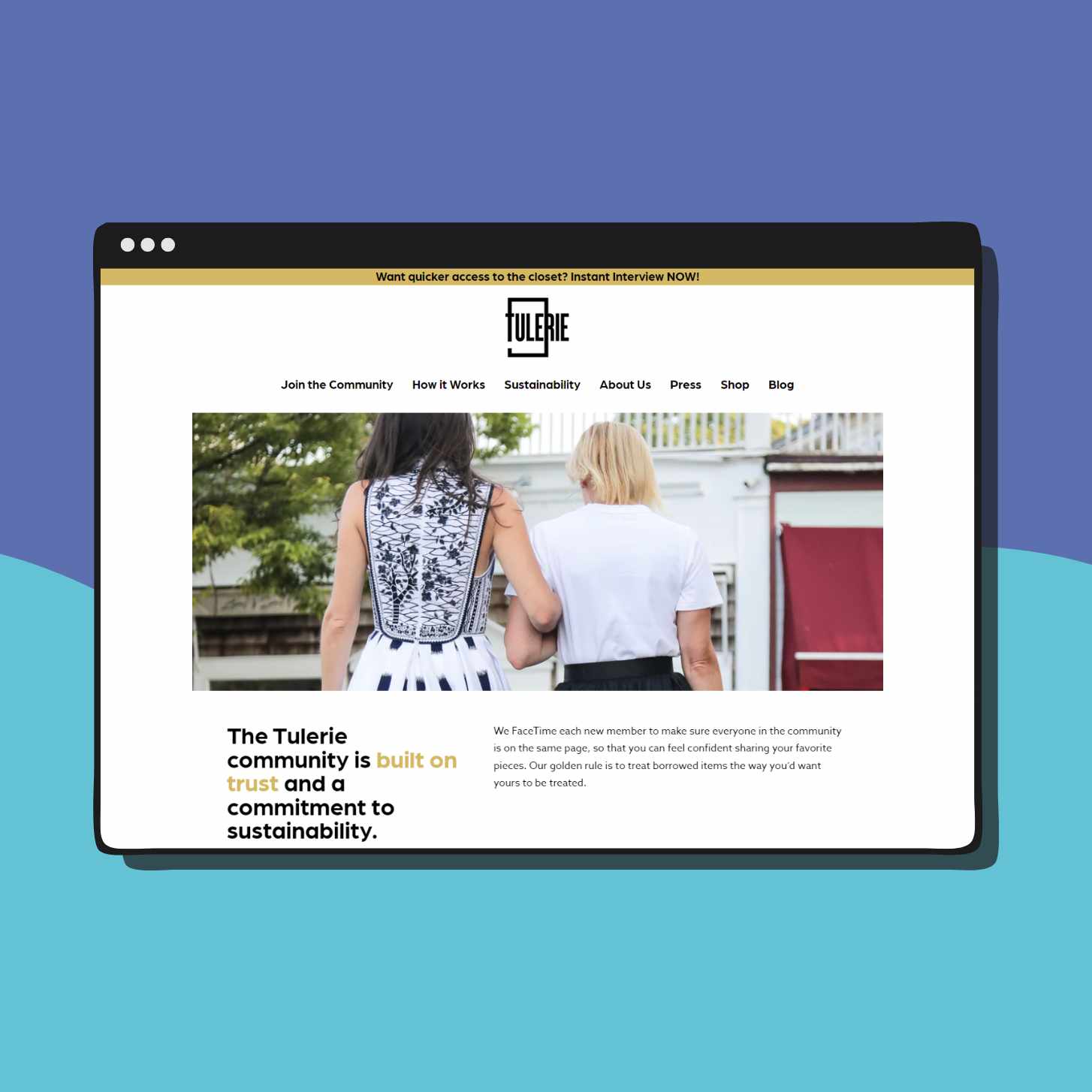
What’s good: For those seeking designer rentals and who love a sense of community, this one’s for you! Tulerie is a peer-to-peer luxury rental app that allows users to share and explore other people’s closets — gaining access to a collection of curated designer items from top brands like Bottega Veneta, Christian Dior, Gucci, Zimmermann, and more.
To join this community, new members are required to go through a vetting process — including a FaceTime call. The platform’s unique approach makes sure that everyone’s on the same page and confident in being a part of this community.
For borrowers, simply scroll through shared closets, filter by preferences, and discover vintage gems and luxury designer pieces. Requesting an item from the lender is also easy, with options to choose the delivery date and rental duration (4, 10, or 20 days). Similar to other rental platforms, the lender takes care of cleaning the item — making the rental experience so much more convenient and stress-free for the borrower.
Prices: Tulerie is free to join, however, you are expected to pay the rental fee of your borrow.
Sizing: XS to XL
Dress options:
Frequently Asked Questions
How do clothing rental services work?
Clothing rental services allow you to borrow seasonal and special occasion pieces for a short period of time. Rather than dropping a lot of money to buy something that you might only wear once, these companies allow you to borrow their pieces for a set duration of time.
While online shopping for your temporary purchase, you can easily find the perfect style by filtering your choice of style, color, occasion, and price. Some rental services offer a subscription, while others offer a one-time price for the rental garment. The prices vary based on designer, label, and the original price, however, you, as the renter, get a discounted price while renting.
Is it cheaper to rent or buy a dress?
It depends! The cost of renting clothes can vary based on the type of item, the brand, and the rental period. In general, renting is often more affordable than purchasing something new (especially if you only plan on wearing it once and when it comes to high-end or designer items).
What is the return process like? Do I need to wash my clothes?
Typically, returning items to rental services is a hassle-free process, (especially with the services mentioned in this article!). When the rental period comes to an end, you are expected to place the items back into the original packaging (so remember to save it). Most rental services handle the cleaning and maintenance themselves, so there’s no need for you to wash the clothes before returning them.
The package usually includes a pre-paid label for easy return shipping. You can either drop it off at a designated location or, if available, take advantage of a free pick-up service.
Once the rental service receives the returned package, they will professionally clean and inspect the items, ensuring they are in excellent condition for the next customer. For a smooth return experience, make sure to review the specific return policies of the rental service.
What happens if I keep an item?
If you keep a rented item beyond the agreed-upon rental period, you may face late fees, which are added to the original rental cost and charged to your payment method.
Some services offer the option to extend the rental duration for an additional fee, while others may charge you the full retail price of the item if it is not returned at all.
To avoid this, it’s crucial to be mindful of the rental period, return items on time, and communicate with the rental service if you need an extension.
And lastly, many rental services give you the opportunity to buy a rental product outright so you can keep it forever.
The Saco River Wildlife Center is in its Eras era.
Now a TikTok sensation, the Maine-based wildlife refuge posted about a fundraiser that featured Taylor Swift-themed T-shirts — but with a twist.
The shirts play on Swift’s now-iconic Eras Tour design, which just wrapped its first U.S. leg in Los Angeles.
Saco River’s director of development, Lauren Kennedy, was the mastermind behind the shirt, replacing the blonde pop star with the wildlife center’s famed critters: raccoons, possums, and skunks.

“The impact has been overwhelming,” Kennedy wrote to Good Good Good in an email. “Not only have we raised over $17,000, we are also increasing awareness of our organization and promoting the work of wildlife rehabilitation.”
Kennedy first posted about the shirts on her personal account on July 21, and the video quickly gained popularity. Commenters were thrilled to combine their love of Swift with their love of… nocturnal mammals.
“I’ve never purchased something so fast in my entire life,” one commenter wrote.”
“I love TS and raccoons,” another chimed in. “I need this.”
“Fundraiser for a wildlife center?!” a user said. “They are so cute!”
@greatvaluevintage Raccoons in their eras 🤭🦝 #taylorswift #taylorsversion #erastour #erastourtaylorswift ♬ original sound - swiftie
It’s safe to say the TikTokers have shopped in droves.
The T-shirts run for $25.99, but don’t worry; there’s a hoodie option for the cold weather months, and even a pet-sized tee, so your pup can rep the wildlife center, too.

“Sometimes I wonder if I am adult enough to be permitted to use my own money on things, and then I bought this,” TikTok user Meredith Steele said in a video, showing off her raccoon-themed Eras tee.
Well, the Saco River Wildlife Center thinks it’s a great way to spend that adult money.
“We are so glad you like it! Every single purchase helps our patients,” the organization commented on Steele’s video. “We are so grateful.”

Kennedy said that right now is the perfect time to support the organization, since they are in the midst of “baby season.” Last year, the organization took in over 135 baby raccoons, according to her email.
This fundraiser also supports the center as they move operations out of their founder and director’s basement — and into a new, renovated space spanning 16 acres.
“We are so incredibly grateful to those who went to purchase a silly, light-hearted shirt, and in turn, impacted our center in a big way,” Kennedy said. “I’m a huge Swiftie, so it’s wonderful to be able to really connect with the community in this way.”
Header image courtesy of Saco River Wildlife Center
Every day the Good Good Good team collects the best good news in the world and shares it with our community. Here are the highlights for this week!
If you want to get good news in your inbox every day, join the Goodnewsletter — the free daily newsletter designed to leave you feeling hopeful.
The Best Positive News We’re Celebrating This Week —
An entrepreneur in Mexico makes bricks out of invasive seaweed to build homes that can withstand hurricanes
Sargassum is an invasive species of seaweed that washes up and rots on beaches all across North America every year. Exposure to the seaweed can both lead to respiratory issues and cost communities millions to clean up.
One entrepreneur saw the problem it was causing for his own community in Mexico and came up with a solution: using the plentiful and readily available seaweed to make bricks for housing construction.
Omar Vázquez Sánchez and his team collect about 40 metric tons of sargassum every day, grind it into a fine powder, mix it with dirt repurposed from construction sites, and add water to shape it into a brick that’s construction-ready. Sánchez says the “sargablocks” can withstand hurricane-force winds and weather — and are recyclable and reusable.
Why is this good news? In addition to providing a really impactful solution (and creative, new construction method) to a problem for his community, Omar also gives the bricks away for free to people in need — like those whose homes have been destroyed by hurricanes.
Inner Sydney, Australia may become the first city in the world to end AIDS as a public health threat by 2030
Researchers believe that the central district of Sydney, Australia is close to becoming the first locality in the world to reach the UN’s target for ending transmission of HIV.
Specifically, new infections among gay men have fallen by 88% between 2010 and 2022. In fact, there were only 11 new HIV cases recorded in central Sydney last year, and almost all HIV-positive Australians are on antiretroviral drugs.
It is important to note that rates of infection have not fallen equitably across the country. In some outer Sydney suburbs, cases have only fallen by a third, where public health awareness, access to medical treatments, and testing new cases are more limited.
“Working in partnership with community and clinical organizations, effective research-based interventions have been designed and implemented. These numbers show us that virtual elimination of HIV transmissions is possible. Now, we need to look closely at what has worked in Sydney, and adapt it for other cities and regions across Australia,” Andrew Grulich, a member of the International AIDS Society, said.
A Belgian company invented ultra-thin, flexible, durable, and lightweight solar panels
Traditional solar panels and solar cells come in one standard, flat, and fixed format, which greatly limits the ways they can be installed. To overcome that application hurdle, the Belgian company EnFoil has invented solar panels that are only one millimeter thick, flexible, and extremely lightweight.
These solar cells can come in all kinds of shapes and sizes, and therefore have much greater flexibility in where they can be used, like truck roofs, swimming pool covers, and corrugated roof tiles.
And even though they’re really thin — they’re still really durable. In fact, it’s how thin they are that makes them more resistant to impact.
→ Read more
More good solar energy news:
- Studies show that putting solar panels over canals could both boost clean energy and conserve water and the first U.S. pilot project is getting underway in California.
- A $1 billion solar project is planned in Eastern Kentucky at the site of a former coal mine, and it will generate up to 800 megawatts — which could power more than 500,000 homes.
- As extreme heat intensifies around the country, hops and other crops that can suffer under the intense sun are thriving thanks to the shady cover of solar panels.
In the Baltic Sea near Germany, a program is training citizen divers to restore seagrass to fight climate change
Seagrass meadows act like massive, natural carbon sinks that can store millions of tonnes of carbon. Sadly, their numbers have dramatically decreased in the last century as a result of worsening water quality.
A project in Germany is looking to reverse that trend. The SeaStore Seagrass Restoration Project in Kiel trains citizens to restore seagrass meadows in underwater coastal areas that have lost them. In one weekend in July, a team of divers and land volunteers planted 2,500 shoots.
In addition to empowering citizens to autonomously make a difference for their community, because seagrass can store so much carbon, the project also hopes to make a difference for the whole planet by restoring ocean health and tackling climate change.
Why is this good news? Between the 1860s and 2016, Europe lost one-third of its seagrass areas. releasing carbon into the atmosphere and speeding up global warming. Seagrasses can store twice as much carbon per square mile than forests can on land, help support fisheries, and protect coastlines from erosion.
Experts are using AI to learn about, protect, and save mangroves — and by extension, the whole planet
Last week, the World Wildlife Foundation (WWF) and Google.org (Google’s philanthropic arm) announced the launch of a project called ManglarIA. The new, three-year project will utilize artificial intelligence to understand how mangrove ecosystems — and their contributions to coastal communities — are affected by climate change.
Spanish for “AI for Mangroves,” ManglarIA will identify key indicators of the health of mangroves and provide conservationists with better information to protect them, creating scalable and measurable solutions that can be replicated in other coastal regions.
Google.org has invested $5 million in ManglarIA, choosing the project from hundreds of submissions as part of its Impact Challenge on Climate Innovation grant program.
Why is this good news? Mangroves are a uniquely resilient and helpful species. They’re able to store carbon at about four times the rate of other types of forests and are an essential nature-based solution to climate change, providing vital levels of carbon sequestration and biodiversity to coastal ecosystems and economies.
A Navajo farmer started using traditional methods to make baby food — he's now helped feed thousands
Following the birth of their son in 2021, Zach and Mary Ben were shocked to see a lack of fresh, local, traditional baby foods available near the Navajo Nation.
Wanting to do something about it, the duo drew on their experience — Nick, a sixth-generation Navajo farmer and Mary, with a background in public health — to start growing their own crops to make baby food. Implementing traditional and permaculture farming methods, they now grow produce for their baby food company, Bidii Baby Foods.
They started with a line of Navajo white corn-based dehydrated baby cereals, and ever since, they’ve fed 6,000 children nationwide — and they just got funding to help them feed 10,000 more.
Why is this good news? In addition to meeting an urgent need in their community — healthy, accessible, quality baby food — by utilizing permaculture and traditional farming practices (long practiced by Indigenous communities), the Bens are also preserving the quality of the land for decades to come.
A car dealership in Las Vegas drives therapy dogs to people in need of mental health support
Subaru of Las Vegas has added a new feature showroom: a pack of therapy dogs. The dealership recently partnered with local charity Michael's Angel Paws, a Nevada-based organization that trains service and therapy support dogs for community members facing physical or emotional challenges.
Through Subaru’s larger philanthropic work, the Las Vegas location has raised over $64,000 for Michael’s Angel Paws, but Vitale said the employees — a team of dog lovers themselves — didn’t want to stop there. In addition to hosting adoption events right at the dealership, employees volunteered to train their own dogs as therapy dogs with the help of Michael’s Angel Paws.
The dealership’s five dogs have since been on a number of out-of-office expeditions, reading books to children in elementary schools, visiting patients at a local children’s hospital, delivering toys to families in need during the holidays, and connecting with community members at a nearby assisted living facility.
More good news of the week —
Thanks to conservation efforts, experts say shark populations off U.S. coasts are rebounding after decades of decline. And while there are more sharks in the water and more folks heading to the beach to beat the heat, the frequency of shark bites has not gone up.
Much faster than expected, infrastructure and green energy spending are having a positive impact on the U.S. economy. For example, business spending on infrastructure, like manufacturing plants and transportation equipment, rose 56% in the most recent quarter, accounting for 15 percent of the economy.
Helping an estimated 95,000 students, Taiwan is providing period products at all schools and universities. To help alleviate the physical and mental burden of period poverty, it will also provide additional subsidies for low-income students to purchase supplies they need independently.
California’s free prison calls policy is helping both with restoring relationships and with rehabilitation. Just the second state in the U.S. to mandate free calls in state prisons, the policy has made way for unrushed conversations, sharing memories, and deeper bonds.
A record-breaking number of sea turtle nests have been found on Palm Beach County beaches so far this summer. The 9.5-mile stretch of Florida beaches has seen 21,872 nests so far, up from 18,132 last year — with three months left in nesting season.
The Victorian government will ban gas hookups in new homes starting January 1, 2024. And effective immediately, all new public buildings, such as schools, hospitals, police stations, and government-owned buildings, that haven’t reached the design stage must also be all-electric.
A British battery startup created an ultra-fast battery that can charge in six minutes. The longer charging time for electric vehicles has been a drawback for consumer adoption, and this startup is working to find a solution.
As the first generation of solar panels reaches their end-of-life, solar panel recycling plants are opening to address the waste issue. Many panels can be recycled and reused, and there is a market for them — people around the world want refurbished panels for their affordability.
Once on the brink of extinction, Brazil’s golden monkeys have rebounded from yellow fever. With numbers reaching as low as 200, there are now around 4,800 golden monkeys — more than any time since efforts to save the species started in the 1970s.
Libraries in The Netherlands have been seeing a surge in both membership and attendance at library events. In 2022, library membership grew to 1.3 million adults and 2.2 million youth members, and the number of borrowed physical books rose to 53.3 million, up from 39.8 million in 2021.
Surgeons and engineers invented a world-first bionic hand that allows amputees to effortlessly control each finger. The innovation could revolutionize the way prosthetic limbs are designed and used, with scientists hailing it as a “major breakthrough”.
Manchester just got approval to house the world’s largest battery storage project at the site of a former coal plant. The project will bring both economic opportunity to the community, and help it reach regional net zero emissions targets.
A new "access fee" for renewable energy companies in New South Wales will further support the communities they serve. Money generated from the access fees will go into a fund and can be spent on a range of programs, including health, housing, and First Nations projects.
Mental health professionals in the Philippines are utilizing decolonial strategies to fight climate anxiety among residents. According to a recent survey, climate anxiety impacts the daily functioning of 74% of young people in the Philippines.
A major UK charity just announced it would no longer bank with Barclays because of its oil and gas financing. The 78-year-old charity has kept its money with Barclays since 2015, which has financed around $190 billion in fossil fuel projects between 2016 and 2022.
Cassandra Marketos is a compost queen.
Working in Los Angeles to help build and maintain composts with neighbors, educate students, and divert waste from landfills, she also shares her skills with newsletter readers through her Substack, “The Rot.”
And now, she’s releasing a compostable book.
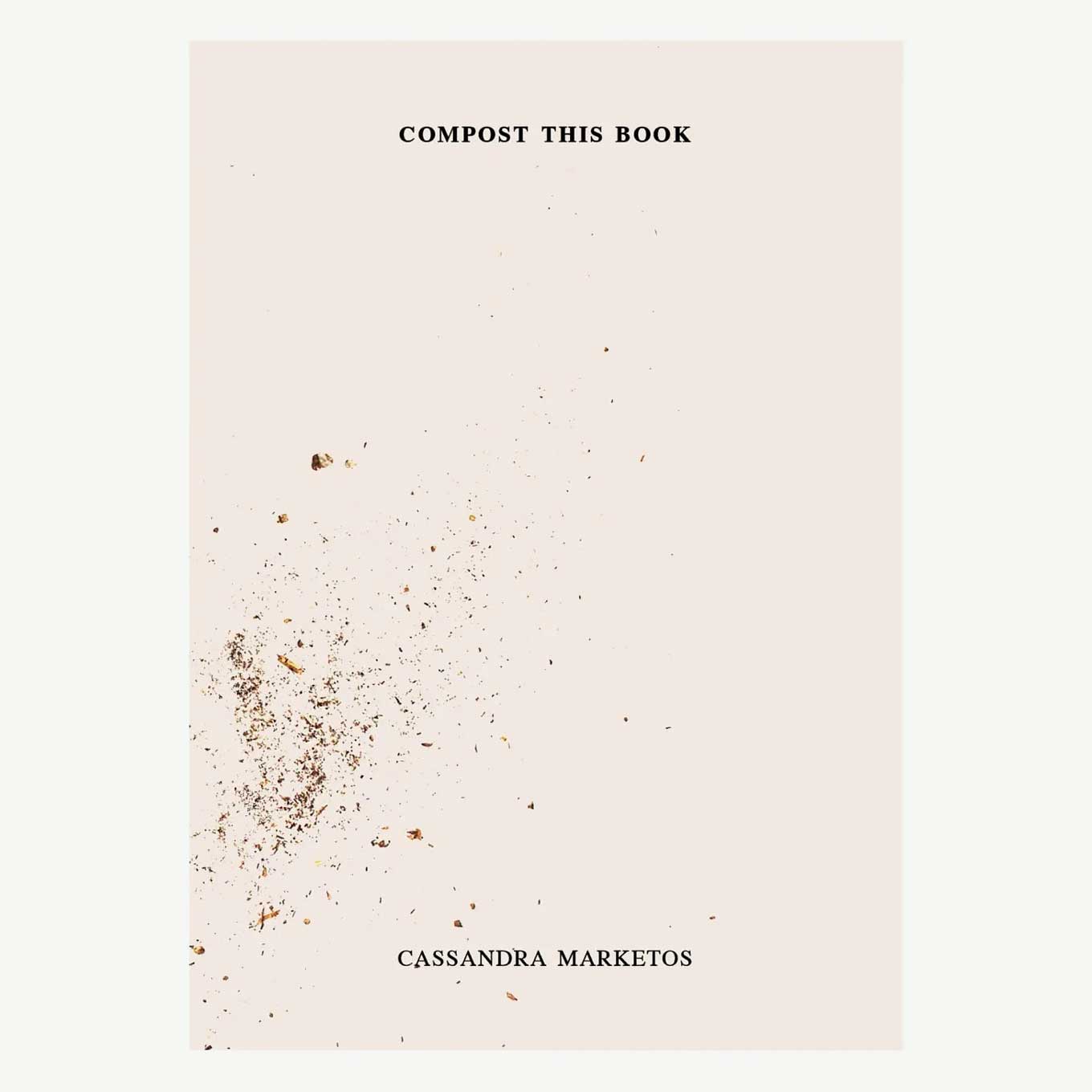
The book, aptly titled, “Compost This Book,” is a short but detailed primer on composting for the “very, very beginner” that is available for pre-order and will release in mid-September.
The book takes readers through a journey of composting that helps break down the mechanics of decomposition, and hopefully, encourages folks to opt for composting instead of any myriad of extractive and harmful methods of waste disposal.
And here’s the kicker: You can really compost it.
“The book is made with recycled paper and printed with vegetable inks, and the final page contains a simple set of instructions on how to use the book itself to make your first compost pile,” Marketos wrote in a recent newsletter announcement.
Marketos hopes the book is intuitive and easy to embrace, as opposed to the memorization-based learning that doesn’t quite stick for a lot of folks. (Thus, why it’s easy to compost when you’ve finished reading it!)
“Ultimately, I made this book for all the people out there like me, who don’t do well with spreadsheets or on tests, and who have been typically alienated from things like ‘science’ and ‘chemistry’ in traditional school settings,” she continued in the newsletter.
Contents include chapters such as “How to Compost,” “What You Should Compost,” “(Micro)Biology-Chemistry,” “Composting in Small Spaces,” and more.

The book also features detailed depictions of food items, bugs and insects — and of course, dirt. The designer behind it is local-to-LA publishing company Apogee Graphics.
Marketos’ audience shared excitement surrounding the announcement of the book, generating buzz from the ground up.
“Can’t wait!” one user wrote on Marketos’ Instagram post. “Love all the critters and stuff on the pages.”
“This is so fantastic,” another chimed in. “I’m going to buy ten copies to give to my friends who want to compost but are scared.”
That fear is what Marketos hopes to eliminate, encouraging readers to simply start on their composting journey.
“‘Compost This Book’ focuses on learning through action, practice, observation, and — most importantly — making huge mistakes. Lots and lots of huge mistakes,” she writes. “ I want people who read it to feel empowered to mess up, and I also want them to feel invited into deeper learning on their own terms.”
Header images courtesy of Cassandra Marketos
As most of us already know — likely from hours of spiraling about the climate crisis — the state of the environment is enough to send anyone to therapy.
Of course, there’s nothing wrong with seeking help for our mental health, and climate anxiety is very real — but there is progress happening around us every single day.
One example of this is a new comedy web series from nonprofit media and conservation organization On the Edge.
The series, “Animals in Therapy,” uses comedy and connection to advocate for animal conservation. Because who hasn’t felt existential anxiety surrounding the planet? We’re all in this together: even the axolotls.
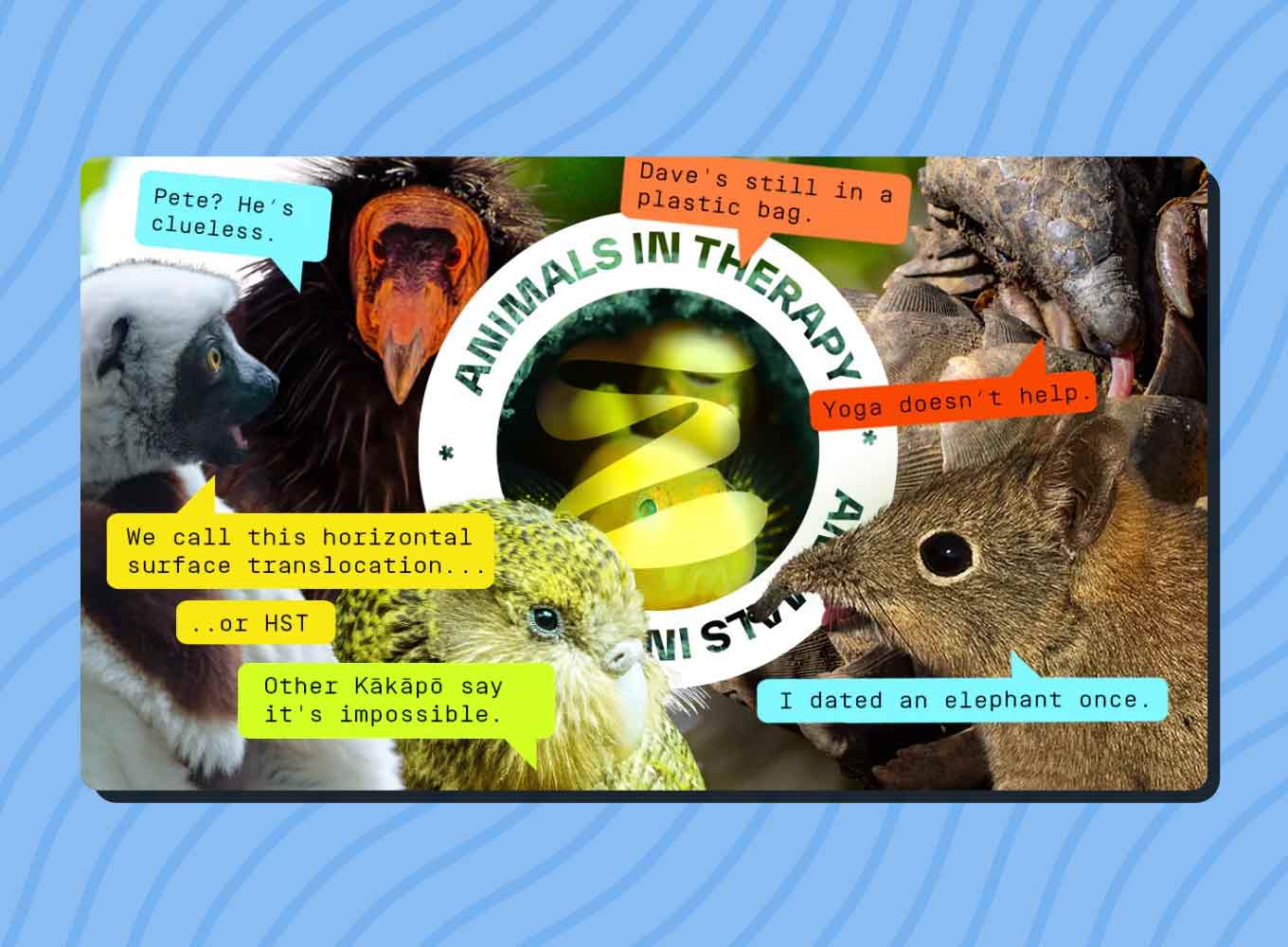
“Unlike many campaigns which feed eco-anxiety, the new series uses comedy and relativity to deliver a pertinent message that we are all closely aligned to certain endangered species,” a press release from On the Edge shares.
The series is the second installment following a successful run from last year’s original “Animals in Therapy” project. The organization even recruited some famous faces to chat with endangered and misunderstood species, in a therapy-style video chat setting.
There’s Rhys Darby breaking it down with a kakapo, “White Lotus” and “The Last of Us” star Murray Bartlett connecting with otters, turtles discussing sadness with Jaz Sinclair, and lots more.

The episodes will roll out once a week through September 12 and will provide humorous and meaningful insights into the lives of animals such as fish, pangolins, and condors.
“We champion the underdogs and EDGE (Evolutionary Distinct and Globally Endangered) Species. They might not be the cutest or cuddliest of species, and because of this, they often don't get much conservation attention,” On the Edge CEO Beth Blood told Good Good Good in an email.
“They have wonderful traits and characteristics that we draw inspiration from to craft entertaining stories. These entertaining stories are more accessible to wider audiences, raising the species' profile and highlighting the conservation initiatives we help fund amongst a larger portion of society.”
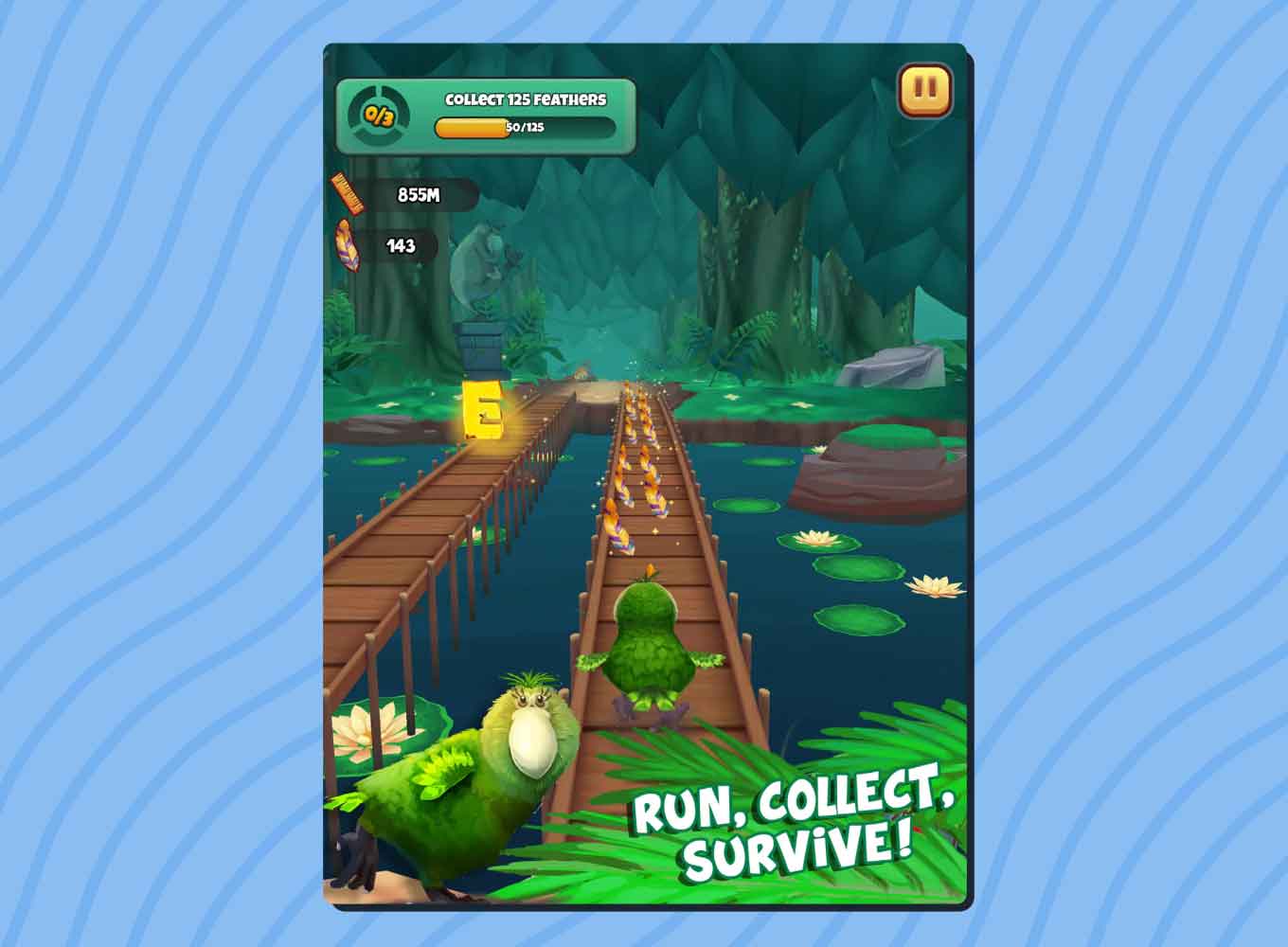
The web series is not the only way On the Edge connects people to animals. The organization also creates other storytelling media, interactive games, and poetry performances to emotionally connect humans with the natural world.
In addition, On the Edge partners with Bright Tide to bring research and workshops to private sectors to train corporate leaders on sustainability topics and host “hackathons” to create new technology aimed at solving biodiversity challenges.
“We are storytellers and scientists working to reconnect people with nature,” On the Edge’s website reads. “For us, an emotional connection means that what we're connected with is seen, acknowledged and respected. We truly believe that only by falling in love with Nature will we truly appreciate its value and do what it takes to save it.”
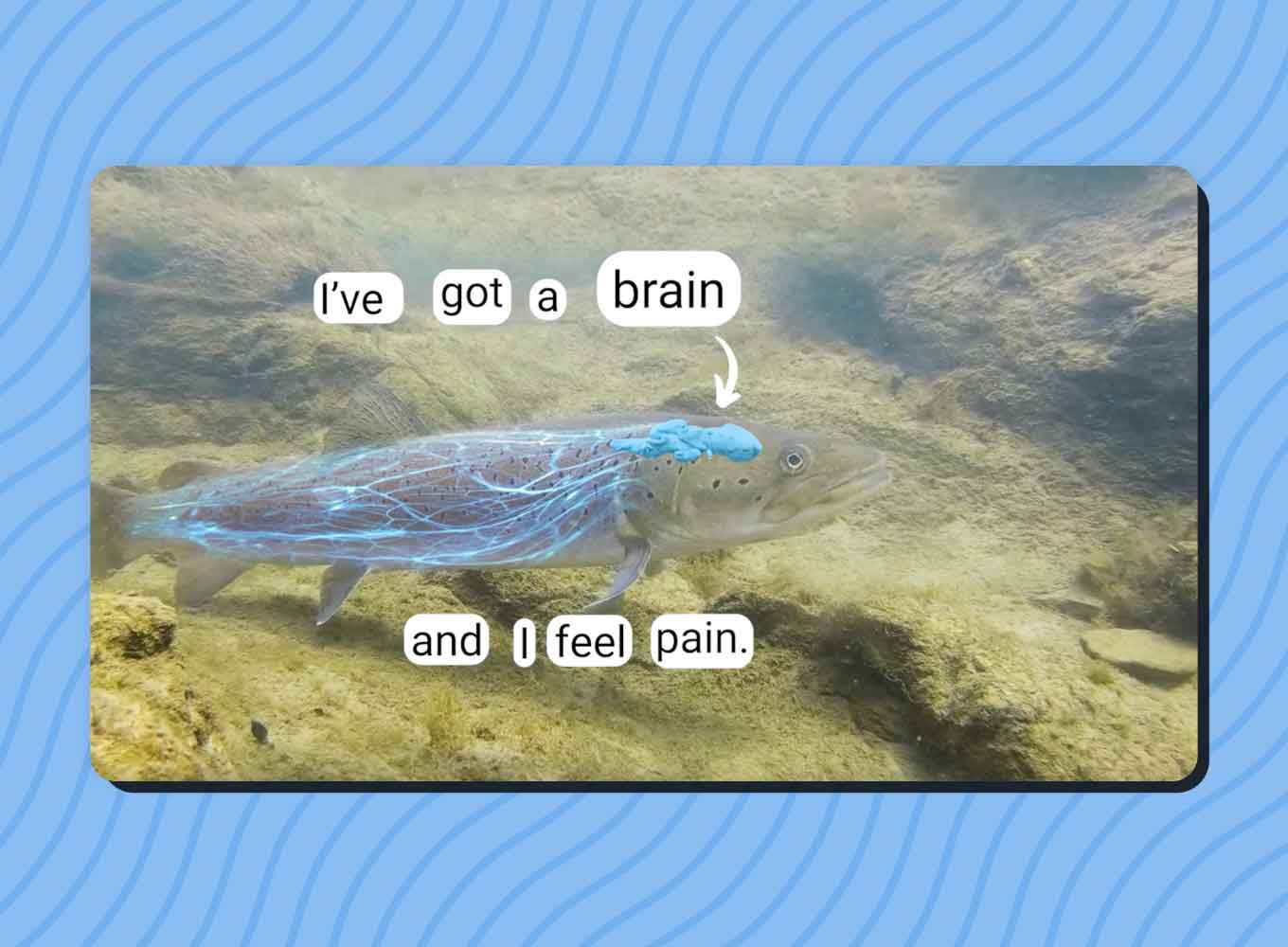
That’s the power behind “Animals in Therapy.” Even though we’re vastly different, all of our experiences coalesce in the same place and time: Right here, right now, on planet Earth.
“In our modern times, lots of people aren't very nature aware. Even if they are aware, they often see themselves as separate from nature, that humans are not a species within the animal kingdom,” Blood said.
“Season 2 of Animals in Therapy is inspired by the fact that we all have feelings. We might interpret them in different ways or express our emotions through different methods, but animals are experiencing thoughts and feelings, desires and instincts, just like us.”
Viewers can catch up on Season 1 of “Animals in Therapy,” or view new episodes of Season 2 on the On the Edge YouTube channel.
Header image courtesy of On the Edge
“Well-behaved women seldom make history” is a phrase frequently trotted out around International Women’s Day, and just as frequently attributed to Eleanor Roosevelt.
It doesn’t matter that the former First Lady of the United States never actually said this — in fact, it was Pulitzer Prize-winning historian Laurel Thatcher Ulrich in an obscure academic article in the 1970s — the misattributed quote endures, further cementing Roosevelt’s reputation as one of the most inspiring women of all time.
Related: The Best Eleanor Roosevelt Quotes
2021 has also seen the unveiling of the Eleanor Roosevelt Barbie Doll, another marker of her iconic status. In this she has joined the “Inspirational Women” series — following, among others, Maya Angelou, Florence Nightingale, Frida Kahlo, and her friend, aviator Amelia Earhart. (Whether she would have approved is another matter.)
Despite her 1.8-meter fame, or perhaps because of it, ER — as she was colloquially known — was not one to draw extra attention to herself.
However, she came to excel at using her platform to uplift others or promote her favorite causes, including women’s rights and racial equality.
Two days after Franklin D. Roosevelt’s inauguration as the 32nd president of the US in March 1933, the new First Lady held her first White House press conference for women reporters only. This was the first of 378 such events, offering unprecedented access for women journalists over the 12 years, or three terms, FDR was in power.
In another historic first, Eleanor Roosevelt twice invited African American contralto opera singer Marian Anderson to perform at the White House — including for King George VI and Queen Elizabeth during their US tour in 1939.
In the same year, behind the scenes, she lobbied for Anderson to perform an open-air concert in front of the Lincoln Memorial in the then racially segregated capital — a performance since described as a “watershed moment in civil rights history”.
Against the backdrop of the Great Depression, the Democrats’ “New Deal” and the second world war, ER transformed the First Lady role from largely ceremonial to much more publicly and politically engaged one.
As well as opening the White House to new constituencies, she extended her duties far beyond the official residence.
With the president’s mobility compromised by his paralysis, ER was frequently dispatched to gather evidence, inspect government works and assess public opinion within the US and sometimes internationally.
Her extensive travel made her an easy target for media satire — “Mrs. Roosevelt Spends Night at White House” ran one headline — and earned her the nickname “Eleanor Everywhere” (now the name of one of several children’s books about her).

Her most famous overseas trip was the five-week South Pacific tour of 1943. Travelling as an ambassador for the American Red Cross, she was flown 25,000 miles on a four-engine military plane, the Liberator, from San Francisco to Hawaii, on to the Pacific Islands, New Zealand and Australia, and back again.
In Australia, thousands lined the streets of Melbourne, Sydney and Brisbane to greet her. In Canberra, she became the first woman ever to be an official guest at a luncheon at Parliament House. Prime Minister John Curtin toasted her by saying “you are one of the most distinguished figures of our age”.
The First Lady dutifully reported interesting observations about Australia in her widely syndicated My Day column.
Privately, however, she found the official engagements exhausting and trivial compared with her core mission of visiting US service personnel. In her 1949 memoir This I Remember, it was the impact of meeting American GIs in military hospitals that lingered with her. She wrote:
The Pacific trip left a mark from which I think I shall never be free.
Roosevelt’s My Day column ran six days a week from 1935 to mere weeks before her death in 1962. In that time, she only ever missed four days — when her husband collapsed and died, just months into his historic fourth term in office in April 1945.
Not long after, the next phase of her life began when FDR’s successor Harry Truman appointed her US delegate to the United Nations, declaring her “First Lady of the World”.
As Chairperson of the Commission on Human Rights (1946-51), she was a driving force in the drafting and adoption of the Universal Declaration of Human Rights in 1948 — although not the only one.
As First Lady, Eleanor Roosevelt was admired, but controversial.
Now, she frequently tops US polls as the most popular First Lady in history.
Fascination with her life and character has only increased, indexed by a steady stream of books focused on her private life — her marriage to womanizer FDR, her passionate friendships with women and men, who may or may not have been lovers – as well her public achievements.
Amy Bloom’s 2018 novel White Houses, fictionalizing Eleanor’s relationship with journalist Lorena “Hick” Hickock, was a bestseller, as is the most recent biography by David Michaelis, Eleanor, released late last year.
In 1968, Eleanor Roosevelt was posthumously awarded the UN Human Rights Prize and in 1998, the United Nations Association of the USA inaugurated the Eleanor Roosevelt Human Rights Award.
For Hillary Clinton, the former First Lady most often compared to Roosevelt, Eleanor was so inspirational she is rumored to have held imaginary conversations with her at crossroads in her political career.
Finally, inspirational quotes that Eleanor Roosevelt actually said or wrote continue to circulate. To end with one that captures how she herself redefined the possibilities of leadership:
A good leader inspires people to have confidence in the leader. A great leader inspires people to have confidence in themselves.
We've all been there: Looking forward to some healthy snacking, you empty a container of blueberries to wash them — only to discover mold on the fruit you purchased just hours ago.
It's frustrating, a bit infuriating, and oh-so disappointing.
Fortunately, our partners at Experience Life have compiled a few tips and tricks to employ the next time you're shopping for produce — and the team at Good Good Good has adapted it and added to it to make it even more comprehensive and helpful.
Because produce is a living thing, knowing what to buy often comes down to recognizing where the veggie or fruit is in its life cycle — as well as where it's from and how it was harvested.
With practice, you'll be able to select the freshest (in season!) picks, confident your produce will be at its most nutritious, flavor-rich best.
You might also like: Which fruits & veggies are in season? | How to reduce food waste | List of fruits from A-Z | List of vegetables from A-Z | Good news about food
Explore These Tips To Pick the Best Produce
1. Use your senses
Use your senses when shopping for fresh produce. If it feels solid and doesn't have soft spots, it's likely fresh. A strong, pleasant aroma is a hint that it's ripe and tasty. Look for vibrant colors, which indicate that the produce is ripe and packed with nutrients. Remember to check for any signs of age, like brown stems or wrinkles,
Vegetables are picked ripe and don't ripen further after harvest, so many tend to have a longer shelf life compared with more fragile fruits, which can be sold at any stage of their life cycle. That's one reason it's essential to know the indicators of ripeness.
As a general rule, produce should feel heavier when ripe, thanks to its high water content. As they begin to degrade, vegetables and fruits lose weight, so avoid any that feel lightweight for their size, especially if they're bruised or mushy.
You can usually also tell by sight whether items are in good shape. Take an extra moment to glance at the cut stem, advises Cynthia Sandberg, owner of Love Apple Farms, a biodynamic farm in Santa Cruz, Calif. "If the cut stem is brown or wrinkled, the produce is older than you may want."
Aroma is another good indicator of ripeness.
Berries should smell fresh and sweet, with no moldy whiffs. Pineapples and stone fruits, such as peaches and nectarines, should have a rich, fruity aroma. Ripe tomatoes yield a pleasant earthy smell, familiar to anyone who's plucked a sun-drenched tomato right off the vine.
2. Think ahead
Before shopping for produce, it's worthwhile to consider when and how you want to use it, as both have a bearing on the preferred stage of ripeness.
Tomatoes are a good example, Sandberg says, because they have a fleeting window of perfect ripeness — though you can use them earlier. "Tomatoes should be picked when they yield to gentle pressure," she says, "unless you're making fried green tomatoes. Or if you want to take tomatoes to your friend's house for them to enjoy over the next week."
In both cases, slightly underripe tomatoes are the perfect pick.
If you're growing a garden, keep a close eye on your veggies and fruits so you can harvest and enjoy them when they're at their peak.
3. Store strategically
Fruits that continue ripening after harvest are called climacteric, a category that includes mangoes, bananas, avocados, pears, nectarines, peaches, and apricots.
If you buy them before they're ripe, you can leave them on your countertop until their aromas and texture let you know they're ready to be eaten or refrigerated, which will slow the ripening process.
Some fruits do well when stored at room temperature; most can be refrigerated for a short time to keep them from rotting — and whether you choose to do so is a matter of personal preference.
For example, we're often told to never refrigerate tomatoes because it can affect their texture. But putting those almost-too-ripe tomatoes in the fridge can buy you an extra day or two if you're not planning on using them right away.
4. Shop with the seasons
"It goes without saying that fresh, seasonal fruits and vegetables provide the foundation for delicious, nourishing dishes," writes chef Bryant Terry in his book Afro-Vegan.
Shopping for what's in season allows you to get your hands on the freshest, most nutritious produce, and it's a great excuse to try out new foods and recipes.
For example, if it's spring, look for spring favorites like asparagus, artichokes, radishes, and rhubarb.
We're accustomed to buying these items at any time, but eating them in springtime aligns our diets with corresponding seasonal shifts in our bodies, according to health traditions like Indian Ayurveda and Traditional Chinese Medicine.
5. Keep it local
Local farmers' markets are some of the best places to find the freshest produce. Often, the merchandise has just been picked that morning and is more nutrient-dense than anything you can buy at the supermarket.
That's because produce starts losing nutrients once it's harvested: A University of California, Davis, study found that vegetables lost between 15 and 77 percent of their vitamin C during seven days of storage.
Farmers' markets are also a great source of unusual cultivars and heirloom varieties that can transform your cooking.
Wine connoisseurs may be familiar with the concept of terroir, or sense of place. A marriage of elements — climate, soil, elevation, farming methods — gives the wine a distinctive identity that speaks to its origins: the land where the grapes were grown.
Terroir also applies to vegetables and fruits. Greens, spring onions, and strawberries purchased from a farm in your area will have a similarly unique character, particular to your locale.
6. Know your etiquette
It's perfectly acceptable to pick up one or two pieces of produce as you shop to check if they're in good condition, but it's considered bad form to paw through crates, squeezing each avocado in search of the ideal one.
This is especially true at farmers' markets, Sandberg notes. "Ask the farmer before handling the produce. They may want to select and bag for you," she says, adding that protocol can differ by location.
"In European farmers' markets, it is absolutely forbidden to touch the produce if you're a customer."
7. Swap away
If, while perusing the produce aisle, you find shallots that don't look their best, scoop up a bunch of leeks to take their place. Mealy looking apples? Choose pears instead. No kale in sight? Try Swiss chard, collard greens, or spinach.
Such flexibility ensures you get the freshest veggies and fruits while diversifying your diet — and you may discover your original recipes become even tastier with the alternative.
8. Don't forget common sense
Your own judgment will typically lead you in the right direction.
Sprouting potatoes and wrinkled apples have seen better days. Soft, mushy tomatoes shouldn't make their way into your shopping basket, either.
Produce is often waxed before it hits the supermarket shelves, so the shiniest, most tempting-looking veggies and fruits won't necessarily be the tastiest. This is true even of some organic produce.
Though the Food and Drug Administration says the wax is safe to eat, you might prefer to remove it—and the bacteria and microorganisms that could be clinging to it—before using the produce.
Most coatings can be scrubbed off with a brush under hot water, but you can also add a tablespoon of a household acid, like lemon juice, to a basin of hot water to help do the job.
This story was originally published by Stacker and republished pursuant to a CC BY-NC 4.0 License.
Stefanie Lyn Kaufman-Mthimkhulu began doing disability doula work long before they ever heard the term. From the time they were in middle school, they remember “being responsible for big, intense crisis situations” with their friends.
Throughout high school, a close friend self-injured. Kaufman-Mthimkhulu would drive to her house and listen. They would also take care of their friend’s wounds, spend time watching bad TV shows and eat ice cream.
What they didn’t do is blame or shame their friend.
Now, years later, disability doula work is a core part of both Kaufman-Mthimkhulu’s personal practice and their job as director of peer support organization Project LETS, which works to organize community-based mental health support for people with disabilities.
For Kaufman-Mthimkhulu, disability doula work is “helping each other survive with our embodied knowledge, tricks and Mad Crip skills.”
(Some disabled people have reclaimed “Crip,” short for cripple, as an identity.)
They originally were trained more in peer support, which has its roots in addiction recovery and mental health support, but after hearing the queer Korean-American disability justice activist Stacey Park Milbern call this mix of hands-on and emotional support within disability communities “disability doulaing,” Kaufman-Mthimkhulu began to think of their work through that lens.
The term “crip doula” or “disability doula,” coined by Milbern, describes the often-invisible work of disabled people “supporting people rebirthing themselves as disabled or more disabled.”
It involves people with disabilities sharing the knowledge and resources that have come about through their lived experiences with others.
Becoming disabled can significantly change a person’s life. Many of those shifts aren’t discussed in a doctor’s office, and there’s no easy how-to guide to follow.
Disability doulaing fills those gaps.
It can involve practical work like sharing diagnosis journeys and personal experiences with doctors or medication. It can also look like a friend helping another apply for Medicaid or file complicated insurance claims.
In an interview in Leah Lakshmi Piepzna-Samarasinha’s book “Care Work: Dreaming Disability Justice,” Milbern pointed out that naming the need for disability doulaship shines light on a deeply isolating transitional part of life.
“Without crip intervention, we are frequently left alone to figure out how to be our bodyminds and in this ableist world,” Milbern said.
Milbern, who died in 2020, publicly thanked the people who both let her serve as a doula for them and the people who filled that role for her, saying her “survival and resilience has depended on it.”
Working with a disability doula can reduce some of the feelings of shame, grief and loneliness newly disabled people face, said Sami Schalk, associate professor of gender and women’s studies at University of Wisconsin–Madison and author of “Black Disability Politics.” Schalk has also served as a disability doula.
Disability doulaing is most often done as a practice of community care: disabled friends supporting disabled friends. Some people, like Kaufman-Mthimkhulu, are advertising their services as disability doulas, but it’s more often an informal arrangement.
Kaufman-Mthimkhulu offers disability doulaing among a number of other services, and all arrangements are billed on a sliding scale.
In the years since the onset of the COVID-19 pandemic, the need for this type of support has increased, particularly with instances of long COVID. The symptoms of long COVID vary, but can include ongoing respiratory, cardiac and neurological issues for years after a COVID infection. Intense fatigue and “brain fog” are some of the most common symptoms that make it difficult for people to work and live in the same way before the illness.
There is no absolute estimate of how many people currently suffer from long COVID, but myriad experts studying its effect on the workforce have given estimates as low as under 400,000 and as high as 4 million workers being affected, according to KFF, the health policy think tank formerly known as the Kaiser Family Foundation.
In other words, a huge amount of people suddenly became disabled and needed help adjusting to a new kind of life.
Throughout lockdown many people with myalgic encephalomyelitis/chronic fatigue syndrome, a chronic illness with many overlapping symptoms to long COVID, offered advice to the newly disabled on everything from how to advocate to themselves to how to grapple with a mysterious medical condition.
In addition to practical tips, a big part of disability doula work is helping people come into a new identity, Schalk said. She noticed online that there were many conversations around the idea and desire for a cure for long COVID.
There was some tension: Talking about a cure is often tied up with internalized ableism — a wish to eliminate disability.
Many disabilities have no cure, and a focus on future cures can deflect from supporting the current realities of some disabled people.
Disability doulas came into the conversation to gently meet people where they were at — not insisting people had to identify as disabled, and not telling them they were wrong for wishing for a cure.
Doulas also explained how cures might not be found in our lifetimes, and helped people work through that.
“That’s actually part of the disability doulaing process, is not forcing identity on people, but just saying, ‘Hey, you know, what do you need? I see this happening for you, are there things that we can support you in?’” Schalk said.
Disability doulaing is a tradition of caregiving pioneered by queer femmes of color, as Piepzna-Samarasinha documented in her book. Disability doulaing emerged from the disability justice movement, which was gestated in the early aughts.
The movement formed to center the experiences of the most marginalized people and challenge society’s ingrained ableism through an intersectional lens.
Using the word “doula” has multiple intentional implications, one playing off of traditional doulas’ roles in the birthing process.
“[T]hat is such a huge paradigm shift — to view coming into disability as a birth, not a death, which is how these transition(s) are seen by ableist culture,” Piepzna-Samarasinha wrote.
But another purpose is as an acknowledgment of its gendered labor. All three disability doulas The 19th spoke with talked about Milbern’s origination of the term and personal legacy.
They also all said that the work often falls along gendered lines.
Caregiving is work that society demands women do without acknowledgment; doubly so for queer people and women of color whose emotional labor is expected and taken for granted, they said. Naming Milbern and the lineage of disability justice, in light of that, is important.
Disability doulaing is a community care practice drawing from lived experience, and there are many paths someone can take to offering that form of care.
However, it is often a title bestowed on someone by their community, noted Hannah Sullivan Facknitz, a disabled community organizer.
As an “academic crip doula,” Facknitz supports disabled students as they navigate higher education.
Facknitz found themselves in a disability doula role when they began teaching as a part of their graduate program. They were open about being disabled and used a mobility aid.
When talking to other disabled students, Facknitz realized many didn’t have disability accommodations due to a lack of understanding of the process at a university level.
They started to share their knowledge of how to communicate between different administrative departments, and how to translate medical conditions into requests for accessibility accommodations.
When the pandemic hit, Facknitz saw their students begin to show signs of trauma. As someone with PTSD, they recognized some of the symptoms and increasingly began supporting the mental health of their students.
“A lot of disabled people, after they’ve been disabled for a little bit of time and have lived in disabled community, start doing the crip doula work somewhat automatically, especially if you are queer or [assigned female at birth] or a cis woman,” Facknitz said.
Schalk also added that people who are marginalized in multiple ways are often hyper-visible in their communities, which can be part of the reason they approached more often for help.
That was certainly the case for Facknitz: During lockdown, Facknitz examined their gender and came out as genderqueer in 2021. That public identity shift changed the students who came to them for help.
“It was actually the students who were much more vulnerable, who started showing up in my office, who started coming to me. It was the queer, quiet students, students that didn’t engage during class, the students who were not doing as well in school,” Facknitz said.
“I was getting the students I worried about more — you know, the students who were silent.”
Sometimes doulas find themselves supporting parallel journeys as someone comes into a queer or trans identity too.
This article was originally published by The 19th.
National Public Lands Day is the nation's largest single-day volunteer effort for public lands. And this year, it falls on September 27, 2025.
National public lands include a lot of different protected natural environments in America. From national parks, memorials, and monuments, to wildlife refuges, conservation areas, trails, wilderness areas, seashores, lakeshores, and more, public lands are actually all around us!
In fact, nearly 40% of the United States is public land, supported by taxpayers and managed by federal, state, or local government. They are also currently threatened by federal budget cuts and proposed legislation that could harm or threaten their existence.
Whether you just love the outdoors, are interested in the shared history of public lands, or want to protect them for future generations, National Public Lands Day aims to celebrate the connection between people and their community’s natural spaces.
Here is your guide on how to celebrate National Public Lands Day this year.
By the way, some of the links in this article (like books!) are affiliate links, which means if you make a purchase after clicking a link, we may earn a commission at no extra cost to you. Thank you!
Activities and Ideas: How To Recognize National Public Lands Day
Volunteer & Take Action
Urge your elected officials to protect public lands.
Now more than ever, the federal government needs a reminder from us as constituents that these public lands matter and deserve to be protected.
Contact your representatives to urge them to take action to protect public lands by resisting funding and employment cuts across the country, fighting back against the construction of oil pipelines, holding corporations accountable, establishing robust sustainability and conservation laws, and more.
You can also simply let your representatives know that you value agencies like the National Park Service and want them to work to protect them. Need a script to get you started? We’ve got you covered.
Sign a petition to protect public lands.
The National Parks Conservation Association has collected a handful of petitions that would send a message directly to elected officials calling for action to protect the country’s parks.
With a simple input of one’s name, address, and contact information, the nonprofit will do the hard work to tally supporters in the fight for the country’s parks.
Clean up your local public lands.
Grab a clean-up kit and pick up litter in your nearby public lands. You can also help spread the word about the importance of responsible park usage, or even reach out to your local parks department to inquire about improved recycling or waste management options.
Better yet, make this a regular part of your routine! Pick up trash on your daily walks, or rally some friends for a monthly clean-up effort. Make today’s actions the start of something even more impactful.
Become a volunteer at a local or national park.
While some of the most popular parks sure get their share of foot traffic, there’s one thing every protected natural space needs: more volunteers.
Whether you sign up to volunteer with the National Park Service, or you reach out to a local wildlife refuge or conservation space, your time, energy, and skills are vital to the protection of America’s wildest spaces.
Donate to organizations that protect national parks and public lands.
Projects, nonprofits, and funds of all kinds exist to maintain and protect our public lands. Consider contributing to some of them during National Public Lands Day.
- The National Environmental Education Foundation
- Indigenous Environmental Network
- Trust for Public Land
- Public Lands Foundation
- Conservation Lands Foundation
- National Wilderness Stewardship Alliance
- The Nature Conservancy
- National Park Foundation
- National Parks Conservation Association
- Natural Resources Defense Council
- Conservation Legacy
Celebrate
Enjoy a fee-free day at a national park.
Every year, the National Park Service announces a number of “fee-free days” to ensure that our national parks are accessible to everyone.
The good news? 310 national park destinations are already free every day. The even better news? National Public Lands Day is a fee-free day across all national parks!
Once you’re ready to lace up your boots, give one of the country’s most historic national parks a visit. The National Park Service has tons of resources to help ensure you plan ahead and have the trip of a lifetime.
Attend a National Public Lands Day event.
National Public Lands Day brings individuals, families, and community groups together to help restore and improve our beloved outdoor spaces.
According to the National Environmental Education Foundation, over the last decade, over a million volunteers have donated nearly 5 million hours of their time for public lands on this special holiday!
You can find a full directory of this year’s events through NEEF’s interactive map.
Learn
Watch a documentary about our public lands.
Check out a few of our favorites:
- “Public Trust: The Fight for America’s Public Lands” (Patagonia Films)
- “The Ground Between Us” (Films For Action)
- “This Land” (Vimeo)
- “This American Land” (PBS)
- “The National Parks: America’s Best Idea” (PBS)
- “Our Great National Parks” (Netflix)
Read books about public lands and national parks.
Bonus points if you bring said books with you when you venture outdoors.
Here are a few recs to add to your library:
- “Our Common Ground: A History of America’s Public Lands” by John D. Leshy (Bookshop) (Amazon)
- “The Power of Scenery: Frederick Law Olmsted and the Origin of National Parks” by Dennis Drabelle (Bookshop) (Amazon)
- “This America of Ours: Bernard and Avis Devoto and the Forgotten Fight to Save the Wild” by Nate Schweber (Bookshop) (Amazon)
- “Our National Forests: Stories from America’s Most Important Public Lands” by Greg M. Peters (Bookshop) (Amazon)
- “That Wild Country: An Epic Journey Through the Past, Present, and Future of America’s Public Lands” by Mark Kenyon (Bookshop) (Amazon)
- “The Hike” by Allison Farrell (Bookshop) (Amazon)
- “You Are Home: An Ode to the National Parks” by Evan Turk (Bookshop) (Amazon)
Read good news about public lands.
Part of the fun of celebrating public lands also means celebrating good news about national parks and public lands.
Here are just a few to get you started:
- Benedictine monks partner with US Forest Service to prevent wildfires
- With human-wildlife contact on the rise, Wyoming introduces new Instagram filter to keep visitors safe
- Grizzly bear baby boom in Yellowstone triples cub count in national park
- America's newest national park pays homage to a complex moment in US history
- This national park just expanded its adaptive excursions, allowing disabled visitors to bike, camp & kayak
- Following budget cuts and layoffs, national park rangers host a bake sale to take on $1.2 billion deficit
Learn more about the history behind America’s public lands.
All U.S. public lands are the ancestral lands of Indigenous peoples and tribal nations. Prior to western colonization, these lands were managed sustainably for thousands of years by these communities.
Learn more about the history and timeline of public lands through a guide from the Public Lands Foundation, and be sure to think critically and through an intersectional lens as you consider the implications and responsibility of land ownership.
Learn what Indigenous lands you live on.
Like we said, all American lands are stolen Indigenous lands. It is vital that we are aware of our position in this history — and in our present-day communities.
Explore an interactive map to learn about the Indigenous lands you occupy.
Once you have a better understanding of the lands you occupy, you can properly conduct a land acknowledgment.
Learn how to #RecreateResponsibly.
A huge element of National Public Lands Day is the commitment to take better care of our natural environment — and, in turn — each other. This is the principle behind #RecreateResponsibly, a campaign that invites people to be more thoughtful stewards of nature.
Whether it’s learning how to camp, hammock, or adventure responsibly, there are guides and resources to make your experiences fun and safe at the same time.
Frequently Asked Questions
What is the theme of National Public Lands Day in 2025?
The theme for National Public Lands Day in 2025 is “Our Home Outdoors.” This theme reminds people that public lands are not just physical spaces — they are where we come together, feel rooted, and develop a sense of place.
What are national public lands?
Public lands are areas of land (or water) that are owned collectively by U.S. citizens and managed by government agencies — and local Indigenous groups or tribal nations. They include national and state parks, protected areas, wildlife refuges, ceremonial grounds, ancestral homelands, and more.
Why is it important to protect public lands?
Public lands are vital to sustainable and healthy ecosystems. Protecting these lands protects history and cultures, as well as wildlife and their habitats, natural beauty, and unextracted natural resources. They also contribute to the economy, drawing in visitors across the country.
What are the biggest threats to public lands?
There are a number of threats facing public lands, like climate change, land ownership disputes, fire and fuels, invasive species, loss of open space, and unmanaged outdoor recreation. Protecting public lands means ensuring they are in the hands of trusted stewards who will advocate for their safety and preservation.
What percent of the U.S. is public lands?
Over 40% of the United States is made up of public lands. This equates to about 640 million acres of land, and about 760 million acres of submerged land and water. These lands are managed by federal agencies, state governments, and tribal nations.
What state has the most public lands?
While there are public lands across the country, the Western side of America has the highest percentage of federal land. Of these states, Nevada is the state with the most federal land. A little over 80% of the state’s landmass, or 56,262,210 acres, is federally managed.
Leroy Jones was no stranger to prejudice when he began seeking work in the video game industry, but he says the racism he experienced when applying to work at game studios was “on another level.”
So, he decided to start a game development company of his own: 3D Dojo Studios.
The small, Asheville, North Carolina-based company was founded in 2020, with Jones recruiting from pools of game enthusiasts in his network and through online forums.

From there, he started hosting workshops and art challenges to attract diverse creators who could be a part of the studio’s debut title.
Soon enough, he was at the helm of a free online community on Discord — the 3D Dojo — composed of over 500 game developers and enthusiasts across the world, connecting to build their careers.
“I wanted to show there’s a better way to build games while creating opportunity for all of the people being unfairly overlooked,” Jones told Good Good Good in an email.
And now, 3D Dojo Studios has announced its very first original title: “DA PAPER BOY.” The game is one of less than 5% of video games even worked on by a Black developer, let alone developed by a Black-owned studio.
“DA PAPER BOY,” which will be released for purchase on Steam on October 20, follows three teen pranksters through a richly detailed paper delivery route.
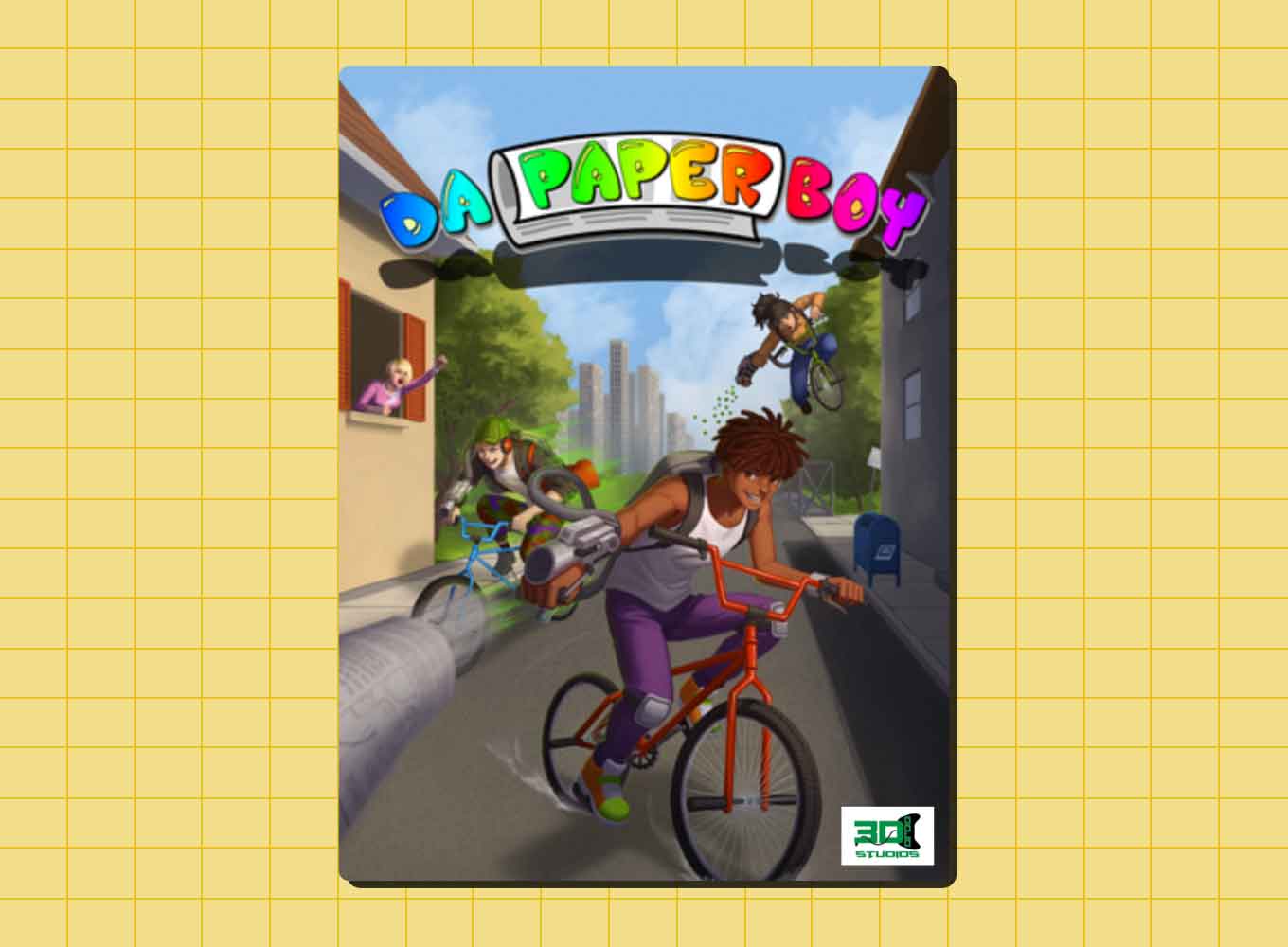
The visuals, character development, and narrative of the game center the experiences and culture of Black and Brown youth. Along with the meaningful development, the game is simply a fun outlet, as characters are tasked with dodging obstacles and engaging in stunts in a manner similar to “Crazy Taxi” gameplay.
Members of the studio’s online community designed and developed the game with zero budget.
“The team involved in the development of the game are exclusively members of the 3D Dojo online community,” Jones said. “There are a total of 10 members that make up the team, which is 50% people of color, 20% female, and 30% disabled. All team members have donated their time to create this game pro bono.”
This collective approach aims to help diverse game developers build the skills they need to succeed in a major industry.
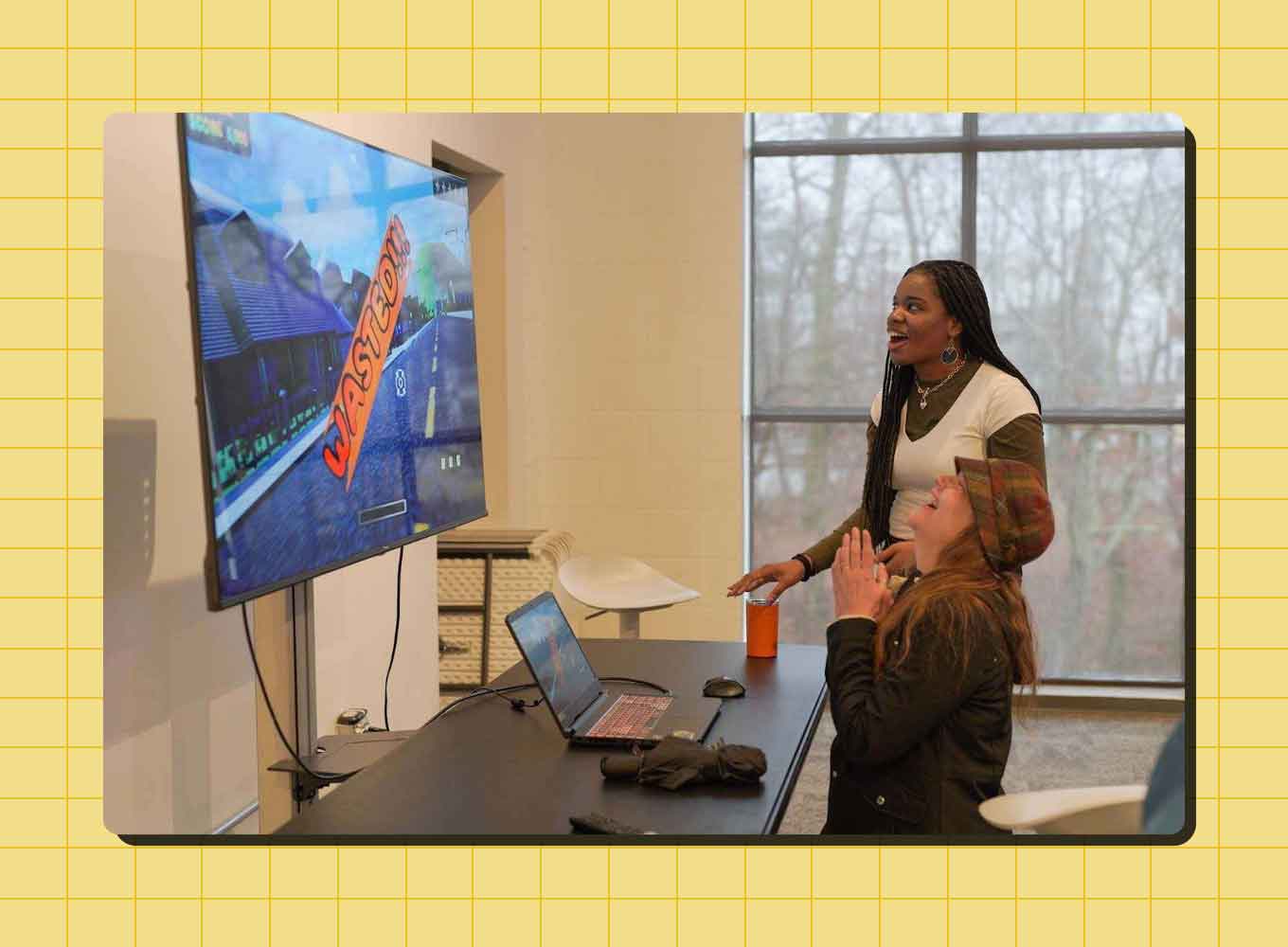
3D Dojo Studios also offers a mentoring program and virtual summer camp that offers classes in 3D and character art that is applicable to games, film, CAD, architecture, construction, interior design, and more. Participants work to build a portfolio and receive live critique to improve their skills every week.
“We created a space for them to learn with peers while expanding their worldview to explore opportunities that align with interests they and their parents may have never considered before,” Jones said.
And there is no better time than now to get in on the action of the gaming industry, which is valued at over $380 billion. According to Statista, the industry is expected to reach 3.1 billion users worldwide by 2027.
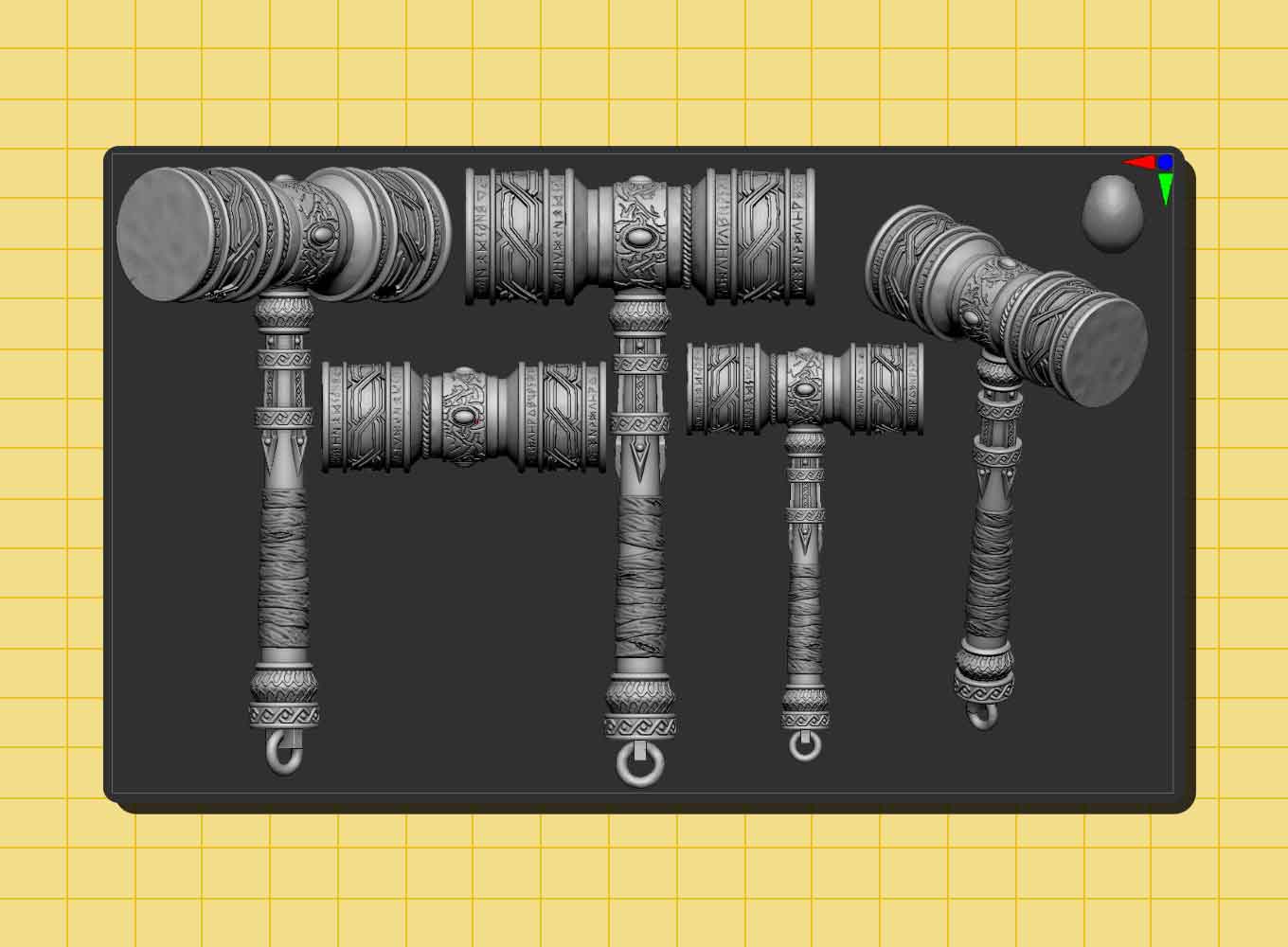
That said, surveys from the International Game Developers Association suggest that discriminatory practices have left Black game developers out of the sector, despite nearly half of all Black consumers in America identifying as “gamers.”
Similar trends persist for Latino and disabled developers, too.
“Talent is needed,” Jones said. “Across one of the most influential industries in the world, misrepresentation of minority stories persists.”
It’s not just mentoring that matters.
Jones says the main steps that need to be taken by the industry to create a more inclusive and equitable environment for Black and Brown creators includes commiting to pay transparency, investing in recruitment efforts of diverse creatives on all levels, and investing in resources to evaluate promotion practices across the industry.
Young developers also need the physical resources to build their portfolios.

“In addition to being a ‘who you know’ industry, it’s a ‘what technical resources you have’ industry,” Jones said. “Diverse up-and-coming creatives need to be supported with investment in physical hardware strong enough to build games.”
This is one of his own goals for the next year: using the revenue gained through “DA PAPER BOY” to fund the launch of a gaming lounge for members to access hardware for both building and playing games.
Jones hopes that as 3D Dojo Studios grows, so too will the amount of diverse programmers in the space.
“There are no reports that currently measure the diversity in ownership within the industry, but it’s easy to see that a studio both 100% Black-owned and determined to break barriers for diverse talent in the industry is not just rare, but sorely needed,” Jones said.
“Unlike our closest peers, we have built in diversity-centered outreach into our business model, so that as we scale our staff continues to reflect the makeup of the tens of millions of people who play games everyday.”
Every day the Good Good Good team collects the best good news in the world and shares it with our community. Here are the highlights for this week!
If you want to get good news in your inbox every day, join the Goodnewsletter — the free daily newsletter designed to leave you feeling hopeful.
The Best Positive News We’re Celebrating This Week —
A viral Eras Tour t-shirt has raised over $17,000 to protect and care for wildlife in Maine
Now a TikTok sensation, the Maine-based Saco River Wildlife Center posted about a fundraiser involving Taylor Swift-themed t-shirts — but with a twist. Playing on Swift’s now-iconic Eras Tour design, the wildlife center swapped the blonde pop star for its famed critters: raccoons, possums, and skunks.
The mastermind behind the design, Director of Development Lauren Kennedy first posted about the shirt on her personal account on July 21, and the video quickly gained popularity. Commenters were thrilled to combine their love of Swift with their love of… nocturnal mammals.
“The impact has been overwhelming,” Kennedy told us. “Not only have we raised over $17,000, we are also increasing awareness of our organization and promoting the work of wildlife rehabilitation.”
More good animal news:
- Nature lovers are using herding dogs to humanely move pesky geese out of the way and protect natural ecosystems.
- Courageous volunteers are working to save hundreds of animals from war zones in Ukraine.
- With only an estimated 2,500 left in the world, rescue groups started a grassroots effort to protect and save silvery gibbons.
In a landmark climate change case, a Montana judge just ruled in favor of young people’s right to healthy environment
It was a historic, first-of-its-kind case when a group of young climate activists first sued their home state of Montana for the harm caused by its failure to consider climate change when evaluating new projects.
They just made history again. On Monday, a judge ruled in their favor, writing in her decision, “Plaintiffs have a fundamental right to a clean and healthful environment, which includes climate as part of the environmental life support system."
The judge ruled that two existing state laws that limited the ability of regulators to consider climate effects were unconstitutional.
Why is this good news? While Montana doesn’t necessarily lead the way when it comes to planet-harming carbon emissions, this precedent-setting decision opens up the door for more cases and more decisions like it in other states. And most of all — it solidifies something we all know: people have a right to a clean, healthy environment.
In the year since the Inflation Reduction Act passed, U.S. solar and storage companies have announced over $100 billion in investments
The Inflation Reduction Act was signed in August 2022 — and one year later, investment in the solar energy supply chain has exploded.
According to a new analysis released today by the Solar Energy Industries Association, 51 solar factories have been announced or expanded in the U.S. — which alone is a nearly $20 billion investment into communities around the U.S.
Those factories will also employ more than 20,000 people and lead to 155 gigawatts of new production capacity.
The analysis found that by 2026, the U.S. will have more than 17 times its current manufacturing capacity — enough to meet the demand for the majority of solar projects expected to be built.
And that’s just for solar capacity — there have also been 14 new or expanded storage facilities and more than 3 gigawatts of new large-scale energy storage projects have already been launched in the past year.
Started by a group of businesses and city leaders, a 50-mile loop of hike and bike trails around Dallas is almost complete
In 2014, a small group of businesses and leaders in the city of Dallas came together in a private-public partnership to start a massive undertaking: connecting the entire city of Dallas with walking and biking trails.
Their plans for The Loop Dallas involved adding 11 miles of new trails to 39 miles of existing trails to create a continuous 50-mile pathway. The first of five planned connectors opened back in May — and the rest is expected to be completed within three years.
Beyond the recreational opportunities, those supporting the project are hopeful about what it will mean for access to the southern part of the city for residents— two-thirds of the investments in new trails are there.
Why is this good news? Cities invest a lot in road infrastructure, but cars or public transportation are often still inaccessible to many people. Beyond investing in a future that gives folks more car-free options for recreation, Dallas is giving its residents more car-free options for ways to simply (and more accessibly) move around the city, too.
A new grocery service is delivering zero-waste groceries to doorsteps in 4 major cities
Recognizing the significant barriers of cost and accessibility when it comes to grocery delivery service, two entrepreneurs set out to confront them — and give folks the best of both worlds, sustainable living, and convenient grocery shopping.
Alexander Torrey and Byungwoo Ko founded The Rounds, which works just like any other grocery delivery service: Members pay a fee, select their essentials from a wide array of household basics and pantry samples, and then have them delivered weekly by a courier.
But Rounds products are distributed in refillable and reusable containers (brought to you in a reusable canvas tote bag), so when your delivery person comes to drop off your next installment of goods, they can pick up any empty containers to refill for the next time.
Why is this good news? Higher costs and less accessibility keep many of us from investing in sustainable swaps, leading us to (understandably) reach for the convenience of corporate giants like Amazon. While we totally understand the need for accessible essentials, the logistics and distribution behind these major companies play a huge role in our destruction of the environment.
Disability doulas are helping support newly disabled people as they navigate an ableist world
Becoming disabled can significantly change a person’s life. Many of those shifts aren’t discussed in a doctor’s office, and there’s no how-to guide to follow. Disability doulas are helping fill those gaps.
The support of a disability doula can involve practical work like sharing diagnosis journeys and personal experiences with doctors or medication. It can also look like a friend helping another apply for Medicaid or file complicated insurance claims.
Sami Schalk, professor and author of “Black Disability Politics” has also served as a disability doula and says that working with a disability doula can reduce some of the feelings of shame, grief, and loneliness newly disabled people face.
Why is this good news? Since the onset of the COVID-19 pandemic, the need for this type of support has increased, particularly with instances of long COVID. The symptoms of long COVID vary but can include ongoing respiratory, cardiac, and neurological issues for years after a COVID infection — making it difficult for people to work and live in the same way before the illness.
A Massachusetts family donated 200 anti-choking devices to local schools after it saved one of their lives
Maggie O’Rourke is an ICU nurse and mother of a toddler, and gifted her parents a LifeVac anti-choking device for Christmas last year. As she expected, they teased her for it — but that quickly turned to gratitude.
The next day, while eating turkey leftovers, her dad began to exhibit signs of choking, collapsed, and was unconscious. Her mother tried abdominal thrusts, the Heimlich maneuver, called 911, and started CPR — and then remembered their new gift under the tree.
In two tries with the device, the lodged food came out and her dad began breathing within seconds.
Now the family is paying it forward and has donated more than 200 devices to Lowell Public Schools and emergency responders. Every school now has two LifeVac devices and O’Rourke is working with a state representative on a bill that would allow them to be available in schools across the state.
More good news of the week —
Making history, the VMAs nominated all women in the Artist of the Year category for the first time ever. The nominees span multiple genres and include Taylor Swift, Beyonce, Doja Cat, Shakira, Karol G, and Nicki Minaj.
Boston’s mayor just banned the use use of fossil fuels in new construction and renovated municipal buildings. The city owns over 16 million square feet of property, so the order makes a big stride toward its goals of decarbonization and electrification.
A California school district just rolled out 30 new electric school buses for the new school year. The change will save the Modesto School District over $250,000 dollars in fuel costs annually, lower carbon emissions, and result in cleaner air.
In hopes of forging peace, Colombia formally began a six-month cease-fire with its last remaining rebel group. The insurgency dates back to the 1960s, and the cease-fire can be extended in January if peace talks progress.
President Biden established a new national monument near the Grand Canyon that will protect it from uranium mining. The monument came at the urging of Indigenous communities, spans nearly 1 million acres, and is called Baaj Nwaavjo I’tah Kukveni — Ancestral Footprints of the Grand Canyon National Monument.
The first study to use human blood to compare period product absorption found that discs may be best for those with heavy periods. The findings could also help doctors better assess whether heavy menstrual bleeding could be a sign of other underlying health problems.
The Supreme Court temporarily reinstated the Biden Administration’s regulations on ghost guns. As part of a larger effort to reduce gun violence, administration officials said the weapons had been soaring in popularity, particularly among criminals barred from buying ordinary guns.
Scientists invented a new kind of paint that gives extra insulation and saves on energy, costs, and carbon emissions. Their research found the paints reduced the energy used for heating by about 36% in cold environments and for cooling by almost 21% in warm conditions.
A new “food prescription” program is paying for fruits and vegetables in parts of California. People with diabetes, for example, get a free box full of fruits, vegetables, chicken breast, quinoa, and other nutritious food delivered to their homes every two weeks.
There were no deaths from COVID-19 in Nova Scotia in the month of July. The Canadian province’s monthly pandemic report showed that hospitalizations and positive test results had decreased in July compared to June, too.
Households in the U.K. have now installed more heat pumps and solar panels than ever before. With more than 120,000 solar panels installed since the start of the year, as well as over 3,000 heat pumps each month on average, nearly 250,000 households could have renewable energy installed by the end of the year.
According to new research, there may be less plastic in the oceans than previously estimated. While still a destructive amount, Dutch researchers calculated there are around 3.2 million tons of plastic in the ocean, rather than the 50 to 300 million tons previously assumed.
Scientists in the U.S. have produced a second nuclear fusion reaction that produced an even higher energy yield than the first. The repeated experiment is another step toward an unlimited source of cheap and clean power.
An increase in solar power capacity in Europe has helped avert energy shortages during record-setting heatwaves. In Spain, for example, olar provided almost 24% of the country’s electricity in July this year, up from 16% in July 2022.
A new charge for using plastic bags at supermarkets has led to a 98% reduction in use in England. Annual distribution of plastic bags by seven leading grocery chains plummeted from 7.6bn in 2014 to 133m last year.
Fruits are defined as the mature ovaries of flowering plants — typically containing seeds, which can range in taste from sweet to sour. They’re nature’s dessert — ready to be enjoyed at any time.
We’ve collected the ultimate list of fruit names that start with A — all the way from Açaí to Avocado.
Why did we write this article?
- Eating a plant-based diet is better for animals and the planet.
- Choosing to eat seasonal fruits and vegetables can make a world of difference.
- It’s valuable to know about the beautiful range of (yummy) plants on planet Earth so we can fight to protect their biodiversity.
We hope you discover something new — and maybe even share your newfound favorite fruit with a friend.
You might also like: Good news articles about food
More fruits that start with: A | B | C | D | E | F | G | H | I | J | K | L | M | N | O | P | Q | R | S | T | U | V | W | X | Y | Z
A quick note before you bite into a new-found fruit: Some of these fruits may not be able to be consumed raw — and other fruits could easily be confused with a non-edible fruit. Please use caution and care.
Fruits That Start with the Letter A —
- Abiu
- Açaí
- Acerola
- Ackee
- African Breadfruit
- African Cherry Orange
- African Cucumber
- African Mango
- Akebi
- Alexandria Strawberry
- Alpine Strawberry
- Amanatsu Orange
- Amaou Strawberry
- Amara
- Ambarella
- Ambrosia Apple
- Ambrosia Melon
- American Mayapple
- Amla
- Annatto
- Annona
- Apple
- Appleberry
- Apricot
- Aprium
- Araca-Boi
- Arava Melon
- Araza
- Aronia
- Asam Kumbang
- Asian Pear
- Atemoya
- Avocado
Plus, explore more fruit name articles:
- Fruits That Start with A
- Fruits That Start with B
- Fruits That Start with C
- Fruits That Start with D
- Fruits That Start with E
- Fruits That Start with F
- Fruits That Start with G
- Fruits That Start with H
- Fruits That Start with I
- Fruits That Start with J
- Fruits That Start with K
- Fruits That Start with L
- Fruits That Start with M
- Fruits That Start with N
- Fruits That Start with O
- Fruits That Start with P
- Fruits That Start with Q
- Fruits That Start with R
- Fruits That Start with S
- Fruits That Start with T
- Fruits That Start with U
- Fruits That Start with V
- Fruits That Start with W
- Fruits That Start with X
- Fruits That Start with Y
- Fruits That Start with Z
- Complete List of All Fruits from A-Z
You might also like: Which fruits & veggies are in season right now? | How to reduce food waste | What to look for when buying produce
Fruits are defined as the mature ovaries of flowering plants — typically containing seeds, which can range in taste from sweet to sour. They’re nature’s dessert — ready to be enjoyed at any time.
We’ve collected the ultimate list of fruit names that start with B — all the way from Babaco to Butter Fruit.
Why did we write this article?
- Eating a plant-based diet is better for animals and the planet.
- Choosing to eat seasonal fruits and vegetables can make a world of difference.
- It’s valuable to know about the beautiful range of (yummy) plants on planet Earth so we can fight to protect their biodiversity.
We hope you discover something new — and maybe even share your newfound favorite fruit with a friend.
You might also like: Good news articles about food
More fruits that start with: A | B | C | D | E | F | G | H | I | J | K | L | M | N | O | P | Q | R | S | T | U | V | W | X | Y | Z
A quick note before you bite into a new-found fruit: Some of these fruits may not be able to be consumed raw — and other fruits could easily be confused with a non-edible fruit. Please use caution and care.
Fruits That Start with the Letter B —
- Babaco
- Bacuri Fruit
- Bael
- Banana
- Barbadine
- Barbados Cherry
- Barberry
- Batuan
- Beach Plum
- Bearberry
- Bignay
- Bilberry
- Bilimbi
- Biriba
- Bitter Gourd
- Bitter Melon
- Black Apple
- Black Cherry
- Black Currant
- Black Mulberry
- Black Raspberry
- Black Sapote
- Blackberry
- Blackcurrant
- Blood Lime
- Blood Orange
- Blue Passionfruit
- Blueberry
- Bolivian Mountain Coconut
- Bottle Gourd
- Boysenberry
- Bramble
- Brazilian Guava
- Bread Fruit
- Breadfruit
- Brush Cherry
- Buddha Apple
- Buddha’s Hand
- Burdekin Plum
- Bushel and Berry ‘Jelly Bean’ Blueberry
- Butter Fruit
Plus, explore more fruit name articles:
- Fruits That Start with A
- Fruits That Start with B
- Fruits That Start with C
- Fruits That Start with D
- Fruits That Start with E
- Fruits That Start with F
- Fruits That Start with G
- Fruits That Start with H
- Fruits That Start with I
- Fruits That Start with J
- Fruits That Start with K
- Fruits That Start with L
- Fruits That Start with M
- Fruits That Start with N
- Fruits That Start with O
- Fruits That Start with P
- Fruits That Start with Q
- Fruits That Start with R
- Fruits That Start with S
- Fruits That Start with T
- Fruits That Start with U
- Fruits That Start with V
- Fruits That Start with W
- Fruits That Start with X
- Fruits That Start with Y
- Fruits That Start with Z
- Complete List of All Fruits from A-Z
You might also like: Which fruits & veggies are in season right now? | How to reduce food waste | What to look for when buying produce
Fruits are defined as the mature ovaries of flowering plants — typically containing seeds, which can range in taste from sweet to sour. They’re nature’s dessert — ready to be enjoyed at any time.
We’ve collected the ultimate list of fruit names that start with C — all the way from Cacao to Custard Fruit.
Why did we write this article?
- Eating a plant-based diet is better for animals and the planet.
- Choosing to eat seasonal fruits and vegetables can make a world of difference.
- It’s valuable to know about the beautiful range of (yummy) plants on planet Earth so we can fight to protect their biodiversity.
We hope you discover something new — and maybe even share your newfound favorite fruit with a friend.
You might also like: Good news articles about food
More fruits that start with: A | B | C | D | E | F | G | H | I | J | K | L | M | N | O | P | Q | R | S | T | U | V | W | X | Y | Z
A quick note before you bite into a new-found fruit: Some of these fruits may not be able to be consumed raw — and other fruits could easily be confused with a non-edible fruit. Please use caution and care.
Fruits That Start with the Letter C —
- Cacao
- Cactus Pear
- Calabash
- Calamansi
- Calamondin
- Camu Camu
- Canistel
- Cantaloupe
- Cape Gooseberry
- Cara Cara
- Carambola
- Carissa
- Cascara
- Cashew Apple
- Catmon
- Caviar Lime
- Cawesh
- Cedar Bay Cherry
- Cempedak
- Ceylon Gooseberry
- Changunga
- Charichuelo
- Chayote
- Cherimoya
- Cherry
- Cherry Plum
- Chico Fruit
- Chocolate-Fruit
- Chokeberry
- Chokecherry
- Citrofortunella
- Citron
- Clementine
- Cloudberry
- Cluster Fig
- Cocky Apple
- Coco De Mer
- Coco Plum
- Coconut
- Coffee Cherry
- Coffee Fruit
- Colonnade ‘Maypole’ Apple
- Common Apple Berry
- Conkerberry
- Cornelian Cherry
- Crab Apple
- Craisin
- Cranberry
- Crowberry
- Cucumber
- Cumquat
- Cupuacu
- Currant
- Custard Apple
Plus, explore more fruit name articles:
- Fruits That Start with A
- Fruits That Start with B
- Fruits That Start with C
- Fruits That Start with D
- Fruits That Start with E
- Fruits That Start with F
- Fruits That Start with G
- Fruits That Start with H
- Fruits That Start with I
- Fruits That Start with J
- Fruits That Start with K
- Fruits That Start with L
- Fruits That Start with M
- Fruits That Start with N
- Fruits That Start with O
- Fruits That Start with P
- Fruits That Start with Q
- Fruits That Start with R
- Fruits That Start with S
- Fruits That Start with T
- Fruits That Start with U
- Fruits That Start with V
- Fruits That Start with W
- Fruits That Start with X
- Fruits That Start with Y
- Fruits That Start with Z
- Complete List of All Fruits from A-Z
You might also like: Which fruits & veggies are in season right now? | How to reduce food waste | What to look for when buying produce
Fruits are defined as the mature ovaries of flowering plants — typically containing seeds, which can range in taste from sweet to sour. They’re nature’s dessert — ready to be enjoyed at any time.
We’ve collected the ultimate list of fruit names that start with D — all the way from Dabai Fruit to Durian.
Why did we write this article?
- Eating a plant-based diet is better for animals and the planet.
- Choosing to eat seasonal fruits and vegetables can make a world of difference.
- It’s valuable to know about the beautiful range of (yummy) plants on planet Earth so we can fight to protect their biodiversity.
We hope you discover something new — and maybe even share your newfound favorite fruit with a friend.
You might also like: Good news articles about food
More fruits that start with: A | B | C | D | E | F | G | H | I | J | K | L | M | N | O | P | Q | R | S | T | U | V | W | X | Y | Z
A quick note before you bite into a new-found fruit: Some of these fruits may not be able to be consumed raw — and other fruits could easily be confused with a non-edible fruit. Please use caution and care.
Fruits That Start with the Letter D —
- Dabai Fruit
- Damson
- Damson Plum
- Dangle Berry
- Darling Plum
- Date
- Date Plum
- Davidson’s Plum
- Dead Man’s Fingers
- Decaisnea
- Dekopon
- Desert Banana
- Desert Fig
- Desert King Fig
- Desert Lime
- Desert Quandong
- Dewberry
- Discovery Apple
- Dodder-Laurel
- Double Coconut
- Dracontomelon
- Dragon Fruit
- Duku Fruit
- Durian
Plus, explore more fruit name articles:
- Fruits That Start with A
- Fruits That Start with B
- Fruits That Start with C
- Fruits That Start with D
- Fruits That Start with E
- Fruits That Start with F
- Fruits That Start with G
- Fruits That Start with H
- Fruits That Start with I
- Fruits That Start with J
- Fruits That Start with K
- Fruits That Start with L
- Fruits That Start with M
- Fruits That Start with N
- Fruits That Start with O
- Fruits That Start with P
- Fruits That Start with Q
- Fruits That Start with R
- Fruits That Start with S
- Fruits That Start with T
- Fruits That Start with U
- Fruits That Start with V
- Fruits That Start with W
- Fruits That Start with X
- Fruits That Start with Y
- Fruits That Start with Z
- Complete List of All Fruits from A-Z
You might also like: Which fruits & veggies are in season right now? | How to reduce food waste | What to look for when buying produce
Fruits are defined as the mature ovaries of flowering plants — typically containing seeds, which can range in taste from sweet to sour. They’re nature’s dessert — ready to be enjoyed at any time.
We’ve collected the ultimate list of fruit names that start with E — all the way from Eggplants to European Pears.
Why did we write this article?
- Eating a plant-based diet is better for animals and the planet.
- Choosing to eat seasonal fruits and vegetables can make a world of difference.
- It’s valuable to know about the beautiful range of (yummy) plants on planet Earth so we can fight to protect their biodiversity.
We hope you discover something new — and maybe even share your newfound favorite fruit with a friend.
You might also like: Good news articles about food
More fruits that start with: A | B | C | D | E | F | G | H | I | J | K | L | M | N | O | P | Q | R | S | T | U | V | W | X | Y | Z
A quick note before you bite into a new-found fruit: Some of these fruits may not be able to be consumed raw — and other fruits could easily be confused with a non-edible fruit. Please use caution and care.
Fruits That Start with the Letter E —
- Early Girl Tomato
- Early Gold Mango
- Eastern Hawthorn
- Egg Fruit
- Eggplant
- Elands Sour Fig
- Elderberry
- Elephant Apple
- Emblica
- Emu Apple
- Emu Berry
- Entawak
- Enterprise Apple
- Etrog
- European Pear
- Evergreen Huckleberry
Plus, explore more fruit name articles:
- Fruits That Start with A
- Fruits That Start with B
- Fruits That Start with C
- Fruits That Start with D
- Fruits That Start with E
- Fruits That Start with F
- Fruits That Start with G
- Fruits That Start with H
- Fruits That Start with I
- Fruits That Start with J
- Fruits That Start with K
- Fruits That Start with L
- Fruits That Start with M
- Fruits That Start with N
- Fruits That Start with O
- Fruits That Start with P
- Fruits That Start with Q
- Fruits That Start with R
- Fruits That Start with S
- Fruits That Start with T
- Fruits That Start with U
- Fruits That Start with V
- Fruits That Start with W
- Fruits That Start with X
- Fruits That Start with Y
- Fruits That Start with Z
- Complete List of All Fruits from A-Z
You might also like: Which fruits & veggies are in season right now? | How to reduce food waste | What to look for when buying produce
Fruits are defined as the mature ovaries of flowering plants — typically containing seeds, which can range in taste from sweet to sour. They’re nature’s dessert — ready to be enjoyed at any time.
We’ve collected the ultimate list of fruit names that start with H — all the way from Heirloom Tomatoes to Huckleberries.
Why did we write this article?
- Eating a plant-based diet is better for animals and the planet.
- Choosing to eat seasonal fruits and vegetables can make a world of difference.
- It’s valuable to know about the beautiful range of (yummy) plants on planet Earth so we can fight to protect their biodiversity.
We hope you discover something new — and maybe even share your newfound favorite fruit with a friend.
You might also like: Good news articles about food
More fruits that start with: A | B | C | D | E | F | G | H | I | J | K | L | M | N | O | P | Q | R | S | T | U | V | W | X | Y | Z
A quick note before you bite into a new-found fruit: Some of these fruits may not be able to be consumed raw — and other fruits could easily be confused with a non-edible fruit. Please use caution and care.
Fruits That Start with the Letter H —
- Hackberry
- Hala Fruit
- Hardy Kiwi
- Haskap
- Hawaiian Mountain Apple
- Hawthorn Berry
- Hebesu
- Heirloom Tomato
- Highbush Blueberry
- Highbush Cranberry
- Himalayan Mulberry
- Hog Plum
- Honey Crisp Apple
- Honey Locust
- Honeyberry
- Honeydew
- Honeydew Melon
- Honeysuckle
- Horned Melon
- Huckleberry
- Huito
- Husk Tomato
- Hyuganatsu
Plus, explore more fruit name articles:
- Fruits That Start with A
- Fruits That Start with B
- Fruits That Start with C
- Fruits That Start with D
- Fruits That Start with E
- Fruits That Start with F
- Fruits That Start with G
- Fruits That Start with H
- Fruits That Start with I
- Fruits That Start with J
- Fruits That Start with K
- Fruits That Start with L
- Fruits That Start with M
- Fruits That Start with N
- Fruits That Start with O
- Fruits That Start with P
- Fruits That Start with Q
- Fruits That Start with R
- Fruits That Start with S
- Fruits That Start with T
- Fruits That Start with U
- Fruits That Start with V
- Fruits That Start with W
- Fruits That Start with X
- Fruits That Start with Y
- Fruits That Start with Z
- Complete List of All Fruits from A-Z
You might also like: Which fruits & veggies are in season right now? | How to reduce food waste | What to look for when buying produce
Fruits are defined as the mature ovaries of flowering plants — typically containing seeds, which can range in taste from sweet to sour. They’re nature’s dessert — ready to be enjoyed at any time.
We’ve collected the ultimate list of fruit names that start with F — all the way from Figs to Fuzzy Pears.
Why did we write this article?
- Eating a plant-based diet is better for animals and the planet.
- Choosing to eat seasonal fruits and vegetables can make a world of difference.
- It’s valuable to know about the beautiful range of (yummy) plants on planet Earth so we can fight to protect their biodiversity.
We hope you discover something new — and maybe even share your newfound favorite fruit with a friend.
You might also like: Good news articles about food
More fruits that start with: A | B | C | D | E | F | G | H | I | J | K | L | M | N | O | P | Q | R | S | T | U | V | W | X | Y | Z
A quick note before you bite into a new-found fruit: Some of these fruits may not be able to be consumed raw — and other fruits could easily be confused with a non-edible fruit. Please use caution and care.
Fruits That Start with the Letter F —
- Fairchild Tangerine
- Falkland Island Cranberry
- Falmouth Gooseberry
- False Mastic
- Farkleberry
- Fascell Mango
- Fazli Mango
- Fe’i Banana
- Feijoa
- Fibrous Satinash
- Fig
- Filbert
- Finger Lime
- Fingered Citron
- Five Flavor Berry
- Flatwoods Plum
- Flavorfest Strawberry
- Florentine Citron
- Florida Cherry
- Florida Strangler Fig
- Forest Strawberry
- Fox Grape
- Fuji Apple
- Fukushu Kumquat
- Fuyu Persimmon
- Fuzzy Pear
Plus, explore more fruit name articles:
- Fruits That Start with A
- Fruits That Start with B
- Fruits That Start with C
- Fruits That Start with D
- Fruits That Start with E
- Fruits That Start with F
- Fruits That Start with G
- Fruits That Start with H
- Fruits That Start with I
- Fruits That Start with J
- Fruits That Start with K
- Fruits That Start with L
- Fruits That Start with M
- Fruits That Start with N
- Fruits That Start with O
- Fruits That Start with P
- Fruits That Start with Q
- Fruits That Start with R
- Fruits That Start with S
- Fruits That Start with T
- Fruits That Start with U
- Fruits That Start with V
- Fruits That Start with W
- Fruits That Start with X
- Fruits That Start with Y
- Fruits That Start with Z
- Complete List of All Fruits from A-Z
You might also like: Which fruits & veggies are in season right now? | How to reduce food waste | What to look for when buying produce
Fruits are defined as the mature ovaries of flowering plants — typically containing seeds, which can range in taste from sweet to sour. They’re nature’s dessert — ready to be enjoyed at any time.
We’ve collected the ultimate list of fruit names that start with G — all the way from Grapes to Guava.
Why did we write this article?
- Eating a plant-based diet is better for animals and the planet.
- Choosing to eat seasonal fruits and vegetables can make a world of difference.
- It’s valuable to know about the beautiful range of (yummy) plants on planet Earth so we can fight to protect their biodiversity.
We hope you discover something new — and maybe even share your newfound favorite fruit with a friend.
You might also like: Good news articles about food
More fruits that start with: A | B | C | D | E | F | G | H | I | J | K | L | M | N | O | P | Q | R | S | T | U | V | W | X | Y | Z
A quick note before you bite into a new-found fruit: Some of these fruits may not be able to be consumed raw — and other fruits could easily be confused with a non-edible fruit. Please use caution and care.
Fruits That Start with the Letter G —
- Gac Fruit
- Gala Apple
- Galia Melon
- Gamboge
- Genip
- Giant Granadilla
- Goji Berry
- Golden Apple
- Golden Kiwi
- Golden Raisins
- Gooseberry
- Gorham Pear
- Goumi
- Governor’s Plum
- Granadilla
- Grand Nain Banana
- Grape
- Grapefruit
- Grecian Fig
- Greek Fig
- Green Anjou Pear
- Green Apple
- Greengage
- Grenadier
- Grewia Asiatica
- Ground Plum
- Groundcherry
- Grumichama
- Grumolo
- Guanábana
- Guarana
- Guava
- Guavaberry
Plus, explore more fruit name articles:
- Fruits That Start with A
- Fruits That Start with B
- Fruits That Start with C
- Fruits That Start with D
- Fruits That Start with E
- Fruits That Start with F
- Fruits That Start with G
- Fruits That Start with H
- Fruits That Start with I
- Fruits That Start with J
- Fruits That Start with K
- Fruits That Start with L
- Fruits That Start with M
- Fruits That Start with N
- Fruits That Start with O
- Fruits That Start with P
- Fruits That Start with Q
- Fruits That Start with R
- Fruits That Start with S
- Fruits That Start with T
- Fruits That Start with U
- Fruits That Start with V
- Fruits That Start with W
- Fruits That Start with X
- Fruits That Start with Y
- Fruits That Start with Z
- Complete List of All Fruits from A-Z
You might also like: Which fruits & veggies are in season right now? | How to reduce food waste | What to look for when buying produce
Fruits are defined as the mature ovaries of flowering plants — typically containing seeds, which can range in taste from sweet to sour. They’re nature’s dessert — ready to be enjoyed at any time.
We’ve collected the ultimate list of fruit names that start with Z — all the way from Zalzalak to Zwetschge.
Why did we write this article?
- Eating a plant-based diet is better for animals and the planet.
- Choosing to eat seasonal fruits and vegetables can make a world of difference.
- It’s valuable to know about the beautiful range of (yummy) plants on planet Earth so we can fight to protect their biodiversity.
We hope you discover something new — and maybe even share your newfound favorite fruit with a friend.
You might also like: Good news articles about food
More fruits that start with: A | B | C | D | E | F | G | H | I | J | K | L | M | N | O | P | Q | R | S | T | U | V | W | X | Y | Z
A quick note before you bite into a new-found fruit: Some of these fruits may not be able to be consumed raw — and other fruits could easily be confused with a non-edible fruit. Please use caution and care.
Fruits That Start with the Letter Z —
- Zabergay Reinette Apple
- Zalzalak
- Zante Currant
- Zarzamora
- Zawngtah
- Zebra Melon
- Zhe Fruit
- Ziga Zag Tree Vine
- Zinfandel Grape
- Ziziphus Jujube Fruit
- Zucchini
- Zwetschge
Plus, explore more fruit name articles:
- Fruits That Start with A
- Fruits That Start with B
- Fruits That Start with C
- Fruits That Start with D
- Fruits That Start with E
- Fruits That Start with F
- Fruits That Start with G
- Fruits That Start with H
- Fruits That Start with I
- Fruits That Start with J
- Fruits That Start with K
- Fruits That Start with L
- Fruits That Start with M
- Fruits That Start with N
- Fruits That Start with O
- Fruits That Start with P
- Fruits That Start with Q
- Fruits That Start with R
- Fruits That Start with S
- Fruits That Start with T
- Fruits That Start with U
- Fruits That Start with V
- Fruits That Start with W
- Fruits That Start with X
- Fruits That Start with Y
- Fruits That Start with Z
- Complete List of All Fruits from A-Z
You might also like: Which fruits & veggies are in season right now? | How to reduce food waste | What to look for when buying produce