Last week, the World Wildlife Foundation (WWF) and Google.org (Google’s philanthropic arm) announced the launch of a project called ManglarIA.
Spanish for “AI for Mangroves,” ManglarIA is a new, three-year project that will utilize artificial intelligence to understand how mangrove ecosystems — and their contributions to coastal communities — are affected by climate change.
Mangroves are a uniquely resilient and helpful species. They are a group of shrubs or trees that grow along coastlines and tidal rivers and are able to store carbon at about four times the rate of other types of forests.
They are an essential nature-based solution to climate change, providing vital levels of carbon sequestration and biodiversity to coastal ecosystems and economies — and it’s critical that they are protected.
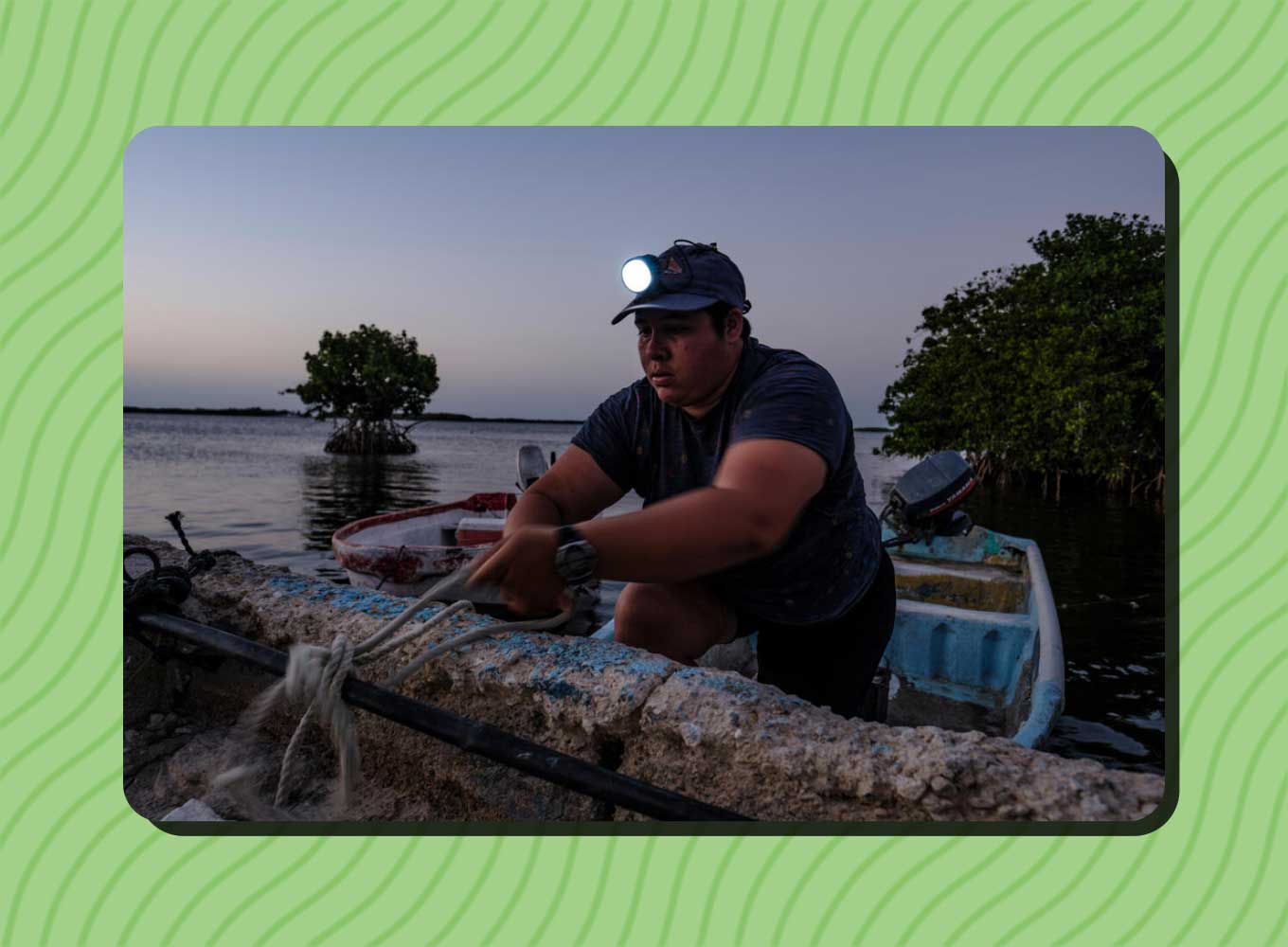
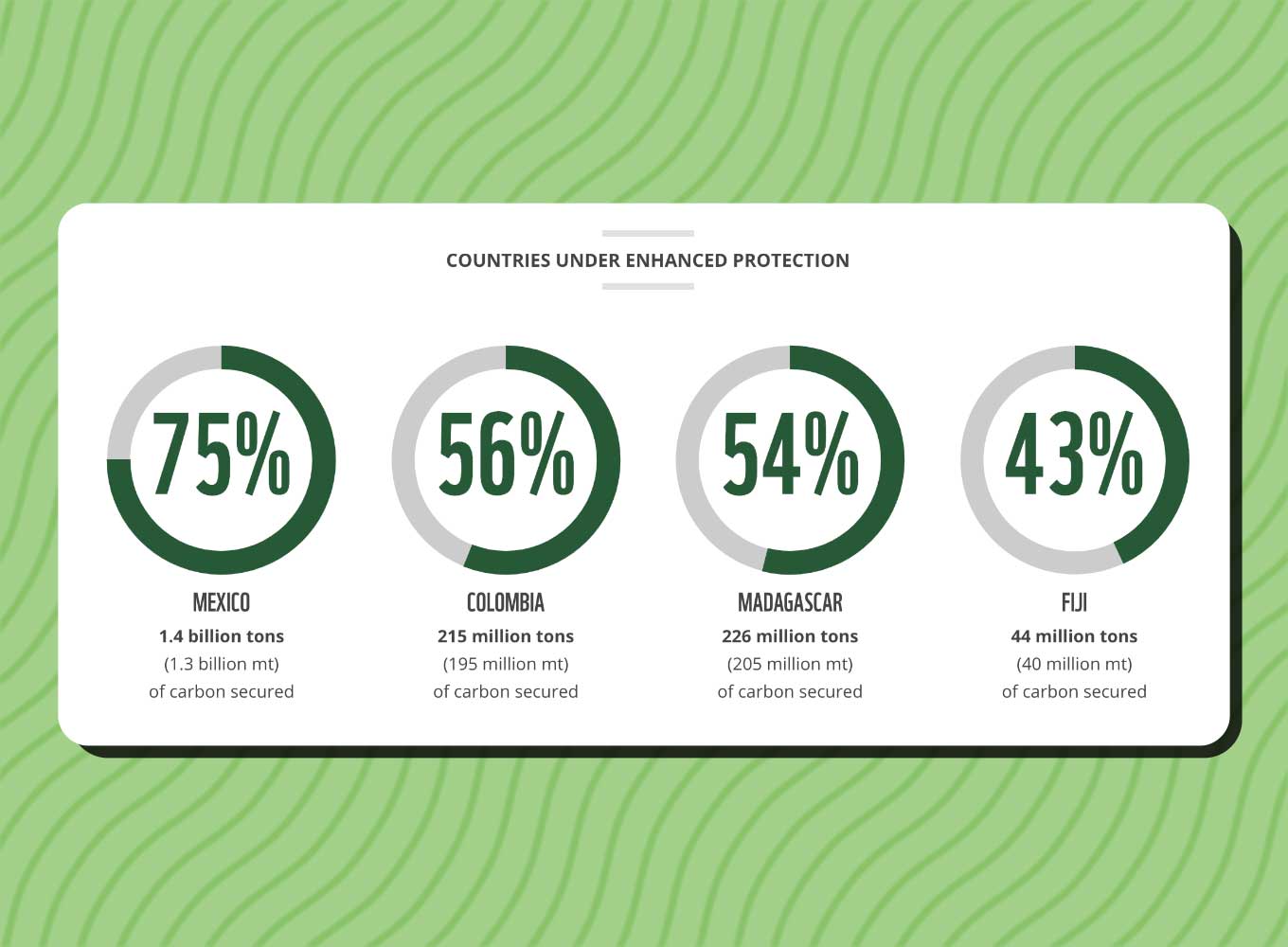
Losing mangroves creates a disproportionately high amount of greenhouse gas emissions — which has already been seen in Mexico.
Throughout the country, WWF has been working to protect and restore mangrove ecosystems and has seen first-hand how coastal development and new infrastructure existentially threats Mexican mangroves — along with other climate threats, like frequent hurricanes, changing sea levels, and more.
That’s where ManglarIA comes in.
The project will identify key indicators of the health of mangroves and provide conservationists with better information to protect them, creating scalable and measurable solutions that can be replicated in other coastal regions.
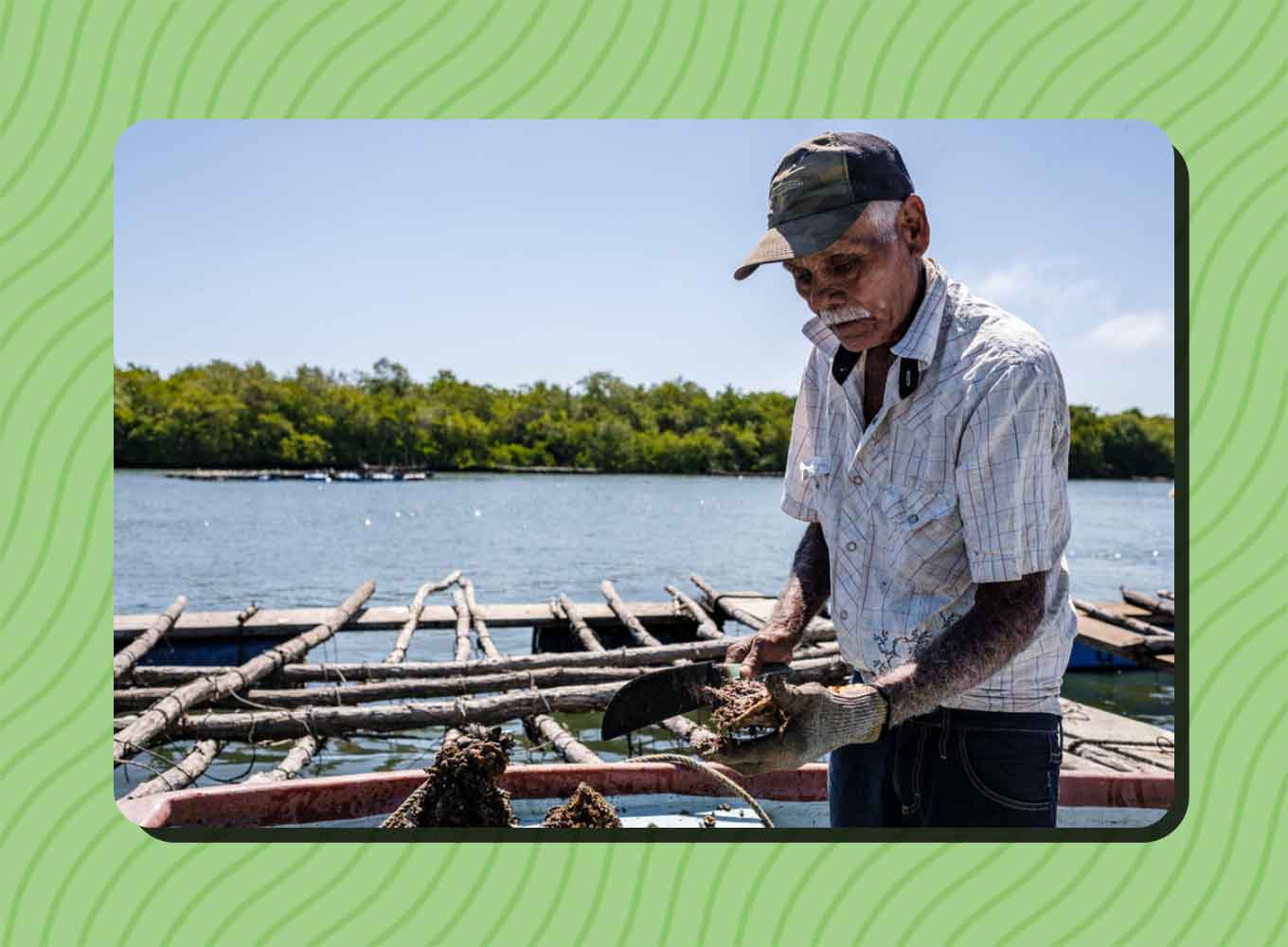
Google.org has invested $5 million in ManglarIA, choosing the project from hundreds of submissions as part of its Impact Challenge on Climate Innovation grant program.
“We were looking for large-scale, ambitious, AI-enabled solutions that focus on funding the creation of data as a public good,” Google.org’s sustainability giving lead, Brian Juhyuk Lee, told Good Good Good in an email.
“To fight climate change, we need nature. To help nature survive climate change, we need more information. Technology can be a powerful ally in closing information gaps.”
Over the next three years, WWF will work with local community partners, research, and government institutions (like CONABIO, the Mexican Commission for Knowledge and Use of Biodiversity) to install networks of sensors in two biosphere reserves on Mexico’s Pacific and Gulf of Mexico coasts.
These sensors will include automated weather stations, water depth and salinity loggers, special drones, camera traps, and environmental DNA technology, to monitor the health and changes of the area’s mangrove forests, according to Shaun Martin, WWF’s vice president of adaptation and resilience and deputy lead of climate change.
“Building on a framework that WWF recently developed for climate-smart mangrove conservation, continuous monitoring of environmental variables with these networks will generate massive data sets,” Martin told Good Good Good.
“AI will help us analyze these data and learn how environmental change affects mangrove health, so we can help them survive the changing climate.”
Until now, scientists haven’t been able to fully understand how mangroves are responding to changes in weather and climate, so improving on Mexico’s existing world-class mangrove monitoring system will be a giant step in the right direction.
Researchers hope to learn things like how long it takes for mangroves to recover from tropical storms, which sites are best suited for restoration, how climate change affects mangroves’ ability to store carbon, and how economic activities dependent on mangroves might be influenced by climate change.
Martin says the ultimate goal is to replicate the ManglarIA model on a global scale to inform mangrove management and restoration across all coasts — combining the organic resilience of nature with the future of scientific innovation.
Lee, from Google.org, is excited by the prospect.
“Through this project with the World Wildlife Foundation, we hope to show that it is not an ‘either nature or tech,’” he said, “but that there are ‘nature-based, tech-enabled solutions’ that have a significant role to play in addressing climate change.”
Header image courtesy of the World Wildlife Fund
September is here — marking the transition from summer to fall and ushering in an energy that makes us want to savor every moment of crisp mornings and cozy evenings!
It’s a month of new beginnings, heartwarming traditions, and the enchantment of golden leaves and apple orchards.
To help you absorb the allure of September, we’ve curated a selection of positive and inspiring quotes (and poems!) about the ninth month of the year.
And because we’re Good Good Good — we’ve also highlighted the best quotes around September’s awareness months and national days — like Hispanic Heritage Month, National Suicide Prevention Awareness Month, Arbor Day, and National Public Lands Day, and more.
Plus, quotes from inspirational celebrities and leaders with September birthdays.
Whether you’re greeting autumn, celebrating a September birthday, or just looking to add a dose of positivity to kick off the month, these quotes are for you. Scroll all the way through to find some hidden gems.
Here’s to making the most of September!
Explore more monthly quotes: January | February | March | April | May | June | July | August | September | October | November | December
The Best September Quotes
Famous Quotes About September
“All the months are crude experiments, out of which the perfect September is made.”
— Virginia Woolf

“Happily we bask in this warm September sun, which illuminates all creatures.”
— Henry David Thoreau

“But the days grow short when you reach September.”
— Maxwell Anderson

“By all these lovely tokens, September days are here. With summer’s best of weather and autumn’s best of cheer.”
— Helen Hunt Jackson
“How smartly September comes in, like a racing gig, all style, no confusion.”
— Eleanor Clark

“Wine is the divine juice of September.”
— Voltaire

“In many ways, September feels like the busiest time of the year: The kids go back to school, work piles up after the summer’s dog days, and Thanksgiving is suddenly upon us.”
— Brené Brown

“September is dressing herself in showy dahlias and splendid marigolds and starry zinnias.”
— Olive Wendell Holmes

Quotes for Awareness Holidays in September
A collection of quotes to celebrate September’s awareness months and national days.
→ Explore more of this month’s awareness days in our September calendar
Library Card Sign-up Month
September 1 - September 30
“Having fun isn’t hard
When you’ve got a library card.”
— Arthur, Episode: Arthur’s Almost Live Not Real Music Festival
“Your library card is a passport to anywhere.”
— Mary Schmich
“Access to knowledge is the superb, the supreme act of truly great civilizations. Of all the institutions that support to do this, free libraries stand virtually alone in accomplishing this.”
— Toni Morrison
→ Read about why libraries are important
National Self-Care Awareness Month
September 1 - September 30
“I have come to believe that caring for myself is not self-indulgent. Caring for myself is an act of survival.”
— Audre Lorde
“Nourishing yourself in a way that helps you blossom in the direction you want to go is attainable, and you are worth the effort.”
— Deborah Day
“Every one of us needs to show how much we care for each other and, in the process, care for ourselves.”
— Princess Diana
→ Read more quotes about self-care
National Suicide Prevention Awareness Month
September 1 - September 30
“No matter what happens, or how bad it seems today, life does go on, and it will be better tomorrow.”
— Maya Angelou
“To anyone out there who’s hurting — it’s not a sign of weakness to ask for help. It’s a sign of strength.”
— Barack Obama
“If you feel too much, there’s still a place for you here. If you feel too much, don’t go. If this world is too painful, stop and rest. It’s okay to stop and rest. If you need a break, it’s okay to say you need a break… There is still some time to ask for help. There is still some time to start again. There is still some time for love to find you. It’s not too late. You’re not alone.”
― Jamie Tworkowski, If You Feel Too Much: Thoughts on Things Found and Lost and Hoped For
→ Read more quotes about suicide prevention
→ Read about ways to take action during Suicide Prevention Month
Hispanic Heritage Month
September 15 - October 15
“I’m proud of being Hispanic.”
— Lisa Guerrero
“Preservation of one’s own culture does not require contempt or disrespect for other cultures.”
— Cesar Chavez
“It is important for all of us to appreciate where we come from and how that history has really shaped us in ways that we might not understand.”
— Sonia Sotomayor
→ Read more quotes about Hispanic Heritage Month
→ Read about how to celebrate Hispanic Heritage Month
Arbor Day
September 21
“We need to protect our forests to protect all of life.”
— Samantha Lynch
“Learn character from trees, values from roots, and change from leaves”
— Tasneern Harneed
“Even if I knew that tomorrow the world would go to pieces, I would still plant my apple tree.”
— Martin Luther
→ Read more quotes about trees
National Public Lands Day
September 23
“A national park is not a playground. it’s a sanctuary for nature and for humans who will accept nature on nature’s own terms.”
— Michael Frome
“In a world that is becoming increasingly virtual, the parks remain places of visceral beauty. Places where we can remember that we are but a small part of the life on this planet, and that it is a truly wonderful planet and the only one we’ve got.”
— Nevada Barr
“National parks and reserves are an integral aspect of intelligent use of natural resources. It is the course of wisdom to set aside an ample portion of our natural resources as national parks and reserves, thus ensuring that future generations may know the majesty of the earth as we know it today.”
— John F. Kennedy
→ Read more quotes about national parks
→ Read about how to celebrate National Public Lands Day
Quotes from Inspiring People with September Birthdays
Freddie Mercury
September 5
“The most important thing is to live a fabulous life. As long as it’s fabulous, I don’t care how long it is.”
— Freddie Mercury
“I won’t be a rock star. I will be a legend.”
— Freddie Mercury
“I love the fact that I can make people happy, in any form. Even if it’s just an hour of their lives, if I can make them feel lucky or make them feel good, or bring a smile to a sour face, that to me is worthwhile.”
— Freddie Mercury
Ruby Bridges
September 8
“I believe it doesn’t do yourself any good to hate.”
— Ruby Bridges
“We may not all be equally guilty. But we are all equally responsible for building a decent and just society.”
— Ruby Bridges
“If kids have the opportunity to come together to get to know one another, they can judge for themselves who they want their friends to be. All children should have that choice. We, as adults, shouldn’t make those choices for children. That’s how racism starts.”
— Ruby Bridges
Saint Francis of Assisi
September 26
“While you are proclaiming peace with your lips, be careful to have it even more fully in your heart.”
— St. Francis of Assisi
“All the darkness in the world cannot extinguish the light of a single candle.”
— St. Francis of Assisi, The Little Flowers of St. Francis of Assisi
“Grant that I may not so much seek
to be consoled as to console;
to be understood, as to understand,
to be loved as to love;
for it is in giving that we receive,
it is in pardoning that we are pardoned,
and it is in dying [to ourselves] that we are born to eternal life.”
— St. Francis of Assisi
Inspirational September Quotes
“The windows are open, admitting the September breeze: a month that smells like notepaper and pencil shavings, autumn leaves and car oil. A month that smells like progress, like moving on.”
— Lauren Oliver, Vanishing Girls

“September is the month of maturity; the heaped basket and the garnered sheaf. It is the month of climax and completion. September! I never tire of turning it over and over in my mind. It has warmth, depth and color. It glows like old amber.”
— Patience Strong
“September was a thirty-days long goodbye to summer, to the season that left everybody both happy and weary of the warm, humid weather and the exhausting but thrilling adventures.”
— Lea Malot
“That old September feeling, left over from school days, of summer passing, vacation nearly done, obligations gathering, books and football in the air… Another fall, another turned page: there was something of jubilee in that annual autumnal beginning, as if last year’s mistakes had been wiped clean by summer.”
— Donna Tartt, The Secret History
“As the alluring song of September begins to whisper in my ear, my passionate spirit yearns for the splendor of its promise.”
— Peggy Toney Horton

Welcoming Fall Quotes
“September days have the warmth of summer in their briefer hours, but in their lengthening evenings a prophetic breath of autumn.”
— Rowland E. Robinson

“There comes a day each September when you wake up and know the summer is over and fall has arrived. The slant of the sun looks different and something is in the air — a coolness, a hint of frosty mornings to follow.”
— Ann Rinaldi
“But when fall comes, kicking summer out on its treacherous ass as it always does one day sometime after the midpoint of September, it stays awhile like an old friend that you have missed. It settles in the way an old friend will settle into your favorite chair and take out his pipe and light it and then fill the afternoon with stories of places he has been and things he has done since last he saw you.”
— Stephen King, Salem’s Lot
“September has come, it is hers whose vitality leaps in the autumn, whose nature prefers trees without leaves and a fire in the fireplace.”
— Louis MacNeice

“But there is a clarity about September. On clear days, the sun seems brighter, the sky more blue, the white clouds take on marvelous shapes; the moon is a wonderful apparition, rising gold, cooling to silver; and the stars are so big. The September storms — the hurricane warnings far away, the sudden gales, the downpour of rain that we have so badly needed here for so long — are exhilarating, and there’s a promise that what September starts, October will carry on, catching the torch flung into her hand.”
— Faith Baldwin, Evening Star
“We know that in September, we will wander through the warm winds of summer’s wreckage. We will welcome summer’s ghost.”
— Henry Rollins

“The leaves are all falling, and they’re falling like they’re falling in love with the ground.”
— Andrea Gibson
September Poems
“Nostalgia — that’s the Autumn,
Dreaming through September
Just a million lovely things
I always will remember.”
— Jacqueline Kennedy Onassis

“O sweet September, thy first breezes bring
The dry leaf’s rustle and the squirrel’s laughter,
The cool fresh air whence health and vigor spring
And promise of exceeding joy hereafter.”
— George Arnold
“Lo! a ripe sheaf of many golden days
Gleaned by the year in autumn’s harvest ways,
With here and there, blood-tinted as an ember,
Some crimson poppy of a late delight
Atoning in its splendor for the flight
Of summer blooms and joys
This is September.”
— Lucy Maud Montgomery, The Watchman & Other Poems
“September has come, it is hers
Whose vitality leaps in the autumn,
Whose nature prefers
Trees without leaves and a fire in the fireplace.”
— Louis MacNeice, Autumn Journal
“When I flashback to the lovely days of September
Where I’ve kept some dreams and stories to remember
Something like old streets and avenues to wander
Something like my toys when I was younger
I have a fond belief that September will stay forever
There were many things in September, sweet and tender
Something like love, something like adventure
Something like childhood, something like the rain, like the water”
— Hayet Ben Bada
“The sultry summer past, September comes,
Soft twilight of the slow-declining year.
All mildness, soothing loneliness, and peace;
The fading season ere the falling come,
More sober than the buxom blooming May,
And therefore less the favourite of the world,
But dearest month of all to pensive minds.”
— Carlos Wilcox
“September’s Baccalaureate
A combination is
Of Crickets — Crows — and Retrospects
And a dissembling Breeze
That hints without assuming —
An Innuendo sear
That makes the Heart put up its Fun
And turn Philosopher.”
— Emily Dickinson, The Poems of Emily Dickinson
“This windy, bright September afternoon
My heart is wide awake, yet full of dreams.”
— Charles George Douglas Roberts
Funny September Quotes
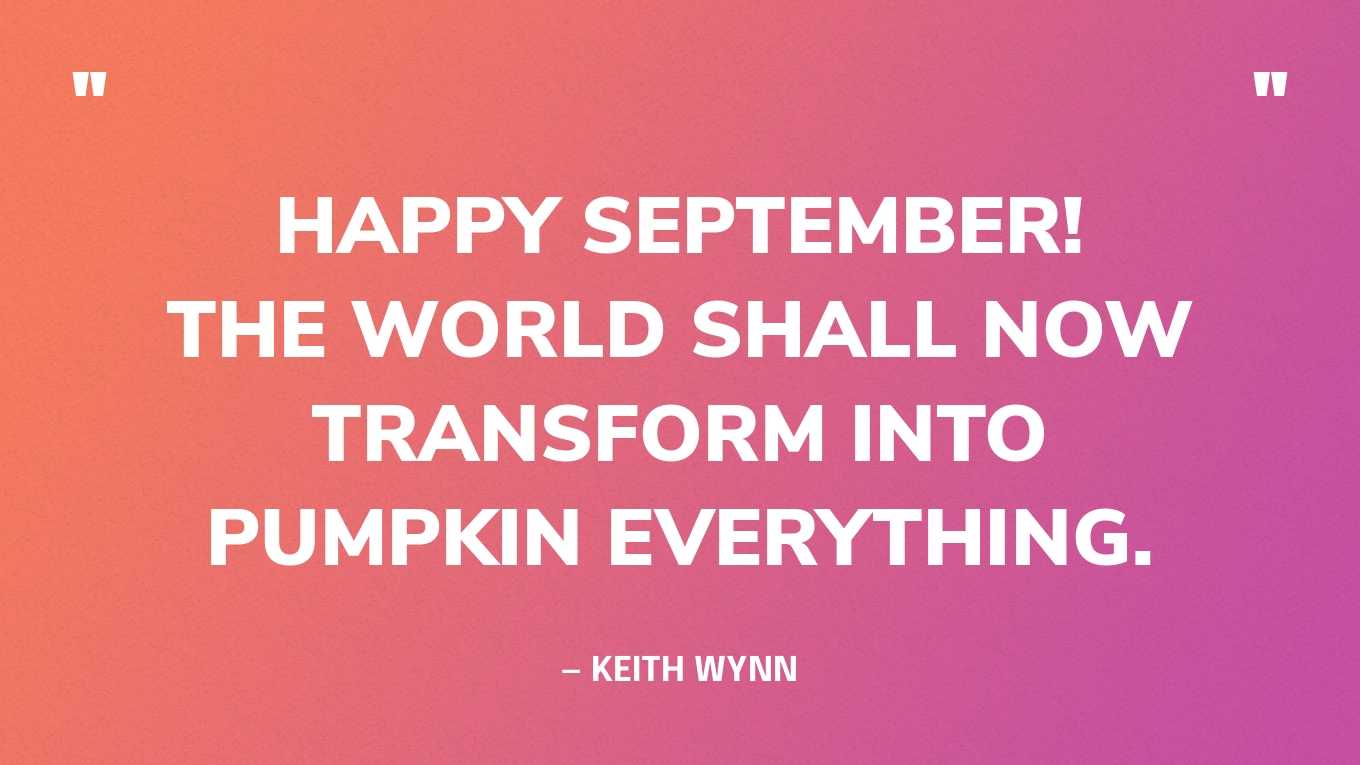
“Happy September! The world shall now transform into pumpkin everything.”
— Keith Wynn
“September showed up right on schedule, and lasted a whole month.”
— Jenny Wingfield
“I used to love September, but now it just rhymes with remember.”
— Dominic Riccitello
“September tries its best to have us forget summer.”
— Bernard Williams
“Rest your eyes well before September because with all its colours autumn is coming to visit them!”
— Mehmet Murat Ildan
“Come September, children return to school, grownups to work, and the brain to the head.”
— Roger Rosenblatt
“It must be September, July sun has disappeared”
— Charmaine J. Forde
Short September Quotes
“The seasonal urge is strong in poets. Burns chose autumn. Longfellow liked the month of September.”
— Helen Bevington

“It was September. In the last days when things are getting sad for no reason.”
— Ray Bradbury
“It was September, and there was a crackly feeling to the air.”
— Carolyn Parkhurst
“Making your Christmas cake in September is perfect, as too fresh a cake crumbles when cut.”
— Mary Berry
“Let’s all be nice to September.”
— Nitya Prakash
“I love September, especially when we’re in it.”
— Willie Stargell

“September is the other January.”
— Gretchen Rubin
“Ah, September! You are the doorway to the season that awakens my soul.”
— Peggy Toney Horton
More September Quotes & Captions
“The roses hung their heads and dreamed under the still September clouds, and the water plashed and murmured softly among the pebbles of the shore.”
— E.L. Voynich

“Time turns flames to embers
You’ll have new Septembers
Everyone of us has messed up too
Minds change like the weather
I hope you remember
Today is never too late to be brand new”
— Taylor Swift, Innocent
“I miss your tan skin, your sweet smile
So good to me, so right
And how you held me in your arms that September night
The first time you ever saw me cry
Maybe this is wishful thinkin’
Probably mindless dreamin’
But if we loved again, I swear I’d love you right”
— Taylor Swift, Back to December
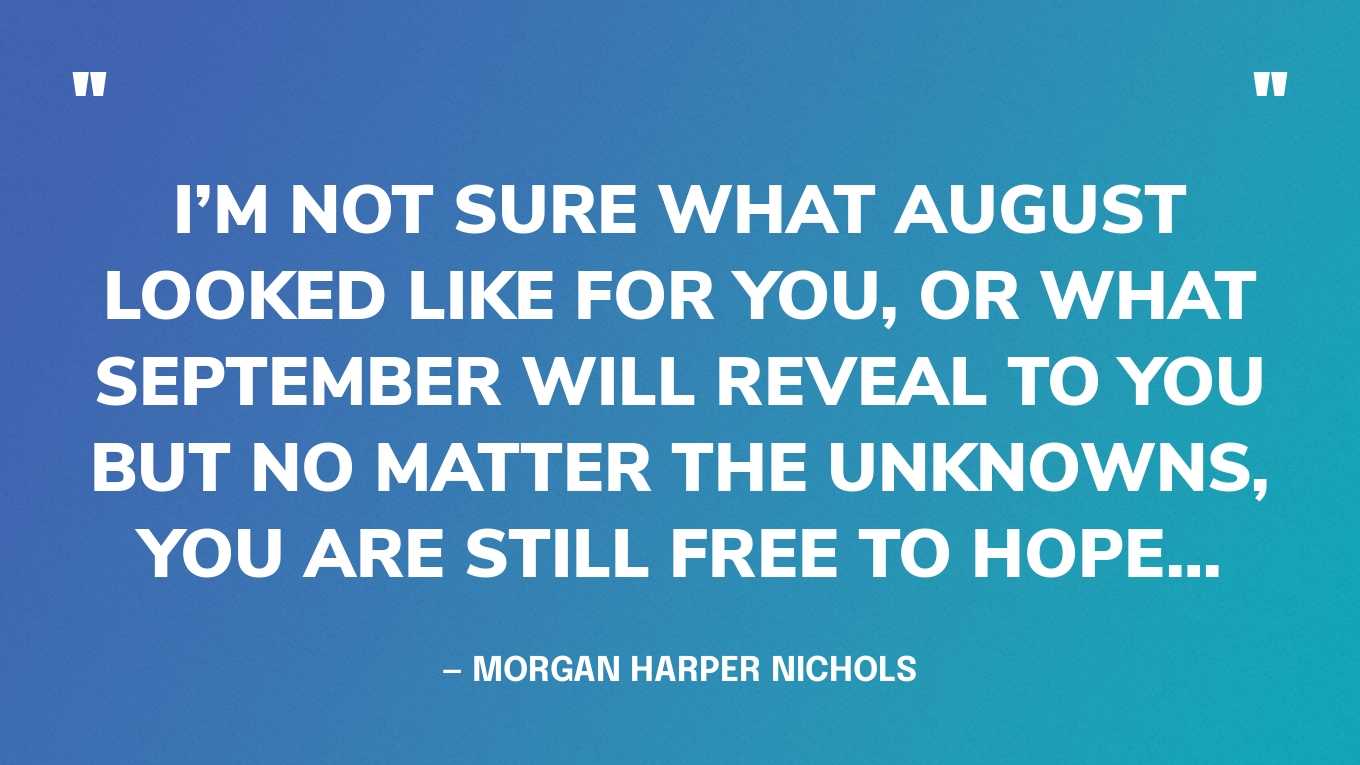
“I’m not sure what August looked like for you, or what September will reveal to you but no matter the unknowns, you are still free to hope…”
— Morgan Harper Nichols
“Let August be August. Let September be September.
Let yourself just be even in the uncertainty.
And doing this doesn’t mean you’re not doing anything.
It means that you’re slowly learning to trust.
You can give your all in this life and also identify where enough is enough.”
— Morgan Harper Nichols
“Let this be
the September
you always remember.
The September
you chose to accept:
the best thing
you could do
was to let August
fall behind you,
and with an open heart
embrace
this new day
that lies before you.”
— Morgan Harper Nichols
“For summer there, bear in mind, is a loitering gossip, that only begins to talk of leaving when September rises to go.”
— George Washington Cable
“Outside the leaves on the trees constricted slightly; they were the deep done green of the beginning of autumn. It was a Sunday in September.”
— Ali Smith
“The old summer’s-end melancholy nips at my heels. There’s no school to go back to; no detail of my life will change come the onset of September; yet still, I feel the old trepidation.”
— Sara Baume, A Line Made By Walking
“It was a lovely afternoon — such an afternoon as only September can produce when summer has stolen back for one more day of dream and glamour.”
— L.M. Montgomery
“September: it was the most beautiful of words, he’d always felt, evoking orange-flowers, swallows, and regret.”
— Alexander Theroux

Whether you’re looking for a delicious new fruit to try, you’re a teacher looking for a great classroom resource, you care about protecting fruit species around the planet, or you’re simply practicing for a food-themed trivia night — we’ve got you covered with the ultimate fruit resource.
Fruits are defined as the mature ovaries of flowering plants — typically containing seeds, which can range in taste from sweet to sour. They’re nature’s dessert — ready to be enjoyed at any time.
And sure, we’ve all heard of apples, bananas, and blackberries — but what about cascara, pluots, and persimmons?
We’ve collected the ultimate list (truly, it might just be the largest on the internet) of fruit names — from A to Z — so you can explore every kind of fruit imaginable.
Why did we write this article? Because a plant-based diet is better for animals and the planet. And because choosing to eat (and pick) seasonal fruits and vegetables can make a world of difference as well. And lastly, because it’s valuable to know about the beautiful range of (yummy) plants on planet Earth so we can fight to protect their biodiversity.
You can also explore our complete list of vegetables from A-Z.
We hope you discover something new — and maybe even share your newfound favorite fruit with a friend.
A quick note before you bite into a new-found fruit: Some of these fruits cannot be consumed raw — and others could easily be confused with a non-edible fruit. Please use caution and care.
You might also like: Good news articles about food
List of Fruits by Type
Berries
- Aronia
- Asam Kumbang
- Blackberry
- Blackcurrant
- Blueberry
- Cloudberry
- Cranberry
- Crowberry
- Dewberry
- Fox Grape
- Marionberry
- Raspberry
- Strawberry
Citrus Fruits
- Amanatsu Orange
- Blood Lime
- Blood Orange
- Buddha’s Hand
- Caviar Lime
- Clementine
- Dekopon
- Etrog
- Grapefruit
- Kumquat
- Lemon
- Lime
- Orange
- Yuzu
Melons
- Ambrosia Melon
- Cantaloupe
- Galia Melon
- Honeydew Melon
- Watermelon
Stone Fruits
- Apricot
- Cherry
- Damson
- Peach
- Plum
Tropical Fruits
- Açaí
- Acerola
- Ackee
- Ambarella
- Banana
- Coconut
- Durian
- Guava
- Mango
- Papaya
- Starfruit
Complete List of All Fruits — In Alphabetical Order
- Abiu
- Açaí
- Acerola
- Ackee
- African Breadfruit
- African Cherry Orange
- African Cucumber
- African Mango
- Akebi
- Alexandria Strawberry
- Alpine Strawberry
- Amanatsu Orange
- Amaou Strawberry
- Amara
- Ambarella
- Ambrosia Apple
- Ambrosia Melon
- American Mayapple
- Amla
- Annatto
- Annona
- Apple
- Appleberry
- Apricot
- Aprium
- Araca-Boi
- Arava Melon
- Araza
- Aronia
- Asam Kumbang
- Asian Pear
- Atemoya
- Avocado
- Babaco
- Bacuri Fruit
- Bael
- Banana
- Barbadine
- Barbados Cherry
- Barberry
- Batuan
- Beach Plum
- Bearberry
- Bignay
- Bilberry
- Bilimbi
- Biriba
- Bitter Gourd
- Bitter Melon
- Black Apple
- Black Cherry
- Black Currant
- Black Mulberry
- Black Raspberry
- Black Sapote
- Blackberry
- Blackcurrant
- Blood Lime
- Blood Orange
- Blue Passionfruit
- Blueberry
- Bolivian Mountain Coconut
- Bottle Gourd
- Boysenberry
- Bramble
- Brazilian Guava
- Bread Fruit
- Breadfruit
- Brush Cherry
- Buddha Apple
- Buddha’s Hand
- Burdekin Plum
- Bushel and Berry ‘Jelly Bean’ Blueberry
- Butter Fruit
- Cacao
- Cactus Pear
- Calabash
- Calamansi
- Calamondin
- Camu Camu
- Canistel
- Cantaloupe
- Cape Gooseberry
- Cara Cara
- Carambola
- Carissa
- Cascara
- Cashew Apple
- Catmon
- Caviar Lime
- Cawesh
- Cedar Bay Cherry
- Cempedak
- Ceylon Gooseberry
- Changunga
- Charichuelo
- Chayote
- Cherimoya
- Cherry
- Cherry Plum
- Chico Fruit
- Chocolate-Fruit
- Chokeberry
- Chokecherry
- Citrofortunella
- Citron
- Clementine
- Cloudberry
- Cluster Fig
- Cocky Apple
- Coco De Mer
- Coco Plum
- Coconut
- Coffee Cherry
- Coffee Fruit
- Colonnade ‘Maypole’ Apple
- Common Apple Berry
- Conkerberry
- Cornelian Cherry
- Crab Apple
- Craisin
- Cranberry
- Crowberry
- Cucumber
- Cumquat
- Cupuacu
- Currant
- Custard Apple
- Dabai Fruit
- Damson
- Damson Plum
- Dangle Berry
- Darling Plum
- Date
- Date Plum
- Davidson’s Plum
- Dead Man’s Fingers
- Decaisnea
- Dekopon
- Desert Banana
- Desert Fig
- Desert King Fig
- Desert Lime
- Desert Quandong
- Dewberry
- Discovery Apple
- Dodder-Laurel
- Double Coconut
- Dracontomelon
- Dragon Fruit
- Duku Fruit
- Durian
- Early Girl Tomato
- Early Gold Mango
- Eastern Hawthorn
- Egg Fruit
- Eggplant
- Elands Sour Fig
- Elderberry
- Elephant Apple
- Emblica
- Emu Apple
- Emu Berry
- Entawak
- Enterprise Apple
- Etrog
- European Pear
- Evergreen Huckleberry
- Fairchild Tangerine
- Falkland Island Cranberry
- Falmouth Gooseberry
- False Mastic
- Farkleberry
- Fascell Mango
- Fazli Mango
- Fe’i Banana
- Feijoa
- Fibrous Satinash
- Fig
- Filbert
- Finger Lime
- Fingered Citron
- Five Flavor Berry
- Flatwoods Plum
- Flavorfest Strawberry
- Florentine Citron
- Florida Cherry
- Florida Strangler Fig
- Forest Strawberry
- Fox Grape
- Fuji Apple
- Fukushu Kumquat
- Fuyu Persimmon
- Fuzzy Pear
- Gac Fruit
- Gala Apple
- Galia Melon
- Gamboge
- Genip
- Giant Granadilla
- Goji Berry
- Golden Apple
- Golden Kiwi
- Golden Raisins
- Gooseberry
- Gorham Pear
- Goumi
- Governor’s Plum
- Granadilla
- Grand Nain Banana
- Grape
- Grapefruit
- Grecian Fig
- Greek Fig
- Green Anjou Pear
- Green Apple
- Greengage
- Grenadier
- Grewia Asiatica
- Ground Plum
- Groundcherry
- Grumichama
- Grumolo
- Guanábana
- Guarana
- Guava
- Guavaberry
- Hackberry
- Hala Fruit
- Hardy Kiwi
- Haskap
- Hawaiian Mountain Apple
- Hawthorn Berry
- Hebesu
- Heirloom Tomato
- Highbush Blueberry
- Highbush Cranberry
- Himalayan Mulberry
- Hog Plum
- Honey Crisp Apple
- Honey Locust
- Honeyberry
- Honeydew
- Honeydew Melon
- Honeysuckle
- Horned Melon
- Huckleberry
- Huito
- Husk Tomato
- Hyuganatsu
- Iboga
- Icacina
- Icaco
- Ice Apple
- Ice Cream Bean
- Ichigo
- Ilama
- Illawarra Plum
- Imbe
- Incaberry
- Indian Almond
- Indian Gooseberry
- Indian Jujube
- Indian Persimmon
- Indian Plum
- Indian Prune
- Indian Sherbet Berry
- Indonesian Lime
- Ita Palm
- Jaboticaba
- Jackfruit
- Jamaican Tangelo
- Jambolan
- Jambul
- Japanese Plum
- Jatoba
- Java Apple
- Jazz Apple
- Jelly Palm
- Jocote
- Joel Bush Cherry
- Jostaberry
- Jujube
- June Plum
- Junglesop
- Juniper Berry
- Kabosu
- Kaffir Lime
- Kakadu Plum
- Kaki
- Kantola
- Kanzi Apple
- Kapok
- Karkalla
- Karonda
- Kaywa
- Kei Apple
- Keitt Mango
- Kepel
- Keule
- Key Lime
- Kiwano
- Kiwi
- Knobby Russet Apple
- Korean Pear
- Korlan
- Koroi
- Kumquat
- Kutjera
- Kwai Muk
- Kyoho Grape
- Lablab Fruit
- Lancetilla Mango
- Langra Mango
- Langsat
- Le Conte Pear
- Lebanese Wild Apple
- Lemon
- Lemon Aspen Fruit
- Lemon Drop Mangosteen
- Lemon Drop Melon
- Lemonade Berry
- Liberty Apple
- Lilly Pilly
- Lime
- Limeberry
- Limequat
- Lingonberry
- Little Gooseberry
- Loganberry
- Long‑peduncled Almond
- Longan
- Loquat
- Lovi-Lovi
- Low Juneberry
- Low Serviceberry
- Lúcuma
- Lulo
- Luóhàn Guǒ
- Lychee
- Magellan Barberry
- Malabar Plum
- Malay Rose Apple
- Malus Sieversii
- Mamey
- Mamey Apple
- Mamey Sapote
- Mamin Chino
- Manchurian Apricot
- Manchurian Cherry
- Manchurian Crab Apple
- Mandarine
- Mangifera Indica
- Mango
- Mangosteen
- Manilkara Elata
- Maqui
- Marionberry
- Marula
- Mayhaw
- Maypop
- Medlar
- Melon
- Mexican Pitahaya
- Mexican Plum
- Midgen Berry
- Mimusops Elengi
- Minneola Tangelo
- Miracle Fruit
- Miyama Cherry
- Mombin
- Momordica Fruit
- Moriche Palm Fruit
- Moro Blood Orange
- Morus
- Mountain Serviceberry
- Mouse Melon
- Mulberry
- Muntingia Calabura
- Murray’s Plum
- Murraya Fruit
- Musa Ingens
- Muscadine Grape
- Muskmelon
- Myers Plum
- Naartjie
- Nagami Kumquat
- Nageia
- Nam Dok Mai
- Nance
- Naples Fig
- Naranjilla
- Narenj
- Nashi Pear
- Natal Plum
- Naval Orange
- Nectacot
- Nectarine
- Neem
- Nepali Hog Plum
- Nere Fruit
- Neroli
- Newton Pippin Apple
- Nocera Grape
- Noni
- Nopal Fruit
- Northern Spy Apple
- Nungu
- O’Henry Peach
- Oeillade Noire Grape
- Ogallala Strawberry
- Ogden Melon
- Ogeechee Lime
- Oil Palm
- Okra
- Okuzgozu Grape
- Olallieberry
- Olive
- Opal Apple
- Opal Plum
- Opo Squash
- Opuntia
- Orange
- Orangelo
- Oregon Grape
- Orient Melon
- Orient Pear
- Oriental Cherry
- Orin Apple
- Orlando Tangelo
- Oroblanco
- Ortanique
- Osage Orange
- Oso Grande Strawberry
- Osteen Mango
- Otaheite Apple
- Otaheite Gooseberry
- Oullins Gage Plum
- Oval Kumquat
- Ozark Beauty Strawberry
- Ozark Gold Apple
- Pacific Rose Apple
- Palestinian Sweet Lime
- Papaya
- Parsonage Pear
- Passionfruit
- Pawpaw
- Peach
- Peach Palm Fruit
- Peanut Butter Fruit
- Pear
- Pepino Melon
- Pequi
- Persian Lime
- Persimmon
- Peruvian Groundcherry
- Petit Manseng Grape
- Petit Rouge Grape
- Peumo
- PF Lucky 13 Flamin’ Fury Peach
- Physalis
- Pickering Mango
- Picual Olive
- Pigeon Pea
- Pigeon Plum
- Pigface Fruit
- Pineapple
- Pineberry
- Pink Banana
- Pink Lady Apple
- Pink Lemonade Blueberry
- Pink Pearl Apple
- Pinot Noir Grape
- Pinova Apple
- Pitaya
- Plantain
- Plum
- Plumcot
- Pluot
- Pomato Fruit
- Pomegranate
- Pomelo
- Ponderosa Lemon
- Ponkan Fruit
- Poorman Orange
- Prickly Pear
- Prime Ark Freedom Blackberry
- Prune
- Pulasan
- Pummelo
- Purple Mangosteen
- Quandong
- Quararibea Cordata
- Queen Anne’s Cherry
- Queen Tahiti Pineapple
- Queen’s Forelle Pear
- Quenepa
- Querina Apple
- Quinault Strawberry
- Quince
- Raisin
- Rajka Apple
- Rambai
- Rambutan
- Ramontchi
- Rangpur Lime
- Raspberry
- Raspuri Mango
- Rata
- Red Banana
- Red Bayberry
- Red Delicious Apple
- Red Grape
- Red Huckleberry
- Red Mombin
- Red Mulberry
- Redcurrant
- Rhobs El Arsa
- Rhubarb
- Riberry
- Rocha Pear
- Rockmelon
- Rollinia
- Rombo
- Rose Apple
- Rose Hip
- Roselle
- Rosigold Mango
- Rough Lemon
- Rubus Parviflorus
- Rumdul
- Safou
- Saigon Mango
- Salak
- Salak
- Salal
- Salal Berry
- Salmonberry
- Sand Cherry
- Santol
- Sapodilla
- Sapote
- Sarvisberry
- Sassafras
- Satsuma
- Sea Buckthorn
- Seagrape
- Serviceberry
- Seville Orange
- Sharon
- Shine Muscat
- Shonan Gold
- Silky Oak Apple
- Sloe
- Snake Fruit
- Soncoya
- Sour Cherry
- Soursop
- Spanish Lime
- Spanish Tamarind
- Splendor Apple
- Star Apple
- Starfruit
- Strawberry Guava
- Stinking Bishop Pear
- Strawberry
- Strawberry Guava
- Sugar Apple
- Sugar Baby Watermelon
- Sugar Palm
- Sultana
- Sumo Orange
- Sunda Plum
- Surinam Cherry
- Sweet Dakota Rose Watermelon
- Sweet Lime
- Sweet Pepper
- Tachibana Orange
- Tamarillo
- Tamarind
- Tangelo
- Tangerillo
- Tangerine
- Tangerinequat
- Tangor
- Tarap
- Tarpan Strawberry
- Tart Cherry
- Tawa-Tawa
- Tayberry
- Tepin Pepper
- Terap
- Texas Persimmon
- Thimbleberry
- Thorn Apple
- Thornberry
- Thornless Blackberry
- Thornless Loganberry
- Thumbelina Apple
- Tieguanyin
- Tindora
- Tomato
- Tomato Berry
- Tomato Cherry
- Tomato Plum
- Tompkins King Apple
- Topaz Apple
- Toronja
- Torpedo Melon
- Totapuri Mango
- Tree Tomato
- Tropical Apricot
- Tucuma
- Tuna Fruit
- Tung Berry
- Tungfruit
- Ububese
- Udara
- Ugli Fruit
- Ugni
- Ugni Blanc Grape
- Ugni Molinae
- Ukranian Heart Tomato
- Ula
- Umari
- Umbrafruit
- Umbrella Squash
- Umbu
- Ume
- Ume Plums
- Urava
- Usakhelauri
- Usama
- Utu
- Uva Rara Grape
- Uva Tosca Grape
- Uvalino Grape
- Uvaria
- Uvilla
- Vaccarese Grape
- Valencia Orange Fruit
- Valencia Pride Mango
- Van Dyke Mango
- Vanilla Fruit
- Velvet Apple
- Velvet Tamarind
- Vernaccia Grape
- Vespolina Grape
- Vicar Of Winkfield Pear
- Victoria Plum
- Vitis Vinifera
- Voavanga
- Volkamer Lemon
- Water Apple
- Watermelon
- Wax Gourd
- White Aspen Fruit
- White Currant
- White Mulberry
- White Sapote
- Wintermelon
- Wolf Berry
- Wood Apple
- Xanthium
- Xaoy
- Xarel·lo
- Xiangjiao
- Xigua
- Xilacayota Squash
- Ximenia
- Xing Zi
- Xinomavro
- Xoài
- Xoconostle
- Xylocarpus Granatum
- Yaca
- Yali Pear
- Yangmei Fruit
- Yellow Dragon Fruit
- Yellow Grape
- Yellow Guava
- Yellow Himalayan Raspberry
- Yellow Passion Fruit
- Yellow Pear Tomato
- Yellow Plum
- Yellow Sapote
- Yellow Squash
- Yellow Watermelon
- Yemenite Citron
- York Imperial Apple
- Young Mango
- Youngberry
- Yumberry
- Yunnan Hackberry Fruit
- Yuzu
- Zabergay Reinette Apple
- Zalzalak
- Zante Currant
- Zarzamora
- Zawngtah
- Zebra Melon
- Zhe Fruit
- Ziga Zag Tree Vine
- Zinfandel Grape
- Ziziphus Jujube Fruit
- Zucchini
- Zwetschge
You might also like: Positive Words from A-Z | Mood Words from A-Z | Vegan Grocery List | Complete List of Fruits and Vegetables (Combined) | Complete List of Animals from A-Z
Plus, explore more fruit names by letter:
- Fruits That Start with A
- Fruits That Start with B
- Fruits That Start with C
- Fruits That Start with D
- Fruits That Start with E
- Fruits That Start with F
- Fruits That Start with G
- Fruits That Start with H
- Fruits That Start with I
- Fruits That Start with J
- Fruits That Start with K
- Fruits That Start with L
- Fruits That Start with M
- Fruits That Start with N
- Fruits That Start with O
- Fruits That Start with P
- Fruits That Start with Q
- Fruits That Start with R
- Fruits That Start with S
- Fruits That Start with T
- Fruits That Start with U
- Fruits That Start with V
- Fruits That Start with W
- Fruits That Start with X
- Fruits That Start with Y
- Fruits That Start with Z
Billie Eilish has been on repeat across our social media platforms the past few weeks, crooning her soundtrack song “What Was I Made For?”
Well, one answer to that question is: To fight climate change.
The singer has long prioritized environmental justice in her work. Between hosting a conference in the UK about the climate crisis, educating concert-goers about protecting people, planet, and animals, and advocating for organizations like Support & Feed, she consistently demonstrates what it means to use a platform for good.
The most recent news is that her headlining Lollapalooza set integrated solar-powered battery systems, indicating a shift toward clean energy in the music sector.
These efforts are done in partnership with REVERB, an environmental nonprofit, and were managed through a temporary onsite “solar farm” at the festival, overseen by partners at Overdrive Energy Solutions.
This initiative also comes out of the Music Decarbonization Project, a campaign that Eilish and REVERB helped launch and fund — and includes other artists like The Lumineers, Dead & Company, and Tame Impala.
What is the Music Decarbonization Project?
The Music Decarbonization Project is a campaign intended to advance climate solutions that directly eliminate carbon emissions created by the music industry.
Funding from the project helps develop and standardize shifts towards clean energy, greenhouse gas reductions, and more.
While many of us might imagine the impact of other industries when it comes to climate change, Eilish and REVERB developed this project to focus on the unique impact of live music on the planet.
Some projects under the Music Decarbonization Project umbrella include solar-powered sets (like Eilish’s Lollapalooza performance); next generation festival lighting; and a Fan Travel Study, which gathers data from concert-goers to better understand the carbon footprint of travel to and from music events.
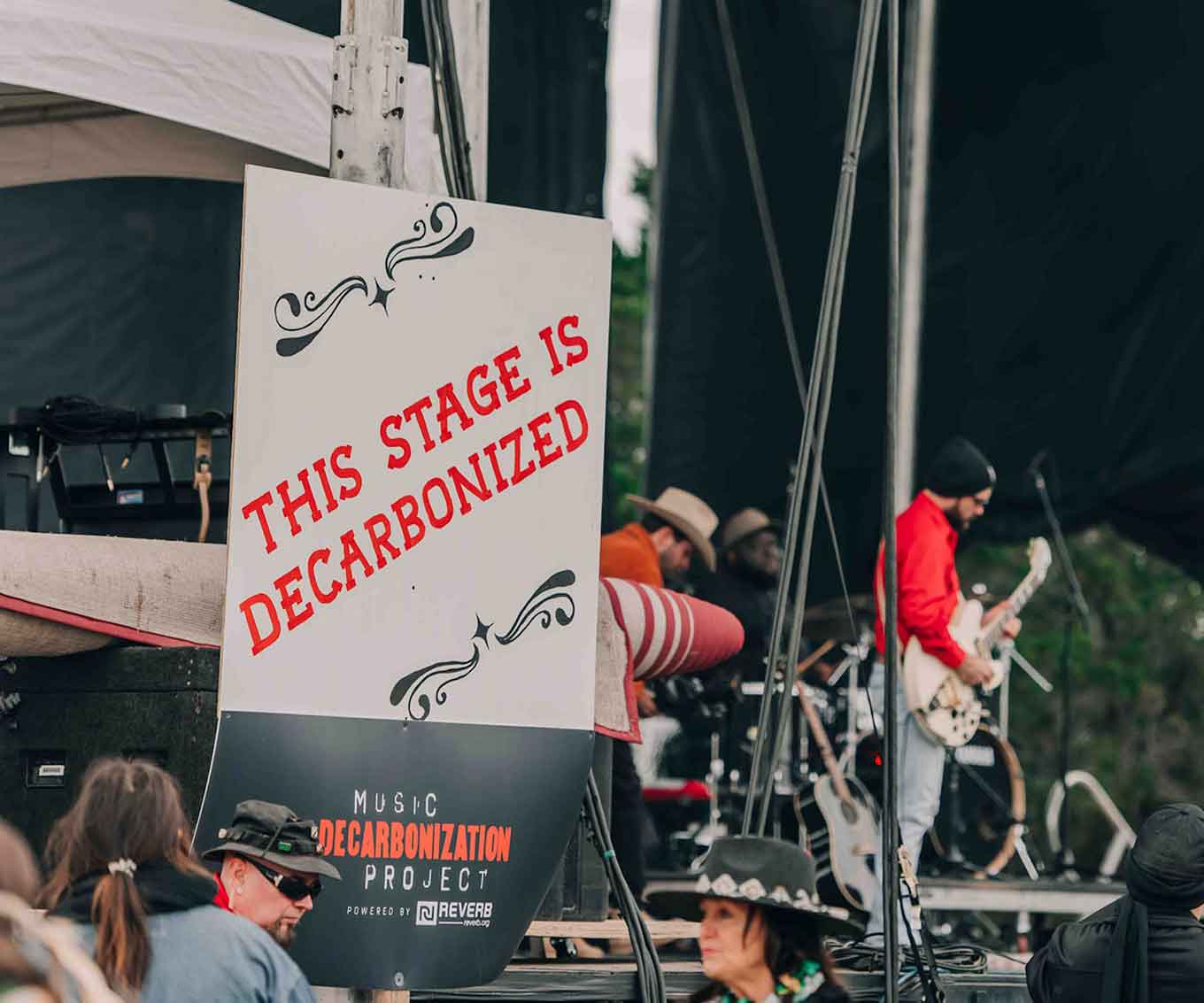
While REVERB sets up “Eco-Villages” at tours across America to increase awareness about the climate crisis and engage fans to take action, these initiatives are not one-time events. The goal is to expand them broadly.
For instance, data from those Fan Travel Studies will be shared with data scientists at the University of Massachusetts-Amherst to analyze and contribute to a report in 2024 that outlines results and strategies for the music industry to help reduce the climate impact of fan travel.
And this was the first time that the Music Decarbonization Project partnered with Lollapalooza.
“We hope and believe this will be a watershed moment for the music industry,” Adam Gardner of REVERB, said in a statement.
“There are real climate solutions available right here, right now. By showcasing this technology with one of the biggest artists in the world, on one of the most revered festival stages, we’re accelerating the necessary transition toward a decarbonized future, for music and beyond.”
Header image courtesy of Lars Crommelinck Photography (CC BY 2.0)

The HIV/AIDS crisis has caused devastating loss across the globe — contributing to lifelong illness, stigma and discrimination, and of course, death.
As truly heartbreaking as this is, a new day is on the horizon. Thanks to medical breakthroughs, increased funding and awareness, and decades of grassroots activism, we are making serious headway in the fight against HIV/AIDS — across the entire planet.
Although the disease still impacts the lives of millions worldwide, diligent work from global humanitarian organizations, government agencies, and healthcare workers has given us a lot to be optimistic about. So, we’ve compiled a few highlights here for you!
HIV Good News: Here’s Why We’re Hopeful About the Fight Against HIV/AIDS
Five people have gone into remission thanks to advancements in medicine — and a sixth patient may also now be free of HIV.
One of the biggest breakthroughs in HIV/AIDS prevention in recent years is the widespread use of PrEP (pre-exposure prophylaxis).
This drug therapy, approved by the Federal Drug Administration in 2012, has been a key player in preventing HIV transmission through sex or injection drug use. Antiretroviral drugs, such as PrEP, also slow the replication of the virus and prevent it from progressing to AIDS.
Although PrEP has become a more accessible treatment for the virus, scientists have been hurriedly working towards cures for HIV for decades — and we’re finally seeing some results.
In February of this year, scientists in Germany confirmed a fifth-ever patient had been cured of HIV after receiving stem cell transplants that include genetic mutations that carry a resistance to HIV.
But it looks like a sixth patient may soon be able to join this very exclusive club.
The man, referred to as the “Geneva patient,” underwent a stem cell transplant after cancer treatment, though these cells did not include the HIV-resistant genetic mutation.
Still, he went off antiretroviral therapy for HIV in November 2021, and his viral load remains undetectable.
Instead, doctors are researching whether a drug called ruxolitinib may be partially responsible for his recovery.
Ruxolitinib decreases inflammation associated with HIV by blocking two proteins, JAK1 and JAK2. This helps kill off “reservoir cells” that lay dormant in the body and have a potential to cause rebounds in patients with HIV.
Reservoir cells have been a hurdle for doctors for years, and for those who have studied JAK inhibitors, the results of the Geneva Patient are cause for (cautious) optimism.
“When you add this drug, it causes those reservoir cells to die faster,” Christina Gavegnano, an assistant professor at Emory School of Medicine who oversaw the research, told Wired. “It stops the virus from popping back out of them and infecting new cells.”
“We’re getting to a point where we’re seeing that what we believed in all along does, in fact, have potential,” she added.
Experts say the AIDS crisis can end by 2030 across the globe — as long as leaders prioritize this goal.
A new report from UNAIDS shows a clear, optimistic path to ending the AIDS crisis. (This looks like a 90% reduction in cases by 2030.)
The organization’s report includes data and case studies that show that ending AIDS is a political and financial choice — and that governments that have prioritized a path towards progress are seeing extraordinary results.
By following the data, science, and evidence; tackling inequality; and ensuring sufficient and sustainable funding across communities, the global community could wipe out the AIDS pandemic by the end of the decade.
The report demonstrates that progress has been strongest in the countries and regions that have the most financial investments, like eastern and southern Africa, where new HIV infections have been reduced by 57% since 2010.
Investments in treatments, education, and access to care have also led to a 58% reduction in new HIV infections among children from 2010 to 2022 — the lowest number since the 1980’s.
Plus, the number of people on antiretroviral treatment around the globe has risen from 7.7 million in 2010 to 29.8 million in 2022.
The moral of the story? This goal can be achieved, if world leaders put their minds — and wallets — to it.
“We are hopeful, but it is not the relaxed optimism that might come if all was heading as it should be. It is, instead, a hope rooted in seeing the opportunity for success, an opportunity that is dependent on action,” said Winnie Byanyima, Executive Director of UNAIDS, in a statement.
“The facts and figures shared in this report do not show that as a world we are already on the path; they show that we can be. The way is clear.”
A region in Australia might be the first place in the world to reach the United Nations targets for ending HIV transmission.
Researchers believe that the central district of Sydney, Australia is close to becoming the first locality in the world to reach the UN’s target for ending transmission of HIV.
Specifically, new infections among gay men have fallen by 88% between 2010 and 2022. In fact, there were only 11 new HIV cases recorded in central Sydney last year, and almost all HIV-positive Australians are on antiretroviral drugs.
It is important to note that rates of infection have not fallen equitably across the country. In some outer Sydney suburbs, cases have only fallen by a third, where public health awareness, access to medical treatments, and testing new cases are more limited.
“The extraordinary success in HIV prevention in the gay neighborhoods of Sydney is due to decades of government leadership,” Andrew Grulich, a member of the International AIDS Society, said.
“Working in partnership with community and clinical organizations, effective research-based interventions have been designed and implemented. These numbers show us that virtual elimination of HIV transmissions is possible. Now, we need to look closely at what has worked in Sydney, and adapt it for other cities and regions across Australia.”
And it’s not alone!
Namibia is ahead of schedule in UN targets to end HIV/AIDS.
Although the virus is still the leading cause of death in Namibia, the country is well on track to hit 95-95-95 UNAIDS targets before its 2030 deadline.
In Namibia, 92% of people know their HIV status, 99% of people living with HIV are on treatment, and 94% of people living with HIV who are on treatment are virally suppressed.
In addition to these exciting statistics, new infections have plummeted. The estimated rate of new HIV infections in Namibia is five times lower than it was in 2002, according to the Centers for Disease Control & Prevention.
These encouraging numbers are thanks to the investment and strategic response of PEPFAR, but also to the willingness of local governmental agencies and organizations to adhere to the UN’s Fast-Track approach.
Breakthroughs are being made in HIV vaccine therapies.
Long before we were all asking each other “Pfizer or Moderna?” about our COVID-19 vaccines, scientists have been researching the potential of mRNA vaccines in treating some of the world’s deadliest diseases — like HIV.
And with the success of our mainstream mRNA vaccines, an HIV inoculation remains a goal for researchers across the globe.
Last year, the National Institutes of Health launched a clinical trial of three mRNA vaccines for HIV, and similar studies are being conducted in Rwanda and South Africa, as well.
That said, recent failures have put HIV vaccine research at a crossroads. Luckily, researchers are continuing to explore new options.
Earlier this year, scientists completed a first-in-human trial of an HIV vaccine made in a lab from a unique protein nanoparticle. Results from this clinical study show that the vaccine is safe in people, and while it will not offer HIV protection on its own (it’s intended to be part of a multi-step vaccination regimen), it provided a robust immune response in nearly all 36 healthy adult volunteers.
The nanoparticle vaccine, known by its lab name eOD-GT8 60-mer, successfully expanded the production of an antibody-producing immune B cell in those recipients, which is helpful in producing neutralizing antibodies that protect against HIV.
While this is nowhere near implementation, the science is promising. The team that worked on the vaccine is now collaborating with Modern on an mRNA version of eOD-GT8 60-mer, which would accelerate the testing of HIV vaccines, and, in a perfect world, lead scientists to a discovery even more quickly.
CAR T-cell clinical trials are underway to potentially cure HIV.
This spring, UC Davis Health researchers have dosed the second participant in their clinical trial, which poses the use of CAR T-cell therapy as a potential cure for HIV.
The study involves taking a participant’s own white blood cells (called T-cells), and modifying them so they can identify and target HIV cells, ultimately controlling the virus without medication.
The first participant in the study was dosed with anti-HIV T-cells last August, and the trial is the first of its kind to utilize this technology to potentially treat HIV.
Of course, the trials have a long way to go, and the lab is still preparing to dose a third participant for the study, but CAR T-cell treatments have been successful for lupus and forms of cancer in the past.
“We have reached an important milestone with the dosing of the second participant in our clinical trial evaluating a potentially groundbreaking CAR T-cell therapy to cure HIV,” Mehrdad Abedi, a professor of internal medicine, hematology and oncology said in a statement.
“So far, there have been no adverse events observed that were related to the treatment, and the two participants are doing fine.”
Guidance on how to reduce stigma and discrimination due to HIV/AIDS is reaching people around the globe.
While the stigma surrounding HIV and AIDS has significantly decreased — especially towards the LGBTQ+ community — with advancements in treatment and prevention, discrimination is certainly not gone.
While most people now understand HIV/AIDS better than they did decades ago, those most impacted by the virus (like gay men and low-income women and children) still face ongoing barriers to care and economic security.
It is vital to maintain awareness and education interventions.
After all, experts suggest that eliminating discrimination and stigma are key factors in reducing disease. And not eliminating stigma impedes HIV services, argues UNAIDS, “limiting access to and acceptance of prevention services, engagement in care, and adherence to antiretroviral therapy.”
Luckily, UNAIDS provides guidance on how to reduce stigma and discrimination in the community, workplace, education, health care, justice, and emergency settings.
The goal is to, of course, decrease stigma in order to decrease disease, but also to provide folks with the culturally significant support they need to live safe, integrated lives — with or without disease.
For instance, a 2022 study conducted in Northern Uganda showed that local cultural knowledge passed through Elders was a successful intervention in reducing HIV-related stigma among young people.
“Research in school settings has shown that the use of local cultural stories, songs, myths, riddles, and proverbs increases resilient coping responses among students and strengthens positive and socially accepted morals and values,” the study’s discussion reads.
So, while an uptick in acceptance gives us hope, it also gives us a directive: Keep telling the accurate, full, and human stories behind HIV/AIDS, and we’ll all be better for it.
You might also like: HIV/AIDS Awareness Days Calendar | Best (RED) Products That Fight AIDS | More HIV/AIDS Good News
Eating vegan has the power to positively impact animals, our planet, and even our health.
Whether you’re just testing the waters on eating a plant-based diet, you’re a seasoned pro heading out on a big grocery run, or you’re simply shopping for someone you love who eats a vegan diet — we hope this guide is helpful.
We’ve created a comprehensive guide to vegan-friendly grocery items to consider while you’re at the store — because sometimes it’s just nice to have a full list so you can circle and cross off items. Because, yes — eating vegan is so much more than just eating fruits and veggies.
Use this as a resource to pick which foods you do and don’t want to put in your cart — and maybe even discover something new.
Pro-tip: Bookmark this page so you can return to it every time you’re stuck figuring out what to get at the grocery store.
This list is organized into the following sections: Produce | Grains | Beans | Meat and Egg Replacements | Dairy Alternatives | Soy Products | Baking Ingredients | Nuts and Seeds | Frozen Foods | Herbs and Spices | Spreads | Condiments | Snacks | Beverages | More
Ultimate List of Vegan Foods
Produce
Fruits
- Acai Berries
- Apples
- Apricots
- Avocados
- Bananas
- Black Currants
- Blackberries
- Blueberries
- Boysenberries
- Cranberries
- Cantaloupes
- Cherries
- Coconuts
- Clementines
- Currants
- Dragon Fruits
- Elderberries
- Figs
- Goji Berries
- Grapes
- Guavas
- Honeydew Melons
- Jackfruits
- Kiwis
- Lemons
- Limes
- Loganberries
- Mangoes
- Marionberries
- Mulberries
- Nectarines
- Oranges
- Papayas
- Peaches
- Pears
- Pomegranates
- Passion Fruits
- Plums
- Raspberries
- Strawberries
- Tangerines
- Watermelons
→ Explore a complete list of fruits and a list of fruits in season right now
Vegetables
- Artichokes
- Asparagus
- Bamboo Shoots
- Beets
- Bell Peppers
- Bell Peppers: Red
- Bell Peppers: Green
- Bell Peppers: Yellow
- Bell Peppers: Orange
- Bok Choy
- Broccoli
- Brussels Sprouts
- Cabbage
- Cabbage: Green
- Cabbage: Red
- Cabbage: Savoy
- Carrots
- Cauliflower
- Celeriac
- Celery
- Cucumbers
- Daikon Radish
- Eggplant
- Endive
- Escarole
- Fennel
- Garlic
- Ginger
- Green Beans
- Jicama
- Kale
- Kohlrabi
- Leeks
- Lettuce
- Mushrooms
- Mushrooms: Button
- Mushrooms: Cremini
- Mushrooms: Shiitake
- Mushrooms: Oyster
- Mushrooms: Portobello
- Okra
- Onions
- Parsnips
- Peas
- Potatoes
- Potatoes: Red
- Potatoes: Sweet
- Potatoes: White
- Radishes
- Radicchio
- Rutabaga
- Spinach
- Spring Onions
- Swiss Chard
- Sweet Potatoes
- Tomatoes
- Water Chestnuts
- Watercress
- Zucchini
→ Explore a complete list of vegetables and a list of vegetables in season right now
Grains and Cereals
- Almond Flour
- Amaranth
- Barley
- Buckwheat
- Buckwheat Flour
- Chia Seeds
- Corn
- Corn Flakes
- Cornmeal
- Couscous: Gluten-Free
- Couscous: Whole Wheat
- Flaxseed Meal
- Kamut
- Millet
- Oats
- Oats: Rolled
- Oats: Steel-Cut
- Poppy Seeds
- Quinoa
- Rice: Brown
- Rice: White
- Rice: Spanish
- Rice Cakes
- Rice Noodles
- Spelt
- Spelt Flakes
- Sorghum
- Teff
- Whole Wheat Bread
- Whole Wheat Crackers
- Whole Wheat Pasta
- Whole Wheat Tortillas
- Wheat Berries
- Wheat Bran
- Wheat Germ
Legumes and Beans
- Anasazi Beans
- Azuki Beans
- Black Beans
- Black-Eyed Peas
- Borlotti Beans
- Cannellini Beans
- Chickpeas
- Common Beans
- Cranberry Beans
- Fava Beans
- Flageolet Beans
- Garbanzo Beans
- Great Northern Beans
- Jacob’s Cattle Beans
- Lentils
- Lentils: Black
- Lentils: Brown
- Lentils: Green
- Lentils: Red
- Lima Beans
- Mung Beans
- Navy Beans
- Pinto Beans
- Scarlet Runner Beans
- Soldier Beans
- Split Peas
- Tongues of Fire Beans
- White Beans
- Yellow Beans
Meat and Egg Replacements and Alternatives
Meat Replacements
- Jackfruit
- Plant-Based Burger Patties
- Plant-Based Burger Patties: Beyond Burger
- Plant-Based Burger Patties: Impossible Burger
- Plant-Based Burger Patties: Other
- Plant-Based Chicken Nuggets
- Plant-Based Chicken Strips
- Plant-Based Ground “Meat”
- Plant-Based Meatballs
- Plant-Based Sausages
- Plant-Based Sausages: Field Roast
- Plant-Based Sausages: Tofurky
- Plant-Based Sausages: Other
- Seitan
- Tempeh
- Textured Vegetable Protein
- Tofu
- Vegan Bacon
- Vegan Deli Slices
- Vegan Deli Slices: Lightlife
- Vegan Deli Slices: Tofurky
- Vegan Deli Slices: Other
Egg Replacements
- Applesauce
- Aquafaba
- Chia Seeds
- Ground Flaxseeds
- Mashed Bananas
- Silken Tofu
- Vegan Egg Replacer Powders
- Vegan Egg Replacer Powders: Bob’s Red Mill Egg Replacer
- Vegan Egg Substitutes
- Vegan Egg Substitutes: Just Egg
- Vegan Yogurt
Plant-Based Meat Alternatives
- Beyond Meat Products
- Beyond Meat Products: Burgers
- Beyond Meat Products: Sausages
- Beyond Meat Products: Breakfast Sausages
- Beyond Meat Products: Ground Meat
- Beyond Meat Products: Jerky
- Impossible Foods Products
- Impossible Foods Products: Burgers
- Impossible Foods Products: Ground Meat
- Tofurky Products
- Tofurky Products: Deli Slices
- Tofurky Products: Sausages
- Tofurky Products: Roasts
- Gardein Products
- Gardein Products: Chick’n Tenders
- Gardein Products: Meatballs
- Gardein Products: Fishless Filets)
- Lightlife Products
- Lightlife Products: Hot Dogs
- Lightlife Products: Bacon
- Lightlife Products: Sausages
→ Explore this guide to which plant-based meat alternative is best
Dairy Alternatives
Plant-Based Milk Alternatives
- Almond Milk
- Cashew Milk
- Coconut Milk
- Flax Milk
- Hazelnut Milk
- Hemp Milk
- Oat Milk
- Pea Milk
- Rice Milk
- Soy Milk
- Vegan Condensed Milk
- Vegan Evaporated Milk
- Vegan Powdered Milk
- Vegan Yogurt Drinks
Yogurt Alternatives
- Almond Milk Yogurt
- Cashew Milk Yogurt
- Coconut Milk Yogurt
- Oat Milk Yogurt
- Soy Milk Yogurt
Cheese Alternatives
- Nut-Based Cheese
- Nut-Based Cheese: Almond
- Nut-Based Cheese: Cashew
- Nut-Based Cheese: Other
- Tofu-Based Cheese
- Vegan Cheddar Cheese
- Vegan Cheese Blocks
- Vegan Cheese Sauces
- Vegan Cheese Shreds
- Vegan Cheese Slices
- Vegan Cheese Spreads
- Vegan Cream Cheese
- Vegan Feta Cheese
- Vegan Mozzarella Cheese
- Vegan Parmesan Cheese
- Vegan Ricotta Cheese
Butter Alternatives
- Avocado Oil
- Coconut Oil
- Olive Oil
- Sunflower Oil
Ice-Cream Alternatives
- Açaí
- Almond Milk Ice Cream
- Cashew Milk Ice Cream
- Coconut Milk Ice Cream
- Oat Milk Ice Cream
- Popsicles
- Rice Milk Ice Cream
- Sorbet
- Soy Milk Ice Cream
Cream Alternatives
- Almond Cream
- Cashew Cream
- Coconut Cream
- Oat Cream
- Soy Cream
Sour Cream Alternatives
- Cashew Sour Cream
- Coconut Milk Sour Cream
- Soy Sour Cream
Whipped Cream Alternatives
- Almond Whipped Cream
- Coconut Whipped Cream
- Rice Whipped Cream
- Soy Whipped Cream
Coffee Creamer Alternatives
- Almond Milk Creamer
- Coconut Milk Creamer
- Hazelnut Milk Creamer
- Oat Milk Creamer
- Soy Milk Creamer
Soy Products
- Edamame
- Soybeans
- Soy Cheese
- Soy Ice Cream
- Soy Milk
- Soy Protein Powder
- Soy Yogurt
- Soy-Based Deli Slices
- Soy-Based Meat Substitutes
- Soy-Based Meat Substitutes: Soy Burgers
- Soy-Based Meat Substitutes: Soy Crumbles
- Soy-Based Meat Substitutes: Soy Sausage
- Tempeh
- Tofu
- Tofu: Extra Firm
- Tofu: Firm
- Tofu: Silken
Baking Ingredients
- Agave Nectar
- All-Purpose Flour
- Baking Powder
- Baking Soda
- Cocoa Powder
- Coconut Sugar
- Maple Syrup
- Vanilla Extract
- Vegan Chocolate Chips
- Whole Wheat Flour
Nuts and Seeds
Nuts
- Almonds
- Brazil Nuts
- Cashews
- Chestnuts
- Hazelnuts
- Macadamia Nuts
- Peanuts
- Pecans
- Pine Nuts
- Pistachios
- Walnuts
Seeds
- Chia Seeds
- Flaxseeds
- Grape Seeds
- Hemp Seeds
- Pomegranate Seeds
- Poppy Seeds
- Pumpkin Seeds
- Quinoa Seeds
- Sesame Seeds
- Sunflower Seeds
- Watermelon Seeds
Frozen Foods
- Frozen Fruits
- Frozen Plant-Based Meals
- Frozen Vegetables
- Frozen Veggie Burgers
- Vegan Frozen Pizzas
- Vegan Ice Cream
Herbs and Spices
Herbs
- Basil
- Bay Leaves
- Chervil
- Chives
- Cilantro
- Cinnamon Basil
- Cumin Leaves
- Dill
- Lavender
- Lemongrass
- Lemongrass
- Marjoram
- Mint
- Oregano
- Parsley
- Rosemary
- Sage
- Stevia
- Tarragon
- Thyme
Spices
- Caraway Seeds
- Cardamom
- Cayenne Pepper
- Celery Seeds
- Chili Flakes
- Cinnamon
- Cloves
- Coriander
- Cumin
- Fennel Seeds
- Fenugreek
- Ginger
- Mustard Seeds
- Nutmeg
- Paprika
- Saffron
- Turmeric
Blends and Seasoning
- Barbecue Seasoning
- Black Pepper
- Cajun Seasoning
- Chili Powder
- Chinese Five-Spice
- Curry Powder
- Fish Seasoning
- Garam Masala
- Herbes De Provence
- Italian Seasoning
- Lemon Pepper Seasoning
- Old Bay Seasoning
- Poultry Seasoning
- Pumpkin Spice
- Ras El Hanout
- Steak Seasoning
- Taco Seasoning
- Za’atar
Spreads
- Hummus
- Ketchup
- Mustard
- Nut Butter
- Nut Butter: Almond
- Nut Butter: Cashew
- Nut Butter: Peanut
- Nut Butter: Sunflower
- Salsa
- Tahini
- Vegan Mayonnaise
- Vegan Pesto
Condiments and Sauces
- Agave Nectar
- Apple Cider Vinegar
- Balsamic Vinegar
- BBQ Sauce
- Coconut Oil
- Guacamole
- Hoisin Sauce
- Hot Sauce
- Hummus
- Ketchup
- Maple Syrup
- Mustard
- Mustard: Dijon
- Mustard: Spicy Brown
- Mustard: Yellow
- Olive Oil
- Peanut Sauce
- Red Wine Vinegar
- Rice Vinegar
- Salsa
- Sesame Oil
- Soy Sauce
- Sweet Chili Sauce
- Tahini
- Teriyaki Sauce
- Vegan Caesar Dressing
- Vegan Caramel Sauce
- Vegan Chocolate Sauce
- Vegan Cocktail Sauce
- Vegan Cream Cheese Spread
- Vegan Honey Mustard Dressing
- Vegan Mayonnaise
- Vegan Pesto
- Vegan Ranch Dressing
- Vegan Sour Cream
- Vegan Tartar Sauce
- Vegan Tzatziki Sauce
- Vegan Worcestershire Sauce
Snacks and Treats
- Dairy-Free Yogurt Cups
- Dark Chocolate
- Dark Chocolate-Covered Fruits
- Dark Chocolate-Covered Nuts
- Dried Fruit
- Dried Fruit: Cranberries
- Dried Fruit: Mango Slices
- Dried Fruit: Raisins
- Dried Fruit: Other
- Frozen Fruit Bars
- Fruit Leather
- Granola Bars
- Nuts
- Nuts: Almonds
- Nuts: Cashews
- Nuts: Peanuts
- Nuts: Other
- Oat Milk Chocolate
- Popcorn
- Popsicles
- Pretzels
- Rice Cakes
- Rice Crackers
- Roasted Chickpeas
- Sorbet
- Sunflower Seeds
- Trail Mix
- Vegan Candy
- Vegan Cheese Puffs
- Vegan Chocolate Bars
- Vegan Cookies
- Vegan Energy Bars
- Vegan Gummies
- Vegan Ice Cream
- Vegan Protein Bars
- Vegan Pudding Cups
- Veggie Chips
- Veggie Straws
Beverages
- Almond Milk
- Beer
- Cashew Milk
- Coconut Milk
- Coconut Water
- Coffee
- Coffee: Cold Brew
- Coffee: Hot
- Coffee: Plant-Based Latte
- Coffee: Plant-Based Mocha
- Energy Drinks
- Flax Milk
- Fruit Juices: Apple
- Fruit Juices: Cranberry
- Fruit Juices: Grapefruit
- Fruit Juices: Orange
- Hazelnut Milk
- Hemp Milk
- Herbal Infusions
- Iced Tea
- Kombucha
- Lemonade
- Non-Alcoholic Beer
- Non-Alcoholic Spirits
- Non-Alcoholic Wine
- Non-Dairy Hot Chocolate
- Oat Milk
- Rice Milk
- Smoothies
- Soy Milk
- Spirits
- Sports Drinks
- Tea: Black
- Tea: Green
- Tea: Herbal
- Vegan Protein Drink
- Vegan Protein Drink: Huel
- Vegetable Broth
- Vegetable Juices: Carrot
- Vegetable Juices: Tomato
- Vegetable Juices: V8
- Water
- Water: Flavored Sparkling
- Water: Flavored Still
- Water: Fruit-Infused Still
- Water: Sparkling
- Water: Still
- Wine
Other
- Nutritional Yeast
- Plant-Based Sweeteners
- Plant-Based Sweeteners: Agave Nectar
- Plant-Based Sweeteners: Coconut Sugar
- Plant-Based Sweeteners: Maple Syrup
- Sea Vegetables
- Seaweed
- Vegan Baking Ingredients
- Vegan Bouillon
- Vegan Canned Soups
- Vegan Convenience Meals
- Vegan Cooking Sauces and Marinades
- Vegan Meal Kits
- Vegan Protein Powders or Supplements
- Vegan-Friendly Vitamins and Supplements
- Vegetable Stock
P.S. If grocery shopping isn’t in the cards today, check out our guide to the best vegetarian fast food options.
Maya Angelou was an extraordinary voice of the 20th century — a celebrated writer, civil rights activist, and iconic poet whose words have influenced countless lives.
Most notably, her poetry is an exploration of the human experience, marked by resilience and a genuine sense of hopefulness.
You may have previously read our comprehensive collection of Maya Angelou quotes — and now we’ve compiled and organized this list of all of her poems.
Maya Angelou’s most famous and influential poems include:
- “Still I Rise”
- “Caged Bird”
- “Phenomenal Woman”
- “On the Pulse of Morning”
- “Woman Work”
- “These Yet to Be United States”
- “Weekend Glory”
- “Harlem Hopscotch”
- “The Mothering Blackness
- “Our Grandmothers”
As you explore her complete works in this guide, we hope it helps you dive into Maya Angelou’s work, discover new poems, and even pick up one of her books.
We have no doubt that her words have the power to transform your life and the world.
You might also like: The Ultimate Guide to Maya Angelou Quotes
You might also like: The Ultimate Guide to Amanda Gorman Quotes
By the way, some of the links in this article (like books!) are affiliate links, which means if you make a purchase after clicking a link, we may earn a commission at no extra cost to you. Thank you!
List of Maya Angelou Poems
Just Give Me a Cool Drink of Water ’fore I Diiie — Part One: Where Love is a Scream of Anguish
Collection release date: August 8, 1971
Get this collection: Amazon | Bookshop
Poems included in this collection:
“They Went Home”
“The Gamut”
“A Zorro Man”
“To a Man”
“Late October”
“No Loser, No Weeper”
“When You Come to Me”
“Remembering”
“In a Time”
“Tears”
“The Detached”
“To a Husband”
“Accident”
“Let’s Majeste”
“After”
“The Mothering Blackness”
Read this poem for free via The Poetry Foundation
“On Diverse Deviations”
“Mourning Grace”
“How I Can Lie to You”
“Sounds Like Pearls”
Just Give Me a Cool Drink of Water ’fore I Diiie — Part Two: Just Before the World Ends
Collection release date: August 12, 1971
Get this collection: Amazon | Bookshop
Poems included in this collection:
“When I Think About Myself”
“On a Bright Day, Next Week”
“Letter to an Aspiring Junkie”
“Miss Scarlett, Mr. Rhett and Other Latter-Day Saints”
“Times-Square-Shoeshine-Composition”
“Faces”
“To a Freedom Fighter”
“Riot: 60’s”
“We Saw Beyond Our Seeming”
“Black Ode”
“No No No No”
“My Guilt”
“The Calling of Names”
“On Working White Liberals”
“Sepia Fashion Show”
“The Thirteens (Black)”
“The Thirteens (White)”
“Harlem Hopscotch”
Oh Pray My Wings Are Gonna Fit Me Well: Part One
Collection release date: 1975
Get this collection: Amazon | Bookshop
Poems included in this collection:
“Pickin Em Up and Laying Em Down”
“Here’s to Adhering”
“On Reaching Forty”
“The Telephone”
Oh Pray My Wings Are Gonna Fit Me Well: Part Two
Collection release date: 1975
Get this collection: Amazon | Bookshop
Poems included in this collection:
“Passing Time”
“Now Long Ago”
“Greyday”
“Poor Girl”
“Come, And Be My Baby”
“Senses of Insecurity”
“Alone”
“Communication I”
“Communication II”
“Wonder”
“A Conceit”
Oh Pray My Wings Are Gonna Fit Me Well: Part Three
Collection release date: 1975
Get this collection: Amazon | Bookshop
Poems included in this collection:
“Request”
“Africa”
“America”
“For Us, Who Dare Not Dare”
“Lord, in My Heart”
“Artful Pose”
Oh Pray My Wings Are Gonna Fit Me Well: Part Four
Collection release date: 1975
Get this collection: Amazon | Bookshop
Poems included in this collection:
“The Couple”
“The Pusher”
“Chicken-Licken”
Oh Pray My Wings Are Gonna Fit Me Well: Part Five
Collection release date: 1975
Get this collection: Amazon | Bookshop
Poems included in this collection:
“I Almost Remember”
“Prisoner”
“Woman Me”
“John J.”
“Southeast Arkansas”
“Song for the Old Ones”
“Child Dead in Old Seas”
“Take Time Out”
“Elegy”
“Reverses”
“Little Girl Speakings”
“This Winter Day”
And Still I Rise: Part One: Touch Me, Life, Not Softly
Collection release date: August 12, 1978
Get this collection: Amazon | Bookshop
Poems included in this collection:
“A Kind of Love, Some Say”
“Country Lover”
“Remembrance”
“Where We Belong, A Duet”
“Phenomenal Woman”
Read this poem for free via The Poetry Foundation
“Men”
“Refusal”
“Just for a Time”
And Still I Rise: Part Two: Traveling
Collection release date: August 12, 1978
Get this collection: Amazon | Bookshop
Poems included in this collection:
“Junkie Monkey Reel”
“The Lesson”
“California Prodigal”
Read this poem for free via The Poetry Foundation
“My Arkansas”
“Through the Inner City to the Suburbs”
“Lady Luncheon Club”
“Momma Welfare Roll”
“The Singer Will Not Sing”
“Willie”
“To Beat the Child Was Bad Enough”
“Woman Work”
“One More Round”
“The Traveler”
“Kin”
Read this poem for free via The Poetry Foundation
“The Memory”
And Still I Rise: Part Three: And Still I Rise
Collection release date: August 12, 1978
Get this collection: Amazon | Bookshop
Poems included in this collection:
“Still I Rise”
Read this poem for free via The Poetry Foundation
“Ain’t That Bad?”
“Life Doesn’t Frighten Me”
“Bump d’Bump”
“On Aging”
“In Retrospect”
“Just Like Job”
“Call Letters: Mrs. V. B.”
“Thank You, Lord”
Shaker, Why Don’t You Sing?
Collection release date: 1983
Get this collection: Amazon | Bookshop
Poems included in this collection:
“Awaking in New York”
Read this poem for free via The Poetry Foundation
“A Good Woman Feeling Bad”
“The Health-Food Diner”
“A Georgia Song”
Unmeasured Tempo”
“Amoebaean for Daddy”
“Recovery”
“Impeccable Conception”
“Caged Bird”
Read this poem for free via The Poetry Foundation
“Avec Merci, Mother”
“Arrival”
“A Plagued Journey”
Read this poem for free via The Poetry Foundation
“Starvation”
“Contemporary Announcement”
“Prelude to a Parting”
“Martial Choreography”
“To a Suitor”
“Insomniac”
“Weekend Glory”
“The Lie”
“Prescience”
“Family Affairs”
“Changes”
“Brief Innocence”
“The Last Decision”
“Slave Coffle”
“Shaker, Why Don’t You Sing?”
“My Life Has Turned to Blue”
I Shall Not Be Moved
Collection release date: August 23, 1990
Get this collection: Amazon | Bookshop
Poems included in this collection:
“Worker’s Song”
“Human Family”
“Man Bigot”
“Old Folks Laugh”
“Is Love”
“Forgive”
“Insignificant”
“Love Letter”
“Equality”
“Coleridge Jackson”
“Why Are They Happy People”
“Son to Mother”
“Known to Eve and Me”
“These Yet to Be United States”
“Me and My Work”
“Changing”
“Born That Way”
“Televised”
“Nothing Much”
“Glory Falls”
“London”
“Savior”
“Many and More”
“The New House”
“Our Grandmothers”
“Preacher, Don’t Send Me”
“Fightin’ Was Natural”
“Loss of Love”
“Seven Women’s Blessed Assurance”
“In My Missouri”
“They Ask Why”
“When Great Trees Fall”
More Poems
“On the Pulse of Morning”
Release date: January 20, 1993
Read this poem for free via Poets.org
“A Brave and Startling Truth”
Release date: June 1995
“From a Black Woman to a Black Man”
Release date: 1995
“Amazing Peace”
Release date: 2005
Read this poem for free via Oprah’s website
“Mother: A Cradle to Hold Me”
Release date: April 11, 2006
“Celebrations, Rituals of Peace and Prayer”
Release date: October 24, 2006
“Amazing Peace: A Christmas Poem”
Release date: December 1, 2005
“We Had Him”
Release date: July 7, 2009
“His Day is Done”
Release date: January 21, 2014
Read this poem for free via Nelson Mandela’s website
Every month at Good Good Good, we plan upcoming good news content for our Instagram, Goodnewsletter, Goodnewspaper, podcast, website, and more. Our work is always centered on hopeful stories about people making a difference in the world — and action steps on how each of us can join in with that good work.
With so many holidays, awareness days, education weeks, and activism months happening all year long, we’ve been slowly collecting all of these events in a private internal calendar for years.
We created a Monthly Cause Awareness Calendar — and also published a series of other Awareness Calendars for themes like Mental Health, Sustainability, Animals, and more.
And we thought it only made sense to create an Interfaith Calendar for Religious Holidays.
Good Good Good is not associated with any particular faith (and as such, don’t endorse any specific religious holidays) — but we do cover good news stories that intersect with faith.
We compiled a number of major holidays from a variety of religions and sects. We hope this resource will help you or your organization be inclusive of many people’s beliefs and celebrations — not just around winter holidays and major events, but all year long.
Where applicable, we’ve included resources around highlighted holidays — usually in the form of good news around particular topics, relevant quotes or recommendations, or action steps on how to make a difference. We encourage you to share them if you find them helpful.
While this is by no means fully inclusive of every religious holiday (because there are a lot of religions and a lot of holidays) — we’ve worked hard to ensure this is incredibly comprehensive. Of course, always double-check dates, as some holidays change dates year-to-year.
Bookmark this page and revisit it as often as you need. We’ll continue to update it and add to it over time.
Religious Holidays & Observances Across Multiple Faiths
January
Days
Solemnity of Mary, Mother of God - January 1 (Roman Catholicism)
St. Basil’s Day - January 1 (Eastern Orthodoxy)
Oshogatsu - January 1 (Shinto)
Asara B’Tevet - January 3 (Judaism)
Guru Gobind Singh’s Birthday - January 5 (Sikhism)
Epiphany / Three Kings Day - January 6 (Christianity)
Mahayana New Year - Date varies each year (Buddhism)
Christmas Day - January 7 (Eastern Orthodoxy)
The Baptism of Jesus - January 8 (Christianity)
Maghi - Lohri - January 13 (Sikhism)
Makar Sankranti - Date varies each year (Hinduism)
Vasant Panchami - Date varies each year (Hinduism)
World Religion Day - 3rd Sunday of January (Baha’i Faith)
Asara B’Tevet - Date varies in December or January (Judaism)
Lunar New Year - Date varies in January or February (Buddhism)
Weeks
International Week of Prayer for Christian Unity - January 18 to 25 (Christianity)
February
Days
Imbolc - February 1 to 2 (Paganism) (Wicca)
Candlemas - February 2 (Christianity)
Setsubun - February 3 (Shinto)
Thaipusam - February 5 (Hinduism)
Tu BiShvat - February 5 to 6 (Judaism)
St. Valentine’s Day - February 14 (Christianity)
Nirvana Day - February 15 (Buddhism)
Lailat al Miraj - February 18 (Islam)
Maha Shivaratri Festival - February 18 (Hinduism)
Feast of the Annunciation - February 25 (Christianity) (Roman Catholicism)
Orthodox Green Monday / Clean Monday - 6th Monday before Palm Sunday (Eastern Orthodoxy)
Lunar New Year - Date varies in January or February (Buddhism)
Ash Wednesday - Date varies in February or March (Christianity)
Magha Puja - Date varies in February or March (Buddhism)
Losar New Year - Date varies in February or March (Buddhism)
Theravada New Year - Date varies in February or March (Buddhism)
Weeks
Festival of Ayyam-i-Ha - Date varies (Baha’i Faith)
Months
Lent - Begins on Ash Wednesday and ends on Easter Sunday (Christianity)
March
Days
St. David’s Day - March 1 (Christianity)
Holika Dahan - March 7 (Hinduism)
St. Patrick’s Day - March 17 (Christianity)
Feast of St. Joseph - March 19 (Christianity) (Roman Catholicism)
Ostara - March 21 (Paganism) (Wicca)
Ugadi / Gudi Padwa / Telugu New Year - Date varies in March or April (Hinduism)
Feast of the Annunciation - March 25 (Christianity)
Orthodox Forgiveness Sunday / Cheesefare Sunday - The last Sunday before Lent begins (Eastern Orthodoxy)
Ramanavami - Date varies in March or April (Hinduism)
Naw Rúz - Occurs on the Spring Equinox (Baha’i Faith) (Zoroastrianism)
Magha Puja - Date varies in February or March (Buddhism)
Ash Wednesday - Date varies in February or March (Christianity)
Losar New Year - Date varies in February or March - Tibetan (Buddhism)
Theravada New Year - Date varies in February or March (Buddhism)
Ta’anit Esther - Date varies in March (Judaism)
Mid-Sha’ban - Date varies in March (Islam)
Lailat al Bara’ah - Date varies in March (Islam)
Purim - Date varies in March (Judaism)
Shushan Purim - Date varies in March (Judaism)
Holi - Date varies in March (Hinduism) (Sikhism) (Buddhism) (Jainism)
Hola Mohalla - Date varies in March (Sikhism)
Palm Sunday - Date varies in March or April (Christianity)
Easter Sunday - Date varies in March or April (Christianity)
Maundy (Holy) Thursday - Date varies in March or April (Christianity)
Good Friday - Date varies in March or April (Christianity)
Holy Saturday - Date varies in March or April (Christianity)
Mahavir Jayanti - Date varies in March or April (Jainism)
Weeks
Passover - Week-long event in March or April (Judaism)
Ramadan - Dates vary each year (Islam)
Read this good news story about how Muslims donate to charity during Ramadan each year
Months
Lent - Begins on Ash Wednesday and ends on Easter Sunday (Christianity)
April
Days
Vaisakhi - April 13 or 14 (Hinduism) (Sikhism)
Tamil New Year - April 14 (Hinduism)
Father Damien Day - April 15 (Christianity)
Guru Angad Dev’s Birthday - April 18 (Sikhism)
St. George’s Day - April 23 (Christianity)
Walpurgis Night - April 30 (Paganism)
Yom HaShoah - A week after the 7th day of the Passover (Judaism)
Easter / Pascha - 1st Sunday after Passover (Eastern Orthodoxy)
Laylat al-Qadr - Celebrated every 27th day of Ramadan (Islam)
Ugadi / Gudi Padwa / Telugu New Year - Date varies in March or April (Hinduism)
Mahavir Jayanti - Date varies in March or April (Jainism)
Ramanavami - Date varies in March or April (Hinduism)
Palm Sunday - Date varies in March or April (Christianity)
Easter Sunday - Date varies in March or April (Christianity)
Maundy (Holy) Thursday - Date varies in March or April (Christianity)
Good Friday - Date varies in March or April (Christianity)
Holy Saturday - Date varies in March or April (Christianity)
Lag B’Omer - Dates vary in April or May (Judaism)
Vesak - Date varies in April or May (Buddhism)
Yom HaAtzma’ut - Date varies in April or May (Judaism)
Yom HaZikaron - Dates vary in April or May (Judaism)
Akshaya Tritiya - Date varies in April or May (Hinduism)
Pentecost Sunday - Date varies in April or May (Christianity)
Weeks
Passover - Week-long event in March or April (Judaism)
Ramadan - Dates vary each year (Islam)
Months
Lent - Begins on Ash Wednesday and ends on Easter Sunday (Christianity)
May
Days
Beltaine / Gaelic May Day - May 1 (Paganism) (Wicca)
Savitri Pooja - May 19 (Hinduism)
Yom Yerushalayim - May 19 (Judaism)
Corpus Christi Sunday - Thursday after Trinity Sunday (Christianity) (Roman Catholicism)
Shavuot - 2-day celebration fifty days after Passover (Judaism)
Buddha’s Birthday - Full moon of the second lunar month (Buddhism)
Pentecost Sunday - Date varies in April or May (Christianity)
Vesak - Date varies in April or May (Buddhism)
Lag B’Omer - Dates vary in April or May (Judaism)
Yom HaZikaron - Dates vary in April or May (Judaism)
Akshaya Tritiya - Date varies in April or May (Hinduism)
Eid al-Fitr - Date varies in April or May (Islam)
Whit Sunday - 7th Sunday after Easter (Christianity)
Whit Monday / Pentecost Monday - The day after Whit Sunday (Christianity)
Months
Jewish American Heritage Month
Read and share this guide on how to celebrate Jewish American Heritage Month
June
Days
Solemnity of the Sacred Heart of Jesus - June 7 (Christianity) (Roman Catholicism)
Martyrdom of Guru Arjan Dev Sahib - June 16 (Sikhism)
Puri Rath Yatra - June 20 (Hinduism)
Nativity of St. John the Baptist - June 24 (Christianity) (Roman Catholicism)
Feasts of St. Peter and St. Paul - June 29 (Christianity)
Queer Youth of Faith Day - June 30 (Christianity) (Judaism) (Buddhism) (Islam) (Sikhism) (Hinduism)
Read this good new story about the queer activists hosting a multi-faith ‘day of prayer’ for LGBTQ+ youth
Litha - Date varies in June (Paganism) (Wicca)
Waqf al Arafa / The Hajj - Date varies in June or July (Islam)
Eid al-Adha - Date varies each year (Islam)
Trinity Sunday - Sunday after the Pentecost (Christianity)
July
Days
Guru Purnima - July 3 (Hinduism) (Buddhism) (Jainism)
Fast of Tammuz - July 5 to 6 (Judaism)
Martyrdom of Báb - July 9 (Baha’i Faith)
St. Swithin’s Day - July 15 (Christianity)
Pioneer Day - July 24 (Christianity)
Feast of St. James - July 25 (Christianity)
Hijri New Year / (Islam)ic New Year - Begins on the 1st day of Muharram (Islam)
Waqf al Arafa / The Hajj - Date varies in June or July (Islam)
Asalha Puja / Dharma Day - Date varies in July (Buddhism)
Tish’a B’Av - Date varies in July (Judaism)
Day of Ashura / Muharram - Date varies in July (Islam)
August
Days
Lughnasadh Festival - August 1 (Paganism)
Lammas Festival - August 1 (Christianity)
Obon - August 13 (Buddhism)
Feast of the Assumption - August 15 (Christianity) (Roman Catholicism)
Khordad Sal - August 21 (Zoroastrianism)
Nag Panchami - August 21 (Hinduism)
Varalakshmi Vrat - August 25 (Hinduism)
Onam - August 29 (Hinduism)
Raksha Bandhan - August 30 (Hinduism)
Tu B’av - Date varies in August (Judaism)
Ganesh Chaturthi - Date varies in August or September (Hinduism)
Paryushan - Date varies in August or September (Jainism)
Krishna Janmashtami - Date varies in August or September (Hinduism)
September
Days
Arba’een - 40th day after the Day of Ashura (Islam)
Virgin Mary Day - September 8 (Christianity) (Roman Catholicism)
Paryushana Parvarambha - September 11 (Jainism)
Holy Cross Day - September 14 (Christianity)
Vishwakarma Puja - September 17 (Hinduism)
Meskel - September 27 or 28 - Ethiopian Orthodox/Eritrean Orthodox
Feast of St. Michael - September 29 (Christianity)
Feast of the Holy Archangels - September 29 (Christianity)
Tzom Gedaliah - The day after Rosh Hashanah (Judaism)
Ganesh Chaturthi - Date varies in August or September (Hinduism)
Paryushan - Date varies in August or September (Jainism)
Krishna Janmashtami - Date varies in August or September (Hinduism)
Mawlid al-Nabi - Date varies in September (Islam)
Mahalaya Amavasya - Date varies in September or October (Hinduism)
Rosh Hashanah - Date varies in September or October (Judaism)
Simchat Torah - Date varies in September or October (Judaism)
Yom Kippur - Date varies in September or October (Judaism)
Shemini Atzeret - Date varies in September or October (Judaism)
Weeks
Mabon - Multiple days in mid-September (Paganism) (Wicca)
Navratri - 9-day event in September or October (Hinduism)
Sukkot - 7-day event in September or October (Judaism)
October
Days
Feast of St. Francis of Assisi - October 4 (Christianity)
Holy Day - October 20 (Sikhism)
Guru Granth’s Birthday - October 20 (Sikhism)
Dasara / Dussehra / Vijayadashami - October 24 (Hinduism)
Sharad Purnima - October 28 (Hinduism)
All Hallows’ Eve - October 31 (Christianity)
Samhain - October 31 to November 1 (Paganism) (Wicca)
Mahalaya Amavasya - Date varies in September or October (Hinduism)
Rosh Hashanah - Date varies in September or October (Judaism)
Simchat Torah - Date varies in September or October (Judaism)
Yom Kippur - Date varies in September or October (Judaism)
Shemini Atzeret - Date varies in September or October (Judaism)
Milad un Nabi - Date varies in October (Islam)
Báb’s Birthday - Date varies in October (Baha’i Faith)
The Birth of Bahá’u’lláh - Date varies in October or November (Baha’i Faith)
Dhan Teras - Date varies in October or November (Hinduism)
Karwa Chauth - Date varies in October or November (Hinduism)
Bhai Dooj - Date varies in October or November (Hinduism)
Chhath Puja - Date varies in October or November (Hinduism)
Weeks
Navratri - 9-day event in September or October (Hinduism)
Sukkot - 7-day event in September or October (Judaism)
Diwali - 5-day event that varies each year in October or November (Hinduism) (Sikhism) (Jainism)
Read and share this collection of quotes about lights
November
Days
Samhain - October 31 to November 1 (Paganism) (Wicca)
All Saints Day - November 1 (Christianity)
All Souls’ Day - November 2 (Christianity)
Marytrdom of Guru Tegh Bahadur Sahib - November 24 (Sikhism)
Feast of Christ the King - November 26 (Christianity)
Guru Nanak’s Birthday - November 27 (Hinduism)
The Birth of Bahá’u’lláh - Date varies in October or November (Baha’i Faith)
Dhan Teras - Date varies in October or November (Hinduism)
Karwa Chauth - Date varies in October or November (Hinduism)
Bhai Dooj - Date varies in October or November (Hinduism)
Chhath Puja - Date varies in October or November (Hinduism)
Mawlid Al-Nabi - Date varies in November or December (Islam)
Kartik Poornima - Date varies in November or December (Hinduism)
Weeks
Diwali - 5-day event that varies each year in October or November (Hinduism) (Sikhism) (Jainism)
Read and share this collection of quotes about lights
Hanukkah - Eight nights and days in November or December (Judaism)
Months
Christmas Fast - November to January (Christianity)
December
Days
St. Nicholas Day - December 6 (Christianity)
Feast of the Immaculate Concepcion - December 8 (Roman Catholicism)
Bodhi Day - December 8 (Buddhism)
Our Lady of Guadalupe - December 12 (Christianity)
Christmas Eve - December 24 (Christianity)
Christmas Day - December 25 (Christianity)
St. Stephen’s Day - December 26 (Christianity)
Feast of the Holy Innocents - December 28 (Christianity)
Dhanu Sankranti - Date varies in December (Hinduism)
Geeta Jayanti - Date varies in December (Hinduism)
Zartosht No-Diso - Date varies in December (Zoroastrianism)
Mawlid Al-Nabi - Date varies in November or December (Islam)
Kartik Poornima - Date varies in November or December (Hinduism)
Asara B’Tevet - Date varies in December or January (Judaism)
Weeks
Las Posadas - December 16 to 24 (Christianity)
Hanukkah - 8 nights and days in November or December (Judaism)
Yule Winter Solstice - Dates vary in December (Paganism) (Wicca)
Months
Advent Season (Christianity)
Is this list missing a holiday or awareness week/month? Let us know. We want to ensure this list is comprehensive and inclusive.
Talking about our emotions can be challenging — especially if you grew up thinking in terms of simply feeling good vs. feeling bad or feeling happy vs. feeling sad.
Emotions aren’t good or bad. Sure, they’re messy and complicated. But emotions are a core part of who you are. It’s important and valuable to be able to notice them, name them, and talk about them.
At Good Good Good, we share positive news and ways to make a difference — so we love hopefulness, positivity, and things that feel good.
But we’ve also learned from Brené Brown that you cannot selectively numb emotion. It’s not possible to feel full joy without also experiencing sorrow; feel optimism without acknowledging the potential of what could go wrong; or see light without understanding darkness.
So we’ve worked to create a helpful guide to emotions — so each of us can explore our feelings and identify them with precision and specificity.
We’re kicking this resource off with a breakdown of the most common categories of emotions, based on conceptual frameworks created by leading researchers and mental health practitioners. After that, you can scroll on through to a list of traditionally positive emotions and negative emotions — followed by a complete list (more than any other article on the internet) of hundreds of emotions.
Your emotions are valid and important. Whether you’re utilizing this resource for yourself or for others, we hope it feels helpful.
You might also like: Ultimate List of Mood Words | Ultimate List of Personality Traits | List of Good Character Traits
From Plutchik’s Wheel of Emotions:

Robert Plutchik’s Wheel of Emotions is a conceptual framework that categorizes human emotions into a wheel structure. The wheel outlines eight primary emotions: joy, trust, fear, surprise, sadness, disgust, anger, and anticipation — and asserts that they each have a polar opposite. Take, for instance, joy versus sadness.
Plutchik’s model also posits that these primary emotions can combine to form secondary emotions — coined as “emotional dyads.” An example of this is how joy and trust can combine to create love.
- Anger
- Fear
- Sadness
- Disgust
- Surprise
- Anticipation
- Trust
- Joy
From Ekmans’ Atlas of Emotions:

Paul Ekman’s widely accepted theory of basic emotions and their expressions proposes that we have six basic emotions: sadness, happiness, fear, anger, surprise, and disgust.
You can explore the Atlas of Emotions interactive website — which is supported by the Dalai Lama.
- Anger
- Fear
- Disgust
- Sadness
- Enjoyment
From Cowen and Keltner’s 2017 Study:
In 2017, Alan S. Cowena and Dacher Keltner published a study in the Proceedings of the National Academy of Sciences analyzing emotional states. The researchers analyzed thousands of short videos in which people shared about their emotions — and then went on to find that these videos “reliably elicit 27 distinct varieties of reported emotional states.”
- Admiration
- Adoration
- Aesthetic Appreciation
- Amusement
- Anger
- Anxiety
- Awe
- Awkwardness
- Boredom
- Calmness
- Confusion
- Craving
- Disgust
- Empathic Pain
- Entrancement
- Excitement
- Fear
- Horror
- Interest
- Joy
- Nostalgia
- Relief
- Romance
- Sadness
- Satisfaction
- Sexual Desire
- Surprise
List of Positive Emotion Words:
- Accomplished
- Admiration
- Adoration
- Affection
- Altruistic
- Amazed
- Amused
- Appreciative
- Ardent
- Astonished
- Aware
- Awed
- Beautiful
- Beguiled
- Belonging
- Benevolent
- Blissful
- Boastful
- Brave
- Bright
- Buoyant
- Calm
- Captivated
- Carefree
- Caring
- Charmed
- Cheerful
- Comfortable
- Committed
- Compassionate
- Composed
- Confident
- Content
- Contented
- Cordial
- Courageous
- Cozy
- Creative
- Curious
- Dazzled
- Delighted
- Determined
- Dreamy
- Eager
- Ecstatic
- Elated
- Empowered
- Enchanted
- Encouraged
- Energized
- Enthralled
- Enthusiastic
- Excited
- Exhilarated
- Exuberant
- Faithful
- Fascinated
- Fond
- Forgiving
- Friendly
- Fulfilled
- Gallant
- Generous
- Giddy
- Glad
- Gleaming
- Gleeful
- Glorious
- Glowing
- Goofy
- Gorgeous
- Gracious
- Grateful
- Happy
- Hardworking
- Harmonious
- Heartfelt
- Heartwarming
- Heavenly
- High-spirited
- Honorable
- Honored
- Hopeful
- Humble
- Humbled
- Inspired
- Interested
- Invigorated
- Invincible
- Jocose
- Jocund
- Jovial
- Joyful
- Joyous
- Jubilant
- Keen
- Kindhearted
- Laughing
- Light-hearted
- Lively
- Loyal
- Lucid
- Lucky
- Marvelous
- Meditative
- Merry
- Motivated
- Nurtured
- Optimistic
- Overjoyed
- Passionate
- Patient
- Peaceful
- Pleased
- Polite
- Proud
- Radiant
- Reassured
- Rejuvenated
- Relaxed
- Relieved
- Resilient
- Respectful
- Reverent
- Robust
- Sanguine
- Satisfied
- Secure
- Sensational
- Sincere
- Spirited
- Surprised
- Sympathetic
- Tender
- Tender-hearted
- Thrilled
- Tranquil
- Trusting
- Unwavering
- Valiant
- Validated
- Valued
- Vibrant
- Victorious
- Vigilant
- Vivacious
- Warm
- Welcomed
- Welcoming
- Wholesome
- Willing
- Wise
- Worshipful
- Yearned For
- Youthful
- Zeal
- Zealous
- Zen
- Zest
- Zestful
List of Negative Emotion Words:
- Abandoned
- Aggravated
- Agitated
- Agony
- Alarmed
- Anger
- Anguish
- Animosity
- Annoyed
- Anxiety
- Apathetic
- Apprehensive
- Ashamed
- Awkward
- Bashful
- Bereaved
- Betrayed
- Bewildered
- Bitter
- Blue
- Bored
- Broken
- Brooding
- Brutal
- Burdened
- Burned-out
- Clamorous
- Cold
- Complacent
- Confused
- Covetous
- Cranky
- Cruel
- Crushed
- Culpable
- Cursed
- Cynical
- Defeated
- Deflated
- Delinquent
- Demoralized
- Depressed
- Desolate
- Despair
- Detached
- Devastated
- Disappointed
- Disarmed
- Discouraged
- Disgust
- Disgusted
- Disheartened
- Dismal
- Dismayed
- Disoriented
- Distraught
- Distressed
- Doubtful
- Down
- Downhearted
- Dreadful
- Dubious
- Embarrassed
- Enraged
- Exasperated
- Exhausted
- Fearful
- Foreboding
- Frustrated
- Furious
- Grief
- Grieved
- Grudge
- Grumpy
- Guilty
- Harassed
- Haunted
- Heartbroken
- Hollow
- Homesick
- Hostile
- Humiliated
- Hurt
- Ignored
- Impatient
- Inadequate
- Incensed
- Insecure
- Insulted
- Intimidated
- Irked
- Irritated
- Isolated
- Jealous
- Lonely
- Lost
- Mad
- Miserable
- Misapprehended
- Misguided
- Misjudged
- Misunderstood
- Mournful
- Nervous
- Offbeat
- Outraged
- Overburdened
- Overwhelmed
- Pained
- Panicked
- Paranoid
- Pessimistic
- Pity
- Pressured
- Provoked
- Querulous
- Rejected
- Regretful
- Repentant
- Resentful
- Sad
- Scared
- Shameful
- Sore
- Stress
- Stressed
- Terrified
- Tired
- Tormented
- Tragic
- Unappreciated
- Uncomfortable
- Underappreciated
- Uneasy
- Unfulfilled
- Unhappy
- Unheard
- Unimpressed
- Unloved
- Unmotivated
- Unpleasant
- Upset
- Violated
- Vexed
- Worried
- Wrathful
- Wretched
Complete List of Feelings and Emotions:
- Abandoned
- Absorbed
- Acceptance
- Accomplished
- Admiration
- Adoration
- Affection
- Aggravated
- Agitated
- Agony
- Alarmed
- Alerted
- Alive
- Altruistic
- Amazed
- Ambiguous
- Amused
- Anger
- Anguish
- Animosity
- Annoyance
- Annoyed
- Anxiety
- Apathetic
- Appreciative
- Apprehensive
- Ardent
- Aroused
- Ashamed
- Astonished
- Aware
- Awed
- Awkward
- Baffled
- Bashful
- Beautiful
- Beguiled
- Belonging
- Bemused
- Benevolent
- Bereaved
- Betrayed
- Bewildered
- Bewildering
- Bewitched
- Bitter
- Bittersweet
- Blaming
- Blinding
- Blissful
- Blue
- Blurred
- Blushing
- Boastful
- Bold
- Bombarded
- Bored
- Bothered
- Brave
- Breathless
- Breezy
- Bright
- Broken
- Brooding
- Brutal
- Buoyant
- Burdened
- Burned-out
- Burnt
- Bursting
- Busy
- Calm
- Captivated
- Captive
- Carefree
- Careful
- Caring
- Cautious
- Chagrined
- Charmed
- Cheerful
- Cheerless
- Choked
- Clamorous
- Clouded
- Coiled
- Cold
- Comfortable
- Committed
- Compassionate
- Complacent
- Composed
- Concerned
- Confident
- Confused
- Constrained
- Consumed
- Contemplative
- Contempt
- Content
- Contented
- Cordial
- Courageous
- Covetous
- Cozy
- Crafty
- Cranky
- Craving
- Creative
- Cruel
- Crushed
- Culpable
- Curious
- Curled-up
- Cursed
- Cut-off
- Cynical
- Dazed
- Dazzled
- Defeated
- Defiant
- Deflated
- Delighted
- Delinquent
- Delirious
- Deluded
- Demoralized
- Depressed
- Desolate
- Despair
- Detached
- Determined
- Devastated
- Disappointed
- Disarmed
- Discombobulated
- Discomposed
- Disconnected
- Discontent
- Discouraged
- Disgust
- Disgusted
- Disgustful
- Disheartened
- Disillusioned
- Dismal
- Dismayed
- Disoriented
- Displeased
- Displeasing
- Disquieted
- Distracted
- Distraught
- Distressed
- Disturbed
- Doting
- Doubtful
- Down
- Downhearted
- Drained
- Dreadful
- Dreamy
- Dubious
- Dumbfounded
- Eager
- Ecstatic
- Elated
- Embarrassed
- Empowered
- Enchanted
- Encouraged
- Energized
- Enraged
- Enthralled
- Enthusiastic
- Envy
- Exasperated
- Excited
- Exhausted
- Exhilarated
- Exuberant
- Faint
- Faithful
- Fascinated
- Fatigued
- Fawning
- Fearful
- Fearless
- Ferocious
- Festive
- Feverish
- Fierce
- Flabbergasted
- Flattered
- Flawed
- Flippant
- Flustered
- Fond
- Foolish
- Forced
- Forceful
- Foreboding
- Forgiving
- Formidable
- Fragile
- Frank
- Frantic
- Free
- Frenzied
- Friendly
- Frustrated
- Fulfilled
- Funny
- Furious
- Gallant
- Generous
- Giddy
- Giggly
- Glad
- Gleaming
- Gleeful
- Gloomy
- Glorious
- Glowing
- Goofy
- Gorgeous
- Gracious
- Grandiose
- Grateful
- Greedy
- Grief
- Grieved
- Grim
- Grisly
- Groovy
- Gross
- Grotesque
- Grouchy
- Grudge
- Gruesome
- Grumpy
- Guilty
- Gullible
- Gutsy
- Happy
- Harassed
- Hardworking
- Harmonious
- Hasty
- Hateful
- Haunted
- Headstrong
- Heartbroken
- Heartening
- Heartfelt
- Heartwarming
- Heated
- Heavenly
- Heavy
- Helpless
- Hesitant
- High-spirited
- Hollow
- Homesick
- Honorable
- Honored
- Hopeful
- Hopeless
- Horrible
- Horrified
- Hostile
- Hot-tempered
- Humble
- Humbled
- Humiliated
- Hungover
- Hungry
- Hurt
- Hurtful
- Hushed
- Hyper-aware
- Hyperactive
- Hysterical
- Ignored
- Ill
- Illusioned
- Impassioned
- Impatient
- Imperturbable
- Impressed
- Impulsive
- Inadequate
- Incensed
- Incomprehensible
- Indifferent
- Indignant
- Infatuated
- Infuriated
- Injured
- Innocent
- Inquisitive
- Insatiable
- Insecure
- Inspired
- Insulted
- Intense
- Interested
- Intimidated
- Intoxicated
- Intrigued
- Intrusive
- Invaded
- Invigorated
- Invincible
- Irked
- Irritated
- Isolated
- Jaded
- Jarring
- Jaunty
- Jealous
- Jeered
- Jeering
- Jinxed
- Jittery
- Jocose
- Jocund
- Jolted
- Jovial
- Joviality
- Joyful
- Joyless
- Joyous
- Jubilant
- Judged
- Judgmental
- Judicious
- Jumpy
- Keen
- Kid-like
- Kindhearted
- Kindled
- Kissable
- Knowledgeable
- Laid-back
- Lamenting
- Laughter
- Lazy
- Lethargic
- Liberated
- Light-hearted
- Lingering
- Listless
- Liveliness
- Lively
- Loathing
- Loathsome
- Lofty
- Loneliness
- Lonely
- Longing
- Lost
- Lovestruck
- Loving
- Lovingly
- Low-spirited
- Loyal
- Lucid
- Lucky
- Lustful
- Lyrical
- Mad
- Madly in Love
- Magnanimous
- Malcontent
- Malevolent
- Malicious
- Manic
- Manipulated
- Marveled
- Marvelous
- Mean-spirited
- Meddlesome
- Meditative
- Meek
- Melancholy
- Mellow
- Melodious
- Melodramatic
- Merciful
- Merciless
- Merry
- Mesmerized
- Messed up
- Miffed
- Mighty
- Mild
- Mind-blowing
- Mind-boggled
- Mindful
- Mirthful
- Misapprehended
- Mischievous
- Miserable
- Miserly
- Misgiving
- Misguided
- Misinterpreted
- Misjudged
- Mistrustful
- Misunderstood
- Mocked
- Modest
- Moody
- Morbid
- Morose
- Mortified
- Motivated
- Mourned
- Mournful
- Mourning
- Moved
- Muddled
- Multiplying
- Naive
- Naughty
- Needy
- Neglected
- Negligent
- Negligible
- Nervous
- Nervy
- Nonchalant
- Nostalgic
- Nourished
- Numb
- Nurtured
- Nurturing
- Oblivious
- Observant
- Obsessed
- Offbeat
- Optimistic
- Ostracized
- Outraged
- Overawed
- Overburdened
- Overgrown
- Overindulgent
- Overjoyed
- Overreacting
- Oversensitive
- Overstimulated
- Overwhelmed
- Overworked
- Overzealous
- Pained
- Painful
- Panicked
- Panicky
- Paranoid
- Passionate
- Patient
- Peaceful
- Pensive
- Perplexed
- Persevering
- Pity
- Placid
- Playful
- Pleasant
- Pleased
- Poignant
- Polite
- Possessive
- Powerless
- Preoccupied
- Pressured
- Prickly
- Pride
- Protective
- Proud
- Provoked
- Prudent
- Puzzled
- Puzzling
- Quaintly
- Qualified
- Quarrelsome
- Quashed
- Quaver
- Quelled
- Quenched
- Quenchless
- Querulous
- Questioning
- Quick-tempered
- Quiet
- Quirky
- Quiver
- Quivering
- Quizzical
- Radiant
- Rattled
- Ravished
- Reassured
- Regal
- Regretful
- Reinvigorated
- Rejected
- Rejoicing
- Rejuvenated
- Relaxed
- Relieved
- Reluctant
- Remorseful
- Repentant
- Repulsed
- Resentful
- Resigned
- Resilient
- Resolute
- Resplendent
- Restless
- Restored
- Reverent
- Riled Up
- Robust
- Roused
- Sadness
- Sanguine
- Sassy
- Satisfaction
- Satisfied
- Scared
- Secure
- Self-confidence
- Sensational
- Sensitive
- Sentimental
- Serene
- Serenity
- Shame
- Shameful
- Shy
- Silly
- Sincere
- Skeptical
- Sore
- Sorrow
- Sorrowful
- Spirited
- Spontaneous
- Startled
- Stress
- Stressed
- Stressed-Out
- Stricken
- Strong
- Struggling
- Supportive
- Surprise
- Surprised
- Suspicion
- Suspicious
- Sympathetic
- Sympathy
- Tantalized
- Tearful
- Teary-Eyed
- Tempestuous
- Tenacious
- Tender
- Tender-Hearted
- Tenderness
- Tense
- Terrific
- Terrified
- Thankful
- Thirsty
- Thoughtful
- Thrill
- Thrilled
- Thunderstruck
- Timid
- Tired
- Tolerant
- Tormented
- Torn
- Touched
- Tragic
- Tranquility
- Transfixed
- Transformed
- Trapped
- Trepid
- Triumphant
- Troubled
- Trust
- Unaffected
- Unappreciated
- Unattached
- Unbalanced
- Uncertain
- Uncomfortable
- Underappreciated
- Underrepresented
- Uneasy
- Unfazed
- Unfiltered
- Unforeseen
- Unforgiving
- Unfulfilled
- Ungrateful
- Unhappy
- Unheard
- Unimpressed
- Uninspired
- Uninvolved
- Unloved
- Unmotivated
- Unnerved
- Unpleasant
- Unquestioning
- Unraveled
- Unrelenting
- Unrequited
- Unreserved
- Unresolved
- Unresponsive
- Unruly
- Unseen
- Unsettled
- Unsteady
- Unwanted
- Unwavering
- Unworthy
- Unyielding
- Upset
- Valiant
- Validated
- Valued
- Vengeful
- Vexed
- Vibrant
- Victimized
- Victorious
- Vigilant
- Vindicated
- Violated
- Vivacious
- Vivid
- Volatile
- Voluptuous
- Voracious
- Vulnerable
- Warm
- Warm-Hearted
- Wary
- Wavering
- Wearied
- Weary
- Weepy
- Welcomed
- Welcoming
- Wholesome
- Wild
- Willful
- Willing
- Winsome
- Wise
- Wistful
- Withdrawn
- Wonder
- Wondering
- Wondrous
- Woozy
- Worried
- Worrying
- Worshipful
- Wrathful
- Wretched
- Xenial
- Xenophobic
- Yearned For
- Yearning
- Youthful
- Youthful Exuberance
- Zeal
- Zealous
- Zen
- Zest
- Zestful
Every day the Good Good Good team collects the best good news in the world and shares it with our community. Here are the highlights for this week!
If you want to get good news in your inbox every day, join the Goodnewsletter — the free daily newsletter designed to leave you feeling hopeful.
The Best Positive News We’re Celebrating This Week —
A Philadelphia fitness coach is fostering a more inclusive wellness industry with fan-themed classes and activities
When Robyn Warren was a health and physical education teacher in the New York City public school system, she realized that engaging her students through fan-inspired twists made them a lot more excited about wellness.
Now, through her health coaching and wellness brand Geek Girl Strong, she found her own superpower: Helping geeks and nerds like herself evolve their relationships with their bodies and wellness.
With a focus on girls, women, and non-binary clients, Warren hosts Fangirl Health Club fitness classes, the Fangirl Walking Club, virtual dance classes, and more. And her social media feeds are filled with engaging (as in, actually fun!) challenges that include helpful modifications for anyone at any place in their fitness journey.
Why is this good news? The health, fitness, and wellness industry can be toxic, fatphobic, and build unhealthy habits — especially for women, girls, and non-binary folks. With her approach, Warren encourages joyful movement and meaningful lifestyle shifts; not just weight loss or diet overhauls.
After soaring past its goal to install 100,000 heat pumps by 2025, Maine is looking to install 175,000 more by 2027
Back in 2019, Maine set a goal of installing 100,000 heat pumps by 2025. Recently, the state’s governor announced that they beat that goal by two years: they’d already installed over 104,000 heat pumps in homes and businesses.
And they announced a new goal: installing 175,000 more by 2027.
Electric heat pumps are basically like reversible air conditioners and can be up to four times as efficient as gas furnaces. They’re essential in removing fossil fuels from heating buildings.
A main criticism of the technology is that they don’t work in cold climates, and are therefore only a solution in areas with warmer winters. If you’ve ever been to Maine in the dead of winter (or see where it's located on a map), you know they’ll be enthusiastically busting that myth.
Maine is also setting the standard for the rest of the country, which needs widespread adoption of heat pumps (aided by incentives in the Inflation Reduction Act) in order to reach net zero by 2050.
The largest landfill in Latin America has now been restored into a thriving mangrove ecosystem
Between 1968 and 1996, an estimated 80 million tons of garbage were dumped into the largest landfill in Latin America, polluting the bay nearby as well as surrounding rivers.
First attempting to limit the amount of pollution dumped there, the city later officially shut the landfill down in 2012. Then, it began efforts to recover and restore the area to a thriving mangrove ecosystem — removing garbage, building a drainage system, and replanting mangroves.
And it’s working: just a decade later, the mangrove is thriving with crabs, snails, fish, birds, and more.
Why is this good news? Beyond restoring this local ecosystem, mangroves in particular are incredible in the fight against climate change because of their immense capacity to capture and store large amounts of carbon dioxide. Experts say they can store more carbon than a tropical rainforest.
In partnership with Native tribes, the largest dam removal and river restoration project in U.S. history is now underway
In 1918 a power company built four dams along the Klamath River near the California-Oregon border to generate electricity. The dams both stopped the natural flow of the river — and the lifecycle of salmon who lay eggs there.
The salmon are also culturally and spiritually significant for a number of Native tribes that once depended on them as a food source. Those same tribes have been advocating for the dams’ removal for years, and have been collecting nearly 17 billion native seeds for the past five years to replant once the river has been restored.
The demolition of these dams is part of a larger, national movement to restore rivers, habitats for fish, and the ecosystems that support surrounding wildlife. As of February, more than 2,000 dams have been removed across the country.
Why is this good news? While they can serve as a power source, dams disrupt natural ecosystems — the impact of which is long-term and far-reaching. With Native tribes leading the way, proactively planting, monitoring, and tending to native seeds, the area has a very good chance of being fully restored.
At the site of a former coal mine, a 1-acre garden is helping feed about 2,000 Texans every month
A 35,000-acre coal mine in Freestone County, Texas is undergoing an environmental restoration project — and 1 acre of that has been transformed into a thriving garden that has yielded about 10,000 pounds of produce for six area food pantries since April 2022.
The NRG Dewey Prairie Garden feeds about 2,000 people per month in the surrounding counties. It’s managed by Texan by Nature, which was founded by former First Lady Laura Bush, and they've already set aside 9 more acres to expand it. They hope it shows the larger community there can be a second chance given to the land.
And as part of the larger reclamation project for the entire mine, 5,590 acres have been fully restored so far, including 3,500 acres replanted with native grasses, and 700 acres converted to wetlands.
Why is this good news? Aside from being a much better, cleaner, healthier way to utilize this land, the people and families who live in the three counties surrounding the garden have access to very few grocery stores, so they depend on the local pantries — and the items they receive from the garden — for fresh produce.
Billie Eilish performed a solar-powered Lollapalooza set last night
Billie Eilish has long prioritized environmental justice in her work. The latest of which: her headlining Lollapalooza set was be a solar-powered show! Done in partnership with the environmental nonprofit REVERB, they made it happen through a temporary onsite “solar farm” at the festival.
The initiative also comes out of the Music Decarbonization Project, a campaign that Eilish and REVERB helped launch and fund — and includes other artists you may recognize, like The Lumineers, Dead & Company, and Tame Impala.
The Music Decarbonization Project is a campaign intended to advance climate solutions that directly eliminate carbon emissions created by the music industry. It’s looked at next-generation festival lighting, gathered data from concert-goers to better understand the carbon footprint of travel to and from music events, and more.
Why is this good news? We’ll let REVERB take this one: “There are real climate solutions available right here, right now. By showcasing this technology with one of the biggest artists in the world, on one of the most revered festival stages, we’re accelerating the necessary transition toward a decarbonized future, for music and beyond.”
→ Read more
A West Virginia man is using his drone to uncover environmental violations at coal mines so they face consequences
Junior Walk grew up surrounded by the coal industry in West Virginia, even working in it himself doing jobs in security and maintenance. But after seeing the impact of coal on the health of both people and the environment in his community — he’s made it his mission to get it “shut down.”
Today, that looks like using his drone to capture environmental violations by coal mines on video and report them to state regulators. Since 2015, he and the nonprofit he works for, Coal River Mountain Watch, have made dozens of complaints using his videos.
They’ve caught polluted waterways from mining debris, boulders dangerously close to public roadways, and more — their findings have resulted in fines imposed on mining companies. While not big enough to shut the whole thing down (yet), it’s enough to be a consistent nuance to the industry.
And for Walk, even the blowback and criticism from people in his community is worth it to stop this polluting industry.
More good news of the week —
New research found that if people with a high-meat diet reduced their intake it would be like taking 8 million cars off the road. The new research is the most detailed yet, showing that a big meat-eater's diet produces an average of 10.24 kg of greenhouse gasses a day, compared to 5.37 for low meat-eaters.
After a year of rehabilitation at a local aquarium, a 330-pound loggerhead sea turtle was just released back into the wild. The NC Aquarium on Roanoke Island has released 107 sea turtles since opening its rehabilitation center for cold-stunned, sick, and stranded turtles.
To adapt to the climate crisis, Spain is restoring a 1,000-year-old system of network of irrigation canals. Like many parts of the world, Spain has faced extreme heat and extended droughts, leading farmers and communities to lean on the “ancient wisdom” to prepare for the future.
The Garden of the Gods’ new park manager plans to amplify Indigenous voices to honor and steward the park. Born and raised in Colorado Springs, Anna Cordova said her upbringing and her Indigenous background have shaped her career along the way.
Scientists developed a game-changing vaccine against the ticks that cause Lyme disease. Rather than combatting the effects of the bacteria or microbe that causes Lyme disease, the vaccine targets the microbiota of the tick itself.
Ahead of Montana Pride, a federal judge temporarily blocked a new law that restricts drag performances. The judge said the way the law was written would “disproportionately harm not only drag performers, but any person who falls outside traditional gender and identity norms.”
Under new energy efficiency rules, most incandescent light bulbs are now officially banned in the U.S. In addition to lasting significantly longer, one expert said, “Going from an incandescent to an LED is like replacing a car that gets 25 miles per gallon with another one that gets 130 m.p.g.”
Katie Ledecky now holds the record for most individual gold medals won at the world swimming championships. Winning six gold medals, she surpassed Michael Phelps’ previous record, and also notched her 16th individual world title — and remains the world record holder in both the 800 and 1,500.
The family of Henrietta Lacks reached a settlement with the biotech company that profited from the non-consensual use of her cells. Lacks’ cells helped achieve medical breakthroughs, allowing researchers to develop vaccines for polio and the coronavirus and treatments for diseases including cancer, Parkinson’s, and the flu.
Seven major carmakers just announced their plans to build a massive electric vehicle charging network across the U.S. General Motors, BMW, Honda, Hyundai, Kia, Mercedes, and Stellantis announced a multibillion-dollar investment to build “high power” chargers with 30,000 plugs in urban areas and along travel corridors.
For the first time in 243 years, a white-tailed eagle chick was born in England. Once widespread across England, the eagles disappeared due to human activity and the last record of a breeding pair was in 1780.
Halfway through the year, India reached the 70-gigawatt milestone for installing new solar power capacity. India installed 70.10 GW of cumulative solar capacity as of June 30 and an 55.90 GW is now being installed.
The European Union just passed a law mandating electric vehicle fast chargers along all major roadways by 2025. Under the regulations, EV fast charging stations of at least 150kW for cars and vans must be installed every 37 miles along the EU’s main transport corridors.
A Texas school district announced the return of free breakfast and lunch for all students for this school year. The free meals program was discontinued last year due to a lack of funding but is returning to the Pasadena ISD thanks to a new grant.
New studies are now underway to look into treatment for brain fog and other long COVID symptoms. The National Institutes of Health are investing $1.15 billion to help patients who’ve struggled for months or years with ongoing health problems.
Use this resource to help memorize U.S. state abbreviations — or to make sure you’re addressing your letter properly. (Yay for snail mail!)
This article is organized into two-letter abbreviations for U.S. states and U.S. territories — and even includes standard abbreviations in a table at the end, as well.
Why is Good Good Good publishing this list?
At Good Good Good, we like to create helpful, well-organized resources for things that we know our readers may find valuable or necessary at some point. By choosing to read ad-supported articles on Good Good Good’s website, you help support our organization’s mission to report on positive news from around the world.
Good Good Good also reports on good news from all 50 U.S. states — and we’ll be updating our website in the near future to allow you to sort all of our good news stories by state.
List of Abbreviations for U.S. States and Territories
U.S. States
Alabama: AL
Alaska: AK
Arizona: AZ
Arkansas: AR
California: CA
Colorado: CO
Connecticut: CT
Delaware: DE
Florida: FL
Georgia: GA
Hawaii: HI
Idaho: ID
Illinois: IL
Indiana: IN
Iowa: IA
Kansas: KS
Kentucky: KY
Louisiana: LA
Maine: ME
Maryland: MD
Massachusetts: MA
Michigan: MI
Minnesota: MN
Mississippi: MS
Missouri: MO
Montana: MT
Nebraska: NE
Nevada: NV
New Hampshire: NH
New Jersey: NJ
New Mexico: NM
New York: NY
North Carolina: NC
North Dakota: ND
Ohio: OH
Oklahoma: OK
Oregon: OR
Pennsylvania: PA
Rhode Island: RI
South Carolina: SC
South Dakota: SD
Tennessee: TN
Texas: TX
Utah: UT
Vermont: VT
Virginia: VA
Washington: WA
West Virginia: WV
Wisconsin: WI
Wyoming: WY
U.S. Non-State Regions
American Samoa: AS
District of Columbia: DC
Federated States of Micronesia: FM
Guam: GU
Marshall Islands: MH
Minor Outlying Islands: UM
Northern Mariana Islands: MP
Palau: PW
Puerto Rico: PR
U.S. Virgin Islands: VI
Table of State and Territory Abbreviations
Kindly note that there are not standard abbreviations for the names of eight states: Alaska, Hawaii, Idaho, Iowa, Maine, Ohio, Texas, and Utah.
| State | Standard | Postal |
|---|---|---|
| Alabama | Ala. | AL |
| Alaska | Alaska | AK |
| Arizona | Ariz. | AZ |
| Arkansas | Ark. | AR |
| California | Calif. | CA |
| Canal Zone | C.Z. | CZ |
| Colorado | Colo. | CO |
| Connecticut | Conn. | CT |
| Delaware | Del. | DE |
| District of Columbia | D.C. | DC |
| Florida | Fla. | FL |
| Georgia | Ga. | GA |
| Guam | Guam | GU |
| Hawaii | Hawaii | HI |
| Idaho | Idaho | ID |
| Illinois | Ill. | IL |
| Indiana | Ind. | IN |
| Iowa | Iowa | IA |
| Kansas | Kan. | KS |
| Kentucky | Ky. | KY |
| Louisiana | La. | LA |
| Maine | Maine | ME |
| Maryland | Md. | MD |
| Massachusetts | Mass. | MA |
| Michigan | Mich. | MI |
| Minnesota | Minn. | MN |
| Mississippi | Miss. | MS |
| Missouri | Mo. | MO |
| Montana | Mont. | MT |
| Nebraska | Neb. | NE |
| Nevada | Nev. | NV |
| New Hampshire | N.H. | NH |
| New Jersey | N.J. | NJ |
| New Mexico | N.M. | NM |
| New York | N.Y. | NY |
| North Carolina | N.C. | NC |
| North Dakota | N.D. | ND |
| Ohio | Ohio | OH |
| Oklahoma | Okla. | OK |
| Oregon | Ore. | OR |
| Pennsylvania | Pa. | PA |
| Puerto Rico | P.R. | PR |
| Rhode Island | R.I. | RI |
| South Carolina | S.C. | SC |
| South Dakota | S.D. | SD |
| Tennessee | Tenn. | TN |
| Texas | Texas | TX |
| Utah | Utah | UT |
| Vermont | Vt. | VT |
| Virgin Islands | V.I. | VI |
| Virginia | Va. | VA |
| Washington | Wash. | WA |
| West Virginia | W.Va. | WV |
| Wisconsin | Wis. | WI |
| Wyoming | Wyo. | WY |
Frequently Asked Questions
Are all state abbreviations 2 letters?
Yes, all state abbreviations are two letters. The United States Postal Service publishes a standard list of official 2-letter abbreviations for the 50 US states. Both letters of each abbreviation are always capitalized and used without periods.
What is the only letter that isn’t in the 50 state names?
The letter Q is the only English letter not used in any of the U.S. state names.
Whether you’re a teacher helping your students analyze characters, a mental health professional guiding your client, a writer coming up with a new character, or simply a person trying to better understand how to describe yourself and others — we’ve created this resource for you.
At Good Good Good, we share good news stories about people making a positive difference in the world. So, we’ll proudly admit our bias toward appreciating positive personality traits like Optimism, Generosity, Thoughtfulness, and more.
But humans are complex and we need a lot of words to describe them. And that’s why we’ve curated the most comprehensive list of personality traits on the internet.
What Are Personality Traits?
Simply put, personality traits are enduring characteristics that majorly play into our behavior and attitudes. They include aspects like extroversion, conscientiousness, openness, agreeableness, and neuroticism — but they also go far beyond that. Personality traits guide how we interact with others, perceive the world, and make decisions in our daily lives.
The Big Five Personality Traits
The Big Five personality traits are overarching categories that function as spectrums of personality: Openness varies from curiosity to cautiousness. Conscientiousness ranges from organized to careless. Extraversion covers outgoing to reserved personalities. Agreeableness ranges from compassionate to detached. And Neuroticism spans from sensitive to confident — reflecting emotional stability.
A number of independent researchers have independently found patterns of similar personality traits. It’s easy to remember these five personality traits with the acronym “OCEAN.”
- Openness
- Conscientiousness
- Extraversion
- Agreeableness
- Neuroticism
Of course, it’s impossible to boil down every personality trait into just “The Big Five” — so we’ve compiled a comprehensive list (perhaps the most comprehensive on the internet) of words to describe personalities. We hope you find it helpful!
It’s important to note: While we did organize this list into Positive, Negative, and Neutral personality traits — no list can perfectly capture any individual aspect of a person. Humans are complex and so are our personalities. Many aspects of who we are can be nuanced — and may fall in different categories based on the context.
Make sure you scroll through all three lists when looking for the perfect descriptive word.
You might also like: List of Good Character Traits | List of Emotions | List of Moods | List of Social Constructs | List of Positive Words | List of Positive Words To Describe Someone | List of ‘Word of the Year’ Ideas
Ultimate Character Traits List
Positive Personality Traits
- Accepting
- Accessible
- Accurate
- Active
- Activistic
- Adaptable
- Admirable
- Adventurous
- Advocative
- Affable
- Affectionate
- Agreeable
- Alert
- Allocentric
- Ambitious
- Amiable
- Amusing
- Anticipative
- Appreciative
- Artful
- Articulate
- Artistic
- Aspiring
- Athletic
- Attentive
- Attractive
- Authentic
- Balanced
- Benevolent
- Brave
- Breezy
- Bright
- Brilliant
- Broad-Minded
- Calm
- Capable
- Captivating
- Careful
- Caring
- Challenging
- Charismatic
- Charming
- Cheerful
- Chummy
- Circumspect
- Clean
- Clear-Headed
- Clever
- Colorful
- Compassionate
- Competent
- Complimentary
- Conciliatory
- Confident
- Congenial
- Conscientious
- Considerate
- Consistent
- Constant
- Constructive
- Contemplative
- Convincing
- Cooperative
- Courageous
- Courteous
- Creative
- Cultured
- Curious
- Cute
- Daring
- Debonair
- Decent
- Decisive
- Dedicated
- Deep
- Dependable
- Determined
- Dignified
- Diligent
- Diplomatic
- Directed
- Disciplined
- Discreet
- Dramatic
- Dreamer
- Driven
- Dutiful
- Dynamic
- Earnest
- Easygoing
- Ebullient
- Educated
- Efficient
- Elegant
- Eloquent
- Empathetic
- Empathic
- Encouraging
- Energetic
- Enthusiastic
- Esthetic
- Ethical
- Exciting
- Expressive
- Extraordinary
- Exuberant
- Fair
- Faithful
- Fancy
- Farsighted
- Fashionable
- Felicific
- Firm
- Flexible
- Focused
- Forceful
- Forgiving
- Forthright
- Frank
- Freethinking
- Friendly
- Fun-Loving
- Funny
- Gallant
- Generous
- Gentle
- Genuine
- Giving
- Good-Natured
- Gracious
- Grateful
- Gregarious
- Guileless
- Happy
- Hardworking
- Healthy
- Hearty
- Helpful
- Heroic
- High-Minded
- High-Spirited
- Honest
- Honorable
- Hopeful
- Humble
- Humorous
- Idealistic
- Imaginative
- Impressive
- Incisive
- Incorruptible
- Independent
- Individualistic
- Innovative
- Inoffensive
- Insightful
- Insouciant
- Intelligent
- Interesting
- Intuitive
- Inventive
- Invulnerable
- Joyful
- Kind
- Knowledge
- Knowledgeable
- Leader
- Leisurely
- Liberal
- Likable
- Logical
- Lovable
- Loving
- Loyal
- Lucky
- Lyrical
- Magnanimous
- Many-Sided
- Mature
- Mellow
- Methodical
- Meticulous
- Mindful
- Moderate
- Modern
- Modest
- Multi-Leveled
- Neat
- Nice
- Non-Authoritarian
- Nurturing
- Obedient
- Objective
- Observant
- Open
- Open-Minded
- Optimistic
- Orderly
- Organized
- Original
- Outgoing
- Outspoken
- Painstaking
- Passionate
- Paternalistic
- Patient
- Patriotic
- Peaceful
- Perceptive
- Perfectionist
- Persistent
- Personable
- Persuasive
- Philanthropic
- Placid
- Playful
- Polished
- Polite
- Popular
- Positive
- Practical
- Pragmatic
- Precise
- Principled
- Productive
- Professional
- Proficient
- Profound
- Progressive
- Protean
- Protective
- Proud
- Providential
- Prudent
- Purposeful
- Punctual
- Pure
- Purposeful
- Quiet
- Rational
- Realistic
- Reasonable
- Reflective
- Relaxed
- Reliable
- Reserved
- Resilient
- Resourceful
- Respectful
- Responsible
- Responsive
- Reverential
- Romantic
- Rustic
- Sage
- Sane
- Scholarly
- Scrupulous
- Secure
- Self-Assured
- Self-Confident
- Self-Critical
- Self-Denying
- Self-Disciplined
- Self-Effacing
- Self-Reliant
- Self-Sufficent
- Selfless
- Sensitive
- Sentimental
- Seraphic
- Serious
- Sexy
- Sharing
- Shrewd
- Simple
- Sincere
- Skilled
- Skillful
- Smart
- Sober
- Sociable
- Solid
- Sophisticated
- Spontaneous
- Stable
- Steadfast
- Steady
- Stoic
- Strong
- Studious
- Suave
- Subtle
- Successful
- Supportive
- Sweet
- Sympathetic
- Systematic
- Talented
- Talkative
- Tasteful
- Teacherly
- Thorough
- Thoughtful
- Thrifty
- Thrilling
- Tidy
- Tolerant
- Tractable
- Trusting
- Trustworthy
- Uncomplaining
- Understanding
- Undogmatic
- Unfoolable
- Unselfish
- Upright
- Urbane
- Venturesome
- Versatile
- Vivacious
- Warm
- Well-Mannered
- Well-Read
- Well-Rounded
- Wholesome
- Winning
- Wise
- Witty
- Youthful
- Zealous
→ Explore more positive words to describe someone
Negative Personality Traits
- Abrasive
- Abrasive
- Abrupt
- Afraid
- Aggressive
- Agonizing
- Aimless
- Airy
- Aloof
- Amoral
- Angry
- Anxious
- Apathetic
- Arbitrary
- Argumentative
- Arrogant
- Artificial
- Asocial
- Barbaric
- Bewildered
- Boisterous
- Bizarre
- Bland
- Blunt
- Boisterous
- Boorish
- Bossy
- Brittle
- Brutal
- Calculating
- Callous
- Cantankerous
- Careless
- Cautious
- Challenging
- Charmless
- Childish
- Closed-Minded
- Clumsy
- Coarse
- Cold
- Colorless
- Complacent
- Complaining
- Compulsive
- Conceited
- Condemnatory
- Conformist
- Confused
- Contemptible
- Conventional
- Cowardly
- Crafty
- Crass
- Crazy
- Criminal
- Critical
- Crude
- Cruel
- Cynical
- Decadent
- Deceitful
- Deceptive
- Delicate
- Demanding
- Dependent
- Desperate
- Destructive
- Devious
- Difficult
- Dirty
- Disconcerting
- Discontented
- Discouraging
- Discourteous
- Dishonest
- Disloyal
- Disobedient
- Disorderly
- Disorganized
- Disputatious
- Disrespectful
- Disruptive
- Dissolute
- Dissonant
- Distractible
- Disturbing
- Dogmatic
- Domineering
- Dull
- Easily Discouraged
- Egocentric
- Enervated
- Envious
- Erratic
- Escapist
- Excitable
- Expedient
- Extravagant
- Extreme
- Faithless
- Fanatical
- Fatalistic
- Fawning
- Fearful
- Fickle
- Fiery
- Finicky
- Fixed
- Flaky
- Flamboyant
- Foolish
- Forgetful
- Fraudulent
- Frightening
- Frivolous
- Gloomy
- Graceless
- Grand
- Greedy
- Grim
- Gullible
- Harsh
- Hateful
- Haughty
- Hedonistic
- Hesitant
- Hidebound
- High-Handed
- Hostile
- Ignorant
- Impulsive
- Imitative
- Impatient
- Impractical
- Imprudent
- Impulsive
- Inconsiderate
- Incurious
- Indecisive
- Indulgent
- Inert
- Inflexible
- Inhibited
- Insecure
- Insensitive
- Insincere
- Insulting
- Intense
- Intolerant
- Irascible
- Irrational
- Irresponsible
- Irreverent
- Irritable
- Jealous
- Judgmental
- Lazy
- Libidinous
- Loquacious
- Malicious
- Manipulative
- Mannered
- Mannerless
- Mawkish
- Mealymouthed
- Mechanical
- Meddlesome
- Meretricious
- Messy
- Mischievous
- Miserable
- Misguided
- Mistaken
- Money-Minded
- Monstrous
- Moody
- Morbid
- Muddle-Headed
- Naive
- Narcissistic
- Narrow
- Narrow-Minded
- Natty
- Needy
- Negative
- Negativistic
- Neglectful
- Nervous
- Neurotic
- Nihilistic
- Obnoxious
- Obsessive
- Obvious
- Odd
- Offhand
- One-Dimensional
- One-Sided
- Opinionated
- Opportunistic
- Oppressed
- Outrageous
- Overbearing
- Overimaginative
- Paranoid
- Passive
- Passive-Aggressive
- Pedantic
- Perverse
- Pessimistic
- Petty
- Pharisaical
- Phlegmatic
- Picky
- Plodding
- Pompous
- Possessive
- Power-Hungry
- Predatory
- Prejudiced
- Presumptuous
- Pretentious
- Prim
- Procrastinating
- Profligate
- Provocative
- Pugnacious
- Puritanical
- Quirky
- Reactionary
- Reactive
- Reckless
- Regimental
- Regretful
- Repentant
- Repressed
- Resentful
- Ridiculous
- Rigid
- Ritualistic
- Rowdy
- Rude
- Ruined
- Rustic
- Sadistic
- Sanctimonious
- Sarcastic
- Scheming
- Scornful
- Secretive
- Sedentary
- Self-Centered
- Self-Indulgent
- Selfish
- Shallow
- Short-Tempered
- Shortsighted
- Single-Minded
- Sloppy
- Slovenly
- Sly
- Small-Thinking
- Sneaky
- Softheaded
- Sordid
- Steely
- Stiff
- Stingy
- Strong-Willed
- Stubborn
- Stupid
- Submissive
- Superficial
- Superstitious
- Surly
- Suspicious
- Tactless
- Tasteless
- Temperamental
- Tense
- Thievish
- Thoughtless
- Timid
- Treacherous
- Troublesome
- Unappreciative
- Unassertive
- Uncaring
- Uncertain
- Uncharitable
- Unconvincing
- Uncooperative
- Uncreative
- Uncritical
- Unctuous
- Undisciplined
- Unforgiving
- Unfriendly
- Ungrateful
- Unhealthy
- Unimaginative
- Unimpressive
- Unlovable
- Unpolished
- Unpredictable
- Unprincipled
- Unrealistic
- Unreflective
- Unreliable
- Unresponsive
- Unrestrained
- Unstable
- Vacuous
- Vague
- Vain
- Venal
- Venomous
- Vindictive
- Violent
- Vulgar
- Vulnerable
- Weak
- Weak-Willed
- Willful
- Wishful
Other or Neutral Personality Traits
- Absentminded
- Ambitious
- Amusing
- Artful
- Ascetic
- Assertive
- Authoritarian
- Big-Thinking
- Boyish
- Breezy
- Businesslike
- Busy
- Calculating
- Casual
- Cerebral
- Chummy
- Circumspect
- Competitive
- Complex
- Confidential
- Conservative
- Contradictory
- Cerebral
- Crisp
- Cute
- Deceptive
- Delicate
- Determined
- Dominating
- Dreamy
- Driving
- Droll
- Dry
- Earthy
- Effeminate
- Emotional
- Enigmatic
- Experimental
- Extraverted
- Familial
- Feminine
- Firm
- Folksy
- Formal
- Freewheeling
- Frugal
- Glamorous
- Guileless
- Hedonistic
- High-Spirited
- Hurried
- Hypnotic
- Iconoclastic
- Idiosyncratic
- Impassive
- Impersonal
- Impressionable
- Intense
- Introverted
- Invisible
- Irreligious
- Irreverent
- Liberal
- Logical
- Manly
- Masculine
- Maternal
- Melancholic
- Mellow
- Modern
- Moralistic
- Mystical
- Neutral
- Noncommittal
- Noncompetitive
- Obedient
- Old-Fashioned
- Ordinary
- Outspoken
- Paternalistic
- Patriotic
- Physical
- Placid
- Political
- Predictable
- Preoccupied
- Prim
- Private
- Progressive
- Proud
- Pure
- Questioning
- Quiet
- Quirky
- Religious
- Reserved
- Restrained
- Retiring
- Sarcastic
- Self-Conscious
- Sensual
- Shy
- Silly
- Skeptical
- Slow
- Sly
- Smooth
- Soft
- Solemn
- Solitary
- Stern
- Stoic
- Strict
- Stubborn
- Stylish
- Subjective
- Surprising
- Tough
- Transparent
- Trendy
- Unaggressive
- Unambitious
- Unceremonious
- Unchanging
- Undemanding
- Undogmatic
- Unfathomable
- Unhurried
- Uninhibited
- Unpatriotic
- Unpredictable
- Unreligious
- Unsentimental
- Well-Meaning
- Whimsical
- Zany
→ Explore more qualities of a person
Understanding and appreciating the qualities that make us human can be a journey of self-discovery, a tool for character development, or a compass for personal growth.
Whether you’re a teacher nurturing these traits in your students, a mental health professional guiding your clients, a writer crafting compelling characters, or simply someone seeking to better understand yourself and others — this resource is for you.
At Good Good Good, we celebrate stories of good people making a positive difference in the world. So, it made sense for us to compile this guide of diverse vocabulary to describe the qualities of a good person.
Remember: No one person can have every good quality — but every person does have some good qualities. We each have an opportunity and an obligation to continue to grow and improve ourselves.
Like Maya Angelou said, “Do the best you can until you know better. Then when you know better, do better.”
We’ve curated the most comprehensive list of positive character traits on the internet. From Adventurous to Zealous, this guide serves as a testament to the multifaceted dimensions of character that make us uniquely human.
Whether you’re utilizing this resource for yourself or others, we hope it brings value to your journey.
You might also like: List of Personality Traits | List of Positive Words To Describe Someone | List of Emotions | List of Mood Words | List of Positive Affirmations
Good Personality Traits To Describe Good People
- Accepting
- Accountable
- Accurate
- Adaptable
- Adventurous
- Advocative
- Agile
- Agreeable
- Alert
- Ally
- Altruistic
- Ambitious
- Analytical
- Anti-discriminatory
- Anti-racist
- Anti-sexist
- Appreciative
- Articulate
- Artistic
- Assertive
- Attentive
- Authentic
- Balanced
- Bold
- Brave
- Calm
- Charitable
- Charming
- Cheerful
- Civic-minded
- Clean
- Clever
- Collaborative
- Committed
- Communicative
- Compassionate
- Competent
- Confident
- Conscientious
- Considerate
- Consistent
- Constructive
- Content
- Convincing
- Cooperative
- Courageous
- Courteous
- Creative
- Curious
- Decisive
- Dedicated
- Dependable
- Determined
- Diligent
- Diplomatic
- Disciplined
- Easygoing
- Eco-conscious
- Effective
- Efficient
- Egalitarian
- Eloquent
- Emotionally Intelligent
- Empathetic
- Encouraging
- Energetic
- Enthusiastic
- Environmentally Friendly
- Equitable
- Ethical
- Fair
- Fashionable
- Feminist
- Flexible
- Forgiving
- Frank
- Friendly
- Generous
- Gentle
- Genuine
- Giving
- Gracious
- Grateful
- Grounded
- Happy
- Helpful
- Honest
- Honorable
- Hopeful
- Humane
- Humanitarian
- Humble
- Humorous
- Imaginative
- Inclusive
- Independent
- Individualistic
- Innovative
- Integral
- Intelligent
- Interesting
- Intuitive
- Inventive
- Joyful
- Just
- Kind
- Leader-like
- Leadership
- Lighthearted
- Likable
- Listening
- Logical
- Loving
- Loyal
- Managerial
- Mature
- Mediative
- Methodical
- Mindful
- Modern
- Modest
- Moralistic
- Neat
- Negotiating
- Nice
- Non-discriminatory
- Non-exploitative
- Non-violent
- Observant
- Open-minded
- Optimistic
- Organized
- Passionate
- Patient
- Peaceful
- Perceptive
- Persevering
- Persistent
- Philanthropic
- Pleasant
- Polite
- Positive
- Problem-solving
- Productive
- Proficient
- Progressive
- Prompt
- Prudent
- Punctual
- Purposeful
- Realistic
- Reasonable
- Receptive
- Relaxed
- Reliable
- Resilient
- Resourceful
- Respectful
- Responsible
- Romantic
- Self-aware
- Self-confident
- Self-controlled
- Self-disciplined
- Self-reliant
- Selfless
- Sincere
- Socially Conscious
- Spiritual
- Stable
- Suave
- Sunny
- Sustainable
- Sympathetic
- Tactful
- Talented
- Team-oriented
- Tenacious
- Thoughtful
- Thrifty
- Tolerant
- Trustworthy
- Understanding
- Unique
- Unselfish
- Upbeat
- Wholesome
- Willing to Learn
- Wise
- Zealous
You might also like: Positive Words from A-Z
When the 2022 Australian of the Year was announced, Dylan Alcott wheeled onto the stage. Australian audiences are tuning in to watch TV shows featuring people with disability: You Can’t Ask That, Love on the Spectrum and Employable Me.
The Disability Pride movement is gaining momentum and people with disability are becoming part of the diversity conversation.
On the surface, it would appear we have come a long way in our collective attitudes towards disability. But two of society’s biggest “-isms” still go largely unnoticed and unaddressed: ableism and disablism.
What do these terms mean? And how can we all do better to dismantle them?
Two types of discrimination
Ableism and disablism both refer to types of disability discrimination. The nuance between the two words can cause confusion but are important for acknowledging, detecting, and dismantling the types of barriers people with disability encounter.
Ableism is discrimination that favors “able-bodied” people, or people without disability. Ableism prioritizes the needs of people without disability. A building designed without a ramp or a lift for people who require them, a lack of captions for a meeting, and stadiums without low-sensory spaces are all examples of ableism.
Disablism is the inherent belief that people with disability are inferior to those without disability. It is discrimination against people with disability, like those shared in the Royal Commission into Violence, Abuse, Neglect and Exploitation of People with Disability. Disablism can be a more direct, conscious act of discrimination and abuse. Using disability slurs, ignoring someone, or speaking in a patronizing way are common examples.
Weekly reminder: If your event doesn't have a virtual option, it's not inclusive or accessible. Thank you for coming to my Twitter talk on #ableism
— chantzy (@chantz_y) May 1, 2023
Ingrained and everywhere
If we are honest, we can acknowledge ableism and disablism are ubiquitous in our language, our homes, children’s stories, media, at work and in our daily social interactions. Indeed, ableism and disablism can be so ingrained in our daily lives that most people are unaware of them.
Both forms of discrimination can be subtle and insidious, making them difficult to detect and address. They often operate at systemic levels and are not identified as discrimination.
A good example of systemic ableism is the forced segregation of people with disability into “special” schools or “sheltered” workplaces through limited choice and structural support of these options. Although the process of forcing people into these options no longer occurs in such blatantly disrespectful ways, the result is the same.
Ableist and disablist attitudes are frequently encountered in daily conversation. Subtle ableism manifests in the use of well-intended “empathetic” comments, like “I can’t imagine losing my eyesight. That would be the worst.” These remarks, even when intended to prompt a connection between two people, reveal deep-seated beliefs and create a greater divide.
People with disability, along with other marginalized communities, categorize these types of interactions as “microaggressions”.
Disablist attitudes are more overt. Comments like “If you are unable to walk down the ramp then you shouldn’t have gotten tickets to this concert” demonstrate the low expectations and damaging beliefs that impact on people’s opportunities for education, employment and social interaction.

Challenging but worth it
Combating disablism and ableism is a great challenge but one that is worthwhile. A broad spectrum of challenges is at play: confronting and disrupting the status quo, valuing diverse types of knowledge and experience and acknowledging the unconscious biases we all have.
At a systemic and societal level, the way we design and deliver systems, polices, virtual and physical environments, products and experiences need to be co-designed in partnership with people with disability — or better yet, through disability-led initiatives.
Generating new ideas and better ways of working will contribute to improvements in daily life for all people — just like ramps benefit parents pushing prams and people using mobility aids.
The emphasis on co-design and engagement with people with disability is increasingly prevalent. However, it is critical to conduct co-design in ways that are not tokenistic and don’t merely validate current practice. Frameworks like the Dignity Project Framework, which includes principles of importance for engaging with people with disability, can better support a dignified process of co-design and citizen partnership.
‘Not yet disabled’
At an individual level, we all have a part to play in creating an inclusive future.
Disability has been called the world’s largest minority and is a group any person can join at any time in their life.
The late disability rights activist Judith Heumann preferred to use the term “not yet disabled” to emphasize that we will all experience impairment and disability at some stage. Thus, we may all confront ableism and disablism at some point. The way to prepare for that time is to actively acknowledge and challenge personal biases, learn about and advocate for accessibility and inclusion in the spaces where you live, work and play and amplify the voices of people with disability at every opportunity.
As advocate Sinead Burke from Tilting the Lens says in British Vogue’s May issue:
“Accessibility and disability inclusion is everyone’s responsibility and opportunity. This is a movement, not a moment. And it involves all of us.”
Creativity is a powerful force — a dynamic spark that drives innovation and progress.
It’s not just about creating art or producing novel ideas — it’s about envisioning new solutions to old problems, thinking outside the box, and daring to dream of a better future.
Whether it's an artist using their work to shed light on societal issues, a scientist thinking creatively to address environmental challenges, or a community leader innovating ways to uplift their neighborhood — creativity is at the heart of making a positive difference.
In fact, some of the world's most significant advancements and impactful initiatives have come from those who dared to think creatively — innovators, artists, and thinkers.
And we’ve gathered their words of wisdom here today.
Their insights illustrate the importance of creativity in forging a path towards a brighter, more just world.
These quotes will inspire you to unleash your own creativity and imagine new possibilities for a better future.
Whether you’re an artist, a problem solver, or anyone seeking inspiration to think more creatively, these quotes will light the spark within you. Dive in and let these powerful words fuel your creative spirit:
Best Quotes About Creativity
Famous Quotes
“You can’t use up creativity. The more you use the more you have.”
— Maya Angelou
“Creativity is the language we use to communicate the urgency of our dreams for a better future.”
— Audre Lorde
“Our dreams may seem impossible, but our creativity can turn them into reality.”
— Malala Yousafzai
“The most creative people are motivated by the grandest of problems that are presented before them.”
— Neil deGrasse Tyson
“Odd how the creative power at once brings the whole universe to order.”
— Virginia Woolf
“The power of our dreams and the creativity we employ can break the chains of injustice and oppression.”
— Desmond Tutu
“Creativity is inventing, experimenting, growing, taking risks, breaking rules, making mistakes, and having fun.”
— Mary Lou Cook
“The creative adult is the child who survived.”
— Ursula Le Guin
“Creativity is the heartbeat of activism, and dreams are the fuel that drives our determination.”
— Jamie Margolin
“The chief enemy of creativity is ‘good’ sense.”
— Pablo Picasso
“True alchemy lies in this formula: ‘Your memory and your senses are but the nourishment of your creative impulse.’”
— Arthur Rimbaud
“Creativity is that marvelous capacity to grasp mutually distinct realities and draw a spark from their juxtaposition.”
— Max Ernst
Inspirational Quotes
“Don’t wait for inspiration. It comes while working.”
— Henri Matisse
“Creativity is our most powerful tool to shape the world we want to live in.”
— Isra Hirsi
“The world always seems brighter when you’ve just made something that wasn’t there before.”
— Neil Gaiman
“Nobody tells this to people who are beginners, I wish someone told me. All of us who do creative work, we get into it because we have good taste. But there is this gap. For the first couple years you make stuff, it’s just not that good. It’s trying to be good, it has potential, but it’s not. But your taste, the thing that got you into the game, is still killer. And your taste is why your work disappoints you. A lot of people never get past this phase, they quit. Most people I know who do interesting, creative work went through years of this. We know our work doesn’t have this special thing that we want it to have. We all go through this. And if you are just starting out or you are still in this phase, you gotta know its normal and the most important thing you can do is do a lot of work. Put yourself on a deadline so that every week you will finish one story. It is only by going through a volume of work that you will close that gap, and your work will be as good as your ambitions. And I took longer to figure out how to do this than anyone I’ve ever met. It’s gonna take awhile. It’s normal to take awhile. You’ve just gotta fight your way through.”
— Ira Glass
“The world needs dreamers and the world needs doers. But above all, the world needs dreamers who do.”
— Sarah Ban Breathnach
“Life is pure adventure, and the sooner we realize that, the quicker we will be able to treat life as art: to bring all our energies to each encounter, to remain flexible enough to notice and admit when what we expected to happen did not happen. We need to remember that we are created creative and can invent new scenarios as frequently as they are needed.”
— Maya Angelou
“Dreams are the seeds of change. Nothing ever grows without a seed, and nothing ever changes without a dream.”
— Debby Boone
“Be wild; that is how to clear the river. The river does not flow polluted, we manage that. The river does not dry up, we block it. If we want to allow it its freedom, we have to allow our ideational lives to be let loose, to stream, letting anything come, initially censoring nothing. That is creative life. It is made up of divine paradox. To create one must be willing to be stone stupid, to sit upon a throne on top of a jackass and spill rubies from one’s mouth. Then the river will flow, then we can stand in the stream of it raining down.”
— Clarissa Pinkola Estés, Women Who Run With the Wolves
“Our dreams and creativity can rewrite the narratives of our future.”
— Mari Copeny
“A creative life is an amplified life. It’s a bigger life, a happier life, an expanded life, and a hell of a lot more interesting life.”
— Elizabeth Gilbert
“A rock pile ceases to be a rock pile the moment a single man contemplates it, bearing within him the image of a cathedral.”
— Antoine de Saint-Exupery, The Little Prince
“I believe that the most important single thing, beyond discipline and creativity is daring to dare.”
— Maya Angelou
“Creativity comes from trust. Trust your instincts. And never hope more than you work.”
— Rita Mae Brown
On Imagination
“That’s what we storytellers do. We restore order with imagination. We instill hope again and again and again.”
— Walt Disney
“Everything you can imagine is real.”
— Pablo Picasso
“Imagination is the beginning of creation. You imagine what you desire, you will what you imagine, and at last, you create what you will.”
— George Bernard Shaw
“Imagination is the source of all human achievement.”
— Sir Ken Robinson
“Creativity begins to die when we fail to celebrate curiosity.
We reward students for getting the right answer, but not for asking good questions. We promote managers for delivering results, but not for developing new ideas.
Encouraging imagination is the mother of invention.”
— Adam Grant
“Creativity fuels our imagination, and our imagination fuels our dreams of a better world.”
— Greta Thunberg
On Art
“The role of the artist is to make the revolution irresistible.”
— Toni Cade Bambara
“To practice any art, no matter how well or badly, is a way to make your soul grow. So do it.”
— Kurt Vonnegut
“The precise role of the artist, then, is to illuminate that darkness, blaze roads through that vast forest, so that we will not, in all our doing, lose sight of its purpose, which is, after all, to make the world a more human dwelling place.”
— James Baldwin
“Art is where what we survive survives.”
— John Green, The Anthropocene Reviewed
“You cannot teach creativity — how to become a good writer. But you can help a young writer discover within himself what kind of writer he would like to be.”
— Mario Vargas Llosa
“The artist is the only one who knows that the world is a subjective creation, that there is a choice to be made, a selection of elements. It is a materialization, an incarnation of his inner world. Then he hopes to attract others into it. He hopes to impose his particular vision and share it with others. And when the second stage is not reached, the brave artist continues nevertheless. The few moments of communion with the world are worth the pain, for it is a world for others, an inheritance for others, a gift to others, in the end. When you make a world tolerable for yourself, you make a world tolerable for others.”
— Anaïs Nin
“Art helps us envision a world in which all of our goals for society are right before us. Use your creativity to bolster and expand your attention. You’re in it for the long haul.”
— Imani Barbarin
“We need musicians and storytellers to bring healing to our culture, and we need that now, more than ever.”
— Chloé S. Valdary
“Some of [my memoir] — perhaps too much — has been about how I learned to do it. Much of it has been about how you can do it better. The rest of it — and perhaps the best of it — is a permission slip: you can, you should, and if you’re brave enough to start, you will. Writing is magic, as much the water of life as any other creative art. The water is free. So drink. Drink and be filled up.”
— Stephen King, On Writing: A Memoir of the Craft
“Art isn’t optional for humans.”
— John Green, The Anthropocene Reviewed
“Art is a group of highly sensitive people reporting back what reality is like for them.”
— Pete Holmes
“The desire to create is one of the deepest yearnings of the human soul.”
— Dieter F. Uchtdorf
On Innovation
“You can be creative in anything — in math, science, engineering, philosophy — as much as you can in music or in painting or in dance.”
— Sir Ken Robinson
“Your brain gets too comfortable in your everyday surroundings. You need to make it uncomfortable. You need to spend some time in another land, among people that do things differently than you. Travel makes the world look new, and when the world looks new, our brains work harder.”
— Austin Kleon, Steal Like an Artist: 10 Things Nobody Told You About Being Creative
“Invention, it must be humbly admitted, does not consist in creating out of void but out of chaos.”
— Mary Shelley
“There is no innovation and creativity without failure.”
— Brené Brown
“Dreams are the starting point of every revolution, and creativity fuels its fire.”
— Gloria Steinem
“You are never given a dream without also being given the power to make it true.”
— Richard Bach
“Vulnerability is the birthplace of innovation, creativity and change.”
— Brené Brown, Daring Greatly: How the Courage to Be Vulnerable Transforms the Way We Live, Love, Parent, and Lead
Short Creativity Quotes
“Creativity takes courage.”
— Henri Matisse
“Creativity is intelligence having fun.”
— George Scialabbe
“Creativity is the way I share my soul with the world.”
— Brené Brown, The Gifts of Imperfection: Let Go of Who You Think You’re Supposed to Be and Embrace Who You Are
“You are never too old to set another goal or to dream a new dream.”
— C.S. Lewis
“Dreaming without action is merely a fantasy. Channel your creativity into real change.”
— Jamie Margolin
“The worst enemy to creativity is self-doubt.”
— Sylvia Plath
“Be regular and orderly in your life, so that you may be violent and original in your work.”
— Gustave Flaubert
“Make visible what, without you, might perhaps never have been seen.”
— Oprah Winfrey
“Creativity involves breaking out of expected patterns in order to look at things in a different way.”
— Edward de Bono
“You can’t schedule creativity, it just happens.”
— Brittany Cabriales
“The dreamers are the saviors of the world.”
— James Allen
“Our dreams are the canvas, and our creativity is the paint that brings them to life.”
— Xiuhtezcatl Martinez
On Creating
“Take your broken heart, make it into art.”
— Carrie Fisher
“People who live in fear of others stealing their ideas generally don’t have many good ideas.
Creativity is abundant. Execution is scarce.
What prevails is not the best idea but the best implementation.”
— Adam Grant
“Creativity doesn’t wait for that perfect moment. It fashions its own perfect moments out of ordinary ones.”
— Bruce Garrabrandt
“Lots of people want to be the noun without doing the verb. They want the job title without the work. If you pick the wrong noun to aspire to, you’ll be stuck with the wrong verb, too. When people use the word creative” as a job title, it not only falsely divides the world into ‘creatives’ and ‘non-creatives,’ but also implies that the work of a ‘creative’ is ‘being creative.’ But being creative is never an end; it is a means to something else. Creativity is just a tool.”
— Austin Kleon, in a blog post
“Establish a daily practice and use it as a way of getting through your days. Sometimes creative work really is just going through the motions. You don’t necessarily need a vision. Stick to your practice, and things will appear. There’s a Sex Pistols song with the lyric, ‘Don’t know what I want, but I know how to get it.’ That’s where I am. I don’t have a grand vision for the future… but I have a practice, and I am curious to see what turns up, and that’s why I get up in the morning.”
— Austin Kleon, in a blog post
“Begin by learning to draw and paint like the old masters. After that, you can do as you like; everyone will respect you.”
— Salvador Dali
On Being Creative
“The future belongs to those who believe in the beauty of their dreams.”
— Eleanor Roosevelt
“I dream in fire but work in clay.”
— Arthur Machen
“Overthinking the process will kill any career in the creative space. You just have to do, not think.”
— Casey Neistat
“My future starts when I wake up every morning. Every day I find something creative to do with my life.”
— Miles Davis
On Rest
“Sometimes the creativity is in the rest.”
— Joshua Kissi
“Resting is not a waste of time. It’s an investment in well-being.
Relaxing is not a sign of laziness. It’s a source of energy.
Breaks are not a distraction. They’re a chance to refocus attention.
Play is not a frivolous activity. It’s a path to connection and creativity.”
— Adam Grant
“Rest nurtures creativity, which nurtures activity. Activity nurtures rest, which sustains creativity. Each draws from and contributes to the other.”
— Kim John Payne
More Quotes
“There is a fountain of youth: it is your mind, your talents, the creativity you bring to your life and the lives of people you love. When you learn to tap this source, you will truly have defeated age.”
— Sophia Loren
“Creativity is problem-solving.
Creativity is progress.
Creativity is a tool. Harness yours.”
— Alex Lieberman
“I’ve been having a long debate with myself about whether human creativity can exist absent problems to solve. I don’t think it can. Even if the problems are self-imposed (which they often are, at least in the beginning of the process) I think all creativity is problem solving.”
— Hank Green
“In the world of the dreamer there was solitude: all the exaltations and joys came in the moment of preparation for living. They took place in solitude. But with action came anxiety, and the sense of insuperable effort made to match the dream, and with it came weariness, discouragement, and the flight into solitude again. And then in solitude, in the opium den of remembrance, the possibility of pleasure again.”
— Anaïs Nin
“The creative process is a process of surrender, not control.”
— Bruce Lee
“Creative people need time to just sit around and do nothing. I get some of my best ideas when I’m bored, which is why I never take my shirts to the cleaners. I love ironing my shirts-it’s so boring, I almost always get good ideas. If you’re out of ideas, wash the dishes. Take really long walk. Stare at a spot on the wall for as long as you can. As the artist Maira Kalman says, ‘Avoiding work is the way to focus my mind.’”
— Austin Kleon, Steal Like an Artist: 10 Things Nobody Told You About Being Creative
“But unless we are creators we are not fully alive. What do I mean by creators? Not only artists, whose acts of creation are the obvious ones of working with paint of clay or words. Creativity is a way of living life, no matter our vocation or how we earn our living. Creativity is not limited to the arts, or having some kind of important career.”
— Madeleine L’Engle, Walking on Water: Reflections on Faith and Art
Sexual lubricant is one of those things we’re not always taught is an option when it comes to getting intimate — but it’s an important tool we can use while exploring pleasure to make the whole experience more enjoyable.
Not only can lube be used for penetration, it is also great for foreplay, massage, or any other sensual touch. However, when exploring what lubes are out there, we can be overwhelmed with options.
Plus, just like any product you buy in relation to your sex life, it’s important that it is safe for your body and is a catalyst for pleasure — not pain. Better yet, these products should be safe for the environment, as well.
To make it a little easier — and help you feel even better — we’ve researched the best eco-friendly, all-natural lubes that feel good on the body — and on the planet, too.
Note: Please be mindful of any allergies or physical limitations when using these products. Consult your doctor if you have any questions or concerns.
You might also like our deep-dives on: Ethical Porn | Eco-Friendly Bedding | Eco-Friendly Sex Toys | More Eco-Friendly Sex & Intimacy Products
By the way, some of the links in this article are from our partners and affiliates, which means we may earn a commission at no extra cost to you. Everything in this article was independently and honestly written by the Good Good Good team. Thank you for your support!
What to look for in safe & sustainable lubricants
When researching eco-friendly lubes, myself and the editorial team at Good Good Good researched items that were body-safe, made with non-toxic and eco-friendly ingredients, part of an ethical production cycle — and designed to help you feel good.
Here’s a little bit more about the metrics we considered — and that you should consider — when browsing all the lube options out there:
Types of Lubes
Coconut oil, aloe, silicone, water-based… it can start to get a little overwhelming when you read some of the ingredient lists on the back of bottles, but we’re here to break it down:
Coconut Oil-Based Lube
Studies have shown that coconut oil is generally a safe option for lube due to its moisturizing properties. Yay!
While coconut oil-based lubricant may be a good option for some, there are some drawbacks. Oil-based lubes are not compatible with latex, condoms, and silicone, so be mindful when choosing your lube based on what activity you’re partaking in.
The goal is to find the sweet spot (wink, wink) between pleasure and safety.
Aloe-Based Lube
Aloe can be another wonderful, natural alternative to something like silicone (one of the more common ingredients in lubes) and just as effective. However, aloe may be more thick and viscous compared to other lubricants — and some may have an aloe allergy to be cautious of.
If you don’t mind those things, aloe may be a good, long-lasting alternative, especially if you’re looking to avoid anything oil-based and want something you can use with condoms and toys.
Water-Based Lube
When in doubt, use water-based lubricants. They are easy to clean off your body and bedding, can be gentle (if the lube is free of fragrance and irritants), and are condom- and toy-safe.
However, some say that water-based lubricants don’t last as long as others and may become sticky after use.
Silicone-Based Lube
While some people may like silicone-based lubes for their slipperiness, there are a few reasons to stay away from them — and why you won’t see any silicone-based lubes on this list.
First, scientists are concerned about the build-up of silicone in the environment, where it can be found hanging out in soil, plants, and even krill. Silicone-based lubricants are also not often safe for sex toys, as well.
Ingredients
Now that you have the lube primer under your belt (another wink, wink), let’s chat about what we should be mindful of when it comes to other ingredients.
It’s important to know whether the ingredients used in a lube are going to mess up pH balances, break down sex toys, or are safe for vaginal, oral, and anal safe. Are there parabens? Glycerin? What even are DEAs and PEGs? It matters what we put in our body and we are sussing it all out.
Parabens, which are commonly used as preservatives in cosmetics, can cause ecological harm such as killing coral and have been detected in surface waters, fish, and sediments. Parabens can also contribute to endocrine disruption, reproductive harm, cancer, and skin irritation.
Glycerin or glycerol, which are moisturizing agents, are found in many lubricants, and some research suggests that high amounts can damage or irritate cells in the vagina and rectum. Data also suggests that glycerin may increase the transmission of STIs and may be linked to bacterial vaginosis and yeast.
Diethanolamine (DEA) and diethanolamine-related ingredients function as emulsifiers or foaming agents in cosmetics, or to adjust a product's pH or acidity.
According to the FDA, the National Toxicology Program (NTP) completed a study in 1998 that found an association between the topical application of DEA and certain DEA-related ingredients and cancer in laboratory animals.
The NTP study did not establish a link between DEA and the risk of cancer in humans. However, consumers may still choose to avoid products using DEA ingredients.
PEGs, or polyethylene glycols, are petroleum-based compounds that are widely used in cosmetics as thickeners, solvents, softeners, and moisture-carriers. Similar to DEAs, PEGs and PEG derivatives were generally regulated as safe for use in cosmetics, with the conditions that impurities and by-products (which are known carcinogenic materials) should be removed before they are mixed in cosmetic formulations.
Phew, that was a lot of info! Are we all STEM scholars now?
At the end of the day, when figuring out what is best for our bodies and the environment, we’re looking for products that are free of parabens, glycerin, and are just overall natural (think aloe or other organic ingredients) and free of irritants (pH balanced and fragrance-free).
Remember to check ingredients for anything you may be allergic to and know that some lubes can contain fragrances of flavors that may not be compatible with all sexual activity.
Plus, when it comes to packaging, it’s best to find products that use recycled or recyclable materials to keep the plastic at an overall minimum.
Ethics
When looking for eco-friendly lube, we’re not just interested in what’s in the bottle, but who’s selling it. Some things to look out for with a sustainable brand include sustainability commitments, certifications, ethical labor and distribution philosophies, and more.
When it comes to specific products, we’re looking for characteristics like vegan, cruelty-free, recyclable packaging, and of course, if the lube itself is eco-friendly.
Quality
Some people may argue that eco-friendly alternatives don’t always work as well as the more “traditional” lubes, but we’re here to debunk that.
While it may take a little bit of trial and error to find your go-to eco-friendly lube, just know that there are lots of awesome sexual wellness experts out there prioritizing quality — without sustainability efforts getting in the way of that.
Our reviews of the best non-toxic, eco-friendly lube
The brands you see listed in this section sent members of our team some sample products to review for this article. (Our reviews are always honest. Receiving free products for testing never impacts our writing — and brands don’t have any influence on our writing or editorial process.)
shine from maude
What’s good: Maude is a sexual wellness brand passionate about sustainability.
For starters, when it comes to packaging, the brand uses locally manufactured shipping cartons with 7% pre-consumer recycled content and 39% post-consumer recycled content with a total recycled content of 46%.
Outside of sustainability, the company works with a number of nonprofit partners to support comprehensive sex education standards across the country. Through partnerships with SIECUS (Sex Ed for Social Change), Advocates for Youth, and Peer Health Exchange, maude supports advocacy, educational curriculum, and accessibility for sex education nationwide.
Ingredients: Made with moisturizing aloe, maude’s 100% natural lubricant, shine, has a gentle pH-balanced formula, is free from glycerin and parabens, and can be used with toys.
Shine is completely scent-, color, and taste-free; totally vegan, organic, and paraben-free. Sounds like a dream to us!
Our review:
Container: Like all things maude, shine comes in a beautiful amber bottle with minimal design touches. While the bottle comes with a flip top that may frustrate some users, it also comes with an easy pump you can switch out for easy access when you need it, so it really is a “choose your own adventure” moment.
Additionally, the bottle doesn’t scream “I’m a lube bottle!” so if it’s something you want to keep on your nightstand, it can fit in perfectly — almost disguised as a bottle of fancy lotion.
Texture & feel: Out of all the lubes I’ve tried, shine keeps its “slipperiness” the longest. By this, I mean it doesn’t go stick or tacky after a bit of friction being introduced, and it’s wonderfully light so you don’t feel like you’re glopping anything on. It is just about as close to your natural… wetness as you can get.
User experience: I’d definitely consider myself a big fan of shine, though, for full transparency, the first time I ever tried it, I did experience some stinging. That said, I did use it a second time and that sensation went away.
It’s always important that if something irritates you, stop using it, but I waited a while to see if I was just having some other irritation when I experienced the stinging. I haven’t experienced it since.
Lastly, I really like how light this lube feels, but I did find that I needed to re-apply the longer I went. However, I didn’t find it feeling sticky, which is really what I look for in a lube.
→ Get shine: maude | Sephora | Amazon
→ Explore our full review of all maude lubes
Aloe Lube from Dame
What’s good: While Dame doesn’t have explicit sustainability information on its website, the company was founded by two women: one a sexologist and the other an MIT engineer, which makes us feel confident in its use of non-toxic and body-safe materials.
Additionally, Dame is vocal about its commitment to ending the “pleasure gap,” — the fact that women are less satisfied with sexual activity than their male counterparts.
Dame’s aloe-based lubricant is made with organic plant-extracts.
Ingredients: Dame’s Aloe Lube is a water-based lubricant formulated with organic aloe vera, green tea, oat, flax and hemp that rinses off with water.
It is safe to use with toys and most condoms, and has a pH balance that leaves natural vaginal acidity levels undisrupted. The Aloe Lube is also free of glycerin, parabens, hormones and sugars. We promise: you don’t need anything extra sweet down there.
Our review:
Container: Arriving in a beautiful blue container with delicate design touches, the Aloe Lube from Dame comes with a pump top you can recycle. It’s another one that you can fit beautifully on a bedside table or vanity because of its clean, chic design.
Texture & Feel: The lube was a little thicker than I was expecting, but overall, it still felt nice and light.
User experience: I generally find that I need a little extra lube, but I found this kept things pretty slick for a nice amount of time. When paired with their Com wand, I didn’t feel sticky and was able to clean up with ease.
Other thoughts: Dame notes that this lube has a shelf-life of 12 months, so make sure that if you haven’t used it all by a year, you clean out and recycle the bottle!
→ Get Aloe Lube: Dame | Amazon
HALLELUBEYAH from Lovability
What’s good: Loveability touts values of inclusion, empowerment, feminism, choice, sex, and body positivity. On top of that, the brand partners with organizations that care about the earth such as 1% for the Planet and Women’s Voices for the Earth.
It also has a variety of other eco-friendly products, like sex toys made of recycled materials.
Ingredients: HALLELUBEYAH is a gentle pH-balanced formula made with organic aloe. It is free of parabens, glycerin, and fragrances, and manufactured to the ideal osmolality, a numerical score of how concentrated the molecules are in a product you're using in comparison to whatever the product is interacting with. (Yeah, we’re going to go ahead and confirm that we’re STEM scholars now).
Our review:
Container: The HALLELUBEYAH by Lovability comes in a small, discreet flip-top with a bamboo top and plastic bottle. It comes in a 3oz. bottle that is TSA-friendly, so you can take it with you anywhere.
Texture & Feel: This lube is definitely on the stickier and thicker side. It has a higher viscosity, though it is still moisturizing and didn’t cause me any irritation.
User experience: This lube was my least favorite out of the three I sampled — only because it was the thickest of them all. This doesn’t mean I still didn’t enjoy it, though.
I did find that it got a bit tacky over time, which isn’t my favorite feeling, but I can see myself reaching for it again, because it was non-irritating and moisturizing.
Other thoughts: Like most aloe-based lubes, HALLELUBEYAH is toy- and condom-friendly.
→ Get HALLELUBEYAH: Lovability | Grove Collaborative
Other eco-friendly, non-toxic lubes to shop
BioNude Ultra Sensitive Personal Lubricant by Good Clean Love
What’s good: Founded by Wendy Strgar, Good Clean Love was born out of necessity. After nursing four children, sex was becoming incredibly painful for Wendy and her doctor recommended trying conventional personal lubricants, but was having severe reactions to every product she could find.
Now, Good Clean Love has six label certifications highlighting its commitment to environmental safety, such as being certified B Corp, Made Safe, and Organic.
Ingredients: Made for the most sensitive skin types, Good Clean Love’s BioNude Ultra Sensitive Personal Lubricant is water-based and made with a base of hydroxyethylcellulose that won’t strip the body of its moisture with a pH Rating of 3.9 - 4.3.
→ Get BioNude Ultra Sensitive Personal Lubricant: Good Clean Love | Amazon
Simply Lube by The Natural Company

What’s good: The Natural Love Company believes “sex shouldn’t cost the planet.” To honor this slogan, the company plants a tree for each purchase and another for every review received.
The Natural Love Company is currently planting trees in Madagascar in light of the terrible deforestation the region has experienced in recent years. Each tree will bring back displaced wildlife, reduce soil erosion, and restore humidity conditions.
The Natural Love Company is also a part of 1% for the Planet, is powered by renewable energy, has carbon-negative delivery worldwide, and its packaging is single-use plastic-free.
Additionally, Simply Lube bottles are made from 100% plant-based compostable plastic and the pump lid is 100% reusable or can be disassembled and recycled.
Ingredients: Simply Lube has only five ingredients and contains 99.2% organic ingredients, including aloe vera. Simply Lube is a water-based lubricant, naturally toy-safe, and condom compatible.
→ Get Simply Lube: The Natural Company
H2O Sliquid Naturals by Sliquid
What’s good: Sliquid’s founders believed they could create a healthier, more natural lube option that would work better for everyone. So, they set out to create lubricants without sugar and sugar derivatives (glycerin), using only the safest ingredients, making it the cleanest, most natural lubricant on the market.
Now, the diverse team at Sliquid creates products that use recyclable bottles and ingredients sourced from the earth. Sliquid also ships products to consumers using boxes and envelopes made from recycled paper, as well as recycled void fill paper.
Sliquid also donates to over forty organizations each year, such as the Transgender Law Center and Planned Parenthood.
Ingredients: Sliquid Naturals H2O is a water-based lube and is 100% free of DEA, gluten, glycerin, glycol, parabens, PEG, propylene glycol, sorbitol, and sulfates. It is also 100% vegan-friendly, non-toxic, and hypoallergenic.
→ Get H2O Sliquid Naturals: Sliquid | Amazon
Shag Juice by Woo More Play

What’s good: Woo More Play is committed to creating products that are as natural as possible, tested as much as possible (but still cruelty-free!) and is committed to providing sex education through a library of online resources.
Ingredients: A water-based lubricant, Woo More Play’s comedically named Shag Juice is made from a vegan material called hydroxyethylcellulose, a vegetable-based cosmetic material called propanediol, and citric acid.
It is toy- and condom-safe and free from parabens, glycerin, and propylene glycol.
→ Get Coconut Love Oil: Woo More Play | Amazon
Love Sesh by Playground
What’s good: Founded by Christina Aguilera (yes, that Christina Aguilera), Playground believes sustainability is sexy. Its bottles and caps are made of 50% post-consumer recycled plastic that can be rinsed placed in your household recycling bin when you’re done.
The brand’s boxes are also made of 30% post-consumer waste that can be recycled or composted, and all of its products are plant-based, vegan, and made with natural ingredients.
Ingredients: Love Sesh is a water-based lubricant made with soothing vitamin E, hydrating hyaluronic acid and bamboo extract.
It also has pleasure-enhancing herbal stimulants such as ashwagandha, which is known to increase blood flow; black cohosh, an herbal extract known to balance hormone levels and decrease vaginal dryness; and horny goat weed, an ancient Chinese aphrodisiac known to boost sexual drive & desire.
Playground is an ultra-concentrated lubricant, meaning a little is meant to go a long way.
→ Get Love Sesh: Playground | Amazon
Aureum Lubricant by Tabu
What’s good: In partnership with medical advisors and experts, Tabu is working toward a future where sexual health isn’t defined by where people are in their reproductive years.
Tabu is committed to breaking taboos around sexual health at every age, but especially those who are near or post-menopause. The brand’s Aureum Lubricant is recommended by top GYNs and pelvic floor experts and comes in a recyclable bottle.
Ingredients: Tabu’s water-based lubricant is FDA-cleared, made from aloe vera, hyaluronic acid, and natural plant extracts.
These include passion flower and peony root, which are rich in omega-6 essential fatty acids to protect from dryness and soothe sensitive areas.
→ Get Aureum Lubricant: Tabu | Sephora
Toto by TOCA
What’s good: Run by an entirely POC staff, TOCA (Spanish for touch), is a one-of-kind project fusing clinical herbalism, sex education, nutrition, sexual health, and trauma healing into dance routines and multiple orgasms. Yeah, it’s a lot. And it rocks.
TOCA believes that when we increase our desire, we do everything better. The brand’s team is made up of experienced clinical herbalists, farmers, medicine makers, nutritionists, sex educators, formulators, and teachers.
The company creates organic plant extracts from high-quality ingredients, using infused oils, essential oils, flower essences, and more.
Ingredients: Toto by TOCA is an organic oil-based botanical sex lube designed with the vagina in mind, but can be used for all types of genitalia. Toto is gently stimulating and warming, and can help reduce inflammation or pain with its 200mg of CBD.
Toto is safe to ingest orally and safe to use on silicone or plastic toys, but it is not condom-safe and should not be used with any latex.
→ Get Toto: TOCA
Luxe Lubricant by SUTIL
What’s good: The Swifts, co-owners and creators of SUTIL, were concerned about parabens and harsh chemicals since its beginnings in 1989. (No, this isn’t a Taylor Swift Easter Egg).
SUTIL is now known for its natural ingredients and purity, and believes that lube should be as simple and natural as possible. SUTIL is void of harsh chemicals, parabens, and glycerin, includes organic and ethical ingredients, and has considered the impact of its packaging with the use of biodegradable tubes.
SUTIL has the COSMOS certification and RSPO: Roundtable on Sustainable Palm Oil certification. These certifications ensure the products are respectful of biodiversity, use recyclable packaging, are created under fair working conditions, and reduce greenhouse gas emissions.
Ingredients: The Luxe lubricant is a water-based lube with a light viscosity made with propanediol, a gentle hypoallergenic humectant that is both moisturizing and soothing and derived from responsibly sourced palm oil.
Luxe is also made with hyaluronic acid, lotus root water extract, and oat beta glucan, which replenishes moisture to skin. The lube also has horny goat weed, ginseng root, and zizyphus jujuba, which are Chinese herbal aphrodisiac tonics traditionally used to increase strength, energy, stamina, and vitality.
They help boost immune functions and have natural antibiotic and antiseptic properties to fight infection.
→ Get Luxe: Sutil
There are so many ways to feel pleasure, though it’s important to remember that intimacy and closeness don’t always have to mean sex.
While they can — and we have guides to help you find the most eco-friendly sex toys and lube for you — we also wanted to create a hub of all things sex, intimacy, and self-care.
To build a true wellness routine, we have to think about all aspects of what helps us experience pleasure: Our environment, the smells, the physical feeling of comfort and safety.
Sometimes, those aspects are improved by various products or tools to help you tap into pleasure, stress relief, and overall good vibes.
While the most sustainable sex and intimacy items are the ones you already have, if you’re in the market for some new items, we’ve got recommendations for you.
Sections in this guide:
- Sex Toys
- Lube
- Clean-Up
- Protection
- Lingerie
- Bath
- Massage
- Candles
- Bedding
And although it’s not part of our eco-friendly products roundup, if you’re trying to find some ethical porn to explore, we have a guide for that, too!
Some of these links may lead to mature content. Additionally, consult your doctor if you have any allergies or issues with products.
By the way, some of the links in this article are from our partners and affiliates, which means we may earn a commission at no extra cost to you. Everything in this article was independently and honestly written by the Good Good Good team. Thank you for your support!
The Ultimate Guide to Eco-Friendly Sex & Intimacy
Sex Toys
Many sex toy companies don’t put sustainability at the forefront. Luckily, there are many that are changing the game.
We’re interested in brands and companies that are mindful of the longevity of their items, have ethical business practices, use body-safe materials such as latex- and phthalate-free, medical-safe silicone, and are often certified or tested by organizations like the B Corp, FDA, REACH, or RoHS.
We recommend:
vibe from maude

Sustainability features:
- Maude uses locally manufactured shipping cartons with 7% pre-consumer recycled content & 39% post-consumer recycled content with a total recycled content of 46%.
- The vibe is made from Phthalate- and latex-free, soft-touch, 100% platinum-grade silicone (which is REACH passed and FDA grade).
- The vibe’s carrying case is made from entirely compostable, 100% OEKO-TEX® certified fabric.
→ Shop the vibe from maude
→ Explore our full review of the vibe from maude and all of maude’s sex toys
Cassia from The Natural Love Company

Sustainability features:
- The Cassia is made from recycled ocean plastics.
- The Natural Love Company plants a tree for each purchase and another for every review the brand receives. (It’s also part of 1% for the Planet!)
- Powered by renewable energy, the brand has carbon-negative delivery worldwide, and its packaging is free of single-use materials.
→ Shop Cassia from The Natural Love Company
Meile from Lovehoney x Love Not War

Sustainability features:
- Love Not War won a Green Product Award for its products and has a custom-built factory that is powered by green energy, though the brand hopes to one day reach carbon-zero manufacturing.
- The motor pack in the base of the Meile is made with a plastic that is biodegradable, and the brand’s logo is engraved onto the toy with a laser, so there is no ink or chemicals used.
- The rechargeable batteries are compatible with all Love Not War vibe heads and all shipping materials are recyclable.
→ Shop Meile from Lovehoney x Love Not War
→ Explore our full guide to eco-friendly sex toys!
Lube
When looking for a sustainable lube, we’re looking at the product ingredients, brand ethics, and overall quality for long-lasting use. We want to know that the ingredients in these lubes aren’t going to mess up pH balances, break down sex toys, and want to ensure that they are safe for vaginal, oral, or anal use.
Are there parabens? Glycerin? The most eco-friendly lubes don’t — and we’ve found them.
Note: Check ingredients for anything you may be allergic to and know that some lubes can contain fragrances of flavors that may not be compatible with all sexual activity.
We recommend:
shine from maude

Sustainability features:
- Maude’s lube is 100% natural aloe-based lubricant that is free from glycerin and parabens and can be used with toys.
- The brand uses locally manufactured shipping cartons with 7% pre-consumer recycled content and 39% post-consumer recycled content with a total recycled content of 46%.
- Maude also uses curbside recyclable glass and plastic and is currently working toward post-consumer options.
→ Shop the shine lubricant from maude
→ Explore our full review of shine lube from maude and all of maude’s lubes
Aloe Lube from Dame

Sustainability features:
- Dame’s aloe-based lubricant is made with organic plant-extracts.
- The Aloe Lube comes in recyclable packaging.
→ Shop Aloe Lube from Dame
HALLELUBEYAH by Lovability

Sustainability features:
- Lovability partners with organizations that care about the earth such as 1% for the Planet and Women’s Voices for the Earth.
- The bottle is fully recyclable.
→ Shop HALLELUBEYAH from Lovability
→ Explore our full guide to eco-friendly lube!
Clean-Up
When you need a little clean-up after sex or even after your period, a great solution can be personal wipes (some may call them vaginal wipes or vulva wipes, but they can be used by anyone).
First, know that you don’t need wipes to keep your vagina clean (your body does that for you), but if you ever find yourself in a… sticky situation, they are nice to have.
We looked for wipes that are fragrance-free, toxin-free, made with materials that will break down (biodegradable and/or compostable) so they make less impact on the earth.
We recommend:
wipe from maude

Sustainability features:
- Wipe is a fully biodegradable and compostable product.
- Wipe is hypoallergenic and manufactured utilizing fragrance-free 100% OEKO-TEX® Certified Viscose Rayon.
→ Shop after sex wipes from maude
→ Explore our full review of the wipe from maude and all of maude’s self-care products
Biodegradable Wipes from Flex
Sustainability features:
- Flex Wipes are plant-based and biodegradable when flushed.
- Flex reduces waste by 60% compared to traditional period products and are ethically sourced and repurposed when possible.
- The brand’s production facilities are close to its warehouses, which reduces energy usage and emissions that come from transit.
→ Shop Biodegradable Wipes from Flex
Quickies from Lovability
Sustainability features:
- Quickies are flushable, compostable, and come in secondary packaging made from 100% recycled paper.
- Quickies are free of parabens, phthalates, sulfates, fragrances, perfumes, alcohol, and glycerin, meaning they are safe for both the body and the planet.
- They're not made with animal byproducts, nor tested on animals. They're also non-GMO.
→ Shop Quickies by Lovability
Condoms
Condoms are typically made from ingredients such as lambskin, latex, or other synthetic materials such as resin and polyisoprene. They can also include parabens, spermicide, glycerin, or casein.
Many popular condom brands have one or many of these ingredients in them, so we found ones that do not contain any harmful ingredients, are made from fair-trade latex, and come from companies that are mindful of their environmental footprint while maintaining the protection you want and need.
Note: Check ingredients for anything you may be allergic to and know that some condoms contain latex.
We recommend:
Rise condoms from maude

Sustainability features:
- maude’s ultra-thin condoms are made without harmful chemicals, do not contain spermicide and are fragrance-free and are made from 100% natural latex.
- Most of maude’s packaging is 100% recyclable (made from pre- and post-consumer recycled content) with standard curbside recycling programs or designated recycling facilities.
→ Shop rise condoms from maude
→ Explore our full review of condoms from maude and all of maude’s self-care products
Ultra Thin Condoms from Glyde

Sustainability features:
- Certifications include The Vegan Society, PETA's Caring Consumer Program, and the Green Business Network.
- Glyde is a certified ethical, vegan and fair trade condom made in worker-owned factories that use non-GMO fair trade natural rubber.
- Glyde condoms are free of risky chemicals, casein, talc, parabens and spermicide.
→ Shop Ultra Thin Condoms from Glyde
Ultra Thin Condoms from Sustain Natural

Sustainability features:
- The latex in Sustain condoms is sourced from the only Fair Rubber certified plantation in the world that makes latex for condoms. These materials are also FSC certified — which verifies that the forest is managed with high environmental and social standards.
- Sustain Natural is a certified B Corp.
→ Shop Ultra Thin Condoms by Sustain Natural
Lingerie
Slow and sustainable fashion has fortunately gained popularity, as we collectively begin to realize fast fashion is harming the planet. But have you considered the environmental impact of your underwear?
When it comes to lingerie, we’re looking for companies who are mindful of their impact on the earth, create products that last — and still look good. Similarly to other sustainable apparel items, materials — like recycled and recyclable fibers — matter.
We recommend:
Mindful Black Recycled Lace Bustier Set from Lovehoney

Sustainability features:
- This bustier set is made from recycled, pre-consumer fabrics (GRS certified) that would otherwise end up in landfill.
- Lovehoney’s lingerie comes in a 100% recyclable bag.
- All packaging is plastic-free, sustainable and 100% compostable.
→ Shop Mindful Black Recycled Lace Bustier Set from Lovehoney
Hi Waist Thong from Mary Young

Sustainability features:
- Mary Young noticed a lot of Canadian-based companies had moved production out of the country, so the brand produces its items within Canada, using high quality and environmentally safe materials.
- The main fabric Mary Young uses throughout its collection is a rayon of bamboo which is OEKO-TEX certified — meaning the fabric has been tested and is free from any harmful substances.
- All garments are produced in Montreal, Canada, in a factory where safe and ethical conditions are being met.
- All orders are packed by hand and shipped in recycled mailers.
→ Shop Hi Waist Thong from Mary Young
Fruit Punch Printed Bralette from Uye Surana

Sustainability features:
- Uye Surana’s sustainable printing doesn't waste excess water or dyes, unlike traditional dying processes, which take a heavy toll on our waterways. The brand utilizes technology that allows manufacturers to transfer prints without the use of water and excess dyes.
- The brand’s products are made with durable anti-rip material, so prints are protected against rips and runs. Plus, bralettes and wireless bras are fully-adjustable, so they can be worn for their full lifespan.
- Uye Surana makes its products in small batches, so no style is overproduced.
- Items are shipped in 100% biodegradable or curbside recyclable packaging.
→ Shop Fruit Punch Printed Bralette from Uye Surana
Bath
You can’t tell me there’s anything more luxurious than a self-care bath. But what’s a bath without some bubbles, soaks, or salts to get you to your most relaxed state?
We’ve found some eco-friendly bath essentials to get you feeling chill. As always, we’re looking for brands that are transparent about their ingredients and are mindful of what’s in them.
More importantly, though, they’re mindful of what’s not in them, such as parabens or phthalates.
Also, have you looked around your bathroom lately to notice all the plastic bottles around? We’re looking for products that are plastic-free or made from post-consumer recycled plastic.
We recommend:
Hydrating coconut milk bath from maude

Sustainability features:
- maude’s bath soak is vegan and cruelty-free mixture of coconut milk powder and hand-harvested salts from the Southern Dead Sea, infused with vitamins and minerals, including magnesium, potassium, sulfur, and zinc.
- On top of being curbside recyclable, the glass packaging jars for bath can be repurposed and used as a storage container or planter. (And they really are cute enough to reuse!)
→ Shop the hydrating coconut bath soak from maude
→ Explore our full review of bath soaks from maude and all of maude’s self-care products
Bath Gem from Prima
Sustainability features:
- Prima’s products are consciously formulated without harmful materials, such as: synthetic fragrance, mineral oil, PEGs (polyethylene glycols), cyclic silicones, parabens, phthalates, and chemicals of concern.
- Prima partners with Sierra Club and Children & Nature Network to financially support programs that foster just and sustainable futures for all — starting with children who have a passion for environmentalism.
- Prima is EWG (Environmental Working Group) verified, a certified B Corp, Certified Climate Neutral, and Certified Plastic Neutral.
- All Prima products are glyphosate residue-free, meaning that they do not contain the glyphosate, the world’s most common pesticide, linked to severe human and environmental harm. The nonprofit, Detox Project, certifies Prima’s products, as well.
→ Shop Bath Gem from Prima
Bath Set from Lovability
Sustainability features:
- The Bath Set from Lovability includes a WaterSlyde toy and a Bomb Bath. Each WaterSlyde is recyclable — and the Eco-Ebony version is made from 100% post-consumer recycled plastic.
- The Bomb Bath is body-safe, edible, vegan, and cruelty-free and comes in a reusable tin and recyclable packaging.
- Lovability uses packaging made from recycled paper and partners with organizations such as 1% for the Planet and Women’s Voices from the Earth, who are championing efforts towards a healthier planet.
→ Shop Bath Set from Lovability
Massage
A sensual massage can help bring us closer to our partners and ourselves. But of course, we want to make sure we’re not rubbing in anything bad for us or the environment!
We’ve found products from companies that are making every part of the self-care process feel good — whether that be giving back to the planet or having clean, ethical ingredients.
We recommend:
Massage oils & candles from maude

Sustainability features:
- Maude’s candles are made with a 100% cotton, lead-free wick and both the candle and oil are made with cruelty-free ingredients that are paraben- and glycerin- free.
- The containers for the brand’s burn and oil products are curbside recyclable.
→ Shop massage oil and massage candles from maude
→ Explore our full review of massage oils from maude and all of maude’s self-care products
ThreePlay Massage Candle from Lovability

Sustainability features:
- The ThreePlay candle is body-safe, made from natural, eco-friendly ingredients, vegan, and animal-friendly.
- Lovability uses 100% recycled paper packaging and reusable & recyclable containers.
→ Shop ThreePlay Massage Candle from Lovability
Luce Ayurvedic Body Oil from Basium

Sustainability features:
- Basium has joined efforts with the Sen Wellness Reforestation Project in Sri Lanka to commit 5% of its revenue to the replanting of mangrove trees on the Rekawa Lagoon.
- The brand’s products are made with 100% organic and natural ingredients that are derived from wild harvested flowers, leaves, stems, wood, roots, seeds, and resins.
- Basium’s blends contain no parabens, additives, artificial fragrances, artificial colors, synthetic chemicals, GMOs, animal testing, mineral oils, PEGs, or silicones.
→ Shop Luce Ayurvedic Body Oil from Basium
Candles
As much as a candle might smell like it’s good for you, a lot of times, factory-made grocery store or department store candles can be made with harmful products, such as paraffin — or are made with non-reusable containers that end up in landfills.
Fear not! We come to you with some candle recommendations made with natural and organic waxes, like soy wax, beeswax, coconut wax, and rapeseed wax — rather than mass-manufactured candles. Wicks are also important, so look for cotton, hemp, or wooden wicks.
We recommend:
Amber Santal From Grow Candles

Sustainability features:
- According to Grow, the brand was the first to create a 100% plant-based candle — which ensures your candle is better for the environment and smells better than traditional petro-chemical candles.
- Grow candles come with a white vessel and a separate candle “insert” in a recyclable aluminum container. The vessel will then be infinitely reusable as you continue to use the refillable candle inserts.
- Candles are shipped plastic-free. Grow uses paper-based tape on a cardboard box — and instead of using bubble wrap, the brand wraps each candle in a recyclable corrugated paper packaging for padding.
→ Shop Amber Santal from Grow Candles
Candle Set from Arbor Made
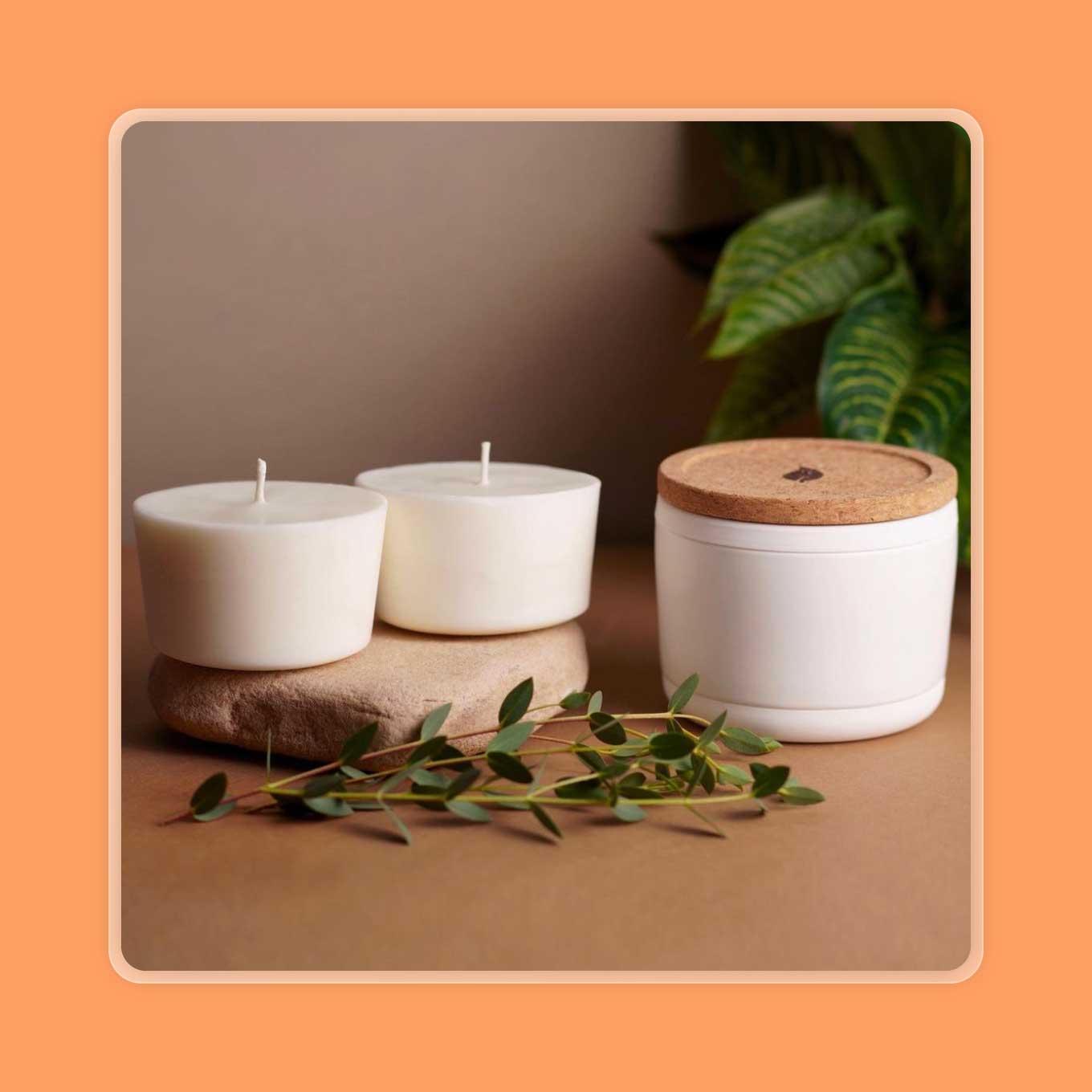
Sustainability features:
- Arbor Made candles come in a reusable candle jar. The containers have a special feature that allows you to pop out your nearly nonexistent candle remnants in one clean motion and replace it with a new wax refill from Arbor Made.
- Reusable jars have a lifetime guarantee, and Arbor Made hopes to be “the last candle you ever buy.”
- Each scent also corresponds with a reputable charity that Arbor Made supports with each order, such as: One Tree Planted, Ocean Conservancy, Pollinator.org, and Clean Air Task Force.
→ Shop Candle Set from Arbor Made
Citrus Candle from La’ F.E.M.

Sustainability features:
- Each candle is phthalate, paraben, and sulfate-free, as well as free from animal testing.
- Vessels are a high-quality recycled glass that can be reused or repurposed.
- La’ F.E.M. candles are made in small batches by a BIPOC women-owned company, but they’re also sold through Made Trade, which is a Climate Neutral Certified e-commerce platform dedicated to ethically-elevated goods.
→ Shop Citrus Candle from La’ F.E.M via Made Trade
→ Explore our full guide to eco-friendly candles!
Bedding
Self-care is nothing without sleep. I know I sleep better at night if what I’m cozying up with is also good for the planet.
Sustainable bedding is made with materials that do not contain any toxic chemicals or harm the planet during harvesting. Lots of mass-manufactured bedding is made with conventional cotton and polyester fibers that use lots of pesticides and chemicals.
The bedding we love steers clear of all of that, opting instead for certifiably organic and/or Fair Trade cottons, or other recyclable materials like viscose from bamboo, eucalyptus, and more.
We recommend:
Crinkle Percale Organic Cotton Sheet Set + Pillowcases by Nest Bedding

Sustainability features:
- Nest Bedding is Fair Trade, FSC, OEKO-TEX, and Ceti-PUR certified.
- The brand makes high-quality bedding that’s made from natural materials that haven’t been treated with health-harming chemicals.
→ Shop Crinkle Percale Organic Cotton Sheet Set + Pillowcases from Nest Bedding
Organic Cotton Quilted Comforter from Pact

Sustainability features:
- Pact is certified organic, Fair Trade, and carbon neutral, and you can measure the exact impact of every product you buy with Pact’s partnership with SimpliZero.
- On each product page, you will find an overview of how much water is saved with organic materials, how many pounds of carbon offset are measured, and how many people made this product by working in Pact’s Fair Trade factories.
→ Shop Organic Cotton Quilted Comforter from Pact
Climate Beneficial Cotton Duvet Insert from Coyuchi
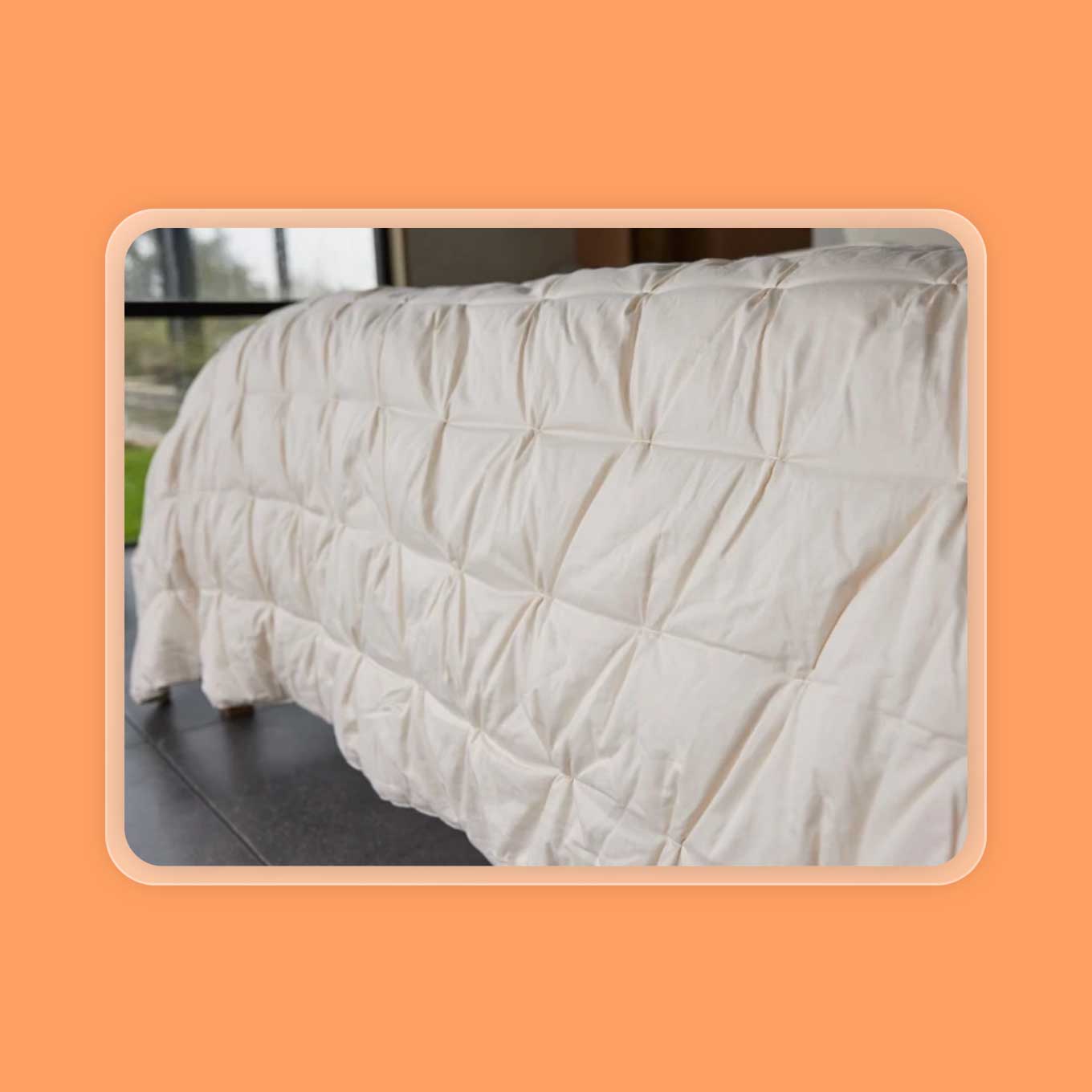
Sustainability features:
- Coyuchi is certified by GOTS, GOLS, Fair Trade, and Made Safe, also champions climate nonprofits as a partner with 1% for the Planet.
- Coyuchi’s circular model is complete through its 2nd Home recycling program, which encourages shoppers to recycle their textiles through the company — and then purchase products made with those recycled materials.
- Since the start of the 2nd Home program, Coyuchi has diverted over 43,000 pounds of textile waste from landfills.
→ Shop Climate Beneficial Cotton Duvet Insert from Coyuchi
→ Explore our full guide to eco-friendly bedding!
→ Explore our full guide of eco-friendly products for your bedroom!
Some of the most valid barriers to living a more sustainable and eco-friendly lifestyle are cost and accessibility.
Simply put, sustainable raw materials are often a lot more expensive, and artisans that create and distribute ethically-made everyday items put a lot more time, care, and labor into this work than big box retailers.
But that keeps so many of us from investing in sustainable swaps. Subsequently, reaching for the convenience of corporate giants like Amazon has become second nature to so many of us who live busy, stressful lives. It seems like an endless cycle.
And it is. In 2021 alone, Amazon shipped an estimated 7.7 billion packages worldwide, according to a study from the University of Washington.
While we totally understand the need for accessible essentials, the logistics and distribution behind these major companies play a huge role in our destruction of the environment.
Alexander Torrey set out to confront these barriers, asking: How do we get people their everyday essentials with no waste and with the same convenience they’ve grown accustomed to?
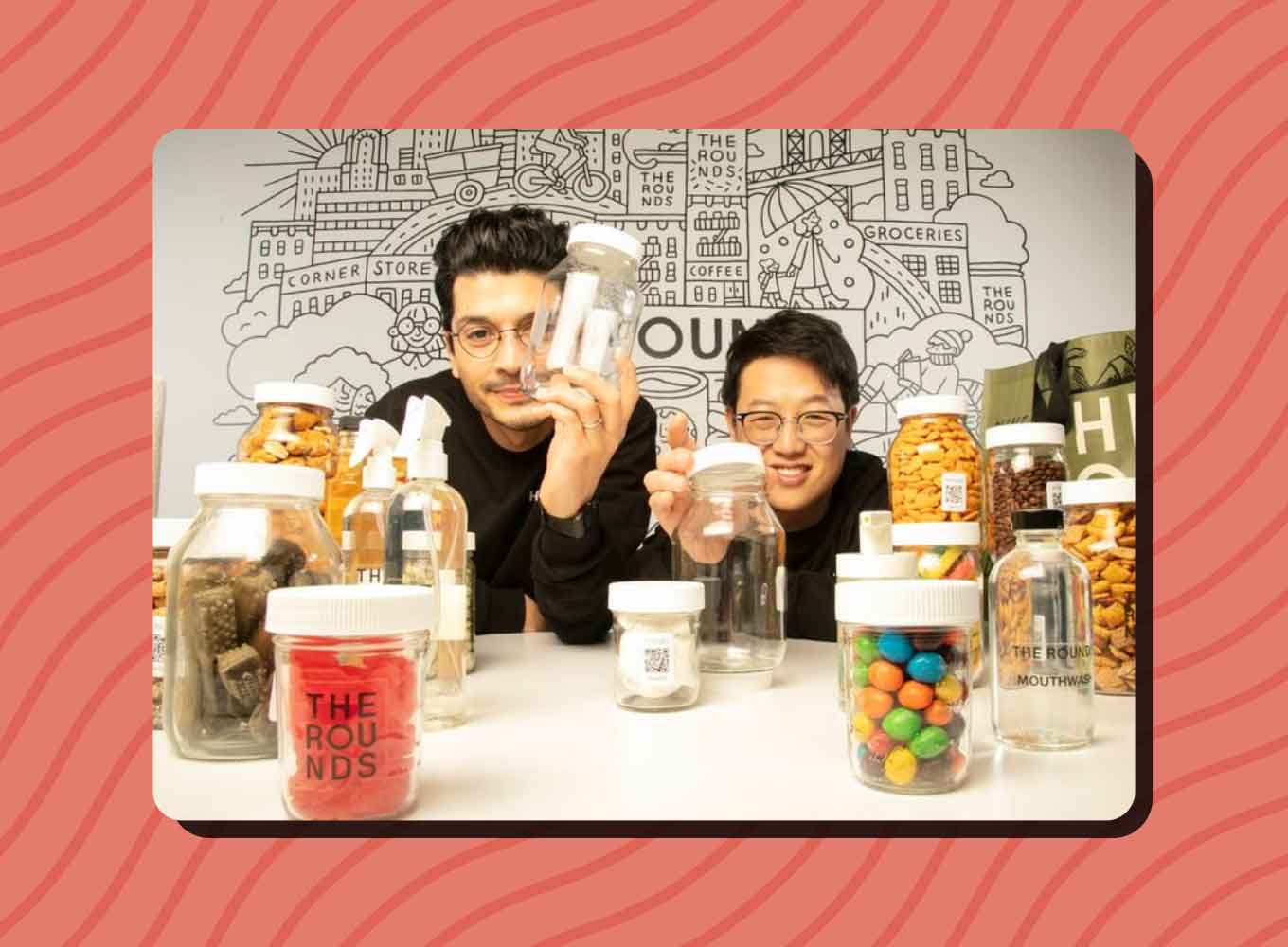
Torrey and his business partner Byungwoo Ko united in 2019 to found The Rounds, a zero-waste grocery delivery service that now operates in major cities across the United States.
What is The Rounds?
The Rounds works just like any other grocery delivery service: Members pay a fee ($10 a month), select their essentials from a wide array of household basics and pantry samples, and then have them delivered weekly by a courier.
The difference here is that the Rounds products are distributed in refillable and reusable containers, so when your delivery person (or “Rounder”) comes to drop off your next installment of goods, they can pick up any empty containers to refill for the next time.
All items are brought to members in a reusable canvas tote bag, and many of them — like raw honey or yummy pastries — are produced locally right within the community. It’s a closed-loop system that does the refill work for you.
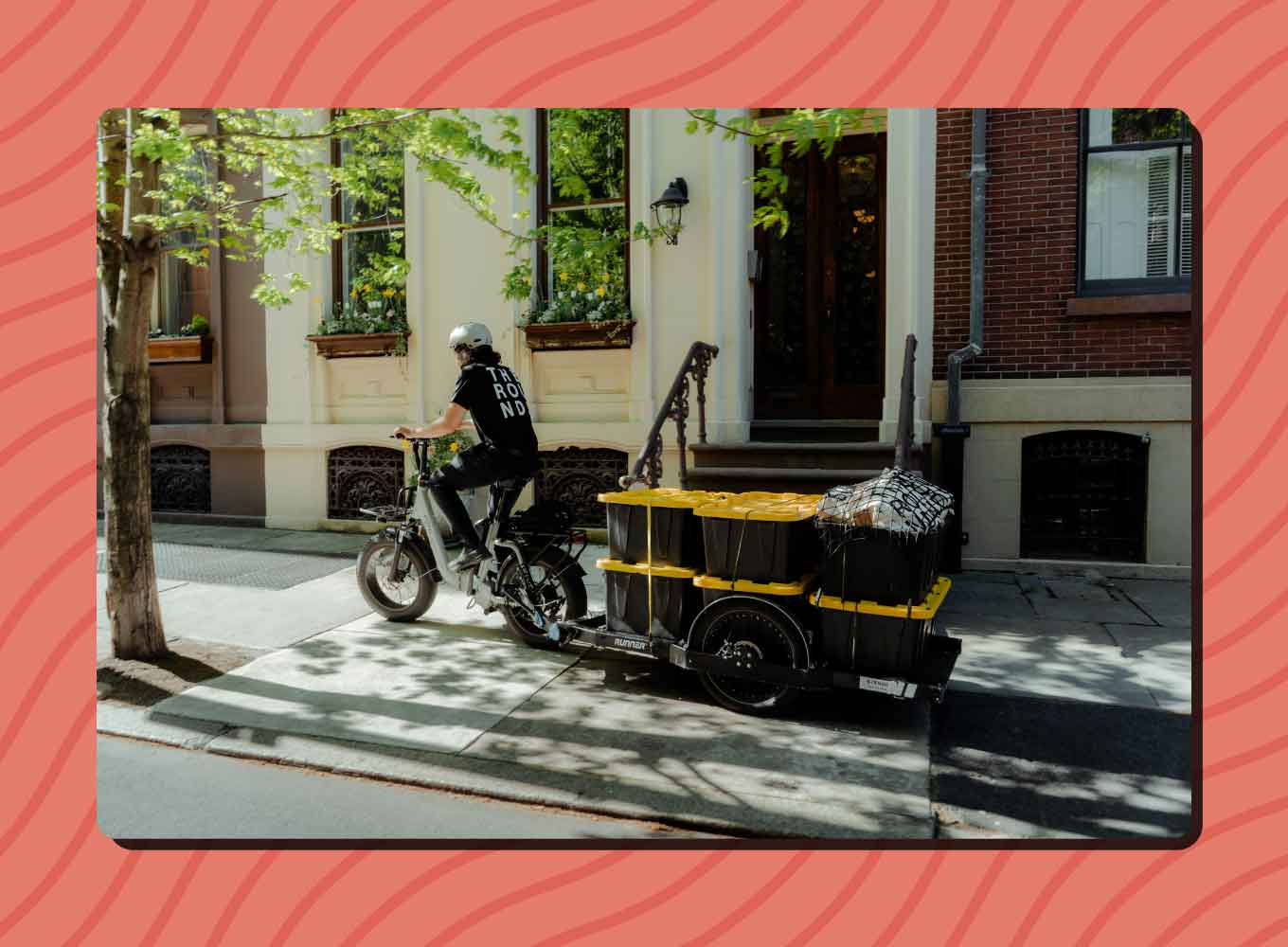
The Rounds now operates in four major cities: Philadelphia, Washington DC, Miami, and Atlanta.
“The Rounds is a one-stop shop to manage all the stuff coming in and out of your home more sustainably, using fancy data science and good old-fashioned customer service to make it super easy,” CEO and co-founder Torrey said in an email to Good Good Good.
“[We] deliver the goods you need, right to your door on the same day every week, all organized in your own personal dashboard online, and delivered in reusable containers. Once you’re done with a container, we pick up your empties to be cleaned, sanitized, and reused.”
So who is the “we” in question here? That would be the Rounders, who are paid employees with full benefits who literally “make the rounds” via electric bike — or sometimes by van. They sort of act like your modern-day milkman (or plant-based-milk-delivery-person-of-any-gender).
This service is what many of us dream of accessing, as a way to cut out the hassle of visiting refill stores — if those are even operational or accessible in our neighborhoods. But, of course, like many startups, growth takes time.
Nonetheless, Torrey is excited by recent milestones, including tripling the service area for all four cities, so that more neighborhoods and zip codes can get in on the action.
To put some of that into perspective, this equates to about 1 million households serviced in each of The Rounds’ cities — even expanding to zip codes in Fort Lauderdale, Florida, outside of Miami.
This also includes expanded product catalogs, such as additions like local produce baskets, and expanded service options, such as compost pickup, SodaStream refills, technology recycling, and even donation pickups.
Local businesses are also at the heart of these deliveries, as the brand works with area vendors to supply goods like coffee, bread, and other fresh food items.
While Torrey says the dream is to expand this market and “make single-use packaging waste a thing of the past in every neighborhood around the country,” some of that local charm is what makes The Rounds so special — and that’s hard to scale. Regardless, the brand seems committed to ensuring accessible price points across the board.
“We designed The Rounds membership to be a simple monthly subscription of only $10, with no delivery fees or service fees,” Torrey explained.
“From there, members can choose to spend as little or as much as they like on their refill order each week. Our products are priced to be comparable to what you’d find at a high-quality grocery store in your neighborhood, without any markups.”
Like other delivery services, it’s easy to pause if you’re out of town or swap items each week, but unlike others, you can look forward to greeting your weekly “Rounder” and rely on a reality without needless waste or shipping containers to get you what you need.
“It’s all meant to help you make managing the stuff you use every day easier and more sustainable,” Torrey said, “for you and the planet.”
A ferocious wildfire hit Maui, Hawaii on Wednesday and has killed at least 36 people. At least two dozen have been injured or severely burned, Maui Mayor Richard Bissen confirmed in a press briefing. The country announced that, as of Wednesday night, search and rescue operations are underway.
The U.S. Coast Guard also reported panicked residents jumping into the ocean as a way to escape the flames, according to CBS News.
The fire hit the town of Lahaina, destroying more than 270 homes and businesses, including Front Street, a major shopping and dining area — as well as many historic buildings.
Disrupting — and destroying — lives and livelihoods, the fire has also left thousands without power and the area covered in smoke and haze, as strong winds have continued to rush through the area. Thousands more have been evacuated.
The fires are reportedly fueled by a mix of land and atmospheric conditions, as well as powerful winds from Hurricane Dora, which moved through the Pacific Ocean on Tuesday, hundreds of miles south of the Hawaiian islands, according to the National Weather Service.
While this event is truly devastating, as always, we know that there is hope in the heartbreak. Whether you’re local to Hawaii or want to extend your support from afar, your support makes a difference.
We’ve broken this article down into how those in the area can help — and how everyone else can help from where they live.
We are continually updating this article. Please come back soon for more information and ways to make a difference.
How To Help Maui — For Locals
Donate food, clothing, and essentials to displaced families.
According to an Instagram post titled “Aloha is the Cure” — from a local business — Cream B Maui and Ho’omana Barbell are accepting donations to assist the community.
You can drop off food, drinks, snacks, baby formula, diapers, clothing (for adults, kids, and babies), plus bedding, pillows, towels, and personal hygiene products — at Ho’omana Barbell at 1826 Kaohu St., Wailuku, HI 96793.
As of August 9, you can also donate community goods to:
- Sparky’s Restaurant — 385 Hoohana Street, Suite 5C, Kahului, Hawaii 96732
- Paia Bay Coffee Bar — 120 Hana Hwy, Paia, Hawaii 96779
- War Memorial Complex — 700 Halia Nakoa St, Wailuku, Hawaii 96793 (enter via Kanaloa Avenue)
Donations will be distributed directly to families that have been displaced — as well as through Maui’s Rapid Response teams and local shelters.
Donate food and water to first responders.
Many local businesses are accepting donations and managing distribution to support firefighters and first responders via designated Maui Fire Department support sites.
You can drop off pre-made food, water, and snacks at The Boba Bar Paia + Anthony’s Coffee at 2 Baldwin Ave, Paia, HI 96779. The Maui Fire Department specifically recommends donating protein bars, nuts, sandwiches, wraps, burritos, musubis, cut fruit, water, juice, and hydration drinks.
You can also bring donations to other drop-off sites:
- Espresso Mafia Maui — 3617 Baldwin Ave, Makawao, Hawaii 96768
- Anytime Fitness Pukalani — 24 Kiopaa St, Makawao, Hawaii 96768
- Lumeria Maui Retreat Center — 1813 Baldwin Ave, Makawao, Hawaii 96768
- Maluhia Collective — 1960 Main St, Wailuku, Hawaii 96793
- Hi-Tech Store — 425 Koloa St, Kahului, Hawaii 96732
Local officials are asking people to not drop off donations directly at fire stations.
Share about shelters.
According to the Hawaii Red Cross, shelters are open across the island for those impacted by the fire. They can be found at the following locations:
Maui:
- Hannibal Tavares Community Center — 91 Pukalani St, Makawao, Hawaii 96768
- Lahaina Civic Center — 1840 HI-30, Lahaina, Hawaii 96761
- Kihei Community Center — 303 E Lipoa St, Kihei, Hawaii 96753
Hawaii:
- Waimea Community Center — 65-1260 Kawaihae Rd, Waimea, Hawaii 96743
- Hisaoka Gym — Kamehameha Park, 54-382 Kamehameha Park Rd, Kapaau, Hawaii 96755
The Hawaii Red Cross recommends that those heading to an evacuation center remember to bring prescription medications, extra clothes, pillows and blankets, hygiene supplies, any important documents, and diapers, formula, and kids toys (if relevant). Do not be afraid to ask for help if you need it. If you are in need, please visit a shelter.

Share the Hawaii Red Cross’s Instagram post to help spread awareness, or send this information to anyone who could use it.
More shelters continue to be announced. Keep an eye on the County of Maui’s Facebook page.
Foster a pet.
During disasters, pets often get lost or displaced. Fortunately, local animal shelters are prepared to respond to help protect and care for animals.
The Maui Humane Society says that their building and animals are currently safe — but that they need to quickly make room to accept more animals.
You can make a difference by fostering a pet (they describe it as an “SOS Foster”). You can reach out about fostering by calling them at 808-877-3680 — or by visiting their website.
SOS Foster does not require any previous training or experience fostering animals. The Maui Humane Society says that taking care of a pet for as little as a week can make a huge difference for them at this time.
The organization is also asking for people to drop off dry and wet pet food — as well as litter and pop-up kennels. Monetary donations are also helpful.
Volunteer to kōkua.
Volunteers are needed for a variety of tasks. If you are able and willing to support people who have been affected by the fires, visit a check-in station at the War Memorial Complex (at 700 Halia Nakoa St, Wailuku, Hawaii 96793).
We will continue to update as we find more volunteer opportunities.
How To Help Maui — From Afar
Donate to local aid organizations.
A number of reputable nonprofits have immediately jumped into action to support victims of the fires and those who are displaced or in need. Consider donating to:
Several local businesses are also accepting local donations and managing distribution to support firefighters and first responders. For those who cannot physically drop off donations, there are still opportunities to help.
The Boba Bar Paia + Anthony’s Coffee shared their Venmo (@Thebobabarpaia) and said that donations will go to support providing coffee, breakfast, snacks, lunch, and hydration to the first responders they are serving.
Donate to GoFundMe’s Maui Wildfires Relief Fundraisers.
GoFundMe has put together a landing page of Maui fundraisers — with funds going directly to people in need during times of crisis. The great thing about donating via this page is that GoFundMe verifies all fundraising campaigns and ensure grants get to people most in need — even guaranteeing your money back.
Helping others is just a few clicks away.
Donate to GoFundMe’s Maui Wildfires Relief Fundraisers.
Donate to the Maui Mutual Aid Fund.
Maui Mutual Aid Fund is collecting physical and monetary mutual aid donations on the front lines of the wildfire crisis. The organization says: “All funds will be distributed to vulnerable ‘Ohana in need,’” including disabled community members, those without insurance, and renters.
Donate via PayPal to support the fund.
Donate to the Maui Food Bank.
Right now, many local community members have been displaced from their homes without access to food and groceries. Others have lost work due to the fires — or have increased expenses as a result of responding to the crisis. Additionally, many local grocery stores, restaurants, and even supply chains may be affected by the fires.
Fortunately, local food banks are prepared to respond and ensure nobody goes hungry.
Maui Food Bank is asking for people to make online donations to help them provide immediate assistance to those in need. Their staff is already working to supply relief — and they’ll need more support in the coming days and months.
Donate to Maui Food Bank to provide meals.
Talk about climate change.
Climate change is consistently being left out of relevant reporting about climate change-caused disasters like hurricanes, wildfires, and flooding. For tragic weather events like the Lahaina fires — which were caused by drought conditions exacerbated by hurricane winds — it’s important that media coverage accurately describes the impact of human-caused climate change.
Only by clearly talking about the harmful impacts of climate change can we help instigate a faster climate response and save countless lives from future climate disasters.
Learn more about how to hold media outlets accountable for talking about climate change.
Share these resources with others.
Lastly, help others get involved by sharing this article via social media, email, or messaging. If you make a donation, share that with others too; it might inspire more people to join in. Every donation has the potential to make a difference for those affected in western Maui.
We are continually updating this article. Please come back soon for more information and ways to make a difference.

August 6, 2023 marked the six-month anniversary of two deadly earthquakes rocking Turkey and Syria, where over 60,000 lives have been lost and millions have been displaced by this major event.
While it may seem unavoidable to move on from major global events in the daily newsfeed, millions of people across Turkey and Syria remain in this reality, left to rebuild their entire lives from rubble.
Reports from Project HOPE, a humanitarian aid organization, estimate that more than 500,000 houses were either severely damaged or collapsed after the earthquakes, displacing an estimated 3.3 million people across Turkey.
Along with finding safe housing, people also need access to health services, mental health support, non-food essentials, water, and protection services.
Project HOPE is just one of many organizations that have been working on the front lines of this crisis since February. Its most recent efforts include the distribution of 70 housing containers in the areas of Adıyaman, Hatay, and Kahramanmaraş.
These containers were made to address basic shelter needs specifically for health workers who have been displaced from their homes and are working among local populations to care for health needs.
“The main purpose of providing housing support to the health workers working on the front lines since the first day of the earthquake was to contribute to the uninterrupted provision of health care,” Project HOPE’s program coordinator in Turkey, Nezahat Yildirim, shared in an email.
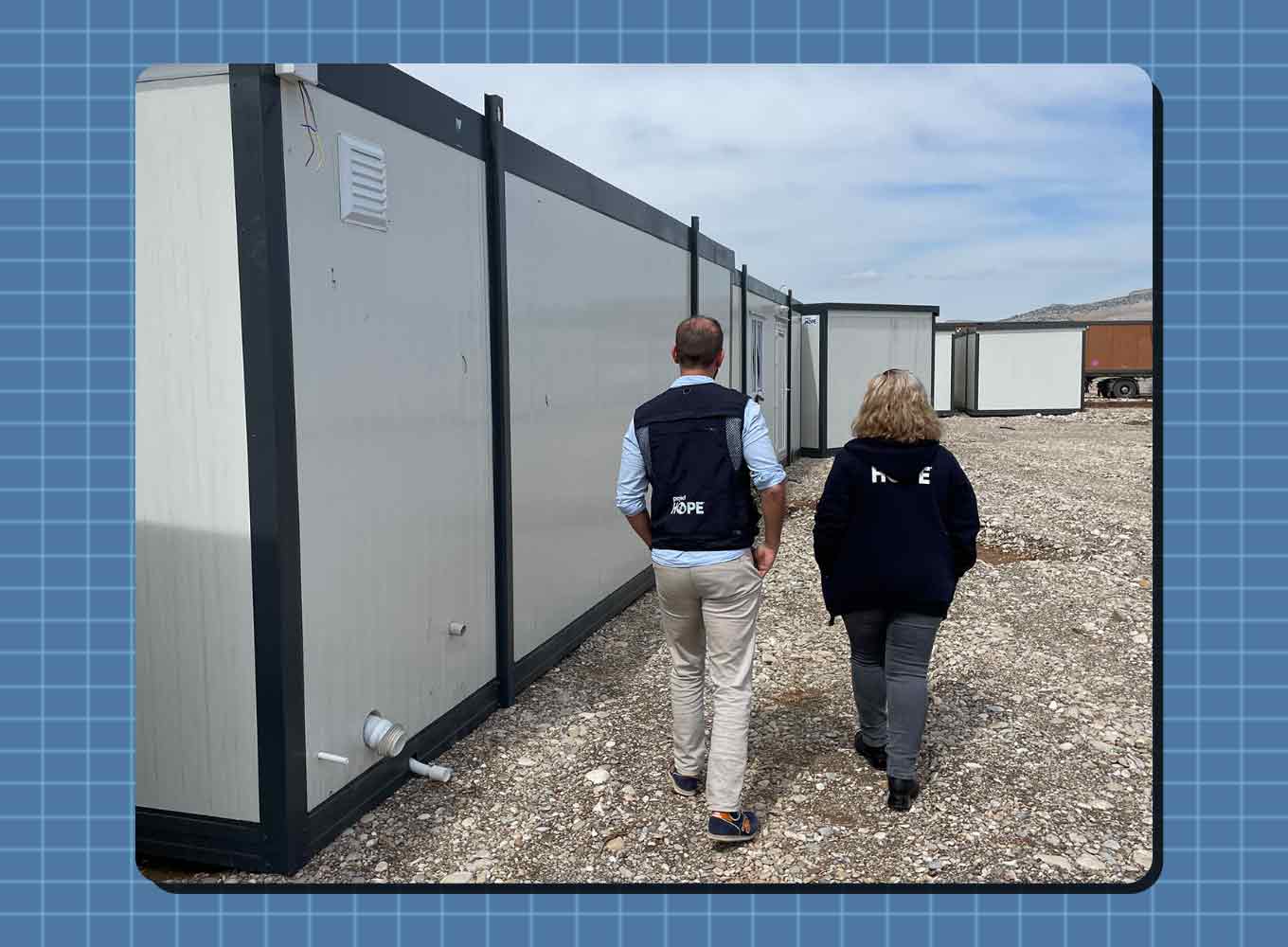
Yildirim said that the needs of civilian citizens were prioritized during the emergency response period, leaving outside organizations like Project HOPE to help keep frontline workers safe.
Prior to the distribution of the housing containers, many health workers were resting and sleeping in hospital corridors or their own vehicles.
Each container includes basic shelter needs, like sinks, bathrooms, and a space to live and sleep in. They also provide essential services like kitchen and laundry access, allowing local hospital staff to have a safe, personal place to turn to as they work on the front lines of crisis.
A way to meet a need quickly, these housing containers provide minimum conditions for health workers to live and work. Millions have been distributed from the state and international organizations to house local people, though Project HOPE’s focus is on ensuring safe housing for health care providers.
More containers are still being brought to the region by various donors, but Yildirim shared that the construction of earthquake-resistant permanent homes began in May.

“This process is expected to continue until all earthquake victims have access to permanent housing,” she said.
In addition to these housing containers, Project HOPE has also worked to ensure clean water in health facilities (as well as other settlements and rural areas) by delivering 50 water chlorination systems. These provide clean drinking water for nearly 42,050 people across 50 villages.
Additionally, Project HOPE has provided thousands of hygiene kits, and a number of mobile medical units to areas most in need. Ongoing psychological support is also supported by the organization and its local partners.
While the future of permanent housing in the earthquake zone is unknown, the people of Turkey have responded positively to Project HOPE’s efforts.
“[The local people] support that health workers deserve to live under minimum conditions in order to maintain the health care they need,” Yildirim said. “People in the earthquake zone care about supporting each other and prioritizing what is needed.”
Editor’s note: Good Good Good follows AP Style. While the U.S. State Department and other official agencies have adopted the preferred spelling of Turkiye, the Associated Press maintains the traditional spelling of “Turkey,” so we have done the same. Any changes to this will be reflected in future edits.
Header image courtesy of Project HOPE