A surprisingly large number and diversity of bee species — 74 out of 96 tested — have magnetic properties, according to research my colleagues and I recently published in the journal Science Advances.
Some animals are able to use iron-based magnetic compounds, such as magnetite, to detect and navigate via the Earth’s magnetic field — a sense called magnetoreception. We considered magnetism in the insects we tested to be a proxy for which species might be magnetoreceptive.
For decades, biologists have known that social, cavity-nesting honeybees exhibit magnetoreception. Most researchers assumed that this internal compass was tied to living in a colony; honeybees communicate the location of floral resources to other colony members through a dance that indicates direction relative to the position of the Sun and the geomagnetic field.
Our study had two goals: to compare magnetism between bee species that live in groups versus on their own, and to track down the evolutionary origin of magnetoreception in bees.
Finding magnetism wherever we looked
To test magnetic responses, we collected bee specimens from across the bee family Apidae, which includes social species such as honeybees,. along with solitary species such as chimney bees.
We ground dried dead bees into a powder, then measured how magnetic this powder was in a magnetometer.
To our surprise, we found that the magnetic response was strong in both bees that live in groups and those that live alone. This result forced us to reject our initial hypothesis that magnetism was necessary only for social bee species.

Even more unexpected, a bee from a small social species in the family Halictidae was also strongly magnetic. We then broadened our search to include bees from across the bee evolutionary tree, suspecting that the evolutionary origin of magnetism could be found in older bee lineages.
We identified some trends regarding the strength of the magnetic response of the bees in our study. Larger bees tested as more magnetic. Social bees did tend to be more magnetic than solitary bees. And cavity-nesting bees tended to be more magnetic than ground-nesting bees.
Overall, though, we detected magnetism across all the different families of bees, for social and solitary bees, in nocturnal bees, and in bees that live in nests in the ground, as well as those that live above ground in hives.
Insects from other groups we examined for comparison, including beetles, wasps and flies, were also magnetic.
We again had to reject our hypothesis; this time, we demonstrated that magnetism probably predates the evolutionary origin of bees. We concluded that magnetism is probably an ancient, well-conserved trait.

What still isn’t known
Our work leaves a lot of unanswered questions.
For one, although we assume that the magnetic response is a proxy for magnetoreception, it is notoriously difficult to demonstrate this because it requires experiments with live organisms removed from their natural environment.
Magnetoreception is one of the most controversial animal senses. While there is good evidence that some organisms have the ability to detect and navigate along the magnetic fields of the Earth, it is probably not the primary sense used, even for organisms that do have magnetoreception. That makes it a challenging sense to isolate and study.
Even in bumblebees, which biologists believe are magnetoreceptive, there remain many questions and doubts about their use of this sense.
Scientists are more certain that honeybees are magnetoreceptive — researchers have even trained them to discriminate between local magnetic anomalies. So we made the assumption that insects we tested that had stronger magnetic responses than honeybees are also magnetoreceptive. But we cannot prove it.
Moreover, our work does not explain the function of magnetism, nor the mechanism behind magnetoreception.
And while the strength of the magnetic signal varied among body parts, it was never restricted to a single body part in the bees we tested. This means that some of the hypotheses for how magnetoreception operates — for instance, through light-sensitive cryptochromes in the eyes — are not well supported by our results.
This article was written by Laura Russo from the University of Tennessee, and was originally published on The Conversation.
Featured Image: Laura Russo/University of Tennessee

- The municipality of San Vicente in the Philippines’ Palawan is a vital nesting ground for Olive Ridley sea turtles.
- Nesting turtles and their eggs face an array of challenges. Predation by dogs is the most immediate threat, but rising sea levels, more severe storms and tourism development plans also loom large.
- To try to protect the turtles, Large Marine Vertebrates Research Institute Philippines, a Philippine-based NGO, runs a research project and works with paid patrollers to monitor and protect turtles and their nests.
- Community involvement is key to the group’s conservation efforts.
When Jerald Mahusay was a kid, he and his friends saw turtle eggs so often, they treated them like toys.
“We were always playing with the eggs,” Mahusay recalled of his childhood in Santo Niño, a village in the Philippines’ Palawan province. “We didn’t know why they are important.”
Mahusay’s relationship with turtles has changed. In 2023, he started working as a patroller for the Large Marine Vertebrates Research Institute Philippines (LAMAVE), an NGO that conducts marine research around the country, including a turtle monitoring project in Palawan. This year, Mahusay was promoted to head of the local patrol unit and research assistant for LAMAVE’s turtle project.
Santo Niño is located in San Vicente, an agriculture and fishing municipality that is a vital nesting ground for olive ridley sea turtles (Lepidochelys olivacea), classified as vulnerable on the IUCN Red List.
However, nesting turtles here face a myriad of challenges. The most prevalent is a largely unchecked stray dog population, but higher tides and more frequent storms caused by climate change loom large, as do plans to develop the area for mass tourism.

On patrol
During peak nesting season, volunteers and local patrollers walk more than 5 miles in five shifts each night and early morning.
When they find a turtle, they’ll wait for her to finish nesting, shooing away dogs when necessary. Before she re-enters the water, they’ll measure her carapace, take photos of the unique scute pattern on her head, which acts as a fingerprint that can be used to identify her later, and take a biopsy from her fin for future genetic sampling.
Sometimes, they find a nesting turtle that encountered a dog, bleeding in the sand, fin torn away from her body, exposing smooth bone underneath. In those cases, they wait for the injured turtle to take her last breath, so they can remove the eggs and take them to one of their two hatcheries.
“Some people cope better with that than others,” researcher Klara Simon said. “In the end, even though she’s dead, at least her babies survive.”
When they find a nest, the eggs are dug up, counted, placed carefully in a bucket and brought to a hatchery. In past seasons, researchers found that most, if not all, nests left “in situ” on the beach were eaten by dogs or flooded by the tide.
Inside the hatchery, rows of nests make small circles in the sand, circumscribed by green, plastic netting. A researcher recreates the dimensions of the original nest and places the eggs in. They check on the nests daily every few hours.

About two months after the eggs are laid, they will start to hatch. In the early mornings or evenings, researchers and local patrollers take the hatchlings that surfaced that day, sometimes a hundred at once, and place them on the shore, where they begin their race to the West Philippine Sea.
During this crawl, scientists believe the turtles are able to take a geomagnetic imprint, allowing them to return to the region where they were born.
Once in the sea, only about one in 1,000 will survive until adulthood. That survivor will spend up to 15 years at sea before reaching sexual maturity and making the journey back to the island where it was born.
In that time, the beaches will see much change.
San Vicente has seen an increase in tourism in recent years. Century Properties, a luxury developer, purchased 138.4 acres, with plans to build a beachfront resort. Another major developer, Megaworld Corporation, has broken ground on “Paragua Coastown,” expected to be 1,142 acres. On its website, Megaworld advertises San Vicente as “an undiscovered haven ready to welcome you,” with mock-ups of solar panel clad condominiums and paved tree-lined roads built over the beach.
Residents, according to Mahusay, have mixed feelings about more development.
“Excited, but sometimes nervous,” he said.
The threat of dogs
The dogs, currently the biggest threat to the turtles, will likely remain. Many of the dogs are cared for by residents, while others are strays. The distinction is challenging, as there is no veterinarian in the area, so microchipping, spaying, and neutering is not common.
While the Philippines’ Anti-Rabies Act of 2007 requires dogs to be registered, vaccinated, and leashed, the enforcement and impounding of strays is up to local governments. San Vicente has a local ordinance that prohibits the presence of strays and authorizes an animal shelter, but the ordinance is not enforced and the municipality lacks the resources to build and staff an animal shelter.
Researchers have sought other solutions. They noticed a concentration of dead nesters and predated nests in one portion of the beach, so they approached the land’s caretaker, Reymundo Munding, who owns eight dogs.
“We talked to him and we included him in the patrols,” project leader Kalei Suza said.

Munding, speaking through a translator, said he’s lived on the property for 15 years. Sometimes he goes out to fish for squid at night, leaving the dogs out to protect his family.
One morning, around 3 a.m., patrollers found a dying turtle near his property. They waited five hours for her to die. Later, as more researchers joined the patrollers, they encountered Munding, who came with them to see the turtle.
“He walked with us, and he was so heartbroken, because he’s seen how much effort we’re doing, that we don’t really have sleep,” Suza said. “Then boom: He asked us, ‘what can we do for this to stop?’”
Munding agreed to let LAMAVE build a fenced enclosure on his property to contain the dogs at night to protect the turtles.
However, many residents do not want their dogs fenced in, said Santo Niño Barangay Secretary Veronica Estropia. So, for now, the dogs remain, making human intervention crucial for hatchlings to survive on the quiet beaches of San Vicente.
The threat of storms
Meanwhile, storms and high tides present another rising threat to the hatchlings.
“It’s not natural for Palawan to be hit by typhoons, but because of climate change, a lot of storms have been hitting Palawan directly,” Suza said.
In January, the researchers recorded the high tideline during a typhoon and compared it to the locations of the nests found during patrols. If the nests hadn’t been relocated, they would’ve flooded.
“These animals have evolved to survive despite having a lot of calamities around them, but since we, as humans, are present, they now face a lot of threats,” Suza said.

The future
Yet, the researchers remain hopeful, especially about the ways the community has engaged with the project. Researcher Emelie Gottschling recalled a time that one of the local patrollers came to the project house, where the researchers live and work for the duration of the project, on his day off.
“He came with a bike to inform us that other locals found a nest on the beach,” she said. “We went there together, and they had put a blanket on top of the nest, secured with stones, to mark where the nest was and to protect it from the dogs.”
Together, they relocated the nest.
Roldán Valverde, scientific director of the Sea Turtle Conservancy, based in the U.S. state of Florida, said relocating eggs to hatcheries should only be used as a last resort, as the move can agitate the eggs and some hatcheries are mismanaged.
It’s a good sign, he said, if the people running a hatchery release the hatchlings quickly after they emerge. As for LAMAVE’s program, the photo identification and genetic data could offer more insight into the movement of olive ridley turtles in the Philippines, Valverde said.
According to LAMAVE’s data from last season and preliminary data from this season, in the hatcheries, around 75% of the eggs in a nest will hatch. To compare, when untouched by predators, hatching success rates of 80% or higher are common for in situ olive ridley nests.
But hatchery management, Suza said, is not the end goal.
“We still want the turtles to nest in their regular, natural place where they want to nest, because mama knows best,” she said. “But it calls for an expansion of community efforts. We need people to know and own the responsibility of taking care of the turtles.”
Despite the many challenges, the researchers hope that when a hatchling returns to the white beaches of San Vicente, she will arrive at a place where she and her offspring will be looked out for and protected.
This article was originally published on Mongabay.
Featured Image: Large Marine Vertebrates Research Institute Philippines/Facebook
Last week, volunteers with the Cayman Islands Department of Environment were on a regular beach monitoring excursion when they came across a large green female sea turtle trapped in a swimming pool.
A Facebook post from the DoE said the turtle was found in a pool at Rum Point, a city on the islands known for its beachfront resort, watersports, and relaxing pools.
But it was anything but relaxing for the 400-pound turtle, which had to be lifted from the pool by conservation officials and members of the islands’ “Turtle Team.”

“Getting a 400-pound turtle safely out of a swimming pool is no small feat,” the Facebook post from the DoE said, “but the team removed her, checked and tagged her, and released her back to sea.”
Fortunately, the turtle wasn’t in ill health, but the rescue was dramatic, and unfortunately, not all that unusual during nesting season.
“Female turtles come ashore at night to nest. Artificial light on the beach, or the removal of natural coastal vegetation, can leave them disoriented and cause them to crawl into developed areas instead of returning to the sea,” the Facebook post explained.

“If they reach a swimming pool with its edge at ground level, they can fall in and become trapped.”
This is what rescuers believe happened to this particular turtle.
And it’s not just a problem for nesting turtles — artificial light can also lead their hatchlings astray.
Baby sea turtles have an instinctive “sea finding” behavior, which helps them crawl toward the lowest and brightest horizon, usually the ocean reflecting moon and starlight.

But artificial light sources from development on the beach, or flashlights, can interrupt this process and redirect the turtles from where they need to go.
The DoE reminded beachfront properties to help protect nesting turtles by doing the following:
- Retaining and restoring native coastal vegetation
- Reducing artificial light visible from the beach
- Moving beach furniture and small watercrafts off the active beach overnight
- Designing new elevated pools or installing effective barriers around ground-level pools
- Never leaving ground-level pools empty or without suitable fencing during nesting season
Beach-goers and tourists can also do their part to protect sea turtles during nesting season, including keeping beaches flat and easy to navigate and reducing their own sources of artificial light.
“This turtle is safely back at sea,” the DoE reported. “Practical beachfront management can help keep more nesting turtles out of danger.”
You may also like: Florida's adorable sea turtle license plates have raised millions to save the endangered species
Featured image courtesy of Stephanie Gunby/Cayman Islands Department of Environment
It is hard to imagine finding hope in a steel cargo container. But Shirlye Grandy sees life, fellowship, and beauty in the metal box that sits on the Dix Park campus in Raleigh.
Grandy served nearly six years in the N.C. Correctional Institution for Women, but now holds the title of public arts project coordinator for Arise Collective, a Raleigh nonprofit dedicated to helping incarcerated women across the state.
Grandy told members of the N.C. Joint Reentry Council last week that her life was profoundly changed in 2019 when she joined a small group of women at NCCIW crocheting items to be donated and sold. The proceeds were used to help parents on the outside bring children to see those who were incarcerated.
But when COVID-19 hit, everything changed. Prison visits and classes were canceled. There was no outside work. In the minimum custody unit where Grandy and the other women were housed, more than 100 prisoners contracted the virus in one week.
“But what that did was it brought us together as sisters in incarceration,” Grandy said. “It turned into something much larger. It showed that we are determined, we have life, and we are not giving up.”
The women of H.A.T.S. — that’s Handmade and Totally Special — used each week to crochet. Each colorful section joined together represented a year that a woman served behind bars.
Grandy recalled carefully crocheting six squares to mark her own sentence.
“My friend Faye Brown, who passed away from COVID, had 40,” Grandy told the reentry council.
When the 25-foot-long prison quilt was finished just before Mother’s Day 2021, other incarcerated women were invited to tie ribbons to the squares to recognize the children they left behind and the lives lost by family and friends while they were in prison.

According to research by The Sentencing Project, the U.S. has seen a 525% increase in the number of incarcerated women between 1980 and 2021, roughly twice the rate of increase for men. Eighty percent of incarcerated women are mothers.
Grandy lost her own mother during her incarceration.
Jennifer Jackson, chief executive officer for Arise Collective, says opportunity for the crocheters struck two years later when the Z. Smith Reynolds Foundation and the Mellon Foundation issued a grant proposal to create permanent public art to tell the stories of historically marginalized communities.

“There’s a community of people who have been touched by incarceration across our state that has been hidden,” said Jackson. “We made a pitch that they consider this a community, as we were defining it, as one that fit within their grant guidelines.”
The foundations selected Arise and the Stitching Stories Quilt to be reimagined and transformed for the public.
Four artists — Carlos González García, David Wilson, Eliza Redmann, and Owens Daniels — spent the next three years transforming the crocheted quilt into a durable mosaic that captures the lives of the often-forgotten women. On the opposite wall of the shipping container, a mirrored wall portrays the original artists with the phrase, “We are you.”

The work will be displayed on the Dix Park campus until September when it will move to Wilmington.
The project is also an opportunity for the public to learn more about mass incarceration and the challenges that arise after leaving prison.
Each year, more than 18,000 individuals are released from North Carolina state prisons. Without a support network, 49% of those are rearrested within two years.
North Carolina is part of a national initiative to reduce the recidivism rate by 30% by 2030. Its goal is to improve reentry services that help people leaving prison find employment, healthcare, and housing. Formerly incarcerated people are up to 10 times more likely to experience homelessness than the general population.
Grandy credits Arise Collective with helping her successfully transition to a better life after her release. This summer, she’s giving tours of the Stitching Stories exhibit.

She told those gathered at the All Faiths Chapel at Dix last week that while she never liked to talk about herself, she was proud of what her quilting sisters had accomplished.
“In a space that could have been the most dangerous and disastrous and dark place, we created light and beauty,” Grandy said.
Later this year, Grandy will complete her master’s program at Duke Divinity School. She said others who have served their time also deserve a second chance.
“None of that would be possible without good transition programs,” Grandy said, ”places where women like me who want to do something different with their life after incarceration have a place to go and grow and learn how to be a person again.”
This article was written by Clayton Henkel and was originally published by NC Newsline.
Featured Image: Clayton Henkel/NC Newsline
Every year, a group of “Mad Max” level car enthusiasts and public lands lovers gather for their own kind of “Burning Man.”
They all coalesce on national forest lands near Madras, Oregon, where they show off their DIY rigs and compete to collect the most trash. It’s called the Gambler 500.

“We are a disorganized group of people who like to drive bad cars, go camping, and pick up trash on public lands,” one participant, Rowan Sharman, writes on his blog.
Gambler 500 started in 2014 by Tate Morgan and “the OG Gamblers,” a small group eager to join in on “cheap fun” for a good cause. Since then, the original Oregon event has become the flagship meetup for Gamblers across the globe, but local groups also organize their own satellite versions.
Here’s the gist: For one weekend in the summer, participants sign up to meet at Crooked River National Grassland, where they bring their “junky cars,” all of which are purchased for $500 or less. Then, they use those vehicles to “race” to collect as much trash as possible.

And the vehicles are designed to grab attention; They’re heavily modified, painted or decorated with vibrant designs, and some even topped with dragons spitting real flames, according to KUOW, Oregon’s NPR affiliate.
One participant at the 2026 event, held on June 27-28, was eager to show off his “Lam-boat-ghini,” a hybrid between a Buick Rendezvous and a boat participant Daniel Tipton found abandoned on a forest service road.
“It’s kind of terrifying to drive down the highway, but it is technically street legal,” Tipton told KUOW. “Rides like a boat.”

Sharman has been part of the group since 2022, “souping up” his 1991 Ford Ranger to get the job done.
“This truck has hauled boats, couches, cars, and hundreds (thousands?) of pounds of trash out of the woods,” Sharman wrote on his blog. “It’s thrown pushrods, gone swimming, done donuts, climbed mountains, and [ran] out of fuel, but it hasn’t left me stranded yet.”
Initially, the event just started as a DIY street-racing endeavor, but creator Morgan told KUOW it “had to change” once it gained popularity.
“If we’re gonna use public land,” Morgan said, “we changed the metric from competition [to] time, as a race would be, to see how much trash you could pick up off of public land.”

Now, hundreds gather at Gambletown annually, eager to “let their freak flag fly and build crazy weird cars,” Morgan said.
At the 2026 event, participants removed 13 abandoned cars, seven RVs, and four boats, along with about 600 tires and 250,000 pounds of trash from the national grassland.
It brings their lifetime total up to about 5 million pounds of garbage removed from public lands since the inception of the event, organizers told Central Oregon Daily News.

But the do-good element of Gambletown doesn’t end after one weekend. Morgan created an app called Sons of Smokey — a play on “Sons of Anarchy” and the beloved forest mascot Smokey the Bear — for public land-goers to mark large items of trash they see while out on hikes or camping trips.
Then, anyone can check in on the app to go haul out the trash.
This 12-year-long commitment to vigilante trash pickup is one Morgan hopes attracts a diverse coalition.
“I think we’ve also addressed a certain portion of our society and outdoor users who didn’t fit in the archetype of how people wanted to define environmentalists and stewardship, right?” he told KUOW.
“There are people from all sides of the aisle, no matter what, that can agree that trash doesn’t belong out here.”
@mattmartin507 The Gambler 500 is like Burning Man meets Mad Max meets the Sierra Club! #glamber500 #publiclands #trashcleanup ♬ 0.1hz Coherence & Alpha 8hz (Monaural Beats) - Neural Recharge
You may also like: An EMT is dressing up as 'The Roanoke Raven' to save his city: 'If it takes wearing a superhero mask to do it, let’s do it'
Featured Image: Courtesy of Rowan Sharman
Abdul Hamid Al-Ansari is many things: paramedic, musician, runner, carpenter, scuba diver, and yogi. Now he can add “sea turtle rescuer” to the list.
On July 3, Al-Ansari, an Oman-based influencer, shared a video on Instagram of him and two others saving a loggerhead sea turtle that had become wedged between jagged rocks on a seashore.
As they struggled to lift the sea turtle, the tide continued to rush in, spilling far over the turtle’s head and putting it at risk of drowning.
Fortunately, after several false starts, the three men were able to lift the massive turtle out of the cliff face and back onto the shore.
As it returned to the ocean, Al-Ansari gently patted the top of its shell in “goodbye.”
Although the original video is only at 800 views, copies of it have circulated across various accounts on Instagram and Facebook, cumulatively garnering upwards of 50,000 views.

One Instagram user wrote: “That’s one lucky turtle right there!”
“Many blessings to them,” another person wrote on Facebook.
“This brought tears to my eyes,” another user said. “Well done guys!!! Thank you.”
Studies show that only two loggerhead nesting populations have greater than 10,000 females nesting per year: Peninsular Florida and the southeastern coast of Oman.
Of the seven species of sea turtles, loggerheads are the largest hard-shelled sea turtles in the world. The average adult loggerhead sea turtle weighs between 250 and 400 pounds — putting into perspective how much weight the Al-Ansari were lifting on the beach that day.
In early June, four fishermen had to use their collective strength to lift an injured green sea turtle out of Florida waters. They later learned that she weighed over 300 pounds.
Generally, experts advise people to give wildlife a wide berth, especially sea turtles, nearly all of which are endangered. If you see a sea turtle in distress, call 1-800-SEATURTLE or use the NOAA Fisheries Stranding Contact Page to find 24-hour hotlines for your region.
However, in extreme life-and-death circumstances, wildlife authorities may ask you to intervene on a sea turtle’s behalf. When reporting an injured or distressed sea turtle, follow the guidance provided by wildlife experts.
See the rescue from Oman below:
You may also like: The Coast Guard rescued a loggerhead sea turtle after an anchor line mangled her flipper. See her incredible 4-week recovery
Featured Image: Screenshot via @abdulhamid_hd/Instagram
Rooftop solar saved New England ratepayers more than $130 million in electricity costs during the region’s early July heat wave, according to a report from the Acadia Center.
Jamie Dickerson, one of the report’s authors and senior director of climate and clean energy programs for the environmental nonprofit, said it’s a clear economic case for the benefits of solar power.
“If we hadn’t invested in these resources, we would have been even more exposed and overexposed to the fuel sources that are more volatile and more subject to the dramatic swings in prices during peak periods,” he said.
The Acadia Center’s Grid Action Report looked at the heat wave that hit New England in early July, and estimated that during the week of June 28 through July 4, distributed solar projects contributed more than six gigawatts in electricity, saving New England ratepayers $130-149 million.
On July 2 alone, the report found that solar arrays saved $39 million to $54 million.
Distributed solar includes projects connected to the electric grid ranging from household rooftop solar to community solar arrays up to 5 megawatts. Those solar panels offset a household’s electrical use and inject any surplus energy production into the grid, Dickerson said.
“Like if someone has a house and is using air conditioning, their solar is feeding the air conditioning and reducing demand before any surplus is being sent back to the grid,” Dickerson said.
“The grid soaks it up,” he said, and that means “other resources don’t have to burn during those hours of production,” saving other ratepayers money because they don’t have to buy those other fuel sources.
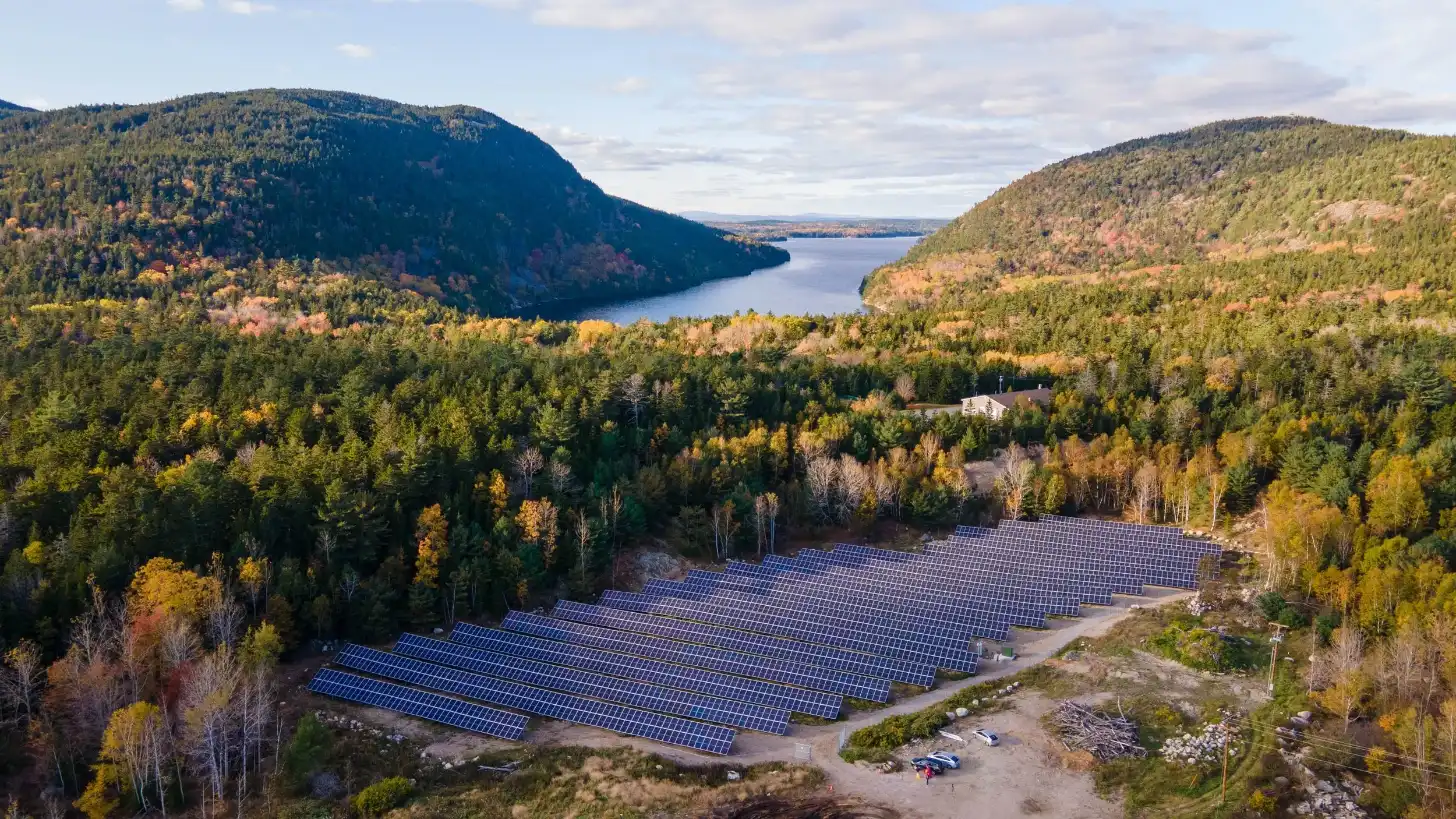
The solar production also reduces the overall demand for other fuel sources, keeping prices lower.
The analysis found that at times, solar power was feeding about 25% of the grid’s total electric demand. The afternoon of July 2, solar contributed more power to the grid than the region’s nuclear fleet.
Dickerson said the benefits of solar are not confined to heat waves like the one seen in New England this month. In fact, the Acadia Center found that last year solar energy saved $1.26 billion to $1.37 billion.
“These are resources that we’ve invested in that are there and will show up on the grid during these types of hotter summers and El Niño summers,” Dickerson said. “We’re going to see savings year-round, but especially in the summer with higher temperatures that we’re seeing.”
Dickerson said that other energy efficiency improvements in the region, like better insulation, weatherization, and more efficient appliances, also helped ratepayers save on energy costs during the heatwave.
The report estimated that those passive resources saved ratepayers $94 million to $97 million during the week. That includes an estimated savings of $29 million on July 2.
Dickerson said these savings can be hard to show, because it requires calculating what costs would have been without solar power. But he hopes the report can highlight the impact of solar and refute the narrative that clean energy is driving prices up. Especially as the Trump administration pulls back support for clean energy, and state and local leaders must consider the future of those investments.
“This is hopefully helping to make the argument that these are not only good for all of our public policies around emissions reductions, but also good economic energy affordability policies too,” Dickerson said.
This article was written by Kaitlyn Budion and was originally published by Maine Morning Star.
Featured Image: Budget Bizar/Pexels
Way back in 725–675 BCE, when ancient Greek poet Homer composed “The Odyssey,” he created mythological islands and seas to set the story of Odysseus — a man many of us now imagine to look like Matt Damon.
But according to legend, Homer’s Ogygia, the island of the nymph Calypso, is based on Othonoi, a real island on Greece’s westernmost point. The isle is surrounded by the Ionian Sea, also an iconic setting for the climax and home stretch of Odysseus’ journey in Homer’s epic.
But today, while Christopher Nolan’s adaptation of “The Odyssey” reaches international acclaim, these same shores are being studied for potential oil drilling by companies like Chevron and ExxonMobil.
Oil drilling is a harmful extraction process that warms the climate, releases toxic wastewater and greenhouse gases, and puts marine life at risk of oil spills and other hazards.
It’s not something one would imagine Poseidon approving of.
So, visual artist The Krank has created a large-scale public artwork protesting the possible drilling projects. As part of the Ionian Lab residency program on Onthoi, The Krank has pieced together “The Hunt,” a 1640-square-foot installation on Aspri Ammos Beach.

“The Hunt” depicts two hunters with a spear pointed at an offshore oil platform, in a cave drawing-style shape. They are placed approximately 6 miles from the proposed extraction area, and were designed to cause no harm to the local environment.
The piece was made with black geotextile strips and secured with pebbles already found on the beach.

“Drawing on the visual language of prehistoric cave paintings, ‘The Hunt’ connects humanity’s earliest forms of survival with contemporary resource extraction,” a statement from The Krank reads.
“The temporary intervention remained on the beach only for documentation, leaving no permanent alteration to the site while inviting public reflection on the relationship between landscape, energy, and collective memory.”

The Krank is a Greek visual artist based in Athens who is best known for large-scale, site-specific installations, especially land art and public interventions.
This makes “The Hunt” a piece right up his alley.
“Most offshore exploration projects are experienced through maps, technical documents and government announcements. The Hunt approaches the same geography differently,” he shared in an artist statement.
“Rather than documenting a landscape after it changes, the installation introduces a temporary visual intervention while that future remains uncertain.”

While the piece was temporary, and its purpose was to illuminate uncertainty, the conversation about harms to the ancient ecosystem remains.
“On the last day of the installation, visitors kept asking whether the black material would harm the beach,” The Krank reflected. “Once we walked together toward the rocks and looked back at the work, the conversation shifted from the material itself to the offshore exploration area on the horizon.”
You may also like: Why we're craving utopian fiction, from the hope of 'Project Hail Mary,' to the wholesomeness of 'Ted Lasso'
Featured Image: The Krank © 2026
About a week ago, firefighters at the Bonita Springs Fire District received a call for help. Over a dozen sea turtle hatchlings had fallen into a pair of storm drains near the Mediterra Beach Club, a condominium on Bonita Beach.
First responders came to the scene with volunteers from local nonprofit Turtle Time Inc.

One by one, they removed 14 hatchlings from the storm drain and put them all in a bucket, which they would carry down to the shore to set the babies free.
“Using great care, firefighters safely removed the tiniest of turtles and helped them continue their journey to the Gulf,” a social media post from the fire department shared.
“All turtles were successfully rescued and returned to safety.”

It’s unclear how these turtles ended up trapped in this particular case, but it is unfortunately not all that uncommon.
Last week, a 400-pound nesting sea turtle found her way into a residential area and was trapped in a swimming pool in the Cayman Islands.
Before that, a man went viral on TikTok for rescuing a tiny turtle hatchling from a random sidewalk in the opposite direction of the beach.
So, why do these marine animals stray so far from home? Experts believe it is mostly to do with artificial light sources.
Sea turtles have an instinctive “sea-finding” behavior, almost like an internal compass, that helps them crawl toward the lowest and brightest horizon in their line of sight.
This is usually the ocean reflecting moon and starlight, but with an increase in artificial light sources from development, flashlights, or nearby residential lighting, the sea turtles get confused and redirected from where they are supposed to go.
Then, they find themselves crawling into storm drains or falling into ground-level pools with no way to escape.
The Bonita Springs Fire District’s first priority is always responding to life-threatening emergencies, but when they can, they don’t mind helping residents with pet or wildlife situations.

“Around this time of year, we get a lot of ducklings in drains, but we haven't had a lot of sea turtles,” fire department spokesperson Nicole Hornberger told Naples Daily News. “But this [rescue] was close to the beach.”
If you are a beach town local or tourist, there are steps you can take to make sure sea turtle nesting season goes swimmingly.
And if you’re local to Naples and need a hand from the fire department, residents can call (239) 337-2000 for assistance with animals.
You may also like: Tiramisu the sea turtle couldn't even swim when rescuers found her. After months of vet care, she just returned to the ocean
Featured Image: Alejandro Linares Garcia/Wikimedia Commons (CC BY-SA 4.0)
Hundreds of thousands of Haitians in the U.S. are living in uncertain times. On June 25, 2026, the U.S. Supreme Court ruled that the Trump administration could proceed with a plan to end Temporary Protected Status — a federal program that allows people to stay in the United States when the government considers their own country unsafe — for around 350,000 Haitians and 6,000 Syrians.
Their work permits are scheduled to end July 24, leaving TPS holders at risk of deportation.
This uncertainty is not new. In 2010, President Barack Obama granted TPS to Haitians living in the U.S. after an earthquake killed approximately 200,000 people in Haiti. The original period was 18 months, but TPS has been renewed multiple times because of humanitarian concerns, gang violence, and political unrest.
Haitian communities in Ohio, where I study immigration, have been particularly on edge since 2024, when, during the presidential campaign, Trump and JD Vance repeated false claims that Haitians living in Springfield were eating pets. Many of the city’s estimated 12,000 Haitian residents endured harassment, and the city experienced more than 30 bomb threats.
Yet Haitians have built lives here, often with the support of neighbors, nonprofits and churches — groups speaking up as the community prepares for the end of TPS.
Days before the Supreme Court decision, Ohio’s Catholic bishops issued a statement expressing deep concern for “our Haitian neighbors.” Echoing a November 2025 statement about immigration from the U.S. Conference of Catholic Bishops, they told Haitians, “We stand with you in your suffering, since, when one member suffers, all suffer.”
Meanwhile, residents in Springfield have organized prayer vigils, rallies, food drives, and donations for Haitian families. Many groups that have supported immigrants for years are faith-based, such as G92. Another, Springfield Neighbors United describes its work as centering “love your neighbor values.”
These responses reflect themes in my research on faith communities supporting immigrants and how they become “sanctuary people.”
In the 1980s, churches in the sanctuary movement prioritized offering physical protection to Central American asylum-seekers. In recent years, however, I have seen faith-based advocates’ sense of sanctuary expand. The idea now encompasses efforts to assist people most affected by immigration policy, as well as other vulnerable groups, and to assure them that they are not alone.
Catholic roots
This broader understanding of sanctuary is rooted in Catholic social teaching — especially the idea of accompaniment, which prioritizes closeness to people who are suffering.
Accompaniment has a long history in faith-based social justice movements in the U.S. and Latin America. One of the most famous examples comes from Archbishop Óscar Romero, who was assassinated in 1980 and declared a saint by Pope Francis in 2018.
Romero challenged people to accompany the rural poor amid the violence and persecution of El Salvador’s civil war.
Pope Leo XIV affirmed the importance of accompaniment in meeting migrants’ needs during his visit to the Italian island of Lampedusa on July 4, 2026.
“Before any intellectual consideration or ideological conviction,” he said, “the encounter with those who lie before us, stripped of everything, calls us to be close to them.”
Accompaniment is a defining feature of today’s immigrant advocacy, embraced by faith-based and secular activists alike. It is also a central value for “sanctuary people” — a term I learned from Ruben Castilla Herrera, an activist in Columbus.
Herrera, who died in 2019, helped create coalitions of support for immigrants. After the 2016 presidential election, he called on secular and faith-based activists to see all of their efforts — including to work to end police violence that disproportionately affects the poor and people of color, and to protect LGBTQ+ rights — as interconnected struggles to create places of safety: to be sanctuary for one another.

“Sanctuary comes from the people,” Herrera somberly observed on Sept. 5, 2017, as a woman named Edith Espinal entered into sanctuary at the Columbus Mennonite Church.
Faced with a deportation order that would separate her from her family, Espinal lived there for more than three years. In February 2021, during President Joe Biden’s administration, she was granted an order of supervision, which allowed her to return to live with her family in Columbus, Ohio.
Wider sense of ‘sanctuary’
Throughout my research, I have observed how groups across Ohio expanded the idea of sanctuary beyond physical protection for migrants and asylum-seekers, reflecting a national shift.
Organizations like El Centro de Servicios Sociales in Lorain, Ohio, for example, worked closely with Sacred Heart Chapel, a Catholic parish, when more than 200 Puerto Rican families arrived in the city after Hurricane María in September 2017. In the weeks and months that followed, sanctuary people helped secure housing, jobs, language instruction, translation services, healthcare, and guidance enrolling children into local schools.
“Sanctuary people” also supported families left behind following an Immigration and Customs Enforcement raid at Corso’s Flower & Garden Center in northern Ohio on June 5, 2018 — one of the largest ICE actions in the U.S. at the time.
The raid prompted the creation of Los Niños de Corsos, a grassroots organization led by young people who tried to educate the public about detention’s impact on families and communities and respond to their needs.
The following year, when 680 workers were detained in a Mississippi poultry plant, Los Niños de Corsos collected food, diapers, money, and clothes to help their families. Members of the organization drove to Mississippi to deliver the items, and accompany people during some of the most challenging moments of their lives.
Here and now
In recent weeks, sanctuary people in Ohio have accompanied Haitians as they face the uncertainty of what is to come.
With some people afraid to leave their homes, advocates and volunteers are raising money, collecting food and toiletries, and doing shopping for Haitian families.
They also encourage neighbors to eat at immigrant-owned restaurants, shop in immigrants’ businesses, and participate in book clubs to learn more about immigration, Haiti, and U.S. foreign policy.
The sanctuary people who do this work believe that closeness, preparing and sharing meals, and simply showing up for mundane tasks can reassure people in need that they are not alone.
Viles Dorsainvil, executive director of the Haitian Community Help and Support Center, captured this sentiment at a rally in front of Springfield’s City Hall the day the Supreme Court decision was announced.
After assuring fellow Haitians that their resilience would guide them this moment, he told other residents, “You have welcomed your neighbors, spoken out against injustice, defended vulnerable families, and refused to let hate and division have the final word.”
This article was written by Gina Perez from Oberlin College and Conservatory, and was originally published on The Conversation.
In LADbible’s new show, “The Honesty Box,” the public anonymously submits questions to famous guests. Most recently, Robert Irwin sat in the hot seat to answer burning questions.
One person asked: “What is the next animal to go extinct?”
“This is really … this is tough,” Irwin said. “The one that springs to mind is Sumatran tigers. There’s only around 400 or 500 of them left.”
“I [also] look at something like Javan rhinos,” he continued. “You know, we’re talking about icons: Tigers, rhinos. To be talking about animals like that going extinct in my lifetime, that's insane.”
But the Australian conservationist, who has also gained fame for winning season 34 of “Dancing with the Stars,” didn’t want to leave viewers on a sour note.
“On the flip side of that, though, you know, I look at Altyn Dala in the steppe in Kazakhstan,” he said, referring to Altyn Dala Conservation Initiative, a 2024 finalist for the Earthshot Prize, the world’s most prestigious environmental competition.
“I’ve talked with them a lot,” he said. “They brought back the Saiga antelope from something like less than 20,000 to now somewhere around 4 million.”
“They were almost gone, and now finally they’re back to healthy numbers,” he said, with a note of optimism. “So even when an animal is on the brink of extinction, there is still hope.”
The comeback of the Saiga antelope is an example of conservation groups working in tandem with government rangers, surveillance experts, university students, and local communities to save an animal from total extinction.
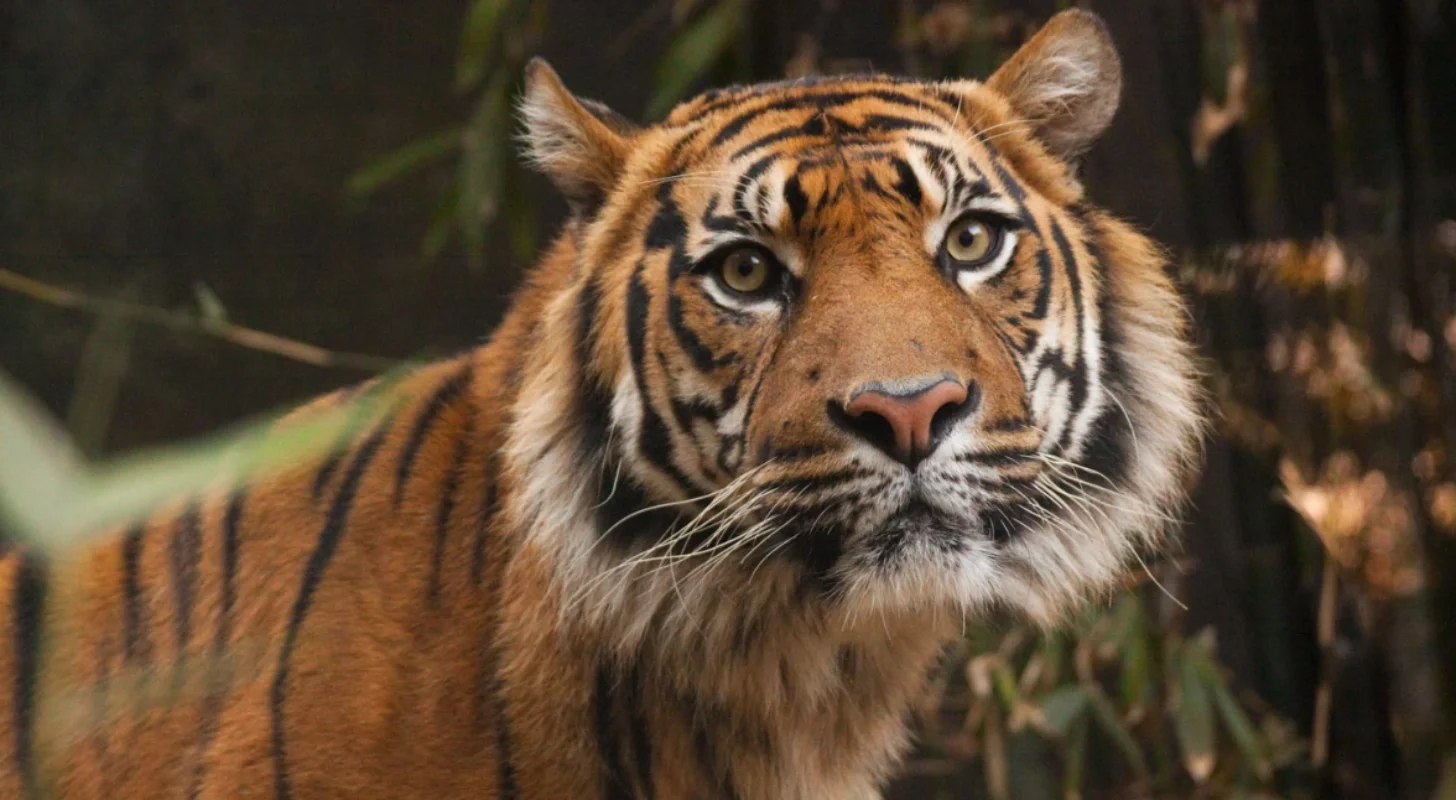
Similar efforts are underway for the Sumatran tiger, which is currently classified as critically endangered under the International Union for Conservation of Nature’s Red List of Threatened Species.
Sumatran tigers have faced threats from multiple sides: Poaching, illegal wildlife trade, and habitat destruction. Unfortunately, they are the only tiger species left in Indonesia after the Balinese and Javanese tigers were pushed to extinction in the 1900s.
Two key organizations at the forefront of saving Sumatran tigers include the International Tiger Project, a nonprofit that funds anti-poaching forest patrols, and the Sumatran Ranger Project, a conservation initiative that works with the community to reduce human-tiger conflicts.
When it comes to the rare tiger, there is a glimpse of hope: On June 16th, Ireland’s Fota Wildlife Park announced the birth of two critically endangered Sumatran tiger cubs. It marked the first time that more than one cub has been born in a single litter at the Park.
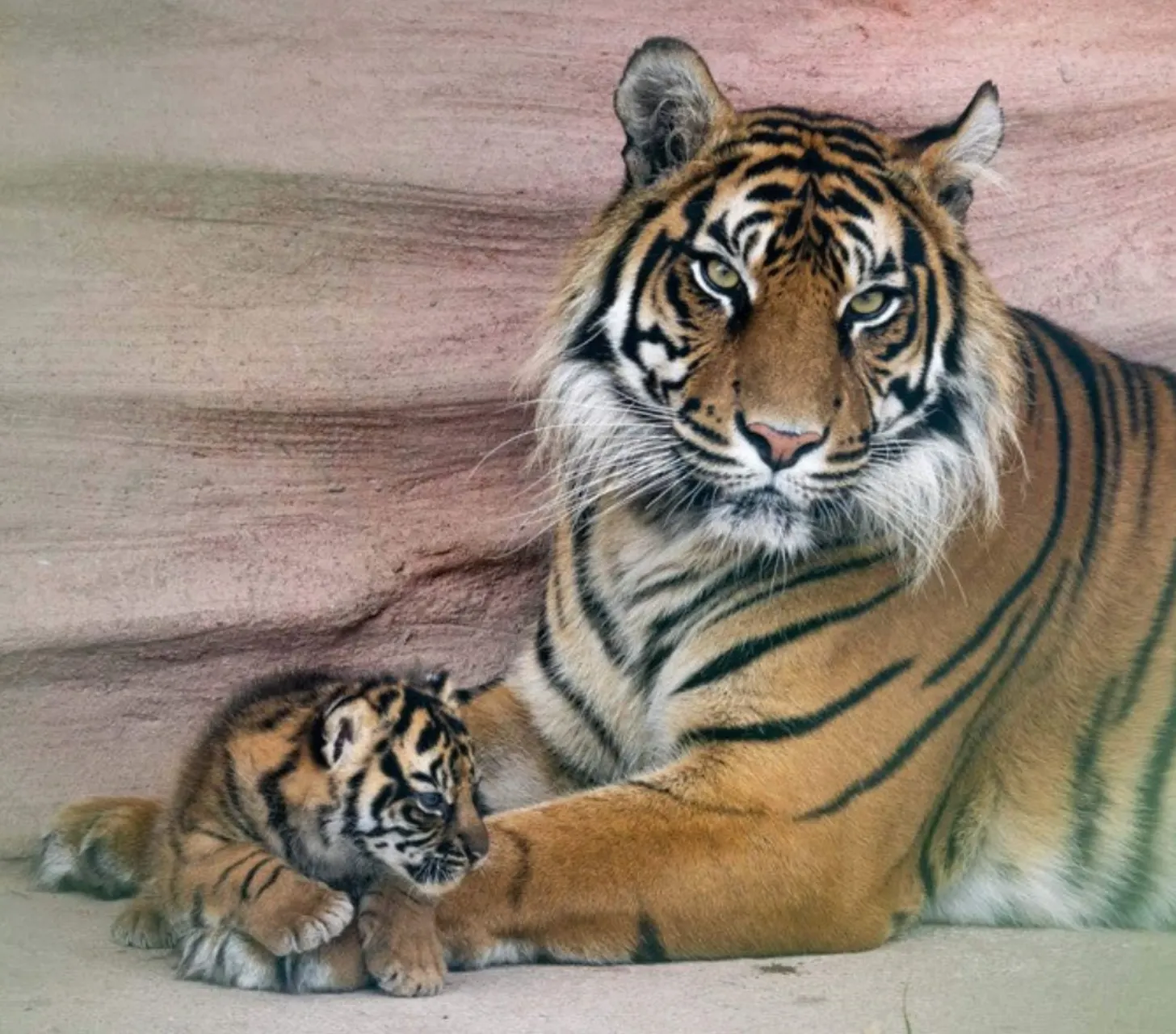
It coincided with the birth of three endangered Asiatic lion cubs, which were born on July 1.
Today, the only remaining population of wild Asiatic lions lives in Gir National Forest, a national park and wildlife sanctuary in Gujarat, India.
“We’re absolutely thrilled to announce the birth of both sets of cubs,” John Leahy, the lead ranger at Fota Wildlife Park, said in a press release.
“I have to pinch myself when I think about the fact that we’re announcing both Sumatran tiger and Asian lion cubs this summer.”

You may also like: Kangaroos cause 90% of wildlife crashes in Australia. This new car feature emits a sound only they can hear
Featured Image: World Travel & Tourism Council (CC BY 2.0)
- Since 2019, nearly 400 coffee producers in the Ecuadorian Amazon have adopted a deforestation-free production model that combines traceability, geospatial monitoring, and certification.
- In 2025 alone, the initiative exported as much deforestation-free coffee as it had during the previous three years combined, totaling 172.5 metric tons of coffee between 2022 and 2025.
- The project currently involves 373 producers across nearly 12,300 acres, of which more than 3,000 acres of natural forest remain conserved.
- The model is designed to anticipate the requirements of the European Union Deforestation Regulation (EUDR), which will require geographic proof that commodities such as coffee aren’t linked to deforestation after 2020.
“What motivates us most is being able to say, ‘I take care of the environment, I don’t cut down trees, and my coffee will be valued more highly,’” said Victoria Alverca Peña, a farmer for 25 years and co-founder of APECAP, a small coffee and cacao producers’ association in Zamora Chinchipe, a province in the Ecuadorian Amazon. “I’ll be able to sell it under better conditions, and my work will be much more valued."
“In our farms, besides coffee, you’ll find cacao, timber trees, fruit trees, and even short-cycle crops,” she added. “When the coffee plants are still young, we can grow crops like corn, cassava, or plantains. This helps us a lot with food security.”
At the end of this year, the European Union Deforestation Regulation (EUDR) is set to go into force, prohibiting products linked to deforestation from entering the EU market. Coffee is among the target commodities, and here in southern Ecuador, a group of coffee growers has been ahead of the curve in preparing for the EUDR implementation.
Since 2019, nearly 400 farmers here have adopted a model that combines forest conservation, traceability, and geospatial monitoring as part of the Deforestation-Free Coffee Initiative, at work in 23 areas across the region.
Between 2019-2021, the project developed Ecuador’s first deforestation-free coffee production model. The effort relies on a national protocol developed by the Ecuadorian government and the United Nations Development Programme (UNDP), which uses satellite imagery, traceability systems, and independent verification to track where coffee is grown and whether forests have been cleared or degraded to make way for coffee farms.
As part of the initiative, UNDP and the government also work with Italian coffee company Lavazza, which includes Amazonian coffee in its supply chain, creating demand for traceable products.
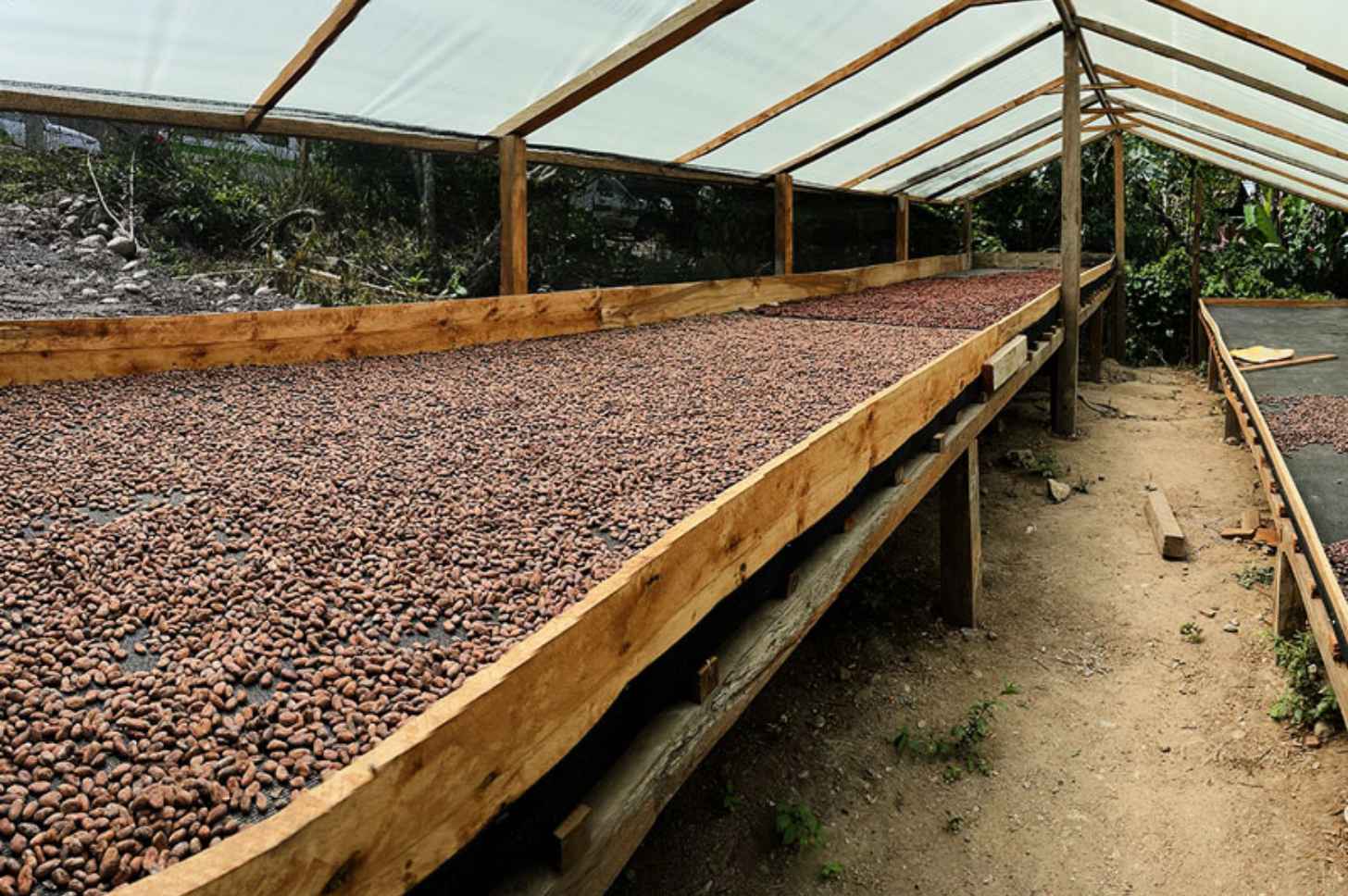
Between 2022 and 2024, approximately 86 metric tons of this coffee was exported, mainly from Zamora Chinchipe, a densely forested and mountainous province in southern Ecuador that has been consolidating its reputation as a high-altitude coffee-producing hub.
The most significant growth occurred in 2025, when exports in a single year matched the combined total for 2022-2024. The initiative has now reached a cumulative 172.5 metric tons over four years.
“This is not just about exporting more tons, but about consolidating a model that demonstrates that conserving Amazonian forests can be compatible with competitiveness, compliance, with international regulations, and dignified income generation for small producers,” Juan Merino, the project coordinator from the UNDP, told Mongabay by email.
In its early years, the project focused on strengthening the organizational and commercial capacities of producers’ associations, promoting sustainable and deforestation-free farming practices, and developing a traceability system that could meet the requirements of international markets.
The gradual incorporation of new producers and price premiums for deforestation-free coffee also encouraged organizations to prioritize this market segment, creating new economic opportunities for farmers in the Amazon region.
Despite its results, experts say the experience still faces challenges in scaling up.
Building deforestation-free supply chains
This transformation on the ground comes amid major shifts in requirements for access to the European market. Approved in 2023, the EUDR establishes new rules aimed at preventing deforestation-linked products from a group of seven commodities from entering the EU market. The law was originally due to go into force in December 2024, but has since been postponed twice, first to December 2025 and later to December 2026. The latest deadline applies to large operators and traders, while micro and small enterprises have until June 2027 to comply.
The regulation requires companies to prove that the products they want to sell into the EU don’t come from land deforested after 2020, and to provide detailed geolocation data for production areas. Considered one of the most comprehensive laws ever adopted to tackle deforestation linked to global trade, the regulation has the potential to reshape tropical agricultural supply chains.
Over the past four decades, Ecuador has lost approximately 3 million acres of forest cover, according to data from MapBiomas Ecuador, a satellite-based land-use monitoring initiative. Over the same period, agriculture, forestry, and other productive activities expanded by more than 18%, becoming some of the main drivers of native vegetation loss in the country, including in its Amazonian region.
Analyses by the Amazonian Network of Georeferenced Socio-Environmental Information (RAISG), a coalition of research organizations monitoring environmental and social trends across the rainforest, and MapBiomas Amazônia, indicate that between 1985 and 2023, the entire Amazon lost more than 217 million acres of forest — roughly an eighth of the biome’s original cover, or an area three times the size of Ecuador.
During the same period, cropland and pasture areas expanded by approximately 598% in lands cleared of natural vegetation, highlighting intensified land use as a key driver of forest loss across the Amazon region that spans nine South American countries.
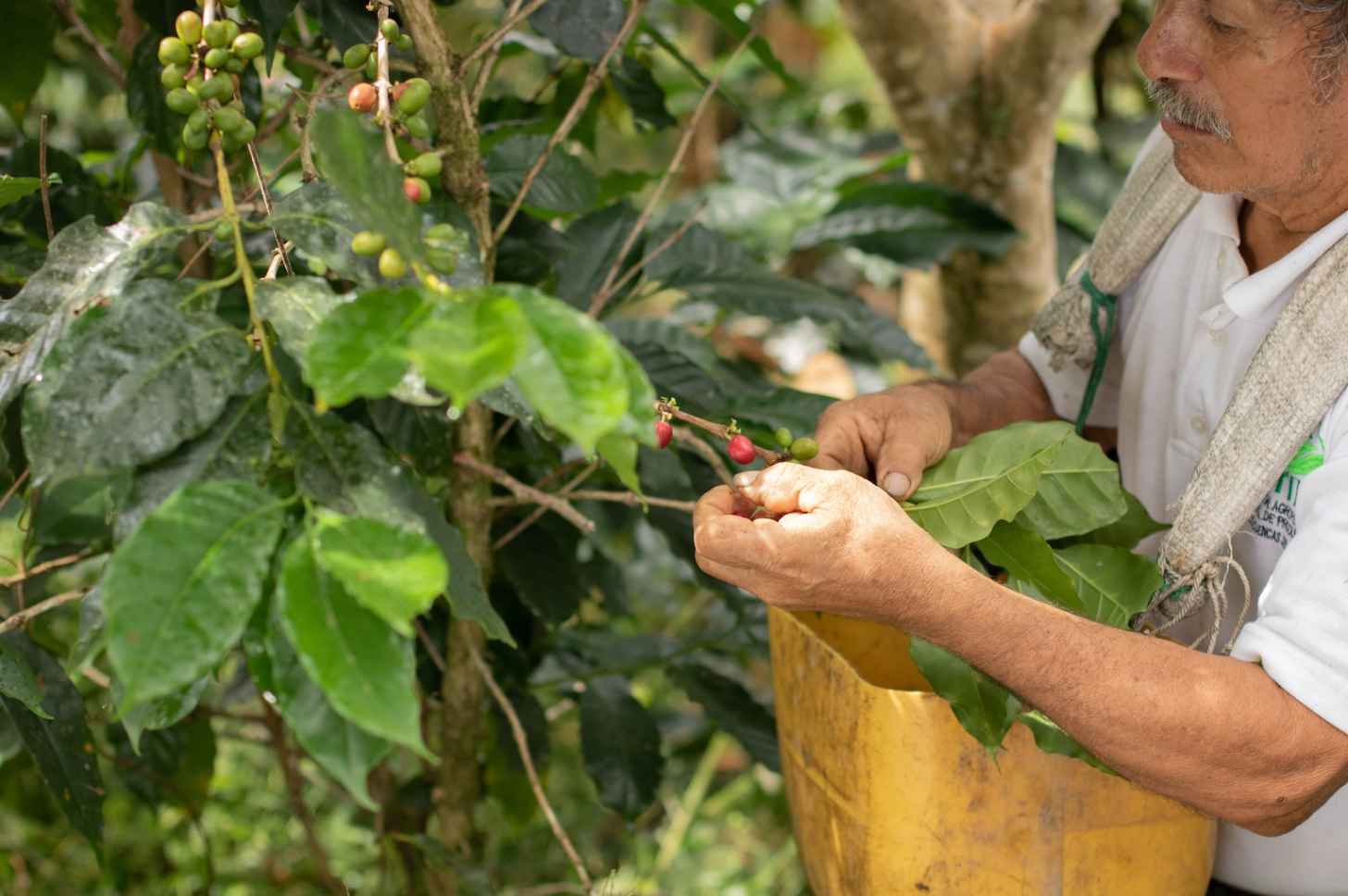
In Ecuador, the Deforestation-Free Coffee Initiative emerged as part of broader efforts to reduce pressure on forests, with farmers adopting practices to improve coffee production while maintaining forest cover.
Under the initiative, coffee is grown alongside timber and fruit trees and other crops in agroforestry systems, while producers receive guidance on fertilization, composting, and crop management. According to Peña, the local farmer, the goal is to increase productivity on existing farmland rather than clear new areas for cultivation.
The project has also introduced more systematic farm management practices. Farmers are encouraged to keep field notebooks recording harvests, pruning activities, production costs, and other information that helps them monitor their farms over time.
“For many producers, especially older ones, keeping records was difficult at first,” Peña said. “Now, their children and grandchildren often help with the notebooks. We can compare results from previous years, see whether yields improved, and understand what worked and what didn’t.”
APECAP, the association she co-founded, regularly organizes exchanges between farmers, allowing them to compare different approaches to coffee production.
“We take a producer harvesting 20 bags and visit one producing 60,” Peña said.
In such cases, the higher-yielding farms typically combine denser coffee plantings with shaded cultivation systems, she said. Some farmers have increased planting density from about about 800 to 1,200 plants per acre, while also improving fertilization and crop management.
Currently, 373 producers participate in the initiative, with a combined cultivated area of about 12,300 acres. Within these areas, more than 3,000 acres of natural forest remain conserved. Since the project’s inception, farms have been monitored through geo-referenced perimeter mapping, cross-checking with official forest-cover maps and analysis of data from Global Forest Watch. The methodology allows tracking of how the forest cover change on each property over time.
By improving productivity and market access for coffee already cultivated on existing farms, the initiative aims to strengthen sustainable production systems without expanding agricultural areas in the Amazon. The strategy emerged in a region where agricultural expansion has been a major source of pressure on forests. A study produced under Ecuador’s PROAmazonía program found that cattle ranching was the main land use associated with deforestation at national level, while cultivation of coffee, cacao, and oil palm were among the agricultural activities linked to expanding farmland in parts of the Ecuadorian Amazon.
Regular monitoring helps farmers prove that their coffee comes from farms that haven’t been recently deforested, while working together reduces costs and improves market access.
“The project contributes to reducing pressure on the forest,” UNDP’s Merino told Mongabay. “This is especially relevant considering that, in the project’s intervention area, we identified an average annual deforestation rate of approximately 3.44% between 2016 and 2022.”
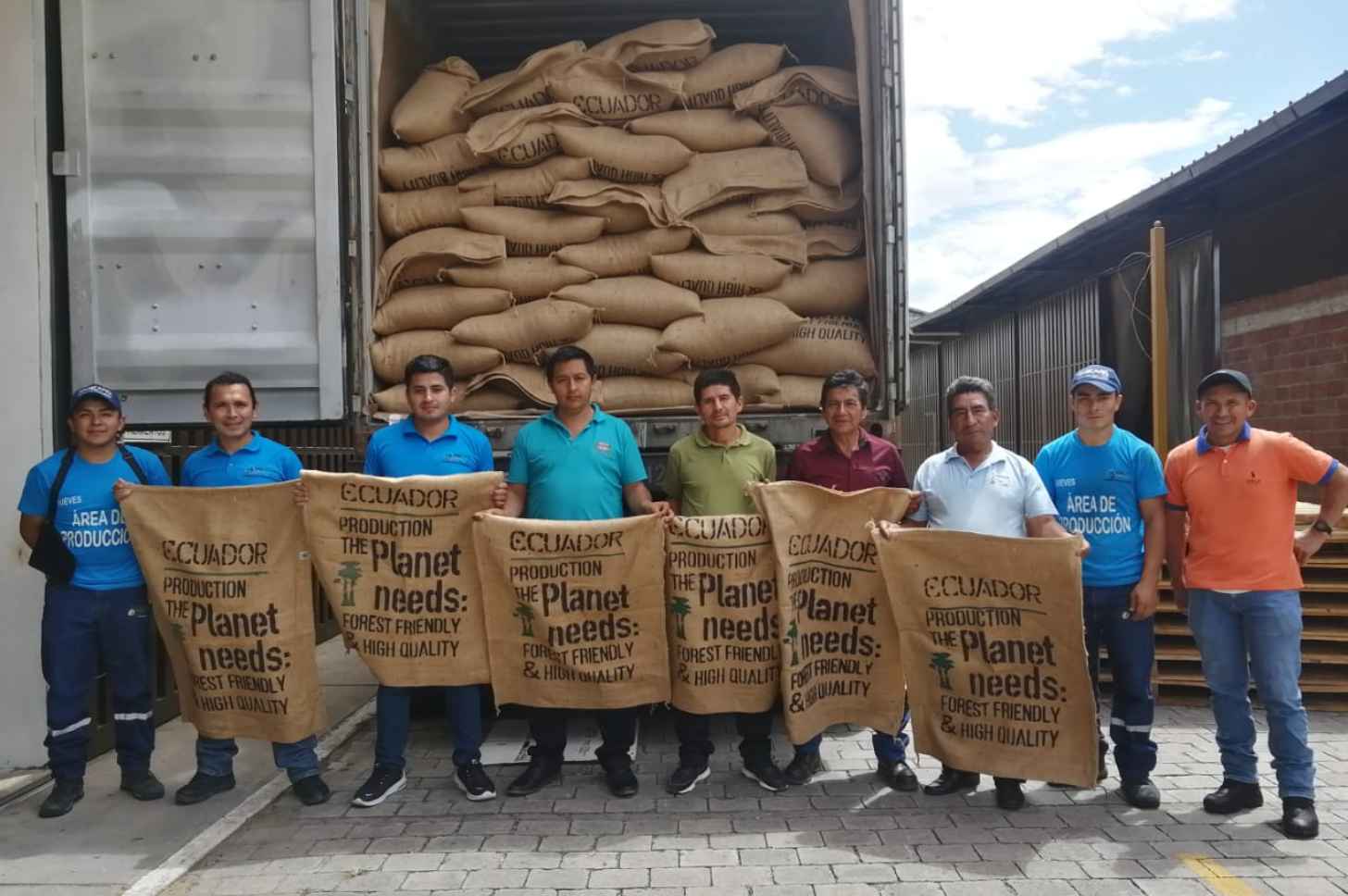
Access to international markets has brought more stable income to producers, reducing their vulnerability to price volatility. To help farmers meet quality standards and better navigate these opportunities, more than 100 producers and technicians participated in barista and international market workshops between 2020 and 2024.
According to FAPECAFÉS, a federation that brings together coffee producers’ associations in southern Ecuador, about 90% of the coffee produced under the initiative goes to Europe, with France, Germany, and Italy among the main destination markets. Early shipments included roughly 17 metric tons exported to Italy, a volume that later doubled to about 34 metric tons.
By the end of 2025, exports had reached 172.5 metric tons — equivalent to five shipping containers — worth $1.7 million.
In 2025, the Ecuadorian government launched a nationwide effort to register and geo-=referenced, or map with coordinates, the more than 100,000 coffee and cacao producers across the country’s 24 provinces. The aim is to help farmers from both Amazonian and non-Amazonian growing regions meet the traceability requirements of the EUDR.
Efforts similar to Ecuador’s Deforestation-Free Coffee Initiative have been tested in Costa Rica and Colombia. Experiments involving other commodities, such as cacao (also subject to EUDR scrutiny) and dairy, are also underway.
Drawing on his experience with sustainable commodity and landscape initiatives in Latin America, Beto Mesquita, director of sustainable landscapes at the NGO Conservation International, said projects such as Ecuador’s as valuable learning opportunities.
“These cases generate useful examples and help us understand what works and what doesn’t,” he said. “To scale this up, you need to bring in other actors and combine it with public policies and a level of technical assistance and rural extension that can meet the demand.”
Obstacles to the transition
Scaling up deforestation-free production systems remains a challenge. Lisandro Inakake, project manager at Imaflora, a Brazilian nonprofit that certifies forestry and agricultural activity, said many initiatives have delivered positive results at the local level but struggled to move beyond pilot projects.
“There are many pilots and little consolidation,” he said.
The coffee industry is often highlighted as one that’s culturally aligned with traceability demands.
“It’s part of the business model. I want to know that bean, with that quality, from which micro lot it came. It’s cultural,” Inakake said.
He added that coffee tends to allow for greater traceability at the farm level. Still, he said, expanding deforestation-free production requires continued support for smallholder farmers.
According to Merino, the coffee project in southern Ecuador aims to transform the model into a scalable platform, incorporating new producers, expanding traceability, and strengthening access to increasingly demanding markets — without losing sight of the forest conservation that underpins the initiative.
This article was originally published on Mongabay.
Featured Image: Courtesy of Ecuador Integrated REDD+ Program – UNDP
- Project Reconecta installed eight rope bridges in a municipality in Brazil, and a 15-month study used camera traps to document thousands of arboreal wildlife adapting to new aerial crossings.
- Safe road passages enable seed dispersal and gene diversity, reversing the “domino effect” of biodiversity loss that begins when highways split habitats.
- Reconecta’s creator, biologist Fernanda Abra, a National Geographic Explorer and winner of the Whitley Award, is now expanding these low-cost conservation tools to other Brazilian biomes and neighboring Suriname.
- Brazil’s federal transport department has officially designated the rope bridge design as the recommended national standard for highways to curb the millions of wildlife deaths recorded on roads annually.
Around 7 a.m., with dense fog blanketing the landscape, biologist Gabriel Falquetto had already come across several road-killed animals along ES-164 highway in Brazil’s Espírito Santo state. He was on his way to Kaetés Private Natural Heritage Reserve (RPPN), in the Atlantic Forest, where he monitors wildlife and roadkill in the region.
Suddenly, he spotted the lifeless body of a primate on the pavement. It was a buffy-headed marmoset (Callithrix flaviceps), a species listed as critically endangered on the International Union for Conservation of Nature (IUCN) Red List. An estimated 2,500 individuals remain in the wild, making it one of the world’s most threatened primates.
“It was extremely painful and discouraging,” Falquetto told Mongabay. “We travel through this region every day monitoring wildlife, and we celebrate every encounter with groups of buffy-headed marmosets in the forest.”
“Finding an individual in those conditions brings a feeling of sadness and helplessness. Beyond the loss of that animal, the incident reminds us of the impacts our activities have on biodiversity.”
About 1,800 miles away, on the road that leads to Alta Floresta, a small Amazon town in the far north of Mato Grosso state, cases like the buffy-headed marmoset’s roadkill have not been recorded since 2024.
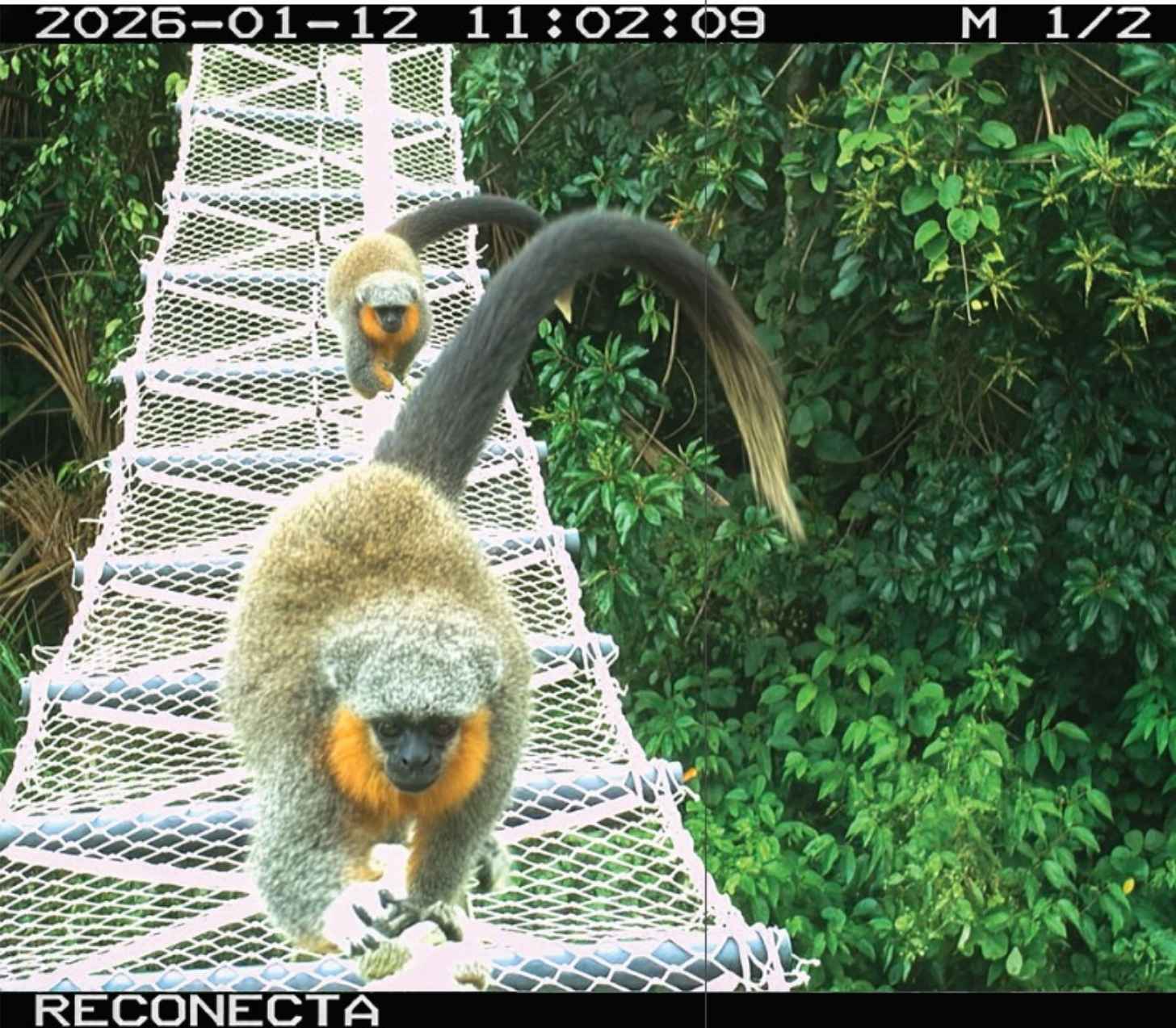
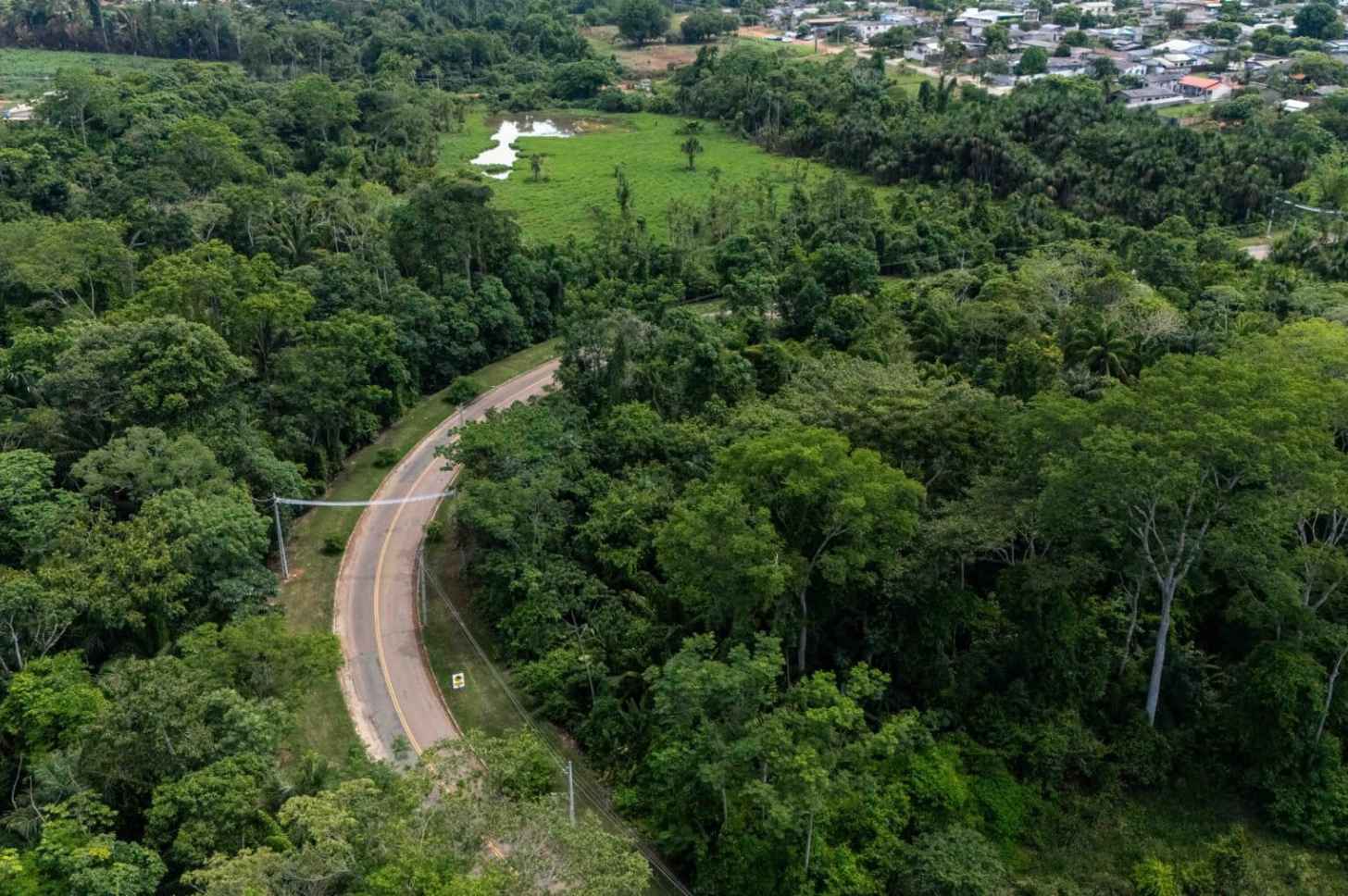
That year, eight canopy bridges were installed, connecting fragmented forest patches. Camera trap footage revealed that, over 15 months, the aerial wildlife crossings enabled 15,000 safe crossings by arboreal animals — and not a single roadkill.
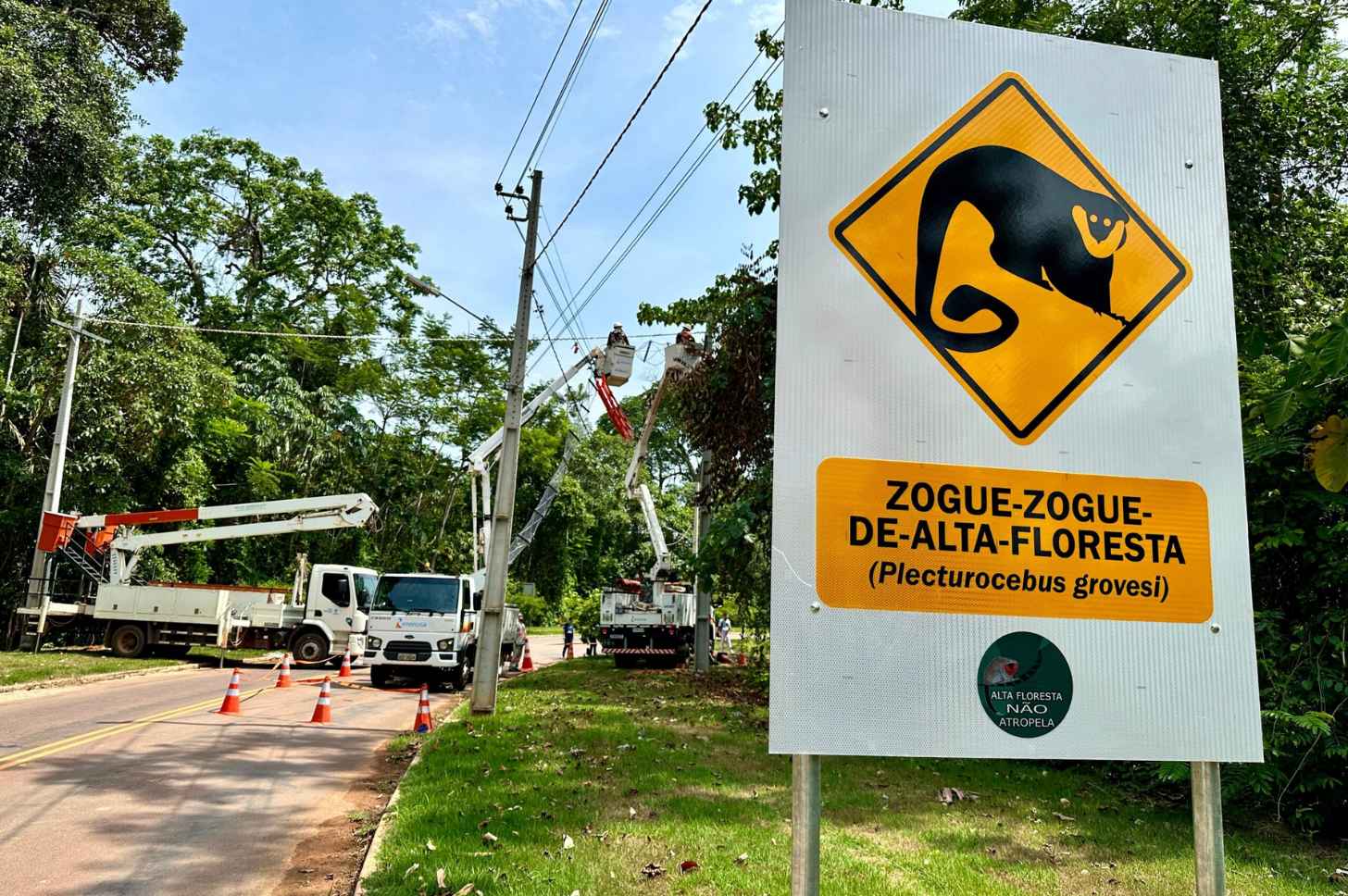
The bridges are part of a program involving Projeto Reconecta and the municipal government, along with local organizations and business owners who are eager to conserve the unique biodiversity of their town and promote ecotourism, but were alarmed by the growing number of wildlife-vehicle collisions.
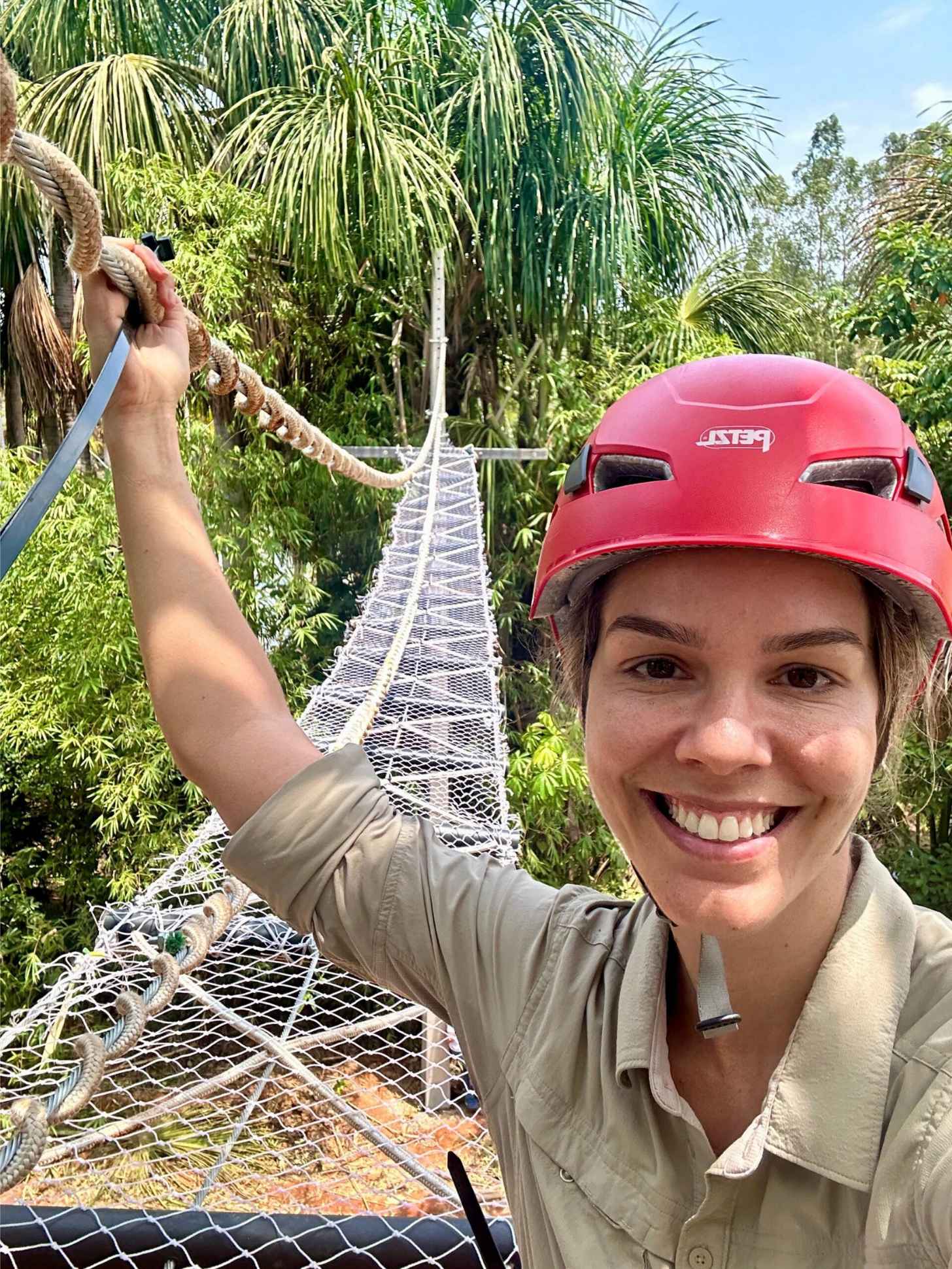
Biologist Fernanda Abra, an associate researcher at the Smithsonian National Zoo and Conservation Biology Institute in the U.S., and the founder of Reconecta, recalled that just hours before installing the first bridges in Alta Floresta, she found two Schneider’s marmosets (Mico schneideri) dead. The species is endemic to the Brazilian Amazon and is threatened with extinction.
“A canopy bridge serves two purposes,” Abra said. “The first is to improve connectivity for wildlife, allowing animals to move from one side to the other in these fragmented forest areas. As a result, we also reduce roadkill.”
All bridges have two camera traps, one facing the crossing to record which animals are using it and another facing the forest to observe which animals arrive there but decide not to use it.
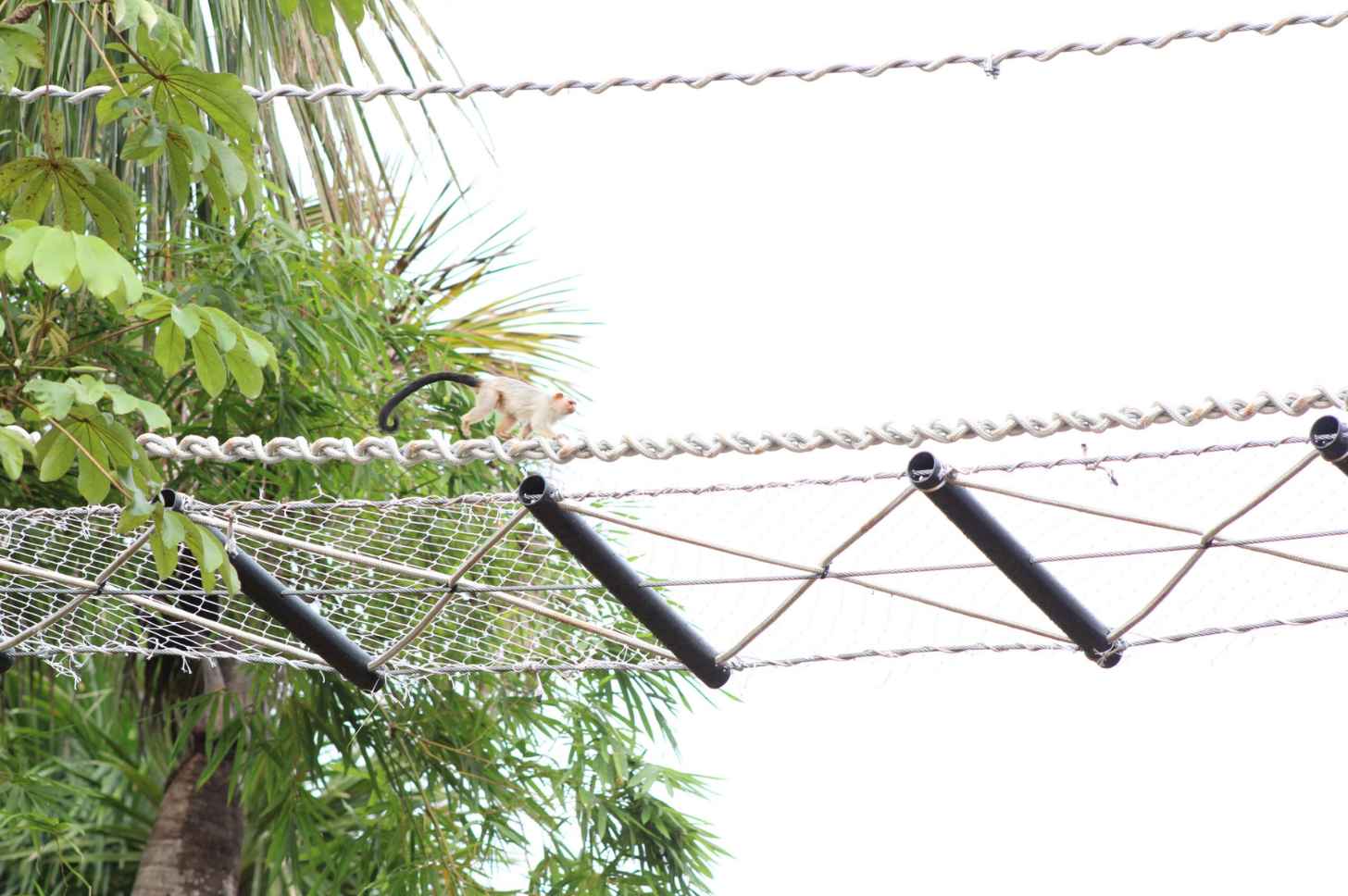
Among the primate species recorded using the bridges during the first months of the program were the black-faced black spider monkey (Ateles chamek), the Purus red howler monkey (Alouatta puruensis), the northern night monkey (Aotus infulatus), the tufted capuchin (Sapajus apella), Schneider’s marmoset, and the Alta Floresta titi monkey (Plecturocebus grovesi).
Described only in 2019 and soon after classified as critically endangered, the Alta Floresta titi monkey has become the symbol of the initiative, which is now entering a new phase thanks to its positive results.
“In August, we will install eight more bridges in the city’s urban area,” Abra said. “The only difference is that the electric utility will first need to lower the power lines and insulate them so that if animals jump from the bridge onto the wires, they won’t be electrocuted.”
Bridge use increases over time
The project underway in Alta Floresta is not Reconecta’s first. In 2021, working alongside the Waimiri-Atroari Indigenous people, the team installed 32 canopy bridges over BR-174, the highway that crosses both their territory and the Amazon between the Brazilian states of Amazonas and Roraima.
The Waimiri-Atroari helped Abra identify the best locations for the artificial bridges. Over the past five years, cameras mounted on the bridge poles have documented about 1,250 primate crossings, including the golden-handed tamarin (Saguinus midas), a species that is not strictly arboreal and often descends to the ground in search of food, making it particularly vulnerable to roadkill.
“The outcomes of the BR-174 project have been incredible. We were able to test different bridge designs to find out which ones the animals prefer,” Abra said.
After years of working along Brazilian highways, the biologist had always sought a solution that was simple, low-cost, and durable. The current bridge features a multilayer design that accommodates primates with different modes of locomotion — from species that rely on their prehensile tails to move through the canopy to brachiating species such as spider monkeys, which swing using their arms, both of which are common in the Amazon, as well as species that simply walk across the network of crossed ropes.
It is worth noting that other small terrestrial mammals, including opossums, sloths, and mouse opossums, have also been recorded using the bridges.
Abra said it is important to keep in mind that this is a long-term project, and results are not always immediate. BR-174 was built in the 1970s, and animals take time to adapt to a new crossing alternative. Reconecta’s monitoring has shown that use of the structures increases over time.
“Very often, our sense of urgency in conservation doesn’t take into account the timing of the impact,” she said.
In Alta Floresta, tufted capuchins took seven months before using one of the bridges for the first time, which may indicate that each species has its own pace of adaptation.
Species disappear, forests decline
Home to the world’s greatest diversity of primates, Brazil also has the world’s fourth-largest road network — a deadly combination for animals living along forest edges that have been split apart to make way for highways.
“From our human perspective, roads mean connection and development. But for wildlife, they represent disconnection, barriers and a threat to survival,” Abra said.
Nearly 9 million mammals are killed on Brazil’s roads every year, a 2022 study found. A data compilation published in the journal Nature in 2025 also found that the country ranks among those with the highest mortality rates of terrestrial vertebrates killed in roadkills.
“Habitat loss is one of the main drivers of population declines, especially among threatened species, but the impact of roadkill is still greatly underestimated,” primatologist Fabiano Rodrigues de Melo, a professor at the Federal University of Viçosa in Minas Gerais, told Mongabay.
Beyond roadkills, highways bring confinement to fauna.
“When populations become isolated, they grow smaller and more vulnerable to threats,” said Amely Branquinho Martins, an environmental analyst at the ICMBio, Brazil’s federal agency for conservation units, and coordinator of the Brazilian Biodiversity Genomics (GBB) project.
One of those threats is inbreeding, which occurs when closely related individuals reproduce.
“Habitat loss and degradation can prevent an individual from one population from migrating to another — what we call gene flow," Branquinho Martins said. "Without it, the species’ genetic diversity declines.”
The consequences continue to multiply in a domino effect, Melo said. The loss of primates, especially fruit-eating species, can alter forest composition, because they play a key role in seed dispersal and even contribute to pollination.
“A whole network of ecological interactions is ultimately lost with the disappearance of these species,” Melo said.
Reconecta expands
One of the hopes for reducing wildlife roadkill is the passage of a bill currently under consideration in Brazil’s Congress that would establish the National Road Safety Plan for Wildlife, which calls, among other measures, for the placement of wildlife warning signs, speed-reduction devices, and the construction of overpasses, aerial crossings, and underpasses along highways.
The bill has already been approved by the Chamber of Deputies and is now awaiting a vote in the Senate.
If approved, the canopy bridge model developed by Reconecta could be implemented nationwide.
In addition to Reconecta expansion results, Abra’s efforts to protect primates have earned international recognition. In 2019, she received the Future For Nature Award, followed by the Whitley Award in 2024, often referred to as the Oscars of environmental conservation.
In June, she was also named one of the recipients of the 2026 Wayfinder Award, joining the select group of National Geographic Explorers, who receive funding from the organization for their projects.
The support comes at the right time, as Abra plans to expand Reconecta, including new chapters in Suriname and Lucas do Rio Verde, a municipality in Brazil, which will install 10 canopy bridges.
Abra also hopes to bring her canopy bridges to other biomes, including the Pantanal and the Atlantic Forest, helping prevent the deaths of monkeys such as the buffy-headed marmoset.
Expectations are especially high for bridges over BR-262, one of Brazil’s longest highways, which cuts across the Pantanal and is known as the “highway of death.” The road kills approximately 2,000 animals every year.
“I envision a future with Reconecta Biomes. We already have Reconecta Amazon, and we’ll soon launch Reconecta Pantanal. I also see canopy bridges in the Atlantic Forest for the primates that live there, including muriquis and howler monkeys, which are both highly threatened,” she said.
She stressed that for this vision to succeed, the continued engagement of government agencies, private companies, and local communities will be essential, just as it was in Alta Floresta and the Waimiri-Atroari Indigenous Territory.
“When everyone is involved, everyone values the initiative and works harder to make it succeed.”
This article was originally published on Mongabay.
Featured Image: Courtesy of Sergio Leal
WASHINGTON — New data reveals the number of women running in the 2026 elections is slightly up from 2024, but experts say there is still progress to be made with women’s representation in public office overall.
The number of women running for governor has reached an all-time high this election cycle, and the number seeking a seat in the U.S. House of Representatives could also set a record, according to July 20 data from The Center for American Women and Politics, or CAWP.
The center, part of the Eagleton Institute of Politics at Rutgers University, collects data on women’s representation in federal, state, and local government.
The center also conducts research and runs educational programs on the role of women in politics. Its mission is to increase female involvement in public life.
Women in the midterms
There are 85 women major-party candidates running for governor across 36 states this year, a number that significantly exceeds the previous record of 69, set in 2022.
Fifty-one of those women are Democrats, another record, and 34 are Republicans.
On the congressional level, 580 women are currently major-party contenders for the U.S. House, a figure that is just three away from the 2018 and 2020 record of 583 women candidates.
That record could be broken once Louisiana reaches its candidate filing deadline for the House on Aug. 7, according to CAWP.
The number of Democratic House candidates who are women has already reached an all-time high at 387. The remaining 183 women running are Republicans.
In the Senate, 64 women from major parties are running for a seat, exactly half of them Democrats and half of them Republicans. The record for women Senate candidates was set in 2022 at 70.
Fairly high numbers of women would need to emerge as Senate candidates in Maine and South Carolina to beat that record of 70, said CAWP Director of Data Chelsea Hill during a media briefing with other CAWP research experts on Tuesday.
A day before the briefing, Republican Sen. Darline Graham of South Carolina, who was sworn in July 14 to replace her late brother, Lindsey Graham, announced plans to run for a full six-year term following the encouragement of President Donald Trump.
Although record numbers of congressional women candidates have not yet been reached in either the U.S. House or Senate, the overall number of women running for Congress is up compared to the last election cycle.
In 2024, the number of women who sought seats in Congress dropped after having previously increased for three consecutive cycles, a phenomenon that CAWP later described as “evidence of stalled progress toward gender parity,” Hill said.
Despite the increase in women seeking office over the years, female representation is still low when taken as a percentage of all candidates running for Congress and state governors.
According to another set of CAWP data from July 20, women make up 27% of total candidacies for the U.S. House and 23.9% of the total for the Senate in 2026. About 25% of gubernatorial candidates are women.
Milestones within reach
But at the same time, CAWP experts said at the media briefing, there are many milestones women could achieve in the 2026 election cycle, including firsts for women in certain government positions and for “women of specific racial and ethnic backgrounds and within either party.”
They pointed to current Sens. Marsha Blackburn of Tennessee, a Republican, and Amy Klobuchar of Minnesota, a Democrat, who are both running to become the first women to serve as governors of their respective states.
And Deb Haaland, the former U.S. secretary of the Interior currently running in New Mexico, could become the first-ever Native American woman governor in any state if she wins in November.
At the congressional level, names such as Melat Kiros, Aisha Wahab, Denise Powell ,and more have the potential to break barriers for women in public office.
Kiros is in place to become the first Black woman to represent Colorado, Wahab the first Middle Eastern or North African woman to serve from California, and Powell the first Democratic woman to represent Nebraska in Congress.
At the end of the media briefing, CAWP Scholar and Director of Research Kelly Dittmar said the center’s 2026 candidacy data could be used as a tool to study and open up a broader discussion about women’s political pathways, nodding particularly to Blackburn and Klobuchar’s gubernatorial runs.
“When we think about women moving to be chief executives of a state as a potential pathway to the presidency, (it’s) also something we need to always keep our eye on,” she said.
CAWP’s data focuses on major party candidates and will continue to be updated regularly to account for upcoming state filing deadlines and congressional primary results.
This article was written by Amelia Twyman and was originally published by Oregon Capital Chronicle.
Featured Image: Courtesy of the Office of Governor Kathy Hochul
In June 2026, beloved labor and delivery nurse — turned influencer and author — Jen Hamilton announced to her nearly 10 million followers across social media that she and her husband would be separating.
Notorious for her thoughtful, vulnerable videos, she has tearfully shared updates across her channels since. Unfortunately, it has invited a swath of negative media coverage.
“Why is it that everything sad I say gotta be news?” Hamilton said in a video on June 30, sharing a collage of salacious headlines.
“Let me give you a better headline,” she joked. “How about, ‘Jen Hamilton’s ass won’t quit — and neither will she?’”
While her proposed headline was more of a joke, Hamilton has since continued to build on her years-long legacy of using her platform to give back to people in need — especially through merch sales.

In a new video posted on July 22, she announced a new collection of merchandise called “The Sisterhood of Solidarity.”
“One thing I have recognized through this whole process is that I am so fortunate to be able to get out of a situation that I didn’t need to be in because I had the resources to do so,” Hamilton said in the video. “So many women do not have that.”
Hamilton said she will donate 100% of the merch collection’s profits to “charities that support women rebuilding their lives.”
Her online shop also provides links to resources through the National Network to End Domestic Violence, the Proactive Protective Mom Network, and a directory of domestic violence shelters nationwide.
“One thing I love to do is take something terrible that is happening and turn it into something good for other people,” Hamilton said in her video.
The new drop — what she calls “a collection of wearables for women who have survived really hard things” — features designs with many favorite Jen Hamilton-isms that followers have come to love.
This includes, “GYAU,” or “get your ass up, but in an empowering way, ‘cause we’ve got life to live, baby,” Hamilton described.
A classic phrase also includes, “Nipples in the wind, courage in my heart,” a reference to Hamilton’s appearance on “The Kelly Clarkson Show” earlier this year when she promoted her book, “Birth Vibes.”
Here, she answered questions from expecting mothers and told them to only pack the things they needed — or to show up at the hospital “nipples in the wind.” The phrase has since gone viral.

Other merch designs include a phoenix rising from the ashes, one that reads “Nobody loves better than me,” and another that says, “Whole package, wrong porch.”
All of the items are for sale on her website now, but it’s not just this new collection that will support other women in need — it’s anything on Hamilton’s shop until the end of August.
It’s unclear how much she expects to raise in total, but previous merch campaigns by Hamilton have raised $125,000 for “nonprofits that love their neighbors,” and another $78,000 for “nonprofits that will feed our neighbors in the midst of a government shutdown.”
On July 23, Hamilton shared an update, announcing that the collection had already raised over $12,000 in less than 24 hours.
"You guys amaze me every day," Hamilton wrote to her audience on Instagram.
And for people who don’t want to buy merch but want to support Hamilton’s mission, she offered an option for that in her original video, too.
“I give receipts for everything,” she promised. “I hereby solemnly swear … to you that you are not financing my life.”
And then she also promised her “own big girl donation, too.”
In the comments, hundreds of people shared their own stories of divorce or “rising from the ashes,” with some also chiming in with ideas for how to distribute funds, including “divorce registries.”
While it’s not yet clear what the end result of the campaign would be, Hamilton pledged to make a real impact for other women.
“I want to help everybody,” she said. “And this is the best way I know how to help as many people as possible.”
You may also like: An influencer filled her pool with 50K pickles to break a world record. Then she did something even better
Featured Image: Courtesy of Weiss Eubanks/NBCUniversal
On July 20, during a press interview for “The Odyssey,” Brut. journalist Camille Guinevere Smith delivered a personal message for Tom Holland in front of his co-stars, Matt Damon and Anne Hathaway.
“The associate editor-in-chief asked me to ask you this … You helped her dad stop drinking,” Guinevere Smith said.
“Oh, wow!” Holland said, leaning back in his chair, as Hathaway and Damon looked at him with surprise and pride.
“She just wants to say thank you so much,” Guinevere Smith said. “It has changed her life, it has changed his life, and she just wanted to give some love towards you.”
“Thank you so much, you’ve made my day,” Holland said, as Hathaway patted him on the shoulder.

Soon after, Brut.’s associate editor-in-chief, Jami Male, took to Instagram to express how much the moment meant to her.
“When one person shares the story of their struggle, it shows others that they are not alone,” Male said.
“By spending less than 10 minutes talking about how he came to terms with his alcoholism and worked to improve himself, Tom gave people like my dad a success story to resonate with and a little more hope during a difficult process."
Holland began his sobriety journey in 2022 after a “Dry January” challenge helped him realize how dependent he had become on alcohol.
When January ended, he decided to try a “Dry February,” too. When January rolled around again in 2023, he had gone 12 months without drinking.
“When I got through to the other side and achieved that first year marker and I felt rid of the hooks that alcohol had in me, I felt so fantastic,” he told Food & Wine in October 2024, around the release of his new non-alcoholic brand, BERO.
In the years since, Holland has been very vocal about his relationship with alcohol.
On June 2, Holland expanded on his sobriety in an episode of “Good Hang with Amy Poehler” and said that he was inspired to create BERO because he missed the social aspects of drinking.
“During that first year [of sobriety] I noticed that there were limited options for people like me that were looking for something that would scratch that itch, that would help to live or go to the bar and be a part of the social experience, but not feel like the only person with a lemonade,” Holland explained on the podcast.
He went on to say that BERO’s latest addition, a line of shandies, was added because he wanted to include his wife — and frequent co-star — Zendaya.
“The truth behind the shandies, which we’re bringing out this summer, is that Zee has never drank,” he said. “She’s never been a drinker.”
“She’s incredible,” Poehler replied instantly.
“She’s the best,” Holland agreed. “She’s never drank … which means she never found the taste for beer. She’s incredibly proud of BERO. It’s just — there is a missing link of like, she doesn’t enjoy the stuff that I'm trying to sell, right?”
“So my mom actually came up with the idea, and she said, you know, what if you did a shandy? Which is essentially half a beer and half a lemonade. Oh, and we have a grapefruit flavor, there’s lemon-lime, there’s blackberry yuzu, there’s elderflower.”
“It was a ploy to create something at the company that she could enjoy,” Holland laughed.
You may also like: New study: No-alcohol and low-alcohol beers — and dry pubs — are on the rise
Featured Image: Courtesy of Jami Male / Brut America
When a small tabby kitten arrived at Cincinnati Animal CARE, a shelter in Ohio, he couldn’t stand or walk on his own.
Named Gelato by shelter staff, the kitten had a spinal injury that left his back legs too weak and unable to support his weight. Gelato was still able to move his legs and retain bowel and bladder control, which veterinarians said was promising.
But the kitten still needed a way to navigate.
He was deemed too tiny to fit into any of their existing mobility devices, so veterinary assistant lead Mallory Smith started thinking outside the box.
“He really wanted to play and walk around,” Smith told Local 12 News. “So, I used what I had.”
What she had was cardboard, rulers, Hot Wheels toy cars, and plenty of duct tape.

“Shelter medicine is all about working with what you have,” Cincinnati Animal CARE wrote on Instagram, “and a little creativity can go a very long way.”
Gelato, who now wears his “Transformers”-inspired mobility aid while in foster care with Smith, is “getting stronger every day,” the shelter shared.
“It’s already making a difference,” the shelter wrote about the DIY wheelchair. “[He] is even starting to stand for little moments on his own! Every tiny step is a huge victory, and we’re so excited to watch him continue on this journey.”
The vet team at the shelter told Local 12 News that they are “pretty optimistic” that Gelato will make a full recovery.
While plenty of disabled dogs and cats rely on wheelchairs to live comfortable and fulfilling lives, Gelato may not even need a mobility device in the future.
“Thanks to Mallory’s incredible ingenuity and dedication, Gelato has a little extra support as he works toward a stronger tomorrow,” Cincinnati Animal CARE wrote on Instagram.
“Sometimes, all it takes is a little creativity, a lot of heart, and someone who refuses to give up.”
You may also like: Vet constructs custom contraption to save tortoise run over by a car
Featured Image: Screenshots via @cincyanimalcare/Instagram
Jimothy, a wild Seattle raccoon with a short spine, has quickly become an internet favorite.
Known for his unusually round appearance that may be caused by a rare congenital spinal condition, Jimothy has captured the attention of people around the world.
Although he looks different from other raccoons, he is healthy and mobile by all accounts, roaming Seattle neighborhoods and filling up social media feeds.
Jimothy’s popularity has grown in the last week, inspiring a Google search animation, a new World of Warcraft NPC, and his own Dungeons & Dragons “stat block.”
Seattle artist Ryan Henry Ward decided to channel the excitement into something that could have a real-world impact.
On July 18, Ward shared a photo of an original painting he made of Jimothy, in the hopes of auctioning it off for charity.
“Jimothy. The hero we needed,” Ward wrote in the photo’s caption. “I've decided to give 100% of the money made from this painting to Ballard Food Bank, a place that helped me through some of my hardest times.”

Ballard Food Bank has been feeding Seattle since the 1970s. Today, the organization operates a unique “grocery store” model that allows people in need to “shop” for free produce, canned goods, hygiene products, and pet food.
Ward invited people to submit bids through social media, promising that the highest bidder would win the artwork.
The auction concluded with a winning bid of $6,543.21 from local Angela Galdabini. True to his word, Ward donated the amount to the Ballard Food Bank within 24 hours, sharing a receipt on his social media.
“Thanks to an awesome auction winner and to the power of community and in gratitude to Jimothy, Ballard Food Bank has received their donation and the world is a little better,” Ward said.
The campaign attracted widespread interest beyond the community. Amazon was the first brand to join the conversation by announcing that it would match the winning bid. It tagged other companies based in the Pacific Northwest as well, encouraging them to jump aboard.
“Count us in on supporting Ballard Food Bank with a donation match!” Starbucks commented.
“We could never turn down supporting Jimothy and the Ballard Food Bank!” T-Mobile responded. “Count us in!”
“Sounds like a home run!” The Mariners said.
“We can’t issue Jimothy a boarding pass,” Alaska Airlines wrote, “but we’re always happy to support our community. Count us in for matching the donation.”
On July 23, Ward informed Good Good Good that the amount was well over $50,000.
Then, on July 24, Gypsy Walukones, the senior communications manager for Ballard Food Bank, confirmed that the current total was over $58,000 from company pledges alone.
“So far, we’ve had pledges from Amazon, T-Mobile, Alaska Airlines, Brooks Running, Starbucks, Stanley, Microsoft, and the Seattle Mariners to match the donation, and some of those funds are starting to come through,” Walukones told Good Good Good. “If they all match the $6,543.21 exactly, we’re looking at over $58,000.”
Walukones also said that the majority of incoming donations are from individuals.
“Some donors commented that they knew they wouldn’t have the winning bid but wanted to give what they can,” she said. “One thing I love about the Ballard Food Bank community is the way we really are all in this together. So many of our neighbors might come in for food one week and bring in a few dollars to donate the next, or volunteer here regularly, or pick up trash in the neighborhood. It takes all of us!”
For Ballard Food Bank, the donations couldn’t have come at a better time.
“We serve over 10,500 households each month and the need in our community continues to grow rapidly,” Walukones stressed. “With these gifts, we’re able to share nutritious groceries, hygiene supplies, pet food, freshly prepared meals in our Kindness Café (an average of 1,000 per day!), and financial assistance for rent and utilities to help keep our neighbors in their homes.”
“Above all, Ballard Food Bank is about human — and yes, animal — connections,” she added. “We are so grateful for Henry’s generosity, this wave of giving, and the caring community that surrounds both us and Jimothy!”
You may also like: This kitten couldn't walk on his own. So a vet made him a custom wheelchair out of Hot Wheels
Featured Image: Kiana Hall/Wikimedia Commons (Fair Use)
As a neuroscientist who studies raccoon and rats, I see the viral story of Jimothy the raccoon as a compelling tale of an animal overcoming disability and surviving in the wild.
Jimothy, the unique-looking raccoon living in Seattle, became an internet celebrity over the course of a week in July 2026, thanks to a viral Instagram post that has amassed millions of views and thousands of comments cheering for the proverbial underdog. Jimothy has even been honored with a city proclamation.
The viral raccoon has even raised more than $50,000 for charity.
Something about him was obviously different. His body and tail were unusually short, and his back was curved.
Although Jimothy hasn’t been officially examined by a veterinarian, he’s thought to have a form of a rare cervical vertebral malformation called short spine syndrome. A handful of cases have been seen in dogs.
These animals are born with a condition that prevents their vertebrae from fully developing. With less physical space in the body, organs are crowded into a smaller space than usual and can lead to mobility issues.
Adaptations are necessary for these animals to navigate their environments and secure the necessary resources for survival. How did Jimothy overcome the odds and emerge as a survivor?
The sophisticated raccoon brain
Although it’s easy to imagine a pet dog that’s under the close care of human pet parents surviving a challenging condition such as short spine syndrome — the probability of a disabled or injured wild animal successfully living in the uncertain outdoors is a different story.
Even for healthy raccoon, it’s a challenge to survive the harrowing time of being a helpless newborn. Up to half of young kits die without emerging from the natal den. If an individual raccoon is among the fortunate to leave the den as a juvenile or young adult, life’s challenges don’t stop there. Typically there are no safe zones that are reliably protected from predators.
To survive, raccoon have to be vigilant, persistent and physically agile to navigate the physical and mental challenges of life in the wild. In fact, it’s so dangerous out in the wild that many raccoon only live two to five years, even though they have the capacity to live for around 12 years in captivity.
It’s difficult to imagine how Jimothy has navigated life’s challenging terrain to survive in the wild. However, if any mammal can transcend the limitations of a disability, raccoon would be at the top of my list.
Very few studies have been conducted on the raccoon brain, but my lab’s limited research has revealed the neuroarchitecture of a complex and sophisticated brain. Raccoon have exceptionally high neuron densities, resembling those of small primates. More neurons lead to greater flexibility in behavior, a characteristic that is likely facilitating Jimothy’s survival.
My team also identified the presence of specialized and fast-conducting brain cells called von Economo neurons, which are typically located in the areas of the brain involved in emotional, social and internal processing in people.
And perhaps the neuroevolutionary pièce de résistance of the raccoon: their hands. The forepaws of raccoon are extremely dexterous and sensitive, and occupy a large portion of their brain’s motor cortex, like that of people.
This investment in hand movement takes raccoon learning abilities to the next level — explaining why Toronto paid roughly US$24 million to develop raccoon-proof trash bins.
These brain capabilities likely give Jimothy some neural backup as he navigates narrow fences, climbs trees, searches for food and scopes out places for rest and refuge.
Jimothy’s mom as hero
Equally impressive as Jimothy’s own adaptations is the continuous care provided by his mother.
As challenging as the raccoon mother’s role is while raising her young, raising a kit with special needs likely requires extra energy and patience. For raccoon families, the mother is very much a single parent.
Not only does she not have help from the father, but she often moves the litter to different dens to escape the threat of males potentially harming the kits. She also needs to be an efficient forager to prevent excessive time away from her vulnerable offspring.

Unlike many mammals whose young become independent soon after weaning, raccoon mothers continue taking care of their kits for much longer. Although nursing typically ends around 16 weeks, raccoon youngsters often remain with their moms for up to nine months. From weaning to leaving the natal den, maternal raccoon take their family through something like homeschooling.
One of my favorite examples appears in the PBS documentary “Raccoon Nation,” where a raccoon mom takes her kits on a field trip to teach them how to collapse their spines to slide past a wooden garage door. For hours, she models the behavior for her young — then observes their attempts, catching them when they fall and nudging them to try again.
It’s apparent that Jimothy’s mother was no exception to the prototypical raccoon mother — serving as nurturer, protector and teacher.
Based on the videos of older Jimothy running across a field, navigating fences and exploring his world, it appears that his mom’s hard work resulted in a remarkable return on her investment.
Evolutionary perseverance
Even though the odds were stacked against Jimothy from the day of his birth, he persevered.
Jimothy is being celebrated for being different. But, in my opinion, the most interesting aspects of his story are two remarkable evolutionary achievements that all mammals share: a brain capable of adapting to an imperfect body and other life challenges, and a patient and caring mother or guardian who translates her offspring’s capabilities into abilities.
Jimothy’s mom celebrated his value long before his video debut and viral following.
This article by Kelly Lambert from University of Richmond was originally published by The Conversation.
Header Photo: Courtesy of Kiana Hall
On July 24, Good Good Good published an article reporting on the story of a TikTok influencer, Jaime Simpson, seemingly rescuing a tortoise from a pet shop dumpster.
In the original video, which has since been taken down by the creator, Simpson and her partner could be seen sifting through trash and debris in the dumpster and uncovering a baby tortoise in a small plastic container.
“I think it’s alive,” Simpson gasped in the video. “No, it’s definitely moving. They literally threw out an animal.”
“Who would do that?” She asked. “Oh, look at him. He’s so scared.”
The video quickly went viral, garnering more than 5.5 million views before it was eventually taken down. Simpson also initially posted a follow-up video within 24 hours of the first, sharing that they had plans to re-design a luxury dog crate into a tortoise habitat and make him the “most spoiled tortoise in the world.”
Two days after both videos were posted, speculation grew online about the validity of Simpson's story.
On July 25, TikTok user Dan Roselli (@dantheturtleman) posted a video (part 1, part 2) saying that he was in direct contact with the pet shop at the heart of the story. According to Dan, the pet shop denied any involvement in the matter and said that their tortoises are not marked in any way, even though the tortoise that was pulled from the dumpster had a red mark on its shell.
The pet shop then shared screenshots of direct messages between them and a local breeder who sells exotic tortoises and marks their shells with a red dot. According to the messages, the breeder told the pet shop that they had sold a hybrid leopard tortoise to a customer named Jaime Simpson a week prior to Simpson's video being posted.
In what appeared to be direct messages between the pet shop and Simpson, she denied the claim, saying: “Maybe they had another Jaime Simpson, but it wasn't me and this video was taken awhile ago. I actually have proof that I was in the hospital for a while in between.”
Simpson has since taken down both the original video and her follow-up update. Good Good Good reached out to Simpson for a statement, and she has not responded as of July 27.
Good Good Good’s corrections policy is that our journalists publicly correct factual mistakes when we learn about them. While we cannot independently verify that this video was false, we cannot feel confident about the facts originally presented. Therefore, we have taken down the original article and added a correction.
We believe good news should be held to the same high standard as any other reporting.
Featured Image: Screenshot via @embracingecho/TikTok