With sea turtle nesting season in full swing, Good Good Good interviewed marine biologist Katherine Sayler to answer the internet’s burning questions about sea turtles.
In addition to Florida manatee and gopher tortoise preservation, Sayler specializes in sea turtle conservation in her native state of Florida, which is home to five of the world’s seven species of sea turtles: the loggerhead, green, leatherback, hawksbill, and Kemp’s ridley.
“We work to restore imperiled species throughout North America by transforming policies,” said Sayler, who serves as the southeast representative at Defenders of Wildlife. “We work kind of broadly with lots of different stakeholders to come up with solutions that are wildlife first and wildlife forward.”
Your top 5 questions about sea turtles, answered
Does the full moon impact when a sea turtle hatches?
It’s a common misconception that sea turtles rely on the full moon to hatch — or that they need it to be full to navigate to the ocean once they emerge from their eggs.
“This is a myth!” Sayler confirmed in an interview with Good Good Good.
Sea turtle nests have an average incubation period of 60 days, and hatchlings can hatch during any phase of the moon. However, the moon’s brightness can have an impact on a hatchling’s first journey to the water.
“When hatchlings use instinctive ‘sea finding’ behavior, they crawl toward the lowest and brightest horizon, typically the ocean, which is reflecting the moon and starlight,” Sayler explained.
Sayler said that this natural phenomenon is akin to plant leaves “naturally turning towards the sun.”
“Sea turtles do not need a full moon to sea-find, but artificial light sources from development on the beach or flashlights can interrupt this very important, instinctual, and ancient process.”
How many eggs does a female sea turtle lay in her lifetime?
The average lifespan of a sea turtle varies widely across the seven species, with Hawksbill and Kemp’s ridley sea turtles living 30 to 50 years and leatherbacks living up to 100.
Sayler boiled the generalized question down to a particular example to illustrate how many eggs a female green sea turtle might lay in her life.
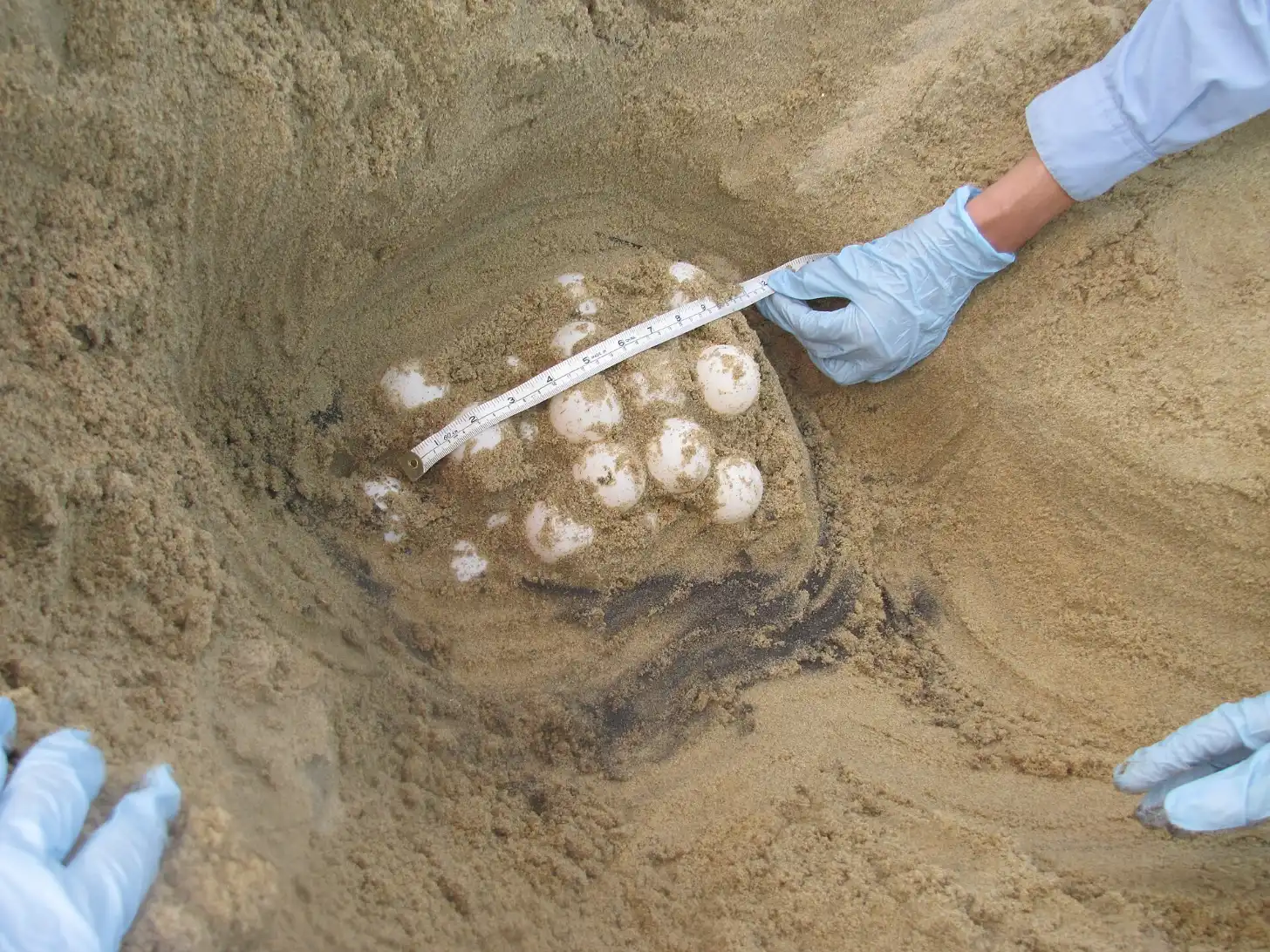
“The species reproduces for roughly 35 years, every two years (high estimate) to five years (low estimate), laying 3.6 clutches per season with an average of 110 eggs per nest,” Sayler said. “That results in roughly 2,772 to 6,930 eggs.”
Sayler added that these estimates vary due to several factors, including “remigration intervals,” which is the number of years between a sea turtle’s nesting and breeding seasons.
Sea turtles need a lot of energy to migrate long distances and produce eggs, so they regularly return to foraging grounds to replenish their fat reserves, a process which typically takes two to four years.
“Emergence success — not just how many eggs hatch, but how many successfully make it out of the nest — is also important in sea turtle population dynamics,” Sayler said. “If we consider only 1 in 1,000, or fewer, sea turtle hatchlings survive to reproductive age, you can see these seemingly ‘large’ numbers aren’t large at all.”
Why do you rarely see small turtles, juvenile or just hatched, in the water?
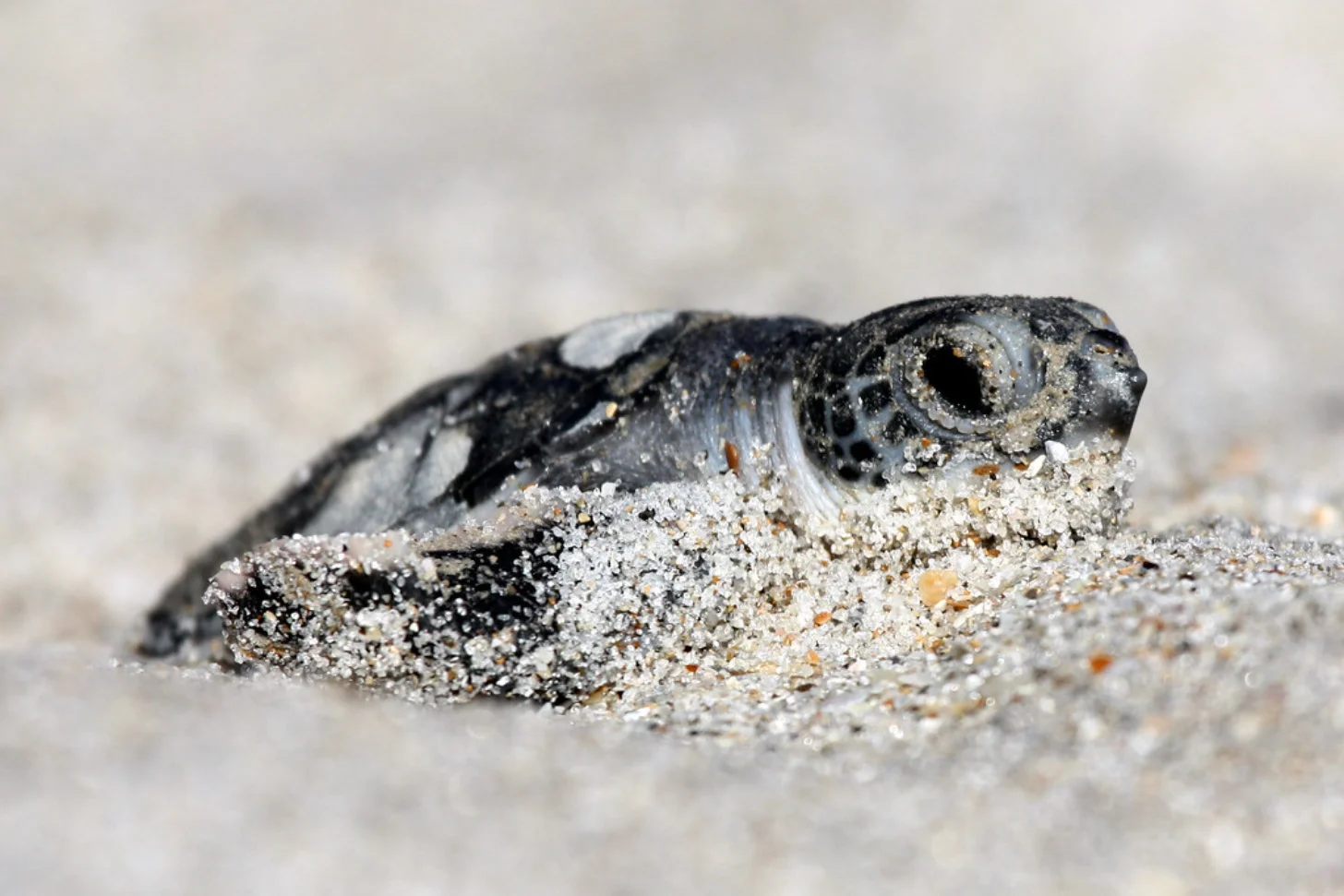
“This is likely by design,” Sayler replied.
Upon reaching the water, hatchlings swim until they can find something to cling to, like sargassum or floating seaweed mats. If they beat the low survival odds of their first 48 hours, they spend the next few years in open-ocean currents.
“This period was termed the ‘lost years’ by famous sea turtle biologist Archie Carr, for the apparent disappearance of hatchlings and young sea turtles,” Sayler explained. “They disappear to remain out of sight and avoid shallower coastal waters where certain threats, like predators, are present.”
What do sea turtles eat? Are any of their prey threatened?
Sayler said that a sea turtle’s diet varies greatly from species to species, with some feeding primarily in the open sea and others preferring shallow waters near the coast.
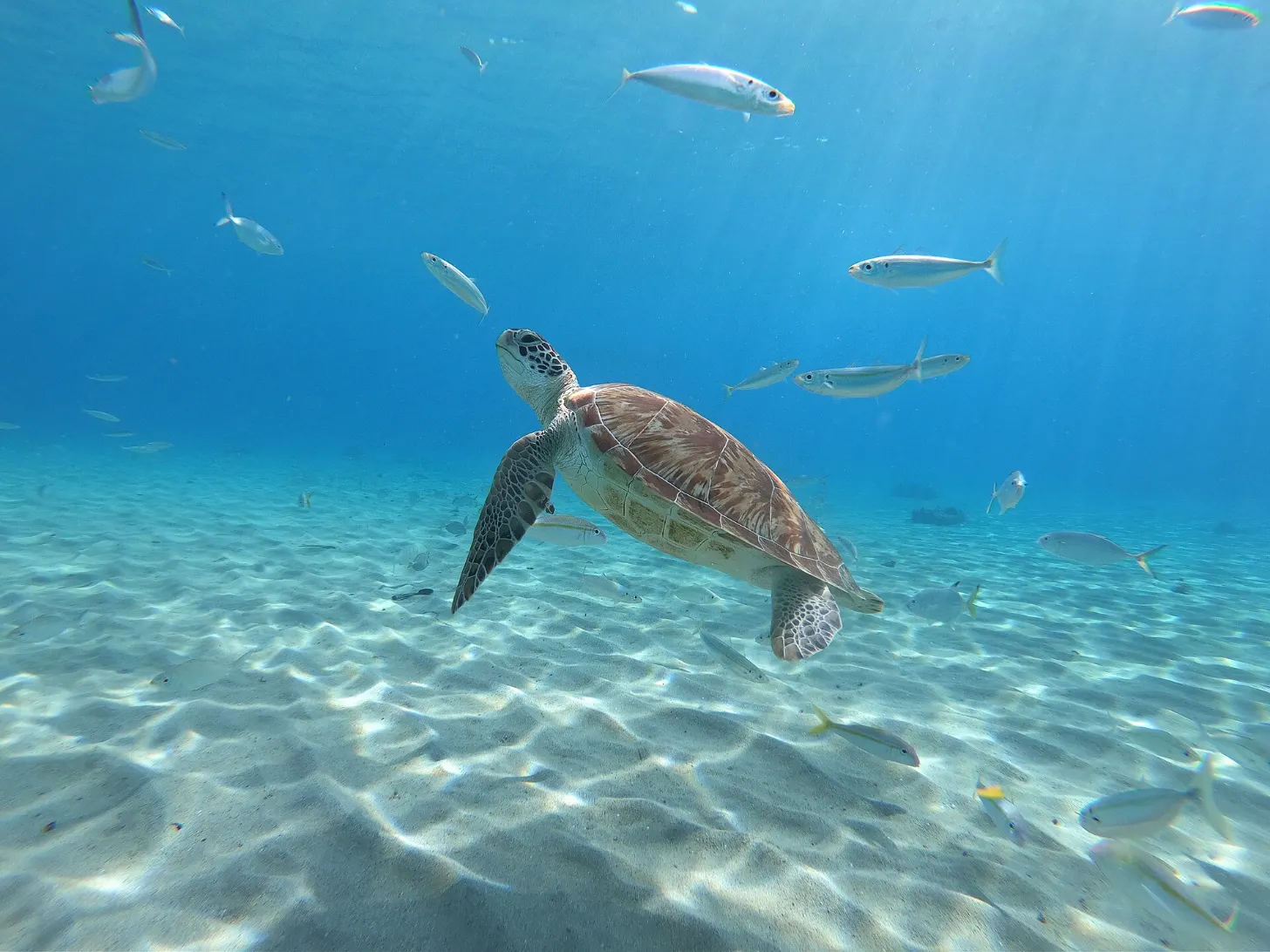
“Generally speaking, green turtles tend to feed on seagrasses and macro-algae, and one of their primary threats is, therefore, the loss of seagrasses,” Sayler said. “This is a unique threat to them, as a result of this preference.”
“Hawksbill turtles often, but not always, prefer sponges or other invertebrates,” she added. “Leatherbacks feed almost exclusively on gelatinous zooplankton, including true jellyfish.”
What does it mean now that green sea turtles are no longer endangered?
In October 2026, after decades of conservation efforts, the International Union for Conservation of Nature announced that the green sea turtle was no longer endangered.
According to the Turtle Foundation, the milestone was achieved after global nesting numbers increased by 28% over the course of five decades.
Even so, Sayler said that they still need our help.
“The species is still listed under the endangered species list as threatened — so they’re still legally protected from harm, harassment, and trade — but they’re not endangered,” Sayler explained.
“This is actually very similar to the Florida manatee, where they were listed as endangered for a very long time, then there was a groundswell of incredible interest from the public and interagency cooperation,” she continued. “Different groups worked together to come up with really pragmatic solutions, and the population improved.”
“I like to think of endangered as meaning in danger of going extinct, and threatened meaning threatened to become endangered,” she added. “So they're still listed under the Endangered Species Act, but just no longer teetering right on that edge near extinction.”
You may also like: 7 things you absolutely need to know going into sea turtle nesting season
Featured Image: Hillebrand Steve/USFWS