Over the weekend, a man named Luis Zelaya posted a TikTok video that has since garnered over 3.6 million views.
In it, Zelaya stumbled upon a sea turtle hatchling walking along a sidewalk, next to a manicured lawn.
“Ay dios mio,” Zelaya immediately exclaimed in the video. “Oh my god.”
Then, he picked up the baby turtle, a fraction of the size of the palm of his hand.

“I don’t know how this poor sea turtle got so far from the beach,” Zelaya wrote in the caption, “And before some bird could hurt it, I helped it get back home to the Atlantic Ocean. May God protect it from anything.”
The caption makes viewers hopeful for a happy ending, but watching the turtle journey back to the water was truly miraculous.
Zelaya continued speaking in Spanish throughout the clip, but included translated captions in English.
“How did you get here?” Zelaya whispered to the animal. “We will help you quickly.”
The camera stayed on the turtle, which Zelaya held gently between his thumb and forefinger.
As they walked toward the shore, Zelaya talked reassuringly to the hatchling.
“May God bless you, may you go well,” he prayed over the tiny reptile. “That nothing will happen to you, that no other animal will eat you … that you find a family that loves you.”
And then something amazing happened.
As soon as they reached the sand, the tiny turtle began flapping its flippers, as if it knew it was time to move towards the shore.
“Yay, yay!” Zelaya cheered. “We’re here!”
Then, he gently released the baby turtle onto the sand, giving it a safe distance to direct itself back to the water.

Marine life experts have long studied why sea turtle hatchlings hatch in their nests or are released on sandy beaches further away from the ocean, making them travel a bit of a distance to finally reach the water.
“They need the imprinting on their native beach, so they can determine where to come back to nest, or — depending on the species — near-shore forage, in the future,” marine biologist and southeast representative at Defenders of Wildlife, Katherine Sayler, told Good Good Good.
“That actual physical journey from the nest into the ocean creates an imprinting so that they're able to find it years and decades into the future, which is kind of an amazing feat of nature, but something that they have to do. They have to finish that crawl to find that beach to come back to.”
On the viral video posted by Zelaya, commenters praised his choice to release the baby turtle back into the water “the right way.”
“Thank you for putting her on the sand and making her get to the water herself,” someone commented. “That’s very important for the little baby. You did very well!”
Some also guessed how the turtle ended up so far away from home in the first place. Perhaps a bird had picked up the newborn and dropped it, but another likely scenario is that it was distracted by artificial light after hatching.
Baby sea turtles have an instinctive “sea finding” beahvior, crawling toward the lowest and brightest horizon, usually the ocean reflecting moon and starlight, Sayler explained.
But artificial light sources from development on the beach, or flashlights, can interrupt this process and redirect the turtles from where they need to go.
Regardless of how the baby found its way to a human environment, Zelaya made sure it would have a second chance at life in the deep blue sea.
He cheered it on as it waddled quickly into the surf, chanting “Almost! Almost!”
And once the turtle was swept up in the water, he joyfully exclaimed, “Adios! May God bless you!”
Watch the full video below:
@zelayalegacy No se como llego esta pobre #seaturtle muy lejos de la playa y antes que algún pájaro le fuera hacer daño le ayude a llegar a su hogar el #atlanticocean que Dios la cuide de cualquier #depredador #fyp ♬ Reflection on Peace - Adauto Assis
You may also like: By 1985, the world's rarest sea turtle had declined by 99%. Their comeback has been 30 years in the making
Featured Image: @zelayalegacy/TikTok
This story was originally published by The 19th and was republished with permission.
Preschoolers with disabilities in New York City will gain access to an unprecedented set of programs and services thanks to a major expansion in special education announced Tuesday by Mayor Zohran Mamdani and New York City Public Schools Chancellor Kamar Samuels.
The nation’s largest school system is investing $67.5 million in special education as families across the country fear the needs of their children with disabilities will go unmet amid the federal Department of Education’s continued dismantling.
In New York City, young learners will be able to participate in three programs designed specifically for students with autism that were previously only available to K-12 students. They will also have access to initiatives for students with emotional disabilities or in need of adapted academics and life-skills training.
The programs will be available starting in the fall in 14 of the city’s 32 community school districts. The majority of them are located in areas with some of the highest concentrations of working-class and immigrant families in the city.
“Children with disabilities should not be forced to travel across the city just to get the education they deserve,” Mamdani said in a statement.
“That’s why we’re bringing those classrooms closer to home and taking another critical step toward making Pre-K truly universal. Every child deserves to learn and grow in their community, and every family deserves a public education system that meets them exactly where they are.”
The specificity of the investment is unprecedented in New York City, where more than 200,000 students are eligible for special education services.
“For the first time, we’re giving young children with autism and other disabilities the same high-quality, specialized instruction that has delivered real results for our older students,” Samuels said in a statement.
“This investment is about strengthening the foundation and when we get early childhood education right, we set children up for a lifetime of success.”
To expand special education services to the city’s youngest learners, New York City Public Schools will hire hundreds of staffers to help lower evaluation delays; assist families through the process of creating a legally binding personalized school roadmap for children with special needs, known as Individualized Education Program (IEP); and provide more bilingual assessment options.
Overall, more than half of all children in New York City come from homes where a language other than English is spoken, and in the majority of those homes, that language is Spanish. Among the new hires will be 35 psychologists, social workers, speech evaluators, and occupational therapists across 10 additional Preschool Regional Assessment Centers, or city-run evaluation hubs that identify children ages 3 to 5 who qualify for special education services.

The Special Education Itinerant Teacher program will also grow, with an additional 29 therapists and specialists to support children attending community-based 3-K and pre-K programs. According to city officials, the placement of more special education teachers in general education preschool classes will help boost the number of small children with IEPs in inclusive learning environments.
In June, the Trump administration announced that the Department of Health and Human Services will oversee the Education Department’s special education and rehabilitative services — a move that advocates and parents said will make it more challenging for millions of students to access services and for their families to appeal for help when needed.
The transitions at the federal level concern Chris Treiber, vice president of advocacy services for AHRC New York City, which serves individuals with intellectual and developmental disabilities.
“When you move services out of the U.S. Department of Education and start to put them in other places like the Department of Health and Human Services and then also into the Justice Department, you kind of lose all of the expertise and the specialized support that the US DOE provided for so many years to so many states,” Treiber said. “It’s all going to be basically evaporated.”
In a statement, State Sen. Robert Jackson, a Democrat whose district includes several Black and immigrant neighborhoods in Manhattan, pointed out how families with disabled children have long had to fight simply to get basic support, a concern often raised by critics of the Trump administration’s gutting of the federal Education Department.
“For generations, families of children with disabilities have been asked to navigate systems that too often made support feel distant, delayed, or conditional,” Jackson said. “This investment reflects a different promise: that the doors of public education must open early, fully, and with dignity.”
Maria Odom, executive director of Advocates for Children of New York, drew a connection between special education for preschool children and universal childcare, which Mamdani and New York Gov. Kathy Hochul launched in January.
“Childcare can only truly be universal if every child has access to a program that meets their needs,” Odom said in a statement.
“We thank Mayor Mamdani for making this important investment, which will help ensure more preschoolers with disabilities receive needed, legally required support. Access to high-quality specialized programs during these critical early years can have a lasting impact on children’s development while helping make New York City a more affordable and appealing place to raise a family.”
Advocates like Treiber and Jenn Choi of Jenn Choi Advocates LLC, which provides parents with support through the IEP process, told The 19th they welcomed the preschool special education expansion. Still, both raised concerns about the logistics and reach of the new effort.
Choi hopes it gives economically disadvantaged families greater access to services.
“There’s a lot of parents in the city who know how great these programs are,” she said. “These programs are very popular in neighborhoods like District 15 where the income is higher, but maybe they’re not as popular in other areas where there isn’t a cultural history of how important these programs are within the community.”
Choi also would like officials to work toward making these specialized programs available to all students who need them; one student she advocated for went without speech, occupational, and physical therapy for two consecutive years, she said.
Treiber, for his part, wondered how the city plans to adapt programs designed for older kids to the preschool set. He also noted that many children in pre-K did not receive the early intervention services they needed from ages 0-3 and as a result, they might need even more intense support in preschool.
Most importantly, he wants officials to communicate effectively with families about the new programs.
“They have to be able to provide some concrete information to families so they understand either the parameters of what’s being offered here or maybe the limitations,” Treiber said.
“Like if I put my kid in this program, a parent should understand that they may not have a program for my child the following September when they turn 5 and go into kindergarten. It’s just important for parents to be as informed as possible so they can make really smart, informed decisions about their kids’ education.”
Featured Image: Ed Reed/Mayoral Photography Office
Studies show that approximately 180 million Americans — roughly 50% of the country — go on a beach vacation every year. Beaches across North America are home to countless vulnerable wildlife species, and shores near the Atlantic and Gulf waters are home to sea turtles in particular.
With just three subtle changes to your beach routine, beachgoers can help protect sea turtles, nearly all of which are endangered.
Three small changes that everyone should add to their next beach vacation
Bring an extra bag just for trash
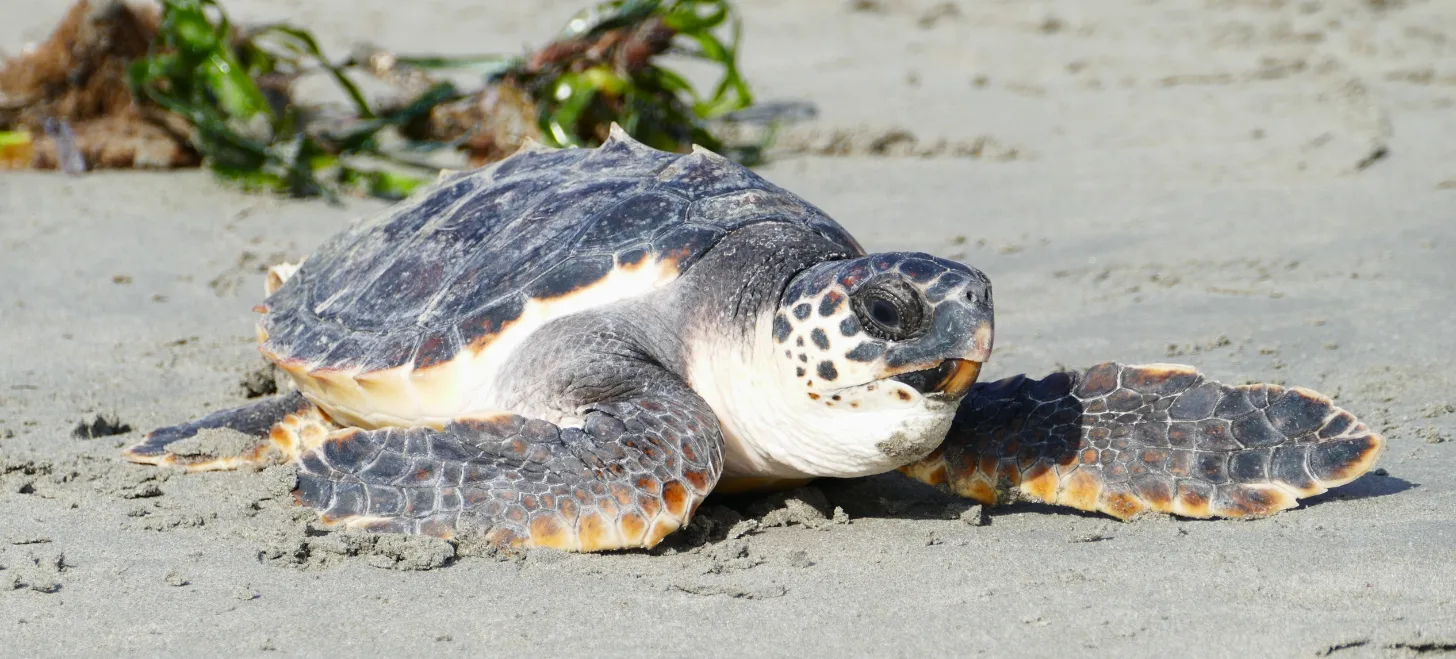
On a recent trip to the beach, marine biologist Katherine Sayler told Good Good Good that she came across several sea turtle nests, with loggerhead and green sea turtle tracks clearly visible in the sand.
“Within those tracks, I could see multiple pieces of plastic debris, a little piece of a balloon, some straws, and bottle caps,” said Sayler, who serves as the southeast representative for the nonprofit, Defenders of Wildlife.
“I cleaned all of it up, just because you never know what’s going to happen,” she said. “If that gets washed up, a hatchling — or another sea turtle coming in to nest on another night — could potentially confuse it for food.”
Sayler recommended beachgoers pack an extra bag and try to leave the beach cleaner than they found it.
“There is so much, so I just carry a trash bag with me or put it all in my beach bag,” she said. “If you’re looking for plastic pollution on the beach, you can typically find it. Your eyes might just not be attuned to it because it’s so omnipresent, so pervasive.”
Reduce light pollution
For those staying at the beach overnight, Sayler advised reducing artificial light pollution as much as possible.
“When you’re staying on the beach, something people can do pretty simply is to pull their shades and turn off all of the visible lights,” she told Good Good Good.
“Just last week, I was staying at a location that had a pool, and all of the lights around the pool were really unbelievably bright white lights that were on for the entire evening — into the night, into the morning till 6 a.m.”
“For a sea turtle, and for hatchlings that are trying to find the ocean, those can be incredibly disorienting,” she stressed. “And that’s something we might not think about when you’re staying on the beach, but turning off the lights or just pulling a shade and closing your blinds is something that can directly positively impact sea turtles.”
Keep the beaches flat
In addition to leaving the beach cleaner than you found it, Sayler recommended leaving it flatter, too.
Any dramatic change in the beach’s landscape can create unnecessary obstacles for nesting sea turtles and their hatchlings.
Before leaving the beach, it can be immensely helpful to fill in holes and even knock down sandcastles — after the castle builder in question has left or taken a photograph, of course.
“That kiddo probably got a lot of enjoyment out of building it, but now they’ve gone home, so they won’t know that their castle is no longer standing,” Sayler said.
When it comes to keeping sea turtles in mind, Sayler boiled it down to just three concepts.
“Keep beaches dark, flat, and clean,” Sayler said. “That’s really the action item that everyday people can do to really help sea turtles rebound and increase in abundance.”
You may also like: Do sea turtles only hatch during a full moon? Your top 5 questions about sea turtles, answered by an expert
Featured image: Vlad Fonsark/Pexels
Every year, nudists and naturalists across the world have the opportunity to let it all hang out for a good cause.
On the second Saturday of July, hundreds of people celebrate International Skinny Dip Day, officially recognized by the American Association for Nude Recreation in 2018.
And while many participants do report that the event boosts their confidence, it’s all for a cause much bigger than a nude swim.
Since the event began in 2019, Skinny Dip Day has raised thousands for the Fistula Foundation, a charity that funds surgeries for women in Africa and Asia with fistula and severe perineal tears.

Obstetric fistulas are a painful childbirth injury that leave women incontinent and often shunned by their community. The Fistula Foundation primarily works with vetted doctors in the Democratic Republic of Congo, Kenya, Tanzania, and Zambia to provide fistula treatment — a procedure that costs just about $624 per intervention.
After the July 11 event in 2026, the collective of skinny dippers has officially surpassed the $60,000 fundraising mark, which provides approximately 96 women with the surgery they need to heal and live full lives.
Organizers call their work “dippin’ on a mission,” urging participants to “experience body positivity while raising money to cure women of horrific body shame.”

While it’s unclear how many people partake in the annual event, there were 571 people alone at Blind Creek Nude Beach in Fort Pierce, Florida this past Skinny Dip Day.
In 2025, there were 22 independently hosted Skinny Dip Day events, and 29 held in various locations across the United States, Canada, Costa Rica, Portugal, and Uganda in 2026.
“This year, Skinny Dip Day as a whole raised over $18,000, blowing past its $15,000 goal, with 263 supporters across 32 teams,” participant Evan Nicks, writer of Planet Nude, shared about this year’s event.
“That’s roughly 28 surgeries funded in a single season.”

Each year, the movement seems to grow.
“This is a strange little tradition, a bunch of naked people raising money to cure a disease most of the world has never heard of,” Nicks wrote for Planet Nude. “It’s one of the things I’m proudest of.”
And altruism isn’t the only reason people participate. Many report a feeling of liberation when skinny dipping, and a 2021 study even points to communal nudity offering people improved appreciation of their own bodies.
“I didn’t know what to expect, and didn’t know if I would be comfortable,” a 2025 participant, Erika, said in a testimonial for Skinny Dip Day.
“I felt welcomed immediately. Everyone was very casual and friendly. It made me feel a lot better about my own body, and it was cool to experience a new ‘subculture’ of our collective society and get fresh perspectives on what it means to be alive in this world.”
You may also like: Their small town couldn't afford a new snowplow. So locals sold 'nearly nude' calendars instead of paying higher taxes
Featured Image: Courtesy of Planet Nude
In a conservation video for the nonprofit Flora & Fauna, Sir Stephen Fry refers to the pangolin by many names.
“Scaly quadruped, dedicated parent, toothless wonder, armored anteater,” he lists off. “Night-time wanderer, real-life Pokémon, walking pinecone.”
But Fry ends with a few monikers that underscore how endangered the mammal is.
“Most-trafficked mammal … disappearing … close to extinction.”
There are eight species of pangolin in the world, and all of them are imperiled. Two are vulnerable, three are endangered, and four are critically endangered.
Native to parts of Africa and Asia, pangolins have long been targeted by poachers for their meat and scales, the latter of which are believed to have medicinal value, despite a lack of scientific evidence.
Researchers have taken a vested interest in pangolins in the last several decades as their population plummets due to wildlife trafficking.

“We can’t protect what we do not know, and now that we have confirmed that this other species of pangolin exists, we can use that information to help protect these endangered animals,” Anderson Feijó said in a press statement.
Feijó is the Negaunee assistant curator of mammals at the Field Museum and co-corresponding author of a new study in Communications Biology, which was published on July 1.
In the study, Feijó and his peers announced a new species of pangolin that had been hidden in plain sight among the trees of Nepal and Northern India for almost 200 years.
In their research, they found evidence of the Manis aurita, a pangolin that had first been described in 1836, and had been downgraded to a subspecies of Chinese pangolin. Using integrative genomic and morphological evidence, they were able to confirm that it was in fact a distinct species in and of itself: the Himalayan pangolin.
According to Feijó and his peers, the differences between the Himalayan pangolin and the Chinese pangolin are slight but distinctive. Compared to its Chinese relative, the Himalayan pangolin has a longer tail, a bigger body, and much smaller ears.
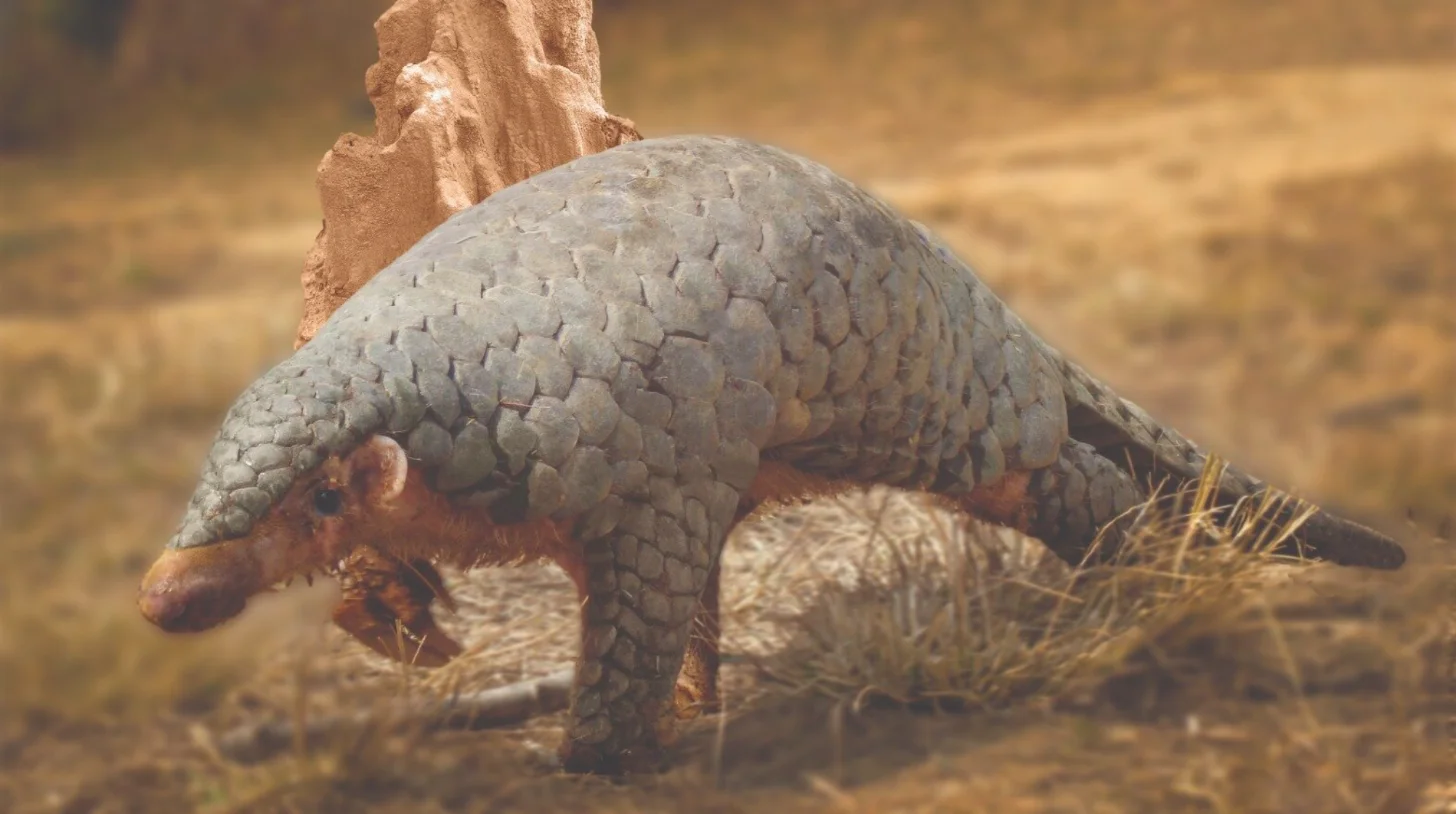
“The newly resurrected species name, aurita, even refers to its distinct ears,” said Feijó.
“Aurita” is derived from the Latin word auris, which means ear. It is commonly used for scientific names throughout the animal kingdom, like the Plecotus aurita, or Brown long-eared bat, and the Aurelia aurita, a moon jellyfish with ear-like gonads.
The discovery came on the heels of half a decade devoted to analyzing the pangolin family tree.
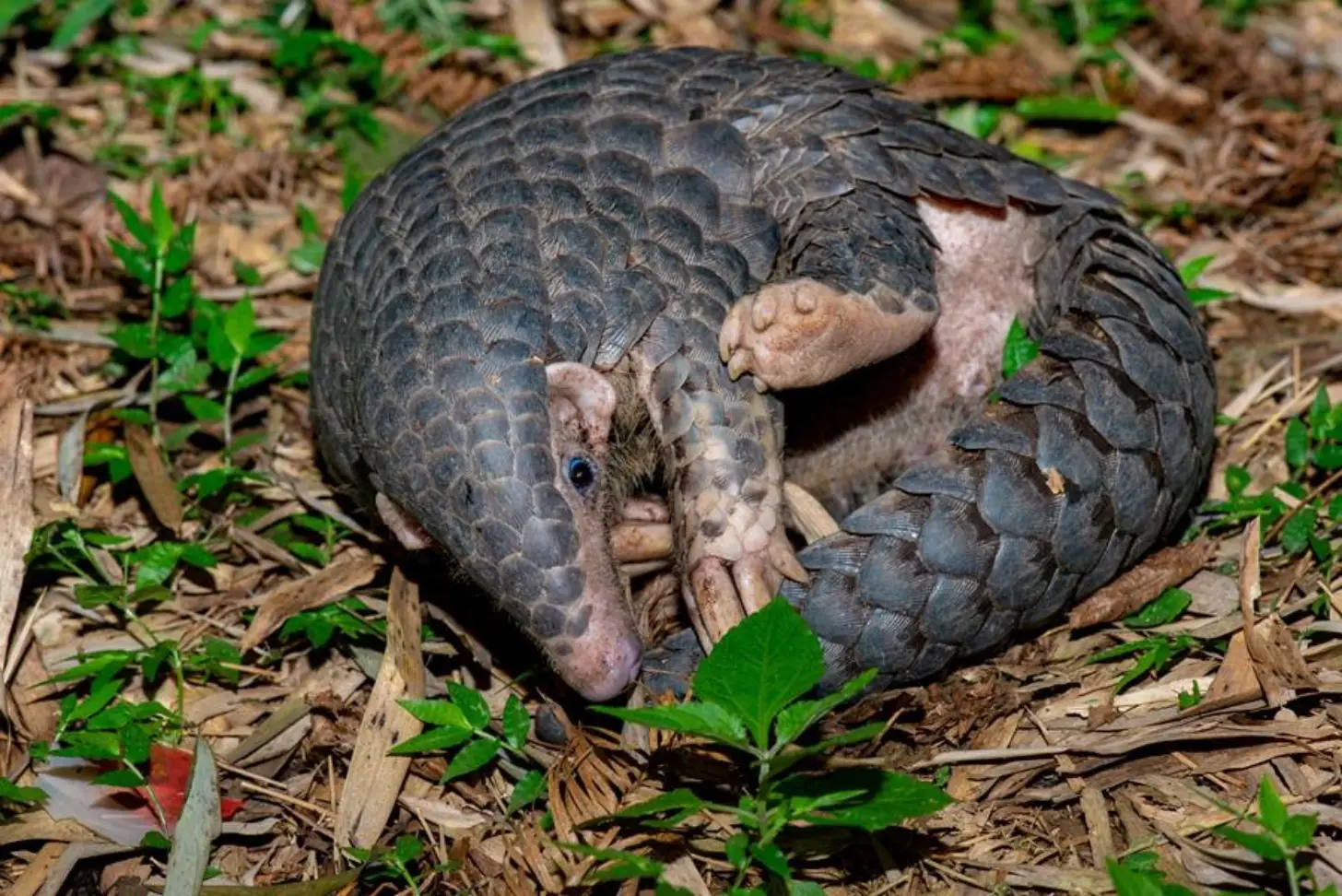
“This finding marks the culmination of more than five years of research that began in Nepal, where we first documented evidence suggesting that Himalayan pangolins represented a distinct evolutionary lineage,” said Narayan Koju, a researcher at the Nepal Engineering College at Pokhara University and the study’s lead author.
“The confirmation of Manis aurita as a valid species demonstrates the importance of long-term research, international collaboration, and museum collections. Most importantly, it provides a strong scientific basis for conservation planning, wildlife forensics, and efforts to protect one of the world's most-trafficked mammals from extinction.”
You may also like: Global mammal count is on the rise with 1300 new species
Featured Image: Flora & Fauna International
North Carolina’s population of red wolves, the most endangered wolf species in the world, is growing.
Four litters of red wolf pups have been born in the Tar Heel State so far this year, according to an announcement from the U.S. Fish and Wildlife Service’s Red Wolf Recovery Program.
Between 12 and 16 pups survived their first few months. One of the litters was born on private land owned by a member of the Prey for the Pack Program, which financially helps landowners for allowing red wolves on their property. The other three litters were born in the wild.
“It’s inspiring to see these underdogs making another incredible comeback,” Will Harlan, Southeast director at the Center for Biological Diversity, said in a statement. “These pups provide real hope for the future of red wolves.”
In 1967, lawmakers classified the red wolf as “threatened with extinction” under the Endangered Species Preservation Act of 1966.
The species was hunted nearly to extinction in the 1970s, but began making a recovery through the federal Endangered Species Act, the Red Wolf Recovery Program, and the Saving Animals from Extinction Program.
Conservationists reintroduced red wolves to eastern North Carolina in 1987, marking the first-ever carnivorous species declared extinct to be successfully reintroduced. By 2011, at least 130 red wolves roamed the wild.

There are 22 known wild red wolves as of July in eastern North Carolina’s Alligator River and Pocosin Lakes National Wildlife Refuges and surrounding private lands, according to the Fish and Wildlife Service. The agency works with the Association of Zoos and Aquariums to manage 295 captive red wolves.
Since 2020, the species’ leading cause of death has been vehicle collisions, with eight red wolves dying by vehicle strikes in the past six years. Nearly all road fatalities take place along Highway 64, which runs through the red wolves’ refuges.
North Carolina Gov. Josh Stein signed a long-overdue state budget last week which allocates $10.2 million every two years to build wildlife crossings under major highways.
The state has also raised $31.25 million in federal and state grants and private donations specifically for crossings underneath U.S. Route 64 to protect species like red wolves, black bears, river otters, and spotted turtles.
In August 2025, North Carolina Democratic Rep. Valerie Foushee and Republican Rep. Greg Murphy filed a resolution in Congress to back red wolf repopulation and recovery efforts.
This article was written by Christine Zhu and was originally published by NC Newsline.
Featured Image: Courtesy of USFWS
North Carolina has recently made headlines for its new $10.2 million investment in wildlife corridors, structures that connect wildlife habitats and reduce costly vehicle collisions by up to 90%.
This investment will fund future wildlife overpasses and underpasses near and within the Great Smoky Mountains, but one historic project is already nearly complete.
For the first time in state history, the North Carolina Department of Transportation and the North Carolina Wildlife Resource Commission are constructing a land bridge in the mountains, along NC-143, where Steocach Gap meets the Appalachian Trail.

The project is years in the making. Construction broke ground in October 2022, and officials say the bridge should be completed by the end of 2026.
The bridge is designed for both human hikers and wildlife, designed to transport travelers from one side of the Appalachian Trail to the other.
“We’ve never done something like this before, and it’s been interesting to see these walls and this land bridge constructed,” Adam Dockery, Division 14 resident engineer, told WLOS News.
But how will people be able to safely cross a bridge that is also designed for black bears and rattlesnakes? It will have a mirrored design, with one side equipped with fencing that funnels animals to the land bridge, and another blocked off solely for hikers.
“The way it's designed with the dirt there, the landscaping that’s going to be put up here, you’ll have a flat side of dirt, and then you’ll have a mound in the middle where it kind of separates two passages,” Dockery explained in a video to WLOS.
There is a pre-cast concrete arch that is about 206 feet long, with a central mound that separates human foot traffic from local wildlife.
In addition to bridging the passage for wildlife to reconnect with their natural habitat, the idea is to cut down on vehicle collisions and make it easier for pedestrians to navigate the area.
“There’s always people walking the Appalachian Trail and having encounters with bears or other wildlife,” one hiker, Jacob Popperwill, told WLOS. “This just leaves them a route to be able to traverse together.”
The land bridge is part of a larger $681 million NCDOT “Corridor K” upgrade. As of February 4 of this year, construction company Neel-Schaffer had shared that Phase 1 of the project was complete, mostly including the concrete foundation of the land bridge.

“The project is designed to blend naturally into the surrounding landscape, create a safer passage, and preserve the area’s natural character,” the construction company wrote in a social media update.
“It’s exciting to see this project taking shape and to be part of a team improving safety and connectivity in such a beautiful part of North Carolina.”
You may also like: This first-of-its-kind wildlife overpass crosses a 6-lane highway. People can walk across it, too
Featured Image: Courtesy of NPS
For 136 years, generations of the Erickson family have cultivated their home on Vine Maple Farms, near Tenino, a town at the foothills of Washington State’s Cascade Mountains.
But now, they’re kissing their farmhouse goodbye.
The family sold their 94-acre property for $1.1 million, according to The Seattle Times, all to make way for a major wildlife bridge planned to cross over Interstate 5, reconnecting habitats in the Cascade Mountains with the Olympic Peninsula.
With this acquisition, and others like it, the new wildlife crossing is ready to move ahead. It will be the first on this particular freeway in Washington.
According to The Seattle Times, nonprofit Conservation Northwest was pivotal in bringing the project to fruition, raising $2.5 million to help buy land for the crossing, which was returned to the Confederated Tribes of the Chehalis Reservation.

“Existing connectivity pathways are threatened by growing development pressures, especially along Interstate 5. Increasing suburban sprawl, major flooding, and changing forestry, agricultural, recreational and economic dynamics add to this need for innovative conservation work,” Conservation Northwest writes on a web page about its Cascades to Olympics connectivity efforts.
“As an initial step to maintain habitat connections, we are dovetailing off Chehalis Basin restoration strategies and engaging with local communities, tribes, and regional stakeholders to provide means for wolves, elk, fishers, and other wildlife to safely pass I-5 and Highway 12.”
That initial step has quickly become a life-changing pivot for families like the Ericksons, though. But they aren’t sore about the sale of their farm.
In fact, the family told The Seattle Times that about 50 years ago, Allen and Janice Erickson drew up the Vine Maple Farms Trust, stipulating that when all the family’s descendants were gone, the farm should be preserved for conservation.
“So here we have come,” Janice Erickson told the Times.
Marla, the youngest descendant of the Ericksons, said the decision to sell was an easy “yes.”
“Just knowing that this land is going from our family back to where it belongs with the Chehalis Tribes makes us very happy,” Marla said in a statement for Conservation Northwest. “It feels like a full circle moment.”
According to a video from Conservation Northwest, the area this bridge would cover used to be a place where animal populations could traverse with ease, “before European civilization came.” Now, they said, attempting to cross I-5 would spell “certain death.”
Conservationists believe the wildlife crossing would serve as a lifeline for endangered species like the cougars of the Olympic Peninsula, along with black bears, deer, elk, beavers, newts, and fishers.

Plus, wildlife crossings are widely credited for saving billions in costs associated with wildlife-vehicle collisions nationwide. A 2022 study estimated that Washington has saved an estimated $235,000 to $443,000 each year per structure.
So when the data pointed to this spot as a great opportunity to improve wildlife and reduce vehicle deaths, Conservation Northwest came together with the state’s Fish and Wildlife and Transportation departments, along with Indigenous nations, and other nonprofits like Panthera, to make it happen.
Conservation Northwest helped acquire 180 acres of land, which were returned to the Chehalis Tribe, with adjacent lands conserved under additional agreements. The tribe is also buying ancestral lands back to “heal the habitat.”
“To be good stewards of the land is really important, and I hope everybody realizes that most tribes, we’ve been doing that for centuries,” Sheilah Bray, the Chehalis Tribe’s Vice Chair, said at an event promoting the I-5 project.
“From the tribe's point of view, we couldn't be more excited to find out that this idea is not just a pipe dream … the Chehalis Tribe [is] committed to help do whatever we need to do to make this thing happen.”
The Ericksons were eager to play their part — and now, if everything goes according to plan, The Seattle Times reports the state could pursue federal funding for the crossing in the coming years.
“I think it's really important for people to understand that this landscape has so much potential for partnerships, and so much potential to have private landowners not look at conservation as something that goes against their interests,” Paula Swedeen, Conservation Northwest’s policy director, said in a video about the effort.
“In this age of despair over climate change, this is another place where we can look for hope.”
You may also like: British neighbors are cutting holes in their backyard fences to create a 'hedgehog highway'
Featured Image: NPS Photo
Jo Nagai of Kobe, Japan began hand-raising swallowtail butterflies when he was just a second grader.
But when it came time to release them to the wild, Nagai realized a peculiar pattern of behavior — the butterflies often lingered after release, even flying back to him at times.
It made him wonder: Did his caterpillars still remember him, even after they had experienced metamorphosis?
To find out, Nagai reached out to esteemed Georgetown entomologist Dr. Martha Weiss, who has long studied the behavior and the memory of insects — particularly moths.
He had been intrigued by a study she published in 2008 on an adult moth’s ability to retain memories even after its body had broken down and rebuilt itself.
In a four-page letter, Nagai introduced himself. Weiss later read the letter aloud on the Signal Hill podcast.
“To Martha Weiss,” she said. “Hello. Nice to meet you. My name is Jo Nagai. I'm from Japan. I live in Kobe, Japan. I'm in the second grade at Ibuki Elementary School. When I found your research on the internet, I was so delighted!!”
Annie Rosenthal, who is both a Signal Hill editor and Weiss’ daughter, noted the “two exclamation marks” in their interview.
“Two bold exclamation marks,” Weiss confirmed.
In the letter, Nagai asked Weiss about her landmark study on moth memory and asked how he could expand it to his butterflies.
At first, Weiss doubted whether an elementary school student could recreate the same experiment that she and her grad student, Doug Blackiston, had established in a secure lab setting over a decade earlier.
In her first letter back, Weiss suggested that Nagai run an experiment on something much simpler, like “teaching butterflies to learn colors.”
But Nagai was undeterred.
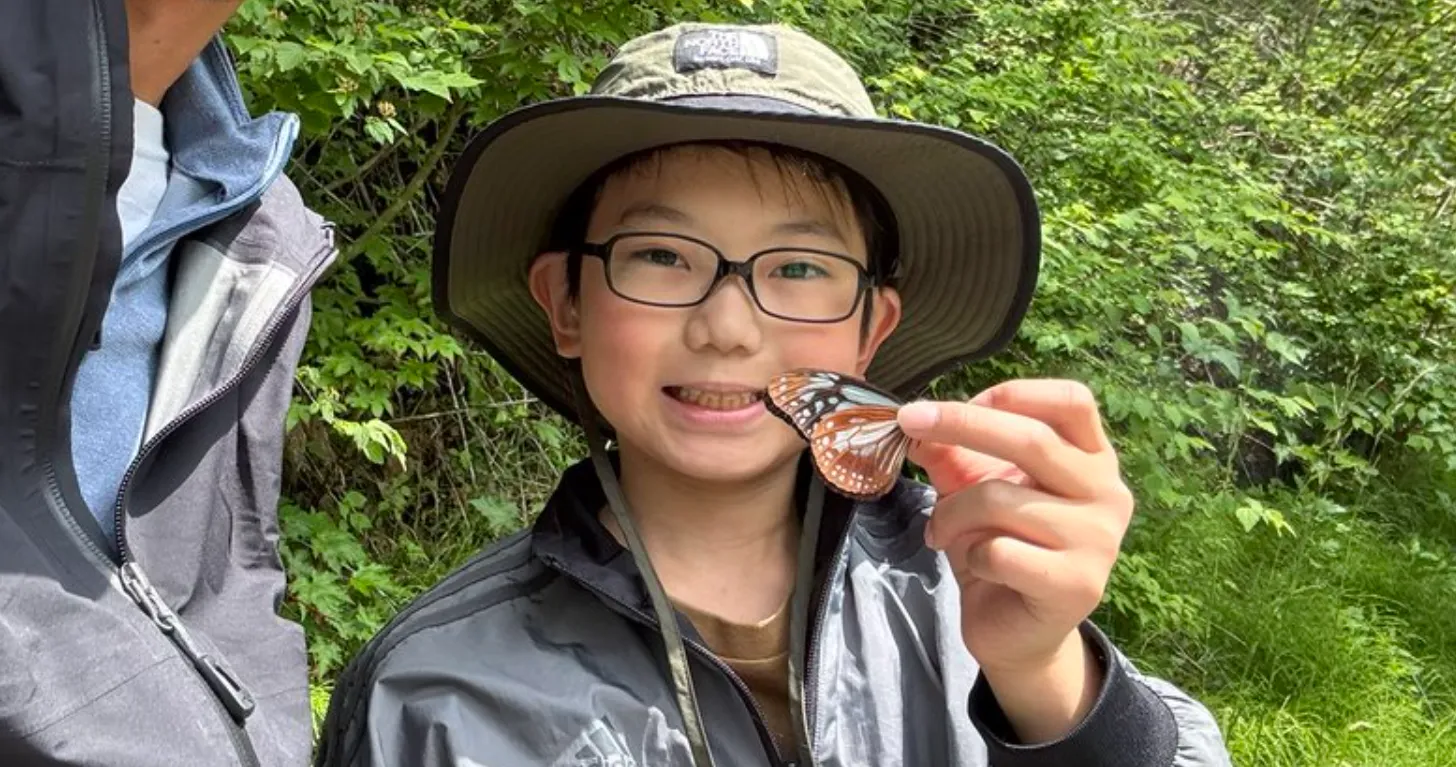
“I really want to prove it’s possible that my butterflies can remember what they learned as a caterpillar,” he wrote in his next letter. “I don't want to give up now. I really need your help.”
His determination sparked a multi-year correspondence across continents. With Weiss’ assistance, Nagai organized an experiment in his own makeshift lab at home. In his attempt to recreate Weiss’ 2008 study, Nagai established a control group of caterpillars and a test group.
Swapping out Weiss’ original chemical ethyl acetate for a gentler smell, lavender oil, Nagai introduced the caterpillars to the smell while administering very small shocks through a miniature muscle therapy device.
When the caterpillars had later transformed into butterflies, 80% of the test group avoided the lavender smell.
He sent his findings in a 33-page document to Weiss.
“What did you think when you got that email?” Rosenthal asked her mother.
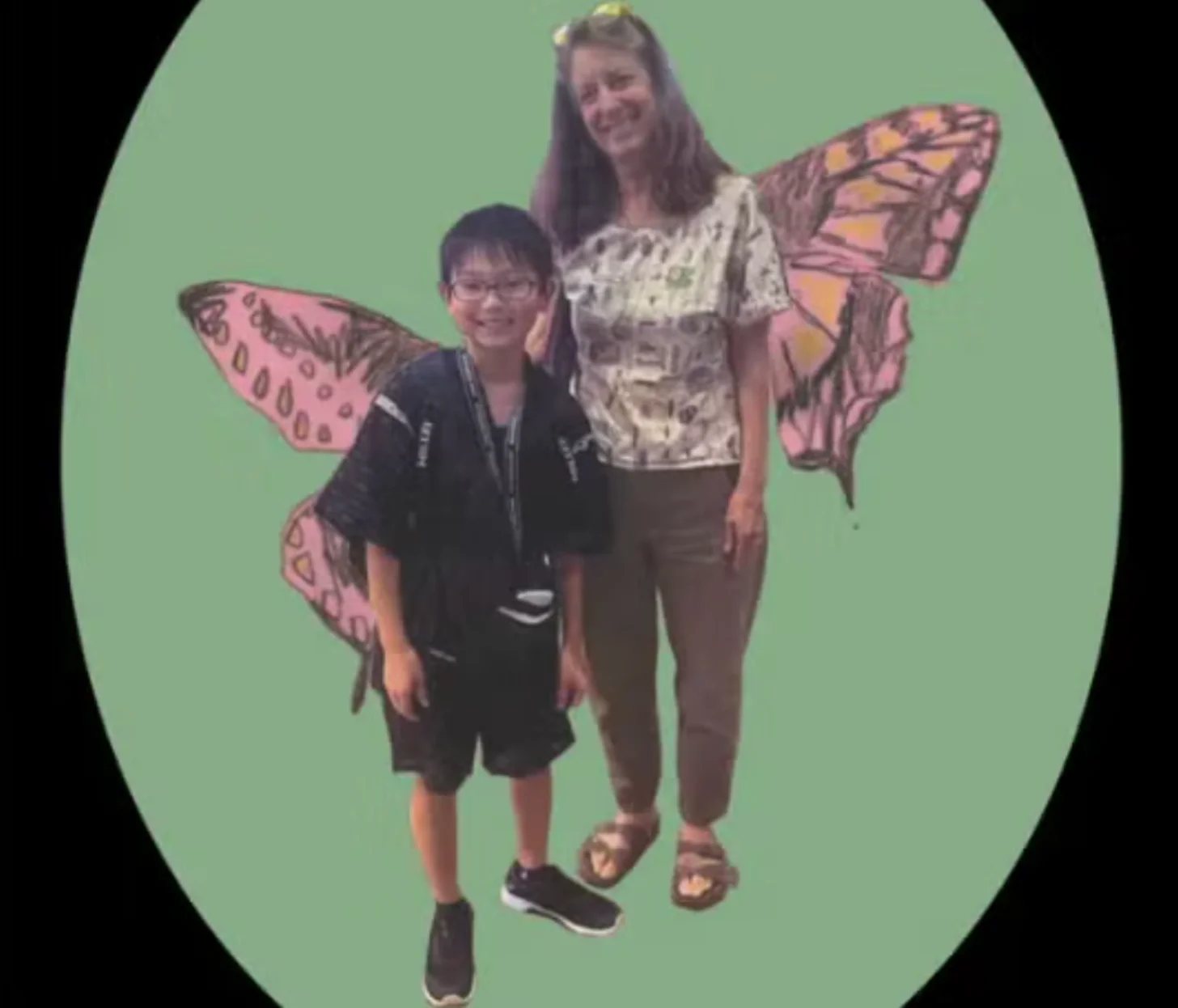
“I was flabbergasted and delighted,” Weiss replied. “And in this letter I thought, ‘Holy cow, he's a real scientist, and he's figuring out new stuff.’”
In 2022, the same year that he graduated from second grade, Nagai presented his research to scientists at Shinshu University, Tsukuba University, and Saga University.
But Nagai didn’t stop there. A year later, he told Weiss that he wanted to see if caterpillars could inherit memories.
Inspired by a similar study on nematodes, Nagai repeated his earlier experiment and discovered something remarkable: Butterflies didn’t just carry memories from their earlier forms — they appeared to pass memories down to their young as well.
Soon, Nagai and Weiss will formally present their findings to the Journal of the Lepidopterists’ Society. But first, Nagai is just focused on graduating from the fifth grade.
This past year, the 10-year-old finally met Weiss when she brought her family on a trip to Japan. When they met, the professor presented him with a magnifying glass tied with a ribbon — just like the one she often sports around her neck.
During their visit to Japan, Rosenthal asked Nagai what he wanted to be when he grew up, expecting him to say entomologist like her mother. He said he wants to be a vet instead.
“I can fix caterpillars and insects both,” Nagai explained.
“Are there other insect veterinarians now?” Rosenthal asked.
“No,” he said.
“So you might be the first insect vet,” she replied.
“Yes!” he exclaimed.
You may also like: This teen invented an autonomous 'sea turtle robot' to monitor coral reefs. He just won an award from the EU
Featured Image: Dr. Akito Kawahara
As “Supergirl” leaves theaters and “Spider-Man: Brand New Day” swings into them, filmgoers have plenty of opportunities to see superheroes on the silver screen this summer.
But one man is looking inward for inspiration, by rebranding himself as a real-life superhero: The Roanoke Raven of Virginia.
Although he retains his anonymity, the Roanoke Raven did share his backstory with local news outlet WDBJ7.
By day, he works as an EMT for a local fire department. But when he puts on the “Spider-Man” inspired stealth mask and goggles, he becomes the superhero that he believes the city needs.
“We live in a city where thousands and thousands of emergencies happen a day, and no one really talks about them,” the Roanoke Raven said in an interview with WDBJ7.
“There are people on the street right now, homeless and not having the ability to eat at night, and you’ve got people passing them that refuse to make eye contact with them. That’s the society we live in right now.”
He said seeing those needs “lit a fire” in him.
“I think we can make the city a better place to live,” he said. “And, I think that if it takes wearing a superhero mask to do it, let’s do it.”
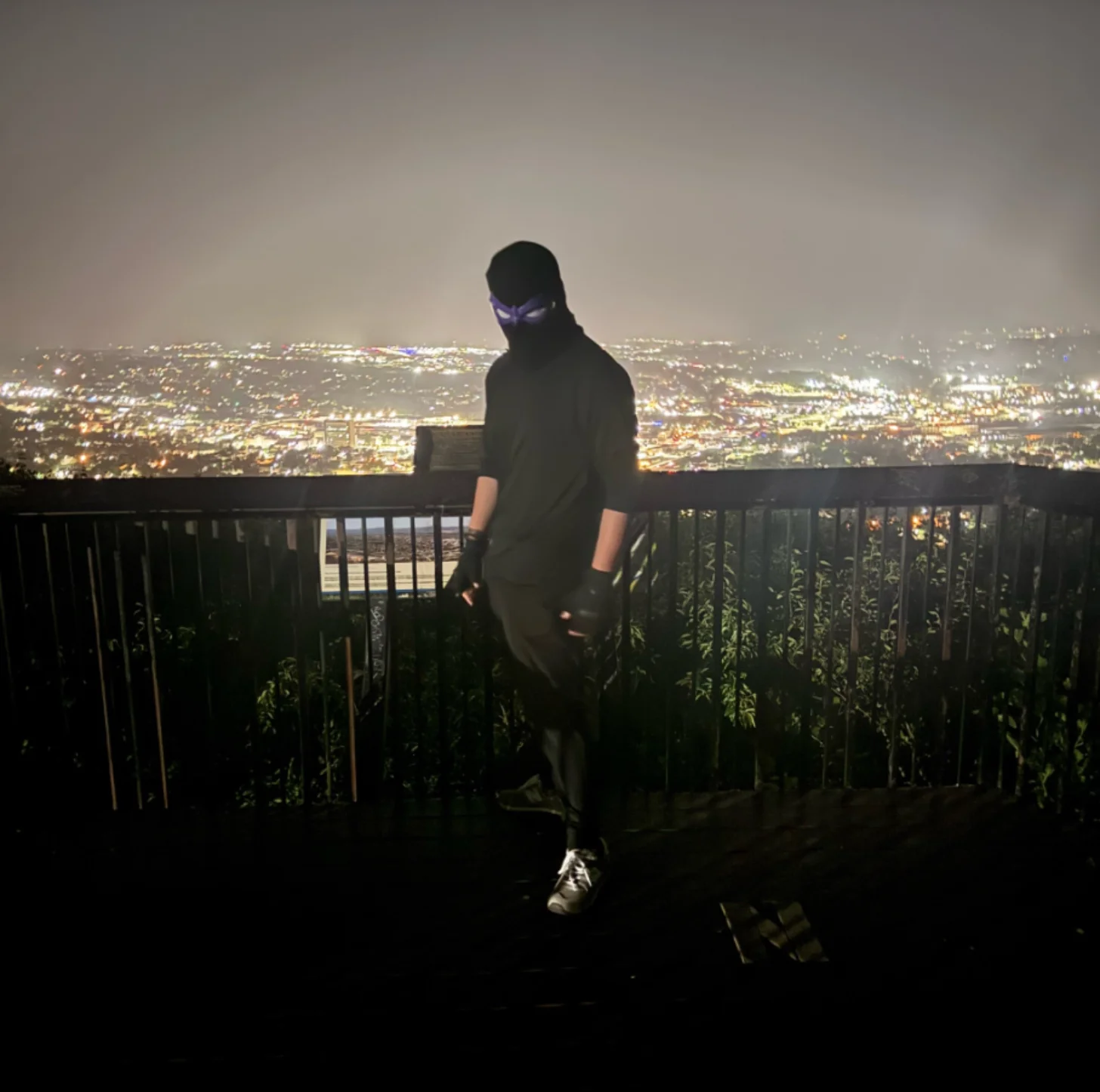
When he’s not leading litter pick-ups and returning grocery carts, the vigilante takes a light-hearted approach to his social media videos, sharing his childhood inspirations, like Spiderman, Superman, and Batman.
“Growing up, I didn’t always have a stable anchor to teach me all the things that I needed to learn, and often I felt like I always saw the world in a different way than others around me,” the Roanoke Raven told Good Good Good.
“I’ve always been an optimist, and I feel as though those three superheroes who I have loved and adored since I was a kid amplified that fire.”
The self-made vigilante also uses his platform to raise awareness about critical issues in his community.
“Let’s talk about water,” The Roanoke Raven said in a recent TikTok video.
“The entire pack of 24 cost me less than $5 at Kroger,” he said. “And yet, no matter how cheap or simple this item is, we still have over 42 million Americans that are suffering from water insecurity.”
“That's not good for anybody,” he added.

So, the Roanoke Raven decided to do something about it.
“Today, me — and one of the citizens from Roanoke that wanted to help me out — lent a helping hand,” he said. “We got together, and we gave away over 120 bottles of water to random citizens in the area and donated the rest to the Roanoke Rescue Mission.”
“That means that 120 more people have the ability to have a drink and stay hydrated with clean drinking water for the day.”
But he acknowledged that his mission-of-the-day could only go so far.
“The problem is, drinking water is temporary, being hydrated is temporary,” he acquiesced. “All we did today was put a tiny Band-Aid on a large problem. So what I’m asking for is [for] you to help, too. It takes two dudes and $20 to get 120-plus bottles of water donations in the Roanoke Rescue. So imagine what we could do if we all worked together.”
As opposed to the crime-fighting superheroes and bow-and-arrow-wielding vigilantes made popular by comic books, the Roanoke Raven platforms small, simple acts that help everyday people without a fight sequence. And while he encourages more people to get involved, the spotlight stays on the action — not his identity.
“Bottles of water are simple,” he concluded in his video. “And it is in their simplicity that we overlook their impact. Everything helps, anything helps. So today, I encourage you guys to go out there and help your community like I did. Let's give some people some drinking water. And tomorrow, who knows?”
He signed off with his trademark catchphrase: “Fly high, citizens.”
So what’s next for the Roanoke Raven?
“I am actively about to leave for a different state to work with an organization fighting back against human trafficking,” the Roanoke Raven told Good Good Good. “When I get back, I would love to do a meet-and-greet-slash-food drive for Feeding Southwest Virginia.”
When asked if he had any advice for his fellow citizens, he added that “anything helps.”
“I encourage everyone to go out there and find people to help, whether it’s giving away food and water or down to the little fact of sitting and talking to someone to try to make their day a little bit better,” he said.
“My main goal is to make Roanoke city work together. Something that I’m really proud of is how the project is inspiring the community.”
[EDITOR'S NOTE: An earlier version of this story referred to the subject as a firefighter. He later clarified that he is an EMT who works for his local fire department, who is actively pursuing his paramedic and firefighter certification.]
You may also like: Interest in dog adoption skyrockets 500% thanks to 'Superman' canine companion, Krypto
Featured Image: Screenshot/TikTok: @the.roanoke.raven
When Sophia, a 114-pound loggerhead sea turtle, arrived at East Coast Zoological Foundation’s Sea Turtle Rehabilitation Center at Brevard Zoo, she had more than 20 fishing hooks lodged in her digestive tract, along with fishing line.
The zoo’s veterinary team was able to remove two hooks, but most of the fishing gear was too difficult to access. This inspired a donation from Orlando Health, which will hopefully save Sophia — along with any other turtles injured by fishing gear in the ocean.

Orlando Health Regional Medical Center Endoscopy Unit has donated advanced endoscopy equipment and instruments so veterinarians at the rehabilitation center will be better able to remove foreign objects in animals with unique anatomies, like sea turtles.
“We’re honored to collaborate with Brevard Zoo’s veterinary team by providing this specialized equipment,” Dr. George Christophi, gastroenterologist at Orlando Health Melbourne Hospital, said in a statement.
“By sharing our expertise, we can help support the veterinary team at Brevard Zoo to ensure the sea turtles in need continue to receive the most accurate, effective surgical care and improve their chances of recovery.”

An endoscopy is a minimally invasive procedure usually reserved for humans, in which a doctor uses an endoscope, or a long, flexible tube with a camera and light, to examine the interior of the body without major surgery.
With this equipment, veterinarians can have a much better view of the interior of an injured sea turtle’s body and can more accurately remove any foreign objects.
According to a press release from Orlando Health, this collaboration also creates new opportunities for collaboration between the zoo’s board-certified veterinarians and Orlando Health physicians with joint expertise in these gastroenterology procedures.
“This equipment expands our ability to care for patients with more severe fishing line and hook ingestion,” said Dr. Rachel Turner, DVM, Dipl. ACZM, director of veterinary programs at Brevard Zoo.
“In addition to the technology itself, this is an invaluable opportunity for collaboration and education between our two teams. This partnership enhances our ability to provide advanced care for sea turtles and strengthens the future of marine animal medicine in our region.”

It will all start with Sophia. With the help of the new tools, and Dr. Christophi’s technical expertise, the team will attempt to remove more of the hooks, and potentially cut or remove the wire still lodged in the loggerhead’s body.
Physicians like Dr. Christophi will consult on the procedure.
“Certainly, I had to catch up on my turtle anatomy to consult with our partners here at the zoo,” Dr. Christophi said in a video interview, chuckling.
“The challenge here is that they’re in a shell, so some of their gastrointestinal tract is inaccessible. Going from the foodpipe — the esophagus — into the stomach, there’s a sharp turn, so having this equipment we use in humans … might allow us to be able to get to the right place and remove any hooks or foreign objects we might see in a turtle.”

The end goal — like any sea turtle cared for at the rehabilitation center — is to return her back to the ocean. A spokesperson from Orlando Health told Good Good Good that Sophia is "continuing to get stronger every day," and once she is medically cleared, she will be released back into the ocean.
The center treats hundreds of sick and injured sea turtles every year, with an increasing number injured by boat strikes and improperly discarded fishing gear.
While conservationists and local officials continue to urge safe and thoughtful practices on the water, these healthcare experts are innovating together to save the lives of more turtles on land.
“As gastroenterologists, we use this technology every day to perform minimally invasive procedures that improve patient outcomes,” Dr. Christophi said.
“Being able to help sea turtle patients is incredibly rewarding. This collaboration demonstrates how medical innovation and teamwork can extend beyond human healthcare to benefit the broader community.”
You may also like: Man goes viral for saving wayward baby sea turtle 'the right way'
Featured Image: Courtesy of Brevard Zoo (All sea turtle work carried out by permitted professionals under MTP #206)
A trifecta of lightning strikes, dry weather, and extreme heat has caused a flurry of wildfires to spread across Ontario, Canada.
At the time of publication on July 17, the Canadian government reported that 6.8 million acres of land had burned, and 897 fires were still active — 125 of which were listed as “out of control.”
The wildfires have disproportionately impacted Indigenous communities. Indigenous Services Canada shared that more than 1,600 individuals had been evacuated from First Nations communities due to fires this season, with that number expected to increase.
At Good Good Good, our mission is to help readers feel more hopeful and do more good. In addition to this resource guide, we’ve also created an article dubbed ‘Hope in the Heartbreak: How To Respond To Tragic News & Events’ — which dives into our recommended process for processing bad news:
- Mourn — It’s okay to mourn and feel a true sense of empathy around the heartbreak.
- Look for the Helpers — Mister Rogers reminds us that there is good news out there, if only we can seek it out.
- Take Action — When we take action, it makes a difference in the lives of others and reminds us that we are not powerless.
As we continue to “look for the helpers” on the ground, here are seven organizations that are requesting immediate aid.
7 tribes and organizations that need immediate aid
The Canadian Red Cross Wildfire Fund
Great for: Immediate disaster relief and climate preparedness
To help provide immediate relief as well as long-term assistance, you can donate to the Canadian Red Cross Wildfire Fund. In addition to emergency aid, the funds will go towards enhancing “Canada’s readiness and response to the escalating wildfire risks.”
To donate, you can visit their official website.
The Namaygoosisagagun First Nation
Great for: Providing temporary shelter and emergency supplies
The Namaygoosisagagun First Nation is an Ojibwa First Nation near Onamakawash Lake in Northwestern Ontario. They are currently requesting donations, 100% of which will go to fund emergency supplies, temporary shelter, and other essential resources.
The Anishinabek Nation 7th Generation Charity website has a link for donations.
True North Aid
Great for: Supporting evacuees and prioritizing women’s health
Since 2009, the nonprofit True North Aid has been providing support to remote Indigenous communities in Canada through food, water, and clothing donations.
In addition to donating to the nonprofit as it supports wildfire evacuees, you can also donate to Truth North Aid’s Moon Time Connections program, which ensures their communities have access to menstrual products — especially in times of crisis.
The Northern Reach Network
Great for: Evacuating displaced and adoptable animals
The Northern Reach Network, also known as the Hub of the North, is a nonprofit that provides foster-based assistance to displaced dogs and cats. In addition to donations, they are currently seeking volunteers and fosters for the growing number of pets under their care.
You can support the network on their website.
The Ontario SPCA and Humane Society
Great for: Evacuating animals and providing care to injured pets
As the wildfires continue to evolve, the Ontario SPCA and Humane Society have set up a network of resources dedicated to helping displaced families and their pets.
Donations to the organization will go towards bringing pet food and supplies to evacuation centers, evacuating adoptable animals to Southern Ontario, offering emergency boarding, and providing wildfire telehealth for pets — day or night.
You can donate to the organization via its website.
The Mikinakoos Children’s Fund
Great for: Helping children and infants in times of crisis
Since 2014, the Mikinakoos Children’s Fund has provided basic amenities, such as food, clothing, and school supplies to First Nations children in isolated communities across Northwestern Ontario.
They are currently accepting emergency donations to coordinate the distribution of hygiene products, baby supplies, and other items to Indigenous families.
You can donate to support the charity’s efforts through this emergency donation link.
The Whitesand First Nation
Great for: Directly supporting an Indigenous community
Exclusively for those with a Canadian bank account, Ontario native Anne Marie Bonneau suggested a direct way to provide assistance to the Whitesand First Nation, an Ojibway community north of Thunder Bay, Ontario.
To donate to the Whitesand First Nation, send an Interac e-transfer to donations@whitesandfirstnation.com. Include your full name in the comment section to receive a tax receipt.
You may also like: Their homes burned down in the LA fires. She's bringing them back — one brushstroke at a time
Featured Image: Gogerr/Wikimedia Commons (CC BY-SA 4.0)
Florida’s second-most popular specialty license plate isn’t just for looks.
The adorable design, which features a sea turtle on a sandy beach, crawling towards the water, has provided an estimated $8 to $10 million in support for the state’s sea turtle conservation programs since it debuted in 1998.
Many states across the country issue specialty license plates that can be purchased by vehicle owners for an additional fee, with revenue generated by the sales of these plates often earmarked for charitable causes or state programs.

In 1995, the Sea Turtle Conservancy campaigned to establish the sea turtle design. They began appearing on roads in 1998, and now more than 100,000 can be spotted on Florida’s streets every year.
Kathy and Joey Satterfield are two such vehicle owners; Together, they have two sea turtle license plates. They pay an extra $23 for each of them every year, plus the one-time plate manufacturing fee, WUSF reported.
“For us it’s worth it, and it brings awareness,” Kathy told WUSF. “We’re one of the largest nesting areas for loggerheads, and that’s a big thing, so let’s support them.”
According to the Florida Fish and Wildlife Commission, 70% of the plate’s proceeds serve as the primary source of funding for the FFWC’s Sea Turtle Program, this includes the management, research, and protection of sea turtles statewide.
In practice, that looks like reviewing coastal construction permits and managing nesting habitats.
FFWC staff also oversee the permits of people who survey the beaches during sea turtle nesting season, and its researchers also study the changing populations of endangered turtles.
The remaining funds are routed through the Sea Turtle Conservancy, which distributes funding annually through its Sea Turtle Grants Program.
While it’s unclear how much funding has been funneled to the FFWC’s Sea Turtle Program, a recent update from the Sea Turtle Conservancy reported that since its inception, the license plates have funneled more than $8 million to projects benefitting Florida sea turtles.
In the 2026-2027 grant funding cycle, the organization awarded over $581,000 to 32 different projects.
Hunter Eichler, the head aquarist at the Gulf Specimen Marine Laboratory, is grateful for the license plates. The funds they’ve brought in have made it possible for countless sea turtles to be rehabilitated.
“It is directly helping endangered animals,” Eichler told WUSF. “It is funding organizations and nonprofits to do work that protects these animals.”
In 2025, the grant paid for a portable X-ray Eichler uses in the lab.
“It’s really hard for us to get a turtle to X-ray once, because we’re transporting them off-site,” she explained to WUSF, “but to get them X-rayed again is even harder.”
This kind of equipment can make it easier for the experts to do their jobs — and leads to better outcomes for the animals they help.
The license plate program has inspired subsequent offerings, like a manatee and sea turtle decal program that the FFWC says funds research, rescue, rehabilitation, monitoring, and management of two of the state’s most recognizable marine species.
Each decal is just $5 and features designs with clear messaging about the species.

“This year’s sea turtle decal highlights Florida's record-breaking year for leatherback sea turtle nesting, with 2,012 nests documented in 2025,” the FFWC shared on a web page for this year’s decals.
“Leatherbacks are endangered, and their threats include being caught in fishing gear and marine debris and being struck by vessels in coastal areas. By giving sea turtles plenty of space as they come ashore to nest (at least 50 feet), we can ‘Protect Their Path.’”
Those interested in getting a sea turtle license plate or decal can do so via the FFWC website.
You may also like: These 3 small changes to your next beach trip could save endangered sea turtles
Featured Image: Andrea Westmoreland/Wikimedia Commons (CC BY-SA 2.0)
The veterinary staff at The Turtle Hospital in Marathon, Florida has been behind some pretty remarkable sea turtle rescues.
On their social media accounts, they’ve profiled countless stories of resilient turtles. Turtles like Hope, a loggerhead who was rescued by the U.S. Coast Guard after an anchor chain mangled her front flipper, and Nutella, a green sea turtle who had swallowed an entire fishing line.
Today, they celebrated another sea turtle who had come a long way in recovery: Flynn.
Flynn first arrived at The Turtle Hospital on February 3, after the Florida Fish and Wildlife Conservation Commission rescued the cold-stunned turtle.
Upon arrival, Flynn was suffering from life-threatening anemia. Fortunately, he was able to receive blood transfusions from an older sea turtle named Sam.

“Thank you, Sam, a non-releasable resident green sea turtle (non-releasable due to spinal damage from a boat strike injury) who was our blood donor,” the staff posted in a Facebook update on February 6.
In addition to critically low blood levels, Flynn also sported massive fibropapilloma tumors on his neck, flippers, and tail. The cauliflower-like tumors can grow on a sea turtle’s eyes, flippers, and internal organs.

Although it is common in green sea turtles, fibropapillomatosis is a disease that can affect other sea turtles as well.
In fact, in August 2025, The Turtle Hospital rescued a loggerhead named Molly that suffered from a dramatic case of fibropapillomatosis.
Upon arrival, the 170-pound loggerhead had a massive 10-pound tumor that was bigger than her head. Fortunately, when Molly underwent surgery, she passed “with flying colors” and was released back to the ocean on November 25, 2025.
And now, Flynn has followed in her footsteps.
“After receiving two blood transfusions and undergoing surgery with Dr. Terry today, Flynn is now tumor-free!” The Turtle Hospital shared on Facebook on May 26.

After his tumors were removed, Flynn received a series of post-surgery chemotherapy treatments.
“Flynn is responding beautifully to care and has already made an amazing recovery,” the staff said. “His resilience continues to inspire our team every day.”
After five months of medical care, a steady diet of squid and mackerel, no signs of tumor regrowth, and “zoomies” in his swimming tank, Flynn was finally ready to return to the ocean. He got his “swimming papers” from Dr. Terry and was released back to the Florida Keys on July 17.

“Flynn is officially back where he belongs!” The Turtle Hospital shared on Facebook.
“After months of rehabilitation, Flynn’s release this morning was everything we could have hoped for. We were thrilled to be joined by a wonderful crowd, along with our founder and director, Richie Moretti, to celebrate this incredible milestone.”
Despite a little “sargassum,” or algae, along the shoreline, Flynn was undeterred. As volunteers carried him through the air, his flippers were already “swimming” before he even touched water.
“Flynn didn’t hesitate — he was feeling feisty and more than ready to get back out there!” the hospital shared. “Watching him swim back into the ocean after overcoming cold stunning, severe anemia, fibropapillomatosis tumors, and two life-saving blood transfusions is a reminder of why this work matters.”
The Turtle Hospital signed off by wishing Flynn “calm seas” and a long, happy life.
“We’ll be cheering you on from shore!”
You may also like: These 3 small changes to your next beach trip could save endangered sea turtles
Featured image: Turtle Hospital/Facebook
The quiet city of Monticello, Georgia, a bit over an hour’s drive from Atlanta, has some big news.
A 25-year-old Monticello native, Evan Newton, has purchased his hometown newspaper, The Monticello News, which was founded in 1881.
The terms of the sale have not been disclosed, but it does make Newton one of the youngest newspaper owners in the nation.
Newton, who is a lifetime resident of Jasper County, Georgia, graduated from Georgia College & State University with a bachelor’s degree in mass communication. He joined The Monticello News as an intern for part of 2023, before becoming the news editor at The Covington News in a neighboring town.
Now, as Newton wrote in a recent LinkedIn post, he’s “coming home.”
“It is the greatest honor of my professional career to become the new owner of The Monticello News,” Newton said in a statement. “From growing up as an avid reader, to getting my professional start as an intern, to becoming the owner, it’s truly a full-circle moment.”

Newton told Good Good Good that the previous owner, Kathy Mudd, was looking to retire. Mudd began working at the paper in the summer of 1975, a few months after her parents, Bill and Chris Hughes, purchased the paper.
She worked alongside her parents until her mother’s death and father’s retirement, when she purchased the paper from him in the late 1990s.
Now, she’s ready to hand it over to someone new.
“She had courted my interest in buying the paper a few times, but we both thought that now was the right time,” Newton told Good Good Good. He will now be the publisher and editor of the paper, in addition to its owner.
“I’m excited for this opportunity for The News,” Mudd said in a statement. “Evan appreciates and respects the value of the print edition, while recognizing that in this digital age, he must have something to offer those who prefer electronic news. Look for big things from this young man!”

Newton added that the growing trend of local news consolidation was a major factor in his move to purchase. In fact, over 50% of the roughly 670 daily newspapers in the United States are now owned by a small handful of large parent companies.
“The paper I worked at was actually just purchased by a large conglomerate from independent ownership,” Newton said.
“While I think the new owners are great people, it certainly made me look in the mirror about where local journalism could be headed. I knew that I had an opportunity to do something about this instead of [sitting] on the sidelines. It was at this point I knew I had to make this move.”
The Monticello News prints a weekly paper and offers 24/7 online coverage. It also serves as the official legal organ of Monticello, Shady Dale, Hillsboro, and Jasper County. That kind of local fixture, one that is 145 years old, requires local leadership, Newton said.
“For me, local ownership is so important in community journalism. I think that local ownership aspect is what drives a larger trust in local media as opposed to the mainstream media,” he said.
“Our readers can find me at the grocery store, or see me at a local event and ask questions or talk about what’s happening around town. You don’t get that with a large ownership group.”
Newton acknowledges his youth but is eager to contribute to the growth of the paper’s digital offerings in a way younger generations uniquely can.
“Priority No. 1 on the editorial side is to get up to speed digitally. While I think the print product has a strong shelf life, we live in a digital age now,” Newton said of his plans for the future.
“Upping our website and social media presence is key. I also am ushering in the paper’s first redesign in well over two decades. This will include more community-based stories, a larger emphasis on local sports, and more interactive elements that keeps readers engaged.”

Regardless, he said, the big change has been “a bit surreal.”
“I’ve only been in the journalism industry for three years, and I would’ve never dreamed about anything like this. I’m humbled to have made history in an industry I love so much,” he said.
“As important as the accomplishment is, it’s in vain if we aren’t serving our readers, subscribers, and advertisers. It’s my mission every single day to ensure we deliver the best quality product for them.”
Newton’s LinkedIn post announcing the news received widespread attention from journalists and news readers across the country, and he said it made him “even more fired up and excited.”
“Filling the shoes of the Hughes family will be no easy task, and I am incredibly humbled to be taking over for a family that has embodied the true definition of community journalism,” Newton said in a statement.
“But make no mistake about it, I’m here to make sure that The News not only survives, but thrives for years to come.”
You may also like: The world's largest women's prison is now home to an independent newspaper — written by and for inmates
Featured Image: Courtesy of Evan Newton
- An early-warning system, aided by radar and AI, aims to help mitigate human-polar bear encounters in the Arctic.
- Bear-dar scans the landscape for polar bears and alerts people if a bear is spotted approaching human settlements.
- In May, the system detected a polar bear family and helped people at a weather station guide them back onto sea ice.
- As sea ice rapidly melts due to global warming, polar bears are losing their habitats; as a result, they’re increasingly foraging for food on land, putting them in growing contact with humans.
How do you spot polar bears in the vast, and often dark, wilderness of the Arctic?
Enter Bear-dar.
This AI-driven radar system scans the landscape to spot approaching polar bears. The technology was developed by the nonprofit Polar Bears International in collaboration with U.S.-based security firm Spotter Global in a bid to mitigate encounters between the animals and people.
“We wanted to add another tool to the polar bear safety toolbox,” Alysa McCall, director of science at Polar Bears International, told Mongabay in a video interview. “With an early-warning detection system, there’s less chance of a bear getting killed because it surprised somebody.”
Climate change is the biggest threat to the survival and existence of polar bears (Ursus maritimus).
As sea ice melts in the Arctic, these threatened species are rapidly losing their habitats. As a result, they move on to land in search of food, where they risk coming into close contact with humans.
With Bear-dar, scientists and conservationists say they hope to help manage such encounters and conflicts.
The early-warning system uses radars and cameras that keep a watch on the landscape, looking out for motion in its field of vision. The radar panels, each about the size of an iPad, look at a distance ranging from a few hundred meters to 1.2 kilometers (0.75 miles). The AI algorithm in the radars was trained to detect polar bears from zoo-held animals at Assiniboine Conservancy Park in the Canadian city of Winnipeg.
“There’s not a ton of polar bear footage out there and so we weren’t able to train them well enough,” McCall said. “So we took it to a zoo where it just watched polar bears all day, and it got a good sense of it.”
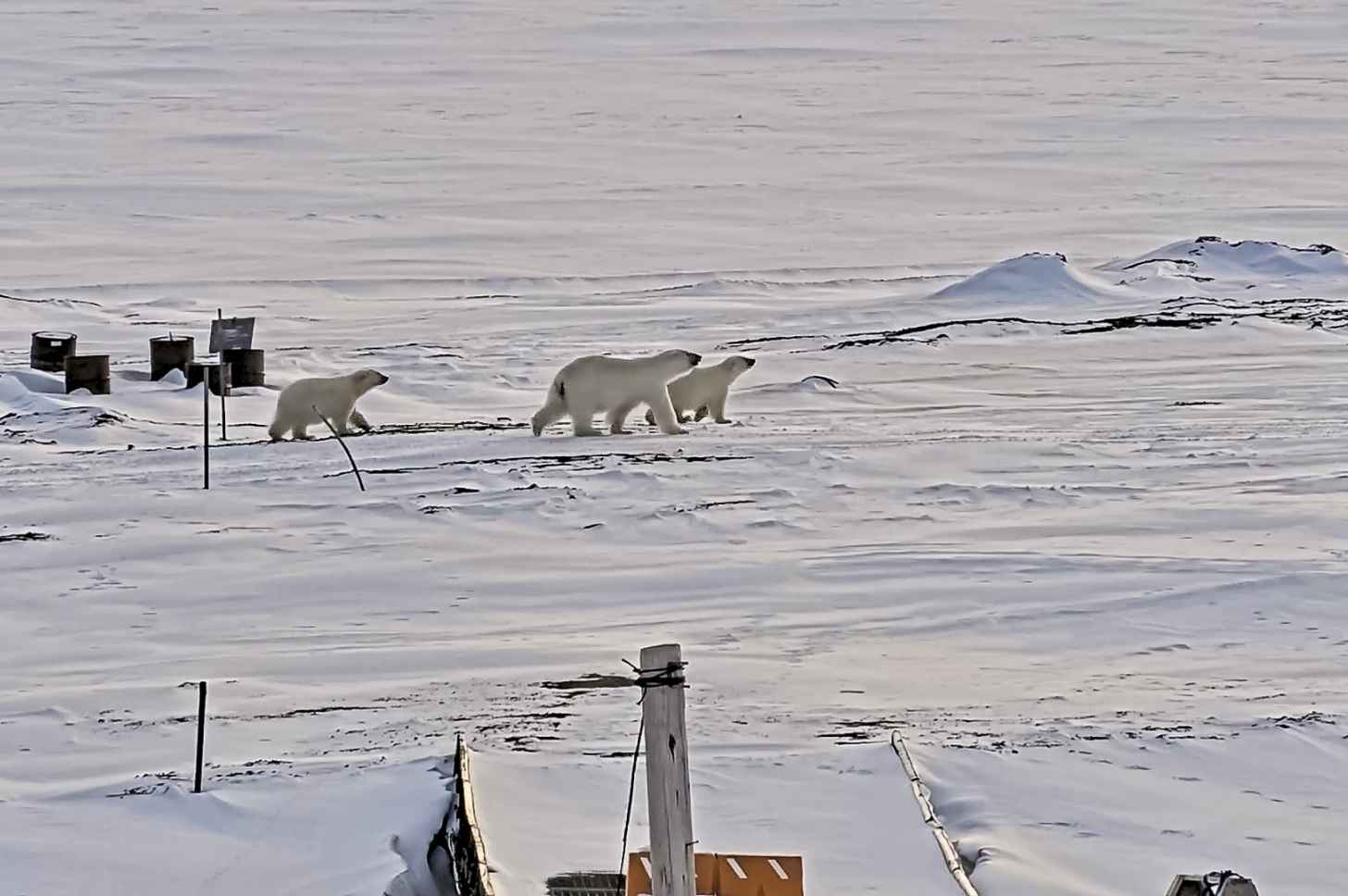
The radars are paired with cameras that can move and swing along with them and zoom in on and capture any detections. If the system spots a bear approaching, it sends out an alert, allowing people to check the camera footage to confirm and corroborate the presence of polar bears.
The system has already seen tangible results on the ground.
In mid-2025, Bear-dar was deployed at the Environment and Climate Change Canada weather station in the Arctic town of Eureka. In May this year, the system made its first detection of a polar bear family, comprising a mother and two cubs, moving toward the weather station.
On spotting the animals, staff members at the station guided them back to the sea ice. They also continued to monitor the bears’ location using the camera system.
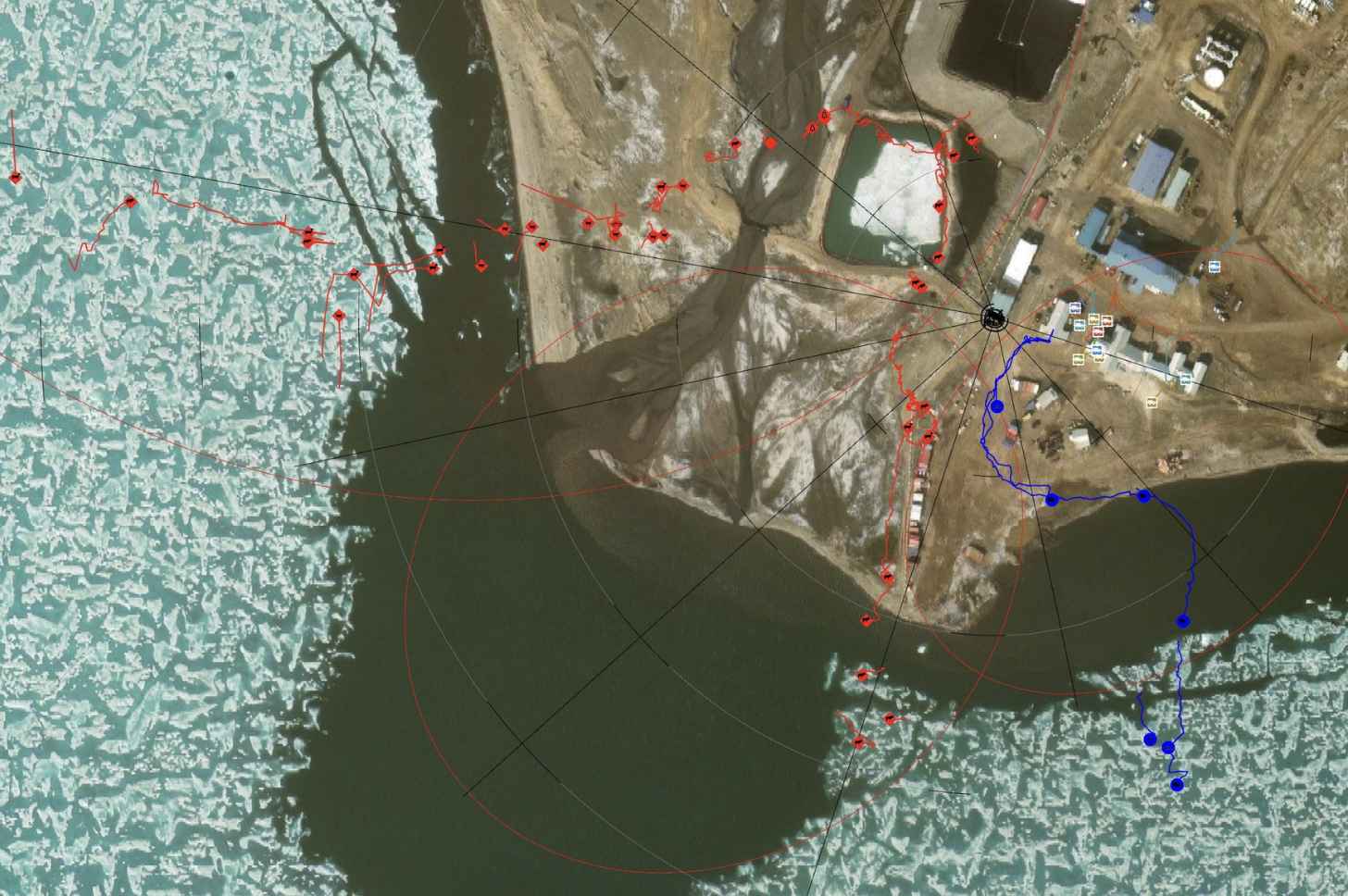
“They wouldn’t have been able to see those bears just standing outside and looking around,” McCall said. “The early-warning system gave them a lot of time to make a plan, and that’s what we envisioned this being used for.”
While challenges abound when it comes to the deployment of the technology in such harsh terrain, McCall said the team is planning to further improvise the technology to make it more accessible to communities in the Arctic. The team also wants to develop a system where it sends alerts or a text message to stakeholders when a polar bear is spotted.
“We want this to be accessible and affordable,” McCall said. “If we could, down the road, make this an option for people who are increasingly living with polar bears, that would be wonderful.”
This article was originally published on Mongabay.
Featured Image: Hans-Jurgen Mager/Unsplash
Every day the Good Good Good team collects the best good news in the world and shares it with our community. Here are the highlights for this week!
If you want to get good news in your inbox every day, join the Goodnewsletter — the free daily newsletter designed to leave you feeling hopeful.
The Best Positive News We’re Celebrating This Week —
A food mobile in Ohio provides free meals to hundreds of kids who would otherwise go without over the summer
Children’s Hunger Alliance has four weekly mobile routes and about 145 meal sites throughout the state of Ohio where it distributes ready-to-eat meals for families to take home to their children.
The shelf-stable meals include five days' worth of breakfasts, dinners, milk, and snacks. The mobile routes also offer fruit bags with apples and oranges this summer.
Why is this good news? More than 505,000, or 1 in 5, Ohio children struggle with hunger, and summer is typically the hungriest time of the year for students who would typically receive free or reduced meals at school.
This mobile food service makes sure these children continue to receive essential nutrition even when school is out.
→ Read more
California is intentionally releasing 500,000 mosquitoes — and that’s actually a good thing
New York installed 8 gigawatts of solar energy statewide, putting it ahead of schedule to reach 10 gigawatts by 2030
The state of New York installed a record 1.28 gigawatts of solar energy in 2025, and has now installed a total of 8 gigawatts statewide, putting it ahead of schedule to reach its 10-gigawatt goal by 2030.
With over 276,000 projects in operation statewide, including both community solar programs and the NY-Sun Program, the total installed capacity can power more than 1.3 million homes and businesses.
Solar power helped save New Yorkers an estimated $90 million during the summer last year, and in June, the state set a record when solar generated around 29% of statewide electricity midday.
New York Gov. Kathy Hochul just established the nation’s first statewide moratorium on new AI data centers
New York Governor Kathy Hochul just signed a first-in-the-nation executive order to create a one-year moratorium on new hyperscale data centers — statewide.
To impose the moratorium, Hochul will be temporarily pausing state environmental permits for up to one year. The goal in this time, her office reports, is to build a regulatory framework designed to “protect ratepayers, the environment, the energy grid, and communities across the state.”
Another piece of the executive order includes the development of a Community Investment Framework, which will provide guidance to local entities to help them negotiate community benefits as part of any data center development.
Why is this good news? Critics of these large-scale data centers, which are sweeping the country at an unprecedented rate, cite environmental, health, and energy cost concerns, and have been sounding the alarm to local governments to take action to enact bans or moratoriums to slow things down in the interest of both people and the planet. New York is answering that call.
→ Read more
You may also like: Proposed data centers would cover 14% of this Pennsylvania town. Locals are fighting back
‘Hostile architecture’ makes it impossible for homeless people to rest in public. One city just voted to eliminate it
Thanks to growing vaccination coverage, nearly 20 million measles deaths have been prevented in Africa since 2000
The first-ever detailed analysis of vaccination targets across the African continent revealed that increasing vaccination coverage has prevented 19.5 million measles-related deaths.
The analysis also found that more than 500 million children have been protected through routine vaccination from 2000 to 2024, “remarkable progress” in a single generation.
Since 2000, 44 countries across Africa have introduced a second dose of the measles vaccine into routine immunization efforts, which has led coverage rates to rise from 5% in 2000 to 55% in 2024. As a result, measles deaths have halved, and there’s been a 40% drop in cases.
Researchers in the DRC launched and enrolled patients in an Ebola treatment trial in just six weeks
After the World Health Organization declared the ongoing Ebola outbreak a global health emergency, researchers launched a record-fast clinic trial in the Democratic Republic of the Congo.
The outbreak is caused by the Bundibugyo strain, which currently has no approved treatment or vaccine. The trial is testing two promising antiviral drugs that could change that.
The response is reliant on the basic techniques of identifying cases, isolating them for care, and tracking and monitoring people they have been in contact with. Patients of any age, including pregnant and breastfeeding women, who are often excluded from medical research, can enroll in the trial.
Even better: In addition to the unprecedented speed of this clinical trial, its scale is also noteworthy. While the study could prove lifesaving for the more than 1,000 participants aged 12 and older who are enrolled, its greatest impact may be on the countless people who benefit from the knowledge and treatments it helps establish.
→ Read more
India uses color psychology to prevent wildlife collisions: ‘Red roads, green intent’
Hitting a new quarterly record, renewables generated the majority of the UK’s electricity, led by wind
New data showed that renewables generated a record 53.1% of electricity in the United Kingdom in the first quarter of 2026, up 7.4% from the same time period last year.
The increase was driven primarily by wind generation, which alone made up more than 29% of total electricity generated, 30% more than the same time period last year and the result of more capacity and higher wind speeds.
Total renewable energy generation in the U.K. reached a record 43.7 terawatt hours, an 18% increase over the first quarter of 2025.
→ Read more
NYC Mayor Zohran Mamdani invested $67.5M in public school special education programs amid federal budget cuts
While families across the country fear the needs of their children with disabilities will go unmet as the Department of Education continues to be dismantled, New York City Public Schools, the nation’s largest school system, is investing $67.5 million in special education.
Young learners will be able to participate in three programs designed specifically for students with autism, which previously were only available to K-12 students, as well as access to initiatives for students with emotional disabilities or in need of adapted academics and life-skills training.
The programs will be available starting in the fall in 14 of the city’s 32 community school districts, the majority of which are located in areas with some of the highest concentrations of working-class and immigrant families in the city.
Why is this good news? All students, regardless of ability, deserve quality public education that meets their learning needs, and they deserve to receive it in their community. This historic investment will help ensure students with disabilities can receive that quality education at their local public school.
Worldwide ‘skinny dip day’ boosts body positivity and raises thousands for charity
→ Read more
India has seen a dramatic decline in infant mortality
India has seen a dramatic decline in infant deaths in the last decade, with its overall infant mortality rate falling from 30 deaths per 1,000 live births in 2019 to 24 deaths per 1,000 live births in 2024.
Researchers attribute the data to expanded maternal and child healthcare services across the country.
More specifically, the lower infant mortality rate is directly linked to a rapid rise in medically attended births, with the percentage of births where a mother received medical attention increasing from 83% to 95% in just 5 years.
→ Read more (May require login)
Red wolf pups just made their debut in North Carolina, signaling a comeback for the endangered species
Four litters of red wolf pups, the most endangered wolf species in the world, have been born in North Carolina so far this year, and between 12 and 16 pups survived their first few months of life.
One of the litters was born on private land owned by a member of the Prey for the Pack Program, which financially supports landowners who allow red wolves on their property, while the other three were born in the wild.
North Carolina is home to the only wild population of red wolves in the world, after conservationists reintroduced it in 1987 in the first-ever carnivorous species declared extinct to be successfully reintroduced.
Why is this good news? Red wolves were hunted nearly to extinction in the 1970s, but began making a recovery through the federal Endangered Species Act, the Red Wolf Recovery Program, and the Saving Animals from Extinction Program. These newest additions are a critical conservation milestone for the species.
A second grader wanted to know if his pet caterpillar would remember him. His experiment shocked scientists
→ Read more
The number of elderly Americans with dementia is actually rapidly declining
Contrary to popular belief, researchers found that the incidence of dementia among elderly Americans is actually falling, and fast. Their newly published research shows that while 40 years ago 3 in every 10 Americans aged 85-89 had dementia, by 2024 just 1 in 10 did.
It’s happening globally, too. Between 1988 and 2015 the share of older people being diagnosed with dementia fell by 13% a decade across six countries in North America and Europe, according to a study of almost 50,000 people.
Their findings also point to factors that have helped lead to this decline — and could lead to continued progress — like treating people with hearing loss and high cholesterol, improvements in education, and efforts to reduce heart disease and strokes.
→ Read more (May require login)
More good news of the week —
Three women saved the country’s climate data after the Trump administration took it offline. After losing their jobs at NOAA, Rebecca Lindsey, her sister, and another colleague teamed up to rebuild a critical climate change information website.
After Idaho banned trans people from bathrooms, a nonprofit made a statewide map of where they can go instead. Trans Affirm crowdsources an online map of inclusive bathrooms across Idaho that are safe for people who are trans or gender diverse to use.
England’s largest-ever investment in its wildlife is expected to benefit more than 350 threatened species. The swallowtail butterfly and white-clawed crayfish are just two of the species set to benefit from the $80 million initiative.
Shakira and FIFA are donating $500k for Venezuela earthquake relief efforts. Back in May, Shakira announced that she’d be donating 100% of profits from ‘Dai Dai’, the World Cup’s official anthem, to the FIFA Global Citizen Education Fund.
New York City public school kindergartners will automatically receive $1,000 for college expenses, up from $100. The budget also restores a handful of education programs that were at risk of cuts, including a mental health initiative that operates clinics in schools.
For 34 years, a team of doctors, dentists, and nurses has provided free surgery to people born with cleft lips or palates. The volunteer mission in Vietnam began in 1993, when Vietnam had few specialists in cleft treatment and relied heavily on foreign technical support.
After she became separated from her mother, a baby “sloth bear” in north-east India was rescued by wildlife experts. The five-month-old bear cub, named Luna, is recovering from a hairline fracture and is expected to make a full recovery.
A new cancer drug may be able to inhibit both tumor growth and the spread of aggressive prostate cancer. The drug, which is composed entirely of human proteins, just entered a new testing phase in Sweden.
African countries secured $900 million in new financial commitments to expand access to clean cooking technologies. The new pledge builds on the $2.2 billion mobilized at the inaugural Africa Clean Cooking Summit in Paris in 2024, bringing total commitments to more than $3.1 billion.
The new women’s professional baseball league unveiled its inaugural teams, and they’re all named after pioneering women. The San Francisco Firebells, for example, were inspired by Lillie Hitchcock Coit, known as “Firebelle,” who was a champion of San Francisco’s volunteer firefighters.
Rapid saliva and gut-sensor-based tests for endometriosis will be available through the NHS in England and Wales. The tests can dramatically speed up diagnosis of endometriosis, which experts say will be a “gamechanger” for millions of women.
A new therapy for incurable brain tumor patients could slow the progression of the disease and extend patients’ lives. In the 8-year clinical study, 66% of trial participants were still alive, and 42% experienced no tumor regrowth.
By 1985, the world’s rarest sea turtle had declined by 99% — now research shows that their population is on the rise. The 1990s marked a turning point for the Kemp’s ridley sea turtle, proving that conservation efforts on a national and local scale actually work.
Farmers in Zimbabwe are reviving drought-resistant crops through a community seed bank. The initiative, which is rooted in indigenous knowledge, is offering a safety net against future droughts and floods.
A beekeeper in Singapore has safely relocated over 6 million bees, one nest at a time. Instead of calling pest control, people have begun asking 42-year-old Clarence Chua to retrieve bees and relocate them, sometimes to his own backyard.
In “a rare piece of good news,” endangered West African leopards are showing signs of recovery. Despite heavy conflict and rampant wildlife trafficking, new studies suggest cause for hope for the West African leopard population.
Solar-powered tricycles are helping people in Cuba move around amid fuel shortages and power blackouts. The country’s iconic vintage cars have all but disappeared, and small electric tricycles have become the primary means of transportation for hundreds of thousands of Cubans.
Thanks to innovation and data fixes, Native American graduation rates soared to a record 79%. Administrators credit a shift in focus to technical training and career readiness, with more students not only staying in school but graduating on time.
Researchers discovered a new species of pangolin that was hiding in plain sight for almost 200 years. The Himalayan pangolin provides more data to conservationists on how to protect the critically endangered mammal.
In a “miracle solution,” Paris is harnessing the Seine to replace air conditioning. The city is planning to triple the system of underground pipes that distribute chilled river water, reducing the need for individual cooling units.
A new 230-foot sailing yacht runs entirely on renewable energy. The boat’s 250-kilowatt hydrogeneration system produces most of the power while sailing, and roughly 1,000 square feet of solar panels can generate additional energy from the sun.
Portugal’s second-largest city now offers free public transportation for all residents. Porto residents can now use Porto Metro services, buses operated by STCP and the Unir network, CP suburban trains, the city’s tram network, and river crossings integrated into the Andante system.
Thanks to satellites and AI, Greece is leading the world in wildfire prevention. In May, bracing for an exceptionally difficult wildfire season, Greece became the first country in the world to deploy a satellite constellation dedicated specifically to firefighting.
Employees at a Rhode Island bank were given $100 gas gift cards — they donated them to Meals on Wheels instead. Centreville Bank gave employees a $100 gas gift card to help ease the burden of rising costs at the pump, but they decided to pay it forward.
A family sold their 136-year-old farm to make way for a wildlife crossing that’s a “lifeline” for mountain lions. The major wildlife bridge is planned to cross over Interstate 5, reconnecting habitats in the Cascade Mountains with the Olympic Peninsula.
Ed Sheeran inspired a government-backed program that will bring free studios and rehearsal spaces to libraries. Public libraries around England will become “music lending spaces” under new government plans to boost the music industry in the U.K.
North Carolina has nearly completed a “mirrored” wildlife crossing for humans and bears to cross the Appalachian Trail. The mirrored design features one side equipped with fencing that funnels animals to the land bridge, and another blocked off solely for hikers.
Taylor Swift fans quietly raised over $17k for a Kansas City nonprofit in honor of her wedding. Inspired by the couple’s pre-wedding $26 million charitable donation, Swifties raised money for Operation Breakthrough, which Travis Kelce has long supported.
Scientists are using nanomaterials to heal wounds that resist antibiotic treatment. Some wounds, such as severe burns and diabetic ulcers, are prone to bacterial infections that can become resistant to antibiotics.
A small solar-powered box is providing power to people in Nigeria, “transforming how they live and work.” The Powerbox SE project was led by Professor Hafiz Alaka, who grew up in the country with “unreliable or non-existent electricity” and wanted to create a “sustainable, low-cost solution.”
After months in the care of Gulf Specimen Marine Lab veterinarians, one very special sea turtle has made a triumphant return to the ocean.
In March, a green sea turtle, assumed to be 3 to 4 years old, was found washed ashore on Florida’s St. George Island.
Patrol officers of the Fish and Wildlife Commission quickly called up experts at the marine lab, who believe the turtle was a victim of a cold-stunning event in February — a phenomenon where sea turtles become lethargic and often incapacitated when water temperatures drop below 50°F.

Unfortunately, this turtle must have been missed in initial rescue efforts.
When officials found her, according to a social media post from the marine lab, she was “extremely weak and lethargic, covered in algae and sand, with severe skin damage that caused the outer layer of her skin to turn yellow and slough away, leaving painful sores beneath.”
The juvenile turtle was also battling pneumonia after spending too much time tumbling in the surf. She could hardly move.
Quickly, she was transported to the lab’s rehabilitation facilities to receive around-the-clock care. The team named her Tiramisu.

“We were able to do laser treatments, [and] our vet was able to put her on antibiotics, Paige Parker of Gulf Specimen Marine Lab told ABC 13 News.
“She couldn’t swim for about two weeks, [so] we continued therapy and rehydration and vitamins and antibiotics. We got her healthier and healthier.”
Finally, after months of care, the marine lab shared on social media, Tiramisu’s skin had healed, the crusts had disappeared, and she hadn’t developed any new lesions.
Most importantly, her appetite came back, and she was “thriving.”
After finishing her course of antibiotics, the turtle was cleared for release back into the wild. A crowd gathered to send her off on July 16.
“What a great turnout we had for Tiramisu’s release yesterday,” the organization shared on Facebook. “After a few months in our care, it was so great to be able to send Tiramisu back to her home.”
Tiramisu’s “remarkable” recovery comes at an especially impactful time for the Gulf Specimen Marine Lab.
In February, during that initial cold-stun event, the lab helped rescue, stabilize, rehabilitate, and release more than 600 sea turtles. And amid the crisis response, the community raised over $50,000 for the creation of a new Sea Turtle Hospital facility at the lab.
“This expansion will allow us to significantly increase our surgical capacity and perform more advanced medical procedures, helping fill a critical rehabilitation gap that currently exists in the Florida Panhandle,” the organization shared on social media in May.

And that means more turtles like Tiramisu will have a second chance at life.
“Every turtle that comes through our doors becomes more than just a patient,” the lab wrote. “They become an ambassador for ocean conservation.”
You may also like: A sea turtle swallowed 20 fishing hooks. Only a procedure meant for humans could save her
Featured Image: Gulf Specimen Marine Lab/Facebook
Every year, an estimated 41 million squirrels become roadkill, as they scurry between busy streets to find food sources. This would not stand for Amos Peters, a Longview, Washington architect who rose to local fame for his 1963 creation: the Nutty Narrows Squirrel Pedestrian Bridge.
Peters and his colleagues at the Park Plaza office building, along Longview’s Olympia Way, often witnessed area squirrels being run over by cars. One day, he found a dead squirrel with a nut in his mouth, and a group of his colleagues decided it was finally time to intervene.
Together, they came up with the idea of the squirrel bridge, forming a committee to ask the City Council’s blessing. The first Nutty Narrows bridge was 60 feet in length and made from aluminium and fire hose, costing just $1,000.
Soon, the bridge became a tourist attraction, and the city began receiving reports of the mammals successfully crossing the road, even escorting their young and teaching them the ropes.
After receiving worldwide newspaper coverage, Peters even began receiving fan mail, a blog post from the city of Longview reported.
“One man wrote, ‘Little men take time to cater to big people who might do them good. Only big men pause to aid little creatures,’” the blog post said.
This inspiration continued, with a total of nine squirrel bridges now in operation in Longview. The original Nutty Narrows bridge still resides on Olympia Way, though it was taken down and repaired in 1983 after 20 years of use.
According to Longview, Chip and Dale and Mickey Mouse visited all the way from Disneyland, along with 300 children, to re-dedicate the bridge. Just four years later, Peters died, and a 10-foot wooden squirrel sculpture was added to the original bridge in honor of his dedication to the project.
The nine other bridges are now scattered throughout Longview, and as of July 2026, the squirrel bridge project has expanded to the neighboring city of Duvall, where locals now have a bridge of their own.
The latest bridge was spearheaded by Duvall resident Nikita Kozhekin, who lives next to the crossing and watched countless squirrels run for their lives across the road.
“It’s a major hazard for all wild animals, the road crossings,” Kozhekin told KING 5 News. He added that the bridge isn’t just good for wildlife — it helps drivers too, since people often swerve when they spot a squirrel in the road.
What inspired Kozhekin to act was a story similar to that of Peters. The young Duvall man saw a Douglas squirrel struck and killed by a driver on his street, still holding a hazelnut in her mouth that she had taken from Kozhekin’s yard.
“All she wanted was to carry the hazelnut across the street and hide it somewhere. Is that really too much to ask?” Kozhekin wrote on his website, sharing that he tearfully buried the squirrel in a flower pot in his yard.
“Douglas squirrels are small squirrels native and endemic to the Pacific Northwest coastal areas,” he wrote. “In fact, they are not found anywhere else in the world. They need protection — as do all squirrels and all animals.”
Kozhekin then spoke with members of the local city council, the mayor, and the director of public works to figure out how to get the bridge installed. It would require a right-of-way permit and approval from neighboring property owners, along with a licensed contractor and arborist approved by the city.
He contacted approximately 80 engineers and finally found success with Andrey Pilat. After a few more rounds of administrative and engineering reviews, he was victorious, and the Douglas B. Squirrel Memorial Bridge, dedicated to his fallen bushy-tailed friend, was a reality.
“We did a bunch of research and we came up with this idea that this rope will hold that weight,” the contractor, Pilat, told KING 5 News. “The bridge itself is 80 feet long and about 16 feet off the ground.”
Less ornate than the original Nutty Narrows bridge, this one is a simple rope connected by two trees. After a bit of early skepticism, it seems to be working.
After a week, the squirrels discovered the bridge and now cross frequently, Kozhekin said.
He even set up a trail camera to capture footage of the squirrels on the bridge, sharing it on social media.
Duvall’s new squirrel bridge joins the many in Longview, along with several others that have popped up in Europe over the years.
It’s a simple solution developed over 60 years ago — one squirrel enthusiasts of all stripes can get behind.
“Imagine a world where every tree on every street is connected by bridges, where millions of crossings span the sky, and habitats are safe and connected,” Kozhekin wrote on his website. “How wonderful would that be?”
You may also like: Family sells 136-year-old farm to make way for wildlife crossing deemed 'a lifeline' for mountain lions
Featured Image: SounderBruce/Wikimedia Commons (CC BY-SA 4.0)
He’s been called a legend, a cryptid, and an internet meme, but whatever you call him, Jimothy the Seattle raccoon has undoubtedly skyrocketed to fame in the short span of a week.
Due to the shape of his distinct, rounded body, researchers believe that Jimothy has a rare congenital spine condition. Fortunately, he appears to be happy and mobile, roaming backyards and scurrying around trash cans like any other raccoon.
Seattle residents have recorded clips of him through the years, including “baby footage” from Ballard local Ben Trammell, and the internet can’t get enough.
Locally, his fame has inspired murals, tattoo flash sheets, and even a city proclamation.
He also inspired Seattle artist Ryan Henry Ward.

On July 18, Ward shared a photo of an original painting he made of the online icon, adding his own distinct touch of surrealism and forced perspective.
“Jimothy. The hero we needed,” Ward wrote in the photo’s caption. “I've decided to give 100% of the money made from this painting to Ballard Food Bank, a place that helped me through some of my hardest times.”
Since the 1970s, Ballard Food Bank has been fighting food insecurity in northwest Seattle. With their unique “grocery store” model, locals in need can browse shelves and shop for everything from canned goods to fresh produce, hygiene items, and even pet food.
In the same post, Ward invited locals to make an offer in his direct messages.
“The highest bid by midnight will get the painting, and the Ballard Food Bank will get a hook-up they deserve,” he said.
Amidst a swell of local support in the comments, the brand account for Amazon also pledged to lend a hand.
“What a fun way to celebrate a Seattle favorite while supporting a great cause,” the account commented on July 18. “We’re excited to match the winning auction donation to the Ballard Food Bank, and we’d love to see other Puget Sound companies join in too. Good luck to everyone bidding — and thanks, Henry, for using your art to give back!”
Within 24 hours, Ward announced the winner of the “Jimothy” painting.

“So many messages and so many huge hearts on the bid for the Jimothy painting,” he wrote on social media. “If you could glance at my DMs tonight, you’d see what a powerful altruistic community we have.
“The highest bid was $6,543.21 by Angela Galdabini,” he said. “The Ballard Food Bank will be receiving 100% of this. Thank you, Jimothy, for inspiring us all to greatness.”
On July 20, Ward showed a receipt of the donation going through.
“Thanks to an awesome auction winner and to the power of community and in gratitude to Jimothy, Ballard Food Bank has received their donation and the world is a little better.”
Niche Ballard, a local art gallery, also shared the story on their social media page and praised Ward for his unique fundraising method.
“Doing what you can to help others is amazing!” The art gallery commented beneath Ward’s announcement. “It doesn’t need to be perfectly run or a long-term commitment. You, Henry, stepped up in your way and helped neighbors in need. Bravo!”
For people looking for additional ways to support Ballard Food Bank, the art gallery announced that they were hosting a fundraiser from August 8 through August 30 with the Seattle Spoon Club, a woodcarving club that meets on the third Friday of every month at the Pratt Fine Arts Center in Seattle's Central District.
“The kickoff event is the Ballard Art Walk.” The art gallery shared. “Join us! We probably won’t raise as much as Ryan Henry Ward, but every bit helps.”
You may also like: This man went viral online after he calmly let a bee sting him and 'unwind' its stinger: 'I had no idea they could survive this'
Featured Image: Courtesy of Kiana Hall