Jo Nagai of Kobe, Japan began hand-raising swallowtail butterflies when he was just a second grader.
But when it came time to release them to the wild, Nagai realized a peculiar pattern of behavior — the butterflies often lingered after release, even flying back to him at times.
It made him wonder: Did his caterpillars still remember him, even after they had experienced metamorphosis?
To find out, Nagai reached out to esteemed Georgetown entomologist Dr. Martha Weiss, who has long studied the behavior and the memory of insects — particularly moths.
He had been intrigued by a study she published in 2008 on an adult moth’s ability to retain memories even after its body had broken down and rebuilt itself.
In a four-page letter, Nagai introduced himself. Weiss later read the letter aloud on the Signal Hill podcast.
“To Martha Weiss,” she said. “Hello. Nice to meet you. My name is Jo Nagai. I'm from Japan. I live in Kobe, Japan. I'm in the second grade at Ibuki Elementary School. When I found your research on the internet, I was so delighted!!”
Annie Rosenthal, who is both a Signal Hill editor and Weiss’ daughter, noted the “two exclamation marks” in their interview.
“Two bold exclamation marks,” Weiss confirmed.
In the letter, Nagai asked Weiss about her landmark study on moth memory and asked how he could expand it to his butterflies.
At first, Weiss doubted whether an elementary school student could recreate the same experiment that she and her grad student, Doug Blackiston, had established in a secure lab setting over a decade earlier.
In her first letter back, Weiss suggested that Nagai run an experiment on something much simpler, like “teaching butterflies to learn colors.”
But Nagai was undeterred.
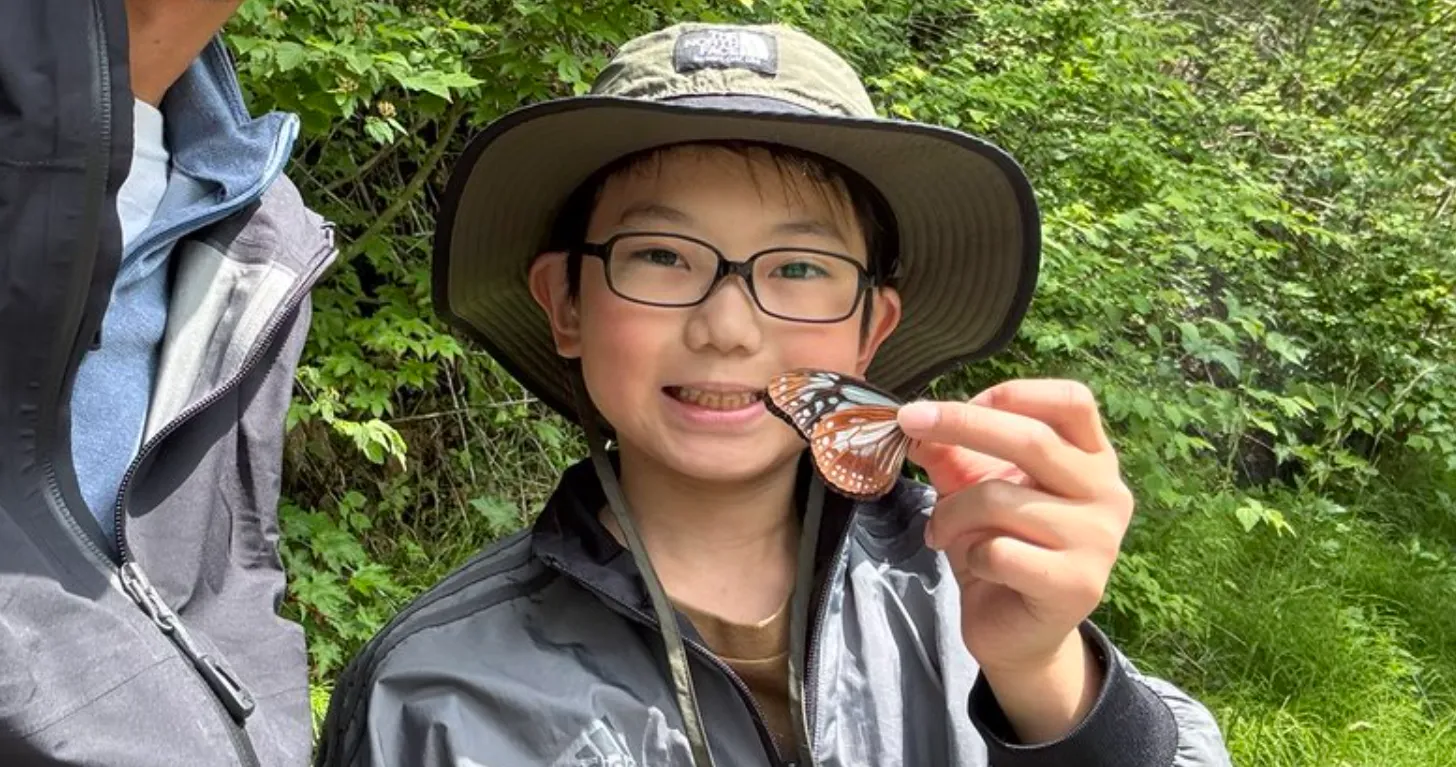
“I really want to prove it’s possible that my butterflies can remember what they learned as a caterpillar,” he wrote in his next letter. “I don't want to give up now. I really need your help.”
His determination sparked a multi-year correspondence across continents. With Weiss’ assistance, Nagai organized an experiment in his own makeshift lab at home. In his attempt to recreate Weiss’ 2008 study, Nagai established a control group of caterpillars and a test group.
Swapping out Weiss’ original chemical ethyl acetate for a gentler smell, lavender oil, Nagai introduced the caterpillars to the smell while administering very small shocks through a miniature muscle therapy device.
When the caterpillars had later transformed into butterflies, 80% of the test group avoided the lavender smell.
He sent his findings in a 33-page document to Weiss.
“What did you think when you got that email?” Rosenthal asked her mother.
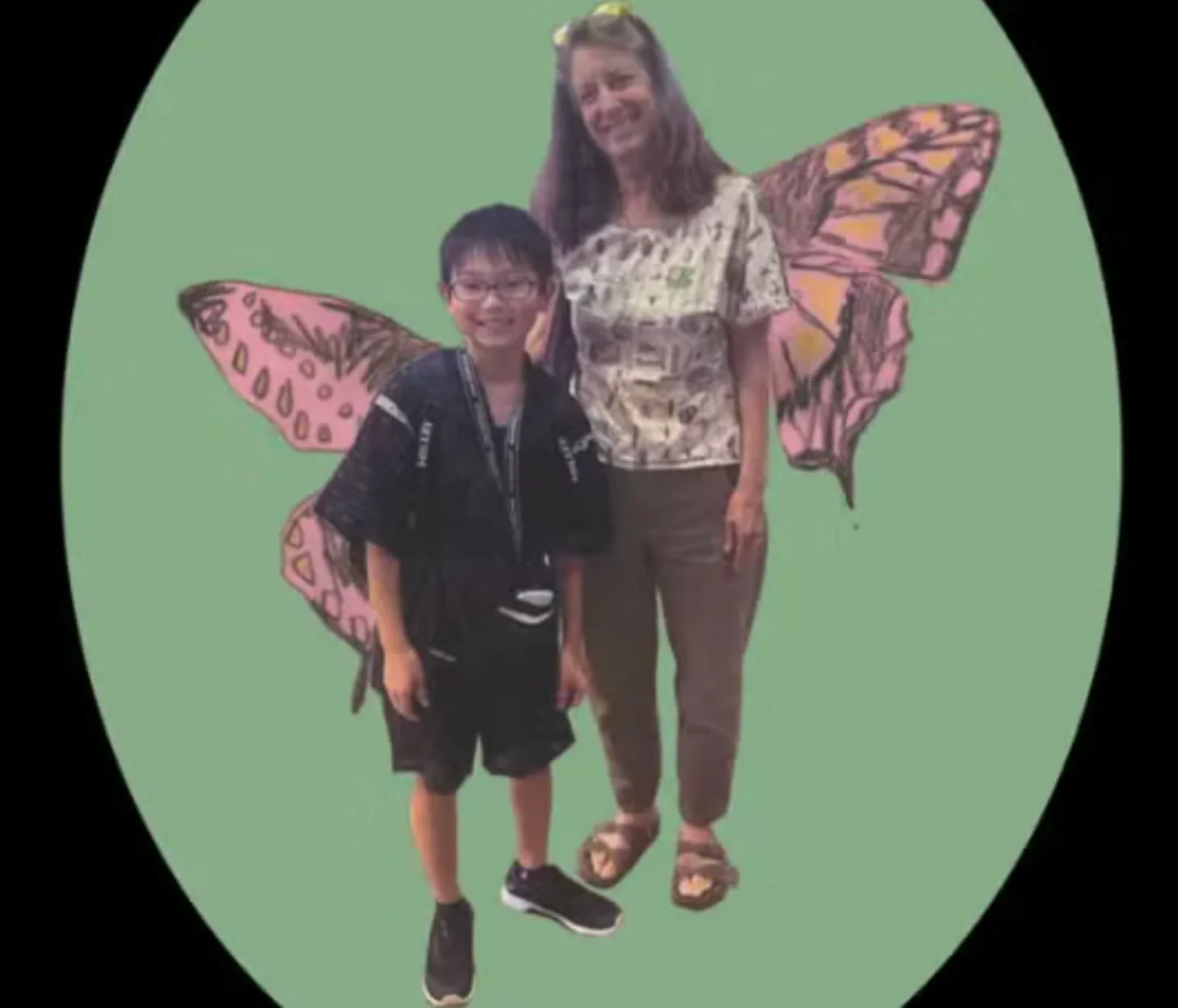
“I was flabbergasted and delighted,” Weiss replied. “And in this letter I thought, ‘Holy cow, he's a real scientist, and he's figuring out new stuff.’”
In 2022, the same year that he graduated from second grade, Nagai presented his research to scientists at Shinshu University, Tsukuba University, and Saga University.
But Nagai didn’t stop there. A year later, he told Weiss that he wanted to see if caterpillars could inherit memories.
Inspired by a similar study on nematodes, Nagai repeated his earlier experiment and discovered something remarkable: Butterflies didn’t just carry memories from their earlier forms — they appeared to pass memories down to their young as well.
Soon, Nagai and Weiss will formally present their findings to the Journal of the Lepidopterists’ Society. But first, Nagai is just focused on graduating from the fifth grade.
This past year, the 10-year-old finally met Weiss when she brought her family on a trip to Japan. When they met, the professor presented him with a magnifying glass tied with a ribbon — just like the one she often sports around her neck.
During their visit to Japan, Rosenthal asked Nagai what he wanted to be when he grew up, expecting him to say entomologist like her mother. He said he wants to be a vet instead.
“I can fix caterpillars and insects both,” Nagai explained.
“Are there other insect veterinarians now?” Rosenthal asked.
“No,” he said.
“So you might be the first insect vet,” she replied.
“Yes!” he exclaimed.
You may also like: This teen invented an autonomous 'sea turtle robot' to monitor coral reefs. He just won an award from the EU
Featured Image: Dr. Akito Kawahara