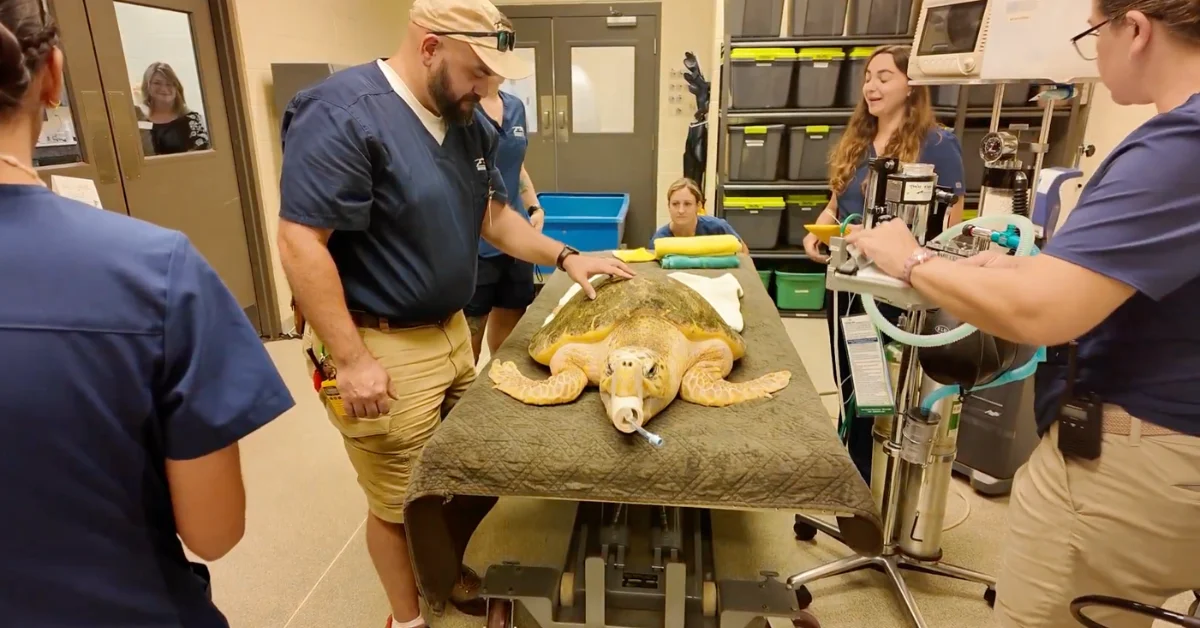
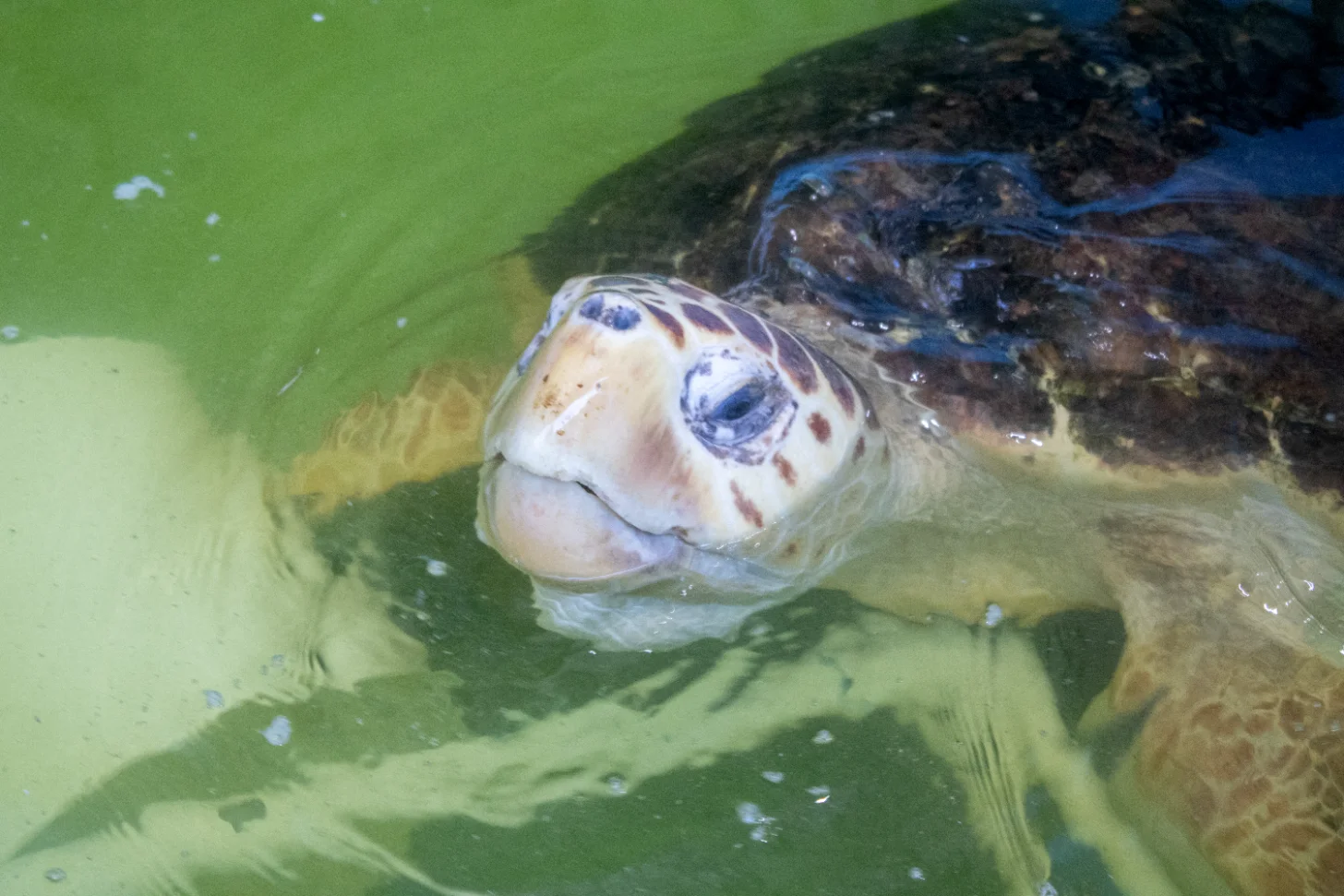
When Sophia, a 114-pound loggerhead sea turtle, arrived at East Coast Zoological Foundation’s Sea Turtle Rehabilitation Center at Brevard Zoo, she had more than 20 fishing hooks lodged in her digestive tract, along with fishing line.
The zoo’s veterinary team was able to remove two hooks, but most of the fishing gear was too difficult to access. This inspired a donation from Orlando Health, which will hopefully save Sophia — along with any other turtles injured by fishing gear in the ocean.
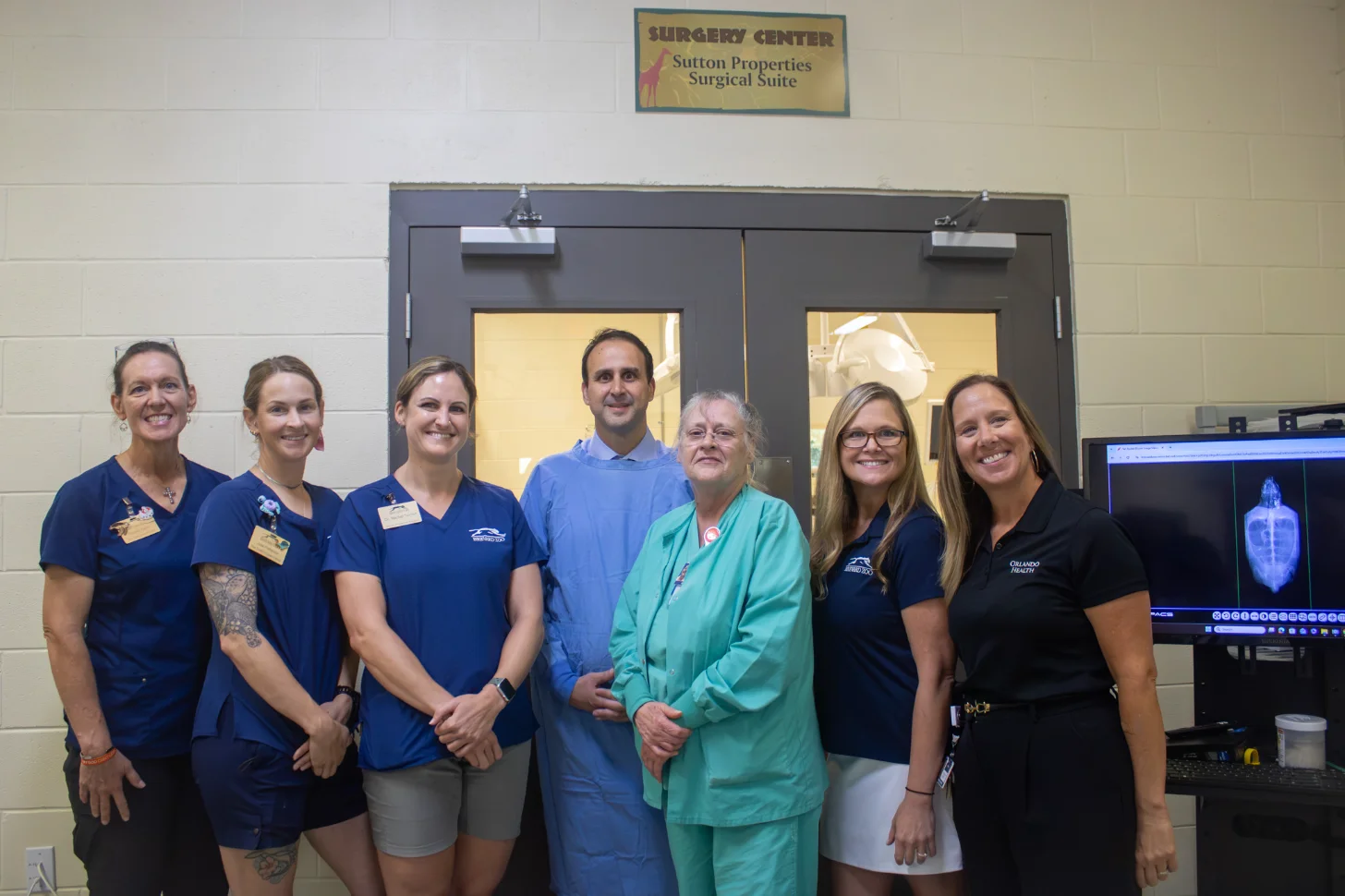
Orlando Health Regional Medical Center Endoscopy Unit has donated advanced endoscopy equipment and instruments so veterinarians at the rehabilitation center will be better able to remove foreign objects in animals with unique anatomies, like sea turtles.
“We’re honored to collaborate with Brevard Zoo’s veterinary team by providing this specialized equipment,” Dr. George Christophi, gastroenterologist at Orlando Health Melbourne Hospital, said in a statement.
“By sharing our expertise, we can help support the veterinary team at Brevard Zoo to ensure the sea turtles in need continue to receive the most accurate, effective surgical care and improve their chances of recovery.”
An endoscopy is a minimally invasive procedure usually reserved for humans, in which a doctor uses an endoscope, or a long, flexible tube with a camera and light, to examine the interior of the body without major surgery.
With this equipment, veterinarians can have a much better view of the interior of an injured sea turtle’s body and can more accurately remove any foreign objects.
According to a press release from Orlando Health, this collaboration also creates new opportunities for collaboration between the zoo’s board-certified veterinarians and Orlando Health physicians with joint expertise in these gastroenterology procedures.
“This equipment expands our ability to care for patients with more severe fishing line and hook ingestion,” said Dr. Rachel Turner, DVM, Dipl. ACZM, director of veterinary programs at Brevard Zoo.
“In addition to the technology itself, this is an invaluable opportunity for collaboration and education between our two teams. This partnership enhances our ability to provide advanced care for sea turtles and strengthens the future of marine animal medicine in our region.”
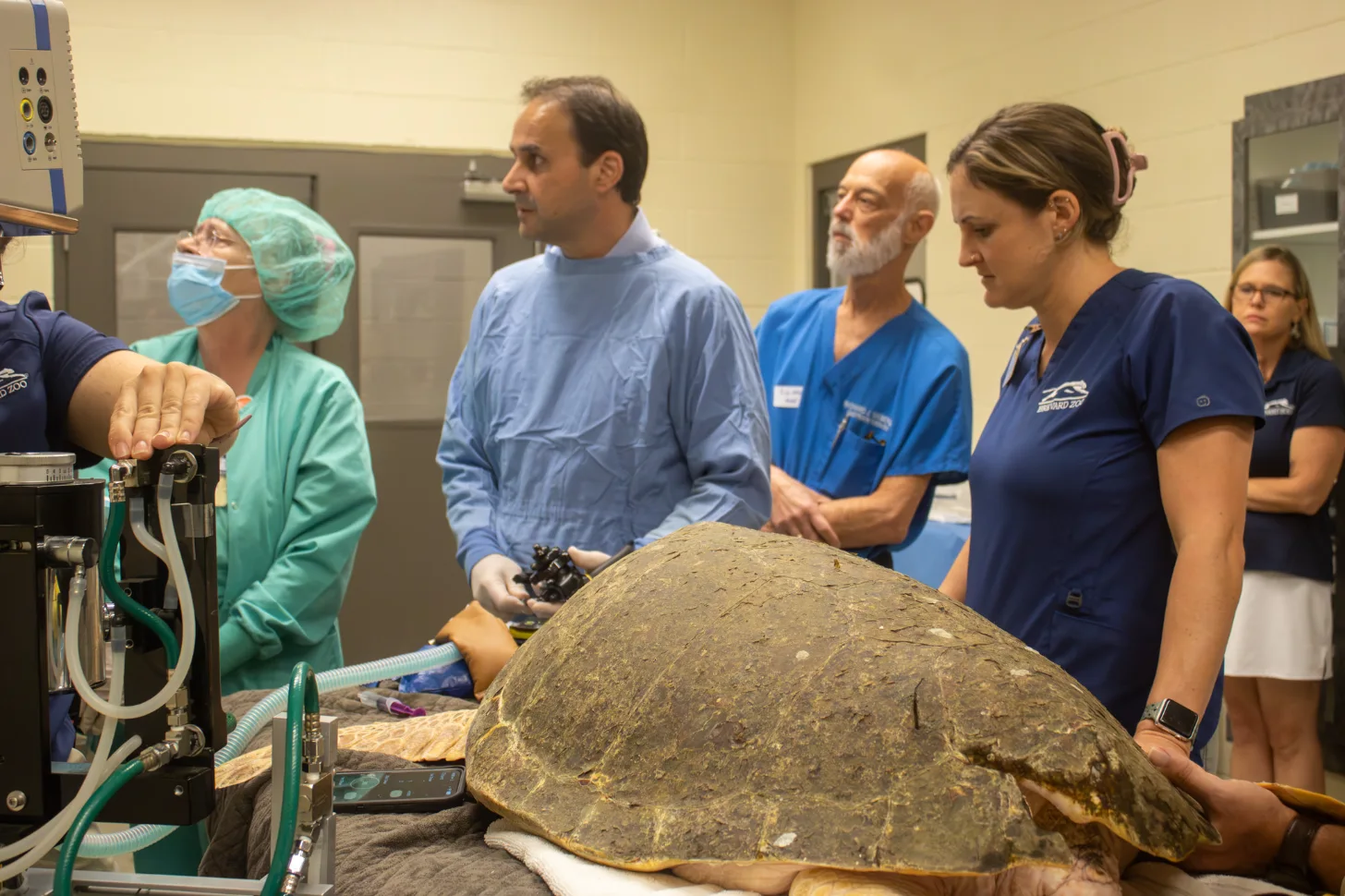
It will all start with Sophia. With the help of the new tools, and Dr. Christophi’s technical expertise, the team will attempt to remove more of the hooks, and potentially cut or remove the wire still lodged in the loggerhead’s body.
Physicians like Dr. Christophi will consult on the procedure.
“Certainly, I had to catch up on my turtle anatomy to consult with our partners here at the zoo,” Dr. Christophi said in a video interview, chuckling.
“The challenge here is that they’re in a shell, so some of their gastrointestinal tract is inaccessible. Going from the foodpipe — the esophagus — into the stomach, there’s a sharp turn, so having this equipment we use in humans … might allow us to be able to get to the right place and remove any hooks or foreign objects we might see in a turtle.”
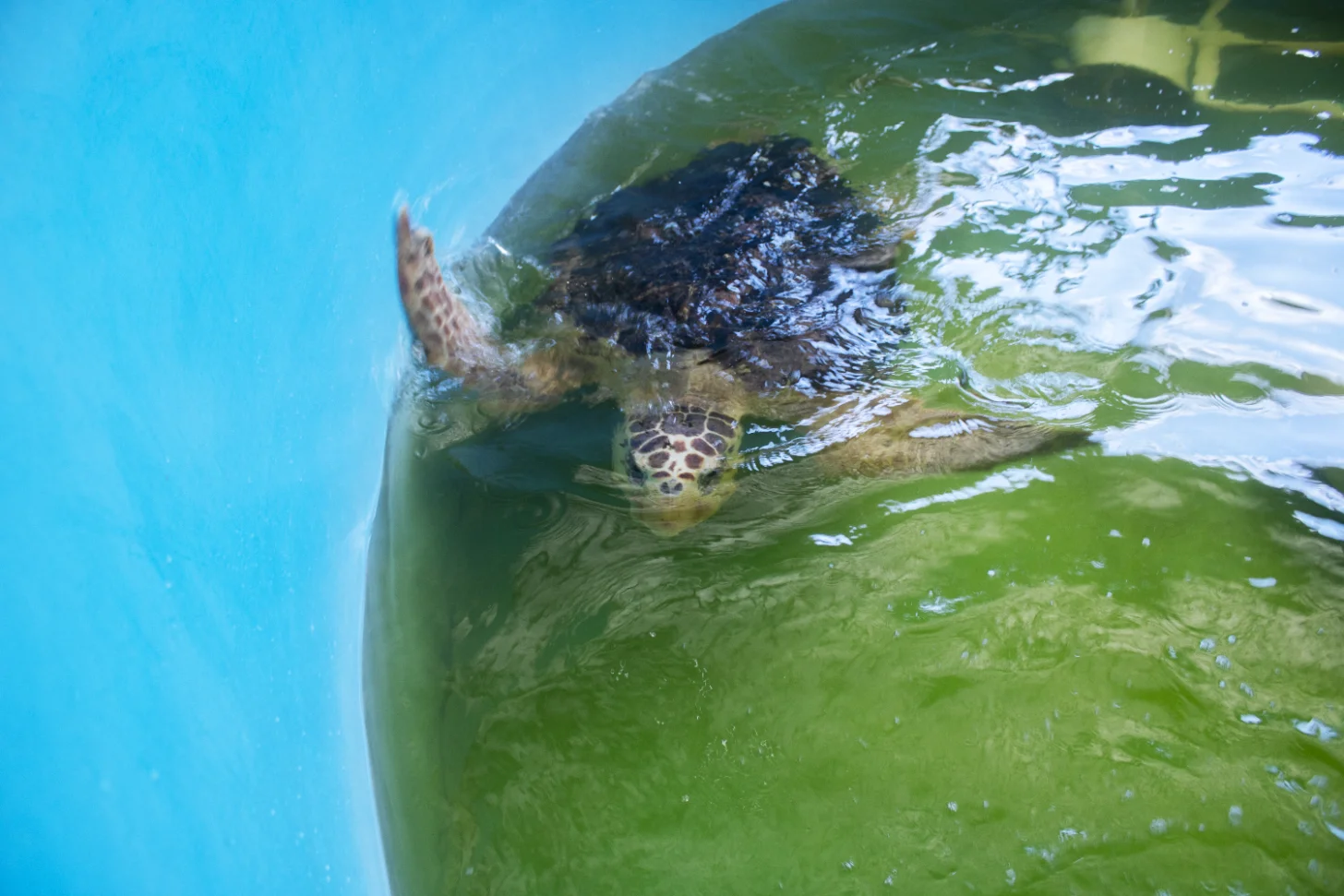
The end goal — like any sea turtle cared for at the rehabilitation center — is to return her back to the ocean. A spokesperson from Orlando Health told Good Good Good that Sophia is "continuing to get stronger every day," and once she is medically cleared, she will be released back into the ocean.
The center treats hundreds of sick and injured sea turtles every year, with an increasing number injured by boat strikes and improperly discarded fishing gear.
While conservationists and local officials continue to urge safe and thoughtful practices on the water, these healthcare experts are innovating together to save the lives of more turtles on land.
“As gastroenterologists, we use this technology every day to perform minimally invasive procedures that improve patient outcomes,” Dr. Christophi said.
“Being able to help sea turtle patients is incredibly rewarding. This collaboration demonstrates how medical innovation and teamwork can extend beyond human healthcare to benefit the broader community.”
You may also like: Man goes viral for saving wayward baby sea turtle 'the right way'
Featured Image: Courtesy of Brevard Zoo (All sea turtle work carried out by permitted professionals under MTP #206)