According to a new study published in the Journal of Mammalogy, the number of living mammal species has increased by 25% since 2005 — meaning that more than 1,300 new species have been added to the scientific record.
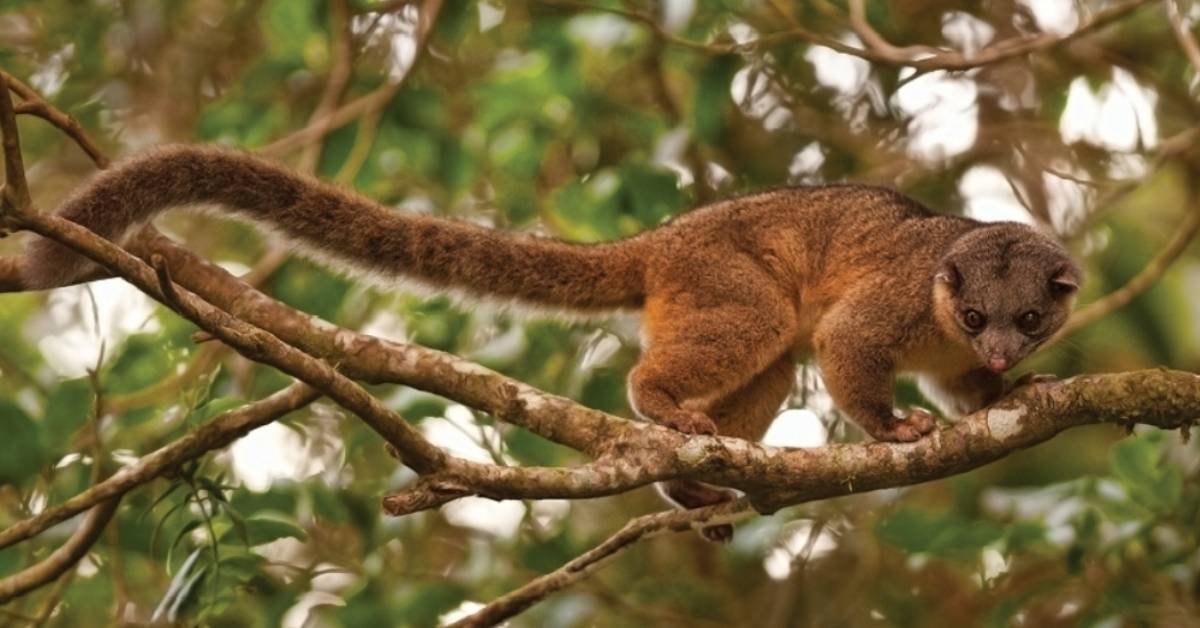
Just a few mammals in that crowded class include new creatures like the mouse opossum (Marmosa chachapoya) of the Peruvian Andes, the olinguito (Bassaricyon neblina) of Ecuador, and the dwarf shrew (Crocidura stanleyi) of Ethiopia.
“Our recognition of 25% more mammal diversity now than 20 years ago indicates an overall improvement in our understanding of how global mammals interact with their environments,” Dr. Nathan Upham, lead researcher and Arizona State University professor, told A-Z Animals.
“Each species is genetically unique, not interbreeding with their close relatives, and thus presumably doing something unique on the landscape — specializing in different food or habitat type or location of activity,” he explained.
Upham’s research centered on a series of mathematical equations.
Since 2005, the Mammal Diversity Database has listed an additional 1,579 species.

Of those new species, 805 were newly described and 774 were “splits,” or offshoots, of what was originally thought to be a single species. 226 species were also merged after new evidence came to light.
In total, that means 1,353 species have been discovered since 2005, amounting to an average of 65 new mammal species being introduced to the scientific record every year.
In his interview with A-Z Animals, Upham emphasized that species are not evolving at a faster rate; they are simply becoming easier to find and identify.
“Next-generation DNA sequencing technologies have dramatically lowered the cost of obtaining DNA across the genomes from hundreds of individuals simultaneously,” Upham said.
Upham’s spotlight on mammalian research is supported by a larger, separate study published in Science Advances by John Wiens, a professor in the University of Arizona Department of Ecology and Evolutionary Biology.
Together with his fellow researchers — Xin Li, Ding Yang, and Liang Wang — Wiens estimated that 16,000 new species are discovered each year.
“These thousands of newly found species each year are not just microscopic organisms, but include insects, plants, fungi, and even hundreds of new vertebrates,” Wiens told the University of Arizona.
In 2025, Wiens also spearheaded research on the rate of species extinction and found that it lags significantly behind new species identification.
“Our good news is that this rate of new species discovery far outpaces the rate of species extinctions, which we calculated to about 10 per year,” Wiens said.
“Discovering new species is important because these species can’t be protected until they’re scientifically described,” he added. “Documentation is the first step in conservation – we can’t safeguard a species from extinction if we don’t know it exists.”
You may also like: This mammal vanished from Ohio nearly 200 years ago. Trail cameras just captured footage of it
Header image via Helgen K, Pinto C, Kays R, Helgen L, Tsuchiya M, Quinn A, Wilson D, Maldonado J