Every day the Good Good Good team collects the best good news in the world and shares it with our community. Here are the highlights for this week!
If you want to get good news in your inbox every day, join the Goodnewsletter — the free daily newsletter designed to leave you feeling hopeful.
The Best Positive News We’re Celebrating This Week —
Florida’s sea turtle license plates have raised millions to save the endangered species
Florida’s second-most popular specialty license plate, which features a sea turtle on a sandy beach crawling towards the water, has provided an estimated $8 to $10 million in support for the state’s sea turtle conservation programs since it debuted in 1998.
In 1995, the Sea Turtle Conservancy campaigned to establish the sea turtle design. They began appearing on roads in 1998, and now more than 100,000 can be spotted on Florida’s streets every year.
70% of the plate’s proceeds serve as the primary source of funding for the FFWC’s Sea Turtle Program, including the management, research, and protection of sea turtles statewide.
Why is this good news? While some species have made remarkabl recoveries, the world’s seven sea turtles remain threatened or endangered across the globe. For around $25/year, Floridians have been playing a huge role in protecting and conserving them for decades.
→ Read more
You may also like: Do sea turtles only hatch during a full moon? Your top 5 questions about sea turtles, answered by an expert
An EMT is dressing up as ‘The Roanoke Raven’ to save his city: ‘If it takes wearing a superhero mask to do it, let’s do it’
Wildlife overpasses aren’t just popular in the U.S. — the movement is gaining momentum globally
All over the world, roads pose a deadly physical threat to wildlife and fragment the landscapes animals need to move through to survive. Decades of research have proven the effectiveness of wildlife crossings — underpasses and overpasses — in protecting both humans and animals.
While North America is among the epicenters of global wildlife crossing construction, the movement is a global one — and many of the world’s most successful, if little-heralded, passages lie elsewhere.
In Croatia, for example, roughly a quarter of a new highway in the country is crossable for wildlife, making it among the most permeable highways on Earth.
The European Union just banned fashion companies from destroying unsold clothes
A new law two years in the making has finally taken effect across the European Union. Under the ruling, major fashion retailers, wholesalers, and apparel manufacturers are now banned from trashing unsold clothing, accessories, and footwear.
Companies must now find ways to sell the product, via discounts to consumers, alternative markets, and charity donations. Under the new law, unsold product can only be destroyed if it is counterfeit, irreparably damaged, deemed unsafe, or rejected by charities.
Going forward, companies are also required to publish annual reports on any discarded goods and maintain those records for a minimum of five years.
Why is this good news? Researchers estimate that hundreds of thousands of tons of fashion items are destroyed every year in the EU alone. Since most modern clothing is made from man-made plastics, it takes hundreds of years to decompose in landfills.
On a global scale, waste from the fashion industry is responsible for 10% of all carbon emissions. Measures like this can help reduce that carbon cost.
→ Read more
You may also like: Half a million unsold concert t-shirts sat in a warehouse for years. Billie Eilish gave them a second life
25-year-old reporter buys his hometown newspaper to save it from corporate ownership
→ Read more
Ferran Torres scored the game-winning World Cup goal for Spain — his story shows the importance of mental health care
Four years ago, Spain’s Ferran Torres was going through a mental health crisis, struggling to cope with the pressure of his new $62.8 million deal with FC Barcelona.
Finding himself “in a bottomless pit,” he “decided to work with a psychologist.” He calls it “one of the best experiences” that made him stronger as a person.
And now, he believes that working with a psychologist “will become increasingly normalized in football.” That couldn’t come soon enough, with an estimated 51% of elite athletes struggling with mental health at some point in their life, and put off seeking treatment due to ongoing social stigma.
An artist auctioned off a painting of viral raccoon “Jimothy” and raised thousands for his local food bank
Due to the shape of his distinct, rounded body, researchers believe that Jimothy the Seattle raccoon has a rare congenital spine condition, but seems to be happy and as mobile as any other raccoon.
With videos of his antics circulating, Jimothy has skyrocketed to internet fame, inspiring countless internet memes — and Seattle artist Ryan Henry Ward to paint a portrait of the iconic raccoon.
He auctioned off the painting, announcing that 100% of proceeds would benefit a local food bank. Jimothy fans answered the call, raising more than $12,000 for the Ballard Food Bank.
Why is this good news? This particular food bank has been fighting food insecurity in northwest Seattle since the 1970s, and features a unique “grocery store” model. Internet sensations are fun just for the online community building — but it’s even better when they can inspire some real-world good, too.
Meet the women protecting the last remaining gorillas in Nigeria: ‘Our men have failed to stop the threats’
Deforestation in Brazil’s Amazon rainforest reached its lowest level in a decade in the first half of 2026
In the first six months of the year, deforestation in the Brazilian Amazon rainforest reached its lowest level since 2016.
Around 500 square miles total were deforested — an area almost twice the size of New York City — a decrease of 38% compared to the same period in 2025.
President Luiz Inácio Lula da Silva has promised to end illegal deforestation by 2030, after it peaked in 2022 under his predecessor and an area around 13 times the size of New York City was cleared.
An annual summer trash pick-up race for off-roaders has cleared 5 million pounds of garbage from public lands
Every summer since 2014, DIY off-roaders have gathered on national forest lands near Madras, Oregon for a race like no other. In the Gambler 500, competitors speed around public lands, seeing who can pick up and haul the most trash possible.
The only requirement is that “Gamblers” drive cars that cost less than $500 each, and each one is a spectacle in and of itself. Although many are technically street legal, they are also heavily modified, painted, or “souped up” with pirate flags and metal dragons breathing real fire.
Since the event first began, the Gamblers have gathered over 5 million pounds of garbage. One participant said, “We are a disorganized group of people who like to drive bad cars, go camping, and pick up trash on public lands.”
Even better: The “do-good” element of Gambletown doesn’t end after one weekend. Founder Tate Morgan created an app called Sons of Smokey — a play on “Sons of Anarchy” and the beloved forest mascot Smokey the Bear — for public land-goers to mark large items of trash they see while out on hikes or camping trips.
→ Read more
You may also like: Nonprofit hosts 'ghost trap' rodeo: A fishing tournament for cleaning abandoned fishing gear out of the water
Kangaroos cause 90% of wildlife crashes in Australia. This new car feature emits a sound only they can hear
→ Read more
A visual artist’s latest work protests offshore drilling on the same Greek isle that inspired ‘The Odyssey’
According to legend, Homer’s Ogygia, the island of the nymph Calypso, is based on Othonoi, a real island on Greece’s westernmost point. The isle is surrounded by the Ionian Sea, also an iconic setting in Homer’s epic.
Today, as Christopher Nolan’s adaptation of “The Odyssey” reaches international acclaim, the same shores that inspired it are being studied for potential oil drilling by companies like Chevron and ExxonMobil.
In protest and to raise awareness about the devastating impacts of offshore drilling, visual artist The Krank created a large-scale public artwork installation called “The Hunt” about six miles from the proposed drilling site. The piece was inspired by cave drawings and designed to cause no harm to the local environment.
Rooftop solar saved New England residents over $130M in electricity costs during recent heat wave
A new report analyzed the heat wave that hit New England in early July and estimated that during the week of June 28 through July 4, distributed solar projects contributed more than six gigawatts in electricity and saved New England ratepayers $130-149 million.
On July 2 alone, the report found that solar arrays saved $39 million to $54 million, and solar contributed more power to the grid than the region’s nuclear fleet that afternoon.
One of the authors of the report, which came from the Acadia Center, said it was a clear economic case for the benefits of solar. The center also found that last year, solar energy saved $1.26 billion to $1.37 billion.
Why is this good news? In the middle of a heat wave, demand on the energy grid is extraordinarily high, and this proves that investing in solar is a good way to provide cheap, reliable electricity when and where people need it the most.
→ Read more
Robert Irwin isn’t giving up on this species on the brink of extinction: ‘There’s still hope’
→ Read more
More women are running for governor in the US than ever before
There are 85 women major-party candidates running for governor across 36 states this year, significantly exceeding the previous record of 69, set in 2022. Fifty-one of those women are Democrats, another record, and 34 are Republicans.
At the congressional level, 580 women are currently major-party contenders for the U.S. House, just three people away from the 2018 and 2020 record of 583 women candidates.
The number of women Democratic House candidates has already reached an all-time high of 387, and the remaining candidates are Republican.
→ Read more
More good news of the week —
Florida’s sea turtle license plates have raised millions to save the endangered species. It’s the second-most popular specialty license plate in the state and has provided an estimated $8 to $10 million for the state’s sea turtle conservation programs since it debuted in 1998.
Drones are saving hundreds of fawns from lawn mower deaths in Germany. (Video) A Bavarian wildlife rescue organization is using thermal imaging drones to locate and rescue vulnerable fawns hidden in tall meadow grass ahead of the annual mowing season.
A global citizen science project is asking volunteers to search Arctic satellite images for walruses. The animals are under threat as human activity in the Arctic increases and climate warming melts the sea ice they use for breeding and resting.
For the first time, Bluey released episodes in an Australian Indigenous language. (Video) The award-winning children's cartoon series released five episodes in Yolngu Matha, one of the world’s oldest living languages.
A Toronto hospital started a $1M fund to help people experiencing homelessness pay rent. (May require login) It’s Ontario’s first hospital-based homelessness and eviction prevention program, which uses donations to pay off eligible UHN patients’ rent arrears, or to pay first and last month’s rent so a patient can access housing.
Canva’s billionaire founders are giving no-strings-attached $150M cash transfers directly to Malawi’s poorest. The program first launched in 2021, and early results show 90% of recipients in one area moved above the extreme poverty line in three months, alongside significant drops in child mortality and illness, and increased school enrollment.
After revealing his own ALS diagnosis, a former NFL quarterback revived the viral “Ice Bucket Challenge.” In the summer of 2014, the challenge raised $115 million for the ALS Association, and now, former Tennessee Titans running back Chris Johnson is looking to revive it.
An international team of scientists invented a floating capsule that disinfects water without chemicals or batteries. The breakthrough device costs less than $25 to produce and could prove vital in disaster zones.
Professional chef Maurice “Moe” Levene is showing families how to cook high-quality meals for just $5. (Gifted link) His TikTok videos are going viral as inflation across the country hits its highest point in three years.
Poland’s first Baltic Sea wind farm officially tested its onshore power route to an inland substation. The Baltic Power project is expected to generate approximately 4 terawatt-hours of electricity annually, enough to power more than 1.5 million Polish households.
The University of Denver launched a new, searchable tool to track artificial intelligence laws across the country. The dashboard known as the U.S. State AI Policy Tracker is free to the public, collecting information on the more than one million total bills being discussed by state lawmakers and compiling a list of AI-related legislation.
In response to recent extreme heatwaves, Eurostar ordered new trains that can handle extreme heat. The massive high-speed train operator initially ordered up to 50 new trains that could operate under temperatures as high as 45 degrees Celsius (113 degrees Fahrenheit), before increasing it to 55.
Butterfly experts are planting 15,000 milkweed plants along Florida roadsides to help monarch butterflies. It’s part of an initiative led by the University of Illinois Chicago to turn the vacant rights-of-way alongside roads, power lines, and train tracks into environmental corridors for monarch butterflies and other pollinators.
Researchers developed 3D-printed contact lenses that can be produced on-demand in as little as 20 minutes. The customised lenses could be designed, manufactured and dispensed during a single visit to the optometrist and transform how contact lenses are manufactured.
A politically diverse church in North Carolina wiped out millions in medical debt for their neighbors. Rev. John Jackman said the congregation was united over its desire to provide relief for its neighbors — it was “the easiest money I’ve ever raised.”
A nonprofit in Kenya is breaking barriers and training women to join the construction industry. Since its inception in 2019, Buildher says it has trained more than 1,000 women, with graduates increasing their average daily earnings roughly five- to six-fold within a year of training — from about $1.50 to between $11 and $12.
Dam removal efforts have led Maine's alewife fish to make a remarkable comeback. The story of Maine’s alewives is a conservation success decades in the making — and a lesson for struggling alewife populations on the rest of the Atlantic coast.
Researchers developed a “light switch” that wakes cancer cells up to make them more accessible for treatment. Some cancer cells evade medicines by switching to a sleep-like state with the help of stress hormone receptors.
A critically endangered western lowland gorilla received a first-of-its-kind mastoidectomy to treat an infection that had spread into his skull. The surgery was performed by a team of wildlife health experts from the San Diego Zoo Safari Park and surgeons from UC San Diego Health.
Kids across Pittsburgh are planting trees around their schools, parks, streets, and playgrounds. The One Tree Per Child Program was first started in Australia by the late singer Olivia Newton-John in 2015.
Volunteers are harvesting seagrass seeds to boost underwater meadows in the south of England. Just like trees and plants, seagrass can absorb massive amounts of carbon dioxide — but the same area of seagrass can absorb 35 times the amount a tropical rainforest can.
Pennsylvania launched a new task force to build highway crossings to protect both wildlife and drivers. The state already has 35 wildlife crossings, and the new group will create a statewide plan to identify priority wildlife corridors and guide infrastructure improvements.
A renowned Disney animator launched an interactive ASL learning app and vowed to keep it free forever. Josh Staub worked on projects like “Wreck-It Ralph” and “Frozen,” and created the ASL app as a labor of love alongside Deaf animators, engineers, and other collaborators.
An international study found that zoo elephant survival has substantially improved over six decades. In the most recent decades, their survival now exceeds or matches that of the wild and semi-wild elephant populations included in the analysis.
While navigating her own divorce, Jen Hamilton is donating 100% of new merch proceeds to other women in need. The nurse, turned influencer and best-selling author, is using her own challenges to help others.
Staff at an Ohio animal shelter made a paralyzed kitten a custom wheelchair using Hot Wheels. Gelato was deemed too tiny to fit into any of their existing mobility devices, so veterinary assistant lead Mallory Smith got creative.
Two critically endangered black-and-white ruffed lemurs were just born at the Central Park Zoo. The twins, Maso and Tonga, join six other lemurs born through the zoo’s Species Survival Plan since 2008.
A new 3,000-panel solar power farm in Colorado is cooling the land and turning a profit as local farmers raise crops and livestock. The microclimates of the solar array also keep fresh berries and vegetables from scalding in the summer heat.
Neighbors in Pasco County, Florida have spent nearly two years documenting wildlife crossings to help local sandhill cranes. Wildlife monitoring led to an uptick in “Sandhill Crane Crossing” traffic signs, which protect the birds from speeding drivers.
People’s photos are helping scientists record marine life in real-time in the Canary Islands. Through the citizen science project, more than 5,000 species of living organisms have been identified.
Goué André Clotaire Gbagou is a fisherman who lives in the Ivory Coast, also known as Côte d'Ivoire.
Recently, he was out fishing on the Sassandra Riverbed when he accidentally caught something much larger than a fish: a young West African manatee.
After realizing that the baby manatee was far too young to fend for itself, Gbagou decided to care for the calf. It now lives at a local wildlife enclosure, where Gbagou bottle-feeds it by hand.
This week, Born Free USA, the Department of Wildlife and Hunting Resources, and the Ministry of Water and Forests detailed the rescue and recovery effort in an email to Good Good Good.
“As of July 22, it weighs 25 kg, and the fisherman estimates its age to be two months,” the agencies said in a joint statement.
“However, the DFRC will monitor the calf’s progress and make the decision to release it at the appropriate time as soon as the animal appears to be outgrowing its enclosure and is feeding properly.”

West African manatees inhabit coastal waters, rivers, and wetland systems across 21 countries, from Senegal to Angola. Like their relatives in North America — the Florida manatee — they have been a source of great concern in the world of conservation.
Today, the International Union for Conservation of Nature lists all manatees as “vulnerable” on their Red List of Threatened Species.
Currently, there are no regional organizations specifically focused on safeguarding manatees in the Ivory Coast, but the agencies reported that the presence of the baby manatee has “sparked keen interest” among locals.
According to BFUSA, MINEF, and the DFRC, Gbagou has been consulting with other members in the community to establish a grassroots effort dedicated to protecting manatees.

From its onset, the DFRC has advised Gbagou to expand the effort to other vulnerable species in the area, too, including sea turtles, dolphins, waterbirds, and monkeys.
Because fishing is the biggest threat to manatees, officials recommended helping fishermen switch to eco-friendly fishing practices to reduce pressure on rivers, lagoons, and waterways as fish populations continue to decline.
The government also sees ecotourism as an entry point for protecting manatees and other imperiled species.
“Ivorians enjoy vacations by the sea or near lagoons, as well as lake-based activities,” the agencies told Good Good Good. “[We] suggest training communities in the promotion and practice of ecotourism, as well as the creation of pilot sites that include observation stations for specific species. This will enable communities to derive financial benefits from species conservation.”

Overall, BFUSA, MINEF, and the DFRC emphasized that this story is bigger than a single baby manatee, and that long-term solutions are needed to protect the beloved species at large.
“Authorities need support to halt the decline in the manatee population, caused by entanglement in fishing nets, and the destruction of their habitats — deforestation, mangrove destruction, plastic and chemical pollution, and siltation,” they said.
“The confirmed presence of manatees in these areas justifies the urgent implementation of conservation efforts to restore their habitats and populations.”
You may also like: A stranded sea turtle got wedged between jagged rocks. Three men came together to save it from drowning in a viral video
Featured Image: Born Free USA
This story was originally published by Grist. Sign up for Grist's weekly newsletter.
Nearly two years ago, Hurricane Helene knocked out power in Burnsville, North Carolina. Fire Chief Niles Howell had to use the station’s generator to keep everything running. Through the storm, and the devastating flooding that followed, the fire department provided a landing pad for helicopters, a base for search-and-rescue operations, and a field hospital to triage and treat the wounded.
But even in less trying times, Howell can’t risk another blackout. The station is a community hub for the small town, and Howell regularly worries about running out of fuel for the generator.
He can stop worrying. The fire department will soon install 40 kilowatt-hours of solar panels and double that amount of battery storage as part of a statewide microgrid project targeted at communities recovering from Helene.
“I love redundancy, because inevitably what you plan for will fail at some point in time, so the more avenues you have to keep things going, the better off you are,” Howell said.
A growing number of organizations and even states are reaching the same conclusion. With the Appalachian mountains repeatedly battered by extreme rain and flash flooding in recent years, small-scale energy resilience projects are catching on. Many recent developments are popping up along the path Helene tore through western North Carolina.
The state Department of Environmental Quality invested $5 million in 26 microgrid projects last August, in partnership with a coalition of nonprofits dedicated to the expansion of sustainable energy. The goal is to build 24 stationary microgrids and two mobile ones, with five sites announced in June.
This mirrors similar projects in storm-battered communities across the United States and its territories. Private and nonprofit microgrid networks have helped keep Puerto Rican communities electrified through increasingly violent hurricanes and an aging grid prone to frequent blackouts. Hurricane Ida prompted churches and community centers in New Orleans to launch a string of privately funded “lighthouses.”
Solar microgrids, in short, are capable of powering one or more buildings, and some of them can also send electricity to the grid. They often feature large batteries designed to store energy to keep power going for days without sunshine. Stationary microgrids, which, as the name suggests, remain in one place, are found throughout the country, sometimes powering essential infrastructure like hospitals and wastewater treatment plants.
One system operated by Duke Energy powers all of Hot Springs, North Carolina, and kept the lights on during Helene. Others are mobile and can be wheeled to wherever they’re needed. The technology is expensive, and all but one of the five stationary microgrids slated for western North Carolina will cost over $100,000, a burden a small community organization would struggle to bear on its own.
The small, portable, trailer-mounted systems, which the renewable energy advocates at the nonprofit Footprint Project call “beehives,” feature batteries and work in sunny and cloudy weather alike. “Cooler bees” include fridges and freezers for medications and food, “power bees” provide charging stations for phones and other devices, and “water bees” filter water. “Because they are mobile, these bees can be towed immediately to communities hardest hit in disasters,” said Footprint Project CEO Will Heegaard.
These “bees” provide up to 100 kilowatt-hours of energy, and could power a large building for up to 10 hours. The Footprint Project is prioritizing installing them outside food banks, fire stations, community centers, and libraries, all of which can store supplies and serve as a hub of community operations during a disaster.
Two mobile solar power trailers will be ready to deploy in 2027, and installations at five of the planned stationary sites will begin this summer. Sara Nichols of the economic development group Land of Sky Regional Council said she hopes this project can demonstrate that a combination of philanthropic and public funding can support small-scale renewables, even when federal changes have reduced the accessibility of solar for many.
“We are essentially setting the model and the precedent for what we hope will be a much bigger statewide and national project to duplicate,” Nichols said.
Reid Wilson, who leads the Department of Environmental Quality, is already talking with potential partners around the state about using small-scale solar to build out local climate resiliency throughout North Carolina, though nothing official has come of it yet. Federal funding could one day help, he hopes, but he isn’t going to hedge all his bets on it. Governor Josh Stein asked the General Assembly to include $1 million for microgrids in his $792 million request for Helene relief funding. It didn’t make the cut.
Featured Image: Courtesy of The Footprint Project
Written by Katie Myers for Grist
On July 23, a teeming crowd gathered outside of The Wildlife Conservation Society’s New York Aquarium on Coney Island, cheering: “Pancake! Pancake! Pancake!”
But they weren’t cheering on a food competition à la The Nathan's Famous Fourth of July International Hot Dog Eating Contest.
Instead, they were celebrating a sea turtle named Pancake, who was finally returning home to the ocean after eight months of rehabilitation.
Even more remarkable, Pancake is a Kemp’s ridley — the most endangered sea turtle in the world.
“Every Kemp’s ridley returned to the ocean is a victory for one of the world's most endangered sea turtle species,” John F. Calvelli, the executive vice president of public affairs for the Wildlife Conservation Society, said in a press release.
“Pancake’s release reminds us that New Yorkers share our ocean with sea turtles, whales, dolphins, sharks, and countless other remarkable marine species,” he continued.

“For decades, Wildlife Conservation Society scientists have conducted groundbreaking research throughout the New York Bight to better understand and protect this extraordinary marine ecosystem.”
Back in November, Pancake was rescued from a mass cold-stunning event that ultimately left 667 hundreds of sea turtles hypothermic and languishing on Cape Cod Bay beaches.
Thankfully, Mass Audubon worked with the New England Aquarium’s Sea Turtle Hospital to get sea turtles like Pancake to safety.
For months, Pancake has been in recovery at Atlantic Marine Conservation Society's Sea Turtle Care Facility in Westhampton Beach.
There, the turtle underwent medical treatment as she built back up her appetite, living on a steady diet of shrimp and clams. Once it had gained weight and showed signs of strong swimming, Pancake was cleared for release.
Because determining a sea turtle’s sex required drawing and testing blood — a practice that the care team member deemed unnecessary to rehabilitation — Pancake’s sex is unknown.

In addition to community-wide support, Pancake’s story also garnered attention from high-ranking officials across the state.
“The care and release of Pancake is an inspiration to all of us who work so hard to preserve and restore our endangered ocean species and habitats,” said New York Secretary of State Walter T. Mosley.
“Through Governor Hochul’s unprecedented investments in the State Environmental Protection Fund, New York State is leading the nation in its stewardship of our Atlantic Ocean and Great Lakes ecosystems.”
Martin Gary, the director of the division of marine resources at the New York State Department of Environmental Conservation, said that release events like this “shed important light” on the recovery efforts of endangered sea turtle species.
“New York State's Environmental Protection Fund plays a vital role in continuously supporting opportunities that protect not only wildlife that lives in our marine waters, but also New York’s dynamic and diverse coastal ecosystems,” Gary said.
“By restoring ocean health, we are investing in a stronger, more resilient future for New Yorkers and the natural resources that support our communities.”
This week, another sea turtle release happened north of New York off the coast of Cape Cod, when The New England Aquarium’s Sea Turtle Hospital released five other Kemp’s ridley sea turtles back into the ocean.
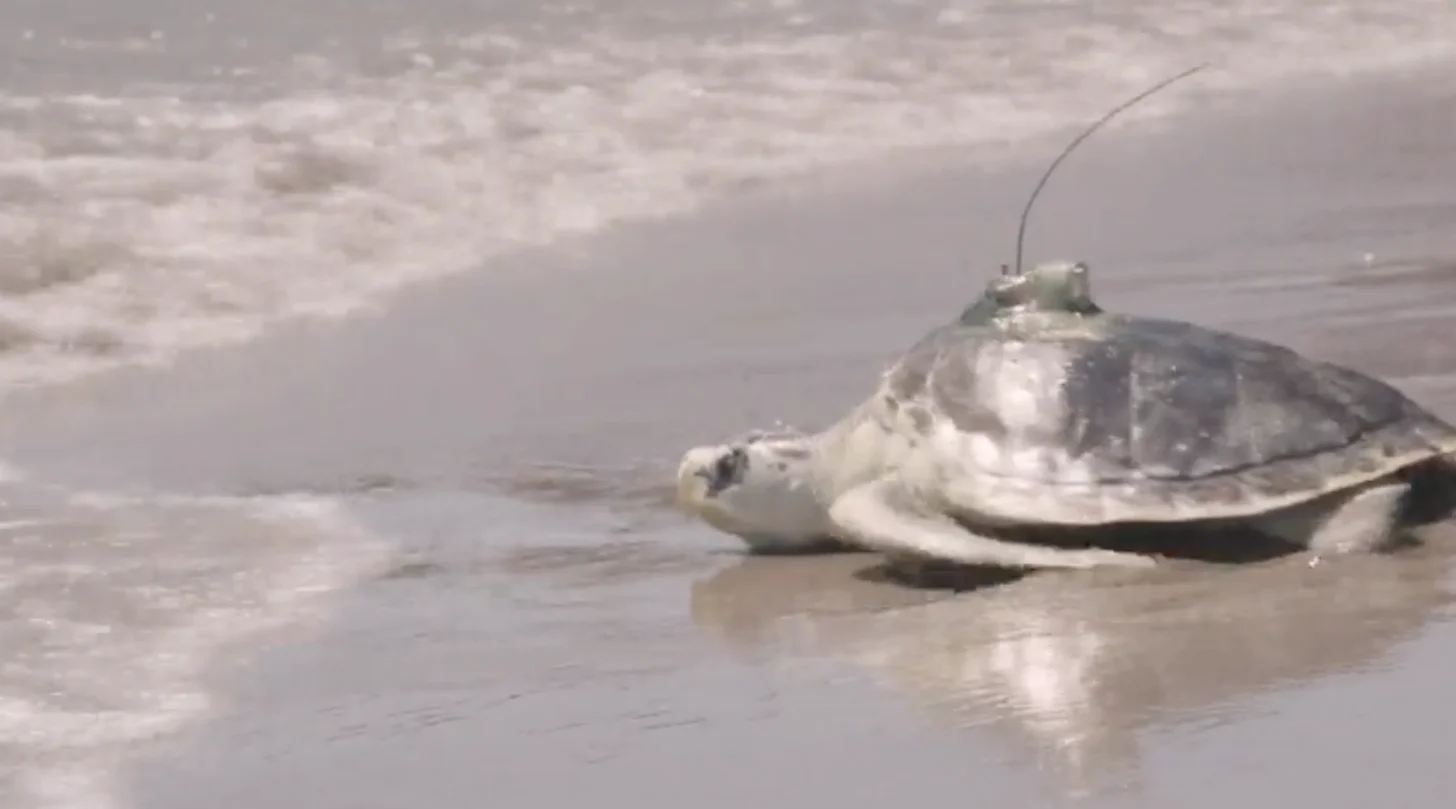
Although the sea turtles were rescued from various cold-stunned strandings along the Massachusetts coast in early December, all five went through recovery together.
Per tradition, sea turtles grouped in rehab are often given names that fit a certain theme. In this case, they were named after different fonts: Times New Roman, Papyrus, Gigi, Walter Turncoat, and Punk Kid.
The font-titled turtles were released this week after seven months of rehabilitation from pneumonia, dehydration, and trauma.
“Our team tracks each turtle’s progress closely and adjusts care as needed throughout recovery,” Dr. Melissa Joblon, the director of animal health at the New England Aquarium, said in a press release.
“These five turtles are now strong enough to survive entirely on their own in the wild.”
“That’s the goal,” she said. “Every time.”
You may also like: A fisherman caught a baby manatee in his net. When he realized it was too young to be released, he nursed it himself
BJ Siasoco/Wildlife Conservation Society
According to Washington, D.C.’s annual Point-In-Time count released in May 2026, the city’s homeless population has increased about 4.4% since last year. With a count of 5,363 people facing both sheltered and unsheltered homelessness, it’s clear there is a need for intervention.
The H3 Project (the three H’s in question stand for home, health, and happiness) is a grassroots nonprofit in the D.C. area that does outreach work across the city in an attempt to end homelessness and human trafficking. Every day, the team “meets individuals where they are at,” from 10 a.m. to 10 p.m., including on holidays. They are especially present in D.C.’s Union Station and major downtown hubs.
In 2025, the organization assisted in providing nearly 2,000 essential items to people in need, administered 217 doses of Narcan, helped 234 people apply for SNAP or Medicaid benefits, and managed 93 housing matches, according to its website.
Now, H3 has a new team member supporting its outreach efforts.
She’s a 5-pound pig named Synergy, and she belongs to Ami M. Angell, who started the organization in 2020.

“We have to think outside the box, because every individual is unique,” she told The Washington Post about her clients. “What works for one individual may not work for another person. It’s figuring out the way in, and if you can get that door open a little, then you can get it open a lot larger.”
In the past, Angell used to carry around a pack of cigarettes, even though she didn’t smoke herself. It was a way to start a conversation with people in need — or acts as a de-escalation tool to manage a crisis.
But then her friend told her about Juliana pigs, a hypoallergenic breed of pig that is as friendly and eager to please as a service dog.
“A lot of the folks that we work with, they’ve never seen a pig, let alone touched one,” Angell told The Washington Post. “With pigs, it doesn’t matter your age, your race, your gender; they love you equally.”
Synergy was adopted in March, and now she comes to work with Angell every day; either training in her pen at the organization's headquarters in Union Station, or on a harness and leash on outreach duty.

“When she comes around, [it] seems like she’s a magnet,” H3 client Randall Baldree said in a video for The Washington Post about the little pig. “Everybody wants to be around her. It helps with the emotional support.”
Synergy can also do tricks, like spinning in a circle or leaping over hurdles. She can even play a toy piano. Engaging people in her roster of talents helps lower the barrier to entry.
Perhaps the most exciting example for Angell so far was a woman in her late 60s, whom she has known for seven years, and was very resistant to case management.
But then she met Synergy.
“Now she wants to work with me,” Angell said. “As long as the pig is right there, she will answer my questions, she will do the work with me. She’s moving forward because of Synergy.”
The pig’s name is a reflection of what she offers.
“There is a synergy to it all,” Angell explained. “I just wanted her to ground folks and remind them that there’s always more to life and more to be than what is right now. For my homeless [clients], they aren’t defined by who they are now. This is just one piece of their life. They deserve to be somewhere better.”

Angell, and other experts who work with homeless populations, know that pets are a “lifeline” for unhoused people, providing stability and support that would otherwise be overlooked.
In fact, prioritizing unhoused people’s relationships with their pets has been a proven model of success.
In California, a pilot project that made homeless shelters pet-friendly had major outcomes, allowing over 4,000 people to keep their pets while getting support, and encouraging 886 people to move into permanent housing with their pets — a higher success rate than the statewide average for California.
Angell knows Synergy won’t end homelessness — but she does believe that her companionship will get people one step closer to relief.
And, when she’s not working with clients, Angell uses the pig as a way to talk to the general public about the work she does to end homelessness.
“She’s working to make the world a better place,” Angell said of the pig, “in her own way.”
@washingtonpost For some unhoused people, pets can help prevent substance use or motivate them to seek stability, said Ami M. Angell, founder of a crisis intervention group. Angell’s mini pig, Synergy, can be the bridge between them accepting help versus doing it alone. Read more from The Washington Post at the link in our bio. #minipig #goodnews ♬ original sound - The Washington Post
You may also like: A Colorado mayor has secretly been sleeping in his city's homeless shelters for months: 'It's made me more compassionate'
Featured Image: @synergy4change_h3/Instagram
In late May, whale watch vessels in Monterey Bay spotted and photographed an entangled humpback whale.
They saw the enormous creature swimming with trailing ropes and buoys that were identified as property of the California Dungeness crab fishery. The gear was colored with black and purple lines, markings that reflect new state rules encouraging fisheries to make identification easier.
While the whale may have broken free of the crab traps on its own, ropes remained wrapped tightly around its tail and flukes, cutting deeply into the body, Dr. Julia O’Hern, a senior cetacean scientist at Marine Life Studies, explained to the National Oceanic and Atmospheric Administration’s National Marine Fisheries Service.
These ropes posed a life-threatening risk to the whale.
But along with support from Moss Landing Laboratories, the California Department of Fish and Wildlife, and other response organizations from the West Coast Large Whale Entanglement Response Network, experts got a helping hand from the whale watching community in the area.
Photos and sighting details from whale watchers helped the Whale Entanglement Team develop a strategy to help free the whale from its trappings.
At the initial sighting in May, poor weather made it impossible to safely respond to the situation, but the whale watchers kept their eyes out for the troubled humpback and finally saw her again in late June. They identified it through an online photo database — and while the sex of the whale remains unconfirmed, the whale watchers nicknamed her “The Duchess of Anchovy.”
“They provided those photos very quickly to all of us so that we could start to track the whale,” O’Hern said. “And then we were also able to assess the body condition and just the health changes that take place while these whales are entangled.”
Because the photos and sighting details provided helpful information to responders, they were able to react quickly on July 11, when the whale was spotted again near Moss Landing.
“They’re so committed,” Peggy Stap, founder and executive director at Marine Life Studies, said of the whale watching community.
“The captains and naturalists from all of the local companies have joined many of our introductory trainings and community events,” Stap said. “We could not do it without them.”

When it came time to intervene, the humpback reacted as expected; it was trying to evade predators by speeding up and diving. Eventually, the team was able to attach five large floating plastic balls to the line on the whale, temporarily slowing it down and keeping it near the surface.
O’Hern said it was important to be methodical and slow to make sure no one was hurt. That’s why only authorized responders should approach an entangled whale.
Finally, using a GoPro camera to see under the water — and about 14 miles west of Moss Landing — the team was able to get a closer look at the entanglement. Using a knife attached to a long pole, they made three cuts to the line, hoping it would release from the whale’s body.

At first, nothing happened, and the team decided to turn back and try again the next day.
But then, a miracle.
“As we began to move up the working line that connected us to the whale, there was a short little pop in the line and the rest of the gear slowly fell off,” Scott Benson, a retired NOAA Fisheries scientist and trained responder on the team, said in a statement.
“Disappointment turned to elation in a matter of seconds.”

The entanglement floated free of the whale, and The Duchess of Anchovy quickly swam away. The fishing gear was tagged from the most recent Dungeness crab season, and NOAA Fisheries is now in the process of investigating when and where the gear was set to understand the factors behind the entanglement.
“This was a great example of collaboration both on and off the water,” Lauren Saez, who helped coordinate the response for NOAA Fisheries’ West Coast Region, said in a statement.
“The team’s success led to the recovery of the gear, which our state partners traced to the Dungeness crab fishery. That will help us better understand what might have led to the entanglement in the first place.”
And the whale watching community remains keen-eyed and eager to help.
The day after the rescue mission, whale watch crews reported seeing the newly disentangled whale once again on Moss Landing. They photographed the whale feeding with other humpbacks again that evening.

“They have been sending us photos documenting what the wound looks like, and what the body condition looks like, and what the behavior looks like,” O’Hern said, of the whale watchers-turned-heroes.
“So in this case we will be able to follow the progress of the whale too, and hopefully get a feel for how the humpback whale is doing post-response.”
You may also like: Tiramisu the sea turtle couldn't even swim when rescuers found her. After months of vet care, she just returned to the ocean
Featured Image: Courtesy of The Marine Mammal Center
Virginia job seekers now have a right to know what a position pays before applying online under a new state law aimed at giving workers more leverage in hiring and salary negotiations.
The new law, which took effect July 1, requires employers to include a good-faith wage or salary range in public and internal job postings for openings, promotions, transfers, and other employment opportunities.
It also bars employers from asking applicants about their salary history or using prior pay when making hiring and compensation decisions. Employers may also not retaliate against applicants or employees who decline to provide their salary history or ask how much a position pays.
Gov. Abigail Spanberger said the ban on salary-history questions could prove just as significant as requiring pay ranges because it prevents a candidate’s previous salary from becoming the starting point for negotiations.
“Where it becomes impactful is that if I apply for a job with a certain salary range, and my salary history is $40,000, it is not legal anymore to ask what I made,” Spanberger told The Mercury in an interview earlier this month.
An applicant could instead base a salary request on the employer’s posted range without having to explain or defend what a previous employer paid, she said.
The law, sponsored as Senate Bill 215 by state Sen. Jennifer Boysko, D-Fairfax, and House Bill 636 by Del. Michelle Maldonado, D-Manassas, places Virginia among a growing number of states requiring employers to disclose pay information in job postings.
Many multi-state employers were already posting salary ranges in the commonwealth because they operate in states with similar requirements. Others have had to update job postings, compensation policies, and interview practices since the law took effect.
“We’re still in the very new stages of this,” Spanberger said.
Defining a good-faith range
One question the new law leaves unanswered is how broad a salary range an employer may advertise. It requires employers to establish a range in “good faith,” allowing for differences based on experience, education, credentials, and other qualifications.
Spanberger acknowledged an employer could post a broad range — for example, $35,000 to $95,000 — and still comply with the law, even if it gives applicants only a rough idea of what the employer expects to pay.
“It doesn’t necessarily serve the benefit, which is intended to provide a bit of clarity for a potential employee related to what the salary range would legitimately be,” Spanberger said.
“You can then walk in and say, ‘OK, the top end of the range is $95,000, I’m here asking for this job, I’m asking for $95,000,” she said. “They can always play games with the lower limit, but the upper limit is a piece of it that does matter.”
Julie Schweber, lead specialist in the Knowledge Center at the Virginia SHRM State Council, said many employers — particularly multi-state companies — were already familiar with similar laws in other states.
“From my HR opinion, it’s not all that difficult to add a salary range on a job posting and to not ask applicants about their previous salary,” Schweber said. “It’s not a big stretch to comply with that.”
Because the law also applies to internal job postings, Schweber said employees may begin asking why similar positions carry different salary ranges or why a new hire could earn more than someone already on staff.
“A lot of organizations are asking, ‘How is this going to impact our current staff? Will they potentially get upset when they see other jobs may have a higher pay range than their job?’” she said.
That means employers may have to explain how they established posted salary ranges and why workers in similar positions may earn different amounts.
“What exactly are we looking at when we develop a pay range?” Schweber said. “It’s not so simple to just say, ‘Hey, this is our pay range.’ We also want to explain how we get to that.”
The Virginia Chamber of Commerce said employers have already been updating hiring practices, compensation policies, and job postings while seeking additional guidance on compliance.
“The Chamber is focused on helping employers understand the new requirements, and as implementation continues, we will evaluate whether any legislative or regulatory changes are needed to provide additional clarity, reduce unintended consequences, and ensure Virginia remains a competitive place to do business,” said spokeswoman Hannah Emerson.
Outreach and enforcement
Spanberger said the administration’s initial focus is educating employers, particularly small businesses that may advertise a position only occasionally.
“We want to make sure that we’re getting information out and doing educational efforts before we really start aggressively holding people accountable on this front,” she said.
The administration plans to work with business associations and local chambers of commerce to explain the new requirements. The Virginia Department of Labor and Industry also published guidance when the law took effect.
Spanberger said it’s still too soon to judge how consistently employers are complying.
“Some are already being compliant, because some know about it and have taken action quickly. But in terms of us sending out any sort of formal engagement to say, ‘You’re not being compliant, fix it,’ that is too early,” she said.
The law gives the office of attorney general authority to investigate violations and bring civil actions against employers. A first violation carries a penalty of up to $1,000, with subsequent violations subject to penalties of up to $5,000 each.
Prospective and current employees also may sue within one year of an alleged violation and seek actual damages or other legal and equitable relief.
“Attorney General (Jay) Jones was proud to support stronger protections for Virginia workers during the most recent General Assembly session,” spokeswoman Rae Pickett said. “This office will stand firmly with workers and ensure that Virginia’s pay transparency laws are fully enforced.”
Schweber encouraged employers to review the state’s guidance, train managers, and evaluate their overall compensation policies rather than viewing the law as simply a requirement to add salary ranges to job postings.
Employees may ask why they fall at a certain point within a pay range or why another position pays more, she said. Those conversations could include factors beyond salary, such as health benefits, flexible work arrangements, professional development, and or opportunities for advancement.
“It’s not a one-and-done type of communication,” Schweber said.
She said the law could also prompt employers to identify pay differences that developed over time without a clear compensation strategy and ensure salaries remain fair and competitive.
Lessons from other states
Virginia joins a total of 13 states, including California, Colorado, and New York, which require pay transparency in job postings, though details vary. Washington, D.C. also has pay transparency standards.
Some of those laws only apply to employers above a certain size, while others also require companies to disclose benefits and other forms of compensation.
Research suggests the laws have significantly increased the amount of salary information available to job seekers. A 2025 study by the National Bureau of Economic Research found that disclosure requirements increased the share of job postings containing pay information by about 30%.
The researchers also found wage increases ranging from 1.3% to 3.6% across three data sets, but no measurable effect on employment, pay differences among workers, or the education and skill requirements employers listed.
Colorado began requiring compensation information in job postings in 2021 and has since established a formal process for investigating complaints. New York’s statewide law took effect in 2023 and generally applies to employers with at least four workers, while Virginia’s new law has no minimum employee threshold.
But those laws have not eliminated job postings without salary information. A 2025 review by the New York City Council found thousands of listings on Indeed and Google for Jobs that lacked pay ranges, which the council attributed in part to the way those platforms pull postings from other websites.
Among 100 employers the council reviewed directly, 87 included salary information in every posting, 12 complied in some but not all listings, and one included no salary information. The review also found that some employers posted wide salary ranges, underscoring that requiring a range does not always provide applicants with a precise estimate of what a job will pay.
But advocates argue salary-history bans can help reduce long-standing wage gaps because workers who were underpaid in one job no longer have to carry that salary into negotiations for the next.
Schweber pointed to federal labor statistics showing women, on average, earn less than men and that wage disparities also persist among women of different racial and ethnic backgrounds.
“The theory behind these regulations is not to give companies more work to do,” she said. “But it’s so that job applicants and employees will have more information that will enable them to negotiate their compensation more fairly, and ideally close those pay gaps.”
She said that job seekers increasingly expect to disclose pay before they apply. Citing a 2023 SHRM survey, Schweber said 82% of U.S. workers were more likely to consider applying for a job if the salary range was listed.
A separate 2024 survey of human resources professionals found that 60% of organizations were publishing salary ranges in job advertisements, up from 45% the previous year.
Schweber said many employers now see pay transparency as a recruiting and retention tool, even when the law does not require it.
“Companies are seeing the value of doing this as part of their recruitment and even retention strategy,” she said, “and it’s better for an organization when we are transparent with our job applicants and employees.”
This article was written by Markus Schmidt and was originally published by Virginia Mercury.
Featured Image: Nathan Sack/Unsplash
Crime rates continued falling across a sample of large U.S. cities in the first half of 2026, with homicide rates dropping enough to put the nation on track for another historic low in killings.
A new analysis from the nonpartisan think tank Council on Criminal Justice found that nine of 13 crime categories tracked in 36 cities declined compared with the first six months of 2025. Homicides fell 18% in the first half of the year, with 215 fewer killings among the 30 cities that reported data for the offense.
The decline builds on a trend that began in late 2022 after homicide rates surged during the COVID-19 pandemic. The council’s previous analysis estimated that the national homicide rate in 2025 was likely the lowest in more than a century, since at least 1900, based on preliminary data. Final national figures from the FBI are expected later this fall. The group’s latest findings suggest homicide rates could fall further in 2026.
But the researchers cautioned that the data do not reveal what’s driving the decline, nor do they support crediting any single policy or intervention.
“There is no single or easy explanation for these historic lows,” the report’s authors wrote, though they pointed to possible influences, including changes in criminal justice operations, technology, and broader social and cultural shifts.
The continued decline has occurred across cities with different political leadership, policing strategies, and economic conditions, said Adam Gelb, the council’s president and CEO, in a news release.
“Local policies and programs surely matter, but the striking consistency of the decline suggests that macro-level forces are exerting enormous influence as well,” Gelb said.
The report examined monthly crime data from 36 cities that have consistently published incident-level figures over the past nine years, including Baltimore, Chicago, New York City, Philadelphia, San Francisco, and Washington, D.C.
The cities are not necessarily representative of all U.S. cities, and the researchers noted that the figures may change as local agencies update their data.
Homicide was among the offenses with the steepest decline. The average homicide rate in the first half of 2026 was 51% lower than its peak in 2022 and 31% lower than the first half of 2019, before the pandemic-era increase in violence.
Last year’s decline was widespread but not universal. Homicides fell in 21 of the 30 cities with available data, including declines of more than 50% in Rochester, New York; Little Rock, Arkansas; Arlington, Texas; and Colorado Springs, Colorado. Four cities — Austin, Texas; Minneapolis; Norfolk, Virginia; and Pittsburgh — had homicide rates above their 2019 levels.
Other violent crimes also generally declined. Reported robberies dropped 17% compared with the first half of 2025, gun assaults fell 6%, and carjackings declined 47%. The report found the rate of serious violent crimes ending in death, known as lethality, fell 23% compared with the same period last year.
Property crime also continued to trend downward. Motor vehicle theft declined 20% compared with the first half of 2025, while residential burglaries fell 13% and larcenies dropped 6%.
Still, not every category moved in the same direction.
Drug offenses rose 12% compared with the first half of 2025, and reported domestic violence incidents increased 8%. Shoplifting was the only offense tracked that remained higher than before the pandemic, with rates 5% above first-half 2019 levels.
Researchers said those differences highlight the difficulty of identifying a single explanation for the overall decline. Homicides, for example, have fallen much faster than aggravated assaults, which were only 3% lower than 2019 levels.
That gap suggests the forces reducing lethal violence may not be the same as those affecting other forms of crime, according to the report.
This article was written by Amanda Watford and was originally published by Stateline.
Featured Image: Cara Denison/Pexels
With the distinct appearance of a “maskless raccoon,” or a puppet from Jim Henson’s “The Dark Crystal,” the binturong is one of the animal kingdom’s more curious looking creatures.
Throughout the world, these mammals are colloquially called “bear cats,” due to their thick black bear-like coat and whiskered faces — but they are not related to bears or cats. Instead, they belong to a genus unto themselves, as the only species in the genus Arctictis.
They also bear a trait called reverse sexual size dimorphism, where females are larger than the males, weighing in at an average of 50 pounds, compared to their counterpart’s average of 20 pounds.
It’s an uncommon, but not unheard of, quality, in nature — a trait that can also be found in baleen whales, spotted hyenas, and orb-weaver Spiders (the last of which can be 10 times the size of its male counterpart).
Binturongs also have a prehensile tail — a tail that can grasp or hold onto objects. Other animals with prehensile tails include spider monkeys, chameleons, and seahorses.
Remarkably, binturongs are one of just two carnivores in the world that boast a tail like this (the other being the kinkajou, or “honey bear), and they use it as a “fifth limb” to balance in high tree branches.

Perhaps most bizarrely, binturongs emit a smell that is uncannily similar to buttery popcorn, a phenomenon that scientists traced to the a chemical in their urine called 2-acetyl-1-pyrroline, or 2-AP, the same chemical that forms in popcorn during the popping process.
In the wild, they can be found in the tropical forests of South and Southeast Asia, in countries such as Indonesia, Malaysia, and Thailand. They play a vital role in their ecosystem, eating fish, rodents, birds, worms, and insects and “germinating” more resilient plants as they eat and pass seeds.
But in the last 30 years, their population has been on the decline, due to their capture and trade for the exotic pet market.
“Tragically, binturongs’ striking appearance and quirky charm have made them increasingly popular as exotic pets,” the conservation nonprofit, Flora & Fauna, wrote on its website. “Poachers are all too prepared to meet this demand, setting traps to snatch them from the forests they call home.”
For years, the David Attenborough-backed group has been raising funds to protect binturongs from poaching and wildlife trafficking, by equipping rangers and patrol teams with the tools and resources they need to intervene.

“Rangers are the front line of defense,” Flora & Fauna said in a statement. “They patrol the forest day in, day out, their constant presence warding off would-be poachers.”
“Their job is not an easy one, but the equipment that they need is surprisingly simple; new boots, when old ones wear thin. A raincoat, so they can patrol through any conditions. Rucksacks, to carry their rations to replenish their energy on long treks.”
Flora & Fauna is one of the world’s oldest conservation organizations — and their global efforts have had real-world impacts. In 1991, they helped establish the International Gorilla Conservation Program in Rwanda, Uganda, and the Democratic Republic of the Congo to safeguard mountain gorillas from poaching.
In the 1970s, only a few hundred remained in the wild. Today, mountain gorillas have rebounded to over 1,000, thanks to the IGCP.
Flora & Fauna said that its conservationists are applying the same tried-and-true approaches from programs like the IGCP to binturong protection efforts.
“We have been at the forefront of conservation in Southeast Asia for decades,” the nonprofit said on its website. “We know these forests. We know how to protect them. And with your support, we can stop the bearcat from vanishing forever.”
A monumental milestone for binturongs recently occurred in March, when the San Diego Zoo welcomed two binturong babies, or “binlets,” for the first time in 26 years.
The twin males, Pulong and Tau, were born to parents Nettle and Garret.

As they get bigger, they’re exploring trees throughout the habitat and engaging in classic binturong behavior: snorting, purring, and chuckling when happy, and “screaming like a cat” when bothered.
“[They] are currently spending quality family time behind the scenes while mom keeps busy with round-the-clock cuddle puddles, grooming, and care,” the San Diego Zoo posted on Instagram.
“It’s a tree-mendous win for the future of this vulnerable species and supports conservation efforts both here and in their native habitats.”
You may also like: This giant snail is the size of a croissant. Conservationists are banding together to save it from extinction
Featured Image: Konrads Bilderwerkstatt/Wikimedia Commons (CC BY 2.0)
A “pioneering” housing project in Berlin — Germany’s capital city — takes the form of a 72-unit apartment complex with rent starting at €6.90 per square meter, or just shy of $7 per 10 square feet.
The kicker? It’s only for lesbians and bisexual women.
It’s a project years in the making, created by LGBTQ+ nonprofit Rad und Tat and state-owned housing association Wohnungsbaugesellschaft Berlin-Mitte, designed to provide affordable housing to aging lesbian and bisexual women.
“As a pioneering project across Europe, the planned lesbian housing project and queer cultural center stands for lesbian and queer visibility and gender equality,” Jutta Brambach, the managing director of RuT, said in a statement.
“With mobile cultural events, we are already demonstrating how beneficial diversity is for society.”

Apartments will vary between one and four bedrooms, with eight units reserved for women who need more home care support, including five wheelchair-accessible units.
Only 41 of the apartments will be subsidized with a base rent of €6.90 per square meter. Other open spots will be available to rent on a sliding scale based on income, at either €11 or €15.45 per square meter. (That’s about $12.50 per 10 square feet or $17.60 per 10 square feet, respectively.)
But aside from affordability, the complex will also offer community events, counseling support, and a headquarters for RuT.
“Here, lesbians and queer women will be able to live fulfilling lives and enjoy their later years in a discrimination-free and neighborly environment,” a press release from the state housing organization, WBM, described.
The project was approved and began construction in 2023, and applications for housing opened in February 2026 — and have since been completely filled up.

The RuT apartments are currently projected to open in August 2026. In the meantime, the organization has shared updates like room tours and crowdfunding opportunities.
“With your support you will help us to set up Berlin’s first lesbian shared apartment for people with disabilities and to create an open and inclusive socio-cultural center with a café and event spaces,” a GoFundMe description translated from German to English reads.
“So that queer life in old age remains visible, supportive, and communal.”
RuT has received clear support from local officials.
“The cooperation between WBM and RuT impressively demonstrates the successful collaboration between public and nonprofit institutions in realizing innovative and forward-looking housing concepts,” Ephraim Gothe, a district councilor for urban development and facility management, said in a statement.
“We are proud to be able to support this project as a district and thus make a further contribution to an inclusive and livable city.”
RuT leaders had the idea for the housing project about 10 years ago when they realized aging lesbian and bisexual women had fewer resources available than their gay male counterparts. Now, their dream is finally becoming a reality.

“The fear of being isolated in old age, of having to live in a senior citizens' home where lesbian life stories have no place, of having no chance to meet lesbian friends, let alone forge new friendships with lesbians, has motivated many visitors and users of RuT to consider possibilities for living together in a supportive community,” a web page for the organization reads.
“The project's idea is to create an inclusive space where women who love women can live in a supportive community and remain as self-determined and independent as possible until the end of their lives.”
You may also like: They turned an old convent into an all-women apartment complex: 'It's about taking control of our lives'
Featured Image: Courtesy of Rad und Tat
Graffiti tags have long been a way for people to claim a space, to say “I was here.”
Now, that tradition is being turned on its head for a new campaign across London.
St. Mungo’s, a charity that has been on the front lines of homelessness in London for 55 years, has debuted an interactive mural campaign called “We Are Here,” highlighting the stories of people who have successfully transitioned out of homelessness.
In three spots in Bristol, London, and Reading, passersby will see street art pieces created by artist Luke Embden, known for his large-scale graffiti-like typography work.
The murals are black, white, and orange, in St. Mungo’s brand colors, with bold lettering and doodles. They read: “Lee was here,” “Ray was here,” and “Tamika was here,” respectively.

Those names are the real identities of three people who, with the help of St. Mungo’s, have found hope beyond homelessness. On each mural, there is a QR code that people can scan to hear the stories of each of these people.
Lee, for instance, is a 54-year-old man who had years of experience rough-sleeping in both North America and the United Kingdom. The first night he prepared to sleep on the streets in London, however, a St. Mungo’s outreach worker got him the help he needed.
“It’s the invisibility,” Lee said in a video for the organization about being homeless. “You don’t mean anything anymore. You just kind of float around.”
Now, Lee teaches creative writing classes for the nonprofit, and his mural reflects these passions, with musical notes, shamrocks, keys, and words like “creativity” and “see me,” displayed beside his tag: “Lee was here.”

The QR code on his mural leads viewers to a 3-minute audio clip, where Lee narrates his story.
“The [St. Mungo’s] team helped me arrange universal credit, register with a GP, and open a bank account,” he recounted. “Those things might seem ordinary, but when you’ve been homeless, they’re the building blocks that help you start again.”
Lee also shared that in addition to his creative writing classes, he is working on a one-act play inspired by his experiences. This new mural is simply another extension of his story.
“I wanted to give these case studies a voice,” the mural artist, Embden, told The Guardian. “A lot of people don’t know where to turn, and this is a really beautiful way to get the message out there.”

“[The murals] are asking people to stop and look and listen,” Emma Haddad, the chief executive of St. Mungo’s, added. “Recovery is possible, hope is possible, and support plays a fundamental role in that.”
The whole campaign helps illustrate the difference the right support can make in the lives of people experiencing homelessness, St. Mungo’s shares on its website. It also highlights the unique offerings the charity provides, like pet-friendly accommodations, and specific support for women and migrant populations.
According to SW Londoner, St. Mungo’s supported more than 22,000 people at risk of or experiencing homelessness in London last year. The organization also reports that 77% of people it helped off the streets last year did not return to rough sleeping after moving into accommodation.

The mural campaign only highlights three of those stories — and the team behind them hopes they are just the beginning for the countless people who will see them.
“The ‘I Was Here’ campaign shows that everybody has a unique story,” Elle Slater, the service development manager for St. Mungo’s, said in an Instagram video.
“In street art culture, a tag is a mark of where someone was,” the video describes. “St. Mungo’s ‘I Was Here’ murals celebrate where they are now.”
While the murals themselves won’t fix the housing crisis, Lee is hopeful that they will change minds and inspire people to shift their perspective of homelessness.
“Completely eliminating rough sleeping seems like a massive and impossible task but, as people, we should set ourselves these kinds of goals,” he told The Guardian.
“Impossible things are possible. How we treat the weakest, the most vulnerable members of our society, people who are literally overlooked, does demonstrate who we are at our heart as a people.”
You may also like: To end LGBTQ+ youth homelessness, Wisconsin is planting flowers in sidewalk cracks
Featured Image: Courtesy of St. Mungo’s
In Southeast Asia, the average squirrel looks a lot different from its brown and gray relatives in North America.
In forests across Cambodia, Vietnam, and Myanmar, black giant squirrels leap from branch to branch, their distinct black-and-tan color pattern blending into the shadows of the dense tree canopy.
The black giant squirrel is also remarkably long, with an average length of about 32 inches from head to tail — which is roughly the same size as a standard baseball bat.
Although the black giant squirrel holds the record for the biggest squirrel in Nepal, it is not the biggest one in the world. That title belongs to the Indian Giant Squirrel, or rainbow squirrel, which can grow up to three feet in length and bears a multi-colored coat of maroon, purple, brown, and cream.
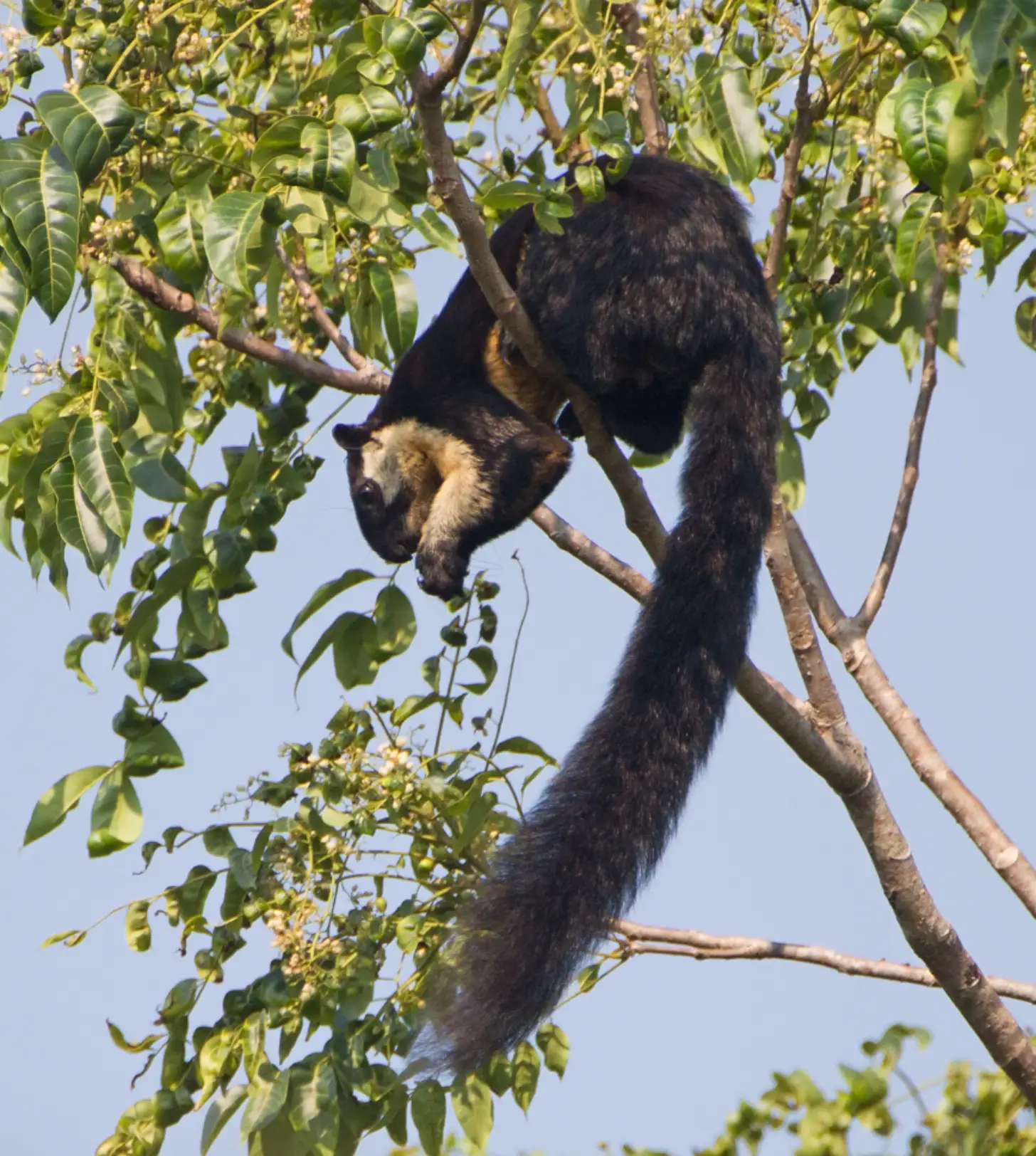
Globally, the black giant squirrel is categorized as near threatened on the International Union for Conservation of Nature’s Red List.
Fortunately, Flora & Fauna, a conservation organization backed by Sir David Attenborough — who has been with the nonprofit for over six decades — has been hard at work to keep them from tilting into “endangered” status.
“These lovable squirrels have a strong preference for life in undisturbed forest, and are known to avoid human settlements and crop plantations,” Flora & Fauna stated on its website. “This means that the more of the forest is destroyed, the more of the continent becomes unlivable for them.”
“By living in the upper forest canopy, these squirrels can evade ground predators — and poachers — but this becomes harder to do as more of their habitat is destroyed by humans.”
Flora & Fauna’s conservation approach largely involves equipping local forest rangers with the resources they need to monitor black giant squirrel populations and protect them from harm.
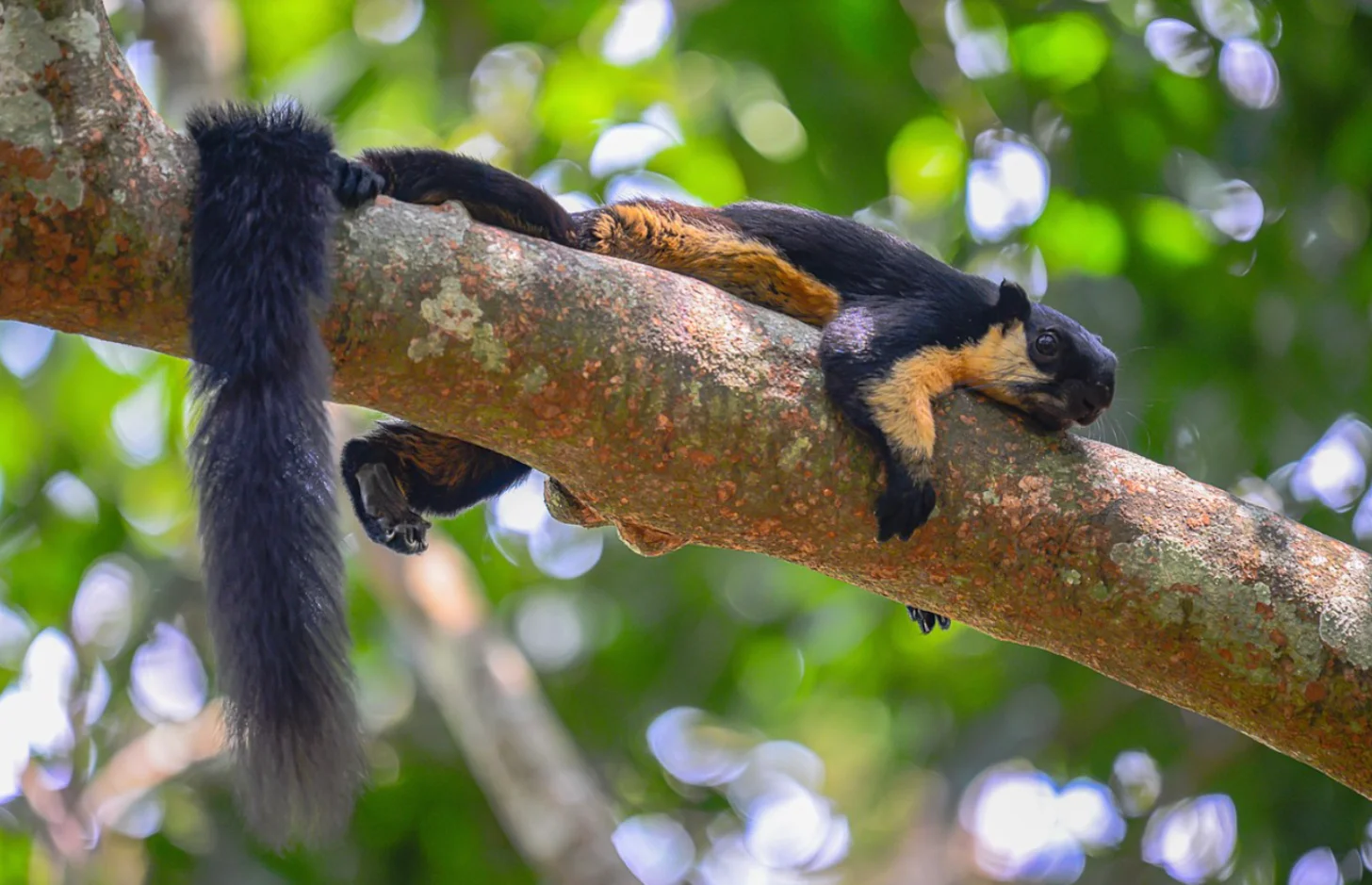
“By supporting our teams on the ground, you can help ensure that rangers are fed, equipped and ready to patrol — preventing illegal loggers from destroying the squirrels’ homes, and stopping poachers from killing them for their meat,” the nonprofit explained.
According to The Nepal Times, black giant squirrels are also frequently targeted by Nepalese farmers due to their at-a-glance resemblance to the Asian palm civet. The civet’s penchant for raiding fruit trees and berry farms has led to infamy as a local pest, despite its protected status.
In addition to direct intervention to stop human-wildlife conflict, Flora & Fauna also has long-term goals in place to reduce destructive logging practices.
“By setting local communities up with environmentally friendly ways of making a living — such as harvesting non-timber products from the forest, and locally-led tourism initiatives — we can support them in living comfortable lives while preserving their native wildlife,” the nonprofit said.
“We’re lucky to live in a world that’s filled with such wonders,” Flora & Fauna stated. “And when they come under threat, it’s up to us all to protect them.”
You may also like: This rare 'bearcat' looks like he wants to ask you three riddles. Conservationists are racing to save his species
Featured Image: Rushen/Wikimedia Commons (CC BY-SA 2.0)
Researchers connected to the Search For Lost Birds project are on a global mission to find and document birds that haven’t been seen for years or decades.
Their goal is to better understand species distribution, population, and natural history to better conserve the world’s birds.
The project — founded in 2021 by the American Bird Conservancy, Re:wild, and BirdLife International — defines a lost species as one that has not been confirmed alive by photographic, audio, or genetic information for over 10 years in the wild.
To find these species, experts go on research trips in all corners of the world. One trip to Papua New Guinea, back in 2022, was co-led by Jordan Boersma, a research associate at Cornell University’s Ornithology Lab.
It was here that, with the help of local communities and some strategically-placed trail cameras, they spotted the elusive black-naped pheasant-pigeon, a large pigeon that only lives on Fergusson Island, off the eastern coast of Papua New Guinea.
Locals call it Auwo, and while the bird has been observed several times by local hunters, it had not been documented by scientists since it was first discovered in 1882.
After a month-long research trip, the crew’s remote camera traps picked up some footage of the bird.

“When we collected the camera traps, I figured there was less than a one-percent chance of getting a photo of the black-naped pheasant-pigeon,” Boersma recounted.
“Then as I was scrolling through the photos, I was stunned by this photo of this bird walking right past our camera.”
In a video documenting the rare find, local biologist Doka Nason is seen completely flabbergasted when looking at the photos on the camera.
Nason and Boersma tremble with disbelief, shouting expletives.
“What is this?” Nason asks, dumbfounded.
“It’s it,” Boersma says. “It’s Auwo.”
Nason jumps for joy. “We got it!”
And then the two researchers clasp hands, completely delighted.
During their expedition, researchers spoke with locals to figure out where to place their cameras in hopes of finding Auwo. They ended up placing 12 camera traps on the slopes of Mount Kilkerran, the highest mountain on Fergusson Island. They also deployed eight additional cameras in locations that local hunters recalled seeing the pheasant-pigeon in the past.
Nason was the one who set up the camera that eventually caught the elusive bird.
“When we finally found the black-naped pheasant-pigeon, it was during the final hours of the expedition,” Nason said in a statement. “When I saw the photos, I was incredibly excited.”
Based on their research, the team believes the bird to be extremely rare, concluding that the rugged forest environment could be the last remaining stronghold for the species on the island.
“The fact that many of the people we interviewed had never seen or heard of the pheasant-pigeon really highlights how elusive this bird is and suggests that it could be extremely sensitive to human disturbance,” Cosmo Le Breton, a researcher who supported the team in the field as a research assistant from Oxford University, said.
Locals were also excited to see the survey results, team members said, and were enthusiastic about helping to protect the species.
“This rediscovery is an incredible beacon of hope for other birds that have been lost for a half century or more,” Christina Biggs, manager for the search for lost species at Re:wild, said in a statement.
“The terrain the team searched was incredibly difficult, but their determination never wavered, even though so few people could remember seeing the pheasant-pigeon in recent decades.”
“As well as giving hope for searches for other lost species, the detailed information collected by the team has provided a basis for conservation of this extremely rare bird,” Roger Safford, senior program Manager for preventing extinctions at BirdLife International, added.
You may also like: Trail cameras capture rare footage of the world's most elusive big cat, dubbed 'the ghost of the mountains'
Featured Image: Jordan Boersma/YouTube
- A new experiment found that sitting in a restored urban forest while listening to birdsong lowered people’s stress and improved their mood more than any other setting tested.
- Researchers had 106 students at North Carolina State University in the U.S. sit in either a restored forest or a paved plaza while hearing birdsong or traffic noise, isolating the effects of place and sound.
- Both the natural setting and the birdsong helped independently, and the benefits were largest when combined.
- The forest was a human-made restoration completed in 2006, suggesting cities could build mental-health benefits into parks rather than relying on remote wilderness.
Sitting in a small, restored forest while listening to birdsong lowered people’s stress and lifted their mood in the moment, according to a recent study published in the journal Environmental Conservation.
Researchers asked 106 students at North Carolina State University in the U.S. to sit outdoors in noise-canceling headphones at two spots on campus: A strip of riparian forest restored two decades ago and a paved plaza facing a road intersection. At each location, participants listened to 10 minutes of birdsong and 10 minutes of traffic noise, in random order, then rated their stress, their positive and negative feelings, and how mentally restored they felt.
The design, swapping both the place and the soundtrack, let the researchers separate the effect of where someone sits from what they hear. Both mattered, and their effects stacked. Participants in the forest hearing birdsong reported an average stress score of 3.2 on an 11-point scale, compared with 6.4 for those on the plaza hearing traffic.

The forest-and-birdsong pairing also produced the highest positive emotion and the strongest sense of restoration. The two mismatched conditions (forest with traffic, plaza with birdsong) landed in between, better than the plaza-and-traffic combination but short of the full effect.
“For participants who were in a green space listening to the birds, there were significant effects. Positive emotions went up, negative emotions went down, stress went down, and perceptions of feeling restored went up more than any other combination,” study lead author Nils Peterson, a professor in NC State’s College of Natural Resources, said in a press release. The reverse held for people on the plaza hearing traffic.
However, for mental restoration, the physical setting mattered more than the soundtrack. The forest did more of the work than the birdsong did. The authors suggest that this may partly reflect the scale they used to measure restoration, which leans on how people perceive a place and may nudge them toward its visual features. For stress and for positive and negative emotion, sound and setting carried roughly equal weight.
Cindy Frantz, an environmental psychologist who chairs the psychology department at Oberlin College in the U.S. state of Ohio and was not involved in the research, said the value of a study like this is that it reproduces laboratory findings in a real-world setting.
She cautioned against reading too much into a single result, which cannot show how long the effects last, whether people grow used to them, or whether everyone benefits equally.
Still, Frantz told Mongabay, the effects were notably large.
“The impact of natural environments and birdsong are not tiny ‘around the margins’ results,” she said. “Effect sizes this large suggest that the impacts they observed are likely to make a difference in people’s lived experiences.
The forest used in the study is not old growth but a restoration completed in 2006, re-engineered from a degraded urban creek and now carrying more than 70% canopy cover, wedged inside a working college campus.
That a relatively young, human-made patch of forest produced the full effect suggests the benefits could be rebuilt into city parks with strategically placed seating and the bird communities to fill them, rather than requiring access to remote wilderness.
“Designing outdoor spaces with birds in mind is not just a ‘tree-hugger’ priority, but also sensible public health policy,” Frantz said.

The result adds to a growing body of research linking bird sounds to better mental health.
Eleanor Ratcliffe, an environmental psychologist at the University of Surrey in England whose work the NC State team cites, has found that bird sounds can restore attention and ease stress.
However, the effect depends on the species, the sound and the listener. Quiet, melodic, complex songs tend to soothe, while loud or harsh calls, like a magpie’s, can grate. Whether birdsong helps at all, her work suggests, hinges partly on what a listener associates with it, meaning any therapeutic use would need to be tailored rather than applied wholesale.
Researchers offer two main explanations for why nature, and birdsong in particular, calms people.
Birdsong signals that an environment is alive and, by implication, safe, an all-clear that a silent landscape does not give. The other is that built environments demand a certain kind of focus to tune out noise like traffic. Nature may offer respite, letting a person’s capacity for attention recover.
This article was originally published on Mongabay.
Featured Image: saxman1597/Flickr (CC BY-SA 4.0)
On July 29, legendary Irish musician Glen Hansard died at the age of 56 in a motorcycle accident.
In 2007, Hansard gained critical acclaim when he starred in the musical drama “Once.” The following year, he won the Academy Award for Best Original Song for the film’s central ballad, “Falling Slowly,” which he shared with his co-writer and co-star, Markéta Irglová. The success of “Once” later spurred a Broadway musical, which won eight Tony Awards.
Hansard was also a well-known musician in his own right, with five solo studio albums and a 36-year career as the frontman of The Frames.
In addition to his musical talent, Hansard has been memorialized for his generosity and warmth of spirit.
“A smiling rascal if you needed him to be,” said Bono, the famed singer of U2. “This most musical and mischievous archangel of Ballymun … no airs, plenty of graces.”
“He was such an incredible human, an incredible force,” said musician Ed Sheeran.
“Oh, I will love you forever,” Rachel Zegler shared on Instagram. “Rest now, my friend.”
Ceann Comhairle Verona Murphy, an Irish political figure, said that Dublin had “lost one of its truest voices.”

“Glen Hansard’s music spoke with a rare honesty,” she said in a statement. “He was there, too, for the homeless and for others whose voices needed to be heard, using his own platform to lift theirs. He gave a voice to Irish music on the world stage while remaining, always, a Dubliner at heart.”
Hansard’s connection to Dublin’s homeless community stretches back to 2010, when he established the first “Christmas Eve Busk” on the iconic Grafton Street.
That inaugural busk became an annual effort, raising money for the Dublin Simon Community, a charity that provides emergency housing, medical aid, and counseling for people experiencing homelessness.
“What started out as his brainchild soon became an iconic Dublin Christmas event, a festive singsong that spread cheer but also raised vital awareness of the homelessness crisis as well as funds to keep our essential services running,” the Dublin Simon Community said in a statement.
“To put it simply,” they wrote, “the Busk would not have become what it is today without Glen as the driving force behind it.”
Over the last 16 years, Glen took it upon himself to invite some of “Ireland’s brightest stars” to the Busk to shine a spotlight on the cause, playing side-by-side with musicians like Bono, Sinéad O’Connor, Imelda May, and Shane MacGowan on the cobblestoned streets of Dublin.
“Thanks to Glen, over two million euro has been raised and used directly to support people when they needed it most,” the charity said. “Glen’s focus and concern was always on the wellbeing of the individuals and clients of Dublin Simon that he met. He had deep respect and empathy for those navigating the challenges of homelessness and his natural warmth and compassion always shone through in those moments.”
To read more about Hansard’s work with the Dublin Simon Community, and support his favorite cause, you can visit their website.
You may also like: Catherine O’Hara dies at 71, leaving behind a legacy of advocacy and compassion
Featured Image: Andy Witchger (CC BY 2.0)
In June 2026, labor and delivery nurse — turned influencer and author — Jen Hamilton announced to her nearly 10 million followers across social media that she and her husband would be separating.
Notorious for her thoughtful, vulnerable videos, she has tearfully shared updates across her channels since. Earlier this week, she made a new video, saying, “I’m done being people’s PR manager,” and divulged some new information about her divorce.
“I’m just gonna give you the nitty gritty details, so it can give you enough information to be like, ‘OK, I get it,’” Hamilton began.
“All you need to know is this person had a double life.”
She has continued to divulge other information about her ex-husband’s past and the dissolution of their marriage, but what continues to stand at the forefront is Hamilton’s Sisterhood of Solidarity fundraising campaign.
Launched a week ago, Hamilton has begun selling merchandise on her website devoted to providing financial support to other women rebuilding their lives.

“One thing I have recognized through this whole process is that I am so fortunate to be able to get out of a situation that I didn’t need to be in because I had the resources to do so,” Hamilton said when she announced the project. “So many women do not have that.”
Hamilton said she will donate 100% of the merch collection’s profits to “charities that support women rebuilding their lives.”
Her online shop also provides links to resources through the National Network to End Domestic Violence, the Proactive Protective Mom Network, and a directory of domestic violence shelters nationwide.
And on Wednesday evening, Hamilton announced that her community had raised over $108,000 for the initiative, whether buying merch or donating via Venmo or CashApp.
“In six days, we have raised over $100K for women needing resources to leave unhealthy/dangerous relationships,” she shared. “Thank you.”
Her latest merch collection — what she calls “a collection of wearables for women who have survived really hard things” — features designs with many favorite Jen Hamilton-isms that followers have come to love.
One design features a now-viral phrase, “Nipples in the wind, courage in my heart,” a reference to Hamilton’s appearance on “The Kelly Clarkson Show” earlier this year when she promoted her book, “Birth Vibes.”
Another reads: “GYAU,” or “get your ass up.”

They represent Hamilton’s powerfully candid approach to bringing truth to light and moving forward with care for others.
“When all this bad sh—t was happening to me, I do the only thing I know how to do, which is try to turn it outward — not with rage, but with love,” Hamilton said in another video this week, “and help those women who can’t get out.”
All of the items are for sale on her website now, but it’s not just this new collection that will support other women in need — it’s anything on Hamilton’s shop until the end of August.
Hamilton has not yet announced where the funds will be distributed, other than promising that they will go to nonprofits that help women leave difficult situations. She has shared receipts throughout the fundraising process and vowed to continue to do so.
And just a week in, it’s clear Hamilton is only getting started.
“Something I’ve said throughout this process that people have quoted me on is … ‘You may distract me from my joy, but you cannot have it,’” she said in a recent video. “And I think we might make that into a T-shirt, too.”
You may also like: An EMT is dressing up as 'The Roanoke Raven' to save his city: 'If it takes wearing a superhero mask to do it, let’s do it'
Featured Image: Courtesy of Weiss Eubanks/NBCUniversal
Californians with a fishing license — of which there are about 1.7 million — have an opportunity to bring home the bacon this summer. Or, at least, bring home some invasive pikeminnow.
The 2026 Eel River Pikeminnow Fishing Derby began on July 1 and is running until August 31, an annual competition that encourages locals to fish the Sacramento pikeminnow species, an invasive fish that preys on native wildlife.
While Sacramento pikeminnow are native to California, they were introduced to the Eel River in the 1970s. As a piscivorous species, they eat other fish, and have been found to consume native salmonids and lamprey in the Eel River, making a negative impact on the ecosystem and local fish populations.
So, researchers and officials came up with a fun way to get local anglers to help.

“On top of longstanding stressors such as historic overfishing, damaging logging practices, habitat loss, and the accelerating impacts of climate change, pikeminnow present an additional challenge to the recovery of native fish populations through both predation and competition,” California Trout explains on its website.
“Therefore, by fishing for Sacramento pikeminnow in the Eel River, you can help support conservation of our native fishes.”
During the two-month contest, participants with a valid license are simply encouraged to go fishing at three specific locations on the Eel River. Once someone has caught a pikeminnow, they can submit it to the contest with a valid email address and geo-tagged photo proof of their catch.
There are three cash prize categories:
- Most pikeminnow (greater than 6 inches) caught over the duration of the contest: $550 for first place, $450 for second, and $400 for third
- Most pikeminnow (greater than 12 inches) caught over the duration of the contest: $800 for first place, $700 for second, and $600 for third
- Biggest fish (length): $500 for first place, $400 for second, and $300 for third
- Drawing for kids (under 18) that entered a pikeminnow in the contest: Six contestants will win $50 each

Contestants must follow all state fishing regulations and use barbless artificial lures only. And the pikeminnows caught must not be returned to the river — there is currently no bag limit on the species.
Contest organizers even offer suggestions to anglers for how they can use their pikeminnow catches: “Consumption, gardening fertilizer, crab bait, or research.”
TRIB Research also offers links to recipes and tutorials for preparing and eating pikeminnow.
As the slogan for the tournament says: “If you can’t beat ‘em, eat ‘em.”
In 2025, 1,118 pikeminnow were caught. It’s unclear what successes 2026 will bring.
“Though the number of pikeminnow in the Eel is staggering, we are hopeful the derby combined with ongoing suppression efforts will positively affect native fishes,” TRIB research writes on its website. “Looking forward to … the potential to expand the derby range and prizes.”
You may also like: DIY off-roaders race in public lands trash pickup contest. They ended this year with 5M pounds cleaned
Featured Image: Courtesy of TRIB Research
- In the small U.S. city of Keene, New Hampshire, plans are underway to build small underpasses to help amphibians safely cross a road, including hybrid Jefferson/blue-spotted salamanders, an imperiled species complex.
- In the neighboring state of Vermont, salamander crossings constructed in 2015 have reduced the number of amphibian deaths at that site by 80%.
- Habitat connectivity is crucial: Animals need to move to find water and food, to mate or to escape extreme, climate-change-driven weather events.
- With growing human populations, wild lands are increasingly fragmented and relinking habitat with wildlife crossings has become an important conservation tool.
NEW HAMPSHIRE, U.S. — It’s a mild March night in Keene, New Hampshire, and the salamander brigade is out in full force.
A constellation of flashlight beams wink and flash along a dark street, as rain falls onto the jackets and reflective vests of the assembled crew. Tonight, a veritable army of amphibians is trekking from the upland forests, where they spend the winter, toward the wetlands where they breed. In their path lies a two-lane asphalt road, North Lincoln Street.
Animals need to move for a variety of reasons, but in a world crosshatched by motorways, that’s not an easy task.
Each spring in Keene, wood frogs (Lithobates sylvaticus), spring peepers (Pseudacris crucifer), red-backed salamanders (Plethodon cinereus), and spotted salamanders (Ambystoma maculatum) must navigate roads to reach their natal spawning grounds.
This particular road in Keene is routinely closed to cars during nights of amphibian migration. At other crossing sites in the region, volunteers are the only thing standing between these slow-moving critters and the danger posed by passing traffic. Carrying animals across the road by hand gets the job done, but it’s limited by human availability and energy.
The hope has always been that “crossing brigades are the first step, not the last step,” said Brett Amy Thelen, who organizes these efforts and serves as science director for the Harris Center for Conservation Education, a regional nonprofit.
That hope is being realized: Thelen and her salamander squadron are at the center of a new initiative to build small tunnels under Jordan Road, a crossing site in Keene known for Jefferson complex salamanders, a hybrid combination of Jefferson (Ambystoma jeffersonianum) and blue-spotted salamanders (Ambystoma laterale), which are classified by the state as most in need of conservation.
These underpasses will grant safe passage to amphibians without closing the road or relying on hand-carrying by volunteers. In the U.S. and across the globe, crossing structures are an increasingly prevalent and effective way to reconnect fractured wildlife habitat.
“Just like we need to go to the grocery store or the doctor . . . animals have the equivalent,” Thelen said.
“They need to be able to move across the landscape to find food, to access different habitat at different times of year. Even when there’s conserved land on both sides of a road, roads interrupt that ability to move across the landscape. They create a barrier.”

Amphibians at risk
In terms of challenges facing New England amphibians, “road impacts and fragmentation are overwhelmingly number one,” said Bryan Windmiller, former director of field conservation at Zoo New England.
But they also pose a major threat to wildlife the world over.
“Habitat destruction and fragmentation … are the primary threats to most amphibian species who’ve become rare or endangered largely because of human action,” he said.
While these threats aren’t likely to wipe out amphibians in New England, they will continue to decimate important populations locally and limit amphibians’ ability to recover from past losses, Windmiller said.
Wildlife crossings help animals escape that fate. Once completed, Thelen said the project in Keene, which is still in the design phase, will feature fencing along both sides of the road to guide amphibians into two, or possibly three, underpasses.
Thelen hopes construction will begin in the summer or fall of next year, in time for the tunnels to be fully open for the amphibians’ spring migration in 2028.
The location was chosen when the New Hampshire Fish and Game Department asked the Harris Center about potential sites “with an at-risk species and significant enough numbers to make this meaningful,” Thelen said. Jordan Road was the only Harris Center site with a significant number of Jefferson complex salamanders.

This year, the salamander brigades counted 108 Jefferson complex salamanders at Jordan Road, nearly double their previous record for a season. Thelen isn’t sure why the numbers were up so much but said warm March temperatures and more volunteers than usual could have played a role.
The underpass project is a partnership between the Harris Center, the city of Keene, and the state wildlife agency. It’s funded by a grant from the National Fish and Wildlife Foundation that’s also supporting turtle crossing projects elsewhere in New Hampshire, Thelen said.
Other parts of New England have also embraced wildlife crossings. Roughly 100 miles northwest of Keene, the town of Monkton, Vermont built a pair of underpasses in 2015 that reduced amphibian deaths on Monkton Road by 80%, according to a study published last year.

Monkton also chose its tunnel location, in part, to protect Jefferson complex salamanders, said Chris Slesar, the environmental resources coordinator at the Vermont Agency of Transportation.
High amphibian diversity and big numbers also contributed, he said. In 2006, more than 1,000 amphibians were killed trying to cross the two-lane road in just two nights.
Monkton offers an example of how animals can avail themselves of tunnels designed for smaller creatures. Their underpasses are box-shaped, measuring 5 feet wide with varying height; a person could crawl through one and crouch to get through the other, Slesar said.
“Our target species were the amphibians, but we sold [the Monkton project] as a wildlife crossing in the hope that small to medium-size mammals would use it, too, and they sure do,” he said.
“We have thousands of pictures of mice and squirrels and small mammals [using it]. We’ve got bobcat going through it, ermine. We even have bear, which was a surprise.”
A global movement toward reconnection
Since the French built the first wildlife crossings for deer in the 1950s, the concept has gained traction across the globe, including in the U.S.: Colorado built one of the largest wildlife overpasses on the planet near the town of Greenland, and California is set to open a behemoth bridge, the Wallis Annenberg Wildlife Crossing, over the 10-lane 101 Freeway in December.
Conservationists and biologists once thought that creating a park or sanctuary was the way to protect wildlife, said Beth Pratt, president and CEO of the nonprofit Wildlife Crossing Fund. But in the 1990s, scientists began to understand that isolated reserves weren’t enough.
“We follow the science, and the science shows us we were wrong,” Pratt said. “This large landscape connectivity — the need for it reverberates up and down the food chain, throughout all species — even [species] that don’t move, like plants. It is essential to life that landscapes be fluid and connected.”
The status of road ecology has evolved, Slesar said, from a fringe discipline in the early 2000s to what is increasingly becoming a mainstream consideration for transportation departments across the U.S. And worldwide, countries, cities, and towns are incorporating wildlife movement in the construction of new roadways — and retrofitting existing bridges, culverts, and tunnels.

While science has evolved a broader, landscape-scale perspective on conservation, the concept isn’t widely known or understood by the public: Roadkill is a normal sight on roadways.
Windmiller hopes that public opinion on the impact of roads is evolving.
Today, many people look back on activities like 19th century whaling with “a fair degree of horror,” he said.
He said he hopes that someday “we look back at an era in which millions and millions of animals killed on our roads every year was just normal and accepted … with some of the same kind of horror, because we’ll have found ways that allow us to move from points A to B to C without slaughtering so many animals along the way.”
This article was originally published on Mongabay.
Featured Image: Elizabeth Axley/iNaturalist (CC BY 4.0)
On July 19, a loggerhead sea turtle was seen swimming “erratically” seven miles south of Sugarloaf Key, Florida, her flippers flapping wildly as she struggled to keep her head above water.
After boaters spotted her, they called the U.S. Coast Guard and stayed near her side until help could arrive.
She was soon taken to The Turtle Hospital in Marathon, Florida, where she was dubbed “Timmy.”
“Timmy is a female loggerhead sea turtle, estimated to be 70–80 years old and weighing in at an incredible 270 pounds,” The animal hospital shared in a Facebook post.
“She’s now undergoing a full diagnostic workup at The Turtle Hospital,” the post continued. “We’ll be running a complete blood chemistry evaluation once her samples are processed by the university lab, which will help us better understand what she’s facing. Right now, we’re still searching for answers.”
Timmy currently awaits diagnostic testing to see what hindered her on the open water of the Florida Keys, with the staff citing “neurological concerns.”
“Trauma is probably the most common thing, and you can get blunt force trauma where you wouldn't necessarily see some external wounds, but most of the time, you’ll see some kind of evidence [like] a boat strike,” Dr. Terry Norton, the lead veterinarian for the Turtle Hospital, said in a video update.
Norton explained that when a sea turtle is exhibiting distress like Timmy, it could be signs of fracture or bacterial infections, like encephalitis or septicemia.
“The U.S. Coast Guard helped the recreational boaters that found her get her onto the boat,” said Bette Zirkelbach, the manager at The Turtle Hospital. “It was no easy task. She wreaked havoc in the back of the Turtle Hospital ambulance on the way here to the hospital.”
Zirkelbach also added that getting X-rays for Timmy also took a great deal of “teamwork.”
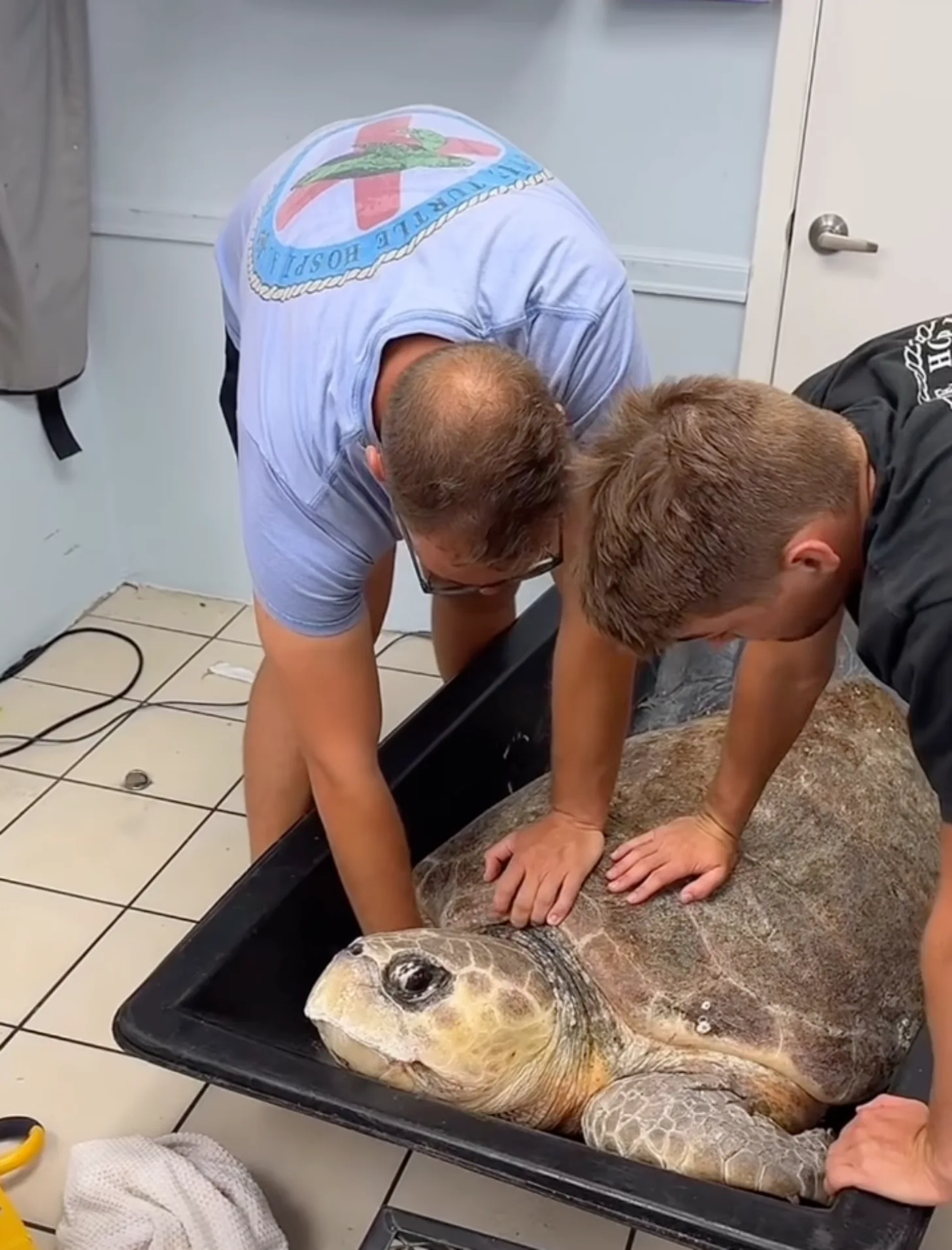
“We don't know what’s wrong with her,” she said. “I know it’s frustrating to hear that, but it’s frustrating for us as well, but we're doing a lot of diagnostics to try to figure out why she was struggling at the [ocean’s] surface.”
Fortunately, once she was able to rest in a shallow pool, Timmy’s panic seemed to subside.
“Timmy did great today!” The Turtle Hospital posted on July 21. “She happily ate everything we offered her — including squid, mackerel, shrimp, and lobster tail. This girl was HUNGRY!”
Like all of the sea turtles that come through The Turtle Hospital, the ultimate goal is to return Timmy to the ocean if she receives a clean bill of health from the veterinary staff.
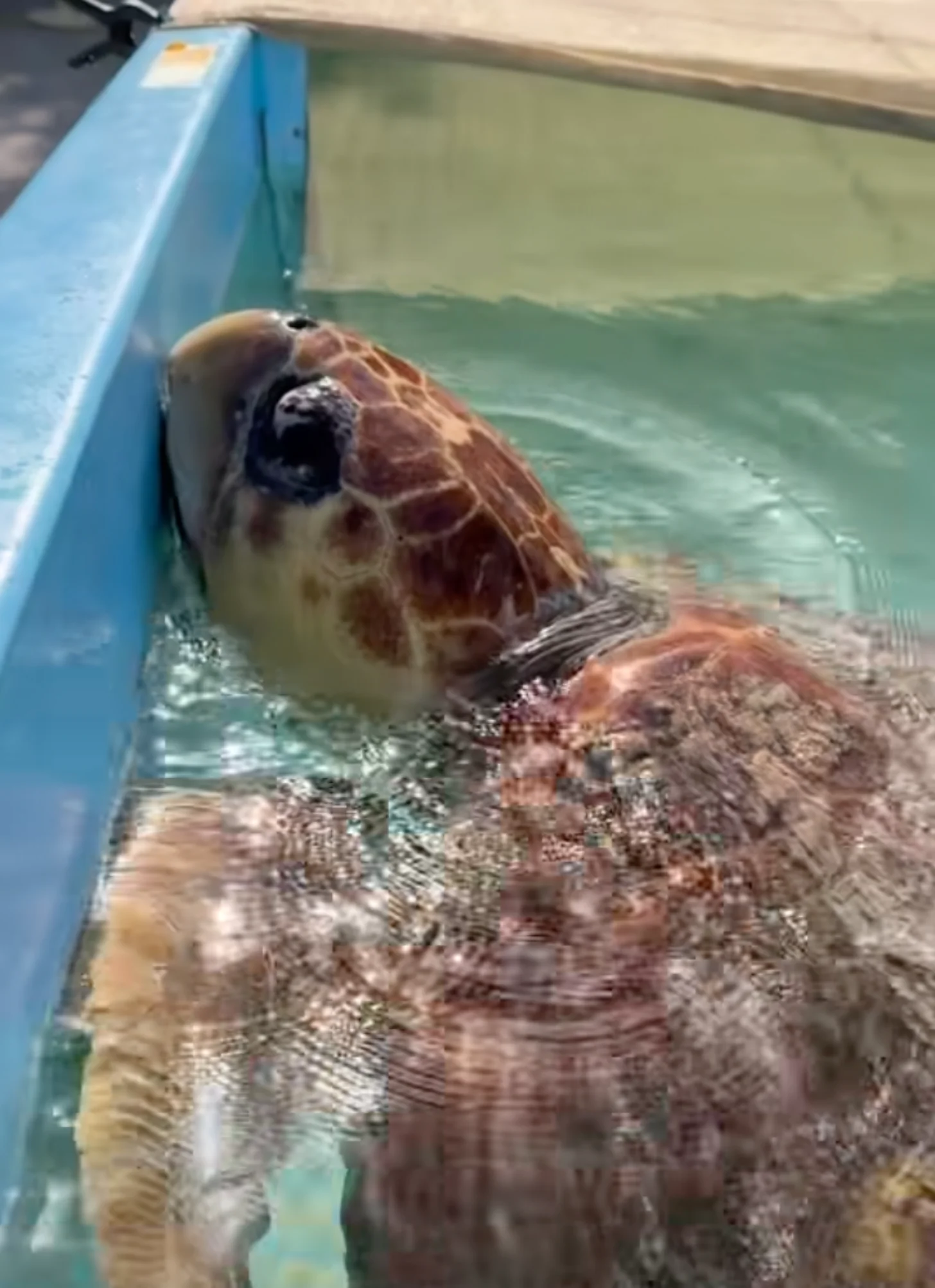
It’s been a busy summer for the rescue and rehabilitation center. On July 17, they released a green sea turtle named Flynn, who had been covered tip-to-tail in tumors when he was first rescued.
“Flynn didn’t hesitate — he was feeling feisty and more than ready to get back out there!” the hospital shared on social media.
“Watching him swim back into the ocean after overcoming cold stunning, severe anemia, fibropapillomatosis tumors, and two life-saving blood transfusions is a reminder of why this work matters.”
Timmy isn’t the first sea turtle to be rescued with an assist from the U.S. Coast Guard, either. A loggerhead named Hope was saved by a boatful of maritime officers in early June after her front flipper was mangled by an anchor.
Although her flipper had to be amputated, Hope has responded well to treatment and has only been growing stronger in her rehabilitation.
“Sending a little Hope your way this weekend,” The Turtle Hospital wrote on July 18, sharing a video of Hope cruising through the water. “Take some time to slow down, enjoy the little things, and soak up the sunshine.”
You may also like: Pancake, one of the world's rarest sea turtles, is swimming free again after nearly freezing to death
Featured Image: U.S. Coast Guard Southeast
In July 2026, a team of students from Eindhoven University of Technology in the Netherlands unveiled what is believed to be the world’s first solar-powered ambulance.
It’s called the Stella Juva.
The team, comprised of nearly two dozen student engineers and designers, has a dream of making medical care accessible to people in the most remote regions of the world — while also using sustainable power to do so.
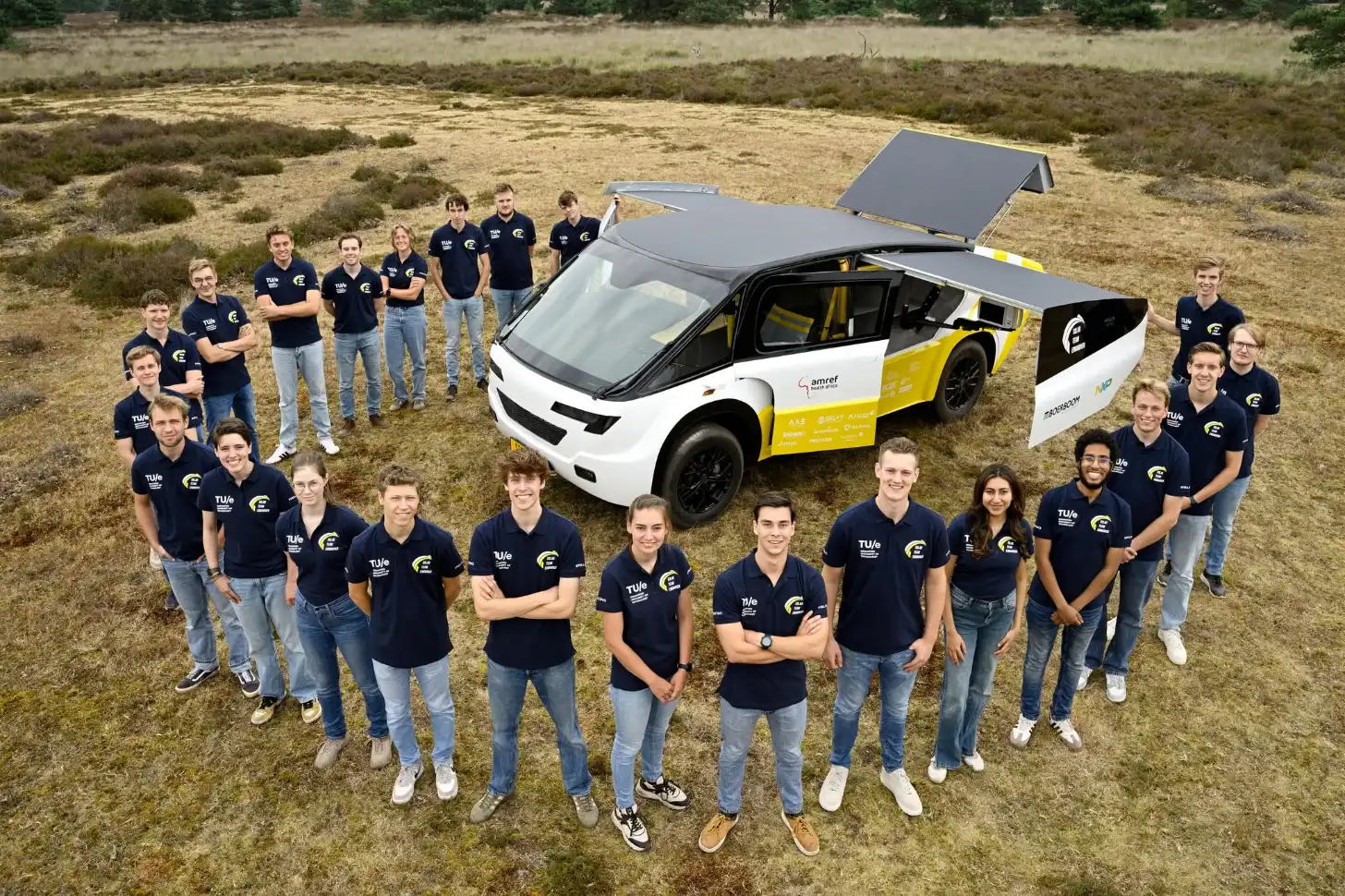
“We were inspired by the United Nations’ Sustainable Development Goals, which strive to make good healthcare accessible to everyone,” 21-year-old team manager Mathijs van Gerven, said in a statement.
“Stella Juva is fully equipped to deliver medical healthcare in hard-to-reach areas.”
The ambulance is almost Cybertruck-like in appearance, but it packs a much bigger punch than a standard pedestrian vehicle. It generates energy through solar panels on its roof, which then drives the vehicle and powers medical equipment on board.
On a sunny day, the solar ambulance can reach a top speed of about 75 miles per hour and is expected to cover approximately 445 miles. Medical devices housed inside include X-ray machines and defibrillators.
There are two seats inside the vehicle, but once parked, a tent can be pulled out, accompanied by folding chairs, so patients can be seen on-site.
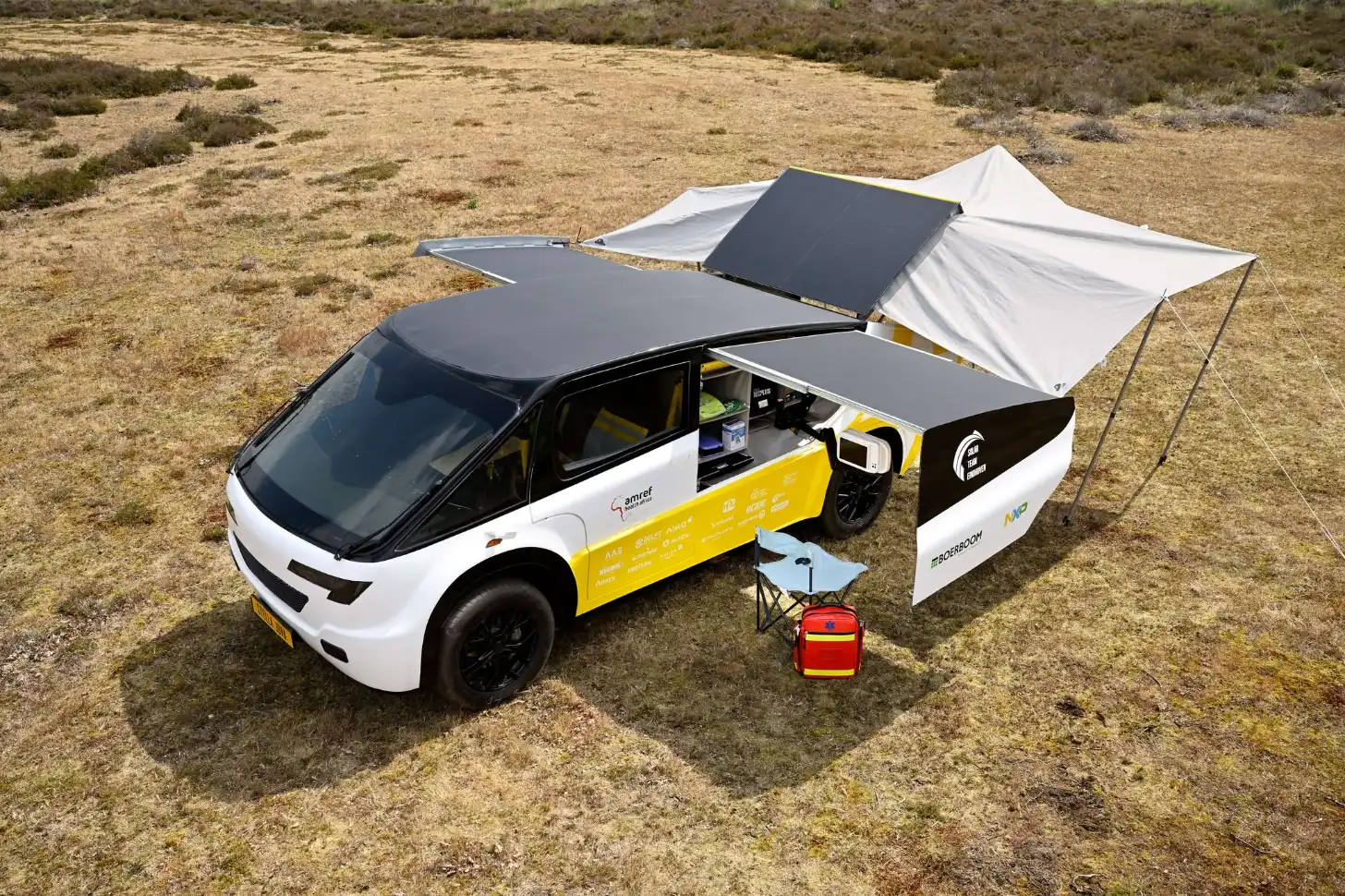
In addition to supporting acute care needs, the ambulance is also equipped with testing kits for tuberculosis, cooled storage for vaccines, and ultrasound devices for pregnant patients.
The student team collaborated with international health organizations like Amref Health Africa, formerly known as Flying Doctors.
“For millions of people, good healthcare remains out of reach. Access to care shouldn’t depend on whether there’s access to electricity or fuel,” Femke Maurits, partnerships manager of Amref Health Africa in the Netherlands, said in a statement.
“Amref Health Africa has been working for almost 70 years to make healthcare in Africa better and more accessible. In remote areas, healthcare workers sometimes travel great distances by bicycle, and reliable energy is not a given,” Maurits added.
“That’s why we’re proud to explore together with Solar Team Eindhoven how solar-powered innovation can bring healthcare closer to people who currently have almost no access to it.”

This isn’t just a student project; Stella Juva will soon be deployed in Kenya to test various locations where the ambulance could be deployed in the future.
“In several remote areas, healthcare scenarios will be simulated, such as the treatment of patients with tuberculosis. This allows the team to evaluate how effectively the solar-powered ambulance performs in real-world conditions,” a press release explained.
“During the testing phase, the team will visit two field locations where the treatment of patients will be simulated. At the same time, the team expects to cover hundreds of kilometers with Stella Juva, powered entirely by solar energy.”

While it’s unclear what will happen after the test run, the student team is eager to solve real-world issues with their invention.
“Together with healthcare organizations, we’re developing a vehicle that fits real-world practice. We hope to improve healthcare access, and make it more sustainable,” Yarno Basten, partnerships manager of Solar Team Eindhoven, said in a statement.
“We want to inspire healthcare providers, companies, and other organizations to create social impact through technology. If 23 students can achieve this in a single year, it shows what's possible when the technological industry and social organizations work together.”
You may also like: College students invent 'enrichment wall' for zoo elephants that plays music only they can hear
Featured Image: Courtesy of Solar Team Eindhoven