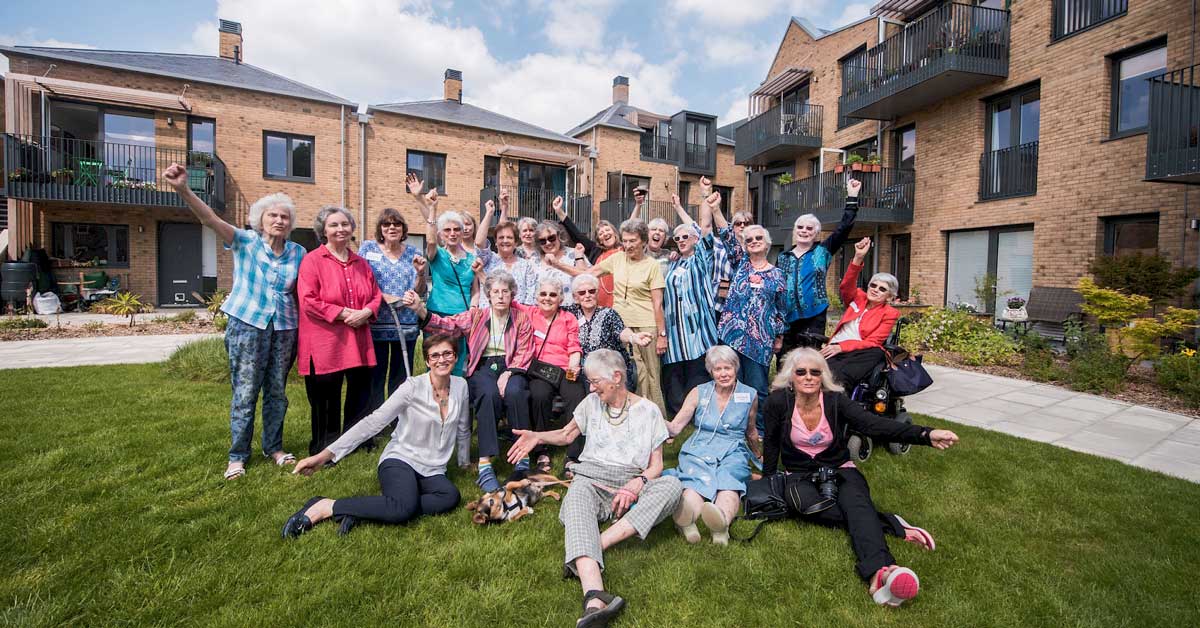
Ten years ago, a group of 26 women, ages ranging from early fifties to mid-eighties, decided to fulfill their dream: Living together in harmony, with no men in sight.
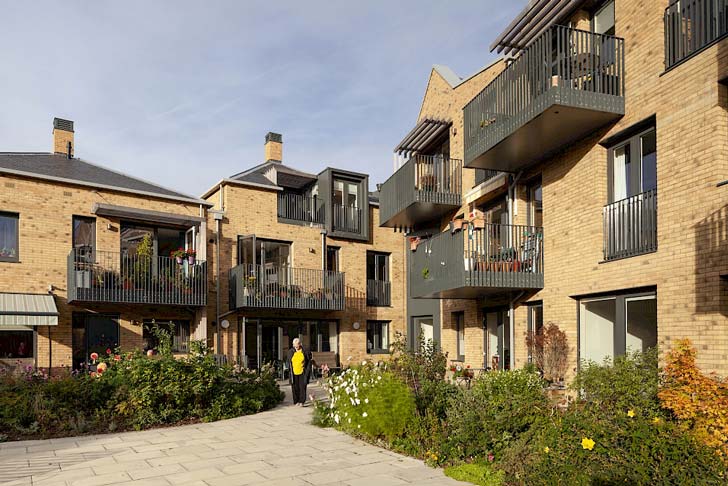
They created Britain’s first all-female co-housing community, named New Ground. It was originally an old convent school, and now, it’s a three-story brick building they call home. Of the original 26 women, 21 still live in the community, which was designed by London architecture firm Pollard Thomas Edwards.
“Most women say it,” resident Hedi Argent recently told The Times. “Men a little less, I think. But women very much say, ‘Wouldn’t it be lovely to live together? We’ll buy a big house…’ ”
“ ‘… and we’ll have a kitchen in the middle and we’ll always have wine,’ ” Jude Tisdall, a 74-year-old resident, finishes her thought.
“But very few people are able to realize it,” Argent adds.
Realizing that idea wasn’t easy. In fact, New Ground dates all the way back to 1998 when Maria Brenton was teaching women’s studies at Cardiff University. She had visited North America, Denmark, and Holland on a mission to learn about how different countries took care of aging citizens.
She learned about co-housing and brought the ideas back to a group of women from a variety of feminist and housing networks she was involved in, The Times reports.
A group of those women fell in love with the idea, and the wheels were in motion. It took 12 years for them to find the right spot in London, but eventually their oasis was uncovered: St Martha’s, the former convent school in High Barnet, North London.
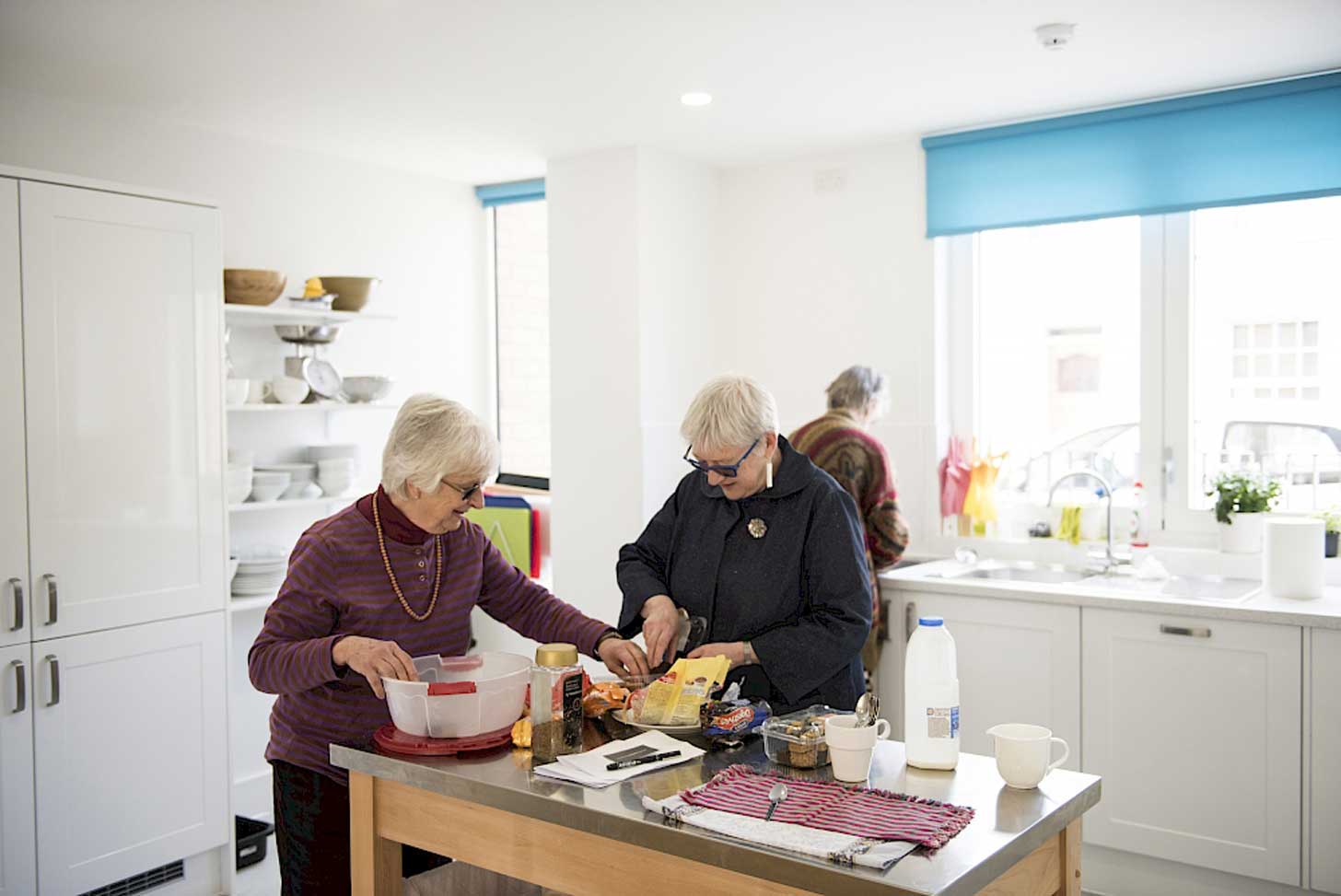
The old convent was transformed into 25 apartments with their own kitchens and “wet room” bathrooms, which are connected through hallways to a shared common house with a kitchen for communal meals, a recreation room, and garden.
The group was adamant about including eight apartments reserved for social housing tenants, and although that added some hurdles, eventually helped pave the way for the dream to become a reality.
London-based charities Housing For Women and Hanover Housing Association came aboard the project and helped finalize the funding and logistics, and for a decade now, it’s been a success.
“The women who started this didn’t want it to be seen as a place of privilege just for women who could afford to belong to this kind of community,” Tisdall told The Times.
The women come from all walks of life, including nine different nationalities, workers and retirees, widowed and divorced, happy singles, and one lesbian couple who shares an apartment.
Men are certainly welcome to visit; they just can’t sign a lease.
“We have brothers, fathers, sons, grandsons, lovers and everything in between,” Tisdall told The Guardian in 2023. “The only thing is they can’t come and live here.”
“It’s about taking control of our individual lives,” Tisdall told The Times three years later. “It’s not a rejection of men.”
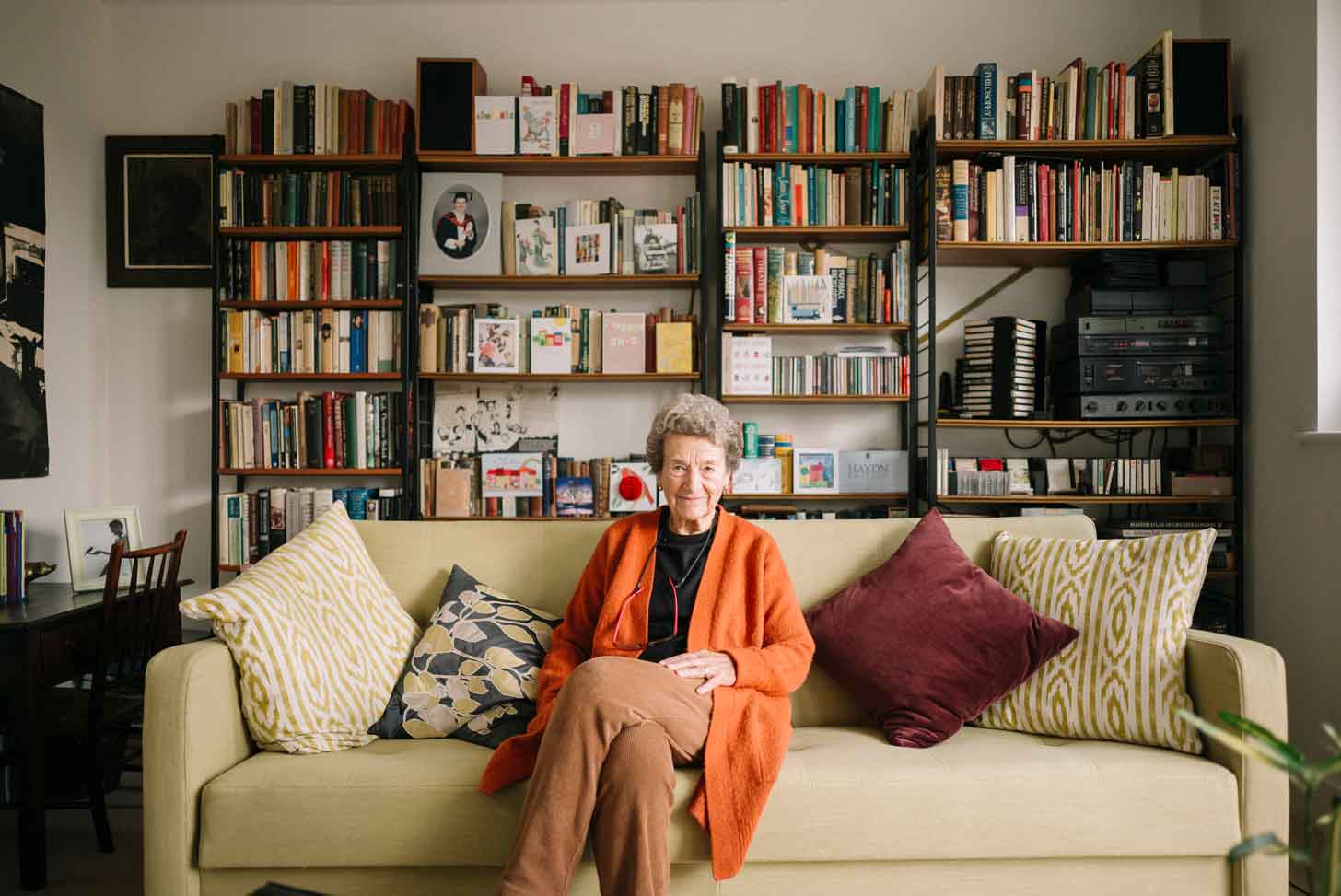
New Ground is not a perfect utopia, but it comes pretty close.
“It’s not always easy to live with 25 other women. We deal with aging, illness and disagreements,” Tisdall told The Times. “We’re not Stepford Wives, we have to work at it and negotiate.”
Although disagreements come and go, the women are all formally trained in conflict-resolution skills. If decisions cannot be made by consensus, community members vote, requiring an 80% majority to pass. If a decision is blocked, the opposing group has one month to present a feasible solution.
The main benefit the co-housing solution provides is an opportunity to age with dignity and autonomy — together. All of the members of New Ground share responsibilities like finance, building maintenance, gardening, housekeeping, and more.
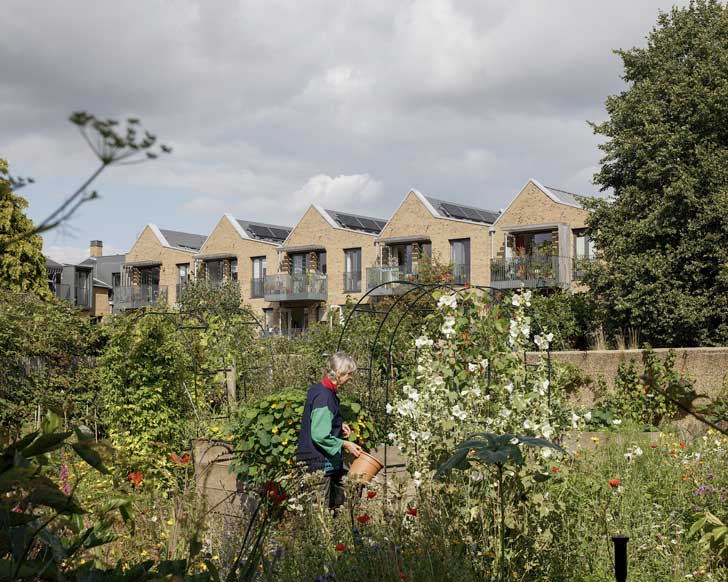
They have one contracted manager who helps keep the building in shape and collects service charges every month, a fee set by the residents.
And other than that, it’s pretty straightforward — and still a bit radical.
“The women who started this were adamant that they didn’t want to sit in a day-room singing ‘Daisy Daisy’ and ‘Pack Up Your Troubles’ for the rest of their lives,” Brenton told The Guardian.
“We were fiercely opposed to the ageism and paternalism, the infantilization of older people by social care services.”
Brenton, now 80, and a handful of the original group of women, have documented what they accomplished in a new book, “Our Later Years.”
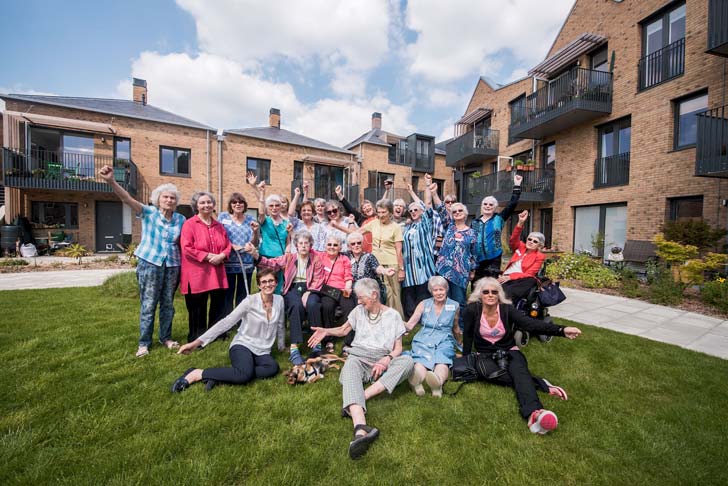
“We are making history, and we are extremely proud,” one resident, Shirley, said in a statement for the architecture firm who built New Ground.
“We are unique, but we don’t want to be unique.”
They hope it inspires something new for other aging women like them — in London and everywhere.
“I don’t think we ever thought of it as a problem to be solved,” Argent told The Times. “We thought about it as an exploration of what was possible.”
You may also like: In this all-women tiny home neighborhood, rent starts at $450. Residents want it to be a nationwide blueprint
Header image courtesy of Pollard Thomas Edwards