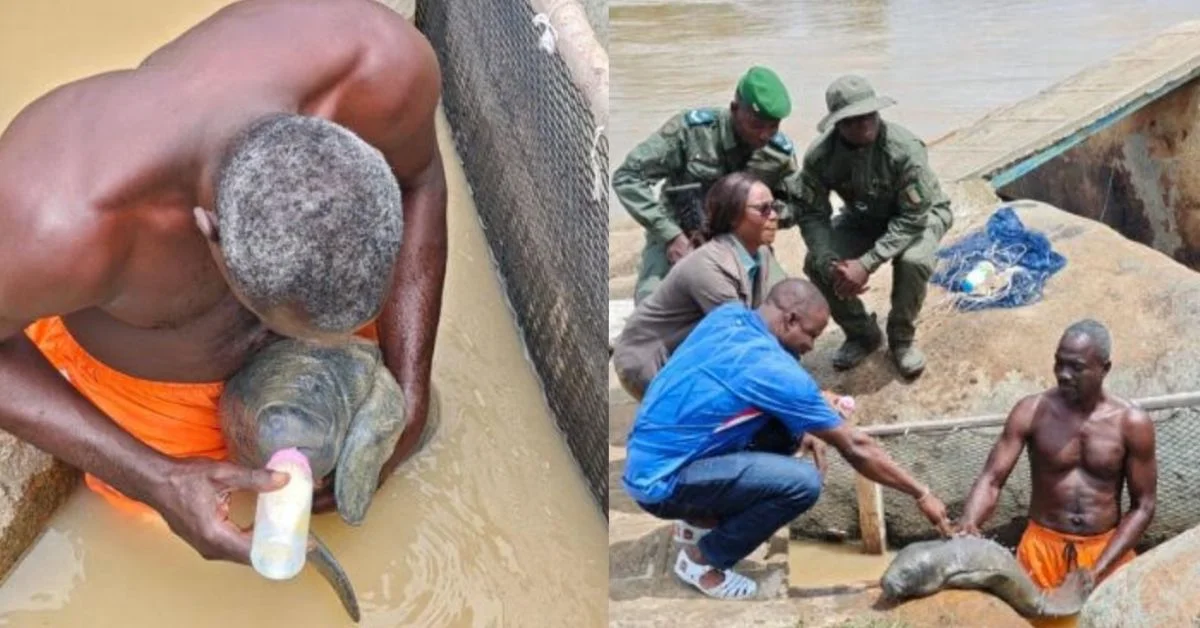
Goué André Clotaire Gbagou is a fisherman who lives in the Ivory Coast, also known as Côte d'Ivoire.
Recently, he was out fishing on the Sassandra Riverbed when he accidentally caught something much larger than a fish: a young West African manatee.
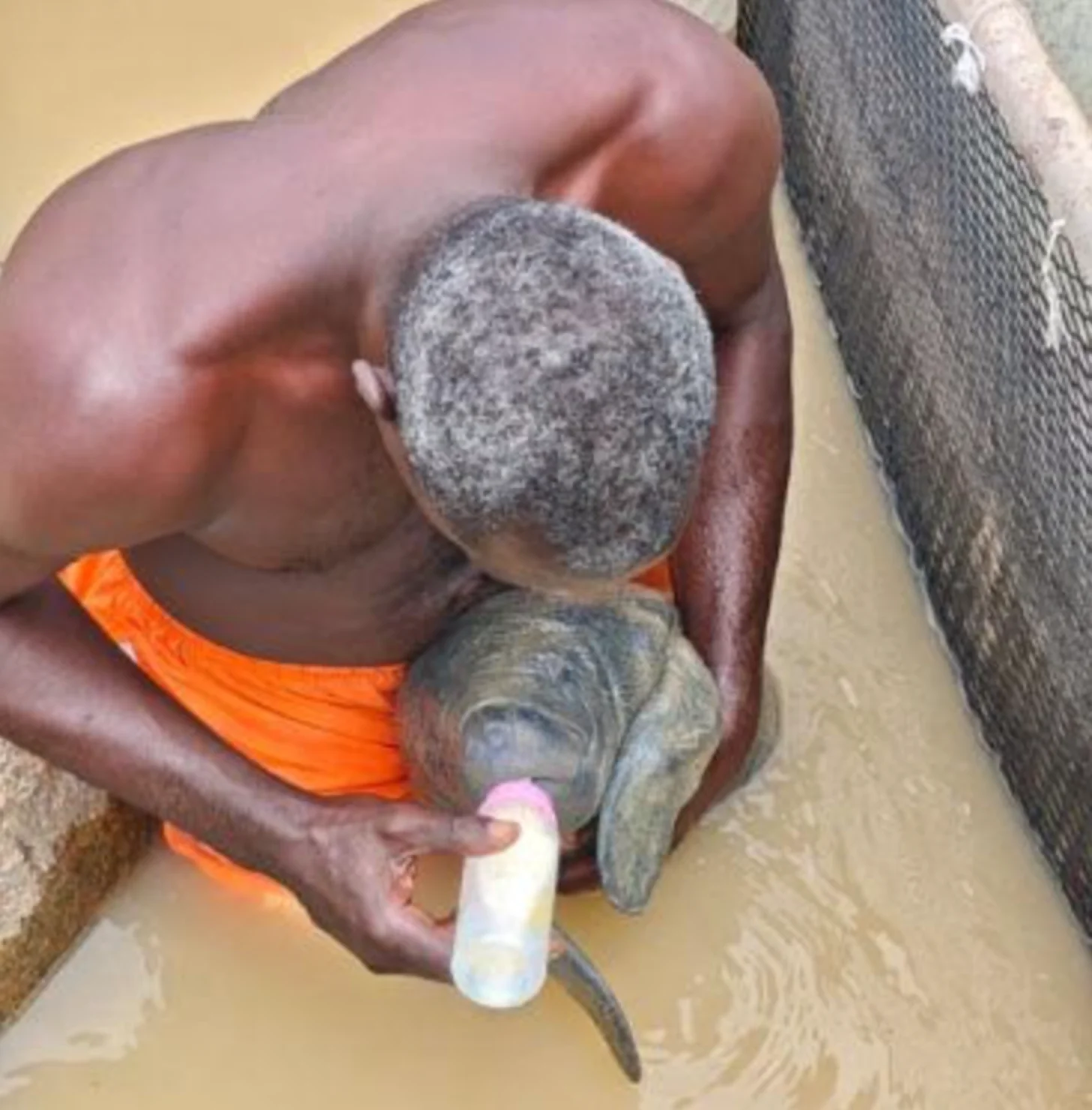
After realizing that the baby manatee was far too young to fend for itself, Gbagou decided to care for the calf. It now lives at a local wildlife enclosure, where Gbagou bottle-feeds it by hand.
This week, Born Free USA, the Department of Wildlife and Hunting Resources, and the Ministry of Water and Forests detailed the rescue and recovery effort in an email to Good Good Good.
“As of July 22, it weighs 25 kg, and the fisherman estimates its age to be two months,” the agencies said in a joint statement.
“However, the DFRC will monitor the calf’s progress and make the decision to release it at the appropriate time as soon as the animal appears to be outgrowing its enclosure and is feeding properly.”
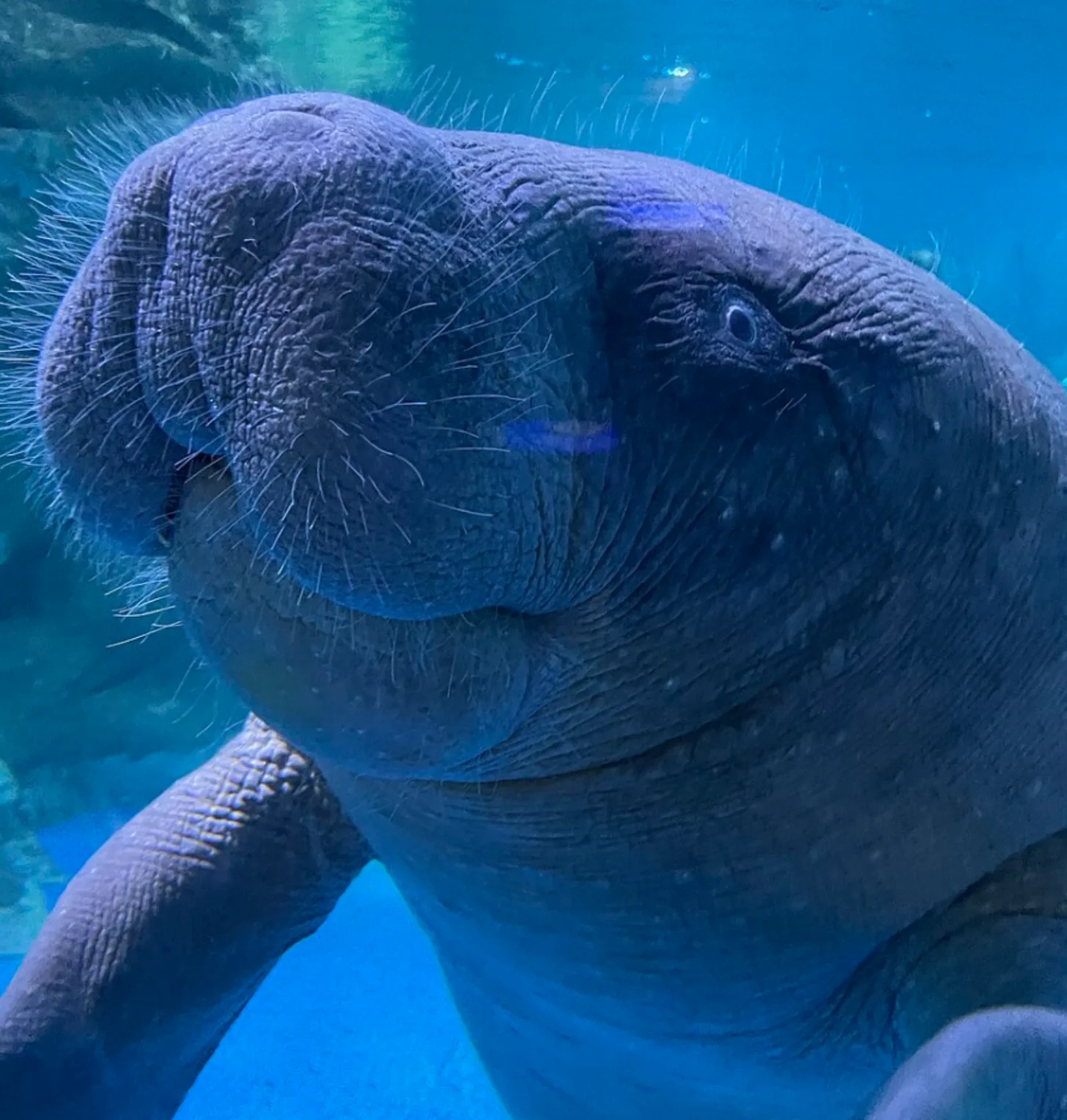
West African manatees inhabit coastal waters, rivers, and wetland systems across 21 countries, from Senegal to Angola. Like their relatives in North America — the Florida manatee — they have been a source of great concern in the world of conservation.
Today, the International Union for Conservation of Nature lists all manatees as “vulnerable” on their Red List of Threatened Species.
Currently, there are no regional organizations specifically focused on safeguarding manatees in the Ivory Coast, but the agencies reported that the presence of the baby manatee has “sparked keen interest” among locals.
According to BFUSA, MINEF, and the DFRC, Gbagou has been consulting with other members in the community to establish a grassroots effort dedicated to protecting manatees.

From its onset, the DFRC has advised Gbagou to expand the effort to other vulnerable species in the area, too, including sea turtles, dolphins, waterbirds, and monkeys.
Because fishing is the biggest threat to manatees, officials recommended helping fishermen switch to eco-friendly fishing practices to reduce pressure on rivers, lagoons, and waterways as fish populations continue to decline.
The government also sees ecotourism as an entry point for protecting manatees and other imperiled species.
“Ivorians enjoy vacations by the sea or near lagoons, as well as lake-based activities,” the agencies told Good Good Good. “[We] suggest training communities in the promotion and practice of ecotourism, as well as the creation of pilot sites that include observation stations for specific species. This will enable communities to derive financial benefits from species conservation.”
Overall, BFUSA, MINEF, and the DFRC emphasized that this story is bigger than a single baby manatee, and that long-term solutions are needed to protect the beloved species at large.
“Authorities need support to halt the decline in the manatee population, caused by entanglement in fishing nets, and the destruction of their habitats — deforestation, mangrove destruction, plastic and chemical pollution, and siltation,” they said.
“The confirmed presence of manatees in these areas justifies the urgent implementation of conservation efforts to restore their habitats and populations.”
You may also like: A stranded sea turtle got wedged between jagged rocks. Three men came together to save it from drowning in a viral video
Featured Image: Born Free USA