Pablo J. Venegas is the lead herpetologist in Peru for the Rainforest Partnership. For nearly 20 years, the organization has worked with Indigenous communities to lead rainforest protection and anti-deforestation efforts.
In addition to implementing conservation projects on the ground, the Rainforest Partnership tasks scientists like Venegas with surveying the Peruvian Tropical Andes to capture the diversity of native amphibians and reptiles and assess their conservation status.
In 2021 and 2025, Venegas led a team on ten expeditions through remote forests, isolated mountain ranges, and high-altitude grasslands of the Tropical Andes — widely considered one of the most biologically diverse regions on the planet.
“During these surveys, they documented the richness, ecology, natural history, health, and conservation status of more than 80 amphibian and 30 reptile species,” the Rainforest Partnership stated on its website.
“Among them were approximately 50 frog species and 23 lizard species new to science. So far, 20 amphibian species and eight reptile species have been formally described and published in scientific peer-review journals, while others are currently in the process of scientific description and publication.”
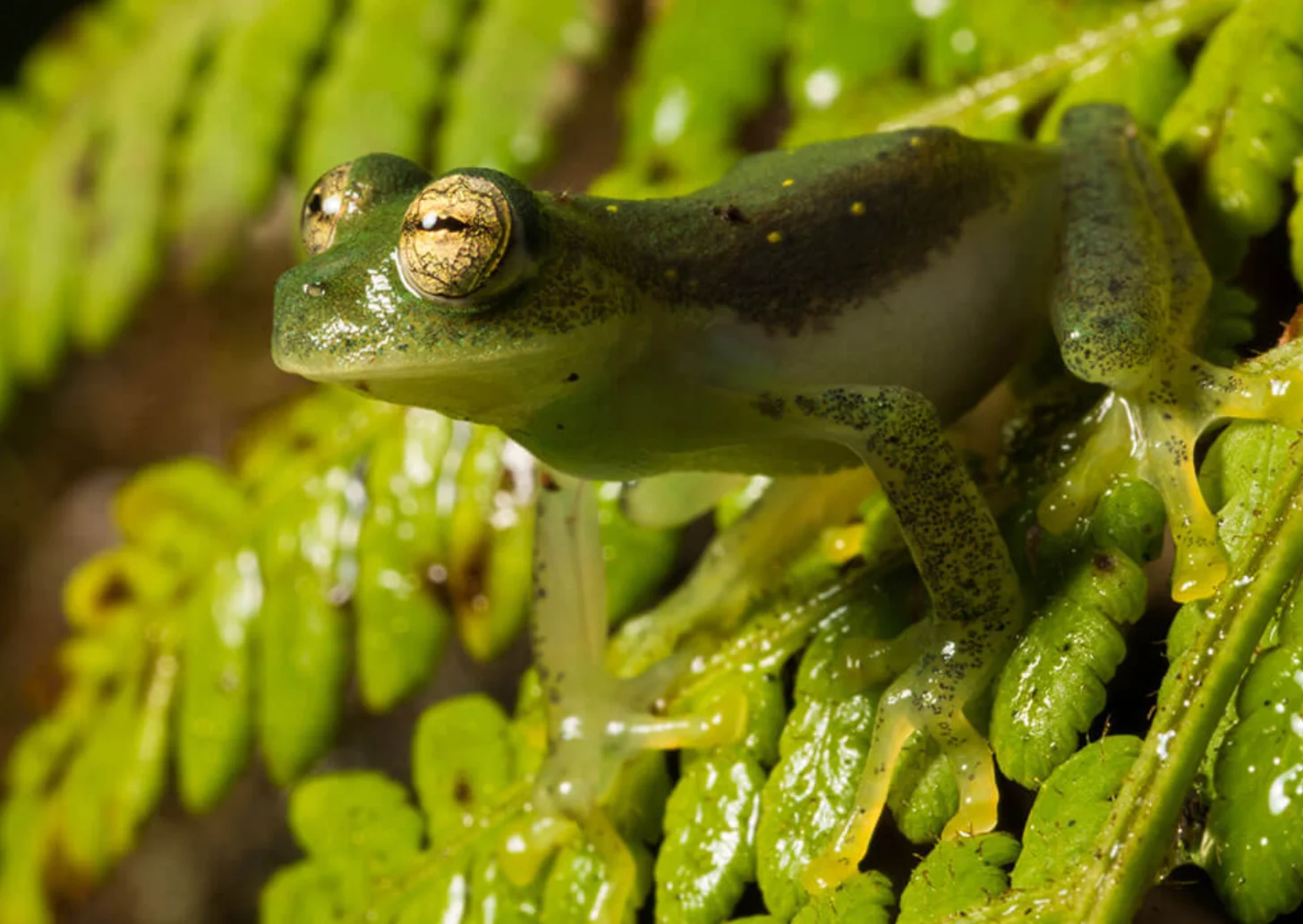
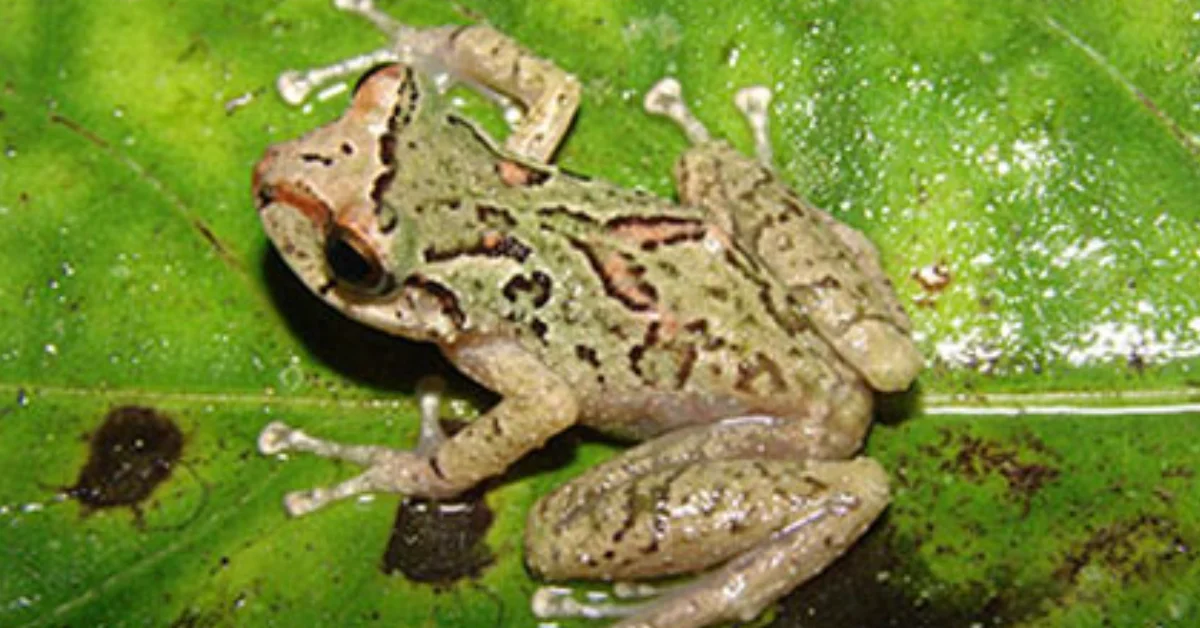
On October 16, Venegas and his peers — Luis A. García-Ayachi, Allesandro Catenazzi, and Santiago Ron — published their latest findings, formally introducing another five frog species that they discovered in the Peruvian Amazon.
“We describe five new species of the Pristimantis lacrimosus group based on morphological traits, molecular data, and, in two species, bioacoustic [characteristics],” Venegas and his co-authors observed in the study, which was published in the scientific journal Zootaxa.
“The five new species can be distinguished from their congeners by the combination of features such as snout shape, presence or absence of [distinct nose bumps], skin texture, size, and coloration pattern,” the researchers explained.
The five species, found at elevations ranging from 183 to 1,778 meters, ranged from the Amazon lowlands of Huánuco to the slope of Junín in central Peru.
The herpetologists classified them as Pristimantis basicordellum, Pristimantis culmecordellum, Pristimantis rhodocanthus, Pristimantis solitarius, and Pristimantis aisatipoki.
On October 17, the Rainforest Partnership shared the discovery on its Instagram account — singling out one frog species in particular.
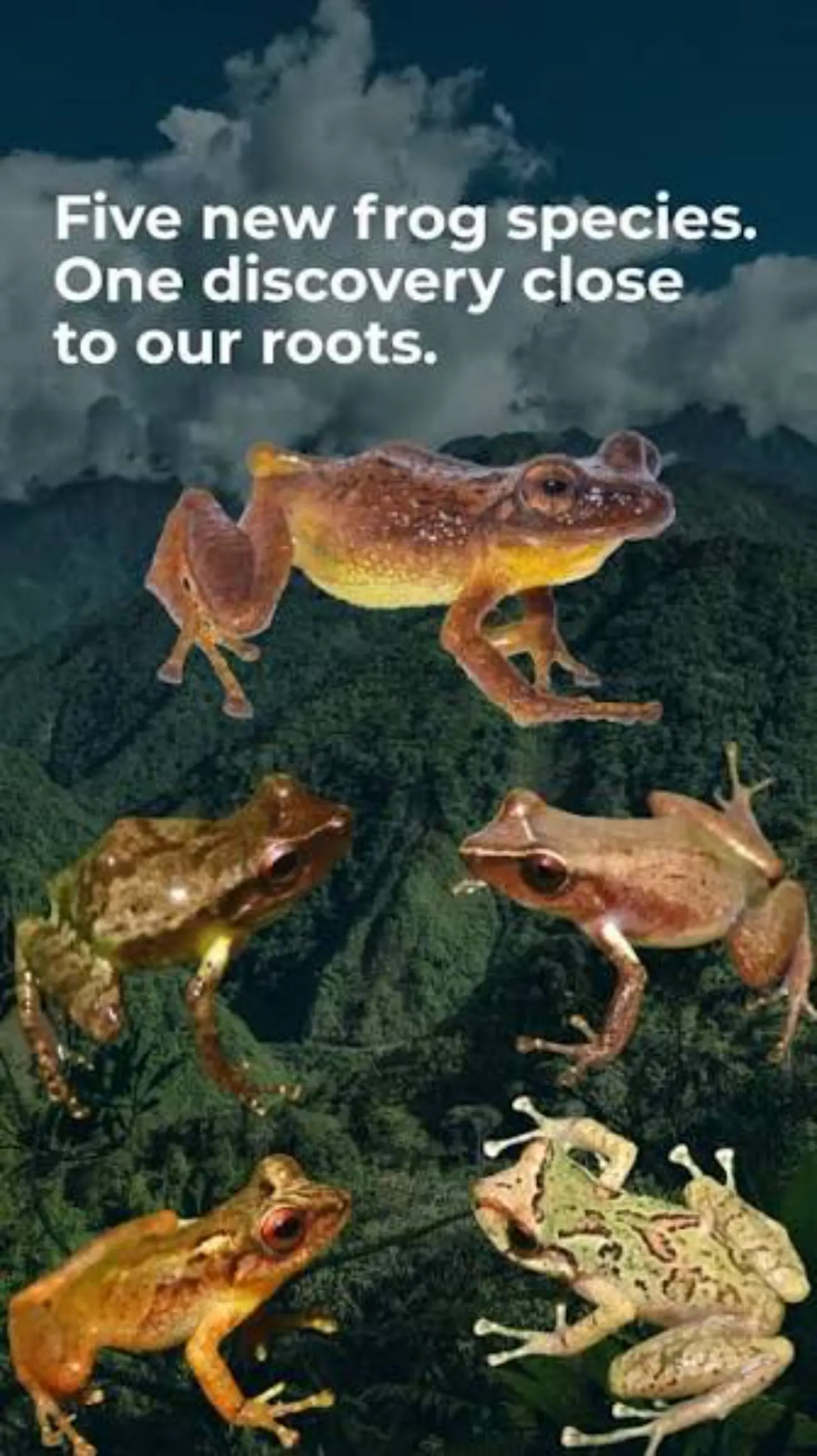
“One has a special connection to Rainforest Partnership: Pristimantis aisatipoki,” the organization wrote in an Instagram caption. “Discovered in 2019 during a Rainforest Partnership expedition in San Antonio, Satipo — the place where our conservation work in Peru began.
“A cloud-forest inhabitant, this frog is known from three nearby localities along the Pampa Hermosa River, at elevations of 1,466–1,723 meters. Researchers observed individuals calling at night from leaves of small trees and shrubs.”
According to the Rainforest Partnership, its name “tells a story.”
“Aisatipoki comes from the Asháninka language, meaning ‘those who arrive’ or ‘those who settle,’ honoring Satipo’s history and biodiversity,” the organization explained.
So far, the organization’s work has been featured in 26 peer-reviewed publications, with more to come.
“We can only protect what we know exists,” the Rainforest Partnership wrote. “Every new discovery reminds us why exploring, understanding, and protecting these forests matter.”
You may also like: 16,000 new species are discovered every year. Experts say discovery 'far outpaces the rate of species extinctions'
Featured Image: Pablo J. Venegas, et al