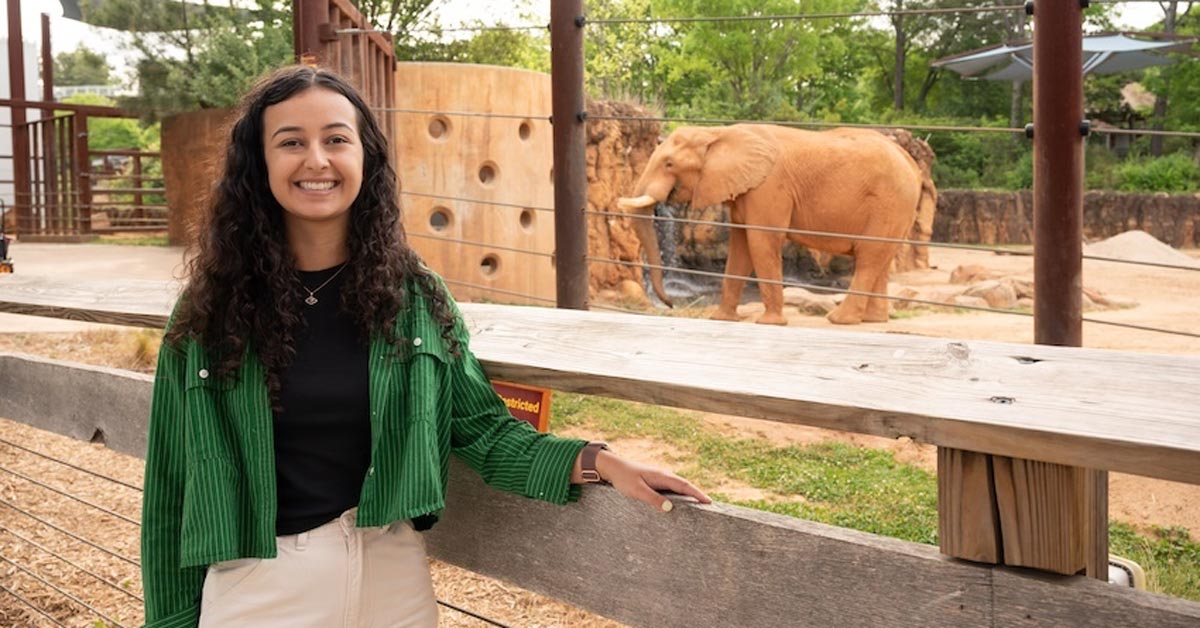
Life is pretty easy for the four African elephants who reside at Zoo Atlanta.
If Kelly, Msholo, Tara, and Titan lived in the wild, they would be foraging for food and remaining alert to keep their calves safe from predators.
But at the zoo, they don’t have to worry about their survival. However, that means these extremely intelligent creatures need to find new ways to stay mentally stimulated.
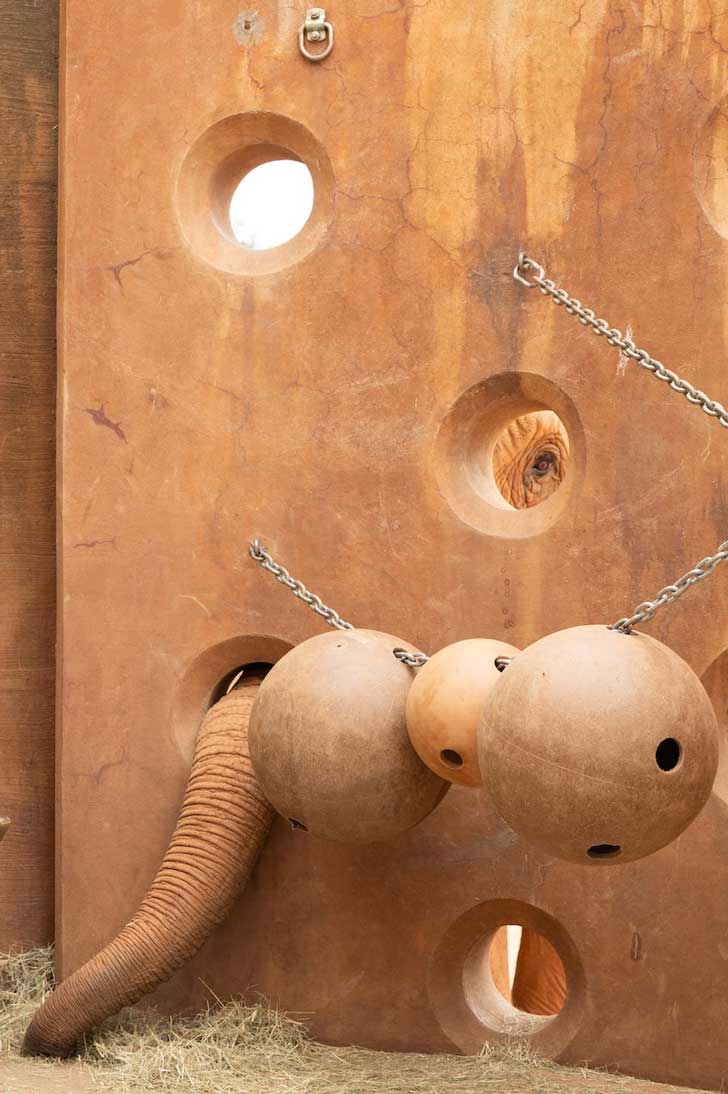
Zoo caretakers have built a concrete enrichment wall filled with holes for the elephants to reach through with their tusks, searching for food, treats, or other play objects. The idea is to help them engage in problem-solving and critical thinking in ways that would be natural to their wild environment.
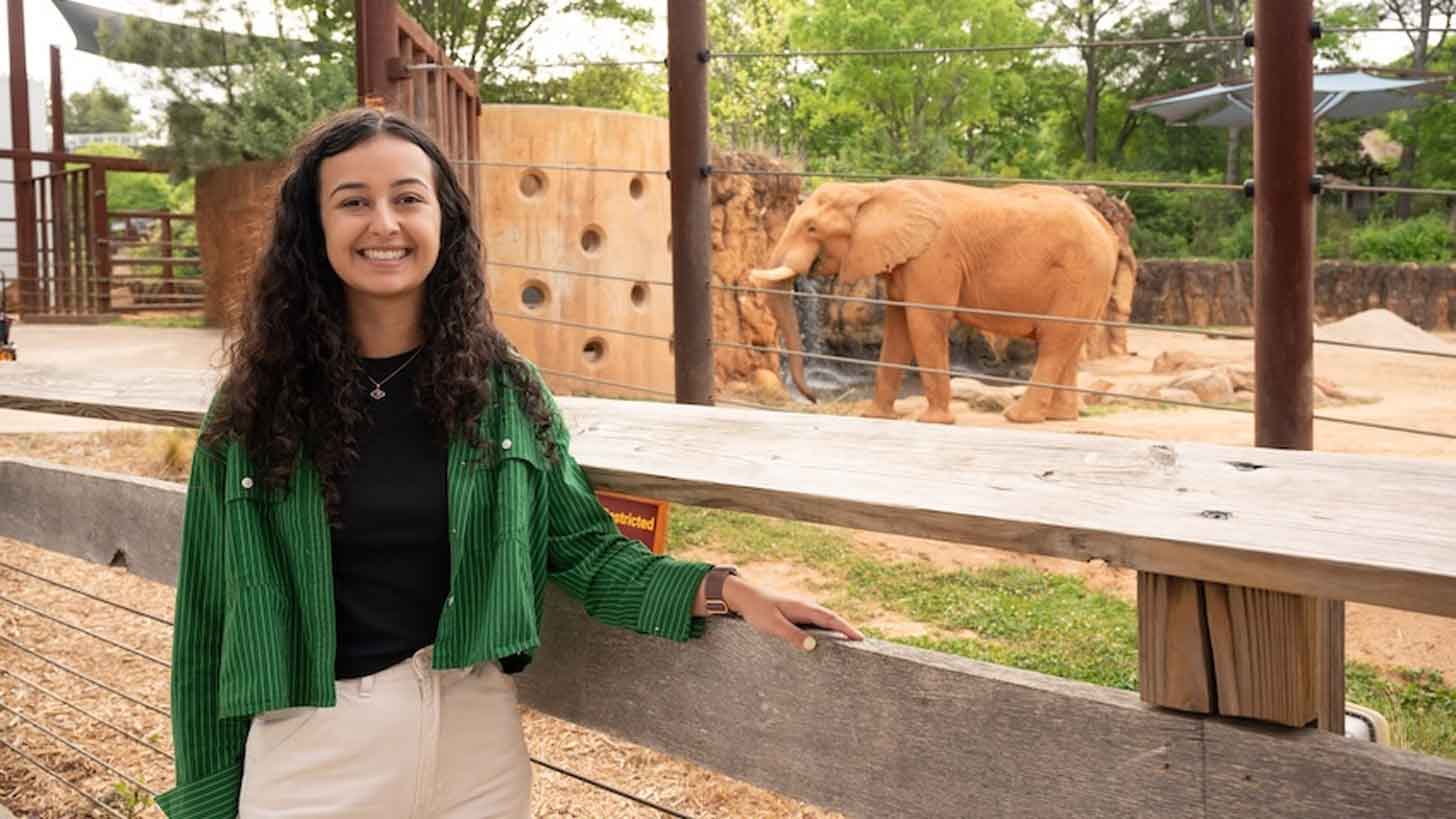
But Arianna Mastali, a Ph.D. student at Georgia Tech’s School of Interactive Computing thought they could take things up a level.
As a member of the Georgia Tech Animal Lab, Mastali designed an audio enrichment component to improve the zoo’s interactive wall.
Her design uses cameras and computer vision to detect when an elephant’s trunk is inside one of the holes in the wall, which sends a signal to a nearby speaker to play a low-frequency tone that isn’t very loud to humans.
Kirby Miller, the senior elephant caretaker at Zoo Atlanta, said elephants have sharp memories and acute senses of hearing, meaning this intentional design makes their habitats well-suited to their needs.
“I think anything they can participate in that gives them choice and control is great for all zoo elephants,” Miller said in a statement.
“It depends on the elephants, but with our elephants, they can hear much higher frequencies than we can. That noise isn’t that loud for us, but for them, they’re feeling that noise, and they can hear much more, which makes it more stimulating for them.”
Mastali worked with colleagues in the animal lab to figure out how to incorporate sensing technology into the project, with the goal of enhancing the elephants’ wellness.
First, she tried incorporating sensing devices into a PVC pipe insert for the wall, which used a sensor with infrared beams to detect the elephant’s trunk. But their strong trunks broke the insert after a day or two.
Mastali persevered.
“They’re intelligent creatures that require a lot of complexity in their habitat,” Mastali said. “We wanted to add to that complexity while giving them more control.”
The next iteration required her to pivot to the camera and computer vision to remove the risk of damage to the wall, while still maintaining minimal invasion of the elephants’ habitat.
Then, it was time to see if the elephants even liked engaging with the design.
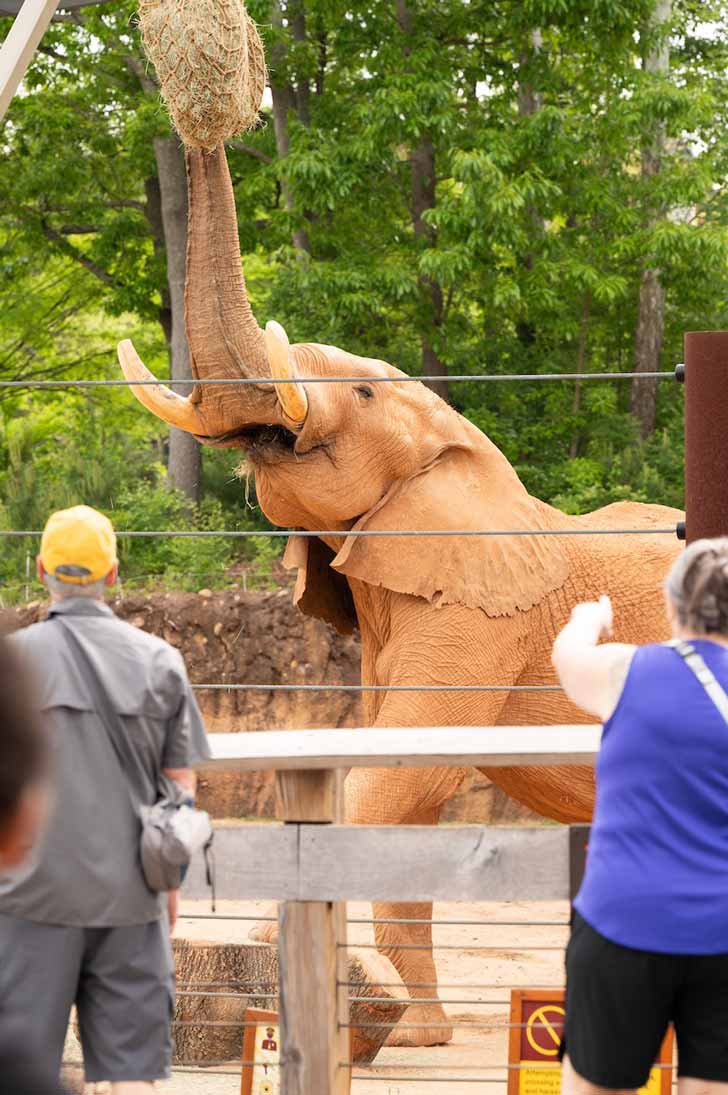
“We weren’t sure at first if they would care that much, so it was great to see how much time they spent at the wall, especially our less dominant females,” Miller said. “They seem to like it the most.”
In the past, she added, the elephants used to only approach the wall when they knew there was food behind it. Once the audio enrichment system was installed, they got more curious.
“We would be off somewhere else, and we’d hear the speaker playing the sounds, and we knew there wasn’t any food back there,” Miller said. “Tara had her trunk in one of the holes, just listening to the sound. That let us know they do like it, and they’re very curious about it.”
To test her system, Mastali observed the elephants’ behavior at the wall seven days before and seven days after the installation of the audio enrichment component.
The number of times the elephants approached the wall after installation increased by 176%, and time spent at the wall increased by 71%.
She calls that a success.
“We’re providing more choice and control over their habitat so that they have more autonomy over how they decide to interact with their surrounding environment,” Mastali told 11 Alive News. “And hopefully that will lead to better care.”
You may also like: British 'Knitting Nannas' sent mini sweaters to penguins, toys to monkeys, and baby blankets to a rhino. Now they're knitting for elephants
Header image courtesy of Georgia Tech