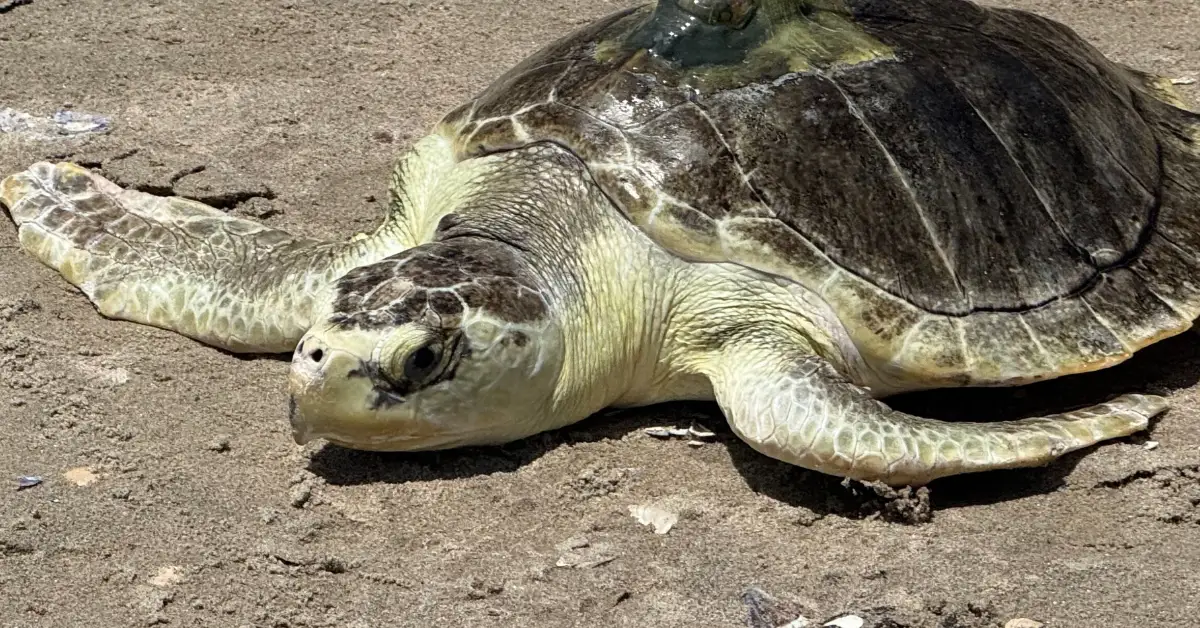
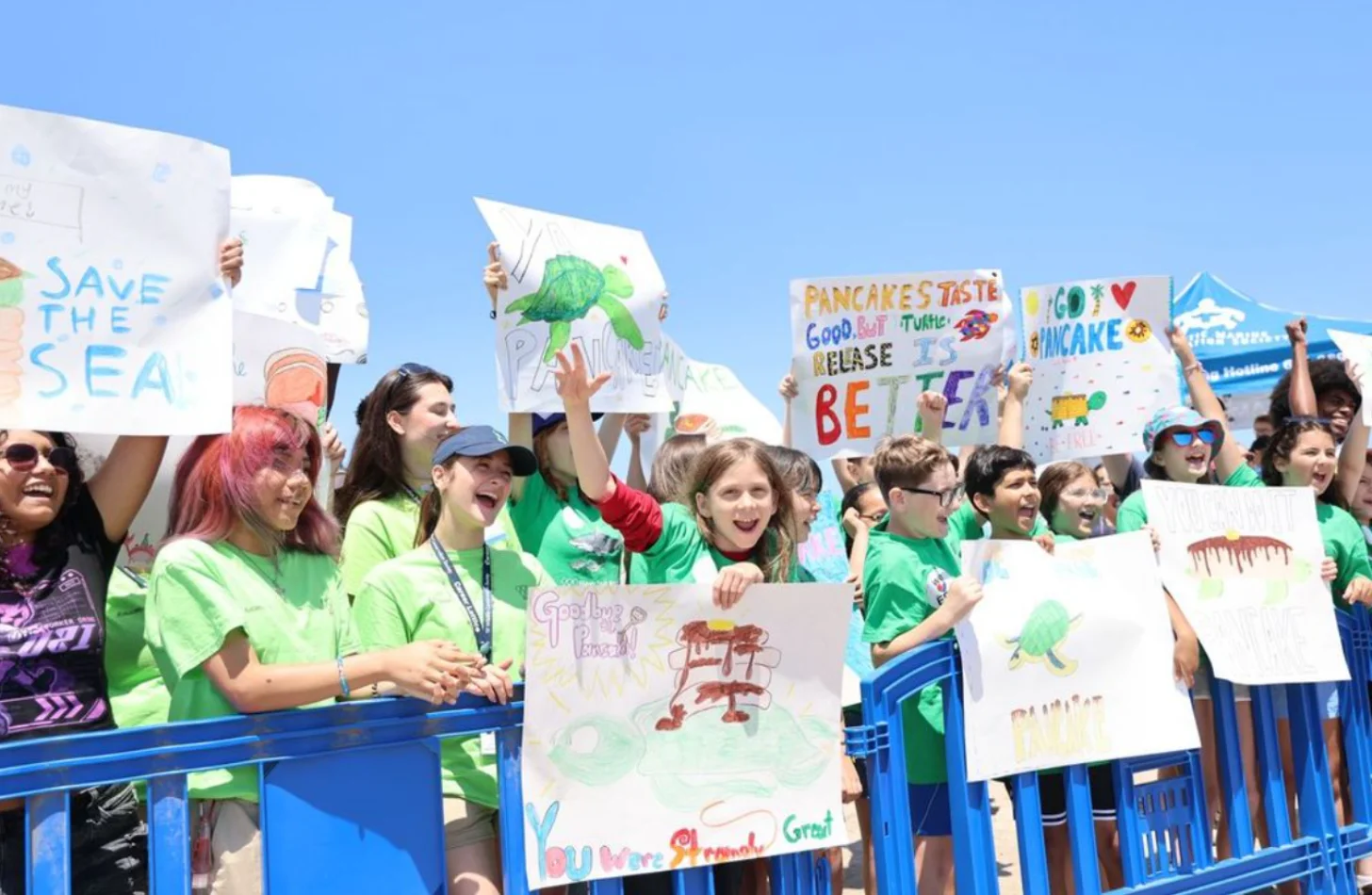
On July 23, a teeming crowd gathered outside of The Wildlife Conservation Society’s New York Aquarium on Coney Island, cheering: “Pancake! Pancake! Pancake!”
But they weren’t cheering on a food competition à la The Nathan's Famous Fourth of July International Hot Dog Eating Contest.
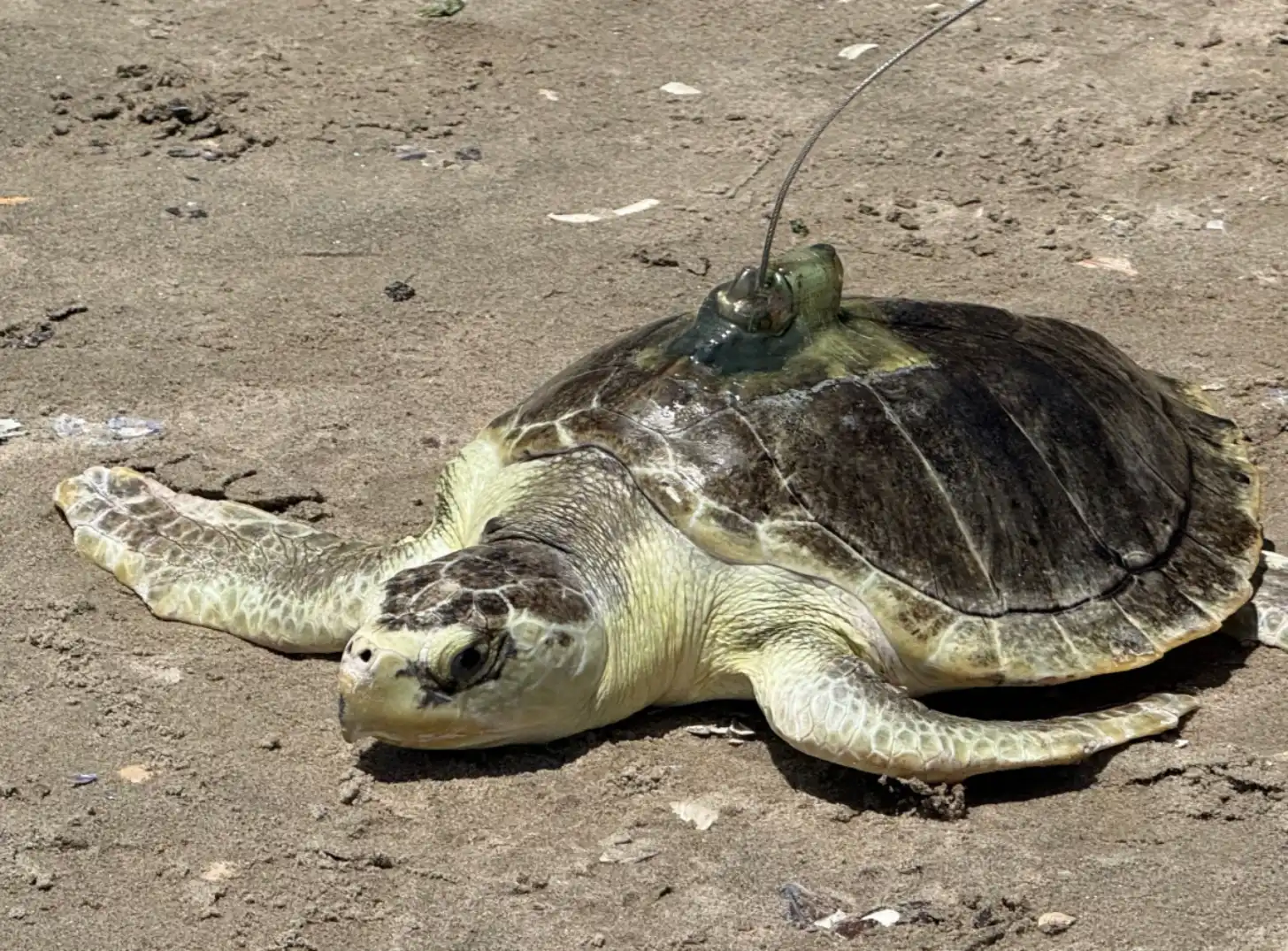
Instead, they were celebrating a sea turtle named Pancake, who was finally returning home to the ocean after eight months of rehabilitation.
Even more remarkable, Pancake is a Kemp’s ridley — the most endangered sea turtle in the world.
“Every Kemp’s ridley returned to the ocean is a victory for one of the world's most endangered sea turtle species,” John F. Calvelli, the executive vice president of public affairs for the Wildlife Conservation Society, said in a press release.
“Pancake’s release reminds us that New Yorkers share our ocean with sea turtles, whales, dolphins, sharks, and countless other remarkable marine species,” he continued.
“For decades, Wildlife Conservation Society scientists have conducted groundbreaking research throughout the New York Bight to better understand and protect this extraordinary marine ecosystem.”
Back in November, Pancake was rescued from a mass cold-stunning event that ultimately left 667 hundreds of sea turtles hypothermic and languishing on Cape Cod Bay beaches.
Thankfully, Mass Audubon worked with the New England Aquarium’s Sea Turtle Hospital to get sea turtles like Pancake to safety.
For months, Pancake has been in recovery at Atlantic Marine Conservation Society's Sea Turtle Care Facility in Westhampton Beach.
There, the turtle underwent medical treatment as she built back up her appetite, living on a steady diet of shrimp and clams. Once it had gained weight and showed signs of strong swimming, Pancake was cleared for release.
Because determining a sea turtle’s sex required drawing and testing blood — a practice that the care team member deemed unnecessary to rehabilitation — Pancake’s sex is unknown.
In addition to community-wide support, Pancake’s story also garnered attention from high-ranking officials across the state.
“The care and release of Pancake is an inspiration to all of us who work so hard to preserve and restore our endangered ocean species and habitats,” said New York Secretary of State Walter T. Mosley.
“Through Governor Hochul’s unprecedented investments in the State Environmental Protection Fund, New York State is leading the nation in its stewardship of our Atlantic Ocean and Great Lakes ecosystems.”
Martin Gary, the director of the division of marine resources at the New York State Department of Environmental Conservation, said that release events like this “shed important light” on the recovery efforts of endangered sea turtle species.
“New York State's Environmental Protection Fund plays a vital role in continuously supporting opportunities that protect not only wildlife that lives in our marine waters, but also New York’s dynamic and diverse coastal ecosystems,” Gary said.
“By restoring ocean health, we are investing in a stronger, more resilient future for New Yorkers and the natural resources that support our communities.”
This week, another sea turtle release happened north of New York off the coast of Cape Cod, when The New England Aquarium’s Sea Turtle Hospital released five other Kemp’s ridley sea turtles back into the ocean.

Although the sea turtles were rescued from various cold-stunned strandings along the Massachusetts coast in early December, all five went through recovery together.
Per tradition, sea turtles grouped in rehab are often given names that fit a certain theme. In this case, they were named after different fonts: Times New Roman, Papyrus, Gigi, Walter Turncoat, and Punk Kid.
The font-titled turtles were released this week after seven months of rehabilitation from pneumonia, dehydration, and trauma.
“Our team tracks each turtle’s progress closely and adjusts care as needed throughout recovery,” Dr. Melissa Joblon, the director of animal health at the New England Aquarium, said in a press release.
“These five turtles are now strong enough to survive entirely on their own in the wild.”
“That’s the goal,” she said. “Every time.”
You may also like: A fisherman caught a baby manatee in his net. When he realized it was too young to be released, he nursed it himself
BJ Siasoco/Wildlife Conservation Society