Way back in 725–675 BCE, when ancient Greek poet Homer composed “The Odyssey,” he created mythological islands and seas to set the story of Odysseus — a man many of us now imagine to look like Matt Damon.
But according to legend, Homer’s Ogygia, the island of the nymph Calypso, is based on Othonoi, a real island on Greece’s westernmost point. The isle is surrounded by the Ionian Sea, also an iconic setting for the climax and home stretch of Odysseus’ journey in Homer’s epic.
But today, while Christopher Nolan’s adaptation of “The Odyssey” reaches international acclaim, these same shores are being studied for potential oil drilling by companies like Chevron and ExxonMobil.
Oil drilling is a harmful extraction process that warms the climate, releases toxic wastewater and greenhouse gases, and puts marine life at risk of oil spills and other hazards.
It’s not something one would imagine Poseidon approving of.
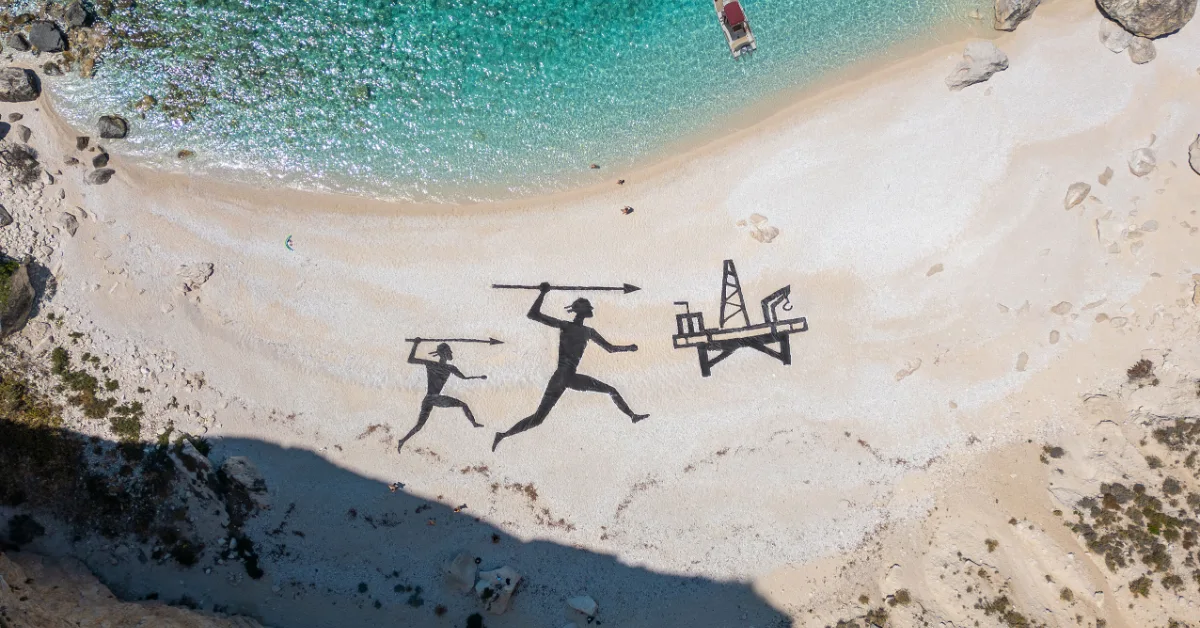
So, visual artist The Krank has created a large-scale public artwork protesting the possible drilling projects. As part of the Ionian Lab residency program on Onthoi, The Krank has pieced together “The Hunt,” a 1640-square-foot installation on Aspri Ammos Beach.
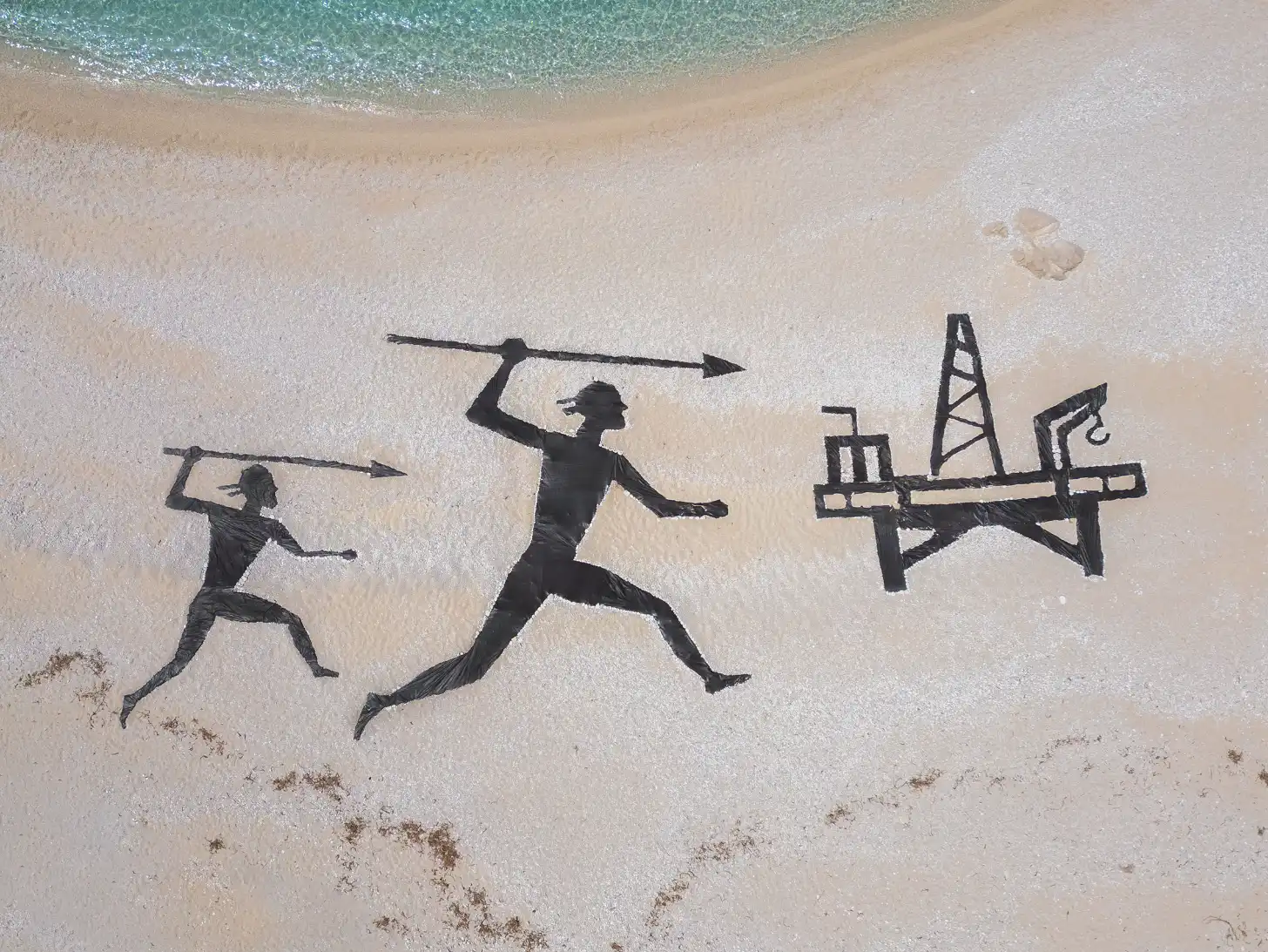
“The Hunt” depicts two hunters with a spear pointed at an offshore oil platform, in a cave drawing-style shape. They are placed approximately 6 miles from the proposed extraction area, and were designed to cause no harm to the local environment.
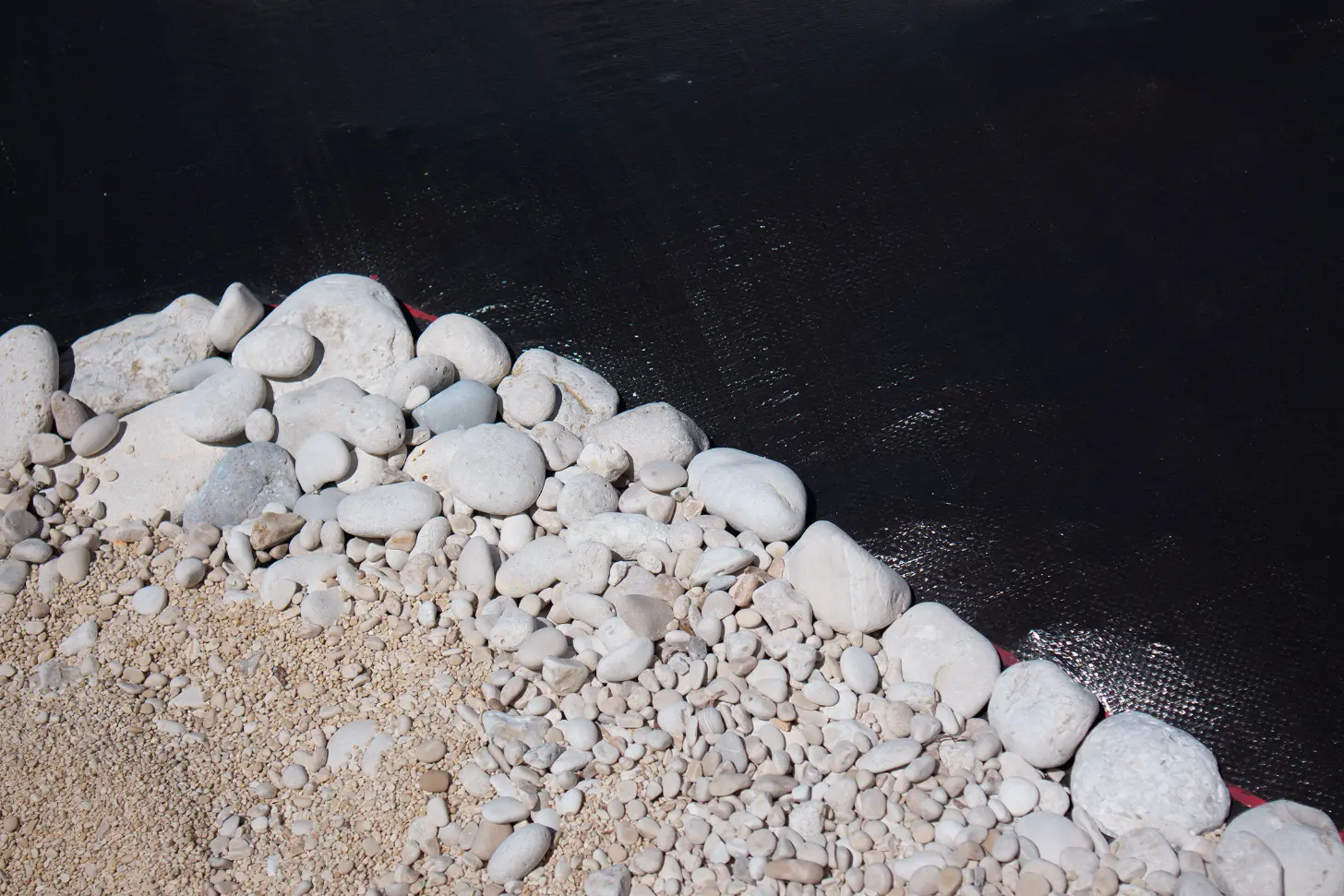
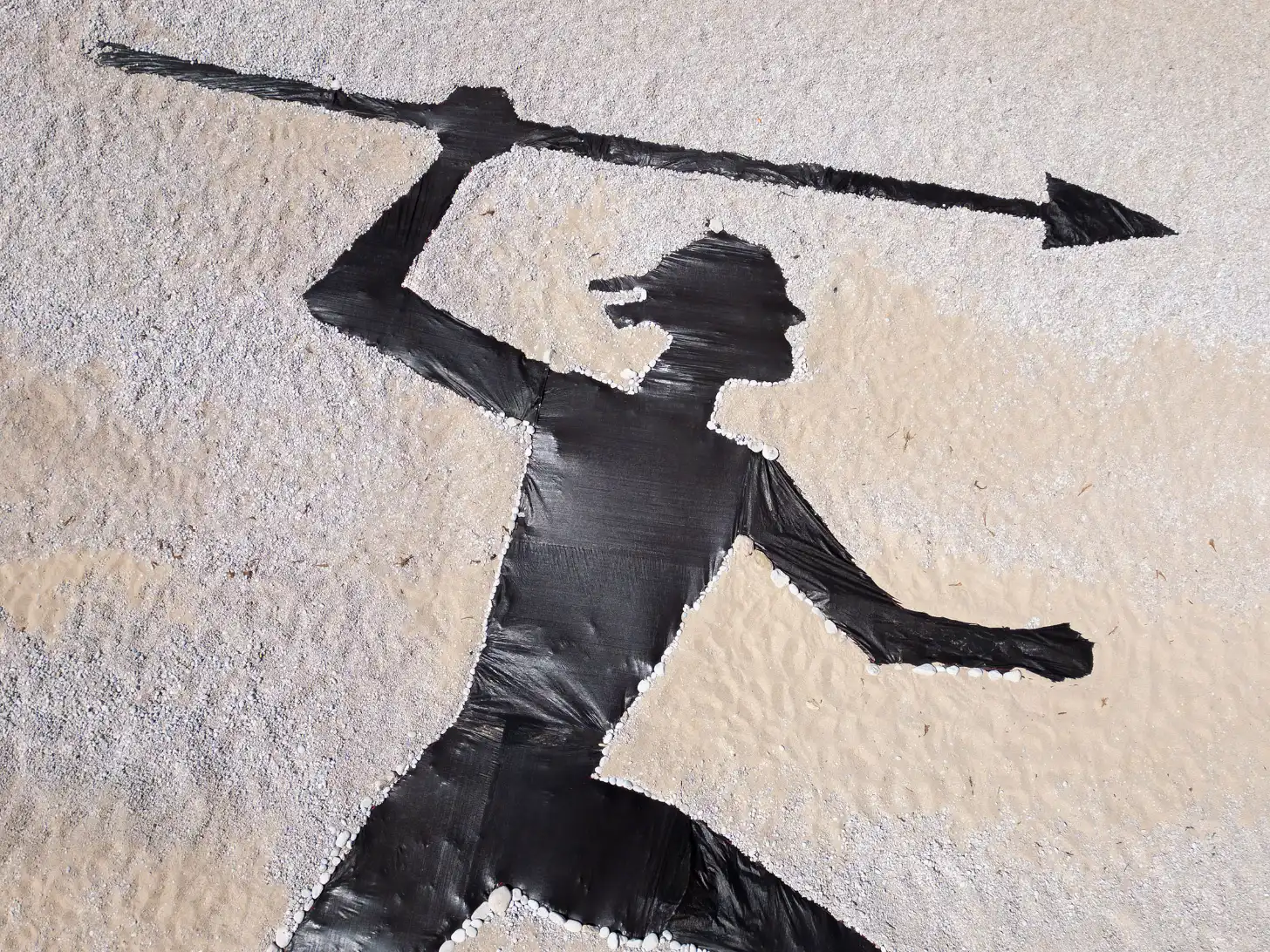
The piece was made with black geotextile strips and secured with pebbles already found on the beach.
“Drawing on the visual language of prehistoric cave paintings, ‘The Hunt’ connects humanity’s earliest forms of survival with contemporary resource extraction,” a statement from The Krank reads.
“The temporary intervention remained on the beach only for documentation, leaving no permanent alteration to the site while inviting public reflection on the relationship between landscape, energy, and collective memory.”
The Krank is a Greek visual artist based in Athens who is best known for large-scale, site-specific installations, especially land art and public interventions.
This makes “The Hunt” a piece right up his alley.
“Most offshore exploration projects are experienced through maps, technical documents and government announcements. The Hunt approaches the same geography differently,” he shared in an artist statement.
“Rather than documenting a landscape after it changes, the installation introduces a temporary visual intervention while that future remains uncertain.”
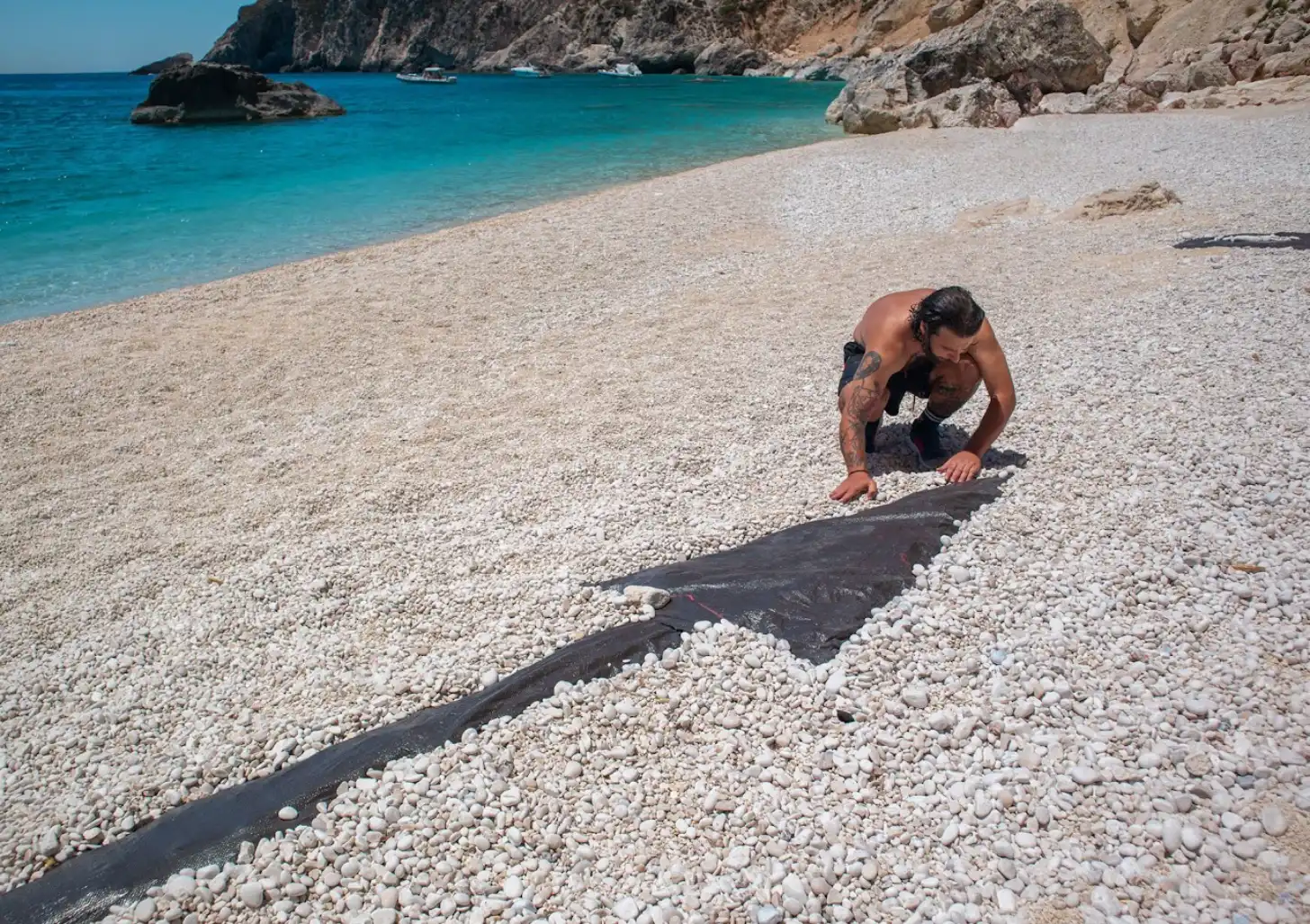
While the piece was temporary, and its purpose was to illuminate uncertainty, the conversation about harms to the ancient ecosystem remains.
“On the last day of the installation, visitors kept asking whether the black material would harm the beach,” The Krank reflected. “Once we walked together toward the rocks and looked back at the work, the conversation shifted from the material itself to the offshore exploration area on the horizon.”
You may also like: Why we're craving utopian fiction, from the hope of 'Project Hail Mary,' to the wholesomeness of 'Ted Lasso'
Featured Image: The Krank © 2026