Florida’s second-most popular specialty license plate isn’t just for looks.
The adorable design, which features a sea turtle on a sandy beach, crawling towards the water, has provided an estimated $8 to $10 million in support for the state’s sea turtle conservation programs since it debuted in 1998.
Many states across the country issue specialty license plates that can be purchased by vehicle owners for an additional fee, with revenue generated by the sales of these plates often earmarked for charitable causes or state programs.
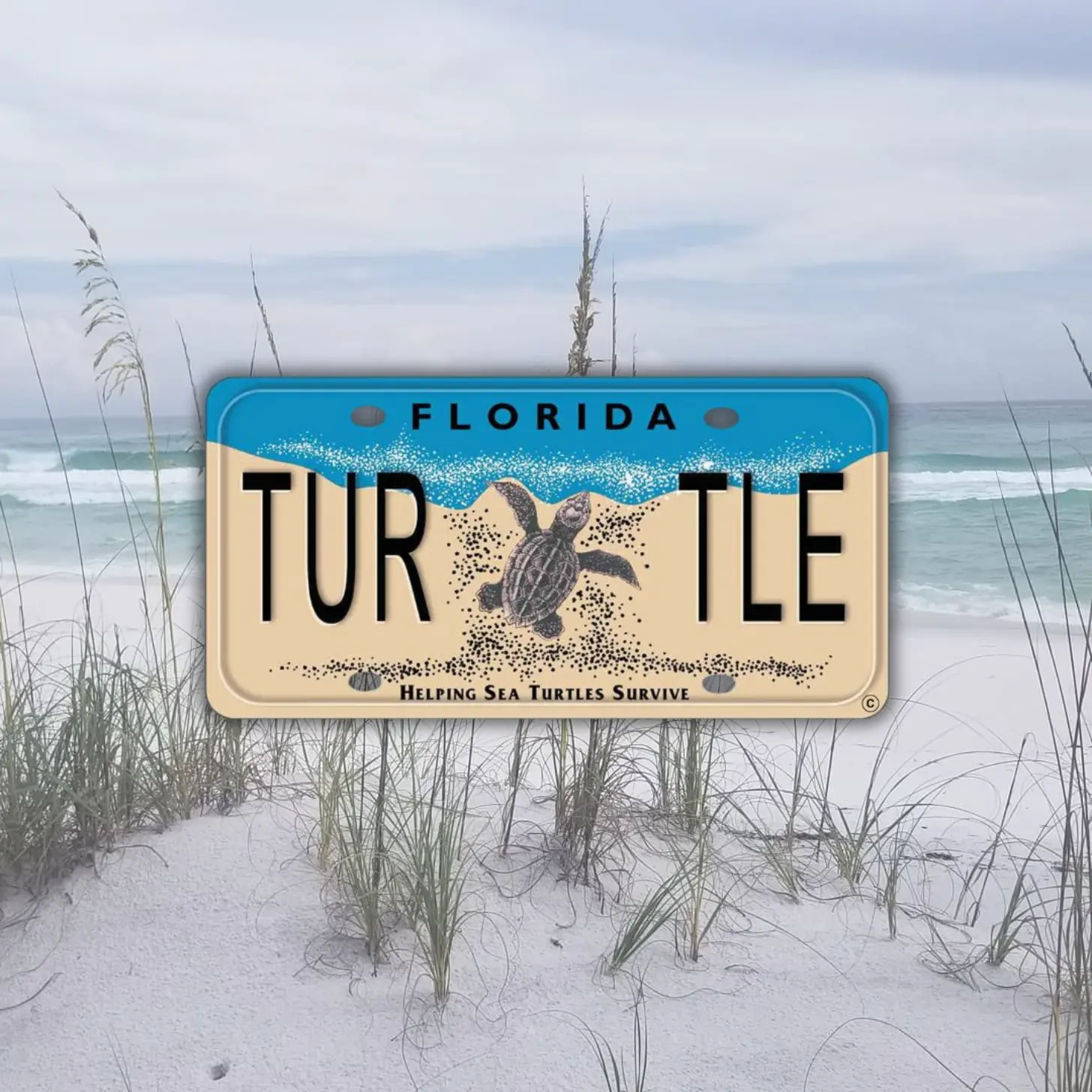
In 1995, the Sea Turtle Conservancy campaigned to establish the sea turtle design. They began appearing on roads in 1998, and now more than 100,000 can be spotted on Florida’s streets every year.
Kathy and Joey Satterfield are two such vehicle owners; Together, they have two sea turtle license plates. They pay an extra $23 for each of them every year, plus the one-time plate manufacturing fee, WUSF reported.
“For us it’s worth it, and it brings awareness,” Kathy told WUSF. “We’re one of the largest nesting areas for loggerheads, and that’s a big thing, so let’s support them.”
According to the Florida Fish and Wildlife Commission, 70% of the plate’s proceeds serve as the primary source of funding for the FFWC’s Sea Turtle Program, this includes the management, research, and protection of sea turtles statewide.
In practice, that looks like reviewing coastal construction permits and managing nesting habitats.
FFWC staff also oversee the permits of people who survey the beaches during sea turtle nesting season, and its researchers also study the changing populations of endangered turtles.
The remaining funds are routed through the Sea Turtle Conservancy, which distributes funding annually through its Sea Turtle Grants Program.
While it’s unclear how much funding has been funneled to the FFWC’s Sea Turtle Program, a recent update from the Sea Turtle Conservancy reported that since its inception, the license plates have funneled more than $8 million to projects benefitting Florida sea turtles.
In the 2026-2027 grant funding cycle, the organization awarded over $581,000 to 32 different projects.
Hunter Eichler, the head aquarist at the Gulf Specimen Marine Laboratory, is grateful for the license plates. The funds they’ve brought in have made it possible for countless sea turtles to be rehabilitated.
“It is directly helping endangered animals,” Eichler told WUSF. “It is funding organizations and nonprofits to do work that protects these animals.”
In 2025, the grant paid for a portable X-ray Eichler uses in the lab.
“It’s really hard for us to get a turtle to X-ray once, because we’re transporting them off-site,” she explained to WUSF, “but to get them X-rayed again is even harder.”
This kind of equipment can make it easier for the experts to do their jobs — and leads to better outcomes for the animals they help.
The license plate program has inspired subsequent offerings, like a manatee and sea turtle decal program that the FFWC says funds research, rescue, rehabilitation, monitoring, and management of two of the state’s most recognizable marine species.
Each decal is just $5 and features designs with clear messaging about the species.
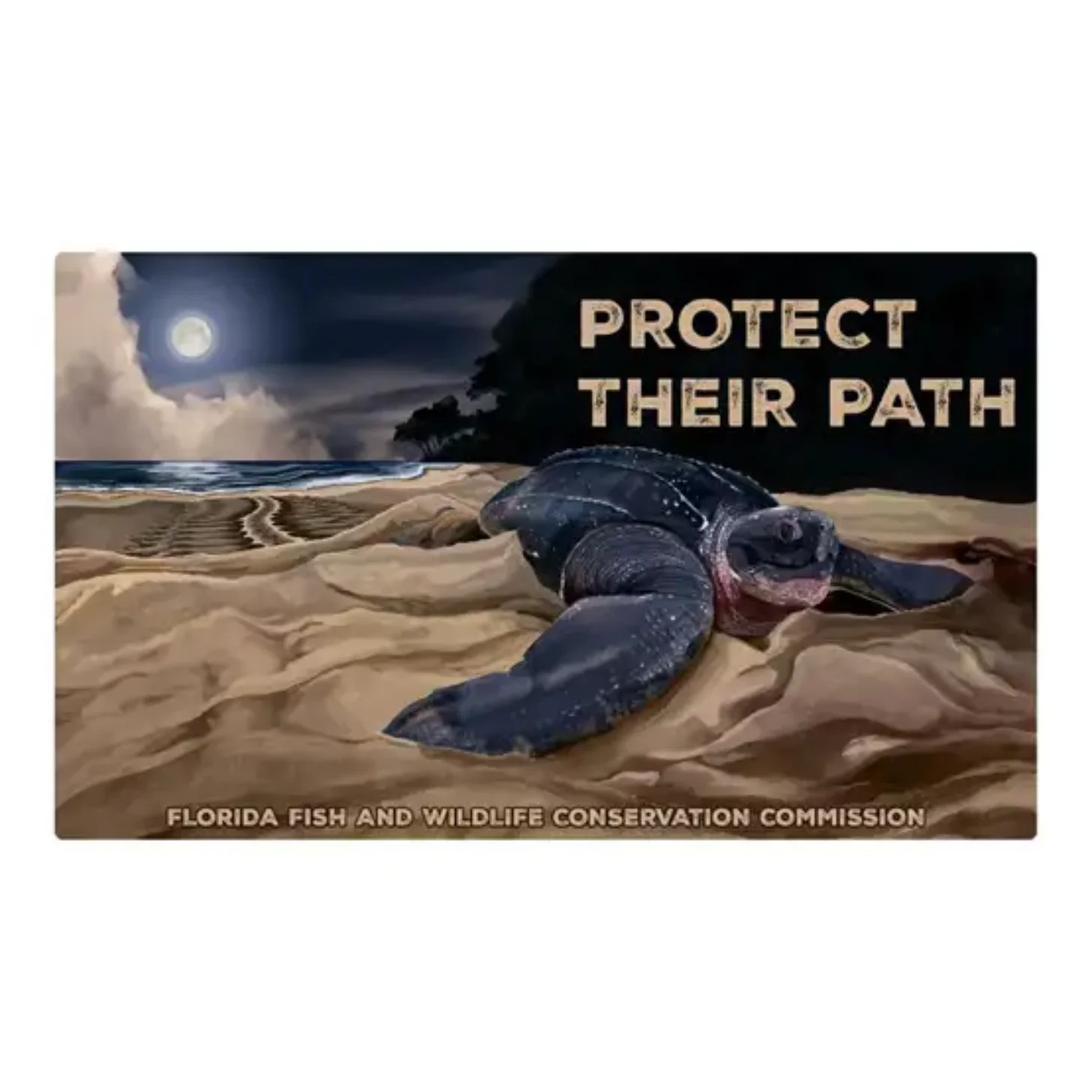
“This year’s sea turtle decal highlights Florida's record-breaking year for leatherback sea turtle nesting, with 2,012 nests documented in 2025,” the FFWC shared on a web page for this year’s decals.
“Leatherbacks are endangered, and their threats include being caught in fishing gear and marine debris and being struck by vessels in coastal areas. By giving sea turtles plenty of space as they come ashore to nest (at least 50 feet), we can ‘Protect Their Path.’”
Those interested in getting a sea turtle license plate or decal can do so via the FFWC website.
You may also like: These 3 small changes to your next beach trip could save endangered sea turtles
Featured Image: Andrea Westmoreland/Wikimedia Commons (CC BY-SA 2.0)