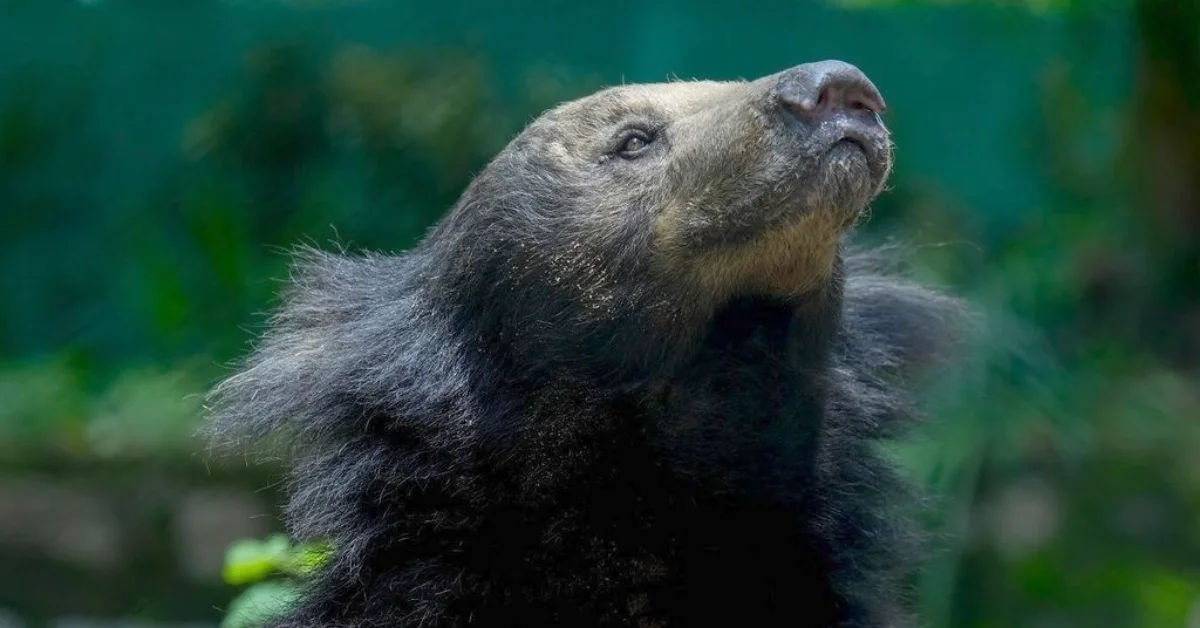
Literary experts widely believe that Baloo from Rudyard Kipling’s “The Jungle Book” was inspired by the sloth bear, a curious-looking bear from South Asia with long claws, a narrow nose, and a suction-like nose.
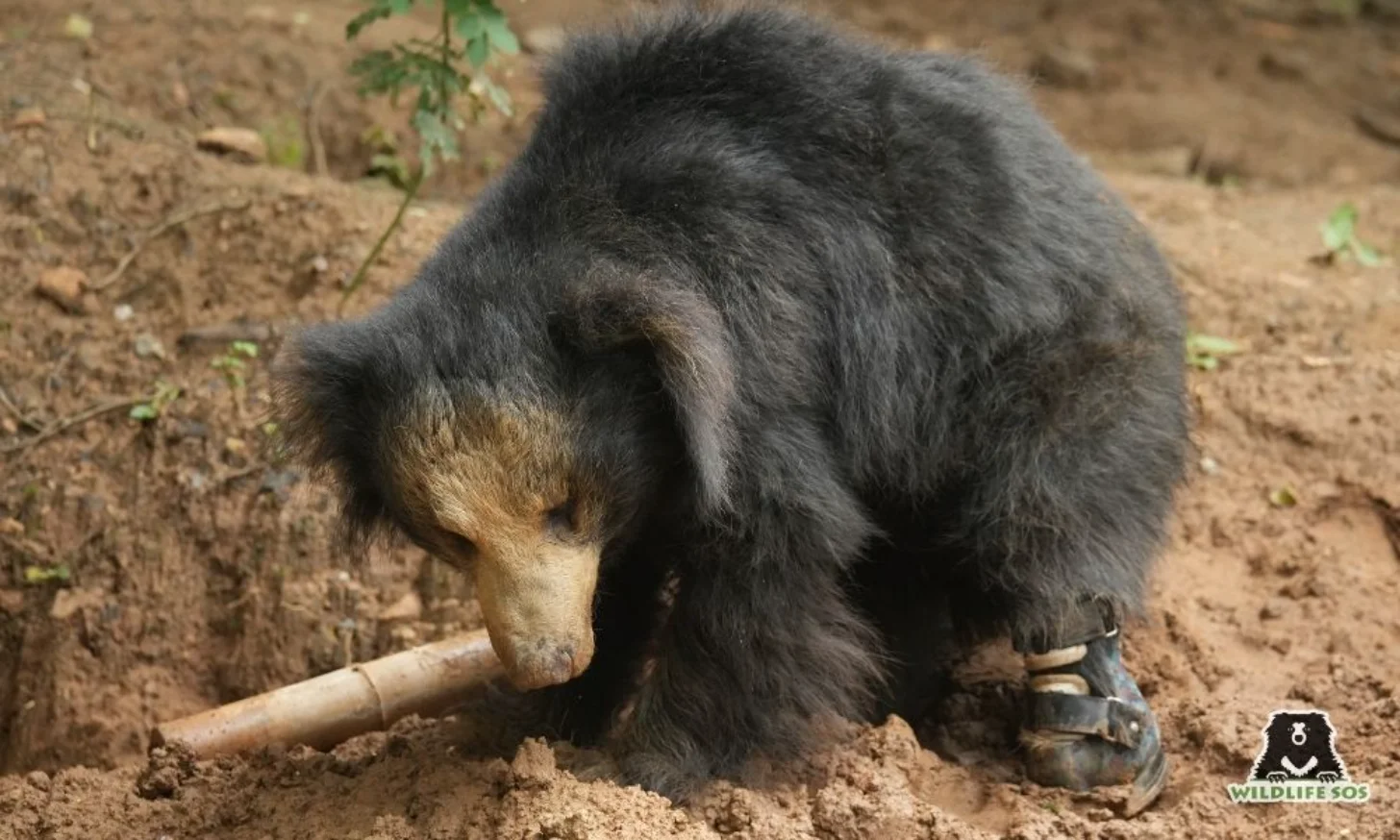
Unfortunately, the sloth bears of India face numerous threats — including poaching. In 2019, a young bear named Vasikaran, nicknamed Vasi by his caregivers, was rescued by the nonprofit Wildlife SOS after his left hind paw was caught in a wire snare trap.
When local veterinarians realized that his paw was beyond saving, Vasi had to undergo an amputation.
That was when he garnered the attention of Derrick Campana, an animal orthotist better known as the “Wizard of Paws.” For years, Campana has traveled around the globe, affixing custom-made prosthetics for animals of all shapes and sizes, from horses to birds.
“He came out and worked with [Vasi],” Nikki Sharp, the executive director of Wildlife SOS USA, told Good Good Good. “He’s remarkable. Absolutely remarkable.”
In September 2025, thanks to Campana, Vasi became the first bear in the world to receive a prosthetic limb.
“To our immense joy, Vasi accepted it, and could comfortably place his left hind leg on the ground for the first time in years!” Wildlife SOS stated in a press release.
Specialized care is par for the course at Wildlife SOS, which operates four primary sloth bear sanctuaries in India. Its central location, the Agra Bear Rescue Facility, is the largest sloth bear rescue facility in the world.
“If a bear needs some special attention in some way, we are definitely doing everything in our power to make the quality of their life as good as possible,” Sharp said.
Sloth bears come to them in all kinds of conditions — orphaned, injured, or rescued from dancing bear trades — and Sharp said caretakers adapt to fit each bear’s needs.
“A lot of the bears that we have that are receiving lifetime care at our center are rescued from all sorts of different types of scenarios,” Sharp explained. “We have bears that have gotten their legs caught in snares. We have bears that have been electrocuted. There are different ways that animals can end up seriously injured that would require them to have an amputation.”
“But I would say that snares are probably the most common reason why we have bears that are missing a limb or part of a limb,” she added.
Despite their varying conditions, Sharp noted that the bears are remarkably resilient.
“Although they’re not naturally the best climbers, we have bears that have lost legs, and they can still climb trees,” Sharp said.
“We do have a lot of blind bears, and the fact is that they have different needs than bears that don’t have visual impairment. We have a special setup for our blind bear area, and part of that is they just know where everything is, and everything’s a lot more routine.”
For Sharp, there is a lot to love.
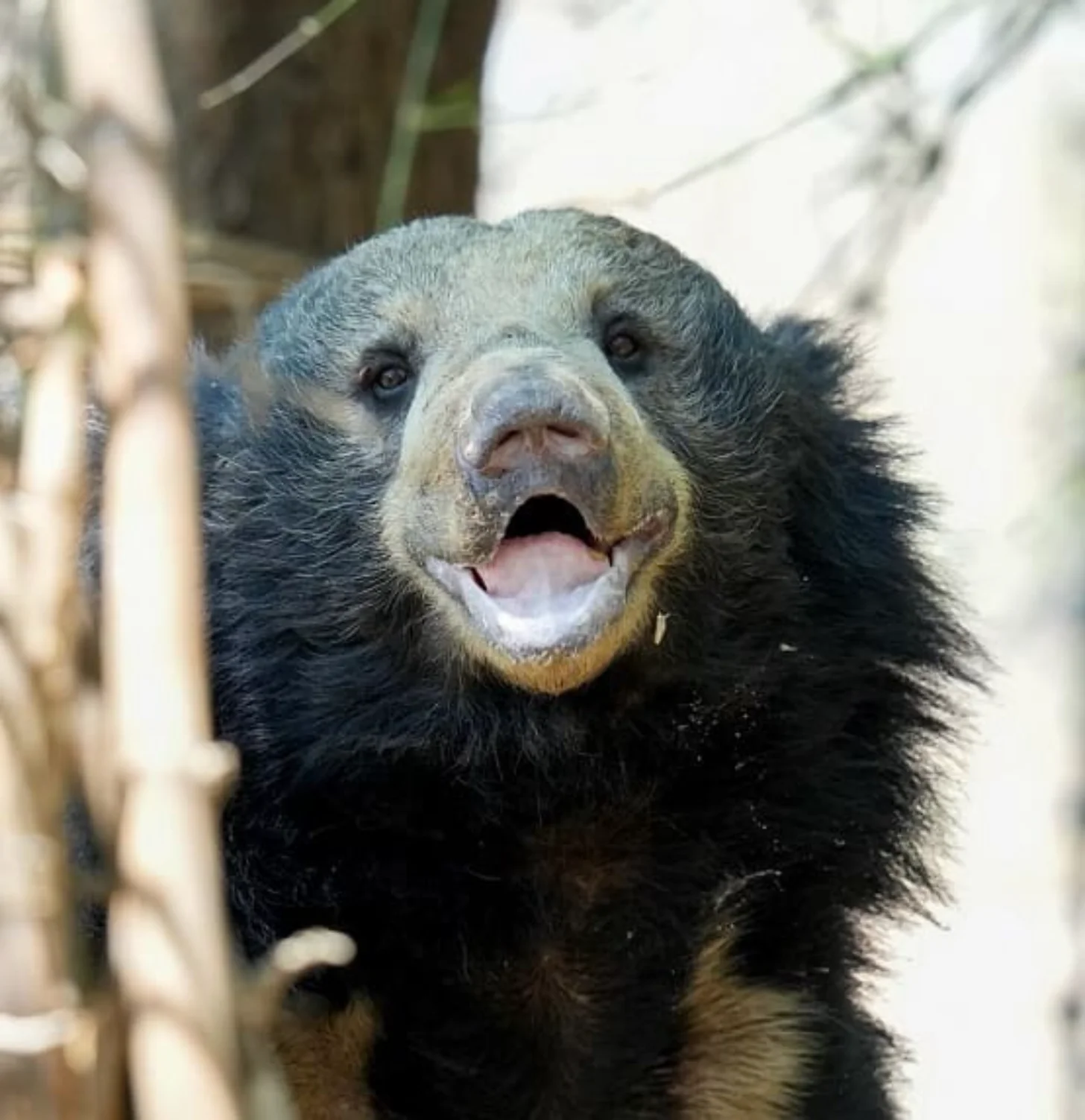
“They have this unique anatomy in their face that allows them to suck like no other bears can — they love to stick their nose into termite mounds,” Sharp said.
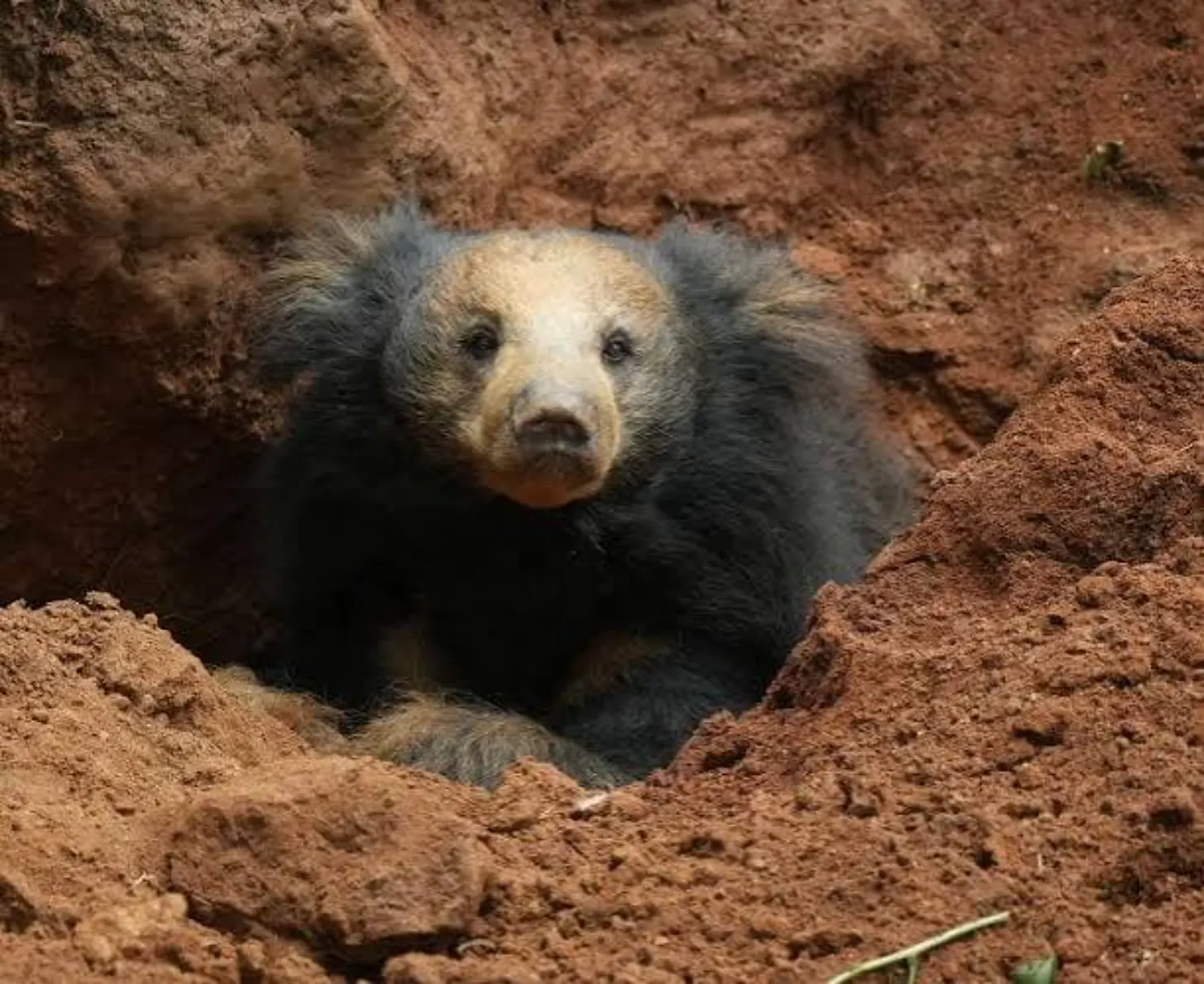
“They also have a very, very shaggy coat,” she added.
In fact, she said, they’re so “disheveled” that their silhouettes are easy to spot on trail cameras.
“I feel like everything kind of sticks to their coat, versus an Asiatic black bear, where it’s always a nice, smooth coat,” Sharp said. “You can often tell, even in the dark, that it's a sloth bear just by looking at their coats.”
Sharp said one of her favorite fun facts is that sloth bears are the only bear species in the world that regularly carry their cubs on their back.
“And not just that,” she said. “They’ll often have two babies that they’re carrying around, but they can fight off tigers with their babies on their backs.”
“You’ll see these babies hanging on, and it’s just really remarkable how the babies are able to hold on. And how the mom is able to scare off a tiger with the babies on their back.”
According to Sharp, cubs cling to their mother’s backs for up to a year.
“And sometimes you’ll have three cubs that are all riding on them,” she said.
In India and Nepal, sloth bears are listed as vulnerable; in Sri Lanka, they are officially classified as an endangered species.
“I think the biggest threat for sloth bears is probably what you're looking at for most species around the world, which is that they're losing their habitat,” Sharp explained. “Bears need a certain amount of range in order to survive. And that range area is getting smaller and smaller, and they’re becoming more [akin to] island areas, so they’re not connected. That’s probably one of the biggest problems.”
As they lose their land, human-wildlife conflict has increased.
“There's always going to be places where bears and people come into contact with one another,” Sharp explained. “We don’t want that to have a negative outcome for the bear or the people … that education is part of our continued effort of where we’d like to spend more energy in the next five to 10 years.”
Another serious threat to sloth bears is poaching. For centuries, poachers would take cubs from the wild and use them for entertainment purposes, forcing them to “dance” on the streets for tourists.
“They put a rope through their nose, and they pull on that rope, and the bear stands on their hind legs because of the pain that it’s going through,” Sharp said. “That side-to-side motion, standing and moving, they would call dancing. So it has a nice name, like ‘Oh, the bears are dancing,’ but they’re in a lot of pain, and they're suffering.”
In 2009, Wildlife SOS helped usher an end to the dancing bear practice in India.
“One of the reasons why Wildlife SOS became an organization 30-plus years ago was really to focus on that problem in India and bring an end to it,” she explained. In 2010, the organization rescued over 600 sloth bears.
“But you can’t just rescue all the bears and be like, problem solved, let’s go on to the next thing,” she emphasized. “You’ve got to really stay on top of it so it doesn’t come back.”
For Wildlife SOS, that entails making sure that locals have access to vocational opportunities and job training so that they aren’t forced to rely on outdated practices like the dancing bear trade.
“Part of that is working with the children so that they grow up with education and they grow up with dreams,” Sharp said. “And a lot of them are now going to college, so they’re not growing up around people who are [profiting off of] dancing bears. [We’re] continuing to ensure that their needs are being met is helping to ensure that this problem does not come back.”
For Sharp, the sloth bear is an underrated animal that deserves a bigger spotlight — and world-breaking news like Vasi’s prosthetic limb helps bring added attention to a species in need.
“I hope if people read this story, they'll be more curious to know more about sloth bears,” Sharp said. “We have a lot of knowledge that we'd like to share with people.”
To learn more about the rescue and rehabilitation of sloth bears in South Asia, visit the Wildlife SOS website.
You may also like: This rhino was orphaned when he was just one day old. Now he lives in an oasis with other rescued animals
Featured Image: Wildlife SOS