Australia is home to over 600,000 unique species of plants and animals, making it one of the richest places on earth for biodiversity. But it is also in the crosshairs of the global extinction crisis, with more than 2,200 of its native species listed as endangered, threatened, or vulnerable.
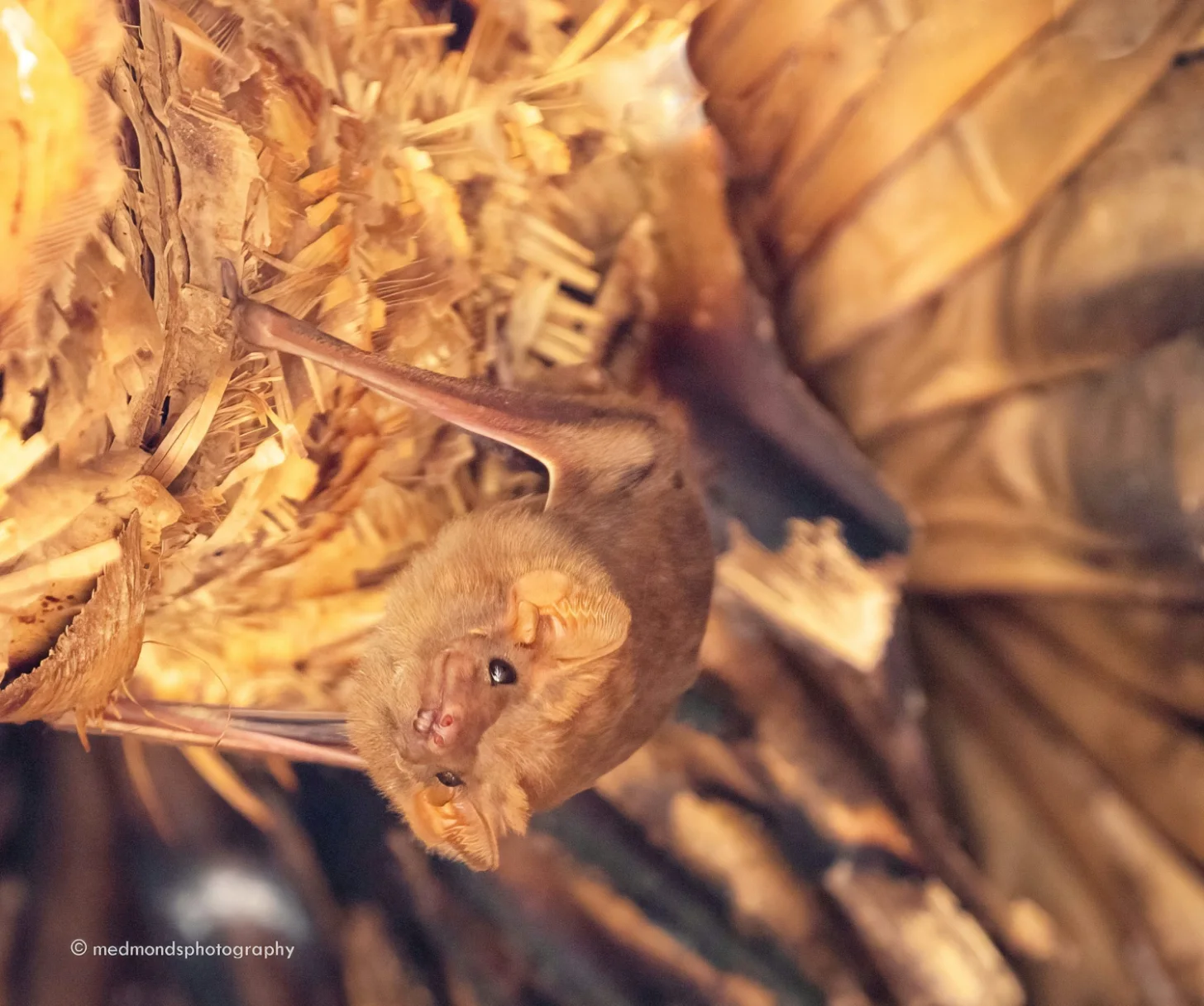
Oli Aylen, a scientist at Australian Wildlife Conservancy, has his heart set on saving the bats at the forefront of that crisis, including the rare Arnhem Sheath-tailed Bat.
According to the Australian Museum, researchers first discovered the “microbat” in 1979, but it has only been recorded on camera a handful of times since. It is notoriously difficult to track due to its remote habitat and fast flight lines.
But during a nature survey in Pungalina-Seven Emu Wildlife Sanctuary, Aylen captured the species’ unique call — roughly 400 miles from its last known location.
“We were actually setting up canopy mist nets around the mangroves at Pungalina,” Aylen said in a press release. “I just happened to also have my handheld bat detector on, capturing the calls of the bats as they flew overhead.”

Like all microbat species, the Arnhem Sheath-tailed Bat uses echolocation to navigate and hunt.
“The species has a really short echolocation call, which is highly unusual for bats that call at that frequency,” Aylen explained. “So straight away, I wondered if that’s what it could be.”
“It’s certainly one of Australia’s most rarely observed species,” said Aylen, who has been nationally recognized as Australia’s “Batman.”
“The bat’s discovery at Pungalina and subsequent range expansion is really exciting,” he continued. “It’s a major step forward in deepening our understanding of where the Arnhem Sheath-tailed Bat occurs.”
Since 2008, the Australian Wildlife Conservancy has protected the Pungalina-Seven Emu Wildlife Sanctuary through fire mitigation research, invasive species monitoring, and ecological health surveys.
“The species will be a priority for AWC’s Ecohealth targeted surveys moving forward, and we will incorporate a range of methods to detect and ideally catch this elusive bat,” Aylen said. “If we’re lucky, we may be able to find out where these bats roost, a vital knowledge gap, which will help us further protect this species and the habitat it relies on.”
According to Aylen, “The more we know, the better we can protect them.”
“Currently, we don’t know if the Arnhem Sheath-tailed Bat is a rare species or if it’s threatened and needs our help. Or there could be a much larger population than we think,” Aylen said. “It needs ongoing research and more conservation attention.”
You may also like: Wildlife center rescues rare cave bat that was trapped in Omaha office building: 'Halloween came early!'
Featured Image: Australian Wildlife Conservancy