

This story was originally published by The 19th
The committee said its goal is to improve the speed of investigations and increase transparency.
The U.S. House Committee on Ethics decided to change its own internal rules for handling assault misconduct allegations at a public meeting on Thursday afternoon.
The changes include codifying the committee’s policy of publicly disclosing when members have been found to have engaged in sexual harassment or sexual misconduct — while maintaining the anonymity of victims; scaling back requirements for issuing subpoenas during investigations; and consolidating deadlines for accused members to respond to minimize stalls, obstructions and delays.
“All of these changes just go to reinforcing our commitment to the integrity of the House of Representatives,” said ranking member Rep. Mark DeSaulnier, a Democrat from California. “On sexual harassment, all of us agree on zero tolerance, and we’re going to be clear about that.”
The public meeting was a response to many calls for the committee to reexamine its practices amid a wave of sexual misconduct allegations against both Republican and Democratic members this year.
In April, sexual misconduct allegations against Democratic Rep. Eric Swalwell from California and Republican Rep. Tony Gonzales from Texas led to resignations and kick-started a reckoning at the Capitol. Swalwell has denied all allegations against him, while Gonzales has acknowledged that he had an affair with a staff member, which is a violation of House rules. The resignations came as Congress was already dealing with fallout from the government’s investigation into the late financier and convicted sex offender Jeffrey Epstein.
That same month, the House Ethics Committee published a compilation of 28 investigative matters involving allegations of sexual misconduct against House members from 1976 to 2026 — though several more cases have since been added to the list.
By November, the number of House members accused of sexual misconduct or domestic abuse who lost their seats — including Swalwell and Gonzalez — rose to six.
Republican Rep. Chuck Edwards from North Carolina dropped his reelection bid this summer after the House Ethics Committee recommended censuring him after finding out he had engaged in “persistent and inappropriate conduct” with two staffers.
Republican Rep. Cory Mills from Florida lost in the primaries after facing allegations of sexual misconduct and domestic abuse, among other accusations of campaign finance violations. He has denied all allegations.
Rep. Max Miller, an Ohio Republican accused of domestic violence by his ex-wife, and Rep. Jimmy Gomez, a Florida Democrat who faced a sexual misconduct investigation, both lost their seats in the midterm elections. Miller denied the allegation. Gomez acknowledged “mistakes” made outside his marriage.
In May, House leaders asked Republican and Democratic women’s groups to explore how to address the problem and make Congress a safer work environment for women.
From a policy standpoint, Reps. Kat Cammack from Florida and Teresa Leger Fernandez from New Mexico, who chair the Republican and Democratic Women’s Caucuses, respectively, have led an effort to champion legislation that could make sweeping changes.
Their joint proposal would streamline the process for reporting sexual misconduct allegations, make it easier for victims to report misconduct and bar any House lawmakers from having an intimate relationship with congressional staffers, expanding the existing ban of relationships with direct subordinates.
“We cannot claim to support women while ignoring the very real barriers that prevent them from reporting misconduct in the first place,” Cammack said in a May statement announcing the bipartisan partnership. “Yes, bad actors must be held accountable and removed when warranted. But if we are serious about fixing this problem, we also have to confront the environment that allowed the behavior to occur, persist, or be concealed. Accountability cannot begin and end with punishment after the fact. It must include prevention, transparency, education, and systems people can actually trust. Congress should set the standard — not lag behind it.”
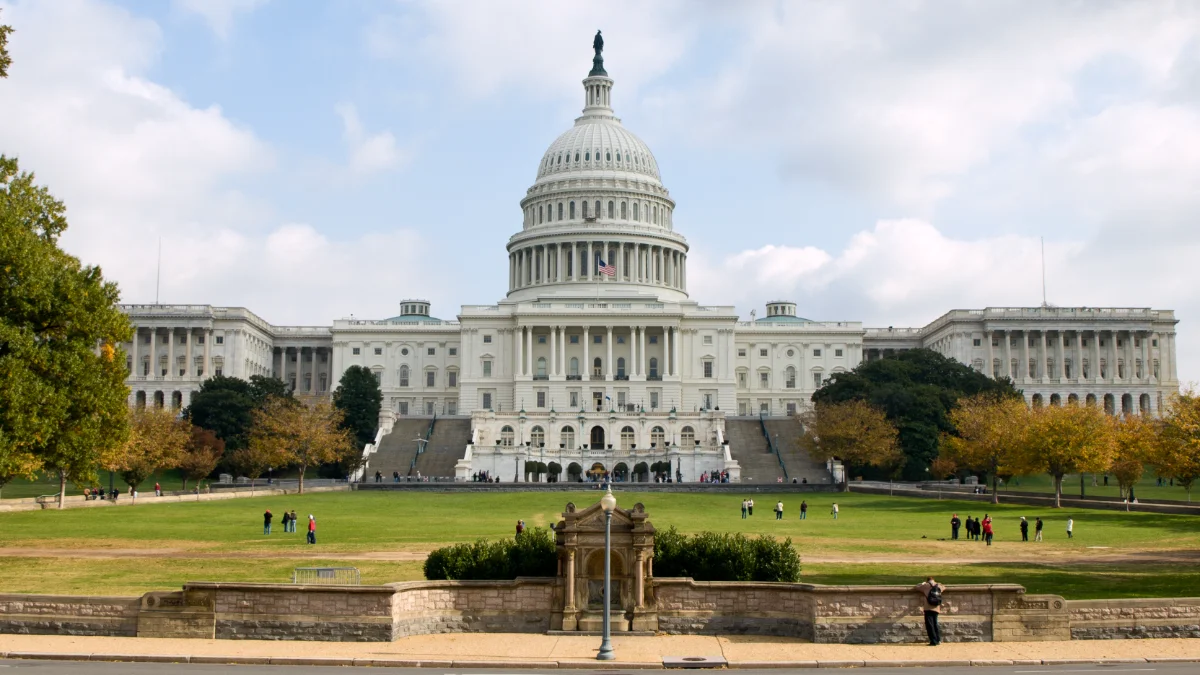
Featured Image: The public meeting was a response to many calls for the committee to reexamine its practices amid a wave of sexual misconduct allegations against both Republican and Democratic members. (Samuel Corum/Getty Images)
Written by Mariel Padilla
Get good news in your inbox
Subscribe to receive the latest blog posts to your inbox every week.
We’ll never sell your email address. No spam, just good news. Unsubscribe anytime.


Read good news offline, too, with the Good Newspaper
For a limited time, we’re giving away the Good Newspaper for free
Why you can trust Good Good Good:
• Good Good Good is fully independent and funded by readers — with no billionaire owners or investors.
• All of our articles are researched and written by professional journalists.
• Our newsroom has a zero AI articles policy. We don’t use AI in our news stories or photos. Humans write every word.
• Good Good Good is committed to the highest newsroom standards and ethics.
→ Read Good Good Good’s Editorial Standards

At The 19th, we believe you can’t fully understand politics, policy or power without looking through the lens of gender and race. Our journalism holds leaders accountable when rights are threatened, shines a light on inequities and tells the human stories behind the headlines.
Explore topics from this story: