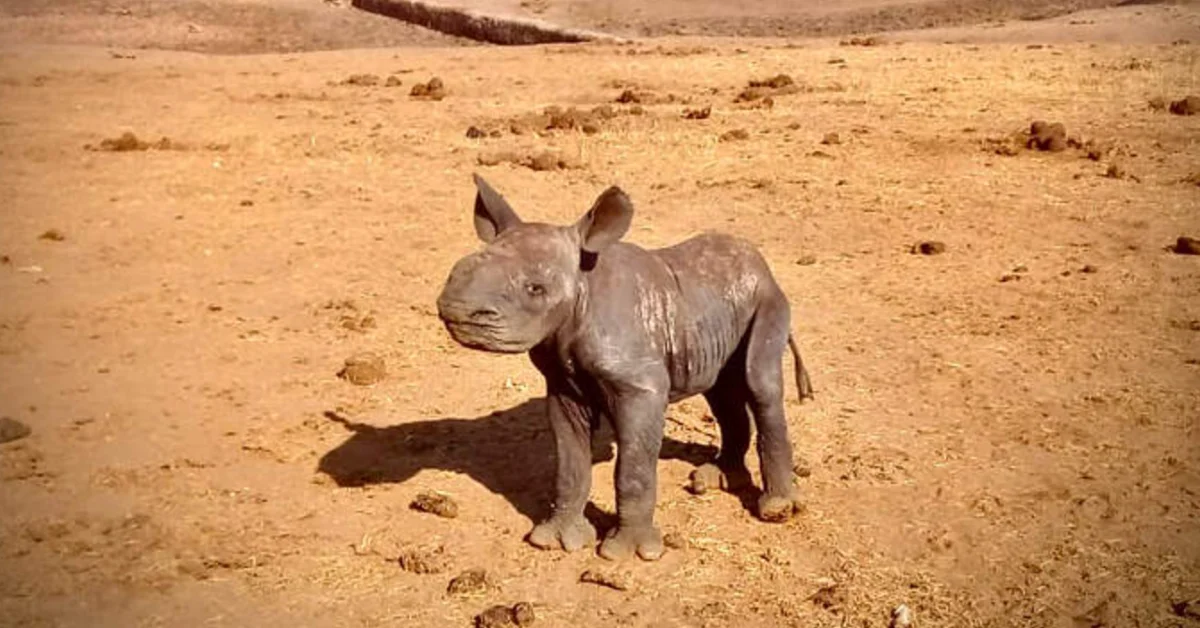
On September 6, 2023, park rangers from the Tsavo Trust and Kenya Wildlife Service came across a newborn rhino calf in Tsavo West National Park.
Estimating that he was only a day old — and likely born prematurely — rangers were stunned that his mother was nowhere in sight.
“It was a miracle that hyenas, jackals, or other predators hadn’t already snatched him,” wrote the Sheldrick Wildlife Trust, a leading conservation organization in Kenya.
“He had obviously been on his own for a significant time, as he had started to become hypoglycemic and shaky. It was clear — without sustenance and rapid attention, he would die.”
The rangers greenlit a rescue from the Sheldrick Wildlife Trust, which specializes in the rescue and rehabilitation of orphaned animals.
They transported him to the Kaluku Neonate Nursery, which sits in the heart of the Tsavo ecosystem, the same habitat where he was born.
“He was just a day old when he was rescued, so for all intents and purposes, we are the only family he has ever known,” the Sheldrick Wildlife Trust said.
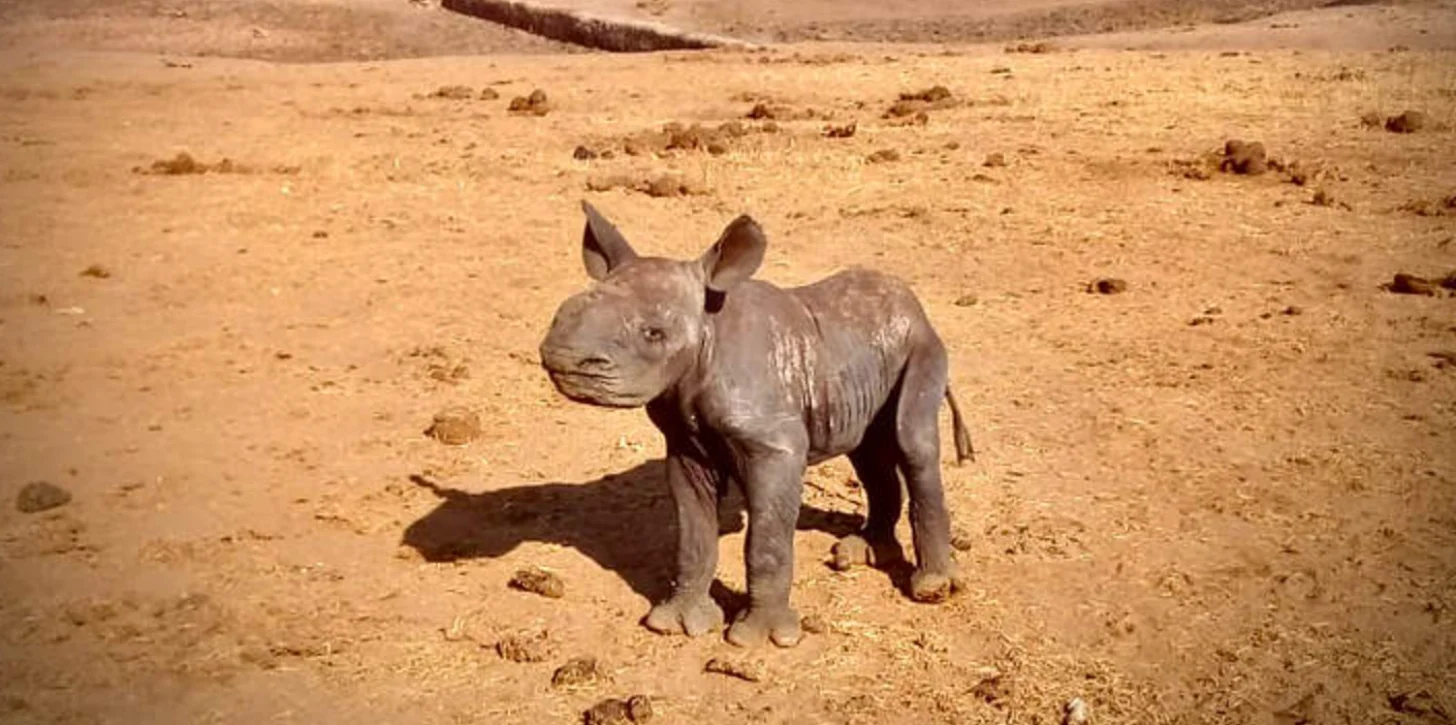
Angela Sheldrick, the CEO of Sheldrick Wildlife Trust, touched on the baby rhino — named Chamboi — and his early rehabilitation journey in 2024.
“Chamboi’s favorite place to sleep is by his keepers’ sides, his eyes closed in bliss as they rub his tummy,” Sheldrick wrote in her field notes.
Although he was in safe hands, Chamboi’s early days were a challenge. He was separated from his mother so quickly that he wasn’t able to get the nutrient-rich colostrum that a nursing mother can provide.
For a long time, he struggled with a laundry list of stomach issues. After his molars came in, he was able to eat leafy greens, which helped him pack on some much-needed weight.
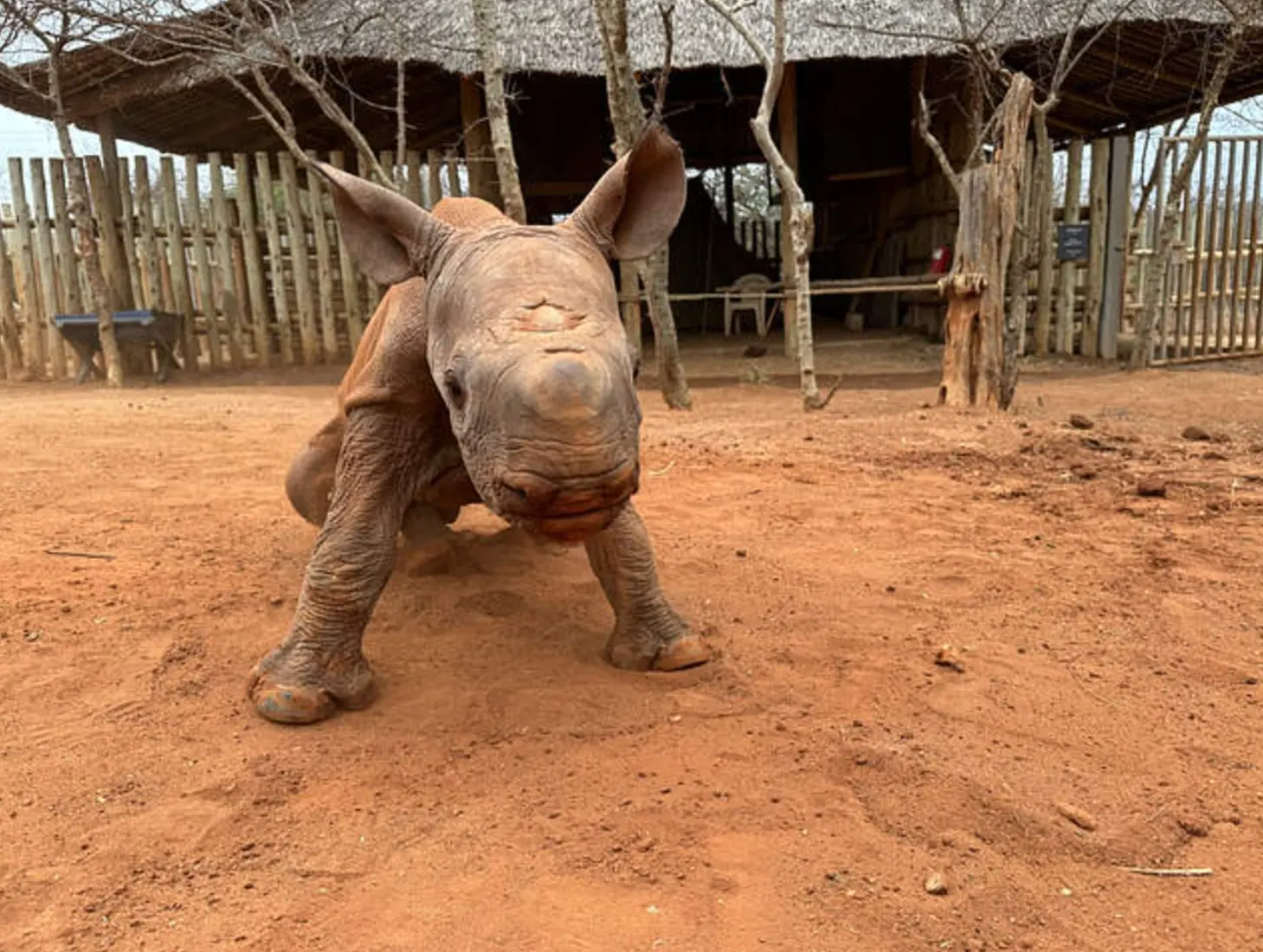
As he slowly grew, Chamboi gained new footing. Sheldrick described him as “animated and flighty” as he toddled around the sanctuary.
“His preferred gait is a skip — he seems to levitate as he races his keepers through the bush.”
According to Sheldrick, rhinos have a penchant for routines and habits.
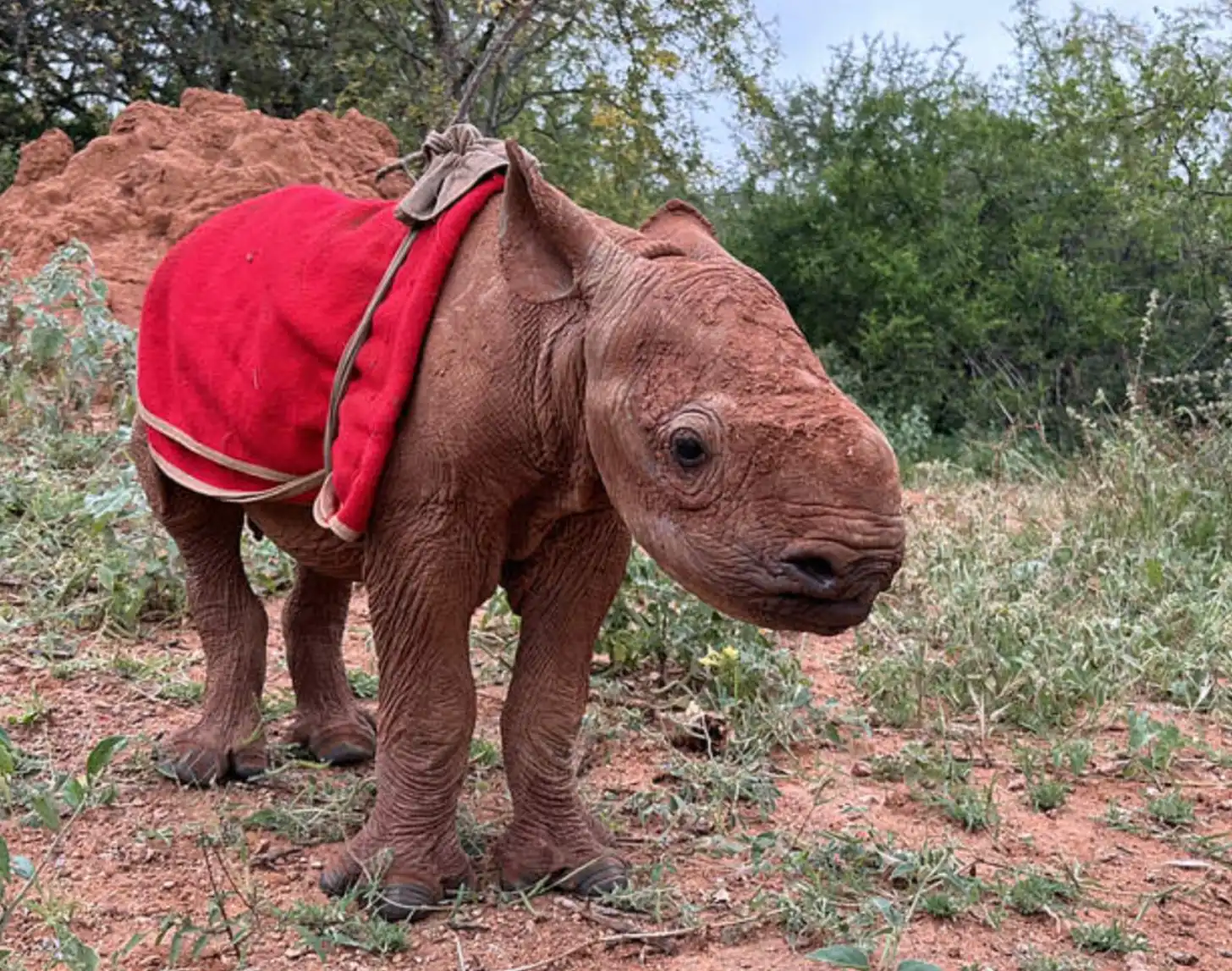
“Chamboi embodies this trait with particular fervor,” she wrote. “He is obsessed with one particular blanket — a woollen, cherry red number — and flatly refuses to wear anything else. Tsavo can get very hot, but infant rhinos are fragile, much like elephants, and need to be shielded from even the slightest chill in the air.”
In his first year, Chamboi also befriended two birds of a different feather: orphaned ostrich chicks named Bam and Boozle.
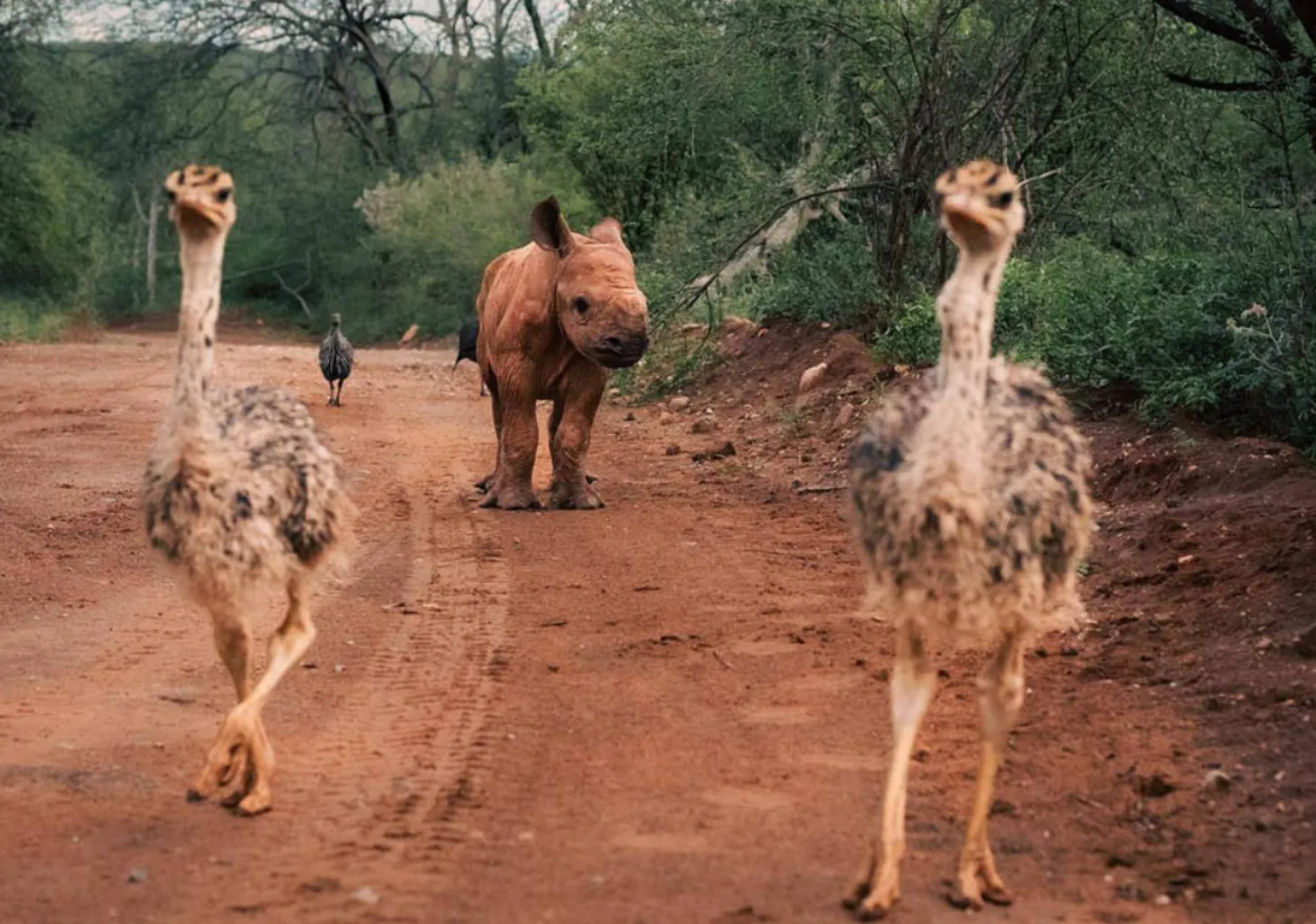
“Bam and Boozle immediately took a shine to Chamboi. He had very little say in the matter; they simply started following him from sunup to sundown!” Sheldrick said. “They make an unlikely troupe, the stout rhino and the gangly birds … they go everywhere together — from the airstrip to the mud bath, to the bush and back home again.”
In addition to his ostrich friends, Chamboi is being raised alongside Raha, another black rhino that was orphaned at an early age.
Currently, they are still too young to live in the wild. When they both reach 5 years of age, they will both slowly begin their transition to a protected nature reserve.
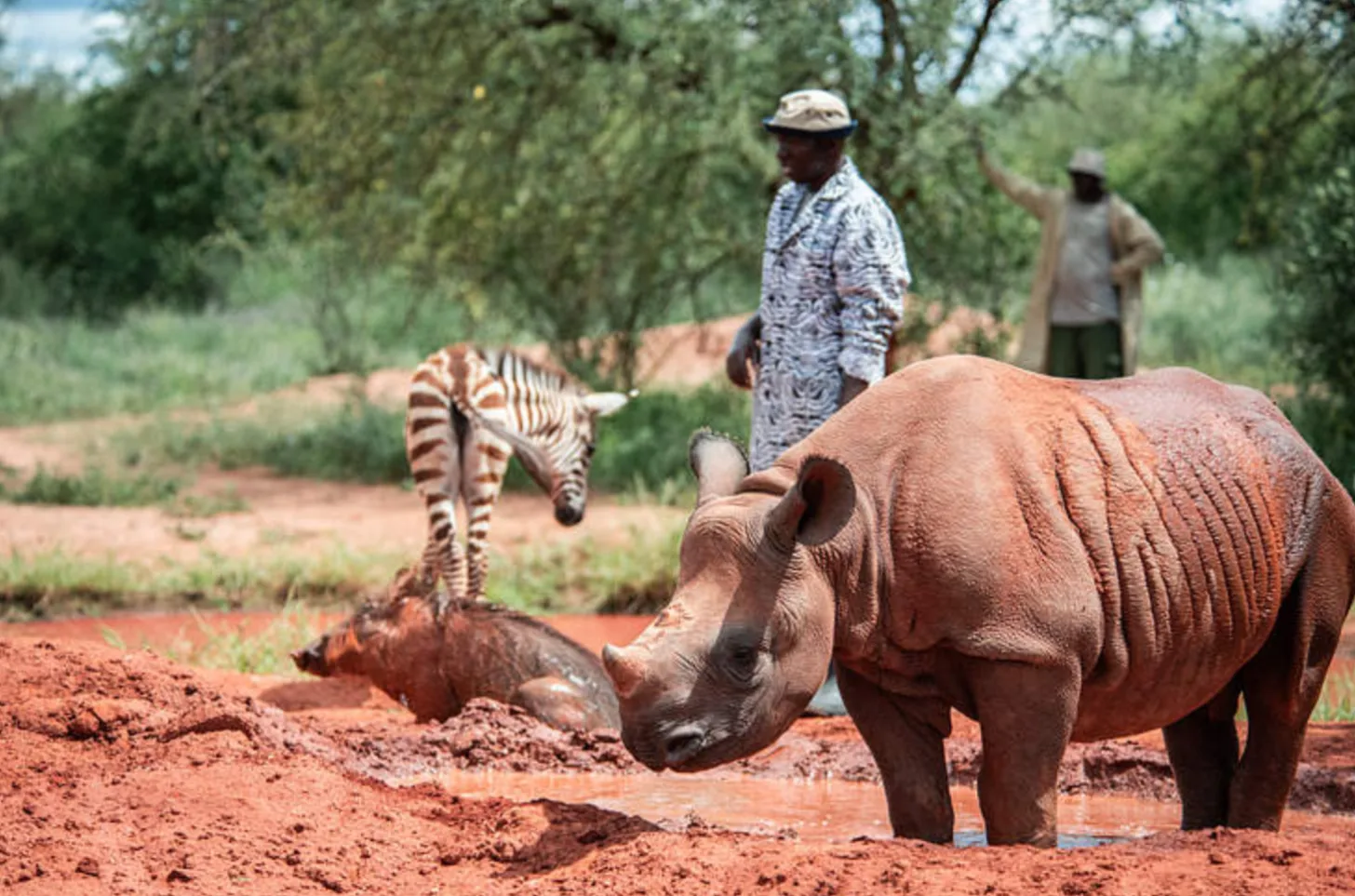
But for now, Chamboi is just 3 years old. And he is still enjoying the comforts of his “adoptive” family: the keepers who raised him and the menagerie of animals that mill around him in peace.
“To know a baby rhino is to fall in love with them,” Sheldrick wrote in her field notes. “My mother, Daphne Sheldrick, used to refer to black rhinos as ‘the last living dinosaurs’ — and the epithet rings true, even when it comes to the youngest generation.”
You may also like: This baby elephant fell into a well just a few days after she was born: 'Now she has her entire life ahead of her'
Featured Image: Sheldrick Wildlife Trust