Lord Howe Island lies in the middle of the ocean, about 700 kilometers northeast of Sydney. It’s covered in lush forest and fringed by the world’s most southerly coral reef ecosystem.
This reef system isn’t as famous as its northern neighbor, the Great Barrier Reef. Our new research, in the Journal of Applied Ecology, shows it plays an outsized role in keeping vast coral regions across the Pacific connected — and alive.
A small number of other reefs in the region serve a similar function. Knowing which reefs matter most for recovery and adaptation to ocean warming — and protecting them now — could make the difference between regional reef collapse and long-term resilience.
Tiny coral babies in a vast ocean
Coral reefs are in global decline, but this loss is not just about dying corals — it’s about breaking the natural connections that allow reefs to recover after marine heatwaves, cyclones, and other threats.
Right now, climate change is rapidly reducing the ability of coral larvae to travel between reefs, shrinking their chances of survival by undercutting recovery.
These tiny coral babies can sometimes spend many weeks in the surface waters of the open ocean, carried by currents across hundreds or even thousands of kilometers before settling and beginning to grow.
The movement of larvae provides a constant source of replenishment for reefs, both near and far away, which is especially important when reefs are damaged.
Without this constant replenishment, some damaged reefs simply cannot recover. Connectivity isn’t a nice-to-have for coral reefs. It’s their lifeline.
Tracking dispersal across 850 reefs
Our study used ocean circulation models to simulate the trajectories of coral larvae across the southwestern Pacific Ocean from 2011 to 2024, tracking the movement of larvae across 850 reefs.
These reefs spanned the Great Barrier Reef, New Caledonia, the Coral Sea, and Lord Howe Island.
We traced how two key coral growth forms (fast-growing branching corals and slower-growing massive corals) move between reefs under current conditions and under projected global climate warming scenarios of 1°C, 2.5°C and 4°C above pre-industrial temperatures.
We then examined how corals moved between different types of reef, including reefs that were naturally resistant to heat stress, those that recover quickly after disturbance, and those that stay cooler because of local water currents and upwelling that naturally reduce water temperature around the reef.
This allowed us to ask not just which reefs are connected, but which kinds of reefs are sending and receiving different types of larvae.
A fragile network
We found that only a handful of reefs act as genuine hubs — places where larvae both arrive from distant sources and depart to “seed” reefs far away. Lose these stepping stones, and the entire network begins to fragment.
The Coral Sea reefs emerged as crucial bridges in this network, linking the southern Great Barrier Reef with New Caledonia and beyond. But perhaps the most striking finding involves Lord Howe Island.
Our modeling identified Lord Howe as a potential refugium: a place where corals may be able to persist even as warming intensifies, potentially owing to its more temperate, southerly position.
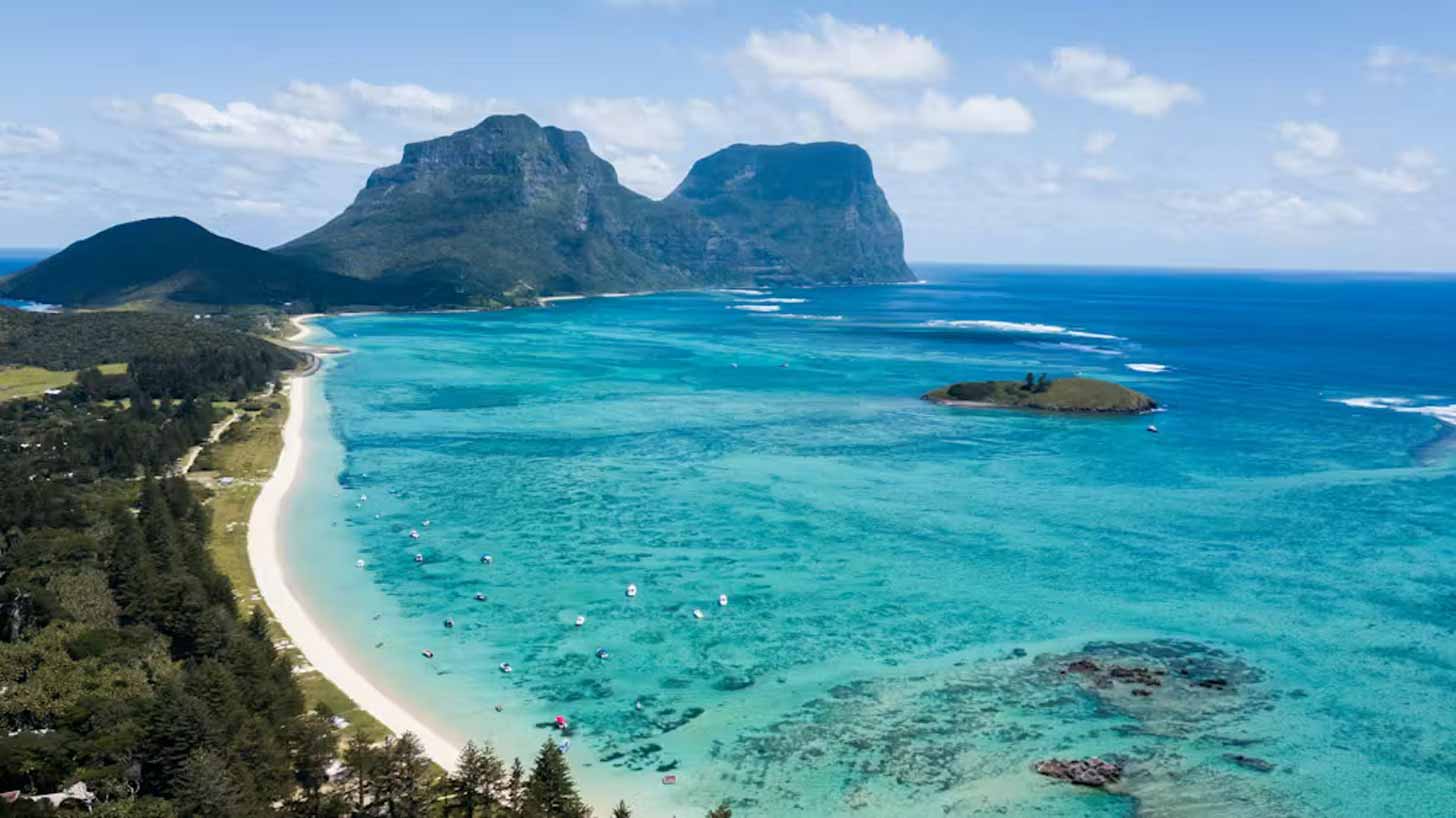
Yet its very isolation — what makes it a likely survivor — also means it has limited natural connectivity with surrounding reefs.
This situation therefore cuts both ways: While isolation helps protect its coral from extreme heat stress, it also means the reef relies less on new larvae that others could need for recovery. It therefore also means Lord Howe needs protection — not just for itself, but for the entire regional reef system that may one day depend on it.
Another important finding is that the reefs most resistant to heat stress (those classified as naturally resistant) tended to export larvae to a relatively smaller number of reefs within the wider network.
But there are techniques that enable the intentional movement of larvae from heat-tolerant reefs to more vulnerable locations. These include assisted gene flow, in which scientists deliberately move warm-adapted adult corals or their offspring to reefs that are more vulnerable to heat stress, helping to spread heat-tolerant genes more quickly across reef networks.
Protecting our marine superhighways
Our results make clear that marine protected areas should not be managed as isolated reserves but as an interconnected network, with transboundary cooperation between Australia and Pacific Island nations.
The larval corridors linking the southern Great Barrier Reef, New Caledonia, and Lord Howe Island do not fall within national boundaries. Neither can our conservation response.
Reefs are already fighting against warming oceans. The waters of the Lord Howe Rise and South Tasman Sea, the vast oceanic region between Australia and New Zealand through which these larval corridors flow, are under threat from industrial fishing.
Industrial fishing, pollution, and climate change are pushing these ecosystems to the brink, with longlines intersecting surface waters.
This cumulative pressure across these newly identified larval transport superhighways adds yet another layer of pressure onto these already stressed ecosystems.
Our research adds a new and crucial dimension to high seas protection. Our region sits directly across the larval corridors that connect and sustain coral reef systems. Protecting this ocean is not just about what lives here. It is about what passes through — fundamental for migratory and connected populations.
The least we can do is protect the superhighways through which their future flows — invisibly, at the ocean surface, some larvae no bigger than a grain of rice, carrying the genetic potential to rebuild what we stand to lose.

This article is by Kate Marie Quigley from James Cook University and Elise Thérèse Gisèle Dehont from Memorial University of Newfoundland and was originally published by The Conversation.
Header image by Francesco Ungaro/Unsplash
According to a 2021 study in the journal Transportation Research, replacing one car trip per day with cycling decreases carbon emissions from transport by 67%.
Despite this, cycling only makes up 1% of all transportation in the United States, and just 5-10% of all trips in Western Europe.
So, in over 150 cities across 34 countries worldwide, there is now a special leader appointed to get more people on bikes: a Bicycle Mayor.
In a program created by Amsterdam-based nonprofit BYCS (pronounced “bikes”), these passionate individuals are chosen to lead bike-friendly advocacy and development in their respective areas.
They aren’t elected, but they are selected for the job with care.
Created in 2016, the Bicycle Mayor Network elevates people who serve as the voice of cycling in their communities and better connect cyclists with their local governments.
“It started with this desire of connecting people, giving them this authority to be able to advocate for sustainable mobility,” Michela Chamonal, the network’s coordinator, told Reasons to be Cheerful. “A lot of people want to do something, but very often they’re isolated or they don’t have the means to do it.”
Bicycle Mayors might meet with local elected officials, propose funding for infrastructure projects, promote road safety, donate cycling gear, or lead group rides and classes for marginalized groups.

Each mayor has a two-year term and can be reappointed after each cycle.
“Bicycle Mayors can accelerate the changes we need to see by uniting all citizens to take action. They bring creative diversity with new insights and approaches, from both inside and beyond the world of bicycle planning professionals or the political establishment. They are the human face and voice of cycling in a city,” BYCS explains on its website.
“By connecting these change makers across a global network — creating greater visibility, rapidly sharing ideas, challenges and solutions — we can create a truly radical shift.”
Bicycle Mayors choose what to do with their role. For instance, Saskia Heitjtjes, the Bicycle Mayor of Bath, organized a Kiddical Mass event with 100 people, aiming to inspire folks to get on their bikes, while also advocating for road safety for children.
Another Bicycle Mayor, Santhana Selvan of Hyderabad, organized the first Bike Bus for children in India to ride to school as a group.
Pete Dyson, another of Bath’s Bicycle Mayors, said his work has mostly taken place with real elected officials.
“For better or worse, I think my biggest impact is behind closed doors in advocacy and discussions with the local authority,” said Dyson, who was appointed the Bicycle Mayor of Bath, England in 2023.
“I see my position as a critical friend, because our local authority has good intentions.”
A version of this article was originally published in The 2026 Environment Edition of the Goodnewspaper.
Header image courtesy of BYCS
Every day the Good Good Good team collects the best good news in the world and shares it with our community. Here are the highlights for this week!
If you want to get good news in your inbox every day, join the Goodnewsletter — the free daily newsletter designed to leave you feeling hopeful.
The Best Positive News We’re Celebrating This Week —
Germany transformed former coal mines into Europe’s largest lake landscape
A project that first started in 1967 to transform disused coal mines in Germany into a massive lake complex will open its final lake for swimming and boating at the end of this month.
The Lusatian Lakeland, now Europe’s largest artificial water landscape, is made up of 23 human-made post-mining lakes with a surface water area of 14,000 hectares — almost as large as Italy’s iconic Lake Como.
Ten of the lakes will be connected by canals in the future, to have 7,000 hectares of continuously navigable water.
Why is this good news? Decades of mining in the region left huge craters. Once considered a “wound” in the landscape, the transformation is now having a positive economic impact, benefiting both tourists and locals, and serving as a model for other coal-mining regions in Europe.
The lake complex is also serving as a water reservoir for nearby rivers, helping during periods of low water and droughts.
→ Read more
Scientists calculated how much money it would take to save every single threatened species in Australia — it’s lower than you’d think
→ Read more
After having a heart attack when she was 22, a British woman is inspiring others to get their heart checked
To celebrate its 65th birthday, the British Heart Foundation dedicated 65 benches to people across London who are living with cardiovascular disease. 24-year-old Faith Harrison is on one of the benches — made in “living memory” of her, and others like her who came close to death due to heart disease.
In 2024, Harrison had a seven-hour-long heart attack that required emergency surgery. She had no idea that she had two congenital heart defects until the heart attack occurred, and she’s using her story to raise awareness for others.
“A lot of people view heart attacks as happening to someone who's old, potentially a man, overweight … I used that as a form of education, to educate people about what heart defects are,” she said.
A new $43 million ‘nature library’ helps people ‘check out’ the great outdoors
In Adams County, Colorado, the county’s “Anythink Libraries” use their seven locations to help relieve anxiety around outdoor activities. It offers free “TryIt Kits” with fishing poles, tents, and backpacks, as well as workshops where library cardholders can interact with bees, goats, and park rangers.
Its newest addition, a 33,000 square-foot Nature Library, will offer even more opportunities for people to connect with nature, removing cost and other barriers.
Once it opens this summer, it will feature 35,000 nature and ecology books, weekly programming, and new gear for visitors. It’s also designed with the planet in mind, with thoughtful sustainability features.
Why is this good news? We often think of nature as a “free” resource and activity, but sometimes gear, costs, transportation, knowledge, and other barriers prevent people from enjoying it. With its focused purpose, this library will help lower those barriers for more people.
This French Polynesian paradise combines tourism and sea turtle conservation. They’ve protected over 120,000 hatchlings
→ Read more
New study finds that tropical rainforest biodiversity has rebounded over 90% in the last 30 years
A new study in Ecuador analyzed more than 8,500 species and found that biodiversity in tropical rainforests recovers much faster than anticipated.
In fact, biodiversity can rebound to over 90% of its original levels within just 30 years, as long as the land is no longer used for development or agriculture.
Scientists found that animals play a crucial role in rapid forest recovery, with birds and mammals dispersing seeds and aerating the soil as pollinators fertilize plants.
→ Read more
A Colombian hillside neighborhood is helping its entire city be more climate resilient
In the neighborhood of Golondrinas in Medellín, residents of one informal settlement developed, implemented, and tested the effectiveness of nature-based climate risk mitigation solutions as part of a larger adaptation plan.
Formally launched in August 2023, the community’s plan is now a model for the entire city of Medellín’s 4 million residents and includes eight measures to address climate risks, like managing rainwater, reforestation, and eco-gardens.
Importantly, a number of the solutions are inexpensive and not difficult to make or implement, which is especially important for hillside settlements that are more exposed to flooding and landslides as the climate crisis worsens.
Why is this good news? While we definitely need massive, systemic solutions for both climate change resiliency and mitigation, this example proves that really great, effective, inexpensive solutions can happen starting at a smaller, local level, too. Plus, there’s more buy-in for adoption when residents have developed the solutions to meet their own needs.
→ Read more
What can you, as an individual, actually do about climate change? Meet the woman who will help you figure it out
A record number of homes in Great Britain have turned to clean energy
As geopolitical tensions rise, global fuel prices have skyrocketed as well — and it’s having a measurable impact on homeowners in Great Britain. Energy bills are expected to rise significantly, with the average annual household cost projected to climb by about 18%.
At the same time, demand for solar panels, electric vehicles, and heat pumps has surged as well, with some energy companies reporting increases in sales and sales inquiries as high as 80% to 250%.
Experts say this uptick reflects a broader, more deliberate move away from fossil fuels as households look for long-term solutions to ongoing economic troubles.
→ Read more
For the first time in U.S. history, renewables generated more electricity than natural gas for an entire month
Across all of March 2026, the U.S. got more electricity from renewable sources than it did from natural gas, which is typically the country’s dominant source of energy.
While it only occurred over a short period of time during a month that usually sees overall low demand, it’s still an important and historic milestone to celebrate.
Equally notable, emissions-free sources, including renewables and nuclear, produced more than half the nation’s electricity across the entire month for the third time ever — the first time was last March.
Why is this good news? Under the current presidential administration, the U.S. has seen unprecedented attempts to thwart the clean energy transition, critical to fighting the climate crisis and securing a habitable planet for humanity — this milestone continues to prove the dominance of renewable energy despite those attempts.
It’s a powerful reminder of what we could achieve if we double down on investments, rather than curtail them.
This rare, adorable critter is the only venomous primate on earth. It was just rescued in Bangladesh
→ Read more
In 2025, US traffic deaths fell to the lowest level since 2019
After a sharp rise during the COVID-19 pandemic, traffic deaths in the U.S. fell to the lowest number since 2019, declining 6.7% to 36,640. It’s the fourth straight year of declines, as deaths dropped below 40,000 in 2024 for the first time since 2020.
Additionally, the fatality rate fell to 1.10 fatalities per 100 million vehicle miles driven, the second lowest in U.S. history.
In 2021, traffic deaths jumped to 43,230, the most in a single year since 2005, and pedestrians and cyclists killed on roads jumped to the highest number in more than four decades. Experts said it was due to less crowded roads leading motorists to engage in riskier driving.
→ Read more
Disney re-animated three of its most popular songs in American Sign Language
In celebration of National Deaf History Month, Disney+ announced “Songs in Sign Language,” featuring three musical sequences from recent films reimagined and animated in American Sign Language: “The Next Right Thing” from Frozen 2, “We Don’t Talk About Bruno” from Encanto, and “Beyond” from Moana 2.
A team of more than 20 animators worked with a sign language reference choreographer and eight performers from the Tony Award-winning Deaf West Theatre to reimagine and choreograph signed lyrics with a focus on concepts and emotion instead of a word-for-word transcription.
The project’s director said they “were never going to take sign language and just slap it on to character performances,” and in most cases created “entirely new animation.”
Even better: For “Beyond,” a Deaf Samoan actor was cast to help ensure any cultural nuances of movement were accurate, and for “We Don’t Talk About Bruno,” Deaf Colombian actors were cast for the same reason.
People plan to plant 1 trillion trees this decade. A new project aims to ensure these forests survive
→ Read more
Independent bookstores are up 31% across the US
Although online sellers like Amazon have had an undeniable impact on brick-and-mortar bookstores in the last two decades, independent bookshops are making a comeback.
According to the American Booksellers Association, 422 new indie bookshops opened in 2025, a rise of 31% from 2024.
Experts say the resurgence is driven by diverse consumer tastes and the inability of large chains like Barnes & Noble to fully meet localized demand. Despite economic pressures and competition from larger booksellers, indie bookstores have continued to thrive by being adaptable, affordable, and accessible.
More good news of the week —
Providing hope to conservationists, five “missing” bird species were rediscovered in 2025. All endemic to islands in Southeast Asia and Oceana, scientists hadn’t documented the “found” birds in the wild for at least 10 years.
NPR received two of the largest gifts in the public media network’s existence, totaling $113 million. NPR said it will help fund innovation in digital technology, increasing connection with audiences, and ensuring the viability of public radio stations.
In Maine, scientists are working with Indigenous basket makers to save ash trees from extinction. The coalition is taking an “all-hands-on-deck” approach to protecting the trees from invasive ash-boring insects.
In this Norwegian village, townspeople are assigned plants and animals to represent in an “interspecies council.” Each councilmember advocates for the conservation of their species, from bats to rockfoil flowers.
New education program offers 40,000 free travel passes to Europeans aged 18 to 19. The program encourages young adults to learn new languages and encounter new cultures through rail travel.
WNBA star Angel Reese returned to her hometown to host a STEM program for student athletes. Reese partnered with video game publisher 2K through its philanthropic arm, the 2K Foundations, to host the six-week program for girls at Crossroads Middle School in Baltimore.
At a school in the mountains of Sudan, orphans of wartime are learning to be peacemakers. Large numbers of children arrived at Our Father’s Cleft after the country’s third civil war broke out in April 2023, and it’s now home to 180 children and young adults and is educating some 300 more.
In Lexington, Kentucky, 36 randomly-selected residents took part in one of the country’s first civic assemblies. The assembly helped propose charter reforms that will appear on the city’s next election ballot.
After Dallas removed its rainbow crosswalks, local residents and businesses vowed to install permanent LGBTQ+ art exhibits. Projects include new murals, rainbow light displays, and branded rainbow banners on light poles.
A construction crew of humans and robots installed 100 megawatts of solar capacity in California's Mojave Desert. The large-scale solar farm now has enough energy to power 15,000 to 25,000 homes per year.
For the first time in history, the winners of the “Green Nobel” were all women. One of the six Goldman Prize winners was the woman whose campaigning set a legal precedent in the U.K. that stopped thousands of tonnes of greenhouse gas emissions.
A study of 38,000 people worldwide found that a connection to nature improves well‑being. Across countries as diverse as Brazil, Japan, Nigeria, Germany, and Indonesia, researchers saw a clear pattern: People who felt more connected to nature also reported higher well-being.
In the first “pollinator district” in the U.S., there’s a park within walking distance of every home. It all started in 2019, when a nonprofit wanted to create a movement that confronted the habitat destruction of the pollinators that are vital in producing the food we eat every day, and benefiting the overall ecosystem.
A new reforestation corridor in Madagascar is protecting both lemurs and locals. The corridor will reconnect 150 hectares of fragmented forest between a national park and a nature reserve that is home to a dozen lemur species as well as many other animals and plants found nowhere else on Earth.
Marine ecologists are working alongside seven Indigenous communities to restore terraced beaches in the Pacific Northwest. The practice of combining Native knowledge with Western science has long been known as “braiding.”
A new, personalized mRNA vaccine for pancreatic cancer showed lasting results in an early trial. Less than 13% of people diagnosed with pancreatic cancer live for more than five years, making it one of the deadliest cancers.
Researchers developed a new, biodegradable fruit wash that eliminates pesticides and extends shelf life. With rising food prices and nearly half of all fresh produce wasted worldwide each year, finding a way to cut pesticide exposure and reduce spoilage could have a big impact.
Baylor University, a Baptist institution, will allow gay Christian speakers on campus for the first time in history. The invitation came after LGBTQ+ students, faculty, and staff advocated for freedom of expression.
A man living on the streets of Los Angeles built a tiny home by hand — and now he’s building them for his unhoused neighbors, too. Osvaldo Medrano said that the new houses have instilled a sense of pride and dignity on his block.
The Bank of England will feature British wildlife on new banknotes instead of historical figures. Images of wildlife would be difficult to counterfeit, while also allowing for a celebration of nature across the country, and the public will have input on which animals and birds to feature.
California announced its largest investment in state parks in decades, adding three new parks. The expansion brings the total number of state parks, state beaches, and historical museums within the system to 283.
BookTok hits like “Fourth Wing” and “Sunrise at the Reaping” are bringing bookstores back to life. BookTok is an online community that is predominantly made up of women that has had a real-world impact on bookstores.
Volunteers in Florida saved 4,000 sea turtle eggs from being bulldozed. Since March, volunteers and trained personnel have moved 3,984 eggs from 44 leatherback nests and 122 eggs from a single loggerhead nest.
A new AI tool is helping doctors choose more effective treatments for patients with bowel cancer. With PhenMap, doctors can better analyze a tumor’s genetic makeup and predict whether a certain drug will work.
Communication between sperm whales is remarkably similar to our own. Not only do they have their own “alphabet,” but sperm whales also use rising or falling tones that mimic human language patterns like Mandarin and Latin.
Sharon Camp believed in big ideas. After narrowly surviving an illegal abortion, Camp made it her life’s mission to make reproductive medicine safer.
From 1975 to 1993, Camp led Population Action International, a nonprofit focused on reproductive healthcare and family planning. In 1997, she founded Women’s Capital Corporation, the start-up responsible for the development and commercialization of Plan B.
She would go on to author more than 70 publications on the importance of emergency contraception and reproductive justice.
“Sharon devoted her life to advancing reproductive health, rights and autonomy,” physician J. Joseph Speidel said after Camp died in 2025 at the age of 81. “She was a colleague, mentor and friend whose intellect, courage and tenacity shaped not only the institutions she led, but the direction of our field.”
Camp’s work was constantly challenged by regulatory barriers, but she never let it stop her from her core mission: providing women with safe, reliable healthcare options.
“At least once in your life, put everything you’ve got behind some big, hairy, audacious idea,” Camp said in a commencement speech at Pomona College, invoking a phrase coined by Jim Collins and Jerry Porras.
“I’ve done the big, hairy, audacious idea a few times myself, and believe me, there’s nothing that works better for growing the brain power.”
A version of this article originally appeared in the 2026 Feminist Edition of the Goodnewspaper.
Header image via PAI
A recent study in the Journal of Global Health found that only 16.2% of Pakistani women in rural regions use menstrual pads — an understandable figure, given that pads are taxed as luxury goods.
The country’s “period tax” is so high that it can add as much as 40% to the retail price of period products.
“It is disheartening that despite women serving as ministers, lawmakers and public representatives, gender-blind policies continue to pass without question,” Mahnoor Omer, a 25-year-old lawyer from Rawalpindi, told The Guardian. “Whether it’s an omission or a deliberate act, such laws must be amended.”
That’s when Omer took the government to court over discriminatory taxation. Her legal effort is backed by Mahwari Justice, a student-led organization that provides menstrual health products to young girls in remote communities in Pakistan.

Without access to the right health products, Mahwari Justice estimates that 1 in 5 girls miss school during menstruation. That amounts to an entire academic year lost over the course of their adolescence.
In September 2025, the high court advanced Omer’s case, marking a crucial milestone for the trial.
“The Court has formally recognized that the petition raises serious constitutional issues about women’s rights, equality, and dignity,” Omer said. “For too long, this topic has been taboo and stigmatised, ignored to the point of nonexistence. The problem isn’t the periods themselves, but rather the silence about them.”
A version of this article originally appeared in the 2026 Feminist Edition of the Goodnewspaper.
Header image via Kaboom Pics
Every year on November 25, over 60 countries celebrate White Ribbon Day — an annual campaign dedicated to ending violence against women and girls. And the movement is just as much tied to justice for women as it is to mentoring young men about compassionate masculinity.
“For too long men’s roles in this equation have primarily been seen as perpetrators or potential perpetrators of violence against women, but relatively little has been done to understand the root causes and how that understanding can be leveraged as a primary prevention strategy,” the White Ribbon Campaign stated in a report on gender-based violence.
“We are just at the leading edge of connecting our understanding of men and masculinities with prevention work, and expanding the positive roles men can play to recruit new allies, new approaches, and new paradigms to the effort to end violence against women.”
By targeting men in their campaign, the movement marries early intervention and education in programs aimed towards young men around the world.
As they work to dismantle toxic masculinity, they have also long championed the male allies who speak up against gender-based violence.
That support was on full display at the Milton Keynes art exhibit in London last fall.
For the White Ribbon exhibition, artist and photojournalist Claudia Janke captured the portraits of 16 men in intimate black-and-white photographs. Every single one had been nominated by women in their communities.
The exhibit included subjects like Sal Naseem, a former regional director of the Independent Office for Police Conduct, who had dedicated his career to investigating police-perpetrated violence against women.
"We live in a time of a national emergency. A fifth of all recorded crime in England and Wales involves men's violence against women and girls," he told the BBC. "Too often it's just women advocating for themselves when they're subjected to sexism and misogyny.”
Naseem has seen how women’s voices often go unheard in male-dominated spaces. And until radical, systemic change overhauls the status quo, men like him have to continue using their voice to speak up on their behalf.
"But when a man steps in and intervenes and calls that out or supports the women, it's really powerful,” Naseem acknowledged. “"That sort of allyship makes an imprint."
For Janke, the White Ribbon project was eye-opening — in the most hopeful way possible.
"You keep hearing the statistics about how many women experience harassment in public places,” she said. "It's seven out of 10 women, and I'm one of those statistics. I wanted to actually meet people who stand up for us in these situations.”
“The men in this exhibition are doing exactly that,” she said. “They are amazing role models."
A version of this article originally appeared in the 2026 Feminist Edition of the Goodnewspaper.
Header image via William Fortunato
Musician Brian Welch is better known to Korn fans as “Head” — the guitarist and founding member of the nü-metal band that formed in 1993.
Now, at 55, he’s taking on a new role as a mental health advocate with the launch of Atlantic Behavioral Health, an organization that runs outpatient treatment centers in Massachusetts and New Hampshire.
“[When I was younger] I felt the depression, kind of like a dark cloud over me from day one,” Welch said in an Instagram video. “And I was like, 'What's wrong with me? What is this? What do I have to be depressed about?' I just couldn't put my finger on it and it just got worse and worse as the years went by."
Eventually, Welch sought out traditional therapy with a psychiatrist, but the one-on-one sessions never quite clicked for him.

“I didn’t have a group, I didn’t have the community,” he said. “I wish I’d had a program like Atlantic back then because you have that scholarly wisdom, but also conversations with peers that are going through similar things as you."
For Welch, partnering with Atlantic is not just a business venture — it’s a multi-faceted healthcare program that combines individual therapy, group therapy, and medication management. And it’s something he’s proud to introduce to the people who need it most.
“I know what it feels like to live at the bottom of a dark pit, but I also know if you put in the work, the light will come back on, and Atlantic is going to help so many people find that light switch," he told Variety.
"I believe if I can completely change the trajectory of my mental and emotional health, anyone can — Atlantic can be such a precious tool in helping people to achieve just that.”
A version of this article originally appeared in the 2025 Mental Health Edition of the Goodnewspaper.
Header image via Yabee Eusebio
Since 2009, Chicago-based nonprofit Wish Upon a Wedding has provided nearly 300 ceremonies to couples facing a terminal illness or life-altering health circumstance.
Every day, executive director Lacey Wicksall receives calls from couples across the country and helps their wedding dreams come true.
“When you're going through a tragedy, you just need someone to walk into your darkness and do something nice for you,” Wicksall told People Magazine. “And that's what we're here to do — to just provide a respite in the middle of the storm.”
Wish Upon a Wedding takes a community approach to every wedding request. The nonprofit allocates $2,000 for each wedding “wish,” working with local wedding planners, videographers, and caterers in the couple’s hometown, who often discount their services or entirely donate their time.
Last year, Georgia wedding planner Lydia Leek recalled a wedding she arranged for the nonprofit on behalf of 22-year-old Skylar Bernstein, a bride-to-be who was diagnosed with an aggressive form of brain cancer.
With the wedding date fast approaching, Leek immediately reached out to her list of local vendors.
“I spoke to more than 12 of them, from florists and photographers to cake caterers, and everyone was so willing to help," Leek said. "I didn’t have to ask anybody twice. They all just said yes.”
That August, Bernstein married her husband Sam Wombough against the backdrop of Blue Ridge Mountains, surrounded by her friends and family.
“It was everything I could have dreamed of,” Bernstein said.
A version of this article originally appeared in the 2025 Relationships Edition of the Goodnewspaper.
Header image via Newman Photographs
Whether you’re planning a weekend hike, deciding what to wear to work, or preparing your home for severe storms, the weather forecast is essential. You might instinctively grab your smartphone and check an app for an instant weather update.
But how many times have you looked at your app, only to step outside and see the sky painting a different picture than what’s on your screen?
As a meteorologist who operates a weather station network in Wisconsin, I’ve heard many of the same cliches time and again: “The weatherman is always wrong!” “Just wait five minutes and the weather will be different!”
Before you blame the local forecasters, let’s talk about where the data in your weather app comes from, and why it might not always show what you expect. It’s why my colleagues and I are working to bring forecast data closer to home.
The nuts and bolts of weather forecasting
Earth is huge. It has a diameter of 7,926 miles at the equator and has 62 miles of atmosphere overhead.
If you want a perfect weather forecast, you will have to precisely measure every molecule of the atmosphere, land and water, and perfectly predict how they will interact with each other for the next minute, day, or week. This is, of course, physically impossible.
Instead, scientists run computer models. These models take the observations we do have and simulate the weather on a large scale to a remarkable degree of accuracy. In fact, storm track forecasts from the National Hurricane Center were among its best ever in 2025, and forecasts using machine learning are starting to improve those forecasts even further.
These models are hungry for data. Supercomputers ingest measurements from satellites, weather balloons, Doppler radar, lightning detection networks, buoys, surface weather stations, and other measurement platforms to solve the equations that provide weather predictions.
When you open your phone, your weather app isn’t doing the meteorology — it’s just showing the output of the model’s calculations. Even though they generally aren’t tailored by a local meteorologist, these short-term forecasts are usually pretty good. But they could be better.
All weather is local
You’ve probably seen it before: It’s raining on one side of the street and not on the other. You flip on the news to see the nearest airport received an inch of rain, but your garden is dry.
There are more than 2,500 airports in the United States with weather stations, which is where much of the weather data shared on TV and online is collected. But for many people, the closest airport is more than 20 miles away. This is especially true in rural areas.
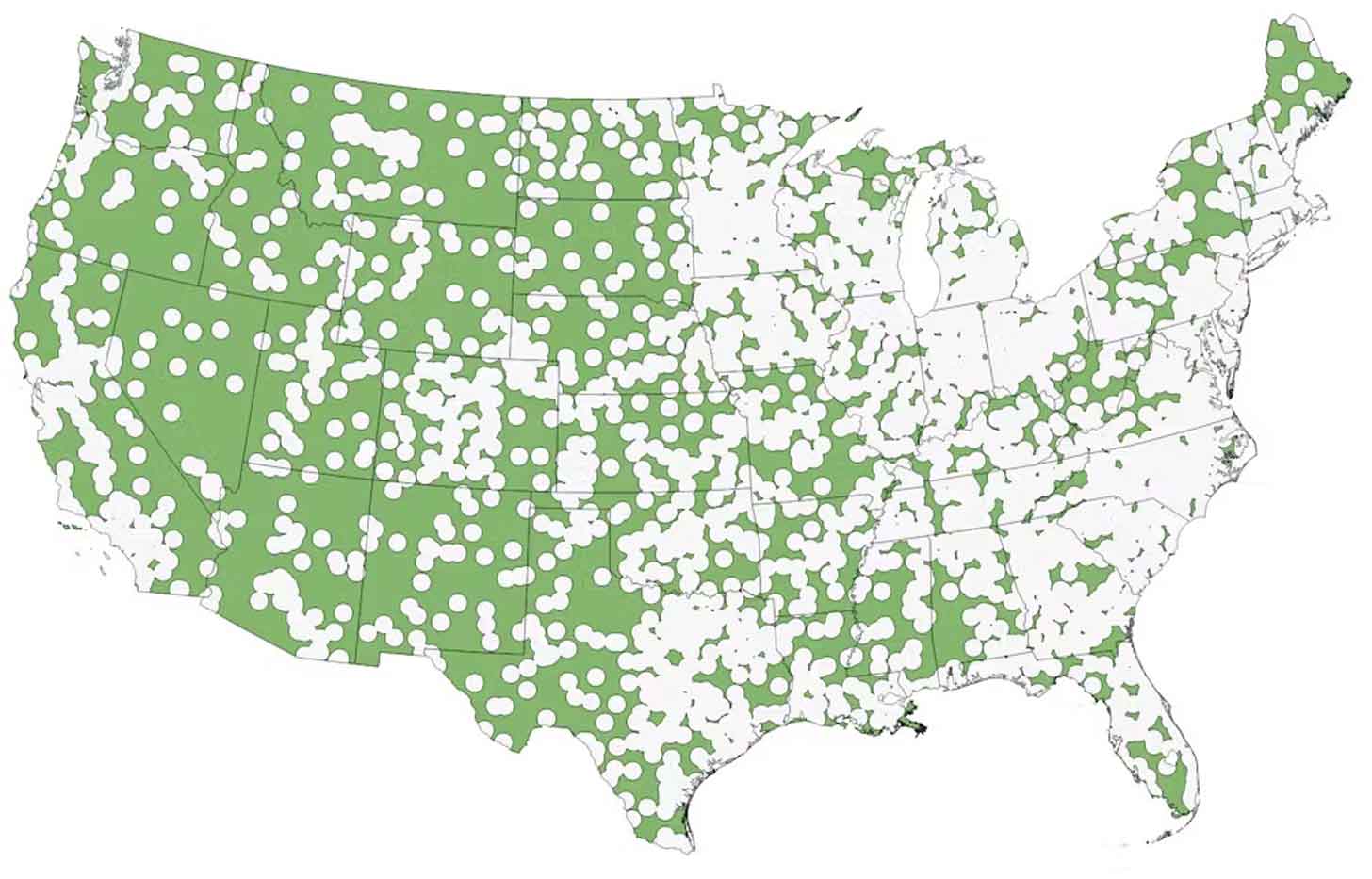
Because of the chaotic nature of weather, the only way to truly know what’s happening in your yard is to measure the weather in your yard. But not everyone is interested in installing a rain gauge or personal weather station.
Filling the gaps
To bridge this gap, many states and universities have established local weather station networks called mesonets — short for mesoscale networks, meaning intermediate scale. These weather stations are installed in locations to ensure everyone in the state is within 20 miles of the nearest station.
Nationally, there are nearly 3,000 mesonet stations installed in 38 states, with more networks planned.
Like the weather stations at airports, mesonets measure things like air temperature and relative humidity, air pressure, rainfall or melted snow, and wind speed and direction — often every five minutes.
Many mesonets collect additional data such as soil moisture levels to help farmers. Some even have camera images updated every five minutes to show current weather conditions. Mesonet data is then shared through websites or direct data transmission so that the public, weather forecasters, and researchers can easily access it.
I lead the team at Wisconet, a new mesonet that just finished installing 78 weather stations across Wisconsin. Our stations are installed on 10-foot-tall tripods in open areas near orchards and cranberry marshes, farms and airfields, schools and other educational centers, and on city, state, and federally owned lands.
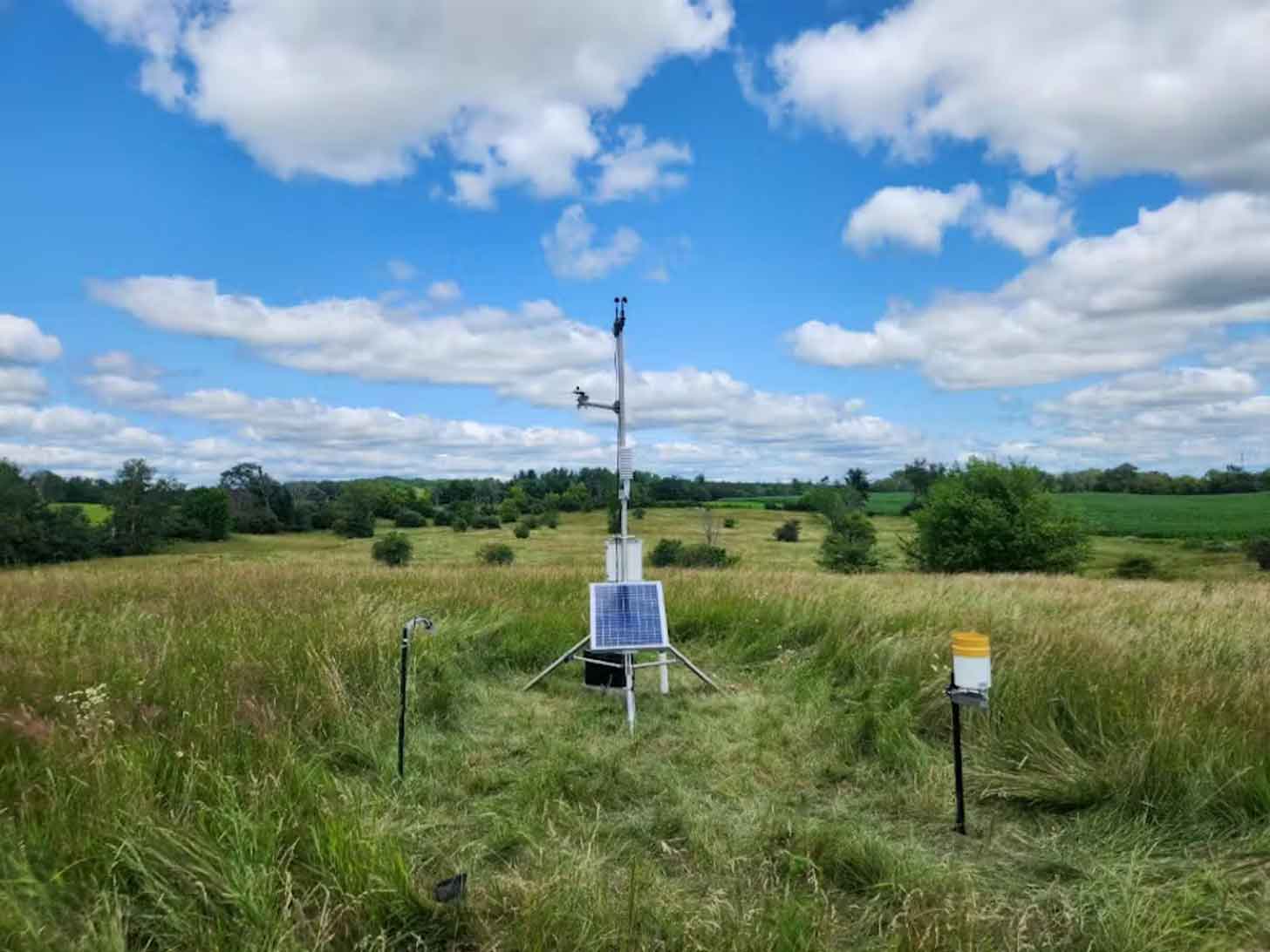
These added weather stations are already proving useful. On Aug. 18, 2025, slow-moving thunderstorms moved over a Wisconet station, with more than 3 inches of rain falling in just a couple of hours. The National Weather Service was able to issue a flash flood warning for the area because of the data provided by that station.
In addition to providing a near-real-time snapshot of the local weather, mesonets help farmers decide when to run irrigation systems, spray pesticides, or plant crops. They also help provide better weather warnings, particularly when tornadoes and other storms intensify over small areas that farther-away weather stations would miss.
A nationwide network of networks
Because of the immense value of high-frequency weather and soil measurements, the National Oceanic and Atmospheric Administration leads a National Mesonet Program. The program collects weather data from public, private, and academic sources, validates the quality of the data, and ensures it flows to users, including the National Weather Service. National Weather Service forecasters use that data to make more timely and accurate severe weather warnings.
Congress is considering expanding that program, with legislation proposed in the House and the Senate. The bills aim to authorize $50 million to $70 million annually to the National Mesonet Program between 2026 and 2030 to improve and expand mesonets across the country.
An expansion would mean more weather stations and new capabilities, like real-time snowfall, fire weather and air quality measurements, closer to the people who rely on them.
So the next time you check your smartphone and grumble because the app doesn’t match the weather in your backyard, remember that all weather is local. If you don’t have a nearby mesonet station, the nearest measurements may be many miles away.

This article was written by Chris Vagasky from the University of Wisconsin-Madison and was originally published by The Conversation.
Header image by Patrick Emerson/Flickr, CC BY-SA
In 2017, Mackenzie Feldman and Bridget Gustafson were playing beach volleyball at University of California-Berkeley when they found out that their practice courts had been sprayed with an herbicide linked to cancer and environmental harm.
They immediately went to the powers that be and offered for the entire volleyball team to pull weeds around the courts if it meant the school would stop spraying the herbicides.
The campaign quickly took off on campus, and now UC Berkeley manages 95% of its grounds — 1,171 acres — organically and without the use of inorganic fertilizers, chemical pesticides, fungicides, and herbicides.
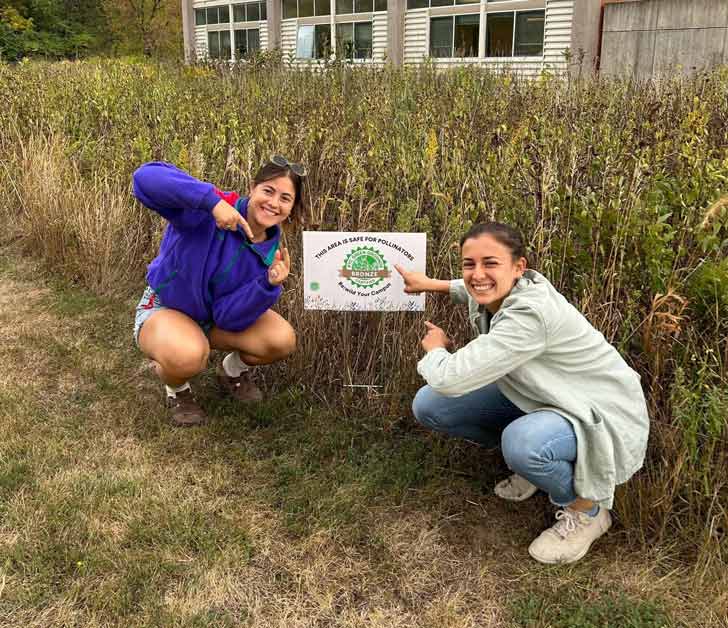
Then, the effort snowballed even bigger. Feldman and Gustafson launched Re:wild Your Campus, a nonprofit that equips college students and university groundskeepers with the resources they need to transform campuses into biodiverse spaces for pollinators, all without toxic chemicals.
They created the RYC Green Grounds certification with support from experts, groundskeepers, students, and sustainability professionals, to give college campuses the tools they need to take action and set an example for other schools.
“It goes above and beyond reducing pesticide use to incentivize regenerative landcare practices that will increase biodiversity, reduce water use, improve soil health, and take campus sustainability efforts to the next level,” the nonprofit’s website explains.
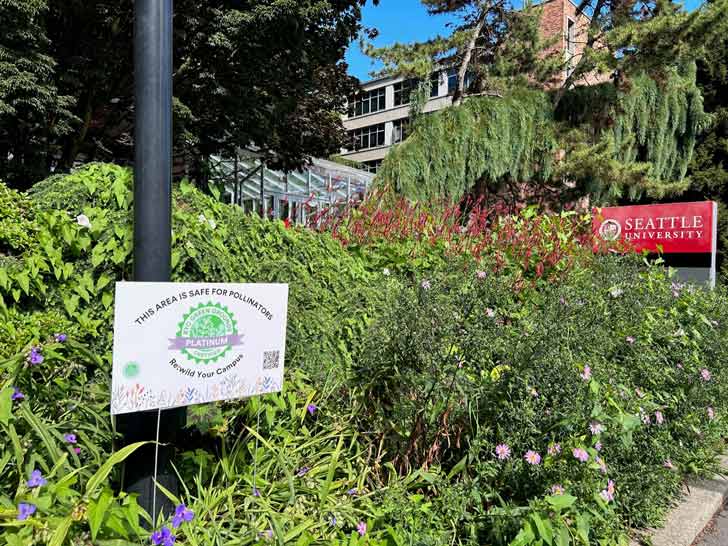
By 2025, 15 college campuses were Green Grounds Certified, and over 700 students and administrators had been trained to carry out rewilding projects on their own grounds.
UCLA, which received its Green Grounds Certification in 2025, earned a gold-level credential, which it credits to “long-standing efforts” to transition turf spaces to drought-tolerant plants. Over 30,000 square feet of turf was converted to California native, drought-tolerant plants on campus, a press release from UCLA shared.
“This certification reflects the hard work of so many at UCLA,” Nurit Katz, UCLA’s chief sustainability officer, said in a statement.
“The goal is setting an example with climate-resilient landscapes that also support human and ecological health that hopefully become standard way beyond our campus.”
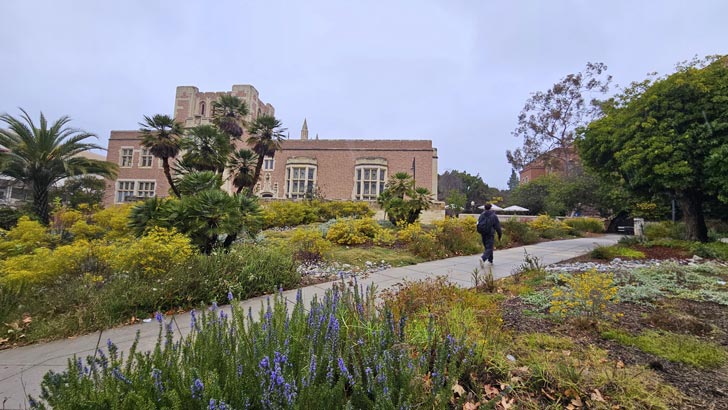
In addition to the young women’s original effort to stop the use of harmful herbicides, their work now extends to improving soil health, increasing biodiversity, reducing emissions, and building skills for communities of young people wanting to do more for the planet.
“Every spray of chemicals tells the same story: short-term aesthetics over long-term health,” Re:wild’s website shares. “But we know another future is possible — one where campuses nurture biodiversity, protect people, and connect communities back to the natural world.”
A version of this article was originally published in The 2026 Environment Edition of the Goodnewspaper.
You may also like: School gardens lead to more positive attitudes about the environment, study finds
Header images courtesy of Re:wild Your Campus and Nurit Katz/UCLA
In 2024, Houston debuted a new program in partnership with the Black United Fund of Texas and the Green Thumb Academy to train Black, low-income, and formerly incarcerated residents for jobs in clean energy.
In the inaugural 22-week training, called “Vulnerable to Vibrant,” 50 participants left with an $18/hour paycheck and a certification in solar installation. And for some, it also provided a sense of purpose.
“Being a part of [the program] felt like creating history,” Leon Dillard, a 37-year-old who was incarcerated for two years prior to being in the program, told Capital B News.
“Learning the trade with people from similar backgrounds [not only] gave us something to offer back to society, but also ourselves.”
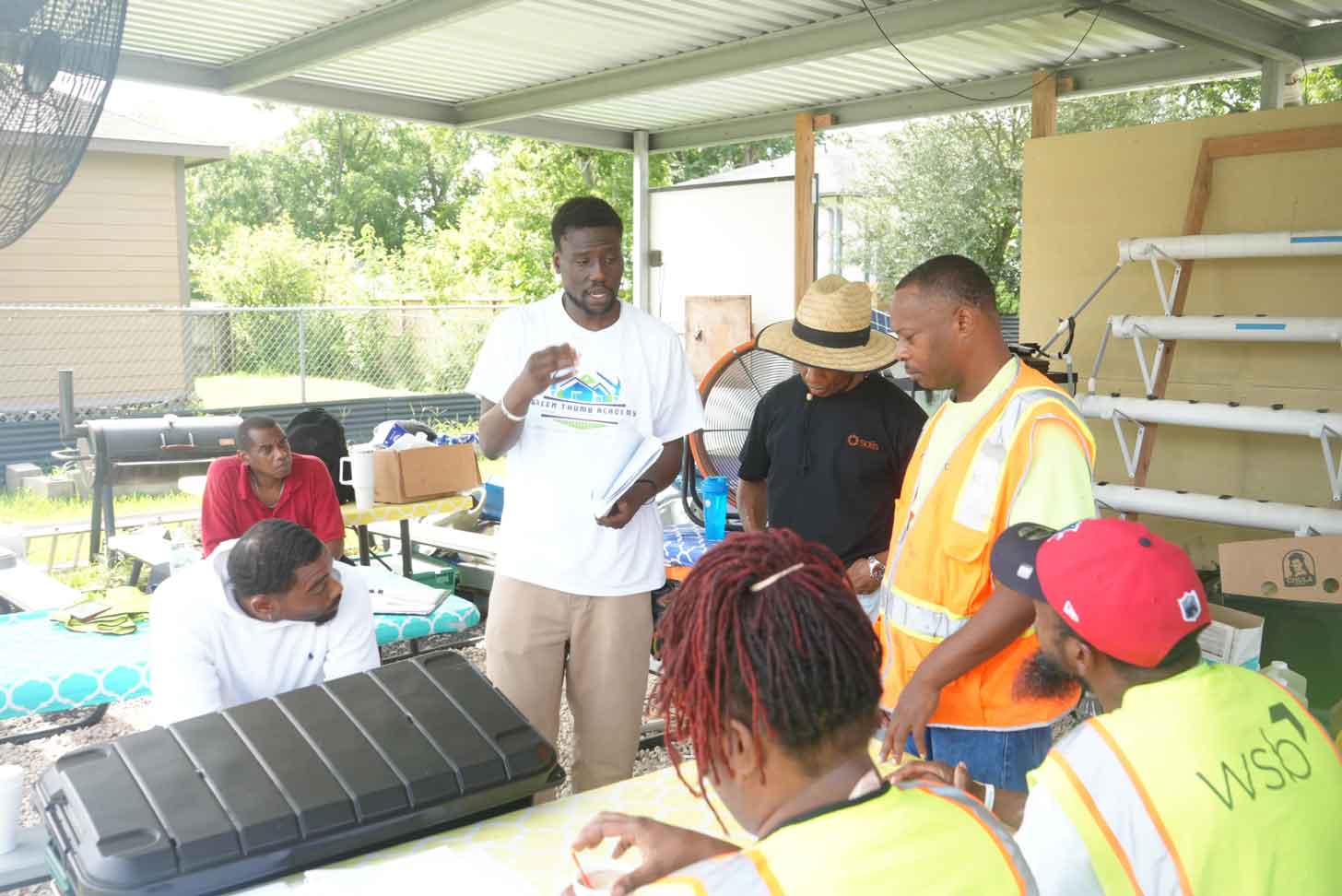
In addition to being a source of opportunity for the trainees, it’s also a way to confront environmental disparities that plague marginalized communities.
“For decades, these … communities have faced disproportionate challenges, from contamination to extreme heat and flooding,” Black United Fund of Texas writes on its website.
“The Vulnerable to Vibrant program directly addresses these inequities by bringing sustainable solutions, workforce development, and improved quality of life directly to the heart of these neighborhoods.”
Unfortunately, nearly as quickly as the program began, its funding was put in jeopardy. After being created under the Biden administration's Inflation Reduction Act, federal dollars were withdrawn by the Trump administration.
But the organizers rallied.
Velika Thomas of the Black United Fund said, “We’ve worked before without literal dollars,” and still kept the initiative alive on a razor-thin budget. Combining funds and grants, they were able to maintain the wages for the trainees.
“As a Black person, I have not felt that America has ever put us at the forefront,” Thomas said. “We are not a waste; the community is not a waste.”
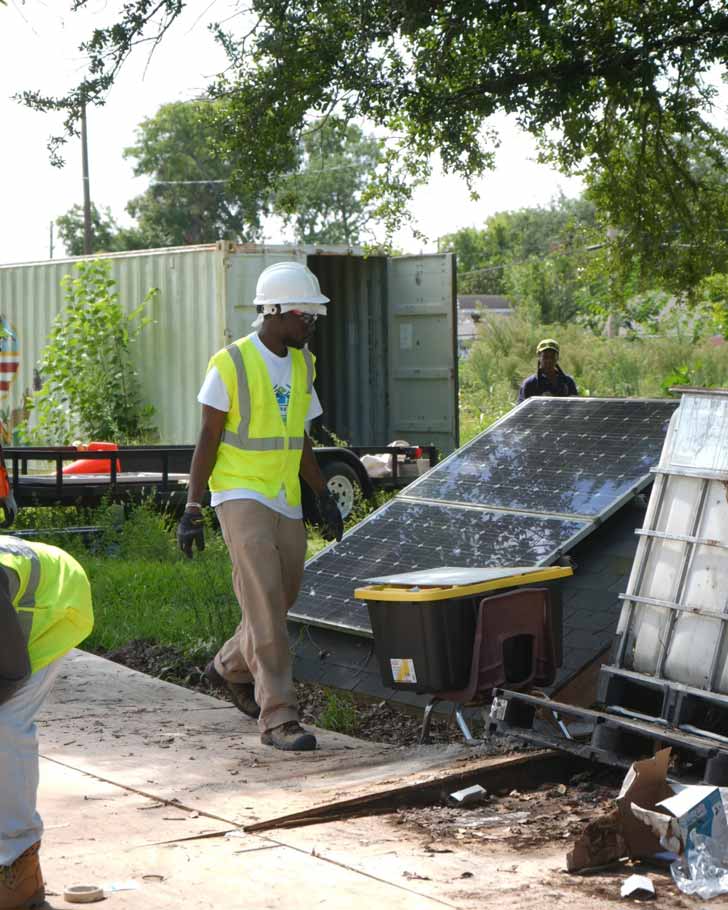
And the impact of the solar job training program is proof of that sentiment.
Those, like Dillard, who completed the program, left with certifications, a pathway to a union apprenticeship, and a newfound knowledge no one could take from him.
“Learning this trade … it’s something you can do as a career and retire from,” Dillard said.
“Solar is the way the world is going,” Marissa King, another student, told Houston Landing. “I want to be a part of that.”
A version of this article was originally published in The 2026 Environment Edition of the Goodnewspaper.
You may also like: Germany's plug-in solar panels are finally coming to America
Header image by Los Muertos Crew via Pexels
- For the first time in a decade, camera traps set up high in the Sierra del Merendón mountain range in Honduras captured images of a male jaguar.
- The cat was documented at an altitude of about 7,200 feet, much higher than their normal range. Jaguars typically live below 3,300 ft.
- These mountains can act as a high-elevation corridor for animals to move between landscapes in Honduras, Guatemala, and beyond.
- Jaguars, like all big cats, continue to lose habitat and are targeted by poachers. But this cat moving back into its former territory shows that conservation efforts, such as anti-poaching patrols, land protection, and the introduction of prey species, may be working.
High in the Sierra del Merendón mountains in Honduras, a jaguar has been photographed at 2,200 meters, or about 7,200 feet — an unusually lofty elevation for a species that usually sticks to lowland forests and wetlands.
Jaguars (Panthera onca) are typically found below 1,000 m (3,300 ft), making high-elevation sightings so unusual that scientists have coined a term for the big cats spotted here: cloud jaguars.
Seeing jaguars at this elevation is very rare, said Allison Devlin, who directs the jaguar program for United States-based wildcat conservation NGO Panthera.
“The fact that they’re able to travel through these high elevation areas also shows how resilient they are," she said.
The jaguar, a healthy-looking young male, was photographed by camera traps on Feb. 6 this year — almost 10 years to the day, and in the same location, where camera traps captured the first recorded glimpse of an elusive cloud jaguar in the Sierra del Merendón. The mountains form an important corridor between Honduras and Guatemala, linking the jaguar’s historical range, which spans 18 countries across the Americas, running from Mexico to Argentina.
As apex predators, jaguars play a key role in the ecosystem by keeping prey populations healthy and balanced, and in helping prevent zoonotic diseases that jump between species and can infect humans.
But like all wild cats, they face multiple threats. Once-intact forests are being felled to make way for human settlements, plantations, ranches, mines, and other developments. Climate change is also taking a toll: Forest fires are scorching wetlands and woodlands, and swamps are drying up. The species has disappeared from more than half of its historical range.
Its remaining habitat is a fragmented patchwork, making it difficult and dangerous for the world’s third-largest feline — and the Americas’ largest — to move, hunt, find water, or a mate, and for young cats to disperse and find their own territory. Jaguars are also caught in the crossfire of the U.S.’s “war on drugs,” with drug-producing and -trafficking groups operating in more than two-thirds of their habitat.

Prey is also dwindling, hunted by humans within shrinking wilderness. Without enough wild prey, jaguars often go after livestock, prompting retaliatory killings by ranchers. And as road networks expand, the cats are becoming victims of highway accidents.
Poaching and large-scale international trade in jaguars and their body parts dropped dramatically after the cat was protected in 1975 under CITES, the international wildlife trade treaty. But with a growing market for their roseate-patterned skins, canine teeth, skulls, and other bones, poaching is on the rise once again.
The result: Jaguar populations have declined by 20-25% over the last three generations, which is about two decades. The species is now classified as near threatened on the IUCN Red List, with populations continuing to drop. They have vanished altogether from some former habitat.
That’s why conservationists are excited by this recent sighting.
“It reaffirms that there are dispersed populations in the northwestern part of the country,” said Marcio Martinez, coordinator at the Honduran government’s National Institute of Forest Conservation.
And while there are no estimates of how many wild jaguars are left in the country, seeing the cat gives hope for their return to the Merendón mountains, Martinez said.

Renewed focus on jaguar conservation
Jaguar range countries are trying to come together to protect this majestic cat and its habitat, working with conservation organizations.
At the 2025 gathering of CITES representatives, range countries agreed to an action plan to protect the felines from illegal trade by strengthening national legislation and law enforcement. They also pledged to boost cross-border cooperation and invest in education and awareness to reduce conflict-related retaliatory killings. A regional plan was also finalized last year to protect habitat.
Other steps were taken at the 2026 meeting of the Convention on Migratory Species (CMS), where countries agreed to protect corridors, promote coexistence, and restore jaguar habitat as outlined in the ambitious Jaguar 2030 Roadmap. Its goal is to secure a network of 30 “jaguar conservation units” and connecting corridors by 2030.
Honduras has also pledged to eliminate deforestation by 2029 — one of the biggest threats to its jaguars and other wildlife — with plans to deploy about 8,000 soldiers for the job.
But conservationists note that political will must be supported by funds earmarked specifically to support these plans, as well as coordinated actions to protect jaguars on the ground — not just on paper. In 2021, conservation NGO WWF said “minimal progress had been made” three years into the launch of Jaguar Roadmap 2030. No current progress reports are publicly available.
Panthera, one of the main backers of the roadmap, is collaborating with local partners as well as the governments of jaguar range countries. Its biologists are installing more camera traps for monitoring, deploying anti-poaching patrols, working with private landowners to secure jaguar migratory corridors, and reintroducing prey species such as peccaries.
“These are important components to ensure that jaguars are going to continue to persist in the region,” Devlin said.
She said she’s pinning her hopes on the young male captured by the camera. “If he can move from a neighboring population to another one, that can help maintain functional connectivity and [their] genetic health,” Devlin said.
This article was originally published on Mongabay.
Header Image by Panthera-Honduras
- CBAPU, a dedicated volunteer group, is actively working to mitigate human-wildlife conflicts in Nepal’s Bardiya National Park by preventing wildlife incursions and protecting local communities.
- The region experiences frequent human-wildlife conflict incidents, mostly involving elephants and tigers, leading to fatalities and injuries among both communities and wildlife.
- CBAPU’s initiatives combine local ecological knowledge with modern techniques like firecrackers, laser lights and drones to safely deter wildlife.
- Despite its successes, CBAPU faces challenges due to the lack of legal recognition, financial support and safety measures for volunteers, threatening the sustainability of their efforts.
BARDIYA, Nepal — Ram Raj Dhakal, 22, jolts awake to an alert on his phone. A wild elephant has strayed into a village near Thakurdwara, on the fringes of Bardiya National Park. At 11 p.m. in Nepal’s southern jungles of Bardiya, the air is finally cool after a scorching day, carrying the scent of damp grass.
Dhakal quickly alerts his friend, hops onto a motorbike, and speeds through the foggy winter night.
When they arrive, chaos unfolds before them. Frightened villagers, armed with fire torches, yell and wave their arms to drive the elephant away. The massive creature lurches forward, agitated. Dhakal and his friend Chaudhary launch a drone into the air. The loud buzzing mimics the sound of a swarm of bees, one of the few things elephants fear.
Slowly, the elephant retreats, disappearing back into the jungle. Another night, another crisis averted.

For the past two years, this has been a part of their job for the four months after the monsoon, the period when elephant incursions peak as the pachyderms raid farms, destroy crops, and sometimes enter villages or homes for food.
Dhakal is lithe, his frame built more for agility than brute strength. At first glance, he hardly looks like someone who could stand his ground against a wild elephant. Yet, in the dense grasslands of Bardiya, he and his friends have taken on the daunting task of driving them away. They’re among the 15 core members of the Community-Based Anti-Poaching Unit (CBAPU) at Thakurdwara.
Local community members say CBAPU’s efforts have saved several homes from being trampled, though the volunteers themselves have kept no formal count of their attempts.

The conflict
Nepal’s population of wild Asian elephants (Elephas maximus) is currently estimated at 255-265, with an additional 150 domesticated elephants. Between 2019 and 2023, the Bardiya-Banke Complex, a protected area formed by the adjacent Bardiya and Banke national parks, saw 76 human-wildlife conflict incidents. Those incidents resulted in 54 people being killed and 22 injured. The wildlife involved in most of these cases were tigers, elephants, and leopards.
In one of the most recent incidents, on March 17, two women were killed in tiger attacks. Studies indicate that the rising number of human and livestock casualties has fueled retaliatory killings.
The Tharu people, an Indigenous community native to the forests and floodplains of western Nepal, have lived alongside the forest and its wild inhabitants for generations. Their ecological knowledge has fostered a relationship of coexistence.
But decades of extractive modernization, especially during Nepal’s autocratic Rana rule from the mid-19th century to the mid-20th century, saw hunting, large-scale deforestation, and agricultural expansion disrupt ecosystems, displacing both wildlife and the very communities that once coexisted with them. Now the locals live under a pall of fear, and their fears are not overstated.

Finding balance
In response, a combination of interventions has emerged, led by conservation organizations, the national park authority, and local communities. Bardiya National Park, with support from foreign aid, has facilitated the installation of electric fences along some neighboring farms to deter elephants.
Beyond physical barriers, alternative livelihood programs such as ecotourism and wildlife guiding offer economic incentives for communities to reduce their dependence on forest resources. Community-based patrols, including those run by CBAPU, play a crucial role in monitoring wildlife movements and alerting settlements to potential threats.
Yet for all these measures, losses are inevitable. According to the Department of National Parks and Wildlife Conservation (DNPWC), the Nepali government offers financial compensation to those affected by wildlife encounters: up to $150 for minor injuries and up to $7,500 for the families of those killed.
This compensation seeks to alleviate some of the hardship caused by these events. But the system is a minefield of paperwork that many farmers, with little formal education, struggle to navigate. CBAPU volunteers say they step in where they can, guiding victims through the bureaucracy to ensure claims are filed and paid.

Nepal has made remarkable strides in conservation, but the balance remains precarious. Electric fences break. Funds run dry. As habitats shrink and human-wildlife encounters grow more frequent, conservation efforts must continuously adapt, striving to protect threatened species while ensuring the livelihoods of communities living on the frontlines.
A grassroots force
Established in 2009, CBAPU was initially formed to combat poaching, but has since expanded its mission with operating units across most of Nepal’s national parks and conservation areas. Through the implementation of CBAPU, Nepal has demonstrated that zero poaching is attainable with the active involvement of local communities.
The country has accomplished this remarkable feat several times: first in 2011 for rhinos, and again for the full year ending in 2014, protecting rhinos, tigers, and elephants from poaching. More importantly, the units have mobilized local youths, many of whom might have otherwise migrated elsewhere, recasting them as dedicated jungle guides, Dhakal says.
Today, in Bardiya, it’s a volunteer-driven movement of more than 3,300 members spread across 93 CBAPU units.

Dhakal says he goes out at least 20-25 times a month to chase elephants and other animals away from villages. They collaborate closely with national park staff, using camera monitoring around community forests to track wildlife movements and send real-time alerts to farmers and villagers.
Many of their techniques, such as fire torches, laser lights, and mimicking loud animal sounds, help safely redirect wildlife when they venture too close to human settlements. Beyond immediate interventions, they also spend time with local communities, teaching them safety etiquette for navigating the forests and minimizing dangerous encounters.

Ajit Thumbahangphe, a senior conservationist with the Bardiya Conservation Programme (BCP), has spent years mitigating human-wildlife conflict in Nepal. He’s seen young people, once at risk of migration or a life of poaching, find purpose in protecting their homeland.
“The CBAPU initiative is a brilliant idea,” he tells Mongabay. “It’s not just preventing migration; it’s transforming youth into conservationists, equipping them with skills that protect biodiversity and secure livelihoods.”
He says he believes conservation can’t succeed without community involvement, and that in Nepal, the CBAPU units are proving to be the forest’s strongest stewards.
But their work comes with significant challenges. CBAPU members operate voluntarily, with no fixed salary or financial security, making it difficult to sustain long-term efforts. The lack of proper safety measures also puts them at constant risk. Without consistent funding, maintaining their operations and expanding their impact remains a challenge.

A personal mission
Hemanta Acharya’s office sits at the edge of Thakurdwara’s community forest, a simple concrete structure where the scent of damp paper and old wood emanates. Wildlife posters cover the yellowing walls, their edges curling from the humidity. As we speak about the community’s patrol system, an elderly woman appears in the doorway, a file folder clutched tightly in her hands. She lost her livestock to a leopard attack a few nights ago. Without hesitation, other CBAPU members move to assist her, guiding her through filing for compensation with quiet dedication.
For Acharya, the local CBAPU president, this mission is personal. Years ago, his father was killed by an elephant while trying to chase it away from a village. Instead of succumbing to grief, Acharya channeled his loss into action. He envisioned a movement when locals would not only protect their own but also find ways to coexist with wildlife.
“I wanted to make a difference,” he says. “I hoped no one else would have to go through what my father went through.”
Under his leadership, CBAPU has become a leading example of community-led conservation in Nepal, blending local knowledge with modern tools to build resilience against a growing crisis.

At the CBAPU office, dumri ghas, also known as elephant grass, grows in small, promising saplings under a greenhouse. For generations, locals have risked their lives venturing deep into forests to collect this grass to feed their livestock, often crossing paths with the very creatures the plant is named after.
Now, these same young plants grow just steps from the CBAPU office. The purpose is simple: to keep people out of the forest by bringing the grass to them. Here, they grow more than 26 varieties of forest vegetation, including rare wild fruits like mauwa, agai, pedar, kusum, and jamun, alongside various grasses and medicinal plants, distributing them free of charge to the villagers.
Within just one year, they’ve provided these resources to up to 700 community forests and distributed plantings of more than 3,000 plants to locals. These efforts are rooted in Indigenous knowledge, as they involve the replanting of native species that are vital for both sustaining local ecosystems and preserving traditional farming practices. The idea is that each handout reduces the need for a journey into wildlife territory, simultaneously preserving Indigenous knowledge and protecting both human and animal lives.

Community conservation at a crossroads
Ashok Kumar Ram, the chief warden of Bardiya National Park, praises the dedication of the young volunteers.
“Groups like CBAPU play a crucial role in poaching prevention and conservation awareness, often without funding or legal backing,” he says. “The core problem is the lack of legal recognition and financial support."
“How long can volunteering continue? What if someone gets injured?” he asks. “If CBAPU is to work with us sustainably and lawfully, they must be compensated, but we lack government funding to do so. This year, even our salaries are uncertain.”
With USAID recently cutting millions in conservation aid to Nepal, including funding for biodiversity programs, Bardiya’s financial strain has deepened. Ram says that without legal recognition and sustainable funding, the momentum built by community-led conservation efforts like CBAPU could stall.

Dhakal reflects on his journey with the community conservation efforts. He began at age 15, he says, not out of love for the wilderness, but out of fear.
“Back then, I didn’t care much about the wild. I was just afraid,” he recalls. “Now, even a bug seems precious.”
His evolution, he says, was inspired by the passion of other young volunteers.
“We don’t do this for money,” Dhakal says, his voice low and resolute. “We do it out of both fear and love for the wild, for our people. Over time, we’ve realized, if we don’t step up, who will?”
This article was originally published by Mongabay.
Header Image by Tulsi Rauniyar for Mongabay
In mid-April, a family from Spartanburg, South Carolina was vacationing in Oak Island, North Carolina when their 8-year-old daughter, Katie, spotted a sea turtle that was caught on a fishing hook off Ocean Crest Pier.
That’s when the family called the Oak Island Sea Turtle Protection Program, an all-volunteer nonprofit organization that helps rescue and monitor sea turtles in the area.
“A big thank you to Katie and her family from Spartanburg, SC, for calling us to make sure the turtle was ok,” the nonprofit posted on Facebook on April 17.
The Oak Island Sea Turtle Protection Program confirmed that Katie had found a Kemp’s ridley sea turtle — the world’s smallest and most endangered sea turtle.
Kemp’s ridley sea turtles primarily nest along the Gulf of Mexico, but they have been spotted along the Atlantic coast.
A sighting in North Carolina, however, is incredibly rare. In 2025, a total of just 10 Kemp’s ridley sea turtle nests were recorded in the state.
“We assessed the turtle, checked him for tags, got some great data for the state, and released him immediately,” the nonprofit shared.
“Thanks for all that you guys do for the turtles,” one local commented under the Facebook post.
“Y’all do great things!” said another.

Others made sure to shout out the young girl who was central to the Kemp’s ridley rescue, saying, “Great job Katie!”
The Oak Island Sea Turtle Protection Program has had a busy month.
On April 14, they helped the National Aquarium facilitate the release of 29 sea turtles — 13 of which were Kemp’s ridley sea turtles. All of them had been rescued from a mass stranding up north that left them cold-stunned.
“In December, we got these turtles from the New England Aquarium. They were rehabbed in Baltimore, and we drove them about 7 and a half hours from Baltimore, Maryland,” Kira Canter, an assistant rehab biologist with the National Aquarium in Baltimore, told local news station WWAY.
On the day of the release, teeming crowds cheered from the sidelines as the turtles returned to the warm waters of the Atlantic.
“It’s so exciting that we can share what we do with all these people, get them interested in sea turtles, let them know a little bit about what’s going on and different ways that they can help us,” Canter said. “It’s truly amazing to see the amount of support we can get from these.”
For Canter, the release of 13 Kemp’s ridley sea turtles was especially meaningful.
“It’s amazing that we can put so many of these endangered species back out into the ocean, giving them another chance at life,” she said.
You may also like: Tumorous sea turtle makes 4-month recovery after being saved from fishing line: 'I seriously did not think she was going to make it'
Header image via Oak Island Sea Turtle Protection Program
Before humans arrived in New Zealand, an estimated 12 million kiwi birds roamed the Oceaniac island country. Now, only about 70,000 remain, with the population continuing to decline by roughly 2% each year.
A century ago, the species all but disappeared from the hills of Wellington, New Zealand’s capital city. The surviving birds were moved offshore to predator-free sanctuaries where they could be monitored and protected.
Today, a grassroots initiative called the Capital Kiwi Project is bringing them home.
“They are a part of who we are and our sense of belonging here,” Paul Ward, founder of the Capital Kiwi Project, told the Associated Press. “But they’ve been gone from these hills for well over a century, and we decided as Wellingtonians that wasn’t right.”
Recently, volunteers carefully carried seven crates of kiwis through the hillside to relocate them in Wellington.
One kiwi was carried into the Parliament’s grand banquet hall to mark the arrival of the 250th bird to return to its natural habitat. A few people in the quiet crowd were in tears, while a man recited a karakia, a traditional Māori prayer.
Kiwi birds may be small and unassuming, but they play a big role in the food web as ecosystem engineers. By eating fruits along the forest floor, they help disperse seeds as they snack, which aids forest growth.

In addition to fruits, kiwis eat bugs — such as cicadas, beetles, and larvae — helping keep local insect populations in check. They poke their noses through leaf litter as they look for worms and insects to eat, which in turn helps aerate the soil.
But in New Zealand, kiwis are more than native birds. They are also symbols of the nation.
“This animal has given us as a people so much in terms of our sense of identity,” Ward said. “We want to challenge our civic leaders, our politicians, and say this is a relationship we need to honor.”
The kiwi initiative is part of New Zealand’s ambitious goal to eliminate introduced predators, including feral cats, possums, rats, and stoats, by 2050.
The ambitious goal was first set in 2016. Now a decade in, community groups have embraced the effort wholeheartedly.
Thanks to eagle-eyed volunteers, some areas — like Wellington — are now largely free of predators aside from pets. It’s a measure that helps local birds, including kiwis, thrive.
‟I grew up roaming around these hills as a kid,” Ward said. “It’s awesome that, if we do the work, my children will soon hear kiwi calling from them.”
You may also like: Scientists calculated how much money it would take to save every single threatened species in Australia. It's lower than you'd think
Header image via Rawpixel (CC0 1.0)
Every day the Good Good Good team collects the best good news in the world and shares it with our community. Here are the highlights for this week!
If you want to get good news in your inbox every day, join the Goodnewsletter — the free daily newsletter designed to leave you feeling hopeful.
The Best Positive News We’re Celebrating This Week —
A recent study found seeds from a ‘miracle tree’ remove 98% of microplastics from drinking water
Outperforming their chemical counterparts, researchers found that seeds from the “miracle” moringa tree reliably removed over 98% of microplastic particles from water.
The tiny plastic particles are released from car tires, paint, textiles, and degrading plastic packaging, and have been gathering in water systems for decades.
This solution is thought to have been used by Ancient Egyptians to sterilize water. The plant grows quickly, is drought-resistant, has low water requirements, supports biodiversity, and acts as a carbon sink. Offering a plant-based alternative to removing microplastics, it’s potentially less costly and energy-intensive, too.
Why is this good news? These microplastics are not only one of the most harmful plastic types for human health — having been linked to cancer, heart attacks, and reproductive issues — they can also absorb and transport other harmful pollutants throughout ecosystems.
‘Native’ American Girl dolls are historically inaccurate. So an artist reimagined them for her daughter
In 2025, clean energy generation exceeded the rise in global electricity demand
In 2025, clean energy sources like solar and wind generated enough energy to meet all the growth in global demand, marking a major turning point in the energy transition. Experts say this shows clean energy is now scaling fast enough to meet rising demand rather than just supplement it.
When it comes to world leaders driving clean energy generation, China drove more than half of the global solar expansion, with India close behind, adding significant clean energy and cutting fossil fuel use.
The report’s release was timely, coming just one month before 50 countries meet in Colombia for international talks on accelerating the shift away from fossil fuels.
→ Read more
After a French city cut its marine pollution, its critically important seagrass grew back
A new study found that after Marseille, France introduced stronger environmental regulations and practices in the mid-to-late 1980s, Neptune seagrass repopulated at “exceptional” and “remarkable” rates.
The species had been on the decline for decades, with a number of efforts to restore it via replanting, but nothing was as effective as removing the pollutants causing the issue in the first place.
The authors of the study said the results showed the effectiveness of “passive restoration” — letting seagrass meadows regrow on their own after removing the human-caused reasons for their decline, rather than continued active interventions like replanting or transplanting.
Why is this good news? Neptune grass is considered the most ecologically important seagrass and is endemic to the Mediterranean Sea. It provides a critical shallow-water habitat, and seagrasses are renowned for their superior ability to capture and store carbon dioxide, making them a critical partner in fighting climate change.
→ Read more
She survived an illegal abortion — then changed reproductive care forever
After ‘988’ replaced the ten-digit crisis hotline in the United States, suicide rates fell
According to a new study, suicide deaths among U.S. teens and young adults dropped by 11% after the 988 Suicide and Crisis Lifeline launched in 2022.
Researchers estimate that from mid-2022 through the end of 2024, there were more than 4,300 fewer suicides than expected among people aged 15 to 34.
Although experts say many factors could contribute to the decline, they think it is likely that the ten-digit number dropping to just three — “988” — made the life-saving resource both easier to remember and easier to use.
Defying last-minute lobbying, Amsterdam is the world’s first capital city to ban fossil fuel and meat advertisements
Starting May 1, advertising for high-carbon products and services, like flights, petrol and diesel vehicles, gas heating contracts, and meat products, will be prohibited in all public spaces in Amsterdam.
In 2020, the city made a landmark decision to volutarily exclude fossil fuel ads from metro stations — but this new law goes even further, and was passed in defiance of last-minute lobbying from the world’s largest outdoor advertising operator.
There are a few exceptions for existing advertising contracts, and Dutch activists now want to see similar laws implemented at the national level.
Why is this good news? One of the law’s backers was Creatives for Climate, a global network of advertising professionals, which summarized it well: “Advertising doesn’t just sell products, it grants social license … promoting fossil fuels undermines climate action and public trust.”
Advertising products that the world needs less of is counterintuitive and contradicts government commitments to clean energy.
Coral reefs are secretly connected across oceans through ‘marine superhighways’
→ Read more
Global solar power growth ‘the largest ever observed for any source’
According to a new report from the International Energy Agency, global solar power had the largest increase for any energy source in history.
After analyzing energy trends in 2025, the agency announced that the planet has entered “the Age of Electricity.”
Last year, solar power generated more than 2,700 terawatt-hours — over twice its output from three years earlier — and now supplies more than 8% of global electricity. IEA also saw electric vehicle demand rise by nearly 40 percent, with electric car sales being a quarter of the total of cars sold last year.
→ Read more
A historic vaccination ‘catch-up’ campaign has delivered over 100 million vaccine doses to over 18 million children
A global, multi-year initiative from UNICEF, Gavi, the Vaccine Alliance, and the World Health Organization called the “Big Catch-Up” aimed to vaccinate missed children and strengthen routine immunization.
Now, the initiative has officially delivered over 100 million doses to over 18 million children in 36 countries over the course of two years. These children will now be protected from multiple vaccine-preventable diseases.
Over 12 million of the children had never received any vaccines, and about 15 million of the children had never received a measles vaccine.
What’s the nuance? While this is a historic achievement that will result in countless lives saved, more than 14 million infants still miss out on receiving vaccines every year. Global cooperation, political will, and funding have shown us what’s possible — and we need to continue investing in these initiatives to protect children from preventable diseases.
These ‘bicycle mayors’ are chosen with one task in mind: to make cities safer for cycling
New television series finds ‘forever homes’ for shelter dogs and strays
According to the American Society for the Prevention of Cruelty to Animals, more than 3.3 million dogs across the U.S. and Canada enter the shelter system each year.
In a new reality show, “Must Love Dogs,” celebrity couple Brady Oliveira and Alex Blumberg are centering that crisis. Working closely with supporters who help foster, transport, and care for the animals, their goal is to place as many dogs as possible in safe, loving homes before winter sets in.
“When you watch a dog go from surviving to truly belonging, it changes the way you see adoption,” Blumberg said. “They’re not 'rescue dogs.' They’re just dogs who need a chance — and once they get it, they thrive.”
Scientists discovered that coral reefs in a remote archipelago survived a massive heatwave largely unharmed
Coral reefs located on a chain of islands off Western Australia went virtually unharmed by a prolonged, extreme heatwave in 2025 that devastated reefs in other regions.
The reefs are located across the Houtman Abrolhos archipelago, and apart from a few patches, there weren’t even signs of stress in the reef. Just a bit further north, up to 60% of corals died in the same heatwaves.
Prolonged heat stress can lead to “bleaching,” which is when corals expel the symbiotic algae that live in their tissues, which provide most of their food and their coloring.
Why is this good news? Researchers are hopeful that by studying these corals, they’ll learn more about extreme heat tolerance that could help protect reefs all over the world, which are increasingly endangered by the climate crisis and warming waters.
→ Read more (May require login)
A famous 90s rock musician is now building a new kind of therapy program
→ Read more
Thanks to nuclear power, France has one of the world’s lowest-carbon electricity grids
Two-thirds of electricity in France is generated by nuclear power, far more than the average across Europe, at 20%, and the entire world, which is at 9%.
A low-carbon electricity source, nuclear has given France a largely clean energy mix for decades, and the country emits significantly less greenhouse gas than neighboring countries.
Globally, the average is 472 grams of carbon dioxide per kilowatt-hour of electricity generated — in France, it’s just 42 grams.
→ Read more
More good news of the week —
In New Mexico, a first-in-the-nation universal childcare law includes grandparents, too. The state has the highest rate of grandparents caring for grandchildren in the nation, and allows them to qualify for the universal child care program, too.
Scientists studied the recovery of 10,000 species in the Amazon and found that they rebounded faster than expected. Birds and bats proved to be the most resilient, with researchers calling them key to kickstarting forest growth.
Scientists are using a groundbreaking nasal spray treatment to reverse brain aging and brain fog. The trials are needed more than ever, with dementia cases projected to double over the next four decades.
Oklahoma principal crowned prom king by his students after heroically tackling school shooter. High school students at Pauls Valley High School declared him king to the Nickelback song “Hero.”
Researchers at Colorado State University are studying older dogs with dementia to better understand human aging. Because dogs live in similar environments and have brains that age in ways like ours, they’re helping scientists improve anti-aging treatments.
The World Health Organization approved the first malaria drug specifically designed for infants. Until now, infants have been treated with drugs developed for older children, which expose the newborns to risks of dosing errors and toxicity.
An injured sea turtle wrapped in fishing line and covered in tumors made an incredible 4-month recovery. The green sea turtle, named “Nutella,” left volunteers teary-eyed when she was re-released in the Florida Keys.
London farmers are spearheading a 20-year recovery plan to restore local woodland, peatlands, and rivers. Many are already reaping the benefits of the restoration project, with birds and bees returning to their land.
The largest clean energy project in the U.S. has officially started generating power. Once California’s SunZia wind farm is fully operational, it will generate enough energy for roughly 1 million to 1.2 million households.
A 4,000-person trial with volunteers from England, Scotland, and the U.S. for a bird flu vaccine is now underway. Although the risk of a bird flu pandemic is currently low, a scalable vaccine would be the first line of defense in a potential outbreak.
A study found that school gardens lead to more positive attitudes about the environment. Gardening also builds agricultural literacy, increases physical activity during the school day, and improves hand-eye coordination in young children, which is linked to success in handwriting, math, and reading.
For the first time since it was built, an orangutan used a canopy bridge created to unite its split community. When a road was built through the forest where the orangutans lived in Indonesia, it split the community in two and led to fears that inbreeding could cause health implications and eventual extinction.
An endangered sea turtle is finally returning to the ocean after washing ashore in Ireland 22 years ago. “Molly,” the loggerhead turtle, made a remarkable recovery after barely surviving a shark attack in 2004.
Researchers are using mRNA vaccines to engineer potential cures for cancer. A larger multisite trial has already shown promising results, with patient survival time doubling from 6.7 months to 13.2 months.
In a British football club for child loss support, bereaved dads are emblazoning their children’s names on their jerseys. The league was just recognized by the English Football League as the “Outstanding Community Project of the Season.”
Kacey Musgraves announced a mariachi trio detained by ICE would open her Texas album release shows. Antonio, Caleb, and Joshua Gámez-Cuéllar, the Mariachi Brothers, were arrested alongside their parents in February and later released after backlash.
New Zealand is changing its blood donation rules to allow gay and bisexual men to donate, too. The rule change would “increase the number of potential donors, which can help cover shortages in blood supply,” while also ending a discriminatory practice.
Indigenous groups in Colombia will have a key role in the transition to renewable energy. A key part of the first “Transitioning Away from Fossil Fuels” conference in Colombia is representation from Indigenous communities, including the U’wa, who will have a voice at the table.
Algeria eliminated trachoma as a public health problem, becoming the 29th country globally to do so. Trachoma is the leading infectious cause of blindness worldwide, and globally, the disease remains endemic in 30 countries and is responsible for the blindness or visual impairment of about 1.9 million people.
This woman just broke the Guinness World Record for running the fastest marathon — in a sari. Madhusmita Jena said she wants to empower women “from all ethnic backgrounds” to race in whatever makes them comfortable.
Taylor Swift’s “Spotify Clause” with Universal Music Group is now paying artists real money. One of the “most consequential clauses” she ever negotiated, the deal triggered payouts to artists off the profits from UMG’s recent sale of half of its 3% stake in Spotify.
Strangers across the wedding industry have donated their services to nearly 300 couples with terminal illnesses. The nonprofit Wish Upon a Wedding allocates $2,000 for each wedding “wish,” working with local wedding planners, videographers, and caterers in the couple’s hometown, who often discount their services or entirely donate their time.
Hawaiian green sea turtles are defending coral reefs from an invasive algae. They were documented for the first time actively grazing on the aggressive, invasive red algae that have spread rapidly across reefs.
A study found that when wildlife habitats are linked, it strengthens microbiomes and helps fight disease. Researchers analyzed habitat split impacts on the skin microbiomes of frog species, detecting microbial changes that increased frog susceptibility to the chytrid pathogen, which is devastating amphibians globally.
Illinois passed a first-in-the-nation “rewilding” law aimed at protecting wetlands. The Illinois Rewilding Law, which took effect last month, empowers the Illinois Department of Natural Resources to pursue projects that restore land to its natural state.
Your snail mail just got a hot-pink makeover.
On Friday, the United States Postal Service announced a new stamp release coming later this summer: A set of Barbie designs, dressed in outfits representing 10 iconic careers.
These include classic Barbie dolls dressed as nurses, teachers, and astronauts, as well as some more modern styles, like a soccer player, a judge, and a robotics engineer.

Ethel Kessler, an art director for USPS, collaborated with Mattel, the parent toy company that owns Barbie. Differing slightly from standard Forever stamps, these designs are a third taller than the usual vertical commemorative stamp, a format that will best showcase the dolls and their outfits.
Kessler said the team working on the project approached it “with a spirit of fun,” and used “bright, energetic” colors, especially the famous “Barbie Pink,” to create an enduring sense of joy.
The stamps will be released on July 11, during the 2026 National Barbie Doll Collectors Convention in Austin, Texas.

They are Forever stamps, meaning they will always be equal in value to the current First-Class Mail 1-ounce price, according to USPS.
Once the stamps are released, people can purchase them at select postal offices nationwide or online through the USPS Postal Store.
You may also like: Mattel unveils first autistic Barbie, complete with 'stimming hands' and noise-cancelling headphones
Header image courtesy of Mattel/USPS
When Mariska Hargitay began her career as Olivia Benson in “Law & Order: Special Victims Unit,” her eyes were opened to the pressing realities of sexual assault, domestic violence, and child abuse in the United States.
It inspired her to start the Joyful Heart Foundation in 2004, dedicated to “transforming society’s response to sexual assault, domestic violence, and child abuse by building a world that prioritizes survivors’ healing,” according to the nonprofit’s website.
One of the biggest projects of the nonprofit was its End the Backlog campaign, which sought to end the backlog of rape kits in states across the country. And just last week, Hargitay announced that the organization has achieved “legislative wins” in all 50 states, as well as Washington, D.C., and Puerto Rico.

Rape kits consist of the evidence collected by a professional after the examination of someone who has survived sexual assault. This evidence from survivors is collected and booked by law enforcement agencies, but two things often stand in the way of them moving through the legal system.
First is when a detective or prosecutor does not request DNA analysis, and the kits are put into storage, where they may remain in police evidence or storage facilities indefinitely.
Secondly, sometimes these kits are collected and sent to crime labs, but languish in a queue, as they wait to be analyzed for months, years, or even indefinitely. Hargitay’s foundation defines a kit as “backlogged” if it hasn’t been tested within 30 days of receipt from a lab.
There have been improvements in these backlogs over the years, but the Joyful Heart Foundation estimates that there are still 100,000 untested rape kits yet to be discovered across the country.
“To me, the backlog is one of the clearest and most shocking demonstrations of how we regard these crimes in our society,” Hargitay said in a statement for the organization.
“Testing rape kits sends a fundamental and crucial message to victims of sexual violence: You matter. What happened to you matters. Your case matters. For that reason, the Joyful Heart Foundation, which I founded in 2004, has made ending the rape kit backlog our #1 advocacy priority.”
And finally, that prioritization has paid off.
After 16 years of advocating across the country to end the backlog, Hargitay announced that Maine became the final state to have enacted at least one pillar of rape kit reform, as outlined by the Joyful Heart Foundation.
“Today marks a watershed moment not only for the State of Maine, but for every survivor who has asked if their rape kit was forgotten, if their truth was abandoned on a shelf, if they have hope of finding justice,” Hargitay said in a statement.
“After 16 years of relentless, survivor-driven advocacy, the End the Backlog campaign has achieved a milestone: With the passage of unprecedented legislation in Maine, all 50 states, Washington, D.C., and Puerto Rico now have some form of rape kit reform in place.”
The End the Backlog campaign outlined six pillars of reform for states to put in place:
- Enact an annual statewide inventory of backlogged kits
- Create a system of mandatory testing of all backlogged kits
- Create a system of mandatory testing of all new kits
- Develop a statewide tracking system for victims, law enforcement, and lab staff to follow the path of a kit through its entire journey
- Grant victims the right to receive information about the status and location of their kit
- Allocate appropriate state funding to implement these reforms
As of May 1, all 50 states have now implemented at least one of these pillars.
“This moment is a promise that the system can and will be transformed into a source of light, not darkness,” Hargitay told The Hollywood Reporter.
“To the survivors who have carried this cause in their hearts: this milestone belongs to you. We are far from done, but how glorious to take this moment to honor how far we have come together.”
You may also like: Developers create video game to help teens choose a birth control method
Header image by Peter Kramer/NBC
Last November, as winter weather began to grip the East Coast, nine sea turtles were found stranded on a beach in Brewster, Massachusetts, after icy temperatures left them cold-stunned and sickly.
The rescued turtles were briefly kept at the New England Aquarium before they were flown down to the Georgia Sea Turtle Center in Jekyll Island, Georgia.
At the center, the cold-stunned sea turtles were able to continue their rehabilitation with food, water, and necessary medical attention. The staff soon named after different types of tea: Chai, Boba, Darjeeling, Matcha, Jasmine, Peppermint, Chamomile, Oolong, and Earl Grey.
But it was the last sea turtle that gave the staff members pause. Although Earl Gray was first registered as a loggerhead, his physical appearance was incredibly unusual.
“We noticed Earl Grey’s beak was more hooked and their shell shape was more round, both traits associated [with] Kemp’s ridley sea turtles,” the Georgia Sea Turtle Center wrote on social media.
That’s when the staff decided to run a genetic test on Earl Grey.
And they were floored by the results.
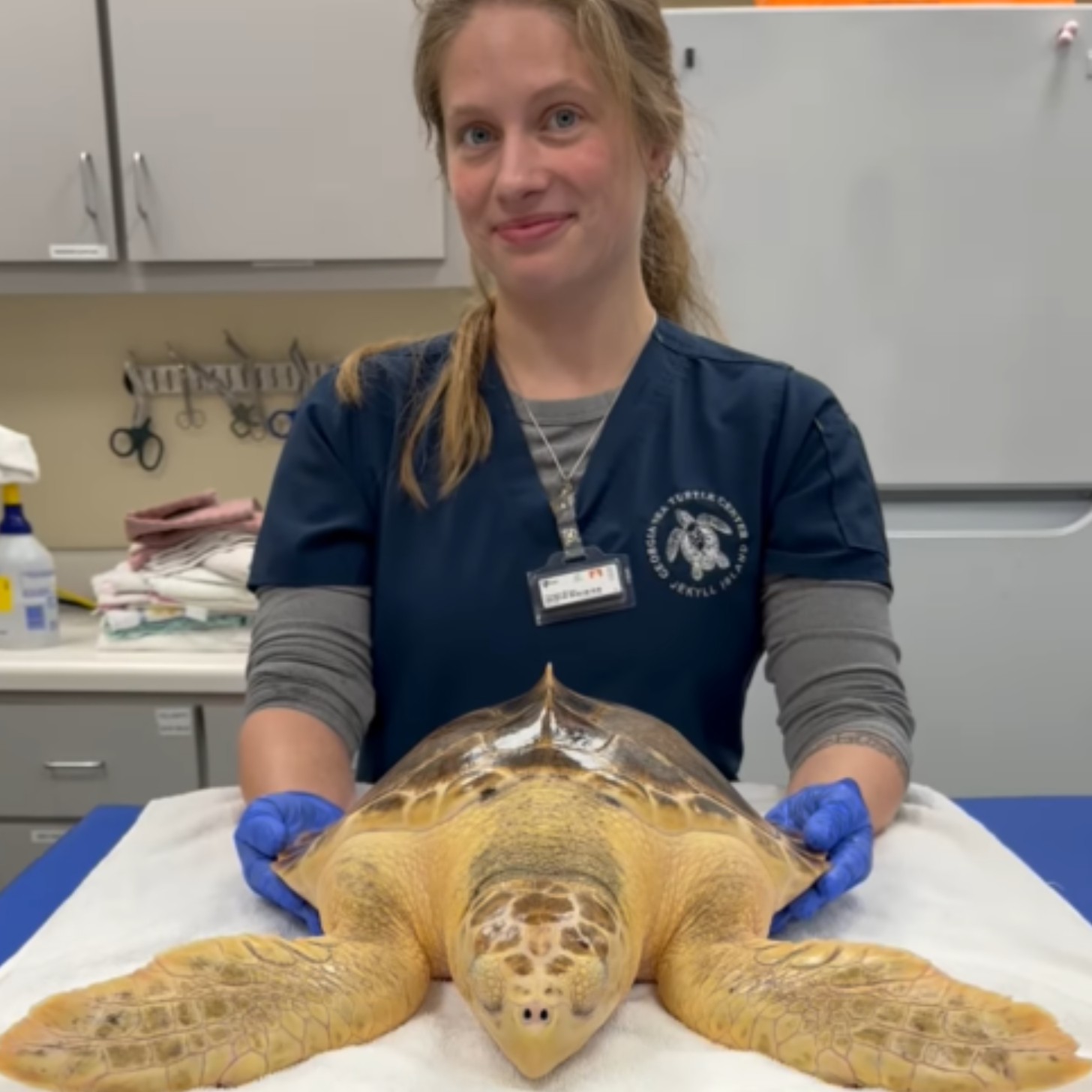
“The genetic results are in!” The center shared in an Instagram video on March 19. “Our patient, Earl Grey, is a first-generation hybrid, with a loggerhead father and a Kemp’s ridley mother!”
While hybrid sea turtles are rare to spot in the wild, Early Grey is especially unique. He is one-half Kemp’s ridley — the smallest and most endangered sea turtle species in the world.
“[I]t doesn’t happen often,” Georgia Sea Turtle Center wrote. “More and more research is being done on the turtle population.”
Earl Grey’s story quickly went viral, making headlines across the country.
In an interview with Popular Science, Jaynie L. Gaskin — the director of the Georgia Sea Turtle Center — said that hybrid sea turtles like Earl Grey present a bevy of questions.
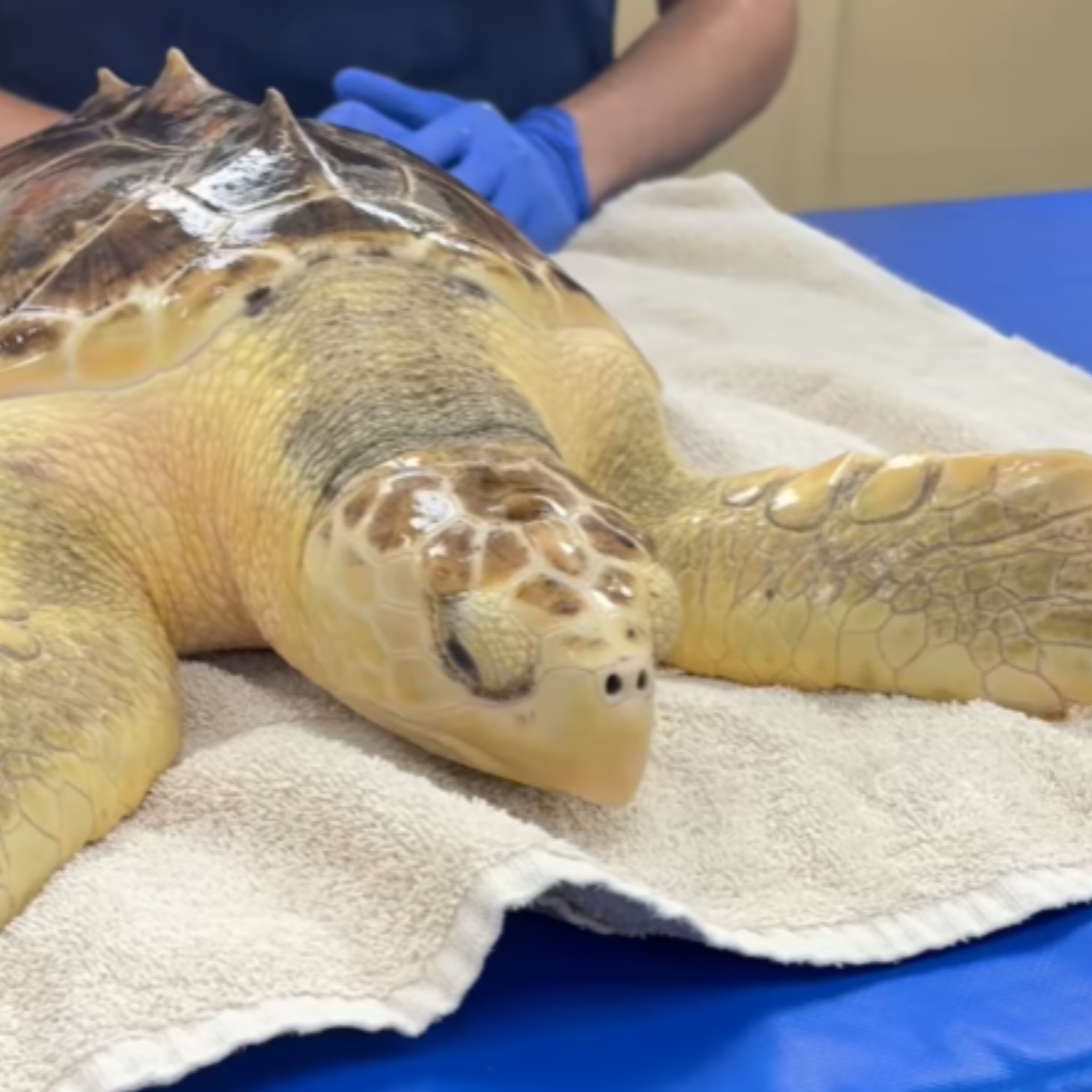
“There is still so much to learn from hybrid individuals like this. Questions remain around how these turtles behave and develop over time: Where do they nest, what do they eat, and where do they move through different life stages?” Gaskin explained.
“Each confirmed case helps scientists better understand how these animals are adapting in the wild — and ensures that conservation strategies can evolve alongside them.”
Although the answers remain unclear, Gaskin said that hybridization is largely beneficial to the animal kingdom.
“From an evolutionary perspective, hybridization could be one of many ways genetic diversity is introduced into a population,” Gaskin said. “We encourage other rehabilitation facilities to consider genetic testing for any suspected hybrid sea turtles, as there may be more individuals than we currently realize!”
[Editor's Note: Earl Grey was officially cleared for ocean release in May 2026]
You may also like: On vacation, this 8-year-old girl spotted a hooked sea turtle. She ended up saving one of the world's most endangered species
Header image via the Georgia Sea Turtle Center / Instagram
In the swamps, marshes, and mangrove forests of South and Southeast Asia, fishing cats prowl. With dense, waterproof double-layered coats and partially webbed toes, fishing cats are roughly twice the size of a standard housecat — but much better equipped for swimming.
In the thick of the night, they primarily hunt fish, frogs, shellfish, crustaceans, and rodents, with a prey drive that helps the local ecosystem stay in balance.
However, in recent decades, fishing cats have also been incredibly difficult to spot in the wild. In a press release from Conservation International, the nonprofit said that fewer than 10,000 of the predators remain in the wild, describing the vulnerable species as so rare that it “borders on myth.”
That is, until a camera trail in Pursat, Cambodia, captured rare footage of an adult fishing cat padding near the edge of Tonlé Sap, Southeast Asia’s largest freshwater lake.
“It’s a thrilling discovery,” Sony Oum, who leads Conservation International’s work in Cambodia, said in a statement.
“But its sighting indicates so much more than just the return of the fishing cat — it’s a testament to the hard work of the community to restore their wetlands.”
For 15 years, Conservation International has been hard at work restoring the Tonlé Sap in collaboration with the Royal Government of Cambodia and 16 local fishing communities.

By removing invasive species like non-native mussels and the common water hyacinth, preventing pollution, and preventing overfishing, the partnership is responsible for 2,470 acres of forest growth — and the return of one of Asia’s most elusive wild cats.
“The cat’s return suggests fish are abundant enough to sustain a hunter,” Oum said. “It suggests the flooded forests have regained some of the underbrush that predators need to hide from prey. It suggests that, at least here, the wetlands are recovering.”
While celebrating the fishing cat sighting, Conservation International stressed that the work they had accomplished was bigger than any one species. In fact, the Tonlé Sap is home to over 300 species of fish, 200 species of birds, 40 species of reptiles and amphibians, and 50 species of mammals.

Not to mention the 1.5 million locals living in stilt houses and floating villages nearby, who rely on the lake’s forests for freshwater, food, and wood for fuel.
“Not long ago, the flooded forests were facing destruction,” he said. “Today, we see restored swamp forests bringing native wildlife home — like otters, birds and the enigmatic fishing cat.”
You may also like: Conservationists work together to save endangered slow loris, one of the world's rarest primates
Header image via Public Domain (PDM 1.0)