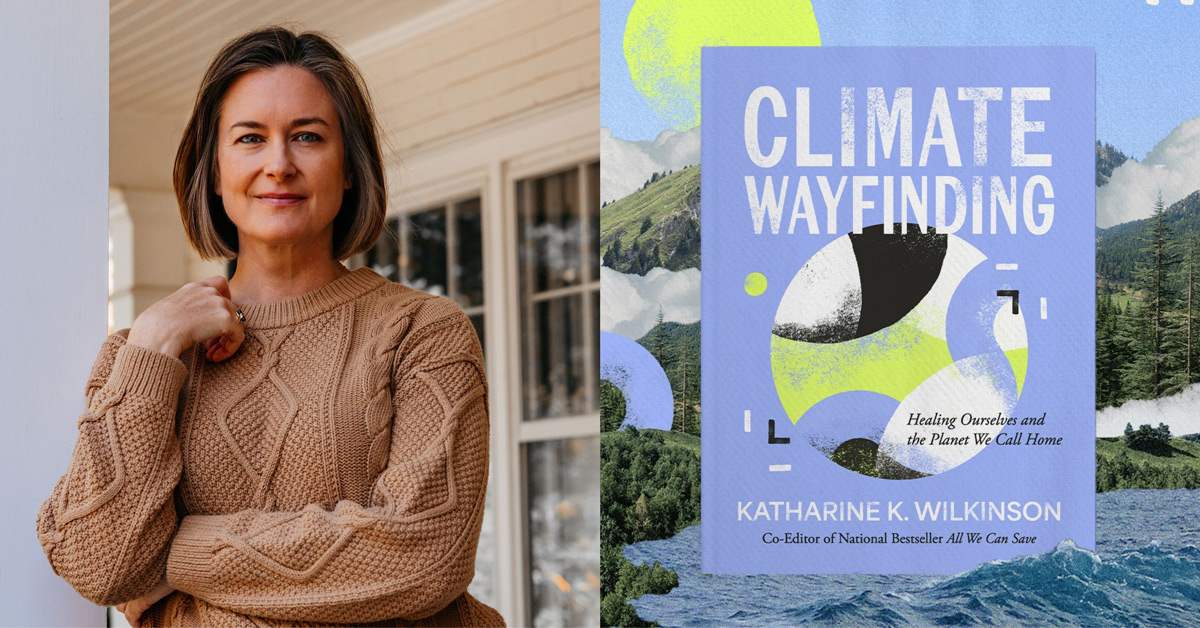
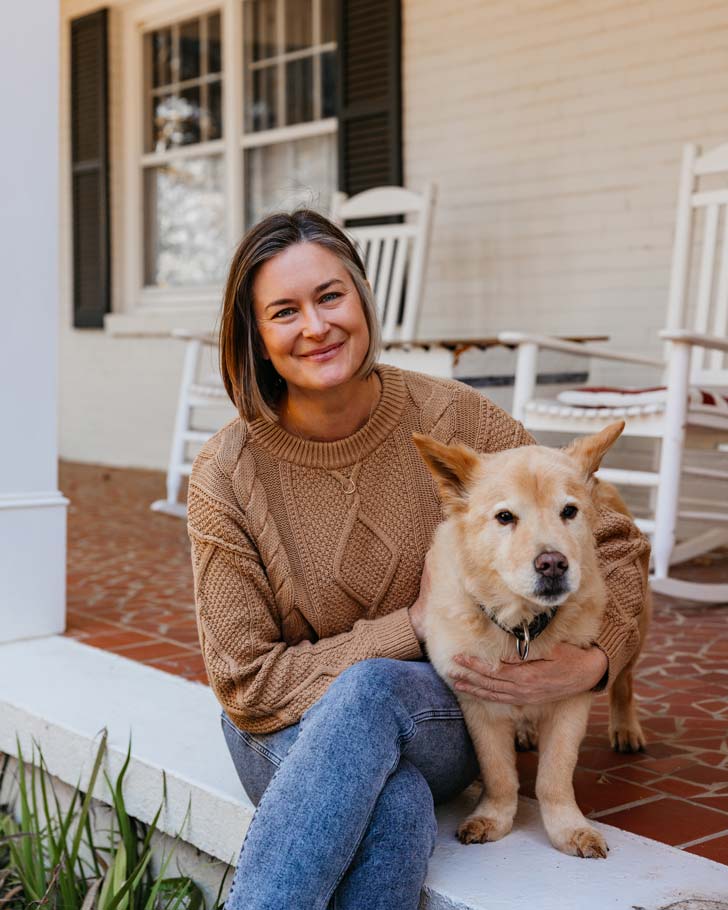
Dr. Katharine K. Wilkinson is a writer, teacher, creator, and climate activist who helps people find their power and joy in the climate movement.
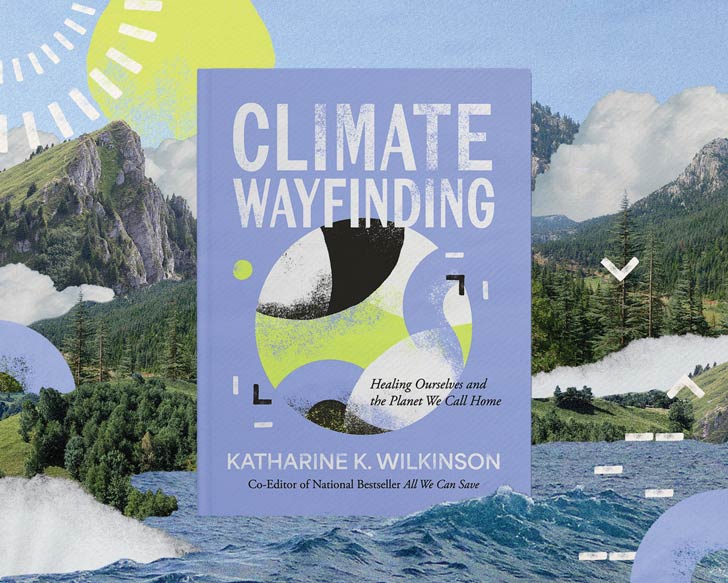
Her newest book, “Climate Wayfinding: Healing Ourselves and the Planet We Call Home,” is an extension of years-long Climate Wayfinding programming, which has given thousands of people the tools they need to find their role in nurturing a climate-forward future.
She co-founded The All We Can Save Project with Dr. Ayana Elizabeth Johnson, hosts the podcast “A Matter of Degrees,” and is the former editor-in-chief of Project Drawdown.
Dr. Wilkinson also holds a Doctor of Philosophy in geography and environment from the University of Oxford and a Bachelor of Arts in religion from Sewanee: The University of the South.
She approaches climate action with a unique blend of spirituality, realism, hope, and genuine delight, and her work has mapped the way for countless others to do the same.
In the following conversation, she gives Good Good Good a look into her newest book, provides some insight into how she navigates the dread and anxiety of our current reality, and invites us all to step into the future together.
Answers have been lightly edited for length and clarity.
A Conversation on Climate Wayfinding with Dr. Katharine K. Wilkinson
Kamrin Baker, Good Good Good: Let’s start with the basics: What is Climate Wayfinding?
Dr. Katharine K. Wilkinson: This is the million-dollar question. Climate Wayfinding is, at its core, a response to the experience that I think a lot of us are having, which is … this world is a lot.
And the ways that we have traditionally had to navigate, to orient, to get our bearings, to figure out how to contribute, how to cope — all of these things are under stress and strain.
And we are so sorely lacking in systems of support and in spaces to grapple with that stuff together, and hopefully work our way out of the mire and into some forward movement.
A lot of times, this shows up in people asking that persistent question: “What can I do?” I really think about that question as almost a Russian doll of other bigger wonderings that are often more existential in nature. “What can I do?” is often also like, “What is the meaning of life in this time?” “Where do I belong?”
So, Climate Wayfinding is my response, The All We Can Save Project’s response, to that need for support and space to hold those big questions and work our way into some answers.
GGG: How has Climate Wayfinding manifested in the world?
Dr. Wilkinson: In many ways, it started out as a piece that I wrote for Time magazine that was asking about that question, “What can I do?” Instead of trying to answer the question, could we help people think about more productive ways to work with the question? And I wrote that piece, and it was like, “Oh actually, this could be a really cool learning journey.”
And so we designed a program, and piloted that in the summer and fall of 2022, and quickly realized that this approach was unique, and it was really working. It was giving people something they really needed.
We started training educators from colleges and universities across the U.S. and Canada to bring the program to their communities, and as we were packaging everything up to give to them, I ended up writing a series of essays that frame the program, and frame the sessions of it. And then I realized, “Oh, there's a book here.”
And if you just want to sit and read the book, “Climate Wayfinding,” it'll be a great reading experience, but it is also a book that you can do, in the sense that there are journal prompts and creative mapping exercises. And it's also a book you can do in community. There are reading group agendas for every chapter. So, it's meant to really make the experience of Climate Wayfinding accessible to anyone who has a library card.
GGG: It sounds like you probably had that experience of asking your own “What can I do?” and you used your strengths in systems-building. Do you have any insights on that experience, or even how you've seen other people have used Climate Wayfinding to find the thing they're good at when it comes to climate action?
Dr. Wilkinson: It's so funny. You hear people say a lot, on climate: “I care about this. I'm worried about this. But I'm a teacher. I'm an investor. I'm not a scientist. I'm not an atmospheric physicist.” It’s this sense that the skills, the talents that we have might not be so relevant.
And the reality is that the climate crisis is everything. So the skills and the talents that we have, whatever they may be, almost certainly can contribute in some way.
That is part of the looking inward piece that we do with Climate Wayfinding, [asking], “What are my superpowers? What am I really good at?” And then we think about the things that give us a sense of authentic power; not hierarchical power over the structures of society, but that feeling of inner heat, that sense of capacity that's welling up within me.
And we also think about the things that give us a sense of deep joy. And oftentimes, there are things that intersect, that give us both a sense of authentic power and capacity and a sense of deep joy.
We do it in a really somatic way, too. What does it feel like to have power in your body? What does it feel like to have joy in your body? And then all of a sudden, your body opens up this exploration. And I think what's so beautiful is that we realize we have any number of things that get us into the sweet spot of power and joy.
And we set aside whether we think those things are relevant to climate. We just do the exploration, and then we connect it back in. And people do then say, “I came here as a theater professor thinking I didn't have any business being here, and now I really see these huge opportunities for the arts and narrative change to play a role,” as just one example.
That, to me, is one of the most beautiful parts of the experience: People really going from, “I guess I'll just sit on the sidelines because I'm not sure I have anything to offer here,” to “Oh, yes, I do.”
GGG: There is so much grief and anxiety surrounding climate. And that doesn't go away with any of this, but, like you said, joy and power are so instrumental. What’s the importance of having that in-person connective experience with others to lean into those varied feelings?
Dr. Wilkinson: The very first deep dive in Climate Wayfinding is into climate emotions. Oftentimes, we say we have to start there because we are starting there, whether or not we're naming it. It's all in the room with us. This is incredibly important information that we are getting from our feelings, and they are often really deep sources of motivation, if we can give them space to breathe.
The pendulum has got to go into the heavy, darker stuff to be able to swing into that lighter, brighter possibility. And it is so good to be together and to do this exploration together.
I think we're often very lonely in these concerns, or we find ourselves in conversations where we're just rattling off all the problems of the world, or we're engaged in really tactical or technical sorts of things.
We're not as much coming at this from like, “This is the experience I'm having of being a human on Earth in this time of trouble and possibility.” Every time we get to run a workshop or run a retreat, I'm just so reminded of how capable we are of giving each other what we need. And that is a really beautiful thing.
There are aspects of addressing the climate crisis that require actual rocket science, and this is not one of them. I think that’s really good news.
GGG: I am naturally someone who comes from a place of optimism. I often feel like progress is inevitable. But, in recent times, that's not as easy to feel. How do you maintain your optimism — or even your groundedness and connection to this work — in the face of this large-scale dismantling of climate action?
Dr. Wilkinson: I think it is a moment that is asking all of us to expand our capacity to hold what is really hard. So to hold the truth of the horror, in many cases, and also to be able to keep tending the flame of possibility.
In the “Climate Wayfinding” book, there are stories in each chapter called “Lighting the Way Stories” that bring to light the wisdom and the journey of a climate leader whose work or perspective echoes key themes of the chapter. And in the one about climate emotions, I interviewed Sister True Dedication, who's a monastic at Plum Village, which is Thích Nhất Hạnh's monastic community of engaged Buddhism. And she says that according to impermanence, everything is possible.
That, for me, is such a grounding concept. That nothing about the future has yet been written because we are still writing it collectively.
And if the future lives anywhere, it is in that space between us as we work to shape it. And so how do we do both of those things? How do we not cop out [on] the really tough shit that is going down? And how do we continue to hold that perspective of possibility?
For me, personally, when I get snarled in the realities of human doings at this time, I often look to the more-than-human world for some inspiration and guidance. This gets a little heady, but I really do remind myself that life is the most powerful dynamic on this planet, and despite all of the odds, has kept on tumbling forward and finding the paths to more life for 3.8 billion years.
We've got something really powerful on our side. I think at the end of the day, the question is, “How do I contribute to that dynamic of life force?” And the feeling of doing that cycles back around and grows my capacity to hold possibility.
GGG: In every Goodnewspaper, we have a centerfold poster with a quote from someone in it. And ours is actually a quote from you: “It is no small thing to be human on Earth.” What does this mean to you? How does it guide your work?
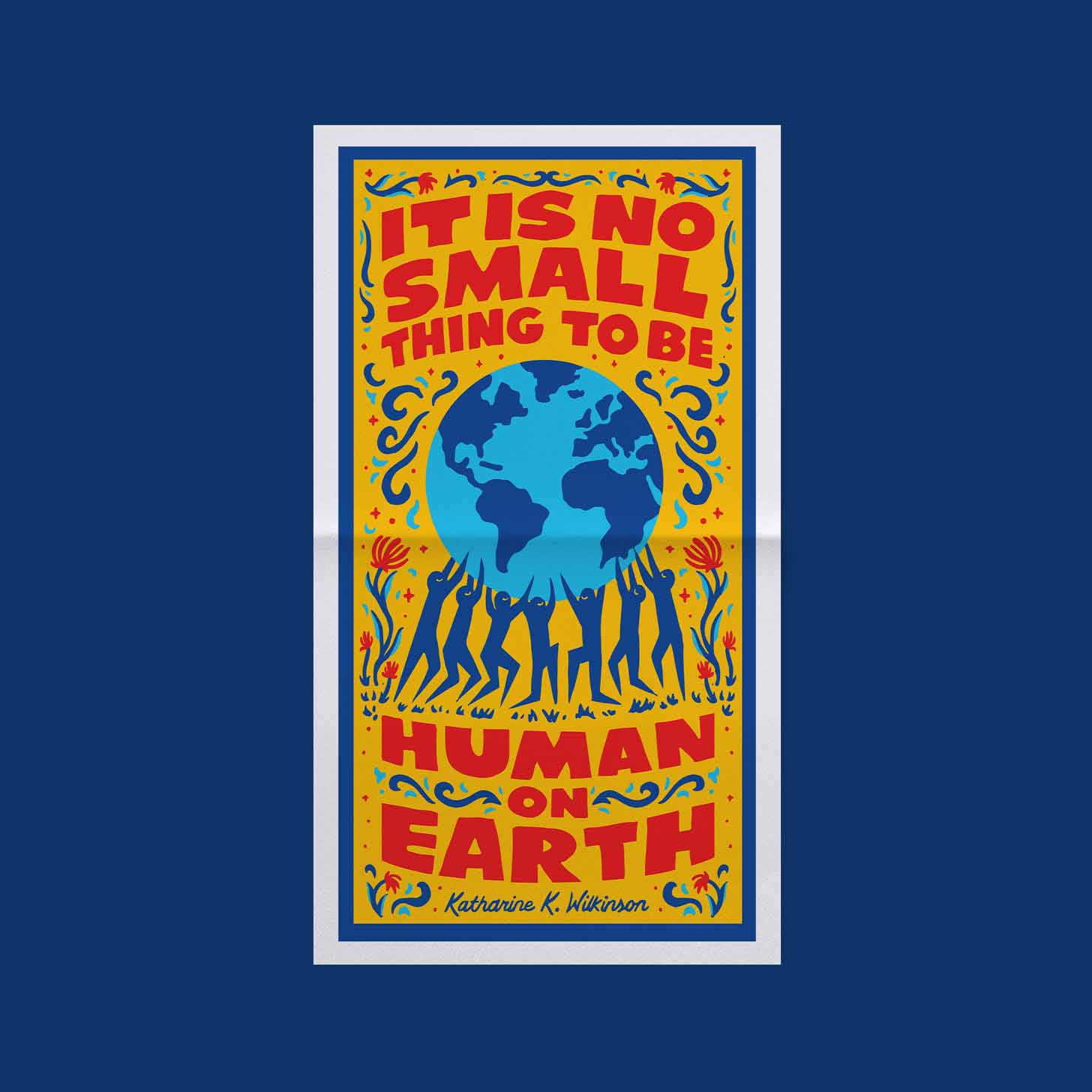
Dr. Wilkinson: So it is actually the opening line of the book. It is no small thing to be human on Earth. And I think, if there was to be a tagline for what I'm up to as a person, as a professional doer and writer, it would be, “It's no small thing.”
It’s no small thing in the sense that it's actually extraordinary that we are here at all. It's no small thing in the sense that the experience of being alive and in a body is a lot, under the best of circumstances. And we have this incredible opportunity, by virtue of being human on Earth, in this moment.
So, it's no small thing in the challenge. But it's also no small thing, in the potential that we each hold, and particularly, the potential that we hold together.
“Climate Wayfinding: Healing Ourselves and the Planet We Call Home” by Dr. Katharine K. Wilkinson is on shelves May 5, 2026. You can pre-order it now.
A version of this article was originally published in The 2026 Environment Edition of the Goodnewspaper.
Header images by Gabriella Valladeres and Ambersand Design