On March 12, the Audubon Aquarium Rescue of New Orleans released 29 sea turtles back into the Mississippi Gulf Coast, where the Gulf of Mexico meets the Mississippi Sound.
“Yesterday, we released 27 Kemp's ridley and two green sea turtles in Biloxi, Mississippi,” the aquarium shared in a Facebook post. “The Kemp's ridleys are part of the group of 35 cold-stunned turtles sent to us from [the] New England Aquarium.”
According to the aquarium, the two green sea turtles — named Calvin and Martha — had been found in Port Fourchon, Louisiana in early February from a separate cold-stunning event.
Cold-stunning occurs when frigid temperatures cause sea turtles to go into hypothermic shock, often resulting in dehydration and pneumonia.
To track the recovery process for the group of Kemp’s ridley sea turtles, the aquarium staff named the rescues. Each one was named after a mineral like Jade, Mica, Opalite, Pebble, Aquamarine, Onyx, Quartz, Coal, and more.
“After months of rehabilitation, these rocks are polished and back to shining in the ocean!” The aquarium celebrated.

The release was a long time coming. The 35 Kemp’s ridley sea turtles had been found stranded along the New England coast in November after severe winter weather struck Cape Cod.
In total, the New England Aquarium saved the lives of over 450 sea turtles during the 2025–2026 season, including 404 Kemp’s ridley turtles, 48 green sea turtles, and 21 loggerhead sea turtles.
In December, the Audubon Aquarium Rescue stepped in to take nearly three dozen off their hands, transferring them via chartered flight.
“Some of these turtles arrived in rough shape; they will need more extensive rehabilitation than others,” Gabriella Harlamert, Audubon Aquarium Rescue Stranding and Rehab Coordinator, told New Orleans City Business in December.
At the time of the Gulf release, eight Kemp’s ridley sea turtles were still in recovery, requiring more time to get their swimming strong enough to return to the wild.
Kemp’s ridley sea turtles are the world’s smallest sea turtle. And in the last few decades, they’ve also become one of the rarest, which is why the aquarium staff is approaching their rehabilitation with the utmost care.
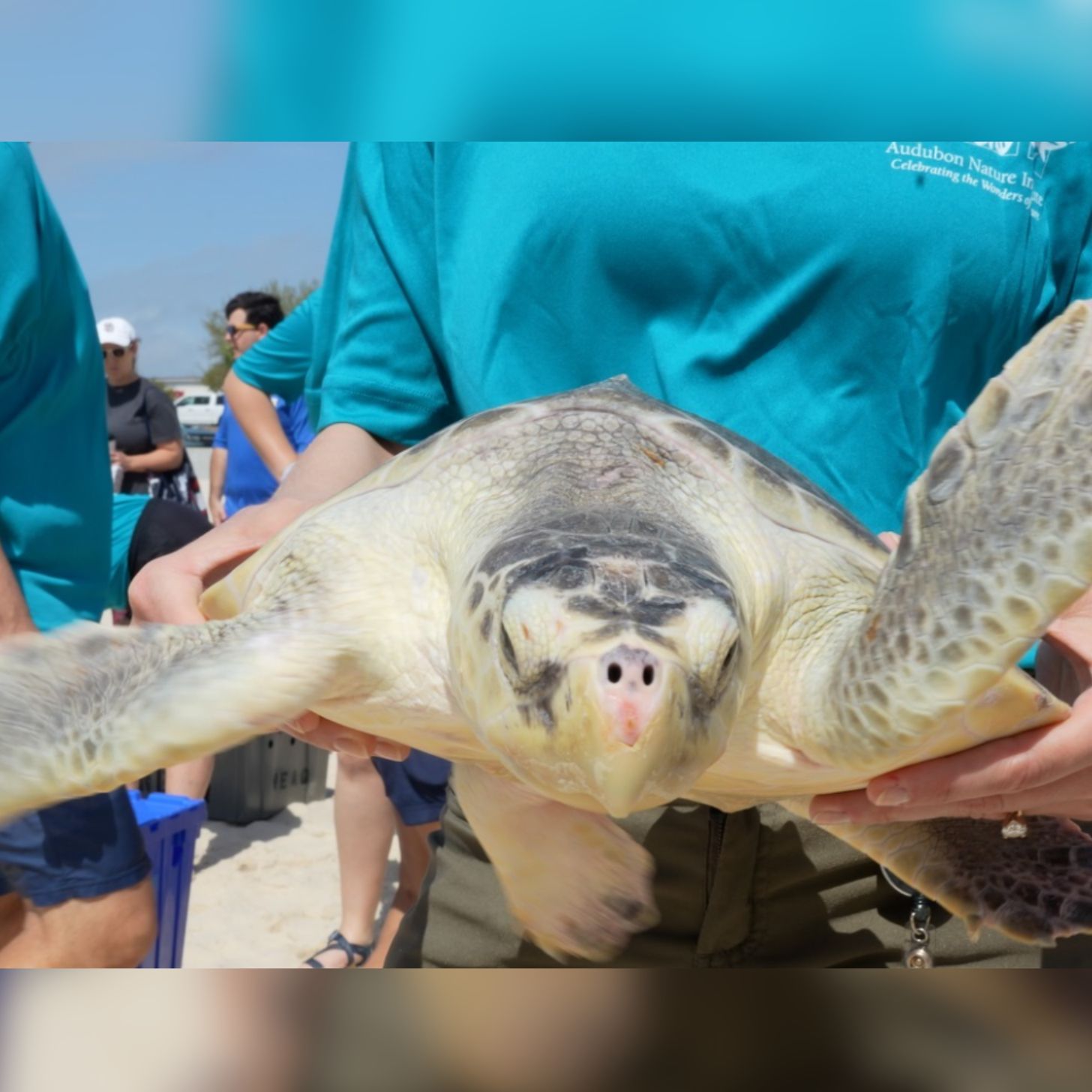
Today, 95% of the Kemp’s ridley nesting occurs in Tamaulipas, Mexico, along the Gulf of Mexico, where most of its global population lives. However, they have also been sighted in the eastern North Atlantic Ocean off the coastlines of Western Europe and Africa, and in the western North Atlantic Ocean as far north as Nova Scotia.
In the mid-20th century, Kemp’s ridley sea turtles were flourishing, with tens of thousands of females nesting throughout Rancho Nuevo, Mexico.
Unfortunately, their population has steadily declined since the 1980s. Their biggest threats? Getting swept up in bycatch by commercial fisheries and harmed by abandoned fishing equipment.
To combat these issues, the National Marine Fisheries Service has been working with local partners to safeguard sea turtles, protect their nests, and clean up trash and abandoned fishing gear all along the coast.
In October, the International Union for Conservation of Nature officially took green sea turtles off the endangered species list after decades of conservation efforts.
Wildlife experts like Bryan Wallace, who runs the IUCN’s assessment for sea turtles, hope that success translates to other vulnerable species, like the Kemp’s ridley.
“Our gains are dependent on continuing to kind of keep our foot on the gas and to continue to find, you know, the success stories — the things that are working, where they're working, and to keep up that momentum,” Wallace told NPR.
“If you do the right things in the right places with the right people, good things happen. And I think that extends far beyond nature conservation.”
You may also like: An aquarium rescued a 240-pound sea turtle from a fishing line. They need your help saving her flipper
Header image via Audubon Aquarium Rescue