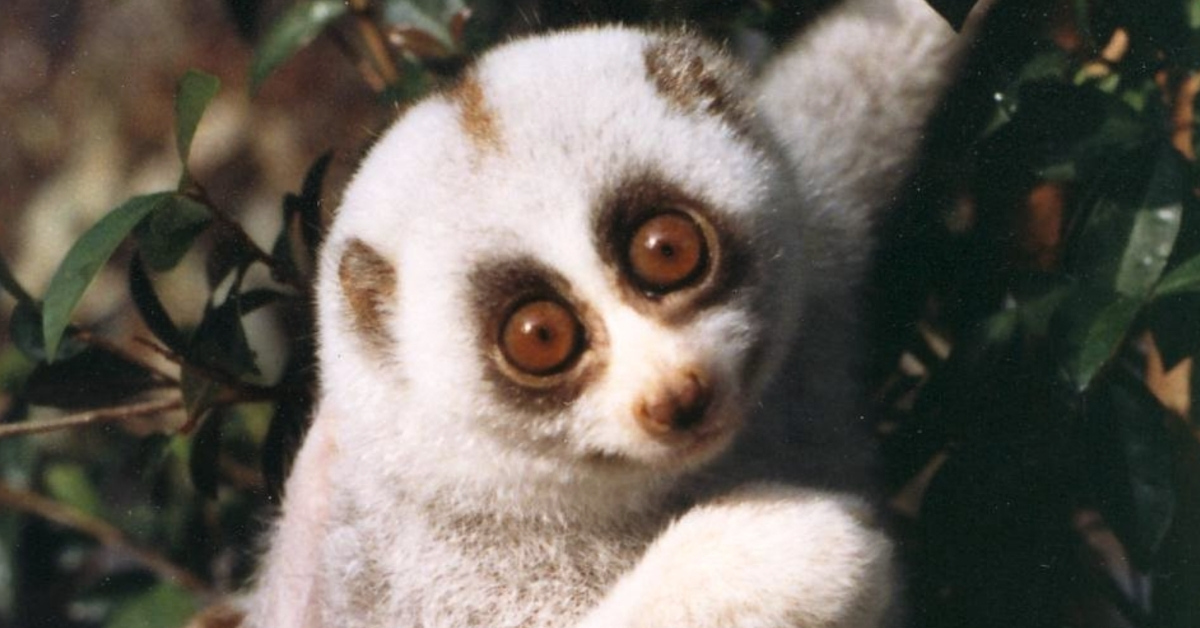
On April 13, officials in Bangladesh rescued an endangered Bengal slow loris, locally known as the Lajjabati Banor, which roughly translates to “shy monkey.”
The adult male slow loris had wandered into Paschim Deorgach village from a nearby forest and was rescued by Mehedi Hasan, who works as an officer at Satchari National Park — a 243-acre area full of lush jungles, streams, and over 200 species of protected wildlife.
Fortunately, the animal was recovered without incident or injury and was safely released into the Satchari Reserve Forest later that same day.
In an interview with the Daily Star, Mahmud Hossain, a range officer of the Wildlife Management and Nature Conservation Department, said that human activity had been driving local species away from their native habitats and forcing them into local villages.
Similarly, Tofazzal Sohel, the general secretary of Bangladesh Poribesh Andolon Habiganj unit — a local chapter of the national environmental organization — urged for stronger conservation measures.
Sohel noted that the International Union for Conservation of Nature had “reclassified the species as vulnerable in 2008” and predicted “a 30% population decline over [the] next three generations due to hunting and habitat loss.”
Slow lorises are among the smallest primates in the world, with the Bengal slow loris being the largest in the genus. From head to tail, they average 10 to 15 inches in length and have large, bulbous eyes that help them navigate at night.
The Bengal slow loris is native to Bangladesh, Northeast India, Cambodia, Laos, Burma, Vietnam, southern China, and Thailand, although its populations in those regions have been shrinking in recent decades as they have been caught up in the illegal pet trade.
Slow lorises play a vital role in the biodiversity of Southeast Asian forests. As nocturnal omnivores that feast on tree sap, nectar, and insects, the primates help pollinate forests and dispense seeds as they move through tree canopies.
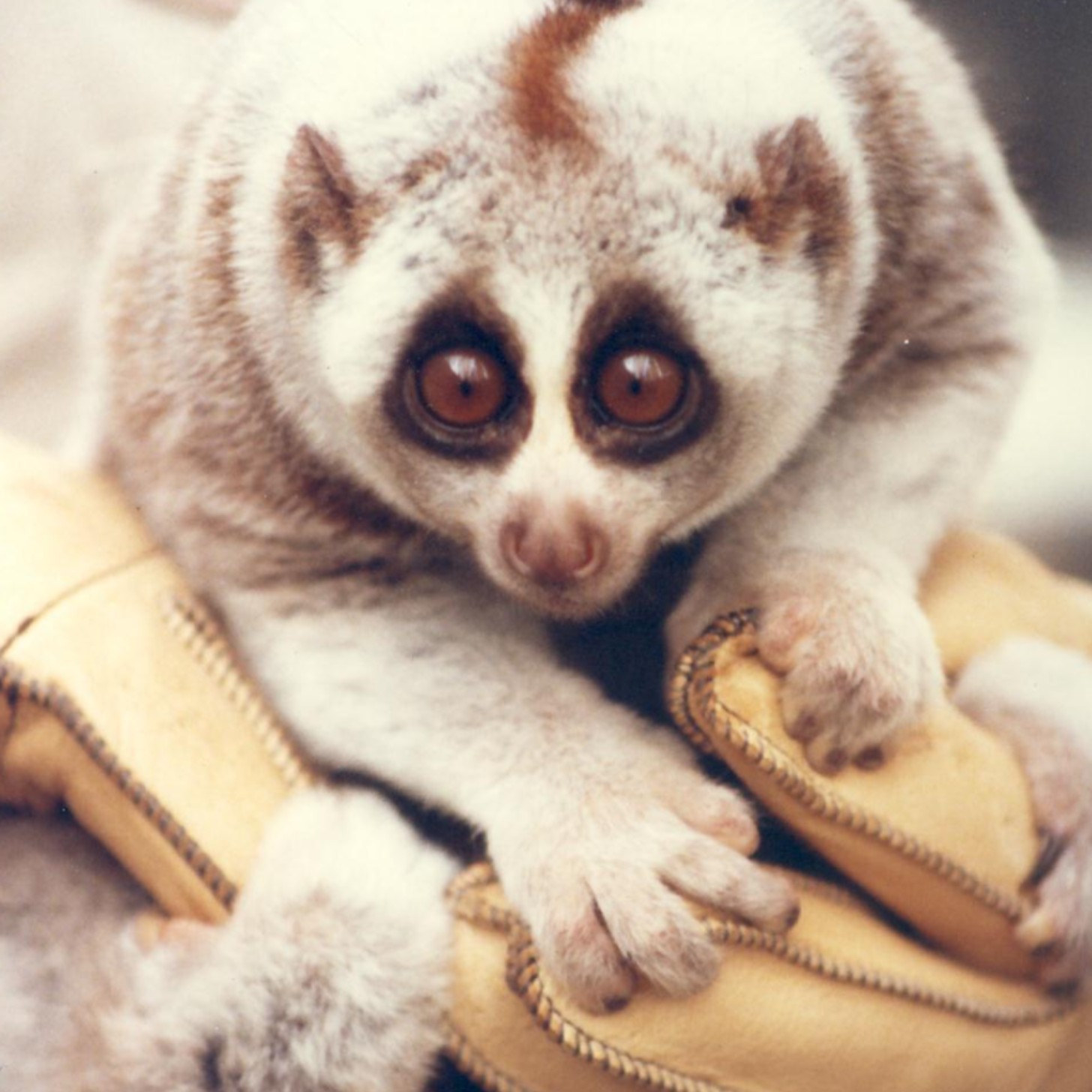
Slow lorises are also the world’s only venomous primate, with a toxic bite that is delivered after licking a sweat gland on its under arm. Although the venom can be used as a defensive move against predators, it's a behavior that the slow lorises commonly resort to during intra-species territorial disputes.
Unfortunately, deforestation has led to fewer protected habitats for slow lorises, making territorial disputes more common. It’s those deadly disputes that make the endangered species so difficult to reintroduce to the wild.
“It’s assumed that returning confiscated or rescued animals to the wild is always a positive conservation story,” Anna Nekaris, a professor of ecology, conservation, and the environment at Anglia Ruskin University in the U.K., told Mongabay. “But for animals such as the Bengal slow loris, this is not always the best course of action.”
Nekaris also serves as the vice chair of the IUCN’s Primate Specialist Group. In a recent study, Nekaris and her colleagues tracked several Bengal slow loris and found that reintroducing them to their native habitat can be a death sentence if they are released in an “unsuitable environment” or lack the essential skills to find food and integrate with wild populations.
For Nekaris, this all ties back to the root cause of the problem — the trafficking of exotic animals.
To her and her colleagues, rescue, rehabilitation, and release are small components of a broader conservation strategy that hinges on preventing poaching from happening from the start.
“The illegal wildlife trade is often likened to the cut-flower industry,” she said. “When you take an animal out of the wild, even though it’s still alive, it no longer has an ecological function.”
In the last decade, Bangladesh has begun taking measures to strengthen its efforts to combat poaching. Recent regulations banned advertising, buying, or selling wildlife on social media, while Spatial Monitoring and Reporting Tool (SMART) technology has helped officials gather data in poaching hotspots in protected areas.
“The SMART patrolling approach will help us to better combat poaching, illegal fishing, vessel and pollution infractions, and other forest crimes,” Mr. Zahir Ahmed, Khulna Division’s Conservator of Forests, said when the technology rolled out.
“It will strengthen the capacity of our frontline staff, and at the same time build training capacity for forest protection within our ranks.”
You may also like: The Kemp's ridley sea turtle is the most endangered sea turtle in the world. This aquarium just saved 35 of them
Header image via Helena Snyder (CC BY-SA 3.0)