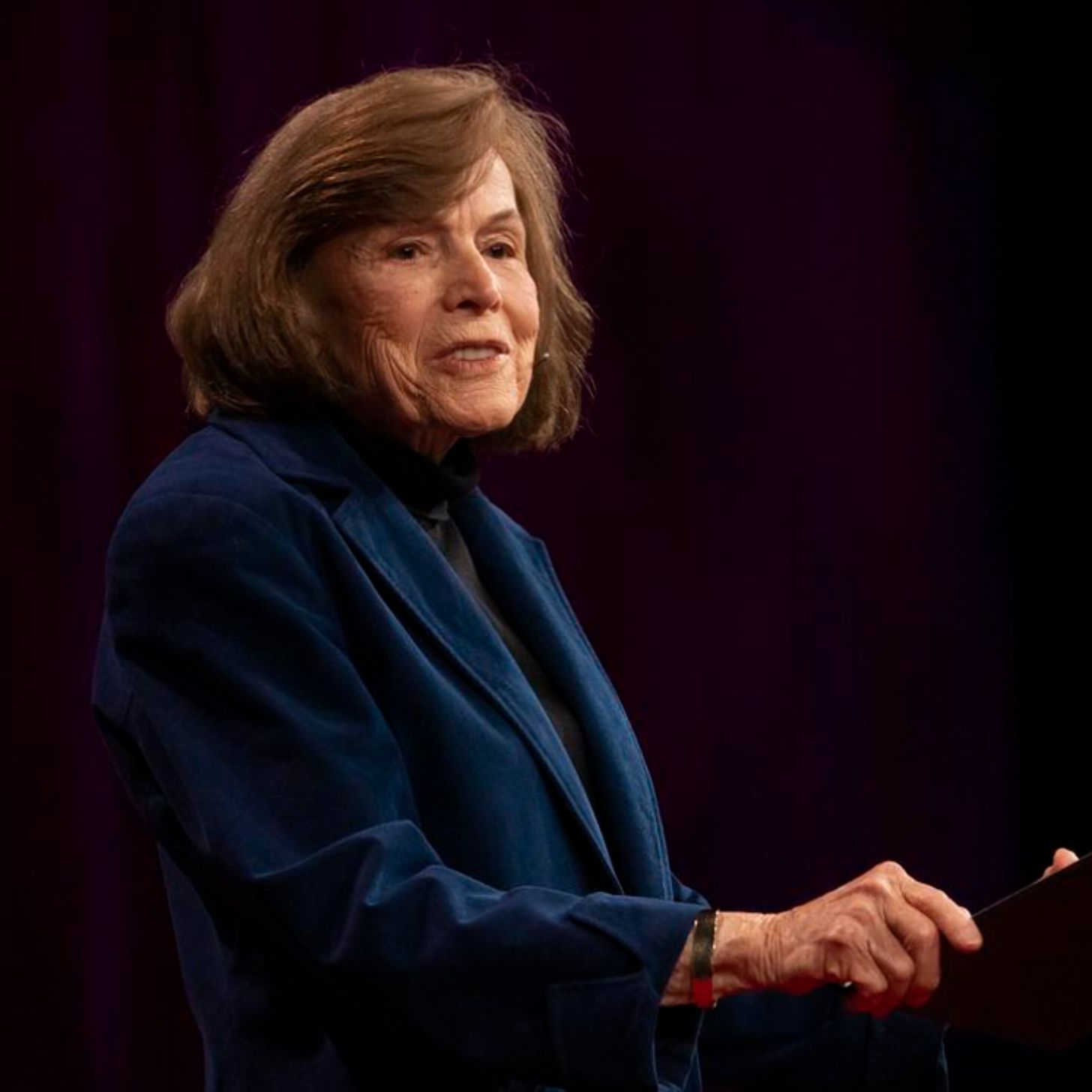
On Friday, April 17, legendary oceanographer and marine biologist Sylvia A. Earle took the TED stage in Vancouver, Canada. In her TED Talk, she explained the importance of “Hope Spots,” or global sites that are scientifically identified as critical to the health of the ocean.
“Today, there are 169 Hope Spots in 116 countries,” Earle said.
“In French Polynesia, at the Tetiaroa Hope Spot, Richard and Mary Bailey are pioneering science-based tourism with a conservation twist,” she said. “They have fiercely protected the sea turtle nests and really taken action to try to restore a place that was losing the wildlife that the ocean needs to have a secure planet.”
Earle explained that for years, the Bailey family has spearheaded conservation efforts at Marlo Brando’s luxury resort in Tetiaroa Atoll, which lies 30 miles north of Tahiti.
By partnering with local nonprofits — Tetiaroa Society and Te mana o te moana (“spirit of the ocean”) — the Brando resort has helped foster the atoll’s long-term sea turtle nesting program, protecting more than 120,000 hatchlings across a decade and rehabilitating over 600 injured and sick adult turtles.
“Just a few years ago, there were only a very few turtles. Now, there are hundreds with protection,” Earle said. “Protection works.”

“With the Tetiaroa Society, the Baileys are engaging tourists, scientists, kids, and CEOs in a business plan that couples tourism with revenue that is generated with exploration, research, and conservation,” she continued. “It's a blue-green, nature-positive model that generates income and jobs — and a healthy ocean.”
The Brando itself is a luxury eco-resort that is carbon-neutral, Platinum LEED certified, and uses sustainable energy measures through deep-sea water air conditioning, solar power, and biofuel from local coconut oil.
Years ago, the Brando resort played a key role in the conservation of Tetiaroa by donating a $1 million research station to Tetiaroa Society. Experts from around the world fly into the station to study and discuss habitat restoration, shark ecology, coral reef restoration, and more.
As the Tetiaroa Society runs an education program on the island for local and international students, and — during turtle season - tourists are invited to join night observation treks with Te mana o te moana biologists.
Dr. Cécile Gaspar, the founder and executive director of Te mana o te moana, said that the island is home to four turtle species: the green turtle, hawksbill turtle, olive ridley turtle, and loggerhead turtle, which are all considered endangered or threatened.
“Sea turtles are iconic marine species on the front line of climate change threats,” he said in a press release. “Te mana o te moana’s Green Sea Monitoring Program on Tetiaroa atoll has been an outstanding success.”
“We are proud to be part of Marlon Brando’s vision for a new conservation model where tourists, communities, teachers, students, and researchers all play an important role in protecting our natural resources.”
You may also like: The Kemp's ridley sea turtle is the most endangered sea turtle in the world. This aquarium just saved 35 of them
Header image via Tetiaroa Society