You can’t choose one or the other.
It’s tempting to reduce the climate conversation to a matter of who is most at fault and who is responsible for leading the way forward. This debate usually comes down to two perspectives:
The first is that corporations make the biggest impact and should be accountable, so our personal habits don’t matter.
The other is that corporations won’t realistically change, so we need to take matters into our own hands by radically rethinking our lifestyles.
This debate is a distraction from what’s really true: Corporations do make an enormous impact on the climate, and they bear a major responsibility, AND our personal habits impact the environment, too, so we should seek out ways to reduce our environmental impact by altering our lifestyles.
Both can be true, and they are. What’s difficult to accept for many of us is that there are no simple solutions to complex problems.
A sustainable future that prioritizes social, economic, and environmental wellbeing requires several shifts in the system as it exists: both individually and corporately.
Individuals can’t simply call on corporations to change without putting money where their mouth is, and corporations and policymakers can’t simply pass on responsibility to consumers.
Action at both levels is necessary. It may feel tempting to pat yourself on the back for taking individual action. It feels good to do something — riding a bike instead of driving, using a reusable coffee cup, or turning off the lights more often. These actions are important, but they aren’t enough. It’s much more nuanced.
Just 100 companies have been responsible for more than 70 percent of greenhouse gas emissions since 1988, according to the Climate Accountability Institute’s 2017 Carbon Majors Report. More than half of emissions have come from just 25 corporations, according to the same report.
If these corporations continue on the same path, it will undoubtedly have catastrophic impacts on our planet.
But just as it can be tempting to focus on individual action, it can be just as tempting to expect corporations to change on their own accord. They won’t change unless we do.
The reality is your lifestyle directly influences corporate behavior. We can continue to pressure corporations to create truly sustainable solutions by changing our own habits and behaviors to support the more sustainable options.
Corporations will listen, not always out of some noble commitment, but because consumer and investor dollars speak — loudly.
Consumer willingness to favor sustainable companies is a global trend that pressures executives and investors to drastically alter their business models and consider more sustainable practices — because we now live in a world where sustainability is a marketable differentiator.
We all can be change agents in pressuring corporate sustainability. Your everyday behavior and choices matter just as much as larger-scale changes. They are related, and divorcing the two is a grave mistake that undermines the environmental movement’s success.
What’s required to tackle environmental issues is first and foremost optimism and hope that they can be solved — when we truly believe a better world is possible, we are more willing and likely to engage in practices that help us create a future we’re excited about living in.
Intersectional environmentalism — yes, it’s a bit of a tongue twister — is the mainstream environmentalist movement demanding that our planet and its people are both cared for and seen as interconnected.
It’s easy to compartmentalize climate and human needs; however, the reality is, that low-income, typically BIPOC communities, or those who live in the Global South, bear the unequal burden of climate change.
Therefore, we cannot address the most pressing issues of our day — climate change, racial injustice, and gender inequality — until we lift the voices of those closest to the problem.
As we begin to unpack what it means to be an intersectional environmentalist, it’s important to understand that most — if not all — of the environmental leaders we’ll be highlighting started with the all-too-familiar feeling of overwhelm and conviction to fight for our planet and its people.
They each dedicated time to listen, learn, and imperfectly show up in conversations, and we challenge you to do the same.
Our hope with this equally imperfect content hub is that you learn a little more so that you, too, can become an intersectional environmentalist within your own community.
What is intersectional environmentalism, exactly?
Intersectional Environmentalism (IE) — a term coined by Leah Thomas — focuses on achieving climate justice, amplifying historically excluded voices, and approaching environmental education policy and activism with equity, inclusion, and restorative justice in mind.
In other words, IE is an inclusive approach to environmentalism that advocates for the protection of both people and the planet.
Before we dive any deeper, it’s important to acknowledge that this movement stems from communities of color who had long practiced this before there was even a term for it.
The evolution of this definition and movement is thanks to the diligent hard work of Black women. As we practice what it means to have a world that advocates for both people and the planet, we are privileged to stand on the shoulders of history-makers and thought-leaders from the Black community.
Social justice and climate justice are connected
You’ve probably come across terms like “social justice” or “climate justice,” and though you may have a rough idea of what each means, we want to make sure that we’re all on the same page!
Justice is all about fairness. Social justice is fairness manifested within the society that we live in. This includes fairness in anything from healthcare, employment, housing, and more.
Social justice can’t be achieved without human rights, access, participation, and equity (this is a great visual of equity vs. equality).
Climate justice, on the other hand, represents the unequal distribution of climate change for groups like Indigenous people, POC, women, and people with disabilities.
An example of this unequal distribution of climate change can be seen in Africa. Ugandan climate justice advocate Vanessa Nakate shared with the United Nations that, historically, Africa as a continent is responsible for less than four percent of global emissions, and yet many Africans find themselves at the frontlines of climate change.
Climate justice exposes the stark reality that, for centuries, industrialized nations have been freely burning large volumes of fossil fuels while poor, more vulnerable regions have become the most susceptible to its effects — such as rising temperatures and sea levels.
Indigenous communities within the U.S. also find themselves facing relocation from ancestral homes and livelihoods lost due to rising sea levels or drought. The Biloxi-Chitimacha-Choctaw tribe, for instance, has lost nearly all of its land — the island shrank by 98% from the 1950s to 2018 — and the tribe was forced to relocate to higher ground.
Moving forward, as we advocate to have a society that is inclusive of every person and equitable to all, we must begin to pass the microphone over to those who have previously not been heard and who may just have the solutions we need to address the climate crisis.
The Mother and Father of Environmental Justice
We owe much of today’s environmental progress to the "mother" and “father” of environmental justice: Hazel M. Johnson and Robert Bullard, Ph.D.
Johnson was a longtime environmental activist from the South Side of Chicago, but when her husband passed away of lung cancer at the age of 41 in 1969, she was certain it was due to environmental injustice and yearned to learn more. When she discovered that a toxic waste facility surrounded the area — a community built for Black World War II veterans — her pursuit for true environmental justice was formalized.
Johnson developed an organization — People for Community Recovery, in 1979, and was later pivotal in creating the 17 Principles of Environmental Justice, which she helped in presenting to Congress in the ‘90s.
Robert Bullard, Ph.D. — who coined the term “environmental racism” in 1979 — was also empowered by his spouse in his fight for environmental justice. His wife, Attorney Linda McKeever Bullard, brought a lawsuit against Southwestern Waste Management for its plans to put a municipal landfill in a Houston neighborhood where 82 percent of the residents were Black.
This — as Bullard’s first-of-its-kind study uncovered — was not the only city-owned garbage dump located in Black neighborhoods, in fact, all five were located near Black communities.
This lawsuit became the first in U.S. history to charge a corporation with racial discrimination in its environmental practices.
Bullard was brought in as an expert witness and quickly became the leading voice for environmental justice research. He wrote and published a number of research papers and books, and later helped plan the First National People of Color Environmental Leadership Summit in 1991.
It was at this summit that the 17 Principles of Environmental Justice were developed, and Johnson and Bullard’s work overlapped. He defined environmental justice as a concept that “embraces the principles that all communities, all people, are entitled to equal protection of our environmental laws, health laws, housing laws, transportation laws, and civil rights laws.”
While these two leaders are only two of the many Black, Indigenous, Latinx, Pacific Islander, people of color, and Asian activists who shaped this movement, Johnson and Bullard were truly innovative in defining, leading, and empowering a movement for generations.
What’s the difference between intersectional environmentalism and environmental justice?
Even though IE and environmental justice sound strikingly similar, they represent two distinct movements. They both advocate for the fair treatment of all people, however, where they diverge is how each defines the word environment.
Environmental justice — Dr. Robert Bullard’s field of study — broadly defines “environment” as spaces where we live, work, play, and learn.
“Environmental justice is nothing more than this whole principle: people have the right to a clean, healthy, sustainable environment without regard to race, color, national origin. It’s just that simple,” Dr. Bullard told Vox.
Environmental justice’s primary focus is on people’s inherent rights, not the conservation or preservation of the planet.
Intersectional environmentalism, on the other hand, believes in all tenants of environmental justice, however, it also believes that people and the planet are deeply intersected.
Think of IE as the child of environmental and climate justice.
“One day, I hope that when people think of an environmentalist, they’ll automatically envision a person who cares very deeply about both people and planet,” Leah Thomas shares in her book, "The Intersectional Environmentalist: How to Dismantle Systems of Oppression to Protect People and Planet."
What’s the history of intersectional environmental justice?
As previously mentioned, intersectional environmentalism is derived from the tireless work of bold Black women. The Combahee River Collective, an intersectional group of Black lesbian women, was formalized in 1974 in response to the lack of representation in both the feminist and civil rights movements.
The collective joined together to develop the Combahee River Collective Statement, which was a key document in developing contemporary Black Feminism.
Professor, lawyer, and feminist scholar Kimberlé Crenshaw (you may have seen her amazing TED Talk on intersectionality) furthered what the women in The Combahee River Collective were fighting for by coining the term intersectionality in 1989.
Crenshaw first publicly laid out her theory of intersectionality when she published a paper in the University of Chicago Legal Forum titled “Demarginalizing the Intersection of Race and Sex.” You can read that paper here.
She argued that in the eyes of the law, treating Black women as purely women or purely Black — as they did in the 1976 DeGraffenreid v. General Motors case — have repeatedly ignored specific challenges that face Black women as a group.
Crenshaw’s theory slowly made it back into public consciousness when it went mainstream by being added to the Oxford English Dictionary in 2015 and gaining worldwide attention during the 2017 Women’s March where organizers spoke on women’s intersecting identities and the social impacts associated with it.
Leah Thomas coined the term intersectional environmentalist
Just as intersectionality gained recognition and steam through collective rage, so too did it reemerge in May 2020, as a result of the senseless murders of George Floyd, Breonna Taylor, and Ahmaud Arbery.
In response, eco-influencer Leah Thomas (@greengirlleah) posted a viral Instagram post calling on her community of dedicated environmentalists to once and for all see environmentalism as intersectionally connected to social justice.
“I honestly did it on a whim during the summer of 2020. I was in my bed under my covers, frustrated and on Canva, and I just typed out, okay, this is the type of environmentalism I want. I'm an intersectional feminist. I want to be an intersectional environmentalist. This is what it means,” Thomas shared in a conversation with the Good Good Good team.
Her post read, “I’m calling on the environmentalist community to stand in solidarity with the black lives matter movement and with Black, Indigenous + POC communities impacted daily by both social and environmental injustice. Please swipe to learn more about intersectional environmentalism and take the pledge.”
In that moment, Thomas coined the phrase intersectional environmentalism, a term that she says is an inclusive approach to environmentalism that advocates for the protection of both people and the planet.
Following her original post, Thomas co-founded a platform — Intersectional Environmentalist — dedicated to providing resources, information, and action steps to support IE and how to dismantle systems of oppression in the environmental movement.
“IE argues that social and environmental justice are intertwined — and that environmental advocacy that disregards this connection is harmful and incomplete,” Leah shared.
The platform has grown to over 400,000 Instagram followers, offering practical tips, thoughtful commentary on current events, and shareable graphics to spread the word.
Thomas also went on to release her debut book in March 2022.
“The Intersectional Environmentalist: How to Dismantle Systems of Oppression to Protect People and Planet” — which is one of the longest names ever — is the textbook that I always wanted,” Leah laughed. “But instead of being a boring textbook, it has rainbows and art throughout. And it's all about intersectional theory, ecofeminism, the history of the environmental justice movement, and lots of examples of intersectional environmentalism.”
Nuance, Thomas argues, is at the heart of IE and is displayed through the overlapping identities we carry, such as race, gender, and religion. As we understand what part of our identities we hold privilege, we can begin to leverage those aspects for good.
“And even with myself, there's just so much nuance to my identity. Like, there are areas where I might hold privilege, but I know for sure being Black and a woman, those are not those areas where I hold privilege. So it's just really important to consider that nuance,” Leah commented.
In a time when sustainability and environmentalism feels overwhelming, hopeless, or unattainable, Thomas has provided some much-needed grace, compassion, and nuance.
Our team sat down with @greengirlleah ahead of her book’s launch to talk about IE, her experience as a Black environmentalist, and how vital it is to find time to rest as an advocate.
How to be an intersectional environmentalist:
Becoming an intersectional environmentalist first and foremost calls for each of us to show up, imperfectly. We won’t know all the answers, but that should not keep us from using our unique expertise and voices to advocate for the protection of our surrounding environment and neighbors.
Just as every environmentalist started out as a student, therefore, we’re invited to do the same. We learn to become responsible stewards of our communities through education and awareness — and we’ve got a few recommendations we hope will jumpstart your IE journey:
1. Learn from books on Intersectional Environmentalism.
As we begin to read and understand what it means to protect both people and the planet, we must challenge ourselves to widen our perspective. If you’re going to start anywhere, we recommend starting by learning from the leaders mentioned in this post.
For all things IE, “The Intersectional Environmentalist: How to Dismantle Systems of Oppression to Protect People + Planet” by Leah Thomas is a great tool to deepen your knowledge of the movement while also learning more about BIPOC and LGBTQ+ grassroots activists around the world.
If you’re looking to dive into environmental racism, look no further than Robert D. Bullard’s library of books. We recommend starting with “Unequal Protection: Environmental Justice and Communities of Color.”
“All We Can Save: Truth, Courage, and Solutions for the Climate Crisis,” edited by Ayana Elizabeth Johnson and Katharine K. Wilkinson is another wonderful book of essays from women at the forefront of the climate movement who are harnessing truth, courage, and solutions to lead humanity forward.
2. Be mindful of every voice in the room.
Have we unintentionally been excluding other voices? It’s our responsibility to use any kind of privilege we have in the service of advocacy, especially for those who, through systemic systems of oppression, find it challenging to be heard or respected.
Being an intersectional environmentalist starts at your kitchen table, team meetings, or community organization gatherings.
If you’re as passionate as we are about IE, an immediate action step that’s accessible to everyone is identifying where we hold privilege and how we can decenter ourselves in order to create space for others in our community.
In the Goodnewspaper: The Intersectional Environmentalist Edition, we shared a few inclusive questions we can use to ask ourselves — and the organizations we work with — in order to provide an environment for everyone to be heard. But, in case you’re not already a subscriber, here’s a little taste:
- What does it look like to create a safe and welcoming environment for people who have historically been excluded and have been underrepresented in my community?
- How can I use my strengths to add value without ego?
3. Support and learn from intersectional environmental organizations
As more BIPOC environmental leaders — like Secretary Deb Haaland — are holding high-ranking positions in environmental spaces, we have hope that they will begin to recognize and equip grassroots organizations that have historically been excluded from the conversation.
Organizations like The Solutions Project, an environmental advocacy group creating opportunities for women of color to gain access to community funding, and American Forests, an organization creating place-based tools and pathways to a healthy, more sustainable environment for both humans and animals, are both creating unprecedented access for communities of color to have safe, healthy environments.
Other people and organizations that are doing a great job at providing access to the environmental space are: Queer Nature, a multi-racial and cross cultural LGBTQ+ organization offering an alternative refuge and access to outdoor education, and Isaias Hernandez (AKA @queerbrownvegan) who is on a mission to elevate environmental education to newsfeeds in a fun, approachable way.
The intersectional environmental justice movement was started by individuals — primarily BIPOC — who sought to address the inequity of environmental protection seen in low-income neighborhoods across the U.S and the Global South.
We love to celebrate the amazing work being done to protect people and the planet and hope that you, too, honor the efforts and accomplishments of these change-makers and channel their same energy into the pursuit of lasting and meaningful justice.
Good Questions is our regular Goodnewspaper segment — here to help you learn more about the topics that matter to you. For this issue, you asked us questions about sustainability on Instagram. The Good Answers on this page come from the Good Good Good team and community.
You can submit a question you have at goodnewspaper.org/goodquestions, respond to our question requests in our Instagram Story, or tweet us anytime.
Q: What is the single most impactful everyday change you can make? — Chelsea
GGG: It's a tie between: 1. Eat less meat and waste less food — and 2. Calling your elected representatives about creating systemic policy change.
Q: I'm a freelance artist, and I've been wanting to get some eco-friendly shipping products. Any good items? — Kajira
GGG: Yes! Check out the websites noissue.co and wastenot.world.
Q: How big is the initial investment in living sustainably? From what I've seen, it seems cost-prohibitive for me and others. — Stephannie
GGG: A lot of influencers show off their expensive and cool sustainable products, and it makes sustainability feel like a big investment. But the number one thing you can do is not buy things you don't need. Use what you have. And slowly buy sustainably when you need something new.
Q: Can leaving chargers plugged in overnight (with or without devices) cause emissions? — Claudia
GGG: According to a New York Times article, leaving devices (like TVs, routers, and appliances) in idle power mode makes up a quarter of all residential energy consumption. A MacBook charging cord alone is probably fine, but leaving a charged MacBook plugged in will use a lot of power. The article recommends using a power strip to easily turn off groups of appliances and electronics at once.
Q: How can I make sustainable food choices with a lot of dietary restrictions and no car? — Yadi
GGG: Generally, minimizing animal products is the best diet change you can make for the environment. If your dietary restrictions make that challenging, just try to reduce where you can and then find a different way to be sustainable. (Not owning a car is already making a difference!)
Q: How can teenagers make a difference? — Alexandra
GGG: You have a unique advantage over adults in creating change. Can you and fellow students lobby your school district to change suppliers on various products to be more green? Can you request more meatless cafeteria options? Can you get a meeting with an elected official or a CEO easier than an adult can? (Yes!)
Q: What's the best way to go about starting to wear clothing that is more sustainable? — Mary
GGG: 1. Start with just buying less and remixing what you already own. 2. Try buying secondhand IRL or on Poshmark to cut down on new manufacturing and potential waste. 3. Lastly, when you recognize a need for a piece of clothing (a staple or capsule piece), choose to buy a higher quality, sustainably made version. It'll be more expensive, but it'll make up for it by lasting years longer than fast fashion. (Fast fashion workers are treated poorly, and the quick turnover of textiles is bad for the environment.)
Q: How can I make takeout meals more sustainable? — Christopher
GGG: Even though it's potentially annoying, always specify that you do not need extra utensils, sauces, or plastic bags. Leave positive reviews with restaurants that use paper-based packaging. And if you live in a city like Portland, Oregon, look for services like goboxpdx.com, which share reusable containers.
Q: Should I feel guilty if I have medical needs that conflict with sustainable practices? — Marissa
GGG: Not at all! There are a million ways to make a difference, and it's OK if there are certain things that aren't possible. Just do what you can. No shame.
Q: How can I make sustainable health and beauty choices with lots of common skin allergies? — Katelyn
GGG: Check out the app and website thegoodfaceproject.com for details on ingredients. And cross-reference with sustainability blogs like goingzerowaste.com. And we'll be keeping an eye out for an easier solution too that combines both.
We invited some of our favorite activists, writers, community organizers, and content creators to share their perspectives, answer a few questions, share some of their favorite recommendations, and shine a light on organizations, activists, and causes they care about.
We spoke with:
Ryan Hollingsworth
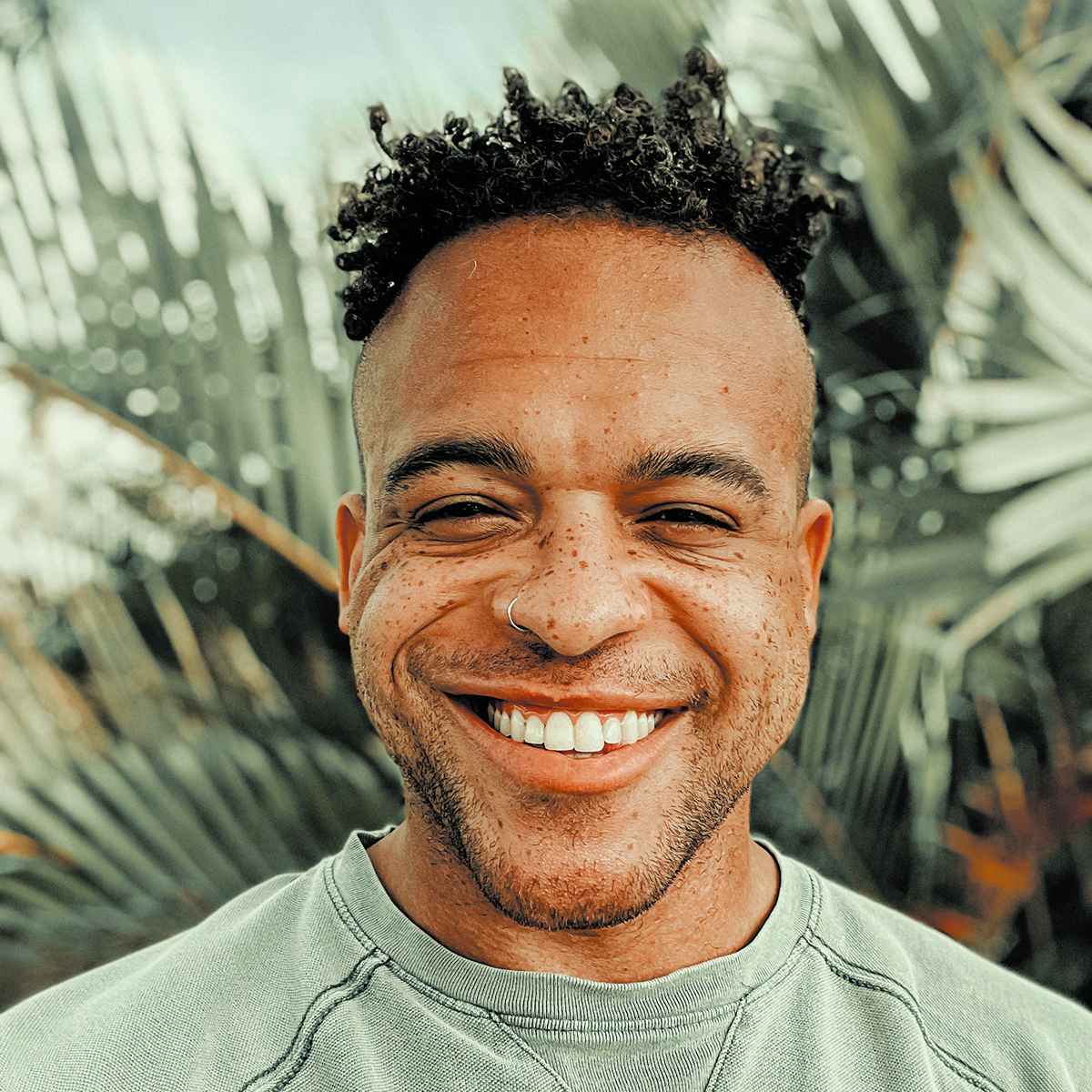
Corporate Learning and Development
@hellomrholly on Instagram
Ryan Hollingsworth is a 29-year-old located in Orlando. His passions include diversity/equity/inclusion initiatives, queer representation in mainstream media, and Pop-Tarts.
Julia Kaye
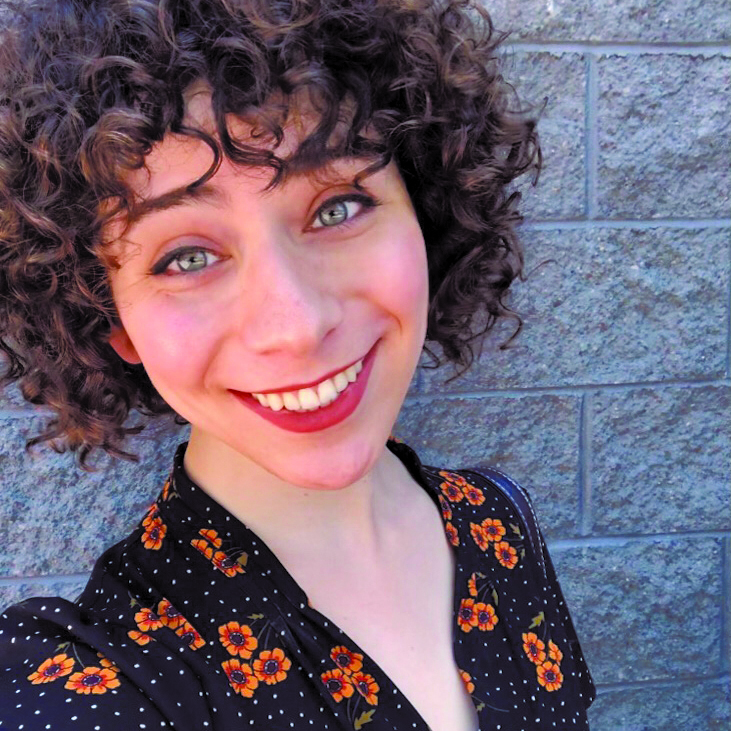
Cartoonist & Storyboard Revisionist, Disney TV Animation
juliakaye.com, @upandoutcomic on Instagram
Julia Kaye is the award-winning comic artist best known for her memoirs, “Super Late Bloomer” and “My Life In Transition.” Her webcomic, Up and Out, has garnered hundreds of thousands of readers and wide critical praise. Her commitment to activism has led to collaborations with nonprofits such as The Trevor Project and Trans Lifeline. Her work has appeared on Webtoon, GoComics, Buzzfeed, and the Disney animated show “Big City Greens.”
Sam Slupski
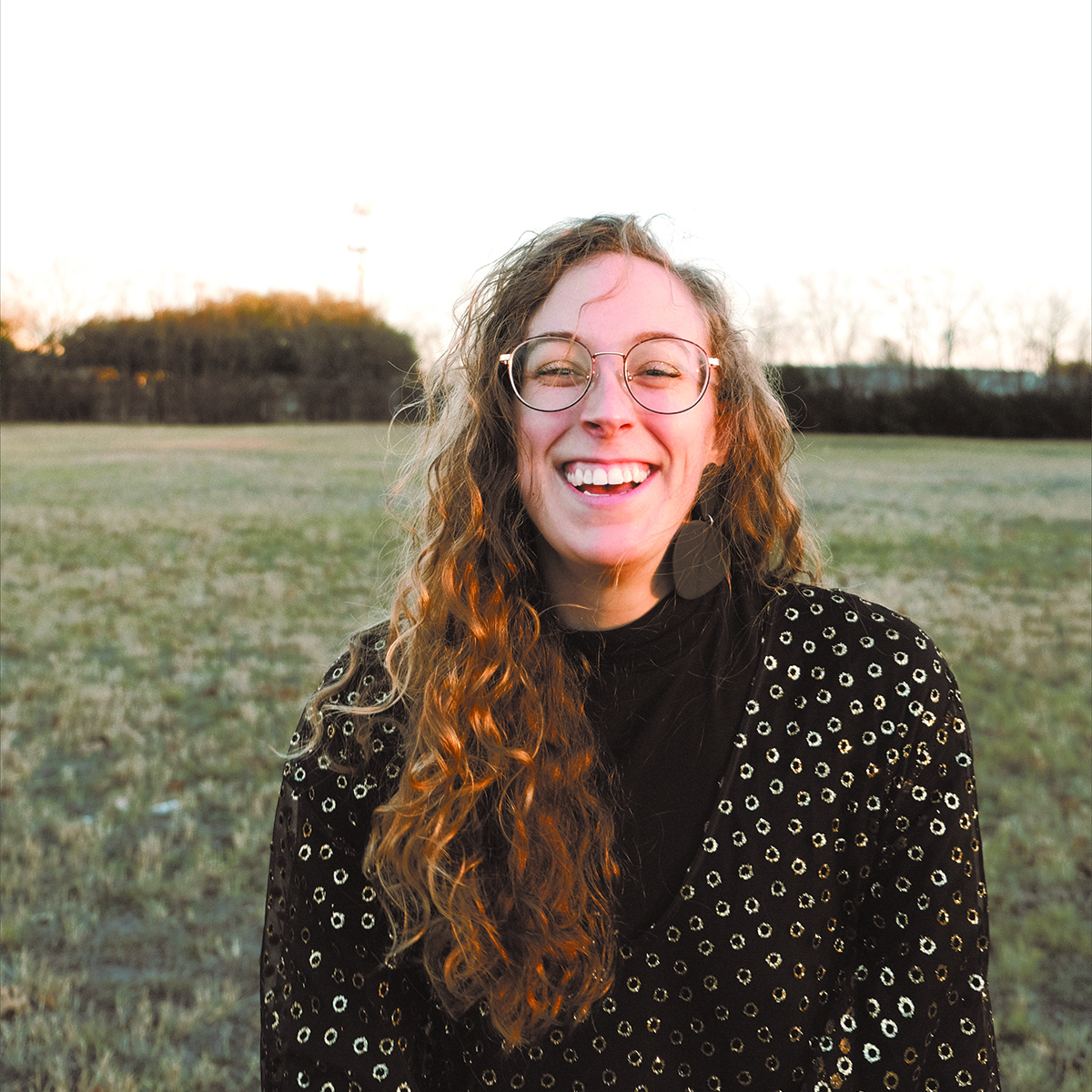
Writer and Creator
samslupski.com, @samfromkc on Instagram
Sam Slupski is a writer, creator, and community organizer living in Austin, Texas. Their work illuminates stories about mental health, centers empathy and compassion, and explores reparenting, ancestry, self-care, and how a body survives trauma. They were a finalist for the 2019 Button Poetry Chapbook Contest, and their writing can be found in Recenter Press, Pass/Fail, and more. They believe being well is something that we practice and pursue with a tender tenacity and want to know what your favorite soup is.
Sam was also featured in our roundup of inspiring LGBTQ+ influencers making a positive difference on the internet.
AC Dumlao
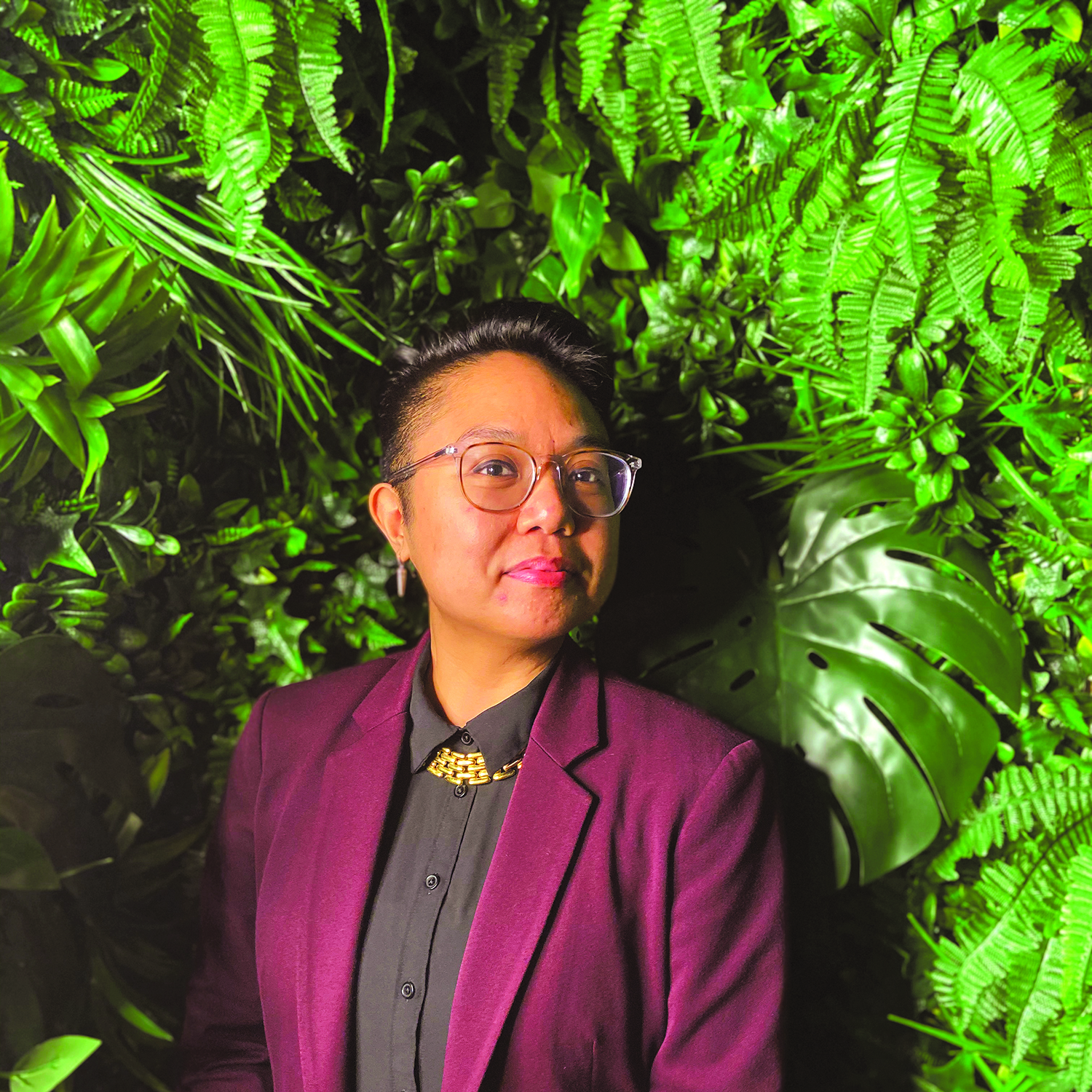
Program Manager at Transgender Legal Defense & Education Fund
TLDEF.org, @TLDEF —@mx.acdumlao on Instagram
AC Dumlao is a queer/bi+ transgender non-binary activist and educator who focuses on centering and uplifting underrepresented communities. They are the program manager at TLDEF (where they manage the Name Change Project, which connects low-income trans and non-binary people with volunteer lawyers to represent them during the legal name change process), and the creator of the Facebook social justice community page “Call Me They.” In 2019, they were named an NYC/WorldPride Community Hero during the 50th anniversary of the Stonewall Uprising.
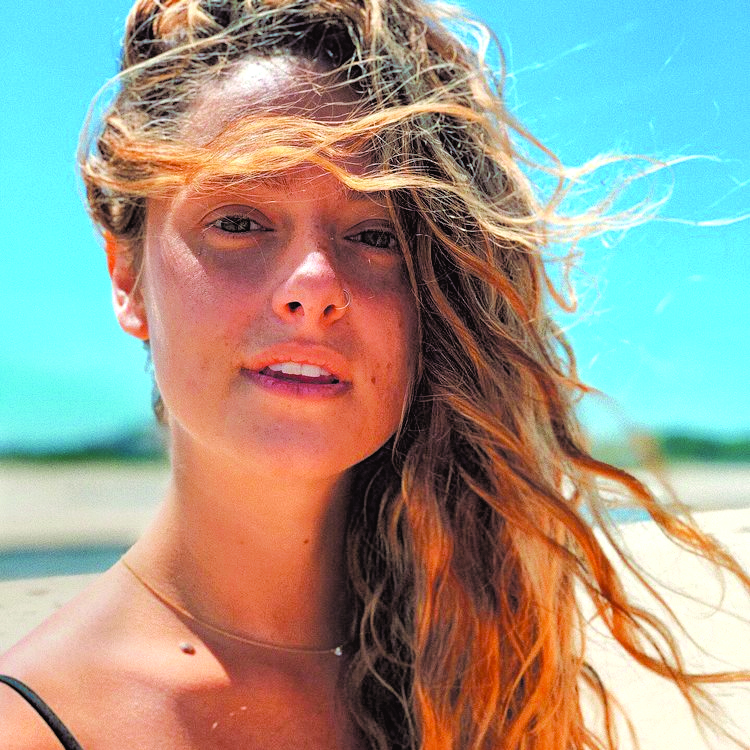
Haley Jakobson
Writer and Co-Founder of Brunch Theatre Company
haleyjakobson.com, @haleyjakobson on Instagram
Haley Jakobson is a writer living in Brooklyn. In her work, Haley explores mental health and wellness, queerness, sex and trauma, and bodies. A poet in the digital era, she reaches an audience of 20K readers on Instagram. Haley is the co-founder of Brunch Theatre Company, an inclusive platform for emerging theatre artists. Haley is currently working on her first novel. She is a gemini, and yes, that does matter.
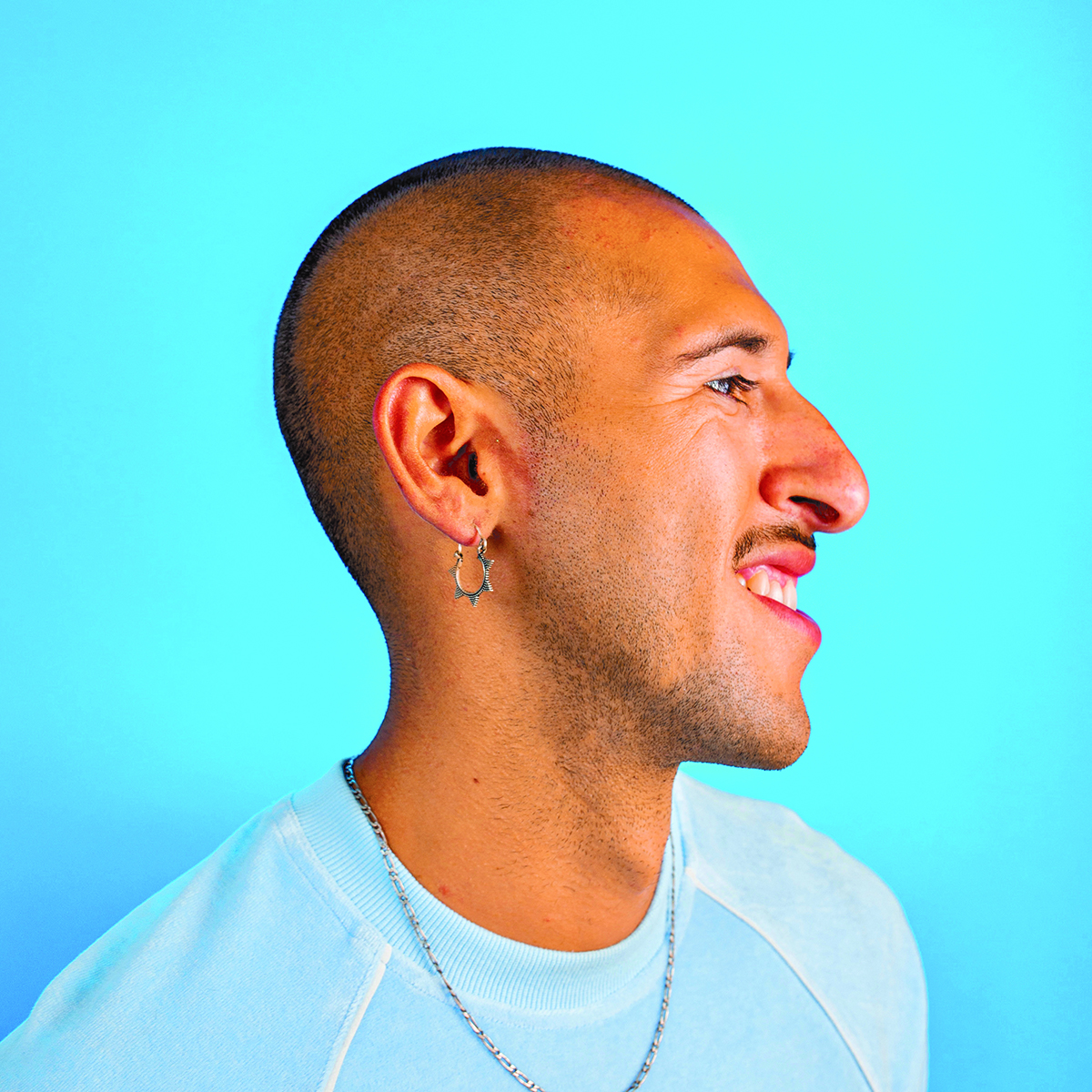
Freddy Rodriguez
Content Creator
blueperkmoment.com, @blueperk on Instagram
Freddy Rodriguez is a lifestyle blogger. In 2011 he founded his blog, Blue Perk, which is an ever-growing lifestyle brand that focuses on happy, self-loving, uplifting, and colorful moments. He manages Blue Perk full-time and lives between Los Angeles and New York City.
We asked:
What’s your favorite thing about the LGBTQ+ community?
Haley: How we destroy societal norms. Being queer allows you to imagine the most beautiful, expansive life of your dreams.
Freddy: My favorite thing about the LGBTQ+ community is how we are all so inspiring, so many have overcome difficult challenges, and we continue to stay fabulous despite so many odds.
Ryan: The freedom to be exactly who you are. The underlying understanding for consent in all senses of the word. And the sense of family that comes with the community is beautiful.
What do you wish more people understood about the LGBTQ+ community?
Julia: That folks who are trans are just people doing what they need to in order to live comfortably in their own skin. We just want social acceptance, support, and to have the protection of full civil rights. That's all — it's really that simple. I wish more people listened to us speak our truths.
Freddy: I still wish everyone would accept the LGBTQ+ community as equals, not only accept us when we're a cool trend.
Sam: I wish people could deconstruct that you cannot assume someone's gender or sexuality just by looking at them. We have been so conditioned to assume who someone is just by what they look like or what kind of relationship they are in, and I really believe that we can recenter to a more connection-based mindset that makes us more understanding, mindful, and empathetic toward each other.
What's the best piece of good news you've seen in the last 12 months?
Haley: My partner became a trans-affirming therapist and (though they'd never say it) has fundamentally changed the lives of the clients they are working with. They are the most patient, loving, healing person I know, and I couldn't imagine a better therapist for trans and queer folks.
Sam: Gosh, these have truly felt so few and far between, but I have been feeling good about seeing more open conversation about mental health. There have been a lot of things in the media that I think have illuminated the importance of mental health advocacy and conversations, and I am hopeful that it will permeate into a more compassionate future.
AC: The Transgender Legal Defense & Education Fund has worked with insurance carriers, labor unions, and public and private employers to increase nationwide access to transgender health care for millions of people. This gender-affirming care can be life-saving for transgender and non-binary people. Earlier this year, we worked with Aetna to announce that they are expanding coverage of gender-affirming surgery to include breast augmentation for transfeminine members of most of its commercial plans.
When you're old and you look back on your life, what kind of impact will you hope to have made on the world or in people's lives?
Freddy: When I'm looking back at the impact I've made on other people’s lives, I would like to think I helped inspire a little boy or girl living in a rural region anywhere in the world to believe that they too deserve to be happy for who they are despite their sexual orientation or sexual preference. I want to believe I helped others believe in themselves to be the best version of themselves.
Sam: I hope to create a more compassionate and empathetic world through my own actions. I hope that the impact I leave is to invite others to think more critically about how they are showing up to conversations and relationships, how we can honor boundaries, how we can be self-honoring, and overall just more welcoming and thoughtful individuals.
Julia: To have made people within the LGBTQ+ community feel seen and to have helped foster a better understanding of us to both allies and potential allies. I want to help people feel like they have the capacity to create the change in their own lives needed to be happy as themselves, in whatever form that may take.
What’s one piece of media you’ve been loving recently?
Sam: I recently listened to Brené Brown's podcast, “Unlocking Us,” and there were two episodes that were so nourishing. First, the episode with Hanif Abdurraqib (who is my favorite author of all time), where he speaks about grief, gratitude, and his new book about Black performance. The second episode was with Samin Nosrat, where they talked about gathering, connecting during this time of disconnection, and so much more. Both of these episodes made me feel less alone and put words to things I was feeling in my body, which is something I am always grateful for.
Ryan: As an escape from our current state of global crisis, I recently became a new Star Wars fan. It has been great to immerse myself in a world that is completely separate from our own. But even so, still fighting against oppression and still winning. I find the lore and characters of the TV shows “The Mandalorian” and “The Clone Wars,” fascinating because of the diversity, representation, and the continued pursuit of equity for all.
Haley: I just read “Milk Fed” by Melissa Broder — powerful, queer, and about body liberation. I read it in a day. TW: for disordered eating but hopefully very healing as well.
What’s a cause you care deeply about outside of the LGBTQ+ community?
Haley: I have obsessive compulsive disorder, and I am totally obsessed with other people who have it. Folks with OCD are the most brave, incredible people, and they deserve so much love and compassion. I want more than anything for there to be a mass education about OCD and for it to be totally normalized. If anyone is reading this who has OCD and is doing ERP: I am so fucking proud of you, every single compulsion or intrusive thought you have is OK, now go do your exposures like it's your fucking job.
Ryan: As a Black man I, of course, deeply care about Black Lives Matter and the mainstream conversation that has been long overdue about police brutality in the Black community. We have been murdered repeatedly over the past five hundred years by law enforcement, and no one ever stopped to consider the great implications of this previously: that America and its system of justice is built upon racism and the murders of Black people.
AC: I don’t think there’s any cause outside of the LGBTQ+ community, actually! All causes are LGBTQ+ causes because LGBTQ+ people are not a monolith and hold many other experiences and identities as individuals. I do care very deeply about mental health awareness, particularly for LGBTQ+ youth. According to The Trevor Project, LGBTQ+ youth with at least one – just one – accepting adult in their lives were significantly less likely to report a suicide attempt. As someone with diagnosed depression and anxiety, I hope that my experiences as a trans person of color can provide an example of experience and hope. Also, when it comes to discussing healthcare, access is a huge issue for all, and we need to do all we can to reduce barriers to accessing both physical and mental healthcare.
Who are your favorite LGBTQ+ activists you admire and think readers should learn more about?
Sam: ALOK (@alokvmenon) is a writer and activist who is doing a lot of really amazing work around de-gendering clothing and fashion. They also put together book reports on Instagram that creates a more accessible opening to larger, necessary conversations around race, gender, sexuality, and more. I also really admire Schuyler Bailar (@pinkmantaray) who is doing incredible advocacy and education around trans rights and more. He is an incredible writer and speaker and is someone I think everyone needs to be following on Instagram.
Ryan: George Matthews, author of “All Boys Aren't Blue.” The book speaks to the Black gay experience unlike any other form of media I've experienced.
Haley: Omg so many too many — @gabalexa (Black polyam writer, activist, and hot human), @jenerous (bisexual writer and activist), @mikaela_mp3 (Black non-binary director, writer, activist fighting for abolishing the police and community care), @jordallenhall (trans, non-binary fat activist, performer, and model), and @jamesissmiling (trans, non-binary artist, performer, writer, and activist).
Related: Check out our list of LGBTQ+ influencers making a positive difference in the world.
What organizations making a difference for the LGBTQ+ community should our readers know about?
AC: I’m so proud of the work we do at the Transgender Legal Defense & Education Fund. We help hundreds of people every year to legally change their names to reflect who they are. We are successfully expanding access to life-saving transition-related healthcare. And we fight every day to change policies that harm trans people.
Julia: The Trevor Project is a fantastic nonprofit organization focused on crisis prevention services for LGBTQ+ youth. They have a crisis hotline (and text-based chat for nonverbal communication), as well as a social network for LGBTQ+ youth ages 13–24 called TrevorSpace to help provide a safe community online.
Freddy: It Gets Better is my favorite organization for the work they do which focuses on helping LGBTQ+ youth learn from an early age that life really does get better. The more role models we have within our community, the more youth will have a role model to turn to as a light of hope for their lives as they grow up.
What is one question you hate being asked?
Ryan: Because I am a Black, muscular man, that is oftentimes fetishized within the queer community. I am often openly asked if I am a "top" or "dominant" just because I'm Black. 1. That's none of your business. 2. My sexual preferences are not tied to the color of my skin.
Haley: How did I "know" I was gay?" Please, I have enough internalized homophobia and biphobia and sexual orientation OCD fueling that question in my own brain at all times — don't make me prove my identity to you.
Sam: I hate being asked about my "coming out" story because I don't feel like I did or ever will get one. I am not close with my family, and they just aren't simply safe people to be out to. I entered a community of people where "coming out" wasn't a big thing — I just was who I was, and that was that (which I know is a huge privilege).
The media gives this picture that "coming out" is this big part about being queer, but the truth is we are all coming out every day in new ways all the time, and normalizing that is more important than anything. Coming out stories are valid and necessary to share, but I also think there are other affirming stories that people have to offer as well.
What makes you hopeful?
Freddy: To be honest, the pushback in 2020 against all of the hate which had been bubbling for years gives me hope. We are a divided world, but there are many who continue to dream for a better world. Those who dream have always been the ones pushing us forward. I am hopeful to see where we are in another 20 years.
Julia: The younger generation is coming up in a world with increased LGBTQ+ representation, leading them to be better equipped to understand themselves at younger ages and see a greater societal understanding of LGBTQ+ identities. I'm hopeful this is paving the way to a better future.
Ryan: The fact that mainstream conversations now include not just equality but equity encourages me that we are finally moving the needle on issues that never really went away, just appeared under another name. I also feel that we have no place to go but up from 2020.
Some religious leaders are taking a stand to say that LGBTQ+ people have a place in their house of worship.
Last December, more than 370 religious leaders from around the world called for a ban on conversion therapy — the attempt to change a person's sexual orientation or gender identity. The signatories to the declaration represent all the world's major faiths, and many are known LGBTQ+ advocates.
Signatories include South African cleric Archbishop Desmond Tutu and former Chief Rabbi of Ireland David Rosen. The Anglican Bishop of Liverpool, Paul Bayes, and Mary McAleese, the former president of Ireland, are also among those who have signed the declaration.
The practice of conversion therapy, which can range from electric shock treatment to religious teachings or talking therapies designed to change someone's sexuality, is already outlawed in Switzerland and areas of the U.S., Australia, and Canada.
Several LGBTQ+ faith leaders are at the forefront of rising acceptance within the religious community:
Guthrie Graves-Fitzsimmons
Guthrie Graves-Fitzsimmons is a gay man and a deacon at Highland Baptist Church in Louisville, Kentucky who told the Center for American Progress that “identifying as both a Christian and a gay man makes me deeply committed to the work of collective liberation,” he said. “I’ve come to fully accept myself in the fullness of both identities. This recognition of my own God-given dignity is also a calling to recognize the same dignity
of all people.”
Reverend Nancy Petty is an openly lesbian pastor at Pullen Memorial Baptist Church in Raleigh, North Carolina, a church that has been LGBTQ+-affirming for more than 25 years, a position which led to its exclusion from the Raleigh Baptist Association, the Baptist State Convention of North Carolina, and the Southern
Baptist Convention.
After the church was excluded from these groups, its membership actually increased, as both LGBTQ+ people and their allies became aware of the presence of a welcoming and affirming church community, she told the Center for American Progress.
Mahdia Lynn
Mahdia Lynn is a disabled transgender Shi’a Muslim woman who serves as the co-founder and executive director of Masjid al-Rabia, a mosque in Chicago that commits to being LGBTQ+-affirming, anti-racist, accessible, and woman-centered.
“You can live true to Islam while remaining inclusive and affirming and be a part of a justice-facing community that is feminist, that is affirming, that is uncompromising in its inclusivity,” she told NPR.
Reverend Frederick Davie
Reverend Frederick Davie is a gay Black man and ordained Presbyterian minister who serves as executive vice president of Union Theological Seminary in New York City. He was previously appointed to former President Barack Obama’s White House Council on Faith-Based and Neighborhood Partnerships, where he provided strategies on relationships between government and religious social services organizations, issues of religious liberty, and partnerships with state, county, and
city officials.
Having inclusive religious communities is more important than ever because nearly half of LGBTQ+ people are religious, according to an October 2020 report from the UCLA School of Law’s Williams Institute.
According to the authors of the report, the 5.3 million religious LGBTQ+ adults in America “are found across the age spectrum, in every racial-ethnic group, among married and single people, among those who are parenting, and among rural and urban dwellers.”
The findings surprised lead author Kerith J. Conron, research director at the Williams Institute, considering how unwelcoming most churches have been toward LGBTQ+ people historically, she told NBC News. Plus, even non-LGBTQ+ Americans have cited their church’s treatment of the gay community as part of the reason they’ve left, she said.
Through continued community-building and advocacy, LGBTQ+ faith leaders and community members will push forward toward true freedom, acceptance, and equality for all people.
There are hundreds of mental disorders in the Diagnostic and Statistical Manual of Mental Disorders. While some are well-known and others not as talked about, society, by and large, tends to misunderstand mental illness.
Mental illness is not weakness, it’s not a character flaw, and it’s not a choice.
There are many factors that contribute to the development of a disorder, including genetic and environmental factors.
Many disorders are “invisible,” meaning you won’t necessarily be able to tell someone has one just by seeing the person.
It’s important to remember that OCD, bipolar disorder, schizophrenia, and other mental health disorders are legitimate health conditions that people experience.
Someone who is tidy or particular is not necessarily OCD. Someone who is moody does not necessarily have bipolar disorder. Someone who is acting "off" is not necessarily schizophrenic.
These disorders are among the most misunderstood mental disorders, and misconceptions about them perpetuate stigmas that prevent people from seeking help and prevent others from extending compassion.
Because of stigma and lack of education about these disorders, loved ones may struggle more to support people living with these conditions, and the public may have unfounded fear.
As with many things in life, the more information we have, the less likely we are to allow myths or common misconceptions to color our opinions.
By understanding mental illness, you will be better equipped to support and advocate for people living with mental health conditions.
Check out our guide to what these commonly misunderstood mental health conditions are and aren’t to better understand the very real effects of these disorders, show more empathy and care, and help others grow in their understanding as well:
Obsessive-Compulsive Disorder (OCD)
It is not uncommon for people without OCD to say phrases like, “I’m so OCD about this!” but this demonstrates a weak understanding of the disorder.
Making statements such as these can lead to further misunderstandings about the disorder and can minimize its severity.
Learning about OCD is the first step to supporting those who face it daily.
What OCD Is:
- A disorder marked by the presence of obsessions and/or compulsions
- Symptoms can include: Obsessions, which are recurrent, persistent, intrusive, and unwanted thoughts, urges, or images that cause anxiety or distress and/or compulsions, which are repetitive behaviors (such as hand-washing, ordering of items, or double-checking something) or mental acts (such as counting or repeating words silently) to “neutralize” these obsessions
- Obsessions can be disturbing or violent in nature, they are not pleasurable, and they are involuntary
- The obsessions and compulsions are time-consuming, often taking up more than an hour each day
- OCD can be distressing and interfere with daily living
- With treatment, people with OCD can see their symptoms greatly improve and can lead fulfilling lives
What OCD Isn't:
- Just being organized, orderly, or tidy
- Having specific and particular preferences
- Being meticulous
- Perfectionism
- Superstitions
- Rituals
- Quirks
- Pleasurable
- A choice
Bipolar Disorder
Many conceptions about bipolar disorder remain in public discourse.
What might surprise you is that bipolar disorder (which is actually more than one disorder, including Bipolar I and Bipolar II) isn’t just mood swings — it actually can cause severe and unusual changes in mood, energy, and the ability to carry out daily activities.
Understanding what bipolar disorder is, and what it isn’t, helps you to be more supportive of those who deal with it daily.
What Bipolar Disorder Is:
- A disorder marked by the presence of manic or hypomanic episodes and/or depressive episodes
- Depending on whether it’s Bipolar I, Bipolar II, or a third type of bipolar disorder called Cyclothymic Disorder, a person with bipolar disorder experiences manic episodes, hypomanic episodes (the same as manic episodes but a shorter time period and not as severe), and depressive episodes
- Manic episodes can include euphoric or irritable mood, increased energy, decreased need for sleep, racing thoughts, distractibility, goal-directed behavior, agitation, risky behavior, and even delusions or hallucinations
- Depressive episodes look like what you think of when you think of depression: Loss of interest or pleasure, change in appetite, insomnia or sleeping more than usual, agitation, fatigue, feelings of worthlessness or guilt, and diminished ability to think or concentrate
- In between episodes, people with bipolar disorder can “feel normal”
- With treatment, people with bipolar disorder can see their symptoms greatly improve and can lead fulfilling lives
What Bipolar Disorder Isn't:
- Moodiness or mood swings — everyone has these!
- Periods of intense productivity followed by less
productive periods - Intense creative periods
- A personality trait
- Enjoyable or fun
Schizophrenia
The complexity of schizophrenia may be part of why the disorder is so misunderstood. The disorder affects thinking, emotions, and behavior, but it doesn’t always look like what you might think it does.
When you have schizophrenia, your brain often tells you you’re seeing things or hearing voices that aren’t there, which makes it hard to tell what’s real and what isn’t.
But people with schizophrenia don’t always experience this every day, and with treatment these symptoms can improve.
The reality is that you have probably met people with schizophrenia who you never realized lives with the disorder.
What Schizophrenia Is:
- During the active phase of the disorder, people with schizophrenia may experience delusions, hallucinations, disorganized or incoherent speech or behavior, and/or lack of motivation
- With treatment, people with schizophrenia can see their symptoms greatly improve and can lead fulfilling lives
What Schizophrenia Isn't:
- Multiple personality disorder
- Caused by bad parenting
- Schizophrenia does not make people violent, aggressive, or dangerous — people with schizophrenia are much more likely to be the victim of violence than the perpetrator, according to the Diagnostic and Statistical Manual of Mental Disorders, Fifth Edition
- Not every person with schizophrenia needs to be institutionalized
- Not every person with schizophrenia will become homeless
Understanding mental illness is the first step to becoming an ally and advocate.
By committing to learning more about mental illness, we can collectively work to reduce the deep-rooted stigma that paints people with mental illness as dangerous or hopeless.
While many public figures predicted that public health restrictions would lead to increased suicides in 2020, evidence that came out of Canada in February suggests otherwise.
In Alberta, Canada, suicides actually decreased last year, which may be surprising given the widespread mental health impacts that 2020 brought. Other Canadian provinces saw similar declines.
Tyler Black, a psychiatrist and suicide expert the University of British Columbia in Vancouver, told CBC News that levels of distress have certainly increased amid the pandemic and public health restrictions that have upended virtually everyone's life.
But he said suicide is a complicated phenomenon, and some people were making "quite strong shortcuts" in believing the pandemic would necessarily lead to more deaths by suicide.
"As someone who studies suicide a lot, I care about distress very much," he said. "But there's not a straight line between distress and suicide."
Distress centers have reported increased call volumes during the pandemic, but Robert Olson, a research librarian with the Calgary-based Centre for Suicide Prevention, told CBC News that can actually have an upside.
"That suggests to us that people are reaching out," he said. "And that helps offset suicide deaths."
Black said another factor is "a well known phenomenon called the pull-together effect," which has been seen during disasters or other situations where an entire community is affected by a hardship that demands collective action.
Another factor that affected Canada specifically is relatively strong financial and social support the Canadian government has provided during the pandemic.
Black said emerging data suggests a similar decline globally. In the U.S., states that have already reported suicide data, early data shows that the overall suicide rates declined or saw no change in 2020, compared with previous years.
Continued Below...
6 Places Where Mental Health Improved in 2020:
In Florida, suicide rates in 2020 saw a 13 percent drop from the previous year and a 16 percent drop from 2018.
Suicide rates in Massachusetts from March through May of 2020 saw no change from previous year’s trends.
In Utah, the number of suicide deaths did not increase in the first 39 weeks of 2020. The number of suicide deaths is consistent with the previous three years.
Suicide rates in Hawaii from April through December 2020 were lower than the same nine-month periods from 2015 to 2019.
Early numbers from New Mexico reveal a nearly 4 percent decrease in the number of suicides in 2020.
There was an 18 percent drop in suicides among children and young adults (people aged 15–30) in Minnesota in 2020 compared to the previous year.
Continued...
Data from other states will become available down the road, but federal suicide data reflecting the months in which the pandemic has transpired will not likely be available until 2022.
The chief medical officer of the American Foundation for Suicide Prevention, Christine Moutier, said in a statement that while suicide risk factors, such as anxiety, social isolation, economic stress, and suicidal ideation have increased during the pandemic, it’s important to understand that suicide risk is complex and protective factors also play a powerful role.
“While we do not yet have national suicide data from the full year of 2020, … this early data helps dispel this common misconception,” she said.
While the data is encouraging, we must still address suicide risk factors that the pandemic has intensified. We all can play a role in preventing suicide by safeguarding our own and others' mental health, educating one another on mental health and suicide, as well as providing resources for particular communities, such as youth, marginalized populations, and others facing a disproportional impact of the pandemic.
Take Action:
You can be a part of ensuring anyone can access a safe person to talk to in a crisis by making a donation to Crisis Text Line.
Social worker Liz Beecroft has created a way to combine her two passions — streetwear and mental health — to serve people who might not otherwise seek help.
After receiving her Master’s from New York University, Beecroft started working as a family therapist, providing in-home therapy and later cognitive behavioral therapy. She loved her work, but because of the nature of working with clients experiencing trauma, she needed a creative outlet.
Beecroft’s fiancé, who is a photographer, suggested she start taking photographs of her impressive sneaker collection and love of style as a way to express herself.
Now she’s found a way to integrate her love for streetwear and sneakers with her passion for mental health and is reaching traditionally underserved communities in the process.
Beecroft grew up playing basketball, which is how she developed an interest in sneakers. When she went away for basketball camps, though, she struggled with homesickness.
“I couldn't be away for a weekend without having panic attacks and meltdowns without having to call my parents or have my parents stay in a hotel nearby just to make sure I was OK,” she said.
So she started going to therapy. Down the road, after realizing that her undergraduate biology major wasn’t for her, she decided to pursue psychology in hopes of helping others the same way she herself found help in therapy.
Beecroft pursued an education in psychology, and for the past four years, she’s worked with a nonprofit foster care organization in Brooklyn. In May of last year, Beecroft launched a private practice and online platform called MENTL.SESH, which offers psychotherapy, educational resources, and community.
“I'm trying to make it different from the standard private practice,” she said.
Beecroft works primarily with millennials and Gen Z, specifically creatives, athletes, and people within the fashion industry, which is an industry that doesn’t typically embrace mental wellness or therapy, she said. She also provides internal training for streetwear brands to help create mentally healthy workplace environments and appropriate marketing messaging when launching products related to mental health.
For example, in 2019 Beecroft collaborated with Nike to launch an Air Max 270 React called “In My Feels.” Proceeds from Beecroft's sneaker went to the American Foundation of Suicide Prevention.
Another collaboration she worked on was in May 2020 with streetwear brand The Hundreds. Together they created a shirt mimicking the “feelings charts” you might see in a therapist’s office using the company’s logo instead of traditional faces. All proceeds from this collaboration went to the National Alliance on Mental Illness.
Also last year she worked on a collaboration with Lebron James’ brand, UNKNWN, centered on “the sport of self-care,” which plays on the brand’s tagline, “the sport of fashion.”
“I want to show people creative ways that we can take care of our mental health through sneakers, through style, and really meet people where they're at,” Beecroft said. “Mental health doesn't always have to be clinical and stuffy. I have knowledge of sneakers and sports, so I’m trying to be creative in the delivery of the messaging. It's going to reach so many people that aren't typically served, which I think is really important.”
Beecroft said she’s hopeful to see the increasing openness about mental health online and within industries that don’t typically speak on the topic.
“It's really cool to see providers and brands breaking out of a cookie cutter approach to what mental health treatment should be,” Beecroft said. “We're all complex and unique individuals, and what might work for someone might not work for someone else. Having a range of options for people to choose how they want to take care of their mental health can only improve access.”
Around the globe, attitudes about menstruation vary greatly. In some places, people who menstruate are ostracized from basic activities or socializing.
Period poverty — a lack of access to sanitary products, menstrual hygiene education, toilets, hand-washing facilities, and waste management — keeps people who menstruate from going to work, school, or leaving home.
In other places, period poverty keeps low-income communities and people experiencing homelessness from getting access to the necessary sanitary supplies they need.
Period poverty is a health issue, mental health issue, education issue, social justice issue, and political issue.
The Problem: What Does Period Poverty Mean?
It’s a health issue.
Period poverty is a global sanitation issue, as poor menstrual hygiene can cause physical health risks.
A person who does not have enough product to last the duration of their period might go longer between changing them, increasing the risk for health problems such as urinary tract infections (UTIs), bacterial vaginosis, and skin irritation.
It’s a mental health issue.
Not only does period poverty affect physical health, but period shame has negative mental effects, causing people who menstruate to feel embarrassed about a normal biological process.
Additionally, a new study published in the scholarly journal BMC Women’s Health in January revealed that lack of access to necessary sanitary products is linked to depression.
It’s an education issue.
Girls all over the world miss up to 20 percent of school days because of their period. UNICEF estimated in 2015 that roughly one in 10 girls in Africa miss school because of their periods each year.
Long-term consequences of a community or society where women don’t fully participate in school include lower graduation rates and a higher likelihood of early marriage.
According to UNICEF, investing in girls’ education makes good sense in several ways: “More educated girls lead to an increase in female leaders, lower levels of population growth, and the subsequent reduction of pressures related to climate change,” UNICEF global chief of education Jo Bourne told the Global Partnership for Education.
It’s a social justice issue.
Additional barriers to accessing affordable period products exist for people living in shelters, low-income communities, people living in developing nations or conflict-affected areas, LGBTQ+ people with uteruses, and those facing housing insecurity. And it was only 2018 when U.S. federal prisons made menstrual products free.
The cost of period products can be prohibitive for some people, who are forced to choose between period products or food.
Forcing women to choose between their menstrual hygiene and other necessities is a public health crisis that affects each community uniquely, but the brunt of the weight falls on the shoulders of marginalized communities.
Period products aren’t covered by government assistance programs like SNAP (food stamps).
It’s a political issue.
In places where sanitary products like pads and tampons are sold widely, such as the United States, they’re taxed as “luxury products,” unlike basic necessities including toilet paper.
Tampons alone can cost upwards of $2,000 over a lifetime — and this doesn’t even touch the costs of replacement underwear, heating pads, panty liners, Midol, and birth control, which are all associated with managing one’s period.
Activists have spoken out against this “tampon tax,” and there exists a growing movement to ensure access to the basic necessity of menstrual products for all people
who menstruate.
“Meeting the hygiene needs of all adolescent girls is a fundamental issue of human rights, dignity, and public health,” Sanjay Wijesekera, former UNICEF Chief of Water, Sanitation and Hygiene said in a statement.
The Solution: What's Being Done About Period Poverty
This movement for menstrual equity has grown in recent years and aims to make sanitary products affordable and accessible and reduce the stigma surrounding menstruation.
Organizations, activists, and governments are increasingly taking action to solve this problem:
In the U.S., there have been increasing efforts to put an end to the “tampon tax,” but most policy changes are at the state or city level. In 2016, New York City passed a law mandating schools, homeless shelters, and jails provide period products, deeming them as essential as toilet paper. The law benefits hundreds of thousands of people.
As of February 2021, 20 U.S. states have lowered or put an end to the “tampon tax.”
In November 2020, Scotland became the first country to make period products free. The new law puts a legal duty on local authorities to ensure anyone who needs period products can obtain them for free, "reasonably easily" and with "reasonable dignity.”
In January 2021, the U.K. also abolished the “tampon tax” from sanitary products. They also began rolling out free sanitary products in schools, colleges, and hospitals.
Beginning in June 2021, New Zealand began to provide free period products in all its schools.
Nonprofits including Period.org, The Pad Project, and Free The Tampons lead work globally to end period poverty and stigma through services, product distribution, education, and advocating to end the “tampon tax.”
A mother-daughter duo in Philadelphia — Lynette Medley and her daughter, Nya McGlone — started The SPOT, a community-funded project to provide an array of services including free menstrual products (hand-delivered to your doorstep!), educational resources, access to clean water and toilets, a computer room, first period kits, and a Breonna Taylor safe room for “marginalized women to escape the dangers of the world.”
When I’m asked to explain why I feel so passionately about women’s issues and feminism or why I got a women’s and gender studies minor in undergrad, I used to say it’s because, well, I’m a woman, and I care about women. What other reason would I need?
It turns out an even better reason is because I’m a person, and I care about people. And any person who cares about people should care about women’s issues and feminism, too.
When we decided to publish an issue of the Goodnewspaper all about women (and gender non-conforming folks, too), we knew we needed to talk about the problems women uniquely face and the inspiring and creative ways women are solving these problems — but we also knew the problems women face don’t entirely define them.
We were also sure we wanted to celebrate world-changing people solving problems facing people and the planet — problem-solvers who just happen to be women.
So why did we devote an entire issue to women, when women only make up half the population?
First of all: Because women make such a meaningful difference in the world.
Secondly: Women and non-binary people have been historically shut out from access to and opportunities within education, politics, healthcare, the workforce, and other arenas.
But we are now at a tipping point in history. I’m excited to see influential decision-making politicians, celebrities, religious leaders, and other notable cultural figures stand up for gender equality. I’m particularly hopeful to see gender equality activists increasingly embrace intersectionality, as it legitimizes the movement as necessarily compatible with other movements, such as anti-racism, LGBTQ+ rights, environmentalism, immigrant rights, economic justice, and politics.
I missed the first and second waves of feminism, and I was too young for the third wave, but I grew into a young woman at the start of the fourth wave. Very little else has inspired and moved me so deeply as a determined group of women (and men!) working tirelessly to make society more equitable. And with the rise of digital media, this fight for equality is more public, active, and urgent than ever.
While researching for and writing this issue, I read about many extraordinary women making a difference in the world. I wish we could include all of them here! But I also discovered some uncomfortable and heartbreaking truths, like how Black women are three times more likely than Hispanic women and 2.5 times more likely than white women to die from causes linked to pregnancy. Or how less than one-third of elected leaders are women. Or how one in 10 girls in Africa miss school because of their periods each year.
Which is exactly why equality is not just a women’s issue — it’s a human issue.
Our hope is that this collection of stories will inspire you and ignite in you a heartfelt desire to take action. In the Women Edition of the Goodnewspaper, readers read about women trailblazing the trucking industry, a new law helping women get equal pay for equal work, a former law student who is helping domestic violence survivors gain financial independence, a woman who made an app to prevent heat stroke in farmers, how women’s friendships could literally save lives, and more.
And this list is a collection of some of the notable women from this issue. Please enjoy learning more about them — and of course if you love these profiles, you'll also love the full Women Edition of the Goodnewspaper.
Here are eight world-changing women you should know about:
1. Mia Yamamoto
Japanese-American criminal defense attorney and civil rights activist Mia Yamamoto’s story is one of overcoming hardship to become who you truly are.
Yamamoto was born in an internment camp in Arizona during World War II, an experience that — along with her father’s exclusion from the Los Angeles County Bar Association for not being white — shaped her view of the legal system and race relations.
After serving in the U.S. Army, Yamamoto graduated from UCLA's School of Law, where she co-founded the Asian Pacific Islander Law Student Association.
Yamamoto, who is transgender, now represents transgender people in civil rights cases and is an activist striving to put an end to racial, religious, and sexual conflicts around Los Angeles, uplifting the lives of those who suffer from discrimination.
Yamamoto co-founded the Multicultural Bar Alliance, a coalition of minority, women’s, and LGBTQ+ bar associations in Los Angeles.
She has also served on the commission on Sexual Orientation and Gender Identity for the American Bar Association and she was honored by API Equality and the Los Angeles County Human Relations Commission for her advocacy on behalf of the LGBTQ+ community.
2. Daphne Frias
23-year-old Daphne Frias is a Latina youth activist living with Cerebral Palsy. Frias, who uses a wheelchair, is a vocal champion for the disability community and is also engaged in several issues affecting young people: gun violence, climate change, and voter turnout, to name a few.
Frias started her activism work following the 2018 Stoneman Douglas High School shooting in Parkland, Florida, which claimed the lives of 17 people.
School shooting statistics were devastating the nation — and especially young people. After the shooting, she organized transportation for more than 100 students from her college campus to their local March For Our Lives event. In 2019, Frias was appointed the New York state director for March For Our Lives.
Through her work with March For Our Lives, Frias became passionate about increasing youth voter turnout and founded a bipartisan nonprofit called Box The Ballot to harness the power of absentee voting.
In 2018, the group organized on more than 70 college campuses across the country and inspired nearly 400,000 students to vote.
3. Sara Mora
Immigration rights activist Sara Mora leverages the power of digital media to break down the stigma of being undocumented and to rally for immigration reform
As a teenager in New Jersey, she joined the Deferred Action for Childhood Arrivals program (DACA) program, which offers a two-year renewable legal status to undocumented immigrants who entered the U.S. as children.
Her work supporting DACA led her to interview the president of her home country, Costa Rica, in 2014. In the interview, Sara divulged her status as undocumented, an admission that caused her to go viral.
Others in her community praised her for her honesty and ability to open up the important conversation of immigrant status and rights.
In response to the vast support, Mora launched Population MIC, an organization centered around storytelling and providing undocumented communities with the tools necessary to be heard by lawmakers.
Like so many DACA recipients, her world was turned upside down when the White House proposed an end to the program in 2017, leaving thousands at risk of deportation.
“Population MIC is a movement born out of my observation as an undocumented teen that undocumented people were spoken for on almost every major media platform,” More told Seventeen.
“I began creating Population MIC in 2014 to nurture and uplift the power of independent storytelling, merging narrative building, data, and activism to create a world in which communities can have the tools to speak their truths and be heard through ecosystems online.”
4. Faith Florez
Growing up in the Central Valley of California, Faith Florez witnessed firsthand the difficulties agricultural industry workers face.
Florez is a descendant of generations of farm workers, and her own family members had suffered from heat stroke while working fields. She saw a need to create a way to increase safety and education.
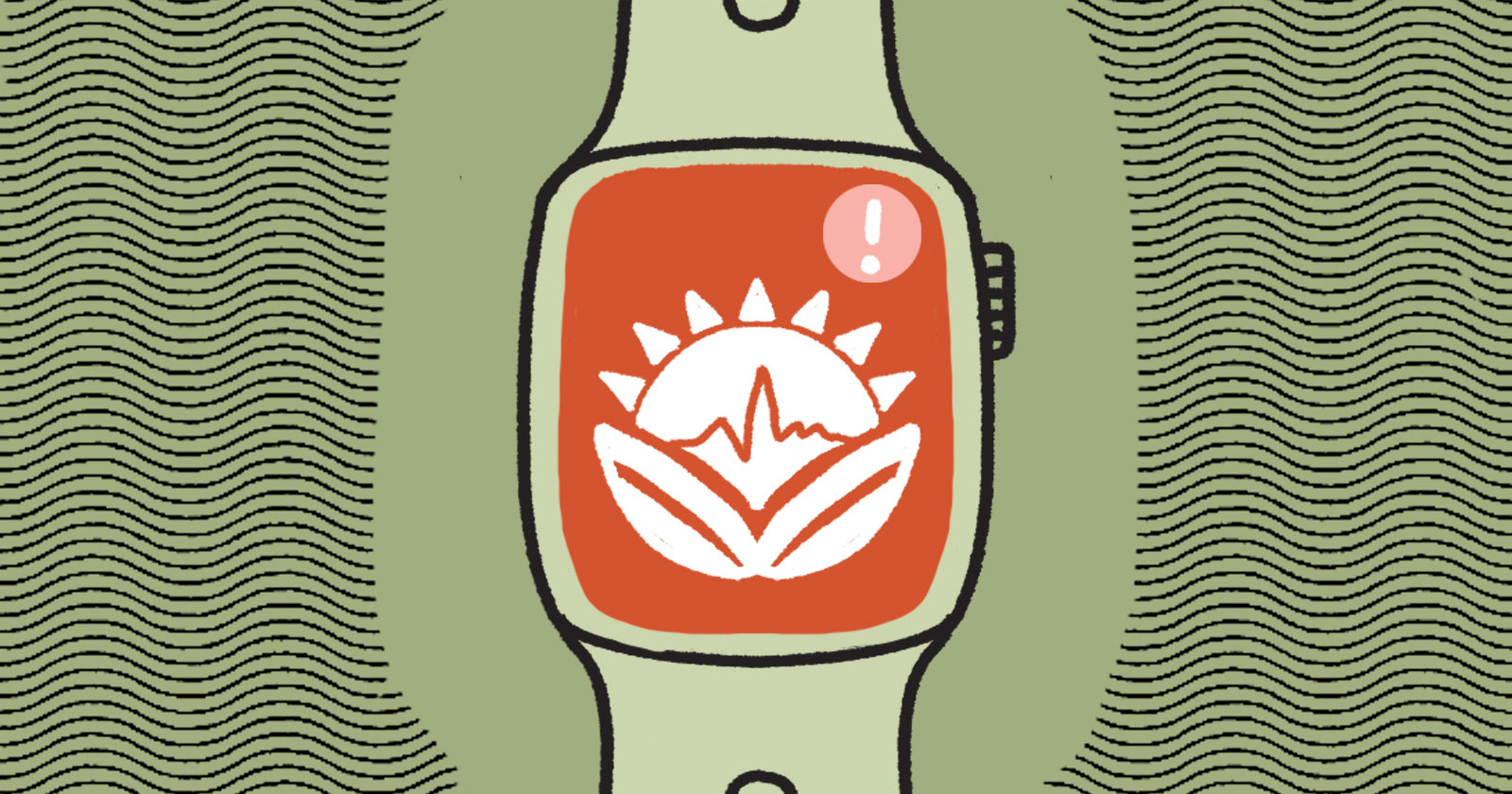
Florez created Calor, an app to combat the rate of heat stroke among farm workers and to protect their rights and their safety through education.
She conducted a pilot program, during which 100 farm workers wore Apple Watches or Fitbits that sent notifications of immediate heat warnings, health tips, and proactive heat stress education.
During that time, Apple featured her app in the App Store, Florez fundraised more than $60,000 for continued development of the app, and she was awarded a $10,000 grant. Fundraising will help defer costs of the watches.
Florez also launched The Latina Legacy Foundation, a nonprofit tackling barriers in Latina-dominated industries including farm workers, housemaids, garment sweatshop workers, and domestic home care workers.
5. Mia Mingus
As a queer, physically disabled, Korean transracial and transnational adoptee raised in the Caribbean, Mia Mingus brings a unique lens to activism.
As a survivor herself, the writer, educator, and community organizer's work centers on putting an end to generational and sexual violence.
Mingus has hosted webinars on transformative justice and abolishing the prison system, given public speeches and panels on disability justice, and published compelling and insightful posts on her blog.
She is known in the disability community for introducing the concept of and coining the term "access intimacy” to describe the feeling you get in a place where you feel that all of your accessibility needs are being met.
Her approach to disability justice focuses on dismantling privilege and takes an intersectional approach, making disability justice activism necessarily intertwined with anti-racist, feminist, reproductive justice, queer, and prison abolitionist activism.
She was honored by the White House in 2013 as a Champion of Change for her work as an Asian American Pacific Islander leader.
6. Blair Imani
At 8 years old, Blair Imani started a letter-writing campaign with her friends to ask the toy company Mattel to create more diverse characters after she noticed there were eight white dolls and just one Black doll. Now nearly two decades later, Imani continues to advocate for justice and equality.
Imani is a Black, Muslim, and queer activist and historian who promotes intersectional thinking, female empowerment, and LGBTQ+ rights.
She has given a TEDx Talk: “Queer and Muslim: Nothing to Reconcile,” and written two historical books.
“Modern Herstory: Stories of Women and Nonbinary People Rewriting History” profiles 70 women and non-binary people who were and are still instrumental in social movements such as the Stonewall riots and the Black Lives Matter movement.
Her other book, “Making Our Way Home: The Great Migration and the Black American Dream,” centers on voting rights, domestic terrorism, discrimination, and segregation alongside arts and culture, activism, and civil rights.
In 2014, Imani founded the nonprofit Equality for HER, a nonprofit that uplifts and empowers women and non-binary people. While the nonprofit shuttered in 2019, its online resources are still available.
Now 27, Imani focuses on intersectional feminism and is an active member of the Black Lives Matter movement.
7. Zeynep Tufekci
Turkish sociologist, writer, and University of North Carolina professor Zeynep Tufekci is a former computer programmer who has been described as “having a habit of being right on the big things” by the New York Times.
Her work focuses on the social implications of new technologies, such as artificial intelligence and big data.
She wrote a book titled “Twitter and Tear Gas: The Power and Fragility of Networked Protest.”
And in 2018, Tufekci was interviewed as part of a PBS series, “Frontline,” on issues of disinformation and Russian interference with Ukraine on Facebook.
She is one of the most prominent academic voices on social media and frequently discusses identity, society, protests, and technology.
At the beginning of the COVID-19 pandemic, Tufekci was one of the first to take up the importance of mask-wearing in the mainstream media and was one of the academics who advised the WHO on adopting a mask recommendation.
She’s now one of the most respected voices of the social impacts of technology, the Internet, inequality, and politics.
She’s an example of someone using her platform and influence to share her valuable insights and to spread nuanced and balanced knowledge — which makes us all better.
8. Amanda Nguyen
From translating ballots into different languages to making sure that survivors are heard, the nonprofit Amanda Nguyen founded, Rise, helps empower sexual assault survivors with civil rights.
After having to navigate the broken criminal justice system following her own rape, Nguyen penned her own civil rights law and unanimously passed the Sexual Assault Survivors’ Bill of Rights. The federal law served as a model for 15 other laws protecting sexual violence survivors in the U.S.
Following the passing of the law in 2014, Nguyen founded Rise, a nonprofit and “social movement accelerator” that trains grassroots organizations to pen their own civil rights laws. With Rise’s help, 33 laws have passed.
Nguyen was awarded Marie Claire’s Young Women's Honors in 2016 and was named on the Forbes 30 Under 30 list in 2017. She was appointed by President Barack Obama to the United States Department of State as his Deputy White House Liaison, and in 2018, she was nominated for the Nobel Peace Prize.
The 28-year-old defensive lineman for the Las Vegas Raiders is inspiring folks off the field too and making big changes within the National Football League.
On June 21st, active NFL player Carl Nassib came out as gay by posting a video on his Instagram page with a heartfelt letter.
In it, he talks about the “agonizing” decision to publicly come out and how in spite of that, he was received with love and support by his community.
Nassib also took this opportunity to partner with the Trevor Project — a non-profit organization dedicated to supporting LGBTQ+ youth — and share some of their resources.
"I feel an immense responsibility to help in any way I can and you can too. Studies have shown that all it takes is one accepting adult to decrease the risk of an LGBTQ kid attempting suicide by 40%. Whether you're a friend, a parent, a coach, or a teammate - you can be that person,” Nassib wrote on Instagram.
The Raiders published a statement in support of Nassib following his coming out, sending a wave of support to the greater LGBTQ+ community in the world of professional sports.
Since then, the NFL has been active in showing support for their LGBTQ+ fanbase.
Watch the NFL's LGBTQ+ Affirming 'Football is Gay' Commercial (0:30)
On Sunday, the league aired a “Football is Gay” commercial — led by Carl Nassib — that showed unconditional acceptance of the community.
Sam Rapoport, the NFL senior director of diversity, equity, and inclusion, told Outsports, “I am proud of the clear message this spot sends to the NFL’s LGBTQ+ fans: This game is unquestionably for you.”
The NFL doesn't have a great track record of being on the right side of history.
Their poor response to the Black Lives Matter movement and Colin Kaepernick was disappointing — and they still have a lot of progress to be made — but we are celebrating their choice to do the right thing at this moment and are hopeful for more in the future.
This landmark decision for the league is being applauded as the beginning of the NFL embracing more LGBTQ+ players and showing open and unconditional support to the community at large.
Going forward, the NFL is encouraging every member of their fan base to support the LGBTQ+ rights movement.
“It’s OK to not fully understand the LGBTQ+ experience for you to be an ally. You don’t need to be an expert in all the terms. You just need to try,” Rapoport told USA Today Sports.
Support The Trevor Project
You can follow Carl Nassib and the NFL's lead by making a donation to The Trevor Project too.
Most people I meet really love their home country, much like the way we love our family. Home is part of who we are, which might explain why most people in the world (96.5 percent) live in the country where they were born.
The number of international migrants is relatively small, around 3.5 percent of the world’s population, according to the UN’s World Migration Report 2020. That’s roughly 272 million people, and the overwhelming majority move for reasons related to work, family, and study.
But 26 million people are officially designated as refugees, as UNHCR reported in June 2020, and another 4.2 million are asylum-seekers who must meet the definition of a refugee in order to gain lawful status in the country where they seek refuge.
I offer these numbers for context. It’s not easy to leave home, and most people don’t. For those who do, in my experience as an immigration attorney, it’s not for lack of love of their home country but rather with an abundance of hope for creating a better life.
Everyone I know shares the same desire to live in a free society where we feel safe and have the opportunity to thrive. People dream of being allowed to work hard, of being able to contribute, of helping to sustain the kind of environment where their children can thrive, too.
Unfortunately, host countries are increasingly hostile to immigrants in general and to refugees and asylum-seekers in particular.
The most vulnerable people in the world somehow seem like the most threatening because they come from places perceived as significantly different — different cultures, values, beliefs, and customs.
Emotions overtake the numbers and facts, and you can't reason with emotions. Essentially, the migration issue cuts directly to the core of who we are.
So, who are we? I found myself asking about five years ago, frustrated with the growing gap not only between rhetoric and reality surrounding migrants and refugees, but also between people living in our society.
Feeling so much polarization and alienation at home caused me to realize this is not only an immigration and refugee issue, but also a question about the kind of community where I want to live.
How do we bridge the gap? How can we live in harmony with people we perceive as different? How do we cultivate the kind of community where everyone feels a sense of belonging and value, no matter where they come from or why?
It turns out, people all over the world are working hard to answer these questions, finding creative ways to bring people together to better understand who we are and who we want to be (individually and collectively), to support each other, and to enjoy the spaces where our journeys overlap.
Sometimes we have to turn our attention away from the headlines to see how much good there really is in the world. That’s what I’ve discovered over the past five years as I’ve traveled around the United States and the world exploring the ways people experience migration through intentionally inclusive community conversations.
We talk about culture and identity, faith and spirituality, food and hospitality, and anything else that naturally emerges.
Each conversation is unique, but one thing is consistent. Sharing our lived experiences and feelings — hopes and fears — in mixed company with longtime residents and newcomers, including immigrants and refugees, challenges the narratives people write about us, whoever “us” is.
Everywhere I go, I meet people who are excited to share local initiatives welcoming and supporting newcomers.
For example, I love the Multicultural Refugee Coalition in Austin, Texas, Eat Offbeat in New York City, Justice For Our Neighbors in Grand Rapids, Michigan, and Welcoming America initiatives all around the United States.
When Clarkston, Georgia became one of the most multicultural square miles in the U.S. because of refugee resettlement, local residents created Refuge Coffee Co. as a meeting place to share coffee and culture and get to know each other. They bring the community together to celebrate different religious holidays with food, dancing, and art. Volunteers use the space to teach English and job skills to their new neighbors.
When I was there for the annual Refuge Coffee 5K, I heard a runner exclaim with glee, “The world could be like this!” Another Georgia native said he doesn’t like to travel, so he appreciates getting to explore the world through his own community.
At the end of the day, meeting people where they are and connecting on a heart level feels like the best way to restore faith in humanity and hope for our future.
Something as simple as a potluck dinner party provides a fun opportunity to engage more people in conversations that spark trust and compassion.
And it only takes one spark to light the darkness. A collective dedication to this kind of bridge-building is exactly what will draw us into a brighter and more just world where everyone feels truly seen and welcome.
Sound is essential to the survival and prosperity of marine life, but human-made ocean noise threatens this fragile world. Sound travels much farther and faster underwater than in air and is vitally important to marine animals for communicating, navigating, finding food, meeting a mate, and detecting predators.
High levels of noise from shipping, oil and gas exploration, naval sonar training, and construction drown out the ocean’s natural sounds. In the Pacific Ocean alone, shipping noise has doubled every decade over the last 40 years, according to the International Fund for Animal Welfare.
For blue whales, this rise in ocean noise has drastically reduced their ability to interact with one another, decreasing the distance they can communicate over by as much as 90 percent. This means that breeding opportunities and choice are reduced or lost — which, for an endangered species, can have population-level implications.

Because noise is invisible, the impact on different animals is hard to measure, and it can take time for the effects to become clear in individuals or populations. There is evidence, however, of how noise affects marine life.
For instance, when shipping traffic on the east coast of the U.S. stopped in the aftermath of the September 11th attacks in 2001, scientists studying North Atlantic right whales observed a sharp decrease in stress-related hormones in their feces. “This is the first evidence that exposure to low-frequency ship noise may be associated with chronic stress in whales," they observed.
Loud sounds also seem to trigger panic dives in whales that cause a kind of decompression sickness, causing hemorrhages in their brains and hearts, which can lead to death, according to reporting by Nature in 2019. The organization also reported that boat noise can increase stress-hormone levels in fish and crabs, causing them to spend more time patrolling for danger than caring for offspring.
There’s enough evidence to tackle problems such as marine noise, climate change, and ocean pollution. They’re all important to address, but marine noise is the easiest and quickest to reduce because it can be mitigated with quick, tangible changes, such as rerouting shipping lanes and redesigning propellers.
A 2018 study by Rob Williams, co-founder of the conservation group Oceans Initiative, found that in a modern fleet of more than 1,500 ships, half the noise came from just 15 percent of vessels, so targeting the worst offenders could go a long way.
IFAW suggests reducing shipping speeds and optimizing ship design. By traveling at reduced speeds, ships burn less fuel and produce fewer greenhouse gases, resulting in both fuel cost savings and progress toward carbon dioxide reduction for the shipping industry. So slower shipping speeds can be a win-win-win for the environment, marine life, and shipping industry.
In Europe, national legislation and the Marine Strategy Framework Directive require countries to demonstrate an improving trend in reducing underwater noise. And some companies are on board with making changes. Danish shipping company Maersk spent more than $100 million in 2017 to save fuel by retrofitting vessels’ hulls and installing more efficient propellers on 11 of its ships.
Five of these ships underwent acoustical testing and were far less noisy by six to eight decibels, translating to a 75 percent reduction in acoustic energy — comparable to the decrease in marine noise because of reduced commerce activity after the 9/11 attacks, according to a 2012 study published in Proceedings of the Royal Society B.
These changes are largely voluntary, but in 2017, the Vancouver port authority started offering discounted rates for quieter ships, making Canada the first country in the world to offer a financial incentive to reduce marine noise. (These, and other actions, are proving to be good news for whales.)
Oil and gas exploration are another potential area for marine sound reduction, according to a study published in February in the scientific journal Science. In 2011, French energy company Total designed, built, and tested a marine version of vibroseis — a quieter, proven seismic surveying technology already used on land.
Tests showed that vibroseis does not generate the more harmful frequencies produced by traditional surveying, reduces surveying time and thus the duration of stress on marine life, and lowers overall sound pressure levels, Alex Loureiro, a marine biologist at the International Association of Geophysical Contractors, told Scientific American. Total expects the first industrial fleet of marine vibrators to be in use by 2023.
Marine noise could also be mitigated by strategically managing traffic on the water. One promising example is a voluntary program developed in the Haro Straits around Canada’s Vancouver Island, which asks ships to reroute away from endangered resident killer whales and recommends slower speeds for large ships to reduce underwater noise.
From August to October of 2017, many of the container ships and freighters traveling through the straits voluntarily slowed to 11 knots from speeds as high as 18 knots, adding half an hour to their journey but reducing engine noise. For some ships, dropping by just 3 knots cut noise intensity in half. During the 2017 slowdown, the noise dropped by a median of 1.2 decibels — a 24 percent reduction in sound intensity.
The good news is that noise pollution can be tackled rapidly. There are known solutions and effective ways to mitigate the risk. And fortunately, most ship-quieting methods go hand-in-hand with improving fuel efficiency, making them solutions that companies will be eager to embrace in time.
Nationwide effort to foster green transport launched as COVID-19 boosts bike sales and interest in cycling in India.
CHENNAI, India, July 7 (Thomson Reuters Foundation) - Cycling used to be considered a crazy idea in Kohima, a hilly city with narrow streets in northeast India. Nowadays, riding a bike is a fashion statement, according to the official leading local efforts to champion pedal power.
Kohima is one of 25 cities pioneering a shift to green transportation in a federal cycling initiative launched during the COVID-19 pandemic, which has boosted bike sales and interest in cycling in India due to public transport curbs.
"Growing up we never imagined that we could cycle to school or to work because the general belief was that you cannot cycle in the hills," said Atoba Longkumer, who is heading up Kohima's participation in the government's India Cycles4Change Challenge.
"Over the last year, I've discovered that nothing could be farther from the truth," Longkumer, 30, said by phone. "Today in Kohima, cycling has become a fashion statement."
Bikes have generally been used in India by people who cannot afford other forms of transport.
The number of bicycle-owning households in India remained virtually unchanged between 2001 and 2011 as rising income levels increased access to motorbikes, cars and public transport, according to a study by The Energy Report Institute.
Even in cities without Kohima's steep and winding streets, cyclists can face an uphill struggle in India's notoriously congested urban hubs.
A survey undertaken by 50 cities ahead of the government's cycling challenge, found speeding vehicles, traffic congestion and pothole-riddled roads deterred residents from riding a bike.
Other common complaints included a shortage of dedicated bike lanes, poor street lighting and - for female cyclists - sexual harassment.
Time for change:
Under the federal initiative, more than 100 cities were encouraged to test quick and low-cost methods to promote cycling - from bike sharing to cycling clinics, no car Sundays and cycle-to-work programs.
Kohima was among 25 cities shortlisted for their strategies to boost cycling infrastructure and encourage residents to pedal short distances as a way to tackle traffic congestion and ease pressure on overburdened public transport services.
Indian cities have also been grappling with worsening air quality. A Lancet report late last year linked India's polluted air to 1.67 million deaths or 18% of all its deaths in 2019, up from 1.24 million deaths in 2017.
"For every 100 Indians we have 10 cars and despite this low density, what you see on the roads across cities big and small is traffic congestion," said Kunal Kumar, head of the Smart Cities Mission, which runs the cycling initiative.
"COVID-19 also does all the wrong things for public transport, with safe distancing not really possible," he added. "The time is ideal for a revolutionary change - from cycle for sport to cycle for transport."
Wind in my hair:
Lockdown restrictions and a reluctance to board crowded buses and trains have encouraged some Indians to rediscover cycling or take it up for the first time.
Hinotoli V Sena, 35, a disaster management specialist from Kohima, said she had fond childhood memories of cycling but had given it up for years.
"I bought a mountain bike recently and love the feeling of the wind in my hair," she told the Thomson Reuters Foundation by phone.
"It's such a practical mode of transport, though poor infrastructure and rash driving makes it a dangerous way to travel on Indian roads," she added.
In Aurangabad in western Maharashtra state, Arpita Sharad, 32, only learned to ride a bicycle last year and now works as part of the city's Cycles4Change Challenge program.
"It's important to face the traffic on the road to realize the challenges," she said.
"I started cycling to work and the commute was an eye-opener. It helped me ideate and now we're in the process of putting a 20-km (12.5-mile) dedicated cycle lane in the city."
Across the country, 28 cities have identified a 340-km (210-mile) pilot corridor and 210 square km (81 square miles) of neighborhood areas focused on creating cycling infrastructure.
"Citizen involvement is key to this model and cities are using their feedback to co-create the solutions," said Shreya Gadepalli, South Asia program lead of nonprofit Institute for Transportation and Development Policy (ITDP).
In collaboration with India's Ministry of Housing and Urban Affairs, ITDP is putting together an online exhibition showcasing Cycles4Change success stories.
"The exhibition, due to open later this month, is a way to celebrate what cities have done," Gadepalli said. "In stage two we are looking to rev up, inspire other cities and scale-up the pilot projects."
Reporting by Anuradha Nagaraj; Editing by Helen Popper. Credit goes to the Thomson Reuters Foundation, the charitable arm of Thomson Reuters, that covers the lives of people around the world who struggle to live freely or fairly. Visit http://news.trust.org
If funded, about 13,000 renewable energy projects proposed in nearly 50 countries could slash emissions and create work, researchers find.
BARCELONA, July 7 (Thomson Reuters Foundation) - From offshore wind farms in Britain to floating solar power plants in Vietnam, about 13,000 renewable energy projects in nearly 50 countries are waiting for finance - and could create up to 10 million green jobs, consultancy EY-Parthenon said on Wednesday.
In a report, EY said the projects offered $2 trillion in investment opportunities that would generate jobs locally and in supply chains, and would help slash climate-heating emissions and secure a green recovery from the pandemic.
Serge Colle, EY's global energy advisor, said the research showed there was "huge potential to accelerate private-sector renewables investment" with the right government policies and regulation around the world.
If the projects identified were implemented in the next three years, they would more than double the rate of global renewables deployment, while delivering 22% of emissions reductions promised this decade by the 47 countries covered in the research, which include G20 nations, the report said.
That would amount to 9% of the emissions cuts needed by 2030 to keep planetary warming to the most ambitious global target of 1.5 degrees Celsius above pre-industrial times, added the report commissioned by the European Climate Foundation (ECF).
The biggest potential benefits for workers are in China and the United States, where the projects could create about 2 million and 1.8 million jobs respectively.
India, Australia, Brazil, Britain and Canada also could generate hundreds of thousands of jobs each from boosting offshore and onshore wind, solar and hydropower capacity.
The jobs range from lower-skilled work in construction, installation and manufacturing to professional jobs in things like engineering and project management.
In Britain, greater investment in green energy could support sustained job creation and economic growth especially in the former coal-mining region of northern England and oil-and-gas producer Scotland, where large wind farms are being developed, the research said.
The UK pipeline of projects seeking finance includes 540 mainly solar and wind power proposals, with the potential for close to 439,000 new jobs, the report said. It noted total jobs could rise to about 625,000 when power storage, transmission and distribution are added.
That would mitigate 90% of job losses from the COVID-19 pandemic, the ECF said.
Tim Lord, a net-zero expert with the UK-based Tony Blair Institute for Global Change, cautioned that in many places globally workforces do not yet have the skills to redeploy into clean technologies and their supply chains.
"This transition is not as simple as you take an offshore oil and gas worker and retrain them to operate a wind turbine, and everyone is happy. Clearly there will be some disconnect," said Lord, who was not involved in the EY report.
Coordination between governments and companies will be essential to develop the local infrastructure and skills needed to expand generation and use of renewable energy, which would in turn help attract necessary investment, he said.
The challenge will be even greater in developing countries where large swathes of the population lack access to electric power and strong markets have yet to be fostered, he told the Thomson Reuters Foundation.
November's COP26 climate summit in Scotland will be key to providing the incentives for emerging economies to shift away from fossil fuels and into cleaner power - but that will happen only if richer nations show a clear commitment to decarbonizing, Lord said.
"If you have a situation where lower-income countries feel like bigger countries are pulling their weight ... then I think you can start to see that kind of positive cycle being created around investment and people taking this seriously," he added.
(Reporting by Megan Rowling; editing by Laurie Goering. Credit goes to the Thomson Reuters Foundation, the charitable arm of Thomson Reuters, that covers the lives of people around the world who struggle to live freely or fairly. Visit http://news.trust.org/climate)
ST. LOUIS — Straw hat in hand, Tyrean “Heru” Lewis jumped out of his pickup truck along busy Shackelford Road in north St. Louis County and walked into the tree line, where he had something special to show.
On the other side, uniform rows of vegetables — lettuce, radishes and bok choy — sprouted on half an acre. The land is not on a remote country farm but in Florissant. As Lewis, founder of Heru Urban Farming, checks the crop he gets excited about its progress, raising his voice over the sound of traffic.
He describes the need he has seen in St. Louis, his hometown, where many children don’t have enough healthy food to eat and the nearest fresh vegetable can be miles away.
He has also seen how gun violence has become a fact of life. As a health teacher, he saw one of his students go to prison for a shooting. As a resident, he often hears gunshots around his home. Three or four people are killed in his neighborhood every year.
“I mean, that’s normal to some people and, unfortunately, to me,” he said.
Researchers say a host of factors contribute to a city’s gun violence problem — deficits in social determinants of health such as income, housing, healthy living environments, and quality education. And food security.
“I’ve seen the difference in kids when they get a meal and when they don’t get a meal, how they behave and how they focus in school,” said the 38-year-old Lewis. “So I truly believe that’s all connected.”
Nearly 70% of the approximately 270 homicides in the city last year occurred in low-income census tracts without access to a grocery store or supermarket for at least half a mile, according to a Kansas City Star analysis of federal data and police reports.
St. Louis leads the state in gun violence and for most of the past decade ranked No. 1 for food insecurity, according to the Missouri Foundation for Health.
But it’s not just an urban problem. Southeastern counties in or near Missouri’s Bootheel have high levels of food insecurity, federal data show. And four of the 10 counties with the highest rates of gun deaths sit in the far southeastern corner of the state: Wayne, Reynolds, Pemiscot, and Carter.
Food insecurity — the lack of reliable access to healthy food — across an entire community can lead to higher rates of health problems, including mental health, according to researchers.
Scarcity of fresh and healthy food in communities is a critical public health issue, said Dr. Fredrick Echols, director of the St. Louis Department of Health.
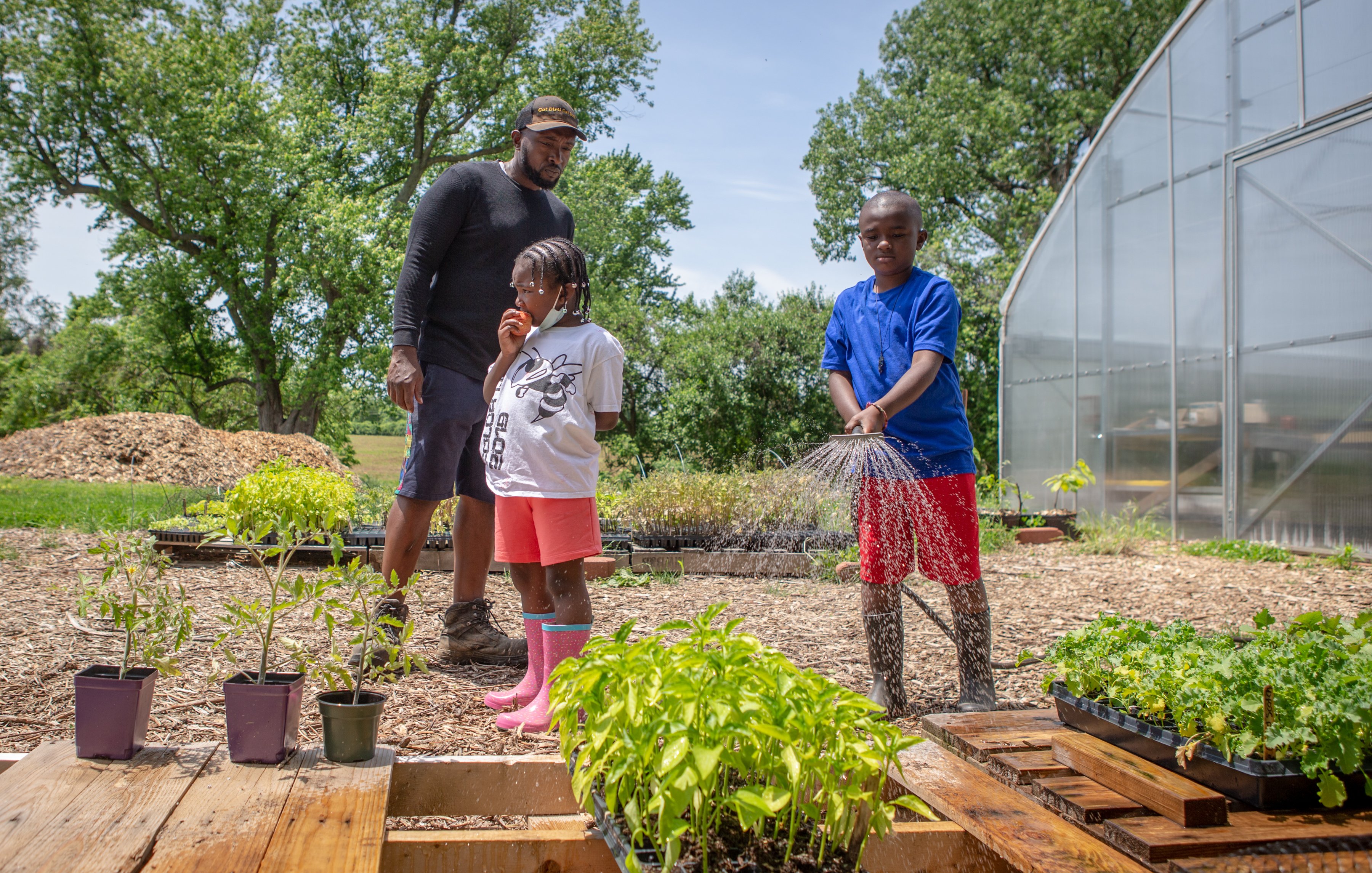
“It’s not just about interrupting acts of violence or preventing acts of violence, but it’s really about creating change in the trajectory of the lives of the individuals that are considered high-risk in those communities,” he said.
“Essential wraparound services — such as mental and behavioral health, utility assistance, mortgage and rental assistance and food — those are some of the things that a lot of people oftentimes take for granted and are really the key things that are necessary to change the environment for individuals.”
A few years ago, Lewis decided he could be part of the solution.
“A lightbulb went off in my head,” he said. “There’s a need here, a demand here, so why can’t I be the one that supplies it?”
Other urban farmers had the same idea.
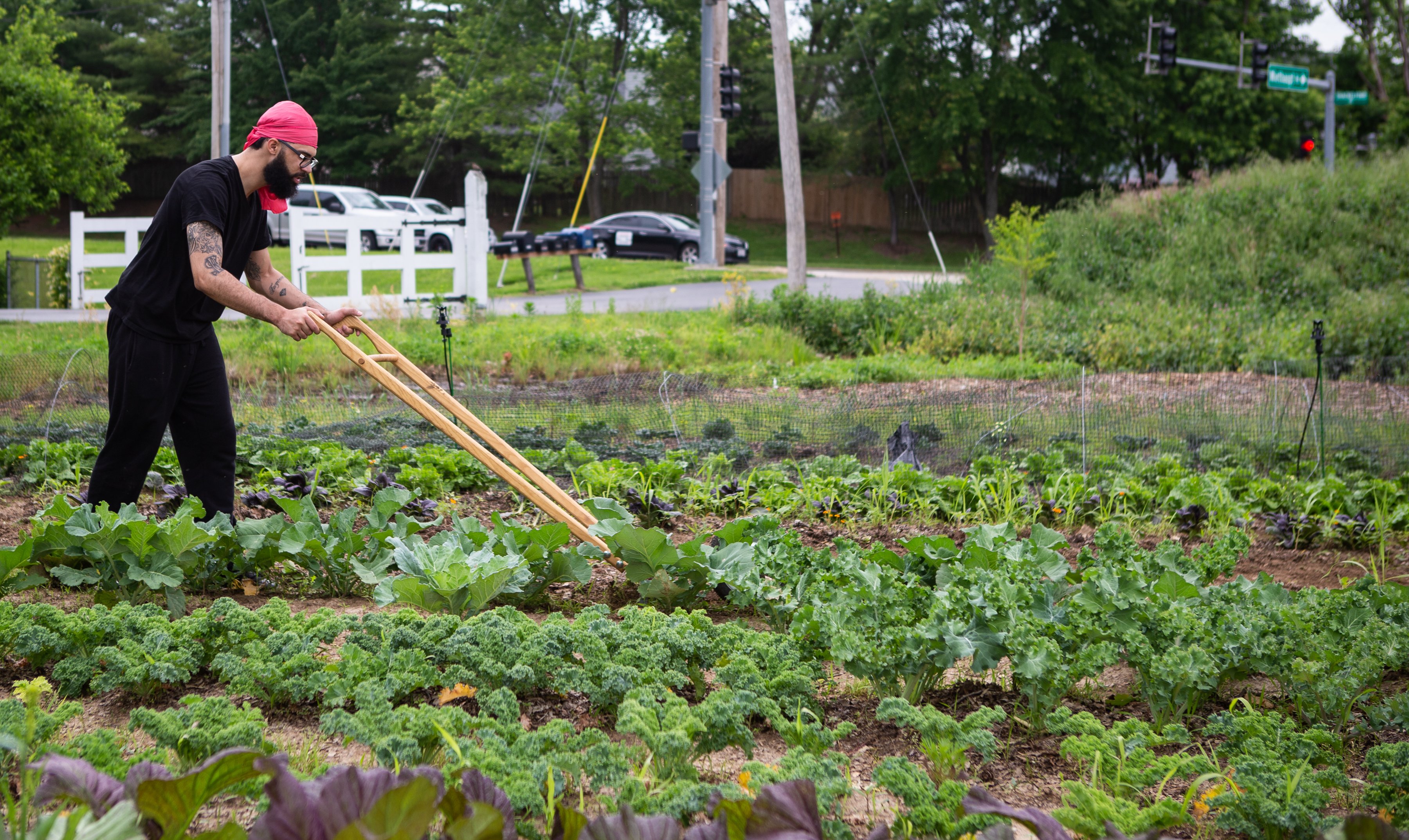
A grassroots ecosystem of Black urban growers, farmers markets, entrepreneurs, and community leaders has sprung up in St. Louis to increase production and access to affordable fresh produce in their communities.
They’re tilling and planting vacant lots, backyards, and school gardens. Their fresh produce is going to community-owned businesses and families in need. And they’re finding ways to fund and train the next generation of farmers and entrepreneurs from within their neighborhoods.
Freshman state Rep. Kimberly Ann Collins, a Democrat whose district makes up the middle of north St. Louis, introduced a bill to aid the efforts of urban farmers in her district.
The bill created a tax incentive and financial support for growers converting vacant lots into gardens. Recent St. Louis Land Redevelopment Authority data show about 96% of vacant lots for rent or sale are found in eight wards spanning the northern half of the city.
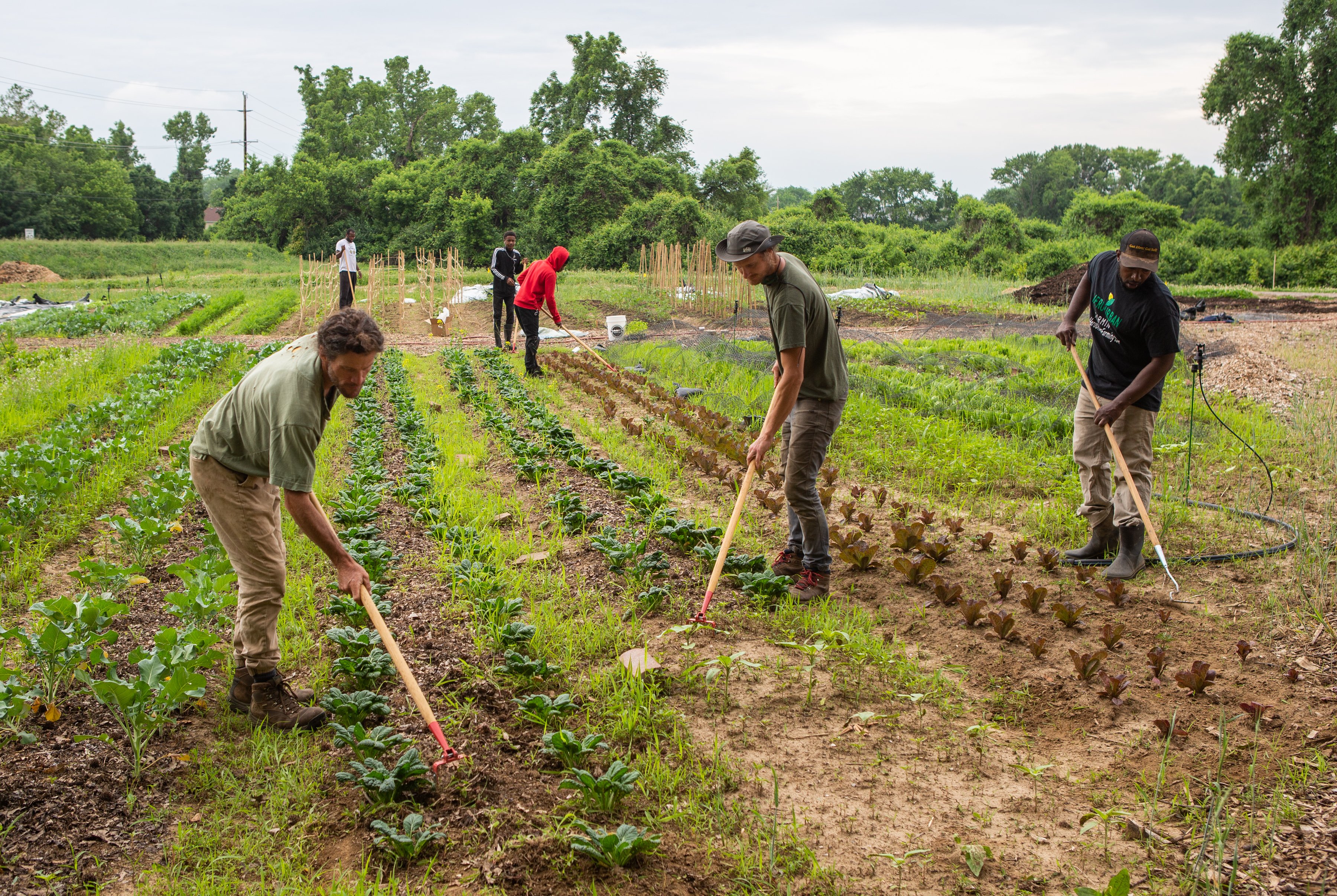
For Collins, a resident of the Ville neighborhood, the issue hits close to home.
“I have the highest rates of obesity, diabetes, right here in the city of St. Louis, just because of where we live, because we don’t have access to fresh food,” Collins said.
“The convenience stores that are in our neighborhoods don’t have the apples and bananas; the convenience stores in our neighborhoods have all of the processed foods that you can get.”
The measure sailed unopposed through the Missouri House’s Agricultural Policy Committee, a Republican-dominated body.
The choice to support the bill was not difficult, said Rep. Don Rone, a Portageville Republican, and chairman of the committee.
“When you did the math on the size of the lots and everything, there were over 400 acres of vacant lots in the city of St. Louis — not counting in Kansas City, where they have vacant lots also,” he said. “So this would enable those people in those neighborhoods, to raise their own vegetables and have a source for fresh vegetables that they would normally not have. And it would absolutely improve the look of the city also — it’s basically a no-brainer.”
However, the measure died on the last day of the regular legislative session when Senate Republicans refused to return to the floor to vote on remaining bills.
“We will get it across the finish line if the other end of the building does their job next year,” Rone said.
But the growers at work in St. Louis aren’t waiting for the state to act.
Different food:
Farming wasn’t something Lewis planned to do.
For a decade, he taught physical education in St. Louis schools until the trajectory of his life changed when he learned firsthand about the inequality in food access.
In 2017, he went to his nearest grocery store — a mile from his home — to buy the ingredients for a vegan meal. He didn’t find what he wanted.
“I wasn’t really happy with what I saw; there wasn’t a good variety to pick from,” he said. The produce “actually looked kind of sickening.”
He traveled a little farther from his home to another location of the same grocery store chain. The quality and quantity of fresh produce was slightly better but not by much. So he drove even farther into the suburbs of west St. Louis County.
The farther from his home he went, the better the quality of food.
“It was a shock,” he said.
His solution? First, he planted a garden in his backyard. Then Lewis quit his job and became a farmer.
From expanding his garden to vacant lots across the street to leasing larger plots on Shackelford and elsewhere, Lewis expanded his operation to grow food full time.
Financing from grants has helped, Lewis said. Last year, he produced 200,000 pounds of produce.
He expanded his business by selling subscriptions to customers who, for $492, receive weekly deliveries from his farm during a three-month growing season.
About 20 customers have signed up so far, he said.
For every five subscriptions he sells, he donates one to a family in need. Everything he grows in his first garden by his home, he gives away to people in his community.
His neighborhood, Kingsway West, which extends north of Martin Luther King Drive and Union Boulevard, is considered food insecure by the U.S. Department of Agriculture because there’s no supermarket within a half-mile. Instead, it is surrounded by corner stores and gas stations.
Many of the city’s food-insecure neighborhoods are north of Delmar Boulevard.
Delmar, long seen as a boundary that cuts the city north and south along racial and economic lines, is a key to understanding where food insecurity is concentrated, said Jessica Meyers, project director at the St. Louis Area Violence Prevention Commission.
“North of that, we see areas that have had systematic disadvantages ...,” she said. “Policies that have kind of gutted these neighborhoods, including taking away access to healthy and nutritious food.”
What Lewis found in grocery stores in St. Louis also has been true in Kansas City, a Kansas City Star report in 2018 found. Many stores east of Troost Avenue in Kansas City lack healthy food, so residents often have to travel to more affluent areas in the western half of the city to find fresh produce.
Helping Black farmers:
Anyone driving through the Walnut Park East neighborhood in St. Louis might miss the clearing at the intersection with rows of purple cabbage, spinach, and beets hidden by tall grass. But that’s where you can find Tosha Phonix almost every day in the spring and summer growing season.
Phonix signed on as a food justice organizer with the Missouri Coalition for the Environment in 2018 and soon saw the impact she could have.
Last year, she left her job with the coalition to co-launch EVOLVE, where her primary role is to raise grant dollars to help Black farmers in Missouri get financing and equipment they need.
“I realized that, one, there was no food justice movement here in St. Louis. And then two, that Black farmers and growers weren’t getting the resources they needed to grow food for their communities,” she said. “So I kind of took on the fight for, you know, resources and getting resources to Black farmers and growers in North City and throughout the Missouri region.”
The concentration of food inequity in certain communities does not happen by accident, she said. Disinvestment in certain neighborhoods, as well as the difficulty Black farmers have had getting the capital to start farming, have exacerbated the situation in St. Louis, Phonix said.
The disparities in food access have been called “food apartheid,” a term coined by Black activists and farmers who reject the passive phrase “food desert” in describing the root causes that leave communities unable to obtain fresh, healthy food.
Walnut Park East in northwest St. Louis, where Phonix has her garden, is a low food-access census tract where a significant number of residents don’t have a supermarket nearby. The corner stores and markets in the community are stocked with packaged and processed foods, with the produce section often consisting of small bins, limited variety and aging produce.
The neighborhood also has struggled with high rates of gun violence.
In 2020, the area reported 10 homicides, according to St. Louis police data. Adjacent Walnut Park West tied another neighborhood in the city for the highest number of homicides last year at 15.
Gun violence in the neighborhoods has grown worse in recent years, residents say, and police data reflect their observations.
In 2015, Walnut Park East and Walnut Park West reported a combined seven homicides — meaning the neighborhoods have seen about a 257% increase in homicides over a five-year period.
Community bond:
Southeast from Phonix’s garden is the Hyde Park neighborhood, nestled against Interstate 70, where one of the only weekly farmers markets in north St. Louis launched in May.
What started as one urban farmer and a couple of vendors a month ago has grown to include multiple produce stands, artisans, a biweekly yoga class and stretching exercises on the lawn, said Fatimah Muhammad, founder and chair of the Hyde Park neighborhood association.
A retired businesswoman who moved from St. Louis County to north St. Louis to work in the community, Muhammad launched the weekly market as a way for local growers to make a profit while providing fresh produce to the community at affordable prices.
For Muhammad, the market also acts as a way to rebuild community bonds that have disintegrated over the years. Those bonds can deter crime and make the neighborhood safer.
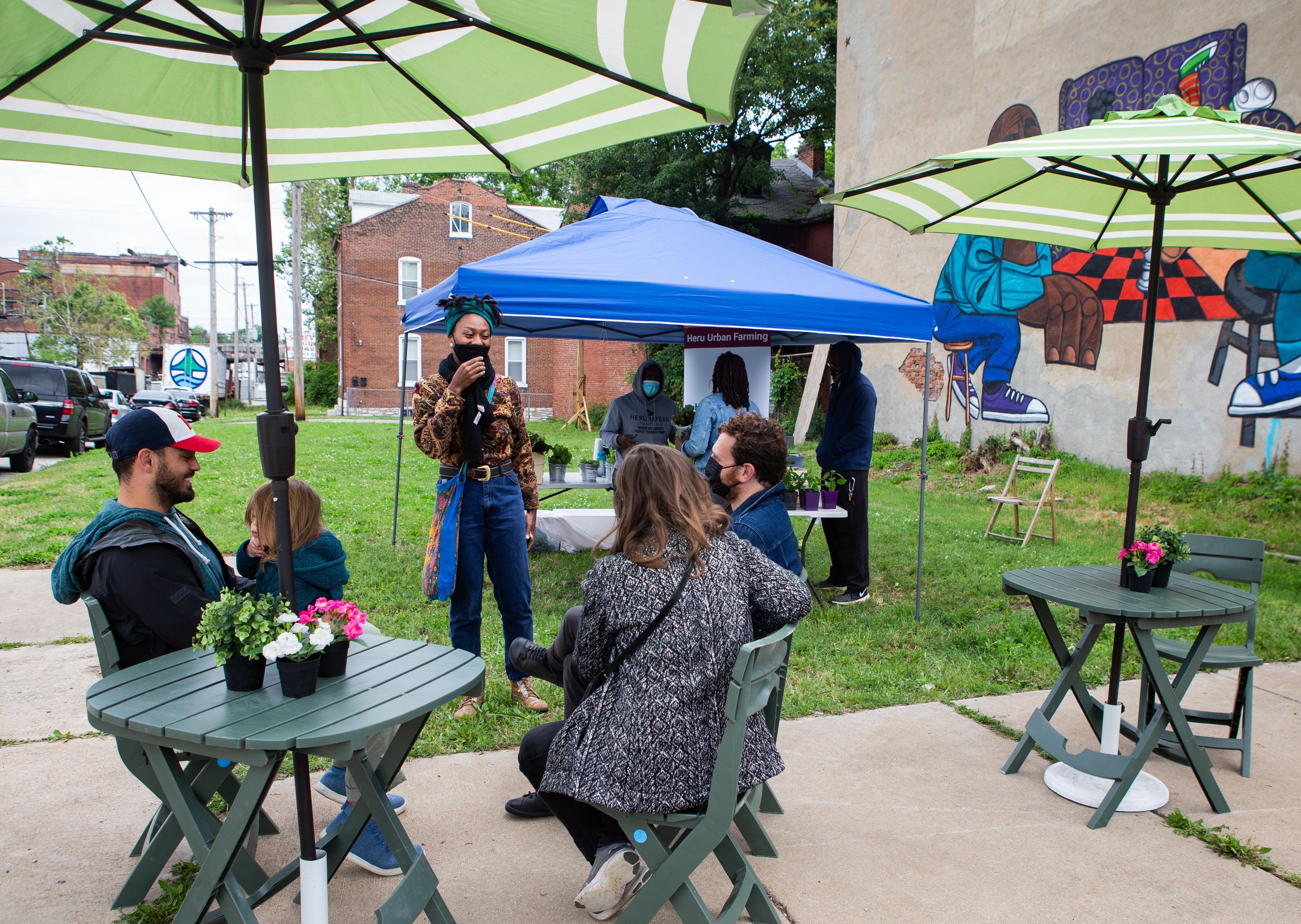
On Saturday mornings, every week since April and until October, Fatimah Muhammad gets the music going, sets out chairs and tables and greets vendors as they arrive for the Hyde Park Farmers & Artisan Market at the corner of Salisbury and North 21st Streets.
Muhammad says she wants to invest back into the community, and the market is only part of her efforts. She plans to open a wellness cafe in the adjacent building, where people can go to work, eat and gather.
“I mean, if you go back to childhood ... if I did something five blocks away, by the time I got home, my mother knew because the neighbors knew who I was and who my parents were,” she said. “And so that communication is one of the biggest voids that we’re missing in urban communities.”
But the lack of access to affordable fresh, healthy food is not isolated to a couple of neighborhoods in the city.
Of all the census tracts in St. Louis, about half are considered food insecure, without access to a supermarket or grocery store for at least half a mile.
Since it started six years ago, the mobile Metro Market has become a staple in many St. Louis neighborhoods. Fully stocked with fresh fruit and vegetables and supplemented by items like Amish honey from Bowling Green in Pike County, the bus is effectively a small community grocer on wheels.
It stops in areas without access to a grocery store or supermarket for miles, said Quinton Ward, executive director.
“With the lack of access, you’re talking about this larger thing — you’re talking about systems that have not worked in a very long time,” Ward said. “What is the walking distance between yourself and a grocery store? But then, also, there’s the affordability aspect — you can have multiple grocery stores around you, but if you don’t have the resources to be able to buy those things, it doesn’t matter because you’re priced out.”
The nonprofit’s staff regularly go in person to hand-select fruits and vegetables from wholesale providers, making it possible to sell items at a reduced price. For example, a bunch of kale is sold for about 50 cents.
City, state help:
For urban farms to prosper and make an impact in St. Louis, they’ll need investment from city and state officials, advocates said.
The state Legislature passed several bills related to food insecurity in the past session, two of which were sponsored by Rep. Ian Mackey, D-St. Louis.
One of his bills extended an effort that allowed recipients of the federal Supplemental Nutrition Assistance Program to use their benefits at participating farmers markets. Mackey said a pilot program was successful, with close to $1 million used over three years.
Another bill established a Food Security Task Force, a group with 22 members — academics, food advocates, representatives from faith-based institutions and food retailers — who will study the causes and impact of, and solutions for, food insecurity in the state.
Gov. Mike Parson has until Aug. 28 to sign or veto the legislation.
“We really want to connect the dots between our urban poverty and our rural poverty and try to figure out, you know, what other states are doing,” Mackey said. “The states that border us, even the red states, don’t suffer with this quite to the extent that we do.”
Missouri follows Arkansas as the most food-insecure state in the region, according to Feeding America’s 2019 data.
Tackling food insecurity can’t happen in a vacuum, said Democratic U.S. Rep. Cori Bush, whose district covers St. Louis and who has supported bills that deal with gun violence and food insecurity.
“In St. Louis, we don’t have the luxury of dividing our social problems into neat categories such as food insecurity, housing discrimination, gun violence, wage stagnation, incarceration or climate destruction,” she said. “Our communities are impacted by all of it, and all of the issues feed into one another.”
This story originally appeared in The St. Louis Post-Dispatch and was shared with Good Good Good through The Solutions Journalism Network.
Members of nearly 40 Indigenous communities in northern Peru were given training to use smartphone mapping apps that receive early deforestation alerts.
BOGOTA, July 12 (Thomson Reuters Foundation) - Peruvian Indigenous groups equipped with remote sensing technology and satellite-based alerts have been helping to track and report forest loss in the Amazon as drug trafficking fuels deforestation, research published on Monday showed.
Members of nearly 40 Indigenous communities in Peru's northern border region of Loreto were trained to use smartphone mapping apps that receive early deforestation alerts from satellite data in a project that started in 2018.
Using data from March 2018 to February 2020, researchers found tree cover loss fell by 8.4 hectares (21 acres) on average per community during the first year compared with other communities that were not involved in the project.
In the project's second year, deforestation was 3.3 hectares (eight acres) lower, showed a peer-reviewed study published in the Proceedings of the National Academy of Sciences (PNAS) journal.
"Should our results hold up elsewhere, they would suggest that similar community-based monitoring programs implemented by Indigenous peoples across the Amazon can help contribute to sustainable forest management on a larger scale," Jacob Kopas, co-author of the study, said in a statement.
Deforestation in Peru's Amazon rainforest is largely fueled by illegal gold mining and logging, as well as forest clearance to plant coca crops - the raw ingredient for cocaine.
Peru is the world's second-biggest cocaine producer after Colombia, which shares a border with the Loreto region.
"The forest has been very hard-hit by drug trafficking," said Francisco Hernandez, a leader from the Indigenous Ticuna people, one of the communities that took part in the project.
"Technology has helped us a lot to collect precise information about where deforestation is happening that gives exact coordinates about illegal activity taking place, which is then passed to judicial authorities," he told the Thomson Reuters Foundation.
Deforestation Alerts:
Once a month, couriers traveled along the Amazon river and its tributaries to deliver USB drives containing information about suspected deforestation to the remote communities.
The information was then downloaded onto smartphone apps, which community representatives used to verify reports of deforestation during their regular monthly patrols.
Once confirmed, police and other authorities were alerted, allowing them to take action to stop further clearance.
When satellite images recorded changes in forest cover in the Amazon rainforest, an algorithm developed by the University of Maryland's GLAD - Global Land Analysis and Discovery LAB - detected the changes and issued deforestation alerts.
The alerts, available through Global Forest Watch, an online platform, and its Forest Watcher mobile app, were also sent to the communities participating in the project.
"What good does this information do if it's only seen by a bunch of academics and people in glass buildings?" said Tom Bewick, Peru country director for Rainforest Foundation US (RFUS), a rainforest and rights protection organization that helped facilitate the study and methodology.
"The whole point is to put the deforestation information into the hands of those most affected by its consequences," Bewick said.
Protecting the Amazon rainforest, where millions of Indigenous people live, is considered key to the fight against climate change because of the vast amounts of planet-warming carbon dioxide it absorbs.
"Over the next decade, if nothing changes, Indigenous peoples in the Amazon Basin are projected to lose 4.4 million hectares (10.8 million acres) of rainforest, mostly to outsiders who encroach on their territories to cut down trees," said Cameron Ellis, senior geographer at RFUS.
(Reporting by Anastasia Moloney; Editing by Helen Popper; Credit to the Thomson Reuters Foundation, the charitable arm of Thomson Reuters, that covers the lives of people around the world who struggle to live freely or fairly. Visit http://news.trust.org)
Read more about Indigenous activists making a difference and more good news about Indigenous communities.
Faster, cheaper and greener than regular construction, 3D printing could help African countries close their education gaps.
• Malawi has a shortfall of 36,000 primary school classrooms
• 3D printing is faster and greener than conventional construction
• Many schools in Africa suffer from overcrowding, dropouts
SALIMA, Malawi, July 12 (Thomson Reuters Foundation) - Gathered under the hot sun, dozens of women danced and sang in jubilation as children from the village of Salima, in central Malawi, started their first day at their new 3D-printed school, which had been built from the ground up in only 15 hours.
Made of concrete placed layer by layer through a computer-controlled nozzle, the school is made up of a single room with rounded corners and is big enough to accommodate 50 students.
Olipa Elisa said her 10-year-old son used to have to hike 5km (3 miles) every day to the nearest school, often arriving late and exhausted.
"I am very excited that we now have a school closer to my home, and my child will not have to take the long journey," said Elisa, 38. "What we need is more of these learning blocks to accommodate other classes."
Run by 14Trees, a joint venture between Swiss cement manufacturer LafargeHolcim and British development finance agency CDC Group, the project was faster, cheaper and less energy-intensive than conventional construction, said 14Trees managing director Francois Perrot.
Students inside their new 3D-printed school, built to house up to 50 pupils, in Salima, Malawi, June 18, 2021. Thomson Reuters Foundation/Charles Pensulo
Its success shows how 3D printing could be transformative in Africa, where there is a dire shortage of classroom space, he said.
The U.N. children's agency UNICEF estimates there is a shortfall of 36,000 primary school classrooms in Malawi alone, a gap that Perrot estimates could be closed in 10 years using 3D-printing technology.
"Based on our calculations, if we rely on conventional methods it would take about 70 years to clear that backlog," he told the Thomson Reuters Foundation in an email.
Large-scale 3D printing is gaining steam around the world, with some projects producing a home in just 24 hours of printing time for a few thousand dollars.
By the time 14Trees had built the Salima school - which the company says is the first 3D-printed school in Malawi - it had already printed the walls of a prototype house in the capital Lilongwe in just 12 hours, compared to almost four days using conventional methods.
As well as cutting the time it takes to build a structure, 3D printing also reduces the quantity of materials needed and the amount of carbon emissions produced by up to 70% compared to conventional methods, said Perrot.
As an example of the potential cost savings, he pointed to the "ink", a dry mixture of cement, sand, and additives that is mixed with water to form the concrete used to print the walls.
Perrot said that ink could be made in Malawi instead of being imported, as it was for the pilot school project.
"Manufacturing the ink on the ground will dramatically reduce the cost of the building for buyers and create local jobs in manufacturing," he said.
"We (also) now have an indigenous Malawian team fully trained to operate the printer."
'Double Disadvantage':
Limbani Nsapato, country director for Edukans, an international development organization focused on education, said the shortage of classrooms around Africa is an urgent but overlooked issue.
The average ratio of pupils to teachers in Africa is 40-to-1, he said, but with only about 47,000 classrooms for nearly 5,420,000 students, the ratio in Malawi is closer to 115-to-1.
Overcrowded classrooms lead to poor quality of education because teachers find it difficult to engage with every student in a class, he said.
To accommodate their large numbers of students, many schools move classes outside, but when the weather is bad, classes are often canceled, Nsapato explained.
"Pupils who live far from school have a double disadvantage because apart from getting (stuck) in congested traffic, they also have to face the challenge of covering long distances, which makes them late for class," he added.
"This makes them arrive at school tired, leading to poor concentration. Such students often drop out or repeat classes because of poor performance."
Another company trying to solve that problem is Studio Mortazavi, a global architectural firm that has designed a 3D-printed school in Fianarantsoa, a city in southern Madagascar, for the U.S. nonprofit Thinking Huts.
The school, which is due to be built next year, will be made of concrete and locally sourced construction materials and powered by solar energy, said Amir Mortazavi, founder of Studio Mortazavi.
The project will comprise several pods that can serve different functions, including as classrooms, science labs and dance studios.
Maggie Grout, founder and CEO of Thinking Huts, which is also working with 14Trees on the Madagascar school project, said 3D printing should make the project scalable while keeping down carbon emissions.
But first, the organization has to make sure it can get the printer to the remote rural areas where classrooms are most needed, so it is currently working on streamlining the printing process on a university campus in Madagascar, she said.
"Once we launch the first school and more people know about our vision, we hope to conceptualize a new printer that is specifically created to be more easily transported to the communities we work together with," Grout said in an email.
Cost:
Catherine Sani, head of the Malawi Institute of Architects, worries that 3D printing may not be the cost-saving solution it is being touted as.
"Given our gross need for quick classrooms, this would indeed seem like a good option given the speed in production," she said.
"However, we also note (that) this method is quick on a single site, but for multiple sites more 3D-printing equipment would be required, thus making this system very high-cost compared to other methods."
As companies work on making 3D printing more portable and affordable, Tom Bowden, a trustee for Britain-based charity Building Malawi, said the technology holds promise in parts of the world where lack of funding can often stall or kill essential infrastructure projects.
His organization builds schools, libraries and sports facilities which are operated by Malawian organizations.
Using earth bag construction or bricks and mortar, it costs about $20,000 to build a double classroom, Bowden said.
"The costs are high, we really can't find cheaper solutions for the concrete floors, iron sheet roof and metal window frames (and) our build process takes about 10 weeks, depending on the specifications," he said.
Given all of those issues, "3D printing sounds interesting," he said.
Reporting by Charles Pensulo; Editing by Jumana Farouky and Zoe Tabary. This article was originally published by the Thomson Reuters Foundation, the charitable arm of Thomson Reuters, that covers the lives of people around the world who struggle to live freely or fairly. Visit http://news.trust.org
The country is curbing encroachment by paying farmers to grow trees for firewood and timber, but environmentalists say outside of plantations, the forest is still shrinking.
• Uganda's tree cover rose from 9% in 2015 to 12% in 2017
• Farmers paid to grow tree plantations and help manage forests
• Critics say more efforts needed to stop loss of natural forests
KAMPALA, July 8 (Thomson Reuters Foundation) - From tree-planting drives to tighter laws on illegal logging, countries worldwide are searching for a silver bullet to stop the loss of forests vital for nature and climate protection.
After decades of losing thousands of hectares each year, Uganda has found a way not only to slow deforestation but to reverse it - mainly by helping people grow their own trees to cut down instead of clearing ecologically valuable rainforest.
New data released by the state-run National Forestry Authority (NFA) in May showed the proportion of the country covered by trees rose from 9% in 2015 to 12.4% in 2017.
In a tweet about the figures, the NFA said its 2019 National Biomass Study, due out in December, will likely show that tree cover has increased further.
Stuart Maniraguha, the NFA's director of plantations development, said the data - collected using remote-sensing equipment and researchers on the ground - suggests things could be looking up for Ugandan farmers struggling to grow mainly rain-fed crops in increasingly extreme weather.
"As an agricultural country, (more forests) means more reliable rainfall," he told the Thomson Reuters Foundation. "It indicates that we are on a positive journey towards economic and ecology restoration."
Protection of the world's forests is seen as vital to curbing global warming as they store planet-heating carbon and help regulate the climate through rainfall and temperature.
Those who live in and around Uganda's Central Forest Reserves, more than 500 protected areas that cover about 15% of the country, say tree loss has exacerbated the often disastrous effects of erratic weather patterns for communities.
Last year, more than 700,000 Ugandans living near lakes and rivers were displaced from their homes after a year of unusually heavy rain caused the worst flooding since records began.
The NFA said that before the reversal of Uganda's tree loss, the amount of land covered by forest had plunged from almost a quarter in 1990 to 9% in 2015.
In its 2016/2017 state of the environment report, the National Environment Management Authority attributed the sharp decline mainly to land-hungry farmers, noting that of the 1.9 million hectares of forest and wetland lost between 1990 and 2015, about 80% had been converted to grow crops.
Sustainable Plantations:
To restore the forests, Maniraguha said the NFA has used a range of methods, including promoting agroforestry - growing trees and crops together on the same land - and running tree-planting programs.
And to stop people felling trees in protected areas, the authority gives technical help to farmers growing tree plantations, backed by partners including the U.N. Food and Agriculture Organization (FAO) and local charity NatureUganda.
The biggest gains in tree cover over the past few years have occurred in the southwest, where farmers grow trees for use as timber, firewood and electricity poles, Maniraguha said.
The NFA has a goal for 24% of Uganda's territory to be covered with trees by 2040, he added.
Peter Kasenene, who owns a 200-hectare (500-acre) plantation in Mawojo, in central Uganda - 70 hectares of which he planted under the FAO program - said farmers like him are helping drive sustainable development on a local level.
"You work only in the first year after planting. Then the trees grow on their own," said the 75-year-old former university professor who served as a finance minister from 2001 to 2006.
"That one you see there is the third generation - I cut, I replant," he explained, pointing to a patch of eucalyptus trees which, along with pine, make up most of his plantation.
Kasenene said the FAO pays him 800,000 Ugandan shillings ($225) for every hectare he plants and he also earns a healthy income from selling the wood from the mature trees.
"You get the buyers, they cut the trees and put money in my account - I am comfortable," he said.
'Forests Are Our Jewels':
Achilles Byaruhanga, executive director at NatureUganda, welcomed the increases in tree cover but said he was concerned reforestation was only happening on tree farms, even though they do offer an alternative source of firewood.
"We need to stabilize the (natural) forest cover and then increase it. We cannot afford to lose more. Natural resources - especially forests - are our jewels," he said.
For NFA head Tom Okello, growing more trees is not enough if Uganda is going to sustain its success - more needs to be done to stop the root causes of encroachment and deforestation.
"You can't stop a desperate person looking for firewood from entering into a forest. We must provide an alternative for energy, improve agricultural productivity and fight poverty," he said.
Nearly 95% of Ugandans rely on firewood or charcoal for cooking, according to the energy ministry.
In Buikwe district, which includes the Mabira Central Forest Reserve, tree farmer John Tabula urged the government to give communities more power to manage the rainforest in their areas.
Tabula belongs to a group of farmers who had an agreement with the NFA to manage a 3-km (2-mile) tract of forest inside the reserve where they grew eucalyptus to sell for electricity poles and terminalia, also known as Indian almond, for timber.
In return, they patrolled the forest looking out for illegal loggers, he said.
But the agreement expired in 2016 and the government has not renewed it, despite several requests, said Tabula, who also runs a private plantation with support from the FAO.
Okello said the NFA is grappling with a long-term budget crunch, which has been exacerbated by the COVID-19 pandemic and has affected some conservation activities in the reserve, including the renewal of the agreement in Buikwe.
"We have to evaluate their performances before we renew their permits," he said.
But Tabula said each day the government stalls on renewing the agreement is another day when the forest is left vulnerable to illegal loggers and encroachment.
"We, the community, would protect the forest," he said. "But we don't have legal backing." ($1 = 3,555.0000 Ugandan shillings)
(Reporting by Christopher Bendana, Editing by Jumana Farouky and Megan Rowling. Credit to the Thomson Reuters Foundation, the charitable arm of Thomson Reuters, that covers the lives of people around the world who struggle to live freely or fairly. Visit news.trust.org)
Pride Month is such an important annual event — both for the LGBTQ+ community to be seen, supported, and celebrated, and for all of us to learn more about the LGBTQ+ community, the injustices they face, the joy they experience when empowered to be fully themselves, their contributions to making the world a better place, and so much more.
While we’re hopeful for a day when “coming out” isn’t even a thing that happens — until then we want to be as supportive as we can be to those who do.
Here are a few ways you can support a friend, family member, or anyone who comes out to you — during Pride Month and all year round.
How To Support Someone & What To Say When They Come Out:
1. Do your research ahead of time.
By intentionally learning about the LGBTQ+ community, you can spare your friend from uncomfortable questions that could be better answered with a quick Google search.
GLAAD has long been at the forefront of fighting for LGBTQ+ acceptance and representation in society. Check out some of their resources at glaad.org.
A great place to start is also The Pride Edition of the Goodnewspaper — it includes an exclusive interview with 5 people in the LGBTQ+ community on what they wish more people understood.
2. Ask the right questions.
The key: Don’t make it about you. Rather, ask questions that make the person coming out to you feel seen, heard, and supported. If you’re not sure if your question is appropriate, hold off asking it for now.
Ask questions like “What can I do to be the best support system possible?" “How do you identify, if at all?” or "Are there any events I can attend to show my support and allyship?"
3. Encourage & validate them.
It can take a lot of courage to come out, so express how honored you are that they shared with you. Show that you embrace — not just accept — their identity. Affirm that you love them, support them, and are excited for them.
Avoid diminishing this courage by saying something like, "I don't care!" which sounds okay, but can come across as dismissive.
Instead, say something like “Thank you so much for trusting me and telling me that.”
4. Be an ally.
Make it clear that you're here to support them anytime and that you're a safe place.
Be prepared to stand up for them if they experience harassment — help remove them from the situation, or respond directly to any disrespectful, hateful, or ignorant comments.
Put in the work to support the entire LGBTQ+ community, too — in the language you use, how you vote, the policies you advocate for, and how you interact with others.