This month, India’s Project Tiger is celebrating 50 years of conservation efforts — and there’s quite a bit to appreciate.
Project Tiger was launched in 1973 by the Indian government to promote the conservation and protection of the tiger — and became the largest species conservation initiative of its kind in the world.
While this accomplishment is a great feat, these conservation initiatives are necessary. At the start of the 1900s, the world’s tiger population was as high as 100,000 — and then number plummeted, nearly to extinction.
In 2006, the tiger population in India hit a record low of 1,411 individual tigers.
However, thanks to the multi-pronged conservation efforts in India, the species has seen an uptick every year since, and according to the latest tiger census, reached 3,167 in 2022.
India is home to about 70% of the world’s wild tiger population, and seeing the rise in the big cat population is a triumph for conservationists and country leaders alike.
“We have thousands of years of history related to tigers; The tiger is considered our brother in many tribes,” Prime Minister Narendra Modi said in an address celebrating Project Tiger’s anniversary.
“A better future for humanity is only possible when our environments are protected and our biodiversity continues to expand.”
How does India protect tigers?
In its five decades of conservation work, Project Tiger — in conjunction with the Indian government — has implemented a variety of efforts to protect, maintain, and grow the area’s tiger population.
Among these efforts include the development of 53 tiger reserves, the paid relocation of villages to make space for the animals, as well as the use of wildlife corridors to connect separated habitats.
The government has also implemented bans on tiger hunting, as well as a special military task force to protect the national animal: The Special Tiger Protection Force.
Beyond India, Project Tiger has also worked with other governments like Bangladesh, China, Myanmar, and Russia to enforce tiger protections, combat hunting and trafficking, and the study of conservation and disease genetics.
Research and tracking is also a major part of this conservation work, as the authority employs drones, camera traps, and other software to gather more information about existing tiger populations and their behaviors.
Why is this good news?
Obviously, any increase in biodiversity and any conservation victories should be celebrated, as biodiversity contributes to healthy, balanced ecosystems. As for India, there is an even deeper connection to the protection of tigers.
Tigers are deeply connected to the rich history of India’s philosophy, culture, and literature.
Project Tiger has been a pioneering conservation initiative across all species and countries, and the recovery of these animals provides hope for all other wildlife conservancy.
“The accomplishments achieved through Project Tiger are truly remarkable and unmatched worldwide. This is in part achieved due to our cultural traditions of believing we are one with nature – ‘Vasudaiva kutambakam,’” Project Tiger’s annual report and tiger census says.
“It is our duty to uphold this legacy and ensure that our conservation efforts don’t go in vain, securing it for future generations by sustaining the progress we have made so far. The Indian philosophy of interdependence emphasizes the interconnectedness of all living beings and their dependence on each other for survival.”
As Project Tiger’s report states, more work must be done to protect the wild tigers of India. Tigers face ongoing threats, as a result of climate change, habitat loss, human-animal conflict, and commercial captivity and hunting.
“The increase in the tiger population is a positive sign, but we must not become complacent, and there is a need to continue our efforts to ensure the survival of this magnificent animal and safeguard our forested ecosystems in their entirety,” the report reads.
“It is our duty to uphold this legacy and ensure that our conservation efforts don’t go in vain, securing it for future generations by sustaining the progress we have made so far.”
Header photo courtesy of Derrick Brutel / (CC BY-SA 2.0)
Every day the Good Good Good team collects the best good news in the world and shares it with our community. Here are the highlights for this week!
If you want to get good news in your inbox every day, join the Goodnewsletter — the free daily newsletter designed to leave you feeling hopeful.
The Best Positive News We’re Celebrating This Week —
An innovative plant-based “plastic” is helping build safe, dry homes for refugees
In the aftermath of an extreme weather event or a conflict that forces people out of their homes, refugees need safe, temporary, transitional housing — something current solutions, like tarps and tents, don’t offer.
A scientist in Bangladesh had an idea to create a solution made out of jute, a long-harvested plant in the country which once was also a key export — but was eventually replaced by petroleum-based alternatives (ahem, plastic.) He partnered with a bioplastics company in Austin, Texas to create plant-based building blocks called BTTR Board.
The blocks are designed to be made by hand, can withstand the elements, is quick to manufacture, and are inexpensive.
Why is this good news? In Bangladesh specifically, there are more than 900,000 Rohingya (a Muslim ethnic minority which the UN has called “one of the most discriminated people in the world”) refugees are now living in Bangladesh in the world’s largest refugee camp. These blocks are currently being used to help shelter those displaced people.
And for the rest of the world, as the impacts of the climate crisis get increasingly severe, it’s estimated that one billion people will be forced to flee their homes by 2050. We need to be working on these solutions now to ensure we’re prepared to help people.
Australia’s Victorian government is funding a trial using oyster mushrooms to break down cigarette butts
Cigarette butts are one of the most abundant and pervasive forms of plastic littering communities around the world. In Australia alone, an estimated 9 billion butts are discarded every single year.
Now, Sustainability Victoria is funding a program that will keep an estimated 1.2 million butts out of landfills and waterways, where they pollute the soil and water with microplastics and toxic chemicals like arsenic.
The program is run by Melbourne-based Fungi Solutions, which has been training oyster mushrooms to consume cigarette butts for years. Their process mimics one that occurs naturally in the wild. According to the program, the mushrooms can break down a butt in 7 days — they would take around 15 years to break down in a landfill.
Drag queen Pattie Gonia is producing and co-hosting a climate drag show in honor of Earth Week
In honor of Earth Week next week, drag queens Pattie Gonia and VERA! are co-hosting an environmental drag show in San Francisco, aptly titled “SAVE HER!” Themed around sustainability, the show will feature seven guest performers and will be the first stop of many upcoming performances.
Pattie Gonia (whose off-stage name is Wyn Wiley) is a drag queen environmentalist and community organizer. Pattie’s mission is to build a more inclusive, diverse community for LGBTQ+ folks, allies, and the planet, all through the beauty of drag and environmental education.
Her work to celebrate both LGBTQ+ culture and the outdoors in style makes her a leader in both spaces and brings joy, action, and hope to issues that are often clouded in fear, threats, and uncertainty. This drag show is the latest in the line of her uplifting and inclusive work.
Why is this good news? By emboldening other drag performers and creating a safe and affirming space in the name of Mother Earth, Pattie Gonia’s drag show provides a glimmer of hope in an otherwise glitter-less political landscape — and puts the spotlight back on diverse, fabulous communities who love the planet.
→ Read more
A school district in Washington is helping students experiencing homelessness graduate high school
Only 59% of homeless students in Washington State graduate in four years compared to 83% of all students, and a similar disparity exists nationally.
And this has a snowball effect: Not having a high school degree is the greatest single risk factor for experiencing homelessness after school. Also, the longer a person remains homeless, the more difficult obtaining stable housing becomes.
But at North Thurston Public Schools, the 661 students experiencing homelessness are graduating at nearly the same rates as their peers. That’s because six years ago, North Thurston hired staff, called “student navigators,” whose sole function is to attend to each homeless student’s needs, whether that’s housing or food, feeling like they belong at school, or planning for the future beyond graduation — and it’s working.
More good education news:
- A School on Wheels brings tutoring (and hope!) to students in six California counties.
- Hank Green and Arizona State University are giving people (affordable) college credit for watching YouTube.
- Amidst a student mental health crisis, a Michigan school district is helping improve students’ sense of connection.
A dad in England makes 3D-printed “toys that don’t exist” for kids with disabilities
Nick Hardman is a single dad and 3D printing hobbyist who loves a good project. In 2020, he made PPE during the COVID-19 pandemic and soon began a new endeavor — the “3D Toy Shop Teddy Hospital.”
“We make toys that don’t exist — like little pacemakers and little tracheostomies so children who are going through the hardest time can have a friend like them,” he said in a viral TikTok.
Based in Leeds, England, Hardman has shipped over 2,300 bears all over the world with features like prosthetic limbs and heart transplants. He does the 3D printing work, and other volunteer “surgeons” help sew and assemble teddies when the demand is too high for Hardman alone.
One of his designs is now even EU toy safety law-compliant and can be shipped to families and children’s hospitals around the world to be sewn onto a patient’s favorite plush toy.
Why is this good news? Not only do Hardman’s toys provide a representative and inclusive option for kids experiencing difficult medical conditions, but they also help them better understand what is happening in their bodies.
An all-woman-owned-and-operated brewery in Colorado is using its craft beer to empower the community
Just like tiki-themed cocktails aren’t just for bachelorette parties, craft beer is not a gendered drink, either. Unfortunately, the beer industry tends to keep diverse libationists from success: according to the Brewer’s Association, only 2% of breweries in the United States are owned by women.
Lady Justice Brewing, an all-woman-owned community-focused brewery in Aurora, Colorado, on the other hand, shows that there is power in reimagining the industry.
In addition to honoring historical icons with murals and beers in their name, Lady Justice dedicates its time, space, and money to nonprofit partners that support and empower women, girls, and nonbinary people in Colorado. The brewery offers a “Community-Supported Beer” membership, with 100% of profits going directly to these organizations.
→ Read more
More good brew news:
- A startup is reducing food waste by upcycling the leftover grain from homebrewing beer to bake bread.
- A brewery in Rhode Island is pioneering a method of capturing carbon by putting it right back into its beers.
- Bud Light recently celebrated Dylan Mulvaney’s 365th “day of girl/womanhood” with a commemorative can (and is rising above all the transphobic backlash).
On his day off, a Cincinnati barber opens his shop and gives free haircuts to some VIP clients: children with special needs
A couple of years ago, Vernon Jackson heard horror stories from parents about taking their special needs children to barber shops where the stylists had no patience with their children. Jackson wanted to do something to help.
Since 2021, he’s been opening up his barbershop on his day off to provide haircuts to children with special needs. He does it on his day off because the empty shop can help some children who are sensitive to new environments and sounds. It also helps him give them his full attention.
And another thing: the haircuts are free. Jackson wanted to be able to offer the haircuts to families free of charge. Soon, his customers got wind of what he was doing and started “sponsoring” haircuts — he ended up setting up a GoFundMe for what he calls the “Gifted Program” to keep providing the cuts for free.
More good news of the week —
From Toledo to Chicago, local governments are using federal aid to cancel medical debt in their community. Using funds from the American Rescue Plan Act, Toledo is using $1.6 million to acquire and cancel $240 million in medical debt through RIP Medical Debt.
Scientists report late-stage RSV vaccine trials are showing “exciting” promise. RSV is prevalent in children under 2, and while most infections are mild, for groups like infants and the elderly, it can be serious enough to cause hospitalization or death.
A new vegan milk brand in India is using its profits to rescue and relocate cows to a farm animal sanctuary. India is home to the world’s largest dairy sector, and Dancing Cow’s new Oatish product aims to eradicate dairy animal exploitation.
The Washington state Senate just passed a law to ban the sale and manufacture of assault weapons. Only a few states have passed such a ban, which would impact future firearms sales like the ones used in the recent mass shootings in Nashville and Louisville.
Nashville’s metropolitan council unanimously voted to reappoint Justin Jones to the Tennessee State House. Jones was one of the three members of the House who were expelled last week for participating in a gun violence protest.
A rewilding charity just purchased its first plot of land as part of its plan to establish a nature reserve in every English county. Heal’s new £5.25 million site will tackle the nature and climate crises while creating new jobs and facilities for local people.
A study found that new green spaces planned in Barcelona could improve mental health for 30,000 people. The researchers that even just increasing green space by 5 or 6% could also save more than 45 million euros in mental health-related costs.
A collaborative shirt between the Red Cross and Snoopy is going viral and driving blood donations. The shirt is going viral on TikTok and has encouraged first-time blood donors to give blood (and document their visit, of course).
The largest EV battery recycling plant in the U.S. is now open in Georgia. The plant is processing used lithium-ion batteries and manufacturing scrap into useful materials for the clean energy transition.
According to new research from UNSW Sydney, "nature prescriptions" can improve both physical and mental health. It found that contact with nature reduces harms (like poor air quality, heat waves, and chronic stress) and encourages healthy behaviors (like socializing and physical activity).
A few dozen high schools in the U.S. are helping kids heal from addiction and get an education. The recovery high schools are combining education with treatment for substance abuse disorders to keep kids in recovery — and in school.
Malaysia just ended mandatory death penalty sentences for serious crimes. The country has had a moratorium on executions since 2018, and more than 1,300 prisoners with death penalty sentences can soon seek to have their sentences reviewed.
Uganda’s “first vegan school” was just recognized with an international compassion award. The Atlas Community School received two awards for its commitment to kindness.
The unemployment rate for Black workers has reached a record low of 5%. It breaks the previous 5.3% record set in August 2019, and is a huge lift from the pandemic, when the Black unemployment rate soared to as high as 16.8 percent.
A first-of-its-kind mRNA treatment could completely eliminate a peanut allergy. Peanut and tree nut allergies affect around three million Americans, yet there’s only one approved treatment and it only tackles its severity.
The transition from veteran to civilian is not always an easy one. According to the U.S. Department of Defense (DOD), approximately 200,000 service members transition from military service to civilian life each year.
One of the biggest challenges? Finding employment.
While federal law requires government agencies like the DOD to establish employment assistance centers, veterans are still left behind when it comes to acquiring new job skills, building confidence, and starting a new life mission.
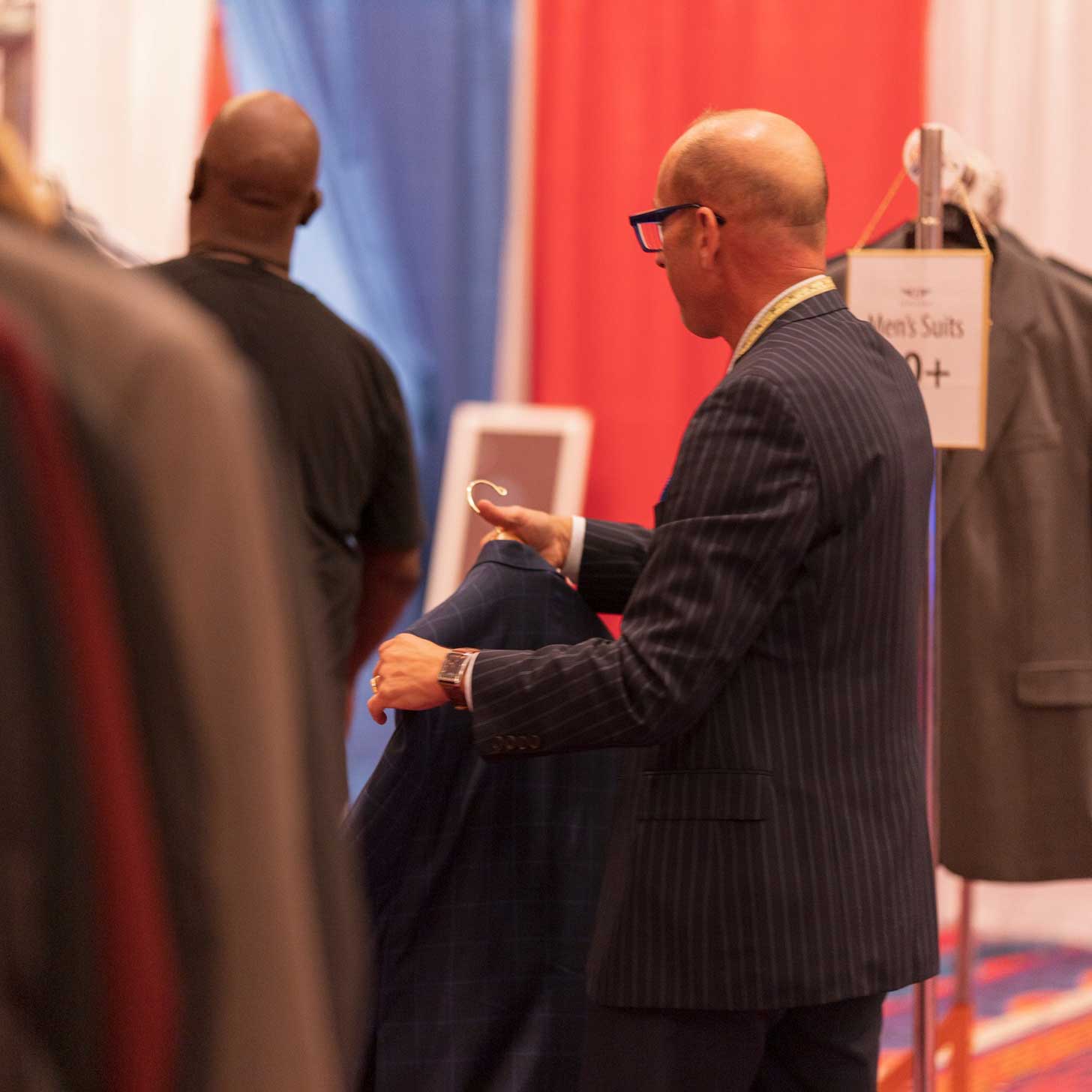
Meet Save A Suit. Led by executive director Alex Carerra, this nonprofit provides veterans with proper work attire so they can enter the workforce with confidence.
Carerra started volunteering with Save A Suit in 2010 and took over as the organization’s president in 2021.
“I saw so much need in the veteran community that I knew I needed to get more involved,” Carerra said in an email to Good Good Good. “My cousin is currently serving, so this is something that is near and dear to my heart.”
How does Save A Suit work?
Save A Suit operates as a store on eBay and at free distribution events across the country.
Here’s how it works: Save A Suit collects clothing donations from community members, examines each donation to ensure vets get the best of the best, and any item that isn’t in tip-top condition is placed on the organization’s eBay commerce store.
(They don’t just offer suits; there are items of all kinds for veterans of all genders!)
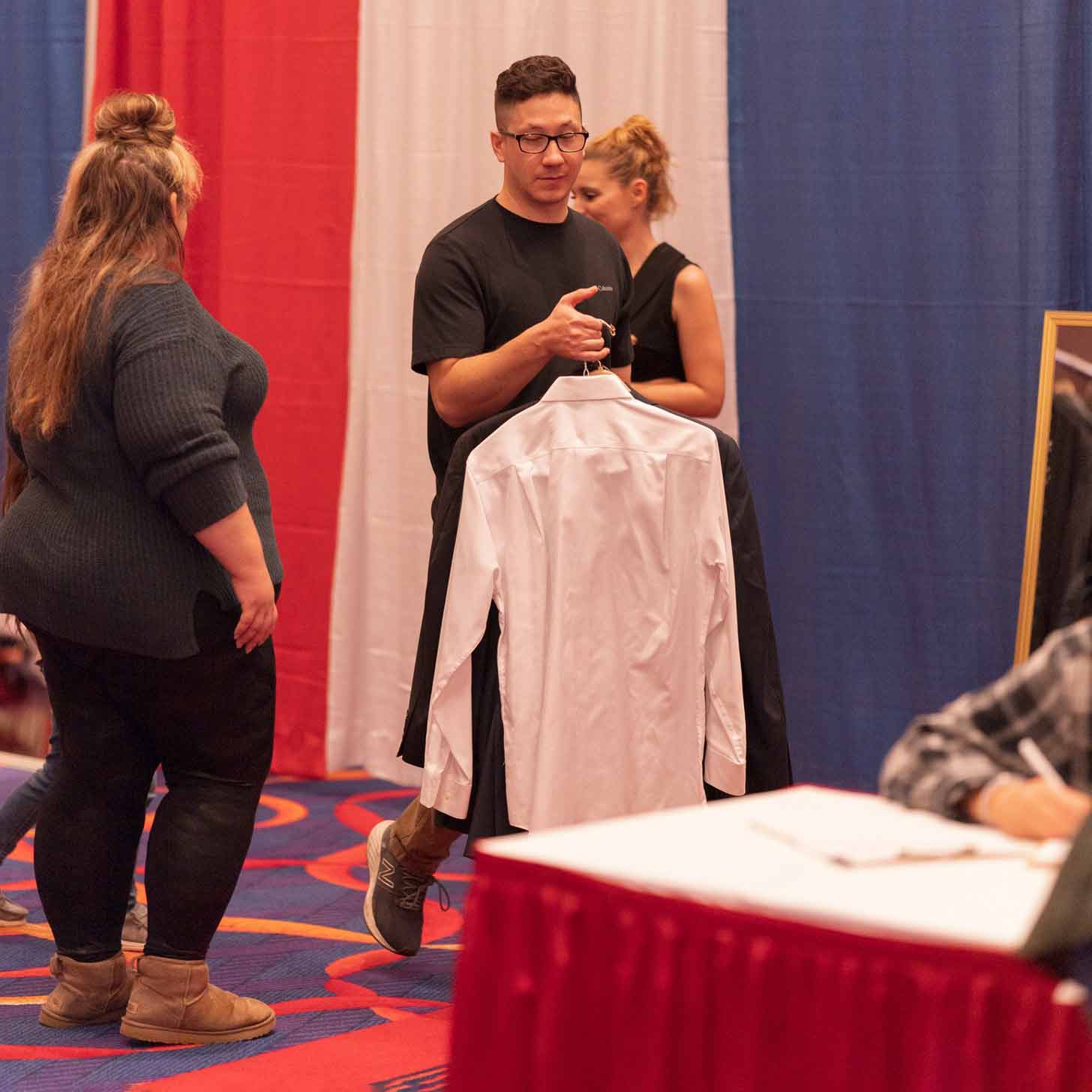
Anyone browsing the website can shop these preloved items, which raises funds for the veteran’s program. Folks can thrift their formalwear, and any eBay purchase goes right back into shipping clothing to veterans in need.
The national shipping program reaches veterans who request a suit, no matter where they are in the country.
“We have shipped as far as Hawaii and even the North Pole, Alaska,” Carerra said. “No veteran is too far for us.”
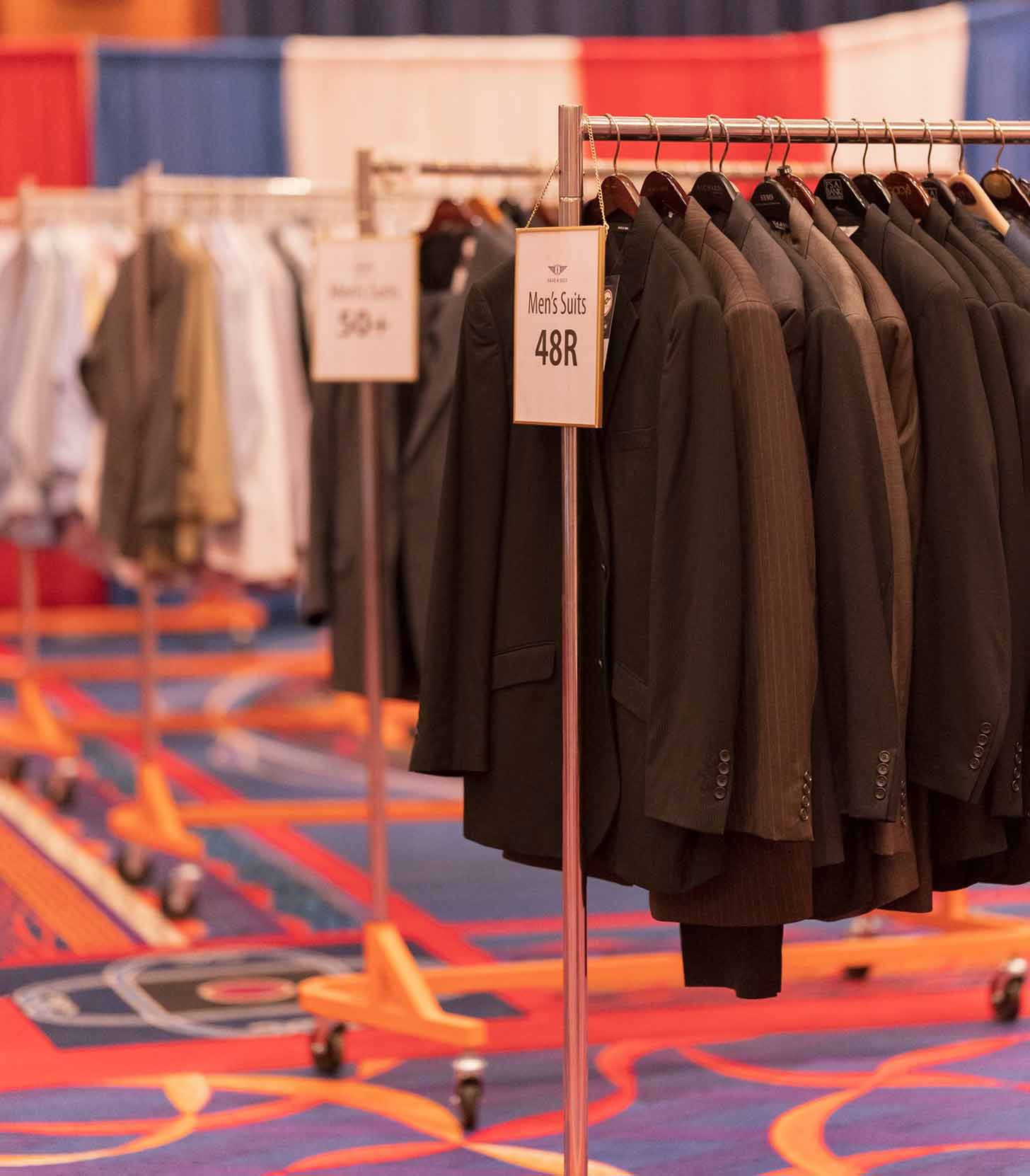
eBay purchases also help the organization host distribution events regionally.
These “suiting events,” as Carerra calls them, are something of a “pop-up shop where everything is free for veterans.”
They can come try on pieces, pick out a full outfit, get professional headshots, and access additional resources from Save A Suit and other partner organizations.
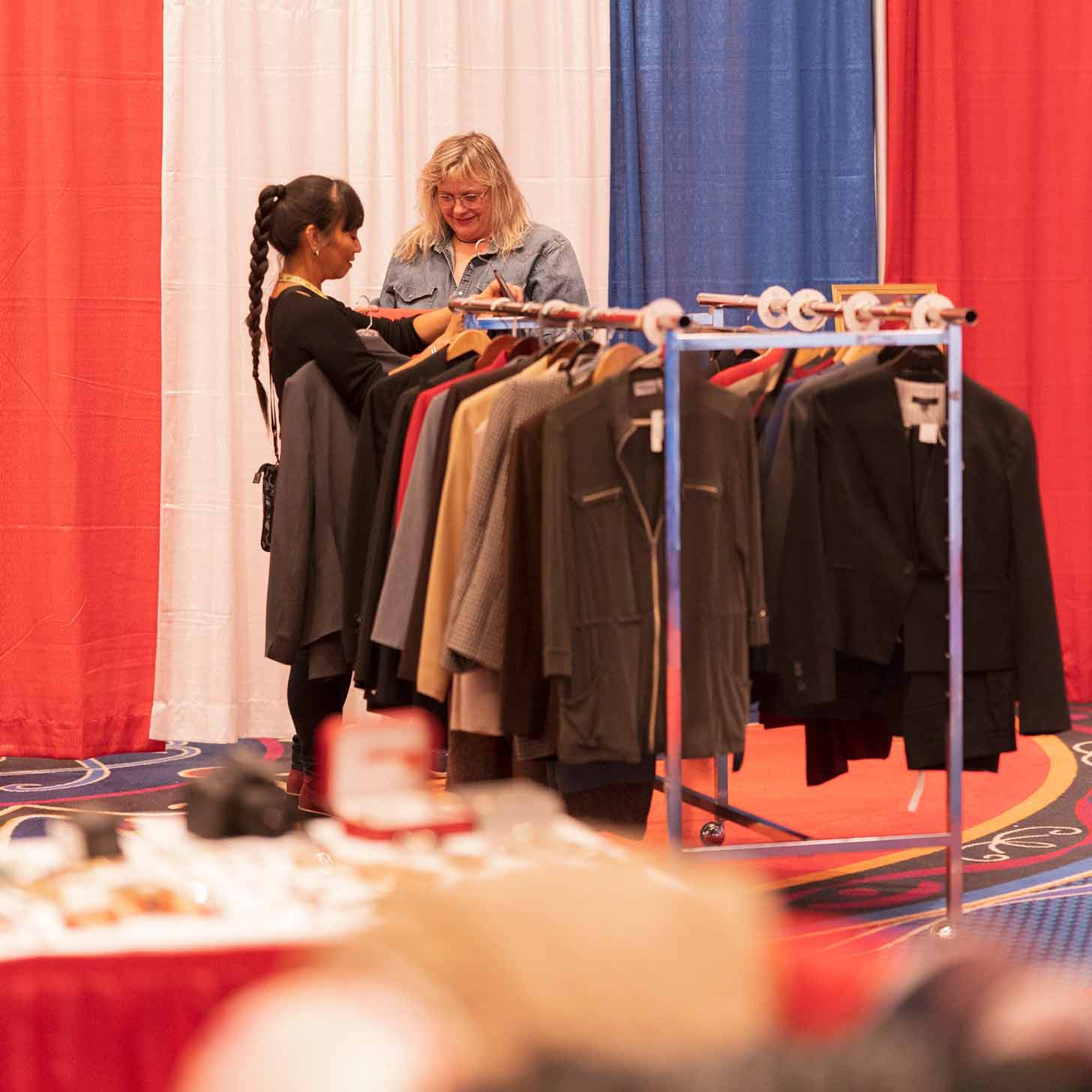
“This is not just a suit,” Army Veteran Marquis M. shares in a testimonial on the organization’s website. “It’s a fighting chance.”
Over the years, over 9,000 pounds of clothing have been donated, and over 5,000 veterans have been supported.

“There is nothing as rewarding as seeing the happy face of a veteran, once they see how amazing they look in their suit,” Carerra said.
“At a high level, the suit symbolizes their potential and it also symbolizes our promise that we are there for veterans when they return; we care for them.”
Why is this good news?
While veterans are shown support and admiration in some ways, they are often neglected by federal programs. Initiatives like Save A Suit provide an avenue for support, giving veterans a renewed sense of hope, purpose, and economic security.
(Not to mention, the model of Save A Suit also reduces textile waste and helps elongate the lifespan of perfectly good clothing.)
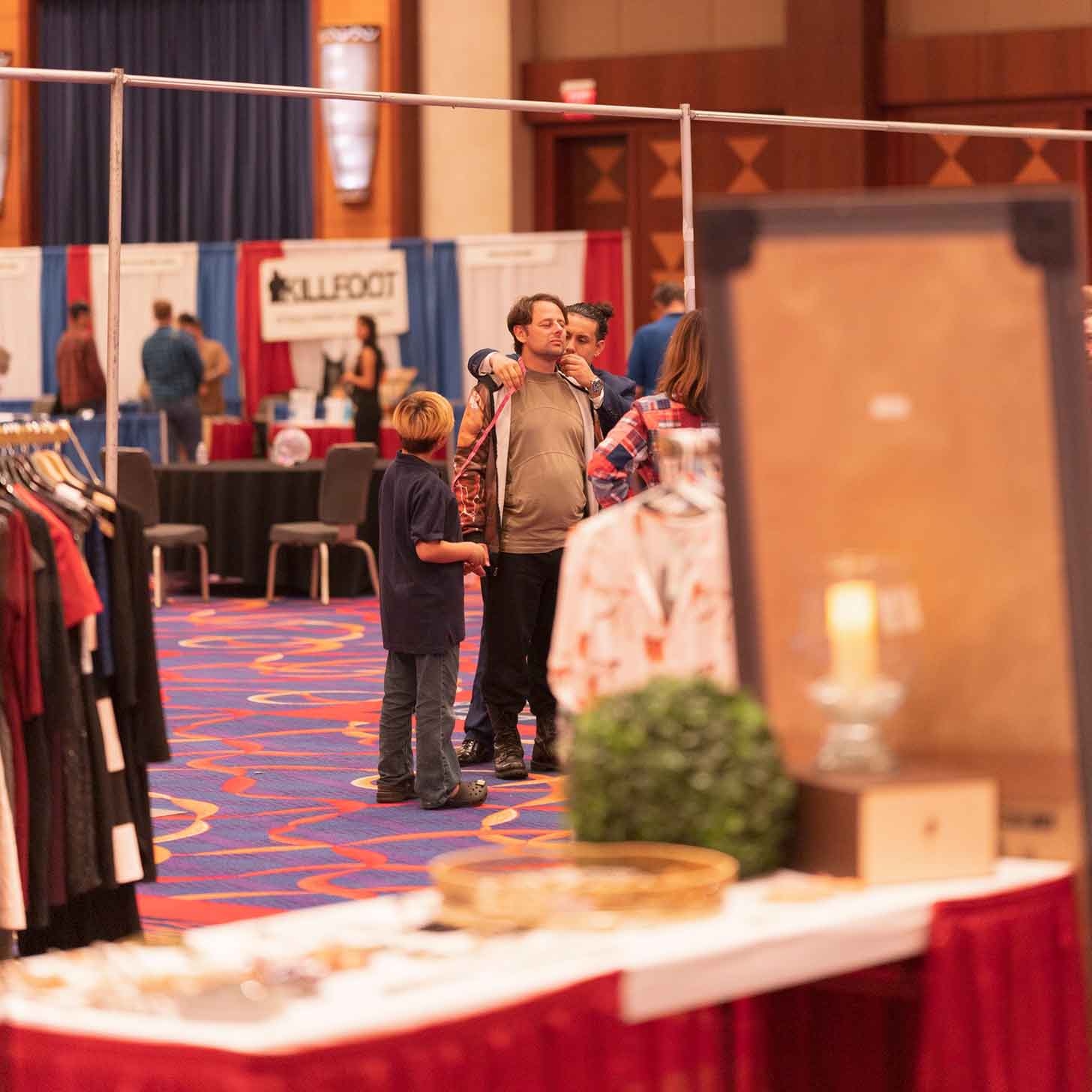
When only one in four veterans has job prospects lined up at the time their military careers end, gaining the skills, resources, and confidence to find meaningful employment makes a world of difference.
“Veterans are used to being in uniform, and many consider a suit or professional clothing the uniform for the professional world,” Carerra said.
“We outfit veterans in professional attire to bring out their inner greatness.”
Most of us have probably found ourselves in the same boat these days: We’re angry or overwhelmed by the hatred and injustices in the world, but we feel stuck in those feelings and unsure of the best way to help.
We’ll let you in on a little secret that might set you free: There is no real best way to help. There are so many ways to help.
There are ways to help that are really hands-on and time-consuming; ways to help that are quick and within more people’s capacity; ways to help that are unique and creative; ways to help individuals; ways to help big communities of people — and they all make a difference.
No matter what time, energy, money, or wisdom you can contribute, as long as you’re doing what you can with what you have, your community will be better because of it.
However, we know it helps to have a guidepost to find some of those helping actions — and we also know that it’s easy to start small.
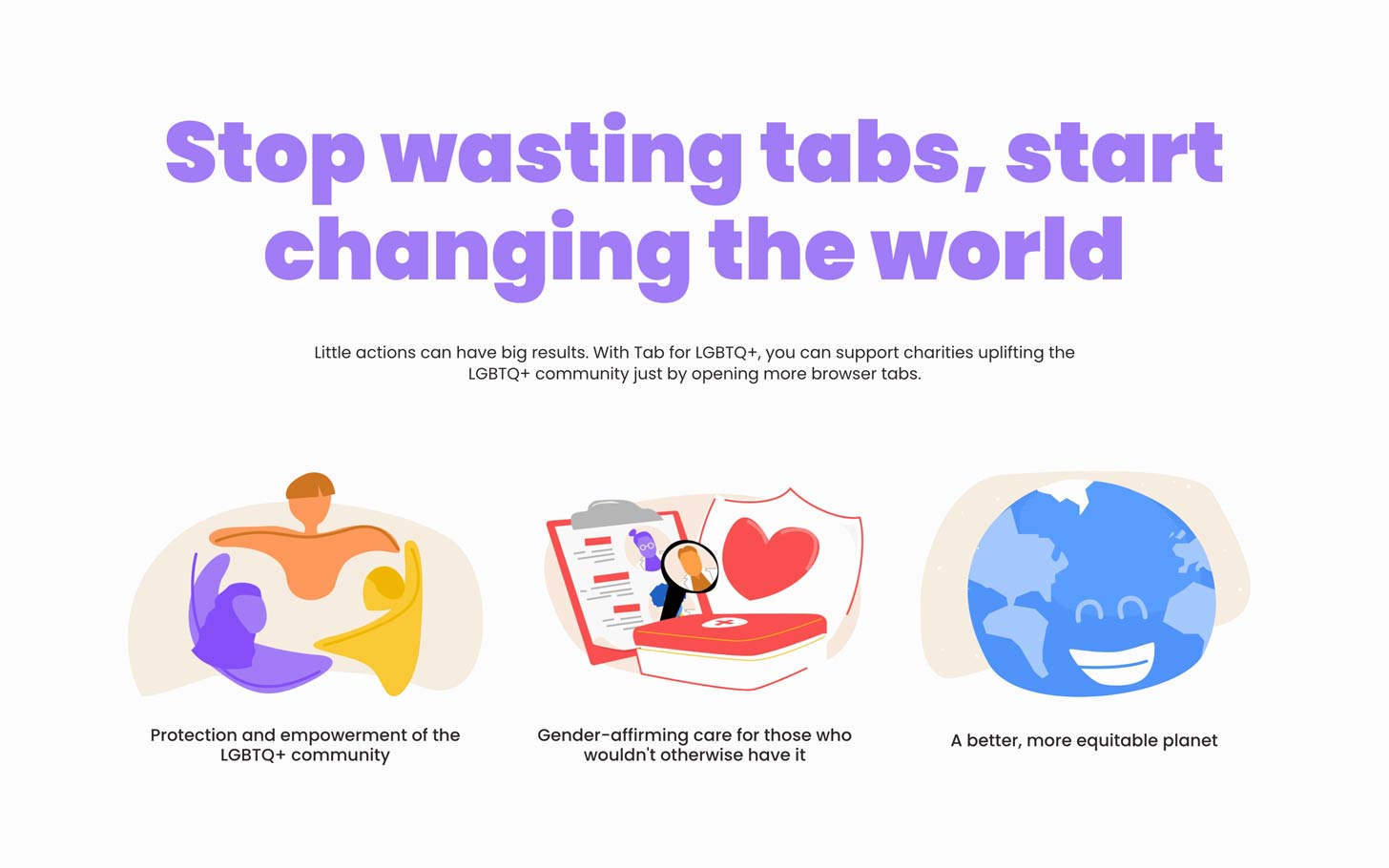
Tab for a Cause, a browser extension that raises money for nonprofits every time you open a new tab, is one of those small but effective ways to do a little good.
And now you can do even more good.
Tab for a Cause has just announced Tab for LGBTQ+, a specific version of the extension that raises funds for Point of Pride and Outright International with every new tab you open.
How does Tab for LGTBQ+ work?
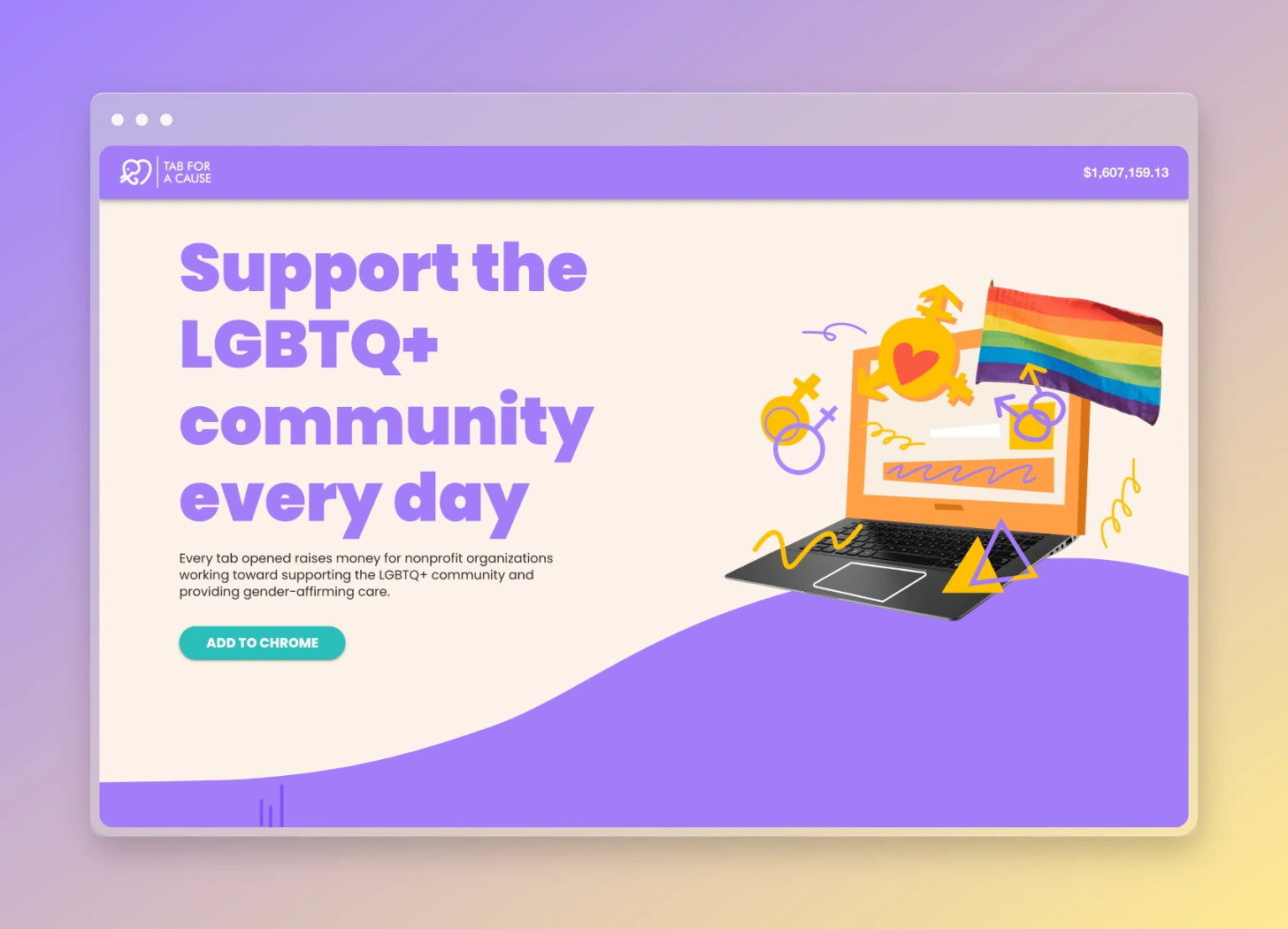
Using Tab for LGBTQ+ is simple. All you have to do is hop onto your preferred browser — Google Chrome, Microsoft Edge, or Safari — and install the extension.
From there, you just keep opening those tabs like you normally would, except, now, you’ll be raising funds for LGBTQ+ charities.
If you’re anything like us scatterbrained remote workers, you probably open a lot of tabs on any given day, week, or month — and those clicks can add up. Tab for a Cause makes them count.
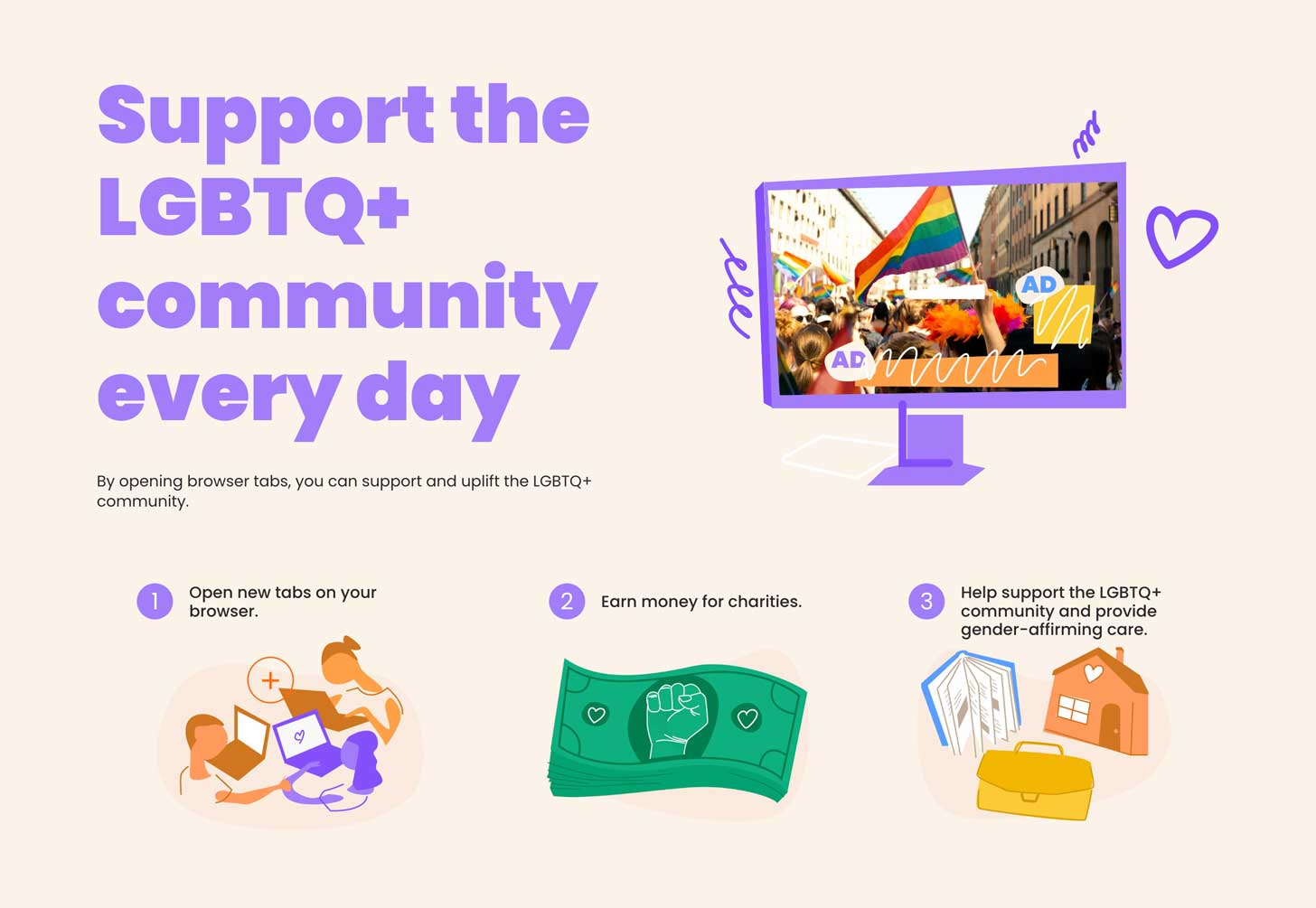
“We believe everyone should make a difference for the LGBTQ+ community,” the initiative’s website reads. “Through our support of Point of Pride and Outright International, you can be sure each tab you open is uplifting community members.”
Since 2011, Tab for a Cause users have raised over $1.6 million for various charities, and the revenue for those donations simply come from advertisers.
We dive into the specifics in our full Tab for a Cause review, but for some context, each new tab raises between 1/10th of a cent and 1 cent for nonprofits.
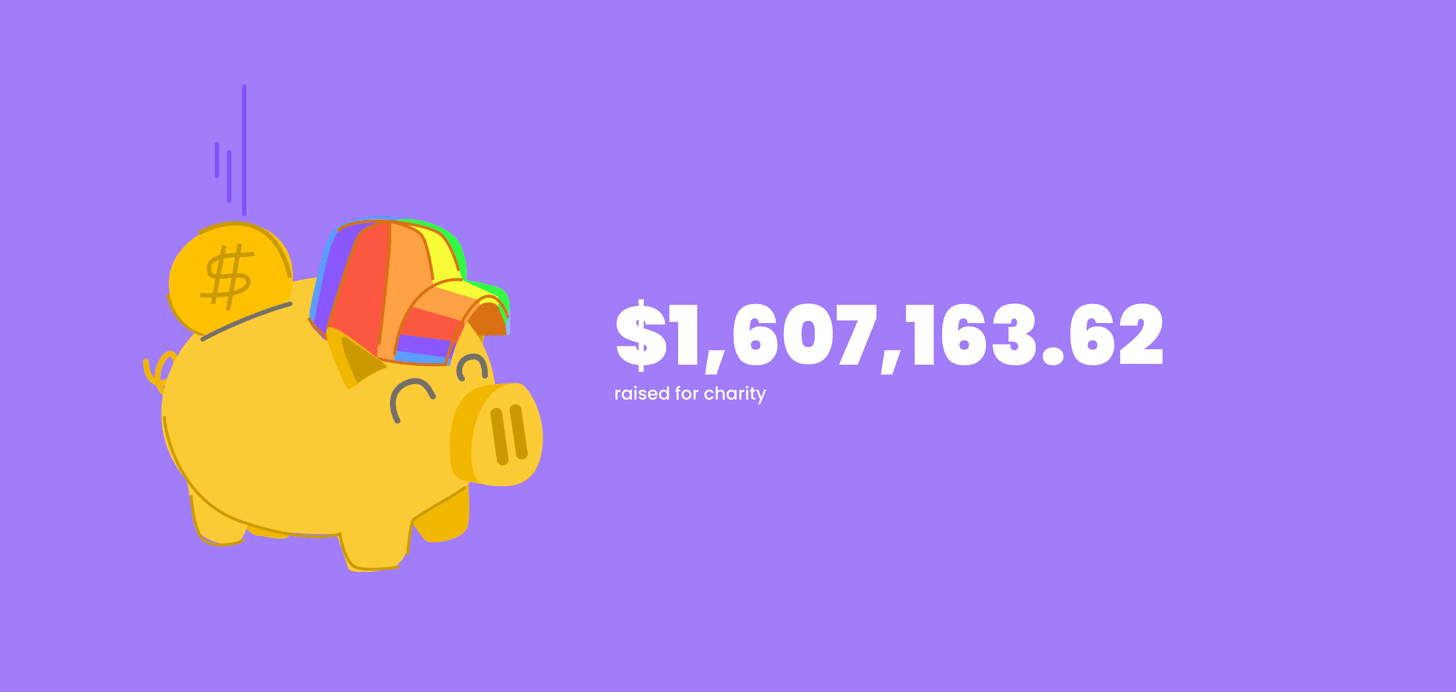
This number fluctuates throughout the year, and while a penny per tab might feel small, Tab for a Cause estimates that users open 10-20 million tabs per month.
With Tab for LGBTQ+ (similar to other specific initiatives like Tab for Black Equity or Tab for Cats, which donate to racial justice and animal welfare causes), those funds will go directly into organizations that help provide gender-affirming care for people across the country.
Tab for LGBTQ+ is now a permanent addition to Tab for a Cause, so you can spend the rest of your very online days doing a little extra good.
They’re so prevalent they have their own meme: TED Talks.
“Thank you for coming to my TED Talk,” many of us have quipped, after briefly getting on a soapbox or sharing a “hot take” online.
And why do we say that?
To, albeit playfully, establish ourselves as something of an expert, to add a little self-knowing credibility to our ideas, to manifest our own version of TED’s objective: that our idea is “worth spreading.”
TED’s reach as a nonpartisan nonprofit really does have an impact — one that has grown from the first Technology, Entertainment, and Design conference in 1984. The organization spans across the globe, with hundreds of talks, podcasts, educational lessons, and programming in over 100 languages.
Over 3,000 annual TEDx events connect people internationally, and between sharing climate solutions, vital social justice conversations, and innovative ideas for a more prosperous future, the foundation has become a household — or Twitter ‘birdhouse’ — name.
One arm of its work that is lesser known, however, is The Audacious Project.
What is the Audacious Project?
The Audacious Project is a collaborative funding enterprise housed at TED. Every year, the foundation selects a group of social impact innovators to invest in, with the hope of launching bold solutions to the global mainstream.
The project works to close equity gaps by seeking out social entrepreneurs and projects that may otherwise go unnoticed, focusing specifically on the following areas of interest: Climate Solutions, Tech For Change, Health For All, Social Safety Net, Social Justice, and Breakthrough Science.
Donors and reviewers must meet six core values of the project (audacity, achievability, community, humility, learning, and joy). Fortunately, funding has accelerated in recent years, with an annual growth rate of about 40%.
Since its inception in 2018, The Audacious Project has awarded over $4 billion in grants — and for 2023 alone, has catalyzed over $1 billion in grants to its 10 recipients.
The ten grant recipients in 2023’s cohort have received funding between $40 million to over $200 million from The Audacious Project.
Audacious grantees share their groundbreaking ideas at TED’s annual conference, raking in millions of views, and applying compelling storytelling to the facilitation and implementation of their big ideas.
In the opening TED 2023 session, TED head and curator Chris Anderson said, “Never in our wildest dreams did we believe we could raise $1B for this community in just one year.”
Since Good Good Good is covering the 2023 TED conference in Vancouver this year, we wanted to be the first to introduce you to the 2023 Audacious Project cohort. Check them out and stay tuned for more TED coverage all week long!
Meet this year’s Audacious Project grantees:
CAMFED
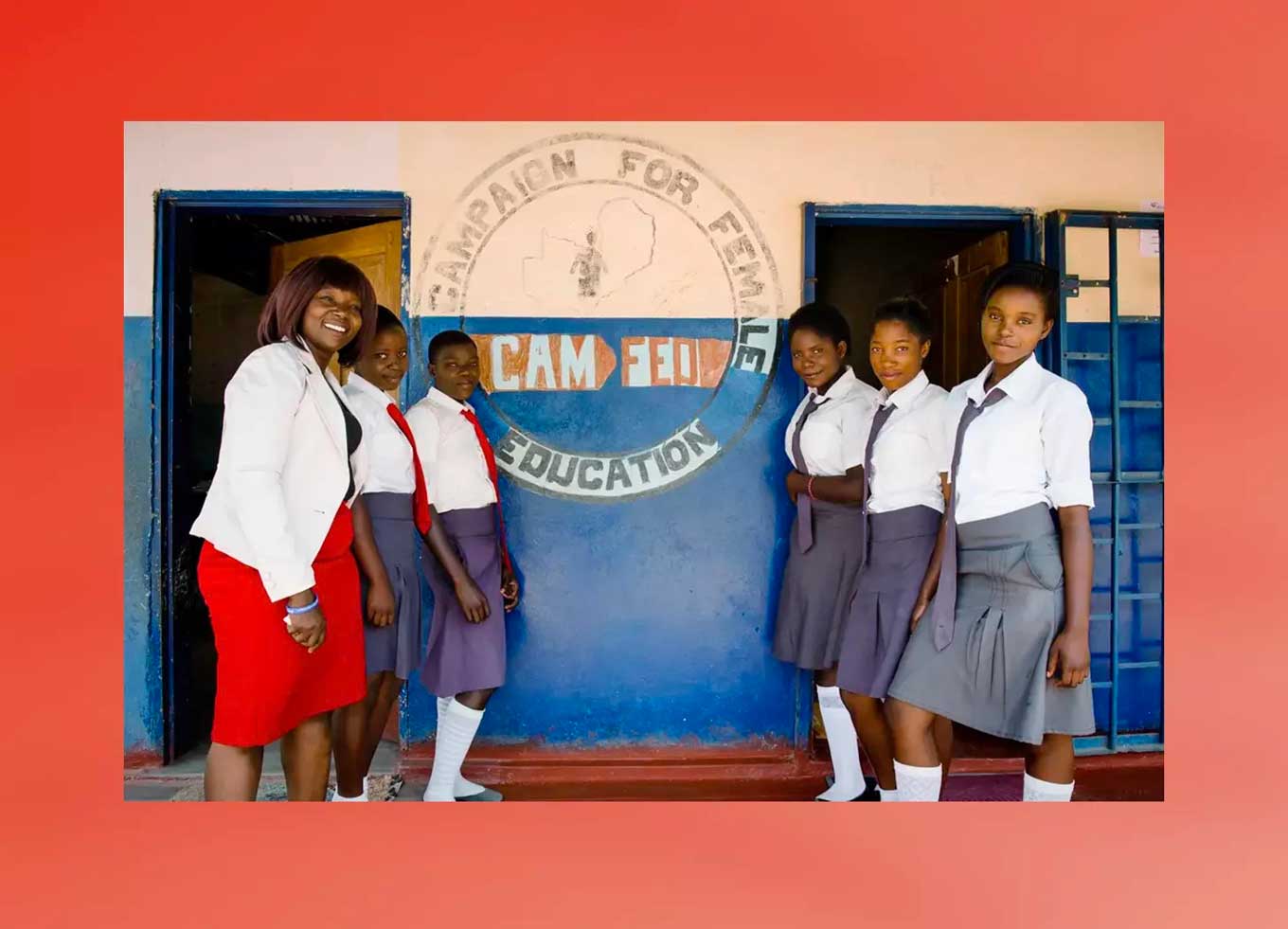
CAMFED serves girls and young women in impoverished areas in rural sub-Saharan Africa, working at the intersection of poverty, gender, and education.
CAMFED has developed a model that begins with giving young women a comprehensive support system, including financial and material support, as well as holistic coaching — right in school communities. The support doesn’t stop in the classroom, as CAMFED enables the transition into work opportunities, through mentorship and a robust alumni network.
By 2030, CAMFED will support five million girls across Tanzania, Zambia, Zimbabwe, Ghana, Malawi, and beyond.
The Audacious Project will support the organization’s work to double its membership, collaborate with governments to implement the approach in schools, and create a sustainable model for replication in impoverished communities across the globe.
Canopy
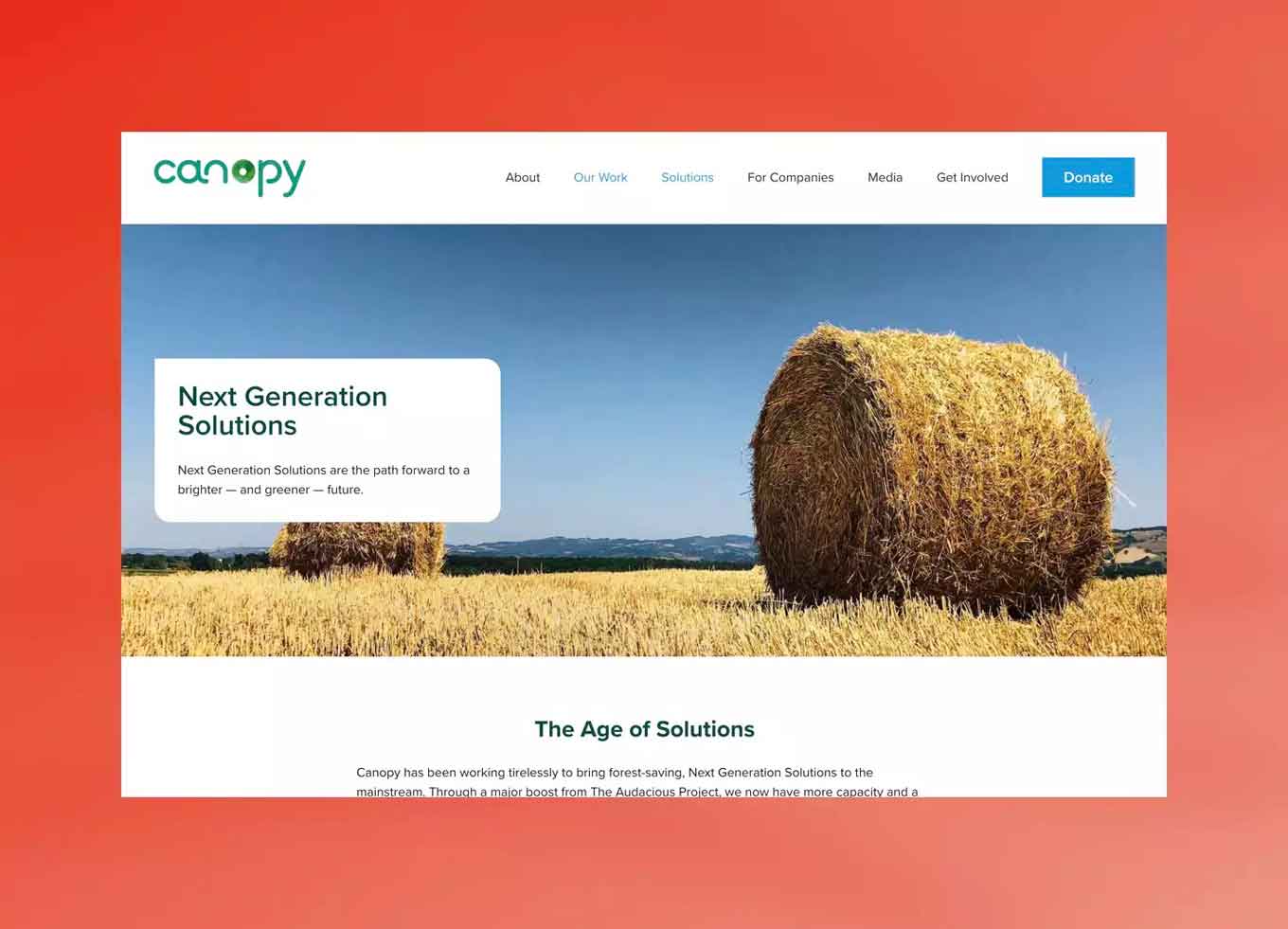
Canopy has spent the last 20 years pushing forest-saving solutions from the margins to the mainstream. The organization’s mission is to protect the world’s forests (and subsequently, its species and climate), advance the rights of Indigenous communities, and transform unsustainable supply chains.
The Audacious Project has invested in Canopy’s plan to scale the use of next-generation pulp in key supply chains to conserve endangered forests.
What does that mean? Canopy will lower the demand for wood pulp (the thing so many companies are taking from ancient forests) by creating and calibrating low-impact, circular wood pulp alternatives.
These alternatives are made from straw waste and recycled textiles — which are competitive in both price and performance, in case you were curious. They also have 88-100% less land-use impact, and are at least five times lower impact on biodiversity and threatened species.
Canopy has already secured commitments from over 900 major companies to end sourcing from climate-critical forests and switch to next-generation pulp production, but the pace of that production must increase.
With the help of The Audacious Project, these innovative technologies will scale and develop by 2029, all while avoiding 160 million metric tons of carbon emissions.
Clean Slate Initiative
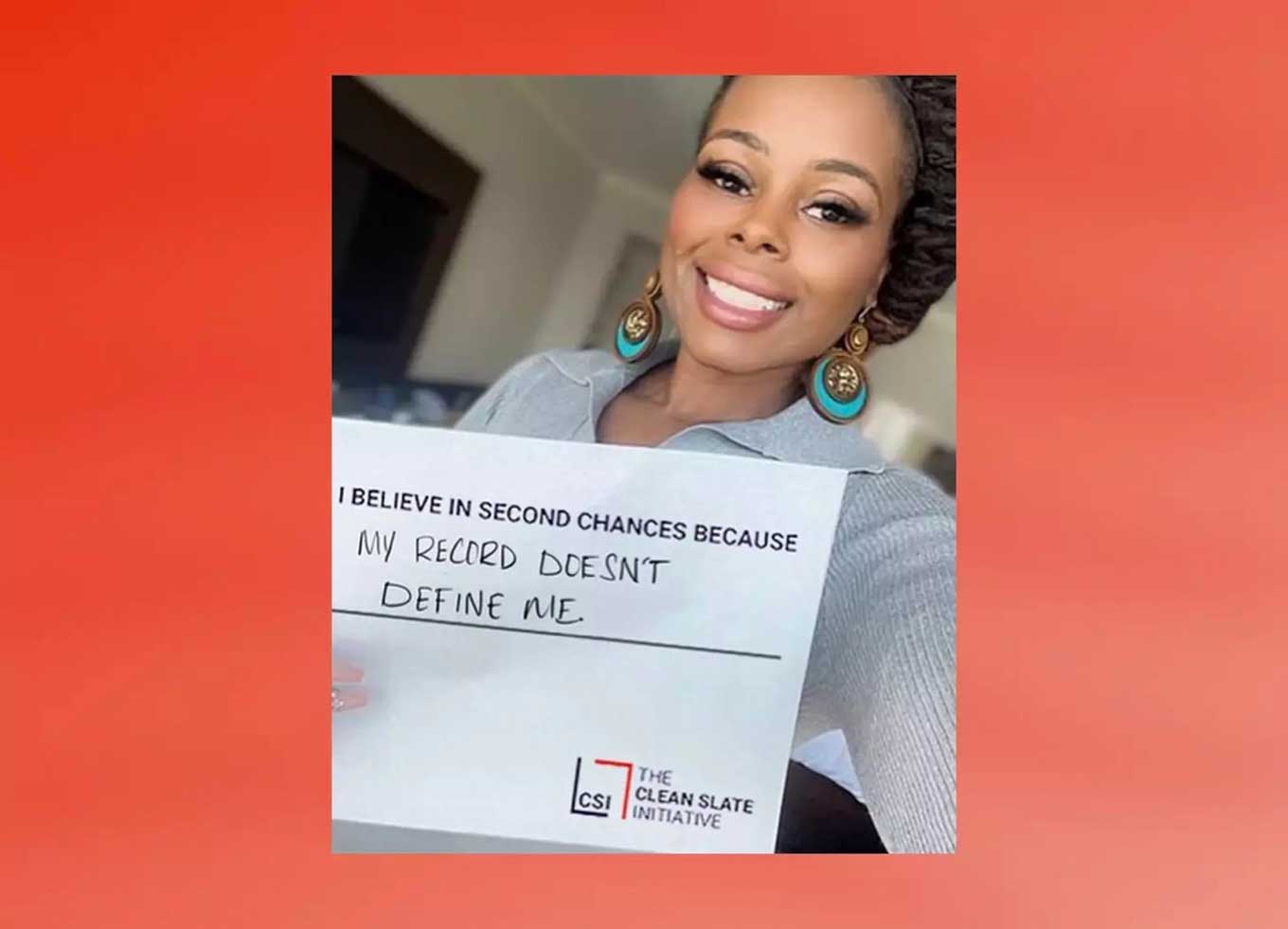
The Clean Slate Initiative’s goal is to expand and automate the sealing of arrest and conviction records after people have completed their sentences and remain crime-free for a period of time.
Working with local, state, and federal partners to pass Clean Slate laws across the board, the bipartisan organization’s vision is that everyone in America has a fair opportunity to work, live, and thrive.
Clean Slate legislation expands eligibility for record clearance, as well as streamlines the process to expunge records as soon as folks are eligible.
With the support of The Audacious Project, the organization will enact a 50-state strategy to increase access to record clearance, implement the program in states where legislation has passed, and pass laws where Clean Slate legislation is needed.
This plan will fully clear the records of 6 to 8 million Americans and will partially clear records of an additional 10 million — all while reshaping the narrative of people with records — and reconstructing the criminal justice system.
→ Learn more about the Clean Slate Initiative
Global Fishing Watch
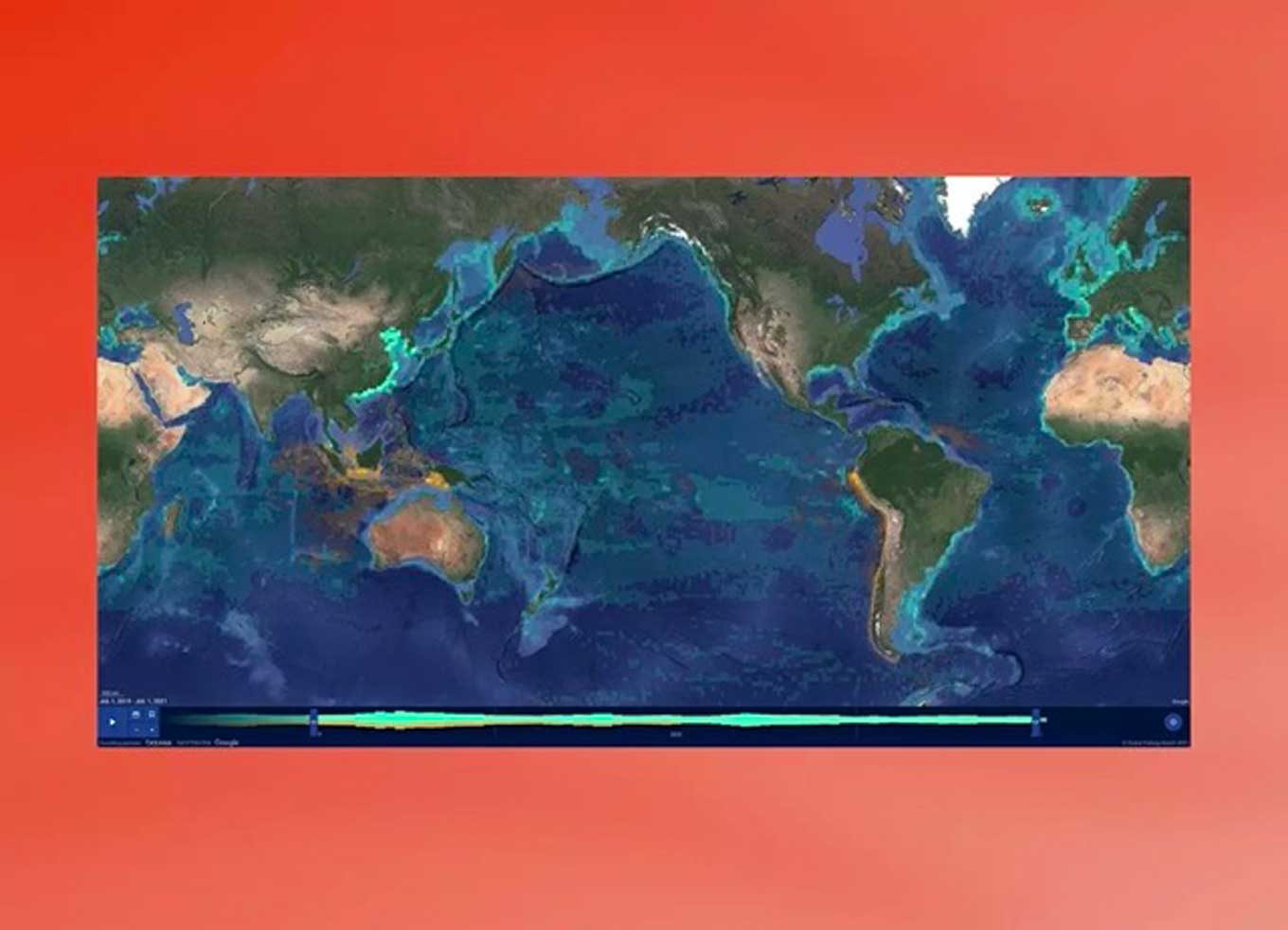
Global Fishing Watch uses cutting-edge technology to turn big, overwhelming data into actionable information. By creating and publicly sharing knowledge about human activity at sea, the organization safeguards the global ocean for the good of all.
The Audacious Project has invested in Global Fishing Watch’s use of artificial intelligence to increase and share the knowledge of the ocean, called The Open Ocean Project.
Over the next five years, this project will map 100% of industrial fishing vessels, hundreds of thousands of small-scale fishing boats and non-fishing vessels, and all fixed infrastructure at sea, like aquaculture and oil rigs — in a completely free data platform.
This data will also help pinpoint where destructive fishing activity is happening, allowing Global Fishing Watch to partner with governments, scientists, civil society, and the media to improve ocean stewardship.
→ Learn more about Global Fishing Watch
Innovative Genomics Institute
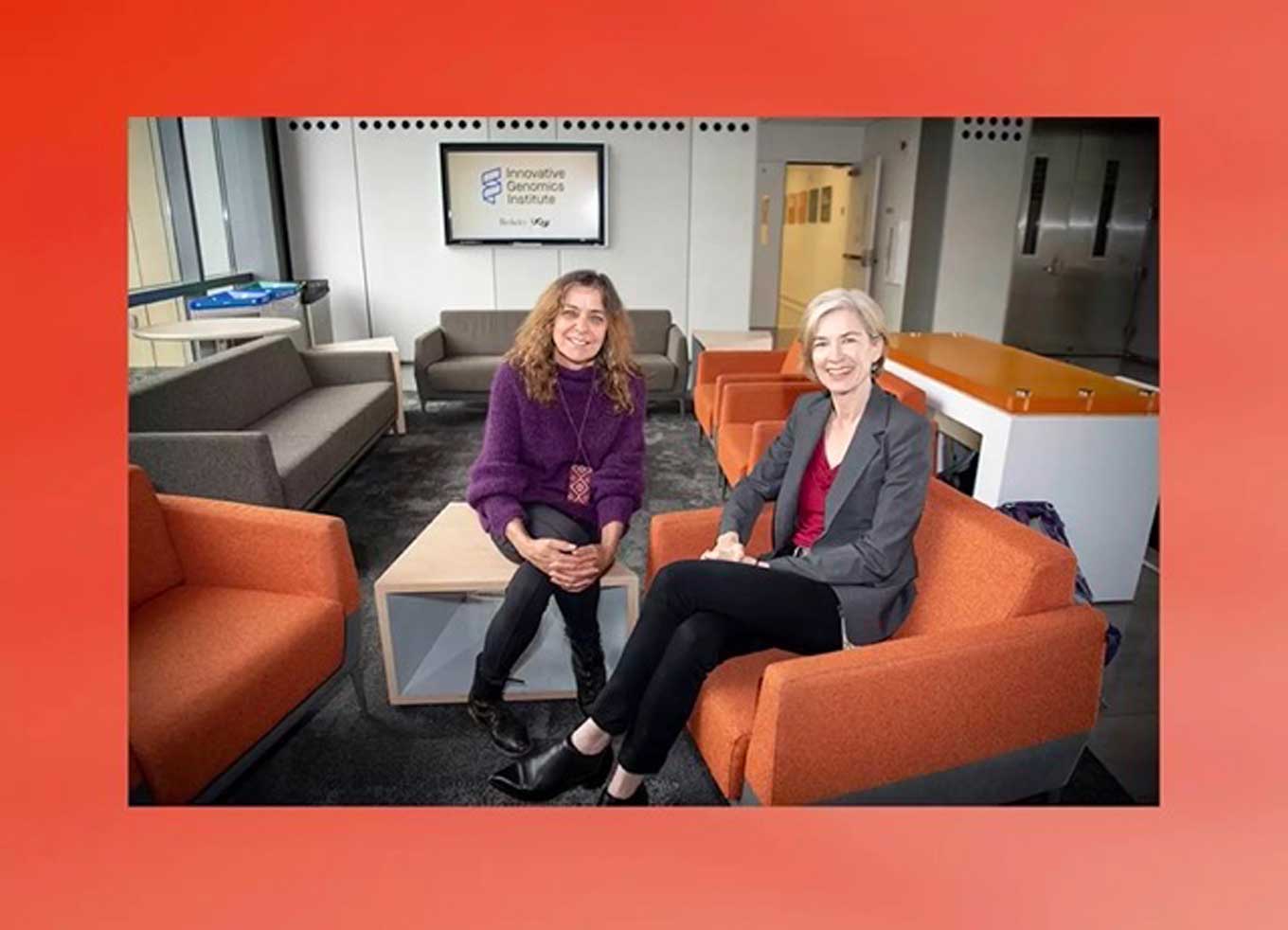
The Innovative Genomics Institute (IGI) is made of a diverse group of researchers at the University of California, Berkeley, the University of California, San Francisco, and the University of California, Davis.
Together, the members of IGI conduct research driven by real possibilities that genome engineering can treat human diseases, end hunger, and respond to climate change. Additionally, IGI works to advance public understanding of genome engineering and guide the ethical use of these technologies.
Through The Audacious Project, IGI will build two groundbreaking toolsets: CRISPR genome editing, which enables the precision editing of DNA, and genome-resolved metagenomics, which provides a complete picture of every organism in a microbiome and the function of its genes.
The plan is to edit the genomes of microbiomes as a solution to health and climate crises. These interventions will be used over the next seven years to focus on two real-world applications: One that relieves childhood asthma, as well as one that curbs agricultural methane emissions.
These two projects will enable IGI to discover, improve, and scale microbiome editing and delivery tools.
→ Learn more about the Innovative Genomics Institute
Jan Sahas
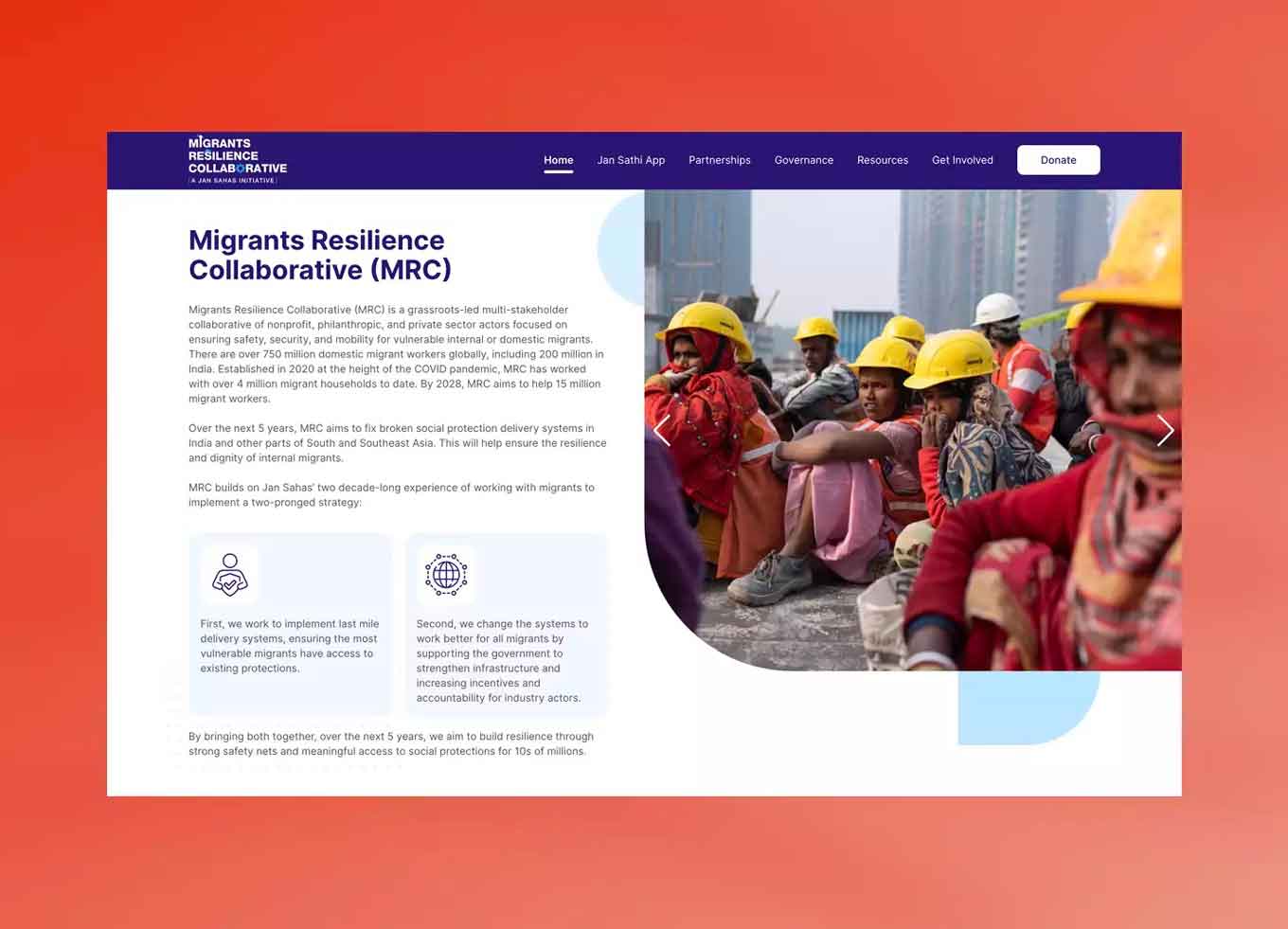
Jan Sahas is a community and survivor-centric nonprofit that aims to eliminate sexual violence and forced labor in migrant communities and ensure safety, security, and mobility for vulnerable migrants.
Jan Sahas started its Migrants Resilience Collaborative (MRC) in 2020 to support domestic migrant workers in South and Southeast Asia, starting in India.
The MRC uses a two-pronged approach to help migrants secure benefits and worker protections; migrant-led field teams that make sure workers and their families are able to get great benefits, and government support in improving infrastructure and labor rights.
Over the next five years, The Audacious Project will support Jan Sahas’s existing strategies to directly support 10 million migrant households (over 15 million workers), in 100 districts in India.
Jan Sahas field staff will work to build awareness and accessibility around benefits, set up a toll-free hotline to address unsafe working conditions and exploitation, and collaborate with governments and employers to improve systems and practices.
ReNew2030
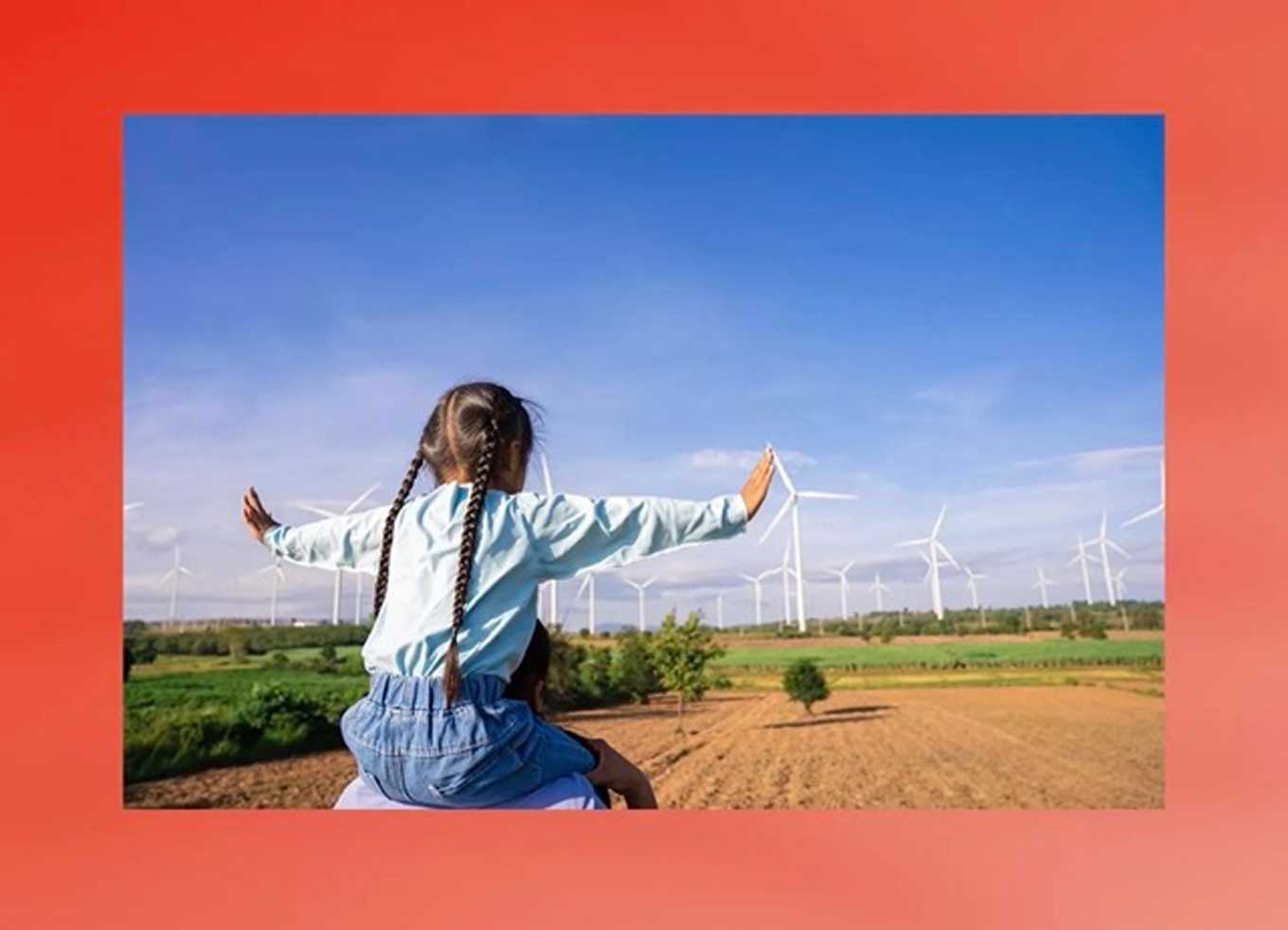
ReNew2030 is a global coalition dedicated to scaling renewable energy to help the world meet its climate goals.
ReNew2030 is a network of national and international partners of the European Climate Foundation, including: The African Climate Foundation, Energy Foundation China, US Energy Foundation, Iniciativa Climática de México, Instituto Clima e Sociedade, The Sunrise Project, and Tara Climate Foundation.
With the mobilization of governments, businesses, and communities around the world, ReNew2030’s goal is to scale wind and solar power capacity five times by 2030 in 30 countries (that are responsible for over 80% of power sector emissions).
In conjunction with the Audacious Project, ReNew2030 will engage in advocacy, research, diplomacy, and organizing to mobilize the corporate and financial sectors to accelerate the clean energy shift. This plan will rally stakeholders and adapt strategies to make climate-friendly power the new norm.
Restore Local
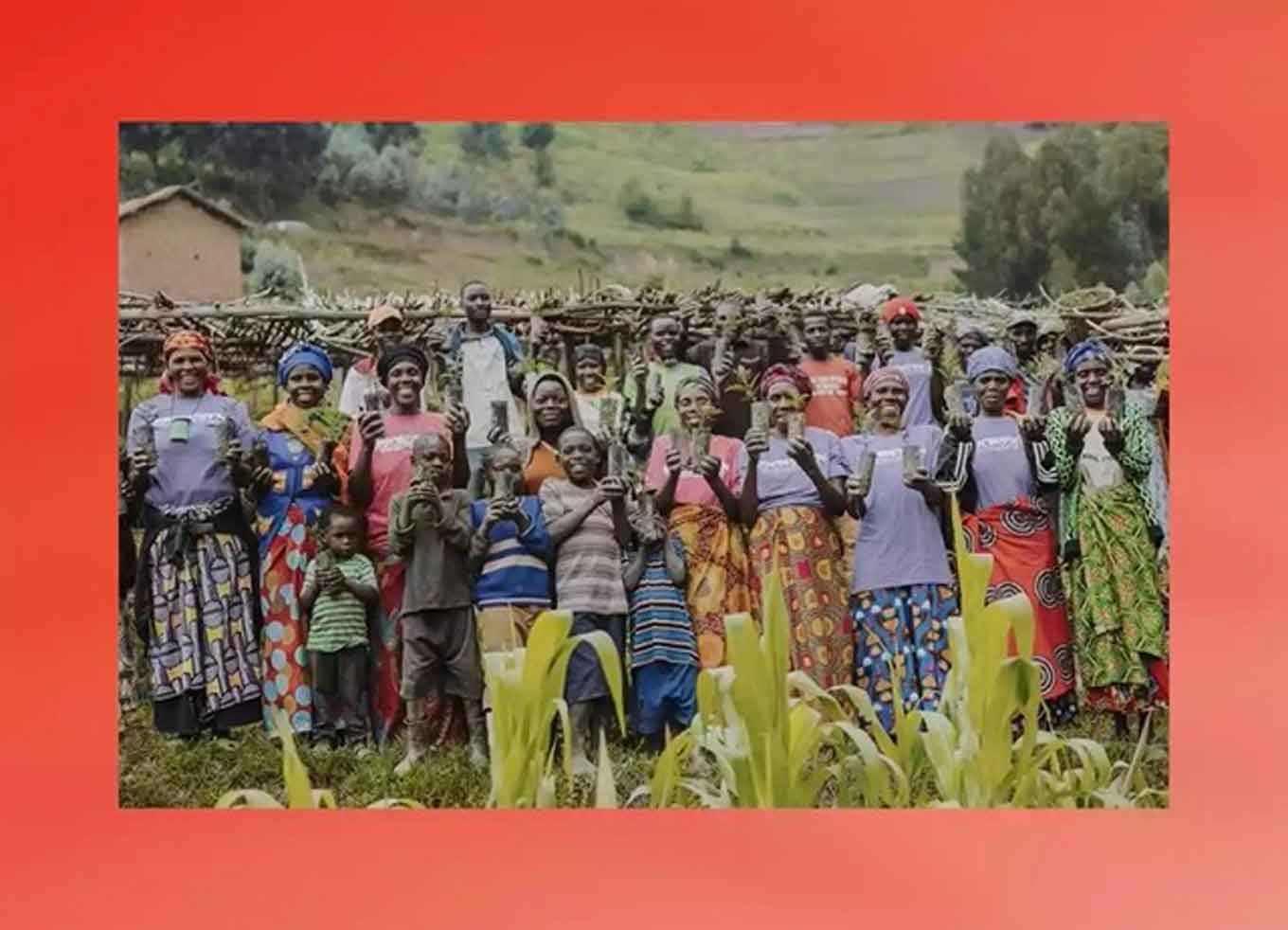
Restore Local is an effort building on The African Forest Landscape Restoration Initiative (AFR100) plan to restore 100 million hectares of Africa’s vital landscapes by 2030 by investing in locally led restoration.
AFR100, World Resources Institute, and other partners launched Restore Local as an effort to support local Restoration Champions who are already working to restore degraded forests and farmlands in Africa.
As part of the Audacious Project’s 2023 cohort, Restore Local will help its Restoration Champions build financing, secure policies from local and national governments, and improve efforts to measure impact.
This work will be done in three anchor landscapes: the Lake Kivu and Rusizi River Basin, Kenya’s Great Rift Valley and Ghana’s Cocoa Belt, delivering immediate and lasting results to more than 600,000 smallholder farmers. This will ignite local economies and build the infrastructure to scale restoration projects to AFR100 lands.
→ Learn more about Restore Local
Think Of Us
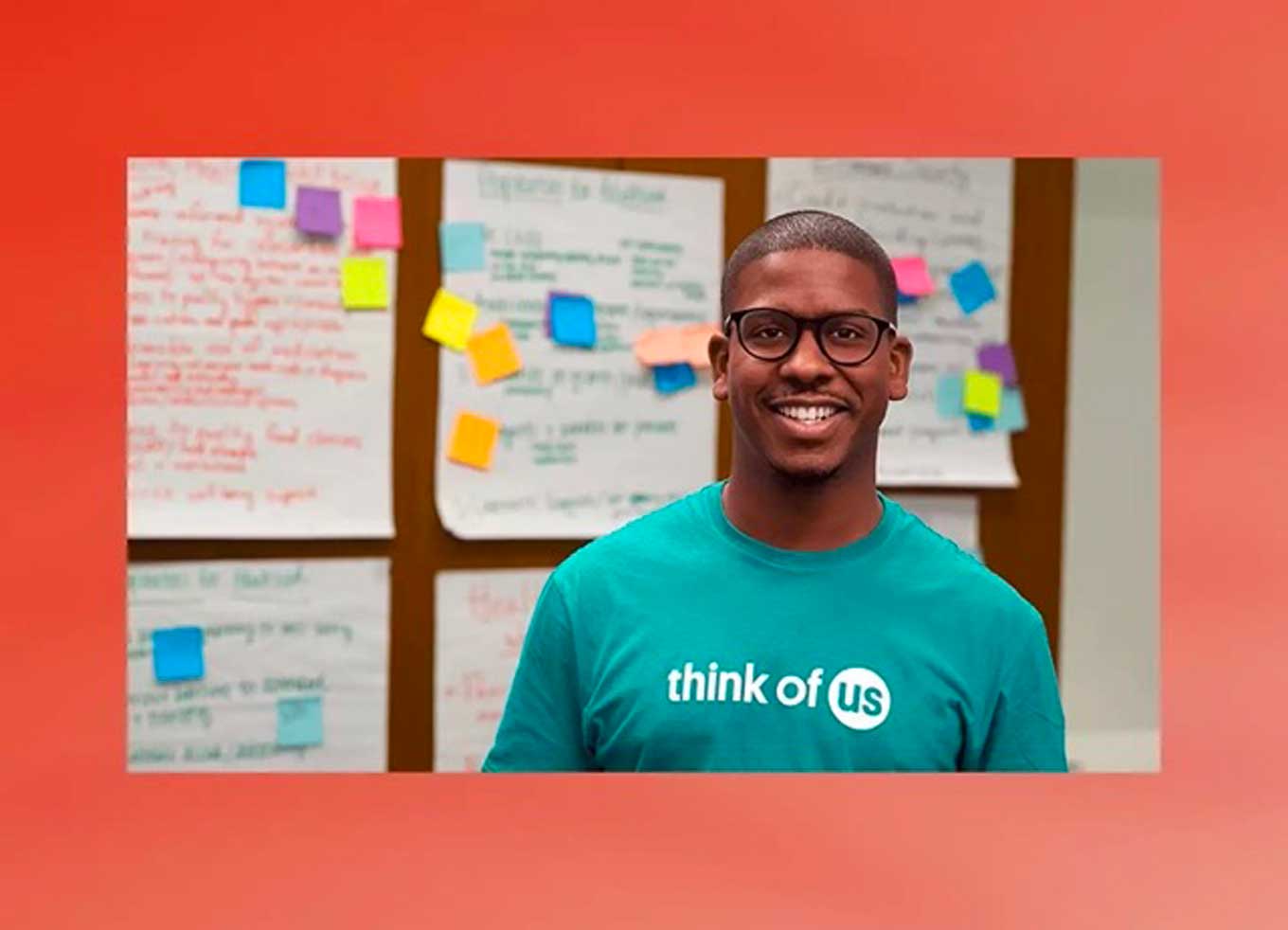
Think Of Us is a research and design lab transforming child welfare. Led by people who have been directly impacted by the child welfare system, Think Of Us works with government agencies, lawmakers, providers, advocates, and foundations to create real solutions.
The organization actively includes foster youth and their families in its initiatives, elevating real data and insights through human-centered research — a critical missing piece from previous reform movements.
With the help of the Audacious Project, Think Of Us will spend the next five years reengineering the child welfare system to mitigate harm and give all families the necessary resources to thrive.
This will be done by the development of the Lived Experience Engine, which aggregates perspectives from thousands of impacted individuals to provide meaningful data that can result in opportunities for improvement.
These opportunities include elevated social support to prevent children entering the system, increasing “kinship placement” with extended or other already-trusted adults, and improved assistance for the thousands of children who “age out” of the system each year by providing necessary support services.
The Audacious Project and Think Of Us estimate that these efforts will positively impact the lives of 300,000 children and families, all while reshaping this flawed system.
→ Learn more about Think Of Us
Upstream USA
Upstream USA is dedicated to reducing unplanned pregnancies across the United States, strengthening reproductive care and autonomy, and increasing equitable access to the full range of contraceptive options.
The organization knows that closing gaps in contraceptive access — and therefore minimizing unplanned pregnancies — requires the standardization of contraceptive care within primary care environments. This means especially expanding care to benefit communities who have historically been underserved or harmed by the healthcare system.
Upstream USA prepares healthcare organizations to provide high-quality, patient-centered contraceptive care, especially in states where access to abortion is restricted.
This intervention is free of cost to healthcare organizations, implemented over 12-18 months, and designed for long-term sustainability. It includes bias-free counseling about all contraceptive options and methods in a single appointment.
With its partnership with The Audacious Project, Upstream USA will reach five million patients and serve 700 healthcare organizations by 2030.
→ Learn more about Upstream USA
Follow along with Good Good Good’s coverage of all of the best positive news, hopeful progress, and ways to make a difference — all from TED — all week long: Instagram | Newsletter | Website
Header photo credit: TED2023: Possibility. April 17-21, 2023, Vancouver, BC, Canada. Photo: Jason Redmond / TED (CC BY-NC-ND 4.0)
Good Good Good has been covering TED's annual conference and spinoff events — like TED Women, TED Next, and TED Countdown — as press since 2023. Our journalists watch TED Talks live and interview speakers after they get off stage, giving Good Good Good the opportunity to share stories like this before TED Talks are released online.
Good Good Good is in Vancouver this week covering TED2023. This article is part of our ongoing, exclusive coverage of the conference, with more interviews and stories to come. Follow along here all week, or on social media with our hashtag #GGGatTED.
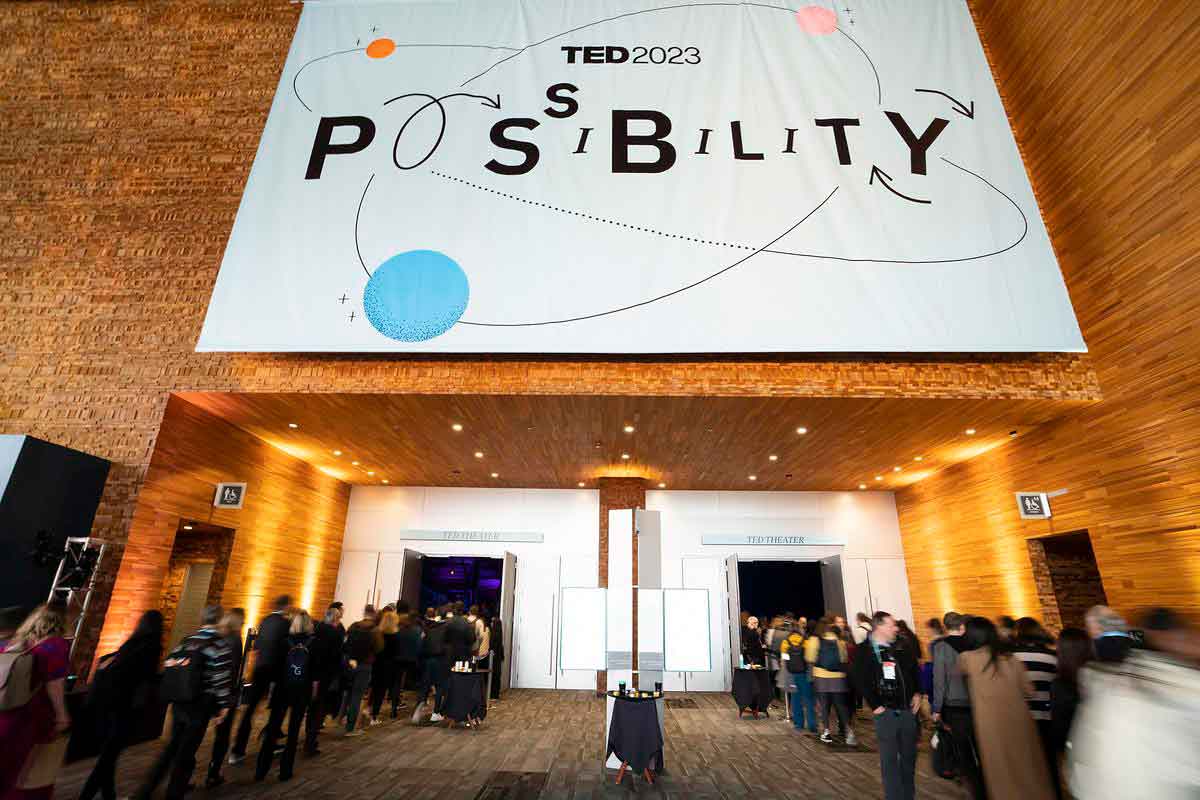
TED2023 has begun. The annual conference has made its Vancouver debut, with a theme of ‘Possibility,’ bringing together the biggest minds in AI, climate action, creativity, and more.
But perhaps our favorite part? TED’s emphasis on good news.
In fact, the conference kicked off with a “good news bulletin,” introduced by Head of TED Chris Anderson and presented by Future Crunch editor Angus Hervey.
Hervey, the very first speaker of TED2023, is an economist, journalist, and co-founder of Future Crunch, which covers breakthrough progress in human rights, global health, and science (otherwise known as good news).
Anderson set the scene, intentionally leading the TED2023 charge with a celebration of progress, and, well, possibility.
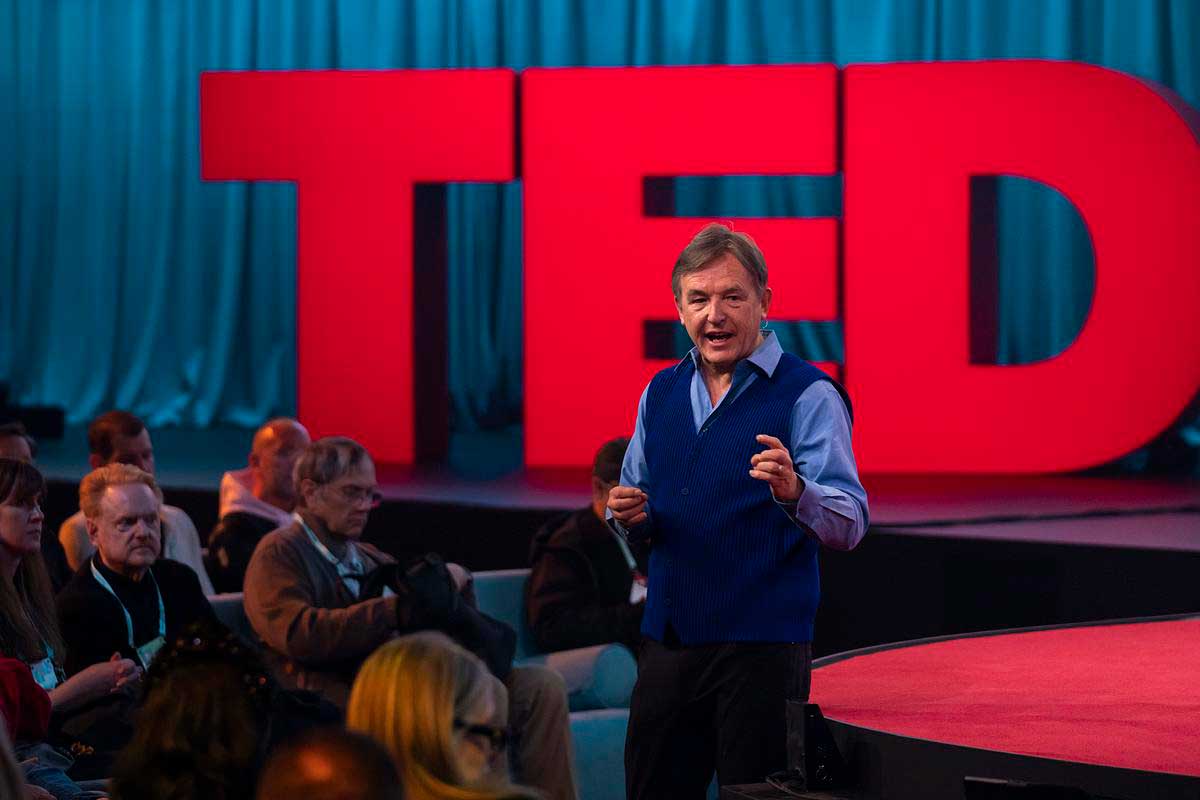
“Most news is shaped by an unfortunate asymmetry about the world, which is that good things happen slowly; it takes a long time to build something good in our chaotic universe,” Anderson said. “Bad things happen quickly. Good things can be blown apart in an instant.”
He continued by reflecting on the mainstream approach to news.
“If you have a news bulletin where the question you’re asking is ‘what is the most dramatic thing that happened in the last few hours?’ most of those things, it turns out, are going to be bad. What would happen if you took a different approach and instead asked ‘what is the most significant thing that has happened in the last year?’”
TED2023 clearly aims to reframe that daily thirst for the most hard-hitting news and zooms out to reveal a picture of nuance, progress, and hope.
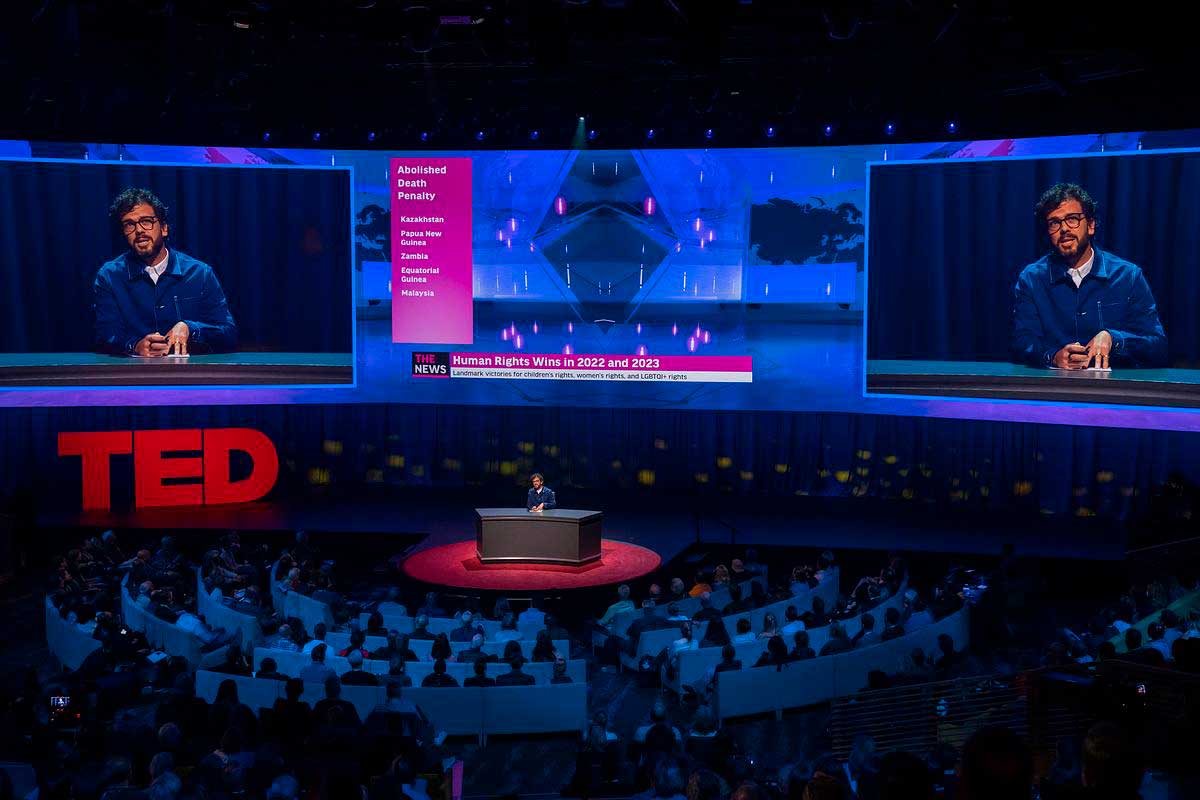
After introducing the segment, Anderson invited Hervey to the stage, where he sat behind a classic anchor desk, a compelling TV studio theme song initiating his talk.
The highlights of TED2023’s good news report
The war in Ukraine has accelerated climate action in Europe.
Hervey kicked off his simulated news broadcast with a look into Russia’s invasion of Ukraine. While putting into perspective the experience of millions of displaced Ukrainians, and the massive toll of the war, he reminds the audience that this conflict has indeed accelerated climate action.
“Europe has doubled down on green energy,” he summarized. “Last year for the first time ever, wind and solar overtook gas, nuclear, or coal as the continent’s largest source of electricity. Analysts say, as a result of the war, Europe’s timeline for ditching fossil fuels has accelerated by up to a decade.”
The United States has invested $90 billion into renewables and electric vehicles.
The passage of the Inflation Reduction Act in the United States has also greatly impacted the future of climate action.
Hervey shared that the U.S. investment in renewable energy and electric vehicles puts the country on track to getting 80% of its electricity from carbon-free sources by the end of this decade.
China is installing enough solar panels every day to cover the area of New York’s Central Park.

Beating both Europe and the U.S. in climate action, China’s speed of solar installation is a sure sign of progress.
“At the current rate, China will reach its climate targets years ahead of schedule,” Hervey said.
Last year, eight countries eliminated at least one neglected tropical disease.
While responses to the COVID-19 pandemic continue to generate headlines, often less publicized are the efforts to eliminate tropical diseases. Hervey names Togo as a leader in these efforts, as the country eliminated four diseases last year, including Trachoma, the leading preventable cause of blindness worldwide.
“Go Togo,” he quipped.
Other diseases eliminated in these countries include Guinea Worm and African trypanosomiasis. Today, 600 million fewer people require treatments for these tropical diseases than they did in 2010.
“It means that in just over a decade, a significant portion of humanity has been liberated from a devastating burden of suffering and death,” Hervey said.
A malaria vaccine has been approved as safe and effective — and it’s getting licensed for distribution.

The new malaria vaccine is a life-changing treatment, and while the progress to make it took some time, its impact will be far-reaching and fast.
Just four days before Hervey took the stage, Ghana licensed this vaccine for distribution, and just eight hours before the briefing, Nigeria followed. Both countries will vaccinate all children under the age of three.
In response to a round of applause, Hervey took a deep breath and took off his glasses — overcome by the palpable hope and possibility before him.
The United Nations has agreed on a global pact to protect 30% of the planet by 2030.
Not only has the UN reached an agreement to protect biodiversity, but member nations have also agreed on a legal framework for the protection of marine life — the High Seas Treaty — after decades of negotiations.
“Ladies and gentlemen, the ship has reached the shore,” Rena Lee, the President of the UN Conference said in the announcement of the treaty. “I can say that this has been the learning journey of a lifetime.”
The government of Canada partnered with First Nations to create Canada’s largest Marine Protected Area
Earlier this year, Canada announced the creation of the Tang.ɢwan — ḥačxwiqak — Tsig̱is Marine Protected Area, just off the coast of Vancouver. It will contribute an additional .88% to Canada’s marine conservation target of conserving 25% of the country’s marine and coastal areas by 2025.
“That’s the coast of West Vancouver,” Hervey said, pointing into the audience. “That’s less than 150 kilometers from where we all are right now.”
The largest river restoration project in U.S. history kicked off last month.
Working with the Yurok and Karuk tribes, California and Oregon officials have set in motion the largest river restoration project in American history. It will revitalize nearly 400 miles of the Klamath River.
“None of it is enough,” Hervey said. “But these are big victories. They show us that destruction is not inevitable, restoration is possible, and that nature will recover if we can just give it the opportunity.”
Major international gains have been made for social and political freedom.

Since the beginning of 2022, major human rights victories have swept the globe. According to Hervey:
- 5 countries have abolished the death penalty (Kazakhstan, Papua New Guinea, Zambia, Equatorial Guinea, and Malaysia)
- 6 countries have ended child marriage (Phillippines, Cuba, England, Maritius, Wales, and Zambia)
- 4 countries have banned conversion therapy (Canada, New Zealand, France, and Greece)
- 4 countries have legalized homosexuality (Barbados, Singapore, Saint Kitts and Nevis, and Antigua and Barbuda)
- 11 countries have strengthened reproductive rights (India, Colombia, Sierra Leone, Thailand, Kenya, England, Wales, France, New Zealand, San Marino, and Spain)
“The fight for equality continues,” Hervey said. “But progress is happening, even if we don’t hear much about it.”
What would it look like if the world was filled with more good news?
At Good Good Good, we’re obviously big fans of good news. But we’re also big fans of every other publisher that shares good news — because we believe that the world needs more of it.
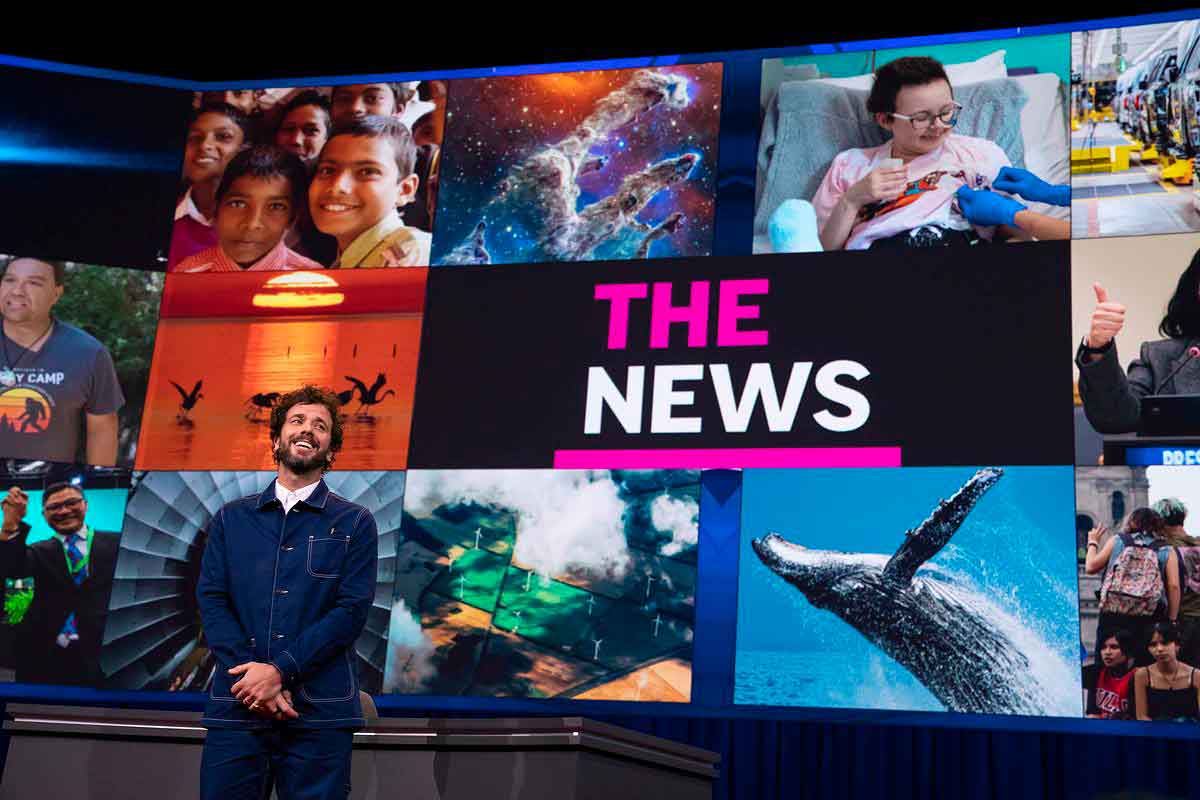
“Imagine if this was the news,” Hervey said on stage at TED. “Along with the usual death and disaster and division, we also got to hear these; the stories of hope and healing — and not just another dog on a surfboard.”
Although there are loads of factors that make our complicated human brains lean towards negativity, we have the power to embrace an information-sharing approach — and a news-consumption approach — that levels good news and bad news as equals.
“The thing is, this is the news. These stories — they’re happening,” Hervey said. “It’s just that we don’t hear as much about them. When you find them, the world can suddenly feel like a very different place.”
Header photo courtesy of Jasmina Tomic / TED / (CC BY-NC-ND 4.0)
Good Good Good has been covering TED's annual conference and spinoff events — like TED Women, TED Next, and TED Countdown — as press since 2023. Our journalists watch TED Talks live and interview speakers after they get off stage, giving Good Good Good the opportunity to share stories like this before TED Talks are released online.
Good Good Good is in Vancouver this week covering TED2023. This article is part of our ongoing, exclusive coverage of the conference, with more interviews and stories to come. Follow along here all week, or on social media with our hashtag #GGGatTED.
While it may initially come off as dramatic or despondent, there’s a pretty strong likelihood that you or someone you know has assumed the worst about the United States in the last few years: That our democracy is on the brink of collapse.
While we likely won’t be sucked into a big, fiery, fascist hole in the ground in the next few minutes, there is real credibility to those concerns.
Whether it’s mounting social injustices, inequities in voting rights, or the censorship of diverse media, many of us have felt the deep impact of political divides — and fear what else they may lead to.
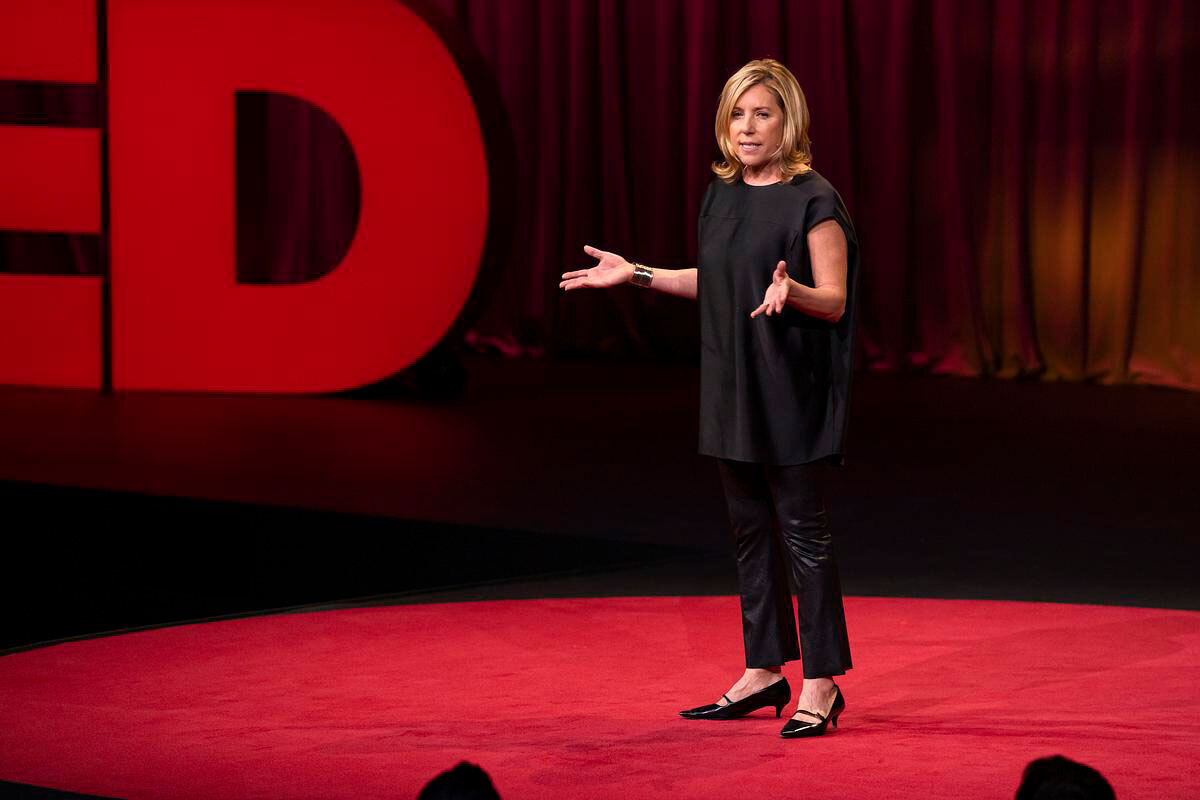
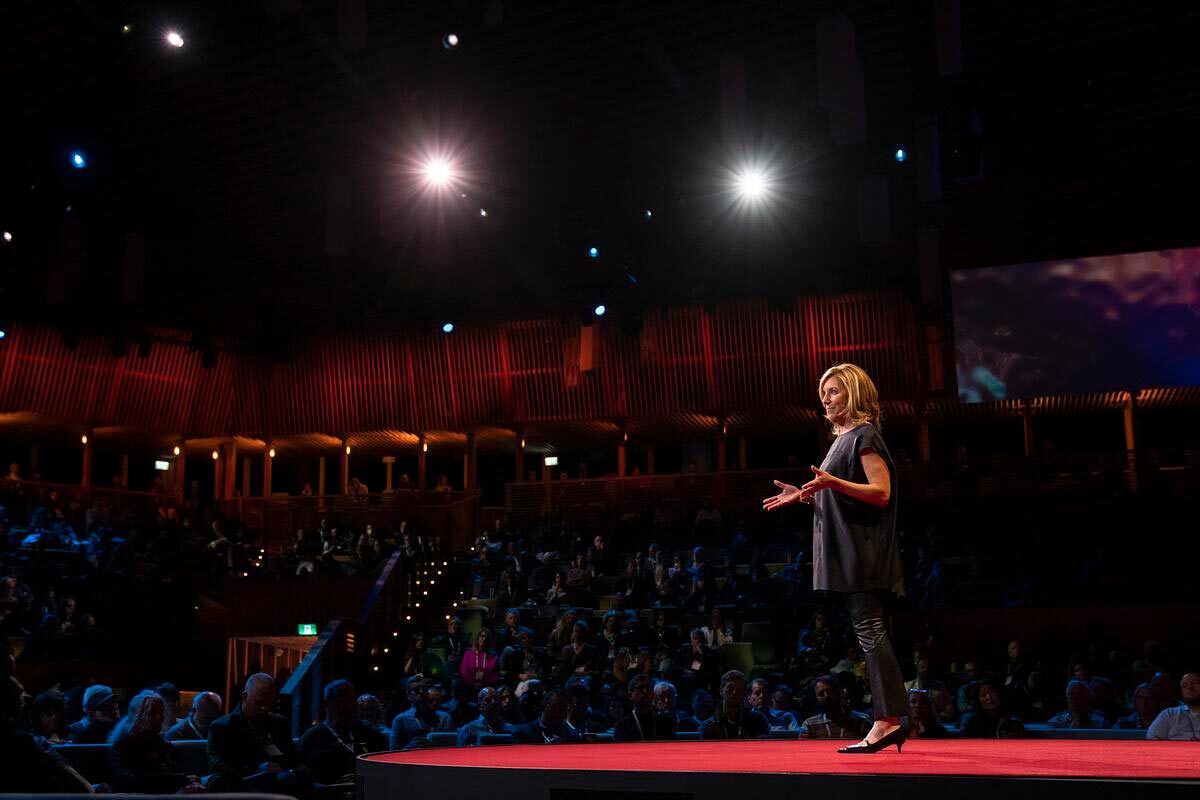
Barbara F. Walter, an expert on civil wars, and the author of the book “How Civil Wars Start And How To Stop Them,” took to the stage at TED2023 in Vancouver to affirm our worries, and hopefully, quell them a little, too.
“I’m going to talk about a threat that most people don’t want to think about,” she began her TED Talk. “It’s too frightening, and it doesn’t seem real. That threat is civil war.”
While it might seem like a scary way to start a lecture, Barbara is a lover of peace, and that’s the hope that drives her work.
Since 1946, over 250 civil wars have broken out around the world — and that number is increasing exponentially. In her talk, Walter provided additional context: “There are now almost 50% more civil wars than there were in 2001,” she said.
Walter knows what she’s talking about; she has been studying civil wars and democracy for more than 30 years. She’s interviewed leaders at the top of these wars — and has been interrogated by them.
She also served on a task force for the CIA called the Political Instability Task Force, whose goal was to develop “a model to help the U.S. predict which countries were likely to experience ethnic conflict and civil war.”
And the data is actually really good at predicting civil war. Walter and other experts on the task force came up with 38 factors that they predicted would be the best indicators if a country was headed for civil war.
As it turns out, just two of the factors were “highly predictive” of a civil war — and they might sound a bit too familiar for those of us in the United States.
Is the U.S. at risk of a civil war?
There are two key predictive factors for civil war.
Some of the task force’s potential predictive factors for civil war might seem obvious, like higher levels of poverty and income inequality, or extreme discrimination against a particular group of people. Those factors, though, weren’t actually the best predictors of conflict, Walter shared on the TED2023 stage.
To the experts’ surprise, it came down to two main factors. First, whether or not a country was an anocracy.
“Anocracy is just a fancy term for partial democracy,” Walter explained. “It’s a government that’s neither fully democratic nor fully autocratic — it’s something in between.”
Hungary is a good example of an anocracy; it holds democratic elections, but whoever is elected can then “basically do whatever they want,” Walter said.
The second factor of predicting civil wars: Whether citizens in an anocracy form political parties around identity rather than ideology.
“So rather than joining a party because you were liberal or conservative, capitalist or communist, you joined a party because you were Black or white, Christian or Muslim, Serb or Croat,” Walter said.
If a country displayed both of these factors, the task force put it on a watch list for being at a high risk of political violence — and the list was shared with the White House.
In the weeks before January 6th, the U.S. was officially classified as an anocracy.
The task force discussed countries around the world, but the U.S. never made it onto this watch list. Why? Because the CIA is not legally allowed to monitor the U.S. or its citizens, and in Walter’s words “that’s exactly the way it should be.”
Walter, though, as a private citizen, saw both of these factors emerging rapidly in the U.S. She also knew that since 2016, the U.S.’s democracy had been downgraded three times, the most recent of which came after former President Trump refused to accept the results of the 2020 election and actively attempted to overturn them.
“Between December of 2020 and early 2021, the United States was officially classified as an anocracy,” Walter said. “If the task force had been allowed to monitor and study the United States, it likely would have considered it at high risk of political instability and political violence.”
In other words: the task force would have predicted the political violence that ensued on January 6th.
Once-dominant groups that are in decline are the most likely to start a civil war.
You may also be surprised to learn who are the folks that declare or start a civil war. We’ll give you a hint: it’s not the poorest or the most oppressed.
“The people who tend to start civil wars, especially ethnically-based civil wars, are the groups that had once been politically dominant but are in decline,” Walter said.
In the U.S., for example, Walter explains how the rise of militias has been driven “primarily by white men who see America changing in ways that directly threatens their status.”
These militias were the ones who led the insurrection at the U.S. Capitol on January 6th.
Although Walter points to clearly unsettling — and, sadly, unsurprising — facts about the current status of democracy in the United States, she also explained that we already have the blueprint to strengthening and maintaining democracy — and preventing a civil war.
How to prevent the collapse of American democracy
The U.S. is in the midst of a transition from a country with a majority-white population to one that will soon be majority non-white. And the stakes are high: other countries will follow our lead.
“These countries are going to be looking to the United States to see how we manage this demographic shift,” Walter said. “Americans can allow this transition to tear us apart, or we could use it to come together to show the world how to manage this change, and in the process, create a truly multi-ethnic, multi-religious democracy.”
The second option would be preferable, please and thank you.
And the good news is: it’s entirely achievable. Walter laid out two ways we can do it.
Encourage both lawmakers and businesses to strengthen democracy.
When it comes to addressing anocracy, “we have to improve the rule of law,” Walter explained. This means ensuring equal access for every citizen to vote, reducing corruption, and improving the quality of services provided by the government.
But doing all of that is challenging, and takes time. Acknowledging this, Walter explained how businesses can step in to fill the gap and help speed things along. She posited: Corporations have the opportunity to lead the way by putting pressure on governments to make changes that align with the will of the people.
While that might raise a red flag to some folks who are concerned about corporate lobbying, Walter used South Africa as a case study to show how businesses can push politics forward at the agenda of democracy, albeit also at the agenda of profit.
“The business community stepped in and demanded real democracy. They did this because they had been suffering under years of crushing economic sanctions, and eventually they had to choose between apartheid and profits, and they chose profits,” Walter explained. “When they went to the government and said ‘we will no longer support you,’ the apartheid regime knew it could no longer survive, and reform happened quickly.”
To help address the other factor — identity politics — businesses have the opportunity to invest in better health care, higher minimum wages, and more, “so that they create a group of people that are hopeful about the future, and less vulnerable to the calls by extremists to ‘burn the system down.’”
Regulate social media and social media algorithms.
Currently, social media algorithms are designed to elevate the most incendiary and divisive content, as the most extreme ideas are given preferred status in algorithms, pushing them to people’s feeds who may not otherwise see them.
While Walter emphasized that she doesn’t believe in censorship, or limiting free speech, she said that algorithms must be regulated so that they don’t give preference to these extreme ideas.
“Let people put whatever they want on social media, but do not allow the algorithms to amplify the messages by bullies, hate-mongers, conspiracy theorists, and enemies of democracy,” Walter said. “If we take away their bullhorn, their influence will decline.”
In other words, we must give the best ideas — the ones that naturally resonate with users — the space to succeed on social media, rather than pushing them aside with an algorithm that favors extreme ideas.
There is hope for U.S. democracy.
In her years of work in this area, Walter has interviewed people who have lived through a civil war, “and they all say the same thing: ‘I didn’t see it coming.’”
We have the benefit of foresight here: We have the data to back up these predictive factors for civil war and political violence (and, arguably, proof and hindsight from what happened on January 6th).
“There’s no reason why we, the democracy-loving people of this world, can’t create our own playbook to prevent civil war,” Walter said. “To do that, we have to be brave enough to fight for real democracy, strong democracy. Because only by fighting for democracy can we ensure we will truly get peace.”
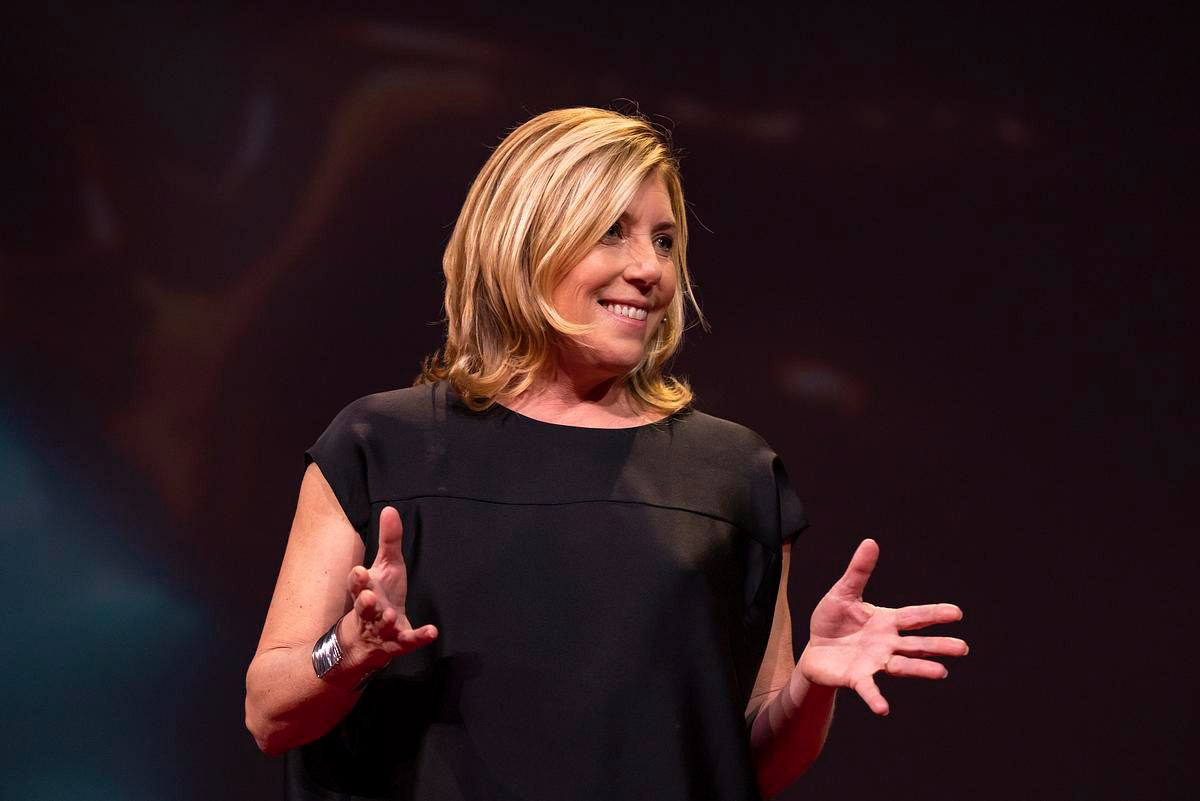
And there are some signs of hope in the fighting-for-democracy arena: specifically, Walter looks at the November midterm elections.
She called it a “really, really good sign” in that one, all of the folks who denied the results of the 2020 election (a.k.a. are anti-democracy) lost their elections.
And second, the group of voters that traditionally vote the least, turned out for the midterms in huge, historic numbers: Young people between the ages of 18 and 25. That good news multiplies, too — once you get a young person engaged in voting early, they tend to continue voting in future elections.
“That means turnout is going to improve, the type of person who votes is going to be more representative of the population,” Walter said. “That is a healthier and better democracy.”
Follow along with Good Good Good’s coverage of all of the best positive news, hopeful progress, and ways to make a difference — all from TED — all week long: Instagram | Newsletter | Website
Header image courtesy of Gilberto Tadday / TED (CC BY-NC-ND 4.0)
Good Good Good has been covering TED's annual conference and spinoff events — like TED Women, TED Next, and TED Countdown — as press since 2023. Our journalists watch TED Talks live and interview speakers after they get off stage, giving Good Good Good the opportunity to share stories like this before TED Talks are released online.
Good Good Good is in Vancouver this week covering TED2023. This article is part of our ongoing, exclusive coverage of the conference, with more interviews and stories to come. Follow along here all week, or on social media with our hashtag #GGGatTED.
Conceptual artist Tavares Strachan works in a variety of mediums: A block of ice transported from the North Pole to his childhood elementary school in the Bahamas, a golden satellite sculpture that orbits in space — and good, old-fashioned leather-bound paper.
When Strachan took the TED2023 stage in Vancouver, he reflected on his 1999 journey to the North Pole, which prompted his studies of unknown African American polar explorer Matthew Henson, a co-discoverer of the North Pole, whose contributions were lost to history.
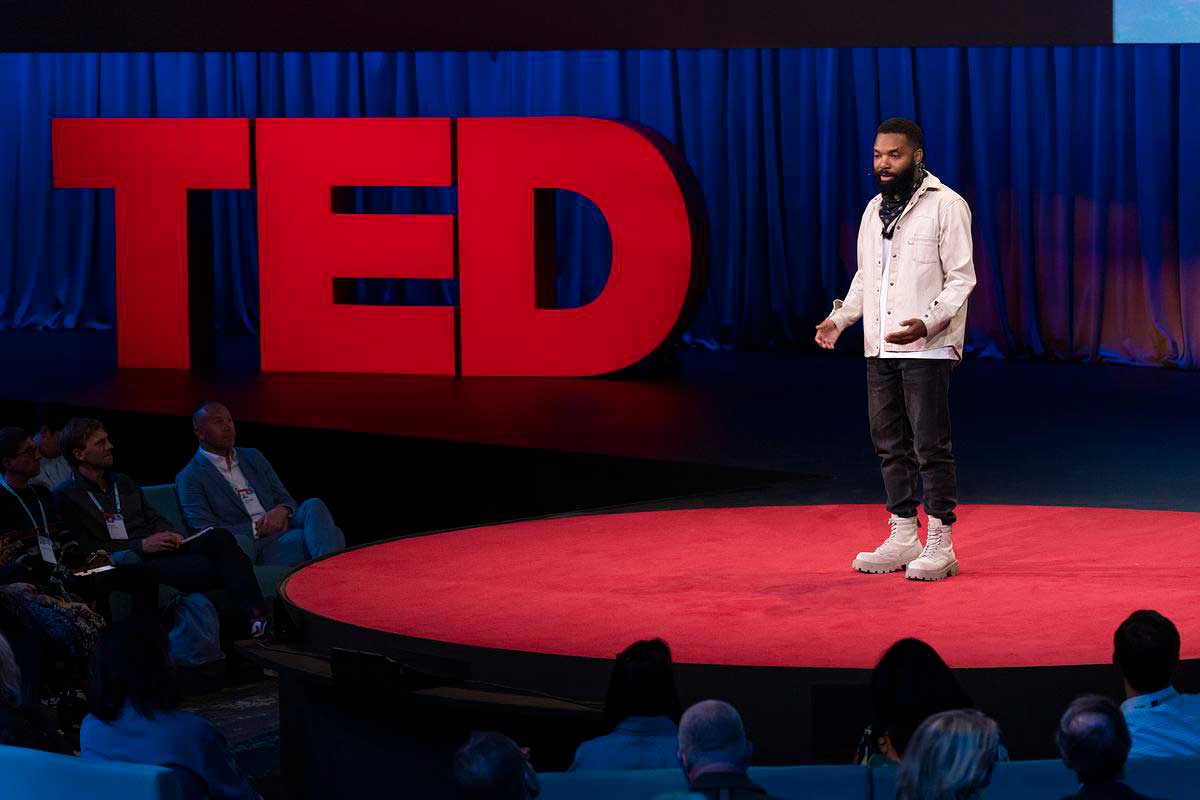
“And I ain’t really cool with that,” Strachan said.
One of the artist’s most well-known projects is “The Distance Between What We Have And What We Want,” in which he excavated a 4.5-ton block of ice from the Alaskan Arctic and brought it home to his native Bahamas to put on display in a solar-powered freezer.
The 2006 installation leaned into the themes of Earth’s fragile systems, the strangeness of cultural and physical displacement — and the legacy of Henson’s contributions.
When Strachan’s Bahamian community received its first set of encyclopedias, the first person he looked for was his personal hero: Henson. When he didn’t find the explorer in these precious pages, he started to realize: No one from his community was in there, either.
“And if they were missing,” he pondered on the TED stage, “What else was lost?”
The Encyclopedia of Invisibility tells stories lost to history
It was then that Strachan began developing his own encyclopedia: “The Encyclopedia of Invisibility.”
The book is a 3,000 page, leather-bound creation with over 17,000 entries. It was created over the course of 12 years, alongside a team of researchers and explorers who “combed the globe” to find “people, places, and things that were mostly untold.”

The encyclopedia aims to include the kinds of things you may never learn about in school.
The first entry, of course, was on Henson, but Strachan also highlighted entries like those that tell the story of Minos, one of history’s only documented all-female armies; Robert Smalls, who freed a ship of enslaved people and later became the first Black congressman in the U.S; and Sister Rosette Tharpe, the godmother of rock n’ roll.
“My work became a quest to tell these lost stories,” Strachan said in his talk. “If you really pay attention, you start to see these lost stories all around you.”
The encyclopedia was published as an artwork, playing with the ideas of sculpture and installation. The enormous project made him realize:
“There are an infinite amount of stories to be told, and there are no limits on how they can be told.”
Tavares Strachan’s space sculpture
Strachan went on to employ that thought process in his future works, like his 2018 piece “ENOCH.”
Created in collaboration with SpaceX and the Los Angeles County Museum of Art, “ENOCH” is a golden sculpture inspired by Egyptian tradition of imbuing the essence of a person in a container.
The sculpture honors Robert Henry Lawrence, the first Black astronaut who never realized his dream of space exploration when he was killed in a flight accident at the age of 32.
Strachan’s dream was to “bring his profound legacy to space” and “celebrate it among the stars.”
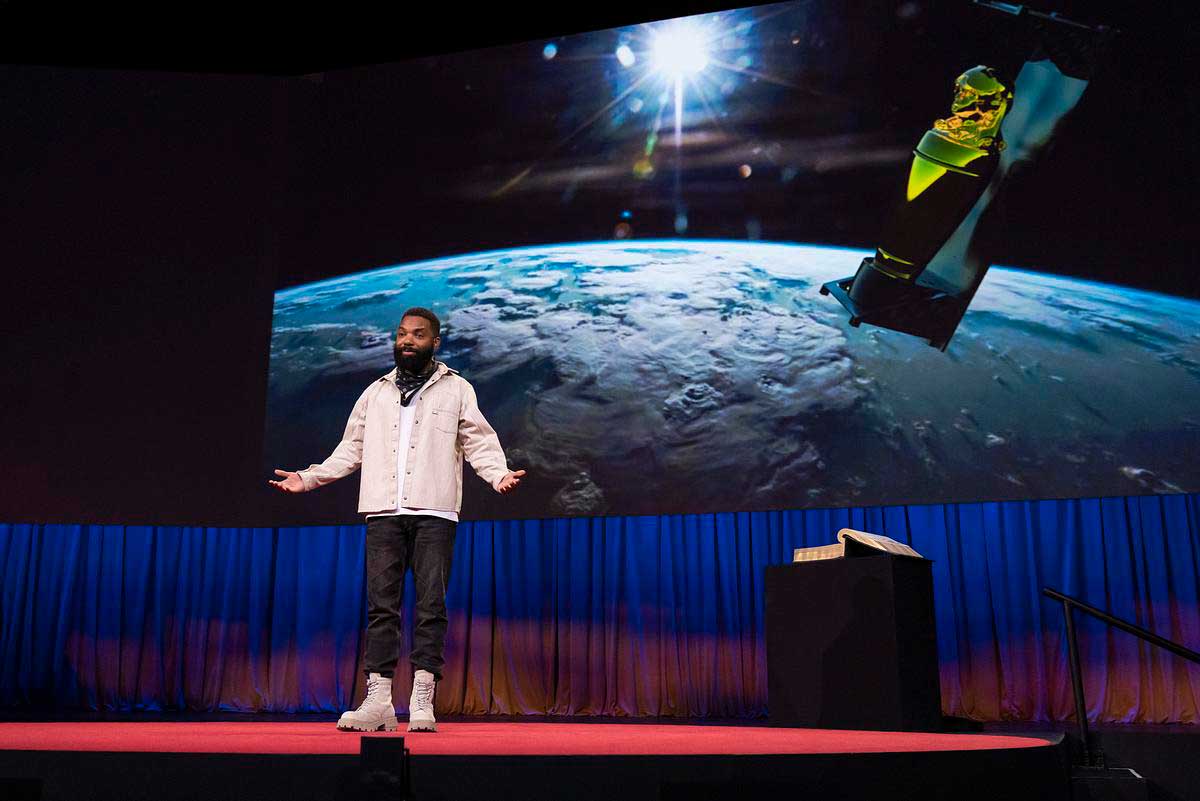
In 2018, “ENOCH” blasted into space and orbited as a satellite — nearly 50 years after Lawrence’s death — combining the worlds of science and technology with art and humanity.
“I’ve spent my entire life being obsessed with these lost stories,” Strachan said in his talk. “Can these lost stories hold a key that unlocks our sense of belonging?”
Regardless, he said, they are worth telling.
“Lost stories definitely need to be told,” he ended his speech at TED2023, “Not in small ways, but in ways that match the ambitions of the people we speak for.”
Follow along with Good Good Good’s coverage of all of the best positive news, hopeful progress, and ways to make a difference — all from TED — all week long: Instagram | Newsletter | Website
Header image courtesy of Jasmina Tomic / TED (CC BY-NC-ND 4.0)
Picture this: You’re at a coffee shop, in the zone working on really important work that will change the world for the better (of course), when all of a sudden… your screen goes black.
Dead battery. And no shade to coffee shops, but all the outlets on offer are being used. Sure, you could ask your neighbor for some juice — or, you could power up wirelessly with some energy from a generator in the ceiling.
Sounds like a pipe dream? Not to space solar power experimenter Ali Hajimiri and his team of researchers at Caltech. In fact, they already figured it out.
Inspired by how data transfer has gone from wired to wireless over the past two decades, democratizing access to information, Hajimiri set out to see if the same could be done to the transfer of energy.
And he took the TED2023 stage to share his findings: it absolutely can.
We’re going to stay in our lane here and summarize some of the technical details: it involves waves, a process called “interference,” and controlling timing to change the direction of where the energy is sent.

And it works; they’ve used it to power light bulbs and battery-less drones.
But they’ve got their sights set on much larger, world-changing horizons than your laptop or desk lamp.
“Now that we know we can send energy wirelessly, the question is: how far can we go?” Hajimiri asked from the TED stage. “Really, how far can we go?”
Wirelessly sending energy from space
In addition to his research, Hajimiri is currently serving as the co-director of the Space Solar Power Project, which is working to build a modular, lightweight, foldable device that collects sunlight in space, converts it into electric power, and wirelessly sends that power to Earth.
We know: Mind blown.

But solar panels in space are not a new idea. According to Hajimiri, the idea of solar panels in space first appeared in 1941 in a short, science-fiction story called “Reason” by Isaac Asimov.
The concept moved from fiction to the real world in 1968 by space pioneer Peter Glaser — he even received a patent for his idea.
Whether fiction or nonfiction, what intrigued these folks about putting solar panels in space versus, you know, the places we already do: the desert, rooftops, or farmland?
“A few reasons: first, in space, you get about eight times more energy because you don’t have day and night, you don’t have clouds, you don’t have seasons, and you don’t have atmospheric absorption,” Hajimiri explained.
More energy is a good thing, since the world’s demand for it doesn’t seem to be slowing down.
The other reason is perhaps even more exciting. Since Hajimiri’s team discovered how to send energy wirelessly wherever you want, whenever you want, “you have a dispatchable power.”
Puerto Rico gets hit by a hurricane wiping out power to the entire island? The power grids in cities across Ukraine are getting consistently attacked by Russia? A remote village in Africa with no power transmission infrastructure? They could all receive immediate access to electricity.
The possibilities for responding in emergency situations are massive — and ultimately — lifesaving.
Why aren’t we already doing it?
If you’re like us, you probably read all that and are thinking, “This sounds fantastic. The best possible use of outer space to help humanity. Let’s get some solar panels in space immediately!”
We’re with you, but unfortunately, current approaches to solar panels in space are, in Hajimiri’s words, “a big elephant.”
The current methods put massive, heavy solar panels in space to generate electricity and send that back to a hub on Earth.
And that is incredibly, prohibitively, unsustainably expensive. Like, thousands-of-dollars-per-gram expensive.
Hajimiri’s team is addressing that issue, too. Through the Space Solar Power Project, they’ve developed flexible, lightweight, fabric-like structures that can be rolled up, sent to space inside a satellite, and deployed once they get to space. They can even be rolled up in groups to form “constellations” of units that form a whole power station.
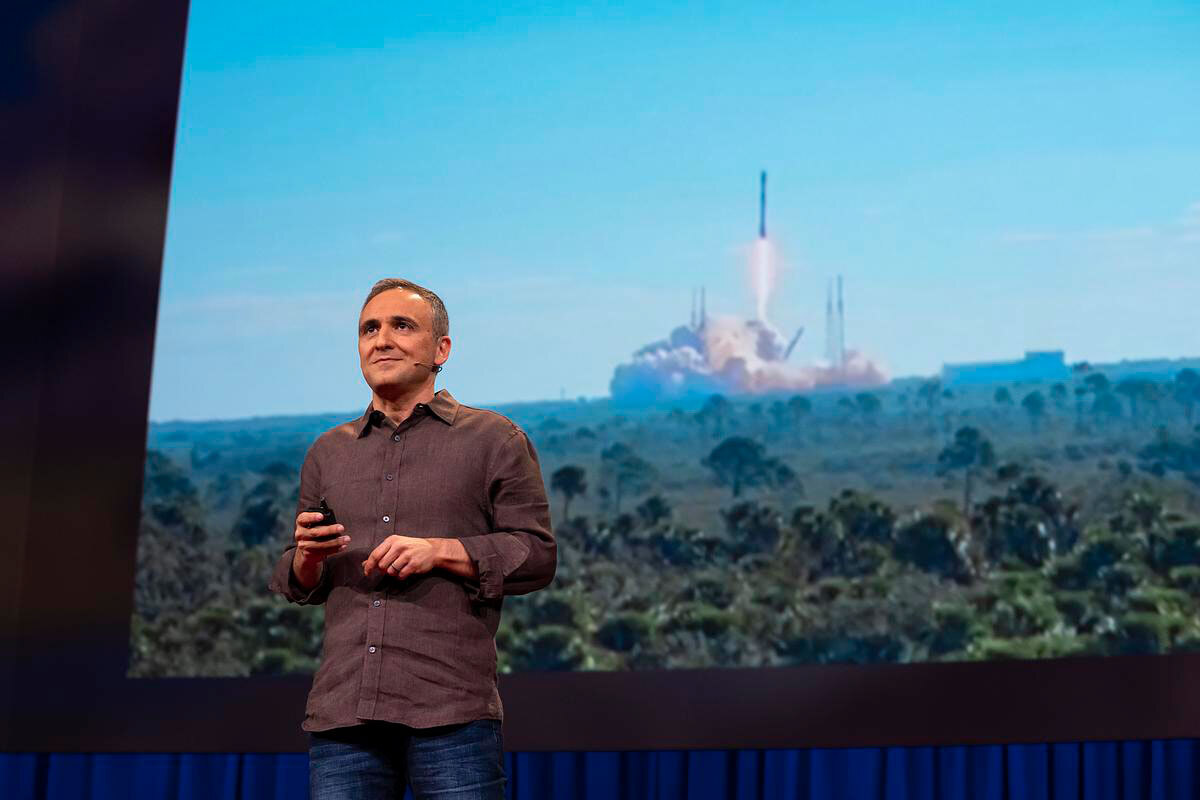
Their invention, alongside two others, was recently sent to space in a satellite as a proof of concept for the possibility of generating solar power in space and sending it back to Earth.
Hajimiri believes “this technology is too compelling to go away,” and holds a lot of promise for the future of equitable everyday and emergency access to electricity for all of humanity.
“And that is something to look forward to,” he said.
Follow along with Good Good Good’s coverage of all of the best positive news, hopeful progress, and ways to make a difference — all from TED — all week long: Instagram | Newsletter | Website
Header image courtesy of Gilberto Tadday / TED (CC BY-NC-ND 4.0)
Volunteering is an act of service that not only benefits our favorite communities and causes — but also nurtures our own personal growth and connections with others. It’s about offering your time, energy, and skills selflessly — contributing towards making the world a better place.
From aiding people in need to supporting environmental initiatives, volunteering spans across a beautifully vast array of causes.
Noted world-changers and activists have shared their insights and experiences on the power of volunteering through the years, inspiring many to step forward and take action. We’ve curated these words here today.
These quotes capture the spirit of volunteering — they emphasize its transformative impact on both society and the individual, and illuminate the selflessness, empathy, and commitment that it entails.
Whether you’re already a devoted volunteer seeking further motivation, or someone considering taking the first step into volunteering, these quotes will provide a powerful perspective on its value.
Read on to be inspired by the wisdom of those who have embraced and advocated for the power of volunteering:
The Best Quotes About Volunteering
Famous Quotes
“Volunteering is at the very core of being a human. No one has made it through life without someone else’s help.”
— Heather French Henry
“Volunteerism is the voice of the people put into action. These actions shape and mold the present into a future of which we can all be proud.”
— Helen Dyer
“As you grow older, you will discover that you have two hands — one for helping yourself, the other for helping others.”
— Audrey Hepburn
“Life’s most persistent and urgent question is, what are you doing for others?”
— Martin Luther King, Jr.
“Volunteering is an act of heroism on a grand scale. And it matters profoundly. It does more than help people beat the odds; it changes the odds.”
— Bill Clinton
“Volunteers are the only human beings on the face of the earth who reflect this nation’s compassion, unselfish caring, patience, and just plain loving one another.”
— Erma Bombeck
“Volunteers don’t get paid, not because they’re worthless, but because they’re priceless.”
— Sherry Anderson
Motivational Quotes
“Start where you are. Use what you have. Do what you can.”
— Arthur Ashe
“Never doubt that a small group of thoughtful, committed citizens can change the world; indeed, it’s the only thing that ever has.”
— Margaret Mead
“Everybody can be great. Because anybody can serve. You don’t have to have a college degree to serve. You don’t have to make your subject and your verb agree to serve… You don’t have to know the second theory of thermodynamics in physics to serve. You only need a heart full of grace. A soul generated by love.”
— Martin Luther King, Jr.
“Wherever you turn, you can find someone who needs you. Even if it is a little thing, do something for which there is no pay but the privilege of doing it. Remember, you don’t live in the world all of your own.”
— Albert Schweitzer
“There is no better exercise for your heart than reaching down and helping to lift someone up.”
— Bernard Meltzer
“Our generation has the ability and the responsibility to make our ever-more connected world a more hopeful, stable and peaceful place.”
— Natalie Portman
“At the end of the day it’s not about what you have or even what you’ve accomplished… it’s about who you’ve lifted up, who you’ve made better. It’s about what you’ve given back.”
— Denzel Washington
“The true meaning of life is to plant trees under whose shade you do not expect to sit.”
— Nelson Henderson
“The unselfish effort to bring cheer to others will be the beginning of a happier life for ourselves.”
— Helen Keller
“What we have done for ourselves alone dies with us; what we have done for others and the world remains and is immortal.”
— Albert Pike
Funny Quotes
“Noble deeds and hot baths are the best cures for depression.”
— Dodie Smith
“Men have always volunteered, they just called themselves coaches, trustees, and firemen!”
— Susan J. Ellis
“If you don’t have any charity in your heart you have the worst kind of heart trouble.”
— Bob Hope
“You have to become involved to make an impact. No one is impressed with the won/loss record of the referee.”
— John Holcomb
“If you think you are too small to make a difference, try sleeping with a mosquito”
— Dalai Lama
“I always wondered why somebody didn’t do something about that. Then I realized I was somebody.”
— Lily Tomlin
On Giving Back
“It’s not how much we give, but how much we put into giving.”
— Mother Teresa
“In a society that functions optimally, those who can should naturally want to provide for those who can’t. That’s how it’s designed to work. I truly believe we’re here to take care of one another.”
— LeVar Burton
“It’s not about giving back if you’re successful or a celebrity or how much money you have: it’s about your responsibility as an adult to help others.”
— Trisha Yearwood
“Too often we underestimate the power of a touch, a smile, a kind word, a listening ear, an honest compliment, or the smallest act of caring, all of which have the potential to turn a life around.”
— Leo Buscaglia
“I am a huge believer in giving back and helping out in the community and the world. Think globally, act locally I suppose. I believe that the measure of a person’s life is the affect they have on others.”
— Steve Nash
“Remember that the happiest people are not those getting more, but those giving more.”
― H. Jackson Brown Jr.
→ Read more quotes about giving back
Short Quotes
“Without volunteers, we’d be a nation without a soul.”
— Rosalynn Carter
“The best way to find yourself is to lose yourself in the service of others.”
— Mahatma Gandhi
“Alone we can do so little; together we can do so much.”
— Helen Keller
“Service to others is the rent you pay for your room here on earth.”
— Muhammad Ali
“You make a living by what you get. You make a life by what you give.”
— Winston Churchill
“We cannot live only for ourselves. A thousand fibers connect us with our fellow men.”
— Herman Melville
“Unless someone like you cares a whole awful lot, nothing is going to get better. It’s not.”
— Dr. Seuss
“Every person can make a difference, and every person should try.”
— John F. Kennedy
“Small acts, when multiplied by millions of people, can transform the world.”
— Howard Zinn
More Quotes
“There is no higher religion than human service. To work for the common good is the greatest creed.”
— Woodrow Wilson
“You can study government and politics in school, but the best way to really understand the process is to volunteer your time.”
— Rob McKenna
“I grew up with the word “volunteer” as a very powerful word in my family. I was inspired by my mother and by how selfless our family was toward others who didn’t have enough.”
— Eva Longoria
“If our hopes of building a better and safer world are to become more than wishful thinking, we will need the engagement of volunteers more than ever.”
— Kofi Annan
“The broadest, and maybe the most meaningful definition of volunteering: Doing more than you have to because you want to, in a cause you consider good.”
— Ivan Scheier
Resilience is an essential trait that bolsters our spirits during life’s greatest tests. It’s about navigating through hardships, bouncing back from setbacks, and maintaining a positive outlook no matter the circumstances.
This power of human adaptability serves as a beacon of hope, encouraging us to face adversity with courage and determination. It’s not just about weathering the storm, but also learning to dance in the rain.
Our resilience is often fueled by the wisdom of those who’ve walked challenging paths before us and emerged stronger. Countless thinkers, leaders, and survivors have shared their thoughts on resilience, providing comfort and inspiration for us to draw upon when needed.
They’ve shared their words of wisdom about resilience and we’ve curated their most impactful quotes today.
These words serve as a testament to the indomitable spirit of humanity — illuminating the power of resilience in navigating life’s challenges.
Whether you’re currently experiencing hardship or simply want to bolster your mental and emotional fortitude, these quotes will provide insights and inspiration to nurture your resilience.
Read on to draw strength from the wisdom of resilient souls:
The Best Resilience Quotes
Famous Quotes
“It is really wonderful how much resilience there is in human nature. Let any obstructing cause, no matter what, be removed in any way, even by death, and we fly back to first principles of hope and enjoyment.”
— Bram Stoker, Dracula
“The human capacity for burden is like bamboo — far more flexible than you’d ever believe at first glance.”
— Jodi Picoult, My Sister’s Keeper
“You can’t change how people treat you or what they say about you. All you can do is change how you react to it.”
— Mahatma Gandhi
“Persistence and resilience only come from having been given the chance to work through difficult problems.”
— Gever Tulley
“It is our attitude toward events, not events themselves, which we can control. Nothing is by its own nature calamitous — even death is terrible only if we fear it.”
— Epictetus
“I do believe in the old saying, “What does not kill you makes you stronger.” Our experiences, good and bad, make us who we are. By overcoming difficulties, we gain strength and maturity.”
— Angelina Jolie
“Do not judge me by my success, judge me by how many times I fell down and got back up again.”
— Nelson Mandela
“Although wrongs have been done to me, I live in hopes.”
— Black Kettle
“Strength does not come from winning. Your struggles develop your strengths. When you go through hardships and decide not to surrender, that is strength.”
— Arnold Schwarzenegger
For Students
“We gain strength and courage, and confidence by each experience in which we really stop to look fear in the face… we must do that which we think we cannot.”
— Eleanor Roosevelt
“A hero is an ordinary individual who finds the strength to persevere and endure in spite of overwhelming obstacles.”
— Christopher Reeve
“Students must have initiative. They should not be mere imitators. They must learn to think and act for themselves — and be free.”
— Cesar Chavez
“I do have reasons for hope: our clever brains, the resilience of nature, the indomitable human spirit, and above all, the commitment of young people when they’re empowered to take action.”
— Jane Goodall
“All things are difficult before they are easy.”
— Thomas Fuller
“You have brains in your head.
You have feet in your shoes
You can steer yourself any direction you choose.
You’re on your own. And you know what you know.
And YOU are the guy who’ll decide where to go.
I’m sorry to say so but, sadly, it’s true
And hang-ups can happen to you…
And when you’re in a Slump, you’re not in for much fun.
Un-slumping yourself is not easily done…
But on you will go though the weather be foul
On you will go though your enemies prowl…
On and on you will hike and I know you’ll hike far
And face up to your problems whatever they are…”
— Dr. Seuss
“Challenges are gifts that force us to search for a new center of gravity. Don’t fight them. Just find a new way to stand.”
— Oprah Winfrey
“It’s okay to make mistakes sometimes. Everyone does — even grown-ups! That’s how we learn.”
— Todd Parr, It’s Okay to Make Mistakes
“Start where you are. Use what you have. Do what you can.”
— Arthur Ashe
For Work
“No matter what your current condition, how or where you grew up, or what education or training you feel you lack, you can be successful in your chosen endeavor. It is spirit, fortitude, and hardiness that matter more than where you start.”
— Jack Ma
“Fear of failure is the fuel of achievement. If you weren’t afraid to fail, you probably wouldn’t be highly motivated to work at the level that most of us have to work at to do well.”
— Ruth Simmons
“Failure is simply the opportunity to begin again, this time more intelligently.”
— Henry Ford
“When you have exhausted all possibilities, remember this: you haven’t.”
— Thomas A. Edison
“Do the one thing you think you cannot do. Fail at it. Try again. Do better the second time. The only people who never tumble are those who never mount the high wire.”
— Oprah Winfrey
“Successful people demonstrate their resilience through their dedication to making progress every day, even if that progress is marginal.”
— Jonathan Mills
“Enthusiasm is common. Endurance is rare.”
— Angela Duckworth
→ Read more quotes about small businesses
Inspirational Quotes
“Life is not easy for any of us. But what of that? We must have perseverance and above all confidence in ourselves. We must believe that we are gifted for something and that this thing must be attained.”
— Marie Curie
“To experience peace does not mean that your life is always blissful. It means that you are capable of tapping into a blissful state of mind amidst the normal chaos of a hectic life.”
— Jill Bolte Taylor
“Character cannot be developed in ease and quiet. Only through experience of trial and suffering can the soul be strengthened, ambition inspired, and success achieved.”
— Helen Keller
“Sometimes we have to do the work even though we don’t yet see a glimmer on the horizon that it’s actually going to be possible.”
— Angela Davis
“I am not what happened to me. I am what I choose to become.”
— Carl Jung
“If your heart is broken, make art with the pieces.”
— Shane Koyczan
“Be the cactus, a proof of unsubmission, and blossom amidst the fiercest environment.”
— Abhijit Naskar
“Resilience is accepting your new reality, even if it’s less good than the one you had before. You can fight it, you can do nothing but scream about what you’ve lost, or you can accept that and try to put together something that’s good.”
— Elizabeth Edwards
In Adversity
“Definitions have evolved over time but fundamentally resilience is understood as referring to positive adaptation, or the ability to maintain or regain mental health, despite experiencing adversity.”
— Helen Herrman
“As we advance in life it becomes more and more difficult, but in fighting the difficulties the inmost strength of the heart is developed.”
— Vincent van Gogh
“Everyone has the ability to increase resilience to stress. It requires hard work and dedication, but over time, you can equip yourself to handle whatever life throws your way without adverse effects on your health. Training your brain to manage stress won’t just affect the quality of your life, but perhaps even the length of it.”
— Amy Morin
“When we tackle obstacles, we find hidden reserves of courage and resilience we did not know we had. And it is only when we are faced with failure do we realise that these resources were always there within us. We only need to find them and move on with our lives.”
— A. P. J. Abdul Kalam
“It’s not the strongest of a species that survive, nor the most intelligent, but the ones most resilient and responsive to change.”
— Charles Darwin
“Failing well is a skill. Letting [people] do it gives them critical practice coping with a negative experience. It also gives them the opportunity to develop a kind of confidence and resilience that can only be forged in times of challenge.”
— Rachel Simmons
→ Read more quotes about courage
By Maya Angelou
“We may encounter many defeats, but we must not be defeated.”
— Maya Angelou
“Develop enough courage so that you can stand up for yourself and then stand up for somebody else. I not only have the right to stand up for myself, but I have the responsibility. I can’t ask somebody else to stand up for me if I won’t stand up for myself. And once you stand up for yourself, you’d be surprised that people say, ‘Can I be of help?’”
— Maya Angelou
“You may not control all the events that happen to you, but you can decide not to be reduced by them.”
— Maya Angelou
“I did get knocked down flat in front of the whole world, and I rose. I didn’t run away — I rose right where I’d been knocked down. And then that’s how you get to know yourself.”
— Maya Angelou
“We delight in the beauty of the butterfly, but rarely admit the changes it has gone through to achieve that beauty.”
— Maya Angelou
“Look what you’ve already come through! Don’t deny it. You’ve already come through some things, which are very painful. If you’ve been alive until you’re 35, you have gone through some pain. It cost you something. And you’ve come through it. So at least look at that. And have a sense to look at yourself and say, ‘Well, wait a minute. I’m stronger than I thought I was.’”
— Maya Angelou
“Hoping for the best, prepared for the worst, and unsurprised by anything in between.”
— Maya Angelou
→ Read more quotes by Maya Angelou
On Strength
“Courage is resistance to fear, mastery of fear, not absence of fear.”
— Mark Twain
“You have power over your mind — not outside events. Realize this, and you will find strength.”
— Marcus Aurelius
“There are two kinds of strength. Power and the ability to wield it is obvious, but resilience, the ability to resist power, is the other.”
— Raymond E. Feist, Magician’s End
“We are powerful because we have survived, and that is what it is all about — survival and growth.”
— Audre Lorde
“Few men during their lifetime come anywhere near exhausting the resources dwelling within them. There are deep wells of strength that are never used.”
— Richard E. Byrd
“Strong people alone know how to organize their suffering so as to bear only the most necessary pain.”
— Emil Dorian
“Stress will break people altogether if they are in the beginning too weak to stand distress, or else, if they are already strong enough to take the stress in the first place, that same stress, if they come through it, will strengthen them, temper them, and make them stronger.”
— Abraham Maslow
“We don’t even know how strong we are until we are forced to bring that hidden strength forward.”
— Isabel Allende
“The difference between a strong man and a weak one is that the former does not give up after a defeat.”
— Woodrow Wilson
“Whatever is in me is stronger than what is out there to defeat me.”
— Caroline Myss
→ Read more quotes about staying strong
Short Quotes
“Each one of us is more than the worst thing we’ve ever done.”
— Sheryl Sandberg, Option B: Facing Adversity, Building Resilience, and Finding Joy
“You may have to fight a battle more than once to win it.”
— Margaret Thatcher
“Failure is an important part of your growth and developing resilience.”
— Michelle Obama
“Only those who dare to fail greatly can ever achieve greatly.”
— Robert F. Kennedy
“Sometimes carrying on, just carrying on, is the superhuman achievement.”
— Albert Camus
“Life is a succession of lessons which must be lived to be understood.”
— Ralph Waldo Emerson
“The oak fought the wind and was broken, the willow bent when it must and survived.”
— Robert Jordan
“I am not afraid of storms, for I am learning how to sail my ship.”
— Louisa May Alcott
→ Read more short quotes
More Quotes
“When fear rushed in, I learned how to hear my heart racing but refused to allow my feelings to sway me. That resilience came from my family. It flowed through our bloodline.”
— Coretta Scott King
“Our first teacher is our own heart.”
— Cheyenne Tribe
“Resilience is very different than being numb. Resilience means you experience, you feel, you fail, you hurt. You fall. But, you keep going.”
— Yasmin Mogahed
“Hardships often prepare ordinary people for an extraordinary destiny.”
— C.S. Lewis
“Nothing is more beautiful than the smile that has struggled through the tears.”
— Demi Lovato
“The truth is that falling hurts. The dare is to keep being brave and feel your way back up.”
— Brené Brown, Rising Strong: The Reckoning. The Rumble. The Revolution
“Of course, trans women find joy and pleasure in our lives and accomplish incredible things. We have always been very resilient — but our resilience doesn’t mean that our lives are ever ‘easy.’”
— Gwen Benaway
“We must be willing to let go of the life we planned so as to have the life that is waiting for us.”
— Joseph Campbell
Good Good Good is in Vancouver this week covering TED2023. This article is part of our ongoing, exclusive coverage of the conference, with more interviews and stories to come. Follow along here all week, or on social media with our hashtag #GGGatTED.
When Sheena Meade was arrested in front of her four children, her crime was a bounced check — for about $87 in groceries.
As soon as she got home — thankfully, quickly, because this was her first offense — she immediately paid off the check and borrowed money to pay the fees associated with her arrest. Despite her immediate rectification (of a situation, that, let’s be real — should never have happened to her in the first place), Meade still encountered countless hurdles.
She couldn’t volunteer at her children’s school, couldn’t rent where she wanted to rent, faced barriers trying to go to college — and even now, is excluded from certain certifications and occupational licenses.
“How am I supposed to get out and do better if no one will rent to me, no one will hire me, and I can’t even go to school?” Meade asked, when she took the TED2023 stage in Vancouver.
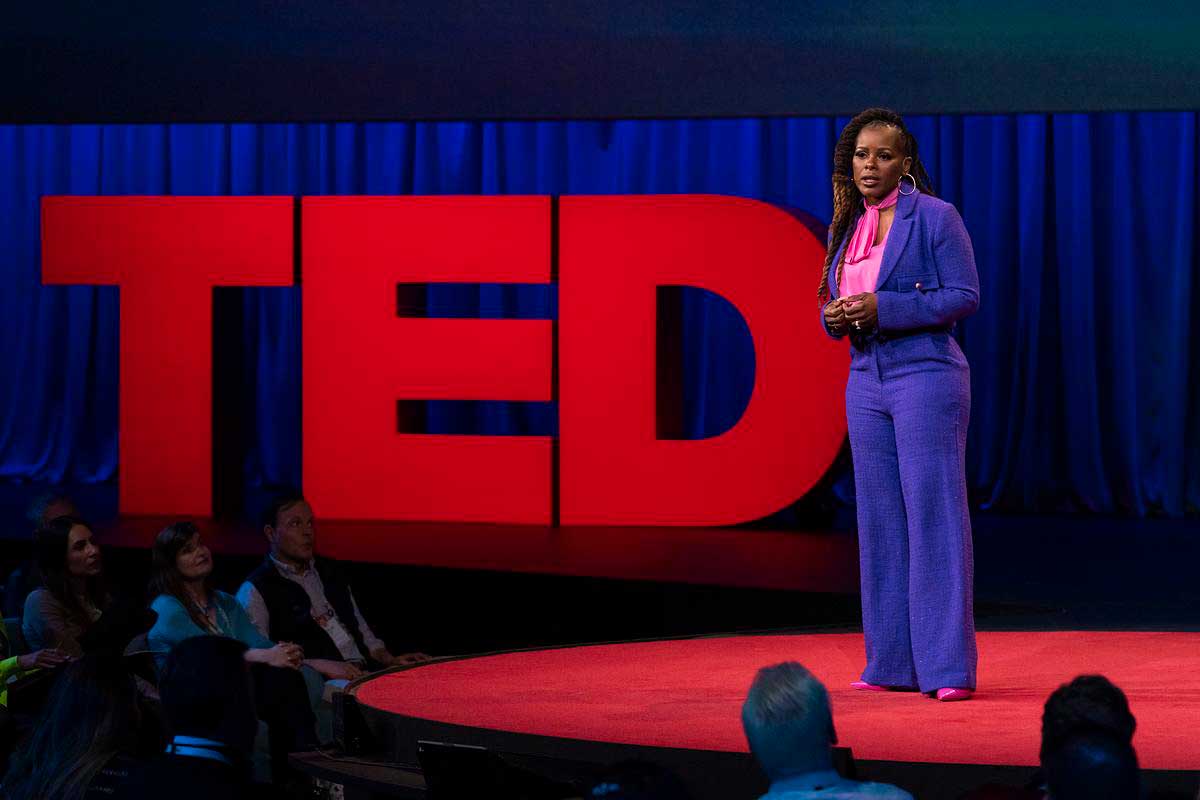
She said that more than 90% of employers and landlords can deny housing or work to people with arrests or convictions on their records, and 72% of colleges and universities use background checks that make it difficult for those folks to access higher education.
“But I believe that America is a nation of second chances — truly,” Meade said. “Nearly every state has a law on the books that allows someone to get their record cleared once they’re eligible.”
Despite this, Meade shared, there are 30 million people who are eligible to have their records cleared right now, but only 10% of them will actually get it done.
The reason, she said, is that the process is so bureaucratic, costly, and full of red tape, that it’s nearly impossible.
“If your crime was being poor — like mine — record clearance is not even accessible,” she said.

Although the reality feels bleak, Meade is a woman of action.
“I didn’t come all the way to Vancouver, TED, to give you bad news,” she cracked. “I got some good news.”
And she does! Meade’s organization, The Clean Slate Initiative (CSI), works to implement Clean Slate legislation across America that allows for automatic record clearance as soon as folks are eligible.
And CSI was just a $75 million grant from TED’s Audacious Project to support a six-year strategy to pass Clean Slate legislation in 15 states — ultimately unlocking clear records for up to 14 million people.
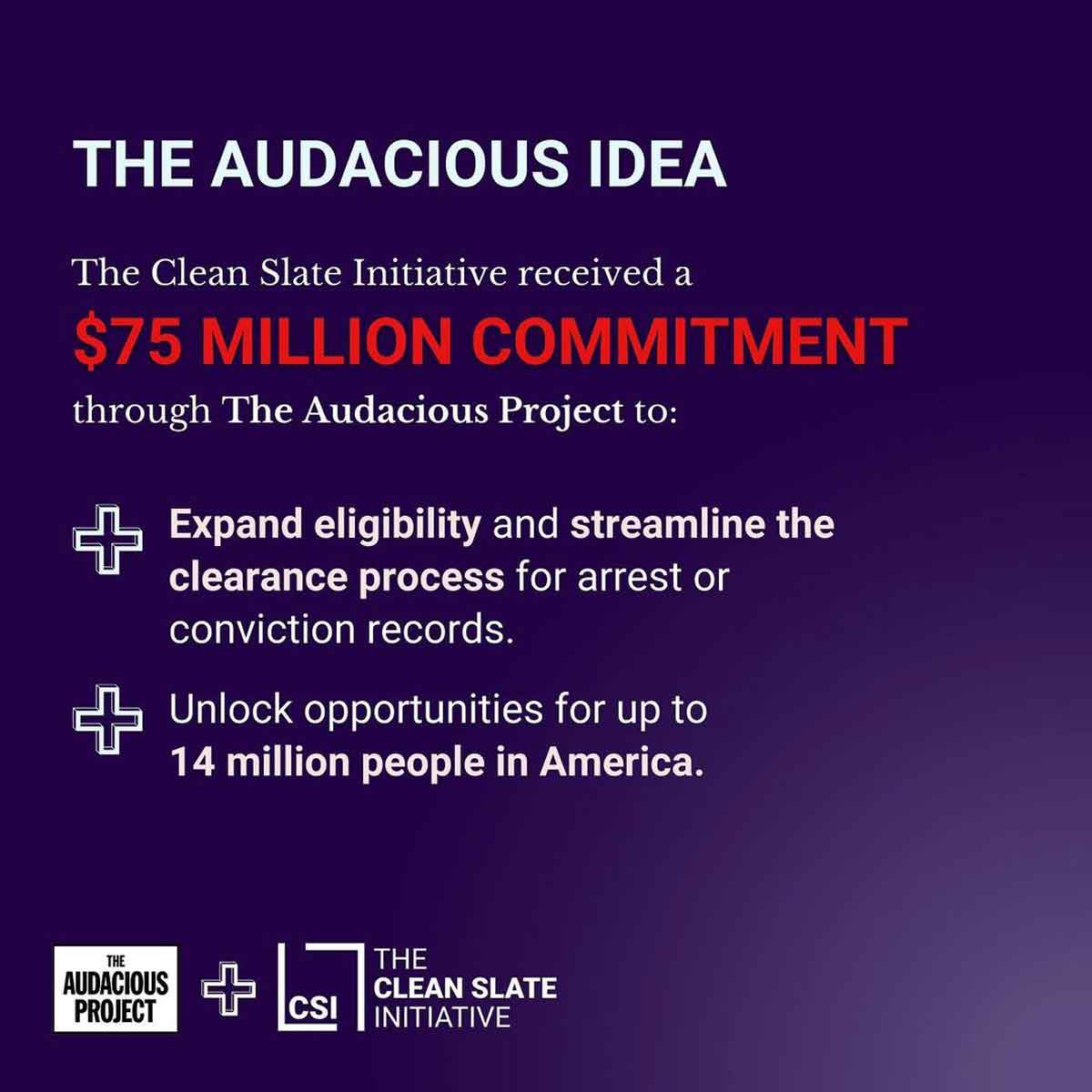
“This record clearance problem is solvable and fixable,” Meade said. “And we’re doing the damn thing.”
What is Clean Slate legislation?
Clean Slate laws are laws that allow someone’s record to be automatically cleared after they have remained crime-free for a set period of time.
So, instead of waiting years to qualify, having to leave work (that was probably challenging to get in the first place) to appear in person to petition for your clearance, filing loads of paperwork, and paying large fees for each charge on your record, the state simply clears your record automatically after a certain period of time has passed.
“We shift the burden from the person who made the mistake to the system that tries to trap them in that mistake,” Meade said. “Red tape: cut.”
The impact of Clean Slate laws
Clean Slate legislation has already passed in ten states (“I’m talking red states, I’m talking blue states, I’m even talking purple states,” Meade joked), which has resulted in millions of people with cleared records.
“That’s millions of people who no longer have to walk around with stigma and shame attached to their name,” Meade said. “It’s like, with the stroke of a governor’s pen, we were able to unlock dreams for millions.”
These states include Pennsylvania, Utah, New Jersey, Connecticut, Delaware, Virginia, Oklahoma, Colorado, California, and most recently, Michigan.
There, CSI celebrated the implementation of automatic expungement in Michigan, which immediately cleared the records of 400,000 people on the law’s very first day in effect.
With the support of The Audacious Project, these wins will continue.
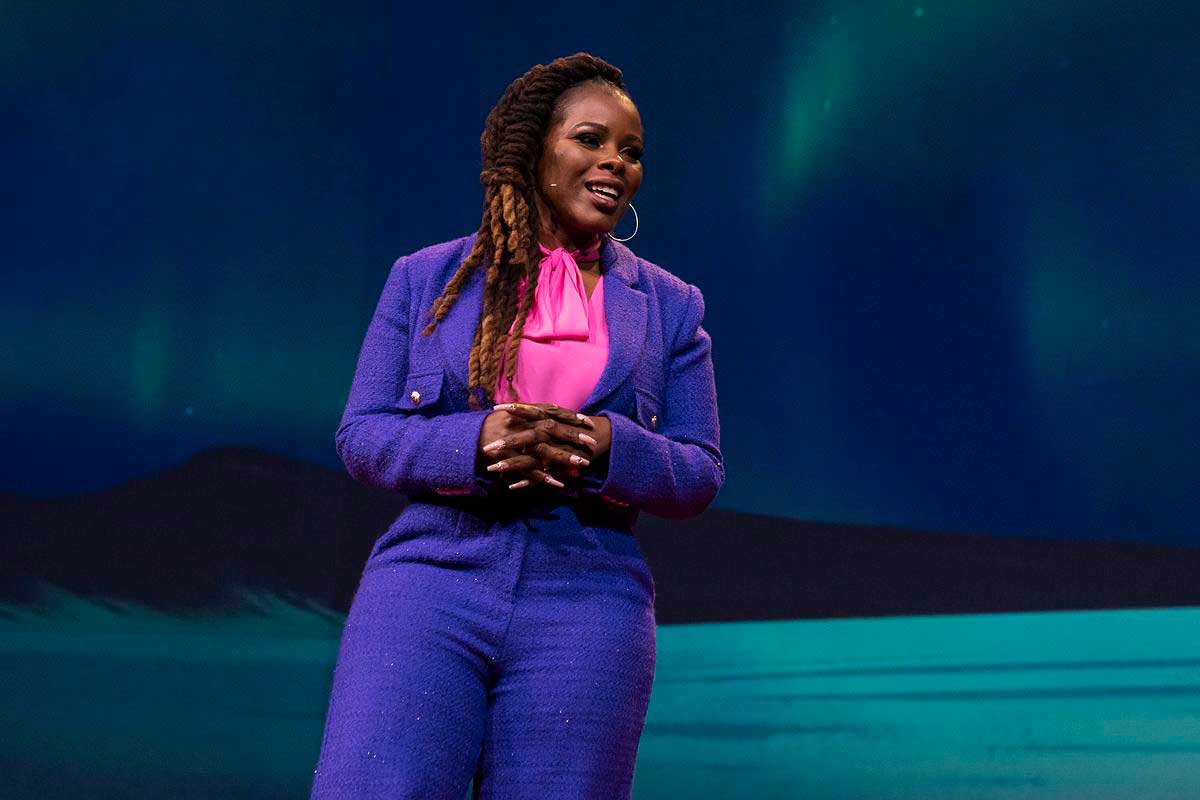
“Think about all the second chances that you’ve received,” Meade asked of the audience at the end of her TED Talk. “Think about what that felt like, what that did for you. For me, it enabled me to turn my pain into purpose, to walk into a room and feel seen; not as damaged goods, but as untapped potential. That is the power of a second chance. That is the power of a clean slate.”
Follow along with Good Good Good’s coverage of all of the best positive news, hopeful progress, and ways to make a difference — all from TED — all week long: Instagram | Newsletter | Website
Header image courtesy of Ryan Lash / TED (CC BY-NC-ND 4.0)
Good Good Good is in Vancouver this week covering TED2023. This article is part of our ongoing, exclusive coverage of the conference, with more interviews and stories to come. Follow along here all week, or on social media with our hashtag #GGGatTED.
When former pediatric emergency physician Dr. Amy Baxter was in medical school, she said at the start of her talk at TED2023, there were only about two days dedicated to pain education.
And the lecture “was sponsored by OxyContin,” Baxter quipped.
Still, she learned the basics: That pain is an alarm carried by nerves, to our spines, which is translated to our brains, where the sensation of pain registers in the body.
But Baxter believes we’ve been looking at it all wrong.
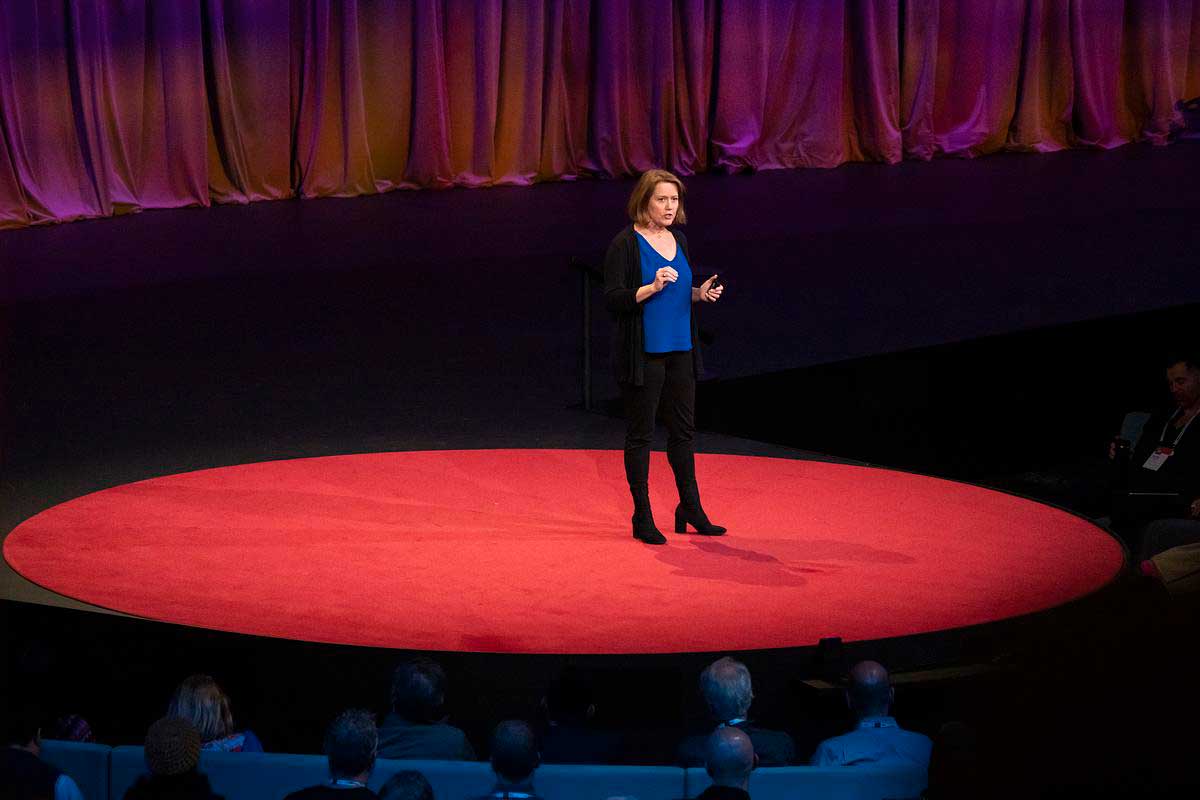
“What if pain isn’t an alarm to silence, but a learning system for survival?” she asked.
What if we were to reframe the goal of pain management from being pain-free to instead being more comfortable?
That pain-free model is what has led to the overwhelming and dangerous use of opioids — and a world where 80,000 Americans died of an opioid overdose last year, and 80% of substance use disorders start with drugs that were prescribed for treating pain.
By the way, Baxter was sure to remind the TED audience, those opioids don’t always treat pain, so much as they turn on our reward system, allowing us to feel pain but not really care because these drugs are making us feel so good. (That’s not to say they should never be used, but Baxter is on a mission to provide more pain management options.)
So, how do we realign towards a goal of more drug-free pain tolerance — rather than a goal of pain removal with addictive opioids?
Baxter’s answer is simple: Cold and vibration.
Meet Buzzy
Baxter’s eureka moment happened when she was experiencing some pain of her own. As her hand went numb, and her husband grabbed a bag of frozen peas, she named the two things that blocked her pain: Cold and vibration.
The revelation was so profound that Baxter left traditional medicine to pursue her work at Pain Care Labs, where she pioneers drug-free pain solutions, like Buzzy.
Buzzy is a device (shaped like an adorable bumble bee) that includes a small vibrational component with two ice pack “wings.” It was originally designed for children who have a fear of needles to get injections and procedures with less pain and anxiety.
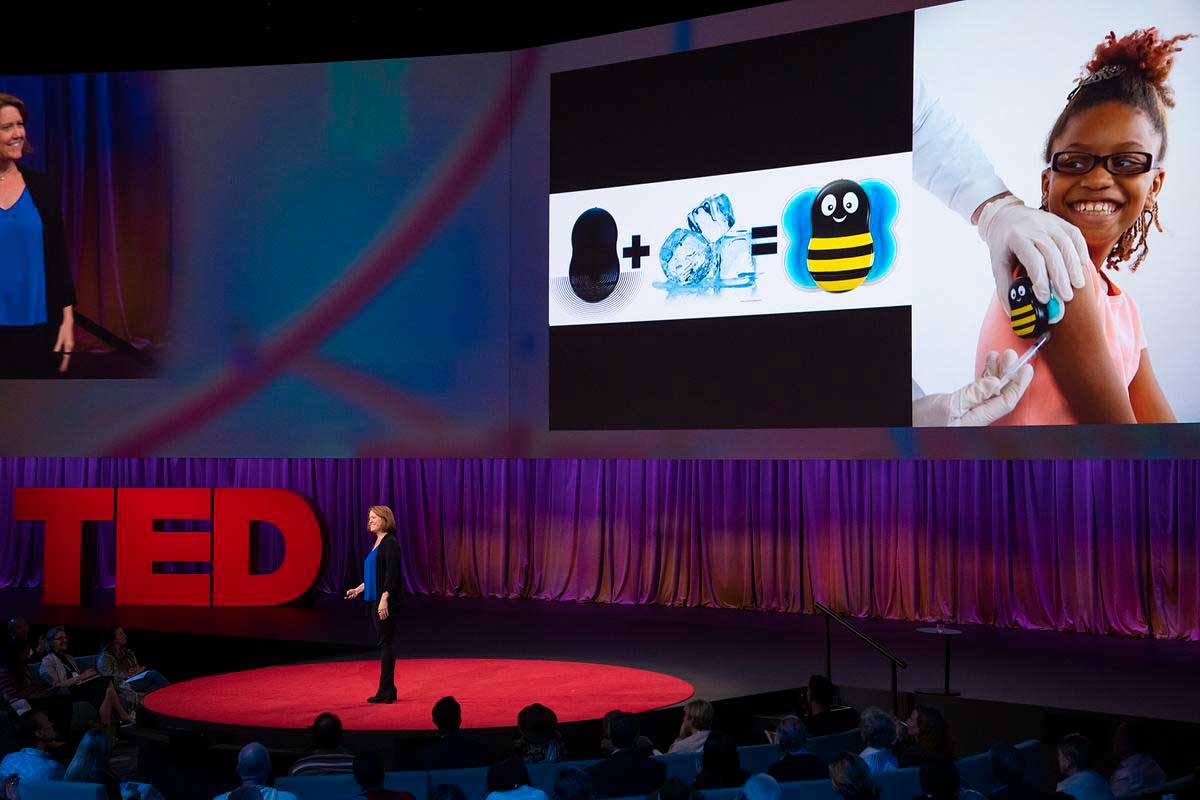
Since her initial research, development, and patent, 45 million needle procedures have decreased pain, and over 80 randomized controlled trials have been published in support of her work.
How does Buzzy work?
Baxter explained like any great pediatrician would: Vibration decreases pain because things like light touch, stretch, slight pressure, and motion all race pain to the spine and attempt to shut the gate on sharp pain.
It turns out, motion (like vibration) is most effective in shutting that gate; the exact right frequency of vibration can trigger the nerves that decrease pain.
Ice, on the other hand, allows for those sensations of cold to go to the brain, where it essentially says, “Oh, this sensation is obnoxious, but it’s not dangerous. I will decrease sensations coming from everywhere.”
This discovery is one Baxter is currently using to create a low back pain device to reduce opioid use — and she’s confident it can work.
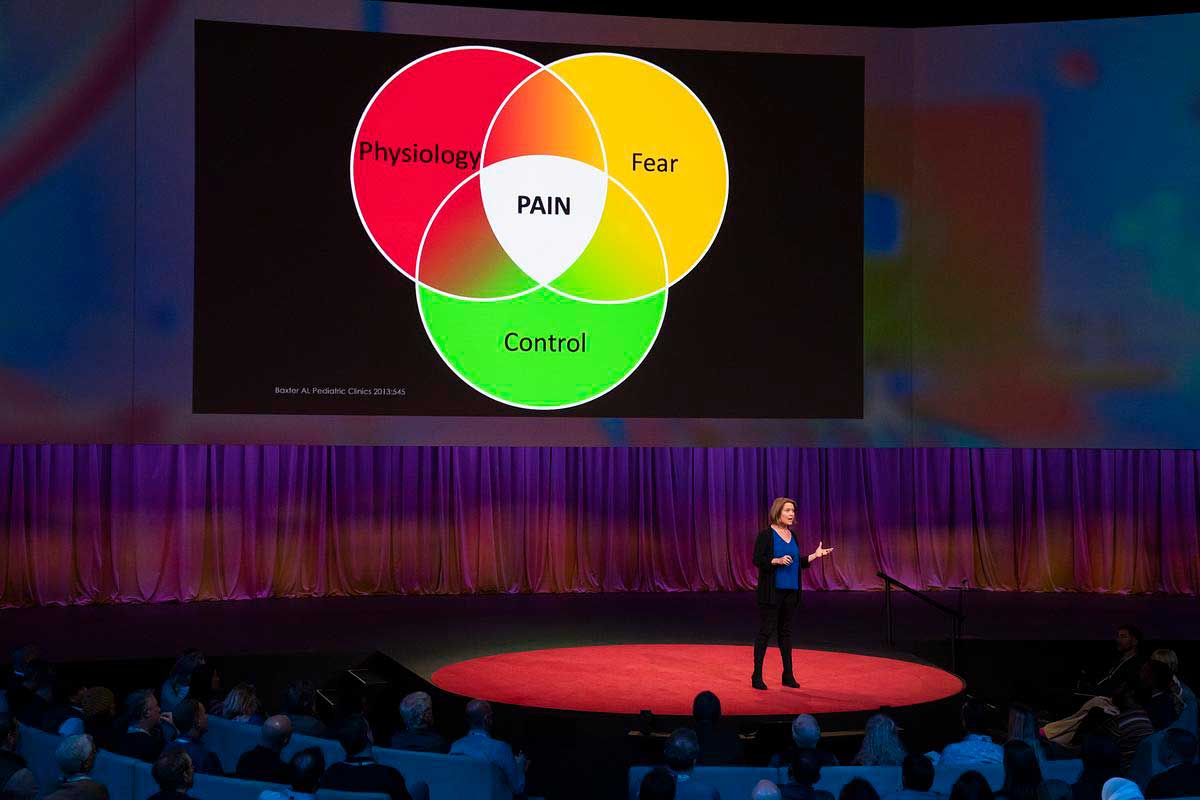
In fact, one of Baxter’s colleagues confided that he was in opioid recovery but was about to undergo a knee replacement surgery. He posed a question to Baxter: Could he get through his surgery recovery completely drug-free with the use of just cold and vibration?
“He did it,” Baxter said. “Vibration plus cold replaced OxyContin.”
This success is a delicate balance of confronting fear, maintaining control, and working with physiology.
The sensations from Buzzy are helpful, but folks with big fears of needles or large amounts of pain might also need the help of distraction. Along with the device, Baxter’s team developed a poster with monkeys on it that required counting and decision-making — and it cut pain in half.
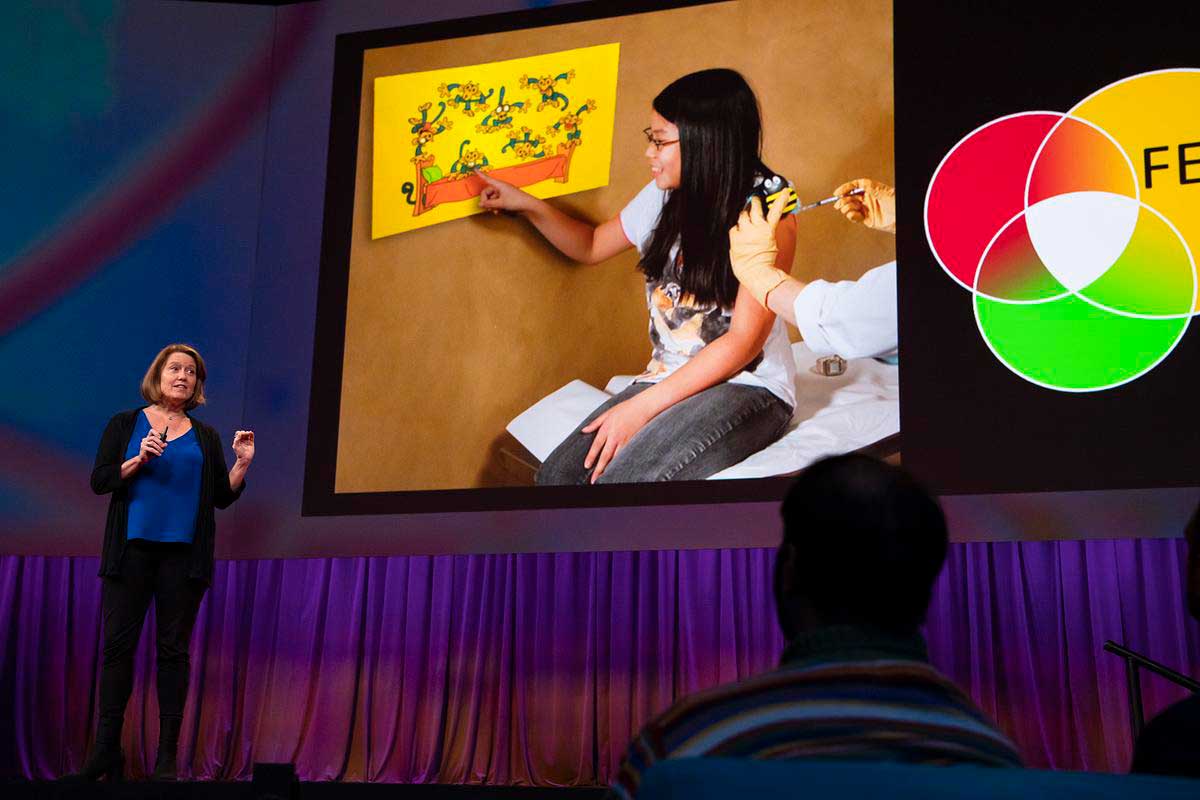
Lots of distracting and decision-making exercises can be employed in these situations, allowing people in pain to regain control of what’s going on in their brains.
“Pain is a symphony of connections,” Baxter explained. “From the sensation area, to the conductor, to the decision switchboard — and then to fear, memory, meaning, control. If the decision switchboard is too busy counting monkeys, it can’t notify fear and meaning, and you feel less pain.”
Context is also important. It’s why getting a tattoo might not be as scary as getting a shot, or why tickling yourself doesn’t work the same way as someone else tickling you.
These approaches are personal, Baxter said, and give us the opportunity to layer physiological options (like heat, cold, vibration, exercise, or deep breathing) to feel in control.
“St. Augustine called pain the greatest of evil, but if it is a survival system, it cannot be all evil,” Baxter said. “Instead, think of pain as your nagging, safety-obsessed, exaggerating friend who is sometimes wrong. It’s okay to override or ignore your friend if you know you’re safe.”
All in all, Baxter’s research continues to find drug-free pain solutions for people of all kinds — but her work at Pain Care Labs has already led to an enormous library of resources. From extensive guides on coping with needle phobias, to case studies in children’s hospitals, and expertise on opioid alternatives, Baxter envisions a future where pain is completely reframed.
“Power over pain isn’t always pretty,” she said, “But it is possible, and it is absolutely critical.”
Follow along with Good Good Good’s coverage of all of the best positive news, hopeful progress, and ways to make a difference — all from TED — all week long: Instagram | Newsletter | Website
Header image courtesy of Jason Redmond / TED (CC BY-NC-ND 4.0)
With a theme of Possibility and a good news report to kick off the conference, optimism was in the air at TED2023.
The annual conference, which took place in Vancouver this week, was the mind and heart-changing event it always is, filled with innovative solutions from scientists and entrepreneurs and nuanced conversations about technology and advancement.
While TED is always a place for exciting ideas aimed at making the world a better place, this year’s conference felt particularly geared toward good.
But that wasn’t necessarily the goal, Head of TED Chris Anderson said in an interview with Good Good Good Editor-in-Chief, Branden Harvey.

“The intention isn’t specifically to do good news,” he said. “It’s to understand the world as it really is. Part of the problem with narratives we normally have is that, for two reasons, they turn out more negative than they should be. One, we’re evolved to pay more attention to threats and the dark, and the other is that [good] things take longer to come together.”
While Anderson said he loves exploring the chaos and entropy of the world, he wanted this year’s conference to be “a deliberate attempt to look more deeply at the world.”
“And it turns out that when you do that,” he said, “That much of the news actually really is good.”
That deeper look at reality, at embracing optimism as a means to learn more, is what attracts speakers and audience members to TED. They’re the people getting things done.
“The phrase I’ve heard people use is this idea of ‘determined optimism,’” Anderson said. “The key recognition is that the future isn’t predetermined; it’s created by people. The reason people come to TED is to understand what future possibilities are.”
So, as the world’s most creative minds convened to talk about ideas that are far-out and far-reaching, TED maintains its foundation in finding the good — in making more room for possibility.
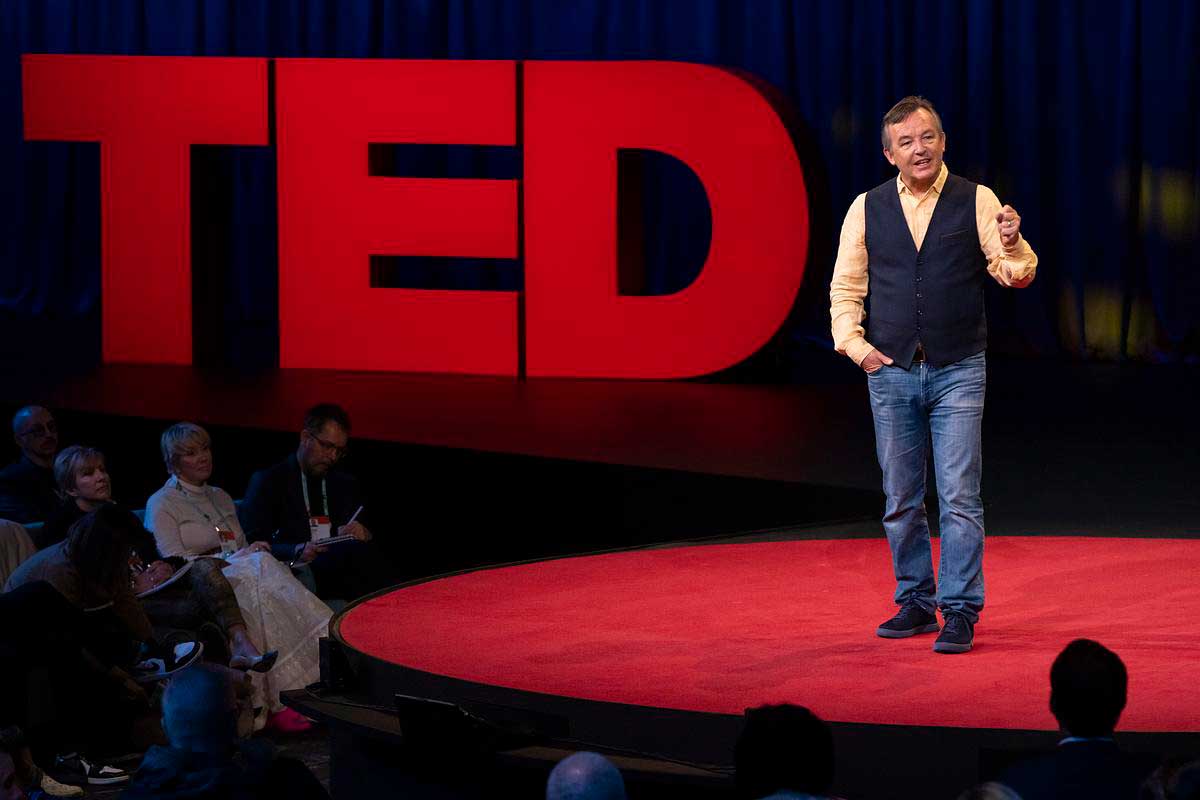
“Our theme this year has been possibility, but TED has always been, fundamentally, about possibility. That is what creativity is for, it’s to increase the amount of possibility in the world,” Anderson said. “And then, hopefully, to find in those possibility spaces, something that is beautiful and worth collectively seizing.”
To embrace all those beautiful possibilities, we’ve collected some stand-out moments of good news and collective creativity from TED2023:
The best good news shared from the stage of TED2023
The Audacious Project invested a record $1 billion in ideas that will change the world.
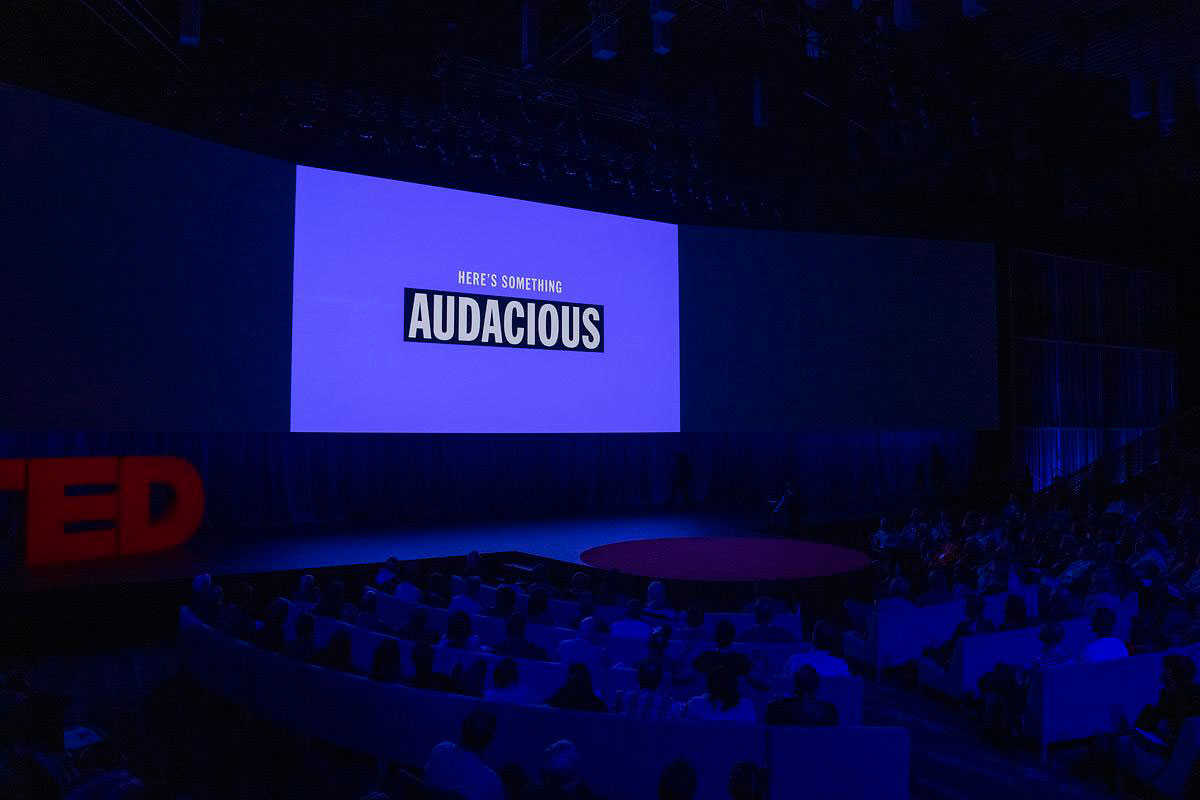
The Audacious Project, which is a collaborative funding enterprise housed at TED, has awarded a record $1 billion in grants to organizations and endeavors that aim to change the world.
The goal of the project is to close equity gaps and support social entrepreneurs who have solutions at the ready for areas like climate solutions, tech for change, health for all, social safety net, social justice, and breakthrough science.
This year’s cohort of grantees include organizations that will restore African forests, provide accessible contraceptive care across the United States, improve the foster care system, use genetic technology to save lives — and the planet — and more.
→ Read more about 2023’s 10 Audacious Project grant recipients.
Groundbreaking genetic technology is being used to save lives — and the planet.
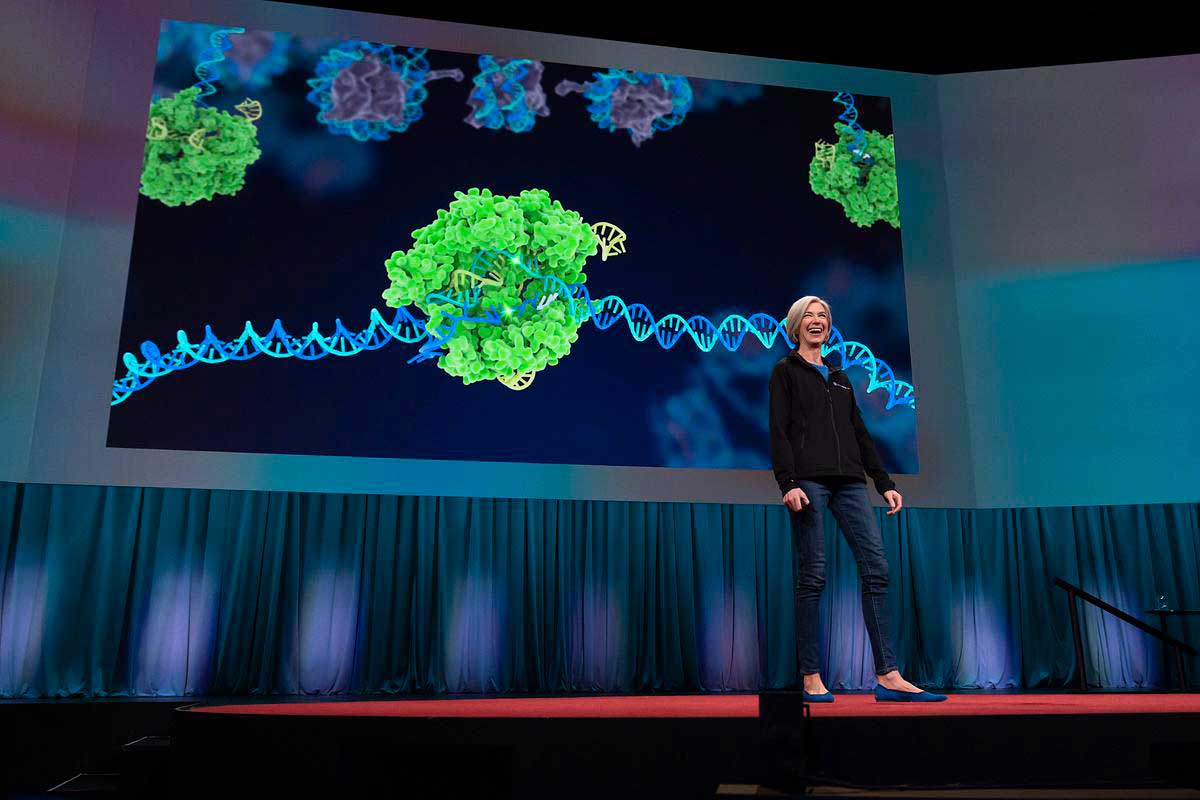
One of the Audacious Project grantees is the Innovative Genomics Institute, which works on groundbreaking genome technology designed to majorly impact healthcare and climate action.
Jennifer Doudna, the founder and chair of the Innovative Genomics Institute’s governance board, shared these breakthroughs on the TED stage, walking viewers through the tech behind metagenomics and CRISPR.
These genetic innovations can reduce and eliminate methane in the gut biome, which can reduce emissions in the atmosphere, as well as help manage and cure diseases like Alzheimer’s and asthma.
The institute will use its funding from The Audacious Project to work on two key projects: using a noninvasive treatment that would eliminate asthma-producing molecules in children at risk for asthma, and curbing agricultural methane emissions.
“We’re bringing together these two breakthrough technologies — metagenomics and CRISPR — to create a brand new field of science, called precision microbiome editing,” Doudna said in her TED Talk.
“This will allow us to discover links between dysfunctional microbiomes and disease or greenhouse gas emissions. We can develop modified and improved microbiome editors to show that they’re safe and effective. And then we can deploy these optimized solutions that will be transformative in the future.”
An environmental data scientist reminded us that it’s maybe not actually the end of the world.
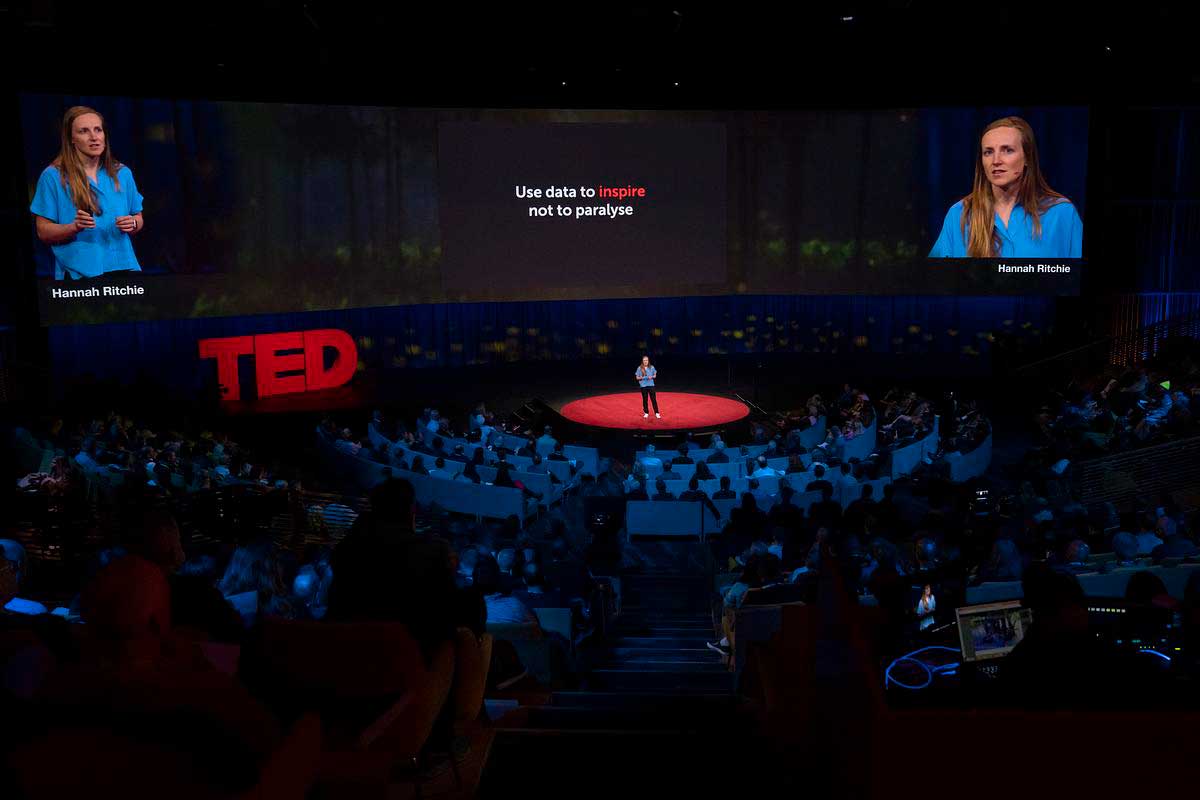
Hannah Ritchie, an environmental data scientist with Our World In Data, shared her expertise in exploring how environmental issues intersect with others like poverty, global health, and education.
And while she knows that addressing climate change is urgent, she thinks we need to clear up some misconceptions first.
She explained how the world has never truly been sustainable, and that this generation is the first one that can achieve both a long, healthy life for all humans and an opportunity to improve the health of the planet. Both of these are required to reach true sustainability.
By looking at the data from the past decades, Ritchie pointed to the truth that many of the most unsettling statistics about climate change have already reached their peak and are now improving.
For instance: Her carbon footprint is half of her grandparents, the price of batteries have fallen by 98% in a very short time, and child mortality and extreme poverty are down across the globe.
Her thesis? That data can be used to inspire us — not paralyze us in fear.
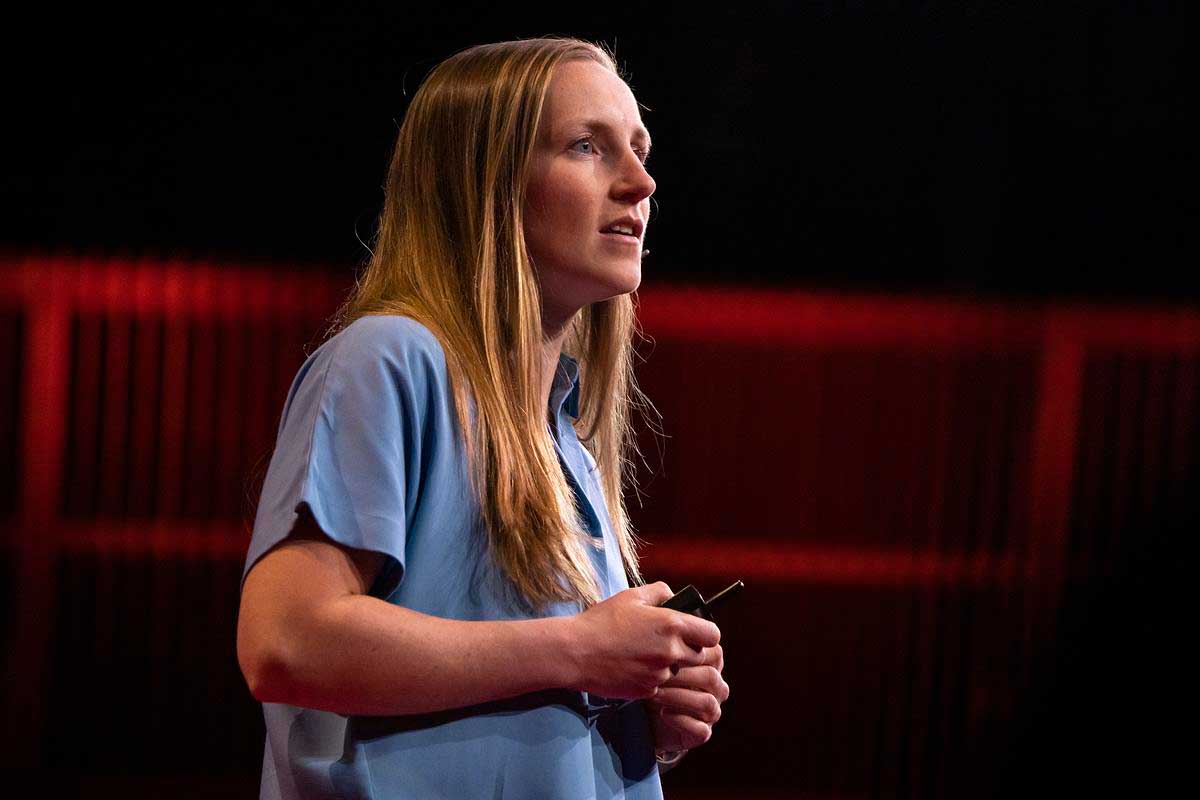
“We need to reframe sustainability as an opportunity because it is an opportunity,” Ritchie said.
“It’s an opportunity to provide clean, abundant energy for everyone, whether that’s power in cities or countries, or getting rural communities connected for the very first time. It’s about not being at the whims of fossil fuel markets, or having millions pulled into fuel poverty when dictators invade neighboring countries. It’s about breathing clean air. Stopping people from dying is not a sacrifice.”
→ Read more about Hannah Ritchie in our interview from TED
A group of stakeholders created a coalition to help cities transition from linear to circular economies.
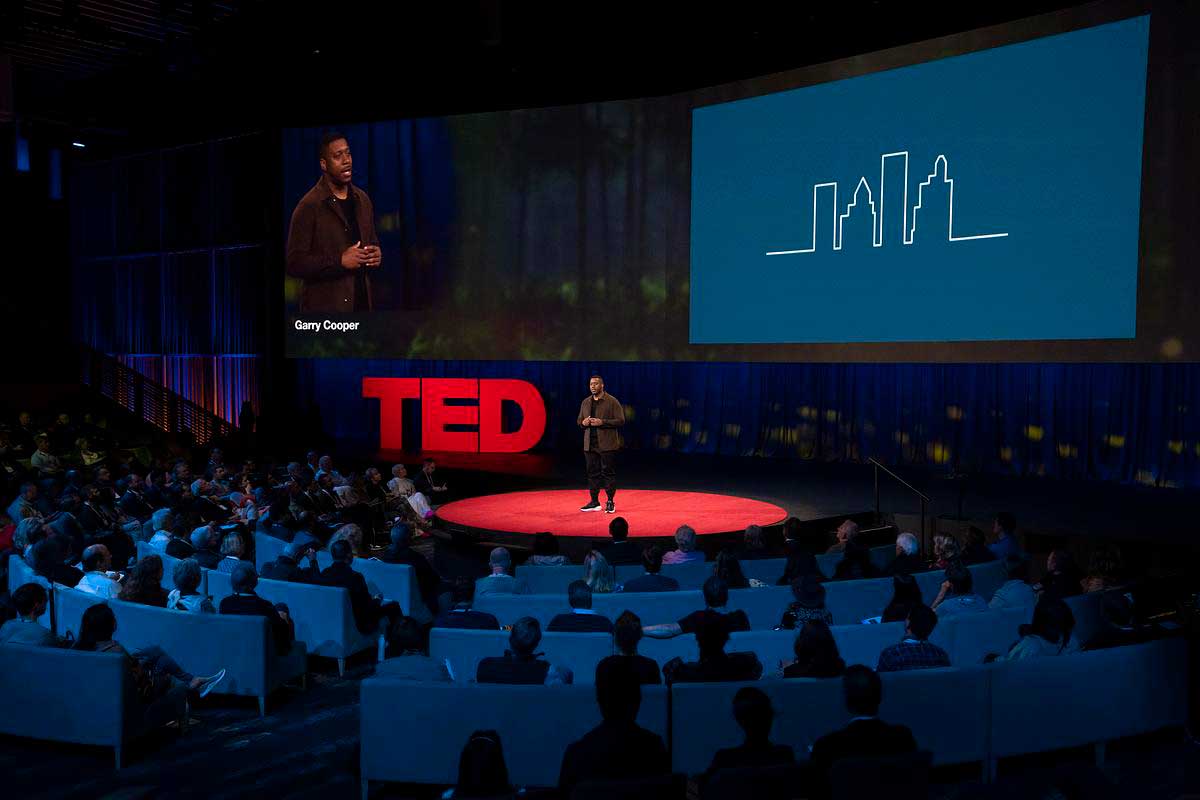
Garry Cooper started his company, Rheaply, to be a hub for repurposing resources. His goal? To swap our traditional, linear economies with circular economies that shrink landfills, decrease greenhouse gas emissions, and create jobs — especially in cities.
His vision for scaled circular cities requires building a digital infrastructure where people have universal access to available things, operational and logistical infrastructure that helps repurpose and refurbish resources, and incentives that encourage every person and business in a community to participate.
While his business is built on these concepts, he doesn’t want to be the only one. Cooper, along with a number of other stakeholders, has created the Circular City Coalition. The coalition works to facilitate multi-sector relationships and provide adaptive funding that make circular cities possible.
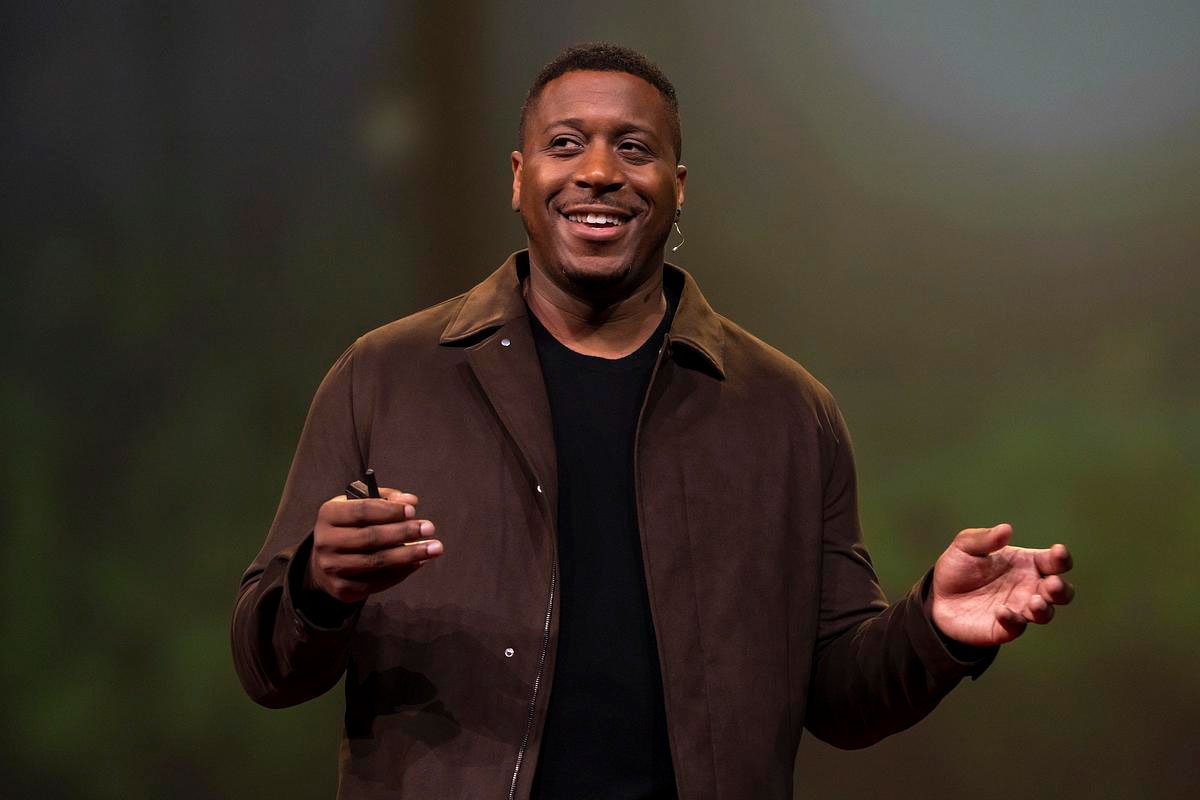
“Cities are ground zero in the fight against global climate change. In that fight, we’re all neighbors; not competitors,” Cooper said.
“We need each other in whatever city or town we reside in. If we all participate in sharing resources locally, a net zero future is possible.”
Scientists have invented solar power panels that can provide wireless energy from space.

Ali Hajimiri spent his TED Talk exploring his work at the Space Solar Power Project, which includes the development of a modular, lightweight, foldable device that collects sunlight in space, converts it into electric power, and wirelessly sends that power back to Earth.
Aside from the simple everyday uses of this power, Hajimiri hopes to use this easy-to-dispatch power to support people in crisis. Whether it’s climate disaster, war and conflict, or a lack of power infrastructure, this space solar power has the potential to transform — and save — human lives.
“Now that we know we can send energy wirelessly, the question is: how far can we go?” Hajimiri asked from the TED stage. “Really, how far can we go?”
→ Read more about Ali Hajimiri and the Space Solar Power Project’s work
Scientists are genetically modifying crops to accelerate photosynthesis and provide more food to people in need.
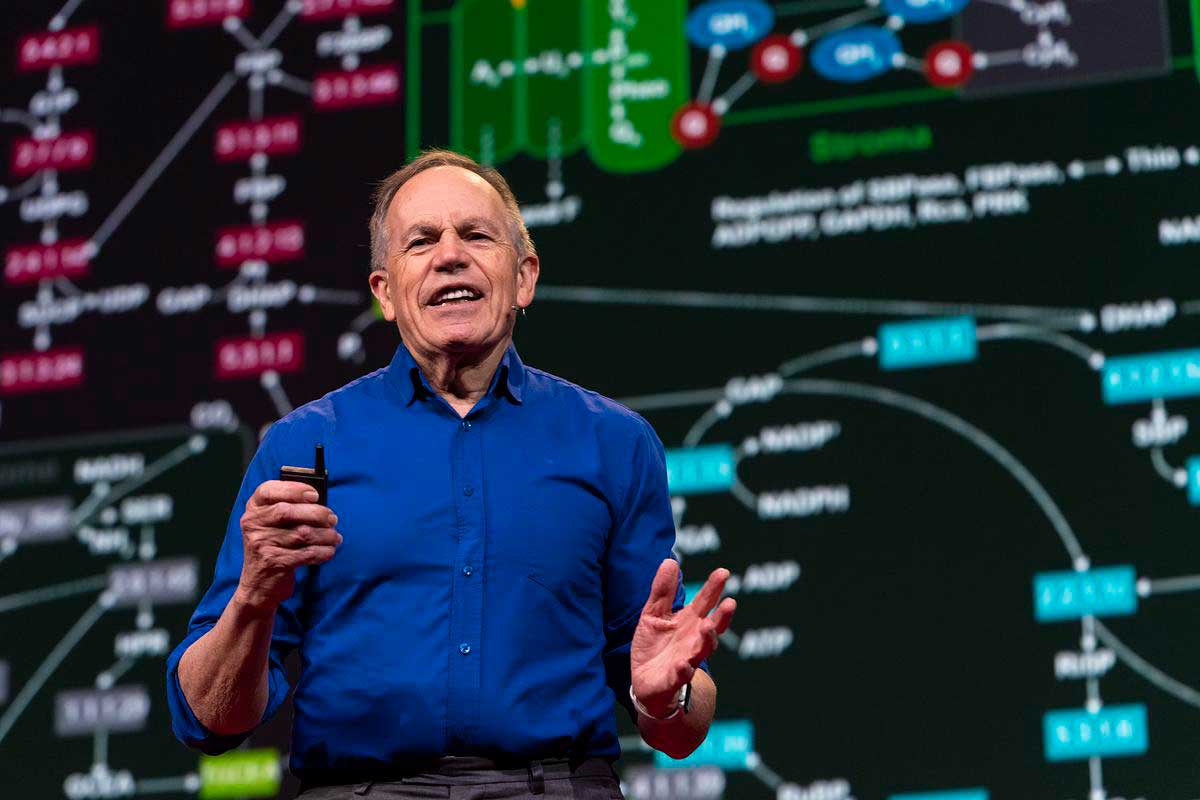
Crop sustainability scientist Steve Long built upon a concept many of us learned in elementary school: Photosynthesis.
Long’s work includes the genetic engineering of crops to accelerate photosynthesis, improving crop yields so people across the globe who are food insecure can better access the food they need to thrive.
An example he outlined was cowpea, a crop similar to soybeans that grows in West Africa. Together with a number of other scientists, a version of cowpea has been created that is both insect-resistant and has the potential to provide a higher yield through photosynthesis improvements.
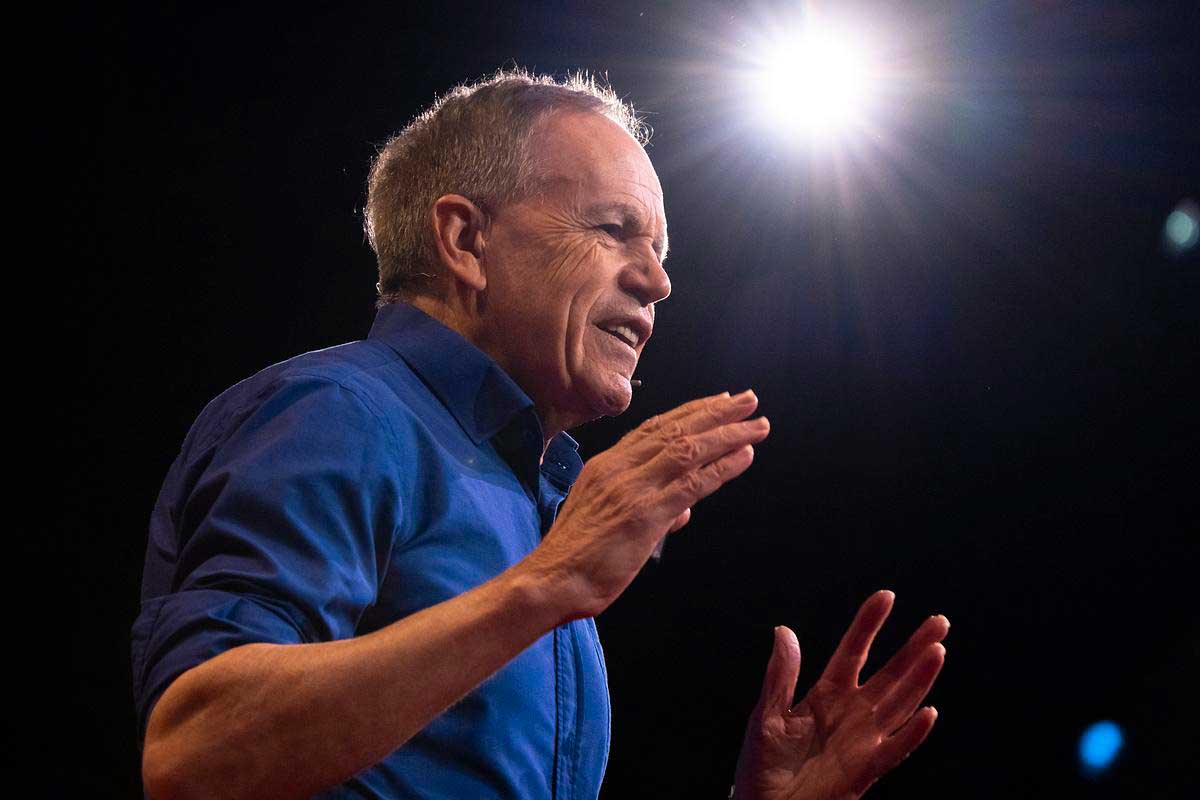
Long shared that this technology has the power to “reduce the risk of food insufficiency, protect the environment without moving onto more land to produce more food — and maybe even remove carbon dioxide from the atmosphere.”
He called it a “21st century green revolution.”
A suicide prevention advocate asked every attendee to shout the name of someone they love and adore and can’t imagine life without.

Gus Worland, an Australian TV and radio personality, founded Gotcha4Life after losing a dear friend to suicide. His TED Talk was vulnerable, emotional, and beautiful, as he explored the power of connection and compassion in decreasing the suicide epidemic across the globe.
He said that he knows global suicide prevention can feel like “too big a task,” and urged audience members to focus on the people in their own close circles, in their own communities, who need extra support to confront the pain and exhaustion that comes with mental health conditions.
The first way to do that?
“Shut your eyes for me, and think of someone you adore and could never imagine life without.”
Members of the TED audience did just that — and then were asked to simultaneously shout out the name of the person they thought of.
The last part of the assignment? To send the following text to that special person:
“I love you. I miss you. I’ll see you soon. Xoxo”
Worland was adamant everyone do this — even if it felt awkward, even if it spurred a vulnerable conversation — and he planned to follow up with everyone he engaged with throughout the rest of the conference to make sure they sent that message.
“I want everyone to have a little connection to the person that is most important to you,” he said. “It’s all about connection.”
Millions of hectares of land are being restored in Africa by local environmentalists.

Wanjira Maathai is the daughter of the first African woman to win the Nobel Peace Prize: Mangari Maathai, for founding the Green Belt Movement. The organization is a woman-led, grassroots initiative that has empowered women across African communities through the act of planting trees.
It was this work that led to Wanjira’s own passion to protect African lands, too. She now leads the Restore Local project, which helps advance forest protection by investing in local restoration projects that already exist across the continent.
Under AFR100, Africa-wide initiative to restore 100 million hectares of land by 2030, and with the help of The Audacious Project, Restore Local will spend the coming years restoring three main regions: The Lake Kivu and Rusizi River Basin, Kenya’s Great Rift Valley, and Ghana’s Cocoa Belt.
“All my life I was made acutely aware of just how precious green vegetation truly is. Nature is the source of everything good, my mother would tell me all the time,” Wanjira said.
“The vision we have to re-green the African continent, it’s not only possible; it is vital.”
Doctors are reimagining pain with the simple technology of cold and vibration.
Initially designed to help children with a fear of needles more comfortably get their vaccines, Dr. Amy Baxter’s Buzzy is a device that combines cold and vibration to help alleviate pain.
But Baxter’s work goes beyond Buzzy — she hopes to completely change the way we think about pain. Shifting from a goal of being “pain-free” to a goal of increased comfort for individuals, Baxter’s work centers solutions that decrease our dependence on opioids and instead targets how pain registers in the brain.
Her current research focuses on creating a drug-free solution to lower back pain and implementing new scales of pain and nausea in pediatric environments to better meet the needs of young patients.
“What if pain isn’t an alarm to silence, but a learning system for survival?” she asked.
→ Read more about Baxter’s work to fight pain as we know it
Millions of U.S. residents will have their records expunged in the next six years.
Sheena Meade, the CEO of The Clean Slate Initiative, has led the charge to implement Clean Slate legislation in 10 states — and she’s not slowing down any time soon.
Clean Slate laws are laws that allow someone’s record to be automatically cleared after they have remained crime-free for a set period of time — and they are a major contrast to current legislation that requires time, money, and resources to clear records that many folks simply do not have.
With the help of The Audacious Project, the Clean Slate Initiative will target 15 more states close to passing these laws, which will clear the records of up to 14 million Americans in the coming years.
“That’s millions of people who no longer have to walk around with stigma and shame attached to their name,” Meade said. “It’s like, with the stroke of a governor’s pen, we were able to unlock dreams for millions.”
→ Read more about Meade and The Clean Slate Initiative
Good Good Good is in Vancouver this week covering TED2023. This article is part of our ongoing, exclusive coverage of the conference, with more interviews and stories to come. Follow along here all week, or on social media with our hashtag #GGGatTED.
Follow along with Good Good Good’s coverage of all of the best positive news, hopeful progress, and ways to make a difference — all from TED — all week long: Instagram | Newsletter | Website
Header photo: Photo courtesy of Gilberto Tadday / TED (CC BY-NC-ND 4.0)
Good Good Good has been covering TED's annual conference and spinoff events — like TED Women, TED Next, and TED Countdown — as press since 2023. Our journalists watch TED Talks live and interview speakers after they get off stage, giving Good Good Good the opportunity to share stories like this before TED Talks are released online.
2023’s ‘Possibility’-themed TED conference was full of awe-inspiring moments.
From good news reports, climate innovations, and artificial intelligence for good — to vulnerable conversations about death, mental health, and human rights — attendees were left ready to take their marching orders to fill the world with more good.
Speakers were supported by audience members, sprinkling notes of laughter, applause, and cheers at the perfectly appropriate times.
Countless speakers were celebrated with standing ovations, too, one of the most thoughtful gifts any TED Talk-er can receive.
It feels almost inconceivable to try to narrow down our favorite moments, but we’re here to share some of the love with five activists who moved the TED audience to their feet at this year’s annual conference.
Meet the activists who received standing ovations for their TED Talks
Golshifteh Farahani
Iranian Actor, Musician & Activist
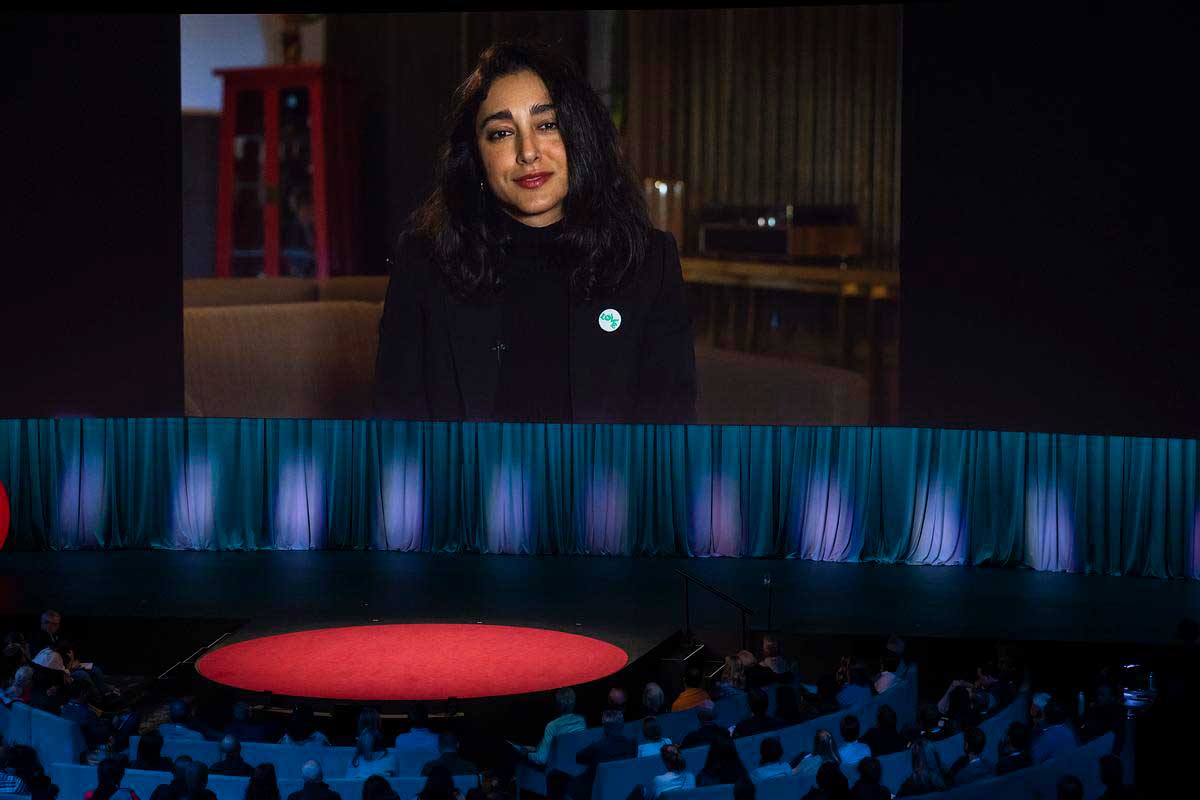
During TED’s first session in Vancouver, Golshifteh Farahani spoke live via webcam from Rome.
The Iranian artist and activist has spent her life studying classical music and working as an acclaimed professional actor, but in 2008 was accused of working with the U.S. CIA and has since been exiled from her home country of Iran for the last 15 years.
In that time, Farahani has continued to push boundaries, acting in over 30 films, releasing several songs, and in her environmental and human rights activism, advocating for Iranian women’s liberation.
She spoke especially to this struggle for freedom in her TED Talk, reciting a list of “I am” statements, positioning herself in the shoes of so many individuals who have been on the front lines of the fight for equality in Iran.
“We can all decide today to be the bridge, to unite, rather than separate,” she said.
Farahani ended her talk with a quote from the poet Saadi:
“Human beings are members of a whole, in creation of one essence and soul. If one member is afflicted with pain, other members uneasy will remain. If you have no sympathy for human pain, the name of human you cannot retain.”
Though she wasn’t physically in the room at TED, she lifted a pair of headphones to her ears at the end of her talk so she could take in the and show gratitude for the thunderous applause filling in the venue in Canada.
Nadya Tolokonnikova
Russian Artist & Activist; Founding Member of Pussy Riot
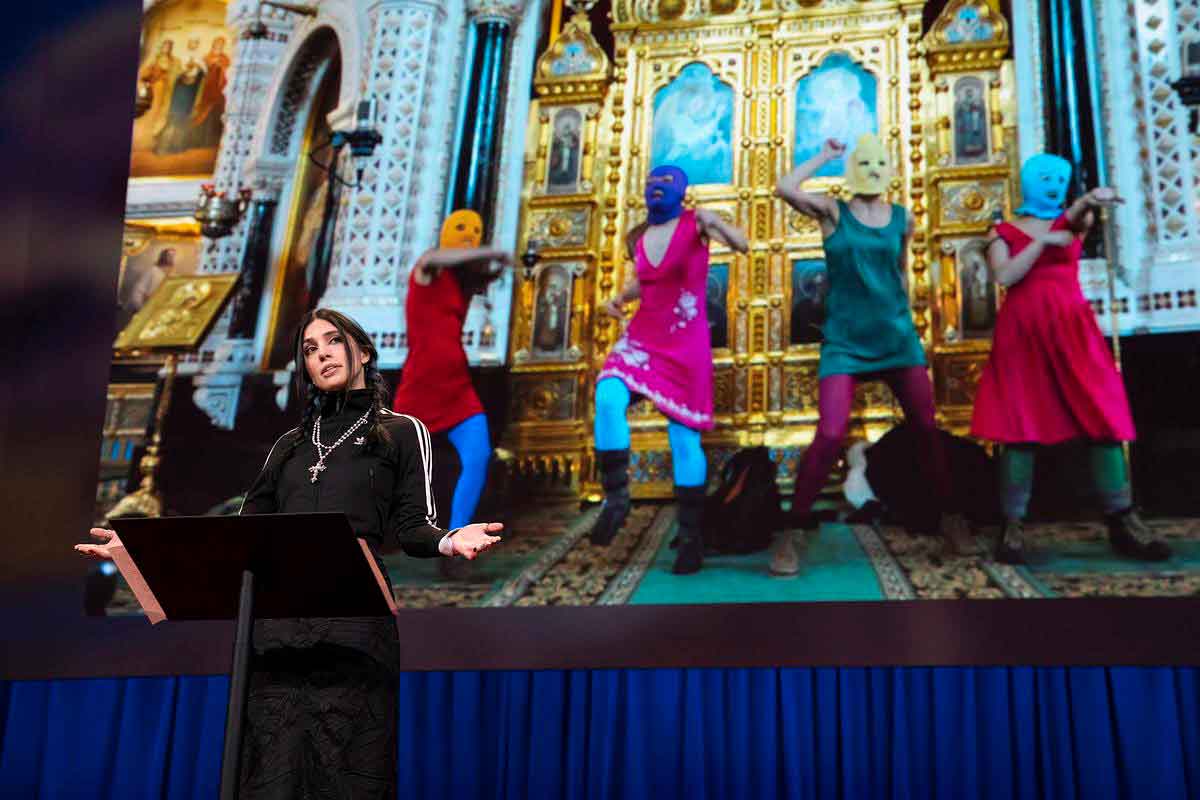
Nadya Tolokonnikova, a conceptual artist, activist, and founding member of the feminist protest art group Pussy Riot, brought a delicate balance of rage and hope to TED2023.
The Russian activist gained global notoriety — and was sentenced to prison — in 2012 following the performance of “Punk Prayer,” an anti-Putin piece she staged with comrades inside a Moscow cathedral. She started a hunger protest and was sent to a Siberian penal colony before her release in December 2013 — and continued a life dedicated to resistance.
In 2021, she was declared a “foreign agent” by Russia. Although she now lives in exile, Tolokonnikova has plenty of work to continue. She is a co-founder of the independent news outlet Mediazona, art platform UnicornDAO, and raised more than $7 million for Ukrainians last year.
At the start of her TED Talk, she asked audience members to stand while she walked them through her sentencing, and throughout the rest of her speech, explored her years of activism and resistance.
She closed with a message directly to Putin, “wanted criminal to wanted criminal:”
“You have already lost,” she said. “That’s why you’re so afraid. The world is on Ukraine’s side. And in your final hour, when you pray, to whoever you pray to: know that she is on our side. She is on the side of truth.”
Gus Worland
Mental Health Advocate; Founder of Gotcha4Life
Gus Worland, an Australian TV and radio personality, took to the TED stage to tell the story of losing his dearest friend and mentor to suicide.
Emotionally, he explored the loss he endured — as well as the outpouring of support and connection he experienced when he shared his story on his radio show back home in Sydney, Australia.
When he realized how many folks had their own stories to tell, he started his foundation: Gotcha4Life, with the mission of making sure every person has someone they can turn to and be accepted and loved, “warts and all.”
Worland’s mission is to bring suicide rates to zero, but he knows that changing those scary, overwhelming numbers can’t happen all at once — and instead urged the TED audience to focus on the people closest to them — “their village.”
Towards the end of his time, Worland asked everyone in the audience to close their eyes and think of someone they love and couldn’t imagine living without. Then, he had them shout out the name of the person who came to mind and promise to send them the following text message:
“I love you. I miss you. I’ll see you soon. xoxo”
In the subsequent days of the conference, he playfully threatened, he would ask everyone he saw what came of that conversation — one, that, at least, would make someone feel just a little more loved, and at best, would inspire a brief, but deeply important conversation about suicide prevention.
Sixto Cancel
Foster Care Transformation Advocate; Founder of Think Of Us
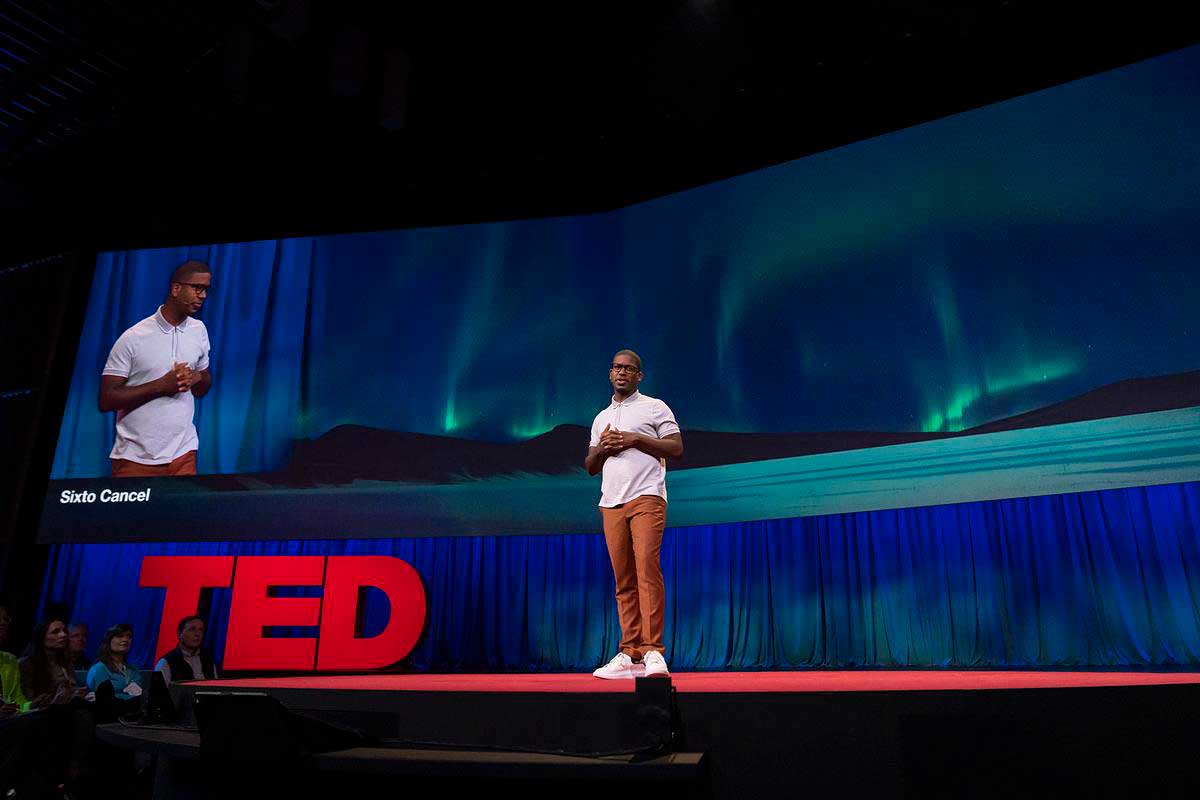
Sixto Cancel, the founder and CEO of Think Of Us, a nonprofit dedicated to advancing the foster care system, began his TED Talk with his own vulnerable journey through foster care.
He shared his story of life without a loving home, bouncing around the foster care system, which ultimately culminated in the realization that he had in fact had aunts and uncles who had served as foster and adoptive parents for longer than he had been alive — and were just 58 miles away from his last foster home.
But he had no idea they existed — nor they he — until he was nearly 30 years old.
“My whole life, I was 58 miles and a couple of questions away from being raised by people who would have loved me; my own family,” he said.
This led to Cancel’s mission to gather data and insights directly from people with lived experiences in the system, and to replace the traditional foster care model with that of kinship care, placing children in homes with extended family members or adults they already know first and foremost.
Think Of Us is one of ten members of the 2023 cohort of The Audacious Project, and will receive over $47 million in grant funding to continue its life-changing — and systems-changing — work.
“If we push just a little bit harder in this very moment, we can actually live in a new reality, where when children have to come into the foster care system, the first thing that is looked at is extended family and people that they know,” he said.
“If we are able to achieve that, we will literally be able to ensure that millions of children will come off of that school bus, go into their homes, and look at family members, people that they know, and say ‘I am loved.’”
Sheena Meade
Criminal Justice Reform Advocate; CEO of The Clean Slate Initiative
Sheena Meade, the CEO of The Clean Slate Initiative, began her TED Talk by telling the story of her arrest: Where she was handcuffed in front of her children because an $87 check for groceries bounced.
Although Meade quickly rectified the situation, she spent years dealing with the hurdles that came with having an arrest on her record.
Her work at The Clean Slate Initiative is to make automatic record clearance a reality for as many Americans as possible. So far, the organization has helped implement Clean Slate laws in ten states, where people’s records are cleared after a set amount of time being crime-free.
“We shift the burden from the person who made the mistake to the system that tries to trap them in that mistake,” Meade said. “Red tape: cut.”
With the help of funding from The Audacious Project, Meade said up to 14 million people could have their records expunged in the next six years.
This story is one of second chances, creative problem solving, and political advocacy.
“This record clearance problem is solvable and fixable,” Meade said. “And we’re doing the damn thing.”
Good Good Good is in Vancouver this week covering TED2023. This article is part of our ongoing, exclusive coverage of the conference, with more interviews and stories to come. Follow along here all week, or on social media with our hashtag #GGGatTED.
Follow along with Good Good Good’s coverage of all of the best positive news, hopeful progress, and ways to make a difference — all from TED — all week long: Instagram | Newsletter | Website
Header image: Photo courtesy of Gilberto Tadday / TED (CC BY-NC-ND 4.0)
Good Good Good has been covering TED's annual conference and spinoff events — like TED Women, TED Next, and TED Countdown — as press since 2023. Our journalists watch TED Talks live and interview speakers after they get off stage, giving Good Good Good the opportunity to share stories like this before TED Talks are released online.
If you’re on TikTok in any capacity, there’s a solid chance you’ve gotten a little melody stuck in your head recently. It goes a little something like this:
“If I were a fish and you caught me, you’d say ‘look at that fish’ / shimmering in the sun / such a rare one / can’t believe that you caught one.”
The tune is a duet between musician Corook (whose off-stage name is Corinne Savage) and their partner Olivia Barton, both indie musicians.
The pair shared a video of them singing the happy, acoustic song in a video on April 11, which has since garnered over 2 million likes and over 13 million views.
The caption of the video, which was posted by Corook, reads: “I was having a very emotional day, feeling insecure and out of place. So I cried to Olivia, and after feeling through it, we wrote this song in 10 minutes to remember the joy in being different.”
@hicorook I was having a very emotional day, feeling insecure and out of place. So I cried to Olivia and after feeling through it, we wrote this song in 10 minutes to remember the joy in being different 🐸 happy Tuesday
♬ original sound - corook
The chorus of the song leans into a thesis of radical acceptance and glee, ditching the hateful rhetoric that often thrives online.
“Why’s everybody on the internet so mean? Why’s everybody so afraid of what they’ve never seen?” the singers ask.
“If I was scrolling through and I saw me / flopping around and singing my song / I’d say ‘Damn, they’re cute’ and sing along”
The song immediately became a hit on “the clock app,” and comments, stitches, and duets came pouring in, from people rejoicing in the song, adding their own musical flair — or even a children’s choir singing the song in school.
The song isn’t just an upbeat, catchy carol. It is providing real connection, hope, and joy — for singers and listeners alike.
“I feel like I’m just coming into myself as an adult and allowing myself to be who I have always been and that is somebody that doesn’t really fit into these boxes, that I feel like I would classify as normal, or we would classify as normal in society,” Corook said a few days after sharing the original video.
“It’s a really lonely, scary feeling to not fit in, so having such a huge response from all of you wonderful people has made me feel so much less alone. Being different is f*cking cool and I hope you guys feel similarly.”
Three days after posting the original video, they announced the song would be available to stream on April 21 — and now that the full masterpiece is in the world, folks are feeling and healing.
“I cannot wait to sing this song to my baby daughter until she believes every single word because we are breaking cycles over here,” TikTok user @hithisismarissa shared.
“Words can’t explain how much I love this song,” user @rileys_cosplay shared while dancing to the second verse.
The full version of the song builds on its themes of body acceptance and self-love.
“If I were a rock you would pick me up and say ‘that’s a nice rock,’” the second verse begins. “Skippiest on the lake / plop, plop, plop / I’m the perfect shape.”
TikTok user @roni.glad recorded their reaction to the full tune, crying along with the caption “God I needed this song as a kid.”
It’s an all-encompassing mental health anthem for anyone who doesn’t feel like they fit in; queer, gender-nonconforming, neurodivergent, disabled, and fat folks of all stripes.
“Your song has gladly done more work on my emotional and physical well-being than my therapist ever has,” @yourladykaye commented.
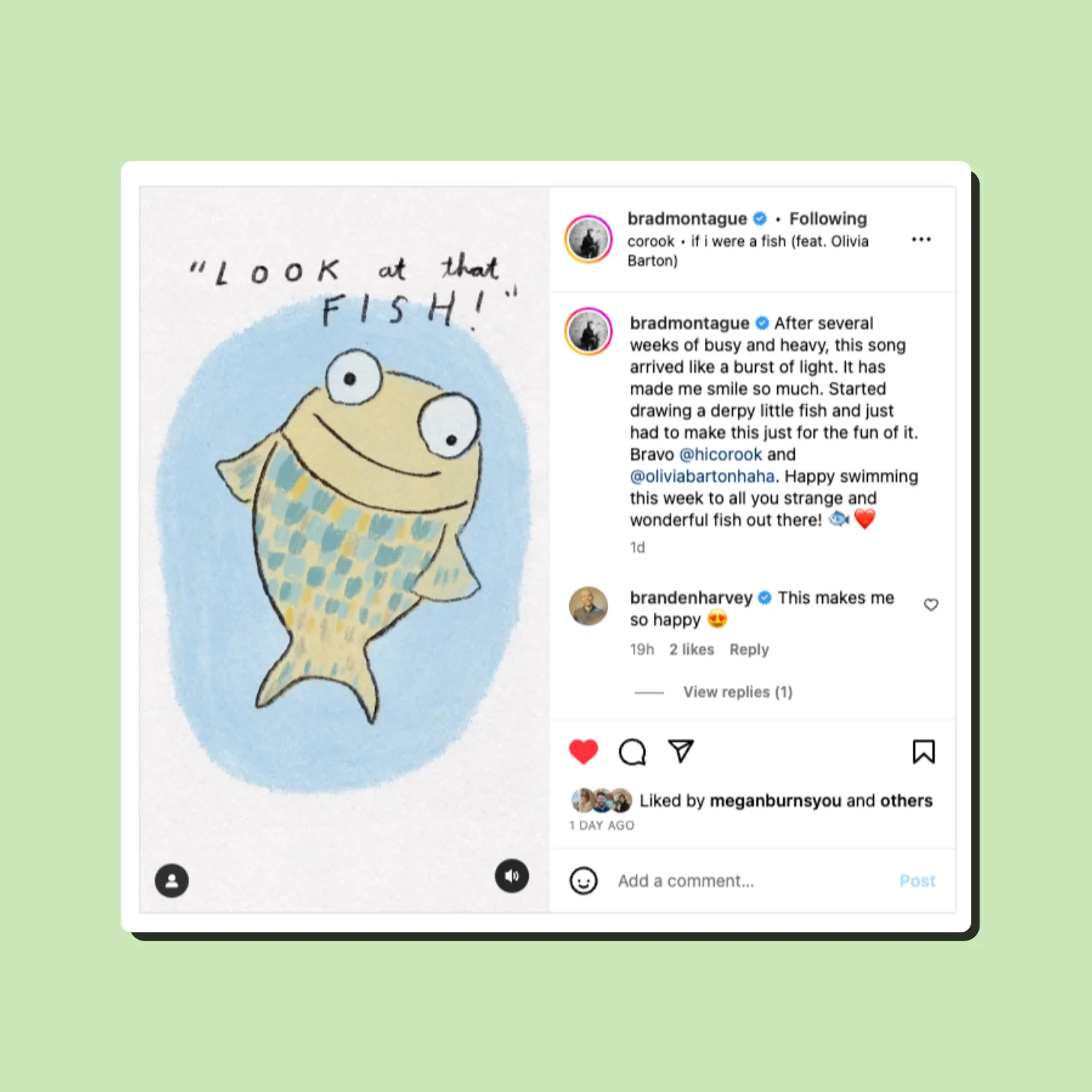
Other well-known Internet figures are in on it, too. Hank Green tweeted enthusiastically about it, musicians like Tori Kelly commented on the original video, and author and illustrator Brad Montague even wrote a whole issue of his newsletter “The Enthusiast” about the viral hit — and hand-illustrated a mini music video.
“Take the contagious joy of the song ‘If I Were A Fish.’ In it, the singers revel in those rare qualities forming who they are … and who we each are,” Montague said.
“Maybe in a culture like ours, happiness is that thing which confuses. It’s the defiant calm in a world that celebrates hustle. The radical peace in the midst of bitter back and forths. The glorious audacity of actually liking things. The silly confidence in not feeling trapped by the highlight reels of others, but eager to shine a light all your own.”
Now that the absurd, confusing, audaciously joyful anthem is out in the world, Corook is excited to continue shining the light, empowering people through their individual mental health and body image journeys.

In fact, they hosted a surprise sing-along in Washington Square Park earlier this week, where over 100 people turned out — and contributed with kazoos and cathartic crooning.
TikTok user @zaidleppelin recorded the impromptu concert.
“That was the most wholesome gathering I’ve ever been a part of,” he gushed afterwards. “The power of the Internet bringing strangers together? Such a delight.”
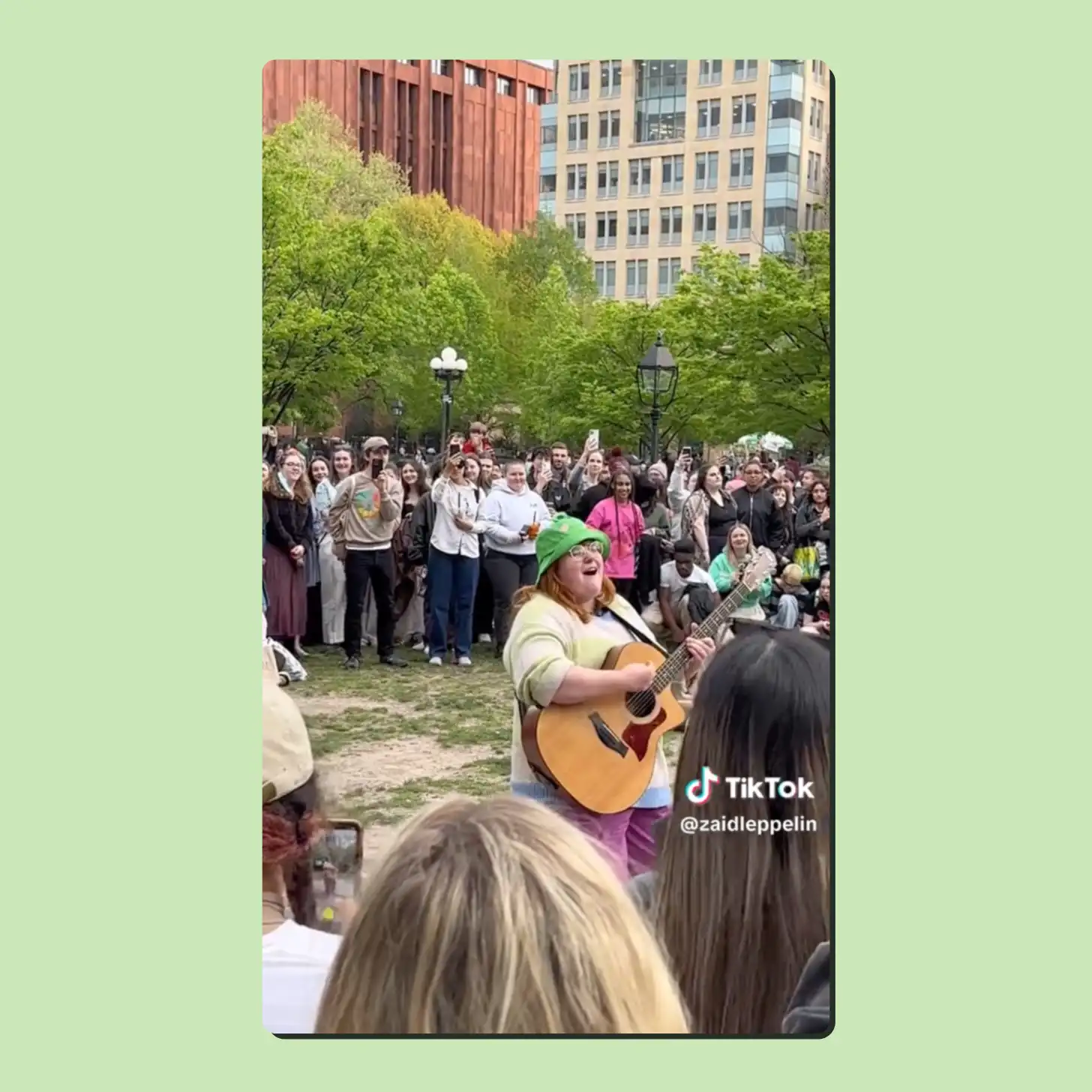
→ Read more good news like this by subscribing to our popular positive news newsletter: The Goodnewsletter
Full Lyrics for “If I Were A Fish” by Corook
Verse 1
If I were a fish and you caught me
You’d say “Look at that fish”
Shimmering in the sun
Such a rare one
Can’t believe that you caught one
If I were a fish and you caught me
You’d say look at that fish
Heaviest in the sea
You’d win first prize
If you caught me
Chorus
Why’s everybody on the internet so mean?
Why’s everybody so afraid of what they’ve never seen?
If I was scrolling through and I saw me
Flopping around and singing my song
I’d say “Damn, they’re cute” and sing along
Verse 2
If I were a rock you would pick me up
And say “That’s a nice rock”
Skippiest on the lake
Plop, plop, plop
I’m the perfect shape
And if I were a sock you would put me on
And say “That’s a nice sock”
Happiest as a pair
I found you now I’m not scared
Chorus
Why’s everybody on the internet so mean?
Why’s everybody so afraid of what they’ve never seen?
If I was scrolling through and I saw me
Flopping around and singing my song
I’d say “Damn, they’re cute” and sing along
Bridge
How lucky are we?
Of all the fish in the sea?
You get to be you
And I get to be me
Just let them be mean
We’re as free as can be
To be the you-est of you
And the me-est of me
Outro
If I were a fish
Doo doo doo doo doo doo doo doo doo doo
If I were a fish
Doo doo doo doo doo doo doo doo doo doo
If I were a fish
Doo doo doo doo doo doo doo doo doo doo
If I were a fish
Doo doo doo doo doo doo doo doo doo doo
Greta Thunberg, the young climate activist from Sweden, has inspired millions around the globe with her uncompromising stance on climate change and her rallying cry for immediate action. Despite her youth (or perhaps, through her youth), she’s sparked a worldwide movement, urging us all to understand that when it comes to preserving our planet, there’s no time left to wait around.
Her stirring speeches at various global platforms, her candid dialogues with world leaders, and her impactful “School Strike for Climate” (or “Fridays for Future”) initiative have made her a powerful voice for the Earth.
Countless activists, educators, politicians, and ordinary folks have been moved by her words, leading them to reconsider their roles in contributing to climate change and what they can do to halt its disastrous effects.
We’ve gathered some of Greta Thunberg's most inspiring quotes right here — encapsulating her profound wisdom, youthful spirit, and tenacious resolve.
Whether you’re a seasoned environmentalist or someone just starting to understand the gravity of the climate crisis, these quotes will motivate you to take action for the future of our planet. Dive in to experience Greta’s courageous voice calling for change:
The Best Greta Thunberg Quotes
Famous Quotes
“I have learned you are never too small to make a difference.”
— Greta Thunberg
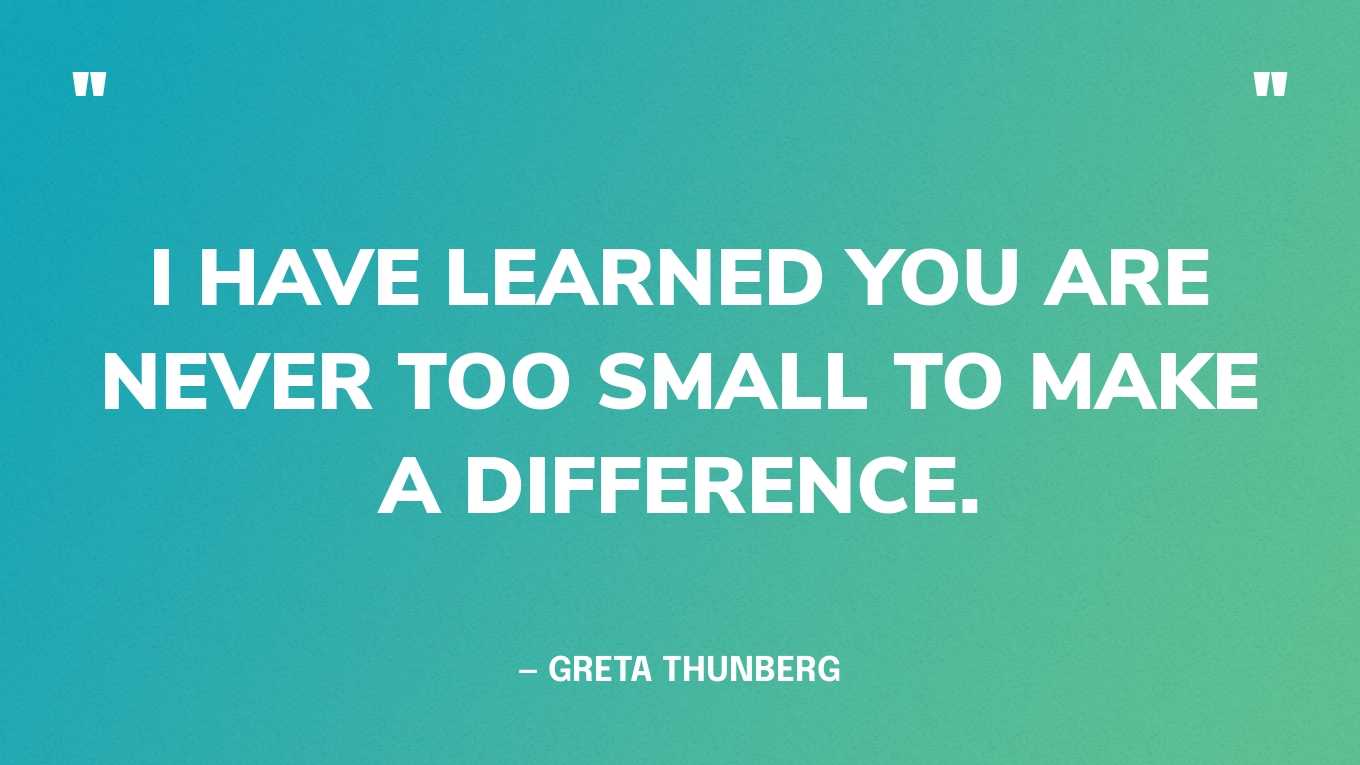
“I have promised myself that I’m going to do everything I can for as long as I can.”
— Greta Thunberg
“Our civilization is being sacrificed for the opportunity of a very small number of people to continue making enormous amounts of money. Our biosphere is being sacrificed so that rich people in countries like mine can live in luxury. It is the sufferings of the many which pay for the luxuries of the few.”
— Greta Thunberg, in a speech at the UN Climate Change COP24 Conference, 2018
“To all of you who choose to look the other way every day because you seem more frightened of the changes that can prevent catastrophic climate change than the catastrophic climate change itself. Your silence is almost worst of all.”
— Greta Thunberg
“We have not come here to beg world leaders to care. You have ignored us in the past and you will ignore us again. You’ve run out of excuses and we’re running out of time. We’ve come here to let you know that change is coming whether you like it or not. The real power belongs to the people.”
— Greta Thunberg, in a speech at the UN Climate Change COP24 Conference, 2018
“We children are doing this to wake the adults up. We children are doing this for you to put your differences aside and start acting as you would in a crisis. We children are doing this because we want our hopes and dreams back.”
— Greta Thunberg, in a speech at the House of Parliament, 2019
“In the year 2078, I will celebrate my 75th birthday. If I have children or grandchildren, maybe they will spend that day with me. Maybe they will ask me about you, the people who were around back in 2018. Maybe they will ask why you didn’t do anything while there still was time to act. What we do or don’t do right now will affect my entire life and the lives of my children and grandchildren. What we do or don’t do right now, me and my generation can’t undo in the future.”
— Greta Thunberg, in a TED Talk
About Climate Change
“Solving the climate crisis is the greatest and most complex challenge that Homo sapiens have ever faced. The main solution, however, is so simple that even a small child can understand it. We have to stop our emissions of greenhouse gases. And either we do that or we don’t.”
— Greta Thunberg, in a speech at the World Economic Forum, 2019
“The climate crisis is both the easiest and the hardest issue we have ever faced. The easiest because we know what we must do. We must stop the emissions of greenhouse gases. The hardest because our current economics are still totally dependent on burning fossil fuels, and thereby destroying ecosystems in order to create everlasting economic growth.”
— Greta Thunberg, in a speech at the House of Parliament, 2019
“Once you fully realise the situation then you will know what to do. And then spread that information to others. Then there are lots of things you can do in your everyday life. Going vegan, stop flying and have shop-stop for instance. Of course we need a system change. But I believe that you cannot have system change without individual change.”
— Greta Thunberg, in an interview with The Guardian
“There are thousands of ways to take action. For example, plant trees, pick up litter, join an organization or movement that makes a difference and especially try to influence adults and put pressure on people in power. I started my activism at home, changing my parents’ and relatives’ habits and ways of thinking.”
— Greta Thunberg, in an interview with The Guardian
“I don’t use any animal products, both because of ethical and environmental and climate reasons.”
— Greta Thunberg, in an interview with Democracy Now!
Powerful Quotes
“I’m telling you there is hope. I have seen it, but it does not come from the governments or corporations. It comes from the people.”
— Greta Thunberg, in a speech at COP25, 2019
“We live in a strange world, where no one dares to look beyond our current political systems even though it’s clear that the answers we seek will not be found within the politics of today… Where everyone can choose their own reality and buy their own truth… We live in a strange world. But it’s the world that my generation has been handed. It’s the only world we’ve got.”
— Greta Thunberg, in an acceptance speech at the 2019 Goldene Kamera Awards
“Why are we not reducing our emissions? Why are they, in fact, still increasing? Are we knowingly causing a mass extinction? Are we evil? No, of course not. People keep doing what they do because the vast majority doesn’t have a clue about the consequences of our everyday life. And they don’t know the rapid changes required.”
— Greta Thunberg, in a speech at the Declaration of Rebellion, Parliament Square, 2018
“My message to all the activists is to just keep going, and I know it really may seem impossible and hopeless sometimes — it always does — so you just have to keep going because if you try hard enough and long enough you will make a difference.”
— Greta Thunberg
“We must change almost everything in our current societies. The bigger your carbon footprint — the bigger your moral duty. The bigger your platform — the bigger your responsibility. Adults keep saying: ‘We owe it to the young people to give them hope.’ But I don’t want your hope. I don’t want you to be hopeful. I want you to panic. I want you to feel the fear I feel every day. And then I want you to act. I want you to act as you would in a crisis. I want you to act as if our house is on fire. Because it is.”
— Greta Thunberg, in the “Our House Is On Fire” speech at the World Economic Forum, 2019
“To do your best is no longer good enough. We now have to do the seemingly impossible.”
— Greta Thunberg
“Today we use 100 million barrels of oil every day. There are no politics to change that. There are no rules to keep that oil in the ground. So we can’t save the world by playing by the rules. Because the rules have to be changed. Everything needs to change. And it has to start today. So everyone out there: it is now time for civil disobedience. It is time to rebel.”
— Greta Thunberg, in a TEd Talk
“My message is that if we do not care about the climate crisis and if we do not act now then almost no other question is going to matter in the future.”
— Greta Thunberg
“We all have a choice. We can create transformational action that will safeguard the living conditions for future generations. Or we can continue with our business as usual and fail.”
— Greta Thunberg, in a speech at the World Economic Forum, 2019
Short Quotes
“We can’t just choose to tell some facts and not others because we don’t want to upset people. We have to tell it like it is.”
— Greta Thunberg
“It is our future on the line, and we must at least have a say in it.”
— Greta Thunberg
“When haters go after your looks and differences, it means they have nowhere left to go. And then you know you’re winning!”
— Greta Thunberg, in a tweet
“You must take action. You must do the impossible. Because giving up is never an option.”
— Greta Thunberg
“You say that you love your children above everything else. And yet you are stealing their future.”
— Greta Thunberg, in a speech at UN Climate Change COP24 Conference, 2018
“Being young is a great advantage, since we see the world from a new perspective and we are not afraid to make radical changes.”
— Greta Thunberg, in an interview with The Guardian
More Quotes
“We’ve had 30 years of pep-talking and selling positive ideas and I’m sorry but it doesn’t work. Because if it would have, emissions would have gone down by now. They haven’t. And yes, we do need hope, of course, we do. But the one thing we need more than hope is action. Once we start to act, hope is everywhere. So instead of looking for hope, look for action. Then, and only then, hope will come.”
— Greta Thunberg
“I mean, people aren’t continuing like this and not doing anything because they are evil, or because they don’t want to. We aren’t destroying the biosphere because we are selfish. We are doing it simply because we are unaware.”
— Greta Thunberg
“We are not going to be satisfied by politicians saying ‘we support you’ and then walking away. We won’t be satisfied until they meet our demands and act. That’s why simply taking a selfie or posting support on Twitter isn’t enough. That’s why we have to keep striking.”
— Greta Thunberg
“Nor does hardly anyone ever mention that we are in the midst of the sixth mass extinction, with about 200 species going extinct every single day. That the extinction rate is today between 1000 and 10,000 times higher than what is seen as normal.”
— Greta Thunberg
“My message is that we'll be watching you. This is all wrong. I shouldn’t be up here. I should be back in school on the other side of the ocean. Yet you all come to us young people for hope. How dare you. You have stolen my dreams and my childhood with your empty words. Yet I am one of the lucky ones. People are suffering.”
— Greta Thunberg, in a speech at UN Climate Action Summit, 2019
In May 1963, as civil rights demonstrations rocked the city of Birmingham, Alabama, Harry Belafonte was at a cocktail party in Manhattan, scolding the then-attorney general of the United States.
“You may think you’re doing enough,” he recalled telling Robert F. Kennedy, “but you don’t live with us, you don’t even visit our pain.”
Belafonte had many frank and heated conversations with Kennedy. In fact, the singer, actor and activist was on intimate terms with many pivotal figures of the civil rights era.
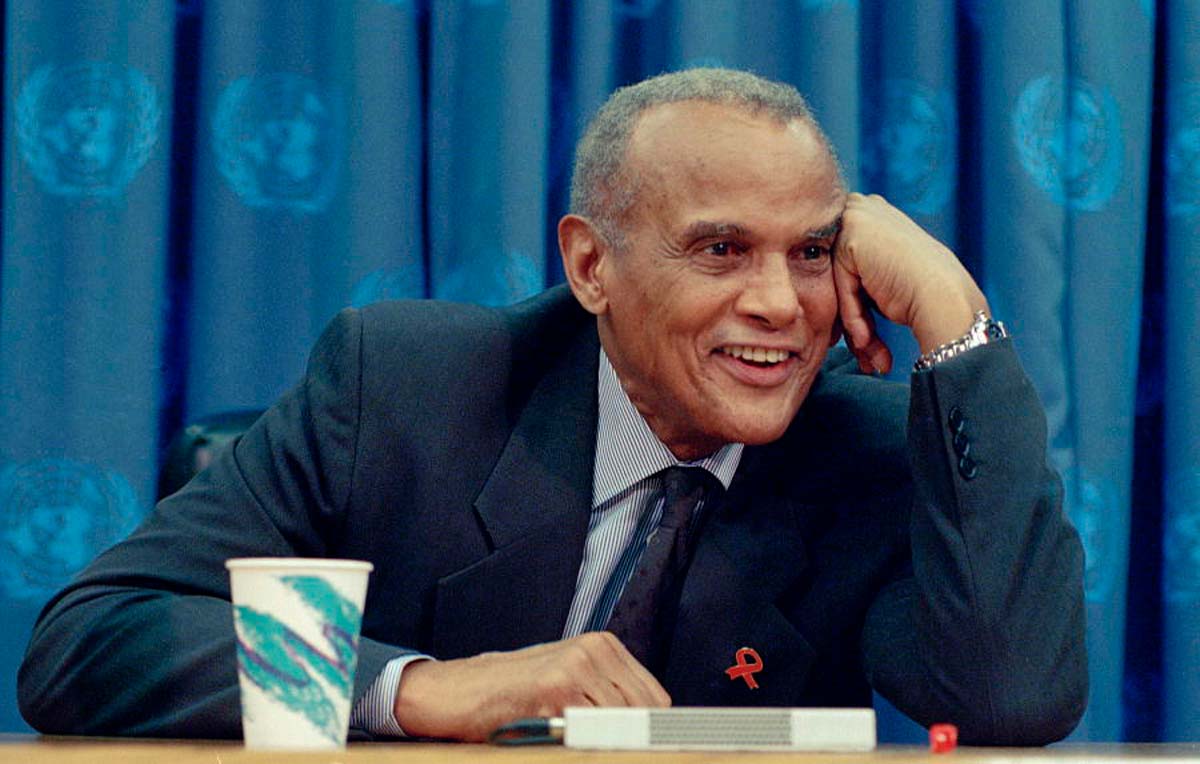
He was a confidant and adviser to Martin Luther King Jr and allied with Ahmed Sékou Touré, the president of Guinea. He funded the grassroots activists of the Student Nonviolent Coordinating Committee (SNCC) as it battled Jim Crow, and he brought a delegation of Hollywood stars to the March on Washington.
Along with his best friend and sometimes-rival, actor Sidney Poitier, Belafonte delivered funds to civil rights volunteers in Greenwood, Mississippi, while the Ku Klux Klan watched their every move.
Belafonte, who died on April 25, 2023, at the age of 96, was a unique figure in the history of the Black freedom struggle in the U.S.
No other entertainer immersed themselves so deeply in the Civil Rights Movement; no other activist occupied a niche at so many levels of American politics. If he was a powerful voice for justice, it was because he leveraged his celebrity.
A remarkable career
On stage, Belafonte was something to behold, a beacon of charisma. Clad in body-hugging shirts with his chest bare, drawing his audience’s eyes to the looping metal rings at the belt of his tight silk pants, he oozed with seduction. Women swooned.
And he was wildly successful. In 1957, Belafonte sold more records than Frank Sinatra and Elvis Presley. His repertoire resembled neither Sinatra’s classic pop nor Presley’s up-and-coming rock ‘n’ roll.
The son of West Indian/Carribean immigrants, Belafonte inspired a short-lived craze for calypso music thanks to hits such as “Day O” and “Jamaica Farewell,” and he adapted ethnic folk music for popular consumption – his mainstays included “Hava Nagila,” the Jewish celebration song.
He also starred in Hollywood films such as “Bright Road” (1953) and “Carmen Jones” (1954). “Island in the Sun,” released in 1957, caused a furor. Though Belafonte never kisses his white co-star, Joan Fontaine, on screen, the film explores the theme of interracial romance. The Southern censors banned it.
Belafonte danced around the taboos of race and sex. This exceptionally handsome Black man was charming primarily white audiences, though his light skin color and facial features softened that threat. As a performer, he nudged at racial boundaries without jabbing through them.
“Harry Belafonte stands at the peak of one of the remarkable careers in U.S, entertainment,” proclaimed Time magazine in a 1959 cover feature. He had come a long way from a childhood split between Harlem and Jamaica, from stints in the Navy and as a struggling actor. By then, he was earning about US$750,000 a year, with a lucrative residency at the Riviera Hotel in Las Vegas.
Civil rights activism
That stardom connected Belafonte to Martin Luther King, Jr.
The civil rights leader called him in 1956 during the Montgomery Bus Boycott. Soon Belafonte was part of the movement itself. Following King, he embraced nonviolence. As their friendship strengthened, Belafonte realized the crosses that King bore: the burden of leadership, the fear of death.
Belafonte bought a 21-room apartment on West End Avenue in Manhattan. “Martin would come to think of it as his home away from home, staying with us on many of his New York trips,” he recalled in his memoir, “My Song.”
“On occasion, he brought with him two or three of his closest advisers, and by the mid-sixties, the apartment was one of the movement’s headquarters.” It was a place to both plan strategy and blow off steam, laughing at stories and sipping Harveys Bristol Cream.
Ironically, for such a public figure, much of Belafonte’s work was in private.
In the 1960s, he served as an essential link between King and the SNCC. He not only bankrolled the young militant activists, but he also listened to their concerns, respected their organizing efforts and communicated their perspectives to influential power brokers.
That responsibility to speak for the movement led Belafonte to chide Bobby Kennedy in May 1963. Throughout the early 1960s, he expressed frustration with the attorney general’s detachment from the activists’ struggle.
But over time, he came to appreciate Kennedy’s evolution, as he became a U.S. senator and emerged as a voice for the poor, for racial minorities, for “The Other America.”
Famously, in February 1968, Belafonte hosted “The Tonight Show” for a week, using his platform to illuminate Black perspectives and spotlight social injustice. His guests included King, who was about to launch his Poor People’s Campaign, and Kennedy, whom Belafonte urged to start a presidential campaign.
Within months, both men were assassinated.
For more than a half-century, Belafonte carried on the legacy of the 1960s, often taking provocative positions from the far-left edge of the political spectrum. Like few others, he blended the worlds of culture and politics, singing a song of justice.
In a TikTok that has now amassed over 450,000 views, Robert Simpson wiggles a little blue silicone device asking “what in the heck is this?”
It’s a “Grip Toggle,” Simpson’s latest invention under his brand Single Handed. The company is a “small and innovative home and hospitality brand” that creates simple, sustainably-designed products that make life easier for able-bodied and disabled folks alike.
The Grip Toggle includes a suction cup and pulley mechanism that allows people with limited grip ability or hand motor function to open cabinets or gain a better grasp on cooking utensils.
“If you suffer from arthritis, carpal tunnel, or simply old age, or even missing digits, the Grip Toggle makes life a little easier,” Simpson said in the video. “Which is what all of our products are about.”
@singlehandedproducts Introducing Grip Toggle #griptoggle #disability #arthritis ♬ original sound - Single Handed Products
Commenters gave suggestions for more accessible designs, asked questions about the various uses of the product, and marveled at its simple, helpful design.
“My mom has MS and this would help her greatly,” one person wrote.
“Omg, I need this,” another person chimed in. “I have a rare bone disease in my left hand… and now carpal tunnel in my right because I’m always over-using it.”
“You made a portable, wearable PopSocket,” another commenter added. “How cool! I need.”
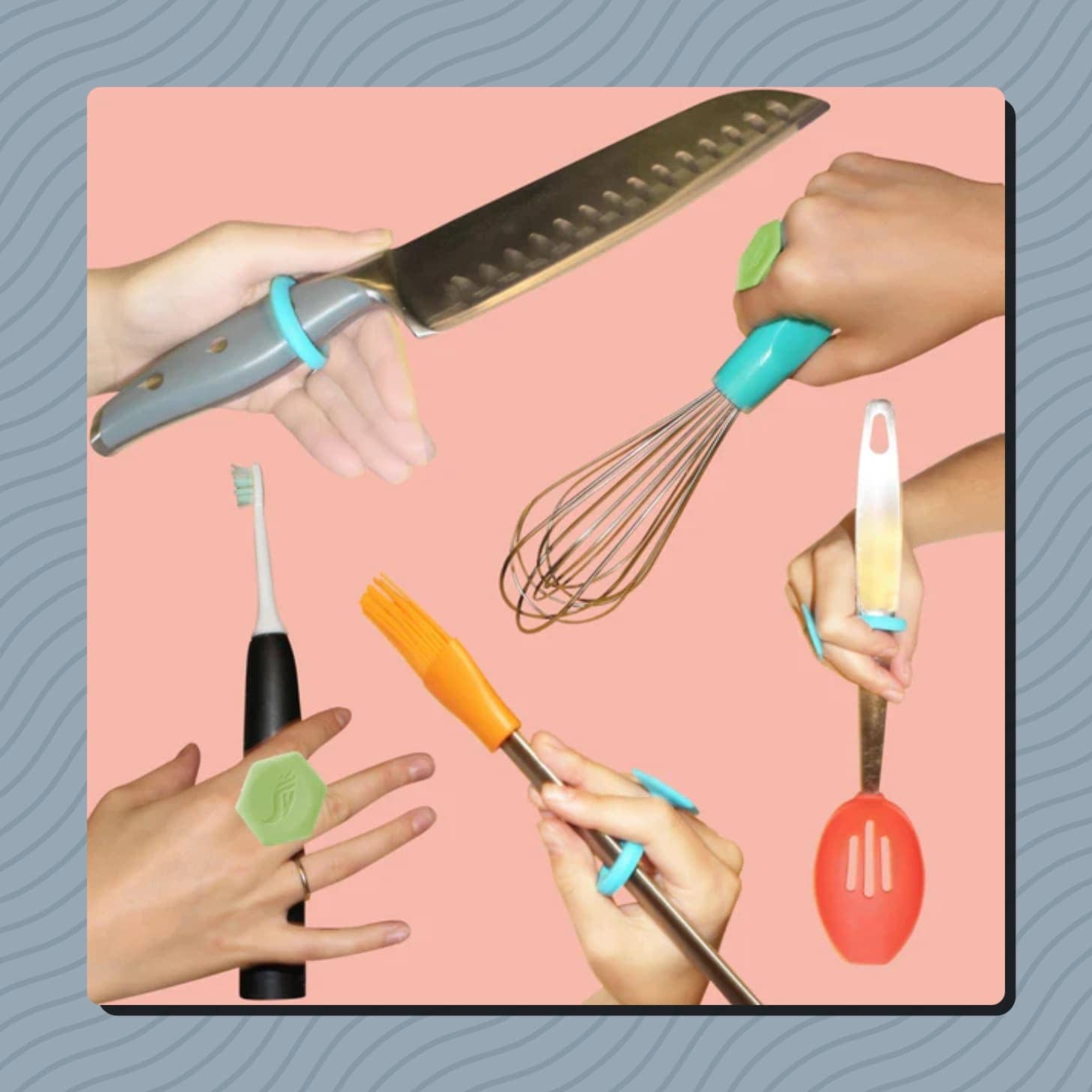
The Grip Toggle is only one of these accessibility aids from Single Handed.
Simpson’s first designs were the Tipsi Tray and the Topple Tray, which are single-handed serving trays with a long, curved handle that provide additional grip and have no-spill edges, making it easier and safer to carry drinks — either around the house, or in a busy pub.

Simpson first showed off his tray designs on “Dragon’s Den” (basically the UK-version of “Shark Tank”), but he isn’t the only one who deserves credit. His grandfather, Andrew Townson, built a prototype for the first single-handed tray in the 1980s.
“My granddad lived in an old and draughty house in Yorkshire and wanted a tray that he could hold comfortably one-handed while closing doors and windows to keep the cold out,” Simpson said on “Dragon’s Den.”
“I took that idea and brought the Tipsi Tray to market because of the benefits that it could bring to older people and those with disabilities. As it happens, it proved to be very popular in the hospitality and catering industry, too, as a really useful tool for serving and waiting staff.”
He has also demonstrated the tray’s use for folks who move around with wheelchairs — and the beverages continue to be transported spill-free.
@singlehandedproducts Replying to @VacationLeg 👩🏼🦼 ♬ original sound - Single Handed Products
“Our single hand use trays make life easier for able-bodied and less abled people alike,” the Single Handed website reads.
“The unique design allows easier use for those with balance, shaking, or disabilities, which make carrying a traditional tray more difficult, dangerous, or even impossible in some cases. Single Handed wants to make the world an easier, safer, and better place to live for everyone.”
Simpson has also created double-handled “Dignity Mugs,” which are a refined take on a sippy cup, allowing people of all ages to comfortably hold onto their drinks with two hands, or to pass on the mug with less chance of spilling, burning, or dropping.

There’s also the “Pint Sherpa,” which is more specifically designed for the hospitality industry, allowing folks to pick up two pint glasses with one simple motion.
All in all, Simpson’s mission is to create simple, accessible items that last and make a small difference in everyday life.
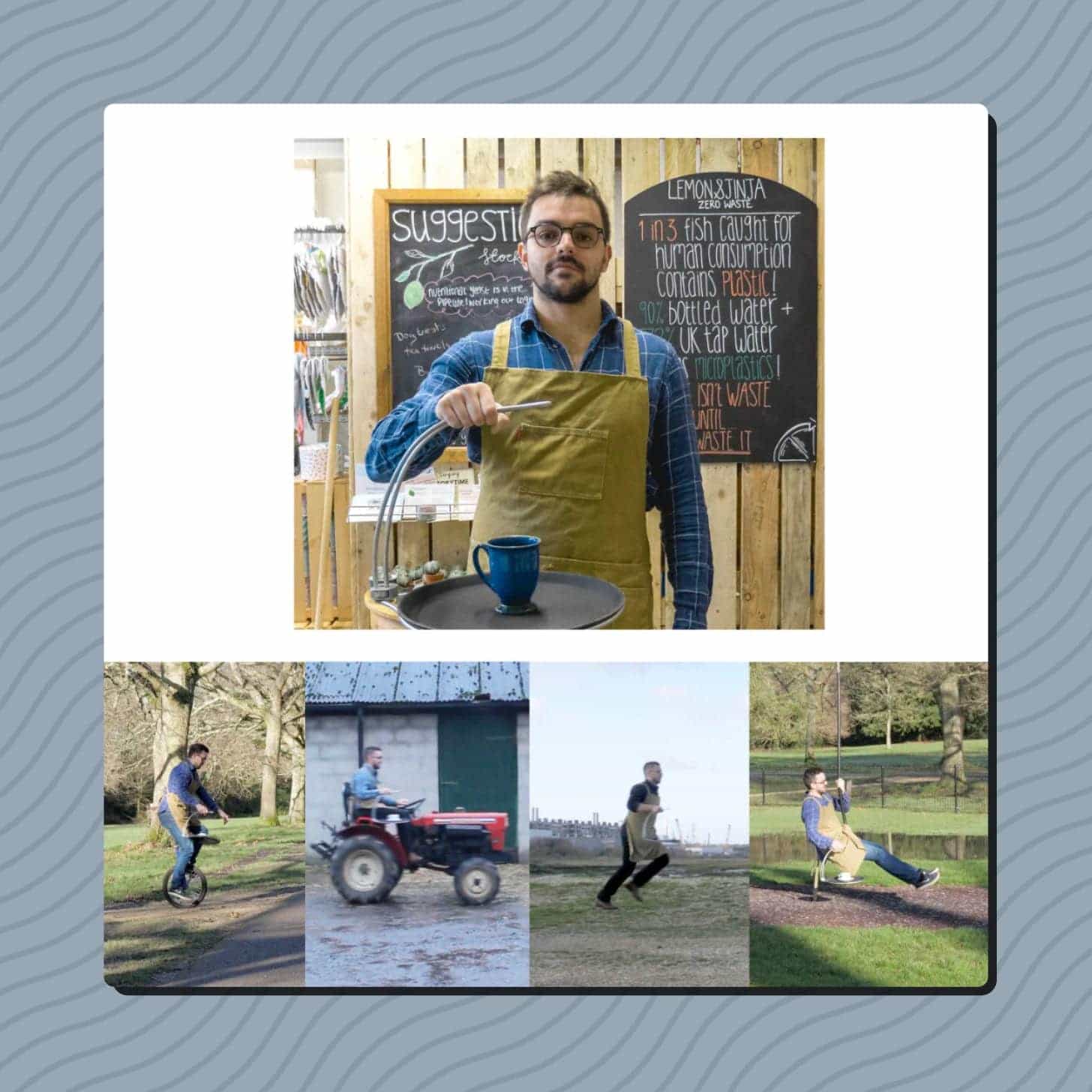
“Hundreds and hundreds of people have been commenting, saying who it will help, how it will help them, and what ailments it will actually help,” Simpson said in response to the viral video about the Toggle Grip. “I’m absolutely blown away.”
The internet’s favorite do-good duo is at it again.
Hank and John Green — known as the vlogbrothers on YouTube — are known for their careers in writing, science, and media, as well as their efforts to “decrease world suck” by hosting the annual Project For Awesome.
In recent years, the brothers have become huge advocates for advancing healthcare in Sierra Leone by partnering with nonprofit Partners In Health to build the Maternal Center of Excellence.
The center broke ground in April of 2021, and a major contributor to this milestone is the success of the Greens’ charitable businesses, the Awesome Socks Club and Awesome Coffee Club.
Now, they’ve got a new project to add to the roster: Sun Basin Soap.
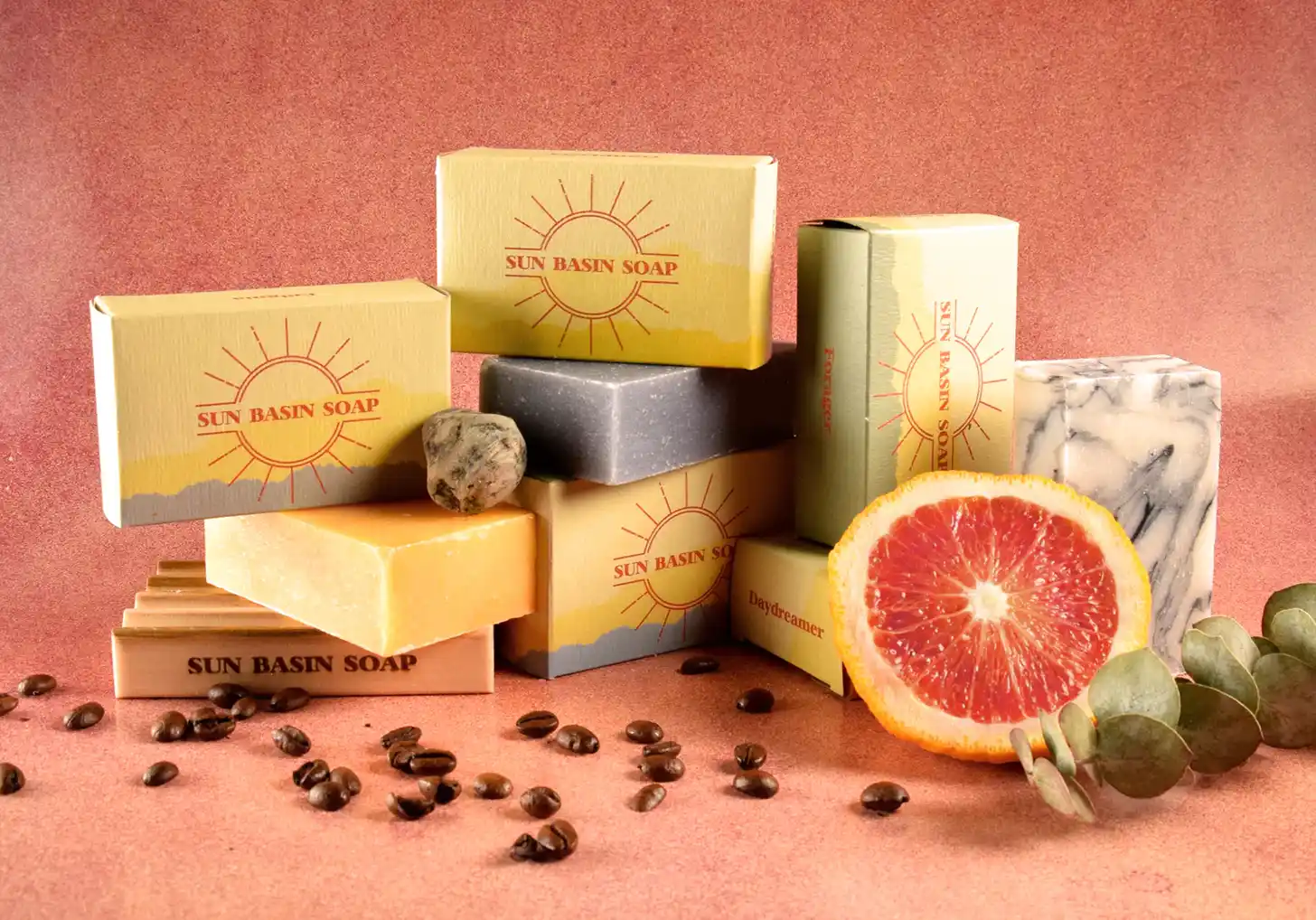
What is Sun Basin Soap?

Sun Basin Soap, like the Awesome Coffee and Socks clubs, takes an everyday item that is regularly used and replenished and turns it into a business model that does good.
Sun Basin Soap is made by Botanie Soap, a family-run business in Hank’s own Missoula, Montana. The brand only uses natural ingredients, including certified organic base oils, and packaged in fully recyclable paper-based packaging.
“I love this soap. I've been using it for years,” said Hank in his vlogbrothers video announcing the project on April 28. “It is made among the mountains of Montana by people who care about their impact on the world — and I'm excited to share it with more people.”
“Starting as a home-based business, Botanie became a private-label manufacturer when brands asked them to make their soap,” the Sun Basin website reads. “In an industry full of manufacturers with high minimums and low ingredient standards, Botanie’s commitment to natural ingredients and accessible minimums quickly marked them as the right partner for growing brands committed to offering the best.”
According to Hank, Botanie makes custom soap for “some of the most respected companies in the beauty industry” — and their customer list is a closely held secret.
Shoppers can build their own soap boxes from five scents and can opt to receive one, two, or three soap bars per order. They can also select the frequency of delivery, selecting to have sustainable soaps delivered every month, two months, or three months.
Scents — which can be switched up whenever shoppers choose — include Daydreamer (warm), Enigma (unscented), Forager (woodsy), Navigator (clean), or Trailblazer (bright).
Sun Basin Soap is sold on Good.Store — a new platform from the Green brothers.
How does soap from Sun Basin Soap make a difference?
Shoppers can smell good and do good, since Sun Basin Soap’s model is the exact same as the Green brothers’ other endeavors.
“The best part about Sun Basin is our commitment to charity,” the website reads. “100% of profits from Sun Basin Soap are donated to drastically reduce maternal and childhood mortality in Sierra Leone, the country with the highest maternal mortality rate in the world.”
The Awesome Socks Club was the first of these do-good everyday product subscriptions, and in its first year donated over $900,000 to help strengthen Sierra Leone’s healthcare systems and begin progress on the Maternal Center of Excellence.
The goal is to raise $25 million for the project over the course of five years, which has become an easy goal, since the vlogbrothers community has already raised over $20 million — with $583,911 coming from the Awesome Socks Club and the Awesome Coffee Club in Q1 of 2023 alone — and we’re sure that a newly squeaky-clean community is bound to do even more good.