Every day the Good Good Good team collects the best good news in the world and shares it with our community. Here are the highlights for this week!
If you want to get good news in your inbox every day, join the Goodnewsletter — the free daily newsletter designed to leave you feeling hopeful.
The Best Positive News We’re Celebrating This Week —
Tim Robinson is confronting climate change with a hilarious PSA
Beloved comedian Tim Robinson has brought his unique comedic style to the forefront of climate change awareness in a humorous PSA produced by Yellow Dot Studios.
Best known for his work on "Saturday Night Live" and the quirky Netflix hit "I Think You Should Leave," Robinson takes on the challenging task of injecting humor into a topic that often lacks levity: climate change.
In the sketch, Robinson assumes the role of a boisterous TV show host named Ted Rack who expresses frustration with scientists delivering complex and dire messages about the environment.
The sketch features Robinson transforming an ocean and climate scientist, Henri F. Drake from the University of California, Irvine, into a more down-to-earth and engaging character. This includes outfitting Drake in a blue sports jersey adorned with the number 69, all in the pursuit of making climate change more relatable and, dare we say, amusing.
The parody not only mocks the concept of "dumbing down" scientific realities but also succeeds in making the critical topic of climate change more engaging and comprehensible to a broader audience.
Yellow Dot Studios, the nonprofit production studio behind the video, leverages entertainment to combat climate disinformation and inaction by creating memorable and scientifically accurate videos about climate change.
Through their initiative, Yellow Dot Studios aims to shine a light on the urgency of climate issues, responsible parties involved, and scientifically proven solutions.
Viewers of Robinson's climate change PSA are directed to a hashtag and accompanying webpage: #ImWithScience. This serves as a hub for resources where individuals can access climate news, contact their representatives, or join advocacy groups in their communities.
Why is this good news? In the midst of growing concerns about the environment, Tim Robinson's ability to infuse humor into such a serious issue has not only entertained but also sparked meaningful conversations about the need for collective action. As one YouTube commenter aptly put it, "People need to take climate change more seriously, but the messaging we’re getting about it is complicated, confusing, and scary. Tim’s ability to demonstrate empathy for so many audiences is amazing."
A significant majority of U.S. workers are experiencing historically strong real wage growth
Real pay hikes have returned. According to an analysis by the Center for American Progress, nearly 60% of workers are now making more money, adjusted for inflation, than they were a year ago, and 41% have experienced a real wage increase of over 5%.
The recovery from the COVID-19 recession is notably characterized by historically robust real wage growth, positioning it as the second-highest among recoveries from post-1980 recessions.
The unique aspect of this recovery lies in the combination of substantial wage growth with a reduction in the unemployment rate — a phenomenon not witnessed in other recent recessions.
The analysis also suggests that there has not only been an improvement from the pandemic-induced economic downturn but also a scenario where most individual workers are earning more today than they were before the onset of the pandemic.
Sustained efforts from policymakers will be needed to nurture and strengthen this positive momentum, through measures such as raising wages and mitigating the cost of living to further enhance the economic well-being of workers.
A nonprofit is bringing joy and normalcy to hospitalized children by providing positive gaming experiences during medical treatment
A nonprofit called Gamers Outreach has undertaken an innovative initiative to enhance the lives of hospitalized children by introducing the GO Kart, a portable gaming kiosk designed to provide young patients with access to top-of-the-line technology and video games.
Recognizing the challenges and isolation that come with hospitalization, Gamers Outreach aims to restore a sense of joy and normalcy to children's lives, allowing them to engage in activities that bring the joy and explorative spirit of childhood, such as playing popular games such as Fortnite or Animal Crossing.
The GO Kart is a carefully crafted solution that addresses the unique needs of pediatric hospital environments. It’s portable, easy to sanitize, and deployable by hospital staff, ensuring that children have a dedicated space to immerse themselves in the world of gaming.
Each GO Kart is equipped to accommodate modern gaming consoles, including the Xbox Series X, Nintendo Switch, and PlayStation 5, enabling young patients to stay connected with the latest gaming trends.
In addition to the GO Kart initiative, Gamers Outreach runs the Player 2 program, which empowers a group of video game-loving volunteers to distribute and manage games. These volunteers also spend time playing with patients, further enhancing the positive impact of the gaming experience.
Gamers Outreach has garnered support from partners like Xbox, and it organizes annual fundraising events, such as the Gamers For Giving streamathon and LAN party, to sustain its programs.
In its 15th anniversary fundraiser in 2023, the Gamers Outreach community raised over $535,000, contributing to equipment improvements and the creation of new GO Karts.
These funds alone are expected to provide an estimated 290,000 gaming experiences, supporting the organization's commitment to offering children undergoing treatment a chance to be themselves and find solace in the unique world of video games.
Why is this good news? Hospitalization can be a daunting experience for children, often involving isolation and medical procedures. Gamers Outreach uses technology and gaming to bring joy, normalcy, and a sense of community to children facing medical challenges, ultimately contributing to their overall well-being and recovery.
→ Read more
Boston’s Mayor is commuting with residents to learn how to improve public transit
Boston Mayor Michelle Wu has launched a unique social media campaign aimed at gaining firsthand insights into the experiences of Bostonians using the city's transportation system.
In a recent TikTok video, Mayor Wu kicked off the initiative by commuting with a local teacher named Becky, showcasing her commitment to understanding the daily challenges faced by residents and identifying potential areas for improvement in the public transit network.
Becky, a ninth-grade teacher, becomes the focal point of the video as she shares details about her daily commute, including tracking the 501 bus on her phone, waiting in unheated bus shelters, and enjoying the sunrise during her bus rides.
During the commute, Mayor Wu engages in a candid conversation with Becky, exploring the impact of public transportation on students' daily lives. Becky reveals that a majority of her students rely on public transit, facing challenges such as missed buses and exposure to the cold while waiting. The exchange sheds light on the broader issues faced by Bostonians in their daily commutes.
Before parting ways, Mayor Wu asks Becky about her ideal improvements to the city's public transportation system, hypothetically asking what changes she would make with a magic wand. Becky expresses a desire for more buses, especially express services, reliable trains that don't face frequent disruptions, and heated bus stops to address the cold weather.
Mayor Wu's genuine enthusiasm for gathering feedback from residents is evident in the video, reflecting her commitment to actively engaging with the community. Her TikTok page features various informative videos, ranging from details about speed humps in streets to tips on maximizing the use of a Boston Bike Pass, demonstrating her multifaceted approach to addressing urban issues.
Why is this good news? The positive response to Mayor Wu's TikTok video indicates strong support from constituents who appreciate her hands-on approach to understanding and addressing commuting issues. Commenters emphasize that real change can occur when elected officials genuinely empathize with residents' experiences.
As Mayor Wu continues to engage with Bostonians through social media and other platforms, her commitment to understanding the needs and challenges of the community appears to resonate with citizens, reinforcing the potential for positive change under her leadership.
Gaming YouTubers raised money for Palestinian aid during a birthday livestream
YouTube content creators Dan Howell and Phil Lester used Phil’s birthday as an opportunity to do good by hosting a livestream on their gaming channel, DanAndPhilGAMES, to celebrate Phil’s birthday and raise funds for the Palestinian Children’s Relief Fund (PCRF).
With their dedicated fan base of over 2.8 million subscribers, the duo set out on a mission to combine entertainment and philanthropy during the two-hour broadcast.
From the very start of the livestream, the YouTubers emphasized the importance of the fundraising effort, addressing the dire situation in Gaza and highlighting the essential aid services provided by PCRF.
The response from their community was swift and generous, with donations pouring in even before they could officially launch the planned activities. Within the first three minutes, the fundraising total had already reached an impressive $9,000. The overwhelming support surpassed their expectations, showcasing the dedication of their fans.
The livestream unfolded with a mix of entertaining segments. Lester shared birthday gifts, answered audience questions, and played games. The donations continued to flow, ranging from substantial figures to numerous $5 donations.
By the end of the two-hour livestream, Lester blew out the candles on his birthday cake, and the duo had successfully raised an impressive total of $83,000 for PCRF. Lester, moved by the outpouring of support, said, “Guys, I could cry. That’s so incredible.”
Why is this good news? Within just 19 hours after the livestream, the duo’s channel had raised more than $99,000 for PCRF, underscoring the collaborative effort between the YouTubers and their fanbase. Fans took to social media to express their gratitude and pride in contributing to the initiative, recognizing the meaningful impact made during this altruistic birthday celebration.
A sustainable subscription service will pick up and responsibly dispose of your hard-to-recycle waste
A startup called Ridwell all began when Ryan Metzger ran into the challenge of disposing of a bag of dead batteries in 2018.
Metzger, accompanied by his son Owen, embarked on a mission to responsibly manage accumulated waste, including styrofoam, plastic clothing hangers, and light bulbs. Recognizing the shared dilemma faced by his neighbors, Metzger initiated a recycling carpool in his Seattle neighborhood to collect items that might otherwise end up in landfills.
With growing demand for responsible waste disposal solutions, Metzger founded Ridwell, driven by the simple mission to "make it simple to get rid of your stuff responsibly."
The startup now operates in numerous cities across seven states, catering to over 90,000 users. The service, available for a monthly fee ranging from $14 to $24, offers subscribers reusable canvas bags, a designated bin, and the convenience of having recyclables picked up from their doorstep every two weeks.
The collected waste is then transported by Ridwell drivers to specialized recyclers or donated to vetted partners. The company ensures users know precisely where their materials end up, redefining transparency in the waste industry.
Regular updates, local and regional audits, and highlights of partner organizations are featured on Ridwell's website, emphasizing the tangible impact of diverting waste from landfills.
As of January 2024, Ridwell has achieved an impressive 97% rate of material reuse or recycling, resulting in the prevention of 15 million pounds of waste from entering landfills.
Why is this good news? Ridwell's success is indicative of a growing trend where consumers actively participate in waste diversion efforts. Many users acknowledge subscribing to Ridwell as a way to alleviate climate anxiety and contribute to a sustainable future for their children.
Portland charities joined forces to donate 1,500 tents to unhoused locals affected by a severe ice storm
After a severe ice storm swept through Portland, Oregon — causing temperatures to plummet below freezing — the Mental Health Association of Portland and the Congregation of Shir Tikvah collaborated to provide aid to the unhoused population.
The harsh weather conditions forced individuals to contend with downed power lines, unheated houses, and perilous roads. In an effort to address the urgent needs of those sleeping on icy streets, the two organizations donated and distributed 1,500 tents to unhoused locals.
The donation efforts by these organizations come on the heels of a record-breaking auction held at a Portland Rescue Mission shelter in late December, which raised $50,000.
The funds were directed toward providing essential resources such as hot meals, overnight shelter space, and medical care for those in need. The auction’s success underscores the community’s generosity in supporting their unhoused neighbors.
More good news of the week —
Researchers at the U.S. Department of Energy's Argonne National Laboratory and National Renewable Energy Laboratory found that the restoration of insect habitats in solar facilities contributed to increased insect abundance and diversity. The research suggests that habitat-friendly solar sites can play a crucial role in conserving biodiversity and mitigating land-use conflicts associated with the conversion of farmland for solar energy production.
Utilities in New York state have submitted plans for 13 pilot projects, driven by a 2022 state law aimed at replacing fossil-gas pipelines with infrastructure supporting clean, carbon-free heat pumps, potentially transforming the gas utility business. The approach, supporting shared networks, could serve as a model for other states pursuing similar decarbonization strategies, allowing gas utilities to transition customers to low-carbon alternatives while reducing greenhouse gas emissions.
The Biden administration plans to impose fees of $900 to $1,500 on every excess ton of methane emissions from oil and gas companies, marking the first federal pricing mechanism on greenhouse gas pollution. The proposed fees, part of a comprehensive strategy to reduce methane emissions, are the second phase of new restrictions, with the EPA also requiring companies to detect and fix methane leaks.
A new study by Monterey Bay Aquarium researchers reveals that sea otters' presence along the central coast led to increased kelp forest canopy, compensating for losses in northern and southern California. The research emphasizes the importance of conserving and recovering southern sea otters as a nature-based solution for restoring kelp forests along the coast.
Chile and Palau have become the first countries to ratify the UN High Seas Treaty, a landmark conservation agreement aimed at protecting international waters. The treaty, adopted last year after nearly two decades of negotiations, mandates the conservation and management of marine life in areas beyond national jurisdictions, addressing threats from overexploitation, deep-sea mining, overfishing, and pollution in the high seas.
Global tobacco use has significantly declined, with one in five people smoking in 2022 compared to one in three in 2000, according to the World Health Organization. The drop is notable, especially given ongoing efforts by the tobacco industry to influence global health policies.
Video doorbell company Ring has announced it will no longer facilitate law enforcement requests for users' footage, shutting down a tool criticized for threatening privacy. While law enforcement agencies can still request footage on the Ring app, users now need to share the footage directly with departments (previously, the company, in partnership with hundreds of law enforcement agencies, allowed them to download footage directly from users).
A groundbreaking fertility achievement offers hope for the critically endangered northern white rhino, with scientists achieving the world's first IVF rhino pregnancy — despite initial success, the surrogate mother tragically died from a bacterial infection 70 days into the pregnancy. The project aims to save the northern white rhino, of which only two remain, by repeating the procedure, ultimately hoping to preserve the species.
The largest study of ocean DNA has revealed a significant abundance of fungi living in the twilight zone of the ocean, which could potentially lead to the discovery of new drugs with properties similar to penicillin. The study compiled more than 317 million marine organism gene groups from samples collected during various expeditions, providing insights into the biodiversity of the ocean's twilight zone and potential applications in drug discovery.
Conservationists in Northern California are embarking on a four-year project to restore the population of the federally endangered Behren’s silverspot butterfly. With a $1.5 million grant, the Mendocino Land Trust plans to plant 35,000 early blue violets (the only food source for Behren’s larvae) and collaborate with various agencies to breed and release 600 butterflies as part of the recovery effort.
FEMA plans to use federal funds to install solar panels on schools, hospitals, and other public buildings rebuilt after disasters, aiming to enhance resilience against future calamities and reduce greenhouse gas emissions. The change will apply to structures like schools and hospitals, with FEMA reimbursing 75% of the costs for adding solar panels and other energy-related improvements, such as heat pumps and batteries, while state or local officials would cover the remaining 25%.
The scimitar horned oryx, a species declared "Extinct in the Wild," has been downlisted to endangered, marking the first such success in a global initiative. The conservation effort, coordinated by the Environment Agency of Abu Dhabi and supported by various organizations, reintroduced the oryx to Chad, resulting in a self-sustaining population.
Truck makers are advocating for the development of more charging infrastructure, improvements to the electricity grid, and other measures to support electric or hydrogen-powered trucks. The companies emphasize the importance of government support, pointing out that electric trucks require powerful chargers and upgrades to the grid for widespread adoption.
Scientists have developed a way to recycle single-use plastics using enzymes found in laundry detergents. The chemical recycling process can break down the plastic within 24 hours — which is 84 times faster than industrial methods — and even allows for the production of high-quality reusable materials, offering a possible solution to the environmental challenges posed by plastic waste.
Beauty companies will be required to cover at least 80% of the additional costs for cleaning up microplastic pollution in sewage, according to draft rules agreed upon by the EU. The “polluter pays principle” also introduces requirements to remove nutrients from water, sets standards for micropollutants, and broadens the areas covered by the law.
Ecosia, a search engine that plants trees every time you search, has announced a milestone of 200,000,000 trees planted.
“That’s 200 million trees the Ecosia community has helped put into the ground; trees that are monitored, and thriving,” a statement from Ecosia CEO, Christian Kroll, said.
“Trees that capture thousands of tons of CO2 every day, saving endangered animals, restoring ecosystems, and uplifting communities around the world.”

As a Google or Bing competitor, Ecosia’s unique model is offering internet users a simple way to make a difference. The company was founded in 2009 and became Germany’s first certified B Corp in 2014 and began its first tree planting project in Burkina Faso in 2016, according to Kroll’s statement.
The first big milestone the company celebrated was in April 2017 when 10 million trees were planted.
“The big turning point came in 2018 when I signed a legally binding commitment to ensure that Ecosia could never be sold and that 100% of our profits would always go to the planet,” Kroll continued.
But, how does Ecosia even make a profit?
It’s simple; the company makes its money from ads — the same way that Google and other search engines do. Instead of keeping the profits, however, Ecosia donates to organizations planting trees around the world.
These organizations include groups in over 30 countries — from the United States and Canada, to Cameroon, Uganda, and Nigeria.
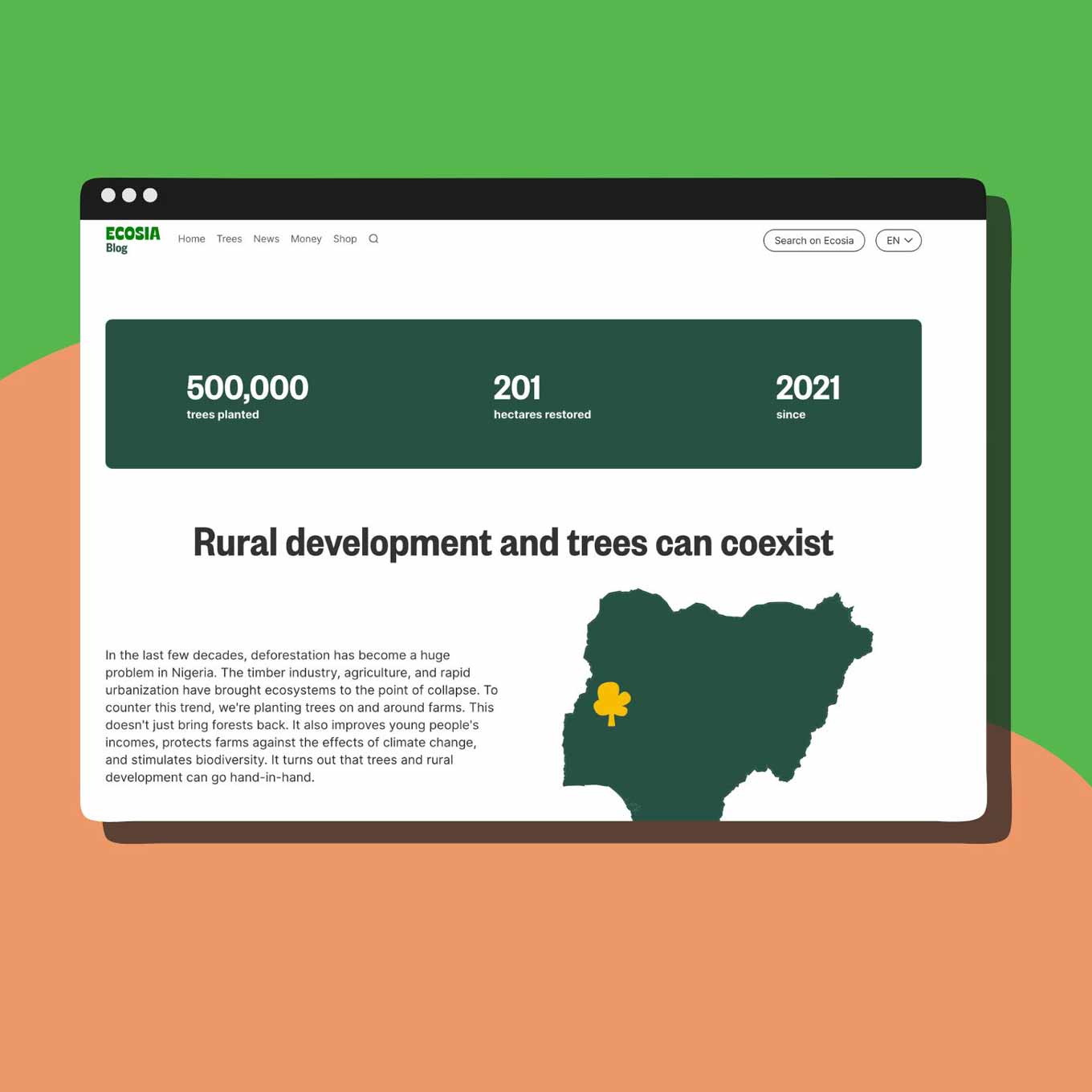
Ecosia tracks its tree-planting projects in a detailed portfolio, where anyone can see what types of trees are planted in a specific area, what planting methods are used, and even what kinds of challenges and threats the area faces.
Across all of these countries, Ecosia helps plant and protect 1,250 species of trees across 95,000 locations.
“With every search and every share, you have allowed us to do so much good for the planet, and we have no plans to stop here,” Kroll said.
“You have turned Ecosia into the biggest reforestation movement on the planet — and the planet into a better place,” he said in a YouTube video.
Ecosia also does work outside of its tree-planting partnerships. Since 2020, the company’s solar plants have produced “enough renewable energy to power all Ecosia searches twice over.”
According to a press release, Ecosia has also set up an incubator for regenerative agriculture, invested into climate tech solutions, and diversified its search providers for an improved experience all around.
While Ecosia celebrates its newest milestone, as well as its growing climate projects, it’s clear that Kroll is eager to keep the momentum going.
“Please keep spreading the word about Ecosia, so we can continue to plant trees, to protect forests, to support regenerative agriculture, and to produce renewable energy,” he continued in the video. “The planet needs it, and we need you.”
Header images courtesy of Ecosia
For years, the Austin, Texas nonprofit Maximizing Hope has teamed up with volunteers from HPF Hearts for the Homeless to run a life-changing laundry program for Austin locals experiencing homelessness.
For nine months each year, they offer pop-up laundromat events with the promise of two double loads of laundry and “all the fixin’s” of detergent, bleach, and fabric softeners.
Tonya Coy, the founder of Maximizing Hope, said that most guests come expecting a free laundry day, without realizing a network of volunteers are waiting to help them with health care services, housing applications, and more.
“What catches them by surprise is the sack lunch, hygiene kits, CapMetro bus passes, clothing and shoes from Kerby's Clothing Ministry, notary services, DPS ID payments, and Ending Community Homelessness Coalition (ECHO) Coordinated Assessments to see if they are eligible for housing,” Coy wrote on the organization’s Facebook page.
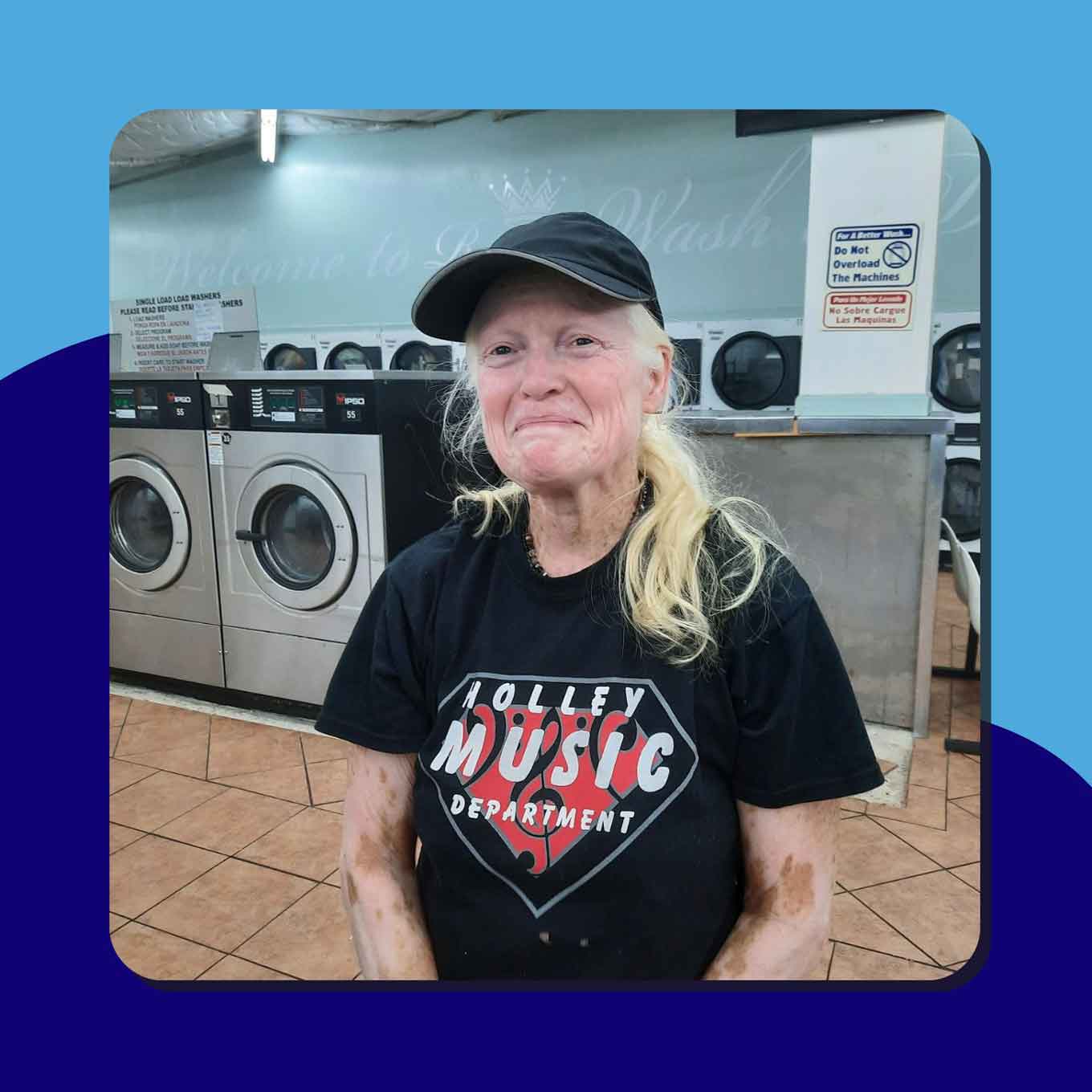
Coy said that Maximizing Hope is all about setting people up for success with realistic solutions that lead to long-term housing. This includes letting people use Maximizing Hope’s business address as a way to apply for jobs and receive mail.
“If guests want to start on our 'Next Steps' we will walk with them hand-in-hand to achieve [that],” Coy added. “We work towards obtaining identification, sustainable health care, housing, food security, and a sustainable income.”
Maximizing Hope has its own cycle: nine months of free laundry days and all of the services it renders, and then three months on hiatus as the volunteer case workers ensure no one they’ve helped falls through the cracks.
“Otherwise it’s overwhelming,” Coy told the Austin American-Statesman. “We have to hyperfocus at some point.”
Coy founded Maximizing Hope in 2020 after speaking to unhoused locals who were seeking shelter beneath a bridge, trying to survive a sweltering summer day that soared to 107 degrees. As she handed out Gatorades in the shade, Coy felt compelled to keep coming back.
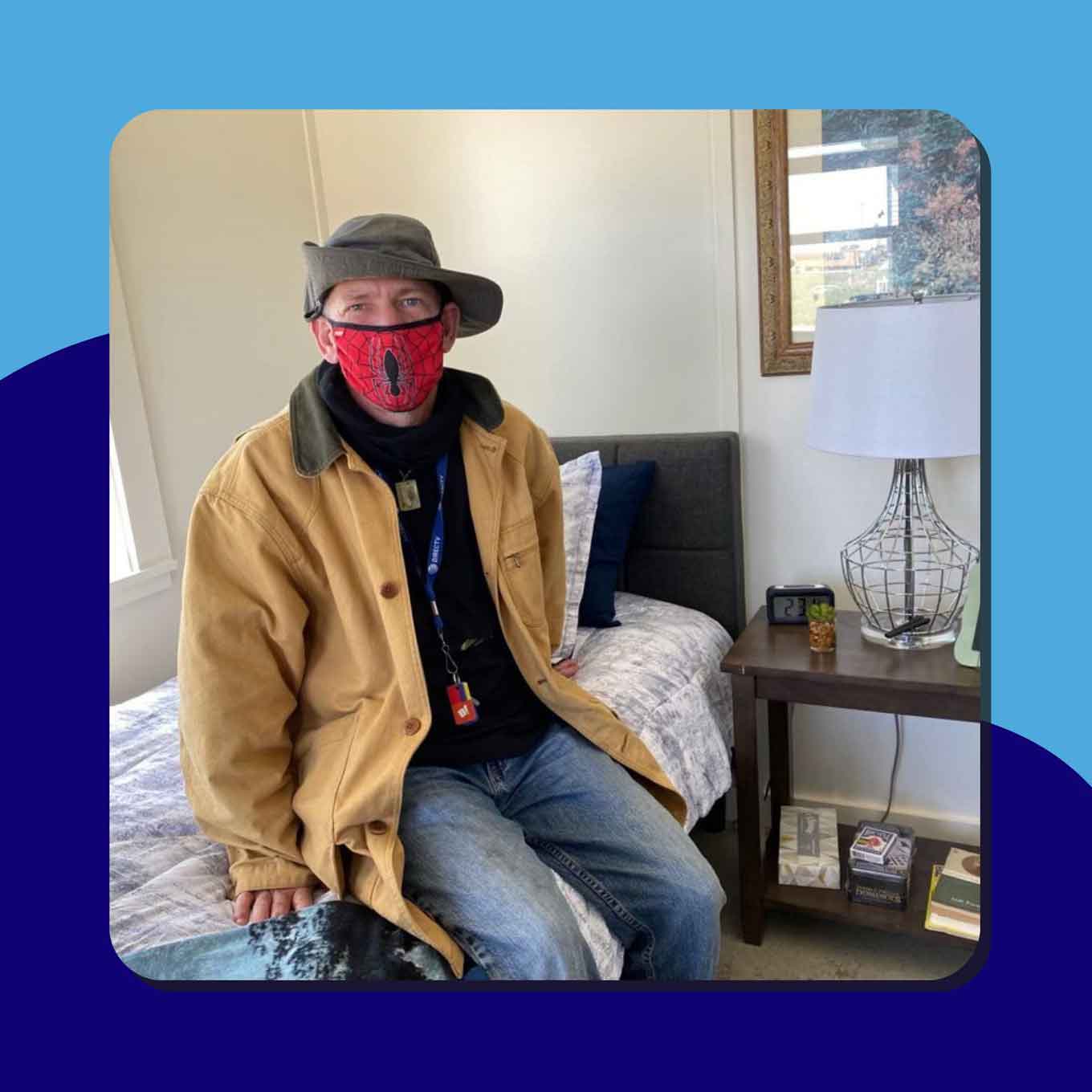
“With friends, family, and neighborhood support, we decided to keep bringing drinks, food, and other items to the campsites to make our neighbors safer and more comfortable,” Coy wrote on the nonprofit’s website. “As we started regularly visiting the camps under US 183 in Austin, we began serving over 100 people a week.”
Although the nonprofit has only been operational for four years, Maximizing Hope has had a definitive impact on the city of Austin. By building lasting connections in their community and prioritizing real-world solutions, they’ve successfully gotten many of their neighbors off the streets for good.
“[Tonya] has always been there for me, helping me out even when I was just ready to give up and move on,” wrote Austin resident Jameson Roberts beneath a Maximizing Hope social media post. “She would never let me go away without feeling of hope that it would happen just stay in it. … Thank you again for taking the time you have given me hope and now I'm right where she said that I would be: in an apartment.”
Header images courtesy of Maximizing Hope/HPF Hearts for the Homeless
Every year, Edmunds drives, tests, and evaluates more than 100 vehicles.
Editors rack up tens of thousands of miles on racetracks, mountain roads, and highways alike, all in the quest to find that perfect ride.
Some are great; some are disappointing, but only a few rise through a mix of quality, functionality, livability, and value to receive the company's Top Rated Award.
Here are picks of the best vehicles of 2024, according to Edmunds' independent review...
The Best Hybrid and Electric-Powered Vehicles of 2024
1. Top Rated Electric SUV & Best of the Best 2024: Kia EV9
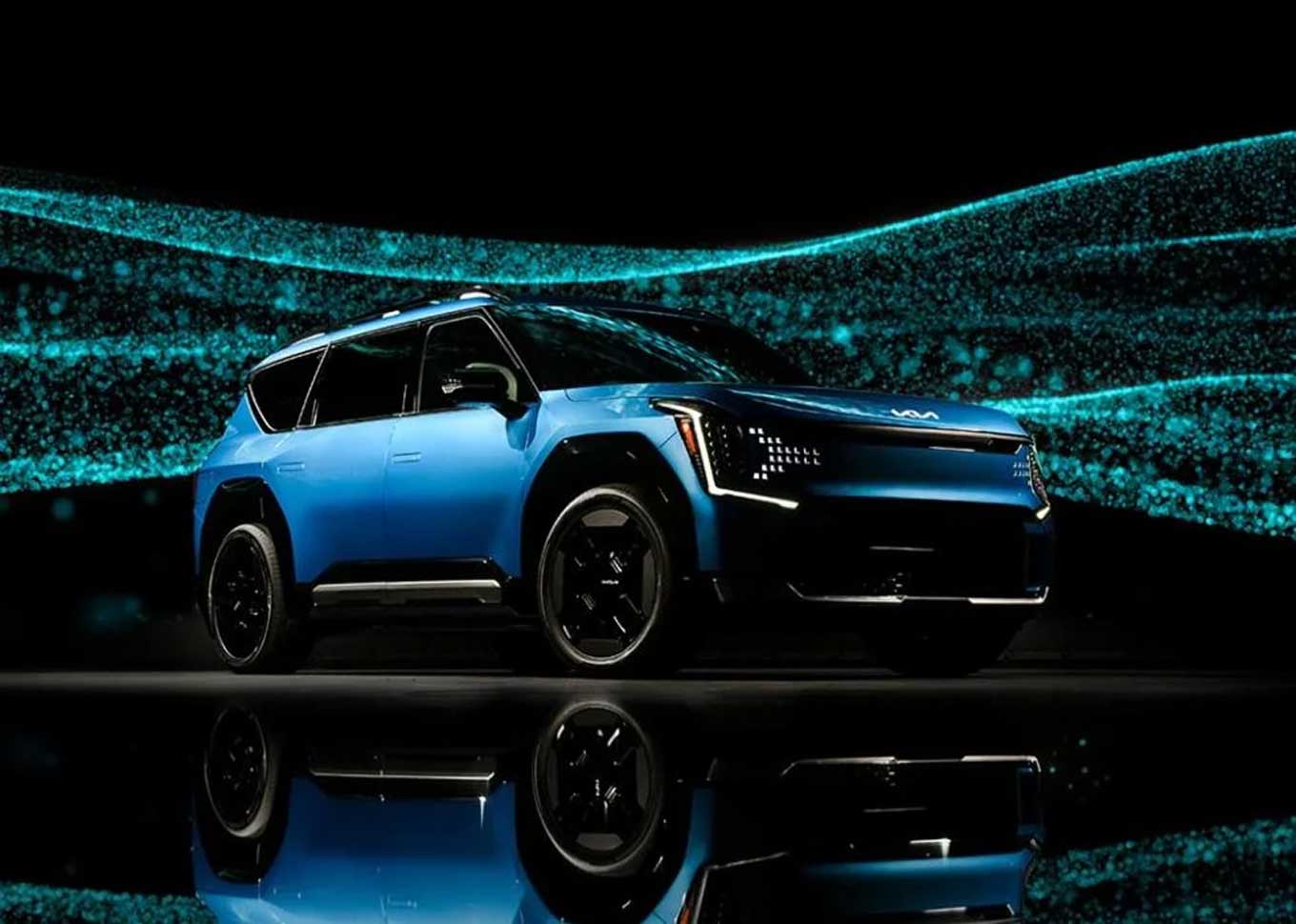
This three-row electric SUV is a game changer, which is why it not only is the Top Rated EV but takes the top prize of Best of the Best for 2024. Few vehicles have ever impressed more than the Kia EV9. This three-row SUV boasts plenty of room, a suitable amount of range, and lots of standard features.
Offering exceptional utility, an awesome interior and plenty of power at an approachable price, the Kia EV9 handily beat out the Hyundai Ioniq 5 and Kia Niro EV with the latest and greatest technology features and family-friendly interior.
The EV9's range also is admirable for its size, too: 306 miles in the Edmunds EV Range Test of a fully loaded GT-Line model, which the EPA only estimates will go 270 miles.
2. Top Rated SUV 2024: Kia Sportage Hybrid
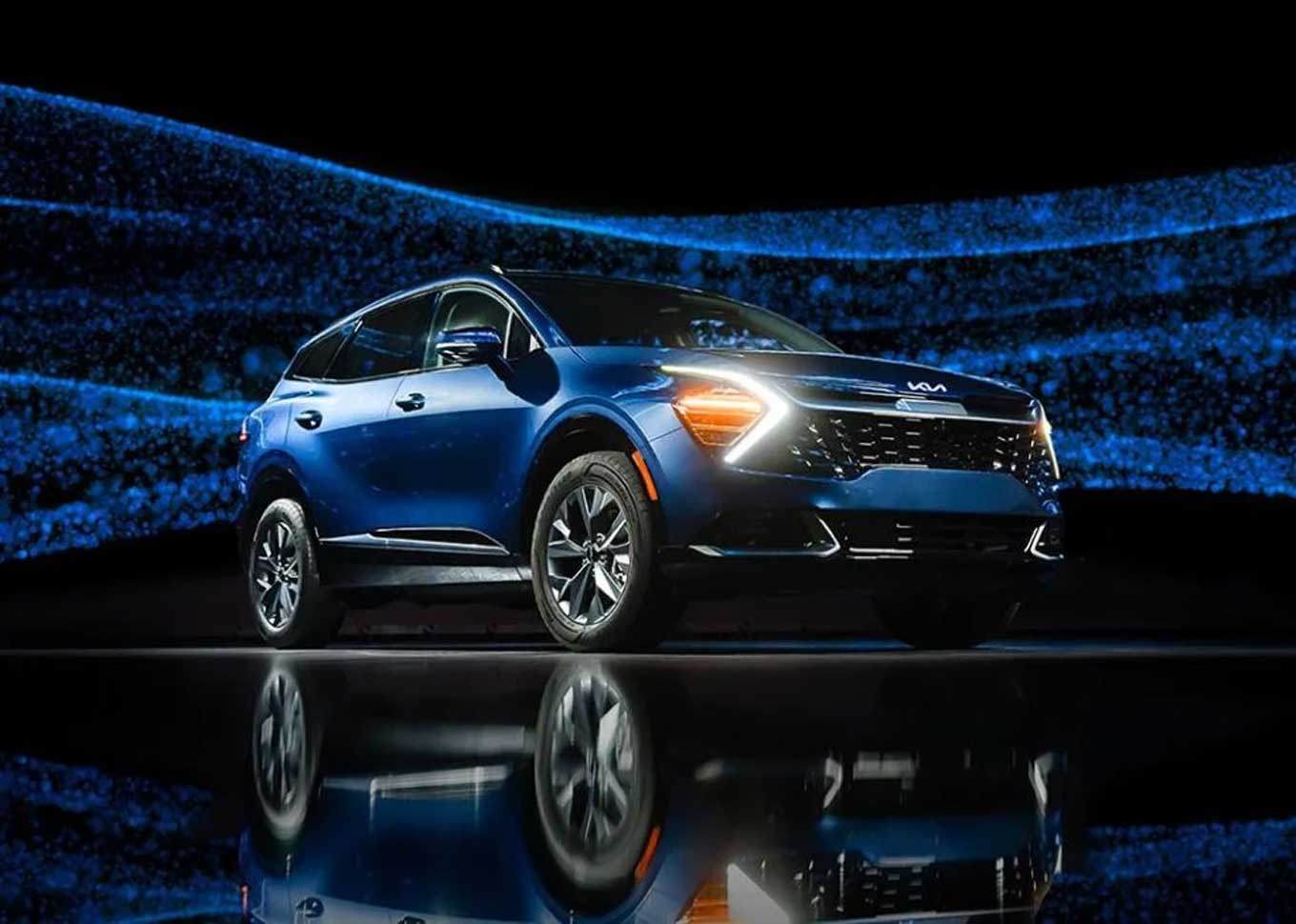
The Kia Sportage Hybrid tops the Edmunds Top Rated list for a second year in a row thanks to its stellar blend of utility, efficiency, and comfort, which is a leap ahead of its gas counterpart and the rest of the competitive SUV field.
The Sportage rose above finalists Kia Telluride and Mercedes-Benz GLS because it makes the most of hybrid technology to combine strong acceleration with impressive fuel economy, while the abundance of tech contributes to the premium vibe.
It remains an excellent choice for families at an affordable price.
3. Top Rated Electric Car 2024: BMW i5
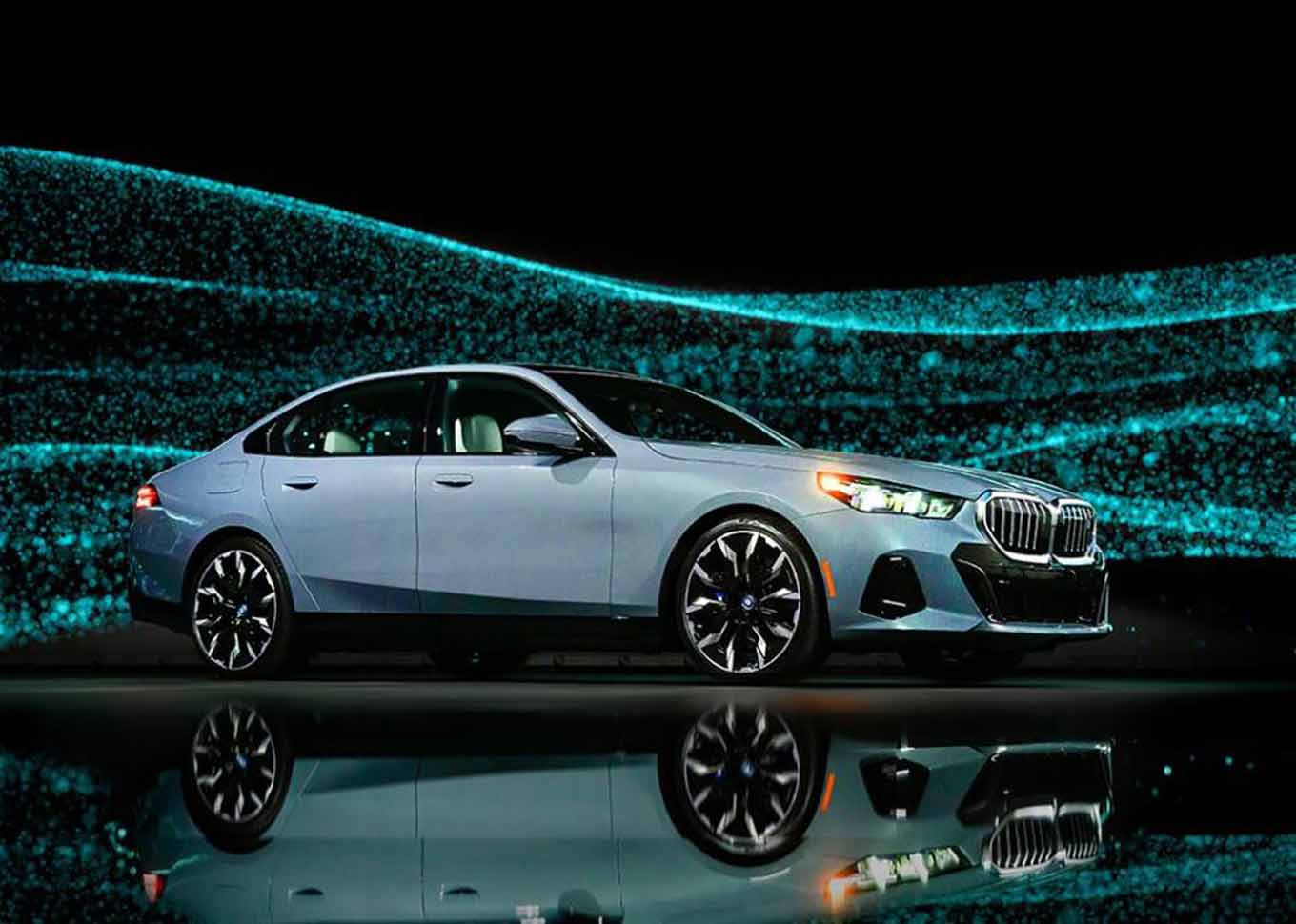
The BMW i5 wins without doing anything dramatically different. This electric luxury sedan gives you all the benefits of the standard 5 Series; a spacious back seat and a sharply designed interior that doesn't go overboard on tech; plus a quick and silent powertrain. It's great to drive, exceptionally refined, and boasts a spacious, high-quality cabin.
Plus, the i5 range is topped by the mighty 593-horsepower M60 and comfortably exceeded its EPA estimate on the Edmunds EV Range Test, traveling an impressive 321 miles on a single charge.
And even better, you don't have to pay top dollar.
4. Top Rated Car 2024: Toyota Prius

Toyota's hybrid hatchback has eye-catching style to back up its incredible efficiency, which made it soar past finalists Honda Civic Type R and the Corvette Z06. Reviewers found that the latest version is sleekly styled and has quick acceleration to go along with its high fuel efficiency.
The new Prius delivers a huge jump in performance without giving up anything in the way of efficiency. To that, add easy-to-use infotainment tech, a wealth of driver assistance technology, and compelling on-road dynamics. This is the best Prius ever.
5. Top Rated Electric Truck 2024: Ford F-150 Lightning
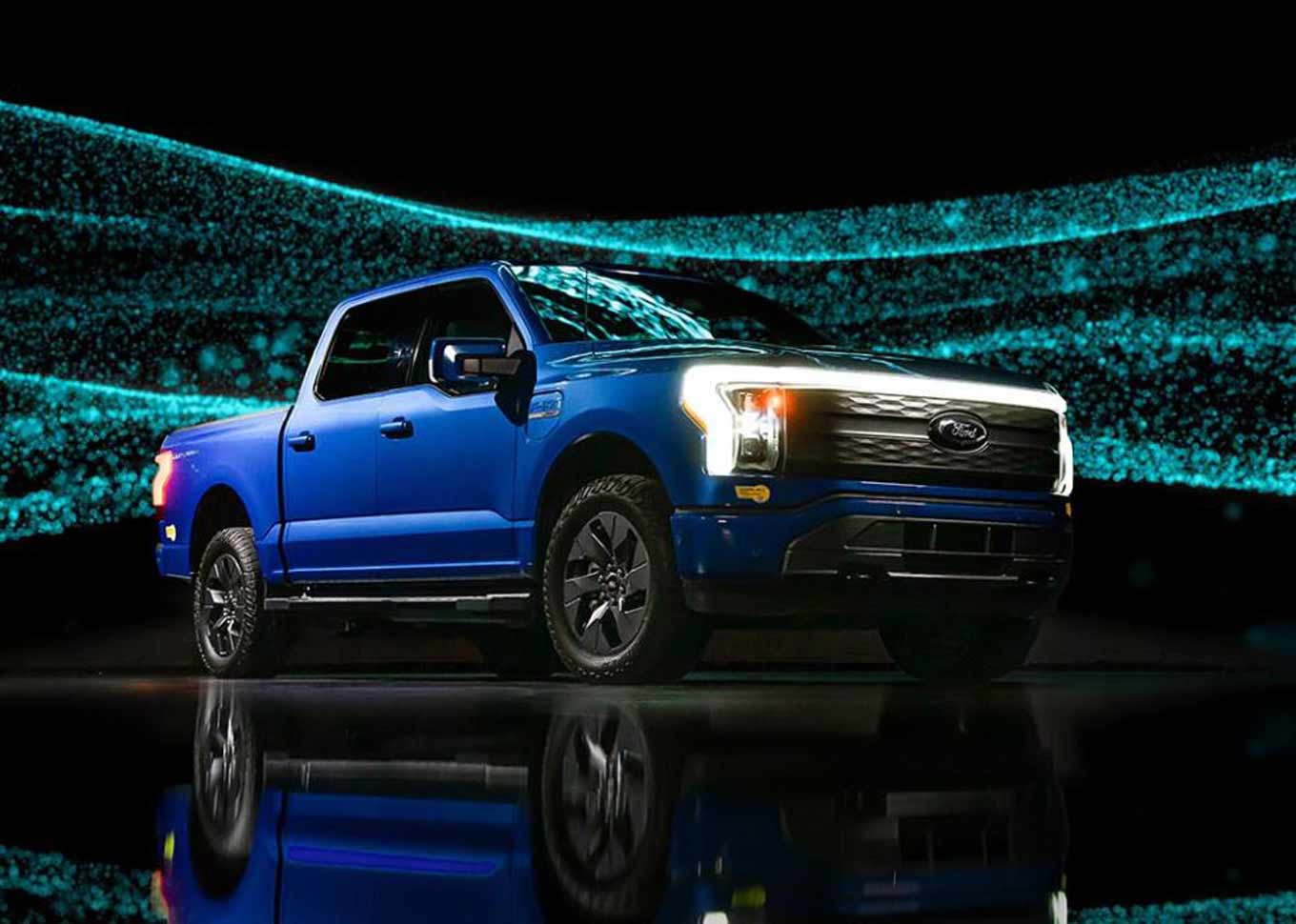
For the second year in a row, the F-150 Lightning clinched the Top Rated Electric Truck award because it's an honest, hardworking pickup — one that just happens to be electric. It's easy to drive and comfortable, and it can be had with some cool features that enhance the type of things you'll want to do with a truck.
It combines extra versatility with effortless performance. And, it's just as large, tough, and capable as the standard F-150 but comes with a few EV-specific benefits, including a front trunk for storage and an onboard generator that can literally power your house.
And lest doubters question its pickup cred, the Lightning can tow a maximum of 10,000 pounds and haul up to 2,235 pounds of gear in the bed.
Plus, it exceeded its EPA estimate in the Edmunds EV Range Test, with the bigger-battery version traveling an impressive 341 miles on a single charge.
This article was originally published by Stacker and republished with permission pursuant to a CC BY-NC 4.0 license.
As hundreds took to the streets of Pakistan’s largest city, Karachi, on Jan. 12, a sea of mostly female protesters continued screaming “Balochistan wants justice,” even as they were met with a heavy police presence.
Meanwhile, back in the restive but beautiful southwestern province of Balochistan, thousands more swarmed the streets. Their protest against enforced disappearances and extrajudicial killings in their province was just the latest mobilization for a movement that has grown exponentially over the past month.
Following the November killing of 22-year-old Balaach Mola Baksh, hundreds of women — along with some of their children — began a roughly thousand-mile march from his hometown of Turbat to Islamabad on Dec. 6. After arriving in Pakistan’s capital city, they set up camp in front of the National Press Club.
For nearly a month, these protesters — comprised of some nearly 300 families whose loved ones are victims of enforced disappearances and killings — have been living in tents made of cloth and tarpaulin, even as temperatures approach freezing.
With more protests cropping up around the country and human rights activists around the world starting to take notice, this women-led movement is showing its power in the face of staunch government repression.
“They killed him”
“When I went to see his body the agency people told me to bury him, but I said ‘No, I want justice,’” explained Najma Baloch by phone from the sit-in protest in Islamabad. “This is not just my brother, this is the brother of all Baloch people.”
Balaach was taken by men in civilian clothes from his home in Turbat at 1 a.m. on Oct. 30. The family believes these men — who arrived in a convoy of eight cars — were from Pakistan’s Counter Terrorism Department, or CTD.
“When he returned home from work that evening we never could have imagined we would lose him a few hours later,” Najma said about her brother, who worked as an embroiderer in a handicraft shop.
“My mother said the tyrants took him,” Najma continued. But when they approached the police, they were told Balaach was not in their custody. “I said ‘Then where is he? Did the earth eat him up, or did the sky swallow him?’”
It wasn’t until nearly a month later, on Nov. 21, that Balaach appeared in court, where he was remanded to CTD custody for 10 days.
“When we saw him in court my mother and I hugged him,” Najma said. “We were so so happy for my mother it was like he was born again. Two days later they killed him.”
On Nov. 24, CTD issued a statement saying that Balaach had admitted to being involved in a “terrorist operation,” providing them with information that led CTD to his associates’ hideout. When they arrived, according to the statement, an “exchange of fire” took place and four dead bodies were recovered, one of which was Balaach.
“They said he died in an ambush, but we saw him in court — so how could he die in an encounter? It was a fake encounter … they killed him,” Najma said. “I am devastated beyond measure.”
Najma described Balaach as loving brother and son. “He always took care of our mother. He was still so young, and he was not involved in whatever they are saying. He was never involved with anyone bad, he was completely innocent.”
While the CTD denies allegations of kidnapping and murder, it also insists Balaach was only arrested on Nov. 20 — the day before he was presented in court — not on Oct. 29, when he was taken from his home. For activists, this is only further evidence that Balaach became one of thousands in Balochistan to suffer an enforced disappearance and extrajudicial killing.
A movement is born
When Najma’s family received Balaach’s dead body they refused to bury him for seven days, sitting in protest outside their home with his body. People all across Turbat joined the protest, and thus began the wave of protest Pakistan is now witnessing.
Hundreds of women like Najma are turning out to demand the return of their loved ones who have been forcibly disappeared for years — some for over a decade — and taken from their homes in the same way as Balaach. These women have continued to protest despite stringent opposition by police forces.
At the Jan. 12 gathering in Karachi, the police issued an incident report that accused protesters of rioting, causing public nuisance, unlawful assembly and inciting disharmony. If the protesters are charged with these offenses, they face a prison term of up to two years, or fines, or both.
Despite the intimidation, protesters remained until after dark, turning on their phone flashlights while chanting “We stand with Mahrang Baloch” — referring to one of the leaders of the movement against enforced disappearances.
She was just 10 years old when her father was first taken by security forces in 2006. He was released three years later, only to be abducted again in seven months. Two years later his mutilated body was found.
While her face has become synonymous with the movement, Mahrang’s story is not unique. The Voice for Missing Baloch Persons says it has registered 8,000 cases of enforced disappearances since 2013 in accordance with the U.N.-advised method for recording such incidents.
“Enforced disappearances are used as a terror tool to intimidate common people,” Mahrang said, “to squash their political movements, to exploit the resources in Balochistan and to take Balochistan under Pakistani control in the manner of colonial rule.”
How Balochistan got here
Balochistan was annexed by Pakistan in 1948, giving the country one of its largest reserves of natural gas. In recent years, its Gwadar Port, situated on the Arabian Sea, has become a crucial link in the China-Pakistan Economic Corridor — allowing Pakistan to expand its trade corridors and China to bypass the U.S.-patrolled Malacca Strait and access the Middle East.
Despite Balochistan’s importance to Pakistan, many there say the territory should never have been annexed. Some separatist groups — the Baloch Liberation Army, or BLA, and Baloch Liberation Front, of BLF — continue to fight for this cause.
According to veteran Baloch journalist and political analyst Malik Siraj Akbar, the government in Pakistan has always been afraid that Balochistan would become another Bangladesh, which was formerly East Pakistan and became its own country in 1971, following a bloody war of liberation.
Akbar believes that it is this fear — the need to suppress any dissent and maintain control of Balochistan’s natural resources — that explains the state’s repressive policies.
“The military in Pakistan is the de facto powerhouse,” he said. “It controls everything,” especially since 9/11, when Pakistan received a lot of anti-terror funding, which allowed for the modernization of the military and keeping Balochistan “in check.”
In 2006 Pakistan’s security forces killed Akbar Bugti — a former chief minister and popular separatist leader of Balochistan. This is an event that Akbar describes as Balochistan’s 9/11. “It changed everything,” Akbar said.
“When Bugti died people in Balochistan began wondering what would happen to them if someone like Bugti, a former chief minister, could be killed.” Following his death, separatist groups in Balochistan retaliated by attacking Pakistan’s infrastructure, and the Pakistani military responded by carrying out more enforced disappearances.
“This began the policy known as the ‘kill and dump policy’” Akbar explained, referring to the kind of disappearances and killings that Balaach and hundreds of others have suffered. Pakistan’s official position, however, is that this is simply a part of its crackdown on anti-state actors.
Even current caretaker Prime Minister Anwaar-ul-Haq Kakar — who is from Balochistan — has spoken out against the recent protests, calling the women and their families “fake heroes of human rights” and telling them to “go and join the BLF or BLA so the state knows where you stand.”
In just the last week, Balochistan has found itself in the crosshairs of air attacks between Iran and Pakistan. Amid the exchange, Iran launched what it called “preventative action” against the Sunni Muslim militant group Jaish al-Adl, while Pakistan struck alleged hideouts used by the BLF and BLA.
All three targeted groups are ethnically Baloch, but — according to protesters — it was civilians, not terrorists, who were killed in the attacks.
As protest leader Sammi Deen Baloch noted, “The Baloch people are always the ones caught in the middle, it is their lives which are lost.”

A fight for generations
Like Mahrang, Sammi Deen — the general secretary of Voice for Missing Baloch Persons — also got involved in the movement as a result of her father being abducted. She has been marching to bring him home since 2009, when she was 10 years old.
“This is the same movement that has been going on for decades,” Sammi Deen explained. “It hasn’t just erupted suddenly.”
In 2010, she visited the capital city of Islamabad for the first time, participating in a march accompanied by seven other families whose loved ones were forcibly disappeared. They returned in 2011 with a few more families.
Then, in 2013, they did a “long march” from the city of Quetta in Balochistan to Islamabad, traveling on foot for three months and 18 days.
As a result of consistent protests over the years, 300 families — according to Sammi Deen — now feel empowered to speak up for their loved ones. “In 2013 not many people were aware of the forcibly disappeared persons in Balochistan,” she explained. “But today we have a big tool in social media, which we can use to disseminate our voices to people all over the country and around the world.”
Both Mahrang and Sammi Deen agree that social media has been a big part of their activism. From the organized use of hashtags like #MarchAgainstBalochGenocide and #IStandWithBalochMarch to daily updates from the protest site, sharing their voices online has become a crucial way for the protesters to amass support across Pakistan.
“Traditional media channels don’t cover this,” Mahrang said, “so there is no way for people to know … but now common people in Pakistan are being forced to look at the role they play in the genocide of the Baloch people.”
For Mahrang and all the families protesting, this very much is a genocide — a targeted destruction of the Baloch people and their identity that has been taking place over decades. However, at a Jan. 1 press conference, Interim Prime Minister Kakar described “his fight” as not against any particular race or caste but against the various anti-state organizations in Balochistan.
Women take charge
Apart from social media, another unique characteristic of this movement against enforced disappearances is that it is being led by women like Mahrang and Sammi Deen.
“This movement is a culmination of two decades of women’s suffering, and they are the ones now leading it,” Mahrang said. “There are mothers, sisters, grandmothers, half-widows … and this shows people that we aren’t agents of any organization but simply common people of Balochistan bringing forward our pain and oppression.”
Another reason women have taken the lead, according to Sammi Deen, is to protect their male supporters and family members. “In Balochistan men are not safe in any way, whether it is activism or if they are just going to the market,” she said. “We never know if they will return home alive and safe.”
That being said, the women themselves have been far from safe when it comes to police crackdowns. On the evening of Dec. 20, when the march reached the outskirts of Islamabad, they found their entry blocked by police forces.
A petition filed on Jan. 3 by Sammi Deen to the high court in Islamabad described the interaction, saying “Police baton-charged the protesters and used water cannons against these marchers and their supporters.” Meanwhile, in his press conference, Kakar described the use of water canons as “standard practice of law enforcement across the world.”
Mahrang and 52 other women and children protesters were detained for over 24 hours and only released after the high court ordered it.
Another 290 students, women and children were later detained for five days before being released. According to the petition, “the Baloch women and children were brutalized by the Islamabad police,” and an attempt was made to force them onto buses and send them back to Quetta in Balochistan.
The Islamabad police rejected these claims on the social media platform X, saying there was “no ill-treatment of women or children.”
Once the protesters were at the sit-in at the National Press Club in Islamabad on Dec. 23, families of missing persons were threatened with arrests if they did not vacate the protest site, and the police repeatedly blocked the entry of food and blankets, which are essential in the Pakistani winter. They were also targeted by masked men in plain clothes, who stole their speaker while pointing loaded guns — all in the presence of the police and multiple surveillance cameras.
With surveillance cameras present nearly everywhere around the sit-in, the police — according to Mahrang — are clearly trying to intimidate the mostly female group of protesters.
For their parts, Mahrang has been accused of sedition and Sammi Deen has been the target of a “vile and dirty propaganda campaign” using false photos depicting her with militant groups with whom she has no connection.
This incident forced Sammi Deen to take off her niqab (the face covering worn by some Muslim women) which she had previously always worn in press conferences. Nevertheless, Sammi Deen, vows to not be silenced.
Changing tides and demands that pave a way forward
This March Against Baloch Genocide — as the protesters often refer to their movement — has received an unprecedented show of support in the form of solidarity protests in various parts of Balochistan, as well as other Pakistani provinces, and even in front of 10 Downing Street in London, where protesters held a five-day sit in.
According to Mahrang, this response is due to the protest making people feel heard for the first time in decades. “There has always been a negativity spread around that common people do not hold any power in front of the Pakistani establishment and we just have to follow them blindly,” she said.
According to Akbar, the political analyst, this is also because, for the first time, people’s faith in the military has faltered. “There’s a segment of the population that has begun to realize that the military is not so clean,” he said.
“In the past people may not have believed all these allegations against the military. But now that they see that former Prime Minister Imran Khan has been so badly silenced that he can’t even contest in the next elections — despite being the country’s most popular leader — people are starting to question things.”
Akbar also pointed to the role that social media has played in giving people outside Balochistan a window into their suffering.
According to Sammi Deen, one of the movement’s main objectives has been to collect data. In less than a month, while marching from Balochistan to Islamabad, they have gathered evidence of roughly 600 missing persons. “God forbid, if someone dies tomorrow in a fake encounter, we will at least know if he was [already] missing from before.”
In addition to collecting data, the movement is also working to bring the killers of men like Balaach to justice. On Dec. 9, after initial resistance, the police registered a complaint against four CTD personnel on the direction of a lower court. Then, two days later, the high court ordered the immediate suspension of the four CTD personnel. A committee was also formed to investigate the death. However, no arrests have yet been made.
“We want all the missing persons of Balochistan to be released and … we want to see progress in their cases,” said Sammi Deen before adding that the CTD and state-sponsored “death squads” (or private militia) responsible for these enforced disappearances and extrajudicial killings should be disbanded.
On Jan.10, Mahrang and Sammi Deen were able to speak with U.N. Special Rapporteur on Human Rights Defenders Mary Lawler about the need for a U.N. fact-finding mission in Pakistan to investigate the human rights violations and genocide in Balochistan. Writing on X, Lawler said, “The reports of police harassment are v. concerning. Spurious criminal complaints against peaceful protesters should be dropped.”
According to Akbar, as long as there is “genuine will from the military,” it is feasible for the disappeared persons to be returned home, so long as they haven’t already been killed.
“The military is a very organized institution, so they definitely have accounts of these missing persons.” Akbar also noted that a large number of missing persons were released in the past when the government wanted to appease the Baloch people.
However, Akbar does not believe Pakistan will allow an independent U.N.-fact-finding mission into Balochistan, as Pakistan considers it a sovereign matter.
“This is a collective punishment because when one family member is disappeared all his loved ones suffer,” Sammi Deen said. “It is the uncertainty, the continuous wait, the torturous pain that is unbearable.”
Despite all that, or perhaps because of it, Sammi Deen and Mahrang believe that this movement will not burn out, but continue and grow its important work.
“We are expanding this movement all over the country and all over the world,” Mahrang said. “Anyone who sympathizes with us, we appeal to them to protest in solidarity, to send petitions to the U.N., to write to your parliaments to initiate discussions. This is just the beginning, and we will take this forward peacefully.”
Strong women have always been at the forefront of progress and change — challenging norms, breaking barriers, and paving the way for future generations. Their resilience, courage, and determination serve as beacons of inspiration for people of all genders.
Across various fields — be it politics, science, literature, or activism — strong women have made their indelible mark, demonstrating that strength comes in many forms and often against formidable odds.
In this article, we’ve curated a collection of quotes from strong women throughout history. Their words not only highlight the diverse facets of strength but also celebrate the enduring impact of women’s voices in shaping a more just and equitable world.
Whether you’re seeking motivation, reflection, or a reminder of your own strength, these quotes from and about strong women offer timeless inspiration...
The Best Quotes By and About Strong Women
Famous Quotes
“Strong women don’t have ‘attitudes’, we have standards.”
— Marilyn Monroe
“I do not wish women to have power over men; but over themselves.”
— Mary Shelley
“We’re here for a reason. I believe that reason is to throw little torches out to lead people through the dark.”
— Whoopi Goldberg
“Our backs tell stories no books have the spine to carry.”
— Rupi Kaur, Milk and Honey
“I stopped being a quiet peacekeeper and started being a loud peacemaker. My anger was good.”
— Glennon Doyle
“I’m tough, I’m ambitious, and I know exactly what I want. If that makes me a bitch, okay.”
— Madonna

“They’ll tell you you’re too loud — that you need to wait your turn and ask the right people for permission. Do it anyway.”
— Alexandria Ocasio-Cortez
“Take criticism seriously, but not personally. If there is truth or merit in the criticism, try to learn from it. Otherwise, let it roll right off you.”
— Hillary Clinton
“There are two powers in the world; one is the sword and the other is the pen. There is a third power stronger than both, that of women.”
— Malala Yousafzai
“Life comes with many challenges. The ones that should not scare us are the ones we can take on and take control of.”
— Angelina Jolie, in an article

“It doesn’t matter how strong your opinions are. If you don’t use your power for positive change, you are, indeed, part of the problem.”
— Coretta Scott King

“The most common way people give up their power is by thinking they don’t have any.”
— Alice Walker
“A strong woman is a woman determined to do something others are determined not be done.”
— Marge Piercy
“Power can be taken, but not given. The process of the taking is empowerment in itself.”
— Gloria Steinem

“Our collective experience has shown that when women have the power to make their own choices, good things happen.”
— Madeleine Albright
“I am not free while any woman is unfree, even when her shackles are very different from my own.”
— Audre Lorde
“You don’t even have to believe in anything to be good to people. You should just know you should be a good human being.”
— Dolly Parton
“Life shrinks or expands in proportion with one’s courage.”
— Anaïs Nin

Inspirational Quotes
“Just don’t give up trying to do what you really want to do. Where there is love and inspiration, I don’t think you can go wrong.”
— Ella Fitzgerald
“Never limit yourself because of others’ limited imagination; never limit others because of your own limited imagination.”
— Mae Jemison
“There is no gate, no lock, no bolt that you can set upon the freedom of my mind.”
— Virginia Woolf, A Room of One’s Own
“Women must try to do things as men have tried. When they fail, their failure must be but a challenge to others.”
— Amelia Earhart
“I am learning every day to allow the space between where I am and where I want to be to inspire me and not terrify me. I can even ask for help! Not feeling that I have to know everything… that’s where the growth comes in, in the not knowing.”
— Tracee Ellis Ross
“At some point in a woman’s life, she just gets tired of being ashamed all the time. After that, she is free to become whoever she truly is.”
— Elizabeth Gilbert
“Real power is born of the humility and grace of sisterhood. That’s what empowerment means. The more power you share, the more power you have, and the more power you have, the more you must share.”
— Kerry Washington
“You have to believe in yourself and believe in your ability to prove yourself wrong.”
— Erin Foster
“No matter what happens, or how bad it seems today, life does go on, and it will be better tomorrow.”
— Maya Angelou
“Do you really want to look back on your life and see how wonderful it could have been had you not been afraid to live in?”
— Caroline Myss
“I want all the girls without an exception to have that space for themselves where they have opportunities to be the women they wish to be.”
— Priyanka Chopra
“We cannot solve a crisis without treating it as a crisis. And if solutions within the system are so impossible to find, then maybe we should change the system itself.”
— Greta Thunberg
“There is a stubbornness about me that never can bear to be frightened at the will of others. My courage always rises at every attempt to intimidate me.”
— Jane Austen, Pride and Prejudice
“Sometimes just being yourself is the radical act. When you occupy space in systems that weren’t built for you, your authenticity is activism.”
— Elaine Welteroth, More Than Enough: Claiming Space for Who You Are (No Matter What They Say)
“As women achieve power, the barriers will fall. As society sees what women can do, as women see what women can do, there will be more women out there doing things, and we’ll all be better off for it.”
— Ruth Bader Ginsburg
“Never doubt that you are valuable and powerful and deserving of every chance in the world to pursue your dreams.”
— Hillary Clinton
“Look closely at the present you are constructing: it should look like the future you are dreaming.”
— Alice Walker
“You have to have confidence in your ability, and then be tough enough to follow through.”
— Rosalynn Carter

Strong, Confident Women Quotes
“Be confident, not certain.”
— Eleanor Roosevelt
“We need women who are so strong they can be gentle, so educated they can be humble, so fierce they can be compassionate, so passionate they can be rational and so disciplined they can be free.”
— Kavita Ramdas
“We have to be visible. We should not be ashamed of who we are.”
— Marsha P. Johnson
“The two important things that I did learn were that you are as powerful and strong as you allow yourself to be, and that the most difficult part of any endeavour is taking the first step, making the first decision.”
— Robyn Davidson
“I really think a champion is defined not by their wins but by how they can recover when they fall.”
— Serena Williams
“The best protection any woman can have is courage.”
— Elizabeth Cady Stanton
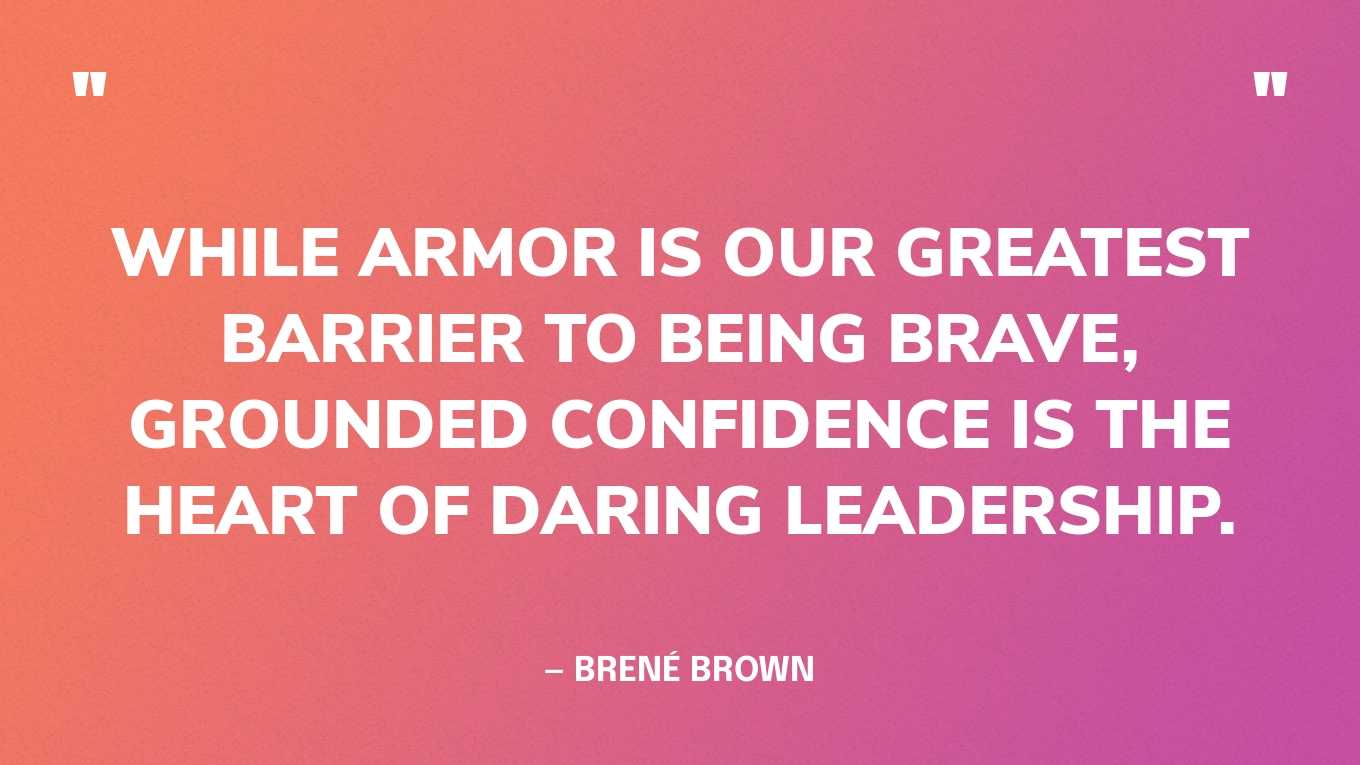
“While armor is our greatest barrier to being brave, grounded confidence is the heart of daring leadership.”
— Brené Brown, in an article
“You don’t have to play masculine to be a strong woman.”
— Mary Elizabeth Winstead
“Women don’t endure simply because we can; no, women endure because we aren’t given any other choice. They wanted us weak but forced us to be strong.”
— Amanda Lovelace, The Witch Doesn’t Burn in This One
“I think transwomen, and transpeople in general, show everyone that you can define what it means to be a man or woman on your own terms. A lot of what feminism is about is moving outside of roles and moving outside of expectations of who and what you’re supposed to be to live a more authentic life.”
— Laverne Cox
“We all have an unsuspected reserve of strength inside that emerges when life puts us to the test.”
— Isabel Allende
“A true and strong woman is graceful, talented, fearless, brave, and modest, and she embraces the war she went through and is deified by her scars.”
— Sonia Sotomayor
“Life is not easy for any of us. But what of that? We must have perseverance and, above all, confidence in ourselves. We must believe we are gifted for something and that this thing must be attained.”
— Marie Curie
“The real power behind whatever success I have now was something I found within myself — something that’s in all of us.”
— Tina Turner
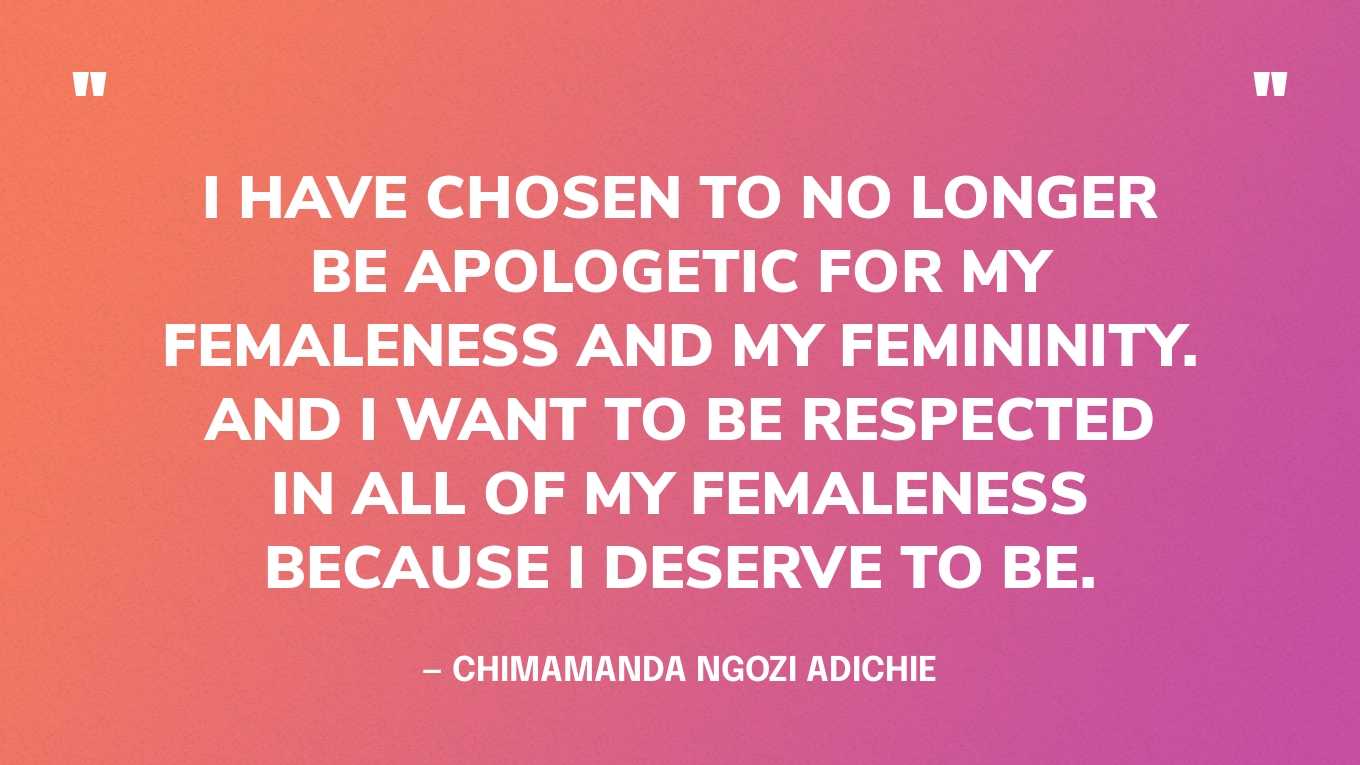
“I have chosen to no longer be apologetic for my femaleness and my femininity. And I want to be respected in all of my femaleness because I deserve to be.”
— Chimamanda Ngozi Adichie, We Should All Be Feminists
“Women don’t need to find a voice, they have a voice, and they need to feel empowered to use it, and people need to be encouraged to listen.”
— Meghan Markle
“The encouraging thing is that every time you meet a situation, though you may think at the time it is an impossibility and you go through the tortures of the damned, once you have met it and lived through it you find that forever after you are freer than you ever were before… You gain strength, courage, and confidence by every experience in which you really stop to look fear in the face. You are able to say to yourself, ‘I lived through this horror. I can take the next thing that comes along.’”
— Eleanor Roosevelt, You Learn by Living: Eleven Keys for a More Fulfilling Life
“It is critical to unearth and understand our stories — both as individuals and as entrepreneurs. Once we do that, make peace with it, and embrace it, not only can we live empowered, transformed, and fulfilling lives, we can help others do that too as models and as guides.”
— Marta Spirk, The Empowered Woman: The Ultimate Roadmap to Business Success
“Don’t hold back because you think it’s unladylike. We shouldn’t be shamed out of our anger. We should be using it. Using it to make change in our own lives, and using it to make change in the lives around us.”
— Jessica Valenti
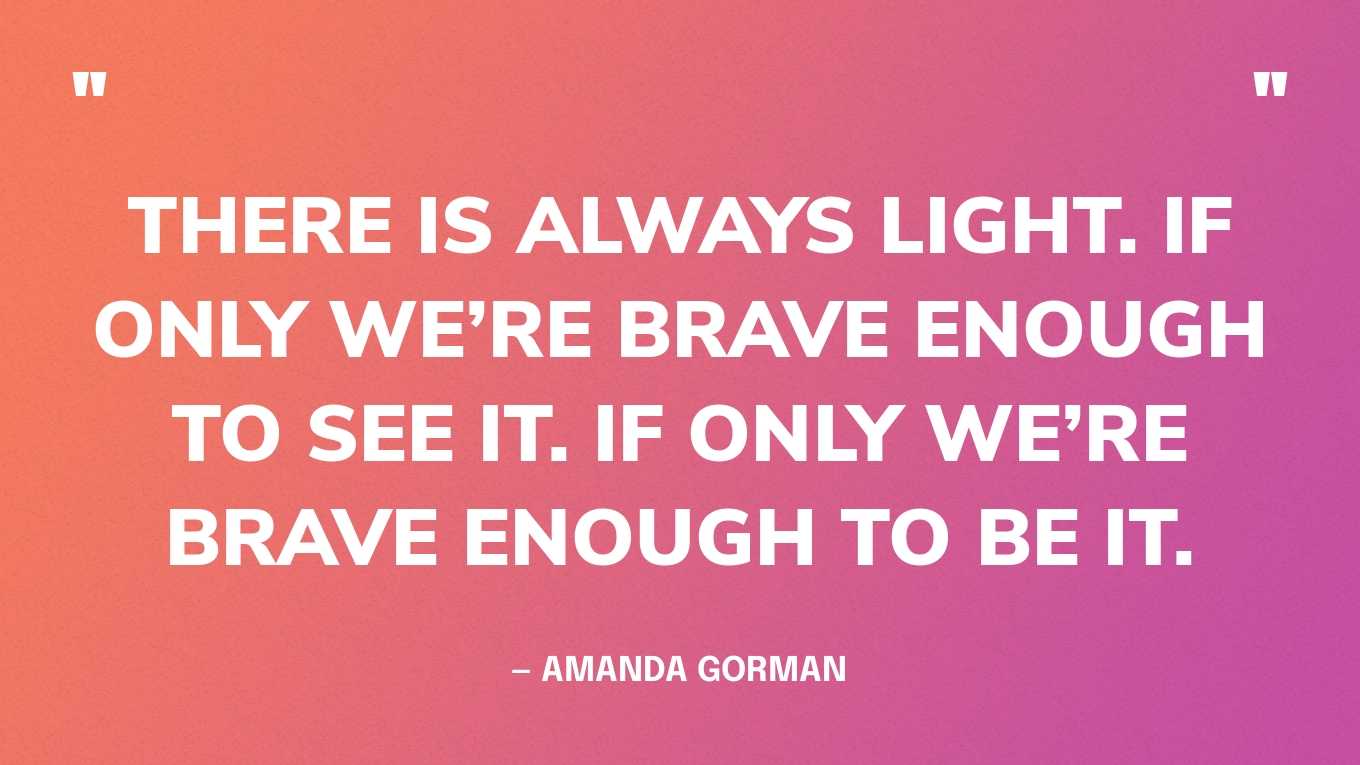
“There is always light. If only we’re brave enough to see it. If only we’re brave enough to be it.”
— Amanda Gorman, The Hill We Climb
Stand Up For Yourself Quotes
“Each time a woman stands up for herself, she stands up for all women.”
— Maya Angelou

“I’m not going anywhere. I’m not shutting up. I will always stand up for women and girls, cis and trans.”
— Fae Johnstone
“Feminism isn’t about making women strong. Women are already strong. It’s about changing the way the world perceives that strength.”
— G.D. Anderson
“Remember that no one will hand you power or responsibility; you must take them yourself and make the necessary effort to obtain them.”
— Helen Keller
“I know how to stand my ground. I know how to speak up. I know how to stand sturdy. But that doesn’t mean I’ve hardened my heart.”
— Dolly Parton
“When I dare to be powerful — to use my strength in the service of my vision — then it becomes less and less important whether I am afraid.”
— Audre Lorde
“Doubt is a killer. You just have to know who you are and what you stand for.”
— Jennifer Lopez
“It’s not about how many times you get rejected or fall down or are beaten up, it’s about how many times you stand up and are brave and you keep on going.”
— Lady Gaga

Short Quotes
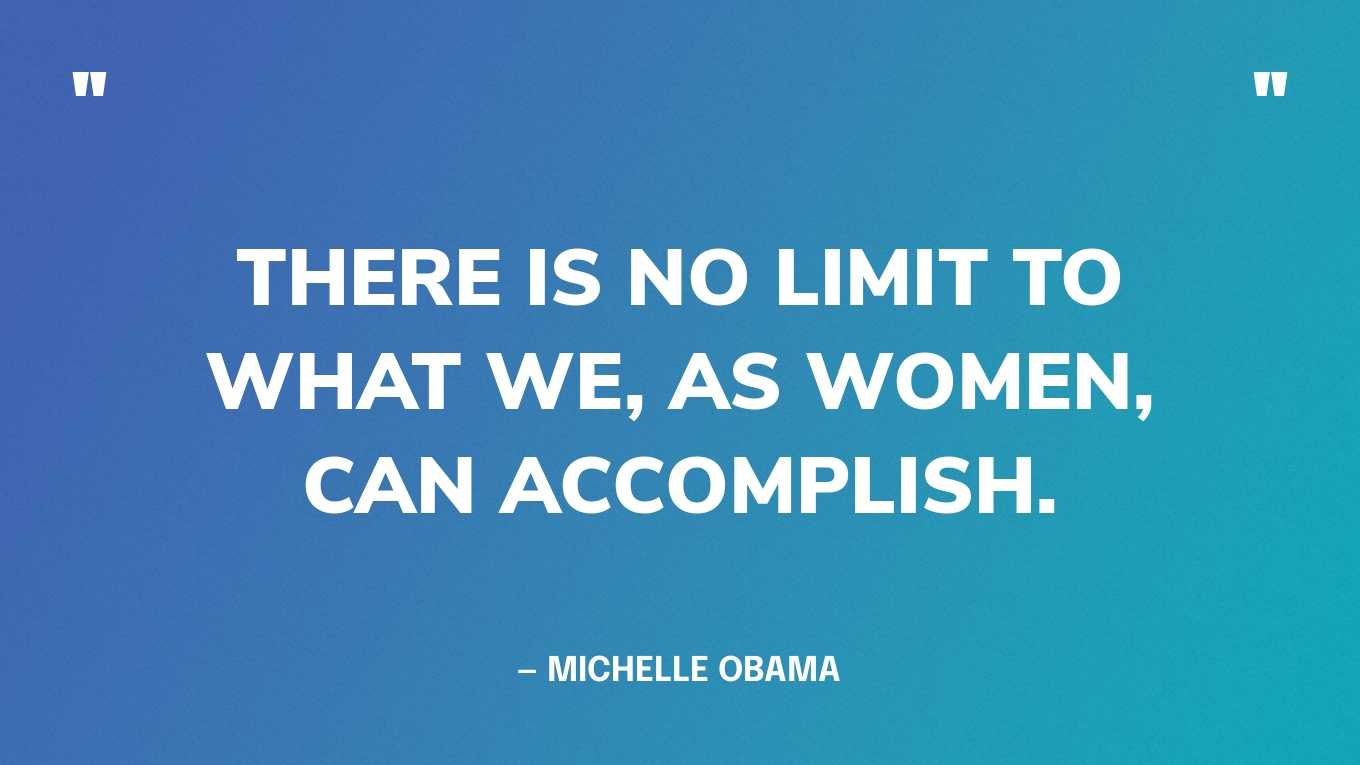
“There is no limit to what we, as women, can accomplish.”
— Michelle Obama
“Don’t compromise yourself. You are all you’ve got. There is no yesterday, no tomorrow, it’s all the same day.”
— Janis Joplin
“It is better to be looked over than overlooked.”
— Mae West
“You grow up the day you have your first real laugh at yourself.”
— Ethel Barrymore
“A woman is the full circle. Within her is the power to create, nurture and transform.”
— Diane Mariechild
“Giving up doesn’t always mean you’re weak. Sometimes you’re just strong enough to let go.”
— Taylor Swift
“If there’s one thing I’ve learned in life, it’s the power of using your voice.”
— Michelle Obama, Becoming
“I figure, if a girl wants to be a legend, she should go ahead and be one.”
— Calamity Jane
“Love is not weakness. It’s the bravest act of our lives.”
― Georgia Scott, American Girl: Memories That Made Me
“A really strong woman accepts the war she went through and is ennobled by her scars.”
— Carly Simon
“Hoping for the best, prepared for the worst, and unsurprised by anything in between.”
— Maya Angelou, I Know Why the Caged Bird Sings
“Well-behaved women seldom make history.”
— Laurel Thatcher Ulrich
“You take your life in your own hands, and what happens? A terrible thing: no one to blame.”
— Erica Jong
“So often in life, things that you regard as an impediment turn out to be great, good fortune.”
— Ruth Bader Ginsburg
“Don’t let the bastards grind you down.”
— Margaret Atwood, The Handmaid’s Tale
“Women have discovered that they cannot rely on men’s chivalry to give them justice.”
— Helen Keller
→ Read more short quotes
More Quotes
“We need women at all levels, including the top, to change the dynamic, reshape the conversation, to make sure women’s voices are heard and heeded, not overlooked and ignored.”
— Sheryl Sandberg
“I have learned over the years that when one’s mind is made up, this diminishes fear; knowing what must be done does away with fear.”
— Rosa Parks
“I’ve come to believe that each of us has a personal calling that’s as unique as a fingerprint — and that the best way to succeed is to discover what you love and then find a way to offer it to others in the form of service, working hard, and also allowing the energy of the universe to lead you.”
— Oprah Winfrey
“There’s something so special about a woman who dominates in a man’s world. It takes a certain grace, strength, intelligence, fearlessness, and the nerve to never take no for an answer.”
— Rihanna
“What I want young women and girls to know is: You are powerful and your voice matters. You’re going to walk into many rooms where you may be the only one who looks like you or who has had the experiences you’ve had. So you use that voice and be strong.”
— Kamala Harris
“Each person is born with very individual qualities and potential. We as a society owe it to women to create a truly supportive environment in which they too can grow and move forward.”
— Princess Diana, in a speech
“The world needs strong women. Women who will lift and build others, who will love and be loved, women who live bravely, both tender and fierce, women of indomitable will.”
— Amy Tenney
“We must not, in trying to think about how we can make a big difference, ignore the small daily difference we can make which, over time, add up to big differences that we often cannot foresee.”
— Marian Wright Edelman
“Hope is often misunderstood. People tend to think that it is simply passive wishful thinking: I hope something will happen but I’m not going to do anything about it. This is indeed the opposite of real hope, which requires action and engagement.”
— Jane Goodall, The Book of Hope: A Survival Guide for Trying Times
“A strong, independent woman will break or bend the rules whenever and wherever it is essential to emerging above social norms that constrict or compel them into compliance.”
— Sonia Sotomayor
“I am convinced that the women of the world, united without any regard for national or racial dimensions, can become a most powerful force for international peace and brotherhood.”
— Coretta Scott King
“A woman with a voice is by definition a strong woman. But the search to find that voice can be remarkably difficult.”
— Melinda Gates
“You have to accept whatever comes, and the only important thing is that you meet it with the best you have to give.”
— Eleanor Roosevelt
A coalition of 55 organizations and over 50 celebrities and influencers have launched a completely digital climate protest: The Virtual March to Retire Big Oil.
The objective? To demand climate-friendly options for every American’s 401(k) plans.
According to As You Sow, a nonprofit that empowers shareholders to invest in their values, a fifth of all money invested in oil and gas comes from Americans’ retirement accounts.
The nonprofit estimates that 19% of the market cap of U.S. fossil fuel companies comes from investments in 401(k) contribution plans and IRAs.
Essentially, if Americans want to create a nest egg, they have very few options to avoid investing in oil and gas.
Not only does this reality seem misaligned from people’s values; it’s also a large financial risk, considering coal, oil, and gas stocks could face a large decrease in annual returns in the coming decades.
“Fossil fuels have dramatically underperformed other asset classes for the past decade, and for an obvious reason: a new industry, renewable energy, has arisen that delivers the same product, just more cheaply and cleanly,” Bill McKibben, founder of 350.org and Third Act, said in a statement.
“Everyone should have the option to avoid investing in oil and gas, not only for their financial future, but so they can help ensure we have a planet worth living on in retirement.”

In order to sever financial ties with big oil, the Virtual March to Retire Big Oil encourages everyday people to participate in “a march down Wall Street that happens only on social media.”
Using an app and the help of AI, participants can upload a selfie and download a generated image of them marching in protest, together with thousands of others.
Once uploading a selfie, users are given a few options, with a watermark that says: “This photo is fake, but the crisis is real.”
The digital protest idea was developed by creative agency Buena, with an intention of making change without making pollution.
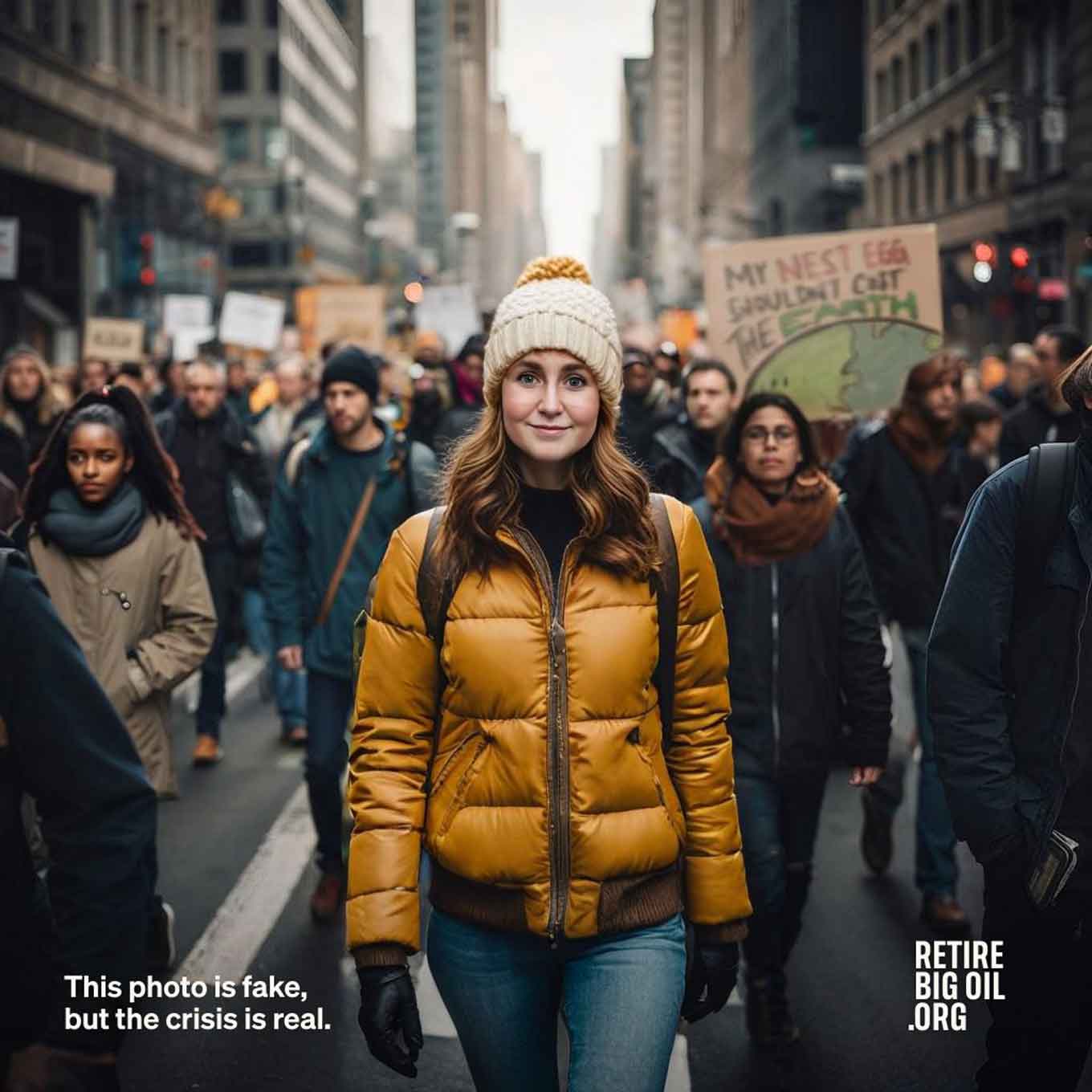
“We see this as a whole new way to build a movement. While you can never replace the importance of protesting in person, virtual marching means anyone can participate regardless of geography, financial state, or physical ability,” Doug Burnett, founder of Buena, said in a statement.
“As a climate march, it’s especially nice to avoid flights or gas to rally people together.”
The project was funded by The Crane Institute of Sustainability and relies on the help of partners like Sphere, Yellow Dot Studios, Third Act, LIFT Economy, NIA Impact Capital, Stand.earth, and more.
According to the Retire Big Oil website, once the project makes waves and catches the attention of Wall Street, organizers will coordinate their efforts into “small doable monthly actions” to help people divest from big oil and inspire companies to add climate-safe retirement options.
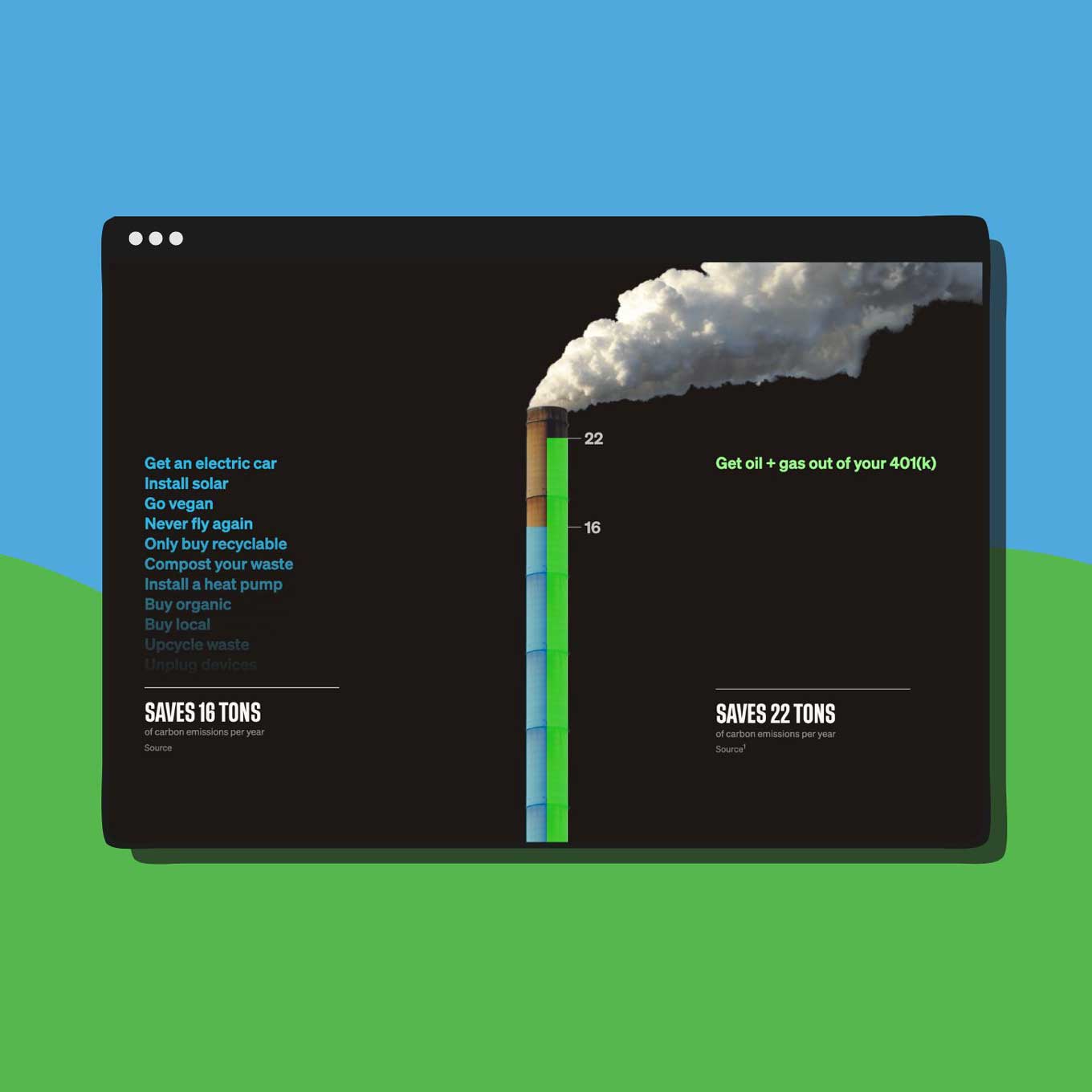
The project also surmises that removing oil and gas investments from one’s 401(k) is more impactful than other actions, such as getting an electric car or installing solar power. According to the website, divesting from oil and gas can save 22 tons of carbon emissions every year.
With compelling messaging like this, celebrities like Susan Sarandon, Patton Oswalt, Don Cheadle, and Shepard Fairey have joined the cause.
They are rallying behind another big Hollywood name: Adam McKay, the director of blockbusters like “Don’t Look Up,” “The Big Short,” and the mind behind Yellow Dot Studios, which creates content fighting climate disinformation.
“Even for Wall Street, it's astonishingly sadistic and myopic to force people to use their future retirement savings to help oil and gas companies literally erase that future,” McKay said in a statement.
“Everyone should be calling this out, if for no other reason than to stop the big 401(k) platforms from flushing your savings down the toilet.”

For other stakeholders, this cause is personal.
Alex Wright-Gladstein is the founder and CEO of Sphere, which runs the first climate-friendly 401(k) fund and measures the financed emissions of existing 401(k)s, working with benefits teams at various companies to reduce those emissions.
Prior to Sphere, she worked at a different climate tech company, and she said it took three years to get its 401(k) providers to add a single climate-friendly investment option. This led her to a new frontier.
“It turns out I wasn’t alone,” Wright-Gladstein said in a statement. “There are entire social movements at the big tech companies that have been asking for these options for years.”

By mobilizing people through the Virtual March to Retire Big Oil, organizers hope that those asks will become even louder — and lead to a sustainable future — for both individual bank accounts and our shared planet.
“You busted your ass your whole life and some billionaire wants you to erase those savings to move their earnings a few more ticks into the black, all the while ignoring the oncoming climate crisis?” comedian Patton Oswalt said in a statement. “Time to stand together, folks!”
Header image courtesy of The Virtual March to Retire Big Oil
A “good morning” greeting is more than a polite formality — it’s a beacon of optimism, a hope for new beginnings, and a chance to start afresh with enthusiasm and energy.
The way we start our day often sets the tone for the hours that follow.
A positive, uplifting start can make all the difference, transforming challenges into opportunities and ordinary moments into joys.
Throughout history, thinkers, writers, and leaders have recognized the power of a positive morning. Their words encapsulate the beauty of dawn, the promise of a new day, and the potential that lies in every beginning.
In this article, we’ve compiled a selection of “good morning” quotes that capture the essence of waking up to a new day.
Whether you’re seeking motivation for yourself or looking to inspire others, may these quotes uplift your spirit, fuel your aspirations, and encourage you to greet every day with a heart full of optimism.
You might also like: The Best Quotes for a Good Day
The Best ‘Good Morning’ Quotes
Famous Good Morning Quotes
“With the new day comes new strength and new thoughts.”
— Eleanor Roosevelt
“An early-morning walk is a blessing for the whole day.”
— Henry David Thoreau
“I arise in the morning torn between a desire to improve the world and a desire to enjoy the world.”
— E. B. White
“I remind myself every morning: Nothing I say this day will teach me anything. So, if I’m going to learn, I must do it by listening.”
— Larry King
“Just one small positive thought in the morning can change your whole day.”
— The Dalai Lama
“Take five minutes to center yourself in the morning — set your intention every day.”
— Oprah Winfrey
“At night our fear is strong... but in the morning, in the light, we find our courage again.”
— Malala Yousafzai
“Morning is an important time of day, because how you spend your morning can often tell you what kind of day you are going to have.”
— Lemony Snicket
“The Sun himself is weak when he first rises, and gathers strength and courage as the day gets on.”
— Charles Dickens, The Old Curiosity Shop
“When you’re wide awake, say it for goodness sake, it’s gonna be a great day.”
— Paul McCartney
“To simply wake up every morning a better person than when I went to bed.”
— Sidney Poitier
“Every morning brings new potential. Seize the day, embrace the possibilities, and make a difference.”
— Jane Goodall
Inspiring Quotes
“Smile in the mirror. Do that every morning and you’ll start to see a big difference in your life.”
— Yoko Ono
“So on this meaningful morn, we mourn and we mend.
Like light, we can’t be broken, even when we bend.”
— Amanda Gorman, The Miracle of Morning, Call Us What We Carry
“I’m always thinking about creating. My future starts when I wake up every morning. Every day I find something creative to do with my life.”
— Miles Davis
“You might never know what you’re doing. But do me this favor, get out of bed every morning knowing that no one changes the world alone, and no one doesn’t change it at all.”
— Hank Green
“Each morning when I open my eyes I say to myself: I, not events, have the power to make me happy or unhappy today.”
— Groucho Marx
“I have always been delighted at the prospect of a new day, a fresh try, one more start, with perhaps a bit of magic waiting somewhere behind the morning.”
— J. B. Priestley
“Every morning, you have two choices: continue to sleep with your dreams or wake up and chase them.”
— Arnold Schwarzenegger
“And that is just the point… how the world, moist and beautiful, calls to each of us to make a new and serious response. That’s the big question, the one the world throws at you every morning. ‘Here you are, alive. Would you like to make a comment?’”
— Mary Oliver
“Try to have a good day today, wherever you are, whatever you do, whoever is near, if no one is near. Try to be happy, because you may not see tomorrow. There is someone this morning, who didn’t wake up, who will never see this day. Try to feel lucky that this is not you.”
— Margaret Cho
“Everyone has highs and lows that they have to learn from, but every morning I start off with a good head on my shoulders, saying to myself, ‘It’s going to be a good day!”
— Lindsay Lohan
“You’ve got to get up every morning with determination if you’re going to bed with satisfaction.”
— George Lorimer
“If you’re changing the world, you’re working on important things. You’re excited to get up in the morning.”
— Larry Page
“The amazing thing about love and attention and encouragement and grace and success and joy is that these things are infinite. We get a new supply every single morning, and so we can give it away all day. We never, ever have to monitor the supply of others or grab or hoard.”
— Glennon Doyle
“Good morning! You are never too old to set another goal or to dream a new dream.”
— C. S. Lewis
“Your Monday morning thoughts set the tone for your whole week. See yourself getting stronger, and living a fulfilling, happier and healthier life.”
— Germany Kent
“There was never a night or a problem that could defeat sunrise or hope.”
— Bernard Williams
About Life
“When you arise in the morning, think of what a precious privilege it is to be alive — to breathe, to think, to enjoy, to love.”
— Marcus Aurelius
“Do not shorten the morning by getting up late; look upon it as the quintessence of life, as to a certain extent sacred.”
— Arthur Schopenhauer
“You know that feeling when you wake up in the morning and you’re excited for the day? That’s one of my main goals in life.”
— Kirsten Dunst
“When I first open my eyes upon the morning meadows and look out upon the beautiful world, I thank God I am alive.”
— Ralph Waldo Emerson
“I awoke this morning with devout thanksgiving for my friends, the old and the new.”
— Ralph Waldo Emerson
“Every day is a renewal, every morning the daily miracle. This joy you feel is life.”
— Gertrude Stein
“Every morning, when we wake up, we have twenty-four brand-new hours to live. What a precious gift! We have the capacity to live in a way that these twenty-four hours will bring peace, joy, and happiness to ourselves and others.”
— Thich Nhat Hanh
“The best preparation for tomorrow is doing your best today”
— H. Jackson Brown Jr.
“Opportunities are like sunrises. If you wait too long, you miss them.”
— William Arthur Ward
“Every morning, I wake up saying, ‘I’m still alive, a miracle.’ And so I keep on pushing.”
— Jim Carrey
→ Read more quotes about life
Deep Quotes
“Each morning we are born again. What we do today is what matters most.”
— Buddha
“First thing every morning before you arise, say out loud, ‘I believe,’ three times.”
— Ovid
“The breeze at dawn has secrets to tell you. Don’t go back to sleep.”
— Rumi
“What I know for sure is that every sunrise is like a new page, a chance to right ourselves and receive each day in all its glory. Each day is a wonder.”
— Oprah Winfrey
“The good news is that every morning we have the choice; not to be controlled by circumstances nor our past but by purposely designing our day, hence our lives better. Not to react to life but to respond with love.”
— Bernard Kelvin Clive
“The best thoughts most often come in the morning after waking, while still in bed or while walking.”
— Leo Tolstoy
“When I wake up, I expect things to be good. If they’re not, then I try to set about trying to make them as good as I can ’cause I know I’m gonna have to live that day anyway. So why not try to make the most of it if you can? Some days, they pan out a little better than others, but you still gotta always just try.”
— Dolly Parton
“Because you know what happens when you say ‘hello’ or ‘good morning?’ You make a connection. And isn’t that what being human is all about?”
— Philip Rosenthal
“The faintness of the stars, the freshness of the morning, the dewdrop on the flower, speaks to me.”
— Chief Dan George
For Love & Friendship
“Just one look at you and I know it’s gonna be a lovely day.”
— Bill Withers
“In the sweetness of friendship let there be laughter, and sharing of pleasures. For in the dew of little things the heart finds its morning and is refreshed.”
— Khalil Gibran
“I’m happier than the morning sun
And that’s the way you said that it would be
If I should ever bring you inside my life.”
— Stevie Wonder
“It was only a sunny smile, and little it cost in the giving, but like morning light it scattered the night and made the day worth living.”
— F. Scott Fitzgerald
“I awoke this morning with devout thanksgiving for my friends, the old and the new.”
— Ralph Waldo Emerson
“Good morning, good morning, love. It’s my favorite love song. I waited all night long for morning. Good morning, love.”
— John Legend
“You’ve got to get up every morning with a smile on your face and show the world all the love in your heart.”
— Carole King
“I have been loving you a little more every minute since this morning.”
— Victor Hugo
Funny Quotes
“Some people wake up drowsy. Some people wake up energized. I wake up dead.”
— James Marsden
“I wake up every morning at nine and grab for the morning paper. Then I look at the obituary page. If my name is not on it, I get up.”
— Benjamin Franklin
“The first thing I do in the morning is brush my teeth and sharpen my tongue.”
— Dorothy Parker
“Do you wish me a good morning, or mean that it is a good morning whether I want it or not; or that you feel good this morning; or that it is a morning to be good on?”
— J.R.R. Tolkien
“I like freedom. I wake up in the morning and say, ‘I don’t know, should I have a popsicle or a donut?’ You know, who knows?”
— Oscar Nuñez
“Birds scream at the top of their lungs in horrified hellish rage every morning at daybreak to warn us all of the truth, but sadly we don’t speak bird.”
— Kurt Cobain
“Morning comes whether you set the alarm or not.”
— Ursula K. Le Guin
“Morning is wonderful. Its only drawback is that it comes at such an inconvenient time of day.”
— Glen Cook
“Even bad coffee is better than no coffee at all.”
— David Lynch
“Good morning is a contradiction of terms.”
— Jim Davis
“Be the person that when your feet touch the floor in the morning the devil says, ‘Awe sh*t, they’re up.’”
— Dwayne Johnson
Short Quotes
“The morning was full of sunlight and hope.”
— Kate Chopin, The Awakening
“The best way to predict the future is to create it.”
— Peter Drucker
“Every Monday morning is new hope.”
— Maira Kalman
“The morning pouring everywhere, its golden glory on the air.”
— Henry Wadsworth Longfellow
“The sun has not caught me in bed in fifty years.”
— Thomas Jefferson
“Nothing is more beautiful than the loveliness of the woods before sunrise.”
— George Washington
“Don’t let yesterday take up too much of today.”
— Will Rogers
“The sun is new each day.”
— Heraclitus
“Morning without you is a dwindled dawn.”
— Emily Dickinson
“Think in the morning. Act in the noon. Eat in the evening. Sleep in the night.”
— William Blake
“It was a morning like other mornings and yet perfect among mornings.”
— John Steinbeck
→ Read more short quotes
More Good Morning Quotes
“When you arise in the morning, give thanks for the food and for the joy of living. If you see no reason for giving thanks, the fault lies only in yourself.”
— Chief Tecumseh
“Saturday morning has come, and all the summer world was bright and fresh, and brimming with life.”
— Mark Twain, The Adventures of Tom Sawyer
“I wake up some mornings and sit and have my coffee and look out at my beautiful garden, and I go, ‘Remember how good this is. Because you can lose it.’”
— Jim Carrey
“You cry and you scream and you stomp your feet and you shout. You say, “You know what? I’m giving up, I don’t care.” And then you go to bed and you wake up and it’s a brand new day, and you pick yourself back up again.”
— Nicole Scherzinger
“Some days are just bad days, that’s all. You have to experience sadness to know happiness, and I remind myself that not every day is going to be a good day, that’s just the way it is!”
— Dita Von Teese
“Starting my day with exercise gives me a big mood and energy boost throughout the day and makes me feel like I’ve accomplished something right off the bat.”
— Jake Knapp
“No man knows till he has suffered from the night how sweet and dear to his heart and eye the morning can be.”
— Bram Stoker, Dracula
“Whether the day is for writing, designing, or painting, the consistent practice of a morning routine is the doorway into it all.”
— Elle Luna
“On a bad day, I’ll still have a conscious thing in my mind reminding me that what I think of as a bad day is still a very good day in probably 90% of the world’s population’s eyes.”
— Daniel Ricciardo
“If you have only one smile in you, give it to the people you love. Don’t be surly at home, then go out in the street and start grinning ‘Good morning’ at total strangers.”
— Maya Angelou
“It was morning; through the high window I saw the pure, bright blue of the sky as it hovered cheerfully over the long roofs of the neighboring houses. It too seemed full of joy, as if it had special plans, and had put on its finest clothes for the occasion.”
— Hermann Hesse
“Before I leave the house, I say five things I love about myself, like ‘You have really pretty eyes.’ That way I can go out into the world with that little bit of extra confidence.”
— Jennifer Love Hewitt
“I wake up in the morning and my heart is light, man. It’s not heavy. I don’t have skeletons in the closet on their way out.”
— Drake
“If each of us works toward making a sincere effort when we wake up each morning with a renewed commitment and dedication to embracing nonviolence as a lifestyle, this world will become a better place, bringing us ever closer to the Beloved Community of which my father so often spoke.”
— Bernice King
“Manners [are] the key thing. Say, for instance, when you’re growing up, you’re walking down the street, you’ve got to tell everybody good morning. Everybody. You can’t pass one person.”
— Usain Bolt
“There is enormous power in nailing your morning routine, but there’s even more power in adapting to it when it doesn’t happen as we’d like.”
— Terri Schneider
“Waking up this morning, I smile. Twenty-four brand new hours are before me. I vow to live fully in each moment.”
— Thich Nhat Hanh
With Lunar New Year approaching on February 10 this year, events and gatherings around the world will celebrate the arrival of spring and the beginning of a new year on the lunisolar calendar.
While the holiday has long been known as ‘Chinese New Year,’ and it is a significant holiday in China, the Lunar New Year is also widely celebrated in South Korea, Vietnam, and other countries with a large population of Chinese residents.
Many traditions contribute to the celebration, which actually takes place over 15 days, with the final Lantern Festival celebrated most widely. These include sharing wishes and good fortune with family and loved ones, eating tang yuan, observing the Chinese zodiac, and enjoying fireworks shows.
But just like other traditions that include fireworks, like Diwali and Independence Day, folks who celebrate Lunar New Year are reconsidering their celebrations to avoid the toxic chemicals and air pollution that come with fireworks displays.
The solution? Drone light shows.
“Unlike fireworks, which are renowned for their environmental impact, drone light shows, where hundreds of drones with LED lights display an animated story in the night sky, provide a sustainable alternative,” Tony Martin, the co-founder of a drone light show company, Celestial, told Good Good Good.
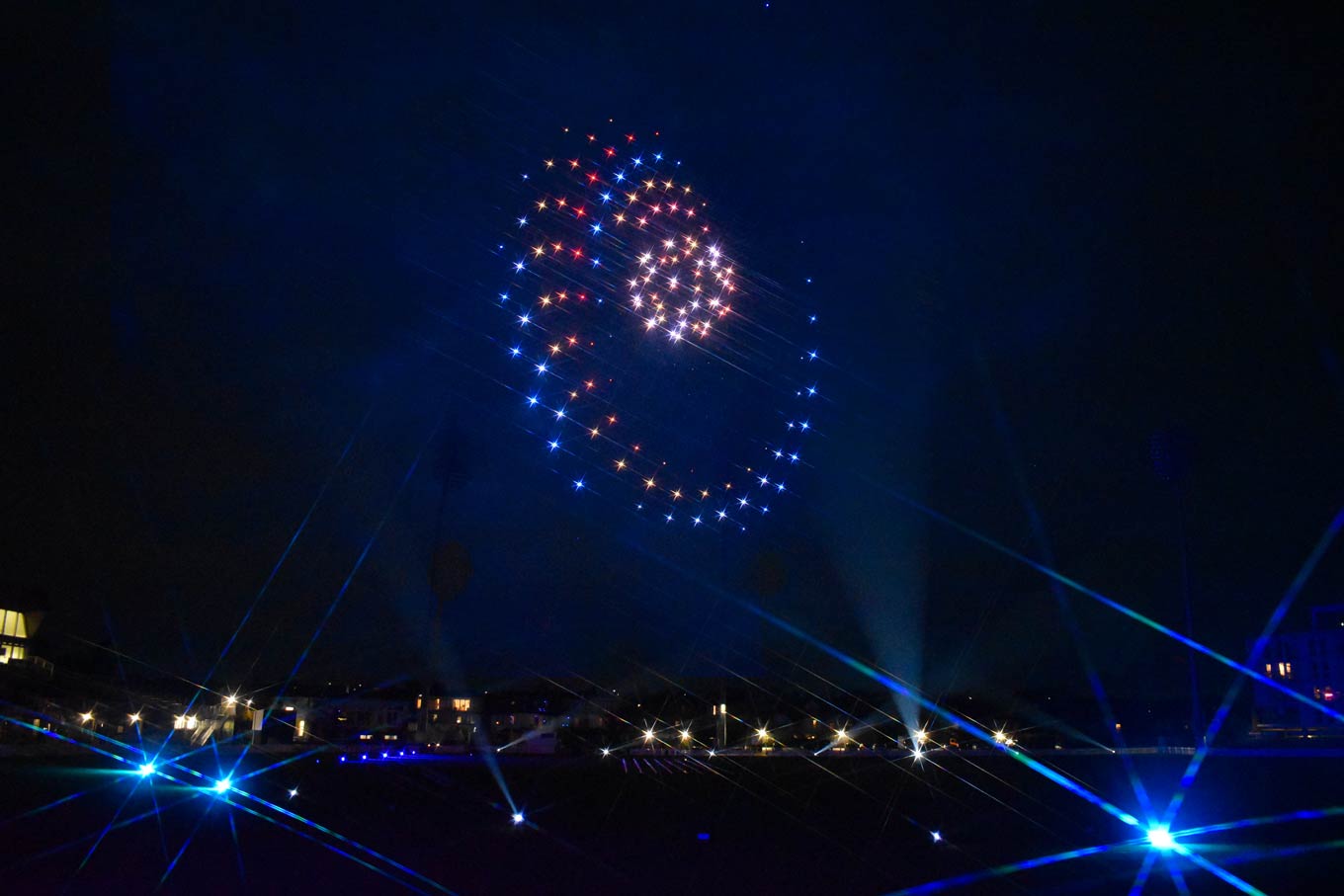
While drone light shows aren’t a brand-new invention — one such show was a major component of the 2021 Tokyo Olympics — the industry is growing exponentially. According to projections from the Business Research Insights, the global drone light show industry is expected to grow 25% by 2031.
“As we see an increasingly hybrid approach, where drone lights appear alongside fireworks, we’re pioneering drone light shows as a form of entertainment exclusively,” Martin continued. “Our hope is that in the future, many traditional occasions, like Lunar New Year, will adopt this new way to celebrate and entertain.”
That hope is already becoming a reality.
In January, Hennessy hosted a 1,500-drone show in Singapore’s Marina Bay to celebrate the Chinese New Year season, illustrating a vibrant dragon in the night sky.
“Embracing innovation and opulence, we departed from traditional lantern-lit celebrations to orchestrate a groundbreaking drone show that not only redefined the festive skyline, but also paid homage to the Year of the Dragon,” Patrick Madendjian, the managing director for Moët Hennessy Diageo Singapore and Malaysia, told August Man.
Similarly, the city of Hanoi is planning to set a Southeast Asian record with its music and drone light show on February 9, featuring 2,024 drones at My Dinh National Stadium.
And across the pond in America, Georgia’s Stone Mountain Park is hosting its own Lunar New Year festival, complete with a hybrid drone show and fireworks event for three weekends in February.
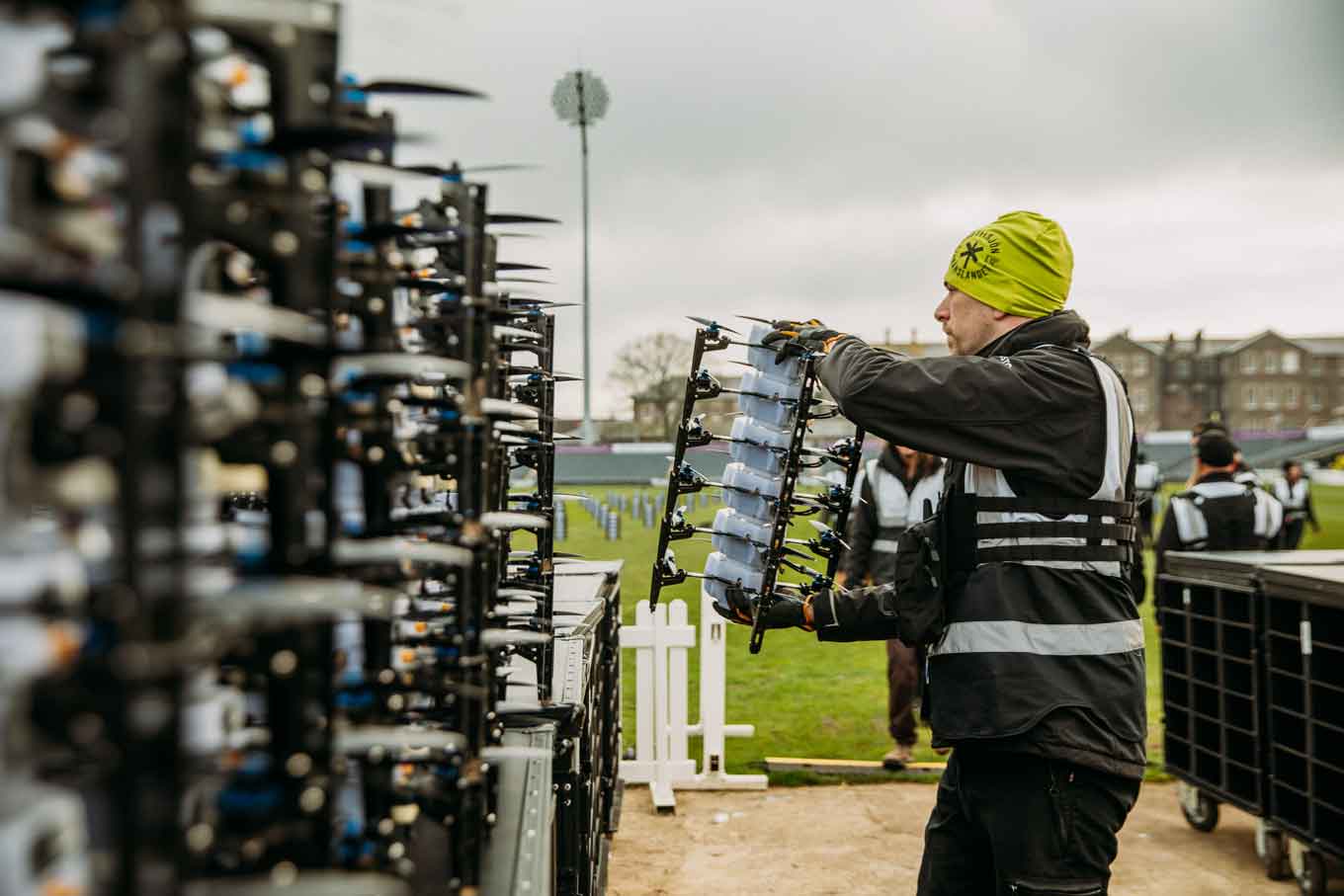
Although drone shows are a more sustainable option, they are costly and require extensive work to execute. With the work of drone programming, as well as artistic contributions like music, poetry, scriptwriting, and animation, these displays can cost millions.
But as the industry grows, it’s clear that governments and companies alike find that the end result is worth the price tag.
“The results are stunning,” Martin said. “A visual display that can be enjoyed by people of all ages and backgrounds.”
Plus, these shows have the ability to maintain rich cultural traditions that mesh well with modern needs.
“Fireworks have been a part of the Chinese New Year tradition for thousands of years. We believe it’s still possible to maintain and respect tradition, whilst looking forward,” Martin said.
“Drone shows offer a new innovative and green way to tell people the story of how Lunar New Year came to be, in a place that those celebrating will be looking to already: the sky.”
Header images courtesy of Stone Mountain Park and Celestial
It’s no secret that reading good news feels a lot better than reading bad news. Like, would you rather bite into a lemon, or sip on a fresh glass of lemonade?
But the “bad news” has its place in the world; it’s important to stay informed about world events, and we owe it to each other to be alert and engaged with what’s going on around us.
While reading traditional, more negative news is important, consuming good news is also part of staying informed, and it brings meaningful benefits, like reduced stress and anxiety, higher rates of engagement, community building skills, and inspiration for making the world a better place.
Plus, knowing what to look for in the good news landscape, why it’s important, and how it helps us is a key part of improving our media literacy skills and being thoughtful news consumers.
In fact, good news — otherwise known as solutions journalism or constructive journalism — is becoming more popular, as publishers and news stations discover the benefits of sharing stories about the stuff that’s, well, good.
Good Good Good is just one place where you can find good news, and we’re dedicated to providing that news as intentionally as we can. Our team of intrepid good news reporters and editors work daily to deliver stories that make readers feel more hopeful and equipped to do more good — and part of that means explaining why exactly that work matters.
So, we’re here to explain a bit more about the science of good news, and what benefits it has, so you can give yourself a little pat on the back for being here — and hopefully leave with a deeper understanding of why it’s important to look for the solutions.
Why do we need good news?
It helps provide a more balanced view of the world.
Good news is not just a buffer to make us feel better about the ample stories of conflict, destruction, and corruption in the world. Good news is a vital part of how we learn about solving the world’s problems. And it’s also an antidote to our inherent negativity bias.
Rick Hanson, a psychologist and New York Times best-selling author, explains this well in a Sounds Good podcast episode:
“The brain has what’s called a negativity bias. Whereas I put it, we’ve got a brain that’s like Velcro for bad and Teflon for good,” Hanson said.
Basically, Hanson continued, over 600 million years of evolution of our human nervous systems means that we are predisposed to survival. Knowing about the bad stuff — the threats in the world — is important to keep us safe.
But the good stuff — the objectively delightful parts of humanity — is also part of what keeps us grounded in reality.
“I believe in realistic thinking with a brain that’s actually designed for negative thinking,” Hanson said. “So if you tilt toward the positive, then you end up realistic.”
These sentiments have been echoed by other good news reporters, like Angus Hervey, the editor of Future Crunch. Hervey gave an on-stage “good news bulletin” at TED 2023, rattling off exciting and substantial stories about progress around the globe.
“Imagine if this was the news,” Hervey said on stage at TED. “Along with the usual death and disaster and division, we also got to hear these — the stories of hope and healing — and not just another dog on a surfboard.”
Part of constructive journalism is being able to clearly communicate and identify the issues in the world, while also supporting that reporting with possible solutions or stories about resilience.
It’s not just about creating a split-second smile with something cute or funny, but to develop meaningful narratives that better depict the human experience.
“The thing is, this is the news. These stories — they’re happening,” Hervey said. “It’s just that we don’t hear as much about them. When you find them, the world can suddenly feel like a very different place.”
It reduces feelings of stress and anxiety.
Good news certainly does make the world feel like a different place, especially when it enables us to feel less stress and anxiety.
First off, it’s important to note that the constant consumption of negative news — or as it’s often called, “doom-scrolling” — has consequences on our mental health.
“We know that watching negatively valenced news can affect everyone’s mood, making them sad or anxious depending on the nature of that news,” Graham Davey, a professor emeritus of psychology at the University of Sussex, told Inverse.
Davey even went on to explain that this kind of news consumption can cause symptoms “very similar to post-traumatic stress disorder.”
Regularly engaging in negative news keeps cortisol levels elevated, and while those same levels can help keep us alive and safe, heightened fight-or-flight responses aren’t very good for our long-term mental and physical health.
Engaging with good news, on the other hand, can reduce anxiety and positively shift mindsets, just like any other type of positive thinking. Slowing down, looking for solutions, and considering nuance in the face of constant news feeds helps take us out of our immediate stress response.
Experts agree. Jodie Jackson, author of the book “You Are What You Read,” told the Washington Post: “What you want is balance and perspective, which can help reduce anxiety.”
It helps you stay meaningfully engaged with current events.
Experts also attribute reading good news to helping people stay more clued into other current events, even if they aren’t as uplifting.
For example, the University of Texas at Austin’s Center for Media Engagement found that stories with core components of solutions journalism helped increase readers’ interest and knowledge, as well as their intent to learn more.
Similarly, TV stations that reported solutions journalism stories increased viewers’ loyalty, helping distinguish them from competitors. These studies show that sharing good news stories is equally good for the journalism industry — and people who want to be engaged with journalism.
“A commitment to solutions journalism doesn’t just work at the story level,” research, strategy, and design firm SmithGeiger shared in a 2020 research study about solutions journalism in TV news stations.
“It also works at the personal level, in terms of level of involvement and engagement, and it differentiates the station to the point where it makes that station more desirable.”
Case studies of this impact can be tracked around the country. Take the Wichita Journalism Collaborative, for example, which partnered with a local library to offer weekly “office hours.”
The goal was to “provide inspiration and sourcing for solutions stories that we as journalists might be distant from,” according to project manager Maren Berblinger.
In the first few weeks of the program, community members were taking advantage of the office hours and speaking with journalists about what story topics were important to them, creating a community of engaged citizens who had a refreshed perspective on local journalism.
It builds empathy and compassion.
As it turns out, reading about solutions and how people work to help others is a great way to build empathy, too.
We can look at the Kansas Leadership Center Journal as a case study. The publication, which is a civil issues magazine, published a story about how a small group in Emporia, Kansas works to bridge ethnic and language differences.
The story led to an event co-hosted with the organization and the magazine, in which over 45 attendees, including some city officials, and a large fraction of the Hispanic community, expressed hope for the future of the group, according to Solutions Journalism Network.
Research shows that feelings of elevation — like witnessing another person perform a good deed — can motivate viewers to help others. While this might not necessarily refer to watching good news, it’s not a far jump to imagine that consuming uplifting stories would inspire people to act altruistically.
Another study from the University of Texas at Austin’s Center for Media Engagement asked 755 U.S. adult survey takers about their experiences interacting with solutions journalism stories. Respondents agreed with statements like “now that I’ve read this article, I think I can contribute to a solution to this problem.”
Similarly, survey takers were asked about their likelihood of getting involved in working toward a solution, like donating to an organization, or talking to friends and family about the issue. In all cases, those who read solutions articles indicated higher likelihood than those who read “non-solutions” articles.
It provides inspiration for others to make a positive difference in the world.
Traditional reporting on world events and tragedies often leaves people feeling hopeless and defeated, but studies show that people who read good news were more willing to sign up for generous actions related to the story when they were done reading. This could look like singing a petition or donating money to support a cause illustrated in the story.
More generally, good news stories also show proof of concept, giving audiences facts about constructive answers to some of the world’s biggest challenges. This may even provide them with a blueprint for ways they might also make a difference.
A study from the Institute for Applied Positive Research found that solutions-focused reporting increased news readers’ problem-solving skills by 20%.
The study was conducted by providing a group of participants articles from the Detroit Free Press. One article focused on a problem, and three other articles were part of a special series about solutions to that problem.
Participants answered questions before and after reading their assigned articles about their mood, feelings of empowerment, and connection to the community.
Participants who read about solutions and saw the presented solutions as effective felt 12% more energized, 16% less anxious, and 18% more confident that “Detroit is getting better day by day” after reading the articles.
“Opening the mind to the fact that others have overcome similar challenges and been successful is an effective way to catalyze positive change, as it creates a greater sense of hope and optimism,” the study shared.
“These findings appear to provide more supporting evidence that focusing on solutions instead of merely problems leaves people feeling better and more connected to their community, as well as better positions them to take positive action.”
It can foster connection with others and build community.
Think about the kinds of things you talk about with your friends and coworkers on any given day. Maybe you’ll share some memes about a pop culture phenomenon, or you’ll complain about the traffic or the weather. If you really get into a deep conversation, you might talk about politics or global events.
The news drives how we interact with one another, and consuming good news also impacts those connections.
A 2016 study by Jodie Jackson at the University of East London concluded that consuming positive news can lead to increased acceptance of others and a feeling of community.
Participants in the study were asked to read stories from a UK-based good news outlet, and many reported higher levels of cohesion, citing that they felt less isolated, had increased admiration for others, more faith in humanity, and felt more tolerant and compassionate.
A case study from the Solutions Journalism Network makes Jackson’s study ring true. In May 2023, following the publication of a story about Afghan refugees in Manhattan, Kansas’s The Journal, newspaper publishers partnered with the Afghan Resettlement Team to host a block party and cultural celebration.
“It really makes everyone home, everyone feels safe,” Fatima Jaghoori, one of the event organizers, said in an article by another local publication.
It improves heart health.
Now, reading good news probably won’t positively impact your cardiovascular health as much as, say, regular exercise or a balanced diet, but it is a means to reducing stress — which improves heart health.
A 2018 study by Laura Kubzansky, of Harvard T.H. Chan School of Public Health, and colleagues, found that good psychological well-being has cardiovascular benefits, as people with a positive outlook are more inclined to lead a healthier lifestyle.
Researchers were clear in their analysis that while most people desire a healthy lifestyle, access to a healthy lifestyle is inequitable, as folks may not be able to obtain nutritious foods or do not have the time or freedom to pursue daily exercise. It was also difficult to take into account the feelings, aspirations, or context of every individual who was analyzed in the study.
But the study also indicated that there are ways to improve cardiovascular health in ways outside of diet and exercise — like through positive psychology. And optimism is an abundant resource found in good news.
“A novel approach to promoting cardiovascular health can draw from research on optimism, which has been identified as a modifiable, upstream psychological resource that is related to improved cardiovascular outcomes,” Kubzansky’s study shared.
It provides us with a sense of purpose and direction.
Hope and optimism don’t just feel good; they are productive feelings that often encourage us to do something or look forward to something.
Reading negative news — or even movies that make us cry — often come from a ‘eudaimonic’ desire, which means we pursue these stories because they help us make meaning of the world around us.
But researchers also believe that “sad stories with happy endings,” or problems with solutions, can also help humans scratch that meaning-making itch.
It’s called “excitation transfer” when we feel distress about a person or character who is disadvantaged, but we have a positive response to their “happy ending,” or an effective solution to their problem.
Being able to follow the arc from problem to solution — whether in fact-based reporting or beloved fictional tales — allows positive emotions like joy, contentment, pride, and interest to bloom.
A 2018 study on the emotional impact of constructive news examines how these positive emotions result in other behaviors. For instance, joy is associated with a tendency of “free activation,” or a readiness to engage in new activities.
Pride, on the other hand, creates a willingness “to share achievements and envision greater achievements in the future.”
All of these feelings contribute to a positive vision for the future, and the confidence and purpose required to get there. Cathrine Gyldensted, a leader in the constructive journalism movement, was interviewed in the 2018 study.
“Constructive news is meant to build people up — not just the audience, but journalists and their sources, as well,” she said. “Constructive news stories should leave people feeling energized.”
From the tranquil silence of a forest to the relentless power of the ocean — nature speaks to us in a language that transcends words, urging us to connect, respect, and protect the natural world.
Philosophers, poets, environmentalists, Indigenous leaders, and thinkers from all walks of life have long turned to nature for insight and inspiration. And over the course of history, they’ve attempted to use their words to describe the awe and reverence that the natural world inspires.
We’ve curated the best of these quotes about nature to encourage us to look more deeply at the beauty that surrounds us, to find peace in the wilderness, and to consider the impact of our actions on the planet.
Whether you’re in need of a moment of tranquility, a burst of inspiration, a caption to describe your experience in the great outdoors, or a deeper appreciation for the world around you — let these quotes guide you to a greater connection with the earth.
You might also like: Sustainability Quotes | Earth Day Quotes | Tree Quotes | National Park Quotes
The Best Quotes About Nature
Famous Quotes About the Beauty of Nature
“In nature, nothing is perfect and everything is perfect. Trees can be contorted, bent in weird ways, and they’re still beautiful.”
— Alice Walker
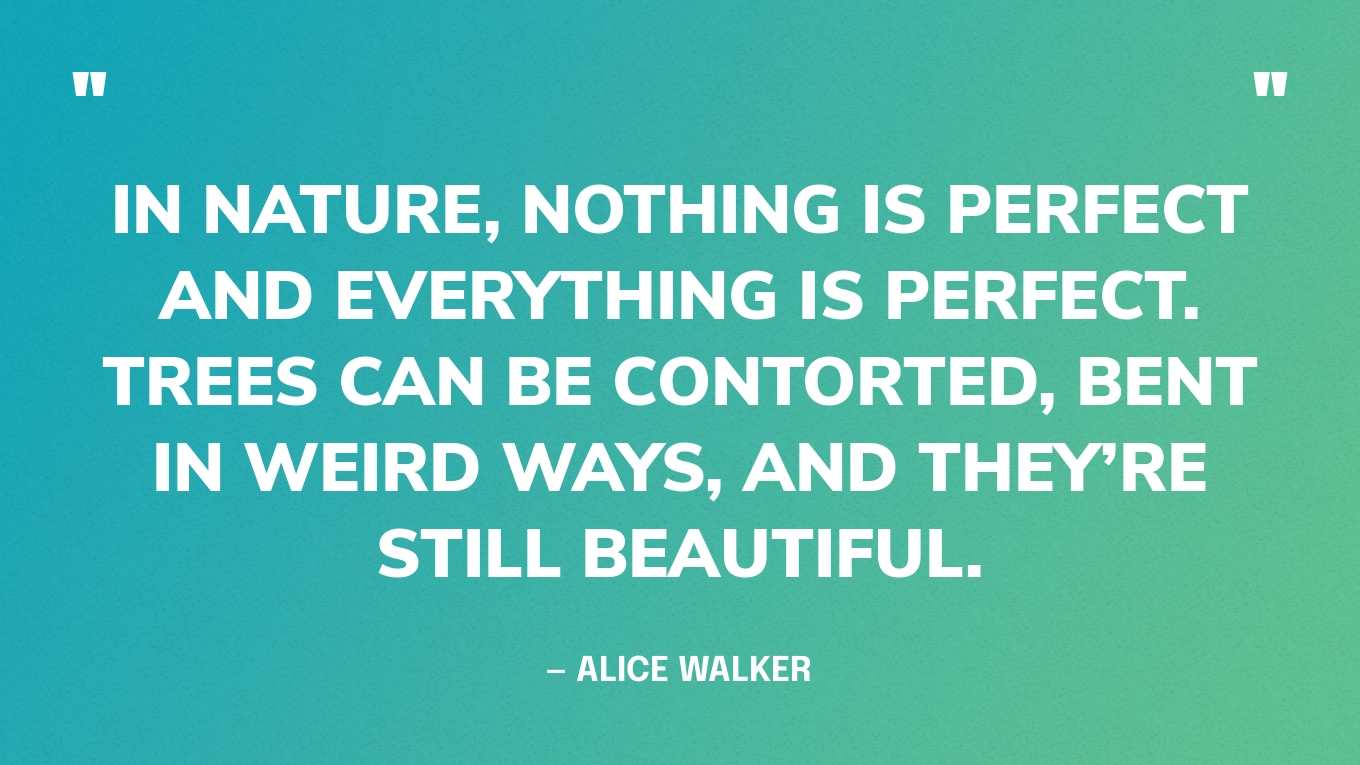
“If you truly love nature, you will find beauty everywhere.”
— Laura Ingalls Wilder
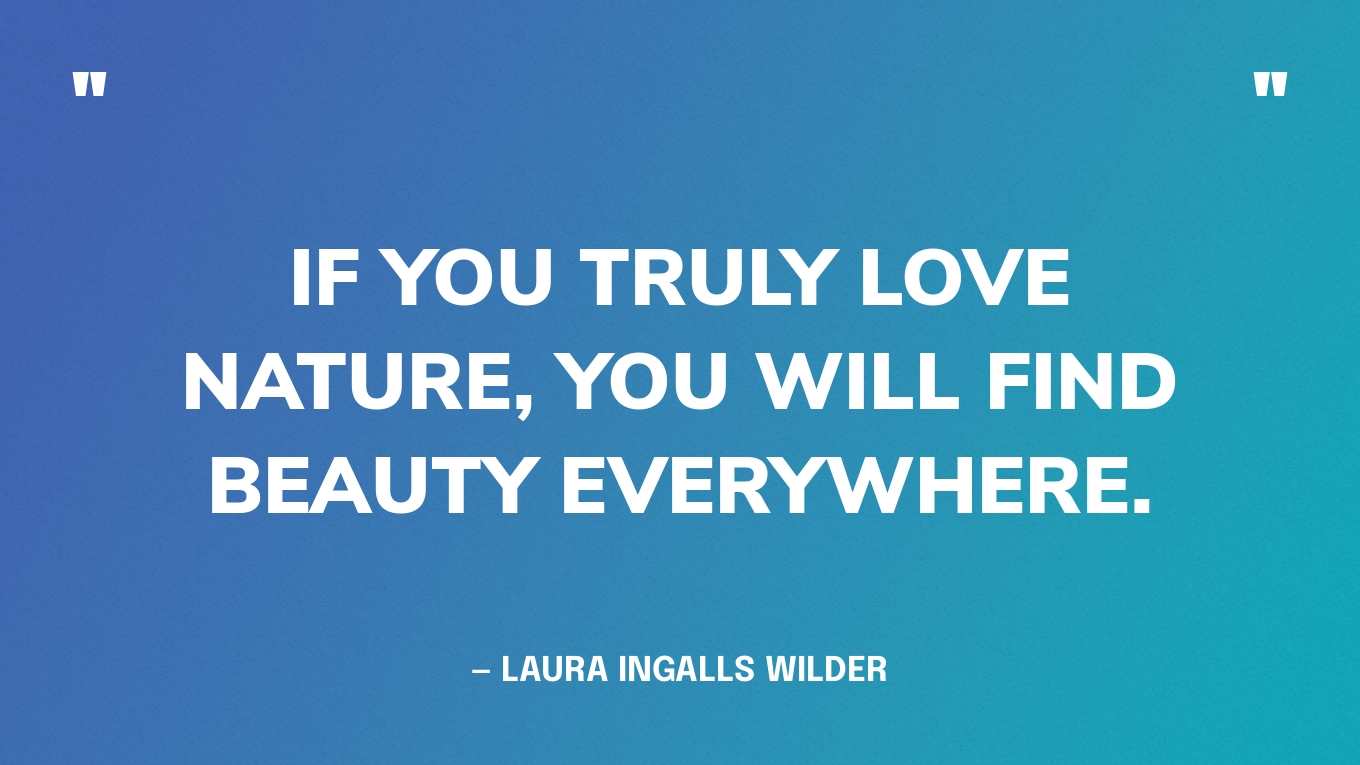
“Heaven is under our feet as well as over our heads.”
— Henry David Thoreau
“What in heaven’s name was the real essence of this beauty? Was it the precision of nature with its physical laws, or was it nature’s mercilessness, ceaselessly resisting man’s understanding?”
— Kobo Abe, The Woman in the Dunes
“Dear old world… you are very lovely, and I am glad to be alive in you.”
— L.M. Montgomery
“All my life through, the new sights of nature made me rejoice like a child.”
— Marie Curie
“Many eyes go through the meadow, but few see the flowers in it.”
— Ralph Waldo Emerson
“We think reconnecting with nature is going to be this moment of buying a pair of hiking boots and getting outdoors. Honestly, what it might actually look like is taking a Zoom call outside or just spending five more minutes outdoors. It’s about taking micro-steps that lead to a macro shift in our lives.”
— Pattie Gonia
“So often like this, in lonely places in the forest, he would come upon something — bird, flower, tree — beautiful beyond all words, if there had been a soul with whom to share it. Beauty is meaningless until it is shared.”
— George Orwell, Burmese Days
“Those who contemplate the beauty of the earth find reserves of strength that will endure as long as life lasts.”
— Rachel Carson
“The most beautiful gift of nature is that it gives one pleasure to look around and try to comprehend what we see.”
— Albert Einstein
“Should you shield the canyons from the windstorms you would never see the true beauty of their carvings.”
— Elisabeth Kübler-Ross
Inspirational Quotes
“The environment is where we all meet; where we all have a mutual interest; it is the one thing all of us share.”
— Lady Bird Johnson
“Nature shows us that the only constant is change… if we allow it.”
— Pattie Gonia
“You can cut all the flowers, but you can’t keep spring from coming.”
— Pablo Neruda
“I think having land and not ruining it is the most beautiful art that anybody could ever want.”
— Andy Warhol
“I firmly believe that nature brings solace in all troubles.”
— Anne Frank
“Nature does not hurry, yet everything is accomplished.”
— Lao Tzu
“We don’t inherit the earth from our ancestors, we borrow it from our children.”
— Chief Seattle
“I go to nature to be soothed and healed, and to have my senses put in order.”
— John Burroughs
“Let the rain kiss you. Let the rain beat upon your head with silver liquid drops. Let the rain sing you a lullaby.”
— Langston Hughes
“I felt my lungs inflate with the onrush of scenery — air, mountains, trees, people. I thought, ‘This is what it is to be happy.’”
— Sylvia Plath
“The tree which moves some to tears of joy is in the eyes of others only a green thing which stands in the way. Some see nature all ridicule and deformity, and by these I shall not regulate my propositions. And some see no nature at all. But to the eyes of the man of imagination, nature is imagination itself.”
— William Blake
“One man practicing kindness in the wilderness is worth all the temples this world pulls.”
— Jack Kerouac, The Dharma Bums
Going Green Quotes
“Being green and clean is not just an aspiration but an action.”
— Christine Pelosi
“These young people are saying we all have a right to know what is in the air we breathe, in the water we drink, and the food we eat. It is our responsibility to leave this planet cleaner and greener. That must be our legacy.”
— John Lewis
“It seems very safe to me to be surrounded by green growing things and water.”
— Barbara Kingsolver
“Going green doesn’t start with doing green acts, it starts with a shift in consciousness.”
— Ian Somerhalder
“Keep a green tree in your heart and perhaps the singing bird will come.”
— Lois Lowry
“Everything has yet to be invented. I never say ‘green’ — I say ‘greener.’ It’s greener simply because this is a continuum of change, improvement and discovery.”
— Yves Behar
“Green is the prime color of the world, and that from which its loveliness arises.”
— Pedro Calderón de la Barca
“Climate change is not just a problem for the future. It is impacting us every day, everywhere.”
— Vandana Shiva
“The future is green energy, sustainability, renewable energy.”
— Arnold Schwarzenegger
Save Nature Quotes
“You cannot get through a single day without having an impact on the world around you. What you do makes a difference and you have to decide what kind of a difference you want to make.”
— Jane Goodall
“I truly believe this alchemy of individual courage and collective drive is a renewable energy source like no other, and it’s what is needed to make lasting change.”
— Kate Williams, 1% for the Planet
“Never doubt that a small group of thoughtful, committed citizens can change the world; indeed, it is the only thing that ever has.”
— Margaret Mead
“Nature shrinks as capital grows. The growth of the market cannot solve the very crisis it creates.”
— Vandana Shiva
“Together we can preserve the forest, securing this immense treasure for the future of all these our children.”
— Chico Mendes
“We have forgotten how to be good guests, how to walk lightly on the earth as its other creatures do.”
— Barbara Ward
“Capitalism has really disconnected us from nature, which is very convenient in order to extract from this world.”
— Wyn Wiley
“We fight for what we love. If we can fall in love with nature more, we’re going to be even more equipped to fight for it and to advocate for it.”
— Pattie Gonia
“Beauty and seduction, I believe, is nature’s tool for survival, because we will protect what we fall in love with.”
— Louie Schwartzberg
“The environment and the economy are really both sides of the same coin. If we cannot sustain the environment, we cannot sustain ourselves.”
— Wangari Maathai
“We don’t need more stuff produced — we need to effectively and responsibly use what’s already been produced.”
— Ashlee Piper
“Like music and art, love of nature is a common language that can transcend political or social boundaries.”
— Jimmy Carter
“In wilderness is the preservation of the world.”
— Henry David Thoreau
“For most of history, man has had to fight nature to survive; in this century he is beginning to realize that, in order to survive, he must protect it.”
— Jacques-Yves Cousteau
Tree Quotes
“The true meaning of life is to plant trees, under whose shade you do not expect to sit.”
— Nelson Henderson
“Storms make trees take deeper roots.”
— Dolly Parton
“It is not so much for its beauty that the forest makes a claim upon men’s hearts, as for that subtle something, that quality of air that emanation from old trees, that so wonderfully changes and renews a weary spirit.”
— Robert Louis Stevenson
“Solitary trees, if they grow at all, grow strong.”
— Winston Churchill
“If we surrendered to earth’s intelligence we could rise up rooted, like trees.”
— Rainer Maria Rilke
“To be without trees would, in the most literal way, to be without our roots.”
— Richard Mabey
“I took a walk in the woods and came out taller than the trees.”
— Henry David Thoreau
“... the forest is not merely an expression or representation of sacredness, nor a place to invoke the sacred; the forest is sacredness itself.”
— Richard Nelson, The Island Within
→ Read more quotes about trees
Ocean Quotes
“The least movement is of importance to all nature. The entire ocean is affected by a pebble.”
— Blaise Pascal
“With every drop of water you drink, every breath you take, you’re connected to the sea. No matter where on Earth you live.”
— Sylvia Earle
“When anxious, uneasy and bad thoughts come, I go to the sea, and the sea drowns them out with its great wide sounds, cleanses me with its noise, and imposes a rhythm upon everything in me that is bewildered and confused.”
— Rainer Maria Rilke
“Protecting the ocean is not just about saving marine life; it’s about safeguarding our own future. Our fate is intimately connected to the health of the ocean, and we must take urgent action to preserve it.”
— Greta Thunberg
“The ocean is a mighty harmonist.”
— William Wordsworth
“The ocean is like a big blue heart that connects all living creatures. We must protect it for the sake of our own survival.”
— Eugenie Clark
“But the sea
which no one tends
is also a garden.”
— William Carlos Williams, Pictures from Brueghel and Other Poems
→ Read more quotes about the ocean
Beach Quotes
“One learns first of all in beach living the art of shredding; how little one can get along with, not how much.”
— Anne Morrow Lindbergh
“In every drop of water, there is a story of life. Let’s make sure our beaches tell a story of care and conservation.”
— Jean-Michel Cousteau
“Reducing our use of plastic reduces our personal carbon footprint. Removing debris from beaches reduces the effects of pollution on our oceans.”
— R. Heliot, in an article
“There’s nothing more beautiful than the way the ocean refuses to stop kissing the shoreline, no matter how many times it’s sent away.”
— Sarah Kay
“The cure for anything is salt water: sweat, tears, or the sea.”
— Karen Blixen
“The beach to me is a sacred zone between the earth and the sea, one of those in-between places where transitions can be experienced — where endings can be mourned and beginnings birthed.”
— Joan Anderson
National Park Quotes
“Within National Parks is room — glorious room — room in which to find ourselves, in which to think and hope, to dream and plan, to rest and resolve.”
— Enos Mills
“Yosemite Valley, to me, is always a sunrise, a glitter of green and golden wonder in a vast edifice of stone and space.”
— Ansel Adams
“There is nothing so American as our national parks… The fundamental idea behind the parks… is that the country belongs to the people, that it is in process of making for the enrichment of the lives of all of us.”
— Franklin D. Roosevelt
“In a world that is becoming increasingly virtual, the parks remain places of visceral beauty. Places where we can remember that we are but a small part of the life on this planet, and that it is a truly wonderful planet and the only one we’ve got.”
— Nevada Barr
“We all should respect our public lands, so when you’re enjoying national parks be sure whatever you bring with you also goes back out with you. Nothing says you care more than leaving a place better than you found it.”
— Deb Haaland, in an interview with the U.S. Department of the Interior
“National parks and reserves are an integral aspect of intelligent use of natural resources. It is the course of wisdom to set aside an ample portion of our natural resources as national parks and reserves, thus ensuring that future generations may know the majesty of the earth as we know it today.”
— John F. Kennedy
→ Read more quotes about national parks
Mountain Quotes
“I learn something every time I go into the mountains.”
— Michael Kennedy
“My father considered a walk among the mountains as the equivalent of churchgoing.”
— Aldous Huxley
“The summit is what drives us, but the climb itself is what matters.”
— Conrad Anker
“When the sun is shining I can do anything; no mountain is too high, no trouble too difficult to overcome.”
— Wilma Rudolph
“Mountains know secrets we need to learn. That it might take time, it might be hard, but if you just hold on long enough, you will find strength to rise up.”
— Tyler Knott
“The cliche is that life is a mountain. You go up, reach the top and then go down.”
— Jeanne Moreau
“To me a mountain is a Buddha. Think of the patience, hundreds of thousands of years just sitting there being perfectly perfectly silent and like praying for all living creatures in that silence and just waiting for us to stop all our fretting and fooling.”
— Jack Kerouac, The Dharma Bums
“We cannot lower the mountain, therefore we must elevate ourselves.”
— Todd Skinner
“There’s no glory in climbing a mountain if all you want to do is to get to the top. It’s experiencing the climb itself — in all its moments of revelation, heartbreak, and fatigue — that has to be the goal.”
— Karyn Kusama
“Mountains, according to the angle of view, the season, the time of day, the beholder’s frame of mind, or any one thing, can effectively change their appearance. Thus, it is essential to recognize that we can never know more than one side, one small aspect of a mountain.”
— Haruki Murakami
“Over every mountain there is a path, although it may not be seen from the valley.”
— Theodore Roethke
“I’ve realized that at the top of the mountain, there’s another mountain.”
— Andrew Garfield
Sunset Quotes
“No sun outlasts its sunset but will rise again and bring the dawn.”
— Maya Angelou
“Soon it got dusk, a grapy dusk, a purple dusk over tangerine groves and long melon fields; the sun the color of pressed grapes, slashed with burgandy red, the fields the color of love and Spanish mysteries.”
— Jack Kerouac, On the Road
“Don’t forget: Beautiful sunsets need cloudy skies…”
— Paul Coelho
“I can count on my fingers the number of sunsets I have left, and I don’t want to miss any of them.”
— Suzanne Collins
“And the sunset itself on such waves of ether
That I just can’t comprehend
Whether it is the end of the day, the end of the world,
Or the mystery of mysteries in me again.”
— Anna Akhmatova, The Complete Poems of Anna Akhmatova
“A large drop of sun lingered on the horizon and then dripped over and was gone, and the sky was brilliant over the spot where it had gone, and a torn cloud, like a bloody rag, hung over the spot of its going.”
— John Steinbeck, The Grapes of Wrath
“Dusk is just an illusion because the sun is either above the horizon or below it. And that means that day and night are linked in a way that few things are there cannot be one without the other yet they cannot exist at the same time. How would it feel I remember wondering to be always together yet forever apart?”
— Nicholas Sparks, The Notebook
“The redness had seeped from the day and night was arranging herself around us. Cooling things down, staining and dyeing the evening purple and blue black.”
— Sue Monk Kidd, The Secret Life of Bees
“One day,’ you said, ‘I watched the sunset forty-three times!’ And a little later you added: ‘You know, when one is that sad, one can get to love the sunset.’ ‘Were you that sad, then, on the day of the forty-three sunset?’ But the prince made no answer.”
— Antoine de Saint-Exupéry, The Little Prince
“The Andes, guardians of this untamed land, seem to inhale deeply, exhaling a breath that whispers of secrets hidden within their mighty peaks. And I, a mere witness to this grand theater of nature, stand on the precipice, my soul intoxicated by the sheer majesty of the Andean sunset.”
— Ryan Gelpke, Peruvian Days
“There’s a sunrise and a sunset every single day, and they’re absolutely free. Don’t miss so many of them.”
— Jo Walton
Short Quotes
“Adopt the pace of nature: her secret is patience.”
— Ralph Waldo Emerson
“Study nature, love nature, stay close to nature. It will never fail you.”
— Frank Lloyd Wright
“One touch of nature makes the whole world kin.”
— William Shakespeare
“Men argue. Nature acts.”
— Voltaire
“The poetry of the earth is never dead.”
— John Keats
“In all things of nature there is something of the marvelous.”
— Aristotle
“The richness I achieve comes from Nature, the source of my inspiration.”
— Claude Monet
“Nature is not a place to visit. It is home.”
— Gary Snyder
“Nature is pleased with simplicity. And nature is no dummy.”
— Isaac Newton
“Leave the roads; take the trails.”
— Pythagoras
“To sit in the shade on a fine day and look upon verdure is the most perfect refreshment.”
— Jane Austen
“Love the world as your own self; then you can truly care for all things.”
— Lao Tzu
“Nature is the art of God.”
— Dante Alighieri
“Nature is the source of all true knowledge.”
— Leonardo da Vinci
→ Read more short quotes
More Quotes
“Live in each season as it passes; breathe the air, drink the drink, taste the fruit, and resign yourself to the influence of the earth.”
— Henry David Thoreau
“I like romantically thinking about nature. It helps you fall in love with all the ecosystems.”
— Leah Thomas
“There is something infinitely healing in the repeated refrains of nature — the assurance that dawn comes after night, and spring after winter.”
— Rachel Carson
“The sun, with all those planets revolving around it and dependent on it, can still ripen a bunch of grapes as if it had nothing else in the universe to do.”
— Galileo Galilei
“Embrace your local nature – it’s not necessarily going to look like these mountain-top moments. There’s so much more than just the baseline of what you think exists. You probably know the biggest park in your city, but you probably don’t know a park that’s within a mile of your house that would blow your mind.”
— Pattie Gonia
“Nature never taught me that there exists a God of glory and of infinite majesty. I had to learn that in other ways. But nature gave the word ‘glory’ a meaning for me.”
— C.S. Lewis, The Four Loves
“The next time you stand on a beach at night, watching the moon’s bright path across the water, and the conscious of the moon-drawn tides, remember that the moon itself may have been born of a great tidal wave of earthly substance, torn off into space. And remember if the moon was formed in this fashion, the event may have had much to do with shaping the ocean basins and the continents as we know them.”
— Rachel Carson, The Sea Around Us
“Rest is not idleness, and to lie sometimes on the grass under trees on a summer’s day, listening to the murmur of the water, or watching the clouds float across the sky, is by no means a waste of time.”
— Sir John Lubbock
“Now I see the secret of making the best person, it is to grow in the open air and to eat and sleep with the earth.”
— Walt Whitman
Nature Captions
“Once in a while, go someplace that is unspoiled by man.”
“You are never alone when you are connected with nature.”
“Exploring never gets old.”
“Be a force of nature.”
“Listen and delight in the soulful sounds of nature.”
“No better way to recharge than by going outside.”
“There’s no Wi-Fi in the forest, but I promise you’ll find a better connection.”
“Adventure awaits at the end of your comfort zone.”
“Slow down to the pace of nature.”
We’ve all been in a similar predicament: You’re a guest at a fun gathering (say, a Super Bowl party), and as everyone is getting ready to leave, the host begs you to take some leftover food.
“Please,” they implore, pushing a hodgepodge of chips, dips, and snacking cheeses into your arms. “I’m just going to throw it away if you don’t take it.”
This sort of food waste is exactly what Hellmann’s is trying to mitigate with its “Big Game” campaign this year.
As it turns out, that major football game (you know, the one with Taylor Swift’s boyfriend), is one of the largest food waste occasions of the year, with over 140,000 pounds of extra food accumulated from official events and stadium snacking.
And that doesn’t even account for the food your friends are tossing out after your at-home watch parties, or what gets lost to full bellies at bars and restaurants across the country.
Plus, that food coma feeling from a big night of snacking and gathering is also fuel to call out from work. According to a poll from the UKG Workforce Institute, an estimated 16.1 million U.S. employees will miss work on the Monday following the big game.
With that in mind, Hellmann’s has decided to put a spin on this notorious sick day and declare a new holiday: Sick of Food Waste Day, which takes place on February 12 of this year.

Hellmann’s has a long history of combating food waste and food insecurity, and this year is no different. The brand will donate $100,000 to Food Recovery Network, one of the largest student-led movements fighting food waste to end hunger in America.
Plus, team members from both Hellmann’s and FRN will be on the ground in Las Vegas to “rescue surplus food” from major Super Bowl event Player’s Tailgate. From there, they’ll donate extra food to The Just One Project, a local organization working to provide food to people in southern Nevada.
“We are thrilled to partner with Hellmann's to fight food waste and support those who don't have enough food to eat,” Regina Anderson, the executive director of the FRN, said in a statement.
“44 million people are unnecessarily facing food insecurity right now, while more than 42 million tons of food goes to waste each year. Fighting food waste can happen at large events like this and in lots of other locations like our schools, our conferences, and our homes.”
At last year’s game in Glendale, Arizona, FRN diverted 2,907 pounds of food — the equivalent of of 2,432 meals.
The Sick of Food Waste Day initiative comes in tandem with the mayonnaise brand’s mid-game ad, which features Kate McKinnon and a beloved “Mayo Cat.”
Ultimately, all of these efforts aim to encourage fans to “Make Taste, Not Waste” and share posts to TikTok and Instagram Reels, repurposing their leftovers into new recipes.

“After the big game, millions of people call out sick. We felt that this was an opportunity to drive buzz and awareness by marrying the fact that people are taking the day off from work and what they could be doing to create positive social impact in their own homes by reducing food waste,” Unilever’s senior director of marketing, Chris Symmes, told The Cool Down.
To up the ante, users who share posts with the hashtag #SickOfFoodWasteDay (and #Sweepstakes), while tagging @hellmannsmayonnaise, will even have a chance to win a trip to next year’s game in New Orleans.
The winner will also help the company with next year’s food recovery efforts with partners at the Food Recovery Network.

Even before Sunday’s game, the ad campaign seems to be resonating.
“This has to blow up honestly,” a TikTok commenter wrote under Hellmann’s ad, featuring McKinnon. “Best ad of this year so far.”
“Have I been influenced to switch mayo brands?” another person added. “Yes, yes, I have.”
And on Instagram, someone shared their enthusiasm for the new holiday with a show-stopping pun: “An aMAYOzing message!”
At the end of the day, Anderson, from FRN, hopes audiences take away the main message: “We all have the power to ensure perfectly good food doesn't go to waste.”
Header image courtesy of Hellmann's
Famous children’s educator Ms. Rachel (Rachel Griffin-Accurso) just announced a new guest star for her Youtube program “Songs for Littles:” Mychal the Librarian.
“I am so excited to share: Mychal the Librarian is going to be on the next episode of our show,” Ms. Rachel said on TikTok. “It’s a show on ‘Learning to Read’ and who better to come on and talk about libraries than Mychal? We are so excited and honored to have him coming on!”
Anyone with a toddler in their life might be familiar with Ms. Rachel’s melodic voice and sunny personality. Mychal “The Librarian” Threets also uses social media to educate and has been spreading his love of libraries on TikTok for years.
In 2023, the 33-year-old began going viral for his “mental health checks,” book reviews, and vlogs sharing the everyday joys of working at a public library.
“Just wanted to take a minute to remind you that library workers are here for you,” The Bay Area librarian said in a January video. “We’re here to support you, to encourage you, the world is so much better with you in it, the library is so much better with you in it.”
As he gained popularity, other creators have taken notice (including comedian Amy Poehler!) and his platform’s rapid growth undoubtedly played a part in Ms. Rachel’s latest announcement.
“Ms. Rachel is beloved!” Threets shared on X (formerly known as Twitter). “Excited for the littles that she impacts with her enthusiasm and happiness to be introduced to the joy of reading and the joy of books.”
@msrachelforlittles Ive been following @mychal for awhile and loving his wonderful library stories, kindness & library joy! 📚 #msrachel #library #reading #toddlermom #greenscreensticker ♬ Adore - Instrumental - GC
The episode is set to air at the end of February, and comments were already flooding in from excited parents and followers who adore both creators.
“Why am I more excited than my toddler?!?” commented one TikTok user.
“Cannot wait to show my grandbabies,” one follower wrote.
“Forget the kids, I'm watching this without them the first time,” another user commented. “Best collab ever!”
Header images courtesy of Ms. Rachel/TikTok and Mychal Threets
This Valentine’s Day, the Nebraska Humane Society — which has become well-known for its hilarious social media antics — is looking to help animal lovers turn their “pettiness into a positive.”
For a small donation, the shelter is offering to write “the name of your choice” on a doggy bag. A doggy bag that will eventually contain doggy waste.
“Once our pups do their thing, we’ll do ours and send that [poop emoji] to the dump,” a social media post from the shelter said. “We won’t, however, light the bag on fire and leave it on your ex’s porch. That would just be unprofessional.”
The going rate for these bags is $15 for one, $30 for two — or $100 for as many names as a donor would like on a big ole’ trash bag that will be used in the trash cans of the shelter’s play yards.

While the initiative might seem mean-spirited, it’s all in good fun.
“I’m not usually one for revenge…” a Facebook commenter wrote. “But I’m OK with this.”
While others might find it unsavory (an Instagram commenter asked, “Isn’t there a better way to get donations?”) the shelter is eager to promote the campaign to help animals in need.
“There’s lots of ways to get donations,” the shelter replied to the perturbed follower. “We’re just hoping to make people laugh a little bit and maybe get some pent up feelings out of their system.”
Other commenters on both Facebook and Instagram started rattling off creative ideas beyond shaming a doo-doo ex, like writing a politician’s name, or even decorating a kitty litter box with the same theme.
“Doesn't have to be an ex, could totally be a boss or a rude cousin,” the shelter clarified in the comment section. “We won't judge.”
Some folks had more thoughtful ideas, too.
“I’d like to do this in honor of domestic abuse victims and the beloved animals they are forced to leave behind,” one Facebook commenter shared. “Thank you for doing this!”
While the fundraiser is ongoing, presumably through Valentine’s Day next week, the Humane Society told social media users that it will share updates to its account.
Judging by the outpouring of laughs and discourse, this fundraiser has the potential to be one for the books (and the dump).
“Tell us how you really feel,” the NE Humane Society wrote in its caption, ending with a call to action. “Visit our website and turn your feelings into help for animals in need.”
Header image courtesy of the Nebraska Humane Society/Facebook
Every day the Good Good Good team collects the best good news in the world and shares it with our community. Here are the highlights for this week!
If you want to get good news in your inbox every day, join the Goodnewsletter — the free daily newsletter designed to leave you feeling hopeful.
The Best Positive News We’re Celebrating This Week —
The world’s first malaria vaccine just began rolling out
In a historic moment for global health, the world’s first malaria vaccine just started being administered in Cameroon. After successful trials in Ghana, Kenya, and Malawi, 662,000 doses of the RTS,S vaccine will be given to children in Cameroon.
The rollout is being hailed a “transformative chapter in Africa’s public health history,” and 19 more countries also plan to introduce the vaccine this year, including Burkina Faso, Liberia, Niger, and Sierra Leone.
“For a long time we have been waiting for a day like this … it brings more than just hope, it brings a reduction in the mortality and morbidity associated with malaria,” said Dr. Mohammed Abdulaziz, the division head at the Africa Centres for Disease Control and Prevention.
Importantly, public health experts in the region note that communication efforts will be critical to a successful rollout, ensuring that it’s trusted, children receive all four doses, and people know it’s most effective in combination with other preventive measures. They plan to use health workers already trusted by the community.
Why is this good news? Africa accounts for 95% of deaths from malaria, which occur primarily in children under five years old. With the rollout in additional African countries, the hope is to reach 6.6 million children and the WHO says that, based on data from the trial, it will save tens of thousands of lives.
→ Read more
The U.S. Mint just started circulating the first of five new 2024 quarters featuring American women
In the third of four years of its American Women Quarters Program, the U.S. Mint is introducing five new quarters featuring five impactful women in U.S. history.
The first quarter is now available and features civil rights activist and lawyer Reverend Pauli Murray, who co-founded the National Organization for Women. In 1977, Murray also became the first Black woman ordained as an Episcopal priest.
This year, the Mint will also circulate quarters featuring “Queen of Salsa,” Cuban-American salsa singer Celia Cruz; Civil War-era surgeon Dr. Mary Edwards Walker, the only woman to receive the Medal of Honor; the first woman of color to service in Congress, Hawaii Representative Patsy Takemoto Mink, who was also a co-author of Title IX; and Native American writer and activist Zitkala-Ša.
So far, quarters have been released that feature women like Eleanor Roosevelt, Maya Angelou, and Sally Ride. When the program wraps up next year, there will be a total of 20 quarters featuring notable women in U.S. history.
Why is this good news? Historically, U.S. currency has largely and almost exclusively depicted men. Whether it happens on currency or in history books, acknowledging and celebrating the contributions of women in American history is important for awareness and representation. If we’re going to honor people on our national currency — it ought to be a fairer representation!
In 2023, global renewable energy installations increased by nearly 50% — the fastest in more than two decades
Setting a new record, an estimated 507 gigawatts of renewable electricity were added to power grids around the world in 2023 — a nearly 50% increase over 2022, and the fastest rate of growth for renewables in over two decades.
This rapid expansion led to renewables making up around 30% of total electricity generation, more than ever before and up from 25% in 2018. Currently, hydropower is the largest source of renewable electricity at 14%, followed by wind at 7.8% and solar at 5.4%.
But that could all change this year: the IEA is predicting that wind and solar will overtake hydropower in 2024, and then surpass coal as the largest source of electricity globally by 2025.
China led the way with solar installations — more than the rest of the world combined — followed by the European Union and the United States, where federal incentives have helped make installing solar more accessible.
It’s important to note that while the world is now on track to reach 7,300 gigawatts of total renewable energy capacity by 2028 — that number is still short of the COP28 goal of reaching 11,000 gigawatts by 2030. Still, it’s incredible progress to both celebrate and drive our continued efforts to meet clean energy transition and net-zero goals globally.
→ Read more
As part of a new AI-driven social media campaign, people are “attending” a digital climate protest with their favorite celebrities
A coalition of 55 organizations and over 50 celebrities and influencers just launched a digital climate protest: The Virtual March to Retire Big Oil. The goal: to demand climate-friendly options for every American’s 401(k).
Using an app and the help of AI, participants can upload a selfie and download a generated image of them marching in protest, together with thousands of others (in a futuristic rendering of Wall Street, too). A watermark on the image reads: “This photo is fake, but the crisis is real.”
The digital protest idea was developed by creative agency Buena, with the intention of making change without making pollution. It also means the protest is accessible to anyone, anywhere — regardless of geography, financial state, or ability.
And notably, when it comes to a climate protest, “it’s especially nice to avoid flights or gas to rally people together.”
Why is this good news? One-fifth of all money invested in oil and gas comes from Americans’ retirement accounts. For many people, not only is this misaligned with their values — it’s also a large financial risk, considering coal, oil, and gas stocks could face a sizable decrease in annual returns in the coming decades. This campaign could lead to real, meaningful change on Wall Street — and for the planet.
A new study found that switching to sustainable food systems could generate $10 trillion in benefits for people and the planet every year
A new comprehensive study found that a global shift toward a more sustainable food system could create up to $10 trillion in benefits, improve human health, and ease the climate crisis.
The study found that our current food systems destroy more value than they create in the form of hidden medical and environmental costs.
By contributing one-third of global greenhouse gas emissions, existing food production systems exacerbate the cycle of higher temperatures leading to more extreme weather, causing greater damage to crops. Additionally, current systems lead (and will continue to lead) to growing food insecurity — which burdens medical systems.
The authors of the study propose a shift away from large-scale monocultures reliant on fertilizers, pesticides, and clearing forests — and instead direct subsidies and incentives toward projects that turn farms into carbon sinks and space for wildlife.
Why is this good news? While nobody is saying this kind of shift would be easy, having (even more!) real data makes the argument for the need to invest in sustainable food systems even stronger.
The study also said that less food insecurity would eradicate undernutrition by 2050, 174 million fewer premature deaths, 400 million farmers would earn sufficient income — and it would help the world limit global heating to 1.5 degrees Celsius.
Hellmann’s created a new post-Super Bowl holiday to help combat food waste
You may be aware of a big football game happening this weekend, but you may not know that the Super Bowl is one of the largest food waste occasions of the year, with a massive amount of extra food accumulated at official events and the stadium alone.
The food that does get eaten at the game, watch parties, and bars and restaurants results in that food coma feeling that leads an estimated 16.1 million U.S. employees to miss work on the Monday following the big game.
With that combo in mind, Hellmann’s is putting its own spin on this notorious sick day by declaring a new holiday: Sick of Food Waste Day with the goal of helping mitigate food waste.
Hellmann’s took a similar approach last year, and this year’s campaign includes a $100,000 donation to Food Recovery Network as well as team members on the ground in Las Vegas to “rescue surplus food” from major Super Bowl event Player’s Tailgate for donation locally.
Why is this good news? We’ll let FRN’s executive director take this one: “44 million people are unnecessarily facing food insecurity right now, while more than 42 million tons of food goes to waste each year. Fighting food waste can happen at large events like this and in lots of other locations like our schools, our conferences, and our homes.”
→ Read more
A Texas woman started a laundry program for her unhoused neighbors — and it does so much more than laundry
For nine months each year, the nonprofit Maximizing Hope and volunteers from HPF Hearts for the Homeless offer pop-up laundromat events with the promise of two double loads of laundry and “all the fixin’s” of detergent, bleach, and fabric softeners.
Tonya Coy, the founder of Maximizing Hope, said that most guests come expecting a free laundry day, without realizing a network of volunteers are also there to help them with health care services, housing applications, and more.
Coy founded Maximizing Hope in 2020 after speaking to unhoused locals who were seeking shelter beneath a bridge, trying to survive a sweltering summer day that soared to 107 degrees. As she handed out Gatorades in the shade, Coy felt compelled to keep coming back.
And she has: For the past four years, through building lasting connections in their community and prioritizing real-world solutions, Maximizing Hope has met real, urgent needs, and gotten many of their neighbors off the streets for good.
More good news of the week —
To honor the first two Black women to cover the White House, the Biden-Harris Administration named a briefing room lectern after them. The recognition of Alice Dunnigan and Ethel L. Payne was announced by Karine Jean-Pierre, the first Black woman to serve as White House press secretary.
Search and rescue workers in Vermont rescued 23 skiers and snowboarders lost in the woods amidst single-digit temperatures. The rescue crews hiked, snowshoed, and used skis with skins to travel about 5 miles to bring them back to safety.
A collaborative effort between local communities and national organizations has led to new, innovative solutions to rescue stranded manatees. Cattle ranching, marsh draining for agriculture, and climate variability have caused water levels to decrease and negatively impact manatee habitats.
Jennifer Garner just visited the Navajo Nation and New Mexico state legislature to advocate for more funding support for Indigenous communities. Through her partnership with Save the Children and food company, Garner has been a longtime advocate for Indigenous communities.
The National Bobblehead Hall of Fame and Museum just released new bobbleheads honoring Black baseball players during Black History Month. The collection includes five-decade career legend Leroy Robert “Satchel” Paige and James Thomas “Cool Papa” Bell, widely regarded as one of the fastest athletes in baseball history.
A man in New Jersey uses his professional tree-climbing skills to rescue cats stuck in trees for free. Steven Murrow is also an animal lover, and said he’s “always been an advocate for helping others when you can.”
The sustainability-centric online search engine Ecosia just surpassed the milestone of over 200 million trees planted. The company, which plants a tree for every search, has expanded its initiatives to include renewable energy production, regenerative agriculture, and more.
A church in Virginia is turning one of its two locations into 240 units of housing to help meet a need in the community. With a community garden at its other location, Village of Faith Ministries church hopes the new apartments and townhomes will also have a positive impact on local families.
Somalia’s only all-women media team is launching the country’s first show hosted by a woman. The show will debut on International Women’s Day (it’s coming up!), and will address taboo subjects like the shortage of women teachers, challenges faced by women in politics, environmental issues, and more.
Instead of fireworks, Lunar New Year celebrations around the world are opting to feature drone light shows. Blending tradition with modern innovation, drone shows avoid the toxic chemicals and air pollution that come with fireworks displays.
The first of its kind in the world, Dublin is building a new transit center specifically to help make public transportation more accessible to people with disabilities. The 31,000-square-foot, state-of-the-art center provides access to various modes of transport used in Ireland and replicates the real-life built environment that surrounds public transit.
The U.S. Department of Defense is installing rooftop solar panels on the Pentagon, which is one of the world's largest buildings. Part of the Biden-Harris administration’s plan to “reestablish the federal government as a sustainability leader,” the DoD is also installing a heat pump system and solar thermal panels which together will power over 95% of space and hot water heating.
The world's first large “green” steel production project just secured $5 billion in funding. Steelmaking is one of the most carbon-intensive processes on the planet, accounting for around 7-9% of global carbon emissions alone, and the new facility is working to start producing low-carbon steel by 2025.
Researchers just discovered a single gene mutation that can trigger lupus, an autoimmune disease, in children. Lupus causes severe inflammation throughout the body and can have a serious impact on the lives of those affected.
The Oregon zoo just released seven critically endangered California condors back into the wild. The condors were hatched and have been raised at the zoo since 2022 as part of a larger species recovery program, thanks to which there are now around 500 birds flying free (with a 10-foot wingspan!) in the wild.
It’s getting harder and harder for many Americans to afford seeing their favorite artists live in concert, as the industry grows more volatile, and high profit margins for major events take away from the joy of gathering in community. Fortunately, one festival in Phoenix wants to do things differently.
It’s an unlikely story: A family-run construction company, Wespac, brought the M3F Festival to life in the owner’s backyards in 2004 as a way to give back to the community.
John Largay, the founder of Wespac Construction, figured that if he was going to ask people to donate money for the community, he’d need to give them something in return.
Largay, whose family still runs the show today, told Good Good Good that a party with music just made a lot of sense.

“A contractor had an advantage in creating a festival because the logistics are the same as a job site; The circus goes in, the circus goes out. The toilets, dumpsters, fencing, power, rentals are all the same. The only thing different was music,” he said.
“We call it ‘the 3 Cs,’ Community, Culture, and Charity. If you embrace your community and want to be an integral part, then all three become important. A festival embraces all of the elements.”
What is the M3F Festival?
The M3F Festival will take place the weekend of March 1-2 this year, in Phoenix, Arizona. Contrary to other exploitative music festivals, M3F is a registered nonprofit that donates 100% of its proceeds to charity. Since 2004, $4.4 million has been donated.
A large chunk of this philanthropic work has taken place over the past few years, with $2 million donated since 2022.
2024’s lineup of performers includes Dominic Fike, Lane 8, Hippo Campus, Arlo Parks, Dayglow, Coco & Breezy, and more. Tickets range in price from $99 to $220.
“In 2024, our hopes for the festival is once again to approach the milestone of raising nearly $1 million,” Rachel Blanchard, M3F Festival’s Manager, told Good Good Good.
“This financial goal is pivotal in sustaining our collaborations with a diverse array of charity partners. The festival serves as a unique platform, affording us the incredible opportunity to join forces with numerous impactful causes that are actively contributing to positive change both locally and globally.”
How the M3F Festival gives back
The community collaborations upon which the M3F Music Festival is founded are even more meaningful this year, with the streamlining of the M3F Fund. This opens up funding to the public, offering an application for nonprofits to submit detailed plans for funding, how it will be allocated, and its impact on the community.
“Over the past two decades, we have cultivated partnerships with numerous charities, some spanning several years, while also welcoming new submissions annually,” Blanchard explained. “The growth of our festival has enabled us to expand our impact, evolving from supporting four charities initially to collaborating with over 35 diverse charity partners today.”
This year's allocations included projects in four categories: Arts, environment, community, and education.
Beneficiaries include the Music Therapy Program at Phoenix Children’s Hospital, Habitat for Humanity, Backline, Free Arts for Abused Children, and Phoenix Rescue Mission, among many others.
“The M3F Fund actively seeks opportunities to assist charities in unique ways that may set us apart from other funders,” Blanchard said.
From working with partners to organize benefit concerts, provide workforce training and education for youth interested in music industry jobs, and, of course, donate helpful financial contributions, M3F hopes to leverage its unique role in the community to support other organizations.

Grant funding varies; for instance, M3F made a $100,000 contribution to the Phoenix Children's Hospital’s music therapy program, as well as fulfilled a $2,000 request for local environmental group Let's Go Compost.
“At Phoenix Children’s, music and arts therapy plays an important part in the healing process as well as a welcome opportunity for children to have fun and enhance their creative spirit,” Tim Harrison, the hospital’s VP of Corporate Partnerships and Social Events said.
“This highly interactive program wouldn’t exist without the support from key partners like M3F. We are extremely grateful for the continued commitment and support.”
Blanchard said the M3F Fund hopes to continue fostering meaningful collaborations to deepen its ability to fund Phoenix’s community programs.
“Partnering with these remarkable organizations allows us to be part of initiatives that make a tangible difference every day. Their efforts resonate within our community and extend far beyond, illustrating the profound impact that collective action can have on addressing pressing issues,” Blanchard said.
Whether it’s providing over 100,000 meals to people in need, funding volunteer training for suicide prevention organizations, or supporting cancer research, ticket sales from music lovers have a direct impact on the greater community.
For instance, Eric Wolverton, Habitat for Humanity’s Executive Director, shared that the M3F Festival has contributed the funds to help construct five homes for families in need.
“Habitat for Humanity of Northern Arizona is grateful to be a recipient of the ‘every ticket counts’ approach through M3F,” Wolverton said.
In addition to these community supports, the festival is also committed to broadening its sustainability efforts.
According to EV charging company Energy5, music festivals often have significant environmental impacts. It is estimated that 23,500 metric tons of waste are generated annually from music festivals in the U.S. alone — and the average festival attendee produces approximately five pounds of waste per day.
To mitigate some of this environmental strain, M3F partners with Greenlight Solution to divert waste (in recent years, the festival has achieved an 80% waste diversion rate) through recycling and composting.
With vendors using compostable materials, a number of water bottle refilling stations, and reducing single-use plastic all around, Blanchard said she is “optimistic about surpassing this [previous waste diversion rate] in the upcoming year.”
Ultimately, festival organizers, community partners, and attendees are eager to be a part of another year of good music — and good actions.
“The amazing support from our audience shows the strength of our shared values and we are excited about the positive outcome as we continue to build a community that values both music and meaningful social impact,” Blanchard said.
“Our commitment remains in supporting these causes that inspire hope, create change, and contribute to a better world.”
Header image by Will Fenwick for M3F
Pattie Gonia is more than a drag queen; she’s an environmentalist who is introducing the magic of nature to a new generation. And she just topped the list for “nine game changers” that were featured in National Geographic’s 2024 Travelers of the Year.
In addition to Pattie Gonia, the magazine also highlighted the global work of disability access advocate Vasu Sojitra, sustainability manager Susanne Etti, iconic singer-songwriter Dolly Parton, and more.
When the publication hit newsstands and web browsers, Pattie Gonia (whose off-stage name is Wyn Wiley) — took to Threads to acknowledge that receiving the title of “Traveler of the Year” was “an honor.”
In the article, the magazine recognizes Pattie Gonia’s work as the co-founder of the nonprofit organization Outdoorist Oath, which promotes adventure, education, and climate justice through an inclusive lens.
“Every year my community fundraises to send 10 queer youth on a fully scholarshipped backpacking trip,” Pattie Gonia told National Geographic. “One of the attendees told me and the group around the fire, ‘Being on this trip has helped me reclaim a childhood I didn’t get to have.’ That’s everything to me.”
Pattie Gonia fearlessly pursues intersectional activism in her advocacy. For years, she has been creating a space for LBGTQ+ youth in the great outdoors and engaging in environmentalism with humor and joy.

In 2023, Pattie Gonia co-hosted an environmental drag show during Earth Week in San Francisco titled “SAVE HER!” and teamed up with a line-up of drag queens and kings to put on a show-stopping ode to Mother Earth.
Most recently, Pattie Gonia collaborated with Yo-Yo Ma and Quinn Christopherson to release “Won’t Give Up,” a single about refusing to give up on the planet.
Before signing off in her National Geographic feature, the magazine asked her to describe her drag style.
“Campy, witty, sustainable, and unapologetic,” Pattie Gonia quipped. “A lady in the streets but a freak on the peaks.”
Header images courtesy of Pattie Gonia and Evan Benally Atwood/National Geographic
California-based startup Sway is taking a huge step forward in its fight for long-term sustainability. The company — which uses polymers in seaweed to make compostable plastic alternatives — just launched the world’s first scalable replacement to single-use packaging.
Today, retail bags and polybags (the plastic commonly used for shipping goods) make up 30% of all single-use plastics, which end up sitting in landfills for years.
Fortunately, Sway packaging is designed to biodegrade in less than 180 days and can be composted in any home compost or green bin.
After four years on the market, Sway is poised to implement their patented seaweed products into the global manufacturing systems already in place and fast track rapid production.

“Clean oceans, abundant biodiversity, and thriving coastal economies are all intertwined with Sway’s success as we accelerate production in 2024,” said Julia Marsh, co-founder and CEO of Sway, said in a press release. “We believe everyday materials should help to replenish the planet from sea to soil.”
Just two months into 2024, Sway is already testing new materials with large retailers like J. Crew and Burton.
“Projects like this take time, and we’re thrilled to see Sway’s steady progression toward market-scale production that will empower brands like ours to transition into next-generation materials,” said Doug Forster, the Chief Sourcing Officer for J. Crew, in a statement.
Seaweed alternatives are not as rare as they once were. According to the USDA, seaweed farming is the fastest-growing sector of American aquaculture.
It’s also one of the greenest alternatives to plastic. Paper packaging takes up more space in landfills. Cardboard waste produces methane. Even corn-based plastics need specialized composting facilities to break down.

At the same time, emerging Extended Producer Responsibility laws are putting pressure on companies to take accountability for the waste their products create.
Mitch Rovito, the packaging engineer for snowboard company Burton, said the mission to reduce plastic waste has long been part of corporate conversations, but has been harder to implement in everyday practice.
“It has been historically tough to identify an alternative that performs through delivery to [the] end-user, meshes seamlessly with our global supply chain, and is easy to responsibly dispose of,” Rovito said in a statement.

“Sway is committed to meeting these needs through their new product line,” Rovito added. “What a hopeful thought to envision the outdoor industry living their values with the adoption of circular, bio-based packaging!”
As more and more companies make environmental impact pledges towards a 0% plastic future, Sway could potentially become one of the first alternative packaging companies to rival the plastics industry.
Header image courtesy of SnackTime
London-based Charlotte Liebling has one goal in life: to “save the world, one teddy at a time.”
The creative spirit and stuffed animal lover was volunteering at a charity shop when she realized how many second-hand soft toys were being donated.
“These pre-loved toys, often handed over with cherished memories and sentimental significance, were carelessly cast aside, sometimes relegated to becoming dog toys, or even more dishearteningly, destined for landfill,” Liebling wrote on her company’s website.
And she was right: Plush toys or stuffed animals are often made with synthetic materials that can take hundreds of years to decompose. Not to mention, the mass production of these toys requires heavy amounts of oil, natural gas, and water.
Liebling knew there had to be a sustainable solution, and that was the impetus for her company: Loved Before.
She calls it “the first eco-friendly soft toy adoption agency.”

Here’s how it works: Instead of tossing aside a beloved toy, donors are encouraged to write a small story or card about the personality of the toy — think Beanie Baby tag-style. Then, donated plushies are cleaned at the “spa” to make sure they’re fully sterilized for a new family.
The unique wonder of each of these toys is special to their stories; Loved Before doesn’t “fix” imperfections, but rather ensures that these items are safe to continue their journeys as they are. Once cleaned, the toys have their own photo shoot to be listed on the website.
“By redefining our attitudes toward pre-owned items through the medium of pre-loved toys, we aim to demonstrate that, far from diminishing in value, an eco-friendly toy, once cherished, is made even more valuable by the love and life it has already experienced,” Liebling shared on the Loved Before website.
And that value has been proven; Loved Before toys are now carried in three Selfridges locations, one of the biggest department stores in the UK.
The plushies come with printed cards telling their stories and are wrapped in fully recyclable and sustainably sourced gift packaging.
Toys can also be purchased directly from the Loved Before website, but they sell out quickly. An online forum welcomes anecdotes and photos of the plushies on their new adventures, and — like an animal shelter — the website has a tab of previously adopted animals so their former owners can check in on them.
There’s Hugh, a pug dog who is “afraid of cats,” or Grover, a gray bunny adorably called a “Culinary Explorer” for his penchant for dipping his toe into various foods.
Even the plushies who might be easier to toss in the trash — with stains or missing limbs — have a home under the Loved Before roof.
“We believe there are enough soft toys in the world to never have to produce another again,” the company’s website states. “We can challenge perceptions, rewrite the rules and change the industry forever.”
Additionally, Liebling is interested in using the format of soft toys to teach children to do more good. Whether it’s learning about the importance of preserving the planet or giving back to charity, Loved Before is all about providing comfort to children and inner-children alike.
In fact, since the inception of Loved Before, over 50% of its profits have been donated to charity. Currently, the company supports Make-A-Wish UK to grant life-changing wishes for young people living with critical illnesses.
This mission — combined with the sustainability-centric approach of the business — has earned Loved Before many fans. In a recent viral TikTok, commenters gathered to celebrate Liebling and her work.

“Sobbing,” one commenter wrote. “My stuffed animals were there for me when adults weren’t, so thank you for saving other stuffed animals!”
“Coming from someone [whose] entire collection was tossed, this means so much,” another person chimed in. “Thank you.”
Under another recent video, someone summed up exactly how it feels to see these plushies rescued and rehomed.
“Why am I bawling over stuffed animals?” they asked.
Liebling replied: “Because you care.”
While Loved Before is based in the UK, anyone can donate if they’re willing to cover shipping costs, or check out local road shows that will bring donations back to Liebling.
Header images courtesy of Loved Before
National Random Acts of Kindness Day is February 17! This annual celebration is an opportunity to perform acts of kindness and instill a habit of kindness and generosity in our everyday lives. Through simple gestures, words of support, and actions, the goal is to make the world a better place.
The history of this holiday is longer than most awareness days. It originated almost 30 years ago.
Random Acts of Kindness Day dates back to 1995 when it was created by the Random Acts of Kindness Foundation. In 2004, it was adopted in New Zealand, and now, the holiday is celebrated all over the world in different ways.
The premise is simple. Similar to holidays like World Kindness Day, this is an annual opportunity to dive deep into kindness and compassion and exercise our kindness muscle in new ways.
While it’s important to be kind every single day, Random Acts of Kindness Day can be a catalyst for doing even more acts of kindness year-round. To make it easier, we’ve created a guide on how to celebrate Random Acts of Kindness Day this year.
By the way, some of the links in this article (like books!) are affiliate links, which means if you make a purchase after clicking a link, we may earn a commission at no extra cost to you. Thank you!
Activities and Ideas: How To Celebrate National Random Acts of Kindness Day
Learn
Learn about why kindness matters.
Scientists back it up: Kindness is powerful. In fact, when witnessing or participating in good deeds, our brains benefit; oxytocin, serotonin, and dopamine ramp up, and we might even experience a boost of energy.
Most importantly, we’re doing something that helps another person. Building community through encouragement and inclusion is always a positive.
To learn a little more about the science of kindness, check out this video from the Random Acts of Kindness Foundation.
Read books about kindness.
Being kind to one another is usually as simple as extending a helping hand, but if you want to get a more complete picture of kindness, what motivates us to be kind, or how we can be even kinder, here are some great reads to add to your bookshelf:
- “The War for Kindness: Building Empathy in a Fractured World” by Jamil Zaki | Read on Amazon | Read on Bookshop | Listen on Libro.fm
- “Infectious Generosity: The Ultimate Idea Worth Spreading” by Chris Anderson | Read on Amazon | Read on Bookshop | Listen on Libro.fm
- “Deep Kindness: A Revolutionary Guide for the Way We Think, Talk, and Act in Kindness” By Houston Kraft | Read on Amazon | Read on Bookshop | Listen on Libro.fm
- “Kindness and Wonder: Why Mister Rogers Matters Now More Than Ever” by Gavin Edwards | Read on Amazon | Read on Bookshop | Listen on Libro.fm
- “Channel Kindness: Stories of Kindness and Community” by Lady Gaga and the Born This Way Foundation | Read on Amazon | Read on Bookshop | Listen on Libro.fm
Listen to podcasts about kindness.
For the podcast nerds in the house, you can learn about kindness, too. Here are a few podcast episodes we’d recommend:
- “Maia & Alex Shibutani — Taking Kindness to the Olympics” on Sounds Good
- “Orly Wahba — Using Kindness to Empower Others” on Sounds Good
- “Side Effects of Kindness (with Yvette Nicole Brown)” on Small Doses with Amanda Seales
- “Let’s Talk About It… Kindness” on Let’s Talk About Mental Health
Read and share quotes about being kind.
Quotes can be a great way to get a bite-size insight from leaders and changemakers at the top of their fields. Plus, they really can compel us to do more good — or at least take part in our collective humanity.
We’ve curated a list of the best quotes about kindness.
Here are a few more quote roundups to give you a little inspiration:
- Quotes about optimism (from optimists)
- Quotes about making a difference in the world
- Quotes about hope to encourage & inspire you
- Quotes about activism (from activists)
- Quotes about social justice
- Quotes about positivity
Celebrate
Do a random act of kindness.
Perhaps the best way to celebrate Random Act of Kindness Day is to, well, do a random act of kindness.
From holding the door for someone or helping your neighbor carry in their groceries, to hosting a trash clean-up in your community or volunteering at an afterschool program, you’d be surprised how far your impact can go.
You can also up the ante and pledge to actively participate in one random act of kindness every day! Don’t worry; we’ve compiled a list of over 100 ideas to practice random acts of kindness to make it even easier.
Help someone in your community.
Even if it seems small to help just one person, the ripple effect of your time and generosity is immeasurable. Doing something to help a neighbor in need makes it that much easier for them to offer their support to someone else… and so on.
Consider assembling care packages for unhoused folks in your area, organizing a mutual aid fundraiser for a friend down on their luck, or even sharing produce from your garden with your next-door neighbor.
Advocate for a better world.
Kindness is at the heart of our desire for a better world. Whether you’re passionate about climate activism, gender equality, the future of LGBTQ+ youth, or even the transportation options in your city, taking action in support of a cause that matters to you is itself an act of kindness.
Start by thoughtfully consuming the news, calling your elected officials, supporting mutual aid funds, or volunteering to support a cause you care about.
Be a little kinder to yourself.
Kindness is certainly a social activity, but it can also be done in the privacy of our own lives, too. Take this day as a sign to check in with yourself and see how you can integrate some proactive self-care into your routine so you don’t end up pouring from an empty cup.
At Work
Host a Random Acts of Kindness Challenge at the office.
Bring random acts of kindness to the forefront by challenging your coworkers to participate in and log their random acts of kindness for the week, month, or quarter.
See how much you can all accomplish together and what specific actions are most appreciated among this community.
Volunteer with your team.
Use Random Acts of Kindness Day as a catalyst for volunteering in the community! Whether you collect donations in the office, use your unique skills to support a local nonprofit, or host a fundraising event, there are endless possibilities for how you can make a difference.
Take the ‘Kindness At Work Pledge.’
The Random Acts of Kindness Foundation offers a pledge and employee letter for companies and organizations to adopt in their workplaces.
The pledge asks companies to “make kindness the norm” through a welcoming environment, showing integrity, and acting within one’s values.
Companies are then able to display a “Kindness in the Workplace” sign in the entrance of their facilities to spread the word.
For Students
Brainstorm — and enact — random acts of kindness with students.
Empower students to think of random acts of kindness they can achieve in school, on the playground, at home, or in the hallways. Then, challenge them to work together to make those ideas a reality.
You can also integrate these ideas into existing curriculum, like creating a painted rock garden during an art lesson.
Read children’s books about kindness.
Motivating students to participate in random acts of kindness is a whole lot easier when you have the reading lesson to back it up. Here are a few books you can bring into the classroom for Random Acts of Kindness Day.
- “The Last Stop on Market Street” by Matt de la Peña, illustrated by Christian Robinson | Read on Amazon | Read on Bookshop
- “Secret Kindness Agents: How Small Acts of Kindness Really Can Change the World” by Ferial Pearson | Read on Amazon | Read on Bookshop
- “The Circles All Around Us” by Brad Montague, illustrated by Kristi Montague | Read on Amazon | Read on Bookshop
- “Hello, Neighbor! The Kind and Caring World of Mister Rogers” written and illustrated by Matthew Cordell | Read on Amazon | Read on Bookshop
- “The Sound of Kindness” by Amy Ludwig Vanderwater, illustrated by Teresa Martinez | Read on Amazon | Read on Bookshop
Start a Kindness Club.
The Random Acts of Kindness Foundation actually provides resources to help schools and students start their very own Kindness Clubs! This is a great way for students to work together, serve their community, and build lifelong skills.
Frequently Asked Questions
What day is National Random Acts of Kindness Day?
National Random Acts of Kindness Day takes place every year on February 17. Celebrated by individuals, groups, and organizations, this day is devoted to doing acts of kindness. Some groups might celebrate Random Acts of Kindness Week, during the week of February 17, as well.
What is the theme of Random Acts of Kindness Day 2024?
In 2024, the Random Acts of Kindness Foundation is focusing on the theme “Make kindness the norm” for National Random Acts of Kindness Day. The organization offers social media graphics, free printables, information about the science of kindness, kindness ideas, and more.