Six years ago today, on February 14, 2018, Manuel and Patricia Oliver lost their son, Joaquin in the mass shooting at Marjory Stoneman Douglas High School in Parkland, Florida.
Since then, the couple has worked to end gun violence through their nonprofit Change the Ref. With poignant and haunting art campaigns, their mission is to raise awareness of mass shootings, reduce the public influence of the National Rifle Association, and urge elected officials to take action.
This year, on the anniversary of their son’s death, they launched their latest campaign: An AI project that leverages the voices of young people killed in school shootings to call elected officials.
Manuel and Patricia stood outside of Congress in Washington DC this morning, surrounded by other community members impacted by the 2018 shooting, to unveil the latest project.
“We decided to, as usual, like every anniversary of the Parkland shooting, when we lost our beautiful son… keep on trying to be a part of the solution,” Manuel said. “The pain has not changed. It hurts every single day, every second. And that means we need to find ways to fight that pain.”
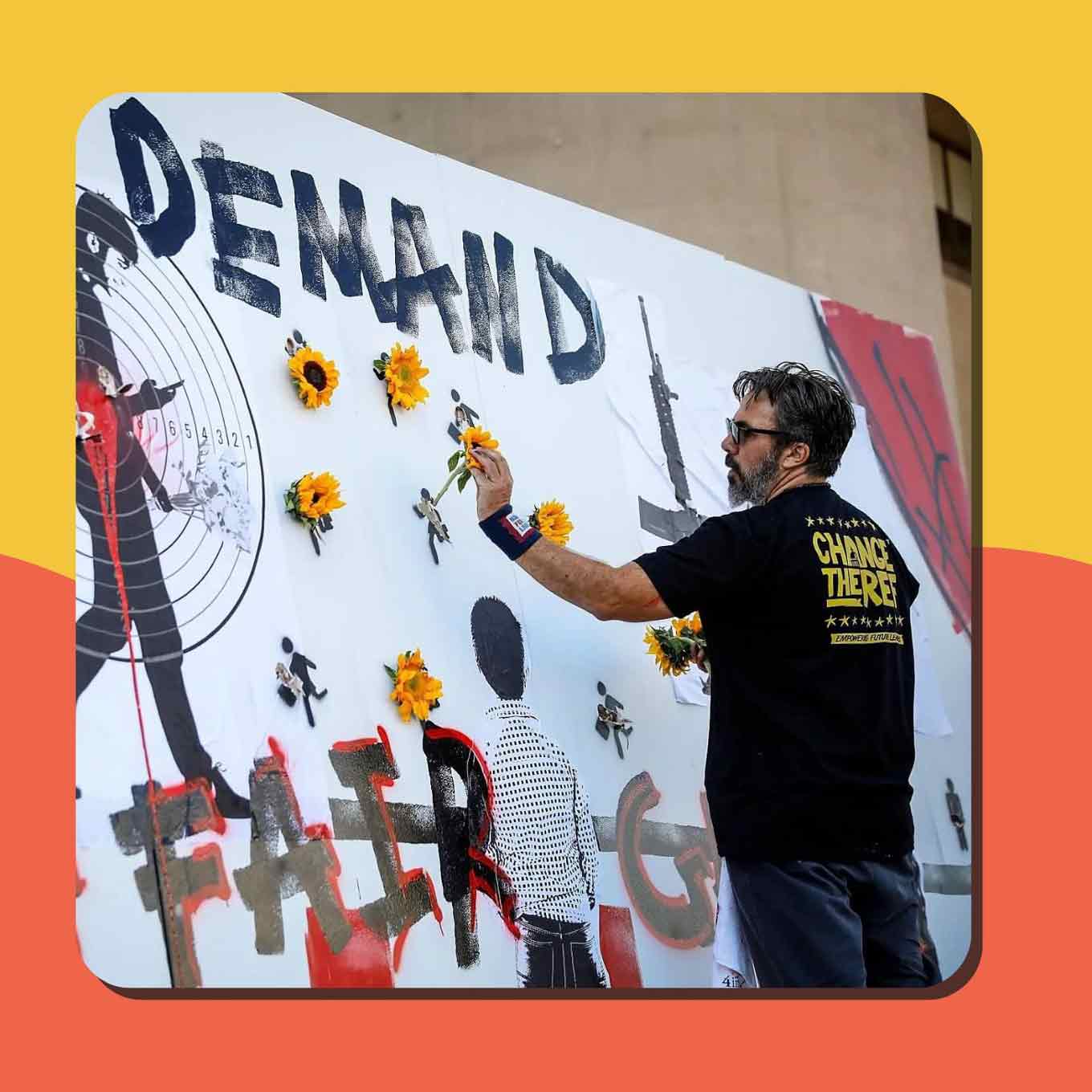
He continued by highlighting the work CTR has done in the past six years, as well as the work of March For Our Lives, the student-led coalition that was born from the Parkland shooting, which is also behind the new campaign.
“During those six years, we’ve been doing almost everything,” he said. “Talking, talking, knocking doors in Congress, knocking doors in the Senate. Six years ago, the kids were able to bring together almost a million people in this city. Voices and voices and voices, begging you for help. Voices and voices and voices that have been ignored.”
To capture the attention of those in power, he said, “we decided to go in a new direction.”
That new direction is called The Shotline, a website that has re-created the voices of those shot and killed by guns, so they can call representatives in hopes of changing the country’s gun laws.
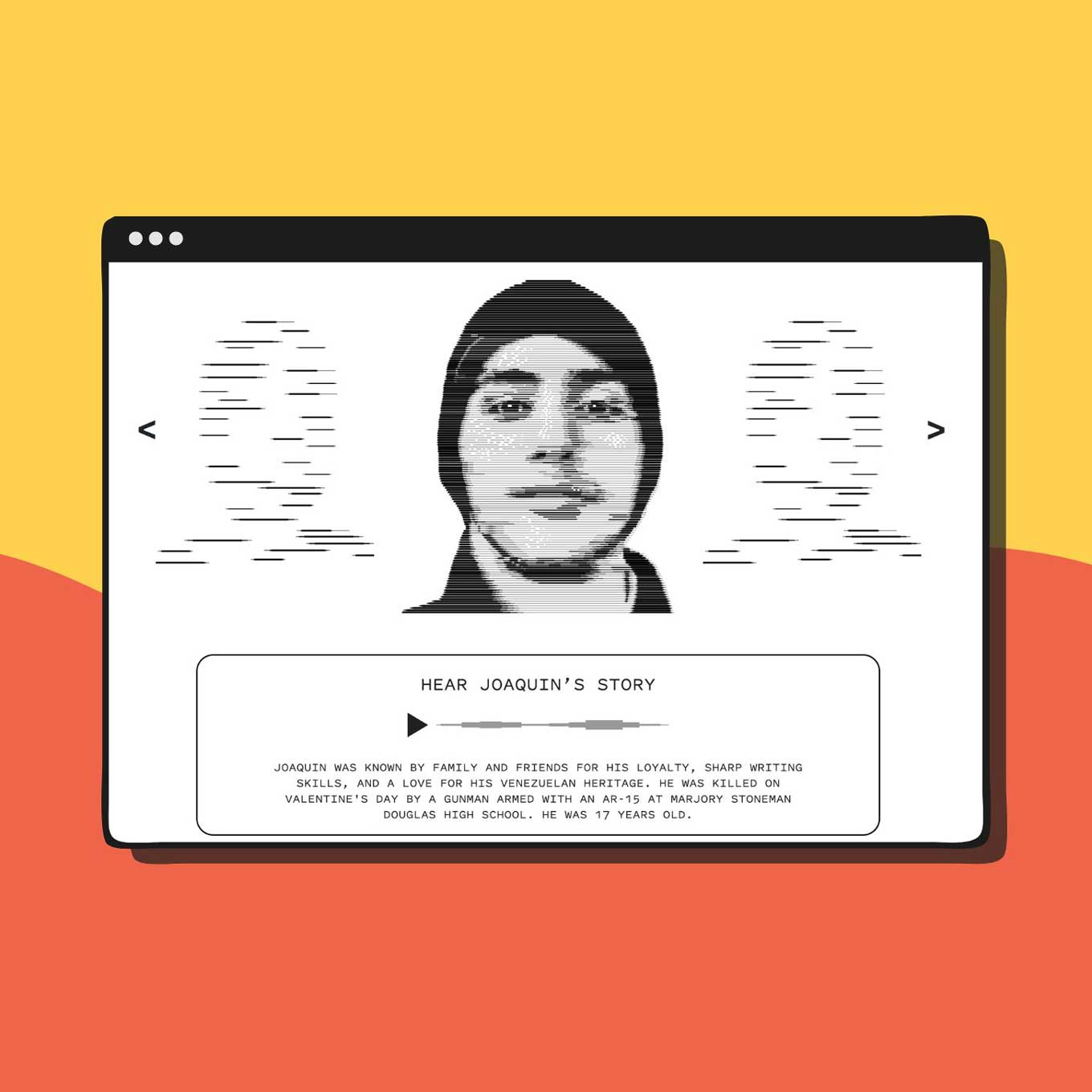
Website visitors can hear the stories of these young people in their own voices, developed through the use of artificial intelligence. Then, with a few simple clicks, and the inputting of one’s zip code, those stories will be sent to the offices of U.S. senators and representatives.
“We decided that it’s time for other voices to be heard,” Manuel said. “And maybe we’ll get your attention.”
Under an hour of the campaign’s launch, over 800 calls had been logged on the website.
Joaquin’s voice echoed in Washington DC during the announcement — and will continue to do so, as gun law advocates follow CTR’s call to action.
“It’s been six years, and you’ve done nothing. Not a thing to stop all the shootings that have continued to happen since,” a voice resembling Joaquin’s said in a recording.
“I'm back today because my parents used AI to recreate my voice to call you. Other victims like me will be calling too, again and again, to demand action. How many calls will it take for you to care? How many dead voices will you hear before you finally listen? Every day your inaction creates more voices. If you fail to act now, we'll find somebody who will.”
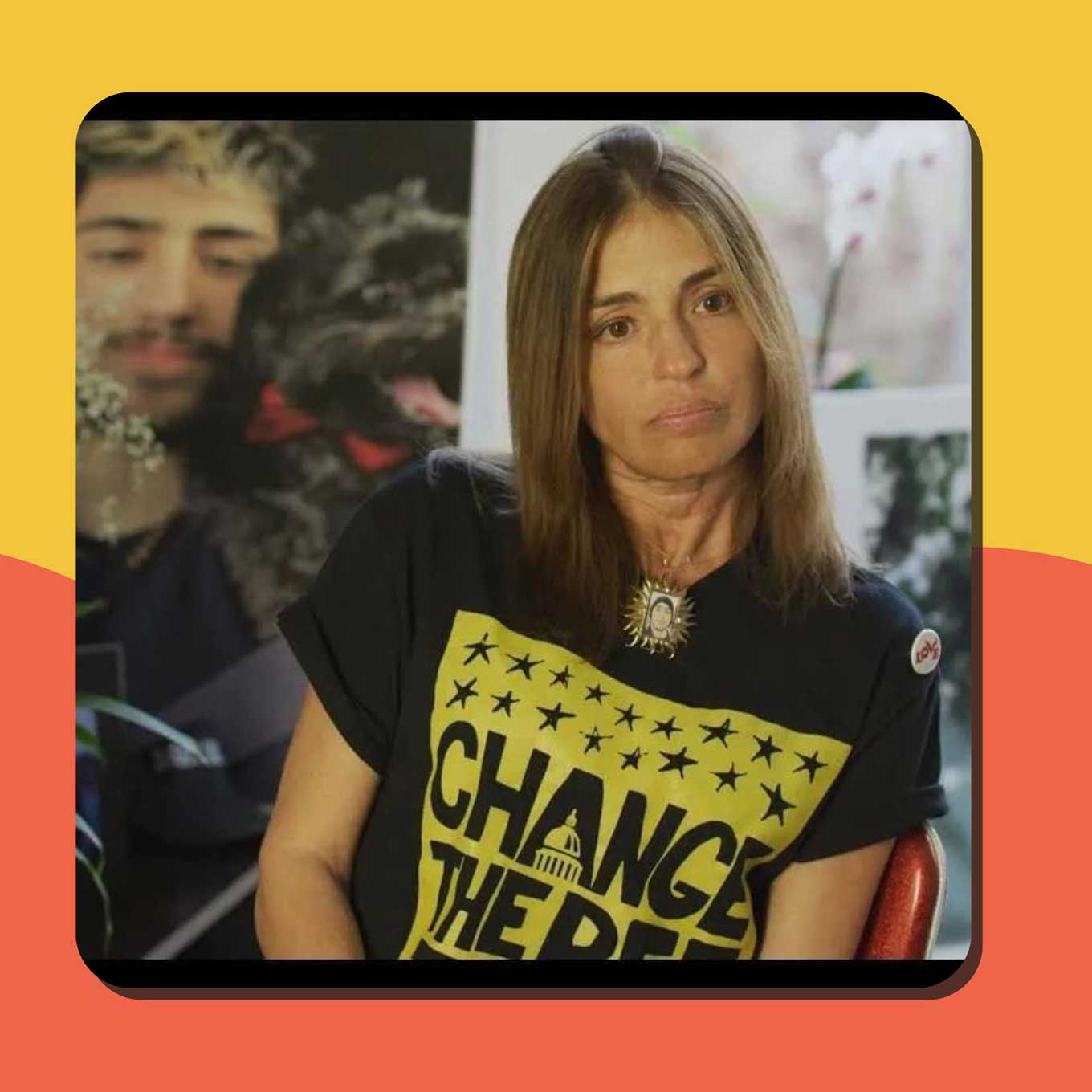
Five other messages were generated for the campaign, using the voices of individuals killed by gun violence throughout the past decade, including Ethan Song, Jaycee Webster, Mike Baughan, Uziyah Garcia, and Akilah Dasilva. The Shotline website has a page for family members who have lost their loved ones to gun violence to express interest in submitting voices to the campaign, as well.
Grieving families were also joined by David Hogg, a co-founder and board member of March For Our Lives, and a survivor of the Marjory Stoneman Douglas shooting.
“This day never gets easier,” he said, holding back tears. “We have to do more. The movement has to do more. Congress has to do more. Every American has to do more to address this issue.”
He shared his hopes for the campaign — and made a solemn promise to keep in mind the inactions of elected officials during the upcoming election.
Ultimately, as he spoke in agreement and grief with the community in DC, Hogg — and the Olivers — share the same sentiment: Taking action is the only course of action.
“This is a day that will never be forgotten,” Patricia Oliver said. “We believe that taking action is the best way to grieve and to honor the ones that couldn’t be able to be here today.”
From beyond the podium, supporters across the country continue to honor the anniversary alongside the Parkland community.
“Lifting you up,” one person commented on Instagram. “We will never forget.”
“We will never forget the beautiful souls lost on this day,” another said. “Your efforts are not in vain.”
Header image courtesy of Change the Ref/March for Our Lives
The National Center for Transgender Equality just released early insights from their 2022 U.S. Transgender Survey and the data is overwhelmingly clear: 94% of trans Americans said that they were happier than ever post-transition.
Over 92,000 trans people who identified as binary or nonbinary were surveyed, making this the biggest data set ever collected on trans Americans.
Educator and content creator Flint (@justflintisfine) shared that they were one of the people who completed the 605-question survey two years back. In a TikTok video, Flint broke down why exactly the results were so meaningful.

First, Flint pointed out that the last major survey of its kind — conducted in 2015 — was remarkably smaller; out of two million trans Americans, only 27,000 responded. In this most recent study, the data pool tripled in size.
“That tells me that there’s not significantly more of us, but that we are a lot more connected,” Flint explained.
The study also contextualizes the living situations and wellbeing of trans people, many of whom have experienced discrimination, medical trauma, and school and workplace harassment.
“A third of us have experienced homelessness,” Flint said, citing the study. “That’s almost four times the rate of the rest of the country.”
And yet, according to the report, 94% of transgender individuals who transitioned — both socially and medically — were “a lot” (79%) or “a little more satisfied” (15%) with their lives.
“98% of those of us on hormones say we are more satisfied with our life,” Flint added. “And that number is almost identical for trans affirming surgeries.”
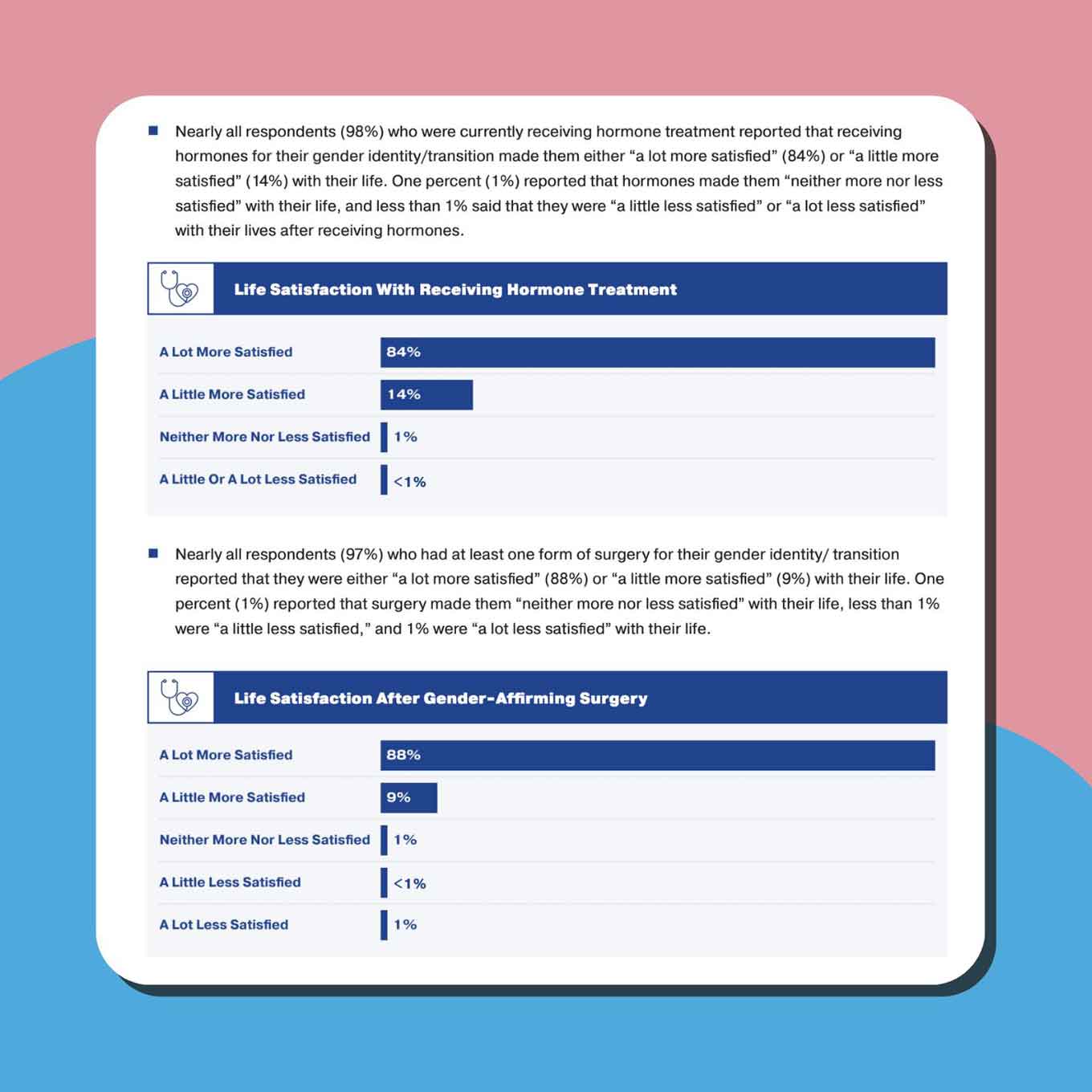
The U.S. Transgender Survey’s early insights report comes at a vital time, as lawmakers place an increasing number of restrictions on hormone therapy and gender-affirming surgeries — not just for trans youth, but for adults as well.
Flint even pointed out that the majority of respondents were over the age of 25, dismantling a common misconception that most trans people are simply “confused teenagers.”
Above all, Flint said that this survey affirms the lived experiences of trans people across the country.
“This is almost 100,000 people,” Flint stressed. “This is real data now for parents who are scared that their trans kids' lives are over. … It’s in one place now and the methodology is sound, comprehensive, and peer-reviewed.”
@justflintisfine If you’re trans and have a ✨thing✨ for comprehensive affirming data clap your hands 👏 #trans #transsurvey #transrights #transrightsarehumanrights #transandproud #transmasc #transfemme #transhealth #transhealthcare ♬ original sound - Flint
Flint, a Florida-based educator, also said this was a huge win for teachers who are “still trying to fight for the right to recognize their students.”
Before their video came to close, Flint held back tears as they talked about the beauty of trans joy.
“I think I’m gonna cry,” Flint said. “We’re out there alive and happy anyway, even though so many people don’t want us to be.”
Beneath Flint’s video, people shared the validation they felt from the results of the study.
“My son's smile has never been brighter since he started transitioning and as a mom, my heart could not be happier seeing him happy,” a TikTok user shared.
“I just got top surgery three weeks ago,” said a commenter. “The amount of relief I've felt already is unbelievable.”
Another user wrote: “Despite everything I face after being out, I am significantly more happy.”
Header images courtesy of @justflintisfine/TikTok and the National Center for Transgender Equality
Nouabalé-Ndoki National Park in Brazzaville, Republic of Congo has a lot to celebrate.
The park, which celebrated its 30th anniversary on December 31 of 2023, also shared an exciting conservation milestone: 2023 was the first year without any elephant poaching detected.
“We didn’t detect any elephants killed in the Park this year, a first for the Park since [we] began collecting data. This success comes after nearly a decade of concerted efforts to protect forest elephants from armed poaching in the Park,” Ben Evans, the Park’s management unit director, said in a press release.
Nouabalé-Ndoki National Park was developed by the government of Congo in 1993 to maintain biodiversity conservation in the region, and since 2014, has been cared for through a public-private partnership between Congo’s Ministry of Forest Economy and the Wildlife Conservation Society.

Evans credits the ongoing collaboration with this milestone, as the MEF and WCS have helped address escalating threats to wildlife in the region.
This specifically includes investments in the ranger force, which has increased training and self-defense capabilities, making the force more effective in upholding the law — and the rights of humans and animals.
“Thanks to the strengthening of our anti-poaching teams and new communication technologies, we have been able to reduce poaching considerably,” Max Mviri, a park warden for the Congolese government, said in a video for the Park’s anniversary.
“Today, we have more than 90 eco-guards, all of whom have received extensive training and undergo refresher courses,” Mviri continued. “What makes a difference is that 90% of our eco-guards come from villages close to the Park. This gives them extra motivation, as they are protecting their forest.”
As other threats such as logging and road infrastructure development impact the area’s wildlife, the Park’s partnerships with local communities and Indigenous populations in the neighboring villages of Bomassa and Makao are increasingly vital.
“We’ve seen great changes, great progress. We’ve seen the abundance of elephants, large mammals in the village,” Gabriel Mobolambi, chief of Bomassa village, said in the same video. “And also on our side, we benefit from conservation.”
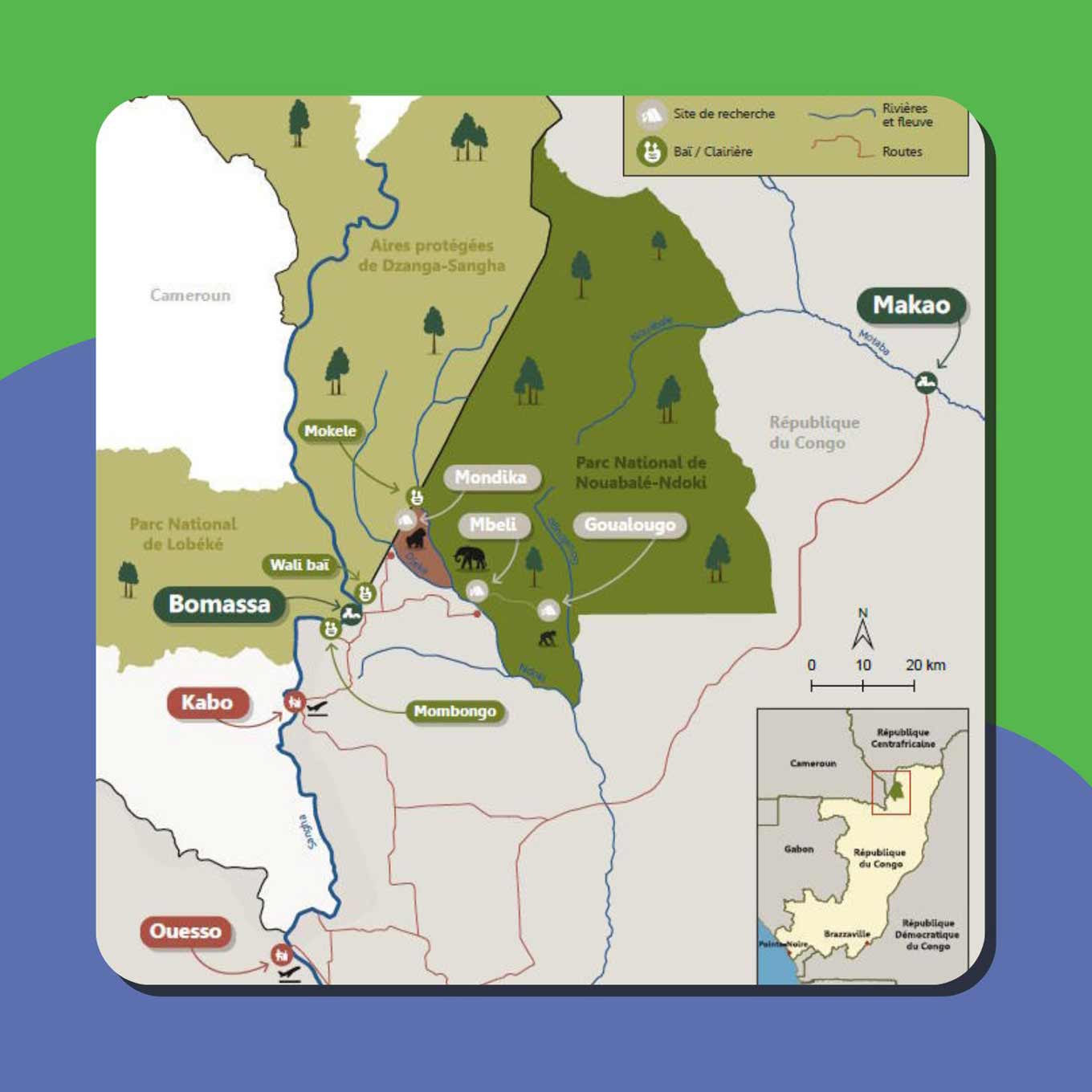
Coinciding with the Park’s anniversary is the roll-out of a tourism-focused website, aiming to generate 15% of its revenue from visitors, which contributes significantly to the local economy.
Guests are encouraged to observe the wildlife in their natural habitats, including the elephants, “rubbing shoulders with buffaloes, spraying water, feeding, or measuring their strength between males,” per the Park’s website.
Nouabalé-Ndoki also recently became the world’s first certified Gorilla Friendly National Park, ensuring best practices are in place for all gorilla-related operations, from tourism to research.
But gorillas and elephants — of which there are over 2,000 and 3,000, respectively — aren’t the only species visitors can admire in the 4,334-square-kilometer protected area.

The Park is also home to large populations of mammals such as chimpanzees and bongos, as well as a diverse range of reptiles, birds, and insects. For the flora fans, Nouabalé-Ndoki also boasts a century-old mahogany tree, and a massive forest of large-diameter trees.
Beyond the beauty of the Park, these tourism opportunities pave the way for major developments for local communities.
“The Park has created long-term jobs, which are rare in the region, and has brought substantial benefits to neighboring communities. Tourism is also emerging as a promising avenue for economic growth,” Mobolambi, the chief of Bomassa village, said in a press release.
The Park and its partners also work to provide education, health centers, agricultural opportunities, and access to clean water, as well, helping to create a safe environment for the people who share the land with these protected animals.
In fact, the Makao and Bomassa health centers receive up to 250 patients a month, and Nouabalé-Ndoki provides continuous access to primary education for nearly 300 students in neighboring villages.
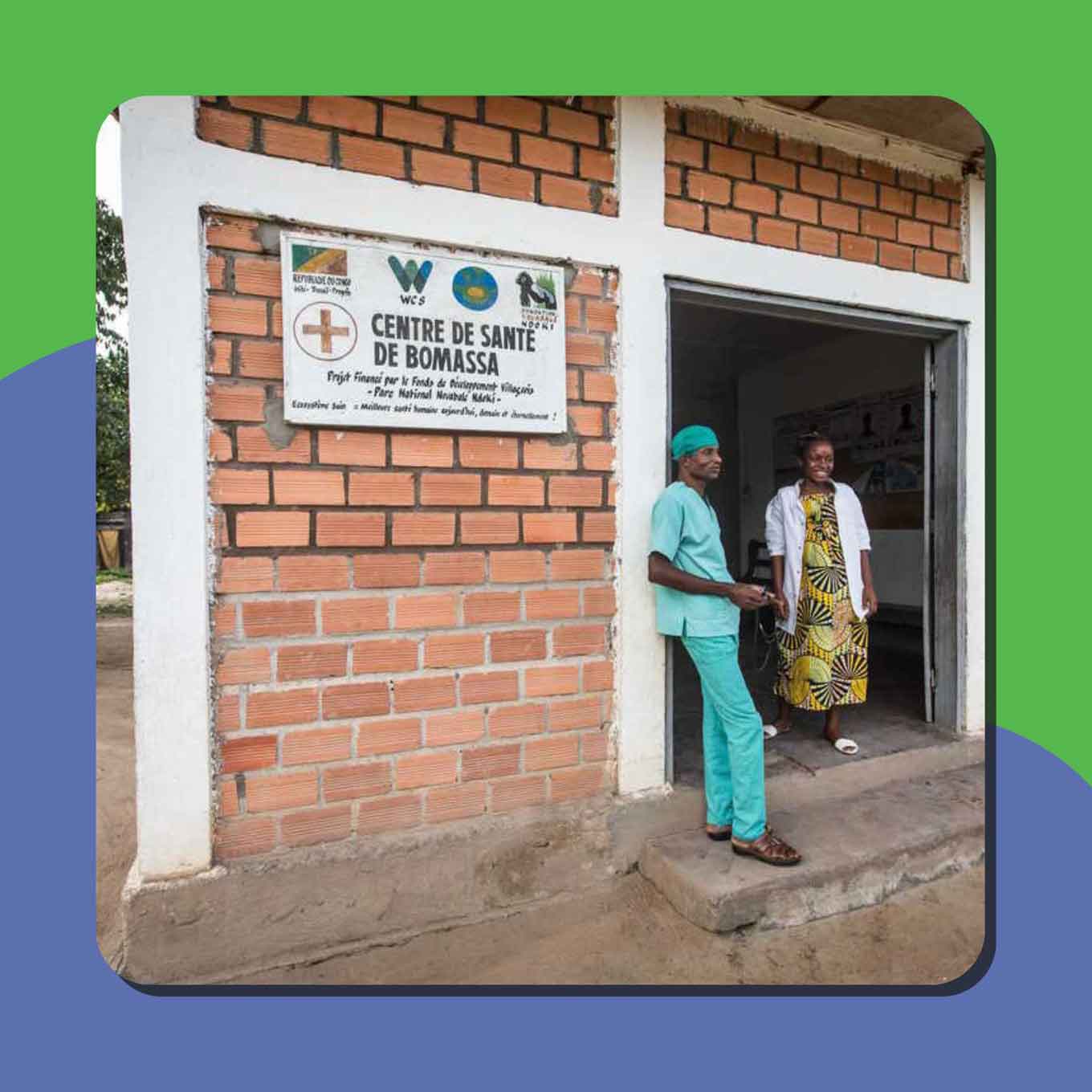
It is this intersectional approach that maintains a mutual respect between humans and wildlife and encourages the investment in conservation programs, which lead to successes like 2023’s poaching-free milestone.
“The partnership between MEF and WCS has grown stronger and ensures the Park remains one of the world’s last truly wild spaces, and one of the few areas where populations of elephants and great apes have remained stable,” a press release said.
Evans, of the Park’s management, added in the anniversary video: “Thanks to the trust that has been built up between all those involved in conservation, we know that Nouabalé-Ndoki will remain a crucial refuge for wildlife for the generations to come.”
Header image courtesy of J.Villioth/Wildlife Conservation Society
Hazel Chandler was at home taking care of her son when she began flipping through a document that detailed how burning fossil fuels would soon jeopardize the planet.
She can’t quite remember who gave her the report — this was in 1969 — but the moment stands out to her vividly: After reading a list of extreme climate events that would materialize in the coming decades, she looked down at the baby she was nursing, filled with dread.
“Oh my God, I’ve got to do something,” she remembered thinking.
It was one of several such moments throughout Chandler’s life that propelled her into activist spaces — against the Vietnam War, for civil rights and women’s rights, and in support of other environmental causes.
She participated in letter-writing campaigns and helped gather others to write to legislators about vital pieces of environmental legislation including the Clean Air Act and the Clean Water Act, passed in 1970 and 1972, respectively. At the child care center she worked at, she helped plan celebrations around the first Earth Day in 1970.
Now at 78, after working in child care and health care for most of her life, she’s more engaged than ever. In 2015, she began volunteering with Elder Climate Action, which focuses on activating older people to fight for the environment. She then took a job as a consultant for the Union for Concerned Scientists, a nonprofit science advocacy organization.
More recently, her activism has revolved around her role as the Arizona field coordinator of Moms Clean Air Force, a nonprofit environmental advocacy group. Chandler helps rally volunteers to take action on climate and environmental justice issues, recruiting residents to testify and meet with lawmakers.
Her motivation now is the same as it was decades ago.
“When I look my grandchildren and my great-grandchildren, my children, in the eye, I have to be able to say, ‘I did everything I could to protect you,’” Chandler said. “I have to be able to tell them that I’ve done everything possible within my ability to help move us forward.”
Chandler is part of a largely unrecognized contingent of the climate movement in the United States: the climate grannies.
The most prominent example perhaps, is the actor Jane Fonda. The octogenarian grandmother has been arrested during climate protests a number of times and has her own PAC that funds the campaigns of “climate champions” in local and state elections.
Climate grannies come equipped with decades of activism experience and aim to pressure the government and corporations to curb fossil fuel emissions. As a result they, alongside women of every age group, are turning out in bigger numbers, both at protests and the polls. All of the climate grandmothers The 19th interviewed for this piece noted one unifying theme: concern for their grandchildren’s futures.
According to research conducted by Dana R. Fisher, director for the Center of Environment, Community and Equity at American University, while the mainstream environmental movement has typically been dominated by men, women make up 61 percent of climate activists today. The average age of climate activists was 52 with 24 percent being 69 and older.
Part of the gender shift, she says, can be traced back to the mass demonstrations and protests that flourished in response to former President Donald Trump.
“Starting with the Women’s March and the day after the inauguration of Donald Trump … women are more engaged and women are more likely to be leaders,” Fisher said.
“Which is nice, because especially in the environmental arena it has historically been quite the dude fest.”
A similar trend holds true at the ballot box, according to data collected by the Environmental Voter Project, a nonpartisan organization focused on turning out climate voters in elections.
A report released by the Environmental Voter Project in December that looked at the patterns of registered voters in 18 different states found that after the Gen Z vote, people 65 and older represent the next largest climate voter group, with older women far exceeding older men in their propensity to list climate as their No. 1 reason for voting. The organization defines climate voters as those who are most likely to list climate change, the environment, or clean air and water as their top political priority.
“Grandmothers are now at the vanguard of today’s climate movement,” said Nathaniel Stinnett, founder of the Environmental Voter Project.
“Older people are three times as likely to list climate as a top priority than middle-aged people. On top of that, women in all age groups are more likely to care about climate than men,” he said. “So you put those two things together … and you can safely say that grandma is much more likely to be a climate voter than your middle-aged man.”
In Arizona, where Chandler lives, older climate voters make up 231,000 registered voters in the state. The presidential election in the crucial swing state was decided by just 11,000 votes, Stinnett noted.
“Older climate voters can really throw their weight around in Arizona if they organize and if they make sure that everybody goes to the polls,” he said.
In some cases, their identities as grandmothers have become an organizing force.
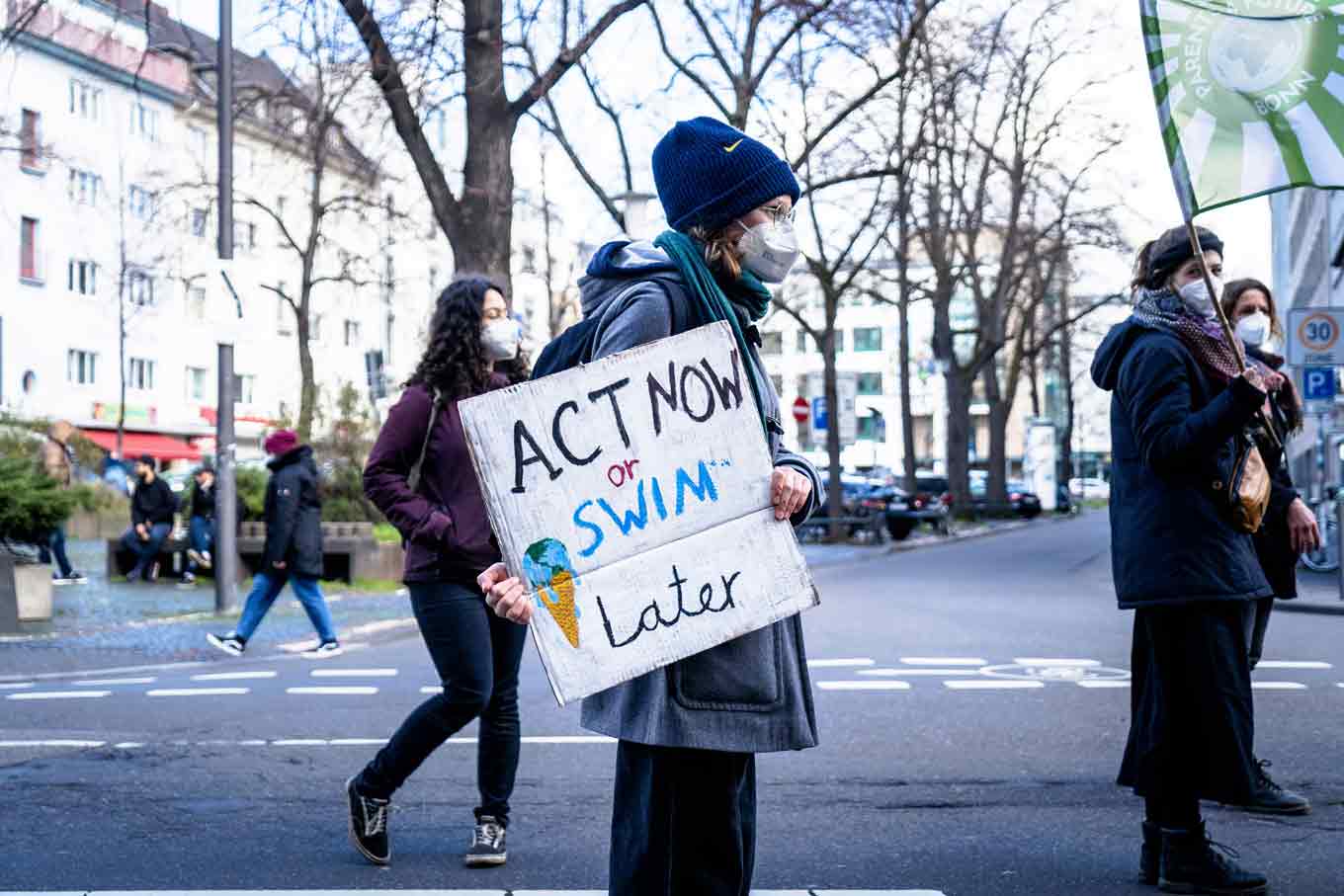
In California, 1000 Grandmothers for Future Generations formed in 2016, after older women from the Bay Area traveled to be in solidarity with Indigenous grandmothers protesting the construction of the Dakota Access Pipeline at the Standing Rock Sioux Reservation.
“When they came back, they decided to form an organization that would continue to mobilize women on behalf of the climate justice movement,” said Nancy Hollander, a member of the group.
1000 Grandmothers — in this case, the term encompasses all older women, not just the literal grandmothers — is rooted at the intersection of social justice and the climate crisis, supporting people of color and Indigenous-led causes in the Bay Area. The organization is divided into various working groups, each with a different focus: elections, bank divestments from fossil fuels, legislative work, nonviolent direct actions, among others.
They make frequent appearances alongside other climate activist groups at protests in front of banks like Wells Fargo, which finances oil and gas infrastructure, as well as participating in the annual Anti-Chevron day, protesting at the Chevron Refinery in Richmond, California.
For Hollander, 85, the work has been energizing, a continuation of the political activism she was a part of throughout her life. It’s also helped her mentally cope with the multiple crises the world is currently experiencing.
“It facilitates a sense of agency and of me being in concert with my values and my ideals. It also puts me in touch with other people, other human beings, who are motivated by similar desires and commitments,” she said.
Many of the activists emphasized how important that sense of community is, especially when the work can lead one into a sense of despair over all that has been lost. Action, they agree, is an antidote, a way to cope with that feeling and show their care. Much of their work centers on protecting the younger generation — from the threats of the climate crisis, but also in activist spaces.
“There are women in the nonviolent direct action part of the organization who really do feel that elder women — it’s their time to stand up and be counted and to get arrested,” Hollander said. “They consider it a historical responsibility and put themselves out there to protect the more vulnerable.”
But 1000 Grandmothers credits another grandmother activist, Pennie Opal Plant, for helping train their members in nonviolent direct action and for inspiring them to take the lead of Indigenous women in the fight.
Plant, 66 — an enrolled member of the Yaqui of Southern California tribe, and of undocumented Choctaw and Cherokee ancestry — has started various organizations over the years, including Idle No More SF Bay, which she co-founded with a group of Indigenous grandmothers in 2013, first in solidarity with a group formed by First Nations women in Canada to defend treaty rights and to protect the environment from exploitation.
In 2016, Plant gathered with others in front of Wells Fargo Corporate offices in San Francisco, blocking the road in protest of the Dakota Access Pipeline, when she realized the advantages she had as an older woman in the fight.
As a police liaison — or a person who aims to defuse tension with law enforcement — she went to speak to an officer who was trying to interrupt the action. When she saw him maneuvering his car over a sidewalk, she stood in front of it, her gray hair flowing. “I opened my arms really wide and was like, are you going to run over a grandmother?”
A new idea was born: The Society of Fearless Grandmothers. Once an in-person training — it now mostly exists online as a Facebook page — it helped teach other grandmothers how to protect the youth at protests.
For Plant, the role of grandmothers in the fight to protect the planet is about a simple Indigenous principle: ensuring the future for the next seven generations.
“What we’re seeing is a shift starting with Indigenous women, that is lifting up the good things that mothers have to share, the good things that women that love children can share, that will help bring back balance in the world,” Plant said.
The coordination between the two groups is one instance of intersectional work happening in the climate activism space. Though younger climate activists tend to be part of a more diverse movement, Fisher notes the movement is still predominantly White.
“People of color are mobilizing, but in many cases, they’re not mobilizing and engaging in activism that is specifically focused on climate,” Fisher said. “They may be engaging in work that is more climate justice, frontline community focused or against systemic racism, but it’s framed really differently than in most of the groups that are doing this kind of climate work … so there’s still a very big gulf there that needs to be crossed.”
Some of the older generation of activists see working on issues surrounding the climate as a way to try and correct some of their generation’s historical wrongs.
Kathleen Sullivan, an organizer with Third Act — a national organization started by environmentalist Bill McKibben — said that’s part of what has motivated her to become a climate activist in her later years.
“I couldn’t live with myself if I didn’t because I’ve been gifted with so much in life, and those gifts have come at a huge price,” she said, reflecting on how resource extraction, slavery, genocide, have built this country and led to the climate crisis. “And, when you wake up to that, first you weep and and then you say, ‘Oh my God, there’s a whole other way to live a life, another way to understand how to be on this planet.’”
Sullivan is one of approximately 70,000 people over the age of 60 who’ve joined Third Act, a group specifically formed to engage people 60 and older to mobilize for climate action across the country.
“This is an act of moral responsibility. It’s an act of care. And It’s an act of reciprocity to the way in which we are cared for by the planet,” Sullivan said. “It’s an act of interconnection to your peers, because there can be great joy and great sense of solidarity with other people around this.”
When Charlie Sprinkman took off on a 50-state road trip across America, their biggest anxiety was one that most LGBTQ+ folks experience: finding spaces that feel safe and affirming of who they are.
From restaurants and clothing boutiques, to photographers and tattoo artists, Sprinkman dreamed of being able to easily spot queer-centric spaces no matter his location.
This led to a personal passion project: Everywhere Is Queer, a public resource with a searchable map and directory of LGBTQ+ owned businesses and services.
The project started as a simple website, continually growing its reach as queer business owners added their pins on the map. In October of 2023, Sprinkman quit their full-time job to dedicate all of their time to something bigger.
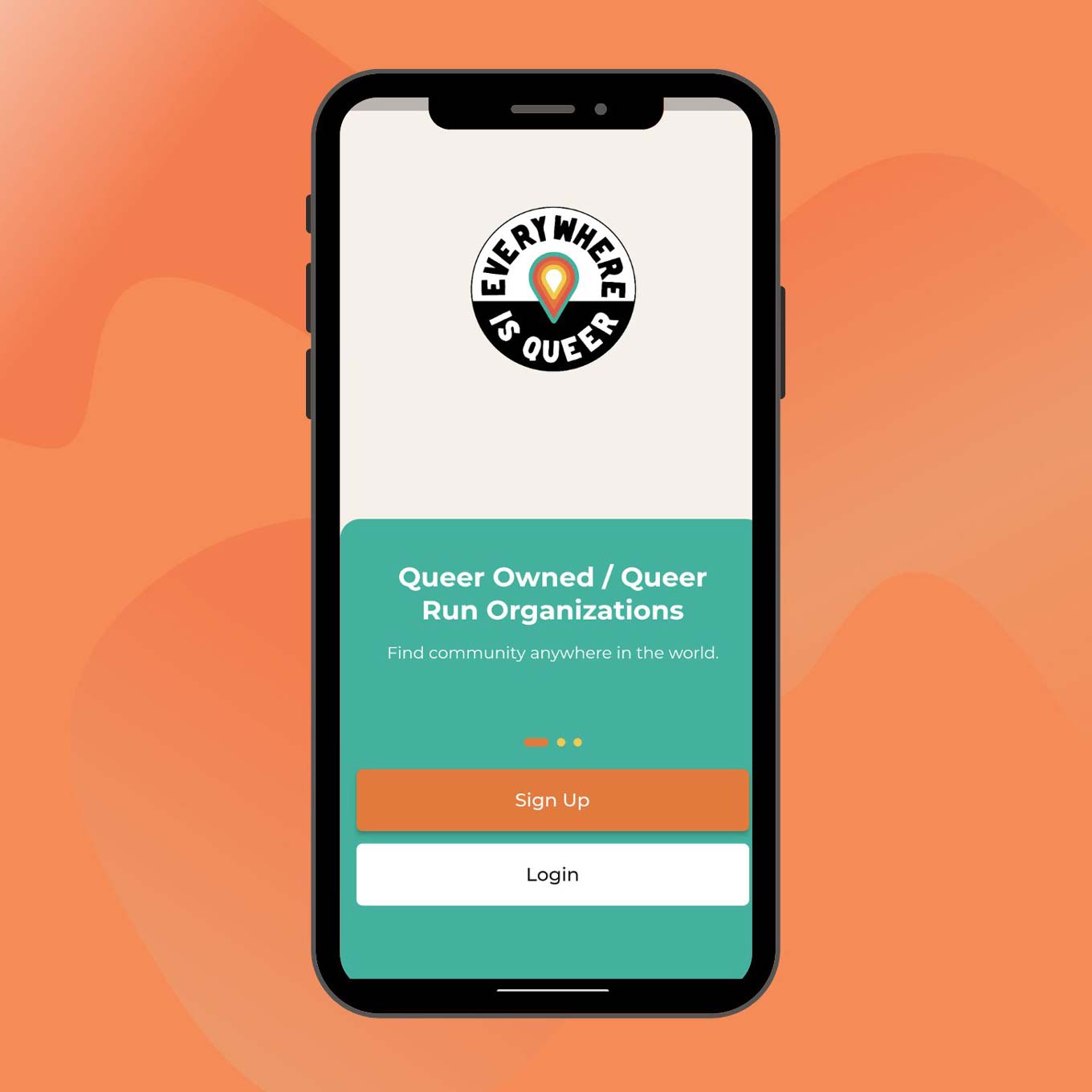
As of today, Everywhere Is Queer is now available as a free app in the Apple Store and Google Play.
“I truly started EIQ though to allow queer and trans people to feel seen as their true authentic selves locally or globally as they navigate the world,” Sprinkman told Good Good Good.
The app includes the same map EIQ users know and love — but is easier to navigate than the existing mobile website, according to Sprinkman.
The app also includes an entire Online Business section, for users who are looking for LGBTQ+ businesses without brick and mortar locations. It also makes it easier for business owners to get involved.

While it’s already free to join the map through the EIQ website, the app includes a feature for users to submit a new listing, which, pending approval, will be added to the map.
“This is just version one of our app,” Sprinkman said. “I have so many plans to build this app out so it supports these businesses as much as possible.”
In the meantime, business owners can also opt for a “Premium Listing,” which comes with an invite to a private Discord channel, allowing LGBTQ+ entrepreneurs to connect and network.
“We all are working so hard and each have such a strong skill set,” Sprinkman said. “Why don't we help each other?!”
While Sprinkman is a “one human show,” he does work with a part-time developer, Chris, who, according to Sprinkman, is also queer and dedicated to the mission of helping other members of the community feel safe and seen.
Though the pair is excited to have the app out in the world, the work to bring it to life has been no small feat.
“The hardest thing for me is that things cost money. EIQ is not venture-capital backed or has a large lump sum of money,” Sprinkman said. “This entire project is funded off my savings and money that I have made via partnerships. Figuring out cost savings has constantly been one of the biggest challenges.”

That being said, the effort to make the EIQ app into a reality has made Sprinkman feel even more closely connected to their peers who have worked for years to gain support as openly LGBTQ+ establishments.
“Unfortunately for our brick and mortar stores, sometimes it takes being successful to be heard in some local communities,” Sprinkman said. “I hope that connecting thousands (maybe even millions) of app users with physical spaces will allow for more businesses to succeed.”
In a world that is increasingly hostile to queer and trans folks — (whether through health care-denying legislation, or even violence), knowing a place is safe is fundamental to growing community, economic power — and acceptance.
“When these businesses succeed, businesses in their area will start to respect them more. When they start to get respected more, they will be able to have a greater voice for positive change,” Sprinkman said, citing gender-neutral restrooms becoming commonplace in every establishment, as an example.
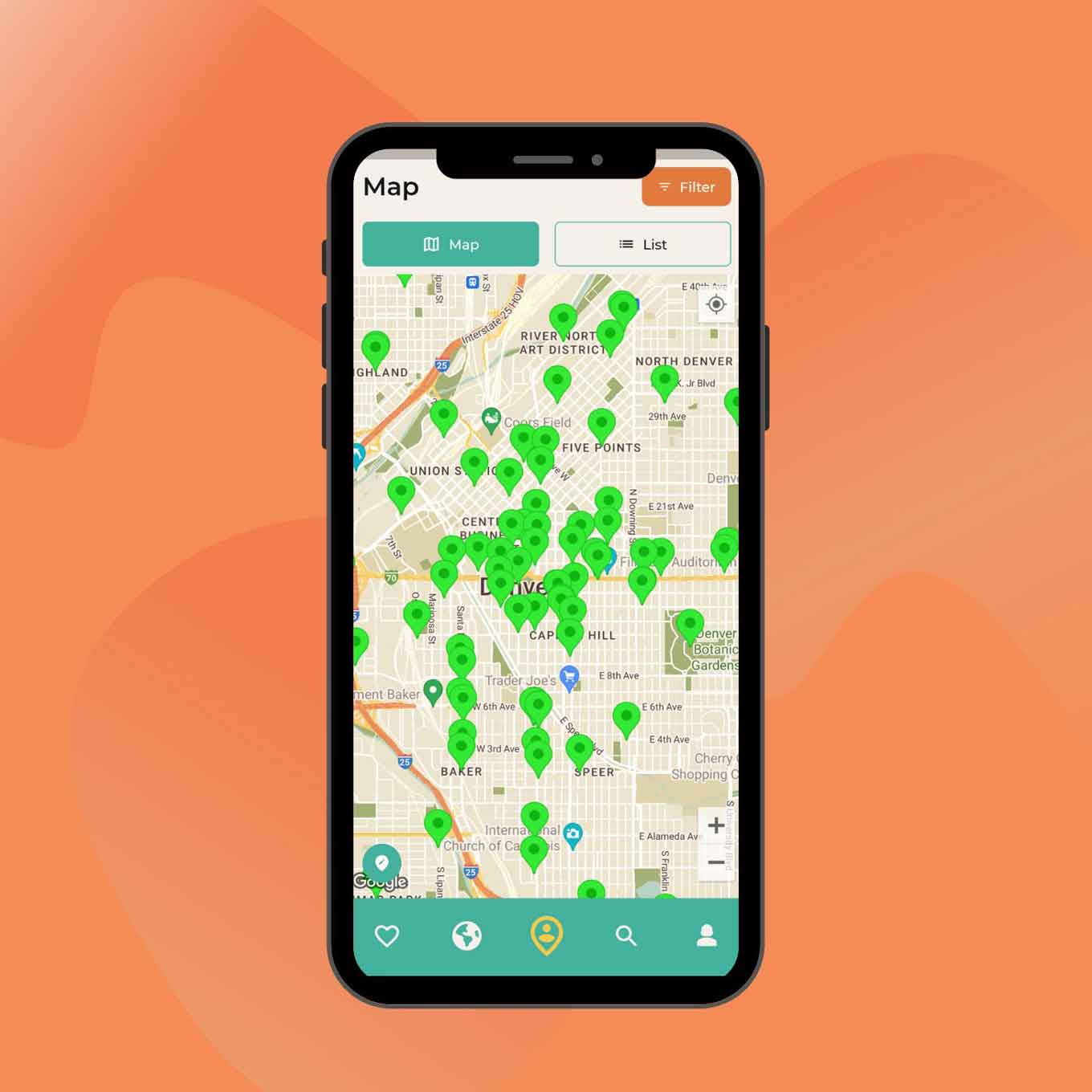
Ultimately, Sprinkman wants the app to be a stop before one gets to Google or Yelp, searching for a local LGBTQ+ owned business first and foremost when shopping around for, say, an auto repair shop or an art supply store.
His wildest dream is that it can be used as an Amazon alternative, inspiring shoppers to support queer-owned retailers above the giant corporation. (“I refuse to have an Amazon account,” they said.)
But for now, he takes pride and joy in what the EIQ app is: a diverse community by and for LGBTQ+ folks.
“I know that EIQ has already connected queer and trans people with businesses all over the world. I have hope that EIQ will continue to do this,” Sprinkman said.
“The queer and trans community is strong. EIQ wants to make it stronger. I truly believe we are all in this together.”
Header images courtesy of Everywhere Is Queer
— We depend on the natural world for our wellbeing but we are destroying it.
— Our youth are the key to our survival – we must instill hope and empower them to find a collaborative approach to protect nature, animals and communities.
I travel around the world 300 days a year, and everywhere, I meet young people who have lost hope. And we know that suicide rates are going up. If all our young people lose hope, then we are doomed. Because if you lose hope, you become apathetic. You give up and you do nothing. The future depends on all of us getting together now and doing something to try and heal the harm we have inflicted on this planet. How long can the earth survive if we continue as we are now?
I’ve spent many years in the rainforest, understanding the interconnection of all living things. I learned about chimpanzee behavior and about this amazing ecosystem of the forest, where every plant and animal has a role to play. I see it as like a beautiful tapestry of interconnected life forms. As humans move in with their cattle, development and deforestation, a strand from the tapestry is gradually pulled away, one after the other, as a particular animal or plant disappears from that ecosystem. And if enough threads are pulled, the tapestry will hang in tatters and the ecosystem will collapse.
We must realize that we humans are not separate from the natural world. So many people live in cities and are unaware that we depend on the natural world for everything: food, water and clothing. We rely on healthy ecosystems. But as we continue our selfish development of this materialistic lifestyle, we destroy these ecosystems. We need a new mindset.
I spend a lot of time talking to different people around the world – to children, CEOs, government officials and anybody who will listen. I have realized that if you want to change somebody, there’s no use arguing with them. It’s no good pointing fingers and saying, “What you’re doing is bad for future generations.” They’re not going to listen. They don’t want to listen.
So, how do you change people? You have to change people by reaching their hearts. I think that when people change, it’s got to be their decision to change from within. So, when I’m talking to these decision-makers who have such sway over us, I try to find a way to reach the heart. The way that I see the most effective is to tell stories.
Sustainable narratives
So, I’ll tell you a story: I was talking to a group of CEOs in Singapore. One of them was the head of a big multi-multinational corporation. He said that for the last eight years, I have been fighting to get my company to be sustainable and ethical in the country where we source our supplies, in our offices around the world and in how we treat our customers. He said there were three reasons why I wanted to make my company more ethical.
First, he said, because I saw the writing on the wall, we were using natural resources faster than nature could replenish them in many places. Second was consumer pressure – people are beginning to understand and become more aware. They’re starting to ask questions like: Why is this product cheap? Is it because of unfair wages paid in other countries? Is it because of some kind of slave labor? Was the making of it damaging to the environment? Was it cruel to animals? But here we are; we don’t seem to understand what we are doing to harm the planet.
But the third reason that triggered everything for me was when my 10-year-old little girl came back from school one day and said, “Daddy, they’re telling me that what you’re doing is harming the planet. That’s not true. Is it Daddy? Because isn’t it my planet”? That reached the heart.
The world is in a mess politically, socially and, of course, environmentally. I’ve been asked so many times during this week in Davos, “Well, don’t you think that the terrible wars in Gaza and the Ukraine are detracting attention away from the threat of climate change and loss of biodiversity?” And we all must, if we have any human instincts, feel desperation when we think of children in Gaza being operated on and having limbs amputated without anesthetic because there’s no anesthetic left. What are we doing about people who are facing famine? What can we do about it?
I don’t know. But although this is terrible and the Ukrainians moving into deep winter should make all our hearts bleed. That does not mean that we shouldn’t also focus our attention on climate change because that affects the future of our children, our grandchildren and theirs.
“We understand all the different ways that we can combat and slow down climate change. But do we have the will?”
— Jane Goodall, Founder, The Jane Goodall Institute, United Nations Messenger of Peace
Navigating towards hope and action
I see humanity as at the mouth of a very long, very dark tunnel. And right at the end of that tunnel, there’s a little star that’s hope. And it’s no good sitting at the mouth of the tunnel folding our arms and hoping that the star will come.
No, we have to roll up our sleeves. We have to climb over, crawl under and work our way around all the obstacles that stand between us and the star: climate change; biodiversity loss; killing of the soil with agricultural poisons, pesticides and herbicides; harming the ocean with our artificial fertilizers; and poverty.
Poverty drives some people to destroy the environment simply to eke out a living by making charcoal or by clearing the forest to make more land to grow food for their growing families.
Climate change, loss of biodiversity, killing of the soil with agricultural poisons, pesticides and herbicides, harming the ocean with artificial fertilizers and poverty. Meanwhile, people are destroying the environment to eke out a living making charcoal or clearing forests for more land to grow food for growing families.
The good news is that there are groups of people tackling every single one of the problems we face today. Every single one.
The sad thing is that so often, people work in silos. They are concentrating only on solving their problem. For instance, imagine that we are a group fighting the closure of a coal mine because of all the carbon dioxide (CO2) emissions. We’ve closed it but haven’t been thinking holistically; we haven’t been thinking of all the people who will lose jobs and how we are plunging them into deep poverty. But if we start thinking holistically from the beginning, we can find ways of helping all these people who lose their jobs to make a living so that we get a win-win-win situation.
We need to collaborate and take action now. Many of these big conferences are fantastic – they create networking and people meet and inspire each other, leading to much good. But as you all know, there are a lot of intentions and commitments to reducing emissions but very seldom are those commitments honored. The time for talk has passed. What we need today is action.
My greatest hope lies in young people today. In 1991, I was already meeting young people worldwide who had lost hope, were angry, depressed or just apathetic. And they said, well, you’ve compromised our future and there’s nothing we can do. I said that’s not true.
We do have a window of time; if we get together, we can start to make a change. So that began the Jane Goodall Institute’s Roots & Shoots program.
Every group of Roots & Shoots chooses three projects to help people, animals, and the environment because they are all interrelated. And what began with 12 high school students in Tanzania is now in 70 countries around the world. And these young people are planting trees, collecting plastic and raising money for projects that they’re passionate about. They’re changing the world as I speak.
Hope through nature, innovation and human spirit
There are so many reasons for hope. Young people are my main reason for hope. My second reason is the resilience of nature. We destroy an entire ecosystem. Give it time and nature will come back. Animals on the brink of extinction can be given another chance.
My next reason for hope, the biggest difference between us and other animals, is this explosive development of our intellect. Yes, other animals are far more intelligent and sentient than used to be believed. We’ve designed a rocket that went up to planet Mars with a robot that took photos. And so, our hope of finding a planet where life could continue, a kind of life we know, was doomed.
Fortunately, today, science is coming out with innovative solutions like capturing carbon from the atmosphere and renewable energy. This is a big step forward. I wish more people were talking about this type of technological solution, which is one way we can live in greater harmony with nature.
But nature protects itself through forests, oceans, kelp forests and wetlands. These ecosystems are nature’s solutions to climate change. They’re cheaper than some of these technological solutions. And that’s really the message I’ve been trying to give in Davos: by protecting the forest and Mother Nature, Mother Nature will help us escape the mess we’ve made.
And my last reason for hope: the indomitable human spirit – the people who tackle what seems impossible and won’t give in so often succeed. So, when our Roots & Shoots groups get to the end of a session we bring groups face to face from different parts of a city, country or even the world. They stood up and said, “Together we can." Meaning, together we can save the world. And I said, “Yes, we can."
We know what we ought to do. We understand all the different ways that we can combat and slow down climate change. But do we have the will? Do governments have the will? Do the people have the will to make those little concessions? If you believe that we have a window of time, could you join me in saying, “Together we can, together we will, together we must save the world?”
This article was originally published by the World Economic Forum.
In late January, groups of volunteers around the country set out on foot and in vehicles in search of individuals experiencing homelessness. The goal: Get a sense of how many people are living outdoors or in shelters in their own communities and the nation at large.
Jon Johnson, a social worker and director of homeless programs with the San Francisco Veterans Affairs Health Care System, has long been among those bundled beneath winter layers during the Point-in-Time count, the annual documentation of the hundreds of thousands of homeless people around the nation.
Despite more than two decades of working in homelessness, the sight of anyone — veteran or not — lying on the street or curled on a park bench comes as a shock.
Yet it is part of what drives him and others in his organization to work toward ending veteran homelessness — “keeping,” Johnson says, “the two words ‘veteran and ‘homeless’ out of our mouths.”

The efforts have paid off. Over a 12-year stretch that ended in 2022, the population of unhoused veterans dropped by more than half. Although that trend reversed over the last year — rising 7.4% from 2022 to 2023 — it was still lower than the 12% overall increase in homelessness.
Part of the long-term success of reducing the number of unhoused veterans is the Veterans Affairs’ pledge to end it — as well as the funding to cover the costs of that goal.
Coordinated efforts between local, state, and federal agencies that can act as safety nets; screening protocols to identify veterans at risk for homelessness; billions of dollars in federal money; and the prioritization of veteran homelessness by lawmakers across political parties has also contributed to that success.
To date, 83 communities and the entire states of Connecticut, Delaware, and Virginia have effectively ended homelessness among veterans.
But that level of progress hasn’t been replicated in the homeless population at large. This year’s increase in overall homelessness signifies the largest jump since the federal government began counting in 2007.
A year after the count began, in 2008, the U.S. Department of Housing and Urban Development launched the HUD-VA Supportive Housing program, which has provided housing vouchers and supportive services for thousands of homeless veterans every year since its establishment.
The scale of resources for housing homeless veterans is far closer to the actual need when compared to any other subgroup of unhoused individuals, such as homeless families or homeless youth, says Ann Oliva, CEO of the National Alliance to End Homelessness who worked for HUD for a decade and helped design the supportive program for veterans.
While the program doesn’t completely meet the needs of all unhoused veterans, she says, “it’s close.”
That stands in stark relief to the non-veteran population.
Only 25% of people in households eligible for HUD-funded rental assistance receive it. Three out of four “extremely low-income” households don’t have the housing assistance they need, putting them at risk for homelessness.
The VA’s approach to veteran homelessness offers a model for how to decrease homelessness nationwide, says Dr. Margot Kushel, director of the San Francisco Center for Vulnerable Populations and the Benioff Homelessness and Housing Initiative at the University of California, San Francisco.
But that model also benefits from billions in federal money, and that’s where civilian programs hit a wall.
“VA Is Driving the National Reduction in Veterans Homelessness”
About 22 out of every 10,000 veterans have experienced homelessness, HUD estimates. And in addition to efforts like the Point-in-Time count, the VA has worked extensively to find unhoused veterans over the last 12 years, including through outreach workers who hit the streets and screening tools at outpatient clinics and hospitals.
In January, VA announced it had housed 46,500 veterans in 2023 — exceeding its goal of 38,000. And nearly all of the individuals VA housed retained their housing and didn’t cycle back out on the streets. Of the veterans who did lose housing — about 1,500 — VA was able to begin helping about 93% with housing within the calendar year.
Both the HUD-VA housing program and Supportive Services for Veteran Families, a program for veterans at risk of losing housing, have been critical tools in cutting homelessness.
Only after a homeless veteran is identified can assistance begin, says Monica Diaz, executive director of the Veterans Health Administration Homeless Programs office. VA case workers or other staff determine “the best next step in terms of referral for the homeless programs,” she says.
That could include a housing voucher, employment help, mental health treatment, or all of the above.
In cases where VA can’t provide the needed resources, a local veterans service organization that works closely with VA often steps in.
“The VA is driving the [national] reduction in veterans homelessness,” says Sam Tsemberis, founder of the Pathways Housing First Institute — the organization that created the Housing First model, which prioritizes housing without conditions, such as sobriety, and includes supportive services. VA adopted the model more than 10 years ago.
VA acts as a central hub, coordinating with HUD for housing vouchers, as well as with community homeless service providers for supportive services to create stability for the veterans, Tsemberis says.
On the civilian side, without immediate access to vouchers and other resources, cities trying to reduce homelessness must navigate a patchwork.
“You’re going to have to work with the outreach teams — the shelters, the business community, police, hospitals,” he says.

And there’s no guarantee all those entities operate on the same page. From screening to long-term supportive services, VA has a clear, “organized mechanism,” Kushel says.
But on the civilian side, some hospital staff members don’t feel comfortable asking questions to find out if someone is homeless — leaving out a piece of the safety net.
“Many people [believe], as I do, that [screening] helps to understand the full context of people’s lives,” she says. But there’s angst amongst some medical professionals when it comes to screening because, “You bring up these really traumatic parts of people’s lives, you ask them these questions that are really upsetting, and then you have nothing to offer them,” she says.
Kushel can often only provide for non-veterans a list of shelters and feeding sites or a contact for San Francisco’s coordinated entry system, where communities track and prioritize homeless individuals.
And because there’s such a backlog in housing vouchers known as Section 8, most homeless individuals, or those at risk of becoming homeless, wait months or even years to access one.
In affluent cities, the struggle to secure low-income housing is only exacerbated. In San Francisco, when the Section 8 waitlist opened up for the first time in 10 years this past fall, local media reported that more than 60,000 applicants were expected to flood the system for 6,500 spots on a waitlist.
“I don’t think that there’s any community in the country right now that has enough of anything,” Oliva says.
The most recent 2023 Point-in-Time count reflects that. Not only was overall homelessness up, but chronic homelessness hit an all-time high. The number of families with children who were experiencing homelessness increased by more than 25,000 people from the previous year.
Experts say the end of COVID-era eviction moratoriums and emergency financial assistance are in part to blame.
“They Learned Something by the Collaboration And Working With Veterans”
Locally, communities combating homelessness have benefited from the influx of federal support for veteran homelessness, Tsemberis says.
By dedicating caseworkers, housing vouchers, and outreach teams to veterans, service providers have gained a better understanding of the paths in and out of homelessness, as well as the importance of relationships in lifting unhoused people into housing and stability.
“That allowed them to deal with other people who are chronically homeless—people who had severe mental illness or other subgroups,” he says. “They learned something by the collaboration and working with veterans that wasn’t in place before.”
Still, an essential ingredient to curbing homelessness is money.
“You can’t do it without resources,” Tsemberis says.

In addition to too few housing vouchers for unhoused people with low incomes, there’s also a “tremendous shortage of affordable housing,” he says.
And, while veterans get caseworkers and other supportive services through the HUD-VA housing program, similar resources for civilians are often cobbled together through city, county, state, and private funding.
“Organizations have to work very hard to bring together the money,” he says. “There isn’t a well-coordinated collaboration between, let’s say, Health and Human Services and HUD, which is exactly what we would need to do at a national level to replicate what’s going on with the VA.”
Federal action to provide more housing vouchers or other subsidies is the only way to climb out of the ever-rising homelessness rates, Kushel says.
“The market is not going to solve this,” she says. “We’ve gotten too far apart from what poor peoples’ incomes are and what the housing market is.”
Oliva, with the National Alliance to End Homelessness, doesn’t see that kind of federal action happening anytime soon.
“In part, it’s because veterans are seen as worthy,” she says.
In these hyperpolitical times, Congress likely won’t aggressively pursue policies that would help all 650,000 individuals who live without stable housing, Oliva says.
“The general public understands the sacrifice that people who served our country made,” she says. And because of that, there’s sympathy for the veterans whose country has failed to care for them.
But nonveteran unhoused people have complex stories — employment loss or incarceration, domestic violence or addiction — and Oliva says weaving those threads to build political will is going to be no easy task.
This article first appeared on The War Horse, an award-winning nonprofit news organization educating the public on military service.
Reduced emissions, physical activity, and the joy of experiencing the outdoors are likely the most well-known benefits of bicycle commuting. But now, some Denver residents will get an added bonus when they opt for their bike: cold, hard cash.
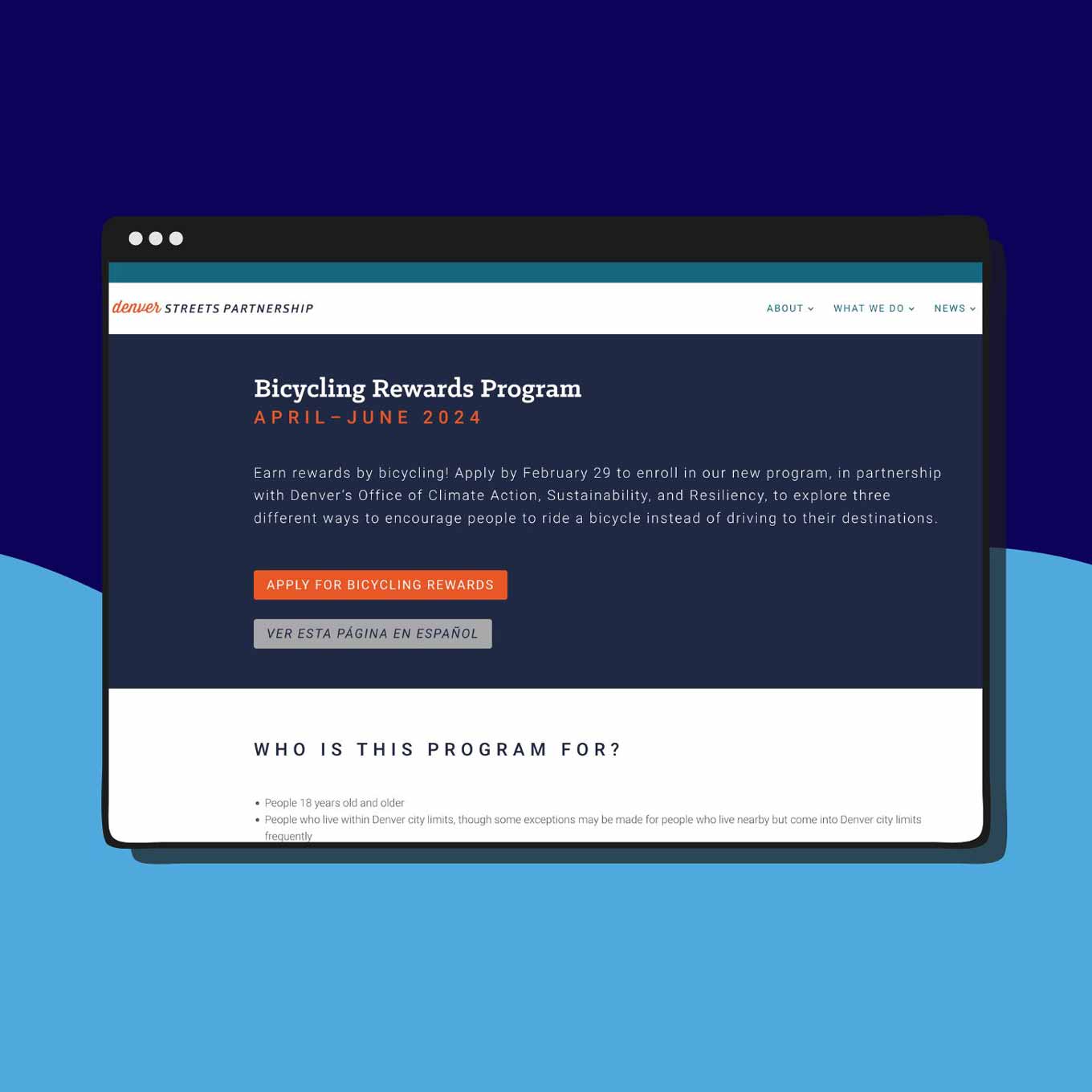
The city’s new Bicycling Rewards Program — which was created by the Denver Streets Partnership and Denver’s Office of Climate Action, Sustainability, and Resiliency — aims to encourage community members to ride a bike instead of driving.
The program comes as a response to the city’s lagging climate goals. According to Denver Streets Partnership, transportation was responsible for 30% of the city’s greenhouse gas emissions in 2018, and this incentive is part of a larger research project to see what motivates locals to ditch their cars.
Applications to participate in the rewards program are open through the end of this month, and the program will run on a pilot basis from March through June. (The program is also hiring three part-time “Bike Buddies” to facilitate and support participants.)
There are three ways locals can get paid for their bike-riding.
The first is through mileage reimbursement, in which up to 85 participants will receive a $1 per mile traveled on bike (“for the sake of transportation; not recreation,” the city is clear to say). This can culminate in up to $200 per month.
Another option is a “wrap-around support” model, in which participants will receive commuter training and up to four hours of personalized coaching, as well as a stipend for bike-related costs (up to $500), and a $200 payment upon completing the program.
Only 15 participants may enroll in the wrap-around model and are required to use a bicycle for transportation at least once per week.
The last option is a hybrid of the mileage reimbursement and commuter training programs and will also be capped at 15 participants.
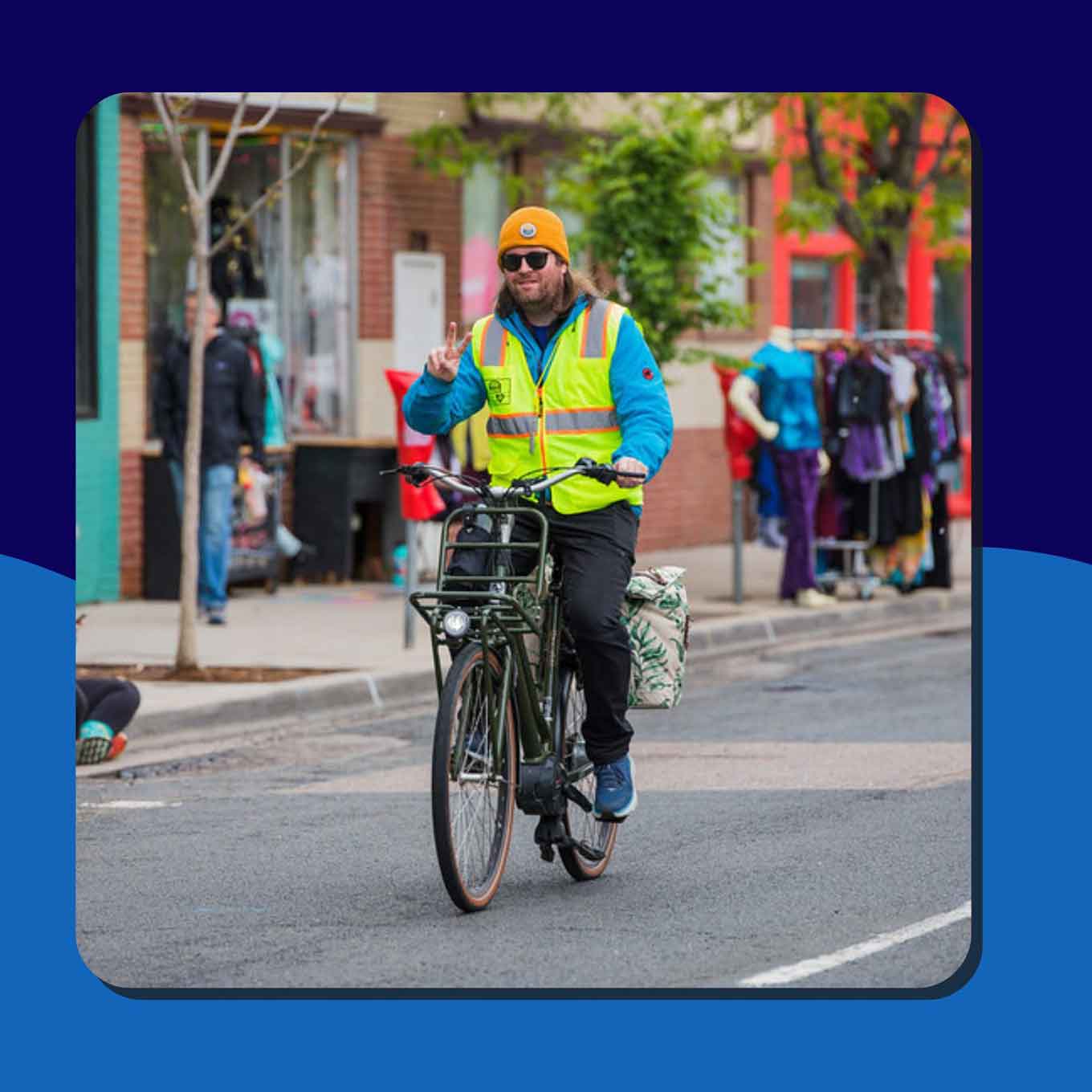
The city does have demographic requirements for the program. Applicants must be 18 years or older and live in Denver city limits. The program also plans to prioritize folks who live in neighborhoods identified as “historically disinvested communities in danger of gentrification.”
“We are further prioritizing people who have been burdened the most from our current transportation system and would stand to benefit the most from participating in this program,” Denver Streets Partnership’s website states.
Through both short-term and long-term incentives, the organization aims to prioritize people of color and those with lower incomes.
Denver isn’t the first city to offer financial incentives for bike commuters. Boise, Idaho offers free bike repairs and other perks; Washington, D.C. offers public school teachers a $200 bonus to purchase a bike for commuting; and Palo Alto pays bike commuters up to $600 a year for their rides.
This also isn’t the first biking incentive out of Denver’s climate office; e-bike rebate vouchers are a hot commodity among the city’s cyclists.
“Get funds from Denver to help you create a more sustainable life,” the office’s website encourages “Everyday Denverites.”
“From our popular e-bike rebate program to funding for neighborhood groups, we want to help Denverites thrive in a sustainable city.”
Header image courtesy of Kalen Jesse Photography/Denver Climate Action, Sustainability and Resiliency
Every day the Good Good Good team collects the best good news in the world and shares it with our community. Here are the highlights for this week!
If you want to get good news in your inbox every day, join the Goodnewsletter — the free daily newsletter designed to leave you feeling hopeful.
The Best Positive News We’re Celebrating This Week —
For the first time since they were first sold in 1965, Minnetonka’s iconic moccasins have been designed by a Native American artist
Based out of Minnesota, Minnetonka started selling souvenirs at roadside gift shops in the 1940s, including Native American-inspired moccasins. While the company wasn’t started or run by Native Americans, the footwear quickly became its biggest seller.
For decades, the company has made various attempts to repair its history of cultural appropriation and began working with a Native American advisor (who was hesitant to work with the brand) in 2019 to go even further.
In addition to issuing a public apology and diving deeper into its past wrongs, the company began working with Native artists and designers on a collection featuring, significantly, its most popular product: moccasins. Lucie Skjefte, a member of the Red Lake Nation, designed the beadwork for the “Thunderbird” moccasin and a pair of slippers for the brand.
Why is this good news? Minnetonka’s president admitted that, for a while, fear prevented them from taking this step — because it’s often easier to do the same (profitable) thing, and it’s harder to ask questions and commit to making meaningful, but necessary change.
While one collection doesn’t make decades of appropriation right, this story is a hopeful, encouraging reminder that it’s never too late to start doing the right thing — as a corporation, or as an individual.
Following tighter regulations, California’s food waste decreased by 10% in 2022
In 2022, consumers and businesses in California created almost 13 million tons of food waste — which is still a lot, but it’s a notable 10% decrease from what they produced in 2016.
The decrease is thanks to state efforts to reduce food waste, including a new state law requiring residents to sort food scraps and other organic waste into a compost-specific bin. That same law requires the state to recover 20% of edible food that would otherwise go to a landfill to instead address food insecurity.
Food waste is a major issue all across the country, making up 24% of what’s sent to municipal landfills, and contributing 6.1% of U.S. greenhouse gas emissions.
California has set an ambitious goal of cutting its organic waste disposal by 75% by next year — and while it has a ways to go, this is good, important progress toward that goal.
→ Read more
For a Valentine’s Day donation, a Nebraska animal shelter will write your ex’s name on a dog poop bag
This Valentine’s Day, the Nebraska Humane Society — which has become well-known for its hilarious social media antics — is looking to help animal lovers turn their “pettiness into a positive.”
For a small donation, the shelter is offering to write “the name of your choice” on a doggy bag (or a full-size trash bag for a larger donation). A doggy bag that will eventually contain doggy waste.
When the shelter announced the fundraising campaign on social media, commenters started rattling off creative ideas beyond shaming a crappy ex, like writing a politician’s name, or even decorating a kitty litter box with the same theme.
Why is this good news? While some found the fundraiser a bit unsavory — the shelter said it really is all in good fun and, most importantly, for a good cause. The funds raised from the campaign will help support animals in need and the ongoing operations at the shelter.
It’s also a great reminder that doing good and making a difference can be fun, simple, and not complicated (unlike your ex, we suppose).
Researchers in Florida are working to restore coral and protect coastal communities with artificial reefs
On Florida’s Virginia Key, a multidisciplinary team from the University of Miami is using a massive wind-wave tank to study how artificial reef structures stand up to wind and waves and how well live corals planted on those structures survive and grow.
Their work could lead to a unique combination of “grey” or human-built infrastructure, such as concrete seawalls, and “green” or natural systems like coral organisms — resulting in systems that provide both shoreline protection and coral reef habitat.
And those systems are essential, especially as hurricanes grow in intensity due to climate change. Studies show that shallow coral reefs can buffer up to 97% of the energy from waves, reducing flooding and helping to prevent loss of life, property damage, and erosion from storms.
Plus, the reef is in desperate need of some help: nearly 90% of corals on it have died due to climate change, hurricanes, disease, and human development.
What’s the nuance? While these types of projects are an important part of reef restoration, saving coral reefs — which are essential to support marine ecosystems, fishing industries, protecting shorelines, and more — requires other major systemic changes like dramatic cuts in energy consumption, switching to renewable energy, and managing overfishing and pollution.
A new AI deepfake campaign recreates the voices of gun violence victims to demand action from lawmakers
On the sixth anniversary of the school shooting in Parkland, Florida, Change the Ref — an advocacy organization founded by two parents, Manuel and Patricia Oliver, who lost their son that day — launched a chilling, powerful new advocacy campaign called The Shotline.
The Shotline is a campaign and website that used AI to recreate the voices of those shot and killed by guns, so they can be the ones to call representatives in hopes of changing U.S. gun laws. Or as the campaign slogan says, “the voices lost to gun violence make the call for change.”
Alongside other family members of gun violence victims, the Olivers launched the campaign outside of Congress in Washington, DC — with the hope that these voices could finally capture the attention of lawmakers.
Why is this good news? Along with organizations like March for Our Lives, Change the Ref has launched several campaigns to take action to end gun violence and school shootings in the U.S.
As March for Our Lives founder David Hogg said during the launch event, “We have to do more.” And this campaign is already making a difference, within an hour of the campaign’s launch, hundreds of calls had been logged.
Hailed among the world’s “most ambitious,” England just implemented new biodiversity rules for developers to help compensate for the loss of nature
Under new rules that went into effect this week, any new road and homebuilding projects in England are required to result in more or better natural habitats than before.
Called “biodiversity net gain,” requires all new construction projects to achieve a 10% net gain in biodiversity or habitat. In other words, any natural space destroyed by a development must be recreated either onsite or somewhere else.
One expert in conservation called it “one of the most ambitious schemes we’ve seen,” and noted that, if successful in protecting and restoring biodiversity and habitats, it could inspire similar changes in other countries.
Why is this good news? You’ve likely witnessed land being cleared to build more housing or add a roadway near you — the loss of land that comes with those projects harms larger ecosystems (which include all of us!), contributes to climate change, negatively impacts our communities, and more.
The reality is: sometimes these developments are necessary. So it’s very good news that there are people who recognize that protecting nature is equally necessary, and are doing something not only to protect it — but to make it even better. England is leading the way, giving a model for others to implement around the world!
Bystanders tackled one of the suspected gunmen at the Kansas City Chiefs Super Bowl celebration shooting
On Wednesday, as the Kansas City and Chiefs’ community came together to celebrate the team’s Super Bowl win, three suspected gunmen opened fire into the crowd, killing one and injuring at least 21 others — including 11 children.
In a video posted to social media, two bystanders chased and tackled one of the suspected gunmen as he appeared to be fleeing the scene. One of the bystanders, Trey Filter (who drove three hours with his wife and children to attend the celebration) tackled the suspected gunman after people around him were yelling, “Get him!”
Once on the ground, another bystander, Paul Contreras helped to keep the alleged shooter on the ground until law enforcement arrived to detain him.
We’re celebrating both Contreras and Filter for stepping in to prevent an already tragic situation from potentially getting even worse. At the same time, we acknowledge that their efforts shouldn’t have been required in the first place.
Gun violence like this is a uniquely American problem — at the same time we’re celebrating the heroic actions of these helpers this week, we’re demanding change so that nobody is put in this situation ever again.
→ Read more
More good news of the week —
TikTok creator “Mychal the Librarian” was just announced as the new guest star in an upcoming “Ms. Rachel” episode. At the end of February, the two beloved creators are coming together on Ms. Rachel’s “Songs for Littles” YouTube show for an episode about learning to read.
New Zealand is set to be the first country in the world to ban PFAS, or “forever chemicals” in cosmetic products. PFAS are used to make products resistant to water, stains, and heat, are virtually indestructible, have been linked to cancers and birth defects, and have been found in drinking water, sea ice, and human blood.
Black communities are using “restorative mapping” to document their stories and reclaim their history. Interstate highway maps, for example, do not reflect the realities that in most U.S. cities the building of major roads was accompanied by the displacement of thousands of Black people from cities.
National Geographic just named drag queen and climate activist Pattie Gonia its 2024 Traveler of the Year. Co-founder of The Outdoorist Oath, Pattie helps create a space for LBGTQ+ youth in the great outdoors and engages in environmentalism with humor and joy.
Australia introduced a “right to disconnect” bill to give workers the right to ignore calls and messages outside working hours. The bill — which already passed in the Senate, and is expected to easily pass the House — would also introduce new standards for gig workers, like food delivery drivers.
Decades after it burned down in a suspected arson, a historic Black church in Pennsylvania just reopened as a Black History museum. The Spring Valley African Methodist Episcopal church was a “pillar to the community” before it was abandoned in the 1980s.
Since 2004, a music festival in Phoenix has donated millions of dollars to area charities. The M3F Music Festival’s philanthropic journey started in a backyard and has since grown to a massive, star-studded event that gives back to the community.
Women in Turkey can now keep their own surnames after getting married. The Turkish Constitutional Court overturned Article 187, which previously said women could only use their own surname after submitting a written application.
Yellowstone Club just became the first ski resort in Montana to turn wastewater into snow. Skiing on what was once sewage might seem odd, but resort officials and local conservation groups said it’s both safe and beneficial to the environment, especially during dry winters like this one.
Florida Congressman Maxwell Frost just introduced new legislation that would allow credit card companies to track suspicious firearm purchases. Frost said this could've prevented the mass shooting that occurred at Marjory Stoneman Douglas High School and the Orlando Pulse night club.
After months of debate in parliament, Zimbabwe just agreed to abolish the death penalty. Zimbabwe hasn’t executed anyone since 2005, and its president, who was once put on the death row, has been pushing to become the latest country to end the death penalty.
A seaweed packaging startup is replacing plastic for major companies like J. Crew and Burton. The technology offers a scalable alternative to single-use plastics in an age of increasing pressure for waste accountability, especially in the fashion industry.
A new, world-first blood test for brain cancer could dramatically improve survival rates. The inexpensive test can help diagnose even ‘inaccessible’ tumors earlier, speeding up treatment and improving outcomes.
Thanks to longtime conservation initiatives, 2023 was the first year without elephant poaching in a Republic of Congo national park. Nouabalé-Ndoki National Park also recently became the first certified Gorilla Friendly National Park, ensuring best practices are in place for all gorilla-related operations.
Franklin, the first Black character in the “Peanuts” comic strip, is getting his own animated Apple TV+ special. Franklin first appeared in the comic strip in 1968 after a teacher and advocate requested the author add a Black character in the wake of the assassination of Martin Luther King Jr.
Hank and John Green’s annual charity livestream, Project for Awesome, has become a cornerstone of their online community.
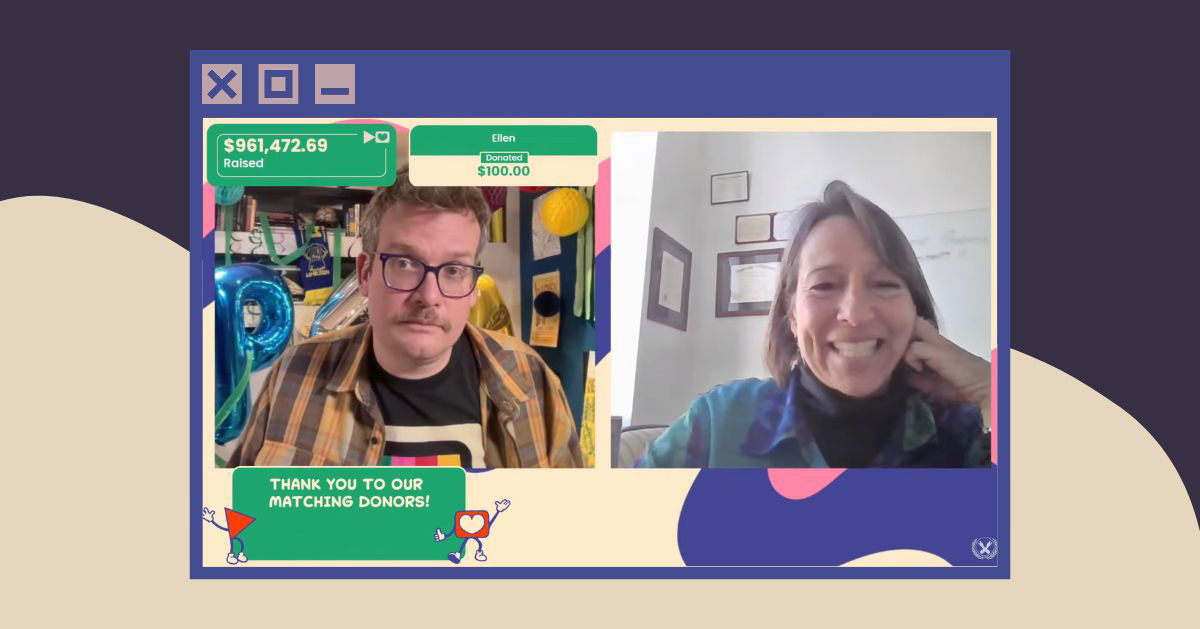
This year, the stream raised a record-breaking $3,531,261.25 for charity in 48 hours, its highest amount to date.
The Project for “Qawesome”
What started as a typo became a defining inside joke of the 2024 stream, reflecting the upbeat spirit of the 17th annual Project for Awesome (P4A).
Each year since 2007, Hank and John — who are known for projects ranging from authoring best-selling books and creating educational YouTube videos to launching VidCon and selling socks, soap, and coffee for charity — collaborate with influencers, scientists, philanthropists, and more to host a 48-hour livestream event raising money for a wide range of charitable organizations.
Through donations, live chats, and social media memes, the Green brothers’ fans — known as “Nerdfighters” — foster community and connection to keep spirits high over the course of the weekend.
“What a thing this thing is to do!” said Hank in a video as he prepared to launch the stream. “Let us be in the room together, celebrating this one life that we get to live, celebrating each other and celebrating the helpers.”
How Project for Awesome Works
Aside from watching the stream and chatting along, the P4A comes with an array of opportunities to get involved and make an impact.
First, before the stream begins, community members can submit videos nominating a non-profit organization of their choice to receive a portion of the proceeds from the P4A.

As the stream goes live, viewers may watch and vote for videos showcasing causes that resonate with them.
The organizations that receive the most votes will receive a portion of the money raised throughout the P4A.
Donating money to the P4A is part of the fun, too. Donors may select from a range of “perks” in exchange for donations — from physical keepsakes like T-shirts and limited edition art to digital downloads like videos, exclusive podcast episodes, and sneak peeks of upcoming projects from the hosts.
2024’s Impact
This year’s stream took place Feb. 16-18 and raised over $3.53 million.
Half of all money raised will be split among charities selected by Nerdfighters through the video voting process, while the other half will be divided evenly between Partners in Health (PIH) and Save the Children, two long-term charitable partners of Nerdfigtheria.
Both organizations focus on bringing long-term health solutions to areas where it is needed most. This year, all of the P4A funds contributed to Partners in Health will benefit their ongoing efforts to end tuberculosis worldwide.
Save the Children, which has been in partnership with Hank and John for 17 years, seeks to provide humanitarian aid in areas of crisis.
Currently, one of the biggest areas of need is Gaza and the West Bank — and Save the Children has a team on the ground to bring relief in any way possible.
If you’re wondering how all of the donations broke down over the course of the p4a!! pic.twitter.com/GntbE44xh2
— Hank Green IT'S P4A TIME!!! (@hankgreen) February 18, 2024
During the stream, Hank spoke with Janti Soeripto, president and CEO of Save the Children. Soeripto shared stories of her recent trip to Gaza and the team’s ongoing efforts to provide aid to children in the region in the midst of life-threatening destruction.
“Actions do inspire hope,” said Soeripto. “For our colleagues to do whatever they can — to go out and distribute water, diapers, and food when we have it — it does inspire hope, for themselves but also for the people surrounding them.”
Save the Children has maintained a presence in Gaza since 1953. The organization’s expertise in the region makes it an excellent candidate to continue doing the work toward humanitarian relief.
“If there is a window to do something, we are definitely trying to do something,” said Soeripto. “We cannot turn away.”
Highlights from P4A 2024
Between deep conversations and seeking solutions to real problems, the P4A is known to lighten the mood with humor, connection, and a dash of chaos. 2024’s stream certainly delivered in this area.
While guest hosts change from year to year, a cast of returning beloved streamers typically make an appearance.

This year’s recurring fan favorites included Destin Sandlin of Smarter Every Day hosting his annual Dinosaur Space Program and Jessi Knudsen-Castañeda of Animal Wonders creating art with the help of rehabilitated wild animals.
The 2024 P4A featured notable new faces to the stream as well, such as Potato, John’s new family puppy.
The P4A is never complete without a few wacky bits. This year, Hank’s Banana Loca made a return in the new “Roll for Loca” bit, and John hosted the steam in an array of changing colorful wigs.
Jarrod, a controversial character played by Hank in an uncanny human mask, made his P4A debut and became a contender for the official mascot of the Project for “Qawesome” against a possum and a goose.
Beyond the P4A: Nerdfighters Giving Back
The P4A is one of Nerdfighteria’s favorite annual traditions, but it is far from the community’s only charitable actions.
Nerdfighteria recently made good on their pledge to raise over $42 million for PIH to support the construction, staffing, and operation of the Maternal Center of Excellence, a new maternal and pediatric hospital located in Sierra Leone.
Inspired by the success of the Center, which broke ground nearly three years ago for construction and continues to move toward operation,

Nerdfighteria shifted much of its attention to the fight against tuberculosis (TB), the world’s deadliest infectious disease.
The community’s efforts in this fight have expanded beyond donation, leading public pressure campaigns for medical corporation Danaher to make its TB diagnostic technology more accessible.
“Social justice is a team sport,” said Dr. Joia Mukherjee, chief medical officer for PIH. “There is no way one person, profession, or perspective is going to really make a difference — it’s the team, and we are so grateful to have Nerdfighteria on our team for this. The more people who are thinking about it and talking about it, the more attention is paid to a wholistic set of solutions.”
Other notable fundraising work by Nerdfighteria include the annual Pizzamas fundraiser and the Good Store, from which all proceeds are donated to charity.
Staying Involved
Although the stream has concluded, donors may continue to contribute to the P4A fundraiser at projectforawesome.com/donate through Wednesday, Feb. 21 at 12:00 pm EST.
What an absolutely bonkers thing, 18 years in, for the P4A to still be getting bigger (and perhaps, even weirder.)
— Hank Green IT'S P4A TIME!!! (@hankgreen) February 18, 2024
Thank you to everyone who has ever hung out, donated, or voted on charities during the P4A. And especially thanks to the absolute squad of folks behind the scenes…
The truth is, women deserve a lot more credit than they receive. Beyond Women’s History Month or International Women’s Day — and yes, even beyond a “Hi Barbie!” — women of all backgrounds deserve greater recognition (and equal pay).
In an attempt to bridge the gap many of us have in our knowledge of women’s history — and to appreciate the world-changing work of women everywhere, we’ve rounded up some stories of inspiring women you ought to know.
From athletes and writers to activists and scientists, this not-at-all-exhaustive glossary of greats will hopefully act as a launch pad for you to learn more about each of them — or go on and change the world yourself.
Let’s meet them!
You might also like:
Some of the world’s most inspiring women
Malala Yousafzai

Malala Yousafzai made waves when she was just a young girl who spoke up about girl’s education, taking inspiration from her father, a teacher.
At 15, after she was shot on the bus while riding home from school, Yousafzai became a household name. The Pakistani girl was attacked simply because she was getting an education — something that was highly risky and taboo, as Yousafzai grew up in a time during which the Taliban was taking control of her home country.
Fortunately, Yousafzai survived the attack, and after intense rehabilitation, made a full recovery and went on to champion equal access to education. She became the youngest-ever Nobel Prize laureate in 2014, and now in her 20s, continues her work as a human rights advocate to this day.
Greta Thunberg

Perhaps one of the most notable faces of the modern climate activism movement, Greta Thunberg has made headlines for her work since she was just 15 years old.
Born in Stockholm, Sweden in 2003, the young activist was quick to learn about climate change and made it to the world stage in 2018, when she led the School Strike for Climate. Thunberg skipped school for three weeks to camp outside of the Swedish Parliament and inspired youth across the globe to take action in their own ways, too.
Since then, she has been invited to speak at international climate summits, met with world leaders, and most importantly, continues to organize against climate change.
In 2023, Thunberg was arrested and fined numerous times after refusing to abandon protest sites.
Coretta Scott King
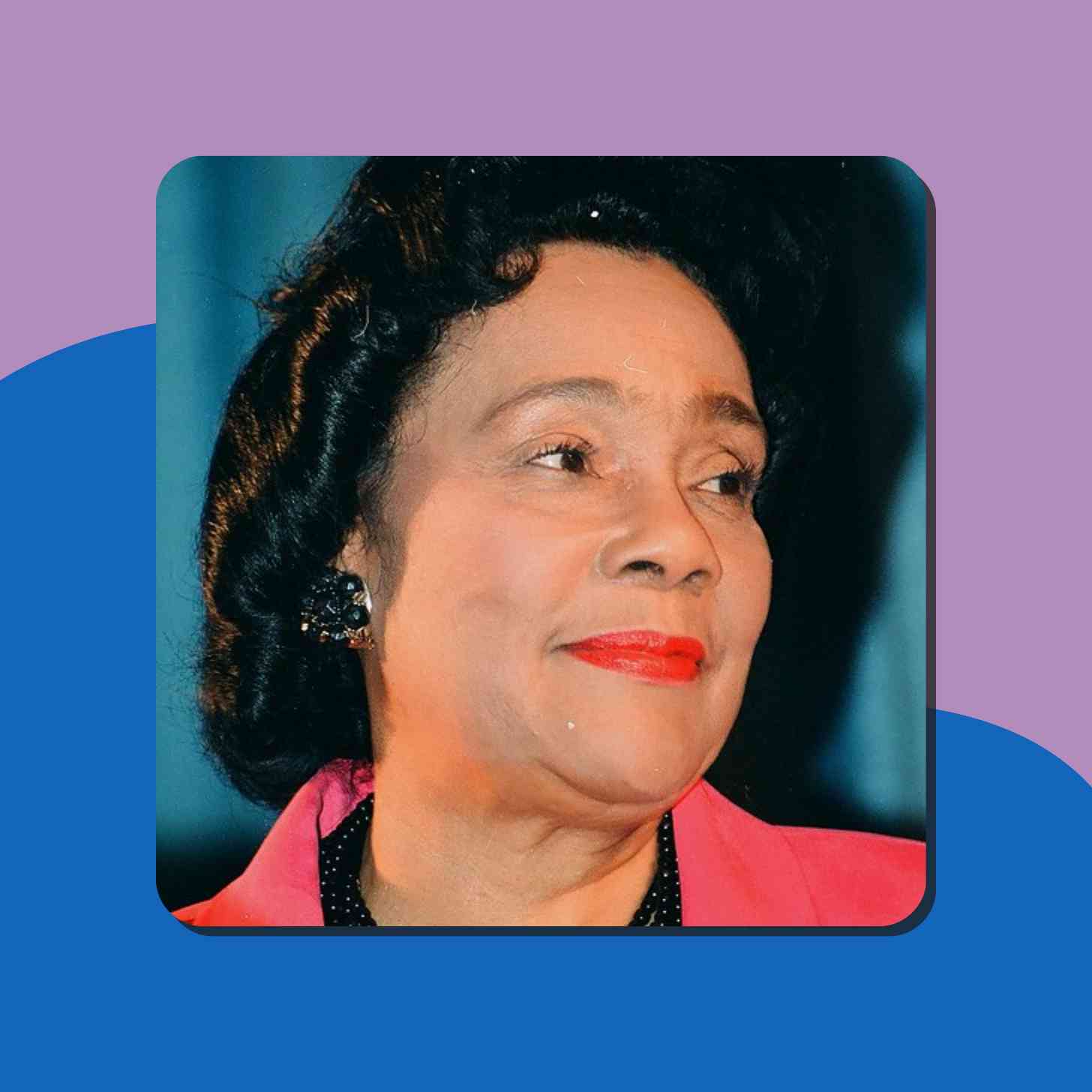
Coretta Scott King, the wife of civil rights leader Dr. Martin Luther King Jr., was born on April 27, 1927 in Heiberger, Alabama.
She studied music at Antioch College in Ohio, which informed her work as an advocate for justice and peace, and later paved the way for a series of Freedom Concerts as her involvement in the Civil Rights Movement grew.
Following the murder of her husband, she quickly founded the King Center and became known as the architect of his legacy, while simultaneously continuing the fight against racism, war, homophobia, and other forms of social injustice.
She is considered one of the most influential Black American leaders of her time, receiving honorary doctorates from over 60 colleges and universities; authoring two books; maintaining a nationally syndicated newspaper column; founding organizations like the Black Leadership Forum, the National Coalition for Voter Participation, and the Black Leadership Roundtable; and more.
When King died in 2006, she was the first woman — and the first Black American — to lay in honor in the rotunda of the Georgia capitol.
Michelle Obama

Michelle Obama is a lawyer, writer, and advocate who was thrust into the global spotlight when she became the First Lady of the United States in 2008.
The wife of former president Barack Obama, she served as a role model and advocated for healthy families, service members and their families, higher education, and international adolescent girls’ education during her time at the White House.
In her memoir, “Becoming,” published in 2018, she wrote about personal experiences with marriage, parenting, growing up, professional ambitions, and more, solidifying her role as a beacon of pride, determination, and optimism for women everywhere.
Eleanor Roosevelt

Eleanor Roosevelt is best known for her last name, as the wife of 32nd president Franklin D. Roosevelt. She was an icon of her time and was the longest-serving First Lady throughout her husband’s four terms in office.
But more than that, she was a humanitarian and tireless social justice activist, using her influence to champion the rights of the marginalized, fight for gender equality, and promote world peace.
After her husband’s death, Eleanor was appointed as a delegate to the United Nations and served as a chairman of the Commission on Human Rights and played a major role in drafting the Universal Declaration of Human Rights.
Eleanor was also desperate to elevate the voices of the oppressed, and was appointed chair of President John F. Kennedy’s chair of his Commission on the Status of Women in 1961, continuing the work of equal rights to her last days, when she died in 1962.
Ruth Bader Ginsburg
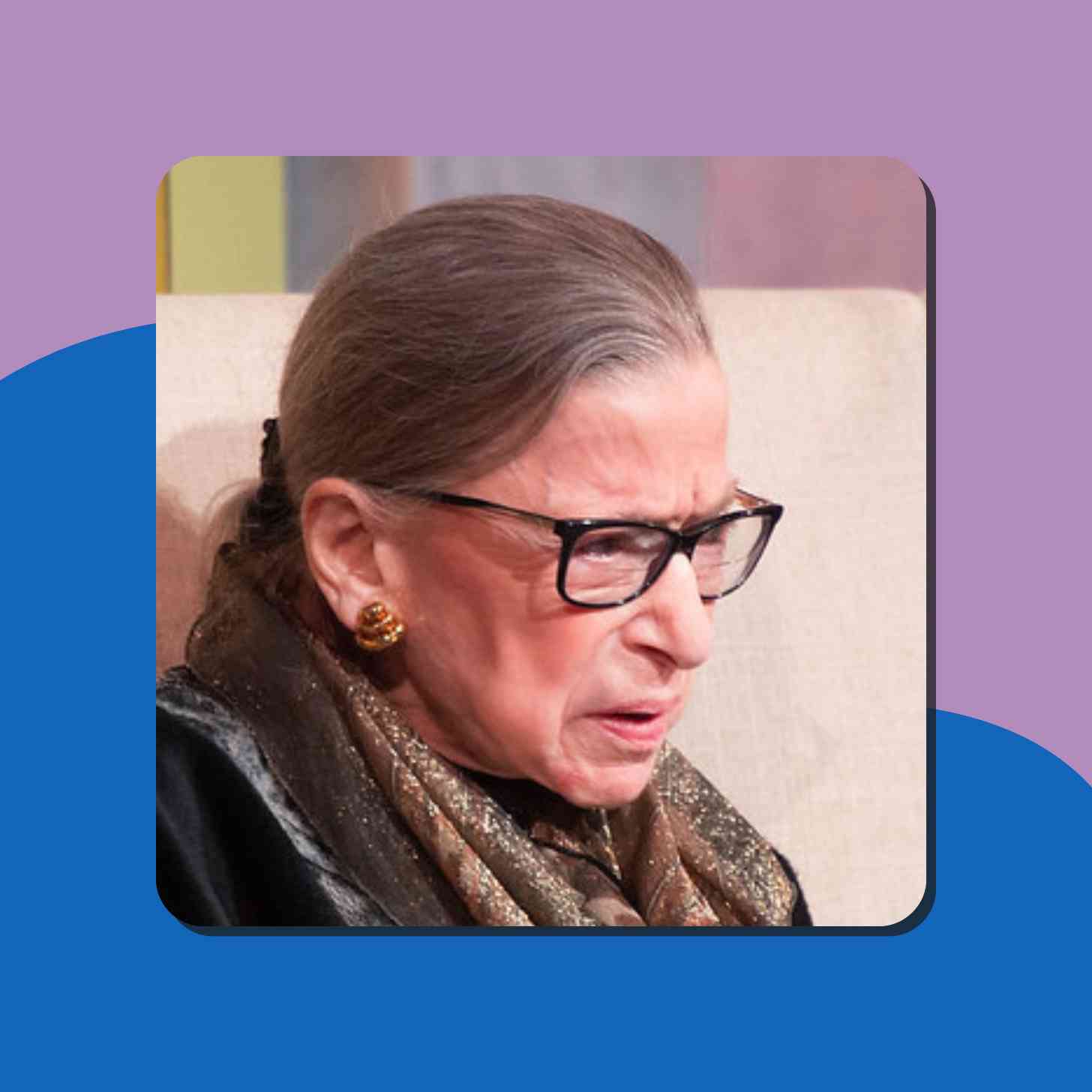
Ruth Bader Ginsburg, or RBG, as she’s more casually known, was the second female Supreme Court Justice in the U.S.
She received her bachelor’s degree from Cornell University, attended Harvard Law School, and received her law degree from Columbia Law School, becoming a prominent lawyer and law professor in the 1960s.
In the 1970s, Ginsburg became involved in the issue of gender equality and was the founding counsel of the ACLU’s Women’s Rights Project. She co-authored a law school casebook on gender discrimination, became the first tenured female faculty member at Columbia Law School, and argued before the Supreme Court numerous times.
In 1980, she was appointed to the U.S. Court of Appeals in Washington, D.C., and in 1993, was nominated to the Supreme Court by President Bill Clinton, becoming the second-ever woman to serve on the court.
Maya Angelou
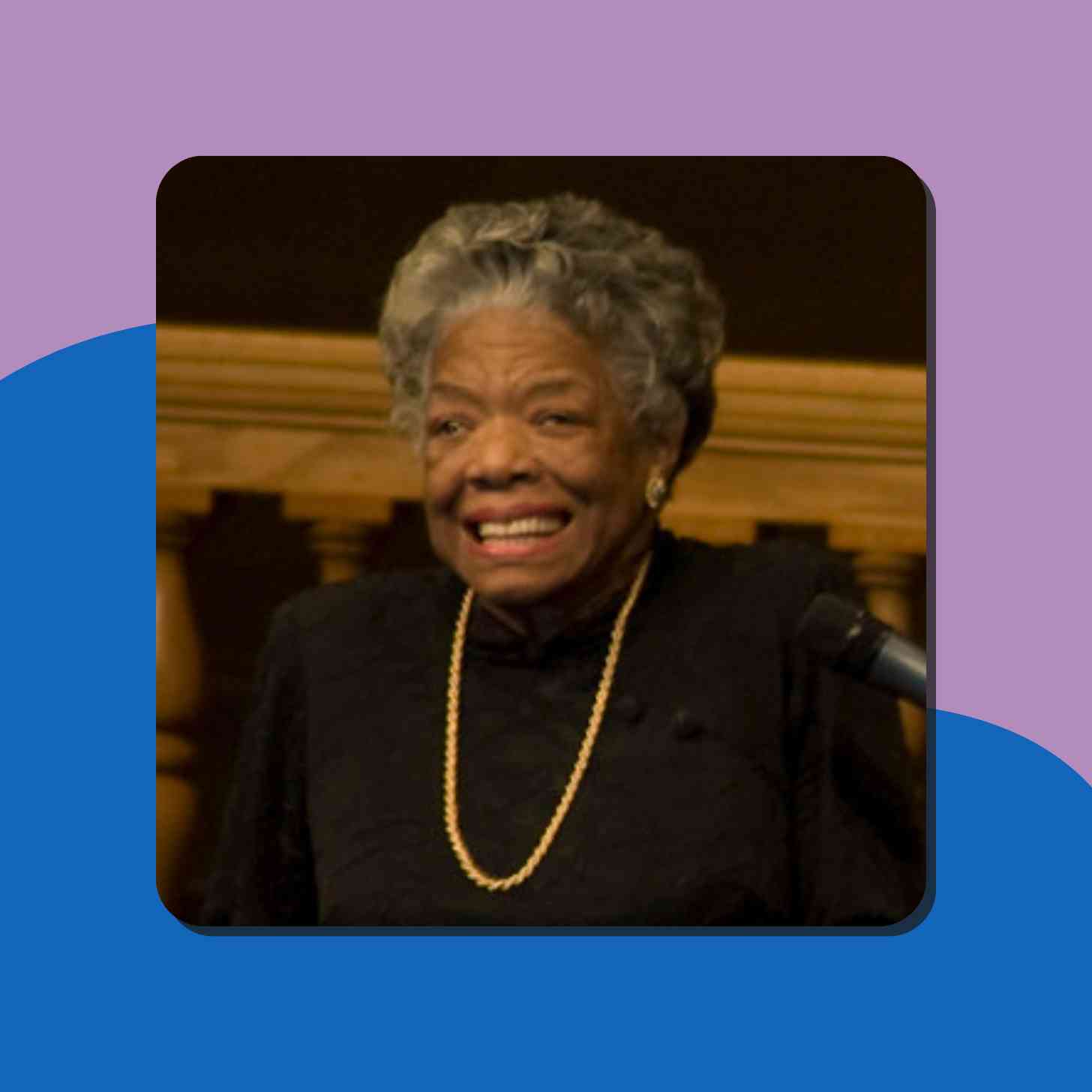
Maya Angelou was a renowned poet, author, singer, dancer, and activist who dedicated her life to fighting for civil rights and equality.
With her first-hand experiences of racial discrimination and personal trauma, Angelou used her voice to speak out against injustice, working with civil rights organizations, such as Martin Luther King Jr.’s Southern Christian Leadership Conference.
Angelou is most well-known for her poetry and writing, having penned numerous books and famous works like “I Know Why the Caged Bird Sings.”
Throughout her life, Angelou received over 30 honorary degrees and was awarded the Presidential Medal of Freedom by President Barack Obama in 2010. Though she passed away in 2022, Angelou’s legacy lives on today through her powerful writing and tireless activism.
Melinda Gates

Melinda Gates is an American businesswoman and philanthropist. Alongside her ex-husband Microsoft co-founder Bill Gates, she founded the Bill & Melinda Gates Foundation, which works to solve health problems around the world, especially focusing on treatments and vaccines for malaria, HIV/AIDS, tuberculosis, insect-transmitted diseases, and malnutrition.
Alongside this work, Melinda founded Pivotal Ventures in 2015, which advocates for paid leave for all, access to mental health care for LGBTQ+ youth and children of color, as well as increasing the number of women in politics.
Melinda is a leading example of how to use one’s privilege for good, and in 2016 was awarded the Presidential Medal of Freedom by Barack Obama. Her book “The Moment of Lift: How Empowering Women Changes The World” is a best-seller that details her life’s work of helping others.
Wilma Mankiller
Wilma Mankiller, born in 1945 in Tahlequah, Oklahoma, was the first female Principal Chief of the Cherokee Nation and was also the first woman elected as chief of a major Native tribe.
She was of Cherokee, Dutch, and Irish descent, and the surname ‘Mankiller’ derives from the high military rank achieved by a Cherokee ancestor.
In 1985, she became the Principal Chief of the tribe; her administration is known for lowering a high unemployment rate, increasing educational opportunities, and improving community health care. She also focused on the necessity of protecting Cherokee traditions and created the Institute for Cherokee Literacy.
Mankiller was inducted into the National Women’s Hall of Fame in 1993 and was awarded the Presidential Medal of Freedom in 1998. She died in 2010, after a life of advocacy and transformation.
Nellie Bly

Nellie Bly, born Elizabeth Cochran in 1864, was a trailblazing investigative journalist. When she began her work in the 1880s, she adopted “Nellie Bly” as a pen name, going undercover for a variety of stories, in which she covered topics like working conditions for girls in Pittsburgh, corruption in Mexico, injustice in jails, and bribery in the lobbyist system.
One of her most notable exposés is her work “Ten Days in a Mad House,” where she was committed to a mental health asylum to expose the inhumane conditions facing disabled community members in 1887. Her reporting led to improved conditions for mentally ill New Yorkers.
Bly also traveled around the world in 72 days in 1889, setting a world record, and solidifying the name “Nellie Bly” as a synonym for a star female reporter.
She became a writer for the “New York Journal” in 1920, just two years before her death.
Oprah Winfrey

Oprah Winfrey has become one of the most famous American television personalities and entrepreneurs in modern history.
Before she was a renowned actress and television host, Winfrey was a news anchor at just 19 years old for her local CBS station. After a few years of success in reporting, she was given a talk show hosting gig.
Her daily talk show, the “Oprah Winfrey Show” was syndicated nationally in 1986, and with its high success, paved the way for Winfrey to form her own production companies the same year.
Following the success of her film and TV works, she launched “O, the Oprah Magazine” in 2000. By 2008, she had created her own television network (OWN), and ended her talk show in 2011 so she could focus on her other business endeavors.
Along with her massive success and wealth, Winfrey has been a dedicated philanthropist, most notably opening a $40 million school for girls in South Africa in 2007.
She was named a Kennedy Center honoree in 2010 and awarded the Presidential Medal of Freedom in 2013 and continues to advocate for justice and equality through her work today.
Dolly Parton
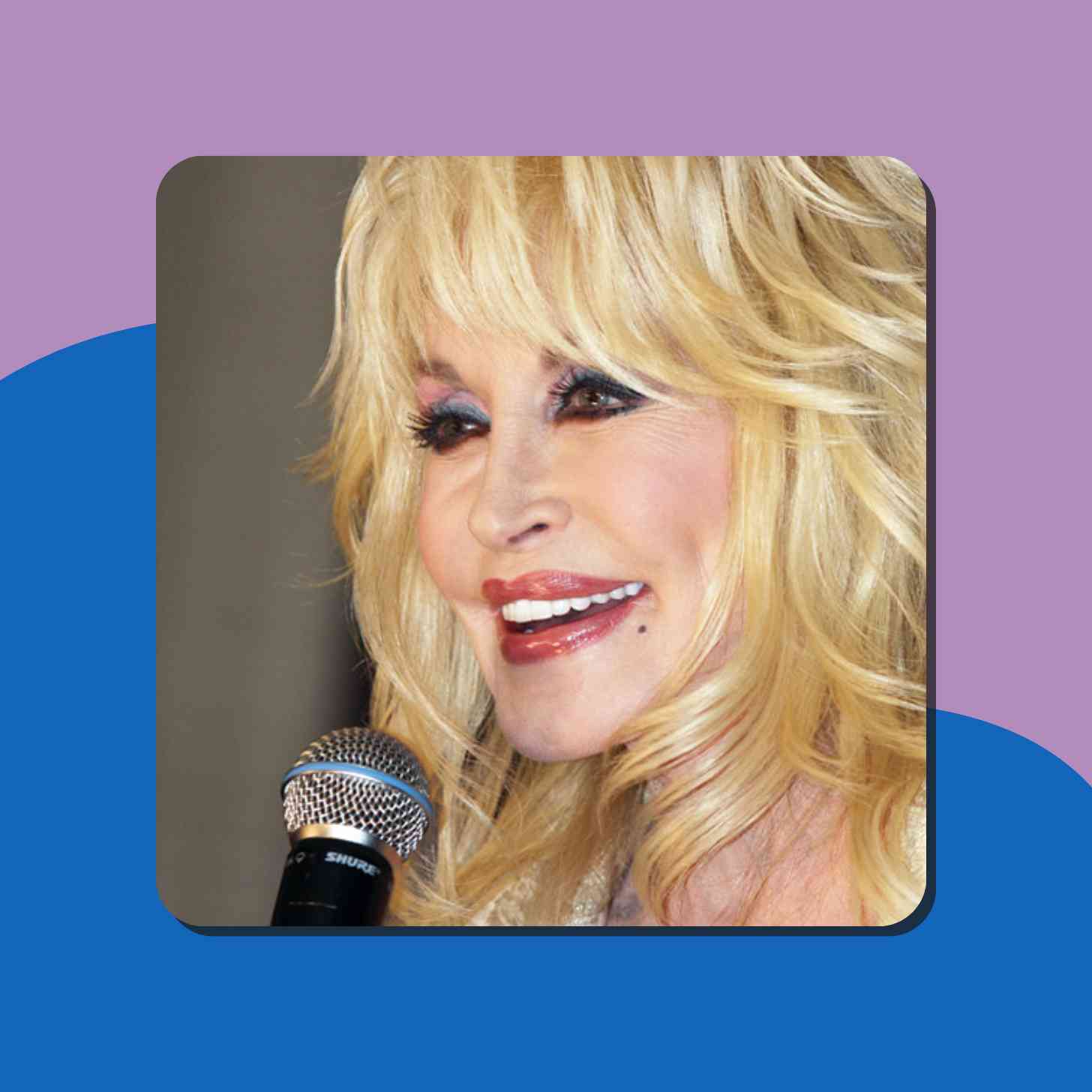
Dolly Parton is a beloved country musician, actress, and style icon. She is a decorated performer, songwriter, and actress, and is known for bridging the gap between country and pop music, inspiring numerous young female musicians to do the same.
Off the stage and screen, she is a dedicated philanthropist and business woman. In 1986, she opened Dollywood, a theme park dedicated to Appalachian traditions, in the Great Smoky Mountains. Two years later came the Dollywood Foundation, which provides inspiration and educational resources to children.
This work has led to Dolly Parton’s Imagination Library, which sends free books to 1 million children in the mail every month. In addition to this, she has continually shown up as an advocate (and icon) for LGBTQ+ rights, helped to fund (and publicly support) the Moderna vaccine, and keeps showing up to support communities after natural disasters.
From Grammys to the National Medal of Arts, and everything in between, Parton has received countless awards for her contributions to arts and culture throughout her lifetime of achievement.
Judy Heumann
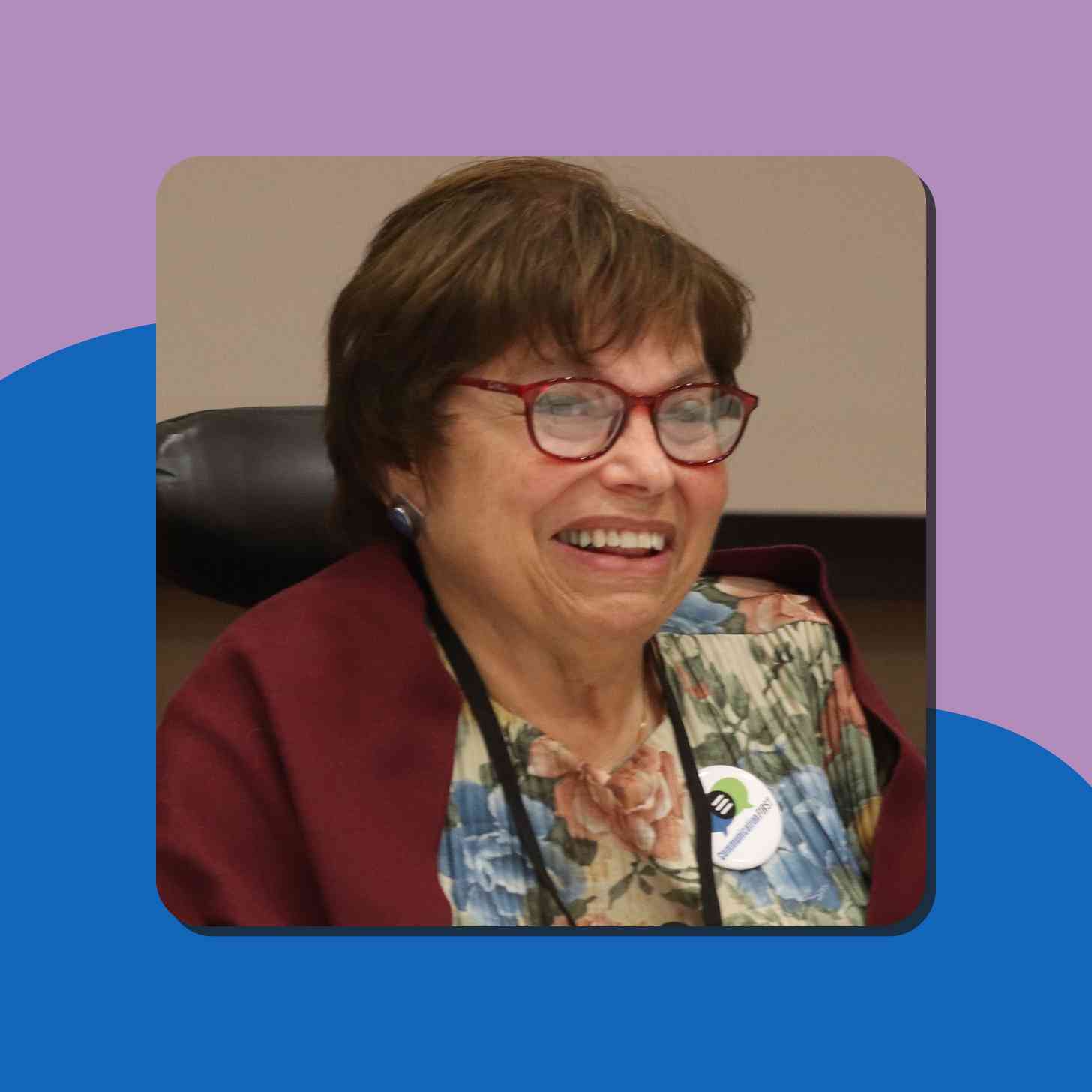
Born in 1947, Judith (Judy) Heumann was an educator and activist central to the disability justice movement and was instrumental in the implementation and passage of the Individuals with Disabilities Education Act, the Americans with Disabilities Act, and the UN Convention on the Rights of Persons with Disabilities.
Huemann served in both the Clinton and Obama administrations and was the first-ever Special Advisor for International Disability Rights in the U.S. Department of State between 2010 and 2017. She also co-founded the World Institute on Disability, which was one of the first global disability rights organizations founded and continually led by disabled people.
Just a few years prior to her death in March of 2023, Heumann’s work finally gained more visibility in the American mainstream. Her book, “Being Heumann: An Unrepentant Memoir of a Disability Rights Activist," co-authored with Kristen Joiner, and the documentary "Crip Camp: A Disability Revolution" were released in 2020, mere weeks before the start of the COVID-19 pandemic.
Florynce ‘Flo’ Kennedy
Florynce ‘Flo’ Kennedy was a lawyer, radical feminist, civil rights advocate, lecturer, and activist.
In fact, in 1974, “People Magazine” called her “the biggest, loudest and, indisputably, the rudest mouth on the battleground where feminist activists and radical politics join in mostly common cause.”
She was one of the first Black women to graduate from Columbia Law School in 1951, and she fought in both the courts and the streets for women’s rights, civil rights, and reproductive rights.
Kennedy was a founding member of the National Women’s Political Caucus, established the Media Workshop to fight racism in advertising, and founded the Feminist Party, which nominated Congresswoman Shirley Chisholm for president in 1972.
She also organized a “pee-in” in Harvard Yard in 1973 to protest the lack of women’s bathrooms in university buildings. Her spirit and tenacity were her trademarks up until her death in 2000.
Sarah McBride

Sarah McBride, born in 1990 in Wilmington, Delaware, was the first-ever openly transgender state legislator in the country. She became a member of the Delaware Senate in 2021 and has passed legislation banning discrimination on the basis of gender identity in employment, housing, insurance, and public accommodations.
Prior to her election, McBride worked as the National Press Secretary of the Human Rights Campaign and was the first openly transgender person to address a major party convention in American history at the 2016 Democratic National Convention.
Her book “Tomorrow Will Be Different: Love, Loss, and the Fight for Trans Equality” remains a best-seller after being published in 2018. While she continues to serve in the Delaware Senate, McBride is now running for Congress, and if elected, would be the first openly trans member of Congress in U.S. history.
Serena Williams

Serena Williams is one of the greatest tennis players of all time. She revolutionized women’s tennis with her powerful style and won more Grand Slam singles titles than any other tennis player — man or woman — during her career, totaling 23 titles.
Growing up in Compton, California, she and her sister, Venus Williams, were taught by their father, Richard Williams, at public courts in the area. In 1991, the family moved to Florida so the sisters could attend a tennis academy, and Serena turned professional in 1995. In addition to her many Grand Slam titles, Serena is a four-time Olympic gold medalist.
After years of success on the court, she retired from tennis in 2022 to focus her efforts on being a mother, pursuing her fashion line, and bolstering her philanthropic work at the Yetunde Price Resource Center in Compton, which supports families impacted by violence.
Katherine Johnson

Katherine Johnson was a trailblazing mathematician who was integral to sending U.S. astronauts to the moon.
Johnson was one of three Black Americans selected for her graduate program at West Virginia University, and when she began working as part of NACA’s West Area Computing group in 1953, she was among a group of Black women who analyzed test data and provided important mathematical computations. However, NACA was segregated at that time, and it wasn’t until the group was incorporated into NASA that more opportunities became available.
In 1960, Johnson became the first woman in her division in NASA’s Space Task Group to receive credit as an author of a research report, and she would go on to co-author 26 papers throughout her career.
She spent three decades working with the U.S. space program, and was portrayed by Taraji P. Henson in the 2016 film “Hidden Figures.” She received the Presidential Medal of Freedom in 2015, and following her death at age 101, a spacecraft was named after her.
Alicia Garza

Alicia Garza is a political activist and leader best known for co-founding the Black Lives Matter movement.
Since her college days at the University of California, San Diego, Garza has been a staunch advocate against gentrification, police brutality, equal rights, and equitable political power.
In 2013, she founded the Black Lives Matter movement alongside Opal Tometi and Patrice Cullors, gaining national recognition. This led to the founding of the Black Futures Lab, which builds Black political power across the country.
Garza also works as the Strategy and Partnerships Director for the National Domestic Workers Alliance and is the co-founder of Supermajority, empowering other women activists. In 2020, she published her book “The Purpose of Power: How We Come Together When We Fall Apart.”
Amanda Gorman
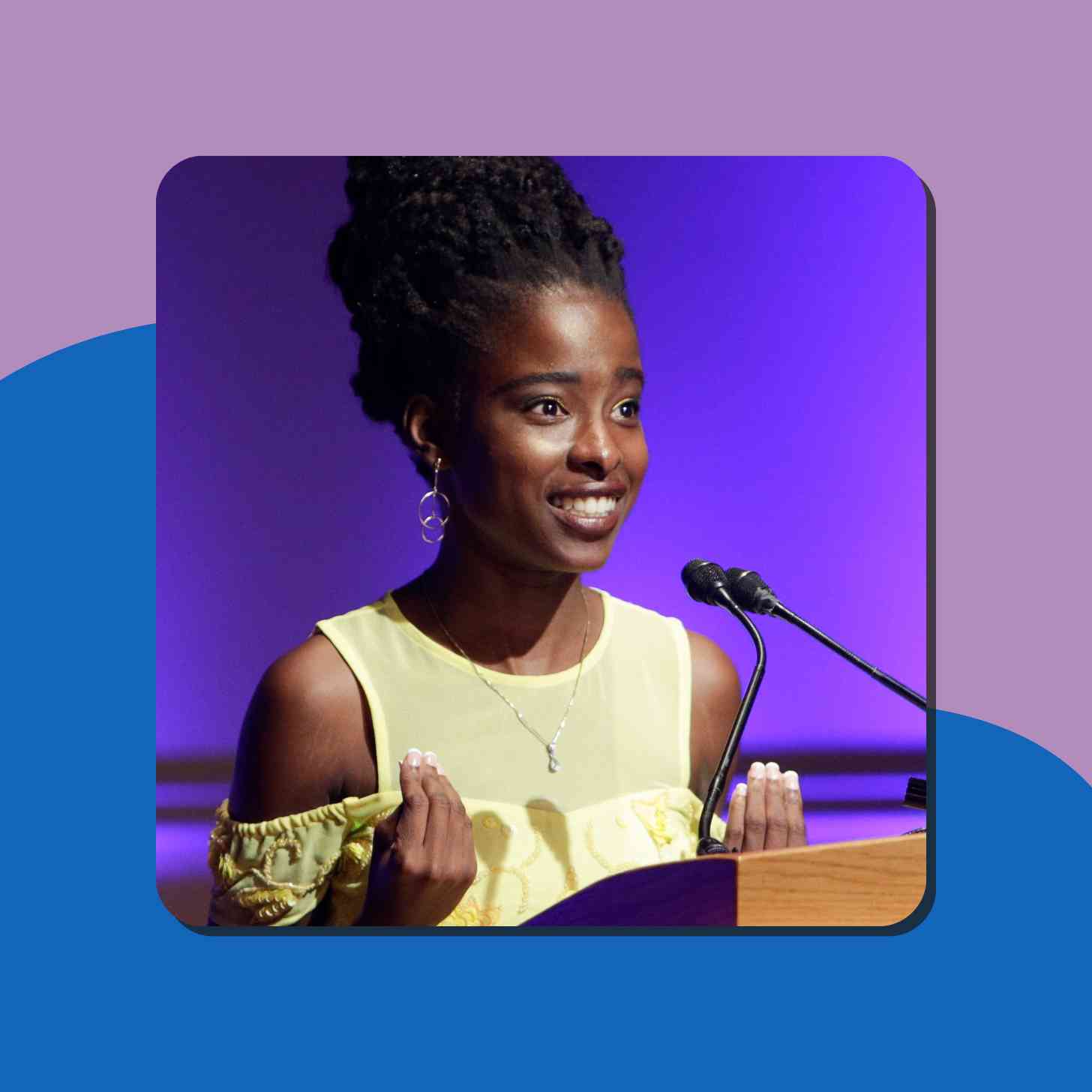
Amanda Gorman, the youngest inaugural poet in U.S. history, captivated the world when she recited her hope-centric poem, “The Hill We Climb,” at Joe Biden’s presidential inauguration in January 2021. She was just 22 years old.
She is a graduate of Harvard University, was named the first-ever National Youth Poet Laureate by Urban World, and has gone on to write for the New York Times and publish four books since that fateful performance. Her published works include “Call Us What We Carry,” “Change Sings,” “Something, Someday,” and the long-form version of “The Hill We Climb.”
Her poetry speaks to important issues like racism, climate change, feminism, marginalization, and social justice. Gorman has also performed multiple poems on television, spoken at events at the Library of Congress, graced the cover of major magazines, and even co-hosted the Met Gala.
She is the youngest board member of 826 National, the largest youth writing network in the country, continues to share her work and fight against book bans, and has long said that she intends to run for president in 2036.
Sonia Sotomayor

Sonia Sotomayor became the first Latina Supreme Court justice in 2009. She is the third female justice in U.S. history and supports women’s rights, criminal justice reform, and legal immigration in her role as a judge.
She credits the show “Perry Mason” for helping her decide she wanted to become a lawyer at age 10 — and she did just that. She attended Princeton University, Yale Law School, and worked as an editor at the “Yale Law Journal.”
Sotomayor worked as an assistant district attorney in New York for five years before moving to private practice at a law firm. She was appointed as a federal judge in the U.S. District Court in 1992, and was appointed to the U.S. Court of Appeals in the Second Circuit in 1997 before assuming her role on the Supreme Court over a decade later.
She remains in her role to this day and has also authored four books.
Mildred Loving
Mildred Loving, whose name perfectly encapsulates her impact on history, is one half of an interracial couple who changed the course of American history for good. Mildred, who was of Native American and Black descent, became a civil rights activist when she married her white husband, Richard.
In 1958, the pair was arrested for violating the Racial Integrity Act of 1924. They took their case to the Supreme Court, which made it possible for people to marry outside of their race in the U.S.
The case, Loving v. Virginia struck down the law in 1967 and allowed the Lovings to remain a legal, married couple in the state until Richard’s death in 1975. Richard was survived by Mildred and their two children, up until her death in 2008.
Loving Day, celebrated on June 12, commemorates the couple’s triumph in the fight for love and equality for all.
Dylan Mulvaney
Dylan Mulvaney is a transgender actress, comedian, and content creator who is best known for her TikTok series “Days of Girlhood,” where she highlights her transgender journey.
Since the start of her transition in 2022, Mulvaney has delighted her over 10 million TikTok followers with queer joy and exciting milestones: from fun makeup routines, surgery consultations, and adding tampons to her purse to give to other women in the bathroom — to modeling in New York Fashion Week and attending the Forbes Power Women Summit.
Most importantly, she’s made the Internet — and the world — feel like a safer place for other trans people. In 2023, she was named to Forbes’ 30 Under 30 List, continued to build her acting and modeling career, and maintains a positive and uplifting space for LGBTQ+ people online, even in the face of political backlash.
Hillary Clinton

Hillary Clinton has had a storied political career in American history: serving as the Secretary of State, Senator from New York, First Lady (of both the U.S. and the state of Arkansas), a practicing lawyer, and law professor.
As the Democratic Party’s nominee for president in 2016, Clinton became the first woman to top the presidential ticket of a major party in the United States, after an already lengthy and meaningful career in Washington, D.C.
In her many roles, Clinton has prioritized the rights of women and children, fighting for health care reform, assistance for low-income and military families, and more. Her role as Secretary of State was instrumental during the Obama administration, and she has remained a steadfast advocate for human rights (which include women’s rights), LGBTQ+ freedoms, and more.
While Clinton earned over 65 million votes in the 2016 election, she conceded to Donald Trump. Inspired by the activism that came after the election, she founded Onward Together, an organization working to advance progressive politics in the U.S.
Jane Goodall
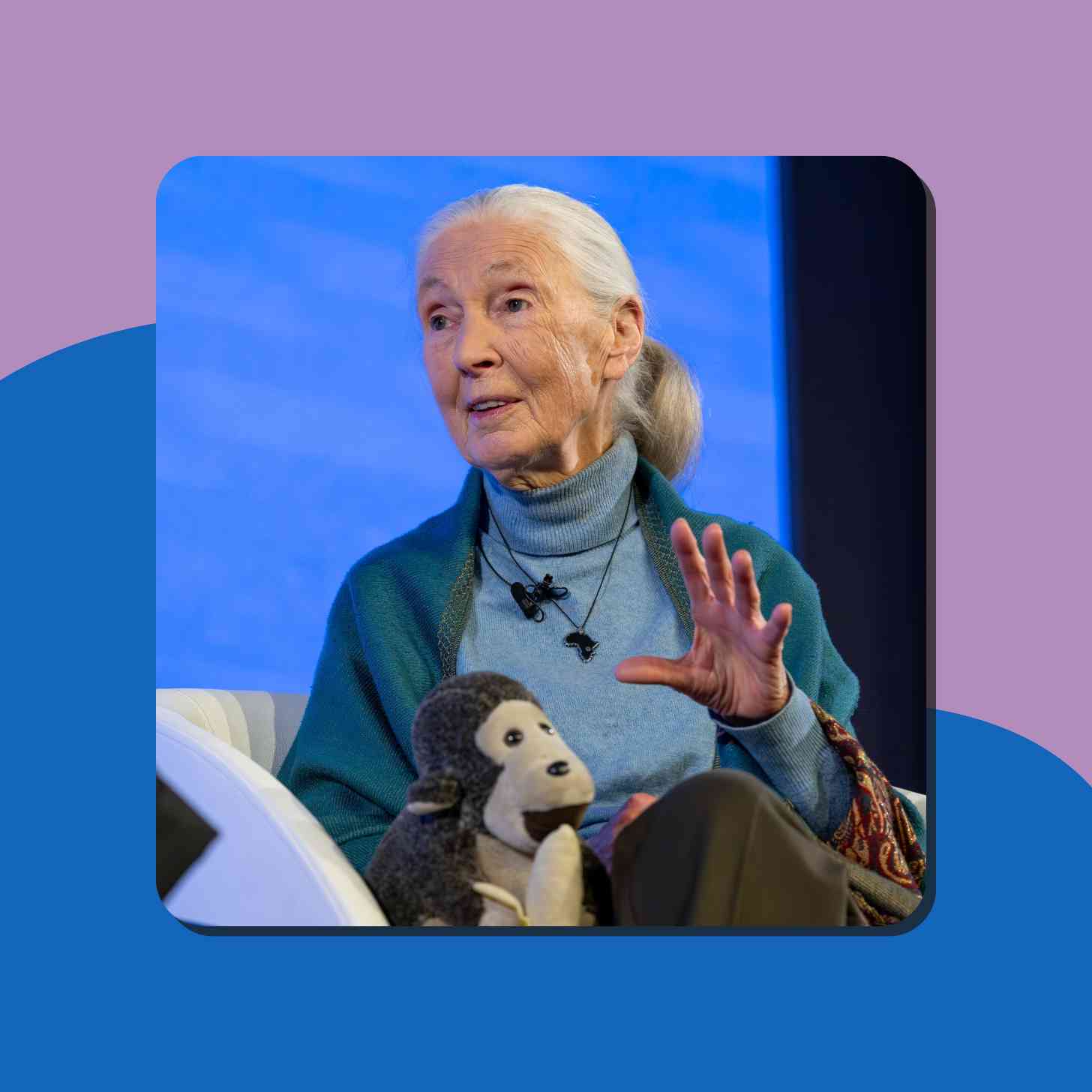
Jane Goodall is one of the world's most celebrated primatologists and conservationists. Born in London, England in 1934, Goodall was fascinated by animals from a young age.
In 1960, she began her groundbreaking research on chimpanzees in Tanzania's Gombe Stream National Park. She became immersed in their lives, making huge discoveries about primate behavior that have continued to impact the scientific community.
Gaining the respect of biologists and conservationists across the globe over the course of her five-decade career, Goodall has devoted her life to protecting chimpanzees and their habitats.
In 2002, she founded the Jane Goodall Institute, which supports chimpanzee conservation efforts around the world, and inspires people of all ages to appreciate and respect animals and our natural environment.
Emma Watson

An actress best known for her childhood role as Hermoine Granger in the Harry Potter series, Emma Watson has grown up to be a leader in both the arts and advocacy.
Outside of her on-screen performances, she is a dedicated activist in the fields of climate action, gender equality, and human rights. As a graduate of Brown University and supporter of Camfed International, Watson was named a UN Women Goodwill Ambassador in 2014, serving as an advocate for the organization’s HeForShe campaign.
An avid reader, she also hosted an online feminist book club from 2016 to 2020, called Our Shared Shelf.
In addition, her work in climate activism has brought her to the world stage at various COP gatherings. She is also passionate about sustainable style and even wore a dress made entirely of recycled plastic bottles to the 2016 Met Gala.
Rosa Parks
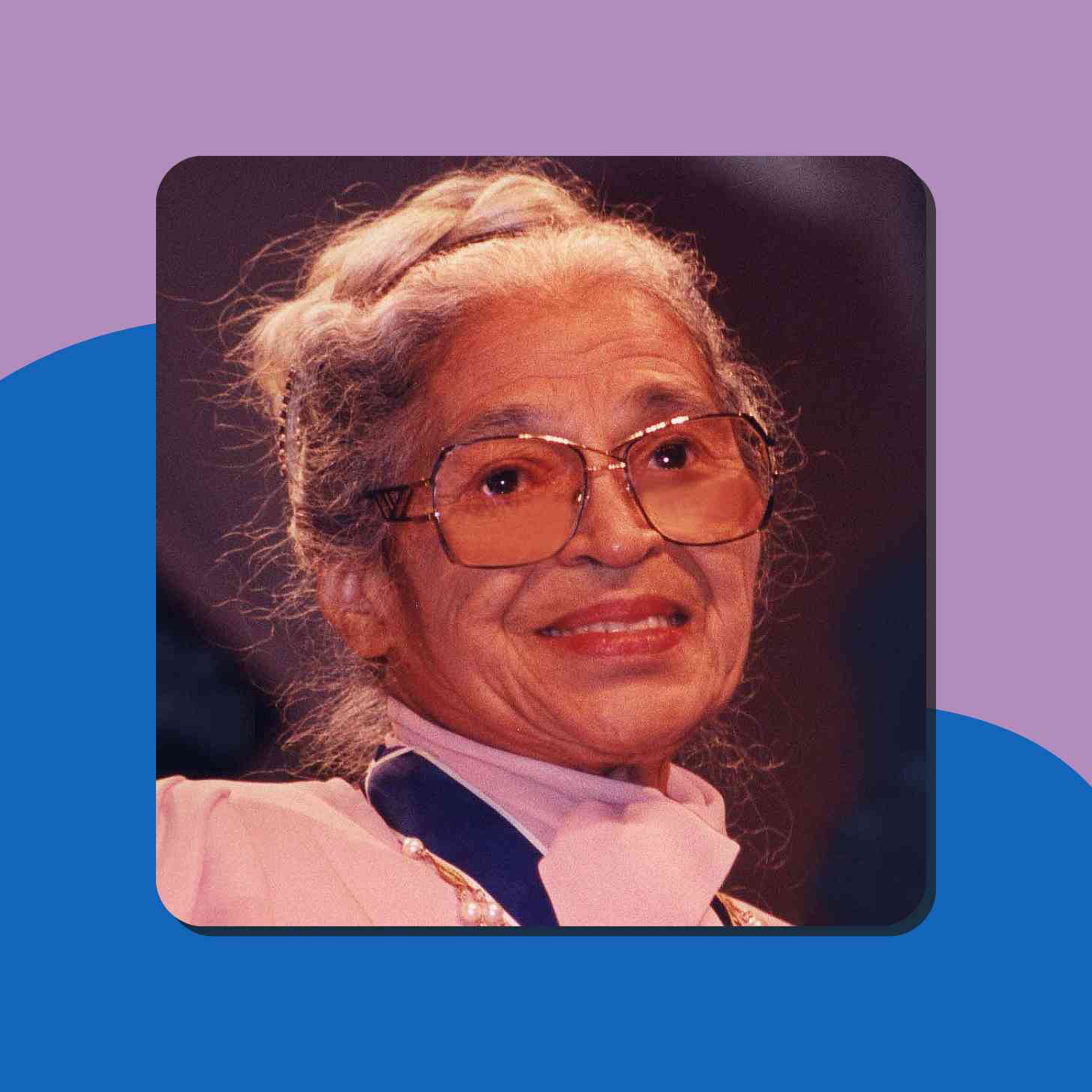
Rosa Parks — often referred to as “the mother of the civil rights movement” — is celebrated for her courageous act of defiance on December 1, 1955, when she refused to give up her seat on a bus in Montgomery, Alabama, to a white man.
Parks was arrested and fined, and instead of paying the fees, accepted the help of the Montgomery NAACP — an organization for which she was the chapter secretary for 13 years — to appeal the conviction.
Her resistance was a pivotal step in igniting the Montgomery Bus Boycott, which lasted 381 days and spurred subsequent protests and boycotts of segregated spaces across the U.S. In 1956, the Supreme Court ruled that Montgomery’s segregated seating was unconstitutional.
Beyond this iconic part of the Civil Rights Movement, Parks was an active civil rights activist throughout her life and remained active in the NAACP. In 1987, she co-founded the Rosa and Raymond Parks Institute for Self-Development to provide career training for young people and education about the history of the civil rights movement.
Leah Thomas
Leah Thomas is a celebrated environmentalist, writer, and creative based in Southern California. Her passion for the relationship between social justice and environmentalism led her to found her eco-blog @greengirlleah and nonprofit Intersectional Environmentalist.
Leah was the first to define the term “intersectional environmentalism,” giving advocates everywhere a vocabulary for a modern approach to social justice and environmentalism. Since 2020, Intersectional Environmentalist has provided educational resources, advocacy tools, and innovative programming to environmentalists everywhere.
In 2022, Thomas published her book “The Intersectional Environmentalist: How to Dismantle Systems of Oppression to Protect People + Planet” to provide a framework for a more intentional, accessible, and inclusive future for the climate movement.
In 2023, she was included in Forbes’ 30 Under 30 list.
Rashida Tlaib
Congresswoman Rashida Tlaib is a Palestinian American congresswoman representing Michigan. In 2008, she made history as the first Muslim woman to serve in the Michigan Legislature, focusing on environmental justice in Detroit.
She was elected to Congress in 2018 and was known as part of “The Squad,” a group of progressive young women representatives who were elected to Congress that year and were vocal against social justice issues during the Trump Administration.
As a representative, Tlaib has focused her energy on justice for all, affordable housing and health care, environmental justice, and ending poverty.
Audre Lorde

Audre Lorde, a poet, professor, and activist, dedicated her life and creative skills to addressing injustices like racism, sexism, classism, and homophobia.
Lorde’s writings on lesbian feminism and Black feminism became fundamental to greater social justice movements, with titles like “The Master’s Tools Will Not Dismantle the Master’s House” and “Sister Outsider,” which are still taught in schools to this day.
Aside from her protest-laden poems, Lorde was also bold in her memoir works about her experience with breast cancer, and in her work to make diverse writing more accessible.
In 1981, she and fellow writers founded Kitchen Table: Women of Color Press, to support the writings of Black feminists. At this time, she was also deeply active in the fight against South African apartheid and created Sisterhood in Support of Sisters in South Africa.
Throughout her life, Lorde was a professor of English at John Jay College and Hunter College, had a fellowship from the National Endowment for the Arts, and was New York’s poet laureate from 1991-1992.
Marsha P. Johnson
Marsha P. Johnson was a Black trans drag queen and activist who dedicated her life to the liberation of the LGBTQ+ community. As a pioneer of the gay rights movement in the late 1960s, she took part in a number of Pride parades and events — most notably the Stonewall Riots of 1969.
Following Stonewall, Johnson joined the Gay Liberation Front and later co-founded the Street Transvestite Action Revolutionaries (STAR) with fellow trans activist Sylvia Rivera. Together, the two led a movement advocating for gay and trans rights while providing housing to unhoused LGBTQ+ youth.
Johnson experienced many personal hardships, including a series of mental health breakdowns in the 1970s, a number of arrests, and in 1990, an HIV diagnosis. This did not stop her work, however, and she was a vocal AIDS activist.
In 1992, at age 46, Johnson’s body was found in the Hudson River. While her death was initially ruled a suicide, the New York police reopened her case in 2012. Posthumously, Johnson remains one of the most recognized faces of LGBTQ+ history and is the namesake of many NYC parks and monuments, as well as the Marsha P. Johnson Institute.
Ava Duvernay

Ava Duvernay is a Black American film director, writer, and producer who has made waves with her work. Although she did not pick up a camera until age 32, she has made history throughout her career.
Duvernay was the first Black American woman to win Best Director at Sundance Film Festival, be nominated for a Best Director Golden Globe, direct a film nominated for a Best Picture Academy Award, and direct a film with a budget over $100 million. She is the highest grossing Black woman director in American box office history.
Her projects, which include titles like “When They See Us,” “Selma,” “13th,” and “Origin,” tell deeply compelling stories of racial injustice and civil rights in the United States.
Simone Biles

Simone Biles is an American gymnast who is considered the sport’s greatest athlete. At the 2016 Olympics in Rio de Janeiro, she became the first female gymnast from the U.S. to win four gold medals at a single Olympic Games, and she was the first gymnast to win three consecutive world all-around titles.
She was also the first African-American woman to claim the world all-around title in 2013, years before her Olympic debut.
Biles is known for incorporating highly difficult moves into her routines and executing them with precision and exuberance, making her a star in the sport.
The gymnast took a break from the sport in 2018 for her mental health and announced she was a survivor of sexual abuse at the hands of former U.S. national gymnastics team doctor Larry Nassar. With Biles’ advocacy, Nassar was convicted of abusing numerous athletes.
Biles returned to competition later that year and won a record-setting fifth all-around title at the national championships. She continues to be a vocal advocate for mental health, creating a legacy of resilience and achievement never seen in gymnastics before.
Shirley Chisholm
Shirley Chisholm was the first Black woman to be elected to the U.S. Congress in 1968.
A daughter of immigrants, Chisholm grew up in both Brooklyn and Barbados and was an elementary teacher and nursery director. Outside of her work in education, she was an active member of the NAACP and represented Brooklyn in the New York state legislature.
Once elected to federal office, Chisholm’s Congressional career lasted until 1983 and included a run for president in 1972, where she won 152 Democratic delegates before withdrawing from the race.
As a founder of the National Women’s Political Caucus and a staunch supporter of the Equal Rights Amendment, Chisholm’s career is remembered by her tireless advocacy for women’s rights, as well as her opposition to weapons development and war in Vietnam.
Chisholm was posthumously awarded the Presidential Medal of Freedom in 2015.
bell hooks
Gloria Jean Watkins, or as she is better known, bell hooks, was a scholar, writer, and activist whose works are central to discussions about race, gender, and class. In fact, one of her most quoted sentiments is that “feminism is for everybody.”
As the author of over 30 books, she often examined the connections between these social constructs and explored the experiences of Black women and the development of feminist ideology.
Hooks’ pseudonym is the name of her great-grandmother, which she chose to honor female legacies, spelling it in lowercase letters to bring attention to her work, rather than herself. During the 1980s, hooks established a support group for Black women called Sisters of the Yam — which later inspired a book with the same name that celebrates Black sisterhood.
In addition to her writings, hooks taught English and ethnic studies at the University of Southern California, African and Afro-American studies at Yale University, women’s studies at Oberlin College, and English at the City College of New York throughout her career.
In 2004, she became a professor in residence at Berea College in Kentucky, and in 2014, the bell hooks Center was founded at the college.
Dolores Huerta

Dolores Huerta is an American labor leader and activist who co-founded the United Farm Workers of America. She is considered one of the most influential labor activists of the 20th century, as well as a bold leader of the Chicano civil rights movement.
Along with her contributions co-founding the UFWA, some of Huerta’s other milestones include coordinating nationwide lettuce, grape, and wine boycotts in the 1970s, leading to the passage of the Agricultural Labor Relations Act in 1975, the first law recognizing the rights of farm workers to bargain collectively.
She also helped develop the union’s radio station, speaking up and raising funds for causes like immigration policy and laborers’ health. Huerta served on the U.S. Commission on Agricultural Workers from 1988 to 1993, which was created to evaluate the status of labor in the agricultural industry.
In 2002, she founded the Dolores Huerta Foundation and was awarded the Presidential Medal of Freedom in 2012.
Simone de Beauvoir

Simone de Beauvoir was a French feminist writer who created works that became classics in feminist literature. Known primarily for her treatise “The Second Sex,” she became well-respected for her passionate and scholarly takes on feminist philosophy.
While she refused to identify herself as a philosopher, history has made it clear that Beauvoir has made enduring contributions to ethics, social and political philosophy, existentialism, phenomenology, and feminist philosophy.
In 1945, she helped found the leftist journal “Les Temps Modernes” with other French intellectuals like Jean-Paul Sartre. Beauvoir was a co-editor of the journal, which quickly became an important avenue for political essays of the time, especially as Nazi occupation mounted in Europe.
Since her death in 1986, Beauvior’s works have only gained popularity, solidifying her as one of the most impactful feminist thinkers of the 20th century. “The Second Sex” has been translated in 40 languages.
Gloria Steinem

Gloria Steinem is an American journalist, activist, and feminist icon whose work was central to the women’s liberation movement of the late 20th century.
An avid writer and articulate speaker, she founded the National Women’s Political Caucus in 1971 alongside Betty Friedan, Bella Abzug, and Shirley Chisholm.
Around the same time, she created Ms. Magazine, the first magazine of its kind that wrote about contemporary issues from a feminist perspective which changed the popular media landscape in the 1970s.
Steinem also helped create a number of other feminist organizations, such as the Coalition of Labor Union Women, Voters for Choice, the Free to Be Foundation, and the Women’s Media Center.
Throughout her career, she has published 11 books and continues her work as an activist and lecturer. In 2013, she was awarded the Presidential Medal of Freedom, and in 2019, the Freedom Award from the National Civil Rights Museum.
Ada Lovelace
Ada Lovelace, a 19th century mathematician, has been called the world’s first computer programmer. As an associate of Charles Babbage, who created a prototype of a digital computer, she created a program.
More specifically, she made the discovery that a computer could follow a sequence of instructions, or a program. Babbage’s proposed computer, the Analytical Engine, was studied by Lovelace, who provided essential feedback and showed that the prototype could follow a series of steps to make complex calculations.
Her efforts have been widely recognized in the programming world. In fact, the early programming language Ada was named for her — and on the second Tuesday of October, the world celebrates Ada Lovelace Day, honoring the contributions of women in STEM.
Billie Jean King

Billie Jean King is an American tennis player whose advocacy and athletic skill was pivotal in elevating the status of women’s professional tennis.
Experiencing major success in her early career, King turned professional in 1968 and became the first woman athlete to earn more than $100,000 in one season.
Perhaps her most notable achievement, however, took place in 1973, when she beat Bobby Riggs in a highly competitive “Battle of the Sexes” match, which set the record for the largest tennis audience in the world. It was also at this time that King helped create the Women’s Tennis Association and became its first president, campaigning for pay equality.
The following year, King co-founded the inclusive World TeamTennis co-ed circuit and started the Women’s Sports Foundation to help provide access to sports for girls.
Unfortunately, King’s success would take a hit a decade later when she was publicly outed as a lesbian and lost all of her endorsement deals. Still, her fight for equality continued. She was elected to the International Tennis Hall of Fame in 1987 and became the first woman to have a major sports venue named in her honor.
Alexandria Ocasio-Cortez

Congresswoman Alexandria Ocasio-Cortez, often referred to by her initials, AOC, is a politician and activist representing New York’s 14th congressional district in the U.S. Congress.
Taking office in 2019 at age 29, she became the youngest woman — and youngest Latina — to serve in Congress, garnering support from a young, progressive base and shocking the political establishment. Her campaign in 2018 was driven entirely by grassroots volunteers and donations.
In office, she has been a vocal advocate for social and climate justice, introducing a Green New Deal resolution, as well as advocating to raise the federal poverty line, include immigrants in social safety net programs, strengthen renters' rights, eliminate student debt, and more.
She has also become well-known for her skills as an effective questioner in committee hearings, holding her peers accountable in a way few politicians have in modern history.
Sally Ride
Sally Ride, a California physicist, was the first American woman to fly in space, in 1983. Getting a number of bachelor’s and advanced degrees from Stanford University, she joined NASA’s class of 1978, as one of only five women. On her week-long mission into space aboard shuttle Challenger STS-7, she was the flight engineer, breaking barriers as a young woman to operate the shuttle’s mechanical arm and conduct experiments in space.
Ride also served as the director of the California Space Science Institute, was a physicist and physics professor at the University of California San Diego, and was a member of the president’s Committee of Advisors on Science and Technology.
While her private life was kept quiet throughout her life, after Ride’s death in 2012, it was revealed by her lifelong partner Tam O’Shaughnessy that the two had a 27-year-long relationship; Ride became the first acknowledged gay astronaut. In 2013, Ride was posthumously awarded with a Presidential Medal of Freedom, and O’Shaughnessy accepted on her behalf.
Additionally, Ride and O’Shaughnessy established Sally Ride Science, a nonprofit that encourages STEM education for children of all backgrounds.
Junko Tabei

Junko Tabei was a Japanese mountaineer, author, and teacher, who, in 1975, became the first woman to summit Mount Everest. She was also the first woman to complete the “Seven Summits,” a challenge that consists of climbing the tallest mountain on each continent.
Tabei led a group of all women for her Everst climb: the Japanese Women’s Everest Expedition. Made of 15 women from a variety of different professional backgrounds, they made a lot of their equipment, like gloves, pouches, and sleeping bags, in order to save money.
They even survived an avalanche during the expedition, though with limited resources. Tabei was the only member of the group who actually summited the mountain, becoming the 36th person, and first woman, to do so.
After this history-making moment, Tabei remained financially independent and refused corporate sponsorships on her continued expeditions. Instead, she worked as a hiking guide and music and English teacher.
Throughout her life, she had completed 70 major mountain climbs, written about her experiences, and completed her postgraduate studies in 2022, focusing on environmental preservation on Mount Everest. A few years prior to her passing, Tabei served as the director of the Himalayan Adventure Trust of Japan, dedicated to the conservation of mountain environments.
Deb Haaland
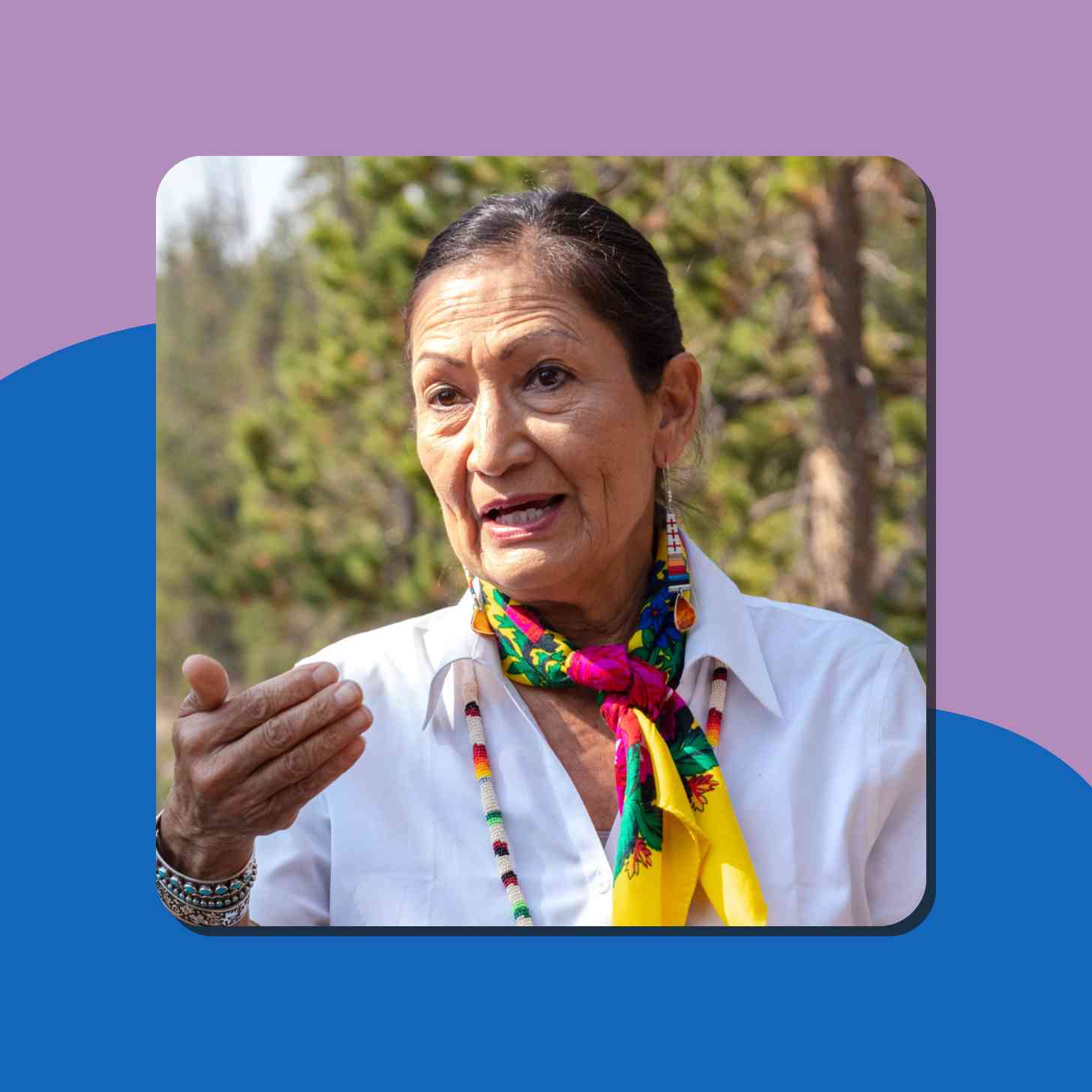
Secretary Deb Haaland, a member of the Pueblo of Laguna and a 35th generation New Mexican, made history as the first Native American to serve as a cabinet secretary when she was named the U.S. Secretary of the Department of the Interior in 2021.
Prior to this role, she was New Mexico’s Lieutenant Governor, as well as a Congresswoman. She was one of the first Native American women to serve in Congress, where she championed environmental justice, climate action, family-friendly policies, and the rights of missing and murdered Indigenous women.
As the Secretary of the Department of the Interior, Haaland’s responsibilities include things like managing energy development, overseeing public lands, and meeting treaty obligations to 574 federally recognized tribes.
During her tenure, she has worked to improve consultation efforts with tribal governments, allocate more resources to Native Americans, and launched an investigation into the federal government’s role in Native boarding schools.
Toni Morrison
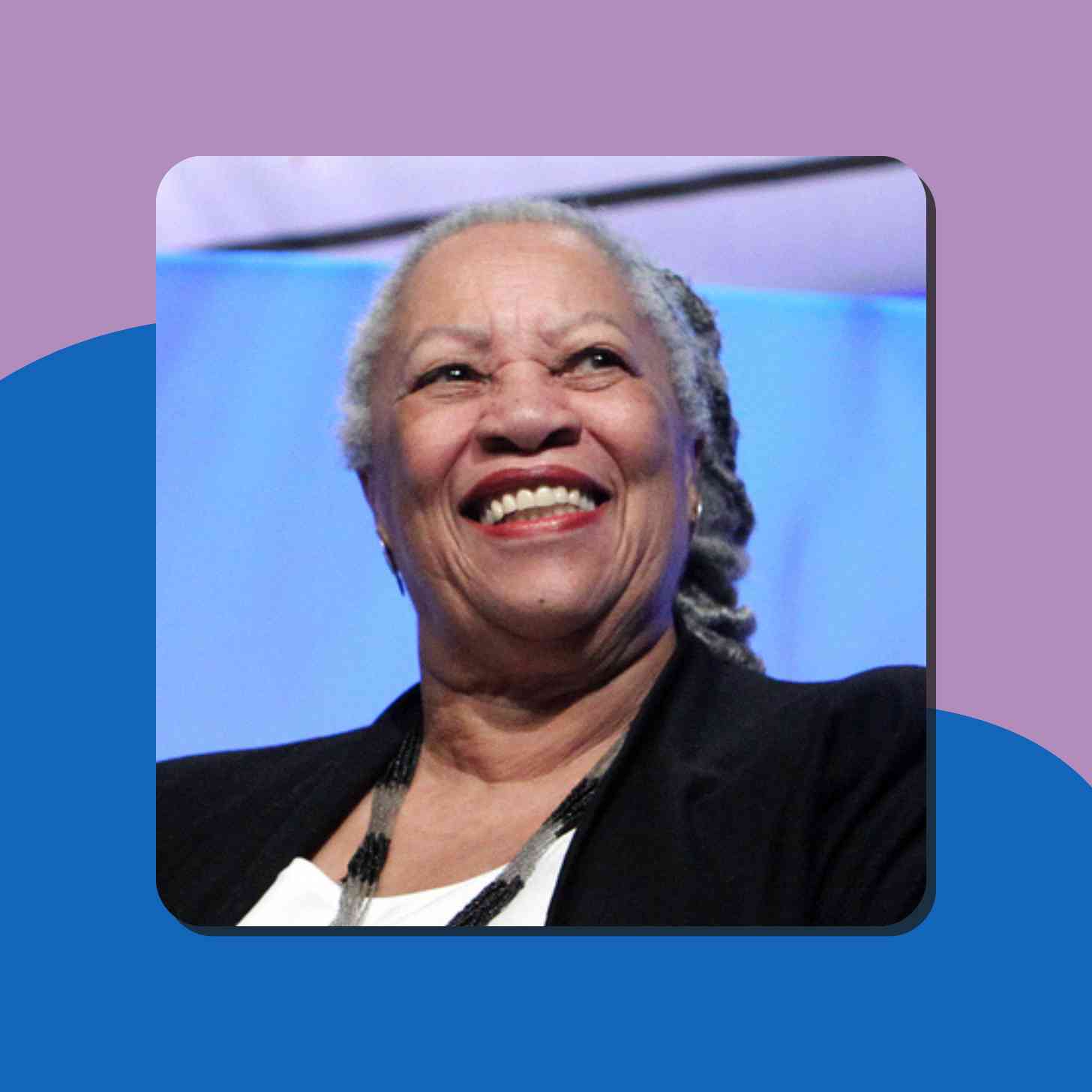
Toni Morrison was one of the most celebrated writers in the world, especially in Black feminist circles. Her work — which consists of novels, plays, and children’s books — deeply examines the diverse experiences of folks in the Black community.
With classic works like “Beloved,” “The Bluest Eye,” and “Song of Solomon,” Morrison was the first Black woman to receive the Nobel Prize for Literature in 1993 and was presented with the Presidential Medal of Freedom in 2012.
Morrison was also a professor at Howard University and Princeton University, as well as a book editor at Random House, where she helped edit textbooks, as well as fiction books by African-American authors. Morrison did not publish her own novels until she was 39 years old.
In the last decade of her life, Morrison earned an honorary Doctorate degree from the University of Oxford, was a guest curator at the Louvre Museum, and was named a Living Legend by the Library of Congress.
Tu Youyou

Tu Youyou is a Chinese chemist and pharmacologist who made a ground-breaking discovery that led to the first line of defense against malaria.
When she was 16, Youyou contracted tuberculosis, and upon her recovery, realized she wanted to study medicine, to find cures for diseases like the one that afflicted her. At Beijing Medical College, she studied pharmacology and upon graduation, was assigned to work at the Academy of Traditional Chinese Medicine, where she would stay for her entire career.
Youyou’s great discovery came when she turned to ancient Chinese medical texts from the Zhou, Qing, and Han dynasties to find a traditional cure for malaria. Ultimately, she was able to extract a compound — artemisinin — for which she volunteered to be the first human subject.
The compound has since saved millions of lives, and has been called “the most important pharmaceutical intervention in the last half-century.”nIn 2015, Youyou was awarded the Nobel Prize for Physiology or Medicine, which she shared with her collaborators.
Rachel Carson
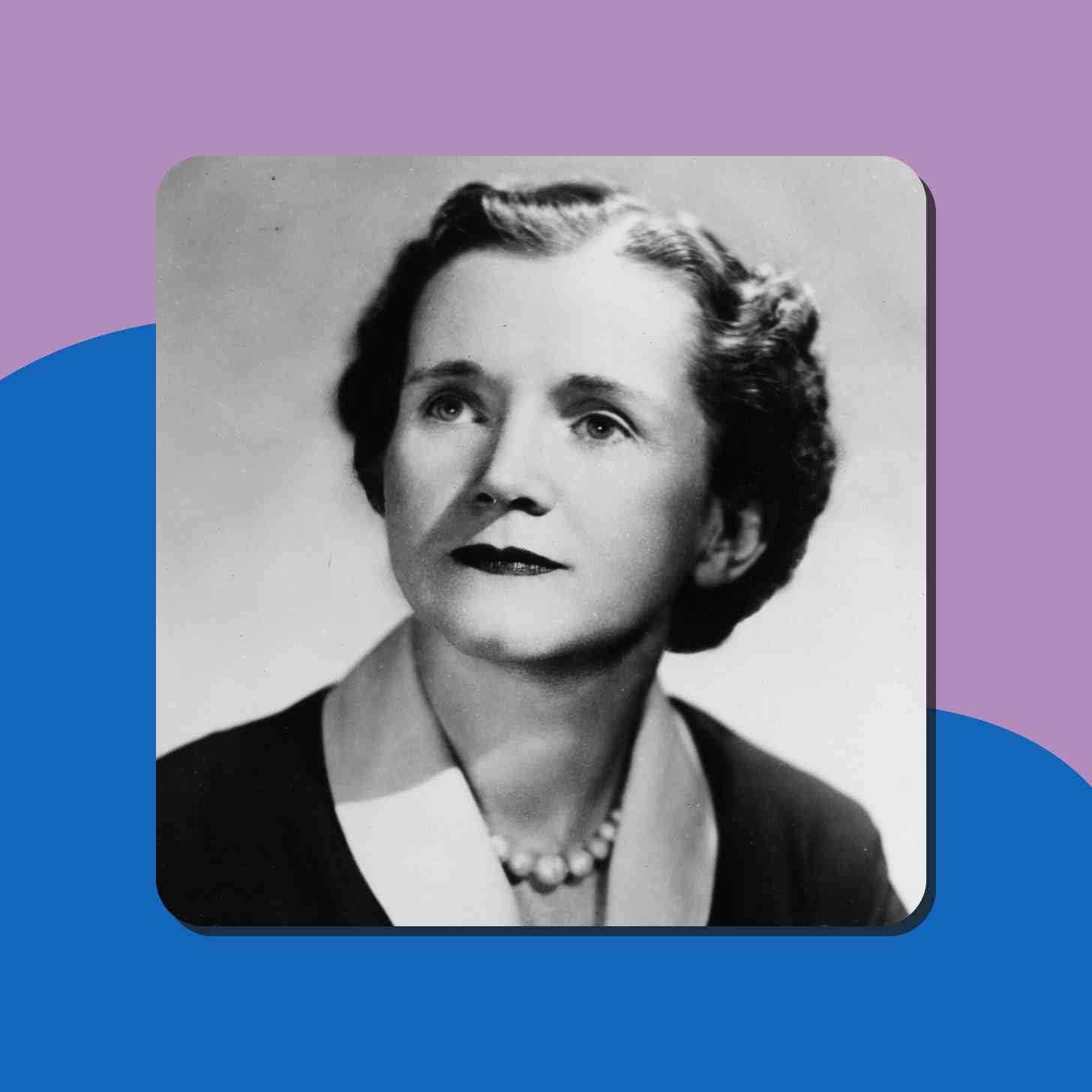
Rachel Carson was an American biologist and environmental activist best known for her groundbreaking writings on environmental pollution.
Carson studied biology and later joined the faculty of the University of Maryland, as well as Johns Hopkins. In 1936, her career as an aquatic biologist took off when she accepted a job with the U.S. Bureau of Fisheries (which is now called the U.S. Fish and Wildlife Service).
During her time here, she served as the editor-in-chief of the service’s publications and began writing her own books about the sea.
Carson’s biggest contribution, however, was her prophetic “Silent Spring,” which was published as a quickly best-selling book in 1962. “Silent Spring” was responsible for creating worldwide awareness of the dangers of environmental pollution, including the use of pesticides, and a warning of what would eventually come to be known as climate change.
Despite the threat of lawsuits from the chemical industry, Carson was strong in her convictions and testified before Congress in 1963, seeking new politics to protect human health and the environment. Although she died just a year later, Carson’s work has lived on as deeply influential in the environmental movement.
Minnesota community solar developers are adjusting their business plans as the state’s program undergoes some of the biggest changes since its launch over a decade ago.
One of the oldest and largest in the country, Minnesota’s community solar program has spurred development of more than 800 megawatts worth of solar capacity since launching in 2013. Customers subscribe to shares of projects and receive monthly credits on their utility bills, typically lowering overall energy costs.
The concept has been hailed as a way to spread the benefits of solar to customers who lack rooftop space, sun exposure, or the financial means to install solar panels on their own. In practice, the biggest beneficiaries have been commercial customers, which subscribe to 82% of the program’s capacity, according to data tracked by the Institute for Local Self-Reliance.
State lawmakers passed legislation last session aimed at increasing the share of power going to residential subscribers, especially low- and moderate-income customers, as well as attempting to address long-simmering complaints by solar companies about the program’s administration by utility Xcel Energy.
“I think there were thoughts that it could be handled in a more unbiased way outside of the utility,” said Rep. Patty Acomb, a Democrat whose district covers a suburban area west of Minneapolis.
The Minnesota Department of Commerce will now manage the program and has formally begun accepting applications. However, Xcel Energy will continue to handle interconnection applications, which have been a source of friction between the utility and developers.
Community solar developers will be allowed to build larger projects with fewer geographic restrictions, up to 5 megawatts anywhere in Xcel’s service territory. Previously, projects were limited to 1 megawatt, and developers could only sign up subscribers who lived in the same or an adjacent county as the project’s location.
The biggest changes come with the mix of subscribers developers must recruit for projects. At least 30% of a project’s subscribers must be low- or moderate-income residential customers. Another 25% must be allotted for schools, government agencies or other public interest organizations. Each project must have at least 25 participants.
“We were trying to address equity and economics and making sure that the benefits are going to a more underrepresented group,” Acomb said.
What happens next
With the new application process and subscriber requirements, as well as ongoing congestion in Xcel’s interconnection queue, developers expect a slow first year under the new rules but generally support the program’s new direction.
Brendan Dillon, president of Minneapolis-based solar developer Nokomis Energy, said the new program “much better reflects what community solar should be, which is a tool that allows people who, for whatever reasons — whether it’s financial, or they don’t own their home or condo or they don’t have roof space — to be able to access clean energy and apply its financial benefits.”
Nokomis Energy plans to work through existing community groups and those associated with local governments to reach the designated income-qualified subscriber pool. Dillon said solar developers will do more community outreach and engagement to reach potential low-and-moderate subscribers.
Rob Appelhof, CEO and president of Cedar Creek Energy, said he works with another company to market subscriptions, and they already have a strong representation of low and moderate-income participants, so recruiting “should not be a problem.”

Developers said removing the geographic restrictions will help them build more projects and allow more farmers to benefit from leasing land to solar companies.
“It opens up more opportunities for urban residents to subscribe to community solar,” said Eric Pasi, CEO of Enterprise Energy.
US Solar Corporation President Reed Richerson said that “there are plenty of farmer landowners who want to host community solar on a portion of their land, and they’ve been unable to because they live in areas where, despite there being achievable permitting and achievable interconnection, there was a constraint with accessing subscribers.”
The dual application process splits the interconnection approval, Xcel’s responsibility, with the project approval from Commerce.
“In these early days, it is becoming a bit stickier than I think we might have imagined, mainly because I think Xcel isn’t necessarily on the same page as the Department of Commerce or the way the law is written,” Richerson said.
Richerson said he does not expect projects under the new rules to win approvals from Xcel and Commerce “until, at earliest, March,” he said. “And then, upon the award, you can go build your projects. But with timelines of these things, having anything online by the end of the year will be challenging.”
A race against time
Unlike before, the program will now have annual caps, starting at 100 MW from 2024 to 2026, 80 MW through 2030 and 60 MW from 2031 on. That will create new pressure and uncertainty for developers, who could spend thousands of dollars to secure a site and an interconnection agreement only to have Commerce turn the project down.
“I guess the biggest uncertainty is getting your projects approved when there’s only a limited amount of them,” Appelhof said.
Cooperative Energy Futures has served low-income subscribers through community and rooftop solar for years. Policy and Regulatory Director Pouya Najmaie said developers will leverage income-qualified participation necessary for the state program to take advantage of incentives in the federal Inflation Reduction Act.
With enough low-income subscribers, a developer can add as much as 20% to 30% tax credit available for community solar, reducing the cost of a project by half, he said. “We’re doubling down more on low-income (customers) because of the IRA,” Najmaie said.
Cooperative Energy Futures will not initially seek to build larger, remote projects but instead focus first on smaller ones built nearer to subscribers’ homes.
“We’re going to be concentrating a lot on the city and looking for warehouses and large building rooftops for hosting,” he said. “The capacity is much better there, and you’re closer to load, so it’s generally more efficient.”
Xcel Energy is still studying the cost impact of the legislation and “won’t know more until we understand what the customer makeup of the new gardens will be, because the legislation creates several different bill credit rates based on customer groups,” said spokesperson Theo Keith.
The utility supports the focus on residential, income-qualified and public interest subscribers because it will “expand options for income-qualified customers to participate directly in the clean energy transition,” he said.
Xcel has also asked regulators for more time to solve a persistent and confusing issue for community solar. Customers currently receive two bills, one from the community solar developer and another from Xcel that includes credit for the electricity their subscription produces. The legislation requires Xcel to develop a combined bill for those customers.
This article was originally published by The Energy News Network. and was reshared under a CC BY-NC 4.0 DEED license.
For many Muslims breaking fast in mosques around the world this Ramadan, something will be missing: plastics.
The communal experience of iftars — the after-sunset meal that brings people of the faith together during the holy month — often necessitates the use of utensils designed for mass events, such as plastic knives and forks, along with bottles of water.
But to encourage Muslims to be more mindful of the impact of Ramadan on the environment, mosques are increasingly dispensing of single-use items, with some banning the use of plastics altogether.
As a historian of Islam, I see this “greening” of Ramadan as entirely in keeping with the traditions of the faith, and in particular the observance of Ramadan.
The month — during which observant Muslims must abstain from even a sip of water or food from sun up to sun down — is a time for members of the faith to focus on purifying themselves as individuals against excess and materialism.
But in recent years, Muslim communities around the world have used the period to rally around themes of social awareness. And this includes understanding the perils of wastefulness and embracing the link between Ramadan and environmental consciousness.
The ban on plastics — a move encouraged by the Muslim Council of Britain as a way for Muslims “to be mindful of [God’s] creation and care for the environment” — is just one example.
Many other mosques and centers are discouraging large or extravagant evening meals altogether. The fear is such communal events generate food waste and overconsumption and often rely on non-biodegradable materials for cutlery, plates and serving platters.
Quranic environmentalism
While the move toward environmental consciousness has gained traction in Muslim communities in recent years, the links between Islam and sustainability can be found in the faith’s foundational texts.
Scholars have long emphasized principles outlined in the Quran that highlight conservation, reverence for living creatures and the diversity of living things as a reminder of God’s creation.
The Quran repeatedly emphasizes the idea of “mizan,” a kind of cosmic and natural balance, and the role of humans as stewards and khalifa, or “viceregents,” on Earth — terms that also carry an environmental interpretation.
Recently, Islamic environmental activists have highlighted the numerous hadith — sayings of the Prophet Muhammad that provide guidance to followers of the faith — that emphasize that Muslims should avoid excess, respect resources and living things, and consume in moderation.

Although present from the outset of the faith, Islam’s ties to environmentalism received major visibility with the works of Iranian philosopher Seyyed Hossein Nasr, and a series of lectures he delivered at the University of Chicago in 1966.
The lectures and a subsequent book, “Man and Nature: The Spiritual Crisis in Modern Man,” warned that humans had broken their relationship with nature and thus placed themselves in grave ecological danger.
Nasr blamed modern and Western science for being materialistic, utilitarian and inhuman, claiming it had destroyed traditional views of nature. Nasr argued that Islamic philosophy, metaphysics, scientific tradition, arts and literature emphasize the spiritual significance of nature.
But he noted that numerous contemporary factors, such as mass rural-to-urban migration and poor and autocratic leadership, had prevented the Muslim world from realizing and implementing the Islamic view of the natural environment.
Scholars and activists expanded on Nasr’s work through the 1980s and 1990s, among them Fazlun Khalid, one of the world’s leading voices on Islam and environmentalism.
In 1994, Khalid founded the Islamic Foundation for Ecology and Environmental Sciences, an organization dedicated to the maintenance of the planet as a healthy habitat for all living beings.
halid and other Muslim environmentalists suggest that Islam’s nearly 2 billion adherents can participate in the tasks of environmental sustainability and equity not through Western models and ideologies but from within their own traditions.
Partnering with the United Nations Environment Program, Khalid and other leading scholars crafted Al-Mizan, a worldwide project for Muslim leaders interested in Muslims’ religious commitments to nature.
“The ethos of Islam is that it integrates belief with a code of conduct which pays heed to the essence of the natural world,” Khalid wrote in “Signs on the Earth: Islam, Modernity, and the Climate Crisis.”
Going beyond an eco-Ramadan
Environmental crises disproportionately affect the world’s poorest populations, and academics have highlighted the particular vulnerabilities of Muslim communities around the world, such as the victims of devastating floods in Pakistan in 2022.
By highlighting Islamic principles, policies and community approaches, academics have shown how Islam can represent a model for environmental stewardship.
This push for environmental consciousness extends beyond Ramadan. In recent years, Muslims have tried to introduce green practices into the shrine cities in Iraq during pilgrimage seasons in Ashura and Arbaeen.
This has included awareness campaigns encouraging the 20 million pilgrims who visit Arbaeen annually to reduce the tons of trash they leave every year that clog up Iraq’s waterways.
Quoting from Shiite scholarship and drawing on testimonials from community leaders, the Green Pilgrim movement suggests carrying cloth bags and reusable water bottles, turning down plastic cutlery, and hosting eco-friendly stalls along the walk.
Muslim-owned businesses and nonprofits are joining these wider efforts. Melanie Elturk, the founder of the successful hijab brand Haute Hijab, regularly ties together faith, fashion, commerce and environmentalism by highlighting the brand’s focus on sustainability and environmental impact.
The Washington, D.C., nonprofit Green Muslims pioneered the first “leftar” — a play on the word “iftar” — using leftovers and reusable containers.
These efforts are but a few of the diverse ways that Muslim communities are addressing environmental impact. The greening of Ramadan fits into a broader conversation about how often communities can tackle climate change within their own frameworks.
But Islamic environmentalism is more than just the dispensing of plastic forks and water bottles — it taps into a worldview ingrained in the faith from the outset, and can continue to guide adherents as they navigate environmentalism, a space where they may otherwise be marginalized.
This article by Noorzehra Zaidi, from the University of Maryland Baltimore County, was originally published by The Conversation.

For craftivists who love to use their passion for fiber arts to do good, there is no holier grail than the Crochet Coral Reef.
The wildly detailed art and geometry project by sisters Christine and Margaret Wertheim uses unwieldy, colorful, hand-stitched coral to respond to climate change and has been brought to life in museums around the world over the past two decades.
It started with what is now called the “Core Collection,” or a mass of crocheted reefs created by the Wertheims that has traveled to the globe’s most esteemed museums and galleries.
But the other strand of the project, which invites thousands of handicrafters to contribute, exists in a poetic contrast to the real-world state of the planet’s reefs; it’s growing rapidly.
“At a time when living reefs are dying from heat exhaustion and our oceans are awash in plastic, the Crochet Coral Reef offers a tender impassioned response,” the project’s website reads.
“This is a crafty retort to climate change, a one-stitch-at-a-time meditation on the Anthropocene.”

Described as the “environmental version of the AIDS quilt,” per the New York Times, the Crochet Coral Reef is a work of grief and action — an attempt to convey the beauty of the natural world, made by the hands of humans.
“Like the organic creatures they emulate, these handmade sculptures take time to make – time that is condensed in the millions of stitches on display, time that is running out for earthly critters,” the website continues.
According to the Wertheims, the project — which has been supported by over 25,000 volunteer crocheters — also speaks to the feminist arm of the environmental movement.
“The Crochet Coral Reef project is a condensation of human labor – particularly female labor – hundreds of thousands of hours of stitching quietly performed,” the artists write.
“Handicrafts have always been aesthetic tools rich in symbolism and expressive possibility, and ‘ladies’ doing their embroideries have long been artists, even if they are rarely acknowledged as such.”

The “reefers” who have contributed their handiworks to the project have responded with zeal to create “satellite reefs.” The biggest community piece, completed in 2022, is a reef at the Museum Frieder Burda in Germany — consisting of over 40,000 coral pieces by 4,000 contributors.
Two other recent satellite projects were completed in 2023 and are still on display in Austria and Pittsburgh.
But the satellite reefs are not limited to the fine art world. Some have been made in science centers, colleges, civic centers — and even women’s prisons and juvenile detention centers.
“Each new site adds further layers of social complexity, extending an experience of art making to citizens in diverse communities and settings,” the website says.

The best part? All contributors are credited in formal exhibitions.
“Just as living reefs are created by the efforts of billions of tiny coral polyps working together, so the Crochet Coral Reef is constructed by communities, thousands of people working together,” the artists explained on their website.
“Every crafter who contributes to the project is free to create new species of crochet reef organisms by changing the pattern of stitches or working with novel materials. What started from simple seeds is now an ever-evolving, artifactual, hand-made ‘tree of life.’”
While these projects can’t necessarily save the earth’s reefs from the devastating impacts of climate change, some include collected plastics from reefs themselves, as well.

Above all, what the Wertheims have accomplished is a deeper understanding of humanity’s connection to the natural world — and its desire to protect it.
“These crochet reefs are time-laden rejoinders to a culture of doom, quietly asserting … a message of hope. What can we humans do when we work together, not ignoring ecological problems?” the artists write.
“By insisting on the value of the hand-made, the Crochet Coral Reef project makes a claim about history and the importance of material labor to prospects for human survival.”
In other words? The project does what all climate movements dream of: bringing people together to do the most important work on the planet — saving it.
“The Crochet Coral Reef has its utopian quality above all in the fact that a positive project emerges from joint work,” reviewer Ann-Katrin Gunzel said of the German satellite reef in 2022. “It shows the beauty and power of collective action.”
Header images courtesy of Stephanie Veto for LUAG and Margaret Wertheim/Facebook
Historian Vicki Crawford was one of the first scholars to focus on women’s roles in the civil rights movement. Her 1993 book, “Trailblazers and Torchbearers,” dives into the stories of female leaders whose legacies have often been overshadowed.
Today she is the director of the Morehouse College Martin Luther King Jr. Collection, where she oversees the archive of his sermons, speeches, writings and other materials.
Here, she explains the contributions of women who influenced King and helped to fuel some of the most significant campaigns of the civil rights era, but whose contributions are not nearly as well known.
An activist in her own right
Coretta Scott King is often remembered as a devoted wife and mother, yet she was also a committed activist in her own right. She was deeply involved with social justice causes before she met and married Martin Luther King Jr., and long after his death.
Scott King served with civil rights groups throughout her time as a student at Antioch College and the New England Conservatory of Music. Shortly after she and King married in 1953, the couple returned to the South, where they lent their support to local and regional organizations such as the NAACP and the Montgomery Improvement Association.
They also supported the Women’s Political Council, an organization founded by female African American professors at Alabama State University that facilitated voter education and registration, and also protested discrimination on city buses.
These local leadership efforts paved the way for widespread support of Rosa Parks’ resistance to segregation on public busing.
Following her husband’s assassination in 1968, Scott King devoted her life to institutionalizing his philosophy and practice of nonviolence. She established the King Center for Nonviolent Social Change, led a march of sanitation workers in Memphis and joined efforts to organize the Poor People’s Campaign.
A longtime advocate of workers rights, she also supported a 1969 hospital workers’ strike in South Carolina, delivering stirring speeches against the treatment of African American staff.
Scott King’s commitment to nonviolence went beyond civil rights at home. During the 1960s, she became involved in peace and anti-war efforts such as the Women’s Strike for Peace and opposed the escalating war in Vietnam.
By the 1980s, she had joined protests against South African apartheid, and before her death in 2006, she spoke out in favor of LGBTQ+ rights — capping a lifetime of activism against injustice and inequalities.
Women and the March
While Scott King’s support and ideas were particularly influential, many other women played essential roles in the success of the civil rights movement.
Take the most iconic moment of the civil rights struggle, in many Americans’ minds: the Aug. 28, 1963, March on Washington for Jobs and Freedom, at which King delivered his landmark “I Have a Dream” speech on the steps of the Lincoln Memorial.

60 years after the march, it is critical to recognize the activism of women from all walks of life who helped to strategize and organize one of the country’s most massive political demonstrations of the 20th century.
Yet historical accounts overwhelmingly highlight the march’s male leadership. With the exception of Daisy Bates, an activist who read a short tribute, no women were invited to deliver formal speeches.
Women were among the key organizers of the march, however, and helped recruit thousands of participants. Dorothy Height, president of the National Council of Negro Women, was often the lone woman at the table of leaders representing national organizations.
Anna Arnold Hedgeman, who also served on the planning committee, was another strong advocate for labor issues, anti-poverty efforts and women’s rights.
Photographs of the march show women attended in large numbers, yet few historical accounts adequately credit women for their leadership and support.
Civil rights activist, lawyer and Episcopalian priest Pauli Murray, among others, called for a gathering of women to address this and other instances of discrimination a few days later.
Hidden in plain view
African American women led and served in all the major campaigns, working as field secretaries, attorneys, plaintiffs, organizers and educators, to name just a few roles. So why did early historical accounts of the movement neglect their stories?
There were women propelling national civil rights organizations and among King’s closest advisers. Septima Clark, for example, was a seasoned educator whose strong organizing skills played a consequential role in voter registration, literacy training and citizenship education.
Dorothy Cotton was a member of the inner circle of the Southern Christian Leadership Conference, of which King was president, and was involved in literacy training and teaching nonviolent resistance.
Yet women’s organizing during the 1950s and 1960s is most evident at local and regional levels, particularly in some of the most perilous communities across the deep South.
Since the 1930s, Amelia Boynton Robinson of Dallas County, Alabama, and her family had been fighting for voting rights, laying the groundwork for the struggle to end voter suppression that continues to the present. She was also key in planning the 50-mile Selma-to-Montgomery march in 1965.
Images of the violence that marchers endured — particularly on the day that came to be known as Bloody Sunday — shocked the nation and eventually contributed to the passage of the landmark Voting Rights Act of 1965.
Or take Mississippi, where there would not have been a sustained movement without women’s activism. Some names have become well known, like Fannie Lou Hamer, but others deserve to be.
Two rural activists, Victoria Gray and Annie Devine, joined Hamer as representatives to the Mississippi Freedom Democratic Party, a parallel political party that challenged the state’s all-white representatives at the 1964 Democratic Convention.
A year later, the three women represented the party in a challenge to block the state’s congressmen from taking their seats, given ongoing disenfranchisement of Black voters.
Though the congressional challenge failed, the activism was a symbolic victory, serving note to the nation that Black Mississippians were no longer willing to accept centuries-old oppression.
Many African American women were out-front organizers for civil rights. But it is no less important to remember those who assumed less visible, but indispensable, roles behind the scenes, sustaining the movement over time.
This article by Vicki Crawford, from the Morehouse College, was originally published by The Conversation.

From anti-racism to climate change, parents who want to build educational foundations about the world’s biggest challenges with their young ones are often left to create their own syllabi.
Climate anxiety is changing the way people parent — even down to the decision to even be a parent. These days, there’s an added responsibility to raising children, as parents field questions about climate change, or trying to supplement newly-created climate curriculum in schools.
That makes resources like “Future Chicken” necessary for bridging the gaps.
“Future Chicken,” is called an “eco-tainment platform” by its creators, Catherine Winder and Annabel Slaight (both of whom boast notable credits from other kids programming like “The Big Comfy Couch” and the “Angry Birds” film franchise).

With a TV show that airs on Canadian television (but is easily accessible to stream on YouTube, as well), and accompanying games and podcasts, the new platform is intended to engage children (ages six to 10) in climate-related topics.
The best part? There is a huge focus on climate solutions.
The main character at the heart of the platform — you may have guessed — is a chicken. Her name is Potato, and she has quite the back story. Visiting from 2050, Potato comes from an era when climate change has seemingly been solved, and she is here to impart wisdom on the solutions of her world.
“I think the concept of bringing good news from the future to the present is an amazing one,” Winder told Fast Company in December.
And that amazing idea? It wasn’t just produced solely by Winder and Slaight — but brainstormed on a farm, with actual chickens, as kids shared their insights on climate change and eco-anxiety.
“They even came up with the name,” Winder told Fast Company. “...The idea was: If we’re looking to empower, engage, and inspire kids, their voices need to be heard all the way through everything we do.”

The educational elements of the platform came next, with interactive modules designed around the United Nations’ Sustainable Development Goals.
Kids can pick a theme — like water, clean energy, healthy communities, food systems, and cycles — select an activity, and then download accompanying resources.
Some of those activities include things like nature searches, “Bird Bingo,” learning about climate careers, or conserving water.
Audiences are also encouraged to play the “Future Chicken” game through Roblox, where characters can engage in activities on a digital farm (and even decorate their own yurts).
“We’ve got to entertain, we’ve got to have fun,” Winder told Fast Company. “There’s also educational underpinnings in everything we do.”

The educational video element of the platform — the “Future Chicken Today Show” — also welcomes guests who are experts in their fields, to help up the ante.
In January, Potato welcomed video game streamer Mackenzie Turner.
“By making small changes in your daily life… we have the power to improve the world around us,” Turner said in a clip of the show.
It’s that small action — even just leveraging screen time to learn about the environment — that “Future Chicken’s” creators hope to bring home.
“Ultimately, as we grow our community and use technology, the strategy is to be able to show kids how with their small steps, combined with all the other Planet Protectors out there, makes a massive difference,” Wilder told Fast Company.
Potato says — or clucks — it herself, inviting her friends to “make our world planet positive, one zany adventure at a time.”
Header image courtesy of Wind Sun Sky Entertainment
You can add CEO to Bridgit Mendler’s resume.
The actress starred on hit Disney Channel shows like “Good Luck, Charlie” and “Undateable” before pursuing multiple degrees at Harvard Law and MIT. Now, she’s leading Northwood Space — a startup that will revolutionize the way we collect vital satellite data.
“The vision is a data highway between Earth and space,” Mendler told CNBC. “Space is getting easier along so many different dimensions but still the actual exercise of sending data to and from space is difficult. You have difficulty finding an access point for contacting your satellite.”

While giddy fans call Mendler a real-life Barbie doll for her many career roles, it’s important to know more about the potential of her work — especially as it relates to innovation here on earth.
Why is satellite data important to the environment?
Satellites are used for a variety of commercial and scientific purposes, but perhaps most importantly, they are used to monitor Earth’s resources and ecosystems.
From hundreds of miles away, satellites can help climate scientists monitor the ozone layer, track rising water levels, observe changing ice and permafrost conditions, and even map air quality around the world.
The latest satellite remote-sensing technology includes the collection of hyperspectral data, which can identify an object’s composition based on its interaction with light, and detect methane leaks and emissions that are invisible to other satellites.
Awais Ahmed, the CEO of Pixxel, builds satellites outfitted with hyperspectral sensors. The space tech entrepreneur said that the potential benefits are astronomical.
“Having that snapshot of the earth will help policymakers make better policy, government take faster action, and create a database to see things globally,” Ahmed told Quartz.
The boundless information that satellites can collect — on ocean health, soil moisture levels, air pollution, and more — is pivotal in climate justice efforts. The more information we collect on our ecosystems and biodiversity, the better we can protect them.
How will Mendler’s start-up revolutionize satellite data?
Mendler’s latest career developments may come as a surprise to long-time fans of her acting — and singing — career, but she has been fostering her passion for outer space for years. While attending Harvard, Mendler even served as co-president of the Harvard Space Law Society.
Post-Harvard, in the throes of the COVID-19 pandemic, Mendler began tinkering with ideas to make space data more accessible. She was joined by her husband Griffin Cleverly and software engineer Shaurya Luthra, who now serve as Northwood’s Head of Software and Chief Technology Officer, respectively.

“While everybody else was making their sourdough starters, we were building antennas out of random crap we could find at Home Depot… and receiving data from [National Oceanic and Atmospheric Administration] satellites,” Mendler told CNBC.
“For me, why the ground-side matters is because it actually is about bringing the impacts of space home to people.”
The main focus of Northwood Space’s efforts lie in fast-tracking and mass producing satellite ground stations, which will target satellites in Earth’s low orbit and optimize the bottleneck of information coming from outer space.
Their goal: improve the efficiency and availability of satellite data communication and expand access to earth-space data — which potentially includes data tracking on climate change.
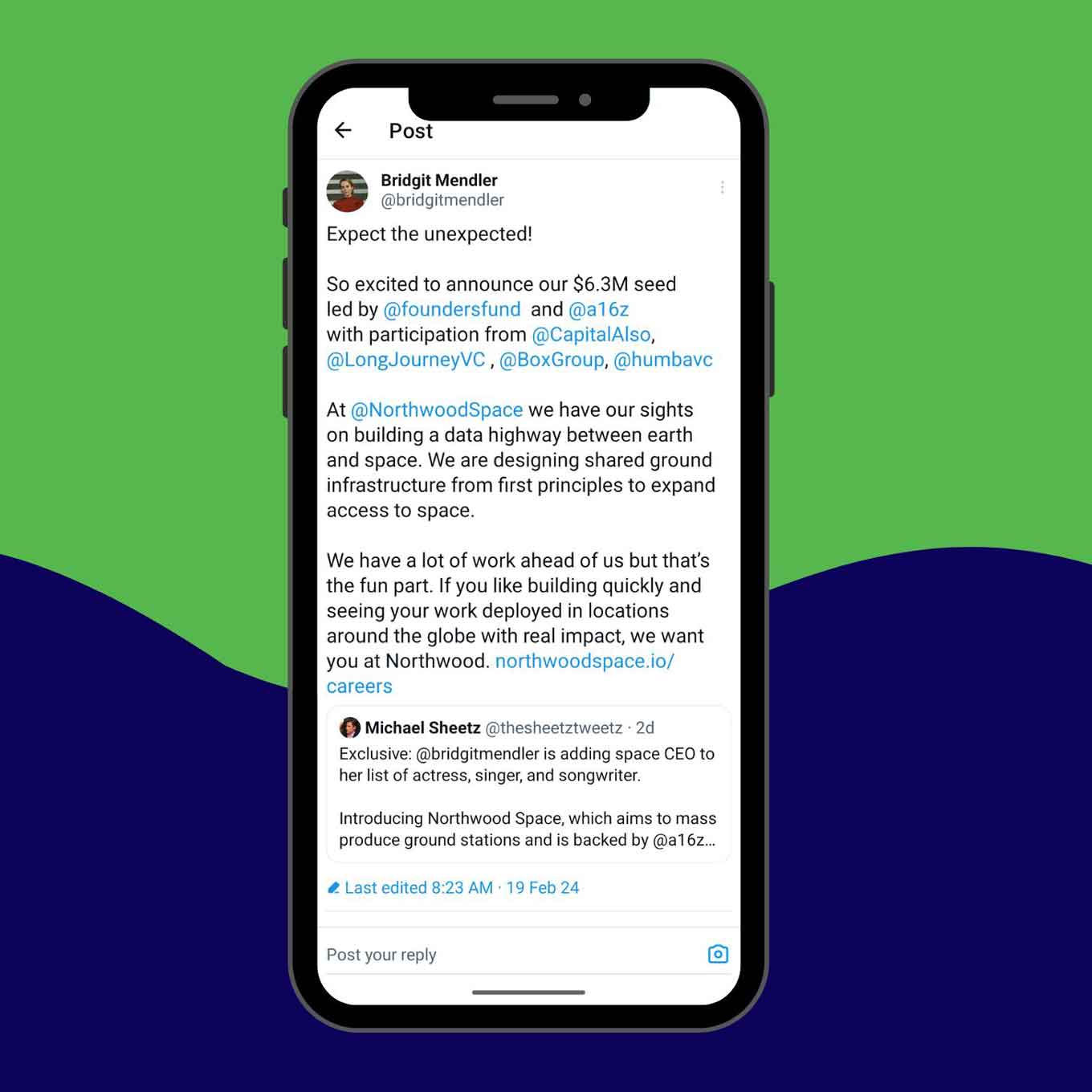
Northwood Space is in good company. One of its main investors includes Andreessen Horowitz, a Silicon Valley-based venture capitalist that recently poured $4.5 million into climate tech. Other investors — like Long Journey Ventures and Founders Fund — have also backed climate-innovative technologies as well.
Later on in 2024, Northwood Space will start testing connections further out in orbit, including building potential data pathways to spacecrafts. For Mendler, Cleverly, and Luthra, the possibilities are endless.
“Cell phones freed communication from the constraints of space. The internet democratized access to information,” a mission statement on the company’s website reads.
“The way that our generation can contribute to this story is by truly blanketing the earth in connectivity through space and expanding our connection out into a new frontier.”
Header images courtesy of Alexas_Fotos from pixabay, Bridgit Mendler/LinkedIn, and adityatelang108 from pixabay
Thich Nhat Hanh, a revered Zen Buddhist monk, poet, and peace activist, has touched the lives of millions around the world with his teachings on mindfulness, compassion, and peace.
Born in Vietnam in 1926, his lifelong efforts to promote peace and reconciliation during and after the Vietnam War earned him a nomination for the Nobel Peace Prize by Martin Luther King Jr.
We’ve curated a selection of Thich Nhat Hanh’s most iconic quotes that encapsulate his teachings.
Whether you are familiar with his work or encountering his teachings for the first time, Thich Nhat Hanh’s words offer timeless guidance on the path to inner peace and harmony with the world around us.
The Best Thich Nhat Hanh Quotes
Famous Thich Nhat Hanh Quotes
“There is no path to happiness, happiness is the path.”
— Thich Nhat Hanh
“The amount of happiness that you have depends on the amount of freedom you have in your heart.”
— Thich Nhat Hanh
“The best way to take care of the future is to take care of the present moment.”
— Thich Nhat Hanh
“When a person’s speech is full of anger, it is because he or she suffers deeply.”
— Thich Nhat Hanh
“Anyone who is practicing understanding and compassion can exemplify true power. Anyone can be a Buddha.”
— Thich Nhat Hanh
“If you abandon the present moment, you cannot live the moments of your daily life deeply.”
— Thich Nhat Hanh
“In true dialogue, both sides are willing to change.”
— Thich Nhat Hanh
“The mind can go in a thousand directions, but on this beautiful path, I walk in peace. With each step, the wind blows. With each step, a flower blooms.”
—Thich Nhat Hanh
On Gratitude
“Walk as if you are kissing the Earth with your feet.”
— Thich Nhat Hanh
“The present moment is filled with joy and happiness. If you are attentive, you will see it.”
— Thich Nhat Hanh
“When we recognise the virtues, the talent, the beauty of Mother Earth, something is born in us, some kind of connection, love is born.”
— Thich Nhat Hanh
“People deal too much with the negative, with what is wrong. Why not try and see positive things, to just touch those things and make them bloom?”
— Thich Nhat Hanh
“I promise myself that I will enjoy every minute of the day that is given me to live.”
— Thich Nhat Hanh
→ Read more quotes about gratitude
On Peace
“Every breath we take, every step we make, can be filled with peace, joy and serenity.”
— Thich Nhat Hanh
“When you have peace in yourself and accept, then you are calm enough to do something, but if you are carried by despair, there is no hope.”
— Thich Nhat Hanh
“Peace is present right here and in ourselves and in everything we do and see… Every breath we take, every step we take, can be filled with peace, joy and serenity.”
— Thich Nhat Hanh
“Many people think excitement is happiness. But when you are excited you are not peaceful. True happiness is based on peace.”
— Thich Nhat Hanh
“If we are peaceful, if we are happy, we can smile and blossom like a flower, and everyone in our family, our entire society, will benefit from our peace.”
— Thich Nhat Hanh
“You have to realize that happiness is not something you find at the end of the road. You have to understand that it is here, now.”
— Thich Nhat Hanh
“I love to sit and eat quietly and enjoy each bite, aware of the presence of my community, aware of all the hard and loving work that has gone into my food.”
— Thich Nhat Hanh
“When another person makes you suffer, it is because he suffers deeply within himself, and his suffering is spilling over. He does not need punishment; he needs help. That’s the message he is sending.”
— Thich Nhat Hanh
“If in our daily life we can smile, if we can be peaceful and happy, not only we, but everyone will profit from it. This is the most basic kind of peace work.”
— Thich Nhat Hanh
→ Read more quotes about inner peace
→ Read more quotes about world peace
On Life
“Life is available only in the present moment.”
— Thich Nhat Hanh
“Life is filled with suffering, but is also filled with many wonders.”
— Thich Nhat Hanh
“Most of us experience a life full of wonderful moments and difficult moments. But for many of us, even when we are most joyful, there is fear behind our joy.”
— Thich Nhat Hanh
“Now I see that if one doesn’t know how to die, one can hardly know how to live, because death is a part of life.”
— Thich Nhat Hanh
“Mindfulness is the miracle which can call back in a flash our dispersed mind and restore it to wholeness so that we can live each minute of life.”
— Thich Nhat Hanh
“Life is illuminated by right understanding, right thought, right speech, right action, right livelihood, right effort, right mindfulness, and right concentration.”
— Thich Nhat Hanh
“Live the actual moment. Only this actual moment is life. Don’t be attached to the future. Don’t worry about things you have to do. Don’t think about getting up or taking off to do anything. Don’t think about departing.”
— Thich Nhat Hanh
On Love
“Love is the capacity to take care, to protect, to nourish.”
— Thich Nhat Hanh
“In true love, there is no pride.”
— Thich Nhat Hanh
“Let us fill our hearts with our own compassion towards ourselves and towards all living beings.”
— Thich Nhat Hanh
“We can continue to learn generation after generation and now it’s time to begin to learn how to love in a non-discriminatory way because we are intelligent enough, but we are not loving enough as a species.”
— Thich Nhat Hanh
“When you love someone, the best thing you can offer is your presence. How can you love if you are not there?”
— Thich Nhat Hanh
“To love is to recognize; to be loved is to be recognized by the other.”
— Thich Nhat Hanh
“You must love in such a way that the person you love feels free.”
— Thich Nhat Hanh
On Healing
“When we give ourselves the chance to let go of all our tension, the body’s natural capacity to heal itself can begin to work.”
— Thich Nhat Hanh
“Mindfulness helps you go home to the present. And every time you go there and recognize a condition of happiness that you have, happiness comes.”
— Thich Nhat Hanh
“The source of suffering is a false belief in permanence and the existence of separate selves.”
— Thich Nhat Hanh
“The only way to ease our fear and be truly happy is to acknowledge our fear and look deeply at its source. Instead of trying to escape from our fear, we can invite it up to our awareness and look at it clearly and deeply.”
— Thich Nhat Hanh
“Go back and take care of yourself. Your body needs you, your perceptions need you, your feelings need you. The wounded child in you needs you. Your suffering needs you to acknowledge it.”
— Thich Nhat Hanh
→ Read more quotes about healing
Short Quotes
“Because you are alive, everything is possible.”
— Thich Nhat Hanh
“Happiness is the cessation of suffering.”
— Thich Nhat Hanh
“People suffer because they are caught in their views. As soon as we release those views, we are free.”
— Thich Nhat Hanh
“We have more possibilities available in each moment than we realize.”
— Thich Nhat Hanh
“My actions are my only true belongings.”
— Thich Nhat Hanh
“Feelings come and go like clouds in a windy sky. Conscious breathing is my anchor.”
— Thich Nhat Hanh
“We are here to awaken from our illusion of separateness.”
— Thich Nhat Hanh
“Our own life has to be our message.”
— Thich Nhat Hanh
“Smile, breathe and go slowly.”
— Thich Nhat Hanh
→ Read more short quotes
More Quotes
“Happiness is a function of compassion. If you do not have compassion in your heart, you do not have any happiness.”
— Thich Nhat Hanh
“Freedom is not given to us by anyone; we have to cultivate it ourselves. It is a daily practice. No one can prevent you from being aware of each step you take or each breath in and breath out.”
— Thich Nhat Hanh
“We are very good at preparing to live, but not very good at living. We know how to sacrifice ten years for a diploma, and we are willing to work very hard to get a job, a car, a house and so on. But we have difficulty remembering that we are alive in the present moment, the only moment there is for us to be alive.”
— Thich Nhat Hanh
“Meditation is not to avoid society, it is to look deep to have the kind of insight you need to take action. To think it is just to sit down and enjoy the calm and peace, is wrong.”
— Thich Nhat Hanh
“Usually, people have a tendency to be caught in the worries concerning the future or in the regret concerning the past. There is some kind of energy that is pushing them to run, and they are not able to establish themselves in the present moment.”
— Thich Nhat Hanh
“We are looking for happiness and running after it in such a way that creates anger, fear and discrimination. So when you attend a retreat, you have a chance to look at the deep roots of this pollution of the collective energy that is unwholesome.”
— Thich Nhat Hanh
“By eating meat we share the responsibility of climate change, the destruction of our forests, and the poisoning of our air and water. The simple act of becoming a vegetarian will make a difference in the health of our planet.”
— Thich Nhat Hanh
“For things to reveal themselves to us, we need to be ready to abandon our views about them.”
— Thich Nhat Hanh
“Hope is important because it can make the present moment less difficult to bear. If we believe that tomorrow will be better, we can bear a hardship today.”
— Thich Nhat Hanh
Have you ever noticed that the world is filled with lots of little coincidences? For me, they always seem to stand out through numbers, like checking the time at exactly 11:11 (or 12:12), or paying a weirdly specific total at the grocery store, like $76.76.
While they may seem serendipitous, these numbers — which people call angel numbers — may actually be far from coincidental.
To get a clearer picture of these phenomena, I reached out to professional psychic and tarot reader Kate Van Horn.
Van Horn is a California-based mental health advocate who specializes in spirituality, tarot, and numerology to make sense of the world around us. She’s also the writer of the 2024 book “The Inner Tarot.”
“Angel numbers are sequences of numbers, usually repeating numbers, that hold spiritual or personal significance and are believed to convey messages from the divine realm, or our spiritual guides,” Van Horn told me.
But what exactly do these synchronous numbers mean? And how do they actually inspire us to understand ourselves — and the universe — in a deeper way?
We’ll answer all of those questions — and explain what some of the most common angel numbers mean — in this article.

What are angel numbers?
Angel numbers are repeating number sequences that can act as spiritual guides, symbolizing a unique meaning or energy to those who encounter them. They are rooted in numerology, which ascribes mystical meanings to numbers ranging from 000 to 999.
“These numerological associations allow each number to create a unique vibration and message of guidance, almost becoming a language or way to communicate through numbers and their significance,” Van Horn explained.
“I often say that these repeating numbers are signifying where we are in our journey and become a ‘wink’ from the universe to confirm we are in alignment and following our divine path.”

Angel numbers are usually found in repeating sequences (like 444) or patterns (like 5252). Once associated with spiritual guides or synchronicity, many see them as “positive messengers,” as Van Horn calls them.
You might be sitting here wishing you saw those messengers more often, or you’re wondering, “where do I find angel numbers?”
Places you may have spotted them include phone numbers, license plates, home addresses, or even in your dreams.
“Those who enjoy receiving these messages from the divine might begin to connect with a specific number, seeing it often and allowing it to be a personal form of confirmation that boosts trust and belief in oneself,” Van Horn said.
I know I feel a unique connection to repeating twos, tying back to my date of birth (as well as those of loved ones). It can be fun to spot them in the length of a song on Spotify, or even on a receipt in the self-checkout lane.
Where do angel numbers originate?
Metaphysical ideas like angel numbers, astrology, and tarot have existed long before the witchy women of the world found their communities on TikTok.
“The roots of angel numbers can be traced back to various ancient civilizations, where numerical patterns were often linked to cosmic meanings,” Van Horn told me.
“Over the centuries, the interpretation of numbers evolved, incorporating religious, mystical, and philosophical influences. It now also spans various spiritual tools and metaphysical practices, from astrology to tarot.”
While it’s not exactly clear which ancient civilizations or philosophers legitimized angel numbers, many practitioners point to Pythagoras, an ancient Greek philosopher (yeah, that guy from geometry class) whose followers are believed to have borne the idea of numerology.
Those who leaned into these beliefs were fascinated by the presence of numbers in the natural world, like in musical harmony or astronomy, according to Britannica.
While these ancient schools of thought certainly influence numerology and other spiritual practices in the modern day, it was author Doreen Virtue who popularized angel numbers the way we know them now, coining the term in the early 2000s in her many books.
What do angel numbers mean?
000 or 0000
The angel number zero, or 000, is believed to be connected to new possibilities and transitions, inspiring you to be open to the unknown and become aware of all that might come with a fresh start.
“000 has to do with newness, opportunity, and fresh cycles,” Van Horn explained. “It’s almost like a portal.”
What to do when you see a 000 angel number:
Since 000 or 0000 may signify a time of transition, seeing it can be a symbol that helps you feel connected to change.
Perhaps you can lend your skills to a social justice organization as you dream up a more equitable future, or you can take it as a sign to tend to your environment (at home or in nature).
111 or 1111
Seeing angel numbers like 111 or 1111 could signify new beginnings, helping you to feel confident and motivated to make decisions when new opportunities are presented.
According to Van Horn, 111 is often associated with “spiritual awakening.”
“111 is a powerful number encouraging you to stay positive and focused on the new cycles in front of you,” she said.
What to do when you see a 111 angel number:
In numerology, 1 represents a start of new ideas or actions. With that in mind, seeing it might inspire you to read a book about a new area of interest or start a creative project.
222 or 2222
The angel number 222 or 2222 is often associated with balance and harmony, offering equilibrium and alignment in many areas of your life, like finances, relationships, and career goals. With a strong connection to trust and intuition, 222 may also suggest collaboration, or that your spiritual guides are eager to lend a helping hand.
“[222] can be beautiful for partnerships and aligned connections that support your growth,” Van Horn said. “It encourages you to trust the process as energies will balance and support you exactly as they should.”
What to do when you see a 222 angel number:
With a numerological tie to trusted collaboration, 222 might inspire you to build connections in your community. Maybe it points you in the direction of being a better neighbor or giving back to your community.
333 or 3333
The angel number 333 is connected to leaning into your purpose and expressing creativity, encouraging you to trust yourself and your choices and appreciate your unique strengths and abilities. It acts as a nod from your spiritual guides that your innate gifts are valuable.
“This number symbolizes the presence of angels, ancestors, and ascended masters,” Van Horn said. “It represents support from higher spiritual beings that are communicating to you about your purpose.”
What to do when you see a 333 angel number:
Since 333 is connected to tapping into your innate creativity and optimism, it could be a good sign to embark on a hands-on project or crack open a journal.
444 or 4444
444 is an angel number that suggests stability, security, and support, grounding you with a steady foundation. It conveys a message of love and guidance from spiritual guides and gives you a straightforward symbol that you are building something made to last.
“This is a protective and peaceful number that encourages you to rest in the message that your angels are surrounding you with love, kindness, and care,” Van Horn said.
What to do when you see a 444 angel number:
Depending on what grounding means to you, 444 might present an opportunity for you to dig deep and continue on long-term projects or ideas that are coming into a more concrete form.
On the other hand, 444 could allude to a time of rest and self-care, knowing you can root in the steady energy of your spiritual guides.
555 or 5555
The angel number 555 is believed to represent change and freedom, inviting you to manifest the life you want, while staying open to developments that might be in the works behind the scenes. 555 may be helpful if you’ve been feeling stuck or uninspired, reminding you that a shift might be coming your way.
“This number is all about change and transformation. 555 suggests that significant changes are on the horizon and to embrace the change even if it’s uncomfortable,” Van Horn explained. “Have an open mind and heart.”
What to do when you see a 555 angel number:
With 555 representing change, noticing the presence of this angel number might inspire you to think about how you might navigate changes in your life and the world at large. From climate change to personal growth, identifying ways to be resilient and adaptable is key.
666 or 6666
666 has long been perceived as “the devil’s number,” but this angel number is actually seen as a symbol to focus on the positives and let go of negative thinking or “earthly” problems. It might appear when you need to show yourself some more kindness or redirect your energy and change your perspective.
“666 encourages you to balance your material and spiritual life,” Van Horn said. “It reminds you not to be overly focused on material pursuits but remember the spiritual path, as well.”
What to do when you see a 666 angel number:
It’s ironic that 666 gets a bad rap for being misunderstood as an ominous number, considering it represents divine redirection. Perhaps the presence of 666 can encourage you to stop doom-scrolling and explore some more good news, or give you a gentle reminder to refocus with some positive affirmations.
777 or 7777
Seven has been deemed a lucky number for many — with a variety of ancient texts and folklore painting it in a positive light. The angel number 777 follows suit, signifying wisdom, divine guidance, and spiritual connection to convey alignment in your path and purpose.
“A highly spiritual number, 777 signifies divine intervention and powerful spiritual guidance or wisdom coming your way,” Van Horn said. “It encourages you to trust in the universe and your spiritual path.”
What to do when you see a 777 angel number:
777 is believed to have a deep connection to spirituality. If you encounter the angel number, it might be a good sign to look inward and reflect on your wisdom or turn to your spirit guides. You may see this as an opportunity to meditate or engage in some breathing exercises.
888 or 8888
The angel number 888 signifies abundance and prosperity and is often associated with financial or material success. Eight also shares its symbology with infinity, providing abundant, if not endless, manifestations of support.
Van Horn calls it a “welcome number,” as the presence of 888 suggests that financial gifts are on their way.
“Be open to receiving the blessings,” she said, “and remain grateful for the gifts.”
What to do when you see an 888 angel number:
While 888 is not a sign to overindulge, if you see this number and feel confident and comfortable with your finances, it could be an opportunity to share the wealth; encouraging you share your resources with others in need.
It may also provide a welcome opening for you to practice gratitude or even write some thank you notes to those who have had a positive impact on your life.
999 or 9999
As the final digit in numerology, the angel number 999 or 9999 is believed to represent completion and closure. Bringing a conclusion to things like relationships or careers, 999 encourages reflection and helps you feel open to new horizons without resistance or fear.
“This number represents the completion of a cycle, and encourages you to release the old and embrace new beginnings,” Van Horn explained. “It’s a sign that you are ready for the next phase of your growth and evolution.”
What to do when you see a 999 angel number:
As a symbol of closure, 999 might inspire you to part ways with items or belongings (and donate them instead!). The presence of this angel number may also help you get in touch with the natural cycles of life.

Beloved drag queen, environmental justice advocate, and artist Pattie Gonia has released a new song that builds on the work she has done for years: honoring the LGBTQ+ community and its relationship to the planet.
The song, “Made It Through The Night,” and its accompanying music video, act as an anthem for the queer community. The hero image is Pattie (whose off-stage name is Wyn Wiley) dressed as a bird, which ties in elegantly with the message of the track.
“Scientists agree: Birds sing to each other in the morning to tell each other that they made it through the night,” Pattie begins the video. “I think that queer people do the same.”
She continues: “Pride is our bird song. We are here. We made it through our night.”
Her classic red wig is adorned with metallic gold and red feathers, which match with a pair of earrings and fall down the length of the drag queen’s neck, resembling the plumage of a colorful bird.
A bird with a meaningful song to sing.
From there, a piano melody kicks off the song, with images of both Wiley presenting as Pattie Gonia, and as himself. Other clips include historic footage of Pride events, and — of course — birds, and other elements of natural beauty.
“I can’t explain it but I wouldn’t change it / We sing cause we made it / We made it through the night / No one can erase us / We’re here and we’re staying / We sing cause we made it / We made it through the night,” the chorus of the song refrains, with trilling strings and an accelerating beat.
The song — which was produced by Grammy-award winning producer Tyler Chester, and features performances by violinist Paul Cartwright and drummer Amy Wood — is especially poignant this week.
The release of “Made It Through The Night” comes a mere days after the death of Nex Benedict, a non-binary teenager in Oklahoma who was brutally beaten in a school bathroom and died the following morning.
In an Instagram post paying tribute to Benedict, Pattie Gonia wrote “our existence is resistance.”
Pattie Gonia’s work to create safe, joyful spaces for the LGBTQ+ community in the outdoors has been in progress for years, including drag shows that highlight the urgency of climate change, Pride gatherings in national parks, and other musical works — like a recent project with Yo-Yo Ma and Quinn Chistopherson.
The drag queen was also recently named one of National Geographic’s 2024 Travelers of the Year.
Beyond a hike in Yosemite, or an upbeat drag show, Wiley’s new song provides another important avenue for members of the LGBTQ+ community to rally together.
“It’s 1:45AM and bawling my eyes out tears of joy as a black queer environmentalist,” a viewer wrote in the comment section of the music video.
“You, my darling, Pattie Gonia, are something special,” another shared. “Thank you for sharing this beautiful message and art with us, your queer siblings!”
“I’ve been listening to this song on repeat and it makes me cry every time,” another commenter added. “I love feeling the strength of our community through this song.”
Header image courtesy of Pattie Gonia/Wondercamp