John F. Kennedy, the 35th President of the United States, left an indelible mark on the American consciousness and the world with his vision, eloquence, and charismatic leadership during a pivotal moment in history.
His presidency, though tragically cut short, was marked by moments that challenged and inspired a nation to look beyond itself — to aim for the moon, to ask not what their country could do for them but what they could do for their country, and to seek peace and progress in equal measure.
Kennedy’s speeches and writings are filled with wisdom on leadership, courage, and the importance of international cooperation. His quotes resonate as much today as they did over half a century ago, reflecting a timeless perspective on democracy, freedom, and the responsibilities of citizens and their governments. They serve as reminders of the potential for politics to be a noble calling and for leaders to inspire action toward a common good.
In this article, we’ve curated a collection of John F. Kennedy’s most memorable quotes. Whether you’re a student of history, a political enthusiast, or someone seeking inspiration, Kennedy’s quotes provide a compelling glimpse into the ideals and aspirations that defined his presidency.
The Best Quotes from President John F. Kennedy
Famous Quotes
“Ask not what your country can do for you, but what you can do for your country.”
— John F. Kennedy

“Every accomplishment starts with the decision to try.”
— John F. Kennedy

“Children are the world’s most valuable resource and its best hope for the future.”
— John F. Kennedy

“Let us not emphasize all on which we differ but all we have in common. Let us consider not what we fear separately but what we share together.”
— John F. Kennedy

“One person can make a difference, and everyone should try.”
— John F. Kennedy

“The supreme reality of our time is the vulnerability of our planet.”
— John F. Kennedy

“If freedom is to survive and prosper, it will require the sacrifice, the effort and the thoughtful attention of every citizen.”
— John F. Kennedy

“Those who dare to fail miserably can achieve greatly.”
— John F. Kennedy

“A man may die, nations may rise and fall, but an idea lives on. Ideas have endurance without death.”
— John F. Kennedy

“Tolerance implies no lack of commitment to one’s own beliefs. Rather it condemns the oppression or persecution of others.”
— John F. Kennedy

“We must find time to stop and thank the people who make a difference in our lives.”
— John F. Kennedy
Inspirational Quotes
“Let us not seek to fix the blame for the past, let us accept our own responsibility for the future.”
— John F. Kennedy

“As we express our gratitude, we must never forget that the highest form of appreciation is not to utter words, but to live by them.”
— John F. Kennedy
“Peace is a daily, a weekly, a monthly process, gradually changing opinions, slowly eroding old barriers, quietly building new structures. And however undramatic the pursuit of peace, that pursuit must go on.”
— John F. Kennedy
“The stories of past courage… can teach, they can offer hope, they can provide inspiration. But they cannot supply courage itself. For this, each man must look into his own soul.”
— John F. Kennedy
“Not every child has an equal talent or an equal ability or equal motivation, but they should have the equal right to develop their talent and their ability and their motivation, to make something of themselves.”
— John F. Kennedy
“The problems of the world cannot possibly be solved by skeptics or cynics whose horizons are limited by the obvious realities. We need men who can dream of things that never were.”
— John F. Kennedy

“Do not pray for easy lives, pray to be stronger men.”
— John F. Kennedy
“The courage of life is often a less dramatic spectacle than the courage of a final moment; but it is no less a magnificent mixture of triumph and tragedy. A man does what he must — in spite of personal consequences, in spite of obstacles and dangers and pressures — and that is the basis of all morality.”
— John F. Kennedy, Profiles in Courage
“If a free society cannot help the many who are poor, it cannot save the few who are rich.”
— John F. Kennedy
“Just because we cannot see clearly the end of the road, that is no reason for not setting out on the essential journey.”
— John F. Kennedy

On Democracy
“The ignorance of one voter in a democracy impairs the security of all.”
— John F. Kennedy

“For in a democracy, every citizen, regardless of his interest in politics, ‘hold office’; every one of us is in a position of responsibility; and, in the final analysis, the kind of government we get depends upon how we fulfill those responsibilities. We, the people, are the boss, and we will get the kind of political leadership, be it good or bad, that we demand and deserve.”
— John F. Kennedy
“When power leads man toward arrogance, poetry reminds him of his limitations. When power narrows the area of man’s concern, poetry reminds him of the richness and diversity of existence. When power corrupts, poetry cleanses.”
— John F. Kennedy
“Freedom is not merely a word or an abstract theory, but the most effective instrument for advancing the welfare of man.”
— John F. Kennedy
“We must face the fact that the United States is neither omnipotent nor omniscient, that we cannot impose our will upon the other 94 percent of mankind, that we cannot right every wrong or reverse every adversity, and that therefore there cannot be an American solution to every world problem.”
— John F. Kennedy
“Art is the great democrat, calling forth creative genius from every sector of society, disregarding race or religion or wealth or color”
— John F. Kennedy
“The rights of every man are diminished when the rights of one man are threatened.”
— John F. Kennedy

On Leadership
“Leadership and learning are indispensable to each other.”
— John F. Kennedy

“Increased responsibility goes with increased ability, for of those to whom much is given, much is required.”
— John F. Kennedy
“We sometimes chafe at the burden of our obligations, the complexity of our decisions, the agony of our choices. But there is no comfort or security for us in evasion, no solution in abdication, no relief in irresponsibility.”
— John F. Kennedy
“I ask particularly that those of you who are now in school will prepare yourselves to bear the burden of leadership over the next 40 years here in the United States, and make sure that the United States — which I believe almost alone has maintained watch and ward for freedom — that the United States meet its responsibility. That is a wonderful challenge for us as a people.”
— John F. Kennedy
“For courage — not complacency — is our need today. Leadership — not salesmanship. And the only valid test of leadership is the ability to lead, and lead vigorously.”
— John F. Kennedy

On Change
“We have the power to make this the best generation of mankind in the history of the world or make it the last.”
— John F. Kennedy
“There are costs and risks to a program of action, but they are far less than the long range risks and costs of comfortable inaction.”
— John F. Kennedy
“I really don’t know why it is that all of us are so committed to the sea, except I think it’s because in addition to the fact that the sea changes, and the light changes, and ships change, it’s because we all came from the sea. And it is an interesting biological fact that all of us have in our veins the exact same percentage of salt in our blood that exists in the ocean, and, therefore, we have salt in our blood, in our sweat, in our tears. We are tied to the ocean. And when we go back to the sea — whether it is to sail or to watch it — we are going back from whence we came.”
— John F. Kennedy
“And our liberty, too, is endangered if we pause for the passing moment, if we rest on our achievements, if we resist the pace of progress. For time and the world do not stand still. Change is the law of life. And those who look only to the past or the present are certain to miss the future.”
— John F. Kennedy
“We are not here to curse the darkness, but to light a candle that can guide us through the darkness to a safe and sure future. For the world is changing. The old era is ending. The old ways will not do.”
— John F. Kennedy
“The one unchangeable certainty is that nothing is certain or unchangeable.”
— John F. Kennedy
→ Read more quotes about change
→ Read more quotes about making a difference
Short Quotes
“If not us, who? If not now, when?”
— John F. Kennedy
“We must never forget that art is not a form of propaganda; it is a form of truth.”
— John F. Kennedy
“The time to repair the roof is when the sun is shining.”
— John F. Kennedy
“Forgive your enemies, but never forget their names.”
— John F. Kennedy
“The human mind is our fundamental resource.”
— John F. Kennedy
“Things do not happen. Things are made to happen.”
— John F. Kennedy
“Conformity is the jailer of freedom and the enemy of growth.”
— John F. Kennedy
“Too often we enjoy the comfort of opinion without the discomfort of thought.”
— John F. Kennedy
“Man is still the most extraordinary computer of all.”
— John F. Kennedy
→ Explore more short quotes
More JFK Quotes
“Life is never easy. There is work to be done and obligations to be met — obligations to truth, to justice, and to liberty.”
— John F. Kennedy

“For one true measure of a nation is its success in fulfilling the promise of a better life for each of its members. Let this be the measure of our nation.”
— John F. Kennedy
“I am certain that after the dust of centuries has passed over our cities, we, too, will be remembered not for victories or defeats in battle or in politics, but for our contribution to the human spirit.”
— John F. Kennedy
“Civility is not a sign of weakness, and sincerity is always subject to proof. Let us never negotiate out of fear. But let us never fear to negotiate.”
— John F. Kennedy
“And is not peace, in the last analysis, basically a matter of human rights — the right to live out our lives without fear of devastation — the right to breathe air as nature provided it — the right of future generations to a healthy existence?”
— John F. Kennedy
“...what does truth require? It requires us to face the facts as they are, not to involve ourselves in self-deception; to refuse to think merely in slogans. If we are to work for the future of the city, let us deal with the realities as they actually are, not as they might have been, and not as we wish they were.”
— John F. Kennedy
“So, let us not be blind to our differences — but let us also direct attention to our common interests and to the means by which those differences can be resolved. And if we cannot end now our differences, at least we can help make the world safe for diversity. For, in the final analysis, our most basic common link is that we all inhabit this small planet. We all breathe the same air. We all cherish our children’s future. And we are all mortal.”
— John F. Kennedy
“Our problems are man-made, therefore they may be solved by man. And man can be as big as he wants. No problem of human destiny is beyond human beings.”
— John F. Kennedy
“Immigration policy should be generous; it should be fair; it should be flexible. With such a policy we can turn to the world, and to our own past, with clean hands and a clear conscience.”
— John F. Kennedy, A Nation of Immigrants
“Let both sides seek to invoke the wonders of science instead of its terrors. Together let us explore the stars, conquer the deserts, eradicate disease, tap the ocean depths, and encourage the arts and commerce.”
— John F. Kennedy
“Liberty without learning is always in peril and learning without liberty is always in vain.”
— John F. Kennedy
Every day the Good Good Good team collects the best good news in the world and shares it with our community. Here are the highlights for this week!
If you want to get good news in your inbox every day, join the Goodnewsletter — the free daily newsletter designed to leave you feeling hopeful.
The Best Positive News We’re Celebrating This Week —
The longest-surviving heart transplant patient was just recognized by Guinness World Records
From the Netherlands, 57-year-old Bert Janssen has survived almost 40 years with the donor heart he received in June 1984. The transplant was a part of his treatment for cardiomyopathy, which impacts the heart’s ability to pump blood throughout the body.
And Janssen was just recognized by Guinness World Records for being the “Longest surviving heart transplant patient.”
Given that it was a relatively new medical innovation at the time, Janssen’s transplant was just the 107th ever at the hospital. The doctor who performed it has since done thousands of transplants.
In reflecting on the recognition and achievement, Janssen said, “What I think is most important is that I set a benchmark for others. It is now officially proven that it is possible to come this far while having a donor heart.
Teen smoking rates in the U.S. have dropped dramatically in the last 30 years — less than 1% of teens today say they smoke daily
Researchers have found that the number of American teens who smoke or have even tried smoking has dropped dramatically compared to a generation ago — 0.6% of teens reported smoking daily in 2021, down from 9.8% in 1991.
Even more encouragingly, fewer teens are interested in even trying smoking. In 1991, 70% of teens reported having “ever” smoked — that number dropped to less than 18% by 2021.
Smoking-related illness is still responsible for one in every five U.S. deaths, killing about half a million people annually — so that dramatic decline in young people smoking cigarettes is hopeful progress that those numbers will likely decrease, too.
This positive public health achievement is thanks to longtime advocacy work to ensure people understand the health risks associated with smoking — efforts that appear to be making a significant difference.
Kenya just introduced 21 rhinos to a plateau decades after poaching wiped them out — it was the country’s largest relocation ever
Decades ago, poaching wiped out the eastern black rhino population in a Kenyan plateau. Now, conservationists in the country are celebrating as 21 of the rhinos were just relocated to the area — now home to the Loisaba Conservancy. It was the country’s largest relocation ever.
As part of an effort to return a healthy population of the critically endangered animals to the region again, the rhinos were relocated from three parks that were becoming overcrowded. The animals are solitary and prefer to have lots of space to roam and breed.
Kenya in particular has seen progress in increasing its black rhino population, which fell to below 300 in the mid-1980s from around 20,000 in the 1970s. Kenya has the third largest population with around 1,000 black rhinos, behind South Africa and Namibia.
Why is this good news? There are currently just over 6,400 wild black rhinos left in the world — all in Africa. By relocating this group of rhinos so they have more space, conservationists are hopeful they’ll be able to increase their numbers even more and bring the species back from the brink of extinction.
→ Read more
A brand new, free app provides a directory of LGBTQ-owned businesses across the U.S.
When Charlie Sprinkman took off on a 50-state road trip across America, their biggest anxiety was one that most LGBTQ+ folks experience: finding spaces that feel safe and affirming of who they are.
This led to a personal passion project: Everywhere Is Queer, a public resource with a searchable map and directory of LGBTQ+-owned businesses and services. The project started as a simple website, continually growing its reach as queer business owners added their pins to the map.
And it just got even bigger: Everywhere Is Queer is now officially available as a free app in the Apple Store and Google Play. In the app, there’s also an entire Online Business section, for users who are looking for LGBTQ+ businesses without brick-and-mortar locations.
Why is this good news? In a world that is increasingly hostile to queer and trans folks (whether through health care-denying legislation or even violence), knowing that a place is safe is fundamental to growing community, economic power — and acceptance.
→ Read more
A new space startup from former Disney Channel star Bridgit Mendler is building a “data highway” that could help save the planet
You may recognize Bridgit Mendler’s name from the Disney channel, but in her new role as CEO of her startup, Northwood Space, she’ll be helping revolutionize the way we collect vital satellite data.
The implications of that work could have incredible, far-reaching impacts on how we track and solve the climate crisis — because one of the most important functions of satellites is monitoring Earth’s resources and ecosystems.
From hundreds of miles away, satellites can help climate scientists monitor the ozone layer, track rising water levels, observe changing ice and permafrost conditions, and even map air quality around the world. And Northwood is going to help make it easier to get that data, making way for both planet-saving innovation and climate justice.
More good space news:
- Scientists invented flexible, lightweight solar panels that provide wireless energy from space.
- Heat-reflective streets in Los Angeles create cooler neighborhoods that are visible from space.
- Google just joined a mission to map methane pollution and oil and gas infrastructure from space.
A multi-million dollar collaborative purchase will protect nearly 8,000 acres of ‘America’s Amazon’ in southern Alabama
Thanks to a $15 million collaboration between The Nature Conservancy in Alabama, Patagonia, and an undisclosed donor, 7,990 acres of sensitive and ecologically important land will be protected and preserved forever.
The acreage is located at the top of the Mobile-Tensaw Delta in southern Alabama, which is often referred to as “America’s Amazon” because of its extraordinary biodiversity and wildlife.
The area being protected is home to streams, swamps, and ox-bow lakes which are in turn home to an incredible variety of fish, bird, reptile, and amphibian species. According to the Nature Conservancy, the number of species that live in the area makes it one of the most biodiverse places on the planet.
More good conservation news:
- Conservation efforts helped humpback whales rebound from near extinction.
- A conservation organization pioneered the use of dogs’ extraordinary sense of smell to protect wild places.
- Virtual adoptions of axolotls are helping bring the adorable ‘water monsters’ back from the brink of extinction.
After a 16-year fight, actor Christian Bale just broke ground on his housing project designed for siblings in foster care
For the past 16 years, actor Christian Bale has been using his celebrity for good and working to bring a vision to life: a housing project designed and built specifically for siblings aging out of the foster care system.
The project, called Together California, just broke ground in Los Angeles County, and will eventually include a dozen homes and a community center — all to keep siblings in the foster care system together.
Bale was inspired to build the community after he learned about the number of foster children in the county — and how many siblings had to be separated.
According to Together California’s website, this project helps address three major problems at once: Los Angeles County has more children in foster care than anywhere else in the U.S.; children who have gone through the foster care system are 50% more likely to experience homelessness at some point; and there’s a 75% chance that foster children will be separated from their siblings.
It’s also an excellent, encouraging reminder that good things sometimes take more time than we hope.
More good news of the week —
John and Hank Green’s online community raised a record-breaking $3.4 million for charity in a 48-hour livestream. The brothers’ annual fundraiser, “Project for Awesome”, once again delivered hilarious antics and a whole lot of good for nonprofit organizations.
Denver will now pay residents who commute on bikes to meet the city’s climate goals. Participants can receive mile reimbursement and training and coaching stipends, aiming to encourage biking over driving and reduce greenhouse gas emissions.
One of the world’s largest banks, Barclays announced it will no longer directly finance new oil and gas projects. The decision means a lot of money will be unavailable to the fossil fuel industry: in 2022 the bank provided just under $16.5 billion, and in 2019 and 2020, over $30 billion.
Networks of crafters around the world are creating crocheted coral reefs to advocate for climate action. The wildly detailed (and seriously beautiful) “craftivism” project was started by two sisters and has been supported by over 25,000 volunteer crocheters.
As people are struggling to find affordable housing, cities are changing their zoning rules to allow for more to be built. Realizing their own rules made it too hard and expensive to build much-needed housing inventory, new rules allow for multifamily homes in more neighborhoods, encourage more density near transit, streamline permitting processes, and more.
An innovative new blood test could actually help pharmacists and patients monitor their health. Overcoming the shadow cast by Theranos, the new MiniDraw diagnostic devices could let pharmacists — and maybe even patients themselves — manage blood testing needs and monitor health conditions.
or the first time ever, a 13-year-old child was just cured of a deadly form of brain cancer. Lucas was first diagnosed with brainstem glioma when he was six, and thanks to the treatment from a trial he participated in, there is no sign of the tumor.
The founder of Bob's Red Mill just passed away and left his company to its over 700 employees. Joining a select group of business owners doing good, Bob Moore had begun transferring ownership in 2010, saying that sharing profits and ownership would “make things more fair and more benevolent.”
Michigan just became the first state in almost 60 years to repeal its “Right-to-Work” anti-union law. These laws hurt labor unions by allowing workers to opt out of union dues while still reaping the benefits of unionization.
A new education platform helps teach kids about climate change and combat climate anxiety with lessons, games, shorts, and more. From the creators of other notable children’s programming, kids themselves are behind the “eco-tainment platform” — which (naturally) features a chicken named Potato.
The biggest breakthrough in two decades, scientists developed a new drug that has improved treatment for asbestos-linked cancer. Used alongside chemotherapy, the drug quadrupled three-year survival rates for mesothelioma, a notoriously hard-to-treat cancer.
The Biden-Harris administration just canceled another $1.2 billion in student loan debt for around 154,000 borrowers. This latest amount brings the total amount of student debt canceled by the administration to $138 billion, impacting nearly 3.9 million borrowers.
A company that recycles glass to build solar panels is building a new $344 million factory in Georgia to increase production. Solarcycle’s automated recycling process can extract materials worth 95% of a solar panel’s value, including silver, silicon, copper, and aluminum.
Drag queen and environmentalist Pattie Gonia just dropped a new anthem about the resilience of the queer community. The song draws parallels to the way birds sing to each other in the morning after making it through the night.
The USDA Forest Service’s Wildfire Crisis Strategy is getting a $500 million boost to help confront the ongoing wildfire crisis. The funding will help support the service’s work to reduce the risk of wildfires for communities, critical infrastructure, and natural resources.
Colorado is now home to the country’s newest national park — but it’s not full of rock formations, forests, or rivers like you may imagine.
The Amache National Historic Site, which was established by Secretary of the Interior Deb Haaland earlier this month, is a former incarceration site that unjustly detained Japanese Americans during the 1940s.
Amache, also known as the Granada Relocation Center, was one of 10 such sites created during World War II. More than 10,000 people were incarcerated at Amache from 1942-1945.
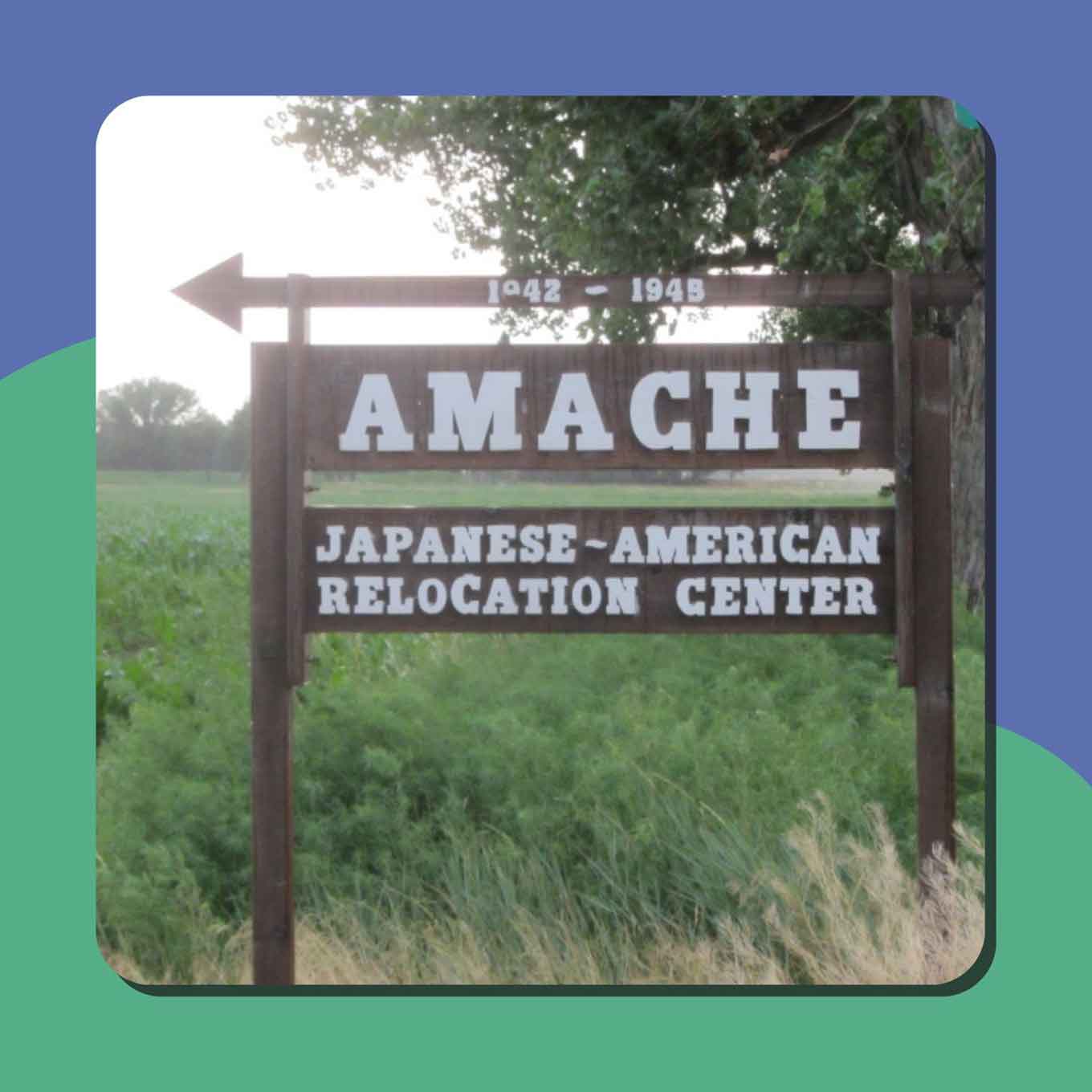
The preservation of this site is meant to confront the “painful chapter of American history,” according to a press release from the National Parks Service.
The process to establish this new national park began in March 2022, when President Biden signed the Amache National Historic Site Act, designating the location as part of the NPS. The land was donated by the Town of Granada, and through this formal designation, will be permanently protected.
“As a nation, we must face the wrongs of our past in order to build a more just and equitable future,” Secretary Harland said in a statement. “The Interior Department has the tremendous honor of stewarding America’s public lands and natural and cultural resources to tell a complete and honest story of our nation’s history.”
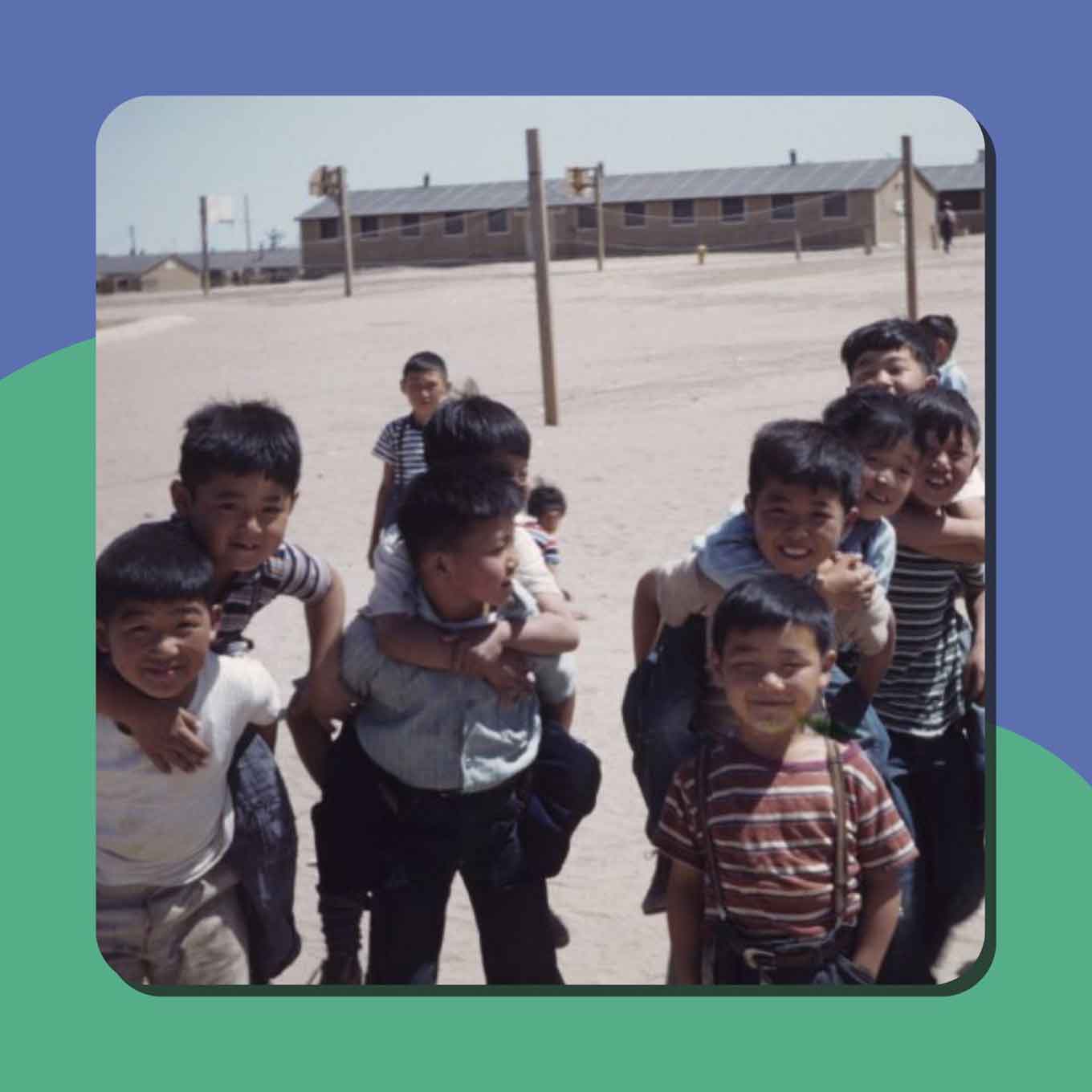
According to NPS, the original buildings associated with the incarceration site were removed or demolished in 1945, upon the closing of Amache.
However, original building foundations and road networks are still visible on the landscape, making Amache “one of the most intact examples of a World War II incarceration site.”
All preserved elements of Amache are there thanks to decades of preservation work by Amache survivors and their descendants through the Amache Preservation Society and the Town of Granada.
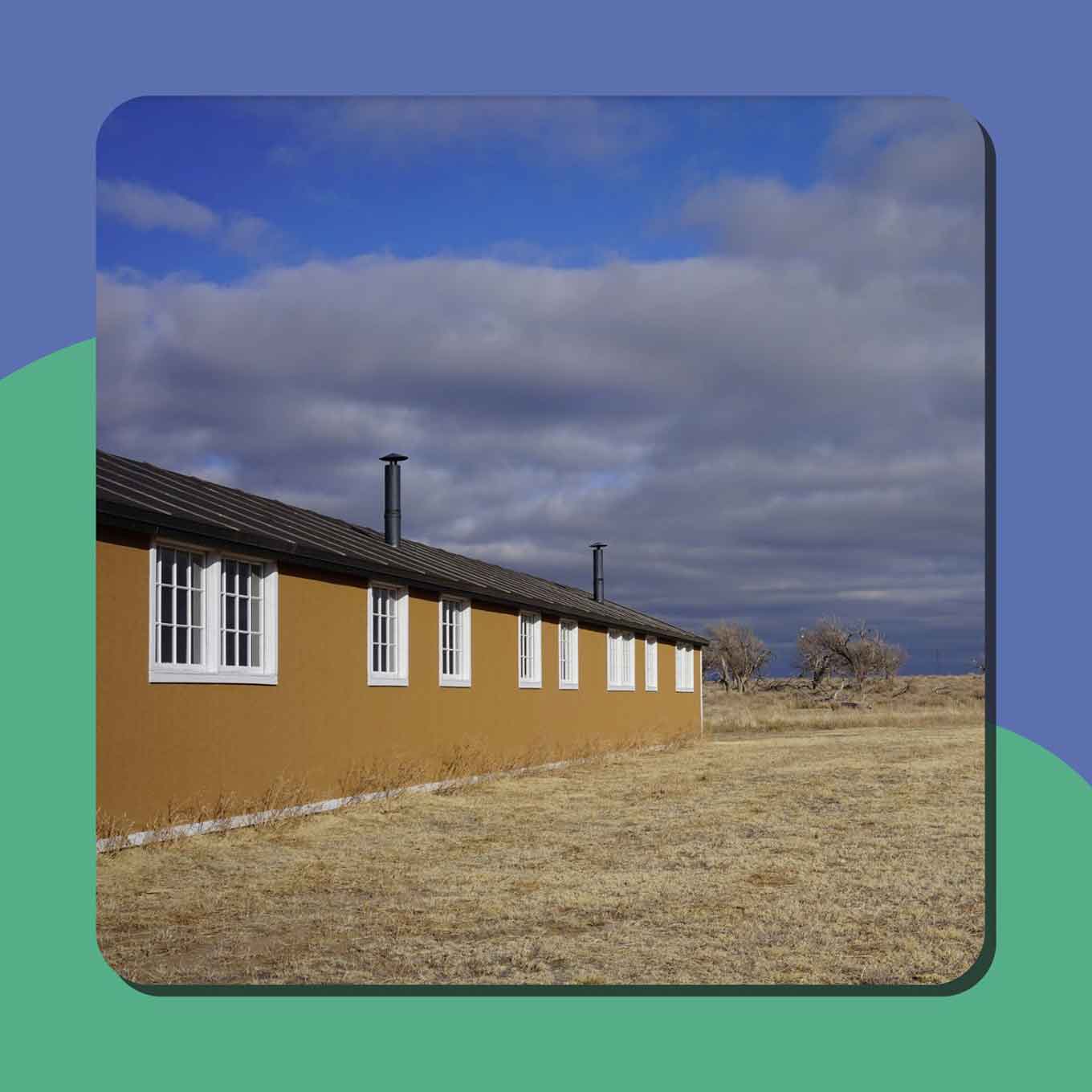
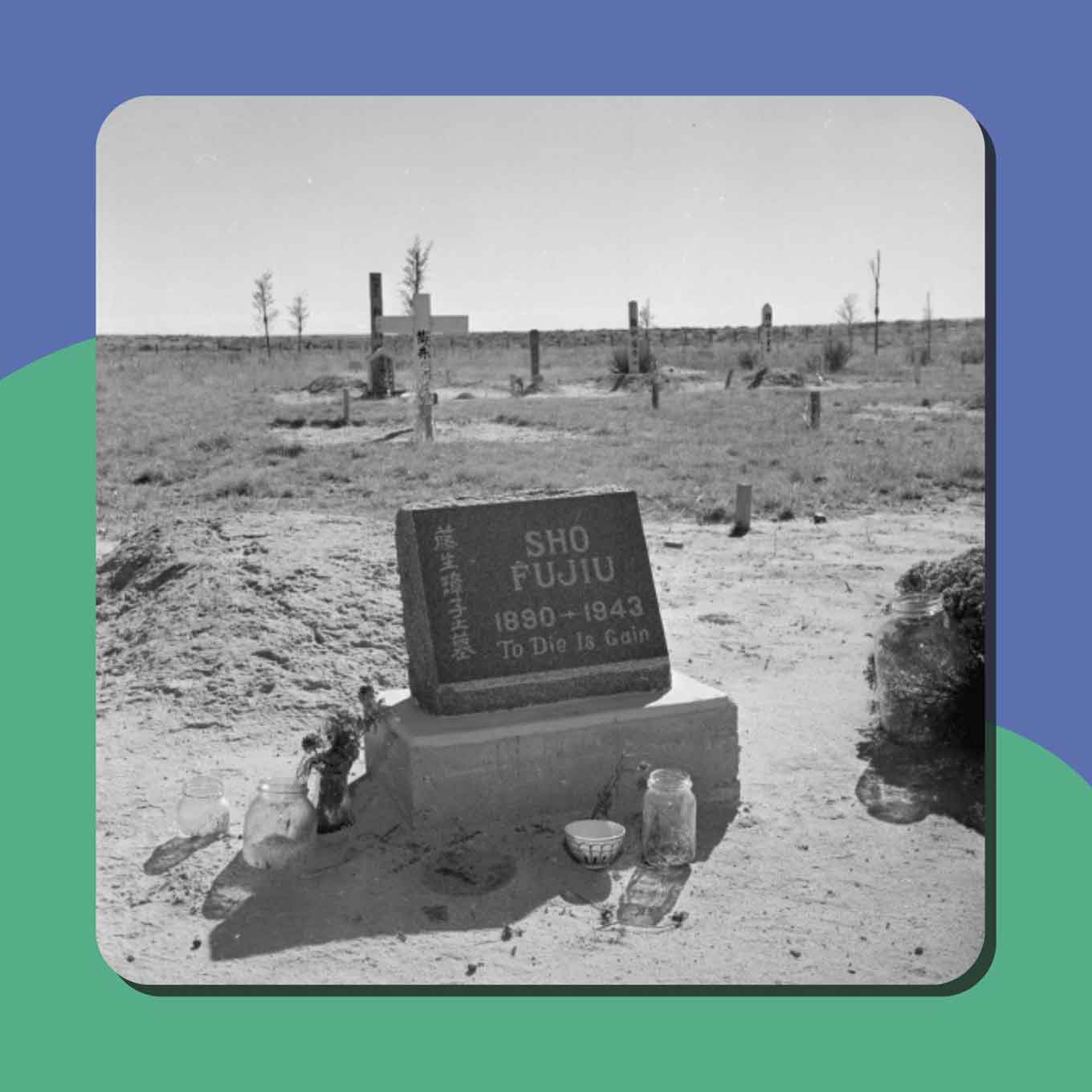
Visitors can also learn more about Amache by touring a historic cemetery and monument, which honors 121 people who died while being held at Amache. The historic site is also home to several reconstructed and restored structures, including a barrack, recreation hall, guard tower, and water tank.
To fully understand the history of the site, visitors can take a self-guided driving and audio tour of 11 points of interest — or even join an interpretive tour led by student volunteers.
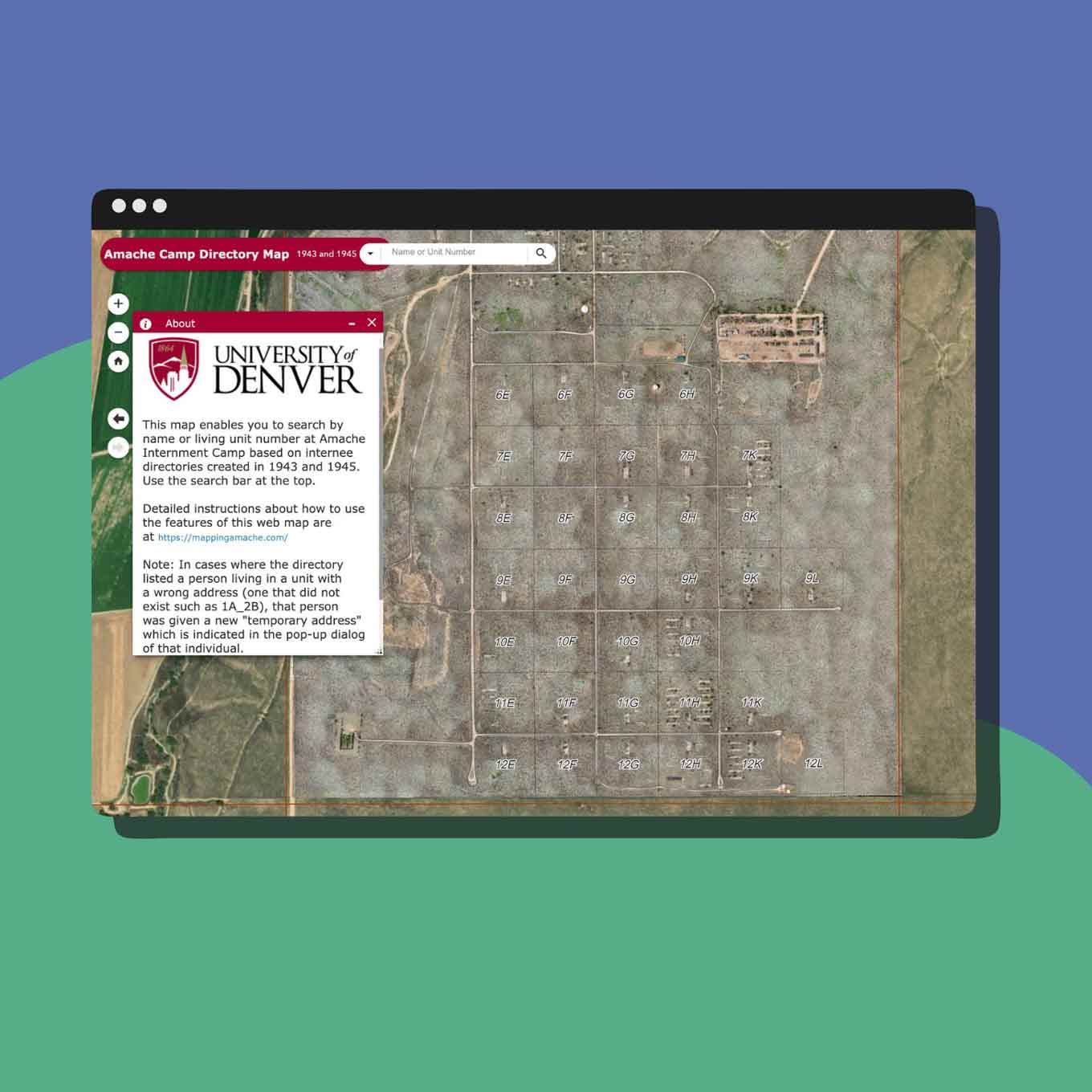
Folks with a personal connection to Amache can search an online barracks directory created by the University of Denver to unearth more information about their family’s history.
“Amache’s addition to the National Park System is a reminder that a complete account of the nation’s history must include our dark chapters of injustice,” National Park Service Director Chuck Sams said in a statement.
“To heal and grow as a nation we need to reflect on past mistakes, make amends, and strive to form a more perfect union.”
Amache joins six other similar national parks established to remember this dark era in American history.
Since 2009, the NPS has administered over $41 million in funding through the Japanese American Confinement sites grant program, which supports hundreds of nonprofits, educational institutions, local governments, and more in preserving significant stories connected to unjust Japanese incarceration in World War II.
The new designation also embeds itself in the diverse, painful history of southwestern Colorado, where other national historic sites, like the Sand Creek Massacre National Historic Site and Bent’s Old Fort, pay homage to Indigenous history in the area.
While all of these sites have unique, important stories, the through line that connects them all is the desire to learn from the past and honor what has been lost.
“Amache,” per the park’s official NPS website, is “a place to reflect, recommit, and further the pursuit of freedom and justice.”
Header images courtesy of Mitch Homma/Amache Preservation Society and the National Parks Service
This story was originally published by Grist. Sign up for Grist’s weekly newsletter here.
In cities across the country, people of color, many of them low income, live in neighborhoods criss-crossed by major thoroughfares and highways.
The housing there is often cheaper — it’s not considered particularly desirable to wake up amid traffic fumes and fall asleep to the rumble of vehicles over asphalt.
But the price of living there is steep: Exhaust from all those cars and trucks leads to higher rates of childhood asthma, cancer, cardiovascular disease, and pulmonary ailments. Many people die younger than they otherwise would have, and the medical costs and time lost to illness contributes to their poverty.
Imagine if none of those cars and trucks emitted any fumes at all, running instead on an electric charge. That would make a staggering difference in the trajectory, quality, and length of millions of lives, particularly those of young people growing up near freeways and other sources of air pollution, according to a study from the American Lung Association.
The study, released today, found that a widespread transition to EVs could avoid nearly 3 million asthma attacks and hundreds of infant deaths, in addition to millions of lower and upper respiratory ailments.
Children, being particularly vulnerable to air pollution, would benefit most, said study author William Barret, the association’s national director on advocacy and clean air.
“Children are smaller, they’re breathing more air pound for pound than an adult,” Barret said. “The risk can be immediate, but it’s also long lasting.”
Some 27 million children live in communities affected by high levels of air pollution, the study found. Their vulnerability begins in the womb, where vehicle exhaust, factory smoke, and other pollutants can jump-start inflammation in a fetus and its mother, causing health problems for both and leading to preterm birth and congenital issues that can continue for a lifetime.
Prior research by the American Lung Association found that 120 million people in the U.S. breathe unhealthy air daily, and 72 million live near a major trucking route — though, Barret added, there’s no safe threshold for air pollution. It affects everyone.
Bipartisan efforts to strengthen clean air standards have already made a difference across the country. In California, which, under the Clean Air Act, can set state rules stronger than national standards, 100 percent of new cars sold there must be zero emission by 2035.
Truck manufacturers are, according to the state’s Air Resources Board, already exceeding anticipated zero-emissions truck sales, putting them two years ahead of schedule.
All that’s needed is for the EPA to grant California the waivers required to implement these standards.
Other states have begun to take action, too, often reaching across partisan lines to do so. Maryland, Colorado, New Mexico, and Rhode Island adopted zero-emissions standards as of the end of 2023.
The Biden administration is taking similar steps, though it has slowed its progress after automakers and United Auto Workers pressured the administration to relax some of its more stringent EV transition requirements.
While Barret finds efforts to support the electrification of passenger vehicles exciting, he said the greatest culprits are diesel trucks. “These are 5 to 10 percent of the vehicles on the road, but they’re generating the majority of smog-forming emissions of ozone and nitrogen,” Barret said.
Ozone is especially harmful. When ozone makes its way inside the human body, it causes what amounts to a sunburn, inflaming and degrading respiratory tissues.
Lately, there’s been significant progress on truck decarbonization. The Biden administration has made promises to ensure that 30 percent of all big rigs sold are electric by 2030.
California has moved aggressively to curb truck emissions, aiming to make medium- and heavy-duty vehicles zero-emission “where possible” by 2035, while heavily regulating certain kinds of freight trucks.
Though legislative mandates and tax incentives like those in the Inflation Reduction Act go a long way toward getting EVs on the road, they don’t remove internal combustion trucks and cars, which pose enough of a health threat that advocates are urging immediate change.
Ideally, Barret said, the Biden administration would immediately roll out clear-cut standards to slash emissions. It is considering truck standards that would by 2032 reduce emissions from heavy-duty vehicles 29 percent below 2021 levels using battery-electric and hybrid vehicles.
The current standard only explicitly calls for the use of advanced diesel engines. The study’s authors also strongly recommend that the EPA finalize multi-pollutant regulations for light and medium-duty vehicles, which are currently under consideration.
Such measures, combined with an increase in public EV charging stations, vehicle tax credits, and other incentives, could change American highways, not to mention health, for good.
“We just need to see more and more of that given the growing urgency of the climate crisis,” Barret said.
Last night kicked off the first stop on Olivia Rodrigo’s ‘Guts World Tour,’ in Palm Springs, California.
Along with a “feisty” hour-and-a-half set, the (recently) 21-year-old singer debuted a meaningful initiative that will travel with her on a 75-stop tour: The Fund 4 Good.
While whispers of the initiative were first shared in the fall of 2023, Rodrigo took to her official fan account on both TikTok and Instagram yesterday to share more details.
“I’m so excited tonight is the very first show of the Guts World Tour, and before I pop on stage, I wanted to get on here and tell you about something I’m really excited about,” she shared in a video from her dressing room.
Here, she formally introduced the project.
“Fund 4 Good works to support all women, girls, and people seeking reproductive health freedom,” she said. “The fund will directly support community-based nonprofits that champion things like girls' education, support reproductive rights, and prevent gender-based violence.”
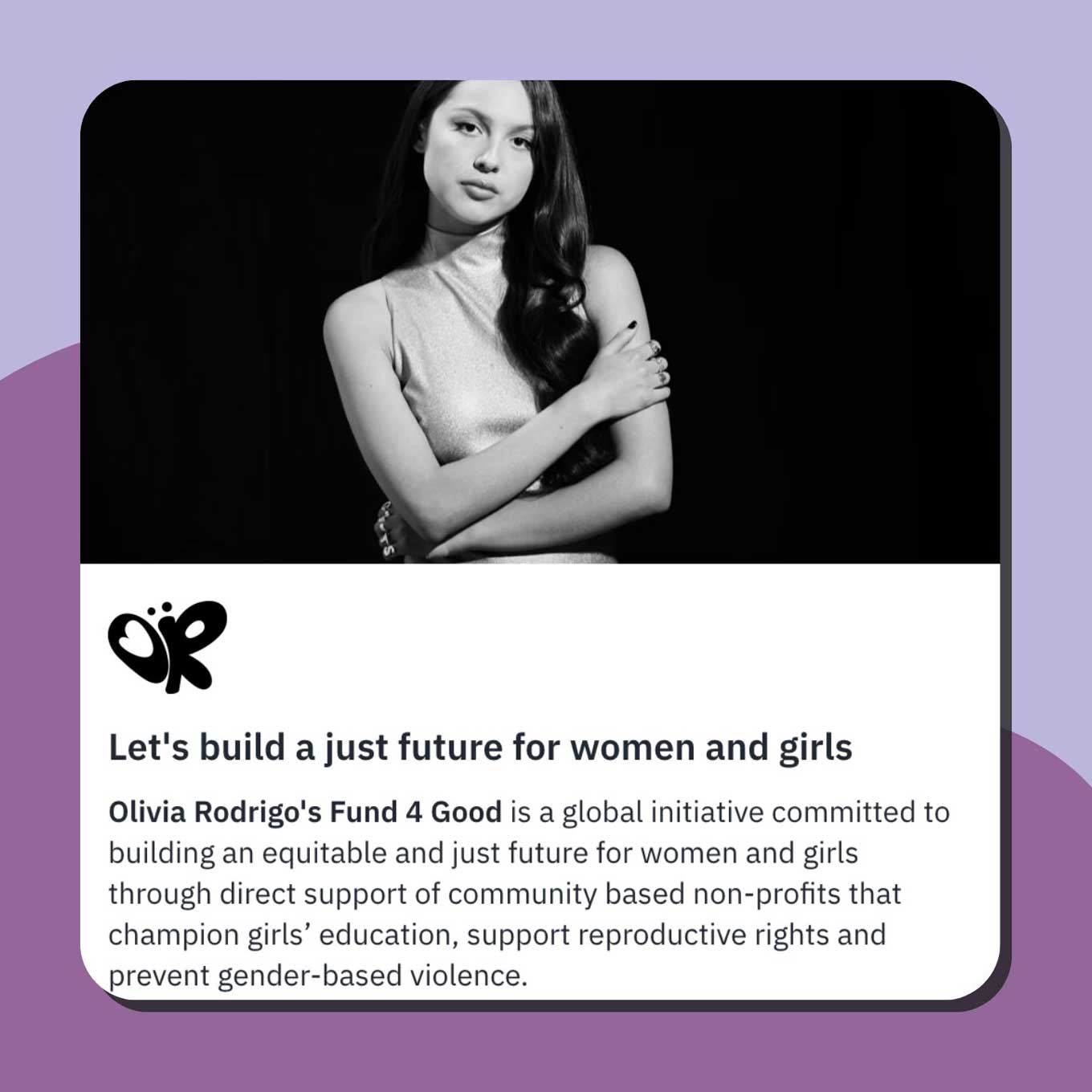
Rodrigo went on to add that a portion of all ticket sales from the Guts World Tour will go to the Fund 4 Good.
Additionally, she added, for the North American leg of the tour, she will be partnering with the National Network of Abortion Funds “to help those impacted by healthcare barriers in getting the reproductive care they deserve.”
The “Vampire” singer has also been praised for her empowerment of women and gender expansive folks on her tour, with all of her openers being female acts. Additionally, all of her dancers are women, transgender, or non-binary, according to the New York Times.
@livieshq olivia has launched #Fund4Good ♬ original sound - livies hq ❤️
Rodrigo finished her video announcement by telling fans to learn more via an attached link, or by stopping by a National Network of Abortion Funds table at the various stops on her tour.
“Thank you so much for supporting this cause I care so deeply about,” she said, blowing a kiss to the camera. “I’ll see you on tour.”
While many of the comments under her TikTok video were from excited fans, eager to see her performance or get tickets to a show, many also chimed in to express their pride in the Fund 4 Good.
“I’m so glad young girls have such a wonderful role model to look up to,” one commenter wrote.
“Thank you so much for what you’re doing,” another person added. “This is why you are my idol.”
Header images courtesy of @livieshq/TikTok
Since 2021, Good Good Good has published more than 150 articles of quotes.
Some articles are curated around a famous activist, author, or leader such as Maya Angelou, Paul Farmer, or Bernice King. Others are curated around ideas, themes, or holidays, such as activism, hopefulness, or International Women’s Day.
While your experience of reading each article is (hopefully!) seamless, consistent, and simple — the process of creating each article is actually quite extensive.
So, what is the process we use for crafting quote articles for Good Good Good?
How we create our curated quote articles
Here’s the TL;DR: Every one of our curated quote articles goes through an extensive process during which at least three people take part in researching, curating, and reviewing each of the quotes.
Our goal is that you can trust Good Good Good as a helpful source for discovering quotes about topics you care about. Here’s our process:
1. We pick a topic.
The first step in every quote article is to determine a topic.
We often do this by finding common themes across our good news articles, social media posts, and guides on how to make a difference.
After writing a few articles about the death penalty, it feels natural to curate quotes we’ve come across that are related to death penalty abolition. Or after mentioning Coretta Scott King in a number of articles, it makes sense to put together a collection of her most famous quotes.
We also take note of the search terms people use within our website’s search bar and also the search terms people use on Google and Bing to find our website.
For example, a significant number of people have searched for animal rights and animal welfare content on our website — so we asked our writers to begin working on several helpful resources, including a list of quotes about animal rights.
Our goal is to serve our readers and build out a diverse range of articles about topics that our community has come to depend on us for. This includes a list of quotes written by respected people in the field!
2. We do initial research and brainstorming about what a reader would expect to find in this article.
Sometimes, some quotes are such an obvious fit for a topic that it would be surprising for them not to be included.
We begin our research process by identifying the “no-brainer” inclusions that we should consider for our article.
Of course we need to include Fred Rogers’ iconic quote about “looking for the helpers” in our (incredibly comprehensive) list of Mister Rogers quotes. Of course we need to include a quote from Malala in our list of quotes about courage.
3. We think outside the box and consider more perspectives.
An article with only the classics and clichés ultimately isn’t very helpful. We like to ensure our quote articles are different from anything else available online.
As a part of our process, we reflect on lesser-known leaders, activists, and experts who may have ideas to contribute to this topic. We deep-dive into their books and speeches — and even pull from our own exclusive interviews with subject matter experts, when possible.
We also like to ensure we’re bringing all of the right voices to the table. An article about nature should include avid outdoors enthusiasts, environmental activists, political leaders at the forefront of climate policy, and Indigenous leaders whose communities have cared for nature for many generations.
This is also the point in the process where we begin categorizing quotes into sections within the article, to help make it easier to navigate and sort through.
4. We fact-check, cut any quotes that don’t align with our community’s values, and work to add context where necessary.
Once we have a comprehensive selection of quotes, we begin cutting quotes that aren’t a fit.
We’ve all heard of quotes that were misattributed to someone like Abraham Lincoln. We take the time to sort fact from fiction and remove commonly incorrect quotes from our lists.
We also hold each quote against our community’s core values and remove quotes and authors that don’t meet the mark. Even though a particular historical figure said something inspirational about a particular topic — if their lives and actions contradict the ideals the article (or our community) stands for, we usually remove their quote from our articles.
In one example, a noteworthy person said something about trees that ordinarily would be a perfect fit for our curated article of quotes about trees. But, the author of this quote was a proud slaveholder. It was an easy decision to cut all of their quotes from the article — as there’s no need to perpetuate their legacy.
In some more nuanced cases, where it feels more necessary to include quotes from authors that don’t align with our values, we try to add context.
For example, in our guide to quotes about national parks, we found that readers expected articles on this topic to include quotes from John Muir because of the role he played in protecting Sequoia National Park. But, we knew it wouldn’t be appropriate to share his quotes without providing context to readers about some of his deeply troubling behaviors and attitudes. So, we included an introductory paragraph in the “John Muir Quotes” section of the article that included context with citations and details.
We took a similar approach in our article about Mother Teresa quotes — acknowledging the complexity and critiques of her legacy.
When a reader is turning to our article to seek inspiration, track down a quote, or find meaningful words to share with others, we see it as our duty to ensure the reader is equipped with the necessary context on the person they’re quoting.
5. We consistently format every quote in our articles.
As a journalistic publisher that holds ourselves to high standards, our formatting and style reflects the intentionality that goes into all of our work.
All of our quotes use consistent formatting for quotation marks, punctuation, and attributions.
6. We add graphics.
Quotes are meant to be shared and enjoyed — so we take the time to fill our articles with colorful Good Good Good-exclusive quote graphics.
Please feel free to use these for personal, non-commercial purposes. Share them on social media, use them in your presentation, pin them on Pinterest. (Tag us or mention us, if you can!) Just don’t sell them, don’t use more than one on a website, and don’t modify the design in any way.
7. We hit publish and make the articles easy to find.
We proudly publish the articles on our website and add links between each article (where appropriate) to make it easier to go from one article to another.
You can use the search bar on our website to find the quotes you’re looking for, dive into our “Quotes” category page to explore the archives, or simply add “Good Good Good” to your search in Google or your preferred search engine to bring our articles to the top of your results.
You likely see quotes re-shared on our social media during relevant times of the year — and in a designated section our popular Goodnewsletter.
Each of our print newspapers also includes a beautiful centerfold poster with an inspiring quote.
8. We continue to update our articles.
Our goal is that these articles never stay stagnant. When we find a new quote that’s a perfect fit for an existing article, we update the piece to include it. When a reader reaches out saying that they noticed we made a mistake on a quote, we quickly fix or remove it. And when we learn new information about a quote’s author that might affect a reader’s choice to use the quote, we may add additional context or remove quotes from that author altogether.
Ultimately, we want readers to trust Good Good Good as the most consistently comprehensive source for quotes — especially quotes related to making a positive impact in the world.
We spend more time and resources on these articles than other websites do because we really care about being trustworthy and helpful.
If you ever see an opportunity for us to improve these articles, please don’t hesitate to share your feedback with us.
Foo Fighters is fighting the good fight.
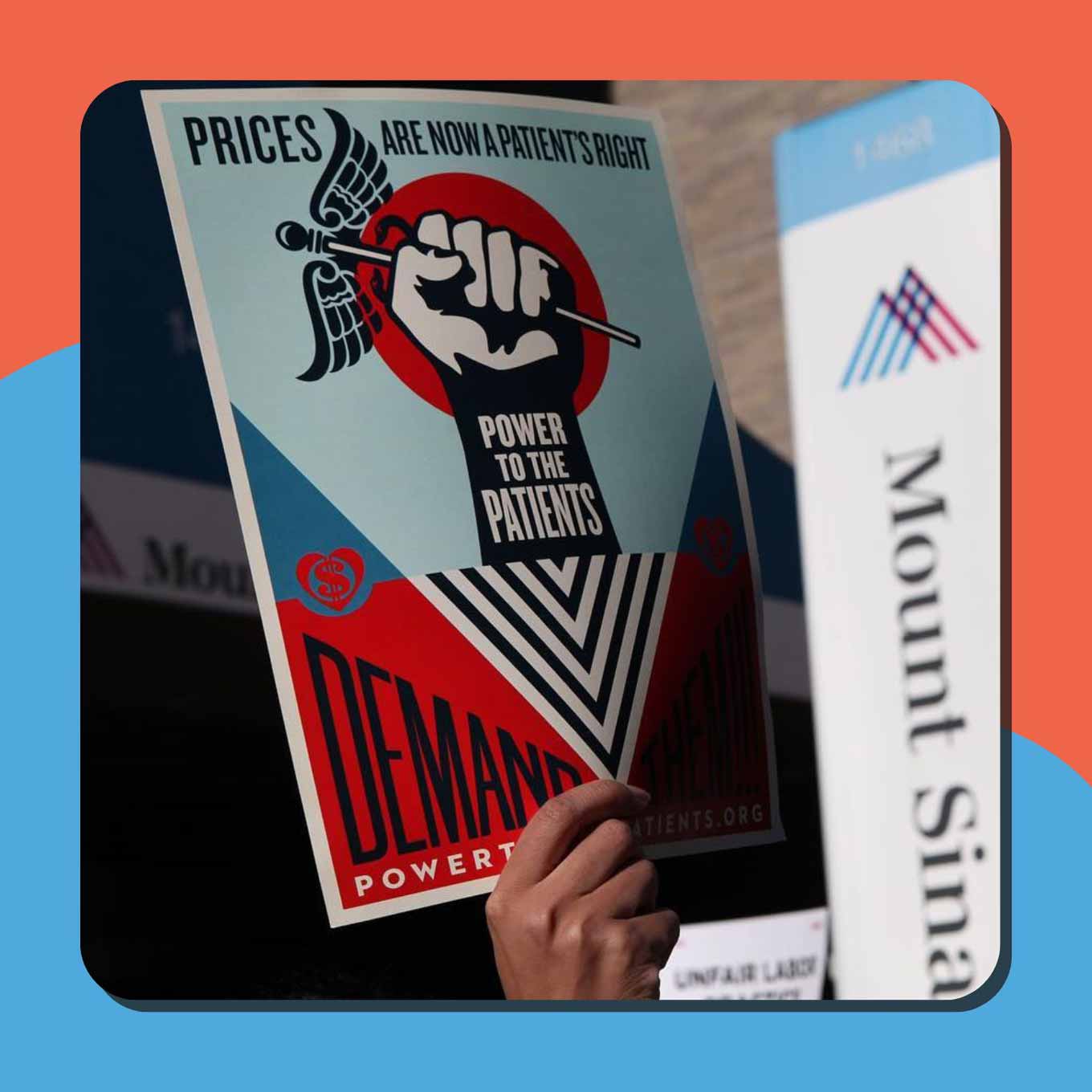
On March 5, the rock band will take a detour from their world tour to headline a Washington, D.C. benefit concert for Power to the Patients, a nonprofit that calls for price transparency and equitable healthcare access.
At the one-night-only event, Foo Fighters will share the spotlight with a lineup of other talented musicians, including Fat Joe, Busta Rhymes, Wyclef Jean, and more.
“When we were asked by Power to the Patients to help raise awareness of the need for transparency in healthcare pricing, we immediately said yes,” Foo Fighters announced in a statement to the press.
“People suffering from illness and injury shouldn’t have to worry about being bankrupted by surprise charges for their treatment.”
The issue of medical debt
Although federal laws have mandated clear and accessible hospital pricing since 2021, hospitals have routinely sidestepped compliance laws on a national scale.
For years, activists across the country have called for radical change in the healthcare industry. Community organized fundraisers and GoFundMe campaigns have become the norm for patients living with medical debt.
Before passing away from stage four ovarian cancer, a writer, Casey McIntyre, created a fundraiser with the nonprofit RIP Medical Debt.
“To celebrate my life, I’ve arranged to buy up others’ medical debt and then destroy the debt,” McIntyre stated in a farewell letter. “I am so lucky to have access to the best medical care at [Memorial Sloan Kettering Cancer Center] and am keenly aware that so many in our country don’t have access to good care.”
McIntyre’s goal was $20,000. Since her passing, the campaign has generated over $1 million in donations.
Healthcare activists have hope that the tide is turning against the hospital industry in favor of patients. New and expanding companies like CareBridge are taking a value-based approach to the hospital industry, focusing on Medicare and Medicaid recipients and lowering healthcare costs across the market.
Power to the Patients taps into the Dave Grohl effect
Similarly, Power to the Patients has long been dedicated to creating a more affordable healthcare system in America through PSAs and community-made murals across the country.
As hospitals cut corners and continue to hide prices to drive competition with insurers, Power to the Patients continues to protect patients from price-gouging, hidden expenses, and financial ruin.
And the organization’s upcoming concert in March is set to serve as its biggest platform yet.
“The event aims to raise awareness about the inequality and uncertainty millions of patients face due to hidden upfront prices in the healthcare system,” the organization shared on X (formerly Twitter).
With this concert benefit, Foo Fighters continues to uphold their legacy not just as rock legends, but as an undeniable force for good.
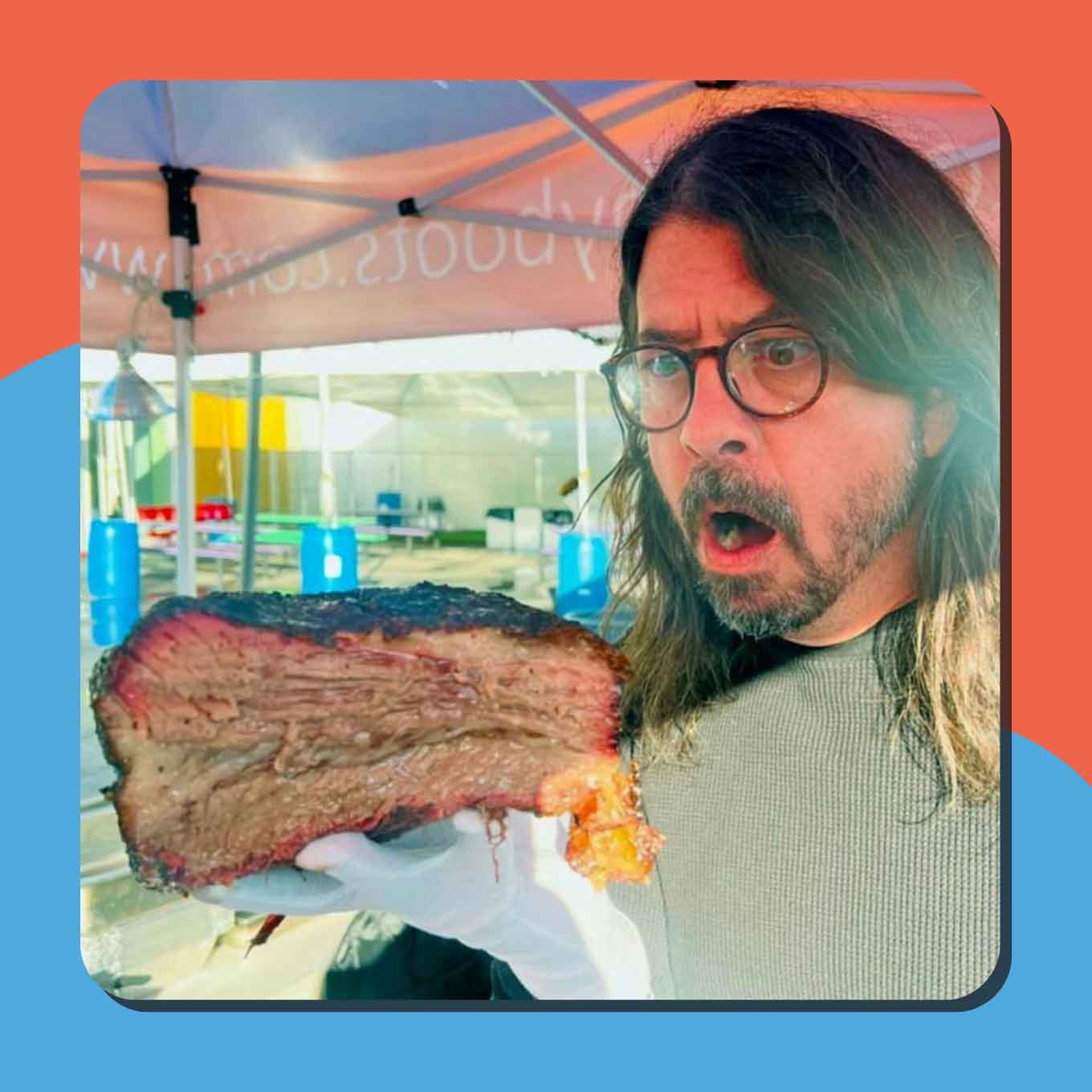
In December, Foo Fighters’ frontman Dave Grohl spent 18 hours creating a massive barbecue buffet on behalf of The Big Umbrella Foundation, a Melbourne-based charity that assists people experiencing homelessness.
This came mere months after Grohl volunteered for Hope the Mission and fed 500 LA community members also facing poverty and food insecurity. At both events, Grohl, volunteers, and attending community members were all smiles.
Grohl once famously said: “If there’s one thing I’m good at, it’s gathering people together to do something fun.”
Header images courtesy of Andreas Lawen, Fotandi (CC BY-SA 4.0) and Power to the Patients
Last week, Gabriella Wong gave a presentation at the United Nations that has now been viewed over a million times on TikTok.
Wong is the founder of accessSOS, a tech nonprofit on a mission to make emergency help more accessible. In Vienna, she introduced the organization in a discussion on equal access to emergency services.
She started by telling the story of her parents, who are both Deaf and communicate via American Sign Language — or if they’re not with their daughter, via text.
Although Wong is fluent in ASL — emergency services in the United States typically are not. And text-to-911 infrastructure is inconsistent, inaccessible, and unreliable.

“A few years ago, when my father was home alone… his gallbladder ruptured,” Wong said. “He was worried that if he went to his video relay machine, he would not reach the sign language interpreter in time. What he did was text me to call 911 for him, but I wasn’t near my phone at that time.”
Her father almost died.
“Why couldn’t my dad text emergency services directly in the United States?” she asked. “The emergency services system was built in the 1960s and 70s, using an old landline system. Upgrading that old equipment costs a lot of money and a lot of time.”
According to the accessSOS website, 46% of emergency call centers in the U.S. cannot accept texts, leaving upwards of 37 million Americans who cannot hear or speak out loud in the dark.
The soonest the United States would get 100% access to text-to-911 services, Wong said, would be in 2030.
“People like my parents can’t wait that long to get the help they need,” she emphasized.
These statistics — and the life-or-death experience Wong had with her father — were the catalyst for accessSOS.

The organization provides a life-saving solution, in the form of a free, 24/7-accessible mobile app. It immediately accesses the geolocation of the person in need and sends it to local emergency services.
“You just press a few picture-based icons, select your emergency, and we send that information over to 911,” Wong explained.
The app also uses the preferred language of the user, translating their text into a voice call and streamlining it to an emergency dispatcher.
If users are unable to download the app, they can also visit contact911.org on their phones to use accessSOS’s services.
These services are currently only available in Santa Fe and Albuquerque, New Mexico, and Berkley, California but have a cumulative 14,000 users so far.
While accessSOS continues to raise funds to offer service across the U.S., the organization also uses its innovation as a platform to raise awareness about the issue of inequitable access to emergency services.
@911access Watch Gabriella Wong, founder of accesSOS, present on the global stage at the #UnitedNations to discuss the need for equal access to emergency services. #TechForGood #ZeroCon24 #Accessibility ♬ original sound - 911access
The viral TikTok certainly helps.
Viewers of the video filled the comment section with words of appreciation and encouragement, some even asking if they could donate to support the growth of accessSOS.
“She transformed her helplessness and regret for not being there for her Dad into pure magical action to benefit so many,” one person commented. “Wow.”
“If I were rich, I’d fund this kind of thing in a heartbeat,” another person chimed in. “Fantastic use of technology.”
One person simply summed up Wong’s speech in a powerful sentence: “Accessibility saves lives.”
Header images courtesy of accessSOS/TikTok
Malcolm X was an American Muslim minister and human rights leader who was a prominent force for Black empowerment during the Civil Rights Movement — and was tragically assassinated in 1965.
On the back-end of Black History Month, Malcolm X’s birthplace is honoring his legacy, with a major investment in a new museum.
This month, the state of Nebraska officially awarded a $20 million grant to go towards the development of a nearly 18-acre site in North Omaha.
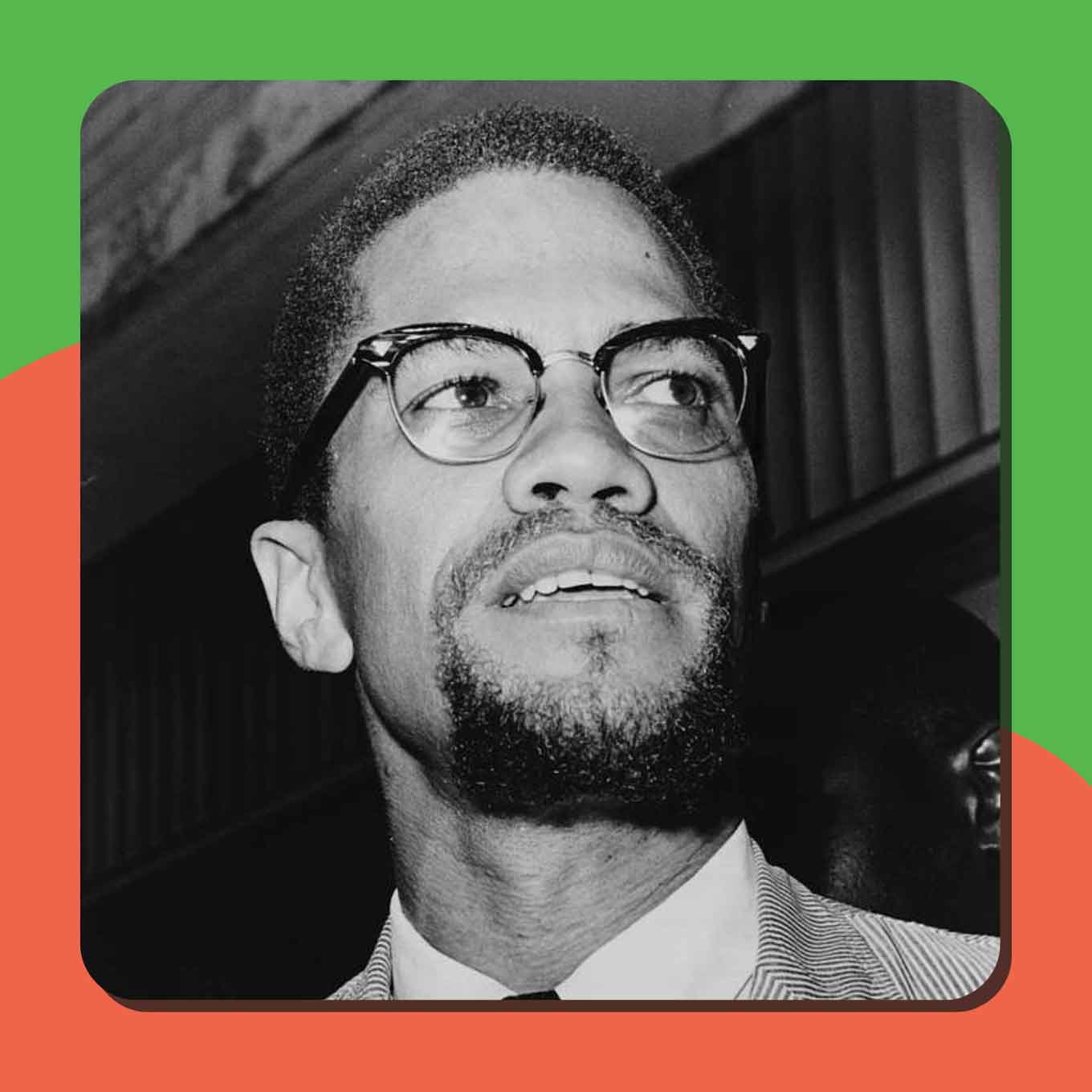
Right now, the site is home to land, gardens, and a small former church, but following a multi-million dollar renovation, it will house a museum, cultural education center, a renovated amphitheater, community gardens, and specially commissioned artwork honoring the social justice legend.
It will also make way for an improved headquarters for the managers of the property: The Malcolm X Memorial Foundation.
Malcolm X’s birthplace was recognized as a historical landmark by the state of Nebraska in 1984, years after the initial creation of the Foundation. Now, 40 years later, his legacy will get the prestige local activists have long aimed to foster.
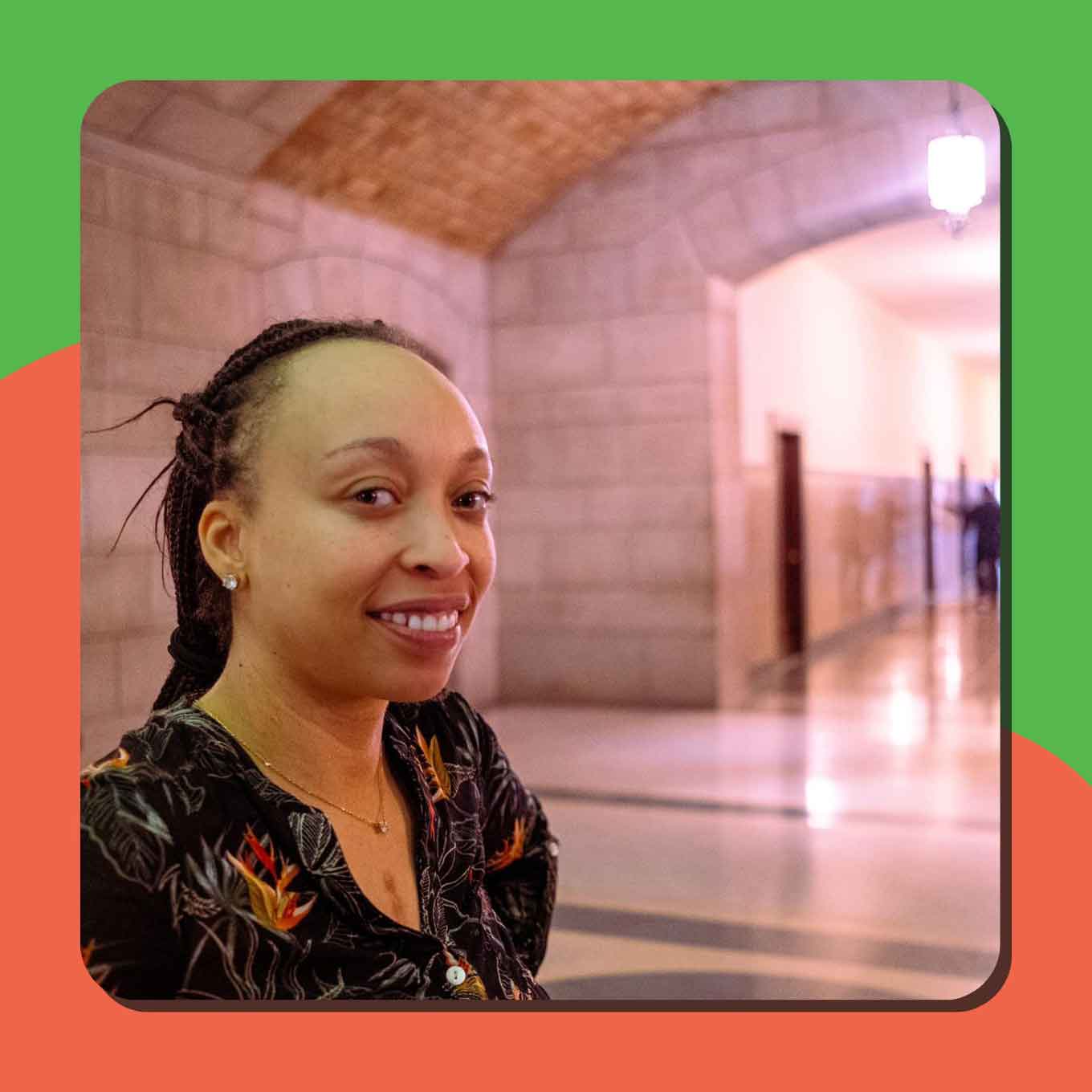
“I’m really looking forward to the growth we’re going to experience,” JoAnna LeFlore-Ejike, executive director of the Foundation, told 6 News WOWT. “Malcolm X’s name travels far beyond Nebraska, but it’s our responsibility to make sure people in our own backyard know who he is.”
LeFlore-Ejike said she envisions the space as a tourist destination, a cultural site, and an event space. The site is already a beloved location for many North Omahans, who often celebrate Juneteenth on the land and engage in community and political events in the existing education center.
The grant money for the museum was approved through legislation last year, alongside Malcolm X’s induction as the “first African American in the Nebraska Hall of Fame.” His place in the Hall of Fame is also an effort that took decades to accomplish, according to LeFlore-Ejike.
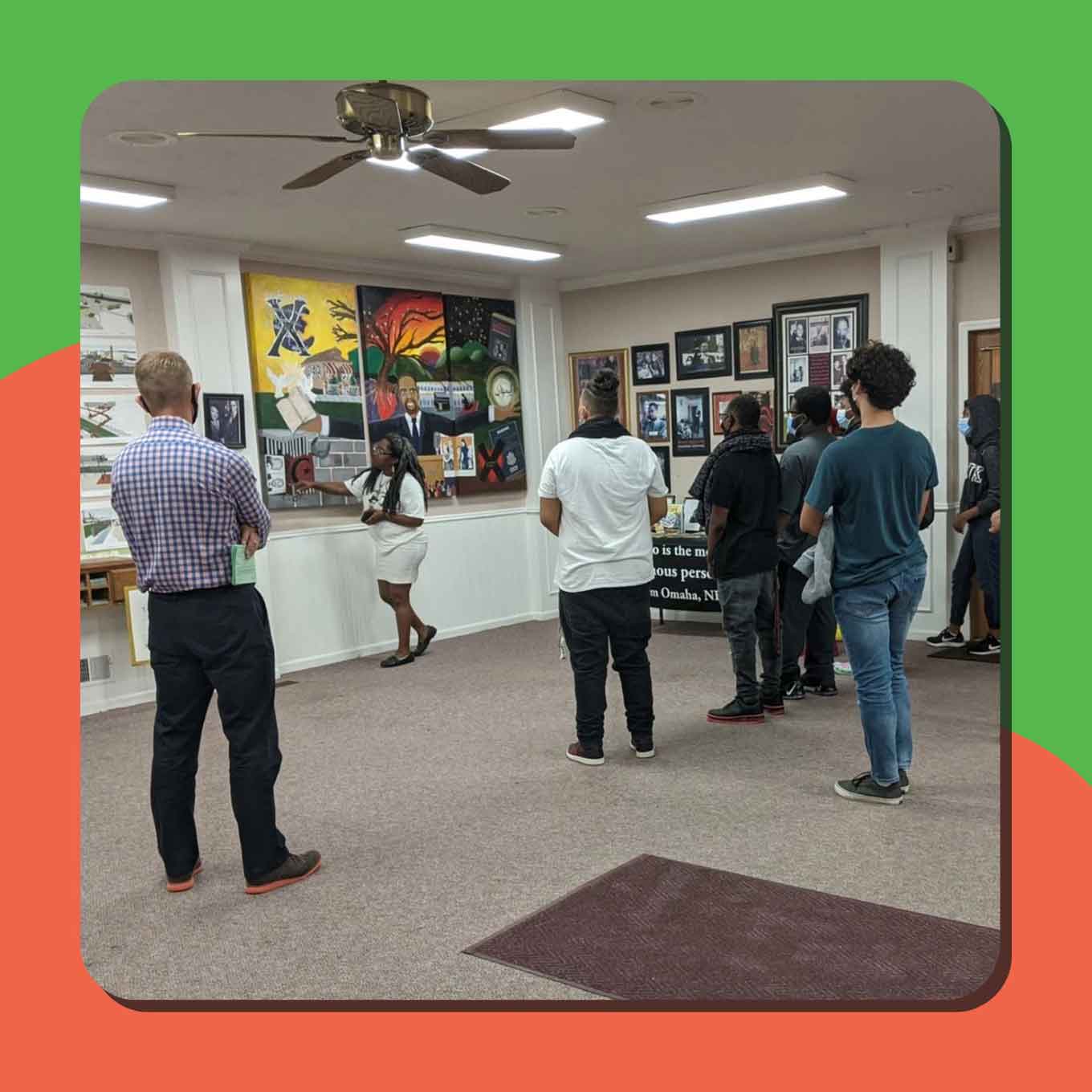
These milestones are exciting and gratifying for the Foundation, especially considering Malcolm X’s history in the state, in which his family was forced to relocate after ongoing threats of violence from white supremacists in his youth.
Other local leaders continue to work to honor his legacy in its totality. State Senator Terrell McKinney has re-introduced a bill that would require Nebraska to observe Malcolm X Day on May 19 — the date of the minister’s birth.
So far, only the states of Illinois and Missouri — and the cities of Berkeley and Oakland — formally recognize the holiday.
While the work is still in progress, Black Nebraskans continue to show up in the ongoing mission to preserve and build upon the legacy of Malcolm X.
“Malcolm X has reached his point of history where his recognition is due,” Preston Love Jr., a North Omaha historian and Black Studies professor, testified in support of Malcolm X Day in February 2023.
“We have somewhat of a cosmic and divine responsibility to recognize him as a state.”
Header images courtesy of the Library of Congress and Ammodramus (CC BY 1.0)
If Susan B. Anthony had a deaf sister, everyone would know that deaf suffragists fought tirelessly for expanding women’s right to vote, right alongside Anthony herself.
Everyone would know deaf suffragists contributed to women’s emancipation in the United States and Britain and that they lived bold lives.
As a researcher of deaf history, including deaf women’s history, I work to illuminate the often hidden history of deaf people and their unique contributions to the world.
I have unearthed historical information about deaf women suffragists and assembled it into an online collection chronicling what is known — so far — about these women and their lives.
Despite harsh, discriminatory conditions, low pay and lack of recognition, countless deaf women have fought with brilliance and dedication for personal and professional recognition, including for the right to vote.
Underpaid and discriminated against

Annie Jump Cannon was a pioneering astronomer. Born in 1863, she experienced progressive hearing loss starting at a young age.
One of the first women from Delaware to attend college, she was her class valedictorian when she graduated from Wellesley College, where she excelled in the sciences and mathematics.
In 1896, she was hired as a “woman computer” at the Harvard College Observatory, along with another prominent deaf astronomer, Henrietta Swan Leavitt.
The work involved looking at photos of stars and calculating their brightness, position and color. The two were paid between 25 and 50 cents an hour – half the rate paid to men doing similar work.
Nevertheless, Cannon is credited with cataloging 350,000 stars. Building on others’ work, Cannon revolutionized and refined a system to rank stars from hottest to coolest that is still used today by the International Astronomical Union, though it is named for Harvard, not for her.
Cannon was a member of the National Woman’s Party, formed in 1916 to advocate for passage of the 19th Amendment to the U.S. Constitution, allowing women to vote. Cannon’s suffragist efforts used her profession as a launchpad, as when she declared that “if women can organize the sky, we can organize the vote.”
She used her prominence to pave the way for women in the sciences, becoming the first woman to receive an honorary degree from Oxford University in 1925, and facing down eugenicists who blocked her from joining the National Academy of Sciences because she was deaf.
In 1938, after 40 years of service, her role as “the dean of women astronomers” finally earned her a permanent faculty position at Harvard, where she worked until her death three years later. A lunar crater, Cannon, and an asteroid, Cannonia, are named for her.
Two British women faced prison

British deaf suffragist Helen K. Watts, born in 1881, was a militant member of the radical Women’s Social and Political Union who demonstrated at Parliament in 1909 for the women’s vote. After one protest that year, she was arrested and imprisoned — but began a 90-hour hunger strike that resulted in her release. As she left, she declared:
“The Suffragettes have come out of the drawing-room, the study and the debating hall, and the committee rooms of Members of Parliament, to appeal to the real sovereign power of the country — the people.”
In 1913, she left the more violent group and joined the nonviolent Women’s Freedom League, also seeking women’s right to vote.
One of her sister leaders in the Women’s Freedom League was British deaf suffragist Kate Harvey. Harvey believed in not paying taxes until women were granted the vote — which resulted in authorities breaking into her home to arrest and imprison her in 1913.
A silent voice in print

Laura Redden Searing, born in 1840, was a gifted American poet, newspaper reporter and writer — often using the male pseudonym Howard Glyndon so her work would be taken more seriously.
Deafened by illness as a child, she entered the Missouri School for the Deaf when she was 15 years old and learned sign language, graduating in 1858, writing an address and “farewell poem” that was published in the American Annals of the Deaf.
When communicating with nonsigners, she wrote with a pencil and pad — with which she conducted countless interviews over many years as a reporter and writer.
In 1860, Searing became the earliest deaf woman journalist, writing for the St. Louis Republican, whose editors sent her to Washington in September 1861.
There, she cultivated friendships with prominent leaders and interviewed Gen. Ulysses S. Grant, soldiers on the battlefield, and President Abraham Lincoln.
She also met future Lincoln assassin John Wilkes Booth, and taught him fingerspelling, a manual alphabet that is used in sign language.
When the Civil War ended in 1865, she traveled to Europe and picked up reading and writing in French, German, Spanish and Italian. She continued writing news stories for the St. Louis Republican and The New York Times.
Returning to the United States in 1870, Searing wrote on a wide variety of topics for the New York Evening Mail and other newspapers and magazines.
Searing had a literary circle of admiring friends who supported her work. She also contributed articles and poems to the popular national Silent Worker newspaper, published by the New Jersey School for the Deaf.
She was a feminist who wrote about women’s issues such as unequal pay and women’s sexuality. She also explained her support for an 1872 campaign for women’s right to vote with an analogy to the freeing of the slaves after the Civil War:
“I believe I am called upon to sign this petition in conformation with that clause of our constitution which recognizes the equal rights of all human beings of lawful age and sound mind without regard to sex, color, or social condition. Having decided that black people do not belong to white ones, why not go a step farther and decide that women do not belong to men unless the proprietorship be recognized as mutual?”
In 1981, Searing was dubbed “the first deaf women’s libber” by Robert F. Panara, the first deaf professor of Deaf Studies at the National Technical Institute for the Deaf, because of her pioneering work in the journalism field and her fierce independence as a woman who did not accept restrictions, nor follow expected traditions.
This article by Joan Marie Naturale, from the Rochester Institute of Technology, was originally published by The Conversation.

Jessie Dean Gipson Simmons was full of optimism when she and her family moved from an apartment in a troubled area of Detroit to a new development in Inkster, Michigan in 1955.
With three children in tow, Jessie and her husband settled into a home on Colgate Street in a neighborhood known as “Brick City” — an idyllic enclave of single, working-class families with a shared community garden.
The plan was simple. Like many African Americans who left the South as part of the Great Migration, Jessie’s husband, Obadiah Sr., would find a stable factory job just outside of Detroit.
Then Jessie would put to use the bachelor’s degree she had earned in upper elementary education from Grambling State University in the township of Taylor — just a few blocks from their new home.
But the plan went awry. Jessie first applied for a teaching position with the Taylor school district in April 1958, but was denied.
The same thing happened in March 1959.
And a third time in May 1959.
The repeated denials may have set back Jessie’s plans, but they also set her up to fight an important battle for justice for Black educators at a time when many were being pushed out of the teaching profession.
I interviewed Jessie’s family as part of my ongoing research into the history of Black women teachers from the Reconstruction Era to the 21st century.
Fighting back
The battle began when Jessie filed a grievance with the Michigan Fair Employment Practices Commission, or MFEPC, on Sept. 1, 1959. Jessie’s grievance detailed her conversation with the superintendent Orville Jones in March 1958, in which he told her “there would be vacancies in 1959.”
In August 1958, the Taylor Township Board of Education — the body overseeing the school district where Jessie wanted to teach — took up the matter of employing Negro teachers at a board meeting.
The reason the item was placed on the agenda? The Superintendent at the time, Orville Jones, “felt that any handicap” — he deemed race as a handicap — “be pointed out to the board.”
The chair of the school board, Mr. Randall, stated applications were “considered in the order of the dates they were received.” Since the Taylor school board was now on record regarding its hiring practices for teachers, Jessie used that statement in her grievance.
Jessie’s decision to file a grievance would be a costly one for her family. The couple had planned on two steady incomes. In 1959, now a mother of five children, Jessie took a job as a waitress and a cook in a cafe to make ends meet.
Her job drew scorn from family members in Louisiana who knew she was severely underemployed. And though her children didn’t know it at the time, Jessie and her husband “gave up meals so the children could eat,” according to Jessie’s oldest son, Obidiah Jr.
In 1960 the MFEPC held a public hearing for the grievance filed by Jessie and Mary Ruth Ross — a second Black teacher who was also denied employment by the Taylor board of education.
According to the Detroit Courier, Jessie and Mary “were passed over for employment in favor of white applicants who lacked degrees.”
Records uncovered by the MFEPC found that 42 non-degreed teachers hired between 1957 through 1960 were all white and “had a maximum of 60 hours of college credits.”
Jessie and Mary, on the other hand, were both degreed teachers with some credits toward a graduate degree.

How the Brown decision hurt Black teachers
While the 1954 Brown v. Board of Education decision is often celebrated and considered a legal victory, many scholars believe it had a harmful effect on Black teachers. In 1951, scholars writing in the Journal of Negro Education rightly warned that Brown “might conceivably” impact “Negro teachers”.
Nationwide, school district leaders pushed back against Brown in two ways.
First, school leaders slow-walked the implementation of Brown — for many school districts as late as the mid-1980s.
Second, Black teachers across the country lost their once-secure teaching jobs by the tens of thousands after Brown when Black schools closed and Black children integrated into white schools.
In the South, for example, the number of Black teachers had soared to around 90,000 pre-Brown. But by 1965 nearly half had lost their jobs.
A 1965 report from the National Education Association, a leading labor union for teachers, concluded school districts had “no place for Negroes” in the wake of Brown. School officials railed against Brown and refused to hire Black teachers like Jessie, turning them into what sociologist Oliver Cox described as “martyrs to integration.”
My own research confirms that the forced exodus of Black women from the teaching profession was ignited by Brown.
Discrimination by school leaders fueled the demographic decline of Black teachers and remains one of the leading factors for their under-representation in the profession today.
First ruling of its kind
At the eight-day public hearing, Jones admitted that “the hiring of Negro teachers would be something new and different and something we had not done before.” He stated he felt that the Negro teachers were “not up to par.”
The hearing eventually revealed that applications for “Negroes” were kept in distinct folders — separated from the submissions of the white applicants.
After more than a year, the MFEPC issued a ruling in Jessie’s case. The decision got a brief mention from Jet Magazine on Dec. 1, 1960:
In the first ruling of its kind, the MFEPC ordered the Taylor Township School Board to hire Mrs. Mary Ruth Ross and Mrs. Jessie Simmons, two Negro teachers, and pay them back wages for the school years of 1959-60 and 1960-61. FEPC Commissioner Allan A. Zaun said the teachers were refused employment on the basis of race.
The attorney for the Taylor board of education, Harry F. Vellmure, threatened to challenge the ruling in court — all the way “to the Supreme Court if necessary,” according to the Detroit Courier.
The board stuck to its position that Jessie and Mary were given full and fair consideration for teaching jobs and simply lost out to better qualified teachers.
As a result of noncompliance with the MFEPC’s order, Carl Levin, future U.S. senator and general counsel for the Michigan Civil Rights Commission, filed a discrimination lawsuit against the Taylor school district on Jessie’s and Mary’s behalf.
Even though the matter did not reach higher courts, Vellmure filed several appeals that effectively slowed down the commission’s order for seven years.
As the lawsuit dragged on, Jessie became an elementary school teacher with the Sumpter School District in 1961. By 1965, she left Sumpter for the Romulus Community School District.
According to Jessie’s children, they would continue in the Taylor school district and were known as the kids “whose mother filed the lawsuit against the school district.”
In 1967, after seven years of fighting the Taylor school district in local court, Jessie and Mary prevailed. They were awarded two years back pay and teaching positions. Saddled by hurt feelings after a long fight with the Taylor school district, Jessie declined the offer and continued teaching in Romulus.
The Simmons moved into a larger, newly constructed home on Lehigh Avenue. Jessie gave birth to her sixth child, Kimberly, one month before moving in.
Although the new home was only two blocks south of their old home on Colgate Avenue, Jessie’s four surviving children recall that their lifestyle improved and their childhood was now defined by two eras: “before lawsuit life and after lawsuit life.”
And by 1968, Jessie earned a master’s degree in education from Eastern Michigan University.
Unsung civil rights hero
At her retirement in 1986, Jessie’s former students recalled that she was an effective teacher of 30 years who was known as a disciplinarian with a profound sense of commitment to the children of Romulus.
Jessie’s story is a reminder that the civil rights movement did not push society to a better version of itself with a singular, vast wave toward freedom.
Rather, it was fashioned by little ripples of courage with one person, one schoolteacher, at a time.
This article by Valerie Hill-Jackson, from the Texas A&M University, was originally published by The Conversation.

Caroline Herschel, the first English professional female astronomer, made contributions to astronomy that are still important to the field today. But even many astronomers may not recognize her name.
Most scientists care about the newest techniques, data and theories in their field, but they often know very little about the history of their discipline. Astronomers, like me, are no exception.
It wasn’t until I taught an intro to astronomy class that I learned about Caroline.
Now, thanks to a new display of her papers at the Herschel Museum in Bath, England, others will get to learn about her too.
Her story reflects not only the priorities of astronomy but also how credit is assigned in the field.
Her path to astronomy
Caroline Herschel, born in 1750, did not have an easy childhood. After a bout with typhus left her scarred at a young age, her family assumed that she would never marry and treated her as an unpaid servant.
She was forced to complete household chores, despite showing a keen interest in learning from a young age.
She eventually escaped her family to follow her older brother William Herschel, whom she adored, to Bath.

Caroline was a somewhat unwilling astronomer at first. She didn’t become interested in astronomy until William was already thoroughly engrossed in the subject.
Although she spoke somewhat disparagingly about how she followed her brother to different interests, including music and astronomy, Caroline eventually acknowledged her real interest in studying astronomical bodies.
Astronomers at the time were mainly interested in finding new objects and mapping out the heavens with precision. Using telescopes to look for new comets and nebulae was also popular.
William Herschel became famous after his discovery of Uranus in 1781, though he mistook the planet for a comet at first.
At the beginning of her career, Caroline worked as William’s assistant. She focused mostly on astronomical instrumentation tasks, like polishing telescope mirrors. She also helped copy catalogs and took careful notes about William’s observations. But then she began to make her own observations.
Searching the skies
In 1782, Caroline began recording the positions of new objects in her own logbook. It was through this work that she discovered several comets and nebulae. On Aug. 1, 1782, she discovered a comet — meaning she was the first to see it in a telescope with her own eyes.
This was the first comet discovery attributed to a woman. She went on to discover seven more comets over the next 11 years.

At the time of the Herschels’ work, it was the actual observation of an object that warranted public recognition, so Caroline was given credit only for the comets she saw through the telescope herself. For all of her other work, like recording and organizing all the data from William’s observations, she received less credit than William.
For instance, when Caroline took all of William’s observations and compiled them into a catalog, it was published under William’s name. Caroline is mentioned only as an “assistant” in the paper.
Nonetheless, in recognition of her discoveries and her work as William’s assistant, King George III of England granted Caroline a salary, making her the first professional female astronomer.
Later in life, Caroline reorganized the same catalog in a more efficient way, according to how practicing astronomers interested in looking for comets actually observed the night sky. This updated catalog was later used as the basis of the New General Catalogue, which astronomers still use today to organize the stars.
The Herschels also created the first — though not quite correct — map of our galaxy, the Milky Way.
Who gets the credit in astronomy?
Recognition for scientific work within the astronomical community is pretty different now than it was in the Herschels’ day.
In fact, most of the astronomers who receive credit today are those whose work looks a lot like Caroline’s — recording and organizing data about astronomical observations.
Astronomers seldom put their eyeballs up to a telescope eyepiece anymore, and many of the most important discoveries are made by telescopes in space.
But astronomers still need to be able to make sense of all the data from these telescopes.
Catalogs like the ones Caroline made are important tools for doing so.
Most people today haven’t heard of Caroline Herschel.
Despite having several astronomical objects — and even a satellite — named after her, she doesn’t have the same name recognition as the other astronomers of her time.
Some of the lack of recognition is probably because her brother received all the credit for her catalog. Today, astronomers would give them both credit.

Herschel is just one in a long line of female astronomers who did not receive the credit they were due and whose work was used to justify prizes for male scientists instead.
These issues aren’t just restricted to 18th-century science, but persist through modern astronomy as well. Jocelyn Bell Burnell, who discovered the first radio pulsar, was left off the 1974 Nobel Prize, and the award was instead granted to her Ph.D. adviser.
Although astronomy has come a long way since the 18th century, astronomers still need to think carefully about how to fairly recognize the people who participate in scientific discoveries.
Acknowledging the contributions of astronomers like Caroline Herschel is a small step toward giving credit where credit is due.
This article by Kris Pardo, from the USC Dornsife College of Letters, Arts and Sciences, was originally published by The Conversation.

Ernie Thompson began using TikTok like most folks: Posting short, comedic videos for his own enjoyment.
But as a transgender man, Thompson didn’t get to experience that enjoyment in peace.
“I’d been receiving transphobic comments relentlessly from the same few accounts on every single video I would post,” he told Good Good Good. “So much so, the supportive people following me would make jokes like ‘oh wow, I made it to this video before [transphobic account username.]’ I must be early!’”
For months, as Thompson slowly racked up a bit more of a following for his funny, relatable content (like his daily documentation eating oatmeal), he ignored the transphobic comments, thinking that would be best.
“That was until I realized I could profit from their transphobia,” he said.
After gaining 10,000 followers, he was eligible to join the TikTok Creator Fund, which allows creators to make money on videos that exceed one minute. But what would he fill those 60 seconds with? Dance.
“Do me a favor? Watch this video for a few seconds and interact with it, so I can make money off this transphobic comment,” he says, now in a series of videos, before proceeding to do classic dances, like the Macarena.
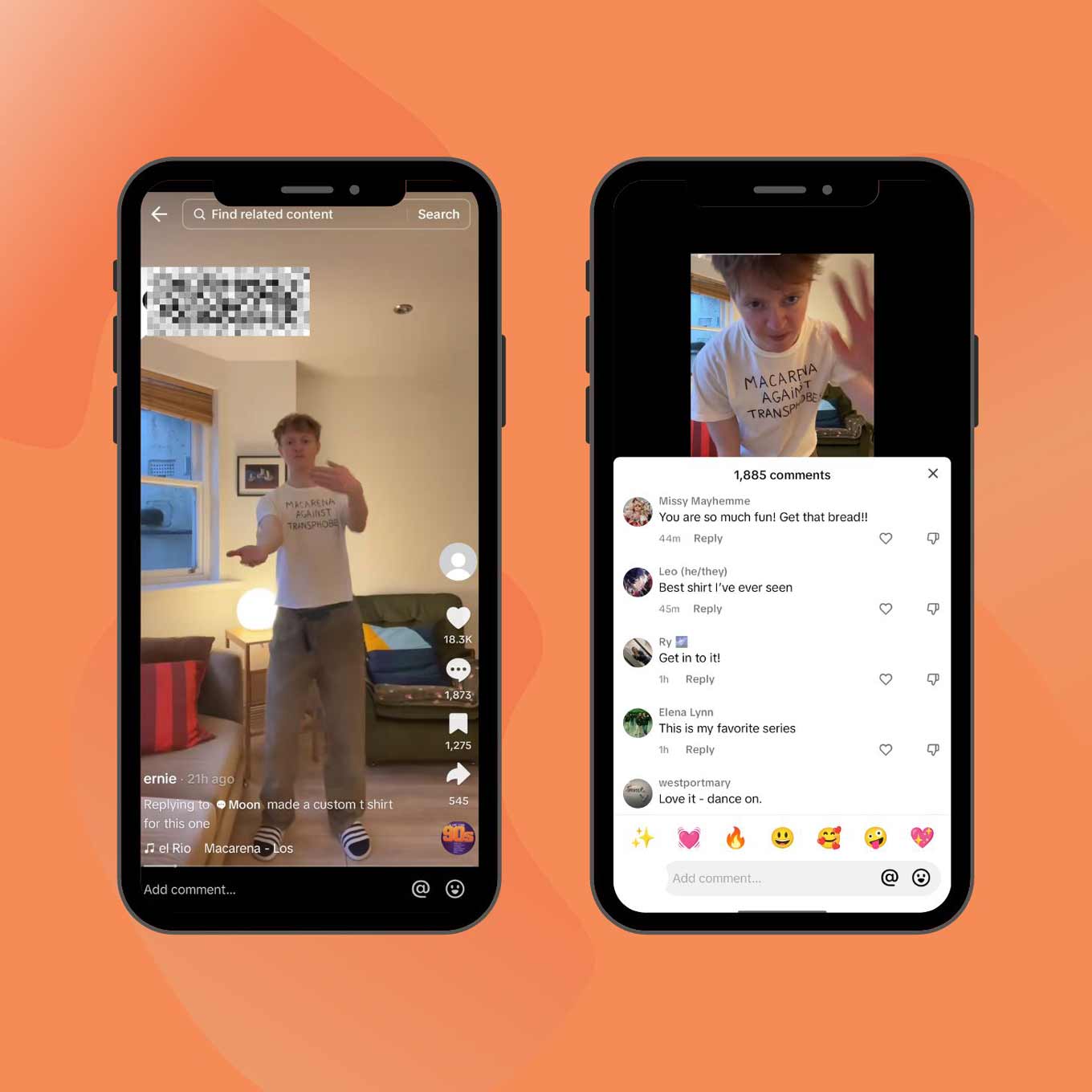
The good-natured humor immediately garnered the support of the LGBTQ-affirming TikTok community, the comment sections of Thompson’s videos filling with compliments, support, and encouragement.
Community members also organized to “boost” the video for TikTok’s algorithms, commenting silly questions or conversation topics to increase engagement and viewership on the video.
“The response is overwhelmingly positive on such an overwhelmingly large scale,” Thompson said. “It instills so much hope in me that otherwise was not there before.”
@fishermanernie Replying to @WitheredTable87 thanks for the transphobic comment, im going to capitalise on it now 🫶🏳️⚧️ #fyp #transgender #ftm #transman #transmenoftiktok #trans ♬ Macarena - Los Del Rio
His most-watched video from November 2023 has received nearly 950,000 views, and earlier this week, he accumulated over 100,000 followers.
“The Macarena has changed my life, which is a sentence I never thought I would say,” he said in a recent video. “Thank you to the transphobes because this series wouldn’t exist without you. You’ve also changed my life. I wish you well and I love you.”
While the amount Thompson makes on these videos varies depending on their views, he said it’s helped him buy some new equipment to create higher quality content — and “to feed my two cats some very high quality kibble.”

His goal for this year is to give back to the community in some way.
“I’d love to start a nonprofit and I have some ideas in the works,” he said. “I will share more about that some time in the near future.”
Ultimately, watching a community of virtual strangers rally to emotionally and financially support a trans person creates a larger culture of safety and alliance in a world so full of anti-trans rhetoric — and legislation.
“TikTok has opened my eyes to the slightly daunting realization that, yes, there is an army of transphobic people out there,” Thompson said. “But there is also a much bigger and much more powerful army of trans allies out there.”
While Thompson is based in the UK, the ubiquitous nature of the social media platform allows his comment section to be a universal safe space for trans and gender nonconforming people — even if they have to scroll past one nasty comment first.
“These moments of joy and silliness serve as a reminder that, amongst all the scariness and exhaustion [transphobia] brings, there is an unquantifiable hope for the trans community,” he said.
“It’s less about the video itself and more about the sea of wholesome comments. I really hope that other trans folks see that comment section and feel as uplifted as I do — that they can see that people care for them and love them.”
Header images courtesy of Ernie Thompson/TikTok
Reneé Rapp has had a busy start to 2024, turning heads as Regina George in “Mean Girls” and earning praise for her “Saturday Night Live” debut. But one of Rapp’s biggest points of pride in the last year has been the release — and subsequent deluxe re-release — of her album Snow Angel.
“Ultimately, I’m not making music to just make music,” Rapp told The Hollywood Reporter in an interview that hit newsstands on February 28. “I’m making music to start conversations. My idols make culture, my idols start conversation. That’s what I love.”
In the album’s titular track “Snow Angel,” Rapp sings: “Smiles hide what secrets keep / Can't tell a lie if you never speak.”
Initially, Rapp wanted fans to derive their own meaning from the song, but she has since begun openly sharing the song’s true origin: being drugged and assaulted at a party.
“I woke up on a bathroom stall, face up in The Beverly Hilton with blood on my pants,” Rapp recalled. “And had been left alone at that point for like seven hours.”
Rapp said that she’s still “sorting through” the feelings that have stayed with her after her traumatic experience. But she’s also felt validation in speaking up.

“I wanted to have ‘Snow Angel’ come out and it be confusing and left up to interpretation. … But I think that now that I’ve talked about it and now that it’s been a public thing, I hear more people being like, ‘This has happened to me,’” Rapp shared.
Rapp said that the whole experience has also revealed how isolated she felt at that time in her life, and how she wishes she had been given better tools to process it.
“I think that if I was taught and spoken to about what assault is — obviously it’s really difficult to prevent that or prevent being abandoned by a group of friends at a hotel bar — [but] I would love to have had more emphasis on what assault was and how to handle it,” Rapp said.
In a podcast episode with Jay Shetty, Rapp dove deeper into her experience. Months later, clips from their video interview are still making the rounds on TikTok. Under each video, the comment section is flooded with fans who have personal experiences that mirror Rapps, from college parties to nights out at the bar.
“This is such a hauntingly relatable experience for so many people,” a fan shared.
“This reminded me of one of the scariest times in my life,” one user commented. “I hope everyone who has been through something similar is doing okay.”
“I had a very similar situation,” another said. “This song grips me hard and will always be with me.”
Header image courtesy of Interscope Records
In 1987, Congress designated the entire month of March Women’s History Month — but we all know that women’s history did not start nor end in that year.
Women have been doing things worth celebrating and speaking words of wisdom worth sharing since the beginning of time. And while women still face layers of oppression — especially women of color and LGBTQ+ women — Women’s History Month provides an amazing opportunity to elevate their voices.
One way to do this — besides reading some of your favorite empowering quotes by women — is to watch TED Talks by some outstanding women leaders.
We’ve rounded up some of our favorite and most recent TED Talks by and for women to give you a dose of empowerment, wisdom, and community to celebrate the month ahead.
The most empowering TED Talks to watch for Women’s History Month
Christine Schuler Deschryver: The 5 tenants of turning pain into power
Following the murder of her best friend in the Democratic Republic of Congo in 1998, Christine Schuler Deschryver chose to devote her life to ending violence and empowering Congolese women.
As the co-founder and director of City of Joy, a recovery program for survivors of sexual violence in the DRC, she took to the TED stage to share the key components of healing and resilience.
Her Talk was built on the ideas of rebirth, grassroots organizing, community, and the healing powers of nature, music, and dance. On top of these principles, she rejoices in the work her community has done to uplift 2,000 women into healing and leadership.
“At City of Joy, women come to understand that their healing is intertwined with their sister’s healing,” Deschryber said. “The collective healing of women leads to radical political awakening.”
→ Watch Christine Schuler Deschryver’s TED Talk
Diana Greene Foster: What happens when we deny people abortions?
Diana Greene Foster, Ph.D. is a demographer and reproductive health researcher who has spent a decade studying the impact of unwanted pregnancies on the women who seek abortions — and the ones who are denied them.
Her TED Talk focuses on her biggest body of work: “The Turnaway Study,” which provides a data-driven, important framework to understand the mental, physical, and socioeconomic consequences that occur when women are denied access to abortion.
While the facts she brings to her Talk are enough to be staggering, what is most effective is the narrative arc she uses to illustrate the real-life implications of reproductive care.
“Our research shows it’s completely clear that people know how to judge their own circumstances and make decisions that are right for themselves,” Foster told Good Good Good at TEDWomen in 2023.
“They’re not thinking of the politics. They’re not thinking of the law. They’re just trying to make a good decision for themselves and their kids and their family and their future.”
→ Watch Diana Greene Foster’s TED Talk
Sheryl Lee Ralph: A 3-step guide to believing in yourself
Sheryl Lee Ralph is an actress and singer currently best known for her role as Mrs. Barbara Howard on the beloved sitcom “Abbott Elementary.” But she wasn’t always the icon we know her to be.
In this Talk, Ralph shares a simple guide to building self-confidence — and she sure radiates that confidence on stage!
As she stood before the audience, she even belted out a song: “I am an endangered species/ but I sing no victim song/ I am a woman/ I am an artist/ and I know where my voice/ belongs.”
Throughout her Talk, Ralph weaves a narrative that details all the rejections she faced early in her career — all the way up to her Emmy Award win — sharing how she built herself up along the way.
“We’ve got to act like we believe in ourselves,” she said. “When we believe in ourselves and act on it, we create possibilities that never would have been possible had we not just believed.”
→ Watch Sheryl Lee Ralph’s TED Talk
Aisha Nyandroro: What does ‘wealth’ mean to you?
Aisha Nyandroro is the mastermind behind the country’s first, and most successful, guaranteed income project centering Black mothers.
Nyandroro’s TED Talk tells a beautiful story of her own experience with finances growing up and leads into the work she has done with the Magnolia Mother’s Trust. The trust has provided four cohorts of Black mothers in Jackson, Mississippi with the money they need to thrive: $1,000 in cash on a monthly basis for 12 months.
“The problem was the lack of cash. No money for pizza on a Friday night was causing stress. Unexpected car repairs were leading to unemployment because people could not get to and from work,” Nyandroro explained in her Talk.
“So, we began to research how do you give money — not another program — to people experiencing poverty?”
The results of her work, and subsequently, her Talk, provide a thoughtful new approach to money and wealth that all women could benefit from.
“Wealth is about a sense of agency, a sense of freedom, the collective well-being of the whole,” she said.
→ Watch Aisha Nyandroro’s TED Talk
Alua Arthur: Why thinking about death helps you live a better life
Alua Arthur is one of the most well-known death doulas in America, and as the founder of her end-of-life planning organization Going with Grace, she has a unique perspective on the meaning of life.
Arthur’s TED Talk is certainly a tear-jerker — but one you won’t want to miss. In it, she crafts a beautifully detailed argument for why death planning is so helpful — and why talking about death in general makes life so much more magical.
By establishing a thread for how she envisions her “dream” death, Arthur uses her own life story to contextualize the work she does with others — to prepare them for the end of their lives while embracing the wonder of life itself.
“Death creates context for our lives,” Arthur said. “How we die creates the period at the end of the sentence, but it is the period that makes it a sentence at all.”
→ Watch Alua Arthur’s TED Talk
Golshifteh Farahani: ‘Woman, Life, Freedom’ in Iran — and what it means for the rest of the world
An actor and musician who was exiled from her home country of Iran for her activism work, Golshifteh Farahani continues to make meaning and confront injustice in her work.
In Farahani’s TED Talk, which she delivered virtually, she honors other activists who have fought for the “Woman, Life, Freedom” movement in Iran and urges the rest of the world to take a stand.
With a poetic cadence and moving reflections on injustice and violence, Farahani’s TED Talk is a must-watch for feminists fighting for liberation and justice for all.
“We can all decide today to be the bridge to unite rather than separate,” she said.
→ Watch Golshifteh Farahani’s TED Talk
Angeline Murimirwa: School is just the start. Here’s how to help girls succeed for life
Angeline Murimirwa is the CEO of CAMFED, a pan-African movement revolutionizing education for girls — and is expected to empower over five million young women by 2030.
She began her TED Talk by explaining how many folks believe girls’ education to be a “silver bullet” to some of the world’s biggest challenges. However, Murimirwa posits, if there are no structural changes to the barriers girls face once they leave school, we can’t count on any of those solutions.
Murimirwa then goes on to detail the work CAMFED does to build support systems and communities for girls beyond their primary schooling. This includes comprehensive financial support, partnering with African governments to implement real solutions, and helping girls transition into leadership through the organization’s graduate association.
“Believe me when I tell you that girls’ education is the silver bullet,” Murimirwa concluded at the end of her Talk, “But only if you do it right.”
→ Watch Angeline Murimirwa’s TED Talk
Paige Alexander: When you inform women, you transform lives
As the CEO of the Carter Center, Paige Alexander has spent her career advocating for human rights. In this TED Talk, she dives into the human right to information and how the Carter Center has implemented this in a way that empowers women across the globe.
The majority of her Talk focused on the Center’s campaign: “Inform Women, Transform Lives,” which spans five continents and has reached 215 million people since its inception in 2021.
From educating female entrepreneurs, to implementing billboards, radio jingles, transit ads, social media, and more, Alexander shared how she and her team are able to connect women to the information they need, when they need it most.
“I consider [information] a master key, because it unlocks human rights for everyone around the world,” Alexander said.
→ Watch Paige Alexander’s TED Talk
Irina Karamanos Adrian: It’s time to rethink the role of First Lady

Irina Karamanos Adrian is the former First Lady of Chile — and former domestic partner of the Chilean president, Gabriel Borcic. When he was elected, she agreed to take on the role, but with one goal in mind: To change it entirely, and then vacate her seat.
In her TED Talk, Adrian talks about the institutional logistics of becoming a First Lady and why she felt that it was undemocratic to have any sort of power that she wasn’t given as an elected official. She also reflected eloquently on how the role of First Lady reflects antiquated gender stereotypes.
“Suddenly, you become a very special kind of woman: another half,” she said. “My approach would be to tackle both issues: the democratic illegitimacy of having the institution of marriage so embedded in the state … and the gender bias imagined around this figure.”
→ Watch Irina Karamanos Adrian’s TED Talk
Header image courtesy of Gilberto Tadday/TED
Good Good Good has been covering TED's annual conference and spinoff events — like TED Women, TED Next, and TED Countdown — as press since 2023. Our journalists watch TED Talks live and interview speakers after they get off stage, giving Good Good Good the opportunity to share stories like this before TED Talks are released online.
An incarcerated man in Sacramento named Hamza has reportedly made a generous donation to support Gazans in crisis.
The inmate, who has been in prison for 40 years due to a tragic accident in his teen years, donated $17.74 this week.
Justin Mashouf, an LA-based filmmaker and a correspondent of Hamza's, shared this act of generosity on X (formerly Twitter).
“This donation is the sum of 136 hours of his labor in the prison working as a porter/janitor,” Mashouf said.
In prison, Hamza makes 13 cents per hour, which according to Mashouf, means this donation accounted for his life savings.
While Hamza’s decades of nearly unpaid labor to the prison system are emblematic of the systemic exploitation of incarcerated individuals in America, his generosity makes a poetic statement about injustice in the U.S. and abroad.
Fortunately, advocates from all walks of life recognized this parallel and responded Mashouf’s post with an outpouring of support.
This led to the creation of a GoFundMe campaign for Hamza, to add money to his commissary fund and build a financial well for his upcoming release. It raised over $100,000 in one day.
“In the 80’s, Hamza accidentally fired a gun at a loved one, which, killing the victim, [led] to his imprisonment for over four decades,” Mashouf wrote on the GoFundMe page.
“He has lived with the pain of losing his family member due to his own mistake every day for decades. While in prison, he has become a devout Muslim and has been pleading for parole for decades.”
An incarcerated brother I am in correspondence with donated $17.74 for relief efforts in Gaza. This donation is the sum of 136 hours of his labor in the prison working as a porter/janitor. May his sincere donation be multiplied by the Creator. #Gaza #ceasefirenow pic.twitter.com/MIeQ4Zmbi0
— Justin Mashouf (@Mashouf) February 26, 2024
Thanks to a new California law that grants parole opportunities to minors charged as adults, Mashouf wrote, as well as hiring a private attorney through funds gathered in the Muslim community, Hamza has been granted parole and will walk free at the end of March.
“Your contributions will empower him to transition back into society with dignity and security after years of isolation,” Mashouf wrote. “With your help, Hamza will access essential resources, secure housing and transportation, and navigate the challenges of his new freedom.”
The goal of the fundraiser was originally $15,000 to help provide essentials and an emergency fund for Hamza upon his release, but countless donors were moved by his act of generosity and faith.
After surpassing $100,000 in donations, the fundraiser was suspended.
“Donating the little you have shouldn’t be something that we as a society must do to relay a message, but thank you for your generosity,” one donor wrote. “I hope your life is filled with kindness and love the moment you step out [into] the world. I empathize with your story and wish nothing but peace and love to you.”
“We are all working towards a free Palestine,” another wrote. “We are all working towards collective liberation!”
Hamza’s faith and gratitude were clearly on display in a note he wrote and shared with GoFundMe donors through Mashouf.
“I humbly and respectfully, with gratitude, greet all of you with As - Salaamu Alaikum (which means, May the Peace, Safety, Security, and Prosperity of God be upon all of you),” Hamza wrote.
After sharing his gratitude, Hamza provided a call to action for all of the donors to continue supporting relief efforts in Palestine — and beyond.
“Life is the seed of the Divine Spark of our Creator,” he wrote. “It is compassion, mercy, kindness, charity, having empathy, standing up for right, truth, and justice. It’s giving away just one date fruit to someone needy.”
Header image courtesy of Justin Mashouf/GoFundMe
“The Daily Show” host Jon Stewart had millions in tears this week, as he shared a heartfelt tribute to his beloved dog, Dipper, who passed away earlier this week.
His monologue — which spurred some tears of his own — illustrated a beautiful family story of how he and his family came to adopt Dipper, a Brindle Pit Bull, about 12 years ago.
It goes a little something like this: When his children were young, they wanted to raise a little money for a New York City animal shelter, Animal Haven.
“They do incredible work,” Stewart said in his monologue, to uproarious applause. “It’s a no-kill shelter for cats and dogs.”
He and his kids set up shop outside the shelter with a small bake sale, and as a little added incentive, the shelter brought out Dipper.
And it was love at first sight.
“We left that day feeling really good that we helped this wonderful organization,” Stewart said. “And we also left with this one-ish-year-old Pit Bull.”

After a life of love and adoration from the Stewarts, Dipper died earlier this week.
“In a world of good boys, he was the best,” Stewart said through tears.
While the tribute was a beautiful way to honor his beloved furry friend, the internet took it a step further.
Animal Haven shared a clip of Stewart’s tribute on their social media pages, and supporters of the organization immediately began donating in Dipper’s honor.
According to TMZ, Animal Haven has received an influx of donations totaling almost $25,000 in the days since Stewart’s announcement.
Tiffany Lacey, the shelter’s executive director, told the outlet that the contributions have come from over 500 new donors.
“Just donated in memory of Dipper,” one person wrote on the organization’s Facebook page. “We have a brindle pittie who is the best girl.”
“Donated!” cheered another commenter. “From our Dipper, in memory of your sweet Dipper, and the amazing work you all do!”
Donations, according to the Animal Haven website, will be used to provide medications, food, veterinary care, and life-saving surgeries to animals awaiting their forever homes.
Some donations are also coming from the shelter’s Amazon wishlist, as folks send items like towels, treats, and toys to furry friends in need.
The comment section of Animal Haven’s Facebook was also filled with success stories of folks who adopted their beloved friends from the shelter, too, responding to the caption the organization wrote to accompany Stewart’s video.
“Each day, we place dogs and cats in loving homes. They are all so very lucky,” the caption reads. “But Dipper really hit the jackpot that day to find a home where the humans living in it aspire to treat animals at the highest level.”
This devotion to Dipper was also illustrated in Stewart’s tribute, where he shared anecdotes about Dipper’s time on set at “The Daily Show,” even showing a clip of the dog surprising human rights advocate Malala Yousafzai as she walked down a hallway.
(Malala posted on X — formerly Twitter — in response to the resurfaced clip, saying she has overcome her fear of dogs and can’t wait to meet Stewart’s next canine companion.)
“Boy, my wish for you is that someday you find that dog,” Stewart said. “That one dog that just… is the best.”
Though the grief of losing one’s pet is indescribable, the outpouring of support Stewart — and Animal Haven — have received will surely inspire even more inseparable human-animal bonds. Some social media commenters have already expressed interest in adopting a dog after watching this heartfelt tribute.
“Dipper lives on now in our hearts and minds as a powerful reminder of the importance of pet adoption and the love that an animal can bring into your life,” Animal Haven wrote on social media.
“From the bottom of our hearts, thank you all for making even more rescue work possible and allowing us to continue our mission of finding cherished homes for cats and dogs in need.”
Header images courtesy of The Daily Show and Jon Stewart/X
bell hooks, a distinguished scholar, cultural critic, feminist theorist, and author, has profoundly impacted discussions on race, gender, and class.
Born Gloria Jean Watkins — she adopted her pen name from her great-grandmother Bell Blair Hooks — choosing lowercase letters to focus attention on her ideas rather than her identity.
Her work — characterized by its clear and accessible style, delves into the intersectionality of race, capitalism, and gender — highlighting how they produce and perpetuate systems of oppression and domination.
Throughout her life, hooks wrote more than 30 books, ranging from scholarly works to children’s literature, all of which explore themes of love, hope, community, and the necessity of a transformative ethic of love and solidarity in overcoming social injustices.
Her quotes resonate with a wide audience, offering profound insights into the nature of our society and ways we can cultivate more compassionate and equitable communities.
In this article, we’ve curated bell hooks’ most memorable quotes. Whether you’re seeking inspiration, guidance, or a deeper understanding of social dynamics, bell hooks’ words continue to enlighten and challenge us to think more critically about the world around us.
The Best Quotes from bell hooks
Famous Quotes
“Love is an action, never simply a feeling.”
— bell hooks
“Love is a combination of care, commitment, knowledge, responsibility, respect, and trust.”
— bell hooks, Communion: The Female Search for Love
“When we face pain in relationships our first response is often to sever bonds rather than to maintain commitment.”
— bell hooks, All About Love: New Visions
“I will not have my life narrowed down. I will not bow down to somebody else’s whim or to someone else’s ignorance.”
— bell hooks
“My students tell me, we don’t want to love! We’re tired of being loving! And I say to them, if you’re tired of being loving, then you haven’t really been loving, because when you are loving you have more strength.”
— bell hooks
On Love
“Living simply makes loving simple.”
— bell hooks
“All too often women believe it is a sign of commitment, an expression of love, to endure unkindness or cruelty, to forgive and forget. In actuality, when we love rightly we know that the healthy, loving response to cruelty and abuse is putting ourselves out of harm’s way.”
— bell hooks, All About Love: New Visions
“Genuine love is rarely an emotional space where needs are instantly gratified. To know love we have to invest time and commitment… ‘dreaming that love will save us, solve all our problems, or provide a steady state of bliss or security only keeps us stuck in wishful fantasy, undermining the real power of the love — which is to transform us.’ Many people want love to function like a drug, giving them an immediate and sustained high. They want to do nothing, just passively receive the good feeling.”
— bell hooks
“The practice of love offers no place of safety. We risk loss, hurt, pain. We risk being acted upon by forces outside our control.”
— bell hooks, All About Love: New Visions
“To return to love, to get the love we always wanted but never had, to have the love we want but are not prepared to give, we seek romantic relationships. We believe these relationships, more than any other, will rescue and redeem us. True love does have the power to redeem but only if we are ready for redemption. Love saves us only if we want to be saved.”
— bell hooks, All About Love: New Visions
“To love well is the task in all meaningful relationships, not just romantic bonds.”
— bell hooks, All About Love: New Visions
“To open our hearts more fully to love’s power and grace we must dare to acknowledge how little we know of love in both theory and practice… We yearn to end the lovelessness that is so pervasive in our society. This book tells us how to return to love.”
— bell hooks, All About Love: New Visions
“Giving generously in romantic relationships, and in all other bonds, means recognizing when the other person needs our attention. Attention is an important resource.”
— bell hooks, All About Love: New Visions
“Individuals who want to believe that there is no fulfillment in love, that true love does not exist, cling to these assumptions because this despair is actually easier to face than the reality that love is a real fact of life but is absent from their lives.”
— bell hooks, All About Love: New Visions
“The wounded child inside many males is a boy who, when he first spoke his truths, was silenced by paternal sadism, by a patriarchal world that did not want him to claim his true feelings. The wounded child inside many females is a girl who was taught from early childhood that she must become something other than herself, deny her true feelings, in order to attract and please others. When men and women punish each other for truth telling, we reinforce the notion that lies are better. To be loving we willingly hear the other’s truth, and most important, we affirm the value of truth telling. Lies may make people feel better, but they do not help them to know love.”
— bell hooks, All About Love: New Visions
On Education
“The academy is not paradise. But learning is a place where paradise can be created.”
— bell hooks, Teaching to Transgress: Education as the Practice of Freedom
“To be changed by ideas was pure pleasure. But to learn ideas that ran counter to values and beliefs learned at home was to place oneself at risk, to enter the danger zone. Home was the place where I was forced to conform to someone else’s image of who and what I should be. The school was the place where I could forget that self and, through ideas, reinvent myself.”
— bell hooks
“All of us in the academy and in the culture as a whole are called to renew our minds if we are to transform educational institutions — and society — so that the way we live, teach, and work can reflect our joy in cultural diversity, our passion for justice, and our love of freedom.”
— bell hooks
“My hope emerges from those places of struggle where I witness individuals positively transforming their lives and the world around them. Educating is a vocation rooted in hopefulness. As teachers, we believe that learning is possible, that nothing can keep an open mind from seeking after knowledge and finding a way to know.”
— bell hooks
On Oppression
“Being oppressed means the absence of choices.”
— bell hooks
“Within the new self-help books for women, patriarchy and male domination are rarely identified as forces that lead to the oppression, exploitation, and domination of women. Instead, these books suggest that individual relationships between men and women can be changed solely by women making the right choices.”
— bell hooks
“Had middle class black women begun a movement in which they had labeled themselves ‘oppressed,’ no one would have taken them seriously.”
— bell hooks
“What had begun as a movement to free all black people from racist oppression became a movement with its primary goal the establishment of black male patriarchy.”
— bell hooks
“I am passionate about everything in my life — first and foremost, passionate about ideas. And that’s a dangerous person to be in this society, not just because I’m a woman, but because it’s such a fundamentally anti-intellectual, anti-critical thinking society.”
— bell hooks
“White women and black men have it both ways. They can act as oppressor or... and oppression of others.”
— bell hooks
On Family
“I love my family, even as I critique their dysfunctionalities.”
— bell hooks
“Maintaining connections with family and community across class boundaries demands more than just summary recall of where one’s roots are, where one comes from. It requires knowing, naming, and being ever-mindful of those aspects of one’s past that have enabled and do enable one’s self-development in the present, that sustain and support, that enrich. One must also honestly confront barriers that do exist, aspects of that past that do diminish.”
— bell hooks, Talking Back: Thinking Feminist, Thinking Black
“Healthy families resolve conflict without coercion, shaming, or violence.”
— bell hooks
On Self-Love
“The one person who will never leave us, whom we will never lose, is ourself. Learning to love our female selves is where our search for love must begin.”
— bell hooks, Communion: The Female Search for Love
“One of the best guides to how to be self-loving is to give ourselves the love we are often dreaming about receiving from others. There was a time when I felt lousy about my over-forty body, saw myself as too fat, too this, or too that. Yet I fantasized about finding a lover who would give me the gift of being loved as I am. It is silly, isn’t it, that I would dream of someone else offering to me the acceptance and affirmation I was withholding from myself. This was a moment when the maxim ‘You can never love anybody if you are unable to love yourself’ made clear sense. And I add, ‘Do not expect to receive the love from someone else you do not give yourself’”
— bell hooks, All About Love: New Visions
“In an ideal world we would all learn in childhood to love ourselves. We would grow, being secure in our worth and value, spreading love wherever we went, letting our light shine. If we did not learn self-love in our youth, there is still hope. The light of love is always in us, no matter how cold the flame. It is always present, waiting for the spark to ignite, waiting for the heart to awaken and call us back to the first memory of being the life force inside a dark place waiting to be born - waiting to see the light.”
— bell hooks
→ Read more quotes about self-love
On Change
“True resistance begins with people confronting pain… and wanting to do something to change it.”
— bell hooks, Yearning: Race, Gender, and Cultural Politics
“For me, forgiveness and compassion are always linked: how do we hold people accountable for wrongdoing and yet at the same time remain in touch with their humanity enough to believe in their capacity to be transformed?”
— bell hooks
“Once you do away with the idea of people as fixed, static entities, then you see that people can change, and there is hope.”
— bell hooks
“When we work with love we renew the spirit; that renewal is an act of self-love, it nurtures our growth.”
— bell hooks
→ Read more quotes about change
On Social Justice
“Justice is possible without equality, I believe, because of compassion and understanding. If I have compassion, then if I have more than you, which is unequal, I will still do the just thing by you.”
— bell hooks
“Individual heterosexual women came to the movement from relationships where men were cruel, unkind, violent, unfaithful. Many of these men were radical thinkers who participated in movements for social justice, speaking out on behalf of the workers, the poor, speaking out on behalf of racial justice. However when it came to the issue of gender they were as sexist as their conservative cohorts.”
— bell hooks
“Privilege is not in and of itself bad; what matters is what we do with privilege. I want to live in a world where all women have access to education, and all women can earn PhD’s, if they so desire. Privilege does not have to be negative, but we have to share our resources and take direction about how to use our privilege in ways that empower those who lack it.”
— bell hooks, Homegrown: Engaged Cultural Criticism
→ Read more quotes about social justice
On Community
“One of the most vital ways we sustain ourselves is by building communities of resistance, places where we know we are not alone.”
— bell hooks
“Rarely, if ever, are any of us healed in isolation. Healing is an act of communion.”
— bell hooks, All About Love: New Visions
“I want there to be a place in the world where people can engage in one another’s differences in a way that is redemptive, full of hope and possibility. Not this ‘In order to love you, I must make you something else’. That’s what domination is all about, that in order to be close to you, I must possess you, remake and recast you.”
— bell hooks, Reel to Real: Race, Sex, and Class at the Movies
“To build community requires vigilant awareness of the work we must continually do to undermine all the socialization that leads us to behave in ways that perpetuate domination.”
— bell hooks, Teaching Community: A Pedagogy of Hope
“Dominator culture has tried to keep us all afraid, to make us choose safety instead of risk, sameness instead of diversity. Moving through that fear, finding out what connects us, reveling in our differences; this is the process that brings us closer, that gives us a world of shared values, of meaningful community.”
— bell hooks, Teaching Community: A Pedagogy of Hope
“But many of us seek community solely to escape the fear of being alone. Knowing how to be solitary is central to the art of loving. When we can be alone, we can be with others without using them as a means of escape.”
— bell hooks
On Feminism
“Feminism is a movement to end sexism, sexist exploitation, and oppression.”
— bell hooks
“As all advocates of feminist politics know most people do not understand sexism or if they do they think it is not a problem. Masses of people think that feminism is always and only about women seeking to be equal to men. And a huge majority of these folks think feminism is anti-male. Their misunderstanding of feminist politics reflects the reality that most folks learn about feminism from patriarchal mass media.”
— bell hooks
“Visionary feminism is a wise and loving politics. It is rooted in the love of male and female being, refusing to privilege one over the other. The soul of feminist politics is the commitment to ending patriarchal domination of women and men, girls and boys. Love cannot exist in any relationship that is based on domination and coercion. Males cannot love themselves in patriarchal culture if their very self-definition relies on submission to patriarchal rules. When men embrace feminist thinking and practice, which emphasizes the value of mutual growth and self-actualization in all relationships, their emotional well-being will be enhanced. A genuine feminist politics always brings us from bondage to freedom, from lovelessness to loving.”
— bell hooks
“The process begins with the individual woman’s acceptance that American women, without exception, are socialized to be racist, classist and sexist, in varying degrees, and that labeling ourselves feminists does not change the fact that we must consciously work to rid ourselves of the legacy of negative socialization.”
— bell hooks, Ain’t I a Woman: Black Women and Feminism
“No black woman writer in this culture can write ‘too much’. Indeed, no woman writer can write ‘too much’... No woman has ever written enough.”
— bell hooks, remembered rapture: the writer at work
“Feminism has never emerged from the women who are most victimized by sexist oppression; women who are daily beaten down, mentally, physically, and spiritually — women who are powerless to change their condition in life. They are a silent majority.”
— bell hooks
“If any female feels she need anything beyond herself to legitimate and validate her existence, she is already giving away her power to be self-defining, her agency.”
— bell hooks, Feminism Is for Everybody: Passionate Politics
→ Read more feminist quotes and quotes to empower women
More Quotes
“Honesty and openness is always the foundation of insightful dialogue.”
— bell hooks, All About Love: New Visions
“Sometimes people try to destroy you, precisely because they recognize your power — not because they don't see it, but because they see it and they don't want it to exist.”
— bell hooks
“The function of art is to do more than tell it like it is — it’s to imagine what is possible.”
— bell hooks
Remember the sadness that came with the last time you failed miserably at something? Or the last time you were so anxious about an upcoming event that you couldn’t concentrate for days?
These types of emotions are unpleasant to experience and can even feel overwhelming.
People often try to avoid them, suppress them or ignore them.
In fact, in psychology experiments, people will pay money to not feel many negative emotions. But recent research is revealing that emotions can be useful, and even negative emotions can bring benefits.
In my emotion science lab at Texas A&M University, we study how emotions like anger and boredom affect people, and we explore ways that these feelings can be beneficial. We share the results so people can learn how to use their emotions to build the lives they want.
Our studies and many others have shown that emotions aren’t uniformly good or bad for people. Instead, different emotions can result in better outcomes in particular types of situations.
Emotions seem to function like a Swiss army knife – different emotional tools are helpful in specific situations.
Sadness can help you recover from a failure
Sadness occurs when people perceive that they’ve lost a goal or a desired outcome, and there’s nothing they can do to improve the situation. It could be getting creamed in a game or failing a class or work project, or it can be losing a relationship with a family member.
Once evoked, sadness is associated with what psychologists call a deactivation state of doing little, without much behavior or physical arousal. Sadness also brings thinking that is more detailed and analytical. It makes you stop and think.
The benefit of the stopping and thinking that comes with sadness is that it helps people recover from failure. When you fail, that typically means the situation you’re in is not conducive to success. Instead of just charging ahead in this type of scenario, sadness prompts people to step back and evaluate what is happening.
When people are sad, they process information in a deliberative, analytical way and want to avoid risk. This mode comes with more accurate memory, judgment that is less influenced by irrelevant assumptions or information, and better detection of other people lying. These cognitive changes can encourage people to understand past failures and possibly prevent future ones.
Sadness can function differently when there’s the possibility that the failure could be avoided if other people help. In these situations, people tend to cry and can experience increased physiological arousal, such as quicker heart and breathing rates.
Expressing sadness, through tears or verbally, has the benefit of potentially recruiting other people to help you achieve your goals. This behavior appears to start in infants, with tears and cries signaling caregivers to help.

Anger prepares you to overcome an obstacle
Anger occurs when people perceive they’re losing a goal or desired outcome, but that they could improve the situation by removing something that’s in their way. The obstacle could be an injustice committed by another person, or it could be a computer that repeatedly crashes while you’re trying to get work done.
Once evoked, anger is associated with a “readiness for action,” and your thinking focuses on the obstacle.
The benefit of being prepared for action and focused on what’s in your way is that it motivates you to overcome what’s standing between you and your goal. When people are angry, they process information and make judgments rapidly, want to take action, and are physiologically aroused.
In experiments, anger actually increases the force of people’s kicks, which can be helpful in physical encounters. Anger results in better outcomes in situations that involve challenges to goals, including confrontational games, tricky puzzles, video games with obstacles, and responding quickly on tasks.
Expressing anger, facially or verbally, has the benefit of prompting other people to clear the way. People are more likely to concede in negotiations and give in on issues when their adversary looks or says they are angry.
Anxiety helps you prepare for danger
Anxiety occurs when people perceive a potential threat. This could be giving a speech to a large audience where failure would put your self-esteem on the line, or it could be a physical threat to yourself or loved ones. Once evoked, anxiety is associated with being prepared to respond to danger, including increased physical arousal and attention to threats and risk.
Being prepared for danger means that if trouble brews, you can respond quickly to prevent or avoid it. When anxious, people detect threats rapidly, have fast reaction times and are on heightened alert. The eye-widening that often comes with fear and anxiety even gives people a wider field of vision and improves threat detection.
Anxiety prepares the body for action, which improves performance on a number of tasks that involve motivation and attention. It motivates people to prepare for upcoming events, such as devoting time to study for an exam. Anxiety also prompts protective behavior, which can help prevent the potential threat from becoming a reality.
Boredom can jolt you out of a rut
There is less research on boredom than many other emotions, so it is not as well understood. Researchers debate what it is and what it does.
Boredom appears to occur when someone’s current situation is not causing any other emotional response.
There are three situations where this lack can occur: when emotions fade, such as the happiness of a new car fading to neutral; when people don’t care about anything in their current situation, such as being at a large party where nothing interesting is happening; or when people have no goals.
Boredom does not necessarily set in just because nothing is happening – someone with a goal of relaxation might feel quite content sitting quietly with no stimulation.
Psychology researchers think that the benefit of boredom in situations where people are not responding emotionally is that it prompts making a change.
If nothing in your current situation is worth responding to, the aversive experience of boredom can motivate you to seek new situations or change the way you’re thinking.
Boredom has been related to more risk seeking, a desire for novelty, and creative thinking. It seems to function like an emotional stick, nudging people out of their current situation to explore and create.
Using the toolkit of emotion
People want to be happy. But research is finding that a satisfying and productive life includes a mix of positive and negative emotions.
Negative emotions, even though they feel bad to experience, can motivate and prepare people for failure, challenges, threats and exploration.
Pleasant or not, your emotions can help guide you toward better outcomes. Maybe understanding how they prepare you to handle various situations will help you feel better about feeling bad.
This article was written by Heather Lench, a professor at Texas A&M University, and was originally published by The Conversation.

When historian Carter Woodson created “Negro History Week” in 1926, which became “Black History Month” in 1976, he sought not to just celebrate prominent Black historical figures but to transform how white America saw and valued all African Americans.
However, many issues in the history of Black Americans can get lost in a focus on well-known historical figures or other important events.
Our research looks at how African American communities struggling for freedom have long used maps to protest and survive racism while affirming the value of Black life.
We have been working on the “Living Black Atlas,” an educational initiative that highlights the neglected history of Black mapmaking in America. It shows the creative ways in which Black people have historically used mapping to document their stories. Today, communities are using “restorative mapping” as a way to tell stories of Black Americans.
Maps as a visual storytelling technique
While most people think of maps as a useful tool to get from point A to point B, or use maps to look up places or plan trips, the reality is all maps tell stories.
Traditionally, most maps did not accurately reflect the stories of Black people and places: Interstate highway maps, for example, do not reflect the realities that in most U.S. cities the building of major roads was accompanied by the displacement of thousands of Black people from cities.
Like many marginalized groups, Black people have used maps as a visual story-telling technique for “talking back” against their oppression. They have also used maps for enlivening and giving dignity to Black experiences and histories.
An example of this is the NAACP’s campaign to lobby for anti-lynching federal legislation in the early 20th century. The NAACP mapped the location and frequency of lynching to show how widespread racial terror was to the American public.
Another example is the Student Nonviolent Coordinating Committee’s efforts to document racism in the American South in the 1960s. The SNCC research department’s maps and research on racism played a pivotal role in planning civil rights protests.
SNCC produced conventional-looking county-level maps of income and education inequalities, which were issued to activists in the field.
The organization also developed creative “network maps,” which exposed how power structures and institutions supported racial discrimination in economic and political ways. These maps and reports could then identify urgent areas of protest.
More recently, artist-activist Tonika Lewis Johnson created the “Folded Map Project,” in which she brought together corresponding addresses on racially separated sides of the same street, to show how racism remade the city of Chicago.
She photographed the “map twins” and interviewed individuals living at paired addresses to show the disparities.
The project brought residents from north and south sides of Chicago to meet and talk to each other.

Maps for restorative justice
Restorative mapping is an important part of the Living Black Atlas: It helps bring visibility to Black experiences that have been marginalized or forgotten.
An important example of restorative mapping work comes from the Honey Pot Performance, a collective of Black feminists who helped create the Chicago Black Social Culture Map, or the CBSCM. This digital map traces Black Chicagoans’ experiences from the Great Migration to the rise of electronic dance music in the city.
The map includes historical records and music posters as well as descriptions of important people and venues for that music.
While engaging Black Americans in the effort, the CBSCM map tells the story of Chicago through a series of artistic movements that highlight African Americans’ connection with the city.
After years of gentrification and urban renewal programs that displaced Black people from the city, this project is helping remember those neighborhoods digitally. It is also inviting a broader discussion about the history of Black Chicago.
Restoring a sense of place
An important idea behind restorative mapping is the act of returning something to a former owner or condition. This connects with the broader restorative justice movement that seeks to address historic wrongs by documenting past and present injustices through perspectives that are often ignored or forgotten.
The CBSCM map is not a conventional paper map. While it includes many things you would find in such a map, such as road networks and political boundaries, the map also includes links to fiction writing and the Chicago Renaissance, art and music, as well as expressions of food, family life, education and politics that document a hidden history of Black life in the city.
The map provides links to specific historic documents, socially meaningful sites, and to the lives of people that tell the story of Black Chicago.
Thus, the map helps highlight how this geography is still present in Chicago in archives and people’s memories.
Through this digital representation of Black Chicagoans’ deep cultural roots in the city, the mapping aims to restore a sense of place. Such work embodies what Black History Month is about.
This article was written by Joshua F.J. Inwood of Penn State and Derek H. Alderman of University of Tennessee, and originally published on The Conversation.
