Humans have sailed the world’s oceans for thousands of years, but they haven’t all reached port. Researchers estimate that there are some three million shipwrecks worldwide, resting in shallow rivers and bays, coastal waters and the deep ocean. Many sank during catastrophes – some during storms or after running aground, others in battle or collisions with other vessels.
Shipwrecks like the RMS Titanic, RMS Lusitania and USS Monitor conjure tales of human courage and sacrifice, sunken treasure and unsolved mysteries. But there’s another angle to their stories that doesn’t feature humans.
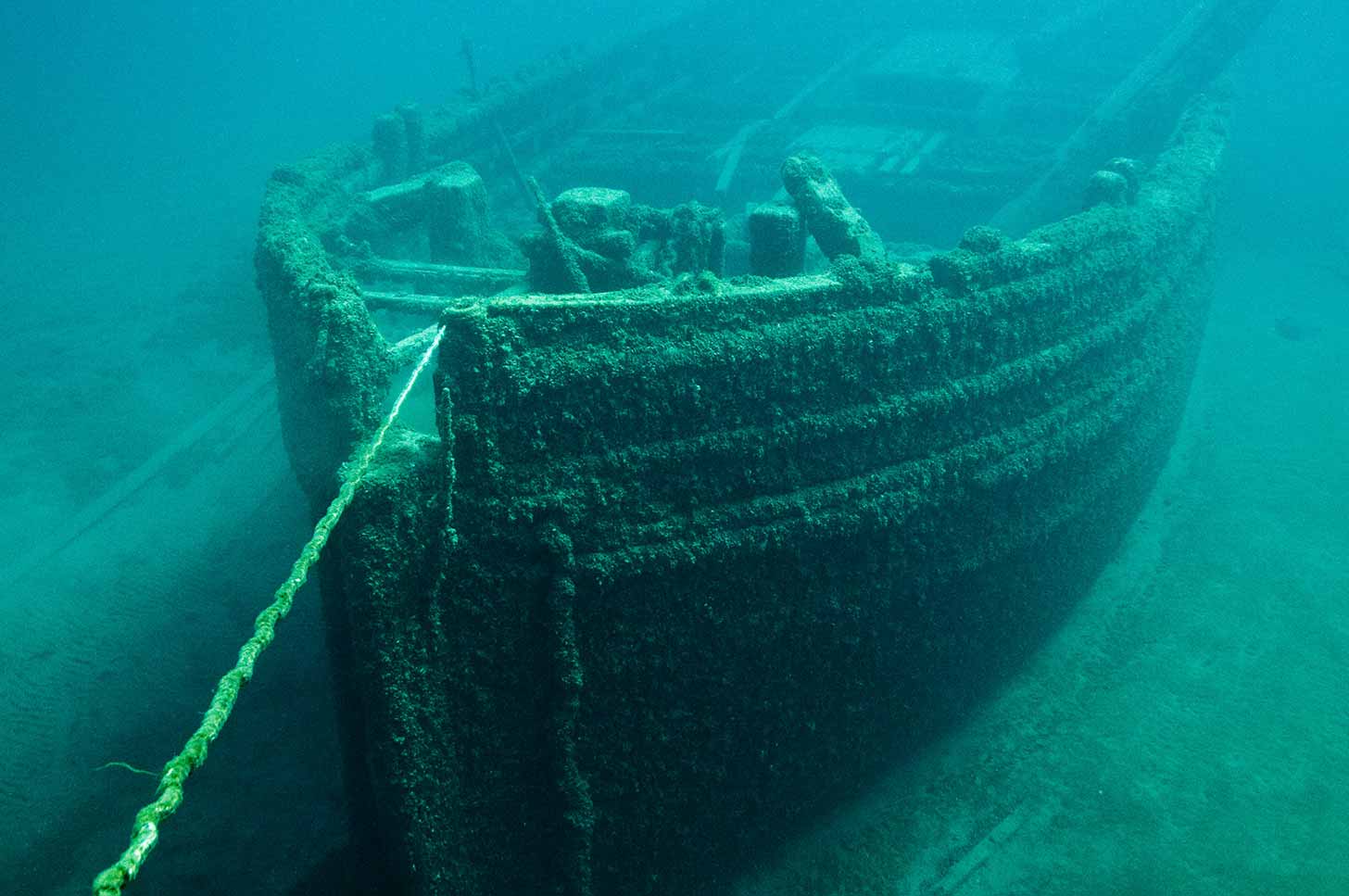
I have studied the biology of shipwrecks in the United States and internationally for 14 years. From this work, I have learned that shipwrecks are not only cultural icons but can also be biological treasures that create habitat for diverse communities of underwater life.
The USS Monitor, which sank off Cape Hatteras, North Carolina, in a storm on Dec. 31, 1862, is now a center for sea life.
Recently, I led an international team of biologists and archaeologists in disentangling the mysteries of how this transformation happens. Drawing on scientific advances from our team and international colleagues, our new study describes how wrecked vessels can have second lives as seabed habitats.
A new home for underwater life
Ships are typically made of metal or wood. When a vessel sinks, it adds foreign, artificial structure to the seafloor.
For example, the World War II tanker E.M. Clark sank on a relatively flat, sandy seabed in 1942 when it was torpedoed by a German submarine. To this day, the intact metal wreck looms over the North Carolina seafloor like an underwater skyscraper, creating an island oasis in the sand.
In this video narrated by NOAA research scientist Avery Paxton, sand tiger sharks hover above the wreck of the E.M. Clark off North Carolina, with vermilion snapper schooling nearby. Jacks and an invasive lionfish also appear.
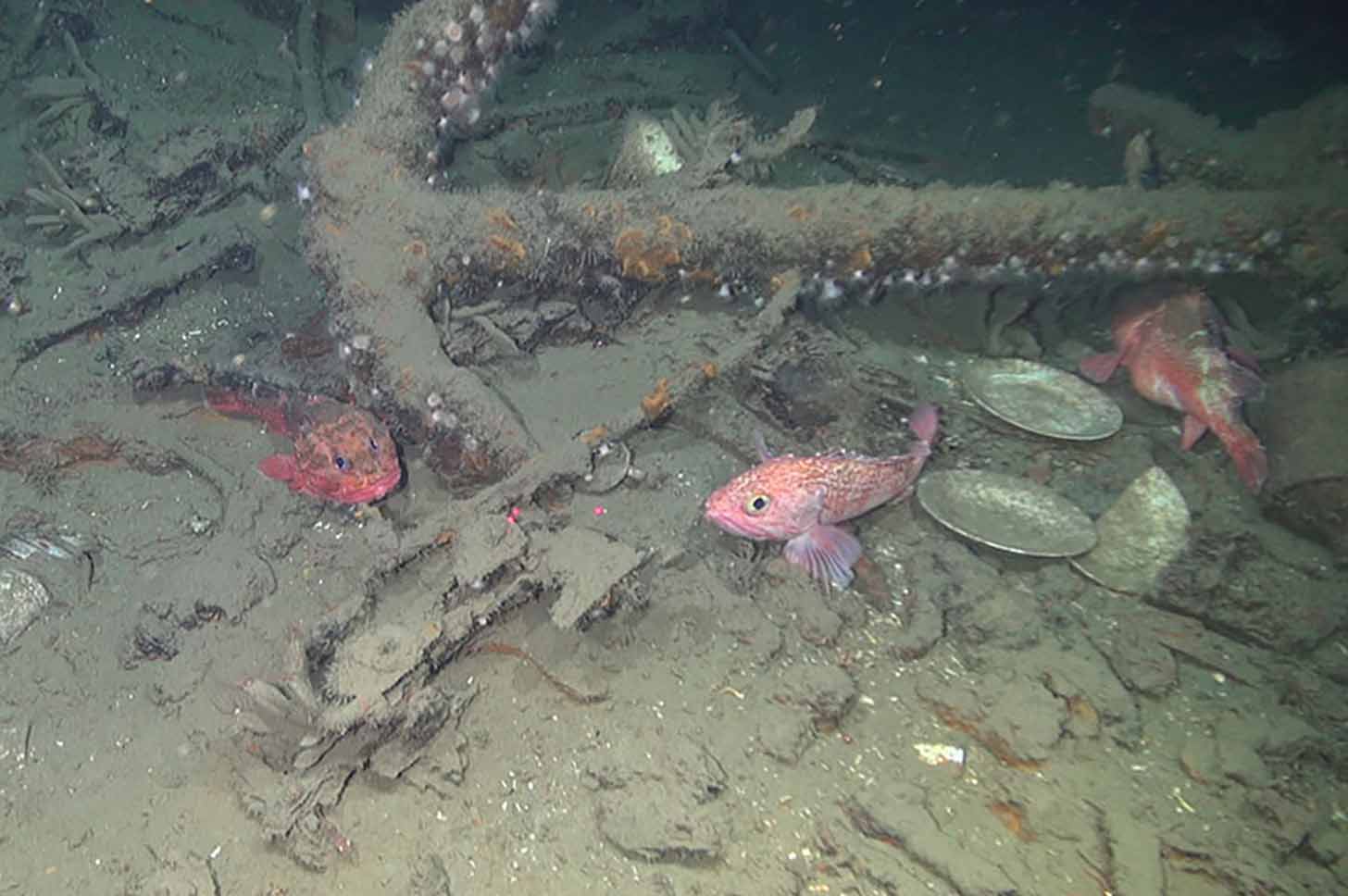
The creatures that reside on and around sunken ships are so diverse and abundant that scientists often colloquially call these sites “living shipwrecks.” Marine life ranging from microscopic critters to some of the largest animals in the sea use shipwrecks as homes. Brilliantly colored corals and sponges blanket the wrecks’ surfaces. Silvery schools of baitfish dart and shimmer around the structures, chased by sleek, fast-moving predators. Sharks sometimes cruise around wrecks, likely resting or looking for prey.
The origin of a second life
A ship’s transformation from an in-service vessel into a thriving metropolis for marine life can seem like a fairy tale. It has a once-upon-a-time origin story – the wrecking event – and a sequence of life arriving on the sunken structure and beginning to blossom.
Tiny microbes invisible to the naked human eye initially settle on the wreck’s surface, forming a carpet of cells, called a biofilm. This coating helps to make the wreck structure suitable for larval animals like sponges and corals to settle and grow there.
Larger animals like fish sometimes appear within minutes after a ship sinks. Small fish hide in the structure’s cracks and crevices, while large sharks glide around it. Sea turtles and marine mammals such as fur seals have also been spotted on wrecks.
Hot spots for biodiversity
Shipwrecks host quantities and varieties of marine life that can make them hot spots for biodiversity. The microbes that transform the wreck structure into habitat also enrich the surrounding sand. Evidence from deep Gulf of Mexico wrecks shows that a halo of increased microbial diversity radiates outward anywhere from 650 to 1,000 feet (200-300 meters) from the wreck. In the Atlantic Ocean, thousands of grouper, a type of reef fish highly valued by fishers, congregate around and inside shipwrecks.
Shipwrecks can also serve as stepping stones across the ocean floor that animals use as temporary homes while moving from one location to another. This has been documented in areas of the world with dense concentrations of shipwrecks, such as off North Carolina, where storms and war have sunk hundreds of ships.
In this part of the ocean, popularly known as the “Graveyard of the Atlantic,” reef fish likely use the island like shipwrecks as corridors when moving north or south away from the equator to find favorable water temperatures as climate change warms the oceans. Scientists have also observed sand tiger sharks traveling from one wreck to another, possibly using the shipwrecks like rest stops during migration.
In the deep sea, life growing on shipwrecks can even generate energy. Tube worms that grow on organic shipwreck materials such as paper, cotton and wood host symbiotic bacteria that produce chemical energy. Such tube worm colonies have been documented in the Gulf of Mexico on the steel luxury yacht Anona.
Biological mysteries abound
Despite their biological value, shipwrecks can also threaten underwater life by altering or destroying natural habitats, causing pollution and spreading invasive species.
When a ship sinks, it can damage existing seafloor habitats. In a well-documented case in the Line Islands of the central Pacific, an iron shipwreck sank on a healthy coral reef. The iron infusion substantially decreased coral cover, and the reef was overcome by algae.
Ships may carry pollutants as fuel or cargo. As shipwrecks deteriorate in seawater, there is a risk that these pollutants may be released. The level of risk depends on how much of the pollutant the ship was carrying and how intact the wreck is. One recent investigation revealed that effects from shipwreck pollutants can be detected in microbes up to 80 years after the wreck.
Ships and planes wrecked in wartime can leak toxic materials for decades after they come to rest in the ocean.
Shipwrecks may also inadvertently assist the spread of invasive plants and animals that wreak biological havoc. Wrecks are new structures that invasive species can settle on, grow and use as a hub to expand to other habitats. Invasive cup coral has spread on World War II shipwrecks off Brazil. In Palmyra Atoll in the Pacific, a type of anemone called a corallimorph rapidly invaded a shipwreck and now threatens healthy coral reefs.
The future of shipwreck exploration
Shipwrecks create millions of study sites that scientists can use to ask questions about marine life and habitats. One of the greatest challenges is that many wrecks are undiscovered or in remote locations. Advances in technology can help researchers see into the most inaccessible areas of the ocean, not only to find shipwrecks but to better understand their biology.
Maximizing discovery will require biologists, archaeologists and engineers to work together to explore these special habitats. Ultimately, the more we learn, the more effectively we can conserve these historical and biological gems.
This article was written by Avery Paxton, a Research Marine Biologist at NOAA National Centers for Coastal Ocean Science, and originally published on The Conversation.

On March 2, Orlando, Florida’s Loch Haven Park will be home to music fans and activists at the MadSoul Music Festival.
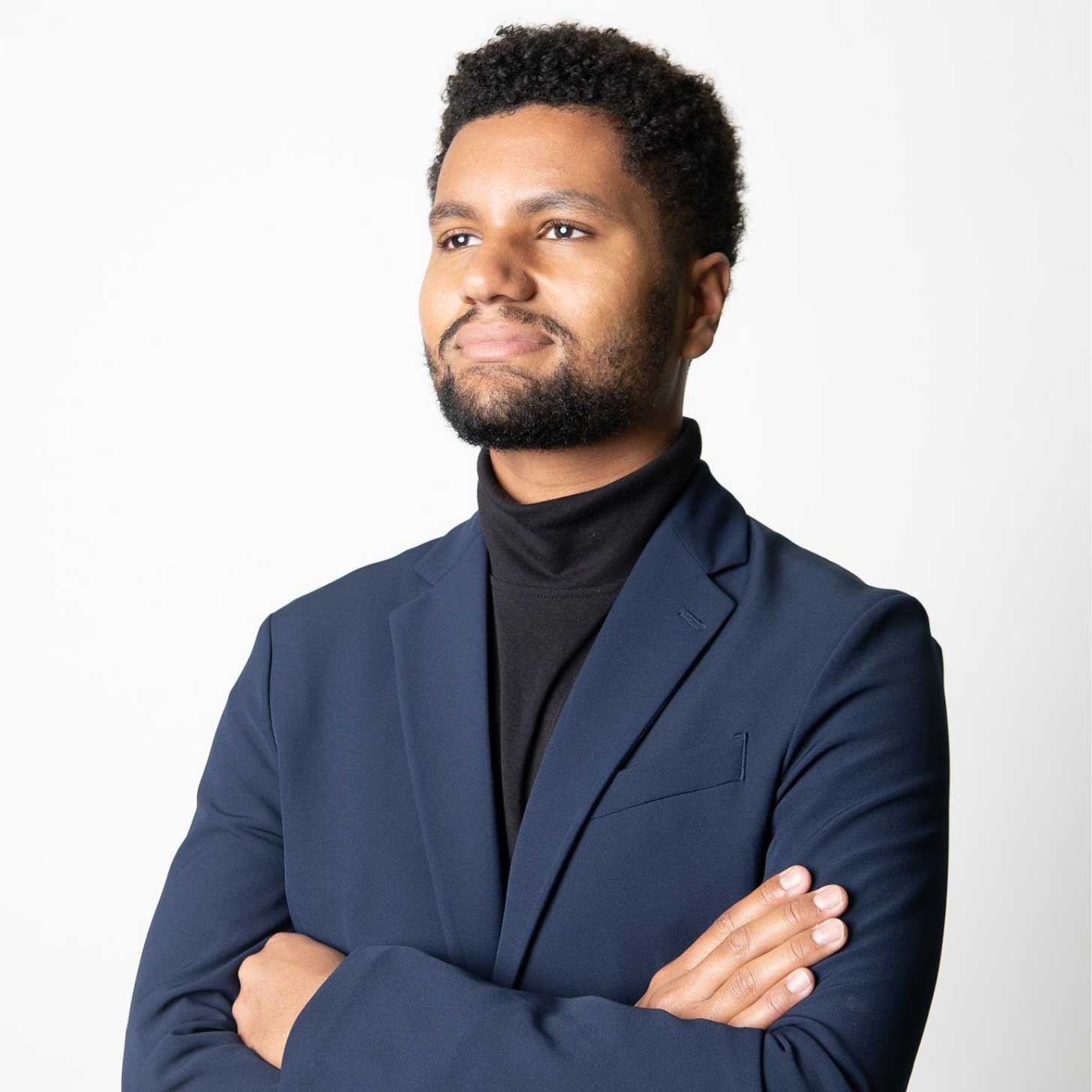
Hosted by Florida Rep. Maxwell Alejandro Frost, the festival brings together his love of the arts and community organizing.
In fact, Rep. Frost and his friends — Niyah Lowell and Chris Muriel — started MadSoul in 2015. Their first festival welcomed 49 attendees — but this year’s, he told Good Good Good, will be “the biggest it’s ever been.”
The festival’s headliner is pop band MUNA, known for their queer cult following and bops like “I Know A Place” and “Silk Chiffon.” They also opened for a number of North American dates on Taylor Swift’s Eras Tour in 2023.
MadSoul’s other performers are mostly local Florida artists — including Nervous Nature, Wahid, Venture Motel, and more, maintaining the festival’s commitment to being a community-focused event.
Some other big names are also on the lineup — but they’re not as likely to use their time on stage to sing.

Rep. Alexandria Ocasio-Cortez, Tennessee State Rep. Justin Jones (of the Tennessee Three), Florida State Rep. Anna Eskamani, and Montana State Rep. Zooey Zephyr are some elected officials who will be in attendance to drum up enthusiasm for civic engagement.
Additionally, Lin-Manuel Miranda of “Hamilton” fame is slated to take the stage to deliver remarks on the importance of civic engagement and the role music, art, and activism have played in his own life. He will be introduced by a local student choir.
“The goal here is to engage with people who, a lot of times, don’t get engaged in the political process,” Frost told Good Good Good. “For people who don’t come to the political rallies — but they will come to the music festival — how can this act as a catalyst to get them involved in the fight?”
The entire festival was planned with that goal of political engagement in mind. Tickets are available to purchase — or not — on a sliding-scale basis. Guaranteed entry tickets start at $20, and go up to $100, but folks can also register for a limited amount of free tickets.
“You never know what people are going through. And sometimes a lot of times the people closest to the problem are going to be closest to the solution,” Frost said.
“Someone who can’t spare even a dollar on coming to this festival, I don’t want to keep them from coming in, because this is something that is a community event for the people of Orlando.”
Those who attend the festival will be greeted with a “robust voter registration effort,” as well as a myriad of booths where attendees can connect with local advocacy organizations.
In fact, Frost said, if someone wants to be in the front row for MUNA’s set, they’ll have to complete a stamp card that proves they engaged with a certain number of activations at the festival.
The Congressman, who is the first Gen Z representative in Congress, is eager to use the MadSoul platform to support his campaign, as well as local organizing efforts.
“This year, ticket sales benefit MadSoul Victory Fund, which supports Maxwell Frost for Congress and a Love Supreme PAC,” the event’s website shared. “Both will donate a portion of proceeds to local abortion funds, LGBTQ+, and community organizations.”
Frost’s reelection campaign will benefit from the event, but funds will also go towards four Florida nonprofits. They include Florida Access Network, Zebra Youth, Equal Ground, and SWAN of Orlando, which support access to reproductive care, LGBTQ+ youth, voting rights, and abortion clinic escorts, respectively.
In the past, MadSoul has featured organizations like March for Our Lives and Planned Parenthood and has raised money for local mutual aid funds.
“There’s always been a political component,” Frost said. “We’ve always had people talk on stage about those issues. We’ve also always given proceeds to local charities. So there’s always been that charitable component.”

Transparency is also top of mind, as the event evolves from a grassroots music festival, into a full-fledged political fundraising hub.
“When you donate your 20 bucks, we let you know it’s a political contribution to my campaign. We tell you, we are dedicating this money towards helping to pay for the festival and helping with our year-round organizing work,” Frost said.
“And then we’ll be donating a portion of the proceeds to these four organizations and splitting it up. We don’t have an amount yet; we’re just waiting to see how much we are able to make in donations, and then cut four equal checks to these organizations.”
Ultimately, as a long-time music lover (seriously, he sang on stage with Paramore last year), Frost wants MadSoul to bring people together for a “memorable experience where art and activism intertwine.”
“It’s not just about making a bunch of money. It's really about providing this cool for the community, especially at a time where things are tough,” Frost said. “There's a lot of division. There's a lot of hopelessness. I hope people will leave this with a little bit of hope.”
Header images courtesy of Penélope Martinez for MUNA, MadSoul Festival, and Lin-Manuel Miranda/X
Less than 20% of English-language biographies on Wikipedia are about women, but the Smithsonian American Women’s History wants to help correct that.
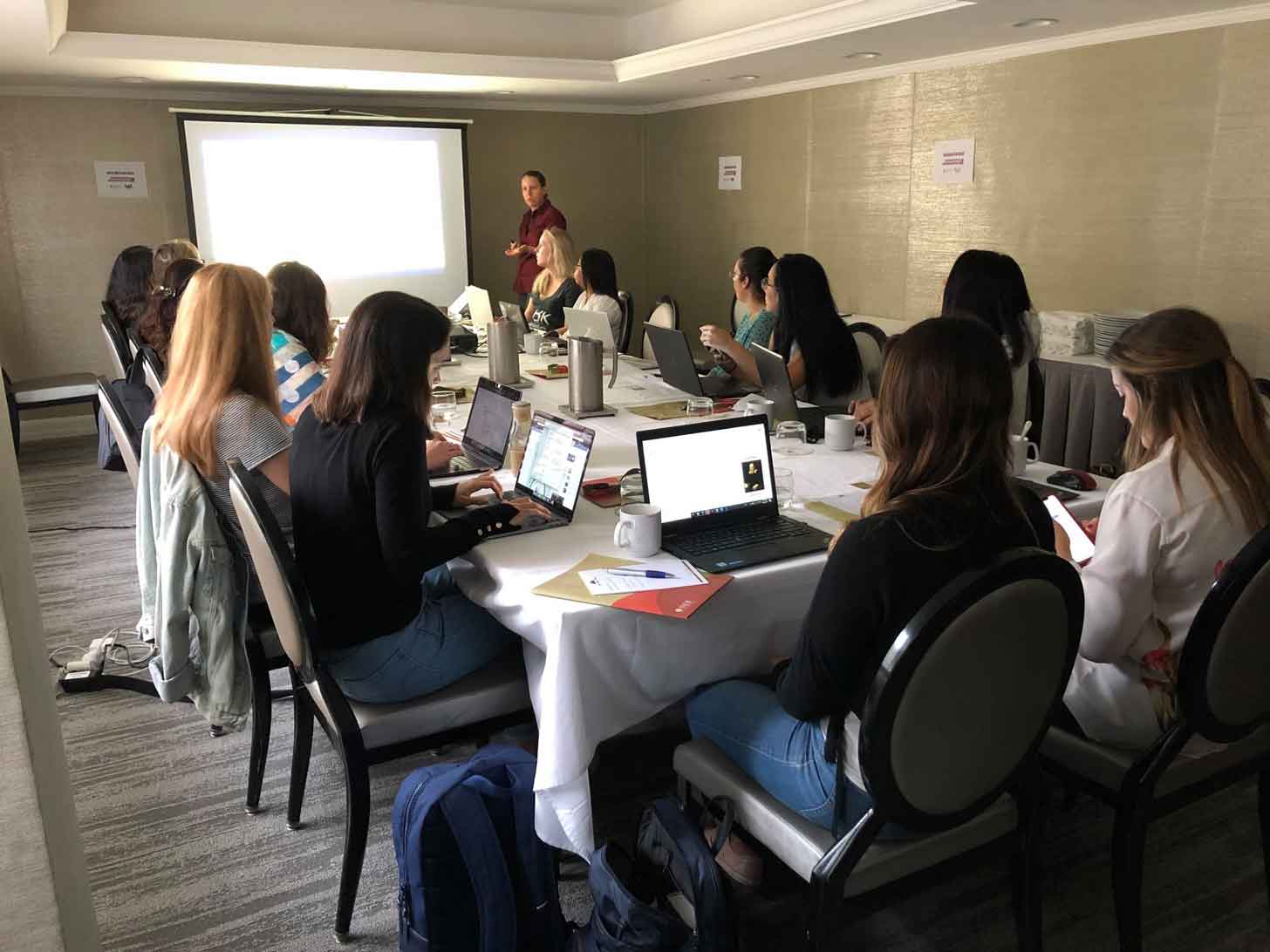
On March 27th at 12 p.m. EST, the museum is hosting a “Wikipedia Edit-a-thon” over Zoom that is open to the public and free of charge.
The event, which is sponsored by Wikimedia DC, encourages attendees to edit and create Wikipedia articles about American women that are “hidden” historical figures.
For those who have never ventured into the back end of Wikipedia, the museum is also hosting an hour-long seminar for new website contributors on the same day.
The “Wikipedia Edit-a-thon” is just one of the many events that the Smithsonian American Women’s History museum is hosting throughout Women’s History Month.
In honor of International Women’s Day on March 8, the museum will also launch their headline program “Becoming Visible,” a 10-minute experience that will be available on the museum’s website.
“Becoming Visible,” which is narrated by actress and producer Rosario Dawson, is a collection of original illustrations, animations, and archival footage. The exhibition seeks to cast a spotlight on important women whose discoveries, words, and pioneering acts have been lost — or intentionally obscured — across time.
The inspiring women featured in the exhibition will be among the famous figures that attendees will be encouraged to add in the Wikipedia Edit-a-thon.
Icons include Japanese American artist Hisako Hibi, scientist and polio vaccine developer Isabel Morgan, Hazel Fellows — a seamstress who worked on the Apollo space suits — and more.
Why are there so few women on Wikipedia?
The mission to make Wikipedia more inclusive and comprehensive is not a new one. Since 2017, Dr. Jess Wade has contributed to more than 2,000 entries on the site. The British physicist uses her expertise to painstakingly catalog the efforts of female scientists and scientists of color.
“I’m constantly astounded by who doesn’t have a Wikipedia page,” Wade told The Guardian. “You expect these people to have one, because a much less significant male counterpart would. And that’s because of who edits Wikipedia.”
Beyond the fact that a majority of contributors on Wikipedia have largely been male, Wade also pointed out that men are often given bigger platforms than their female colleagues.
Wade believes that making STEM fields more accessible and inclusive benefits everyone, but acknowledges that “so much of science is about your privilege.”
Across the board, women are vastly under-represented when it comes to receiving grants and funding, Nobel prizes, and other shiny accolades.
“Science has so many huge open challenges,” Wade explained. “From sustainable materials for electronics to climate change, antibiotic resistance, ethical dilemmas in AI and Covid, and I think we need really diverse teams working on them, to solve them and improve public trust.”
Header image courtesy of Kurutz Márton (CC BY-SA 3.0)
Every day the Good Good Good team collects the best good news in the world and shares it with our community. Here are the highlights for this week!
If you want to get good news in your inbox every day, join the Goodnewsletter — the free daily newsletter designed to leave you feeling hopeful.
The Best Positive News We’re Celebrating This Week —
Colorado is now home to the country’s newest national park — and it honors a painful chapter in U.S. history
The newest national park in the U.S. isn’t home to unique rock formations or massive trees like you might imagine. The newly-established Amache National Historic Site is a former incarceration site that unjustly detained Japanese Americans during the 1940s.
Amache, also known as the Granada Relocation Center, was one of 10 such sites created during World War II. More than 10,000 people were incarcerated at Amache from 1942-1945.
The preservation of this site is meant to confront the “painful chapter of American history,” and through this formal designation, it will be permanently protected. While the original buildings were demolished when it closed, foundations and road networks are still visible on the landscape, making Amache “one of the most intact examples of a World War II incarceration site.”
Why is this good news? National Park Service Director Chuck Sams said it best: “To heal and grow as a nation we need to reflect on past mistakes, make amends, and strive to form a more perfect union.” Amache will help us learn from the past and honor what has been lost so we can build a better, more just future.
→ Read more
Trees are stalling the impacts of global warming in the eastern U.S. thanks to massive reforestation efforts
Despite a larger warming trend across most of the U.S. since industrial times due to burning fossil fuels, scientists have noticed a pocket of much cooler air temperatures the eastern part of the country — where they’ve stayed relatively the same, or even cooled down.
A new study found that this “warming hole” is thanks in large part to massive reforestation efforts following the deforestation that came with European settlement in the U.S. In the last century, the U.S. government replanted about 5 million hectares of forest area — enough to cover an area larger than England.
The researchers looked at satellite and weather station data from 1900 to 2000 and found that the reforested areas provided a massive cooling effect — most of it within 400 meters of the replanted trees.
The reforested areas cool the eastern U.S. by 1 to 2 degrees Celsius (1.8 to 3.6 degrees Fahrenheit) every year — and 2 to 5 degrees Celsius (3.6 to 9 degrees Fahrenheit) on the hottest days of summer.
→ Read more
A former Bronx medical school professor just donated $1 billion to provide free tuition for all students “in perpetuity”
In what’s believed to be the largest-ever charitable donation to a medical school in the U.S., a former professor at the Albert Einstein College of Medicine in the Bronx just donated $1 billion to provide free tuition for all students going forward.
Dr. Ruth Gottesman was left a large stock portfolio when her husband passed away, with instructions to “do whatever you think is right with it.” She decided to make sure new doctors could start their careers without upwards of $200,000 in medical school debt.
Gottesman hopes her donation will help encourage aspiring doctors who previously wouldn’t have considered medical school because of their economic status and the debt burden. Gottesman’s donation is enough to cover tuition “in perpetuity.”
Why is this good news? Among other barriers, the high cost of medical school has rendered it inaccessible to people in historically marginalized communities, which has a well-documented impact on health disparities.
While nearly 60% of Einstein’s first-year medical students are women, almost half are white and only 5% are Black. This investment will likely help boost the number of Black doctors that can enter the medical field and help address those disparities.
In cities around the world, organizations are “liberating soil” by removing unnecessary stretches of concrete
From Portland, Oregon to Leuven, Belgium, organizations around the world are working to bring thriving green spaces back to cities through “depaving” — replacing as much concrete, asphalt, and other “hard landscaping” as possible with plants and soil.
In Portland, for example, the Depave group has depaved more than 360,000 square feet of asphalt since 2008 – the equivalent of nearly four and a half soccer fields. By creating so much more “spongy” space for water to go, 24.5 million gallons of rainwater are diverted from entering storm drains every year.
And that level of water diversion will be critical as the climate crisis brings more extreme rainfall weather events to cities and communities all over the world.
Why is this good news? In addition to helping reduce flooding, green spaces have been shown to improve biodiversity (especially in urban areas, but it’s true for the suburbs, too!), dramatically reduce air temperatures, improve mental health, and even reduce gun violence.
It’s also important to note that, to truly make a difference, these projects must prioritize accessibility, too.
A California inmate donated his life savings to relief in Gaza — and then a GoFundMe campaign raised $100,000 for him
An incarcerated man in Sacramento named Hamza has been in prison for 40 years due to a tragic accident in his teen years. This week, he reportedly donated $17.74 — his earnings from 136 hours of working as a janitor during his time in prison.
Justin Mashouf, an LA-based filmmaker and a correspondent of Hamza's, shared this act of generosity on X (formerly Twitter) — the donation accounted for his entire life savings.
After receiving an outpouring of support, Mashouf created a GoFundMe campaign for Hamza to add money to his commissary fund and build a financial well for his upcoming release — it raised over $100,000 in one day.
What’s the nuance? Hamza’s decades of nearly unpaid labor to the prison system are emblematic of the systemic exploitation of incarcerated individuals in America. It also shines a light on the devastating implications of the treatment of youth in the justice system. Despite these systemic injustices, Hazma’s generosity is an inspiring example that even our “small” actions really do make a difference, and move others to make a difference, too.
→ Read more
Thanks to ‘remarkable treatment,’ a California man — and the fifth-known person ever — is in remission from both HIV and blood cancer
Paul Edmonds contracted the blood cancer acute myelogenous leukemia while living with HIV and after receiving what doctors are calling a “remarkable and encouraging” treatment — is now in remission from both potentially fatal illnesses.
Edmonds’ remission is significant for a number of reasons: he’s the oldest person to be in remission for blood cancer and is now the fifth-known person in the world to be simultaneously in remission for HIV, too.
He had HIV for 31 years and received treatment at the national cancer institute, City of Hope. His treatment involved receiving stem cells with a rare genetic mutation that makes people who have it resistant to getting HIV.
→ Read more
More good HIV/AIDS news:
- Thanks to advocacy and fundraising, global HIV/AIDS deaths have declined by 60 percent since their peak in 2003.
- Ahead of schedule in its targets to end the HIV/AIDS epidemic, Namibia has become a global example in the fight against HIV/AIDS.
- Experts say the AIDS crisis can end by 2030 across the globe — as long as leaders prioritize this goal.
More good news of the week —
Olivia Rodrigo just launched a reproductive rights initiative alongside her Guts World Tour. On the first night of the tour, Rodgrigo announced the Fund 4 Good, which “works to support all women, girls, and people seeking reproductive health freedom.”
Cambodia is installing hundreds of wildlife cameras to help restore its tiger population. The cameras will help conservationists learn how to support the tigers, which were last seen in the country in 2007 and declared “functionally extinct” in 2016.
The governor of Kansas just signed a bill to ensure employees with disabilities aren’t paid less than minimum wage. The newly-inked Disability Employment Act also eliminates the minimum work-hour requirement for disabled people to qualify for health insurance coverage.
The Foo Fighters are headlining a benefit concert that will raise awareness for affordable healthcare access. The concert is just the latest instance of activism from the band, whose frontman Dave Grohl consistently hosts barbecues to feed unhoused people.
The FDA just approved a new drug that successfully treats severe food allergies, including milk, eggs, and nuts. The first drug of its kind, its designed to treat multiple food allergies at once and be taken repeatedly every few weeks to help reduce the risk of reactions over time.
Connecticut just announced it will be the first state to cancel millions in medical debt for its residents. Local governments, organizations, and even individuals have provided medical debt relief, but Connecticut will be the first state to cancel roughly $650 million in medical debt for an estimated 250,000 residents this year.
Nebraska is investing $20 million in a Malcolm X museum to honor the Black history icon. It’s a particularly important investment to come at the back-end of Black History Month, considering Malcolm X’s history in the state.
After the death of Nex Benedict, at least 40 of their classmates participated in a walkout to protest school bullying policies. The students said bullying at Ossawa High School often goes unpunished, causing students to feel like there’s no point asking for help — and they want to see that change.
California just released its formal plan to end the practice of fracking in the state. Hydraulic fracturing involves injecting liquids, mostly water, underground at high pressure to extract oil or gas, and it’s long been criticized by activists for its negative impact on public health and climate change.
A transgender TikToker is responding to hate comments with a joyful approach — dancing to the Macarena. Ernie Thompson initially ignored the hateful comments, until he realized he turn them into something good, bring people together, and even make money off of them.
A new study found that the shift to mass adoption of electric vehicles could prevent millions of childhood asthma attacks. For the millions of children who live near highways especially, transitioning to zero-emission vehicles will improve their health — and the planet's.
The FDA just approved the first therapy to treat the most aggressive forms of skin cancer. It’s intended for patients whose melanoma cannot be removed with surgery or has spread to other parts of the body, which often happens when a tumor is not caught and quickly removed.
A new Michigan law will automatically register people to vote when they leave prison. The law is the first in the nation and expands the Department of Corrections’ current effort to restore voting rights to returning citizens.
Jon Stewart helped raise over $25,000 for a New York City animal shelter after a heartfelt tribute to his late dog, Dipper. Animal Haven shared a clip of Stewart’s tribute on their social media pages, and supporters of the organization immediately began donating in Dipper’s honor.
Baltimore just finalized an $18 million deal to secure two hotels downtown to convert into long-term housing for unhoused residents. While they will initially provide temporary shelter space, the longer-term plan is to convert the buildings into permanent subsidized units for unhoused people.
Jillian Hiscock — the owner of all-women’s sports bar A Bar of Their Own — is having an especially exciting Women’s History Month.
Making a little history of her own, Hiscock just opened the first all-women’s sports bar in the Midwest, which will broadcast only women’s athletic events in the Seward neighborhood of Minneapolis.
The bar’s grand opening was on Friday — just in time for the Big Ten women’s basketball tournament in Minneapolis — and all weekend long, lines stretched out the door.
“Anticipate long wait times,” A Bar of Their Own posted on Facebook this weekend. “We have 85 seats in the bar and lots more than 85 butts that want to fill ‘em.”

Hiscock took inspiration from similar all-women’s bars across the country, like Portland’s Sports Bra, which opened in 2022 to widespread success.
There are only a handful of others: Icarus Wings & Things in Salem, Oregon, Rough & Tumble in Seattle, and Athena Keke’s in New York City.
But, why do women need their own sports bar anyway?
Well, let’s start with the stats. According to a Unesco study on gender equality, although 40% of professional athletes are female, women’s sports only make up 4% of all sports media coverage.

And as Hiscock puts it in an interview with MPR News: “I jokingly say that every sports bar you walk into in the Twin Cities area is probably a men’s sports bar. We just don’t call it that.”
Creating a space centered entirely around women’s athletics is transcendent for fans who are relegated to watching their favorite teams play from home — or even calling mainstream pubs ahead of time to make sure they can spare a single TV for the women’s game.
“I’m so excited for my girls to grow up with this level of excitement for women’s sports,” one customer wrote in a social media comment during opening weekend.
“I’ve been waiting to be at a place for hours, watching the games I love,” another customer told MPR News in a TikTok. “I plan to stay ‘til close.”
The point of the space is to be comfortable and welcoming for all kinds of sports fans. Prior to opening, the bar introduced its diverse employees on social media, giving customers a look into the inclusivity the space hopes to offer.
The space isn’t the hot-pink Barbieland you might imagine (though that would be cute, too). It’s full of tasteful decor — like some signed jerseys and posters from the Rockford Peaches (the women’s baseball team that inspired “A League of Their Own”), and some Pride flags.
“The places that you would go to watch sports don’t necessarily have women in mind,” one customer told MPR News. “And the places that have women in mind aren’t generally thinking of our patronage from a sporting perspective.”

With an all-women construction crew from Wonderwoman Construction, Hiscock designed the space to be a traditional family-friendly sports bar serving up classic brews and bites.
The only difference? When you look around at the bar’s twelve TVs, all you see is women’s sports.
“What if when you walked into a sports bar, you knew your favorite team would be playing?” A Bar of Their Own asks on its website. “What if you had an inclusive, welcoming spot to gather with your crew to watch the big game? What if that place was committed to celebrating and lifting up women athletes?”
With a massively successful first weekend in the book, A Bar of Their Own is already well on its way to answering those “what ifs.”
“I want to be in this space,” a TikTok commenter wrote. “Immaculate vibes, even just from the video, it feels like safety and joy.”
Header images courtesy of A Bar of Their Own/Facebook
The highest grossing film of 2023 — and eight-time Oscar nominee — is set to make a victory lap in 2024 with “Barbie The Movie: In Concert,” a theatrical movie experience led by a live orchestra.
The concert experience will kick off on July 2 in Tampa, FL and perform in major cities across the country, including a stop in Los Angeles on July 27 at the famed Hollywood Bowl.
“We can’t wait for fans of all ages to join us in this immersive experience, celebrating the biggest movie of 2023 and bringing the magic of ‘Barbie’ to life like never before.” said Josh Silverman, Chief Franchise Officer at Mattel, in a press release.
The special presentation of the heart-warming comedy — starring Margot Robbie, Ryan Gosling, and America Ferrera — will be accompanied by live music from The Barbie Land Sinfonietta, an all women and majority women-of-color orchestra.
The Sinfonietta will be conducted by Tony Award-winning producer Macy Schmidt, who recently made history when she became the first woman of color to conduct a Broadway show (“Kimberly Akimbo”).

“Music lends so much heart and excitement to the ‘Barbie’ film; between the stunning and clever orchestral score and the upbeat iconic pop soundtrack, music is carrying us through the story,” said Schmidt.
“On top of getting to experience the film unlike ever before, ‘Barbie The Movie: In Concert’ audiences will have the privilege of watching some of the world’s best musicians come together and do what they do best.”
Both the orchestral score and pop soundtrack will be played live during the film, and an official blurb on the concert’s Facebook page invites fans to “sing and dance along” and “quote your favorite lines” in a venue packed with fellow “Barbies, Kens, and Allans.”
For Schmidt, the concert experience is right in line with the movie’s message.
“I have long been inspired by Barbie’s purpose statement: ‘to inspire the limitless potential in every girl,’” Schmidt shared. “It couldn’t be more aligned to have an all-women orchestra performing this film, bringing its message to life onstage.”
Where can I see ‘Barbie The Movie: In Concert’?
“Barbie: The Movie In Concert” is currently set to tour in the following cities, with tickets going live on Ticketmaster on Friday, March 8.
- July 2, 2024 - Tampa, FL - MIDFLORIDA Credit Union Amphitheatre
- July 3, 2024 - Alpharetta, GA - Ameris Bank Amphitheatre
- July 5, 2024 - Raleigh, NC - Coastal Credit Union Music Park
- July 6, 2024 - Camden, NJ - Freedom Mortgage Pavilion
- July 7, 2024 - Bristow, VA - Jiffy Lube Live
- July 8, 2024 - Virginia Beach, VA - Veterans United Home Loans Amphitheater
- July 9, 2024 - Charlotte, NC - PNC Music Pavilion
- July 10, 2024 - Burgettstown, PA - The Pavilion at Star Lake
- July 12, 2024 - Milwaukee, WI - American Family Insurance Amphitheatre
- July 13, 2024 - St. Louis, MO - Hollywood Casino Amphitheatre
- July 14, 2024 - Noblesville, IN - Ruoff Music Center
- July 15, 2024 - Kansas City, MO - Starlight Theater
- July 17, 2024 - Denver, CO - Fiddler’s Green Amphitheatre
- July 18, 2024 - Salt Lake City, UT - Utah First Credit Union Amphitheatre
- July 20, 2024 - Ridgefield, WA - RV Inn Style Resorts Amphitheater
- July 21, 2024 - Auburn, WA - White River Amphitheatre
- July 25, 2024 - Mountain View, CA - Shoreline Amphitheatre
- July 26, 2024 - Wheatland, CA - Toyota Amphitheater
- July 27, 2024 - Los Angeles, CA - Hollywood Bowl
- July 28, 2024 - Chula Vista, CA - North Island Credit Union Amphitheatre
- July 30, 2024 - Phoenix, AZ - Talking Stick Resort Amphitheatre
- July 31, 2024 - Albuquerque, NM - Isleta Amphitheater
- August 2, 2024 - Houston, TX - The Cynthia Woods Mitchell Pavilion
- August 3, 2024 - Dallas, TX - Dos Equis Pavilion
- August 4, 2024 - Rogers, AR - Walmart AMP
- August 6, 2024 - Birmingham, AL - Oak Mountain Amphitheatre
- August 7, 2024 - Nashville, TN - Ascend Amphitheater
- August 8, 2024 - Tinley Park, IL - Credit Union 1 Amphitheatre
- August 9, 2024 - Cincinnati, OH - Riverbend Music Center
- August 10, 2024 - Clarkson, MI - Pine Knob Music Theatre
- August 11, 2024 - Toronto, ON - Budweiser Stage
- August 12, 2024 - Cuyahoga Falls, OH - Blossom Music Center
- August 14, 2024 - Darien Lake, NY - Darien Lake Amphitheater
- August 15, 2024 - Hartford, CT - The XFINITY Theatre
- August 16, 2024 - Mansfield, MA - Xfinity Center
- August 17, 2024 - Holmdel, NJ - PNC Bank Arts Center
- August 18, 2024 - Wantagh, NY - Northwell Health at Jones Beach Theater
Header image courtesy of Live Nation
The lifespan of people with Down syndrome is higher than ever before, according to the Global Down Syndrome Foundation.
In fact, the average lifespan of folks with Down syndrome has increased from 25 years in 1983 to about 60 years today.
Down syndrome is a genetic disorder in which an individual has three copies of chromosome 21, instead of two. From birth, people with Down syndrome experience physical and intellectual delays, but there is a wide range of abilities within the population (which accounts for about one in every 700 babies born in the U.S. every year).
Research also connects Down syndrome genetic predispositions to other medical conditions, including congenital heart defects, sleep apnea, Alzheimer’s disease, celiac disease, autism, childhood leukemia, and seizures.
While these conditions certainly impact the length and quality of one’s life, it’s important to note that the lower life expectancy of people with Down syndrome is linked to the historical inhumane practice of institutionalization.
Prior to the 1980s, the vast majority of people with Down syndrome in the U.S. were placed in institutions and experienced neglect, abuse, and lacked access to vital resources and medical care.
With the end of this inhumane treatment, the life expectancy of these folks skyrocketed.
That being said, the health care system is not necessarily equipped to handle an influx of adult patients with Down syndrome.
In fact, the Global Down Syndrome Foundation lists only 15 medical programs in the country that serve Down syndrome patients who are 30 or older, which is especially troubling as adults encounter new symptoms or chronic health conditions in middle age.
“Taking care of kids is a whole different ball game from taking care of adults,” Moya Peterson, a nurse practitioner at the University of Kansas’s program, told KFF Health News.
Expanding care for adults with Down syndrome
While it’s important that systemic barriers to care are addressed on a nationwide level, it’s also heartening to know that more and more programs are emerging to address the questions that come with extra years.
Most urgently, researchers are studying the evolving needs of lifelong care as folks with Down syndrome may experience early-onset dementia and Alzheimer’s-like symptoms at extremely high rates.
“We hear from parents that this is the thing they worry about the most,” said Snehal Khatri, associate professor at the University of Alabama at Birmingham and the medical director of UAB Sparks Pediatrics.
Khatri and her colleague Betsy Hopson are creating a new clinic to focus on care for those who have Down syndrome across their lifespans.
“We are adopting a lifespan model, to be able to say to patients and parents, ‘this is where we know that you are going; this is the trajectory,’” Hopson said in a press release. “We are excited to build the entire lifespan program, but addressing the palliative and memory challenges will really make us unique to anywhere in the country.”
The clinic came into being when Khatri, who is a member of the board of directors of Down Syndrome of Alabama, spoke with community members to see what was needed most. Many of them shared that what they were missing was help with the transition between pediatric and adult care.
“It is a very different experience in the pediatric world and the adult world,” Khatri said. “Insurance changes. What is covered changes. So being thoughtful in planning for these changes early is extremely important.”
Medical outcomes often decline for patients with Down syndrome during this transition into adulthood, Hopson said, as they work to find new doctors, gain independence, and potentially encounter new symptoms.
Hopson had prior experience in these transitions, as the university’s director of the Staging Transition for Every Patient Program, or STEP. This will provide an important framework for the new clinic, bringing in partnerships with existing medical providers.
“For the vast majority of patients, we will work with their existing clinicians,” Hopson said. “It is co-management.”
Not only will this work benefit the patients, but it will hopefully provide a greater framework for the medical field at large.
“You would be surprised at the number of primary care doctors who don’t know [adults with Down syndrome] exist,” Khatri said. “Having a dedicated clinic will improve adherence to medical guidelines for the pediatric patients.”
Texas A&M University also recently received a $1.8 million grant from the National Institutes of Health to research bone health in people with Down syndrome.
The INCLUDE Project grant will help scientists understand whether bone regeneration can help people with Down syndrome recover from fractures.
Ultimately, these two projects have the potential to make major breakthroughs in maintaining and improving the health of people with Down syndrome, as they continue to live longer and more meaningful lives.
Above all, social changes in attitude must be made to increasingly include people with Down syndrome in their own care — in their own futures.
“I just want her to be taken care of and loved like I love her,” the mother of a young woman with Down syndrome told KFF Health News. “I want her to be taken care of like a person, and not a condition.”
Header image courtesy of J Pediatr. 2013 Oct; 163(4): 1163–1168.
Glennon Doyle might be a familiar name for a number of reasons.
Perhaps you’ve come across her best-selling book “Untamed,” you’ve listened to her podcast, “We Can Do Hard Things,” or you know her as the impassioned partner of U.S. Women’s National Team soccer player Abby Wambach.
While Doyle’s words of wisdom (and darling Instagram posts) have been shared widely, her fundraising work does not always get the same spotlight.
Doyle is the creator of the nonprofit Together Rising, an all-women-led nonprofit organization that utilizes grassroots philanthropy to “transform collective heartbreak into effective action.”
Since its inception, the nonprofit has raised over $45 million for women, families, and children in crisis. It works in partnership with a number of trusted aid groups and community organizations, especially supporting family reunification, immigrants and refugees, and areas impacted by natural disasters.
That said, the organization works in many different areas, showing up when help is needed in a crisis.
Most recently, the Together Rising community has raised a total of $566,149.04 to provide aid to Palestinian families in occupied Gaza.
“There are hurting hungry people in Gaza we cannot feed right now. And there are hurting hungry people in Gaza we can feed,” Doyle wrote in an Instagram post on March 5. “We will not let what we cannot do keep us from doing what we can.”
The organization began collecting donations in February, responding to a bombardment in Rafah on February 11, where over 1 million Palestinian refugees have been forcibly relocated.
In 48 hours, grassroots donors raised over $296,000, which was added to a pledged $100,000 from Together Rising.
Since mid-February, the organization has raised an additional $64,866 from over 7,000 individual donors, bringing the total to over a half a million dollars.
“Our dollars are getting to the people in Gaza who need it most through our boots-on-the-ground partners American Near East Refugee Aid (ANERA) and Middle East Children’s Alliance (MECA),” Doyle shared. “They are each receiving a total of $283,074.52.”
Doyle also shared that Together Rising has been providing support to Gaza since 2021, donating $558,207 prior to the most recent fundraiser. These funds invested in life-saving supplies, medical intervention, clean water, food packets, hygiene kits, and psychological support.
With the recent influx of donations, Together Rising has raised a total of $1,124,356.35 for its partners in Gaza.
Although the generosity of donors is clear, many are still concerned about how effective their donations can be when aid groups still struggle to reach Palestinians.
“Many of you have asked earnestly exactly how supplies are getting into Gaza,” Doyle wrote.
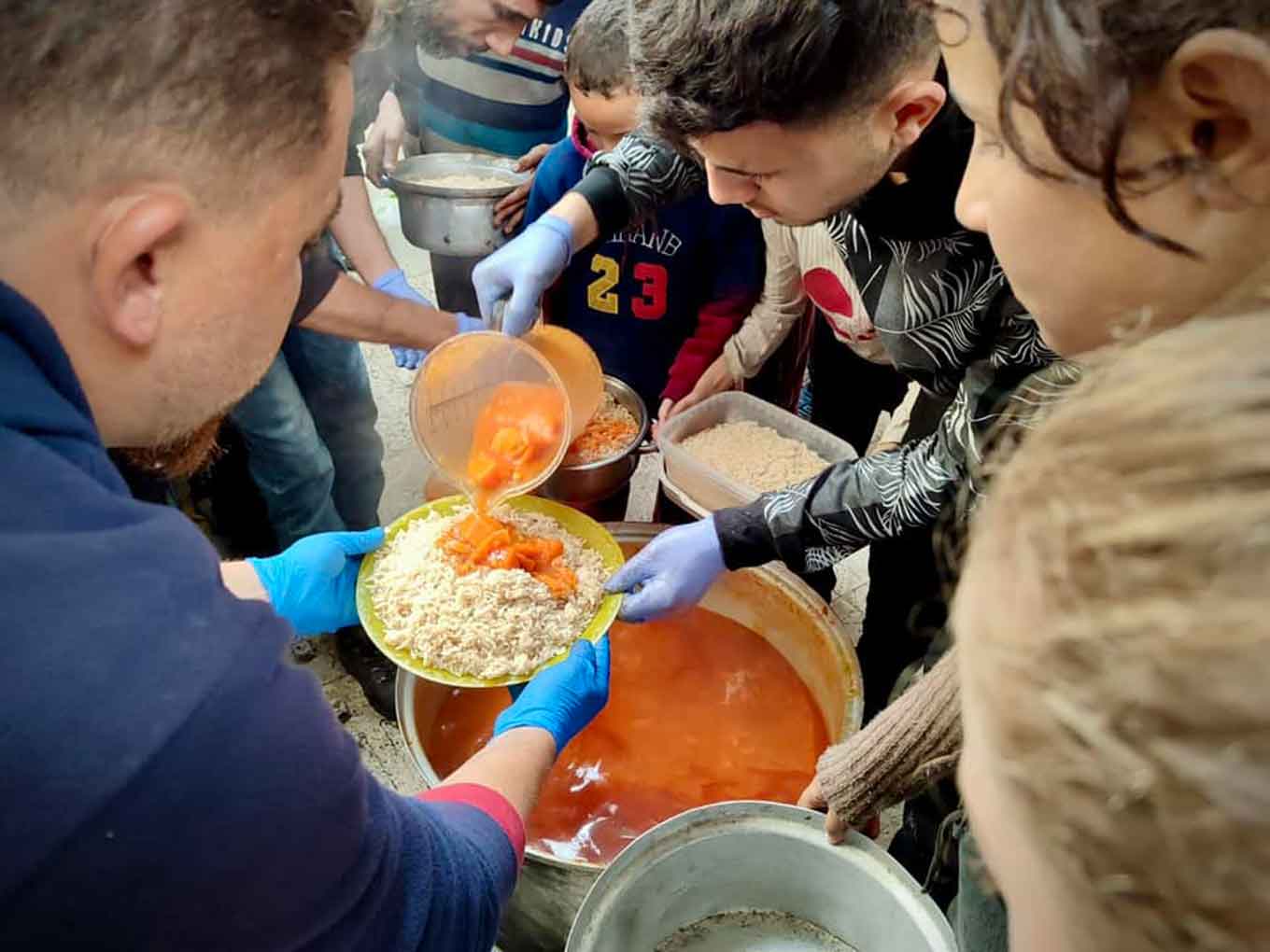
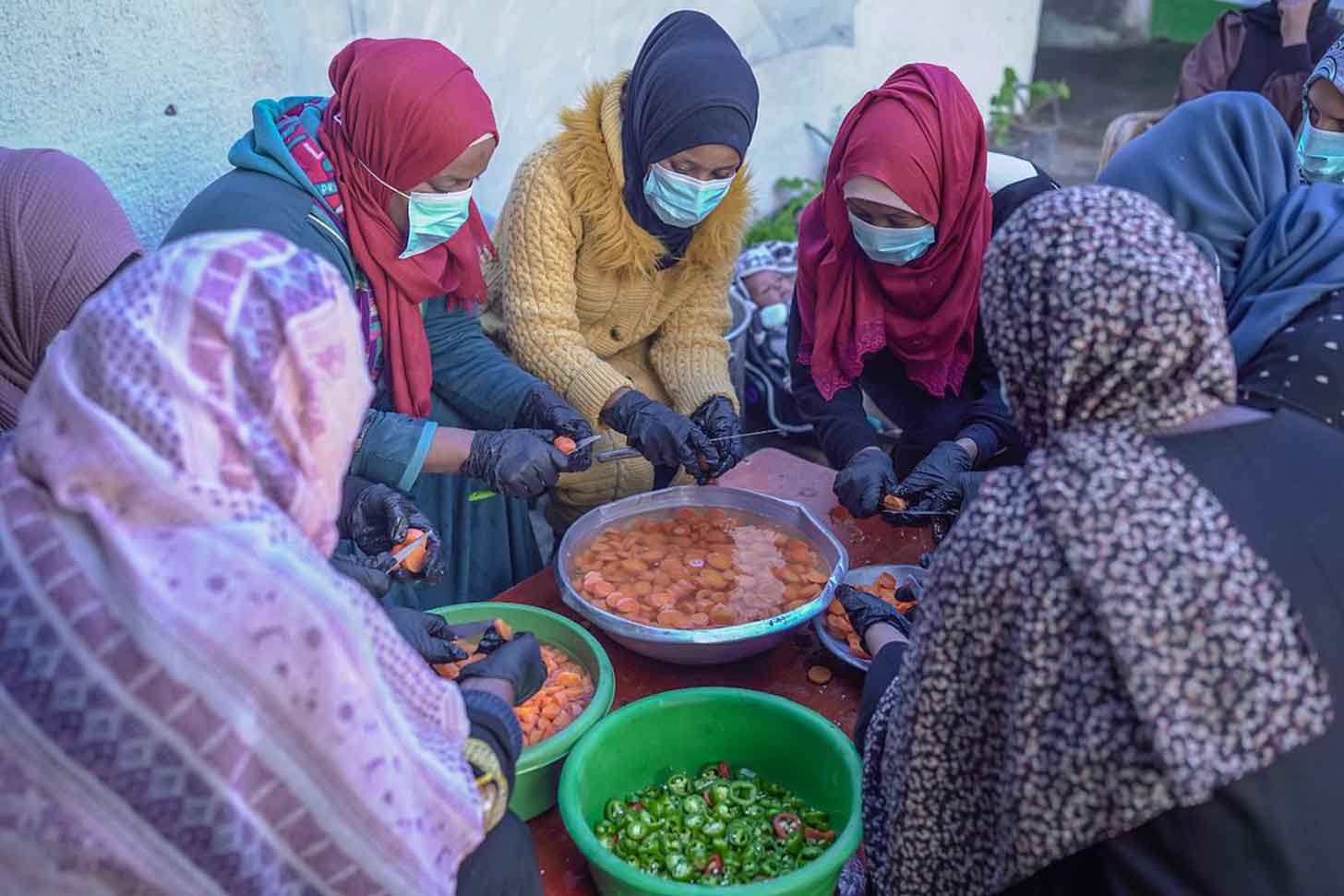
According to her post, ANERA has had staff in the region since 1968, working with protective measures and existing structures to support people in need. The funds raised by the Together Rising community will go toward ANERA’s community kitchens as they feed displaced Palestinians.
“In one day alone they served 106,800 hot meals,” Doyle said.
She also explained that MECA’s team buys fresh produce parcels from farmers in the area and that their trucks containing dry food packages are entering the area through Cairo.
“In one week, MECA distributed food parcels to 12,000 families.”
Human Rights Watch has noted that Israel’s “forced starvation” methods as a method of warfare against Palestinians is considered a war crime, and the UN Security Council said that a famine was “almost inevitable” in late February.
This makes the work of groups like ANERA and MECA vital, alongside other continued efforts from groups like World Central Kitchen, which has served over 22 million meals in Gaza since October of this year.
Together Rising’s fundraising community — aptly called “Team Love,” is just one avenue many have used to contribute to humanitarian aid for Palestnians. And Doyle is grateful.
She closed out her Instagram post with a heartfelt thank you, a call for a permanent ceasefire, and “love, solidarity, and relentless hope.”
“Together, we are harnessing our heartbreak into hope and into relief from hunger for many families and communities in Gaza,” Doyle said. “We are immensely grateful for you showing up and declaring that there is no such thing as other people’s children.”
Header images courtesy of Alex Hedison Studio and Together Rising
Over and over and over again, stories circulate from patients who go 5, 10, sometimes 70 years without a proper health diagnosis, despite constant doctor’s appointments, hospital trips, and the stress of tirelessly advocating for their pain.
For women — especially women of color — pain often goes ignored or misdiagnosed, leading to late treatment for endometriosis, multiple sclerosis, breast cancer, and countless other disorders.
Fortunately, breakthroughs in artificial intelligence are changing the tide in a new chapter of health care: one that is centered on patient-first care.
One technological breakthrough includes a new visual-mapping AI model that can accurately identify diseases and tumors in medical images.
“The idea is to help catch cancer and disease in its earliest stages — like an X on a map — and understand how the decision was made,” Sourya Sengupta, a graduate student at Beckman Institute for Advanced Science and Technology, told The New Indian Express.
The researchers trained their model by feeding it thousands of images and giving it diagnosis tasks. In a variety of challenges, the AI was able to flag early signs of tumors, detect heart conditions in X-rays, and identify macular degeneration.
“Our model will help streamline that process and make it easier on doctors and patients alike,” Sengupta explained.
Adopting AI of this magnitude on a global level may sound too good to be true, but similar models are already being integrated into health care on an unprecedented scale.
In January, an AI-powered tool helped detect a hidden heart condition in a 15-year-old boy. Last month, an AI model developed by the University of Louisville helped diagnose autism at a younger age. And a smartphone tool unveiled just this week is already helping doctors diagnose acute ear infections in babies and young children.
A Moroccan doctor named Nacer Abid has been using AI to help detect anomalies in amniotic fluid ultrasounds and monitor fetal health during pregnancy. In an interview with Morocco World News, Abid expressed that AI is not an outright replacement for doctors, but a tool for “collaborative synergy.”
“Instead, AI will emerge as the doctor’s greatest ally, empowering healthcare professionals to make faster and more accurate decisions,” shared Abid.
Header image courtesy of Daniel Schwen (CC BY 4.0)
When people encounter armadillos, they usually describe the armored mammals in derogatory terms.
“Pests” is a common word, as are “invaders” and even “speed bumps.” Many homeowners brag of “eradicating” them from their properties.
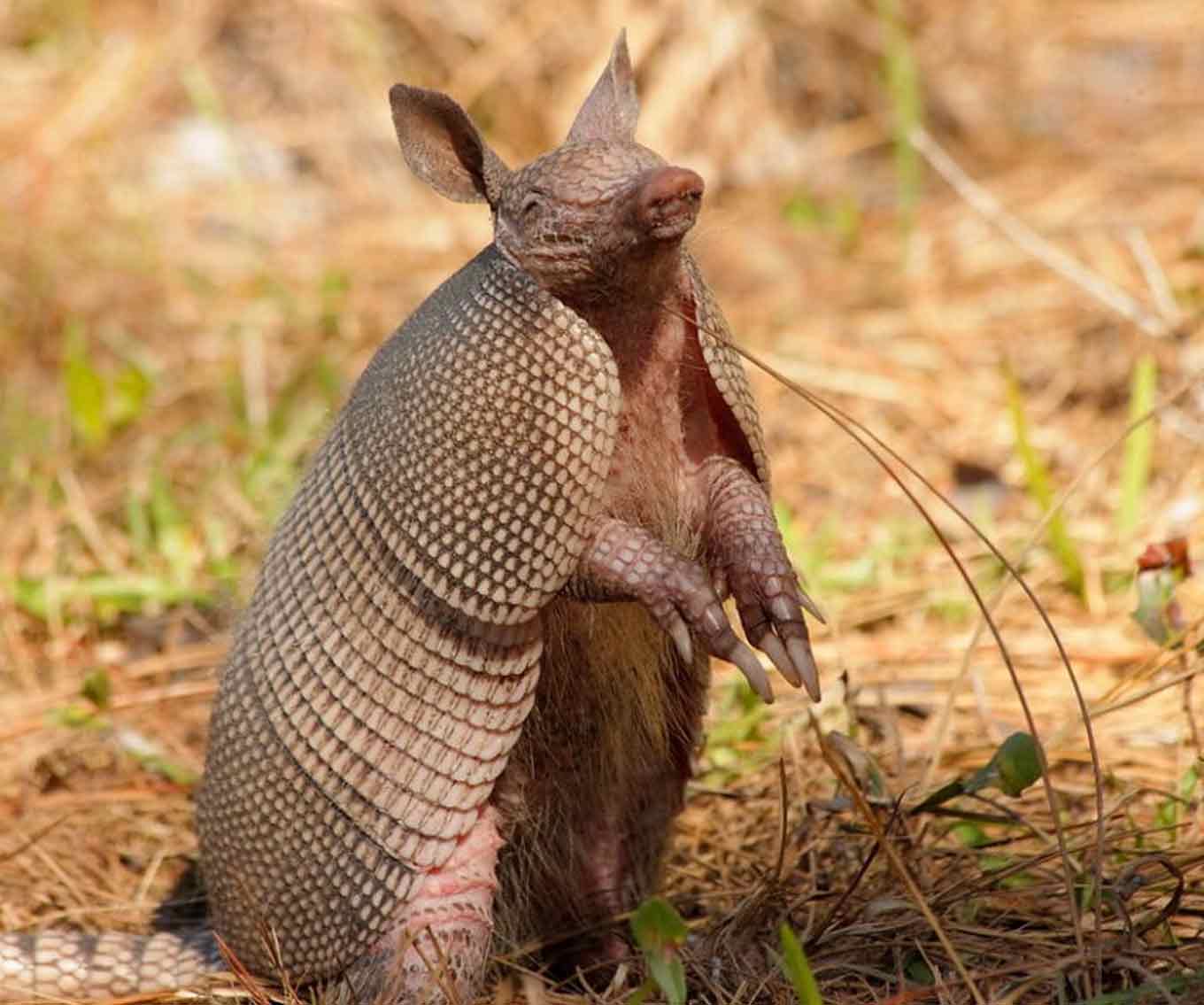
Why the hatred? Nine-banded armadillos (Dasypus novemcinctus) — the only armadillo species in the United States — have slowly expanded their range through the southern and midwestern United States over the past few decades, a process that’s sped up in recent years.
Whenever they arrive, they start digging — either to find tasty insects or grubs to eat, or to carve out the large burrows they call home.
Those holes can disrupt agricultural fields, backyard gardens and golf courses. And all too often, these incursions into human territory cost the cat-sized animals their lives.
“Some of my students are born and raised in Arkansas, and they’ve said that growing up, the prevailing thing to do when you see an armadillo is shoot it,” says Brett DeGregorio, a wildlife biologist and principal investigator at the USGS Fish and Wildlife Cooperative Research Unit at the University of Arkansas.
But people encountering nine-banded armadillos might want to reconsider their attitudes. It turns out their pesky burrows have a lot to offer local communities.
Home Is Where the Burrow Is
DeGregorio, his colleagues and his students study the shifting wildlife of Arkansas. “Fayetteville is a really fast-growing area, so I’m really interested in how the mammal community changes as we develop,” he says.
In their work, they spend a lot of time setting up wildlife cameras in various parts of the state and examining the images they find. Armadillos weren’t the initial targets of their research, but they proved hard to resist.
“The more cameras we put out, the more time we spent in the field, the more and more interested I got in the armadillos. And we started noticing these patterns.”
As patterns revealed new research questions, DeGregorio encouraged his students to point their motion-triggered cameras at armadillo burrows whenever they were in the field. And they found plenty of burrows to study.
“Each armadillo usually digs about ten of them within their little home range,” he says. “So even if you only have a few armadillos living in the area, you have lots of these holes, and they’re only using one at any given time.”
The burrows themselves are amazing structures. “There’s a perfectly round opening,” he says, “and they don’t go too deep into the ground — maybe three feet down — but they’re really long. If you were to stick your arm down one, you probably couldn’t get to the end.” Armadillos, he points out, don’t do very well in cold weather, and burrows help keep them warm in the winter and cool in the summer.
Ultimately, the researchers spent a year collecting images from burrows at 35 sites across Arkansas, including a woodlot in a suburban neighborhood, a heavily forested park in the Ozark Mountains, a national wildlife refuge, and a rural cattle pasture.
Along the way they documented plenty of armadillos — and a lot more.
A Community of Critters
The research, published this May in the journal Ecology and Evolution, found that nine-banded armadillo burrows were incredibly popular sites, used not just by their original architects but also by at least 64 other species. This included bobcats, foxes, opossums, raccoons, skunks, frogs, skinks, snakes, turtles and 40 bird species.
Some of these animals, like groundhogs and foxes, took over armadillo burrows and adapted them for their own use. The researchers documented one red fox giving birth in its new home, and several Virginia opossums spent long periods in burrows caring for their newborns.
Other animals used the burrows to store food. Cameras frequently caught gray squirrels hiding acorns near or on burrow entrances and later digging them up — if mice didn’t steal them first.
Still other species used burrows as hunting sites. Those acorn-seeking mice made great prey for red-tailed hawks, which appeared to stake out burrow entrances.
DeGregorio says he wasn’t surprised by what they found because similar behavior has been documented around the burrow of other species — notably, tortoises.
“Gopher and desert tortoises get a lot of credit for being these ecosystem engineers because they also dig these extensive burrow systems,” he says. “That’s one of the key talking points for conservation of the tortoises: that they benefit so many other species.”
He expected a similarly extensive list of species benefiting from armadillo burrows — and he found it: “They create a lot of refuges for other animals to take advantage of.”
That may provide a whole other layer of benefits.
“If you’ve got armadillos around, the general biodiversity in that area is probably higher,” DeGregorio says.
“To turn this into a selfish, human-centric thing: We know that biodiversity is directly linked to many human health benefits. One of the species we saw using these burrows the most was the Virginia opossum, which are amazing tick predators. The more opossum we have around, the fewer ticks and the lower prevalence of Lyme disease and the other nasty stuff that keeps us up at night. If armadillos can contribute to that, especially in suburban and rapidly developing areas where they persist really well, I think we should embrace that.”
Shifting Patterns
But those rapidly developing areas come with costs for armadillos.
In another study stemming from the same research, DeGregorio and his team found that humans don’t always make the best neighbors for these armored animals.
It’s not just their perpetual persecution of armadillos as “pests.” It’s also the noise.
The study found that the further armadillos got from Fayetteville, the more active they were during the day. Closer to the city, though, the armadillos were more active in the quiet of the night, when humans wouldn’t disturb them.
Nocturnal activity may make armadillos safer from humans, but it creates other threats.
For one thing, moving around at night exposes them to nocturnal predators like great horned owls and cougars.
For another, it’s just colder at night.
“Armadillos have a really low body temperature,” DeGregorio says. “When we force them to be active during the coldest parts of the night, during the winter, we’re making them do something that they don’t want to do. There’s a real cost to that. It takes them days and days to recover.”
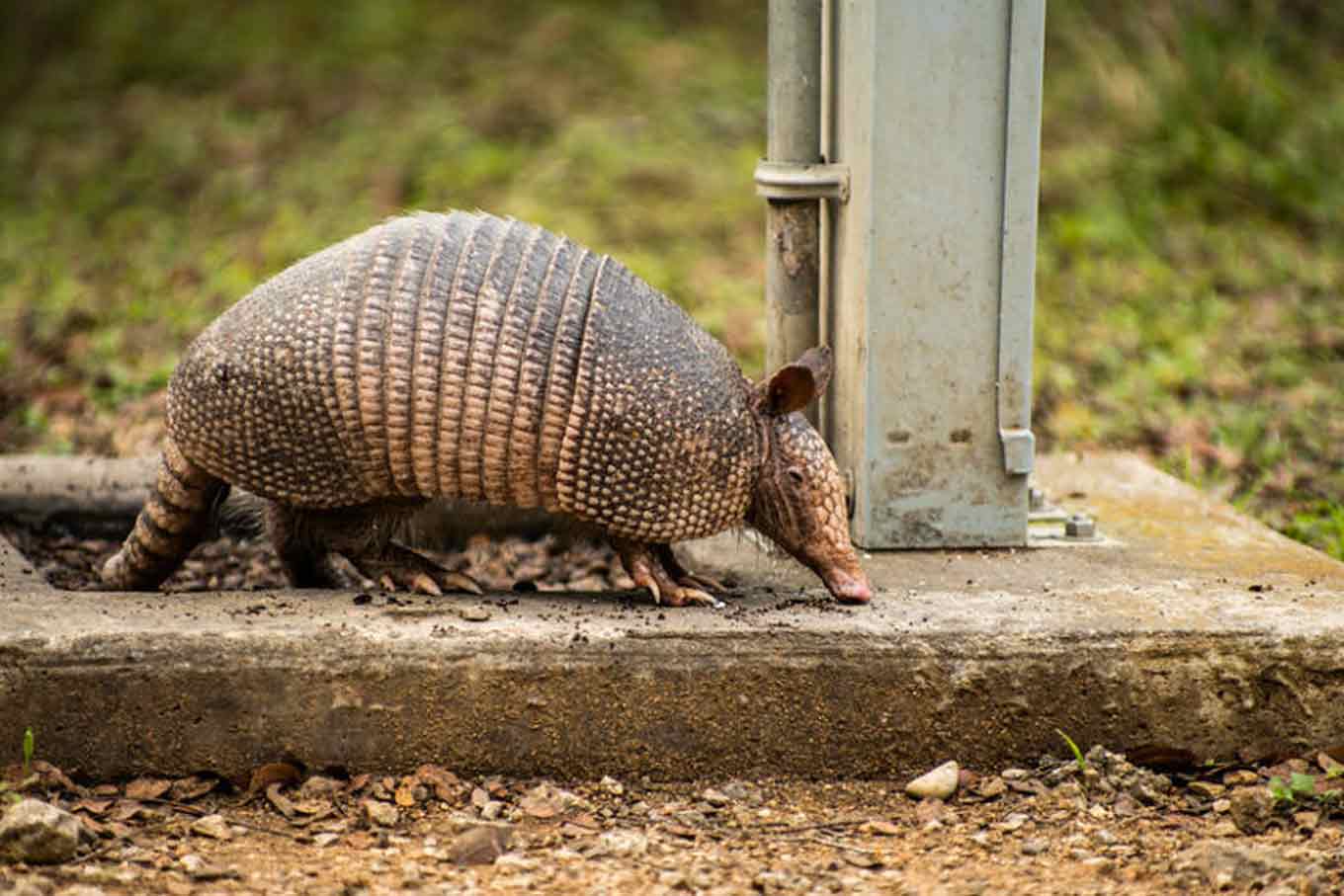
And yet, they persist. No one knows why they’ve expanded their range so much in recent years — some say it’s climate change, while DeGregorio theorizes human development helped pave their way. Whatever the reason, it keeps bringing nine-banded armadillos to other parts of the United States.
And they’ve accomplished this spread in spite of their other … challenges.
“They’re a puzzling species,” DeGregorio says. “One of the things that really strikes you when you start working in armadillo country is kind of how clueless they seem. They have poor eyesight, and when they’re out foraging, they’re so focused on the ground. If you just stand still, it’s not uncommon for them to bump into your legs and then, you know, panic, jump in the air, then run away.”
None of their shortcomings seems to stop them from surviving, thriving and contributing to their surroundings.
“Not only are they surviving in the wild — they’re also extremely adaptable,” he says. “They’re spreading their geographic range at a remarkable rate, and they’re really changing the environment to the benefit of other animals around them.”
Will this research help challenge people’s unfair attitude toward armadillos? “I would love to see that perception change a little bit,” he admits.
It has certainly shifted his own idea of the species, DeGregorio says. He used to see armadillos as “this kind of goofy, overlooked animal.” Now, he says, it’s changed to “Wow — they make a meaningful difference for the ecosystem.”
This article was originally published by The Revelator.
— Instead of simply harvesting forest-grown crops, traditional communities in the Amazon Rainforest can use the biofactories to process, package and sell bean-to-bar chocolate and similar products at premium prices.
— Having a livelihood coming directly from the forest encourages communities to stay there and protect it rather than engaging in harmful economic activities in the Amazon.
— The project is in its early stages, but it demonstrates what the Amazon’s bioeconomy could look like: an economic engine that experts estimate could generate at least $8 billion per year.
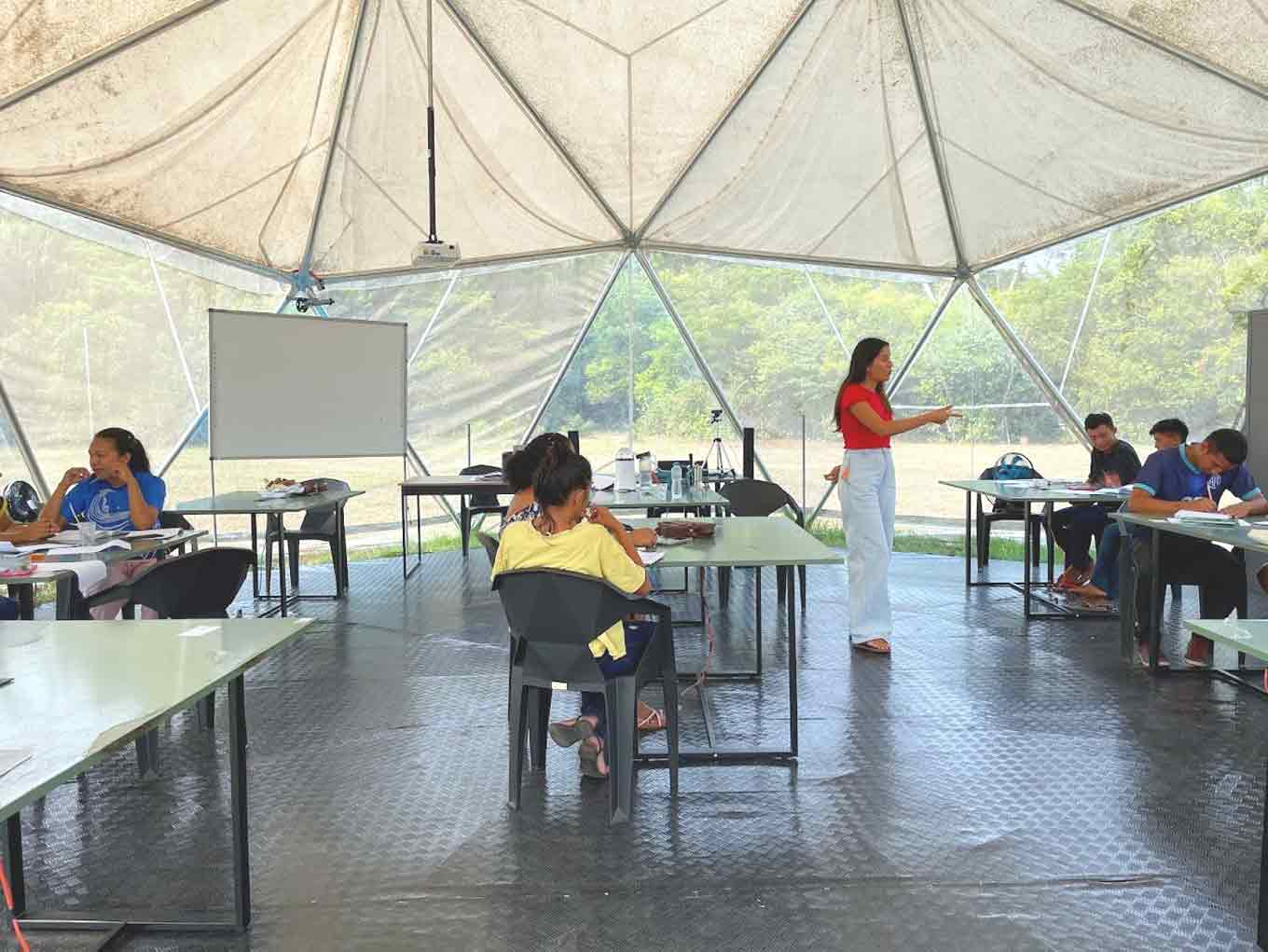
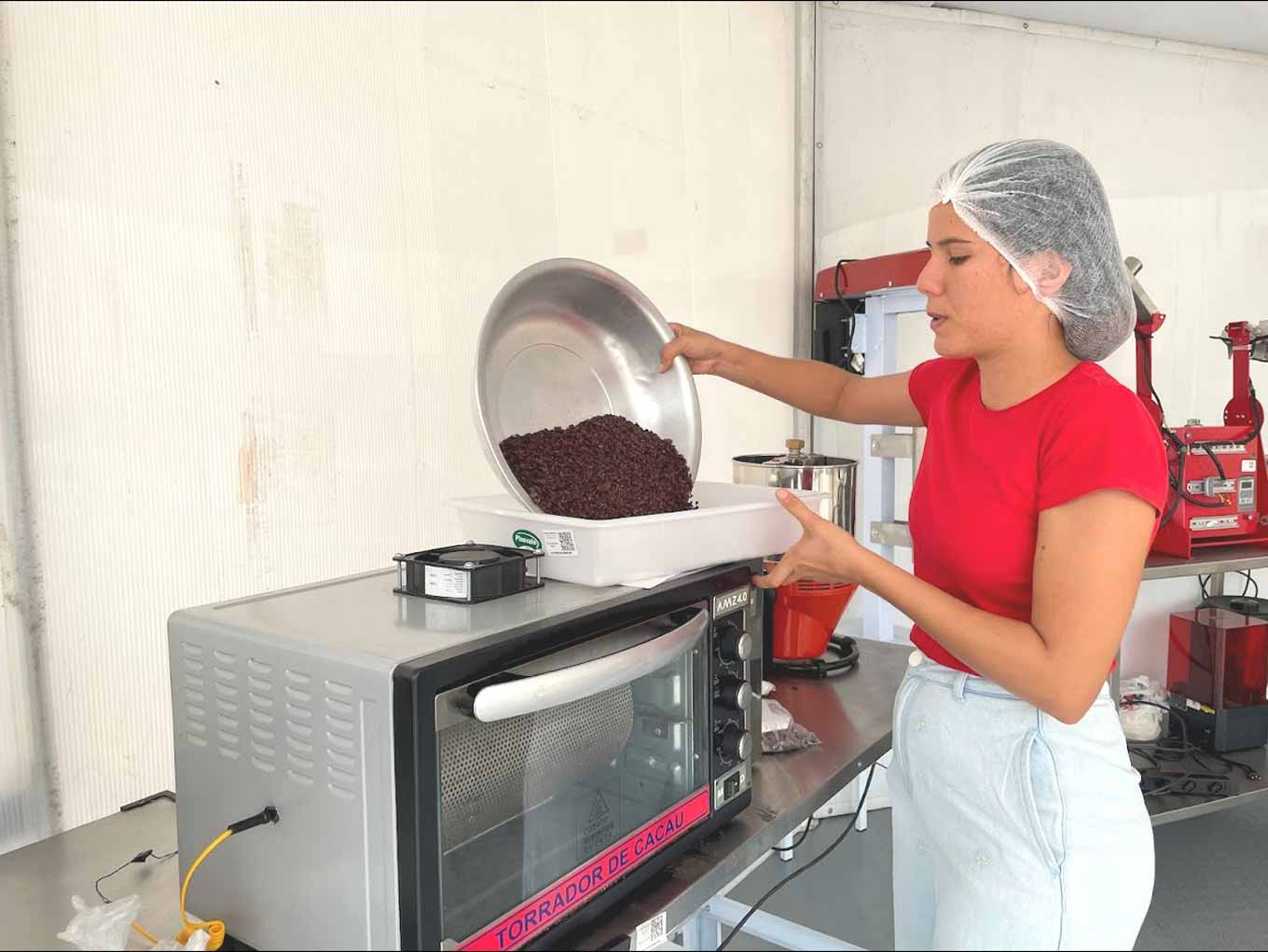
In a tent in the Surucuá community in the Brazilian Amazonian state of Pará, Jhanne Franco teaches 15 local adults how to make chocolate from scratch using small-scale machines instead of grinding the cacao beans by hand.
As a chocolatier from another Amazonian state, Rondônia, Franco isn’t just an expert in cocoa production, but proof that the bean-to-bar concept can work in the Amazon Rainforest.
“[Here] is where we develop students’ ideas,” she says, gesturing to the classroom set up in a clearing in the world’s greatest rainforest. “I’m not here to give them a prescription. I want to teach them why things happen in chocolate making, so they can create their own recipes,” Franco tells Mongabay.
The training program is part of a concept developed by the nonprofit Amazônia 4.0 Institute, designed to protect the Amazon Rainforest. It was conceived in 2017 when two Brazilian scientists, brothers Carlos and Ismael Nobre, started thinking of ways to prevent the Amazon from reaching its impending “tipping point,” when deforestation turns the rainforest into a dry savanna.
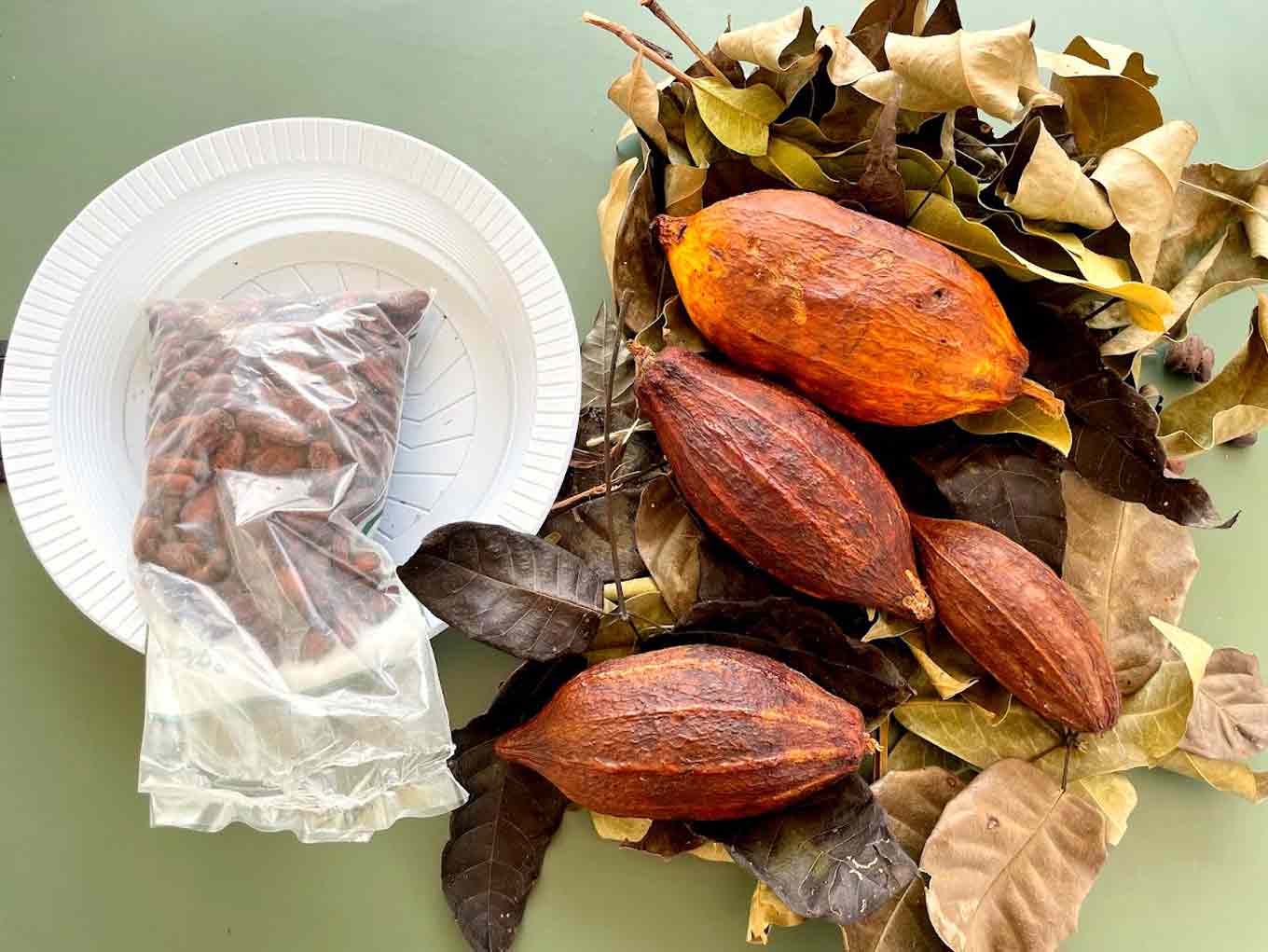
Their solution is to build a decentralized bioeconomy rather than seeing the Amazon as a commodity provider for industries elsewhere. Investments would be made in sustainable, forest-grown crops such as cacao, cupuaçu and açaí, rather than cattle and soy, for which vast swaths of the forest have already been cleared. The profits would stay within local communities.
A study by the World Resources Institute (WRI) and the New Climate Economy, published in June 2023, analyzed 13 primary products from the Amazon, including cacao and cupuaçu, and concluded that even this small sample of products could grow the bioeconomy’s GDP by at least $8 billion per year.
To add value to these forest-grown raw materials requires some industrialization, leading to the creation of the Amazonian Creative Laboratories (LCA).
These are compact, mobile and sustainable biofactories that incorporate industrial automation and artificial intelligence into the chocolate production process, allowing traditional communities to not only harvest crops, but also process, package and sell the finished products at premium prices.
The logic is simple: without an attractive income, people may be forced to sell or use their land for cattle ranching, soy plantations, or mining. On the other hand, if they can make a living from the forest, they have an incentive to stay there and protect it, becoming the Amazon’s guardians.
“The idea is to translate this biological and cultural wealth into economic activity that’s not exploitative or harmful,” Ismael Nobre tells Mongabay.
Life-changing factories
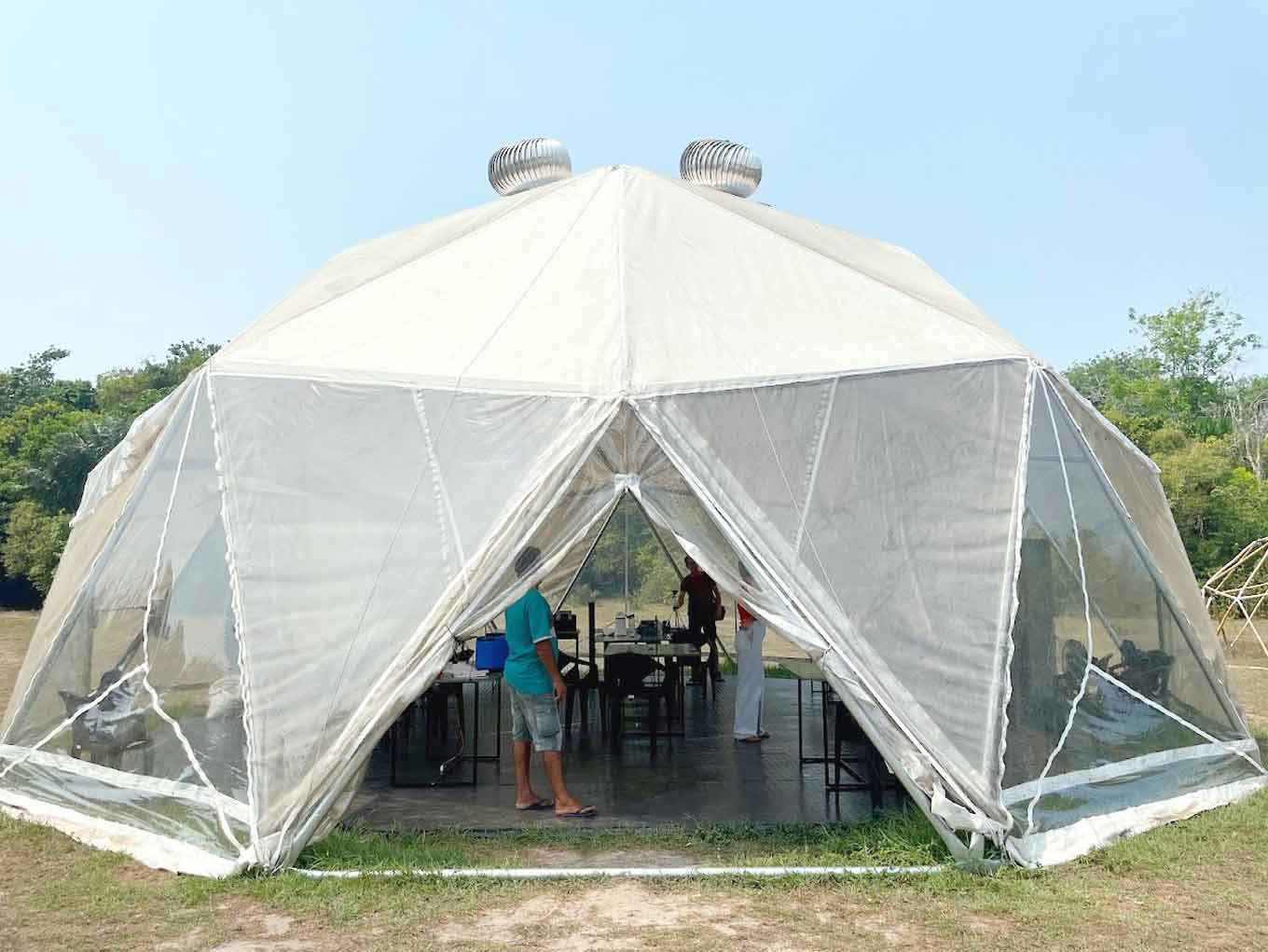
After years of planning, the first biofactory was set up at the end of September 2023 in Surucuá, a traditional community in the Tapajós-Arapiuns Extractive Reserve, next to the Tapajós River. Resembling a tent, it’s a geodesic dome that can easily be assembled and dismantled in days, and is fully powered by 60 solar panels, keeping running costs low.
Inside the factory, the equipment hums as it roasts cacao beans, the rich scent of chocolate lingering in the air. There are two zones inside: a small-scale machine room for cooking the chocolate, and another for preparing and storing it.
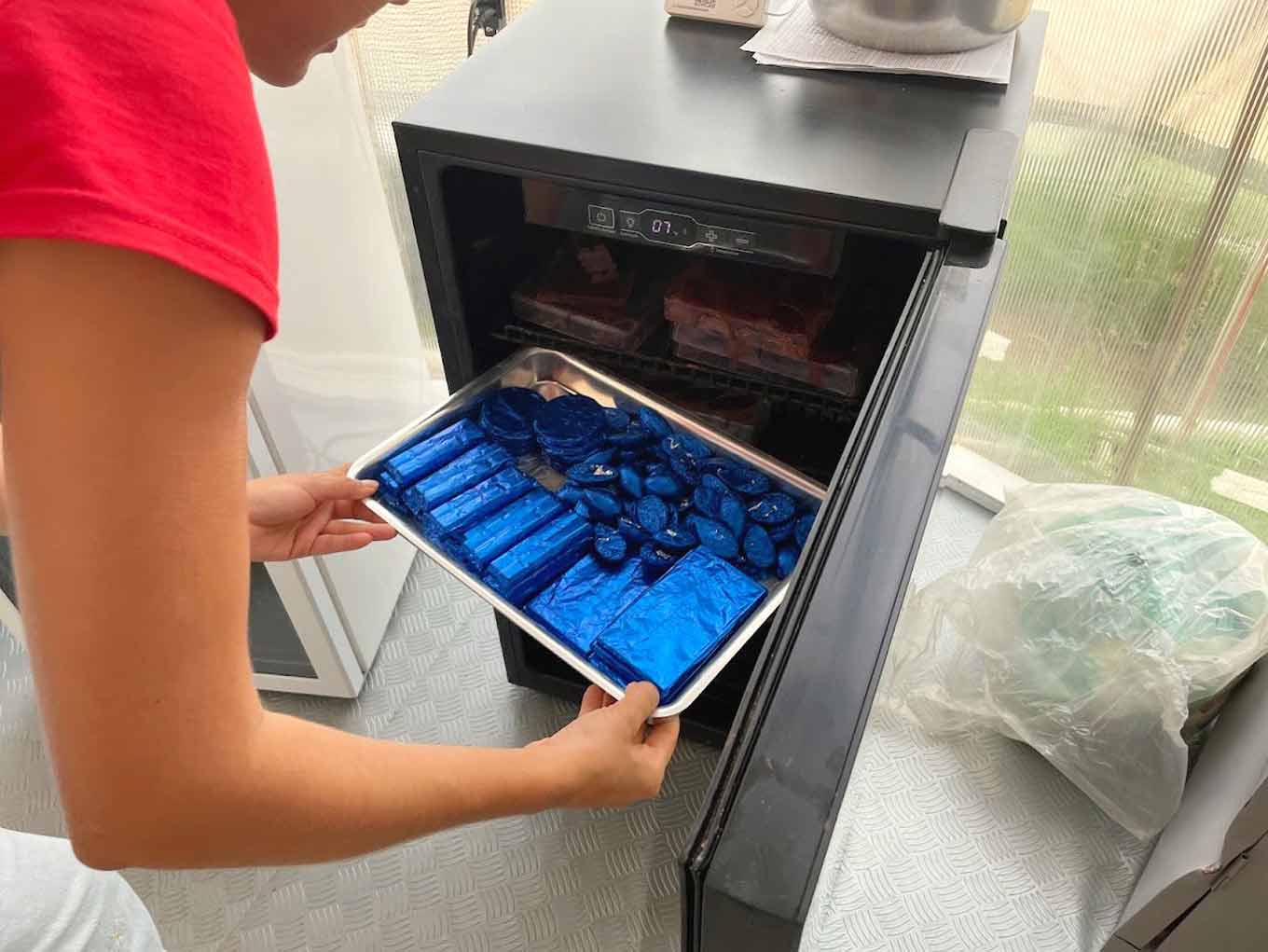
“You configure your recipe step-by-step in the system, and this system will send information to the equipment that will carry out the entire process without you having to remember it,” Franco says. “It will notify you when you have to add the ingredient to the recipe that you previously programmed.”
In the storage room, fridges brim with the students’ creations of chocolate mixed with local fruit, and cupulate, a fruity, chocolate-like product made from cupuaçu, a close relative of cacao. Franco hands me a bar made by a student, calling it “one of the best chocolates I’ve ever eaten.” It’s mixed with a local forest spice — the exact one is a closely guarded secret — that gives it a spicy cinnamon-like kick.
“We came up with product ideas that I didn’t even know about and that when I tried them I thought they were fantastic,” Franco adds.
The community members can print their own designs on the chocolate, such as cultural symbols or emblems. They’re also taught during the daily classes how they can eventually sell their products to wider markets and comply with food safety regulations.
Everyone in the community that Mongabay speaks to expresses the same thing: excitement for the new opportunities the initiative can bring, especially the new livelihood options besides growing cassava, their main economic activity.
“It’s been a great learning experience to know and value much more of our biodiversity and local products,” Mariane Souza Chaves, a community member who works in agriculture, tells Mongabay. “We used to throw away cupuaçu seeds, and now we’re making cupulate with it.
“It generates income for families and improves the quality of life, food security and sovereignty for families here,” she adds. “It’s an alternative income [incentive] for young people to stay here and preserve our cultural knowledge.”
Although the project is still in its early days, it’s taken months to get to this point. Amazônia 4.0 visited several communities in the rainforest and worked with them to create the biofactory concept.
The nonprofit invited 13 leaders of Indigenous, riverine, extractivist and Afro-Brazilian quilombola communities to São Paulo, for a week spent visiting chocolate factories to see the entire production process from start until “that moment when the consumer pays the highest price for the finished product,” Ismael Nobre says.
“This is part of our method of developing things with communities in the Amazon. We don’t develop things in our heads and take them there as a magic formula that says, ‘Look, this will be good for you,’” he says. “All the work is done hand in hand and using their local knowledge while understanding that there is more beyond the world they live in, which is the world of high technology.”
Once Franco has delivered all the training by January and the community fully understands the production process and how to operate the machines, the biofactory will be dismantled, loaded onto a boat, and taken to the next riverine or quilombola community within the state of Pará.
In the new location, over the course of a few weeks, the community will receive the same training. Some equipment, all of which has been donated to Amazônia 4.0, will be left at Surucuá so the community can carry on making chocolate and cupulate after the biofactory has gone.
In the factory, we’re joined by Francisco Maia, who helped set up the dome in September and documents all the steps of the project for Amazônia 4.0.
Originally from São Paulo, he was part of the team that brought the biofactory from the city to Surucuá, a five-day drive followed by a six-hour boat trip down the Tapajós River, a huge tributary of the Amazon that’s up to 16 kilometers (10 miles) wide in some places.
The project has been a learning curve, Maia says. For example, they learned early on that they needed better air-conditioning in the factory to keep it cool in the Amazonian heat; a steady temperature is critical for the chocolate-making process, as variations can alter the taste. All these discoveries will help improve the success of the project in the next community.
“We’re the guinea pigs,” Maia says. “What will happen in the other communities, we don’t know. They’re all different.”
Building a ‘new way of living’
The Amazon is the largest producer of cacao in Brazil, where the raw material sells for around 10 reais ($2) per kilogram (about 93 cents a pound), Ismael Nobre says.
At the other end of the production chain, “A kilo of fine chocolate costs 200-300 reais,” $41-$61, or about $18.60-$27.70 per lb. “That’s a value-added of about 2,000% or more,” Ismael Nobre says. If these profits could be kept within the communities that make the premium products, they would drastically increase local incomes and provide more incentive to protect the land.
Other Amazonian products, such as the açaí berry, support more than 350,000 people in Pará alone and offer a much higher income than work in livestock ranching or logging, activities associated with rampant deforestation.
Amazônia 4.0 has plans to roll out more biofactories that can also produce gourmet oils and Brazil nuts, another multimillion-dollar industry. “This inflow of resources will generate a chain of economic transformation,” Ismael Nobre says.
Maia and I take shelter from the sizzling midday sun in the air-conditioned biofactory. It’s the dry season in the Amazon, and this year has brought a prolonged drought, the result of a climate that’s changing in unpredictable ways and could spell disaster for the rainforest.
Yet there’s hope.
“We’re here now in the middle of the storm, but we’re doing something good,” Maia says, looking around the biofactory. “It’s a new way of living.”
This article was originally published by Mongabay.
Imagine you go to a concert at the esteemed Carnegie Hall in New York. Instead of sitting in a chair, you are invited to make yourself comfortable on soft floor cushions or a yoga mat. Rather than being shushed, you are encouraged to connect with your neighbor.
And at the moment when the first musical notes would normally sound, a host invites you to breathe in and out mindfully. Even the lighting is softer and warmer.
"We hung fabric to make the space more inviting and cozy," says Sarah Johnson, director of Carnegie Hall's Weill Music Institute (WMI). "Given everything that people are navigating in today's world, we wanted to intentionally craft a communal musical experience to maximize the health benefits of attending a performance."
Premiering earlier this month, Carnegie Hall's ongoing series of 16 Well-Being Concerts isn't only designed to entertain — it aims to deliver tangible health benefits. According to a sweeping 2019 World Health Organization report, making and listening to music is associated with reduced stress, anxiety, and loneliness.
Reasons to Be Cheerful looks at how this legendary New York theater is using culture to cultivate well-being.

The report — along with findings that a significant percentage of Americans who suffer from anxiety and depression don't receive adequate care — inspired the series of performances. Some are open to the general public, while others are curated for specific audiences such as health care workers, veterans, or people impacted by the justice system.
"We started to wonder, what could we do?" Johnson says of the series' genesis. "How could we create an opportunity for people to maximize the potential well-being impact of a live musical experience?"
When vocalist Sarah Elizabeth Charles starts singing the first tunes of "Conscious Mind," some listeners close their eyes to focus on her crystal clear, soulful voice. "Love the world" is the refrain. Charles and her husband, pianist Jarrett Cherner, finished writing their album Tone during the pandemic.
"Trying to cultivate loving kindness and mindfulness during these trying times," Charles remembers. "And then sharing that loving kindness outward into the world. We could never have known at the time how well it would fit into this space now."
Both the artists and the attendees say they experience the Well-Being Concerts quite differently from your typical performance. Instead of watching the artists on an elevated stage, the attendees are on the same level and form a circle around the performers.
"It feels much more connected," is how Charles describes the difference. "We're trying to really hold the space for the audience to have as fruitful of an experience as possible during the concert. It's a really cool way to dig into the meaning of the content."
Carnegie Hall piloted the Well-Being Concerts this spring mainly for health care providers and people impacted by the justice system. The response was so enthusiastic that the Weill Institute expanded the series for this season.
It hosted the first Well-Being Concert of this season on November 11 for health care workers at New York City's public hospitals, because of the "acute challenge for the health care world in the last few years," Johnson explains. "We've all been so fragmented and pulled in a million directions, the events are meant to offer relief."
The audience was capped at 100 people to create a sense of intimacy.
Both Johnson and strategic advisor Ian Koebner take care not to stigmatize or exclude any attendees.
"We take an expansive approach because we're all swimming in very stressful, isolating waters, and we can all stand to be supported more deeply," says Koebner, who also hosted the first Well-Being Concert.
At the beginning, he invites the audience to breathe mindfully and introduces a very simple form of mindfulness meditation, though he avoids using the word meditation so as to not feed into any preconceived notions.
"As soon as I walked into the room, I felt my heart rate going down," one attendee noted after a performance. "I felt my breathing coming back. And it just continued throughout the event…When I left, there out on the street, everything was a bit brighter and calmer and nicer."
One nurse said after the event, "I wasn't aware it was possible to be in a space that felt so peaceful in this city."
Being here and now
Carnegie's series isn't the first to address mental health through performance.
The United Kingdom pioneered a program called Arts on Prescription as psychosocial support for patients experiencing loneliness or social isolation. The program has run for more than two decades and shows benefits for mental health, chronic pain and the management of acute and chronic illnesses.
"Arts in general, and music in particular, can be very therapeutic," Koebner says. "Reflective group listening in a concert setting can have a positive physiological, psychological and social impact. For instance, the stress hormone cortisol decreases. Researchers have measured a decrease in anxiety and depression."
Koebner worked for ten years in arts-based conflict resolution before joining Carnegie Hall. A licensed acupuncturist, he has a PhD in healthcare leadership from UC Davis, where he was also the director of integrative pain medicine. This career path led him to wanting to "be a partner in addressing the burden of chronic pain and loneliness."
He quotes studies that found listening to music can "reduce symptoms of depression, increase well-being through the creation of social connection and provide an important resource for self-development, recovery and quality of life among individuals with long-term illnesses."
The concert series is "an artistic exploration as well as a laboratory," according to Koebner.
Its impact will be evaluated in cooperation with The Berkeley Social Interaction Lab at UC Berkeley. Under the guidance of psychology professor Dacher Keltner, the researchers study the experience of live concerts with a randomized controlled trial about the impact of the season.
The Weill Music Institute at Carnegie Hall has more than 14 years of experience with presenting concerts in diverse and often high-stress public spaces, including hospitals, senior care residences and schools, as well as with people experiencing homelessness.
"We want to think about how to support well-being concerts outside of the very kind of rarefied air of Carnegie Hall," Koebner says.
For instance, the WMI has been offering a program called Musical Connections in maximum-security correctional facilities like Sing Sing. Sarah Elizabeth Charles has served as a vocal coach for women at New York's jail on Rikers Island as part of the Weill Institute's Lullaby Project, writing lullabies with and for young mothers.
Charles calls the experience of bringing her music into prisons "life-changing." The Lullaby Project explores what role music can play in mitigating stress for expecting families and new parents, proving that music "can spur language development and moderate stress." It also helped Charles work through her own miscarriage and pregnancy.
"The programs have an effect on us as well," Johnson says. "I found the concert really helpful to me personally. It was quite peaceful, lovely and contemplative. We who do this work are changed by it, too. With this work, there is the potential for 360 degrees of impact."
The response to the first Well-Being Concerts has been encouraging, but the organizers know that mental health challenges are rarely resolved with one performance.
"The concert felt very healing," one attendee said after one of the pilot concerts in spring. "But I'm very aware that I am now going back out onto the streets of Gotham."
Johnson's team is looking into ways to prolong the impact. "How do you extend the impact of a single event?" Koebner asks. He is helping to create resources for the audience –– for instance, curated playlists attendees can download, and short recording snippets of the concert that he sends out for several weeks afterward to prolong the impact.
At the end of the concert, Charles and Cherner invite the audience to sing along and lead the room in lyrics that could hardly be more fitting: "Be here and now, living life out loud."
This article was originally published by Reasons to be Cheerful via Stacker and republished with permission under a CC BY-NC 4.0 license.
Improved disability representation and accessibility been all the rage in the entertainment industry in recent years — with the smash success of films like “CODA,” and exciting advancements in American Sign Language translation options on streaming services.
Representation and accessibility are popular for a reason; they drastically improve the experiences of countless movie fans with disabilities.
“Being able to share the biggest movie of the year in ASL, the first language for many, will make this story resonate in a more meaningful way,” Casey Bloys, the chairman and CEO of HBO and Max content, said in a statement when “Barbie” was released to Max’s streaming platform with an on-screen ASL option last fall.
“By offering sign language interpretation, we will build upon the film’s empowering message of inclusiveness and offer a unique viewing experience for the Deaf community to enjoy with family and friends.”
But what about films beyond those hit blockbusters with budgets for this kind of accessible programming? Well, it starts with the movie-makers themselves.
This week, the Oscars posted a TikTok video of a myriad of Academy Award nominees learning how to sign the names of their films in ASL. Supported by Deaf writer, director, and creator Chrissy Marshall, award season favorites like Lily Gladstone and Mark Ruffalo were eager to learn.
“I’m Deaf, so I use sign language, and I’m just going around teaching people how to sign the names of their movies,” Marshall introduced herself.
@oscars This year’s Oscar nominees learn how to sign their films with writer, director and deaf creator Chrissy Marshall. Click the link in bio to bookmark the 96th Oscars American Sign Language (ASL) Livestream. Tune into @ABC Network to watch the Oscars LIVE on Sunday, March 10th at a new time, 7e/4p! #oscars #oscars2024 #americansignlanguage #asl #markruffalo #lilygladstone #sandrahuller #brittanysnow #movies #film ♬ original sound - The Oscars
The video follows a number of stars — as well as producers and creators — from the season’s biggest films, including “Killers of the Flower Moon,” “Poor Things,” “Anatomy of a Fall,” “American Fiction,” “Barbie,” and more.
Sandra Hüller, a German actress who starred in two Best Picture nominated films this year, was visibly thrilled to learn the name of “Anatomy of a Fall” in ASL, even hugging Marshall at the end of the video.
Brittany Snow, from the short film “Red, White and Blue” earnestly leaned into the exercise, asking clarifying questions.
And Gladstone, of historic “Killers of the Flower Moon” fame, shared a gratified “aww,” when discovering the sign name for the film.
Ruffalo, too, was animated about the exercise.
“Oh my god, that’s so easy,” he exclaimed, after successfully signing “Poor Things.”
The video also served as an advertisement to remind viewers to watch the Oscars American Sign Language broadcast, which will be translated by Marshall and is available online as a livestream this Sunday at 7 p.m. Eastern Time.
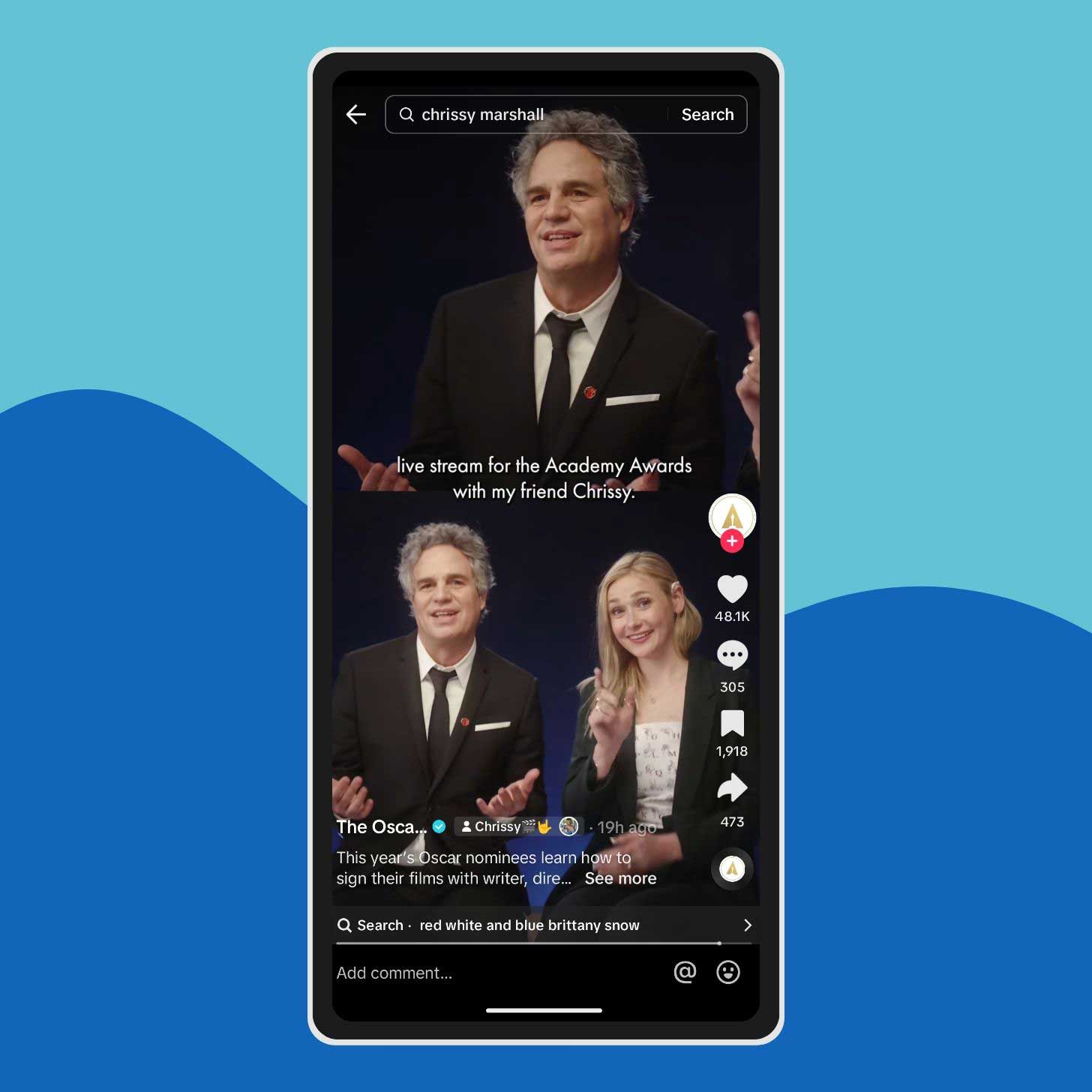
“I invite you to watch the ASL live stream for the Academy Awards with my friend Chrissy,” Ruffalo concluded the video.
A livestream separately broadcasted from the main event on ABC is not the most equitable form of accessibility (which would look more like including an ASL translation option for all broadcasting methods), but it’s certainly a step in the right direction.
And judging by the comments on TikTok, folks are excited to continue seeing small — albeit, imperfect — steps of meaningful accessibility in the entertainment industry.
“That’s awesome!” one commenter cheered. “I’m looking forward to watching the Oscars with ASL on livestream.”
“Love to see ASL getting more attention and airtime,” another commenter wrote. “Increasing accessibility is so important.”
“This is so sweet,” someone else shared, pledging to do their part to make ASL interpretation the norm. “I’m gonna watch the ASL telecast so that hopefully this is standard across all broadcasts.”
Header image courtesy of The Oscars/TikTok
Angela Davis, an icon of resistance, academic scholar, and activist, has spent decades at the forefront of movements for social justice, advocating for the rights of the oppressed and marginalized.
Her work as a radical activist during the civil rights movement and beyond has made her a symbol of the fight against systemic racism, mass incarceration, and gender inequality.
Her quotes, often cited in discussions on feminism, race, and social change, reflect a deep understanding of the struggles for freedom and equality.
They serve not only as a critique of the status quo but also as a source of hope and inspiration for future generations committed to making a difference.
In this article, we’ve curated a collection of Angela Davis’s most impactful quotes.
Whether you're engaged in social justice work or looking to deepen your understanding of these critical issues, Davis's words offer valuable perspectives and a reminder of the power of perseverance and solidarity in the face of adversity.
The Best Quotes from Angela Davis
Famous Quotes
“I am no longer accepting the things I cannot change. I am changing the things I cannot accept.”
— Angela Davis
“You have to act as if it were possible to radically transform the world. And you have to do it all the time.”
— Angela Davis
“In a racist society it is not enough to be non-racist, we must be anti-racist.”
— Angela Davis
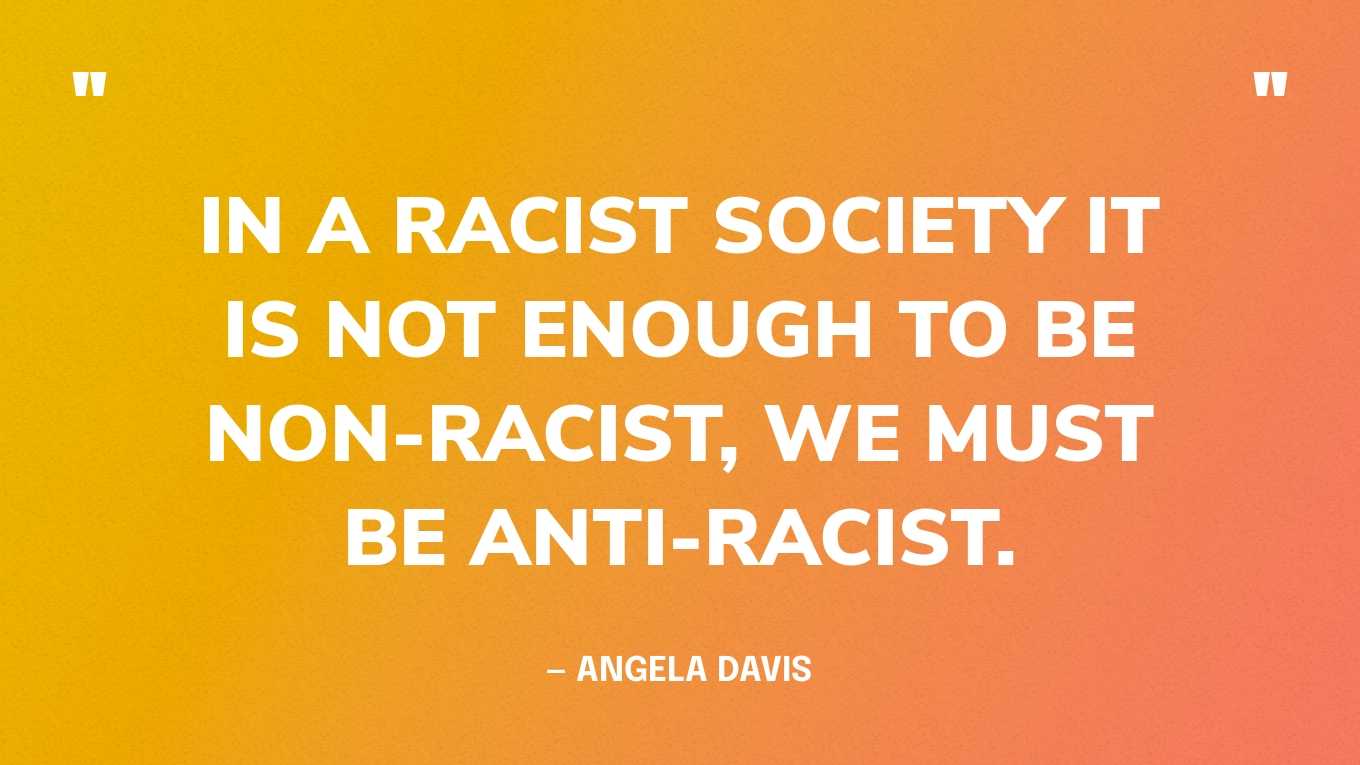
“Movements are most powerful when they begin to affect the vision and perspective of those who do not necessarily associate themselves with those movements.”
— Angela Davis, Freedom Is a Constant Struggle: Ferguson, Palestine, and the Foundations of a Movement
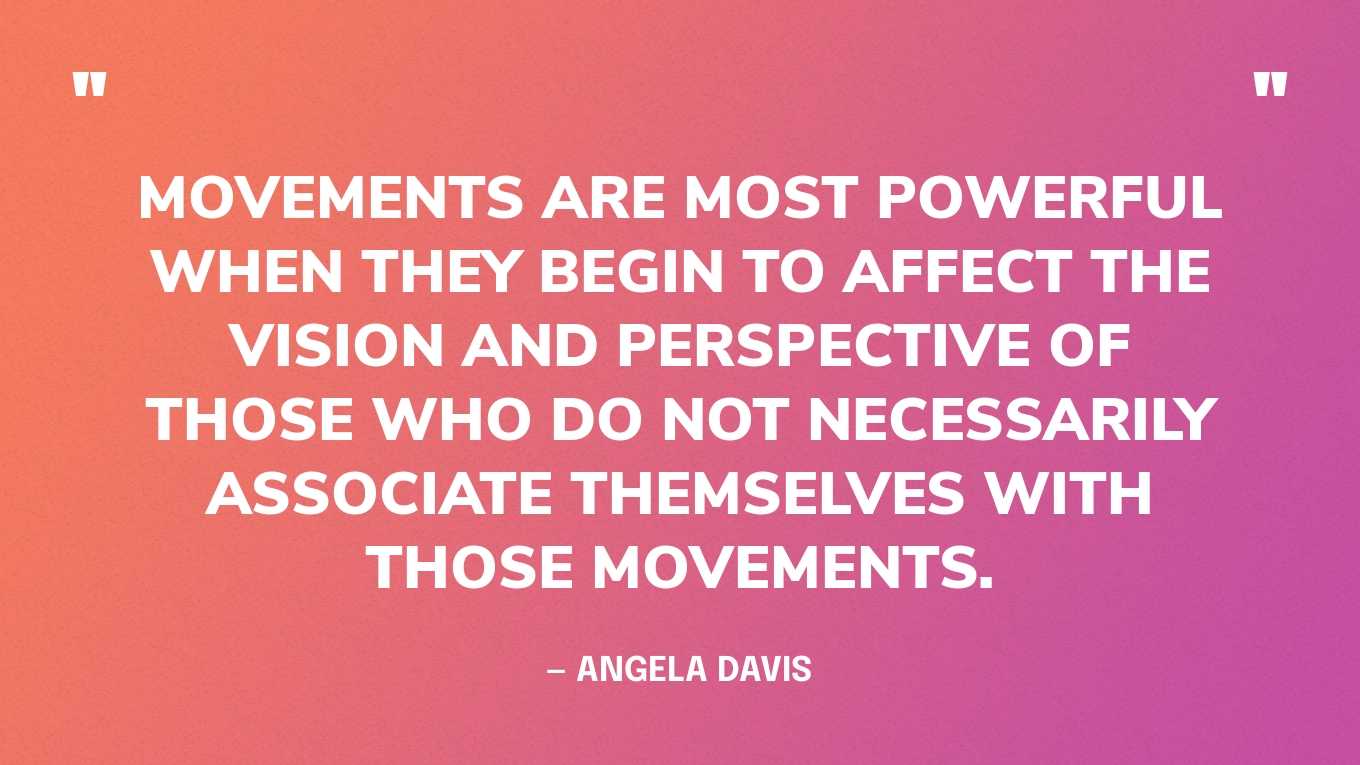
“Justice is indivisible. You can’t decide who gets civil rights and who doesn’t.”
— Angela Davis
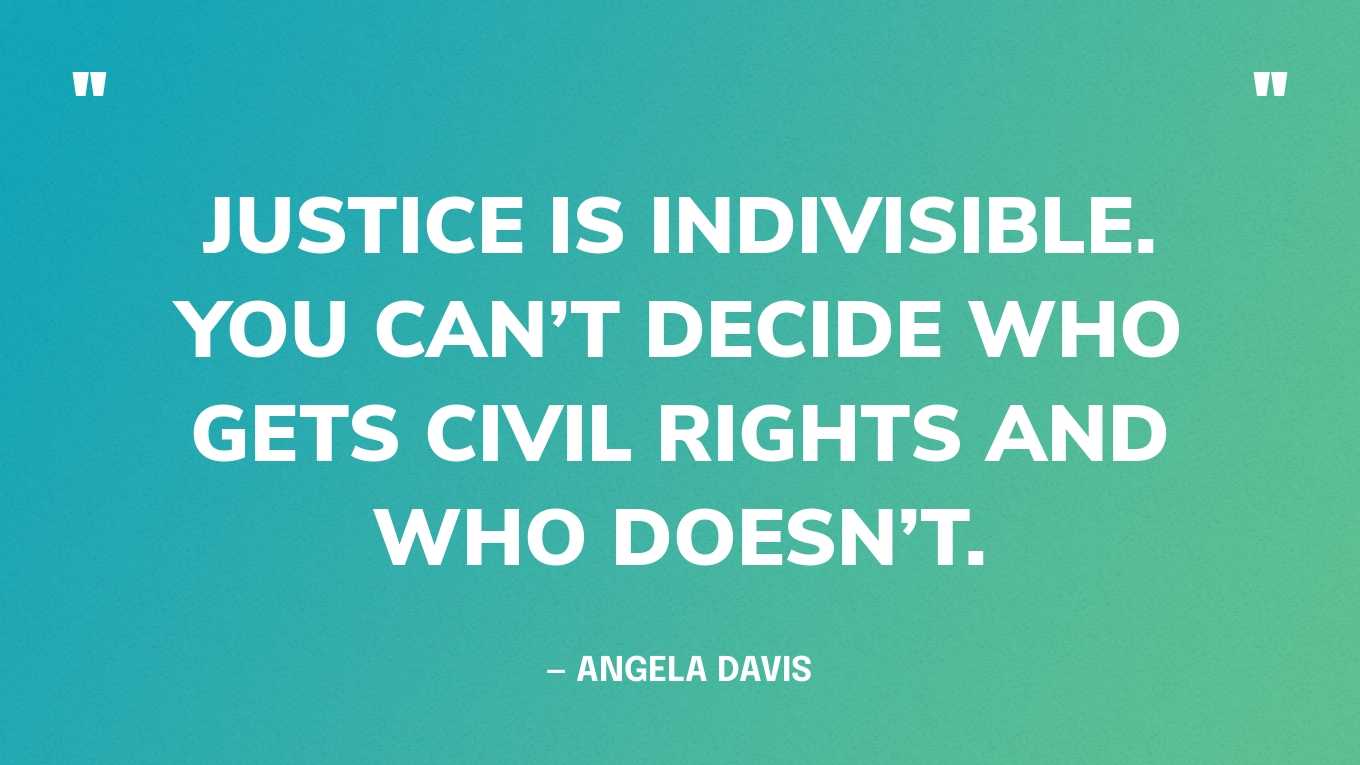
“It is only through the imagination that we reinvent ourselves and our relation to others.”
— Angela Davis, in a speech
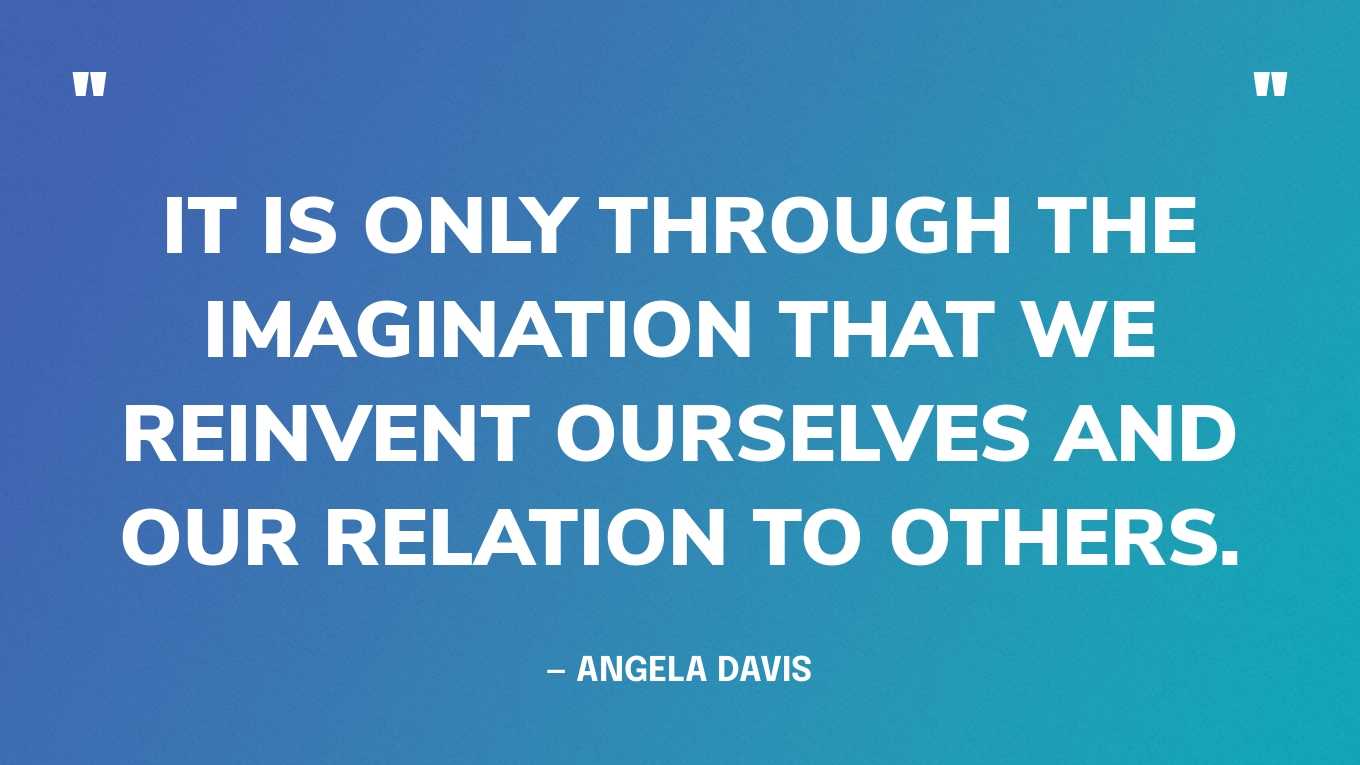
“We have to talk about liberating minds as well as liberating society.”
— Angela Davis
On Freedom
“Freedom can’t be contained within a paradigm that is individualistic. One cannot be free alone: freedom is collective. Freedom is about transforming conditions so that communities can live in more habitable conditions.”
— Angela Davis
“We know the road to freedom has always been stalked by death.”
— Angela Davis
“But there’s a message there for everyone and it is that people can unite, that democracy from below can challenge oligarchy, that imprisoned migrants can be freed, that fascism can be overcome, and that equality is emancipatory.”
— Angela Davis, Freedom Is a Constant Struggle
“The challenge of the twenty-first century is not to demand equal opportunity to participate in the machinery of oppression. Rather, it is to identify and dismantle those structures in which racism continues to be embedded. This is the only way the promise of freedom can be extended to masses of people.”
— Angela Davis
“As a black woman, my politics and political affiliation are bound up with and flow from participation in my people’s struggle for liberation, and with the fight of oppressed people all over the world against American imperialism.”
— Angela Davis
“The idea of freedom is inspiring. But what does it mean? If you are free in a political sense but have no food, what’s that? The freedom to starve?”
— Angela Davis
On Leadership
“Leadership does not have to be individualistic… it can be collective.”
— Angela Davis
“Sometimes we have to do the work even though we don’t yet see a glimmer on the horizon that it’s actually going to be possible.”
— Angela Davis
“I try never to take myself for granted as somebody who should be out there speaking. Rather, I’m doing it only because I feel there’s something important that needs to be conveyed.”
— Angela Davis
“Black women have always grasped the intersectional character of us being in the world. Particularly now it’s important to make the connection between labor organizing, combating sexual violence, and recognizing the repressive apparatus of the prisons, and the police. The advice I would give would be to stay connected to that tradition [of intersectionality], and not try to simplify what appears to be very complex. To recognize it, you have to take into consideration race, class, gender, sexuality, ability, and so on.”
— Angela Davis, in an article
“I think the importance of doing activist work is precisely because it allows you to give back and to consider yourself not as a single individual who may have achieved whatever but to be a part of an ongoing historical movement.”
— Angela Davis
“The process of empowerment cannot be simplistically defined in accordance with our own particular class interests. We must learn to lift as we climb.”
— Angela Davis
On Community
“It is essential to resist the depiction of history as the work of heroic individuals in order for people today to recognize their potential agency as a part of an ever-expanding community of struggle.”
— Angela Davis, Freedom Is a Constant Struggle
“I think in black communities today we need to encourage a lot more cross-racial organizing.”
— Angela Davis
“I think that this is an era where we have to encourage that sense of community particularly at a time when neoliberalism attempts to force people to think of themselves only in individual terms and not in collective terms. It is in collectivities that we find reservoirs of hope and optimism.”
— Angela Davis, Freedom Is a Constant Struggle
“It is important not only to have the awareness and to feel impelled to become involved, it’s important that there be a forum out there to which one can relate, an organization — a movement.”
— Angela Davis
On Education
“I think that many people have forgotten that, if knowledge is to have any meaning, if it is to be useful, it should have an impact in the world.”
— Angela Davis
“When children attend schools that place a greater value in discipline and security than on knowledge and intellectual development, they are attending prep schools for prisons.”
— Angela Davis
“When you talk about public education, you’re talking about the education of Black and brown children. Attacks on public education are attacks on communities of color and poor communities.”
— Angela Davis
“If you take democracy seriously, then you have to take education seriously as well, because at its best, education allows for the practice of democracy. The classroom should be a space where students learn how to practice radical democracy.”
— Angela Davis
On Prison
“Prisons do not disappear social problems, they disappear human beings.”
— Angela Davis
“Imprisonment is increasingly used as a strategy of deflection of the underlying social problems — racism, poverty, unemployment, lack of education, and so on.”
— Angela Davis, Freedom Is a Constant Struggle
“In many ways you can say that the prison serves as an institution that consolidates the state’s inability and refusal to address the most pressing social problems of this era.”
— Angela Davis, Freedom Is a Constant Struggle
“The prison has become a black hole into which the detritus of contemporary capitalism is deposited. Mass imprisonment generates profits as it devours social wealth, and thus it tends to reproduce the very conditions that lead people to prison.”
— Angela Davis, Are Prisons Obsolete?
“The prison therefore functions ideologically as an abstract site into which undesirables are deposited, relieving us of the responsibility of thinking about the real issues afflicting those communities from which prisoners are drawn in such disproportionate numbers. This is the ideological work that the prison performs — it relieves us of the responsibility of seriously engaging with the problems of our society, especially those produced by racism and, increasingly, global capitalism.”
— Angela Davis, Are Prisons Obsolete?
“Despite the importance of antiracist social movements over the last half century, racism hides from view within institutional structures, and its most reliable refuge is the prison system.”
— Angela Davis, Are Prisons Obsolete?
On Social Justice
“Past struggles cannot correct current injustices.”
— Angela Davis, Conversations with Angela Davis
“I think the quest for civil rights for migrants and refugees is one of the most important issues in the world right now.”
— Angela Davis
“Anyway, I don’t think we can rely on governments, regardless of who is in power, to do the work that only mass movements can do.”
— Angela Davis
“Whenever you conceptualize social justice struggles, you will always defeat your own purposes if you cannot imagine the people around whom you are struggling as equal partners.”
— Angela Davis
“We are never assured of justice without a fight.”
— Angela Davis
“What the civil rights movement did, it seems to me, was to create a new terrain for asking new questions and moving in new directions.”
— Angela Davis, Conversations with Angela Davis
On Feminism
“I often like to talk about feminism not as something that adheres to bodies, not as something grounded in gendered bodies, but as an approach — as a way of conceptualizing, as a methodology, as a guide to strategies for struggle. That means feminism doesn’t belong to anyone in particular.”
— Angela Davis, Freedom Is a Constant Struggle
“Feminism involves so much more than gender equality. And it involves so much more than gender. Feminism must involve a consciousness of capitalism (I mean, the feminism that I relate to. And there are multiple Feminisms, right). It has to involve a consciousness of capitalism and racism and colonialism and post-colonialities and ability and more genders than we can even imagine, and more sexualities than we ever thought we could name.”
— Angela Davis
“To understand how any society functions you must understand the relationship between the men and the women.”
— Angela Davis
“We can never assume that the category ‘women’ equally represents all women. [There are] hierarchies of race and class, and now that we have begun to challenge the binary assumptions behind gender, we can say hierarchies of gender as well. Where, for example, does a transgender woman figure into the hierarchy?”
— Angela Davis
“Birth control — individual choice, safe contraceptive methods, as well as abortions when necessary — is a fundamental prerequisite for the emancipation of women.”
— Angela Davis, Women, Race and Class
Short Quotes
“Radical simply means ‘grasping things at the root.’”
— Angela Davis
“Particularly in the United States, race has always played a central role in constructing presumptions of criminality.”
— Angela Davis, Are Prisons Obsolete?
“Walls turned sideways are bridges.”
— Angela Davis
“Racism is still a factor both within the gay movement and in the way the gay movement is publicly perceived.”
— Angela Davis, in an interview
“We live in a society of an imposed forgetfulness, a society that depends on public amnesia.”
— Angela Davis
“If they come for me in the morning, they will come for you in the night.”
— Angela Davis
→ Explore more short quotes
More Quotes
“No amount of psychological therapy or group training can effectively address racism in this country unless we also begin to dismantle the structures of racism.”
— Angela Davis, Freedom Is a Constant Struggle
“I raise the importance of historical memory not for the purpose of presenting immutable paradigms for coalition-building, but rather in order to understand historical trajectories and precisely to move beyond older conceptions of cross-racial organizing.”
— Angela Davis, in an interview
“The roots of sexism and homophobia are found in the same economic and political institutions that serve as the foundation of racism in this country and, more often than not, the same extremist circles that inflict violence on people of color are responsible for the eruptions of violence inspired by sexist and homophobic biases. Our political activism must clearly manifest our understanding of these connections.”
— Angela Davis, Women, Culture, and Politics
“The food we eat masks so much cruelty. The fact that we can sit down and eat a piece of chicken without thinking about the horrendous conditions under which chickens are industrially bred in this country is a sign of the dangers of capitalism, how capitalism has colonized our minds. The fact that we look no further than the commodity itself, the fact that we refuse to understand the relationships that underly the commodities that we use on a daily basis. And so food is like that.”
— Angela Davis
“I don’t think we have any alternative other than remaining optimistic. Optimism is an absolute necessity, even if it’s only optimism of the will, as Gramsci said, and pessimism of the intellect.”
— Angela Davis
Jane Fonda, an actress and activist, has lived a life marked by transformation and advocacy.
With a career spanning more than six decades, Fonda has not only been celebrated for her achievements in film and television but also revered for her commitment to social, environmental, and political causes.
From her opposition to the Vietnam War to her recent efforts in combating climate change, Fonda’s voice has been a powerful catalyst for change, inspiring many to take action on issues close to their hearts.
In this collection, we’ve curated some of Jane Fonda’s most memorable quotes — especially those about making a difference.
Whether you admire her for her artistic talents or her dedication to activism, Fonda’s words are sure to inspire reflection and encourage a deeper commitment to personal and social transformation.
The Best Quotes from Jane Fonda
Famous Quotes
“Stay curious, keep learning, and keep growing. And always strive to be more interested than interesting.”
— Jane Fonda

“Let's stop hoping and let's start taking action. Hope won't get us a cup of coffee.”
— Jane Fonda, in an interview

“When you can’t remember why you’re hurt, that’s when you’re healed.”
— Jane Fonda

“The challenge is not to be perfect… it’s to be whole.”
— Jane Fonda

“Instead of changing straws and lightbulbs, we need to focus on changing policy and politicians. We need large numbers of people working together for solutions that work for the climate.”
— Jane Fonda, in an article

“You don’t learn from successes, you don’t learn from awards, you don’t learn from celebrity, you only learn from wounds and scars and mistakes and failures.”
— Jane Fonda

“I don’t want my wrinkles taken away — I don’t want to look like everyone else.”
— Jane Fonda

Inspirational Quotes
“If you allow yourself you can become stronger in the very places that you’ve been broken.”
— Jane Fonda

“Nothing can change until we acknowledge what is, as I have learned over time.”
— Jane Fonda
“My greatest asset is that I am constantly changing.”
— Jane Fonda
“Our young people are assets to be cultivated and nurtured; let’s begin treating them that way.”
— Jane Fonda
“I have people in my life who will say, ‘Honey, you’re trying too hard.’ I like being saucy, but I’m 73 and a half. I’m still trying to find my way between matronly and coltishness.”
— Jane Fonda
“You’re more powerful when talking from your soul.”
— Jane Fonda

On Life
“It’s never too late — never too late to change your life, never too late to be happy.”
— Jane Fonda

“The more you treat yourself positively, the less you’ll want or need to be negative.”
— Jane Fonda
“Instead of drifting along like a leaf in a river, understand who you are and how you come across to people, and what kind of an impact you have on the people around you and the world, so that when you go out, you can feel you have made a positive difference.”
— Jane Fonda
“I am able to talk about my life in a way that helps other women — and men, but mostly women — understand their own life. I feel real proud of that. And then the fact that my children are okay. You know, you’re only as happy as your least happy child. So if your kids aren’t okay, you’re not good.”
— Jane Fonda
“The most incredible beauty and the most satisfying way of life come from affirming your own uniqueness.”
— Jane Fonda

On Love
“Real love and intimacy can be much more possible when you’re older.”
— Jane Fonda

“I don’t need a man to feel whole. In my marriages, I’d lost parts of who I was because I was trying to mold myself into what I thought a man wanted me to be.”
— Jane Fonda
“I can look at Tom now, and Ted, and I can understand why I loved them, and also be totally amazed that I could spend as much time with them as I did.”
— Jane Fonda
“All my life I had believed that unless I was perfect I would not be loved.”
— Jane Fonda

On Activism & Making a Difference
“Revolution is an act of love; we are the children of revolution, born to be rebels. It runs in our blood.”
— Jane Fonda

“What am I here for if not to be used by good people for good things? I’m part of an organization, and you could also be cynical as you are and ask me ‘Isn’t the organization using me?’ But you could also think ‘Aren’t I using the organization just the way the gays and lesbians here are using the organization they’re a part of?’ If it helps give us perspective, helps us keep our values intact, it increases our power – because as individuals we don’t have very much, but all together, we have a lot of power.”
— Jane Fonda, in an interview, 1979
“We’re at a very important moment — we have an election coming, we have a pandemic crisis, we have a race crisis — and we have a choice to make. We can keep seeing all these things happen, or we can do something about it.”
— Jane Fonda, in an interview
“I knew that my newfound activism and feminism was going to improve my acting, because I was seeing things not just in very narrow, individual, kind of Freudian terms, but seeing them in a much broader, societal way that was going to deepen and enrich my talent.”
— Jane Fonda
→ Read more quotes about activism
→ Read more quotes about making a difference
On Feminism
“Feminism is not just about women; it’s about letting all people live fuller lives.”
— Jane Fonda

“I think feminism is about the spirit.”
— Jane Fonda
“To be a revolutionary you have to be a human being. You have to care about people who have no power.”
— Jane Fonda
“I see many more men who are feminists, or at least who have learned about life in the context of feminism.”
— Jane Fonda
“For so long, it seemed like if you said you were a feminist, you were anti-men. I think that’s dissipated for the most part now. I hope that men understand that the fight for equality benefits everyone, and that it’s in everyone’s best interest to have men and women be able to shoulder the same societal responsibilities at every single level — economically, militarily, spiritually, parentally.”
— Jane Fonda
“In this country, the only way a minority can get anything done is to make a little noise.”
— Jane Fonda
“Feminism is not just about women; it’s about letting all people lead fuller lives.”
— Jane Fonda
“I finally got it: empower girls and everything changes.”
— Jane Fonda

→ Read more quotes about feminism
On Environmentalism
“We can’t have healthy people on a sick planet.”
— Jane Fonda, in an interview

“There’s no way we’re going to have democracy or equality or end racism or anything if we can’t tame the climate crisis.”
— Jane Fonda, in an interview
“I go to secondhand stores, the repurposing of clothes. That's what I do if I have to. But basically I haven't changed size and I wear the same clothes I wore 30 years ago. So why buy more? Clothes get thrown away and it's not good for the environment, so I just don't do it anymore.”
— Jane Fonda
“Today, the climate crisis requires collective action on a scale that humanity has never accomplished.”
— Jane Fonda, in an article

→ Read more quotes about sustainability
On Friendship
“I never used to be intentional… you have to pursue people you want to be friends with. You have to say ‘I’m intentionally wanting to be your friend.’ It works — people hear that, and they stick around.”
— Jane Fonda

“I am blessed beyond reason with women friends.”
― Jane Fonda
“Women’s friendships are like a renewable source of power.”
— Jane Fonda

Short Quotes
“We’re not meant to be perfect. It took me a long time to learn that.”
— Jane Fonda

“You couldn’t pay me to be 20 again.”
— Jane Fonda
“The institution of marriage is obsolete.”
— Jane Fonda
“I find that arduous physical labor can jump-start my thought process.”
— Jane Fonda
“I love mistakes because it’s the only way you learn.”
— Jane Fonda
“One part of wisdom is knowing what you don’t need anymore and letting it go.”
— Jane Fonda

→ Explore more short quotes
More Quotes
“The most important thing to do as you age is to stay physically active. Lots of people just throw in the towel if they can’t do what they used to do, and that’s terrible.”
— Jane Fonda

“People think actresses find public speaking easy, and it’s not easy at all; we’re used to hiding behind masks.”
— Jane Fonda
“What we view in the media — and who presents it to us — does so much to determine how we think, how we feel about ourselves, and how we view the world.”
— Jane Fonda
“We’re still living with the old paradigm of age as an arch. That’s the old metaphor: You’re born, you peak at midlife and decline into decrepitude. A more appropriate metaphor for aging is a staircase. The upward ascension of the human spirit, bringing us into wisdom, wholeness, and authenticity.”
— Jane Fonda
“As I read this, I am about to turn 78. And though I know you’ll find this impossible to believe, this is the happiest I have ever been. It was all worth it, the good and the bad. So don’t give up. I’m proud of you because you will never settle for less than you think you can attain.”
— Jane Fonda

In a historic first, scientists at Pennsylvania State University share that they have successfully 3D-printed living human skin tissue directly into the open wounds of rats.
With findings published in a March 1 issue of Bioactive Materials, the scientists explained their work to harness human fat tissue and stem cells to “precisely correct injuries in rats.”
While it doesn’t sound very pretty, this bioengineering milestone could pave the way for major developments in reconstructive surgery — or even human hair treatments.
Current methods of skin and hair reconstruction — like skin grafts — often result in scars, meaning this discovery could lead to a more seamless treatment for humans.
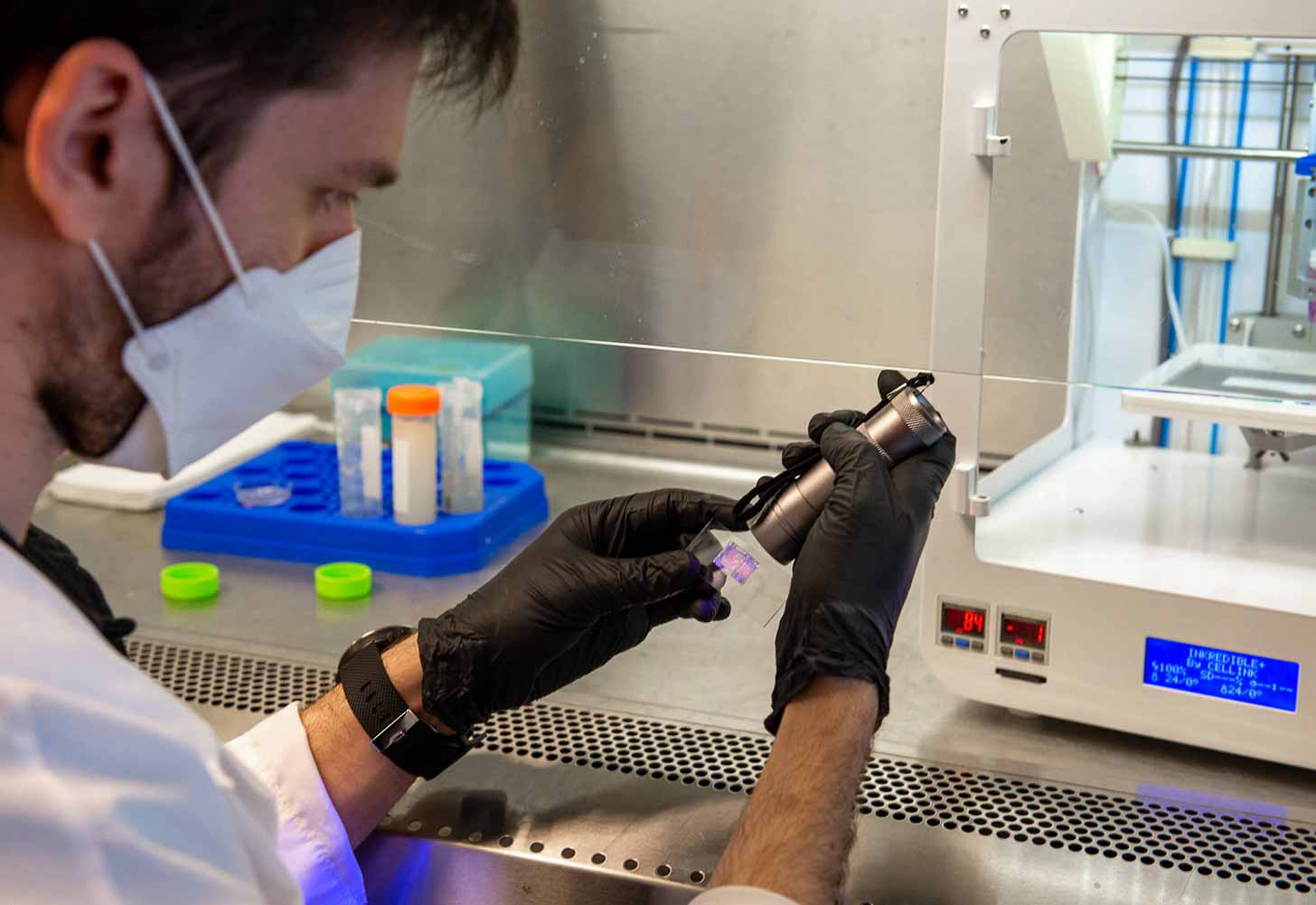
“Reconstructive surgery to correct trauma to the face or head from injury or disease is usually imperfect, resulting in scarring or permanent hair loss,” lead author of the study and Penn State professor of bioengineering and neurosurgery, Ibrahim Ozbolat, said in a statement.
“With this work, we demonstrate bioprinted, full thickness skin with the potential to grow hair in rats. That’s a step closer to being able to achieve more natural-looking and aesthetically pleasing head and face reconstruction in humans.”
The idea of bioprinted skin is not new — scientists have previously 3D-printed thin layers of skin — but Ozbolat’s team shares that they are the first to print a full “living system of multiple skin layers.”
For context, the skin has three layers; the visible epidermis, the middle dermis, and the hypodermis.
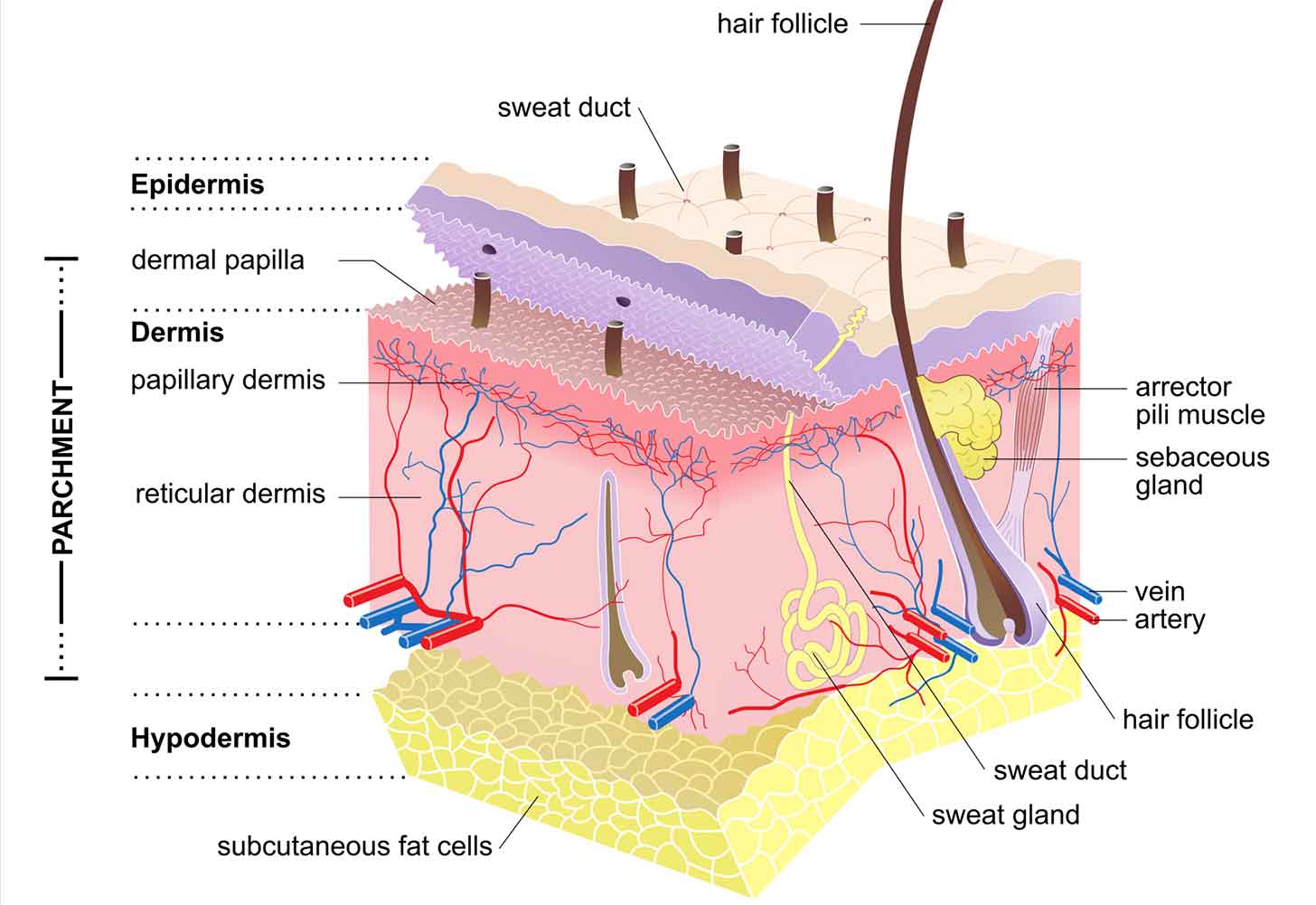
The epidermis can often heal on its own. Most people have experienced this when a cut scabs over on its own, for instance. But the hypodermis, which is made from connective tissue and fat, is vital to providing structure and support to the body — especially over the skull.
The hypodermis is also where hair follicles will root, meaning damage to this layer of skin impacts hair growth, as well.
Successfully bioprinting this layer of skin is monumental for skull and facial reconstruction.
“The hypodermis is directly involved in the process by which stem cells become fat,” Ozbolat said in a statement. “This process is critical to several vital processes, including wound-healing. It also has a role in hair follicle cycling, specifically in facilitating hair growth.”
So, how did they do it?
In 2021, Ozbolat’s team used two different bioinks (materials used to produce engineered live tissue in 3D printing) to create hard and soft tissues for rats.
Using this previous research, Ozbolat and partners started the latest study with fat tissue from patients undergoing surgery, as well as stem cells taken from the fat tissue. There was also a third component in the bioink: A clotting solution to help the other materials bind to the rat’s injury site.

“We printed directly into the injury site with the target of forming the hypodermis, which helps with wound healing, hair follicle generation, temperature regulation and more,” Ozbolat explained.
The scientists successfully formed the hypodermis and dermis layers, and within two weeks, the epidermis — that outermost layer of the skin — formed by itself.
They conducted three sets of studies in rats to most clearly understand the mix of the bioink materials and discovered that the simultaneous delivery of the fat tissue and stem cells was crucial to success.
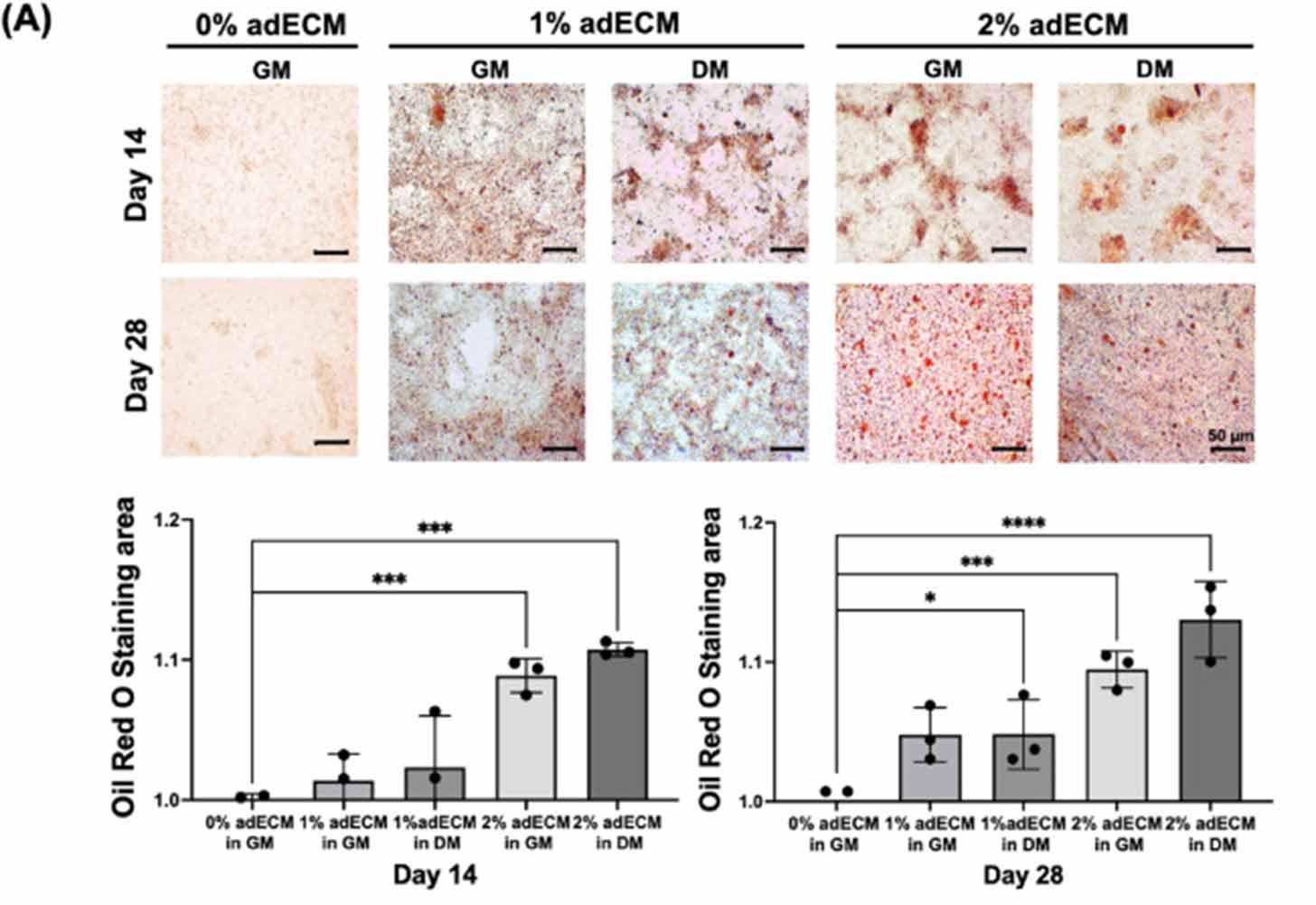
Plus, researchers also found ‘downgrowths’ in the bioprinted hypodermis layer — the beginnings of hair follicle growth.
“We believe this could be applied in dermatology, hair transplants, and plastic and reconstructive surgeries – it could result in a far more aesthetic outcome,” Ozbolat said.
The next step will be combining other research, which includes bioprinting bone, as well as figuring out how to match pigmentation across a range of skin tones.
Additionally, the team was awarded a patent by the U.S. Patent and Trademark Office for their bioprinting technique in February.
While translating these findings into human models is still a ways away, Ozbolat and his colleagues are hopeful for the future of reconstructive surgery.
“With the fully automated bioprinting ability and compatible materials at the clinical grade,” he said, “this technology may have a significant impact on the clinical translation of precisely reconstructed skin.”
Header image courtesy of Ozbolat Lab/Pennsylvania State University
Today, in honor of International Women’s Day, Meghan Markle, Brooke Shields, Katie Couric, and sociologist Nancy Wang Yuen headlined a panel at the South by Southwest festival in Austin, TX.
The opening day panel — titled “Breaking Barriers, Shaping Narratives: How Women Lead On and Off the Screen” — was moderated by journalist Errin Haines and centered on representation of women in media.
“I’m so excited to be here, and to be with such incredible women,” the Duchess of Sussex said at the top of the SXSW panel. “So much brilliance on this panel, and just such an amazing way to celebrate International Women’s Day.”
Throughout the panel, Markle and her co-panelists touched on the portrayal of women in entertainment, how far media representation has come, and how far it still has to go.
At one point, Couric encouraged Markle to share a childhood anecdote about writing strongly worded letters to manufacturing company Proctor & Gamble at just 11 years old.
“I don’t know if everyone’s heard it, but it’s such a great story — at a very young age — what you did,” Couric prompted.
“I’d seen a commercial on TV for a dishwashing liquid that’s like… ‘Women all over America are fighting greasy pots and pans.’ And the boys in my class at the time said, ‘Yeah, that’s where women belong, in the kitchen,’” Markle recalled.
“And at 11, I just found that infuriating and wrote lots of letters and put pen to paper, and they ended up changing the commercial to ‘People all over America.’”
Markle said that it’s funny to look back on her story now, when social media seemingly has a “greater reach” than a kid with a “pen and paper.”
“But it just goes to show that if you know that there’s something wrong and you’re using your voice to advocate in the direction of what is right, that can really land and resonate, and make huge change for a lot of people,” Markle concluded. “Your voice is not small, it just needs to be heard.”
On the same day of the panel, Moms First and the Geena Davis Institute released a report titled: “Rewriting Motherhood: How TV Represents Moms and What We Want To See Next.” The study was backed by the Archewell Foundation, a nonprofit run by Markle and her husband Prince Harry, the Duke of Sussex.
When asked about the study at the panel, Markle said that it sought to hold media companies accountable for gender gaps in representation.
“On a personal level, I’ve just always loved understanding women and our stories and our lived experiences and our shared experiences, so I was really curious to see what the report was going to uncover,” Markle said.
“Oftentimes as women, the way that we see ourselves is reflected back to us, sometimes accurately, and sometimes — much to our disservice — inaccurately, in what we see in media.”
She added, “To be able to have the findings to uncover what we can do to propel that, to make sure that women are really feeling seen in a way that is reflective of who and how we are and how we move through the world felt important.”
Header images courtesy of Inside Edition and SXSW/YouTube
Every day the Good Good Good team collects the best good news in the world and shares it with our community. Here are the highlights for this week!
If you want to get good news in your inbox every day, join the Goodnewsletter — the free daily newsletter designed to leave you feeling hopeful.
The Best Positive News We’re Celebrating This Week —
In a huge conservation victory, a critically endangered parrot has reached its highest numbers in 15 years
In 2016, only three wild female orange-bellied parrots returned to their breeding ground in Tasmania after migrating to Australia. This year, 80 of the critically endangered parrots have returned — the most in 15 years.
Despite decades of breeding programs and other conservation efforts, the bird was almost declared functionally extinct. The birds face a number of threats, including habitat loss due to agriculture and urban development, invasive predators, and fewer burn-offs managed by Tasmanian Aboriginal people (which would typically provide a vital food source).
The teams of conservationists and volunteers that have worked to protect and bring the parrots back are celebrating this hopeful turn — and continuing to work to improve juvenile mortality rates.
→ Read more
More good animal news:
- After a decade of collaborative efforts, 2023 was the first year without elephant poaching in a Republic of Congo National Park.
- As part of a new species restoration project, endangered butterflies will be released along the California coast.
- To help preserve biodiversity and the larger ecosystem, 2,000 white rhinos bred in captivity will be rewilded across Africa.
The number of people paralyzed by polio has declined by 99% in the last four decades
Polio is an infectious disease that is particularly devastating in children — once the poliovirus invades the nervous system, it can cause irreversible paralysis within hours. It can spread through contaminated water and food, especially in areas with poor sanitation and hygiene systems.
In the first half of the 20th century, millions of people around the world were impacted by polio. In the 1980s alone, 2.9 million people — most of them children — were paralyzed by it.
As part of a global effort to turn things around (and with funding from public tax dollars), scientists worked tirelessly to create a vaccine, and in 1955 the development of the first working vaccine was announced.
In the decades since, thanks to a global vaccination campaign, polio has been nearly eradicated from the globe — it’s now only endemic in two countries, Pakistan and Afghanistan. Full eradication is achievable within this generation.
To put it in even clearer perspective: In 1980, only 1 out of 5 of the world’s infants received the polio vaccine — today, that ratio is flipped and 1 out of five are not vaccinated. As a result, millions of children have gone on to live happy, healthy lives.
Electric school buses performed better during extreme cold winter school months than diesel buses
In one of the coldest towns in the U.S., Kremmling, Colorado, electric school buses have been proving they’ve got more than what it takes to get students to school in even extremely cold temperatures.
The town frequently sees 30-below temperatures during the morning school commute, due to high altitudes and northern winds.
Just like gas and diesel vehicles, electric vehicles see shorter ranges in extreme weather conditions — but sometimes, a diesel vehicle won’t start at all. The electric buses can hold their charge and start up even in the coldest weather.
Why is this good news? School buses have been shown to have a devastating impact on air quality, especially in the areas they’re designed for: children and neighborhoods. This new data showing that the buses can stand up to even the most extreme temperatures is just another reason to accelerate the shift to EV buses in school districts around the country.
→ Read more
Starting this month, birth control will be available without a prescription at drugstores across the U.S.
Approved by the FDA last summer, the first oral contraceptive pill to be available over the counter has now shipped to drugstores and supermarkets across the U.S. Opill will be available for purchase later this month, both online and in the family planning aisle in physical retailers, like Walgreens, Target, and CVS.
Opill is a daily progestin-only pill, is 98% effective, and has “an extremely high safety profile.” The drug itself has been around for decades, but this is the first time it will be available for purchase without a prescription.
While this alone will dramatically improve access to reproductive health care, Perrigo, which manufactures Opill, also has a patient assistance program for people who don't have insurance or can’t afford to purchase it.
Why is this good news? Opill is now the most effective form of contraception available over the counter, which will help both people who face hurdles in visiting a doctor to get a prescription — as well as for those without insurance. Improved access to contraception has been shown to reduce unplanned pregnancies and is one way to safely reduce abortions without removing access.
→ Read more
New AI breakthroughs are helping doctors make life-saving cancer and heart defect diagnoses faster than ever before
Breakthroughs in artificial intelligence are changing the tide in a new chapter of health care: one that is centered on patient-first care. One includes a new visual-mapping AI model that can accurately identify diseases and tumors in medical images.
The researchers trained their model by feeding it thousands of images and giving it diagnosis tasks. In a variety of challenges, the AI was able to flag early signs of tumors, detect heart conditions in X-rays, and identify macular degeneration.
It may sound too good to be true, but these kinds of models have already proven themselves: they’ve already detected hidden heart conditions, autism at a younger age, and acute ear infections in babies and young children.
Why is this good news? Over over again, stories circulate from patients who go years (sometimes decades) without a proper health diagnosis, despite tirelessly advocating for their pain — especially among women of color.
While there are legitimate concerns surrounding the technology, this is one example of using AI to make a difference — and save lots of lives.
→ Read more
An airline pilot started a nonprofit to help students of color pursue careers in aviation
While serving as a pilot in the U.S. Navy, Courtland Savage noticed a lack of diversity in the aviation industry — he was one of two African Americans in his squadron.
Inspired to help bring more diversity to aviation, he launched a nonprofit organization after leaving the Navy and getting a job as a commercial airline pilot.
Fly for the Culture helps young Black kids see aviation as a potential career by taking them on introductory flights “to show them what being a pilot is really like.” It also gives them support in direction in taking the next steps to pursue becoming a pilot — or any other career in the aviation industry.
According to the U.S. Bureau of Labor Statistics, as of 2023 only 3.6% of aircraft pilots and flight engineers are African American. Savage is helping make that number better reflect the population in the historically underrepresented field.
→ Read more
With nearly 13 million total businesses, more women are becoming entrepreneurs than ever before
The early 2000s have been a prosperous point in time, particularly for women. Despite an ever-persistent wage gap, and the prevalence of workplace sexism throughout history — more women are starting their own businesses than ever.
Between 2014 and 2019, the number of women-owned businesses climbed 21% to a total of nearly 13 million. And in even better news for representation: businesses owned by Black women saw the highest rate of growth in the number of total women-owned businesses.
More women entrepreneurs is also good for the bottom line: evidence shows that in “full potential” scenarios — in which women participate in the economy identically to men — equity in business would add up to $28 trillion to annual global GDP by 2025.
What’s the nuance? Unless you’re on this street in Philadelphia, women-owned businesses are still in the minority. Due to factors like disparity in education and networking, and lack of access to capital, there are still roughly two male entrepreneurs for every one woman entrepreneur in the U.S.
Still, this positive trend should inspire us to keep going and fighting for more equitable representation.
More good news of the week —
A museum is hosting a free “Wikipedia Edit-a-thon” to create and edit articles about inspiring women. Less than 20% of English-language biographies on Wikipedia are about women, but the Smithsonian American Women’s History wants to help correct that during Women’s History Month.
The FDA just announced that certain “forever chemicals” will be banned from food product packaging. Studies have shown that packaging like fast-food wrappers, microwave popcorn bags, and take-out pizza boxes were a major source of exposure to some PFAS.
Spain is banning some short-haul domestic flights where there is a train route available. As part of the country’s plan to reduce carbon emissions, flights where there’s a rail alternative that takes less than two and a half hours will no longer be allowed.
“Climate grannies” are fighting for climate action to protect their grandchildren. They have generational wisdom, environmental activism experience, free time — and they're not afraid of getting arrested.
The first of its kind in the Midwest, a new woman-owned sports bar caters exclusively to women’s sports. To help close the gender gap in sports coverage, A Bar of Their Own is the latest in an emerging trend of women's sports bars across the U.S.
The Biden-Harris administration just announced new washer and dryer efficiency standards. The new guidelines will save people $2.2 billion a year in utility costs and eliminate 71 million tons of planet-warming CO2 emissions.
People with Down syndrome are living longer than ever — and programs are growing to support their lifelong care. Although challenges in care persist, new clinics are addressing the evolving healthcare needs of adults with Down syndrome, including early-onset dementia and Alzheimer's.
An architect who designs buildings that emphasize community and social connection just won architecture’s highest honor. Riken Yamamoto was awarded this year’s Pritzker Prize for his designs, like a fire station with a visible atrium to encourage connection between civil servants and those they serve.
A creek in Eastern Oregon just had its first salmon spawn in 30 years. The historic spawning was made possible by the partial removal of a fish weir, which was placed in the creek by the Bureau of Reclamation in the 1990s to trap fish.
Glennon Doyle's nonprofit has raised over $1 million to provide aid to Palestinians in Gaza. Together Rising, which has supported Gaza since 2021, is collaborating with local partners to provide essential supplies to people in need.
In a “revolutionary” move, the EU is now the first international body to criminalize ecosystem destruction. Under the updated environmental crime directive, the most serious cases of environmental damage — like habitat loss and illegal logging — will be punished with tougher penalties and prison sentences.
Japan is launching the world's first satellite designed specifically to combat space pollution. It will test the idea of using biodegradable materials such as wood to see if they can act as environmentally friendly alternatives to the metals satellites are currently built with.
England’s first female professional astronomer was largely ignored for two centuries — but is finally gaining name recognition today. Caroline Herschel made contributions to astronomy that are still important to the field today, but even many astronomers may not recognize her name.
Related: A Wikipedia edit-a-thon is happening today(!) to make sure the contributions of women like Herschel don’t go unrecognized for centuries.
Achieving a major milestone, 10,000 women have now been certified to fight malaria in Rwanda. Malaria is the seventh leading cause of death in the country, which has led to a widespread community effort to protect families and communities.
Zimbabwe’s first team of women-only rangers are fighting both poachers and poverty. The Akashinga unit, a rarity in a field long dominated by men, is working to both save wildlife and empower women by offering ranger jobs that provide good incomes.
A program at Yosemite National Park is helping bring more women into wildland firefighting. Currently, only about 12% of wildland firefighters are women, and women make up less than 5% of National Park Service wildland fire leadership at the park level.
An international team of young women is fighting back against catcalls and street harassment with sidewalk chalk. The chalk art quotes are documented on a growing Instagram account, with the hope of inspiring systemic change to end gender-based violence.
An organization in Africa is working to educate 5 million girls by 2030. CAMFED’s unique model gives young women a comprehensive support system, holistic coaching, and helps facilitate the transition into work opportunities — all right in their school communities.
Christopher Nolan’s box office smash “Oppenheimer” won big at the Academy Awards on Sunday, taking home the coveted title of “Best Picture,” among many other golden statues.
But the historical film is doing more than just gathering trophies; it has renewed a cultural conversation about nuclear weapons.
Prior to the big awards show this weekend, the Nuclear Threat Initiative, a global nonpartisan nonprofit aimed at reducing nuclear threats on humanity, launched a new public service campaign: Make Nukes History.
Its tagline? “For your consideration… ‘Oppenheimer’ is history. Nuclear weapons are not.”
The campaign focused on Los Angeles to drum up support prior to the Oscars, with billboards, and a large art installation. However, it has the potential to reach a global audience with increasing social media support and an open letter in the LA Times, which was co-signed by stars like Julianne Moore and Jane Fonda.
“As artists and advocates, we want to raise our voices to remind people that while Oppenheimer is history, nuclear weapons are not,” the letter reads. “At a time of great uncertainty, even one nuclear weapon – on land, under the sea, in the air, or in space – is too many.”
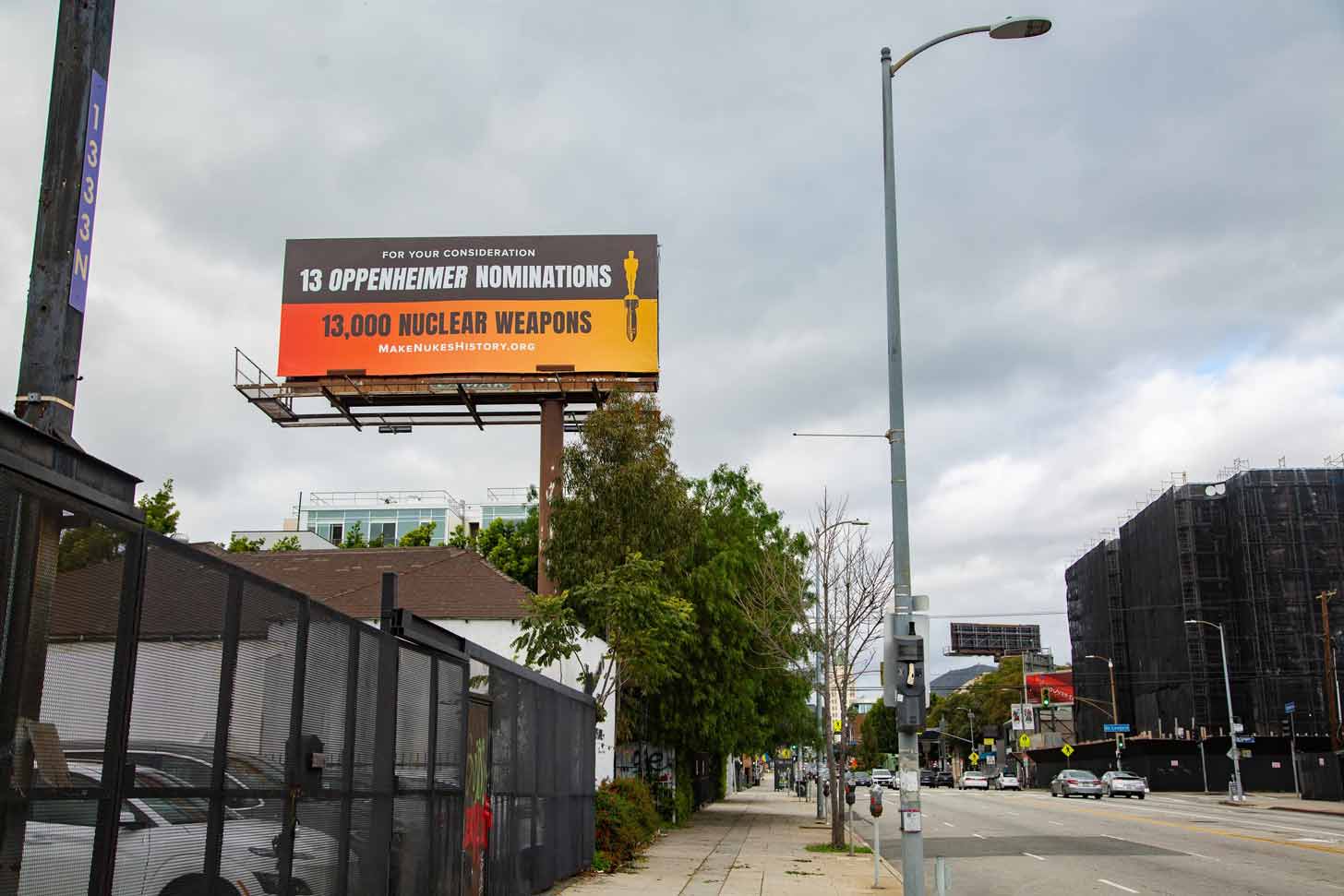
The campaign shares some startling statistics: Today, 13,000 nuclear weapons are held by nine countries — with some being 80 times more powerful than the ones created by Oppenheimer and his team.
While the film makes a clear point to illustrate Oppenheimer’s lifelong regret for his hand in creating the mass weapons that destroyed Hiroshima and Nagasaki in 1945, world leaders continue what could become a catastrophic nuclear arms race.
“Robert Oppenheimer warned against developing even more powerful weapons and predicted that dangerous arms races would follow. He was right,” NTI Co-Chair and CEO and former Secretary of Energy, Ernest J. Moniz, said in a statement.
“We face huge geopolitical challenges — but political will is needed to bring us back from the brink. And political will is created when people demand it.”
With protests against the killing of Palestinians making their way to the red carpet on Sunday, the Make Nukes History campaign is especially timely, bringing anti-war and nuclear disarmament activists into the mainstream.
“I know there are a lot of things we should probably do something about,” TikTok creator Austin Archer said in a video on Oscar Sunday. “This is one of them.”
Archer told a compelling narrative about the history of nuclear arms, weaving in plot devices from “Oppenheimer” itself and giving viewers a brief history lesson dating back to the Cold War, when anti-war activists successfully protested nuclear weaponry in the 1970s and 80s.
“The last time the world was facing a dangerous nuclear arms race, the people spoke up and were able to eliminate 80% of global nuclear arsenals,” Archer said. “Call it starry-eyed optimism or call it terrified desperation, but I think we can do that again.”
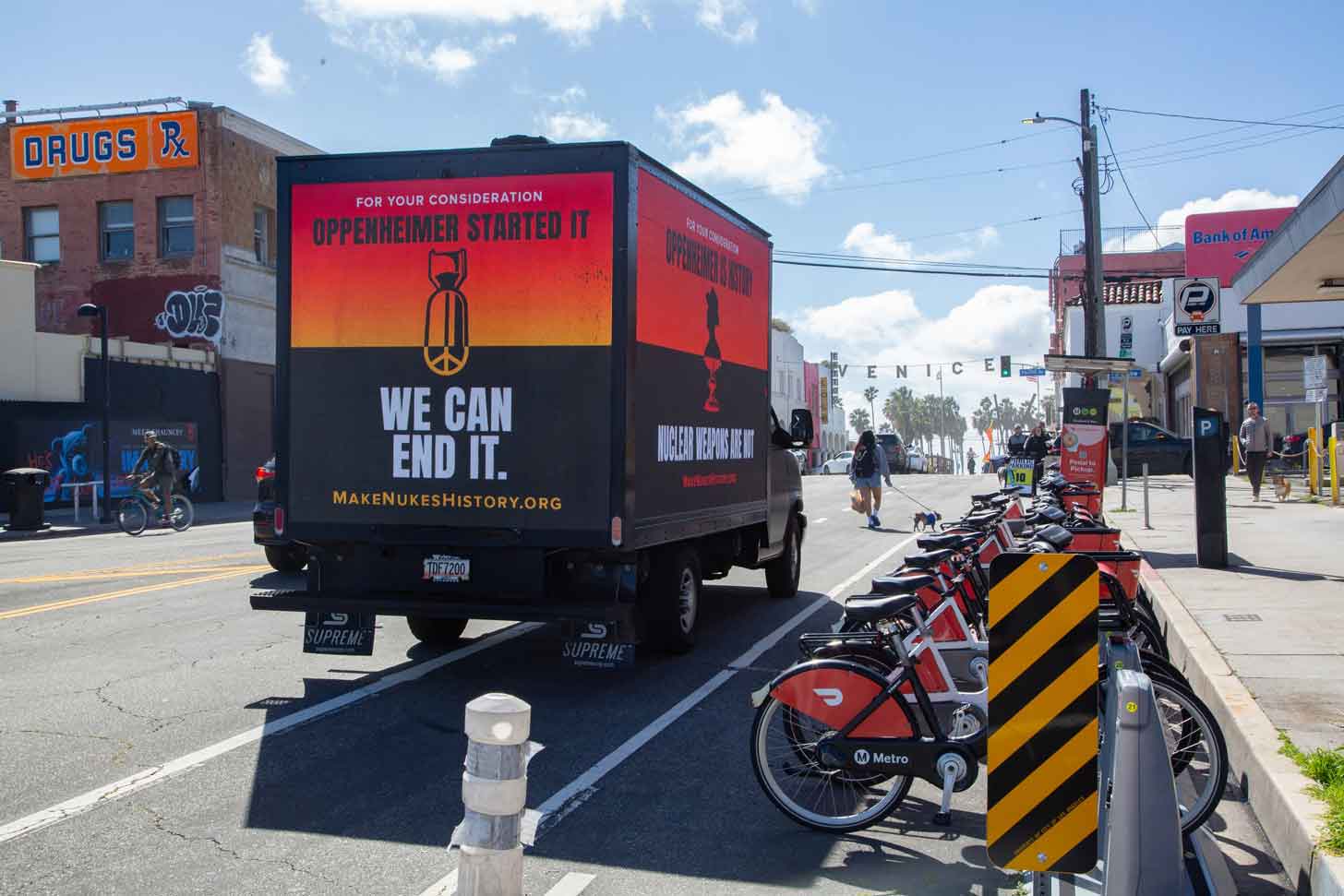
With the accelerated pace of the arms race — and the new vulnerability these weapons have to cyber attacks and artificial intelligence, folks like Archer — and even stars of the movie — know it’s time for change.
“I think it’s well past time for the world’s superpowers to admit that the entire species is much safer without these weapons,” Archer said.
And most people agree. According to a 2020 Chicago Council Survey, 66% of Americans believe that no country should be allowed to have nuclear weapons.
Additionally, 60% of Americans — from that same survey — said they were at least somewhat interested in learning more about U.S. nuclear weapon policy.
“Every person should be educated about the incredible destructive power of nuclear weapons,” ‘Oppenheimer’ actor Matthew Modine said in a statement. “Understanding the threat illuminates a necessary path toward their elimination.”
Beyond spreading awareness, the Make Nukes History campaign website includes a quiz for folks to “test their knowledge on nukes,” as well as an action guide, which prompts supporters to learn more, support communities harmed by nukes, and ensure they are registered to vote.
Once those steps are completed, supporters of the campaign can continue to check out content under the #MakeNukesHistory tag on social media, where they are certain to find a myriad of videos from activists and content creators alike.
They all drive home the same message: Oppenheimer started this, but we can end it.
In a sketch video posted to TikTok, comedian and creator Prance sarcastically, yet pointedly, asks his fellow movie-goers: “Eliminate nuclear weapons? What’s next — make the world a safe and equitable place for everyone?”
They reply, loudly and in unison: “Yes!”
Header images courtesy of Universal Pictures and Nuclear Threat Initiative
We’ve all been there. You’re in the supermarket freezer aisle trying to make sense of the different labels on seafood products.
You know the oceans are in trouble and you’re trying to do the right thing, but the information is confusing and seemingly contradictory.
One packet of salmon fillets has a smiling dolphin logo on the back.
Another, a less-smiley bright blue fish logo.
You pull out your smartphone and open the sustainable seafood app your friend told you about, only to become more confused by its traffic light ratings.
In the end, you just pick any product that the label assures you is sustainable.
Making sense of salmon sustainability
Salmon is one of the most consumed seafoods globally. It’s a rich source of protein, key micronutrients, and fatty acids. But with so many different products on the shelf, it’s hard to know which ones harm the environment and fish stocks the most.
Both wild-caught and farmed salmon can be sustainable, but determining the environmental impact of a fillet isn’t simple. Both can present significant social and environmental problems. Wild-caught salmon can be overfished or sourced from vulnerable fish populations. But while salmon aquaculture can reduce the pressure on wild stocks, it’s no panacea.
Farmed salmon producers often face scrutiny for overcrowding, parasites and pollution, with escapees from open-net pens feared to endanger local wild populations. The fish meal used to feed farmed salmon presents further problems, as it often originates from wild-caught fish that aren’t always taken at sustainable levels.
These challenges are expected to be exacerbated by shifting climates: higher water temperatures and reduced rainfall can enable the growth of pathogens, and increase the susceptibility of fish populations to disease.
Many certification schemes, eco-labels, rankings and guides exist to signpost salmon sustainability. For wild-caught salmon, the Marine Stewardship Council provides the gold standard, assuring that it has been sourced from fisheries managed according to rigorous environmental standards. For farmed salmon, a tick of approval from the Aquaculture Stewardship Council is considered the most thorough certification, indicating responsible aquaculture practices.
One of us (Laurence Wainwright) has researched eco-labels for five years, finding that these two certification schemes are currently the most scientifically sound, evidenced-based standards for seafood sustainability — including salmon.
Other seafood sustainability schemes offer some assurances of sustainability, but are often not nearly as rigorous. Schemes for farmed salmon such as the Soil Association’s organic standard have recently faced criticism for having standards that are perceived by some as not going far enough — or potentially even misleading customers by certifying some Scottish salmon farms as organic.
To a consumer, an “organic” label generally signifies that a product has been grown from organic feed and produced without the use of chemical pesticides or antibiotics. Farmed salmon can be organic, if raised and fed correctly.

A Soil Association spokesperson stated: “Organic farms must follow strict rules to minimize impacts on the environment and animal welfare, and when problems occur, they must prove they are taking action in order to use the organic logo.”
The Soil Association’s aquaculture standards are currently under review following a 60-day consultation, and an update to its standards is due later in 2024.
According to fish conservation charity WildFish, some badges of sustainability in salmon aquaculture can mask details of unregulated salmon supply chains — with certifications rarely being lost even when conditions are breached.
According to its 2023 report, some UK farms have been permitted to use wild-caught fish for feed and to use toxic chemicals for parasite control, without losing their organic certification. This is controversial: such ambiguity and lack of transparency only hinders the salmon aquaculture industry.
In terms of wild-caught salmon, it is our strong opinion that it is never legitimate, under any circumstances, to call it organic. Not only is this misleading but it defies scientific evidence and undermines the meaning of the term organic.
Which salmon should you buy?
When buying salmon or ordering it at a restaurant, look for key information on the labels or ask staff about the sourcing of their fish.
- How, and from where, was it caught or farmed? Either can be sustainable, but the devil is in the detail.
- If farmed, what was it fed – and from where did this feed originate? The feed should be from a sustainable source of fish, and perhaps even certified itself.
- If wild-caught, is there minimal by-catch associated with it?
- Which species of salmon is it? Whether Atlantic, chinook, sockeye, pink, coho or chum, sustainability depends on a variety of factors so there is no hard-and-fast rule. But there are better and worse options: this guide from Seafood Watch is very useful.
- Which eco-labels does it have? Certifications from the Marine Stewardship Council and Aquaculture Stewardship Council are best.
The scale of salmon
While it’s best to choose locally sourced fish where possible, many salmon-loving populations live far from the hotspots of salmon production.
Sushi salmon in Japan, for example, may have travelled 17,000 km from Norwegian or Chilean farms.
And an estimated 52% of emissions from the production of 1 kilogram of farmed salmon in Norway comes from its air transport to China for consumption.
The need to mitigate the carbon footprint of salmon production will only increase as the world ramps up decarbonization efforts.
With an increasing global population, pressure on the already over-exploited wild salmon stocks is set to intensify.
Salmon farming or aquaculture currently bridges this gap between supply and demand, accounting for 70% of the salmon available for consumption.
As the fastest-growing food production system, the salmon farming industry is projected to reach a value of $37 billion globally by 2027.
We need to fundamentally change our relationship with seafood if we are to preserve this wonderful natural food resource.
We don’t have to stop eating salmon but we must make smarter decisions, both at the fish counter and within seafood supply chains.
This article by Laurence Wainwright and Natasha Lutz, from the University of Oxford, was originally published by The Conversation.
